



There is a specific kind of burn that happens when you wrap a resistance band around your legs. It is not the same as the heavy, crushing fatigue of a barbell back squat, nor is it the sharp, localized ache of a hamstring curl. Instead, it is a deep, internal activation—a feeling that your glutes are finally “waking up” after hours of sitting. Resistance bands force you to fight tension throughout the entire range of motion, and that constant battle is exactly why they are so effective for hypertrophy and endurance.
Most people rely on heavy weights to grow their posterior chain, which works, but often at the expense of proper engagement. If your hips are tight or your lower back takes over during a deadlift, the glutes often end up doing the bare minimum. Bands change the equation. They force lateral tension and stabilization, ensuring your glute medius and minimus are firing just as hard as your glute maximus. Whether you are working out in a cramped living room or finishing a session at a commercial gym, the right movements can transform how your legs feel and look.
1. Banded Glute Bridges
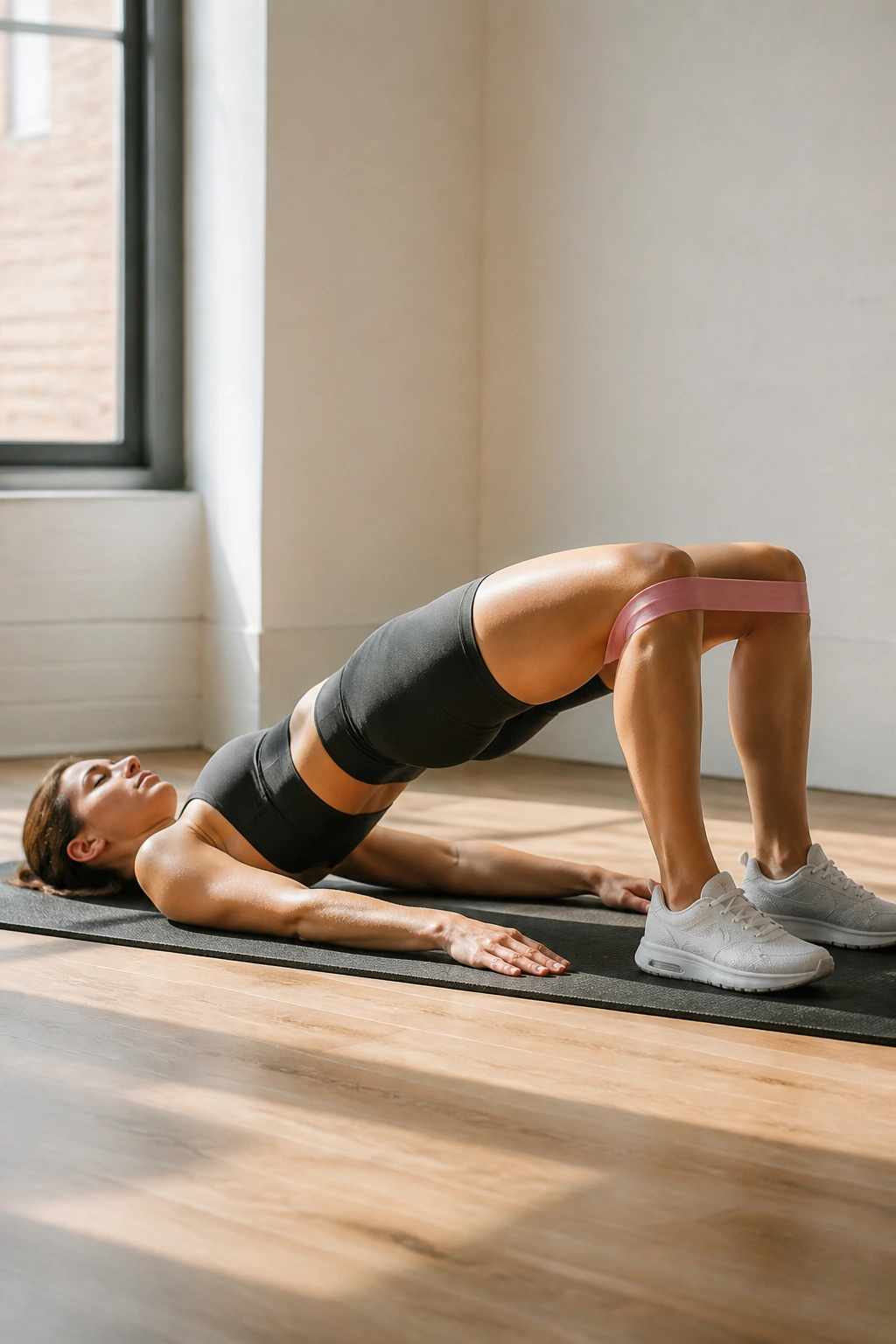
The classic bridge is the foundation of glute training for a reason. By placing a mini-band just above your knees, you introduce a force that wants to collapse your knees inward. Your job is to push out against that resistance the entire time. This simple cue activates the abductors, effectively turning the bridge from a simple hip extension into a full-on glute isolation exercise.
How to Execute the Movement
Focus on the squeeze at the top of the rep. When you lift your hips, your glutes should feel like they are being pinched together. If you feel it more in your lower back, you are likely overextending your spine. Tuck your pelvis slightly—think of it as a posterior pelvic tilt—and drive your heels into the floor.
Troubleshooting the Tension
- If the band feels too loose, use a stronger resistance level.
- Keep your shins vertical at the top; if your feet are too far away, your hamstrings will steal the work.
- Perform 3 sets of 20 reps, holding the squeeze at the peak for a full second.
Pro tip: Imagine you are crushing a walnut between your glutes at the very top of the movement. That mental imagery changes everything.
2. Lateral Band Walks
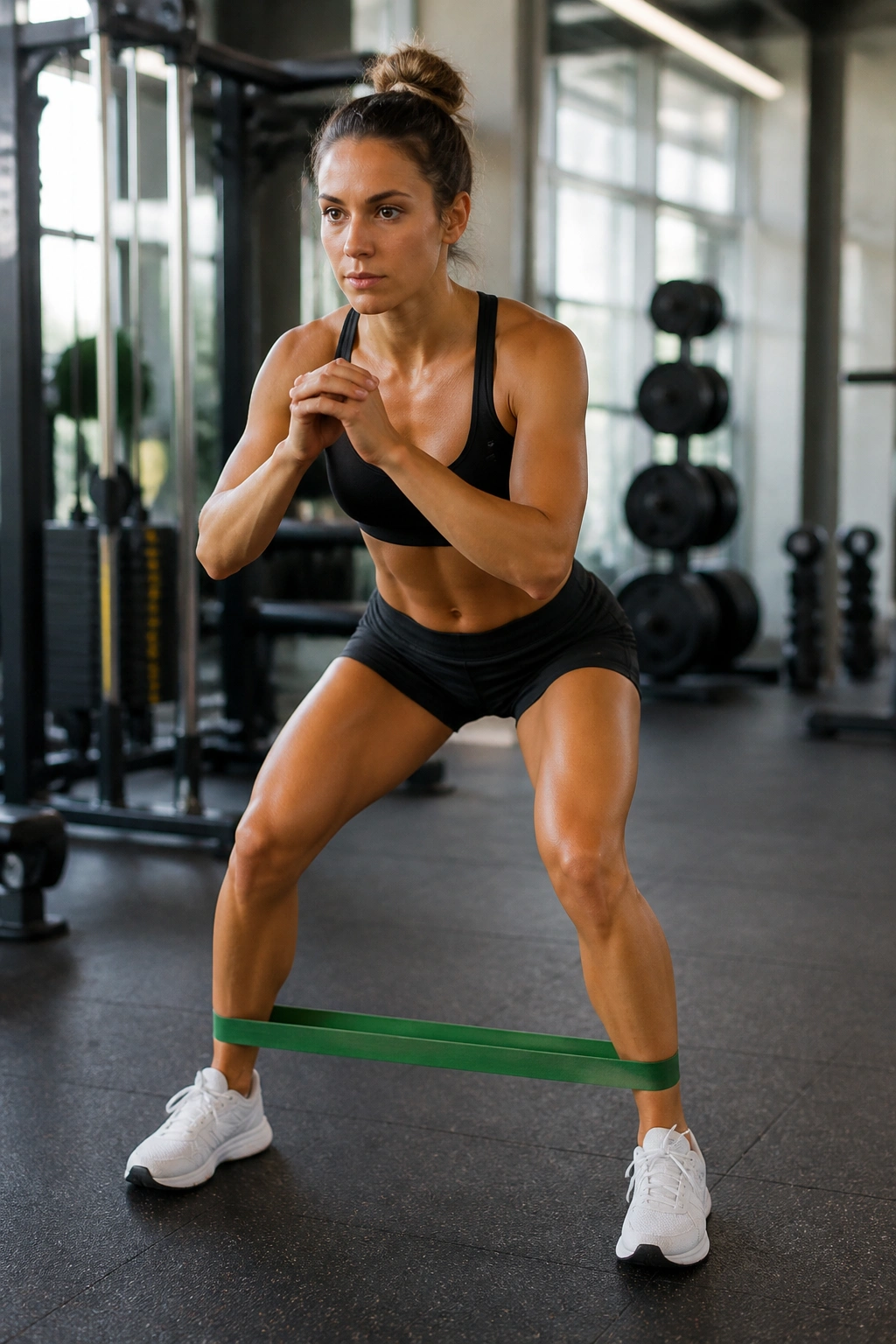
Lateral walks are the bread and butter of hip stabilization. This move targets the glute medius, which is responsible for lateral hip stability. If you have ever felt like your knees cave in during a heavy squat, this is the movement that fixes it. Place the band around your ankles for more leverage or above your knees for a slightly easier version.
You want to maintain a “semi-squat” position throughout the entire walk. If you stand up straight, you lose the tension in your hips, and your quads will take over the work. Take small, controlled steps to the side, maintaining tension on the band at all times. Do not let your feet come together completely; keep them hip-width apart even when you step inward.
3. Banded Clamshells
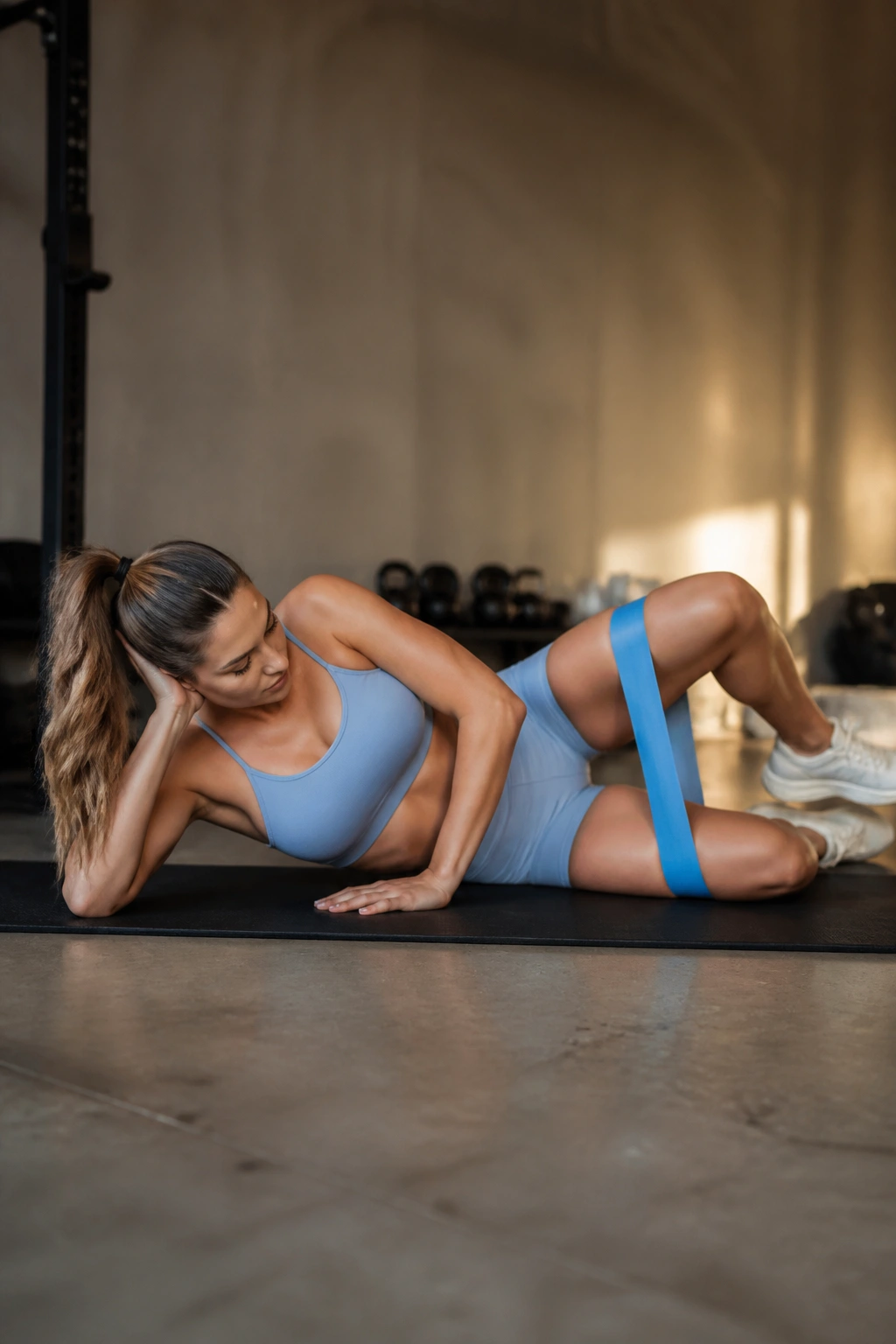
Clamshells look deceptive. They seem like a small, insignificant movement, but if you do them correctly, your hips will be screaming by the end of twenty reps. Lying on your side, knees bent at a 45-degree angle, you lift the top knee while keeping your heels touching. The band creates a constant pull that your hip rotators must fight against.
Most people perform this way too fast. To get the most out of it, move in a slow, four-second tempo. Open the knee for two seconds, hold for one, and close for two. This eliminates momentum and forces the glute medius to do the lifting. If you are doing these for therapy or pre-activation, keep the rep count high, aiming for 20 to 25 reps per side before switching.
4. Standing Banded Hip Abduction
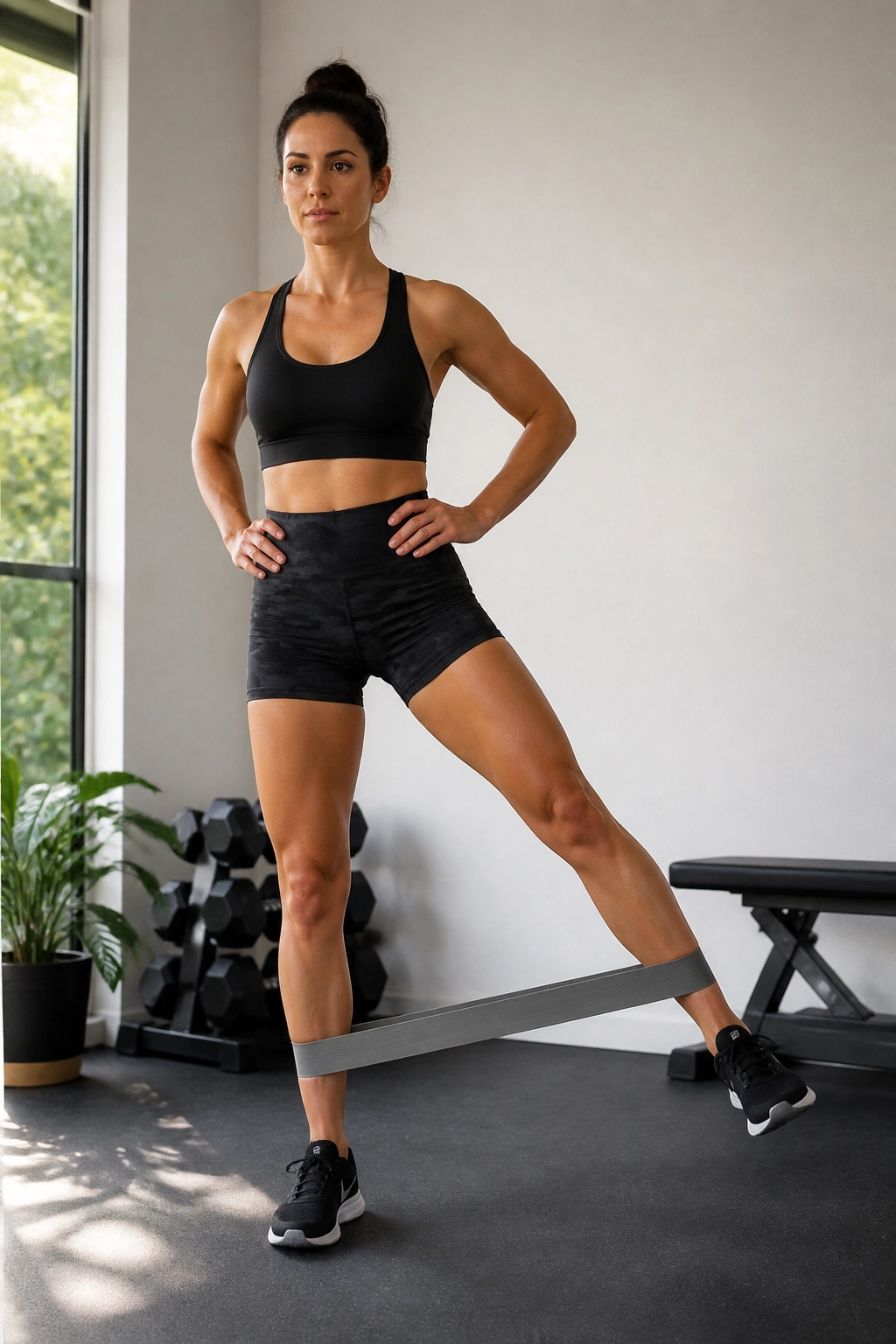
Balance is the hidden challenge here. Standing on one leg while abducting the other forces your stabilizing glute to work in a functional, upright position. Wrap the band around your ankles. Shift your weight to your left leg, keep a slight bend in that knee, and extend your right leg out to the side in a controlled arc.
The mistake most people make is leaning their torso to the opposite side to get the leg higher. Don’t do that. Keep your torso completely vertical. Even if your leg only rises a few inches, that movement is more effective than a giant, swinging leg kick that relies on momentum. If you can’t balance, hold onto a wall, but try to use your fingertips only to keep the challenge real.
5. Banded Squats
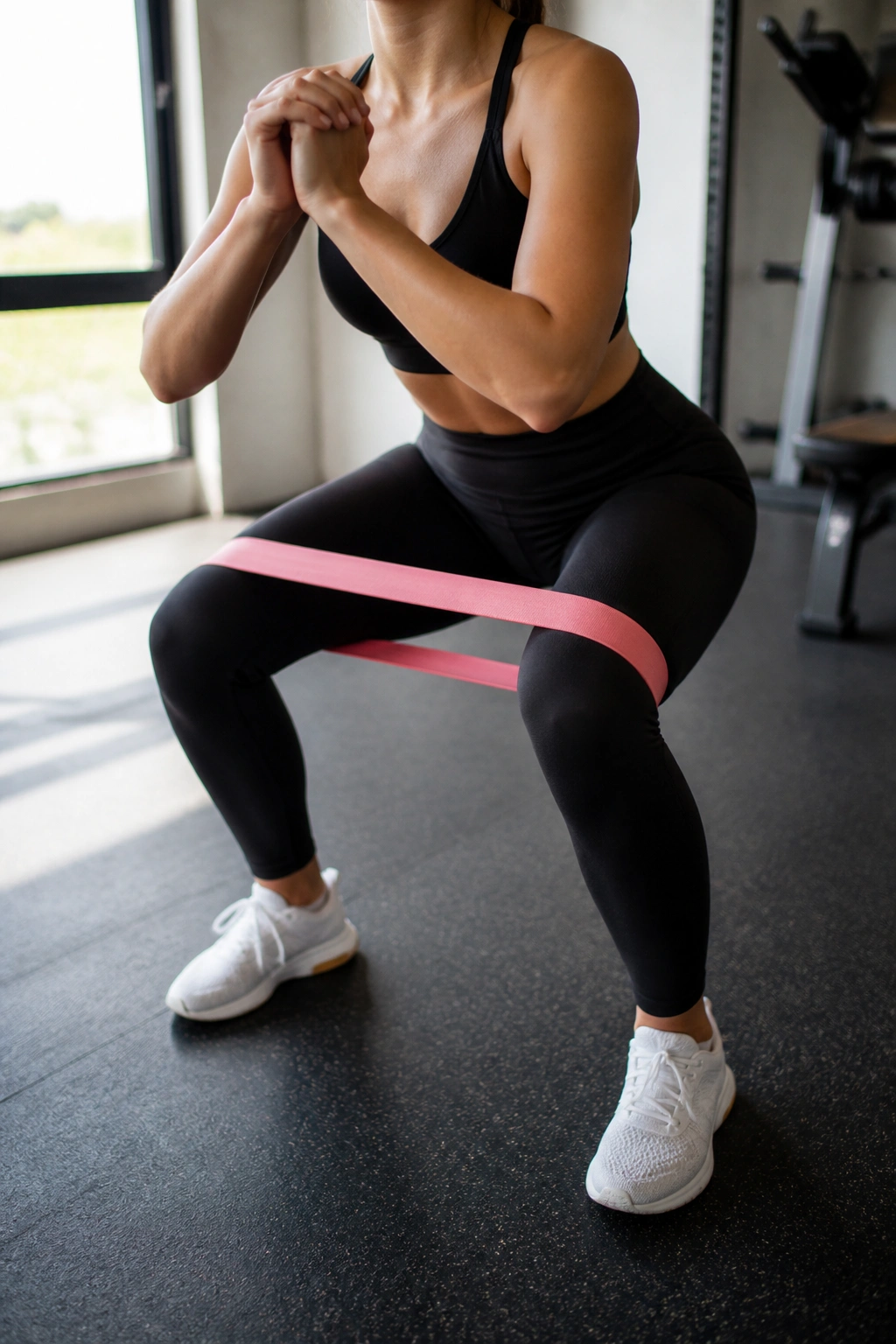
Adding a band to a standard squat turns a quad-dominant movement into a glute-heavy burner. Place the band right above your knees. As you descend, the band will try to pull your knees together. Fight that pull. Force your knees outward, tracking them over your toes the entire time.
This forces you to be hyper-aware of your knee tracking. If your knees collapse, the glutes are effectively turned off. This makes the squat less about how much weight you are moving and more about how much tension you can maintain. Perform these slowly—3 seconds on the way down, 1 second hold at the bottom, and explosive drive on the way up.
6. Banded Hip Thrusts
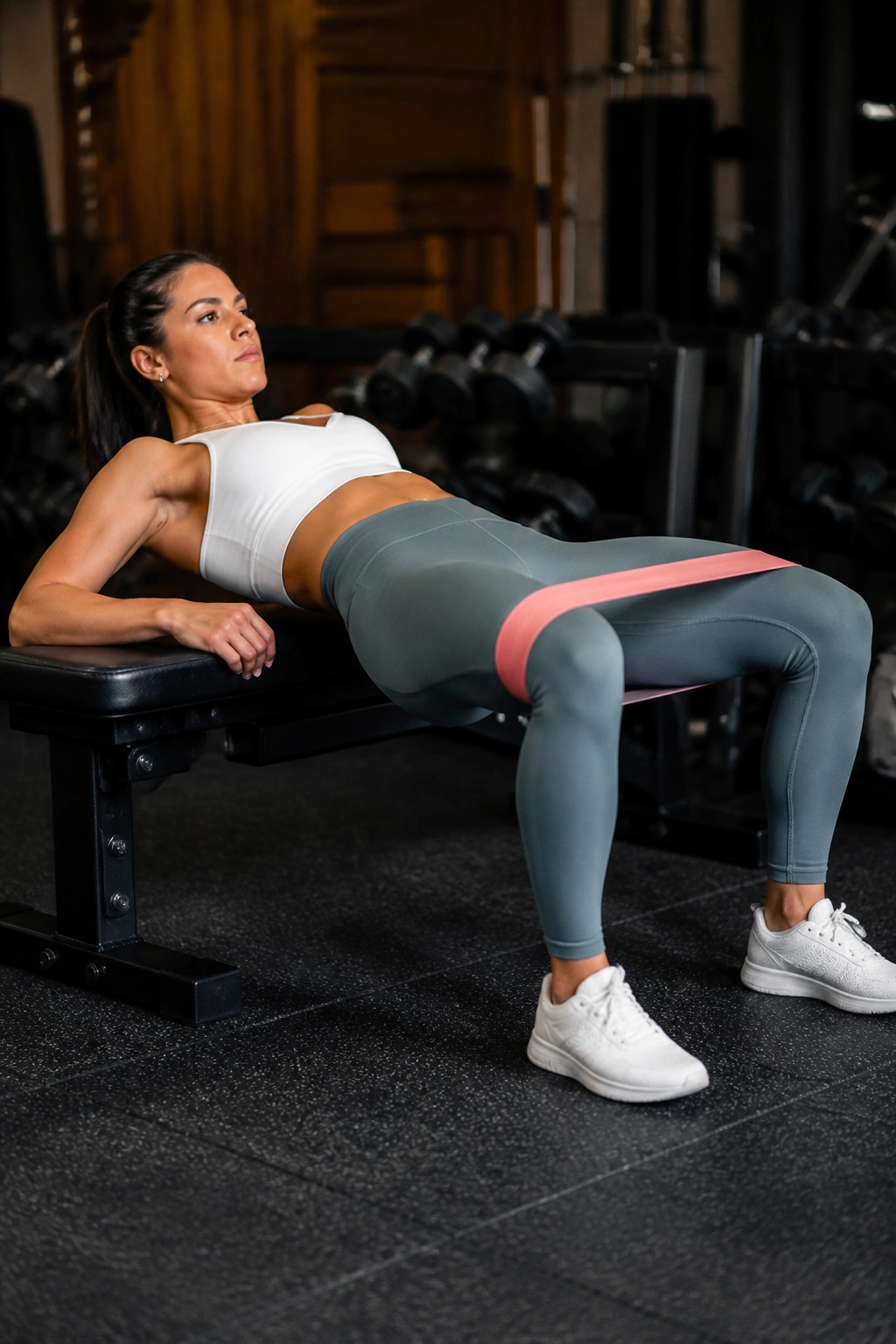
The hip thrust is widely considered the king of glute exercises because it places the muscles under maximum load in their shortened position. When you add a band, you create “accommodating resistance.” The movement gets harder as you reach the top, exactly where your glutes are strongest. This is where real growth happens.
The Setup
Rest your upper back against a sturdy bench or couch. Place the band above your knees. Drive through your heels, not your toes. If you feel your feet slipping, adjust your stance. It is helpful to place a yoga mat or a towel under the band if it digs into your skin too much—the comfort factor is worth the adjustment.
Why It Works
- The band demands constant outward pressure, preventing knee valgus.
- It provides a massive pump in the upper glute shelf.
- You can easily perform these as a burnout set after your heavy lifting.
7. Banded Fire Hydrants
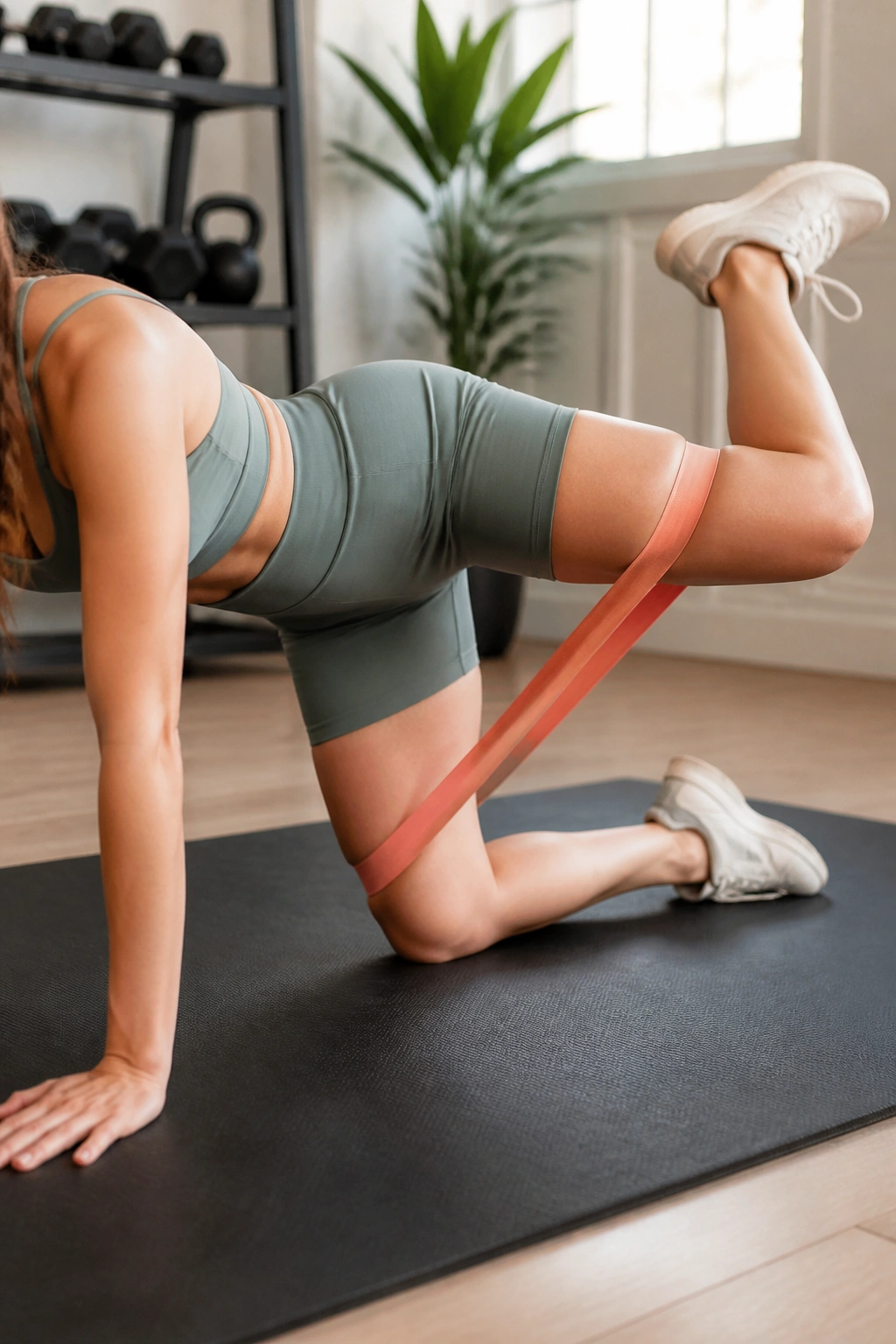
Fire hydrants isolate the glutes in a way that feels almost unnatural if you aren’t used to it. Get on all fours, hands under shoulders and knees under hips. Lift one leg out to the side, keeping the knee bent at a 90-degree angle. The band around your knees adds significant resistance to this abduction motion.
The goal is to keep your hips square to the ground. Do not rotate your torso to get the knee higher. Think about leading with your heel rather than your knee. This subtle adjustment shifts the focus from the hip flexors directly into the glute. If you feel a pinching sensation in the front of your hip, pull your core in tighter and ensure your spine is neutral.
8. Banded Glute Kickbacks
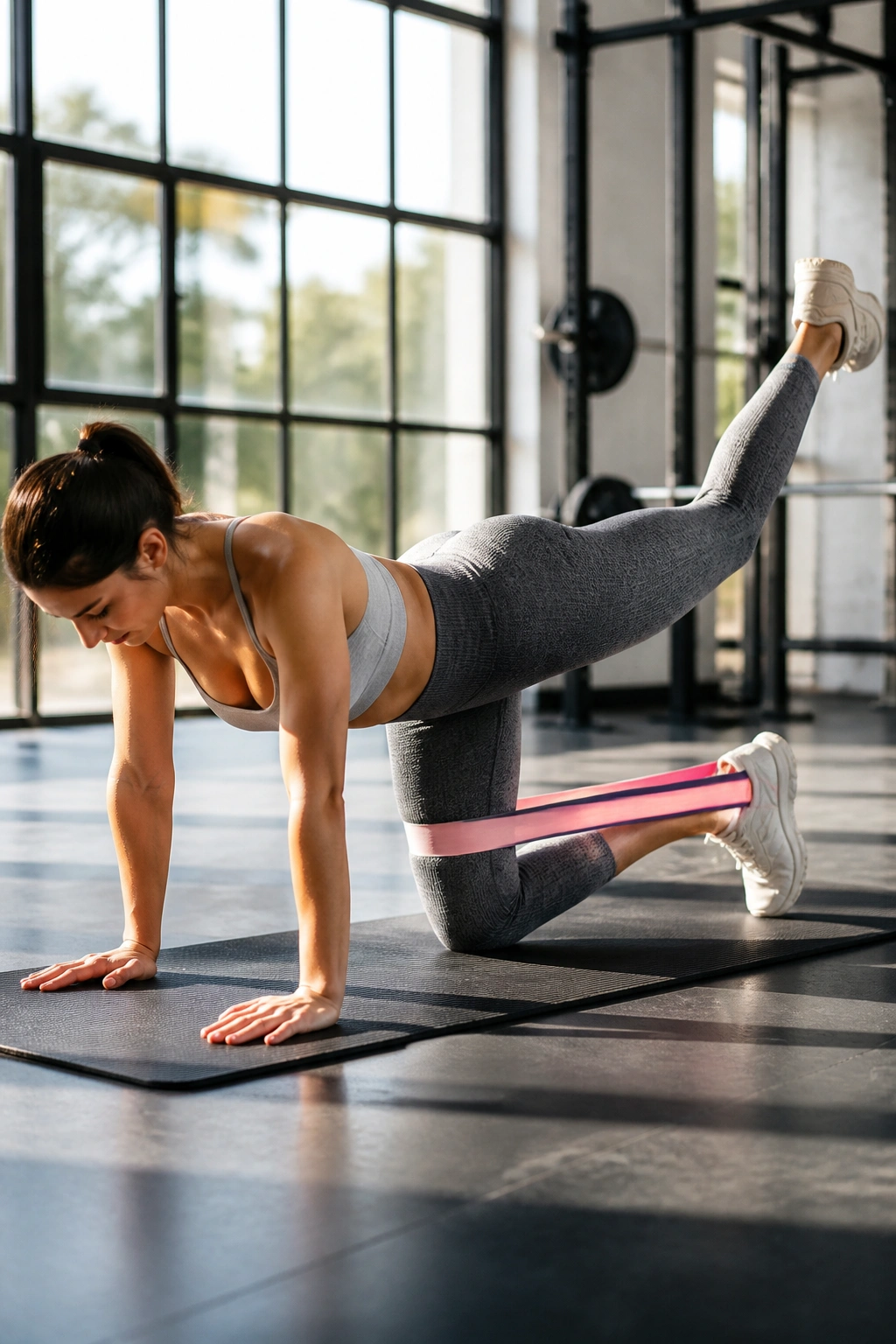
Kickbacks are a staple for targeting the glute maximus. With the band around your ankles, get into a tabletop position. Kick one leg straight back, driving the heel toward the ceiling. Squeeze your glute at the very top of the extension. It is a small movement, but it yields big results in terms of isolation.
Control the return. Do not let the band snap your leg back down. Lower it with the same control you used to lift it. This time under tension (TUT) is what causes muscle breakdown and subsequent growth. Try to avoid arching your lower back as you kick; if you arch, you are compensating for lack of glute range with lumbar spine extension.
9. Curtsy Lunges with Band
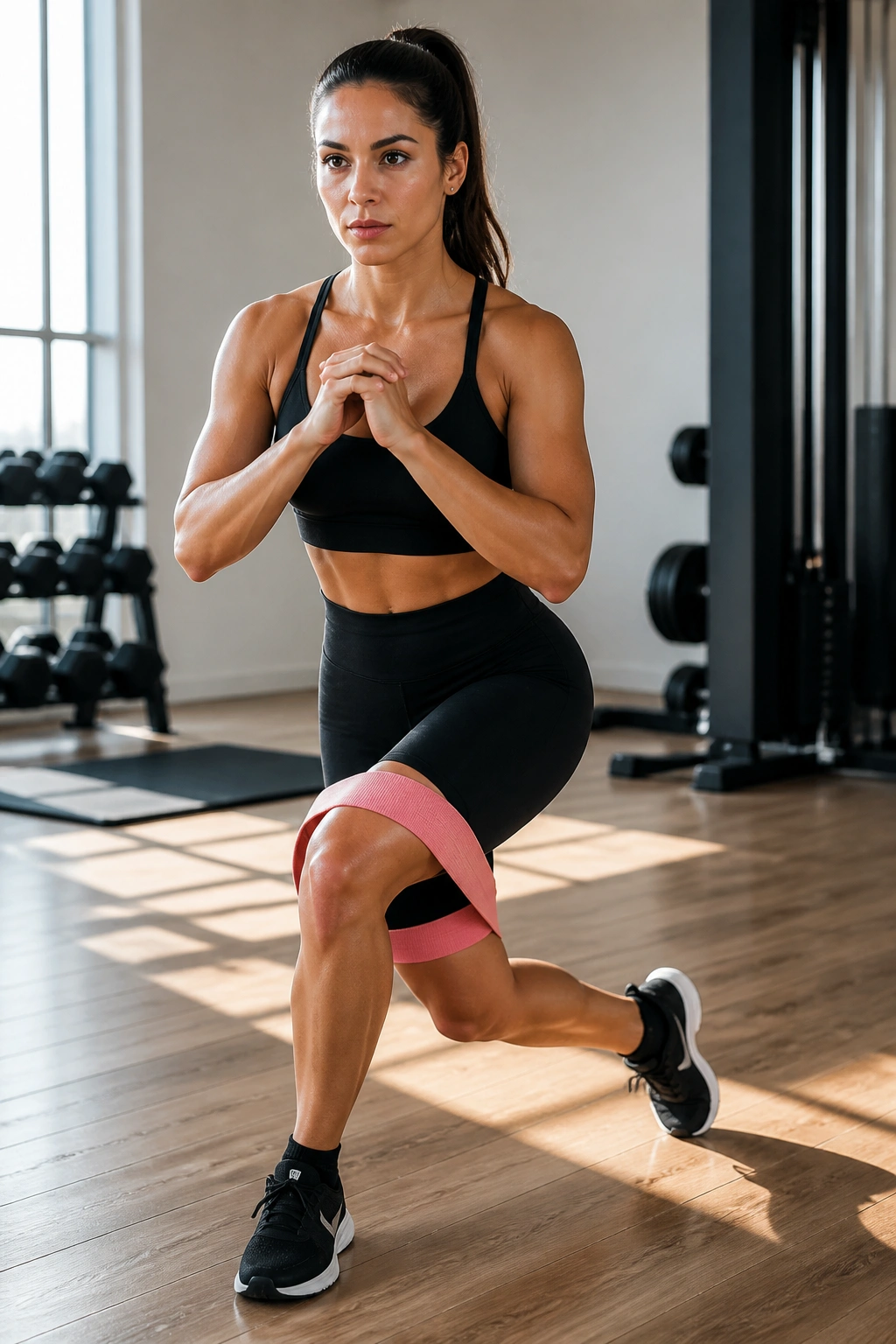
Curtsy lunges add a rotational element that hits the glutes from a different angle than standard squats or lunges. Place the band just above your knees. Step one foot behind and across the other, descending into a lunge. The band forces you to stabilize your hip against rotation, which requires immense effort from the glute medius.
This is an advanced move. Your balance will be challenged, and your hips will burn. Perform this slowly. If you find yourself wobbling, shorten the range of motion until your strength improves. The goal is to keep the front knee aligned with your toes, preventing it from caving inward as you drop into the lunge.
10. Banded Sumo Deadlifts
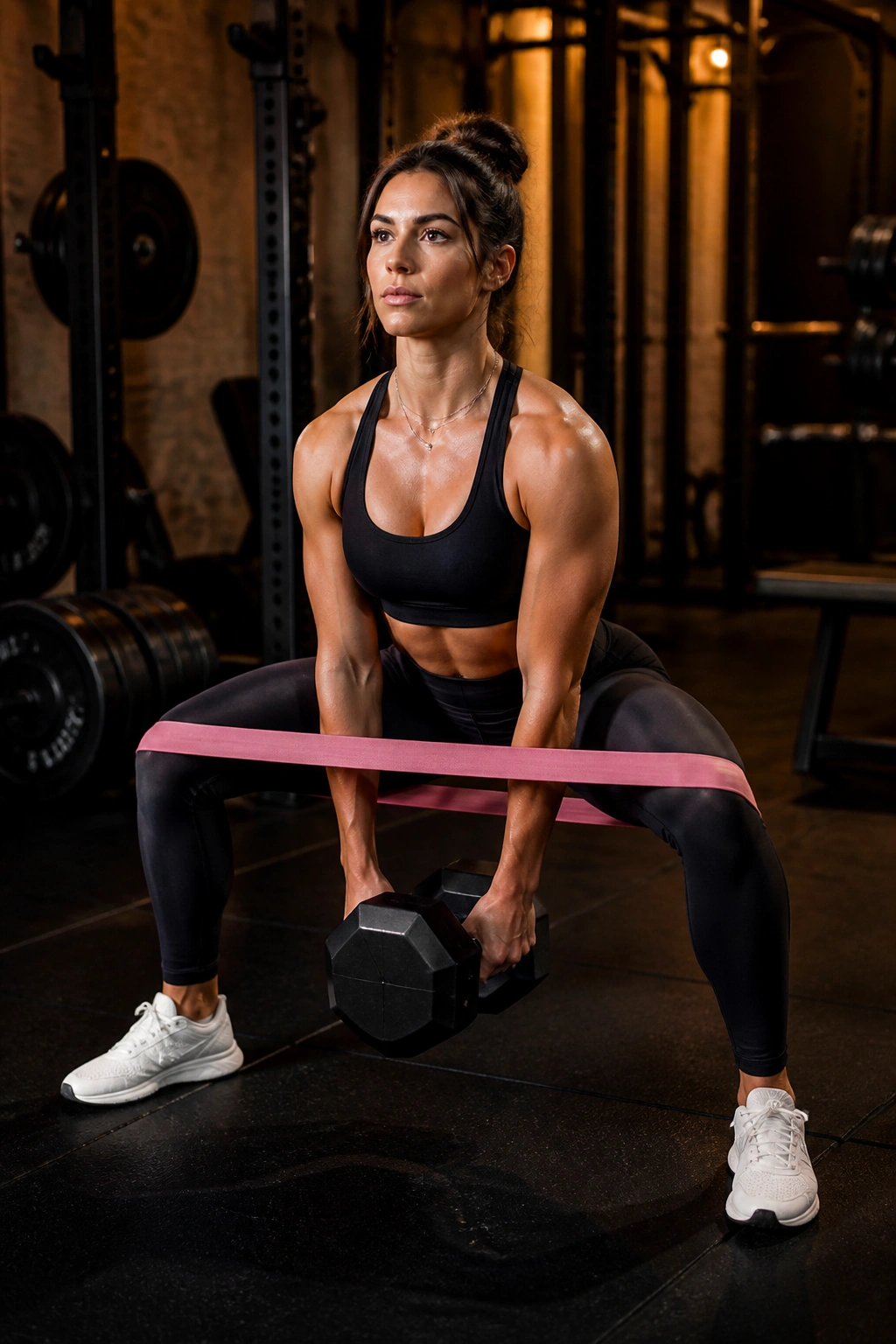
The sumo stance already hits the glutes hard, but the band makes it even more demanding. Place the band above your knees and step out into a wide, toes-out stance. As you hinge, the band will try to collapse your knees inward. Push out against it for the duration of the lift.
This movement is excellent for strengthening the posterior chain while demanding active hip external rotation. Because of the wide stance, you will feel this in the inner thighs (adductors) as well, which complements the glute work. Focus on keeping your chest up and your back flat. The hinge should feel like you are pushing a door closed with your glutes.
11. Banded Monster Walks
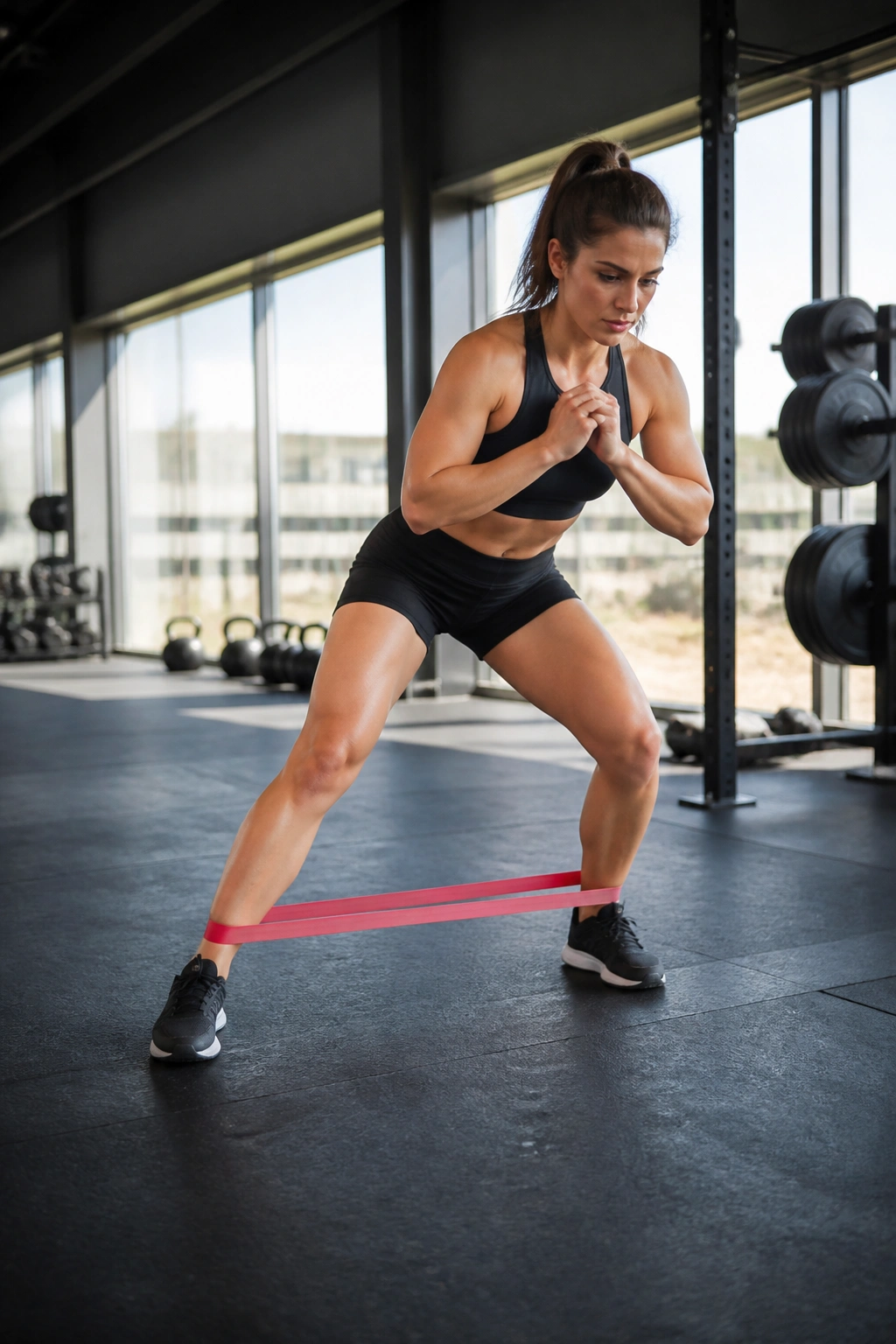
If you have ever done these, you know they are punishing. Place a band around your ankles, stand in a partial squat, and take wide, diagonal steps forward. It mimics a waddle, which is why it earned its name. The constant tension on the outer hips is unmatched.
Why this works so well: the band is never slack. In many exercises, there is a “rest” point, but with monster walks, you have to fight the band in both directions. The abductors are working overtime to keep your legs from snapping together. Perform these for distance—try 20 steps forward and 20 steps backward. Your glutes will be burning by the end.
12. Banded Seated Abduction
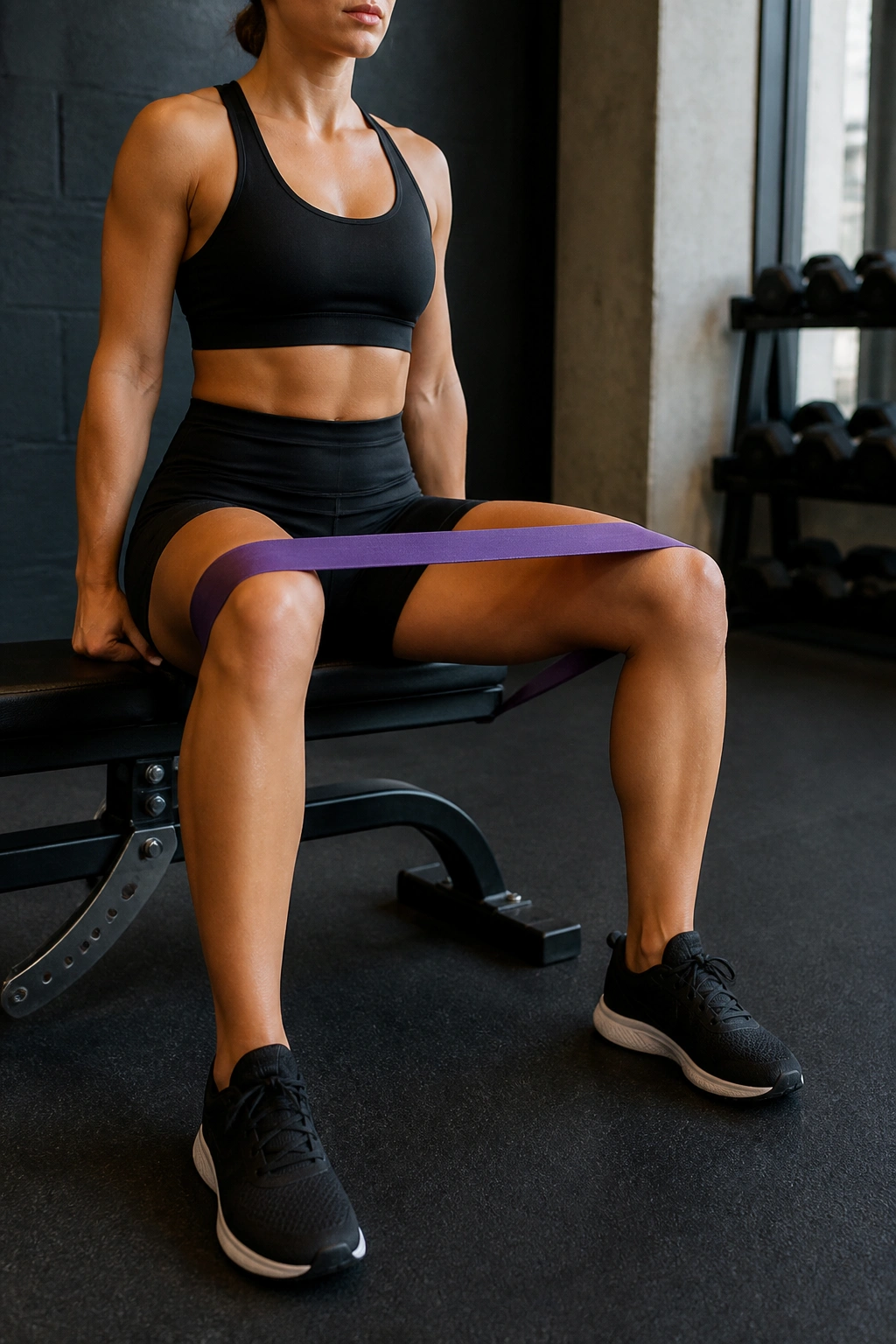
Sit on the edge of a sturdy bench or chair with the band wrapped around your knees. Your feet should be flat on the floor. Now, simply push your knees apart as far as they will go, hold for a second, and return to the starting position. It is a simple, seated movement that is easy to do, yet exceptionally effective.
This is a great “finisher” exercise. Because you are seated, you remove balance from the equation, allowing you to focus entirely on pushing the knees apart. Aim for high reps here—somewhere in the 30 to 50 rep range. You will feel a deep, acidic burn in the side of your hips, which is exactly the point.
13. Banded Single-Leg Deadlifts
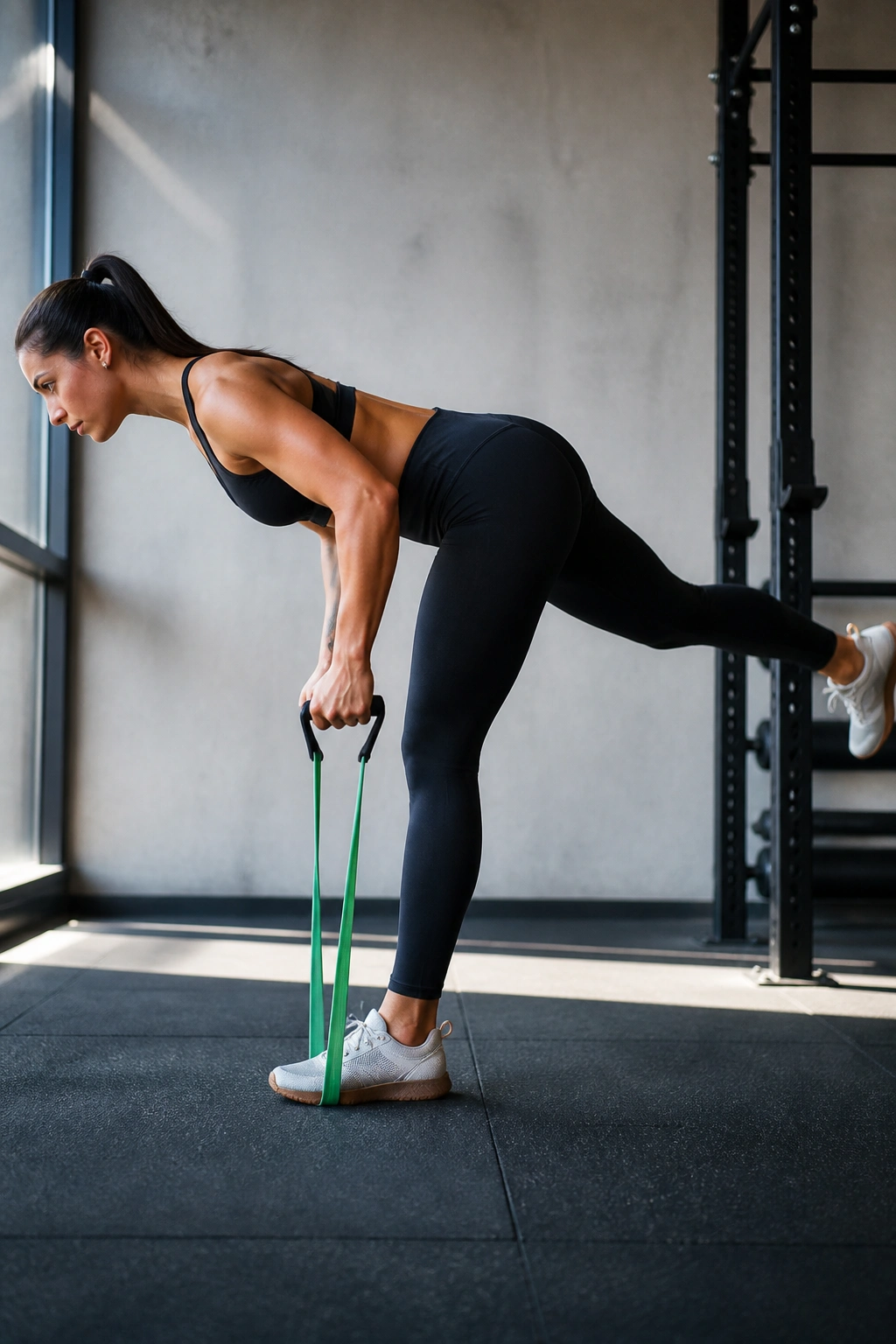
Single-leg deadlifts are difficult on their own. Adding a band creates a lateral stability challenge that will test your nervous system. Place a long resistance band around your standing foot and hold the handles, or use a mini-band around your knees if doing a bodyweight version. The band adds a layer of resistance that forces the glute to stabilize the entire leg.
Do not rush these. The hinge is the most important part. Push your hips back as if you are trying to touch the wall behind you with your glutes. Keep your back flat. If you start to hunch over, stop and reset. This move is as much about coordination as it is about strength.
14. Banded Glute Pulses
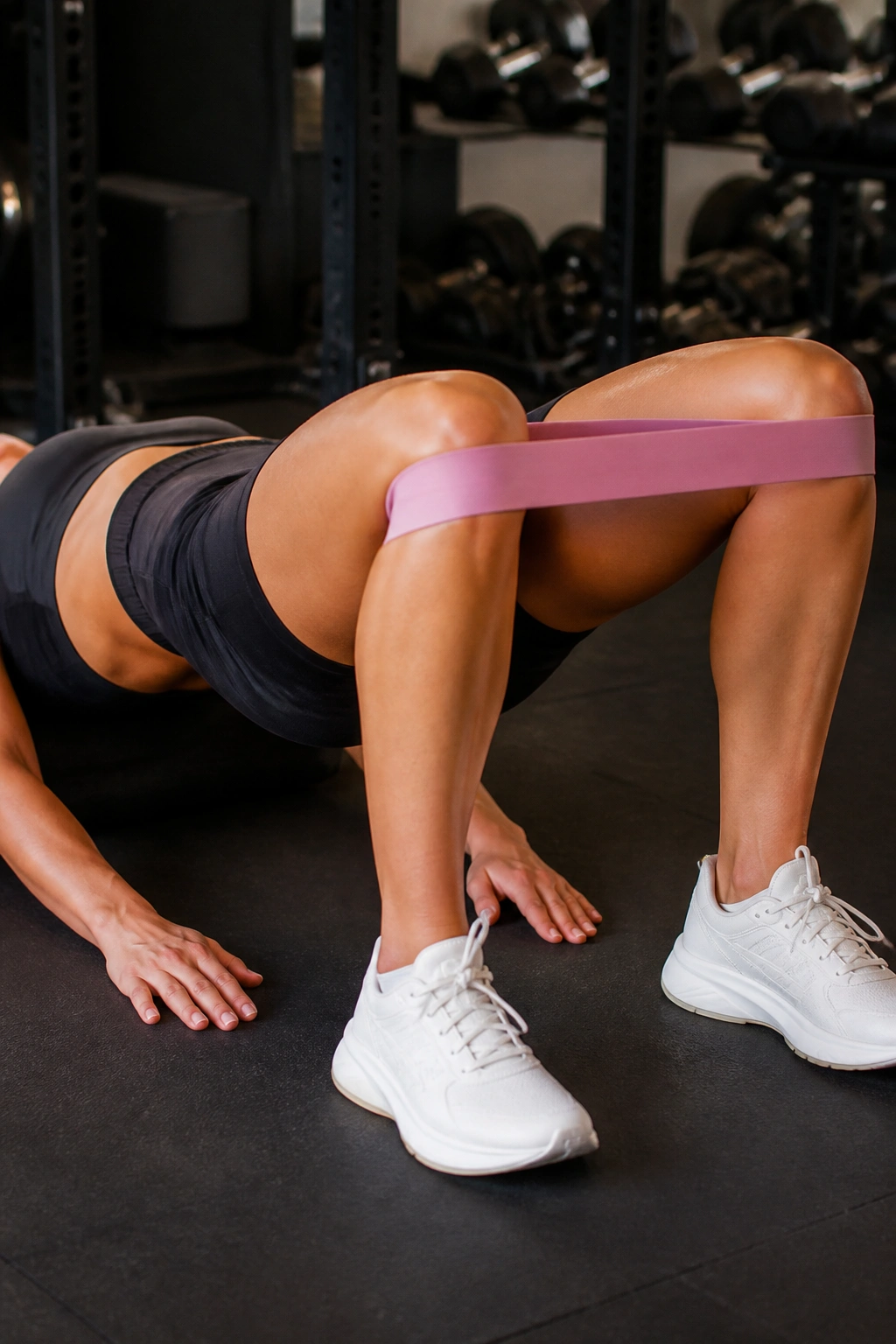
Pulses are all about time under tension. Get into a glute bridge position, lift your hips, and then—without lowering them—pulse your knees outward against the band. Keep the hips high and the glutes squeezed. The movement is tiny, maybe an inch or two, but it fatigues the muscle fibers rapidly.
Try to complete 50 pulses without dropping your hips. If that is too easy, add a pause every 10 reps. The goal is to reach that point of total failure where you can barely move the band anymore. This kind of high-volume work is perfect for when you are short on time but want a high-intensity glute session.
15. Banded Donkey Kicks
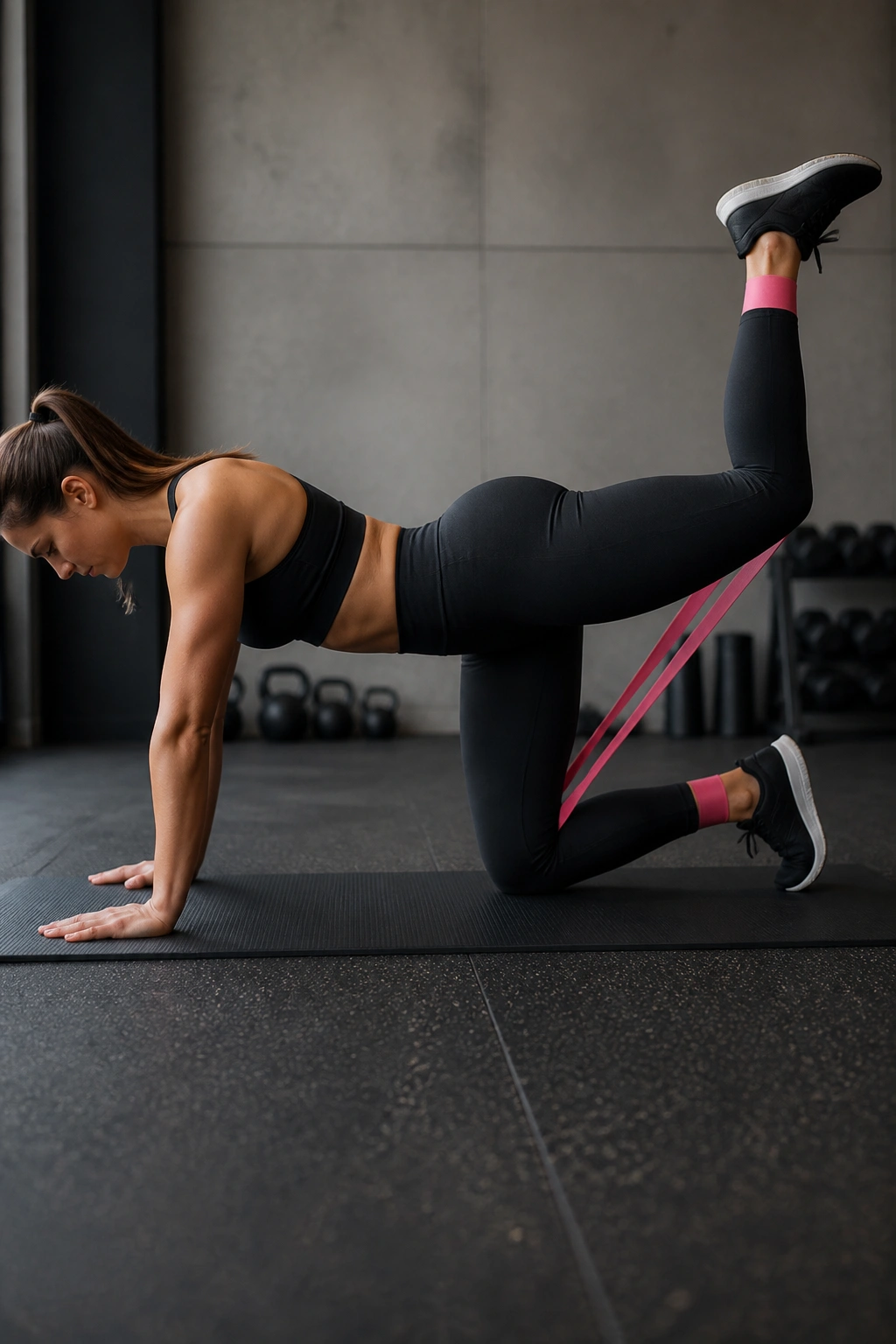
Donkey kicks are another staple for targeting the glute maximus. With the band around your ankles or just above your knees, get on all fours. Kick one leg up toward the ceiling, keeping your knee at a 90-degree angle. Unlike the kickback, where the leg is straight, this version creates a more localized contraction in the buttock.
Keep your core braced tight. If you let your stomach sag, your lower back will take the load, which defeats the purpose. Imagine there is a glass of water on your lower back that you cannot spill. Move with rhythm and purpose.
16. Banded Step-Ups
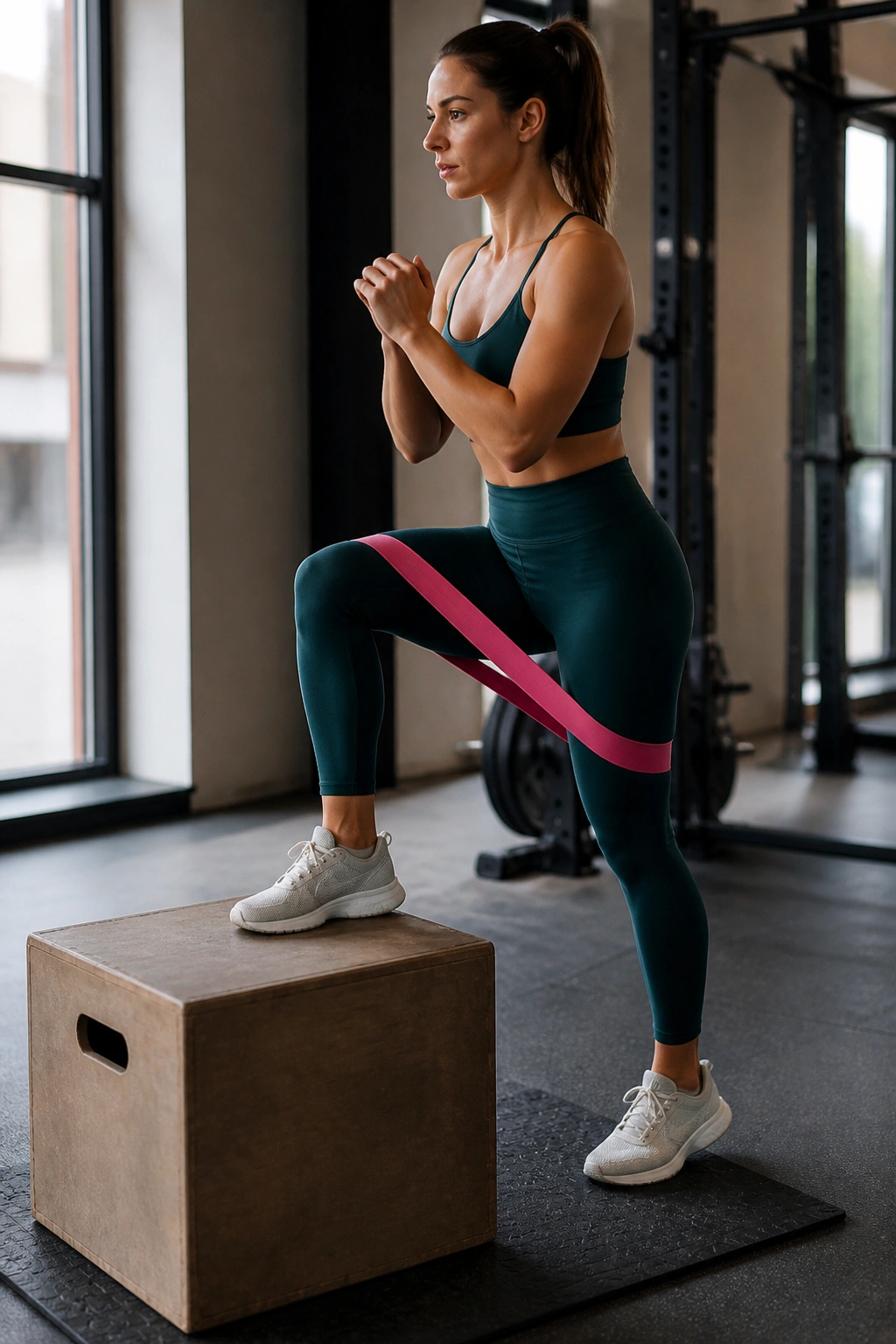
Step-ups are a functional powerhouse, and the band adds a lateral stability component that is often missing from standard gym work. Place the band above your knees. Step onto a box or bench, driving through the heel of the elevated foot. The band will fight you the entire time, trying to pull your knee inward.
Fight to keep that knee in line with your foot as you ascend. Many people find their knee wobbling significantly on the first few reps. That wobble is your glute medius learning how to stabilize. Over time, that wobble will disappear, and you will feel much more stable during lunges and squats.
17. Banded Good Mornings
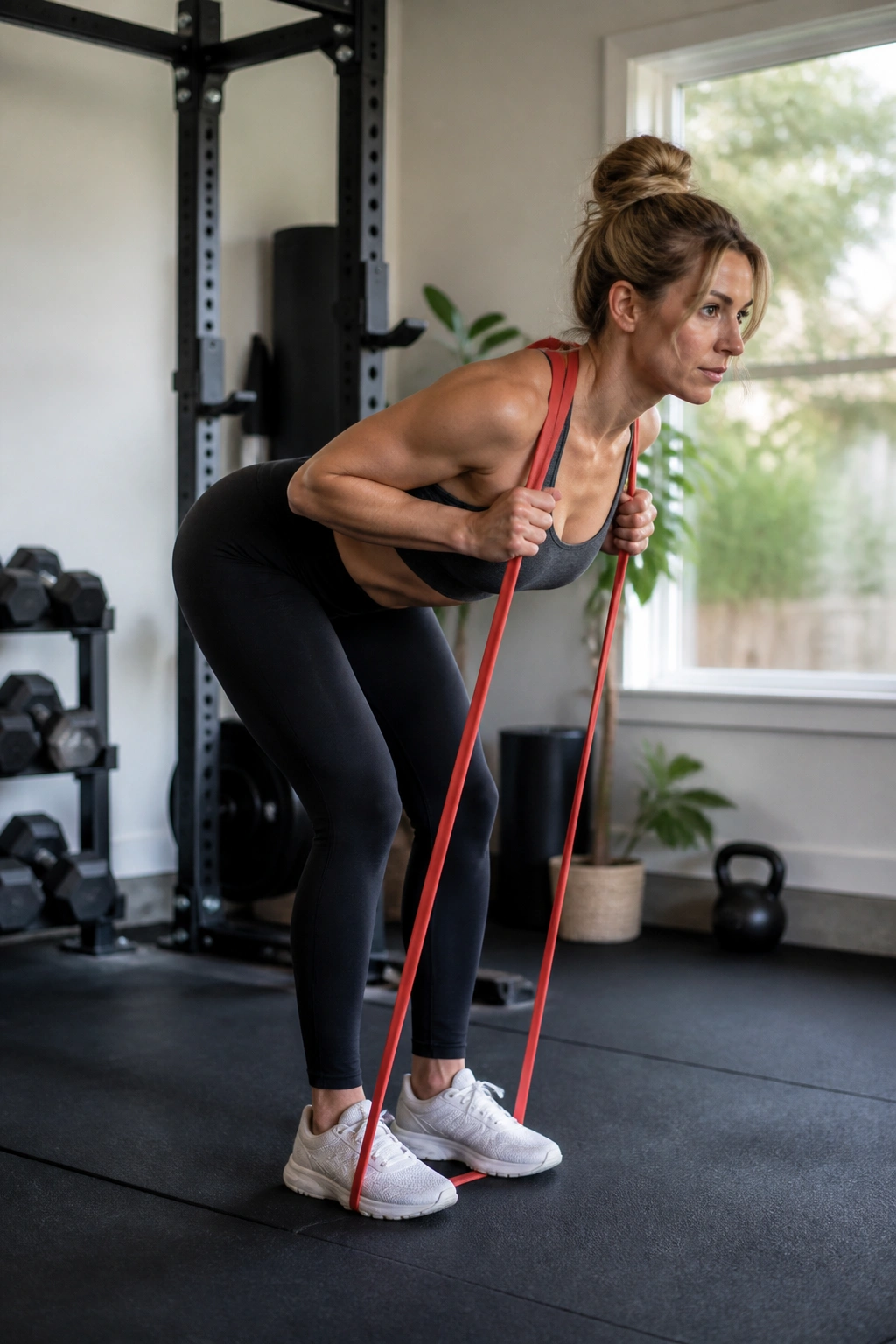
Good mornings are a fantastic hinge movement that targets the glutes and hamstrings. While usually done with a barbell, a resistance band is a great alternative for home workouts. Stand on the middle of a long resistance band and loop the other end around your neck (or hold it at your chest). Keep your knees slightly bent and hinge at the hips.
Push your glutes back. You should feel a deep stretch in the hamstrings and a strong contraction in the glutes as you stand back up. Keep your spine neutral. Never round your back to get lower. Your range of motion should be dictated by your hamstring flexibility, not by how low you can get your torso.
18. Banded Lying Leg Circles
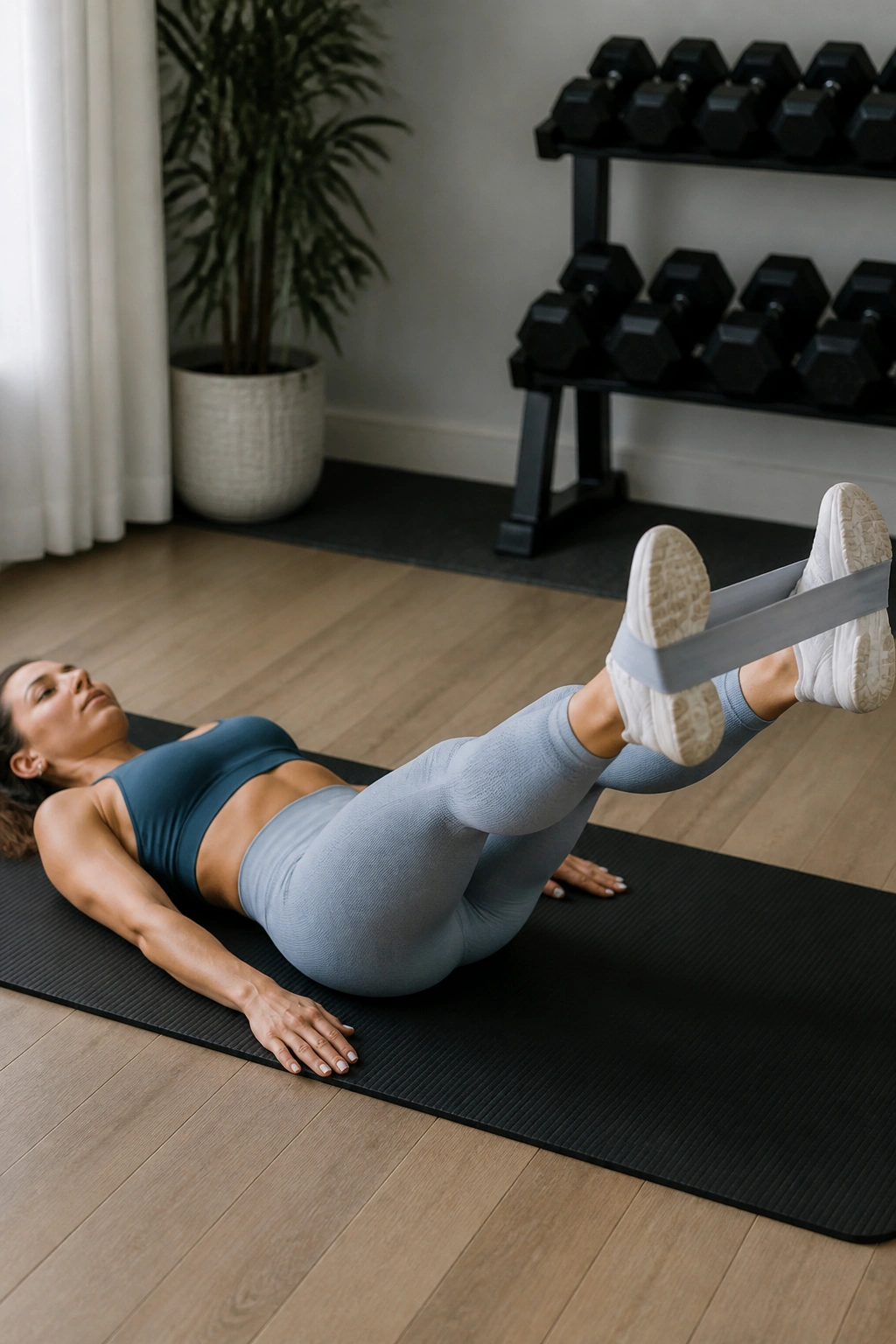
Lying on your back, place the band around your feet. Lift your legs slightly off the ground and perform slow, controlled circles. This creates a challenging isometric hold for the core while forcing the glutes to keep the legs abducted against the band. It is an unusual movement, but it hits the hips from an angle most exercises ignore.
Because you are lying down, you can ensure your spine stays glued to the floor. Focus on the circular motion; don’t just kick your legs. Think about dragging your heels through the air.
19. Banded Frog Pumps
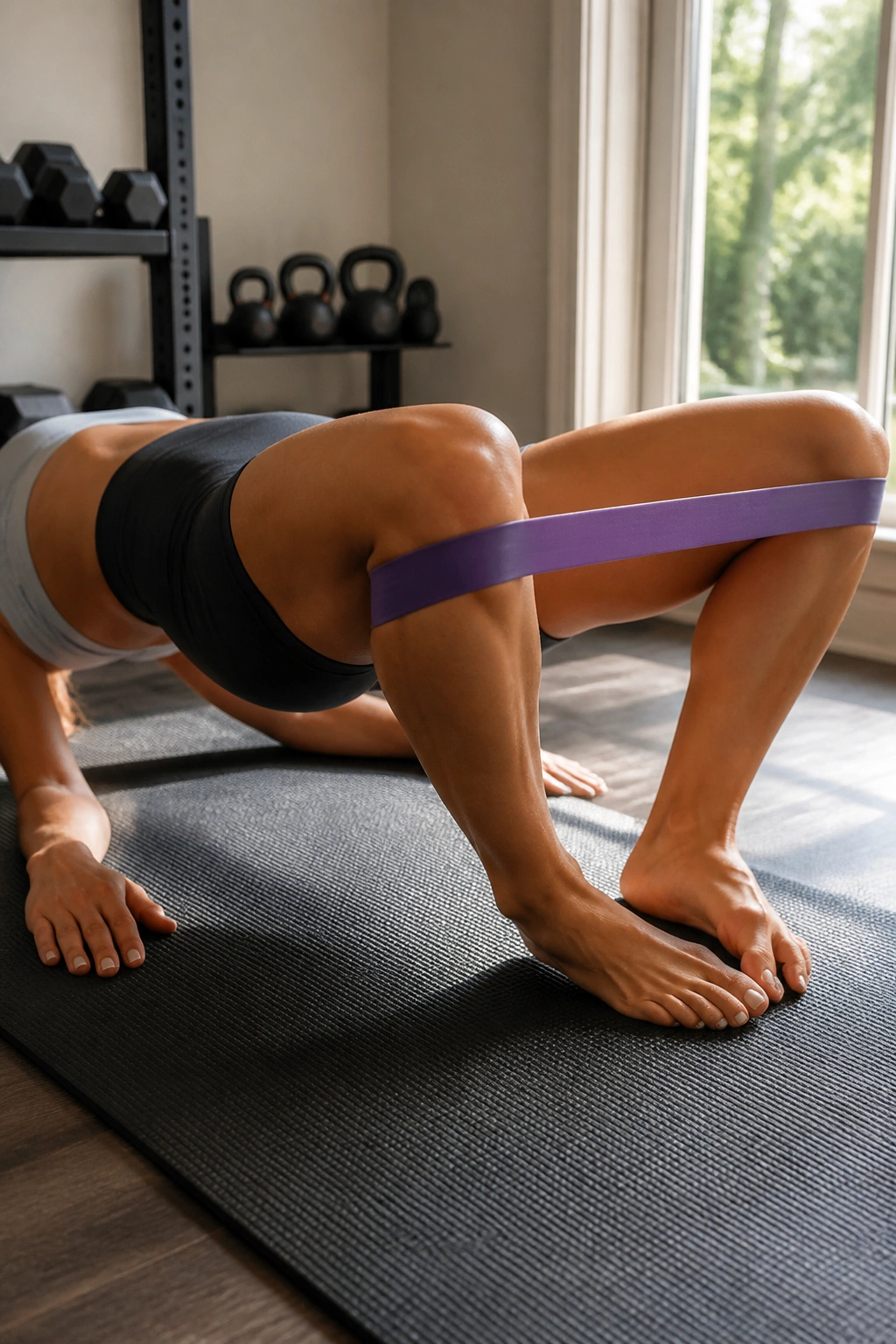
Frog pumps are a unique variation of the glute bridge. Lie on your back, bend your knees, and press the soles of your feet together. Let your knees fall outward, creating a diamond shape with your legs. Place the band around your knees. Lift your hips, pressing your heels together throughout the motion.
This position forces external rotation, which is the glute’s primary function. Because you are in a rotated position, you cannot use your quads as easily, making this a very pure glute isolation exercise. It looks funny, but it is one of the most effective glute exercises you can do.
20. Banded Reverse Lunges
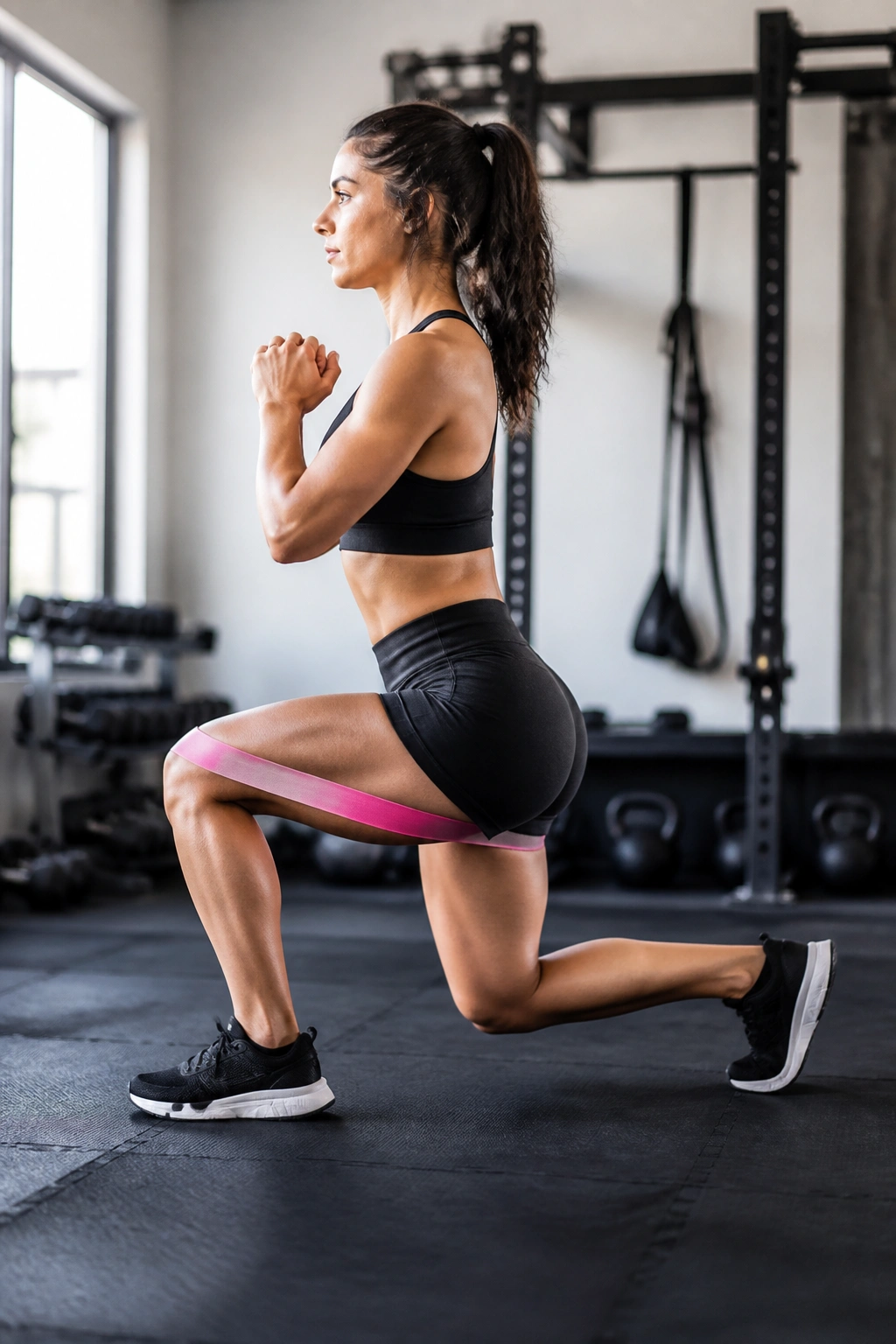
Reverse lunges are generally safer for the knees than forward lunges, and the band adds a layer of resistance that makes the glute work harder on the descent. With the band around your knees, step backward. As you lower your back knee, push the front knee out.
The stability required to keep your balance while fighting the band is significant. This movement forces you to stabilize on one leg, which is essential for athletic performance. Keep your torso upright. Leaning forward too much turns this into a hinge; staying tall keeps the focus on the glutes and quads.
21. Banded Split Squats
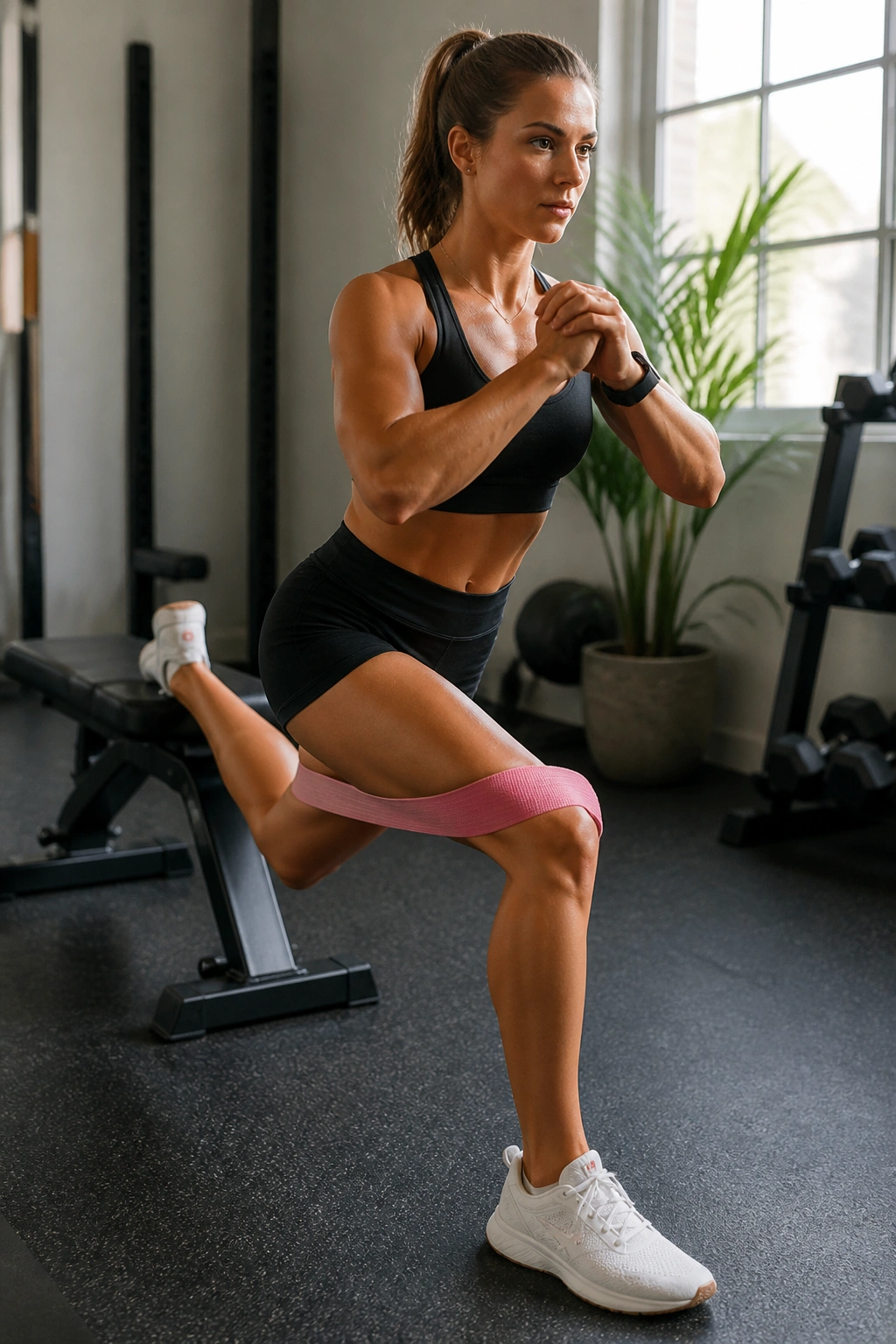
The split squat is a unilateral killer. Placing a band above your knees forces you to maintain an active, stable hip while you perform the squat. One foot is forward, one is back on a bench or floor. Lower yourself down, then drive up. The band will be pulling your front knee in; don’t let it win.
If you are doing these for the first time, start with bodyweight before adding the band. The stability requirement is high. Once you are comfortable, you can add a heavy dumbbell in the opposite hand to make it even more challenging.
22. Banded Side-Lying Leg Lifts
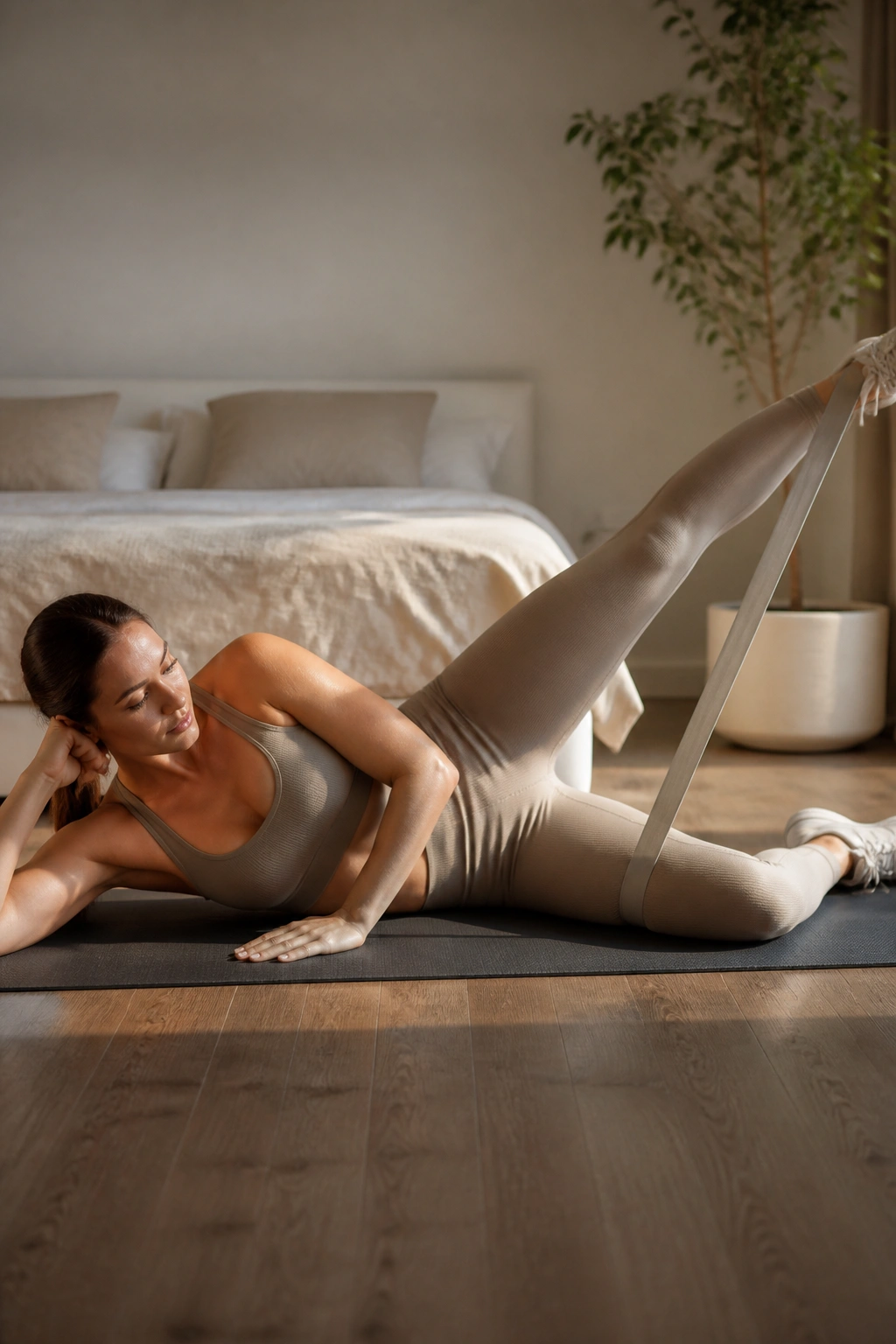
This is a classic Pilates-style move that has been repurposed for strength training. Lie on your side, legs straight. The band is around your ankles. Lift your top leg as high as you can without tilting your hips.
The magic of this move is in the tempo. If you explode up and snap down, you get almost nothing out of it. If you move slowly—lifting for two, holding for one, lowering for two—the fatigue accumulates very quickly. You will feel this in the side of your hip, right where you want it.
23. Banded Plank Jacks
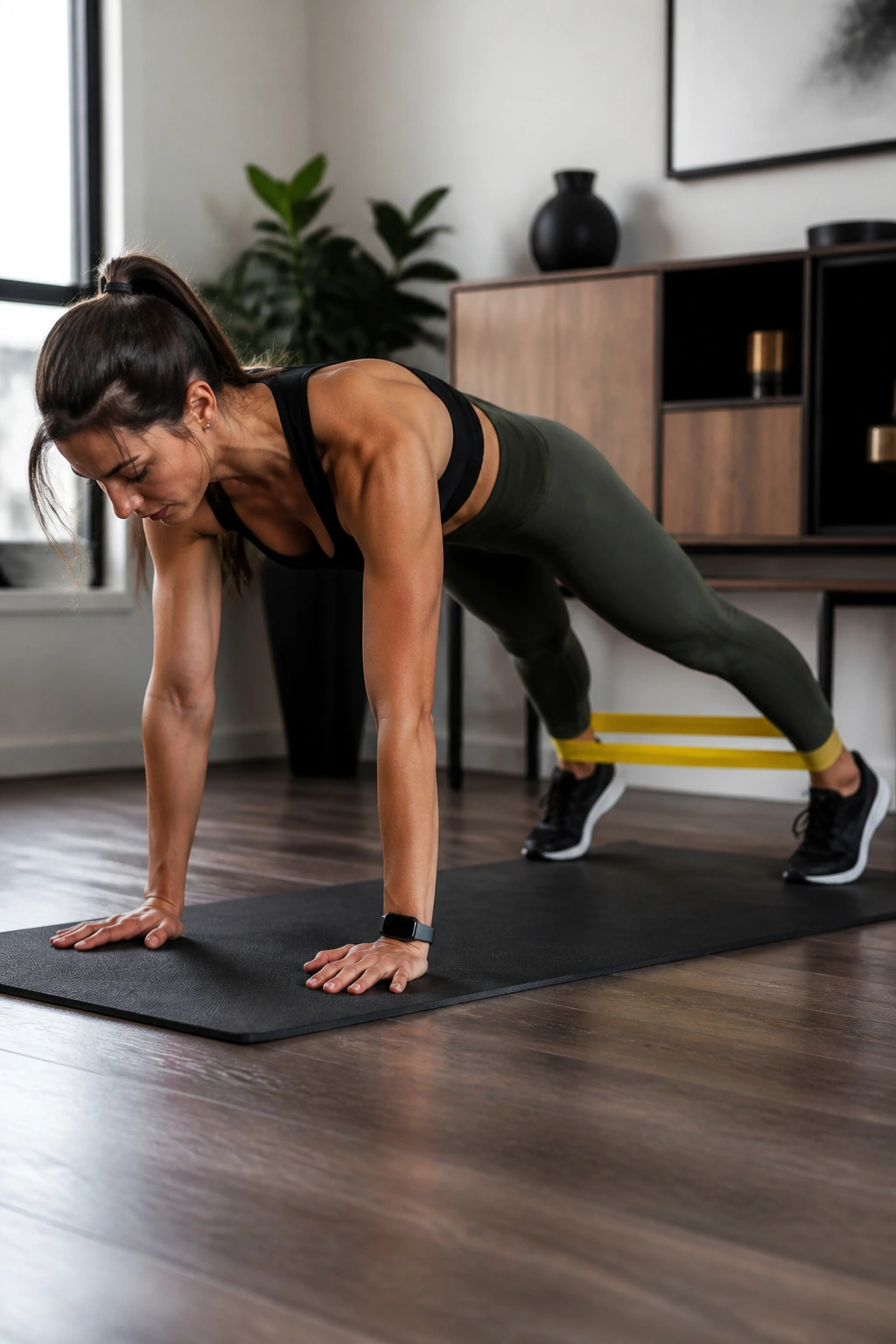
Plank jacks combine core stability with glute and hip endurance. Get into a high plank position with the band around your ankles. Hop your feet out and in, keeping your hips steady. The band makes the “out” portion of the movement much harder.
Keep your butt down. When you get tired, your hips will naturally want to rise. Fight that. Keep your core braced and imagine your glutes are pulling your legs out against the resistance. This is a total-body movement that happens to target the glutes very effectively.
24. Banded Kettlebell Swings
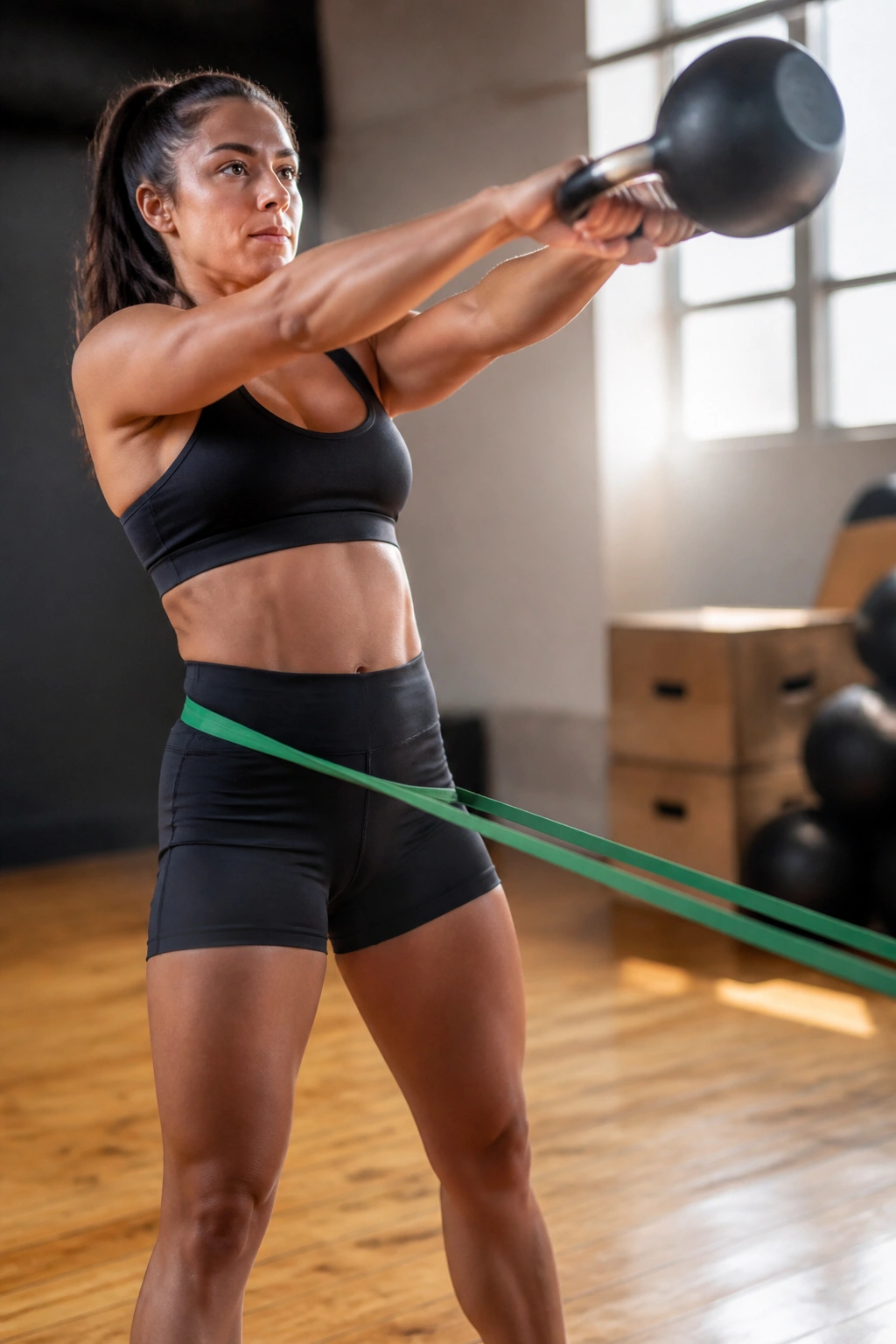
Kettlebell swings are all about explosive hip extension. By adding a band, you create a “snap” at the top of the swing. The band should be anchored in front of you, with the other end wrapped around your waist. As you swing, the band pulls you forward, forcing your glutes to work harder to lock out the movement at the top.
This teaches you to snap your hips forward forcefully. It is advanced, so do not try this until you have mastered the standard swing. The band makes the movement dynamic and requires perfect timing to avoid being pulled off balance.
25. Banded Walk-Outs
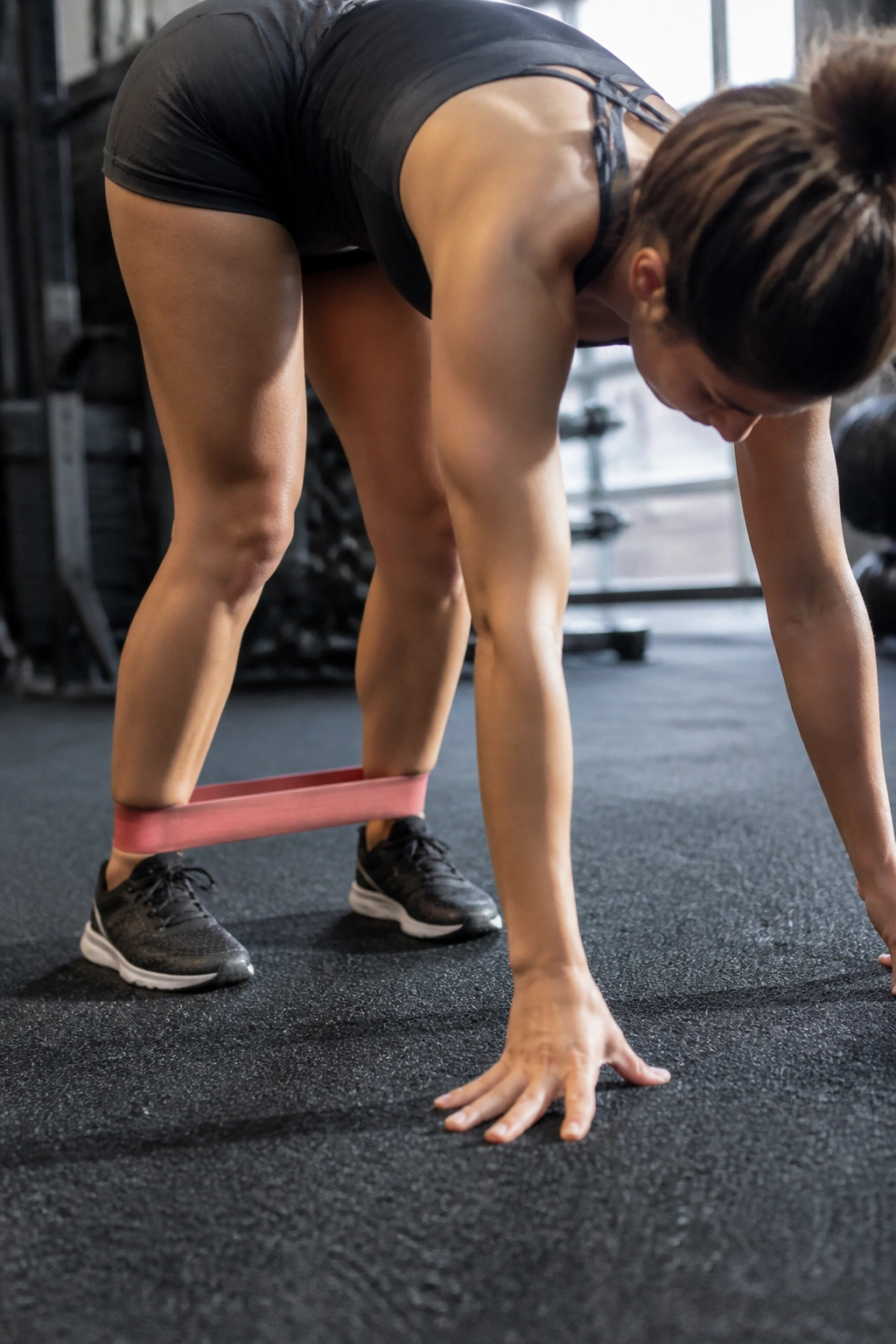
Start in a standing position with the band around your ankles. Hinge at the hips, touch the floor, and walk your hands out into a plank position. Hold the plank for a second, then walk your hands back to your feet and stand up. The band around your ankles provides constant tension throughout the walk-out.
This incorporates a hinge, a core hold, and a transition, making it a great compound movement. The glute engagement comes from keeping the legs stable and resisting the pull of the band while your hands move. It is a slow, methodical exercise that is perfect for a warm-up or a conditioning circuit.
Final Thoughts
Building stronger glutes is rarely about finding a “secret” exercise or a magic pill. It is about consistency, resistance, and—most importantly—the mind-muscle connection. Resistance bands are not just a convenience tool; they are a legitimate way to change the angle of force, challenge your stability, and wake up muscles that have gone dormant.
Do not feel like you have to do all twenty-five of these movements in a single session. Pick three or four, pair them with your existing routine, and focus on the quality of every single repetition. If you feel the burn in the right places and maintain your form, the results will come. Listen to your body, respect the tension, and keep pushing.
