



You know the feeling when you walk into the gym, and it’s leg day. There’s a specific kind of dread, sure, but there’s also the promise of genuine, hard-earned progress. People love to talk about biceps and chests, but if you want real, functional strength—the kind that translates to everything else you do in life—you have to pay the toll in the squat rack.
Compound exercises are the currency of that payment. They aren’t about isolating a single muscle to make it “pop” for a mirror selfie. They are about movement patterns, efficiency, and force production. When you perform a compound leg exercise, you aren’t just hitting your quads; you’re coordinating your ankles, knees, hips, and core, all while fighting gravity.
It’s messy. It’s tiring. It’s essential.
If your routine is mostly leg extensions and calf raises, you’re missing out on the foundational strength that carries your body through a long day. You need movements that force your muscles to work in concert, the way they were designed to function. Whether you are lifting for sport, aesthetics, or just to make sure you can still get up from a chair when you are eighty, these movements are the non-negotiables of training.
1. Barbell Back Squat
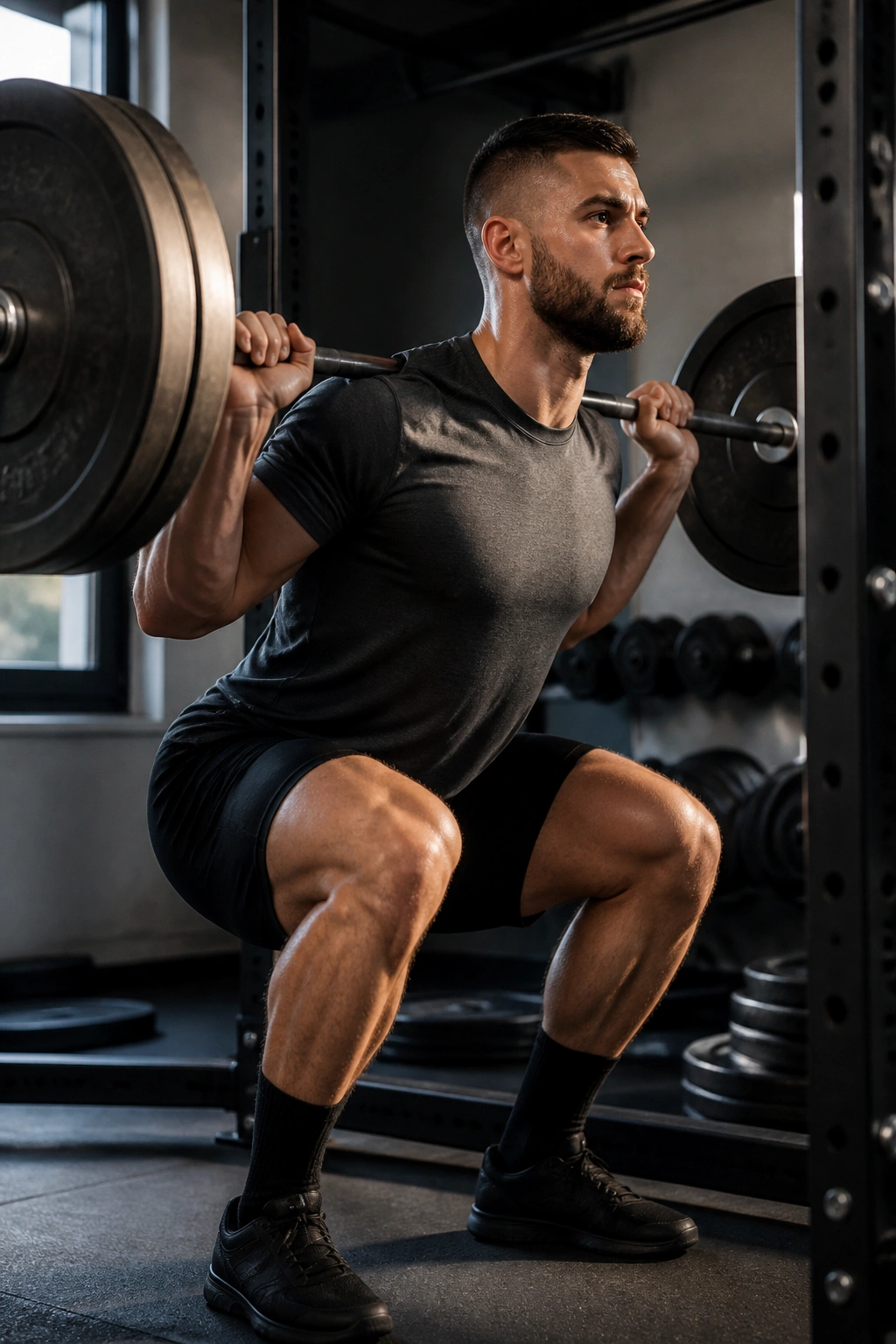
This is the king. Most people already know the back squat, but very few execute it with the precision required for long-term joint health. The movement pattern is simple—hinge your hips, bend your knees, drop your center of gravity—but the execution is where the nuance lives. You have to create a shelf with your upper back muscles, pinning the barbell against your traps or rear delts. If that bar isn’t anchored, the entire lift turns into a battle for balance rather than a test of strength.
The Mechanics of Depth
When you descend, your goal is to break parallel. That means your hip crease should be slightly lower than the top of your knee joint. Many lifters stop short, cutting off the range of motion and depriving their glutes and hamstrings of the stretch they need to grow. If you can’t hit depth without your heels coming off the floor, you need to work on ankle mobility or adjust your stance width.
Pro tip: Take a big breath into your belly—not your chest—and hold it tight. That internal pressure, or “bracing,” is what protects your spine when the weight gets heavy.
2. Front Squat
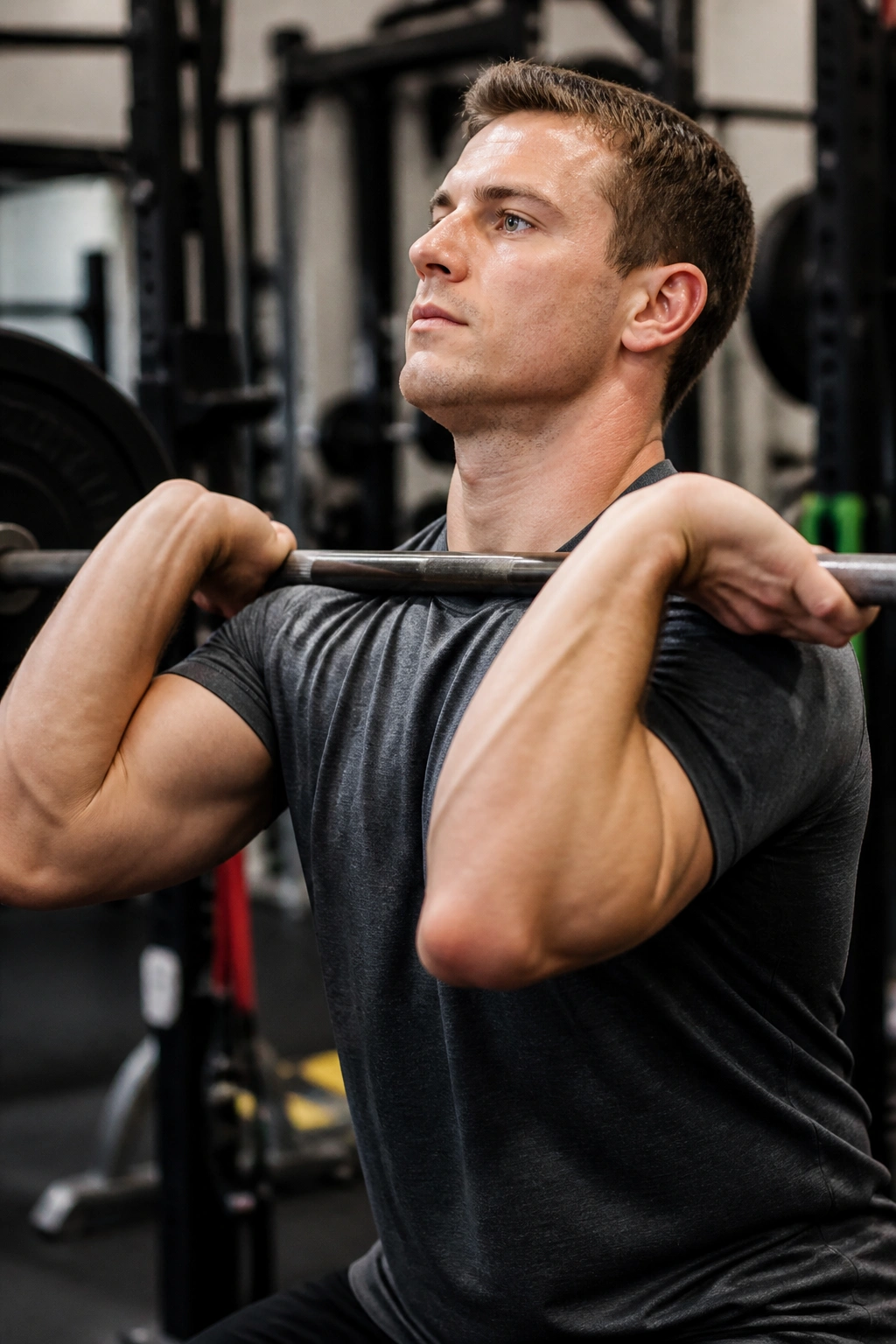
Have you ever wondered why your back squats feel shaky? Sometimes the answer isn’t in your legs, but in your upper back posture. The front squat is the great equalizer. By shifting the barbell to the front of your shoulders, you remove the option to lean forward. If you dump your chest, the bar drops. It’s an instant feedback loop that forces you to stay upright, emphasizing your quads and core stability in a way the back squat simply doesn’t.
Elbow Position
The most common mistake people make here is letting their elbows drop. Think of your elbows as the drivers of the lift; they need to point straight ahead, parallel to the floor, throughout the entire rep. If they drop, your upper back rounds, and you lose the battle against the weight.
Grip Variations
- Clean Grip: Ideally, you hold the bar with your fingertips, resting on your delts. This is the standard for Olympic weightlifters.
- Cross-Arm Grip: If you lack wrist flexibility, you can cross your arms over the bar. It works, though it’s slightly less stable.
- Strap Grip: Using lifting straps to hold the bar allows you to keep your elbows high without needing Olympic-level wrist mobility.
3. Romanian Deadlift (RDL)
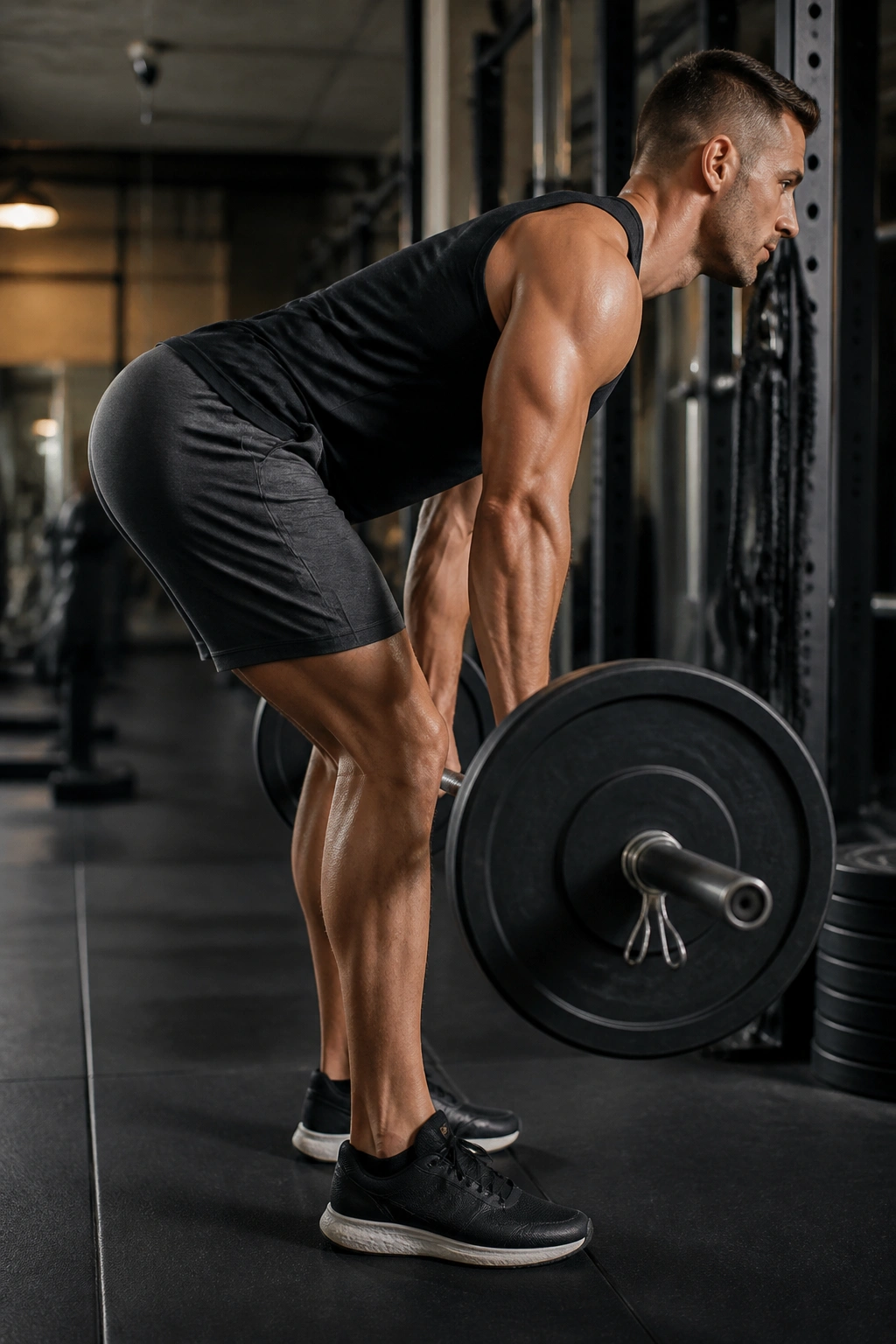
The RDL is less about lifting the weight and more about pushing your hips back. It’s the ultimate posterior chain builder. Unlike a conventional deadlift, you start from the top. You hold the bar, keep a slight bend in your knees—just enough to unlock the joint—and then hinge at the hips until you feel a deep, intense stretch in your hamstrings.
Feel the Tension
If you aren’t feeling this in your hamstrings, you’re probably turning it into a back exercise. Think about pushing your butt toward the wall behind you. Your shins should remain almost vertical, perpendicular to the floor. The moment your shins start to travel forward, you’ve moved out of “hinge” territory and into “squat” territory.
Execution Details
- Keep the bar tight against your legs. The farther the bar drifts from your center of mass, the more strain it puts on your lower back.
- Go only as low as your flexibility allows. If your lower back starts to round, stop. That’s your range of motion limit for the day.
4. Conventional Deadlift
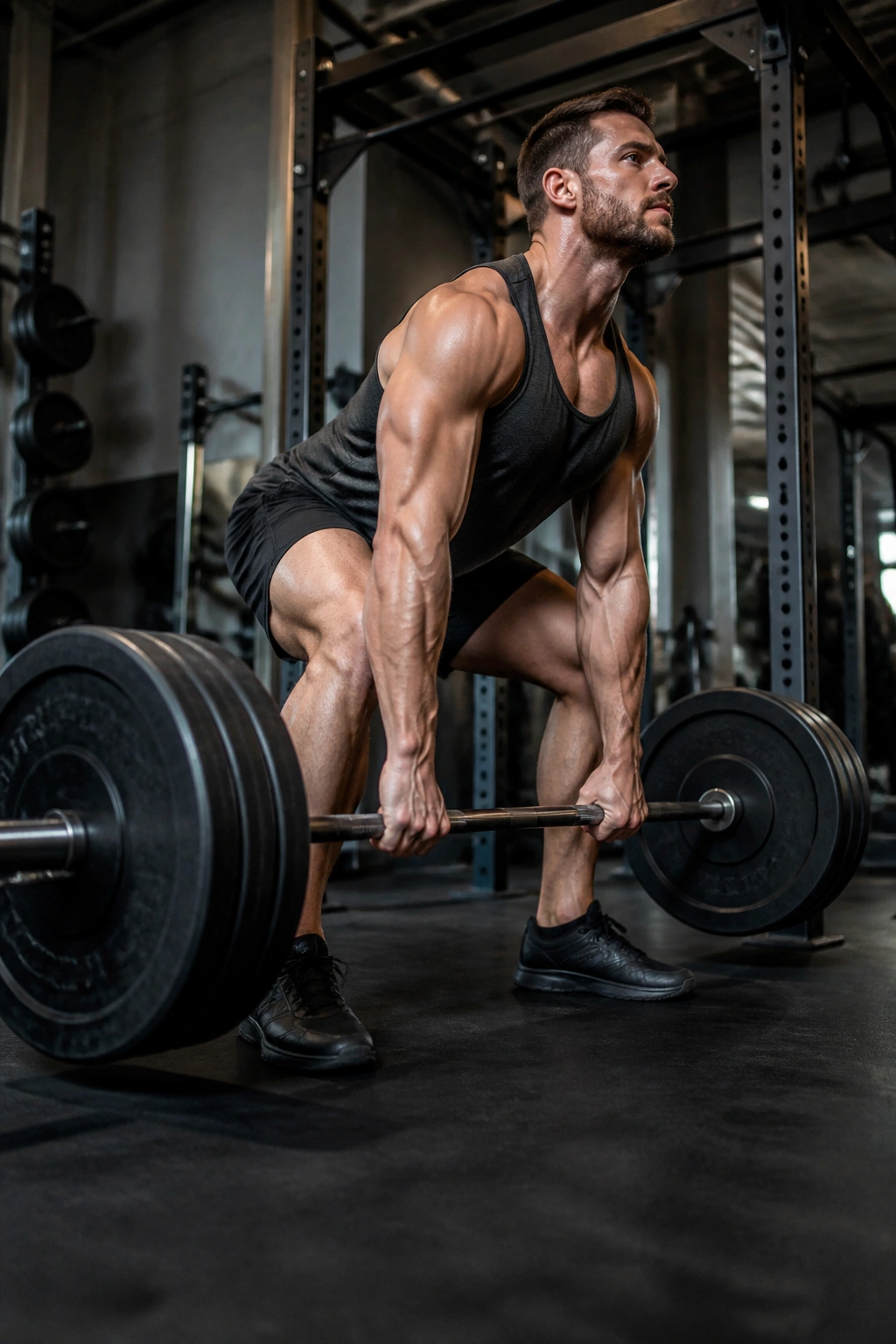
Standing over the bar, you prepare for the floor pull. This isn’t just a leg exercise; it’s a full-body exertion. The conventional deadlift tests your ability to drive force through the ground. You start with the bar over your mid-foot, shins touching the steel, and grip the bar just outside your legs.
The Pull Mechanics
Most beginners rip the bar off the floor. Don’t do that. You need to “pull the slack” out of the bar first. Apply pressure until you hear the metal click against the plates. That tension connects your lats to your hips. When the bar finally moves, it should be a smooth, controlled ascent. It’s a push with the legs, not a pull with the lower back.
Warning: Do not hyperextend at the top. Stand tall, squeeze your glutes, and stop. Leaning back at the lockout does nothing for your muscles and everything for your lumbar discs.
5. Bulgarian Split Squat
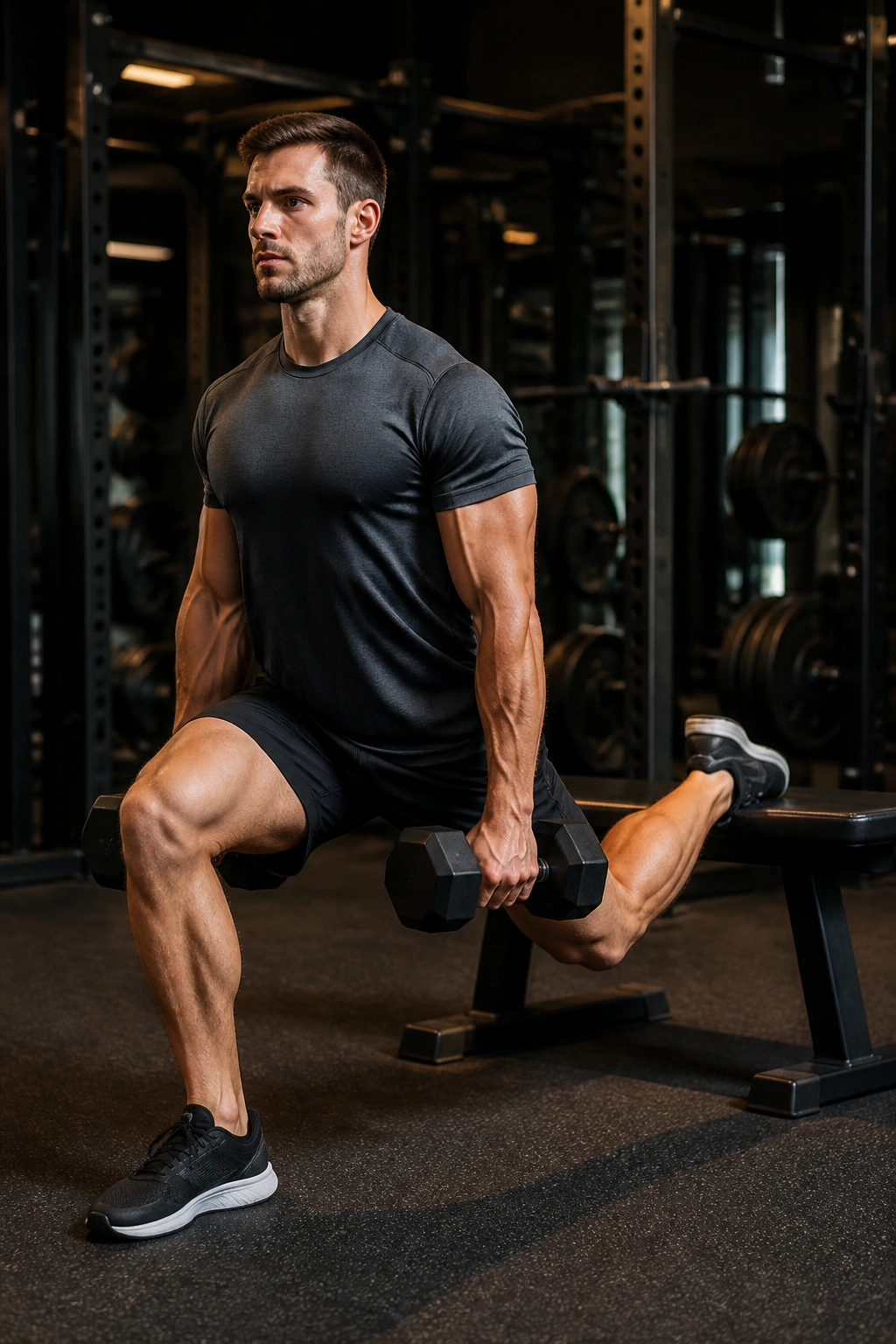
There is a specific kind of hate that lifters have for the Bulgarian split squat. It’s one of the most effective exercises for single-leg strength, but it’s also one of the most demanding. By elevating your rear foot on a bench, you force your front leg to carry the vast majority of the load. It exposes imbalances instantly. You’ll quickly find that one leg is significantly stronger or more stable than the other.
Finding Your Stance
If your stance is too short, you’ll feel the pressure in your knee. If your stance is too long, you’ll feel an intense stretch in your hip flexors. Experiment until you find that sweet spot where you can sit straight down, keeping your torso relatively upright.
The Burn
You will feel a deep burn in your glutes and quads. Because this exercise is so taxing, it’s best done toward the middle of your workout. Don’t wait until you’re completely gassed, or your balance will fail, and you’ll spend more time wobbling than actually training.
6. Walking Lunges
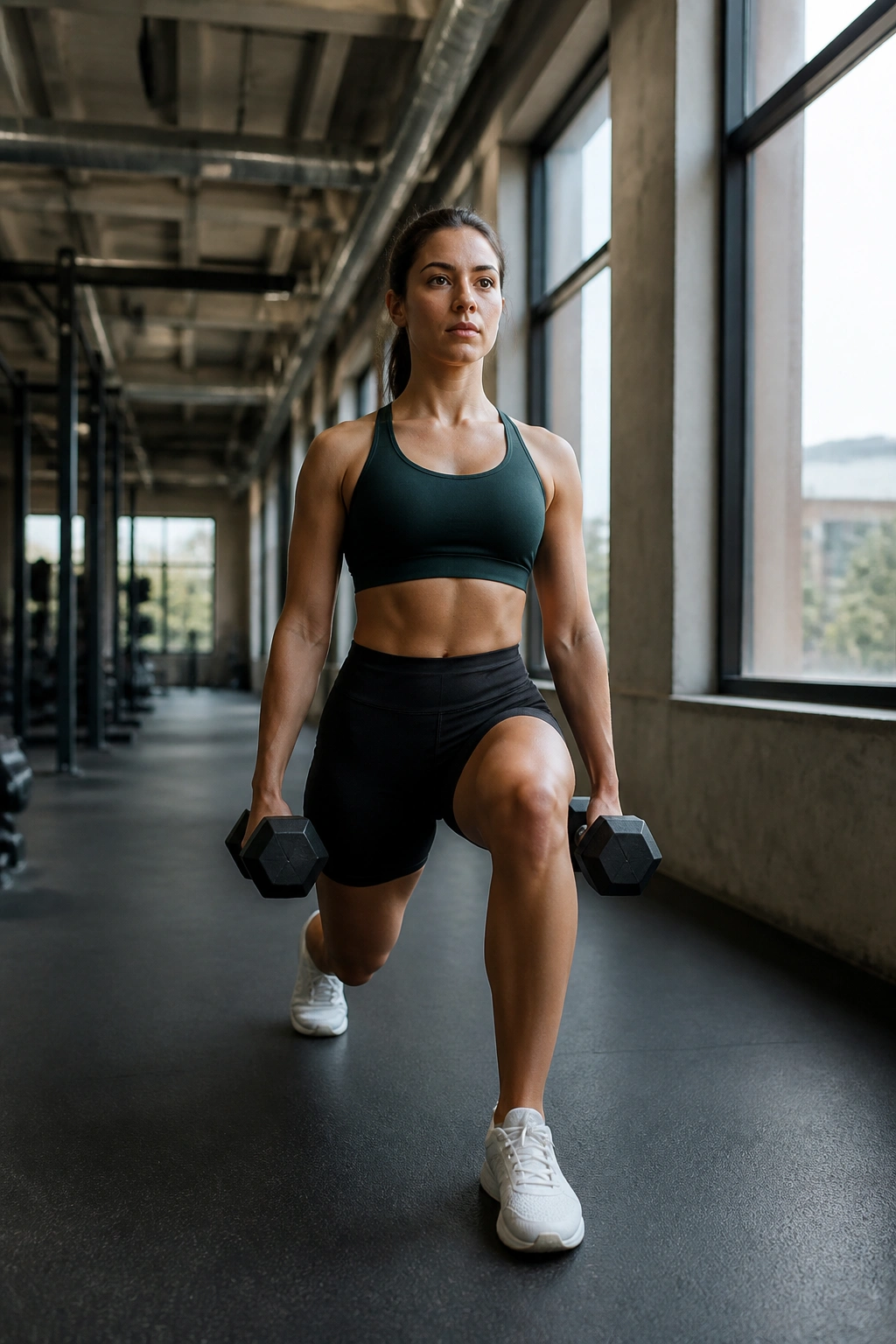
Walking lunges are functional in the truest sense. They mimic the human gait pattern under load. Unlike a static lunge, the walking variation requires you to stabilize and re-balance with every single step. It forces the muscles around your hips and knees to work overtime, building stability and endurance simultaneously.
Staying Upright
The biggest mistake is taking steps that are too long. When you lunge, your front shin should ideally be vertical. If you reach out too far, you create a shearing force on the knee that serves no purpose. Take shorter, controlled steps. Think about dropping your back knee directly down toward the floor, not lunging forward into a giant stride.
Load Management
Hold dumbbells in each hand to increase the load. If you want to increase the core demand, hold a barbell on your back or a weight plate over your head. Keep your chest up and your core braced, even as you get tired.
7. Leg Press
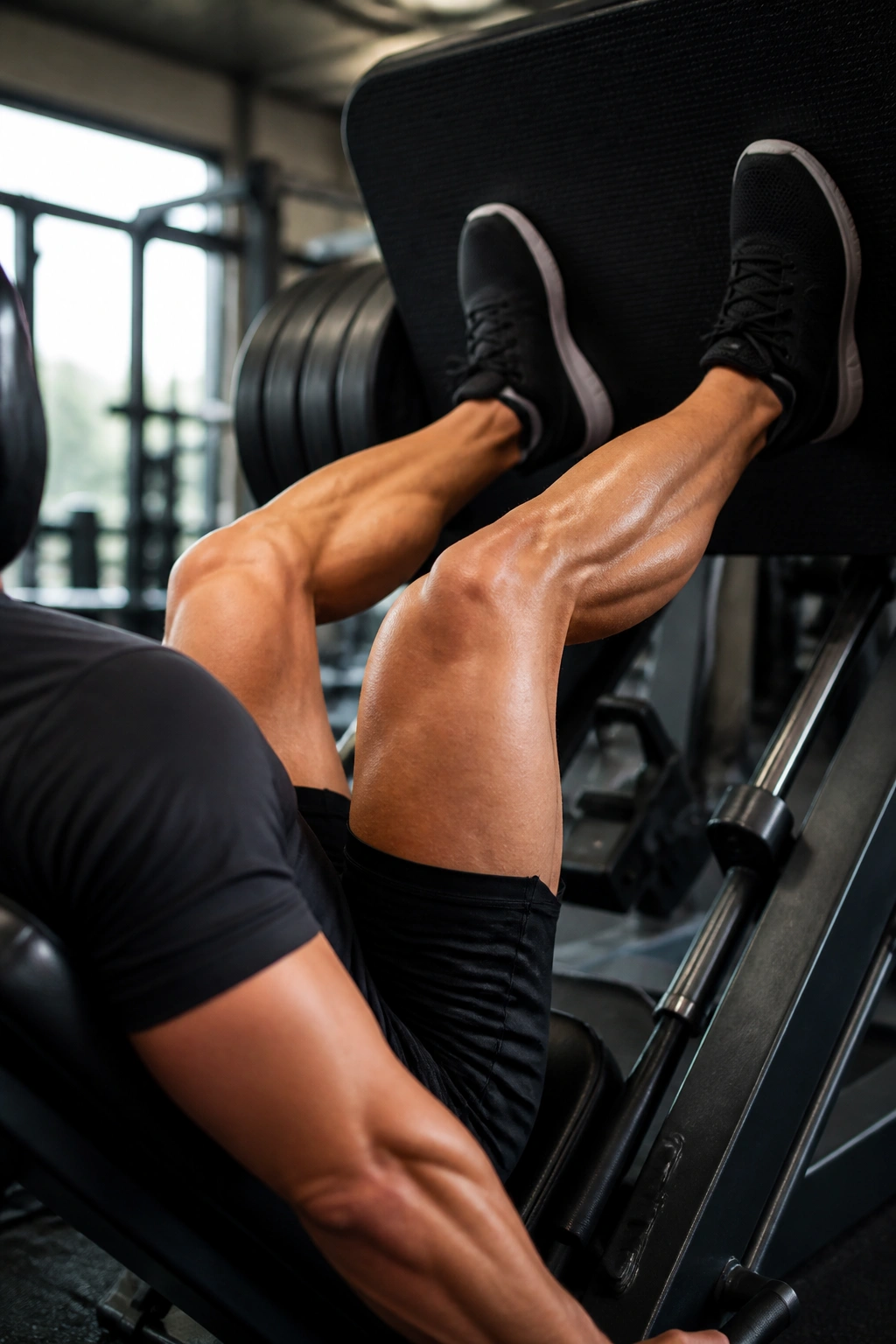
Yes, the leg press is a machine, but it’s a compound movement if you do it right. It allows you to move massive amounts of weight without the neurological fatigue of a heavy barbell squat. This makes it an ideal tool for hypertrophy—building muscle size—because you can focus entirely on the working muscles without worrying about balance.
Foot Placement Matters
Where you place your feet changes which muscles work the hardest.
- Feet High on the Platform: This shifts the bias toward your glutes and hamstrings.
- Feet Low on the Platform: This increases the knee bend, putting more load on the quads.
- Wide Stance: This helps target the adductors (inner thighs).
Consistency: Always set the safety pins. Never lock your knees out completely at the top of the rep, as this transfers the stress from your muscles to your joints.
8. Hack Squat
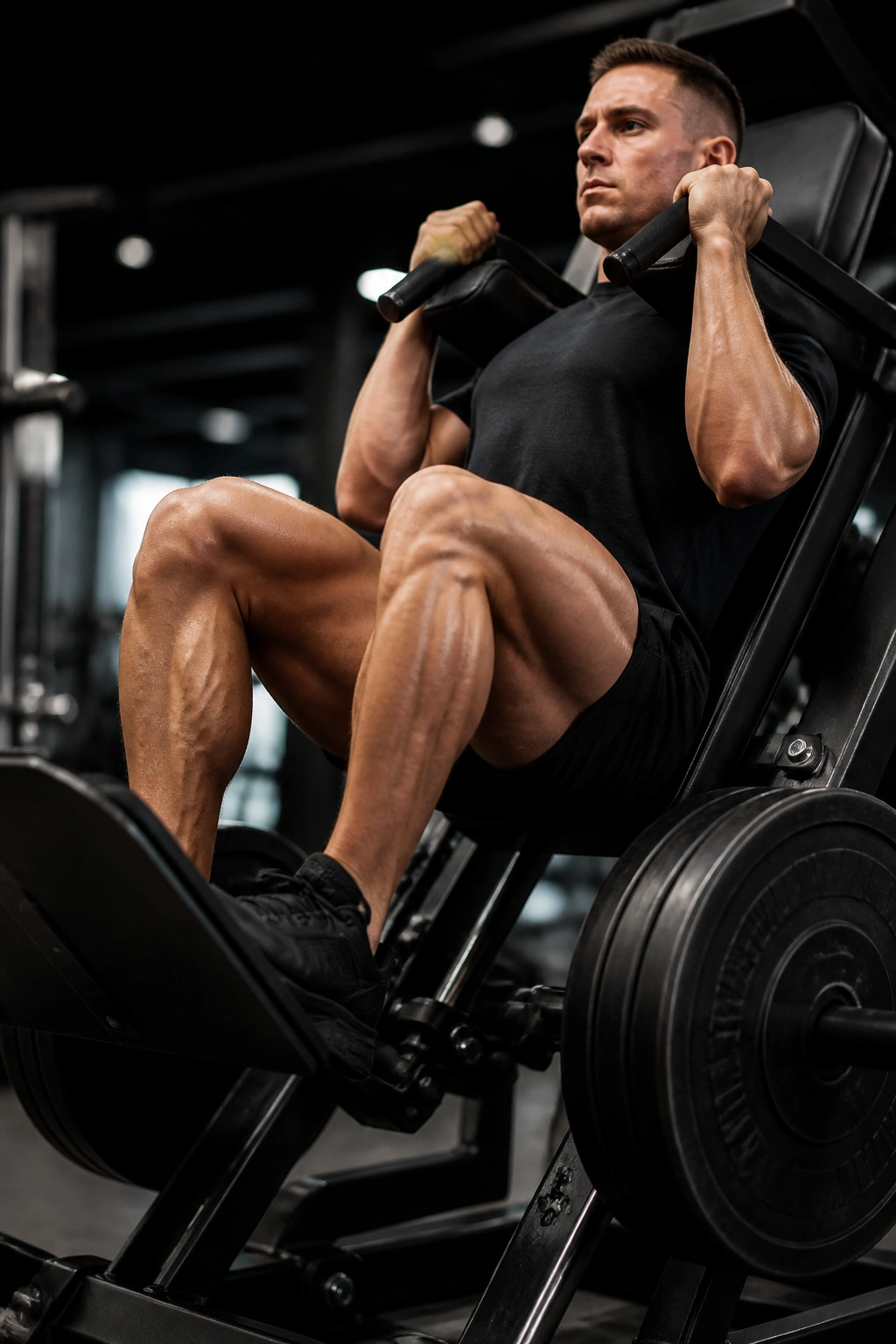
The hack squat machine is arguably the best tool for targeting the quads without involving the lower back. By locking your back against the padded carriage, you eliminate the need to stabilize your torso. This allows you to go to absolute failure, which is where the muscle growth happens.
The Setup
Keep your feet flat on the plate. If your heels lift, it’s a sign that your ankle mobility is restricted or your feet are too low. You should feel the tension in the “teardrop” muscle just above your knee.
Tempo
Because your back is supported, you can safely play with the tempo. Try a 3-second eccentric (lowering phase). The burn will be intense, but the quad development is worth it. Don’t rush the descent. The eccentric portion is where the muscle fibers tear and repair stronger.
9. Goblet Squat
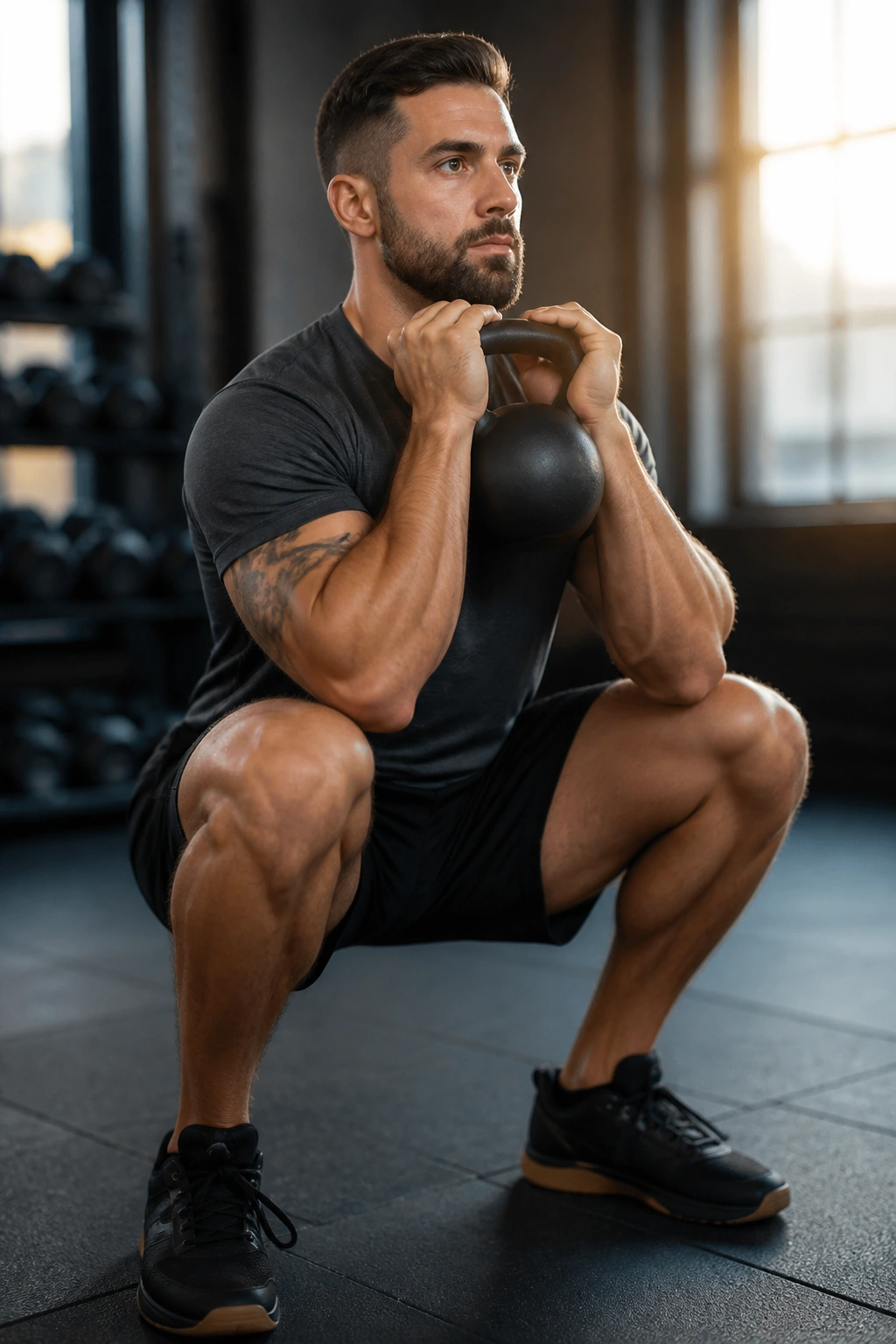
This is the ultimate teaching tool for the squat. Holding a dumbbell or kettlebell against your chest acts as a counterbalance. When you hold weight in front of you, it’s physically harder to fall backward, which forces you to sit deeper and keep your chest higher. It’s a perfect warm-up or a standalone exercise for beginners who are still learning the squat pattern.
Elbow Cue
As you descend, try to touch your elbows to the inside of your knees. This forces your knees out, which is exactly what you want to prevent them from caving inward. It’s a built-in technique coach.
Use Cases
- Warm-up: Use a light weight to grease the movement pattern.
- Strength: Use a heavy dumbbell to challenge your core and leg strength.
- Mobility: Use it as a drill to open up your hips before doing heavier barbell work.
10. Sumo Deadlift
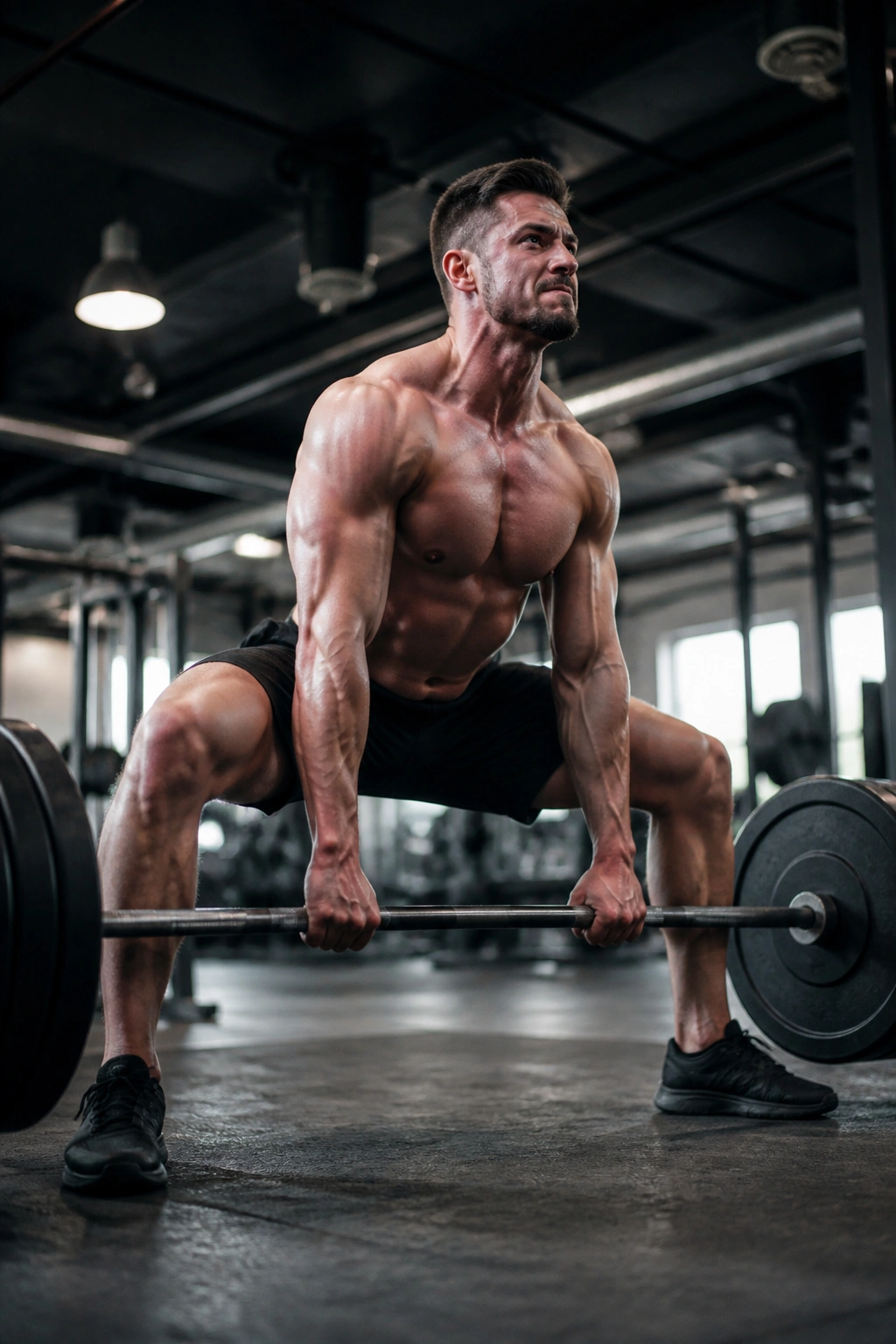
The sumo deadlift is a wide-stance variation that brings your hips closer to the bar. By placing your feet wide and gripping the bar inside your knees, you change the leverage. For many people, especially those with shorter arms or longer torsos, this is a much more biomechanically efficient way to pull weight from the floor.
Hip Engagement
Because your stance is wide, your glutes and adductors have to work harder. You’ll feel a strong contraction in your hips right at the start of the pull. Focus on driving your feet through the floor as if you’re trying to tear the ground apart.
Back Position
In a conventional deadlift, you have to keep your chest up. In sumo, your torso will naturally be more upright. This can be easier on the lower back, provided you keep your hips “open” and don’t let your knees collapse inward during the pull.
11. Trap Bar Deadlift
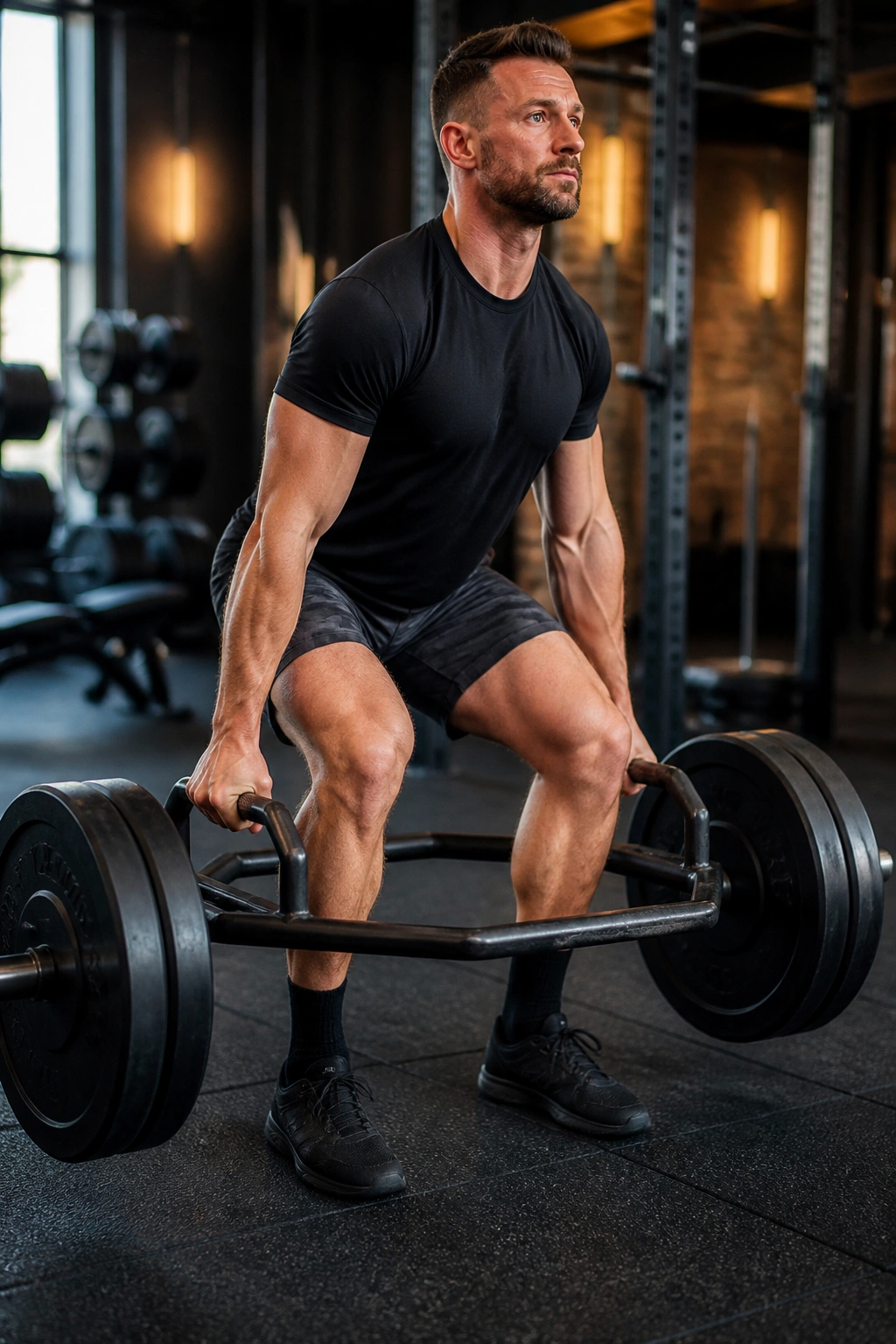
The trap bar (or hex bar) deadlift is perhaps the most user-friendly compound leg exercise. It sits right in the middle between a squat and a deadlift. Because the handles are at your sides rather than in front of you, the weight is aligned with your center of gravity. This makes it significantly safer for the lower back than a traditional barbell deadlift.
Handling the Load
The trap bar allows most people to lift more weight because the biomechanics are more forgiving. It’s a great way to overload your legs without the technical complexity of the conventional pull.
Foot Position
Step into the center of the trap bar. If you stand too far forward or backward, the bar will tilt, and you’ll spend your energy fighting the balance rather than moving the weight. Find the center, drop your hips, and drive.
12. Weighted Step-Ups
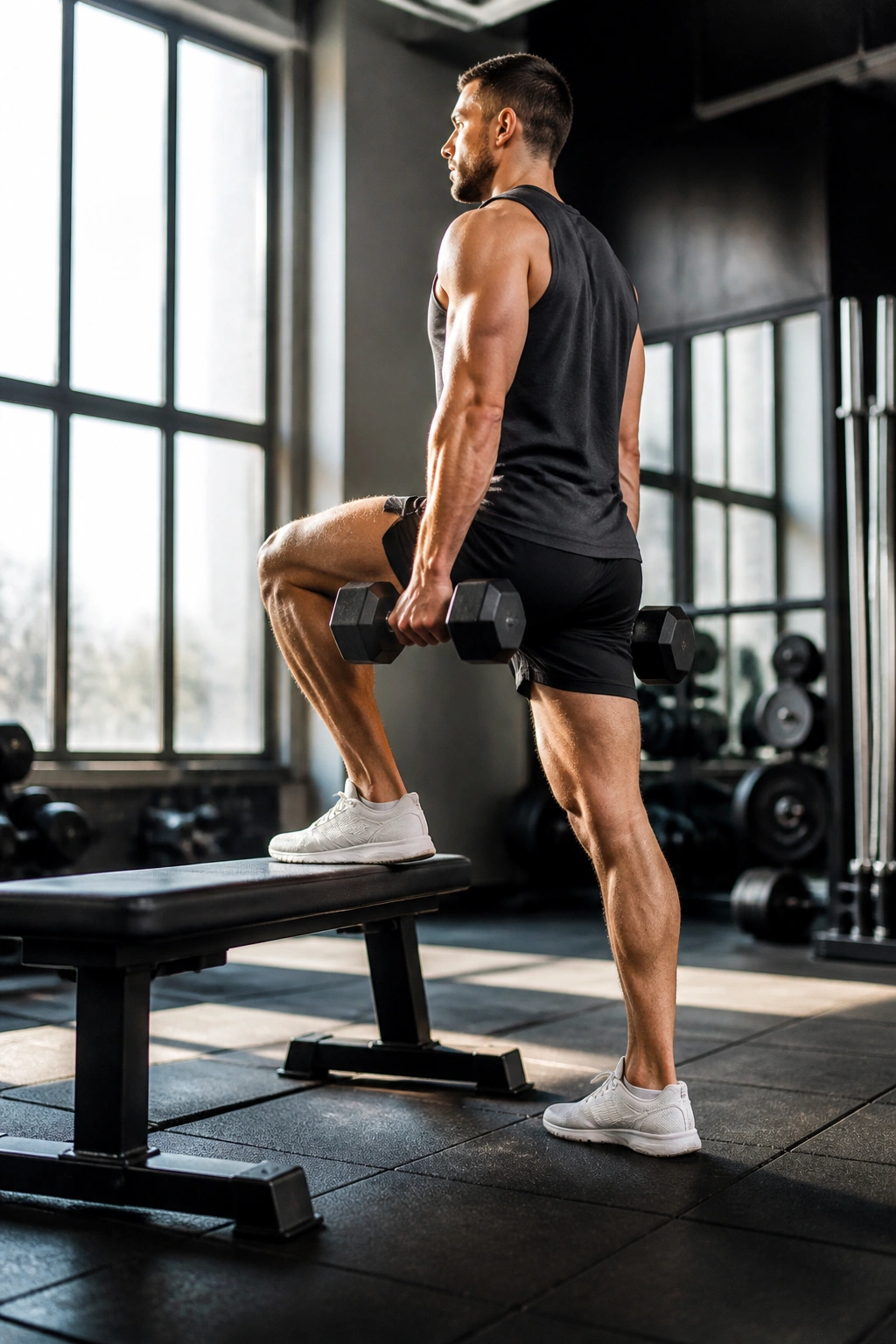
Step-ups are often dismissed as a “cardio” exercise, but done correctly with heavy dumbbells, they are a brutal glute-builder. The key here is the bench height. If the bench is too high, your hip will hike, and you’ll rely on momentum. If it’s too low, you don’t get a full range of motion.
The Technique
Place your foot firmly on the bench. Lean your torso slightly forward—this is crucial. Leaning forward biases the glute. Push through the heel of the foot that is on the bench. Do not push off with the foot that is on the floor. That back foot is only there for balance.
Note: Control the descent. Stepping down quickly is a waste of a rep. The eccentric lowering is where you get the most glute activation.
13. Nordic Curls
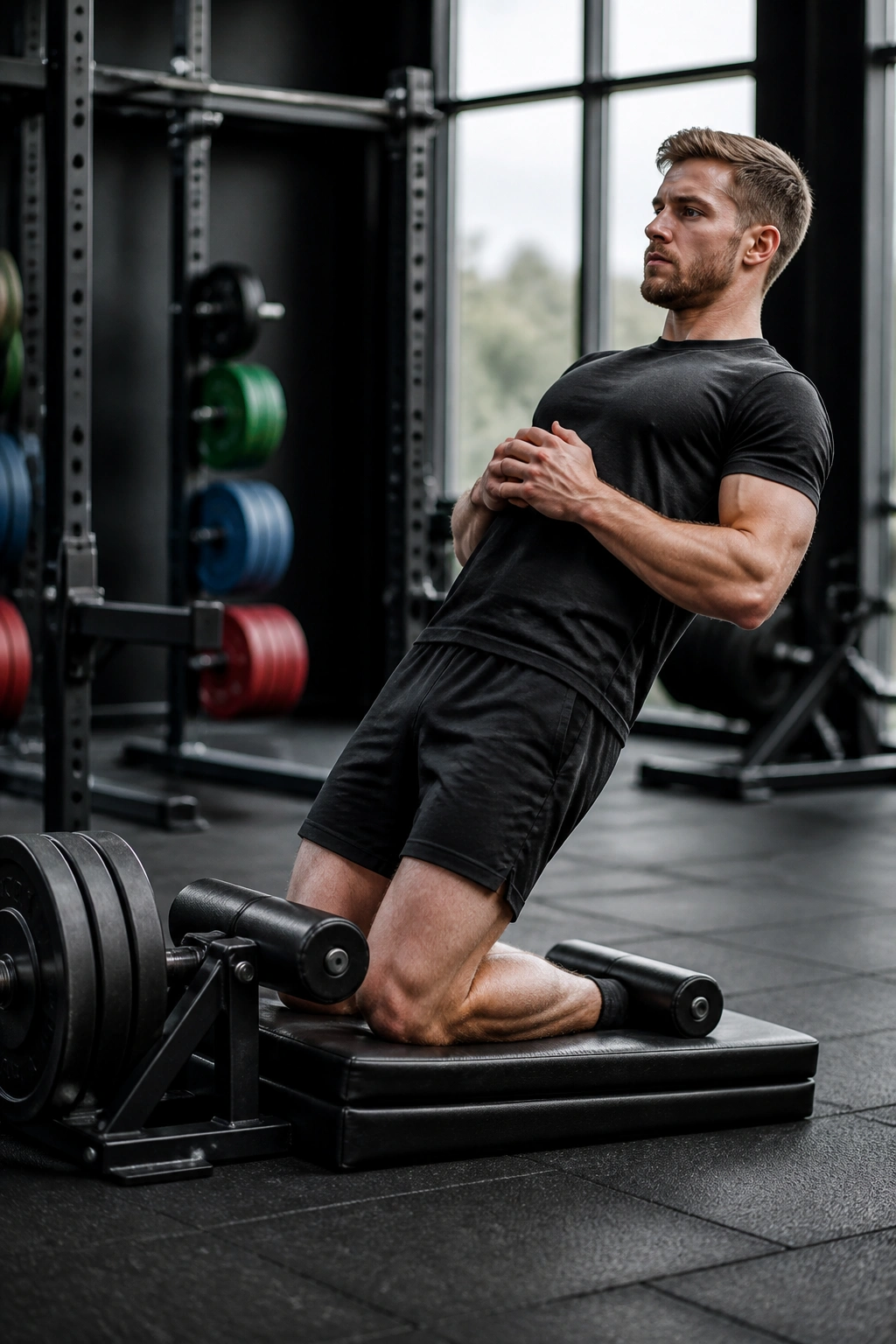
Nordic curls are all about the hamstrings. They are an eccentric-focused exercise, meaning you focus on the lowering phase. You lock your ankles under a heavy object—or use a Nordic curl bench—and slowly lower your torso toward the floor, keeping your back and hips perfectly straight.
Why They Are Hard
You will not be able to do this for high reps at first. It is an incredibly difficult movement. You are effectively trying to curl your body weight using only your hamstrings. If you can only do one, that’s fine. Do it with maximum control.
Building Strength
If you can’t do a full rep, use your hands to push yourself back up after you’ve lowered as far as you can control. Focus on the slow “negative” phase. This is proven to be one of the best ways to build hamstring resilience and prevent injury.
14. Kettlebell Swing
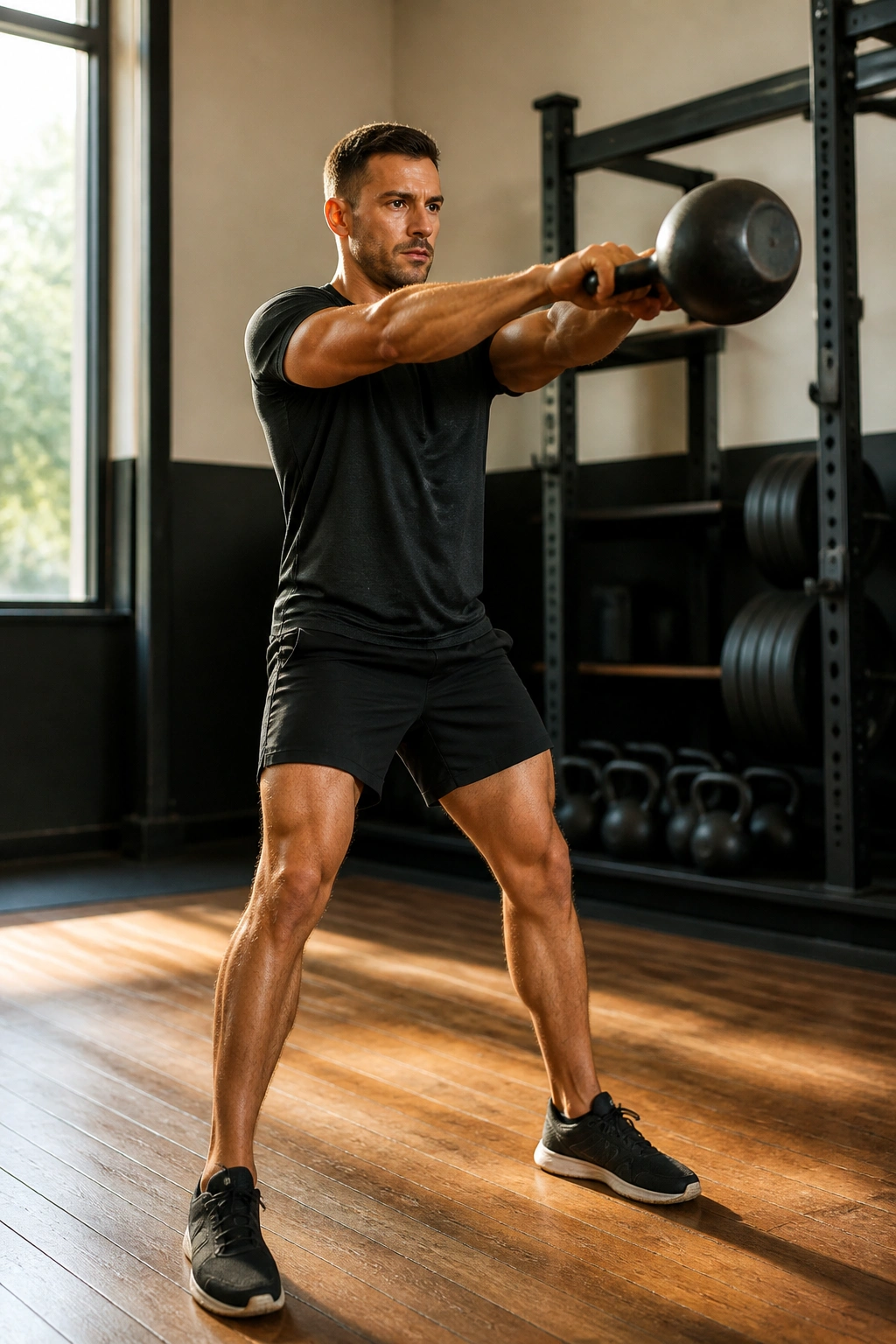
The swing isn’t a shoulder exercise; it’s a hip hinge. If you’re lifting the kettlebell with your arms, you’re doing it wrong. The kettlebell should only be there because your hips provided the explosive force to send it forward. It’s a fantastic movement for training the posterior chain—the back of the legs and glutes—to produce power quickly.
Snap the Hips
Think of your hips as a door hinge. They move backward and forward. At the top of the swing, snap your glutes hard. That contraction is the power source. Your arms are just cables, loose and relaxed, holding onto the weight.
Safety First
Never round your back at the bottom of the swing. The weight should “float” at the top, weightless for a split second before gravity takes it back down. If the kettlebell is tugging on your shoulders, your hips aren’t working hard enough.
15. Zercher Squat
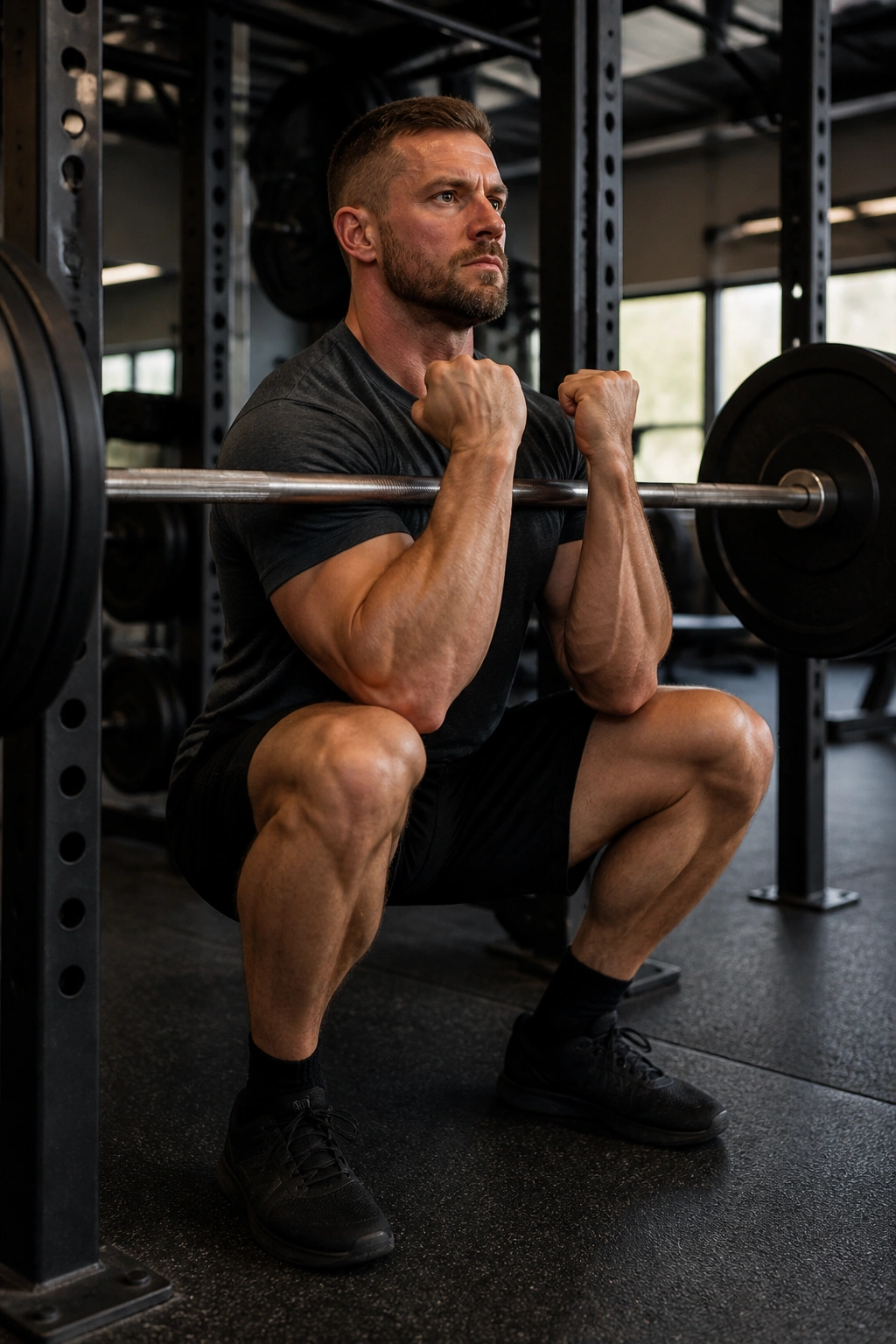
The Zercher squat is uncomfortable, which is exactly why it’s effective. You hold the barbell in the crooks of your elbows, with your arms bent and held tight against your chest. It forces you into a deep squat position and demands intense core stability. It will bruise your arms for the first week, but your legs and back will grow like never before.
Why Do It?
Because the weight is held low, it forces your torso to stay upright. It’s a great alternative if you have back issues that prevent you from back squatting, but you still want to load your legs heavily.
The Setup
You have to lift the bar off the floor or the rack and rest it on your thighs before you can get your elbows into position. It’s a lift that requires some setup skill, but once you’re locked in, the leg stimulation is unique.
16. Jefferson Squat
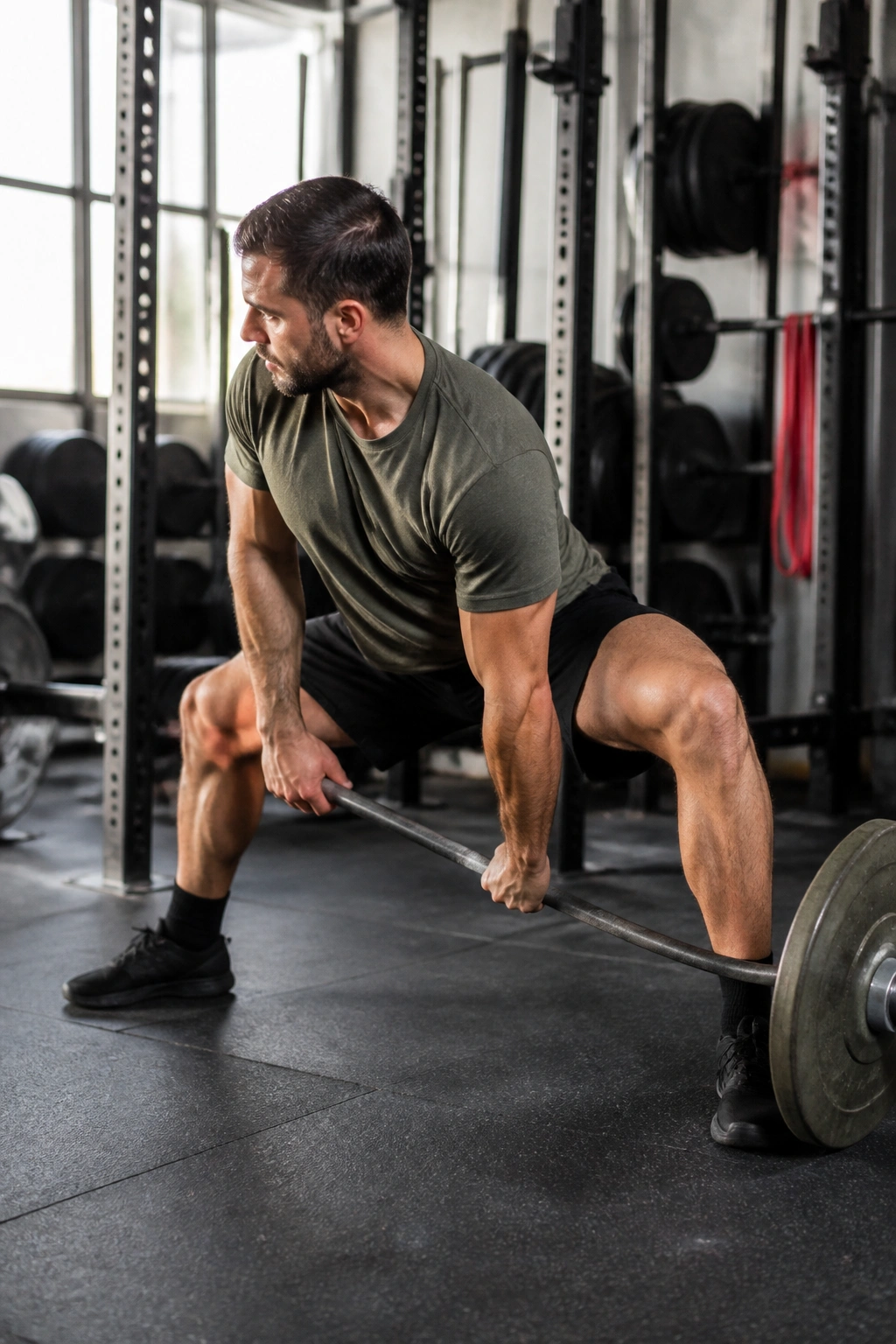
The Jefferson squat is a classic “old school” lift that you rarely see in modern gyms. You straddle the barbell so that the bar is between your legs, with one foot in front and one foot behind. You grip the bar with one hand in front and one hand behind your body.
The Unique Load
This position creates a diagonal stress on the body that forces your core to work incredibly hard to keep you upright. It’s a great exercise for fixing imbalances because it forces both sides of your body to coordinate in an asymmetrical way.
Range of Motion
You can usually get much deeper than with a deadlift because the bar isn’t blocked by your shins. It’s a fantastic way to develop leg strength through a very long range of motion.
17. Pistol Squat
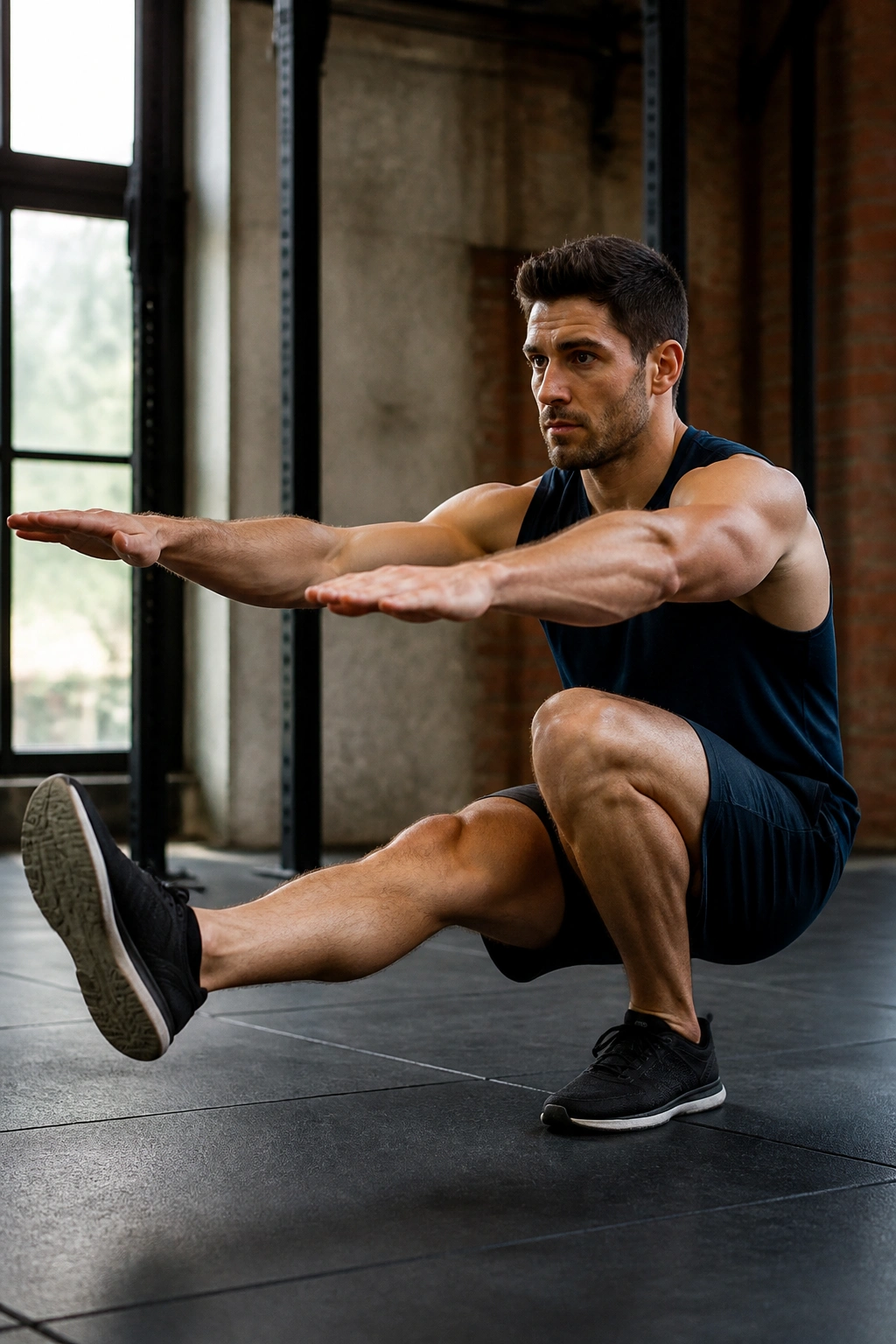
The pistol squat is the gold standard for unilateral (single-leg) bodyweight strength. You stand on one leg, extend the other straight out in front of you, and descend into a full squat. It requires a mix of quad strength, ankle mobility, and core balance.
Learning the Movement
Don’t jump straight into the full pistol if you aren’t ready. Use a box to sit down onto, or hold onto a doorframe to assist your balance. As you get stronger, reduce the assistance.
The Value
This exercise exposes every weakness. If your ankles are tight, you’ll fall backward. If your quads are weak, you’ll get stuck at the bottom. Mastering the pistol squat means your legs are not only strong but also balanced and mobile.
18. Cossack Squat
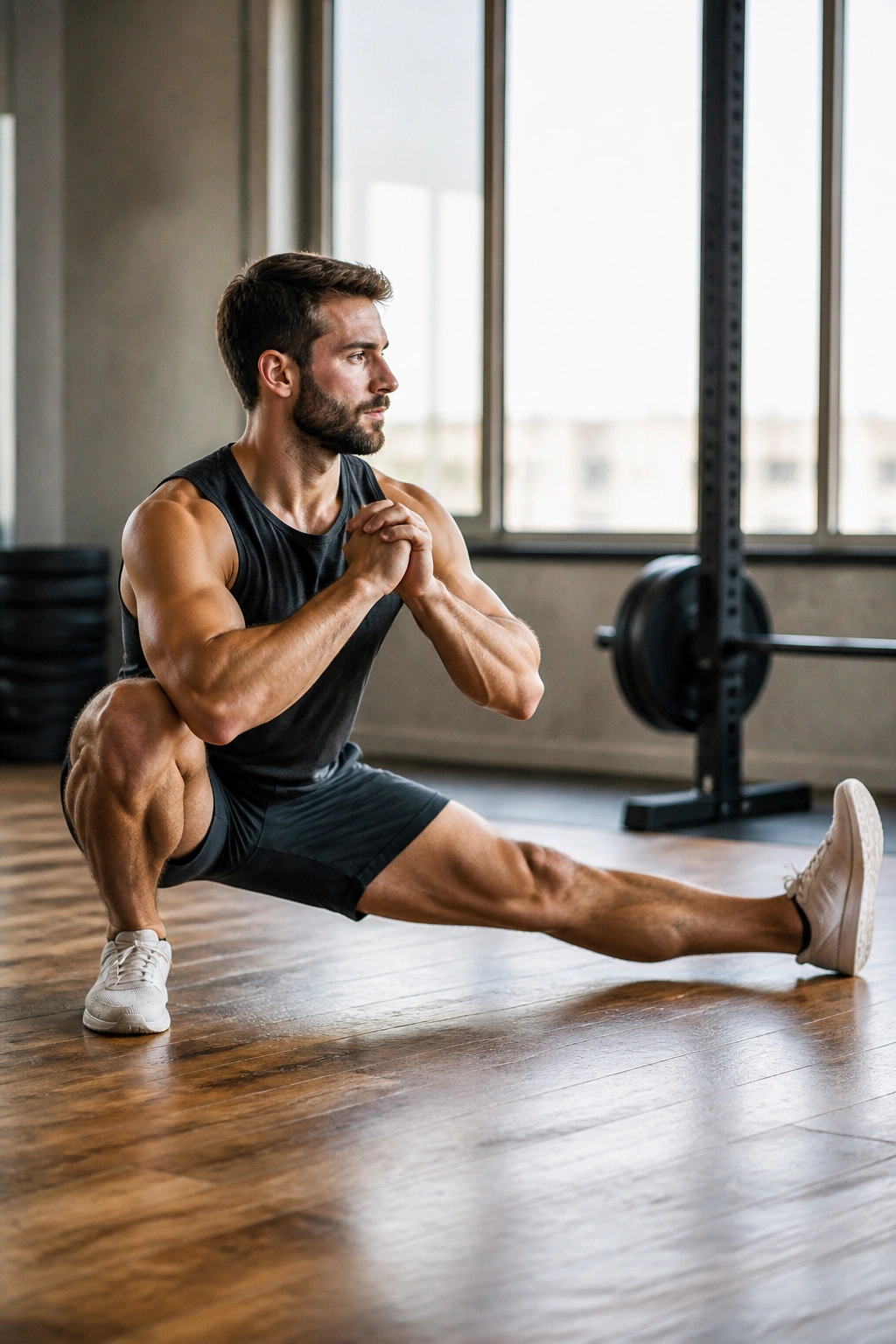
We spend a lot of time moving forward and backward, but very little time moving side-to-side (the frontal plane). The Cossack squat is a lateral squat. You take a wide stance and shift your weight entirely to one side, squatting down while keeping the other leg straight.
Adductor Focus
This is the best way to train your adductors (inner thighs) and improve hip mobility. Most leg injuries happen because of a lack of lateral strength. By training this movement, you bulletproof your hips against strains and imbalances.
Execution Tip
Keep your chest up and your weight in the heel of the bent leg. The straight leg should stay straight, with the toe pointed up toward the ceiling. It feels awkward at first, but it opens up your hips like nothing else.
Final Thoughts
Building lower body strength isn’t about finding the “perfect” exercise; it’s about mastering the mechanics of the ones that work. These 18 movements cover the entire spectrum of leg training—bilateral, unilateral, hinging, and squatting. You don’t need to do all of them every single week. In fact, you shouldn’t.
Pick a foundation—a squat variation and a hinge variation—and build your routine around that. Add the single-leg work to fix imbalances and the machine work to push your muscles to failure. Leg strength is a journey that takes years, not weeks. Focus on perfect form before adding weight, treat your recovery with the same seriousness as your training, and stay consistent. Your legs are the foundation for everything else you do; treat them with the respect they deserve.
