



The squat is the fundamental movement of human strength. If you watch a toddler pick something up, they drop into a perfect, deep squat naturally, their heels glued to the floor and their spine perfectly vertical. Somewhere between childhood and adulthood, most of us lose that mobility, but the potential for that strength never actually leaves. Reclaiming it is less about complex gym equipment and more about mastering the angles, the tension, and the way your body generates force against gravity.
When you add load to a squat, you aren’t just working your legs; you are teaching your entire central nervous system how to handle pressure. The variations you choose will change the emphasis, shifting the load from your quads to your glutes, your hamstrings, or your core stability. Getting stronger is a game of variety. Doing the same movement every week will eventually lead to diminishing returns, whereas rotating these patterns keeps your body guessing, growing, and adapting.
1. Goblet Squat
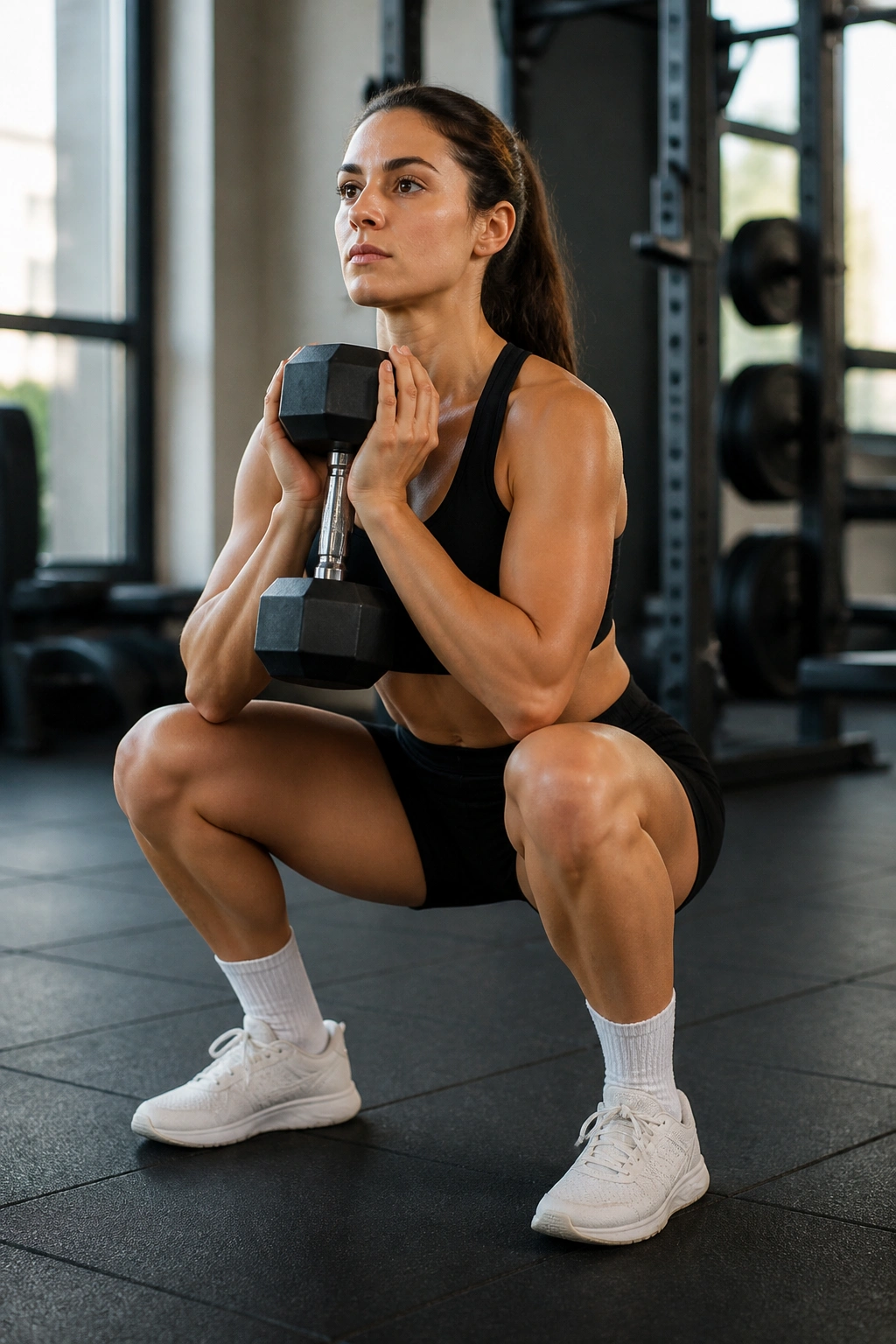
This is the non-negotiable starting point for anyone learning to squat. If you cannot do a perfect goblet squat, you have no business putting a heavy barbell on your back. The weight—held right against your chest—serves as a counterbalance, forcing your torso to stay upright. If you lean too far forward, the weight pulls you over, giving you instant feedback on your posture.
Why It Builds Massive Stability
Holding the weight in front of you creates a unique demand on your core. You have to brace your abdominals hard to keep the weight from collapsing your chest. This keeps the spine rigid while the legs do the heavy lifting.
- Foot Position: Keep your feet shoulder-width apart, toes slightly turned out.
- The Depth: Aim to drop your elbows inside your knees. This cues you to push the knees out, which engages the glutes.
- The Tempo: Go slow. Take three seconds to descend, pause for one second at the bottom, and explode up.
Pro tip: Use a heavy kettlebell or a dumbbell held vertically. If the weight feels too light, focus on the squeeze at the top of the movement rather than just grabbing a heavier bell.
2. Back Squat
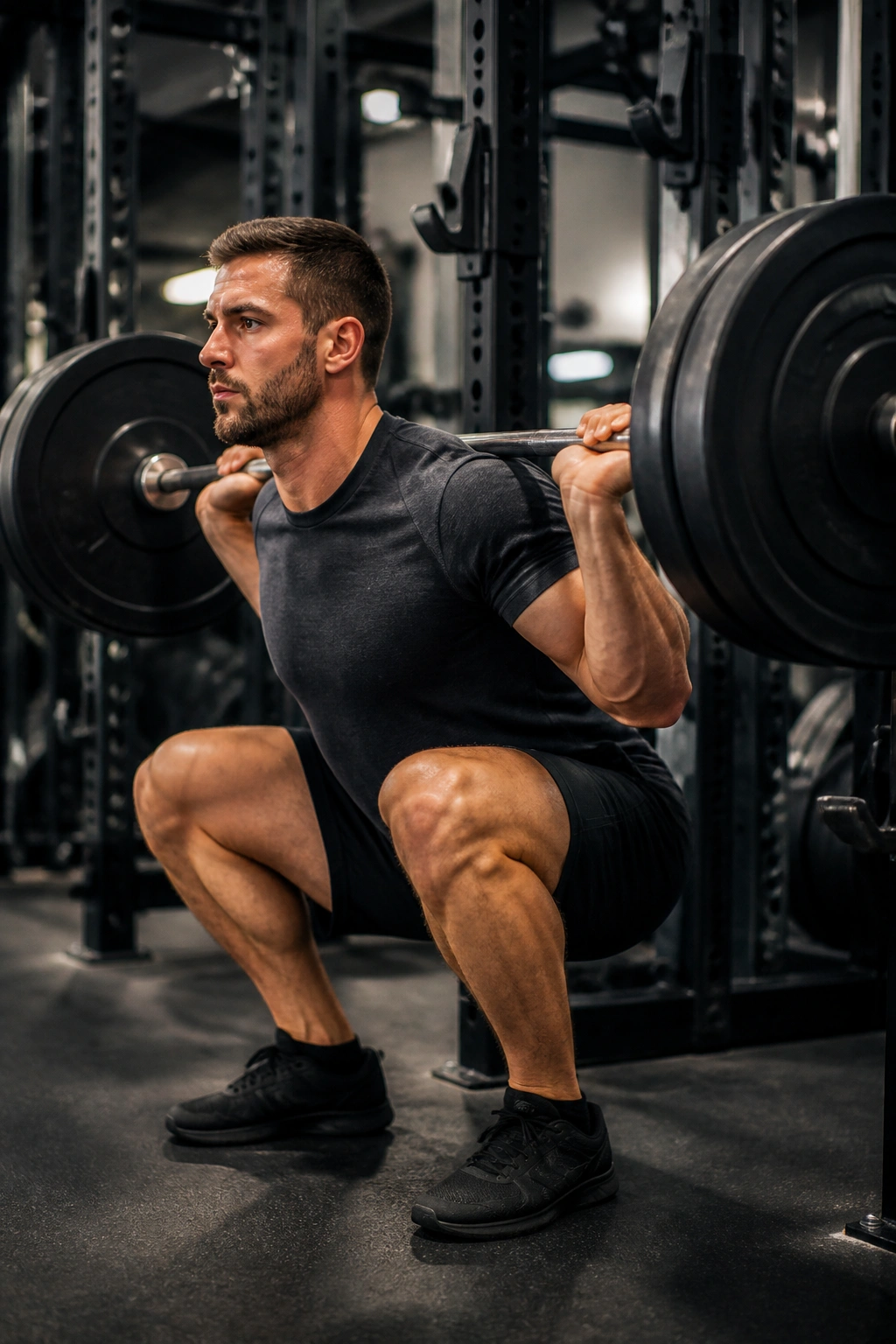
The back squat is the heavyweight champion of the lower body. It allows for the most loading, meaning your muscles have to produce the most force. When you get this right, it builds a foundation of structural integrity that carries over to every other aspect of your life, from picking up groceries to jumping higher on the court.
The bar sits on your upper traps—the shelf created by your shoulder blades. Your task is to keep your elbows tucked down and your chest puffed out. As you descend, think about pushing the bar into your back; this creates rigidity.
- High Bar vs. Low Bar: High bar (traps) is more quad-dominant and requires a more vertical torso. Low bar (rear delts) shifts the load to your posterior chain (glutes and hamstrings) and allows for more weight.
- The Breathing: Big breath into the belly, hold it, brace like you are about to get punched, and descend. Exhale only after you pass the hardest part of the ascent.
If you feel your lower back rounding, you have gone too deep or you have hit your limit. Respect the curve of your spine. It is better to squat to parallel with a neutral spine than to go deep with a hunched back.
3. Front Squat
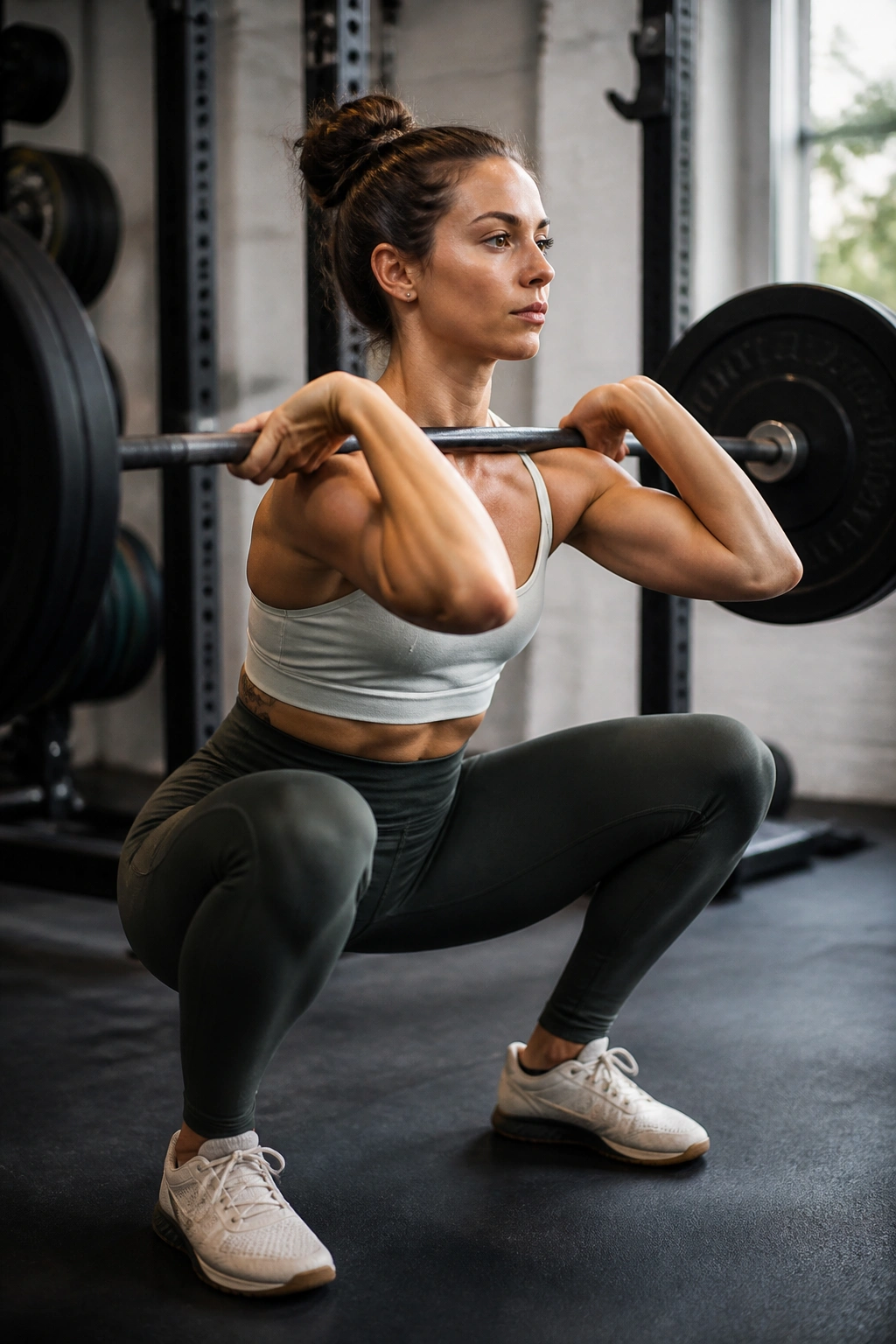
Many people skip front squats because they feel “awkward.” That awkwardness is actually your body telling you that your upper back and core strength are currently lagging behind your leg strength. When the barbell rests on your front deltoids, you cannot cheat. If you round your back, the bar rolls off. It is the ultimate honest coach.
Setting the Shelf
You need to create a flat surface with your anterior deltoids. Some people prefer the “clean grip” with fingers under the bar, while others prefer crossed arms. Whatever you choose, ensure the bar is resting on the muscle, not your collarbones.
- The Trap: If your elbows drop, the lift is over. Keep them pointed forward and high.
- Leg Bias: Because your torso remains more upright, the load is shifted significantly toward the quadriceps. This is one of the best movements for building thick, sweeping thighs.
Common Mistake: Trying to go as heavy as you do on back squats. You will be significantly weaker on front squats initially. Accept it. The trade-off is much better quad development and a bulletproof core.
4. Sumo Squat
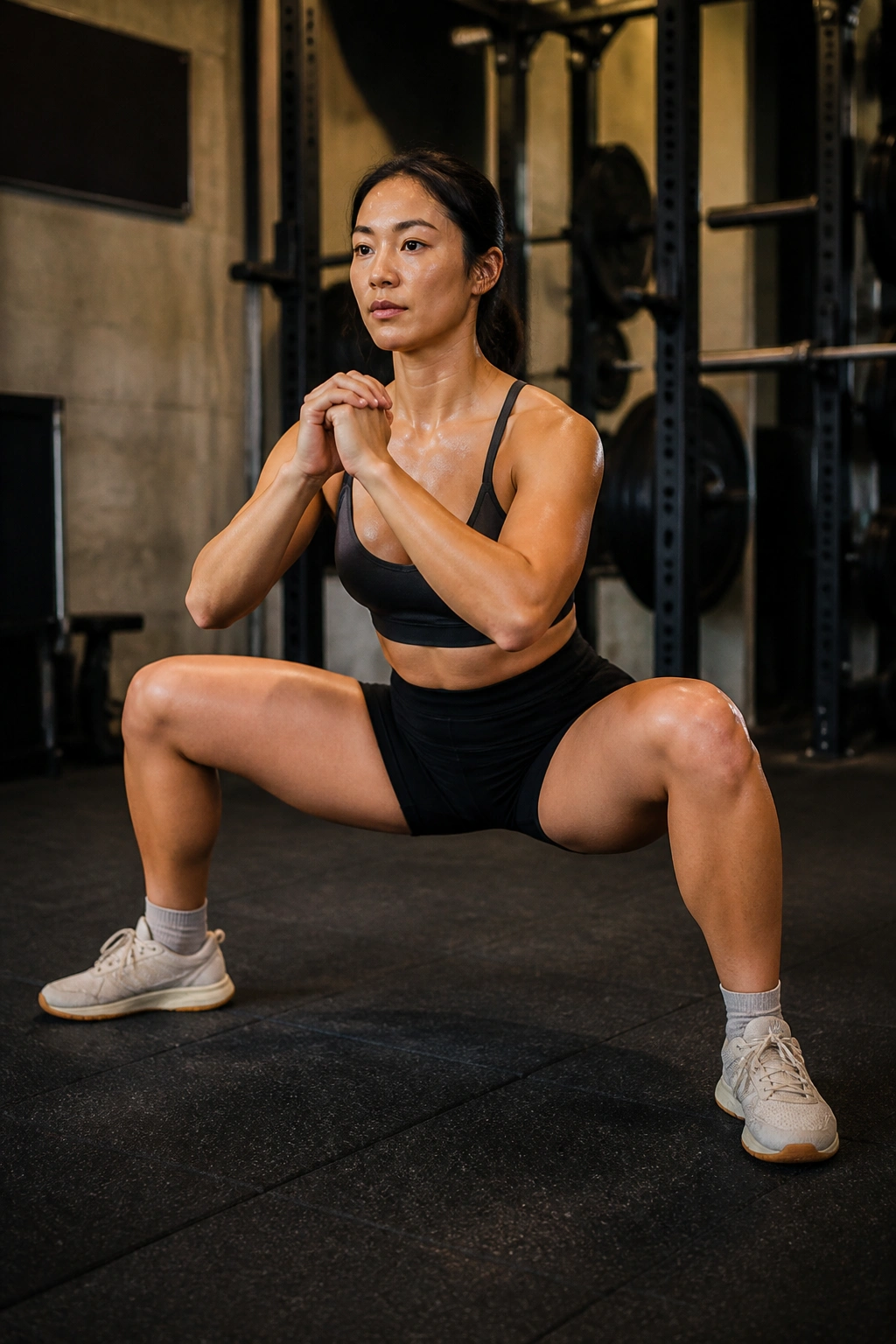
The sumo squat is all about that wide stance. By widening your feet beyond shoulder width and pointing your toes out, you change the leverage at the hip joint. This recruits the adductors (the muscles on the inside of your thighs) and targets the glutes more aggressively than a narrow stance.
Imagine you are trying to spread the floor apart with your feet. This simple mental cue turns on the glute medius and keeps your knees tracking safely over your toes. Because you are already closer to the ground, the range of motion is slightly reduced, which often allows people to handle more weight than they can with a standard stance.
This movement is fantastic for people who find regular squats painful for their lower back. The wide base reduces the need for extreme torso lean, which takes the shearing force off the lumbar spine. If you are struggling with “butt wink”—that nasty tucking of the tailbone at the bottom of the squat—the sumo stance might be the fix you need.
5. Bulgarian Split Squat
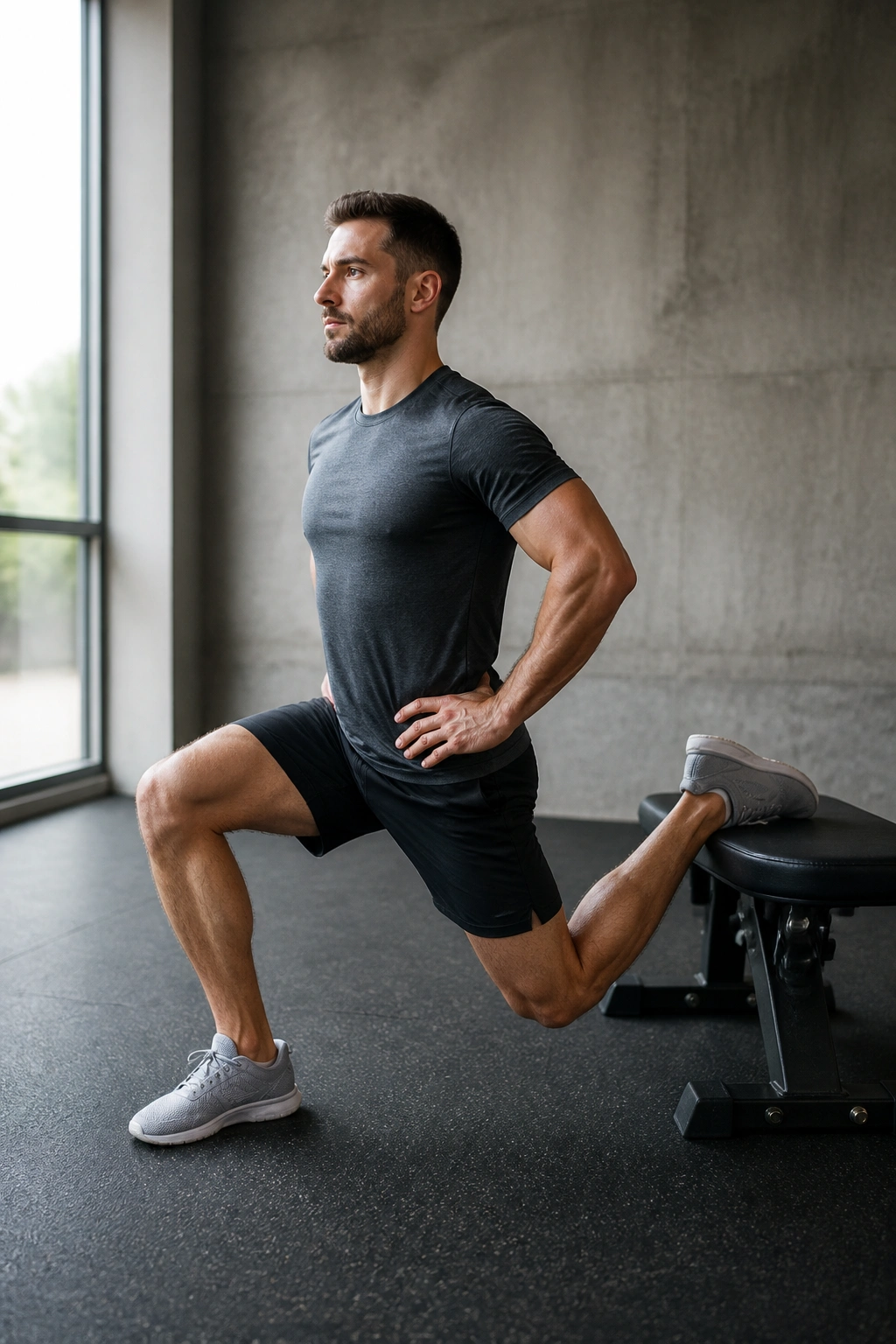
If you want to find your imbalances, do a set of Bulgarian split squats. One leg is elevated behind you on a bench, and the other does the work. Most people have one leg that is noticeably stronger or more stable than the other; this exercise exposes it immediately.
The Mechanics of Isolation
Because you are loading only one leg, the sheer volume of weight on the joints is halved, but the muscular demand is actually higher. It forces your stabilizer muscles—the ones that keep you from tipping over—to fire constantly.
- The Lean: If you lean your torso slightly forward, you will feel this more in your glutes.
- The Upright: If you keep your torso straight up, you put more emphasis on the quads.
- The Stability: Find a spot on the wall to stare at. If your eyes wander, you will wobble.
This is not a movement to rush. Control the eccentric (downward) phase. If you feel like you are falling, that is just the muscle being forced to learn coordination. Embrace the wobble.
6. Box Squat
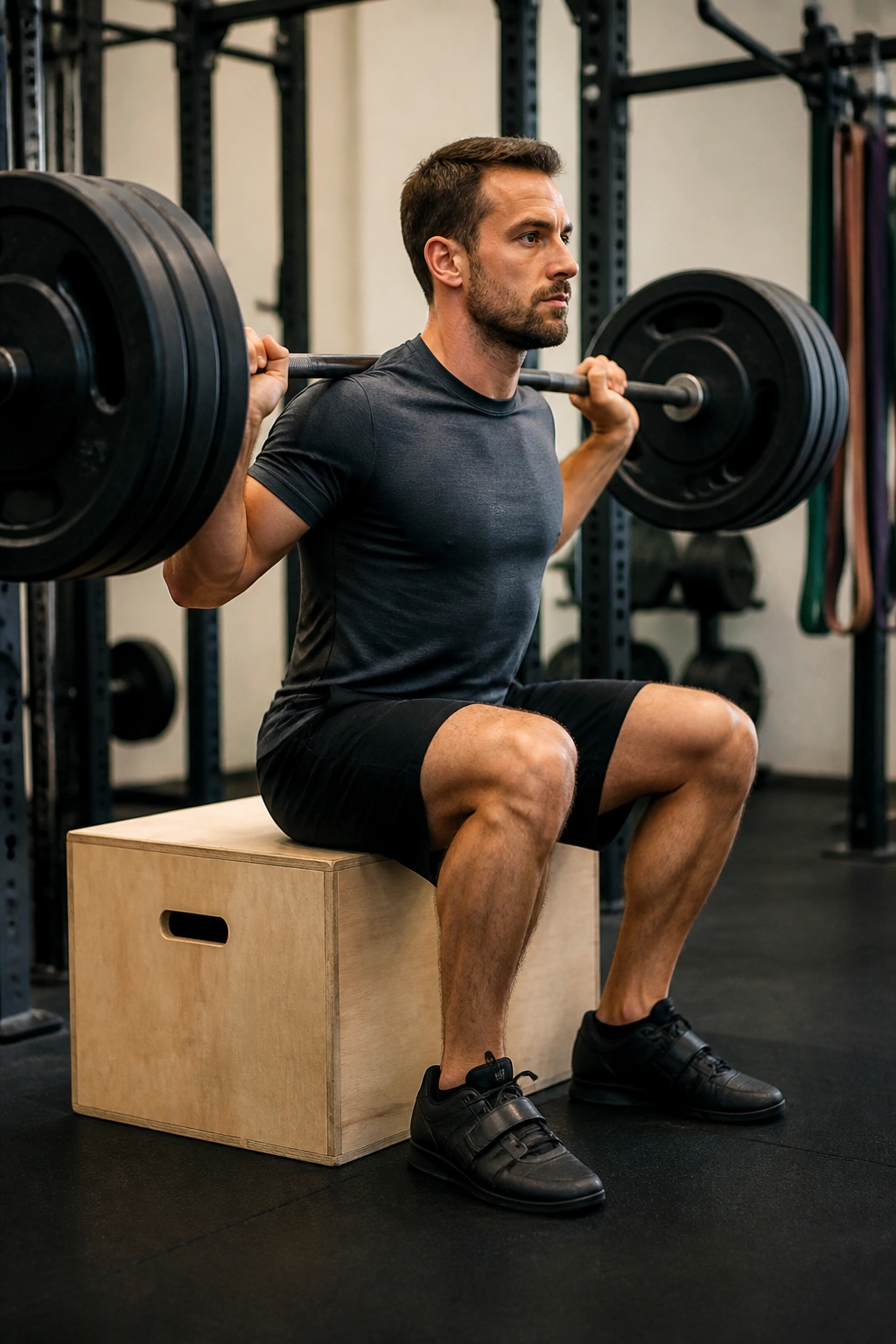
The box squat is the secret weapon of powerlifters, but it is just as useful for the average lifter. By sitting back onto a box or a bench at the bottom of the squat, you break the eccentric-concentric chain. You are forced to stop your momentum, kill the stretch reflex, and then fire up from a dead stop.
Most people rely on the “bounce” at the bottom of a squat. The box squat teaches you to generate force from absolute zero. It also ensures you hit the exact same depth every single time. No more guessing if you are “low enough.”
Place the box at a height where your thighs are parallel to the floor or slightly lower. Sit back until you feel the box, pause for a full second, stay tight, and then stand up. Do not flop onto the box. Keep your shins vertical and your weight firmly on your heels.
7. Pause Squat
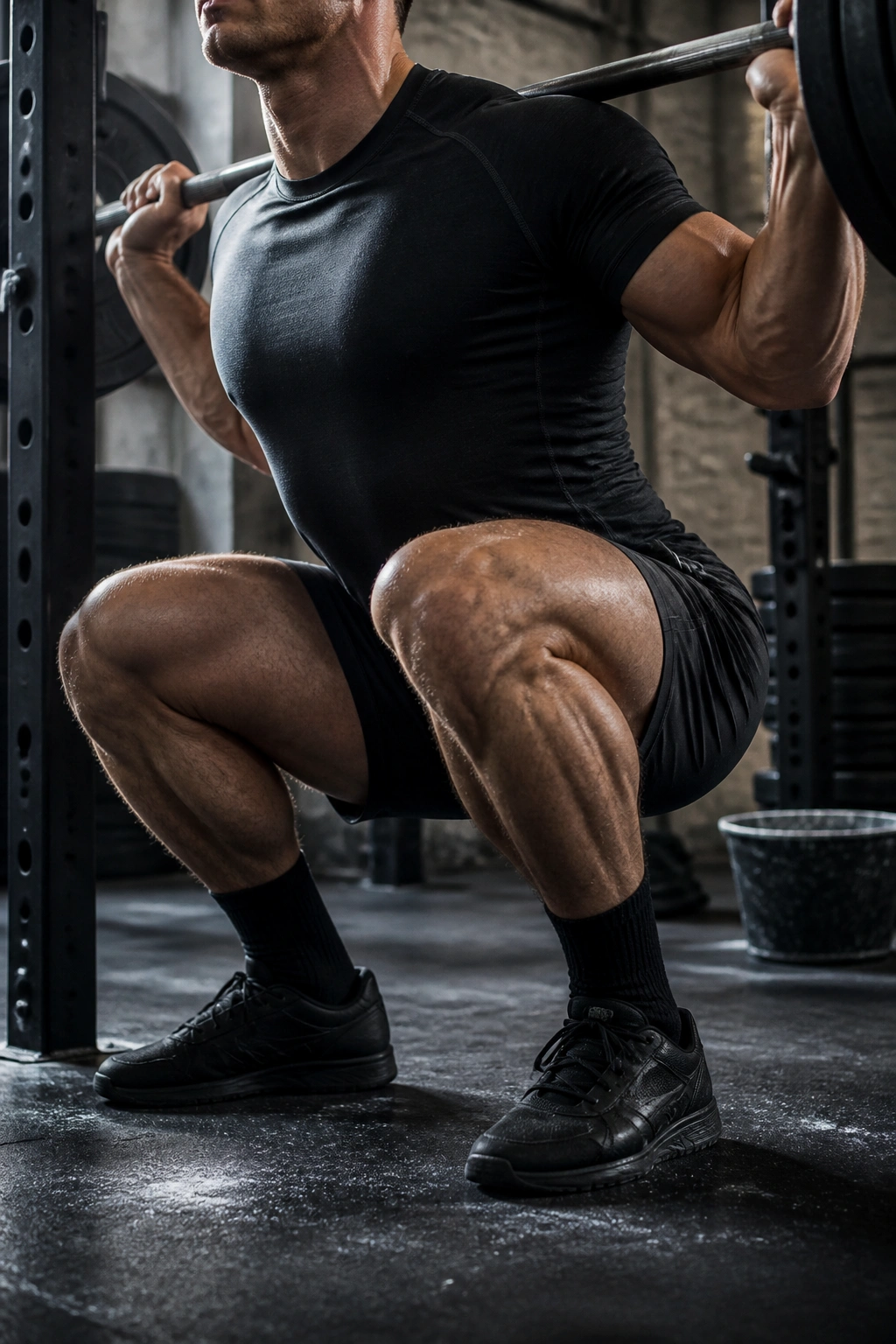
Pause squats are exactly what they sound like. You squat down, you wait, and you stand up. The duration of the pause is up to you, but a two-second hold at the bottom of the lift changes everything. This eliminates the elastic energy stored in your tendons and forces the prime movers—your quads and glutes—to do all the work.
Building Mental Toughness
There is something uniquely demoralizing about sitting at the bottom of a heavy squat. It forces you to remain calm under tension. If you panic or lose tightness, you will fail the lift.
- Where to Pause: Pause at the absolute lowest point of your squat.
- The Squeeze: While paused, don’t just go limp. Maintain full-body tension.
- The Transition: When you come out of the pause, drive up with intent. Do not lollygag on the way up.
Pause squats are best used for a few sets of moderate weight. Do not try to hit your one-rep max with a pause. You will likely get stuck. Focus on quality, depth, and control.
8. Zercher Squat
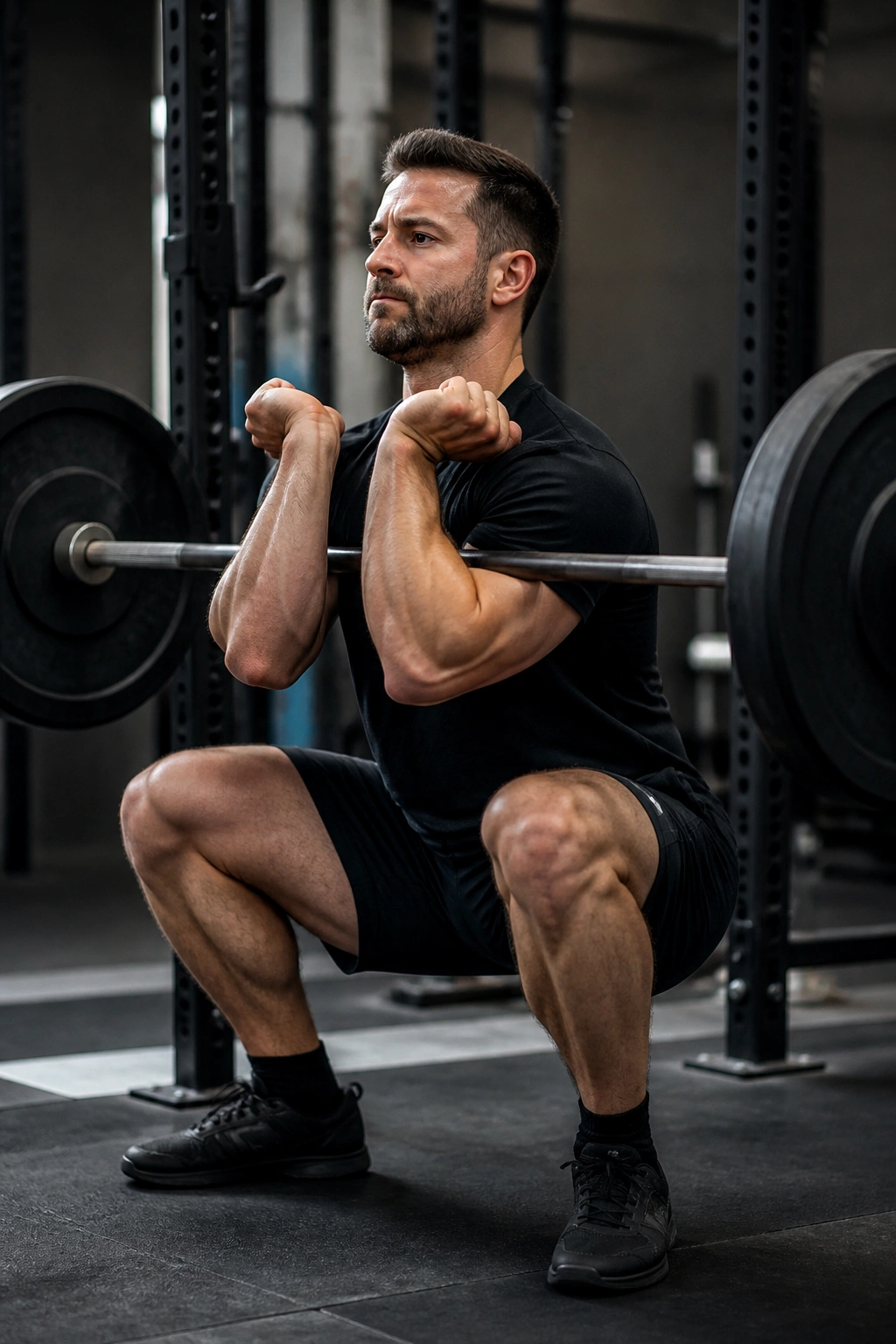
If the front squat is the most honest lift, the Zercher squat is the most brutal. You hold the barbell in the crook of your elbows while standing. It looks uncomfortable because it is. But beyond the superficial pain in the arms, it is an incredible developer of the upper back and thoracic spine.
Because the weight is held so low and far in front, your body has to work overtime to stay upright. This makes it impossible to hinge at the hips the way you would on a back squat. The result is a movement that forces an incredibly upright, quad-dominant squat pattern.
It is particularly useful for people who lack the shoulder mobility to hold a front squat bar correctly. Just be prepared for the bar to dig into your skin—some people wrap the bar in a towel or pad, though “hardened” lifters will tell you to just get used to the sensation.
9. Jefferson Squat
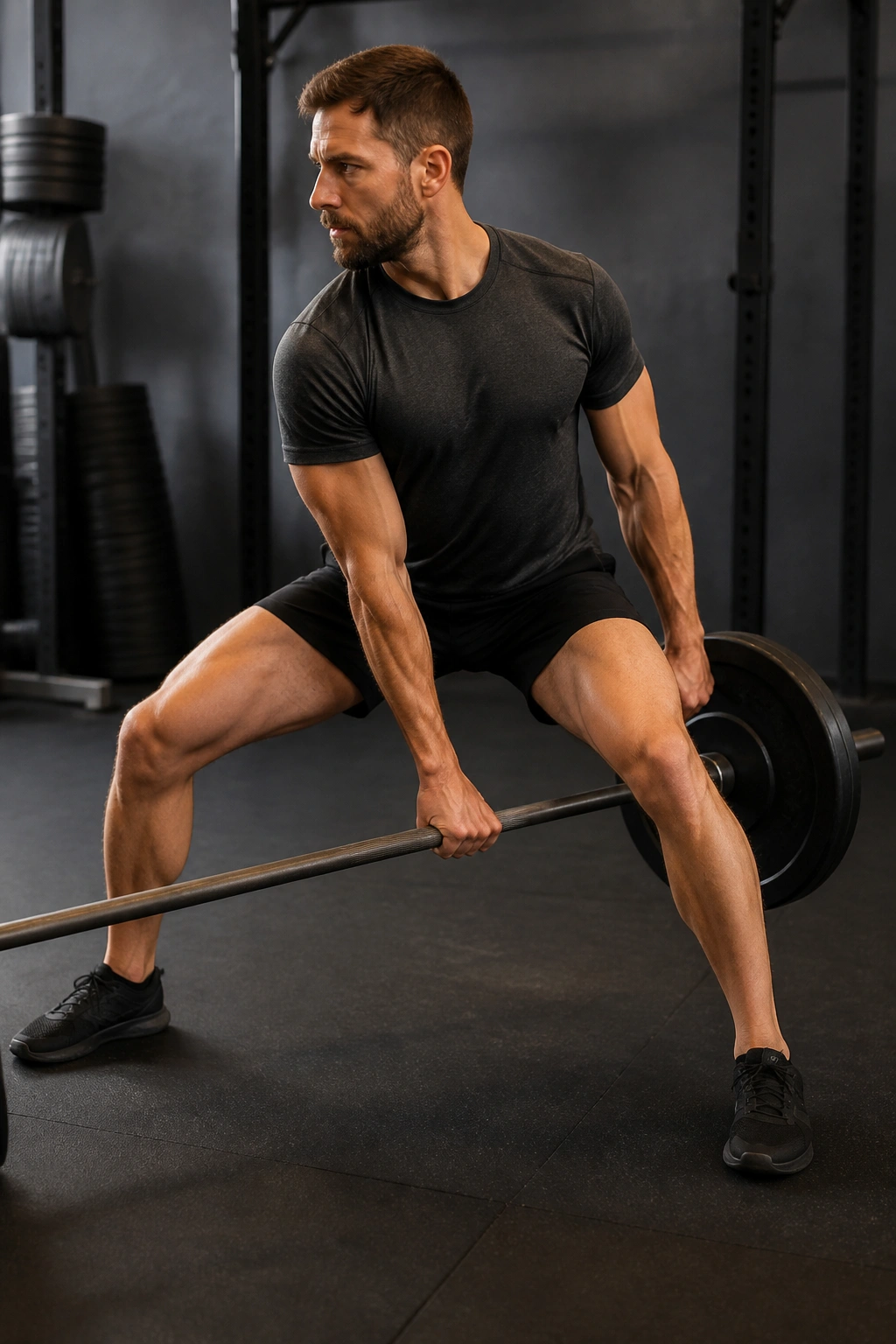
This is a vintage exercise that most modern gyms have completely forgotten. You straddle the barbell, which is resting on the floor between your legs. You reach down, grab the bar with one hand in front and one hand behind, and stand up.
It looks like a strange hybrid between a deadlift and a squat, and that is precisely why it is effective. It hits the adductors, the glutes, and the entire core in a way that traditional squats just don’t touch. Because of the asymmetrical hand placement, your obliques have to fire intensely to keep the bar from twisting as you rise.
- Foot Stance: Straddle the bar with one foot in front and one behind.
- Hand Grip: Mixed grip (one over, one under) is standard for safety.
- Verticality: Try to keep your torso as vertical as possible, dropping your hips between your feet.
This is an excellent variation for anyone dealing with a cranky lower back who wants to keep loading their legs heavily without the spinal compression of a heavy barbell back squat.
10. Pistol Squat
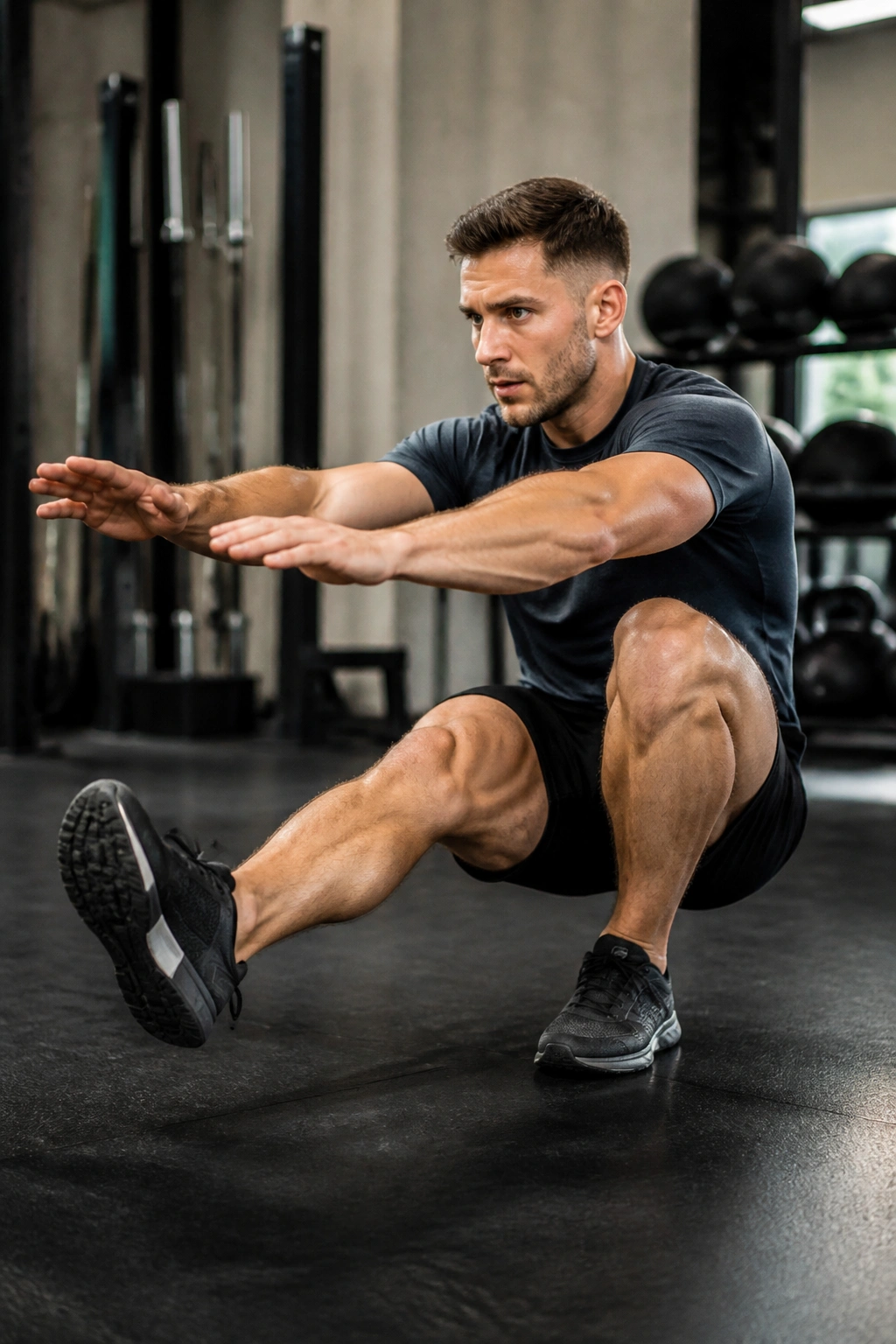
The pistol squat is the ultimate test of leg strength, balance, and ankle mobility. It is a one-legged squat where the non-working leg is held out straight in front of you. You are essentially doing a squat with your entire body weight on one foot.
Why You Can’t Do It Yet
Most people blame their strength. In reality, it is usually an ankle mobility issue. If your ankles are stiff, you cannot shift your weight forward enough to balance, and you will fall backward.
- The Progression: If you cannot do a full pistol, start by squatting to a high box on one leg.
- The Counterbalance: Hold a light weight out in front of you to counterbalance your body.
- The Floor: This is best done in flat shoes or barefoot. Thick, cushioned running shoes will make you wobble and increase the risk of an ankle roll.
Mastering the pistol is a party trick, sure, but it is also a fantastic indicator of whether you have hidden muscular imbalances or mobility restrictions.
11. Hack Squat
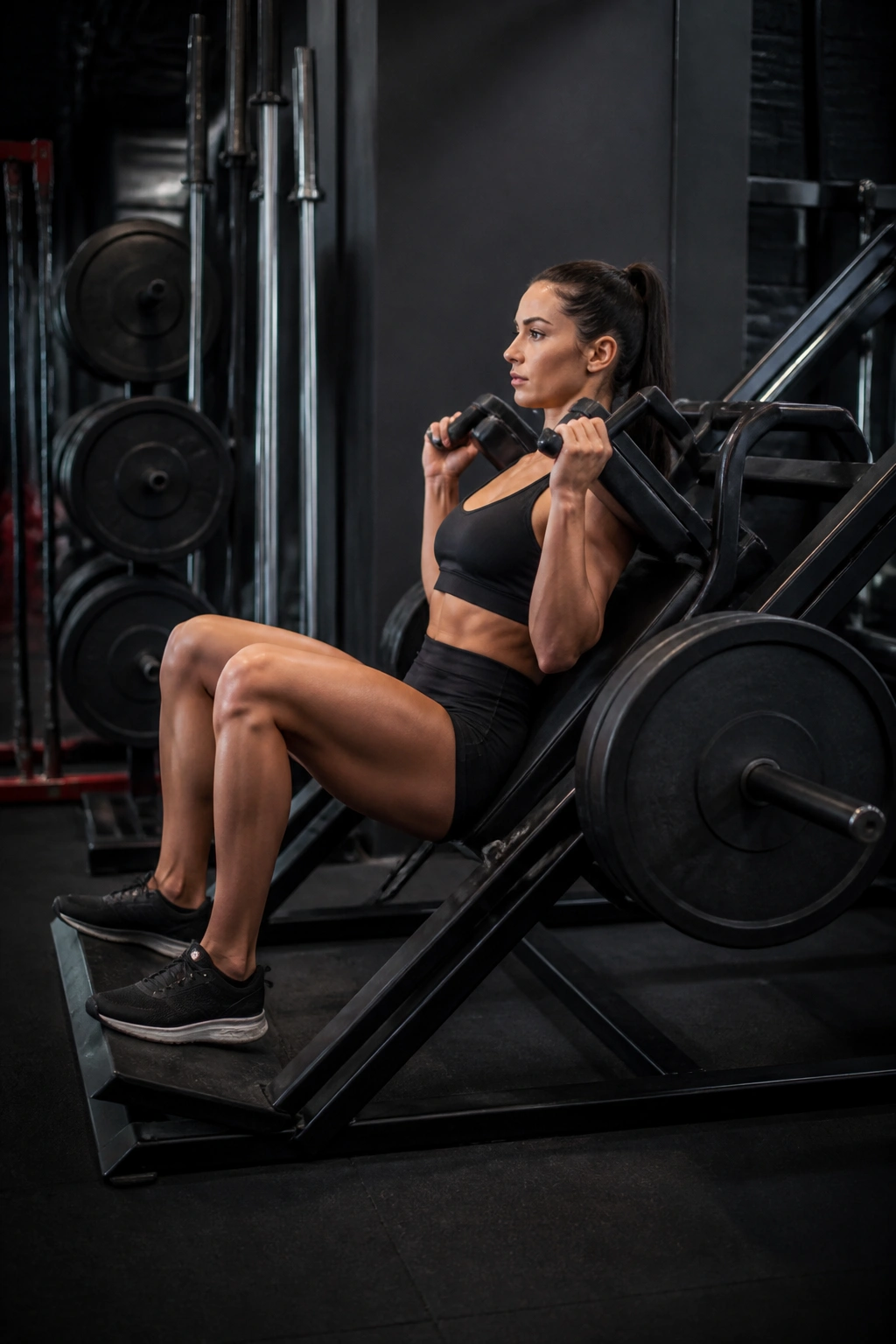
No, we aren’t talking about the machine you find in most commercial gyms—though that has its place. We are talking about the barbell hack squat. It is essentially a deadlift performed with the bar behind your heels.
Because the bar is behind you, your torso must stay very upright, and your knees have to travel forward. This is the definition of a knee-dominant exercise. It isolates the quads in a way that few other lifts can.
To perform it, stand in front of the bar. Squat down and grab it behind your heels. Keep your chest up and drive through your mid-foot to stand. The range of motion is slightly shorter than a traditional squat, but the pump you will get in your quads is unmatched. It is a fantastic accessory movement for people looking to add size to their legs without taxing their spine with a heavy barbell on their back.
12. Overhead Squat
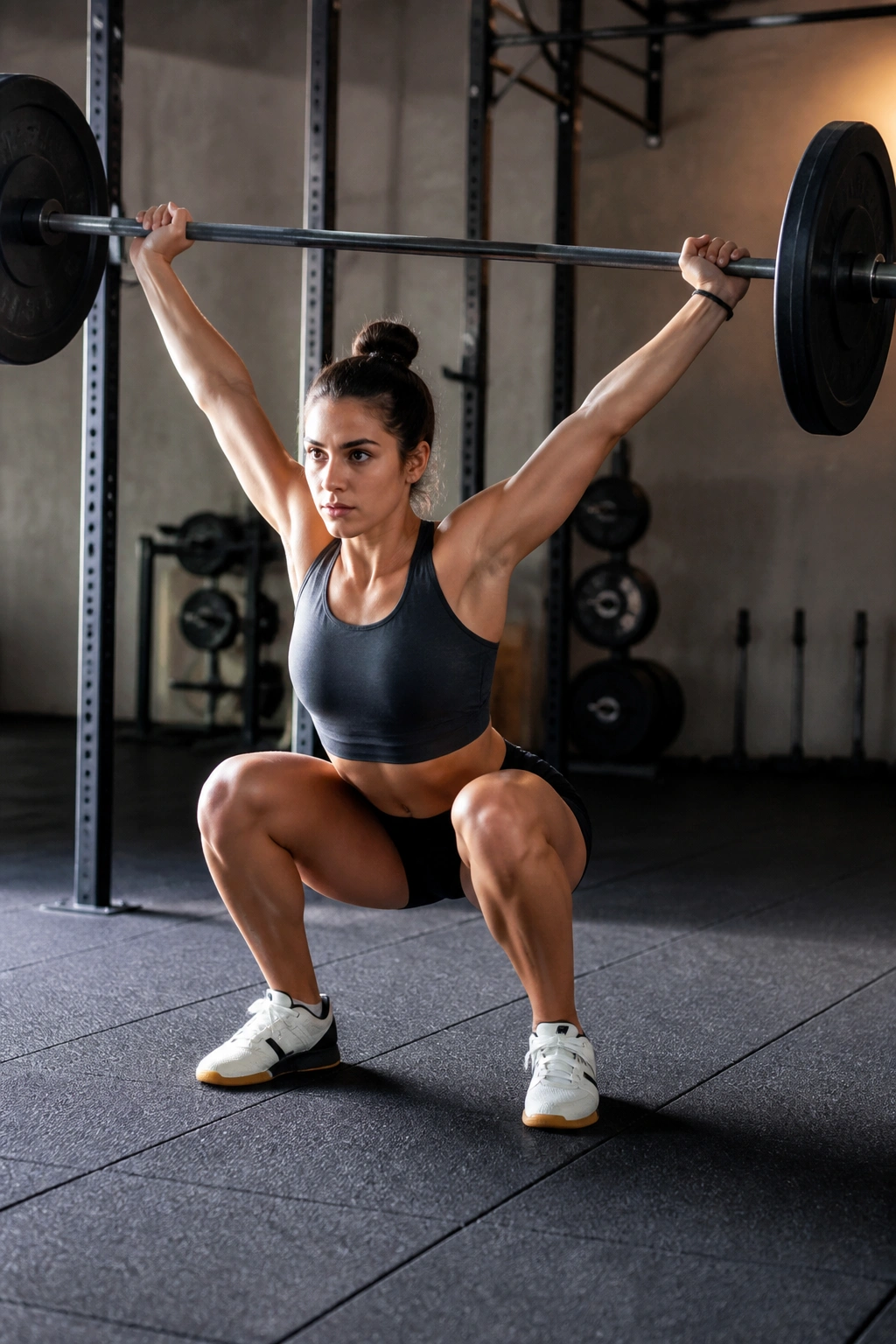
The overhead squat is the king of mobility drills. If you have tight hips, tight thoracic spine, or tight ankles, this movement will show you immediately. You hold a barbell (or a PVC pipe, if you are starting out) over your head with a wide grip, and then perform a deep squat.
The Stability Test
If your shoulders are not strong and stable, the bar will drop forward or backward instantly. This lift teaches you to lock your upper back and lats into position, which provides a rigid foundation for your squat.
- The Grip: Take a very wide snatch grip on the bar.
- The Locked Elbows: Never let your elbows bend. Active shoulders are the key.
- The Path: The bar must stay directly over the back of your head or the nape of your neck the entire time.
Do not be discouraged if you can barely do this with an empty bar. The goal here isn’t to load up 300 pounds; it is to perfect your squat pattern. Once your overhead squat is clean, your back and front squats will naturally improve because your body will finally understand how to move as one cohesive unit.
13. Landmine Squat
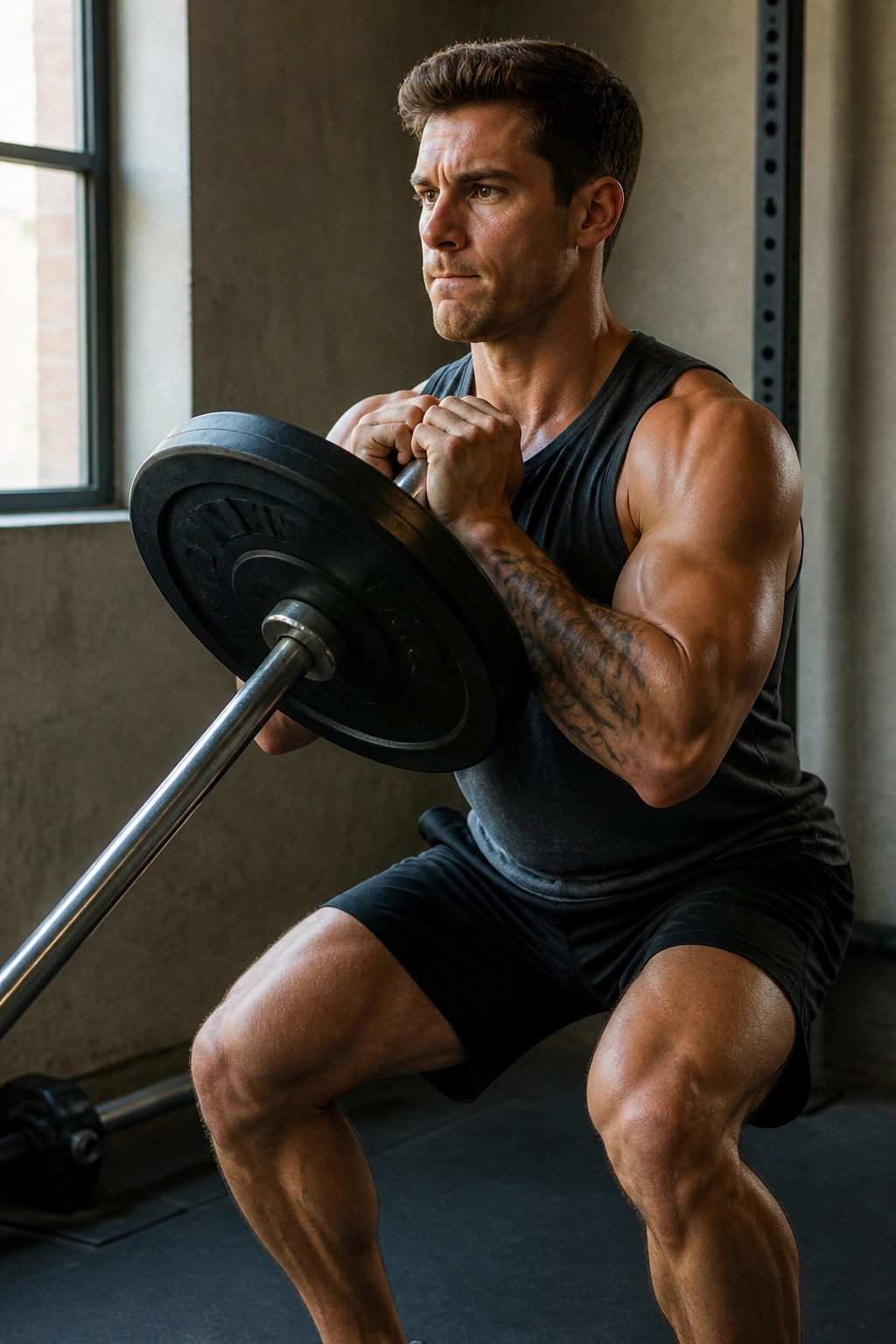
The landmine squat is a “hidden gem” of the gym world. You anchor one end of a barbell into a corner (or a landmine attachment) and load the other end. You hold the weighted end at your chest, similar to a goblet squat.
The beauty of the landmine is the arc. As you descend, the bar moves in a curve, which forces you to sit back into your hips while simultaneously pushing your knees forward. It is a natural, forgiving movement pattern that feels incredibly safe on the knees and lower back.
It is arguably the best “middle ground” exercise. It has the stability of a machine, the freedom of a free weight, and the simplicity of a goblet squat. If you have had knee pain with back squats, try this. The arc of the bar naturally adjusts to your body’s anatomy, making it much friendlier to joint issues.
14. Cossack Squat
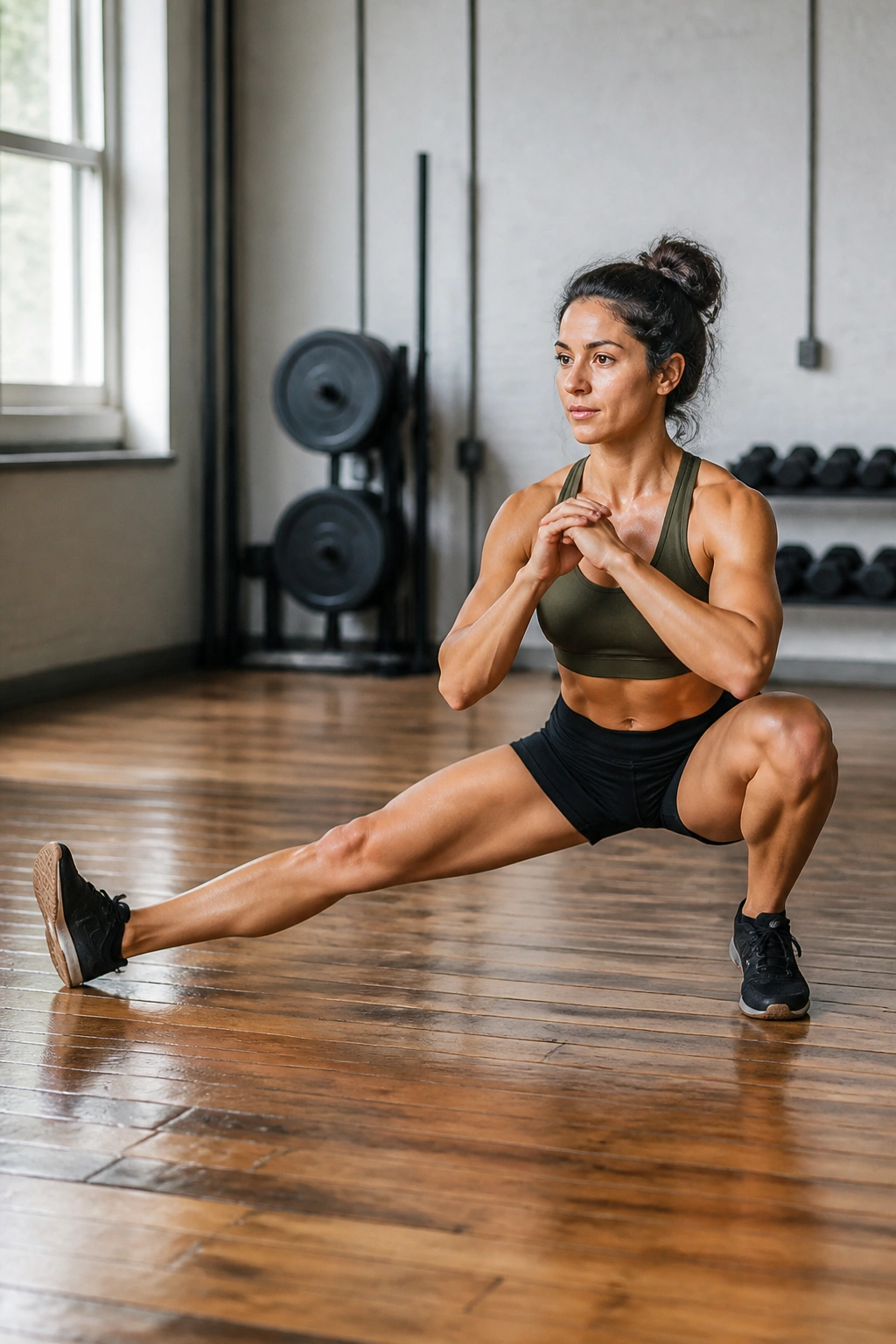
We spend almost all of our gym time moving forward and backward. The Cossack squat introduces lateral movement, which is essential for healthy hips and athletic knees. You take a very wide stance, then shift your entire body weight onto one leg while the other leg remains straight, toes pointing up.
This is not just a squat; it is a stretch and a strength builder in one. It hammers the inner thighs (adductors) and the glutes. Most people have incredibly tight adductors; performing these with control will be humbling.
- The Depth: Go as low as your hip mobility allows.
- The Heel: Keep the heel of the bent leg glued to the floor. If it lifts, shorten your stance.
- The Back: Try to keep your chest up, even as you sink into the side lunge.
Use this as a warm-up or as a main movement for higher reps. It will fix the hip stiffness you never knew you had.
15. Jump Squat
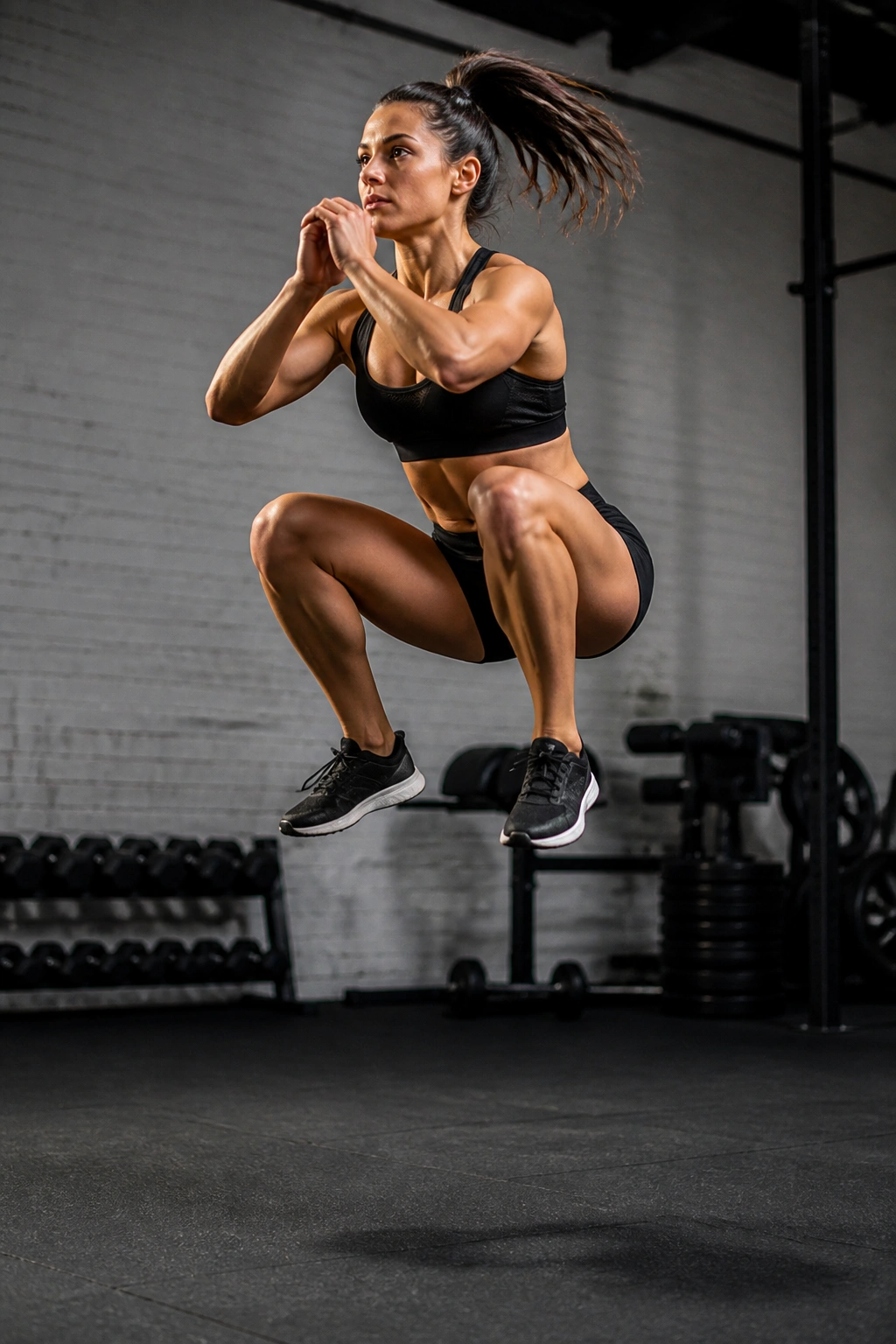
Squats are not just about grinding out heavy reps. You also need explosive power. The jump squat—performed with body weight or light dumbbells—trains your fast-twitch muscle fibers. These are the fibers responsible for speed and power, and they are the first to atrophy as we age.
The key to a good jump squat is the landing. You must land softly, absorbing the force through your ankles, knees, and hips, transitioning immediately back into the next jump. If you land with a “thud,” you are doing it wrong.
Use this for low reps (5-8) and high intent. Every jump should be as high as you can possibly go. This is about neurological output, not about burning calories. When you feel your explosiveness start to fade, end the set. Quality is everything when training for power.
16. Wall Sit
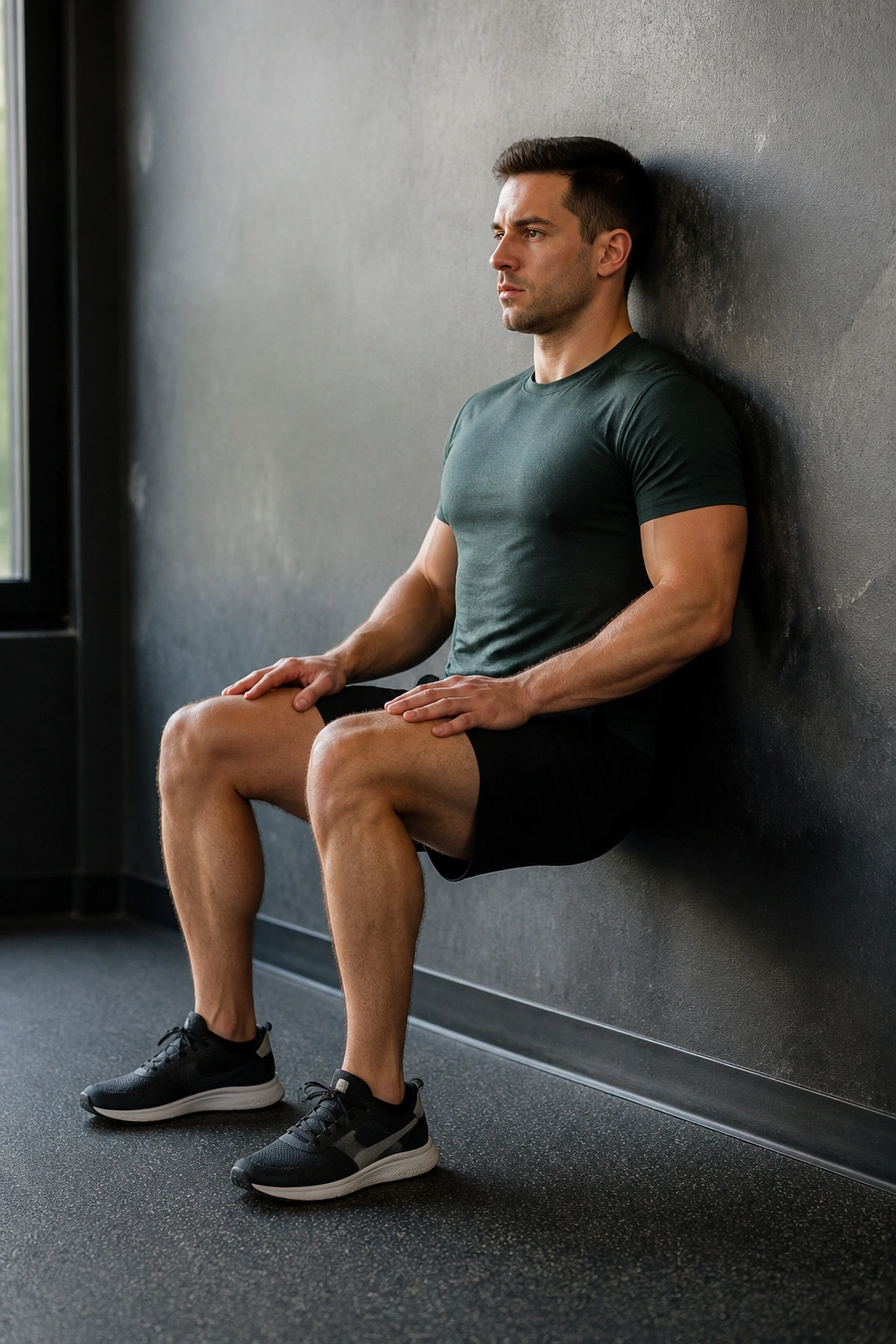
The humble wall sit. Everyone remembers it from high school gym class, and everyone remembers how much it burned. It is an isometric hold, meaning the muscle is under tension without changing length. This is excellent for building tendon strength and endurance without putting extra wear and tear on the joint.
Find a wall, slide your back down until your thighs are parallel to the floor, and hold. That’s it. To make it harder, place a weight plate on your lap or do it on one leg (the “pistol wall sit”).
This is the ultimate finisher. Save it for the end of your workout. After you have hammered your legs with heavy squats and variations, a few sets of wall sits will finish off whatever energy reserves are left in your quads. It is mentally tough, which is exactly why it works.
17. Cyclist Squat
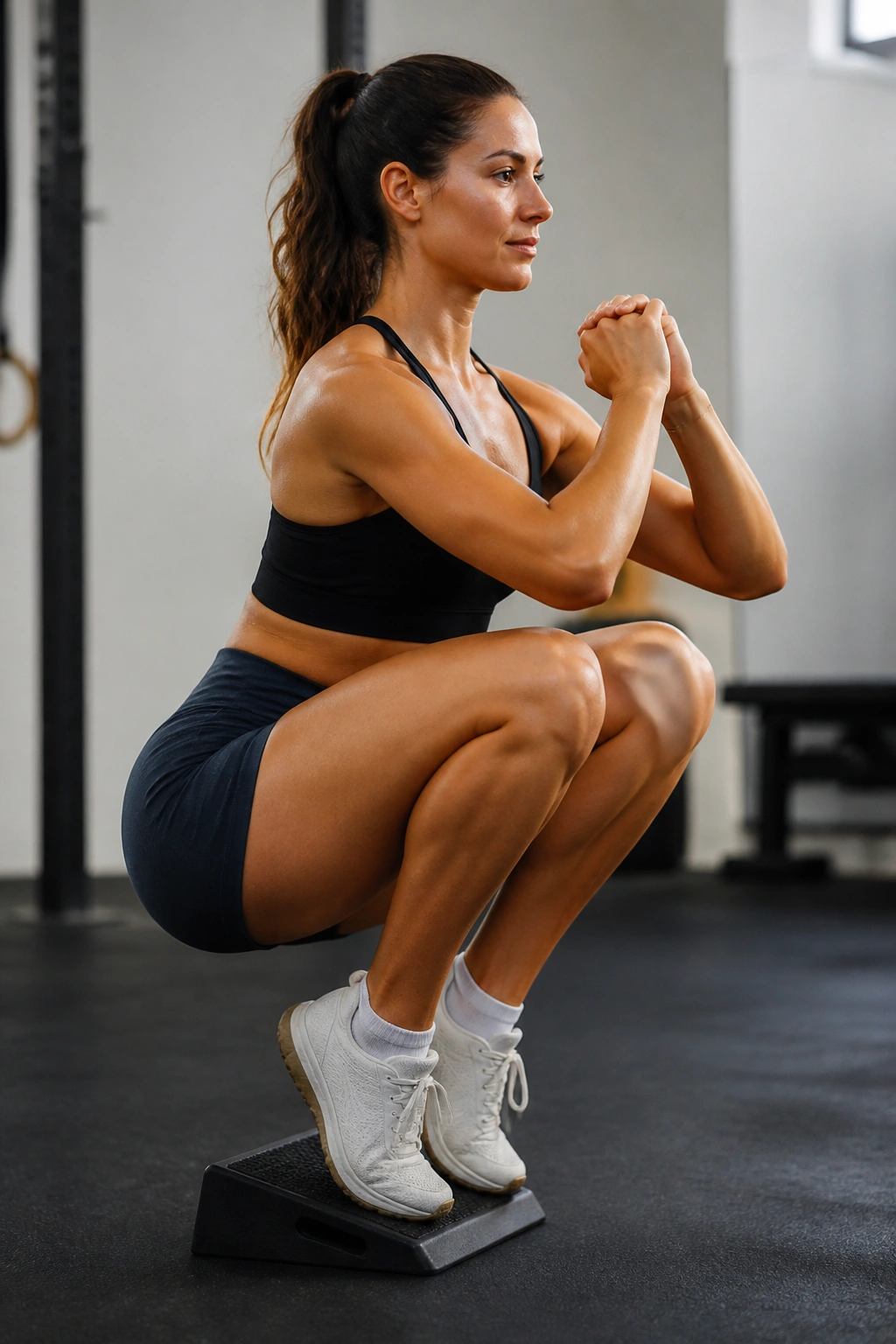
The cyclist squat is a brilliant modification for those who want to isolate the quads and minimize glute involvement. You elevate your heels—usually by standing on a wedge or even small weight plates—and keep your feet close together.
By elevating the heels, you artificially increase your ankle range of motion, allowing your knees to track much further over your toes. This upright posture forces the quads to do almost all the lifting, taking the hips and glutes largely out of the equation.
- The Setup: Use a dedicated squat wedge if your gym has one. If not, two 5-pound plates under the heels work just fine.
- The Weight: You won’t be able to lift your back-squat PR here. The isolation is intense.
- The Feel: You will feel a deep stretch in the quads at the bottom. That is the goal.
This is a fantastic tool for bodybuilders or anyone trying to build thick, teardrop-shaped quads without wanting to build a massive posterior chain.
18. Barbell Hack Squat
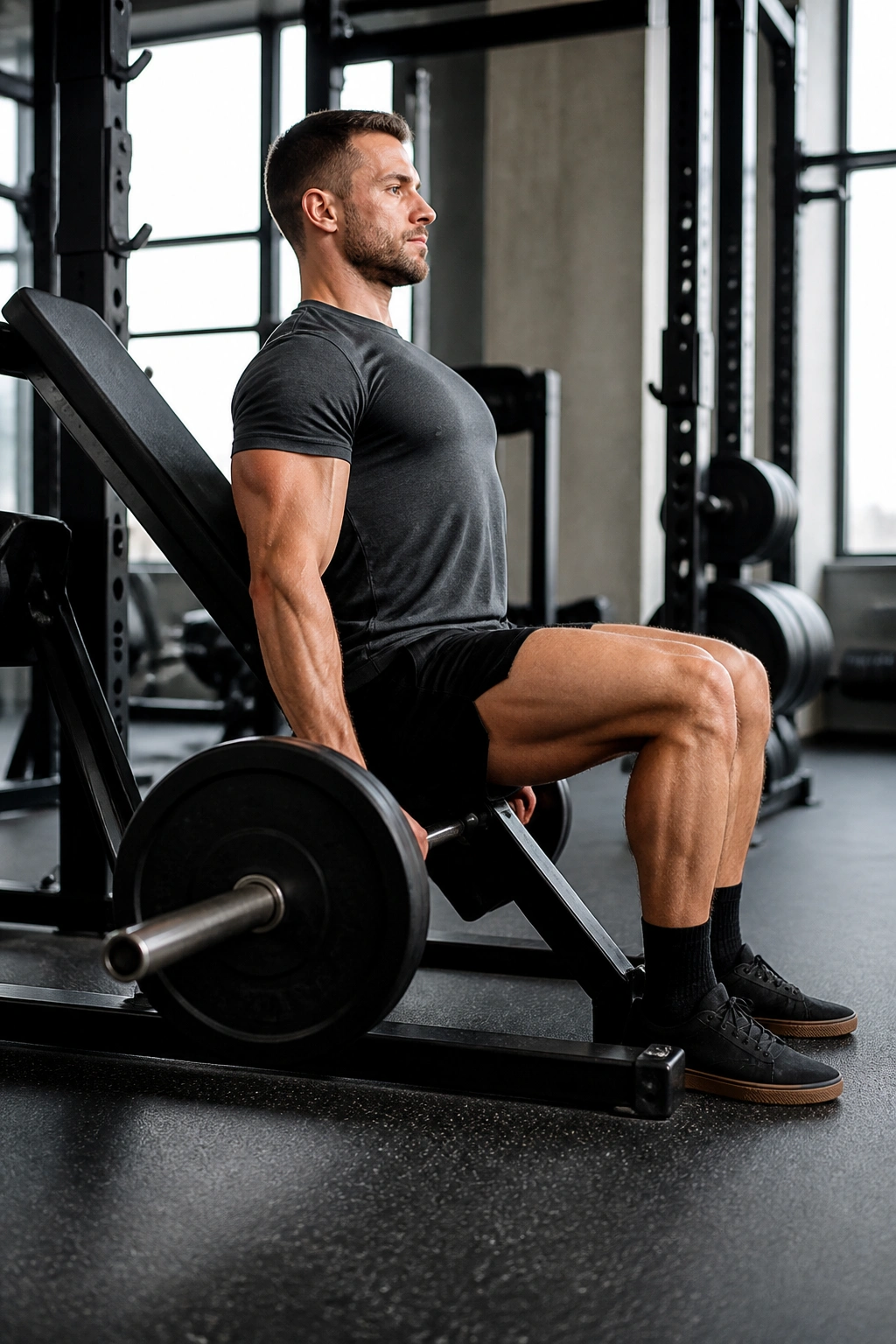
We touched on the “barbell hack squat” earlier as a deadlift-style movement, but it deserves its own focused breakdown because of how it creates a “bottom-up” quad stimulus. When you are standing on the floor and the bar is behind your heels, you are initiating the movement from a deep knee bend.
Unlike a back squat, where you descend into the stretch, here you start in the stretch. This removes the eccentric component (the lowering phase) that often causes muscle soreness. It is great for people who want to train heavy and often without being crippled by “DOMS” (delayed onset muscle soreness) for three days.
The Setup
Place the barbell on the floor. Stand in front of it with your heels against the bar. Squat down and grip the bar. Keep your chest high—this is vital. If you drop your chest, you turn it into a stiff-legged deadlift. Drive through your mid-foot. It feels like pushing the floor away, rather than lifting the bar.
Final Thoughts
You now have eighteen distinct ways to challenge your legs and glutes. The common mistake most people make is trying to rotate through these too quickly, or worse, trying to do all of them in one session. That is a one-way ticket to burnout.
Instead, pick two or three movements to focus on for a training block. Maybe you stick with back squats as your primary heavy lift for six weeks, using Bulgarian split squats as your secondary accessory to fix imbalances, and finishing with wall sits for endurance. Once you stop seeing progress, swap the accessory movements. The goal is to keep the stimulus fresh enough that your body is forced to adapt, but consistent enough that you can actually master the technique.
Listen to your body. If a movement feels genuinely “wrong” or painful in your joints—not just the burning sensation of tired muscles—stop. Modify it or try a different variation. Strength is a long game. The best squat variation is the one that allows you to train hard, recover well, and come back to the gym ready to do it all again next time. Keep your focus on consistency, and the leg strength will follow.
