



A good leg day has a way of changing your mood and your gait at the same time. You leave the gym walking a little slower, then catch yourself using the stair rail for support, and somehow that feels earned.
For women building stronger lower bodies, the smartest leg workouts at the gym are not the flashy ones that leave you exhausted for the sake of it. They’re the moves that train your quads, hamstrings, glutes, inner thighs, outer hips, and calves in a way you can repeat next week without your form falling apart. Heavy compounds matter. So do single-leg work, machine work, and the boring little accessories that keep your knees and hips honest.
And no, you do not need to treat every lower-body session like a test of survival. A solid leg day usually has one squat pattern, one hinge pattern, one unilateral move, and one isolation move or finisher. Miss a piece for long enough, and the weak spot shows up fast.
Start with the heavy lift, then fill in the gaps.
1. Barbell Back Squats
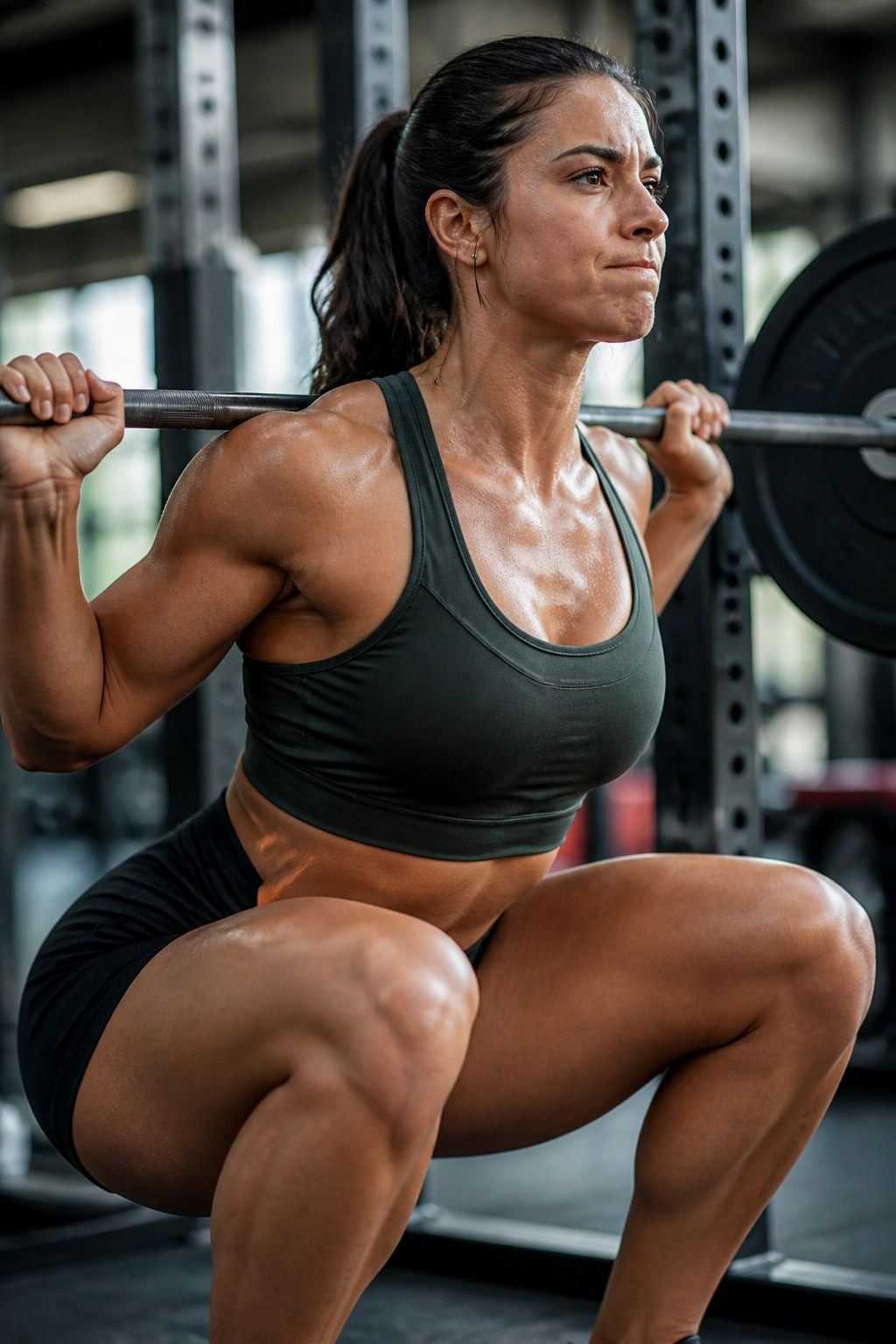
If you want one lift that teaches your whole lower body to work together, the barbell back squat still earns its place. It trains the quads, glutes, adductors, and trunk at the same time, which is why it shows up in so many serious leg programs.
Why It Works
A back squat forces you to brace hard, sit into the movement, and drive out of the bottom with your feet planted. That combo builds strength you can feel in everyday life — getting up from a low chair, carrying bags, climbing stairs, all of it.
- Use 3 to 5 sets of 4 to 8 reps if strength is the goal.
- Keep your chest proud, but do not over-arch your lower back.
- Aim for a depth you can control, not a depth you can survive by bouncing.
- A stable shoe helps; squishy running shoes usually make the lift feel sloppy.
Tip: if your knees cave in, slow the descent and think about spreading the floor with your feet.
2. Goblet Squats
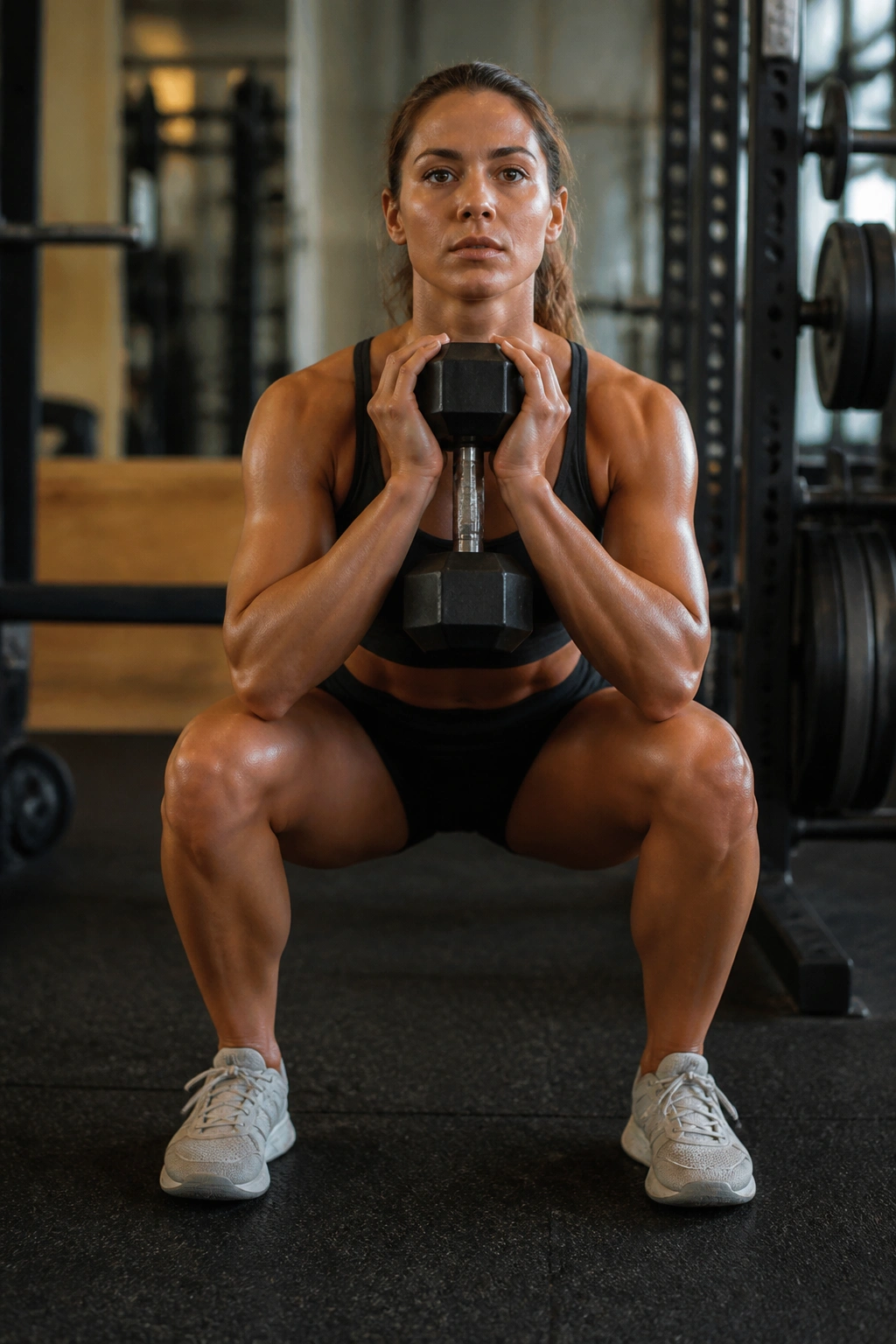
Why do goblet squats still matter when you already know how to squat? Because they clean up the mess that heavy barbell work can create. The dumbbell or kettlebell in front of your chest keeps your torso more upright, which makes it easier to learn depth, balance, and knee tracking without a lot of drama.
That is why goblet squats are one of the best leg workouts at the gym for women who want better form before loading a bar. They also hit the quads hard when you stay tall and let the knees travel forward a little. If your ankles are stiff, a small heel wedge or weight plate under the heels can make the movement feel smoother.
How to Use It
Use 3 to 4 sets of 8 to 12 reps. Pause for one second at the bottom, then stand up with control. If the dumbbell gets too easy to hold, that usually means the legs have stopped working and the weight is too light. Simple.
3. Leg Press
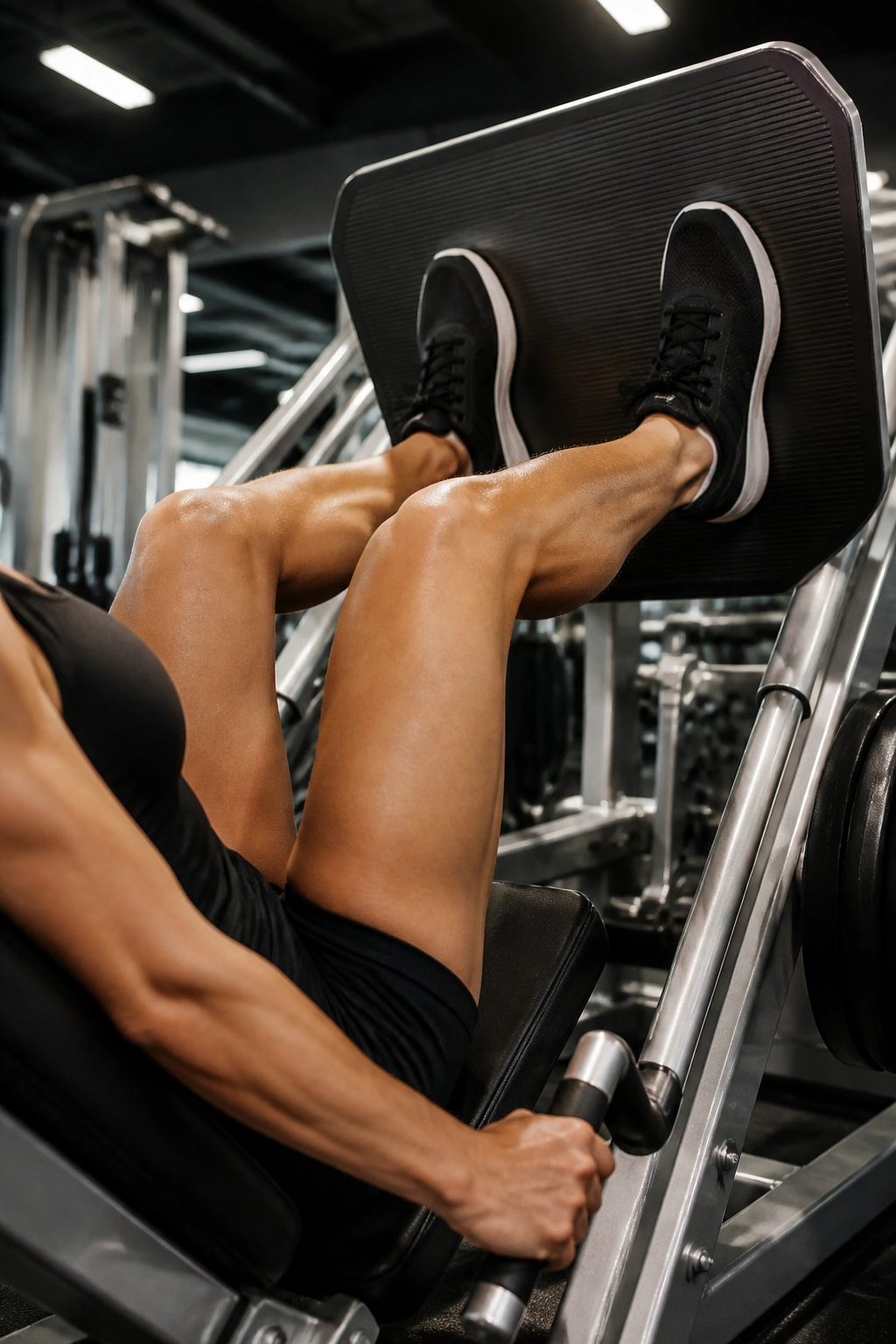
The leg press is the machine I reach for when I want the legs working hard without asking the lower back to carry the entire session. It gives you room to load the quads and glutes, and the setup is forgiving enough that you can focus on clean reps.
Foot placement changes the feel fast. Lower on the platform puts more stress on the quads. Higher on the platform shifts some work to the glutes and hamstrings. A shoulder-width stance is the safe middle ground, and it’s where most people should start before getting clever with angles.
- Use 3 to 4 sets of 10 to 15 reps.
- Lower the sled slowly for about 2 to 3 seconds.
- Stop before your hips tuck hard at the bottom.
- Do not lock your knees hard at the top.
A controlled leg press burns in a useful way. A rushed one just turns into knee chaos.
4. Bulgarian Split Squats
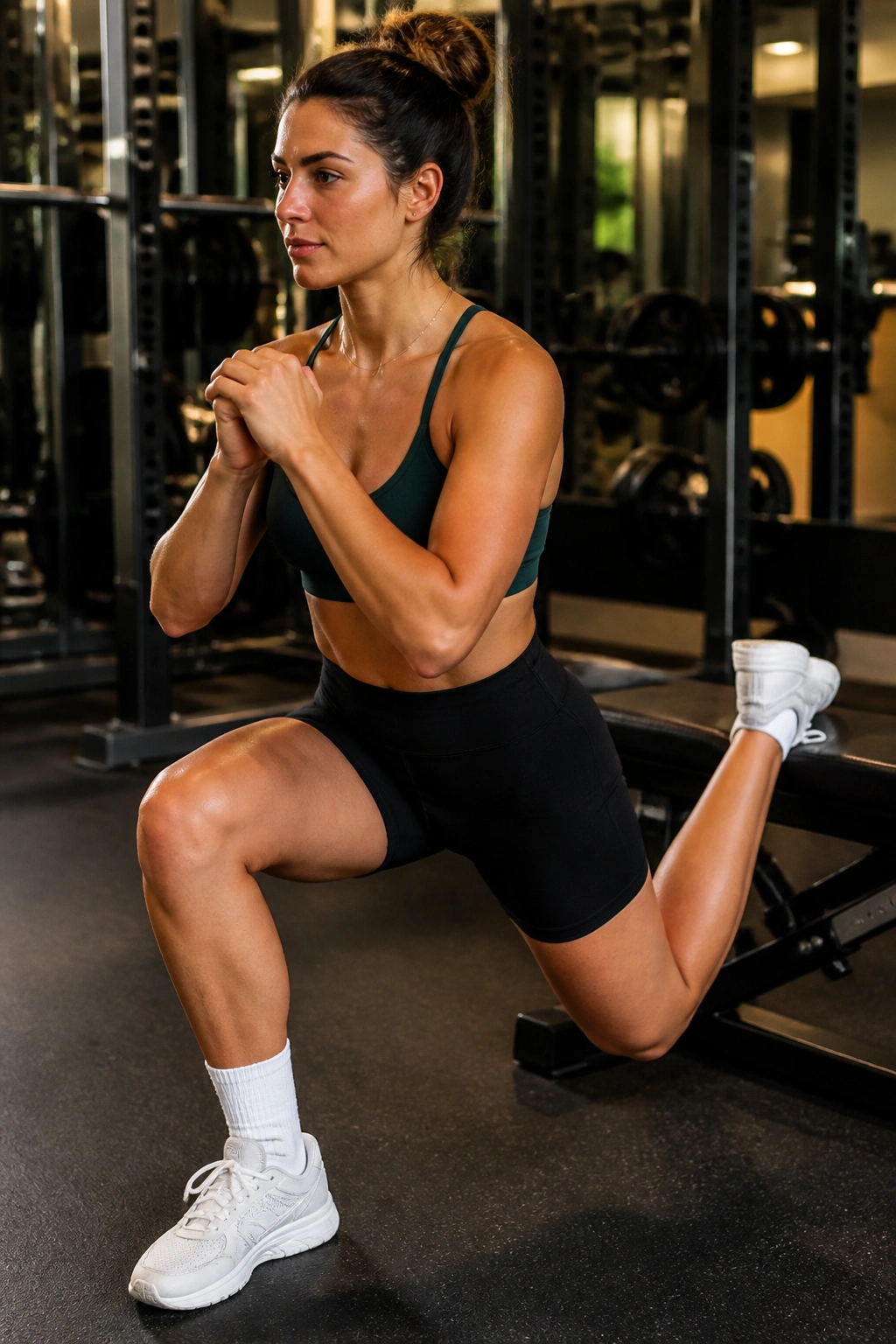
The exercise most people avoid is often the one that changes their legs fastest. Bulgarian split squats are miserable in the best possible way because they expose side-to-side weakness, challenge balance, and make the front leg do the real work.
Setup That Saves Your Knees
Set the back foot on a bench or box that sits around knee height. Step the front foot far enough forward that you can drop straight down without your heel peeling up. A slight forward lean shifts more stress to the glute; a more upright torso hits the quad harder.
A lot of people make this harder than it needs to be by setting the front foot too close. Then the knee jams forward, the front heel lifts, and everything feels unstable. Move the foot out. It’s a small fix, but it changes the whole lift.
Use 3 sets of 8 to 10 reps per leg with dumbbells. Keep the descent slow. One ugly rep can turn the set into a wobble contest.
5. Romanian Deadlifts
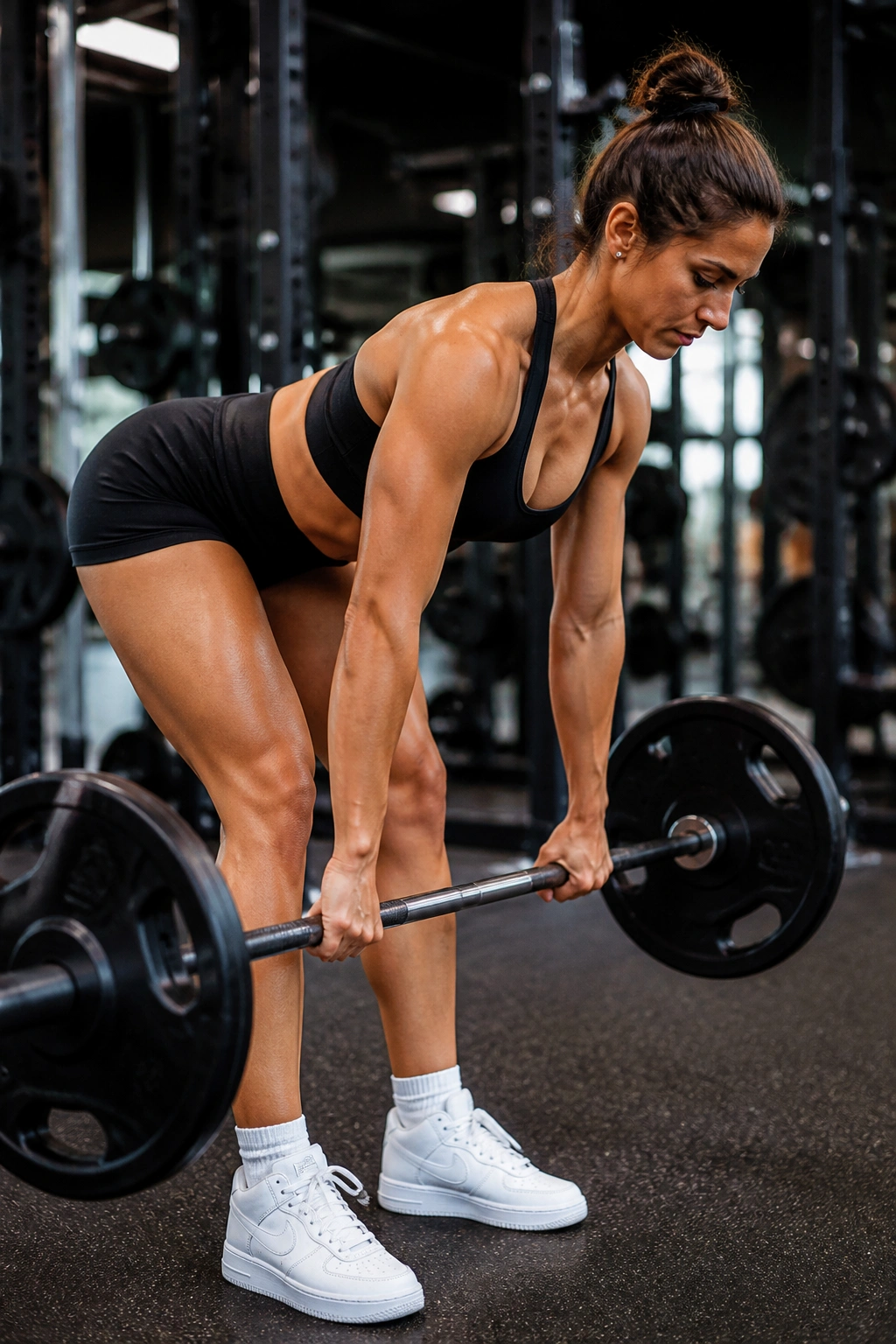
A good Romanian deadlift should feel like a long, hard stretch through the back of the thigh, not a tug in your lower back. That’s the whole game. You hinge at the hips, keep a soft bend in the knees, and send the hips back while the bar stays close to your legs.
The best part of this lift is the range where the hamstrings load up before you even come back up. That loaded stretch is why the movement builds the back side of the legs so well. If you stop the bar too high, you miss the point. If you sink too low and round your back, you miss it in a different way.
Keep your ribs down, lats tight, and neck neutral. The bar should skim the thighs and shins on the way down and up.
Use 3 to 4 sets of 6 to 10 reps. When the stretch gets intense but the back stays flat, you’re in the right zone.
6. Barbell Hip Thrusts
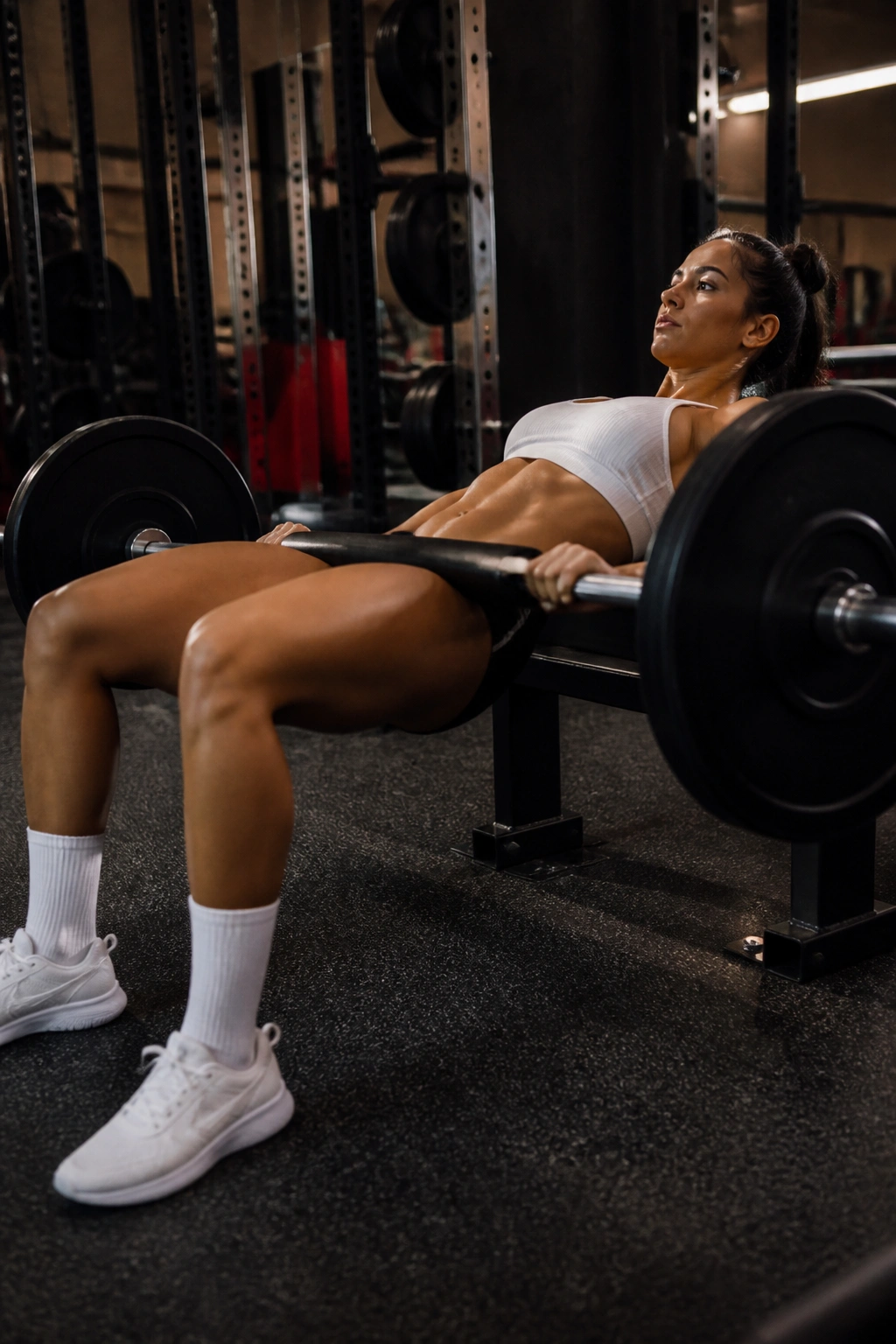
Unlike a floor glute bridge, the barbell hip thrust gives you more range and a lot more loading room. That makes it one of the best leg workouts at the gym for women who want glutes to do more than just show up at the party.
Set your upper back on a bench, roll the bar across your hips, and plant your feet so your shins are close to vertical at the top. Then drive up, tuck the pelvis slightly, and squeeze the glutes hard without arching your lower back into a weird shape.
People love to turn hip thrusts into a lower-back contest. Don’t. The top position should feel like a strong glute squeeze, not like you’re trying to lean backward through the bench.
Use 4 sets of 8 to 12 reps, and hold the top for 1 to 2 seconds. If your feet are too far away, you’ll feel hamstrings. Too close, and your knees take over. The sweet spot is usually right where the shins are vertical at lockout.
7. Walking Lunges
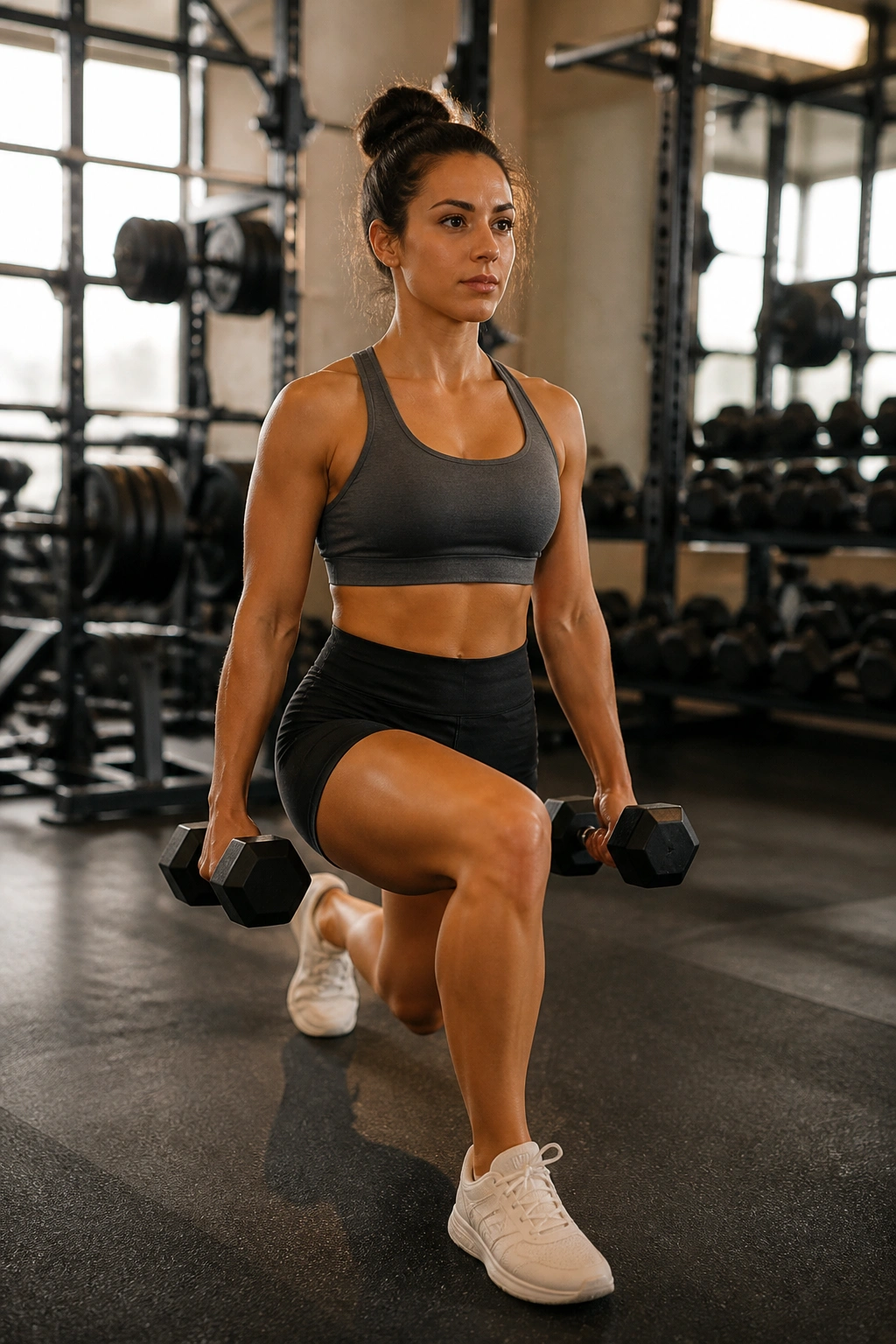
You know a set of walking lunges is working when the last few steps get sloppy in a very specific way. Your balance starts to wobble, your breathing speeds up, and every rep asks a little more from your glutes and quads than the one before it.
Walking lunges are great because they force you to move through space instead of just up and down. That makes them useful for leg size, coordination, and conditioning. A longer step usually shifts the work toward the glutes. A shorter step puts more on the quads. Either way, the front leg should do the lifting.
- Use 10 to 16 steps per leg.
- Hold dumbbells at your sides, or keep them bodyweight if your form gets messy.
- Keep your torso tall, but not rigid.
- Let the back knee come close to the floor without slamming it down.
A flat gym floor is enough. You do not need a runway.
8. Hack Squat
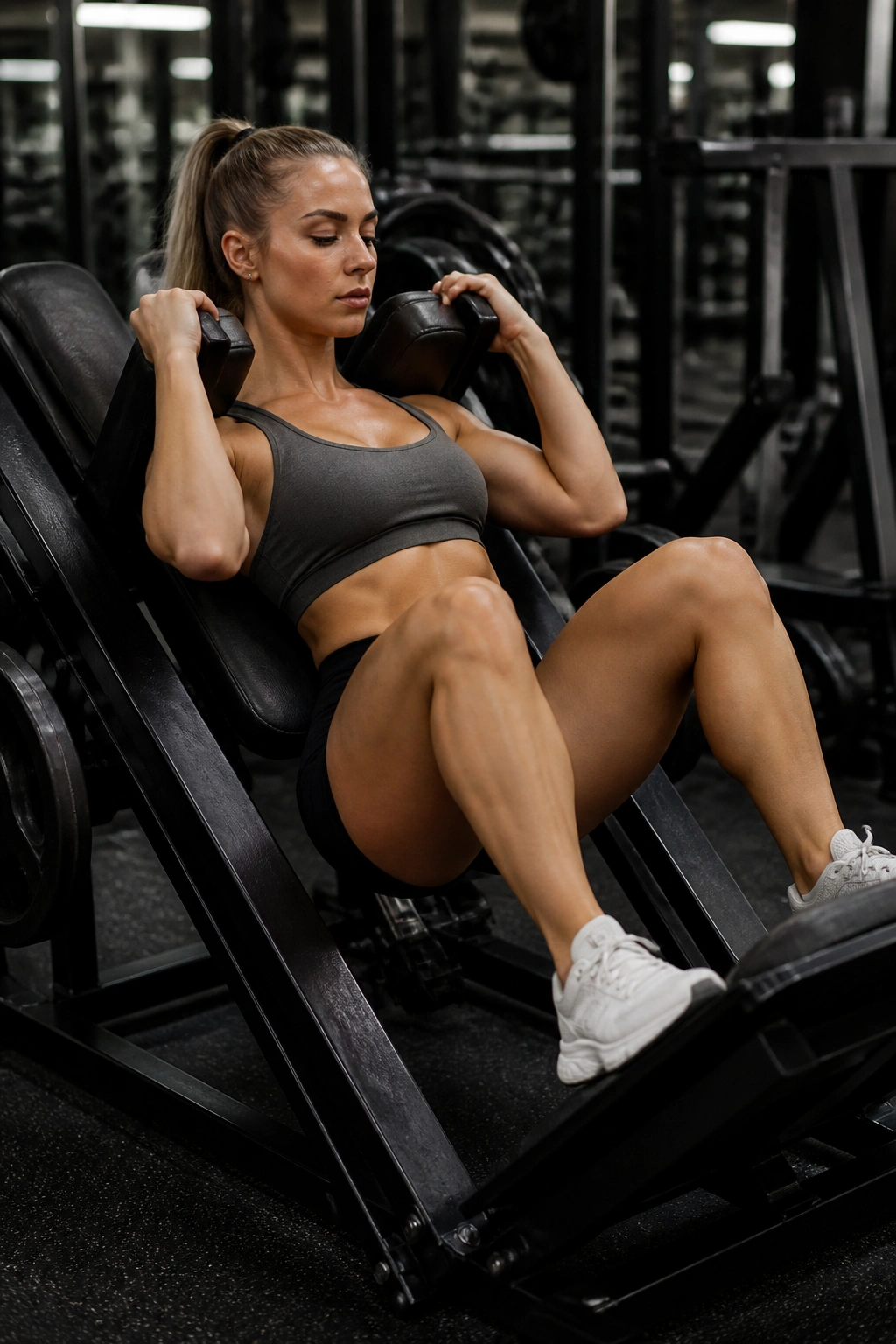
The hack squat is the machine I like when I want the quads to light up without spending the whole set babysitting balance. It gives you a fixed path, which means less mental noise and more direct leg work.
Your foot placement decides a lot here. Lower on the platform and closer together tends to be more quad-heavy. Higher and a little wider brings the glutes in more. The safest approach is to start in the middle, then shift one variable at a time and pay attention to what you feel.
Foot Placement Changes Everything
Keep your knees tracking in line with your toes. That sounds basic, but it’s where most sloppy hack squat reps go sideways. The machine does not excuse you from control. If anything, it makes poor movement easier to repeat.
Use 3 to 4 sets of 8 to 12 reps. Go deep enough to challenge the legs, but not so deep that your pelvis tucks under hard at the bottom. That rounded-bottom feeling is the point where people start losing tension.
9. Sumo Deadlifts
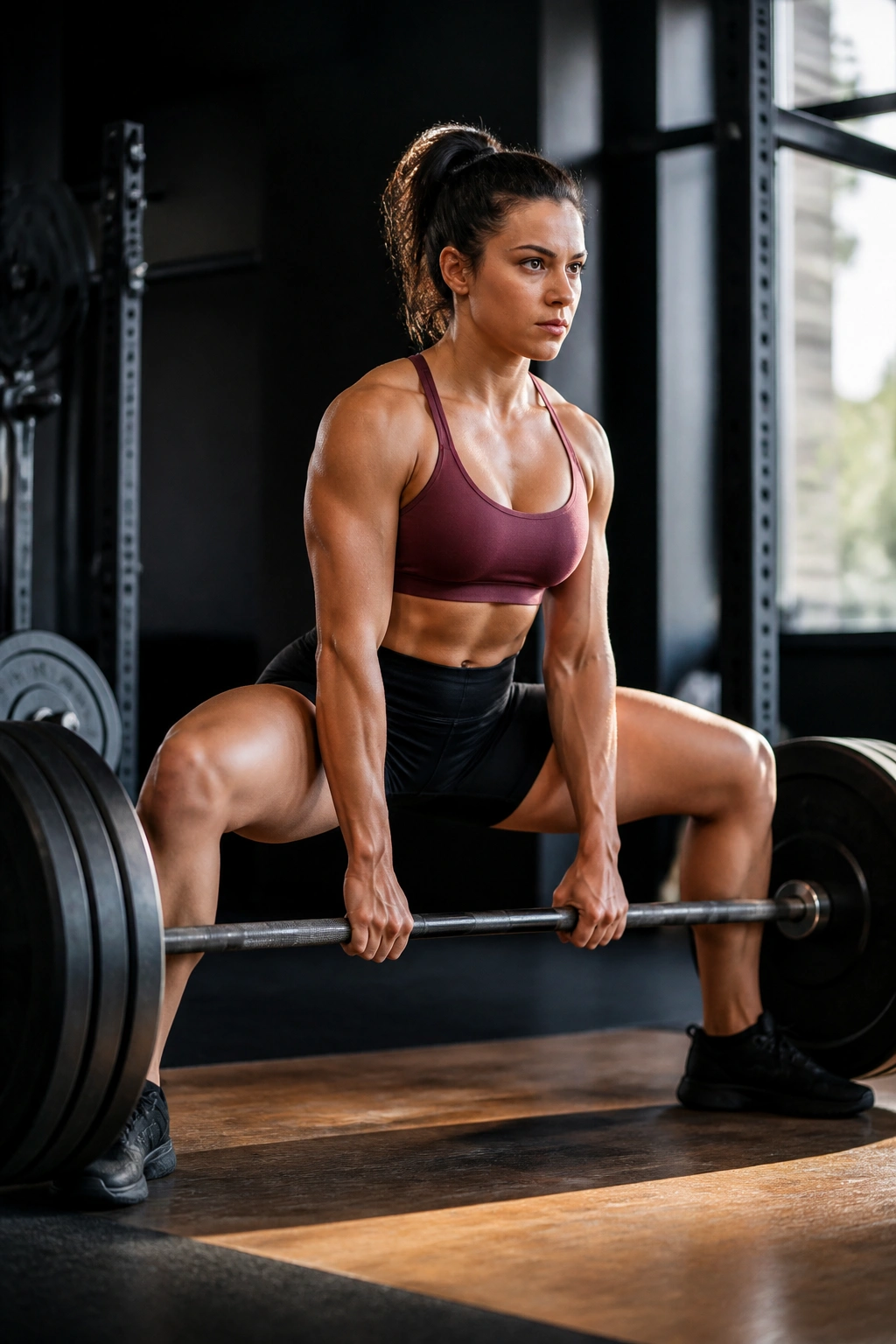
What happens when you widen your stance and stop pretending every deadlift has to look the same? You get a lift that asks more from the inner thighs, glutes, and hips, and often feels friendlier for lifters with longer torsos or tighter hamstrings.
The sumo deadlift starts with the feet wide, toes turned out, and hands inside the legs. From there, the chest stays up, the back stays braced, and the bar moves in a straight line off the floor. It is not a yank. It’s a push.
This lift can be a smart choice if conventional deadlifts make you feel folded in half before the bar even leaves the ground. The wider stance shortens the pull for some lifters and lets the hips do more of the work. It still needs respect, though. The knees should track over the toes, and the bar should stay close enough that you don’t get pulled forward.
Use 4 sets of 4 to 6 reps. Heavy and clean beats sloppy and heroic.
10. Leg Extensions
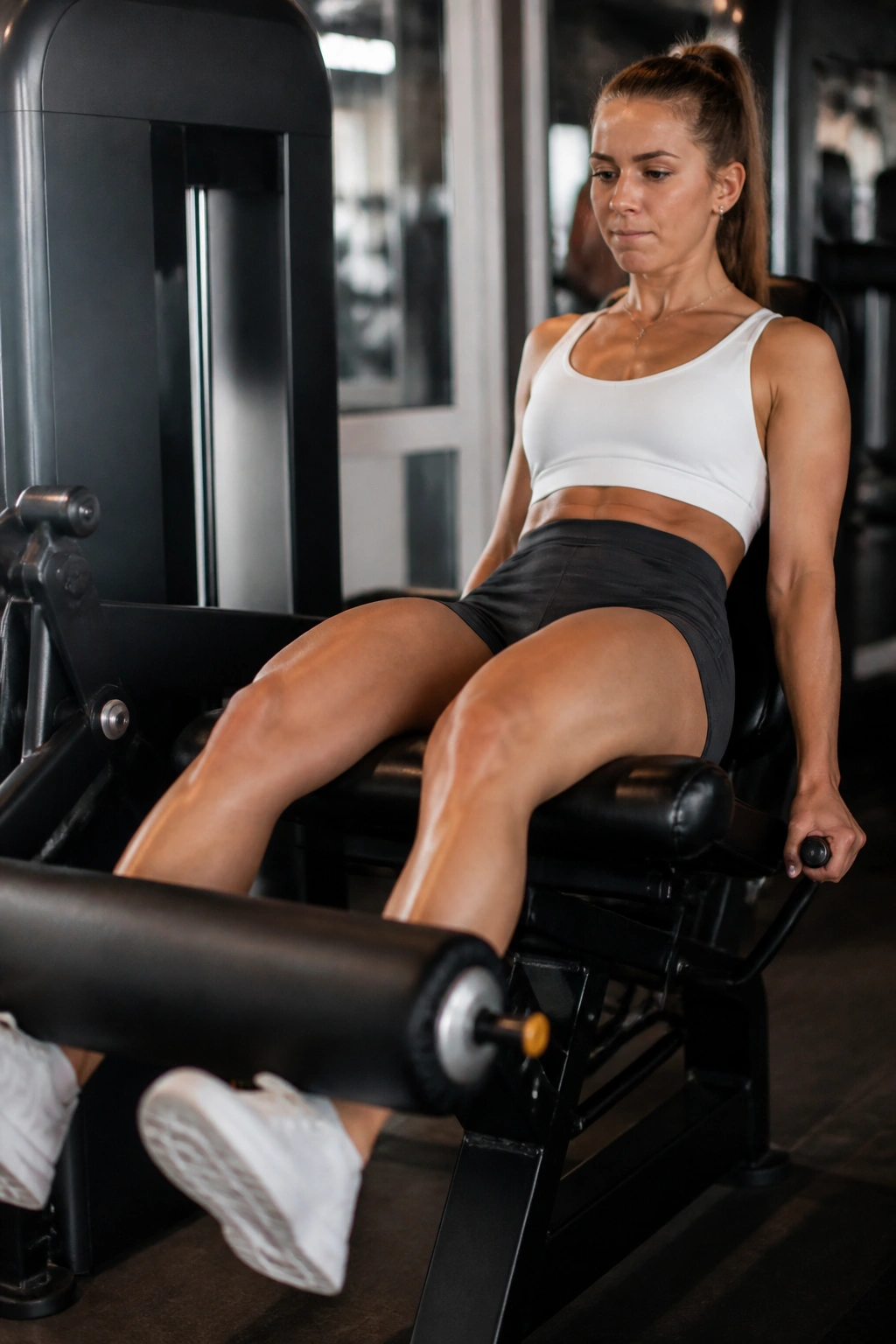
Most people treat leg extensions like a warm-up. Used the right way, they can be the finisher that makes your quads burn in a useful, targeted way. The machine isolates knee extension, which means the quads are doing nearly all the work.
Set the seat so your knee lines up with the machine’s pivot point. That small adjustment matters more than people think. If it’s off, the movement feels awkward and the knee can get cranky fast. Lift the pad with control, squeeze for a beat at the top, and lower slowly instead of letting the stack slam.
- Use 2 to 4 sets of 12 to 15 reps.
- Hold the top for 1 second.
- Lower for 2 to 3 seconds.
- Stop if you feel sharp knee pain; a burn is fine, a jab is not.
This is not a lift for ego. Light to moderate weight, clean reps, and a controlled squeeze usually beat loading the stack just because it looks impressive.
11. Seated Leg Curls
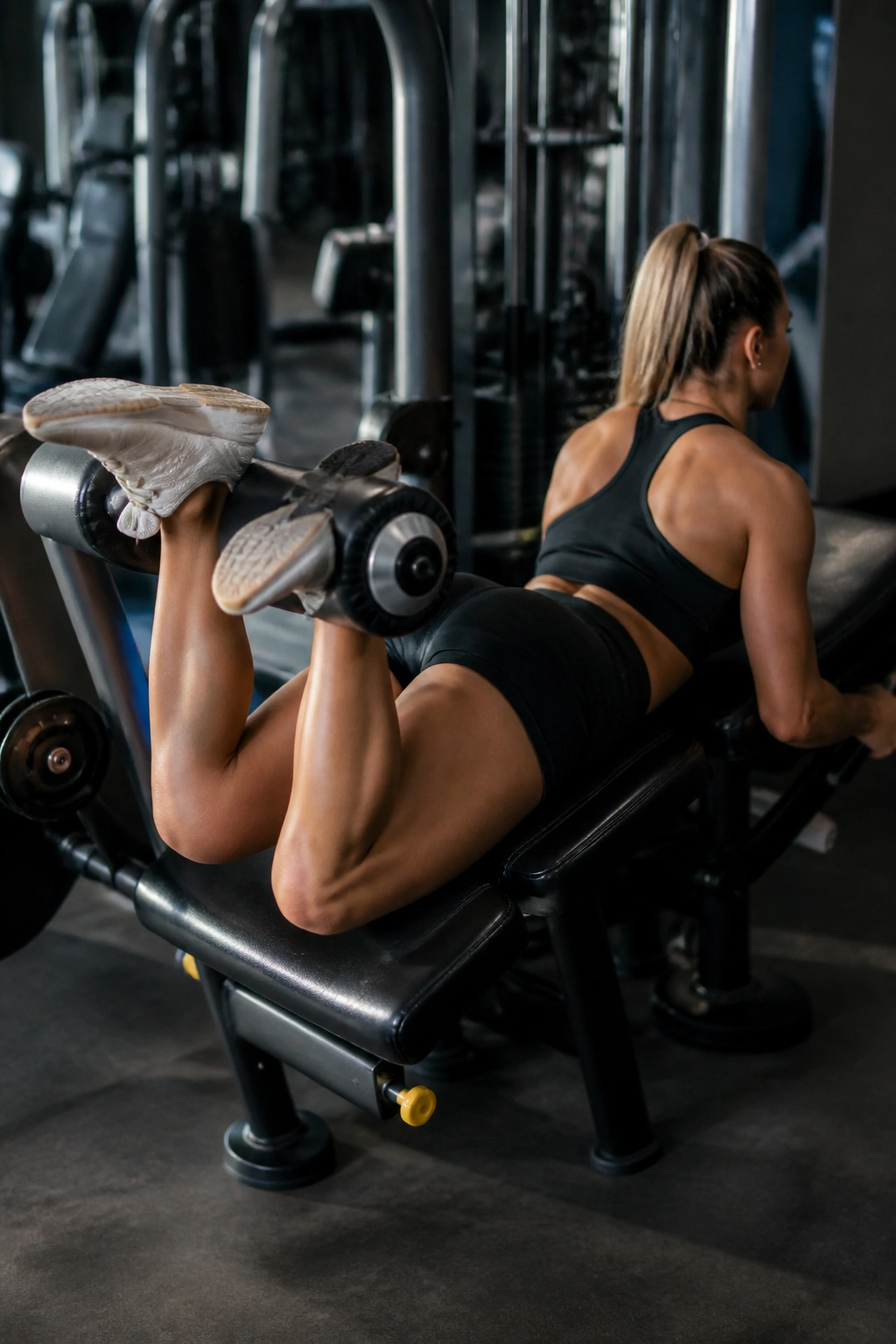
Hamstrings tend to respond well to being loaded when they’re stretched, and the seated leg curl puts them there right away. That’s why this machine feels so different from a lot of the other leg work on the floor. Your hips stay bent, the hamstrings start long, and the curl happens from that lengthened position.
It’s a quiet little exercise, and a useful one. After squats, lunges, or Romanian deadlifts, seated curls give you direct hamstring work without asking your spine or grip to do much at all. That makes them good late in a session, when the bigger lifts are already done and you want one more honest set.
Keep your hips glued to the seat. If you start lifting your butt off the pad, the stack gets lighter for the wrong reason. Lower with control and let the stretch at the bottom actually happen.
Use 3 to 4 sets of 10 to 15 reps. The rep that burns a little late in the set is usually the one doing the work.
12. Lying Leg Curls
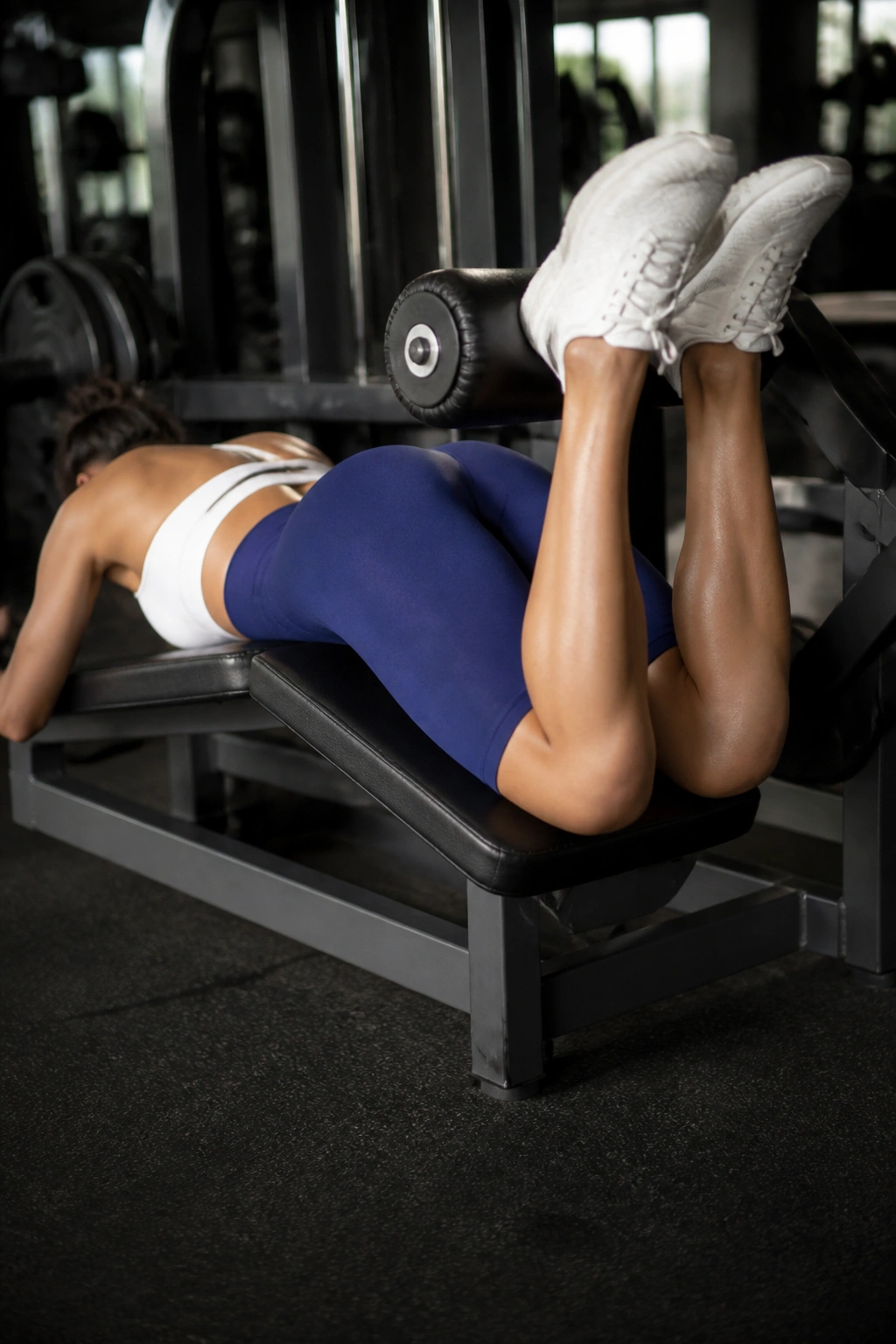
Why keep both seated and lying leg curls in the same plan? Because they don’t feel identical, and that matters. The lying version puts you face down, changes the line of pull a bit, and often gives a sharper peak contraction at the top.
A lot of lifters like this machine because it’s straightforward. Lie down, pin your hips to the pad, curl the roller toward your glutes, and lower with control. The trap is hip lift. Once your pelvis starts popping up, the hamstrings get help from everywhere else and the set loses its point.
How to Use It
Pair lying curls after a hinge day if you want more direct hamstring volume without adding another deadlift variation. Use 3 sets of 10 to 15 reps. If the machine feels cramped, adjust the pad so it sits just above your ankles and not halfway up your calves.
This is also a good one for slow tempos. The machine does not need speed. Your hamstrings will tell you when the set is honest.
13. Step-Ups
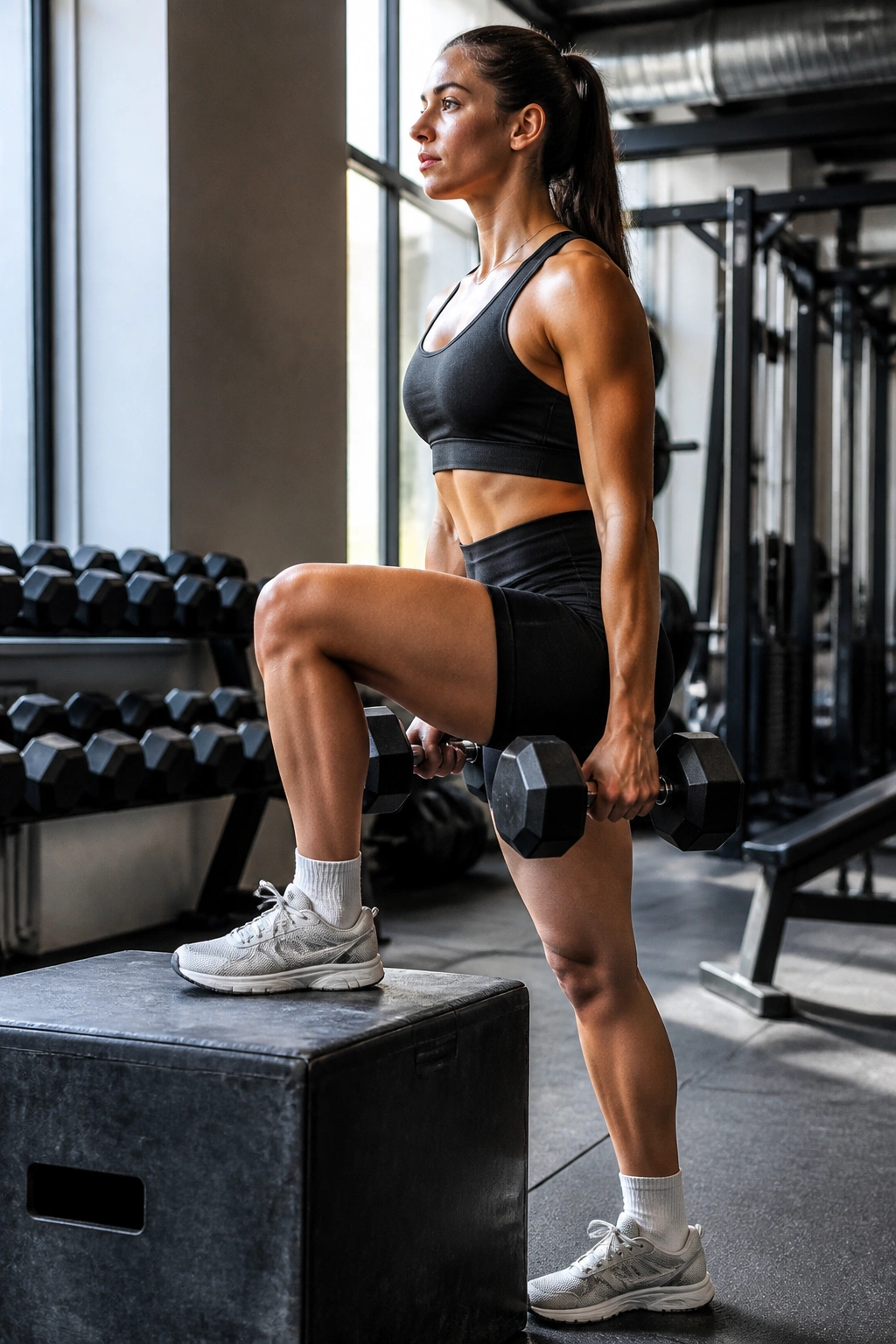
A box, two dumbbells, and a little patience. That’s enough to expose weak glutes and shaky balance fast. Step-ups look simple, which is almost funny, because the second the box gets high enough, they start telling the truth about each leg separately.
Pick a box height that lets your working leg get close to parallel or a touch above. If the box is too high, you’ll start hauling yourself up with the trailing leg and turning the set into a jumble. Drive through the whole foot on the box and stand tall before stepping down under control.
- Use 3 sets of 8 to 10 reps per leg.
- Hold dumbbells at your sides for more loading.
- Keep the torso slightly forward if you want more glute work.
- Do not push off hard with the back leg.
Step-ups are especially good if one side feels weaker than the other. They expose it fast. That can be annoying, sure, but it’s also useful.
14. Smith Machine Split Squats
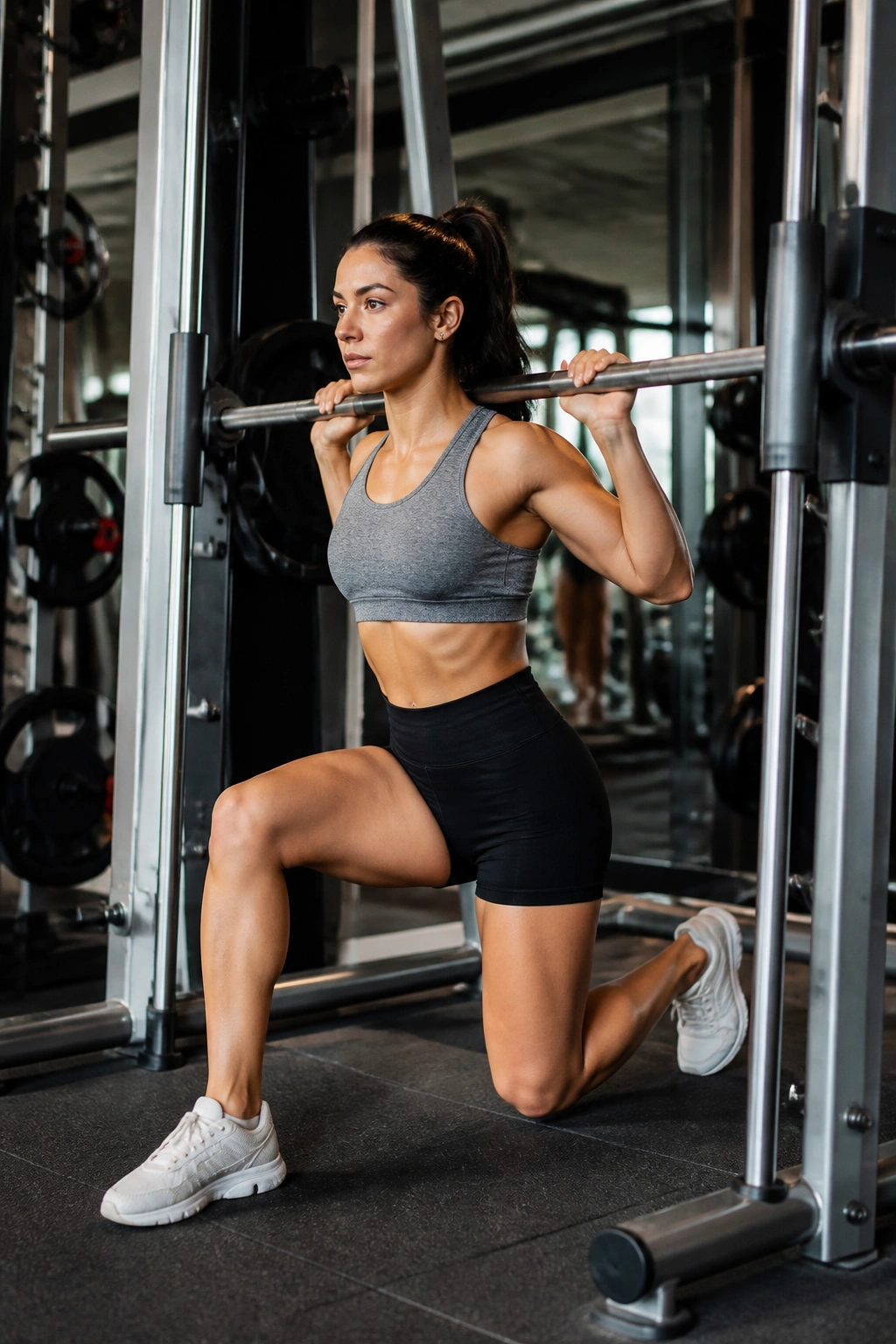
The Smith machine turns split squats into a pure leg workout instead of a balance contest. That’s the appeal. The bar path is fixed, so you can load the legs hard and let your attention stay on depth, tension, and where you’re feeling the set.
Compared with Bulgarian split squats, the Smith machine version is usually easier to repeat cleanly from one rep to the next. You can keep the front foot planted, drop straight down, and push through the midfoot without the bar drifting around on you. That makes it a smart choice when balance, not leg strength, is the thing holding you back.
Try a stance where the front shin stays roughly vertical or slightly angled forward. A small forward torso lean shifts more to the glute; a more upright position gives the quad more say.
Use 3 to 4 sets of 8 to 12 reps per leg. If the machine makes you feel too stable, add a pause at the bottom. That tiny pause changes everything.
15. Cable Kickbacks
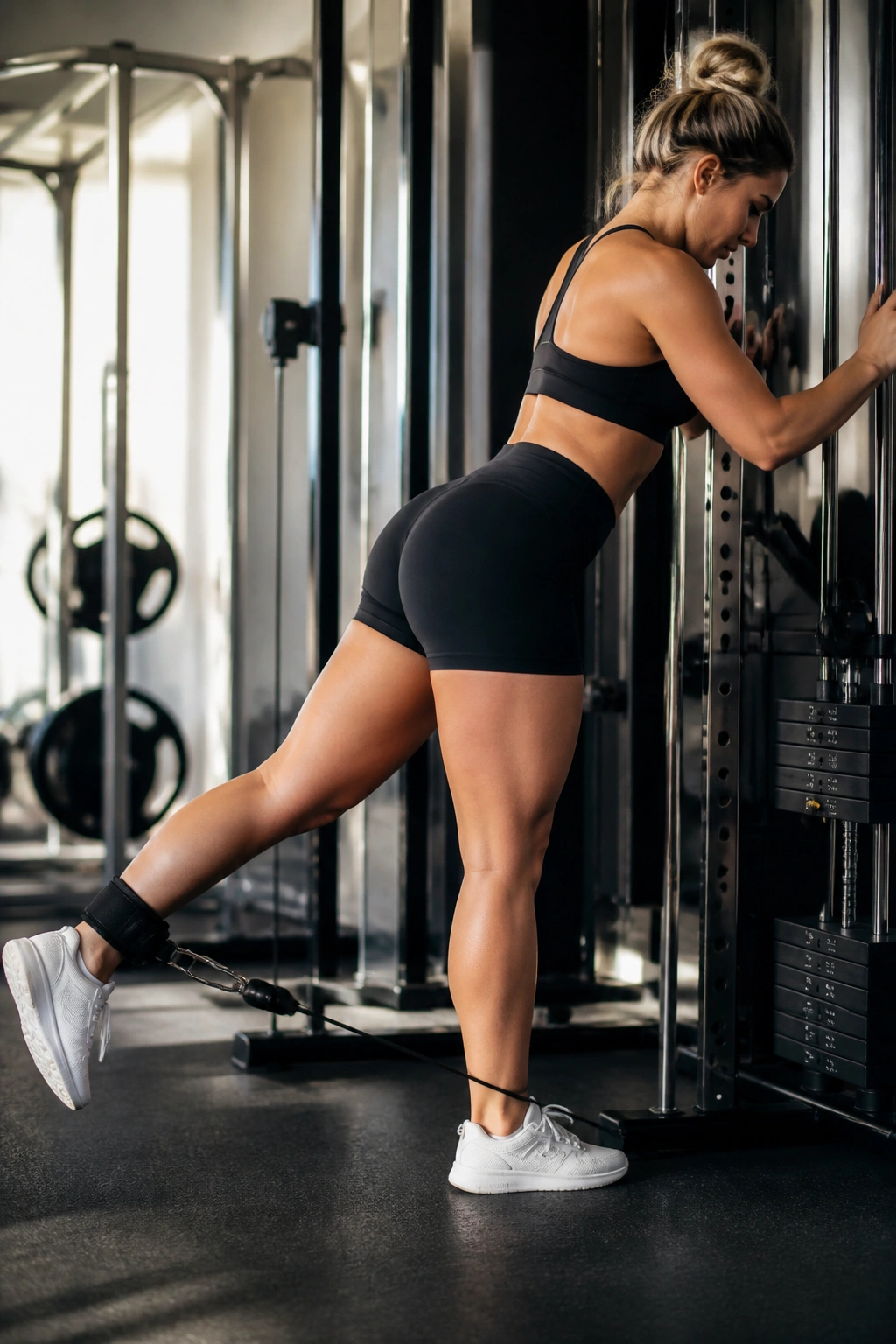
Cable kickbacks are small on the outside and annoying in the best way. They don’t let you cheat much, and that’s exactly why they earn a spot near the end of a glute-focused leg day.
The movement is simple: attach the ankle cuff, hinge forward slightly, keep the working knee soft, and drive the leg back without twisting the pelvis open. The real challenge is control. If you swing the leg like a pendulum, the glute misses the point and the lower back starts helping too much.
What to Watch For
- Keep the hips square to the machine.
- Use a weight that lets you move smoothly for 12 to 20 reps.
- Squeeze for 1 second at the back.
- Stop the rep before your lower back starts arching.
This is not a main lift. It’s a finisher, a shape-and-feel movement, a way to get more glute work after the bigger stuff is done. Use it that way and it makes sense.
16. Glute Bridges
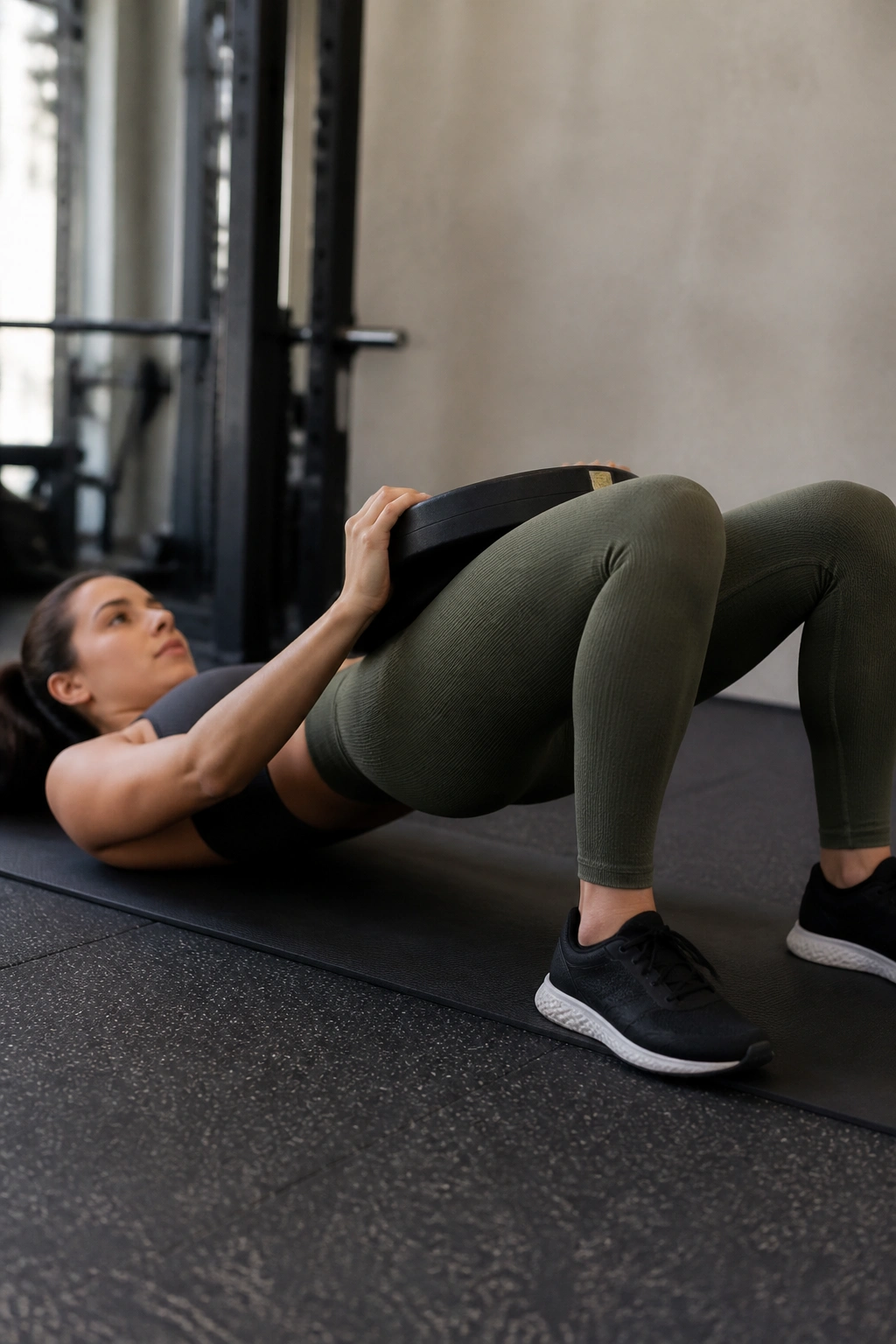
Do you need a bench to train glutes hard? Not always. The glute bridge gives you a simpler version of the hip-thrust pattern, and that stripped-down setup can be useful when you want to keep the movement tight and controlled.
On the floor, your upper back stays down, the range gets a little shorter, and the glutes still get to do the work. That makes glute bridges a nice option for beginners, warm-ups, or high-rep finishers after the heavy stuff. They’re also easier to set up fast, which matters when the gym is crowded and every bench is occupied by somebody scrolling between sets.
Add a dumbbell, barbell, or Smith machine if bodyweight stops feeling challenging. Keep the ribs down, squeeze the glutes at the top, and avoid turning the lockout into a lower-back arch.
Use 3 to 4 sets of 10 to 15 reps. Short, hard, and controlled is the right mood here.
17. Adductor Machine
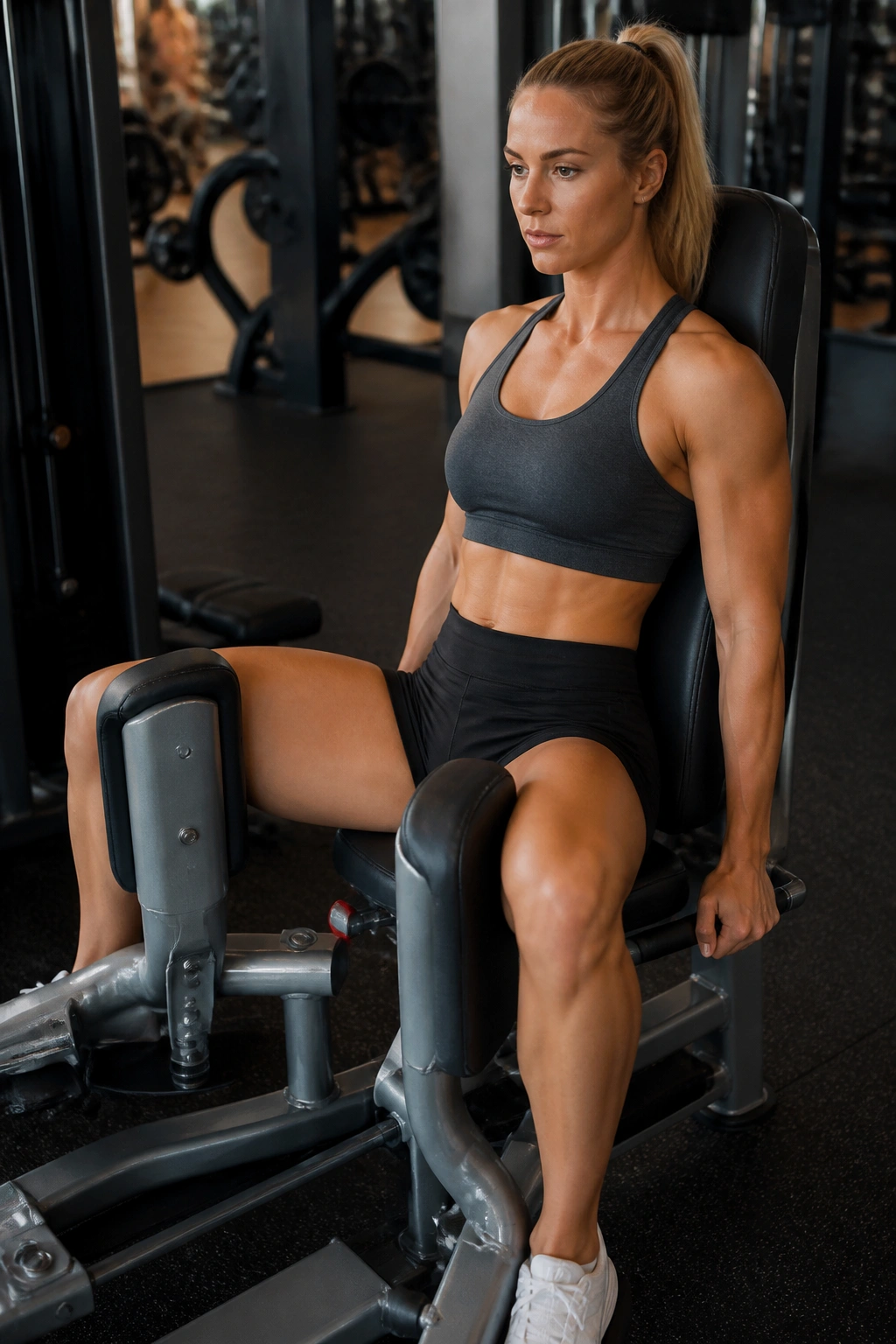
Inner thighs get ignored until a side lunge or a deep squat exposes the gap. The adductor machine fixes that pretty quickly. It trains the muscles that pull the legs inward and help support the hips when you’re squatting, walking, or changing direction.
A lot of lifters skip this machine because it looks too isolated. That’s a mistake. Strong adductors help with lower-body stability, and they matter more in leg training than most people admit. If your knees wobble or your squat feels loose at the bottom, this is one place to look.
- Use 2 to 4 sets of 12 to 20 reps.
- Move the pads with control instead of slamming the stack.
- Sit tall and keep the pelvis steady.
- A slow return on the way out is usually where the real work happens.
You don’t need to bury yourself in volume here. A few clean sets after compounds can make the inner thighs feel awake in a way you’ll notice on later training days.
18. Abductor Machine
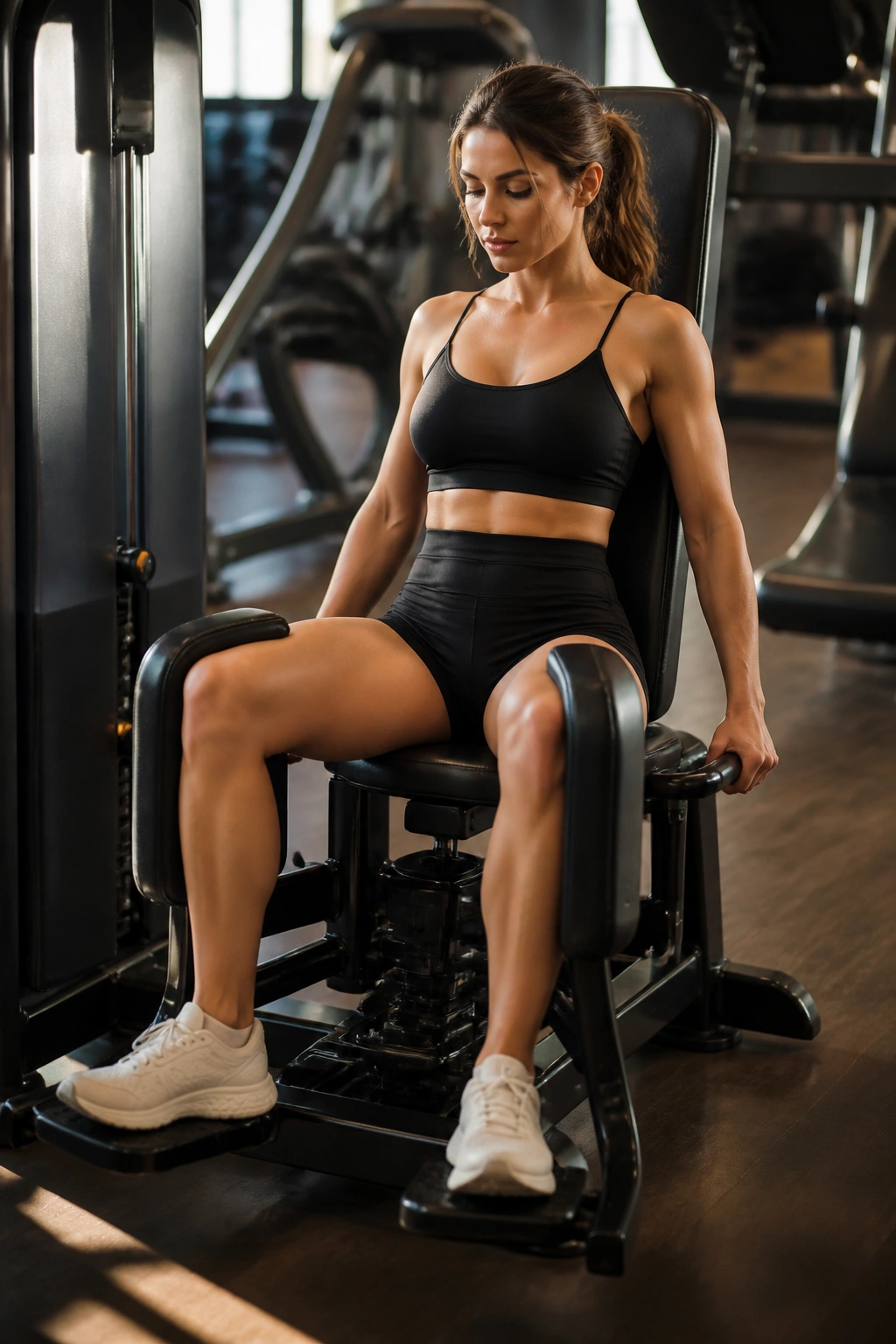
The abductor machine is not fluff if you use it like a strength tool, not a rocking chair. It trains the outer hips, especially the glute medius, which helps keep the pelvis steady when you walk, squat, or stand on one leg.
A lot of people sit too upright and fling the knees open with momentum. That’s not the move. Leaning slightly forward usually shifts more feeling into the glutes, and a slower return keeps tension where it belongs. The machine should feel like a controlled burn, not a speed event.
This is one of those exercises that looks small but pays off in how your lower body feels outside the gym. Stronger abductors can help with knee tracking and give your hips a more stable base during split squats, step-ups, and lunges.
Use 2 to 4 sets of 15 to 20 reps. If the stack is flying, the weight is too light or the tempo is too fast. Probably both.
19. Standing Calf Raises
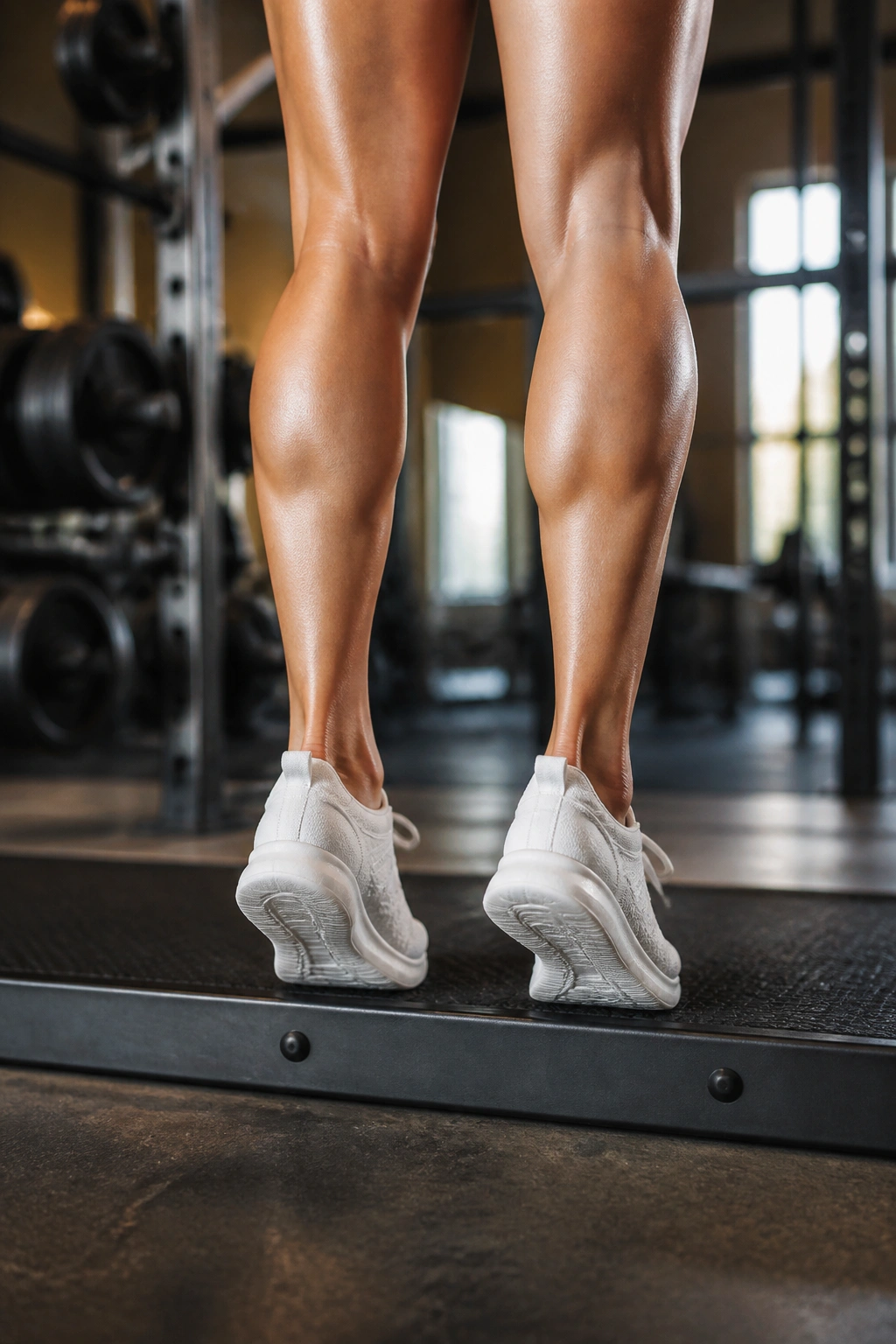
Why do standing calf raises matter more than most people think? Because the calves are not one muscle with one job. The standing version hammers the gastrocnemius, the larger calf muscle that works hardest when the knee is straight.
A clean standing calf raise starts with a full stretch at the bottom. Let the heel drop. Don’t rush it. Then drive up onto the ball of the foot and hold the top for a second before lowering again. The pause matters because calves love to cheat with tiny bouncy reps that never really load the stretch.
The machine, a Smith machine, or even a step with dumbbells can all work. What matters is range. If your heels barely move, the rep barely counts.
Use 4 sets of 10 to 15 reps. Slow enough to feel the stretch, hard enough to make the top squeeze matter. Calves are stubborn. That’s part of the deal.
20. Seated Calf Raises
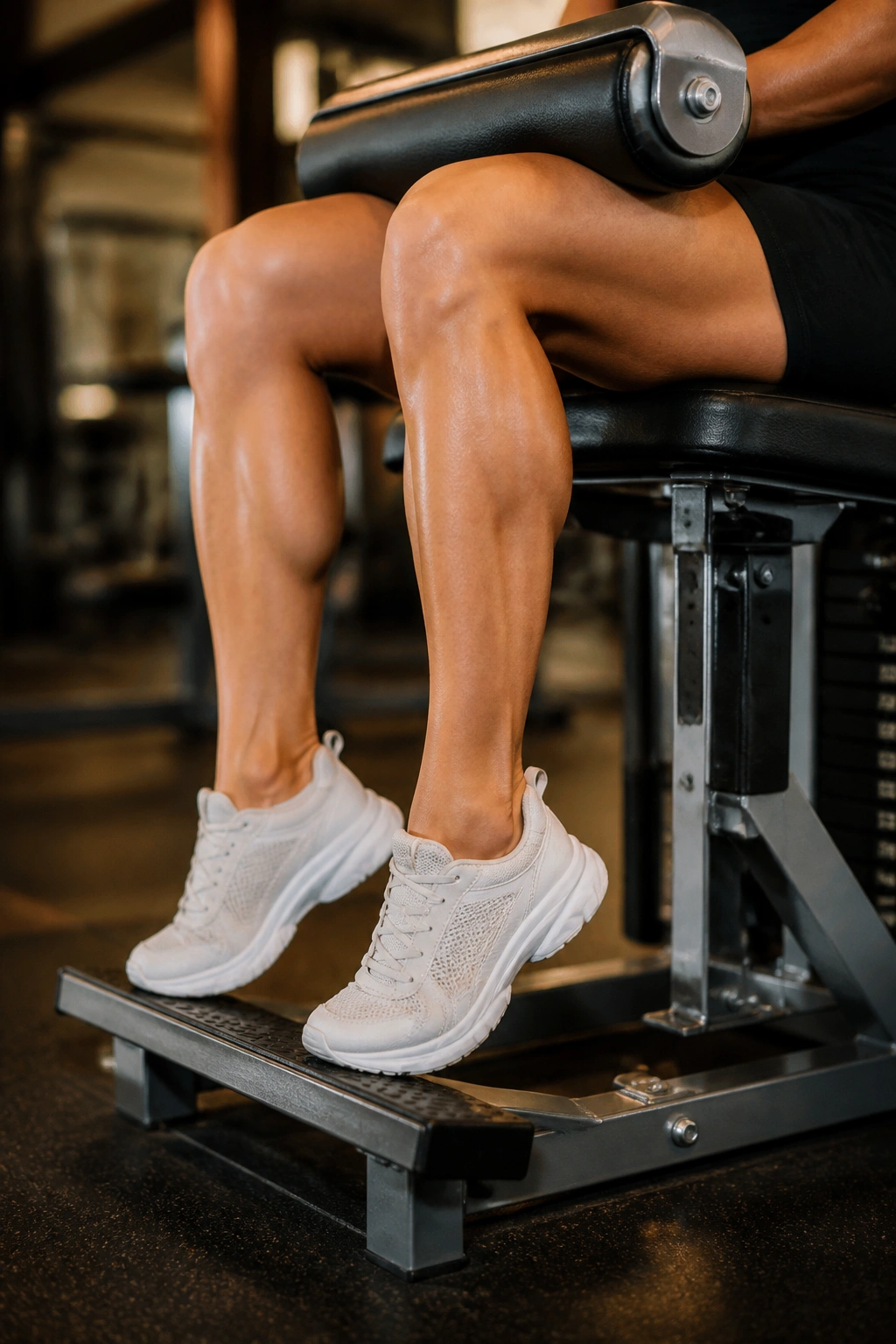
If standing calf raises hit the muscle with the knee straight, seated calf raises change the angle and ask more from the soleus, the deeper calf muscle that works when the knee bends. That’s why doing both versions makes sense instead of picking one and pretending it covers everything.
The seated version usually feels a little less dramatic at first, then burns in a sneaky way once you get a few clean reps in. Sit down, plant the balls of your feet on the platform, and let the heel sink before pressing up. A short top pause keeps the reps honest. A fast bounce does almost nothing except waste the set.
Use 4 sets of 12 to 20 reps. If you want a nasty finisher, do a final drop set and stop when the last few reps slow down enough that you can feel the burn in the lower calf. No need to turn it into a circus. Just keep the motion clean.
A strong leg day does not end the moment the big lifts are finished. It ends when the small muscles have had their say too.
