



There is a specific kind of satisfaction that comes only from a heavy leg day. It is the feeling of walking out of the gym with legs that feel like lead, knowing you have pushed your body to its limit. If you have ever struggled to climb a flight of stairs the morning after a brutal session, you know exactly what I am talking about. Lower body training is not just about aesthetics or filling out a pair of jeans; it is about building the foundation of your entire physical output. Your legs are your engine. Whether you are aiming for raw strength, functional power, or just better definition, you have to treat your lower body with the respect it demands.
Most people fall into the trap of doing the same three exercises every week. They hit the leg press, throw in some extensions, and maybe do a few sets of squats, then wonder why their progress stalls. The secret to a truly powerful, defined lower body lies in variety and intensity. You need to rotate your movements, challenge your stability in different planes of motion, and manage your time under tension. You do not need a fancy home gym to achieve this, but you do need a plan that forces your muscles to adapt.
The following list is designed to push you out of your comfort zone. We are looking at movements that tax the quads, hamstrings, glutes, and calves from every conceivable angle. Some are brutal compound lifts, while others are targeted isolation movements designed to fix imbalances and sculpt those hard-to-reach areas. Forget what you think you know about “leg day” and prepare to actually work.
1. Goblet Squats
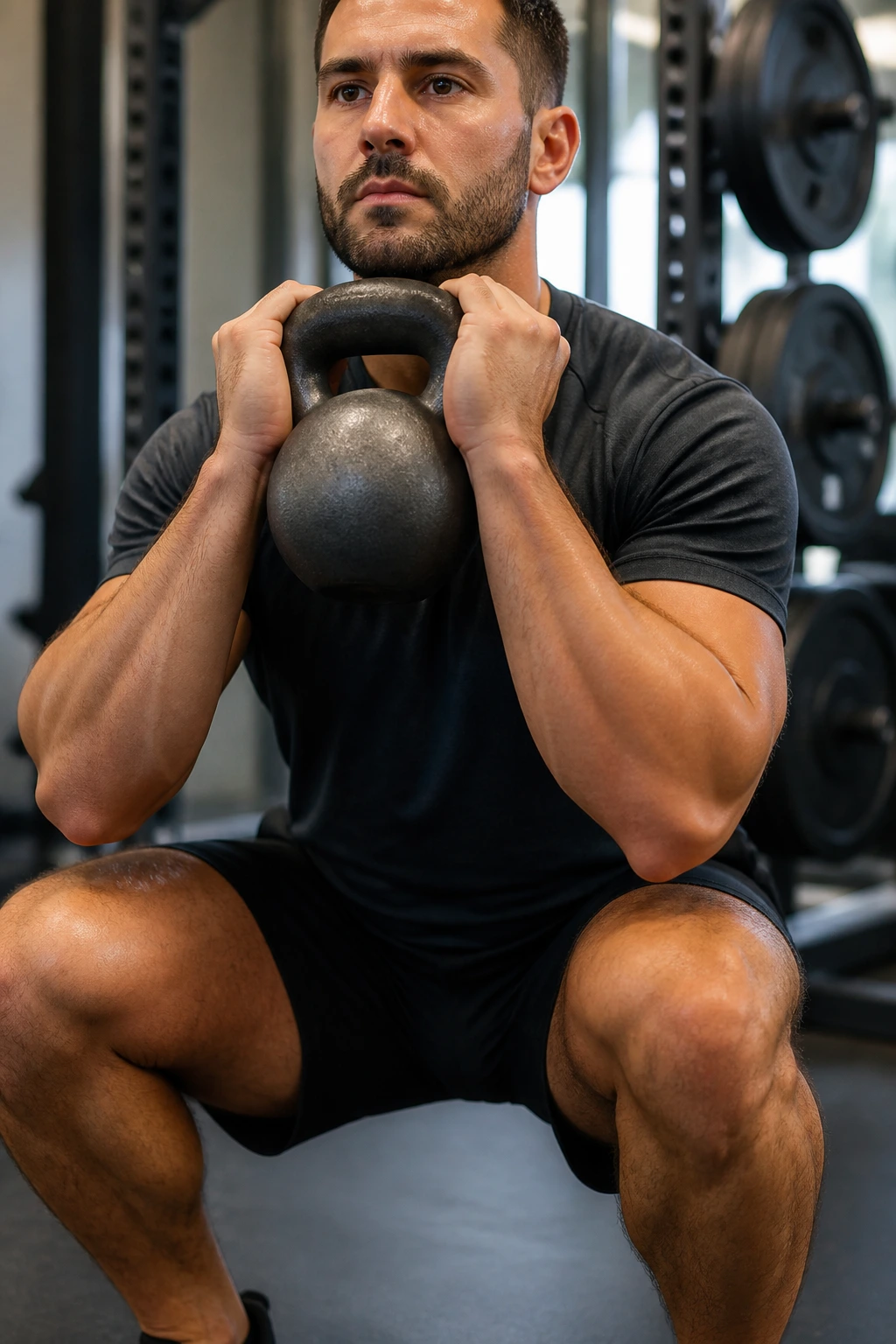
The goblet squat is often overlooked by seasoned lifters who run straight to the barbell rack, but it remains one of the best ways to master your squat mechanics. By holding a weight against your chest, you create a counterbalance that forces you to stay upright, preventing the dreaded “good morning” squat where your hips rise faster than your chest.
Why It Works for Depth and Form
This movement keeps your spine neutral and helps you drop into a deeper squat than a standard back squat often allows for beginners. Because the load is front-loaded, your core has to work double-time to keep you from falling forward, which pays off in massive abdominal engagement.
Quick Technique Checklist
- Hold a dumbbell or kettlebell against your sternum with both hands.
- Keep your elbows tucked in close to your body.
- Drop your hips straight down, not back, aiming to get your elbows to touch the inside of your knees.
- Drive up through your heels, maintaining tension the entire time.
Pro tip: Do not let the weight rest on your shoulders; keep it suspended an inch away from your chest to engage your upper back muscles throughout the rep.
2. Bulgarian Split Squats
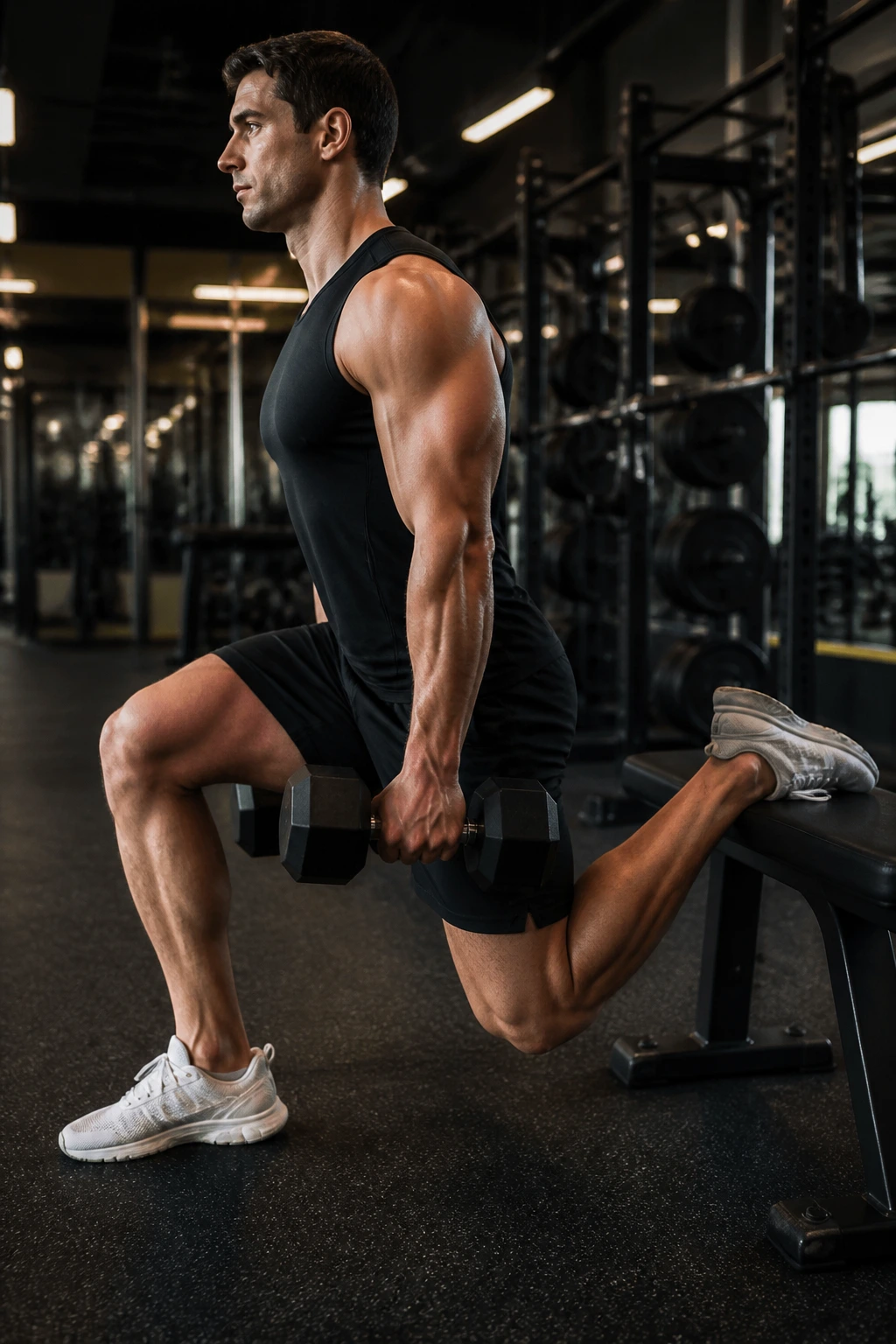
There is a reason why people dread the Bulgarian split squat: it works, and it works painfully well. This exercise is the great equalizer. It exposes every weakness in your stability and hip mobility, leaving nowhere for your stronger leg to compensate for the weaker one.
If you struggle with lower back pain during traditional squats, this is your solution. Because you are only loading one leg at a time, you can get a massive training stimulus for your quads and glutes without needing a crushing load on your spine. It builds a level of unilateral strength that carries over into every other lift you do.
To execute this, place your back foot on a bench or sturdy chair behind you. Hop your front foot out until you are in a deep lunge position. Keep your torso mostly upright to target the quads, or lean slightly forward to recruit more glute activation. Drop your back knee toward the floor, pause for a second, and drive back up. If you find yourself wobbling, focus on fixing your gaze on a single point in front of you.
3. Romanian Deadlifts
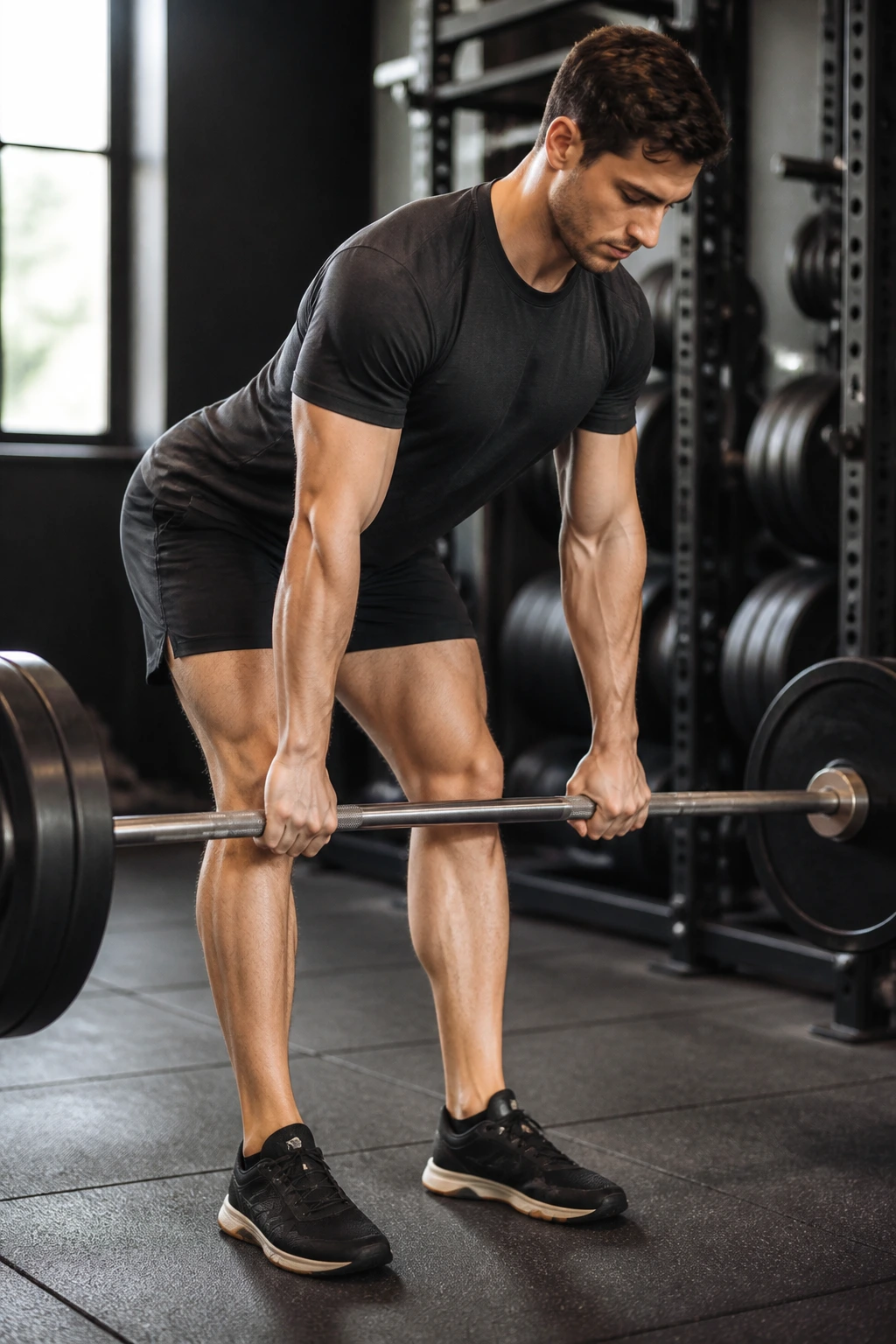
Why do so many people have weak hamstrings? Usually, it is because they neglect the hinge pattern. The Romanian deadlift, or RDL, is the gold standard for developing the posterior chain—that crucial muscle group running from your lower back down to your heels.
The Mechanics of the Hinge
Unlike a standard deadlift, you do not start from the floor. You start from the top, lowering the weight to mid-shin level. This keeps the tension constant on your hamstrings throughout the entire range of motion, which is exactly what you want for growth.
How to Get the Most From It
- Keep a slight bend in your knees, but do not turn it into a squat.
- Push your hips back as if you are trying to close a door behind you with your glutes.
- Feel the stretch in your hamstrings, then squeeze your glutes to return to the starting position.
4. Walking Lunges
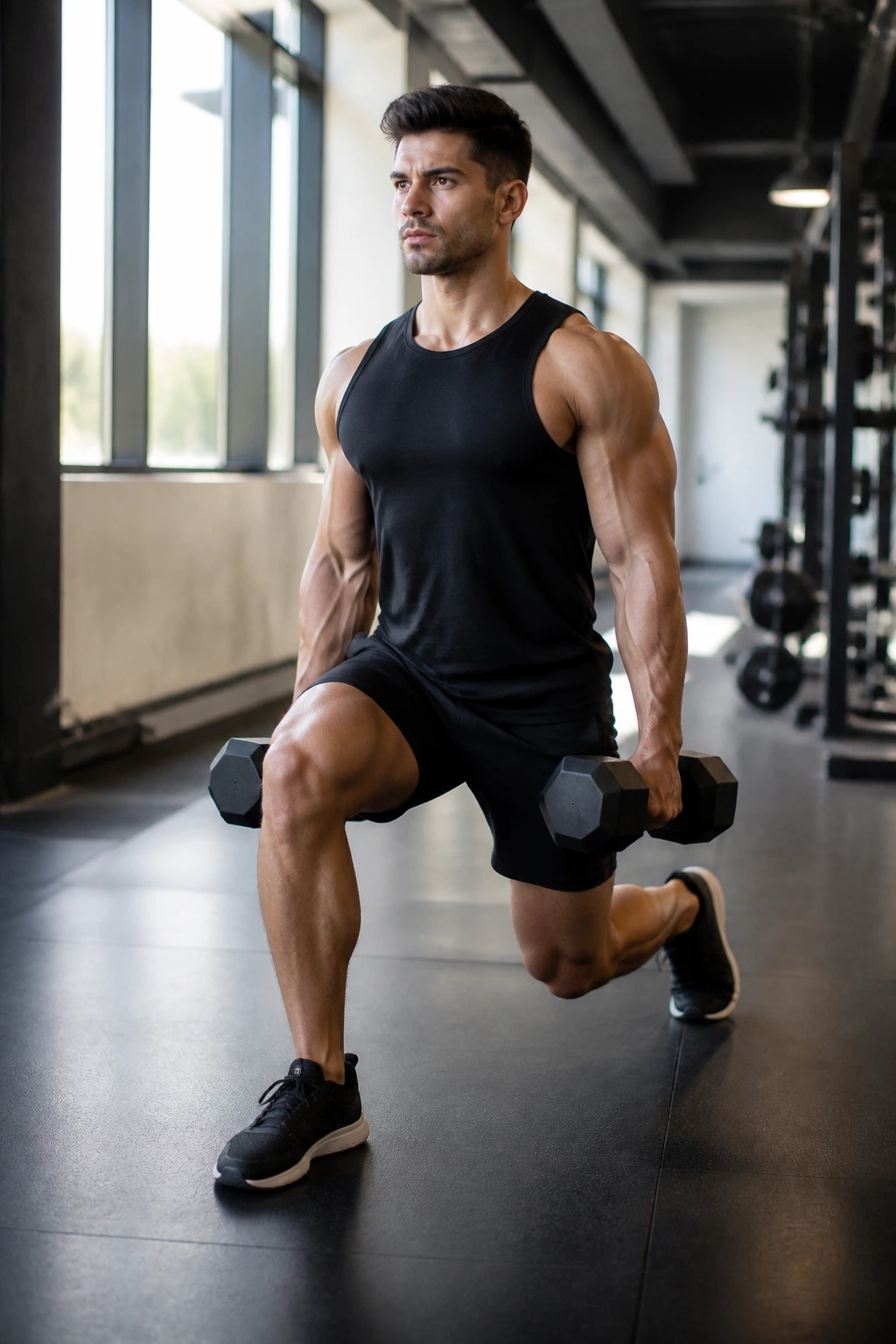
Walking lunges are a staple for a reason. They force you to balance while moving through space, which mimics real-world athleticism more closely than standing still. I have found that doing these for distance—rather than a set number of reps—usually leads to much better results.
When you do walking lunges, you are putting your stabilizers through a gauntlet. Your ankles, knees, and hips all have to work in unison to keep you from tipping over. Adding a pair of dumbbells to your hands increases the demand on your grip and core, turning it into a full-body conditioning tool.
- Take a long step forward, enough so that both knees form 90-degree angles at the bottom.
- Keep your chest high; if you hunch over, you lose the quad activation.
- Ensure your front knee tracks in line with your middle toe, not caving inward.
- Push off the front foot to bring your back leg forward into the next step.
Pro tip: For a real challenge, do not fully extend your legs at the top of the movement. Keep the tension in your quads by moving directly into the next lunge.
5. Leg Press
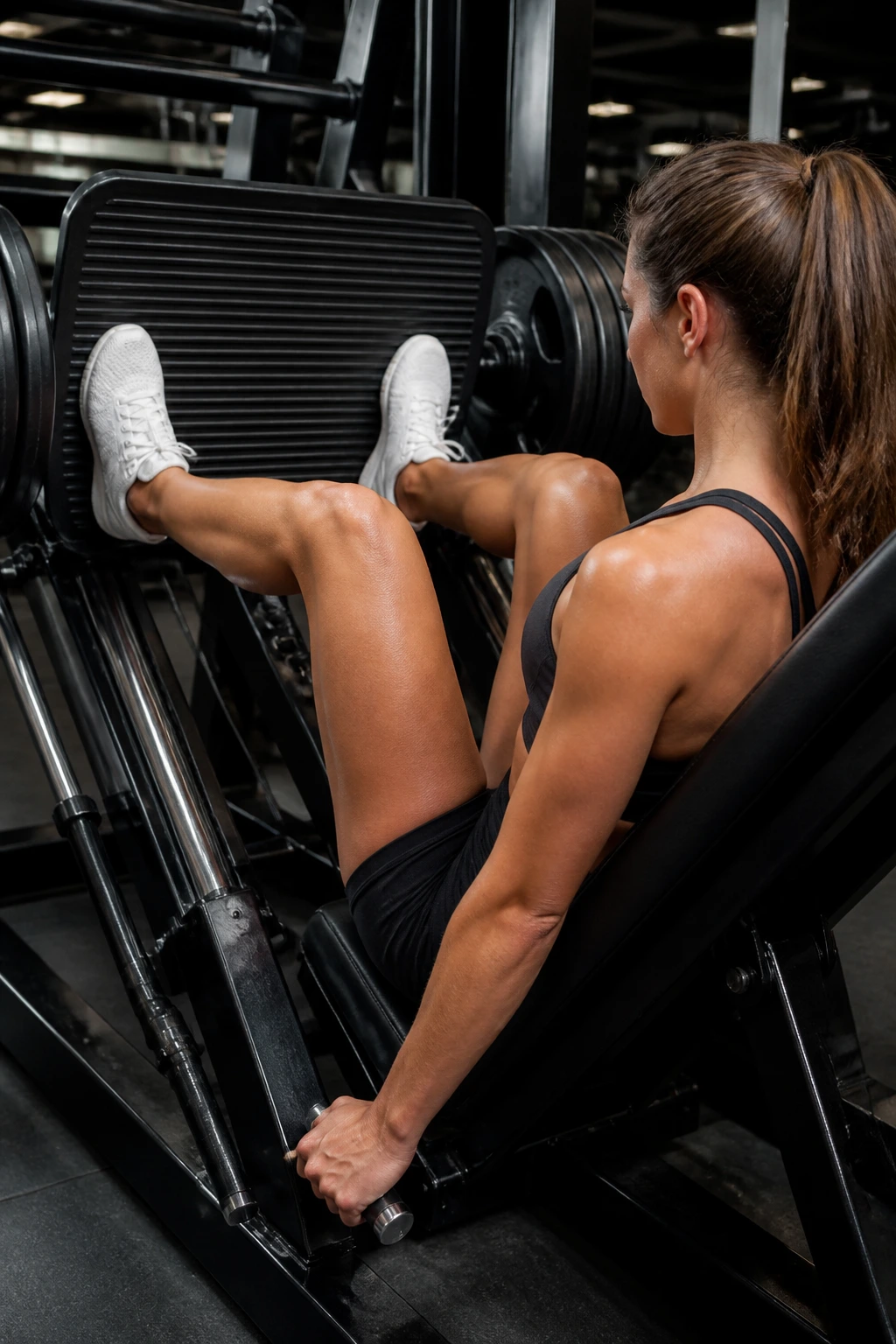
The leg press is often misunderstood. Critics call it a “machine” exercise and claim it does not build functional strength, but those critics are missing the point. It allows you to overload your legs with significantly more weight than you could ever safely squat, making it an incredible tool for hypertrophy.
You can manipulate your foot placement to emphasize different muscles. Placing your feet higher on the platform targets your hamstrings and glutes more effectively. Placing them lower puts the focus squarely on your quads. The key is to avoid locking out your knees at the top of the movement, which keeps the weight on your muscles rather than your joints.
Always keep your lower back glued to the seat. If your butt starts to lift off the pad at the bottom of the movement, you are going too deep or the weight is too heavy for your current mobility. Control the eccentric—the lowering phase—for at least two seconds. Explode up on the concentric phase. This tempo creates the metabolic stress required for serious growth.
6. Glute Bridges (Weighted)
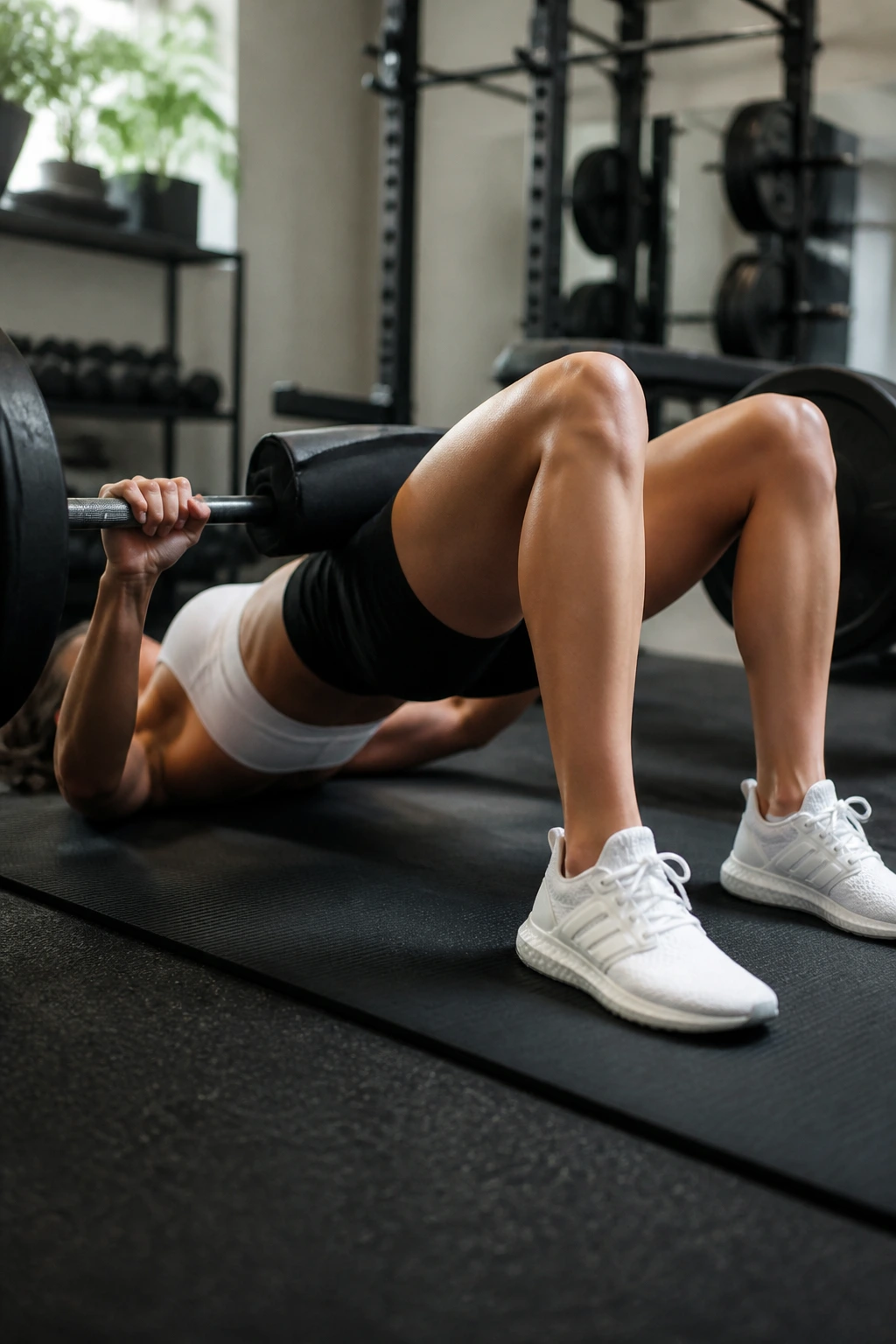
Unlike hip thrusts, which are done with your shoulders elevated, glute bridges are performed flat on the floor. This limits the range of motion slightly, but it also takes your lower back almost entirely out of the equation. It is the purest way to isolate your glutes.
The Comparison Angle
While hip thrusts are better for moving heavy load, the floor-based glute bridge is superior for learning how to truly squeeze the glute muscles. Many people rely on their lower back to push the weight up; the floor bridge makes that much harder to cheat.
What to Watch For
- Place a barbell or a heavy dumbbell across your hips.
- Use a pad to protect your pelvic bone.
- Drive through your heels, not your toes.
- At the top, pause and squeeze your glutes as hard as you can for two seconds before lowering.
7. Step-ups
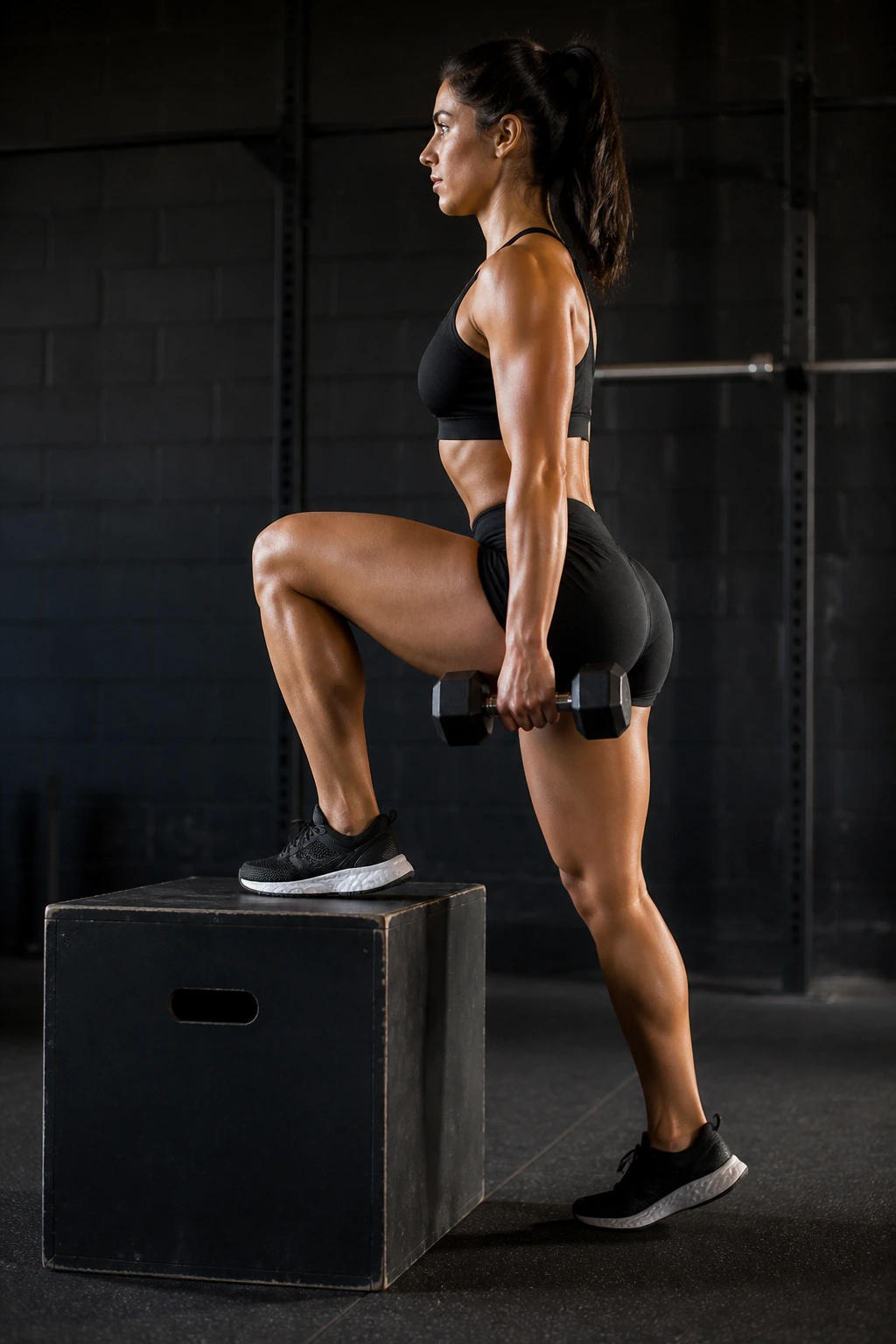
Step-ups are the ultimate “I have no equipment” leg builder, but they are also a high-level tool for athletes. If you use a high box, you are training your legs to produce force from a deep, disadvantaged position. It is incredibly effective for vertical jump power and general lower body stability.
Most people do these incorrectly by pushing off their back foot. You need to put 100% of the weight on the leg that is on the box. Think of it as a one-legged squat. Do not bounce off the floor; step down with control. That eccentric control is where the muscle damage—and thus, the growth—actually happens.
If you want to focus on the quads, use a lower box. If you want to hammer the glutes, use a higher box—one that puts your knee at or above hip height. You can hold dumbbells in your hands to increase the intensity, or wear a weighted vest to keep your hands free for balance.
8. Sumo Squats
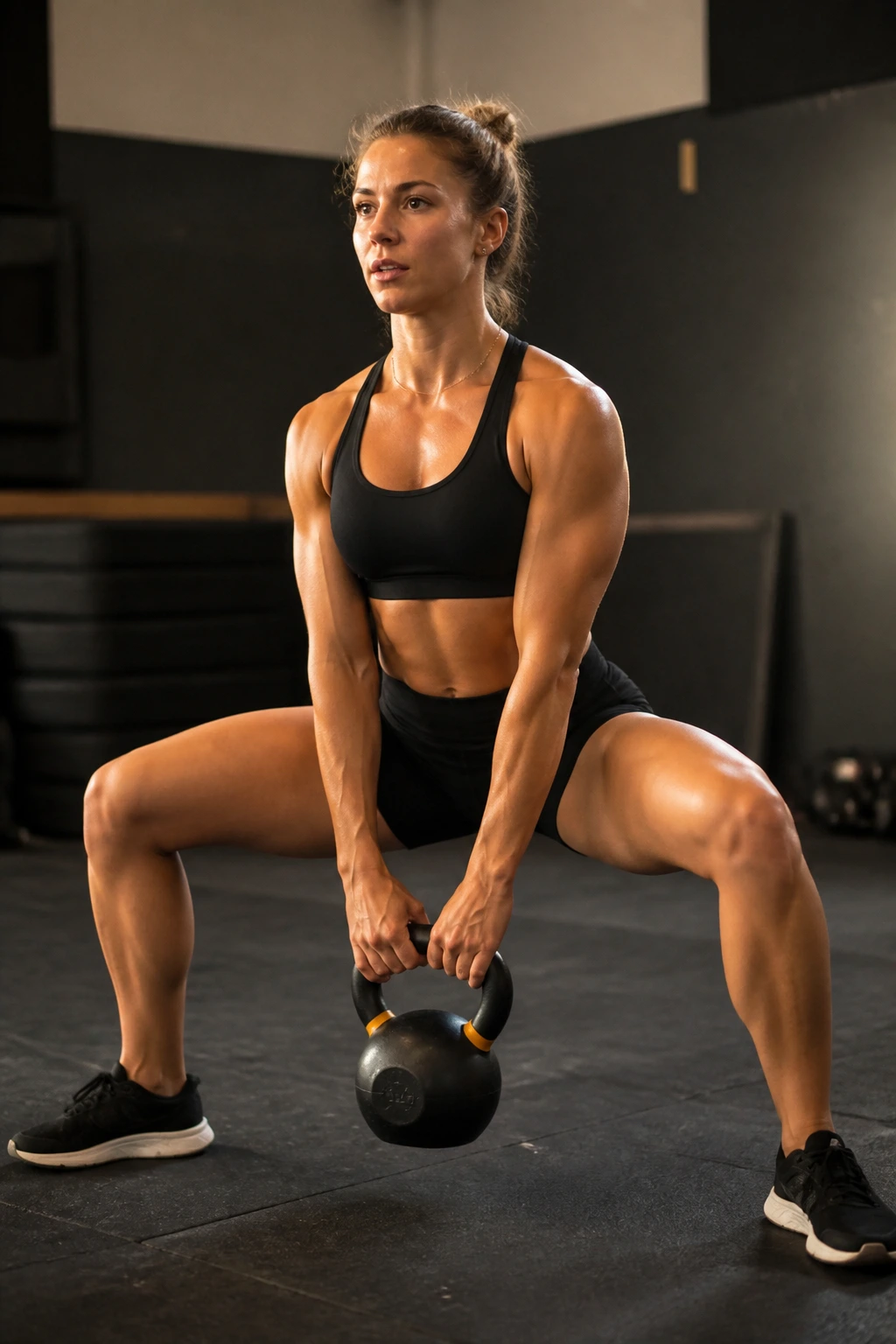
The sumo squat is all about that wide stance. By moving your feet wider than shoulder-width and turning your toes out, you shift the load onto your inner thighs—the adductors—and the glutes. It is a fantastic variation to keep in your rotation when your quads feel fried but your inner legs need work.
Why It Works for Growth
The wider stance changes the angle at your hip, allowing you to hit the deep muscles of the inner thigh that a narrow stance simply misses. It feels awkward at first, but once you find your groove, you will feel the activation in places you did not know you could train.
How to Get the Most From It
- Keep your torso as upright as possible.
- Use a kettlebell or a single heavy dumbbell held between your legs.
- Drive your knees out as you squat—never let them cave inward.
- Think about pushing your feet apart on the floor to engage your glutes.
9. Leg Extensions
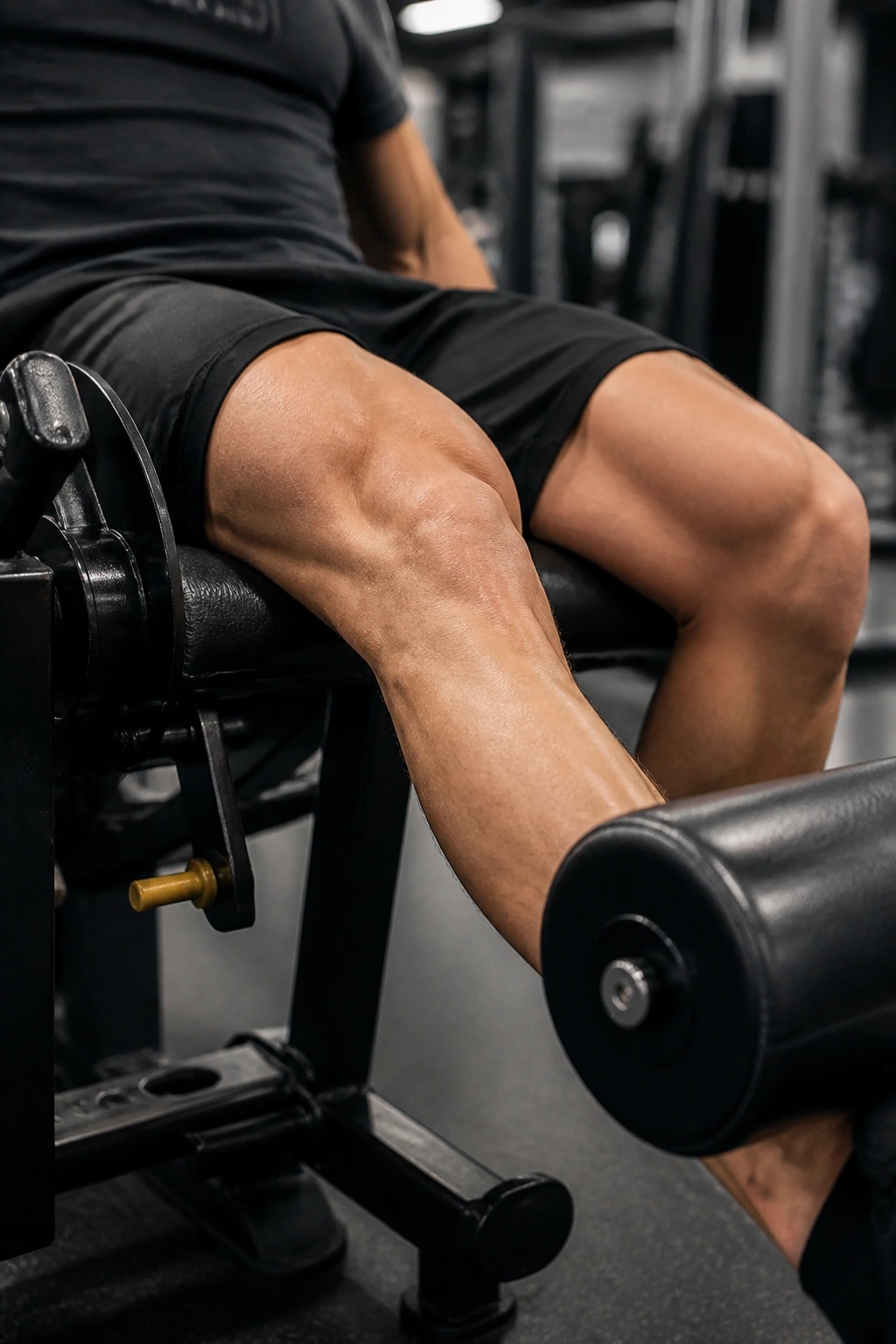
Isolation is not a bad word. While compound lifts build the foundation, isolation exercises like the leg extension are how you fill in the gaps and bring out the “teardrop” muscle on your quad. They are also excellent for knee health when done with high reps and controlled tempo.
Forget the heavy ego-lifting here. This is not about how much weight is on the stack; it is about how much you can make your quads burn. Focus on a peak contraction. When your legs are fully extended, squeeze the quads for a full second. Then, lower the weight slowly, taking three seconds to return to the starting position.
Do not let the weight stack rest between reps. Keep the tension constant. If you do this properly, 15 to 20 reps will feel significantly more brutal than 5 heavy reps. This exercise is best placed at the end of your workout as a finisher to drain whatever energy your legs have left.
10. Leg Curls
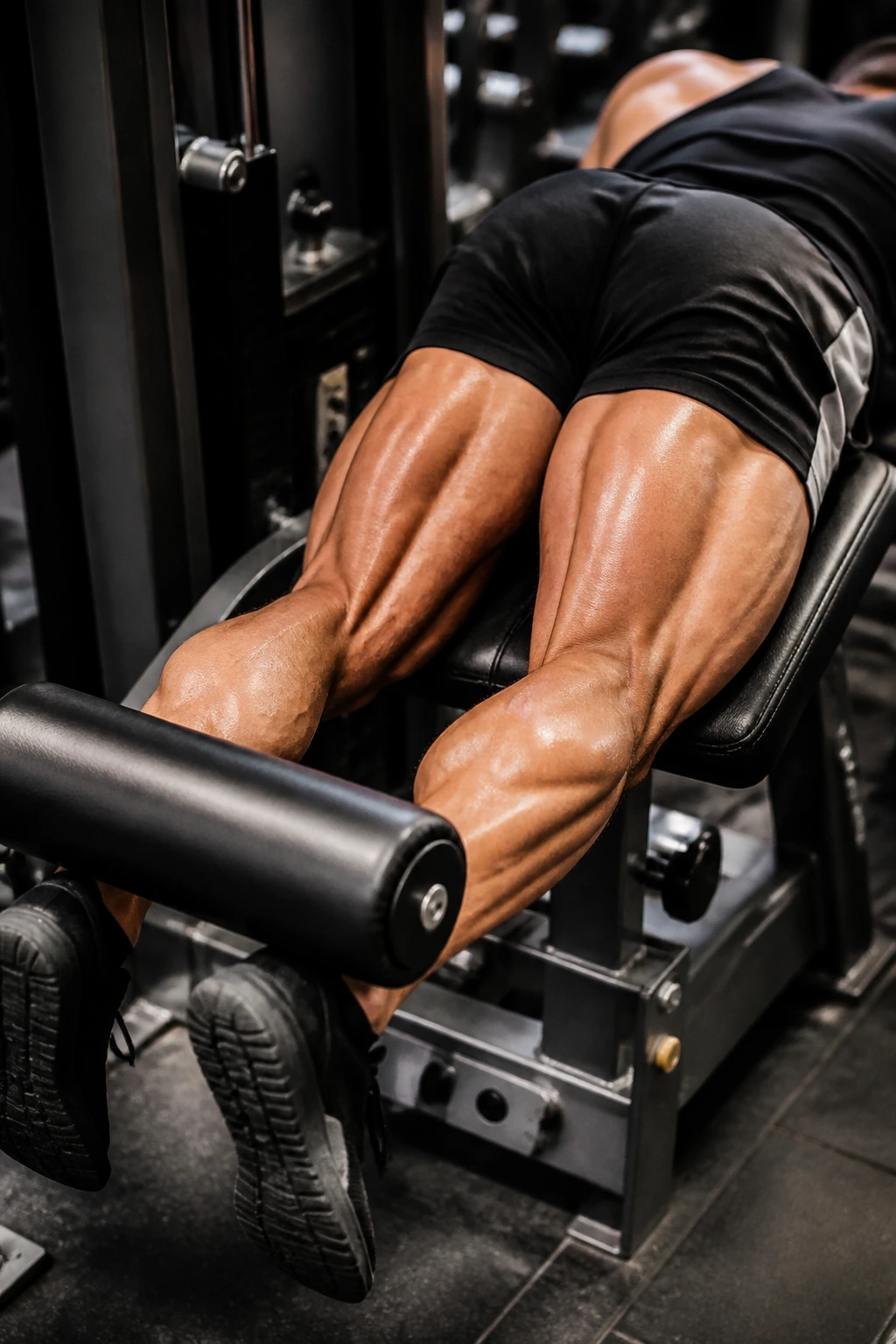
If the leg extension is the quad king, the leg curl is the hamstring master. Hamstrings are responsible for knee flexion, and this is the specific movement to train that function. Whether you prefer the seated machine, the lying machine, or the standing variety, the goal remains the same: isolate the back of the legs.
The Secret to Success
Most people swing the weight using momentum. To fix this, pin your hips into the pad. If you are doing lying leg curls, do not let your lower back arch. If you are doing seated curls, make sure your legs are fully extended at the bottom of the movement.
Crucial Technique Tips
- Curl the weight up explosively.
- Lower the weight with agonizing slowness.
- If you feel your calves cramping, your hamstrings are not doing the work—focus on driving with the heels.
11. Kettlebell Swings
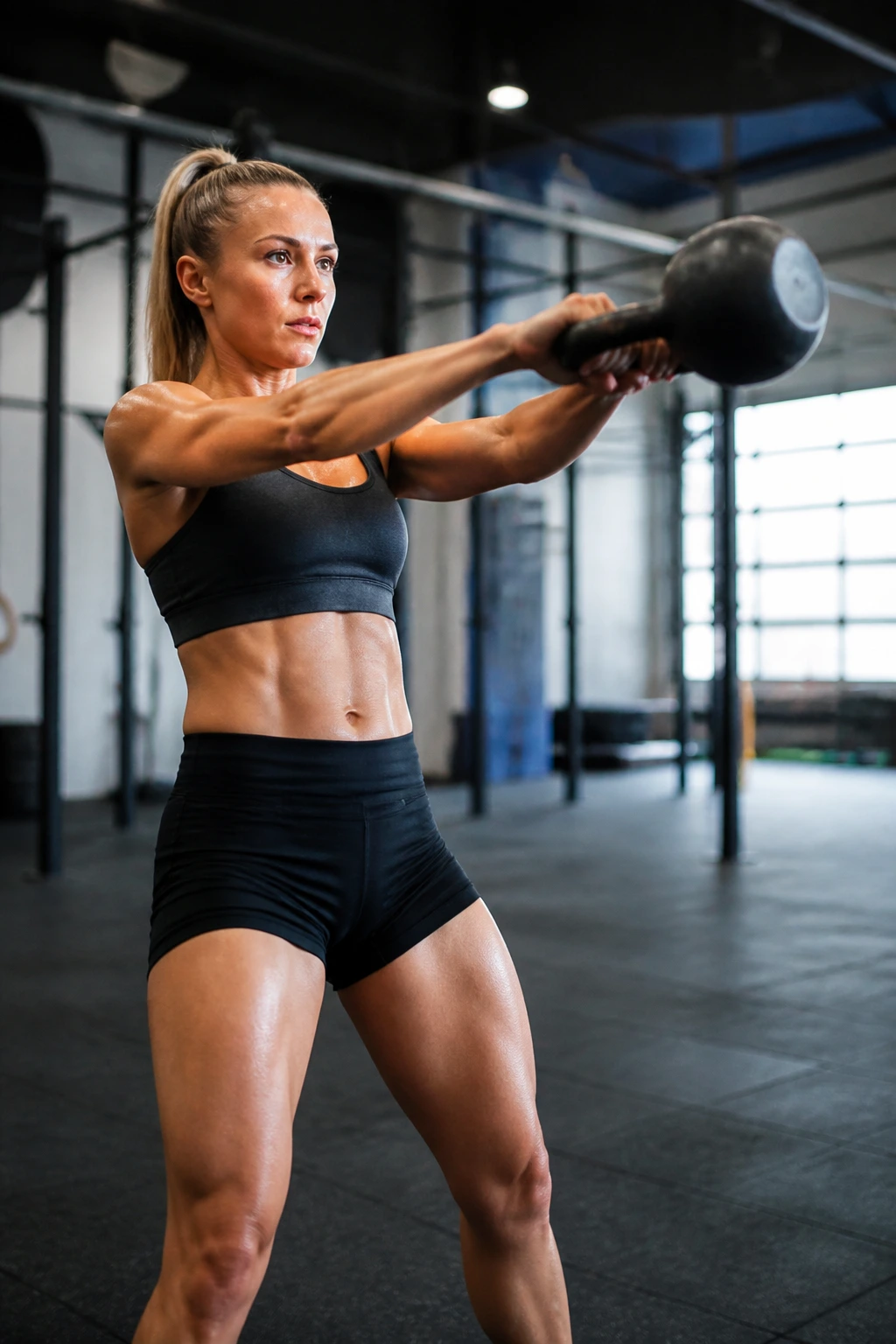
The kettlebell swing is the king of posterior chain explosiveness. It is not really a squat, and it is not really a deadlift; it is a hip hinge movement performed with ballistic speed. This exercise builds power, conditioning, and glute density all at once.
The secret to a good swing is in the hips, not the arms. Your arms are just levers holding onto the bell. All the force should come from a violent snap of your hips. When done correctly, the bell should feel weightless at the top of the arc.
- Start with the bell about a foot in front of you.
- Hike the bell back between your legs like a center in football.
- Snap your hips forward, squeezing your glutes at the top.
- Let the bell float—do not muscle it up with your shoulders.
12. Box Jumps
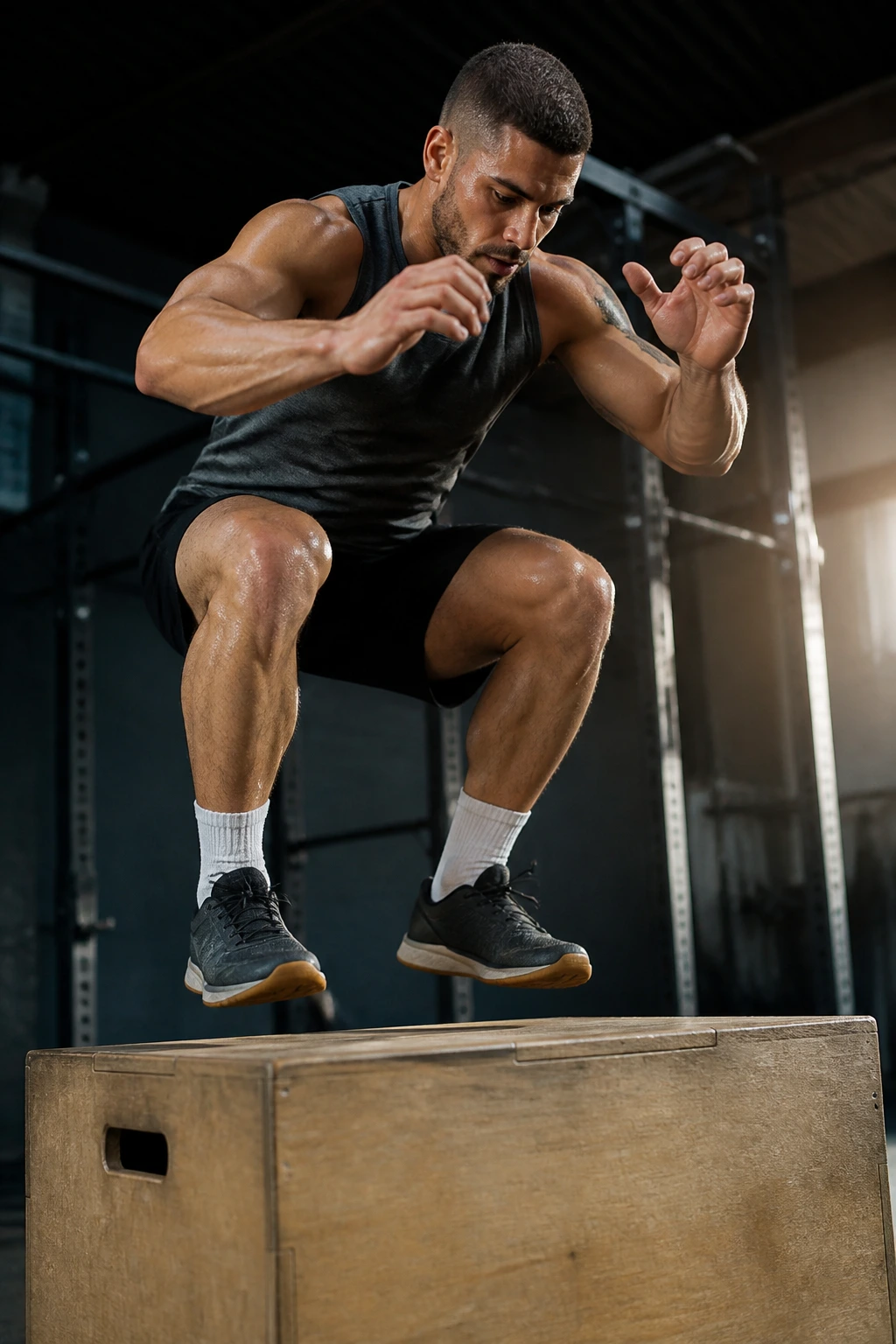
If you want speed, you need plyometrics. Box jumps are the gold standard for teaching your muscles to fire rapidly. They teach your nervous system to coordinate a powerful, simultaneous extension of the hips, knees, and ankles.
Do not mistake this for a conditioning exercise where you perform 50 reps until you are gasping. This is a power movement. Perform low reps—maybe 3 to 5—with maximum intensity. Rest fully between sets. If you can jump onto the box, you are doing it right; if you have to land in a deep squat to get on the box, the box is too high.
Land softly. The goal is to absorb the impact using your muscles, not your joints. If your landing sounds like a heavy thud, you are doing it wrong. It should be a quiet, controlled motion. Step off the box—never jump off backward, as that puts unnecessary stress on your Achilles tendons.
13. Lateral Lunges
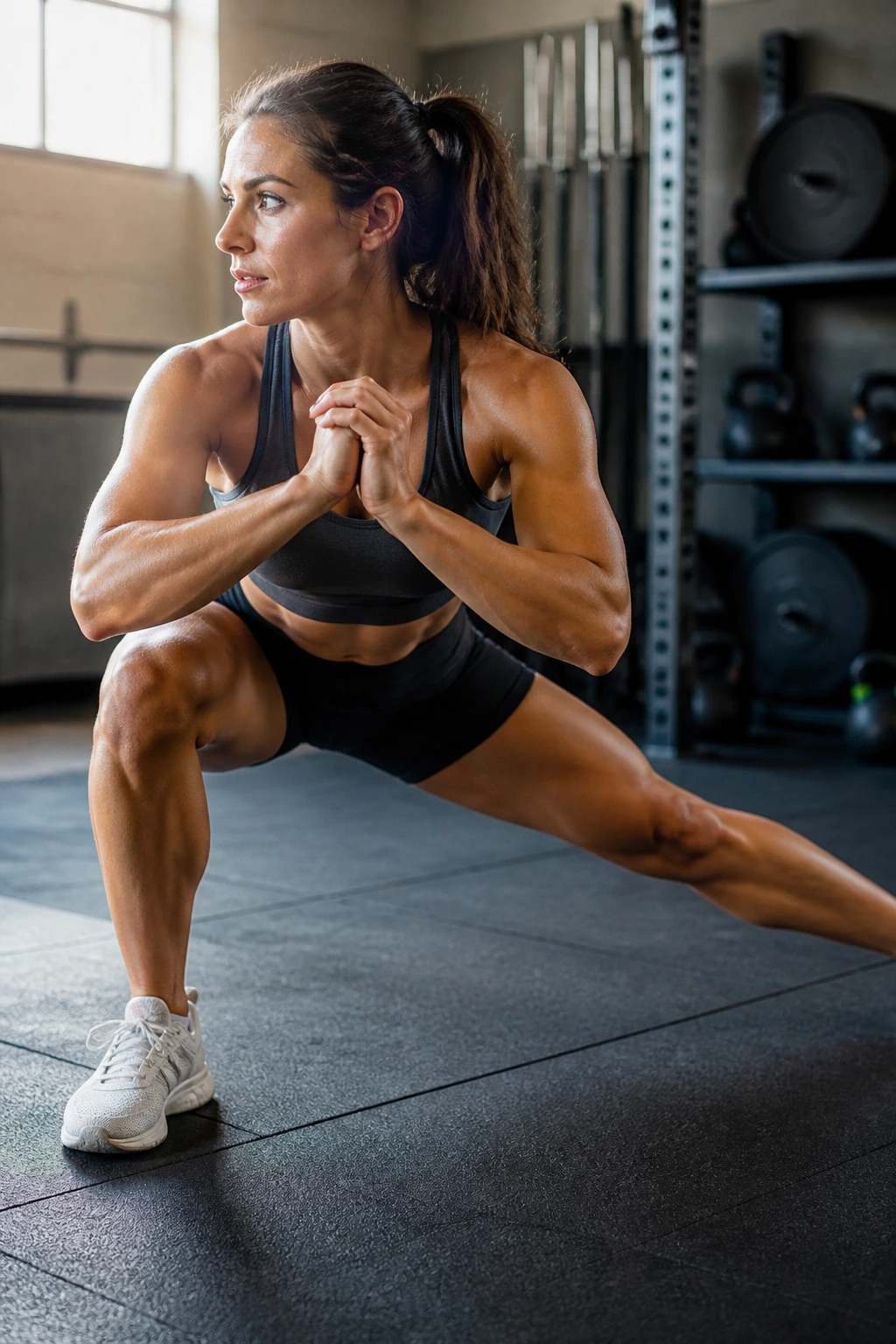
We spend almost all our time moving forward and backward. The lateral lunge forces you to move in the frontal plane, which is essential for building real-world stability and preventing injuries. This movement hits the glute medius—the muscle on the side of your hip—in a way almost nothing else does.
Why This Matters
If you have weak glute medius muscles, your knees are more likely to collapse inward during squats and lunges. Strengthening this area provides a solid base that improves your performance in every other exercise.
How to Do It
- Step out to the side with one foot, keeping the other leg straight.
- Push your hips back and bend the knee of the moving leg.
- Keep your chest up and your planted foot flat on the ground.
- Push off the side foot to return to center.
14. Calf Raises
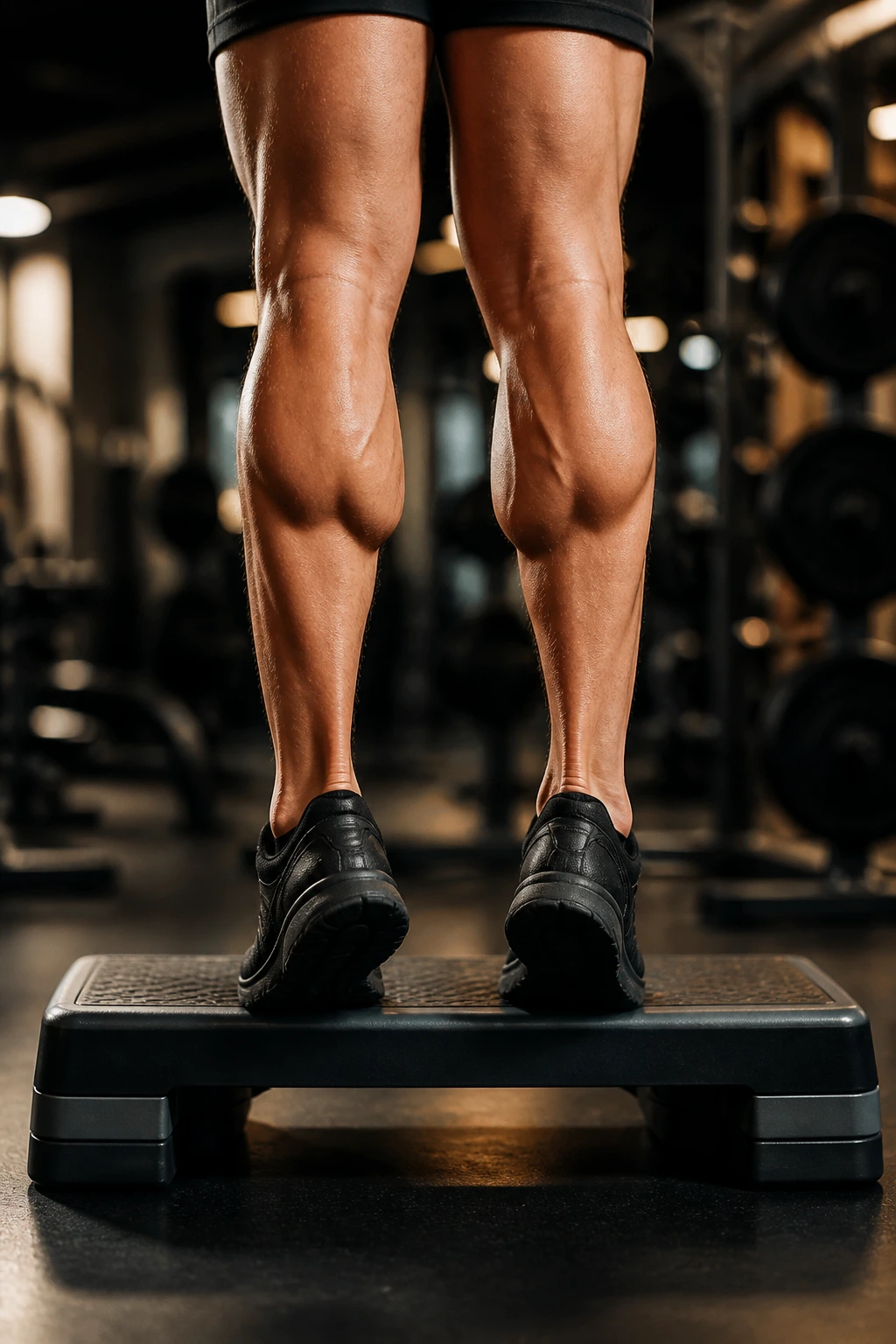
Calves are often neglected because they are slow to grow and require a specific stimulus. To truly build them, you need both straight-leg and bent-leg variations. The gastrocnemius—the large outer muscle—is best targeted with straight legs, while the soleus—the muscle underneath—is best hit with bent knees.
Do not bounce. Bouncing uses the Achilles tendon as a spring, which defeats the purpose of the exercise. You want the muscle to do the lifting, not the tendon. Lower your heels deep into the stretch at the bottom for a full second, then explode up onto your toes.
High reps are the name of the game here. Because you walk on your calves all day, they have high endurance. You need to challenge them with 15 to 25 reps per set, often with short rest periods, to force them to grow. Do not be afraid to go to failure—or past it.
15. Hip Thrusts
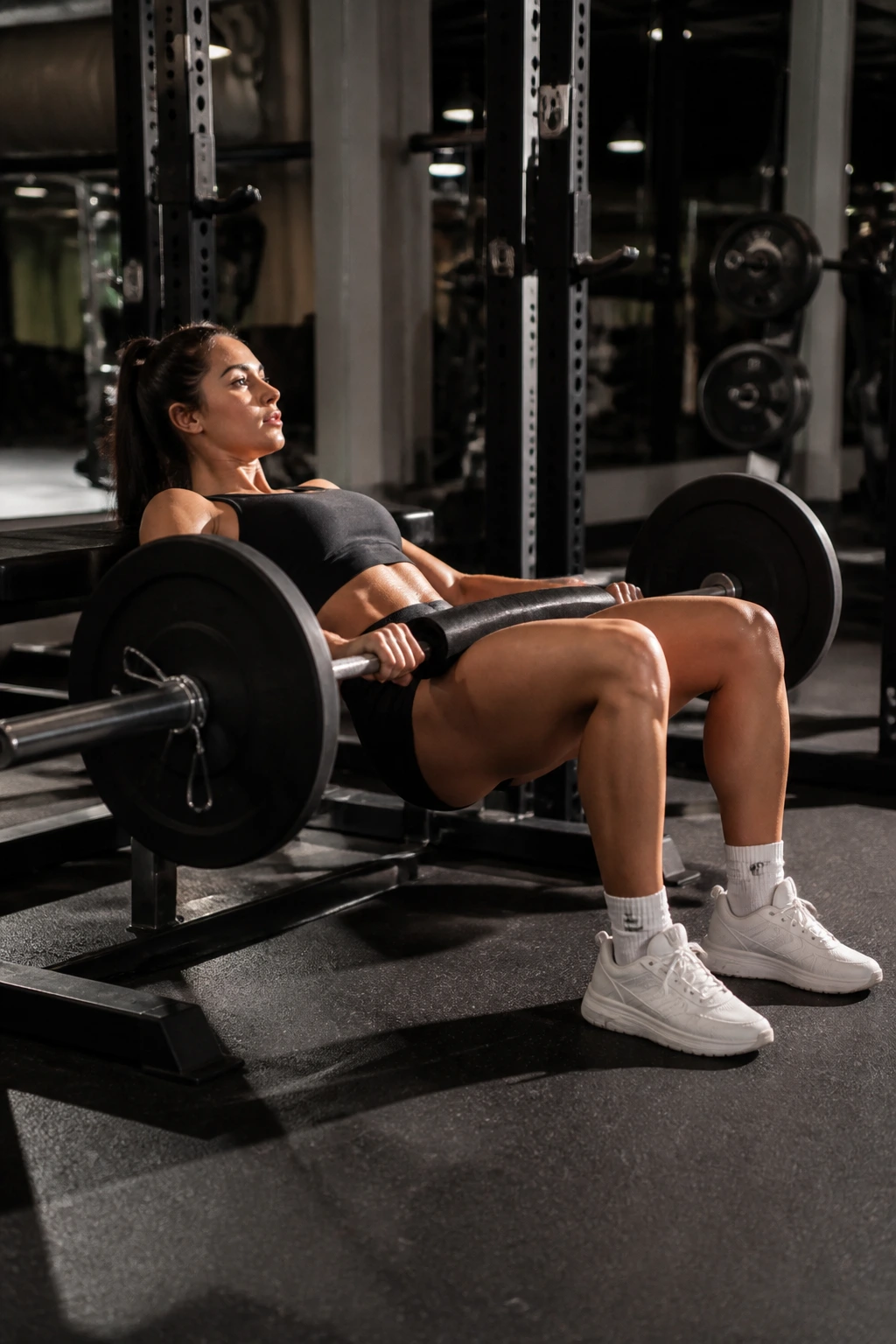
Hip thrusts have gained massive popularity, and for good reason: they are arguably the best exercise for direct glute hypertrophy. By placing the load directly over the hips and moving through a horizontal plane, you create a maximum contraction at the top of the movement.
The Setup
You need a bench and a barbell. Roll the bar over your hips. Lean your upper back against the bench, feet planted firmly on the floor. Drive through your heels to raise your hips until your body forms a straight line from knees to shoulders.
The Squeeze
At the top, tuck your chin to your chest and squeeze your glutes as hard as possible. Do not hyperextend your lower back—that is the biggest mistake people make. Focus on the glute contraction, not how high you can get the bar.
16. Curtsy Lunges
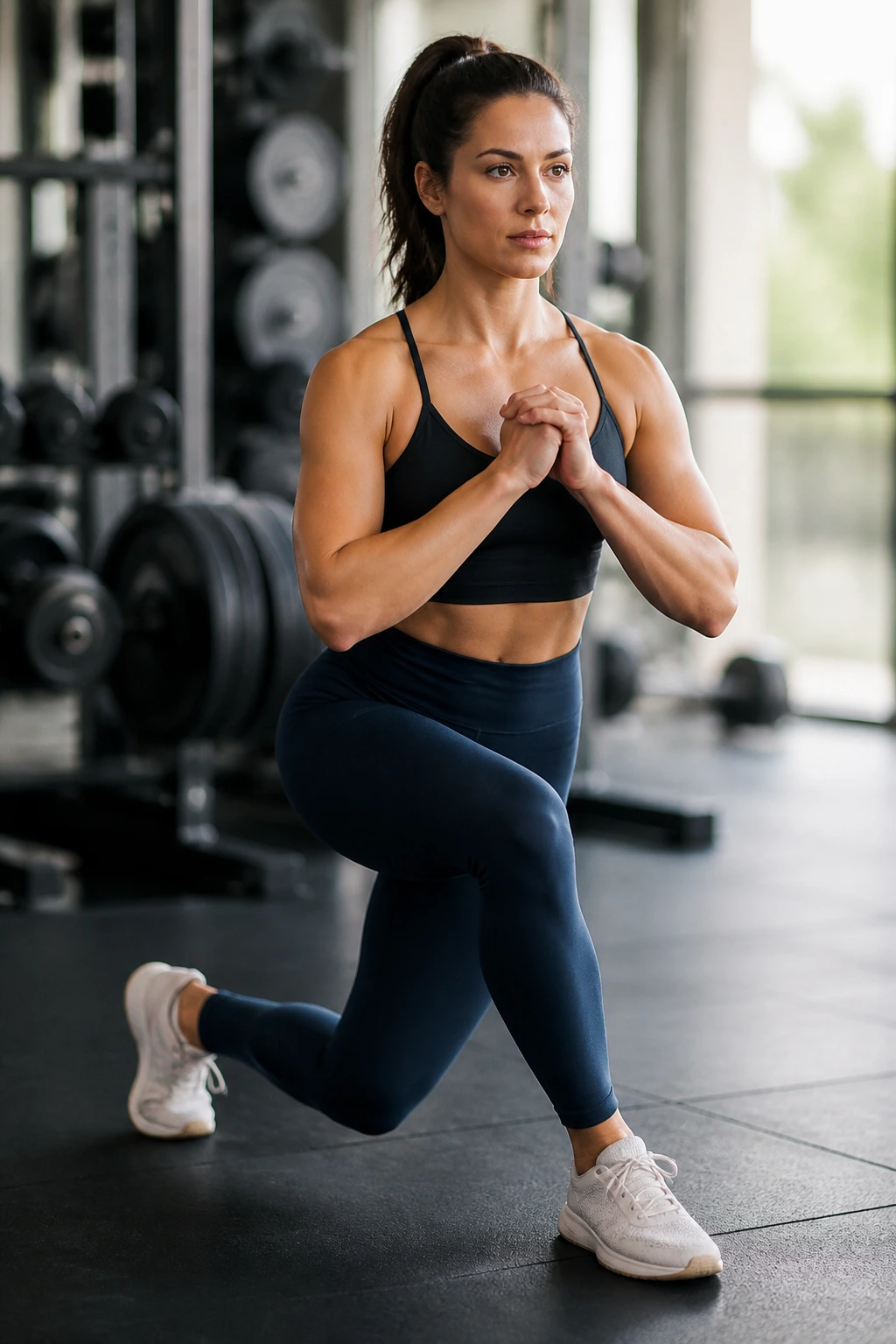
The curtsy lunge is essentially a lunge with a twist. By stepping back and across, you place your body in a position that forces the gluteus medius and minimus to work overtime to stabilize the pelvis. It is a fantastic variation to throw into a circuit.
Unlike a regular reverse lunge, the curtsy lunge puts your glutes at a greater mechanical disadvantage, which actually recruits more muscle fibers. You do not need heavy weight for this one. Use a pair of moderate dumbbells or even just your body weight, and focus on the deep stretch in the outer hip of the front leg.
Keep your front foot planted firmly. Do not let your heel lift off the ground. As you step back and across, try to maintain a neutral spine. The move should feel smooth and controlled. If you feel pain in your knee, shorten your step and focus on sitting back more into your hip.
17. Jefferson Squats
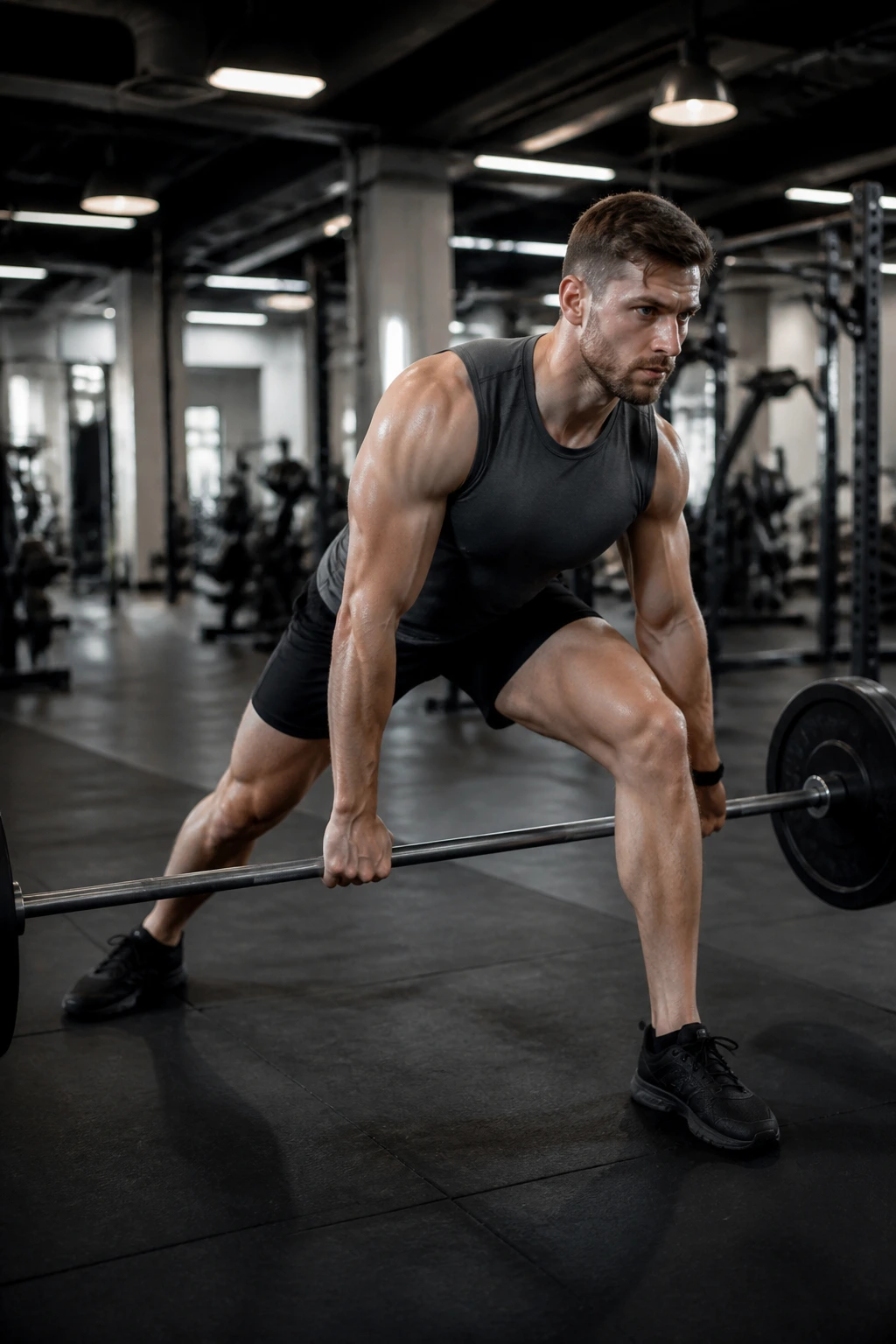
The Jefferson squat is a classic “old school” lift that feels strange at first but provides an incredible stimulus for the entire lower body. You stand straddling the barbell, with one foot in front and one behind. It is a symmetrical lift performed in an asymmetrical stance.
The Benefits
This exercise hits the quads, hamstrings, and glutes from an angle that you simply cannot replicate with a normal squat or deadlift. It also develops tremendous grip strength and core stability.
The Execution
- Straddle the bar so it is between your legs.
- Grip the bar with one hand in front and one behind.
- Keep your back flat and your chest up.
- Drive through your heels to stand up, pulling the bar straight up between your legs.
18. Reverse Lunges
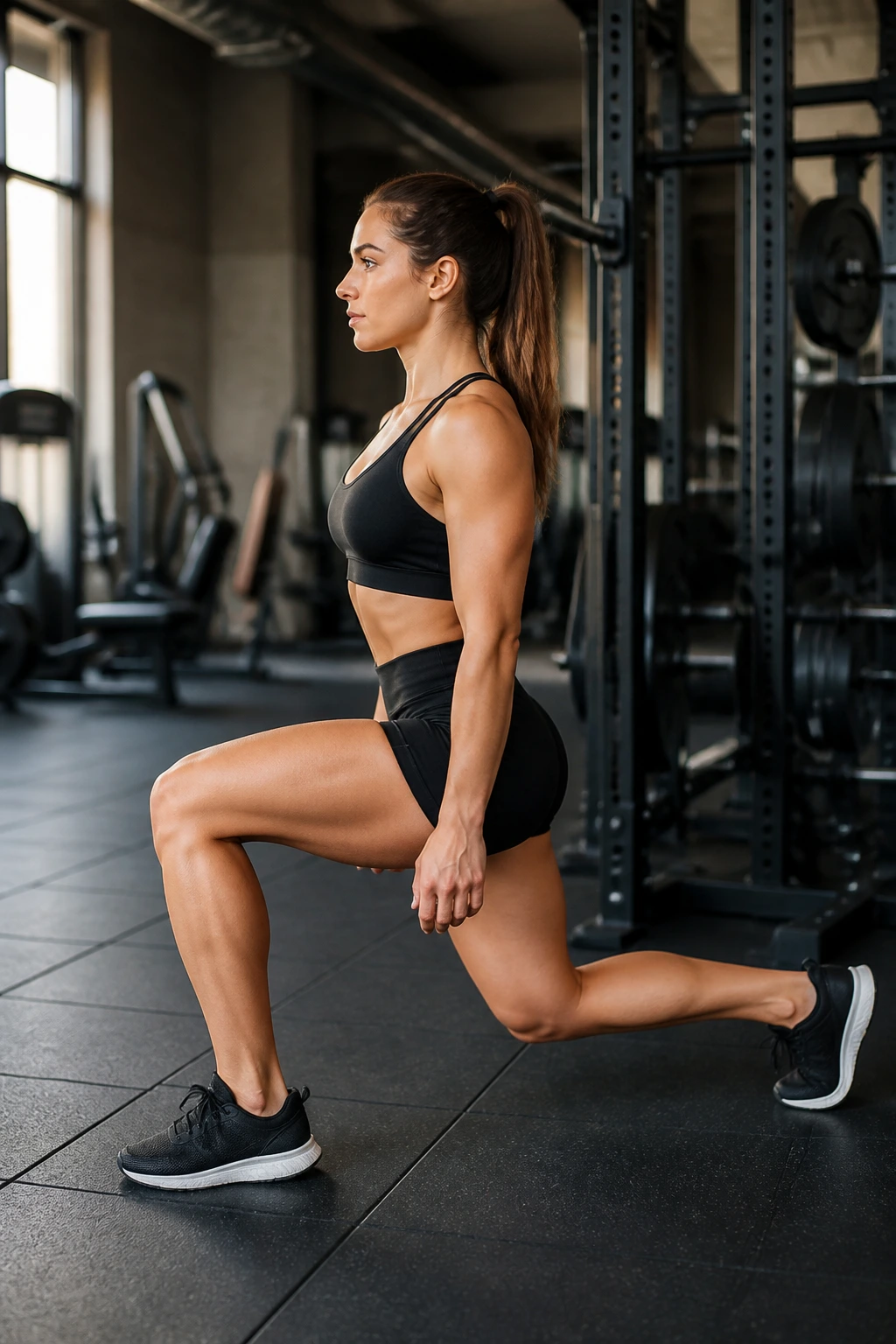
Reverse lunges are often superior to forward lunges because they are much friendlier on the knees. In a forward lunge, your momentum carries you forward, which puts significant stress on the patellar tendon. In a reverse lunge, you are stepping back into a stable position.
This movement is perfect for anyone with knee sensitivity who still wants to build massive quads. You can load this movement heavy with dumbbells in each hand or a barbell on your back. The key is to keep the majority of your weight on the front leg.
- Take a controlled step backward.
- Keep your front shin vertical.
- Drop your back knee until it is just an inch off the floor.
- Push through the front heel to return to the starting position.
19. Goblet Cossack Squats
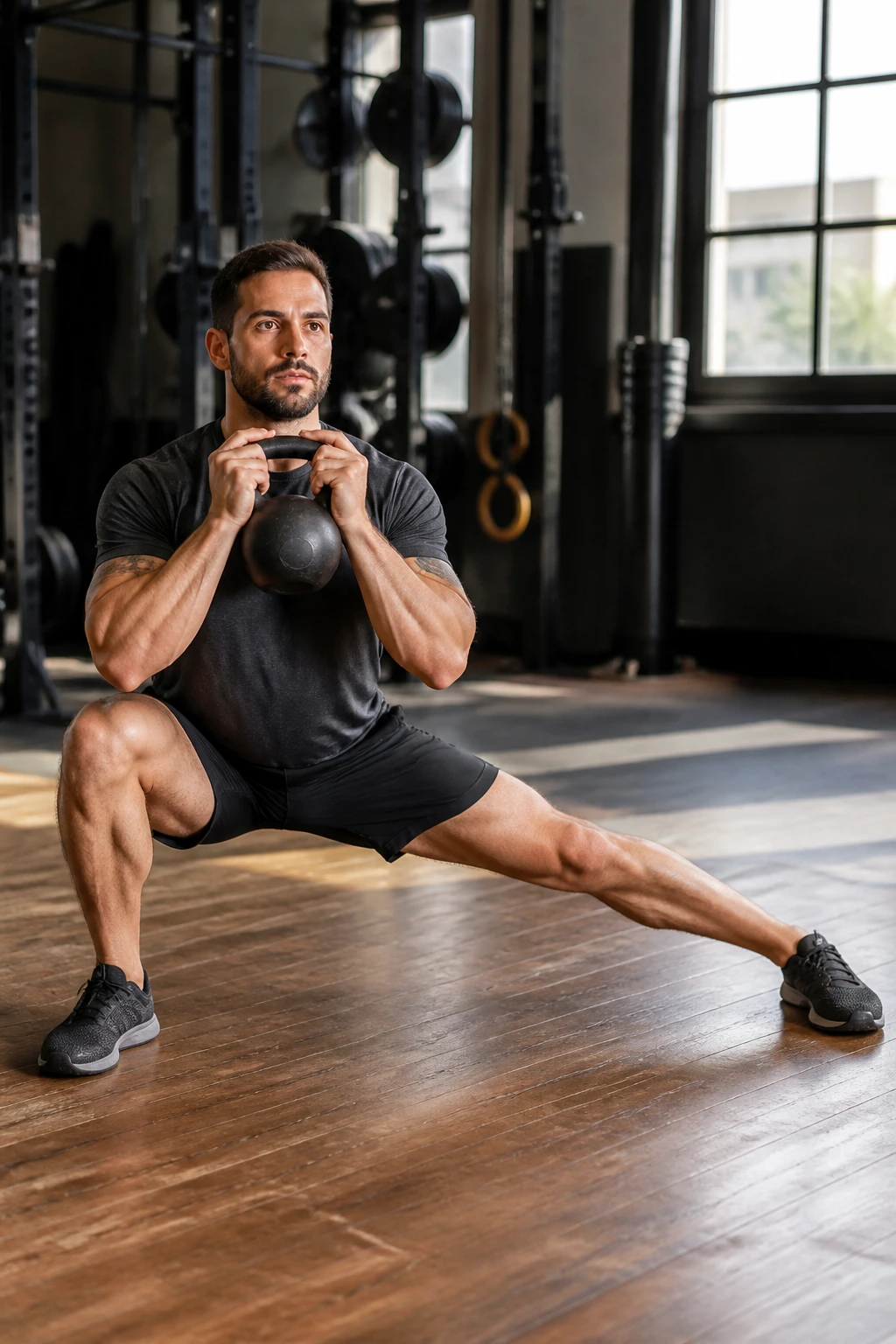
Cossack squats are essentially a side lunge with a much deeper range of motion. You are taking a very wide stance, shifting your weight entirely to one side, and dropping into a deep squat on that leg while the other leg remains straight.
This is a masterclass in mobility and strength. It will stretch your adductors and groin while hammering your quads and glutes. If you cannot get low, do not worry; start with a shallower depth and work your way down over time.
- Take a wide stance.
- Shift your hips to the right, bending your right knee while keeping your left leg straight.
- Keep your right heel flat on the ground.
- Push back to the center and switch to the left side.
20. Single-Leg RDLs
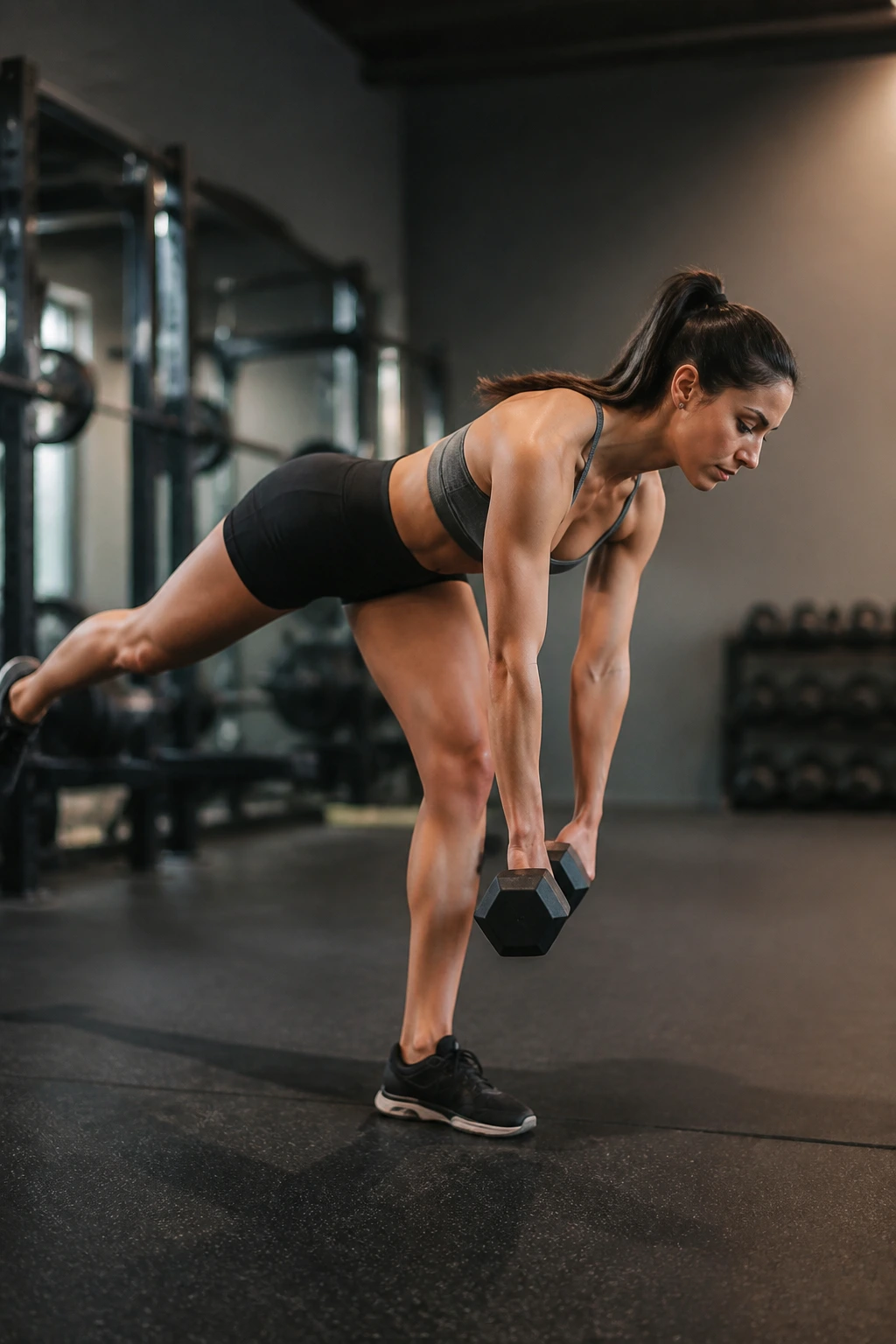
The single-leg RDL is the ultimate test of balance and posterior chain strength. By removing one point of contact, you force your stabilizing muscles—especially in the ankle and hip—to work significantly harder to keep you upright.
The Mental Cue
Do not think about reaching for the floor with your hands. Think about pushing your heel to the wall behind you. As your leg goes back, your torso naturally hinges forward to balance the weight.
Why This Wins
It eliminates muscle imbalances. If one side of your body is stronger than the other, the single-leg RDL will expose it immediately. Train the weaker side first and match the reps on the stronger side to bring your body back into balance.
21. Hack Squats
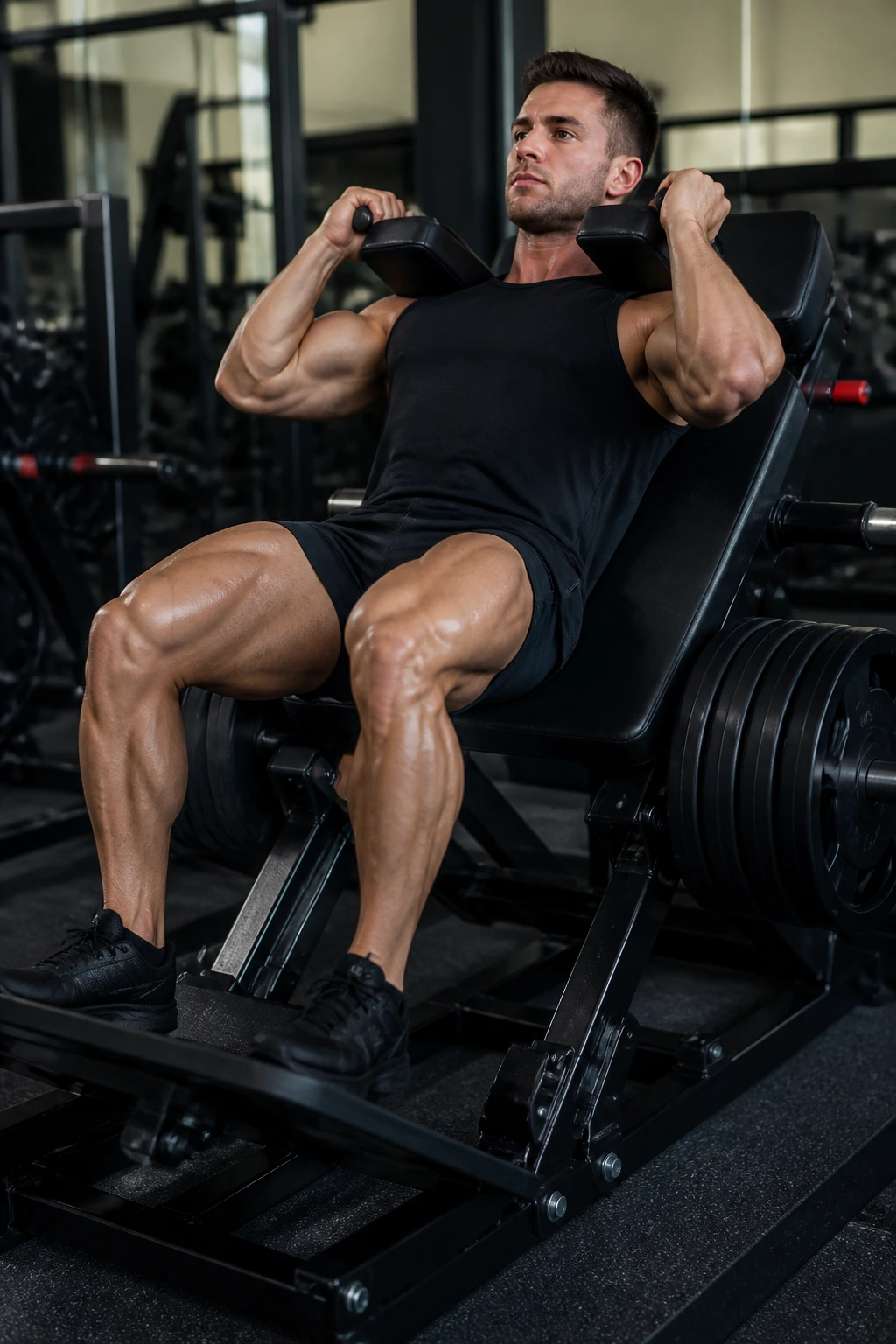
If you have access to a hack squat machine, use it. It is arguably the best quad-focused exercise you can do because it allows you to overload the legs without the stabilization requirements of a free-standing squat. It forces you into a perfect, upright position that puts all the tension on your thighs.
When using a hack squat machine, your foot placement matters. Lower feet target the quads; higher feet target the glutes. Ensure you are pushing through the balls of your feet if you have your feet low. Do not let your heels lift.
Control the descent. The machine makes it easy to just drop the weight, but that is a waste of a great stimulus. Take three full seconds to lower yourself down, feel the quads stretching, and then power up. Do not lock your knees at the top; keep the constant tension.
22. Glute Medius Kickbacks
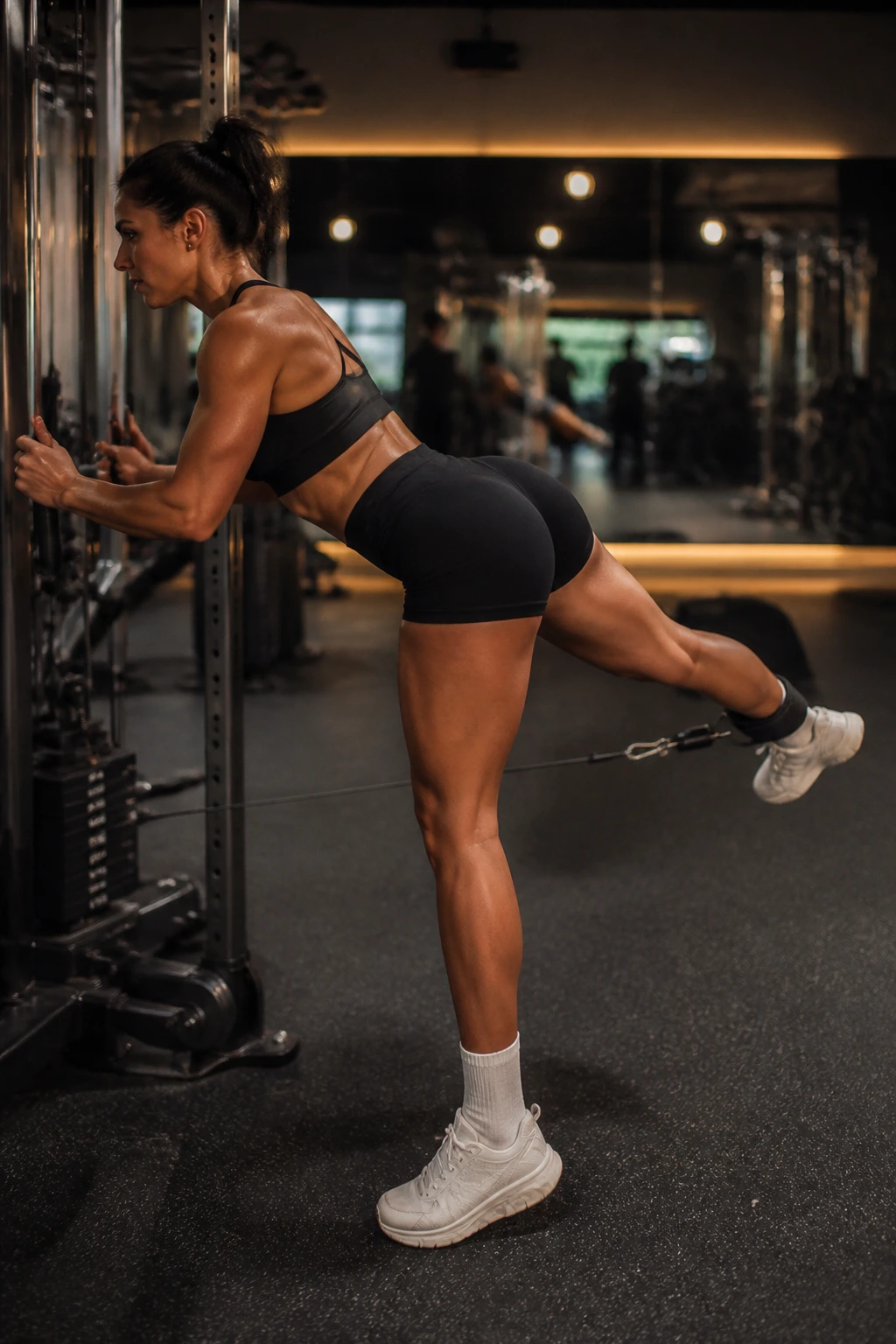
Most people train the gluteus maximus—the main muscle that gives the butt its shape—but they neglect the gluteus medius, which sits on the side of the hip. This muscle is responsible for hip abduction and stabilization. A well-developed glute medius gives your hips that “filled out” look.
You can do these on a cable machine or with a resistance band. Stand on one leg, keep your core braced, and kick your other leg out at a 45-degree angle. It is not about the height of the kick; it is about the squeeze at the end.
Focus on not leaning your torso to the side as you kick. Keep your hips square to the ground. If you find yourself tilting, you are compensating and not isolating the muscle. Use a slow, controlled tempo. This is an isolation movement, not a power lift.
23. Wall Sits
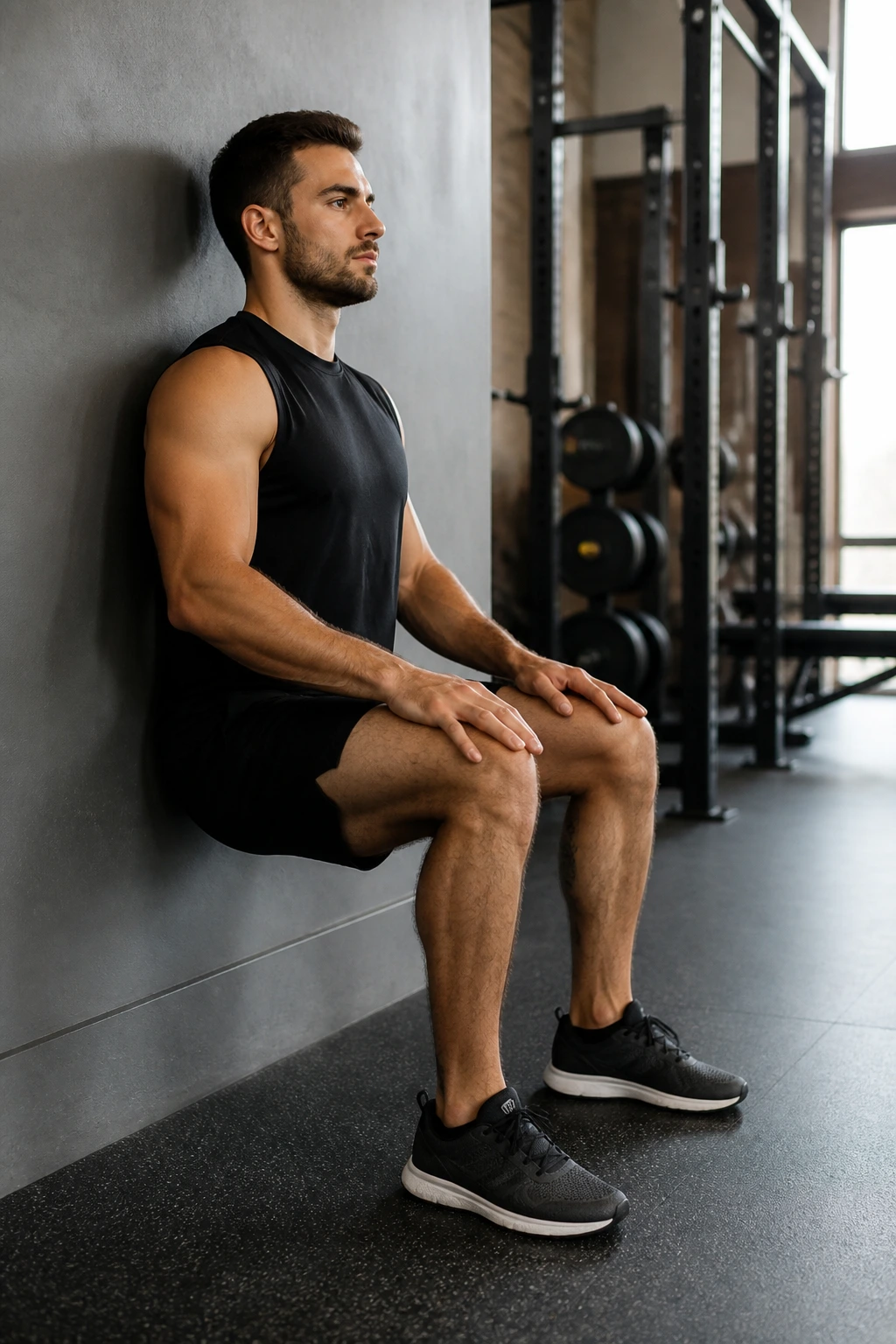
Wall sits are an isometric exercise, meaning there is no movement. You are holding a static position, which builds incredible endurance and mental toughness. This is a great finisher for a leg workout, especially if you have had a long session and your stabilizer muscles are fried.
Find a flat wall, lean your back against it, and slide down until your knees are bent at a 90-degree angle. Keep your feet shoulder-width apart and flat on the floor. If it feels too easy, hold a weight plate on your lap or perform single-leg variations.
The goal is time under tension. Can you hold it for 30 seconds? 60 seconds? Two minutes? The burn will be intense, but that is the signal that you are pushing your muscles past their normal limit. It is an excellent way to finish your session and leave your legs feeling absolutely spent.
24. Goblet Box Squats
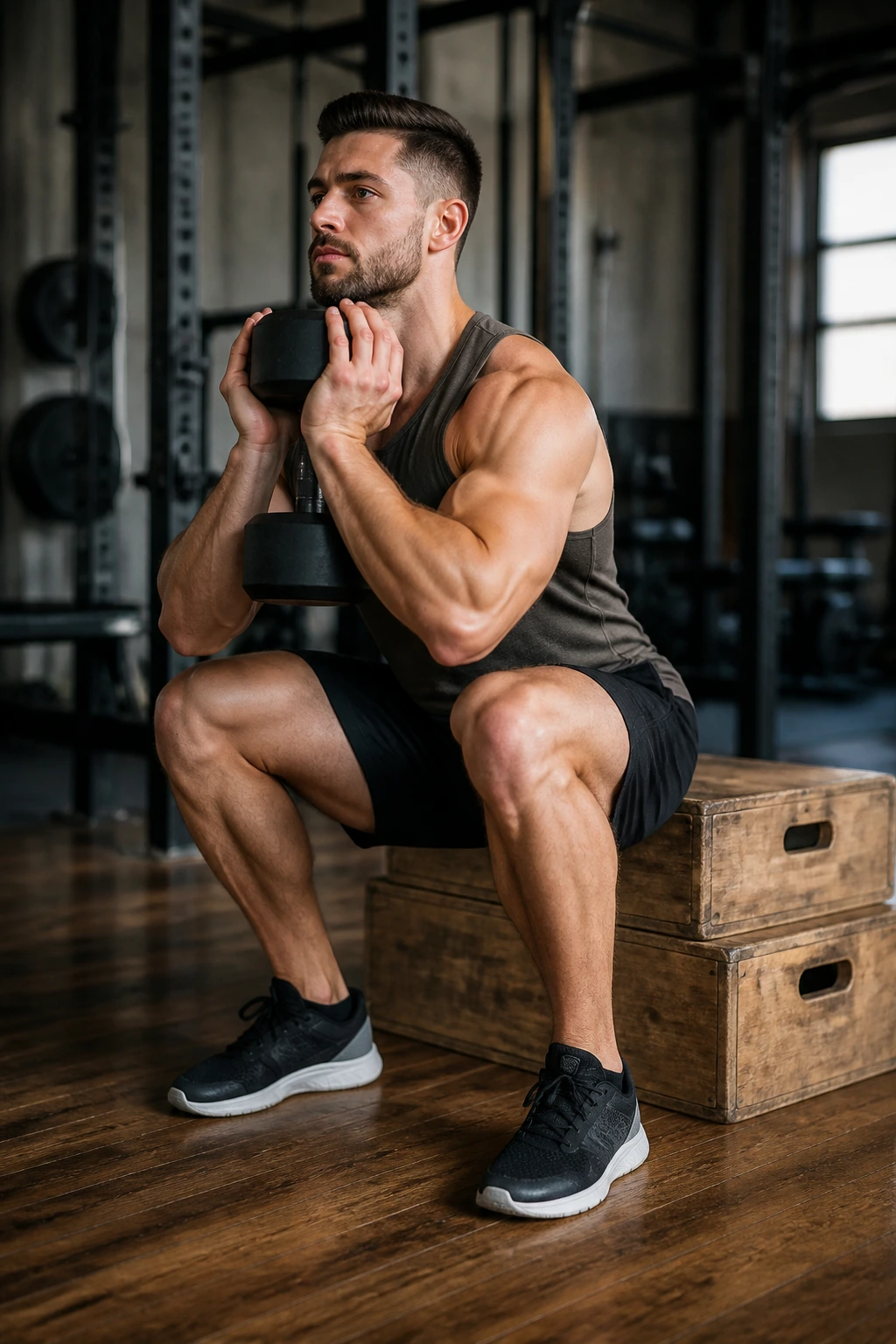
Box squats are a staple for powerlifters, but adding a goblet hold turns them into a great quad builder. The box provides a target, which ensures you hit the exact same depth on every single rep. It also forces you to pause momentarily at the bottom, which kills any momentum and makes you work harder to drive up.
Do not sit down and relax on the box. You are “tapping” the box. Just enough to know you have reached the correct depth, then immediately explode back up. If you sink into the box, you lose the tension, and the rep loses its value.
This variation is perfect for learning to control the eccentric phase. Because you know you have to touch the box, you are forced to lower yourself with control rather than dropping. It builds incredible explosive strength from a dead stop.
25. Sumo Deadlifts
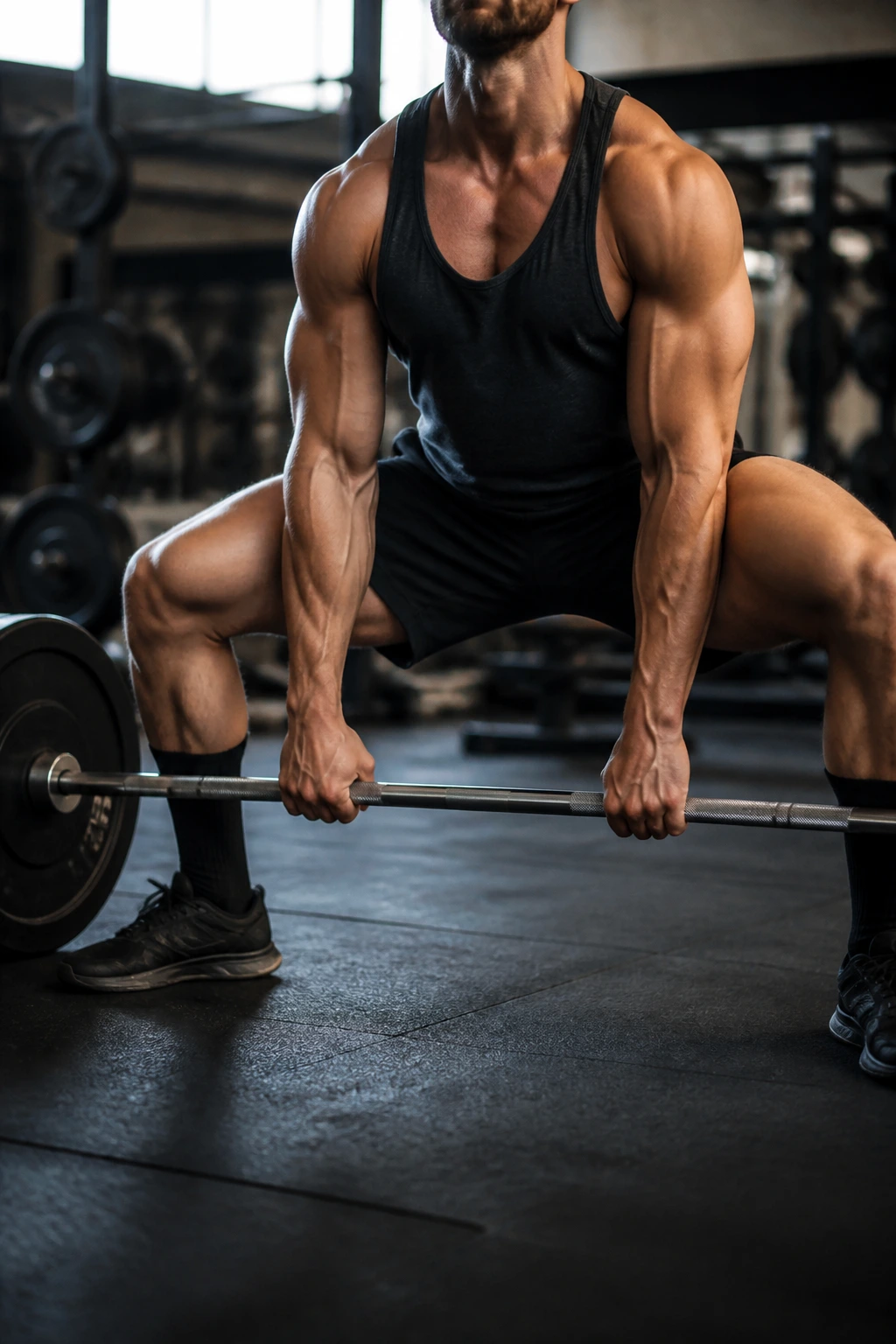
While the sumo squat targets the quads, the sumo deadlift is all about the posterior chain and the hips. By taking a wide stance and gripping the bar inside your legs, you reduce the distance the bar has to travel and put your body in a position that requires less lower-back strain than a conventional deadlift.
This is a fantastic compound movement for building massive thickness in the hips and glutes. Because you are more upright, it is often safer for those with long limbs or back issues. It also builds incredible core stability because you have to resist the tendency for the bar to pull you forward.
- Take a wide stance, toes pointed slightly out.
- Grip the bar with your hands inside your legs.
- Keep your chest up and your hips low.
- Drive through your heels, keeping the bar close to your shins, and stand tall.
Final Thoughts
Building a stronger, more defined lower body is not a project you finish in a few weeks. It requires consistency, patience, and a willingness to embrace the discomfort that comes with real training. Whether you choose to prioritize heavy compounds like the squat or focus on isolation with leg extensions and kickbacks, the most important factor is the intensity you bring to the gym every single time.
Remember that recovery is just as important as the workout itself. You cannot build muscle if you do not give your body the fuel and the rest it needs to repair the damage you cause during your sessions. Eat enough protein, prioritize sleep, and listen to your body when it tells you it needs a deload week.
Ultimately, your legs are capable of far more than you currently give them credit for. Stop settling for average workouts. Pick a few movements from this list that you haven’t been doing, integrate them into your routine, and watch what happens when you commit to the work. There is no magic pill, just the sweat you leave on the floor.
