



Burning quads, shaking legs, and the feeling that you cannot possibly do one more rep—that is the signature of a truly effective leg day. Many people assume that building lower body strength requires a gym filled with heavy barbells and massive squat racks. That is a myth. Your own body weight, gravity, and a bit of ingenuity are more than enough to sculpt, strengthen, and define your legs without ever stepping foot inside a commercial fitness center.
Living rooms make excellent training grounds because they remove the intimidation factor. You don’t have to worry about who is watching, and you don’t have to wait for a machine to open up. You just need a little floor space, maybe a chair, and the willingness to push through the discomfort. When you focus on tempo, control, and range of motion, you create enough metabolic stress to see real, lasting changes.
This approach is about mastery. Anyone can bang out sloppy reps, but learning to recruit the right muscle fibers—properly activating the glutes, hamstrings, and quads—is where the real magic happens. Let’s look at the movements that will transform your lower body right where you stand.
1. Traditional Air Squats
The air squat is the foundation of all leg training. If you cannot master this movement, you should not be adding weight to it. It teaches your body how to hinge at the hips and drive through the heels, which is vital for every other exercise on this list.
Why It Works
This move hits your quads, glutes, and core simultaneously. By removing external load, you are forced to rely on your own balance and stability. Focus on keeping your chest up and your gaze forward. If your chest caves, you lose your structural integrity.
Scaling the Intensity
- Tempo: Take 3 seconds to lower yourself, pause for 1 second at the bottom, and explode up in 1 second.
- Repetition: Aim for 20 reps with perfect form before moving on.
- Depth: Go deep enough that your thighs are at least parallel to the floor, or slightly lower if your hip mobility allows.
Pro tip: Imagine you are sitting back into an invisible chair. If your heels lift off the ground, you are leaning too far forward. Drive through your mid-foot and heel.
2. Reverse Lunges
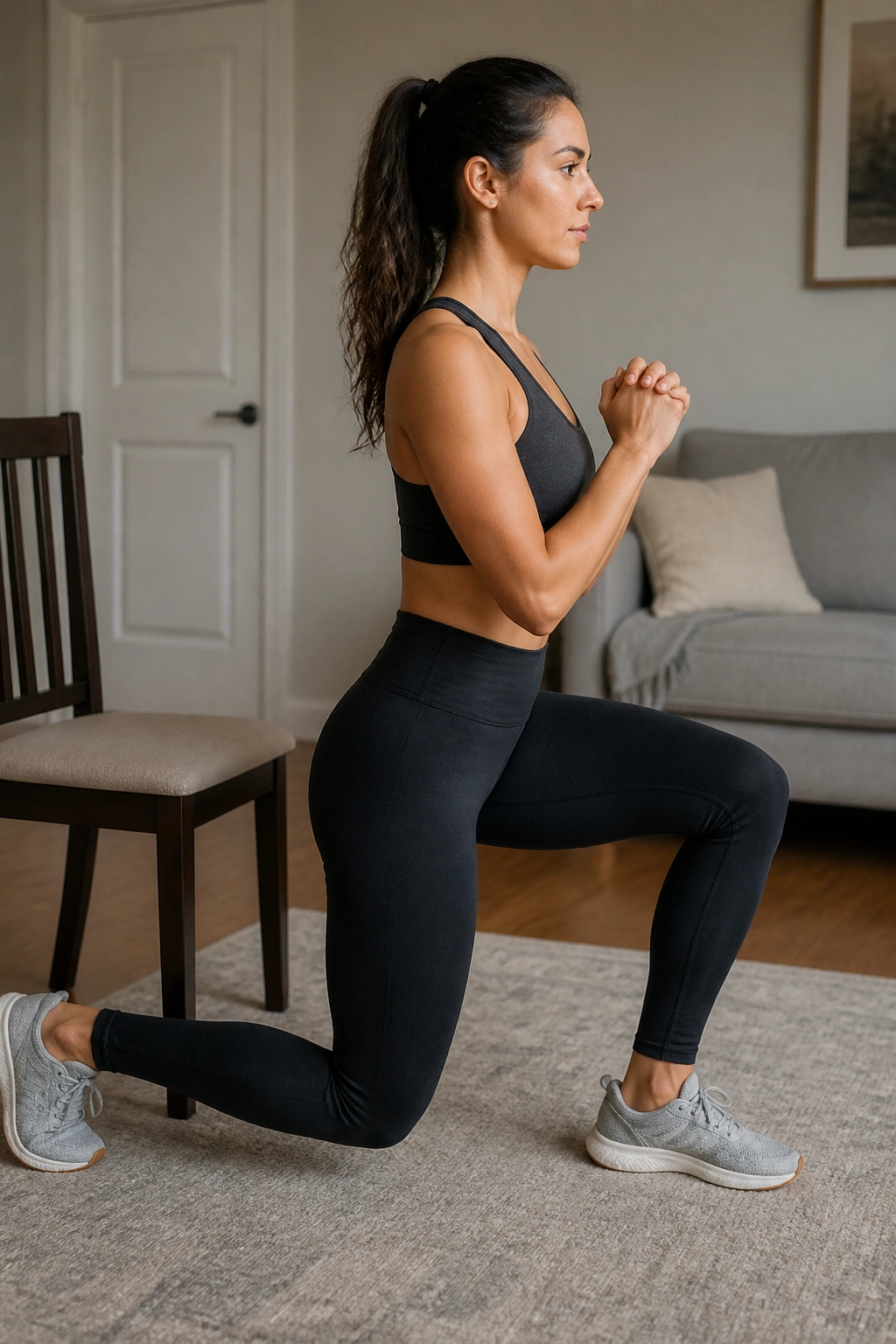
I prefer reverse lunges over forward lunges for most people training at home. Stepping backward is inherently kinder to the knees. It requires more stability, which means your core has to work harder to keep you upright.
The Mechanics of the Move
Start standing tall, feet hip-width apart. Take a controlled step backward with your right foot. Drop your back knee toward the floor until both legs form 90-degree angles. Push off the front foot to return to the starting position.
Avoiding Knee Pain
If you feel pressure in your front knee, check your alignment. Your front knee should track directly over your second toe, not cave inward. Keep your torso upright—don’t lean forward excessively. If you are struggling with balance, hold onto a sturdy chair or the back of a sofa for support until your stabilizer muscles catch up.
3. Glute Bridges
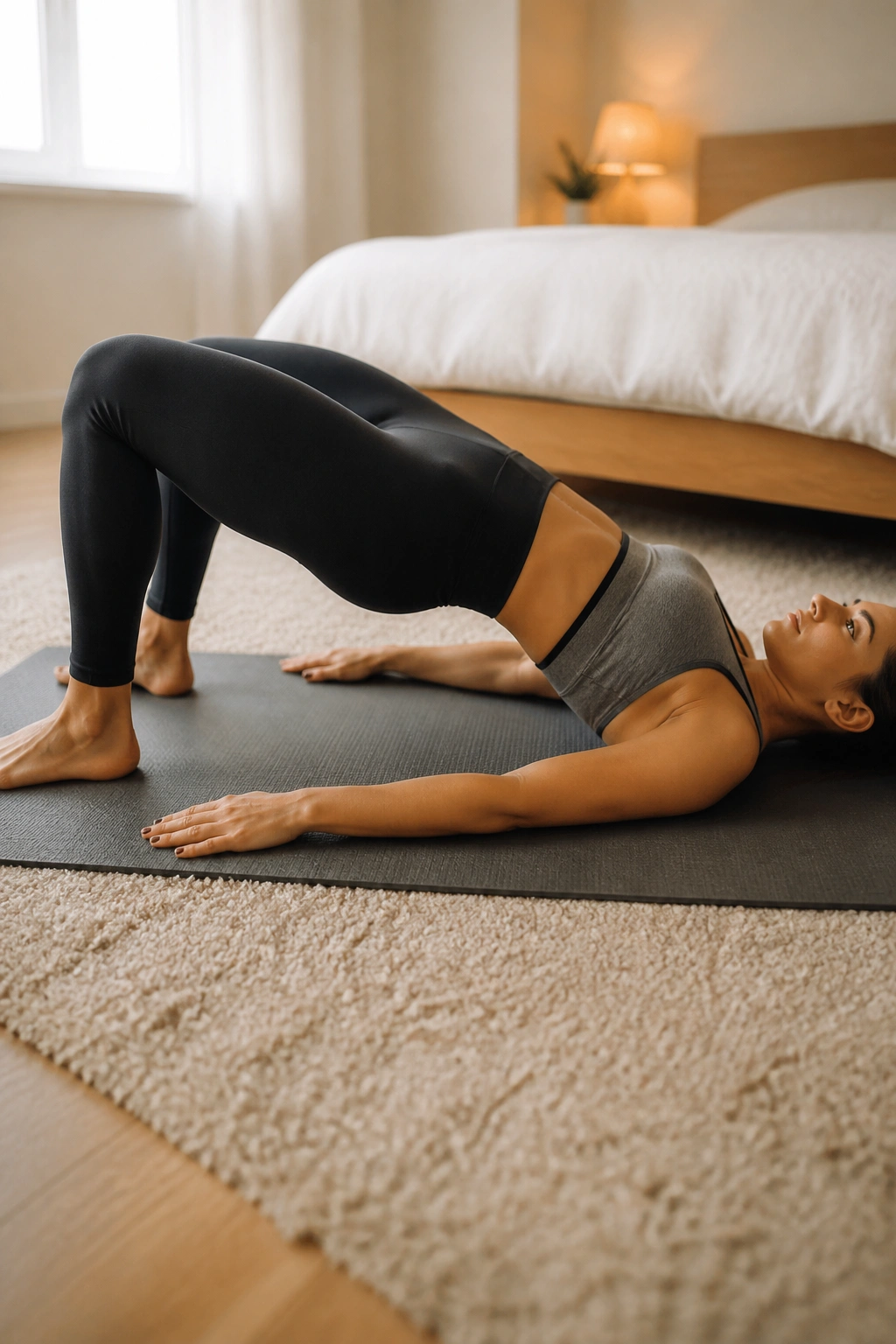
If you spend a lot of time sitting, your glutes are probably “asleep.” The glute bridge is the single best way to wake them up. It is a simple, floor-based movement that isolates the glutes and hamstrings while keeping the lower back safe.
How to Get the Most Out of It
Lie on your back with knees bent and feet flat on the floor, about hip-width apart. Drive through your heels to lift your hips toward the ceiling. At the top of the movement, squeeze your glutes as hard as you can for two full seconds.
The Mind-Muscle Connection
Do not use your lower back to drive the lift. If you feel this in your lumbar spine, you are over-arching. Tuck your pelvis slightly and focus entirely on the contraction in your backside. When you come down, do not let your hips rest completely on the floor; tap them lightly and go right back up.
4. Sumo Squats
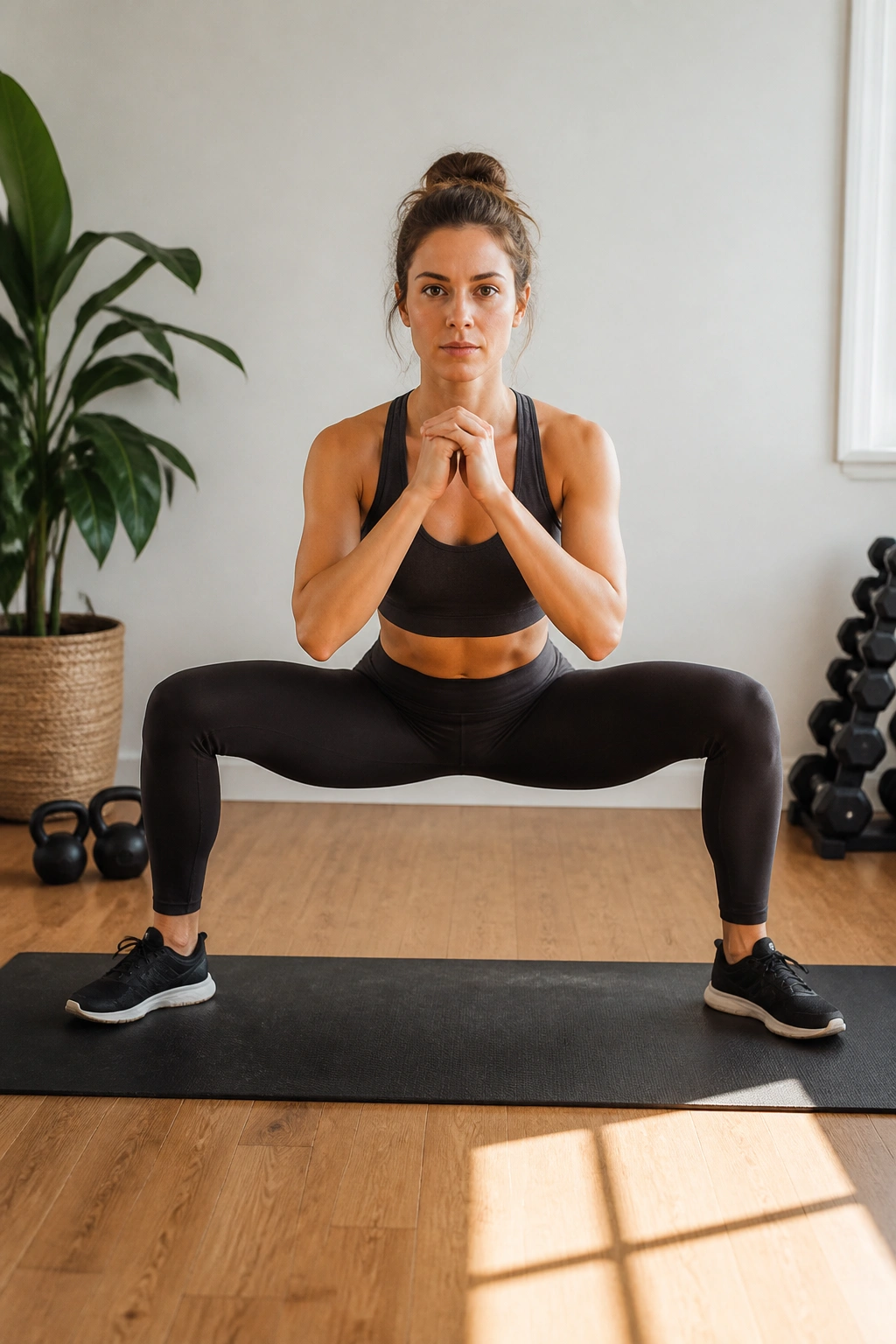
This variation shifts the focus from your quads to your inner thighs and glutes. By widening your stance and pointing your toes outward, you force your adductor muscles to work much harder than they do in a standard squat.
Proper Stance Width
Step your feet out significantly wider than shoulder-width. Point your toes out at a 45-degree angle. When you descend, your knees must track out over your toes. If your knees collapse inward, your stance is too wide for your current hip mobility.
Why This Matters
Strong inner thighs provide stability for your knees and hips. Most people have weak adductors because they only move in the sagittal plane—walking or standard squatting. Moving in this slightly altered stance fills in those gaps in your lower body development.
5. Lateral Lunges
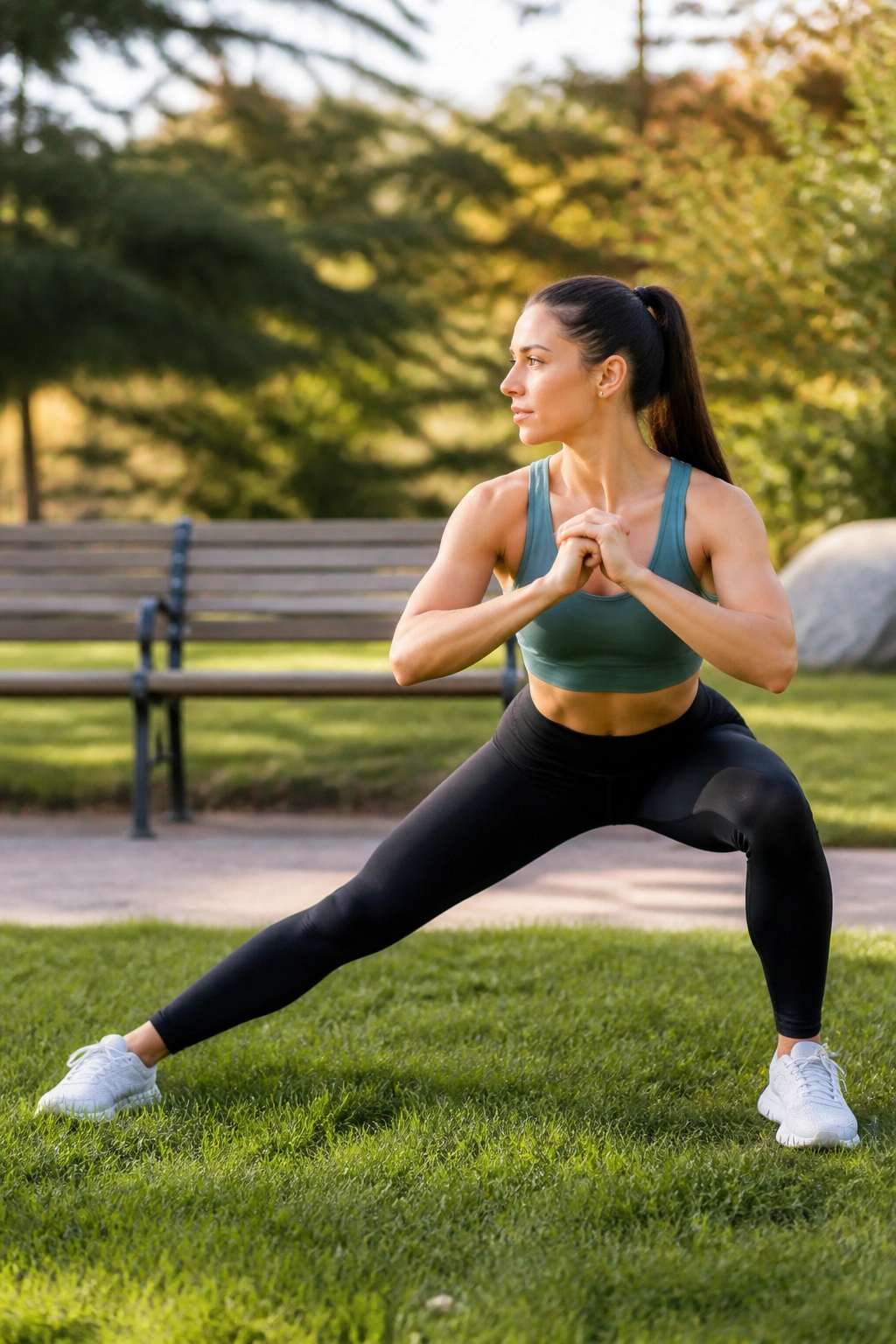
Lateral movement is often missing from home routines. We spend most of our time walking forward or backward, which leaves our lateral muscles—the glute medius and adductors—underdeveloped. These muscles are essential for hip stability.
The Execution
Start with your feet together. Take a wide step to the right, keeping your left leg straight. Bend your right knee and push your hips back, as if sitting on a one-legged bench. Keep your left foot glued to the floor. Return to the center and repeat on the other side.
Avoiding Common Mistakes
Keep your chest proud. It is tempting to hunch over, but that shifts the load to your lower back. Your moving knee should stay aligned over your foot. If you can’t reach deep, just go as far as your mobility allows. Speed is not the goal here; control is.
6. Step-Ups
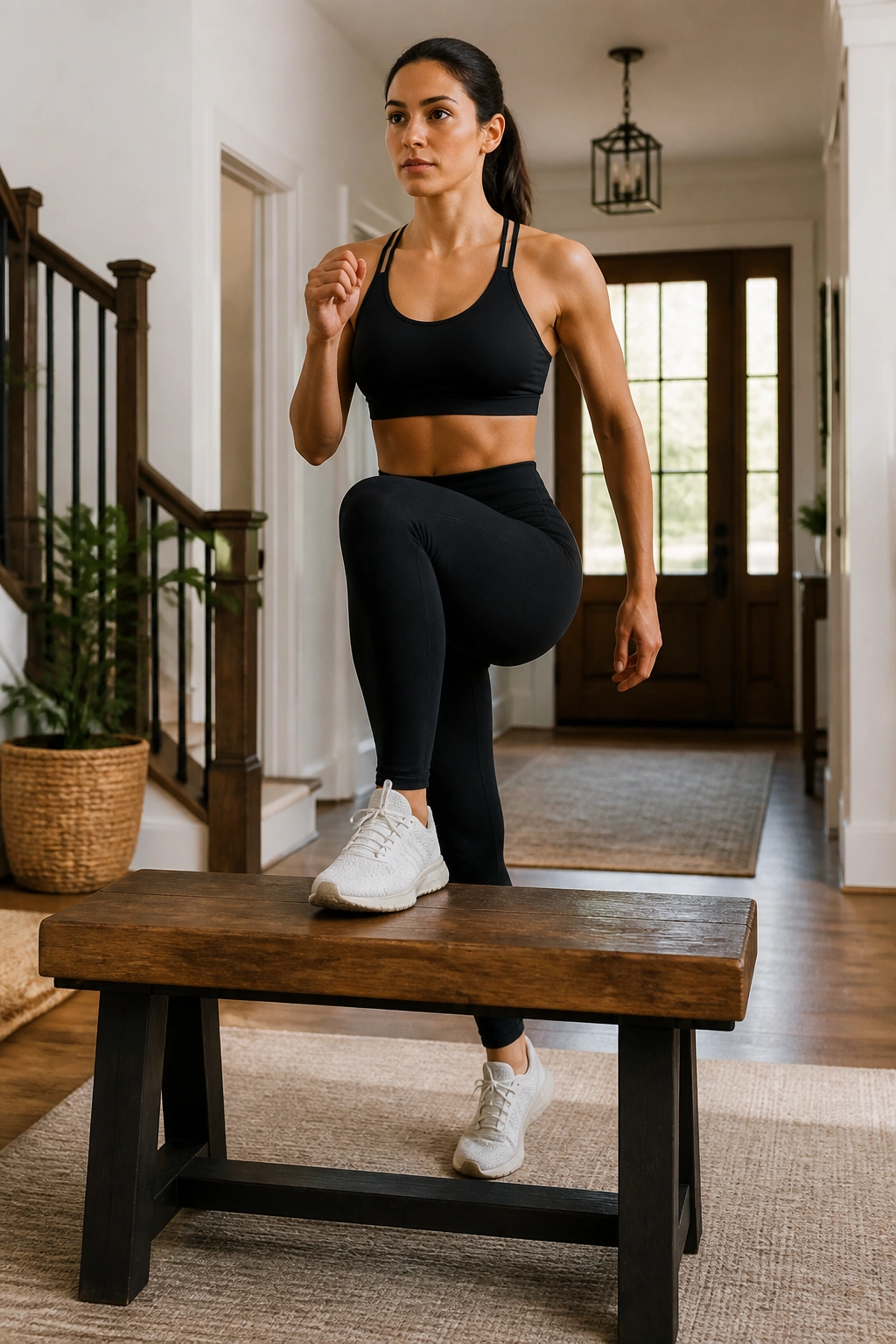
Step-ups are one of the most functional exercises you can do. You perform this motion every time you climb stairs. Doing them with intention turns a daily task into a serious leg-strengthening workout.
Equipment
Find a sturdy chair, a low bench, or a stable ottoman. Make sure it doesn’t wobble. If it slides, put it against a wall.
The Technique
Step your entire right foot onto the surface. Drive through that heel to lift your entire body up. Do not push off with the left foot on the floor. Control your descent—the way down is just as important as the way up. Eccentric control prevents injury and builds better muscle tone. If you are a beginner, hold the wall for balance.
7. Bulgarian Split Squats
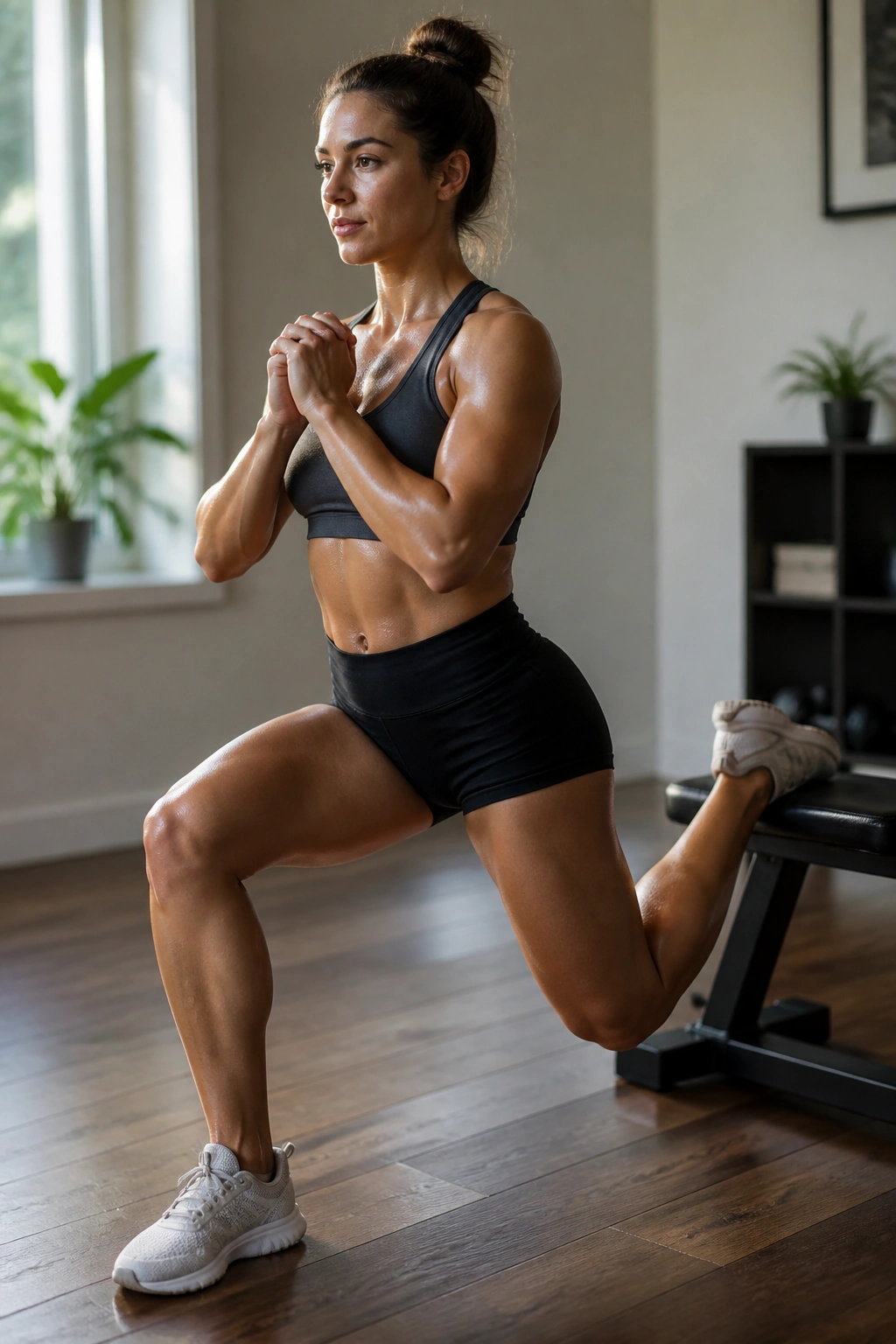
If you want the benefits of a squat with the intensity of a single-leg exercise, this is your answer. It is notoriously difficult, and for good reason: it torches the quads and glutes like nothing else.
Setup is Key
Stand about two feet in front of a chair or couch. Reach one foot back and rest the top of your foot on the elevated surface. This is your back leg. Now, lower your hips straight down until your front thigh is nearly parallel to the floor.
Troubleshooting
The biggest mistake is standing too close to the bench. If you are too close, your front knee will travel way past your toes, which can be uncomfortable. If you are too far, you will feel a massive stretch in your hip flexor. Find the “sweet spot” where your front shin stays mostly vertical.
8. Curtsy Lunges
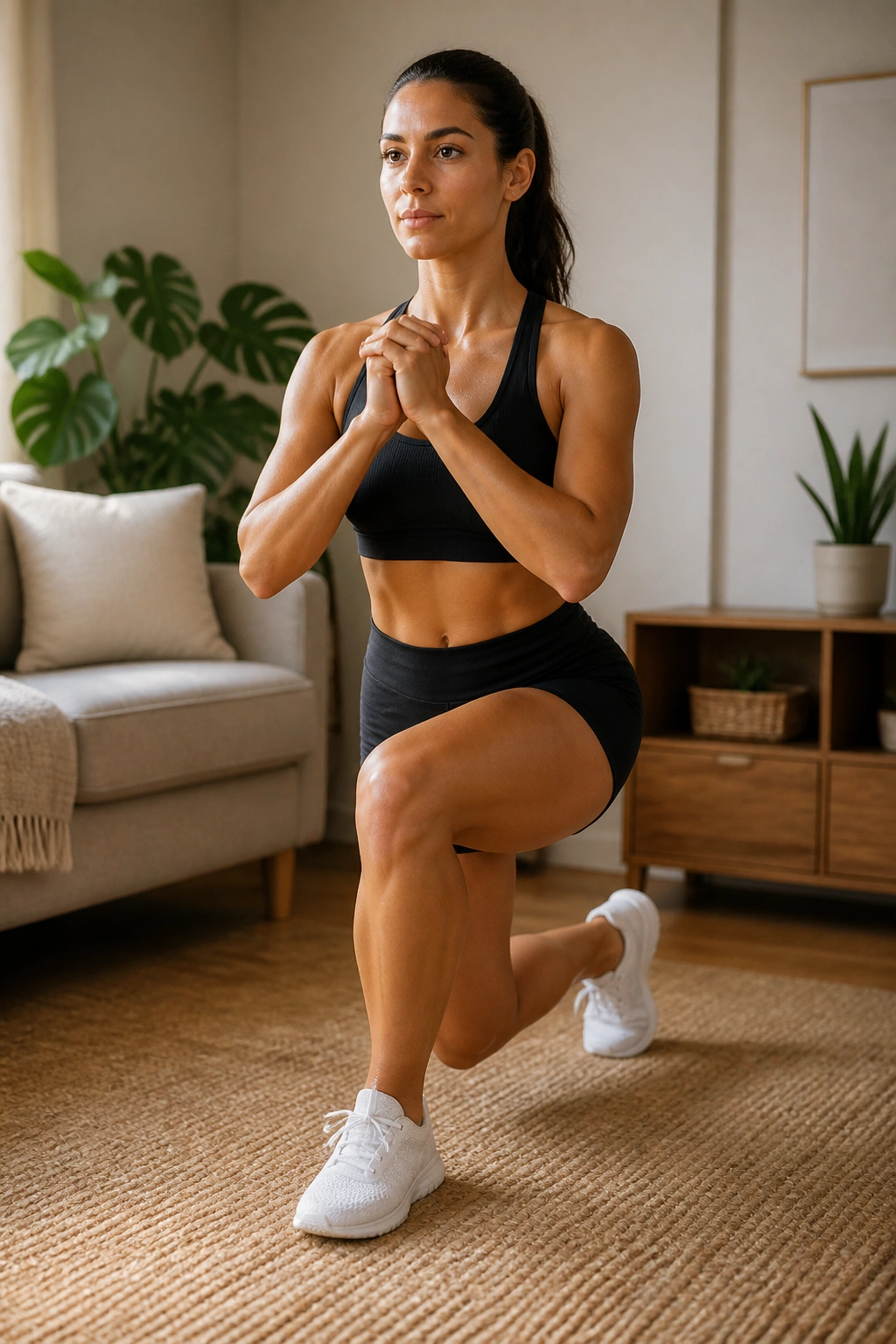
The curtsy lunge is an excellent exercise for the glute medius—the muscle on the side of your hip that gives the glute that rounded look. It’s also a great way to improve your overall balance.
Performing the Move
Stand with feet hip-width apart. Step your right foot back and across behind your left leg, as if you were curtsying. Bend both knees and lower your hips. Keep your torso upright. Step back to the starting position and switch legs.
The Benefit
This move forces your front leg to stabilize against an unusual angle. It recruits stabilizers that standard lunges often ignore. Do not rush these. The “curtsy” motion should be smooth and controlled.
9. Single-Leg Romanian Deadlifts
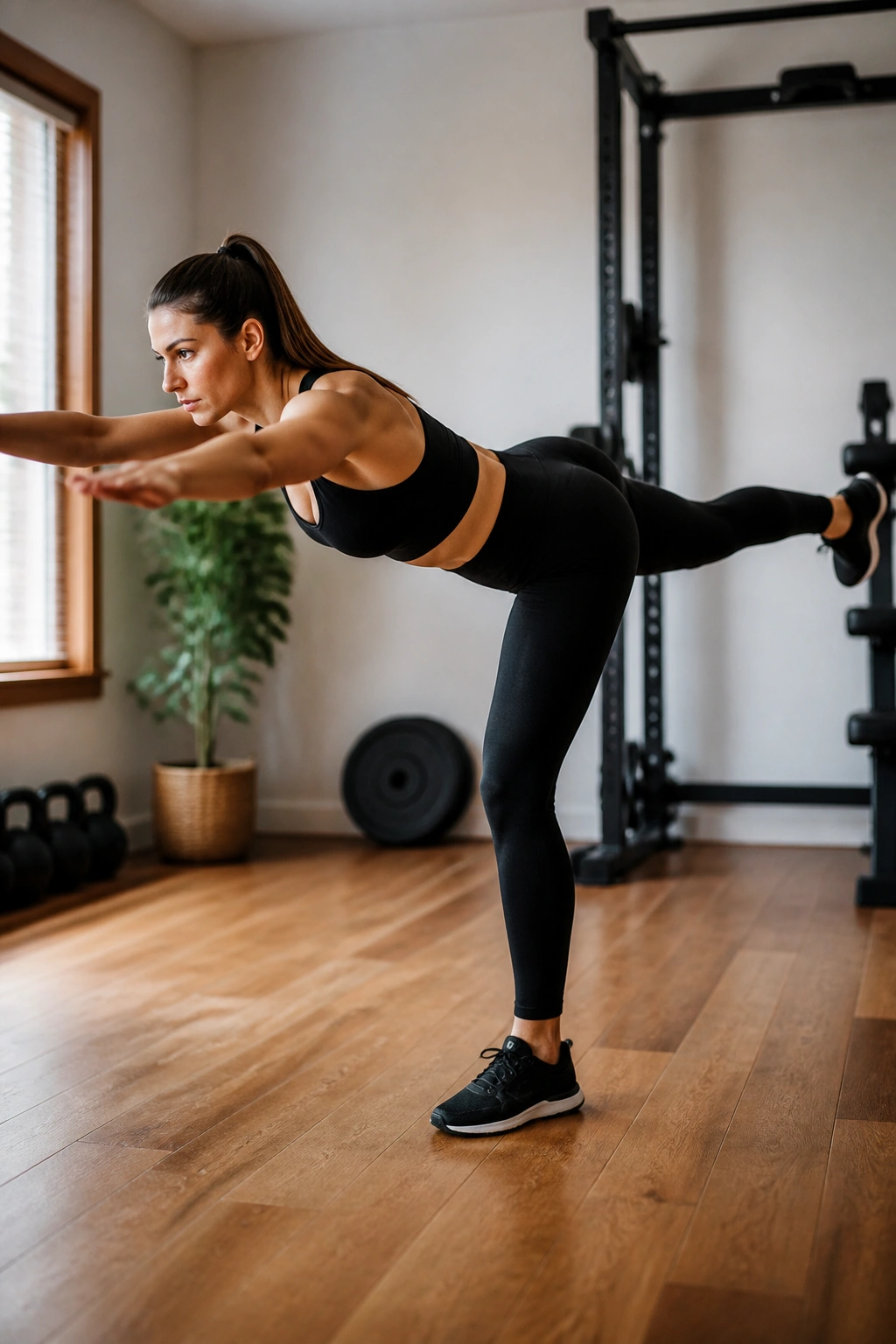
This is a hinge movement, not a squat. It targets the hamstrings and the glutes while challenging your balance. It is also one of the most effective exercises for preventing hamstring strains.
Finding Balance
Stand on your left leg. With a slight bend in your left knee, hinge forward at your hips, sending your right leg straight back behind you. Your torso and your right leg should form a “T” shape. Lower until you feel a deep stretch in the left hamstring, then stand back up.
Precision Cues
Keep your hips level. The most common error is opening up your hips to the side. Imagine you have headlights on your hip bones, and they should both point toward the floor the entire time. If you wobble, touch your toe to the floor for a second to reset.
10. Wall Sits
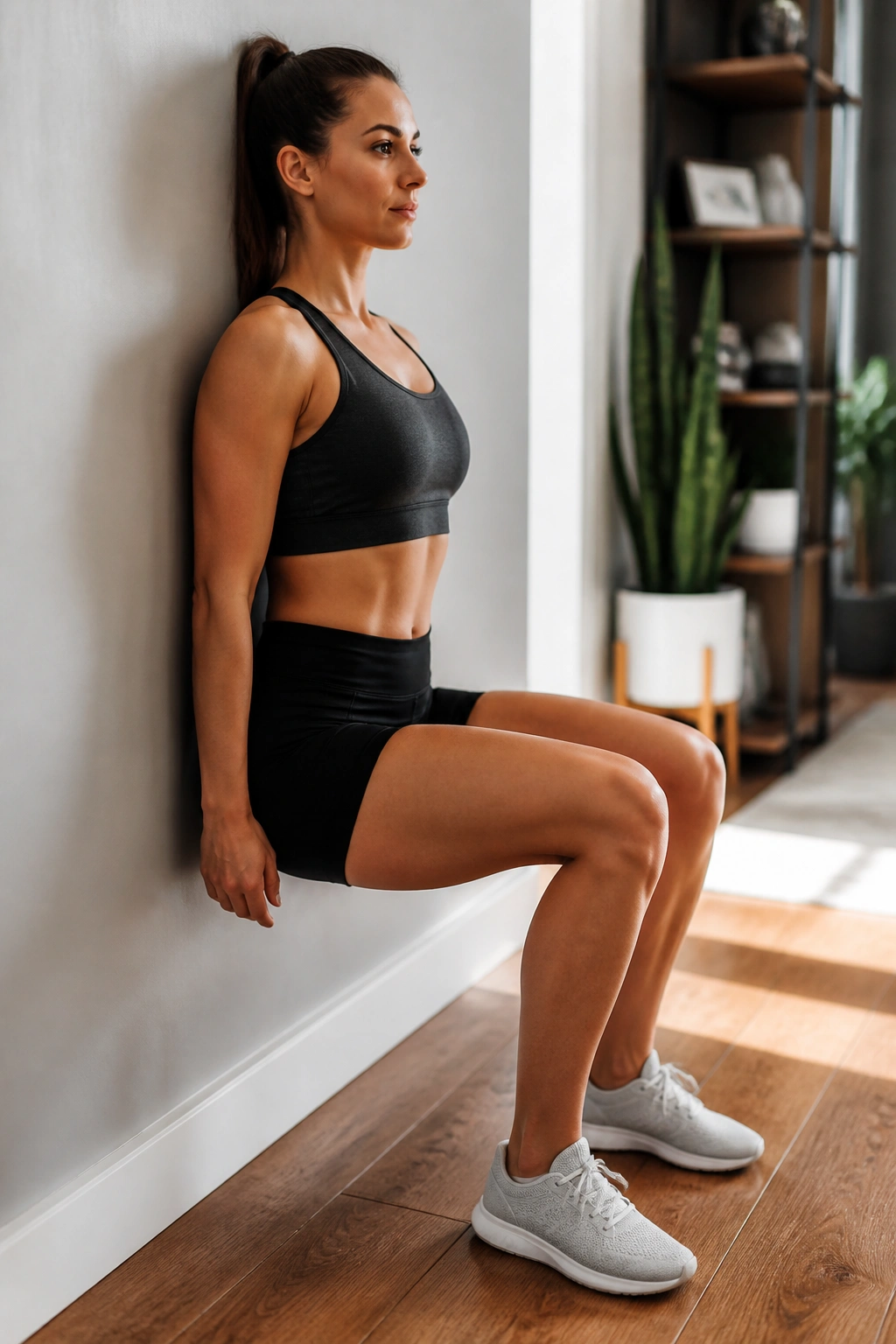
Wall sits are the ultimate “pain cave” exercise. They are isometric, meaning you aren’t moving, but your muscles are working intensely to hold your body weight against gravity.
How to Hold
Find a flat wall. Lean your back against it and slide down until your thighs are parallel to the floor. Your knees should be at 90 degrees, directly over your ankles. Press your lower back into the wall.
Why They Are Necessary
Endurance is just as important as strength. Wall sits build stamina in the quads and teach you how to remain calm and focused when your legs start to burn. Start with 30 seconds and add 5 seconds every time you try it. You will be surprised at how quickly you can progress to 2 minutes.
11. Calf Raises
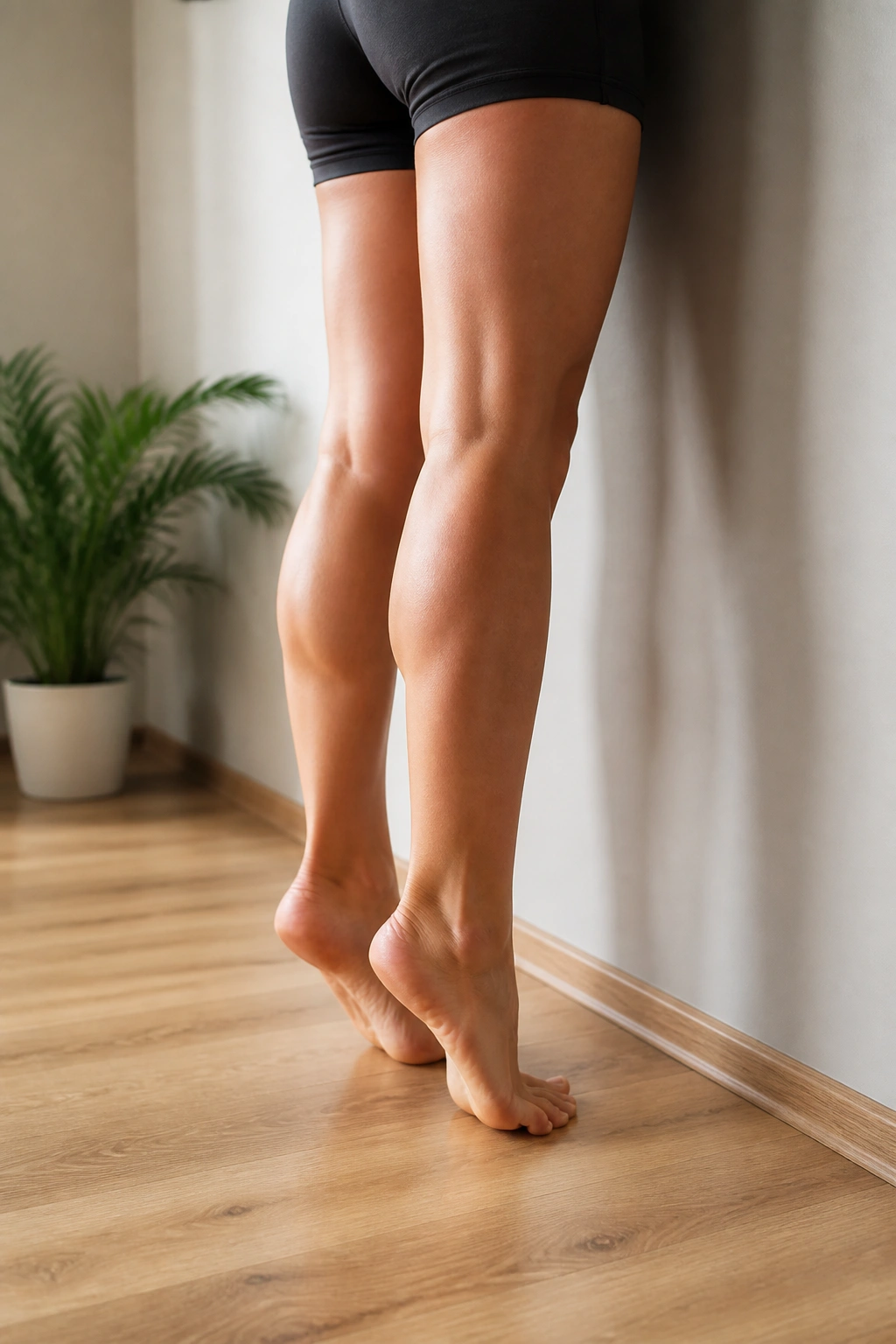
Do not neglect your lower legs. The calves are responsible for propelling you forward, stabilizing your ankles, and absorbing shock.
Execution
Stand with your feet hip-width apart. Rise up onto your toes as high as you can, hold for a second at the top, and lower back down. Do not let your heels touch the floor fully at the bottom; keep them hovering just an inch above the ground.
Advanced Variation
To make this harder without equipment, do single-leg calf raises. Use the wall for a light touch for balance. Standing on one leg doubles the load on your calf muscle, making it a much more effective strength builder.
12. Jump Squats
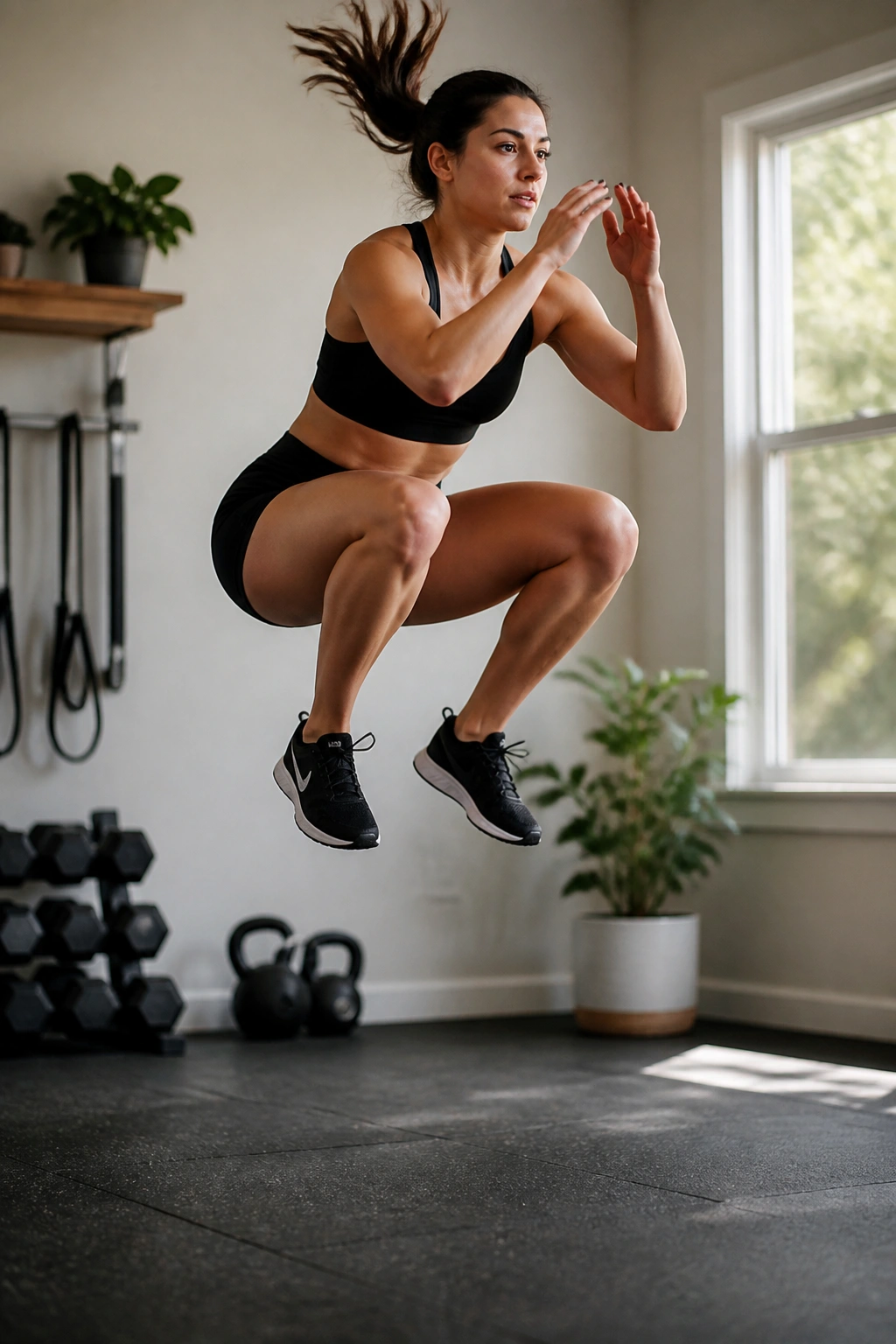
Plyometrics are essential for explosive power and getting your heart rate up. Jump squats bridge the gap between strength and cardio.
Technique
Drop into a standard squat, then explode upward, leaving the ground. Use your arms to help generate momentum. When you land, immediately drop back into the next squat. Your landing should be soft, quiet, and controlled—no thudding.
Safety First
If you have sensitive joints or are a beginner, skip the jump and do “speed squats” instead. Perform the squat motion as fast as possible without leaving the ground. You will still get the metabolic benefit without the impact.
13. Fire Hydrants
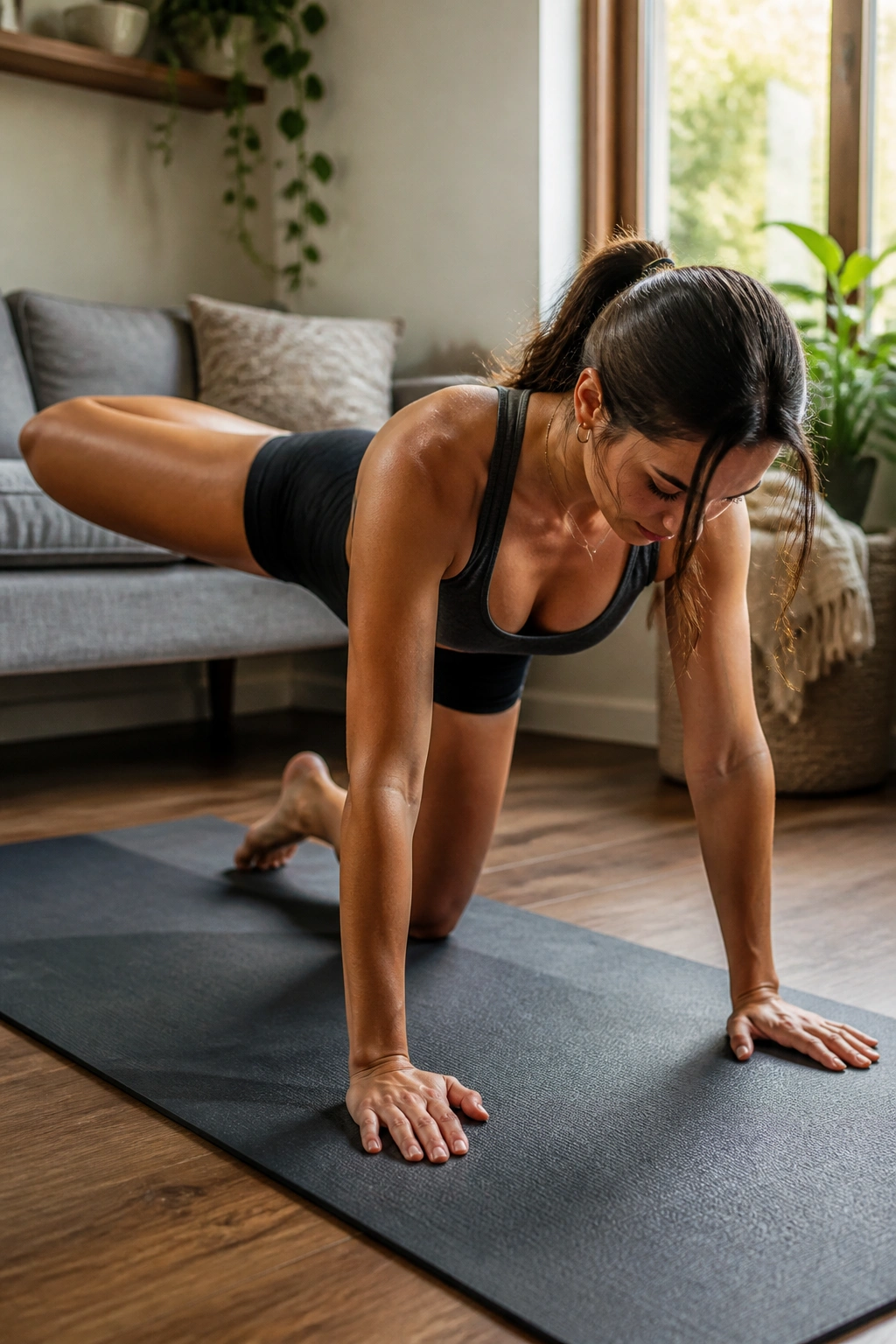
This exercise looks a bit odd, but it is incredibly effective for targeting the outer glutes. It is a staple in many physical therapy routines because it strengthens the hip stabilizers.
The Movement
Get on your hands and knees in a tabletop position. Keep your back flat. Without moving your torso, lift your right knee out to the side until your thigh is parallel to the floor—think of a dog at a fire hydrant. Pause, then lower slowly.
Avoiding Cheating
The most common mistake is rotating your whole body to lift the leg higher. Keep your hips square to the floor. You shouldn’t be shifting your weight onto your opposite arm. The movement should be small and isolated to the hip joint.
14. Donkey Kicks
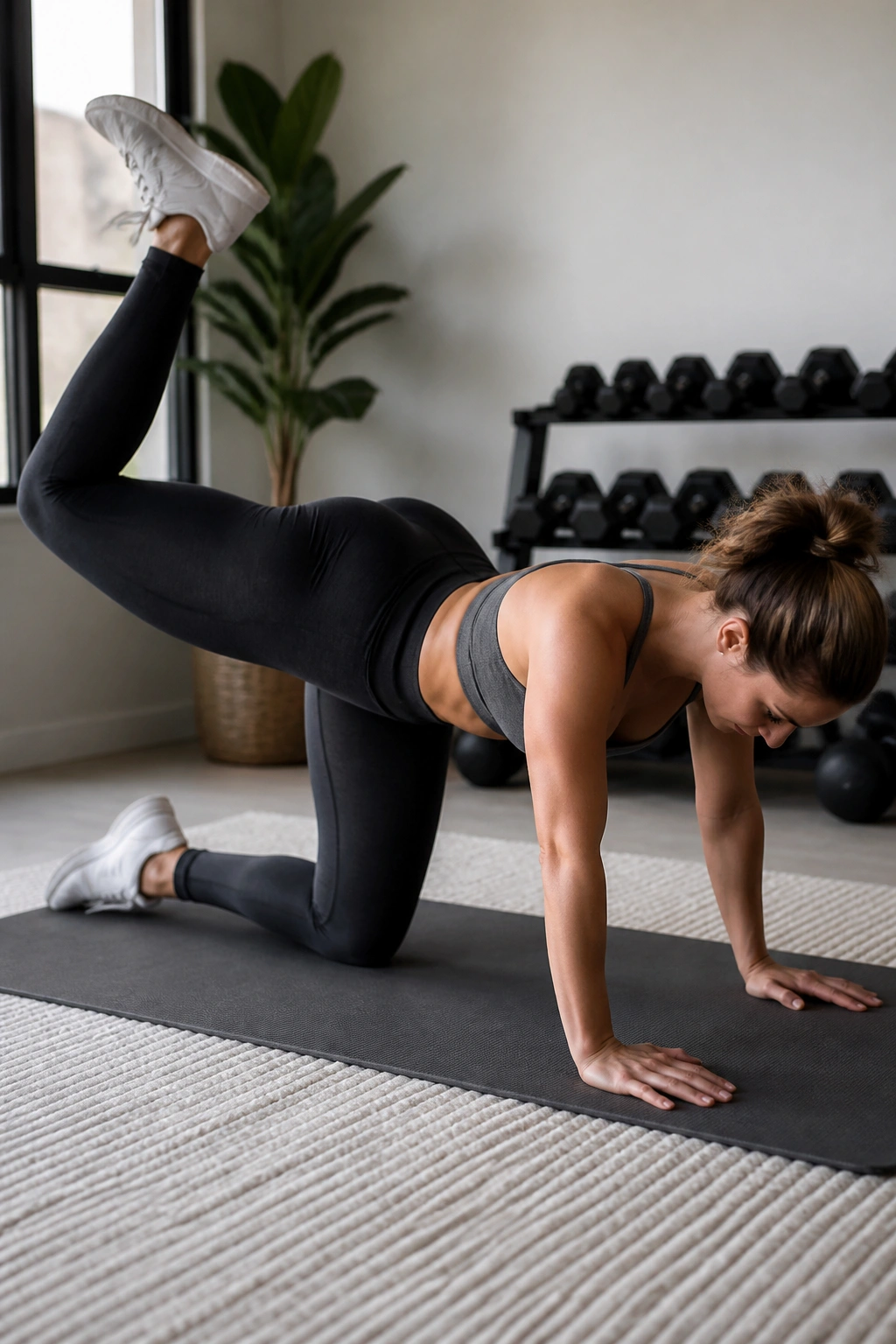
Donkey kicks isolate the gluteus maximus, the largest muscle in your posterior chain. They are safe for the knees and back, making them a great addition to any workout.
How to Perform
Start in the same tabletop position as the fire hydrant. Keeping your right knee bent at 90 degrees, kick your foot toward the ceiling. Focus on the squeeze in your glute at the top of the movement. Lower the knee back down without resting it fully on the floor.
The Secret
Don’t arch your lower back. Your spine should remain neutral and stable throughout. If you feel this in your lower back instead of your glute, engage your abs and think about pushing the floor away with your hands.
15. Side-Lying Leg Lifts
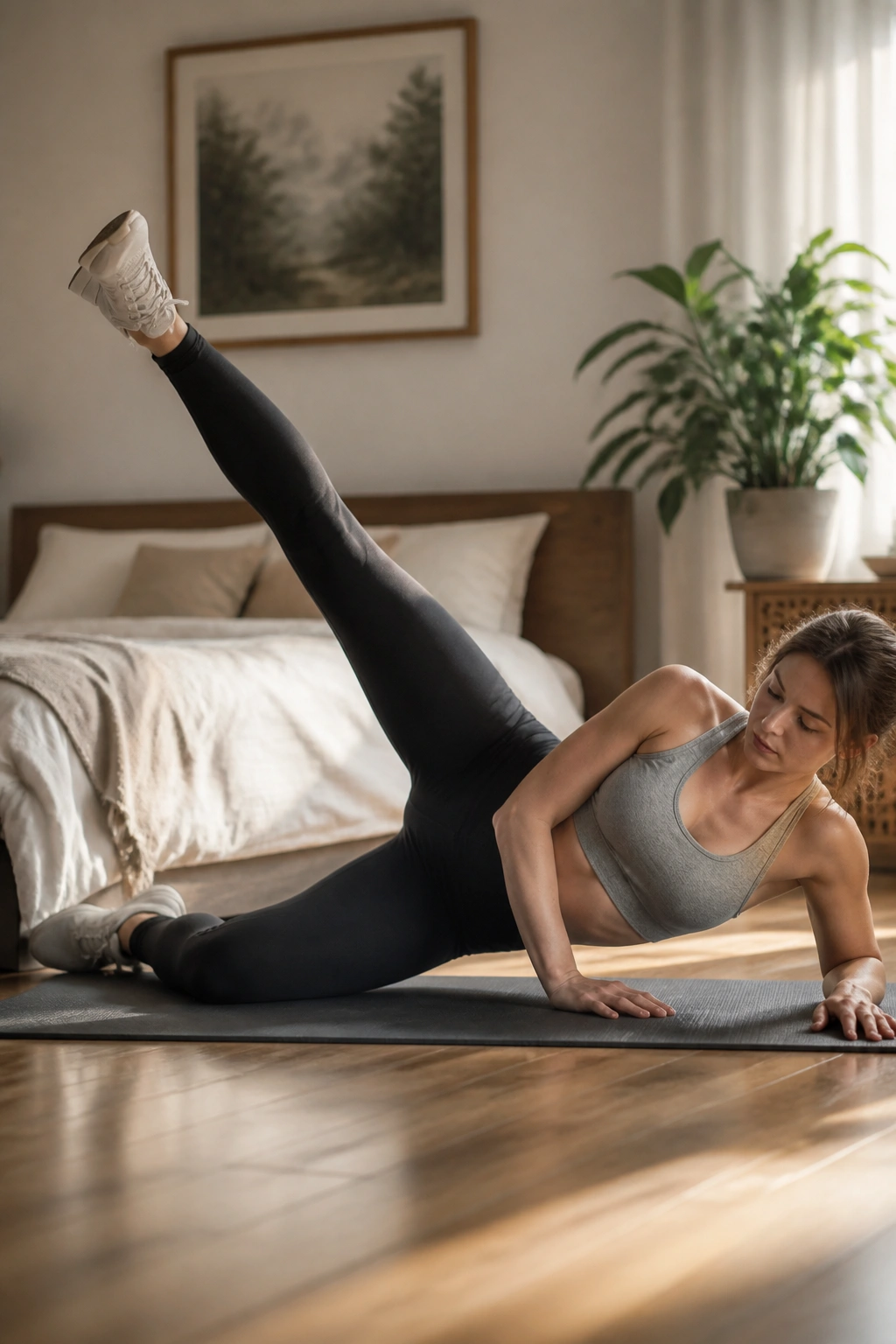
These are perfect for isolating the abductors—the muscles on the side of your hips. Strong abductors mean better pelvic stability.
The Setup
Lie on your side with your legs stacked on top of each other. Keep your bottom leg slightly bent for stability. Lift your top leg toward the ceiling, keeping your foot flexed. The motion is straight up and down, not forward.
Feeling the Burn
You will feel this in the side of your hip very quickly. The key is to keep your toe pointed slightly downward or neutral; if you point your toe up toward the ceiling, you engage your hip flexor, which takes the work away from the glute.
16. Pistol Squat Progressions
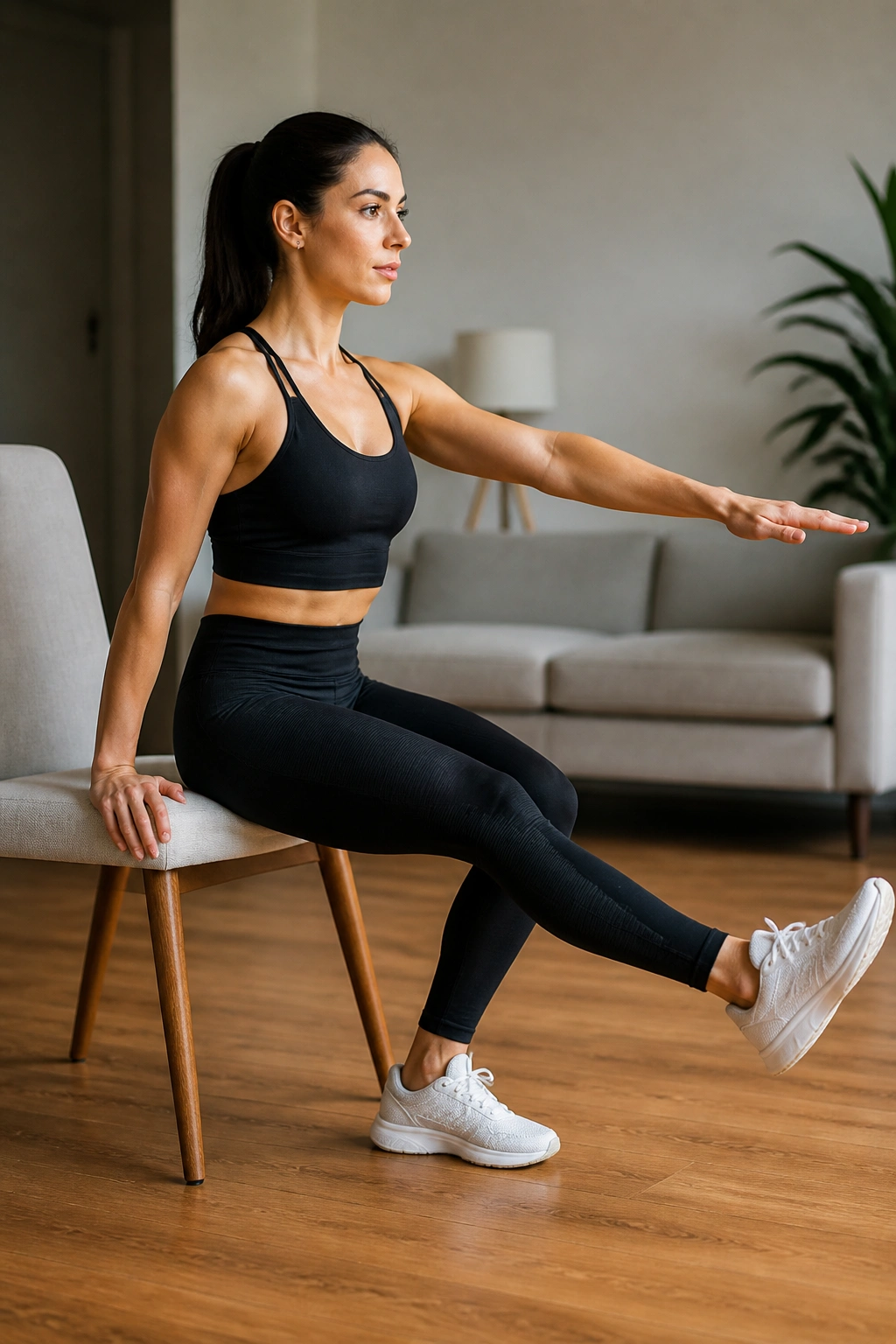
The pistol squat (a one-legged squat) is the king of bodyweight leg exercises. Most people cannot do a full one yet, but you can build up to it.
The Progression
Start by sitting on a chair with one leg extended out straight. Stand up using only the other leg. As you get stronger, lower the height of the surface you are sitting on until you are squatting all the way to the floor.
Why This is Worth It
Mastering a pistol squat requires strength, balance, and mobility. It is a major milestone. Even working on the progression will build immense strength in your quads and core. Do not get discouraged if you wobble; balance is a skill that improves with practice.
17. Plank Jacks with Squat Pulse
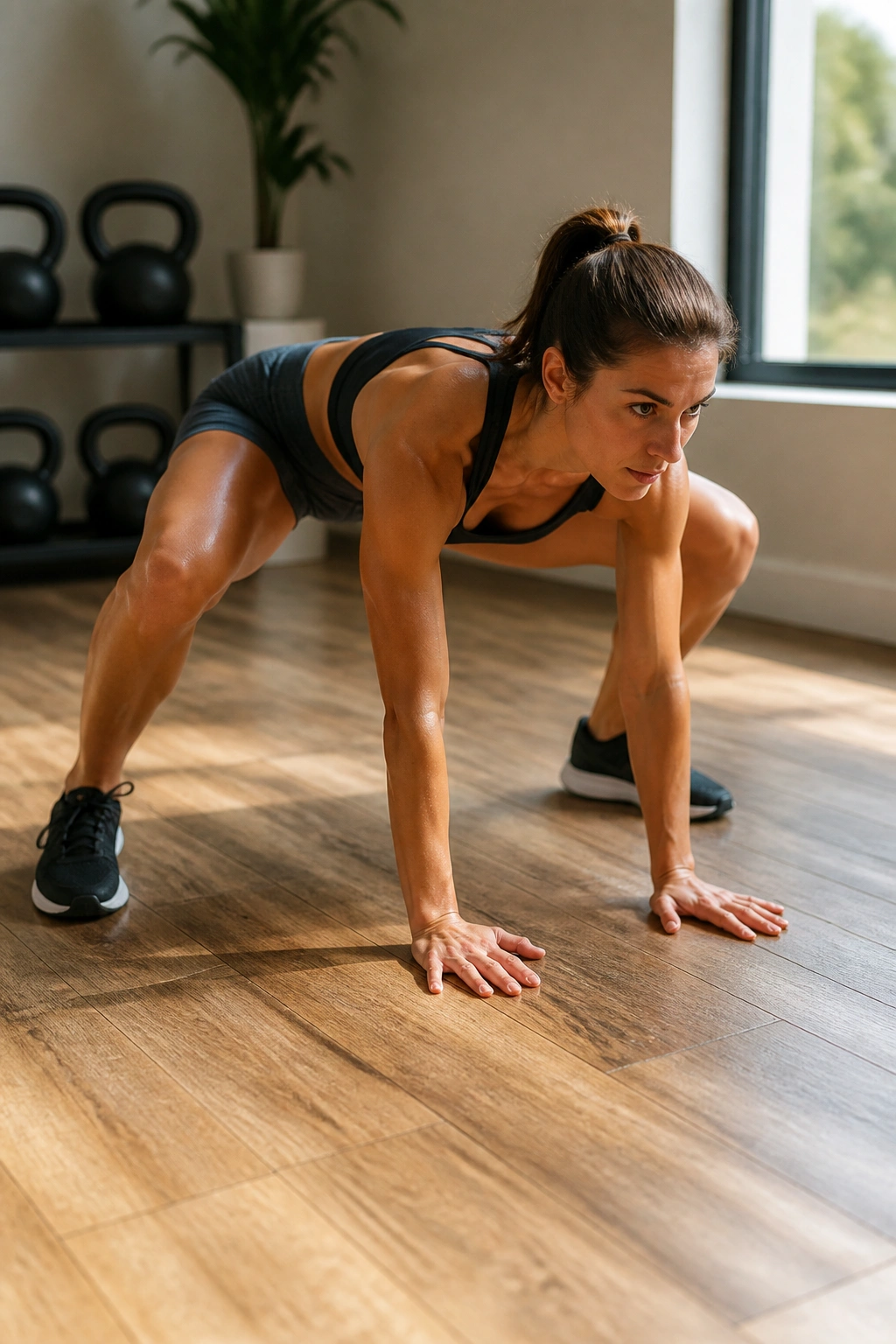
This is a hybrid movement that keeps your heart rate elevated while providing a constant burn to your legs. It is excellent for “fatigue training.”
Combining Movements
Start in a high plank position. Jump your feet out and in like a jumping jack. After four jacks, jump your feet up to your hands, drop into a low squat, and pulse for three seconds. Jump back into the plank.
The Goal
This movement forces your legs to work while your core is already exhausted from the plank. It is a great way to build mental toughness and endurance. Keep your core tight the entire time to protect your lower back during the transition.
18. Walking Lunges
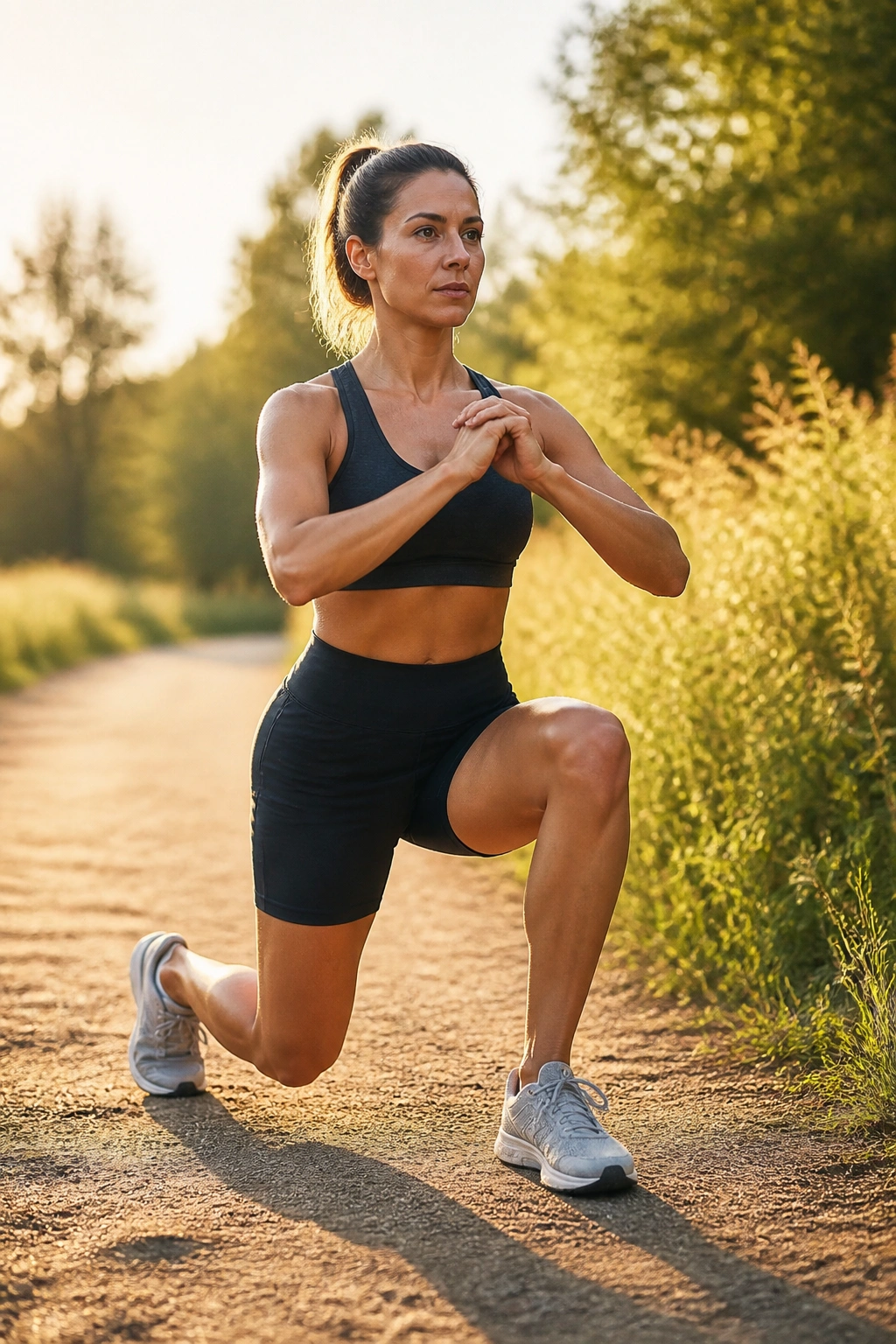
Walking lunges are dynamic and functional. They require more coordination than stationary lunges because you have to balance while moving through space.
The Strategy
Take a long step forward. Drop the back knee toward the ground. Instead of pushing back to the start, push off the front foot to bring the back leg forward into the next lunge. Keep your torso tall.
Troubleshooting
If you find yourself losing balance, look at a fixed point on the wall. Do not look down at your feet. If your knees hurt, shorten your stride slightly. The goal is to keep your hips moving forward in a smooth, rhythmic line.
19. Frog Pumps
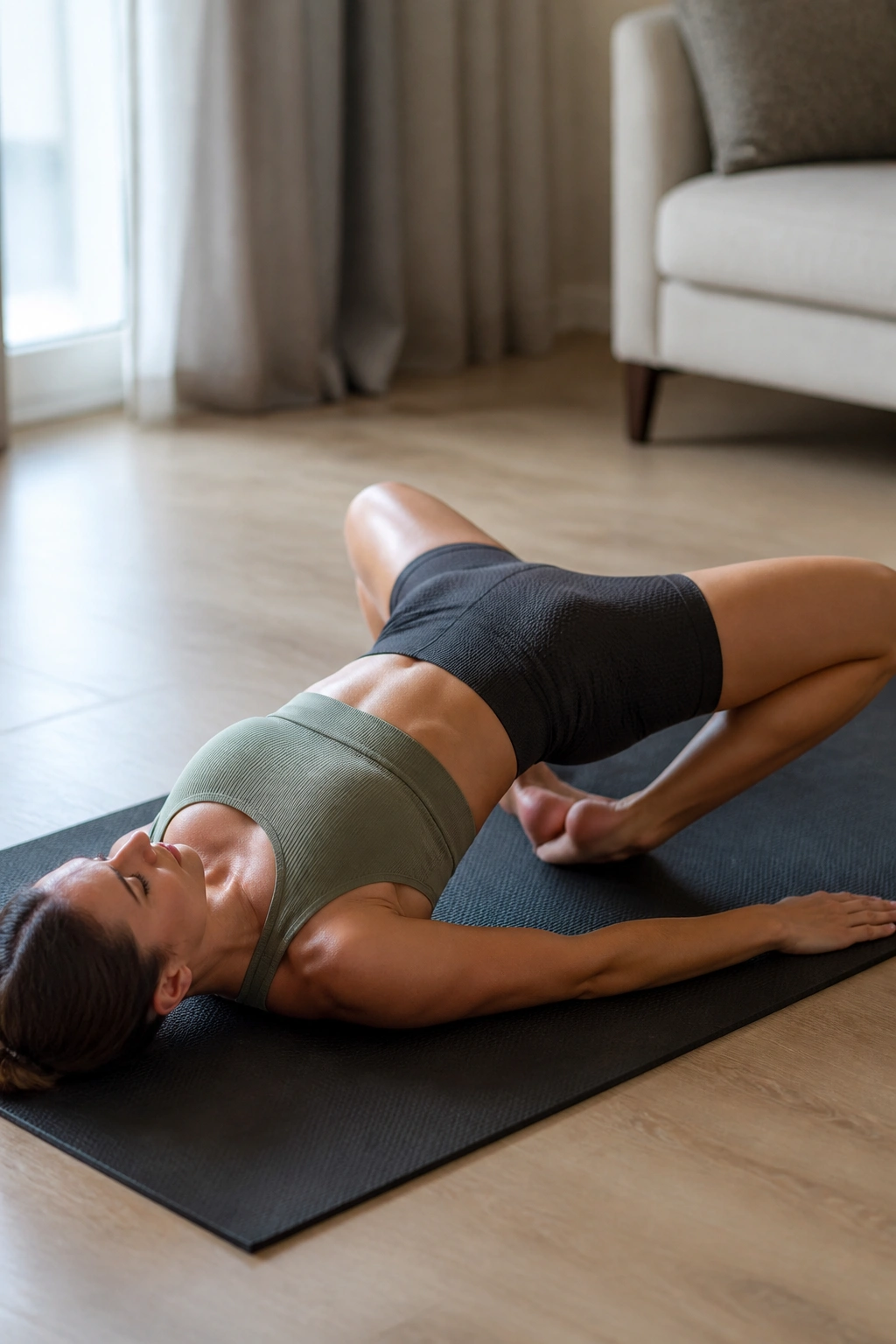
This is a specific variation of the glute bridge that completely eliminates the hamstrings, forcing your glutes to do 100% of the work.
The Position
Lie on your back. Bring the soles of your feet together, letting your knees fall open in a diamond shape. Lift your hips, pushing through the sides of your feet.
Why It’s Unique
By turning your legs out, you inhibit the hamstrings, which are usually involved in bridge movements. This creates a hyper-isolated glute contraction. You won’t be able to do as many reps as a standard bridge, but you will feel the fatigue much faster.
20. Cossack Squats
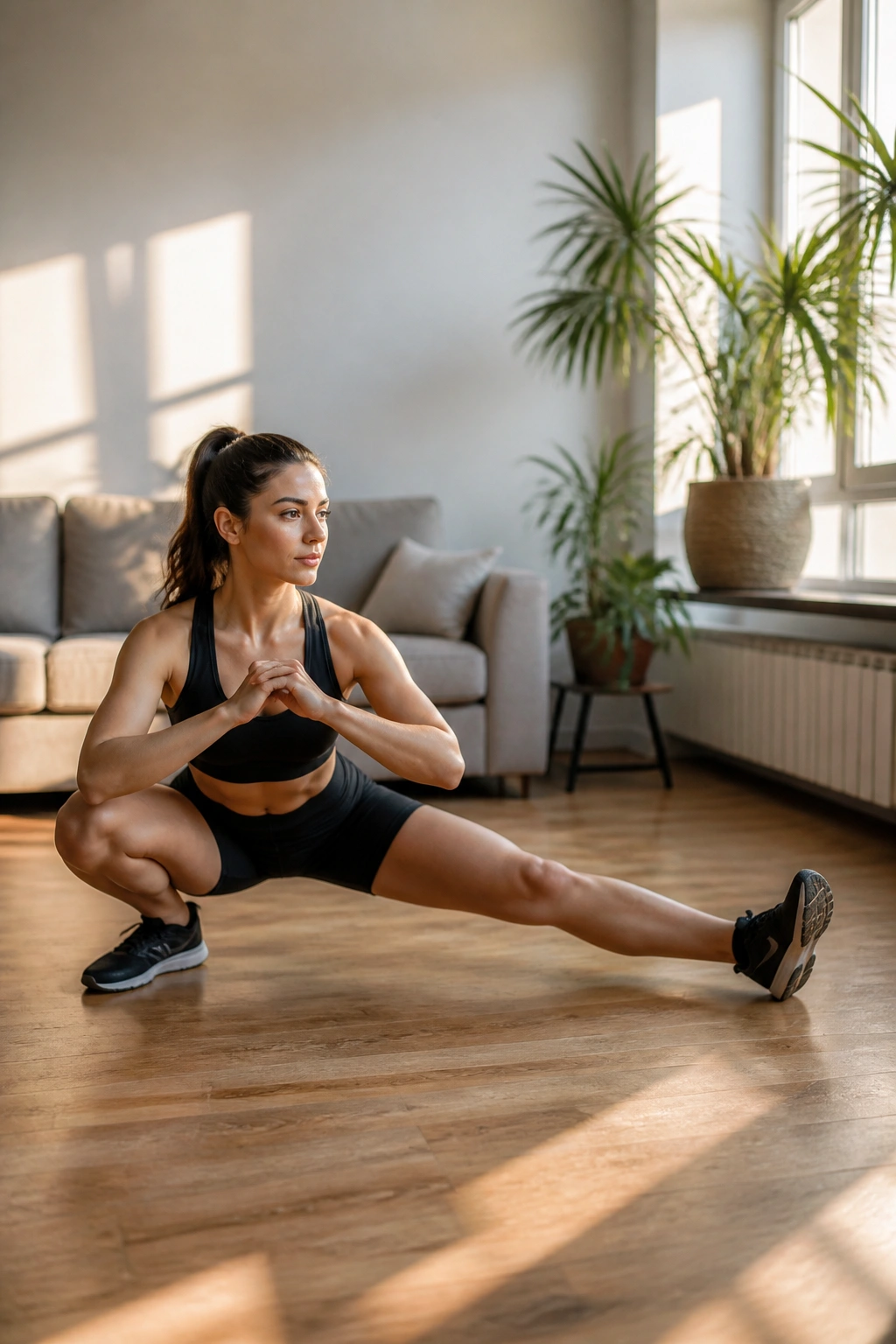
Cossack squats are a deep, lateral lunge variation that significantly improves hip mobility. They are excellent for opening up the hips and strengthening the adductors.
How to Execute
Stand with a very wide stance. Shift your weight to your right side, bending your right knee while keeping your left leg perfectly straight. Your left toes should point up toward the ceiling. Sink as low as you can.
The Challenge
This is difficult. You might find you can only go halfway down at first. That is fine. Over time, your hips will open up, and you will be able to sink lower. Keep your heel on the floor of the bent leg; if it lifts, you are going too deep or your ankles are tight.
21. Glute Bridge Marches
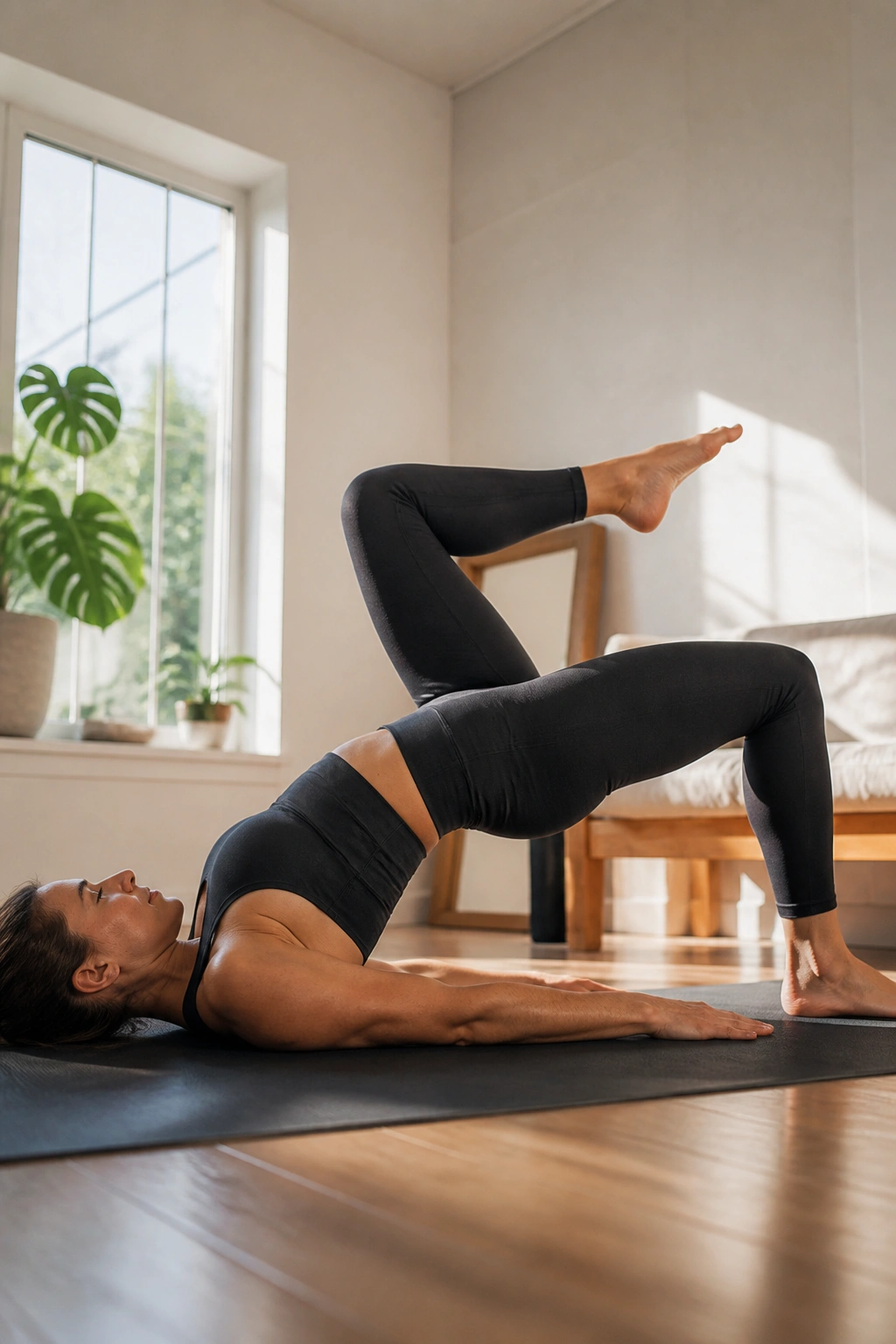
Adding a dynamic element to the static glute bridge makes it a fantastic core and glute builder. It forces your stabilizer muscles to work overtime.
The Movement
Get into a standard glute bridge position, hips raised high. Now, lift your right foot off the floor, bringing your knee toward your chest while keeping your hips steady. Place the foot down and switch to the left.
Keeping Stability
The goal is to keep your hips level. As you lift one foot, your hips will want to drop on that side. Do not let them. Fight to keep your pelvis parallel to the ceiling. This requires significant engagement of the core and the standing glute.
22. Speed Skaters
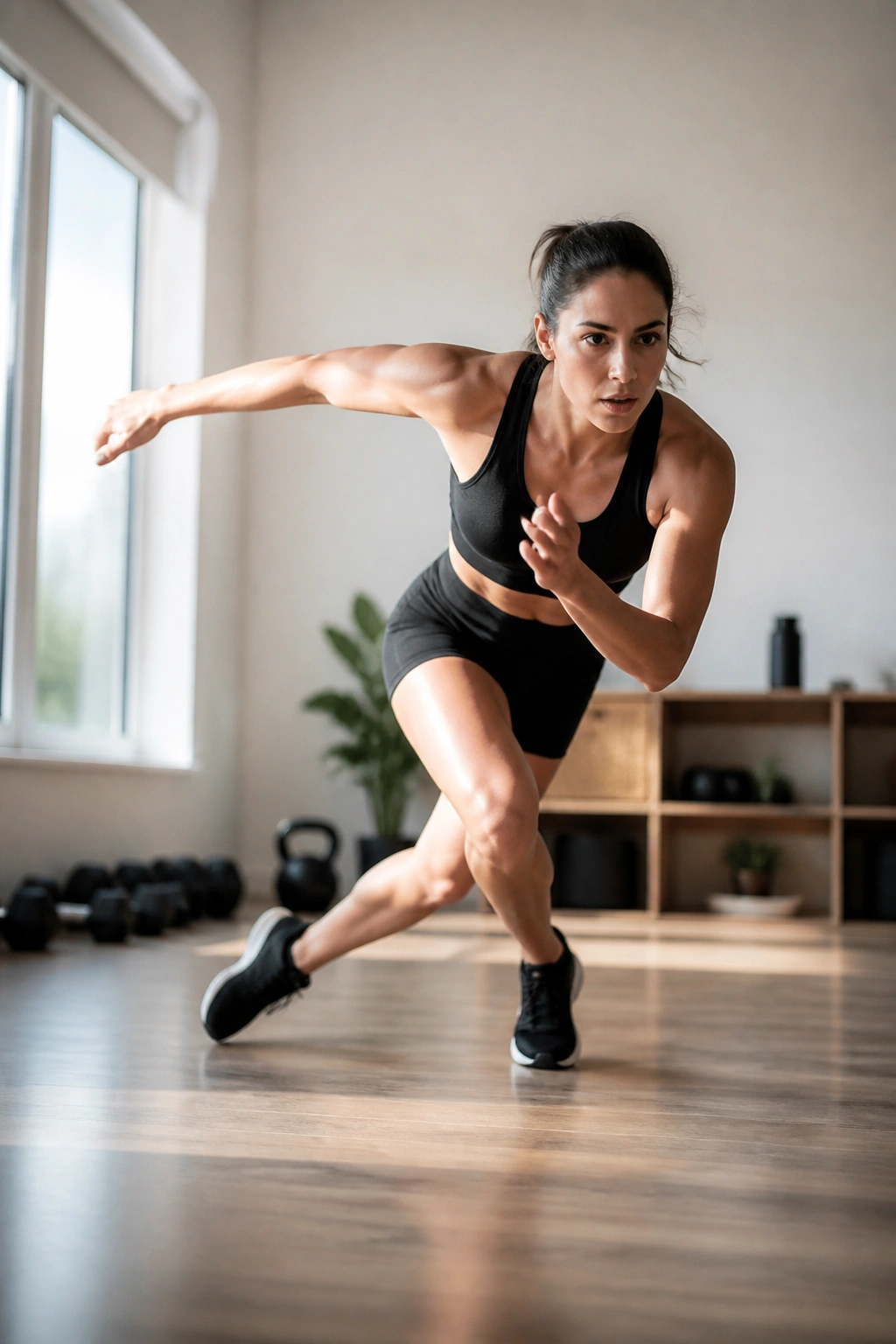
This move builds lateral power and improves cardiovascular fitness while sculpting the legs. It’s an athletic movement that gets your heart rate up quickly.
The Motion
Jump from your right foot to your left foot in a skating motion. Land on your left foot, bending the knee, and bring your right leg behind you in a curtsy motion. Use your arms to help propel your body side-to-side.
Intensity
The wider and faster you jump, the harder it is. Keep your chest up and your gaze forward. If you are not ready for the jump, perform this as a “step-and-tap” motion, moving side-to-side with speed and intensity, focusing on the glute engagement with every step.
Final Thoughts
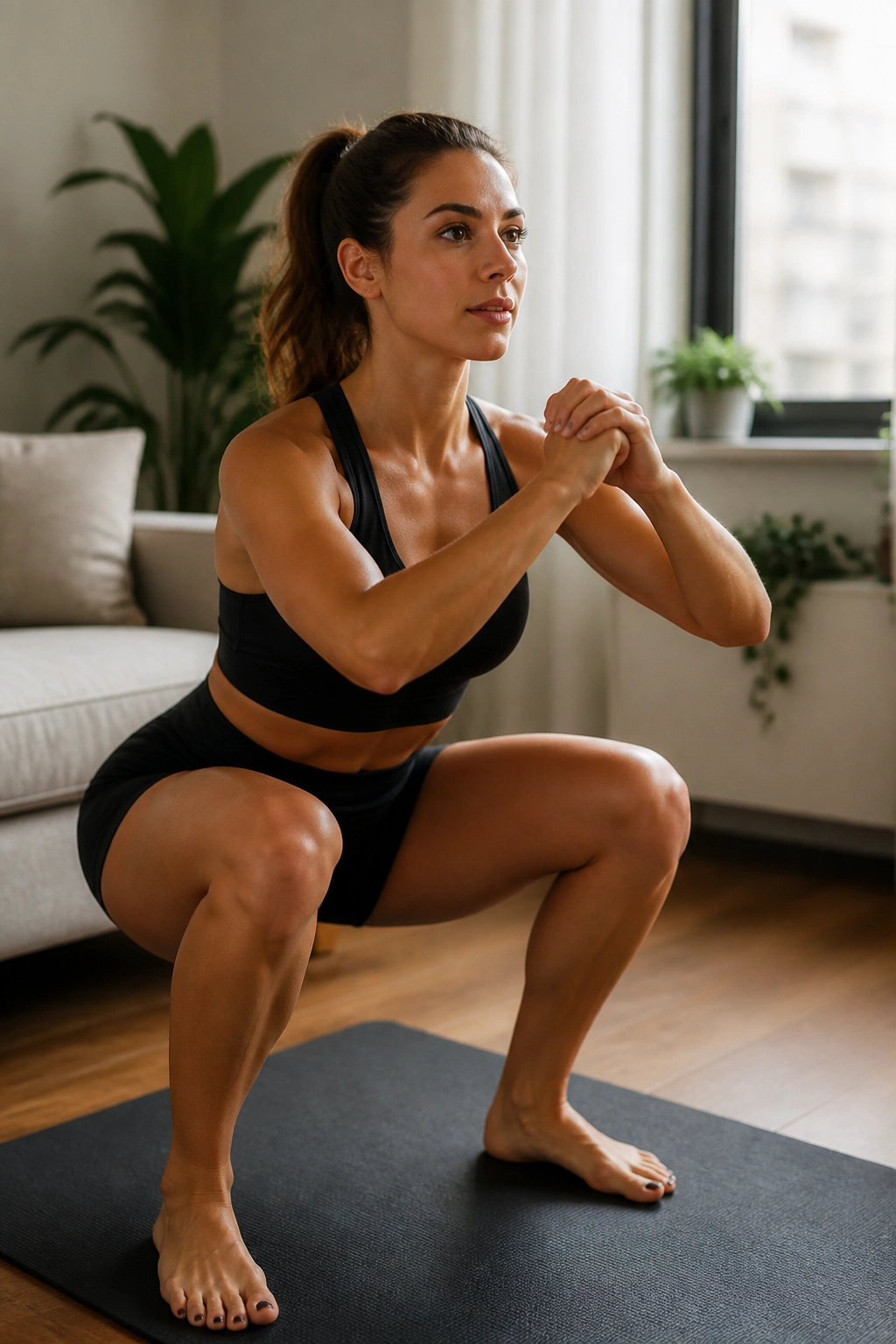
The beauty of these 22 exercises is that they require absolutely zero equipment to be effective. You can chain these together to create a workout that fits into a 15-minute window or a 45-minute deep session. The effectiveness of your training does not come from the gear you own; it comes from the focus you bring to each repetition.
If you are just starting, do not try to do all of these in one day. Pick three or four movements, perform them with perfect technique, and focus on the mind-muscle connection. As you get stronger, you can increase your volume, decrease your rest time, or introduce more complex variations. Consistency will always beat intensity, but doing these with high quality will get you results much faster than you might expect. Your living room has everything you need to build the legs you want. Now, the only thing left to do is get started.
