



Pregnancy changes how a squat feels before it changes how it looks. One day you can step into a lunge without thinking; the next, your pelvis feels loose, your balance is a little strange, and your lower back starts sending messages you did not ask for. That’s exactly why prenatal lower body workouts work best when they’re built around support, control, and the stage of pregnancy you’re in.
A lot of people assume training has to become tiny and timid once a bump shows up. Not really. It has to get smarter. Strong legs, glutes, and calves still matter for stairs, getting in and out of a car, carrying laundry, and getting off the floor without negotiating with your knees. The trick is choosing movements that respect changing joints, changing balance, and the fact that a good workout in early pregnancy may feel too aggressive later on.
For most uncomplicated pregnancies, a moderate-effort pace is the sweet spot. The talk test helps: you should be able to speak in full sentences while you move. The American College of Obstetricians and Gynecologists also points most pregnant people toward about 150 minutes of moderate activity per week, which is a useful anchor if you like concrete numbers. If you ever get sharp pain, bleeding, dizziness, fluid leakage, or a heavy pulling sensation in the pelvis, stop and get medical advice. No workout is worth pushing through that.
Pick four to six of the moves below, do 2 to 3 sets, and keep a rep or two in reserve. Some will feel better in the first trimester, some shine when the belly gets in the way, and some are ideal when you want strength without a lot of setup. The best part is that most of them can be scaled with a chair, a wall, a mini-band, or a dumbbell. Simple. Useful. That’s the whole point.
1. Chair-Assisted Box Squats
Picture the cleanest squat you can do: you sit back to a chair, tap it lightly, and stand back up without wobbling. That’s the appeal of the chair-assisted box squat. It gives you a target, keeps the depth honest, and takes the guesswork out of how low to go when your center of gravity starts shifting.
Why it works
The chair gives your hips a clear end point, which is gold in pregnancy. You get quad and glute work without dropping into a depth that feels sketchy on a tired pelvis or a stiff lower back.
Quick setup
- Use a sturdy chair or box that lands around knee height.
- Stand with feet about shoulder-width apart.
- Lower for 8 to 12 reps, keeping your chest tall and your weight in the middle of your foot.
- Tap the chair, don’t crash into it.
Best use: first trimester through late pregnancy, with the box height raised if your belly or hips want more room.
Small but useful tip: take a second on the way down. That pause helps you own the movement instead of bouncing through it.
2. Stability Ball Wall Squats for Pregnancy
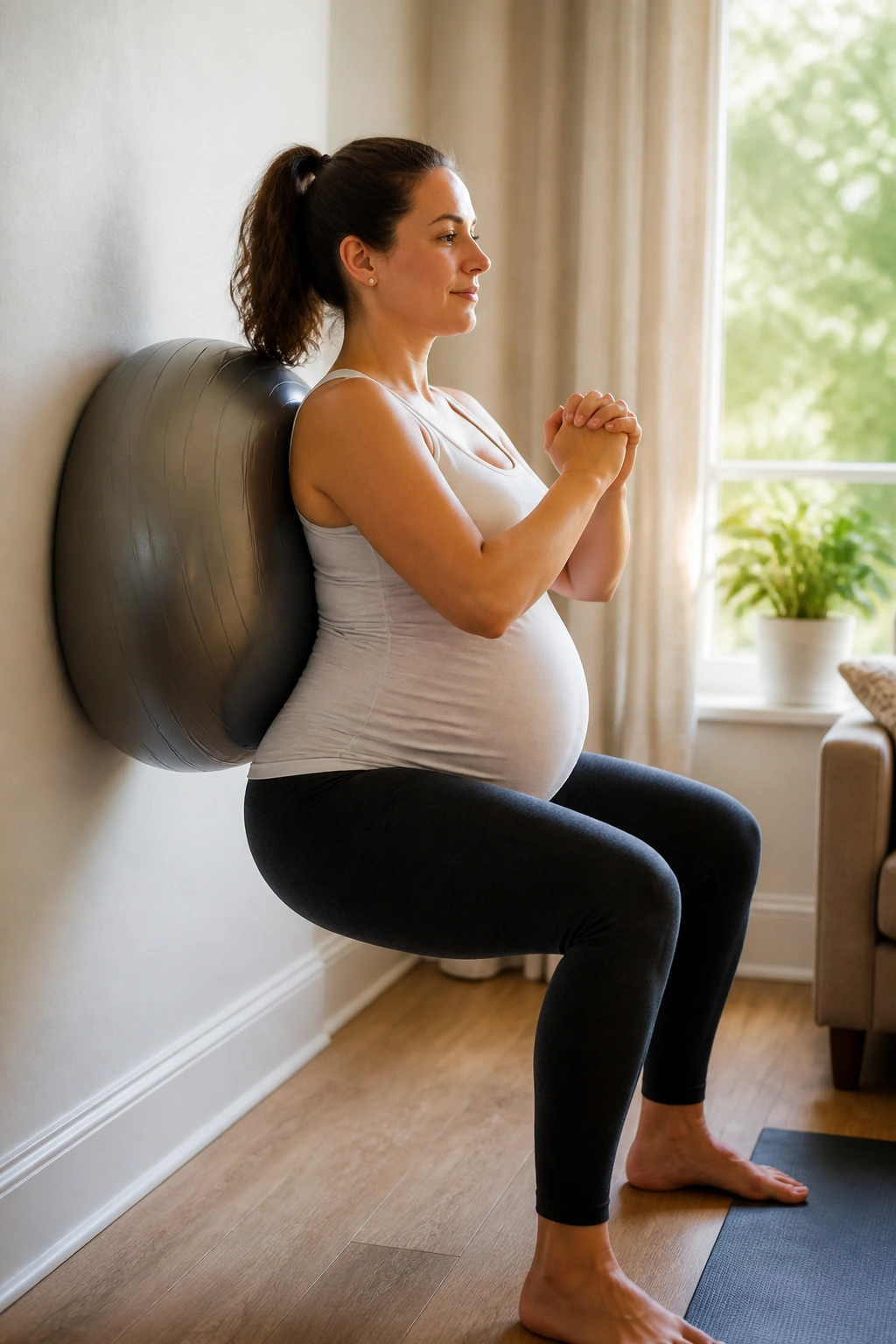
A wall squat with a stability ball between your back and the wall sounds almost too simple, and that’s why I like it. The ball gives you a little glide, which feels kinder than pressing your spine flat into a wall for 30 straight seconds, and it lets you keep the torso upright without a lot of strain.
The move is especially nice when you want pregnancy-friendly lower body strength with built-in support. Use a narrow-to-medium stance, roll down only as far as feels smooth, and keep the pressure even through both feet. If the ball starts slipping or your knees cave inward, shorten the range and reset.
I’d reach for this in the second and third trimesters when balance is a bit less reliable. Hold for 15 to 30 seconds, or do 8 slow reps if you want more motion than burn.
Use a larger ball if you need a gentler angle. Use a smaller one if the movement feels too easy. The pressure should feel like work, not like you’re wrestling furniture.
3. Supported Reverse Lunges
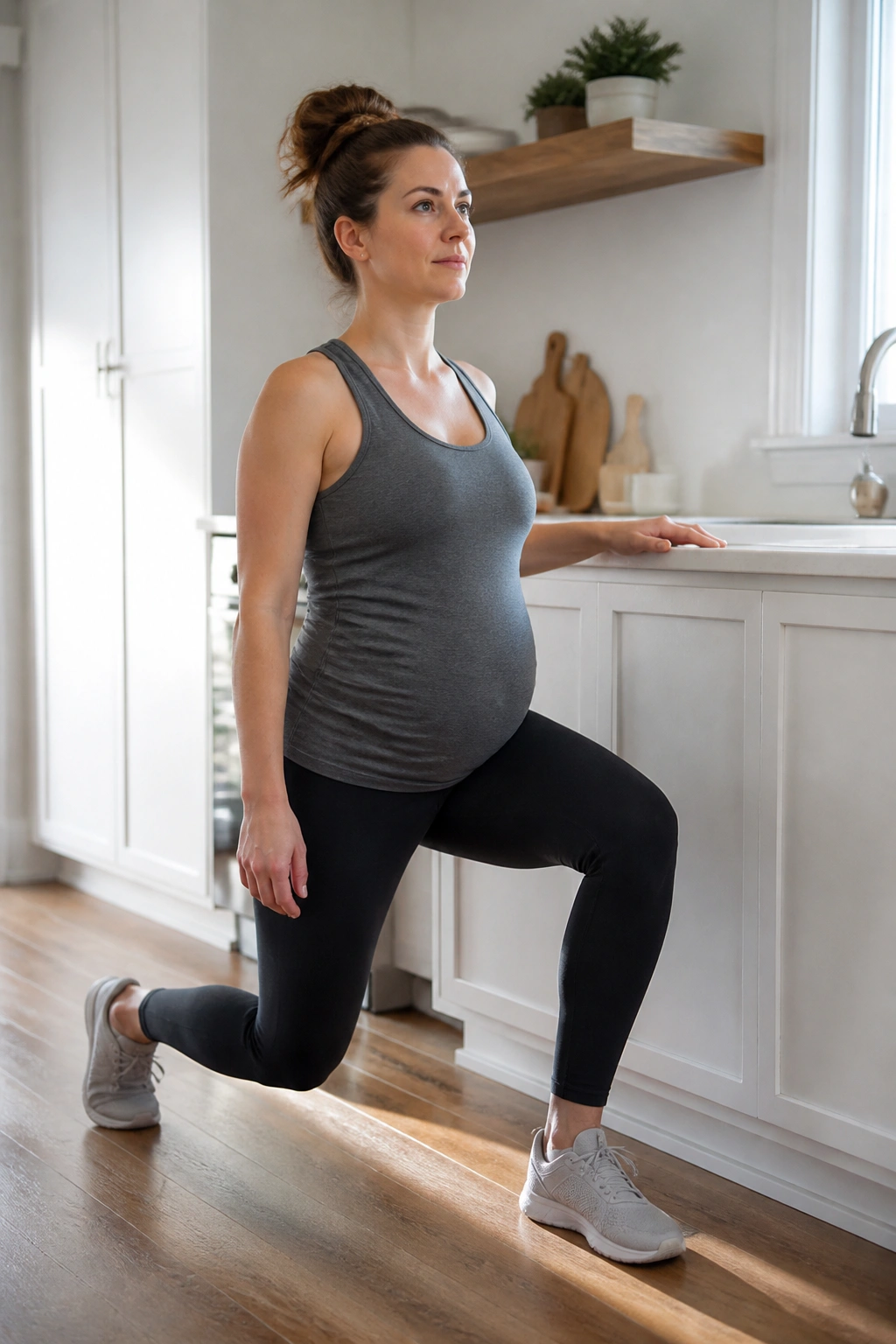
Can you still lunge during pregnancy? Yes, usually. The trick is making the movement less dramatic and a lot more controlled. Reverse lunges are friendlier than forward lunges because you step back instead of launching your weight forward, which gives your front foot more time to organize itself.
What makes them different
The backward step tends to feel steadier on the knees and pelvis. That matters when your stride changes and your balance gets weird for a while. Hold a countertop, wall, or chair back if you need it.
Start with a short step back, not a long one. Lower only until the front thigh feels challenged and the back knee gets close to the floor. Eight reps per side is plenty for most people. Ten works too if your form stays neat.
How to use it
- Keep the front foot planted like a tripod.
- Exhale as you stand.
- Stop short of any pinchy pelvic feeling.
- Use bodyweight first, then add light dumbbells only if the movement feels clean.
This one tends to suit the first and second trimesters best, though many people can keep using it later with a shallower depth and more support.
4. Sumo Squats with a Toe-Out Stance
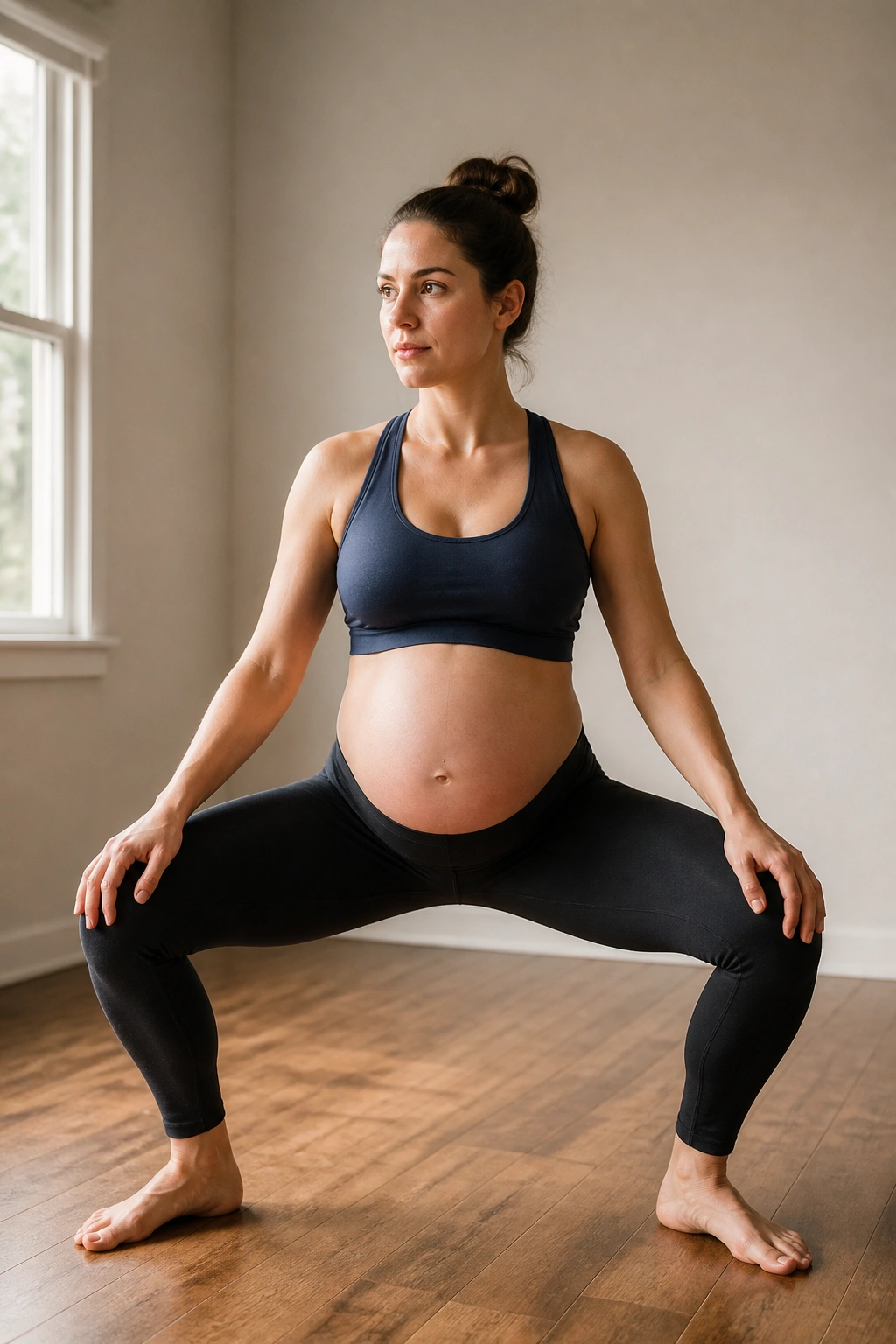
Wider feet can be a relief when your belly starts occupying more of your front space. A sumo squat gives your hips a little more room to open, and that can feel better than a tight, straight-ahead stance when your pelvis wants less crowding.
The stance is wider than shoulder width, toes turned out a bit, knees tracking over the middle toes. Drop down only as far as your spine stays happy and your heels stay down. If the inner thighs light up, good. If the pelvis feels jammed, bring the stance in a little. That’s the part people skip, and it matters.
I like this one for the middle stretch of pregnancy because it lets you train the legs without asking for huge forward torso lean. You can do 2 to 3 sets of 10 to 15 reps with bodyweight or a single dumbbell held goblet-style.
The beauty here is simple: more room, less strain, same leg burn. Not fancy. Effective.
5. Low Step-Ups
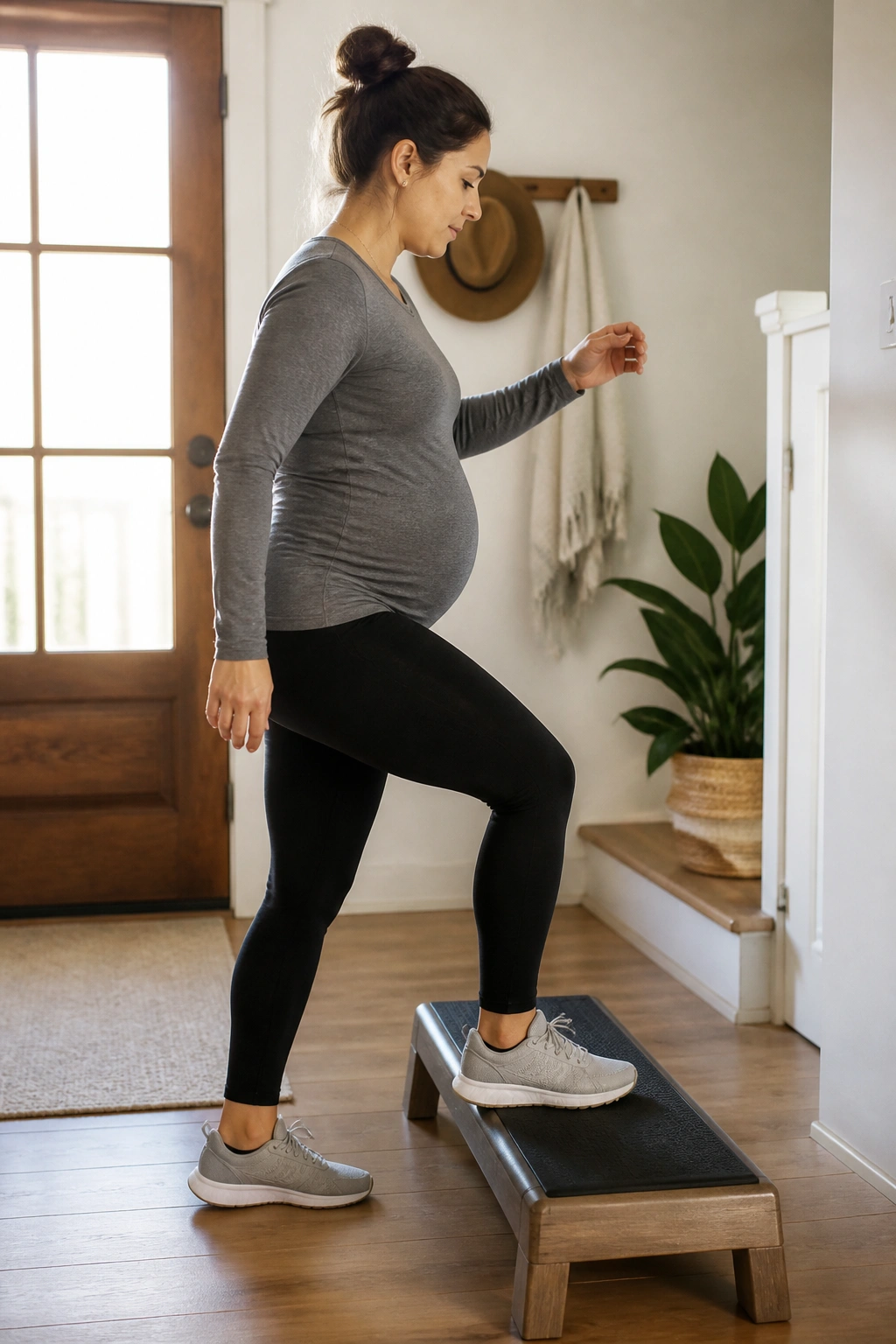
A low step-up is one of those exercises that looks almost too easy until you do it for a full set. Then your front thigh and glute start sending honest feedback. I prefer this over endless lunges for a lot of pregnant clients because it feels more like real life: stairs, curbs, stepping into the bath, getting into a truck.
Unlike lunges, step-ups keep the weight mostly under you. That makes them useful when balance is shaky or when one side feels a little cranky. Use a step that’s 4 to 8 inches high to start. If you need a handrail or wall, use it. That is not cheating. That is good judgment.
Best range: 6 to 10 reps per side, slow on the way down. If you want more glute work, lean the torso forward just a touch while keeping the spine long. If the knee complains, drop the height before you do anything else.
I’m picky about this one. A sloppy step-up is a waste. A clean one is excellent.
6. Wall Sit Holds
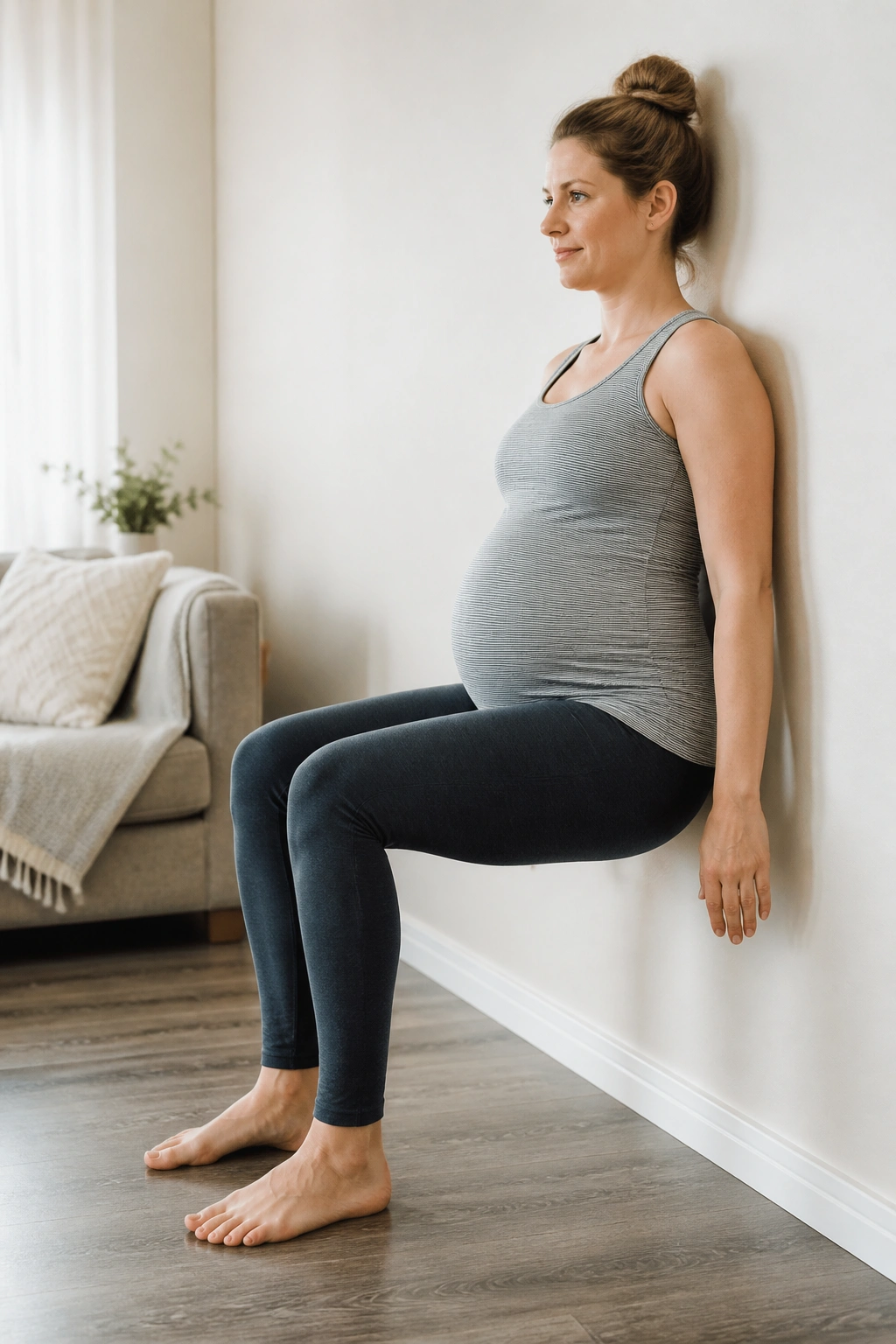
Can an isometric hold torch your thighs more than a set of squats? Absolutely. Wall sits are proof that you do not need motion to make muscles work. Sometimes the stillness is the point.
How to get it right
Slide down the wall until your knees bend about 45 to 90 degrees, depending on comfort. If your back feels pinned or your knees feel overloaded, come higher. Hold for 15 to 30 seconds and breathe steadily. No breath-holding. None.
I like wall sits when someone wants a fast lower-body hit without a lot of setup or coordination. They’re also handy late in pregnancy when moving in and out of bigger ranges feels annoying.
Best way to use them
- Keep feet a little farther from the wall than you think.
- Press evenly through both heels.
- Pair the hold with slow exhales.
- Stop the moment your form turns into a grimace-and-survive situation.
You can also make them gentler by placing a stability ball behind your back instead of using a bare wall. That small change can save your lower back from feeling boxed in.
7. Mini-Band Lateral Walks
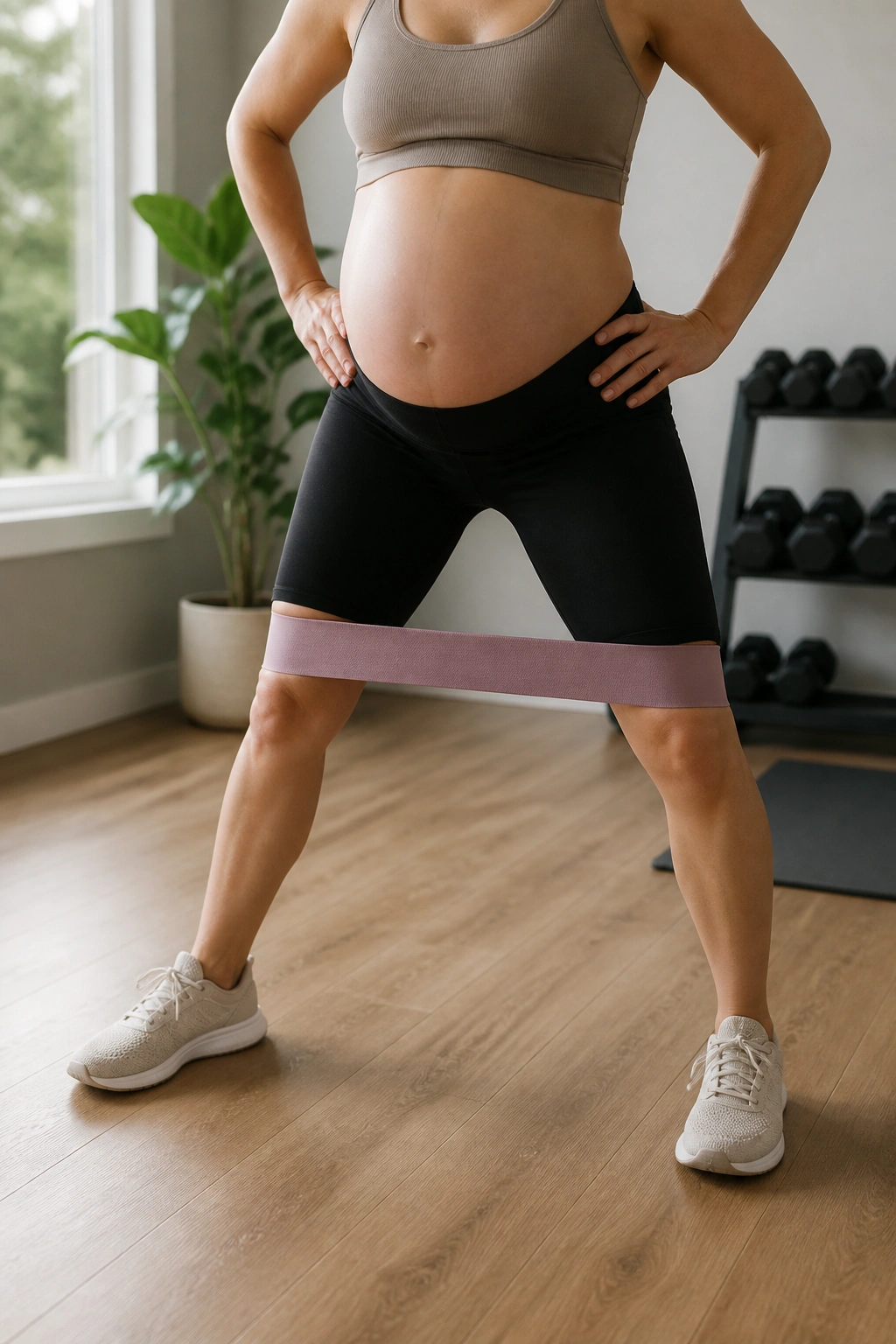
The first time someone does mini-band walks correctly, they usually look surprised. The burn lands fast. That’s because your outer hips and glute medius have to fight the band the whole time, and those muscles matter more than people think when pregnancy balance starts wobbling.
Put the band above the knees if you want the easiest version. Around the ankles is harder. Around the feet is hardest of all, and honestly, that’s usually unnecessary. Take 8 to 12 steps to the side, then 8 to 12 back. Stay low only as long as your pelvis stays level. If you feel your torso bouncing around, rise a little.
- Keep toes pointing mostly forward.
- Move with control, not speed.
- Let the standing leg do the work.
- Stop if the band drags your knees inward.
This is a great warm-up, a great finisher, and a great reminder that lower-body training is not only about squats. The side muscles matter too.
8. Standing Hip Abductions
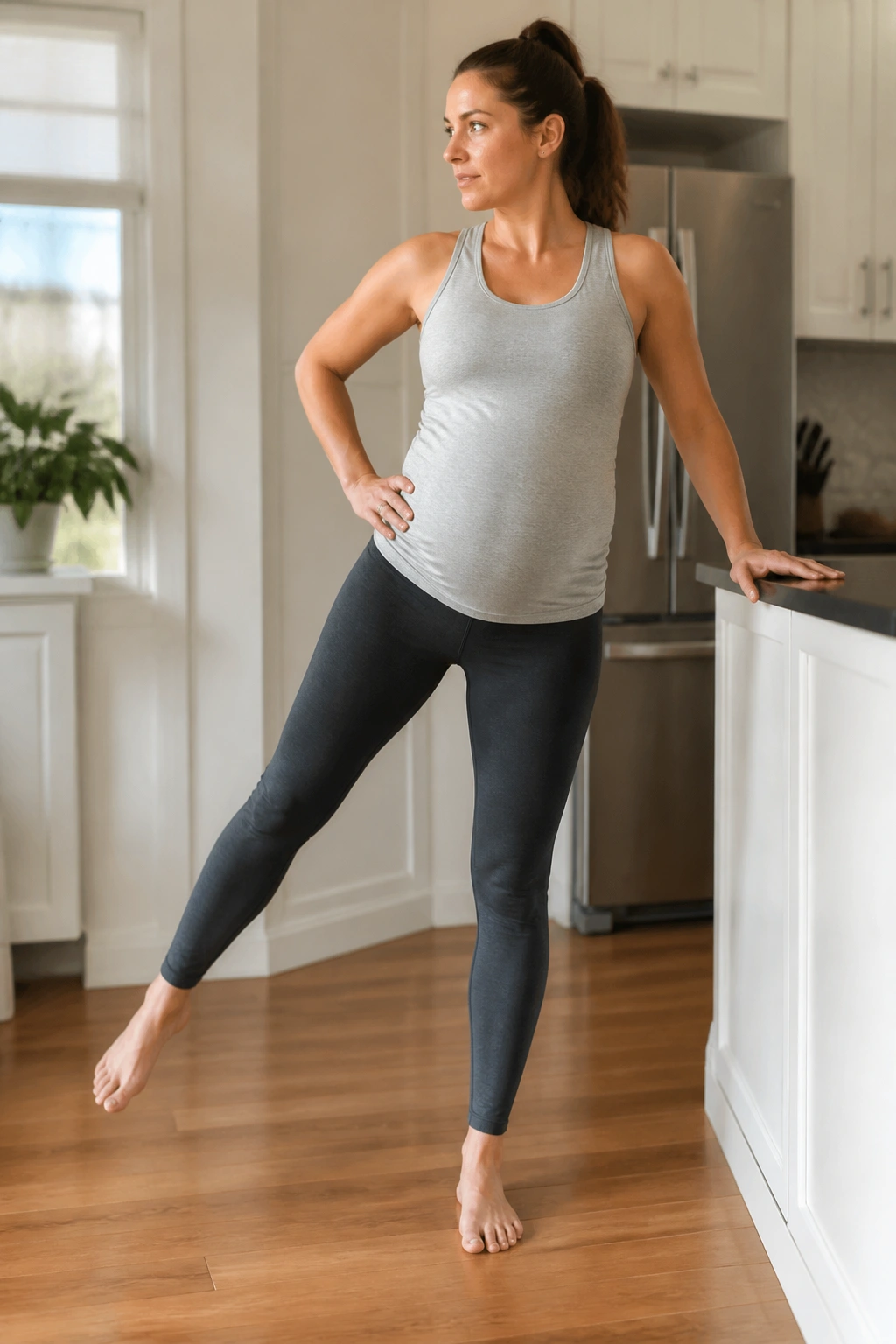
Standing hip abductions are the kind of small move people dismiss right before they feel how much their outer hip actually works. Hold a counter or chair back, shift your weight onto one leg, and lift the other leg out to the side without leaning your torso.
The goal is not height. It’s control. If you swing the leg up fast, the wrong muscles take over and the pelvis twists. Slow wins here. Think 10 to 15 reps per side, with a two-count lift and a two-count lower.
This move is nice across all trimesters because it doesn’t demand a lot of space, and you can adjust the range fast if your stance feels off. It also plays well with other standing moves, so you can pair it with calf raises or banded walks without needing a big reset.
One of the reasons I keep this in a prenatal lower body workout lineup is plain: it’s easy to do well, and easy to do badly. The difference shows up fast.
9. Quadruped Fire Hydrants
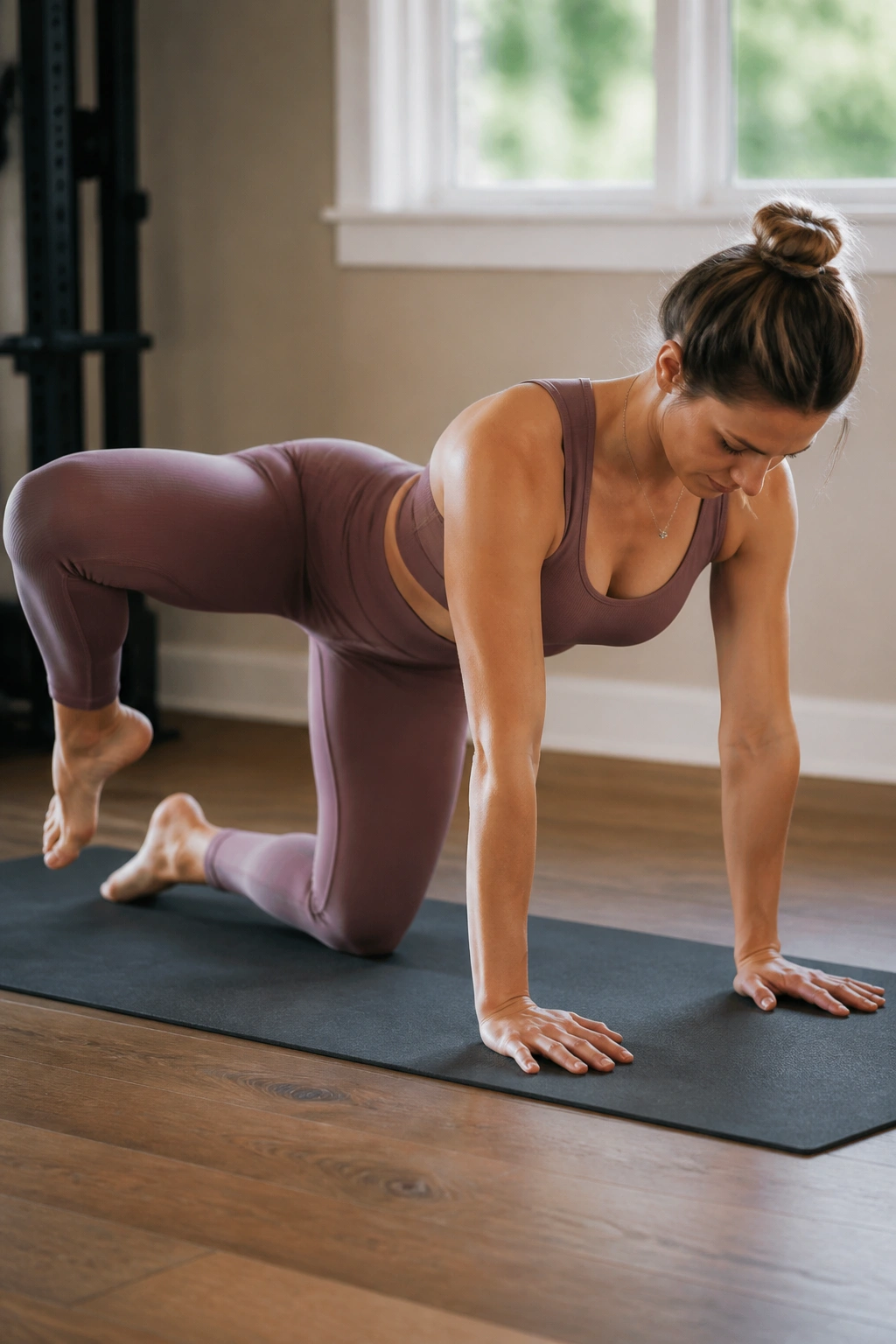
There’s something oddly useful about getting on hands and knees. The pelvis often feels less compressed there, and that alone can make fire hydrants feel like a relief. Lift one knee out to the side while keeping the hips square, then lower with control. That’s the whole shape.
Why it helps
You’re training the glutes and hip stabilizers without loading the spine much at all. For people whose standing balance feels fuzzy, this is a nice break from gravity.
How to get the most from it
- Stack shoulders over wrists and knees under hips.
- Keep the belly supported, not collapsed.
- Lift only as high as you can without twisting.
- Do 8 to 12 reps per side.
Best tip: put a folded towel under the knees. Even a thin towel changes the feel if your kneecaps are sensitive.
I like this one in the second trimester and beyond when standing work starts to feel less graceful. It is not flashy. It works.
10. Quadruped Donkey Kicks
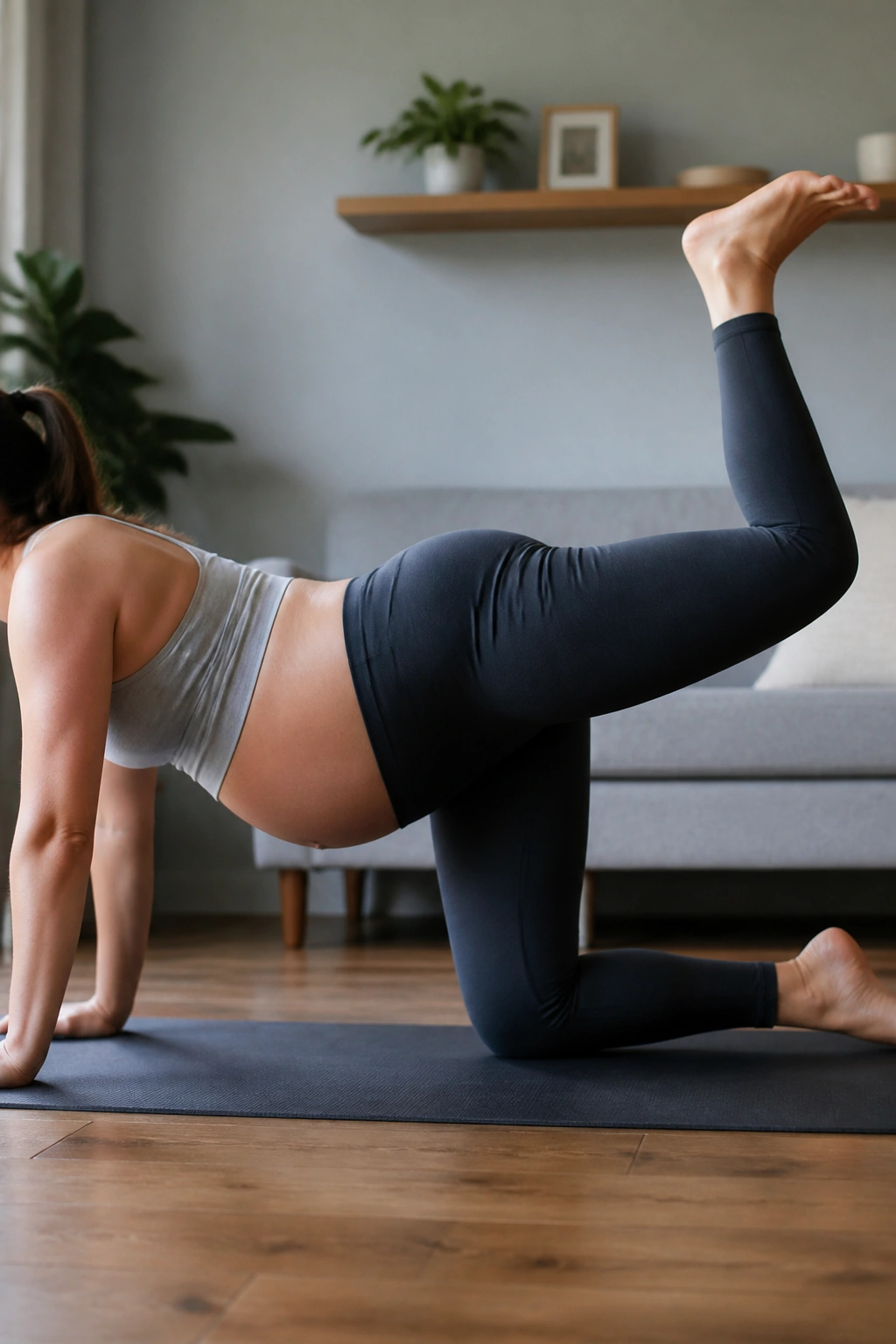
Donkey kicks are the quiet workhorse of this whole list. They look basic. Then your glutes start burning and the last three reps feel much longer than the first three.
The setup is the same hands-and-knees position as fire hydrants, but now the working leg drives back and up with a bent knee. Keep the foot flexed and the pelvis steady. If your low back arches hard to fake a bigger lift, you’re going too high. Lower the leg and clean it up.
This is a nice choice when standing work feels unstable or when you want a glute-focused move that doesn’t require much equipment. I’d use 10 to 15 controlled reps per side, maybe 2 or 3 sets. Slow down the lowering phase. That’s where the muscle work lives.
A lot of people rush this and call it done. That’s a mistake. The rep should feel tidy, not flung around.
11. Dumbbell Romanian Deadlifts
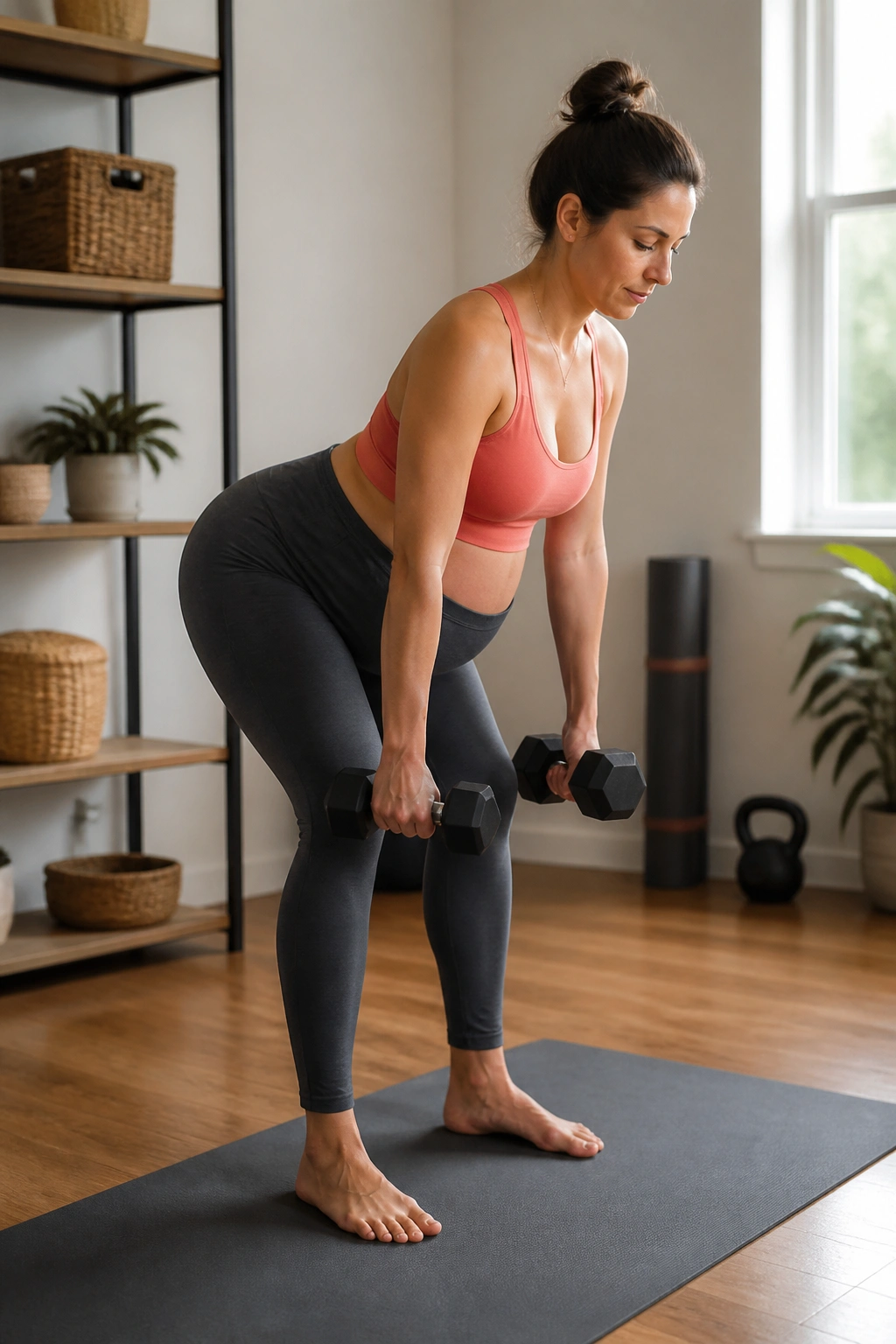
If I had to pick one lower-body hinge for pregnancy, Romanian deadlifts would be near the top. They train hamstrings, glutes, and the back-of-leg chain without asking you to drop into a deep squat or lunge.
Unlike a squat, the RDL asks you to send the hips back while keeping the torso long. That often feels better when the belly starts changing where your weight sits, because the movement gives the front of the body a little more room. Hold a pair of light dumbbells, slide the hips back, keep a soft bend in the knees, and stop when your hamstrings feel loaded but your back still feels neutral.
Who this suits
- People in the first or second trimester who like traditional strength work.
- Third-trimester lifters who still want a hinge but need a controlled range.
- Anyone who feels better standing tall than dropping deep.
Use 8 to 10 reps with a slow descent. If your grip gets tired before your legs do, lower the weight and keep the shape clean.
12. Supported Single-Leg Deadlifts
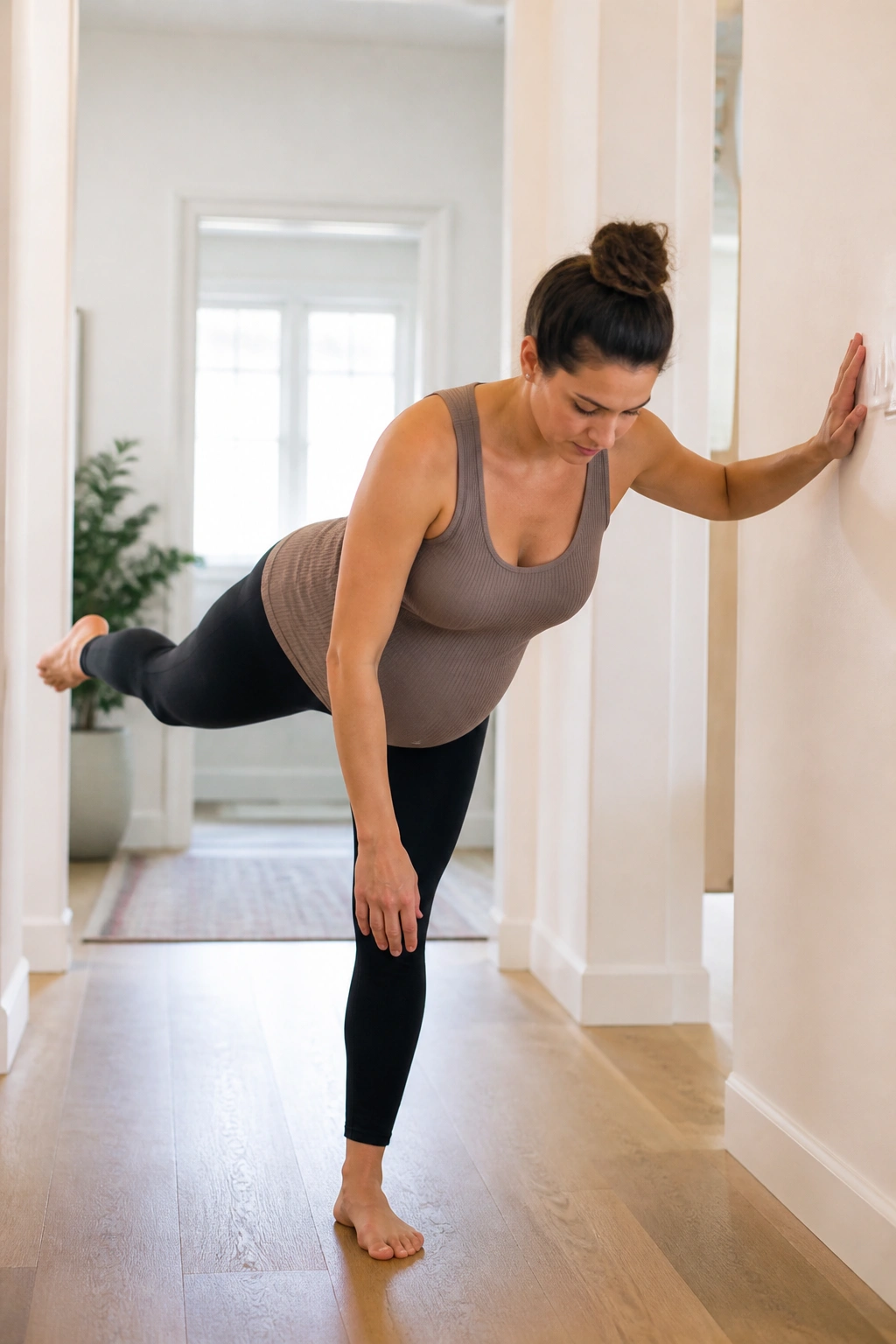
Can you train one leg at a time when balance feels off? Yes, if you give yourself something to hold. Supported single-leg deadlifts are a smart way to keep the hip hinge pattern alive without turning the floor into a circus act.
How to use it
Hold a wall, countertop, or sturdy chair with one hand. Stand on the working leg, soften the knee, then tip the torso forward as the free leg reaches back. Keep the hips level. Return to standing by squeezing the glute on the standing side.
The support changes everything. It lets you focus on the standing hip instead of fighting to stay upright. Use a small range at first. Eight reps per side is enough. If you can’t keep the pelvis square, shorten the reach.
This move is especially useful if one side of your body feels noticeably weaker or if stairs have started to feel lopsided. It trains the kind of strength that shows up in daily life, not just in the gym.
13. Calf Raise Ladder
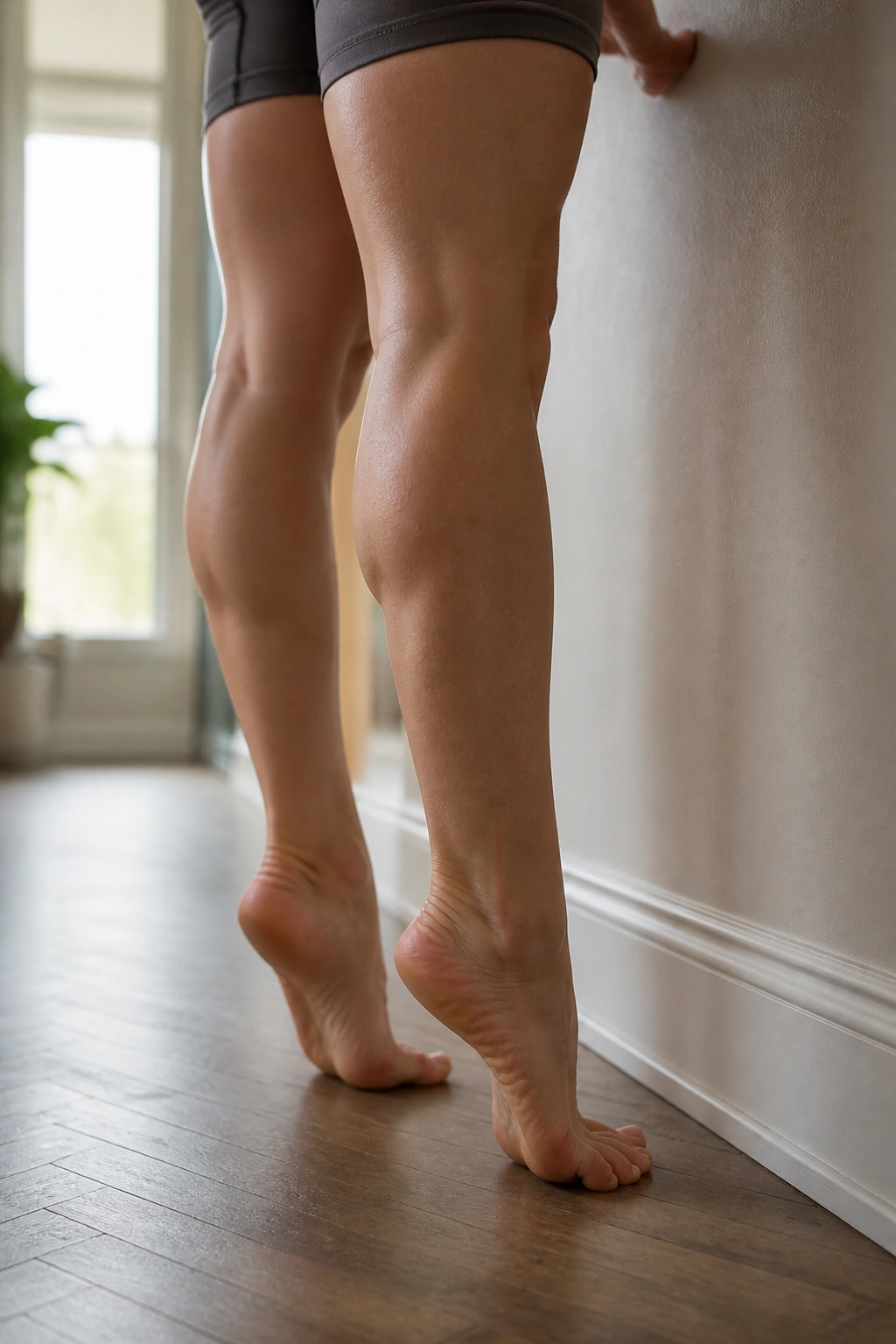
People forget calves until their shoes feel tighter or stairs start to bite back. Calf raises are boring in the best possible way. They build the lower leg, support ankle stability, and help you keep pushing through the foot with a more even pattern.
Start with both feet flat and rise onto the balls of your feet for 10 to 20 reps. Then try a 5-second hold at the top. Then do one set with toes slightly turned out, which changes the line of work a little. That small ladder keeps the set from feeling stale.
- Use a wall or counter for balance.
- Keep the ankle traveling straight up, not rolling outward.
- Pause at the top long enough to feel the calf.
- Lower slowly; don’t drop.
This one fits any trimester, and it is easy to sneak in between other moves. I love sneaky useful work like that.
14. Side-Lying Clamshells
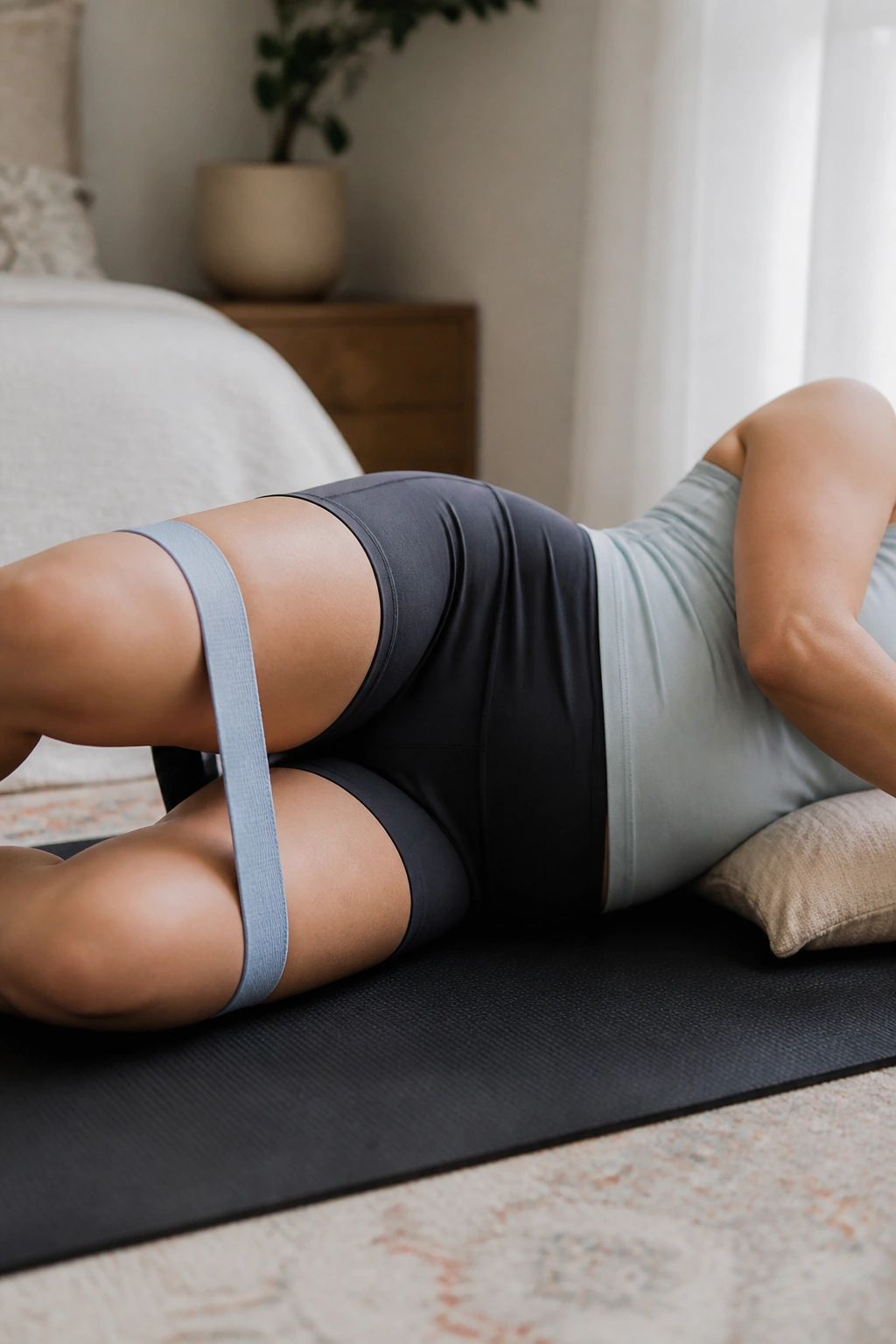
Side-lying clamshells are small, stubborn, and worth it. You lie on one side, knees bent, feet together, and open the top knee like a clam shell while keeping the pelvis stacked. That little lift hits the glute medius and the deep hip rotators in a way standing work sometimes misses.
The setup matters more than people think. If your hips roll backward, the wrong muscles take over. Put a pillow between your head and arm so the neck relaxes, and keep a light band above the knees if you want more challenge. Twelve to 15 reps per side is plenty.
I like this move because it’s low drama. No equipment beyond a mat or bed edge. No balance issue. No need to overthink it. Side-lying work also tends to feel good when standing for long periods has started to annoy your hips.
One warning: go slow on the opening. A rushed clamshell turns into a lazy one fast.
15. Side-Lying Leg Lifts
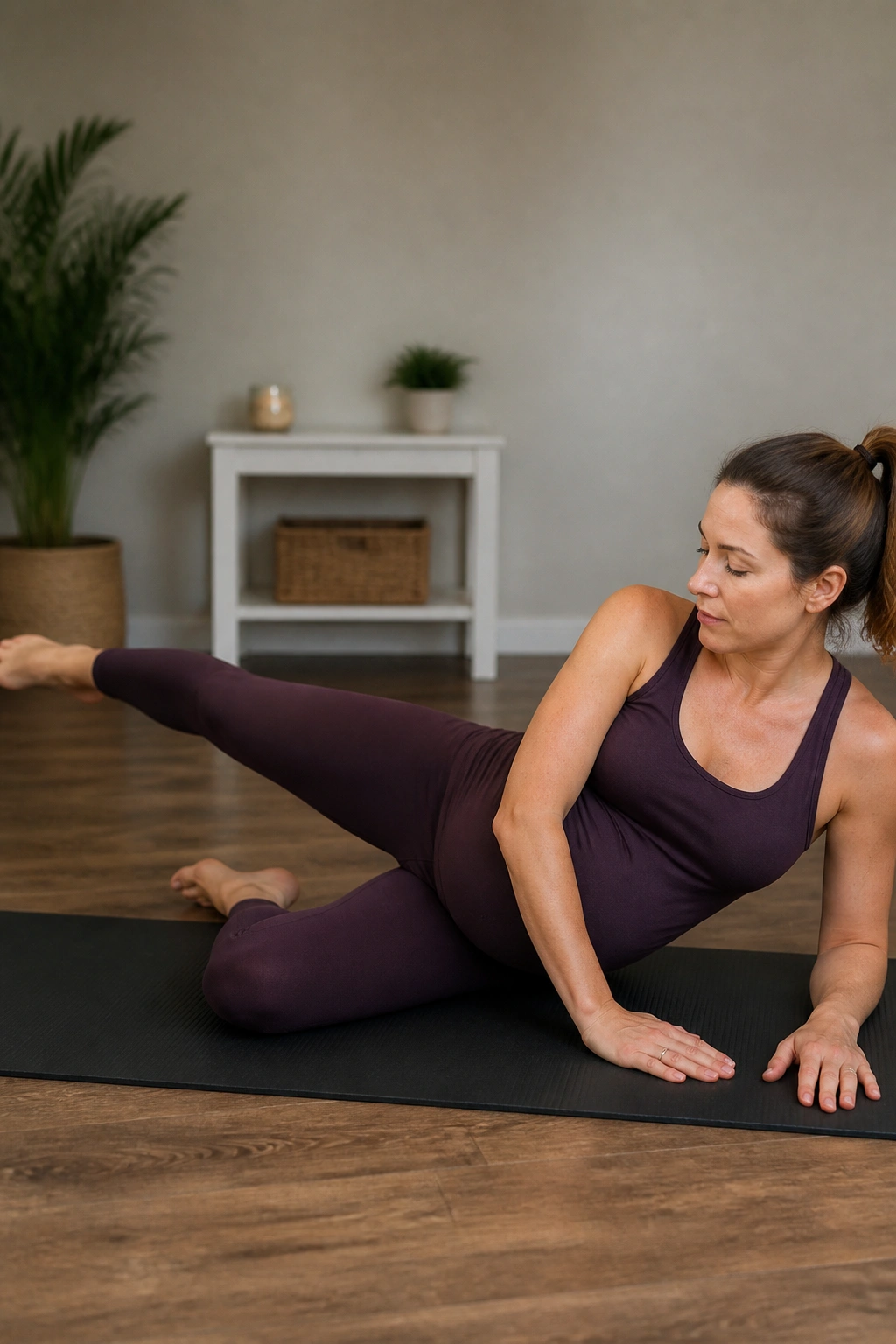
The side-lying leg lift looks simple enough to ignore. Then the outer hip lights up halfway through the set, and suddenly it’s earning its place. Keep the bottom leg bent or straight, lift the top leg a few inches, and lower without letting the torso rock backward.
Why it works
You’re isolating the outer thigh and hip stabilizers more directly than in a standing move. That can help when one side of the pelvis feels like it’s doing all the work.
Useful details
- Lift only 6 to 12 inches.
- Keep the toes slightly pointed forward, not turned to the ceiling.
- Use 10 to 15 controlled reps.
- Add a light ankle weight only if bodyweight feels too easy.
Do not chase height. That’s the trap. A smaller lift with a steady pelvis beats a big swing every time.
This is one of my favorite low-fatigue options for later pregnancy days when you want to move but not wrestle with standing balance.
16. Split-Stance Sit-Back Isometrics
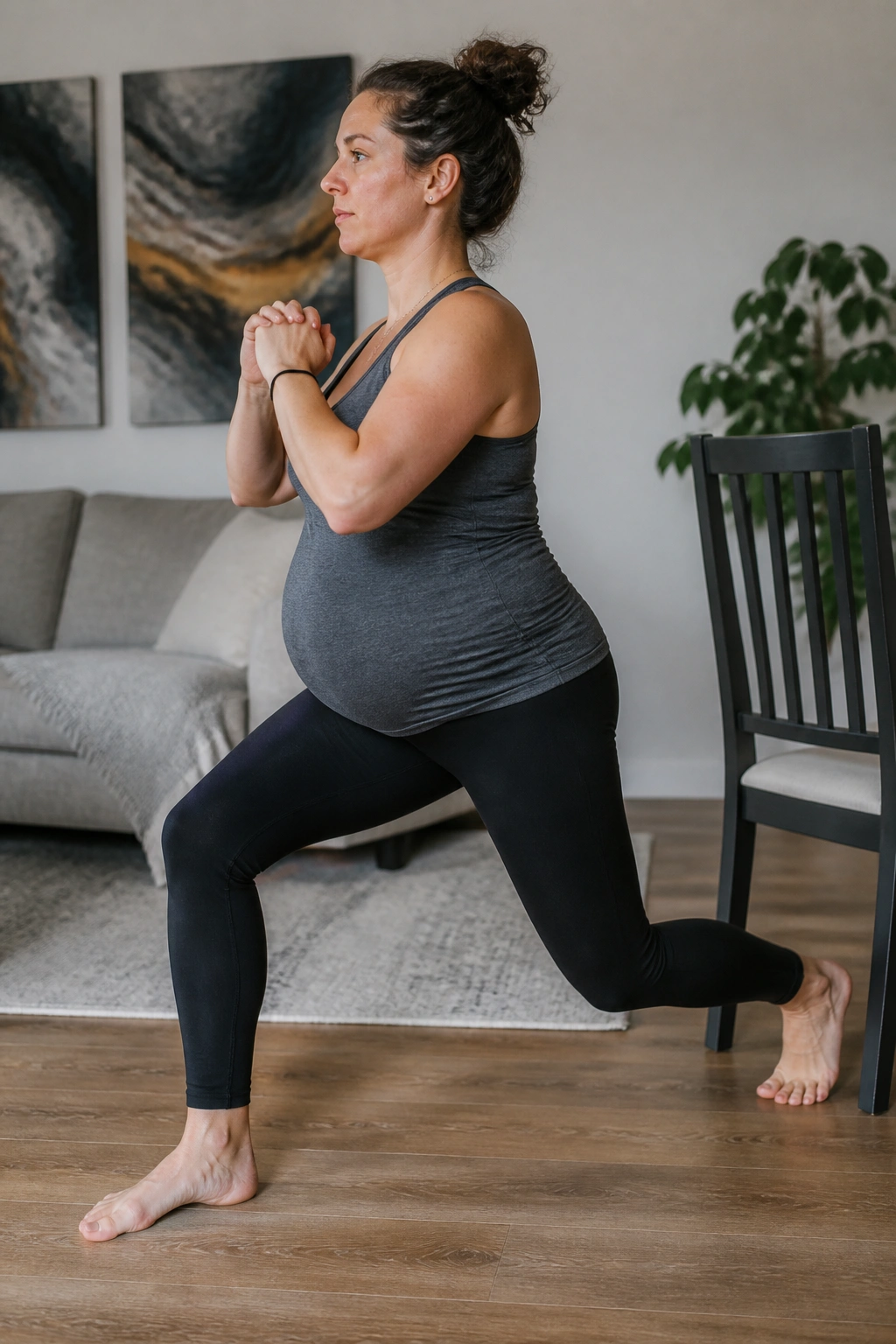
Here’s a move that looks almost like a paused squat, except one foot sits a step behind the other. Split-stance sit-back isometrics let you load the front leg without the full complexity of a lunge. It’s halfway between standing and squatting, and that middle ground is often exactly where pregnant bodies want to live.
Stand with one foot forward and one back, hold onto a chair if needed, then sit your hips back a few inches and hold for 10 to 20 seconds. The front leg does most of the work. The back leg is there for balance and a bit of support. Switch sides after the hold.
I like this one because it gives you time under tension without a lot of knee travel. If your pelvis complains about dynamic lunges, this can be a calmer option. Try 2 to 3 holds per side and breathe steadily through the burn.
No need for drama. The hold itself is the exercise.
17. Lateral Step-Downs
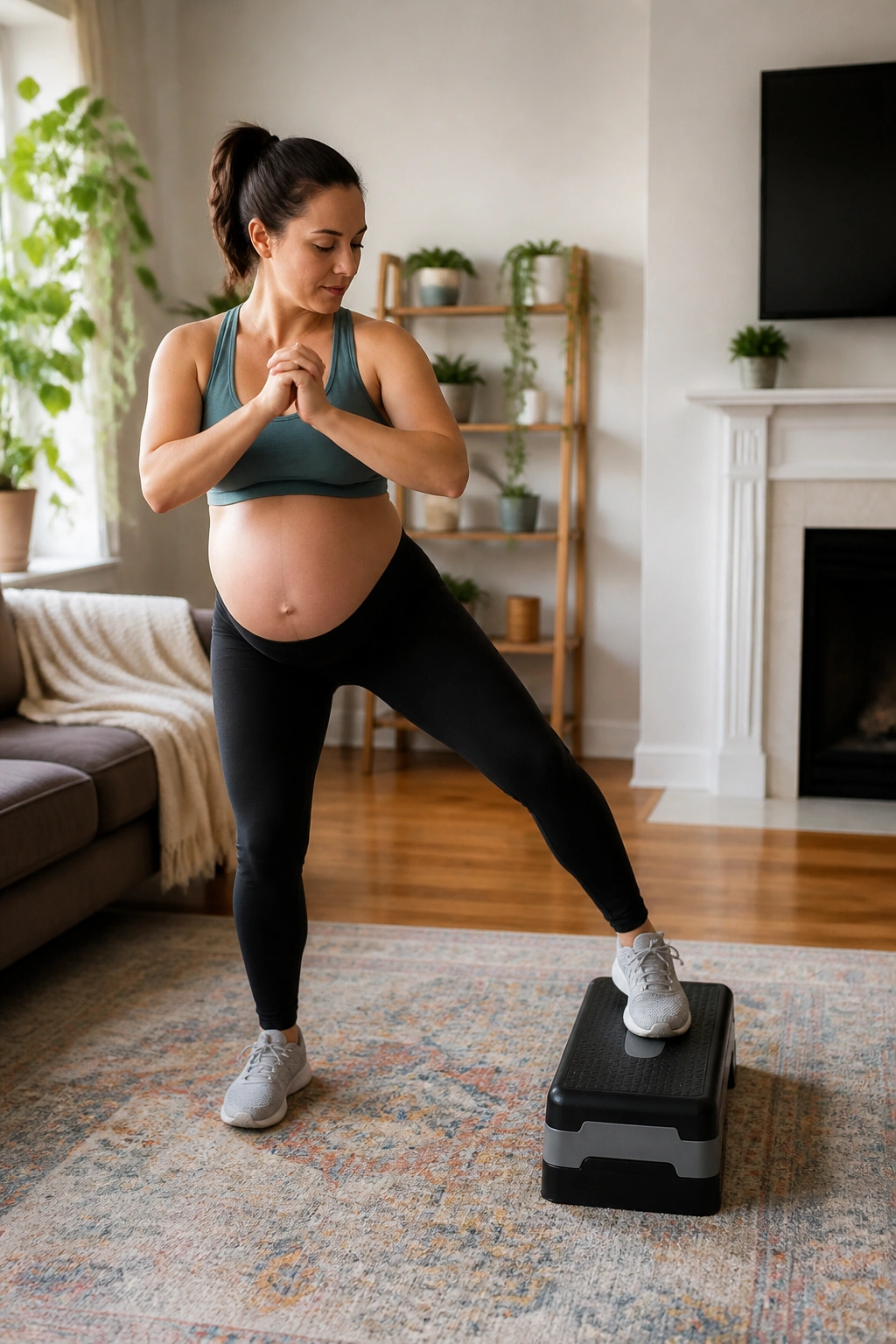
Lateral step-downs are like a quieter version of stair training. Stand on a low step, keep one foot planted, and slowly lower the other heel toward the floor before standing back up. The standing leg has to control the descent, which is where the good stuff happens.
Unlike step-ups, which ask you to climb, step-downs ask you to brake. That makes them useful for knee control and hip stability, especially if your body feels a bit wobbly going down stairs. Use a low step at first. Four inches is enough for plenty of people. Add height only if the movement stays smooth.
Best fit
This move suits people who already know how to squat and lunge without pain, but want something that challenges balance in a controlled way. It’s a stronger choice for the middle or later part of pregnancy if support is nearby.
If the knee caves inward, reduce the height and slow the tempo before you do anything else. Clean mechanics matter here more than range.
18. Side Lunge to Chair Tap
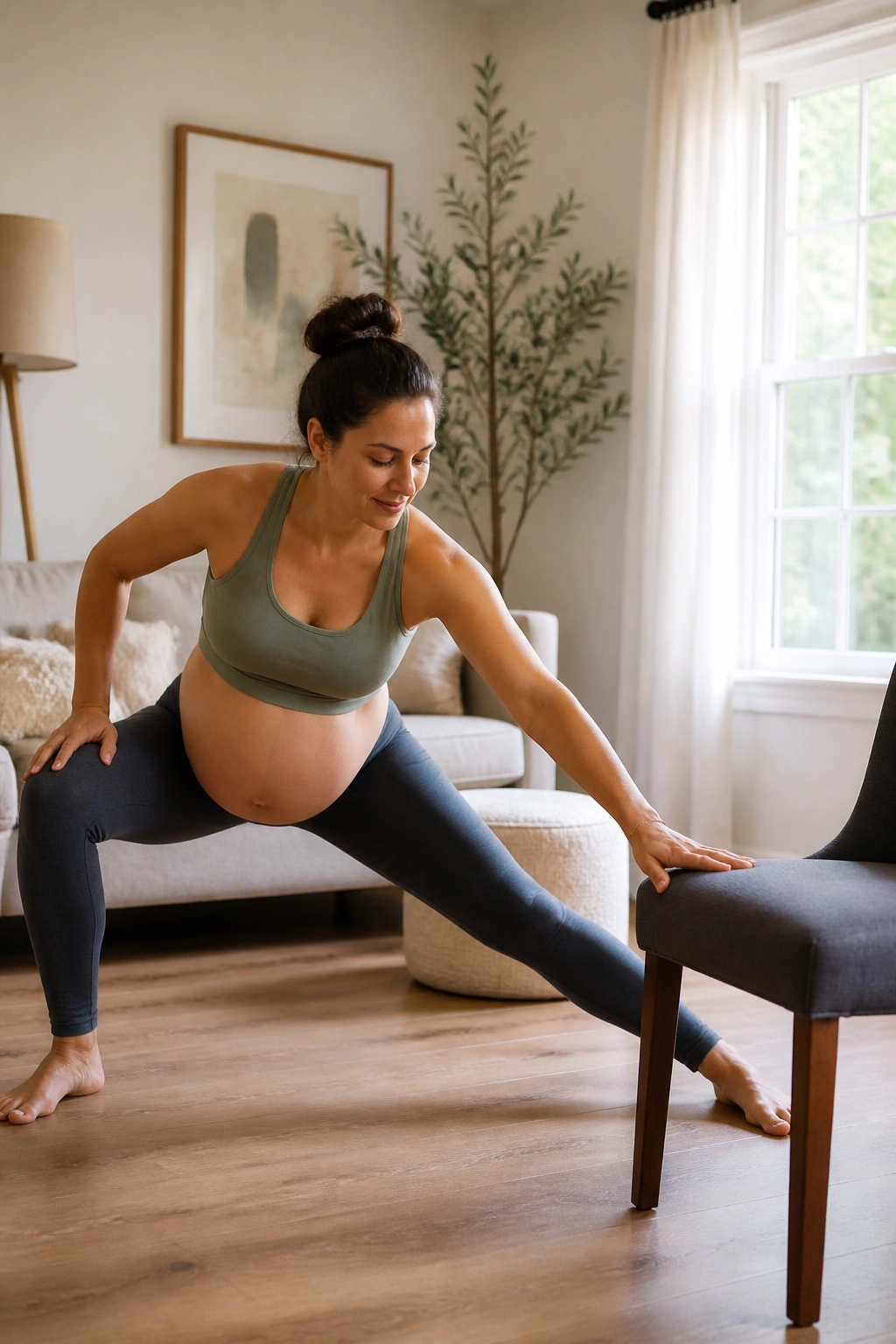
Side lunges get a bad rap because people often drop too deep too fast. A chair tap changes the game. Step out to the side, send the hips back, and tap your seat to a chair before driving back to center. That tap gives you a target and keeps the range from getting sloppy.
How to make it work
Hold a counter with one hand if needed. Keep the stepping leg bent and the other leg straighter. The foot that stays planted should feel flat and stable, not rolled onto the outer edge. Six to eight reps per side is plenty to start.
This is useful when you want frontal-plane work — the side-to-side pattern that walking and stair climbing barely hit. It also tends to feel better than curtsy lunges, which can twist the pelvis in an annoying way for some people.
Use a higher chair if the belly gets in the way. Shorter range. Same point.
19. Standing Hamstring Curls with a Band
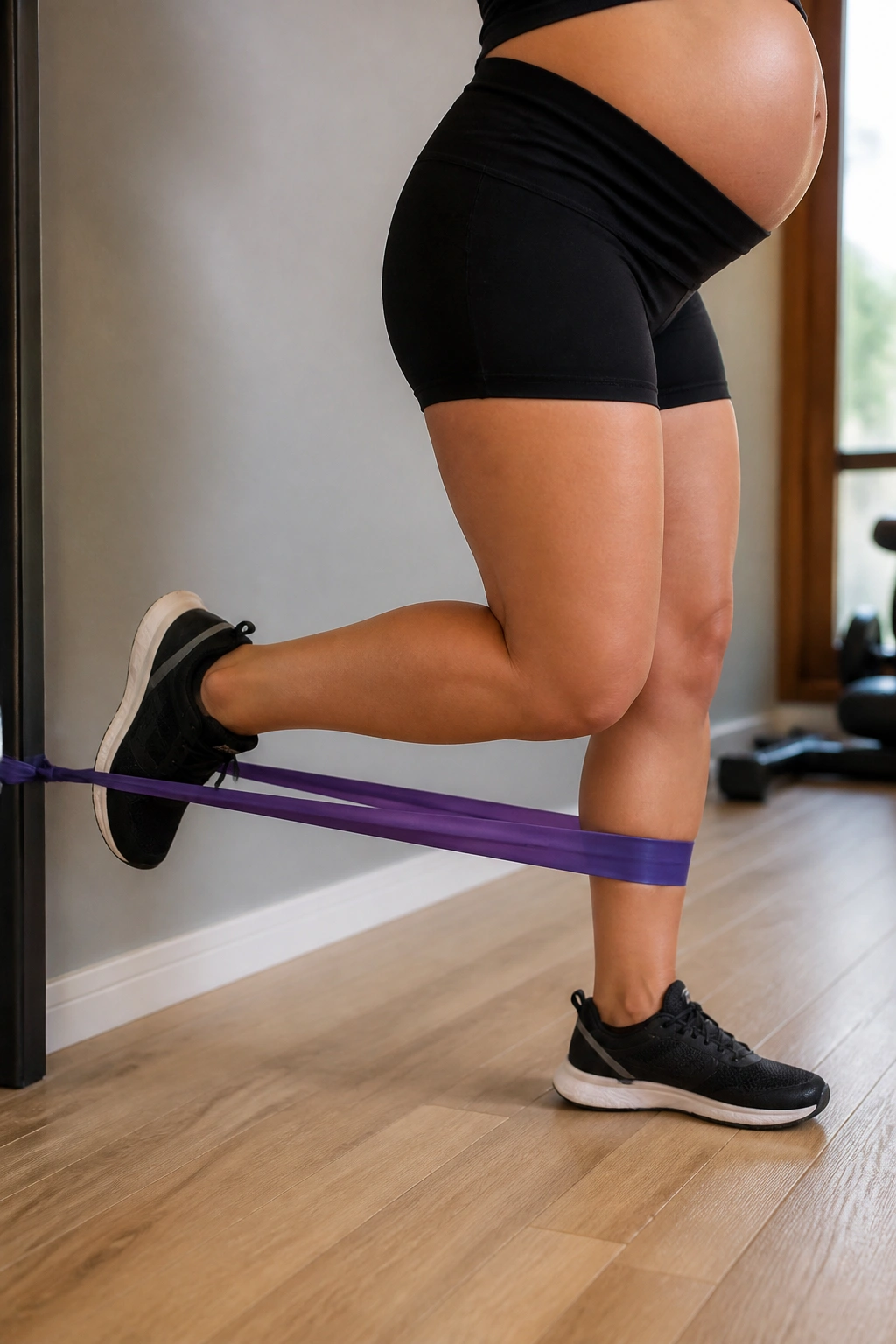
This one looks almost too easy. Hook a light band around one ankle or use a cable setup, then bend the knee to bring the heel toward the glute while staying tall. The hamstrings get the load, and the standing leg gets a bit of balance practice too.
The reason I like standing hamstring curls in pregnancy is simple: they keep you upright. That matters when floor work starts to feel awkward or when getting down and back up burns too much energy. Do 10 to 15 reps per side with a slow return. If the lower back tightens, stand closer to the support or shorten the range.
- Hold a wall or rack lightly.
- Keep the thighs aligned.
- Squeeze the heel toward the seat without kicking.
- Lower with a two-count.
This is a tidy accessory move. Not the star. Still worth doing.
20. Prenatal Lower-Body Circuit
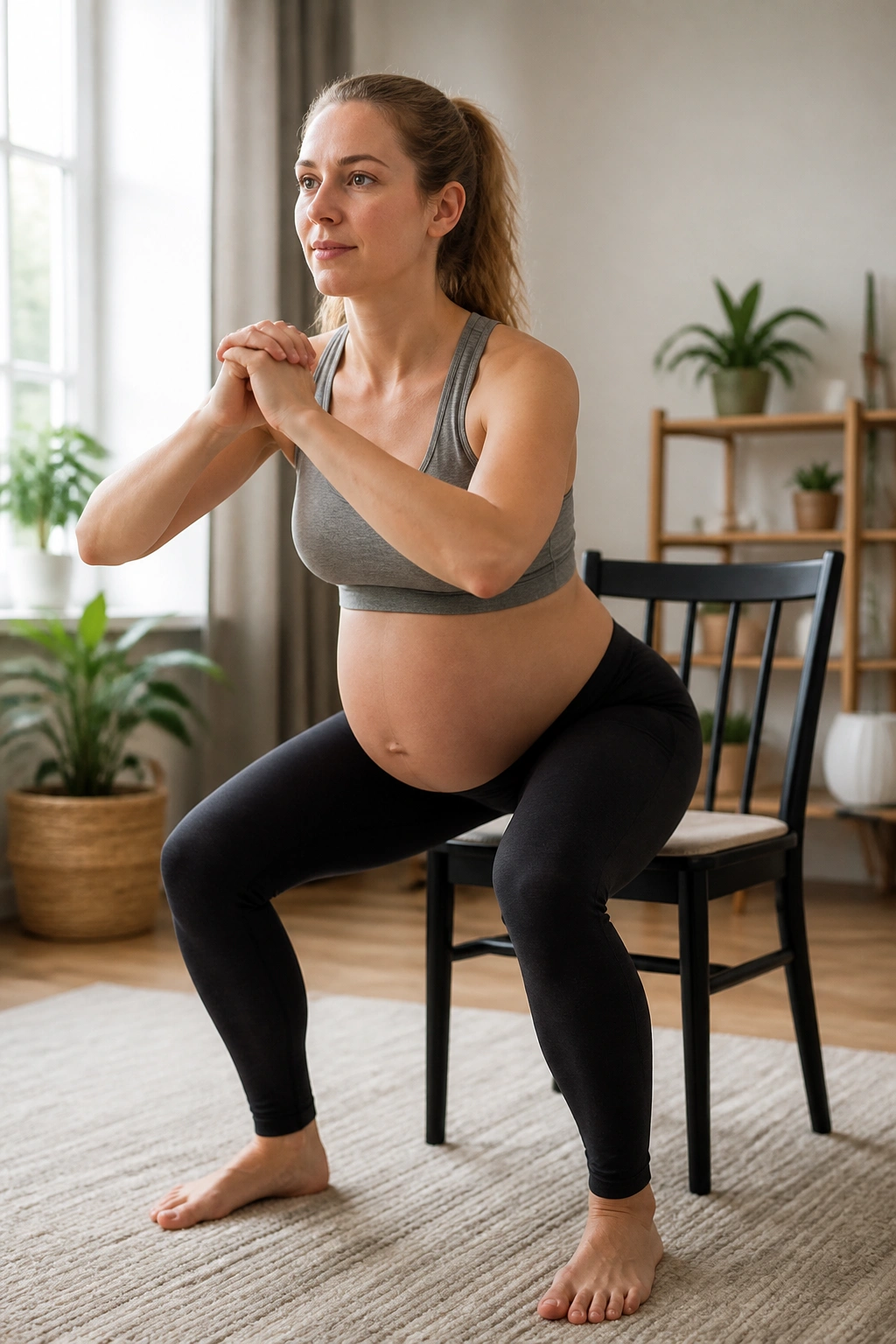
A good prenatal lower body workout often works best as a short circuit, not a marathon. Pick one squat pattern, one hinge, one side-to-side move, one calf move, and one floor-based hip exercise if it still feels comfortable. That gives you full coverage without turning the session into a balance test.
Here’s the rhythm I like for a simple circuit: 8 chair squats, 8 dumbbell Romanian deadlifts, 10 mini-band walks each direction, 12 calf raises, and 10 fire hydrants per side. Rest 45 to 60 seconds between rounds. Two rounds is enough on low-energy days. Three rounds works when you feel strong and steady.
The point is not to crush yourself. The point is to leave the session feeling better than you started — warmer, looser, more stable. If your third trimester is asking for more support, keep the same circuit but use a higher chair, lighter weights, and shorter ranges. If the first trimester has your energy bouncing around, reduce the round count and keep the rest longer.
I like this format because it turns all the separate pieces into a real workout. Clean. Practical. Easy to repeat.
Final Thoughts
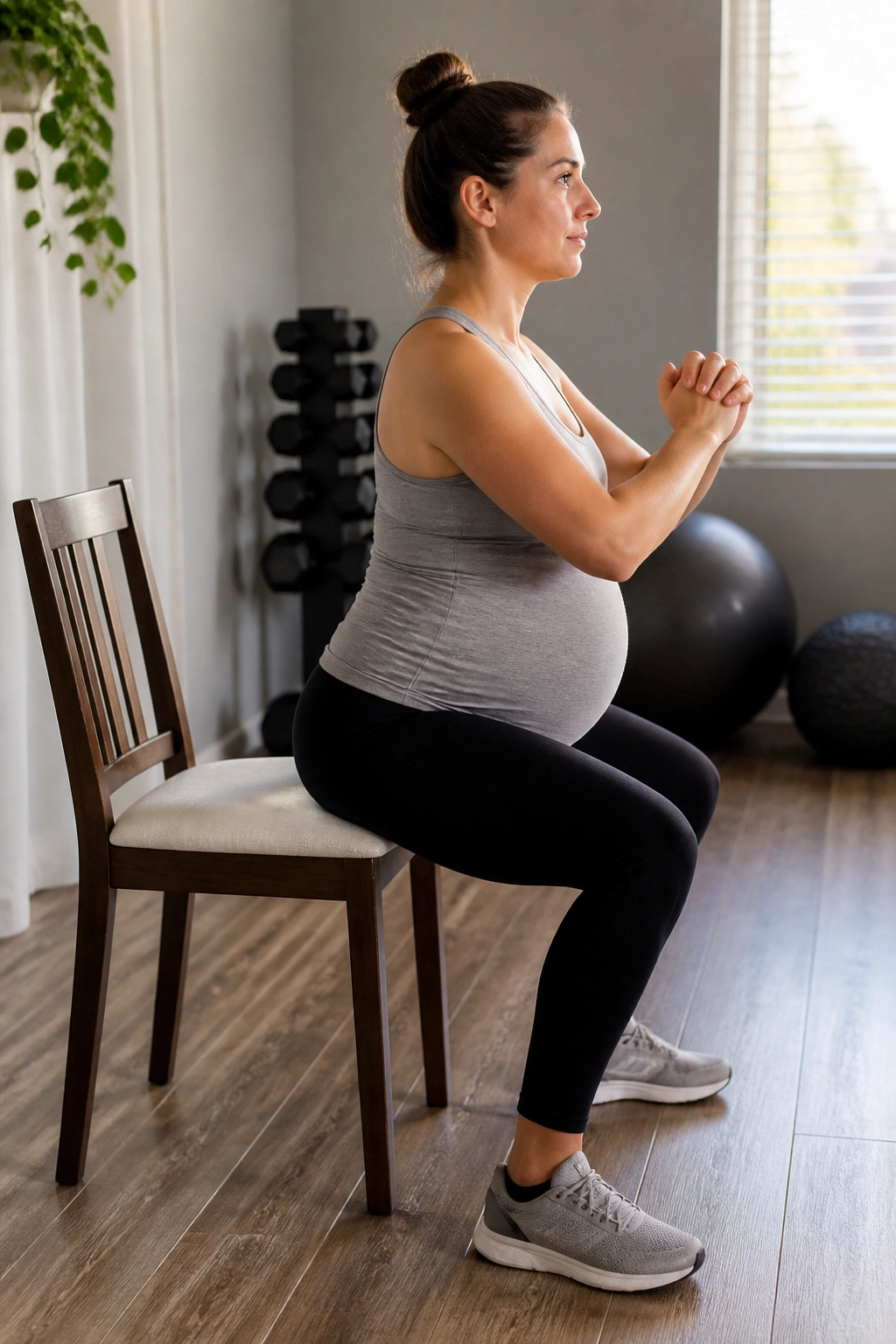
Pregnancy training does not need to be fragile, and it does not need to be extreme. The sweet spot is usually somewhere in the middle: enough challenge to keep your legs, glutes, and hips useful, but enough restraint that your joints and balance don’t feel bullied.
The better move is the one you can repeat next week without dread. Sometimes that means a chair squat and a band walk. Sometimes it means a slow hinge, a wall sit, and a few calf raises between errands. Small, steady work tends to age well here.
