



Legs are rarely “toned” by accident. You can do all the cardio in the world, and while you might burn off excess fat, you will never achieve that sculpted, defined look without intentional resistance training. Many people get stuck in a cycle of endless walking or high-rep, low-weight exercises, hoping to shrink their legs, only to feel frustrated when the results plateau. The truth is much simpler: muscle is the engine of your metabolism and the architect of your shape. If you want legs that look sharp, strong, and capable, you have to load them.
Muscle doesn’t just appear. It needs a reason to grow, and that reason is mechanical tension. When you challenge your lower body with external resistance, you create micro-tears in the muscle fibers. Your body repairs those fibers, making them slightly thicker and stronger each time. This process is the only way to build the definition you are after. It requires commitment, a willingness to get uncomfortable, and a strategy that targets every angle of the lower body.
Forget about “spot reduction” myths. You cannot pick where your body loses fat. However, you can absolutely choose where you build muscle. By varying your movements—working the quads, hamstrings, glutes, and calves through different planes of motion—you create a comprehensive look. The exercises below are chosen for their effectiveness in recruiting muscle fibers and their ability to be progressed over time. Whether you have access to a full gym or just a pair of dumbbells at home, these movements are the building blocks of leg definition.
1. Goblet Squats
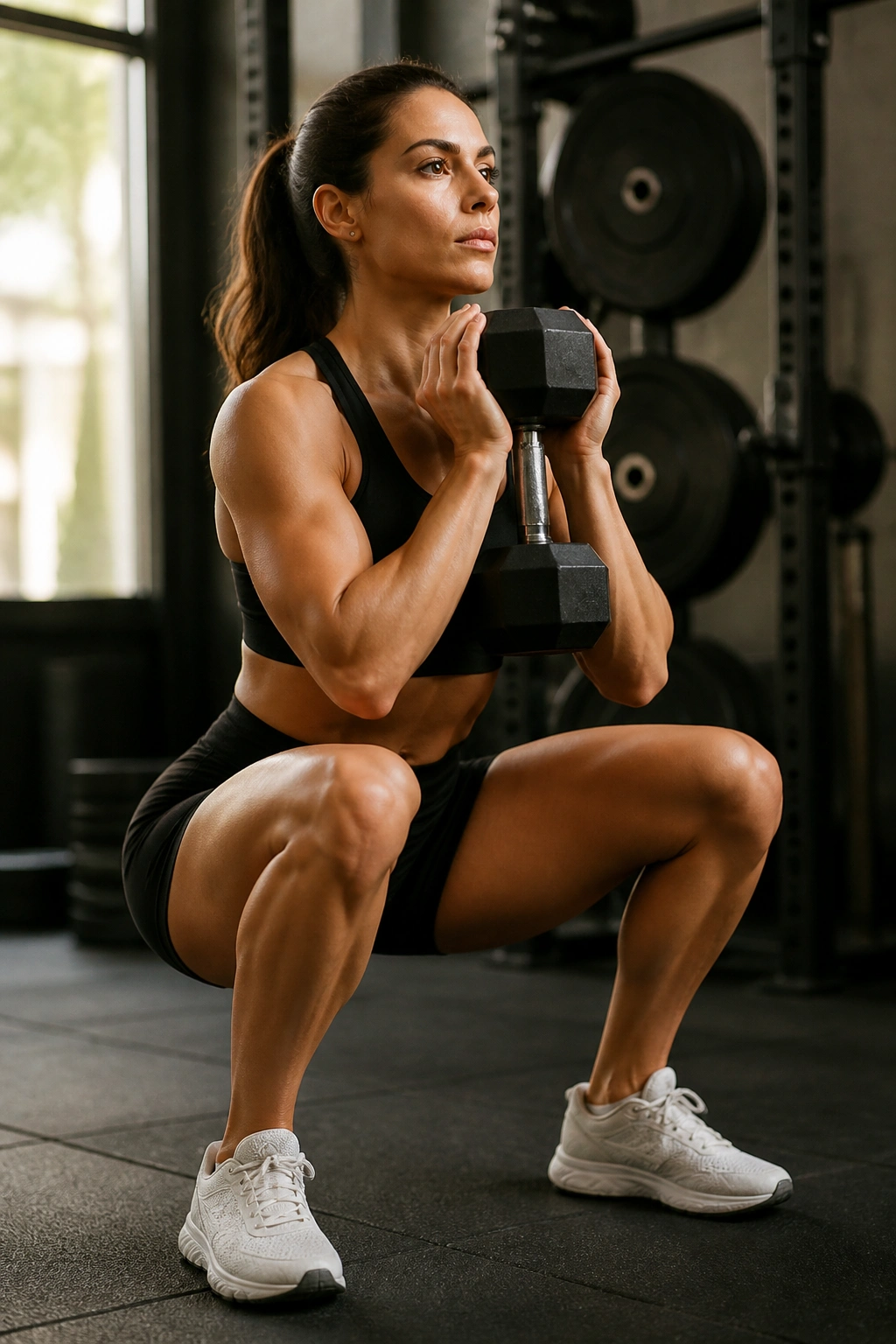
The goblet squat is arguably the best starting point for anyone serious about leg development. By holding a weight against your chest, you force your torso to remain upright, which shifts the emphasis onto the quadriceps and requires significant core engagement to maintain balance. You are not just squatting; you are learning how to move with control.
Why This Move Is Essential
When you move a weight to your front, you can no longer rely on your lower back to hoist the load. This simple shift in center of gravity prevents you from “good morning-ing” the squat—the act of hinging forward instead of sitting down—which is a common mistake that takes tension off the quads. You get a deeper range of motion, which is where the real sculpting happens.
How to Execute It Properly
- Stance: Stand with feet shoulder-width apart, toes pointed slightly outward.
- The Hold: Grip a dumbbell or kettlebell vertically against your sternum with both hands. Keep your elbows tucked in.
- The Descent: Initiate the movement by pushing your hips back and down, as if sitting into a low chair. Keep your chest up throughout.
- The Drive: Drive through your mid-foot and heels to return to standing. Focus on pushing the floor away from you.
Pro tip: Pause for one second at the bottom of the movement. This removes the “bounce” and forces your quads to work harder to reverse the momentum. If you can, go lower than you think you need to. Deep squats equal deep engagement.
2. Romanian Deadlifts
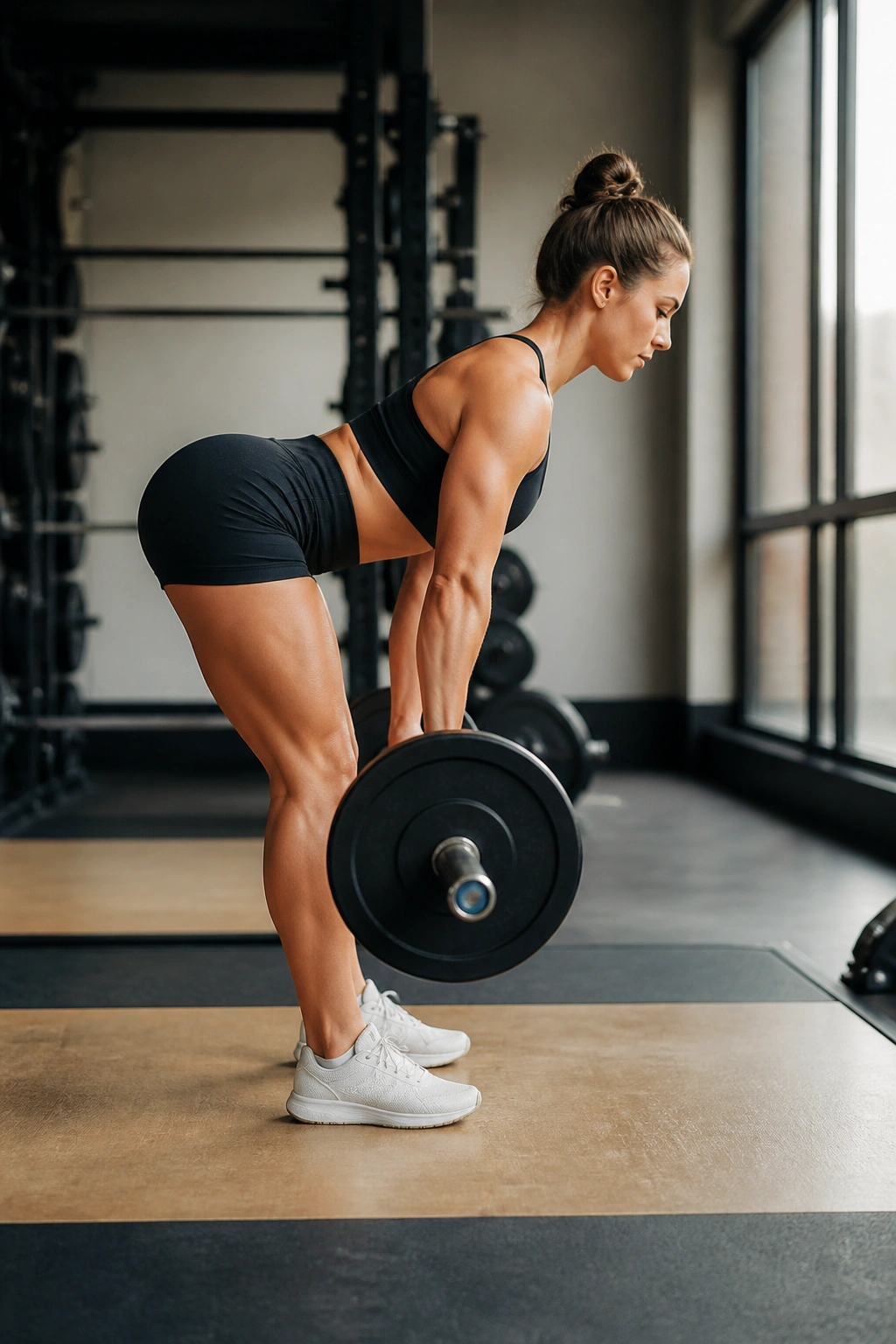
If the goblet squat builds the front of the legs, the Romanian deadlift (RDL) is the master builder for the back. This is not a leg press; it is a hip hinge. The focus here is on the eccentric, or lengthening, phase of the movement. You are essentially stretching your hamstrings under load, which is a massive stimulus for growth.
The Anatomy of the Hinge
Many people confuse deadlifts with squats. A squat is a knee-dominant movement; a deadlift is hip-dominant. When performing an RDL, your knees should remain soft but fixed in place. All the movement happens at the hip joint. You are pushing your hips backward, feeling a intense stretch in the back of your legs, and then snapping them forward to the starting position.
Keys to Perfect Form
- The Reach: Think about trying to touch the wall behind you with your glutes.
- The Tension: Keep the weight as close to your shins as possible. If the bar or dumbbells drift away from your body, you put unnecessary strain on your lower back.
- The Finish: At the top of the movement, squeeze your glutes hard. Do not overextend your lower back; just stand tall.
You should feel a strong pull in the hamstrings about halfway down your shins. If you feel it in your lower back, stop immediately, reset, and check your form. This exercise is meant to make your hamstrings sore the next day. If it makes your back sore, you are doing it wrong.
3. Walking Lunges
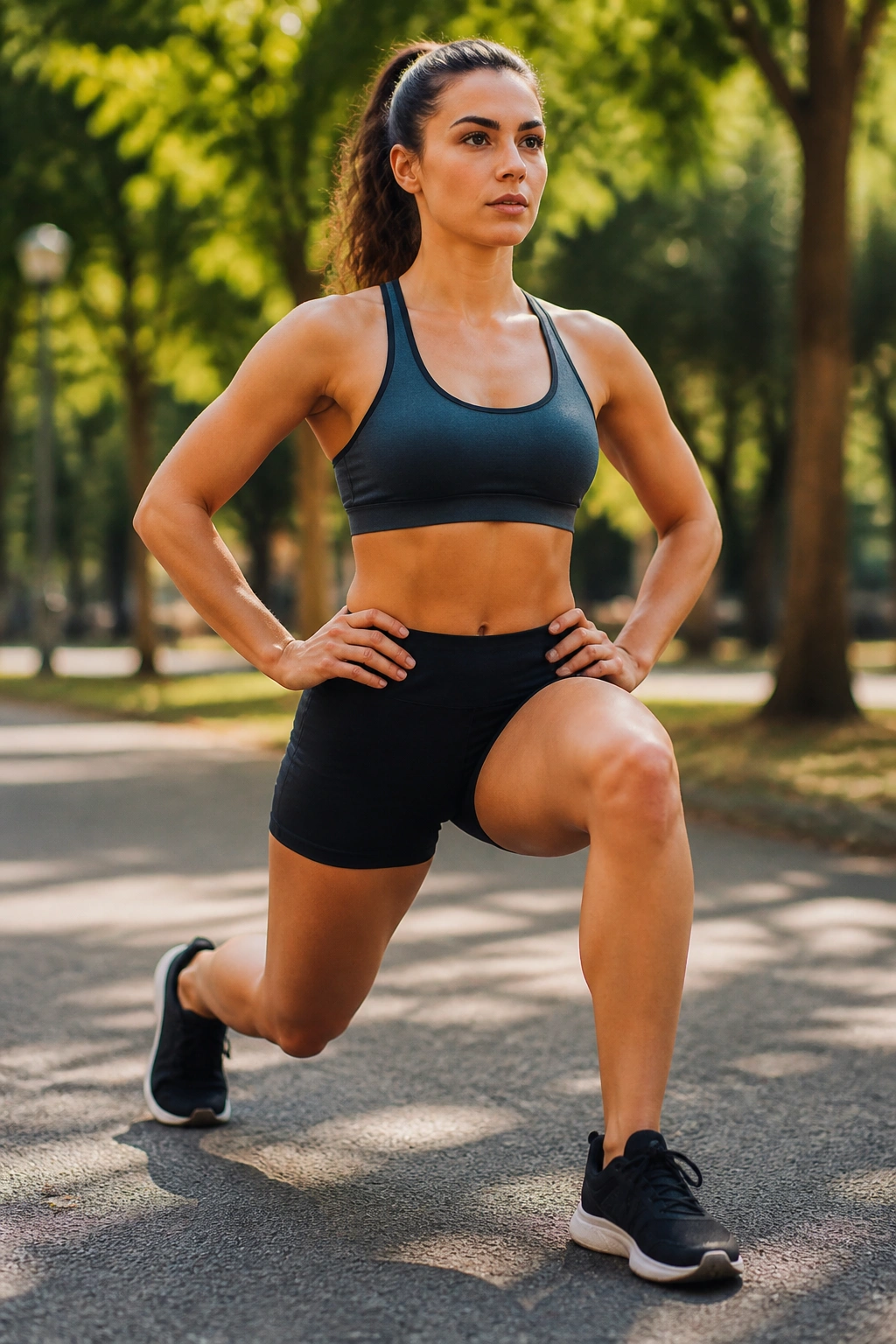
Walking lunges are a fantastic way to develop athletic, sculpted legs because they require balance, coordination, and unilateral strength. Because you are essentially doing a single-leg squat with every step, you eliminate the possibility of your stronger leg compensating for your weaker one. This builds symmetry.
Why They Sculpt Effectively
The instability of the walking lunge forces your stabilizer muscles—the small ones around your hips and knees—to fire constantly. This is what creates that “defined” look, as those small muscles fill in the gaps that larger exercises might miss. You can do these with body weight for high reps or hold dumbbells to increase the difficulty.
How to Get More Out of Each Rep
Take a stride that is long enough so that both your front and back knees form 90-degree angles at the bottom of the lunge. If your stride is too short, you will feel it mostly in your knees. If it is too long, you will feel it mostly in your hip flexors. Find that sweet spot where you feel the stretch in your glute and the tension in your quad.
Important Note: Do not rush. The tendency with lunges is to move quickly to get the “burn” over with. Slow down. Control your descent. You should take about two seconds to lower yourself and one second to push back up. Speed is the enemy of muscle recruitment in this case.
4. Bulgarian Split Squats
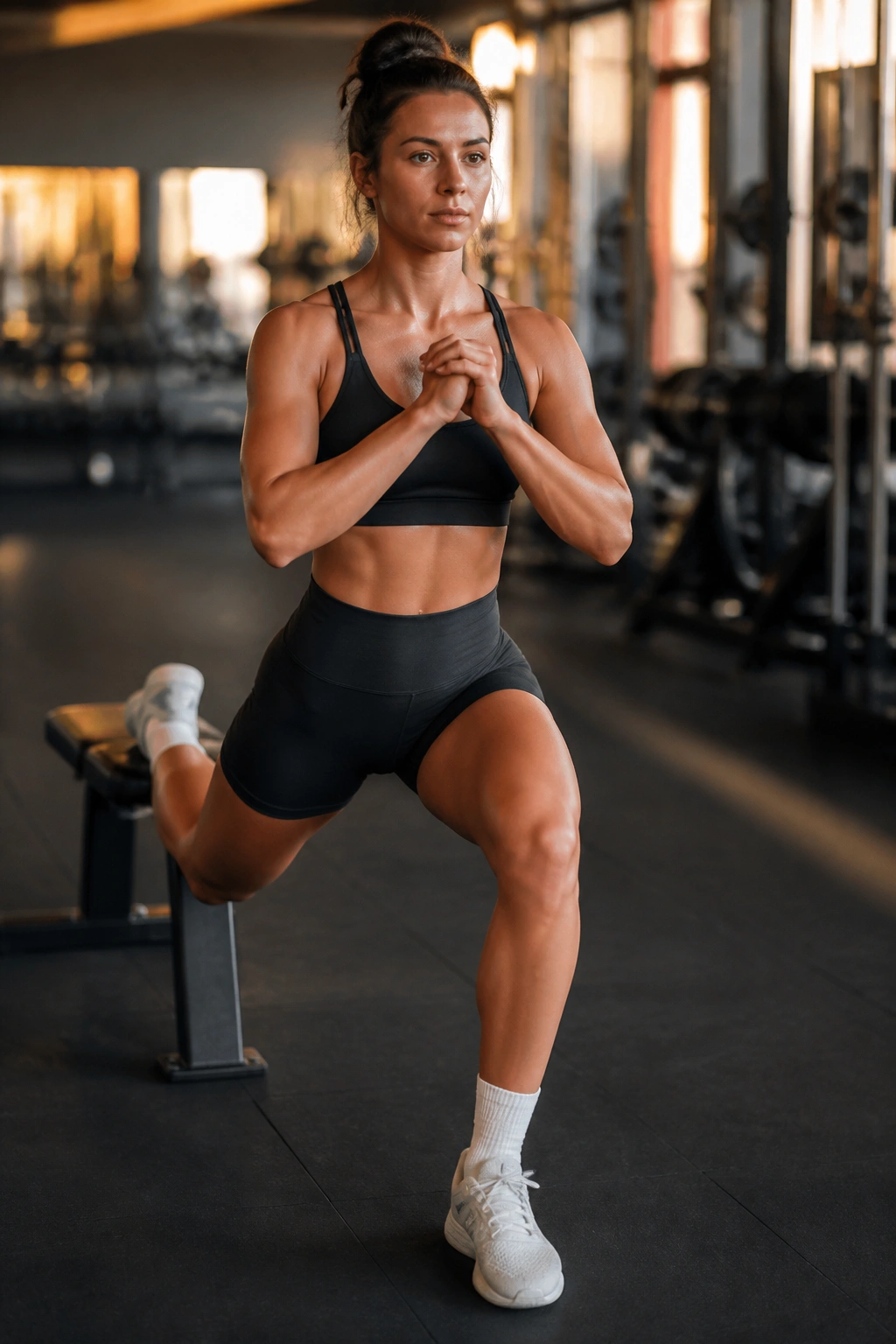
There is a reason why trainers call the Bulgarian split squat the “king” of single-leg exercises. It is grueling, it is uncomfortable, and it is brutally effective. By elevating your back foot on a bench or chair, you force your front leg to carry almost your entire body weight, plus whatever external resistance you choose to hold.
Handling the Intensity
If you have never done these, start without weight. The balance aspect is difficult enough for beginners. Once you can comfortably perform 12 repetitions on each leg with good form, add dumbbells. Holding a weight in each hand is the standard, but you can also hold one weight in the “goblet” position against your chest to force your core to stabilize even more.
Why They Work
The increased range of motion from the back foot elevation creates a massive stretch in the glutes of the front leg. You are training unilateral strength, which means your brain has to work harder to control the movement. This neurological demand is part of what leads to significant muscle tone over time. You simply cannot “cheat” a Bulgarian split squat.
5. Glute Bridges
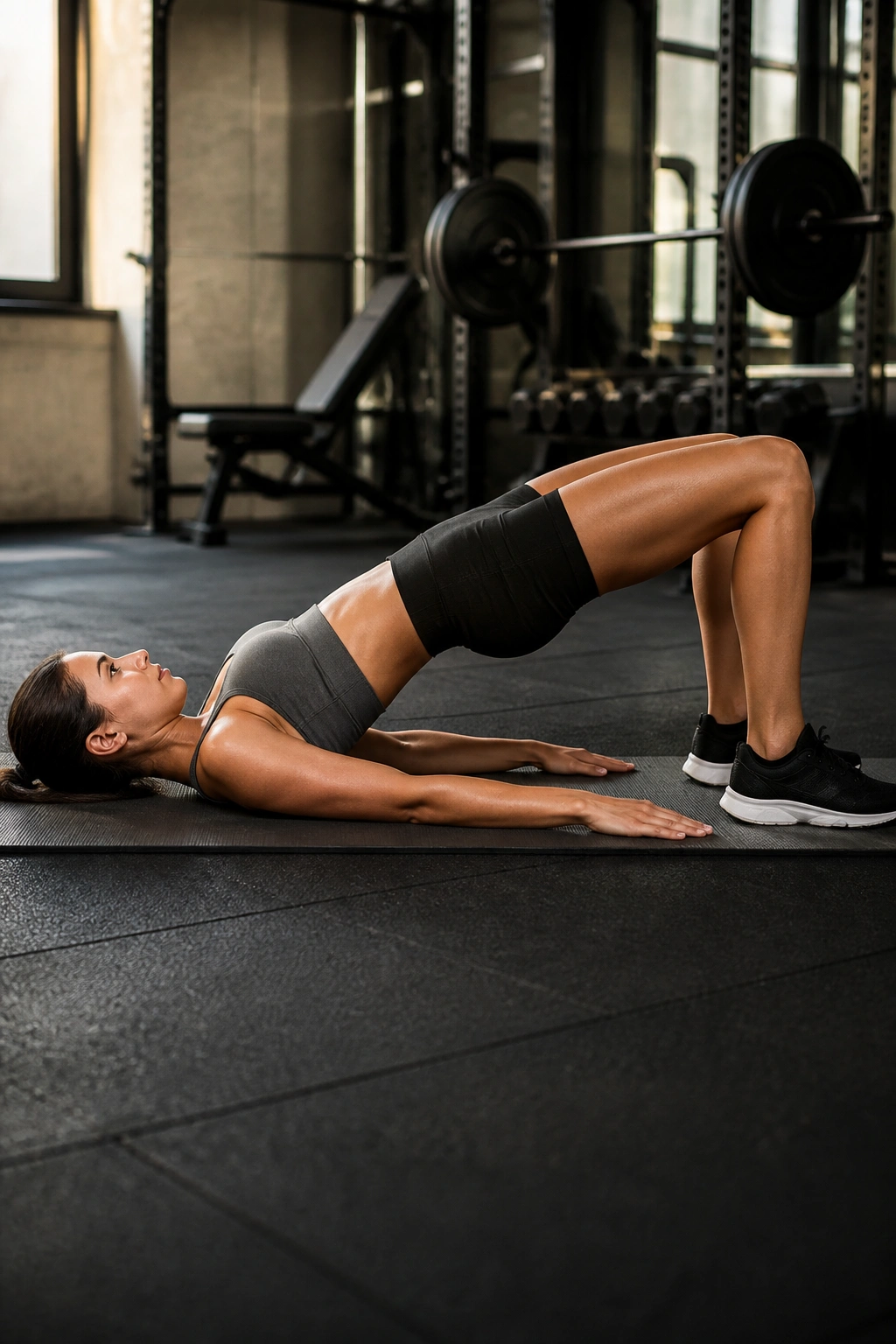
Isolation matters. While squats and deadlifts work the glutes, they are compound movements. Sometimes you need to isolate the gluteus maximus to really force it to grow. The glute bridge allows you to load the hips without the spinal fatigue that comes from heavy standing movements.
The Mind-Muscle Connection
This is the one exercise where you need to be selfish. Don’t worry about how much weight is on the bar—worry about how hard you can squeeze your glutes. When you reach the top of the bridge, hold for a second and contract your glutes as hard as possible. Imagine you are trying to crack a walnut between your cheeks.
How to Progress
- Bodyweight: Start with two legs, focusing on the squeeze.
- Single-Leg: Once bodyweight becomes easy, lift one leg off the ground and bridge with only the other. This doubles the load on the working glute.
- Weighted: Place a barbell or a heavy dumbbell across your hips. Use a pad or a rolled-up towel to protect your hip bones from the pressure.
You will find that your glutes respond very well to high-volume training. Unlike legs, which might need heavy loads, the glutes often benefit from 15-20 reps with a controlled tempo and a hard peak contraction.
6. Lateral Lunges
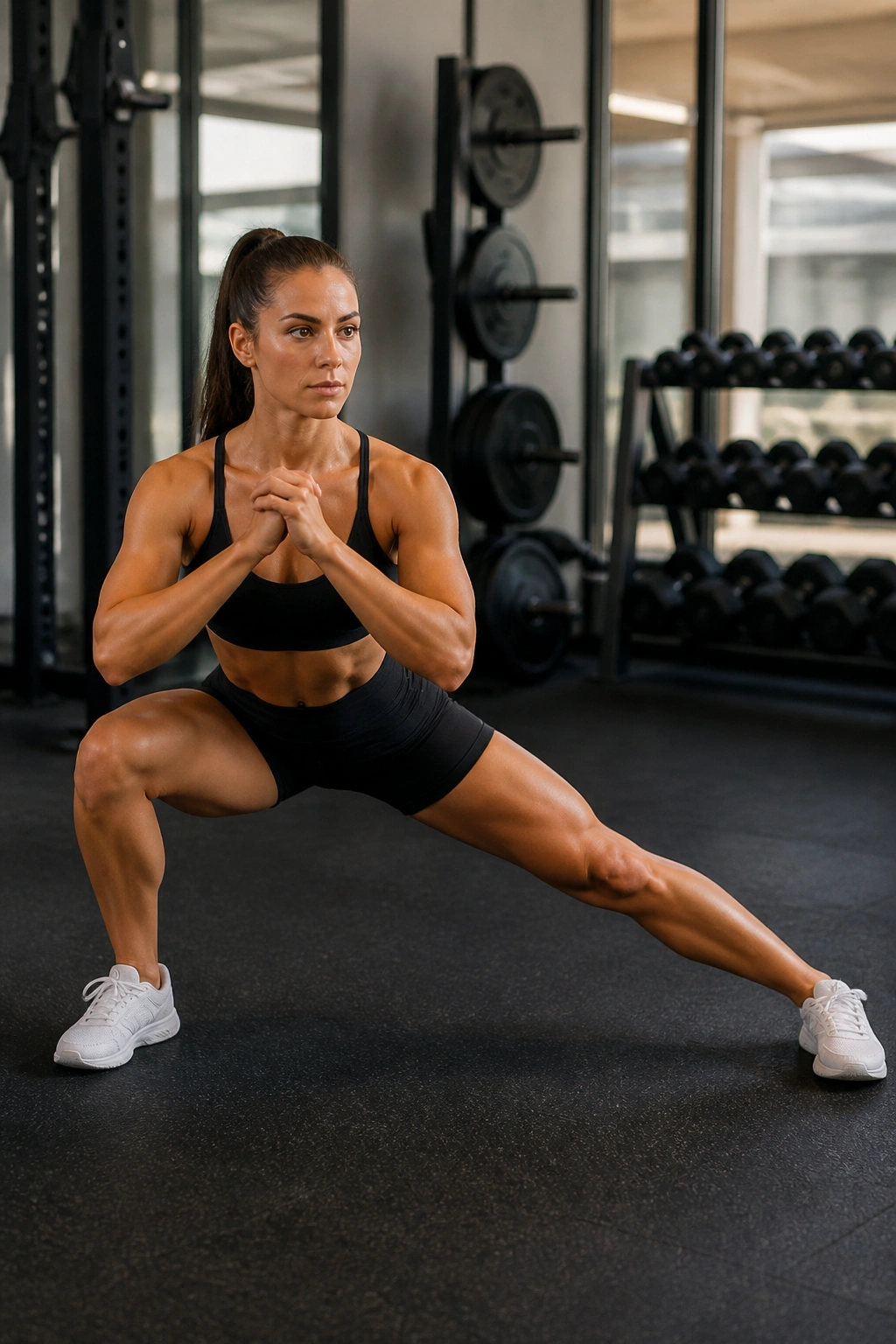
Most people spend their entire lives moving forward and backward. Their legs reflect this, developing strength only in the sagittal plane. To get truly sculpted, defined legs, you need to move side-to-side. Lateral lunges target the adductors (inner thighs) and the glute medius (the muscle on the side of the hip).
Why They Are Often Neglected
Lateral lunges feel awkward. We aren’t used to shifting our weight laterally, and the stretch in the inner thigh can be uncomfortable if you aren’t used to it. However, this discomfort is exactly where the change happens. By training in the frontal plane, you hit muscles that squats and lunges leave untouched.
The Technique
Step out to the side with one foot, keeping your toes pointed forward. Push your hips back as you bend the knee of the stepping leg, while keeping the other leg completely straight. You should feel a stretch in the inner thigh of the straight leg and tension in the glute of the bent leg. Push off with your bent leg to return to the standing position.
7. Step-ups
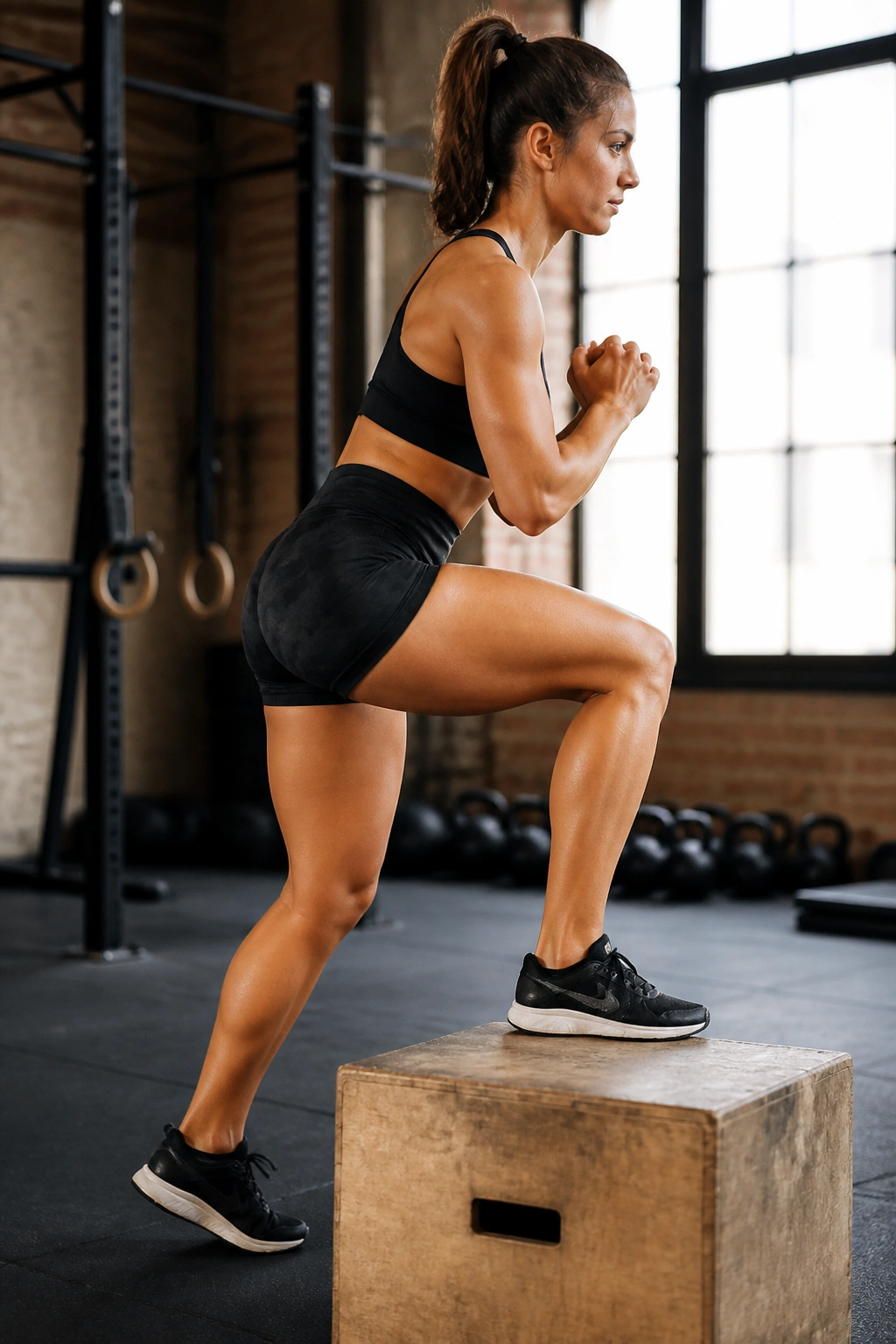
Step-ups are a fantastic exercise for glute and quad definition because they require you to lift your body weight vertically, which is a high-effort movement. The trick is to avoid “cheating.” Most people push off their back foot to get up, which turns a glute exercise into a calf-dominant hop.
How to Do Them Right
Find a box or a bench that puts your knee at about a 90-degree angle when your foot is on it. Place your whole foot on the surface—do not let your heel hang off. Lean your torso slightly forward to bias the glutes, then drive through your front heel to stand up. The back foot should just be there for balance.
Avoiding the Momentum Trap
Do not use the back leg to push off the floor. If you find yourself pushing, you are essentially doing a jump. The goal is to make the front leg do 100% of the work. If you have to push with the back leg, the box is too high, or the weight is too heavy. Lower the box or the weight and focus on pure, vertical strength.
8. Sumo Deadlifts
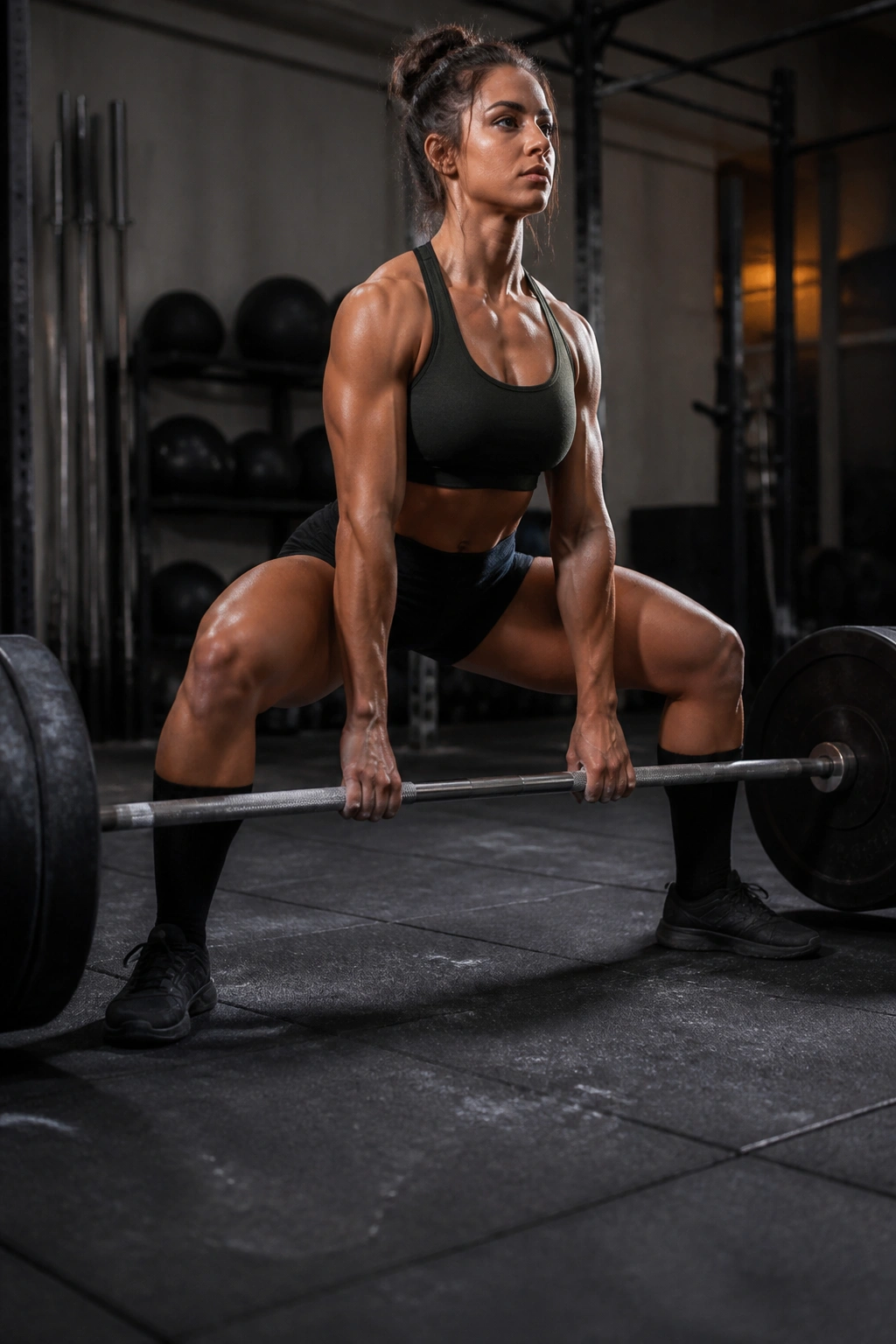
The sumo deadlift is a wide-stance variation of the standard deadlift. Because your feet are wide and your hands are inside your knees, your torso stays more upright, shifting the emphasis from the lower back to the quads, inner thighs, and glutes. It is a fantastic movement for building thickness in the legs.
The Stance Matters
Set your feet wider than shoulder-width, with your toes pointed out at roughly 45 degrees. When you squat down to grab the bar (or the dumbbell), keep your knees pushed out, tracking over your toes. This alignment is critical. If your knees collapse inward, you lose power and risk injury.
Why It Sculpts
The wider stance forces the adductors (inner thighs) to work harder to stabilize the legs. This helps tone the area that is notoriously difficult to hit with standard squats. Treat this as a strength movement. Aim for lower reps with higher weight to force the muscle to adapt.
9. Leg Press
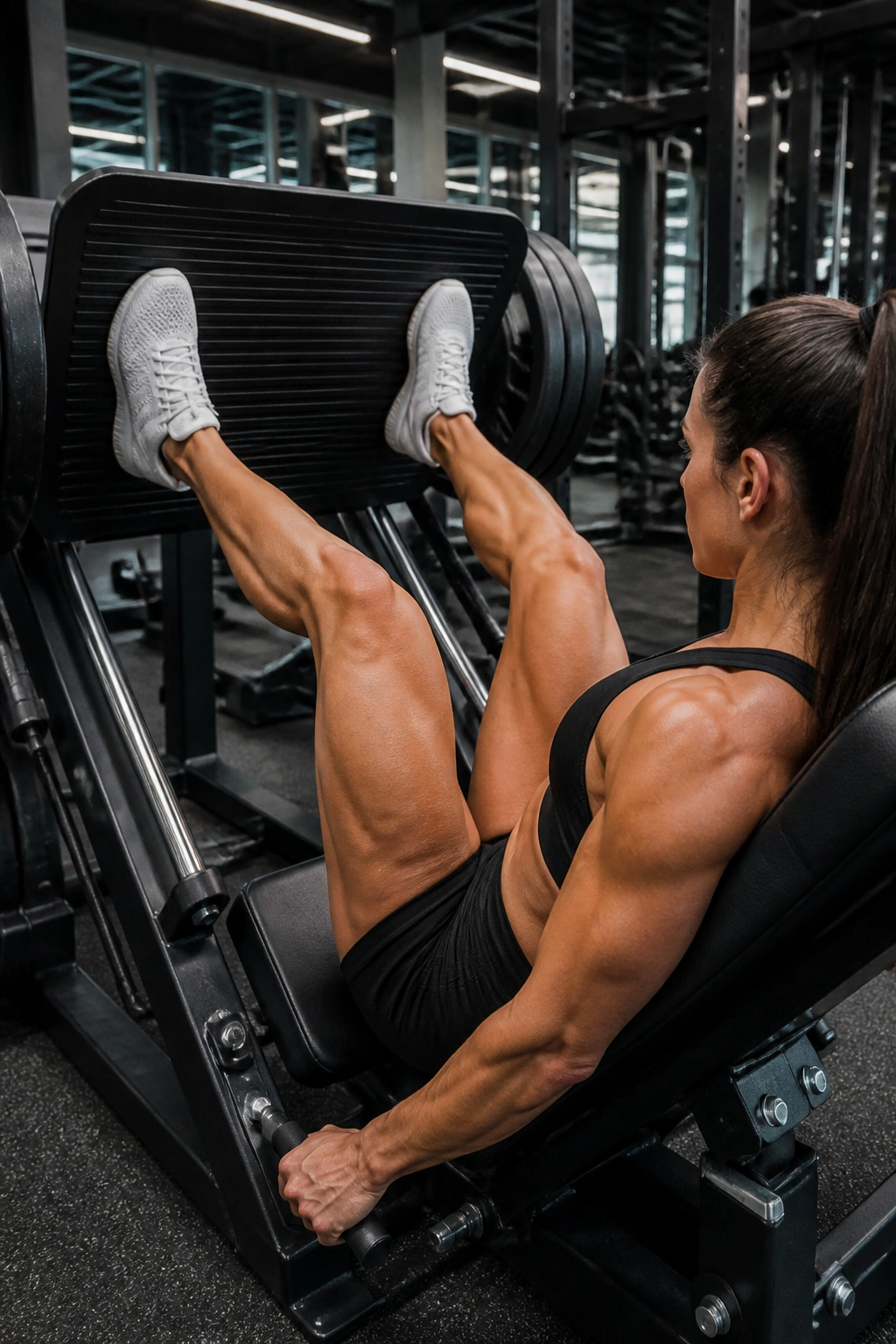
While free weights are generally superior for overall athleticism, the leg press is a legitimate tool for hypertrophy. It allows you to load the legs with significant weight without having to worry about balance or spinal stabilization. If your goal is muscle size and definition, the leg press is hard to beat.
Proper Foot Placement
Where you put your feet changes the stimulus:
- High and Wide: This places more emphasis on the glutes and hamstrings.
- Low and Narrow: This shifts the focus to the quadriceps.
- Standard: A shoulder-width placement with feet in the middle of the platform provides a balanced hit to the entire leg.
Safety Checks
Never lock your knees at the top of the movement. Keep a slight bend in the knee joint at all times. Locking out can cause the weight to rest on your joints rather than your muscles, which is how injuries happen. Also, ensure your lower back stays pressed firmly against the seat. If your butt starts to curl off the seat, you’ve gone too deep for your current mobility.
10. Kettlebell Swings
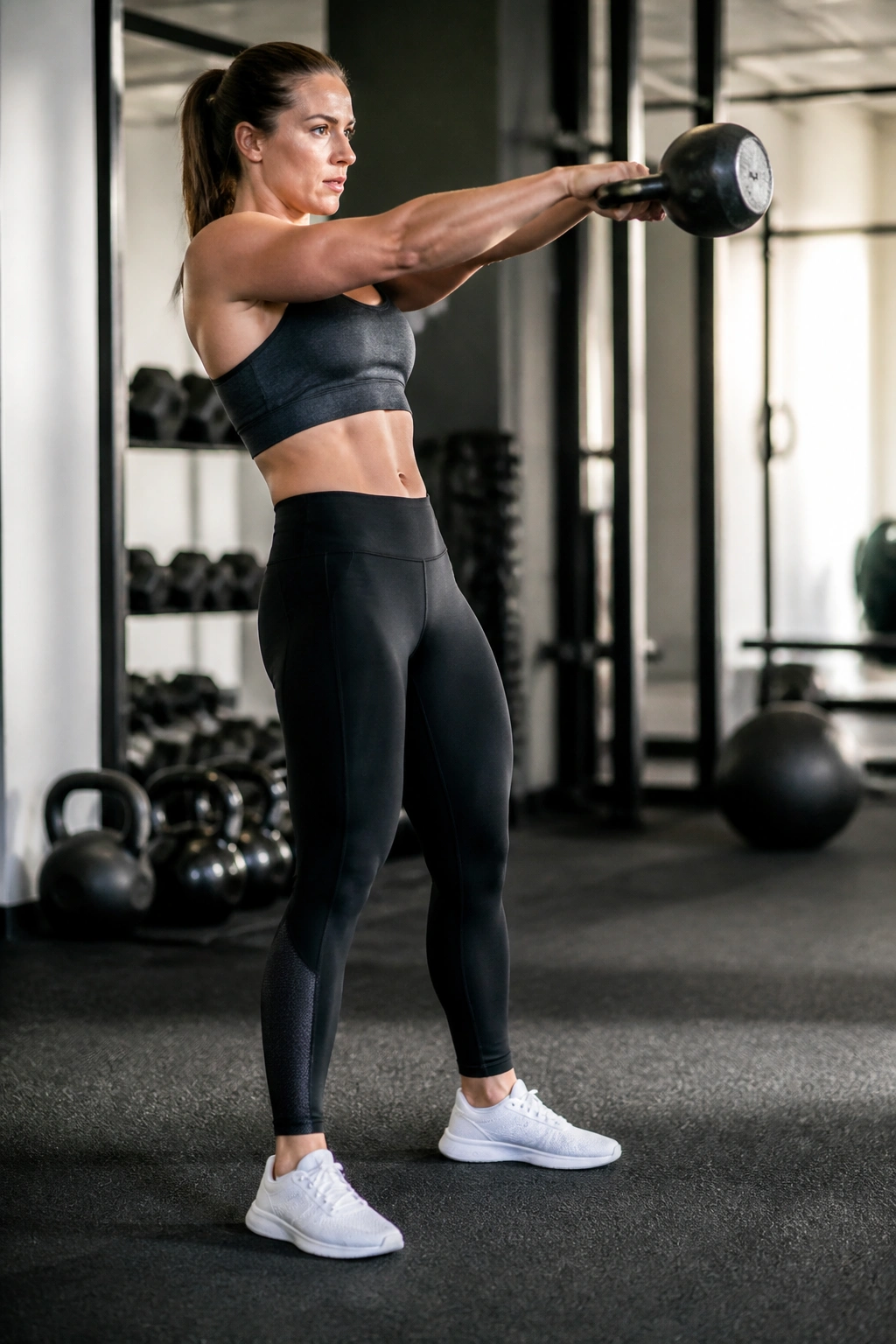
The kettlebell swing is a hinge movement that functions more like a cardio-strength hybrid. It is not a squat; it is a rapid, explosive hip hinge. Because you are moving weight dynamically, you are teaching your muscles to produce force quickly. This is essential for the “athletic” look of defined legs.
The Mechanics of the Swing
Think of the kettlebell as a pendulum. You are using your hips to drive the bell forward, not your arms. If you find yourself lifting the bell with your shoulders, you are doing it wrong. The force should come from your glutes and hamstrings snapping your hips forward.
Why They Work for Definition
The high-volume nature of kettlebell swings burns calories while simultaneously hammering the posterior chain (glutes, hamstrings, and lower back). You will get winded, and your legs will feel a deep, burning fatigue. This metabolic stress is a powerful signal for muscle endurance and definition.
11. Calf Raises
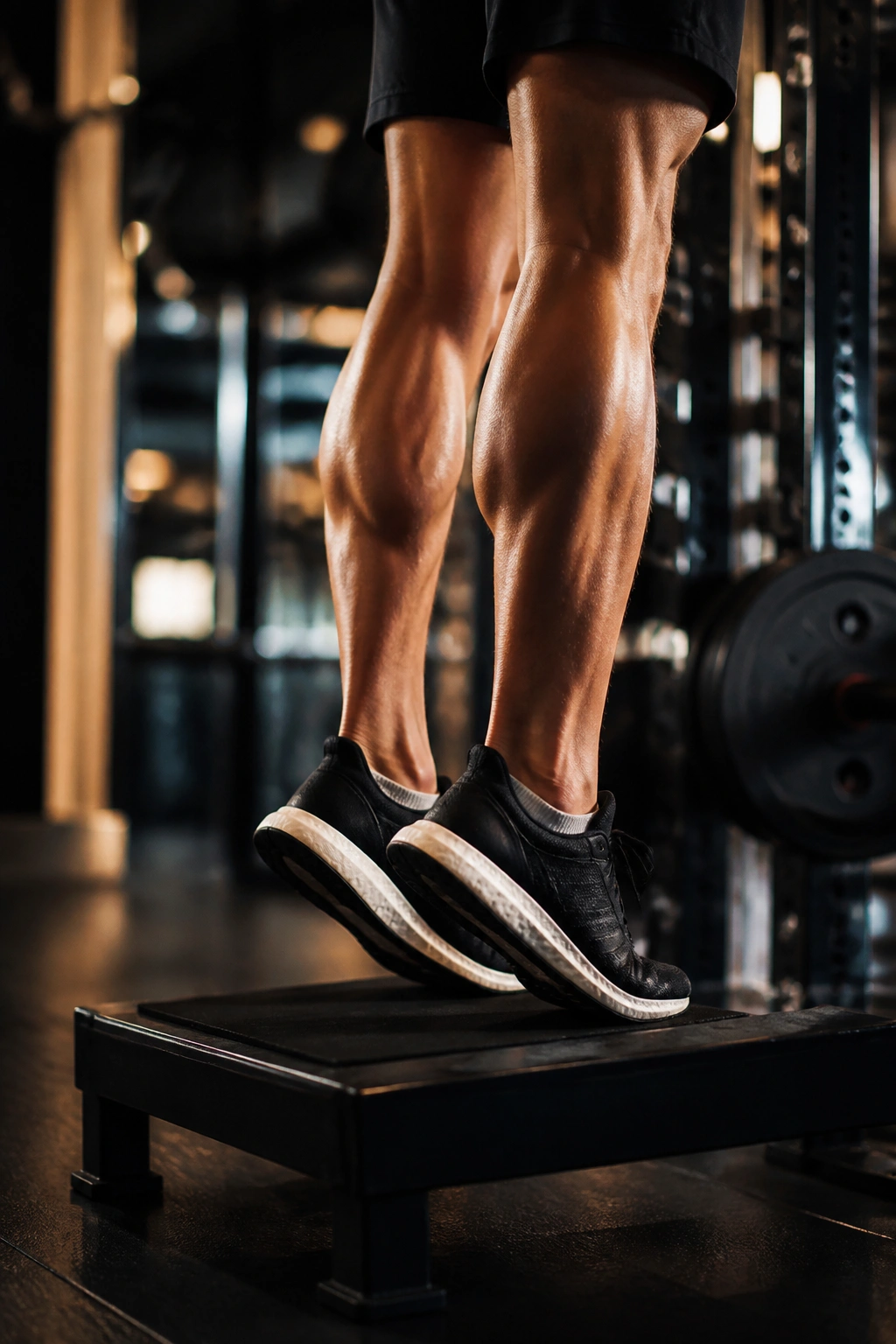
Calves are the most stubborn muscle group in the body. They are built for endurance because we walk on them all day. To change their shape, you have to hit them with intent. A standard calf raise is often insufficient; you need to control the tempo to force them to react.
The Secret to Growth
Most people bounce through calf raises. They rely on the Achilles tendon to spring them up, which uses zero muscle effort. To build calf definition, you must eliminate the bounce. Pause at the bottom of the movement for two seconds to kill the stretch reflex, then slowly rise up onto your toes. Squeeze at the top, then lower yourself slowly over three seconds.
Standing vs. Seated
- Standing Raises: These prioritize the gastrocnemius (the upper, larger part of the calf). Do these with straight legs.
- Seated Raises: These prioritize the soleus (the deeper, lower part of the calf). If you want that full, diamond-shaped calf look, you need to do both.
12. Curtsy Lunges
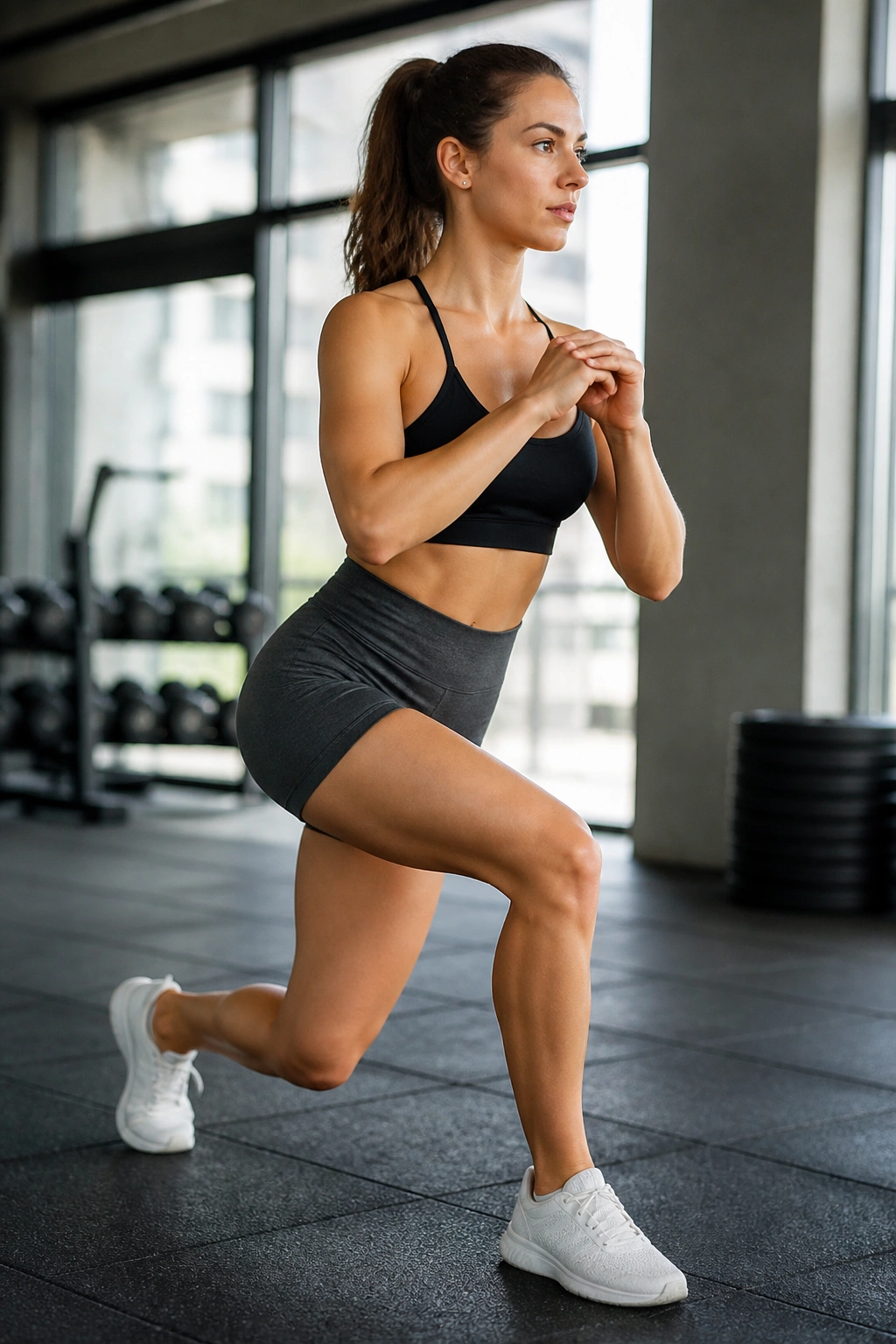
The curtsy lunge is a variation of the reverse lunge that targets the gluteus medius and minimus—the muscles on the side of your hip. By stepping diagonally behind your front leg, you stretch the outer hip, which triggers those muscles to work in a way that standard forward lunges cannot match.
Why They Are a “Hidden” Gem
Many people have strong glute max (the big muscle in the back) but weak side-glutes. This imbalance can lead to knee pain and a lack of definition on the outer hip. Curtsy lunges directly address this weakness. They are also incredibly humbling; you will find that you don’t need much weight to feel the intensity.
Form Check
Keep your hips square to the front, even as your leg crosses behind. The tendency is to rotate your entire body to follow the back leg, but you want to resist that. Fight the rotation and keep your torso facing forward. This is where the tension builds up in the side of the glute.
13. Box Jumps
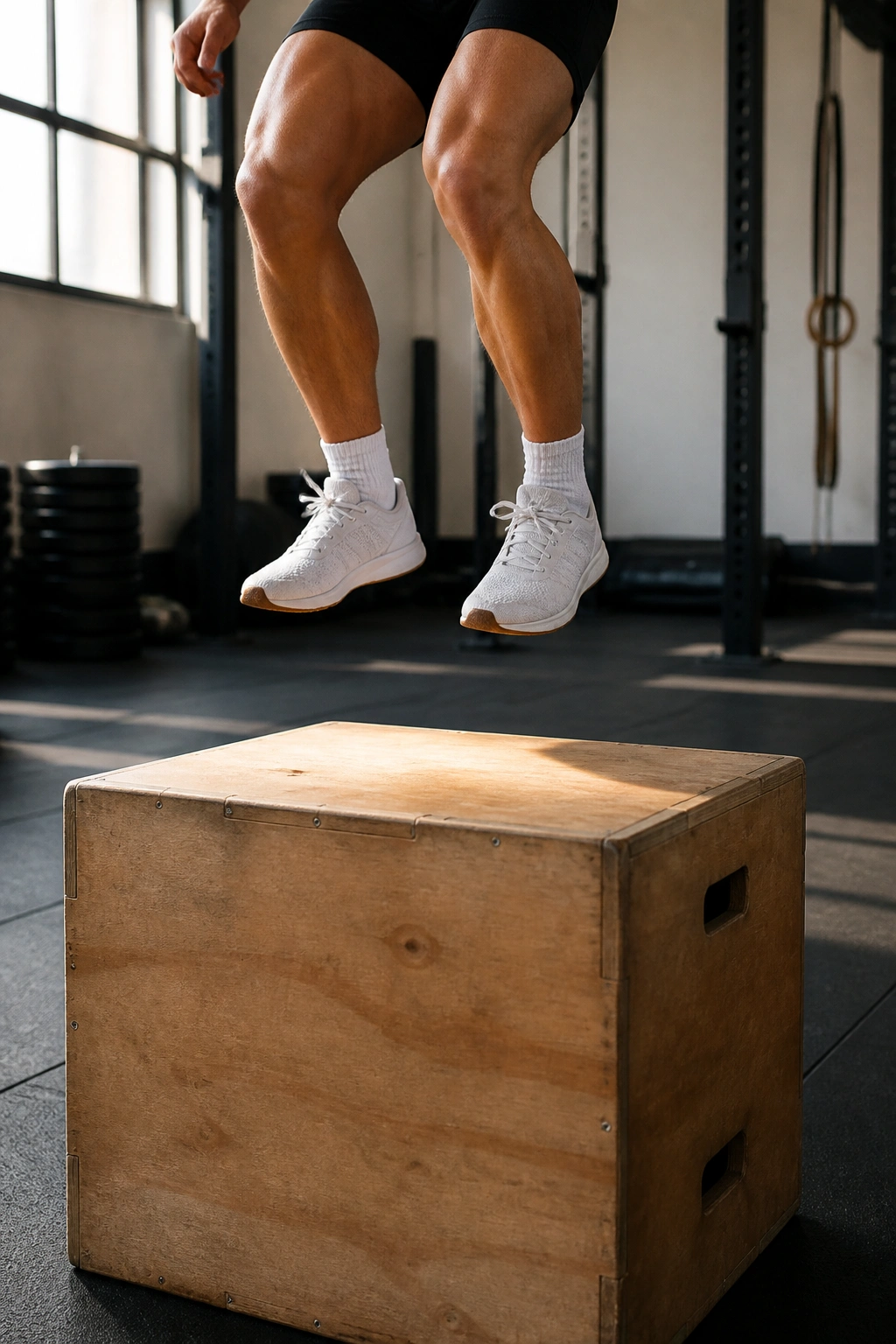
Plyometrics are the final piece of the puzzle for “sculpted” legs. While weightlifting builds mass, plyometrics build power and speed. Box jumps recruit fast-twitch muscle fibers, which are the ones that grow the most and provide that snappy, athletic definition.
Safety First
If you are new to jumping, start with a low box. Focus on a soft landing. The landing is actually more important than the jump. If you land with a “thud” that shakes the ground, you are putting too much stress on your joints. You should land quietly, on the balls of your feet, with your knees slightly bent to absorb the impact.
How to Integrate
Do not do these for high reps. Plyometrics are about quality, not quantity. Perform 3 sets of 5-8 jumps at the beginning of your workout when you are fresh. If you do them when you are tired, your form will break down, and you risk an injury. Think of this as training your nervous system, not just fatiguing your muscles.
14. Wall Sits
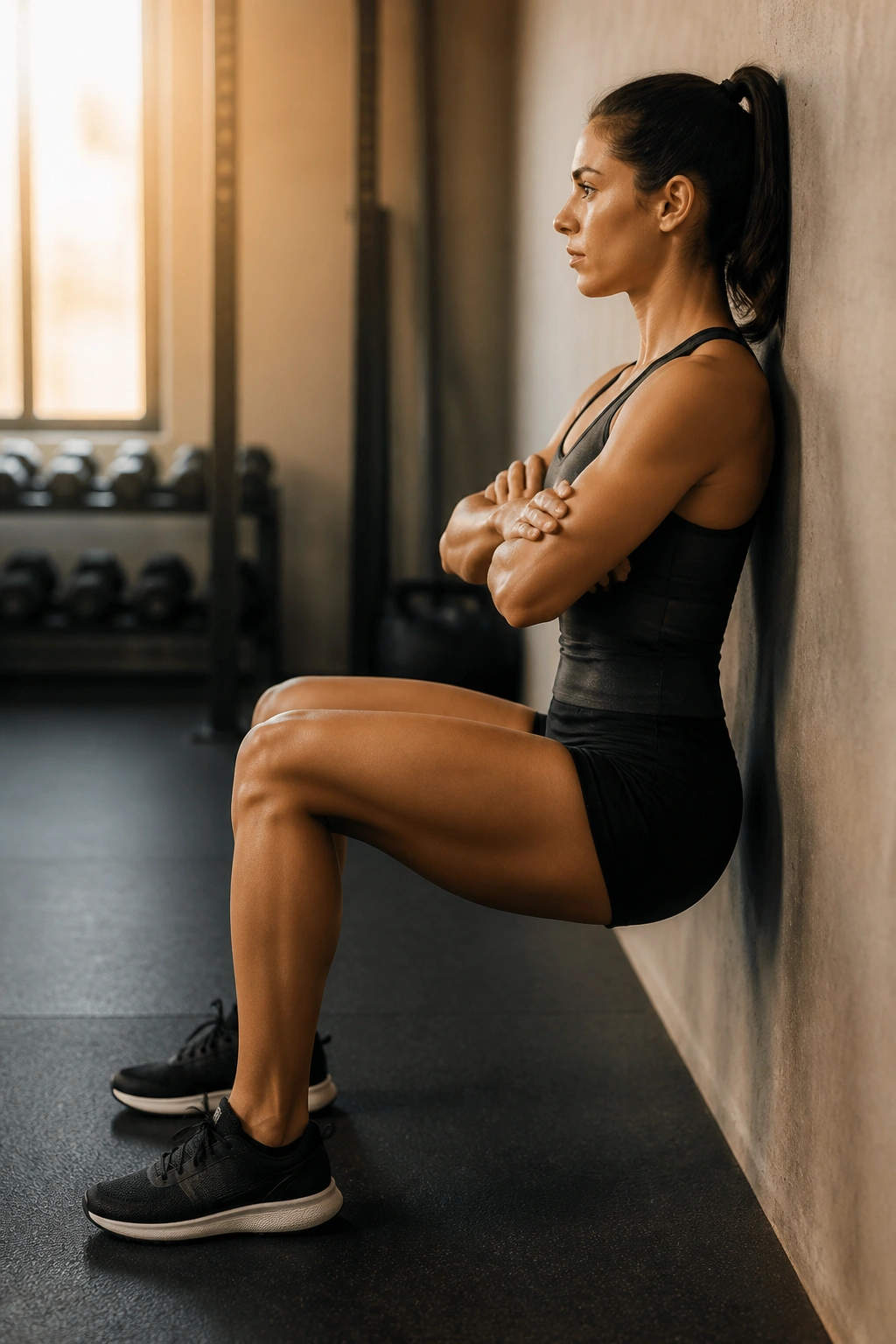
Wall sits are an isometric exercise. Unlike the other moves on this list, there is no movement. You are holding a static position, which forces your muscles to contract constantly to keep you from sliding down. It sounds easy, but two minutes into a wall sit, your quads will be screaming.
Why Isometrics Matter
Isometrics are excellent for building endurance in the quads and strengthening the tendons around the knee. They also require a significant amount of mental toughness. When your legs start to shake, that is the moment the work begins. Do not give up just because it hurts.
Making It Harder
If a basic wall sit is easy, you aren’t doing it right, or you aren’t holding it long enough. Increase the intensity by holding a weight in your lap or doing single-leg wall sits. Even 30 seconds on one leg will make your quadriceps feel like they are on fire.
15. Cable Kickbacks
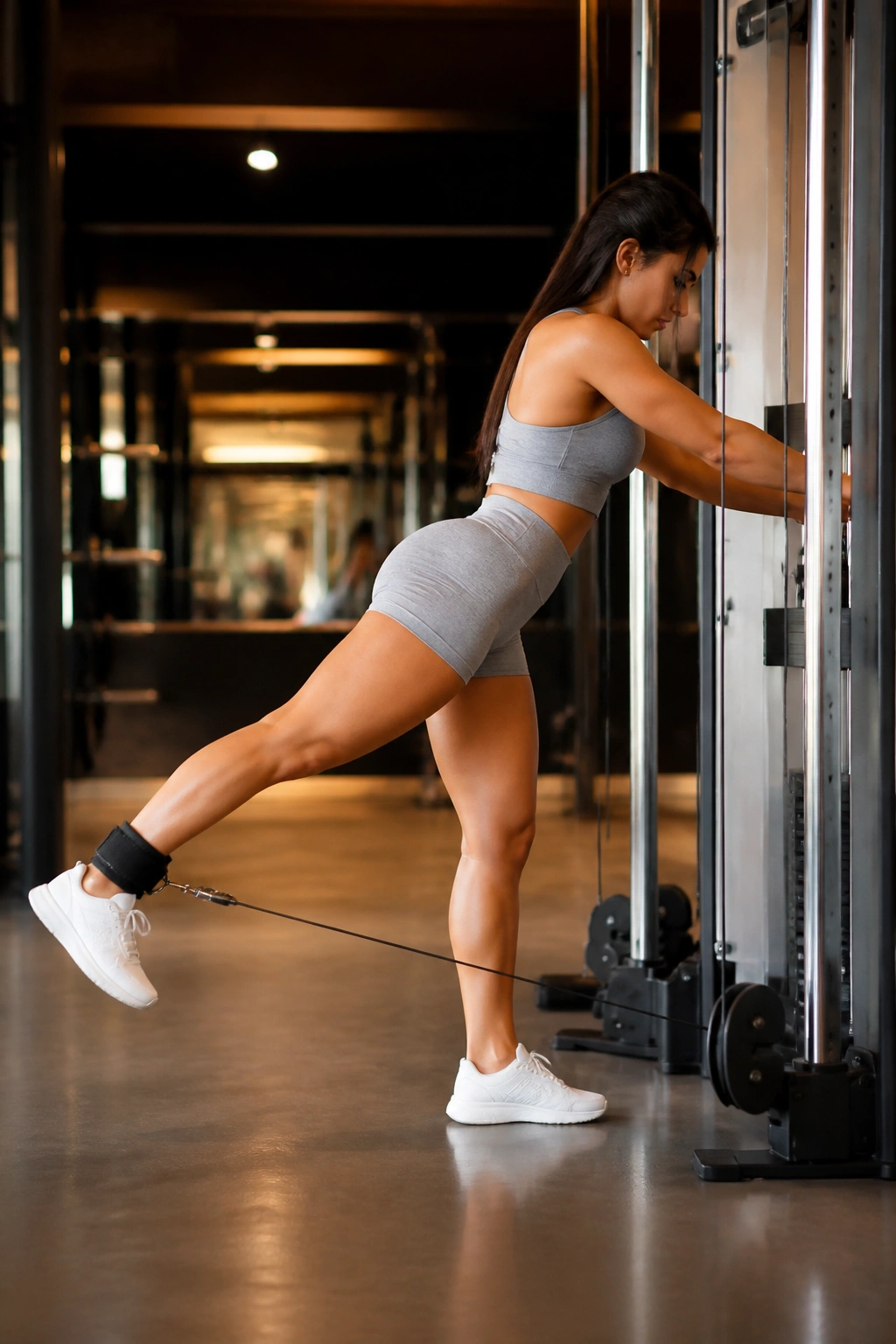
Sometimes you need a movement that isolates the glutes without any quad or hamstring interference. The cable kickback is perfect for this. By using a cable machine, you maintain constant tension on the glute throughout the entire range of motion, which is something you can’t always do with free weights.
The Setup
Attach a cuff to your ankle and set the cable to the lowest position. Stand facing the machine, holding onto the frame for balance. Keep your core tight—do not arch your lower back—and kick your leg straight back behind you. Think about leading with your heel, not your toes.
Achieving That Peak Contraction
At the top of the movement, squeeze your glute as hard as possible. You should feel a deep contraction in the center of your butt cheek. Control the eccentric phase; do not let the weight slam back down. Bring your leg back to the starting position slowly, keeping the cable taut the entire time.
Final Thoughts
Sculpting your legs is a process of patience and consistent effort. There is no shortcut, no magic supplement, and no “secret” exercise that will bypass the need for hard work. It comes down to basic physics: apply resistance, recover, and repeat. If you follow this approach, you will see the definition you are working for.
Remember that recovery is part of the training. Your legs grow when you are resting, not when you are in the gym. Prioritize sleep, protein intake, and hydration. If your legs are constantly sore and you are never progressing in weight, you may need to adjust your volume or take a deload week.
Finally, do not be afraid of heavy weights. The fear of “bulking up” too much is almost always unfounded. Building visible muscle takes years of dedicated, heavy lifting. For now, focus on intensity, form, and progressive overload. Your legs are the foundation of your entire body; treat them with the respect that comes from challenging them properly.
