



There is a specific kind of burn that happens when you isolate the adductors—the muscles along your inner thigh—that feels unlike anything else. Most leg exercises focus on the front (quadriceps) or the back (hamstrings and glutes). That’s fine for general strength, but it leaves a massive gap in lower body stability and aesthetic definition. When you stand with your feet wide and toes pointed outward, you’re forcing those inner thigh muscles to handle the bulk of the load.
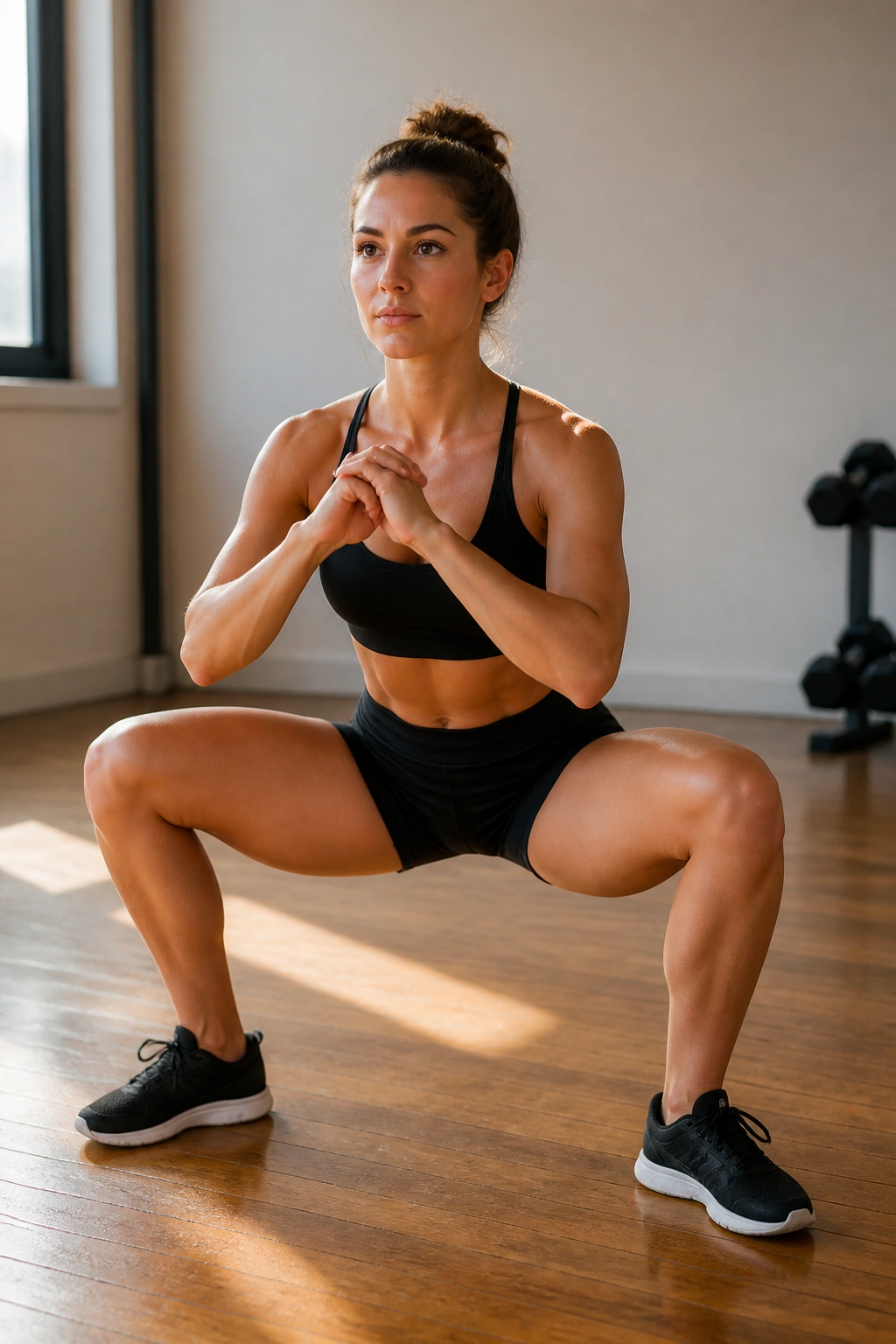
The plie squat—sometimes called the sumo squat—is the most effective tool for this because it changes the hip angle. Instead of a narrow, hinge-focused movement, you are moving into deep external rotation. Your knees must track directly over your toes, and your pelvis has to stay neutral to protect your lower back. When you get this form right, the connection to the inner thighs is immediate and undeniable.
However, doing the same basic squat over and over becomes monotonous. Your muscles adapt quickly, plateauing just when they should be getting stronger. By cycling through variations, you keep the nervous system guessing, improve your balance, and force the adductor longus, magnus, and brevis muscles to work from different angles. These movements require focus, patience, and a bit of grit to master.
1. Classic Plie Squat
This is the foundational movement. If you cannot master this, the variations that follow will only reinforce bad habits. Start with your feet wider than shoulder-width apart, toes turned out at about a 45-degree angle. Keep your chest up and your spine long, as if a string is pulling the crown of your head toward the ceiling.
The Mechanics of the Movement
As you descend, imagine sliding your back down an invisible wall. Your knees should track directly over your second or third toe. If they cave inward, you’re losing the engagement of the adductors and putting unnecessary strain on the knee joint. Go down until your thighs are roughly parallel to the floor, then drive through your heels to return to the starting position.
Pro tip: Squeeze your glutes at the top of the movement to fully extend the hips, but don’t hyperextend your lower back.
2. Plie Squat Pulse
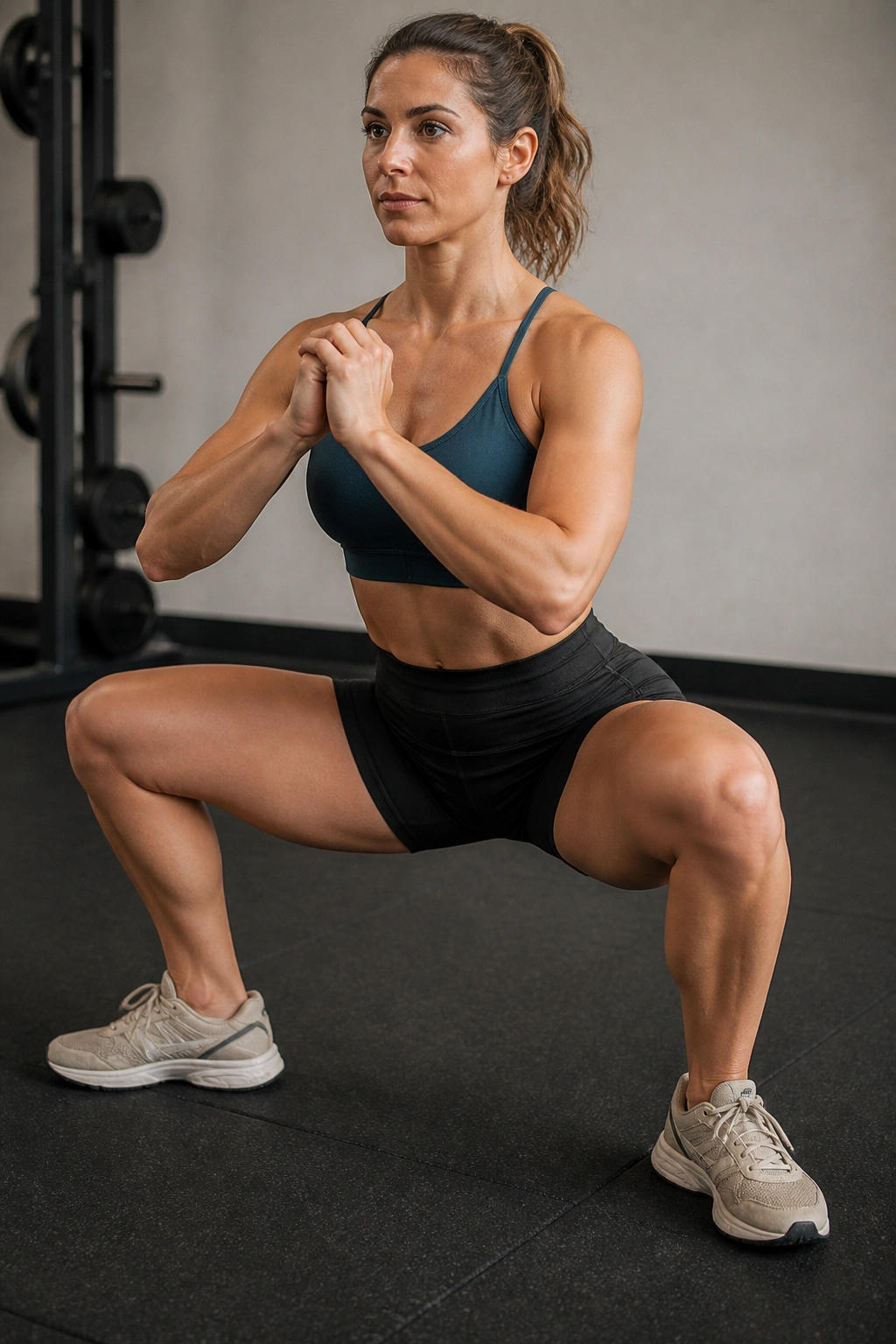
Sometimes the greatest gains happen in the smallest range of motion. Once you are at the bottom of a standard plie squat—where your inner thighs are already under maximum tension—you add the pulse. This increases “time under tension,” a physiological variable that triggers muscular endurance and metabolic stress in the fibers.
Why It Hurts So Good
By staying in the bottom third of the rep, you prevent the muscles from relaxing. You are staying in the “danger zone” where gravity is working hardest against you. Keep the pulses small—two to three inches up and down. Do not bounce; maintain control on both the ascent and descent. If your form starts to wobble, stand up and reset.
3. Plie Squat with Heel Raise
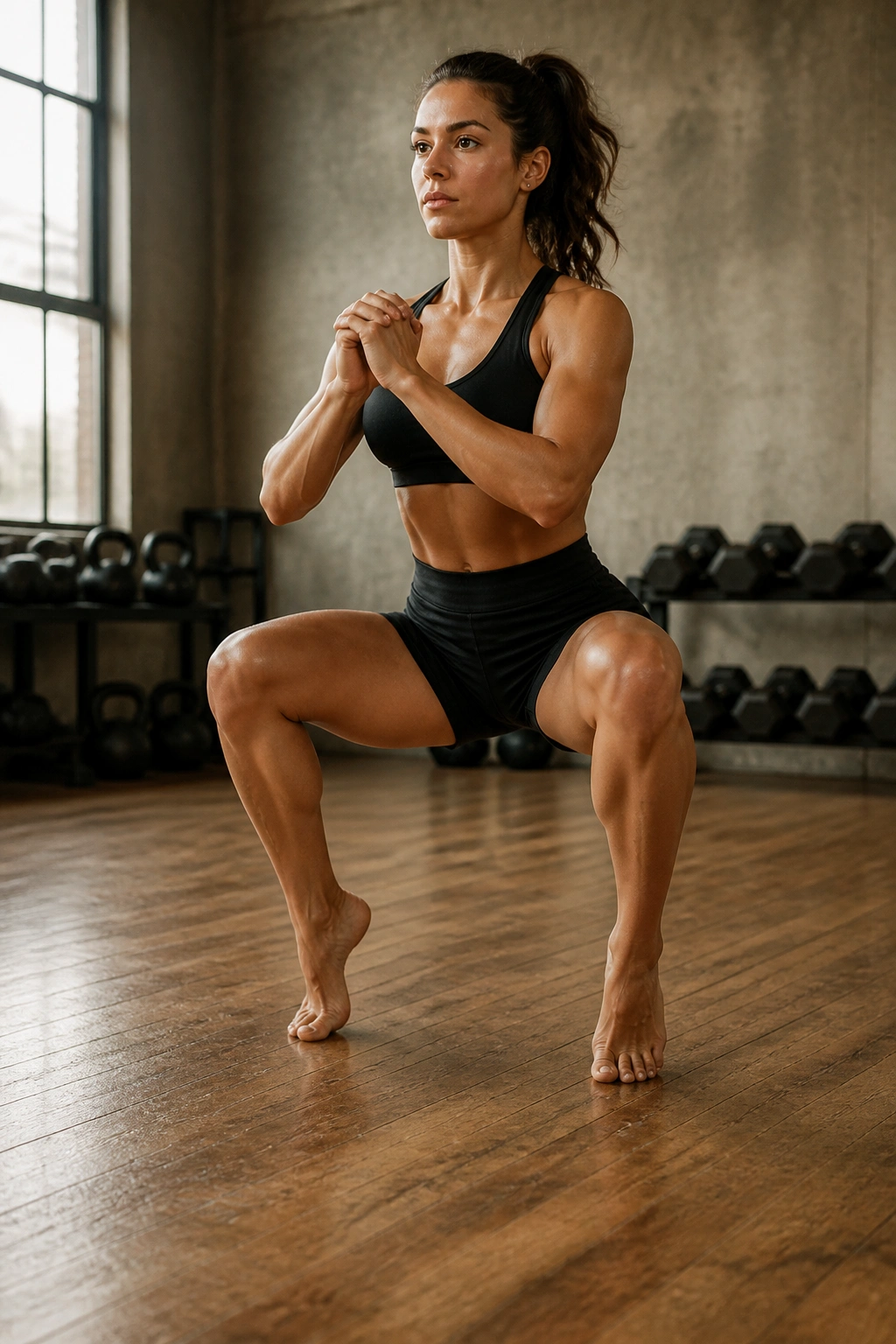
Adding a heel raise, or releve, shifts the stability requirement entirely. When you lift your heels off the floor, you destabilize your base, which forces your calves and ankles to stabilize the lower leg while your inner thighs hold the squat position. It’s an exercise in coordination as much as strength.
How to Execute
Perform your standard plie squat descent. Once you reach the bottom, pause. Carefully lift both heels off the ground, balancing on the balls of your feet, hold for a count of one, and then drop the heels back down. Drive up to stand. The trick is to keep your torso perfectly upright. If you lean forward, you’ll lose your balance immediately.
4. Weighted Sumo Deadlift
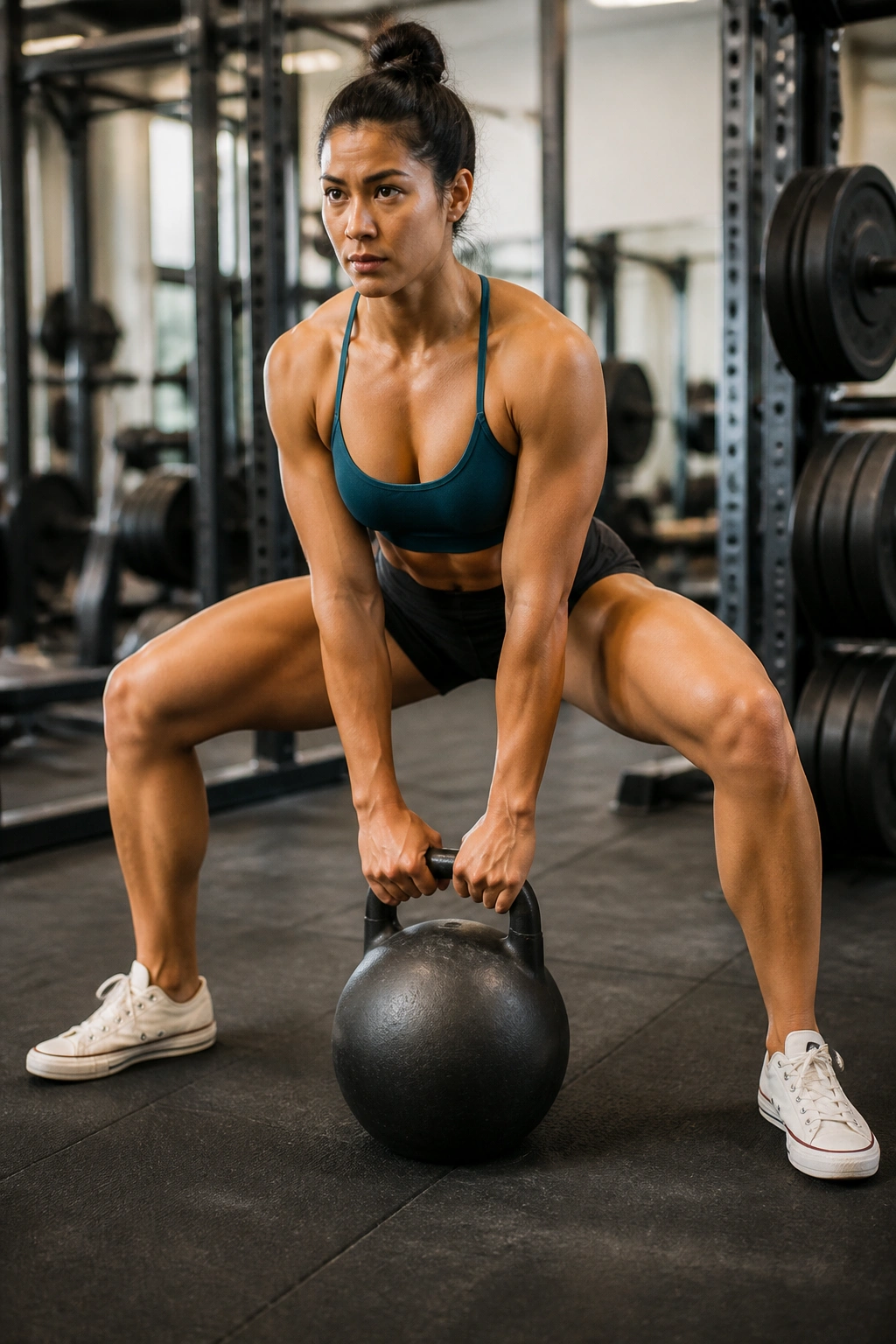
While technically a deadlift, this movement is the heavy-duty cousin of the plie squat. It targets the same adductor chain but allows you to load significant weight, which is essential for building actual muscle density in the inner thighs. The stance remains wide and toes-out, but the movement pattern is a hip hinge rather than a knee-dominant squat.
Technical Breakdown
Place a heavy dumbbell or kettlebell on the floor between your feet. Keep your back flat—never round your spine—and hinge your hips backward as you grab the weight. Keep the weight close to your shins as you stand up. The engagement in the inner thighs will be deeper here because the wide stance forces those muscles to initiate the lift from the floor.
5. Plie Squat to Side Lunge
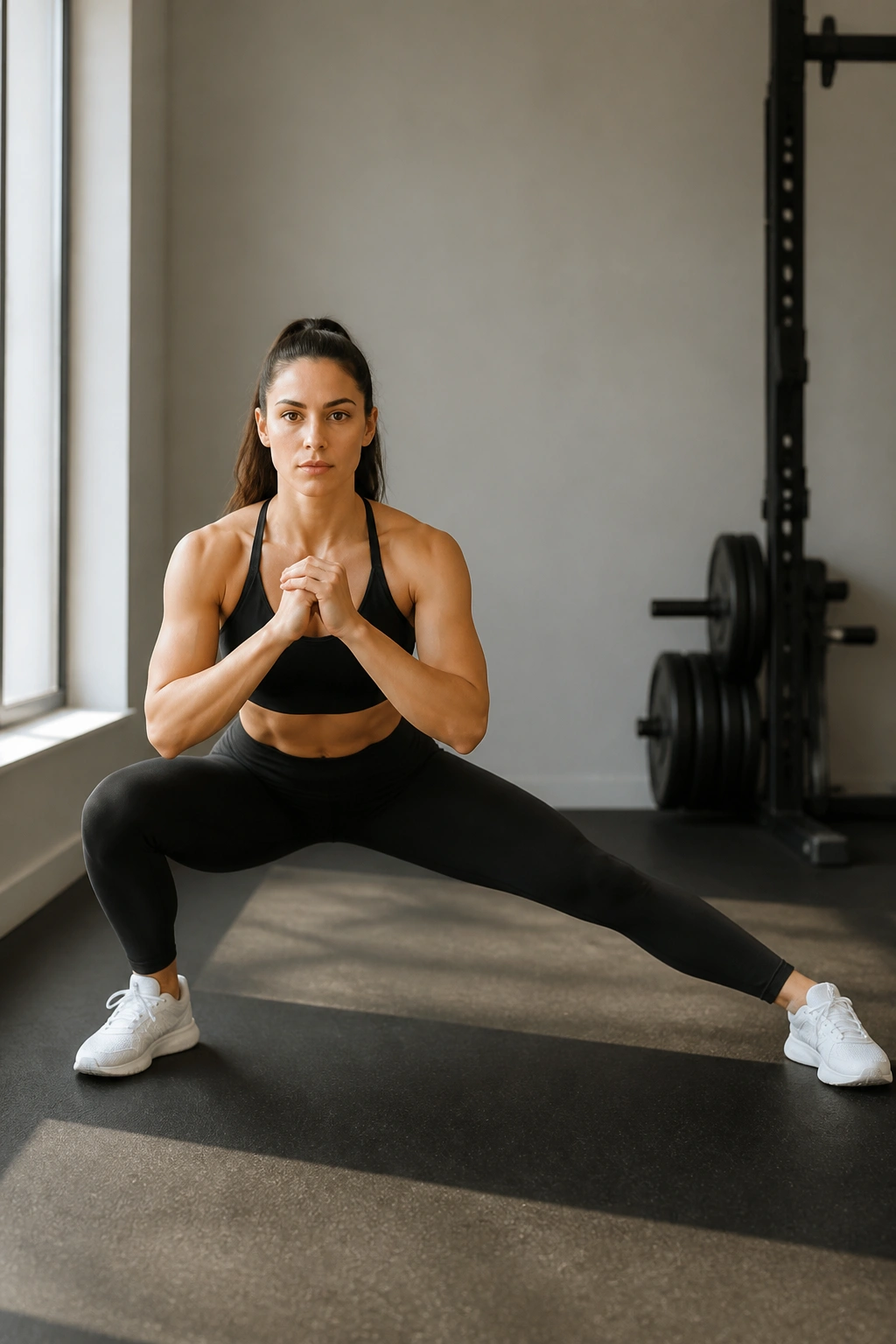
This variation bridges the gap between static squatting and lateral movement. The side lunge is one of the best ways to train the adductors through a full, dynamic range of motion. By alternating between a wide-stance plie and a side-to-side lunge, you are attacking the inner thigh fibers from both a vertical and a horizontal plane.
The Flow
Start in your plie stance. Lower into a squat, return to center, and then shift your weight entirely to the right leg, lunging deep while keeping the left leg straight. Return to the center plie, then repeat on the left side. The transition is where the work happens. Keep your core tight to prevent your torso from twisting during the weight shift.
6. Lateral Plie Walk
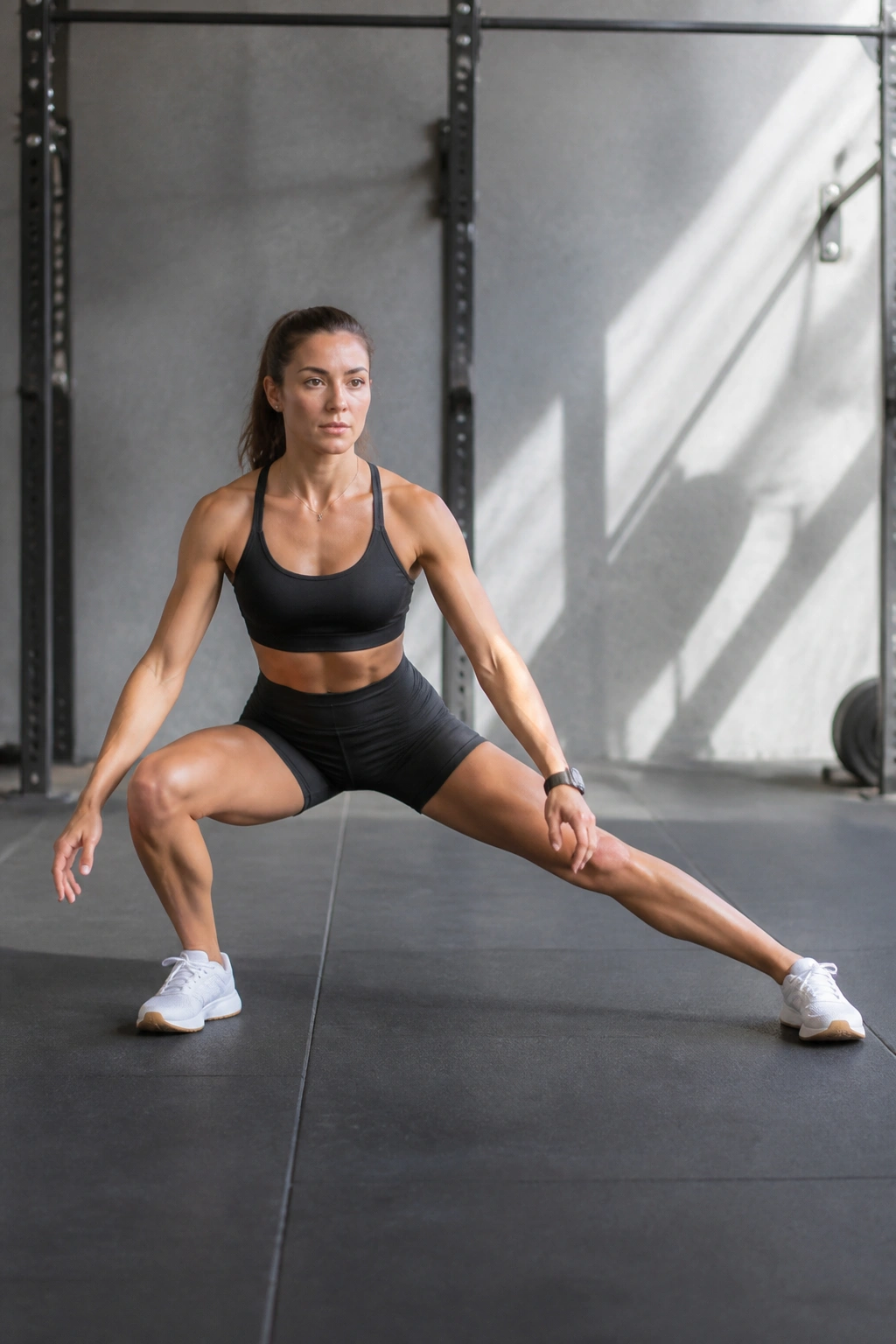
If you want to build endurance in the adductors, stop standing still. The lateral plie walk forces you to maintain that challenging, wide-stance squat position while physically moving across the room. It’s a classic way to fatigue the glutes and inner thighs simultaneously, as the glutes have to stabilize your pelvis while the adductors pull the legs together.
How to Make It Effective
Drop into a low plie squat—stay low the entire time. Take a step to the right with your right foot, followed by your left, maintaining that deep bend in the knees. Do not let your knees straighten out between steps. If you stand up, the tension vanishes. Walk for 30 seconds in one direction, then 30 seconds back.
7. Goblet Plie Squat
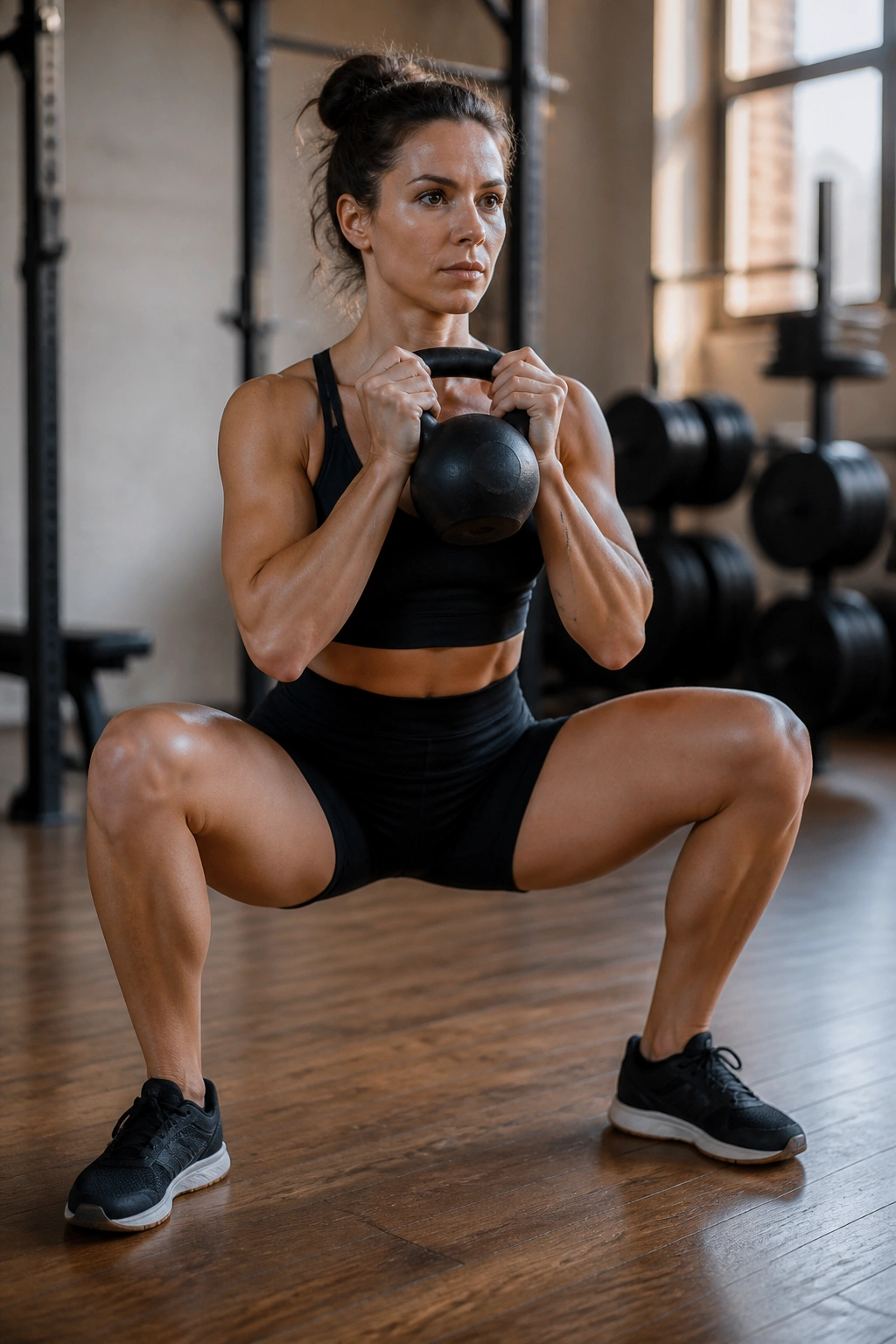
Holding a weight at your chest (the “goblet” position) is a fantastic way to force perfect posture. When you hold a dumbbell or kettlebell against your sternum, it acts as a counterbalance. If you start to hunch forward or collapse at the chest, the weight will pull you off balance. This forces your core to stay active and your spine to remain neutral.
The Setup
Hold a kettlebell by the horns or a dumbbell by one end right at your collarbone. Keep your elbows tucked in close to your body. Perform a deep plie squat, letting the weight sit between your legs as you descend. Because your center of gravity has shifted, you will likely find you can get deeper into the squat than with a bodyweight-only version.
8. Plie Squat with Alternating Knee Tap
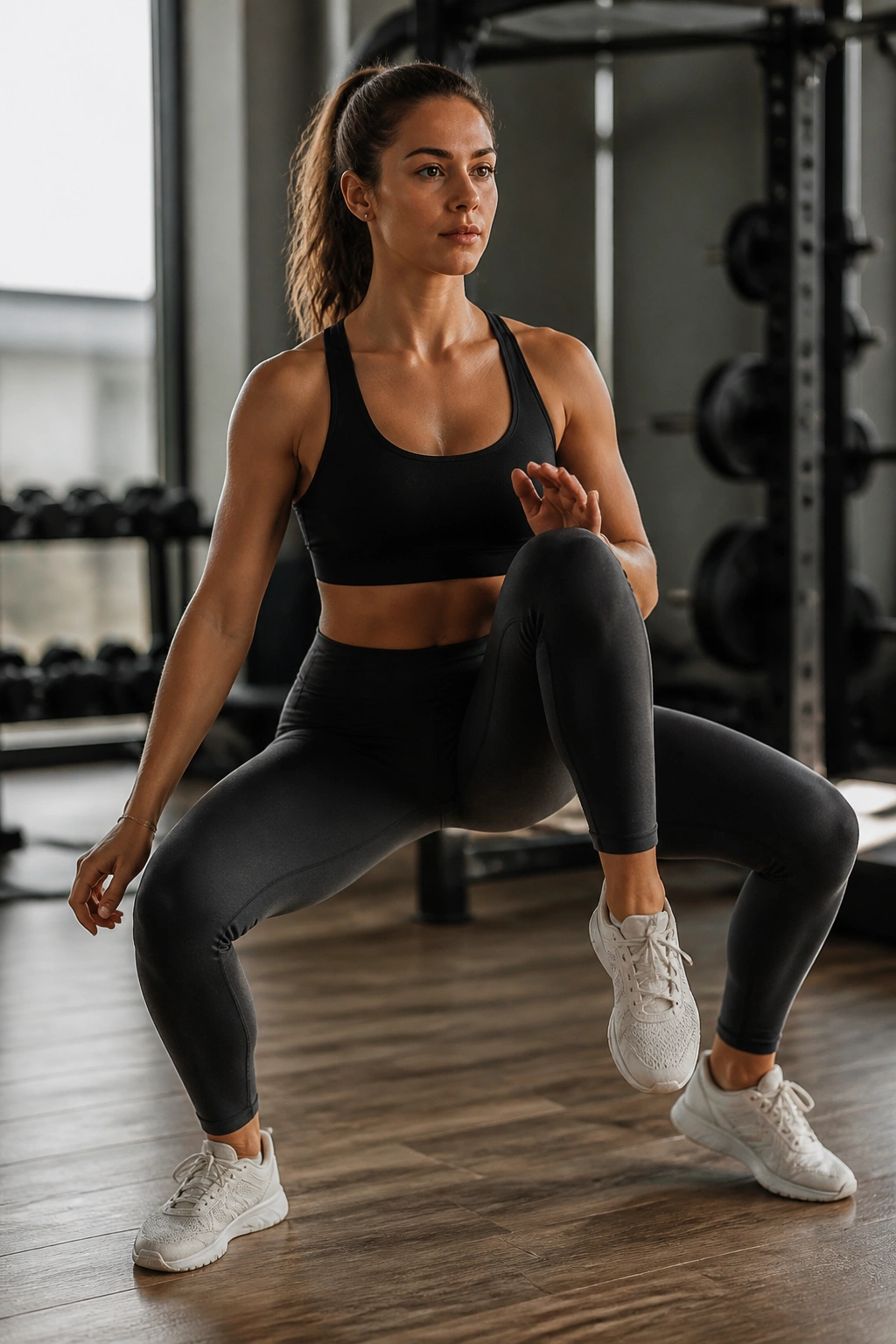
This move adds a significant stability and coordination challenge. By lifting one leg and tapping the knee while in a squat, you force the standing leg’s adductors and glutes to work overtime to keep you balanced. It effectively turns a bilateral exercise into a series of unstable unilateral holds.
The Mechanics
Descend into your plie squat. Hold the bottom position. While keeping your hips level, slowly lift your right foot off the floor and bring the knee toward your center or tap it with your opposite hand. Put the foot back, then repeat with the left. The temptation here is to shift your weight side-to-side; fight that urge. Your torso should remain as still as a statue.
9. Plie Squat with Overhead Press
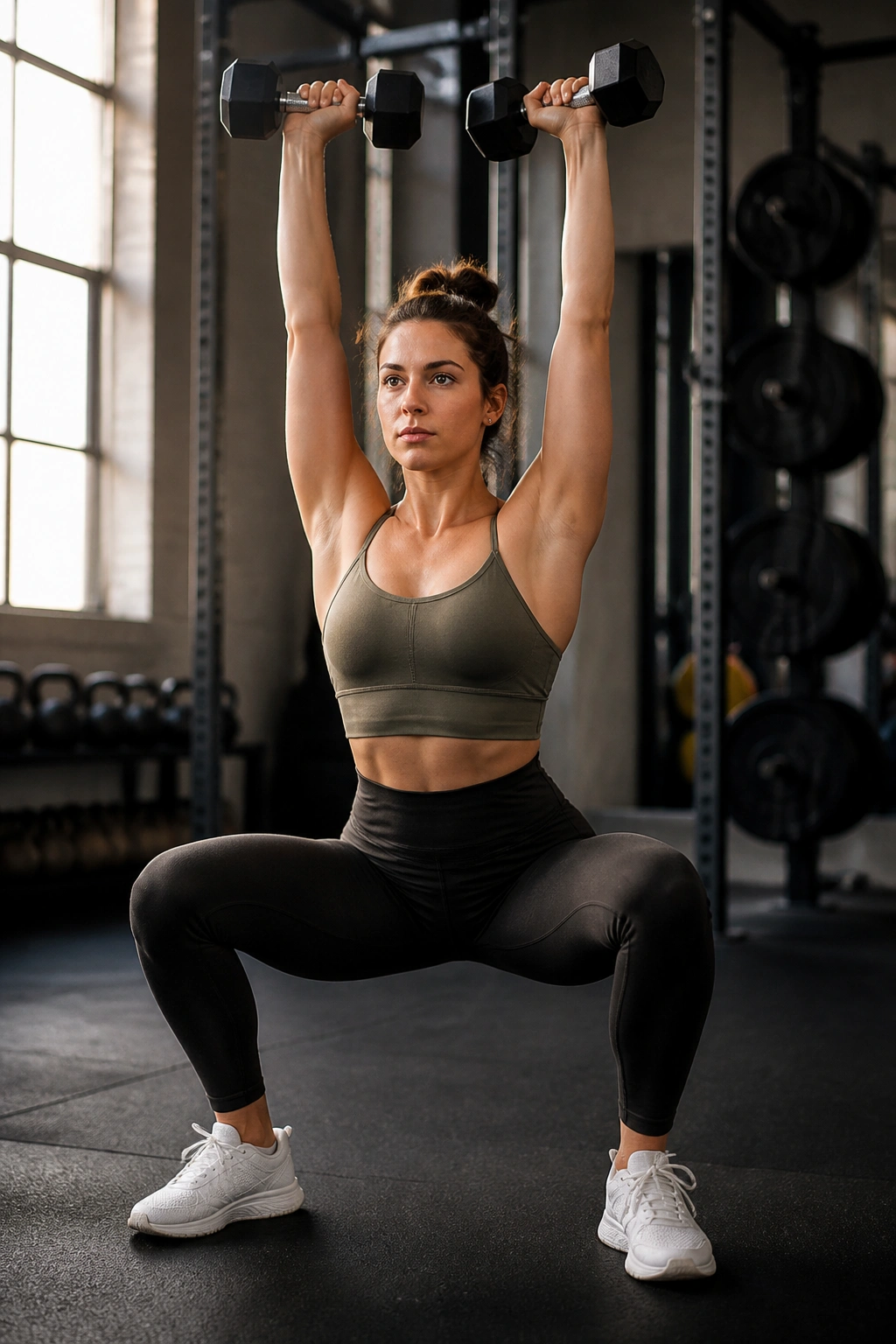
Full-body integration is important for burning calories and increasing heart rate. By adding an overhead press with dumbbells or a resistance band, you force your legs to maintain a static hold while your upper body exerts force. This is the ultimate “multi-tasking” lower body exercise.
How to Manage the Load
Hold dumbbells at shoulder height. As you sink into your plie squat, hold the bottom position. Perform your overhead press at the bottom of the movement. If your adductors are strong enough to hold the position, the press becomes a core-stability challenge. If you find your knees caving in, drop the weight; the leg form is the priority here, not the shoulders.
10. Plie Squat Isometric Squeeze
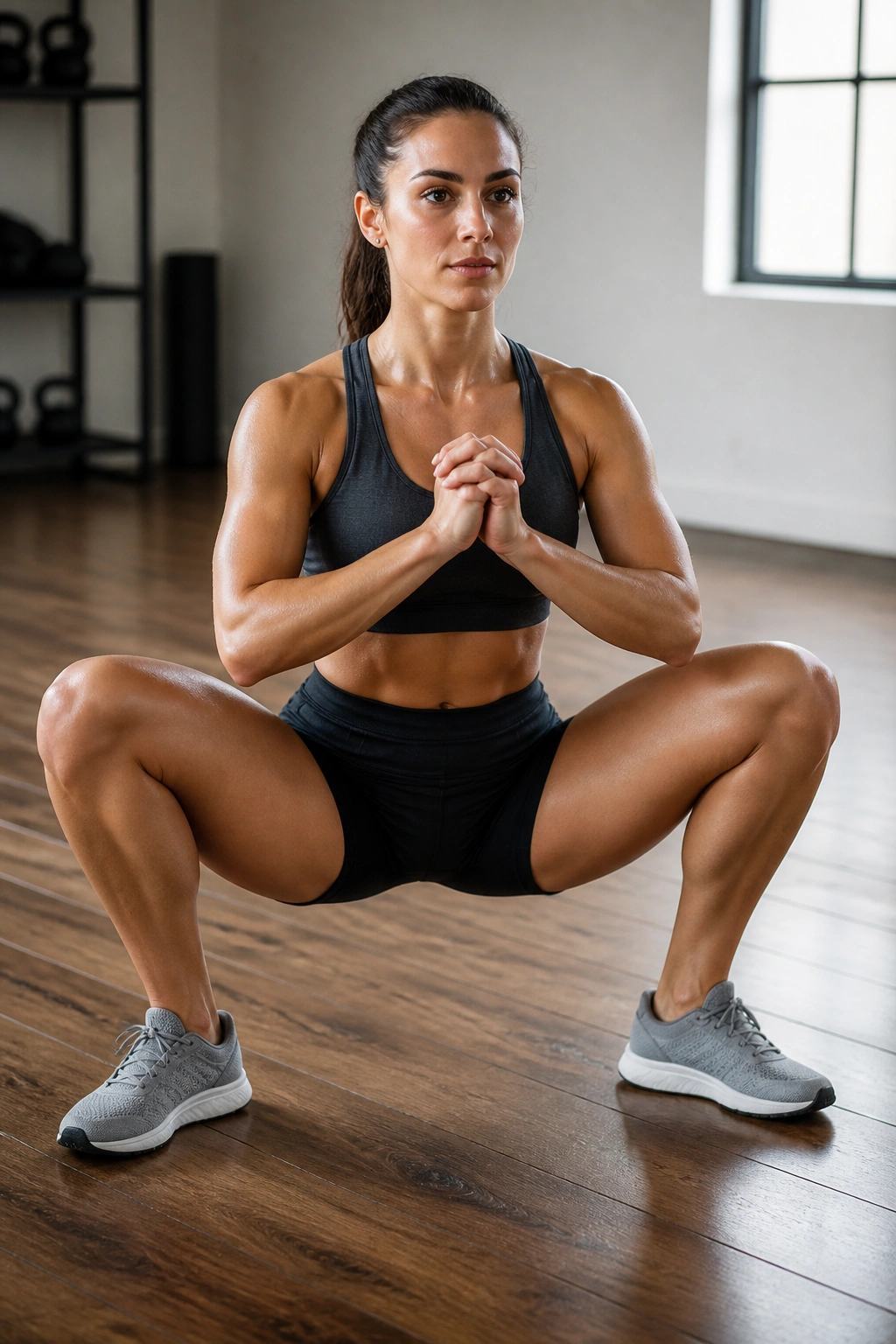
Sometimes the best way to exhaust a muscle is to prevent it from moving entirely. Isometric holds recruit a high percentage of motor units, often more than dynamic movements. You are squeezing the floor beneath you, trying to pull your feet together without actually moving them.
The Technique
Drop into a plie squat and hold it at the lowest comfortable point. Now, mentally “pull” your heels together. You will feel your inner thighs tighten intensely. Hold this for 45 to 60 seconds. You will shake. That shaking is the muscle fibers struggling to maintain contraction. That is exactly what you want.
11. Plie Squat Jump
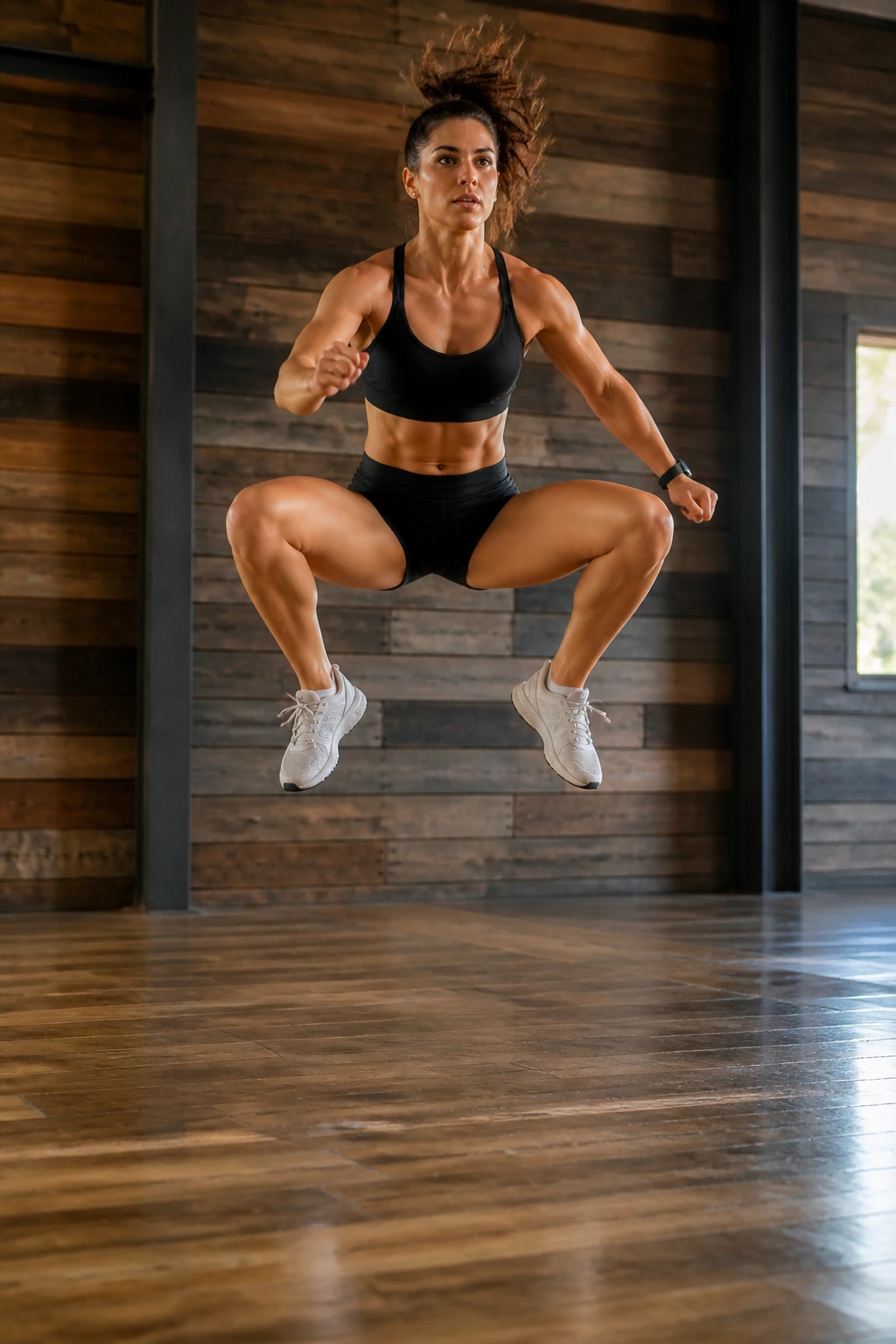
For those who want explosive power, the jump variation is the answer. It combines the strength-building of a slow, controlled squat with the fast-twitch muscle activation of a jump. This helps with athletic performance and speed, but it requires a solid base of strength before you attempt it.
Safety First
Perform a standard plie squat. Instead of just standing up, drive through your feet and explode upward, leaving the ground. Land softly—this is the most important part. Absorb the impact through your muscles, not your joints, by immediately sinking back into the starting squat position for the next rep. Do not land with locked knees.
12. Kettlebell Plie Swing
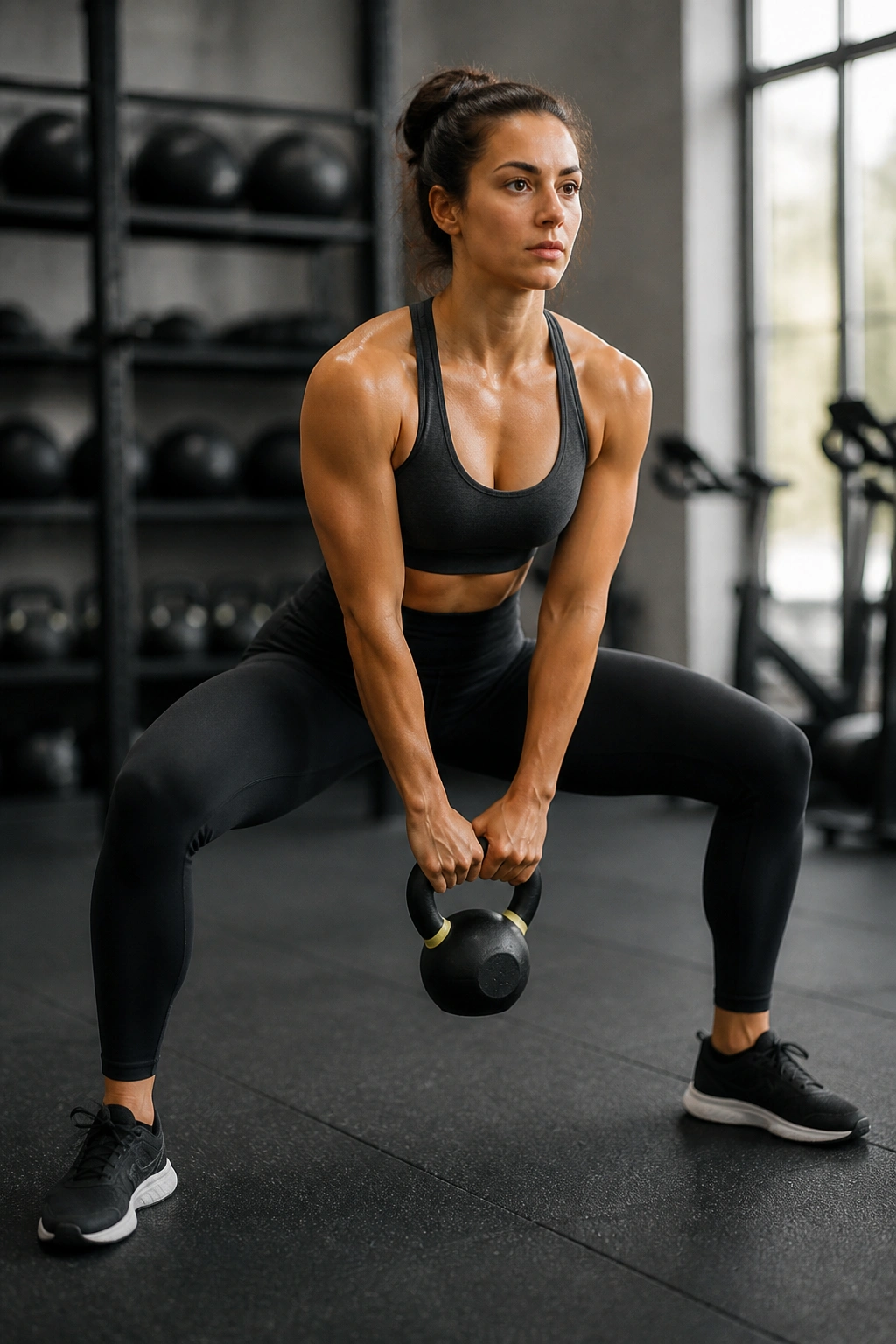
This is a hybrid movement. It’s not quite a full kettlebell swing, but it’s not a standard squat either. The goal is to use the hip-drive mechanism to launch the weight, while the wide plie stance forces the adductors to stabilize the hips during the explosive phase.
Execution
Hold the kettlebell in both hands. Start with a wide plie stance. Hinge your hips back, letting the kettlebell swing between your legs. As you drive your hips forward to stand, squeeze the inner thighs together. You aren’t just swinging; you are aggressively engaging the inner leg muscles to control the movement’s arc.
13. Plie Squat to Calf Raise Combo
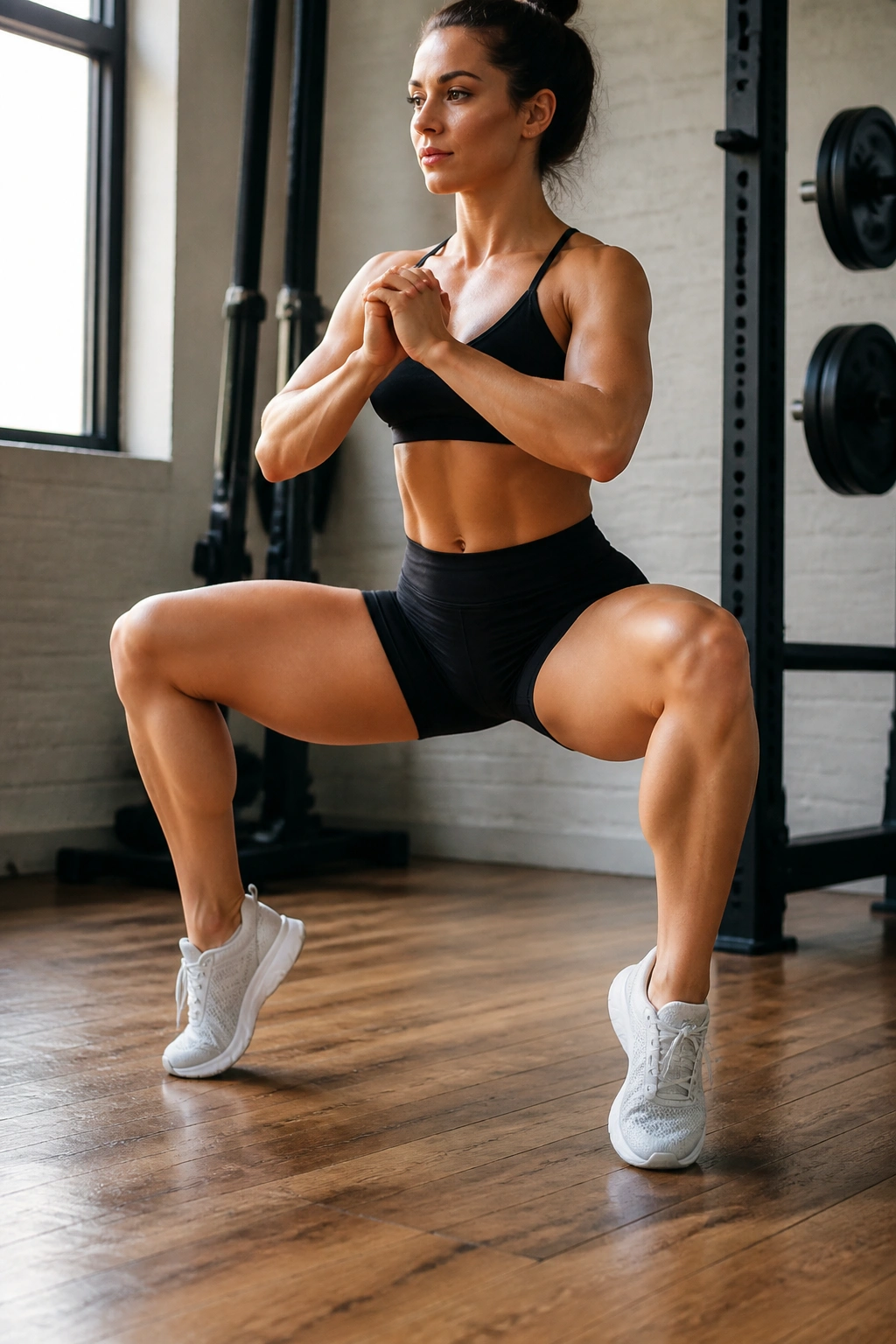
This is a high-volume endurance movement. You combine the squat and the calf raise into a seamless rhythm. It keeps the legs moving for an extended period, which is great for flushing the muscles and building the kind of stamina needed for long-distance activities or just general leg health.
The Rhythm
Squat down. Stand up. Once you reach full extension, immediately transition into a calf raise, rising onto the balls of your feet. Lower the heels, then sink back into the squat. The fluidity of this combo is key. If you pause between the squat and the raise, you break the chain of tension.
14. Stability Ball Plie Squat
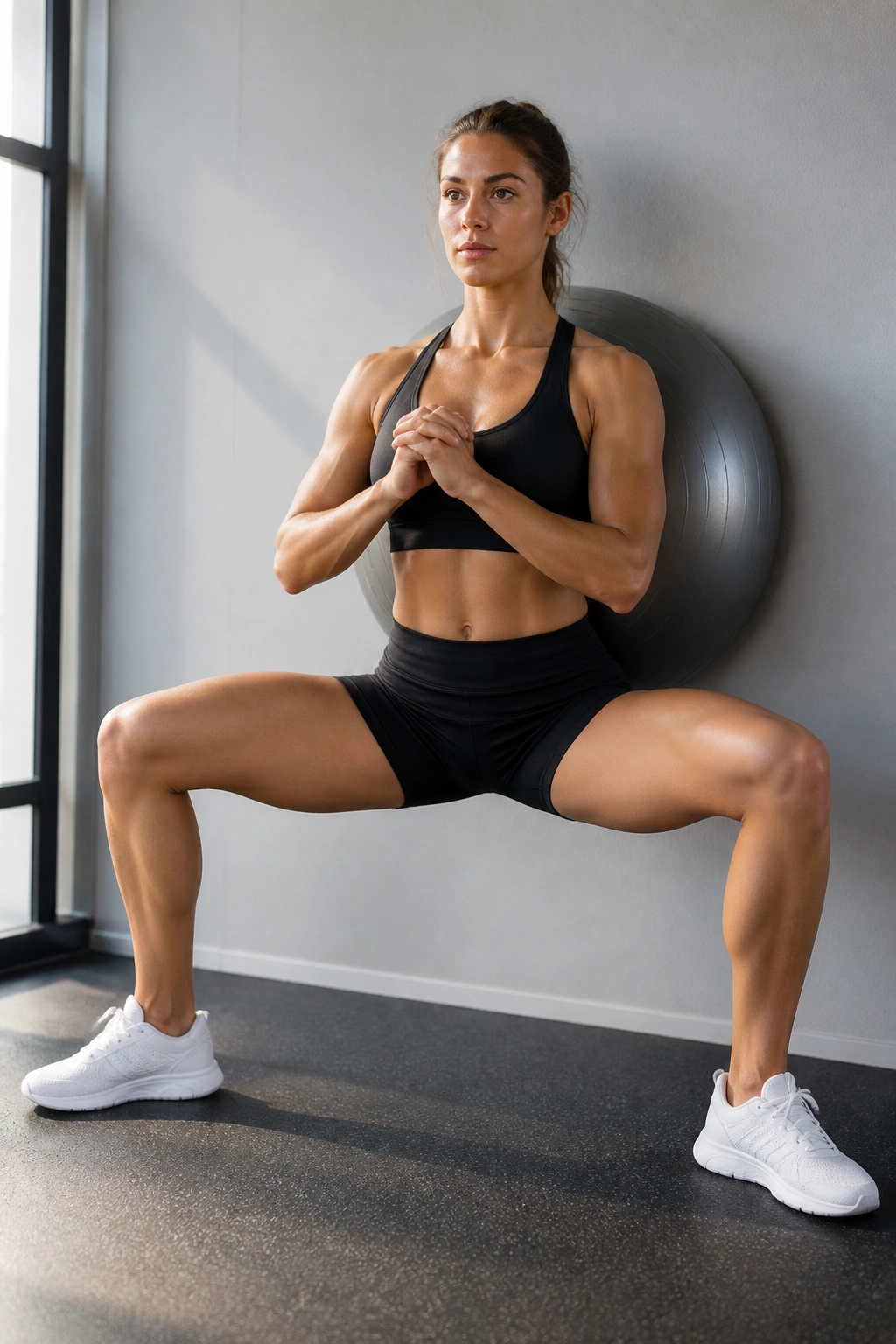
If you struggle with form—specifically knees caving in—a stability ball is your best friend. By placing the ball between your back and a wall, you can focus entirely on the depth of the squat without worrying about falling over. The ball allows for a more “true” vertical drop, which keeps the pressure on the inner thighs.
Why It Works
Place the ball against a wall and lean your lower back into it. Step your feet out into your wide plie stance. As you squat, the ball rolls down the wall. Because you have external support, you can push your knees out wider and deeper than you could without it. It’s a fantastic way to train the nervous system to accept a deeper range of motion.
15. Curtsy-Plie Hybrid
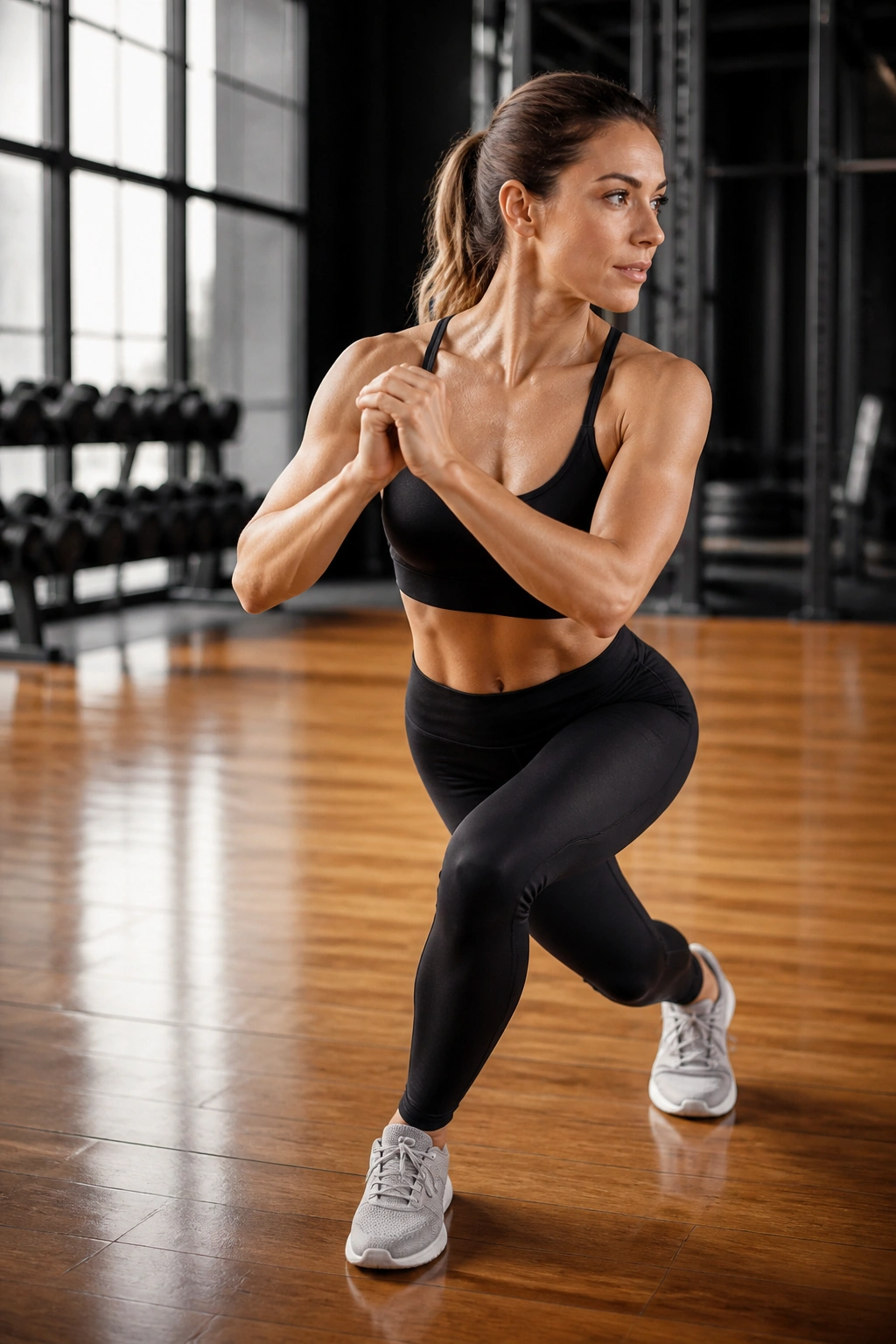
This variation targets the adductors and the gluteus medius simultaneously. The curtsy lunge is notoriously difficult for the inner thighs because it involves a crossing motion, which places the adductors in a lengthened, stretched position under load.
How to Transition
From your wide plie stance, take a step backward and across your body, like a curtsy. Return to the center plie. The transition through the center is crucial—don’t rush it. You should feel a stretch in the inner thigh as you cross the leg behind, and a contraction as you return to the center. It’s an elegant, highly effective movement.
16. Plie Squat with Arm Circles
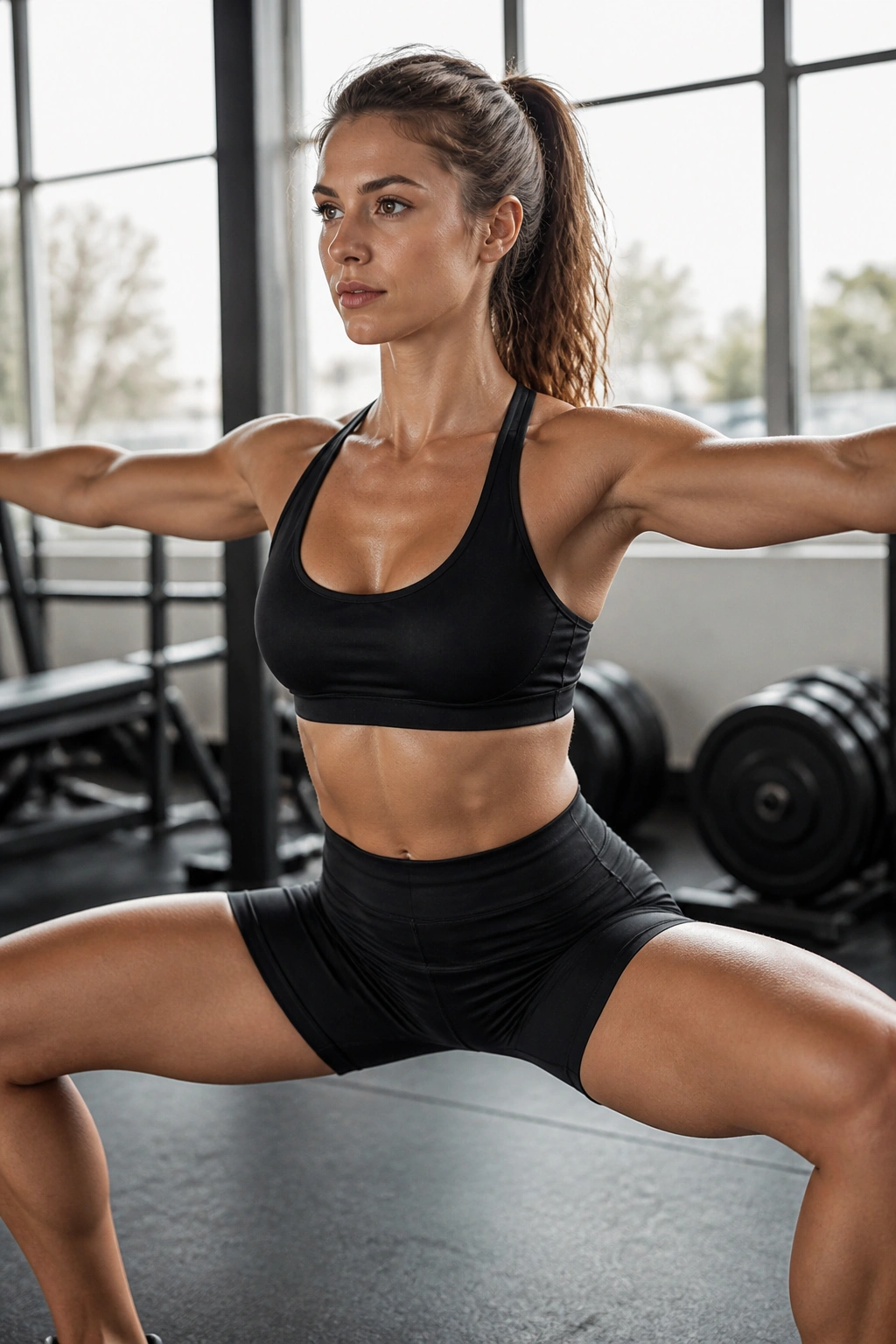
Adding movement to the upper body while the lower body is under tension can make a simple set feel grueling. Arm circles might sound like a warm-up, but when you hold them for the duration of a set of plie squats, they demand serious postural control.
The Focus
Drop into a low plie hold. Begin making small, controlled circles with your arms out to the sides. The goal is to keep the upper body completely still while the lower body works. It forces you to stabilize your core. If you start swaying your torso to compensate for the arm movement, you are doing too much. Tighten the abs and lock the upper body in place.
17. Plie Squat with Resistance Band
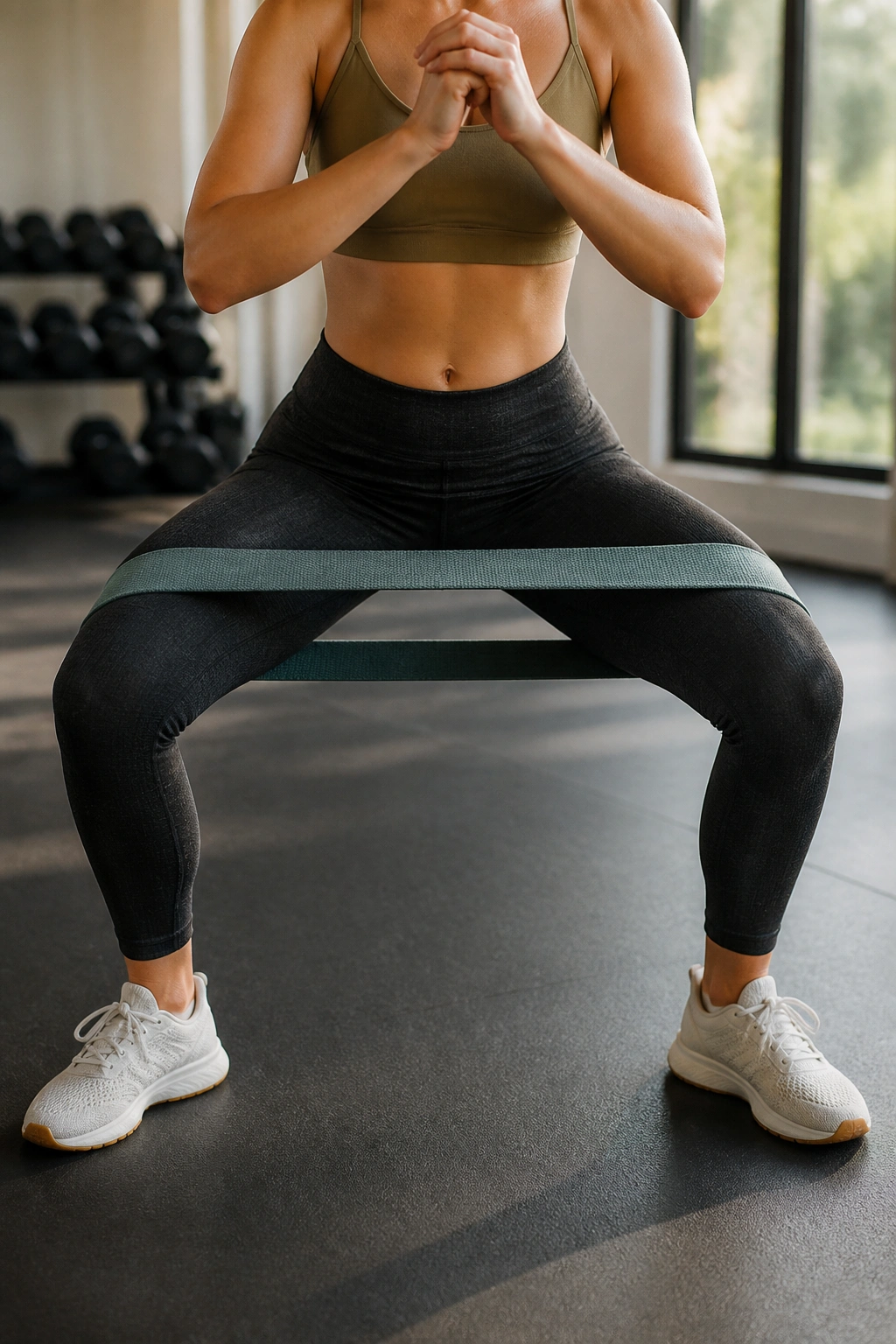
This variation is all about fighting the inward collapse. By placing a resistance band just above your knees, you introduce a force that is actively trying to pull your knees together. Your adductors, glutes, and hips must work twice as hard to push the knees out against that resistance.
The Resistance
Choose a band with moderate tension. Step inside it and bring it just above the kneecaps. As you descend into the plie, the band will try to pull your knees in. You must consciously drive your knees outward, ensuring they stay in line with your toes. This simple addition completely changes the muscle recruitment pattern of the exercise.
18. Single-Leg Plie Squat
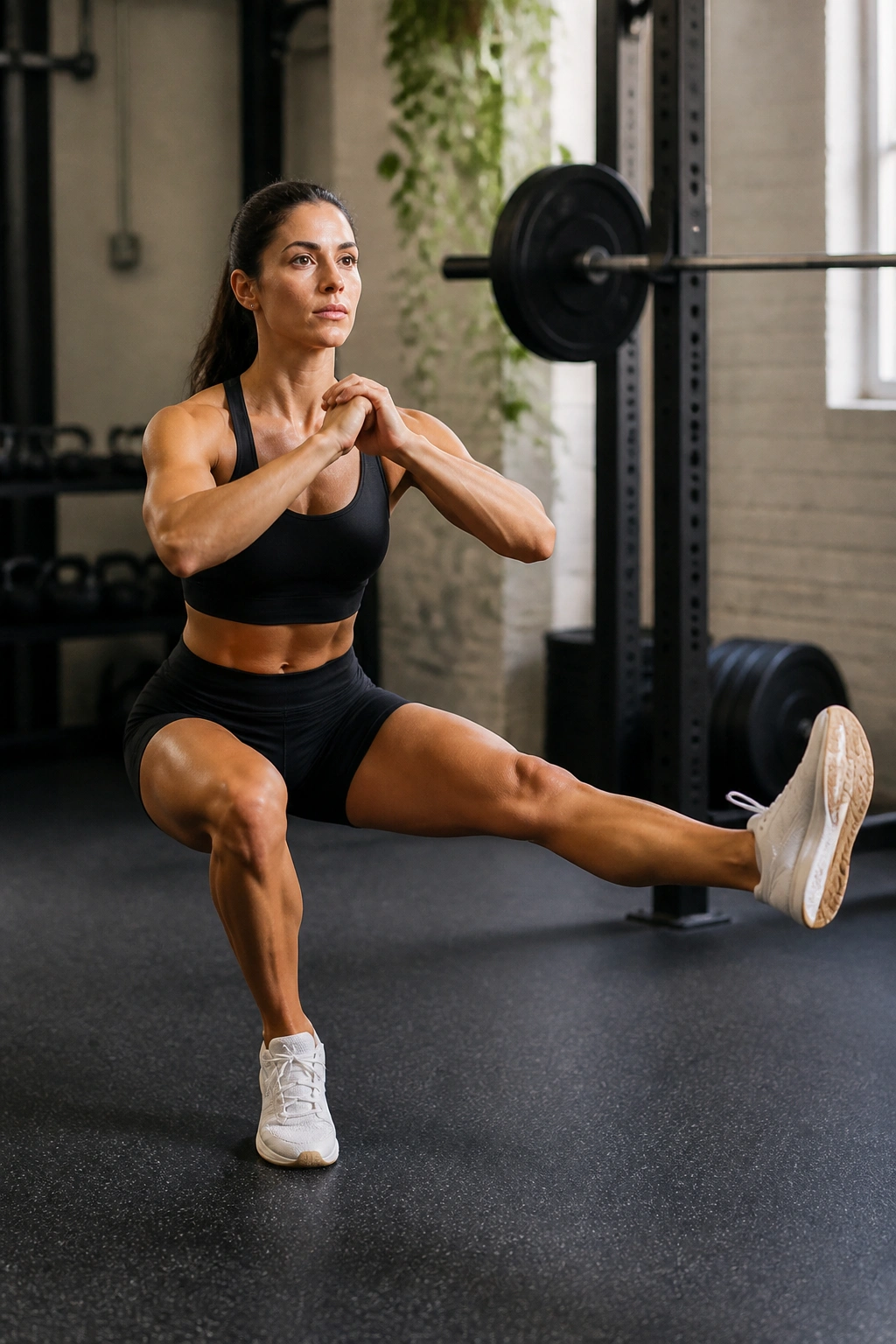
This is the pinnacle of the movement. It is difficult, frustrating, and incredibly effective. You are essentially doing a pistol squat but with the external rotation of the hips that characterizes the plie. It removes the stability of having two legs, forcing the working leg’s adductors to take on the full load of your body weight.
Mastering the Balance
Stand on one leg, foot turned out. Extend the other leg out to the side or front for balance. Lower yourself into a squat on the standing leg. You won’t get as low as a standard plie, and that is okay. The goal is to keep the knee from wobbling. If you need support, hold onto a sturdy chair or doorframe, but try to use your hand only as a last resort.
Final Thoughts
Consistency is often more important than intensity when it comes to inner thigh strength. You do not need to do all eighteen of these variations in one session. In fact, that would be counterproductive and likely lead to severe soreness. Instead, pick two or three variations to rotate into your existing leg day routine.
Focus on the quality of your repetitions. If you find your knees drifting inward, you are not working your adductors; you are drifting toward an injury. Slow down, reduce the depth if necessary, and ensure that your knees always track over your toes. The goal isn’t to see how many reps you can grind out, but how effectively you can recruit the targeted muscle group. Listen to your body, respect the burn, and keep moving.
