



A single kettlebell can light up your hips, back, shoulders, and grip in one session. That is why kettlebell workouts keep showing up in real training plans: the tool is small, but the work is not.
The good ones don’t waste time. You get hinging, squatting, pressing, pulling, bracing, and carrying — sometimes all in the same ten minutes. And if you choose the right mix of movements, you can cover every major muscle group without turning the session into a messy marathon.
Some workouts are built for raw strength. Others fix the weak links that most people ignore, like grip, rotation control, or the ability to stay tight when a bell is pulling you off-center. A few are pure conditioning and will leave your lungs talking back by the third round. The trick is knowing which one to use, and why.
The swing ladder is the cleanest place to start because it teaches the hips to do the heavy lifting.
1. Two-Hand Swing Ladder
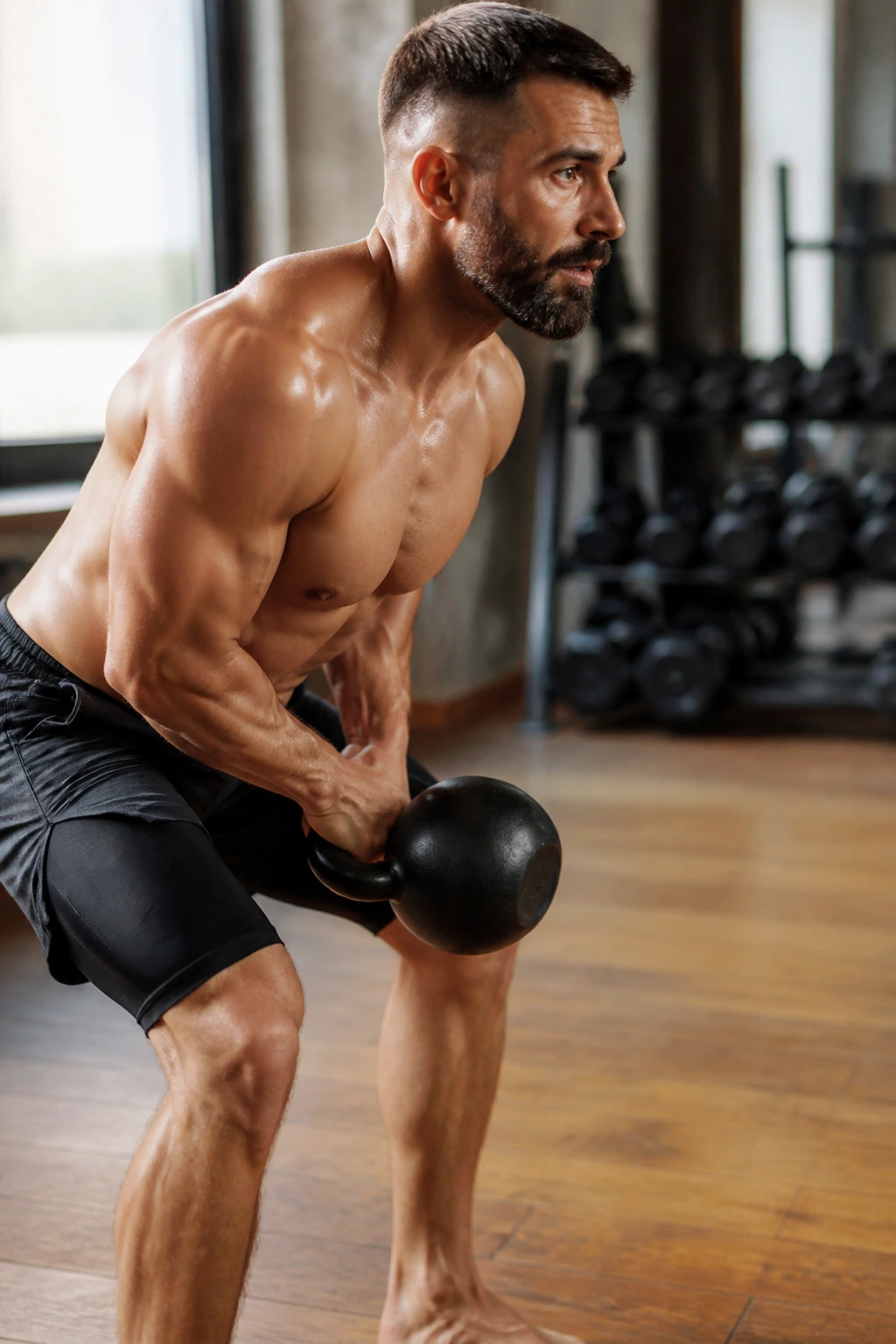
The two-hand swing ladder is the kind of workout I hand to people who want fast feedback. If your hinge is sharp, it feels explosive. If your hinge is sloppy, the bell tells on you immediately. No mystery. No hiding.
Why It Works
A swing is not a squat. That matters. Your glutes, hamstrings, lats, and core all have to fire in the right order, or the bell drifts and the rep gets ugly fast.
Run 10 swings, then 15, then 20, then back down to 15 and 10. Rest 30 to 45 seconds between sets. Use a bell that lets every rep snap hard without turning into a grind.
- Keep the bell close to your body on the way up.
- Let the hips drive the movement.
- Stop the set when the bell path slows.
- If your lower back feels it more than your hamstrings, the weight is too much or the hinge is off.
One good cue fixes a lot here: think “jump without leaving the floor.” That keeps the power coming from the hips instead of the arms.
2. Clean and Press Pyramid
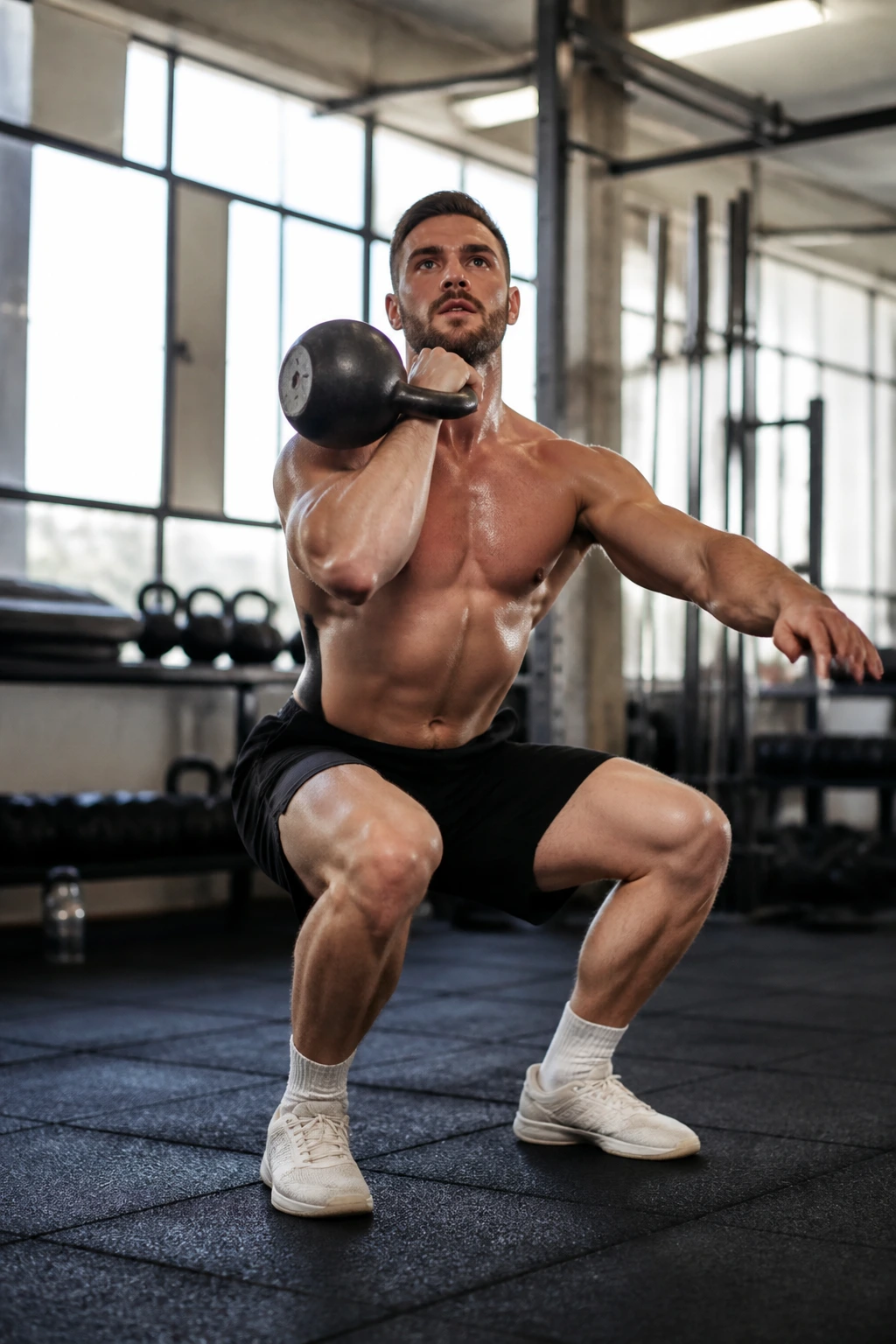
The clean and press pyramid hits shoulders in a way dumbbells rarely do. The clean loads the legs and upper back first, then the press asks the whole body to stay tight while the bell goes overhead. It is honest work.
Start with 1 rep per side, then 2, 3, 4, and 5. If that feels solid, come back down the ladder. Rest long enough to keep the presses crisp. A minute is fine for most people; longer if the rack position starts to collapse.
The lift teaches more than pressing strength. Your forearms learn to rack the bell without crashing into the wrist. Your midsection learns not to twist. Your glutes quietly help more than people expect.
I like this one when a person says they want “upper-body work” but still wants the legs involved. That usually means they want a real kettlebell session, not a polite shoulder pump.
3. Goblet Squat, Row, and Carry Combo
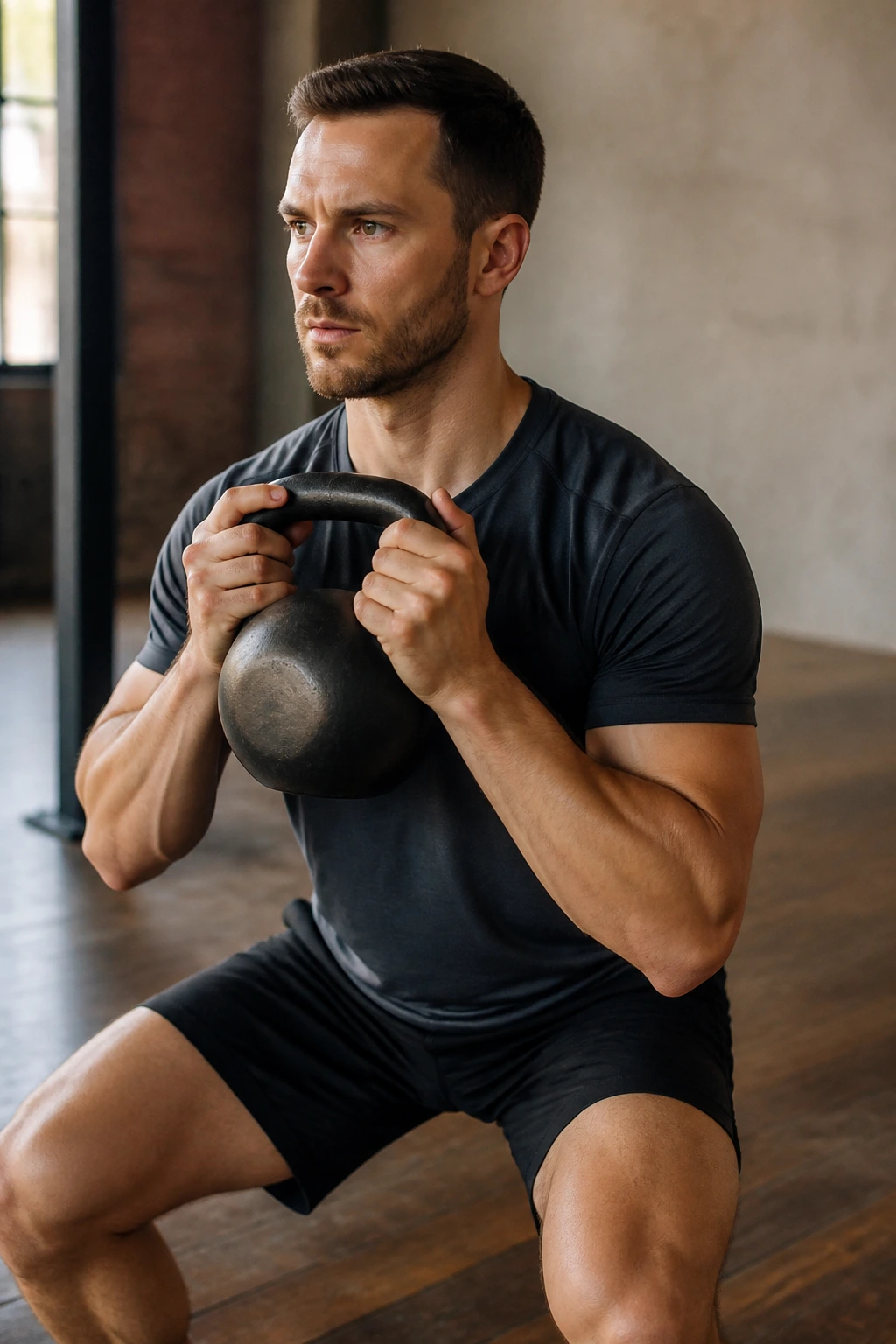
Why do so many people stop at squats when the bell can do more? Because rows and carries make the workout less comfortable, and that is exactly why they belong here.
What You Feel Working
The goblet squat gives you quads, glutes, and adductors. The one-arm row wakes up the lats and mid-back. The suitcase carry slams the obliques and grip. Put them together and the session stops being “legs day” or “back day.” It becomes full-body in the plainest way.
Try 8 goblet squats, 8 rows per side, and a 30-meter suitcase carry per side for 4 rounds. Rest only as long as you need to keep your posture clean.
How to Make It Count
- Keep the squat deep enough that your hips stay honest.
- Row with your elbow driving back, not up.
- Walk tall on the carry.
- Do not lean toward the kettlebell. That cheats the obliques and turns the carry into a shrug.
The best part is the carry. It looks simple, then your trunk starts complaining halfway through the hallway.
4. One-Arm Snatch Intervals
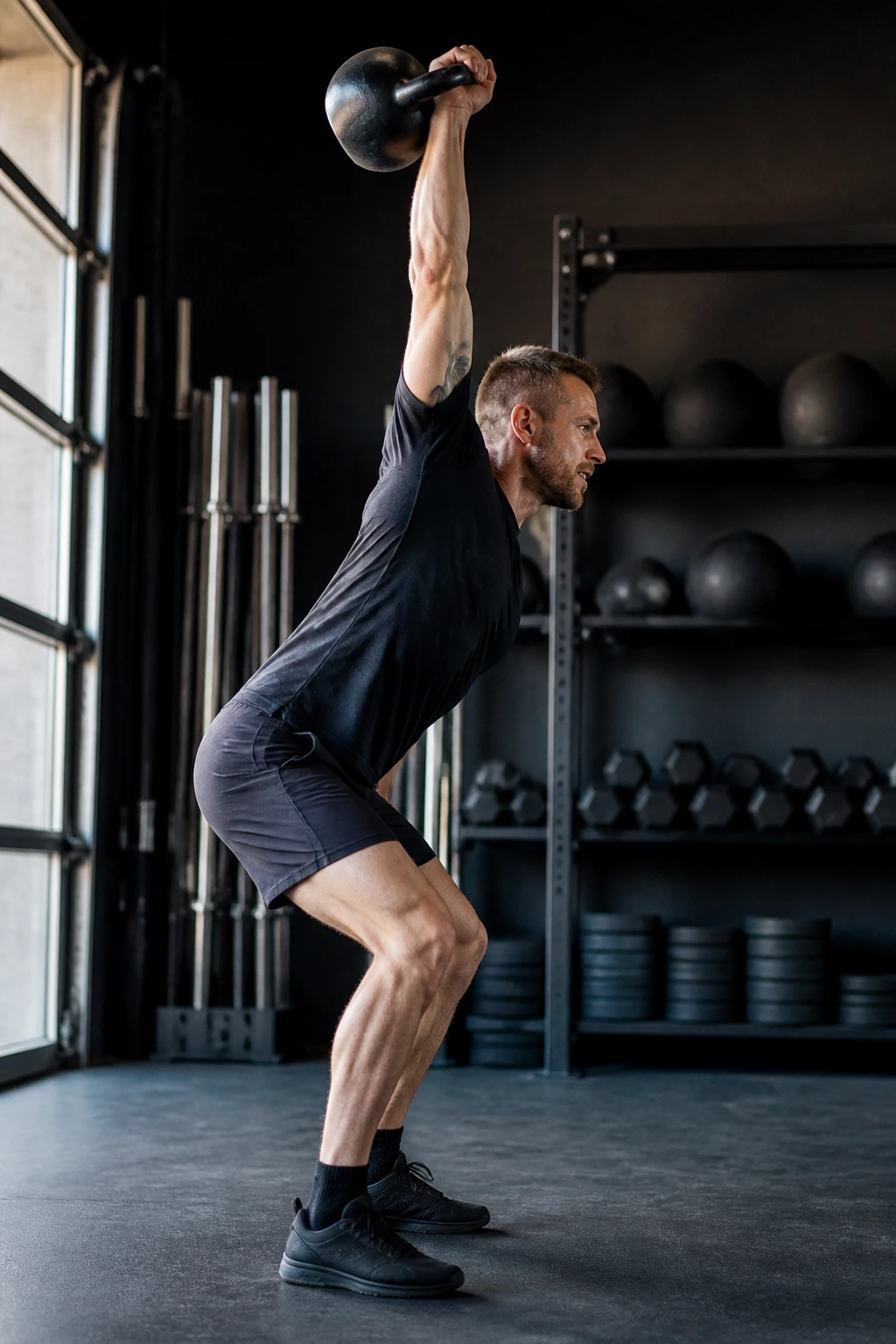
The one-arm snatch is what happens when power training stops being polite. It is fast, loud, and a little unforgiving if your timing is off. Good. That is why it works.
Picture 20 seconds of work on one side, 40 seconds of rest, then switch. Ten rounds is plenty for most people. If the bell bangs your forearm, the path is off and the pull is too early. If it floats overhead, you’re timing it right.
Why It Hits So Much
You get a big dose of glutes, hamstrings, traps, shoulders, and core in one move. The grip gets taxed too, especially near the end when the bell starts feeling oddly heavy. That is not a bug. It is part of the session.
A lighter bell is smarter here than people think. Snatches reward speed and clean mechanics, not ego. If the first five reps are smooth and the next five get slap-happy, the load is already too much.
One more thing. Keep your eyes level. Looking down makes the whole pattern feel rushed.
5. Turkish Get-Up Practice Flow
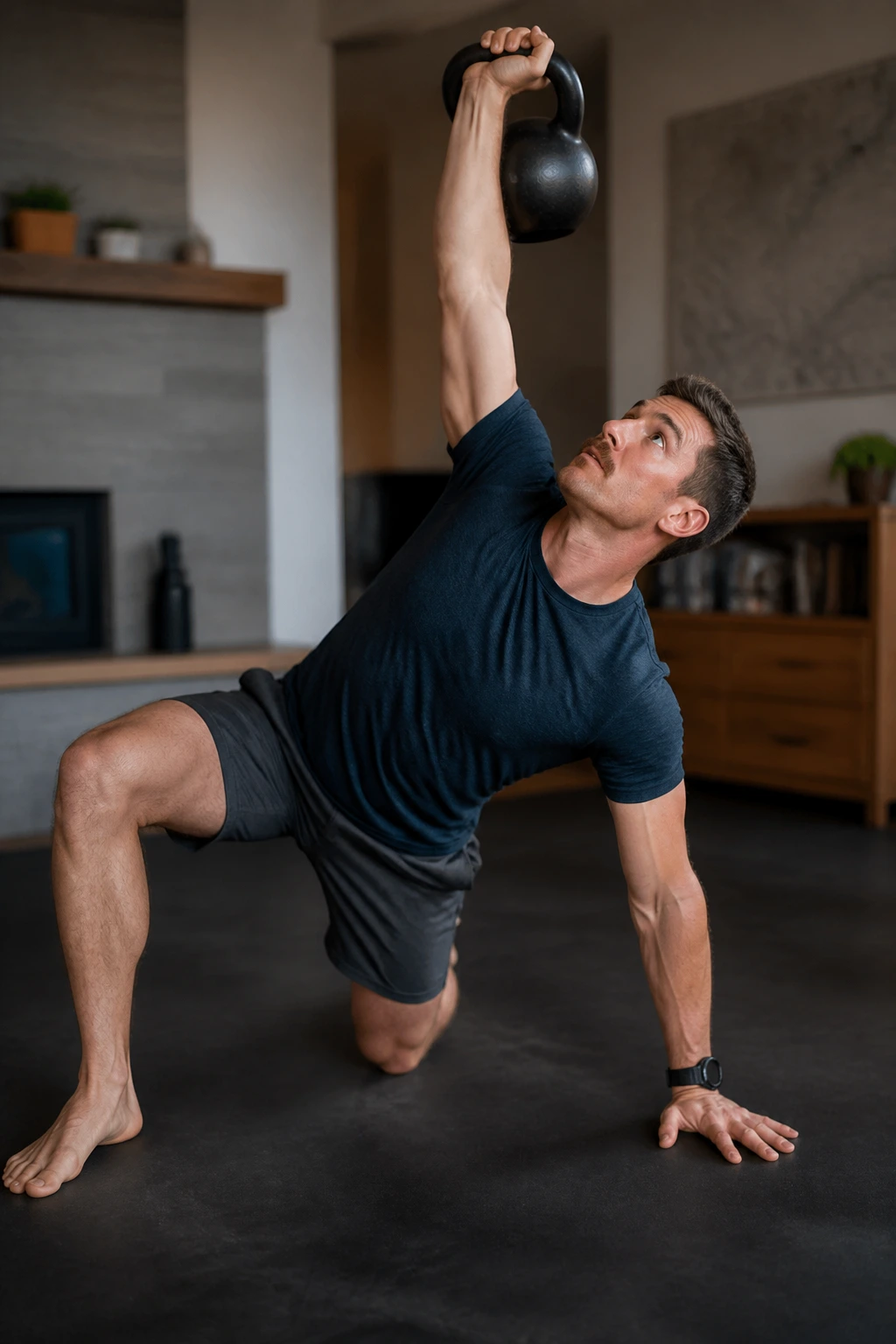
The Turkish get-up is slow, but it is never easy. Every joint from the shoulder down to the ankle has to cooperate, and if one part quits, the rest of the chain feels it right away.
I prefer 1 rep per side, rest, then repeat for 3 to 5 rounds. That sounds almost too mild until you do it with a bell that demands focus. The movement teaches shoulder stability, hip control, and body tension in a way that pure lifting often misses.
Why It Sticks With You
The get-up is one of those rare kettlebell workouts that makes you stronger and more coordinated at the same time. The shoulder stays stacked, the core stays braced, and the legs have to transition from the floor to standing without losing balance.
A few things matter:
- Keep your wrist vertical.
- Punch the bell toward the ceiling.
- Move the free hand and free knee with intention.
- Pause in each position. That pause is where the real work lives.
Some people rush this because it looks like a mobility drill. It is not. It is a full-body strength test wearing a mobility costume.
6. Front-Rack Reverse Lunge Circuit
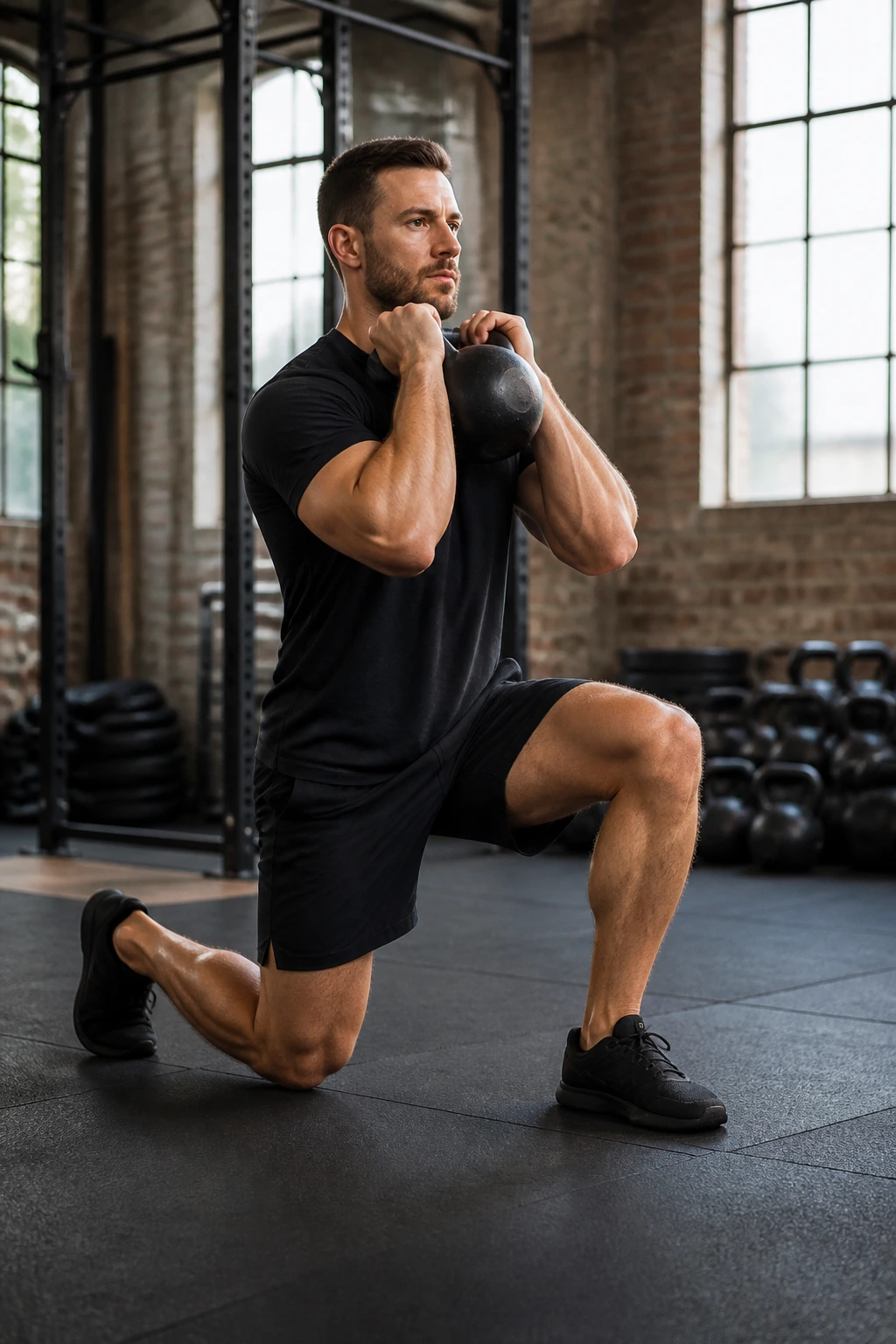
A front-rack reverse lunge punishes bad posture in the best possible way. The bell sits where you can feel every little wobble, and the back leg has to support the move without stealing the load.
Unlike a bodyweight lunge, the front-rack position forces your torso to stay tall. That means quads, glutes, adductors, and deep core muscles all have to pull their weight. It also lights up the upper back because the rack position wants to collapse if you get lazy.
Run 5 reverse lunges per side for 3 to 5 rounds. Keep the step back long enough that the front shin stays comfortable and the heel stays planted.
This is one of my favorite “fix your stance” workouts. If your knee caves in or your chest folds forward, you’ll see it immediately. The bell does not care about your intention. It cares about your shape.
7. Halo, Squat, and Press Flow
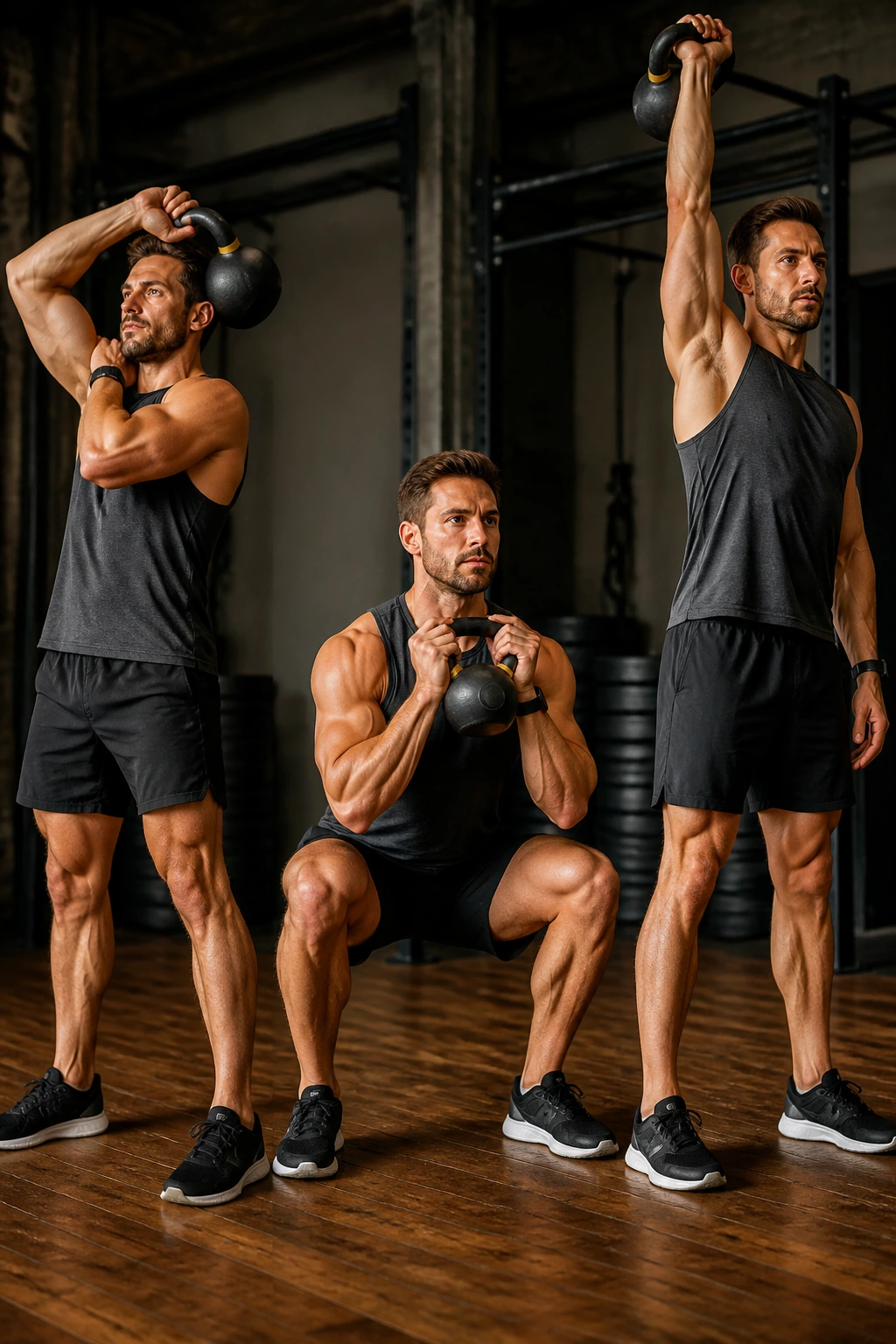
The halo looks harmless until your shoulders start paying attention. Add a squat and a press, and suddenly the session has a lot more teeth.
A Simple Three-Part Flow
Do 8 halos each direction, 8 goblet squats, and 5 strict presses per side. Repeat for 3 or 4 rounds. The halo loosens the shoulders, the squat loads the legs, and the press finishes the upper body. It is a nice balance of mobility and work.
This is the workout I like when a session needs to feel complete without being reckless. The halos warm the upper back, the squats feed the quads and glutes, and the presses give the shoulders and triceps something useful to do.
- Keep the bell close to your head during halos.
- Sit into the squat with the chest tall.
- Press without leaning back.
- If the press turns into a half-rep, stop and reset the rack.
Some warm-up style workouts are too light to matter. This one is not. You’ll know it by the end of round two.
8. Double Bell Dead Clean Complex
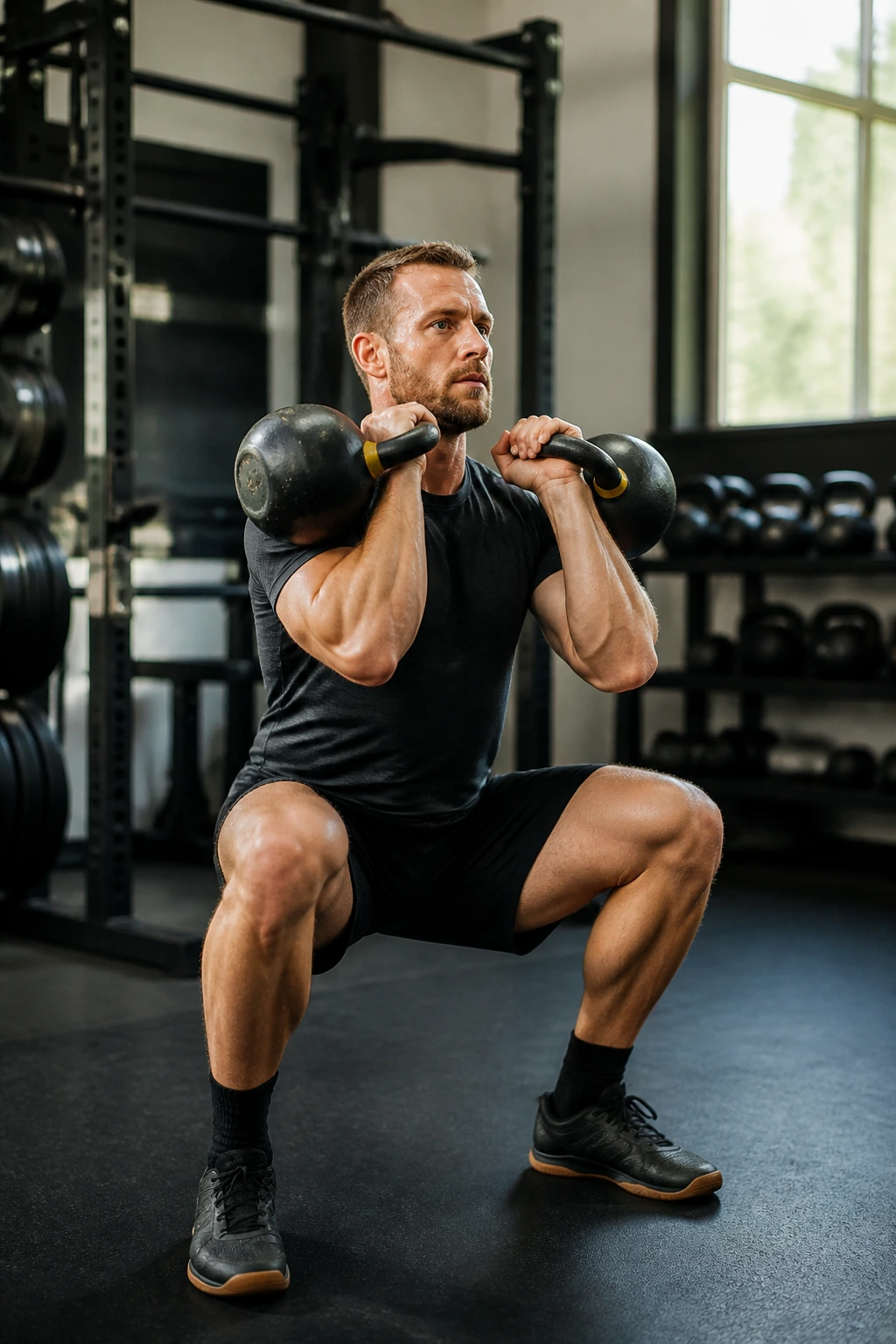
Two bells change the whole feel of a workout. The load sits more evenly, the rack position gets heavier, and the upper back has to stay honest for longer. It is a different kind of hard.
Why It Hits Hard
A dead clean starts from the floor or dead stop, so you strip out momentum and force the legs and hips to do the real work. Follow that with front squats and presses, and the whole body has to stay switched on. You get glutes, hamstrings, quads, shoulders, upper back, and core in one tidy package.
Try 5 dead cleans, 5 front squats, and 5 presses for 3 to 5 rounds. Rest 60 to 90 seconds. If you only have one bell, do the same sequence on one side and switch.
This workout rewards patience on the clean. If the bell bangs your forearms or the rack feels shaky, slow the drop and reset your hinge. The clean should feel sharp, not chaotic.
9. Thruster Ladder
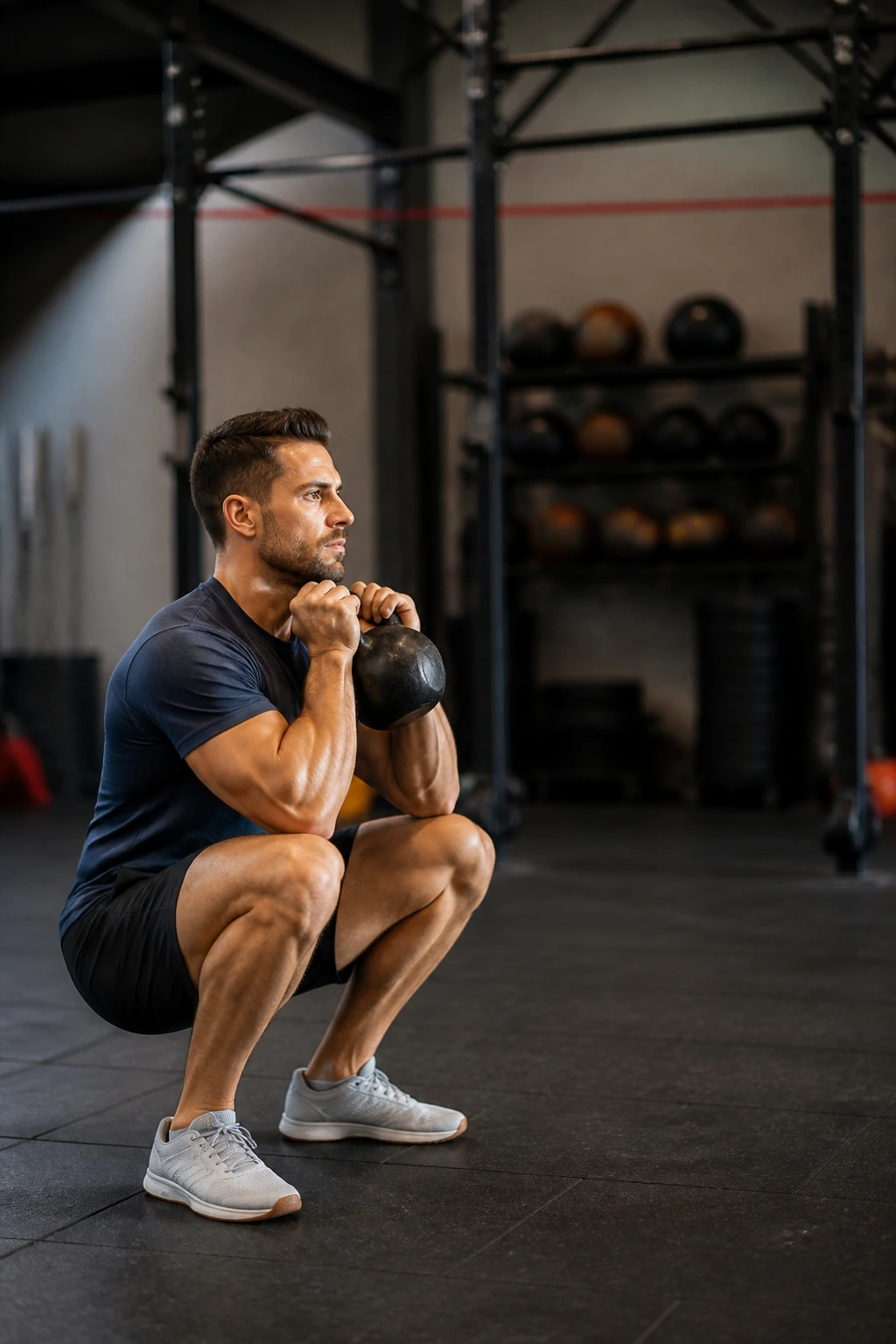
A thruster is the kind of lift that makes people swear they are “not doing cardio” and then stare at the floor after set three. It is squat plus press, which means the legs and shoulders have to share the burden.
Start with 2 reps, then 4, then 6, then 8, then 10. Rest 60 to 90 seconds between sets. If that ladder feels too steep, cut it at 8. If it feels easy, the bell is too light.
What to Watch
The squat needs to stay deep enough that the bell doesn’t drift forward. The press should come from the power of the stand, not from a sloppy back lean. When the timing is right, the bell almost rides the top of the squat.
Thrusters are good for quads, glutes, shoulders, triceps, and lungs. That mix makes them useful for days when you want muscle and conditioning in the same package. They also expose weak bracing fast. A loose torso turns the lift into a mess.
No drama here. Just work.
10. Renegade Row Push-Up Combo
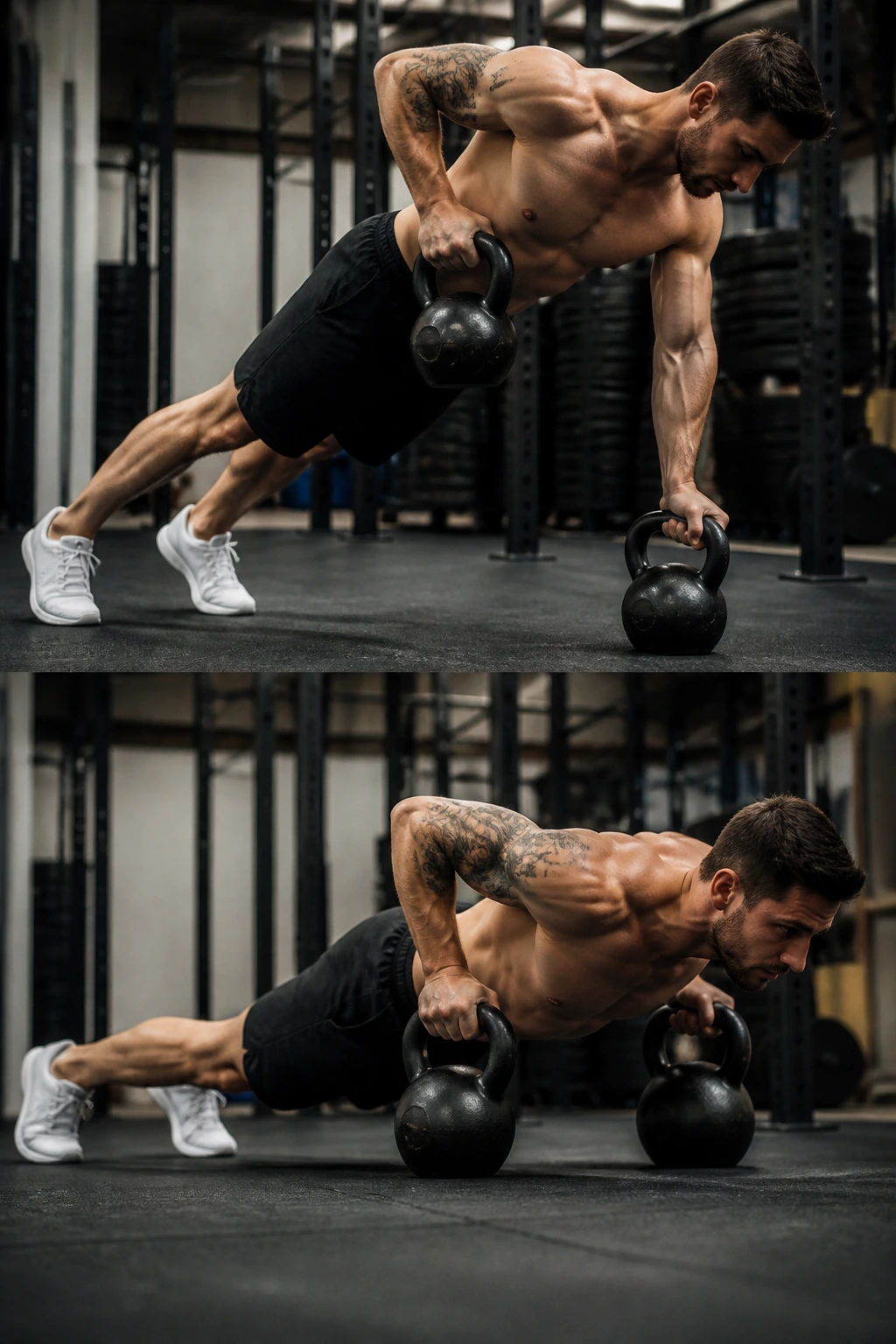
The renegade row is one of those movements that looks sleek in photos and gets ugly in real life. Good. That means your core is getting challenged the way it should.
Start in a high plank with hands on the bells. Do 6 rows per side, then 6 push-ups, and repeat for 3 or 4 rounds. Keep your feet a little wider than you think you need. That extra base makes the row cleaner and keeps the hips from corkscrewing.
This one hits chest, triceps, lats, abs, and serratus all at once. The push-up taxes the pressing muscles. The row demands anti-rotation. The plank position forces everything to stay knitted together.
Quick Form Notes
- Squeeze the handle before you row.
- Row toward the hip, not the chest.
- Keep the ribs down.
- If your hips sway hard on every rep, widen your feet and slow down.
The workout gets hard in a sneaky way. Your arms think they are doing the work. Your core knows better.
11. Single-Arm Swing EMOM
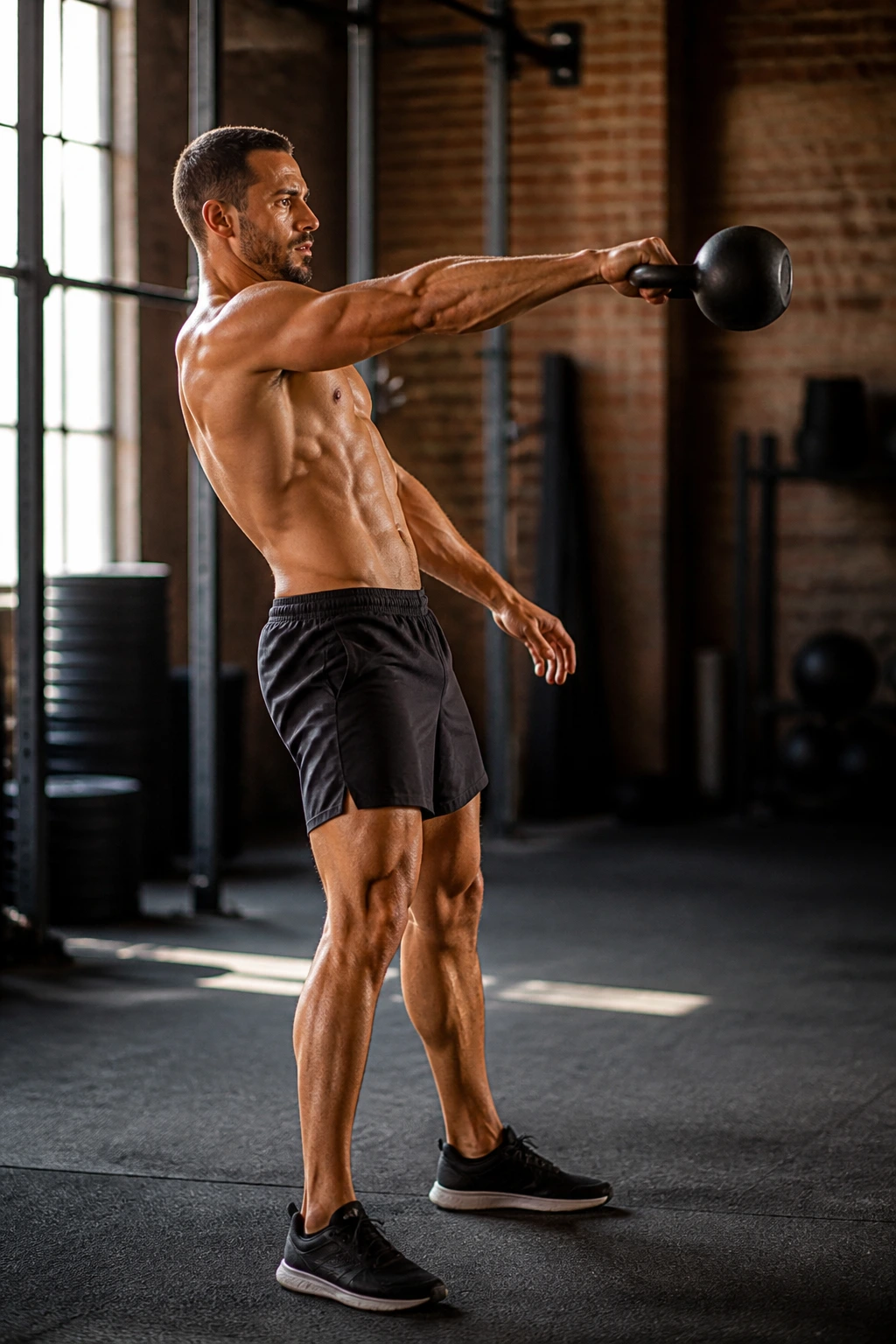
EMOM work is brutally simple. Every minute on the minute, do the reps, then breathe until the next minute starts. No wandering. No bargaining.
Set a timer for 10 minutes. On odd minutes, do 10 single-arm swings on the right. On even minutes, do 10 on the left. Stronger lifters can push the reps to 12 or 15, but only if the bell path stays clean.
This format is excellent for grip, glutes, hamstrings, lats, and conditioning. The single-arm version adds anti-rotation work that the two-hand swing can’t quite match. Your trunk has to fight the bell a little harder on every rep.
One small warning. Don’t chase speed so hard that the bell starts pulling your shoulder out of place. The swing should still feel snappy and grounded, not wild.
12. Windmill and Suitcase Carry Session
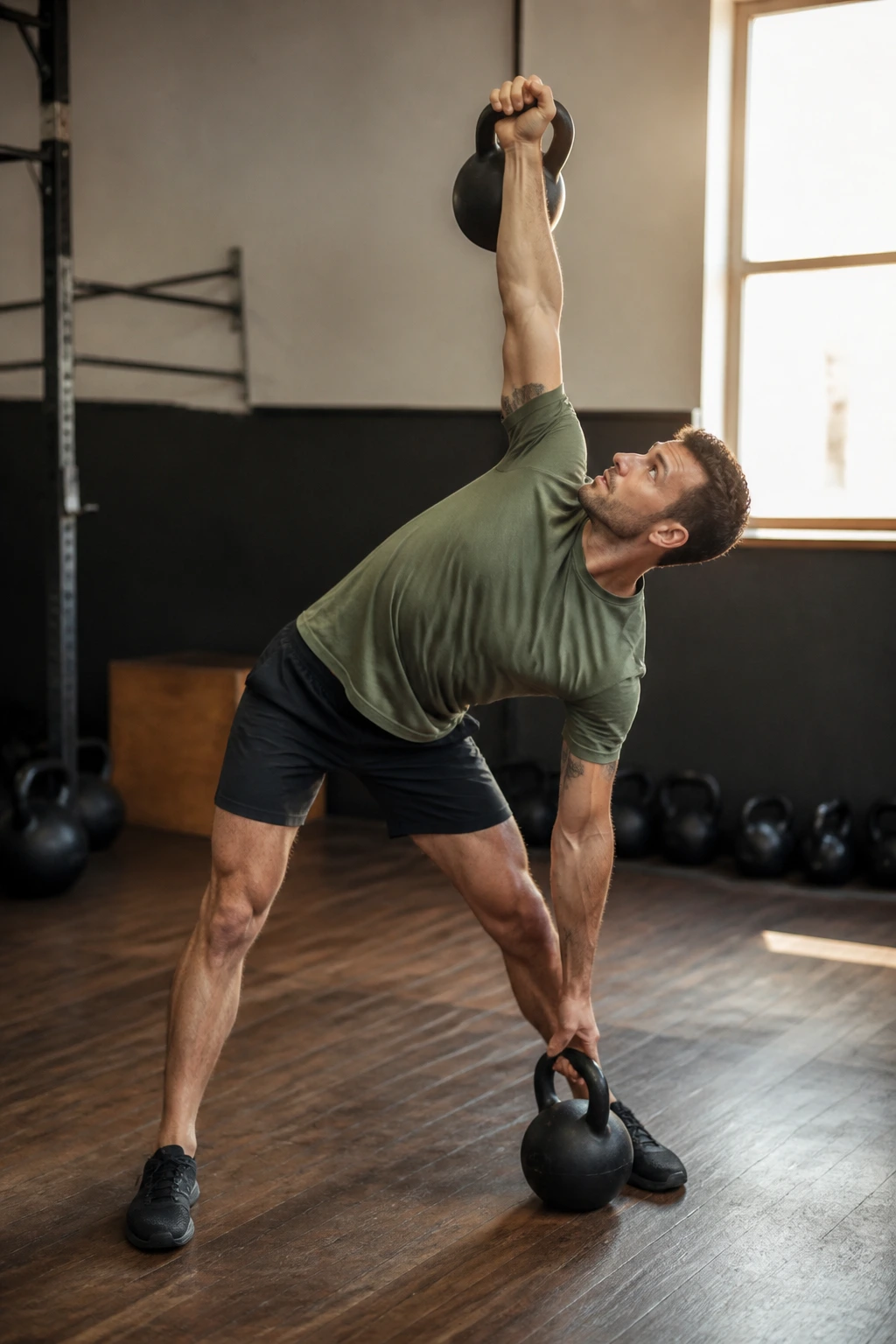
A windmill is half strength drill, half posture lesson. Pair it with a suitcase carry and the obliques never get to take the day off.
The contrast is why this works. The windmill opens the hips and shoulders while asking the torso to stay long. The suitcase carry then asks that same torso to resist side bend under load. Together, they hammer obliques, glutes, adductors, shoulders, and grip.
Run 4 windmills per side, then a 30-meter suitcase carry per side, for 3 rounds. Move slowly. This is not the place to rush through sloppy reps and call it conditioning.
What Makes It Worth Doing
The windmill teaches you to stack the shoulder over the hip. The carry teaches you to keep that stack when you’re walking. That combo carries over into almost everything else in the gym.
If the hamstrings feel tight, that is normal. If the lower back feels jammed, shorten the range and fix the reach.
13. Front Squat Density Block
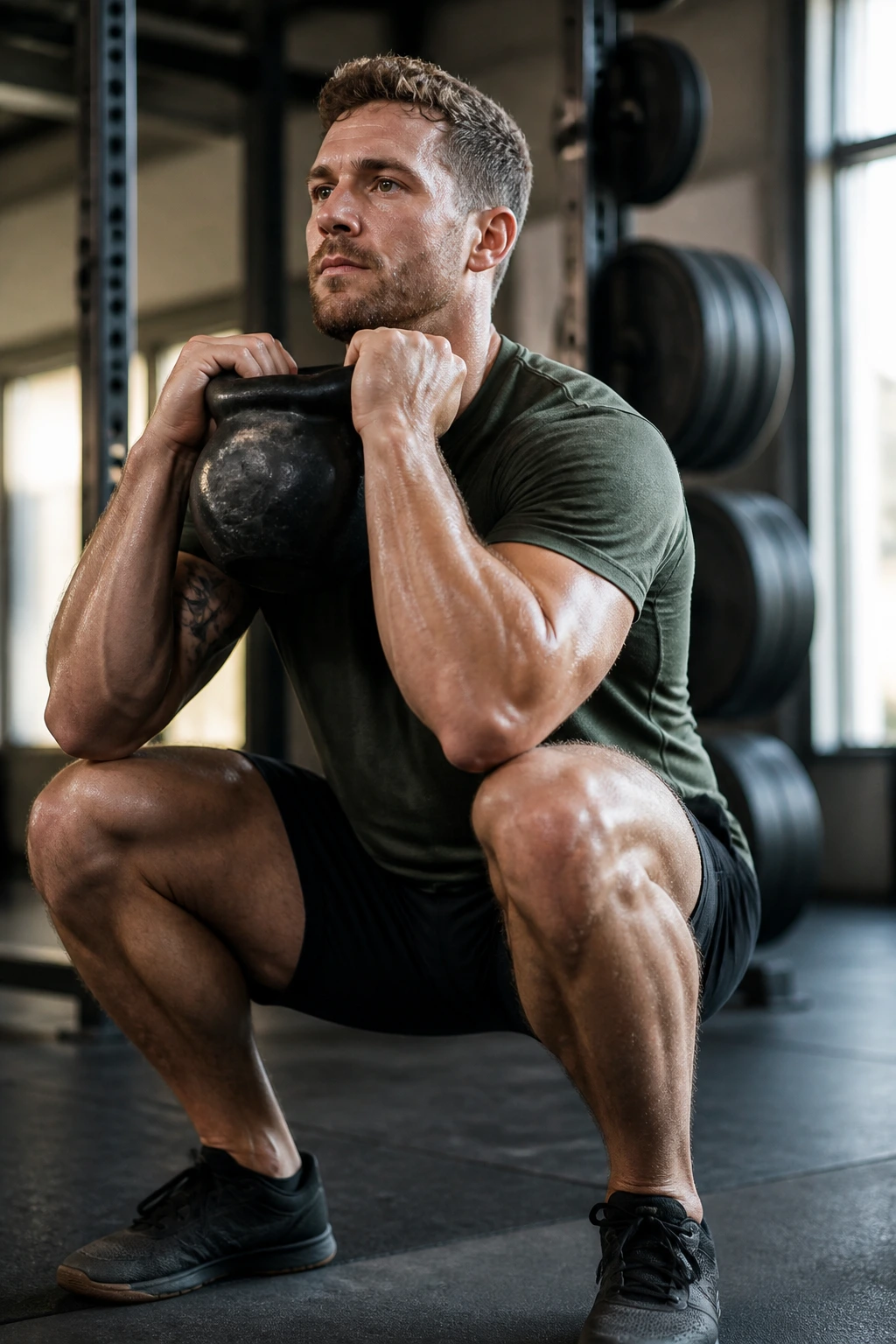
A density block is a blunt instrument, and I mean that as praise. You set the clock, do the work, and let the volume add up without turning the workout into a guessing game.
The Setup
Use a 10-minute timer. Every 30 seconds, perform 2 front squats. If you want more load, clean the bell before each set. If you want more speed, keep the bell in the rack and move faster between sets.
This lights up quads, glutes, upper back, and core. Front-loaded squats force the trunk to stay tall, which is why the bell feels heavier than the number suggests. The legs do the obvious work. The midsection does the quiet work.
A few practical notes:
- Keep the elbows forward.
- Breathe at the top before each set.
- Don’t let the knees cave in on the way up.
- If your rack position slips, the clock is not the problem — your setup is.
The density block works because it removes drama. You just keep showing up every half-minute and doing the next clean set.
14. Push Press and Overhead Hold
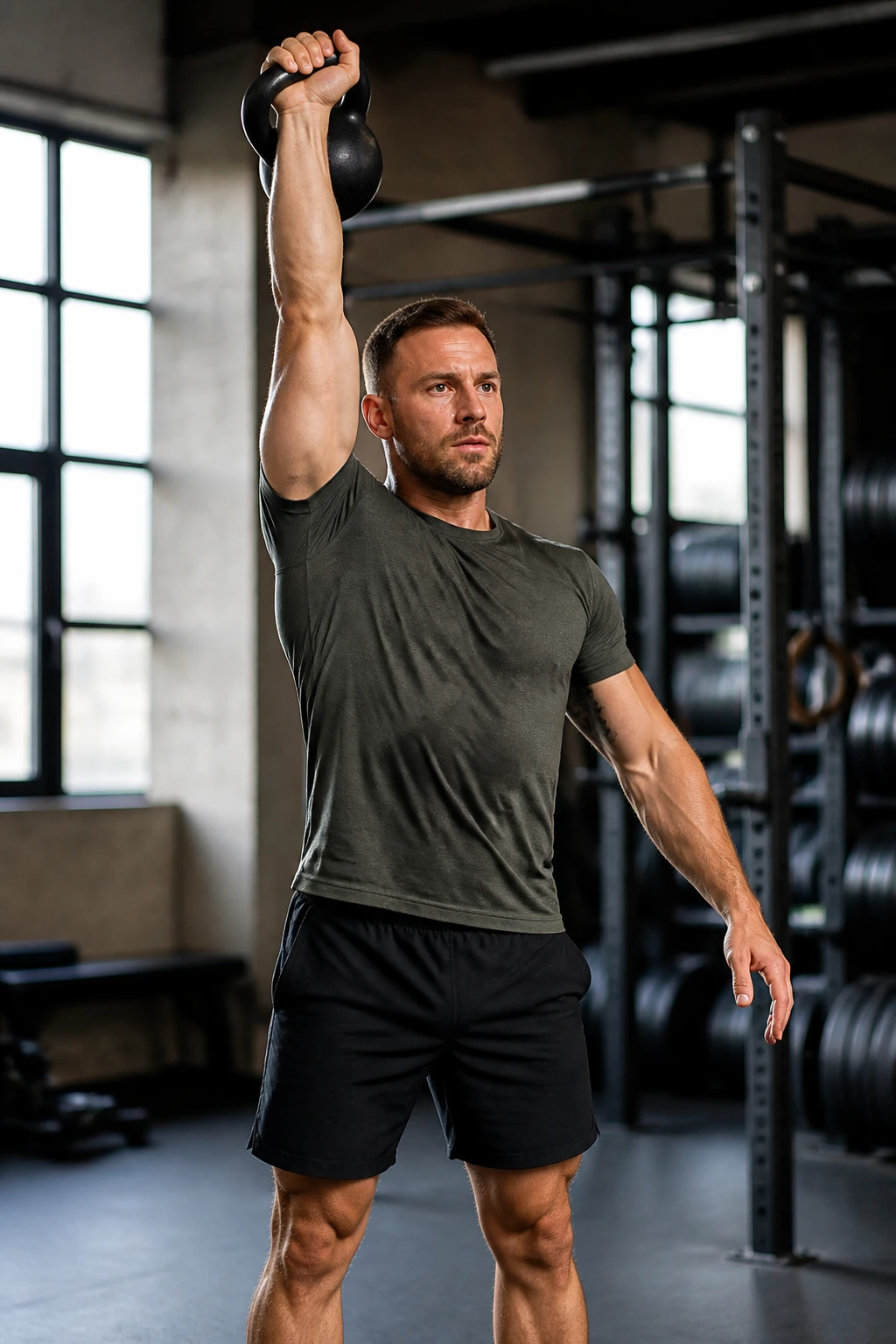
Strict pressing is useful. Push pressing is sneakier. It lets the legs help, then forces the shoulders to finish the job and stay locked out while the bell hangs overhead.
Do 5 push presses per side, then hold the top position for 10 seconds. Repeat for 4 or 5 rounds. The hold matters more than people want to admit. It exposes shaky ribs, soft glutes, and weak shoulder packing in a hurry.
This is a good session for delts, triceps, upper back, glutes, and abs. The leg drive gives you load. The hold turns the rep into a stability test.
A clean overhead position should look boring. Wrist stacked, elbow straight, ribs down, glutes tight. If the bell drifts behind your head, the shoulder is taking a shortcut it cannot afford.
15. Split Squat Clean Complex
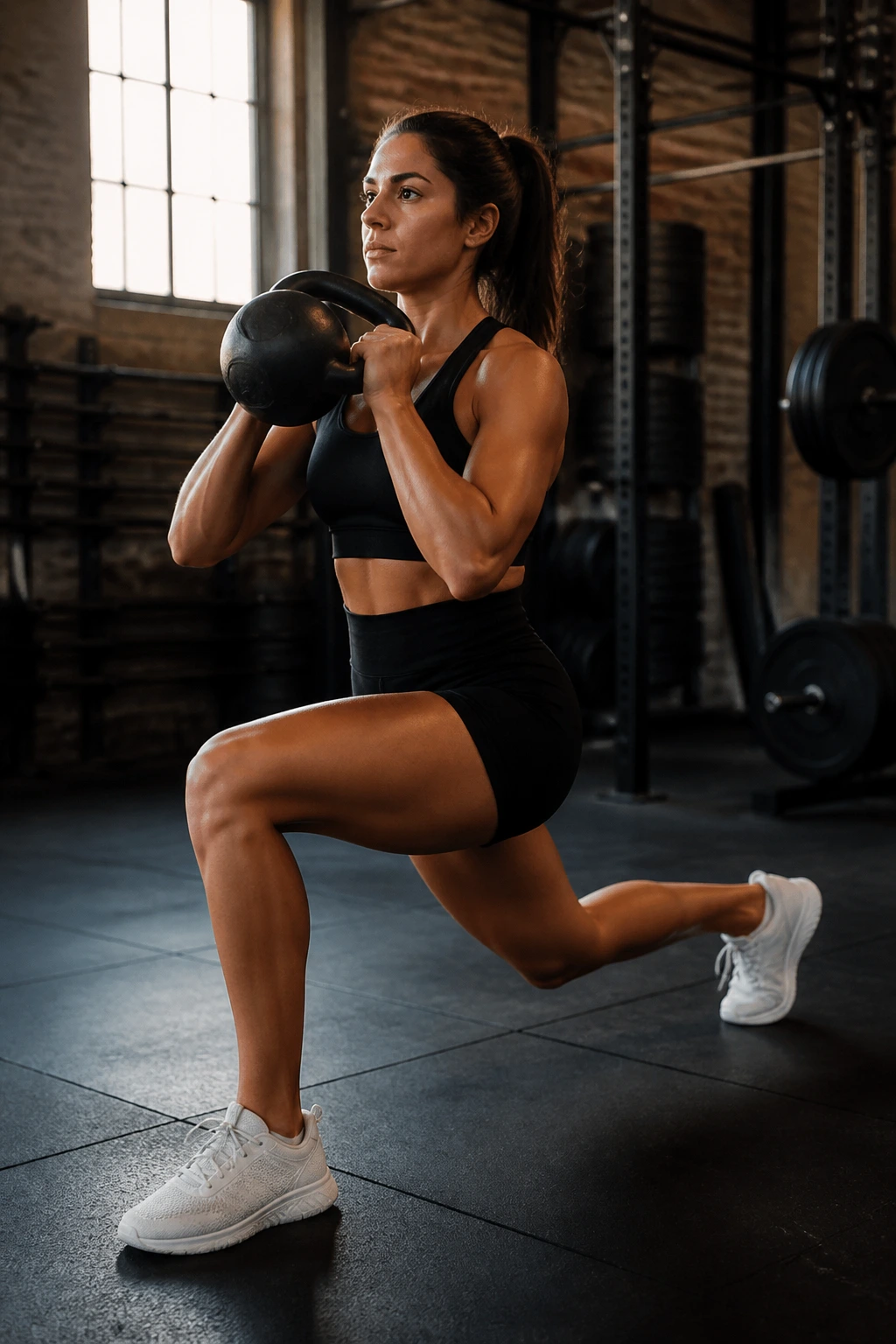
The split squat is already a stubborn exercise. Add a clean first, and the bell gets to tax the setup before it ever reaches the legs.
How To Run It
Perform 3 cleans per side, then drop into 5 split squats per side. Rest, then repeat for 3 rounds. Use the clean to bring the bell into the rack, not to impress anyone. Clean it, settle it, then squat.
This one is especially good for glutes, quads, adductors, calves, and core. The split stance makes balance part of the lift, and balance is where a lot of hidden strength lives.
The back leg should stay active, not lazy. The front foot should stay rooted through the big toe, the little toe, and the heel. That tripod contact sounds fussy until you feel the difference in stability.
If one side feels far worse than the other, that’s the point. Unilateral work always tells the truth a little too loudly.
16. Bent-Over Row and Hinge Session
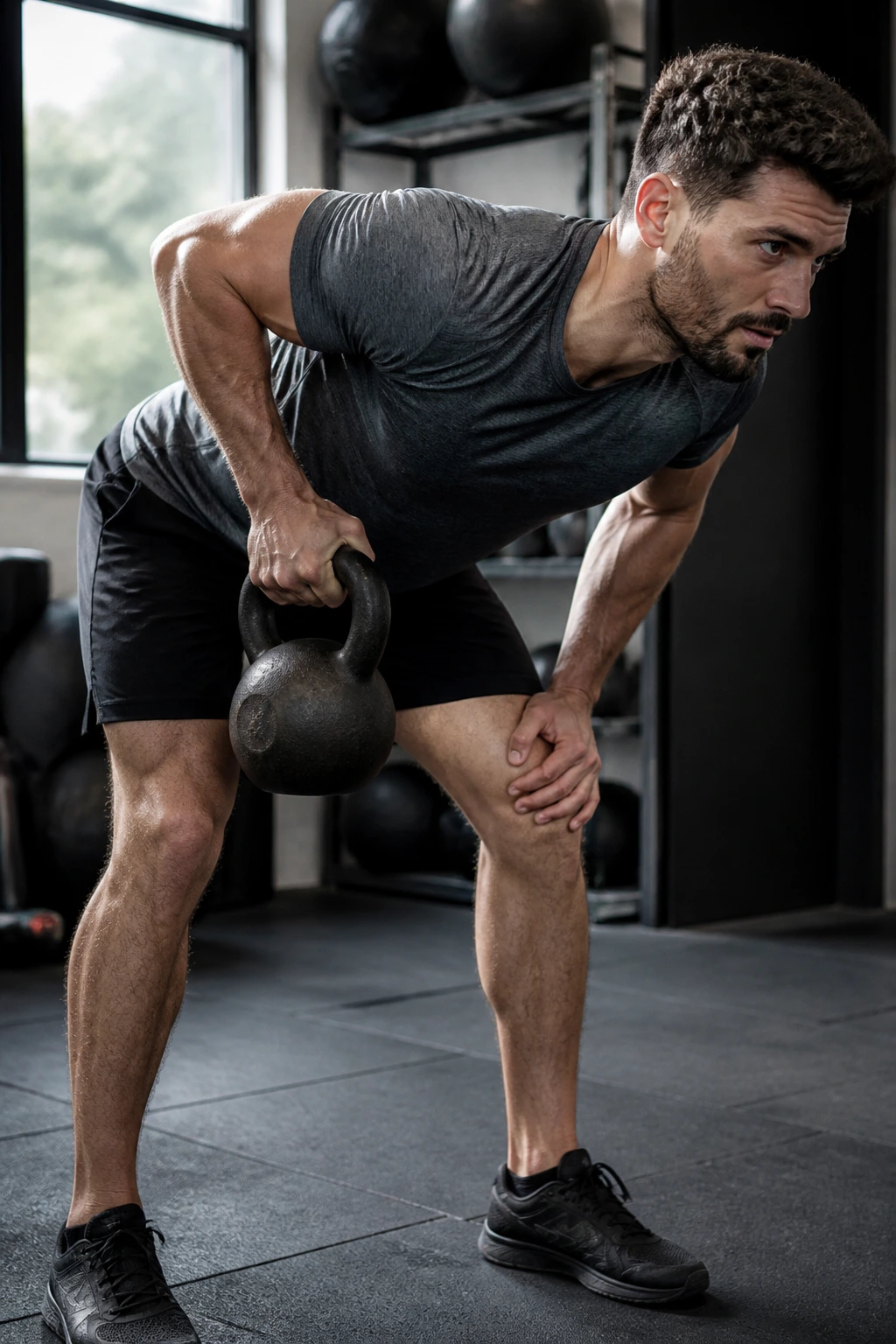
A lot of kettlebell training gets called “full-body” even when the pulling volume is weak. This session fixes that. Hard.
What To Do
Try 10 Romanian deadlifts, 8 one-arm rows per side, and a 20-second plank for 4 rounds. Keep the hinge controlled and the back flat. The row should come from the shoulder blade, not from yanking the bell with the biceps.
This hits hamstrings, glutes, lats, rhomboids, abs, and forearms. It also gives your grip a steady problem to solve, which matters more than people think. Strong hands make the rest of the body feel more stable.
- Push the hips back on the deadlift.
- Keep the bell close to the legs.
- Row to the pocket.
- If your lower back rounds, the range is too deep for the load you picked.
The session is not flashy. It is just useful, which is better.
17. Carry Circuit for Grip and Core
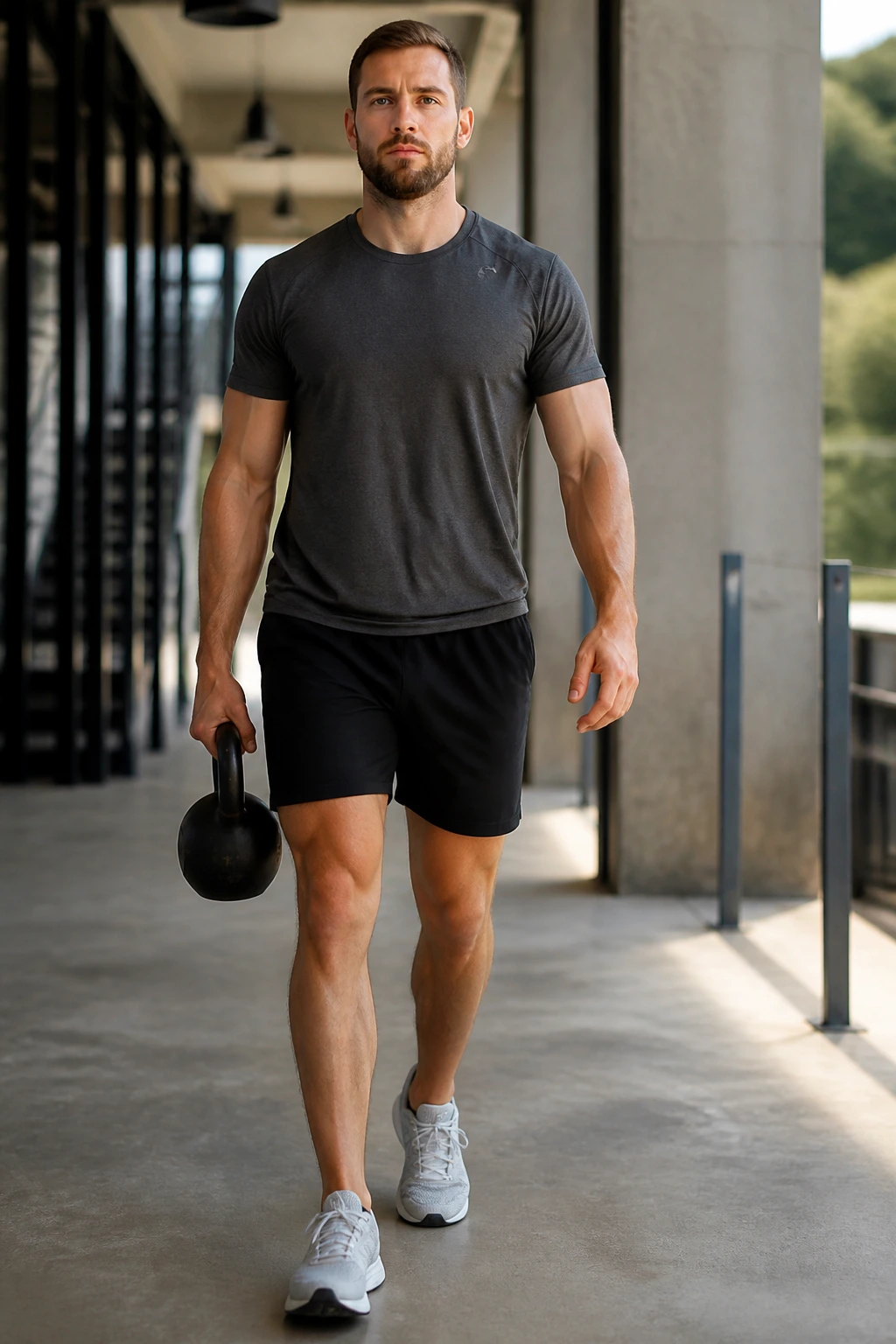
Carries are boring to people who haven’t done them with a serious bell. After that, nobody calls them boring twice.
Do 30 meters of suitcase carry, 30 meters of front-rack carry, and 30 meters of overhead carry on each side. Rest only long enough to stay safe and upright. Run 2 or 3 rounds.
This is one of the easiest ways to train grip, obliques, shoulders, upper back, and hips without chasing a big rep count. The body has to resist collapse from three different angles. Side bend, forward fold, overhead wobble — all of it gets addressed.
The front-rack carry is usually the humbler one. It looks smaller than the overhead version, but it hits the torso in a way that makes the ribs stay honest. The suitcase carry handles side-to-side stability. The overhead carry tests shoulder packing and balance.
Walk slower than you want. That usually makes the carry better.
18. Squat Clean to Press Ladder
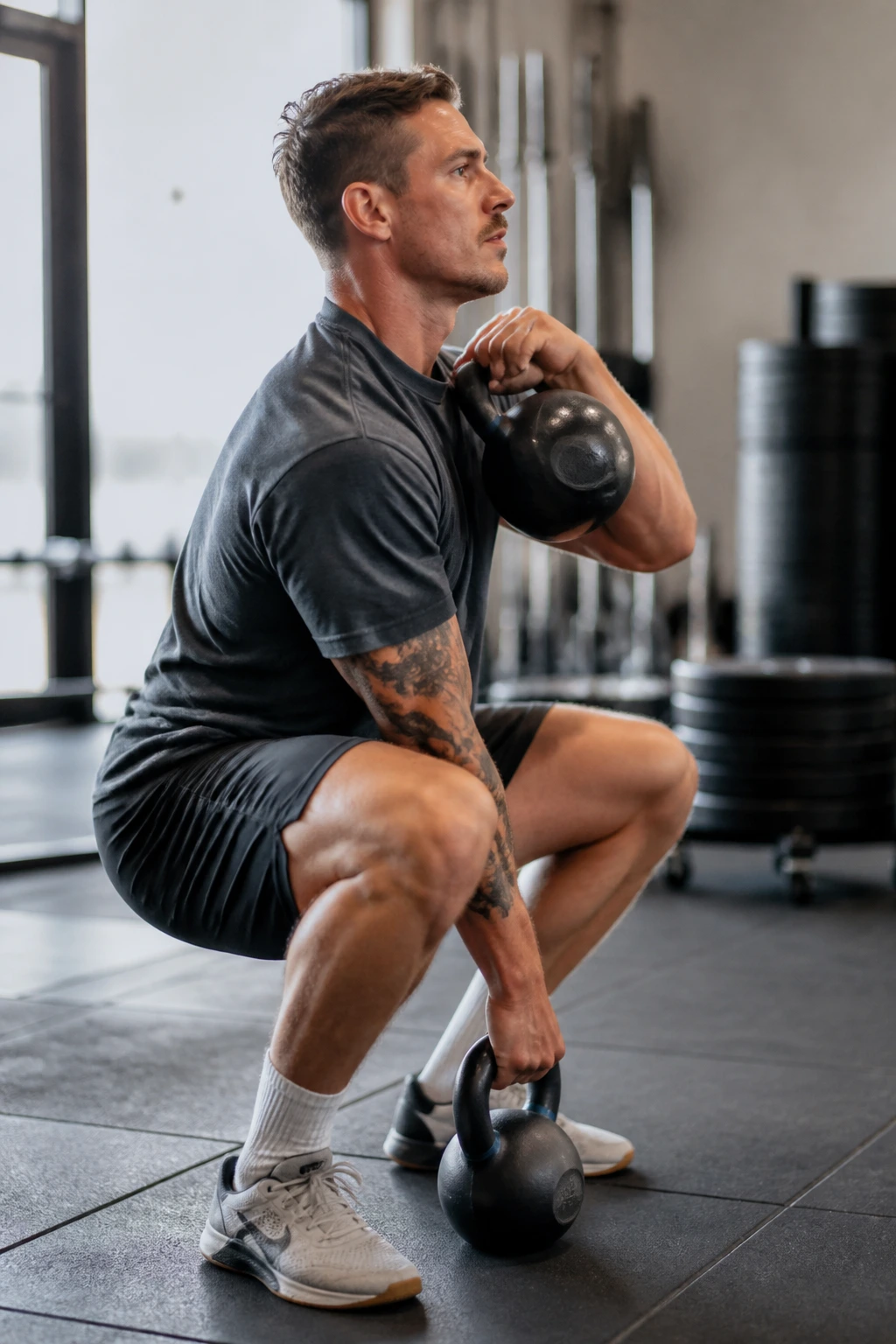
The squat clean to press is a full-body chain reaction. The bell comes off the floor, lands in the rack, drops into a squat, and then goes overhead. There is nowhere for lazy movement to hide.
Why does this one work so well? Because the sequence forces each piece to do its job before the next one starts. The pull needs a good hinge. The squat needs a stable rack. The press needs a tight midsection. Miss one link and the rest feels off.
Run 1 rep per side, then 2, 3, and 4. If you’re strong and clean in your movement, bring it back down the ladder. Rest as needed, but don’t let the bell get cold.
This one is good for glutes, quads, shoulders, triceps, and core. It also gets the heart rate up without feeling like a sloppy metcon. That is a nice place to be.
19. Kettlebell Long Cycle Conditioning
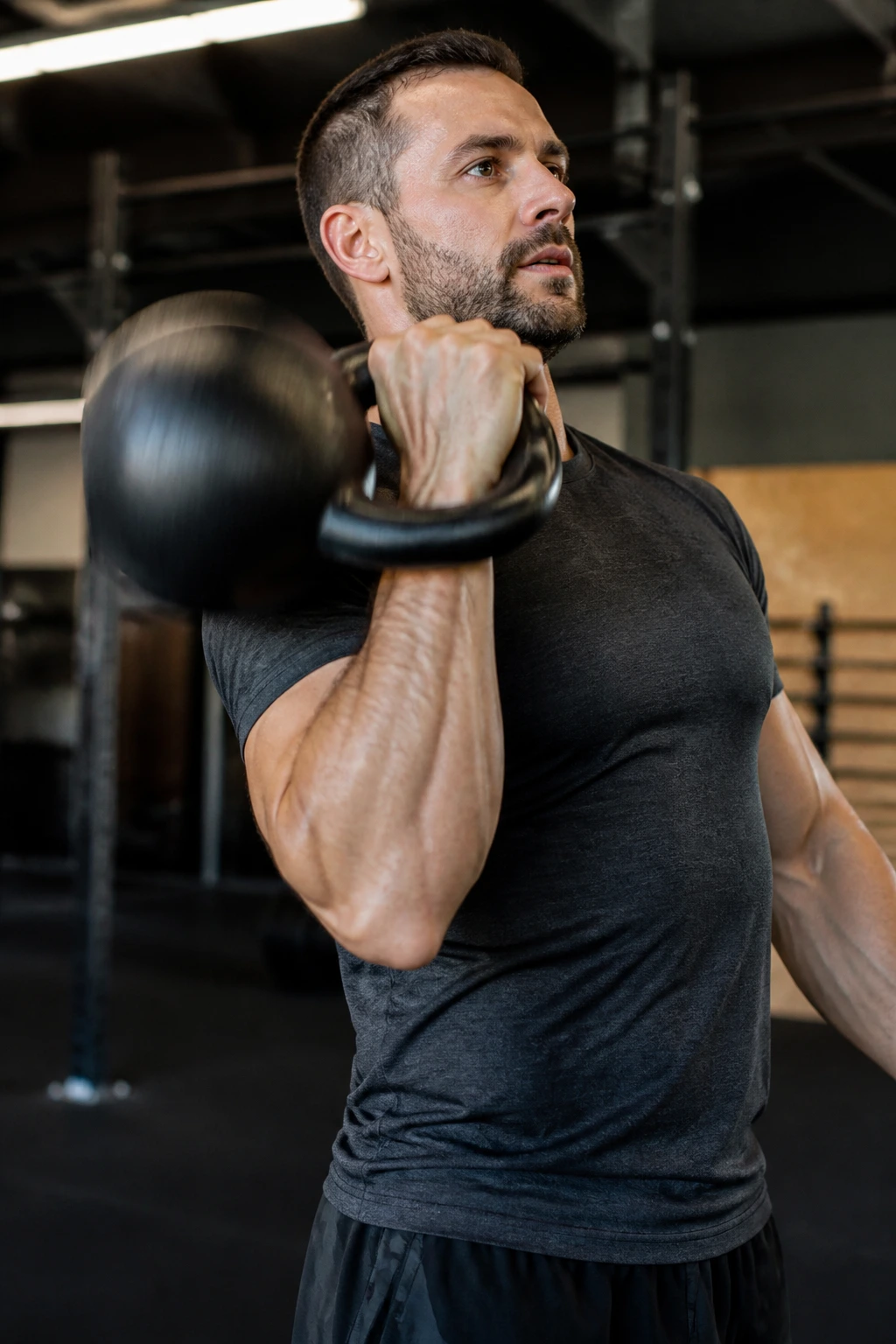
Long cycle work is where clean-and-jerk style training earns its reputation. The bell keeps coming back to the rack, and your legs and shoulders have to keep answering.
How To Pace It
Set a timer for 5 minutes and do alternating clean and jerk reps at a pace you can actually hold. Rest 2 minutes, then repeat for 3 rounds. If jerks bother your shoulders, use a push press instead. That is still hard enough.
This is one of the most complete kettlebell workouts on the list because it pulls in calves, quads, glutes, upper back, shoulders, triceps, and core while also taxing the lungs. The bell cycle is rhythmic, but it is not gentle.
A few pacing notes:
- Breathe at the top of the rack.
- Keep the forearm vertical before the drive.
- Use the legs to send the bell up.
- When the rack gets messy, slow the cadence before the form slips.
The appeal here is simple. You feel powerful and smoked at the same time.
20. Halo to Goblet Squat Strength Flow
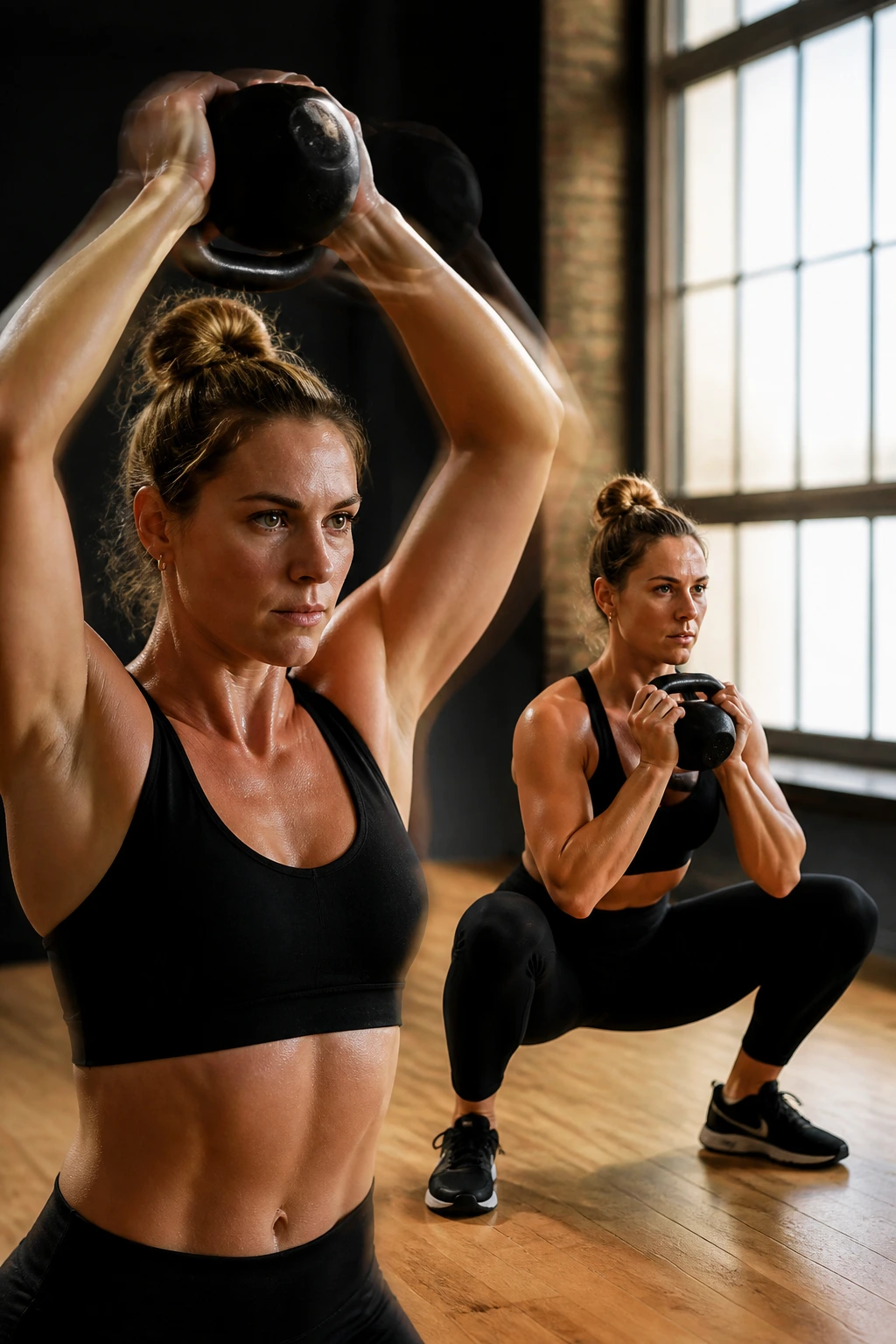
This one looks like a warm-up until you finish it with enough rounds to respect it. The halo opens the shoulders. The goblet squat hits the legs. The hold at the bottom teaches control.
Do 10 halos, 10 goblet squats, and a 10-second goblet squat hold for 3 rounds. Keep the bell close and the torso proud. The bottom hold should feel controlled, not like you’re hanging on for dear life.
Why It’s Better Than It Looks
The halo keeps the shoulders moving through a clean arc. The squat loads the quads and glutes. The hold forces the hips and ankles to stay honest while the core resists folding. That is a lot from a deceptively calm-looking sequence.
I reach for this when a session needs a little more mobility without becoming a stretch routine. It gets blood moving, but it also builds strength where most people leak it.
If the knees cave on the squat, lighten the bell and sit a little more slowly. That tiny fix usually makes the whole thing feel better.
21. Clean, Front Squat, Press Complex
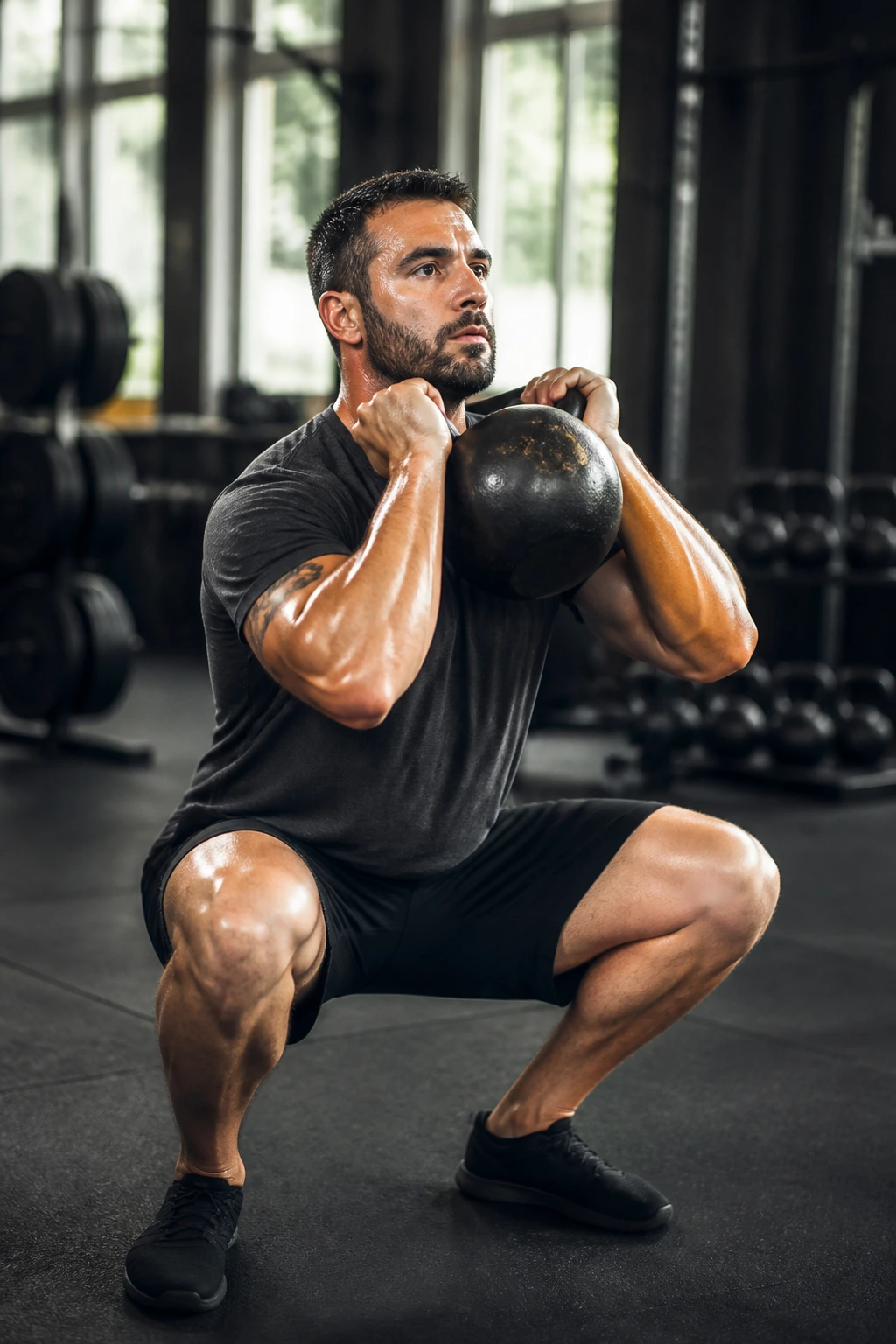
Simple complexes are dangerous in a good way. They seem manageable, then the accumulated fatigue sneaks up and makes every rep count.
Why does this one work so well? Because the clean, the front squat, and the press each expose a different weakness. The clean tests the hinge. The squat tests the legs and trunk. The press tests the shoulders and timing. Put them together and you get a clean look at your movement quality.
Try 1 clean, 1 front squat, and 1 press per side, repeated for 5 rounds. If that’s too easy, climb to 2 reps before switching sides. If it’s too much, stay at one and slow the tempo.
This session hits glutes, quads, lats, delts, and abs without asking for crazy volume. It’s neat. It’s hard. It works.
22. Arm Bar and Floor Press Combo
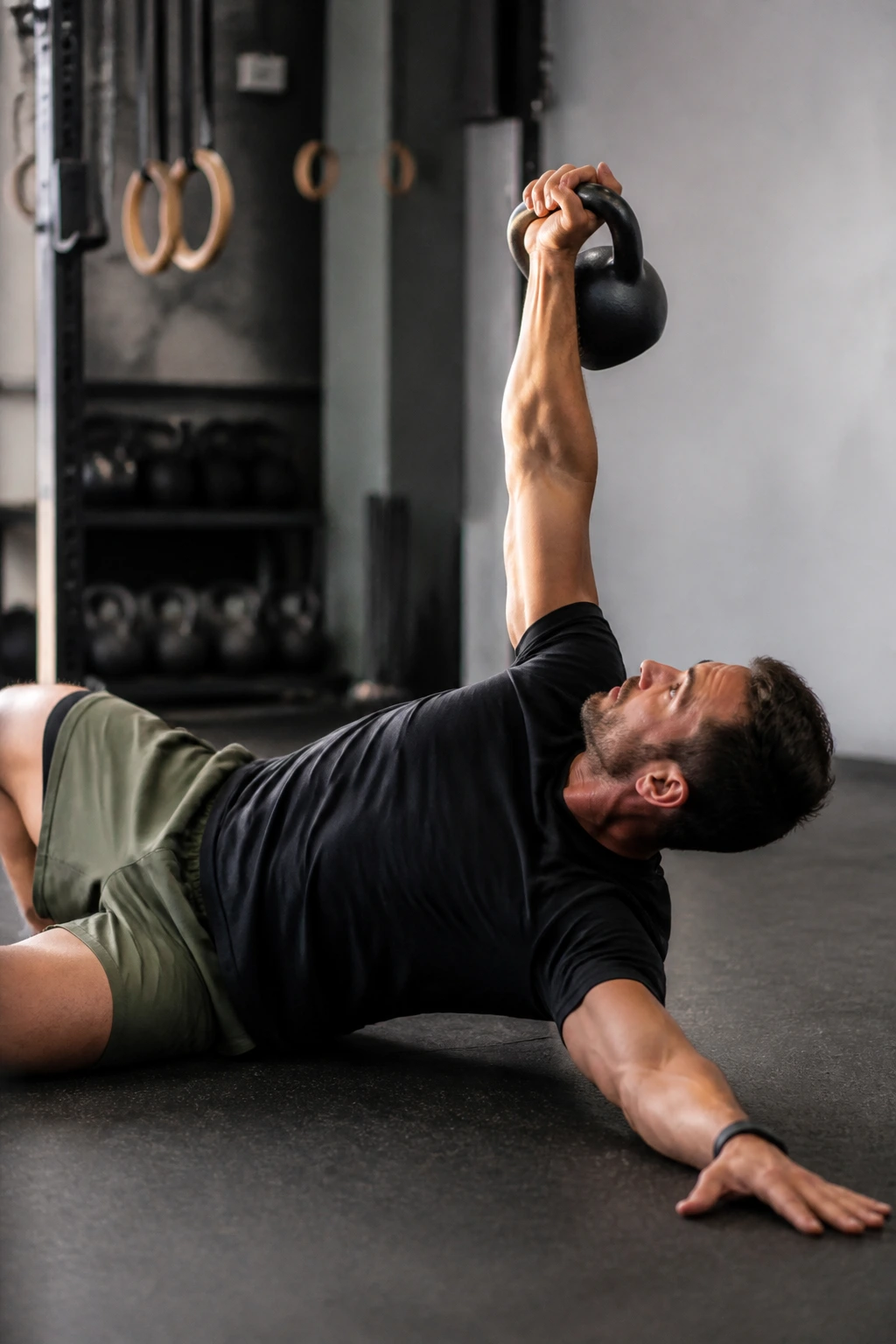
The floor press gets underrated because it looks quiet. Then the chest and triceps start shaking and the wrist position reminds you that “quiet” is not the same as easy.
An arm bar changes the mood first. Lie back, roll onto your side, and keep the bell stacked over the shoulder while you rotate through the rib cage and upper back. Then move to the floor press, which locks the range and forces the pressing muscles to work from a dead stop.
Run 3 arm bars per side, then 8 floor presses per side, for 3 rounds. Use a controlled bell and keep the shoulder packed.
This combo is good for chest, triceps, rotator cuff, and upper back. It is also useful on days when overhead work feels cranky but you still want to press something.
One Small Note
The arm bar should feel stable, not forced. If the shoulder feels jammed, reduce the range and slow down. There is no prize for rushing a position your body does not own yet.
23. Offset Rack Walk and Lunge
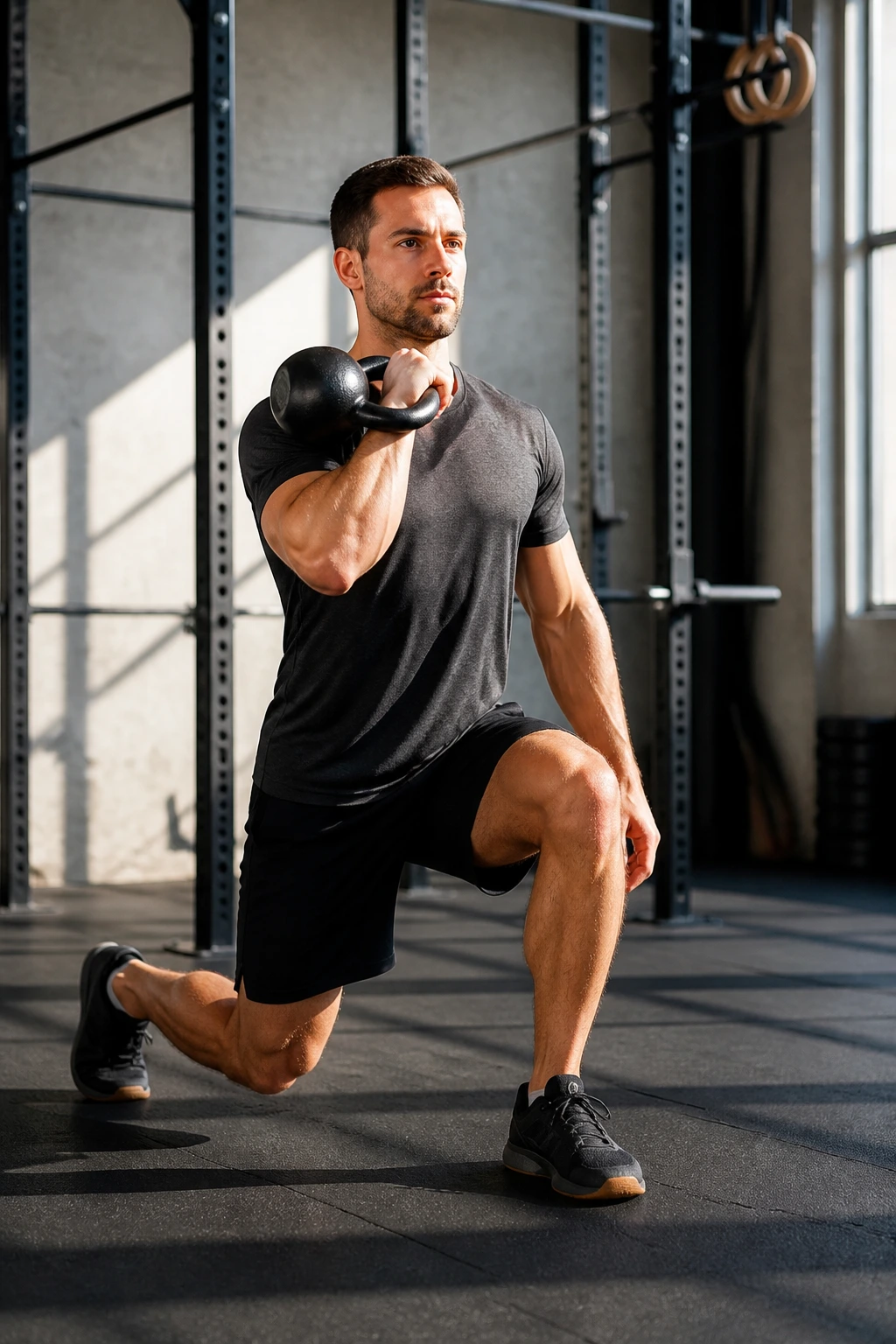
Offset loading sounds technical, but it’s really just the bell making you carry weight on one side while you walk and lunge like a normal person. That asymmetry is the whole point.
Do 30 meters of front-rack walking on one side, then 8 walking lunges, then switch sides and repeat. Three rounds is enough for a serious hit. Your trunk will work overtime to stop the torso from drifting toward the bell.
This gets quads, glutes, calves, obliques, upper back, and grip. It also forces cleaner footwork than a lot of straight-line lifting. When the load sits unevenly, the body has to organize itself better.
I like this session for athletes, but it’s useful for regular lifters too. Everyday movement is not symmetrical. Carries and offset lunges respect that.
If the rack position starts to dump into the elbow, reset it. A good rack walk feels like a tall, controlled march, not a tilted shuffle.
24. Bodyweight Contrast Circuit
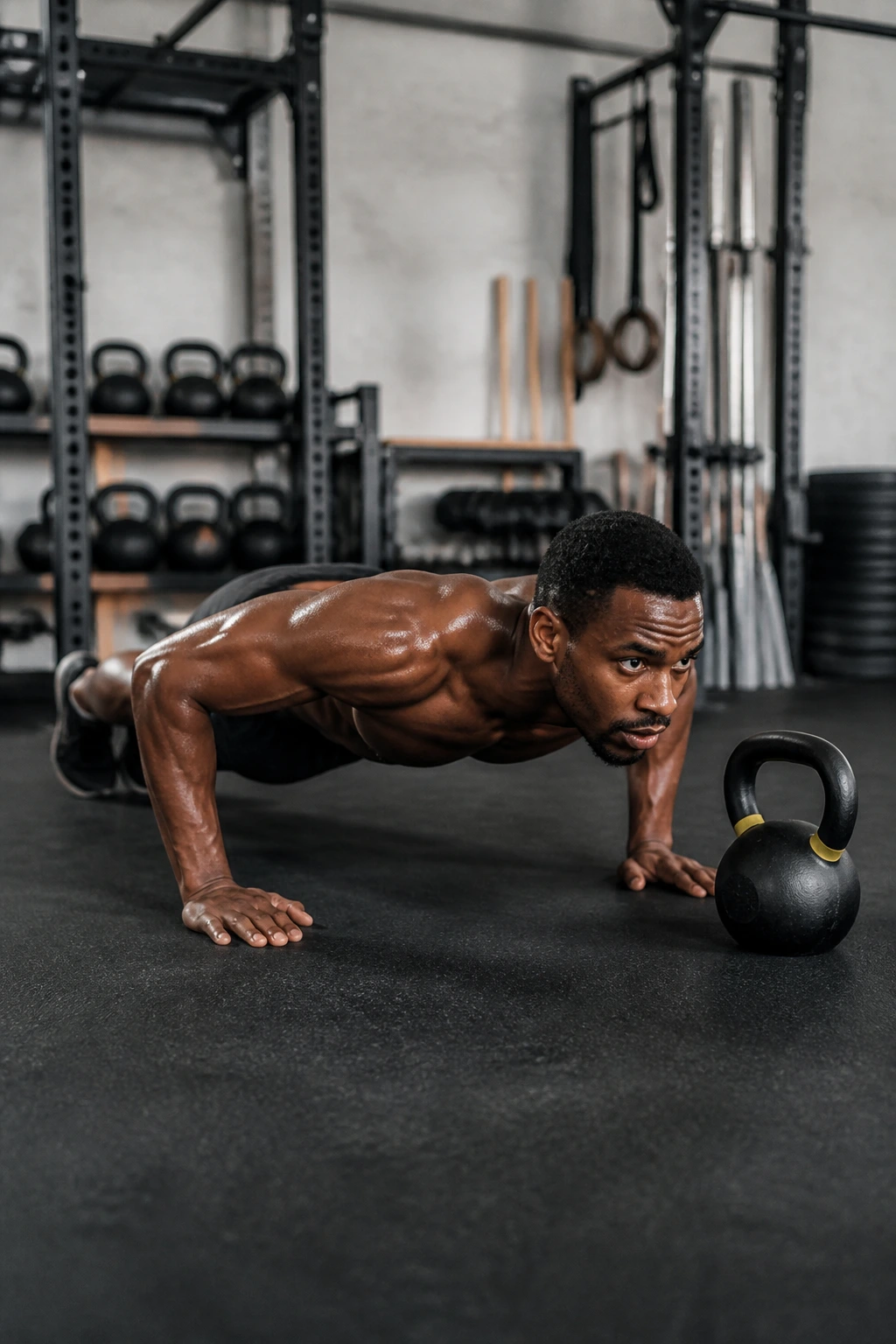
Some of the best kettlebell workouts mix loaded work with plain bodyweight movement. The contrast keeps the pace honest and gives the body a chance to change gears without dropping the intensity.
Try 8 kettlebell deadlifts, 8 push-ups, 8 one-arm rows per side, and 10 goblet squats. Then walk 20 to 30 meters with the bell in a suitcase carry. Rest, repeat, and keep the whole circuit moving for 4 rounds.
Why This Works Better Than Random Mixing
The deadlift and goblet squat hit the lower body. The push-up covers the chest and triceps. The row handles the back. The carry finishes the set with core and grip. Nothing is wasted, and nothing feels tacked on.
This is a nice choice when you want a session that feels athletic instead of purely strength-based. It also plays well with limited equipment. One bell. One floor. No drama.
Keep the push-ups clean. Flared elbows and sagging hips will make the circuit feel longer than it needs to.
25. Finish Strong
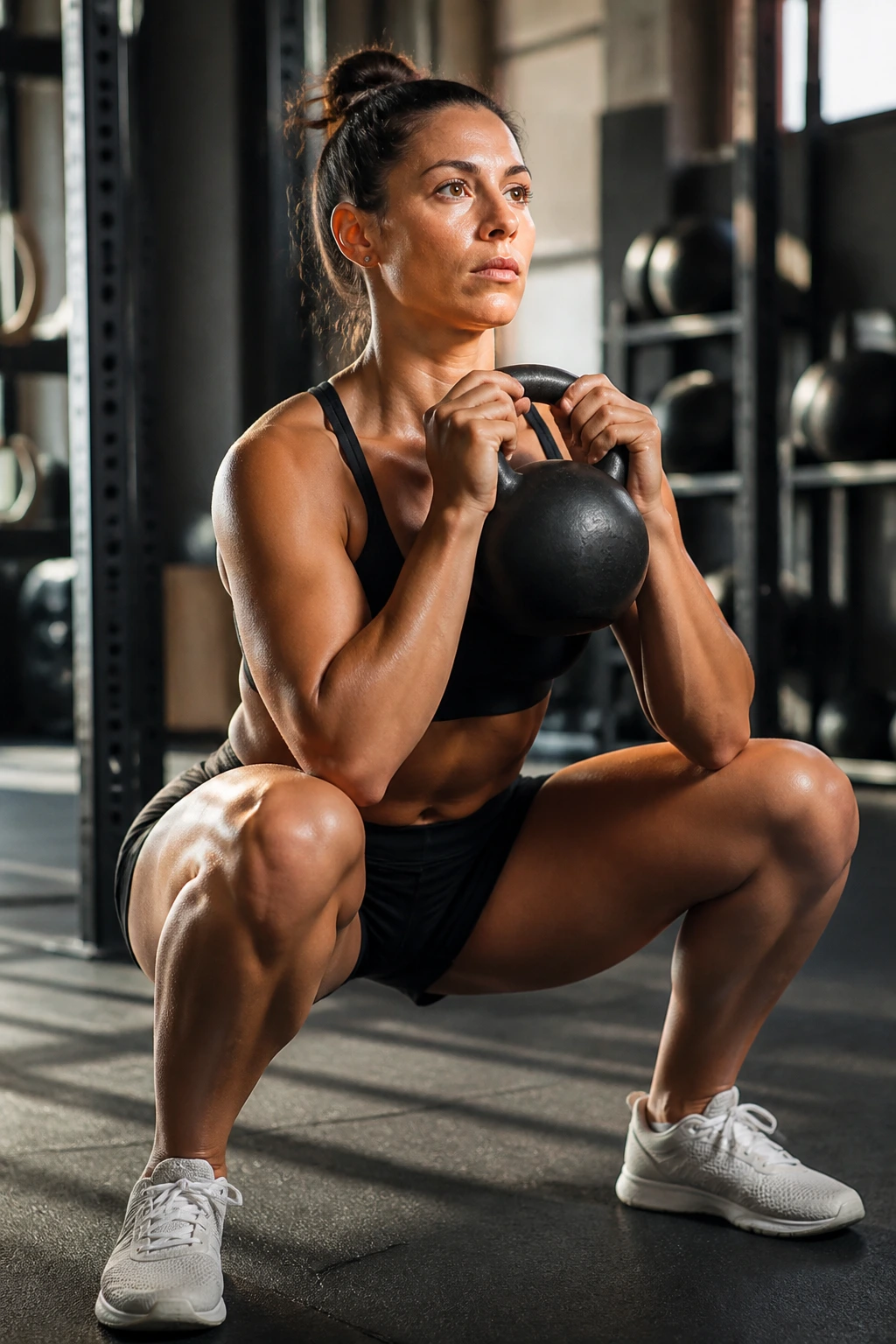
This is the workout I use when I want the bell to hit everything without a lot of setup. Five swings, five cleans per side, five goblet squats, and a 20-meter carry makes a small circuit that still leaves a mark. Run it for 3 to 5 rounds, and the whole body gets the message.
A finisher like this is useful because it doesn’t belong to one muscle group. Hips drive the swings. The clean wakes up the back and shoulders. The squat loads the legs. The carry ties the trunk and grip together. That’s the whole package in a short, hard block.
Pick the workouts in this list based on the weak link you actually want to fix. Need more power? Use swings and snatches. Need better strength? Go heavier on cleans, squats, and presses. Need better control? Get-ups, windmills, and carries are the ones that keep paying off long after the set ends.
And if you only have time for one bell session, make it count. A well-built kettlebell workout should leave you standing taller, breathing harder, and moving a little better than when you started.
