



The best kettlebell workouts for strength and cardio leave a very specific kind of tiredness behind. Your lungs are working, your grip is honest, and your hinge is either clean or exposed for what it is. There’s no hiding in a kettlebell session. The bell tells on you fast.
That’s why people keep coming back to it. A kettlebell can build leg drive, back strength, shoulder control, and conditioning in the same session without turning training into a long, fussy event. A hard set of swings can light up the whole posterior chain, while a clean-and-press ladder can make your heart race and your trunk brace like a steel rod. The trick is choosing the right structure.
A lot of people make kettlebell work harder than it needs to be. They either go too light and coast through it, or they grab a bell that’s too heavy and start muscling every rep with the lower back. Neither option is fun. A good workout should feel crisp, demanding, and a little savage in the right places.
Pick a bell that lets you keep the shape of the rep: fast hips, quiet shoulders, and a rack position that doesn’t collapse your wrist. Then start with the first session below. It’ll tell you a lot.
1. The Two-Hand Swing Ladder
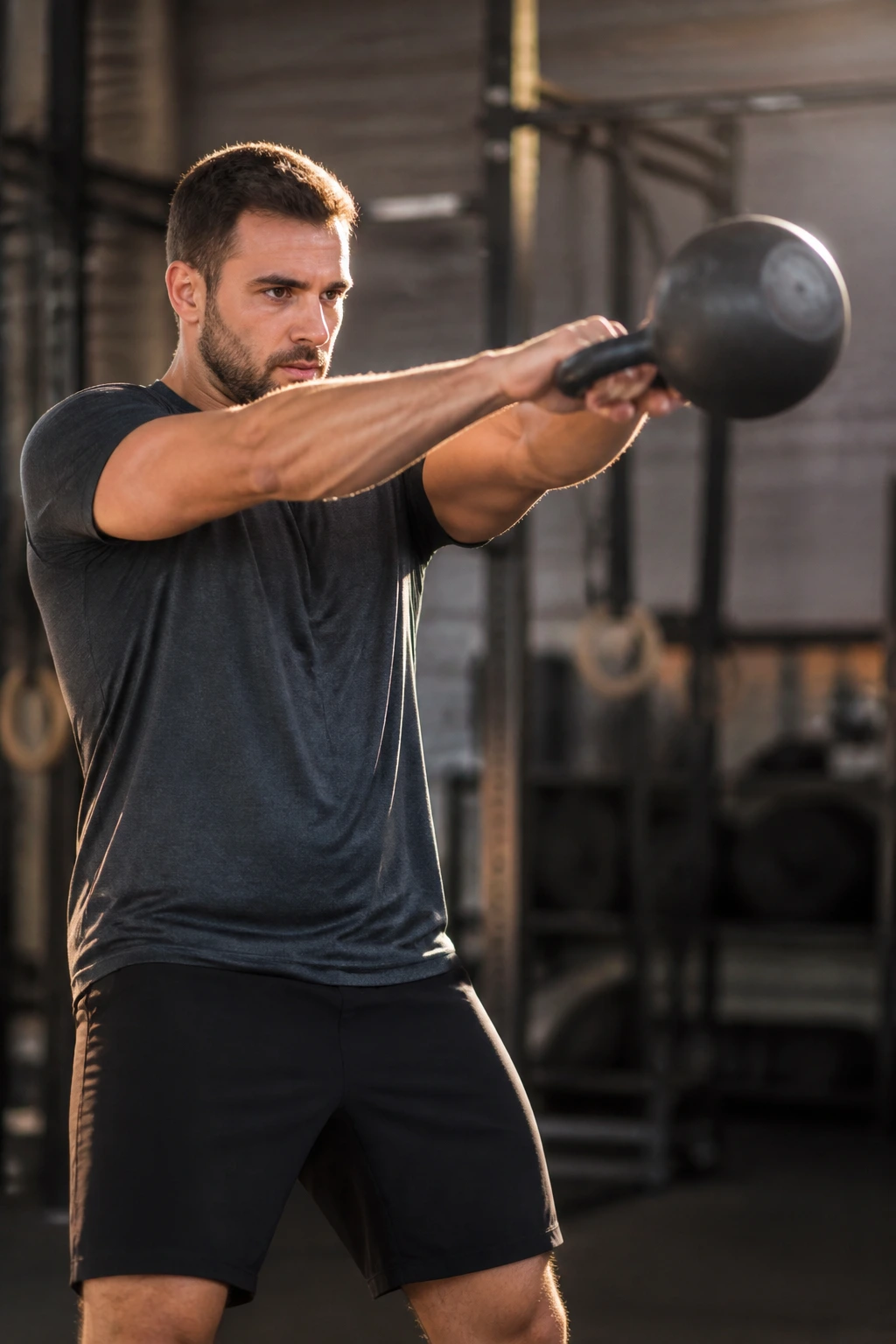
This is the cleanest place to begin because it shows you, in about five minutes, whether your hinge is real or pretend. A two-hand swing ladder builds power in the hips and keeps the heart rate high without turning the workout into a chaotic mess.
Start with a bell you can swing for 20 crisp reps without your shoulders creeping up toward your ears. If the bell pulls you forward or your lower back starts doing the work, it’s too heavy for this format. If it feels like you could chat through the whole thing, it’s probably too light.
Why It Works
The ladder format builds heat fast. You’re not maxing out one set, then staring at the floor for three minutes. You’re stacking effort in a way that teaches the body to recover while it’s still working.
- 10 swings
- 15 swings
- 20 swings
- 15 swings
- 10 swings
Rest 20 to 40 seconds between rounds. That’s enough to keep the quality high without letting your breathing fully settle. Every rep should snap from the hips, not squat and shrug.
Tip: If your hands are sliding open by the third round, you’re gripping too hard. Hold the handle like you mean it, then let the bell float.
2. The Clean and Press Every-Minute Drill
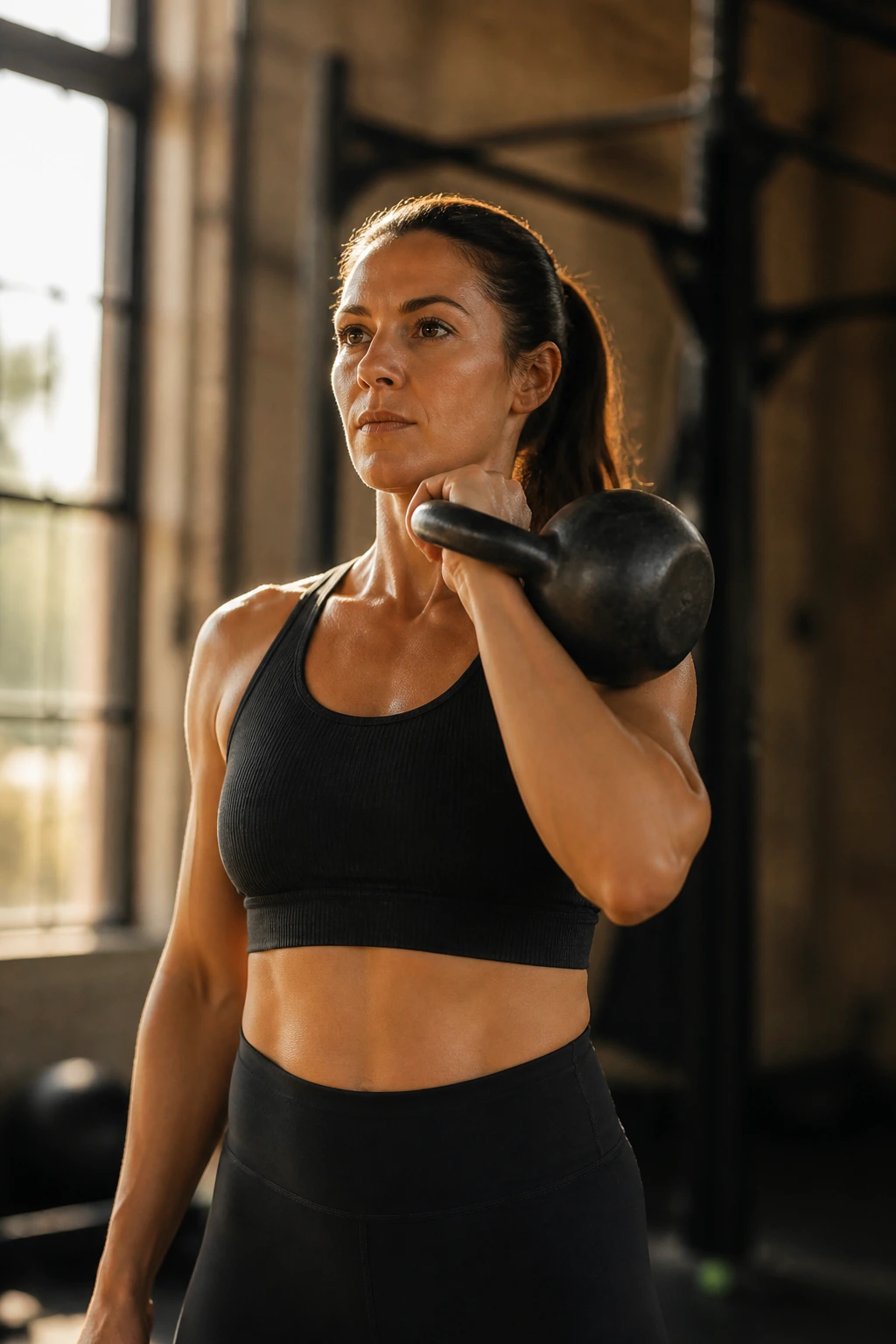
What happens when strength work and conditioning share the same clock? You get a simple EMOM that exposes sloppy technique in a hurry. Every-minute work is unforgiving, which is exactly why it works so well here.
Set a timer for 10 minutes. On minute one, do 3 clean-and-press reps on the right side. On minute two, do 3 reps on the left. Keep alternating until the timer stops. If 3 reps feels smooth, stay there. If your press slows down or your clean starts banging your forearm, drop to 2 reps.
How to Keep It Clean
The clean should land softly in the rack, not crash into it. The elbow stays close, the wrist stays straight, and the bell sits against the forearm without folding your posture. A press that begins with a crooked rack usually ends with a bent spine.
The useful part here is the pacing. You get enough rest to keep the strength work sharp, but not enough rest to fully recover. That little bit of fatigue is the whole point.
A 10-minute EMOM can look mild on paper and still leave your shoulders and breathing cooked. That’s a good sign, not a warning sign. If the set quality stays high, add a minute next time. If it falls apart, shorten the bell or the reps, not your standards.
3. Goblet Squat and Swing EMOM
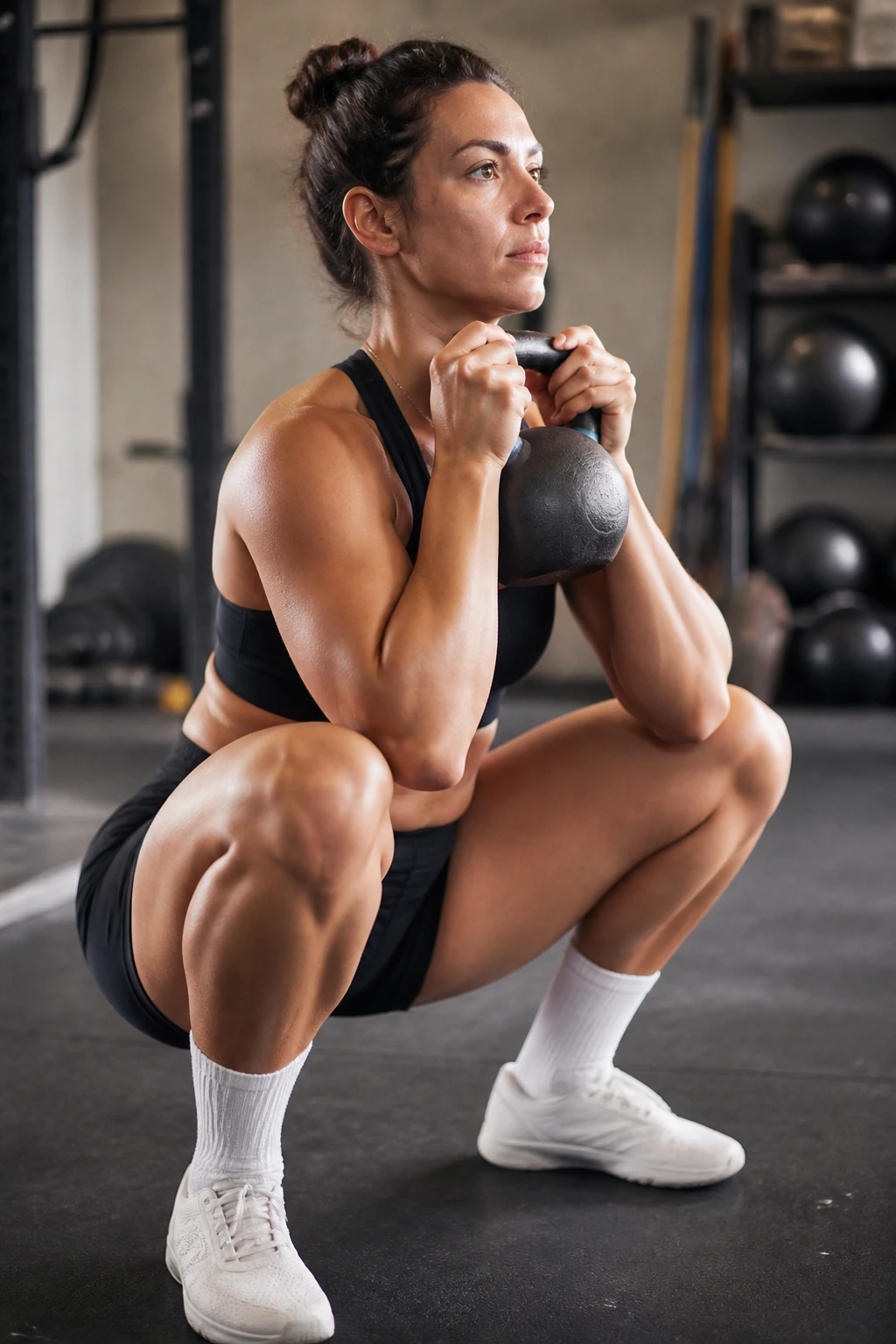
You can smell the effort in this one. The legs warm up first, then the hinge takes over, and by the middle rounds your breathing starts getting loud in a very unglamorous way. That’s the sweet spot.
Use one kettlebell and a 12-minute timer. On odd minutes, do 8 goblet squats. On even minutes, do 12 to 15 two-hand swings. The squat gives you front-loaded tension, and the swing brings the speed back. Together they make a tidy strength-and-cardio pairing.
What Makes It Different
Most people think conditioning means nonstop movement. It doesn’t. Here, the squats create a heavy, braced feel, then the swings push heart rate up without needing a treadmill or rower. The body has to switch gears quickly.
- Odd minute: 8 goblet squats
- Even minute: 12 to 15 swings
- Rest for the remainder of each minute
- Stop the set if the squat depth starts changing
Use a bell that makes the last squat honest. If the elbows start drifting down or the chest caves, the weight is too much for the format. A deep, controlled squat followed by a snap of the hips is what you want, not a half-rep survival shuffle.
4. The Clean, Front Squat, Press Complex
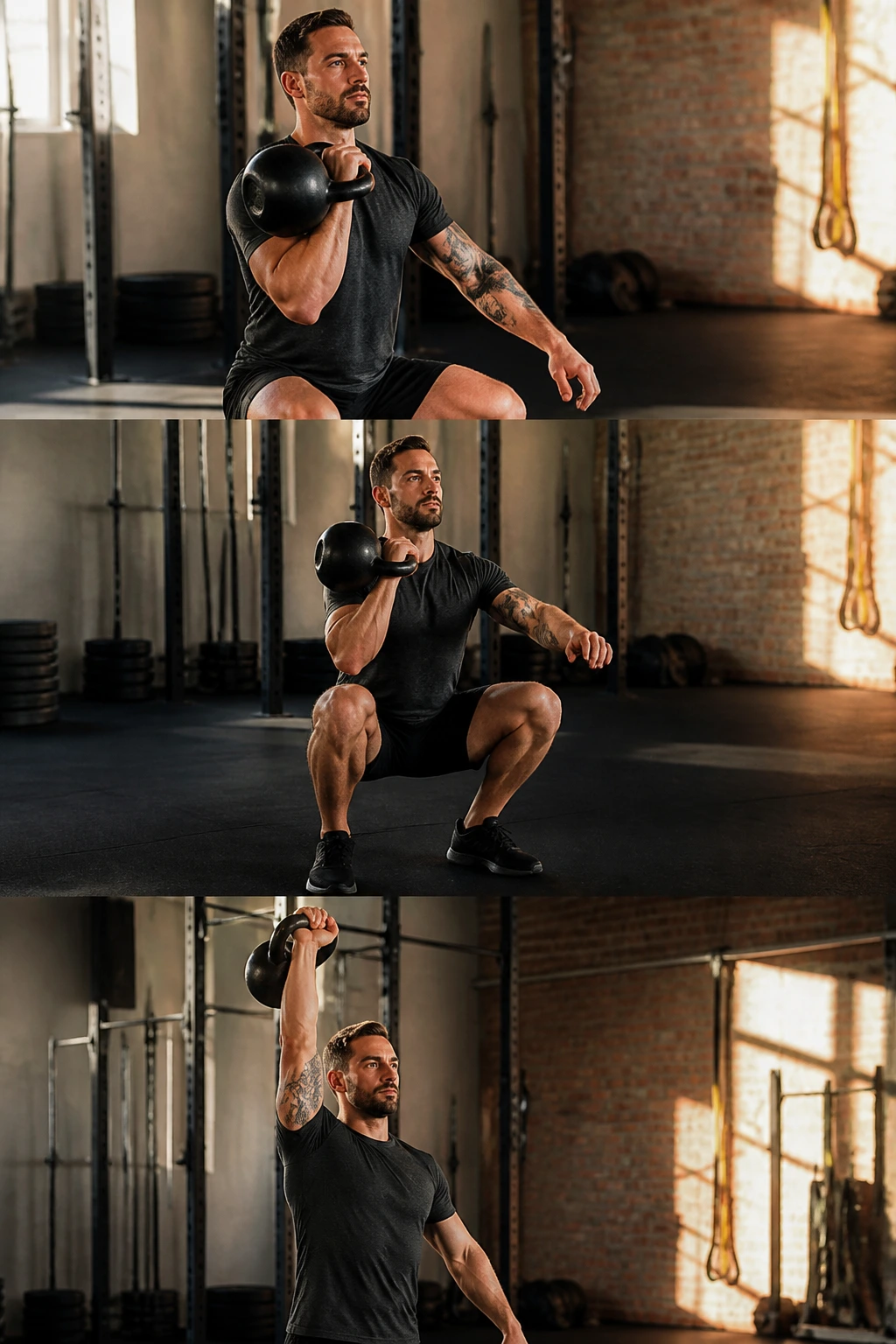
A lot of kettlebell training gets sold as cardio because people are scared of loading it properly. This complex fixes that. It’s strength work first, and the conditioning comes from how little rest you give your lungs.
Do 1 clean, 1 front squat, and 1 press on the right side, then switch to the left. That’s one round. Repeat for 5 to 8 rounds. If you want it heavier, stop at 3 to 5 rounds and use a bell that makes the press a real job.
How to Get the Most From It
The sequence matters. The clean gets you to the rack. The front squat forces the torso to stay tall. The press asks the shoulder to finish the job without turning the whole body into a backbend.
The front squat should feel planted. Feet flat, ribs down, knees tracking over the toes. If the weight yanks you onto your toes, the bell is outrunning your mechanics.
This is one of my favorite formats for people who want kettlebell workouts for strength and cardio without a bunch of extra gear. It’s straightforward, it’s hard, and it punishes lazy reps. Keep the clean quiet and the squat vertical. That’s the whole game.
5. Snatch Interval Sprints
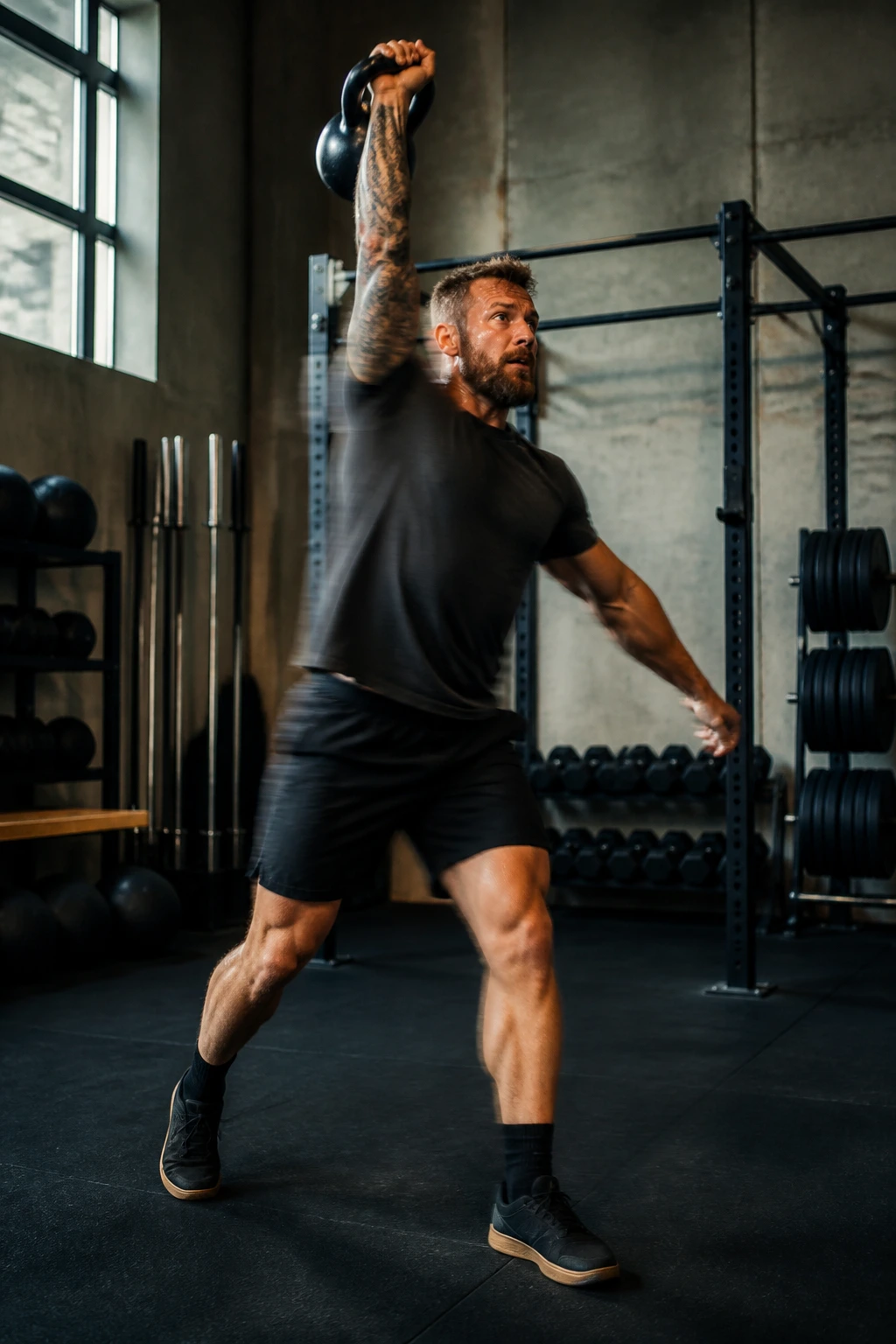
The bell whistles through the air, your hand clamps down at the top, and your breathing changes almost instantly. Snatches do that. They are not subtle.
Set up 10 rounds of 15 seconds of work followed by 45 seconds of rest. Use one arm for 5 rounds, then switch. If 15 seconds feels too spicy, start with 10 seconds on and 50 seconds off. The goal is speed with shape, not a grip contest.
What to Watch For
Snatches are fantastic when the timing is clean. The bell should travel close to your body, then flip softly around the wrist at the top. If it slams the forearm, your path is too wide or your hand is too late.
- Keep the bell close on the backswing
- Punch the hand through at the top
- Lock out the elbow without shrugging
- Switch hands before your grip gets sloppy
Chalk helps. So does patience. The first round often feels oddly easy, then the lungs notice what’s happening and turn the volume up. That’s normal.
This workout is for people who can already swing well. If the swing is messy, the snatch gets messier. Earn the speed first. Then let the interval do its work.
6. The Single-Arm Row and Press Pyramid
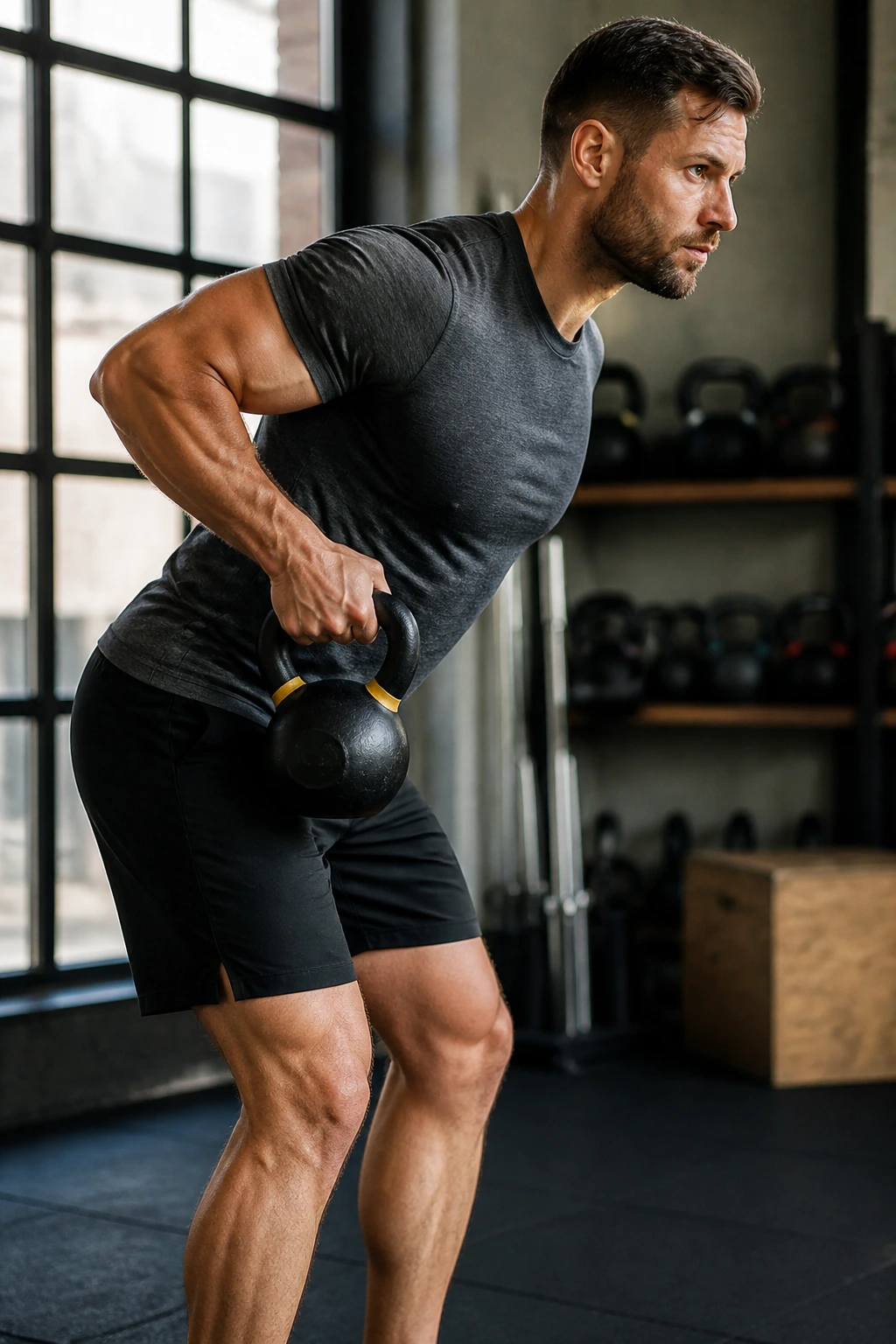
Unlike a pure swing session, this one asks the upper back to do real work before the shoulders press anything overhead. That makes it a useful choice when you want strength without losing the conditioning edge.
Do 1 one-arm row and 1 press on each side, then 2 and 2, then 3 and 3, all the way up to 5. Walk back down the ladder to 1 if you’ve got the gas. Rest 30 to 60 seconds between rungs. Keep the same bell unless the press gets ugly, in which case the weight is too ambitious.
The row should start from a dead stop or a controlled hang. No yanking. Pull the elbow toward the hip, not toward the shoulder. On the press, keep the rib cage pinned down so the lower back doesn’t steal the lift.
This one feels less ballistic and more muscular, which is a nice change of pace if your week already includes a lot of swings. The pyramid structure also gives you a built-in chance to notice when form starts slipping. The moment one side feels sloppy, stop climbing. You don’t need heroics here.
7. The Turkish Get-Up and Swing Pairing
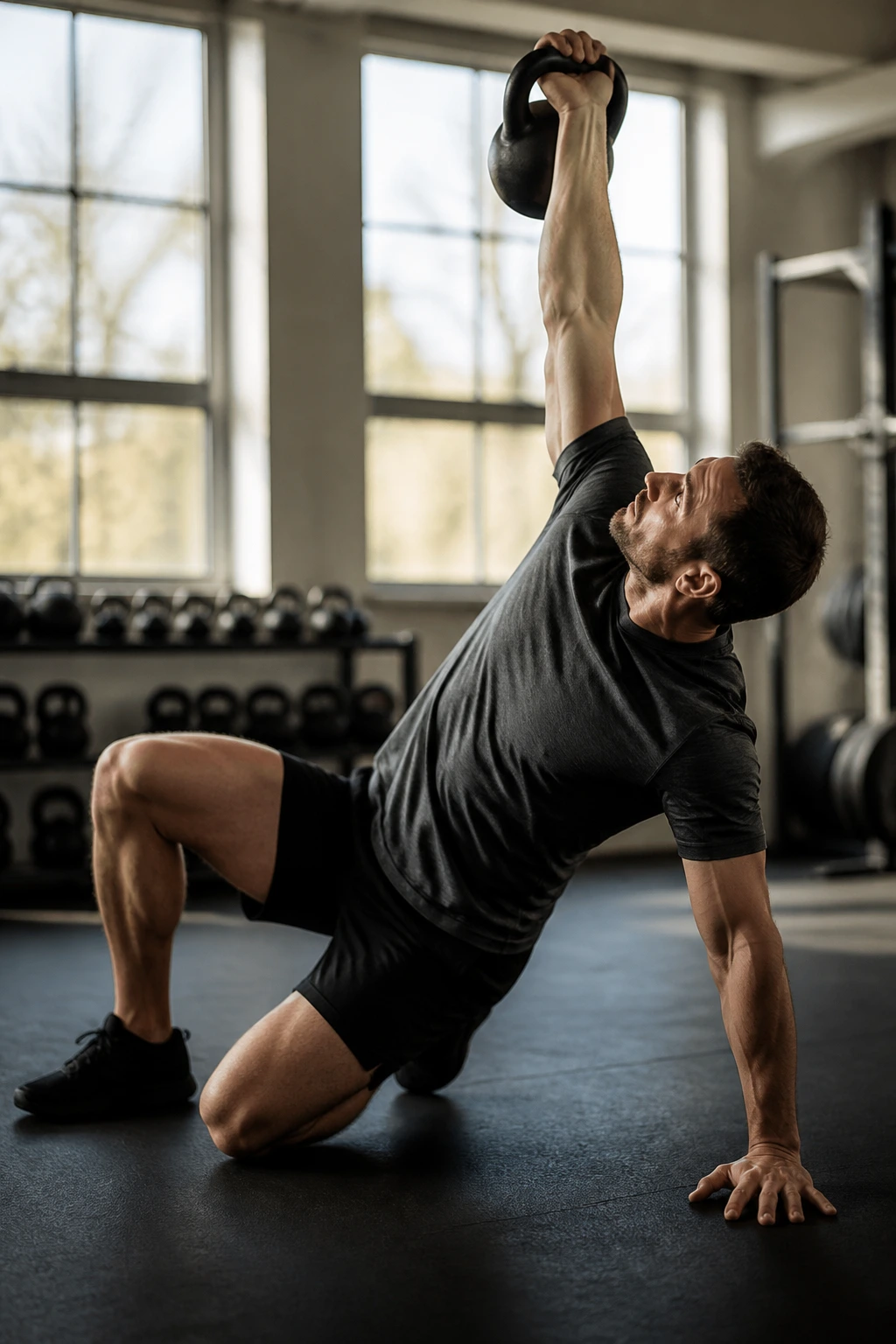
Why pair something slow with something fast? Because the contrast is brutally effective. The Turkish get-up teaches control under load, then the swing drives up the pulse and reminds your body that power still matters.
Do 1 Turkish get-up per side, then 10 to 15 two-hand swings. Rest 60 to 90 seconds. Repeat for 3 to 5 rounds. If a full get-up is too much, use the first three or four positions and treat the movement like a half get-up.
How to Use It
The get-up is not the place to rush. Your elbow, hand, knee, and hip all need to find the floor in a calm order. Think about keeping the bell stacked over the shoulder the whole time. If the wrist caves, the shoulder pays for it.
The swing after that feels almost rude. Your body goes from slow, deliberate control to fast hip snap and a heavy breath pattern. That switch is what makes the session interesting.
This pairing works well on days when you want athletic strength more than brute fatigue. It also exposes side-to-side differences fast. One shoulder usually behaves better than the other. One side usually feels clunkier. The get-up tells the truth. Respect the ugly side. It needs the work more than the strong side does.
8. The Front Rack Carry and Squat Circuit
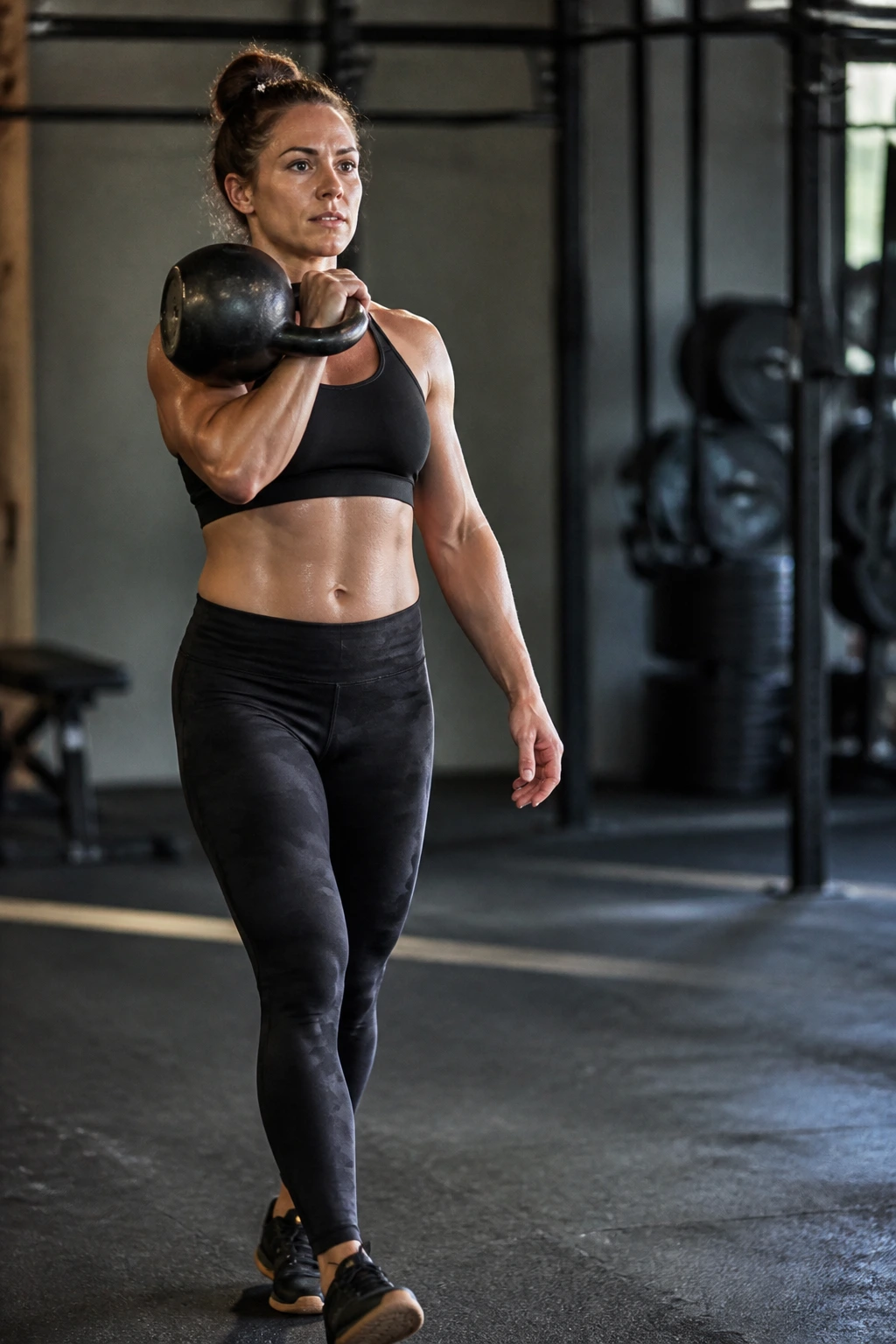
A front rack carry sounds boring until your trunk starts shaking halfway through the first round. Then it gets funny. Then it gets serious again.
Set a circuit of 30 seconds of front rack carry, 8 front squats, and 30 seconds of rest. Alternate sides every round if you’re carrying a single bell. Run 4 to 6 rounds. If you’ve got two bells, keep both in the rack and shorten the carry to 20 seconds.
Key Details That Matter
The rack position should feel compact. Elbow near the rib cage, wrist straight, bell resting on the forearm, not hanging from the hand. If your torso leans away from the weight, the carry has already beaten you.
- Walk with short, controlled steps
- Keep the ribs from flaring
- Breathe behind the brace, not into the shoulders
- Squat to a depth you can own on every rep
This is one of the better formats for building practical strength, because it asks you to stabilize while moving. That matters far beyond the gym floor. It also does a fine job of raising heart rate without turning the session into a jumpy mess.
The carry is the part people underestimate. The squat is the part people respect. The carry usually wins.
9. The Halo, Push-Up, and Swing Density Set
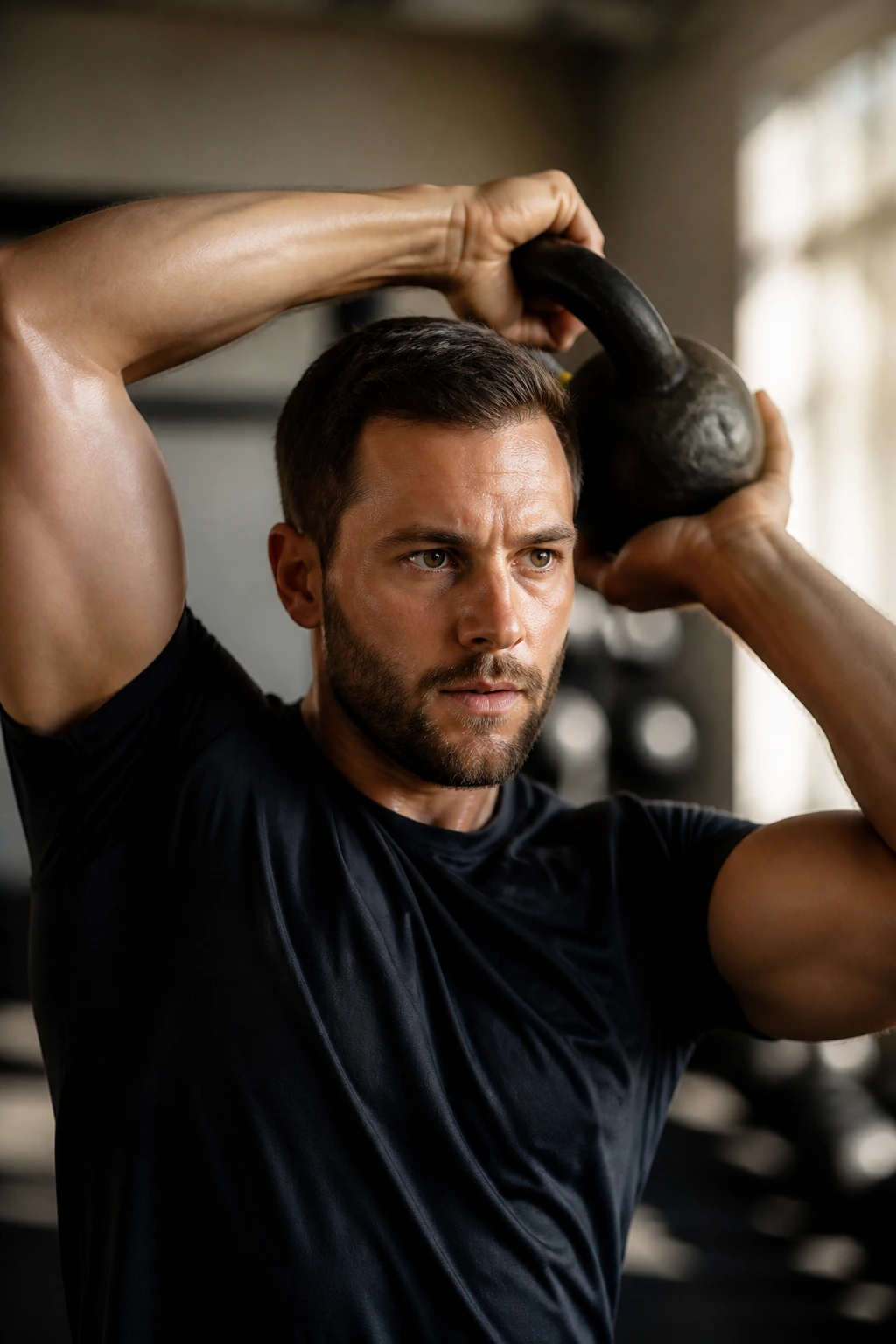
The bell feels light in your hands at first, then your shoulders warm up, your chest starts working, and suddenly the whole thing is a lot less casual. That’s the charm of a density set. It sneaks up on you.
Run 3 minutes of halos, 3 minutes of push-ups, and 3 minutes of swings, with 1 minute of rest between blocks. Keep the pace steady instead of racing. The goal is to accumulate good work, not to blitz the clock and collapse.
What Makes It Useful
Halos open the shoulders and warm the upper back without beating you up. Push-ups bring in the chest and trunk. Swings bring the engine. It’s a neat little package.
If halos irritate the neck, slow them down and make the circle smaller. The bell should travel close to the head, not slam behind it. Push-ups stay useful as long as the body moves as one line.
This session is less glamorous than a hard snatch workout, but it’s the one I’d hand to someone who wants a steady mix of control and sweat. It’s a strong choice for days when joints feel a little cranky. You still train hard. You just don’t act reckless.
10. The Clean, Reverse Lunge, and Press
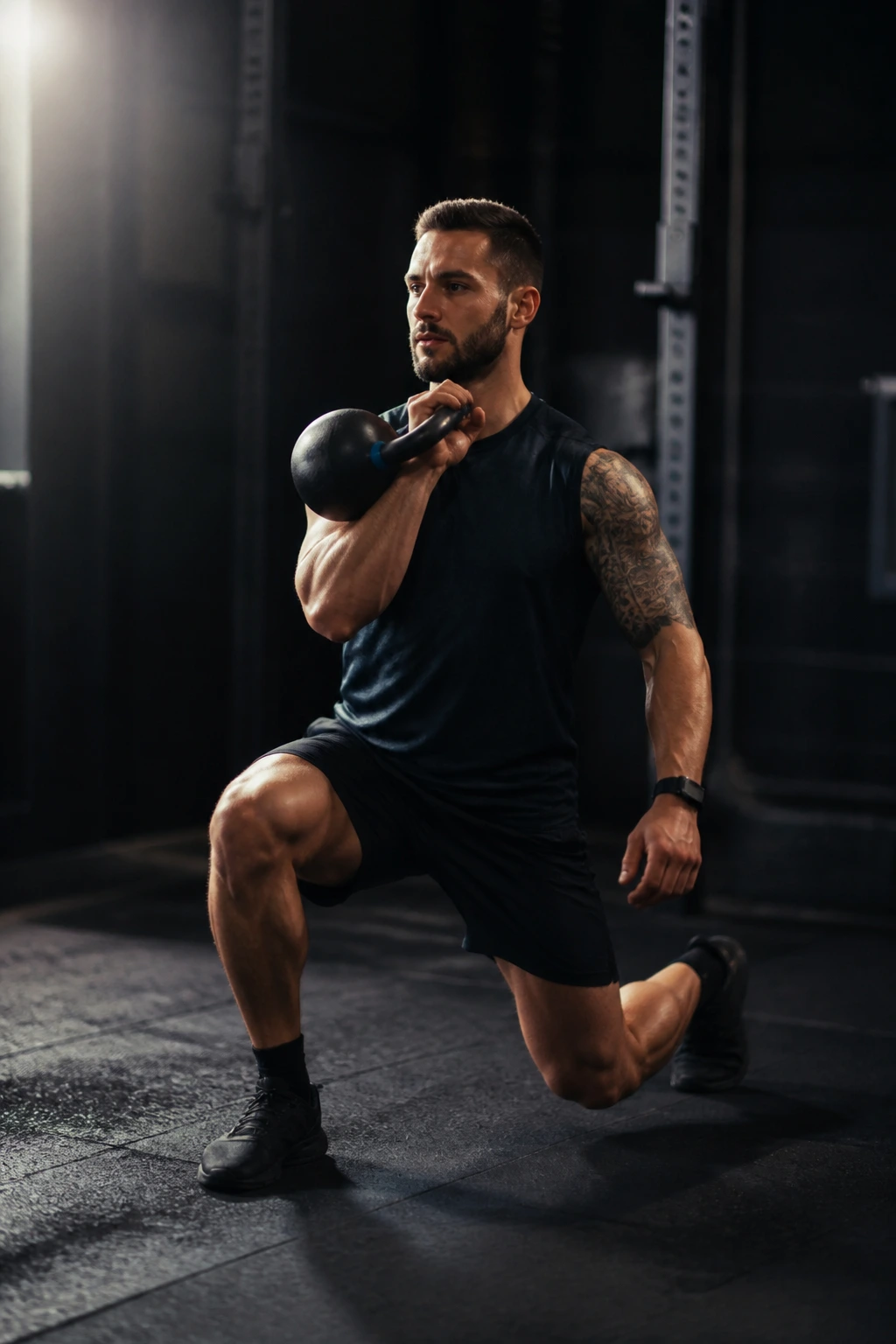
A clean, a lunge, and a press sounds simple until you try to keep your balance under fatigue. Then the whole thing gets honest fast. The rear leg shakes, the rack feels heavier, and the press asks for a cleaner torso than you thought you had.
Do 4 to 6 rounds of 5 cleans, 5 reverse lunges, and 5 presses per side. Use one bell and switch sides each round. Rest 45 to 75 seconds between rounds. If the lunge makes the rack wobble, shorten the step before you reduce the weight.
The reverse lunge is the smartest choice here. It lets the front shin stay more stable and keeps the knee easier to track than a forward step for most people. The press on the back end then has to happen from a more controlled trunk position.
This is a quiet grinder. Not flashy. Very effective. And a little sneaky, because the lungs notice the work before the shoulders do. Keep the torso tall on the lunge. If you fold forward, the whole complex turns into a balance problem.
11. The Swing, Squat, Snatch Triple Threat
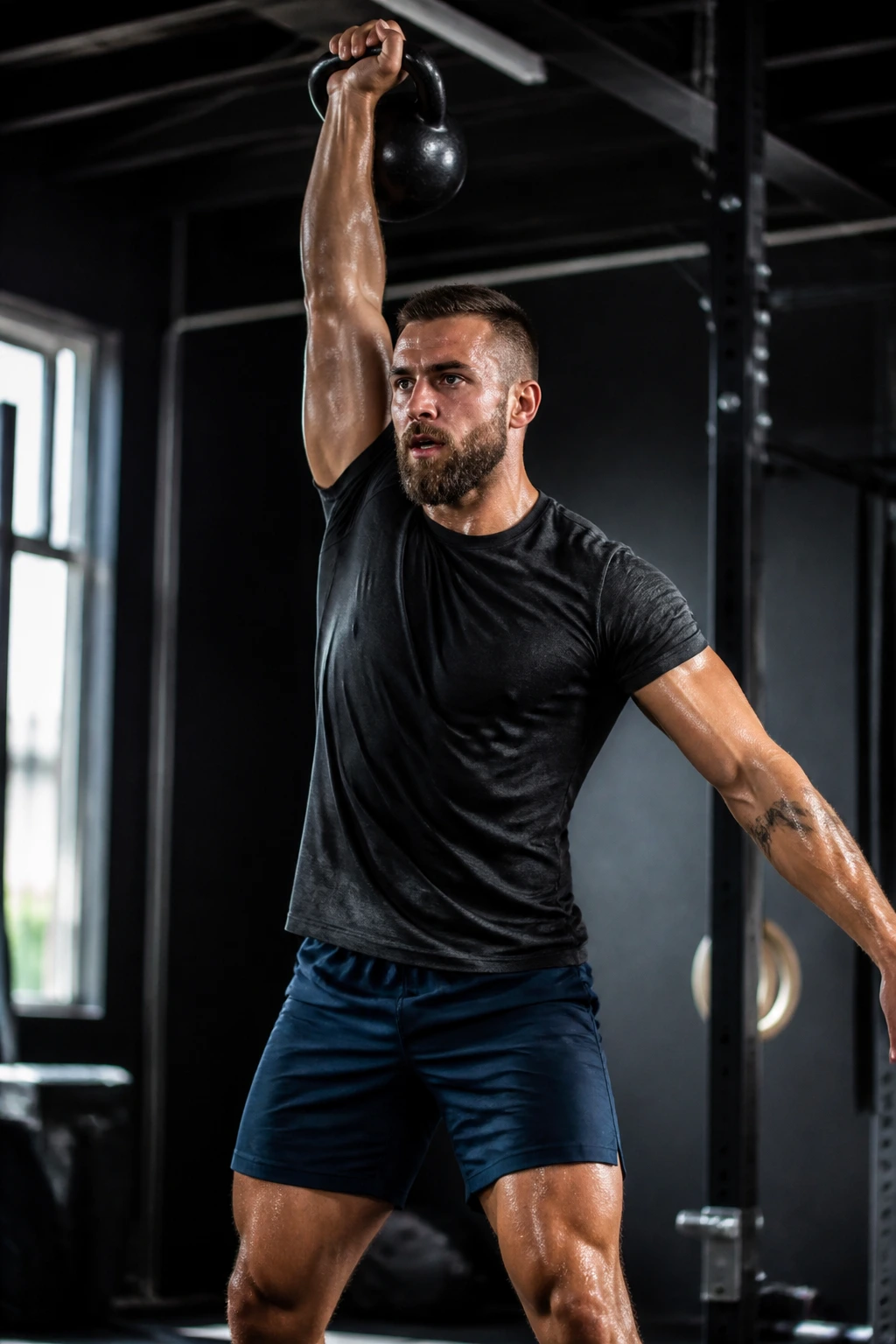
Three moves. That’s all. And somehow it covers power, legs, grip, and cardio in one neat package.
Use 10 swings, 5 goblet squats, and 5 snatches per side. Rest 60 seconds. Repeat for 4 to 6 rounds. If the snatch is still new to you, replace it with a clean and keep the rest of the workout intact.
The rhythm matters more than the total count. Swings wake up the hips. Squats slow things down just enough to load the legs. Snatches add the top-end speed and force you to stay sharp when you’re already breathing hard.
A lot of people try to make this kind of session endless. Don’t. Keep the rounds clean and stop before the form gets muddy. The power output is the point, not the suffering. A crisp rep beats a grim rep every time. That’s true here more than almost anywhere else.
12. The Hardstyle Plank Pull-Through and Swing Finisher

If you want proof that the floor can be part of a kettlebell workout, this is a nice place to start. The plank pull-through hits the trunk in a way that a standing move can’t quite copy, and the swings keep the heart rate climbing.
Set 6 plank pull-throughs per side, 15 swings, and 20 seconds of hard plank. Rest 40 seconds. Repeat for 4 to 5 rounds. Use a bell that doesn’t make you tilt the hips every time it moves across the floor.
Why It Works Better Than It Sounds
The pull-through teaches the body not to rotate when an asymmetrical load drags past it. That’s useful for carrying, pressing, and even swinging. Then the swings let you turn that stiffness into speed.
The plank should stay short and sharp. If your lower back sags after 10 seconds, cut the hold in half and keep the quality. A bad plank is cheap fatigue. A good plank is useful fatigue.
This one is sneaky on the shoulders too, especially if you’re pulling the bell from one side to the other with control. It’s not the kind of workout that looks dramatic on paper, but it leaves a mark. Keep the ribs tucked and the eyes down. That saves the spine a lot of nonsense.
13. The Double Kettlebell Front Rack Workout
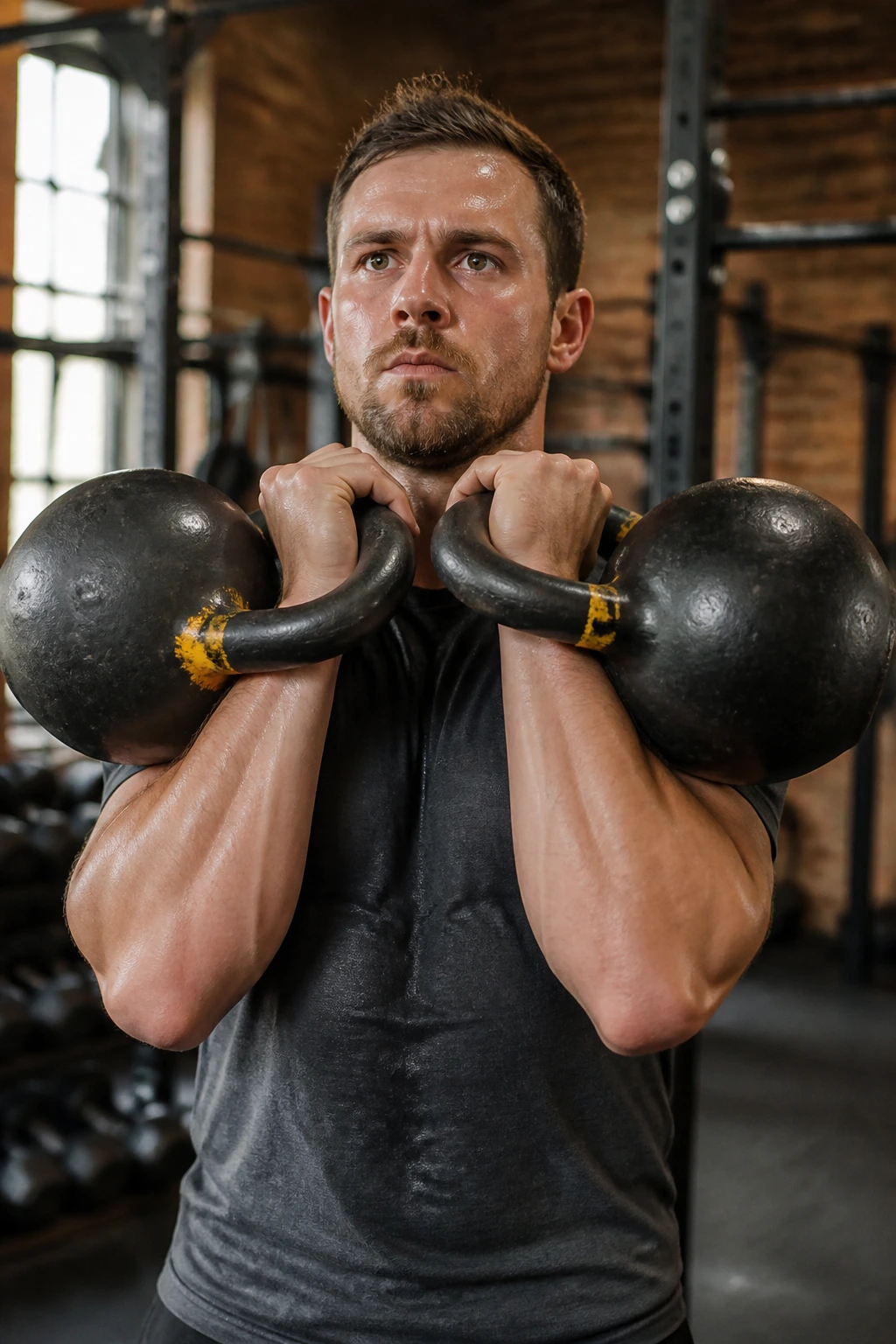
Two bells change the whole feel of a session. The front rack gets heavier, the breathing gets louder, and the trunk has to stay organized or the bells win. Fast.
If you have a matched pair, do 5 double cleans, 5 double front squats, and 5 double push presses. Rest 90 seconds and repeat for 4 to 6 rounds. Keep the bells close to the body so the clean doesn’t become a swinging circus act.
The double rack is more demanding than most people expect. Your forearms stack under a bigger load, your upper back has to stay tall, and the squat loads both sides evenly. That balance feels great when it’s going well.
Push press is a smart choice here because the legs can help drive the bells overhead. If strict pressing is the goal, lower the reps and accept that the session will be slower. No shame in that.
This is one of the best places for a heavier bell pair if your technique is stable. Don’t chase the biggest bells in the room. Chase the pair you can rack and move without leaning like a broken street sign.
14. The Long-Cycle Clean and Jerk Ladder
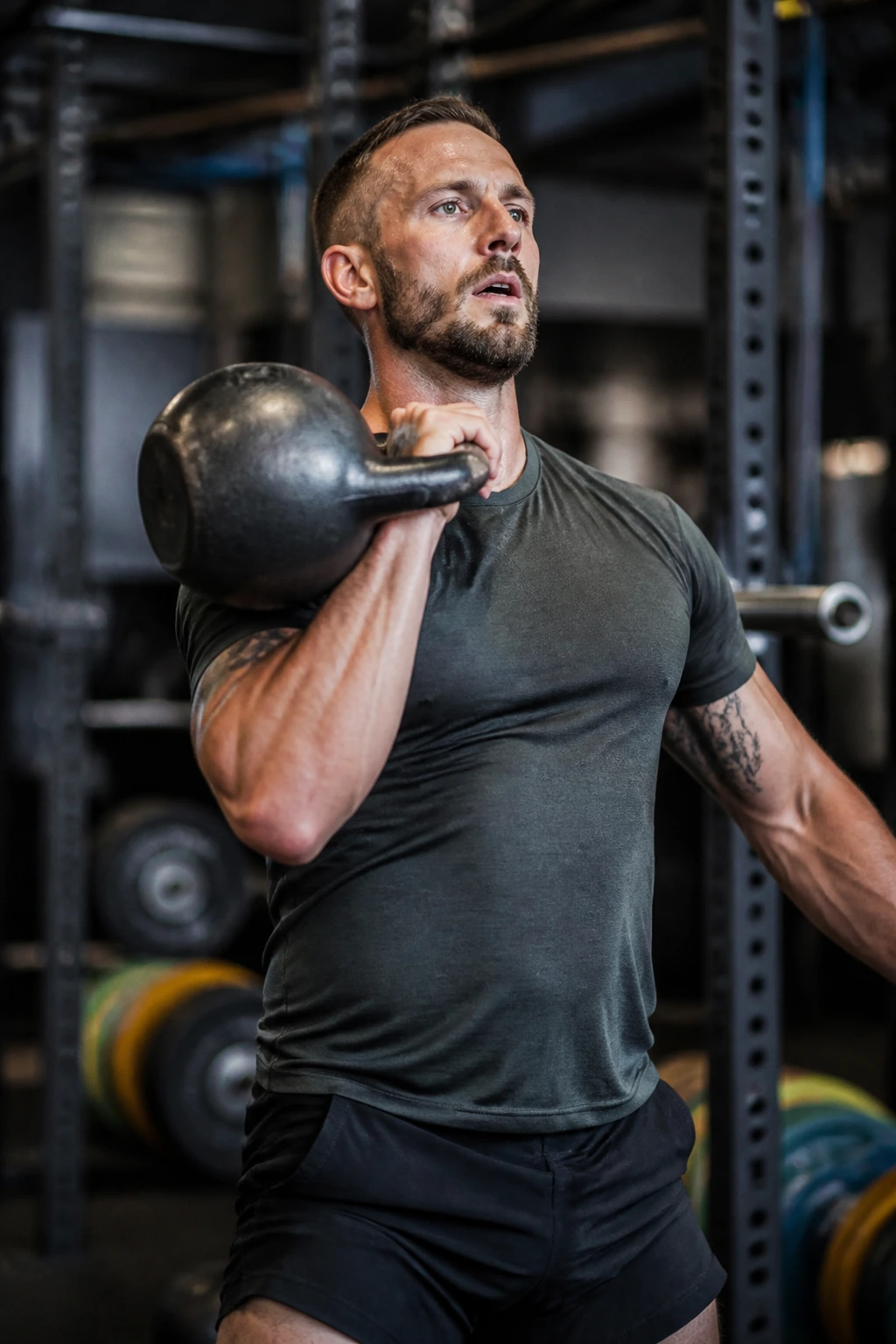
Long-cycle work has a different personality. It’s less snappy than a snatch session and more relentless. The clean and jerk makes you earn every breath, then asks for a few more on top.
Build a ladder of 1, 2, 3, 4, and 5 reps per side, then come back down if you still have gas. Rest 45 to 90 seconds between rungs. A clean brings the bell to the rack; the jerk uses a small dip and drive to send it overhead. The whole thing should feel smooth, not smashed together.
The Breathing Piece
This is where people get humbled. You can have decent shoulder strength and still struggle once the breathing gets tangled up with the bell timing. Exhale on the drive. Reset in the rack. Don’t rush the lockout.
- Clean close to the body
- Dip straight down, not forward
- Drive through the floor
- Catch the bell with a quiet arm
The long cycle is a favorite of mine for building work capacity without turning everything into pure speed. It has enough structure to stay strength-biased and enough pacing demand to drive conditioning. If the lockout feels shaky, lower the reps before lowering the quality.
15. The Step-Up and Swing Hill Climb
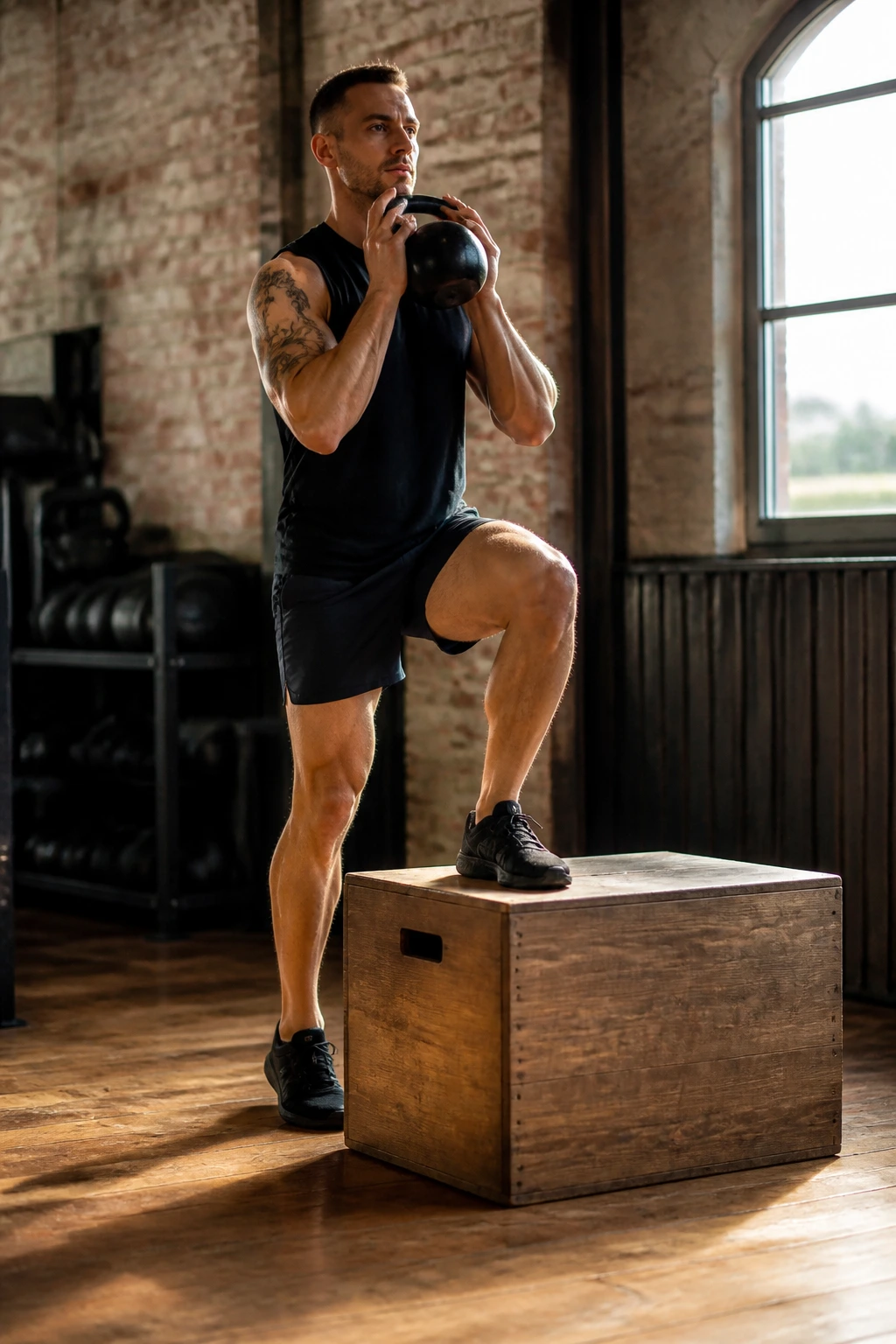
A box, a bench, or a stable step is all you need. Add a bell, and the workout changes fast. Step-ups load one leg at a time, while swings keep the lungs from getting too comfortable.
Do 8 step-ups per side, 15 swings, and 30 to 45 seconds of rest. Repeat for 4 to 5 rounds. Use a box height that lets your whole foot stay planted. If the knee has to search for the surface, the setup is too high.
The step-up rewards control. Drive through the full foot, stand tall at the top, then step down with the same care you used going up. No bounce. No drop. The goal is force, not chaos.
This session is especially useful if bilateral squat work feels stale. One leg at a time changes the demand on the hips and exposes asymmetries you may have been ignoring. Then the swings give you the cardiovascular hit that keeps the workout from becoming too polite.
A lot of people rush step-ups. They should not. A slow descent is part of the exercise. That’s where control lives.
16. The Half-Kneeling Press and Rotation Circuit
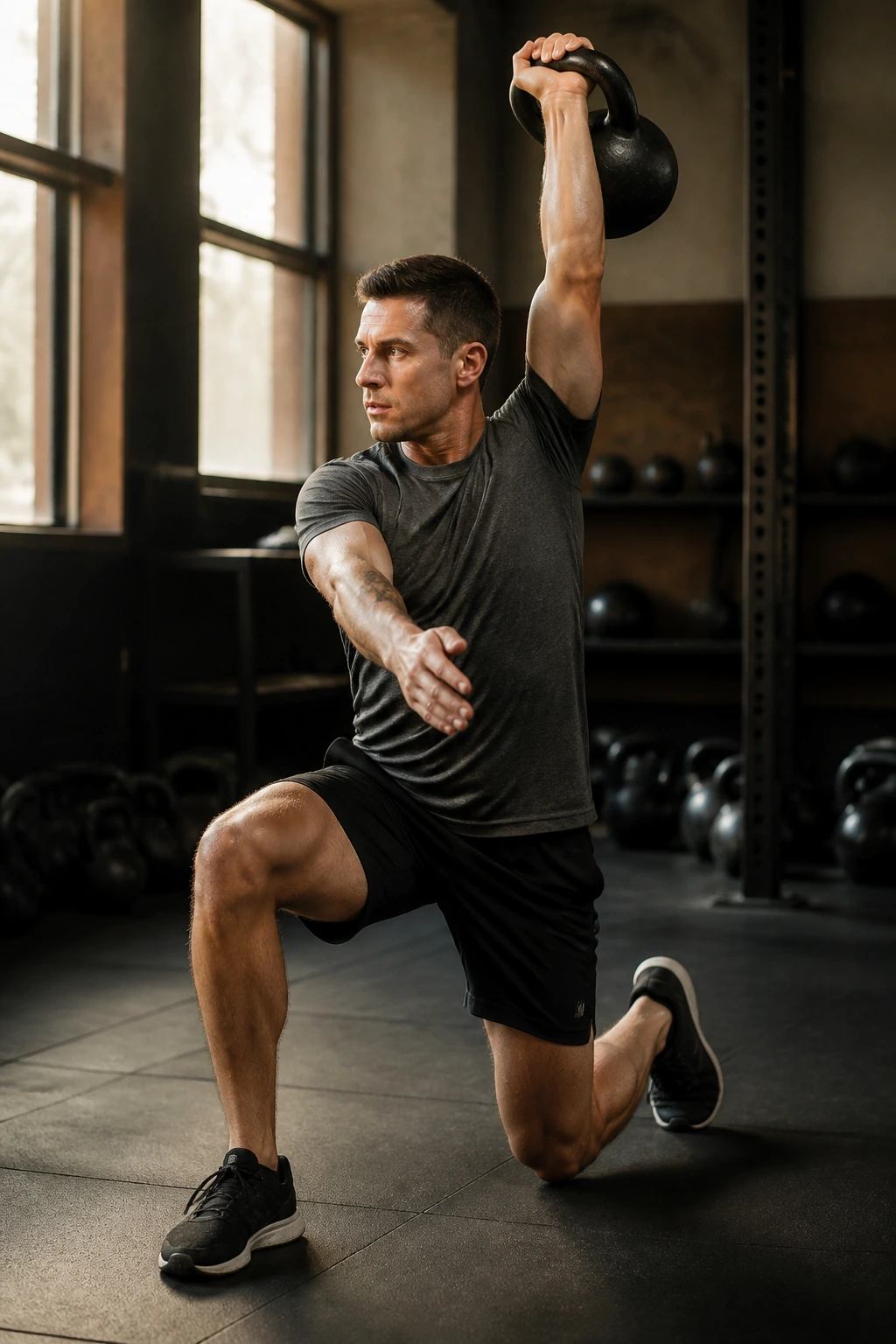
Can a simple kneeling position make an overhead press harder? Absolutely. The half-kneeling setup strips away leg help and makes the torso do its job.
Do 5 half-kneeling presses per side, 8 suitcase marches per side, and 5 slow rotational chops with the bell held by the horns. Rest 45 seconds and run 3 to 5 rounds. The front knee stays bent at 90 degrees if that feels comfortable; the back knee pads the floor.
How to Use It Well
The half-kneeling stance tells on rib flare immediately. If the lower back arches, the press got sloppy. The glute on the kneeling side should stay switched on, and the ribs should stay stacked over the pelvis.
Suitcase marches are the quiet killer in this circuit. Hold the bell on one side, stand tall, and walk in place with slow, controlled knee lifts. It’s not glamorous. It works.
This is a strong choice for people who want shoulder work without a lot of shoulder wear and tear. It also pairs well with other heavy days because it trains control more than brute force. Slow movement is not easy movement. Anyone who has done a clean half-kneeling press already knows that.
17. The Renegade Row and Swing Combo
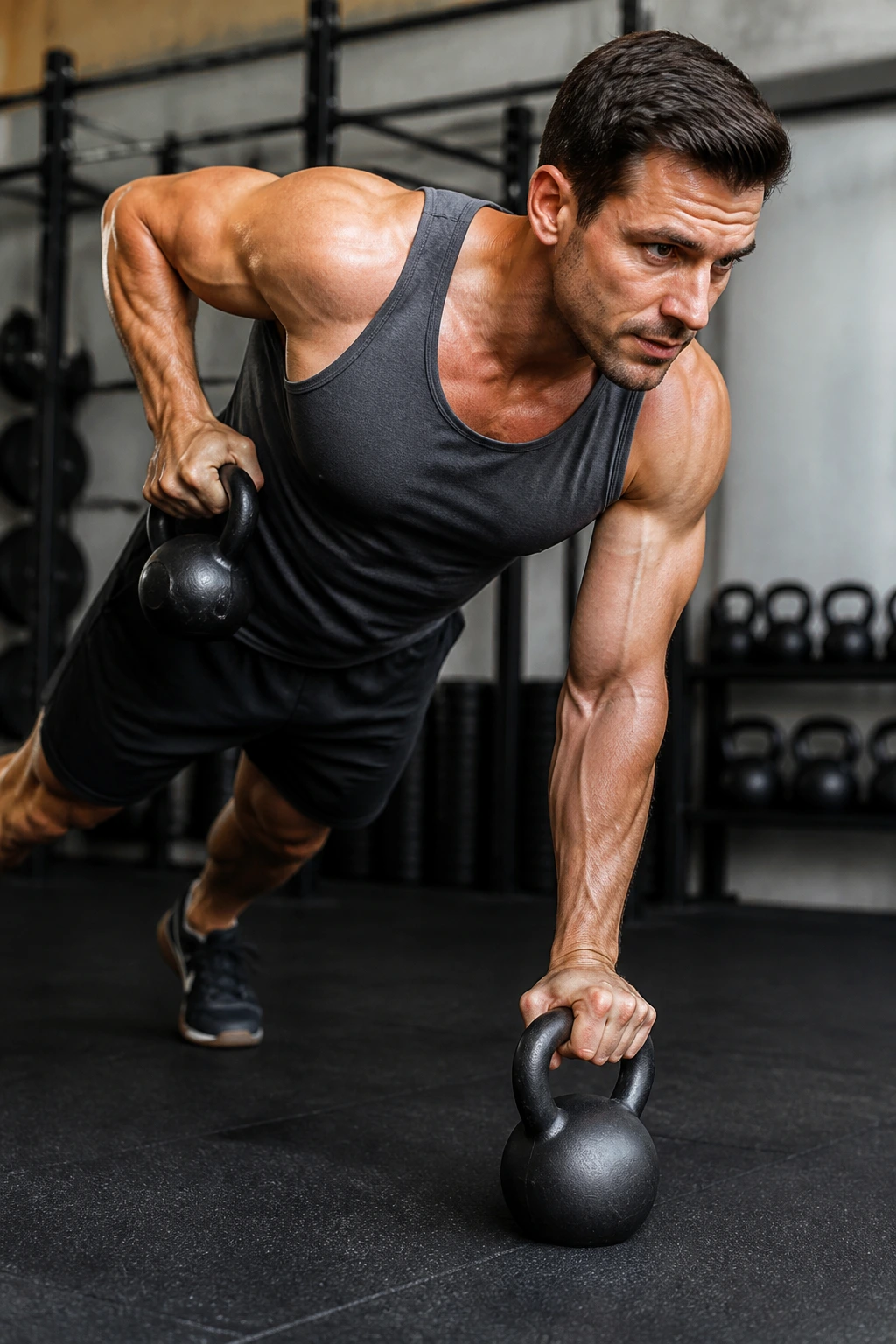
A row on the floor and a swing on your feet makes a nice contrast. One asks you to resist rotation with your torso braced over the hands; the other asks you to create force from the hips. That balance is useful.
Set 6 renegade rows per side, 12 swings, and 20 to 30 seconds of rest. Repeat for 4 to 6 rounds. If full renegade rows are too hard, widen the feet or drop to a box-supported plank row.
Unlike Dumbbells, This Feels More Unstable
Kettlebells hang a little differently than dumbbells, so the row can feel awkward for a minute. That offset shape is part of the point. The bell wants to tug the shoulder into rotation, and your trunk has to refuse.
Keep the hips from twisting open on each row. Pull the bell toward the pocket, pause for one second, then lower it under control. The swing that follows will feel like a release.
This format is good for people who want upper-back work without losing the cardio piece. It’s also useful when you want to sneak core training into a session without doing endless crunches. Brace harder than you think you need to. The floor won’t forgive sloppiness.
18. The Lunge, Clean, Press, and Carry
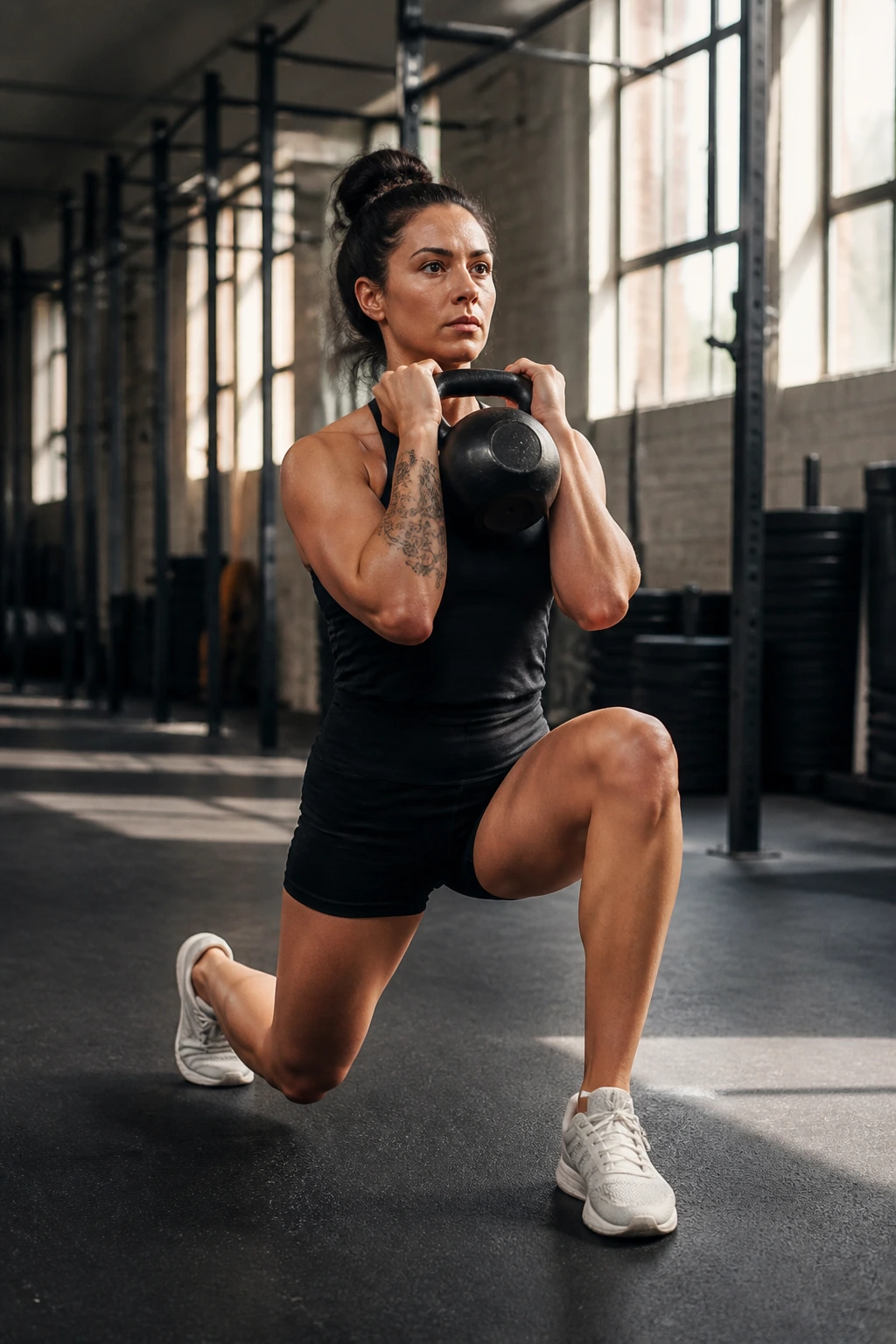
A workout like this feels a bit like errands after a storm. You keep moving, you keep handling one problem at a time, and your breathing gets louder the longer you stay out there.
Use 1 clean, 1 press, 1 reverse lunge, and a 20-meter suitcase carry on one side. Rest 45 seconds, then switch sides. Run 4 to 5 rounds. If you have space, keep the carry slow enough that the body has to resist leaning.
The carry is the part that makes the session feel real. Not the press. Not even the lunge. The carry asks you to keep the trunk square while fatigue is already in the room.
A Few Details That Save the Session
- Keep the carry arm straight but not locked rigid
- Walk with short steps
- Finish the lunge before you rush the carry
- Reset the breath at the top of every rep
This workout rewards patience. If you hurry the sequence, the rack gets sloppy and the carry turns into a side-bend contest. If you stay organized, it becomes a clean full-body session that hits strength and cardio without needing a lot of time.
19. The Density Set for Full-Body Endurance

A lot of people think endurance work has to be long to matter. It doesn’t. Ten hard minutes can do plenty if the movements are chosen well.
Set a 12-minute AMRAP: 10 swings, 6 goblet squats, 6 push presses, then repeat. Keep the reps honest and the rest brief. The aim is steady output, not panic speed. If you fall apart at minute 4, the bell is too heavy or the pace is too eager.
The push press keeps the shoulders from going passive. The goblet squat anchors the legs. The swings keep the engine revving. It’s a tidy little engine room of a workout.
This is one of my favorite options for people who want to build work capacity without turning the session into a long slog. You can track rounds, tighten rest, or increase the bell slightly over time. Do not sacrifice range of motion to chase one extra round. The round only counts if the reps still look like the exercise you intended.
20. The Ten-Minute Swing and Clean Ladder
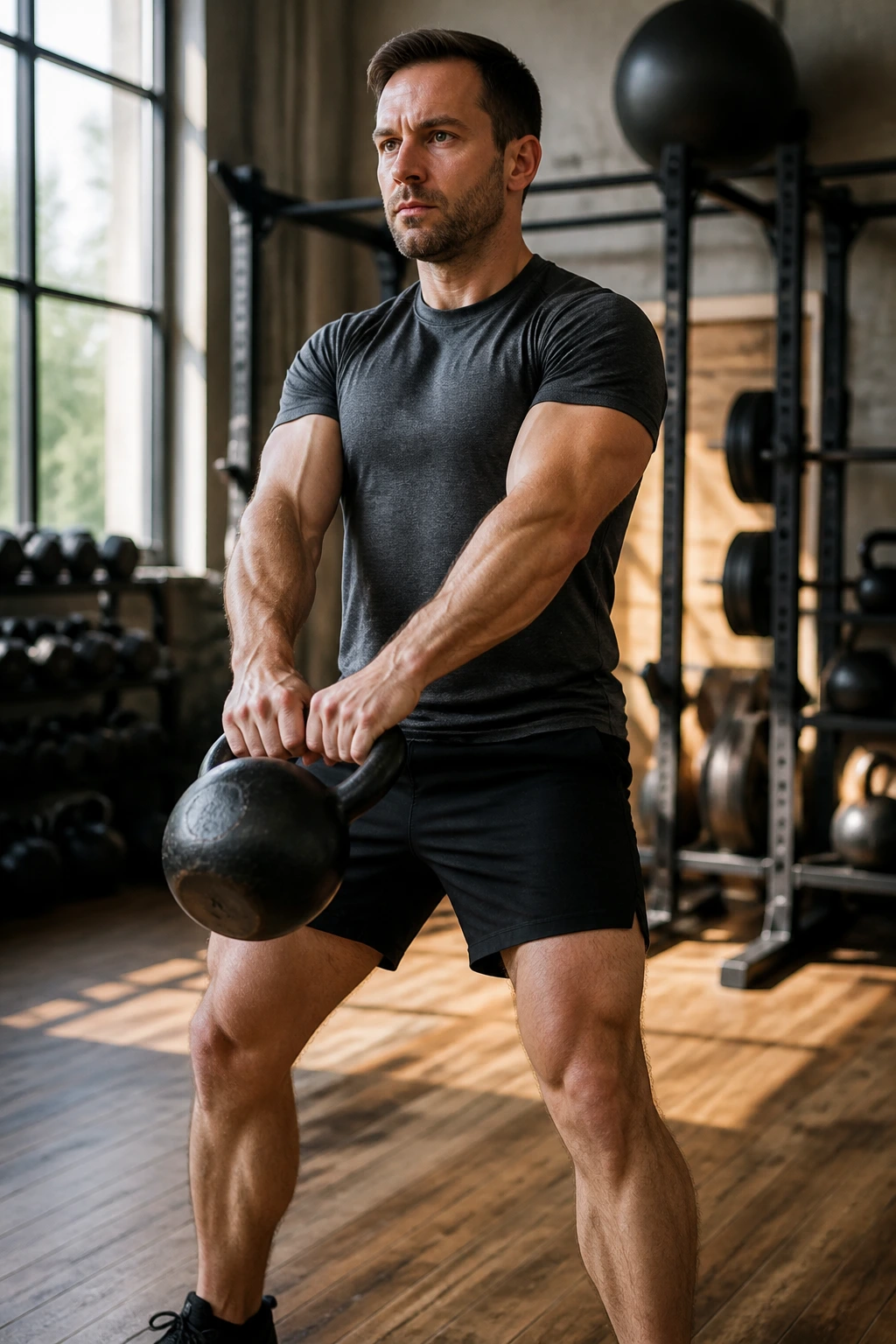
A ladder sounds harmless until you’re six rungs deep and your breathing has stopped pretending to be calm. That’s the fun part.
Try 2 swings and 1 clean on the right, then 4 swings and 2 cleans, then 6 swings and 3 cleans. Switch sides and repeat the same pattern. Keep going for 10 minutes, or stop earlier if your form turns ragged. If the clean starts banging the forearm, the ladder has done enough.
The structure is useful because it builds pace without asking for endless reps all at once. You get repeated practice with both movements, and the bell never fully disappears from your hands. That keeps the session focused.
What to Watch For
The swing before the clean should set up the clean, not tire you out so much that the rack goes sideways. Clean from a strong hip snap, not from the shoulders. The bottom of the bell should stay close to the body on the backswing.
This one works well when you want a session that feels athletic rather than grindy. It’s a nice middle ground between straight conditioning and heavy lifting. Keep the ladder honest. If you start cutting reps or hurrying between sides, the workout is telling you it needs smaller steps.
21. The Strong Legs, Fast Heart Intervals
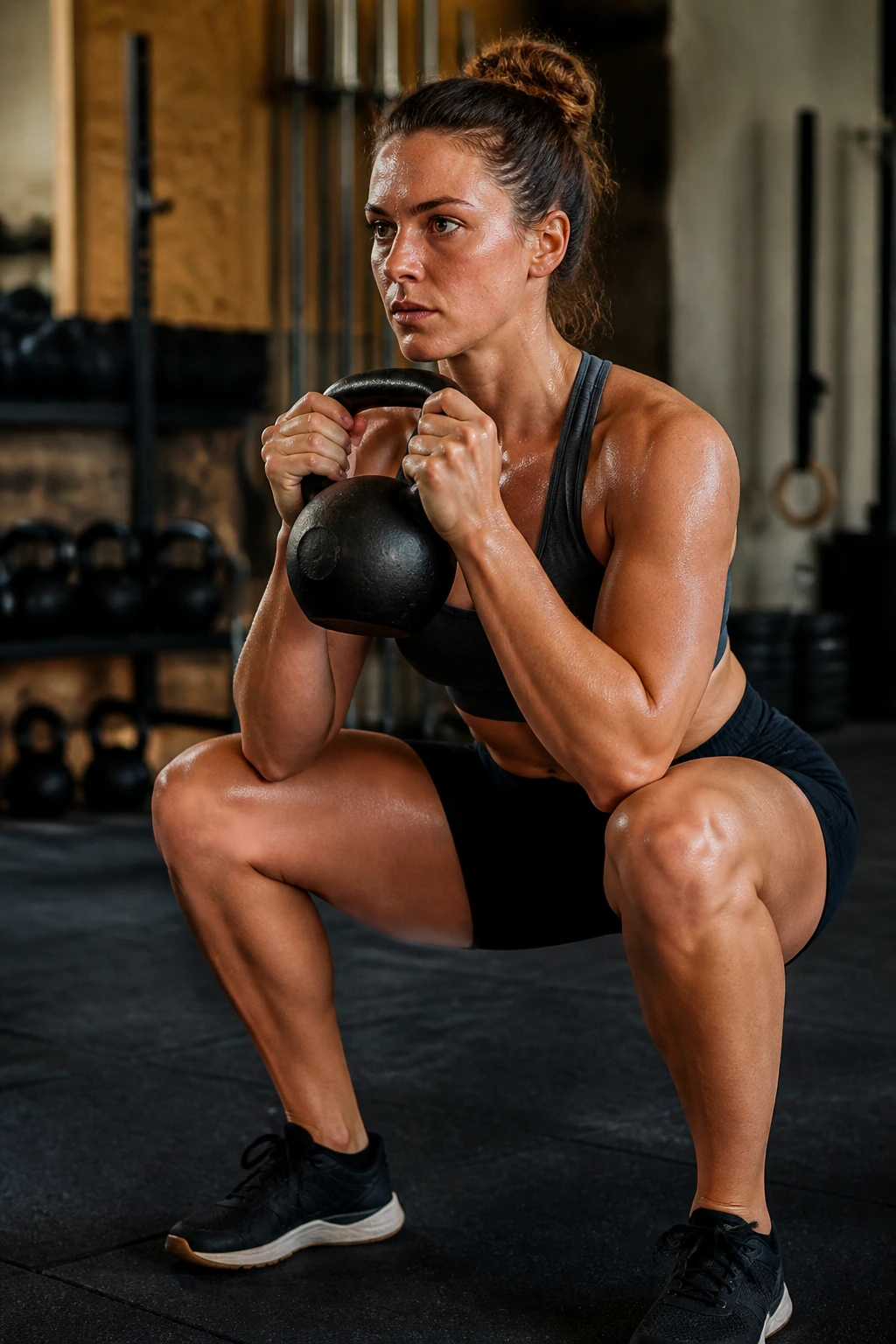
Contrary to what a lot of people assume, you can train legs hard without doing endless squats. A kettlebell gives you enough load for that, and the intervals keep the pulse up where it belongs.
Run 40 seconds of goblet squats, 20 seconds of swings, and 40 seconds of front rack marching. Rest 60 seconds. Repeat for 4 to 5 rounds. Use one bell for the squat and swing, then clean it to the rack for the march.
The squat segment should be controlled, with a deliberate lower and a strong drive up. The swing segment is the speed release. The march is where posture gets tested after fatigue has already moved in.
This session is strong on leg work without becoming a pure leg day. The front rack march teaches you to breathe under tension, which sounds minor until you notice how much better it carries into everything else. The march is not a break. Treat it like a loaded drill.
22. Finish Strong

Some days call for a full session. Other days need a hard little finisher that leaves you sweating and ready to stop. This one does both jobs in a small footprint.
Set a 5-minute timer. Do 5 swings, 5 cleans per side, and 5 goblet squats. Keep cycling until the timer ends. If you still have room to breathe at minute 4, the bell is probably too light. If your back starts taking over, it’s too heavy for this pace.
The nice part about a short finisher is how honest it feels. There’s nowhere to hide. The reps are simple, the load is clear, and the clock does not care how clever you feel.
Use it at the end of a strength session, or as a standalone hit when time is tight. Rotate it with the longer sessions above and you’ve got a solid mix of power, muscle, and conditioning without needing a lot of equipment. A good kettlebell workout should leave you feeling trained, not wrecked. That difference matters more than people admit.
If you want a practical way to organize these across a week, think in patterns: one heavy complex day, one swing-and-conditioning day, one unilateral day, then one short finisher when life gets messy. That keeps the work varied without turning it into a random pile of exercises.
And if a workout stops feeling challenging, don’t immediately chase a bigger bell. Tighten the rest, clean up the reps, or give yourself a stricter pace. The bell is only part of the picture. The rest of it is how you use your time, your breathing, and your restraint.
