



Stroller walk workouts are one of the few postpartum habits that can survive a bad nap, a fussy baby, and a brain that feels fried before breakfast. That matters. A walk is small enough to start, flexible enough to stop, and honest enough to tell you where your body is at without turning the whole thing into a performance.
You do not need a fancy route or a spotless routine. You need a stroller that rolls well, shoes that do not pinch, and a pace that lets you breathe through your nose for at least part of the time. If you had a C-section, a complicated delivery, or any pelvic floor symptoms that feel off, get the green light from your clinician before you push intensity. Good postpartum movement should feel steady, not punishing.
Babies usually like the rhythm. Some sleep. Some stare at tree branches like they’re solving a hard problem. Some fuss until the third block and then finally settle. That’s fine. The whole point is to make a workout that can fit around real life, not one that collapses the moment the baby sneezes.
Start with the shortest route that still feels like a workout. Then build from there.
1. The 10-Minute Stroller Walk Reset
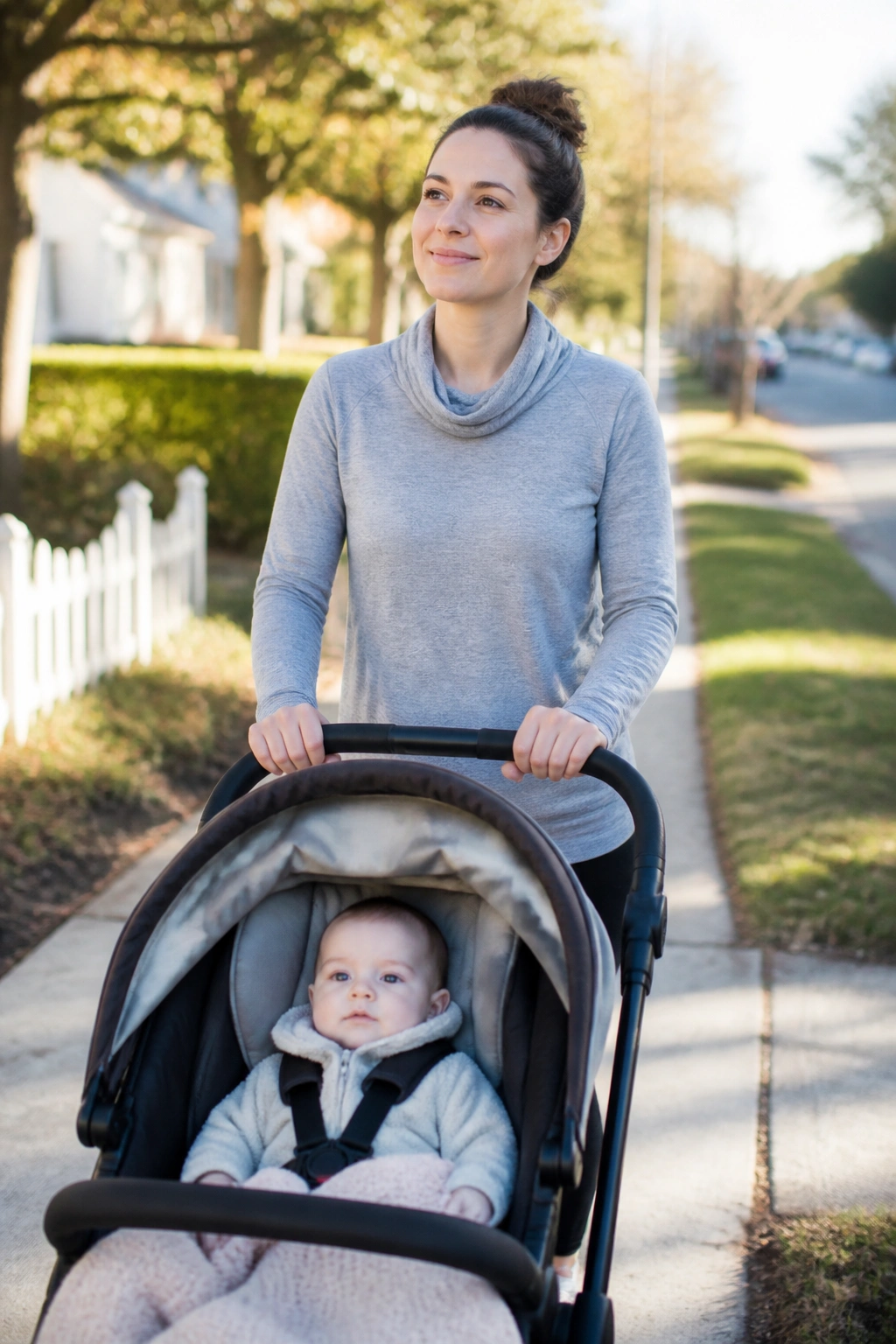
Ten minutes is enough on the rough days. That’s not a consolation prize. It’s a real session.
This is the walk I’d hand to a new mom who feels scattered, stiff, and one spilled diaper away from calling it a day. Keep the route flat, familiar, and close to home. You’re not chasing mileage here. You’re making the first step so small that your brain can’t argue with it.
How to make ten minutes count
- Keep the pace easy enough to talk in full sentences.
- Use a loop that starts and ends at home.
- Skip any route with steep curbs, loose gravel, or awkward crossings.
- Stop early if you feel pelvic heaviness, incision pulling, or a bounce in your stride that feels wrong.
Pro tip: Pack the stroller basket before you leave. One diaper, wipes, water, phone, and a tiny snack can be the difference between “we went out” and “we came back after three minutes.”
This session works because it lowers the bar without making the effort fake. You still get fresh air, a little circulation, and a clean break from the house. And on a day when the baby finally naps through half of it, that tiny win can feel huge.
2. The Posture-Check Stroller Walk
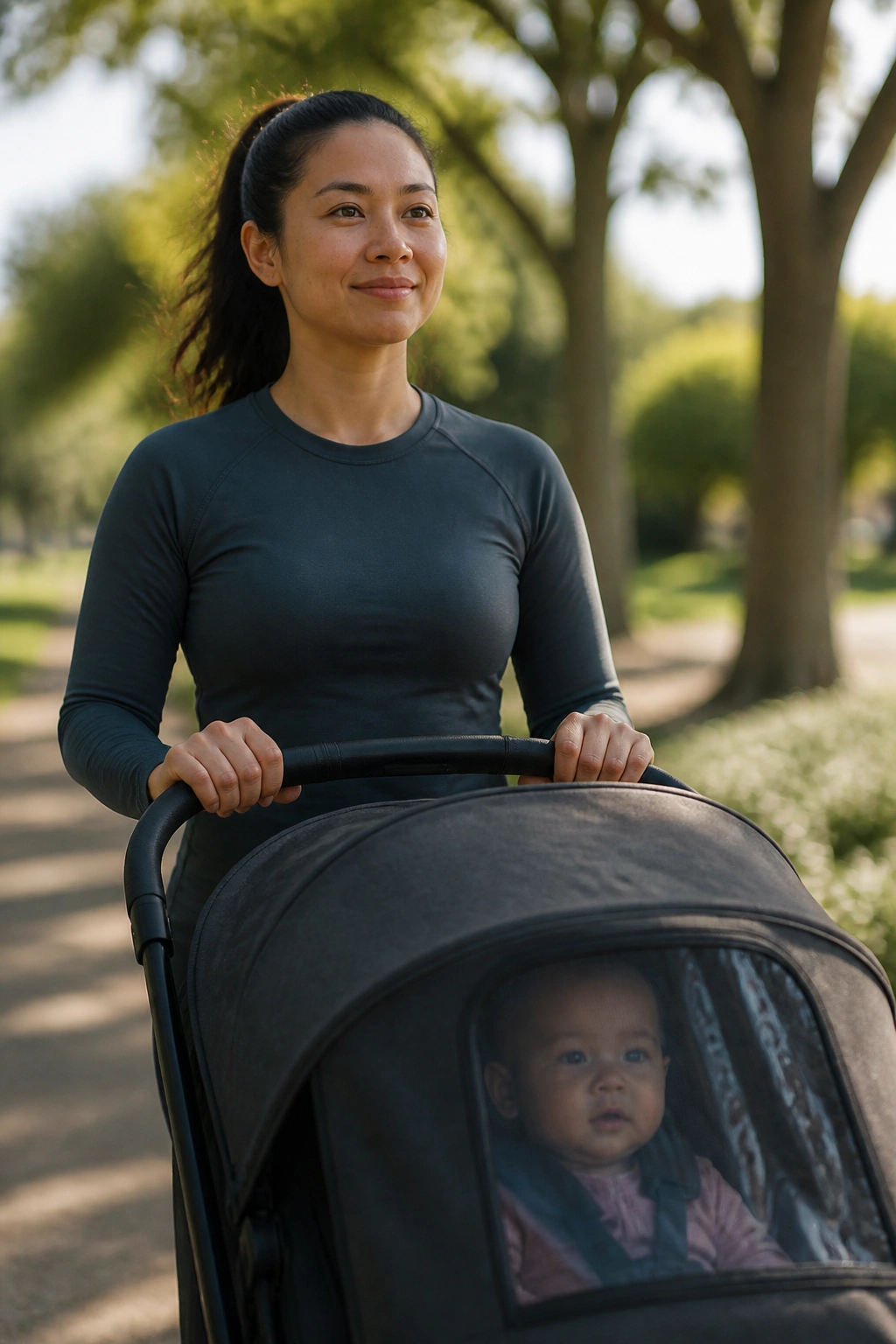
Are your shoulders creeping up toward your ears while you push? That’s more common than people admit. Stroller walking has a sneaky way of turning into a hunched shuffle.
The fix is less about speed and more about position. Stand tall, let your ribcage sit over your hips, and keep your elbows soft instead of locked. If you’re leaning hard into the handlebar, you’re handing your back a job it doesn’t need.
Three cues that matter
- Chin level: Don’t crane forward to watch the baby the whole time.
- Shoulders heavy: Think down and wide, not pulled back like a military pose.
- Hands light: A death grip on the handle makes the whole upper body stiff.
A useful trick is to check in every few minutes and ask, “Can I wiggle my fingers?” If the answer is no, you’re probably hanging too much weight on the stroller. A better push feels smooth, not strained.
This one is boring in the best way. You’re training your body to move efficiently, which matters more than looking athletic while you do it. And if you only have a short window, posture work gives you a lot back for the time you spend.
3. 1:2 Stroller Walk Intervals
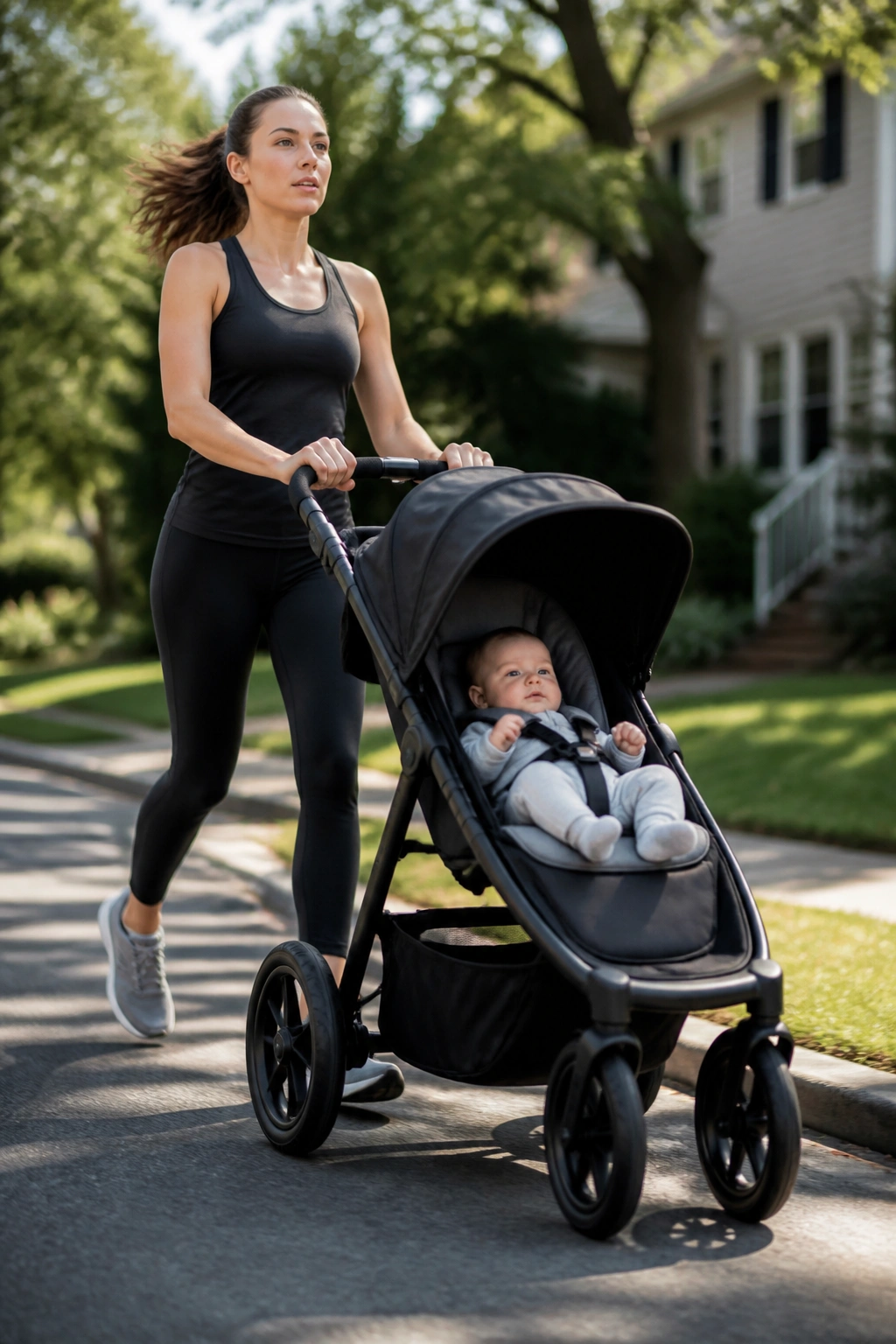
Fast legs, calm breathing. That’s the whole idea.
Do one minute of brisk walking, then two minutes at an easy pace. Repeat that cycle five to eight times, depending on how you feel. The stroller makes the fast parts feel controlled, which is helpful when your sleep is broken and your energy is uneven.
A simple interval pattern
- 5 minutes easy to start
- 1 minute brisk
- 2 minutes easy
- Repeat 5 to 8 rounds
- 5 minutes easy to finish
During the brisk minute, your breath should deepen and your arms may want to work a little harder. During the recovery minutes, let the pace drop enough that you can say a full sentence without huffing through it. That contrast is what gives this workout its bite.
If your baby is sleeping, this is a nice way to sneak in intensity without making the whole outing feel hard. If your baby is awake, the shorter surges keep you from getting trapped in a pace that feels too samey. I like this format because it respects postpartum reality: you can be fit and still be interrupted.
4. Gentle Hill Repeats
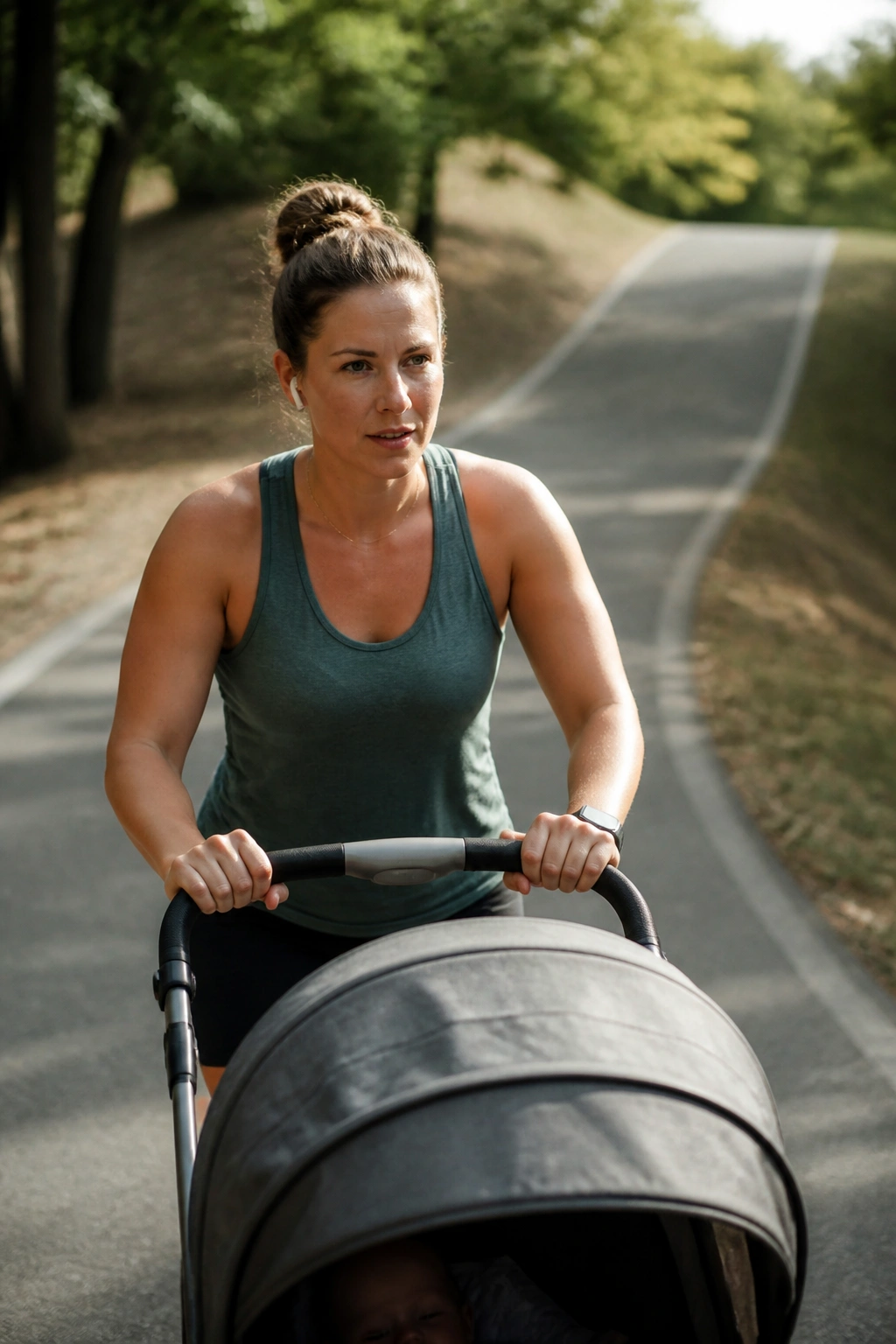
You do not need a giant hill to get a training effect. A mild slope and a few careful repeats can be plenty.
Find a route with a gentle rise that takes 20 to 45 seconds to climb at a steady pace. Push up with shorter steps, keep your chest tall, and avoid leaning your whole torso into the stroller. Coming back down, slow your stride and give your legs a real recovery.
Hill repeats are especially useful if flat walking starts to feel stale. The grade changes your glutes, calves, and heart rate without asking for running. Nice trade.
A few things make this one safer and smoother:
- Choose a hill with a clear sidewalk or path.
- Test the stroller brake before you start.
- Keep the climb controlled; do not charge it.
- Turn around early if your pelvis feels heavy or your lower back starts complaining.
Short hills are enough. Really. Three to six repeats can be a solid workout, especially in the early postpartum months when your body is still negotiating with gravity. If the hill is too much, choose a smaller one and call it a win.
5. Tempo Walk With the Talk Test

This is the pace that feels warm in your legs and a little impatient in your chest.
A tempo walk is faster than a casual stroll but not so hard that you’re gasping. The easiest way to judge it is the talk test: you should be able to answer a question, but you probably won’t want to give a speech. It’s a sweet spot for busy days because it doesn’t need complicated timing.
A good structure looks like this:
- 5 minutes easy
- 10 to 20 minutes at tempo pace
- 5 minutes easy
The middle stretch should feel purposeful. You’re not sprinting. You’re not drifting. Your footfalls get a little sharper, your arms swing a bit more, and the stroller rolls with intention.
This workout is one of my favorites for new moms who want to feel like they’ve done something substantial without spending an hour out the door. It also plays well with baby naps, because the rhythm is steady and predictable. If the baby wakes and starts fussing, you can drop the pace and still finish the loop without wrecking the session.
6. The Power-Walk Pyramid
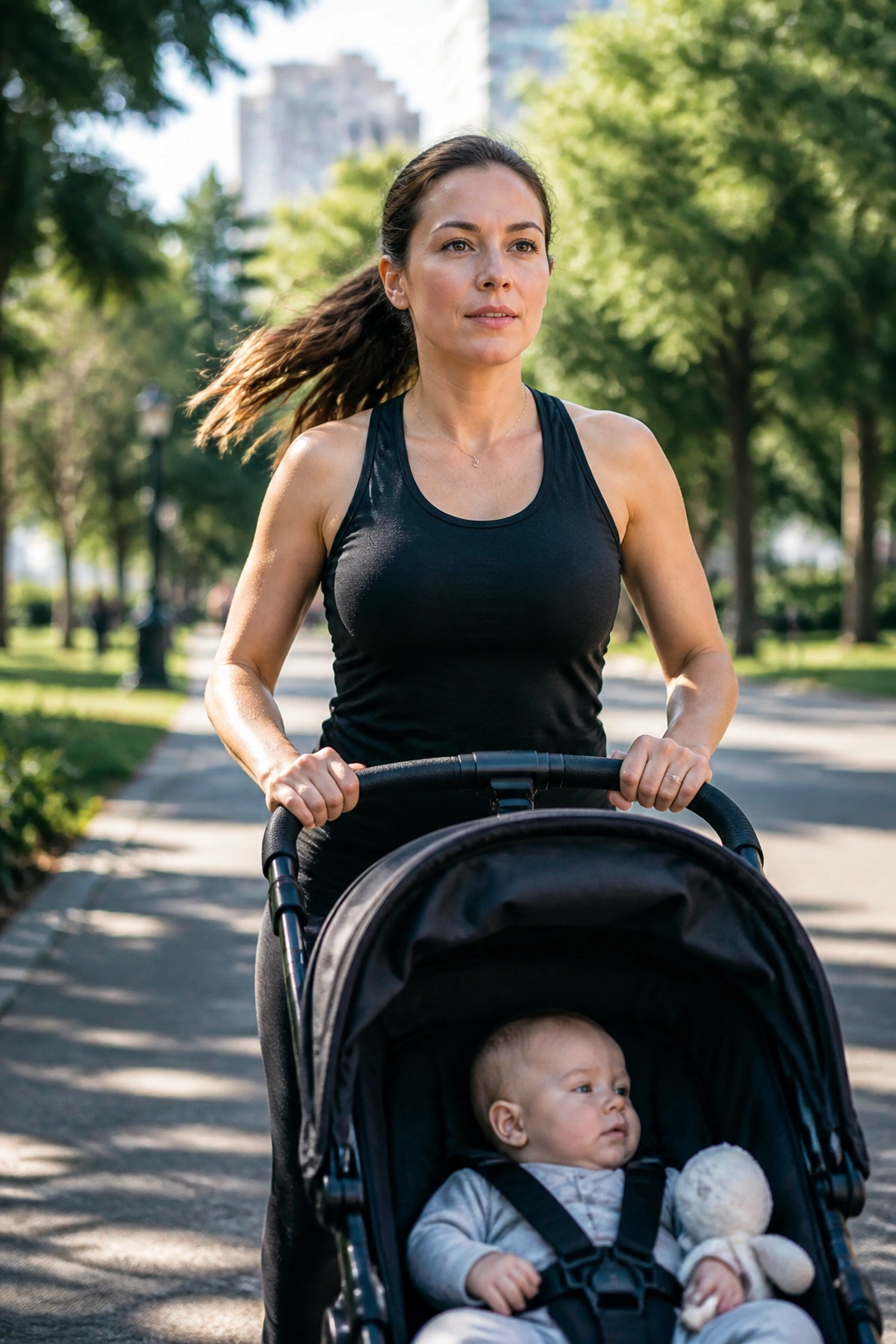
A pyramid keeps the brain busy. That matters more than people think.
Start with one minute brisk and one minute easy. Then climb to two minutes brisk, two easy. Then three and three, then four and four, and then work your way back down if you’ve got the time. It’s a clean structure, and it stops the workout from feeling endless.
The pyramid on paper
- 1 brisk / 1 easy
- 2 brisk / 2 easy
- 3 brisk / 3 easy
- 4 brisk / 4 easy
- 3 brisk / 3 easy
- 2 brisk / 2 easy
- 1 brisk / 1 easy
The longer brisk segments should still feel controlled. If your form gets sloppy at the four-minute mark, shorten the top of the pyramid next time. Stroller work is not the place for heroics.
What I like here is the shape. You get variety without needing to think hard while you’re out there. On a tired morning, that matters. On a good morning, it’s a neat way to stack effort without feeling like you’ve been bullied by the workout.
7. Park Bench Stroller Circuit

A bench gives the walk a second gear.
Walk to a park bench, lock the stroller brake, and do a short bodyweight circuit before heading to the next stop. You don’t need a full playground setup. One bench and a little open space are enough.
A small circuit you can repeat
- 8 sit-to-stands from the bench
- 8 step-ups per leg
- 10 calf raises
- 6 wall or bench push-ups
Keep the moves smooth and conservative. If your pelvic floor feels shaky, shorten your range on the sit-to-stands and skip anything that feels too bouncy. The goal is strength you can repeat, not a hero burn.
This workout is useful because it breaks the pattern of straight pushing. Your legs get a different angle, your upper body wakes up, and the walk feels like a full-body session without becoming a full gym visit. And yes, the stroller brake needs to be solid. If the wheel rolls while you’re halfway through a set, the whole thing gets annoying fast.
8. Breathing Walk for Frazzled Days

Can a stroller walk count if it mostly calms you down? Absolutely.
On days when your nervous system feels spun up, make the goal slower breathing, not faster feet. Walk at an easy pace and match your breath to your steps. A simple pattern is a 4-count inhale and a 6-count exhale, but any slow, steady rhythm can work.
The point is to let your body unclench. Drop your jaw. Soften your hands. Let your shoulders stop acting like they’re carrying groceries. You may notice that the baby settles faster on these walks, too. Slow motion tends to help.
Breathing rhythm
- Inhale through the nose for 4 steps
- Exhale for 6 steps
- Keep the pace relaxed for 15 to 25 minutes
- Use flat ground and skip hills
This is not flashy. It doesn’t need to be. A recovery walk like this can be the difference between feeling fried all afternoon and having a little more room in your head. Some sessions are for fitness. This one is for keeping yourself from fraying at the edges.
9. The Two-Loop Distance Builder
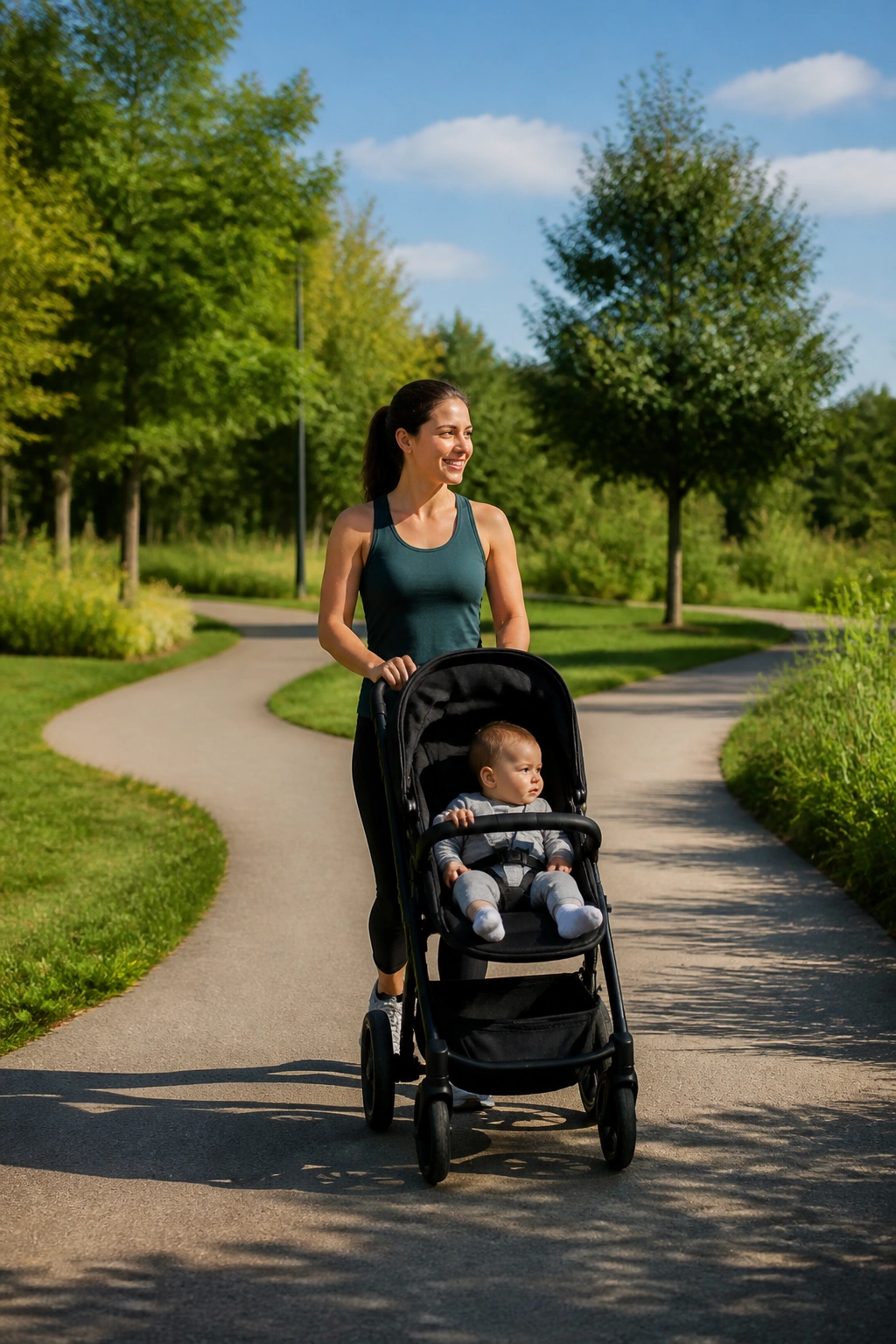
Two loops are cleaner than one long, uncertain route.
Pick a route you can repeat twice without getting bored. The first loop is your warm-up and settle-in phase. The second loop is where you decide whether to stay easy or nudge the pace a little. I like this one for new moms because it gives you a built-in checkpoint without forcing a hard turnaround.
The beauty of the double-loop setup is that it keeps your outing from feeling like a gamble. If the baby is happy after one loop, keep going. If not, you’ve already done something useful and you’re close to home.
You can make the second loop a touch faster, or keep both loops at the same relaxed effort. Either way, you’re training endurance without locking yourself into a huge time commitment. That flexibility is gold when naps are unpredictable and your own energy changes by the hour.
10. Mailbox Fartlek Walk
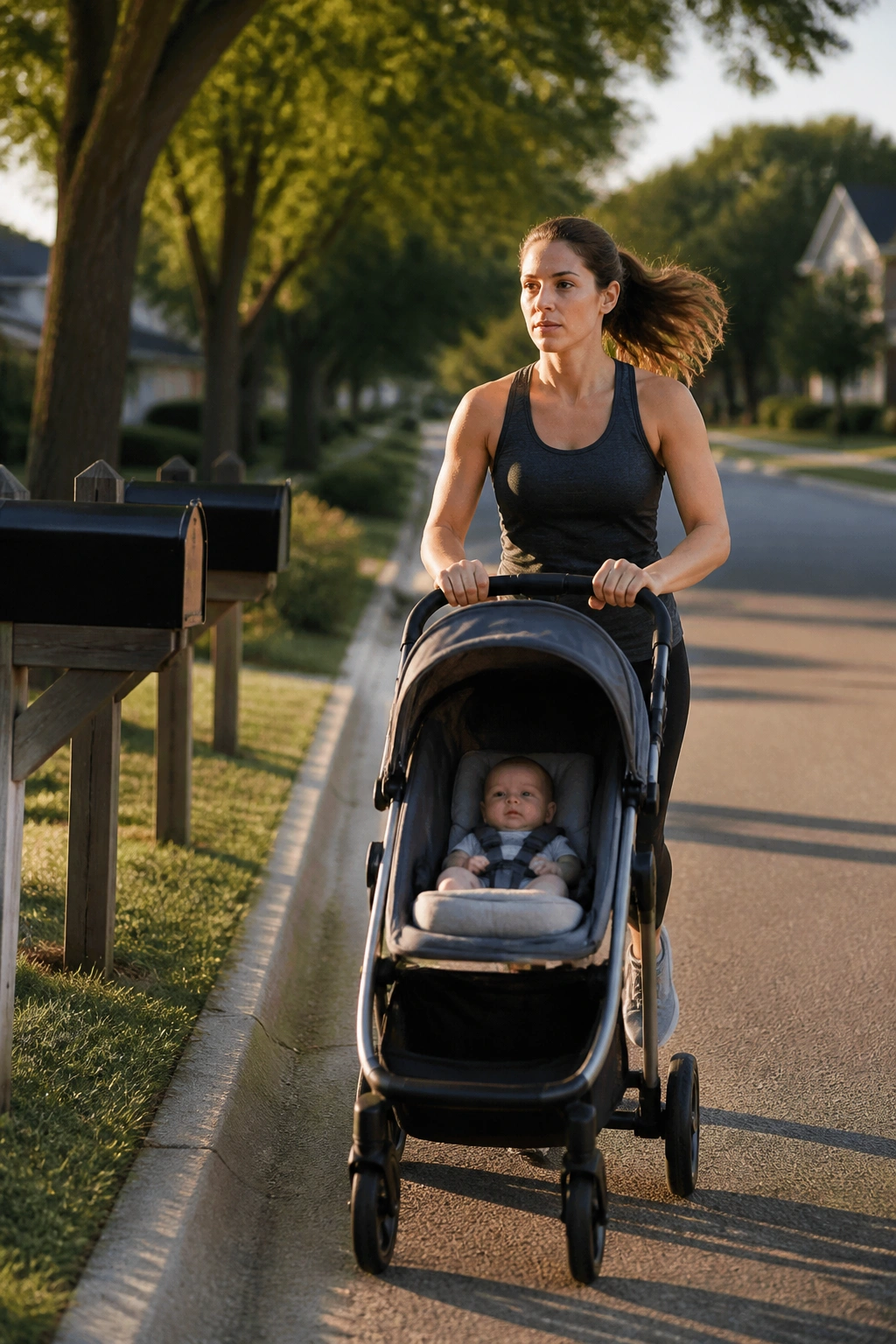
Mailbox to tree. Tree to stop sign. Stop sign to driveway. Easy.
Fartlek means speed play, which is a fancy term for changing pace on purpose without making a rigid plan. For stroller walking, that can be as simple as walking briskly to the next mailbox, then easing off until the next landmark. It keeps your brain from checking out.
The best part is that the workout can match whatever route you already have. No stopwatch. No perfect intervals. Just a series of short surges that wake up your legs and keep the session from getting stale.
A few ideas work well:
- Fast to the next parked car
- Easy for one block
- Fast to the next crosswalk
- Easy to the corner
- Fast up the next short rise
This style is especially good when your day feels messy and you don’t want one more thing to track. You still get intensity, but it’s scattered enough to feel friendly. And if the baby gets fussy halfway through, you can cut the surges and finish the walk at whatever pace keeps the peace.
11. Nap-Window Endurance Walk
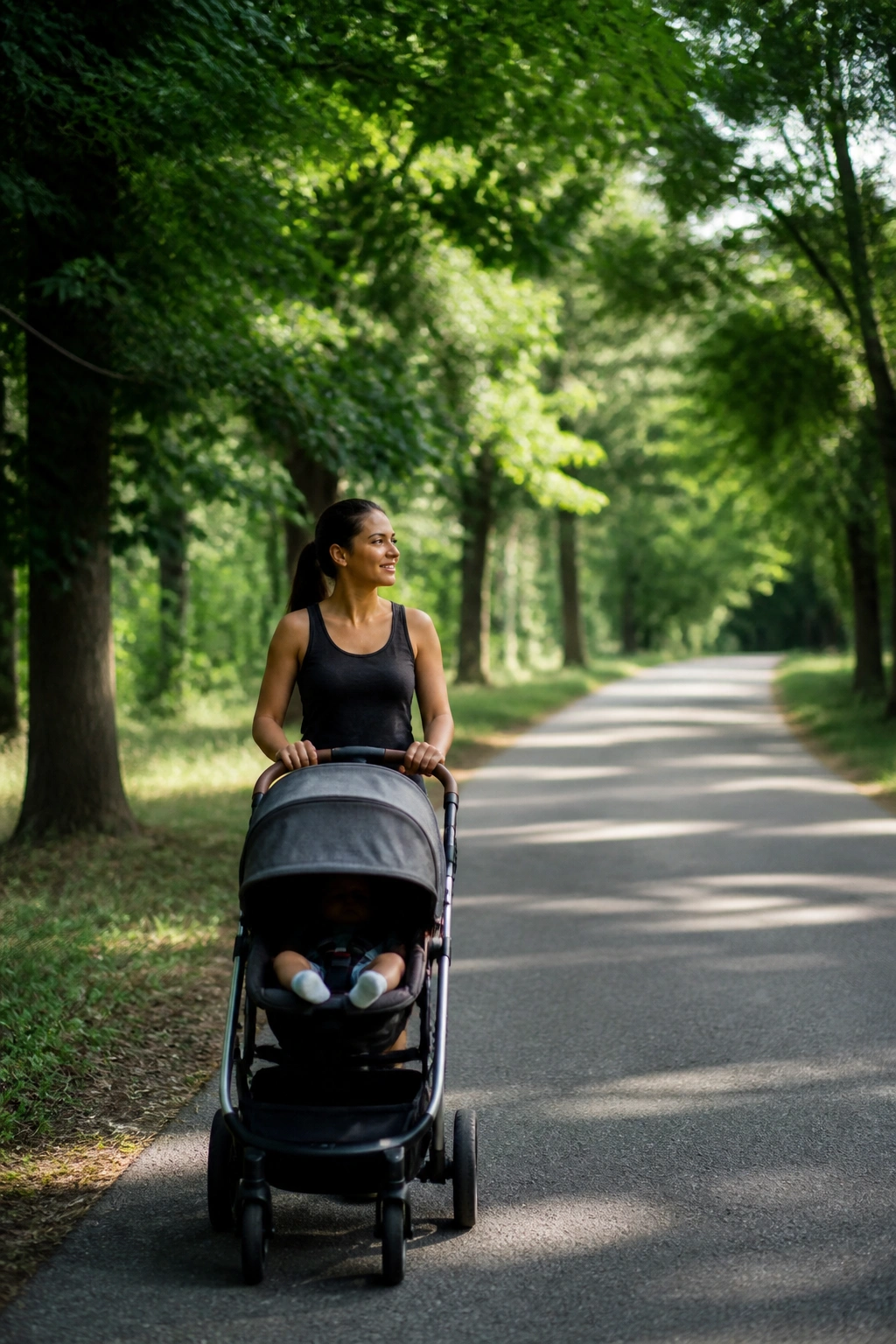
Sometimes the baby sleeps, and that opens a door.
When that happens, stretch the stroll into a longer endurance walk. Thirty to sixty minutes at an easy, steady pace can feel almost luxurious when the house has been loud all day. Keep the effort light enough that you could keep going longer if you had to.
This is a good time to bring water and a small snack, especially if you’re still nursing or you haven’t eaten much. The pace should be easy enough that your body stays comfortable for the full trip. No pushing, no straining, no weird race against the clock.
The best endurance walks are the ones you can actually repeat. A route with a bathroom, shade, and a couple of safe places to turn around makes a big difference. If the baby wakes early, you don’t have to be annoyed about the lost distance. You still got the air, the movement, and the mental break. That counts more than people admit.
12. Stroller Strides With Short Surges
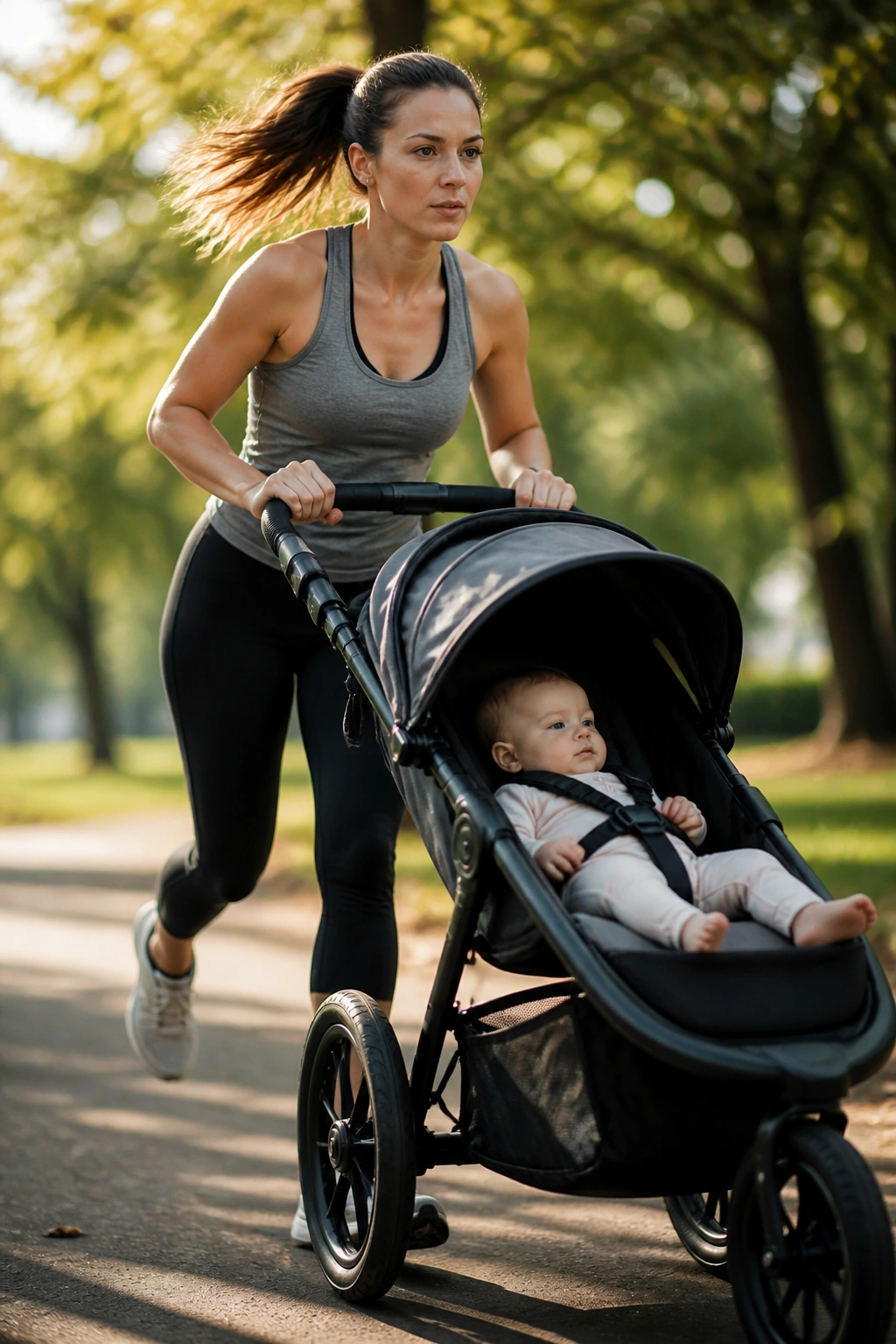
What if you want a workout without stopping every two minutes? Short surges solve that.
A stroller stride session uses quick, smooth bursts of pace every few minutes. Think 20 to 30 seconds brisk, then a few minutes easy. The surges are short enough that you keep control, and long enough to make your heart rate climb.
What a surge feels like
- Breathing gets deeper, not panicked
- Steps stay quick and quiet
- Shoulders stay down
- You can return to easy walking without a long cooldown
That last part matters. If you need five minutes to recover from a 30-second push, the surge was too hard. Back off next time and make the fast part feel smoother.
I like this workout on days when I want a little edge but I’m not in the mood for a full interval session. It has enough variety to wake you up and enough structure to feel like training. Babies often like the changing rhythm, too. The stroller keeps moving, but the energy shifts enough that the walk feels less sleepy.
13. Out-and-Back Route Builder

There’s something calming about knowing exactly where the turn happens.
An out-and-back route is a simple setup: walk away from home for a set amount of time or distance, then come back the same way. That can be a straight 15-minute out and 15-minute back, or it can be two miles out and two miles home if you track distance.
This works well for new moms because it removes decision fatigue. No guessing where to turn. No wondering if you’ll be too far away when the baby needs a reset. You always know the path home, and that alone can lower the mental load.
It’s also a useful way to pace yourself. If the way out feels rough, you can keep the return easier. If you feel better on the way back, you can push the final stretch. Simple. Clean. Hard to mess up.
The route does get a little repetitive, and I’m fine with that. Repetition is not a problem when the goal is to build consistency in a life that already has enough surprises.
14. Core-Safe Stopovers

Your core does not need crunches on a mat to start waking up again.
On a stroller walk, core-safe stopovers can mean a few supported moves at a park bench, fence, or wall. Keep the effort light and the positions upright. You’re looking for control and coordination, not a burn that makes you brace hard through your belly.
Core-safe moves that work well
- 5 slow marches while holding the stroller
- 6 supported split squats per side
- 8 standing knee lifts
- 5 long exhales with a gentle pelvic floor lift
The breathing piece matters more than it sounds like it should. A slow exhale helps your trunk organize itself before you add more load. If you feel doming in your abdomen, pressure in the pelvis, or a pulling sensation that gets sharper with each rep, back off and keep the session to walking.
This kind of stopover makes the walk feel more like a training day, but in a controlled way. It’s useful for postpartum bodies that want strength work without being rushed. And honestly, it beats staring at a floor mat while the baby demands a snack.
15. Hill-and-Flat Combo Walk

Flat, hill, flat again. That little sandwich works.
A hill-and-flat combo gives you a more natural route than pure repeats. You walk easy on the flat, climb the hill at a steady effort, then settle back down on flat ground and let your breathing recover. It feels less formal than intervals and less repetitive than hill repeats.
This is a smart choice if your neighborhood has mixed terrain. You don’t need to hunt for the “perfect” workout street. You just use what’s there and let the route do the work. A moderate hill in the middle can wake up your legs without turning the outing into a grind.
If you want a simple template, try this:
- 8 to 10 minutes easy flat walking
- 1 moderate hill at steady pace
- 8 to 10 minutes easy flat walking
- Optional second hill if you still feel good
The combo format is nice because it spreads the effort out. You never spend too long in one hard chunk, which is helpful on days when the baby slept badly or you didn’t eat enough before heading out. It feels balanced. Not rigid. That matters.
16. Social Stroller Walk
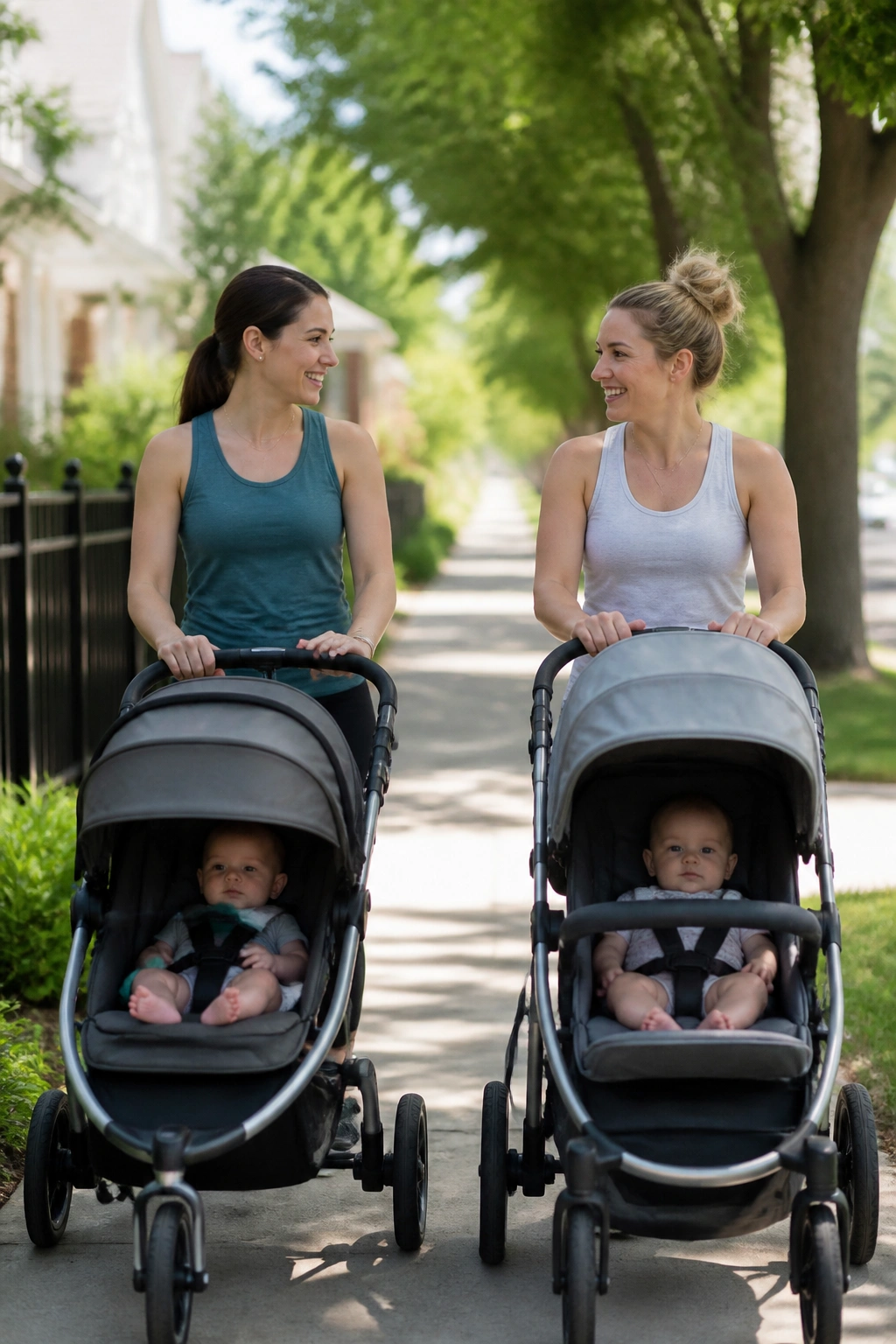
Some workouts are about the miles. Some are about not feeling alone.
A social stroller walk is just a walk with another adult who gets that you may need to stop for a diaper, a feed, or a sudden meltdown. That flexibility is the whole point. The pace should be conversational, the route should be simple, and the vibe should be low-pressure.
If you’ve been home with a baby for most of the week, this kind of walk can do more for your mood than a harder workout ever could. You get movement and adult conversation at the same time, which is a useful combo when your day has been made of burp cloths and half-finished coffee.
No need to make it an event. Meet at a park, circle a neighborhood block, or pick a path with benches. If one baby cries and the other doesn’t, nobody needs to act embarrassed. That’s the whole landscape of new parent life. The walk still happened.
17. Covered-Route Rain Plan
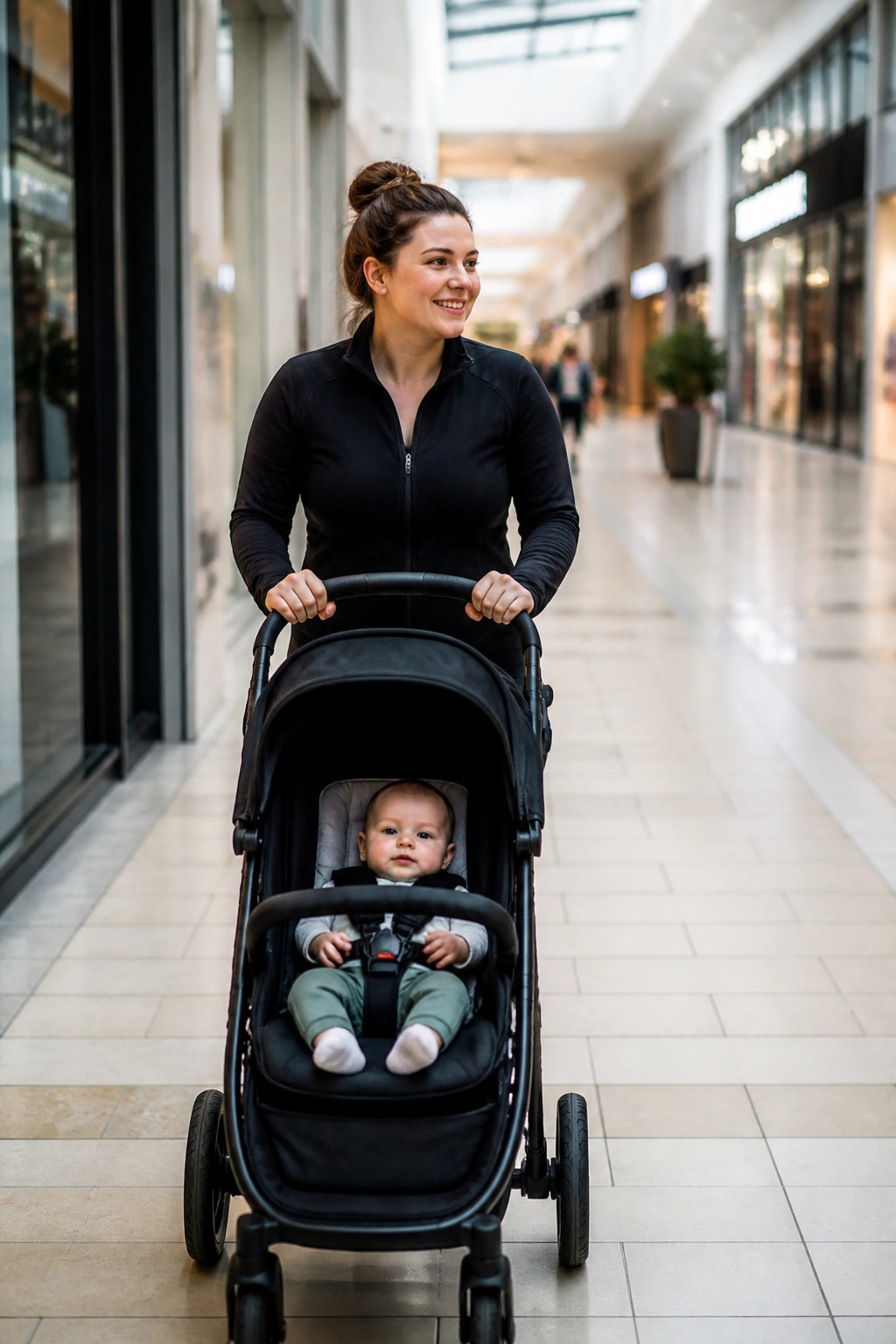
What happens when the weather is sloppy and the baby still needs air? You use a covered route and stop pretending every workout has to look pretty.
An indoor mall, a covered path, a flat hospital corridor, or a stroller-friendly community center can save the day when rain or wind makes the sidewalk miserable. The goal is simple: keep the stroll easy, safe, and dry enough that you’ll actually do it again tomorrow.
A few details make this smoother:
- Check that the floor isn’t slick.
- Avoid busy escalator areas.
- Bring a light layer for the baby.
- Keep the route near exits and bathrooms.
I like this option because it removes one of the biggest excuses in stroller walking: bad weather. If you wait for perfect conditions, the workout disappears. A covered plan keeps the habit alive without asking for a heroic mood. And yes, it can feel a little dull. Dull is fine. Dull is often what makes it repeatable.
18. The Weekly Anchor Stroller Workout
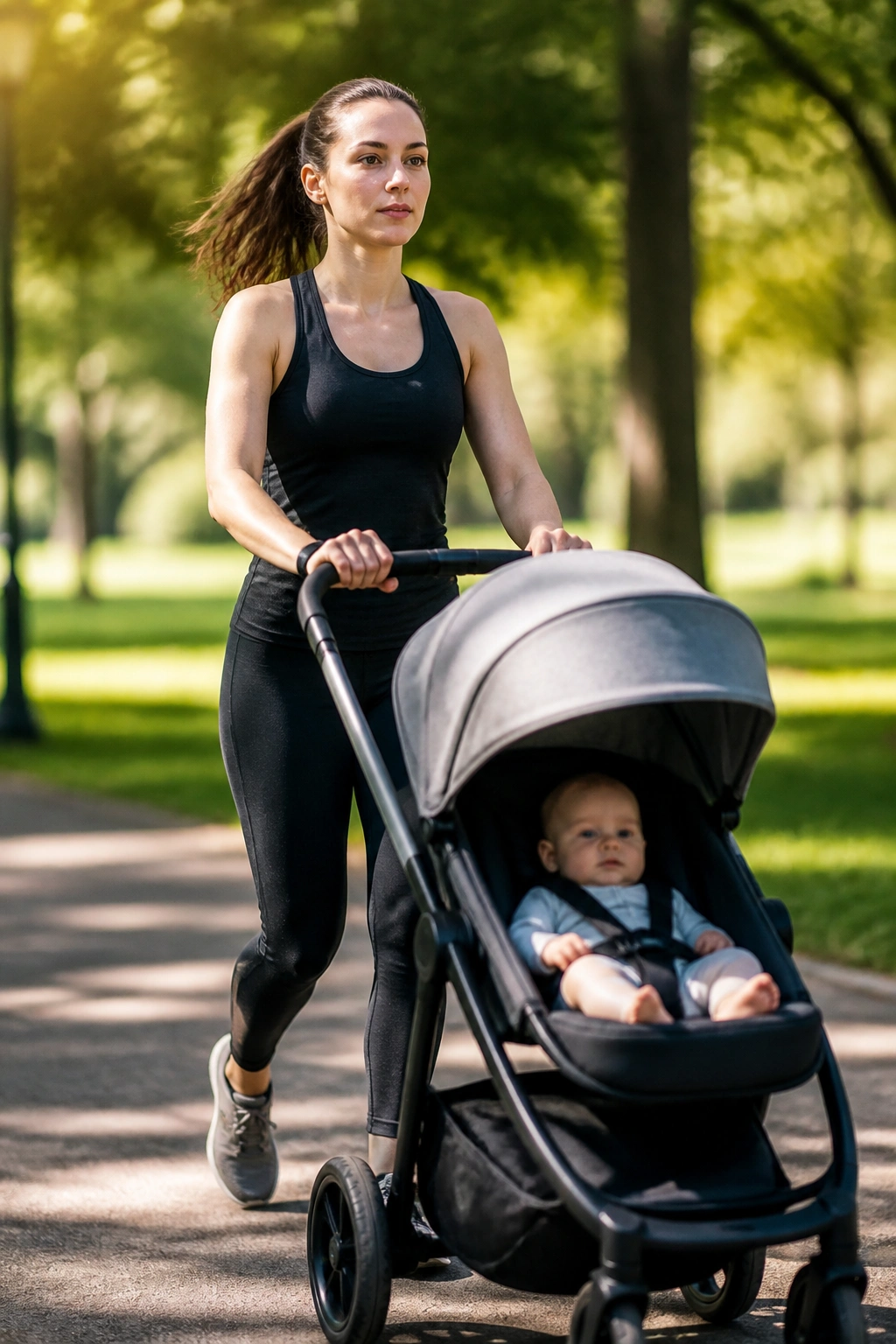
This is the one to come back to when your schedule starts to wobble.
Pick a single session that feels doable most weeks, and make it your anchor. Mine would be something like 5 minutes easy, 10 minutes moderate, 4 short surges of 30 seconds each, then 5 minutes easy to finish. It’s long enough to matter and short enough that you’re not negotiating with your whole day.
A repeatable weekly template
- 5 minutes easy warm-up
- 10 minutes steady brisk walking
- 4 x 30-second surges with 90 seconds easy between
- 5 minutes cool-down
That gives you cardio, a little speed, and a clean finish. If the baby is fussy, cut one surge. If you feel strong, add a fifth. If you’re wiped out, turn the middle block into an easy walk and keep the habit alive anyway.
The point of a weekly anchor workout is not perfection. It’s having one session you trust when life gets noisy. New moms do better with routines that bend without breaking, and babies do fine with that too. Keep the route familiar, the pace honest, and the plan small enough that you’ll actually lace up and go. That’s the part that changes things.
