



A pair of dumbbells can do a lot more than people give them credit for. Handled well, dumbbell workouts at home can build real muscle without a rack, a bench, or a room full of machines you’ll never touch twice. Handled badly, they turn into fast, sloppy reps and a sweat session that feels productive but doesn’t move your body much at all.
The difference comes down to tension. Muscle responds to hard sets, full range of motion, and a clear reason to adapt. If the last few reps of a set don’t slow down, if the lowering phase is out of control, or if you’re bouncing from one move to the next without any load progression, the body has no reason to change. It’s that plain. Not glamorous. Just true.
Home training also has one nice little advantage that gets ignored: dumbbells tell the truth. A weak leg shows up fast on split squats. A lazy brace shows up on rows and carries. A shoulder that wants to cheat on presses gets called out immediately. You can’t hide much, and that’s a good thing.
The 20 workouts below are built around that honesty. Some are heavy and straightforward. Some are ugly in the best way, especially when the dumbbells are a little too light and you need to slow the lowering phase, use one arm at a time, or add a pause where it hurts most. Pick a few, train them hard, log what you did, and the rest starts to fall into place.
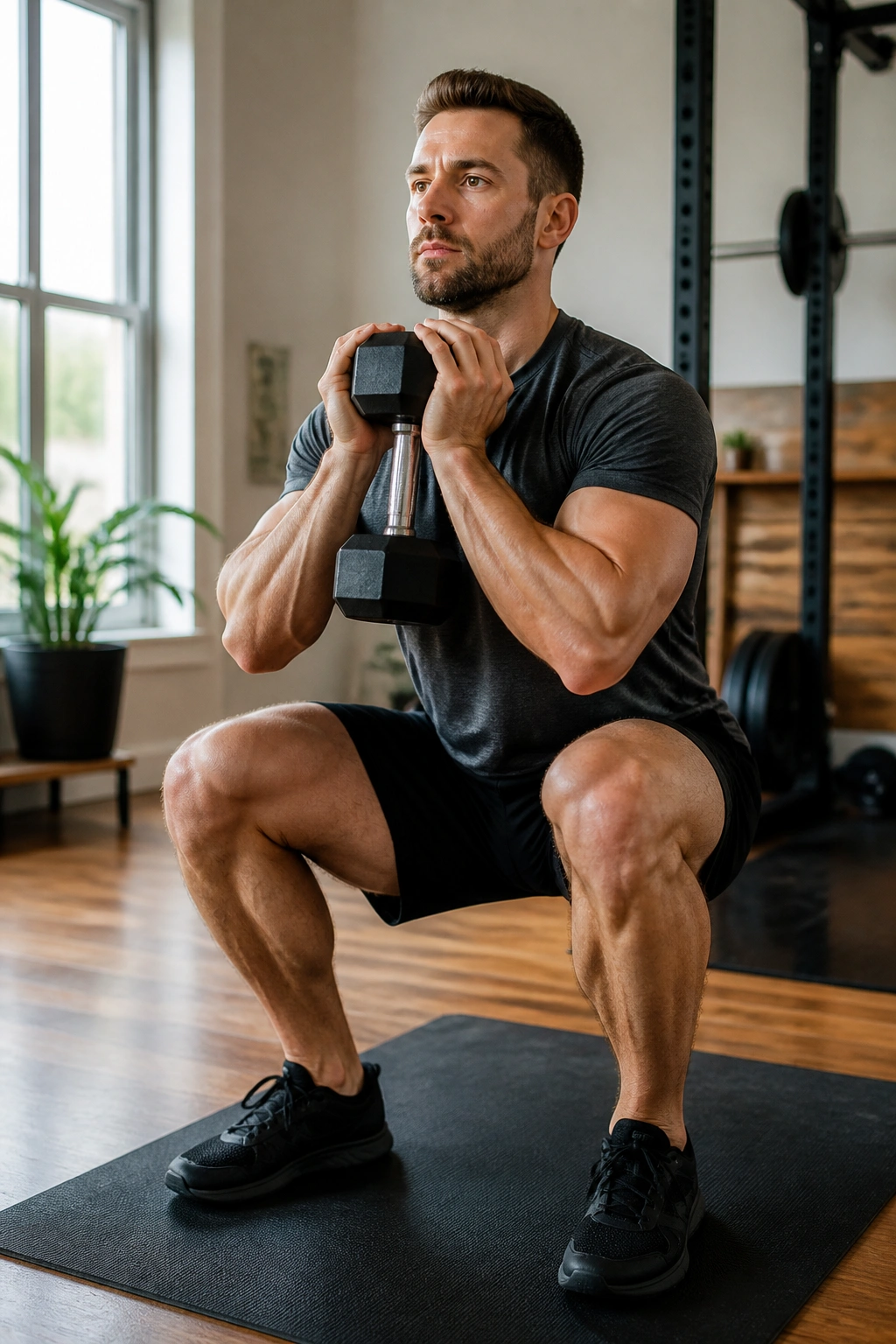
1. Goblet Squat: A Foundation Move for Dumbbell Workouts at Home
A goblet squat is the kind of exercise I wish more people would take seriously. It looks simple. It is simple. That’s exactly why it works so well for leg growth at home.
How to run it
- Hold one dumbbell vertically against your chest, with both hands under the top end.
- Stand with your feet about shoulder-width apart and turn your toes out slightly.
- Sit down between your hips, not just forward at the knees.
- Pause for one count at the bottom if you want more quad work.
- Drive up through the whole foot, not just the toes.
Use 3 to 4 sets of 8 to 12 reps, resting 90 seconds between sets. If you can bang out 12 reps without your torso slowing down or your knees drifting inward, the dumbbell is too light. Either add weight or slow the lowering phase to 3 seconds.
One good cue: keep your elbows inside your knees on the way down. That little position cue helps keep the torso tall and the squat honest.
2. Dumbbell Floor Press for Chest and Triceps
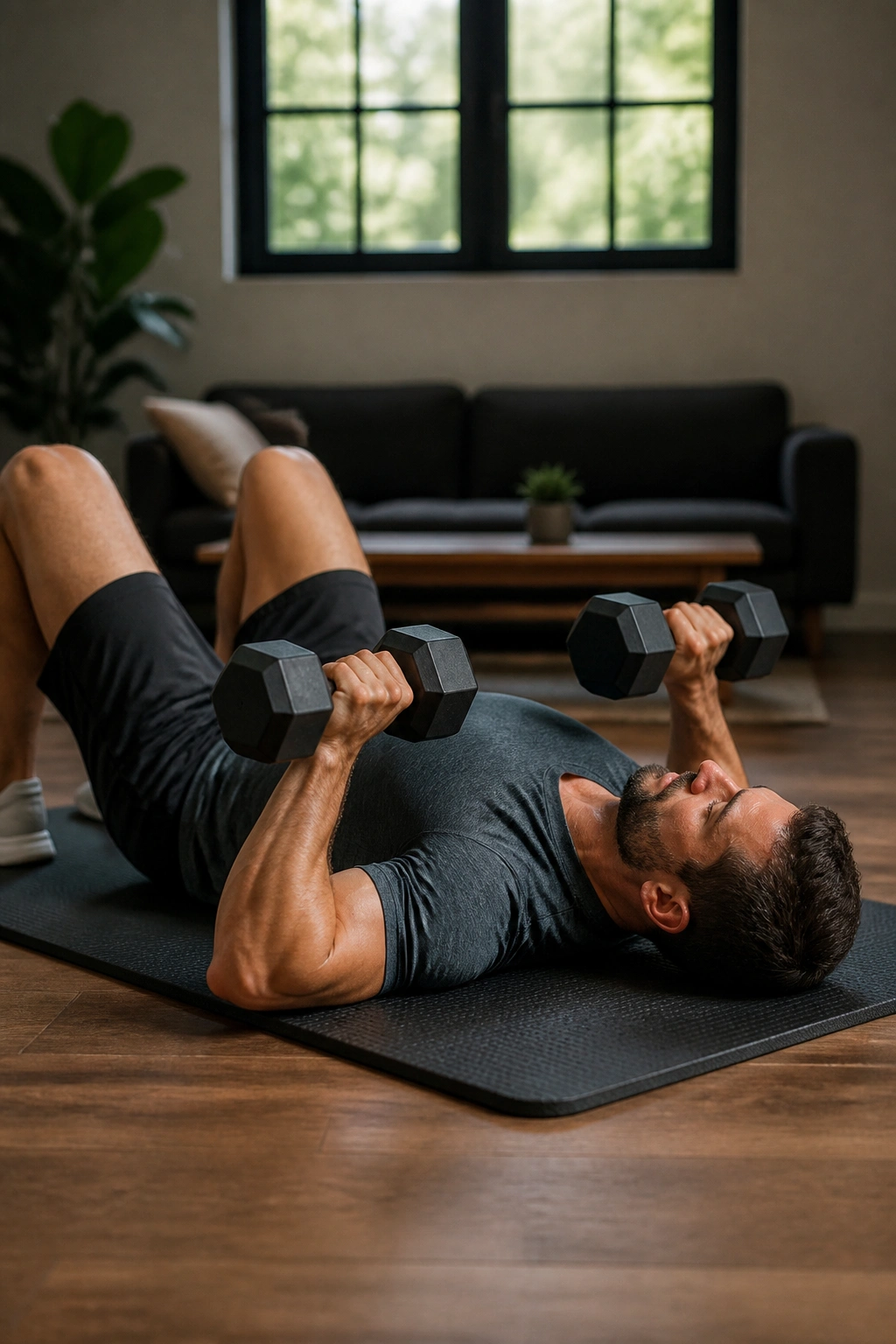
The floor press is one of those moves that looks almost too plain to matter. Then you do it hard, and your chest and triceps start talking back in a very specific way.
What makes it useful is the stop on the floor. Your elbows can’t drop into a deep shoulder stretch, so the movement stays controlled and the triceps have to finish the press cleanly. That also makes the floor press a smarter choice than a sloppy bench press substitute if your shoulders get cranky with deep range pressing.
Lie on the floor with your knees bent and dumbbells over your chest. Lower until your upper arms touch the floor softly, pause for a beat, then press up until your elbows are straight but not jammed. Four sets of 6 to 10 reps is a solid muscle-building range here. Keep the descent under control. No bouncing. That bounce cheats the set and usually irritates the shoulders for no good reason.
If your dumbbells are fixed and a little too light, use a 2-second pause on the floor. It turns a basic press into a much harder one without needing more equipment.
3. Romanian Deadlift for Hamstrings That Actually Work
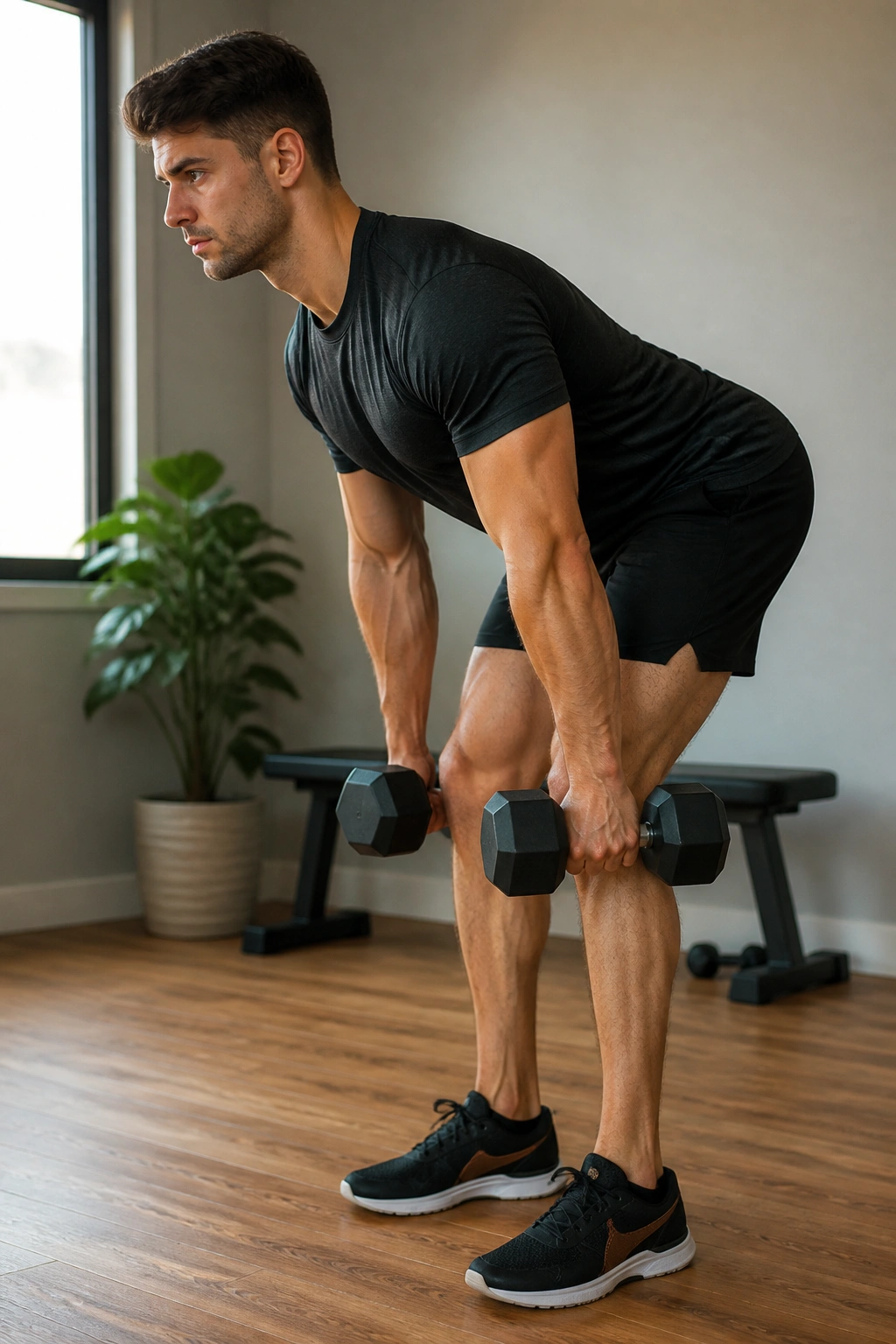
Why does the Romanian deadlift show up in so many good home programs? Because it hits the hamstrings and glutes in a way that people feel fast, and feeling is part of the point when you’re trying to grow.
Why it earns a spot
A Romanian deadlift is not a squat. That sounds obvious, but plenty of people turn it into one by bending the knees too much and dropping the dumbbells straight down. The movement should feel like a controlled hip hinge. Your hips go back, your shins stay almost vertical, and your spine stays long.
How to use it
- Start standing tall with dumbbells in front of your thighs.
- Soften the knees a little.
- Push the hips back until the hamstrings stretch.
- Lower the weights to about mid-shin if mobility allows.
- Stand by driving the hips forward, not by yanking with the lower back.
Three to 4 sets of 8 to 10 reps is plenty if the weight is challenging. If your lower back is doing most of the work, shorten the range a little and slow the lowering phase to 3 counts. That usually fixes the mess.
4. One-Arm Dumbbell Row That Builds a Thick Back
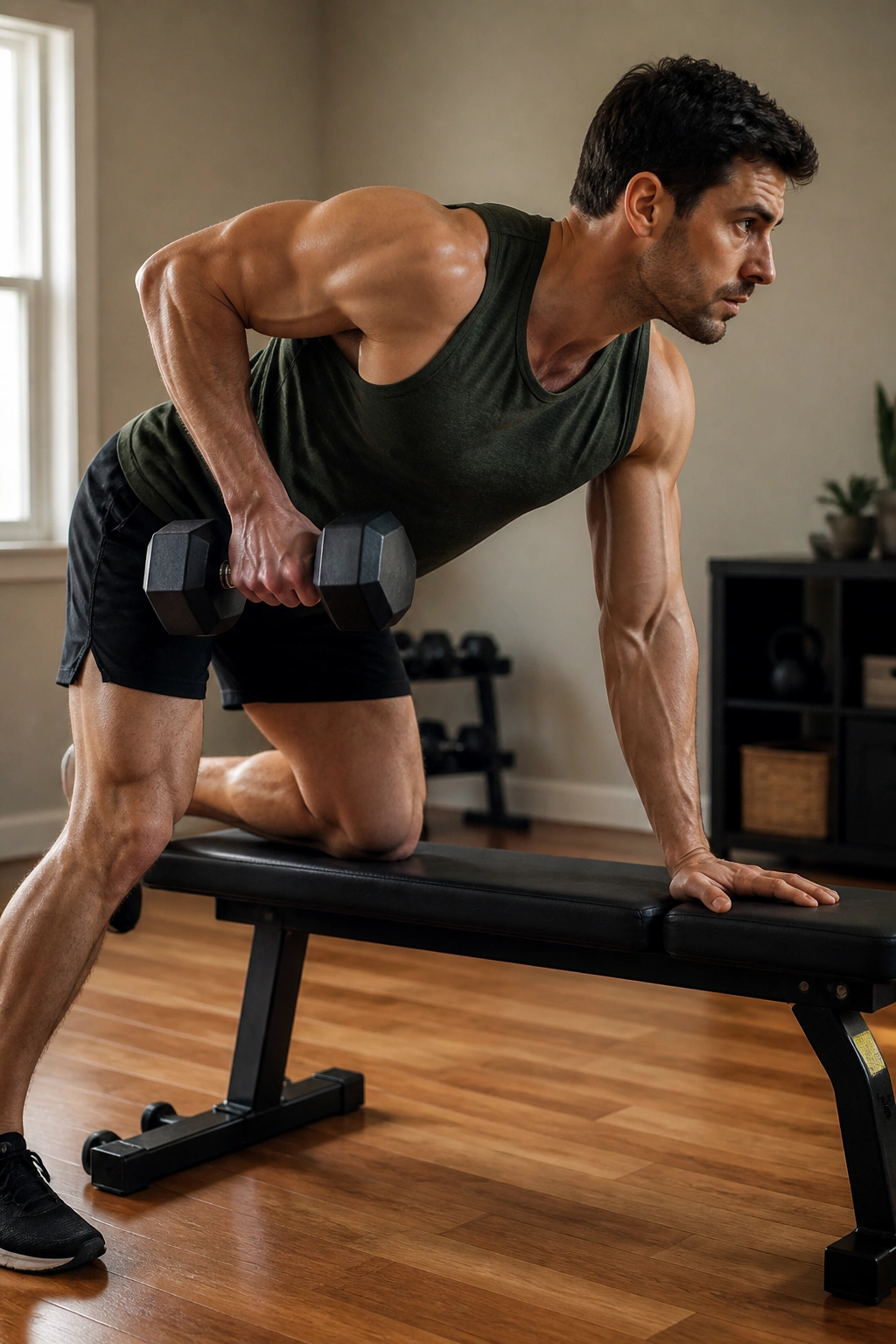
If your back gets noticeably better from one move, this is probably the one. A one-arm row gives you a clean pull, a hard squeeze at the top, and enough stability to actually load the lats instead of turning the whole set into a twist.
Set one hand and one knee on a sturdy chair, couch, or bench. Keep your chest square to the floor. Pull the dumbbell toward your hip, not your shoulder. That path matters. It shifts the work into the lat instead of making the upper trap steal half the rep.
- Use 4 sets of 8 to 12 reps per side
- Pause for 1 second at the top
- Lower until the arm is fully stretched
- Keep the neck long and the shoulder out of your ear
Don’t rotate your torso just to get the weight higher. That’s not back work. That’s cheating with extra steps. If you want more challenge, use a slower descent or add a half-rep at the bottom.
5. Bulgarian Split Squat for Quads, Glutes, and Pure Leg Work
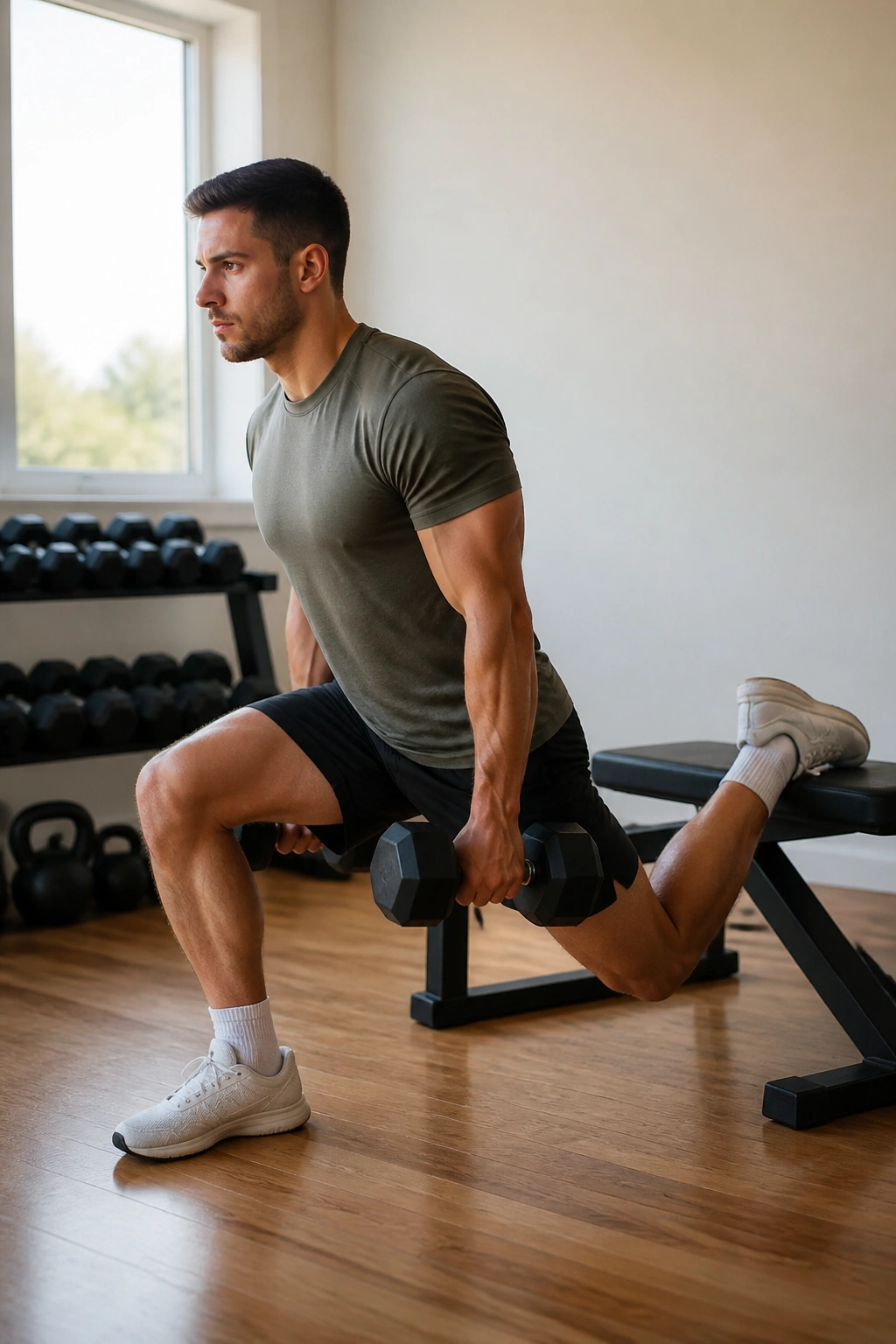
Bulgarian split squats are nasty in the best possible way. One leg does the work. The other leg mostly stands there and complains.
The movement looks awkward until you get used to it, and then it becomes one of the best muscle builders you can do at home with a pair of dumbbells. Because the rear foot is elevated, the front leg gets a huge range of motion without needing a barbell or machine. Your quads light up. Your glutes fire hard. Balance gets better too, though nobody does this one for the balance alone.
Keep your front foot far enough forward that the knee can travel without the heel popping up. Hold dumbbells at your sides, let the torso lean slightly forward, and lower under control until the back knee comes close to the floor. Three sets of 8 to 12 reps per leg is a solid place to start.
It burns.
That burn is the point. If it feels too easy, move the front foot a few inches closer to the bench or slow the lowering phase to 4 seconds. Tiny changes like that make a big difference.
6. Standing Overhead Press for Shoulders and Triceps
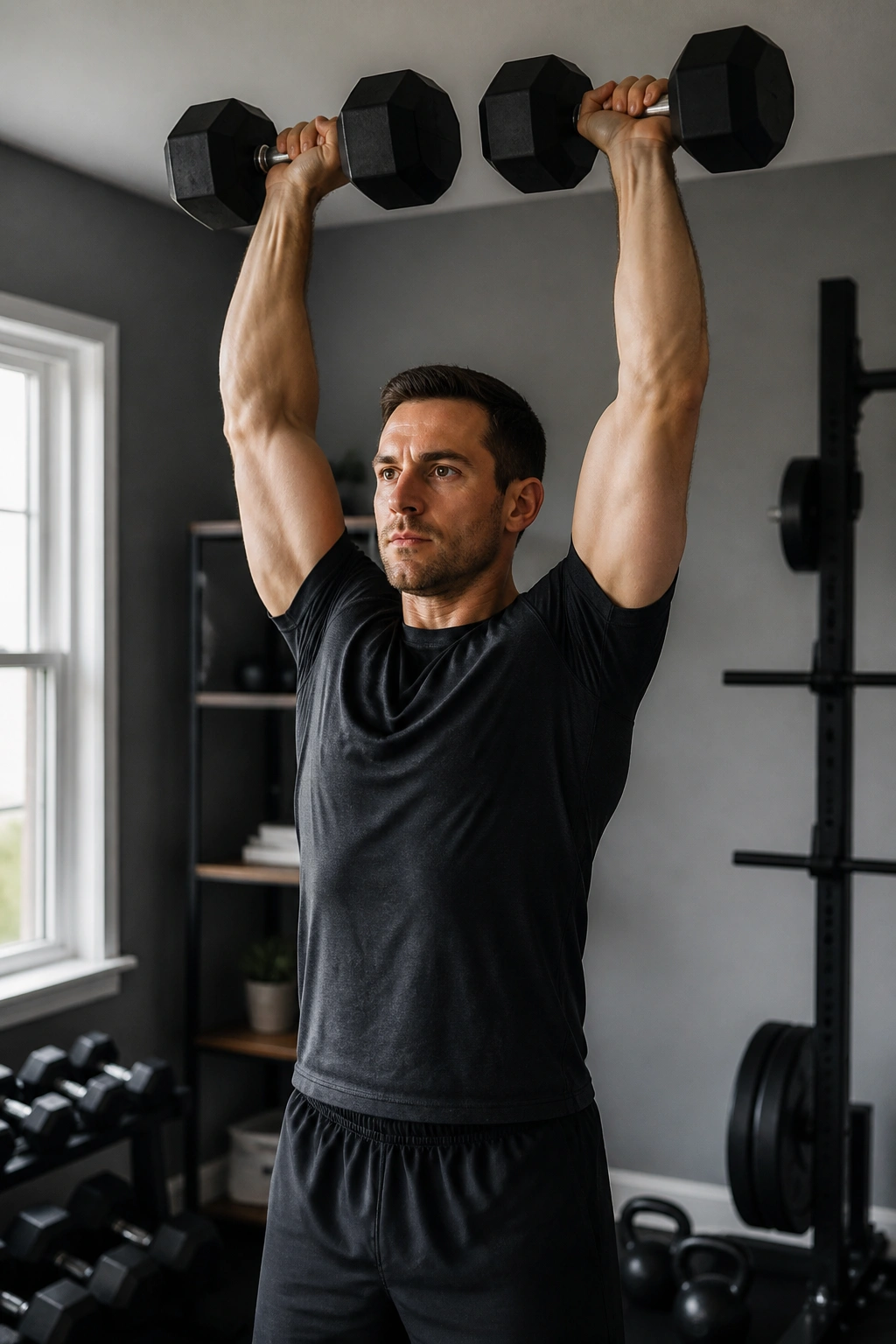
The strict overhead press is the clean version. The push press is the heavier cousin. Both are useful, but they do different jobs.
A standing dumbbell overhead press keeps the hips quiet and the torso tight. That means the shoulders and triceps have to do the pressing without help from a big leg drive. I like it because it exposes weak bracing fast. If you arch your lower back to finish the rep, the load is too heavy or your ribs are flaring.
Press from shoulder height, finish with the biceps near your ears, and keep the glutes squeezed so your lower back doesn’t turn into a hinge point. Four sets of 6 to 8 reps works well when the weight is honest. Lower the dumbbells to just below chin height with control.
Strict pressing is the better choice if you want clean shoulder growth and a stronger overhead position. Push presses have their place, too, but this one teaches the body to own the weight without a little jump from the legs.
7. Dumbbell Hip Thrust for Glutes That Drive Hard
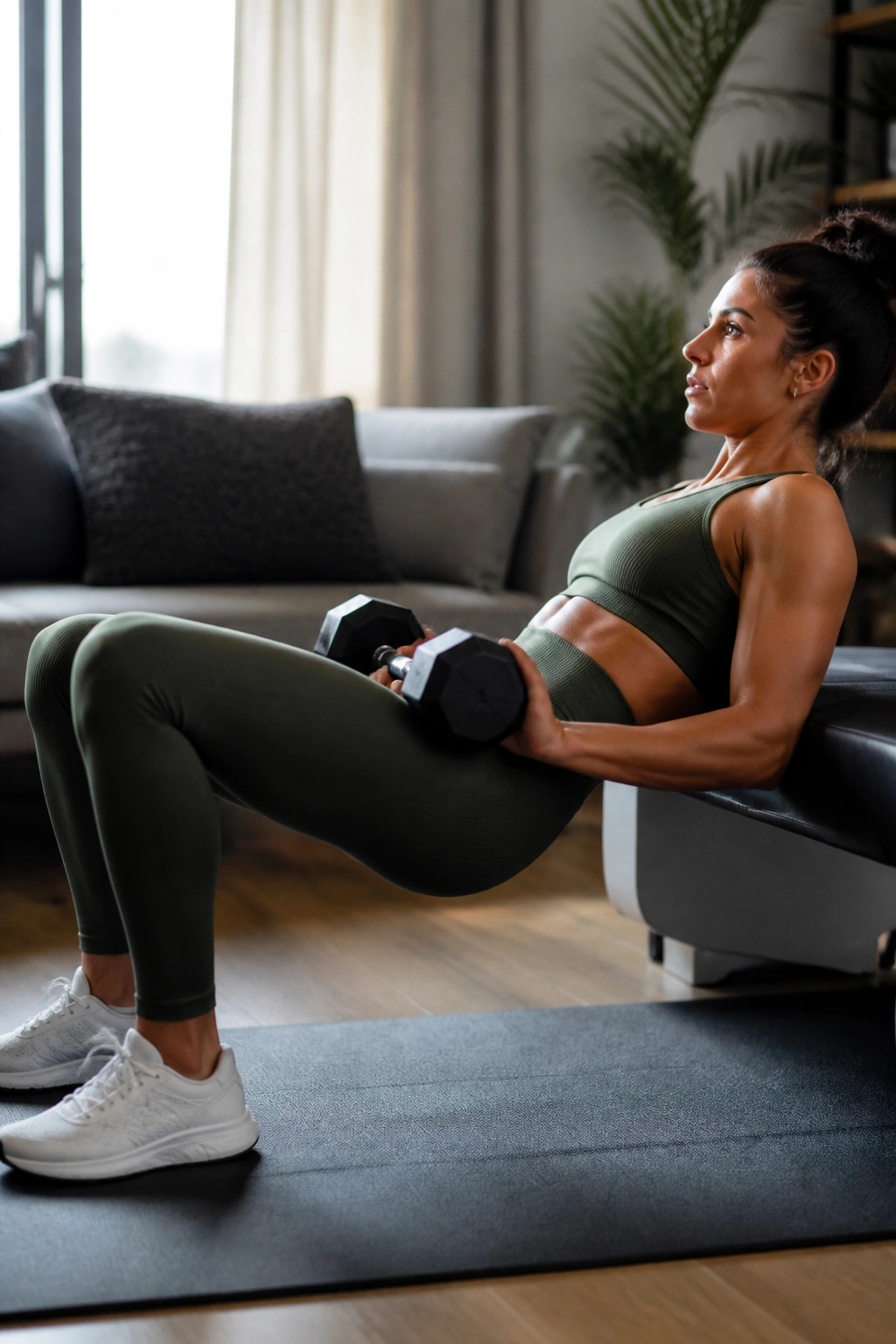
A dumbbell hip thrust is one of the easiest ways to load the glutes at home without wrecking the lower back. And yes, it really does work even if the dumbbell looks small at first glance.
Set-up matters here
- Sit on the floor with your upper back against a couch or sturdy bench.
- Roll a dumbbell into your lap and hold it steady with both hands.
- Plant your feet flat so your shins are close to vertical at the top.
- Drive the hips up until your torso and thighs make a firm line.
- Squeeze the glutes for 1 to 2 seconds before lowering.
Use 4 sets of 10 to 15 reps. If the dumbbell digs into your hips, wrap it in a towel or use a folded mat. That small fix saves the set from becoming miserable for the wrong reason.
The key is to stop at the top with the glutes, not by arching the lower back. If you feel your ribs flaring upward, shorten the range and tighten the brace. That usually cleans it up fast.
8. Renegade Row for Back Strength and Core Bracing
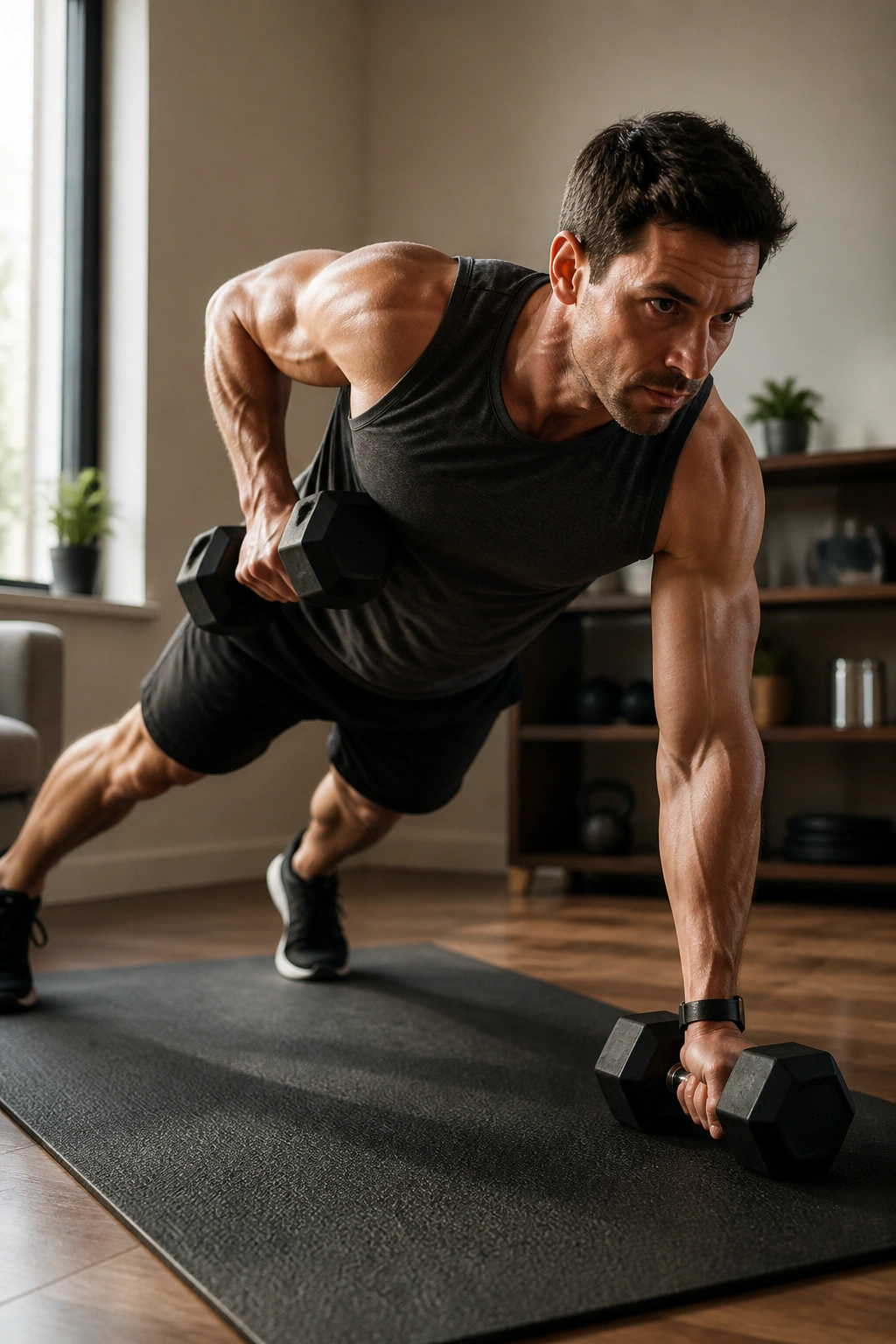
The renegade row is a back move disguised as a core test. That’s why it gets messy when people rush it. If your hips swing side to side like a cheap shopping cart, the row is no longer doing the job you think it is.
Start in a high plank position with a dumbbell under each hand. Feet a little wider than shoulder-width helps. Row one dumbbell toward your rib cage while the other hand presses hard into the floor. Lower it with control, then switch sides. Three sets of 6 to 8 reps per side is enough if the form is clean.
If the plank itself is the hard part, that’s fine. Keep the set shorter and use a wider stance. If you still can’t control the hips, use a bench-supported row instead and come back to the renegade row later. There’s no prize for turning a back exercise into a spine wobble.
The useful part of this move is the brace. You can feel exactly how much the body wants to rotate. Then you teach it not to.
9. Dumbbell Sumo Squat for Inner Thighs and Glutes
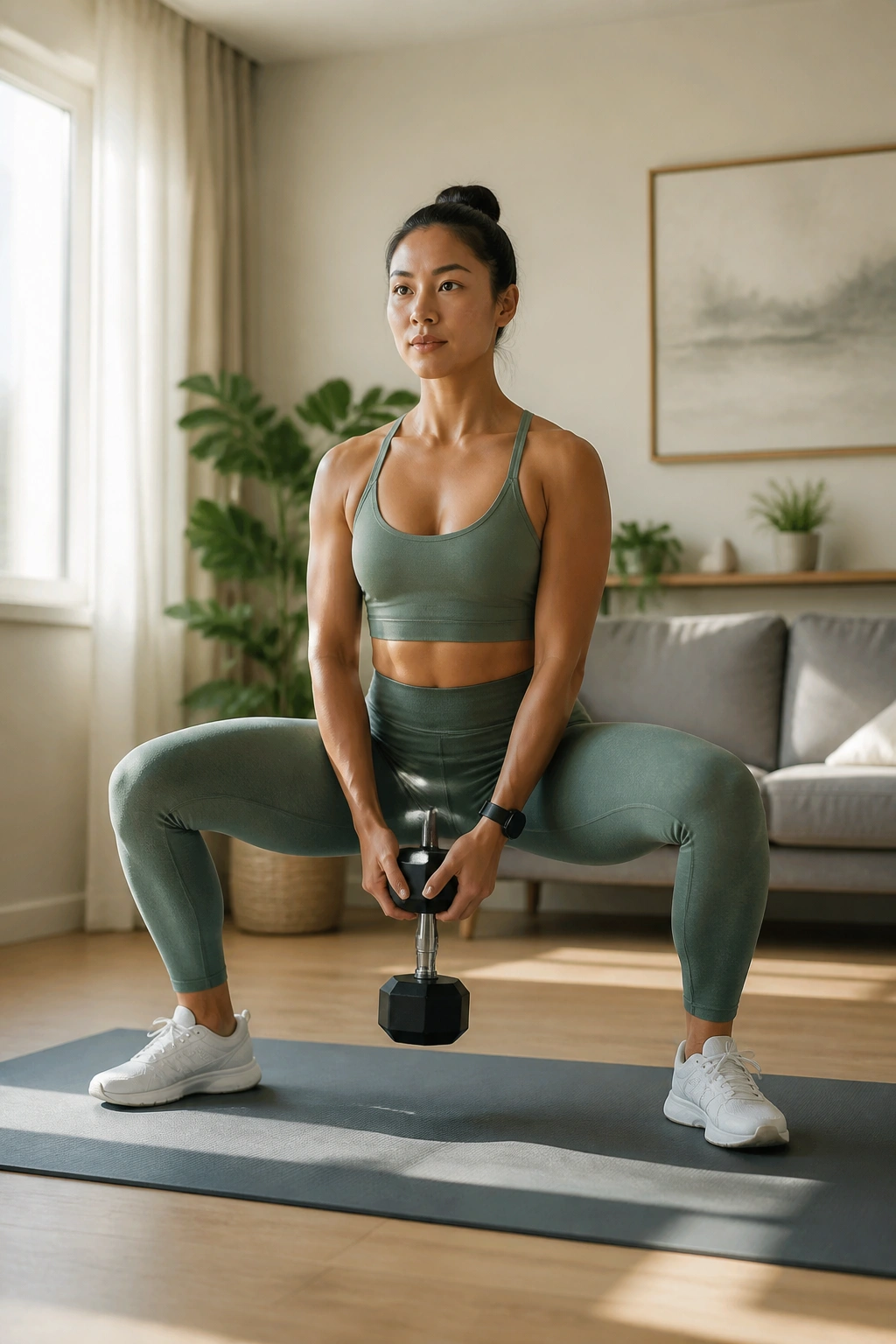
Why does the wide stance feel different from a regular squat? Because it shifts the work a little more toward the inner thighs and glutes while keeping the torso more upright.
A sumo squat starts with the feet wider than shoulder-width and the toes turned out about 20 to 30 degrees. Hold one dumbbell between your legs or two dumbbells at your sides. Sink down between the knees, keep the chest proud, and push back up by driving the knees out in line with the toes. Four sets of 10 to 15 reps works well here.
The temptation is to make this into a half-deadlift. Don’t. Keep the movement vertical enough that the quads still matter. If the dumbbell touches the floor before your hips reach depth, widen your stance a bit and open the hips more.
This is one of the better leg moves for home lifters who want something they can load without needing a barbell platform. It looks a little different, and that difference is useful.
10. Dumbbell Push Press for Heavier Overhead Loading at Home
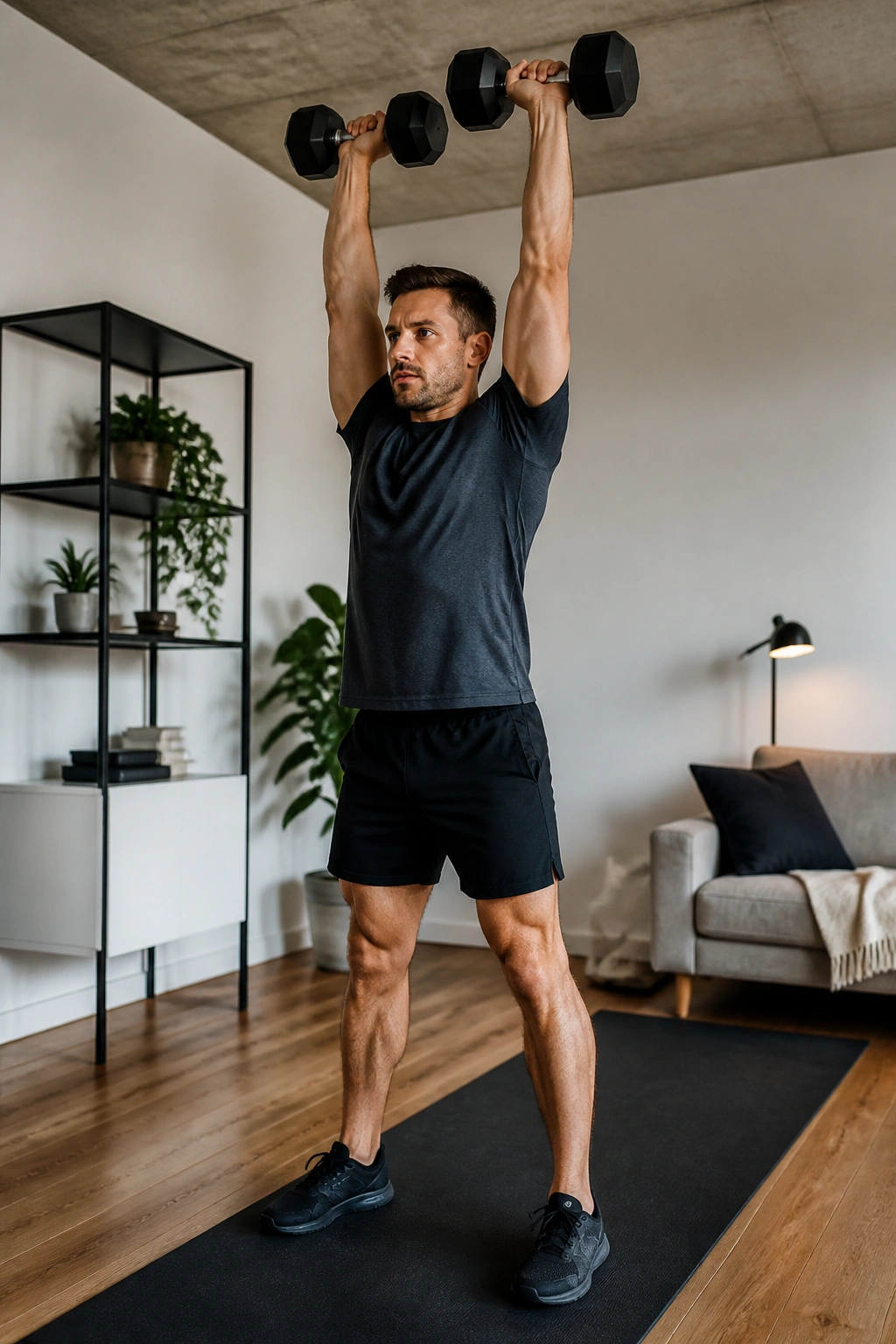
When a strict press starts to stall, the push press gives you a way to move more weight overhead and keep the shoulders under a different kind of stress. That tiny leg dip is not cheating. It’s a tool.
The movement is simple. Dip a few inches by bending the knees slightly, stay upright, then drive hard through the legs and finish the press with the arms. The key is that the dip stays short. If it turns into a squat, the timing falls apart and the dumbbells drift forward. Then the lower back starts helping in ways you do not want.
Use 4 to 5 sets of 4 to 6 reps with a weight that feels heavy but still smooth. This is one of the best home options when your dumbbells are a bit too light for strict pressing but heavy enough to challenge a little leg drive.
I like the push press when the goal is overload, not pure shoulder isolation. It’s a louder lift. More explosive. Less tidy. Sometimes that’s exactly what the program needs.
11. Chest-Supported Dumbbell Row for a Clean Upper-Back Hit
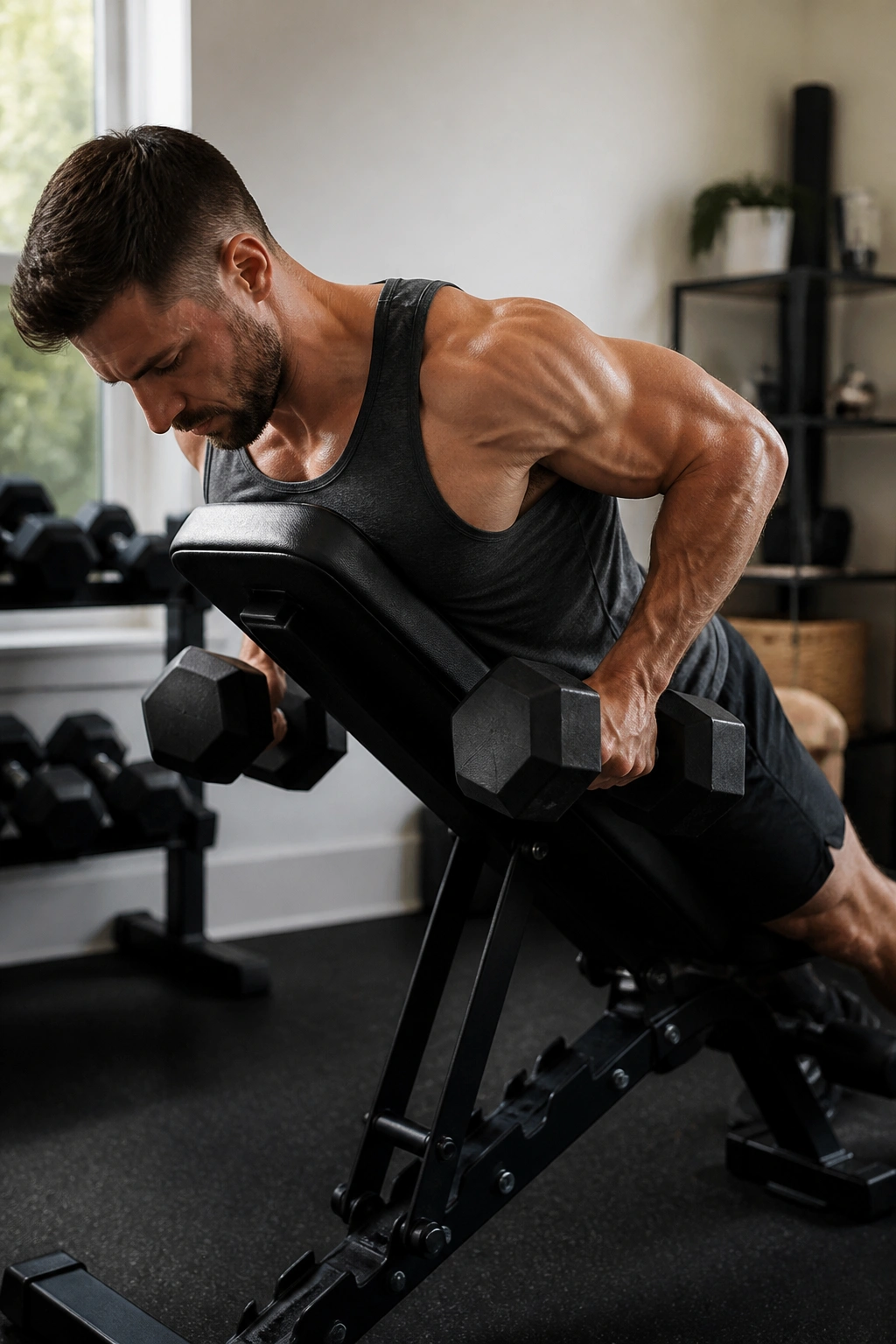
A chest-supported row is boring in the nicest possible way. You lie against an incline bench, a firm stack of pillows, or a sturdy chest support setup, and the lower back gets to sit this one out. That leaves the lats, rhomboids, and rear delts to do the pulling.
The big advantage is honesty. No swinging. No heaving. No tiny hip kick to make the weights look heavier than they are. You pull the elbows back, pause near the top, and lower under control. The rep looks almost plain. That’s why it works.
I prefer this move when someone’s lower back gets cooked before the upper back does. Three to 4 sets of 8 to 12 reps is a good target. Pull the dumbbells toward the lower ribs if you want more lat work, or a little wider if you want more upper-back emphasis. Keep the chest planted the whole time.
If one-arm rows are the rough-and-ready version, this is the cleaner version. Both matter. This one just strips away a little noise.
12. Dumbbell Reverse Lunge for Quads Without the Balance Tax
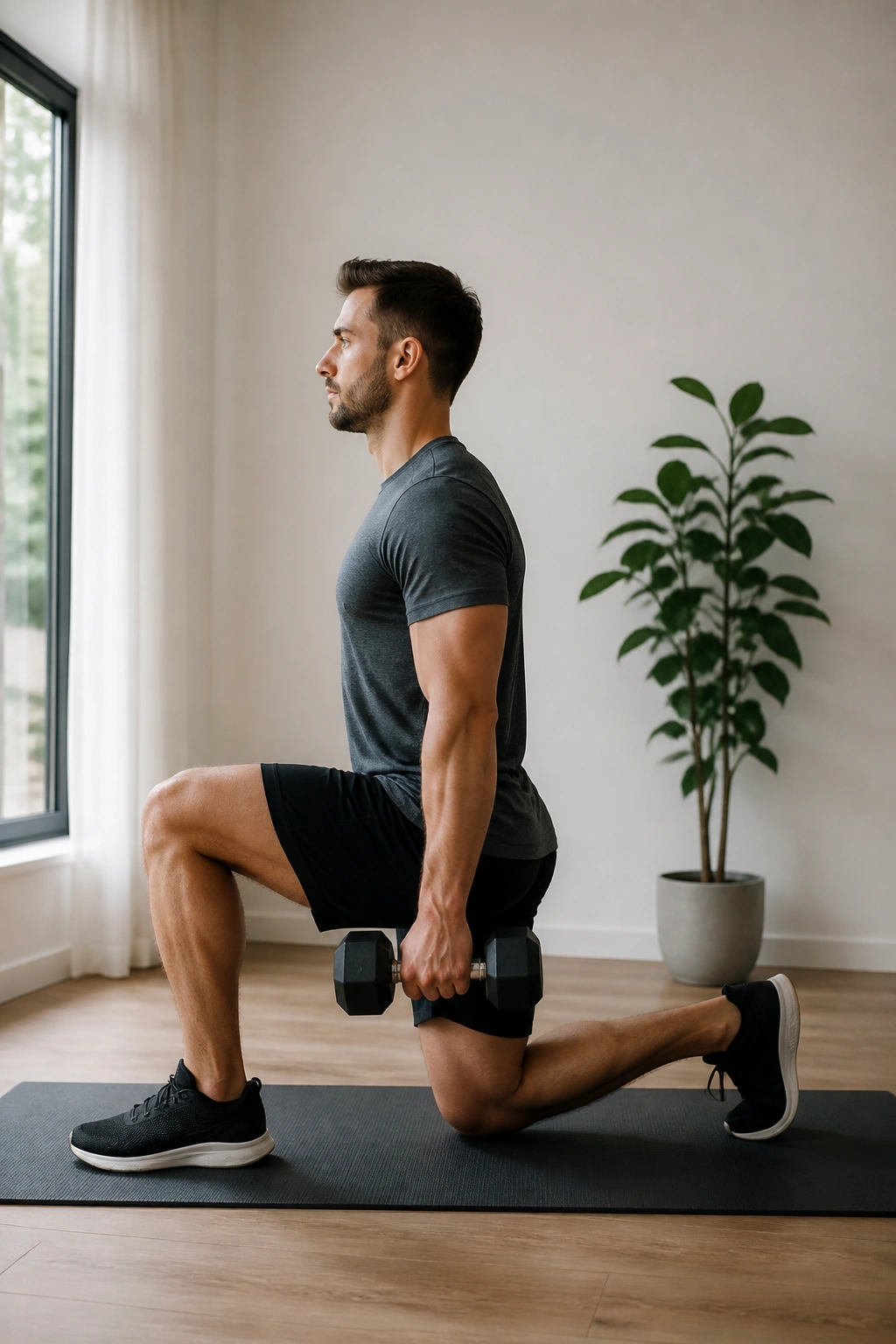
A reverse lunge is the smarter cousin of the forward lunge for a lot of people. It’s easier on the knees, easier to control, and much less likely to turn into a wobbling mess halfway through the set.
Step one leg back, lower until the back knee hovers near the floor, then drive through the front foot to stand. Hold dumbbells at your sides and keep your torso tall. Three sets of 8 to 10 reps per leg is enough to make the legs work hard without burying you in fatigue.
Compared with the Bulgarian split squat, the reverse lunge is a little friendlier if your balance is average or your rear foot doesn’t like being elevated. It still hits the quads and glutes hard, but the motion feels more natural for many lifters.
Use a longer step if you want more glute. Use a shorter step if you want more quad. Small changes like that matter. A lot more than people think.
13. Dumbbell Pullover for Chest and Lats in One Motion
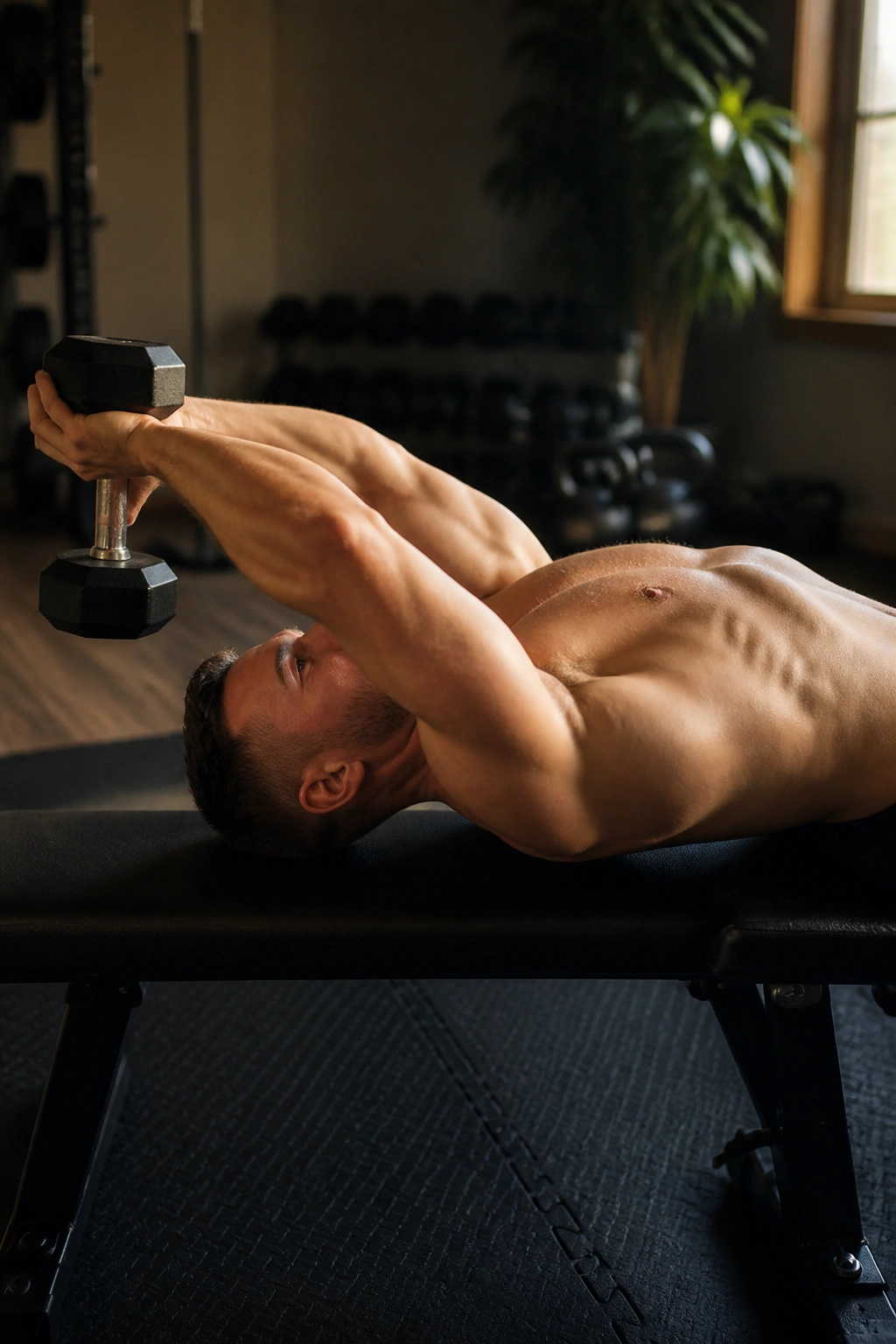
The dumbbell pullover sits in a strange little corner of training history, and I still like it. Not because it’s fancy. Because it gives you a long range of motion through the chest and lats without needing much space.
How to get the most from it
- Lie on the floor or across a sturdy bench.
- Hold one dumbbell with both hands under the top plate.
- Keep a slight bend in the elbows the whole time.
- Lower the weight behind the head until the upper arms meet the floor or reach a comfortable stretch.
- Pull the dumbbell back over the chest without arching the lower back.
Three sets of 10 to 12 reps is a good range. Move slowly on the way down. The stretch is part of the value here, but there’s a line between a good stretch and a cranky shoulder. Don’t chase extra range if the joint feels pinched.
This is one of those exercises that feels a little old-school and still earns its keep. The lats, chest, and serratus all get involved, and that makes it more useful than people assume from looking at it.
14. Dumbbell Squeeze Press for Tight Chest Work
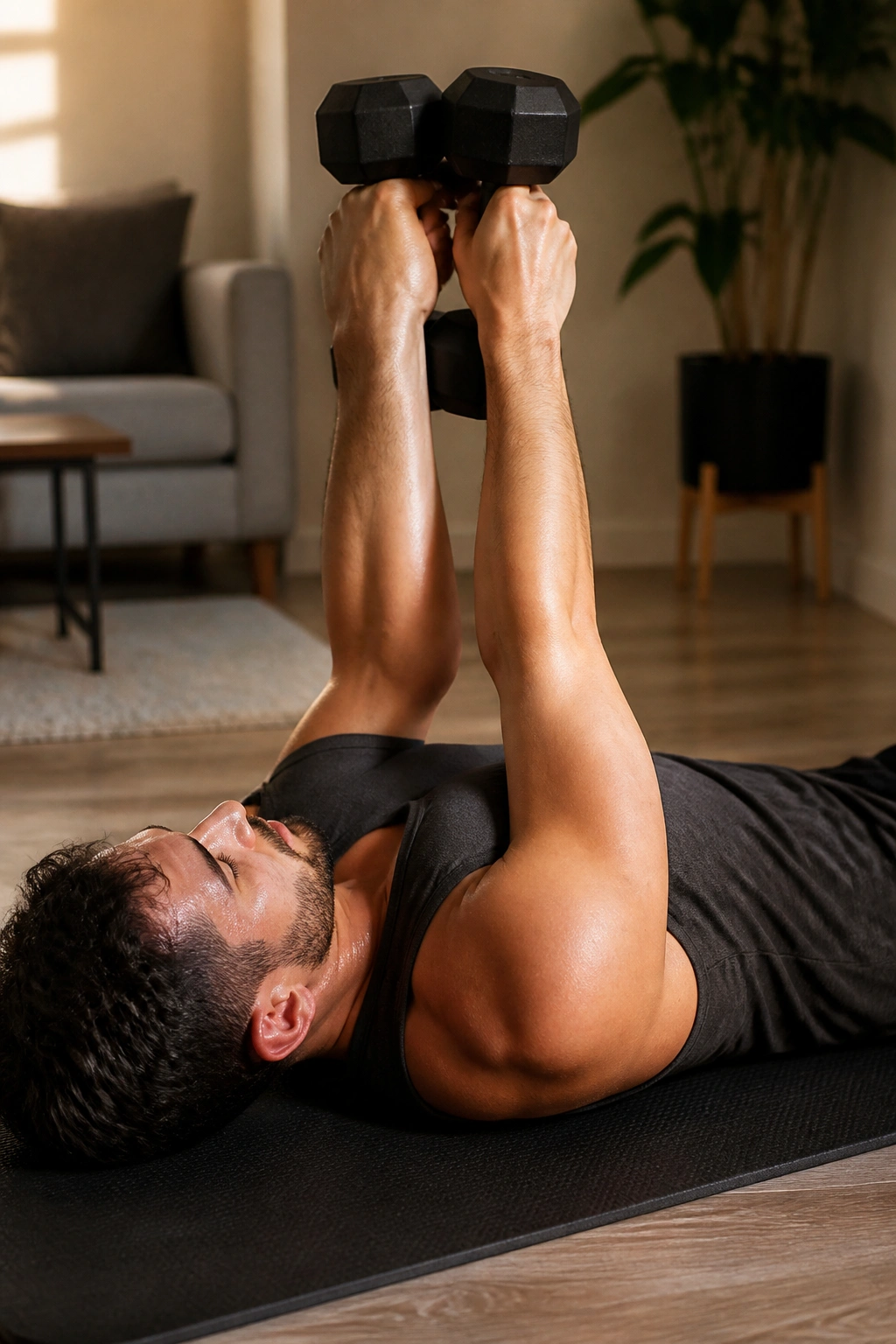
The squeeze press is what chest training looks like when space is tight and the dumbbells aren’t huge. Press the weights together hard, keep them touching, and the chest has to work through a very different kind of tension.
Lie on the floor, stack the dumbbells together over the center of your chest, and crush them into each other while you press. Lower under control until the elbows touch the floor softly, then drive back up without losing the squeeze. Four sets of 10 to 15 reps usually works best, especially when the dumbbells are moderate rather than heavy.
This move is especially useful when you don’t have a bench and your pressing options feel limited. It doesn’t replace heavy floor press work, but it adds a lot of chest tension without needing much load. The triceps help too, which is nice.
If the dumbbells drift apart, the set loses shape fast. Keep the wrists stacked, keep the plates pressed together, and don’t rush the bottom half.
15. Dumbbell Lateral Raise for Side Delts That Actually Show Up
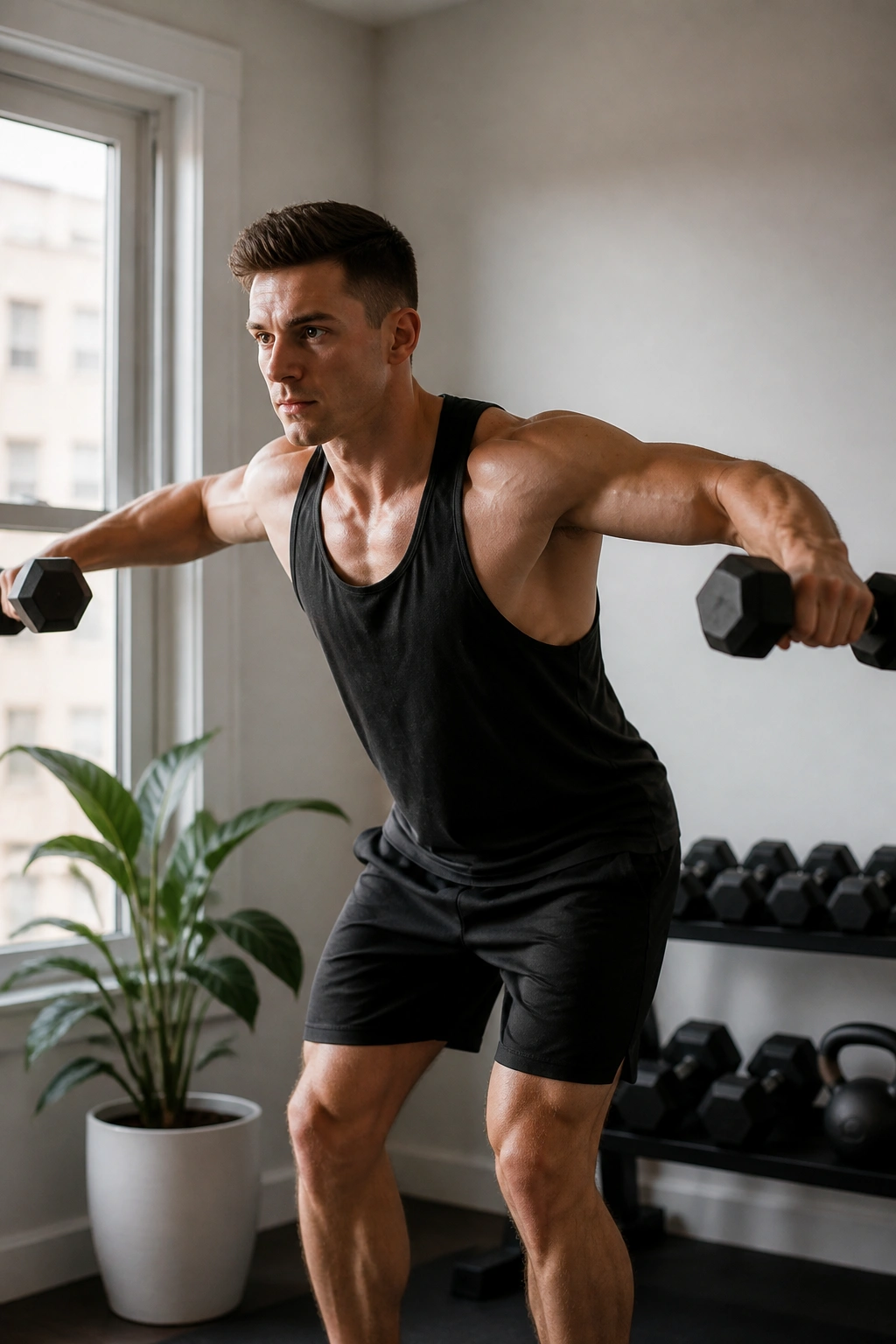
Why do lateral raises matter so much when the weights are tiny? Because the side delts don’t need monster loads. They need clean tension, a decent range, and enough total work to make the shoulders look wider.
How to use it
- Hold a dumbbell in each hand with a slight bend in the elbows.
- Lean forward just a touch, not enough to turn it into a rear-delt raise.
- Raise the weights out to the side until they reach just below shoulder height.
- Lower slowly and stop the hands from crashing back down.
Three sets of 12 to 20 reps is the sweet spot for most people. Use a weight that lets you keep the shoulder doing the work instead of the traps. If you’re shrugging, the dumbbell is too heavy.
I like a slightly slower lowering phase here, around 2 to 3 seconds. It keeps the motion honest and gives the side delts more time under tension. Tiny muscle, big visual payoff. That’s why people keep coming back to this one.
16. Hammer Curl for Arms That Look Fuller
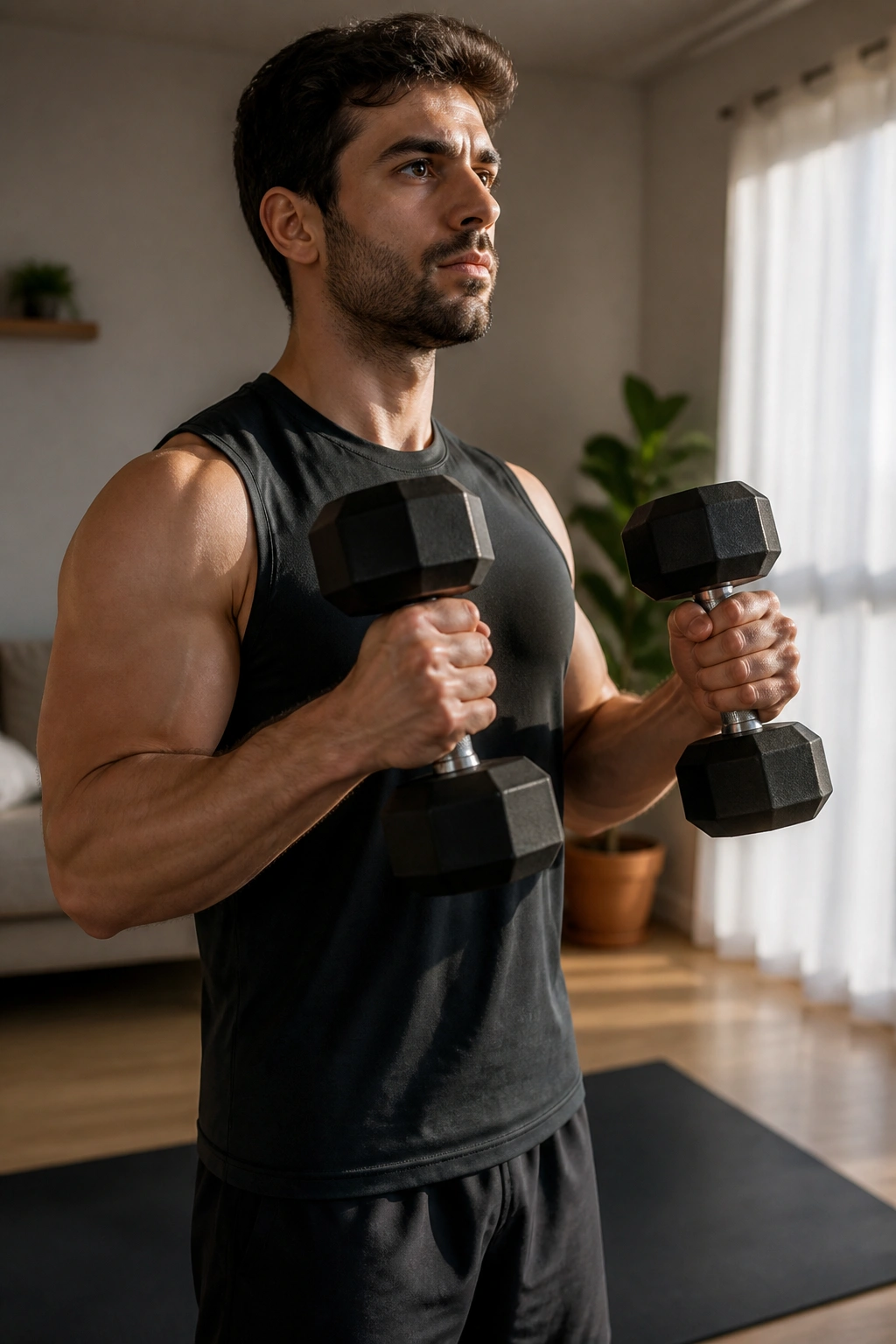
A hammer curl is one of the simplest ways to build thicker-looking arms at home. The neutral grip hits the brachialis and forearm more than a classic palm-up curl, and that changes the shape of the arm a bit.
Stand tall, keep the elbows close to the ribs, and curl the dumbbells without swinging the torso. Lower them slowly until the arms are straight again. Three to 4 sets of 8 to 12 reps is a solid range. If your wrists hate straight-bar curls or palms-up curls feel awkward, hammer curls usually sit better.
What to watch for
- Don’t let the elbows drift forward.
- Don’t turn the set into a body swing.
- Keep the shoulders down.
- Pause for a beat near the top if the dumbbells are light.
It’s not the flashiest arm move. Fine. It works anyway. And when you combine it with presses and rows, the arms fill out faster than people expect.
17. Skull Crusher for Triceps That Finish the Job
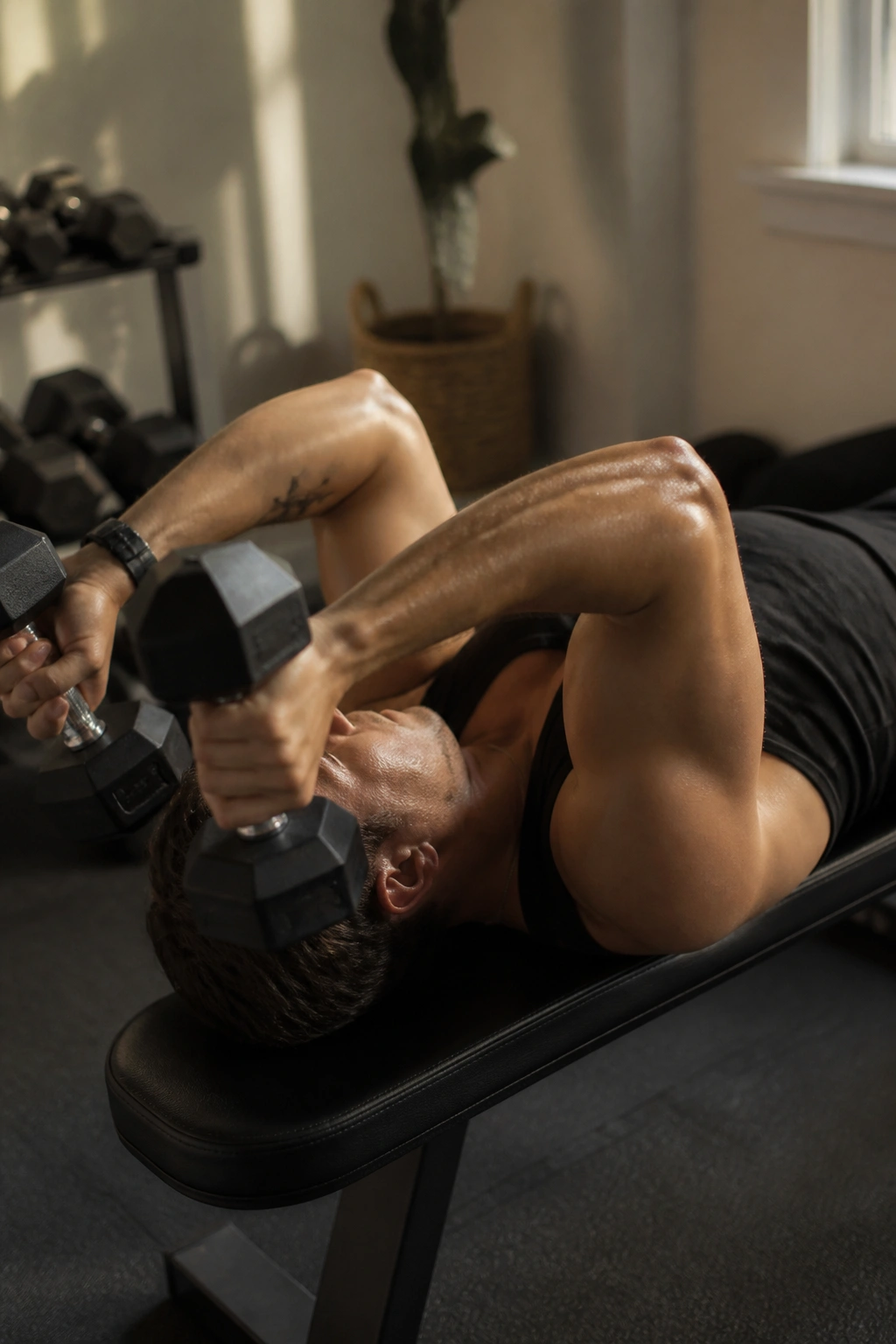
Triceps often get a little lazy in home training. Pressing helps, sure, but direct work fills in the gap, and skull crushers do that job cleanly.
Lie on the floor or a bench with dumbbells over your chest. Bend only at the elbows, lowering the weights toward the sides of your head or just behind it. Then extend the elbows and bring the dumbbells back up. Three to 4 sets of 8 to 12 reps is enough for solid triceps work.
The trick is to keep the upper arms fairly still. If the shoulders start rolling around, the set stops being a triceps exercise and turns into a mess. Use a lighter load than you think at first. A lot of people grab too much weight here and immediately hate the movement.
If your elbows complain, switch to a single dumbbell overhead extension or keep the range a little shorter. That’s not a failure. That’s just being smart about joint stress.
18. Single-Leg Dumbbell Deadlift for Balance and Hamstrings
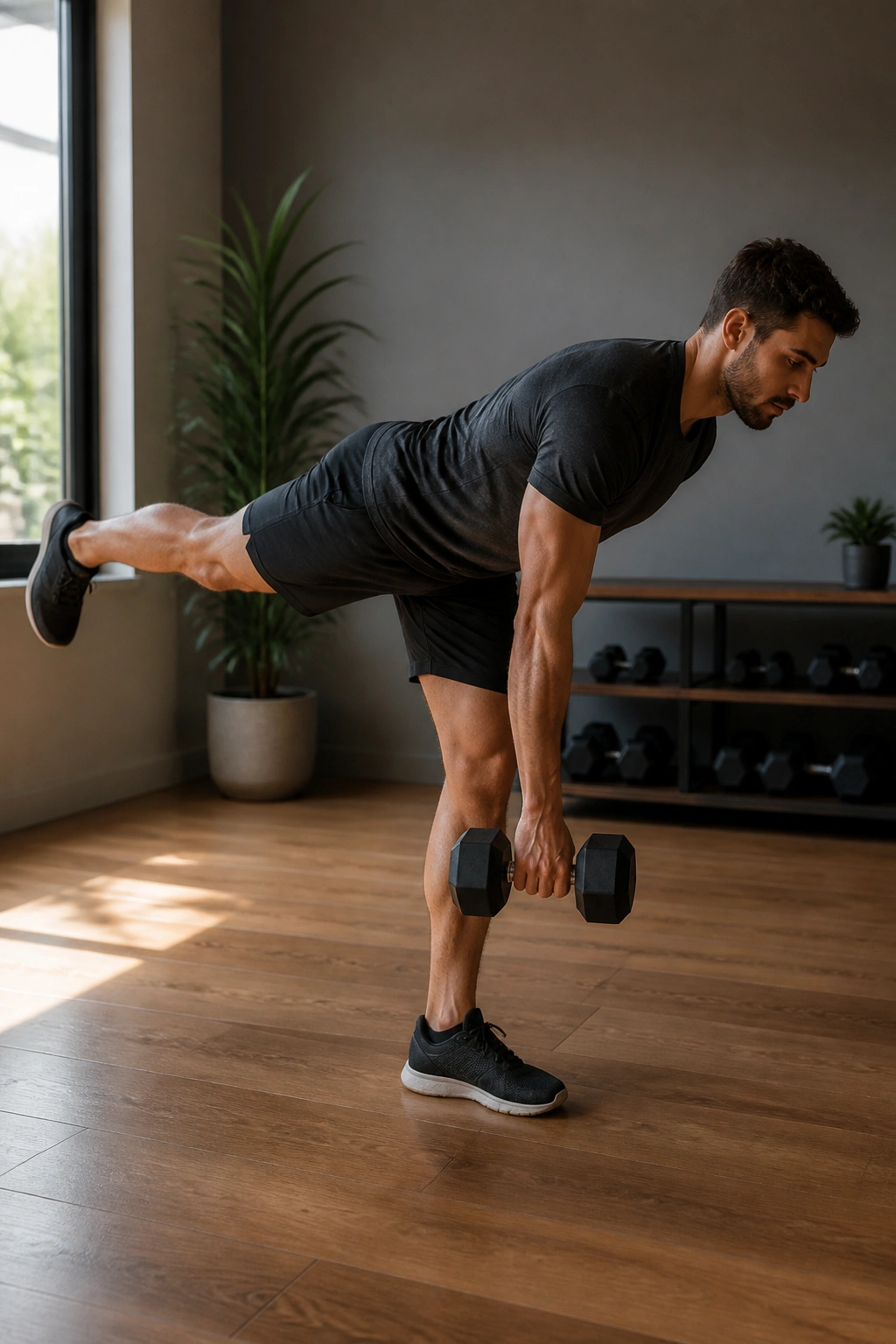
Compared with a regular Romanian deadlift, the single-leg version is humbler and meaner. It exposes weak glutes fast. It also solves one common home-training problem: the dumbbells might not be heavy enough for bilateral work anymore, so you make one leg do the work.
Hold a dumbbell in the opposite hand of the working leg. Hinge at the hips, let the free leg travel back like a counterweight, and keep the spine long. If balance gets shaky, put a fingertip on a wall or use the opposite hand to lightly touch a chair. Three sets of 8 to 10 reps per side is enough for most people.
You’ll feel this in the hamstrings and glutes, but only if the pelvis stays square. If you twist open at the hip, the exercise loses a lot of its value. Slow it down. That’s the fix more often than not.
This one is a little awkward at first. Then it becomes one of the best ways to train the posterior chain with limited equipment.
19. Farmer Carry for Grip, Traps, and Whole-Body Tension
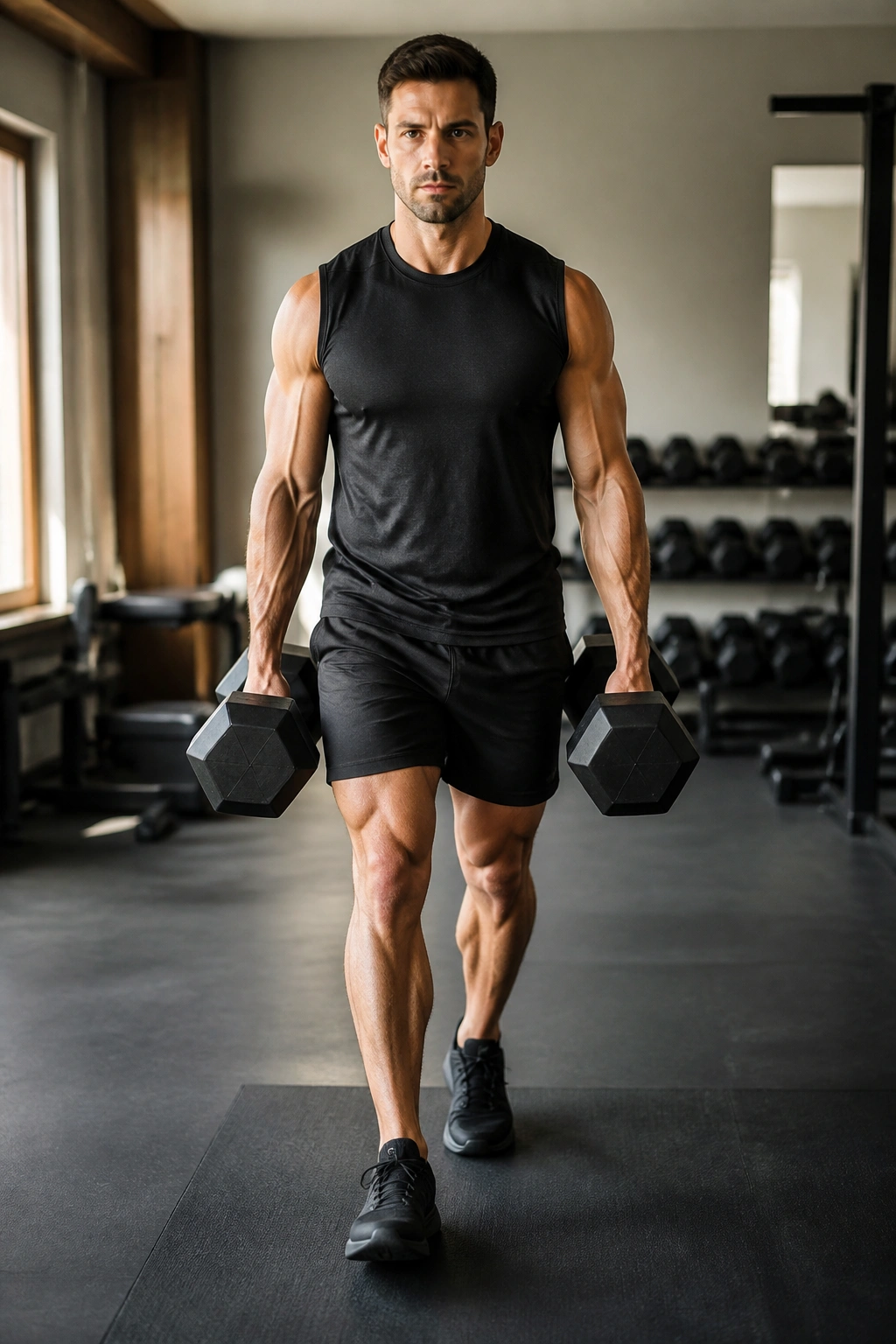
A farmer carry looks like a walk. It is a walk. Then you hold a pair of heavy dumbbells and your core starts treating it like a job interview.
How to set it up
- Pick the heaviest dumbbells you can carry with clean posture.
- Stand tall with shoulders down and ribs stacked over the pelvis.
- Walk for 30 to 60 seconds at a steady pace.
- Turn around and keep going if you have room, or march in place if space is tight.
- Rest 60 to 90 seconds and repeat for 4 to 6 rounds.
The carry builds grip, traps, core stiffness, and a little bit of leg endurance too. If one side starts tipping you over, that’s where the suitcase carry comes in: hold one dumbbell on one side only and resist the lean. That’s a different challenge, and a good one.
I like carries because they feel basic in the best way. No tricks. No nonsense. Just load, posture, and breathing.
20. Full-Body Complex for Dumbbell Workouts at Home
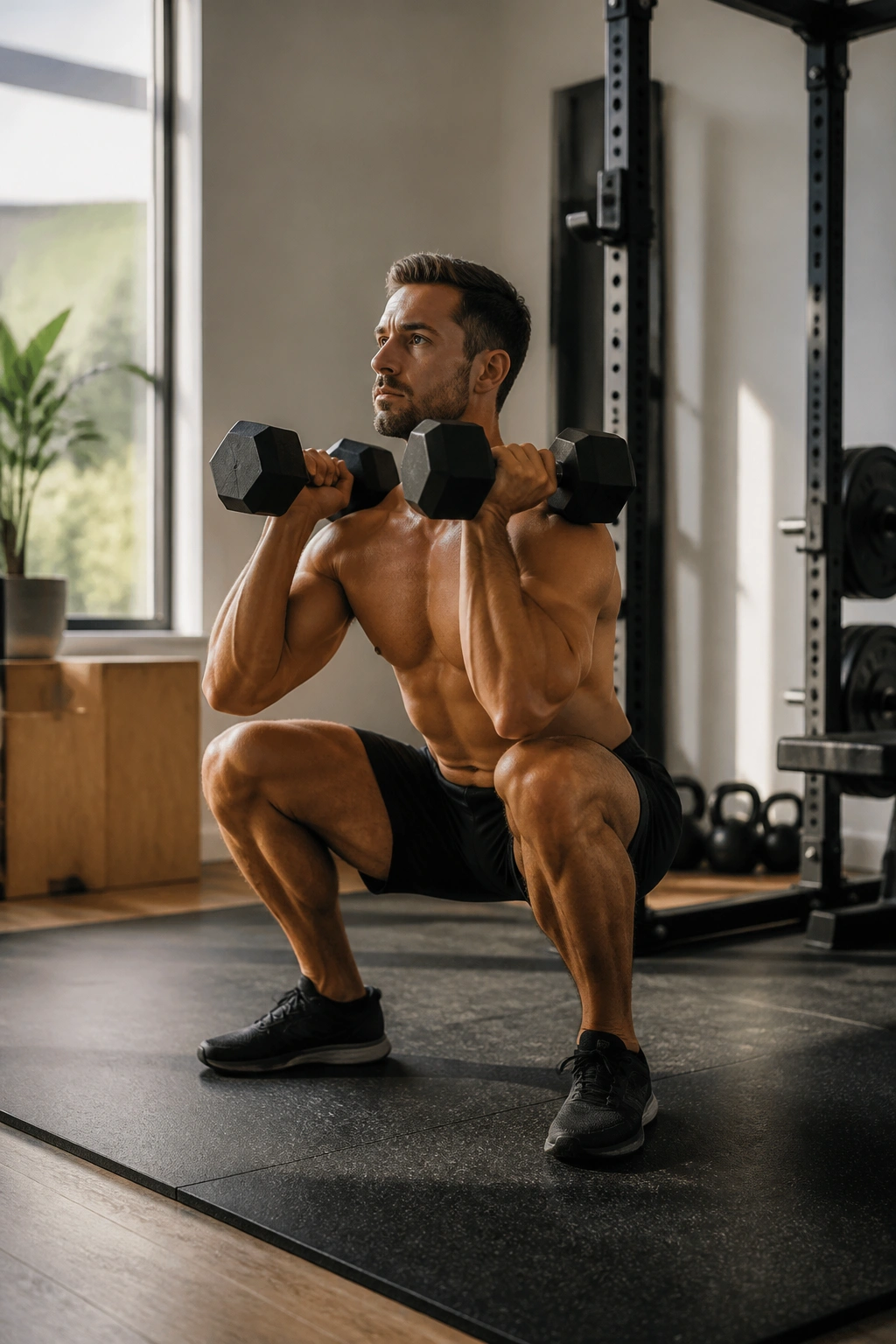
A dumbbell complex is what happens when modest weights stop feeling modest. You move from one exercise to the next without setting the dumbbells down, and the whole body has to keep up.
Pick 1 or 2 dumbbells and run a sequence like this: Romanian deadlift, row, clean, front squat, push press. Use 5 reps per move, then rest after the full round. Start with 4 rounds and build to 5 or 6 if your form stays sharp. Rest about 90 to 120 seconds between rounds.
The point is not to turn it into cardio with weights. The point is density and tension. If your grip is blowing up before your legs or shoulders do, the weights are probably too heavy for the first week. If everything feels easy, the weights are too light or the rest is too long.
This is the one I’d save for the end of a training session or use on a day when time is short and energy is high. It’s messy. It’s hard. And if you keep the reps clean, it can be a very real muscle-builder at home.
Final Thoughts
The best dumbbell workouts at home are usually the ones people skip because they look too plain. Goblet squats, rows, presses, split squats, carries. Not flashy. Very effective. That’s the pattern.
Use the heavy basics first, then fill in the gaps with isolation work and single-limb moves when the weights start to feel limited. If you keep a log, add reps before you add load, and stop letting the last rep turn into a full-body rescue mission, the dumbbells will keep paying off. Not fancy. Just solid work done well.
