



A good personal-trainer workout rarely looks fancy on paper. Five exercises. A timer. Honest weights. A rest period you cannot ignore.
That plain setup is the reason it works. The 20 workouts from real personal trainers that people keep coming back to usually share the same traits: a clear goal, movements you can measure, and enough structure to tell when you’re getting stronger, fitter, or both. No circus acts. No random chaos.
A smart trainer does not force every session to be a sweaty mash-up of everything. Some days call for heavy legs. Some days call for lungs on fire. Some days call for mobility work that leaves you looser instead of wrecked. That kind of planning is boring in the best way. It saves you from guessing.
Pick the workout that matches your gear, your mood, and your training stage. Then pay attention to how it feels after three or four honest sessions. That tells you more than any flashy routine ever will.
1. Full-Body Dumbbell Complex Trainers Actually Program

A dumbbell complex is one of those sessions that looks almost too simple until you try it. You keep the same pair of dumbbells and move through several exercises back to back without setting them down. It saves time, builds work capacity, and makes you respect your grip again.
Why trainers keep reaching for it
The appeal is that the workout is brutally efficient. One load. One space on the floor. No machine hopping. If the weights are light enough for the last move and heavy enough for the first move, you get a sneaky mix of strength and conditioning in the same block.
A solid version uses RDLs, bent-over rows, front squats, and push presses. Do 5 reps of each, then rest 90 seconds. Three to five rounds is plenty. If your form starts to slide, the weight is too heavy or the rest is too short.
Quick setup
- 2 dumbbells you can control for all four moves
- 4 exercises done without putting the bells down
- 3 to 5 rounds
- 90 seconds of rest between rounds
Best use: short training windows when you want to feel worked without spending an hour in the gym.
Pro tip: start lighter than you think. A complex punishes sloppy setup fast.
2. Incline Treadmill Intervals Personal Trainers Use for Cardio

You do not need all-out sprinting to get a hard cardio session. An incline treadmill gives you that sharp breathing, but with less pounding on your joints and less drama than a flat-out run. Trainers love it because it’s easy to scale for walkers, joggers, and runners.
Set the incline at 8 to 12 percent. Warm up for 5 minutes at an easy pace, then do 8 rounds of 1 minute hard and 90 seconds easy. “Hard” should feel like you can say one or two words, not carry on a chat. Keep your chest tall. Shorten your stride. Don’t hold the rails unless you need them to avoid falling off.
The treadmill makes people chase speed, and that’s usually the wrong target here. The grade does the work. You’re buying intensity with incline, not reckless pace. That matters if your knees get cranky or if you just hate the feeling of sprinting on a flat belt.
I like this one for days when your legs want a fight but your body does not want punishment. That’s a useful distinction.
3. Lower-Body Strength Day With Squat, Hinge, and Split Stance
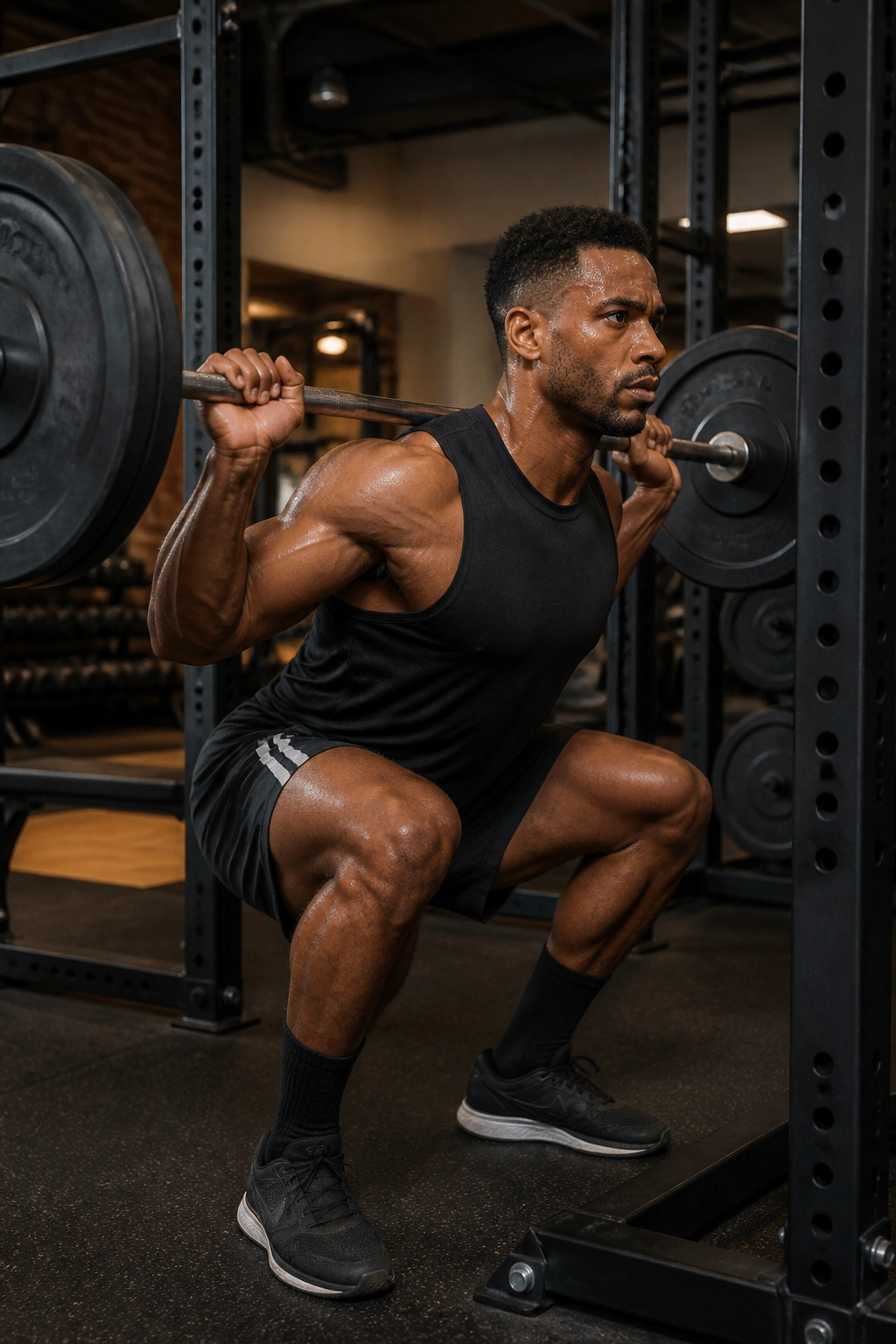
Why do good trainers keep pairing squats with hinges? Because your legs are not built around one pattern. They need knee bend, hip drive, and single-leg control if you want strength that actually transfers to stairs, carries, and real-life movement.
The classic lower-body day usually starts with a main lift like a back squat or front squat for 4 sets of 4 to 6 reps. Then comes a hinge, usually a Romanian deadlift, for 3 sets of 6 to 8 reps. After that, a split-stance move like a Bulgarian split squat or reverse lunge cleans up the side-to-side gaps that bilateral lifts miss.
How to use it
Keep the order strict. Heavy squat first, hinge second, unilateral work third. If you reverse that, your legs are already smoked before the big lift even starts.
- Main lift: squat variation, 4 x 4-6
- Hinge: Romanian deadlift, 3 x 6-8
- Split stance: 3 x 8 each side
- Finisher: calf raises or loaded carries, 2 to 3 rounds
Watch for this: if your lower back is doing the work on the hinge, the weight is too much or your setup is sloppy.
4. Upper-Body Push-Pull Circuit for Short Training Windows
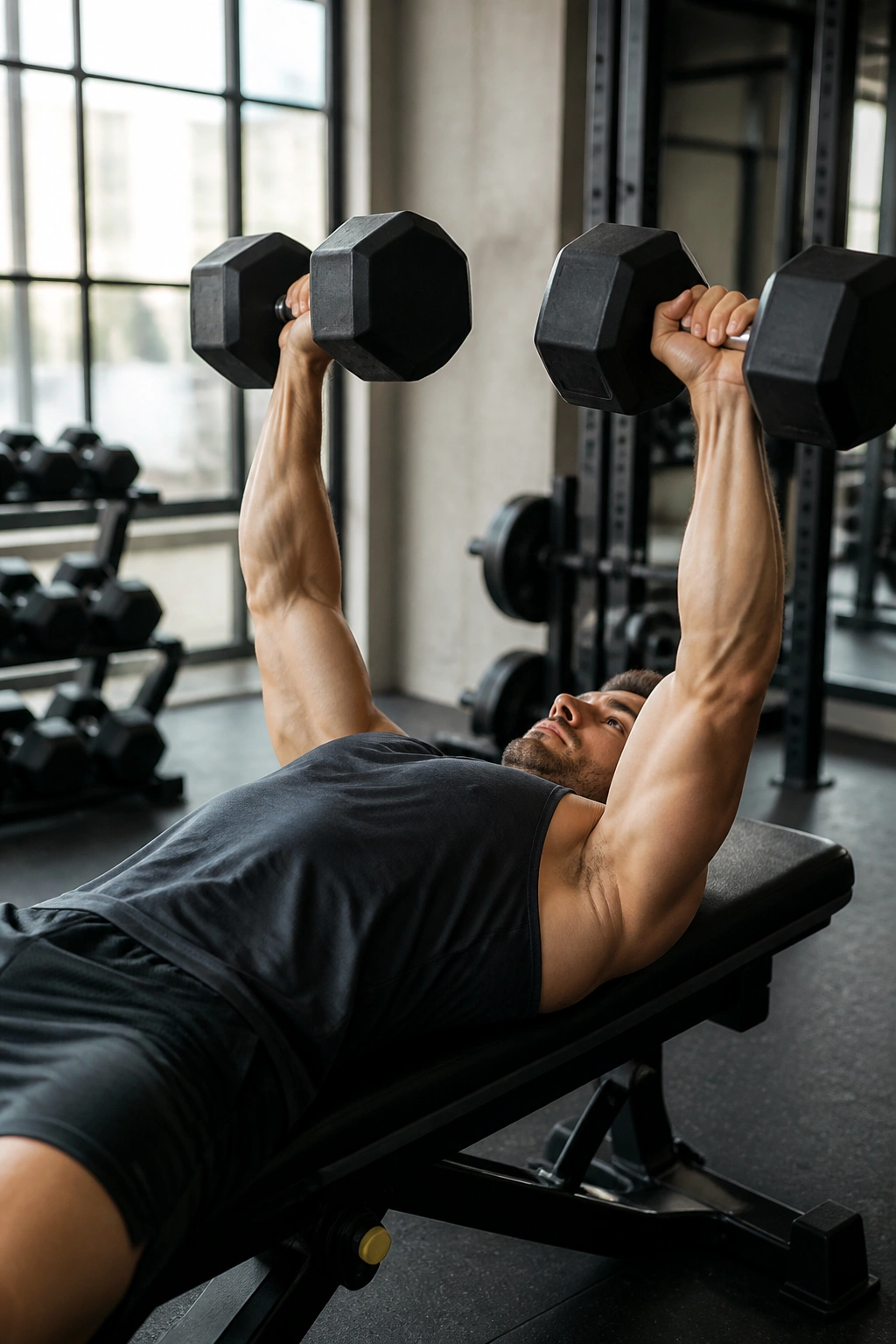
Picture a client who has 35 minutes, one dumbbell bench, and a face pull station that’s always occupied. That’s where a smart push-pull circuit earns its keep. No fluff. No wasted walking around the gym.
The logic is simple: every push gets matched with a pull. That keeps the shoulders happier and lets you work harder without trashing one side of the body. A trainer would usually pair dumbbell bench press with a one-arm row, then follow with incline push-ups and lat pulldowns or band rows. Three rounds of 8 to 12 reps each is enough to make this matter.
- Press: dumbbell bench or floor press
- Pull: one-arm row or seated cable row
- Secondary push: incline push-up or landmine press
- Shoulder health move: face pull or rear delt fly
The best part is how adjustable it is. Light weights and short rests turn it into a conditioning day. Heavier weights and longer rests make it a real strength block. Either way, your shoulders feel used in a balanced way instead of being yanked around by random volume.
5. Kettlebell EMOM That Trains Power and Breathing
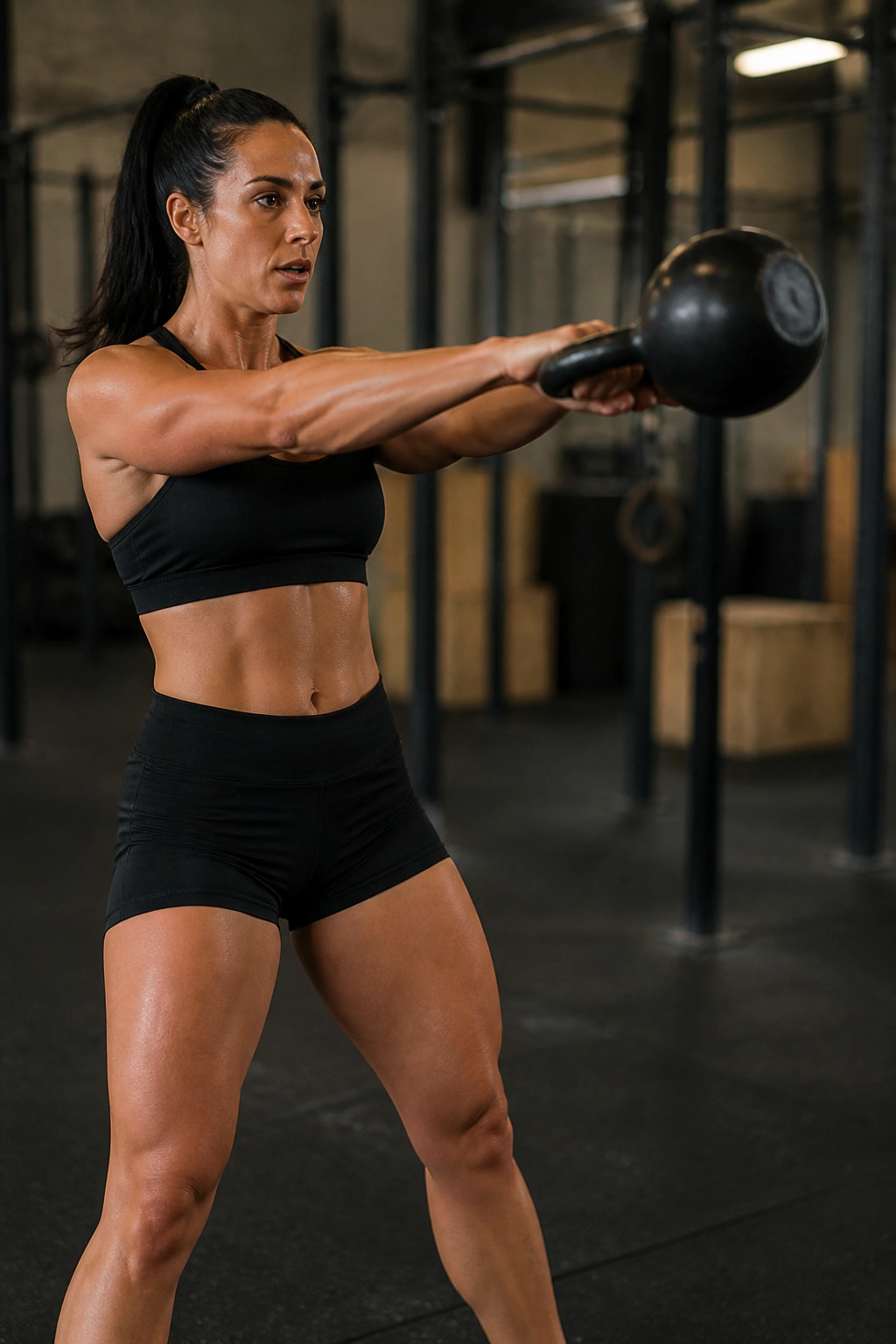
The EMOM format is one of the cleanest ways to make a kettlebell workout feel serious fast. EMOM means “every minute on the minute.” You do the work, then rest with whatever seconds are left in the minute. Tight. Honest. A little mean.
A trainer might set this up as 5 kettlebell swings, 8 goblet squats, 6 presses per side, and a 40-second suitcase carry in rotating minutes. Repeat that block for 20 minutes. If your breathing turns ragged by minute six, that’s the point. The workout is teaching you to keep moving while your heart rate climbs.
The secret is not chasing exhaustion. It’s staying crisp. If your swing turns into a squat, if your press starts arching your back, or if you need to hitch the bell with your shoulder, the load is off. Drop the weight before your form gets ugly.
This is one of my favorite trainer-style sessions because it has a little bit of everything: power, grip, legs, shoulders, and the kind of breathing that makes you stare at the floor for a second afterward. Short. Hard. Useful.
6. Sled Push Finisher That Leaves Your Legs Honest
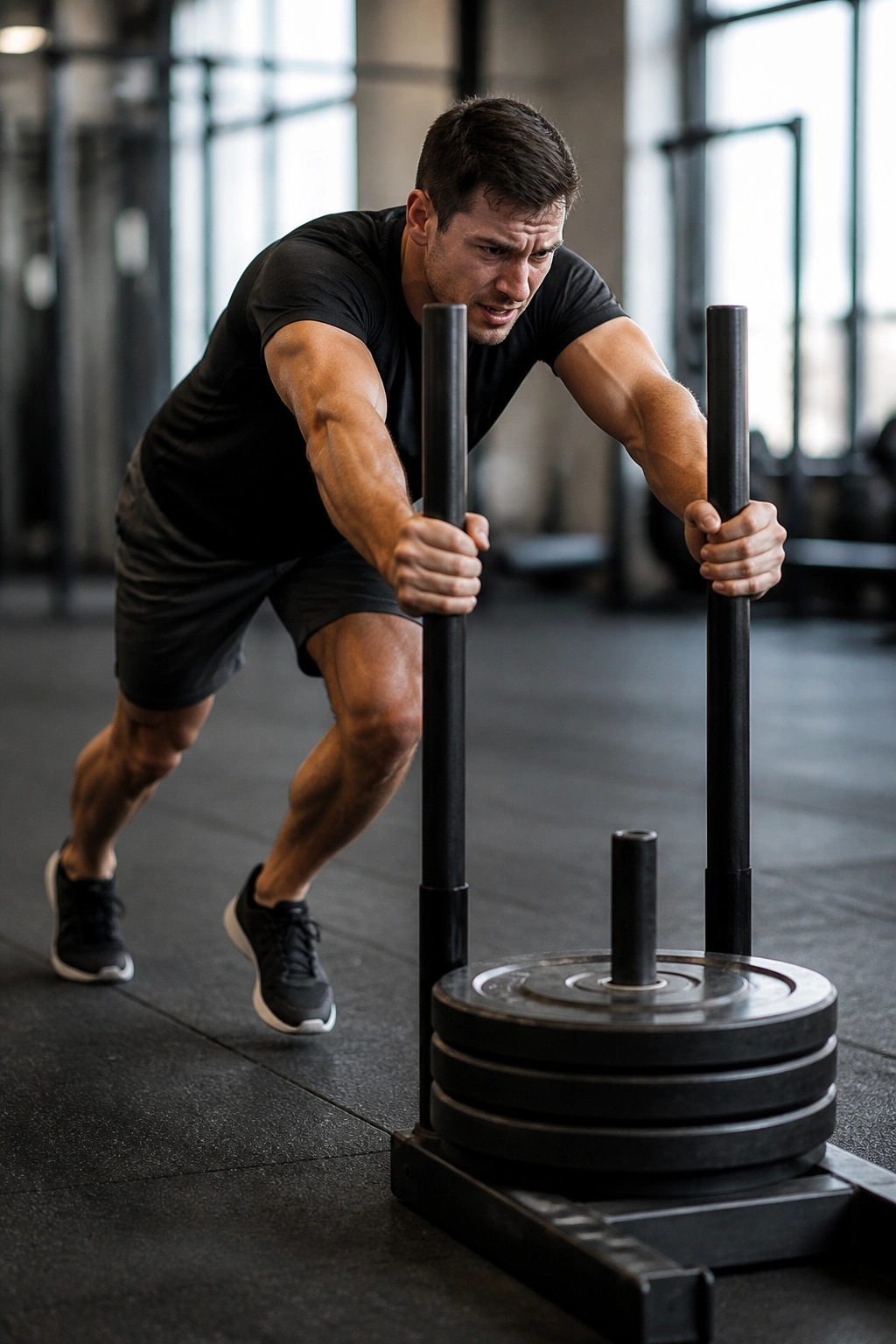
Sled work is a gift if you like training hard but hate being flattened by impact. Unlike sprinting, the sled lets you drive your legs without the pounding. That makes it a sneaky favorite for trainers who want a brutal finisher without trashing recovery.
Load the sled so it moves steadily for 15 to 25 yards. Not a dead stop. Not a casual stroll. You want to lean into the handles, keep a proud torso, and drive the floor away with short, powerful steps. Do 6 to 10 pushes, walking back between efforts. If you can chat easily after every run, add weight.
You can also flip it backward for backward drags. That version lights up the quads and feels kinder on knees than people expect.
Who it fits best
- Anyone who wants conditioning without jumping
- Lifters who need lower-body work without more barbell volume
- People who get bored on cardio machines
- Athletes who need power and repeat effort
The sled is honest. If you’re lazy, it tells you. If you’re strong, it still makes you work.
7. Pilates-Style Core Flow Personal Trainers Use on Low-Equipment Days
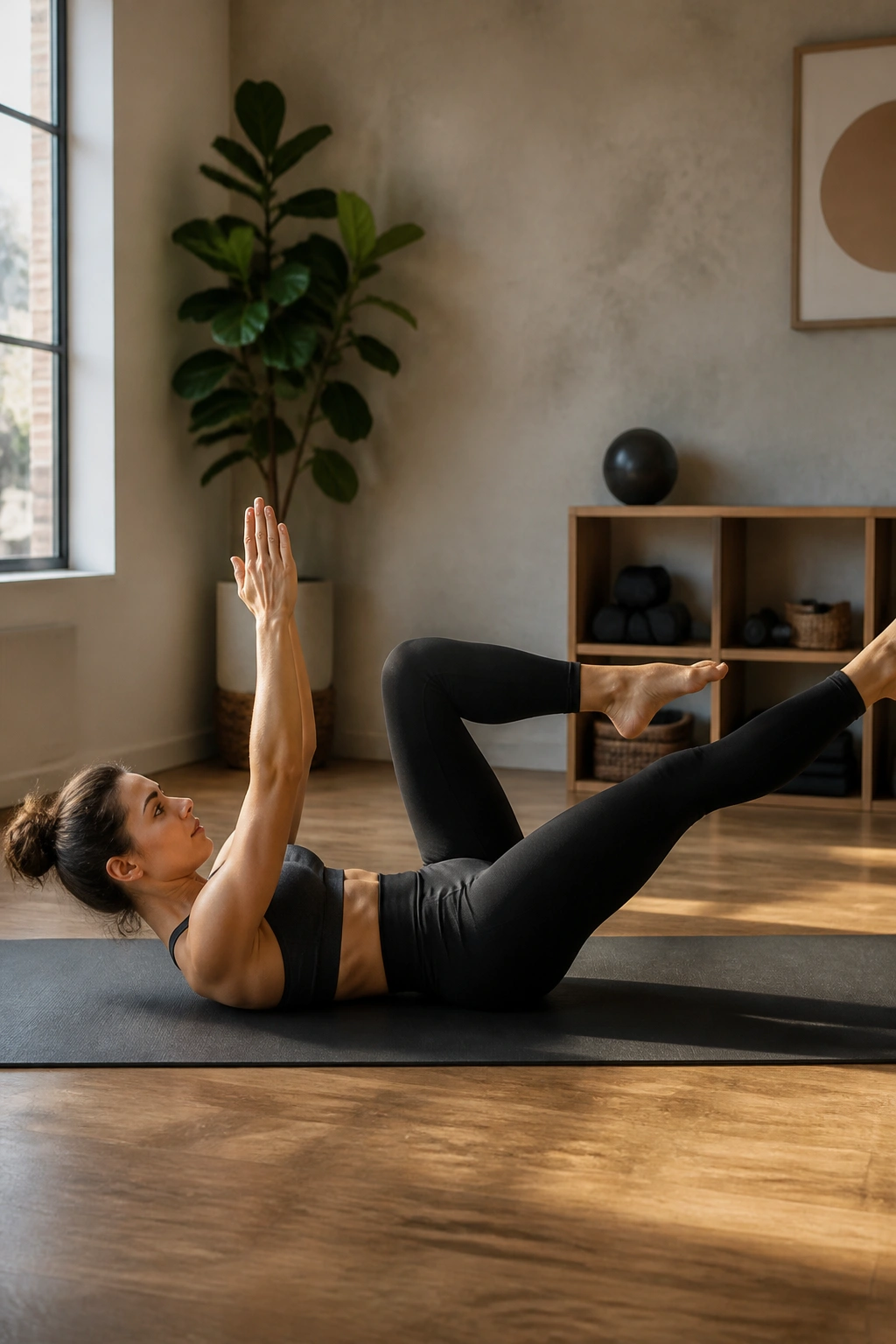
Core work does not need to mean endless crunches. Good trainers often pull from Pilates-style drills because they teach control, breathing, and body position at the same time. That carries over to lifting, running, and even standing up from the floor without looking clumsy.
A clean version starts with dead bugs, then moves to toe taps, bird dogs, and a side plank hold. Try 8 to 10 reps per side on the moving drills and 20 to 30 seconds per side on the holds. The main rule is slow control. If your rib cage pops up or your lower back arches, you’ve lost the point.
What makes it different
These drills are not about making your stomach burn in a flashy way. They’re about teaching your trunk to stay still while your arms and legs move. That’s the part most people miss.
How to get more from it
- Exhale fully on the hardest part of each rep
- Keep your lower back close to the floor on dead bugs
- Hold the side plank long enough to feel the hips work, not just the shoulders
- Stop before your neck takes over
A session like this looks quiet. Then you try it properly and realize quiet does not mean easy.
8. Rowing Machine Power Intervals That Do Not Waste Time

The rower has a way of making people honest. Five minutes in, your legs know it. Ten minutes in, your lungs know it. If your technique is sloppy, the machine tells on you fast.
A strong trainer version uses 10 rounds of 250 meters with 60 to 90 seconds of rest. Keep the damper around 4 to 6 unless you really know why you want something else. Stroke rate usually lives around 24 to 28 strokes per minute for these intervals. Pull hard with the legs first, then the back, then the arms. The seat should feel smooth, not jerky.
The mistake I see most is yanking with the arms too early. That turns a powerful leg-driven tool into a weird upper-body shrug machine. Don’t do that. Push the footplates away and let the handle follow.
If you prefer longer pieces, swap to 5 x 500 meters. Same idea. Hard effort, controlled breathing, enough rest to keep the next repeat clean. That’s the sweet spot.
9. Tempo Run With Strides for Runners Who Need Control

A lot of runners live too close to one gear. Easy, then too hard, then tired, then confused. A tempo run fixes that by asking for sustained effort that sits below all-out pace but above comfortable jogging. It teaches control. Trainers love control.
Start with 10 minutes easy, then run 20 minutes at a tempo pace that feels “comfortably hard.” You should be able to speak in short phrases, not full stories. Finish with 4 strides of 20 seconds each, walking or jogging for 60 seconds between them. Strides are quick but relaxed, not a sprint with panic in it.
The value here is subtle. Tempo work raises the ceiling on how long you can hold effort without falling apart, while strides keep your legs snappy. That combination makes runners look smoother. Less flailing. Better rhythm.
You do not need a race to justify this session. You just need a pair of shoes and enough space to move with purpose.
10. Bodyweight Ladder Workout for Home Days
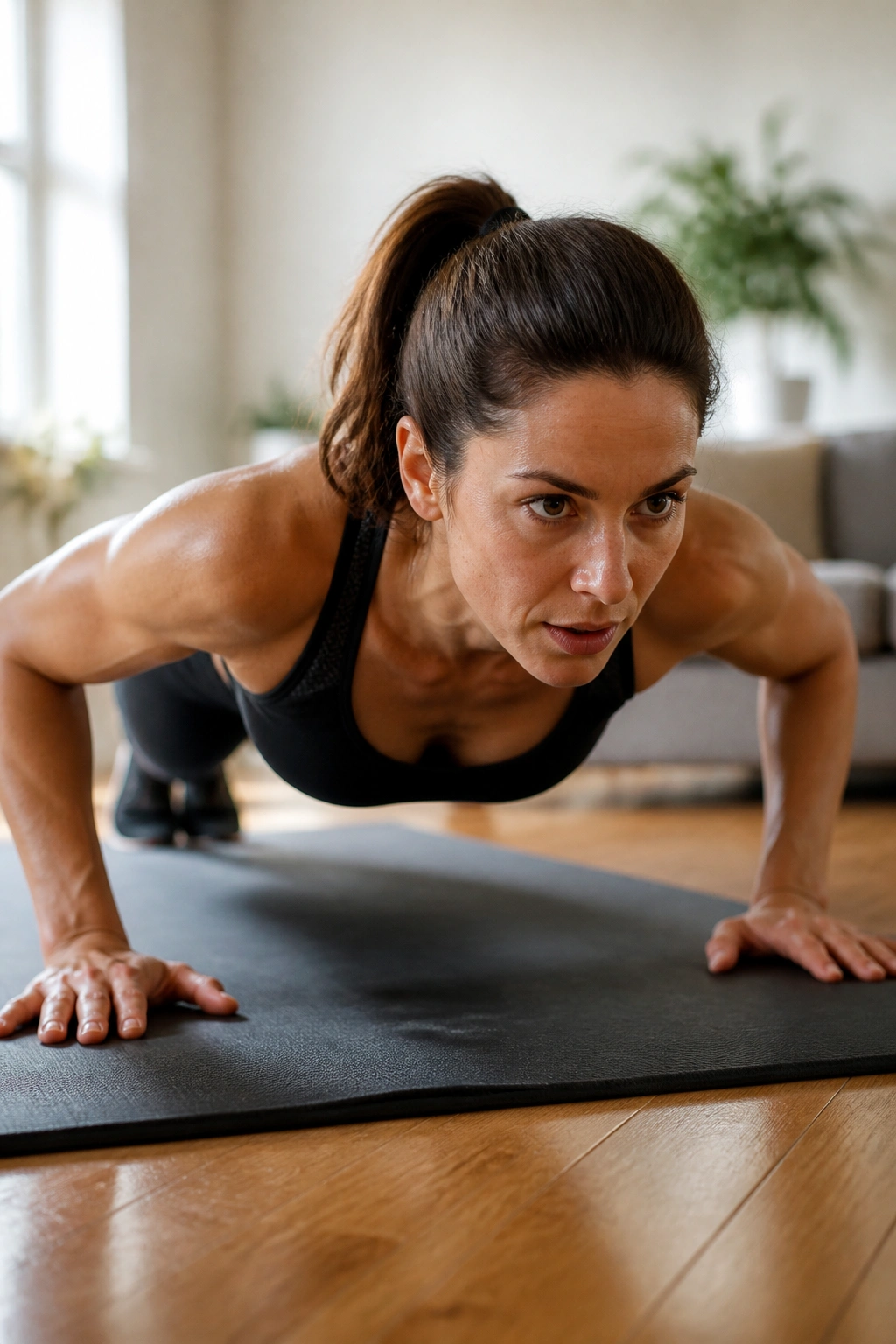
A ladder workout sounds simple because it is. That’s also why it catches people off guard. The descending reps make the early rounds feel easy, then the pace and accumulated fatigue start to bite. Trainers use it when a home session needs structure without equipment.
Set up push-ups, air squats, reverse lunges, and mountain climbers in a descending ladder like 10-8-6-4-2. Do the same rep count for each move before dropping to the next rung. Rest 30 to 60 seconds between rounds only if your form starts to wobble. If you want more challenge, turn the ladder into an ascending-descending format.
What to watch for
- Push-ups should stay chest-led, not neck-led
- Squats need full foot contact, not tiptoes
- Reverse lunges should be quiet on the floor
- Mountain climbers should stay controlled, not frantic
How trainers make it harder
They tighten the rest. That’s the trick. When equipment is limited, the clock becomes the load. Five clean rounds can feel far harder than it looks in the notebook.
This is the kind of workout that rewards patience. Rush it, and the reps get messy. Own the pace, and it becomes a tidy little engine.
11. Stability Ball Posterior Chain Circuit
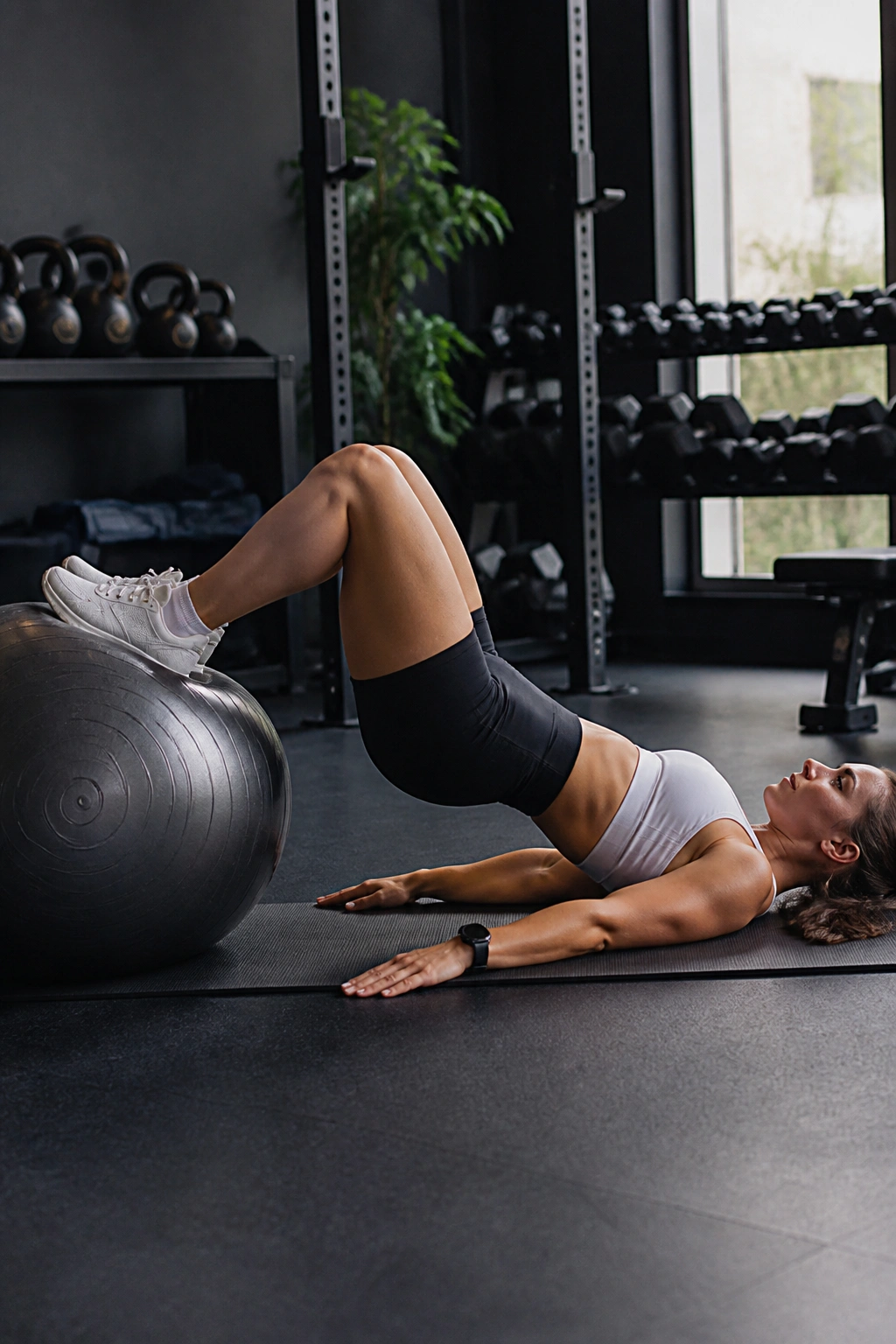
A stability ball is not glamorous. It is, however, very good at exposing weak glutes and sleepy hamstrings. Trainers keep it around because it makes the backside work without needing a rack, a bench, or a giant pile of metal.
Start with stability ball hamstring curls, then move into glute bridge holds with your heels on the ball, rollouts, and a light back extension pattern if your setup allows it. Use 10 to 12 reps on the moving drills and 20 to 30 seconds on the holds. Three rounds is enough. More is not always better here; quality drops fast when the ball starts wobbling around.
The big win is how the ball forces you to control your hips. If they sag, you feel it. If you rush, you feel it. If your hamstrings cramp, you probably need less range and a cleaner bridge.
This workout is not loud. It does not need to be. It fills a gap that heavy lifting and cardio both tend to miss.
12. Barbell Strength Tri-Set for Push, Pull, and Legs
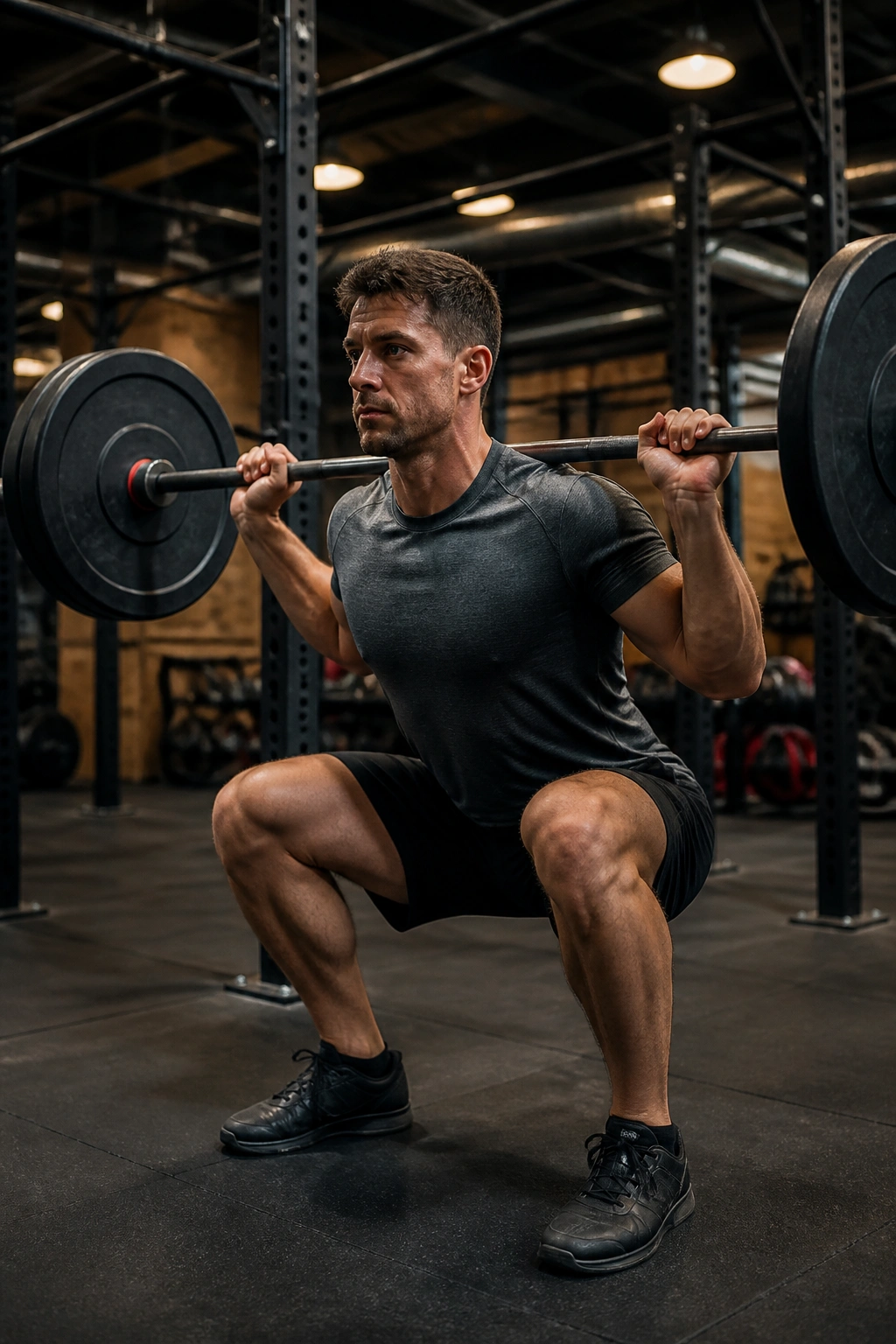
Unlike machine circuits that isolate one muscle at a time, a barbell tri-set keeps the whole body awake. It is dense, efficient, and a little unforgiving. That is exactly why trainers use it for clients who already know how to brace, breathe, and move with some control.
A classic setup is back squat, bench press, and bent-over row. Do 5 reps of squat, then 5 reps of bench, then 8 reps of rows, followed by 2 minutes of rest. Repeat for 4 rounds. The loading should feel challenging but repeatable. If the third round looks worse than the first, cut the weight.
Who it suits
- Lifters with some experience
- People who want strength without long bodybuilding sessions
- Clients who enjoy clear numbers on the bar
- Anyone who likes full-body training that does not meander
The tri-set format makes one thing obvious: you cannot hide behind half-effort. The squat wakes up the legs, the press tests the upper body, and the row keeps the shoulders balanced. It is clean work. No drama, unless you count the last squat rep.
13. Jump Rope and Shadow Boxing Conditioning Session
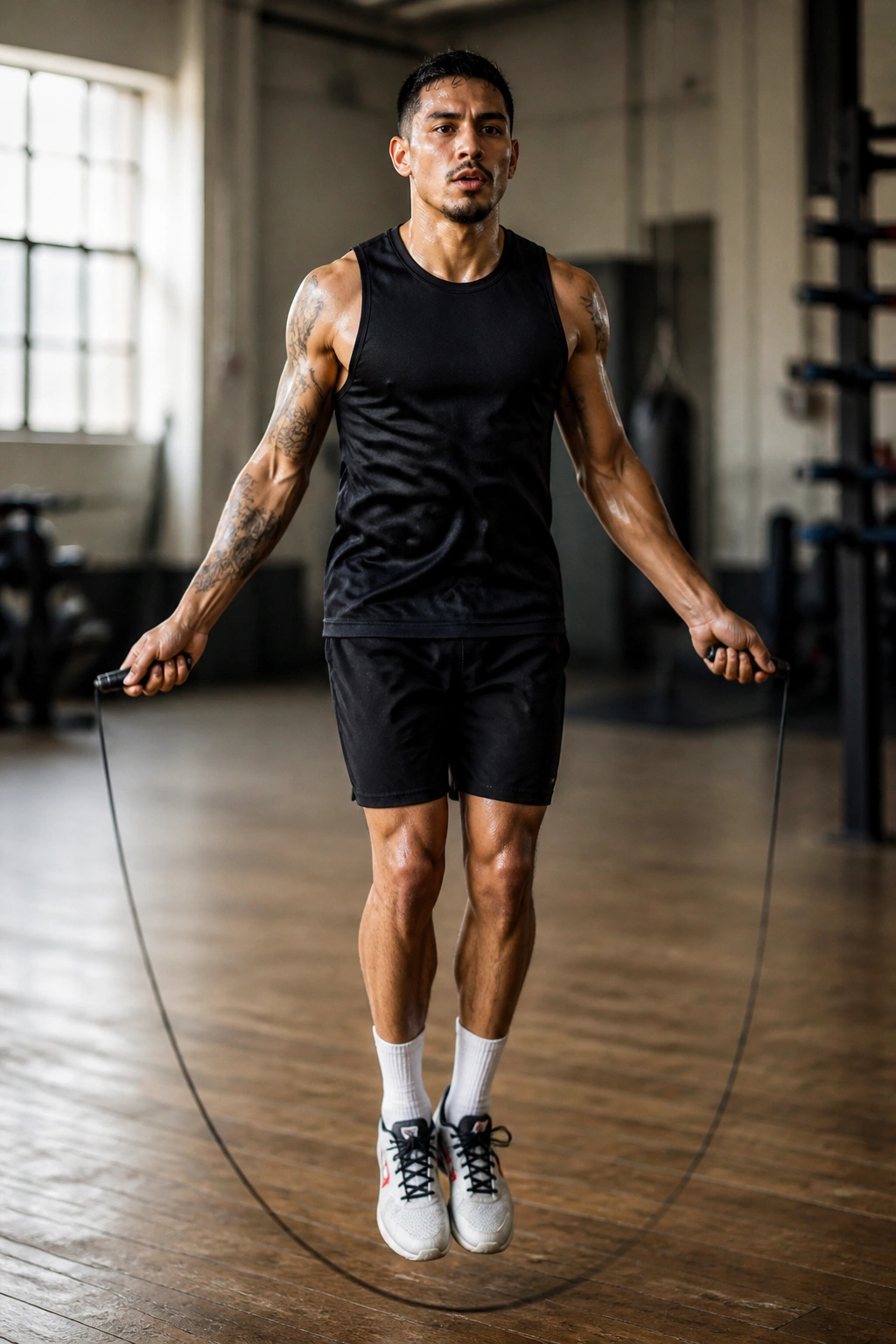
A boxer-style conditioning session does not require boxing gloves or a ring. A jump rope and enough floor space will do. Trainers like this setup because it trains rhythm, footwork, shoulders, lungs, and coordination at the same time.
Try 3 minutes of jump rope, 3 minutes of shadow boxing, and 1 minute of rest for 5 rounds. Keep the rope pace smooth. Then use the boxing rounds to work on basic patterns: jab-cross, jab-cross-slip, pivot, reset. Hands should come back to your face after every punch. That tiny habit matters more than people think.
The nice thing here is the mental shift. You are not just “doing cardio.” You’re moving with intent. That makes the session less boring and, frankly, more useful than pounding away on a machine with bad posture.
If the rope trips you every ten seconds, lower the pace and keep going. A messy minute of rhythm work still beats staring at the wall between hard intervals.
14. Deadlift-Centric Hinge Session for Backside Strength

What makes a hinge day different from a standard leg day? The focus moves from knee bend to hip drive. That changes the stress, and it changes the payoff. A good trainer uses this when the goal is glutes, hamstrings, and back strength without turning the session into a squat clone.
Start with a trap-bar deadlift or conventional deadlift for 5 sets of 3 reps. Then use Romanian deadlifts for 3 sets of 8, hip thrusts for 3 sets of 10, and a suitcase carry for 3 trips of 30 to 40 meters per side. The carry matters. It teaches the trunk to stop wobbling when one side is loaded.
How to brace
Take a breath into your belly and sides before each rep. Hold that pressure. Then stand up. If your lower back rounds while the bar leaves the floor, the load is too much or your setup is rushed.
The best hinge sessions leave you feeling strong through the backside, not crushed through the spine. That is the line to protect.
15. Mobility Reset Trainers Assign on Off Days
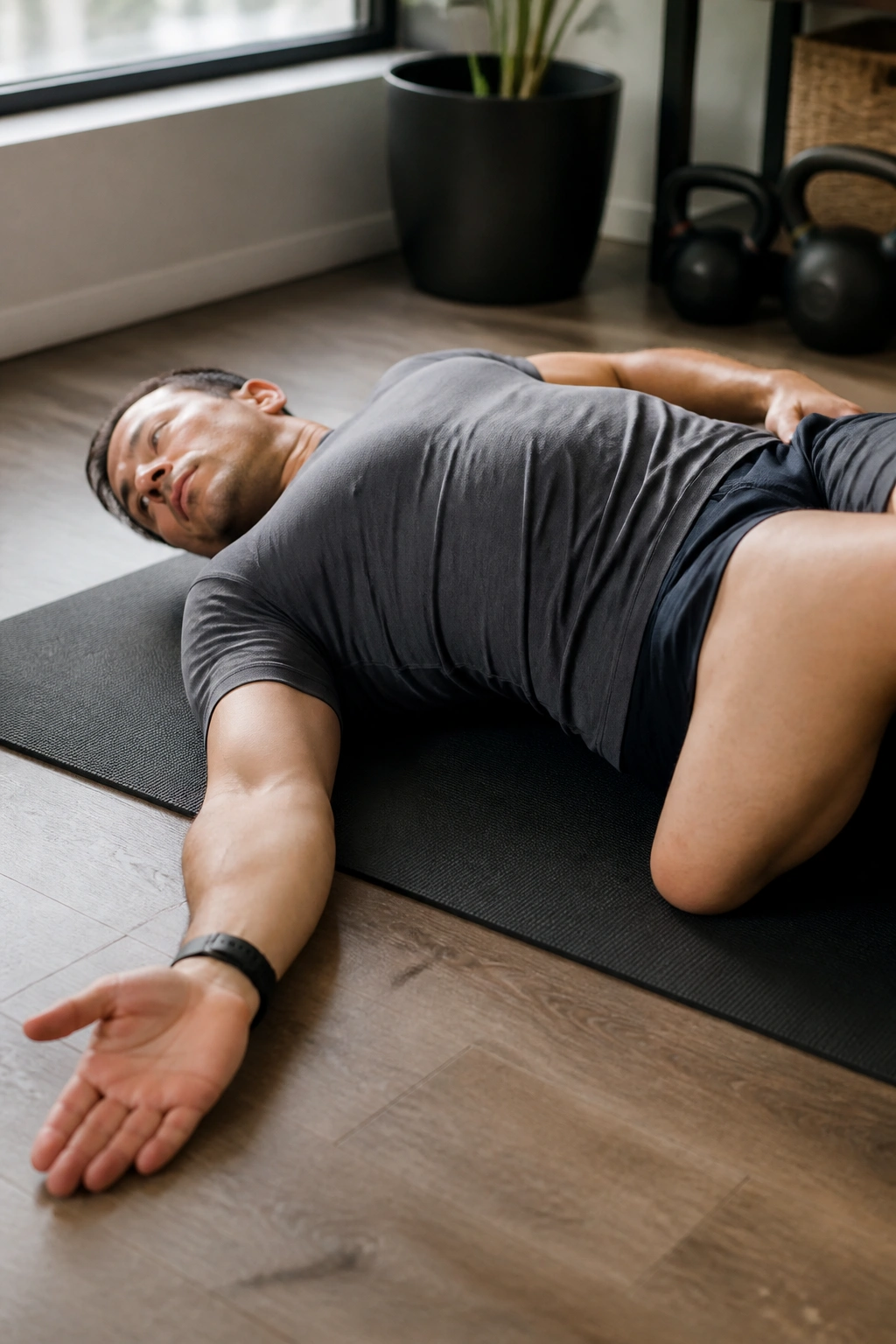
A real off-day session should make you feel better when you finish than when you started. Mobility work does that well, provided you stay honest and keep the moves slow enough to matter. No rushing. No circus stretching.
Three places trainers usually target
Ankles: calf rocks, knee-to-wall drills, and controlled ankle circles
Hips: 90/90 switches, couch stretch, and half-kneeling hip flexor work
Upper back and shoulders: open books, wall slides, and thoracic rotations
A simple sequence
- Calf rocks for 10 reps per side
- 90/90 switches for 8 reps
- Couch stretch for 45 seconds per side
- Open books for 6 reps per side
- Wall slides for 10 reps
Do one round or two, depending on how stiff you feel. The point is not to sweat. The point is to move joints through ranges they normally avoid during a regular week of sitting, lifting, and rushing around.
And yes, this one can feel a little boring. That does not make it optional.
16. Stair Climber Pyramid for Steady Mental Grind
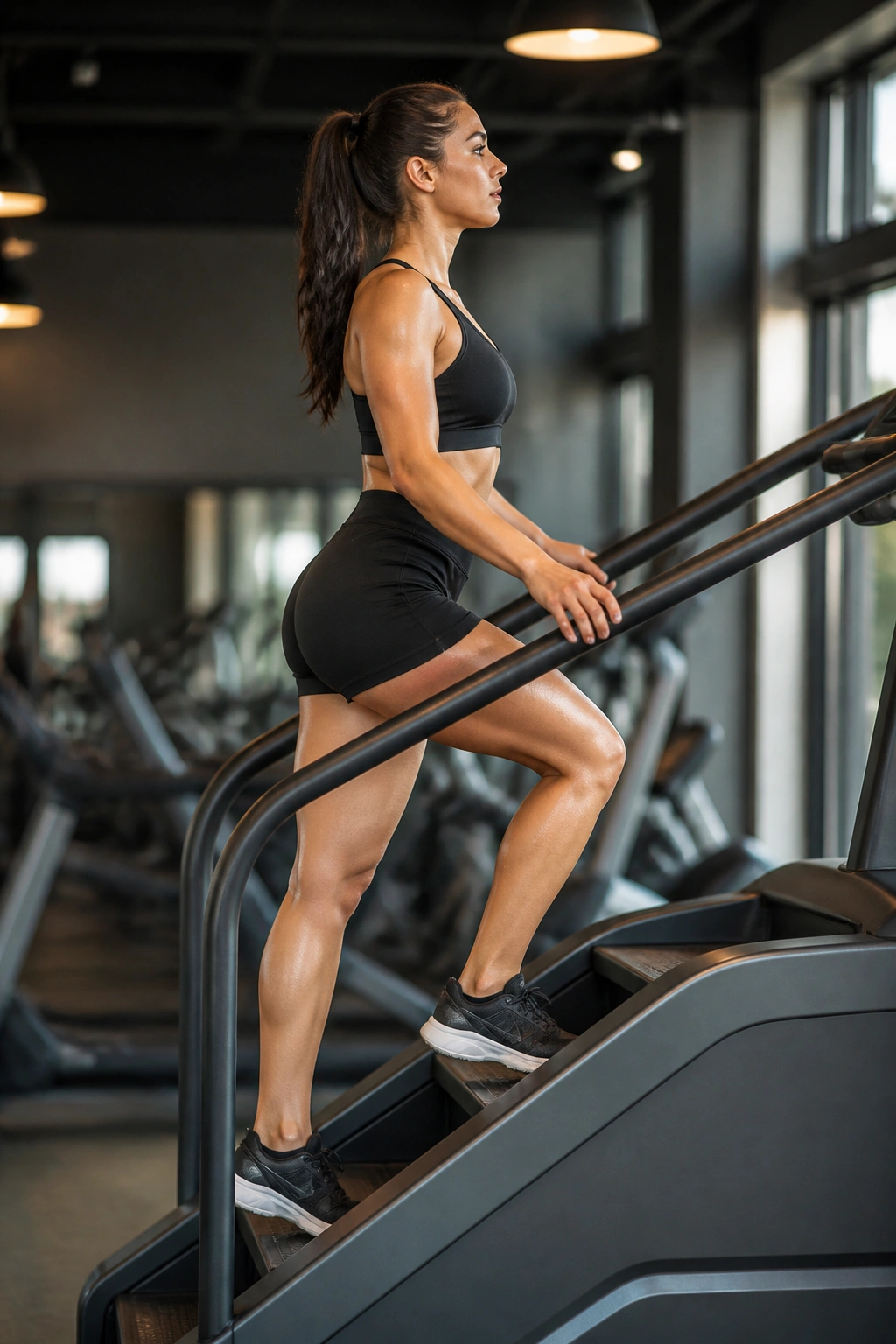
The stair climber has a way of turning a normal mood into a determined one. It is steady, repetitive, and annoying in the exact way conditioning sometimes needs to be. Trainers use it when they want lower-body work that keeps the heart rate up without complicated choreography.
A pyramid format works well: 2 minutes at level 6, 2 minutes at level 8, 2 minutes at level 10, then back down to 8 and 6. Keep the torso tall, hands light on the rails, and steps deliberate. If you lean so far forward that your hips collapse, the machine starts owning you instead of the other way around.
The beauty of this session is the pacing. The higher levels feel tough, but the lower levels give you enough recovery to keep form intact. That means the workout stays useful longer than a panic climb would.
I prefer this one when I want a hard sweat without having to think about pace numbers, lap times, or anything else that adds friction.
17. Total-Body Cable Machine Workout With Constant Tension
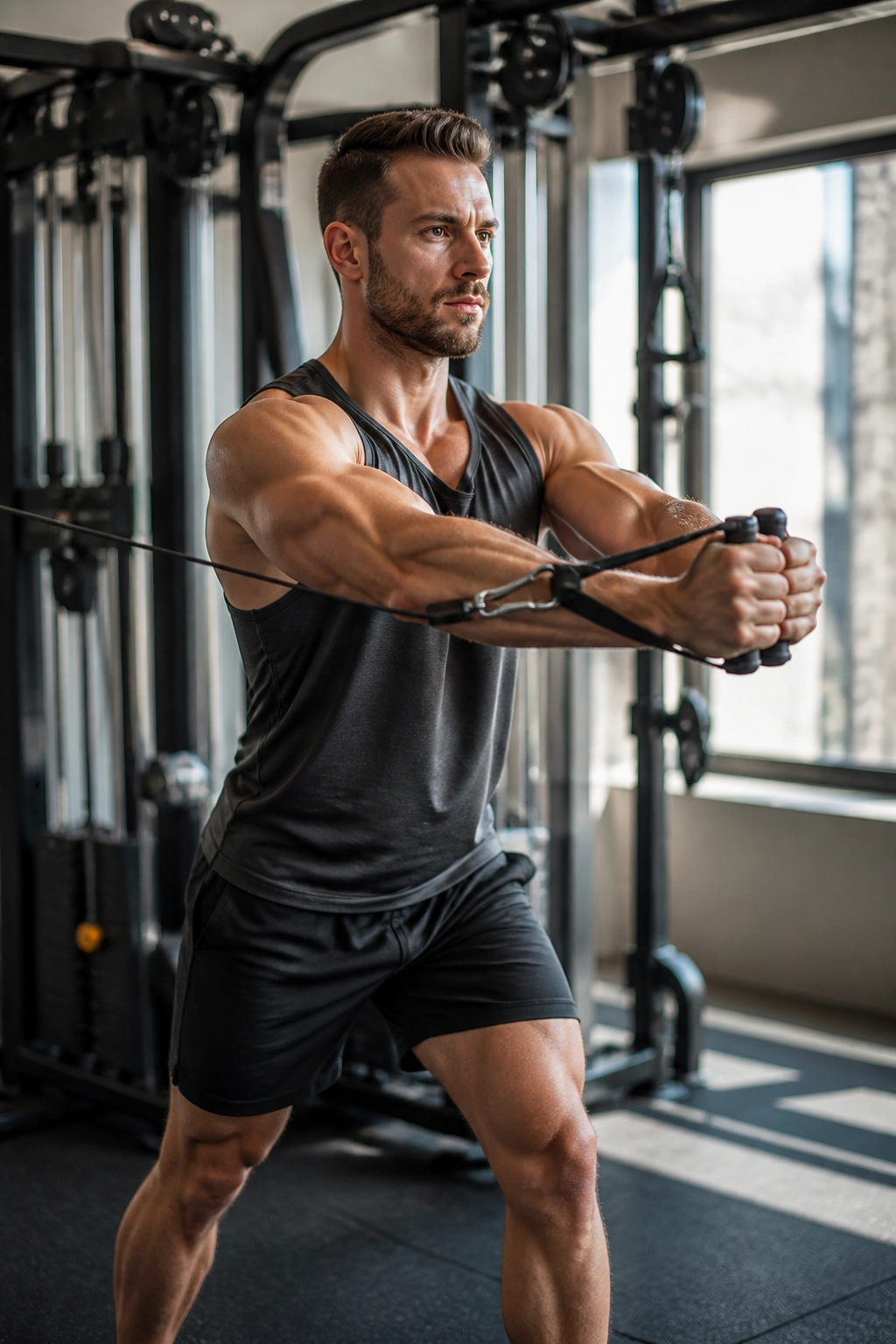
Cable machines have a nice trick: they keep tension on the muscle through more of the movement than dumbbells often do. That makes them useful for trainers who want smoother resistance, less joint drama, and easy angle changes without changing stations every 30 seconds.
A balanced cable session can include cable squat-to-row, standing chest press, pull-throughs, wood chops, and a Pallof press. Try 3 sets of 10 to 12 reps for the main moves, and 8 to 10 reps per side for the anti-rotation work. The loads should feel steady, not jerky.
Why this setup works
- Squat-to-row links lower body and upper back
- Pull-throughs load the hips without heavy spinal compression
- Wood chops train rotation control
- Pallof presses teach the torso not to twist under load
This is a smart choice for people who like clear cable stacks and clean movement paths. Less setup. More work. That’s the whole appeal.
18. Mini-Band Glute Burner for Warm-Ups
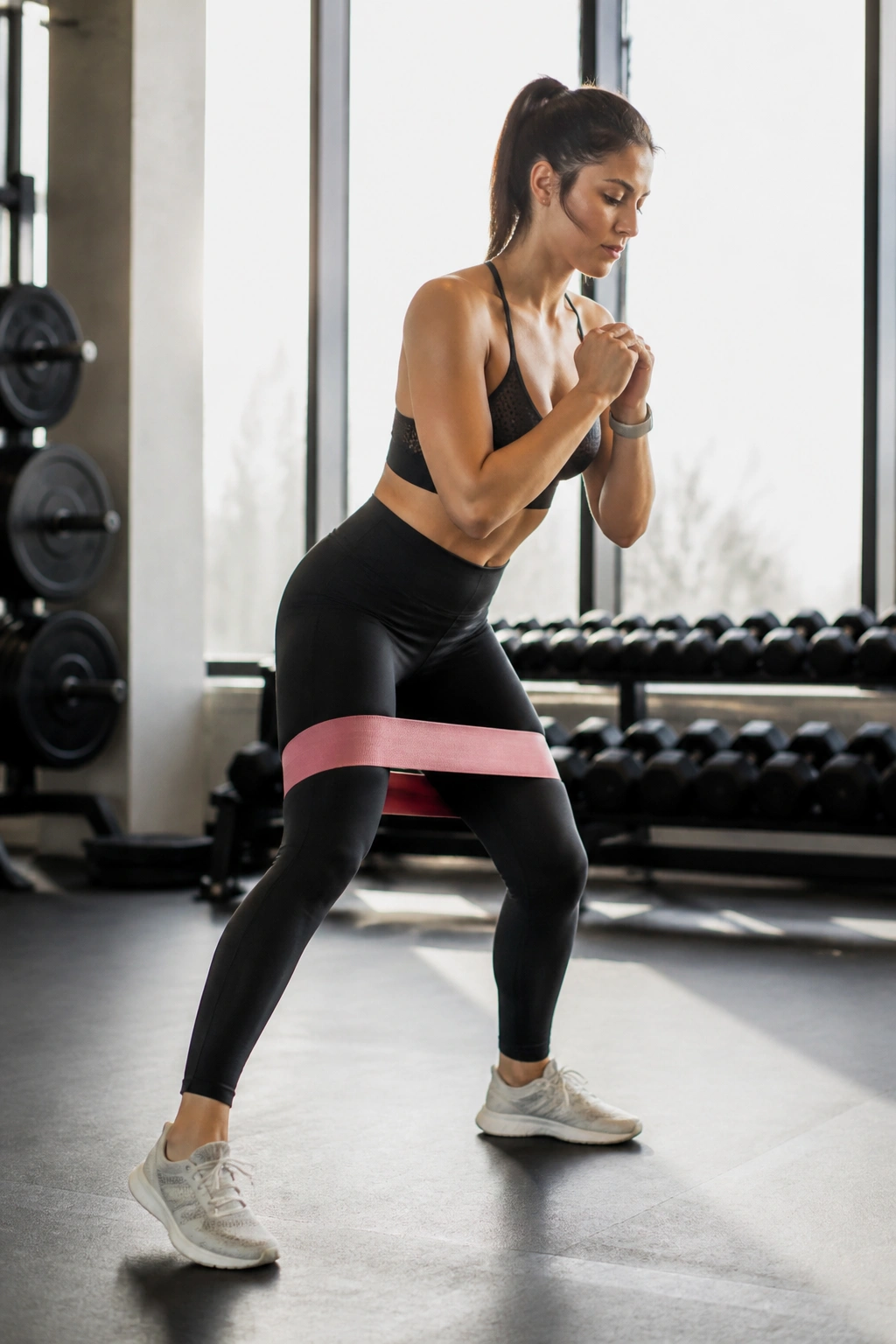
A mini-band warm-up looks harmless until your hips start shaking on rep eight. Trainers use it before squats, lunges, deadlifts, and even runs because it wakes up the glute medius, which helps keep the knees from collapsing inward.
Start with lateral walks for 10 steps each way, then monster walks, clamshells for 12 to 15 reps per side, and glute bridges with banded abduction for 12 reps. Two rounds is usually enough. If your legs burn like you’ve already trained, that’s normal. If your lower back takes over, the band is probably too light or your ribs are flaring.
A tiny band can change the feel of a lower-body session fast. Not because it’s magical. Because it gives lazy stabilizers a wake-up call before the heavy work begins.
I like this one before a squat day more than after, where it tends to feel like punishment. Warm-up first. Burn later.
19. Hill Sprint Session for Speed and Power

Hill sprints are kinder than flat-out sprinting and tougher than they look. That steep angle shortens stride length, pushes you to drive the knees, and takes a lot of the braking force out of each step. Trainers like them because they build power without quite as much pounding.
Use a hill with a moderate grade, then do 6 to 10 sprints of 8 to 12 seconds. Walk all the way back down and recover fully before the next one. Full recovery matters here. This is not a breathless shuffle session. It is a quality sprint session with plenty of rest so every rep stays sharp.
Your posture should stay tall, with a slight lean from the ankles. Drive the arms. Keep the feet striking under the body. If you start straining and flinging yourself uphill, stop the set. The speed work is already done for the day.
This is one of the cleanest ways to train power with very little gear. Shoes, a hill, and the nerve to sprint hard. That’s it.
20. Full-Body 20-Minute Personal Trainer Circuit for Busy Days
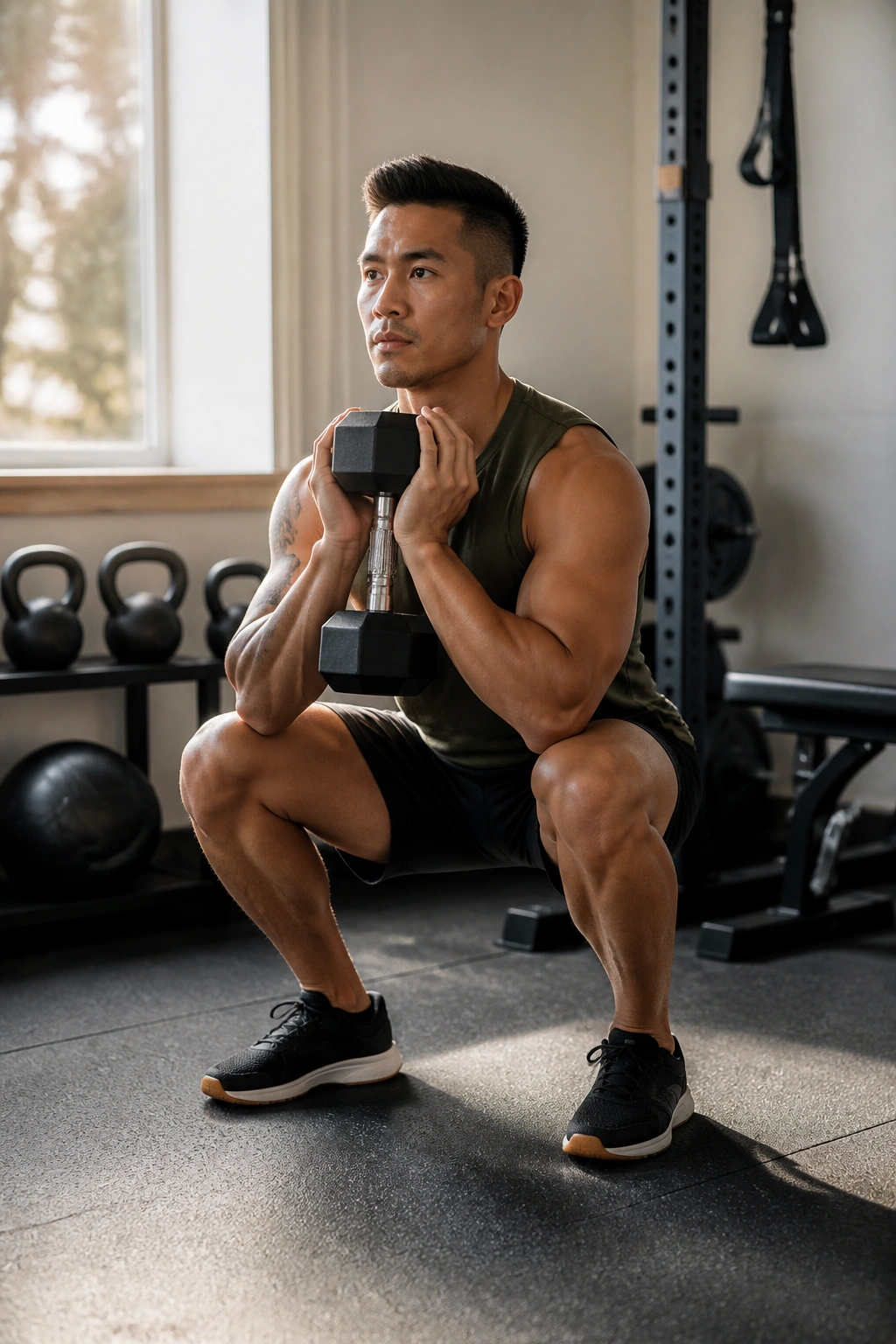
Some workouts earn their keep because they fit real life. This is one of them. A good trainer keeps a session like this in the back pocket for days when the schedule is ugly, the energy is mixed, and you still need to train with purpose.
Use goblet squats, push-ups, one-arm rows, reverse lunges, and farmer carries. Set a timer for 40 seconds of work and 20 seconds of rest, then move through all five stations for 4 rounds. If 40/20 feels too aggressive, go 30/30 and keep the movement quality high. The goal is not to collapse. The goal is to leave the gym having done actual work.
The workout is simple on purpose. The squat and lunge cover the lower body, the push-up and row balance the upper body, and the carry ties the whole thing together. If you only have a dumbbell pair and a small patch of floor, this is enough.
And honestly, that’s the point I keep coming back to. Good personal-trainer programming usually looks plain until you try it with real effort. Then the plain stuff starts to feel very smart.
