



The problem with busy mornings isn’t that you need a perfect hour at the gym. It’s that most people try to cram a full training session into a window that barely fits coffee and shoes, then act surprised when the plan falls apart by day three. Fifteen-minute workouts for busy mornings work because they strip out the fluff: no wandering around, no long rest breaks, no hunting for a missing resistance band under the couch.
Done well, fifteen minutes can still cover mobility, strength, cardio, or a mix of the three. The trick is deciding what you need before you start — a sweat-heavy wake-up, a back-saving mobility flow, or a fast strength block that leaves your legs honest and your lungs a little rude. The best morning sessions feel almost over before your brain has time to negotiate.
That’s the point.
You only need a mat, a pair of dumbbells, a stairwell, a bike, or nothing at all. Pick the mood of the morning, pick the right format, and move before the rest of the house has a chance to wake up.
1. The 15-Minute Mobility Wake-Up
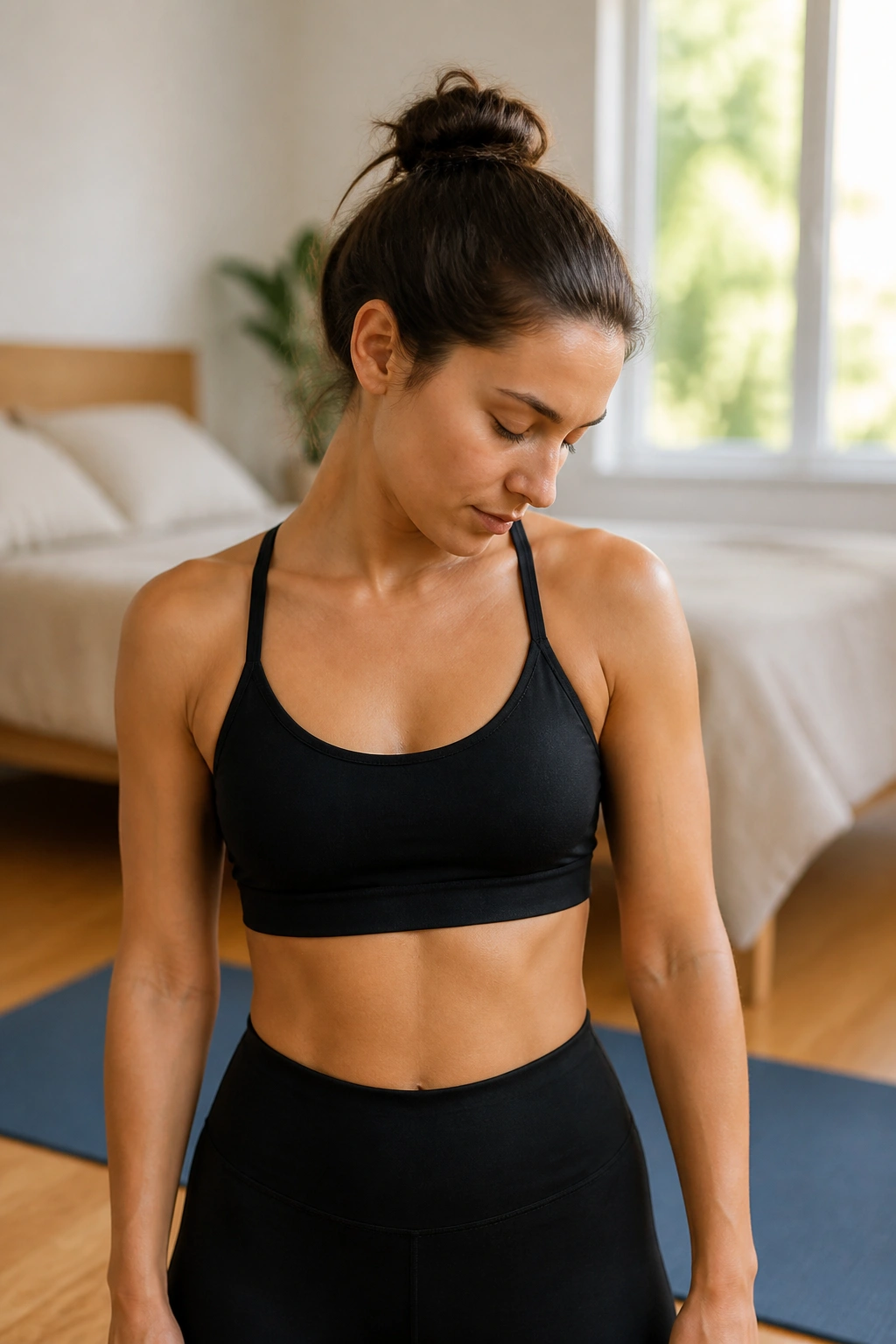
If your body feels stiff before breakfast, start here. This is the workout I’d pick for a low-energy morning, a tight lower back, or that strange “I slept, but not really” feeling that makes everything creak.
Spend 30 seconds each on neck nods, cat-cow, thoracic rotations, hip circles, a deep squat hold, and arm swings. Keep the pace smooth, not rushed. The goal is to open the joints, wake up the spine, and get some blood moving without spiking your heart rate.
Why It Works
Mobility work earns its keep when it changes how the rest of the day feels. A few minutes of controlled movement can make walking up stairs, sitting at a desk, and even getting into the car feel less annoying.
I like this one because it does not ask for much. No equipment. No big mental commitment. Just enough movement to remind your body it belongs to you.
- Cat-cow: 6 slow rounds
- Thoracic rotation: 5 reps per side
- Hip circles: 5 each direction
- Deep squat hold: 45 seconds
- Arm swings and reach-backs: 30 seconds
Tip: breathe through your nose for as long as you can. It keeps the pace honest and stops the flow from turning into a sloppy rush.
2. The No-Jump Cardio Ladder
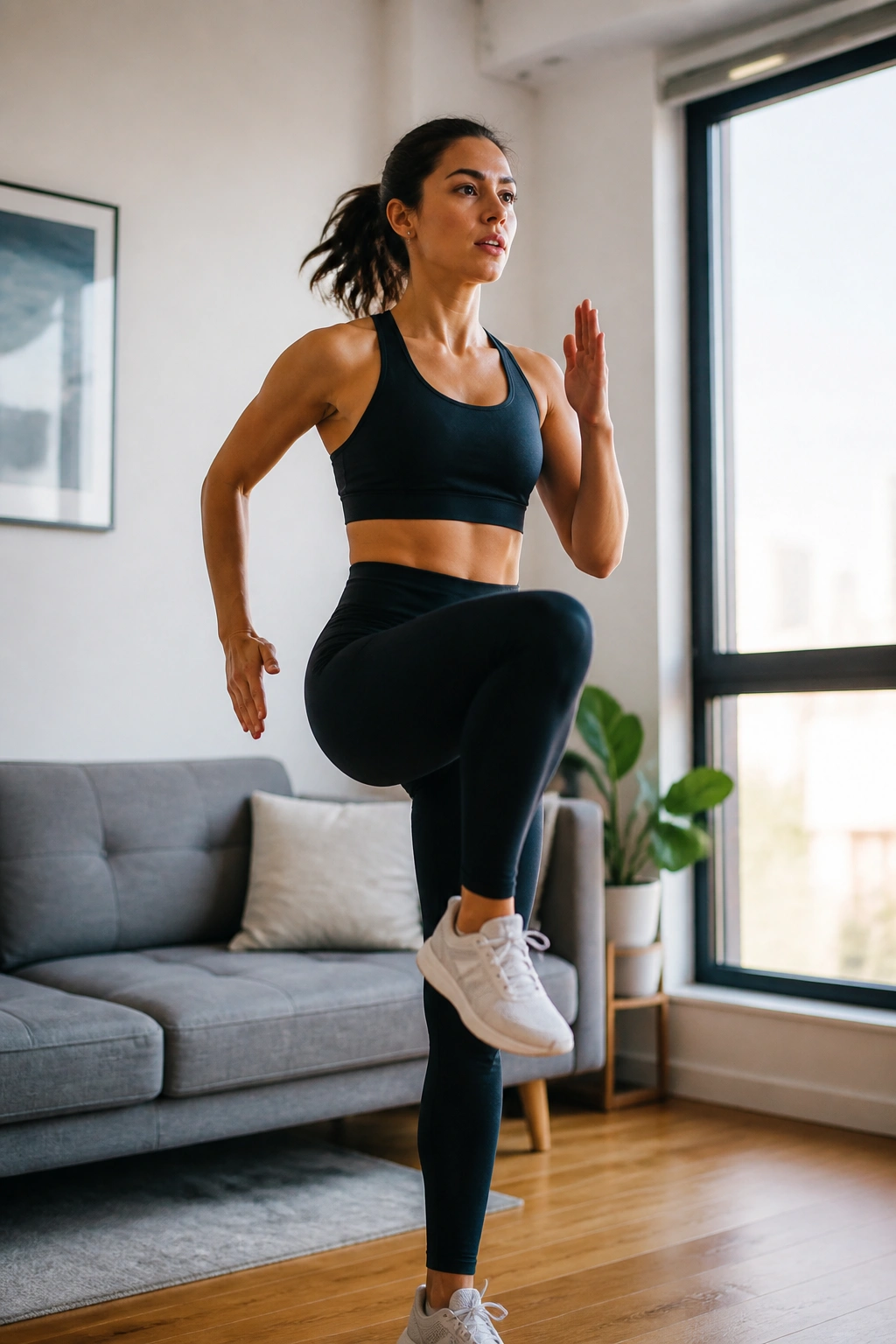
Need to get your heart rate up without pounding the floor? This is the one for apartment living, early mornings, or knees that prefer a calmer start. It still feels athletic, but it won’t shake the dishes in the kitchen.
Run a three-round ladder with 40 seconds of work and 20 seconds of rest for each move. Start with marching high knees, then step jacks, then mountain climbers, then speed skaters. Keep the transitions tight; that’s where the sweat shows up.
How to Scale It
If 40 seconds feels too long, cut the work down to 30 seconds and keep the rest at 30. If you want more challenge, use the same four moves and go straight through with no extra pause between exercises.
This one works because the moves are simple, but the pace is the boss. You are not trying to look graceful. You are trying to keep moving for fifteen straight minutes without drifting into a nap.
Quick Swap Ideas
- Marching high knees instead of full runs
- Step jacks instead of jumping jacks
- Slow mountain climbers if your shoulders are cranky
- Lateral skater taps if you want less impact
3. The Bodyweight Strength Circuit

Bodyweight strength is not a compromise. Done with enough pace and good form, it can wake up your whole system faster than a lazy run ever will.
Use 45 seconds of work and 15 seconds of rest for squats, push-ups, reverse lunges, and plank shoulder taps. Three rounds gets you to fifteen minutes fast, especially if you move straight from one exercise to the next without scrolling between sets.
A small detail matters here: keep the first round easier than you think you need. That leaves room for your form to stay clean on round three, which is where mornings usually get honest.
If push-ups on the floor feel rough, put your hands on a sturdy counter or the edge of a bench. If lunges make your balance wobble, hold onto a wall with one hand. Small adjustments beat sloppy reps every time.
4. The Incline Walk on a Treadmill

An incline walk looks too easy until you hit 8 percent grade and realize your calves have opinions. Unlike sprint work, this leaves you alert instead of wrecked, which makes it a strong choice before work or school drop-off.
Start with 5 minutes at an easy pace, then spend 8 minutes walking at a steep incline. A grade between 5 and 10 percent is enough for most people. Finish with 2 minutes flat to let your heart rate settle and your breathing come back down.
This is a good fit if you want low-impact cardio without the thud of running. It also works well on mornings when your brain wants movement but your body wants mercy.
One thing people get wrong: they hold the rails too hard. That turns a solid walk into a half-suspended shuffle. Let your arms swing naturally, keep your chest tall, and keep the pace brisk enough that talking in full sentences feels annoying.
5. The Dumbbell Complex
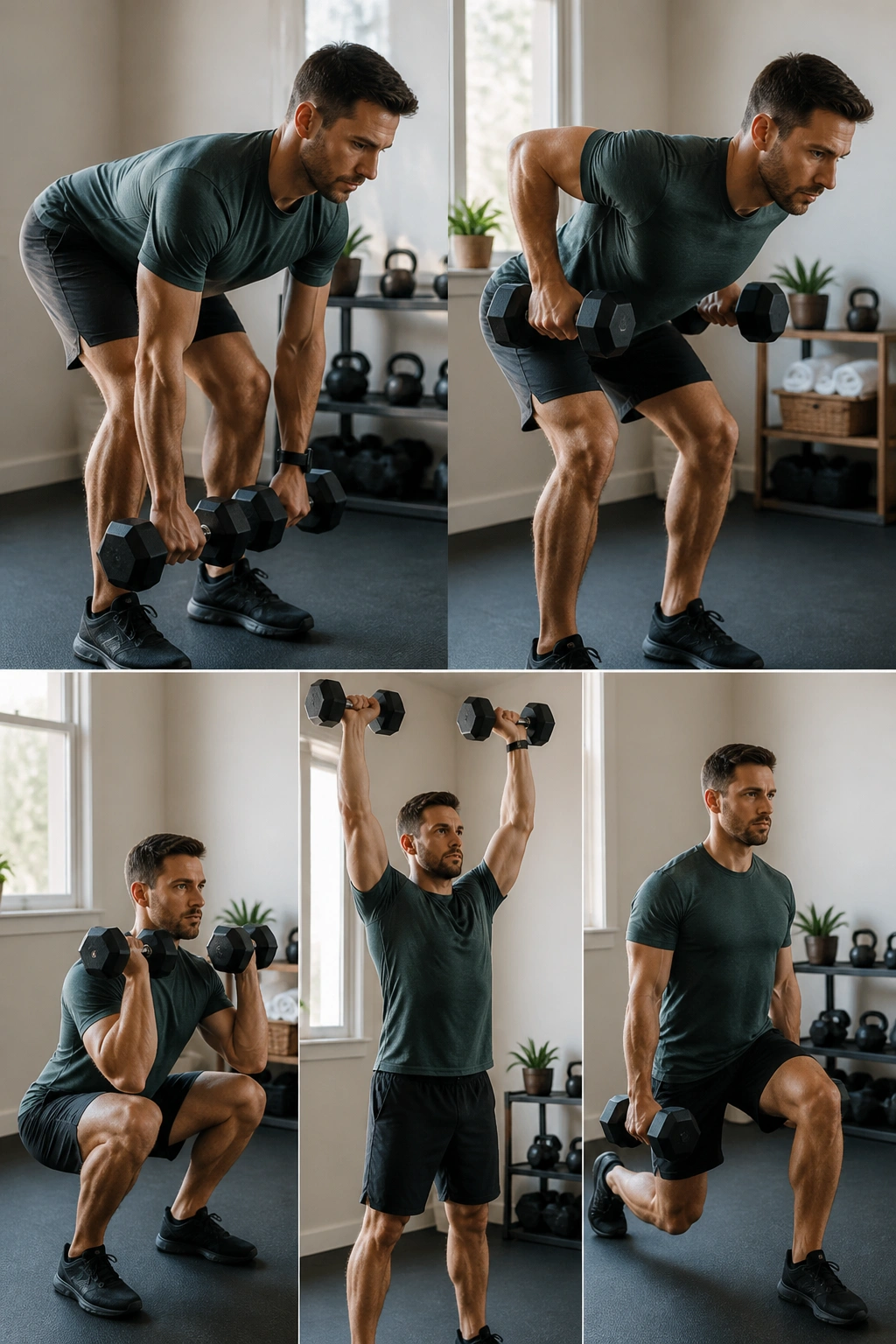
Two dumbbells. No setting them down. That’s the whole charm of a complex, and it’s why it feels efficient without turning into a circus.
Pick a pair of light-to-moderate dumbbells and run 5 reps each of a Romanian deadlift, bent-over row, front squat, push press, and reverse lunge. Rest for 45 seconds after the full sequence, then repeat for three rounds. If your form starts to wobble, the bells are too heavy for a morning session.
How to Run the Complex
Move from one exercise to the next without pausing unless you need to reset your grip. The weight should feel smooth in your hands, not like a test of ego.
The cleanest version starts with the biggest muscles first. Hinge, pull, squat, press, lunge. That order saves your shoulders and makes the transitions feel less clumsy.
Pro tip: choose a weight you could use for ten good reps, not one you think will impress a mirror. Morning training punishes overconfidence fast.
6. The Core-and-Glutes Reset
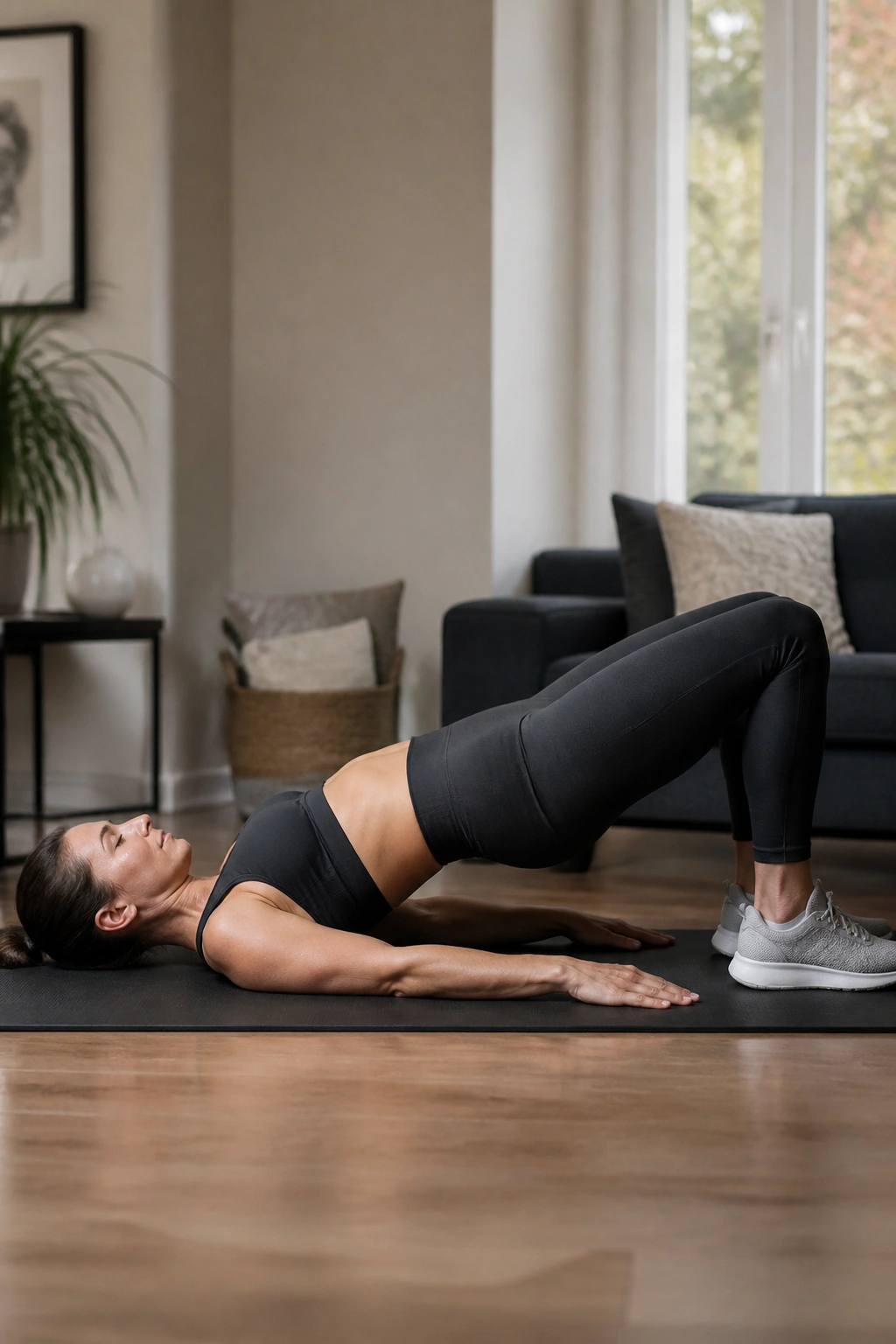
Some mornings your body wants a workout; other mornings it wants a repair job. This is the second kind.
A simple sequence of dead bugs, glute bridges, bird dogs, and side planks can wake up the middle of your body without beating it up. I like this for days after bad sleep, long sitting, or any morning when the lower back feels a little too present.
The bridge is the sneaky part.
It looks mild, then your glutes catch up and remind you they’ve been asleep. Hold each bridge for 2 seconds at the top, squeeze hard, and keep your ribs from flaring. That little pause does more than rushing through ten sloppy reps.
Dead bugs and bird dogs work best when they feel slow and controlled. If you’re wobbling everywhere, slow down more. If your neck starts doing the work of your abs, stop and reset. The point is to leave feeling taller, not to cram in extra chaos.
7. The Shadow Boxing Round Set

Six rounds, two minutes each, and your shoulders wake up fast. Shadow boxing is one of those workouts that looks almost casual until you’re halfway through and breathing like you climbed stairs with groceries.
Use 2 minutes on, 30 seconds off for four rounds after a quick warm-up, then finish with a short cool-down walk or march in place. Keep your hands up, rotate through jab-cross-hook combinations, and add footwork so your feet do something other than stand still.
Basic Combo Flow
- Jab–cross
- Jab–cross–hook
- Double jab–cross
- Jab–slip–cross
- Step left, step right, reset
The trick is to stay crisp. Wild punching burns energy, sure, but it also wastes it. Clean punches, a tight guard, and quick feet make the whole thing feel much more athletic.
If your shoulders tire before your lungs do, shorten the round to 90 seconds and keep the same rest. That still gets the job done without turning your form into spaghetti.
8. The Stair Sprint Session

Stairs are the cheapest piece of cardio equipment most buildings already have. They also have a way of humbling you in under a minute.
Try 20 seconds up, walk down to recover, then repeat for 8 rounds. Use the first couple of climbs as a warm-up, because cold calves and stairs do not get along. Add a minute of easy walking before and after, and you’re right at fifteen minutes.
What to Watch For
This one is not the friendliest option for cranky knees or sketchy footing. Go up with purpose, but come down carefully. The descent should be a recovery, not a second sprint.
Keep your torso tall and drive through the whole foot. If you lean too far forward, the climb turns ugly fast. And if the stairs are slick or crowded, skip this workout and choose something with less drama.
When it goes well, stair sprints feel clean and simple. A hard push, a walk back down, a hard push again. No equipment, no setup, no excuses.
9. The Resistance Band Full-Body Circuit
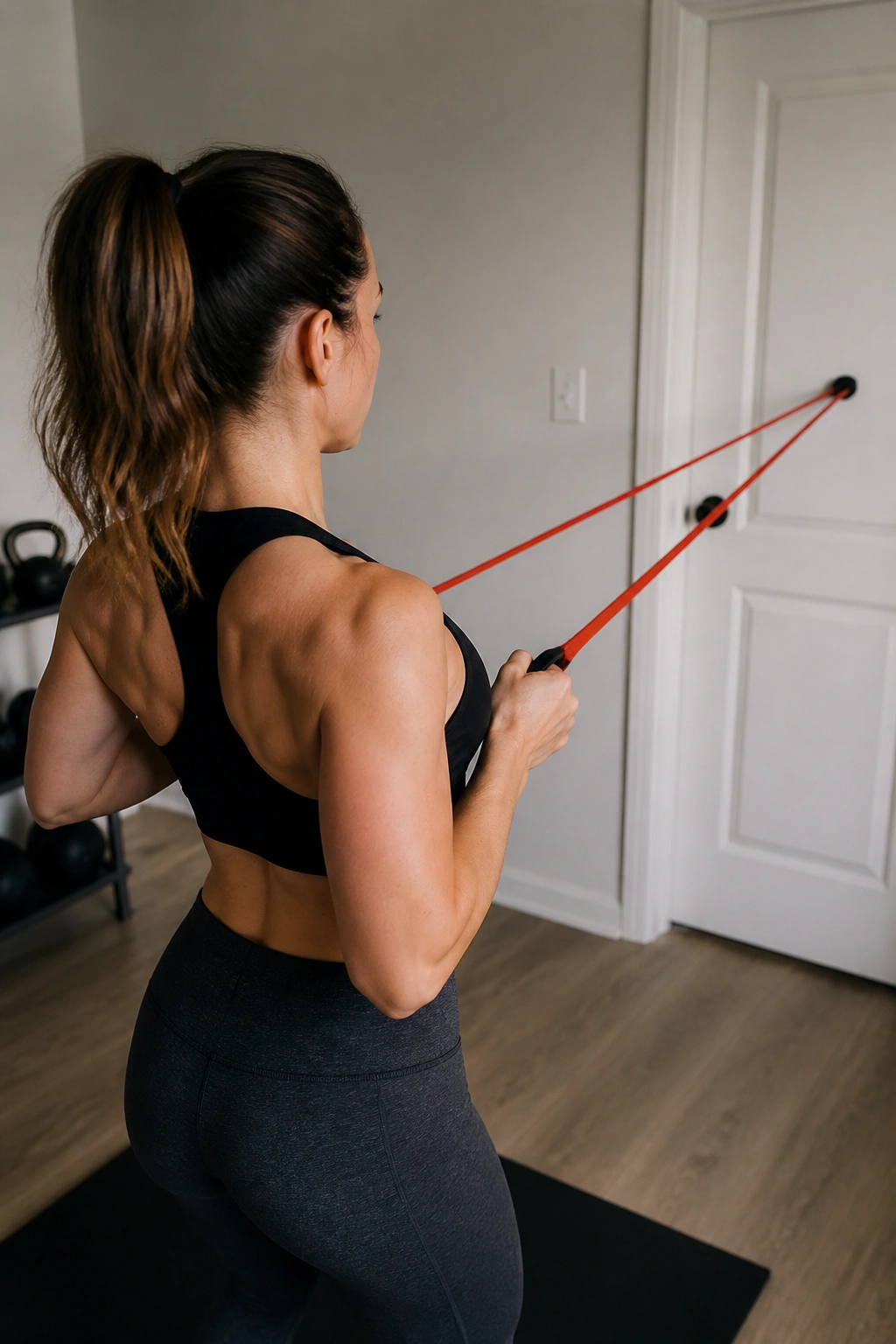
Got a loop band and fifteen minutes? That’s enough for a solid morning session.
Anchor the band or step on it, then run 12 reps each of band rows, squats, press-outs, and lateral walks. Cycle through the four moves for three rounds, resting only 20 to 30 seconds between exercises if you need it. The band should feel challenging by the last few reps, but not so heavy that your shoulders creep up toward your ears.
A band session is nice because it wakes up stabilizers most people ignore. Rows pull the upper back on, squats fire the legs, and lateral walks give your hips a reason to pay attention. That’s a good thing before a long day of sitting.
If the band snaps your form around, step farther out or choose a lighter one. If the rows feel too easy, slow the return phase to 3 seconds and let the tension stay on longer.
10. The Yoga-Pilates Flow
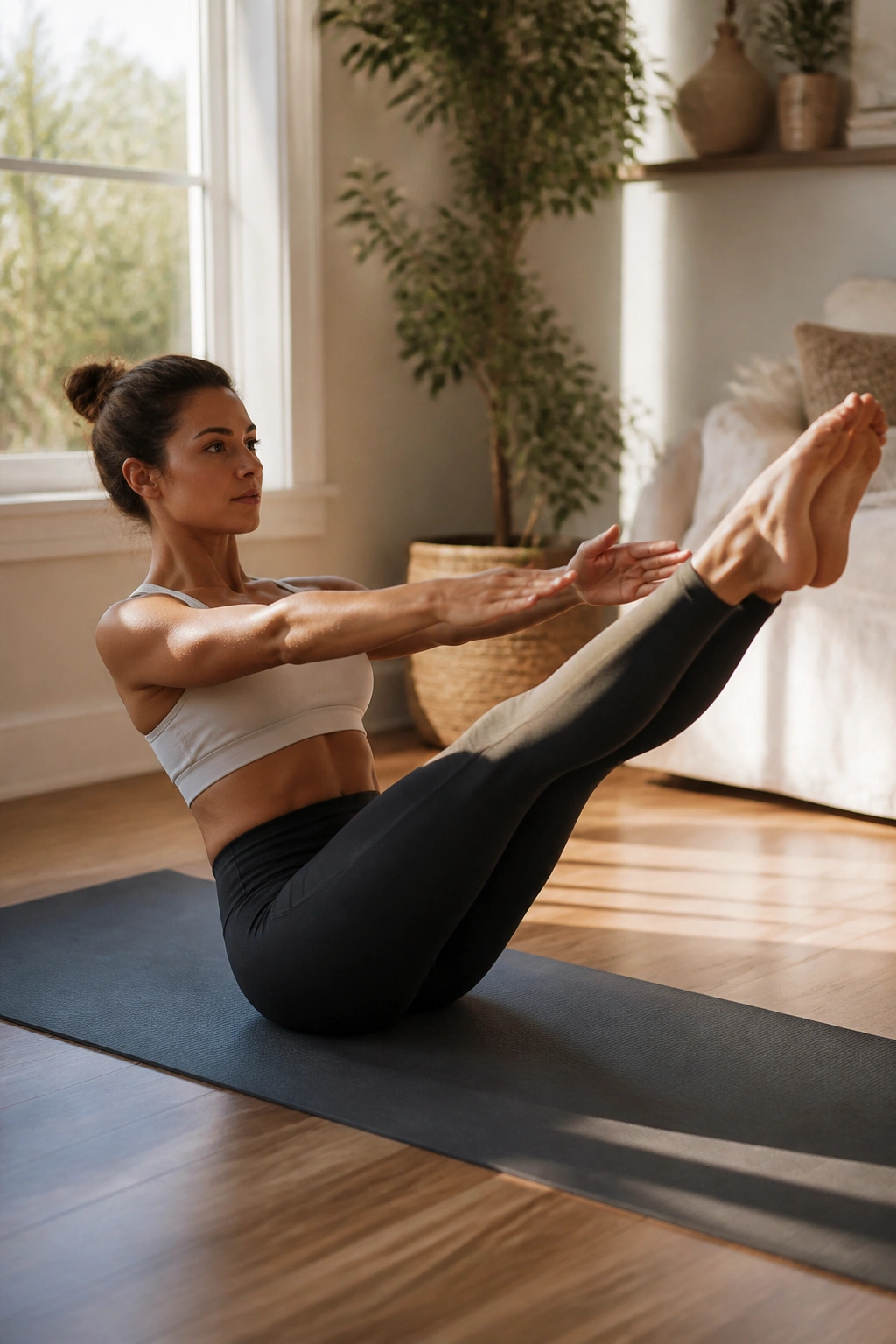
Flexibility is not the goal here. Wakefulness is.
A smart yoga-Pilates mix can open the spine, switch on the core, and make your hips feel less welded shut. Move from cat-cow into downward dog, then low lunge, half split, boat hold, and spinal roll-downs. Keep each position for 30 to 45 seconds, and move with control instead of chasing a deep stretch.
The Pilates piece matters because it keeps the session from drifting into a sleepy stretch routine. Hold the center of the body tight during boat pose. Pull the belly in during transitions. Stay aware of your ribs, not just your hamstrings.
If mornings make your lower back complain, this one earns its keep fast. It gives you just enough structure to feel worked without that drained, heavy feeling some harder sessions leave behind.
11. The Kettlebell Swing Mixer
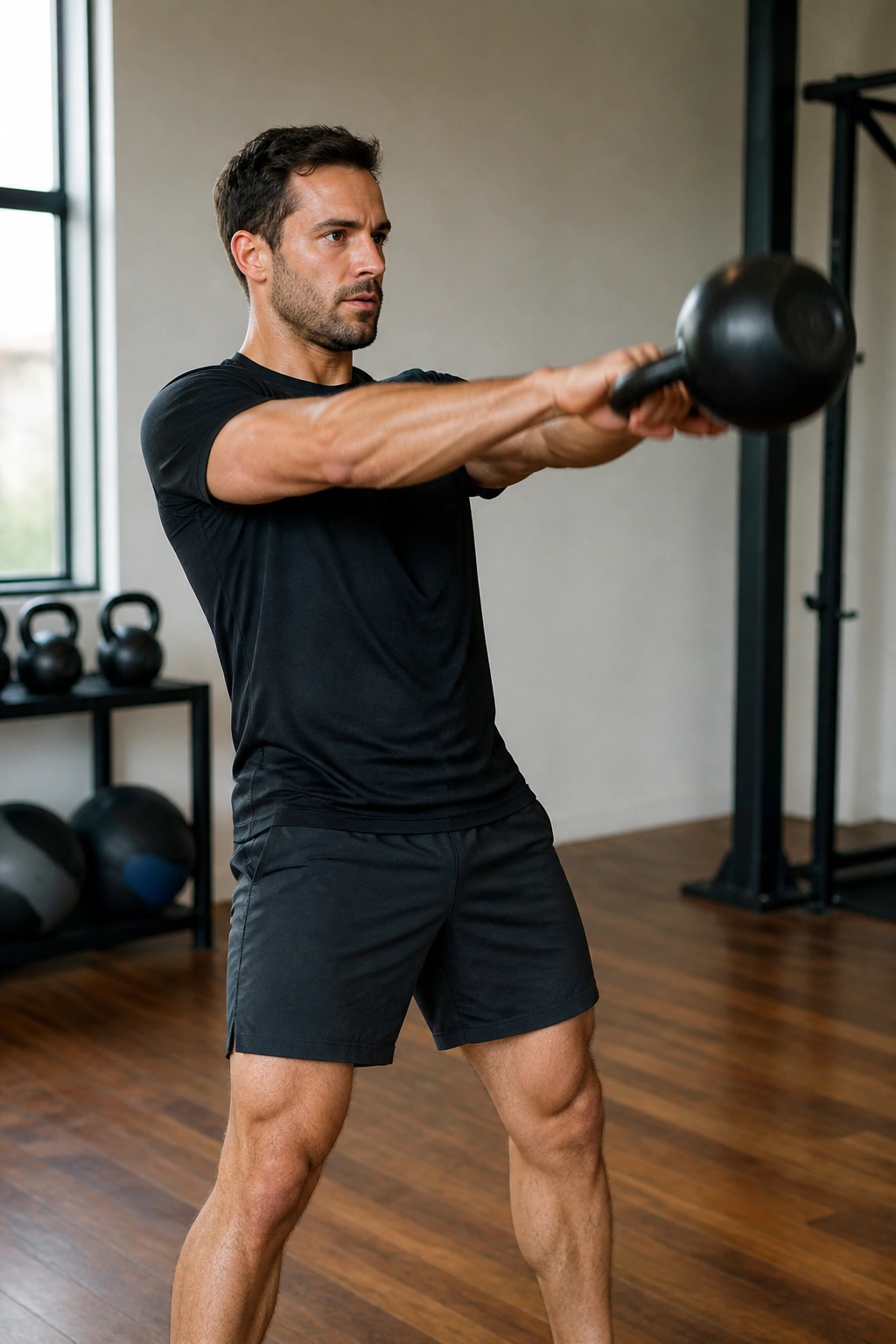
I’ve never seen a fast kettlebell session stay polite for long. Once the swings start, the whole thing turns into a crisp, no-nonsense wake-up.
Use 10 kettlebell swings, 8 goblet squats, and a 20- to 30-second suitcase carry on each side. Repeat the cycle for three rounds. If the weight is right, your hips will do the work and your grip will be the part that notices first.
If Your Hinge Is Shaky
Start with deadlifts from the floor before you swing. That gives you the pattern without the snap.
The swing should feel like a hip hinge, not a squat and not a front raise. If the bell drifts above chest level, it’s too heavy or your form is getting loose. Keep the motion sharp, then set the bell down before fatigue makes you sloppy.
This is one of my favorite morning choices for people who like a workout that feels short but leaves a mark.
12. The Desk-Posture Fixer

Three moves matter more than people admit: wall slides, thoracic rotations, and a hip flexor stretch. If you sit a lot, this is the session that pays you back later in the day.
Spend 1 minute on wall slides, 1 minute per side on thoracic rotation, and 90 seconds per side on a kneeling hip flexor stretch. Repeat the circuit twice and you’ve used up fifteen minutes in a way your shoulders and hips will notice.
Wall slides are the quiet hero here. Keep your low back from arching, keep your ribs tucked, and slide the arms only as high as you can without cheating. That little bit of discipline beats flinging your hands overhead and calling it mobility.
This won’t feel sweaty. Fine. Not every useful workout needs to leave a puddle on the floor.
13. The EMOM Bodyweight Burner

If you like clear rules, EMOM work is neat: every minute on the minute. You do the reps, rest with whatever time is left, then start the next minute.
Run a 12-minute main set like this: minute one, 12 squats; minute two, 8 push-ups; minute three, 16 mountain climbers per side; minute four, 10 reverse lunges per leg. Repeat that pattern three times, then use the remaining time for a quick cool-down.
How to Pace the Minutes
The best EMOM pace leaves 10 to 20 seconds of rest inside each minute. If you’re gasping so hard that you miss the next round, the reps are too high.
Morning EMOMs work because the clock does the coaching for you. No wondering when to stop. No wandering rest periods. Just a clean pulse of effort, then a small pocket of recovery before the next minute starts.
The fix is easy if you overshoot: cut the reps by two on each movement and keep the format the same.
14. The Single-Leg Balance Circuit

One leg at a time makes the body behave. That’s the whole appeal.
Do single-leg Romanian deadlifts, split squats, calf raises, and standing knee drives for 8 to 10 reps per side. Work through the circuit twice, then finish with a short balance hold on each foot. It sounds mild. It rarely feels mild after the second round.
Single-leg work pulls in the small muscles that keep ankles, knees, and hips from freelancing. That matters if you run, walk a lot, or spend half the day shifting your weight from one hip to the other.
The first thing people notice is how much harder the standing foot has to work. The second thing is how quickly balance reveals the weak spots. That’s useful information, not a failure.
15. The Bike Interval Blast

Prefer a seat under you and a sweat that shows up fast? A bike interval set is hard to beat.
Warm up for 5 minutes at an easy pace, then ride 6 rounds of 30 seconds hard and 60 seconds easy. Finish with 2 minutes at a moderate pace and 2 minutes to spin down. Fifteen minutes, no nonsense.
How Hard Is Hard?
Hard means you’re breathing through your mouth and you could speak only a few words at a time. It does not mean you’re falling off the bike or mashing the pedals like a panic response.
A bike is kind to the joints, which makes this a smart choice for people who want a morning push without the impact of running. It also works well if you want to wake up fast before a day full of sitting.
I’d use this one when I want the workout to be done with little decision-making. Set the timer, ride, get off.
16. The Push-Pull Ladder

Unlike an arm-day mashup, this keeps your shoulders honest. A good push-pull ladder balances the chest, back, and triceps without getting stuck in one body part too long.
Try a ladder of 2 push-ups, 4 rows, 6 pike push-ups, and 8 band pull-aparts, then climb back down if time allows. If you have dumbbells instead of a band, swap in bent-over rows. Keep rest short — 15 to 20 seconds — so the whole ladder fits into fifteen minutes.
The nice part is the shape of it. Early rounds feel easy, then the middle climbs get spicy, then the descent gives you a little breathing room. That keeps the session from feeling like one long grind.
If your wrists hate floor push-ups, put your hands on a bench or sturdy counter. The workout stays the same; the joint stress does not have to.
17. The Low-Impact Floor Cardio
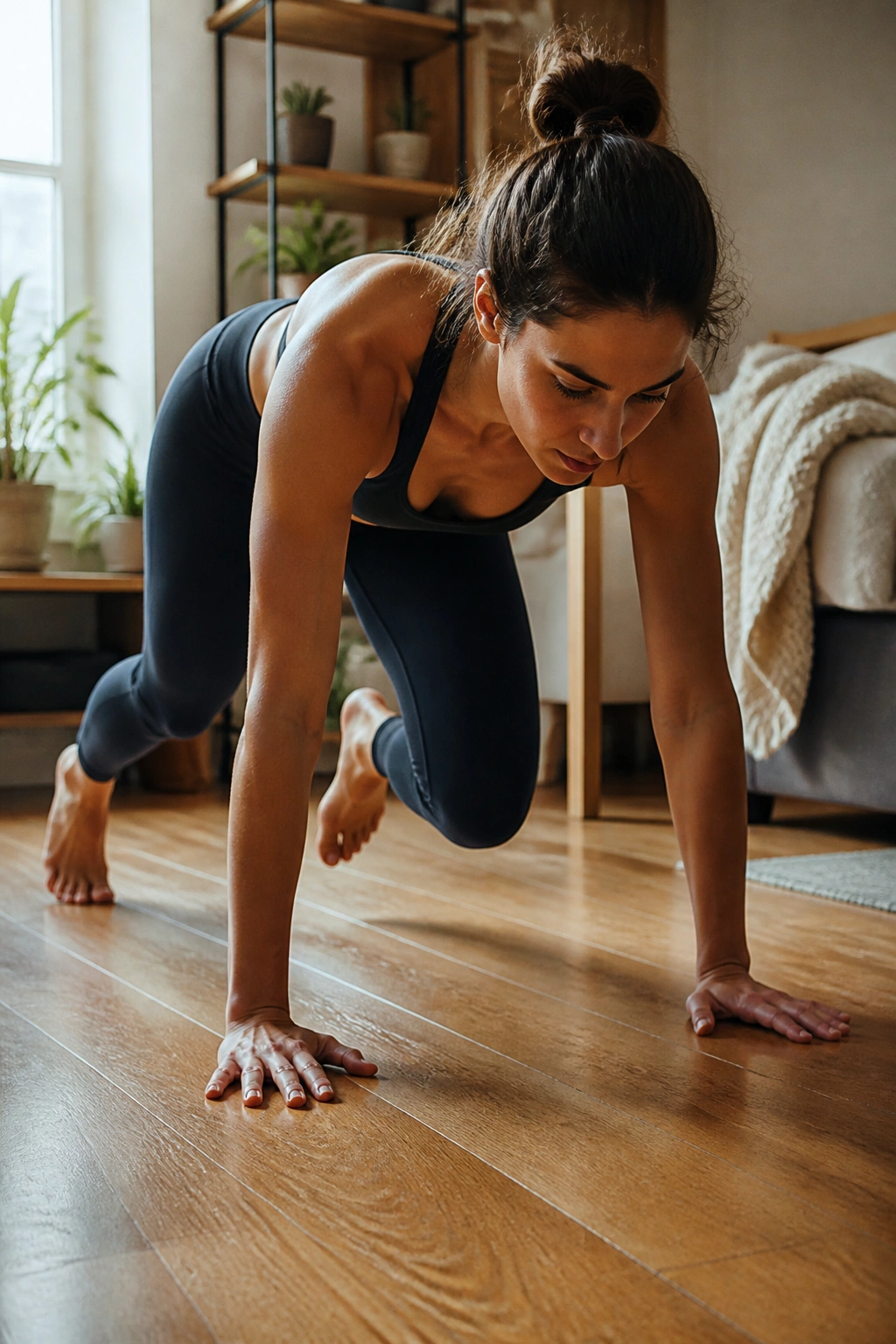
Apartment mornings can be loud. This fixes that.
Use a mix of bear steps, squat-to-reach, step-back lunges, plank step-ins, and marching high knees. Keep each move to 30 or 40 seconds, and move through the whole set twice. It creates a real sweat without the jumping that makes downstairs neighbors start to hate you.
The beauty of low-impact cardio is that it still asks for coordination. You’re not just marching in place and calling it a workout. Your core has to hold steady while your legs move, which makes the whole thing more useful than it looks on paper.
This is a good one on mornings when your energy is there but your joints want a softer landing.
18. The Tabata Sampler

Tabata gets tossed around like it’s magic. It isn’t magic. It’s just short, sharp work with almost no time to hide.
Use 20 seconds on and 10 seconds off for 8 rounds of one move, then repeat with a second move after a one-minute break. Squat thrusts and fast step jacks work well. So do mountain climbers and bodyweight squats. Add a quick warm-up and cool-down, and the whole session lands in the fifteen-minute zone.
Four minutes of honest work can feel far longer than people expect.
That’s because Tabata punishes lazy pacing. If the first round is easy, you went too soft. If your form breaks by round three, you went too hard. The sweet spot is uncomfortable but controlled, and that’s a pretty good morning tone to set if you like a fast hit of effort before the day starts.
19. The 15-Minute Strength Micro-Program
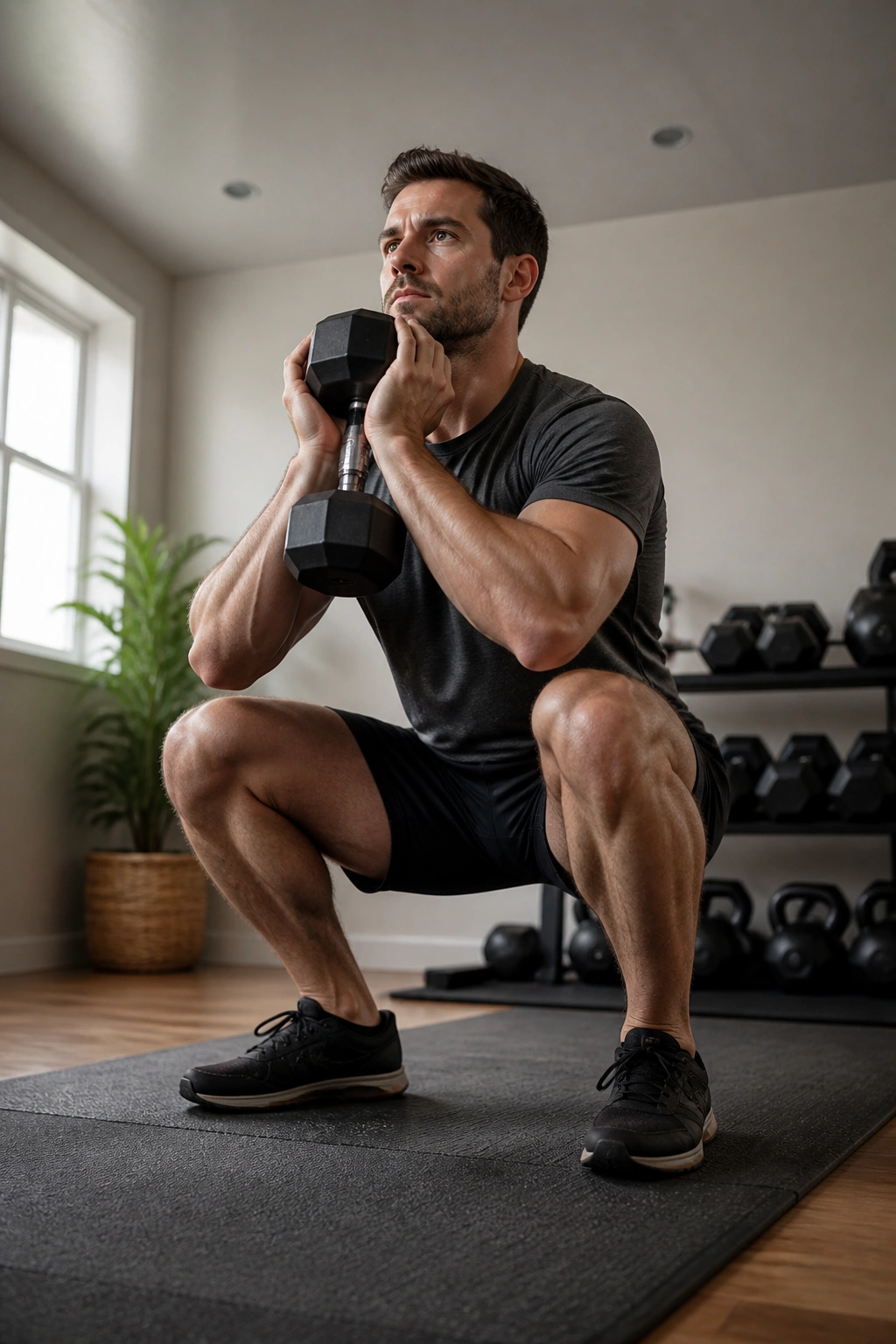
Three lifts. Two sets each. One short finisher. That’s enough to keep strength work alive on a busy morning.
Pick a lower-body move, a push, and a pull. A simple setup is goblet squats for 10 reps, incline push-ups for 8 to 12, and dumbbell rows for 10 per side. Do two rounds, then finish with a 45-second plank or a 30-second farmer carry if you have weights.
What Makes It Work
Strength does not need a long ceremony to matter. It needs enough load, enough focus, and enough repeat practice to keep the patterns sharp.
This format is clean because it doesn’t waste time on fluff. You get one leg movement, one upper-body push, one upper-body pull, and a short core finish. That covers more ground than most rushed morning workouts do.
If you only have one pair of dumbbells, keep them next to the mat. Fewer decisions means fewer excuses.
20. The Recovery Walk-and-Mobility Combo

Some mornings, a hard workout is the wrong move. A brisk walk plus a little mobility can do more good when you feel stiff, sleep-deprived, or mentally fried.
Walk for 8 minutes at a pace that warms you up, then spend 7 minutes on a short mobility flow. I’d use ankle circles, hip openers, a chest stretch against a wall, and a slow hamstring fold. Keep the walking pace lively enough that you feel your breathing change, but not so hard that you need a break.
What the Seven Minutes Should Cover
- Ankles: 30 seconds each direction
- Hips: 45 seconds per side
- Chest and shoulders: 1 minute against a wall or doorway
- Hamstrings: 45 seconds of slow folds
- Spine: 1 minute of gentle twisting
This is the session I reach for when I want to feel better, not crushed. It’s not lazy. It’s smart.
21. The Hotel Room Workout

Stuck in a room with thin carpet and a suitcase? Good. You can still get something done.
Use squats, incline push-ups on the desk or bed edge, reverse lunges, glute bridges, and dead bugs. Work in 40-second intervals with 20 seconds of rest, and run the circuit twice. That’s enough to shake off travel stiffness without setting off the whole floor.
The hotel-room trick is to keep the moves quiet and simple. No jumping. No heavy setup. A towel under the knees helps if the carpet is rough, and the bed edge is usually fine for push-ups as long as it doesn’t sink too much under your weight.
Travel workouts are never elegant. They do not need to be. They just need to keep your body from turning into a folded chair.
22. The Fifteen-Minute Rescue Plan
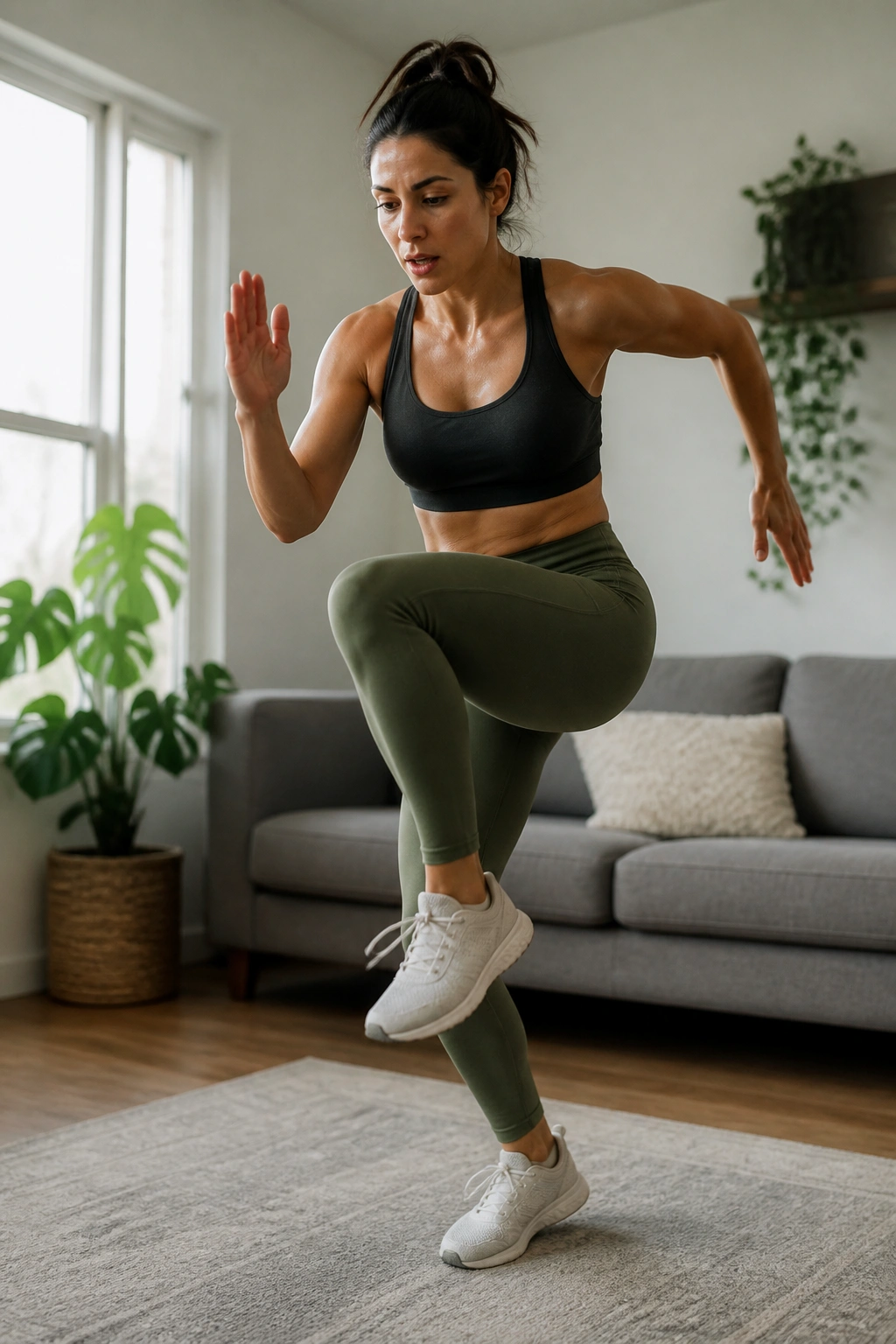
If the morning feels messy, choose the workout that matches the problem instead of guessing.
Stiff body? Pick the mobility wake-up or the walk-and-mobility combo. Wired brain? Go with shadow boxing, bike intervals, or the Tabata sampler. Want strength but don’t have time for a full lift? Use the bodyweight circuit, the dumbbell complex, or the strength micro-program.
Fast Matchups
- Noisy apartment: low-impact floor cardio
- Back feels tight: core-and-glutes reset
- Need sweat fast: incline walk or bike intervals
- Need to feel stronger: bodyweight strength circuit
- Travel day: hotel room workout
- Sitting all day ahead: desk-posture fixer
The real win here is not picking the hardest session. It’s picking the one you’ll actually start while the coffee is still hot. That’s how fifteen minutes stops feeling like a compromise and starts feeling like a habit.
