



Kettlebells are brutally honest tools. Rush the hinge, and the bell tells on you immediately.
That is why HIIT workouts with kettlebells for strength work so well. The pace stays high, but the movements still demand a braced trunk, a clean rack position, and hips that actually do the work.
If you pick a bell that is too light, the session turns into sweaty noise. Too heavy, and the intervals get ugly fast, which is a bad trade when the goal is power, not survival. A good rule: your first round should feel crisp, and your last round should feel hard without turning into a sloppy shrug-fest.
The 25 workouts below use swings, cleans, presses, squats, carries, and a few single-bell grinders that punish weak positions in the nicest possible way. Start with a bell you can control, keep your reps honest, and let the short rest do its job.
1. Swing Sprint Ladder
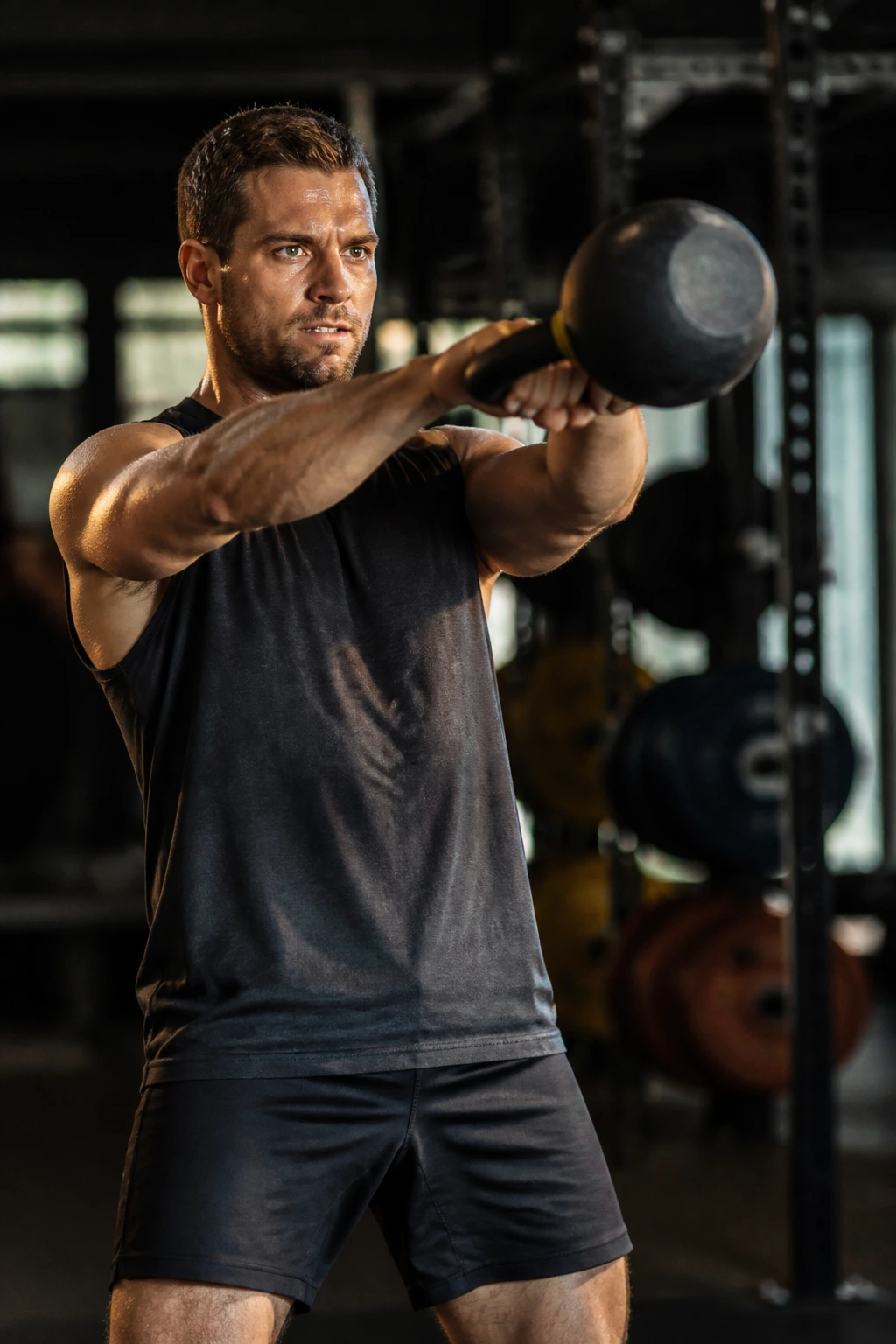
If you want one workout that makes the case for kettlebells in about five minutes, start here. Swings are simple to describe and stubbornly hard to fake.
How to run it
- 10 rounds
- 20 seconds of hard two-hand swings
- 40 seconds of rest
- Stop the set the moment your hip snap turns into a squat
Use a bell that feels heavy in the start position but still floats when you hinge fast. The goal is not to yank it with your arms. It should feel like the bell is being launched by your hips and caught by your lats on the way back down. That difference matters.
This one builds the kind of hinge power that carries into deadlifts, cleans, and even your running stride. If you want a smaller dose, cut it to 6 rounds. If you want more bite, go to 15 rounds and keep every rep clean.
2. Clean and Press Intervals for Strength
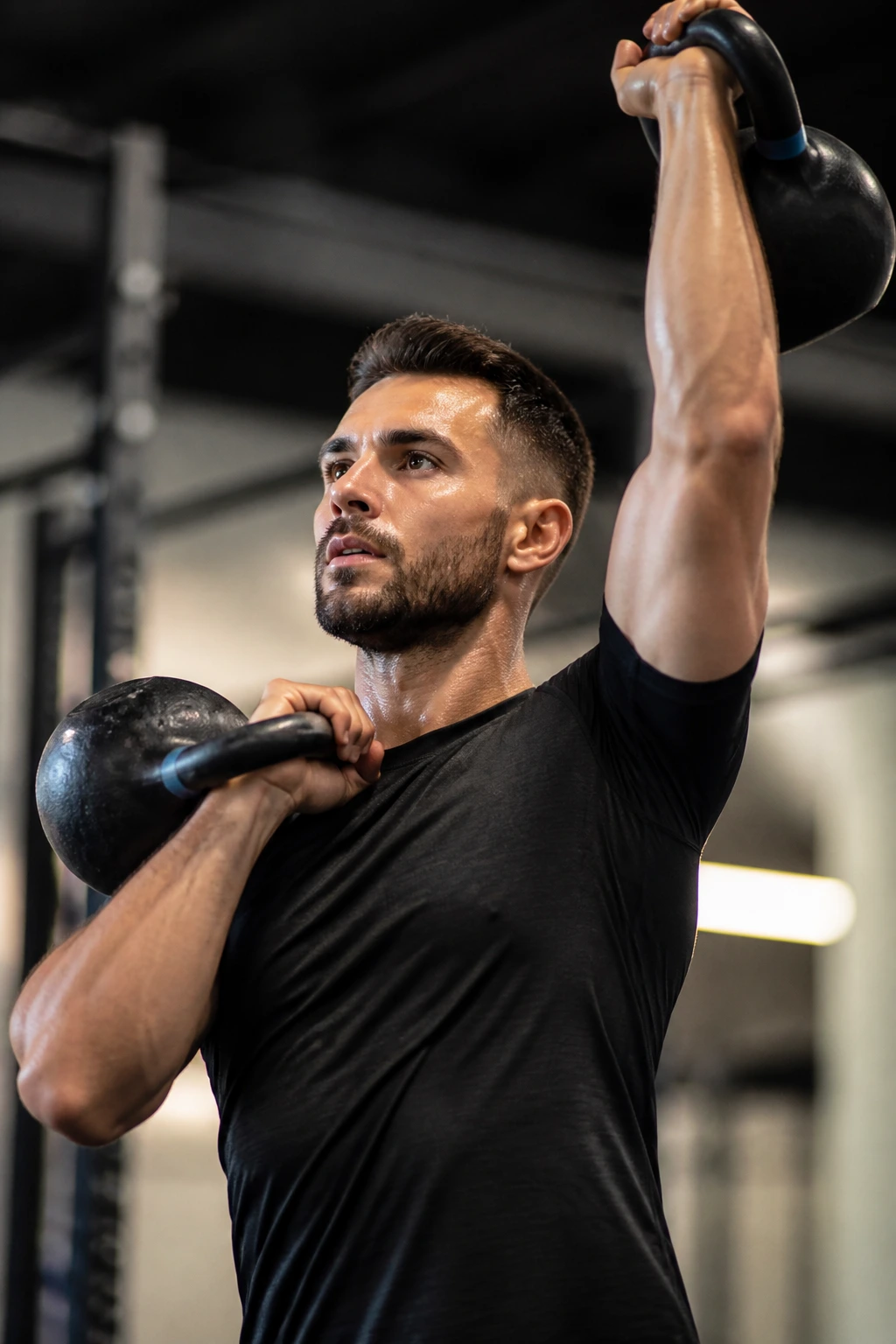
The clean and press is the most honest upper-body test on this list. It asks for leg drive, timing, rack control, and a press that does not wobble around like a loose shelf.
Run 6 to 8 rounds of 4 cleans and 4 presses per side, resting 30 to 45 seconds between rounds. If you only have one bell, finish one side before switching. If you have a pair, alternate sides each round and keep the work dense.
A clean should land softly in the rack, not crash into your forearm. The press should finish with the biceps near the ear and the ribs still down. If your lower back starts leaning back to help the bell overhead, the load is too heavy for this format. That is not a moral failure. It is just a signal to tighten up the weight.
3. Snatch and Switch Intervals
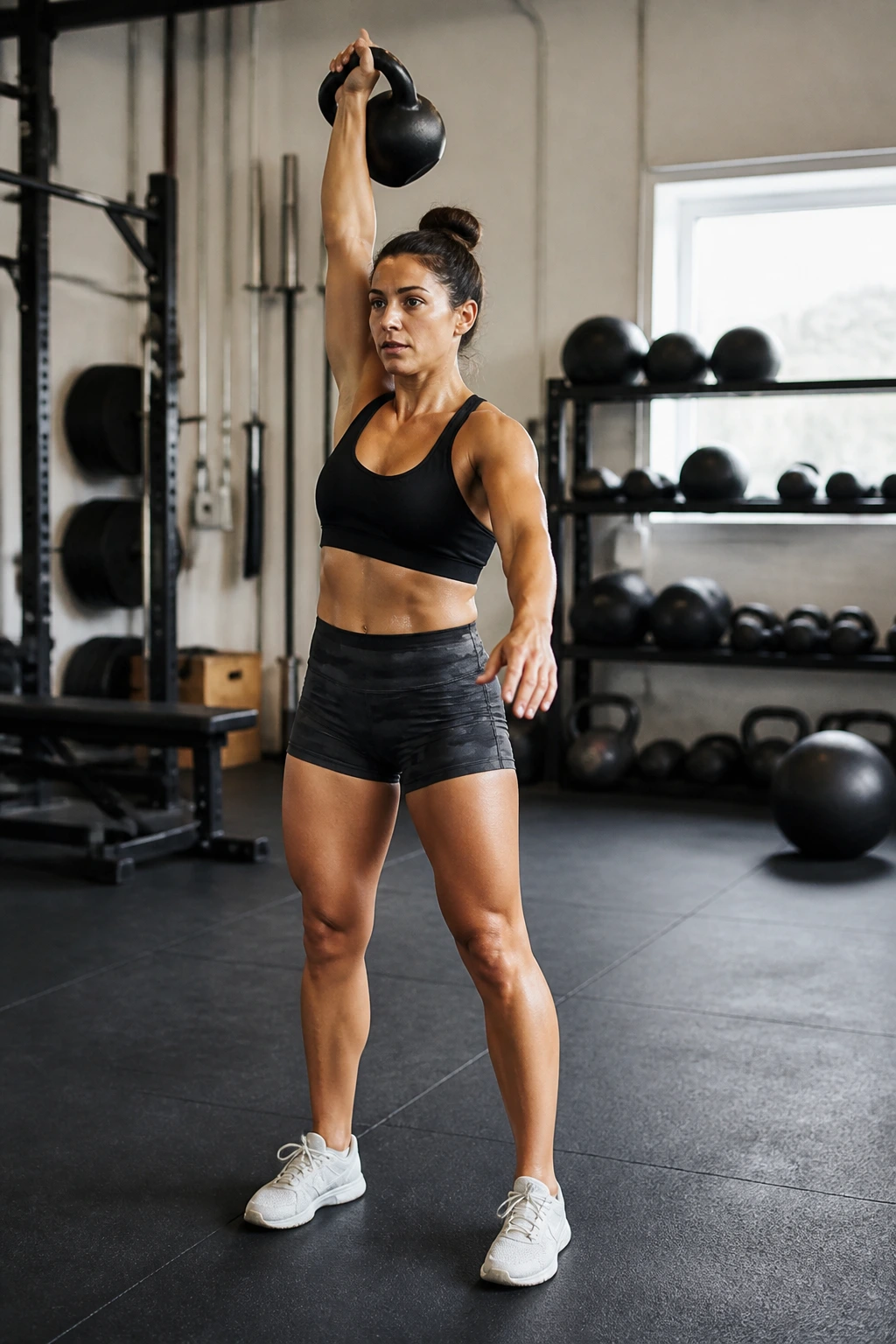
Why does the snatch earn a place in a strength-focused HIIT plan? Because a good snatch is a fast hinge, a strong grip, and a locked-in overhead position all wrapped into one rep.
Pace it like this
- 8 to 10 rounds
- 15 seconds left arm
- 15 seconds right arm
- 30 to 45 seconds rest
- Keep the switch clean, not rushed
The snatch is the kind of move that exposes lazy mechanics fast. The bell should skim close to your body, not loop out in a big arc. If the hand slap at the top is loud, your timing is off. If the bell bangs your wrist on the way up, you are pulling too early.
This workout hits power without needing long sets. It is also sneaky grip work. By round six, the bell can feel like it weighs twice as much, which is exactly the sort of honest fatigue that makes the rest of the session useful.
4. Goblet Squat Density Block
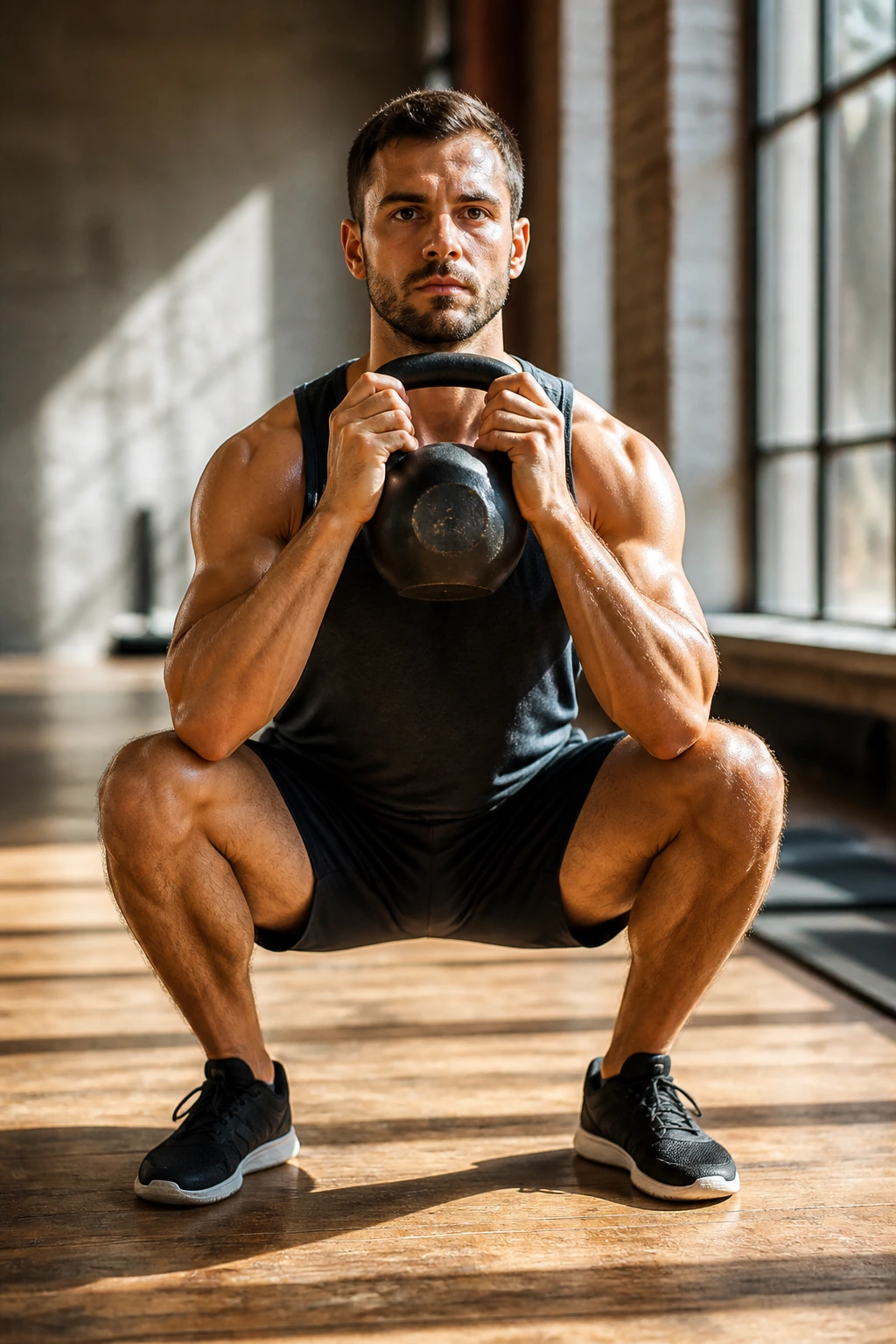
A goblet squat looks almost too plain to matter. Then you do it for repeated short rounds and your thighs start filing complaints.
What the block looks like
- 8 minutes total
- Every 45 seconds, perform 6 to 10 goblet squats
- Use the remaining time to breathe and reset
- Keep every rep deep, smooth, and braced
This works because the load sits in front of you, which forces your torso to stay upright and your core to stay awake. The bell also acts like a counterbalance at the bottom, so the squat feels cleaner if you stay patient and do not dive bomb.
I like a 2-second pause on the first rep of each round. It keeps the hips honest and stops the knees from drifting inward. A lot of people rush goblet squats because they look easy from the outside. They are not. Not if you want strength.
5. Clean-Squat-Press Complex
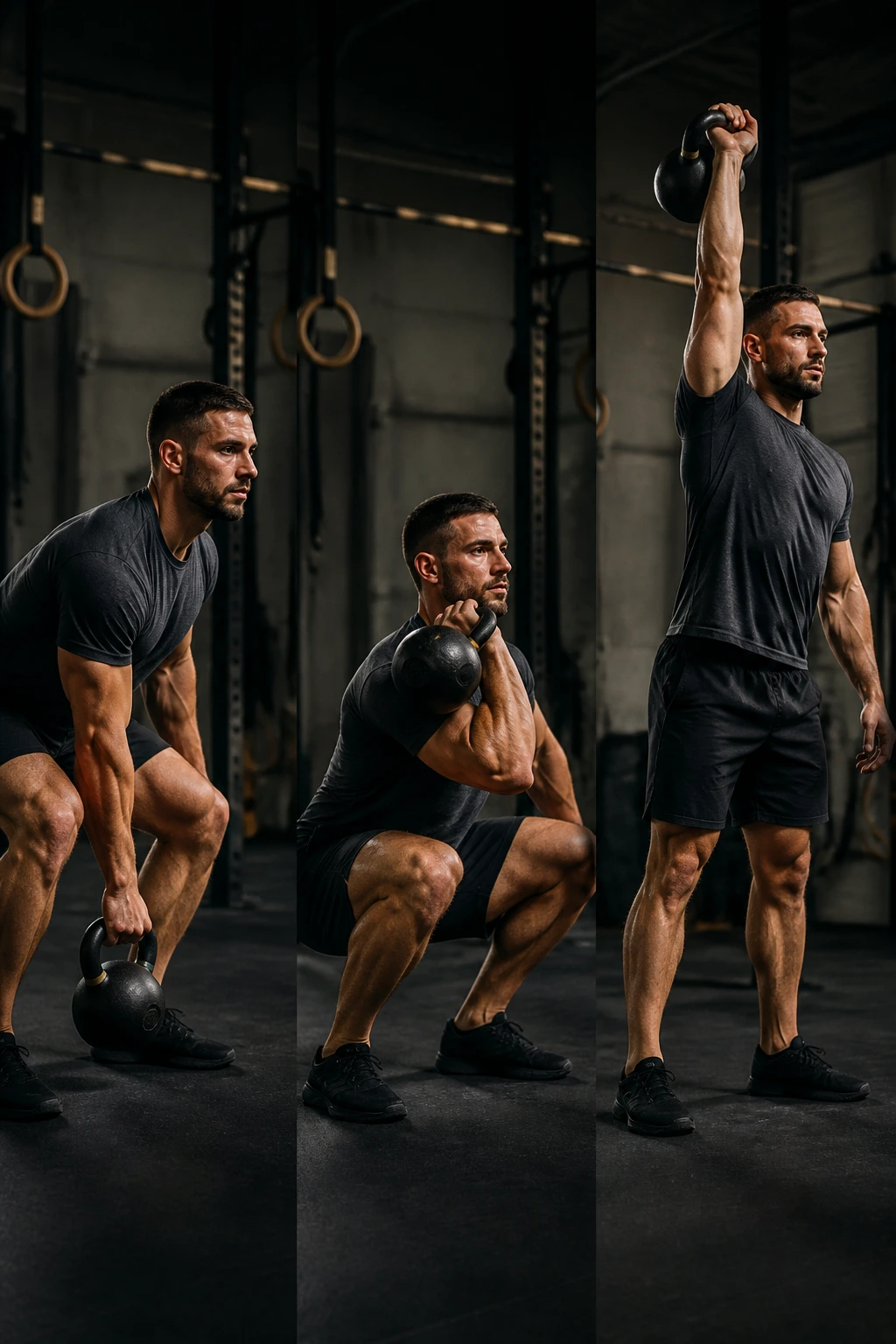
A complex is one of my favorite ways to make a single kettlebell feel like a full gym. This one is dense, simple, and hard to cheat.
Do 5 rounds of 3 cleans, 3 front squats, and 3 presses per side, then rest 60 to 90 seconds. Keep the same bell the whole way through. That matters. Switching weights ruins the point.
The clean teaches you to own the rack. The squat reinforces leg drive. The press shows whether your trunk can stay stacked when fatigue creeps in. By the last round, the front rack should feel like a place you can live, not a brief accident.
A neat trick: if the presses get sloppy, do the first two rounds as strict presses and the last three as push presses. You still get the overhead work, but you keep the session moving without turning it into a backbend contest.
6. Rack Reverse Lunge Repeat
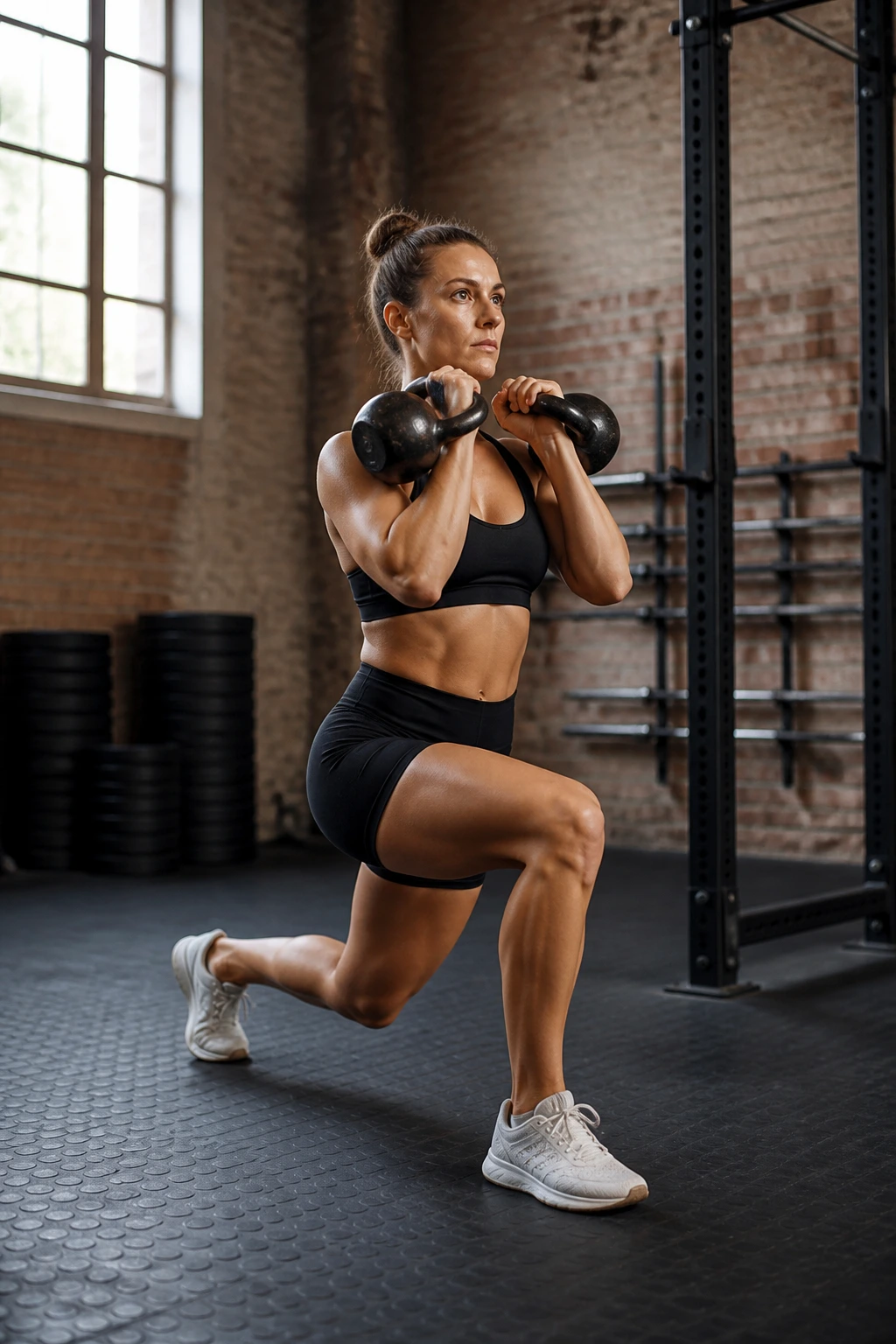
Reverse lunges in the rack position are one of those exercises people ignore until they feel the first set in their glutes and midsection. Then they stop being polite about them.
Use 4 rounds of 8 total reverse lunges in the front rack, resting 20 to 30 seconds between rounds. Alternate legs each rep. If you only have one kettlebell, hold it on the same side for the whole round, then switch next round. That slight offset wakes up the obliques in a good way.
The key is to step back far enough that the front shin stays fairly vertical. If you take a tiny step and jam the knee forward, the movement turns messy. The rack position also forces better posture than a dumbbell at your sides would. You cannot really hide here.
7. Double Kettlebell Front-Rack Drive
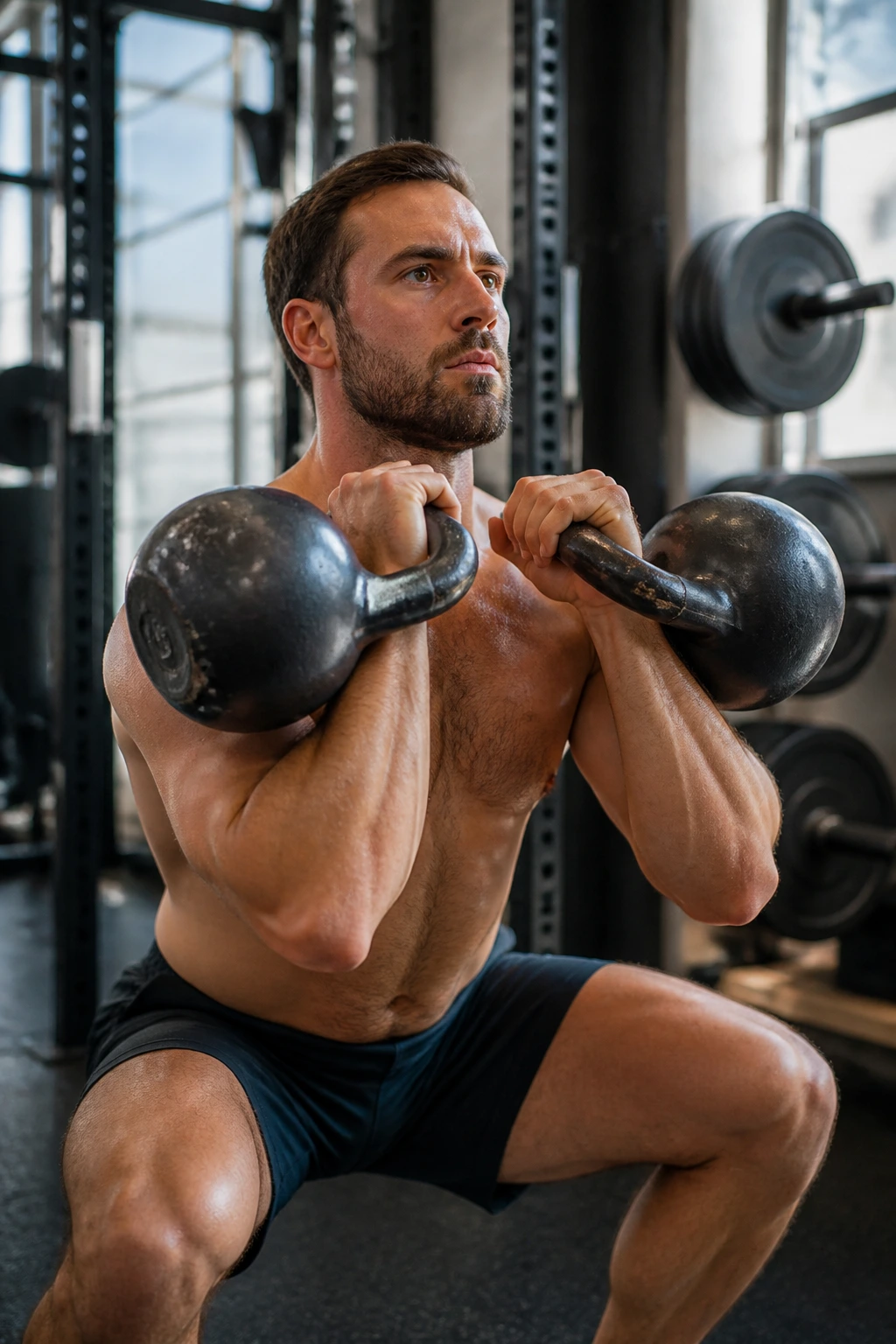
Two bells change the personality of the workout fast. Everything gets heavier, tighter, and less forgiving.
Load and timing
- 8 rounds
- 20 seconds of double front squats
- 40 seconds of rest
- Use bells you can rack without shrugging
The double rack position asks more from the upper back and trunk than a single bell does. That is the point. You want the torso to stay tall while the hips and knees do the lifting. If the bells pull you forward, your load is too ambitious for the speed of this session.
I like this one for lifters who already know a goblet squat and want something that feels more like strength work. The double bells load the midline harder, and the rest stays short enough to keep the heart rate up without wrecking bar speed—well, bell speed. Same idea.
8. One-Arm Row and Swing Pair
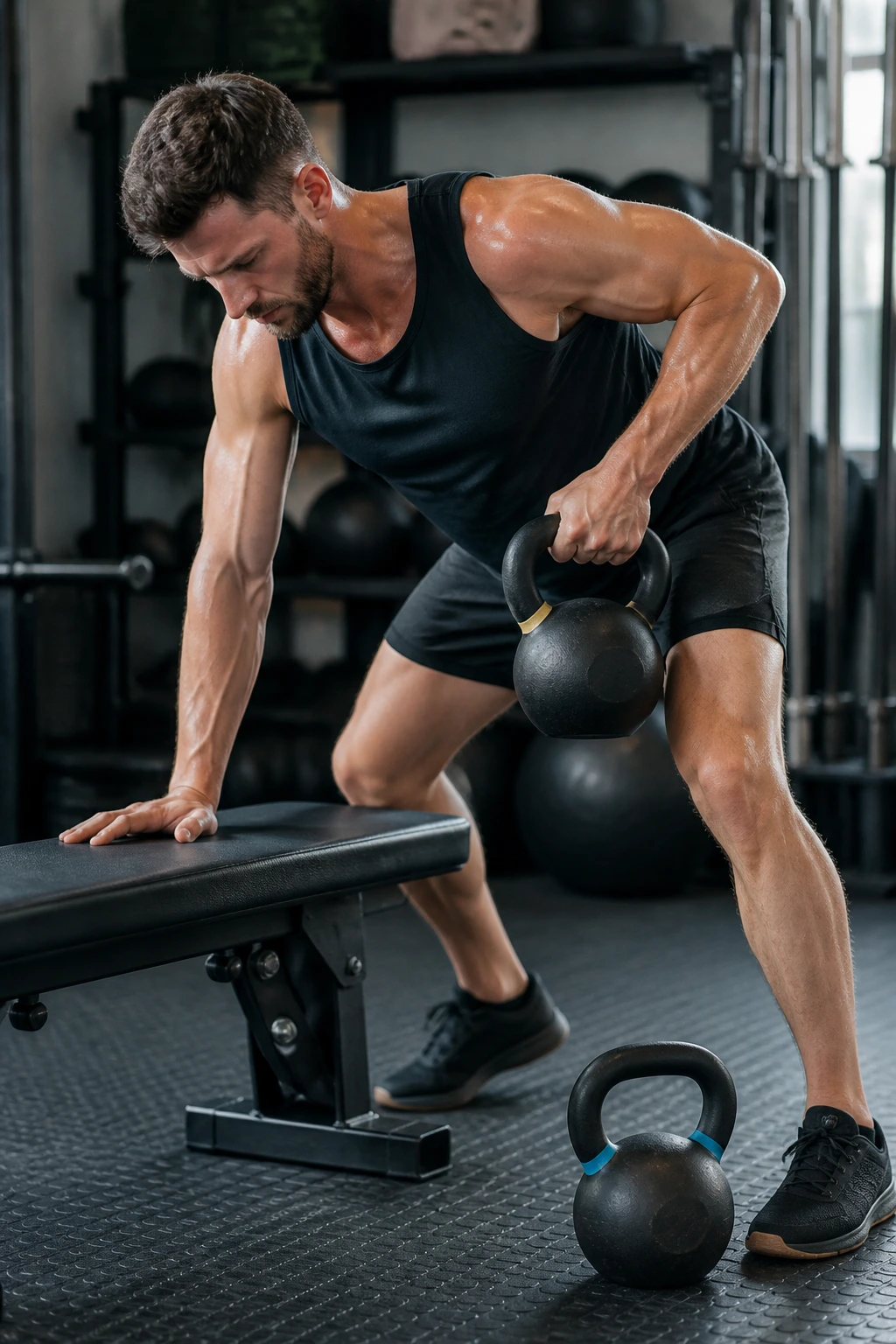
A lot of kettlebell plans chase pressing and forget the back. That is a mistake. Your rows matter, and they matter more when the rest periods are short.
Do 6 rounds of 8 one-arm rows per side followed by 12 hard swings, then rest 45 seconds. Keep your row hand planted on a bench, box, or your free thigh if you want more stability. The row should finish with the elbow driving toward your hip, not yanking up toward your shoulder.
Then the swings arrive and remind you that the posterior chain still runs the show. This pairing is neat because the row builds upper-back strength while the swing brings the heart rate up without killing your grip on the first exercise. It is not flashy. It works.
9. Half-Kneeling Press Intervals
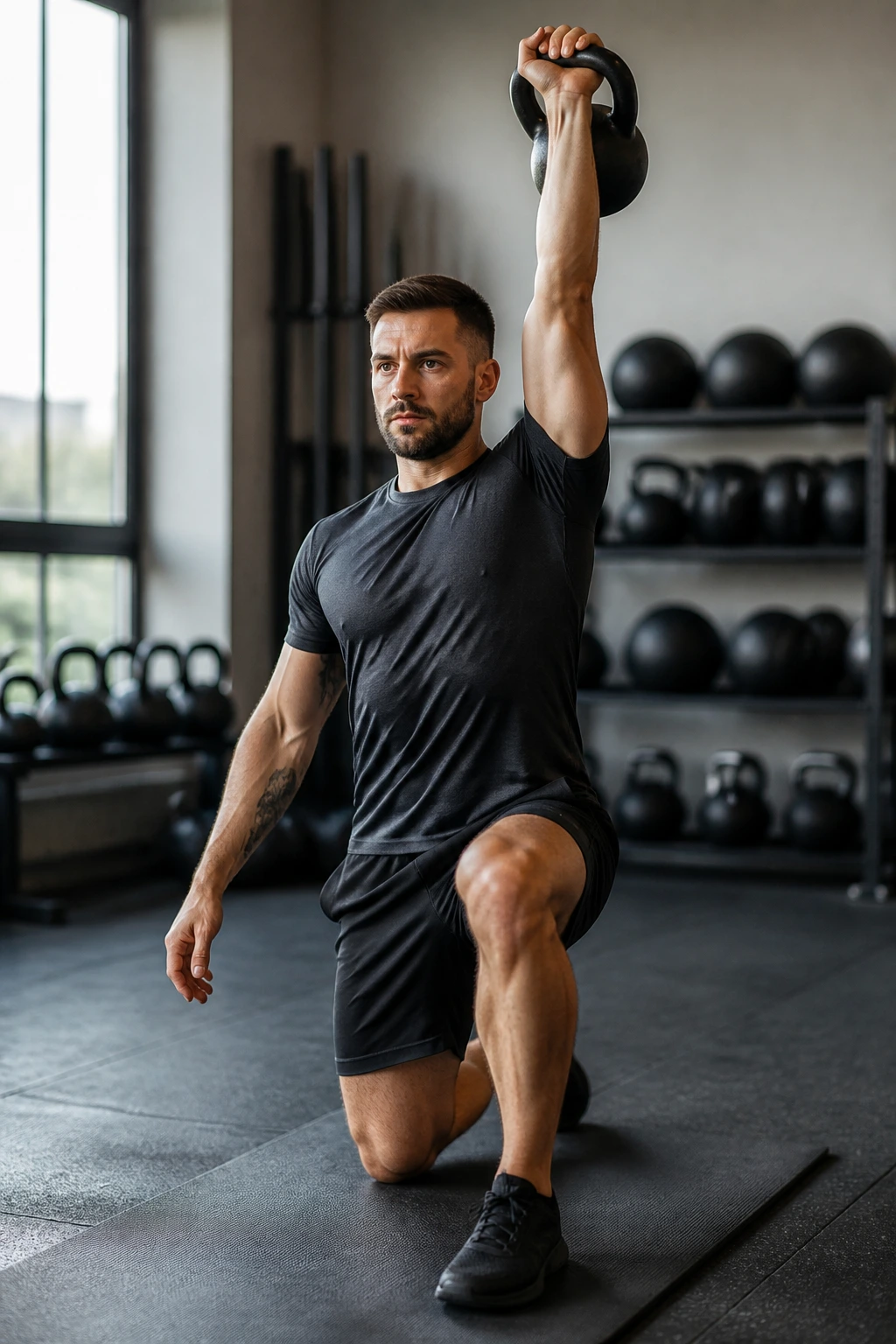
What makes the half-kneeling press so useful is also what makes it annoying: you cannot lean, twist, or throw the lift around.
How to use it
- 5 rounds per side
- 5 strict presses each side
- 15 to 20 seconds between sides
- 30 to 45 seconds after each full round
The kneeling position locks the hips into place, which means the press has to come from the shoulder and the stacked trunk, not a hidden body English trick. If your ribs flare, you will feel it right away.
This is a cleaner shoulder-builder than most people expect. The front knee gives you a little stability, the back knee strips away lower-body cheating, and the overhead path gets very obvious. If you want to move more load, do it slowly. This is one of those sessions where the bell teaches patience whether you like it or not.
10. Turkish Get-Up and Swing Contrast
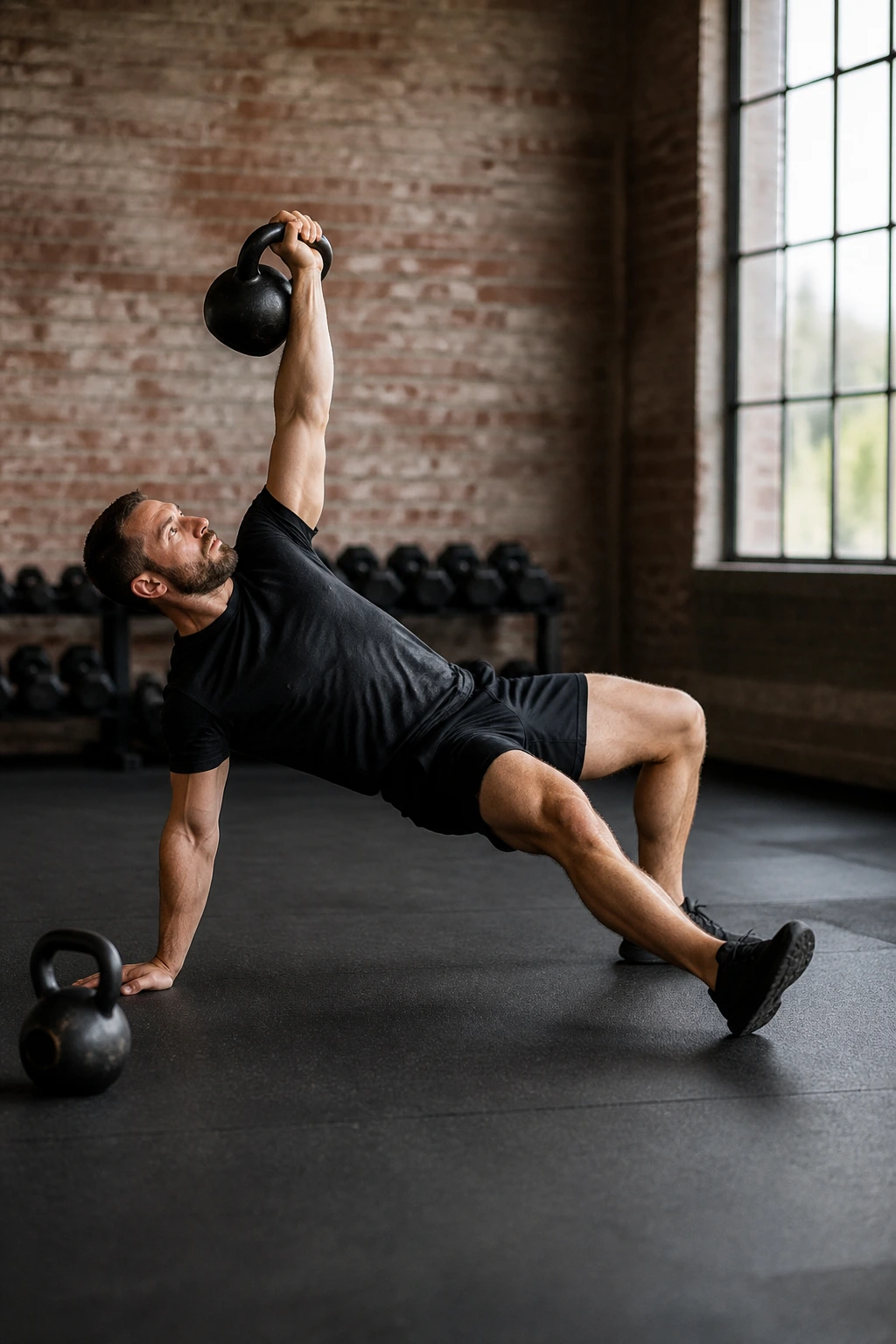
A Turkish get-up by itself is already a strength move. Pair it with swings and the whole thing wakes up.
Do 5 rounds of 1 get-up per side, then 10 swings, then rest 60 to 75 seconds. Keep the get-up smooth and deliberate. The swing part can be fast, but not wild.
The contrast is what makes this session interesting. The get-up reinforces shoulder stability, core control, and hip transitions. The swing gives you an explosive reminder that the hips still need to move like hinges, not hinges with opinions. Use a bell that lets you own each transition. If the get-up starts feeling sketchy at the elbow or overhead bridge, drop the load before you make the movement sloppy.
It is a quiet workout. Then you stand up after round four and realize your whole body has been working harder than the stopwatch made it look.
11. Thruster Minute Rounds for Strength
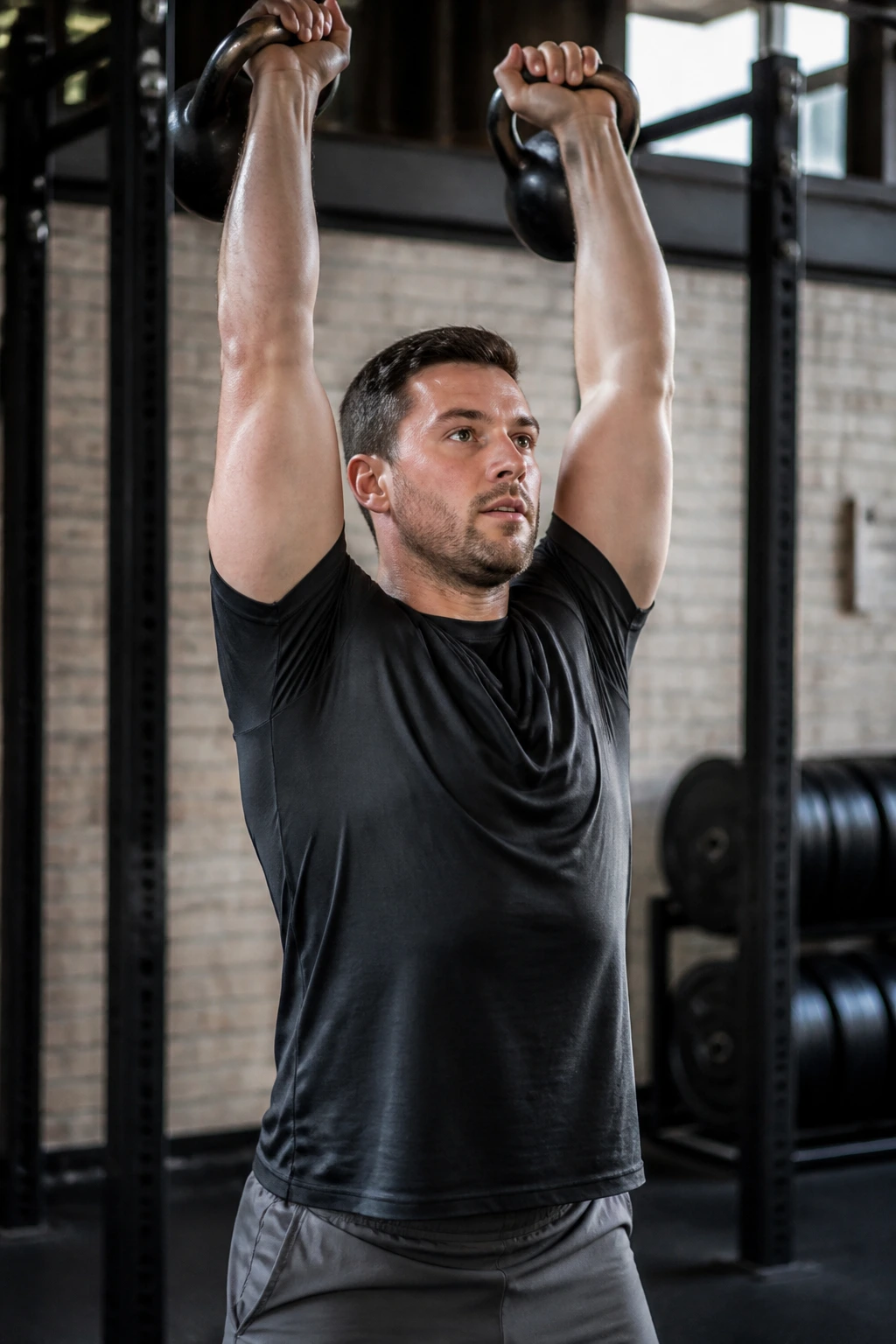
Thrusters are not subtle. They are front squats that turn into overhead work before your breathing can catch up.
Set a timer for 10 minutes and start every minute with 4 to 6 thrusters. Rest with whatever time remains in the minute. If your reps slow down by minute six, cut the set to four and keep the quality sharp.
I like this one for people who want a lot of work in a short block without abandoning strength. The squat loads the legs, the press taxes the shoulders, and the transition forces you to keep the bell close on the way up. If the kettlebell drifts away from your chest, the rep gets harder for the wrong reason.
A small tweak changes the feel a lot: pause for one full breath in the rack before each first rep of the minute. It steadies the torso and cuts down on rushed, half-built thrusters.
12. Farmer Carry and Goblet Squat Circuit
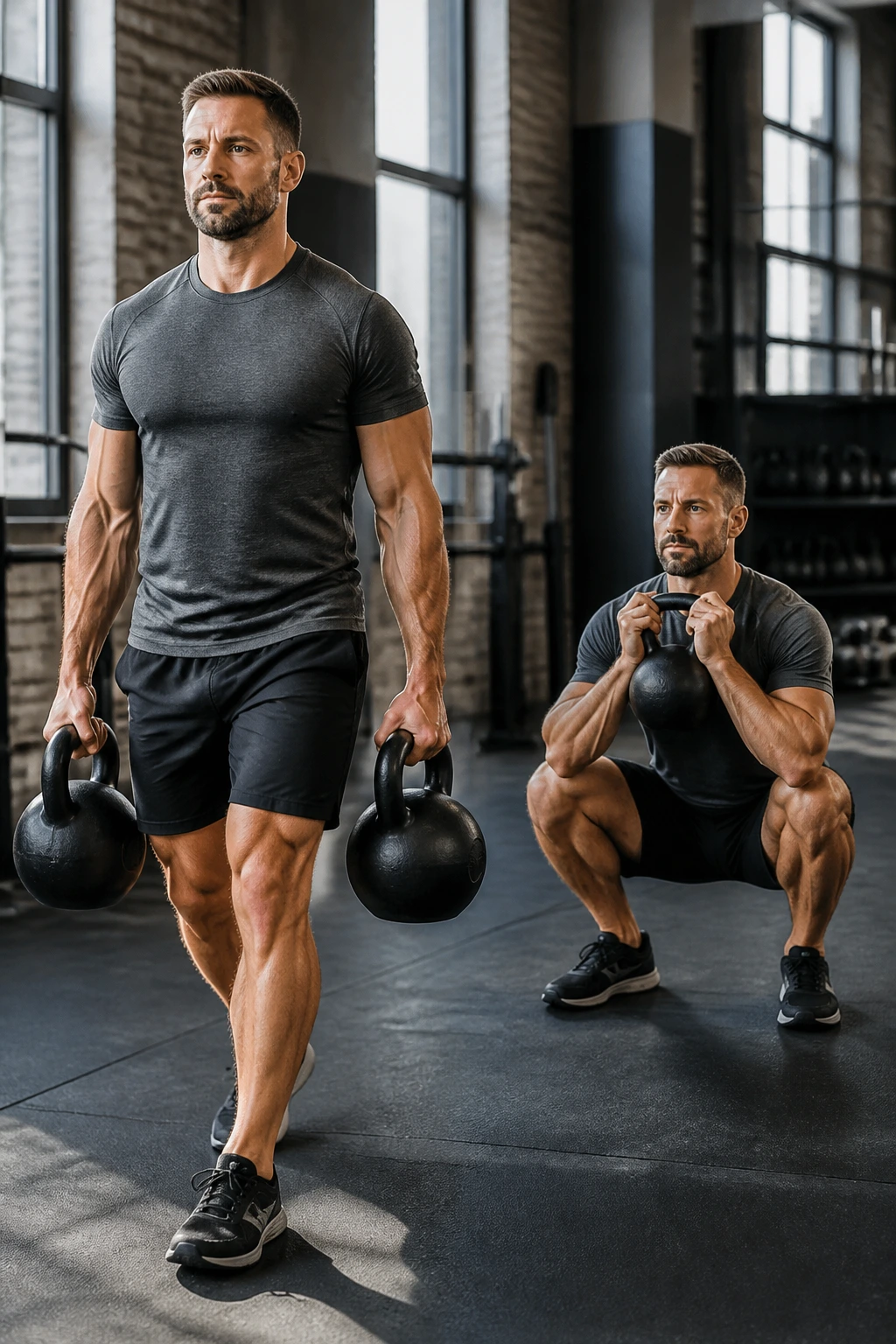
This is one of the simplest strength HIIT circuits you can run, and I mean that as a compliment. Heavy carries make weak bodies confess.
Circuit format
- 4 rounds
- 40 meters farmer carry, or 30 to 40 seconds if space is tight
- 8 goblet squats
- 30 to 45 seconds rest
Use one heavy bell in a suitcase carry if you only have one, or two bells if you want the full farmer version. The carry trains grip, trunk stiffness, and the ability to keep your posture while tired. The goblet squat adds leg work without turning the session into a pure grip contest.
One thing people miss: the carry should look boring from the outside. No leaning. No side-bending. No shrugging into your ears. If the body starts folding around the weight, shorten the distance and keep the rep quality intact. The carry is supposed to build you, not just make your forearms angry.
13. High Pull to Front Squat
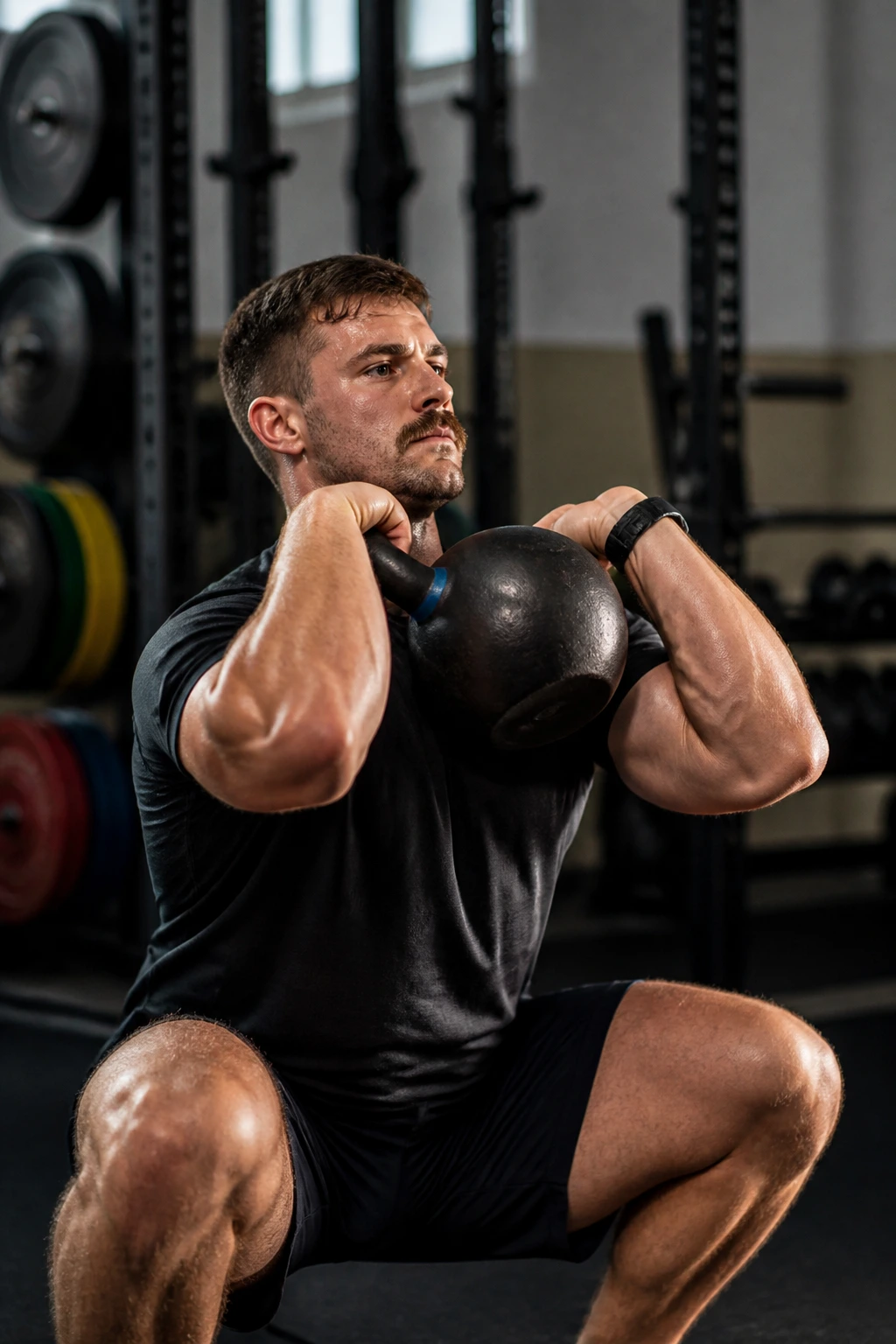
The high pull gets people in trouble when they try to muscle it with the arms. Done well, it is a fast hip snap with the elbows guiding, not dragging.
Run 6 rounds of 6 high pulls and 6 front squats, resting 45 seconds between rounds. Keep the kettlebell close as it rises and finish with the elbow outside the bell, not underneath it. If your shoulder feels pinchy, swap the high pull for a clean.
This session is good when you want a little more upper-back work than swings alone give you. The squat keeps the legs involved, and the short rest keeps it in interval territory. I like the rhythm of it. It feels athletic without being circus-y.
If you are tempted to curl the bell, don’t. The hips should start the move and the hands should stay honest.
14. Single-Leg Deadlift and Row
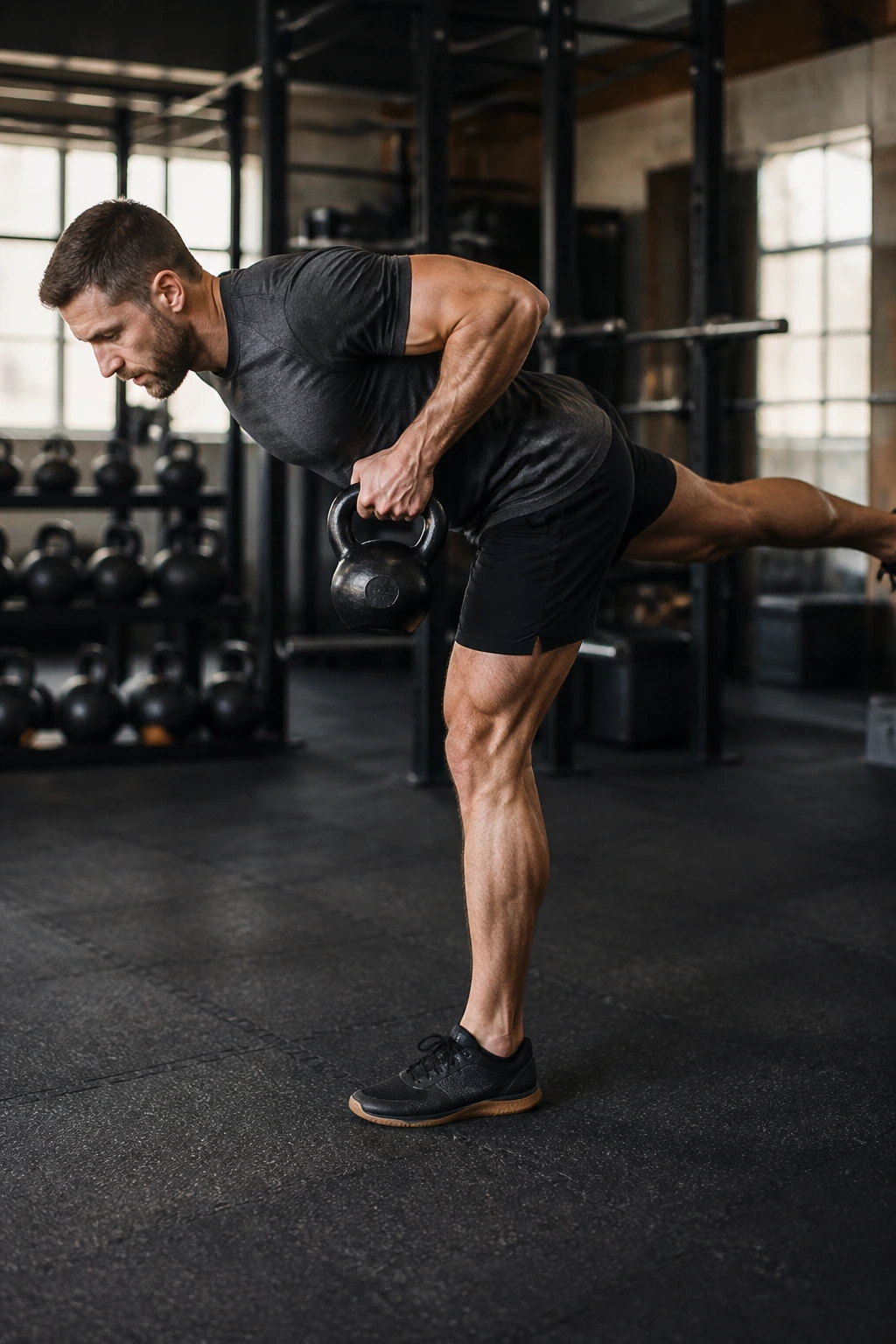
Unilateral work is where a lot of strength gaps show up. One side feels fine. The other side wobbles like it forgot the plan.
How to run it
- 8 rounds total
- 5 single-leg deadlifts per side
- 5 one-arm rows per side
- 30 seconds rest
- Keep the torso square to the floor
The single-leg deadlift teaches balance, hamstring tension, and hip control. The row lets you keep a strength stimulus on the upper body without needing a second station or extra equipment. Together, they make a compact session that feels surprisingly full.
A useful cue: keep the free leg long behind you and the bell path tight under the shoulder. If you rotate open to chase balance, reduce the load. The goal is a clean hinge, not a circus lean. This is one of those workouts that exposes asymmetry quickly, which is annoying for about five minutes and useful for weeks after.
15. Push Press and Swing Contrast
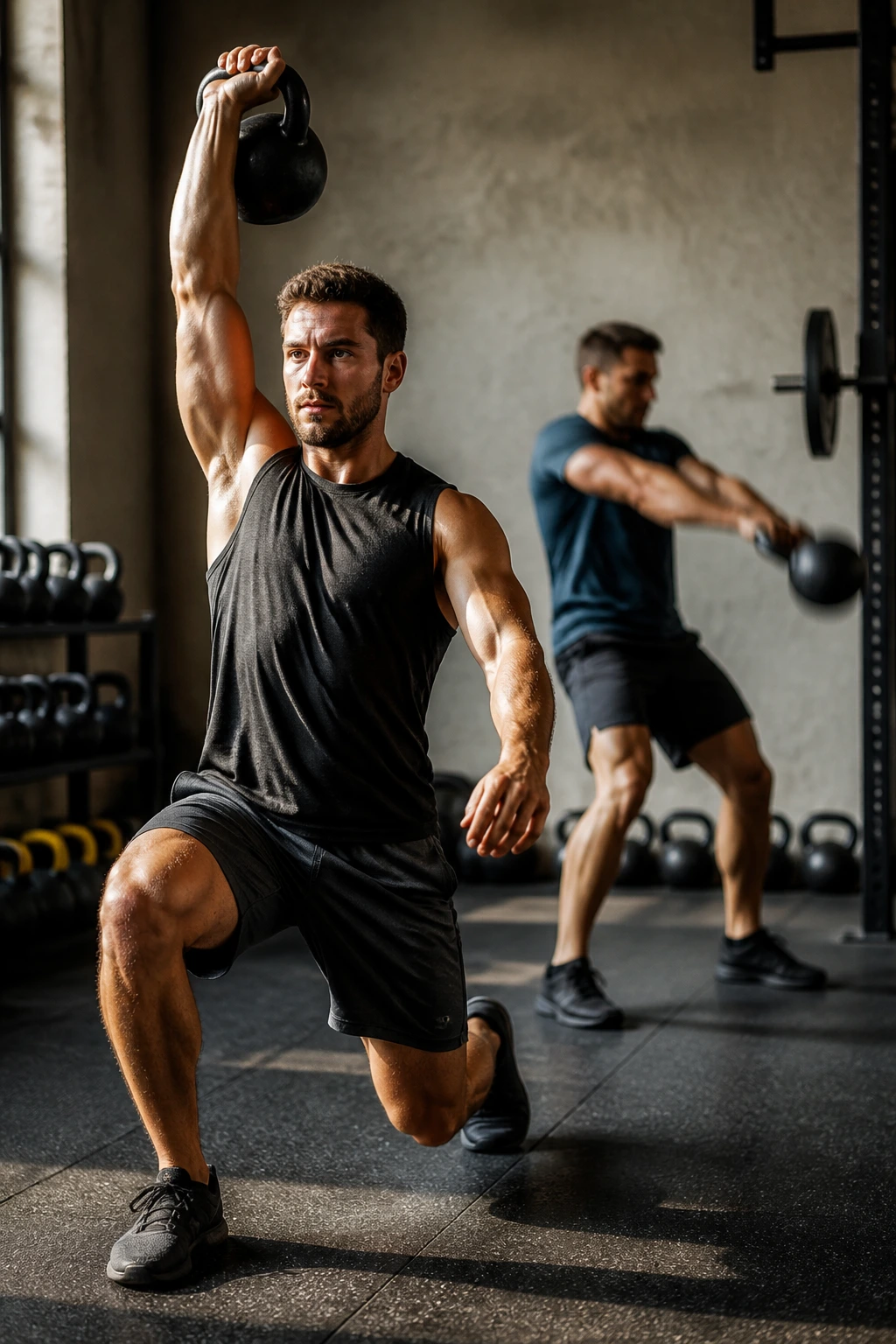
The push press gives you a tiny leg drive and then asks the shoulders to finish the job. Pair it with swings and you get a nice contrast between upper-body power and hip snap.
Do 10 rounds of 3 push presses per side, then 12 swings, then rest 30 to 45 seconds. Keep the press crisp. The dip should be shallow, vertical, and fast. If you sink into a squat, you are using more leg than the movement wants.
The swings after the presses feel different because your trunk is already awake. That is a good thing. The bell should still move from the hips, not from fatigue-based arm flailing. If the presses start to lean back, drop the weight or reduce the reps. The session is supposed to feel athletic, not like a fight with your lower back.
16. Clean to Reverse Lunge Combo
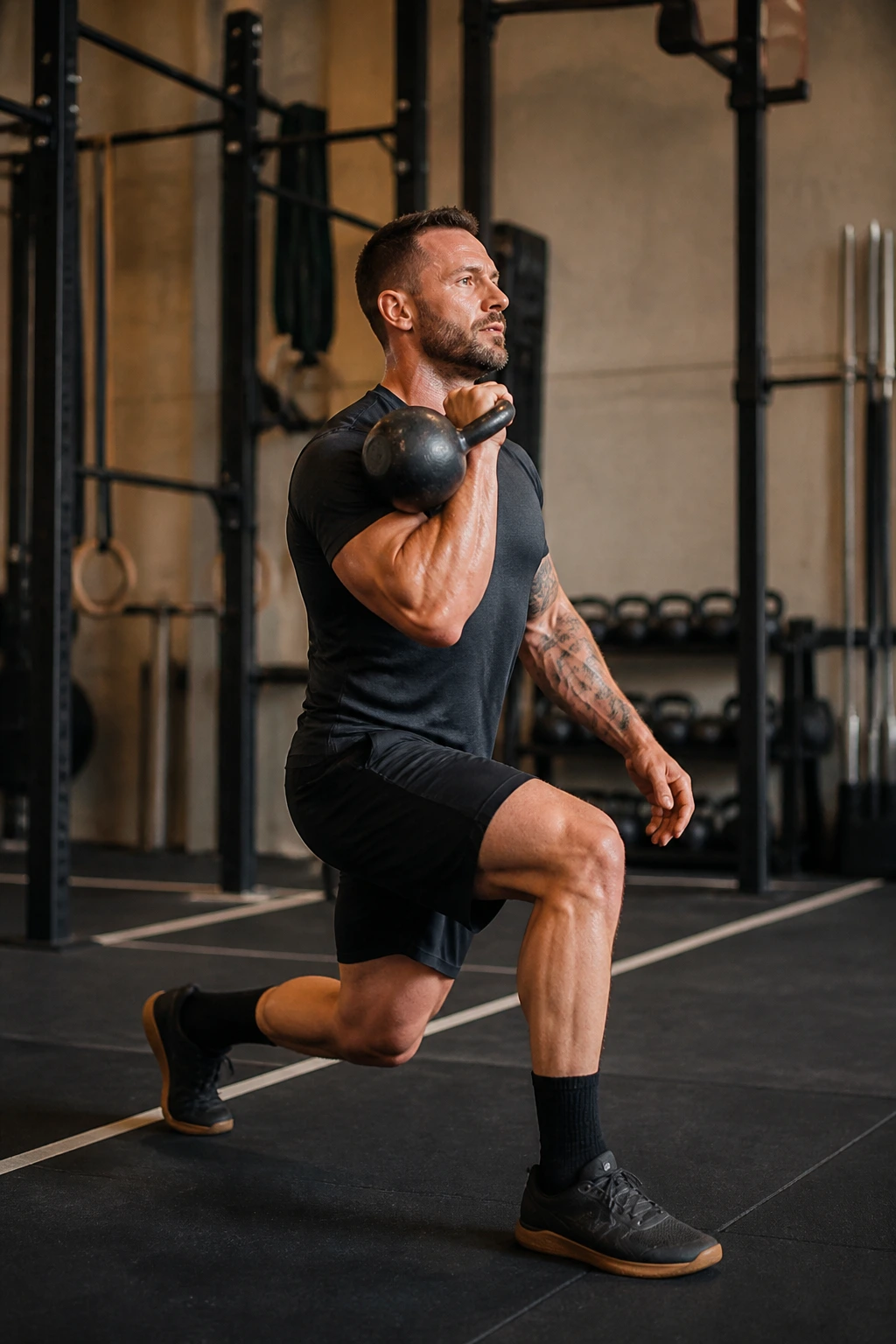
A clean into a reverse lunge is a beautiful little problem. The clean puts the bell in the rack. The lunge asks whether you can keep it there while one leg moves.
Use 5 rounds of 4 cleans per side and 4 reverse lunges per side, resting 45 seconds after each round. Keep the torso tall through the lunge. The front foot stays planted, the rack stays firm, and the bell does not drift.
This pattern is especially useful if your front rack collapses when things get hard. The lunge forces you to stay stacked while the legs work. That makes it a sneaky core session too. If you want more challenge, hold the rack on the same side for the lunges after your clean and resist the urge to twist.
It is not a flashy workout. It is a tidy one. I like tidy under fatigue.
17. Bottoms-Up Carry Intervals
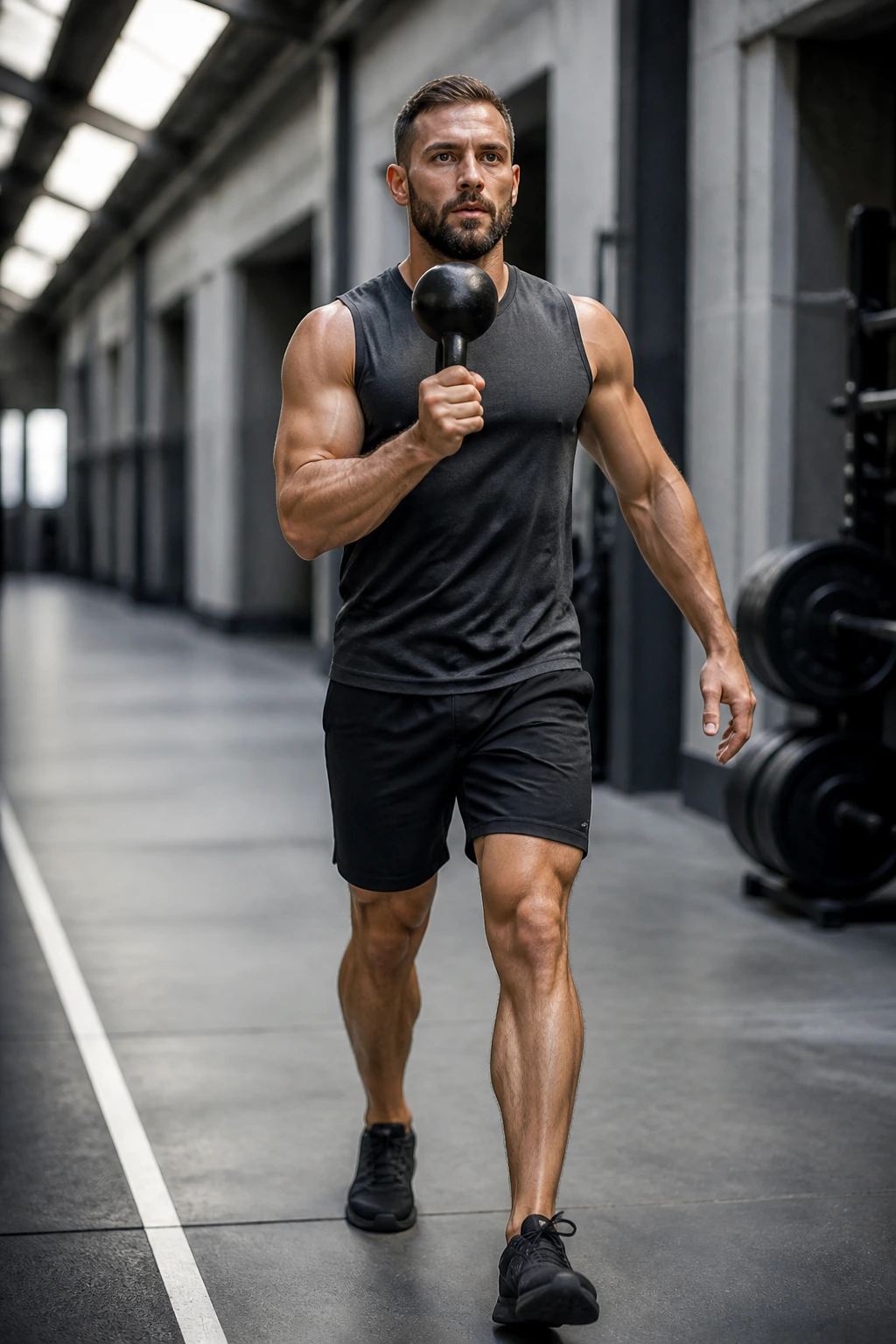
Bottoms-up work is humbling in the best way. The bell turns into a balance problem, and your shoulder has to get serious about stability.
Load and distance
- 6 rounds
- 20 meters bottoms-up carry right side
- 20 meters bottoms-up carry left side
- 6 goblet squats
- 45 seconds rest
Use a light bell here. Lighter than your ego wants. If the bell starts wobbling overhead or your wrist bends back, stop and reset. The whole point is to build control in the wrist, elbow, and shoulder while still keeping the session dense enough to count as HIIT.
The goblet squats after the carries keep the legs honest and give the grip a different job to do. This one is especially nice for lifters who spend too much time in one plane of motion. It changes the angles and forces the upper body to stay awake.
18. Halo, Squat, and Press Flow
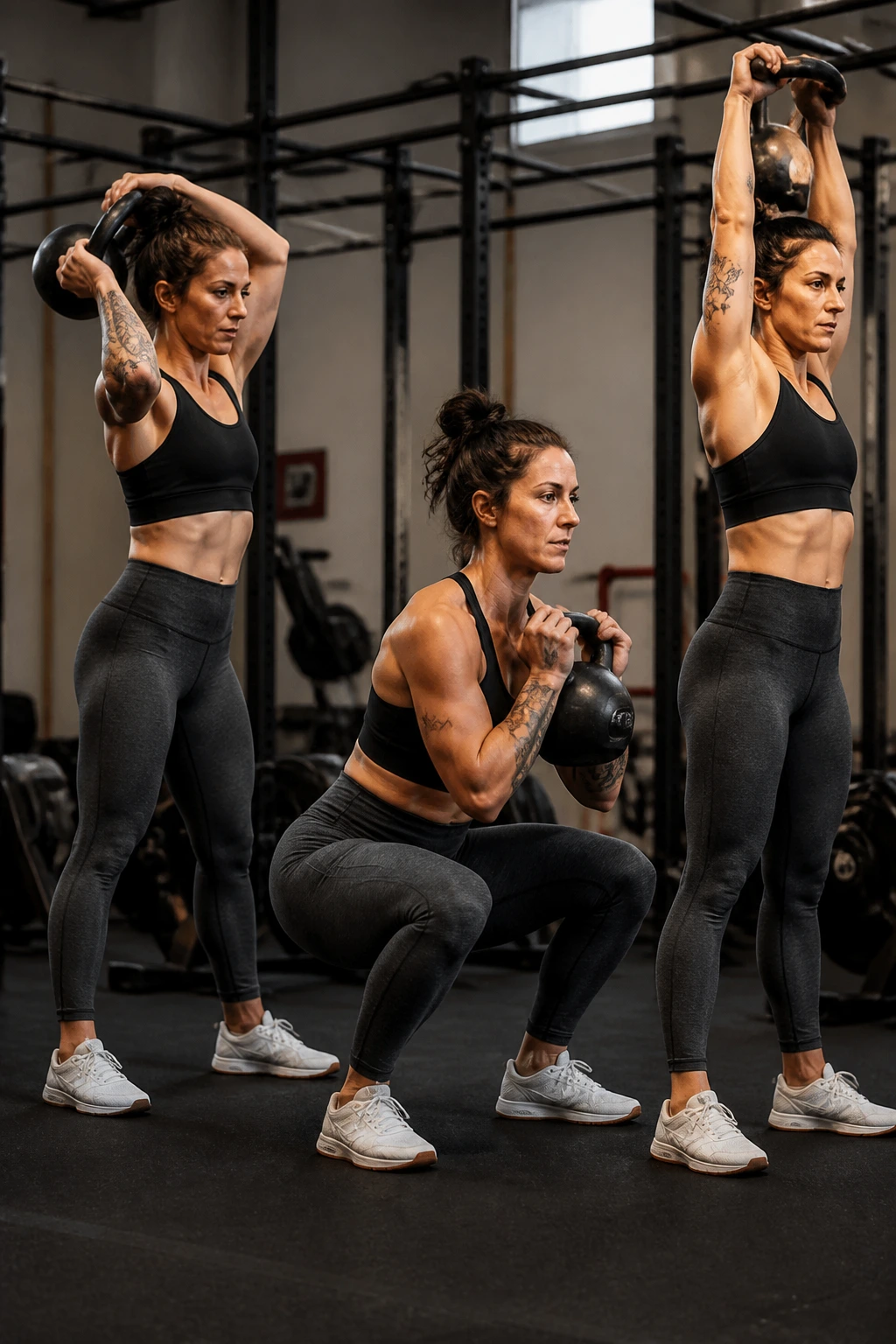
This is the closest thing on the list to a full-body reset that still counts as work. It feels smoother than the harder sessions, but do not mistake smooth for easy.
Flow format
- 4 rounds
- 6 halos each direction
- 8 goblet squats
- 5 presses per side
- 60 seconds rest
The halo warms the shoulders and teaches the bell to move around the head without making a scene. The goblet squat keeps the lower body involved. The press finishes the job and reminds you to keep the ribs tucked instead of flaring open.
I like this one early in the week or after a rough session, especially if the shoulders feel a little sticky. The movement quality matters more than speed here, but the short rest still keeps it inside the HIIT lane. You should finish each round feeling worked, not wrecked.
19. Rack March and Swing Repeat
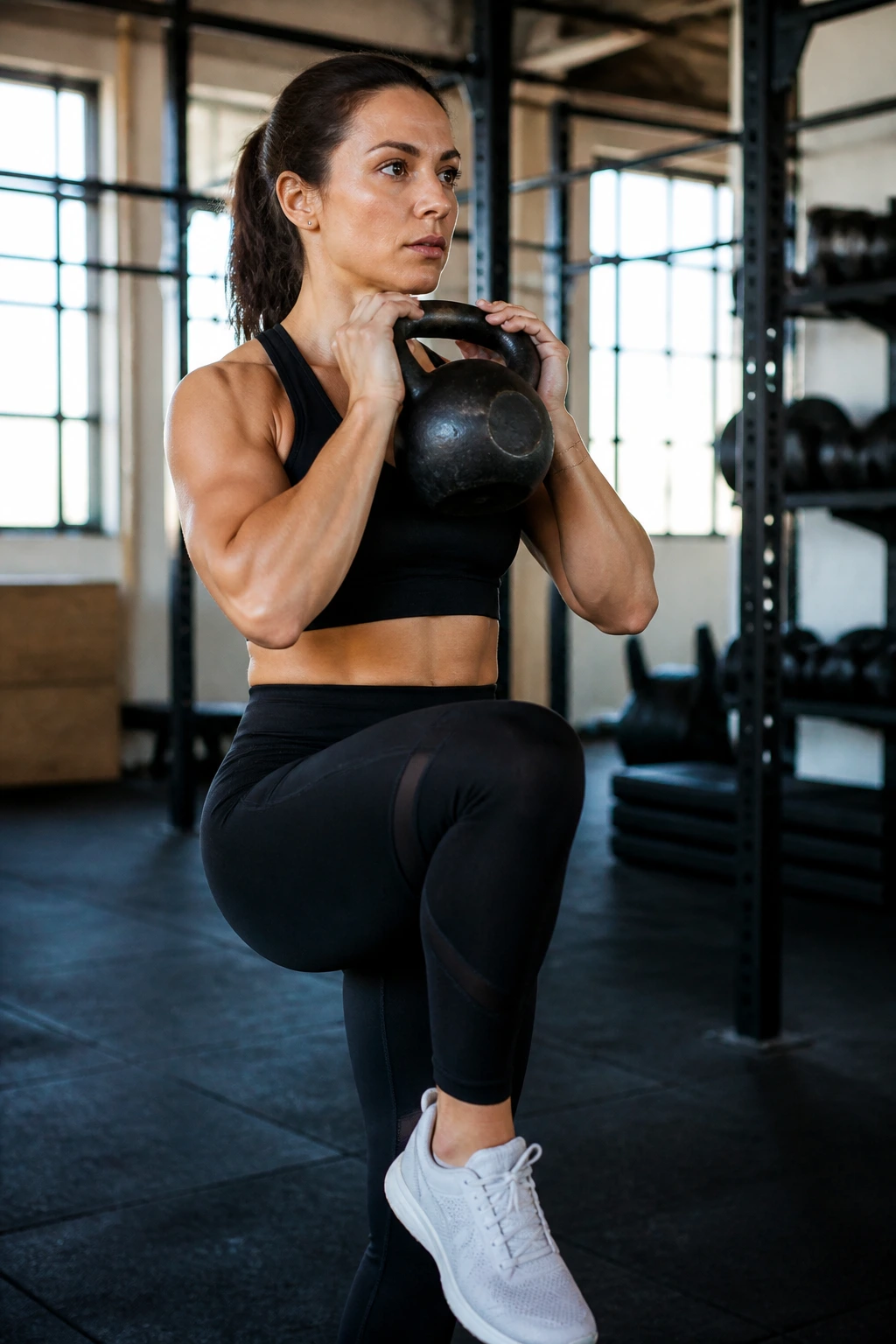
A marching rack looks boring until you hold one heavy bell at chest height and try to stay still. Then every tiny flaw in your core gets louder.
Do 8 rounds of 30 seconds of rack march, then 30 seconds of swings, then 30 seconds rest. Switch sides on the next round if you are using a single kettlebell. Keep the march controlled. The feet should stay under the hips, the rib cage should stay stacked, and the free hand should not flap around trying to help.
This is a weirdly good conditioning drill because it trains stability under a load, then immediately asks for power. That change of gear is the whole game. If you keep the rack position tight, the swings feel faster. If you loosen up, the whole thing falls apart. Honest work.
20. Lateral Lunge and Press Circuit
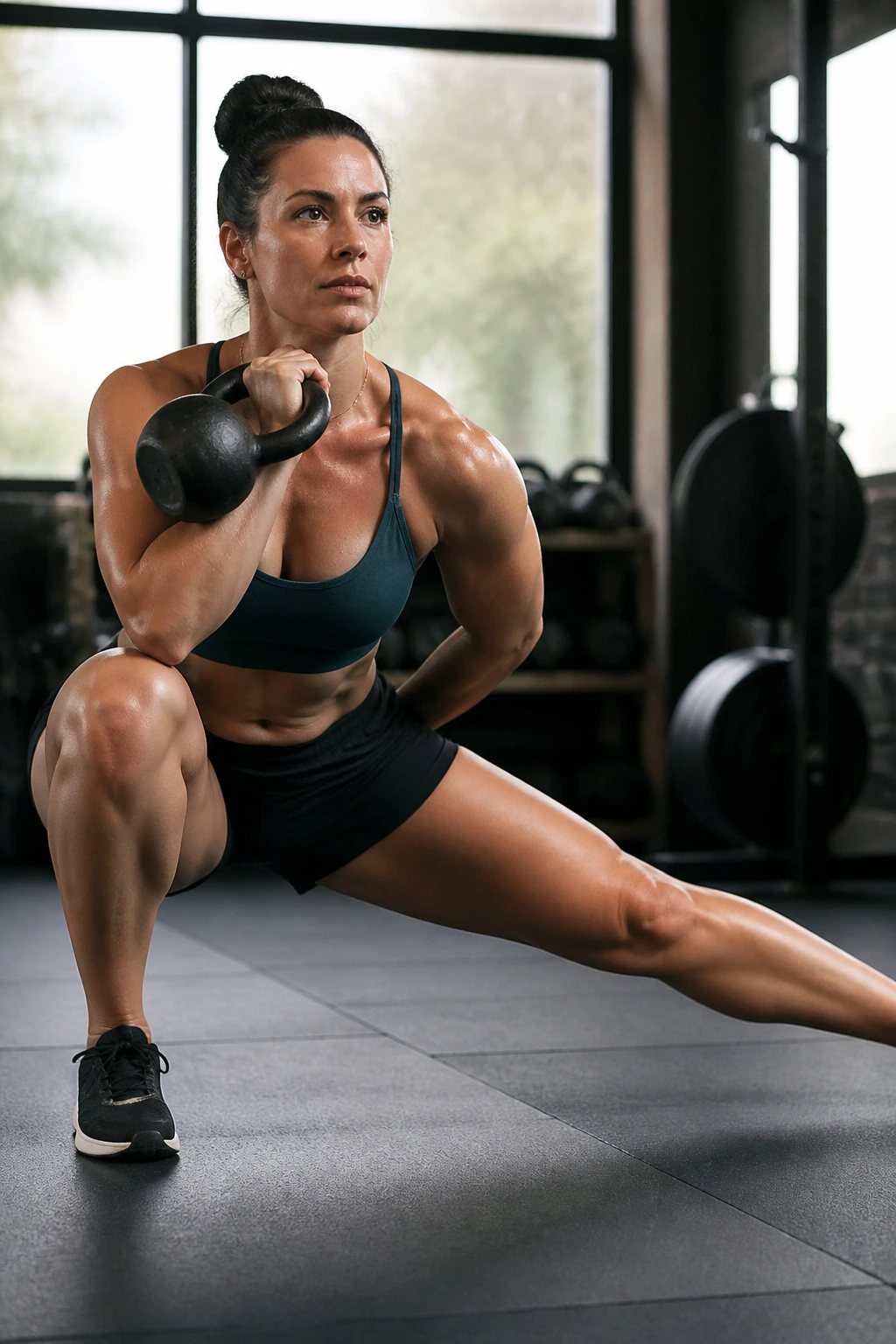
Most people live in forward-and-back patterns. Side-to-side strength fixes a lot more than people expect.
How to use it
- 5 rounds
- 5 lateral lunges per side
- 5 strict presses per side
- 10 seconds to reset between exercises
- 45 seconds rest after each round
The lateral lunge hits the adductors, glutes, and hips from an angle that squats miss. Pairing it with a press makes the core work harder because the body has to stabilize across planes, not just front to back. That is where this session earns its keep.
Use a lighter bell than you would for squats or swings. Side lunges get ugly when the load gets greedy. Keep the stepping leg flat, sit back into the hip, and drive off the floor with intent. Then press the bell without letting the torso lean like it is reaching for a doorknob.
21. Burpee to Dead Clean Finisher
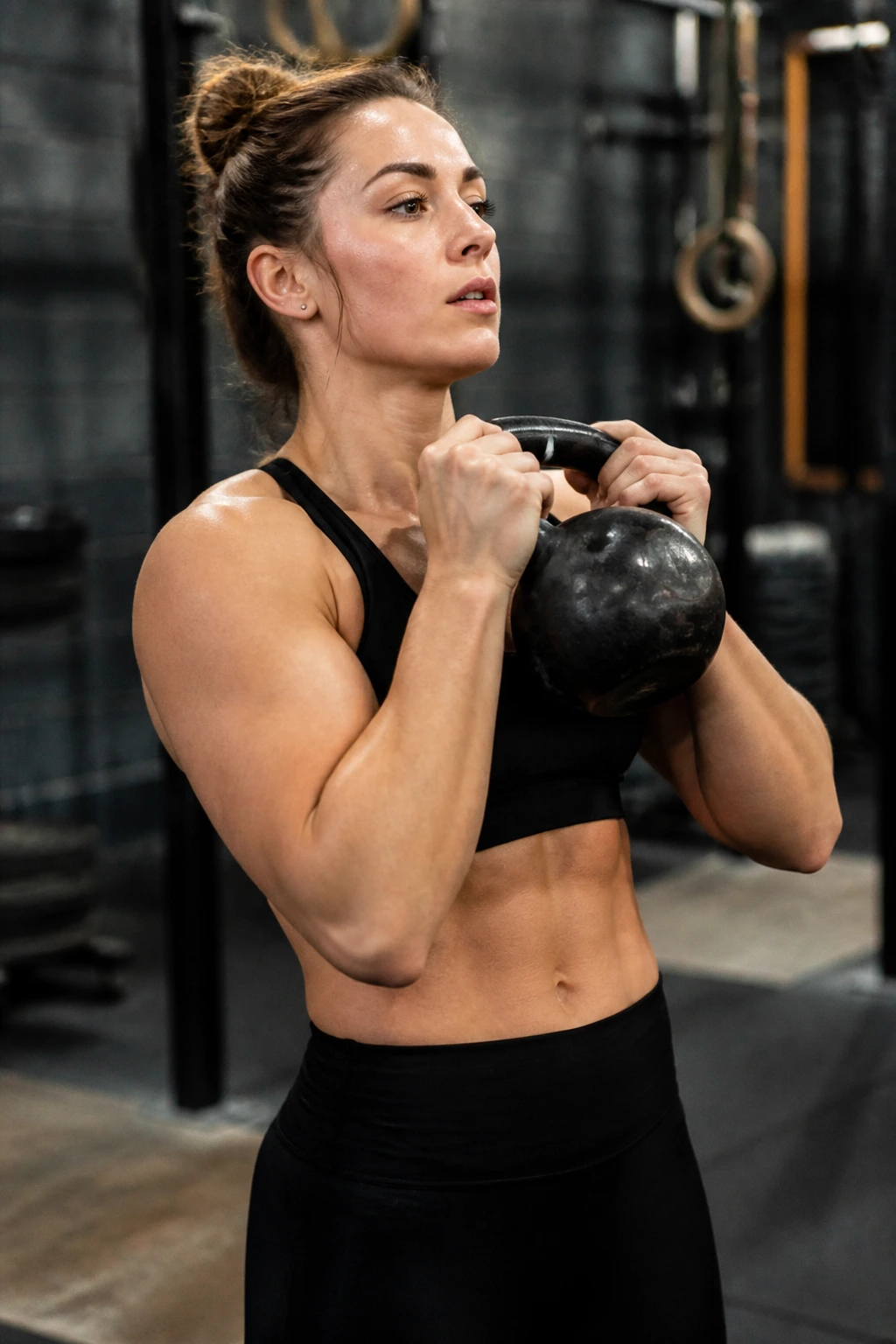
This one is short, sharp, and a little rude. It belongs at the end of a session, not at the start unless you enjoy bargaining with gravity.
Set a timer for 8 rounds of 20 seconds work and 40 seconds rest. In each work window, perform a burpee, stand up, and dead clean the bell once or twice with crisp form. Use a lighter bell. The dead clean starts from the floor, so the setup matters more than speed.
The burpee spikes the heart rate fast. The clean forces you to regain posture under fatigue. That sequence is sneaky because it does not let you coast. If your back rounds on the dead clean, slow down and reset the hinge. There is no prize for frantic reps with a crooked spine.
22. Double Bell Deadlift Sprint
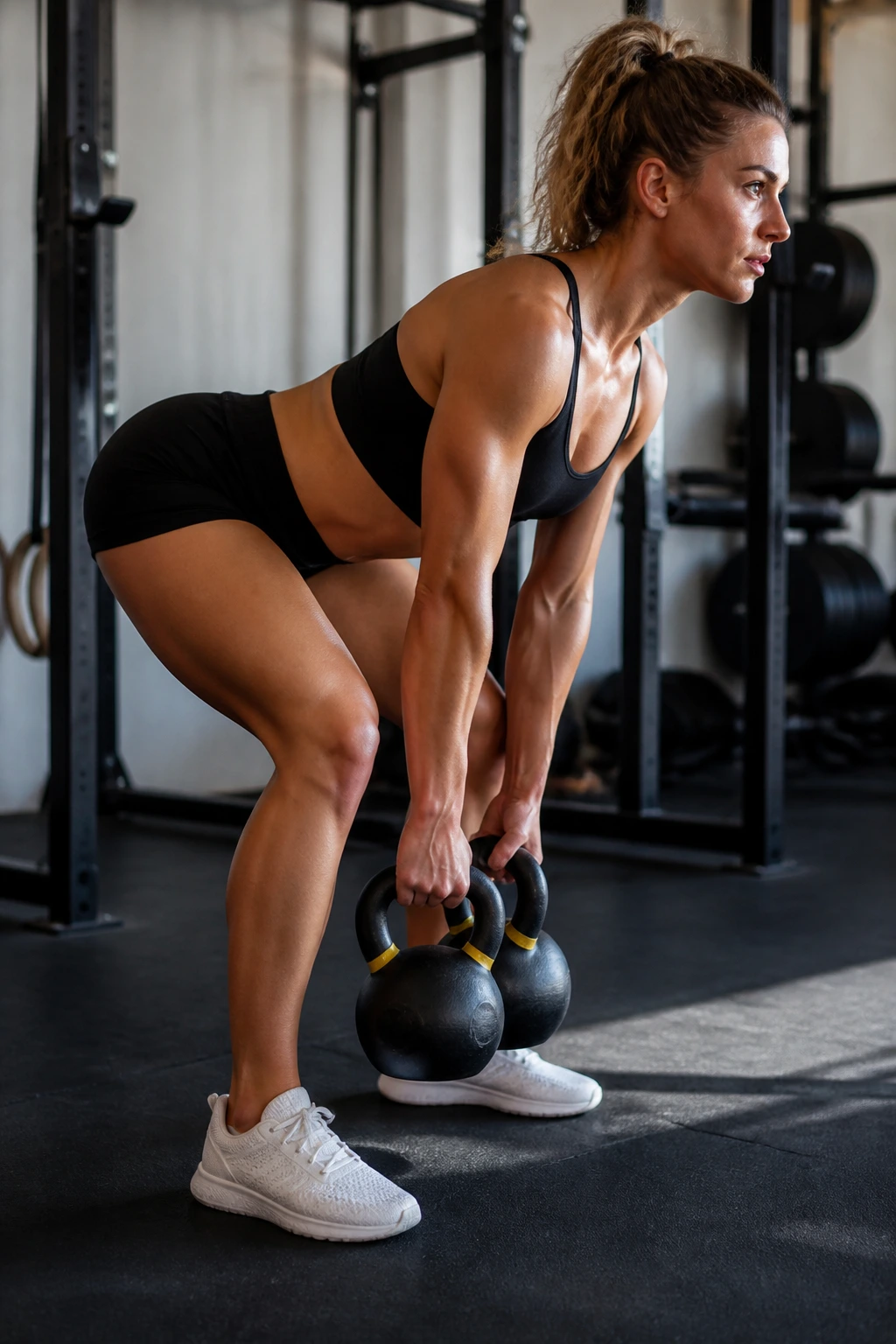
Heavy deadlifts belong in interval work more than people think. When the load is respectable and the reps stay clean, the result is dense strength work without long, empty rest.
What to do
- 6 rounds
- 10 to 12 double kettlebell deadlifts
- 20 to 30 seconds rest
- Optional: 10-second front rack hold after each set
The deadlift is the simplest bell move on this list, and that is exactly why it belongs here. You can go heavier, focus on the floor, and push the legs hard without giving up form. If you add the rack hold after the set, the upper back gets a bonus lesson in stiffness.
The temptation is to speed through the setup. Don’t. Own the hinge, set the shoulders, then stand with intent. If the bells drift forward, the lift turns into a lower-back tug-of-war. Keep them close. Keep them quiet.
23. Box Squat and Swing Combo
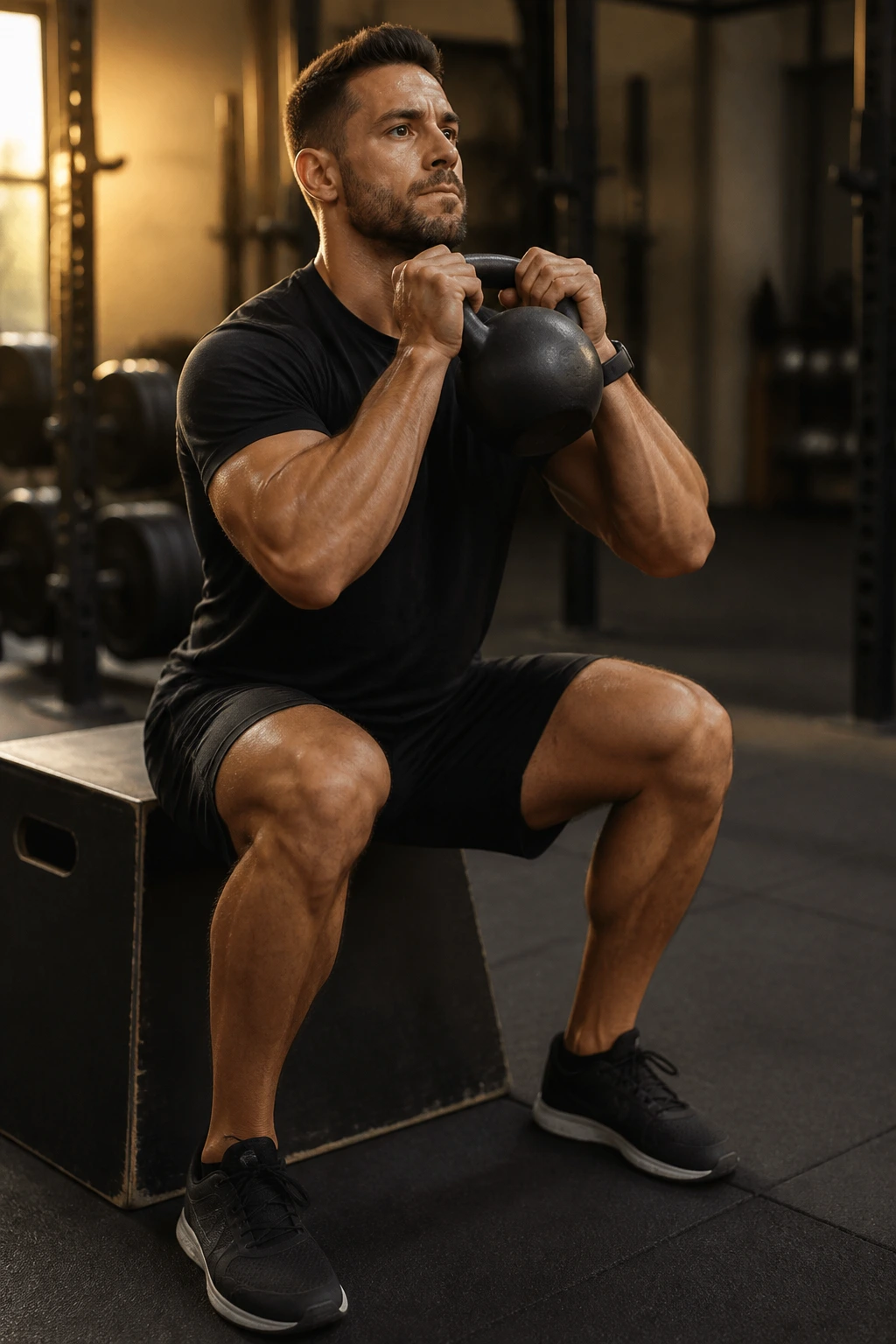
Box squats with a kettlebell are useful because the box gives you a clear target and stops the rep from turning into a random sit-back. Pair them with swings and the hinge gets even cleaner.
Do 5 rounds of 8 box squats and 15 swings, then rest 45 to 60 seconds. Use a box or bench that puts your thighs just below parallel if your mobility allows it. Sit back with control, pause lightly on the box, and stand without rocking.
The swings after the squats remind you that the hips can still move fast after a hard leg set. That contrast is the whole reason I like the pairing. If the squat becomes a flop onto the box, raise the height a little and fix the pattern before chasing load. Fast reps are useless if they are messy.
24. Renegade Row and Clean Combo
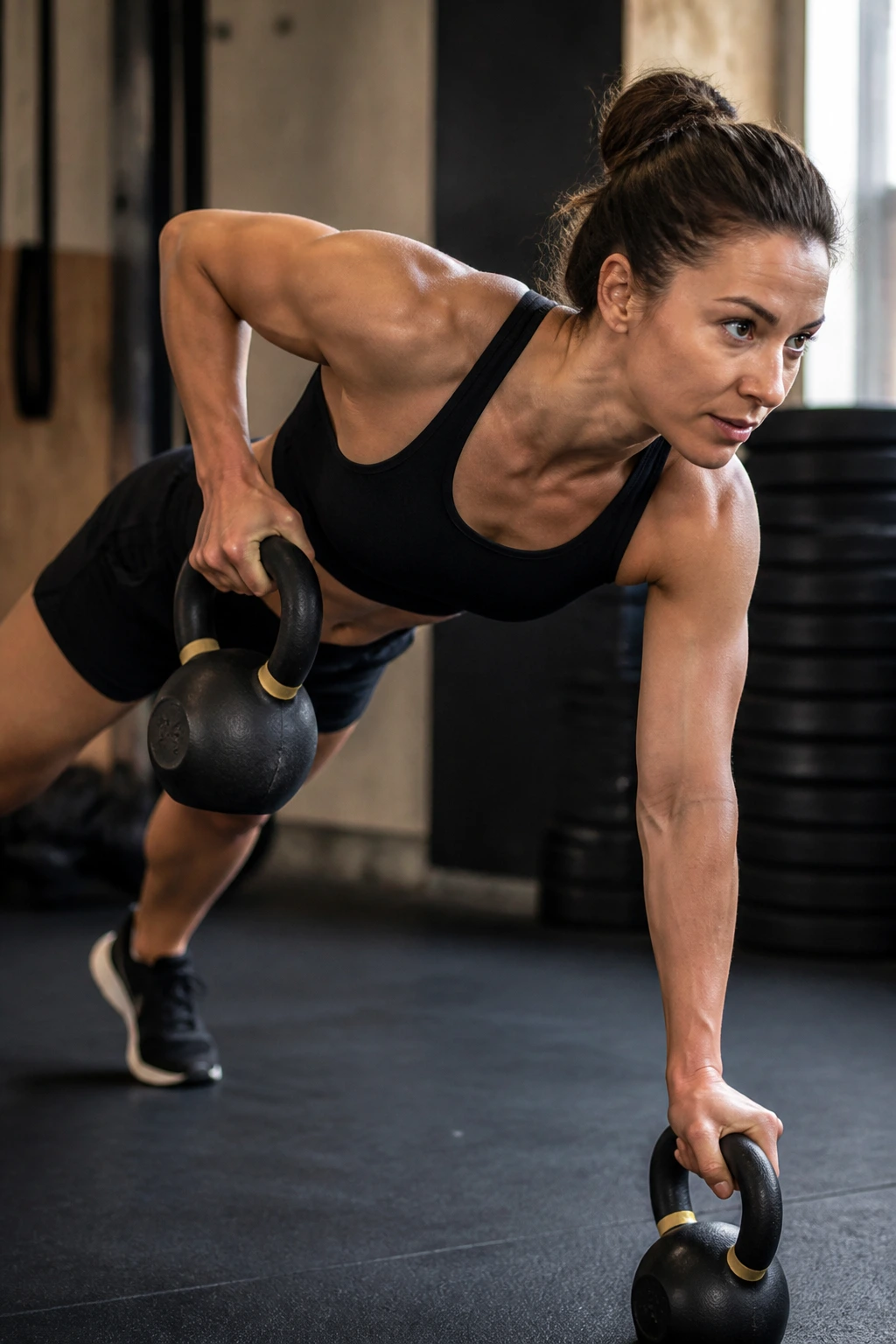
This one is a core test disguised as a strength circuit. The row demands anti-rotation. The clean demands timing. Together they make your trunk do a lot of work.
Structure
- 5 rounds
- 4 renegade rows per side
- 4 cleans per side
- 60 seconds rest
Keep your feet a little wider than you think you need. That base helps you avoid rocking all over the floor. The row should stay controlled, with the hips square and the bell moving straight up. Then the clean finishes with a tight rack and a quiet catch.
If renegade rows irritate your wrists or shoulders, do them from a higher incline on a bench. There is no medal for using a floor version that grinds your joints. The goal is a strong midsection and clean pulling mechanics, not a photo of suffering.
25. Benchmark Complex for Strength
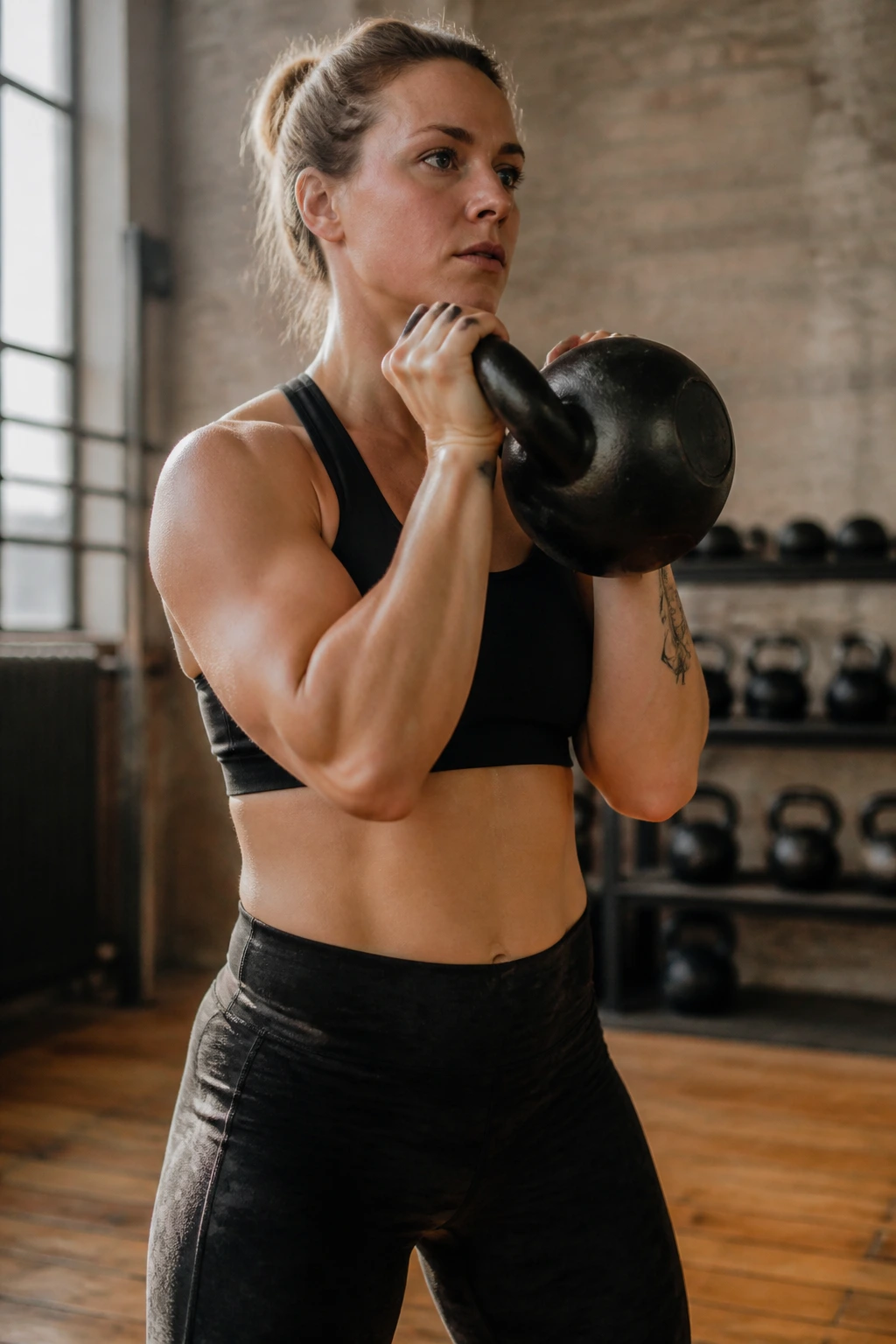
This is the session I would use to test whether the rest of the plan is actually doing anything. It is simple enough to remember and hard enough to respect.
Run 5 rounds of:
- 5 swings
- 5 cleans
- 5 front squats
- 5 push presses
- 20 meters farmer carry, or 30 seconds if space is tight
Rest 60 to 90 seconds between rounds. Use one bell if that is what you have, or a matched pair if you are comfortable moving heavier iron. Keep the same load for every movement. That makes the weak link obvious, which is useful information.
The swings wake up the hinge. The cleans set the rack. The squats load the legs. The push presses check the shoulders. The carry ties the whole thing together. If you can keep the last round looking almost as tidy as the first, you picked the right load. If not, back off and earn the right to go heavier next time.
A final note: the best kettlebell HIIT workouts for strength are the ones you can repeat next week without dreading the first rep. Keep the bell honest, keep the rest short, and keep the reps sharp. That combination beats random suffering every time.
