



A single kettlebell can do a lot of damage to your lungs when you use it well. That is the whole appeal of kettlebell HIIT workouts at home: one tool, a small patch of floor, and a clock that doesn’t let you loaf around.
The best part is that you do not need a giant setup to make this work. A bell, a timer, and enough room to swing without kissing a lamp is plenty. The hard part is choosing the right pace. Go too light and the session feels like busywork. Go too heavy and your form starts drifting by round three, which is usually where people get stubborn and make things worse.
I’ve always liked kettlebell conditioning because it rewards clean movement instead of random thrashing. Swings, cleans, presses, squats, carries, get-ups — those patterns show up again and again because they actually earn their keep. They hit the hinge, the legs, the shoulders, the grip, and the trunk without forcing you to bounce around like you’re trying to outrun your own heart rate.
Pick a weight that lets you move sharply. If you can swing for 15 crisp reps, press for 5 controlled reps per side, and carry it for 30 seconds without leaning like a crooked fence post, you’re in the right neighborhood. A quick warm-up — 10 hip hinges, 5 halos each way, 10 bodyweight squats, maybe a few dead bugs — is enough to wake things up. Then the work starts for real.
1. Kettlebell HIIT Swing Sprint
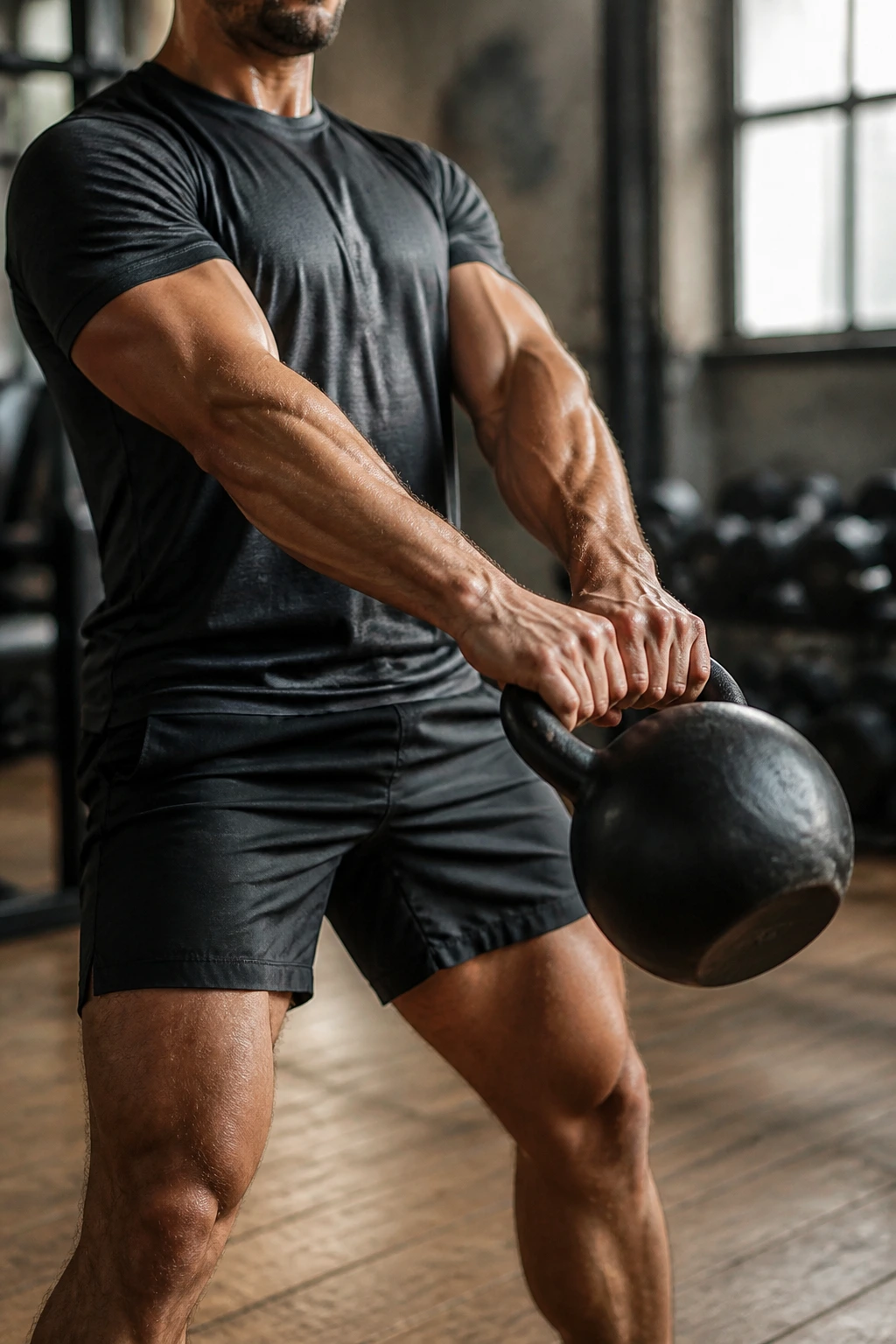
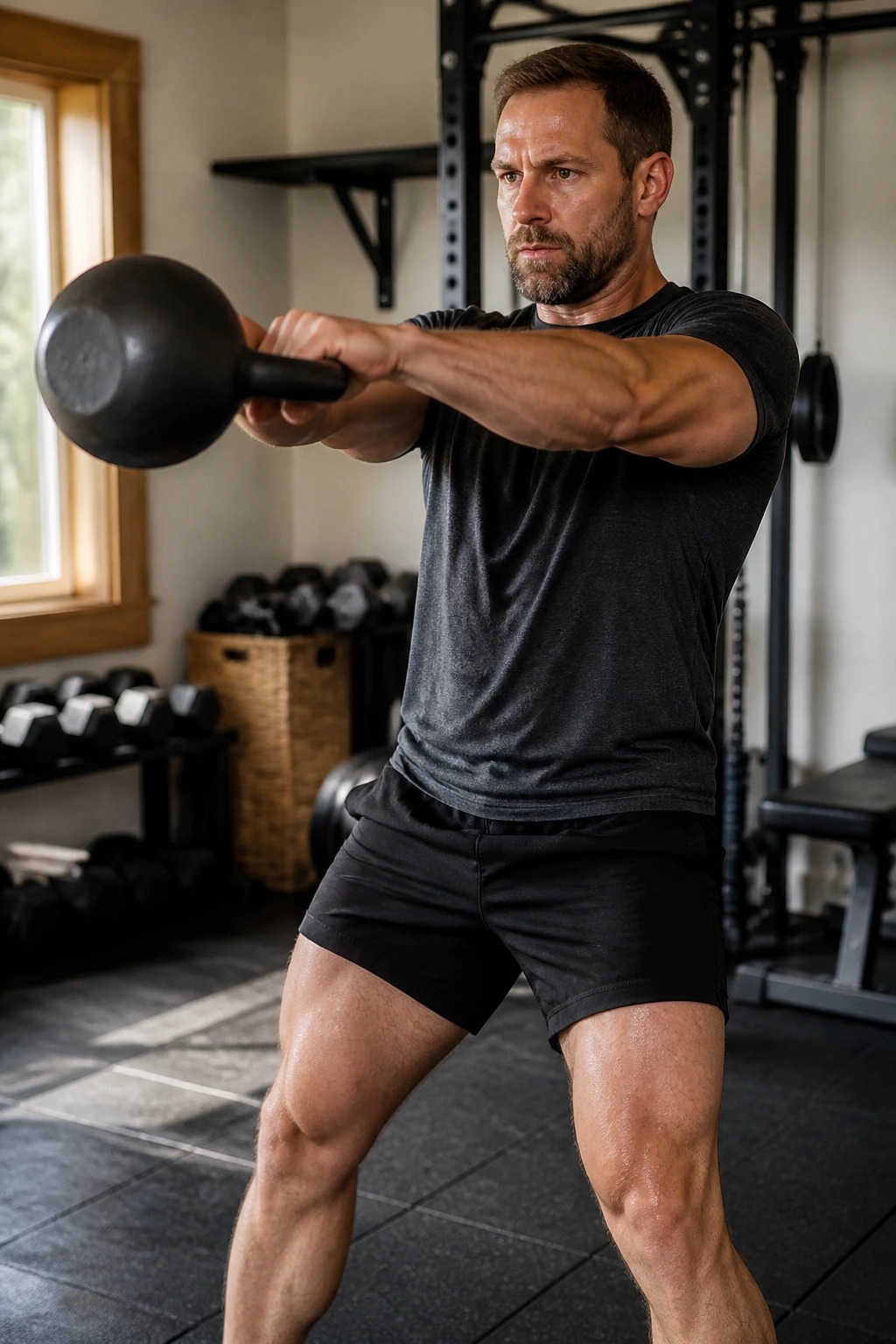
This is the cleanest place to begin because it strips the workout down to the part that matters most: hip drive. You are not muscling the bell up with your shoulders. You’re snapping the hips, bracing hard, and letting the kettlebell float.
Format: 10 rounds of 20 seconds hard / 40 seconds easy
Move: Two-hand swings
How to run it
- Hinge back with the bell slightly in front of you.
- Snap the hips, stand tall, and let the bell rise from the power of the swing.
- Breathe out sharply at the top.
- Rest long enough to keep the next set crisp.
The magic here is that the work is short enough to stay sharp, but long enough to make you sweat through your shirt by round four or five. If your shoulders start doing the job of your hips, stop and reset. That is not a character flaw. It’s just a sign the set has gone past useful.
Best cue: the bell should feel like it’s being flicked, not lifted.
2. Clean-and-Press Ladder
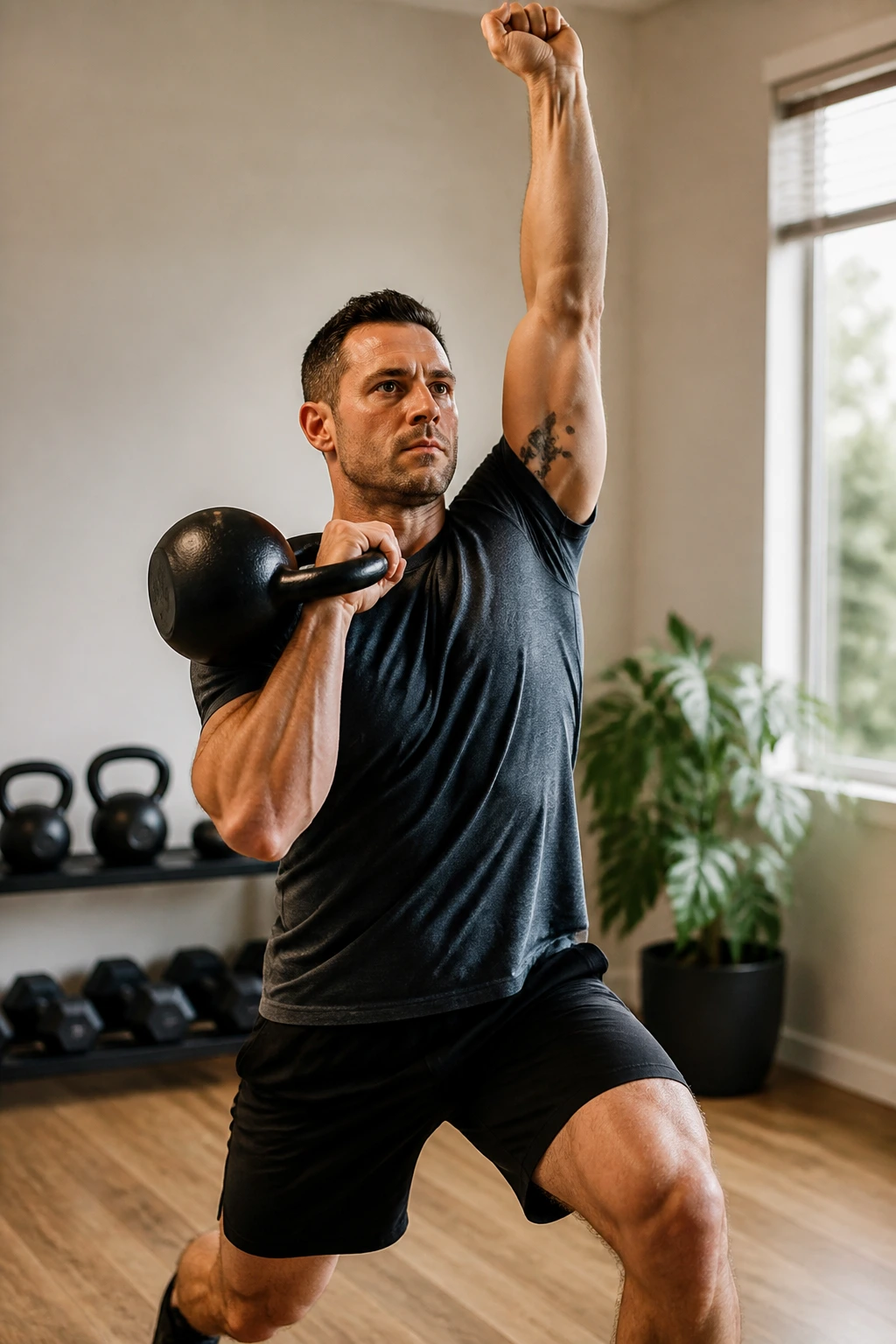
A clean-and-press ladder looks calm on paper and turns rude in real life. That’s why I like it. You build up one rep at a time, and every rung asks for a little more focus than the last one.
Pattern: 1 clean and press per side, then 2 per side, then 3, up to 5, and back down if you want more volume
What makes it different
The ladder format forces you to respect fatigue instead of rushing through it. On the early rungs, the bell feels tidy. By the time you reach 4s and 5s, your rack position and shoulder control have to hold up or the whole thing gets messy.
Take 30 to 45 seconds between rungs, or longer if your breathing is still ragged. That pause is not wasted time. It’s what keeps the presses clean and your lower back from trying to steal the show.
How to use it
- Keep the clean tight and quiet.
- Rack the bell on the forearm, not floating in front of the chest.
- Press with a straight line overhead.
- Lower under control.
If you want a kettlebell HIIT workout at home that feels more strength-biased than swing-heavy, this is a strong pick. It’s work. Real work.
3. Tabata Squat and Push Press
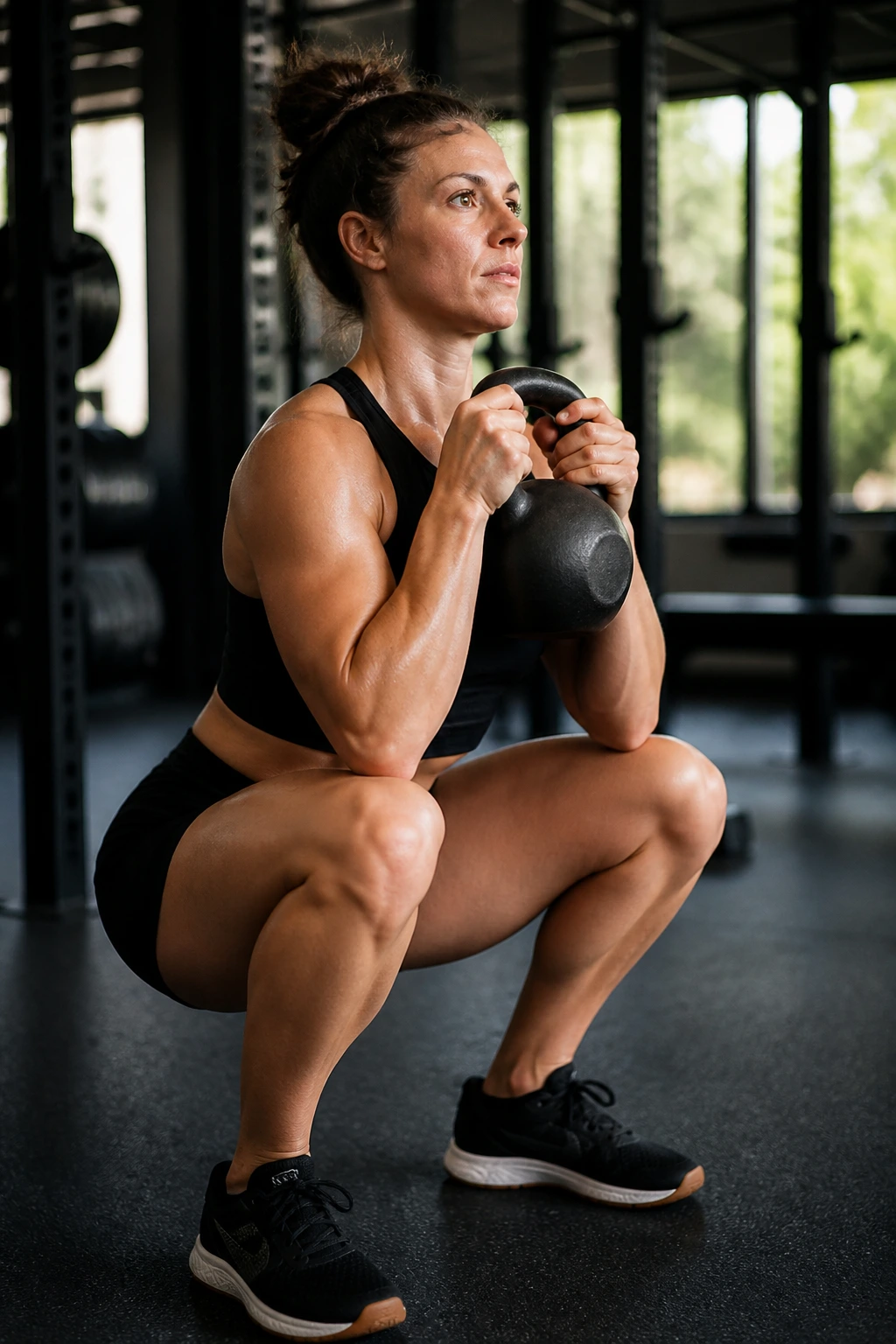
Tabata gets thrown around a lot, and most people turn it into a sloppy race. That’s the wrong way. The point is hard effort in a tiny window, not frantic repetition with bad depth.
How it works
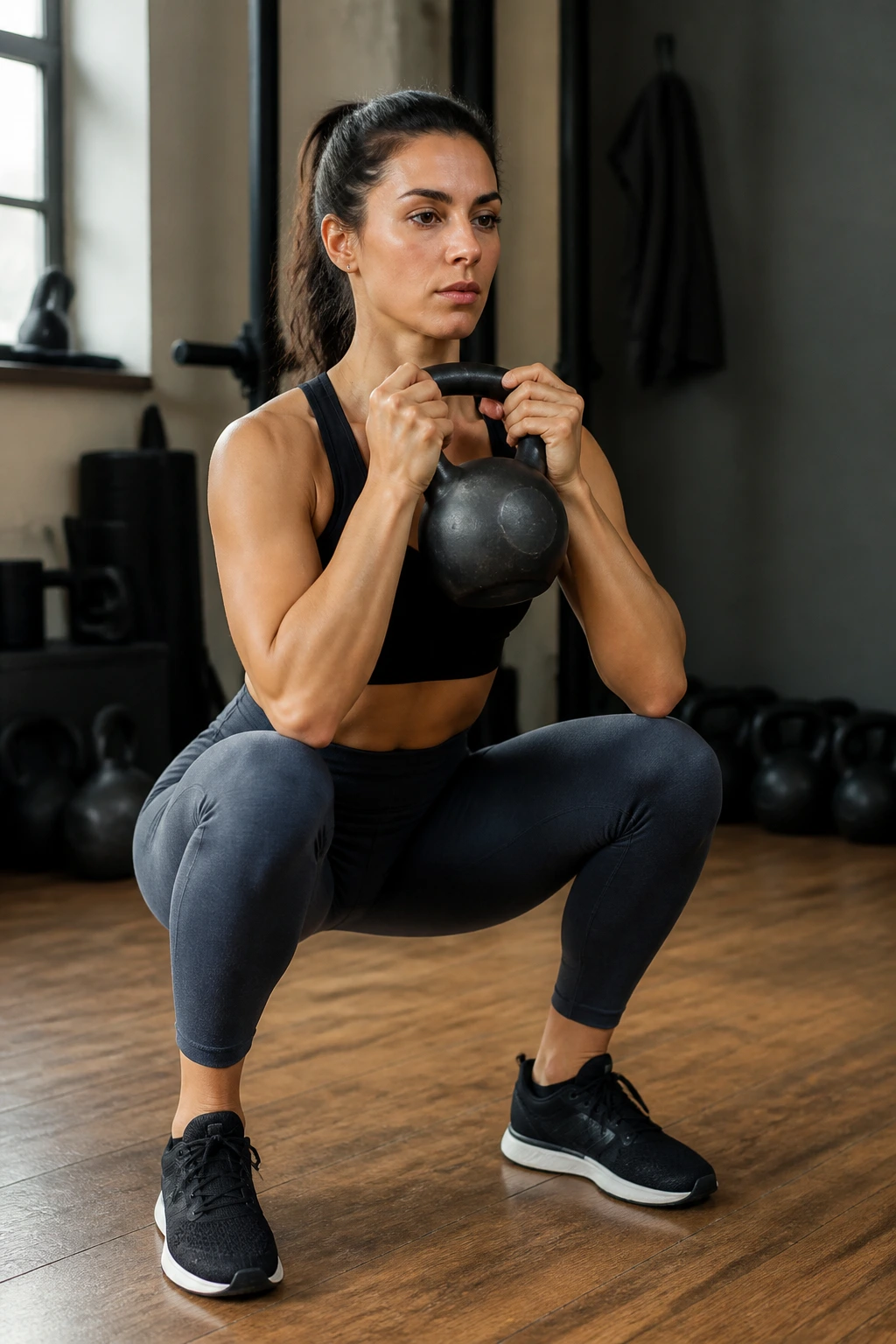
Alternate goblet squats and push presses for 8 total rounds of 20 seconds on / 10 seconds off. Use squats for the first four rounds, presses for the next four, or alternate each round if you prefer a little more variety.
The goblet squat keeps the torso honest. The push press gives your legs a say in the overhead work, which matters when the bell gets too heavy for a strict press. Both movements are simple, and simple is good here.
What to watch for
- Squats should hit consistent depth.
- Keep the elbows inside the knees on the bottom.
- On the press, dip straight down; don’t turn it into a forward bow.
- Stop a set early if the bell starts drifting behind your head.
A short workout like this can feel sneaky. You finish in a flash, but your breathing tells the real story.
4. Reverse Lunge Row Burner
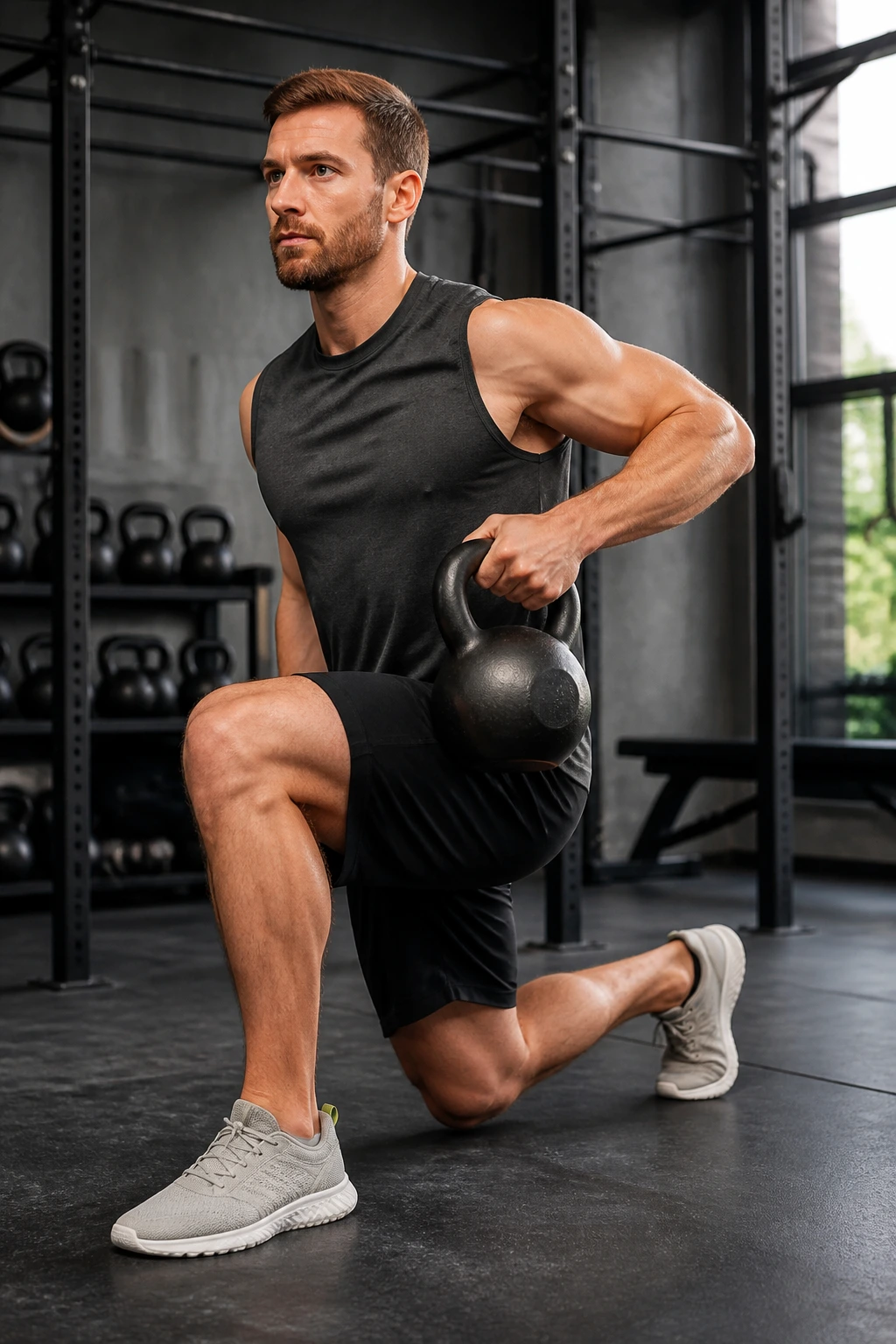
You don’t need jumping to make a home workout hard. You need tension, balance, and a little bit of honesty. This one gives you all three.
A good use case
Picture a day when your legs feel flat and your back wants some attention without being hammered. Reverse lunges and rows solve that cleanly. The lunge wakes up the hips. The row hits the upper back and grip. Together they create a workout that feels athletic without turning the room into a demolition zone.
Format: 4 rounds of 45 seconds work / 15 seconds rest
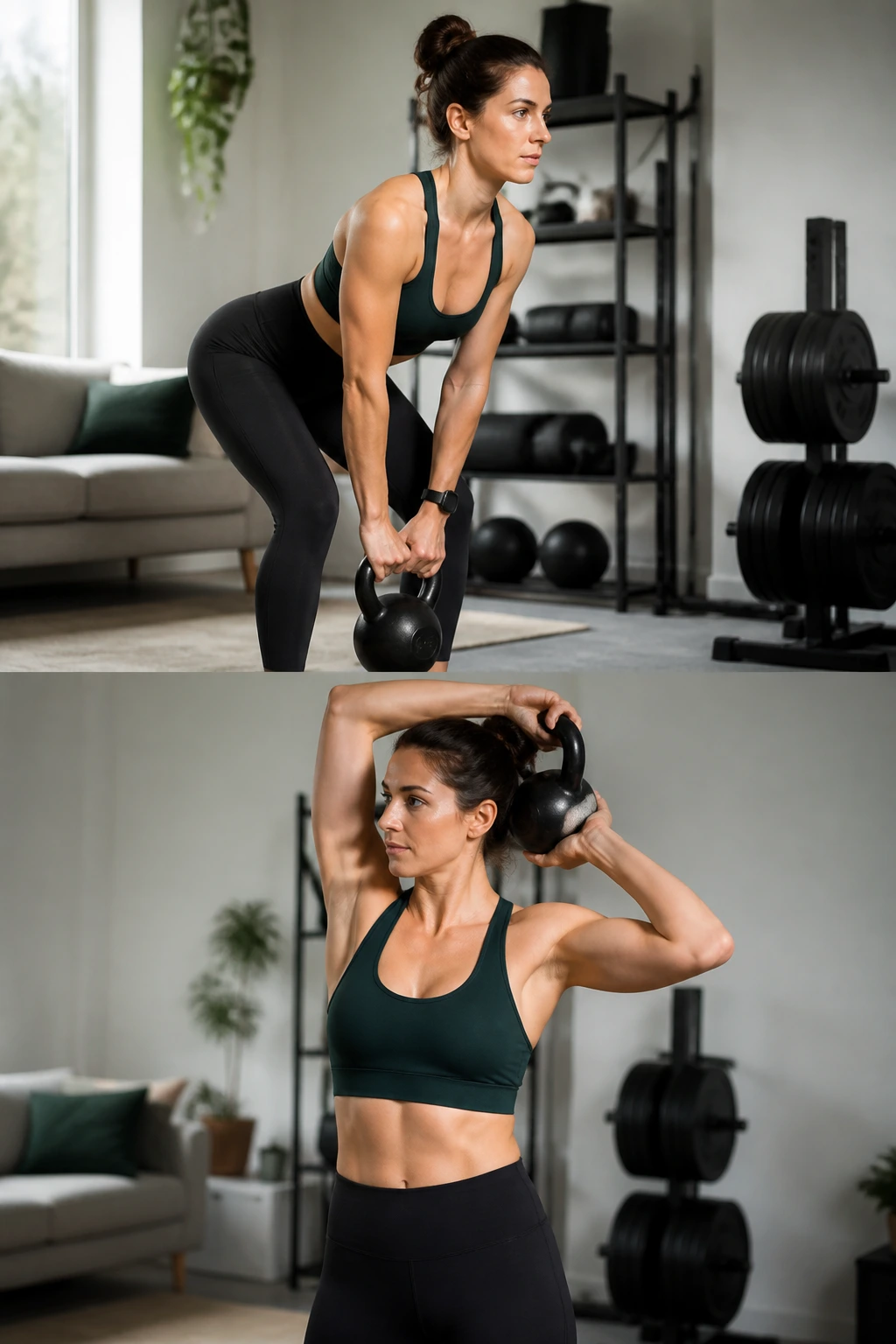
Moves: Reverse lunge with goblet hold, then bent-over row
Key details
- Step back softly, not long and wobbly.
- Keep the front heel planted.
- Row from the hip hinge, not the lower back.
- Alternate sides each round if you’re doing single-arm rows.
If you’ve been doing a lot of forward-facing cardio, this is a nice change of pace. It still raises the heart rate, but the rhythm is more controlled. Quietly brutal. That’s the charm.
5. Turkish Get-Up and Swing Pairing
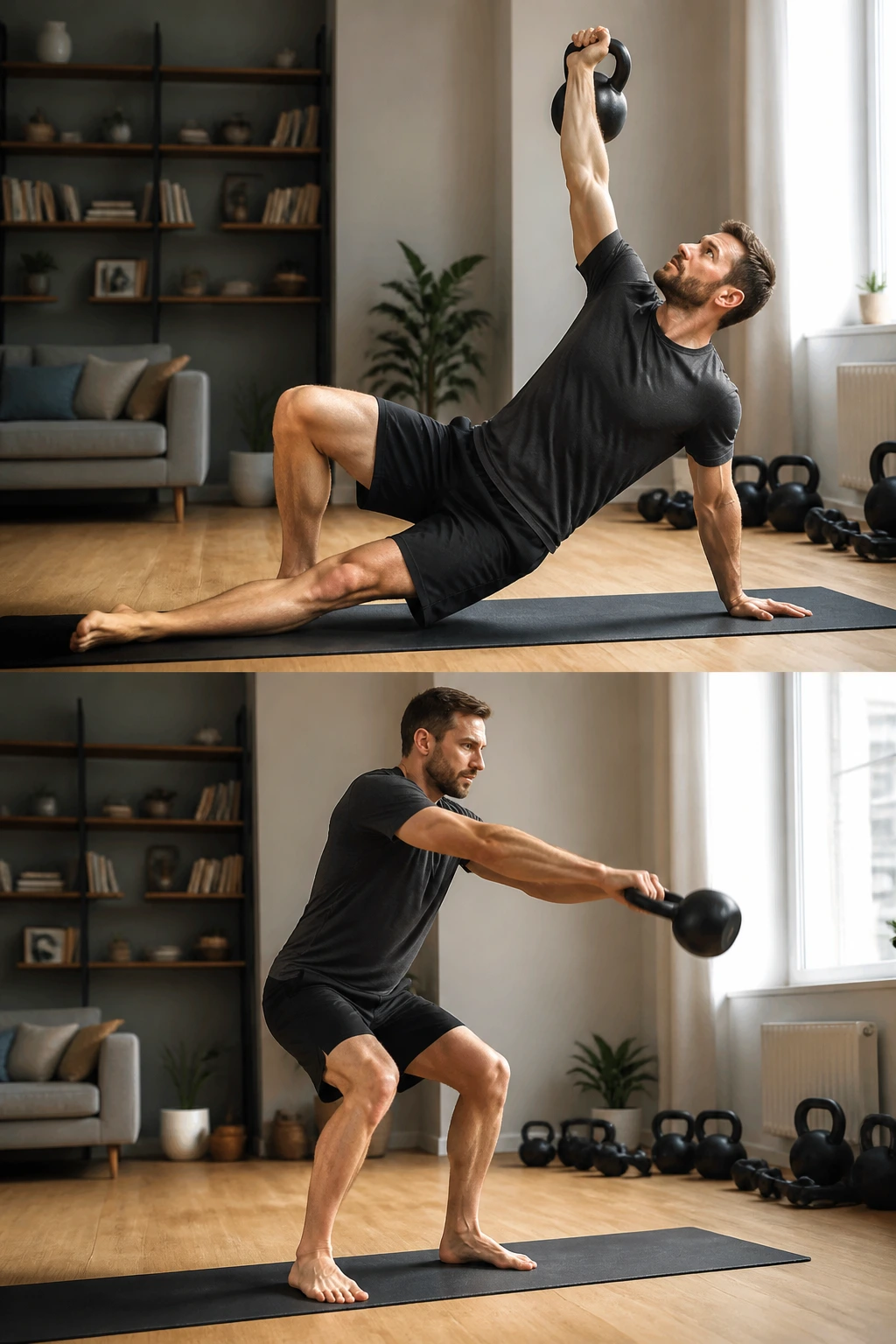
The Turkish get-up is not fast. It isn’t meant to be. Pairing it with swings gives you a workout that teaches control first and then asks for speed once your body is awake.
Format: 1 get-up per side, then 15 swings, repeat 4 to 6 times
The get-up forces you to pay attention to the shoulder, the rib cage, the hip, and the foot. Then the swings make you move like you mean it. That contrast matters. One side of the session is careful. The other side is explosive. Your nervous system gets both messages in the same workout.
If the full get-up feels too technical, cut it down. Half get-ups are fair game. So are kneeling transitions. There is no prize for forcing a sloppy overhead stand just because the exercise has a reputation.
A clean get-up should look composed. A good swing set should feel snappy. Put those together and you get something that works the whole body without feeling repetitive.
6. The 5-4-3-2-1 Complex
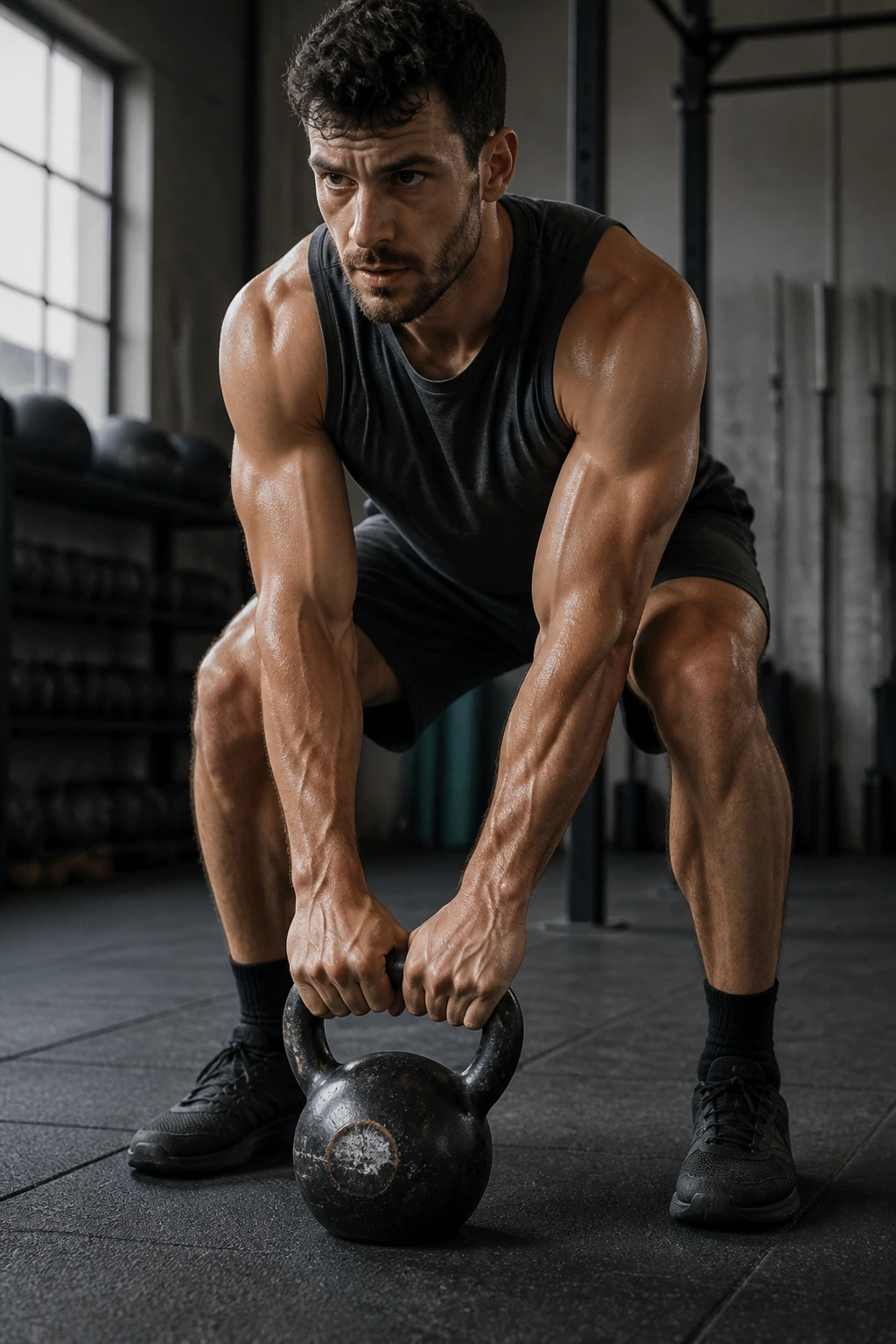
This one is for people who like a clear path and hate wandering around their own workout. Every round gets smaller or bigger, and that gives your brain something to latch onto when the heart rate starts climbing.
The pattern
Do 5 swings, 4 goblet squats, 3 cleans per side, 2 push presses per side, 1 carry each side. Rest 60 to 90 seconds, then repeat for 3 to 5 rounds.
Why it works: the complex keeps the bell in your hands long enough to raise the workload without making you chase speed. The transitions are part of the challenge. If you rush them, your breathing goes sideways fast.
How to make it cleaner
- Keep every rep crisp.
- Put the bell down only after the carry if you can.
- Use the same weight for all moves unless the presses become ugly.
- If your grip blows up early, cut the cleans before you cut the squats.
I like complexes because they make you earn the rest. No wasted reps. No fluff.
7. Snatch Intervals
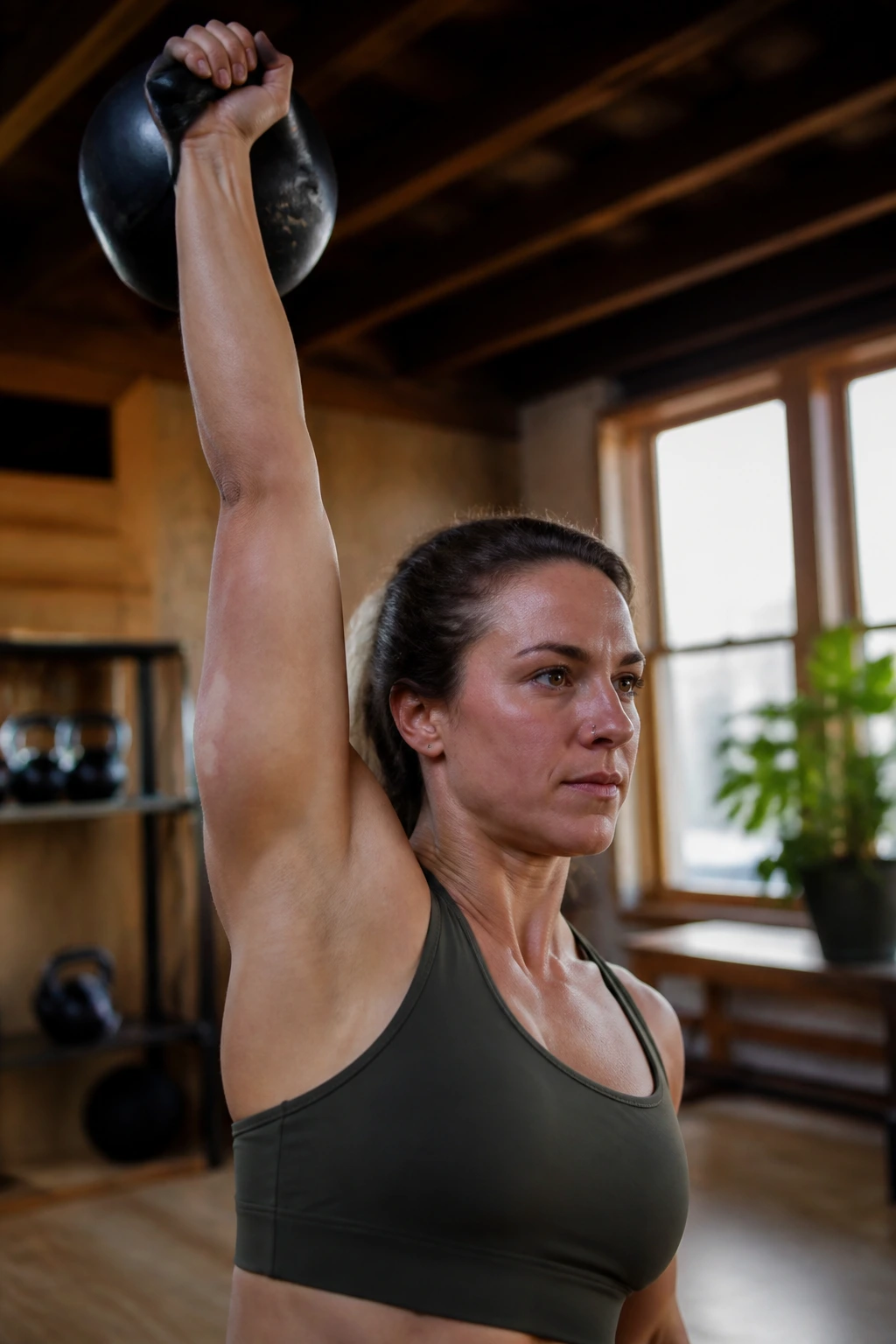
Snatches are not the place to wing it. The movement is fast, but the setup has to be tidy or the bell will smack your forearm and ruin your mood for the rest of the session.
How to run it
Use 15 seconds on / 45 seconds off for 10 to 12 rounds. Work one side for a few rounds, then switch, or alternate sides each interval if your timing is good.
How to scale it
If the snatch itself is still rough, use a high pull or clean instead. That’s a smart adjustment, not a downgrade. The goal is a hard effort with a bell path you can control. Not a circus trick.
What to watch for
- The bell should travel close to your body.
- Punch through the top instead of flopping your wrist over.
- Keep the shoulder packed on the overhead finish.
- Do not let the bell crash onto the forearm.
This is one of those workouts that rewards calm mechanics. The cleaner the rep, the better the conditioning payoff.
8. Front Rack March and Squat HIIT
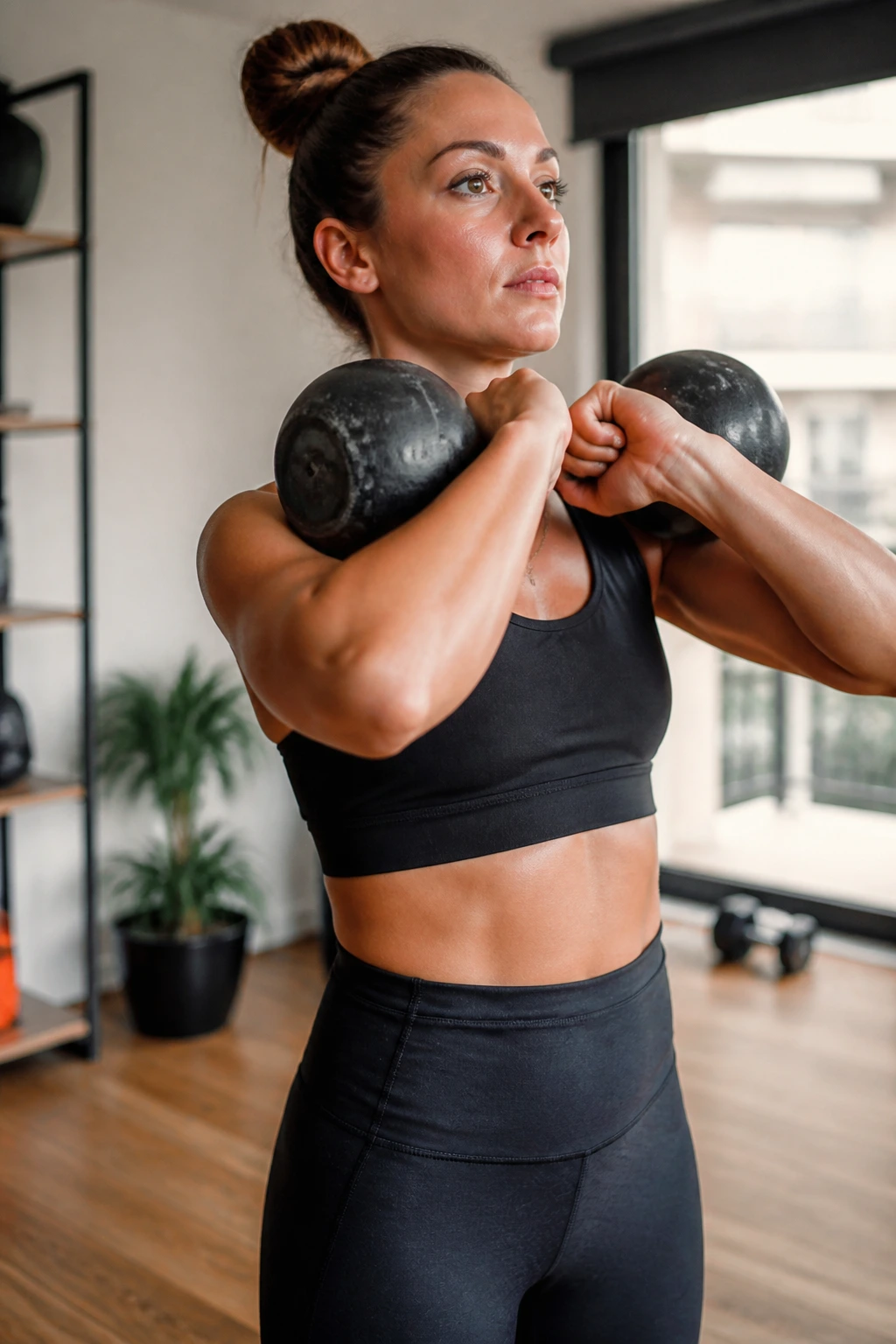
This one looks almost too easy until you’ve done three rounds and your midsection starts complaining. Holding a kettlebell in the front rack while marching or squatting is a sneaky way to make the trunk work hard without pounding the joints.
Format: 30 seconds front rack march, 30 seconds goblet squat, 30 seconds rest, repeat for 8 to 10 rounds
The front rack position lights up the obliques, glutes, and upper back. The squat keeps your legs involved. The rest keeps the quality high enough that the whole thing stays useful.
Why I like it
It’s low impact. It doesn’t need much space. And if you live in an apartment or upstairs unit, the floor stays happy. That matters more than people admit.
If you carry the bell on one side, switch sides each round. If you hold two bells, keep the load modest and focus on staying upright instead of leaning back like you’re trying to win a bad posture contest.
9. Suitcase Carry and Core Ladder
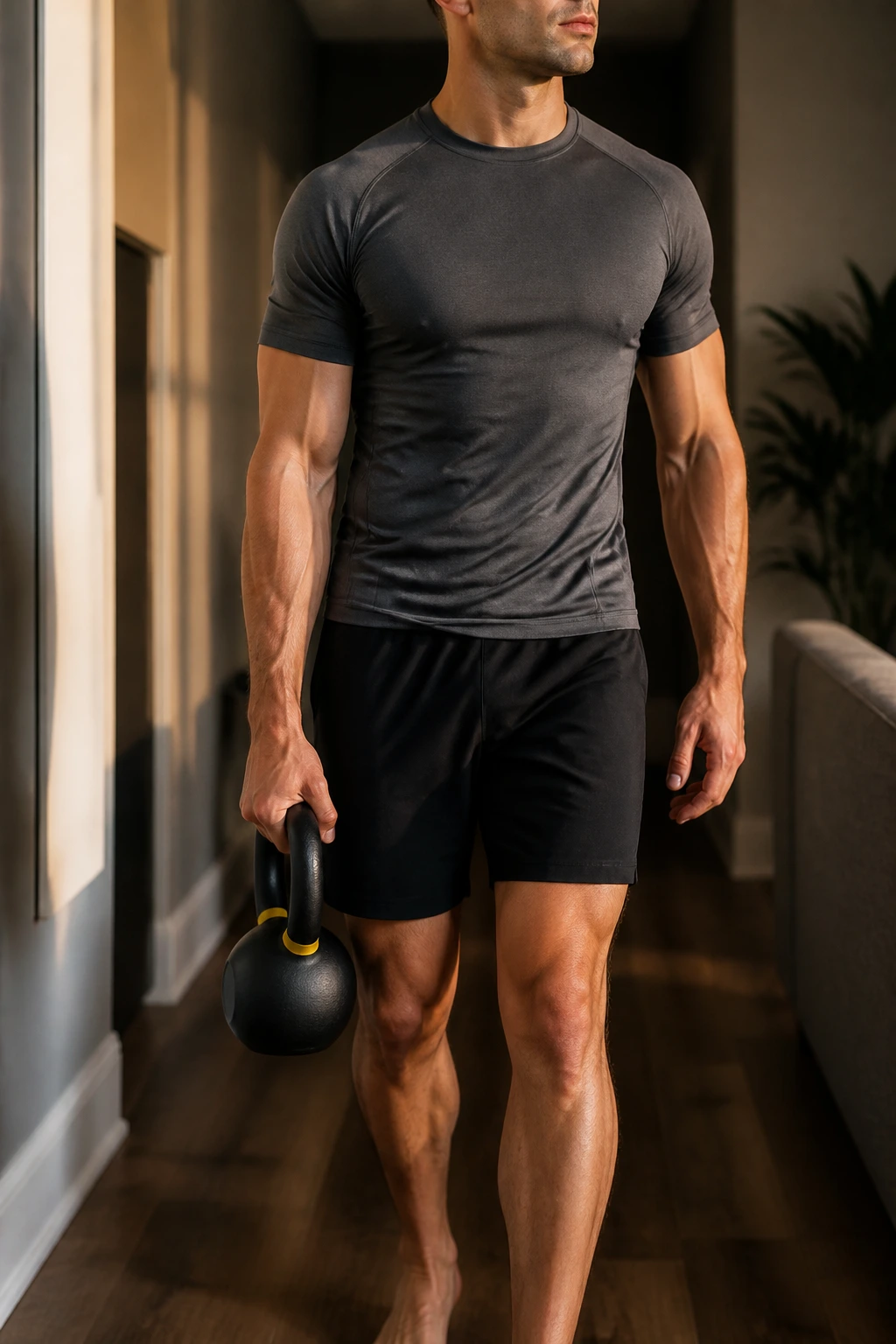
If your usual training leaves out carries, this is where the gaps show up. The suitcase carry is a plain-looking exercise that lights up the grip, the side body, and the hips in a way sit-ups never will.
The ladder
Do 20 seconds right-side carry, 20 seconds left-side carry, 8 goblet squats, 20-second plank. Rest 40 seconds and repeat for 3 to 5 rounds.
That sequence hits the body from a few angles. The carry teaches anti-tilt control. The squat keeps the legs honest. The plank ties the whole thing together. Nothing fancy. No drama.
A one-sentence reality check: you will feel this in places you don’t usually notice.
Use a bell heavy enough to make you stand tall but not so heavy that your ribs flare and your shoulder hikes up toward your ear. That little detail matters. The carry should look smooth, not strained.
10. Pyramid Conditioning
Pyramids are useful because they give you a way to climb without guessing. You know exactly where you are. That matters when your heart rate starts rising and your brain gets lazy.
Format: 2-4-6-8-10-8-6-4-2 reps
Moves: swings, goblet squats, or cleans
You can use one movement for the whole pyramid, or pair two moves — say swings and squats — and alternate them each rung. Either way, the structure is clear and the workout gets harder in a predictable way.
What makes it effective
The early sets are almost a warm-up. Then the middle rungs start to bite. The return trip is where the work gets interesting, because fatigue is already there and you still need to keep the reps tidy.
If you want a tougher version, keep rest to 15 or 20 seconds between rungs. If you want it more strength-focused, rest 30 to 45 seconds and use a heavier bell. Either way, the pyramid format gives you a finish line, and that helps more than people think.
11. Kettlebell HIIT Density Block
A density block is one of my favorite ways to turn kettlebell HIIT into something you can actually repeat without trashing your form. Instead of sprinting until your movement falls apart, you work in fixed blocks and count quality rounds.
Format: 5 minutes per block, 4 blocks total
Block ideas: swings, cleans, squats, presses, carries
How to run it
Pick one move for each 5-minute block and chip away at clean sets. For example:
- Block 1: 10 swings every minute
- Block 2: 5 cleans per side every minute
- Block 3: 8 goblet squats every minute
- Block 4: 5 push presses per side every minute
You can also turn the whole thing into a mixed circuit if you want more variety. The point is to keep moving with purpose while preserving enough control to repeat the session later.
Why this one works
It feels less chaotic than interval sprinting, which is nice when you’re tired or short on time. It also gives you a score to beat. More clean reps in the same block next time? Good. Same reps with better form? Also good.
12. Beginner-Friendly Hinge and Halo
Not every kettlebell workout needs to feel like a fight. Some days, the win is simply moving well, breathing hard enough to count, and leaving the session with your back and shoulders feeling better than when you started.
The pattern
40 seconds deadlift, 20 seconds rest
40 seconds halo, 20 seconds rest
40 seconds goblet squat, 20 seconds rest
40 seconds march in place or suitcase hold, 20 seconds rest
Repeat for 3 rounds.
This is a smart entry point for anyone new to kettlebell HIIT workouts at home. Deadlifts teach the hinge without the snap of a swing. Halos teach shoulder control. Squats build leg drive. The march or hold teaches bracing.
What to feel
- Deadlifts should load the hamstrings, not the lower back.
- Halos should move around the head smoothly.
- Squats should stay upright and steady.
- Marches should feel like a trunk exercise hiding inside a conditioning drill.
If you’re just getting used to the bell, stay here for a while. No shame in that. Plenty of people would be better off with this version than with some frantic 12-move routine they found online.
13. One-Kettlebell Power EMOM
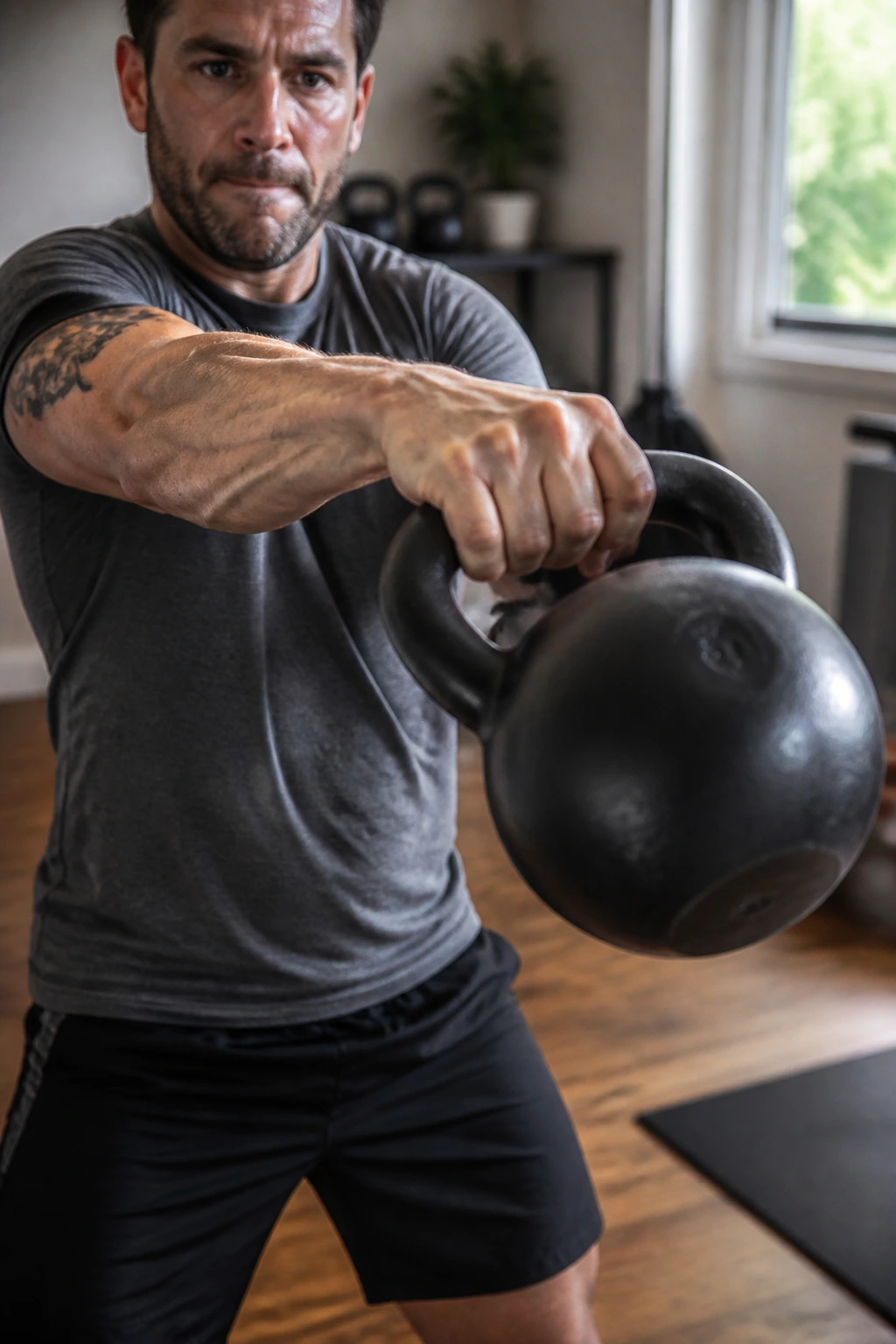
EMOM stands for every minute on the minute, and I like it because it removes decision fatigue. You work, you rest, you repeat. Clean and simple.
The layout
Set a 12-minute timer and cycle through these three minutes:
- 10 swings
- 6 cleans total
- 6 push presses total
Repeat the cycle four times.
The idea is to keep the reps punchy enough that you finish each minute with a little breathing room. If you barely recover before the next minute starts, the reps are too high. If you’re lounging around for 40 seconds, the reps are too low.
This style is good for building a steady work capacity without the jagged feeling of all-out intervals. You finish tired, but not wrecked. That’s a nice place to be if you still want to function afterward.
14. Lateral Lunge and Press Flow
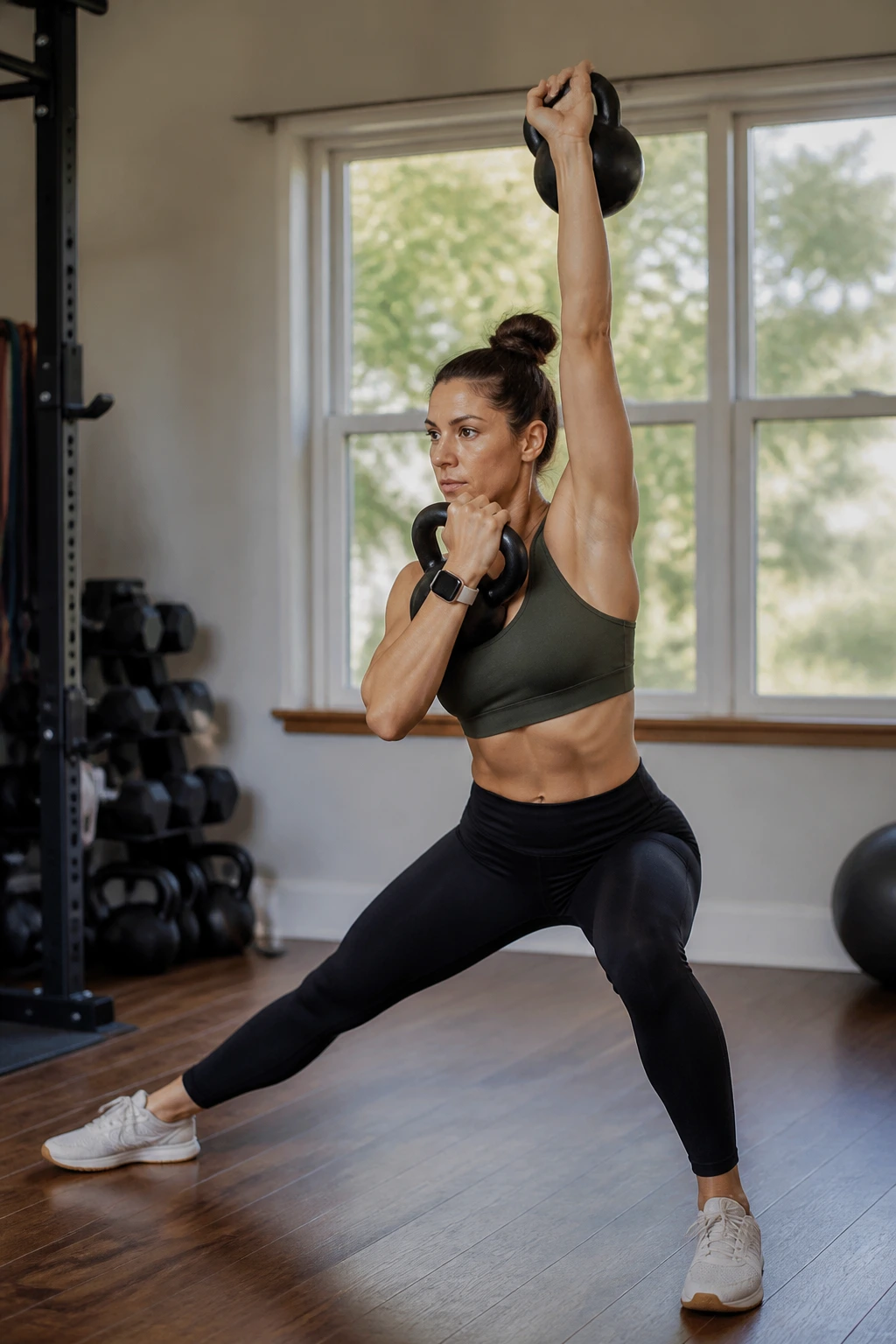
Most people live in forward and backward planes all day. Side-to-side work gets ignored until the hips complain. This workout fixes that without needing much space.
Format: 40 seconds work / 20 seconds rest, 4 to 6 rounds
Do a lateral lunge into a rack hold, then press the bell overhead as you stand. Switch sides each round. If the press feels clumsy after the lunge, drop the weight and keep the pattern clean.
Why the combo matters
The lateral lunge opens the hips in a way the goblet squat doesn’t quite touch. The press asks the trunk to stabilize while your base is shifting. Together they make you control movement instead of just surviving it.
This one is especially good if your knees get cranky when everything is straight-line and repetitive. The side step changes the stress. So does the pause in the bottom position, if you decide to add one.
A short note: keep the planted foot flat. If the arch caves, the movement gets sloppy fast.
15. Double-Kettlebell if You Have Two

If you own two bells, use them. They change the feel of a workout in a big way. The load gets more even, the rack position gets heavier, and the session turns into a proper strength-endurance problem.
The circuit
- 5 double cleans
- 5 double front squats
- 5 double push presses
- 10 double swings
- Rest 60 to 90 seconds
Repeat for 4 rounds.
If you only have one kettlebell, do the same circuit one side at a time and cut the reps in half. That still works. It’s just a different flavor. The main thing is to keep the set quality high enough that the presses stay smooth and the squats stay deep.
Double bells are not for rushing. They’re for people who want a heavy, square feeling through the center of the body. That sensation is hard to fake.
16. 30/30 Total-Body Intervals

Thirty seconds on, thirty seconds off. That rhythm is easy to understand, which is probably why it works so well. There’s no mental gymnastics. You just keep showing up for each block.
The sequence
Cycle through four movements for 4 rounds:
- Swings
- Goblet squats
- Clean and press
- Suitcase march or carry
Each move gets 30 seconds of work and 30 seconds of rest.
This format gives you enough recovery to keep the reps tidy, but not enough to coast. That’s the sweet spot for a lot of home training sessions. You stay sharp. You stay busy. You don’t need a gym floor or fancy setup.
If one move starts to feel noticeably weaker than the others, make that the first thing you simplify. A workout is supposed to expose weak links, yes, but it’s also supposed to be repeatable.
17. Ascending Ladder Burn
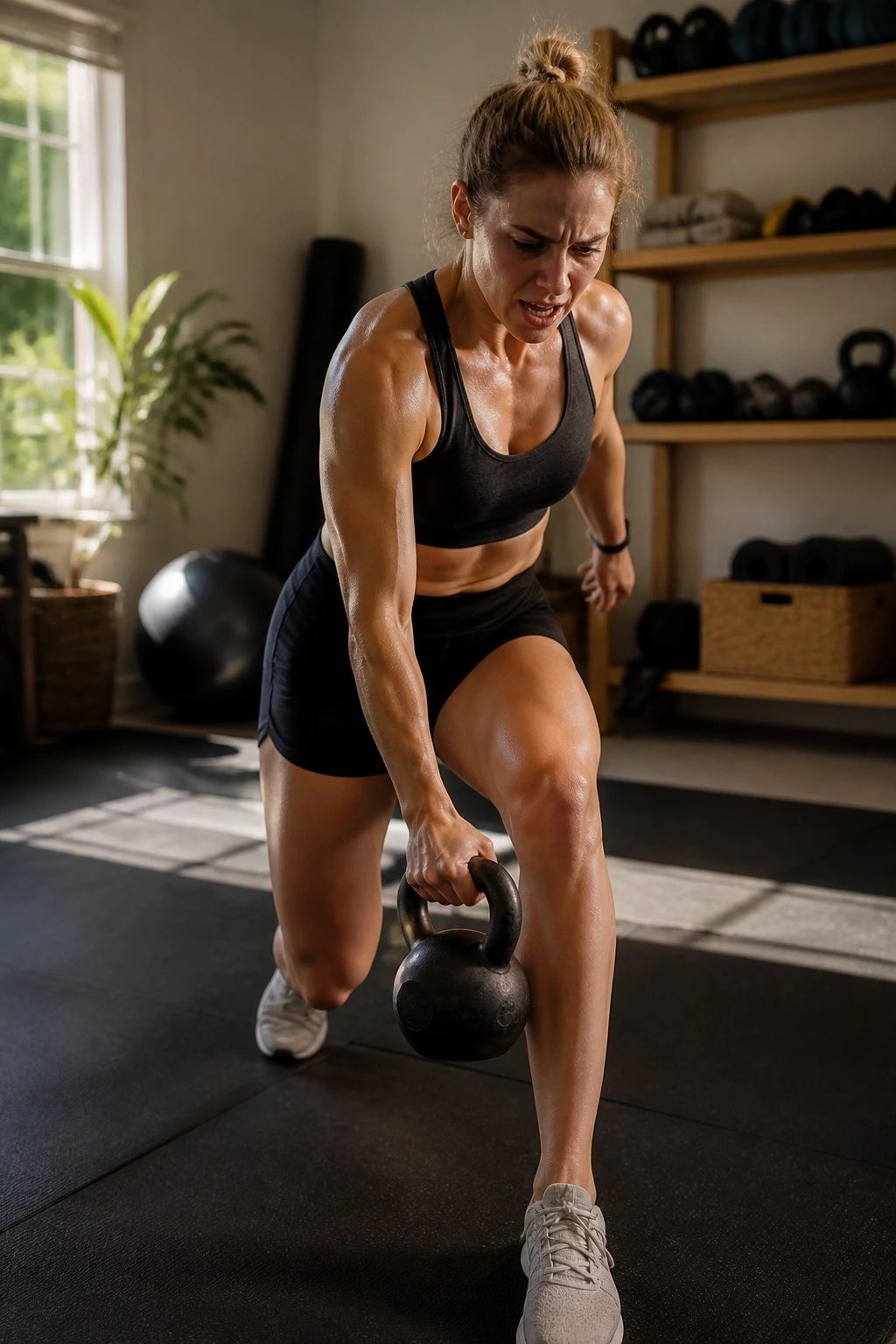
Some people need a very clear beginning and end. The ascending ladder gives you that. It also lets you build confidence in the first few rounds before the volume gets annoying.
The pattern
Do 5 reps, then 10, then 15, then back down to 10 and 5. Use swings, goblet squats, or cleans.
You can run the whole ladder with one exercise, or pair two exercises and alternate them. Swings and squats work nicely together. Cleans and presses do too, if your shoulders are ready for the overhead work.
The middle of the ladder is where the real work lives. The early sets feel manageable. The higher rung forces focus. Then the way back down becomes a test of whether you can hold form when you’d rather be done.
Simple. Clean. Annoying in the right way.
18. Suitcase Carry Conditioning Circuit
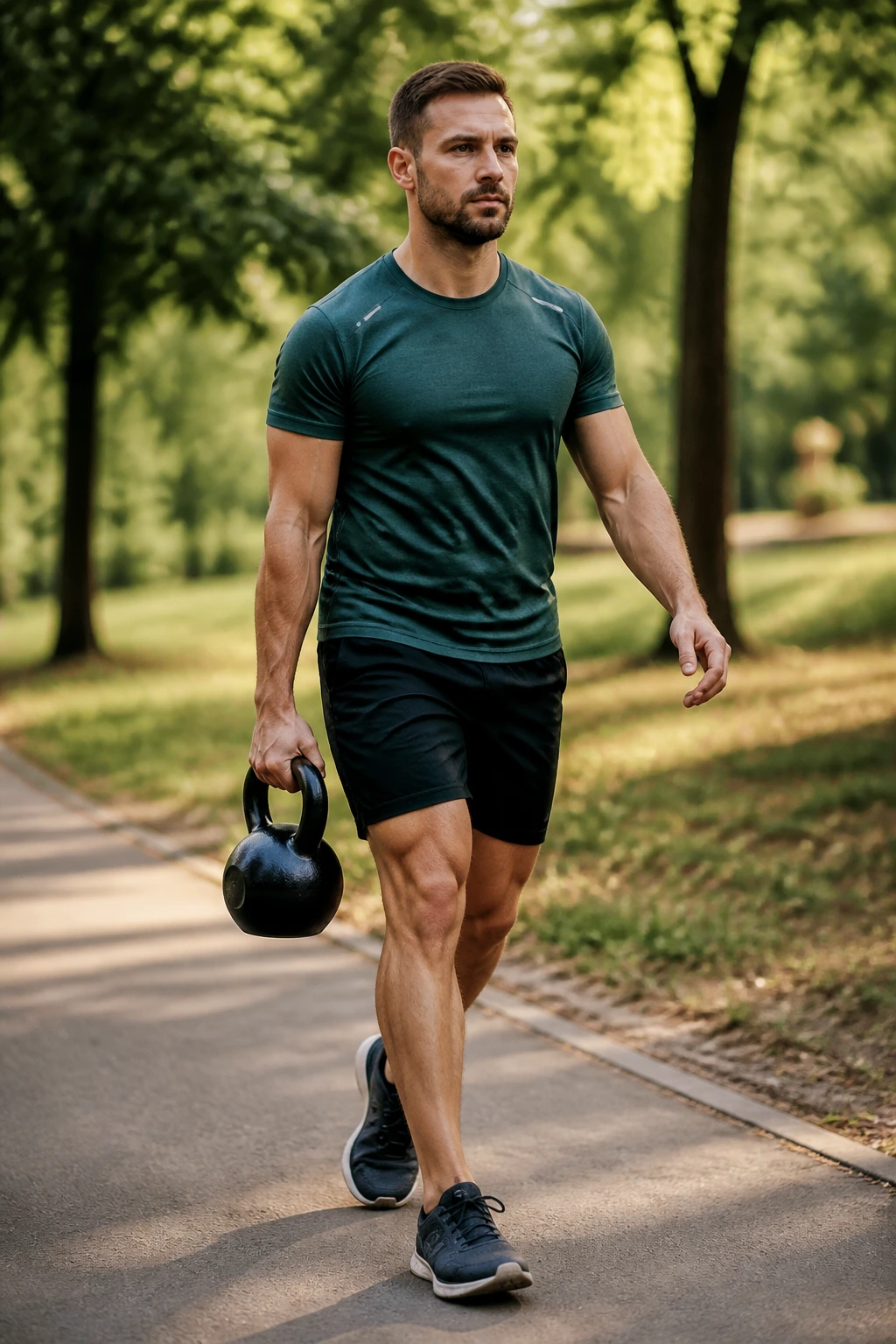
Carries deserve their own workout slot because they hit things you usually miss. Grip, obliques, hip stability, posture — all of it shows up when you hold a heavy bell on one side and keep walking.
The circuit
- 30 seconds suitcase carry right
- 30 seconds suitcase carry left
- 8 one-arm rows per side
- 8 deadlifts
- 8 front rack squats per side
Repeat for 3 to 4 rounds.
This is a great option when you want a session that feels athletic without bouncing around. It’s also a good choice if you’ve got limited ceiling height or a floor that complains when you jump. The carry plus squat combination raises the heart rate without turning the room into a mess.
One thing to notice
Your torso should not tip toward the bell. If it does, the load is too heavy or your walk is too fast. Slow down and stand taller. That’s where the payoff is.
19. Clean, Front Squat, and Push Press Complex
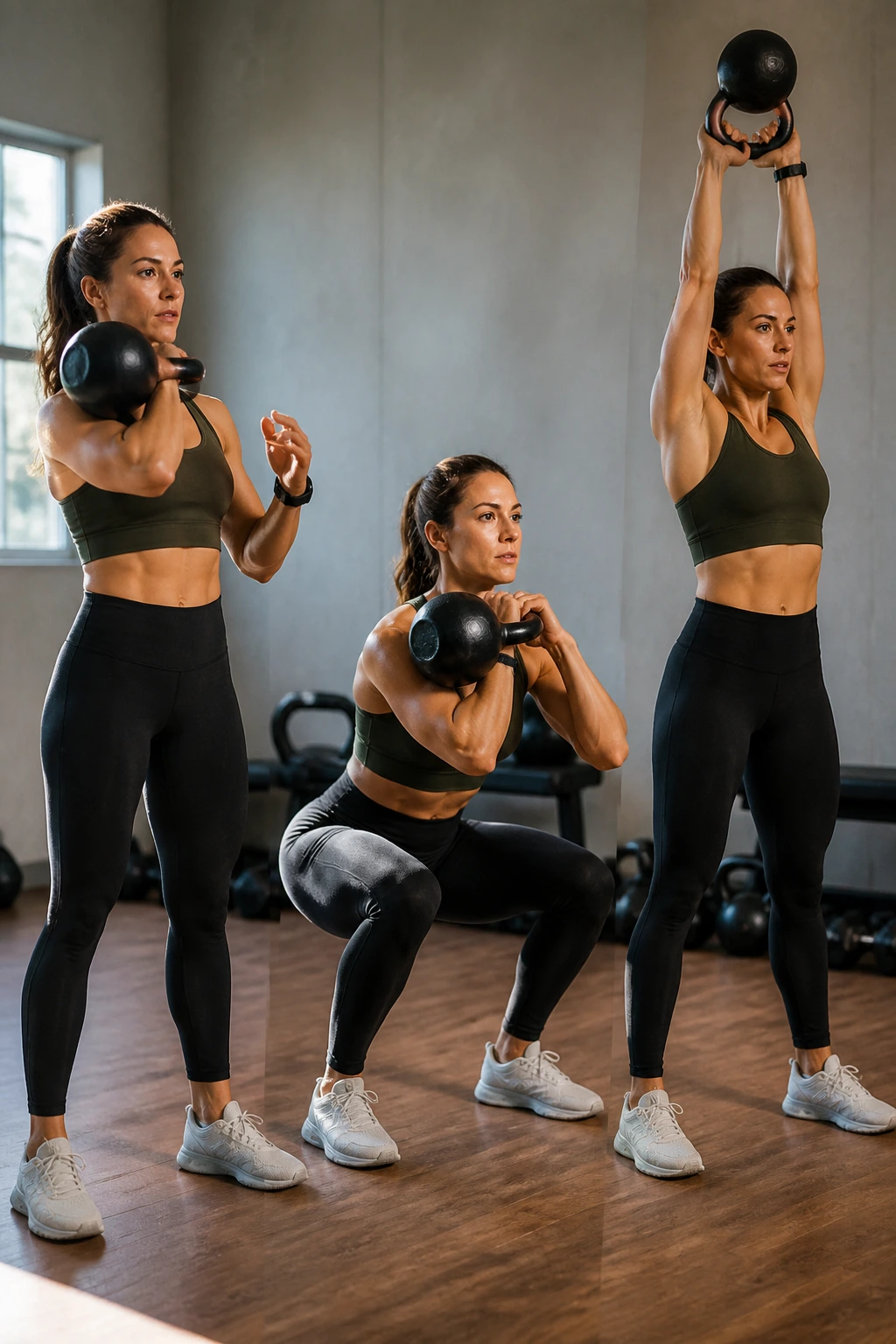
This is one of the better no-nonsense full-body kettlebell HIIT workouts at home because it keeps the bell in the rack position long enough to make the trunk work, then asks the legs and shoulders to finish the job.
Format: 5 cleans, 5 front squats, 5 push presses per side, 4 to 5 rounds
Rest: 60 to 90 seconds between rounds
Why it hits hard
The clean sets up the rack. The squat loads the legs. The push press turns the legs into help for the shoulders. By the time you finish a round, you’ve touched nearly everything that matters in a compact space.
Do not let the cleans get sloppy just because the squats are still waiting. That’s a bad trade. Keep the elbows close, rack the bell well, and use your exhale on the press to keep the ribs from flaring.
If you like a workout that feels organized but still leaves you breathing hard, this is a good one to keep in rotation.
20. Kettlebell HIIT Apartment Burner
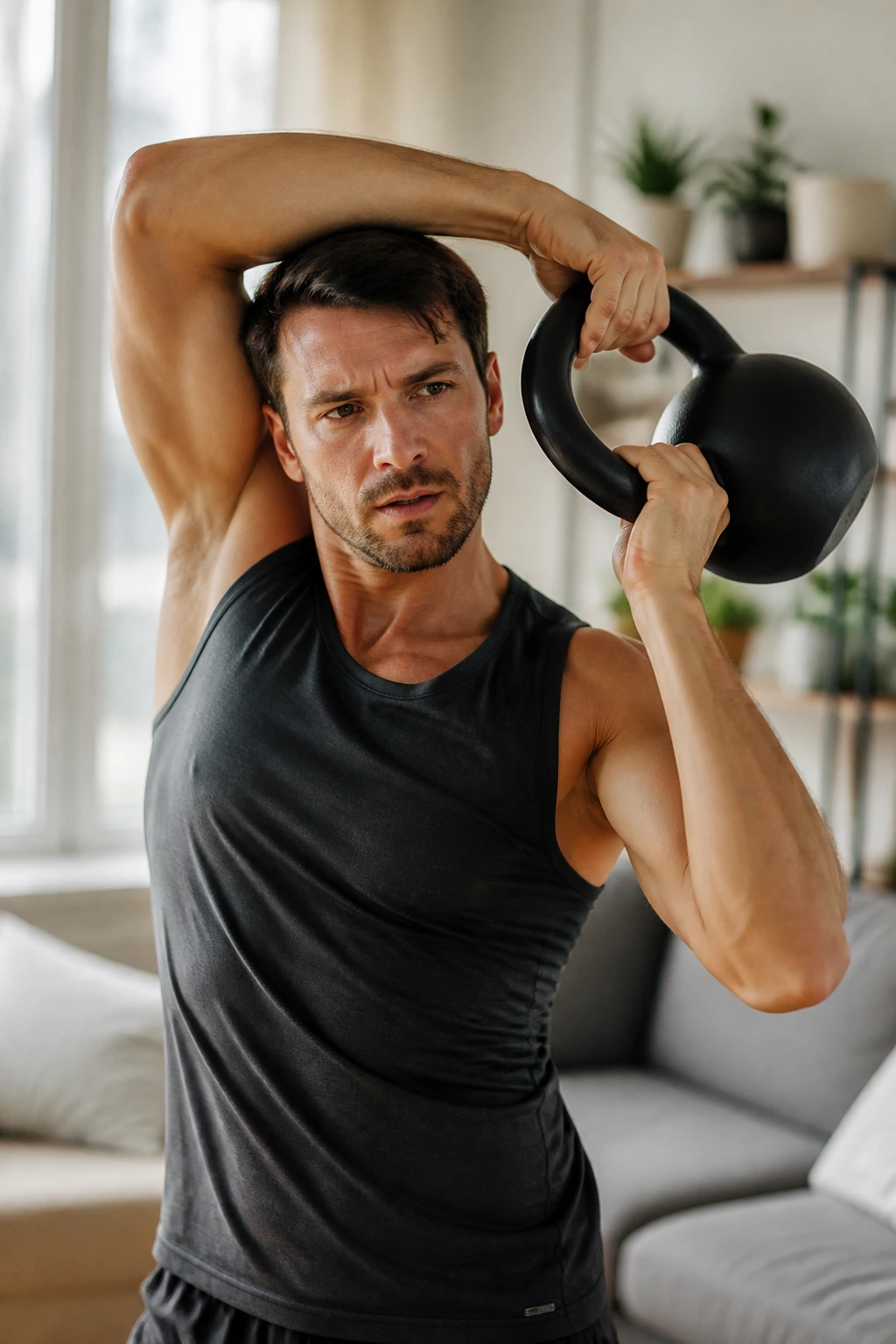
If you need something quiet, compact, and still mean enough to count, this is the move. No jumping. No thudding feet. No weird shuffling around a mat.
The circuit
Set a timer for 10 minutes and cycle through:
- 8 halos
- 10 deadlifts
- 8 goblet squats
- 10 suitcase marches, 5 steps each side
Rest only as needed to keep the pace honest.
This isn’t the most explosive workout on the list. That’s the point. It still raises the heart rate, but it does so through steady tension instead of big jumps. If you live in an apartment or you train while other people are home, that matters.
One minute you’re thinking this looks too gentle. Two minutes later your breathing changes. Funny how that works.
21. 45/15 Strength-Endurance Grinder
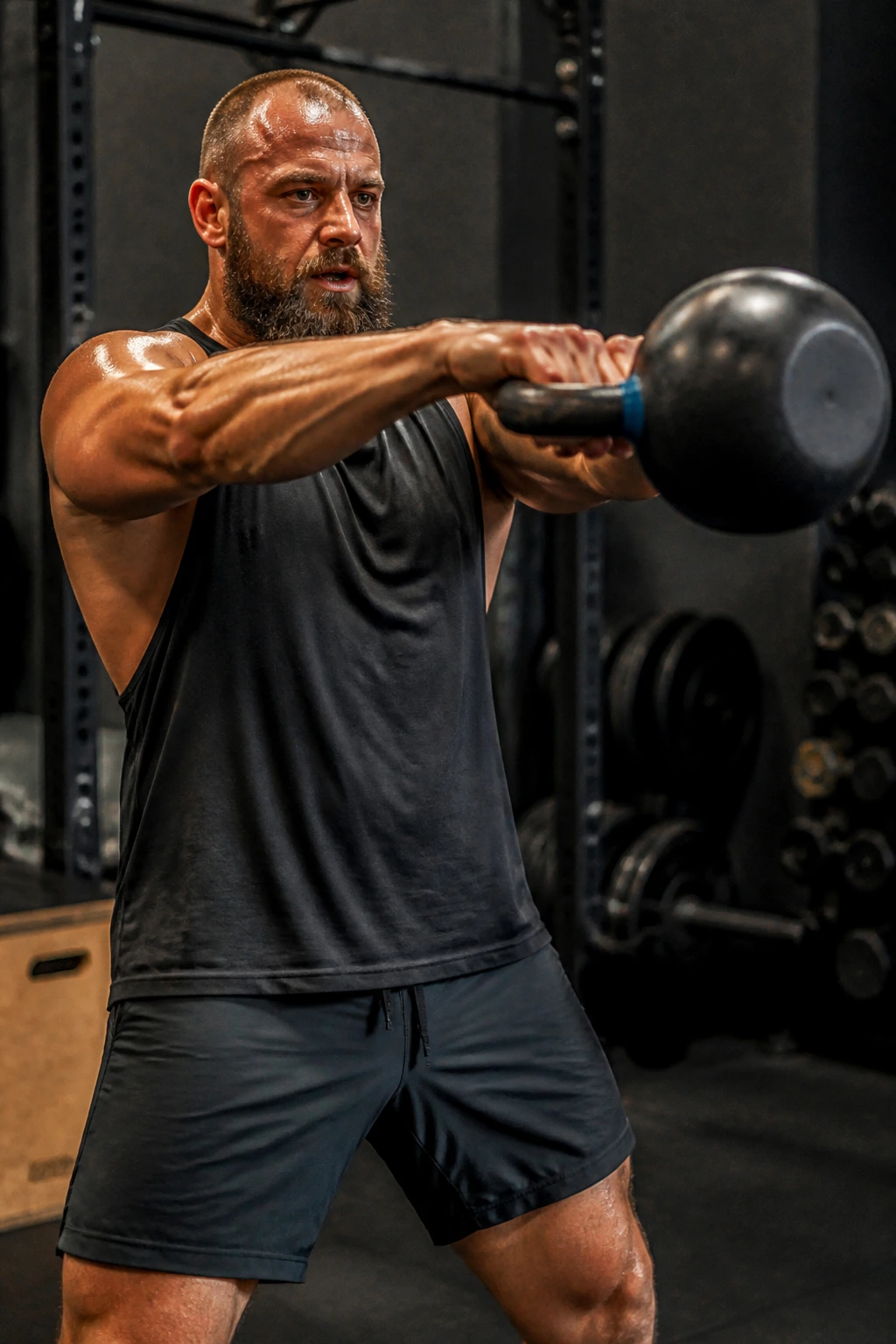
A lot of people want HIIT to mean max chaos. It doesn’t have to. Longer work intervals can be excellent if you want to build the ability to keep moving while still protecting your form.
How it works
Do 45 seconds work / 15 seconds rest for 4 movements:
- Swings
- Clean and press
- Goblet squat
- Bent-over row
Complete 4 rounds.
The shorter rest is where this gets spicy. You don’t have time to fully recover, so each new block starts with a little fatigue already in the tank. That’s useful, but only if you’re disciplined enough to keep the reps clean.
If your breathing turns ragged and the hinge gets sloppy, shorten the work interval to 30 seconds. That is not backing down. It is adjusting before the workout starts stealing from your technique.
22. Power Primer

Sometimes you don’t need a long burn. You need a sharp primer that wakes up the hips, raises the heart rate, and leaves enough in the tank for the rest of your day.
The setup
Perform 6 hard swings or 3 snatches for 10 seconds, then rest for 50 seconds. Repeat for 8 to 10 rounds.
This is not about volume. It is about power and speed. The bell should move fast, and the sets should end before you get sloppy. The rest is long on purpose. That keeps each round clean.
If you’ve been lifting heavy and want something brief but useful, this is a nice fit. It also works as a warm-up if you’re about to do another session after it, though I’d still keep the total work modest. Power fades when people try to turn it into cardio soup.
Short. Sharp. Useful.
23. Anti-Rotation Core Circuit
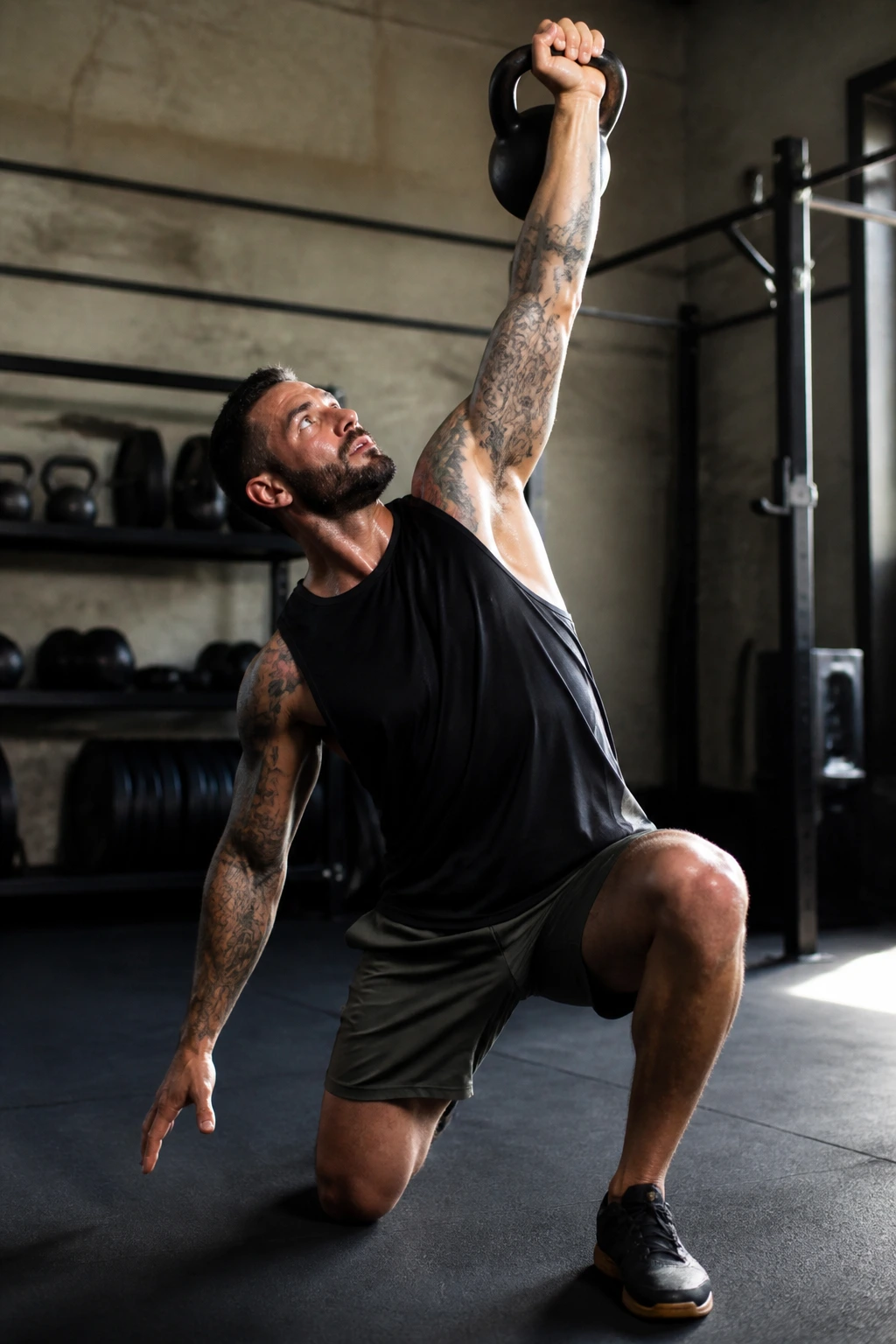
Core work gets boring fast when it’s all crunches and planks. Kettlebells make it more interesting because the load wants to pull you off balance, and your job is to not give in.
The circuit
- 35 seconds half-kneeling press right
- 35 seconds half-kneeling press left
- 35 seconds windmill right
- 35 seconds windmill left
- 35 seconds plank drag
- 25 seconds rest between moves
Repeat for 3 rounds.
The half-kneeling press makes the ribs behave. The windmill trains the side body and shoulder together. The plank drag forces the trunk to stay square while one hand moves. That’s where the real challenge sits.
If you only ever do standing curls and sit-ups, this will feel different. Better, too. It teaches the trunk to resist twisting, which is a skill most home workouts skip.
24. Mixed Cardio Benchmark
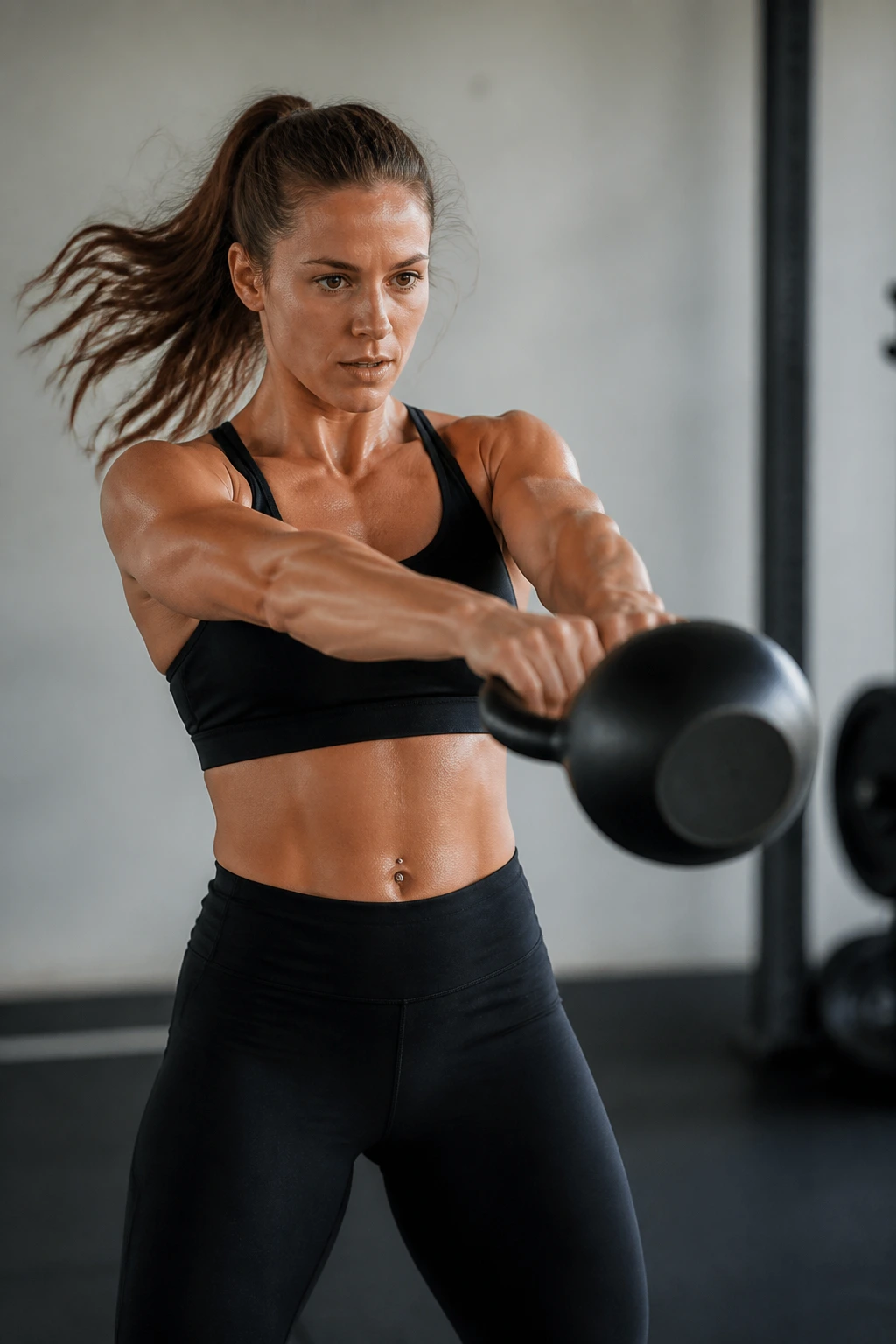
This is the kind of session I like to save, score, and repeat later. Nothing fancy. Just enough structure to tell you whether your conditioning is improving or whether you’ve been kidding yourself.
The benchmark
Set a 20-minute AMRAP — as many quality rounds as possible — of:
- 10 swings
- 8 goblet squats
- 6 clean and press, 3 per side
- 20-meter suitcase carry, right
- 20-meter suitcase carry, left
Record the total rounds and any leftover reps if you stop mid-cycle.
What makes this useful is not just the sweat. It’s the comparison. Same bell, same timer, same room, different score. That tells a cleaner story than “I felt tired.” Tired is easy. Measurable is better.
How to keep it honest
- Don’t rush the presses.
- Keep the carry upright.
- Stop a set if the swing loses snap.
- Write the score down somewhere you’ll actually see it.
25. Kettlebell HIIT Benchmark Finisher
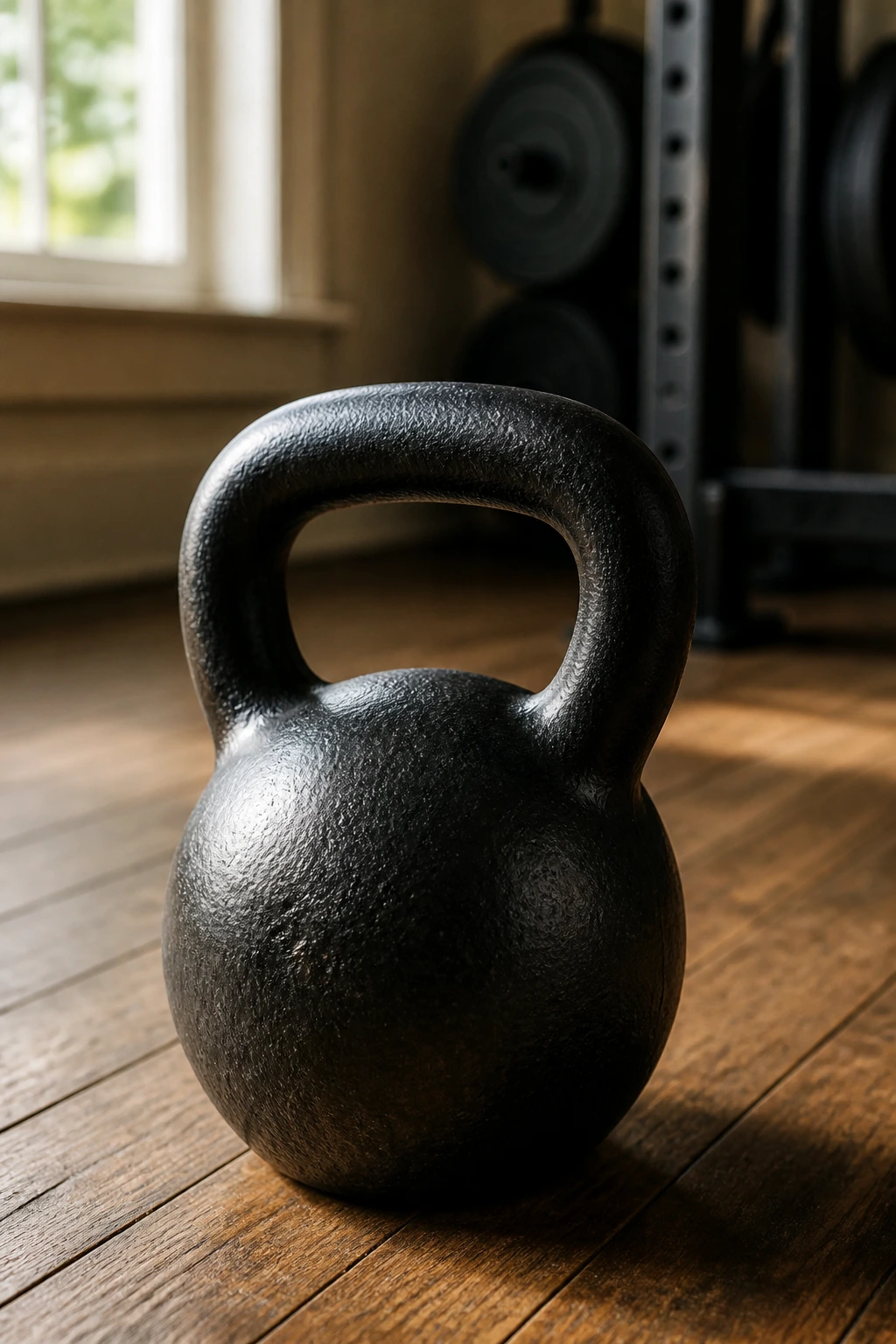
A good final workout should feel flexible, because that’s how home training usually works in real life. Some days you have 20 clean minutes. Some days you have 12 and a half. This one covers both without turning into a compromise.
Format: 15 minutes total, repeat this circuit as many times as you can with good form:
- 5 swings
- 5 goblet squats
- 5 cleans, alternating sides
- 5 push presses, alternating sides
- 20-second suitcase carry right
- 20-second suitcase carry left
That’s the whole thing. No fancy transitions. No extra clutter.
If you want the workout to feel more like conditioning, move faster between stations and keep the rest short. If you want it to lean more toward strength, use a heavier bell and slow the carries down. Both versions work. The bell just asks a different question each time.
The real trick with any kettlebell HIIT workout at home is knowing when to stop being clever. Pick a bell you can control, keep the reps clean, and use the timer to keep yourself honest. That’s the boring answer, which is usually the right one.
And if you only remember one thing from this whole list, make it this: the best session is the one you can repeat next week without dreading it. That’s where the progress lives.
