



If the thought of a fluorescent room full of treadmills, mirrors, and other people’s playlists makes you want to skip exercise altogether, you are not broken. The best workouts for women who hate the gym are the ones that feel private, quick, and a little messy — the kind you can do in a hallway, on a patio, or beside the couch while dinner is still on the stove.
That preference matters more than a lot of fitness advice admits. A workout that feels annoying to start gets skipped, no matter how “effective” it looks on paper. A 12-minute routine you’ll repeat three times a week beats a perfect plan that lives in a notes app and never leaves the phone.
The sweet spot is usually simpler than people think. A chair, a pair of walking shoes, one resistance band, a decent playlist, maybe a stairwell or a park bench. That’s enough. You do not need the energy of a gym floor to build strength, improve cardio, or feel better in your own skin.
Start with the one that feels least annoying. That’s the workout most likely to stick when motivation drops and the couch starts looking suspiciously persuasive.
1. The 10-Minute Bodyweight Circuit for Women Who Hate the Gym
A bodyweight circuit is the cleanest place to begin because there’s nothing to set up and nothing to overthink. You can do it in socks on a rug, and that low friction matters.
Why It Works
The magic is in the pacing. Squats, push-ups, glute bridges, and dead bugs hit different muscle groups one after another, so your heart rate climbs without a single machine in sight. Ten minutes sounds tiny, but ten focused minutes done well can leave your legs warm and your breathing up.
Do 30 seconds each of squats, incline push-ups on a couch or counter, glute bridges, and dead bugs. Rest 20 seconds between moves, then repeat for three rounds. If that feels too easy, add a fourth round. If it feels spicy, keep the work intervals the same and shorten the rest.
- Keep your squat depth where your knees stay happy.
- Use a wall, chair, or couch for push-ups.
- Squeeze your glutes at the top of each bridge.
- Move slowly on dead bugs; rushed core work turns sloppy fast.
Tip: keep the first round almost too easy. The second round tells you where your real effort starts.
2. Brisk Walk Intervals That Raise Your Heart Rate
Walking can absolutely count as a workout, and frankly, it’s underrated because it looks too ordinary. Ordinary works.
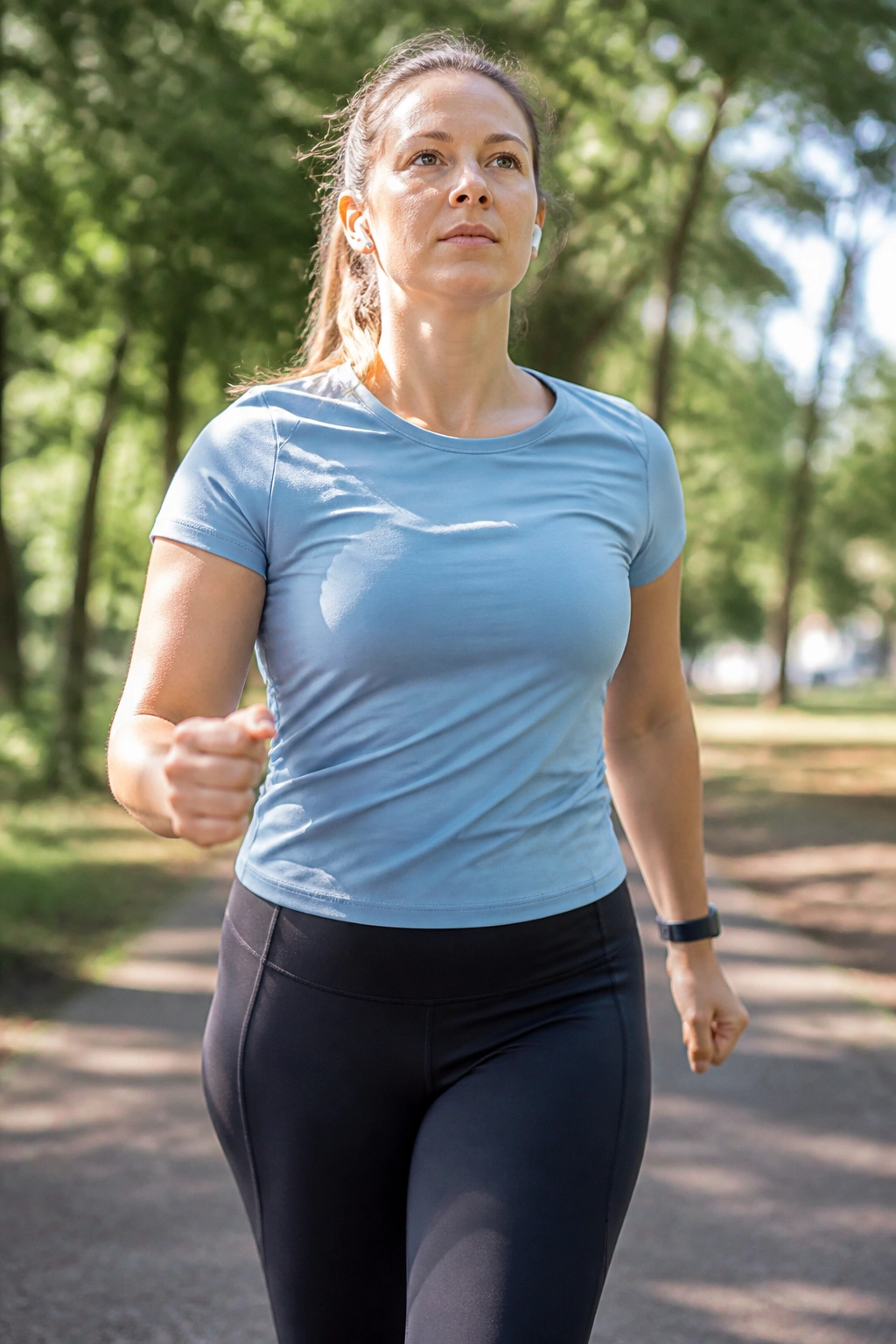
A brisk walk interval session is perfect when you want movement without the mood of “I am now exercising.” Walk easy for 5 minutes, then pick up the pace for 1 minute until your breathing gets deeper and your arms start swinging more naturally. Follow that with 2 minutes at a relaxed pace. Repeat the pattern 6 to 8 times.
The faster portions should feel like a strong walk, not a race. You should still be able to speak in short sentences. That’s the point: enough effort to count, not so much effort that you dread the next block.
If you live near a park, use the loops and benches. If you’re on a treadmill at home, set the incline to 1 or 2 percent and keep your stride quick. Tiny changes like that add up fast.
3. Dance Cardio in a Small Living Room
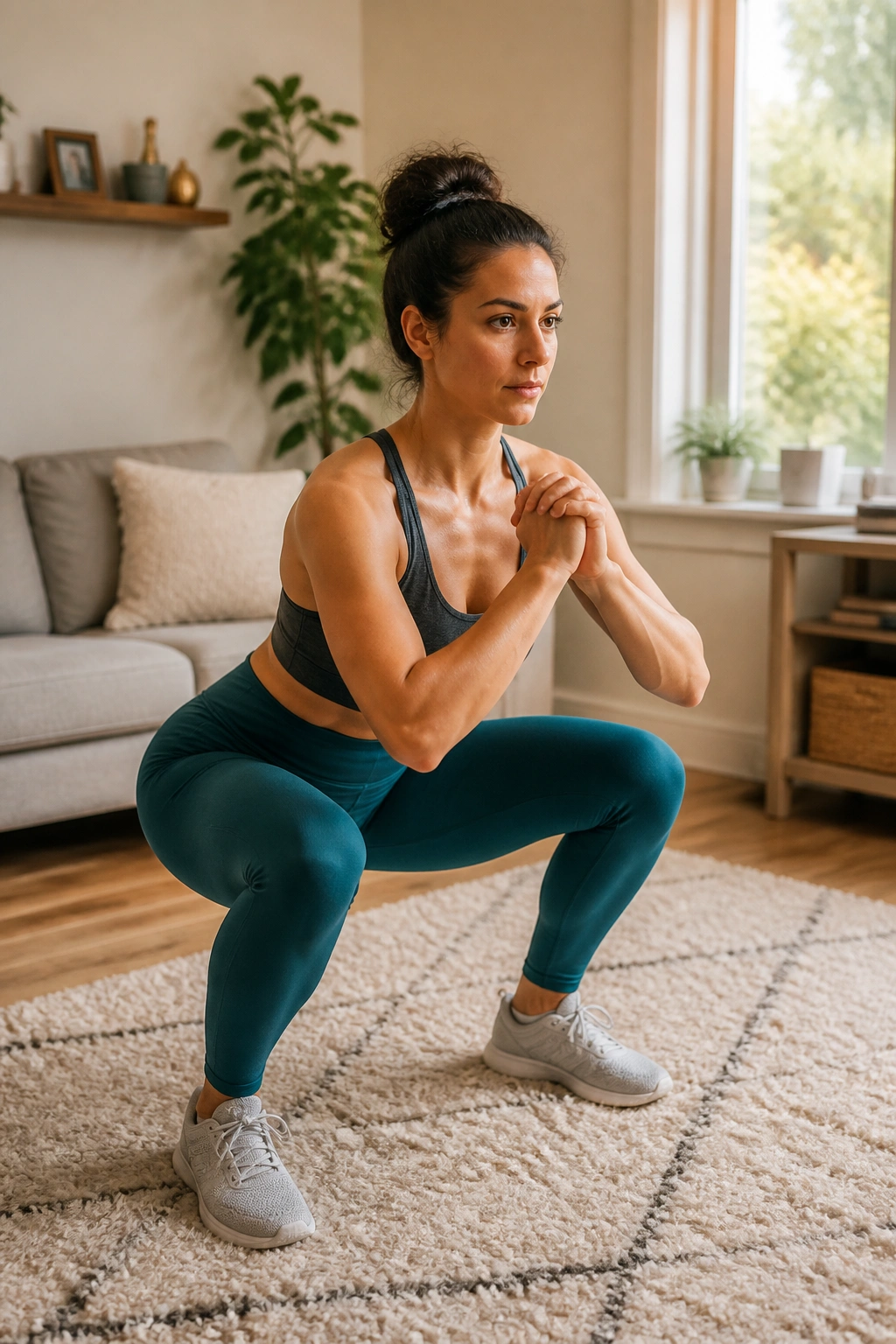
Can dance cardio count if you are not a dancer? Absolutely. In fact, it works better if you stop caring whether your arms look polished.
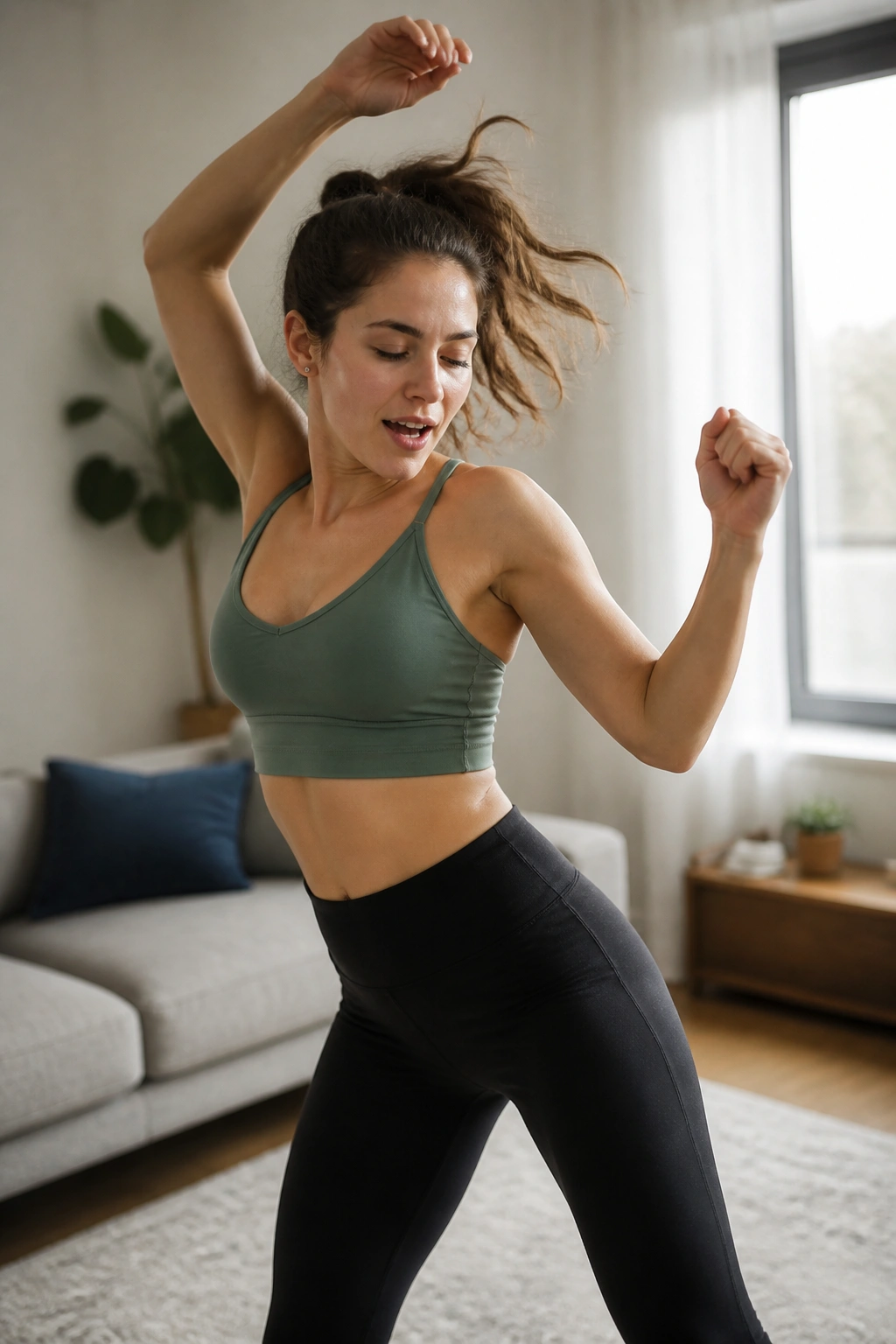
Put on 4 or 5 songs you actually like and move for the full playlist. Keep the first song light and easy, then let the pace rise. Step-touch, grapevine, knee lifts, side reaches, a few fast marches — all of it counts if you keep moving. A 20-minute session can burn plenty of energy, and it feels less like exercise than most people expect.
How to Use It
Pick music with a steady beat, somewhere around 120 to 140 beats per minute, and stay with it for 3 to 5 songs. If your space is tiny, keep your feet mostly under you and work your arms harder. That changes the feel of the workout more than people realize.
A mirror is not required. Neither is rhythm.
What matters: keep your body moving almost the whole time, even if the moves are basic and a little goofy.
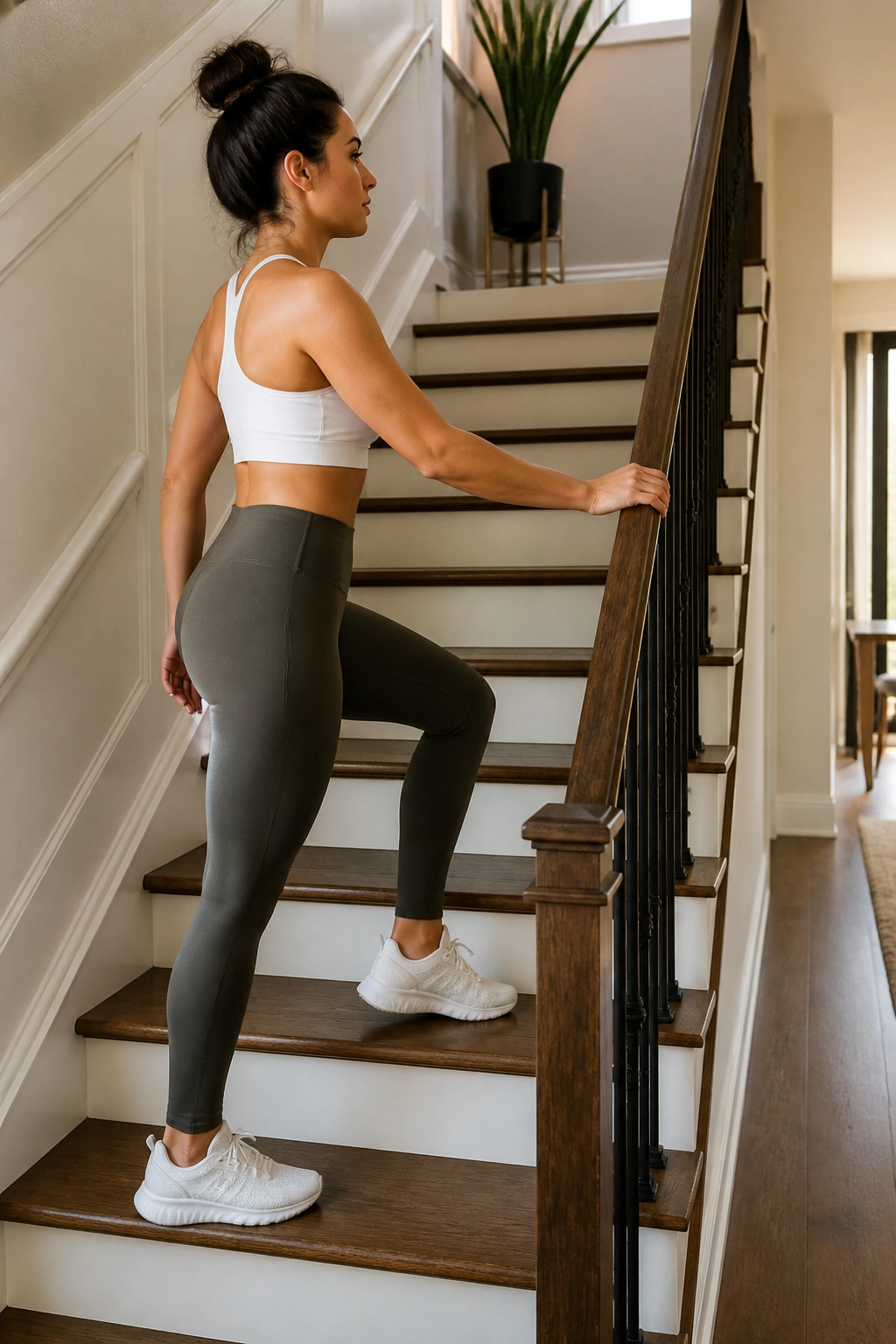
4. Stair Climbs Between Floors
A staircase looks harmless right up until you climb it on purpose. Then it turns into a blunt little cardio tool that works your lungs and your legs in the same breath.
Try one flight up, walk down, and repeat 8 to 12 times. If the stairs are long, count each trip as one round. If they are short, do 2 trips before recovering. Keep your posture tall, lightly touch the rail if you need balance, and land with quiet feet. Loud stomping usually means you’re bouncing harder than you need to.
- Start with 5 minutes of easy walking first.
- Use 8 to 12 repeats for a quick session.
- Rest longer if your breathing gets ragged.
- Skip this if your knees dislike stairs, and use a hill instead.
There’s something satisfying about a staircase workout because it feels practical. You are not waiting for gear. You are not staring at a timer on a machine. You are just climbing.
5. Shadow Boxing Rounds in Front of the TV
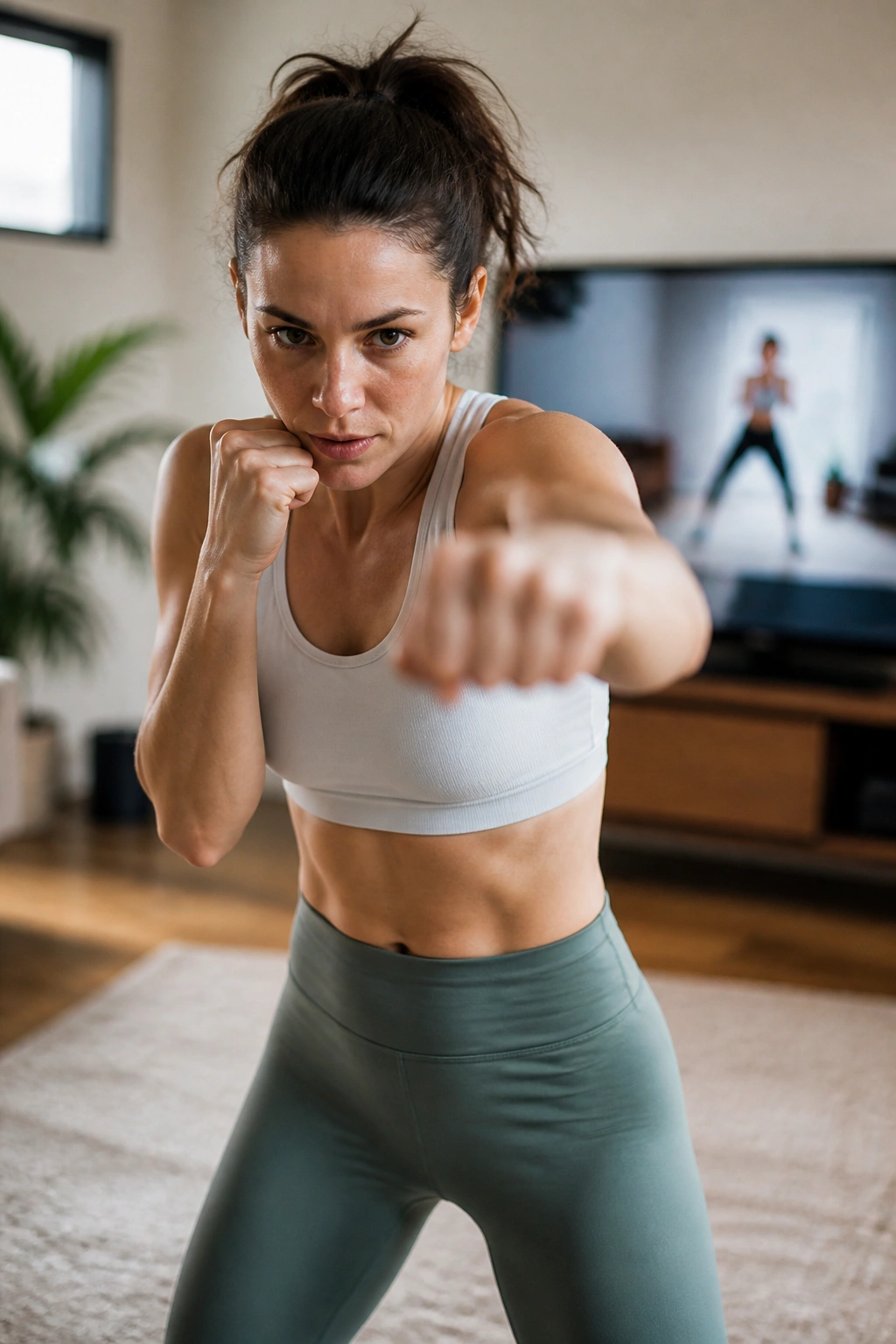
Shadow boxing is one of those workouts that looks almost too easy until your shoulders start talking back. Then it gets honest.
Stand in a light fighting stance, hands up, and throw basic punches for 2 to 3 minute rounds: jab, cross, hook, uppercut. Keep your core braced and your chin tucked. Move your feet a little between punches so you are not frozen in place. Rest for 45 to 60 seconds between rounds and do 4 to 6 rounds total.
It is a great fit if you hate crowded classes but still want something fierce enough to wake you up. The movement is sharp, the pace is flexible, and you do not need any equipment at all. If you want a little more sweat, add side steps or small pivots between combinations.
No one needs to see this except your living room floor.
6. A Pilates Mat Session That Works the Core
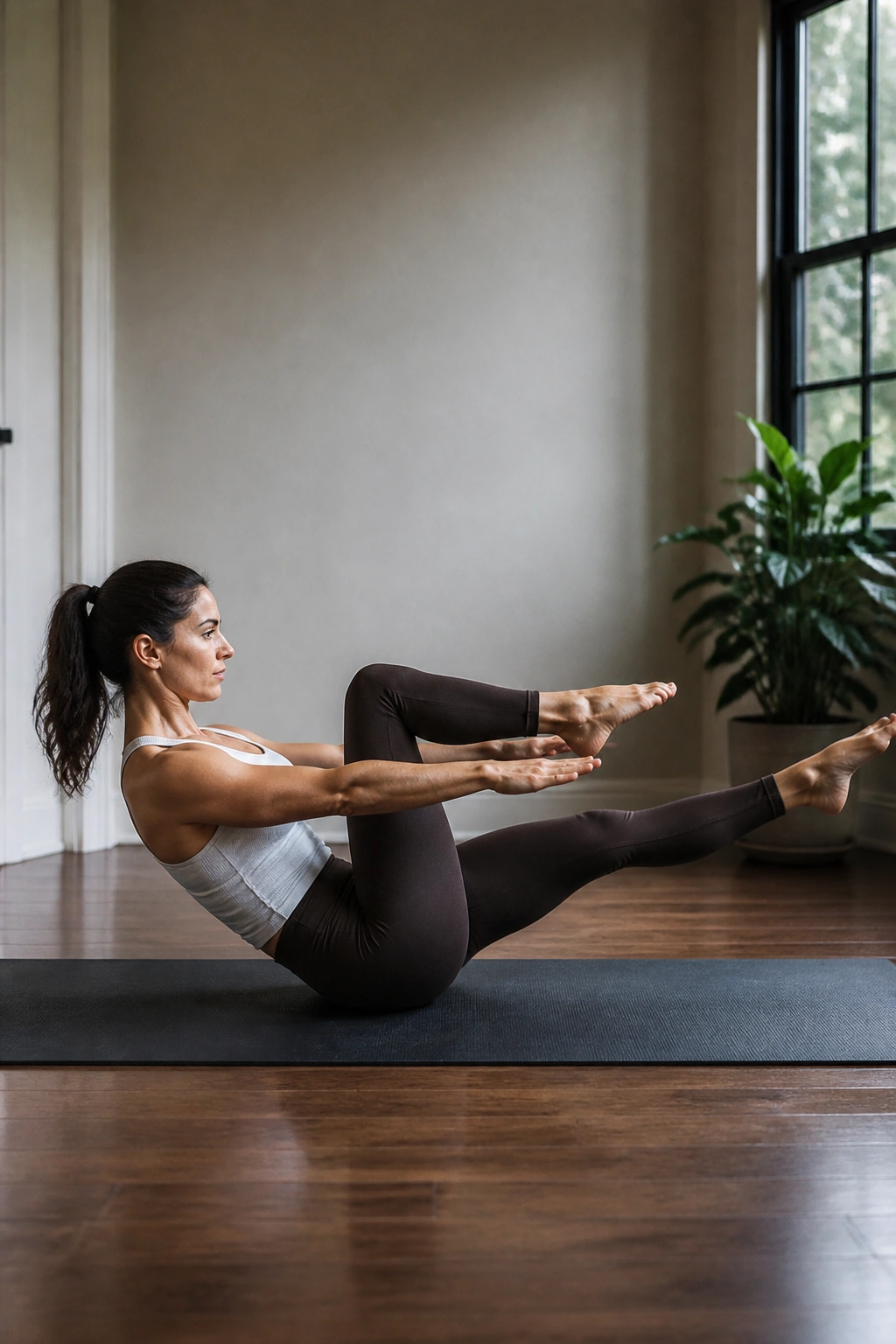
Pilates is not lazy. It just looks calm.
Unlike jumpy bootcamp-style workouts, a Pilates mat session uses slower control and tiny adjustments that light up the deep core, hips, and lower back. That’s a big deal if you want to feel stronger without feeling battered afterward. A 15- to 25-minute mat sequence can include hundred pulses, single-leg stretches, glute bridges, side-lying leg lifts, and plank holds from the knees or toes.
The trick is to move with control instead of speed. If your lower back arches during leg lifts, bend the knees. If a full plank bothers your shoulders, drop to the forearms or knees. Good Pilates should feel demanding in a focused way, not painful in a sloppy way.
People who hate the gym often like Pilates because it feels private. Quiet. Precise. No one is yelling over music, and that alone is half the appeal.
7. Resistance Band Glutes and Legs at Home
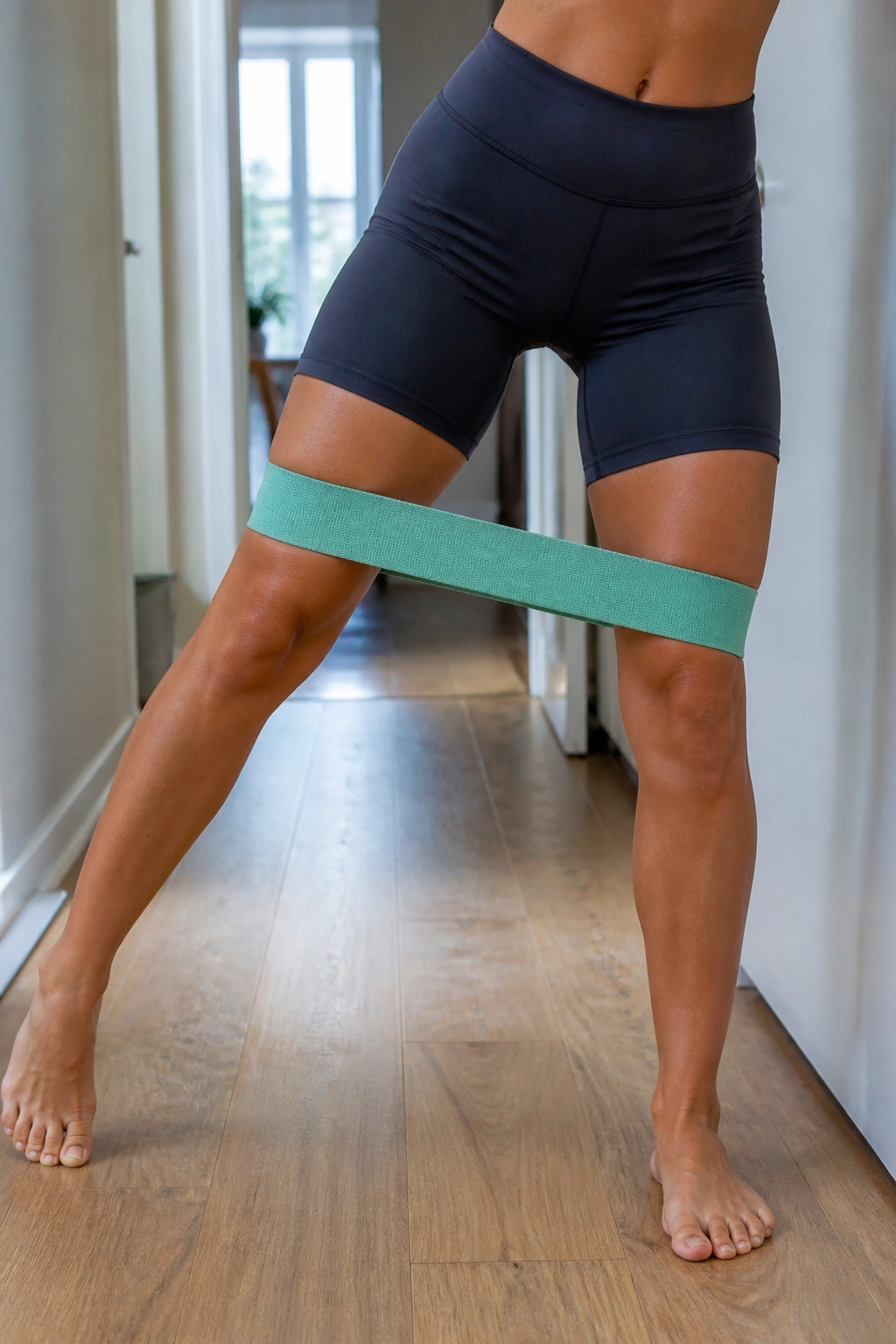
A loop band can make a tiny room feel like a full lower-body day. That’s not hype. It’s leverage.
Place a mini band above your knees or around your ankles and work through lateral walks, glute bridges, clamshells, and standing kickbacks. Do 2 to 4 sets of 12 to 15 reps per move, with short rests of 20 to 30 seconds. The band should stay snug enough to create resistance, not so tight that you start wobbling for the wrong reason.
What the Band Does Well
The band keeps constant tension on your muscles, so even small movements get real work done. That makes it excellent for glute medius strength, which helps with hip stability and often gets ignored until a knee starts feeling cranky.
A few practical details:
- Keep your feet hip-width apart on bridges.
- Take slow, controlled steps on lateral walks.
- Stop the kickback when your lower back wants to take over.
- Use a thicker band only after the lighter one stops feeling challenging.
Best move: do band work at the end of a walk or cardio session. Your legs will already be warm, and the band will feel twice as honest.
8. A No-Mirror Strength Flow for Women Who Hate the Gym
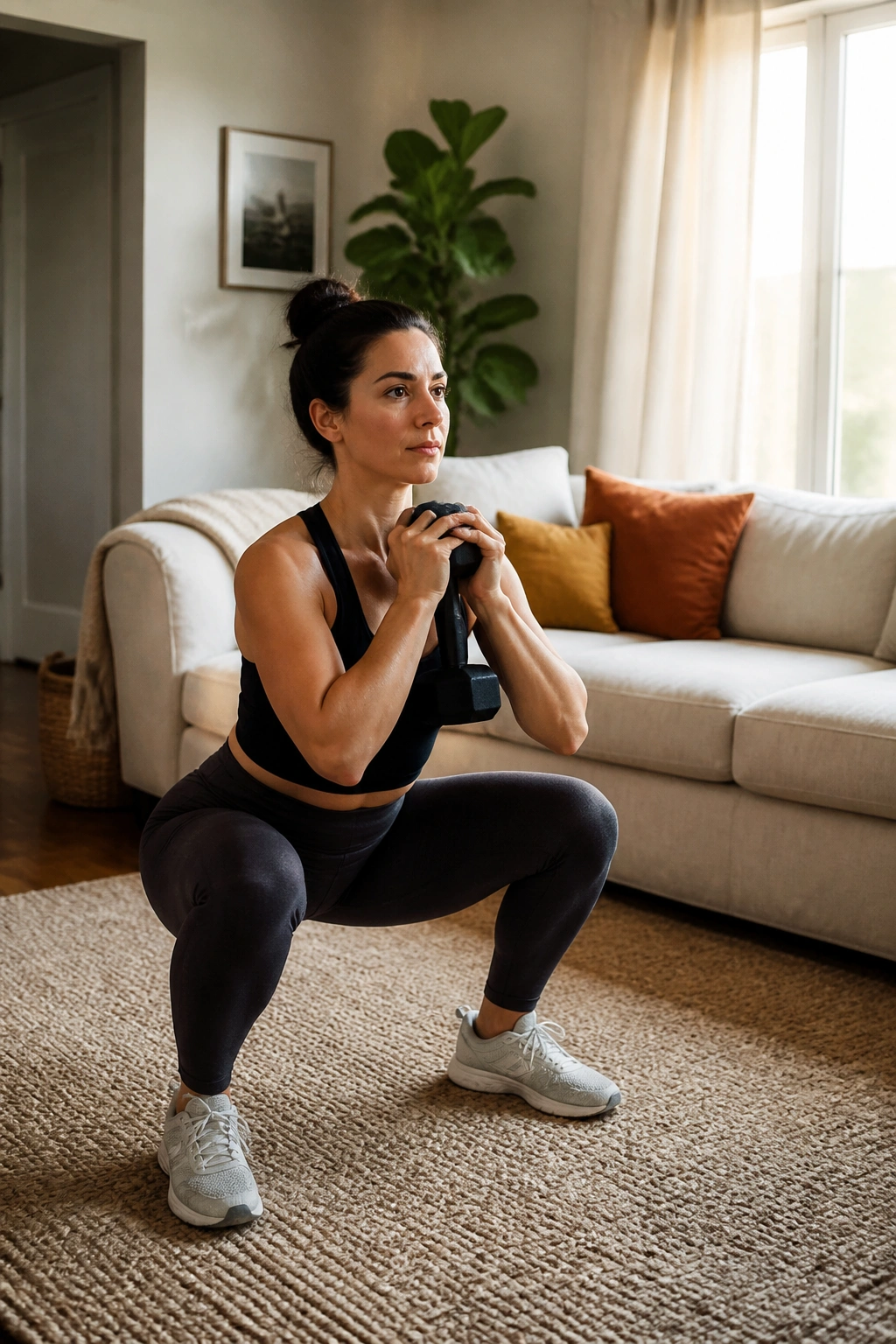
Some workouts feel easier the minute you remove the mirror. That matters more than people admit.
A no-mirror strength flow is a small circuit of push, pull, squat, and hinge patterns done with bodyweight or a pair of dumbbells. Think goblet squats, bent-over rows, reverse lunges, and incline push-ups. Keep it moving for 20 minutes at a steady pace, resting when your form starts to fray. You do not need a room full of equipment to build muscle; you need enough resistance that the last 2 reps feel honest.
The charm here is privacy. You can focus on the actual work instead of checking whether you look “fit.” That can be a relief if gym culture has always made you feel watched.
Use a couch for push-ups, a backpack for rows if you do not own dumbbells, and a mat only if the floor feels hard. Strong counts even when the setup looks plain.
9. Low-Impact Marching Intervals on Tired Days
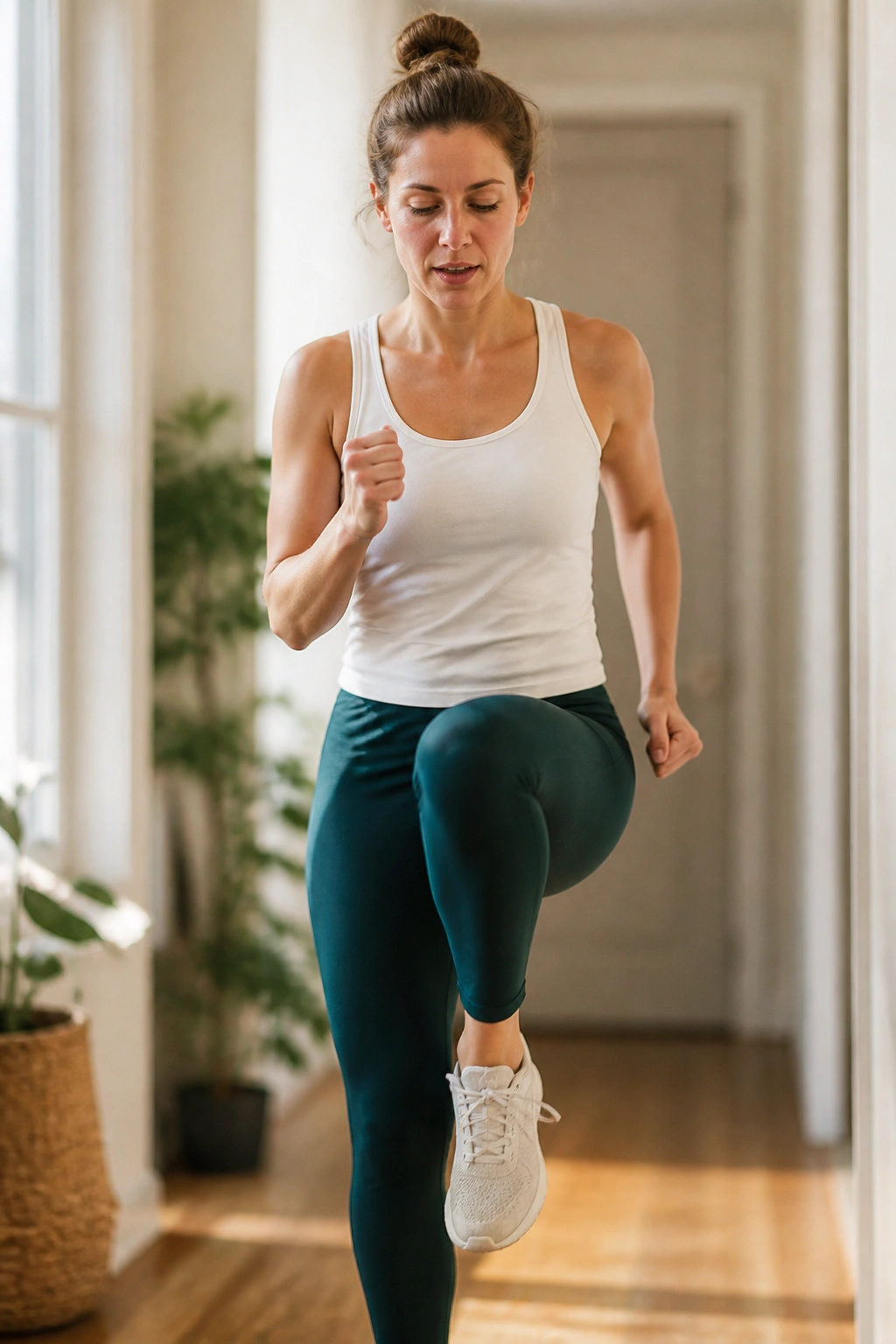
Need cardio without pounding your knees or shaking the floor? Marching intervals are boring in the best way.
Stand tall and march in place for 20 to 40 seconds at a fast pace, driving the knees a little higher and pumping the arms. Then slow down for 20 to 30 seconds and repeat for 10 to 15 minutes. Add side steps, heel digs, or knee taps if you want more variety. It sounds gentle because it is gentle. It still works.
How to Use It
This is a smart choice on days when your energy is low but you do not want to lose the habit. Keep the movement crisp. Lift one foot at a time with purpose, and do not slouch just because you are in your hallway.
Add music and keep the tempo steady. If you start to drift, shorten the rest and make the fast portions a little more aggressive. The workout depends more on cadence than on drama.
A lot of people skip this because it looks too easy. Then they finish sweaty and slightly annoyed that it worked.
10. A Dumbbell Complex Done in One Spot
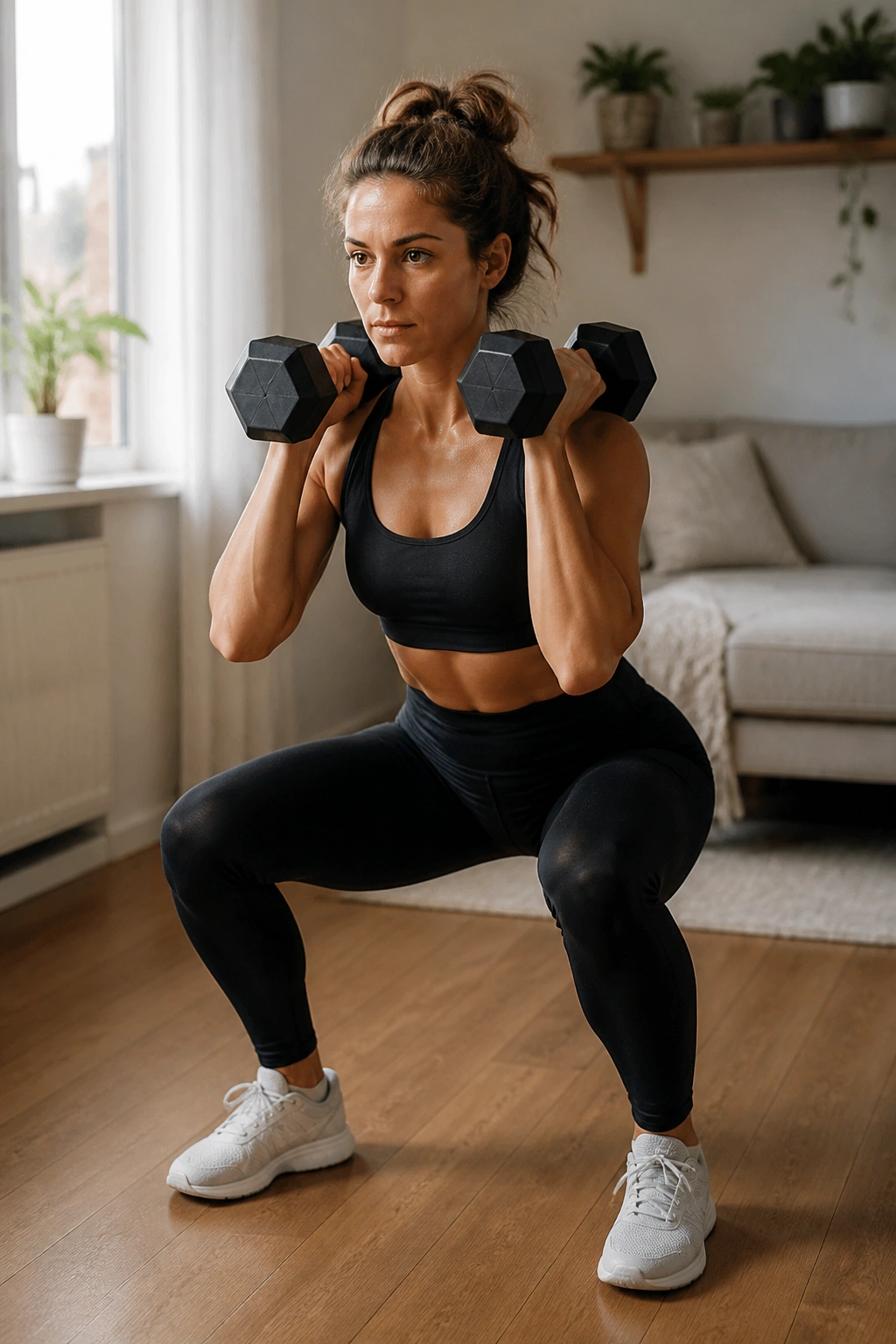
One pair of dumbbells. No putting them down. That’s the whole idea.
A dumbbell complex chains several moves together without rest, which drives your heart rate up while keeping the workout compact. Try 6 deadlifts, 6 bent-over rows, 6 hang cleans, 6 front squats, and 6 overhead presses. Rest 90 seconds, then repeat for 3 to 5 rounds depending on your level.
The first round feels manageable. The second round starts to tell the truth. By the third, your grip and lungs both get a vote. Use lighter weights than you think you need, especially if you are new to cleans or presses, because form matters more than ego here.
- Start with weights you can control for every rep.
- Keep the dumbbells close to your body during cleans.
- Brace your midsection before each squat and press.
- Stop if your lower back starts doing work it should not do.
It is efficient, a little old-school, and surprisingly satisfying when you want one short workout that covers a lot.
11. The Park Bench Circuit
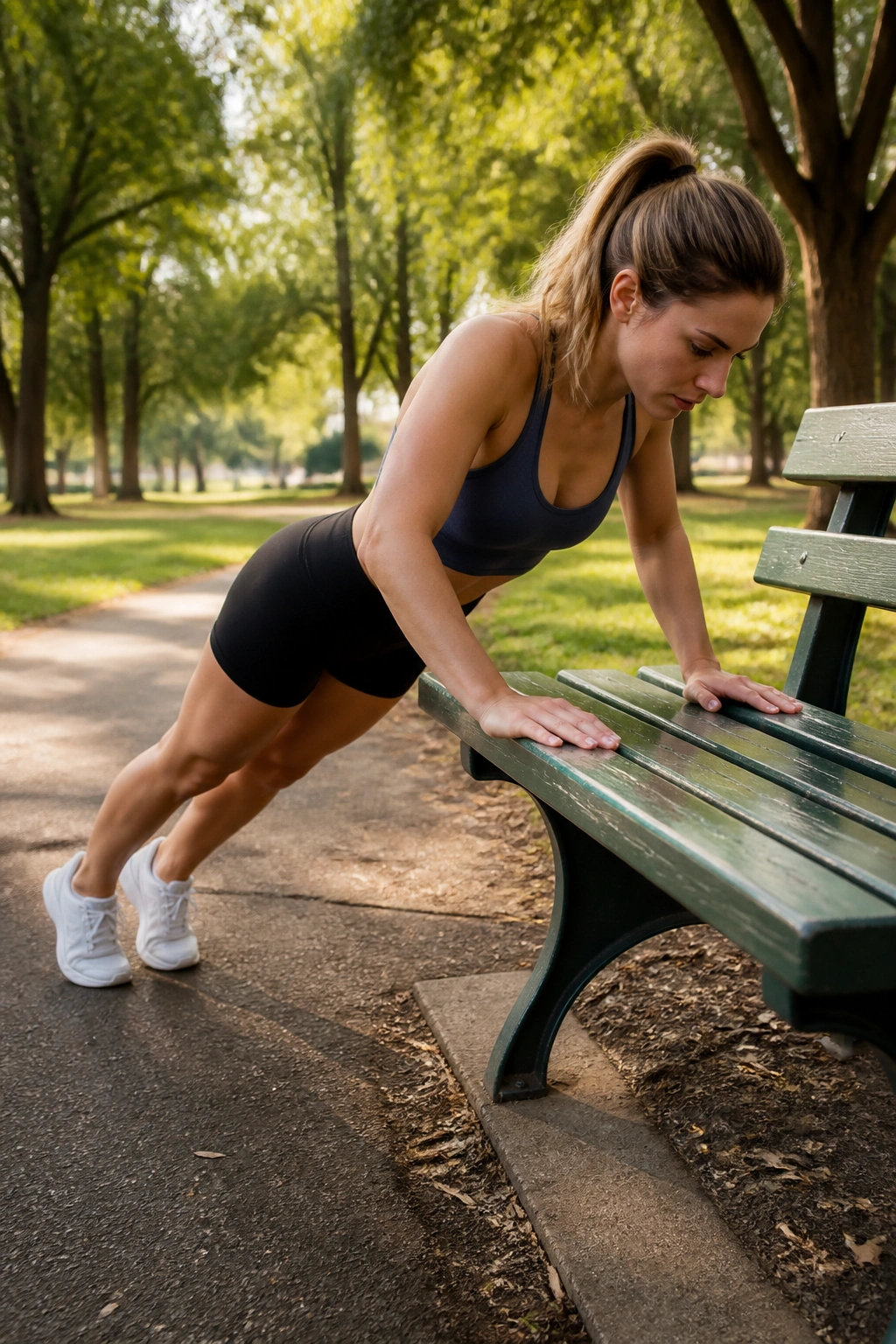
A park bench gives you more than a place to sit. It gives you a whole little training station.
Use the bench for step-ups, incline push-ups, split squats with the back foot raised, and knee-drive climbs. Do 8 to 12 reps per movement for 3 rounds, or time each exercise for 30 to 45 seconds if you prefer a clock. A nearby bench or low wall turns an ordinary walk into a full body session without the feeling of being trapped indoors.
There’s a certain calm that comes with outdoor workouts. Nobody is staring because most people in a park are busy with their own lives. A kid on a scooter, a dog dragging its owner, a couple arguing about directions — the whole setting feels less self-conscious.
Keep your feet dry, wipe down the bench if it’s damp, and choose a stable surface. If your balance is shaky, step-ups are better than split squats until your legs get used to the angle.
12. Hill Walks That Feel Like Work

A flat walk is nice. A hill walk earns its keep.
Compared with a treadmill incline, a real hill asks more of your balance, glutes, and calves because the surface changes under your feet. Walk uphill for 30 to 60 seconds at a pace that feels strong but controlled, then recover on the way down. Repeat 6 to 10 times. If the hill is long, break it into sections and use landmarks instead of a stopwatch.
Who is this best for? Anyone who wants cardio that does not feel like cardio until the end. You get breathing work and leg work without needing to jump, sprint, or pace around the house.
Pick a hill with a safe sidewalk or shoulder and wear shoes with decent grip. If you hate the idea of “working out,” call it a walk and let the hill do the heavy lifting.
13. Kettlebell Swings and Carries
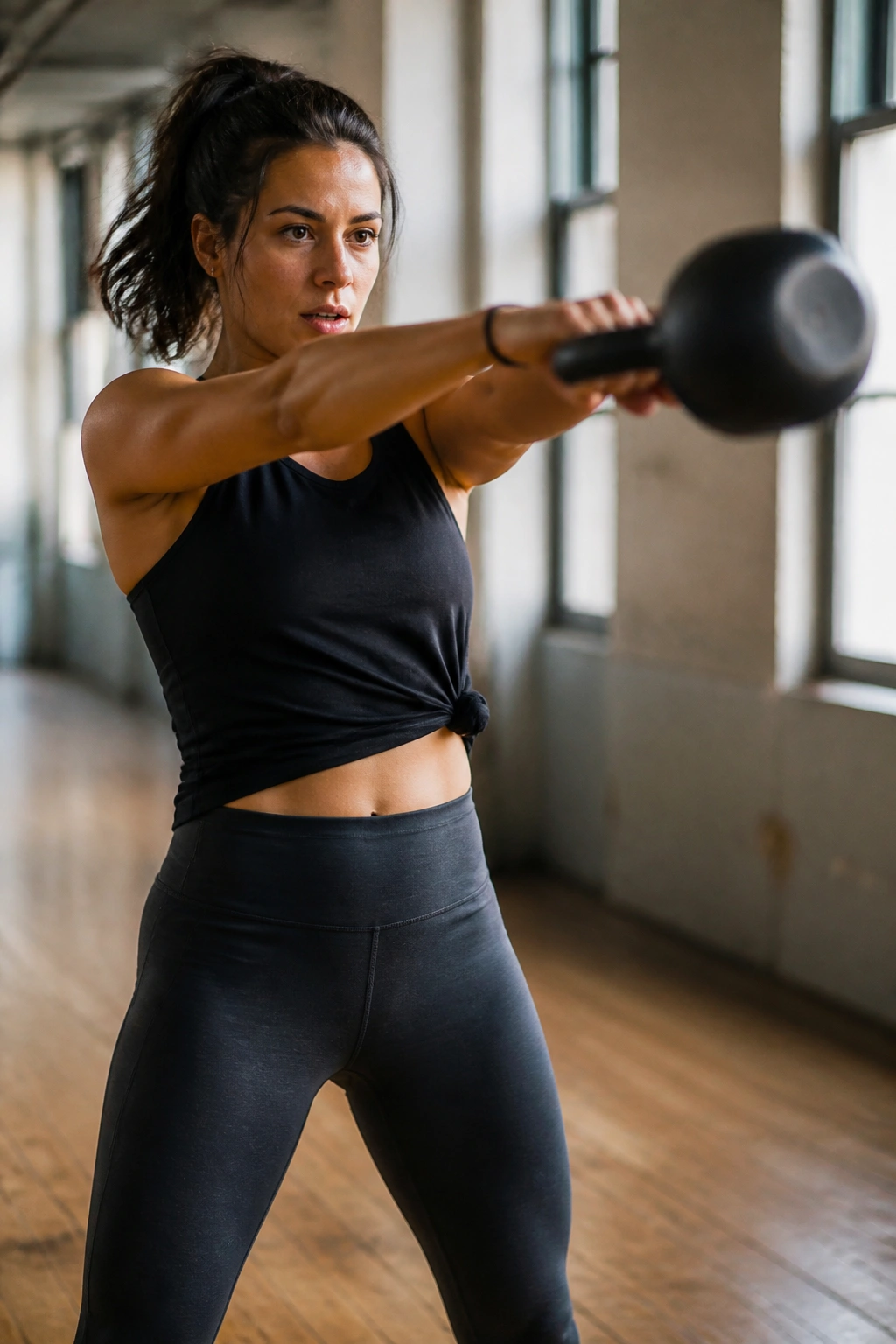
Kettlebell work looks simple from across the room. Up close, it’s all hips and timing.
Start with a weight you can deadlift for clean reps first — many women do well beginning around 8 to 12 kg, while stronger lifters may prefer 12 to 16 kg or more. Do 10 to 15 swings, then pick up the bell and walk 20 to 30 meters for a suitcase carry. Rest, repeat, and keep the whole session under 20 minutes if you want a quick hit.
The Part People Miss
The swing is a hinge, not a squat. Your hips snap the bell forward; your arms guide it. If the bell is drifting above chest height because you are muscling it, the weight is too light or your form is off.
Carries are the quiet half of the workout. They build grip, trunk strength, and posture without a lot of noise, which is one reason they pair so well with swings.
Good rule: if your back feels it more than your glutes, slow down and reset.
14. EMOM Full-Body Circuits
EMOM stands for every minute on the minute, and it suits people who like structure without a lot of chatter.
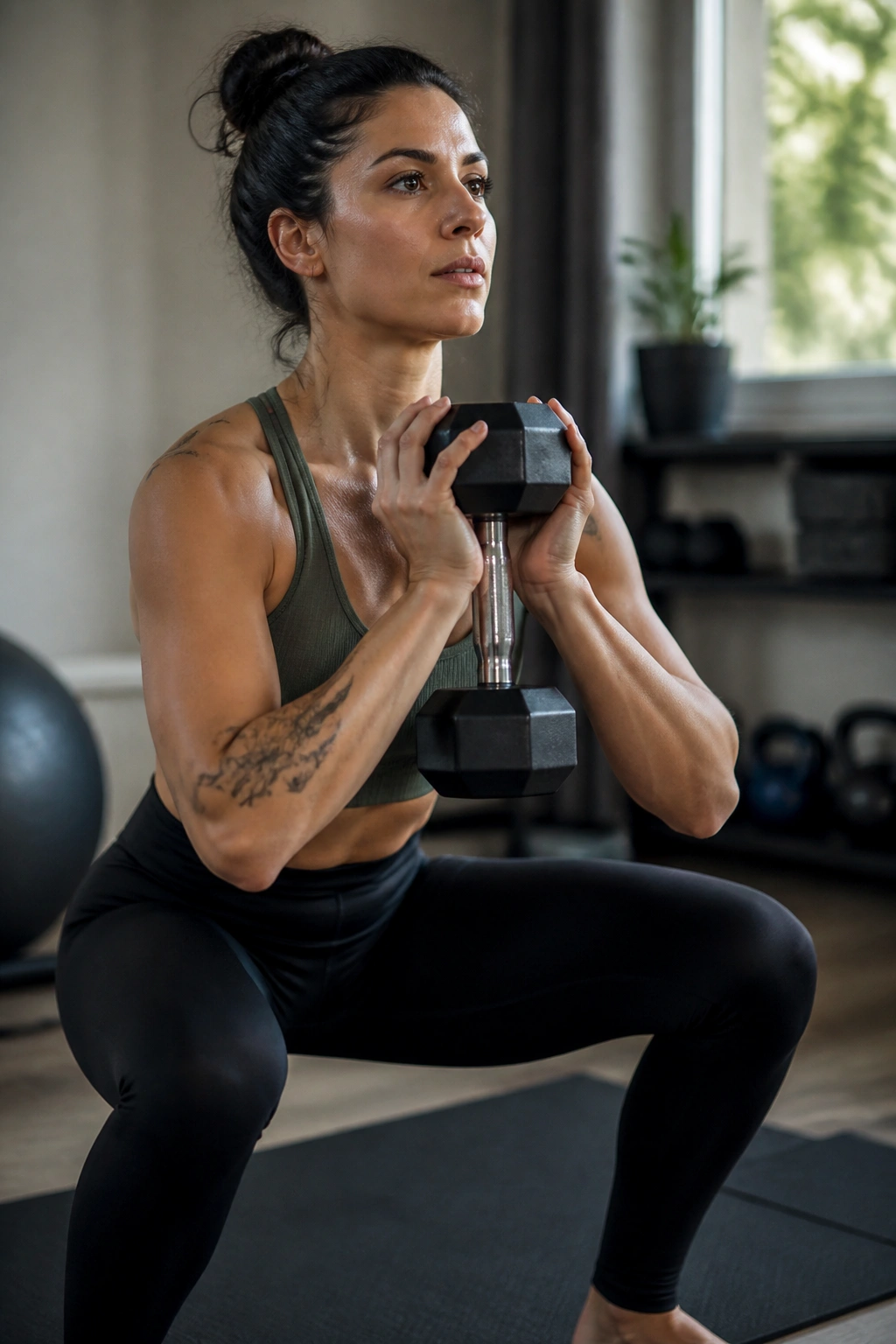
Pick 3 moves and rotate through them for 12 minutes. Minute 1: 10 goblet squats. Minute 2: 8 incline push-ups or floor push-ups. Minute 3: 10 bent-over rows. Repeat the cycle four times. If you finish a minute early, rest until the next one starts. If you run out of time, cut the reps.
The beauty of EMOM work is that the clock keeps you honest. There is no wandering, no doom-scrolling, no wondering whether you are “doing enough.” You either finish the set or you do not.
Use dumbbells, a kettlebell, or even bodyweight if that is what you have. Keep the reps clean and the rest brief. That steady pressure is what makes the session work, not a frantic pace.
15. Wall Pilates for People Who Hate Floor Drills
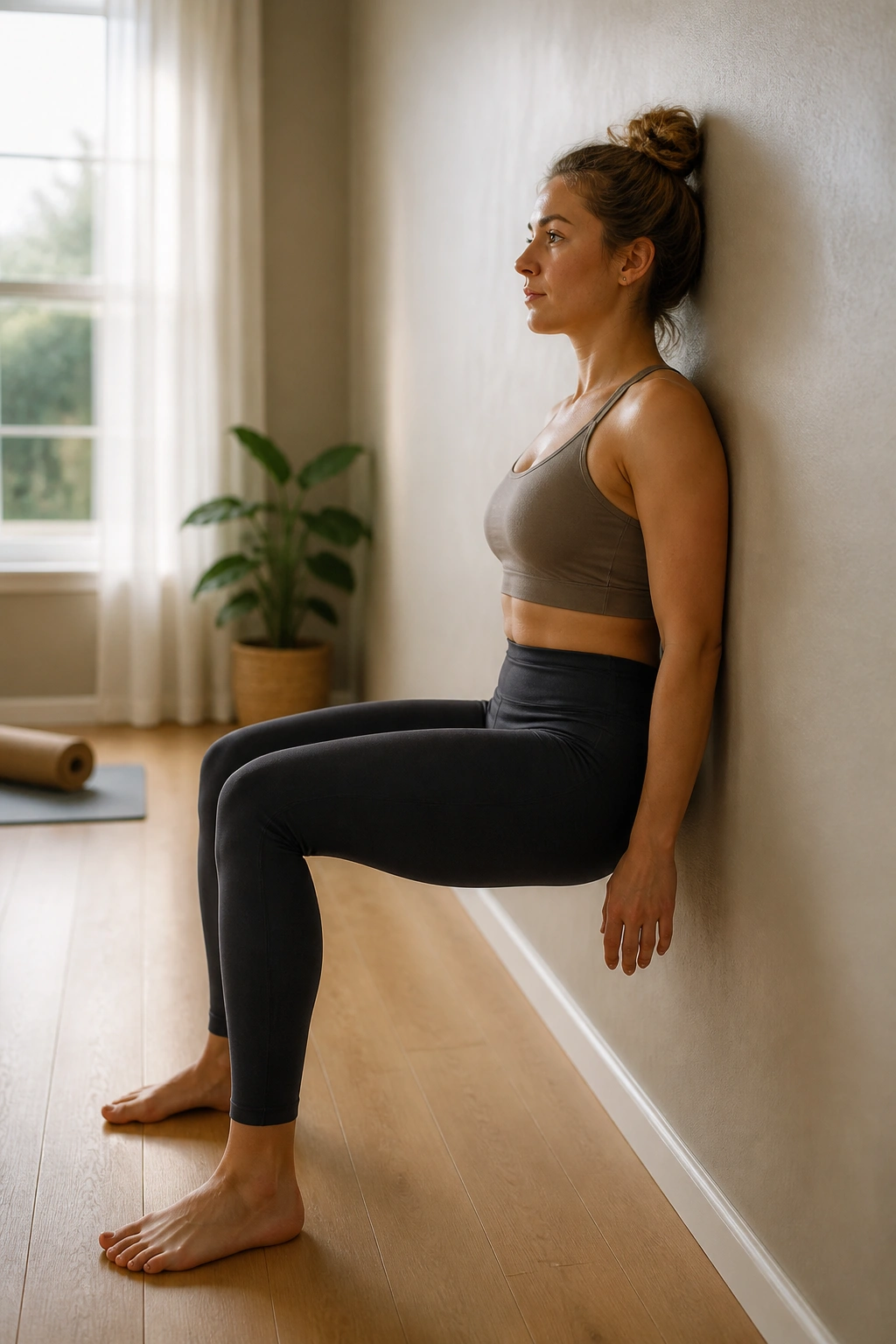
A wall changes Pilates in a sneaky, useful way. It gives you feedback.
Press your back, feet, or hands into the wall for moves like wall sits, wall roll-downs, standing leg lifts, wall push-ups, and supported dead bugs with the feet on the wall. A 20-minute wall Pilates routine can feel easier to organize than floor work because the wall helps you line things up. It also takes some strain off wrists and shoulders.
How to Use It
Try 30 to 45 seconds of wall sit holds, 8 to 10 roll-downs, 10 slow wall push-ups, and 8 to 12 leg lifts per side. Move smoothly, and keep the ribs from flaring out. The wall should help you stay honest, not lazy.
This style works well if getting up and down from the floor makes you grumpy. It also suits small spaces. One wall is enough.
And that is a nice thought, honestly.
16. Core and Posture Reset After Desk Time
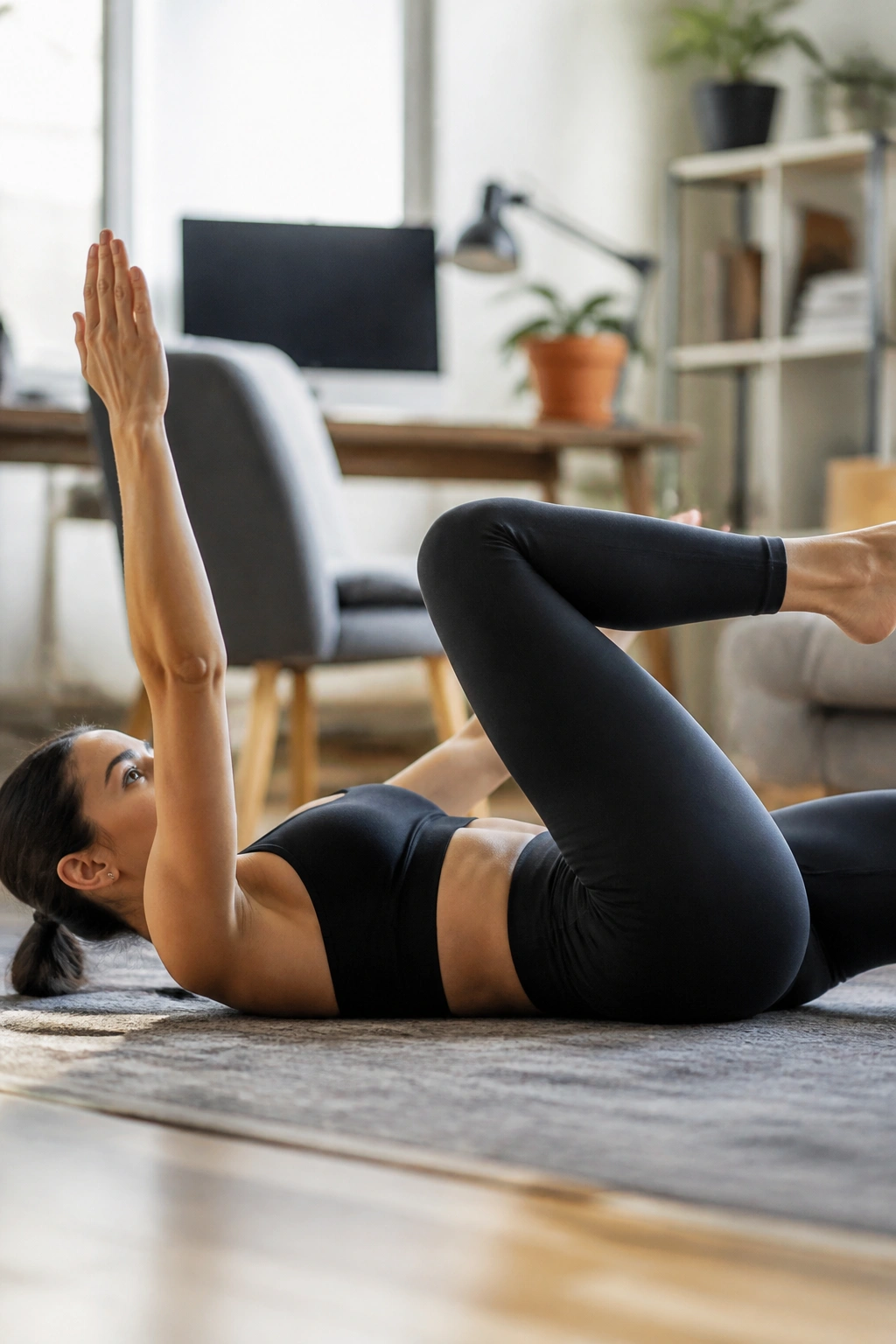
After a long day at a desk, your body often wants one thing: to stop folding forward.
A core and posture reset focuses on the muscles that hold you upright — glutes, deep abs, upper back, and the small stabilizers around your spine. Use dead bugs, bird dogs, side planks from the knees, and suitcase carries if you have a dumbbell or heavy bag. Two rounds can be enough: 8 slow reps per move, 20 to 30 seconds on the side plank, and a 30-second carry on each side.
The point is not to destroy yourself. The point is to feel less stiff and less collapsed by the time you finish. That makes this a good bedtime workout or a good after-work reset.
If your shoulders are rounded forward, keep the reps slow and precise. Little control beats big motion here, every time.
17. Step-Up Ladder on One Sturdy Step
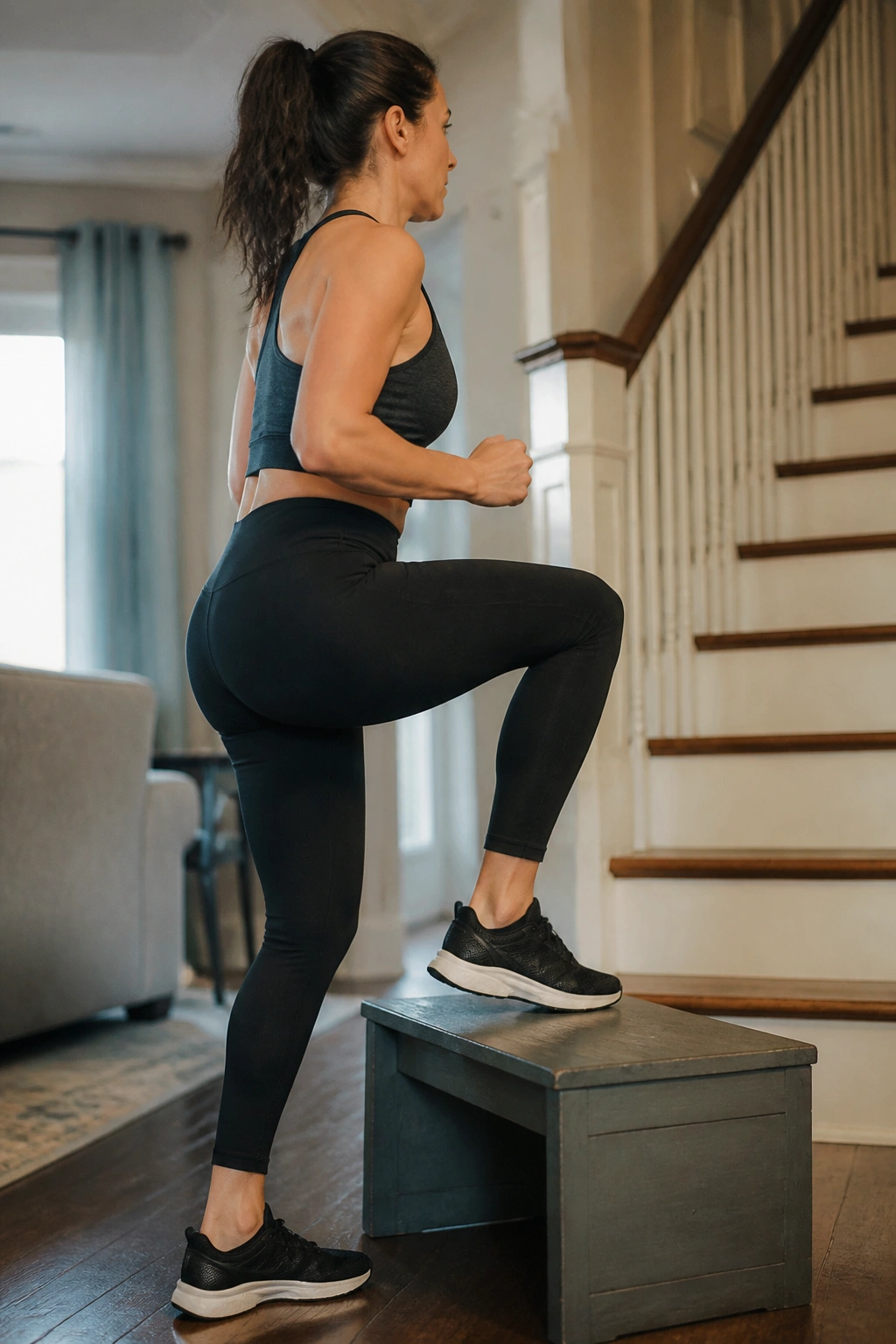
One sturdy step can do more work than people expect.
Start with 4 step-ups per leg, then 6, then 8, then 10. That rising ladder keeps you honest because the early rounds feel easy and the later rounds expose where your balance and stamina live. Use a stair, a low bench, or a solid aerobic step. Hold light dumbbells if you want more load, but bodyweight is enough to make this count.
Step-ups train your legs in a way that feels useful. You are not lying on a mat counting endlessly. You are climbing, balancing, and driving through the foot, which has a more real-life feel to it.
Keep the whole foot on the step. Stand tall at the top. If your knee caves inward, slow down and reduce the height before you add weight. That little correction matters more than speed.
18. Jump Rope Intervals Without the Gym Drama
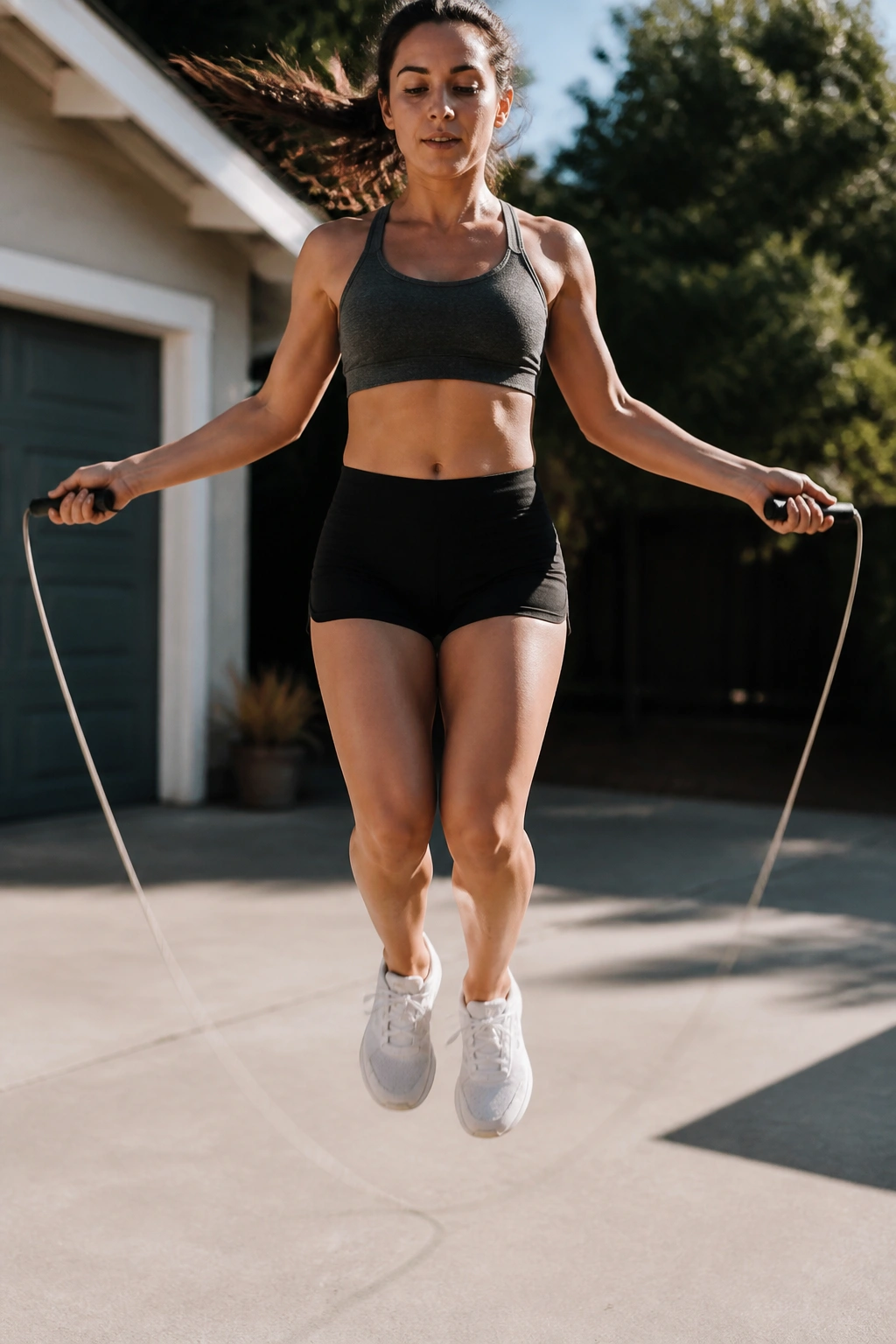
Jump rope is cheap, portable, and a little ruthless. That’s why it works.
Unlike a treadmill or an elliptical, a rope gives you a fast, bouncy cardio hit in a tiny space. Do 20 seconds of rope work, then rest or walk for 40 seconds. Repeat 10 to 12 times. If your joints complain, switch to “ghost rope” — same arm motion, no actual rope, and softer footwork.
Who is this best for? People who want a short workout that can spike the heart rate without taking over the whole evening. It also fits travel well, which matters more than most workout plans admit.
Use a flat surface, decent shoes, and a rope sized to your height. If the floor is unforgiving, a thin mat can help a little, but not enough to turn concrete into a trampoline. Be kind to your calves the first week.
19. Swimming Laps in a Quiet Pool
Swimming is one of the few workouts that can feel both hard and calm at the same time.
If you have pool access, lap swimming is a strong choice for women who hate the sweaty, noisy parts of the gym but still want serious conditioning. Try 4 laps easy, 4 laps moderate, then 4 shorter hard efforts with plenty of recovery. Or keep it simple and swim continuously for 20 to 30 minutes at a comfortable pace. Freestyle is enough. You do not need fancy strokes to get work done.
The water changes the whole experience. Your joints get less pounding, your breathing becomes more deliberate, and the usual gym noise disappears. That alone can make you more willing to show up.
Use a kickboard if you want to isolate your legs, but do not feel pressured to turn every session into a technique clinic. A steady swim that you can repeat is worth more than a perfect one that exhausts you.
20. Bike Intervals on a Stationary or Outdoor Bike
A bike is a solid choice when you want hard cardio without impact.
Set a timer for 30 seconds hard and 90 seconds easy, then repeat for 8 to 10 rounds. On a stationary bike, increase resistance on the hard efforts until the pedals feel heavy but still smooth. Outdoors, choose a stretch where you can keep the pace high without worrying about traffic or hills that are too steep.
This style works because your legs do most of the work while your upper body gets to stay quiet. Some days that is exactly what you want. No jumping. No thudding. No complicated choreography.
If you are new to intervals, keep the first hard round at a “could do this a few more times” pace. People blow up bike workouts by starting too hot and then spending the rest of the session negotiating with their thighs.
21. Nature Hikes With Power Bursts
Can a hike count as a workout if you stop to look at trees? Yes. That is part of the appeal.
A hike becomes more training-like when you add short power bursts on hills or flat stretches. Walk steadily for 8 to 10 minutes, then pick up the pace for 45 seconds to 1 minute. Repeat that rhythm through the trail. If the route has steps, roots, or a steep patch, use those as your hard efforts. You can also carry a light backpack to make the session feel more loaded.
How to Turn a Walk Into Real Work
The goal is not to race the trail. The goal is to interrupt easy walking with brief stronger efforts so your heart rate rises and settles in waves. That pattern feels kinder than nonstop hard cardio, which is one reason hikers stick with it.
Take water, wear shoes with real traction, and choose a route that feels safe to walk alone. A 45-minute hike with a few hard bursts can leave you tired in the best kind of way.
22. The 12-Minute Reset for Women Who Hate the Gym
Some days, the whole idea of a “real workout” feels like too much. That is when a 12-minute reset earns its place.
Do 30 seconds each of squat to reach, incline push-ups on a counter, reverse lunges, and dead bugs. Rest 20 seconds, then repeat the circuit three times. If your space is tiny, swap reverse lunges for marching in place and keep the pace steady. You will get strength, a little cardio, and enough structure to keep the habit from slipping away.
That is the real trick with workouts for women who hate the gym: making the entry point small enough that your brain does not start negotiating. A short session done three times a week can build more momentum than a big, exhausting plan done once and abandoned.
Leave this one in your back pocket for busy mornings, cranky afternoons, and the nights when the couch is louder than your motivation. A workout does not need a lot of ceremony to count.
