



You have twenty minutes. That is the entire budget for your workout today, and frankly, that is plenty. Most people labor under the false impression that fitness requires hours of steady-state drudgery—pounding pavement for miles or staring at the wall of a gym while walking on a treadmill at a modest incline. The reality is that your body does not count minutes; it responds to stress and recovery. High-intensity interval training, or HIIT, is the most efficient way to signal your metabolism to change. By pushing your heart rate into the red zone for short bursts followed by brief, incomplete recovery, you force your body to work harder during the workout and, crucially, consume more oxygen long after you have finished.
This form of training is not just about burning calories while you move. It is about creating an “afterburn” effect. When you finish a properly structured HIIT session, your body enters a state known as excess post-exercise oxygen consumption, or EPOC. Your systems are essentially playing catch-up, working to restore your oxygen levels, clear lactate, and repair muscle fibers. You are literally turning your body into a more efficient machine while sitting at your desk or making dinner later that evening. It is the closest thing to a “magic pill” that exists in the world of physiology.
Consistency, however, is where most people falter. The intensity required for these workouts is high, and the mental demand can be brutal. You will want to quit. You will want to rest longer than the timer allows. You will want to go a little slower. To succeed, you must embrace the discomfort. Treat these twenty-five workouts not just as a list to check off, but as a toolkit. Some days, you might have access to a full gym. Other days, you might be stuck in a hotel room with nothing but your own body weight. The key is movement, speed, and intensity. If you can maintain the work-to-rest ratio, you can achieve in twenty minutes what most people struggle to find in an hour.
1. Bodyweight Tabata
The Tabata protocol is the gold standard for simple, effective HIIT. You work for 20 seconds at maximum effort and rest for exactly 10 seconds. You repeat this cycle eight times, totaling four minutes for one full round. Do not mistake the short duration for lack of difficulty. By the fourth round, your lungs will be burning.
The Protocol
- Perform 20 seconds of high-speed burpees.
- Rest for 10 seconds.
- Perform 20 seconds of mountain climbers.
- Rest for 10 seconds.
- Cycle through these two movements until you have completed eight total rounds of work.
Pro tip: Keep your phone or a dedicated timer visible. If you are fumbling with a stopwatch, you are losing focus. Set a pre-programmed app that beeps at you so you do not have to watch the clock.
2. Kettlebell Swing-Focused Circuit

The kettlebell swing is the king of posterior chain exercises. It hits your hamstrings, glutes, and lower back simultaneously. For this workout, pick a bell that is challenging but allows for perfect form—do not sacrifice technique for speed.
How to Structure the Rounds
Set a timer for 20 minutes. Your goal is to complete as many rounds as possible, maintaining good form throughout.
- 15 Kettlebell swings.
- 10 Goblet squats.
- 5 Push-ups.
- Rest for 45 seconds after completing one full circuit.
Why this works: The swinging motion acts as a cardio driver while the squats keep your legs under tension. It is a dual-threat approach that burns fat and builds functional strength.
3. Jump Rope Sprints

Do not underestimate the humble jump rope. It is one of the most effective tools for spiking heart rate quickly. You do not need to be a professional boxer to reap the benefits; you just need to keep moving.
The Interval Pattern
Divide your 20 minutes into four 5-minute blocks. Within each block, work for 45 seconds and rest for 15 seconds.
- Block 1: Basic bounce.
- Block 2: Alternating foot step (the “boxer skip”).
- Block 3: Double-unders (as many as you can muster).
- Block 4: Freestyle—combine all techniques.
Note: If you trip, do not stop. Reset your feet and keep the rope moving. The penalty for tripping is merely an increased heart rate as you struggle to restart, which actually adds to the caloric burn.
4. Dumbbell AMRAP

“As Many Rounds As Possible” is a classic CrossFit-style approach that keeps the intensity high because you are racing against yourself. Grab a pair of moderate-weight dumbbells—something you can press overhead for at least 15 reps.
The Movements
- 10 Dumbbell thrusters (squat to overhead press).
- 10 Renegade rows (push-up position, rowing the weight to your hip).
- 10 Alternating lunges with weights held at your sides.
Repeat this sequence as many times as you can in 20 minutes. If you find your heart rate dropping, reduce your rest time. If your form breaks down, you are going too fast—slow your reps but keep moving.
5. Burpee Ladder
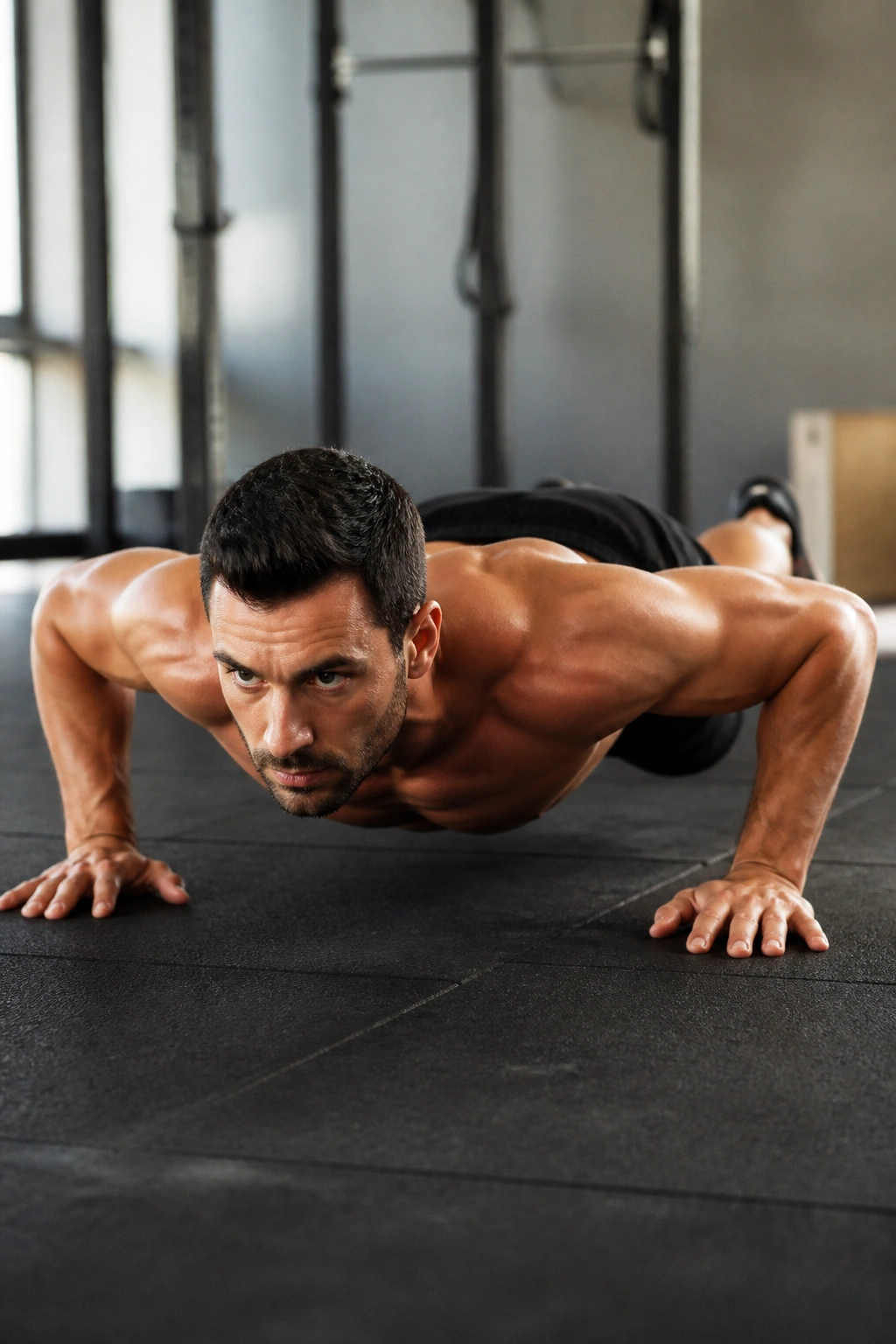
This is a mental game more than a physical one. You will start with a low number and climb, then descend. It forces you to manage your pace so you do not burn out in the first two minutes.
The Ladder Structure
- Round 1: 2 burpees.
- Round 2: 4 burpees.
- Round 3: 6 burpees.
- Continue adding 2 reps each round until you hit 20 minutes, or until you reach 20 reps and start counting back down to 2.
What to watch for: The “chest-to-floor” standard is non-negotiable. If your chest does not touch the floor, the rep does not count. Stay honest with your range of motion.
6. Battle Rope Chaos

Battle ropes are fantastic because they remove the impact of running or jumping. They allow you to go at 100% effort without stressing your joints.
The Work-Rest Split
Set your timer for 30 seconds of work and 30 seconds of rest.
- 30 seconds: Alternating waves.
- 30 seconds: Double-arm slams.
- 30 seconds: Power circles.
- 30 seconds: Rest.
Repeat this four-minute sequence five times. If you feel like your arms are going to fall off, that is exactly the sensation you are aiming for. The key is to keep your core braced the entire time.
7. Box Jump and Sprint Hybrid

This combines explosive power with high-speed locomotion. You will need a sturdy plyo box and a clear stretch of floor space.
The Rotation
- 10 Explosive box jumps (step down, do not jump down).
- 20-yard sprint (or 20 high-knees if space is limited).
- 10 Bodyweight squats.
- 1-minute recovery.
Repeat this loop for 20 minutes. The jump builds power, the sprint spikes the heart rate, and the squats keep your legs engaged. It is a brutal leg-focused circuit.
8. Medicine Ball Power

A heavy medicine ball—preferably a slam ball—is a versatile tool for full-body conditioning. Slamming the ball engages your lats, shoulders, and core, while the weight forces your heart to pump harder.
The Sequence
- 15 Overhead slams.
- 15 Russian twists (feet off the ground).
- 15 Medicine ball lunges (ball held at chest height).
Complete as many rounds as possible in 18 minutes. Warning: Use a non-bouncy slam ball. If you use a bouncy ball, you risk it hitting you in the face. Always choose a ball that dead-drops.
9. Mountain Climber Plank Push

This workout targets your core and shoulders, creating a static-to-dynamic challenge that will leave your abs feeling tight and your shoulders burning.
The Setup
- 45 seconds of mountain climbers (drive knees to chest).
- 15 seconds of plank hold.
- 45 seconds of push-ups.
- 15 seconds of plank hold.
Repeat for 20 minutes. The plank hold is your “rest,” but keep your glutes squeezed tight. If you let your hips sag during the plank, you lose the core activation.
10. Rowing Machine Sprints

Rowing is arguably the most efficient way to burn calories because it recruits every major muscle group in the body. If you have access to a rower, use it.
The 500-Meter Intervals
- Sprint 500 meters at 90% intensity.
- Rest for 60 seconds (or until your breathing is controlled).
- Sprint 500 meters again.
Do this for 20 minutes. If you find you can complete the 500 meters in under two minutes, increase the resistance or aim for a lower split time. Keep your back straight—never hunch over at the catch.
11. TRX Suspension Training
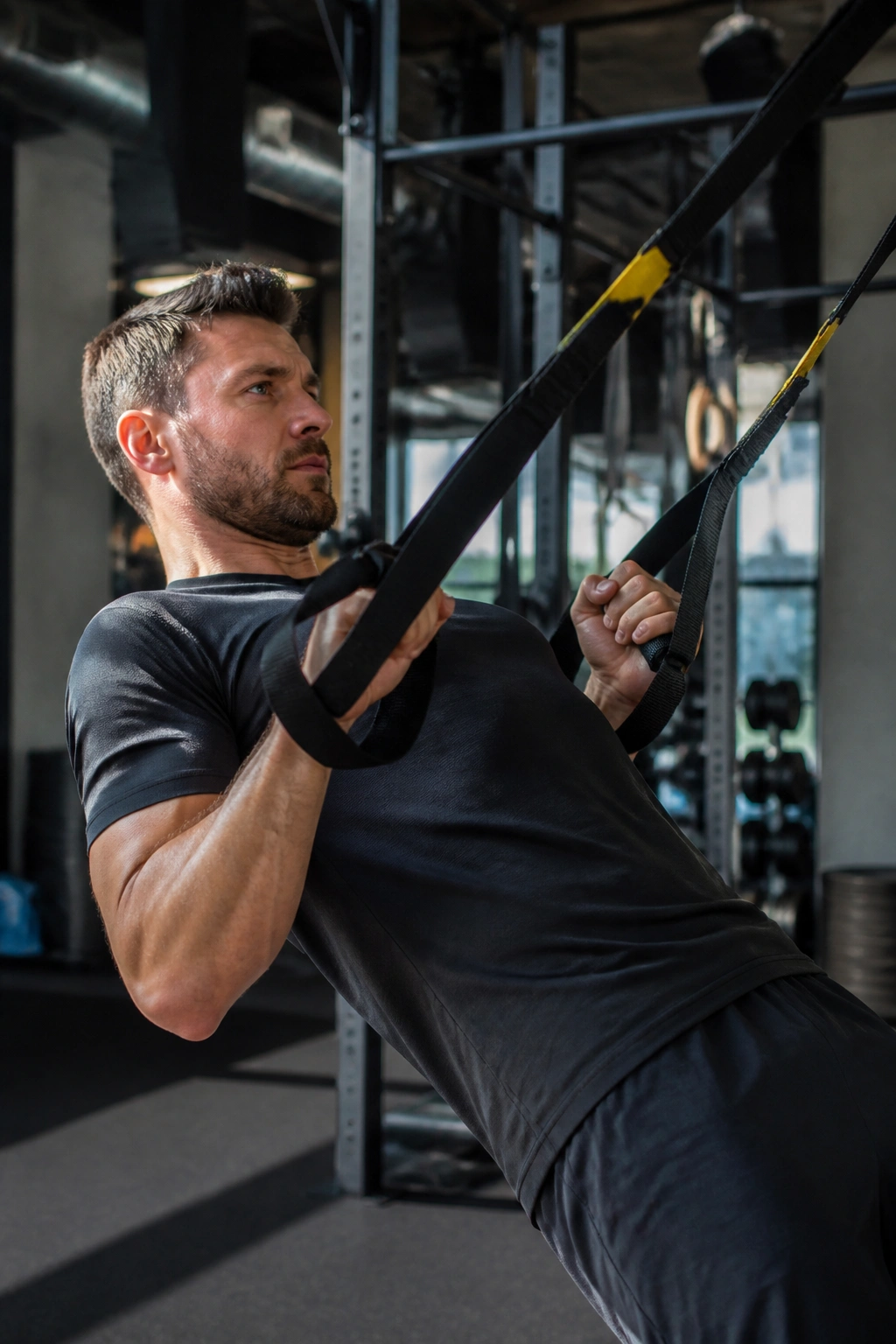
Suspension trainers use your body weight against gravity, and because they are unstable, they force your stabilizer muscles to work overtime.
The Circuit
- TRX Rows.
- TRX Chest Press.
- TRX Hamstring Curls (lying on your back).
- TRX Mountain Climbers.
Perform 45 seconds of each, with 15 seconds to transition. Do four rounds. The beauty of this is that you can change the difficulty instantly by moving your feet closer to or further from the anchor point.
12. Stairmaster Sprints

The Stairmaster is a grinder. It is essentially a treadmill for vertical climbing. To turn it into a HIIT workout, you must increase the speed and use your legs, not your hands.
The Technique
- 2 minutes at a moderate pace (warm-up).
- 1 minute at maximum climbing speed (leap up two steps at a time).
- 1 minute at a very slow recovery pace.
Do this for 20 minutes total. Avoid leaning heavily on the handrails. Supporting your weight with your arms negates the calorie burn and defeats the purpose of the workout.
13. Plyometric Box Jumps

Plyometrics are about speed and explosiveness. This is not just about jumping; it is about jumping as high as you can, as quickly as you can, with a focus on a soft landing.
The Structure
- 10 Box jumps.
- 20-second break.
- 10 Lateral hops over the box.
- 20-second break.
Repeat for 20 minutes. If you are a beginner, use a lower box. You should be able to land with your feet flat on the box, not on your toes. Always prioritize safety over the height of the jump.
14. Resistance Band Burner
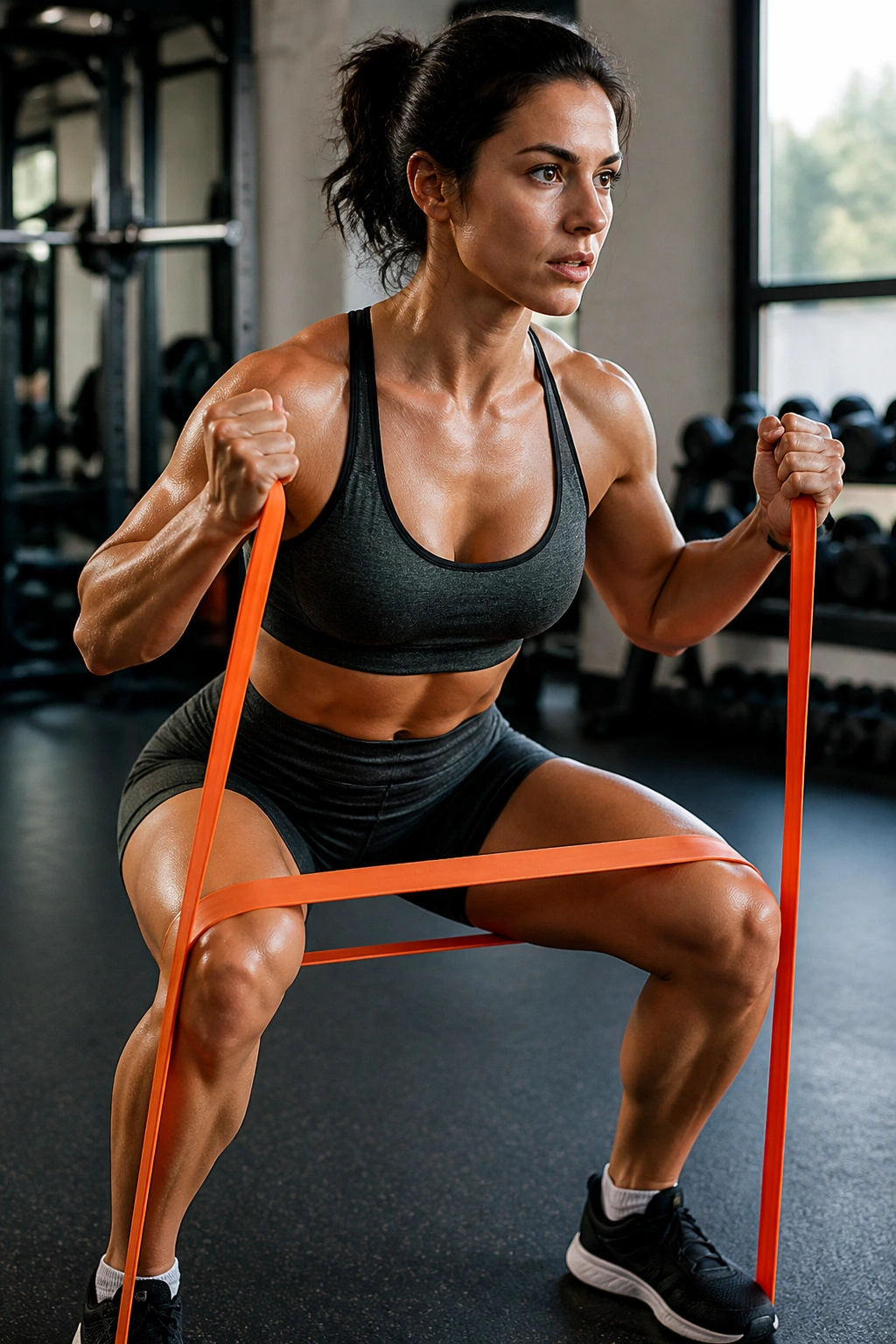
Bands provide “accommodating resistance,” meaning the further you stretch the band, the harder it gets. This constant tension is great for muscle endurance.
The Loop
- 20 Banded squats.
- 20 Banded rows.
- 20 Banded overhead presses.
- 1 minute rest.
Repeat for 20 minutes. If you find it too easy, switch to a thicker band. The key is to keep tension on the band at all times—never let it go slack, even at the bottom of the movement.
15. Squat and Lunge Pyramid

This workout is purely legs. It is mentally tough because you aren’t doing different movements, just repeating the two most grueling ones.
The Pyramid
- 5 Squats, 5 lunges (each leg).
- 10 Squats, 10 lunges.
- 15 Squats, 15 lunges.
- 20 Squats, 20 lunges.
- Work your way back down to 5.
If you finish before 20 minutes, start the pyramid over. If you don’t finish, stop when the clock hits 20. Your legs will feel like lead afterward.
16. Core-Focused HIIT

Most people think HIIT is just for cardio. You can absolutely use it for abs, but you have to keep the intensity high enough that your heart rate stays elevated.
The Core Circuit
- 30 seconds V-ups.
- 30 seconds bicycle crunches.
- 30 seconds leg raises.
- 30 seconds hollow body hold.
Repeat four times without stopping. If you can talk during the hollow body hold, you are not doing it right. Keep your lower back pressed firmly into the floor.
17. Thruster and Pull-Up Combo

This is a classic “barbell and pull-up bar” combo. If you have access to a rack and a bar, this is the ultimate test of full-body strength and conditioning.
The Ratio
- 10 Thrusters (squat to press).
- 5 Pull-ups (use bands if needed).
- 30-second rest.
Perform as many rounds as possible in 20 minutes. The thruster taxes your legs and shoulders, while the pull-ups fatigue your lats and grip. It is a full-body grind.
18. Stationary Bike Sprints

If you prefer cycling, this is your best option. It is low impact, meaning you can go extremely hard without wrecking your knees.
The Tabata Bike Method
- 20 seconds maximum effort (get your RPMs as high as possible).
- 10 seconds active recovery (very slow pedal).
- Repeat for 20 minutes straight.
Crucial point: Resistance matters. Do not pedal on zero resistance. Set the tension high enough that you feel your legs working against the machine, not just spinning in circles.
19. Shadowboxing HIIT

You do not need a bag to get a boxer’s workout. Shadowboxing builds coordination, shoulder endurance, and core strength while keeping your heart rate pegged.
The Round Breakdown
- 3 minutes of high-intensity punches (jab, cross, hook combinations).
- 30 seconds of active rest (light movement, shadow boxing).
- 3 minutes of power hooks and uppercuts.
- 30 seconds active rest.
Repeat for 20 minutes. Imagine an opponent in front of you—do not just punch the air lazily. Snap your punches and retract them quickly to build speed.
20. Sandbag Training

Sandbags are awkward. That is why they are effective. Unlike a dumbbell, the weight inside the sandbag shifts, forcing your core to stabilize constantly.
The Complex
- 10 Sandbag cleans (ground to shoulder).
- 10 Sandbag squats (shouldered).
- 10 Sandbag overhead presses.
Repeat for 20 minutes. If the bag starts to leak, tape it up—do not let the sand spill out. This is a “gritty” workout that will test your endurance more than standard iron weights.
21. Glute-Focused Circuit
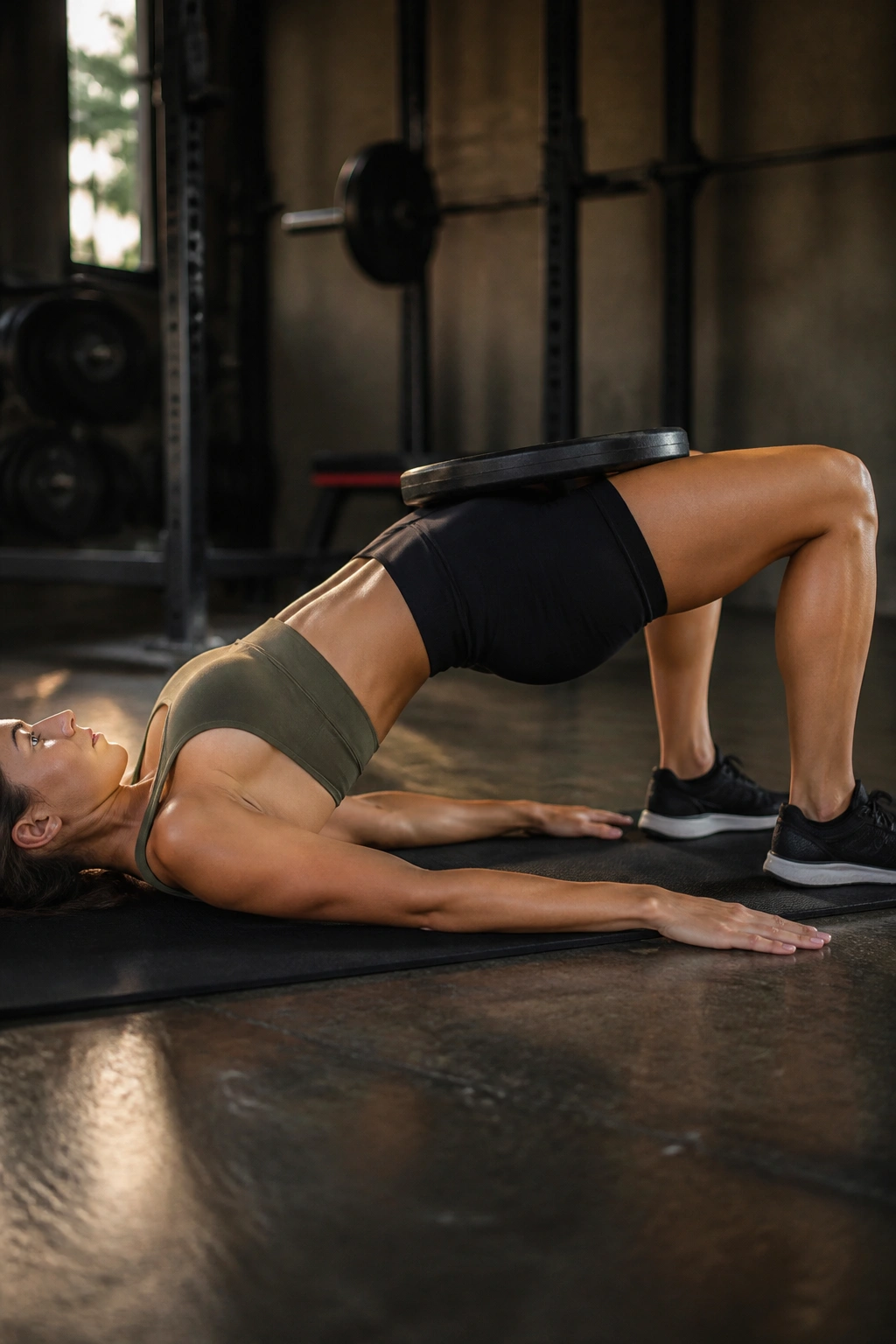
Strong glutes are essential for posture and lower back health. This HIIT circuit focuses on the posterior chain with bodyweight movements.
The Movements
- 20 Glute bridges (squeeze at the top).
- 20 Donkey kicks (each side).
- 20 Frog pumps (soles of feet together, knees wide).
Complete five rounds. If you need more resistance, put a light weight plate or a sandbag on your hips during the bridge. You should feel the burn in your glutes, not your lower back.
22. Battle Rope and Lunge Hybrid

This is an endurance monster. Combining an upper-body rope movement with a lower-body lunging movement keeps the oxygen demand incredibly high.
The Pattern
- 45 seconds of double-arm rope waves.
- 45 seconds of alternating backward lunges.
- 30 seconds rest.
Repeat for 20 minutes. The backward lunge is safer for your knees than the forward lunge, making it the better choice for a high-volume HIIT session.
23. Lateral Skater Jumps

Lateral (side-to-side) movement is often ignored in traditional gym workouts, but it is vital for agility and balance.
The Drill
- 1 minute of side-to-side skater jumps (land softly, push off hard).
- 1 minute of mountain climbers.
- 1 minute of rest.
Do this for 20 minutes. The skater jump challenges your hips, while the mountain climbers keep your heart rate up. Stay low and lean into the jumps—do not stand tall.
24. Jump Squat and Push-up
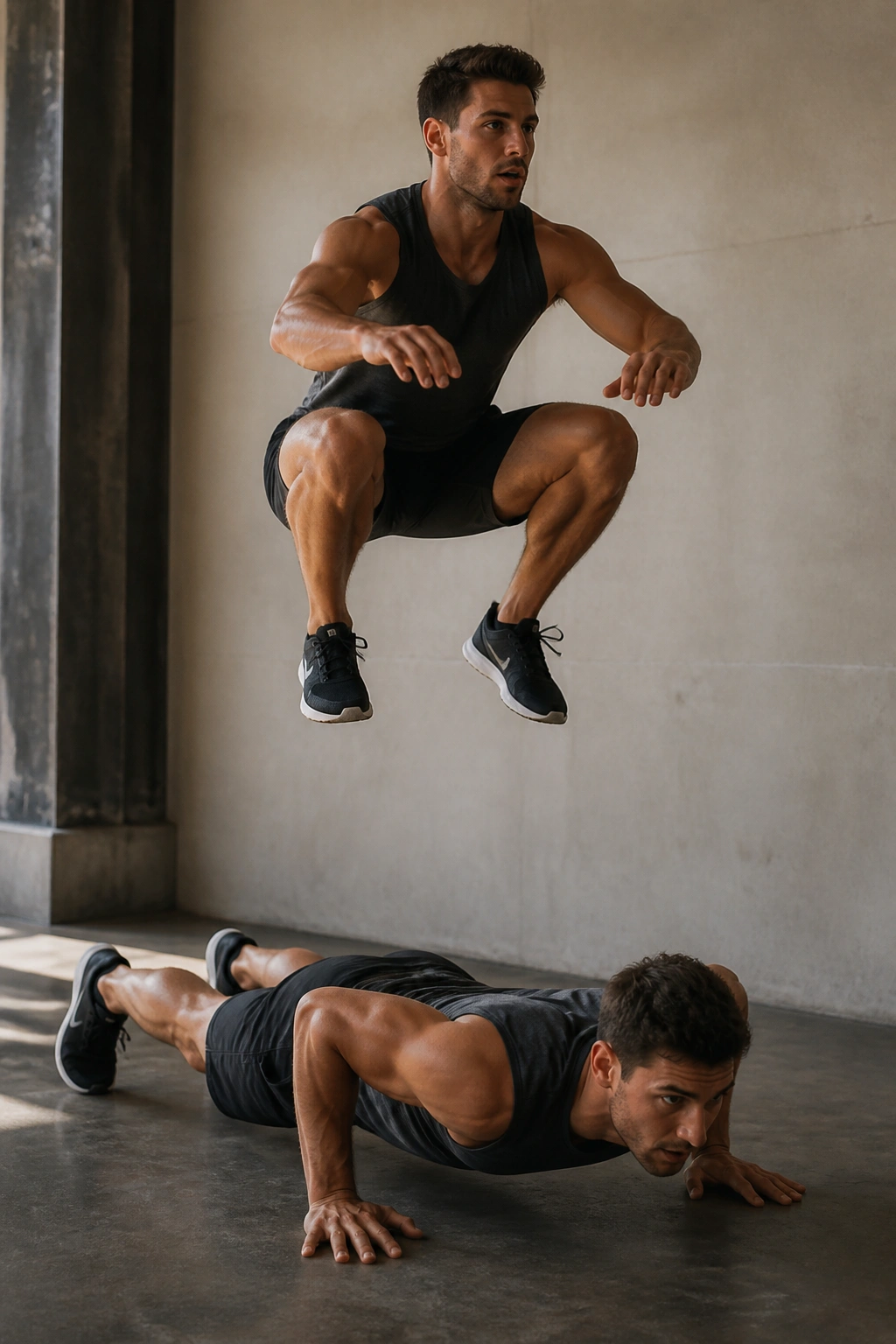
Simple, classic, and undeniably effective. You do not need any equipment for this, making it perfect for travel or small spaces.
The Pairing
- 15 Jump squats (explode up, land softly).
- 15 Push-ups.
- 45 seconds rest.
Repeat for 20 minutes. The jump squat elevates your heart rate, and the push-up gives you a moment of upper-body focus. If you find your jump squats becoming slow, you are likely hitting fatigue—focus on the height of the jump, not the number of reps.
25. Full-Body EMOM

EMOM stands for “Every Minute on the Minute.” You start a movement at the beginning of the minute, finish the required reps, and the remaining time is your rest.
The Structure
- Minute 1: 15 Burpees.
- Minute 2: 20 Kettlebell swings.
- Minute 3: 15 Goblet squats.
- Minute 4: 20 Mountain climbers.
Repeat this 4-minute cycle five times to hit 20 minutes. If you finish your reps in 30 seconds, you get 30 seconds of rest. If you take 50 seconds, you get 10 seconds of rest. This keeps you honest about your speed.
Final Thoughts

The effectiveness of these workouts relies entirely on one variable: you. It is easy to go through the motions, to pick a weight that is too light, or to stop the clock thirty seconds early because you feel tired. HIIT is not designed to be comfortable. It is designed to be effective. If you finish a twenty-minute session and feel like you could have easily done another twenty, you did not push hard enough.
Listen to your body. There is a fine line between a productive, intense session and an injury. If your form starts to break down—if your back rounds, your knees cave in, or your movement becomes sloppy—slow down. It is better to have ten minutes of perfect, high-intensity work than twenty minutes of dangerous, sloppy movement. Choose one of these workouts, commit to the timer, and execute. You do not need more time; you just need more focus.
