



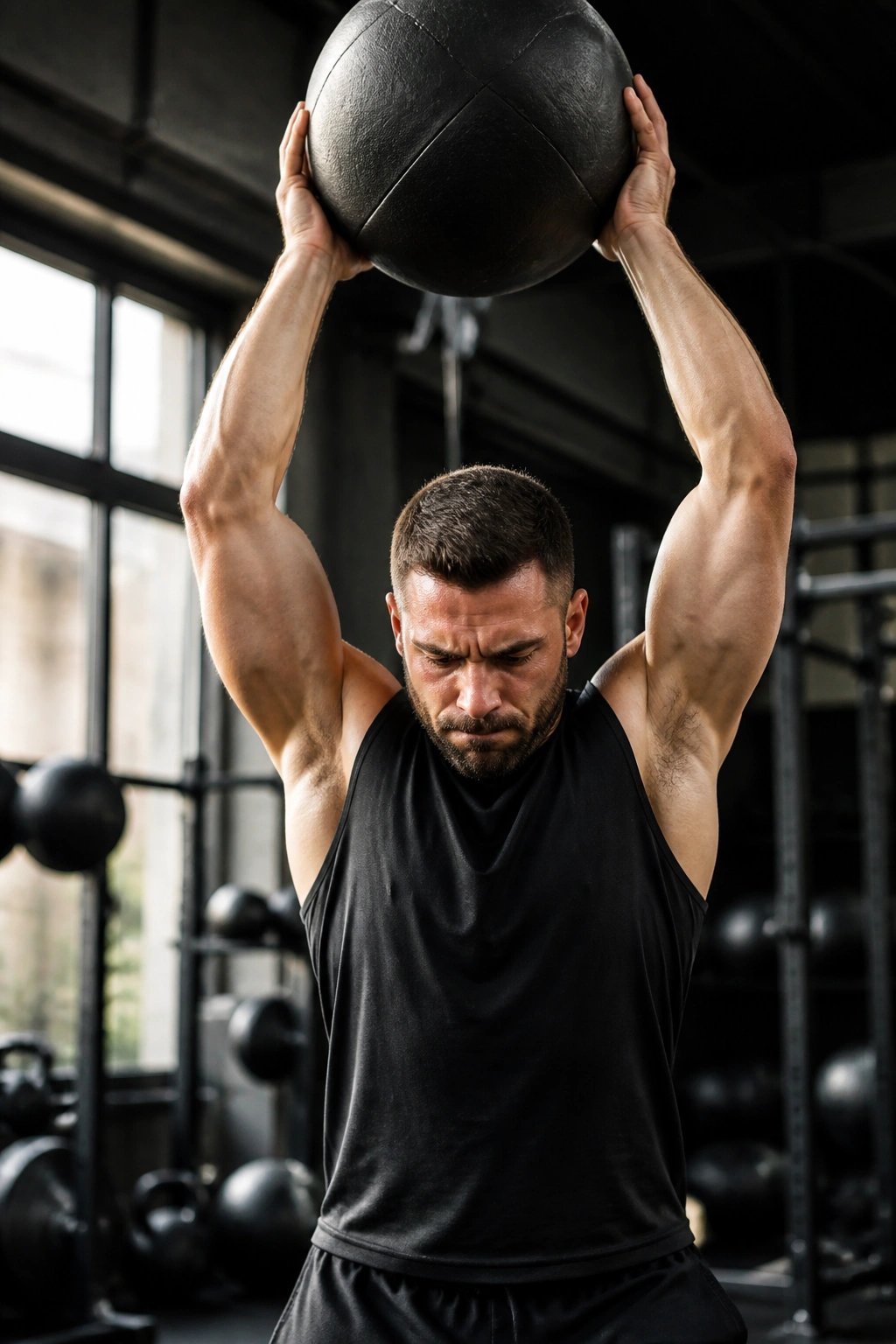
There is a distinct sound that defines the best kind of gym session: the dull, heavy thud of a rubber slam ball hitting the floor. Unlike a medicine ball that bounces back, inviting you to catch it or potentially take a rebound to the face, a proper slam ball is a dead-weight beast. It does not forgive. When you lift that ball overhead and drive it into the ground, you are not just exercising; you are engaging in total-body metabolic conditioning.
Most people treat the gym like a catalog of isolation movements. They sit on machines and push levers. They count reps for biceps while staring at a phone. But if your goal is to burn calories rapidly and build explosive, raw power, you need to step away from the machines. You need a movement that forces every muscle fiber to fire at once—from the lats in your back to the stabilizer muscles in your ankles.
The beauty of the slam ball is its versatility. You can use it for high-intensity intervals that leave you gasping, or you can slow the movements down for a grueling strength-endurance session. Because the ball provides external resistance that you have to pick up and put down repeatedly, your heart rate skyrockets within seconds. It is a simple, primal way to train. Here are twenty-five variations to rotate into your routine, designed to keep your heart rate high and your metabolism burning long after you leave the gym floor.
1. The Classic Overhead Slam
This is the foundational movement. If you have never used a slam ball before, you start here. Stand with your feet shoulder-width apart, holding the ball with both hands in front of your hips. Keep your chest up and your core braced tight—this is not just an arm exercise, it is a full-body transfer of energy.
Why It Builds Power
You want to use your entire posterior chain. Reach the ball high overhead, fully extending your arms and rising onto your toes. As you bring the ball down, aggressively hinge at the hips and engage your lats to pull the ball into the floor. Aim to hit the ground with maximum velocity, effectively “throwing” the ball through the earth.
The Mechanics of the Slam
- Hinge, don’t squat: Keep your knees slightly bent but prioritize pushing your hips back.
- Full extension: Reach as high as you can before initiating the downward drive.
- Active arms: Don’t just let gravity do the work; drive the ball down with your lats.
Pro tip: Choose a weight that allows you to maintain speed. If you are struggling to keep the ball overhead for more than a second, it is too heavy.
2. The Rotational Slam
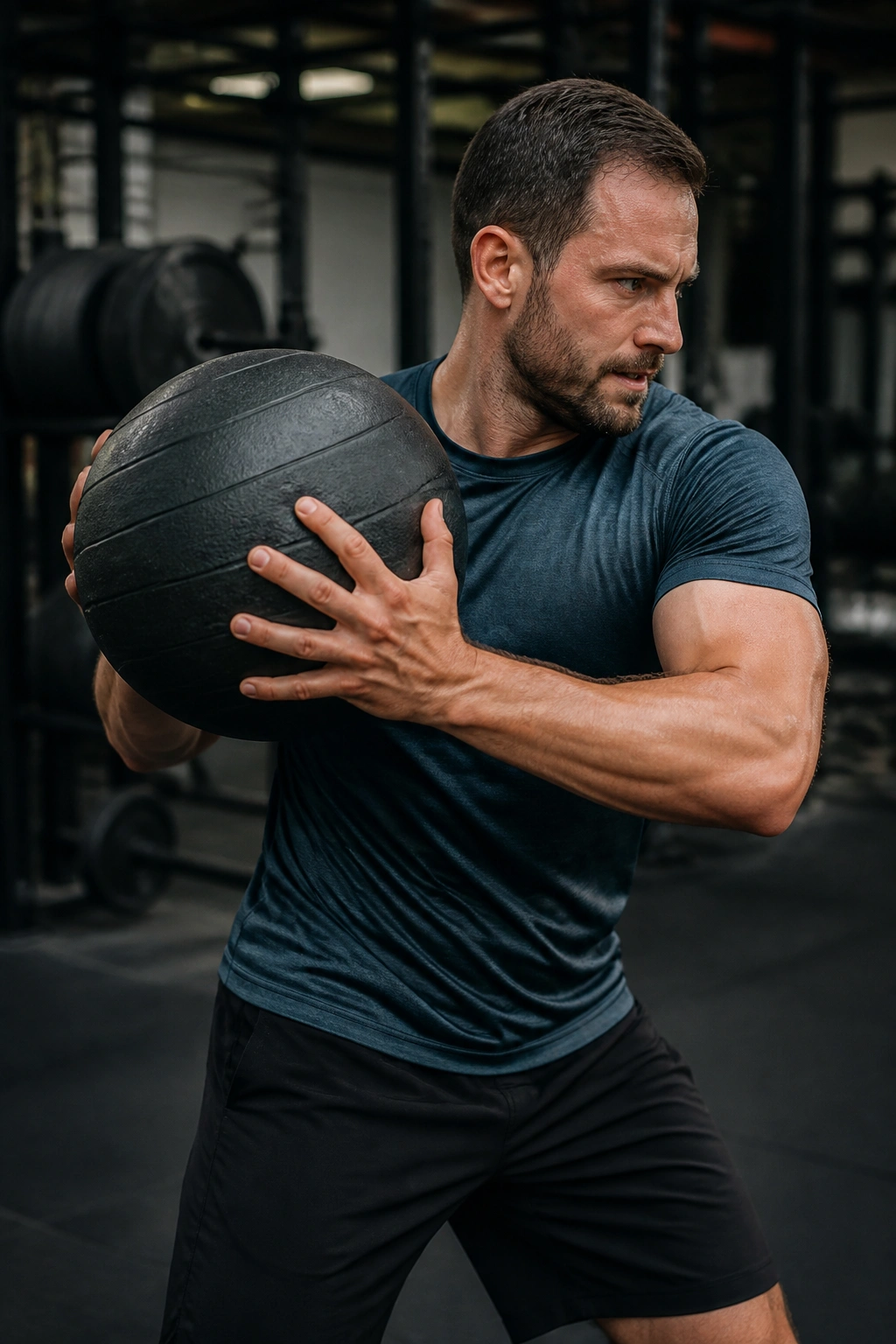
Once you master the vertical slam, it is time to move in the transverse plane. Rotational power is often neglected in standard lifting routines, yet it is where most athletic movement happens. Hold the ball in front of your chest with your elbows tucked.
Step one foot back slightly and pivot your torso to the side, winding up your core like a spring. Then, explosively rotate back to the center and slam the ball into the floor diagonally in front of you. You should feel this deeply in your obliques. The key is in the pivot. If your feet stay glued to the floor, you risk putting unnecessary torque on your lower back. Let your back foot swivel as you rotate. This is a rhythmic, powerful motion that should feel like swinging a sledgehammer.
3. The Slam to Burpee Complex
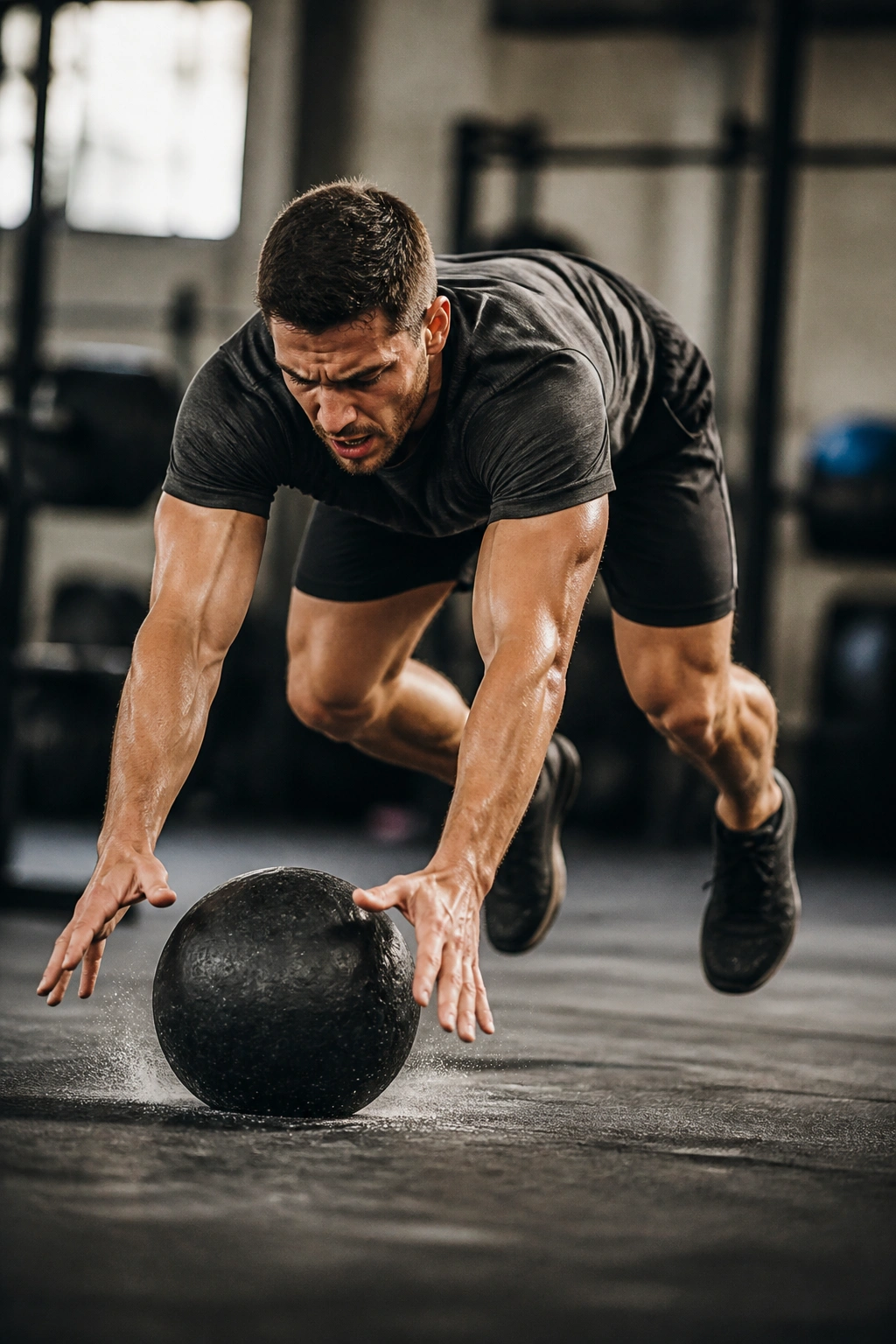
If you really want to torch calories, stop treating these as separate exercises. Perform a standard overhead slam, but as the ball hits the ground, immediately drop into a burpee. Place your hands on the ball or the floor—depending on your ball’s size—and kick your feet back into a plank.
Jump your feet back in and stand up, immediately grabbing the ball for the next slam. This sequence is a heart-rate spike of the highest order. You are combining an explosive hinge movement with a horizontal push-up and a vertical jump. It is essentially a full-body circuit wrapped into one rep. Do not pace yourself on this one. Treat it as an all-out effort.
4. The Slam to Broad Jump
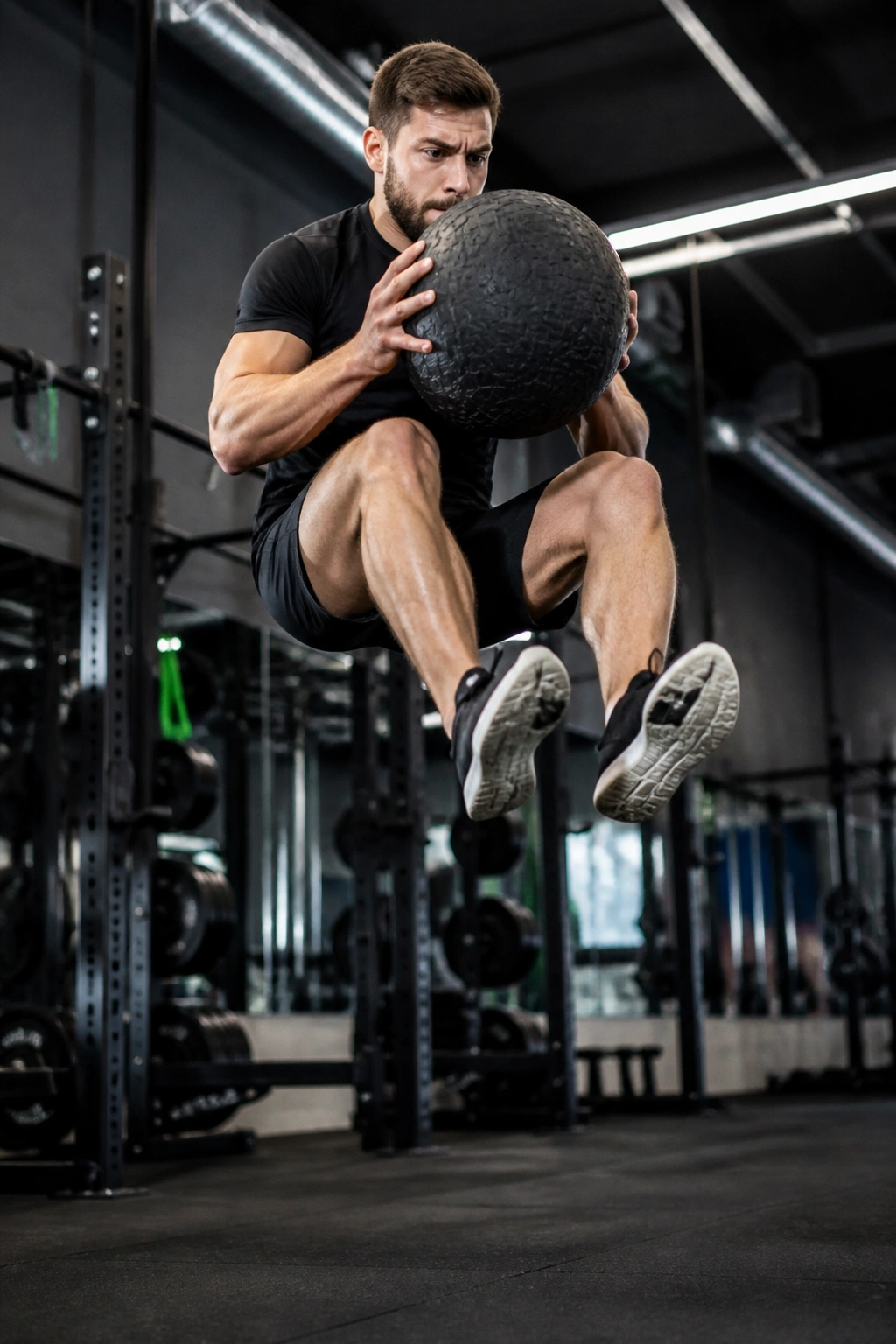
Combine power and distance with this variation. Perform one powerful overhead slam. As soon as you recover the ball from the floor, you are going to use that momentum to launch yourself forward. Holding the ball close to your chest, perform a broad jump, landing softly with your knees tracking over your toes.
After you land, stay in your squat, perform a slam, and reset. This variation forces your legs to absorb shock and then generate explosive power from a static position. It is fantastic for improving explosive athleticism and is significantly more taxing on your quads than a stationary slam. If your joints feel stiff, take a moment to warm up your ankles before adding the jump.
5. The Slam to Squat Thruster
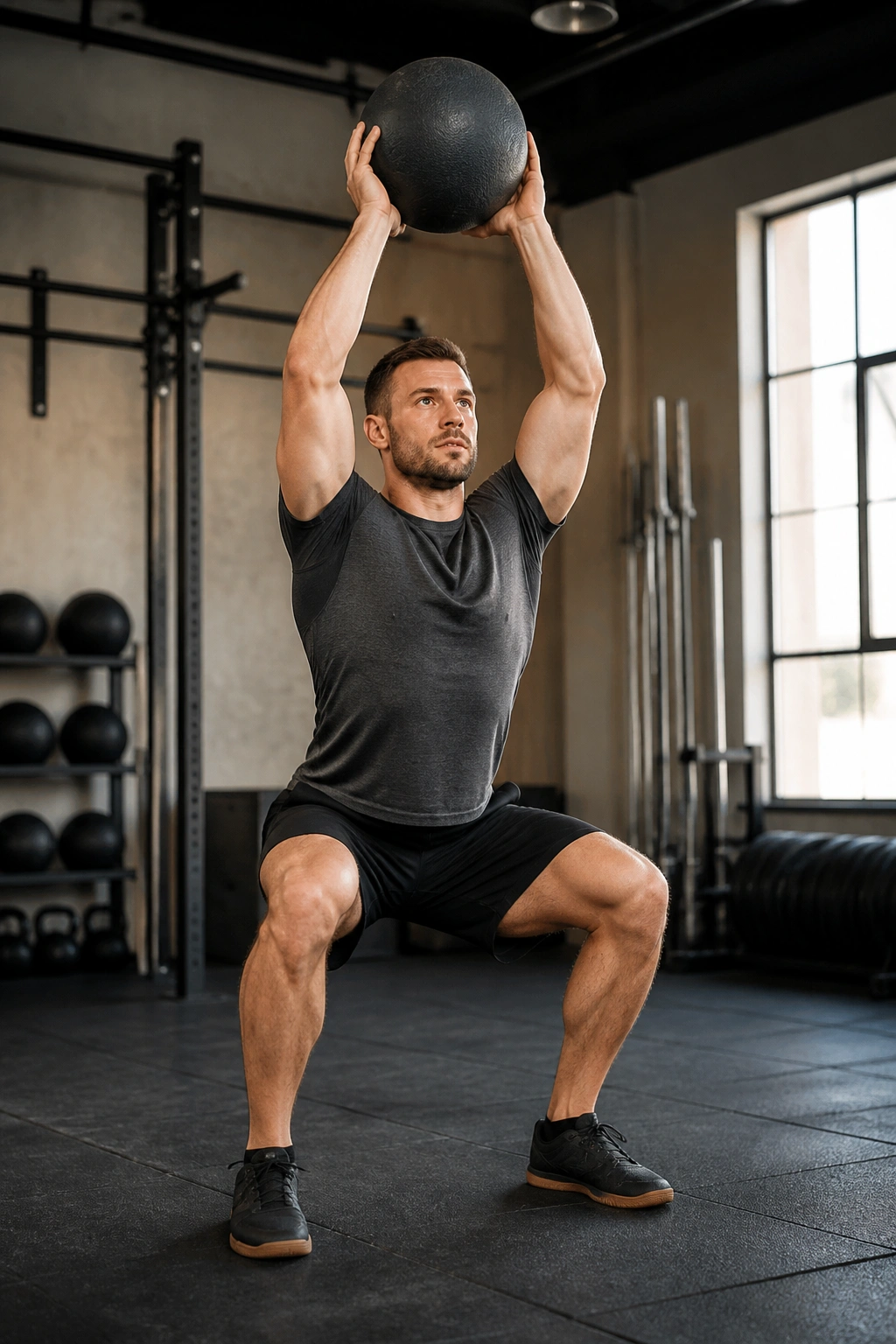
This movement blurs the line between a slam and a heavy compound lift. Start with the ball at your feet. Hinge down to pick it up, then stand up and bring it to your chest in a clean motion. From this front-rack position, drop into a deep squat. As you explode out of the squat, press the ball overhead, then immediately slam it down.
This sequence is physically demanding. You are hitting the legs, shoulders, and core in a single cycle. Because you have to clean the ball from the floor each time, you get a double dose of posterior chain work. Keep your spine neutral throughout the squat to prevent rounding, especially as you get tired and your form starts to slip.
6. The Slam to Mountain Climber
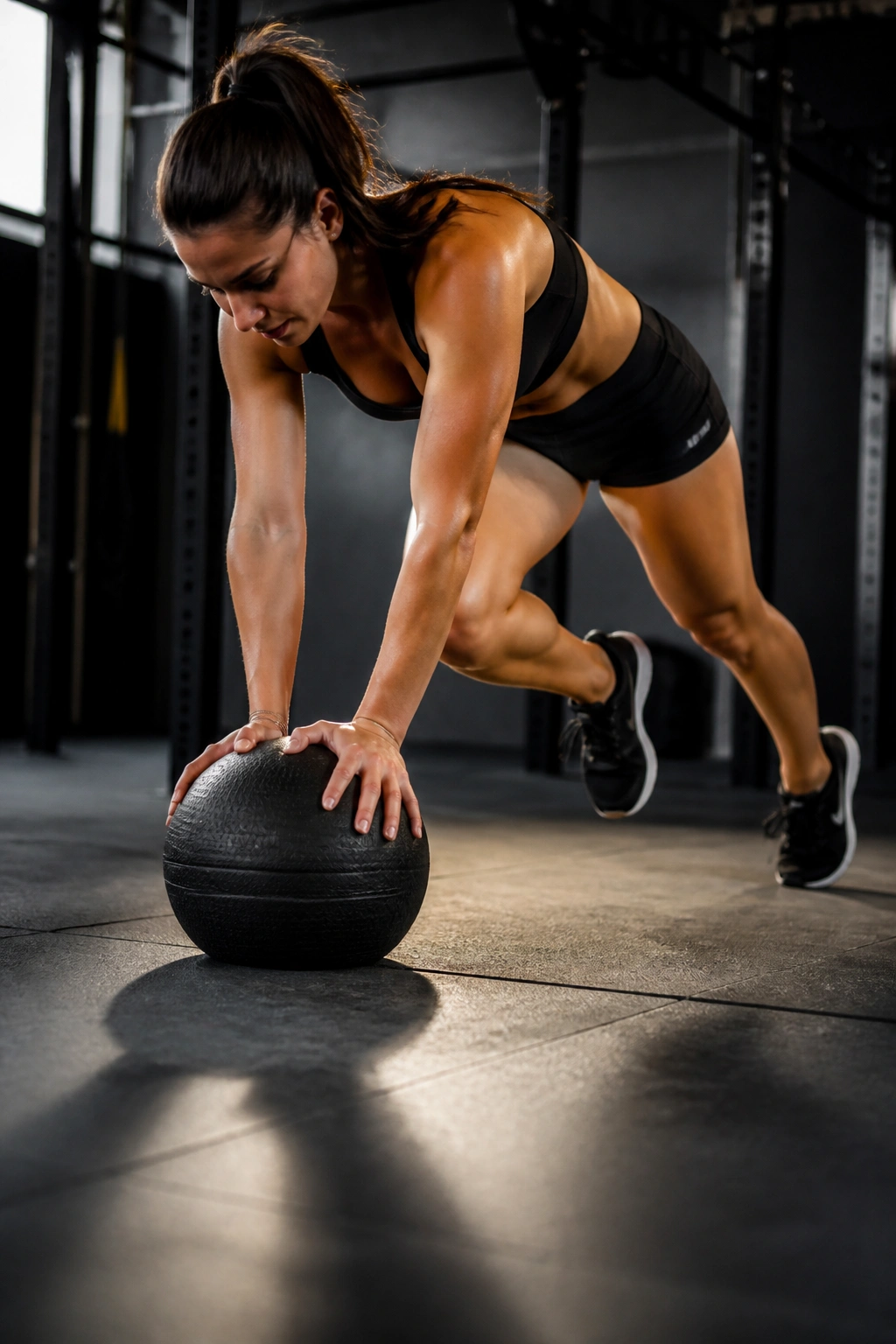
This is an anti-rotation and core-heavy variation. Place the slam ball on the floor. Get into a high plank position, placing both hands firmly on top of the ball. This instability forces your deep core muscles to work overtime just to keep you balanced.
While holding this plank, perform four mountain climbers—bringing each knee to your chest rapidly. After the fourth climber, place your feet down, grab the ball, and perform an overhead slam. The transition from the floor to the standing slam is where the magic happens. You are moving from a stable-ish plank to an explosive standing movement, which keeps your blood flowing and forces your heart rate to stay in the anaerobic zone.
7. The Over-the-Shoulder Toss
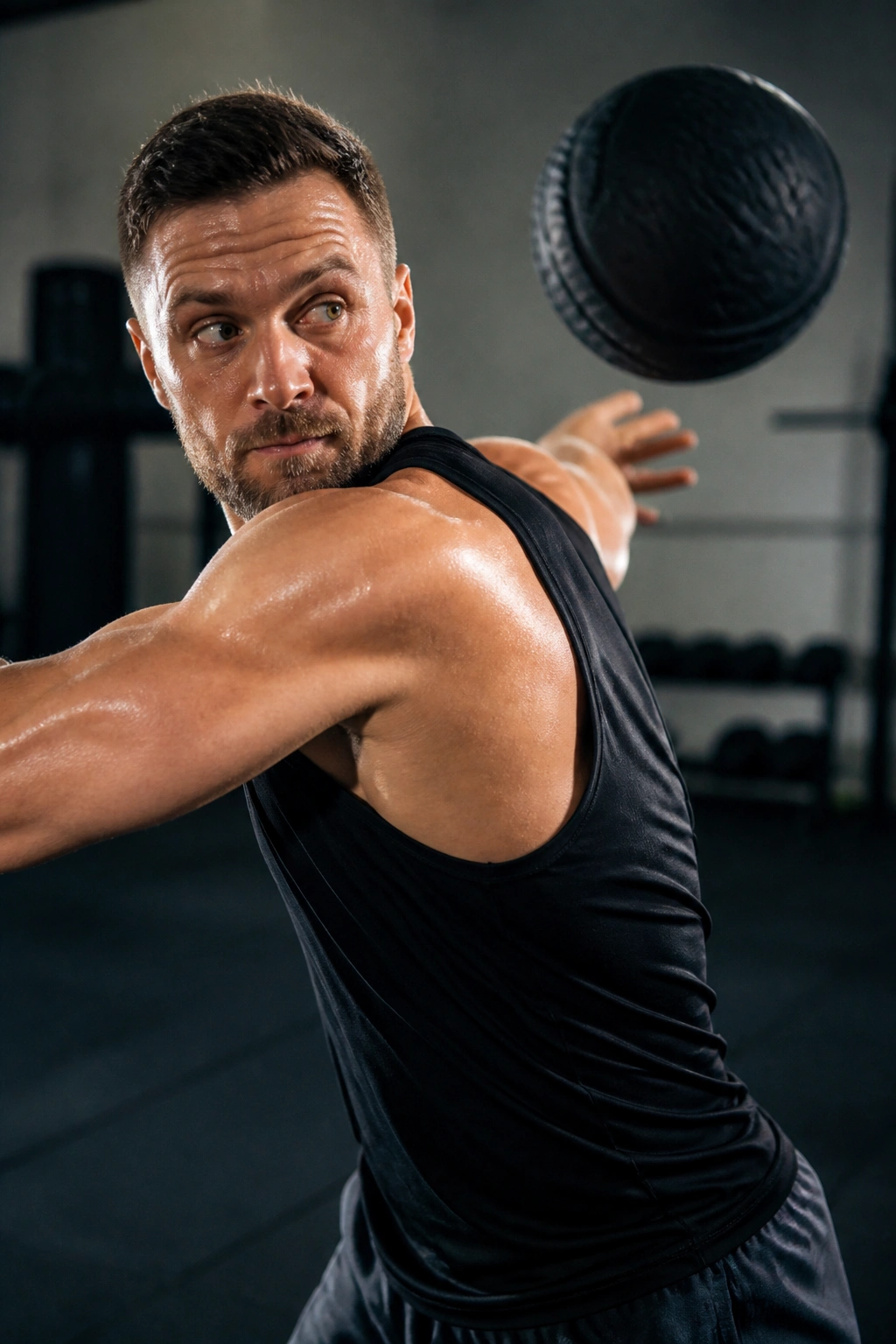
This movement mimics the “Atlas stone” lifts used in strongman training. Stand with the ball on the floor between your feet. Squat down, wrap your arms around the ball, and keep your back flat. Drive through your heels to stand, bringing the ball up as if you were doing a heavy pull.
Instead of slamming it down, explosively toss the ball over your shoulder. Turn around, retrieve it, and repeat. This is a brutal glute and lower-back burner. It forces you to engage your posterior chain in a way that is distinctly different from the downward slam. Make sure you clear your workspace—you do not want to be tripping over the ball behind you.
8. The Lateral Slam
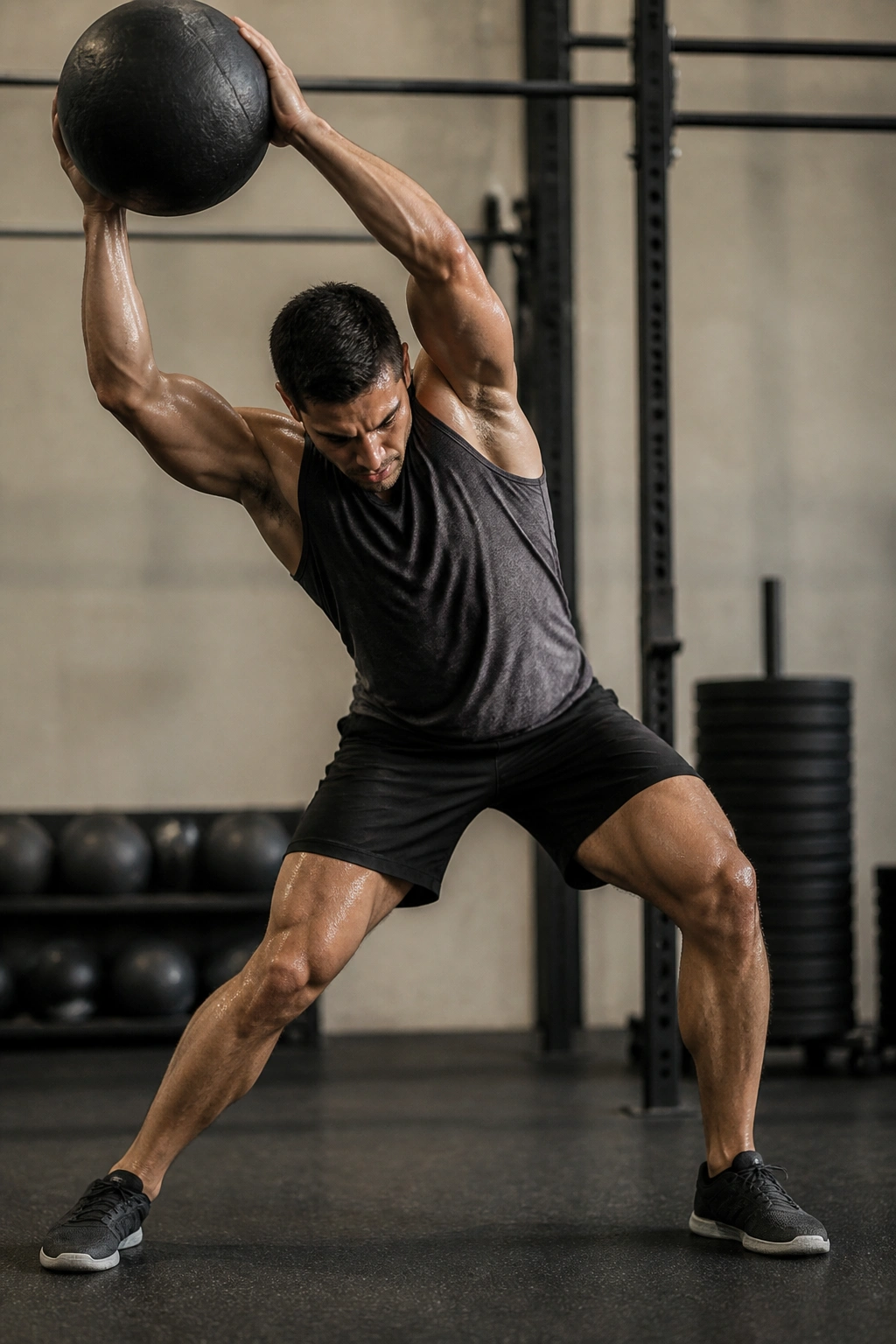
We tend to move forward and backward, but side-to-side movement is crucial for knee health and hip mobility. Stand with your feet wider than shoulder-width. Hold the ball overhead. Pivot on your feet and slam the ball forcefully to the outside of your right foot.
Recover the ball, bring it back overhead, and slam it to the outside of your left foot. This is not just a slam; it is a weight transfer. You are shifting your center of gravity significantly with each rep. This builds lateral stability, which is often the missing piece in many athletes’ training programs. Avoid rounding your back when picking the ball up from the outside position; hinge at the hip instead.
9. The Split Stance Slam
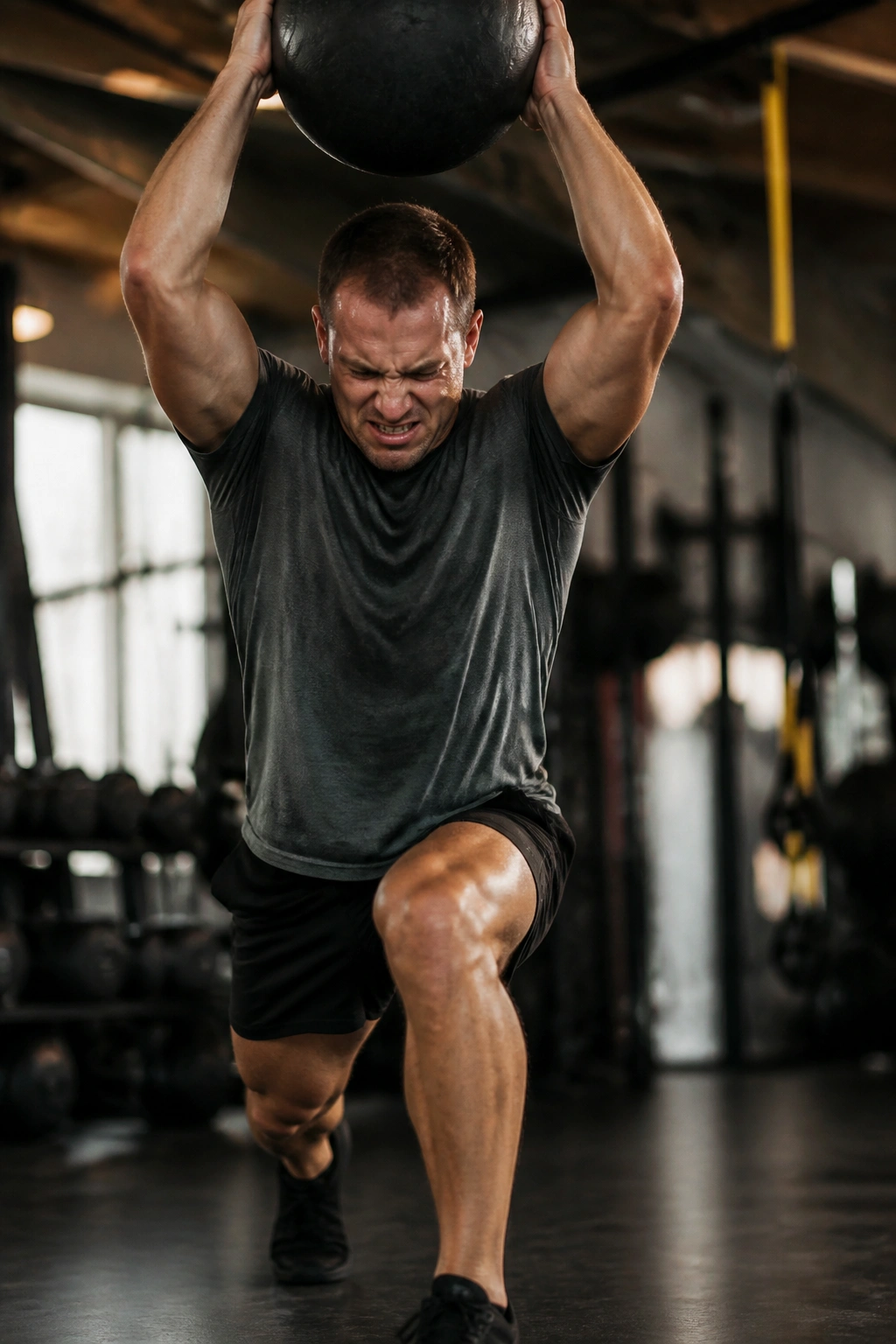
If you want to isolate your legs and test your balance, take a staggered stance. Put one foot in front of the other, as if you are preparing for a lunge. Perform your overhead slams from this split stance. You will find that you cannot rely on a standard hinge; you are forced to drive primarily with your front leg.
Switch your lead foot halfway through your set to ensure even development. This is essentially a single-leg power movement disguised as a cardio exercise. It forces the glute of the lead leg to fire rapidly to stabilize the body, preventing you from tipping over during the violent downward slam.
10. The Slam to Plank Jack

Start this exercise with the ball on the floor. Get into a push-up position with your hands on the floor, keeping the ball centered between your hands. Perform a plank jack—jumping your feet out and in—then immediately grab the ball and execute an overhead slam.
The plank jack keeps the heart rate elevated while you are in the “rest” position, effectively turning what would be a moment of recovery into active work. You are spending almost zero time standing still. This is high-density training at its finest. If the plank jack is too much, just step your feet out one at a time. The goal is constant movement, not perfection.
11. The Kneeling Slam
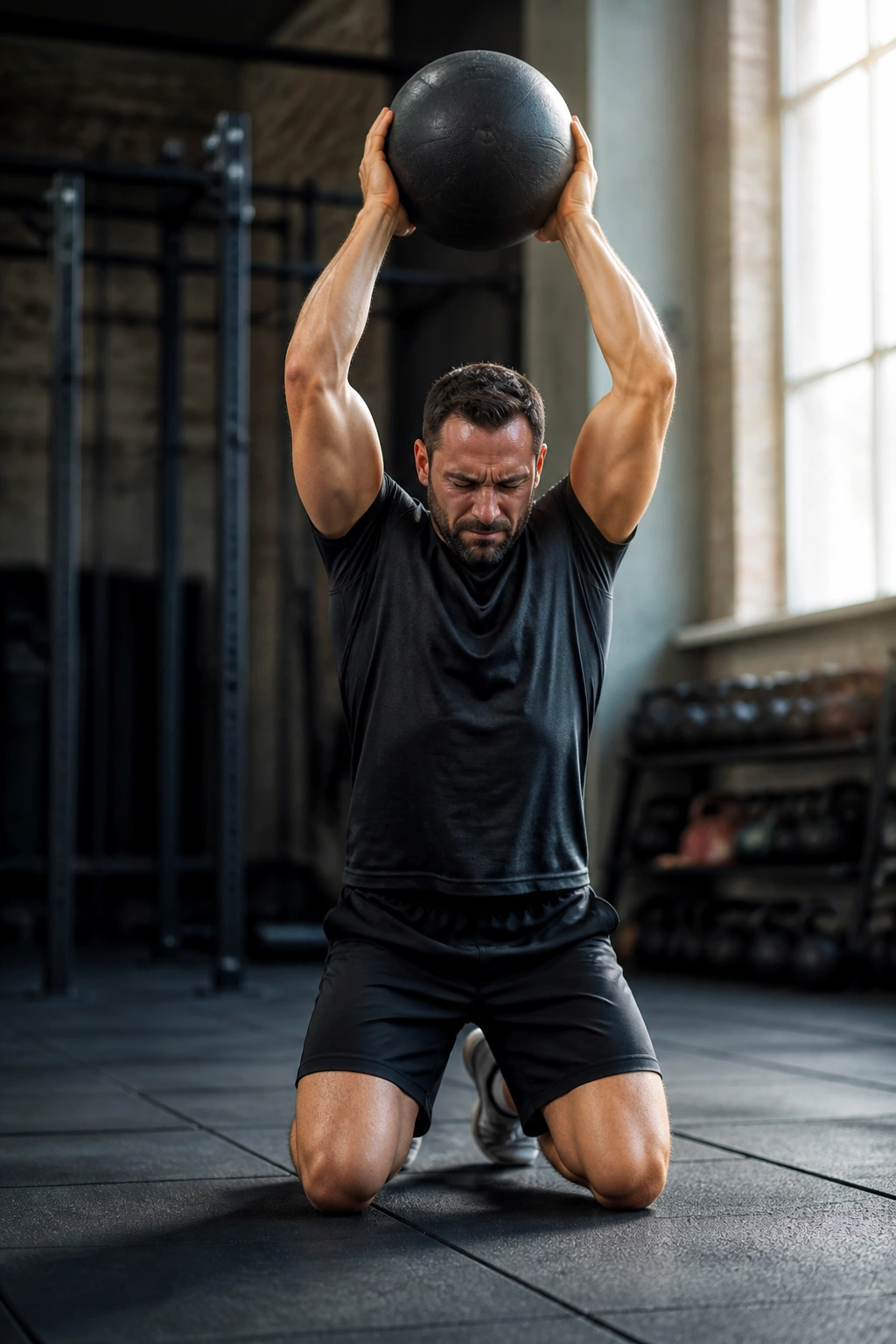
This is the ultimate test of core anti-extension. Get onto your knees, sitting back slightly on your heels. From this kneeling position, perform an overhead slam. Because your hips are locked out, you cannot hinge. You must rely entirely on your lats and your core to generate force.
Why It Matters
When you remove the legs from the equation, you cannot cheat the movement. If you try to slam, your core will immediately feel the demand to prevent your torso from collapsing forward.
Key Performance Cues
- Keep glutes tight: This stabilizes the torso.
- Controlled descent: Don’t let the ball pull you forward.
- Brace hard: Imagine someone is going to punch you in the stomach.
This variation is humbling. You will realize how much your legs usually help with the slam. It forces you to get stronger in the core muscles specifically.
12. The Single-Leg Slam

Balance meets power. Lift one foot off the floor and perform your overhead slams while balancing on just one leg. This requires significant ankle stability and hip strength. If you find yourself hopping around to regain balance, you are doing it right—that is your body learning to stabilize.
The added benefit here is the proprioceptive challenge. You are forced to focus intently on your center of gravity. Do not worry if your reps are slower than usual; the focus here is control. If you cannot balance at all, use a “kickstand” stance by resting the toes of your back foot lightly on the floor for minimal support.
13. The Slam to Push-Up

Combine an upper-body strength movement with your cardio. Perform an overhead slam, and instead of just resetting, place your hands on the ball and perform a push-up. The ball acts as a stability trainer for your push-up, forcing your chest and triceps to work harder to maintain balance.
This is a phenomenal way to combine power output with chest endurance. It prevents you from standing around between slams. The transition from the slam to the push-up requires you to drop down quickly. Keep your core tight during the push-up—the ball will want to roll away from you, so keep your hands positioned centrally.
14. The Side-to-Side Slam
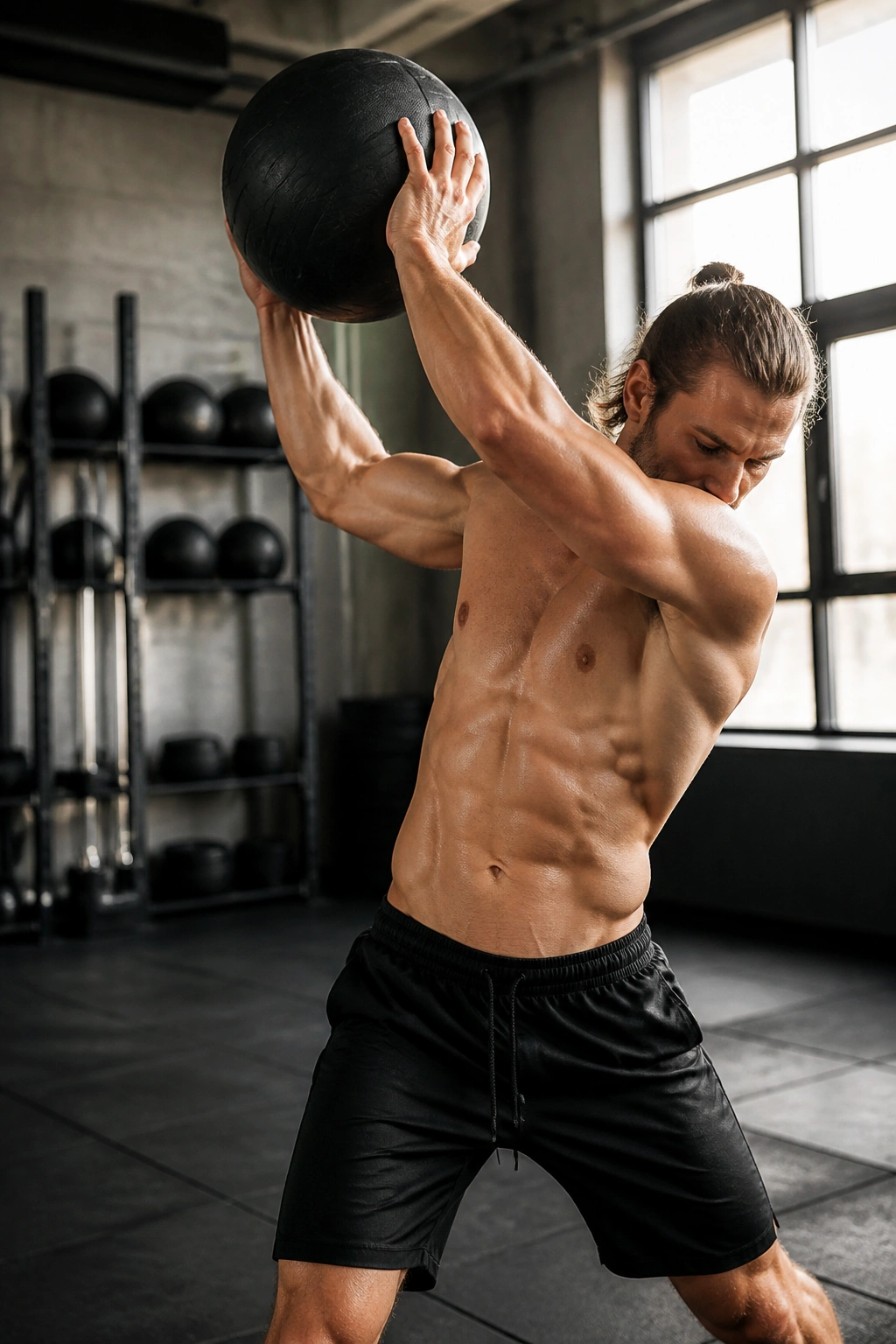
This is similar to the rotational slam but focuses on the “arc” of the movement. Hold the ball overhead, then swing it down and across your body to the right, then immediately up and over to the left. You are basically tracing a “U” shape with the ball, slamming it on either side of your feet.
This creates an intense oblique workout. It feels like you are chopping wood, but with the added weight of the ball. It is excellent for developing the rotational core strength needed for sports like golf, tennis, or baseball. Keep your arms relatively straight to maximize the lever length, which forces your core to work much harder to decelerate the ball.
15. The Slam to Lateral Lunge
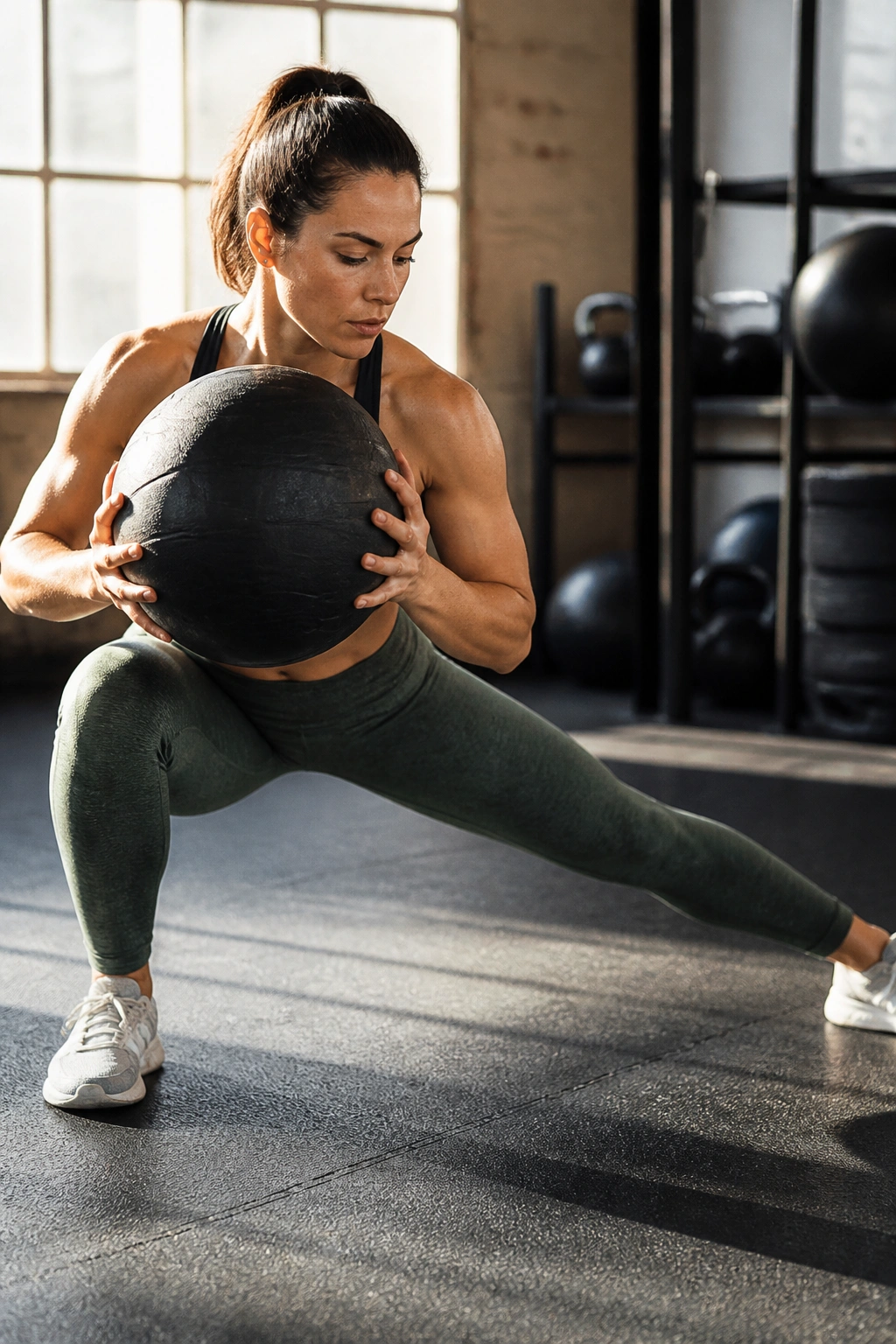
After you slam the ball down, immediately step out into a deep lateral lunge. This combines the vertical power of the slam with the frontal plane movement of the lunge. It hits the inner thighs (adductors) and glutes, which are often overlooked in standard training.
Make sure you keep your chest up as you lunge. The ball should stay in your hands, held close to your chest. Alternate your lunge direction after every slam to keep the work even. This is a complex movement that requires coordination, so start slow and build your speed as you get comfortable with the rhythm.
16. The Reverse Lunge Slam
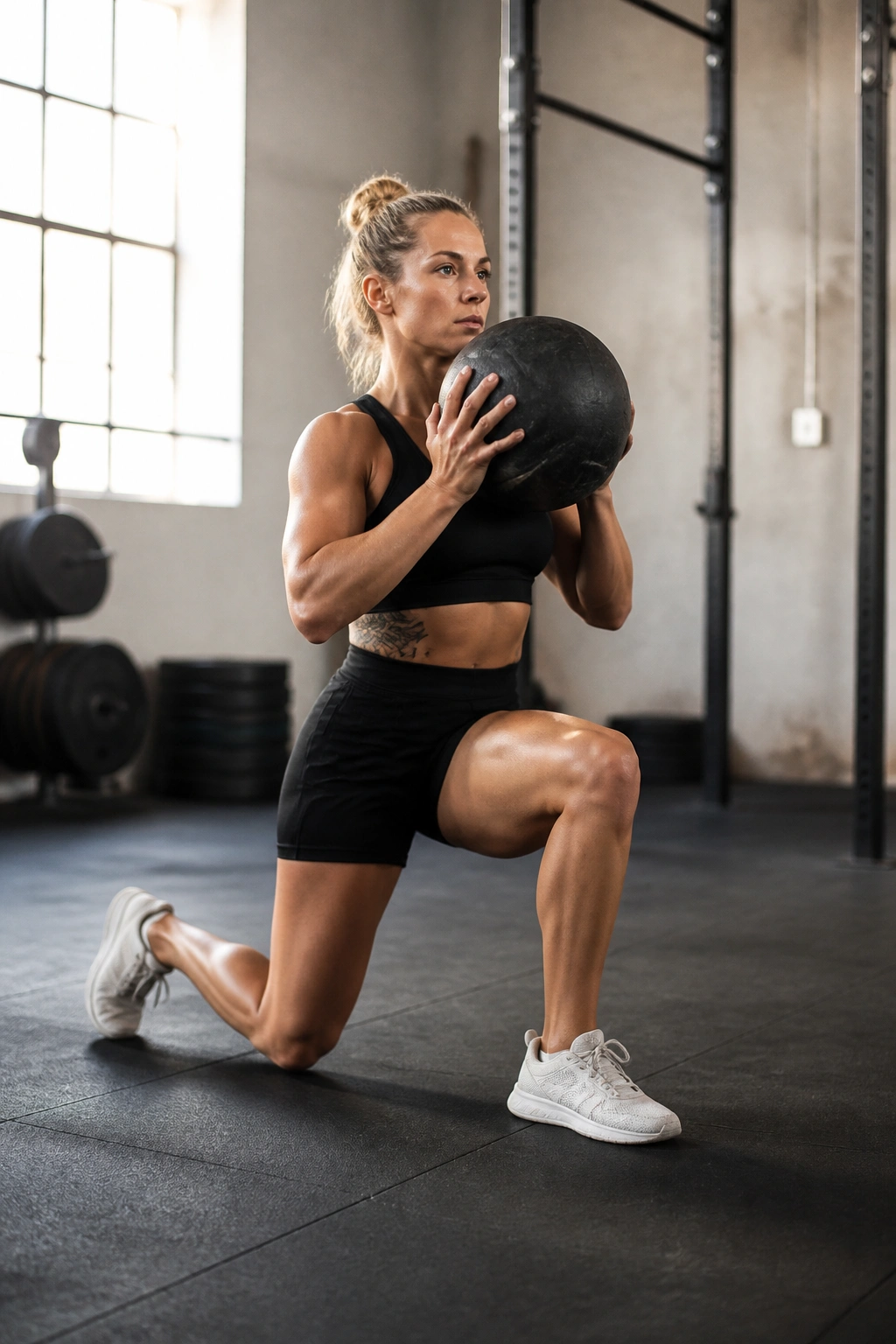
Instead of stepping out, step back. Perform an overhead slam, then immediately step back into a reverse lunge. This focuses on the glutes and hamstrings of the front leg. The reverse lunge is generally easier on the knees than the forward lunge, making it a great option for a high-rep conditioning circuit.
You can hold the ball in a “goblet” position (at the chest) during the lunge to add an extra layer of difficulty for your upper back and shoulders. If you are doing this as a circuit, do one slam followed by one lunge on each leg, then repeat. It flows beautifully if you find the right tempo.
17. The Slam to Bear Crawl
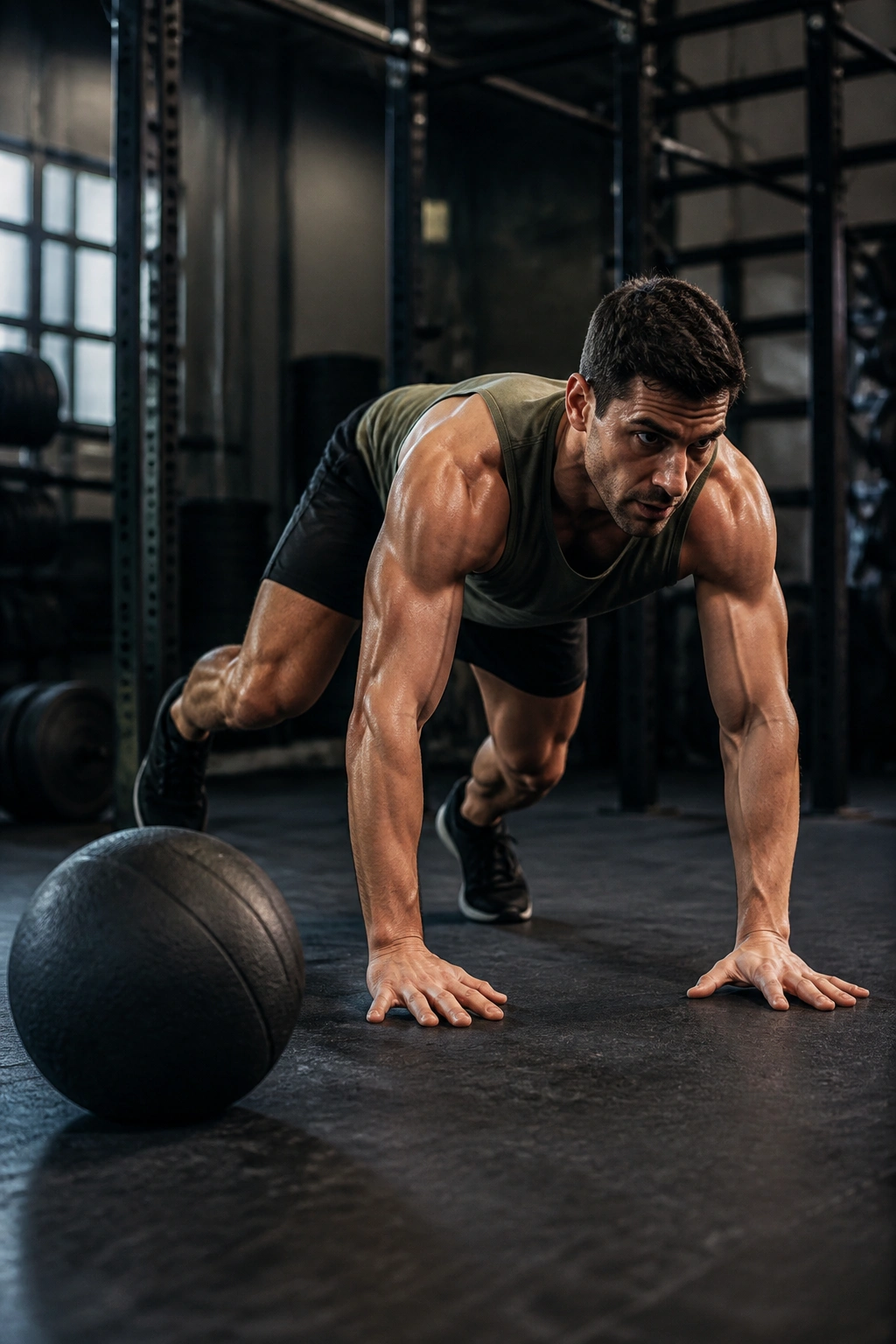
This is for those who really want to test their conditioning. Slam the ball down, then get into a bear crawl position—hands and feet on the floor, knees hovering an inch off the ground—and crawl forward for four steps. Then crawl back to the ball, stand up, and slam again.
The bear crawl is an incredible full-body stabilizer that lights up the shoulders and quads. Adding it between slams creates a workout that is taxing on the heart and the muscles simultaneously. You will find that the crawl slows down your pace, but the intensity remains high. It is a fantastic way to train muscular endurance while keeping the metabolic demand peaking.
18. The Half-Kneeling Overhead Slam
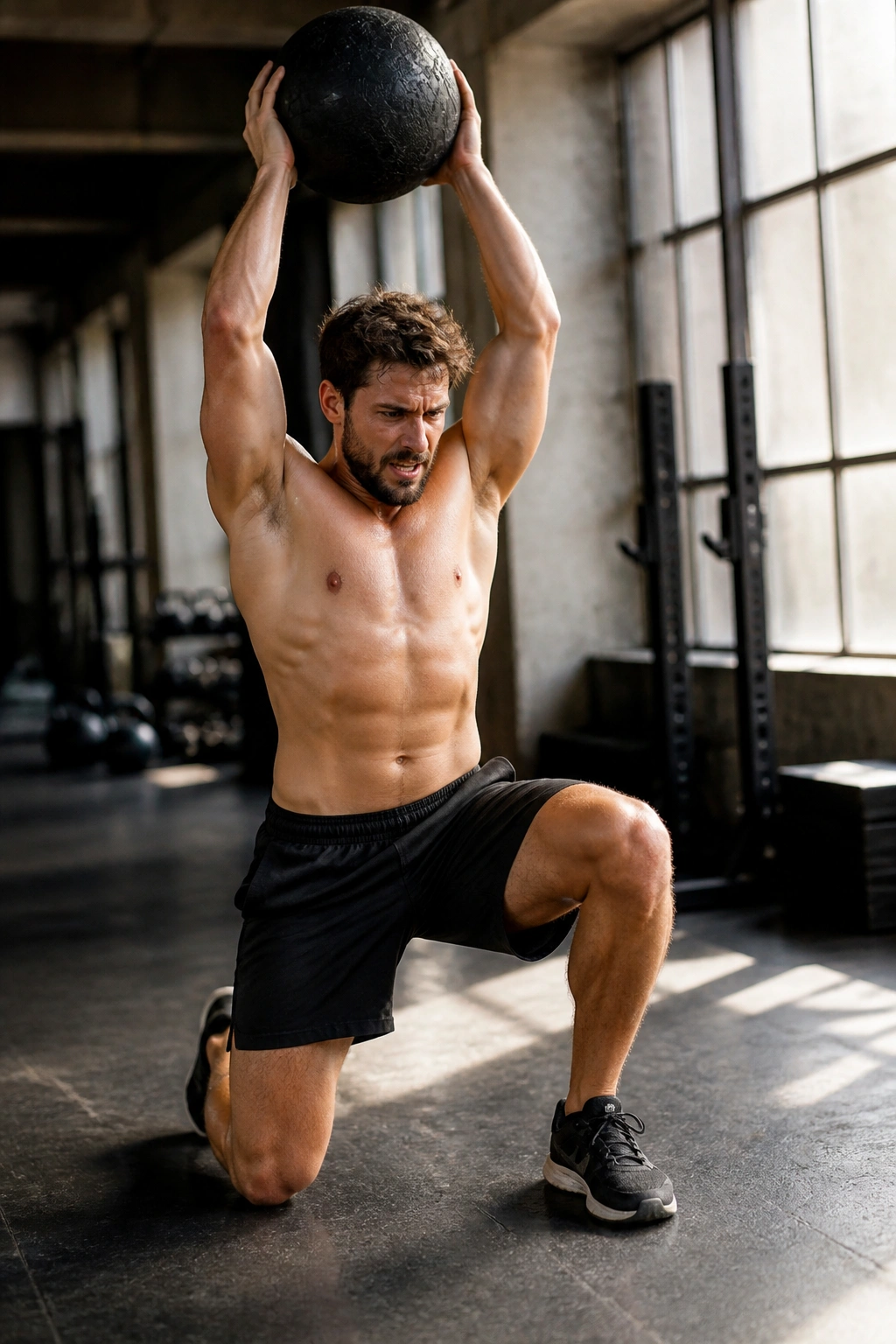
Place one knee on the ground, with the other foot flat in front of you. This is the half-kneeling position. Perform overhead slams from here. This removes the ability to use a full squat, forcing you to generate power through the torso and the front glute.
It is a fantastic exercise for fixing imbalances. If you find one side feels much weaker or wobbly, spend extra time on that side. This position requires you to engage your glutes intensely to remain stable. If you don’t squeeze the glute of the kneeling leg, you will likely tip over during the slam.
19. The Sumo Squat Slam
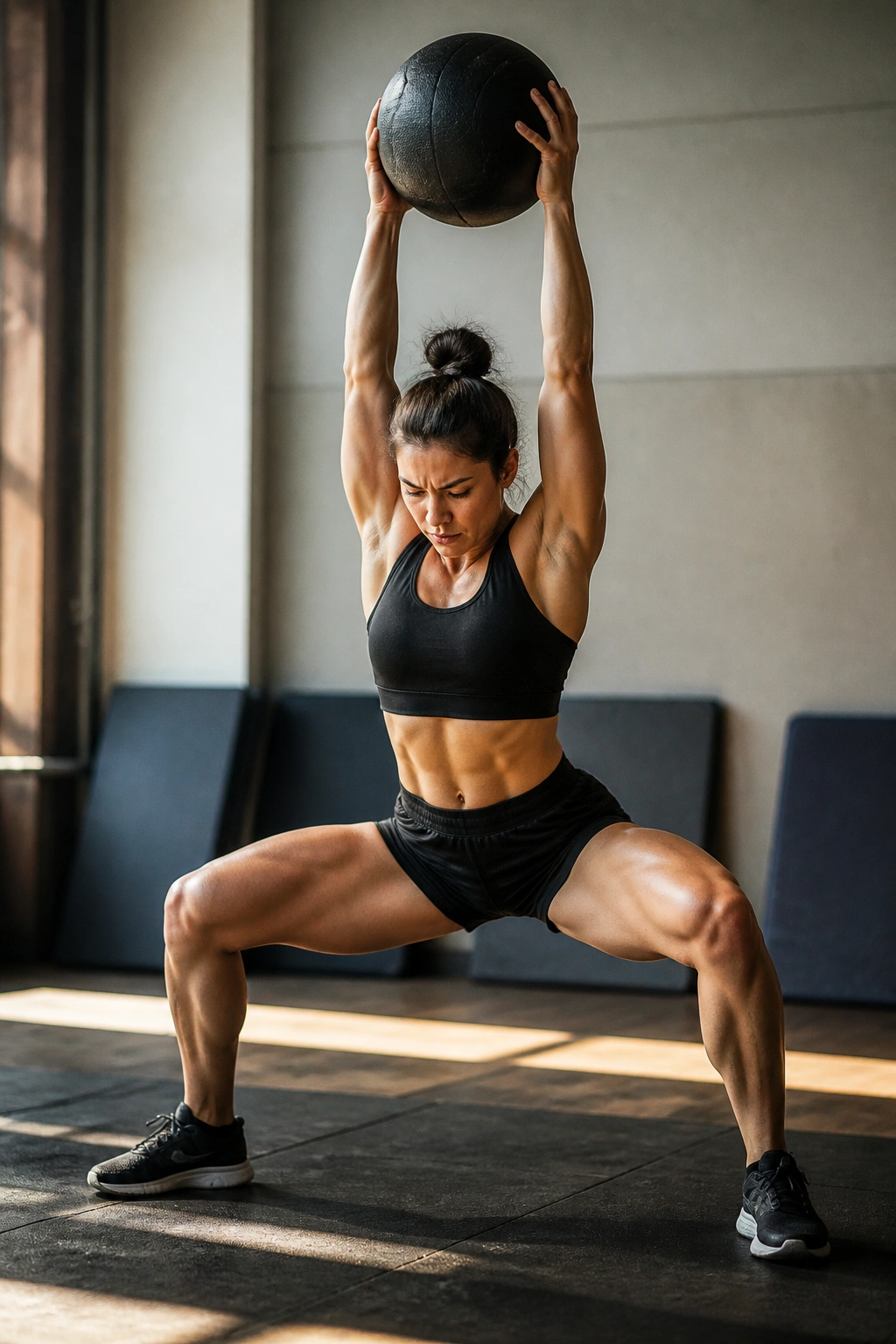
Take a very wide stance, turning your toes out slightly. This is your sumo stance. Hold the ball overhead, and as you drop into a wide sumo squat, bring the ball down. Instead of slamming it to the floor, bring it down between your legs, touching the floor, then explode back up into a standing overhead press or slam.
This targets the inner thighs and the glutes while keeping the upper body engaged. It is a great alternative to the standard hinge-slam, as it brings the legs into a more dominant role. The wide stance forces you to control your knees, ensuring they track over your toes rather than caving inward.
20. The Slam to Pike Jump
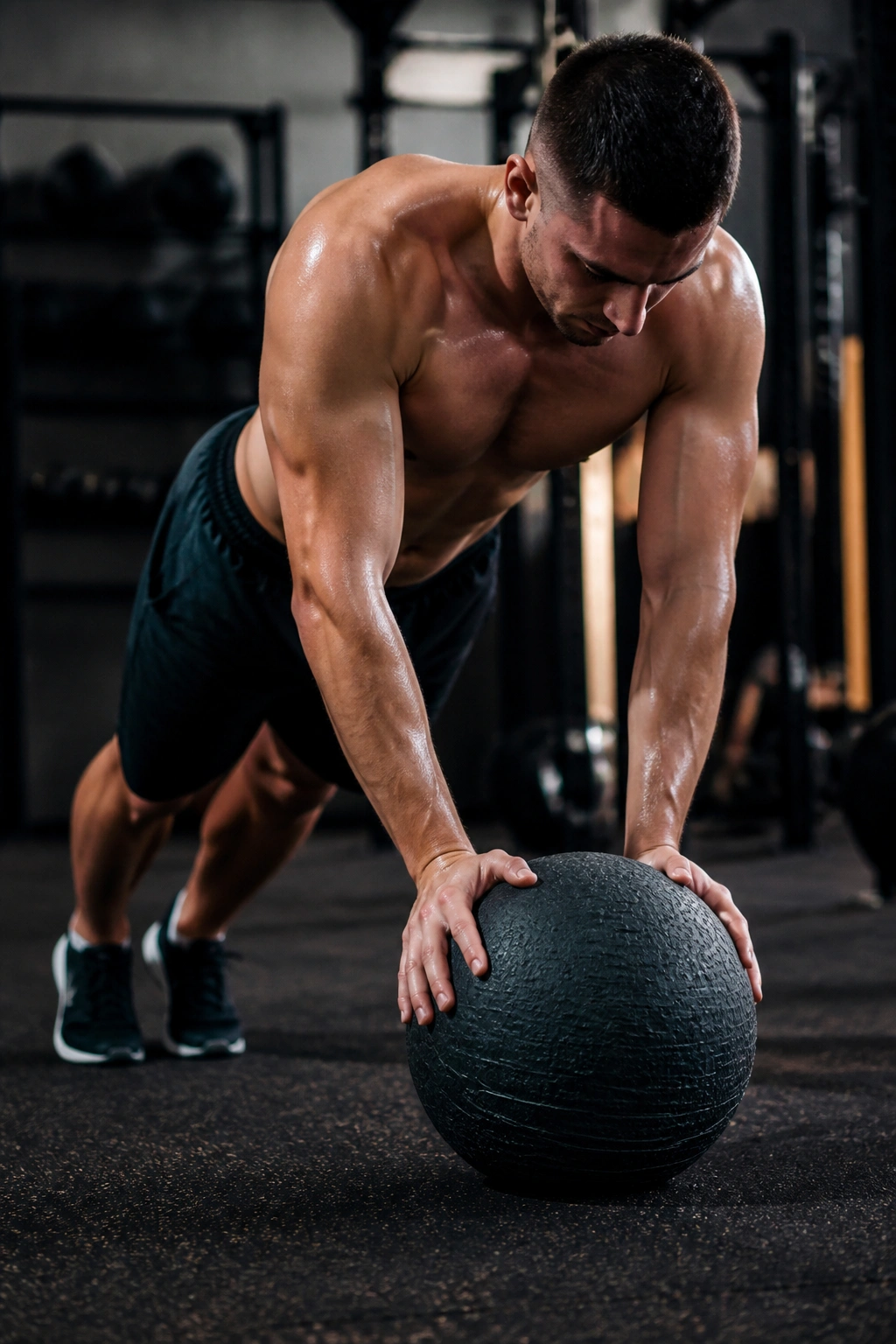
This is an advanced move. Perform your overhead slam. As the ball hits the floor, drop into a high plank with your hands on the ball. Jump your feet up toward the ball, piking your hips high into the air, then jump your feet back into a plank.
This is essentially a “frog jump” or “pike jump” variation using the ball as an anchor. It is brutal on the shoulders and core. Because you are using the ball as a base, you are forced to maintain perfect tension throughout the movement. If the ball is too unstable, perform the pike jump on the floor next to the ball instead.
21. The Slam to Walkout
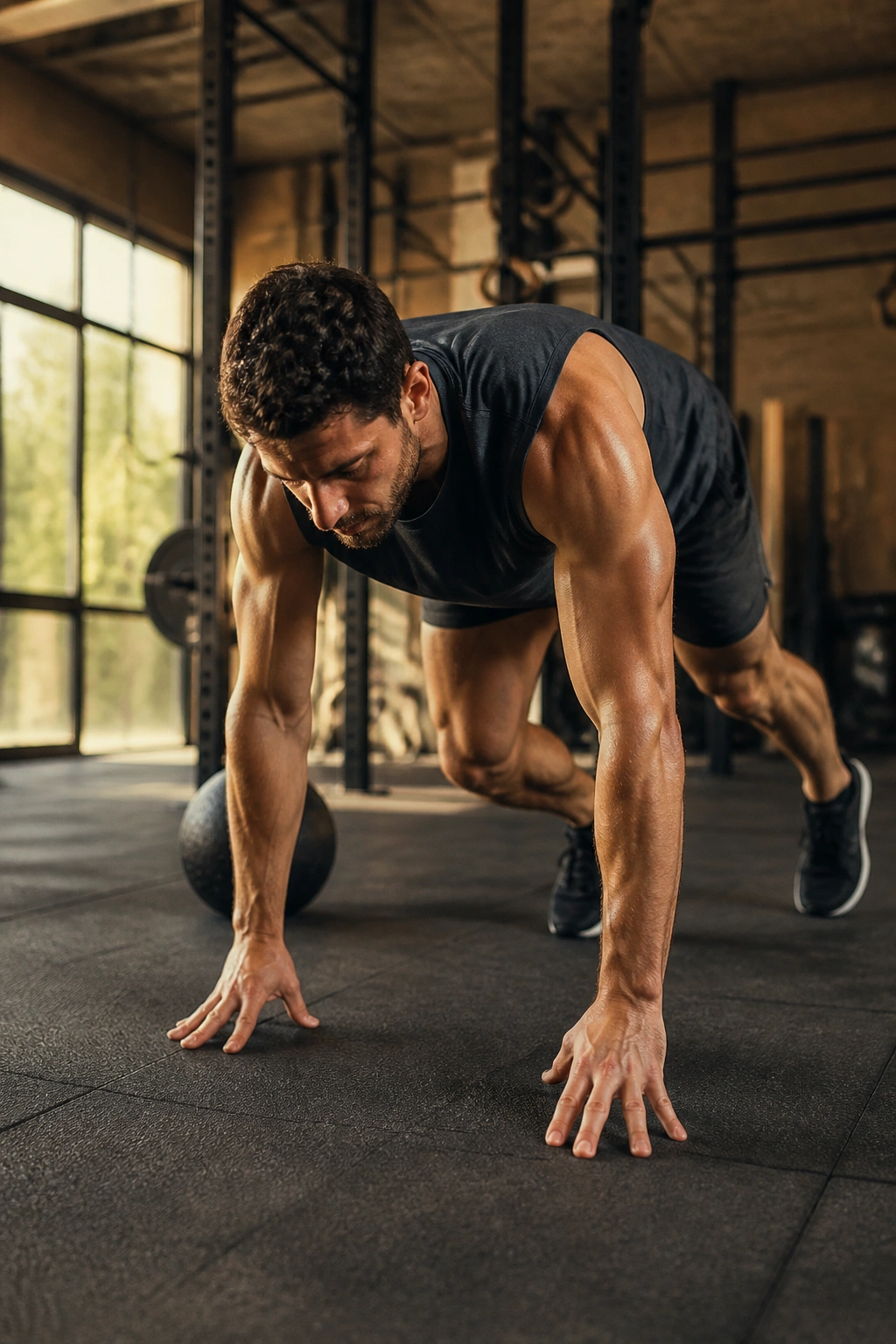
Slam the ball down. Keep your legs straight and hinge at the hips to place your hands on the floor. Walk your hands out into a push-up position, perform one perfect push-up, walk your hands back to your feet, and stand up to grab the ball for the next slam.
This is a slow, methodical burner. It is not about speed; it is about keeping your heart rate up while taxing the shoulders, core, and hamstrings. The walkout stretches the hamstrings while the push-up engages the upper body. It is a very effective finisher for a workout session.
22. The Russian Twist Slam
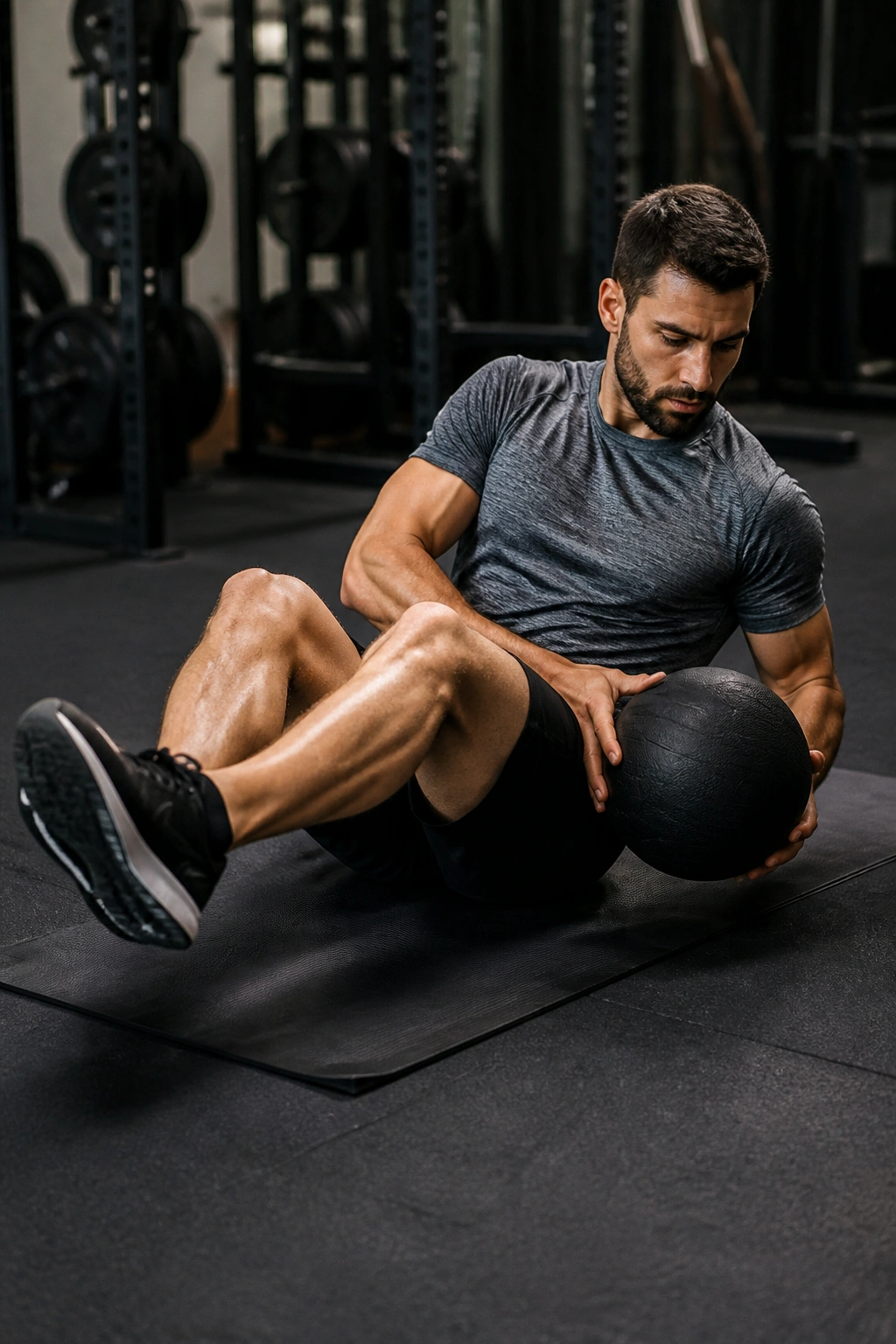
Sit on the floor with your knees bent and feet slightly elevated. Hold the slam ball in your hands. Twist your torso to the right, tapping the ball on the floor near your hip, then twist to the left, tapping the other side.
This is a classic core drill, but the weight of the ball makes it significantly harder than doing it empty-handed. Keep your chest up and your back straight. Do not let your lower back round. If you find this too easy, lean back a bit further—the lower your torso angle, the harder your abs have to work to stabilize you.
23. The Slam to Skater Hop

Slam the ball down, then immediately perform a lateral skater hop. Leap from your left foot to your right foot, landing softly on a bent knee, and jump back. Do two hops, then grab the ball and slam again.
The skater hop mimics speed skating and develops lateral power and ankle stability. It is dynamic and fast. By alternating between the power of the slam and the agility of the skater hop, you create a hybrid conditioning workout that feels more like athletic training than just “gym work.” It’s fun, but it gets exhausting very quickly.
24. The Overhead Carry to Slam
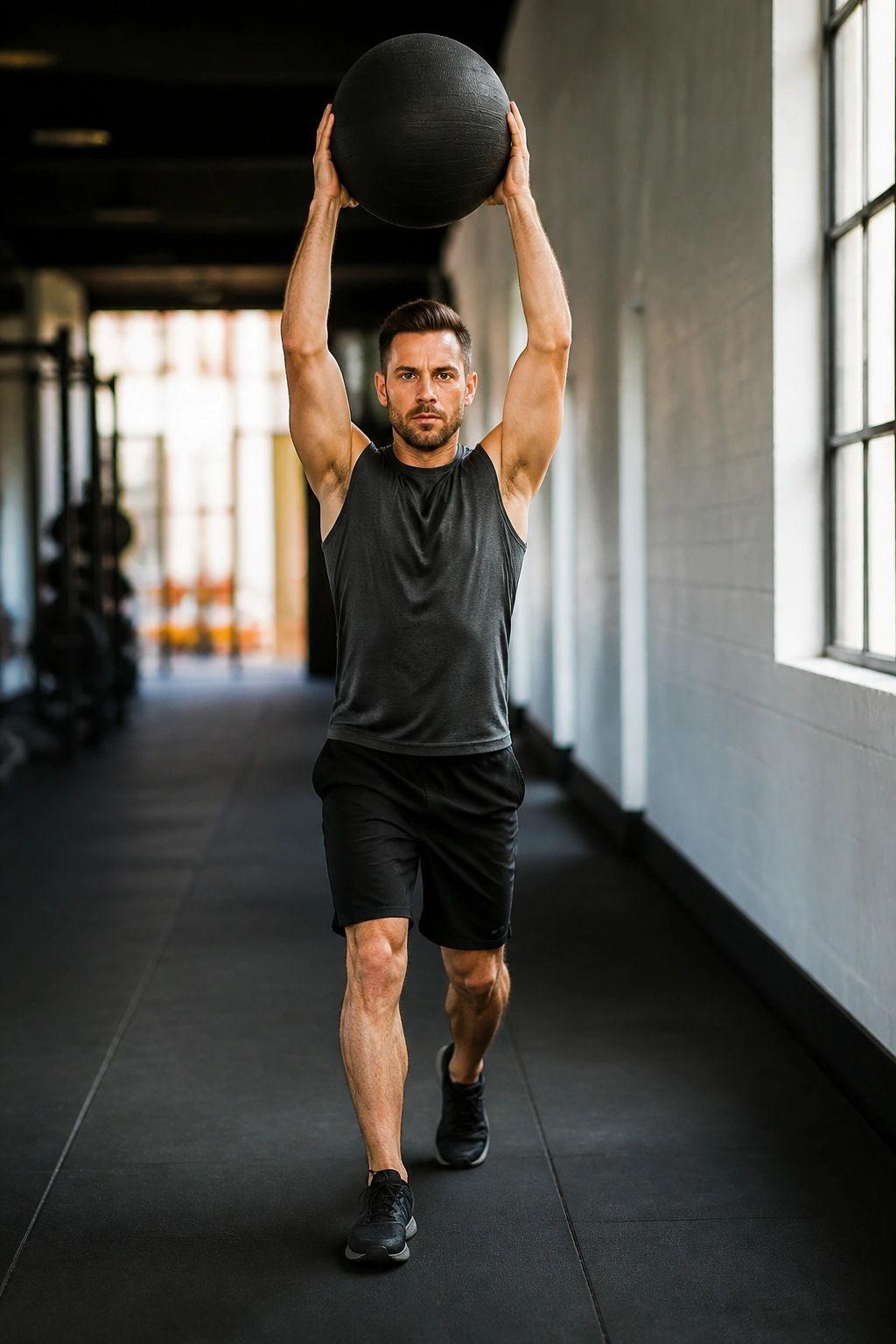
This is a “farmer’s carry” variation. Hold the ball overhead with locked-out arms. Walk for a set distance—say, 20 steps—while keeping your core braced and ribs pulled down. This requires massive shoulder stability and core endurance.
After your 20 steps, drop the ball and perform a series of 10 rapid slams. The overhead carry pre-fatigues the shoulders, making the slams feel significantly heavier and harder to coordinate. This is an excellent way to train your body to recover from fatigue while still performing explosive movements.
25. The Slam to Tuck Jump
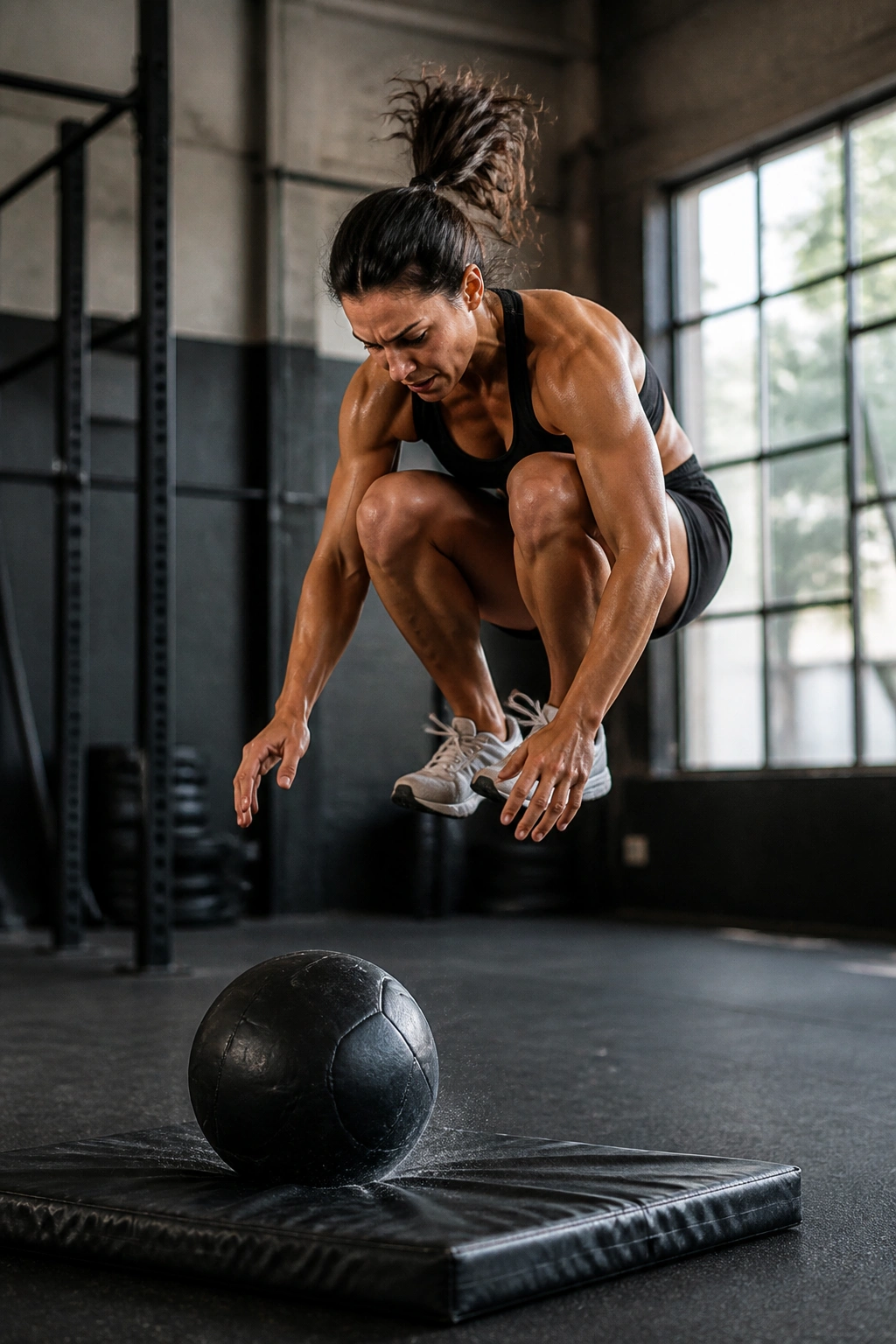
This is the ultimate metabolic finisher. Slam the ball down. Immediately stand and perform a tuck jump—bringing your knees up toward your chest at the height of your jump. Land softly and repeat the slam.
Tuck jumps are high-impact and high-intensity. You are essentially combining a power slam with an explosive plyometric jump. This will leave you completely drained, which is exactly why it is the perfect final exercise in a series. Ensure you have a soft surface, like a gym mat, if you are doing high reps of these, as the landing can be jarring on the joints.
Final Thoughts
The beauty of these twenty-five slam ball workouts is that they require almost no space and very little equipment. You have one ball and the floor. That is it. You do not need to over-complicate your routine or seek out the newest, trendiest machines in the gym to see results.
Focus on the quality of your movement. It is better to perform ten high-quality, explosive slams than fifty sloppy ones where you just drop the ball on the floor. Pay attention to how your body feels—if you are feeling a pinch in your lower back, adjust your hinge. If your shoulders are burning, take a breath before the next set.
Ultimately, these exercises are about finding a rhythm and sustaining it. Start with a weight that allows you to maintain speed, then progress as you get stronger. Keep the energy high, keep the intensity focused, and let the results speak for themselves. You don’t need a complex plan; you just need to put in the work.
