



Crunches won’t flatten a beer belly.
The best belly fat workouts for men with beer belly do two jobs at once: they burn enough energy to help strip body fat, and they rebuild the muscle that keeps your waist from hanging forward. A beer belly is rarely only about beer. More often, it’s a mix of extra body fat, deep visceral fat around the organs, weak glutes, tight hips, too much chair time, and a trunk that has forgotten how to brace.
Waist fat matters for more than the way a T-shirt fits. Mayo Clinic has long warned that abdominal fat tracks closely with blood sugar problems, fatty liver, and heart risk, and the CDC’s base line of 150 minutes of moderate activity plus two strength sessions each week is a useful floor, not a finish line. If most of your day happens in a chair, you need workouts that make a dent fast.
One hard truth: you cannot spot-reduce belly fat. You can, though, choose movements that use big muscle groups, raise your heart rate, preserve muscle, and train your abs the way they work in real life—bracing, resisting rotation, and keeping your spine stable while your arms and legs move. That mix beats 200 lazy sit-ups every time.
Start with four workouts, not all 22.
If your knees bark, your lower back tightens up, or you’ve been off the rails for six months, begin with walking intervals, incline treadmill walks, step-ups, bike sprints, and carries. Stack wins first. The workout that changes your waist is the one you can repeat on Wednesday, not the one that wrecks you on Monday.
1. Brisk Walking Intervals
Fast walking is one of the most ignored fat-loss tools men have. It sounds too easy, which is probably why so many guys skip it and head straight for punishing workouts they cannot recover from.
For a man carrying extra weight around the middle, walking intervals solve three problems at once. They’re low impact, they train your heart and lungs, and they let you pile up work without pounding your knees. That matters when a beer belly has changed the way you move and your joints are already dealing with extra load every step.
Here’s the structure I like: warm up for 5 minutes, then alternate 30 seconds of fast walking with 90 seconds at an easy pace for 10 to 15 rounds. “Fast” means your arms swing, your stride lengthens a bit, and talking drops to short phrases. If you can chat like you’re standing in line for coffee, you are strolling, not training.
After two or three weeks, cut the easy portions to 60 seconds or stretch the work intervals to 45 seconds. Outdoors is fine. A treadmill works too. Done four times a week, this plain-looking session can burn a surprising number of calories without burying your recovery.
2. Incline Treadmill Walks for Belly Fat Workouts Without Running
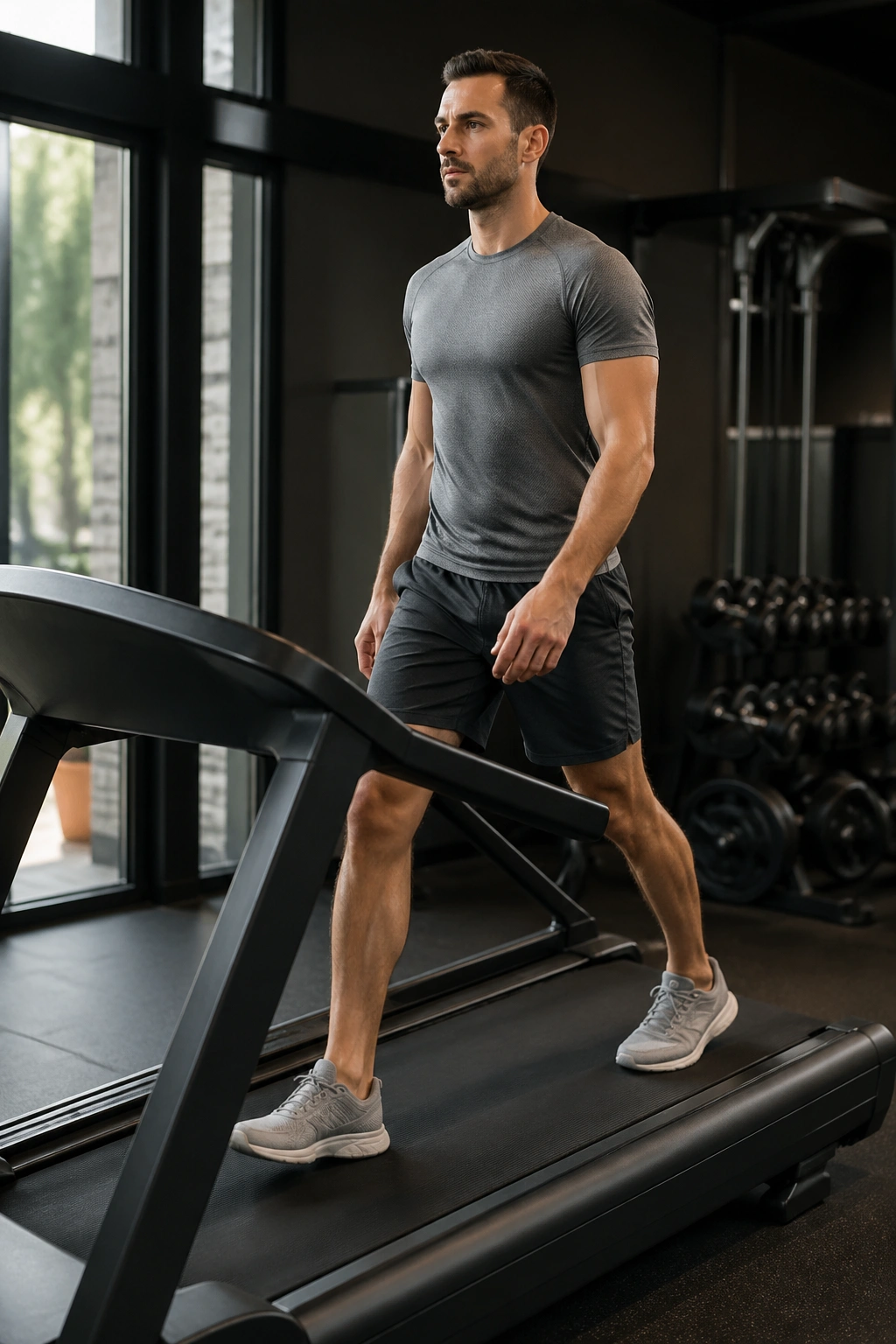
Why does the incline treadmill work so well for abdominal fat? Because grade changes the demand without forcing you to run.
Plenty of heavier men hate running for good reason. Their shins hurt, their calves knot up, and their lower back feels jammed after ten minutes. Put the treadmill at an incline, though, and the whole equation changes. Your glutes and hamstrings work harder, your heart rate climbs faster, and you can stay in the session long enough to do useful work.
Set the belt and pace
Start with 8% to 12% incline and a speed of 2.8 to 3.8 mph. Walk for 20 to 30 minutes. If that feels easy, raise the incline before you raise the speed. Most men cheat this workout by grabbing the rails and leaning back. Don’t. Keep your hands free, ribs stacked over hips, and let your feet push the belt behind you.
A smart benchmark is a pace where breathing is heavy but steady, not ragged. Your calves will light up. Your shirt will stick to your back. That’s the point.
Two sessions a week pair well with lifting days, especially if your knees complain about jump work.
3. Rowing Machine Sprints
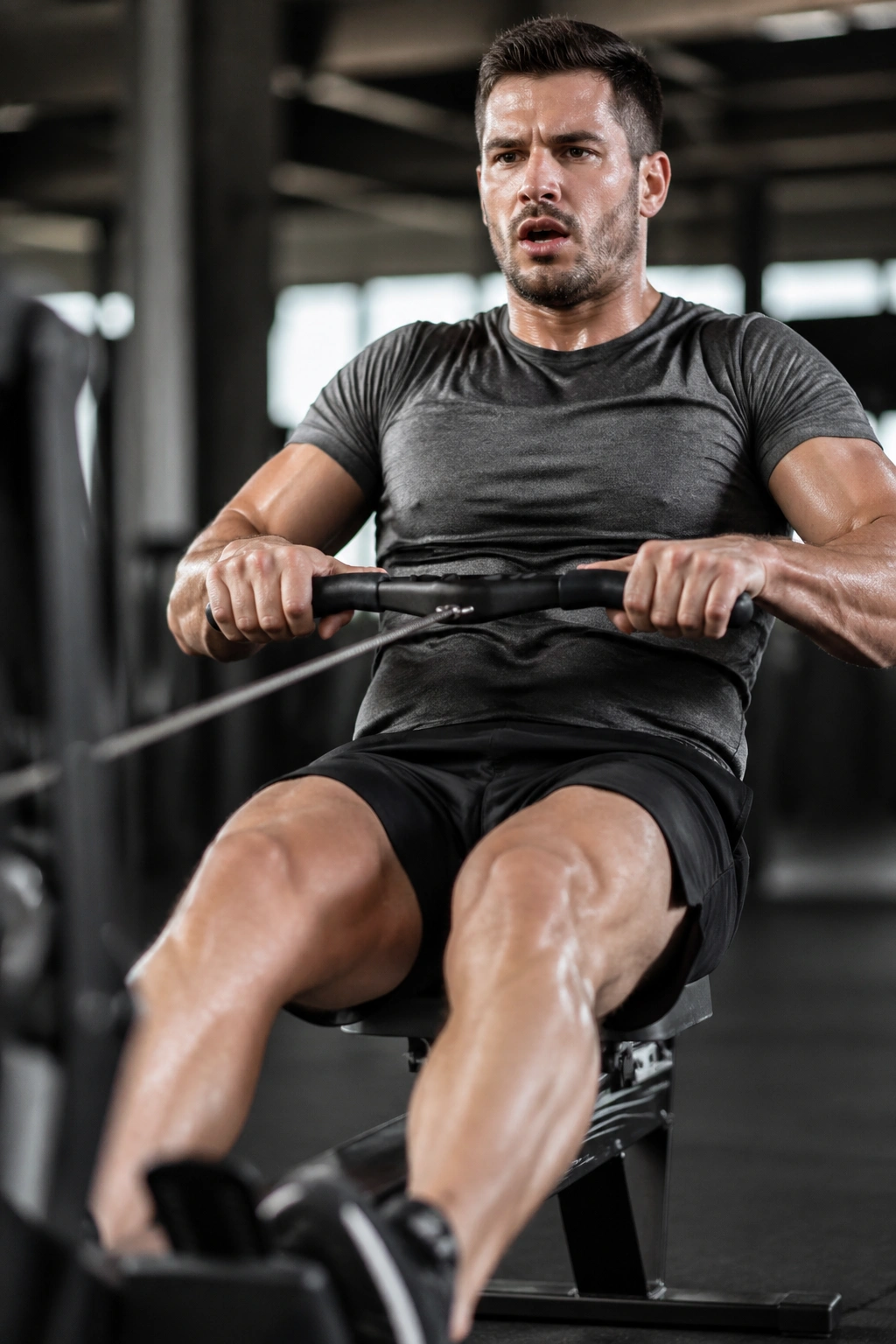
You can spot the rowing machine mistake from across the gym: a guy yanking the handle with his arms while his legs do half the job.
That version turns rowing into an ugly biceps exercise. The good version is a full-body sprint that hammers the legs, upper back, hips, lungs, and trunk all at once. For men trying to shrink a beer belly, rowing is useful because large muscle mass drives the work and the machine gives you resistance without impact.
Use this setup: 20 seconds hard, 100 seconds easy, 8 rounds. On the hard portions, think legs first, then torso, then arms. On the return, reverse it—arms out, body folds forward, knees bend last.
Rowing cues that clean up the stroke
- Drive through your feet as if you are pushing the machine away.
- Keep your chest tall at the catch instead of rounding into the flywheel.
- Finish with the handle near the lower ribs, not up under your chin.
- Let the recovery stay smooth so the next sprint starts from a strong position.
If the monitor shows your pace dropping off a cliff by round four, your first rounds were too hot. Rowing rewards rhythm. Sloppy violence does not.
4. Stationary Bike Interval Ladders
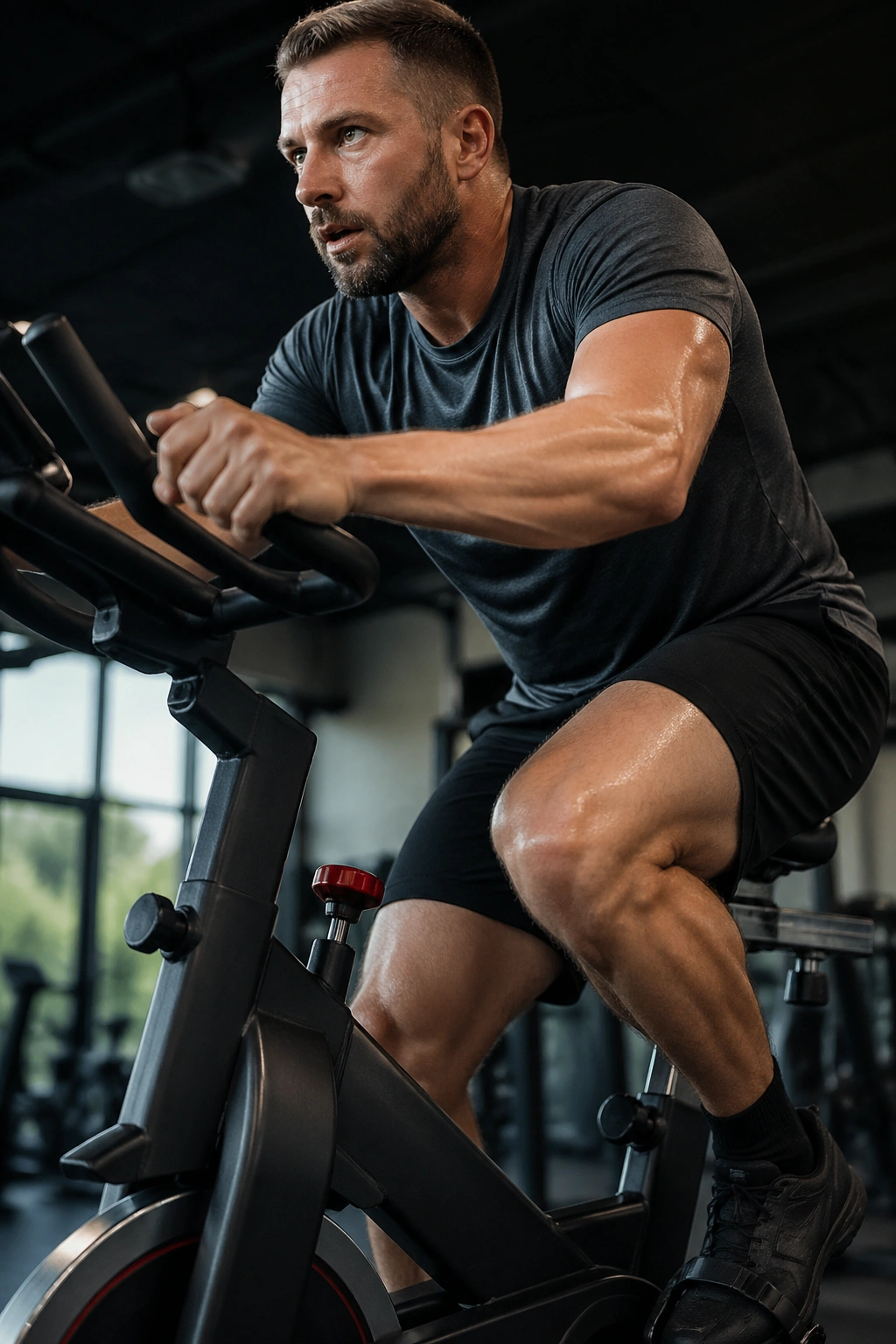
No impact. No ankle drama. No excuse.
The stationary bike is a gift for men whose joints are cranky but who still need hard conditioning. It supports your body weight, lets you push hard without landing forces, and makes it easy to track output from week to week. That last part matters more than people think. If round six looks stronger than it did two weeks ago, your engine is improving even before the mirror catches up.
A bike ladder keeps the session from feeling mindless. Try this: 15 seconds hard / 45 seconds easy, then 30 hard / 60 easy, then 45 hard / 75 easy. Rest for two easy minutes, then repeat the ladder 2 to 4 times. Put enough resistance on the bike that the hard intervals feel like work from the first five seconds, not a spin class warm-up.
Cadence matters. Aim for 80 to 100 RPM during the sprints while keeping pressure on the pedals. If your hips rock side to side, the seat is often too high. If your knees flare out and you mash the pedals, the resistance is often too heavy.
It isn’t flashy. It works.
5. Kettlebell Swings for Belly Fat Workouts That Raise the Heart Rate Fast
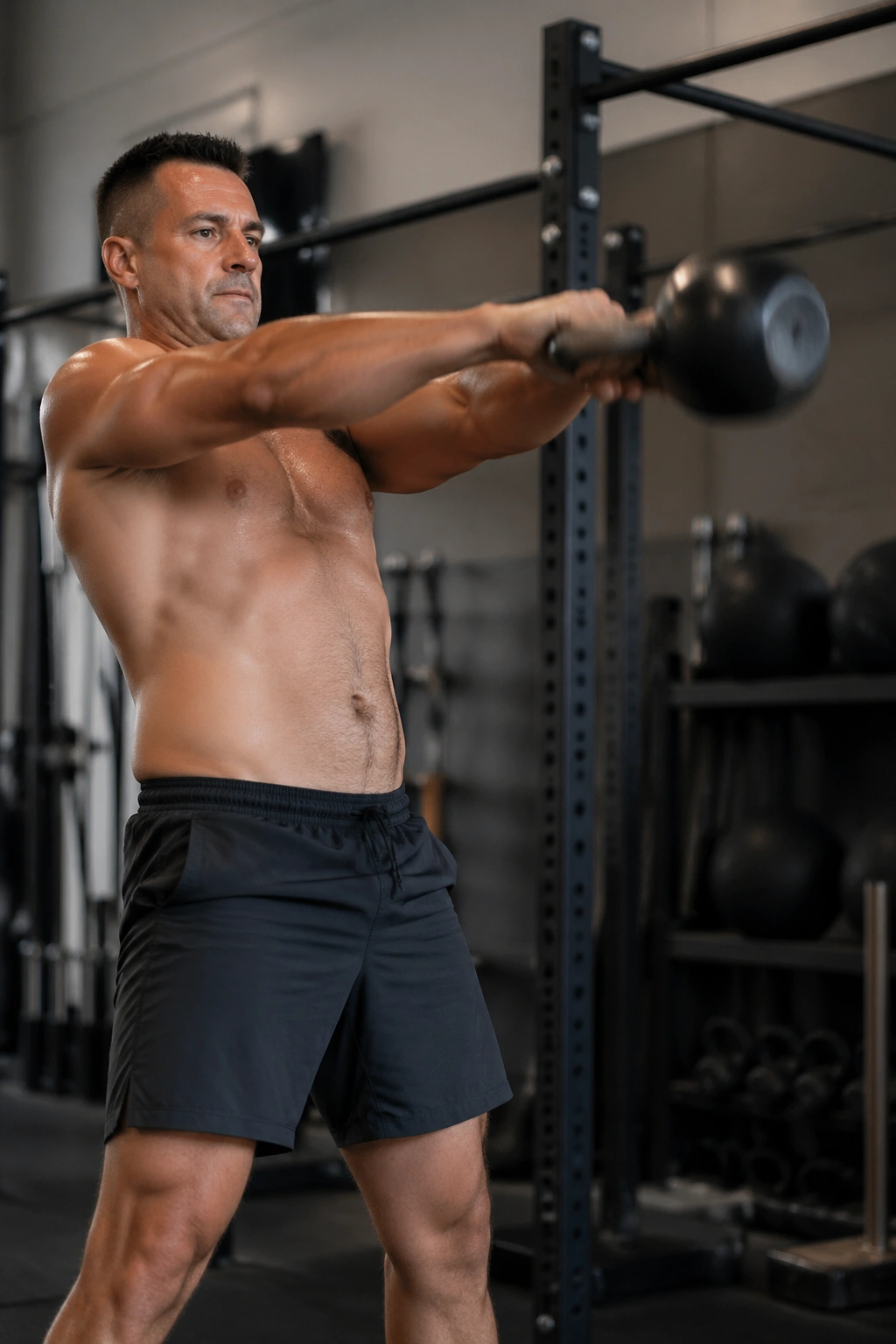
The first time a man learns a clean kettlebell swing, he usually feels it in the glutes, hamstrings, abs, and lungs all at once. That combination is gold for belly fat work.
A swing is not a squat with a bell dangling from your hands. It is a hinge. Your hips snap, the bell floats, and your trunk braces hard enough that your spine stays quiet while power moves through the hips.
The hinge has to come first
Start with a kettlebell you can move sharply for 10 crisp reps—often 12 to 16 kg for beginners, more for stronger lifters. Hike the bell back high between the thighs, keep your shins close to vertical, and stand up hard. At the top, your body should form a tall plank, not a backward lean.
A clean starting dose
- Do 10 swings every minute for 10 minutes.
- Or use 20 seconds of swings, 40 seconds of rest, 10 rounds.
- Stop the set when the bell stops floating and starts getting muscled upward.
- Do not turn this into a shoulder raise. The arms are hooks.
Best use: put swings after strength work or use them as a short standalone session on a busy day.
6. Dumbbell Thrusters
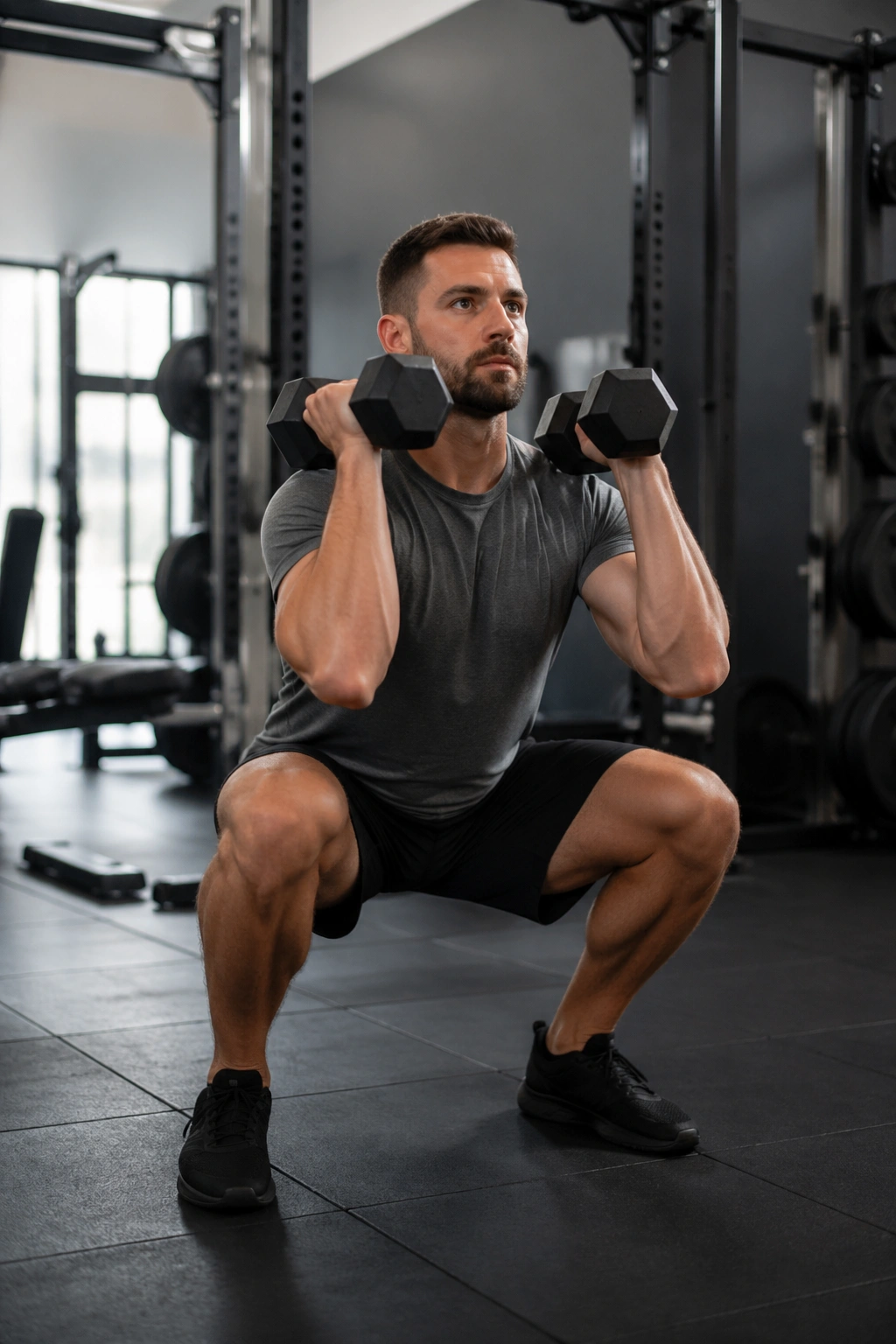
Unlike curls, lateral raises, and half the mirror work that eats gym time, dumbbell thrusters ask your whole body to earn the rep.
You squat, stand up fast, and press in one smooth chain. Legs drive the weight, shoulders finish it, and your midsection has to brace like mad so the rep does not fold you in half. Men with a beer belly often struggle to get the ribs down and the pelvis lined up. Thrusters expose that weakness fast.
Use a pair of dumbbells you can press with control for 8 to 12 reps. Squat until your elbows stay inside your knees or as low as your hips allow without your heels popping up. Stand hard and press overhead in the same motion. Rest 60 to 90 seconds between sets. 3 to 4 sets is enough.
The catch is fatigue. Form falls apart quickly on thrusters, especially if your breathing gets wild and your lower back tries to join the party. When that happens, cut the reps before you cut the quality. Eight clean reps beat twelve ugly ones.
Home gym guys should keep this one in rotation. One bench, two dumbbells, ten square feet of floor—done.
7. Goblet Squat to Press
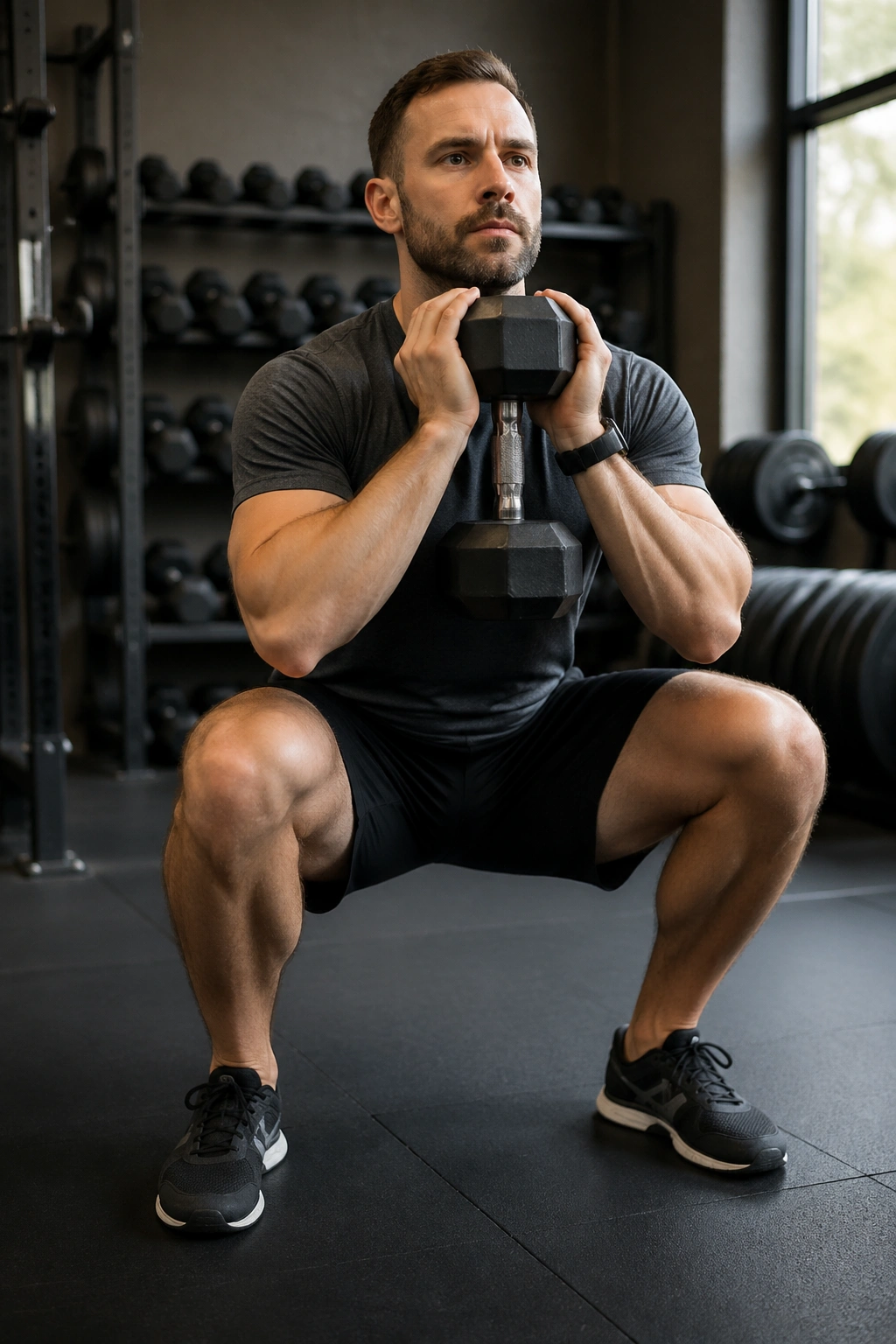
I like the goblet squat to press for one reason above all: it teaches a heavy-bellied lifter how to stay upright.
Holding one dumbbell or kettlebell in front of the chest acts like a counterweight. It often lets men sit into a squat with cleaner balance than a bar on the back, and the press on the way up turns the movement into a dense full-body effort. Legs work, shoulders work, heart rate climbs, and the abs have to stop the torso from flaring open.
Use 1 dumbbell or 1 kettlebell, squat under control for 3 seconds, pause for 1 second at the bottom, then stand and press. That slow lowering phase fixes a lot of sloppy movement. Start with 4 sets of 8 reps. Rest a minute between sets if you need it. Less if you don’t.
Beer belly guys often rush the descent and bounce off their ankles. Slow down. Let the knees track over the toes, keep the chest proud, and exhale through the press. If the overhead position feels ugly, stop the rep at chest height and make it a goblet squat only until your shoulders loosen up.
Boring? Maybe. Useful? Absolutely.
8. Romanian Deadlifts
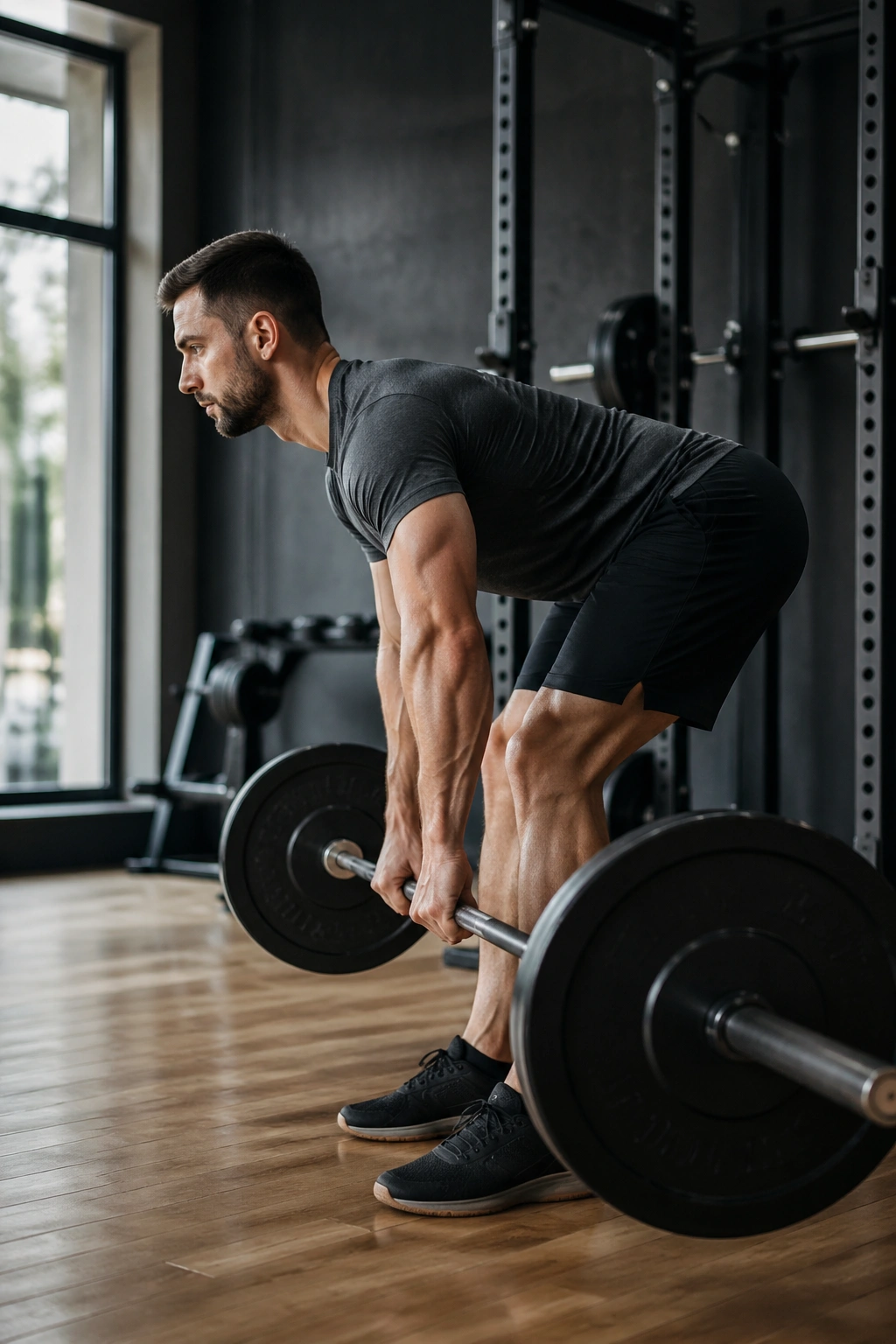
Most men carrying extra weight in the belly have lost some backside strength. Their hips stay stuck forward, their hamstrings feel like guitar strings, and their lower back ends up doing work that should belong to the glutes.
That’s where the Romanian deadlift earns its place.
What your hips should do
Push the hips backward while the knees stay softly bent. The bar or dumbbells slide down the thighs, your spine stays long, and the stretch builds in the hamstrings. Once the weights reach mid-shin—or earlier if your back starts rounding—drive the floor away and stand up.
Load it like a grown man, not a hero
Start with 3 to 4 sets of 6 to 10 reps. A pair of dumbbells works well at home. In a gym, a barbell is easier to progress. Lower the weight for 2 to 3 seconds, pause for a beat, and come up with force. Your lower back should feel loaded, not pinched.
This lift does not spike the heart rate like swings or burpees. That’s fine. It helps belly fat loss in a different way: it keeps muscle on your frame. When fat comes off and muscle stays, the waist changes faster and your posture improves at the same time.
9. Front-Loaded Squats
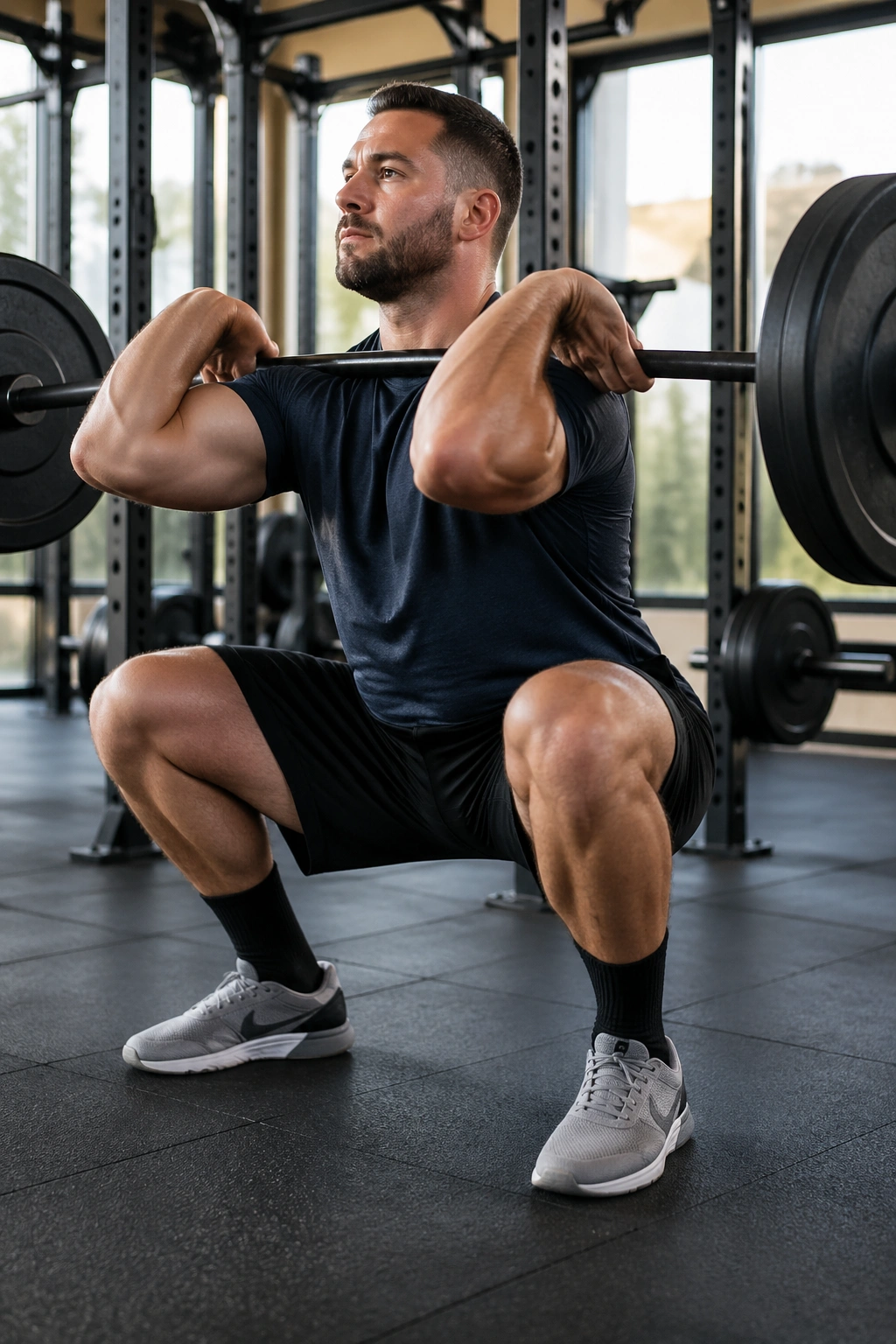
If one lift forces your abs to wake up, it’s the front-loaded squat.
Put weight in front of the body and the trunk has no place to hide. Your upper back has to stay tall, your abs have to brace, and your pelvis cannot spill forward without the rep turning into a mess. For men with a beer belly, that front load is useful because it teaches control right where the body tends to sag.
You’ve got options here. A barbell front squat works if you already know the rack position. Two kettlebells in the front rack can feel more natural. One heavy dumbbell in a goblet hold is the easiest entry point. Pick the version that lets you squat with a neutral spine and full-foot pressure.
Go with 4 to 5 sets of 4 to 8 reps. Rest enough to keep each set strong. Front-loaded work is less forgiving than back squats; your torso will tell on you fast.
And yes, your abs should feel this. Not from crunching. From bracing under load, which is how the trunk earns its keep outside the gym too.
10. Step-Ups With Dumbbells
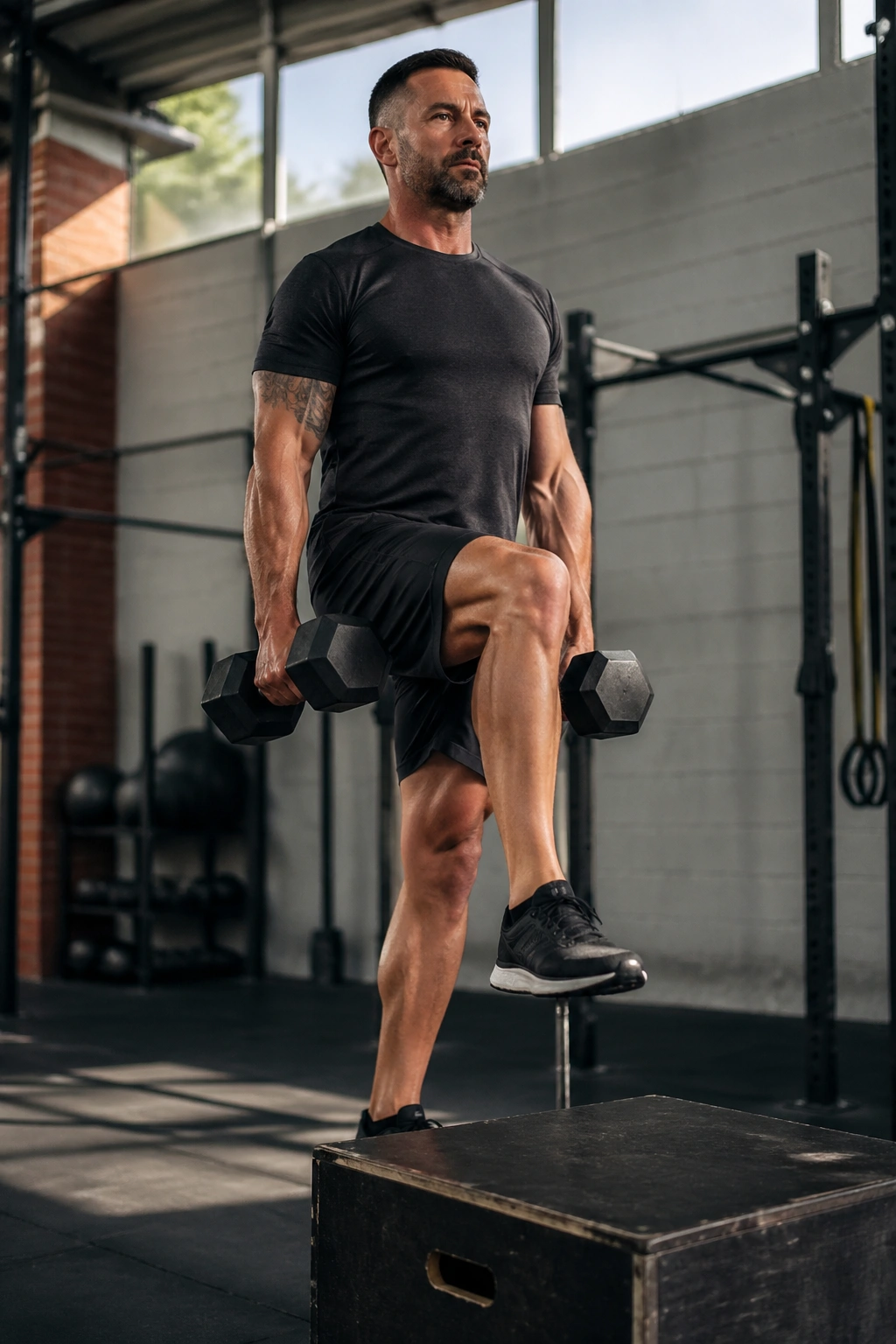
A lot of heavier men need single-leg work, but lunges can feel awkward and split squats can chew up the knees. Step-ups are friendlier.
Find a box or bench below knee height to start. That height matters. Go too high and the movement turns into a hip pinch with a little circus act on top. Go lower and you can drive through the whole foot, stand tall, and control the way down.
What makes step-ups work
- The working leg should do the job. Avoid pushing hard off the trailing foot.
- Hold 2 dumbbells at your sides and keep your torso quiet.
- Use 3 sets of 8 to 10 reps per leg.
- Lower slowly for 2 seconds so the eccentric phase does not become a crash landing.
This movement is sneaky. Your heart rate climbs because the legs are doing real work, and your glutes get far more out of it than they do from machine fluff. Men who sit all day usually feel step-ups in exactly the places that have gone lazy—glutes, quads, and deep around the hips.
Use them early in the workout, not as an afterthought.
11. Push-Up to Shoulder Tap
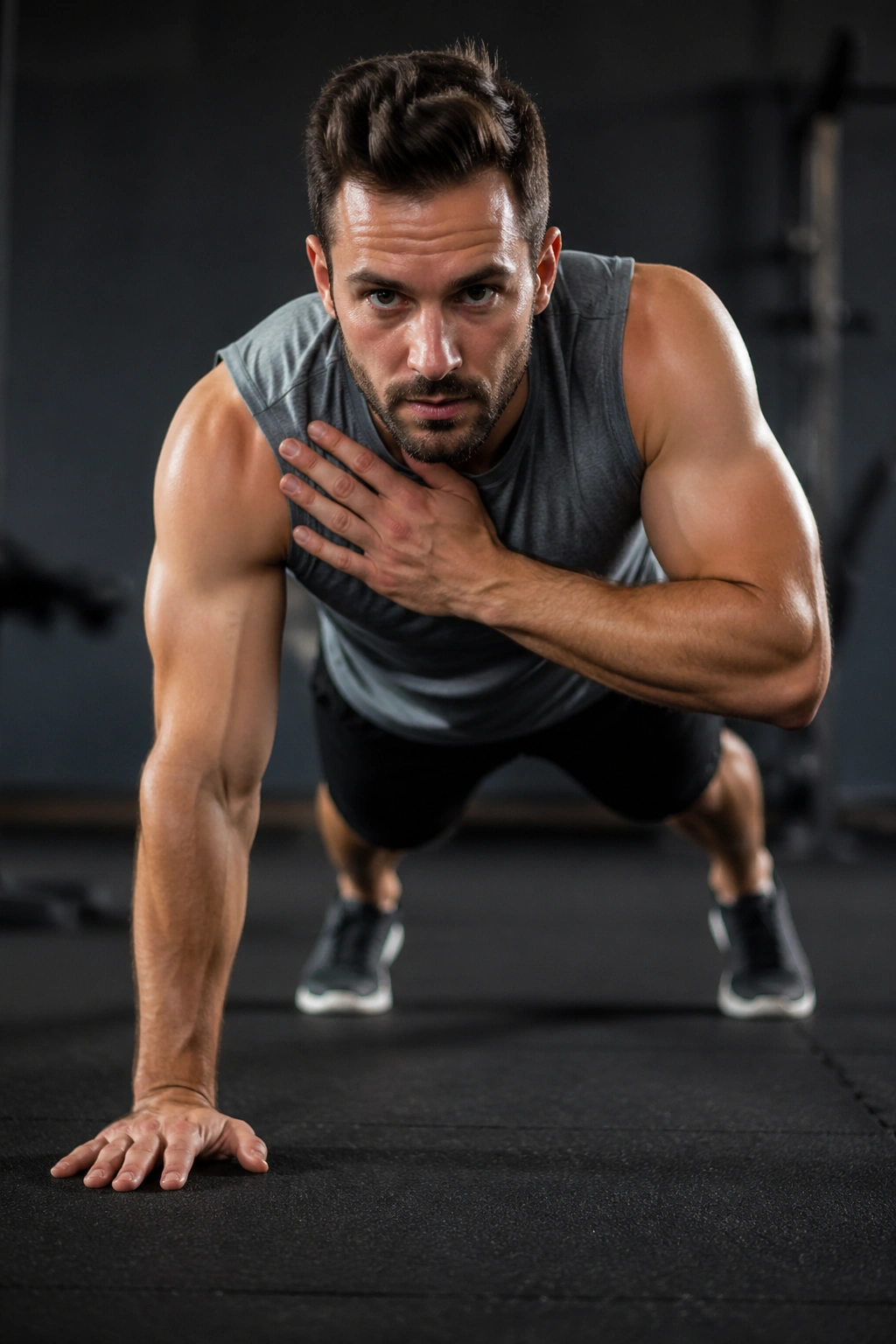
Why does this feel harder than a standard push-up, even with fewer reps? Because the anti-rotation demand is nasty.
The push-up part handles chest, shoulders, triceps, and core. The shoulder tap adds a second challenge: keeping your hips from swinging side to side while one hand leaves the floor. That is real trunk work, the kind that teaches the midsection to stabilize while the limbs move.
A clean version looks like this: perform 1 push-up, then tap the left shoulder with the right hand, then the right shoulder with the left hand. That is one rep. Start with 6 to 8 reps per set for 3 sets. If the floor version is too rough, elevate your hands on a bench, box, or Smith machine bar.
Nope, there’s no prize for grinding through ugly floor reps with your lower back sagging toward the mat.
Widen your feet a bit, squeeze your glutes, and keep the taps controlled. If your hips sway, slow down. The point is resisting movement, not racing to twenty.
12. Mountain Climbers
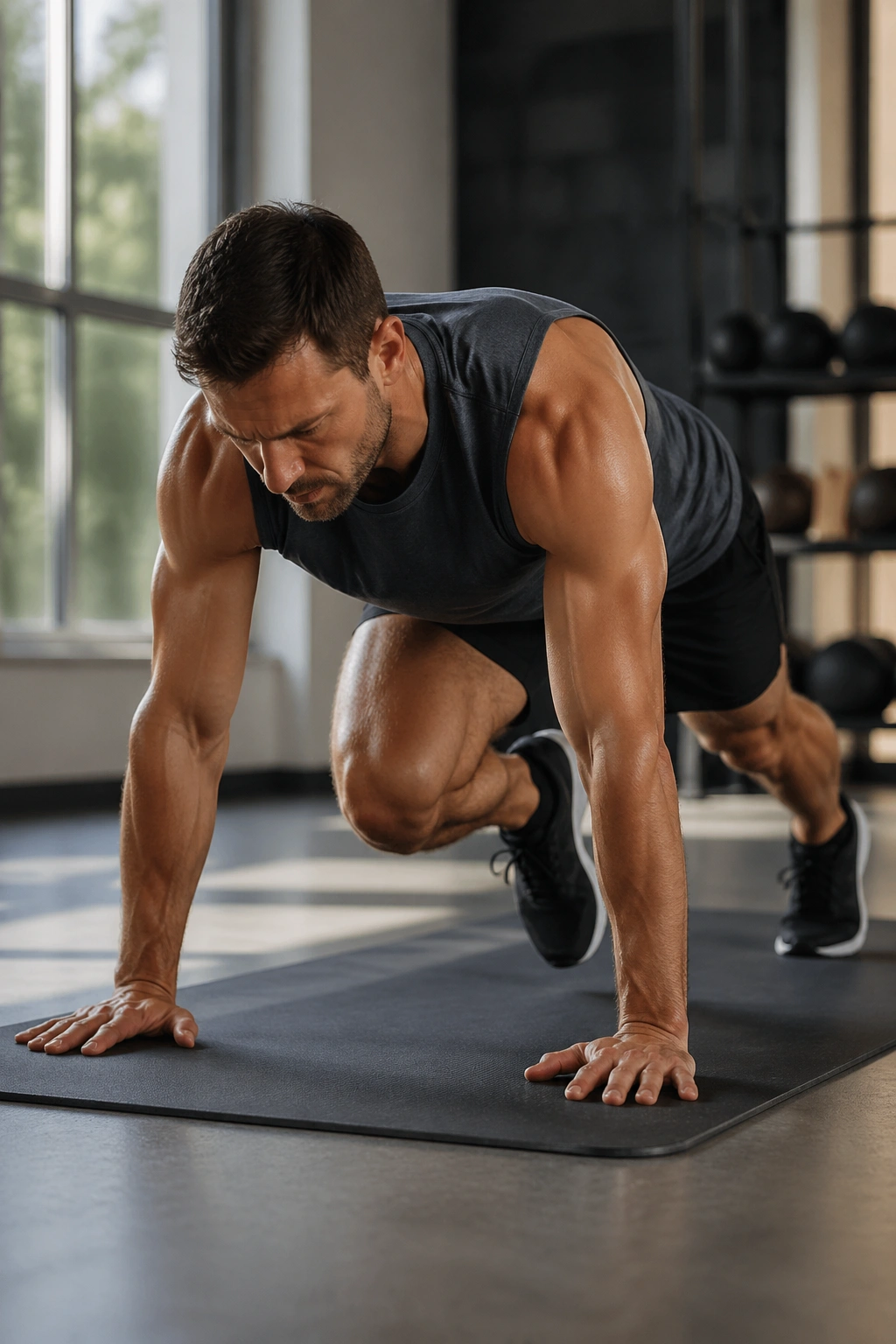
Fast isn’t always better with mountain climbers.
Too many men turn them into a panic drill—hips high, feet slamming, shoulders drifting behind the wrists, breathing all over the place. Done that way, mountain climbers become noise. Done well, they turn into a hard conditioning and core tool that fits almost anywhere.
Speed comes after position
Start in a tall plank with hands under shoulders and your body in one long line. Drive one knee toward the chest while the other leg reaches back, then switch. Keep your hips level. Think quiet upper body, fast legs.
A useful dose
- Work for 20 to 30 seconds.
- Rest for 30 to 45 seconds.
- Do 4 to 8 rounds.
- Elevate your hands on a bench if your wrists or core strength are limiting you.
Sliders under the feet make the move smoother and meaner. So does slowing the pace and driving the knees farther. Men with a beer belly often do better with the hands elevated first, then move to the floor after two or three weeks.
13. Burpees
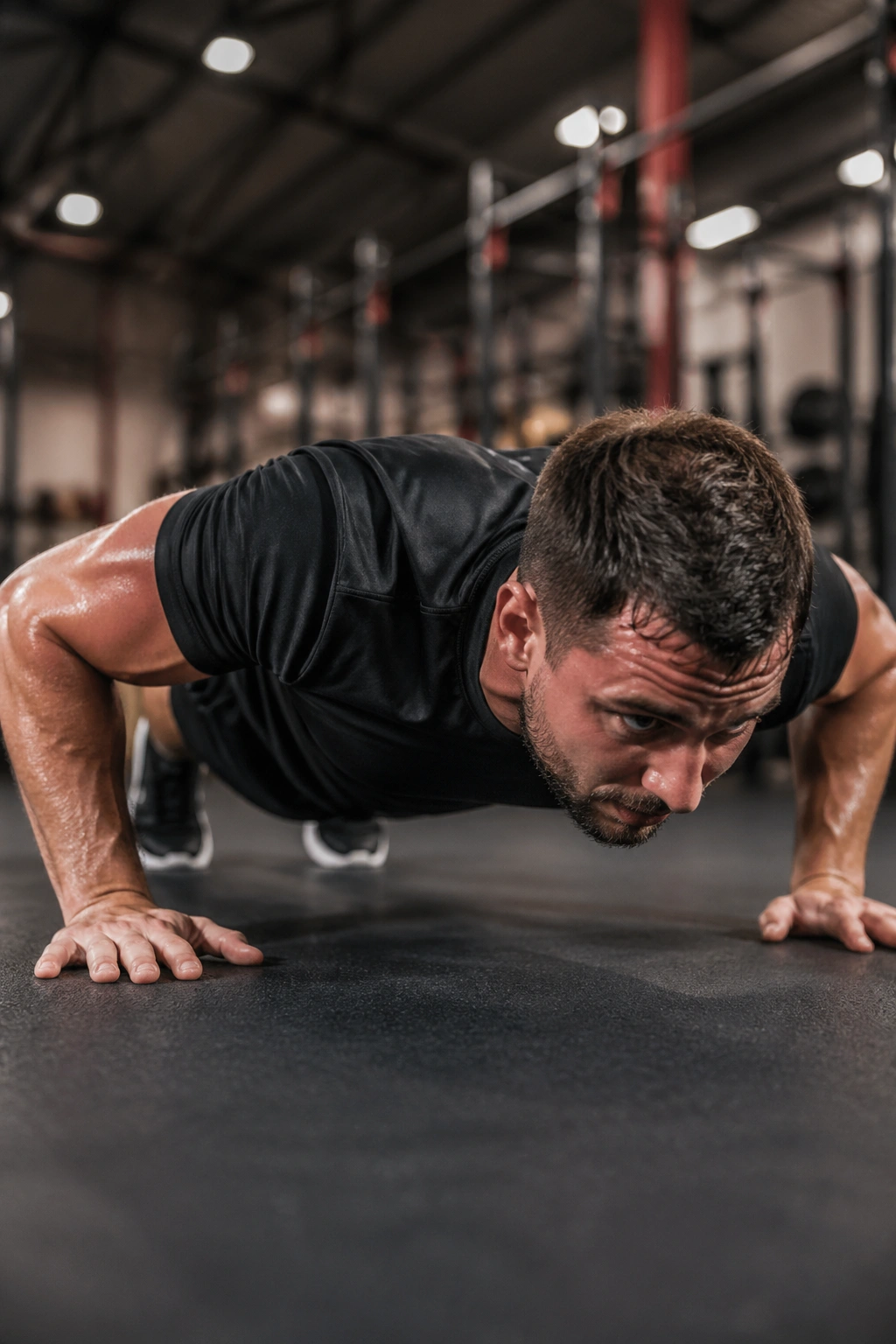
Burpees start arguments, and I get why. Done badly, they are flailing punishment. Done with control, they are one of the shortest routes from “I need a session” to “my shirt is soaked.”
You do not need the chest-to-floor military version. A step-back burpee works fine for bigger men or anyone whose wrists and knees hate impact. Squat down, place the hands, step the feet back to a plank, step forward, and stand or jump if you have that gear. The floor push-up is optional. The training effect comes from moving your body mass up and down under fatigue.
Try 5 rounds of 6 to 10 reps with 60 to 90 seconds rest. Another option: 20 seconds of burpees, 100 seconds walking recovery, 8 rounds. That second setup is harder than it looks.
One warning—burpees are a lousy choice when your back is already cooked from deadlifts or swings. Save them for days when your hinge volume is lower, or use the step-back version and keep the reps crisp.
14. Jump Rope Intervals
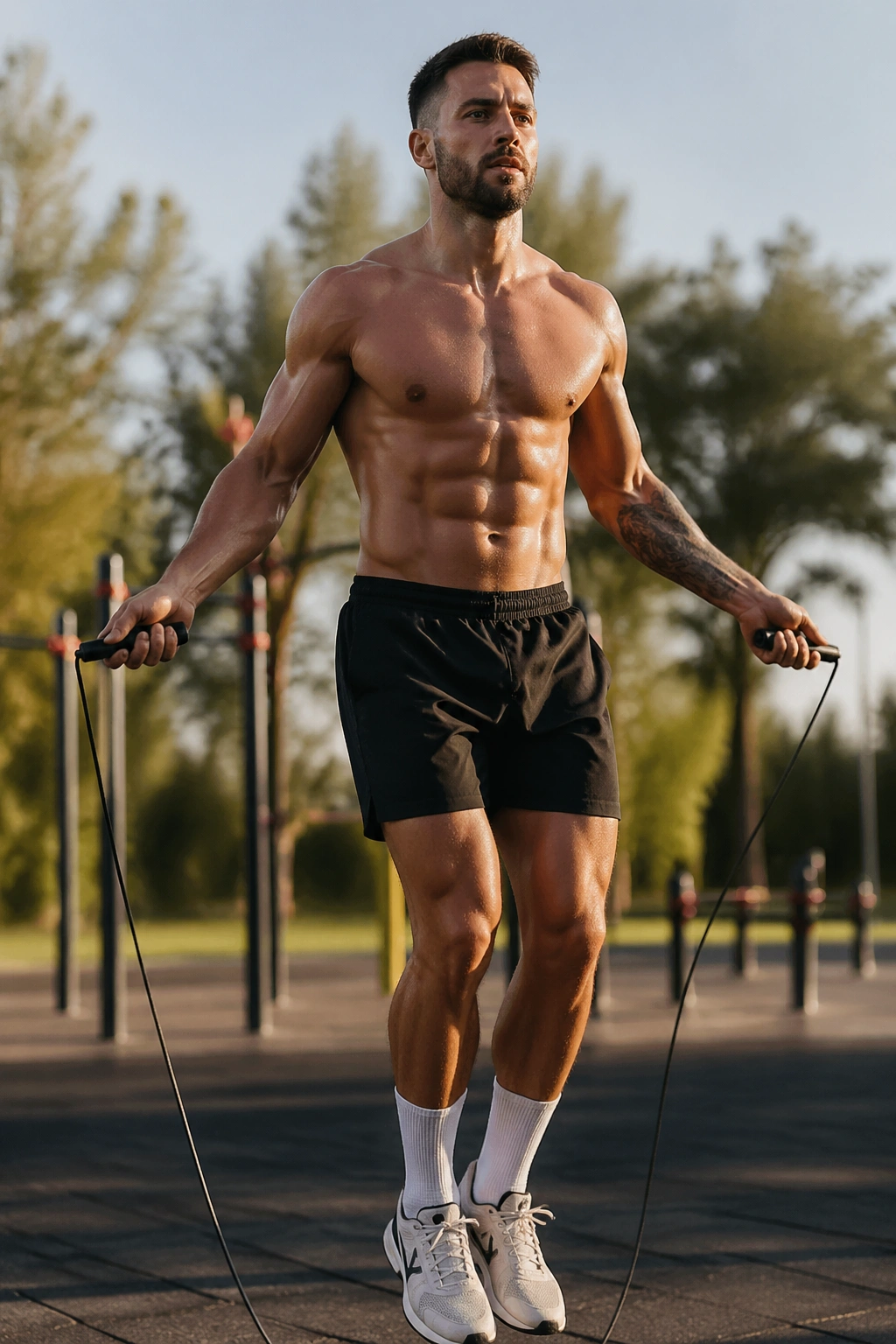
The jump rope tells on you. If your posture is sloppy, your timing is off, or your calves are asleep, the rope catches your mistakes within ten seconds.
That feedback is useful. Rope work can be one of the leanest conditioning tools around for men who still move well enough to leave the floor repeatedly without pain. The rhythm raises the heart rate fast, and the small, repeated jumps build ankle stiffness and coordination that desk life tends to flatten.
Keep the jumps low—about 1 inch off the floor is plenty. Turn the rope with the wrists, not huge arm circles. Start with 30 seconds on, 30 seconds off for 10 rounds. If you trip every few reps, use a “ghost rope” pattern without a rope for a week or two and build the rhythm first.
This one is not for every beer belly. If your knees ache or your calves cramp after one round, switch to the bike or incline treadmill. Pride has wrecked more training plans than laziness ever did.
15. Sled Pushes
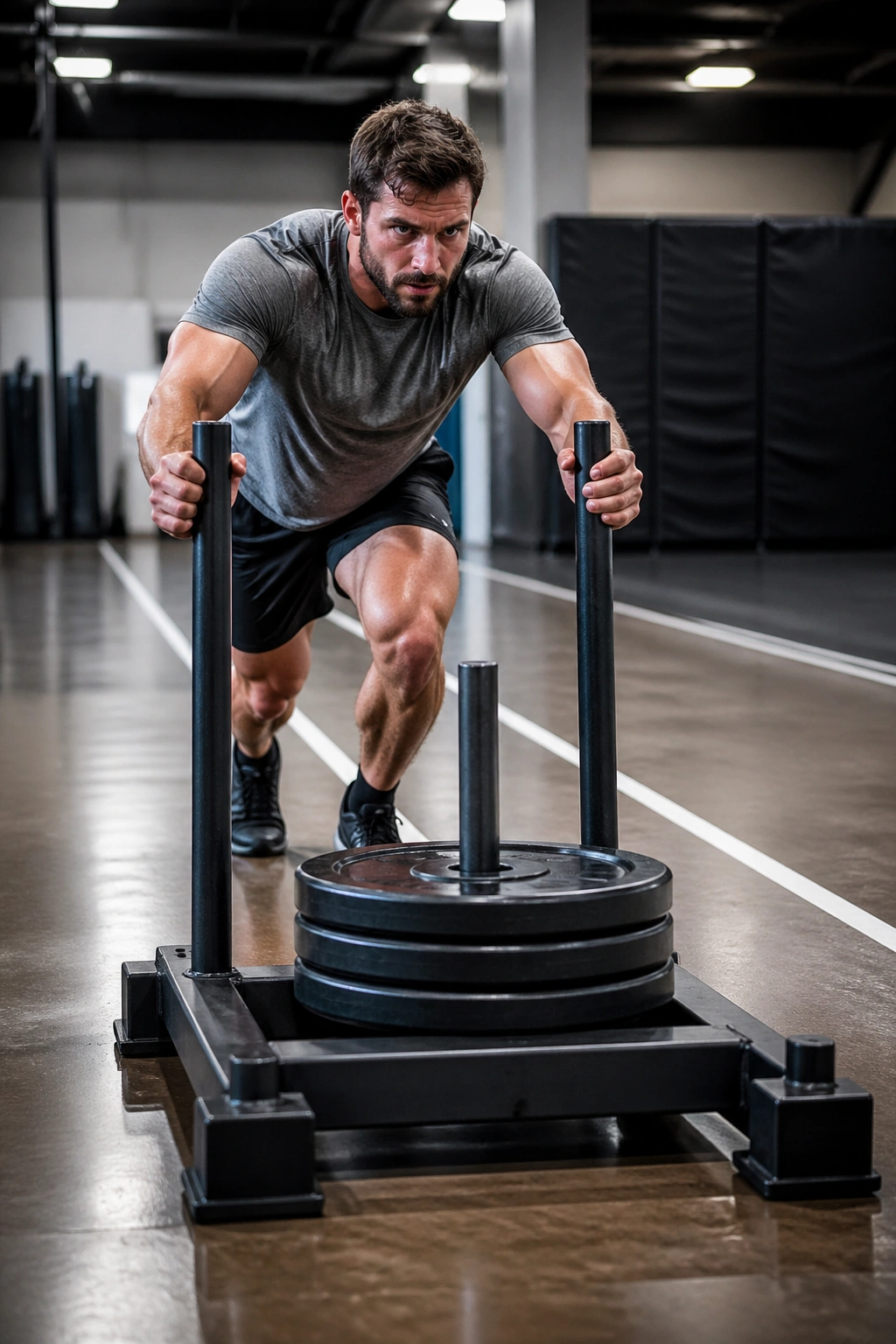
Compared with hill sprints, prowler pushes, or track work, sled pushes punish the lungs without beating up the joints. That makes them a strong pick for heavier men.
You lean into the handles, drive through the legs, and keep marching until the quads start begging for a truce. Because there is almost no eccentric phase—no big lowering action—you can often recover from sled work better than from running or jump circuits. You feel smoked during the set, then wake up the next day without that deep staircase soreness.
Load the sled so the push is hard but steady for 15 to 25 meters. Rest while you walk back and catch your breath, then repeat for 6 to 10 trips. Heavy sleds build leg drive and trunk stiffness. Lighter sleds moved faster turn into conditioning.
Watch your body angle. A long straight line from head to heel works better than folding at the waist and pecking at the ground. If your heels are barely touching the floor, the load is often too heavy.
This workout is mean in the right way.
16. Farmer’s Carries as Belly Fat Workouts That Train Your Whole Core
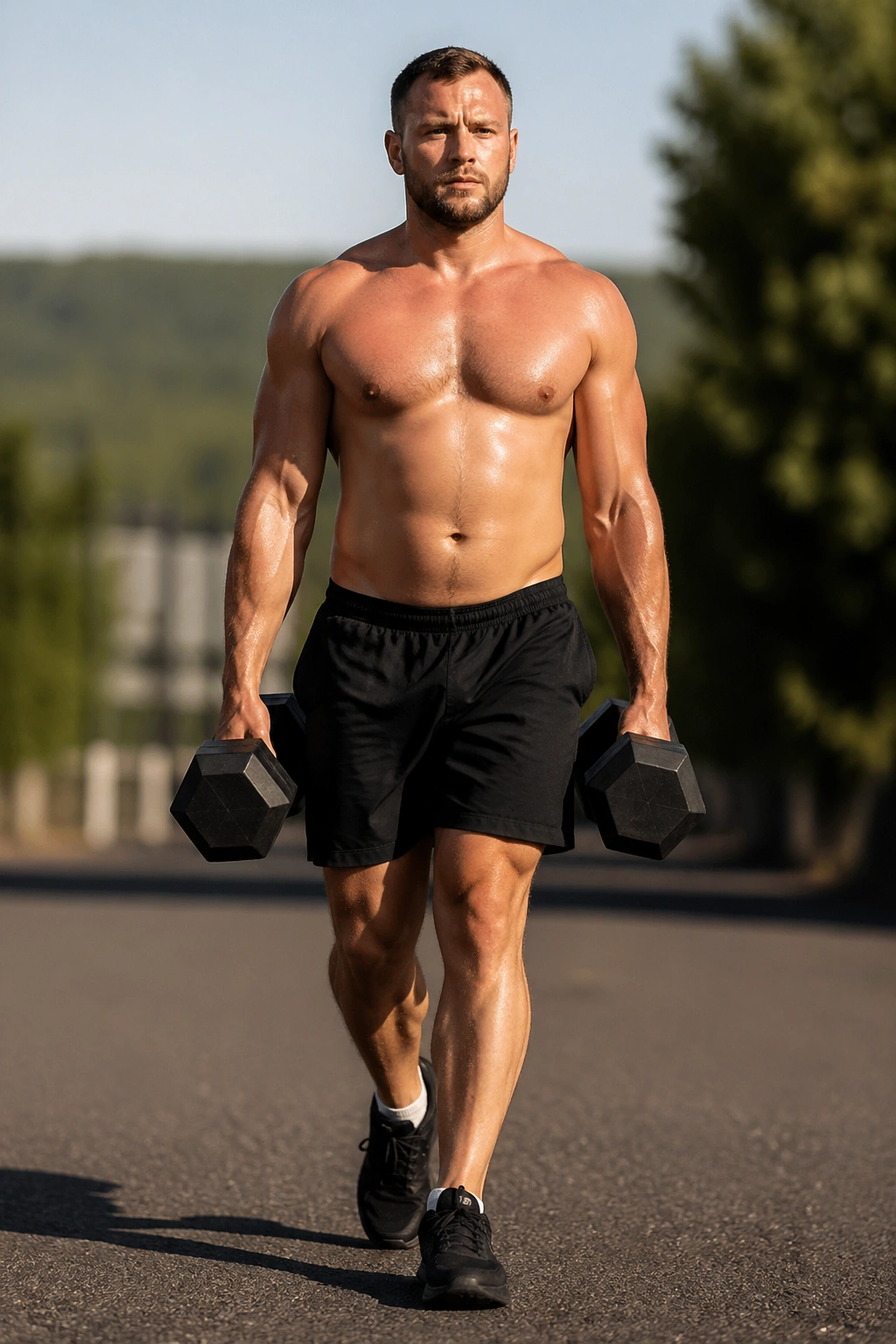
Crunches bend the trunk. Carries teach it to hold. That’s why I rate farmer’s carries far above most ab circuits for men with a soft midsection.
Pick up two heavy dumbbells or kettlebells and walk. Sounds plain. Then your grip starts to fade, your obliques fire, your upper back lights up, and your breathing gets heavier than expected. Carries are sneaky because the body is working from head to foot, yet nothing looks dramatic.
Two carry styles worth rotating
- Farmer’s carry: hold weight in both hands and walk 20 to 40 meters for 4 to 8 trips.
- Suitcase carry: hold weight in one hand only and walk 15 to 30 meters per side. This version crushes the obliques.
Walk tall. No leaning, no waddling, no speed wobble. If the weights swing into your thighs, slow your steps and tighten your trunk.
A carry finisher after squats or deadlifts can do more for the look and function of your waist than a rushed set of crunches. And if your lower back hates sit-ups, carries are often a far smarter trade.
17. Battle Rope Waves
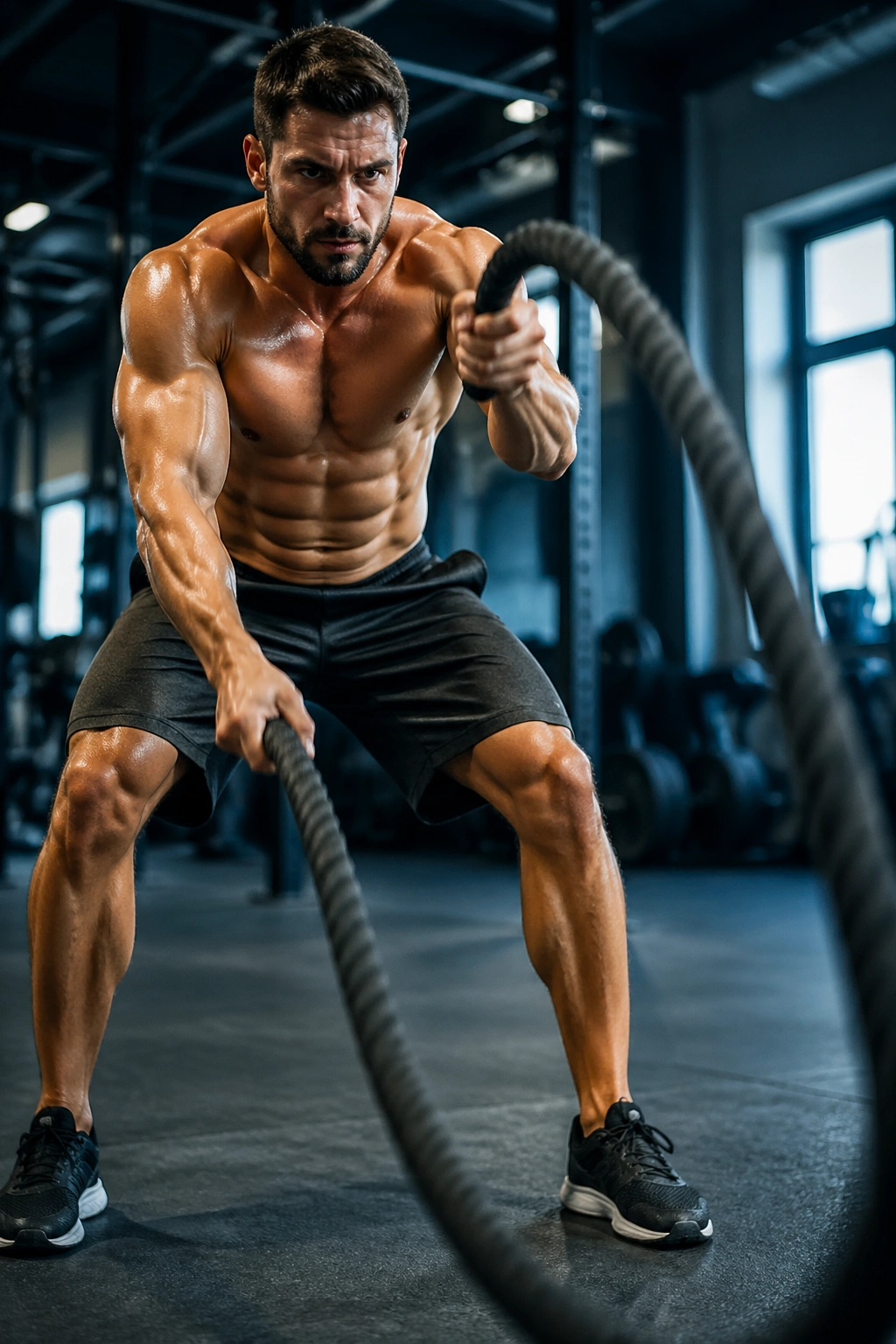
You can usually hear the problem before you see it—ropes slapping the floor while the guy using them is standing upright and flinging his shoulders around.
Battle ropes work better from an athletic stance. Hips back a bit, knees soft, ribs down, hands moving fast while the trunk stays locked in. That combination turns ropes into a hard upper-body conditioning tool that still forces the core and legs to help.
A rope session that earns its keep
- Work for 15 to 20 seconds at high effort.
- Rest for 40 to 60 seconds.
- Repeat for 10 to 15 rounds.
- Alternate between double waves, alternating waves, and hard slams.
Men with a beer belly often like ropes because the session feels athletic without requiring jumps or hard landings. Grip gets challenged. Shoulders burn. Heart rate climbs fast. You can tack them onto the end of a strength day in ten minutes and leave feeling like you did something, because you did.
Don’t shrug your shoulders to your ears. That habit turns the drill into a neck cramp with sound effects.
18. Medicine Ball Slams
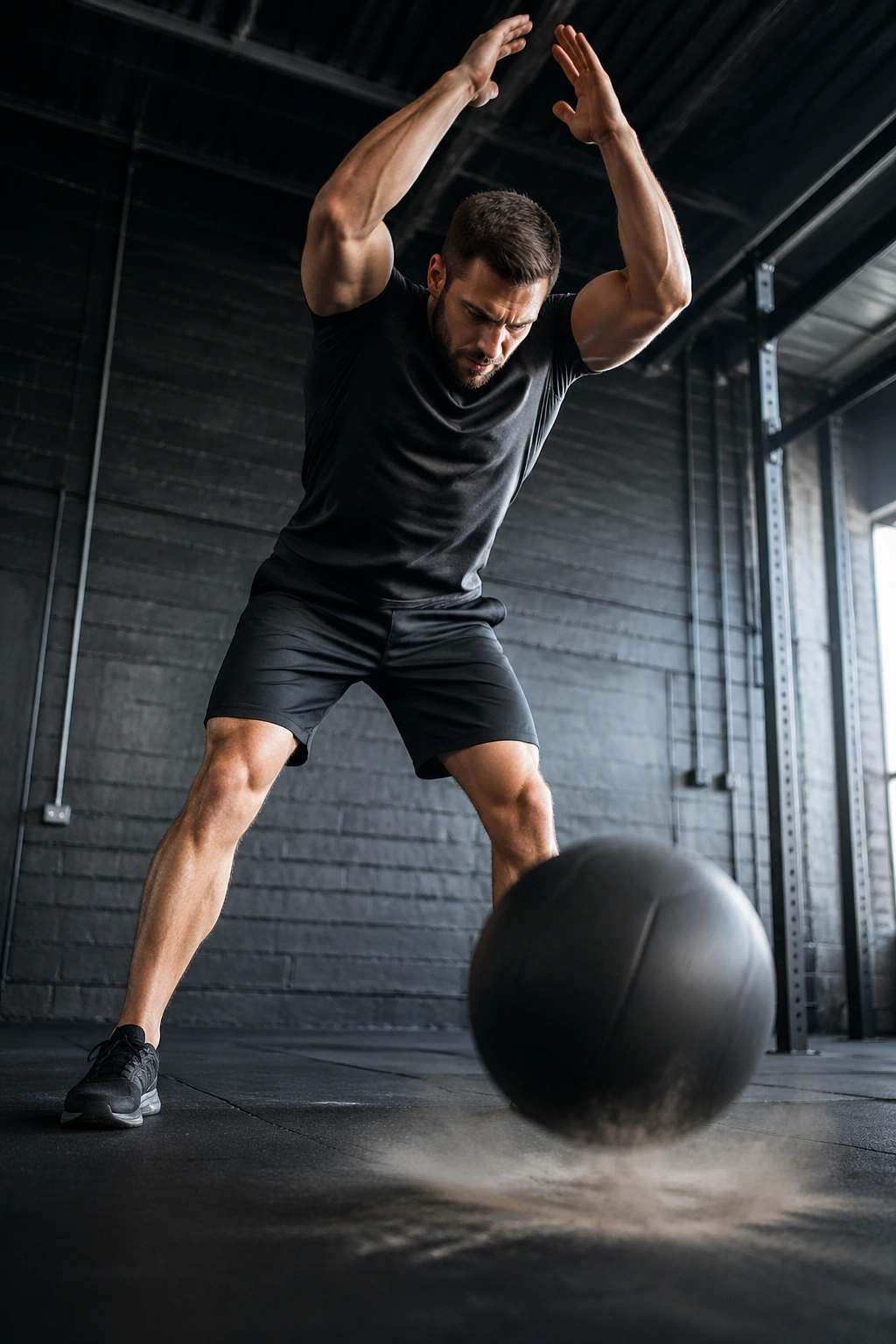
Short, sharp, and honest.
Medicine ball slams have one job: create force fast, then shut it down hard. That alone makes them useful for fat-loss training, since power work recruits a lot of muscle in a hurry and sends your heart rate north without long setup time. They are also therapeutic in a crude, satisfying way. Some workouts feel clinical. Ball slams feel like work.
Use a ball heavy enough to resist you but light enough to move fast—often 8 to 20 pounds. Lift it overhead, rise onto the toes, brace the abs, then slam the ball into the floor while crunching the ribs down and hinging into the catch. Pick it up with a flat back and go again. Start with 4 to 6 sets of 8 to 12 reps.
The mistake here is trying to “muscle” the ball with the arms. Power should come from the whole body. Another mistake is chasing fatigue so hard that every slam turns into a rounded-back scoop. Once your catch position gets ugly, end the set.
Good slams leave your lungs hot and your trunk awake.
19. Boxing Heavy Bag Rounds
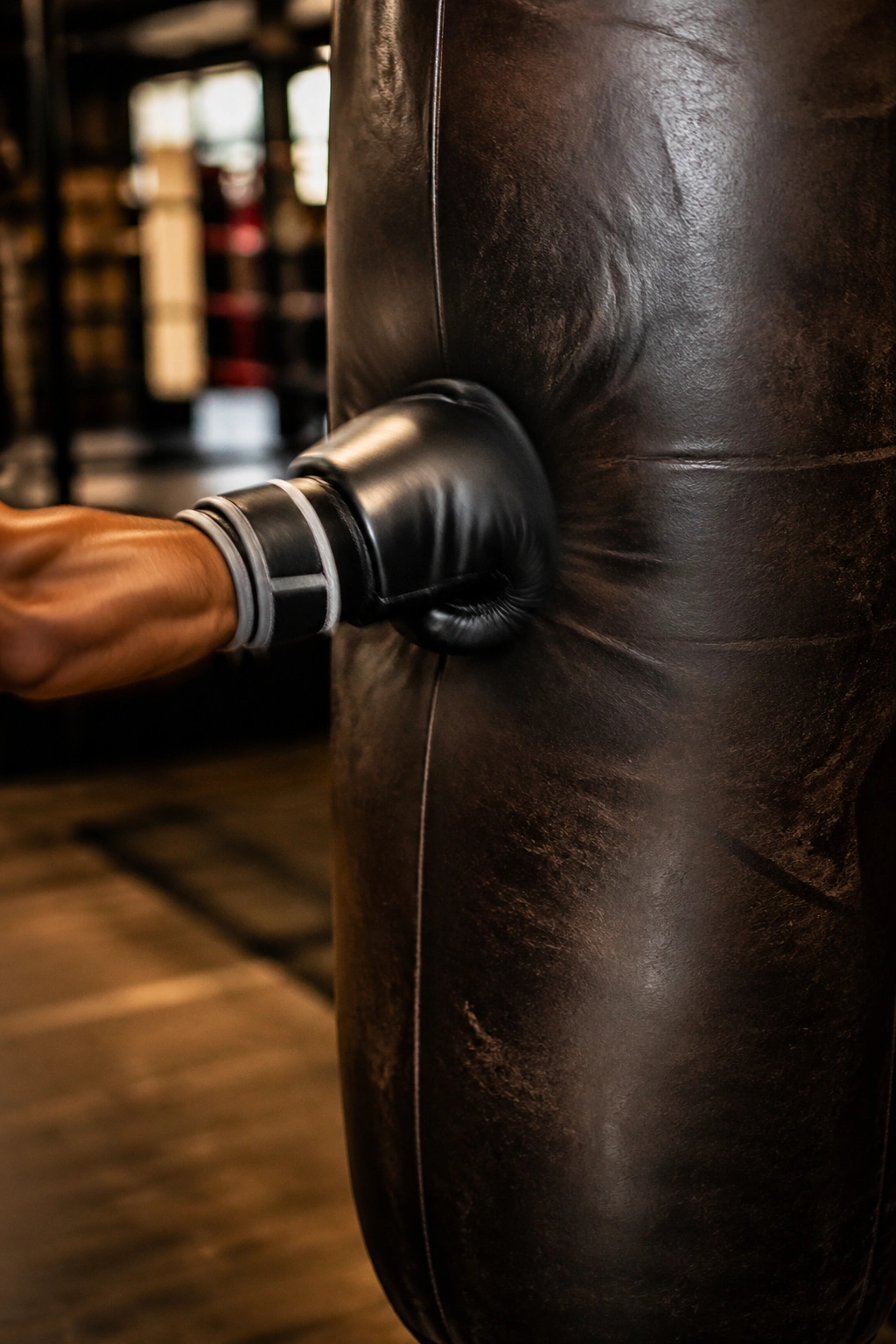
Want conditioning that does not feel like punishment every minute? Hit a heavy bag.
Bag work sticks because it’s engaging. Men who dread treadmills often have no trouble doing six 2-minute rounds on a bag because they are chasing rhythm, speed, and impact instead of staring at a console. Adherence matters. A workout you repeat for three months beats one you admire from a distance.
A round structure that works
Wrap your hands, wear gloves, and start with jab-cross combinations for the first round. Add hooks in round two. Build to 2 minutes of work, 1 minute of easy walking or shadowboxing, and aim for 5 to 8 rounds.
Turn the hips on straight punches, exhale on contact, and bring the hands back to the face each time. Men with a beer belly often overrotate and end up arching the lower back. Keep the ribs stacked and pivot off the ball of the foot.
Bag rounds hit the shoulders, trunk, and lungs hard. They also teach you to move around your midsection instead of letting it sit there like dead weight.
20. Hanging Knee Raises
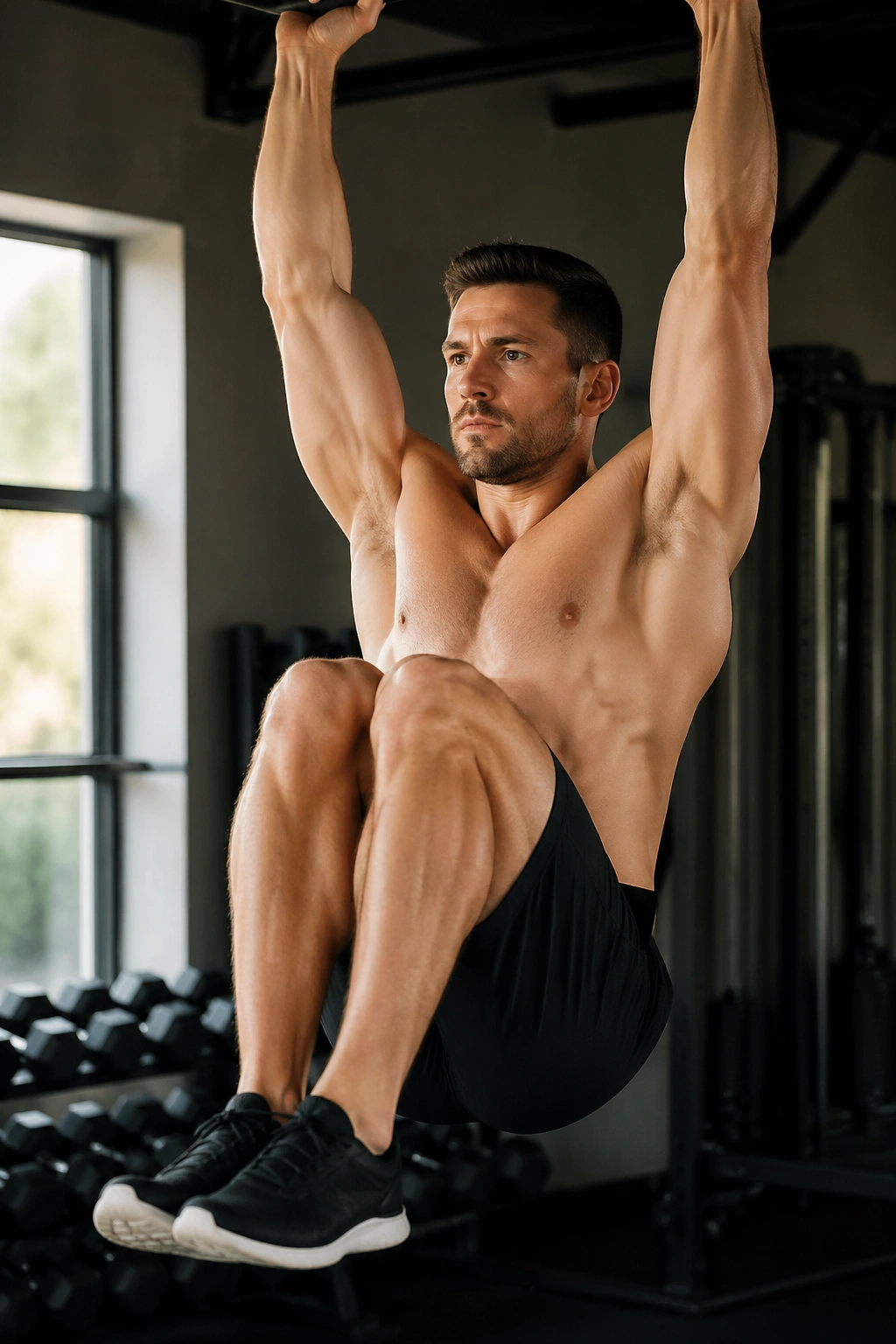
I do not rate hanging knee raises because they “burn belly fat” on their own. They don’t. I rate them because they strengthen the front side of the trunk in a way a hanging, heavy-bellied body badly needs.
The clean version is not a swing. Start from a dead hang or from captain’s chair pads if grip is a limiting factor. Pull the knees toward the chest while tipping the pelvis backward slightly at the top. That last bit matters. Without that posterior pelvic tilt, the movement turns into hip flexors doing their own thing while the abs watch.
Use 3 sets of 8 to 12 reps with slow lowering. If your body swings, pause between reps and reset. Bent-knee leg raises on the floor are a fine starting point if hanging work feels impossible.
A stronger trunk does not melt fat off the waist. It does make every squat, carry, swing, and push-up safer and stronger. That’s why this move stays on the list.
21. Plank Pull-Throughs
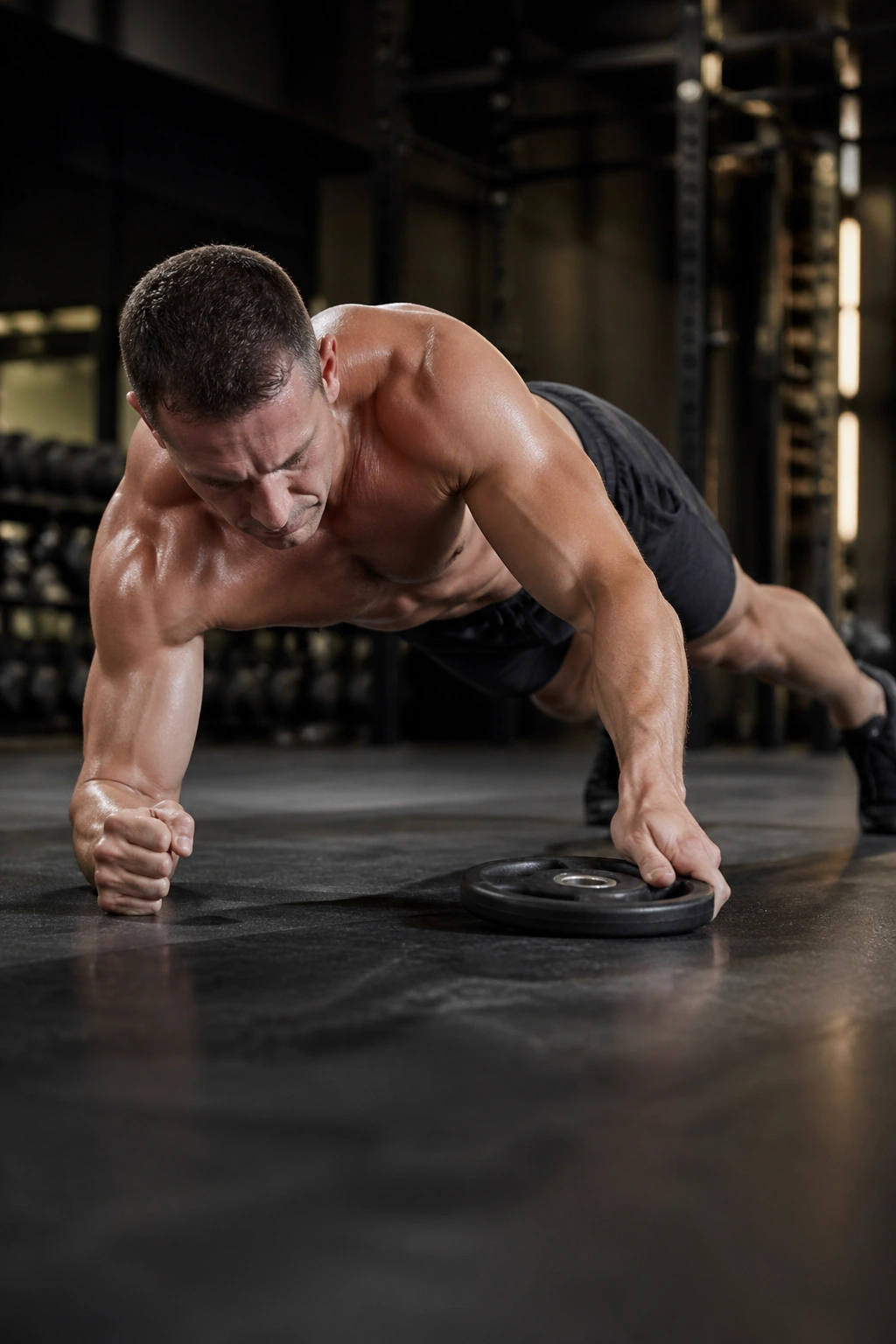
Set a dumbbell, kettlebell, or small weight plate beside your right hand. Get into a plank. Reach under your body with the left hand and drag the weight across to the other side without letting your hips twist. That’s a plank pull-through.
It looks mild. It is not.
Why this one hits the right spot
Your abs are built to resist movement as much as they create it. Pull-throughs hammer that skill. The shoulder on the planted side has to stabilize, the obliques have to stop rotation, and your glutes have to keep the pelvis from wobbling all over the floor.
Use these guardrails
- Widen your feet more than you think you need.
- Drag the weight slowly, not with a yank.
- Do 8 to 12 pulls per side or 30 to 45 seconds of work.
- Put a water bottle on your lower back if you want instant honesty about hip movement.
This drill fits well after push-ups, carries, or mountain climbers. It won’t torch calories like sleds or rower sprints, but it builds the trunk stiffness those workouts depend on.
22. Barbell Complexes for Belly Fat Workouts in One Long Set
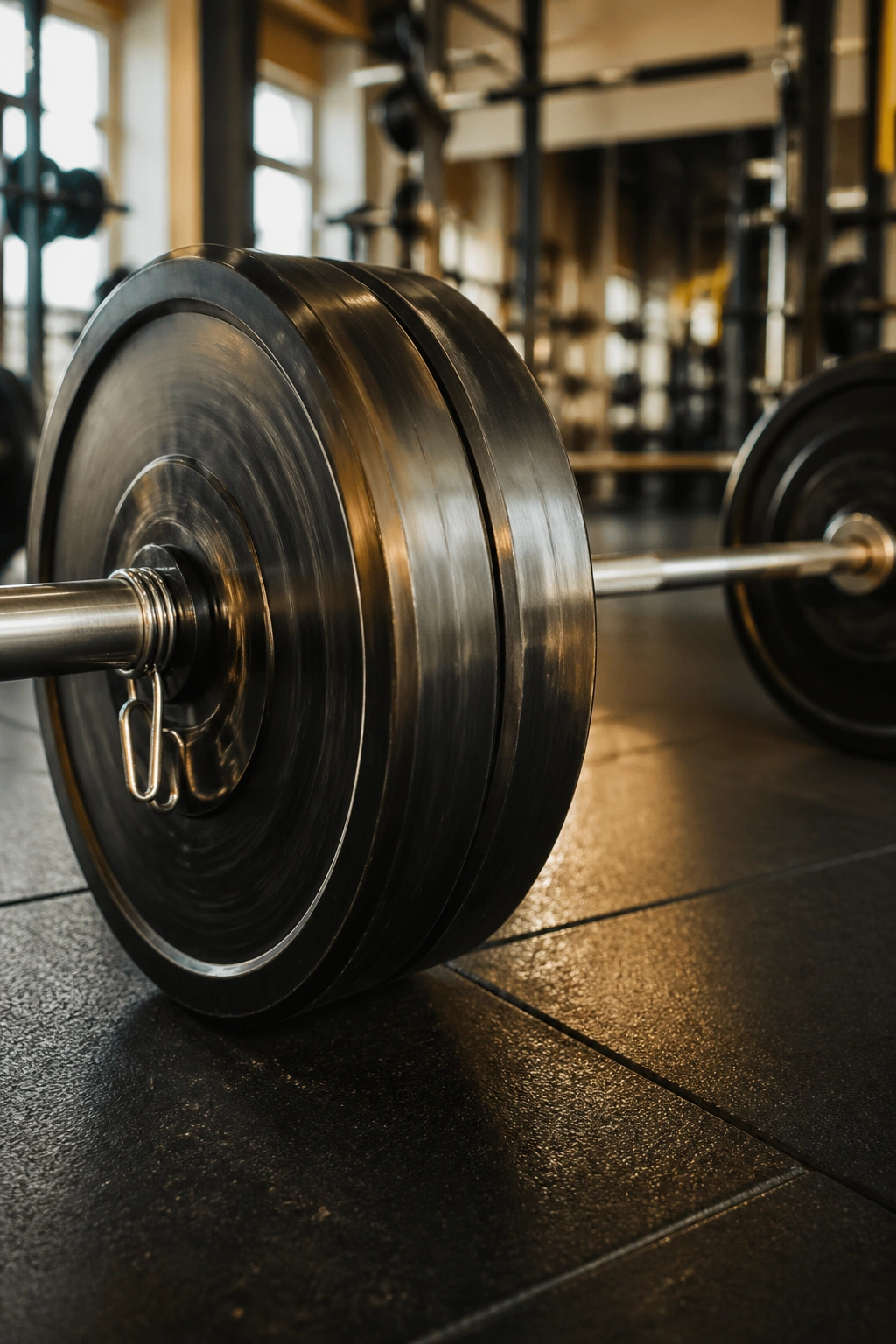
Five or six moves, one bar, no putting it down. Barbell complexes are dense, ugly, effective work when your technique is solid enough to handle them.
A complex strings lifts together so the limiting factor becomes your lungs, grip, and trunk before any one muscle taps out. That makes complexes a strong fat-loss tool for experienced lifters who want a lot of work in a short window. They are not beginner territory. I’m saying that twice because this is where eager men get sloppy.
One sample complex
Use an empty bar, or 65 to 95 pounds if you move well, and perform:
- 6 Romanian deadlifts
- 6 bent-over rows
- 6 hang cleans
- 6 front squats
- 6 push presses
Rest 90 to 120 seconds, then repeat for 4 to 6 rounds.
Who should skip it
If your clean is shaky, your front rack is ugly, or your lower back is already cooked, use dumbbell complexes instead. Same idea, lower skill demand.
Complexes can carve a big energy cost into a short session. They can also expose every leak in your movement. Respect that and they are worth using once a week.
Final Thoughts

A smaller waist does not come from chasing abdominal burn. It comes from repeated full-body work, enough weekly movement, and the kind of lifting that keeps muscle on your frame while fat comes off.
If I were starting from scratch with a noticeable beer belly, I’d build around walking intervals, incline treadmill walks, goblet squat to press, Romanian deadlifts, farmer’s carries, and one hard conditioning tool like the bike, rower, sled, or heavy bag. That mix covers the bases without smashing your joints.
And yes, the beer part matters. If workouts are solid but the week still includes four nights of extra drinks, late bar food, and short sleep, your stomach will fight back. Training can do a lot. It cannot outwork that pattern forever.
Pick four workouts from this list, run them for six weeks, write down your times and loads, and let consistency do the loud work.
