



Crunches are a lousy fix for hormonal belly fat.
When the belly starts holding on to weight because of insulin swings, menopause shifts, PCOS, chronic stress, poor sleep, or thyroid trouble, the usual “just do more cardio” advice tends to miss the mark. The better move is to choose belly fat workouts for hormonal weight gain that keep muscle, calm the nervous system a bit, and give you enough work to matter without leaving you wrecked for the rest of the day.
That balance matters more than people admit. A hard workout can be useful, sure, but if it leaves you starving, sore, and skipping the next two sessions, it stops helping pretty fast. The sweet spot is usually a mix of walking, strength work, short bursts, core training, and recovery that you can actually repeat.
If the weight gain has been sudden or comes with fatigue, hair changes, cold intolerance, or cycle changes, that’s a cue to get checked medically instead of trying to out-train a hormone problem. Workouts can help a lot, but they are not a diagnosis. They’re the tool you use once the bigger picture is being handled.
1. Incline Walking for Hormonal Belly Fat
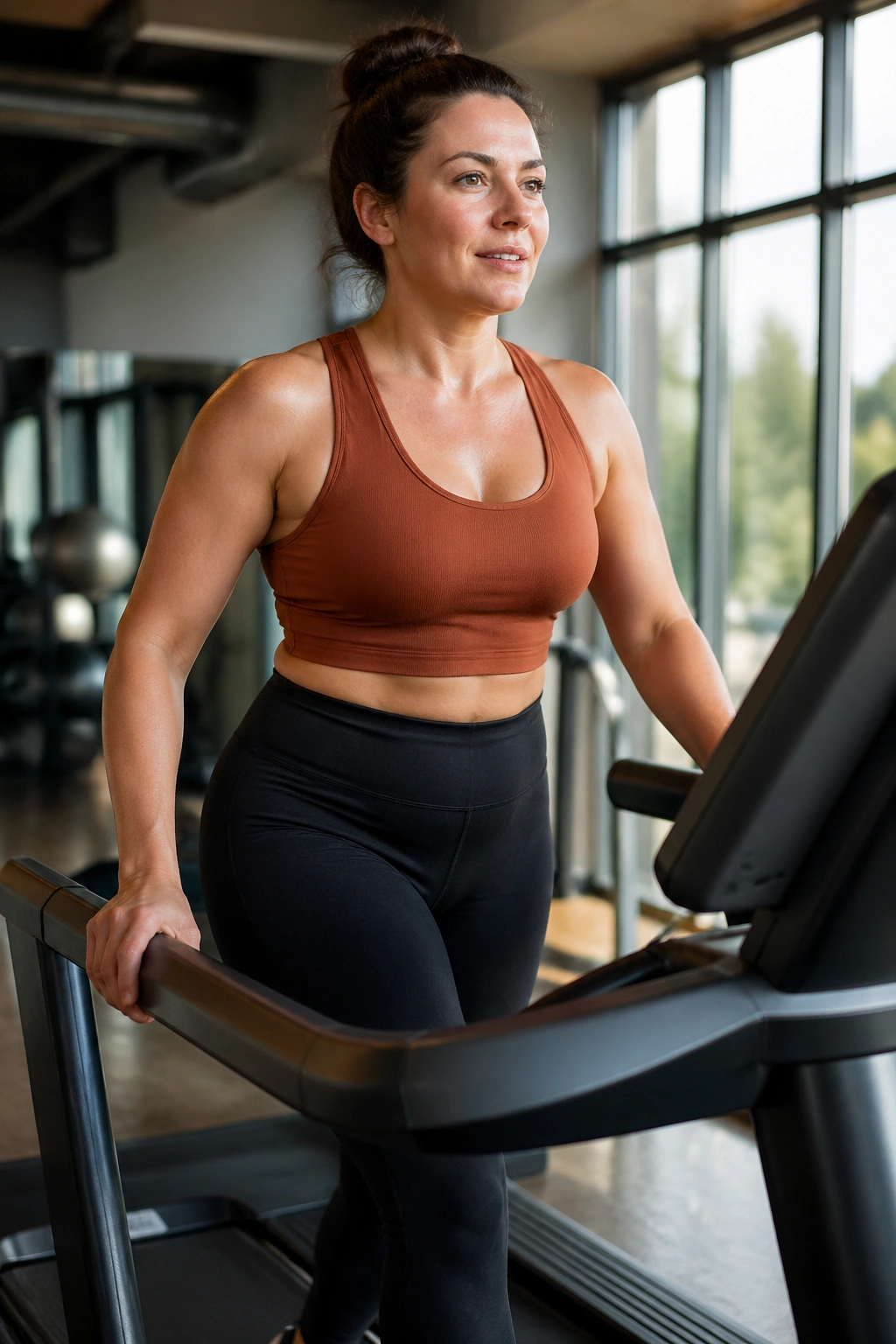
Incline walking is the workout I’d put near the top of the list for almost anyone dealing with stubborn midsection weight and a stressed-out system. It looks plain. That’s the point. You can do it without crushing your joints, and you can keep the effort steady enough that your body doesn’t act like you’ve declared war on it.
A simple session is 20 to 40 minutes on a treadmill at a 4 to 8 percent incline, with a pace that makes you breathe a little harder but still lets you talk in short sentences. Outdoors, a hill works just as well. If your goal is fat loss support rather than performance, that kind of repeatable, moderate effort is gold.
How to set the pace
- Start with 5 minutes on a flat grade to warm up.
- Move to a moderate incline for 15 to 25 minutes.
- Keep your hands off the rails unless you truly need balance.
- Finish with 3 to 5 minutes of slower walking.
Walk this way after dinner if blood sugar tends to swing, or use it on days when you’re not up for a more aggressive session. That after-meal walk is boring in the best possible way. It helps.
Tip: If you leave the treadmill feeling like you could have done another ten minutes, you nailed it.
2. Dumbbell Strength Circuit for Hormonal Weight Gain
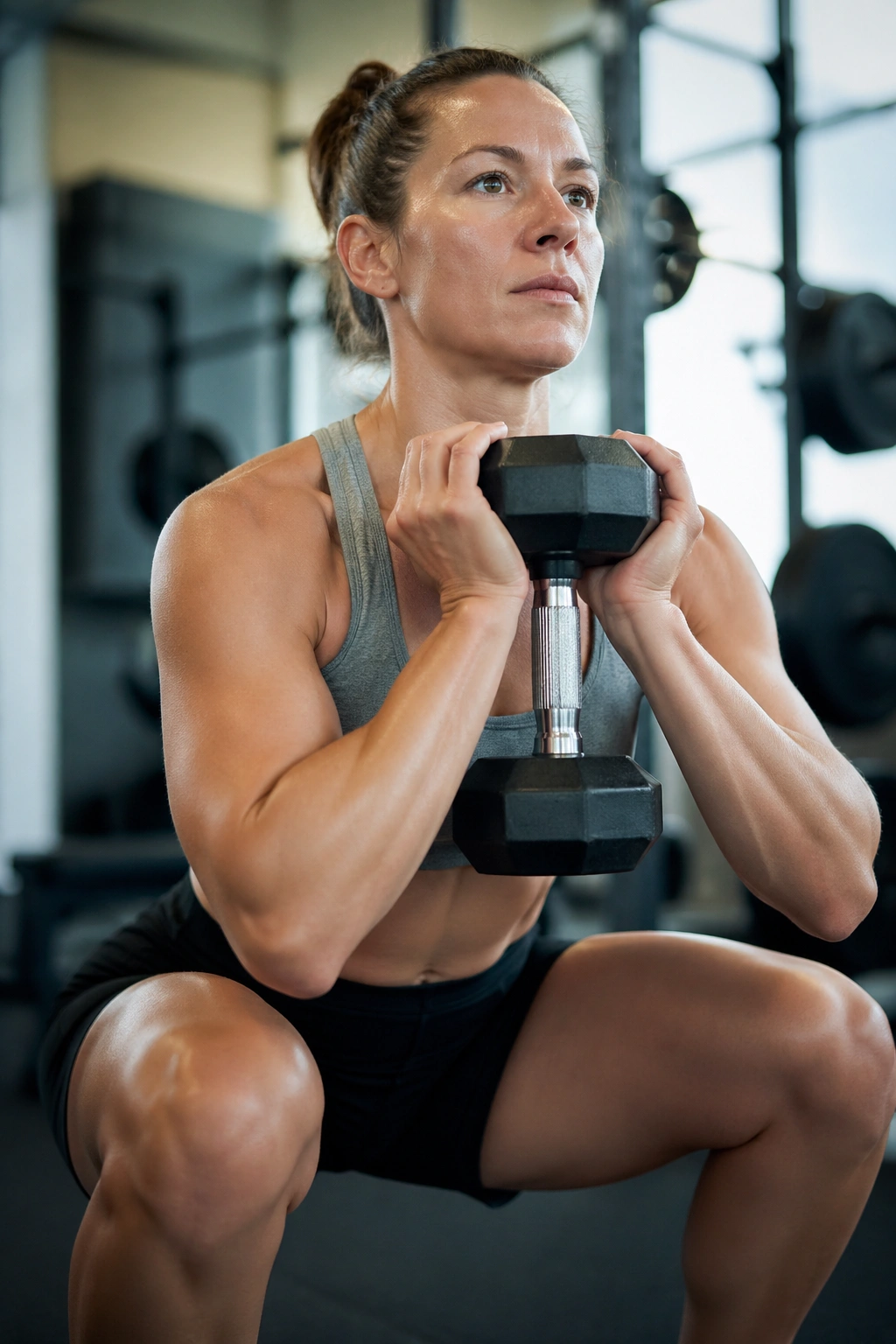
Strength training is where a lot of people get timid, and I think that’s a mistake. Hormonal weight gain often comes with some muscle loss, lower daily movement, or both, and dumbbells are a clean way to push back without turning every workout into a punishment session.
Try a 3-round circuit of goblet squats, one-arm rows, Romanian deadlifts, and overhead presses. Use a weight that makes the last two reps feel honest but still crisp. Aim for 8 to 12 reps per move, then rest 60 to 90 seconds between rounds. That’s enough to build and preserve muscle without needing to crawl out of the gym.
The 4-move circuit
- Goblet squat: 8 to 12 reps
- One-arm dumbbell row: 8 to 12 reps per side
- Romanian deadlift: 8 to 10 reps
- Overhead press: 8 to 10 reps
The reason this works is simple: more lean muscle means your body has more tissue doing useful work, and useful tissue tends to help with insulin sensitivity and daily calorie use. No magic. Just physiology being boring and helpful.
Do not chase total exhaustion here. Leave one or two reps in the tank, and you’ll recover better. That matters more than bragging rights.
3. Bike Intervals for Short, Hard Effort
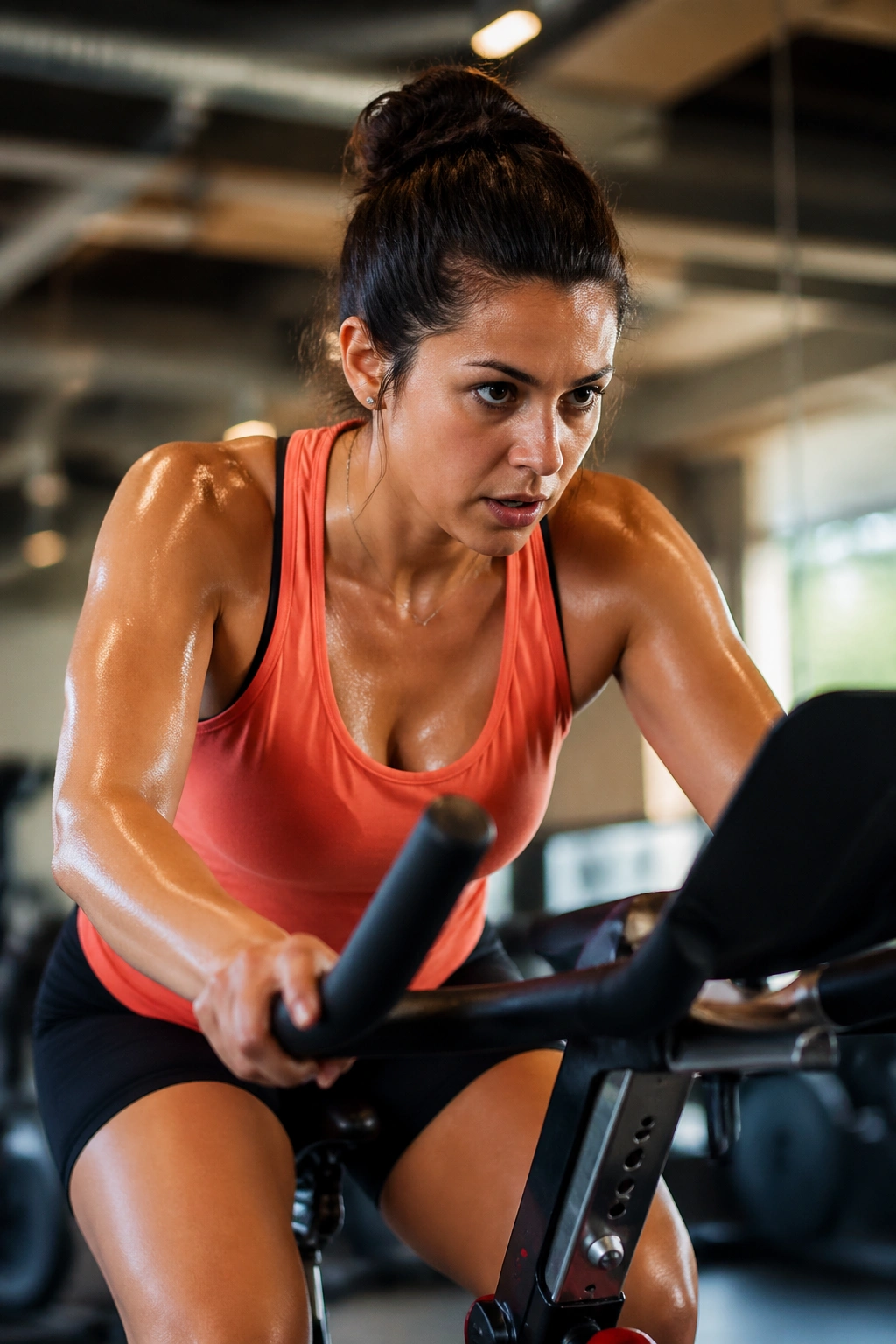
If running makes your joints grumpy or your appetite spike like a rocket, the stationary bike is a smarter tool. It gives you a hard interval option without the pounding, and that’s a relief for a lot of bodies that have already been through enough.
A solid interval session is 6 to 10 rounds of 20 seconds hard and 100 seconds easy, or 30 seconds hard and 90 seconds easy if you’re a little more conditioned. Add 5 minutes of easy spinning at the start and end. Hard means hard, but not reckless. You should be breathing fast by the end of the work interval, not flailing around like you’re escaping a fire.
The trick is to keep the effort sharp and short. That’s the whole point. You get the metabolic hit without dragging the session out long enough to flatten you.
If you want a nice rule of thumb, use a resistance level that lets your cadence stay smooth on the easy parts and drops noticeably on the hard parts. If your knees start talking back, lower resistance first, not your effort quality.
4. Dead Bug and Plank Work for a Stronger Midsection
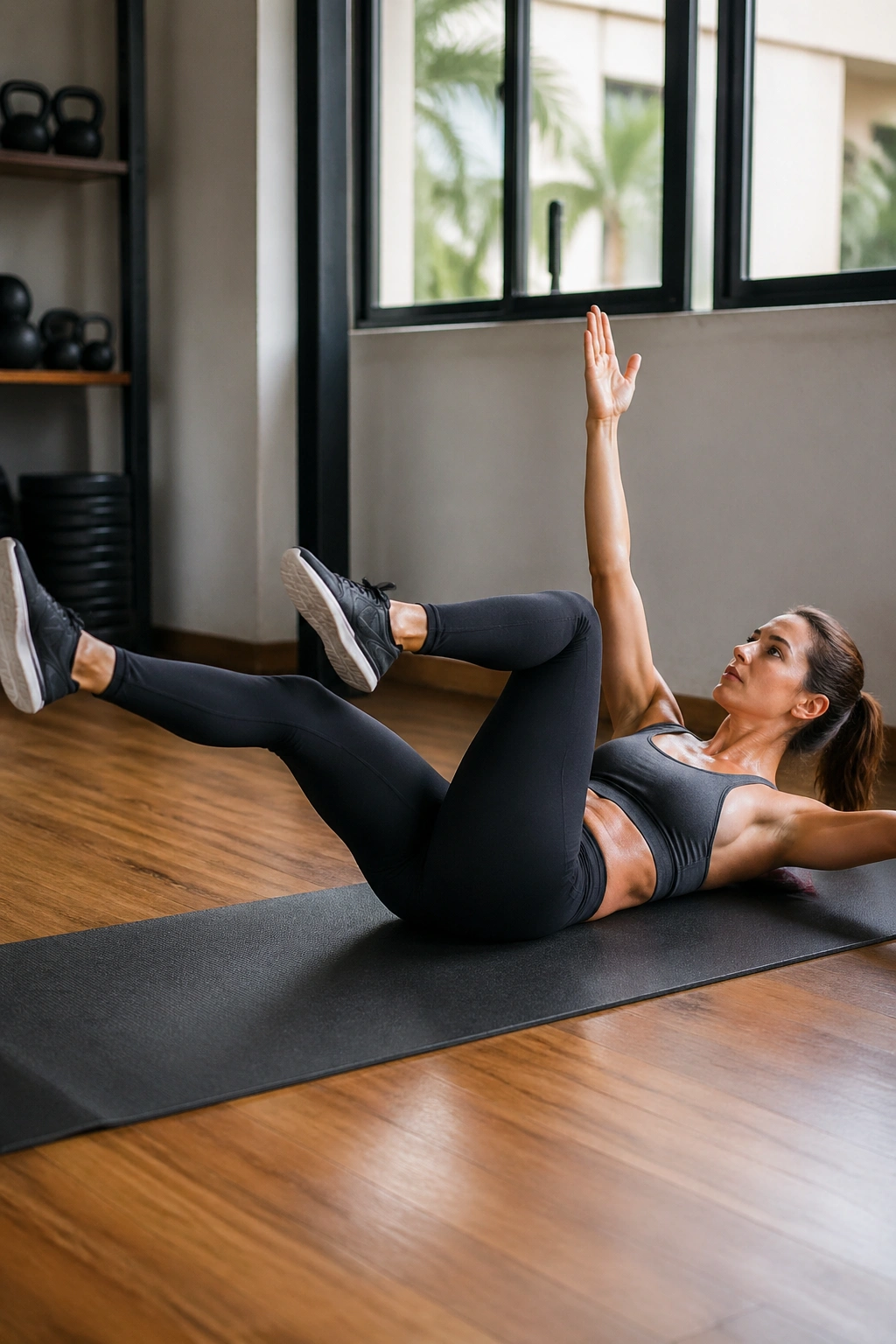
Why put core work in a belly-fat article at all? Because a strong core won’t burn fat off the waist by itself, but it can make your midsection look and feel tighter by improving how you hold yourself, breathe, and stabilize under load.
A good starter sequence is dead bugs for 3 sets of 6 to 10 reps per side, then forearm planks for 20 to 40 seconds, then side planks for 15 to 30 seconds per side. That mix hits the deep core, the front line, and the side stabilizers without the neck-crunching nonsense that so many ab workouts lean on.
What a solid rep feels like
- Your lower back stays heavy on the floor during dead bugs.
- Your ribs don’t flare up.
- Your hips stay level in the side plank.
- You can breathe without holding your breath for dear life.
This is especially useful if your belly feels more pronounced because of posture, bloating, or pelvic tilt layered on top of fat gain. Those are not the same thing, and it helps to treat them differently.
Skip the thousand-rep ab nonsense. Do clean reps instead.
5. Kettlebell Deadlifts and Swings
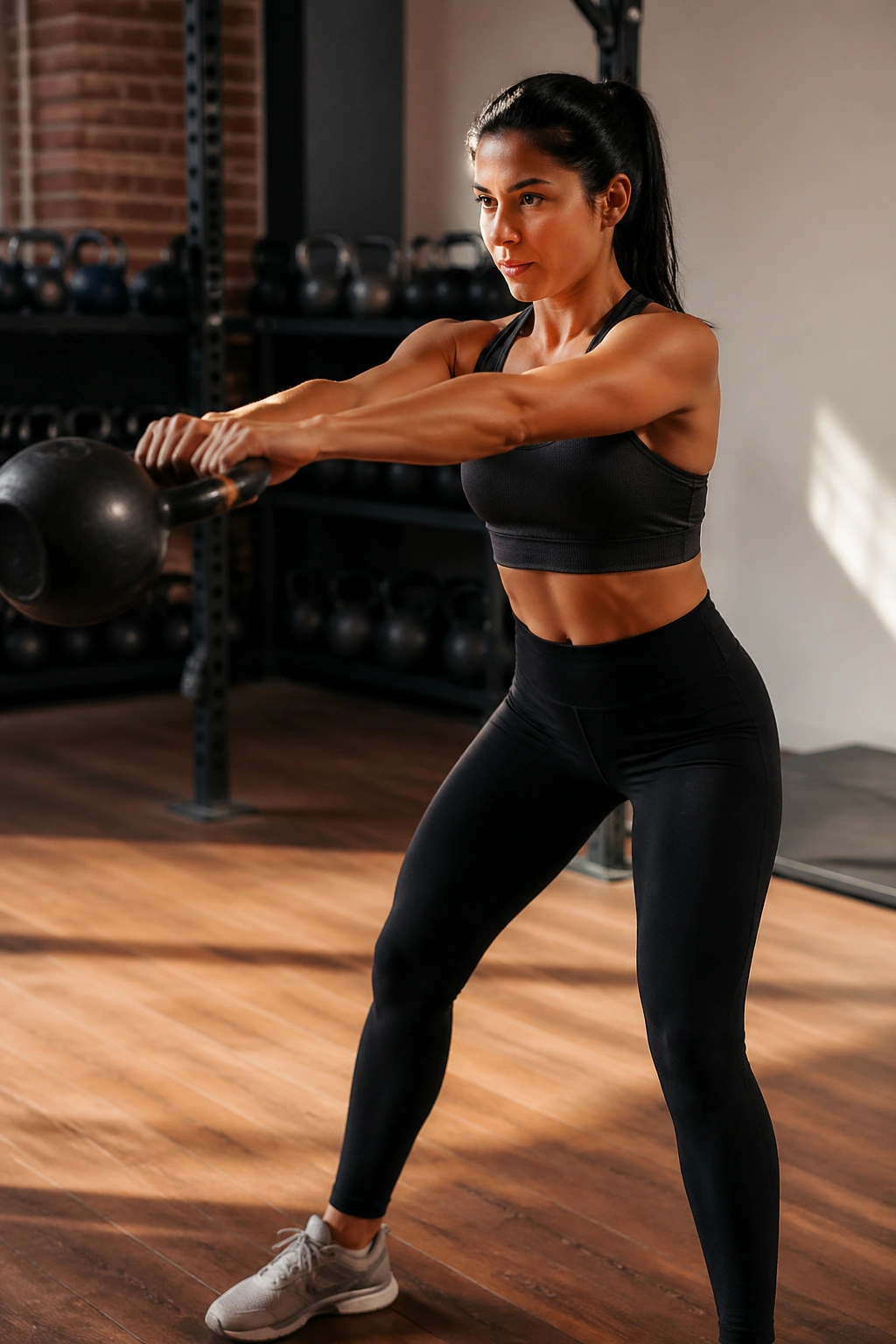
A kettlebell deadlift looks almost too easy until you feel your glutes and hamstrings wake up. Then it makes perfect sense. This is one of my favorite pairs for hormonal belly fat because it loads some of the biggest muscles in the body and asks for real power without the joint pounding you get from jumping.
Start with 5 rounds of 8 kettlebell deadlifts followed by 10 kettlebell swings, resting 60 to 90 seconds between rounds. If swings are new to you, spend the first couple of sessions on deadlifts only. A sloppy swing is not a rite of passage. It’s a back complaint waiting to happen.
How to hinge without cheating
- Keep your shins nearly vertical.
- Send your hips back like you’re closing a car door with your backside.
- Let the bell float on the swing; do not lift it with your arms.
- Stop the set when your snap turns into a squat.
The deadlift builds the pattern. The swing adds speed. Together, they give you a workout that feels athletic without needing a full hour. That’s a useful trade.
My bias is to keep the bell moderate and the reps clean. Heavy and ugly is a bad bargain.
6. Step-Ups That Light Up the Legs
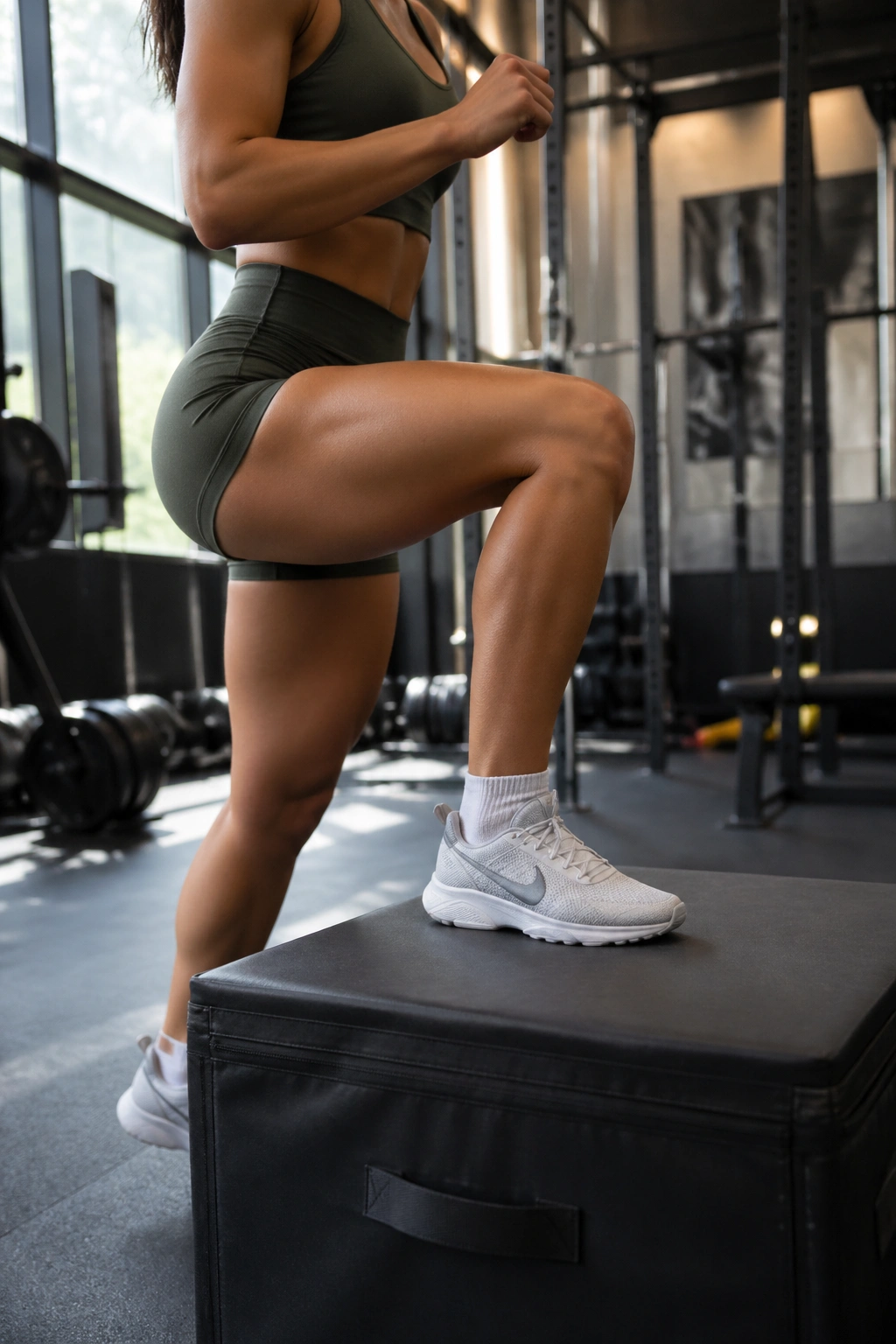
A 12-inch box can humble people faster than they expect. Step-ups look plain, but they hit the glutes, quads, and heart rate at the same time, which is exactly why they belong here.
Use a sturdy bench, box, or stair that puts your working thigh somewhere around parallel or a little below. Do 3 sets of 8 to 12 reps per leg. Hold dumbbells once bodyweight feels too easy, but only after your balance is solid. The lead foot should do the work; the trailing foot is there for balance, not a shove upward.
This is one of those moves that reveals asymmetry fast. One leg usually feels steadier, and that’s useful information, not a failure. Train the weaker side with care and let both sides catch up over time.
What to watch for
- Keep your whole foot on the step.
- Drive through the heel and midfoot.
- Stay tall through your torso.
- Lower under control instead of dropping.
If your knees complain, lower the step first. Most people try to make the movement fancier when they should make it simpler.
7. Farmer’s Carries for a Braced Waist
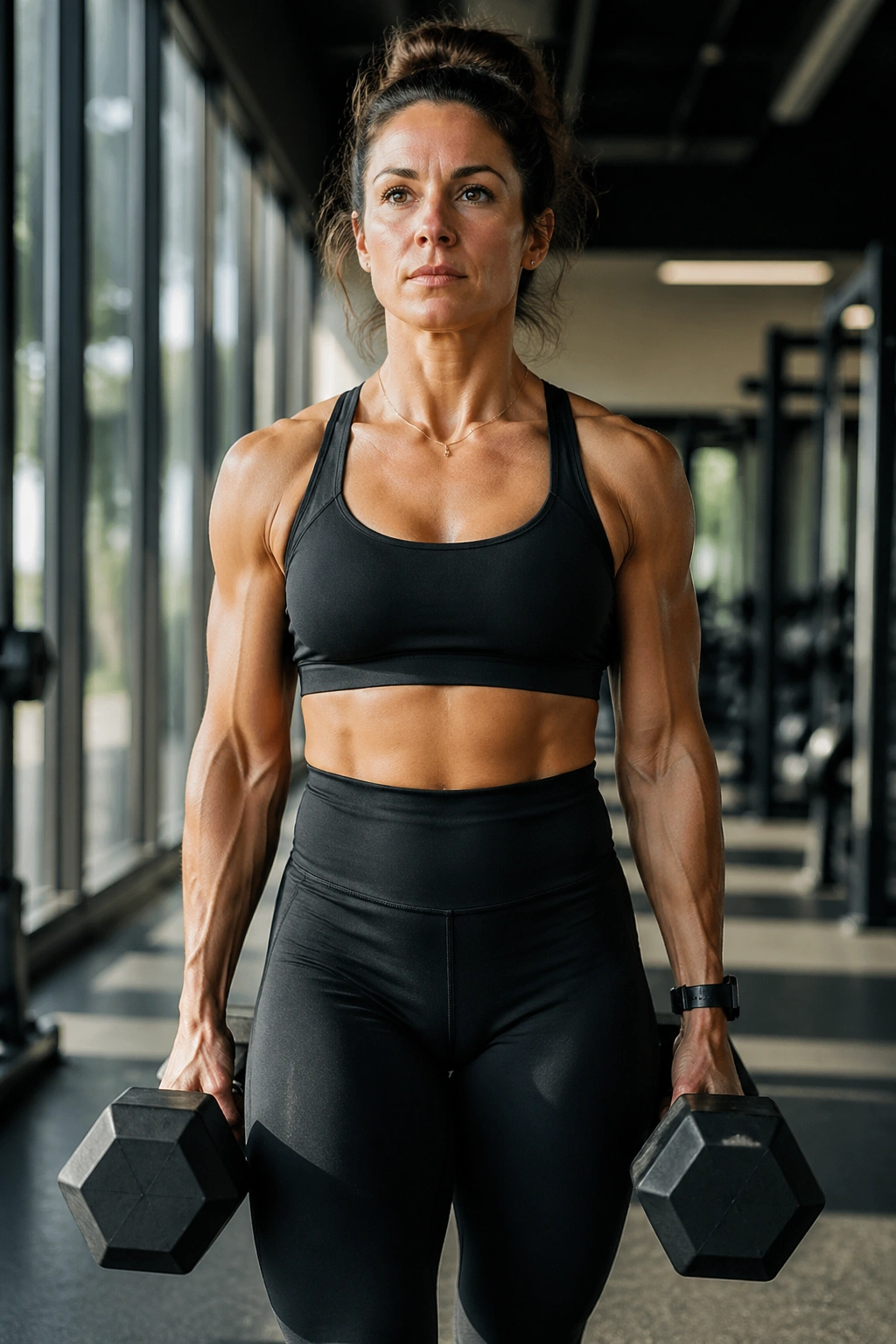
Unlike crunches, farmer’s carries make the core earn its keep while the rest of the body has to stay organized. That’s why I like them so much for waistline work. They teach you to stand tall, breathe under load, and stop leaking energy through your middle.
Grab two heavy dumbbells or kettlebells and walk for 30 to 60 seconds at a time. Do 4 to 6 rounds with 60 seconds of rest between carries. If you want a tougher variation, use a single weight on one side for a suitcase carry and switch sides each round. That one is sneaky. It pulls your torso off-center and forces the obliques to do real work.
A carry session does not look glamorous. It does look useful.
Quick carry rules
- Keep your ribs stacked over your pelvis.
- Don’t let your shoulders creep into your ears.
- Walk in controlled steps, not a wobbling shuffle.
- Choose a load that challenges your posture before it ruins it.
This is one of the best options if you sit a lot. It turns “standing up straight” into training, which is a lovely little trick.
8. Rowing Intervals That Use the Whole Body
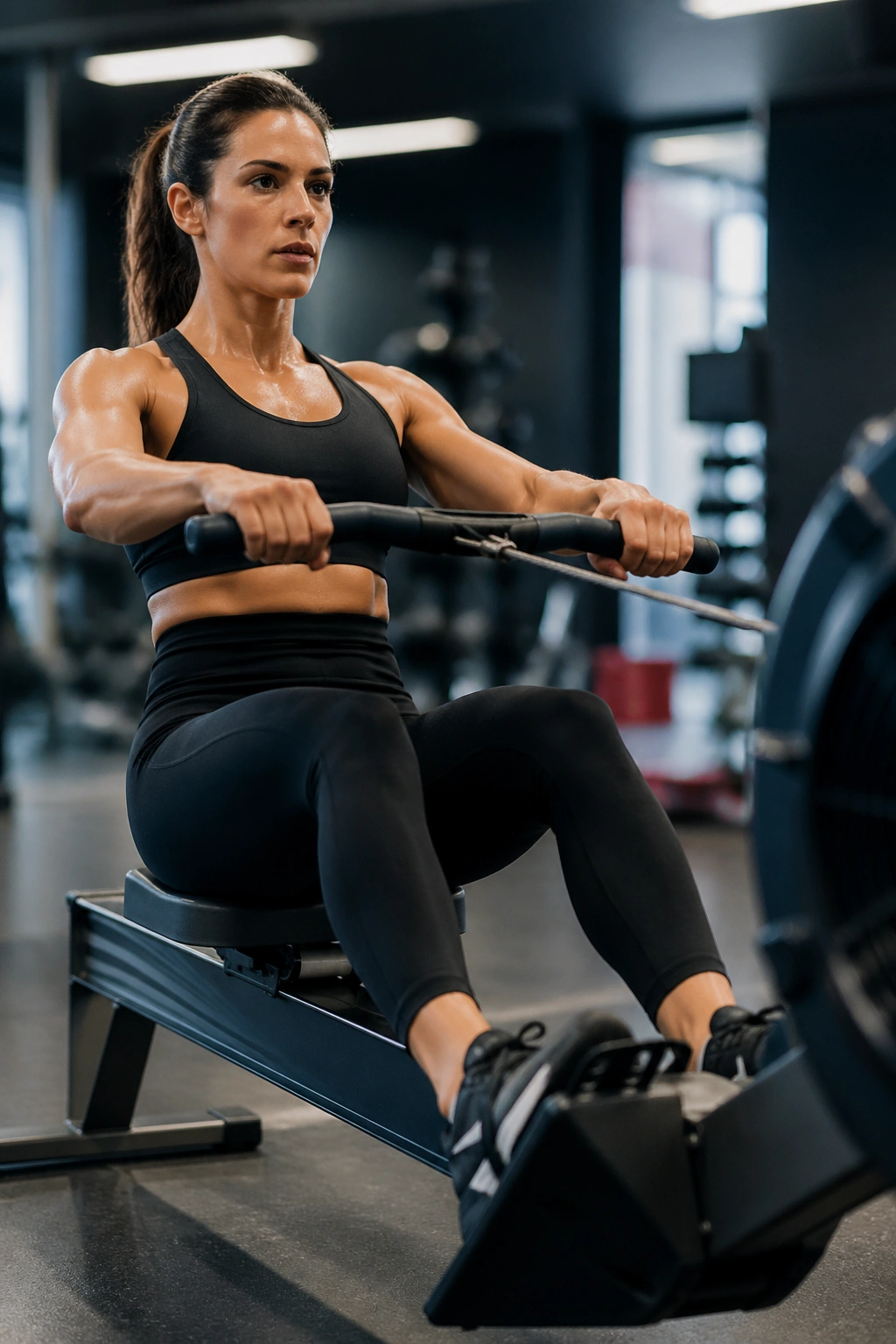
The rower is the closest thing to a full-body rhythm test. If you do it right, your legs drive first, your hips finish the stroke, and your arms only help at the end. If you do it wrong, it turns into an expensive back exercise. Worth learning the difference.
Try 8 rounds of 45 seconds hard and 75 seconds easy, or 5 rounds of 500 meters with a couple minutes of rest between efforts. Keep the stroke smooth. You want power, not chaos. A good row leaves you breathing hard and feeling like your legs did the heavy lifting.
Stroke order matters
- Push with the legs first.
- Swing the torso open second.
- Pull with the arms last.
- On the return, arms go first, then torso, then legs.
That order keeps the machine from eating your lower back. It also makes the workout far more efficient, which matters when you want a real training effect in a short window.
If your gym has a rower and you keep ignoring it, you’re probably leaving a lot of bang for the buck on the table.
9. Split Squats and the Ladder Method
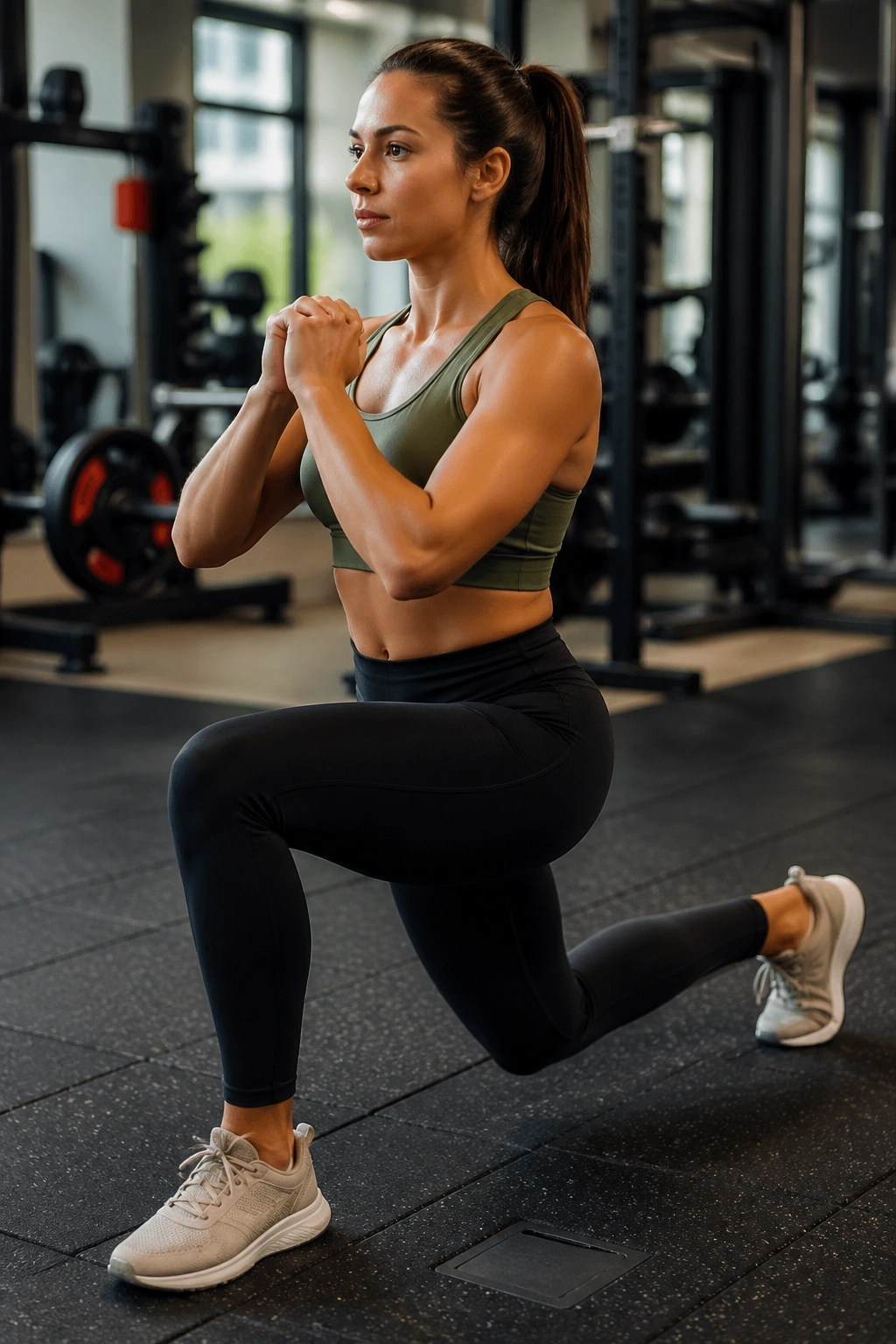
A split squat looks simple until you try the second leg. Then your balance, hip mobility, and patience all show up at once. That’s why it’s such a useful move for midsection-focused fat loss work: it burns a lot of energy, builds single-leg strength, and exposes the little imbalances that hide inside ordinary squats.
Use the ladder format: 6 reps, 8 reps, 10 reps, 8 reps, 6 reps per leg, resting 45 to 60 seconds between sets. Start with bodyweight if needed. Add dumbbells once the movement feels stable and you can keep your front foot planted without rocking around.
The rear foot can rest on the floor or sit elevated on a bench if you want a harder version. I would not rush that. The plain split squat is plenty ugly in the beginning.
It also has a nice practical bonus. You climb stairs better. You get up from chairs better. Small win, but a real one.
10. Shadow Boxing Rounds That Build Cardio
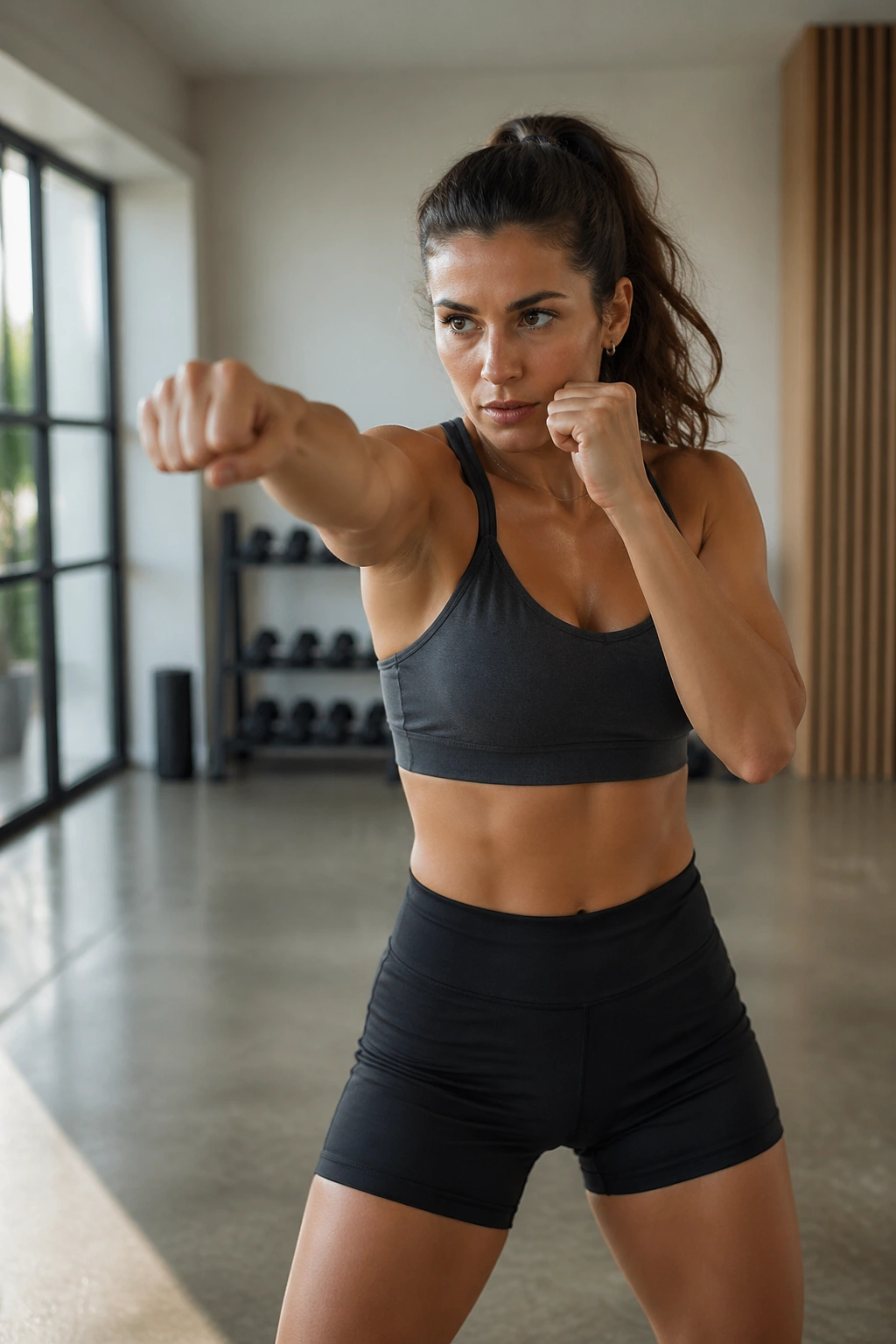
Shadow boxing earns its place because it feels like motion, not punishment. You’re moving your feet, rotating your trunk, snapping your arms, and keeping your brain awake at the same time. That mix can be a relief if you’re tired of machines.
Do 6 to 10 rounds of 2 minutes on and 1 minute off. Throw simple combinations like jab-cross, jab-cross-hook, or jab-cross-slip-cross. Keep your shoulders loose and your hands light. You’re not trying to destroy a heavy bag here. You’re trying to stay quick, coordinated, and in control.
How to keep the rounds crisp
- Breathe out on the punches.
- Keep the chin tucked.
- Move your feet between combos.
- Relax your jaw and shoulders.
The funny thing about shadow boxing is how sneaky it is. Five minutes can feel harmless. Fifteen minutes later, your heart rate has climbed and your shirt is damp.
It’s also one of the better choices for days when stress is high. Rhythmic movement can feel a lot better than another punishing interval session.
11. Glute Bridge Marches and Hip Thrusts
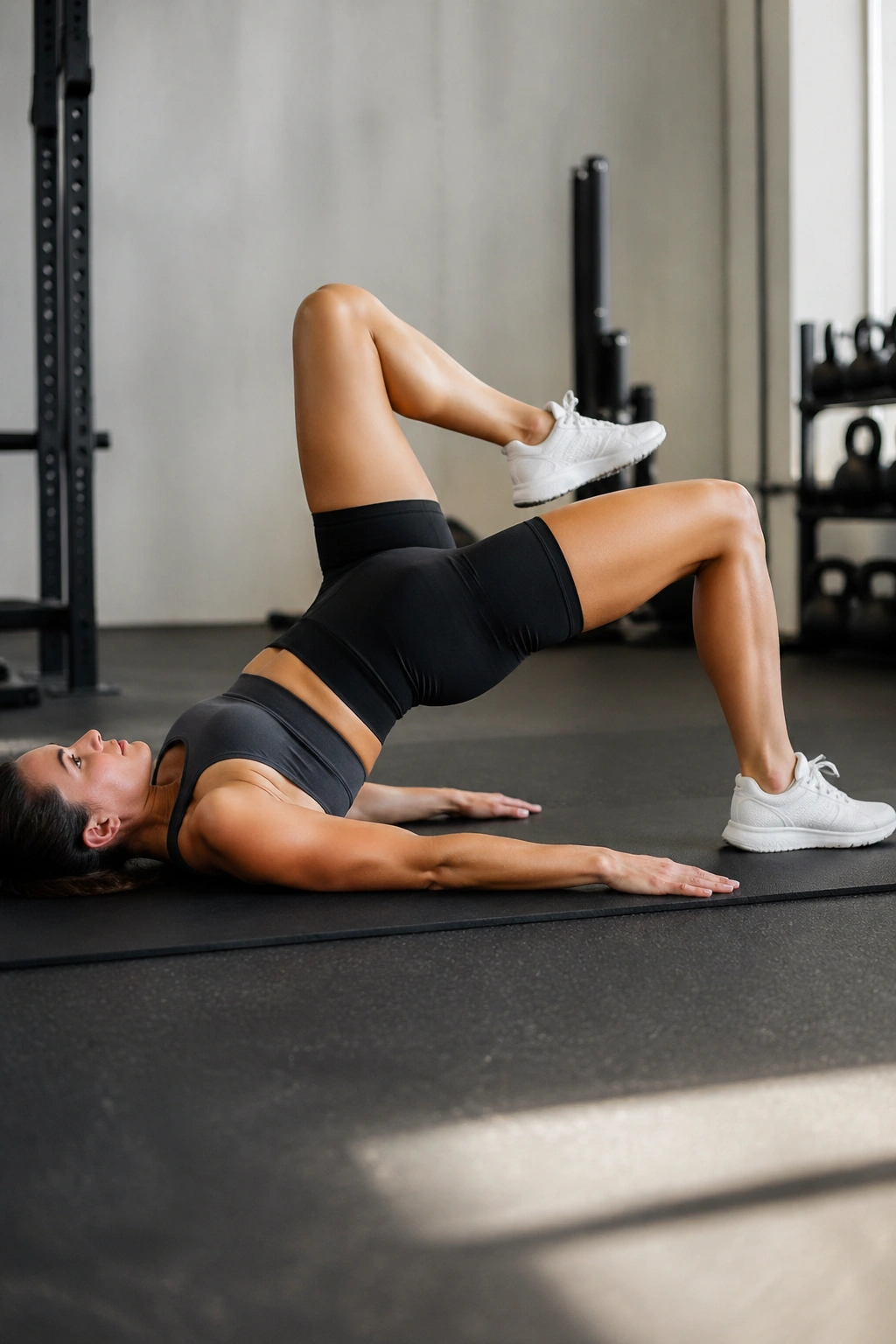
If squats make your lower back complain, start on the floor. Glute bridge work lets you train the hips hard without asking your spine to carry the whole mood.
A basic version is 3 sets of 12 glute bridges, pausing 2 seconds at the top of each rep. A tougher version is the glute bridge march, where you hold the bridge and alternate lifting one knee at a time for 8 to 10 reps per side. If you’ve got a bench, hip thrusts give you even more range and are a strong choice once the basics feel easy.
What to feel
- A squeeze in the glutes, not the low back.
- A stable rib cage.
- Hips that stay level during the march.
- A clean pause at the top.
People underrate this pattern because it looks so simple. That’s silly. Strong glutes help pelvic position, walking mechanics, and lower-body strength, and those things matter when the goal is to stay active enough for long enough to lose fat.
I’d pick this over flashy ab work almost every time.
12. Sled Pushes for Low-Impact Power
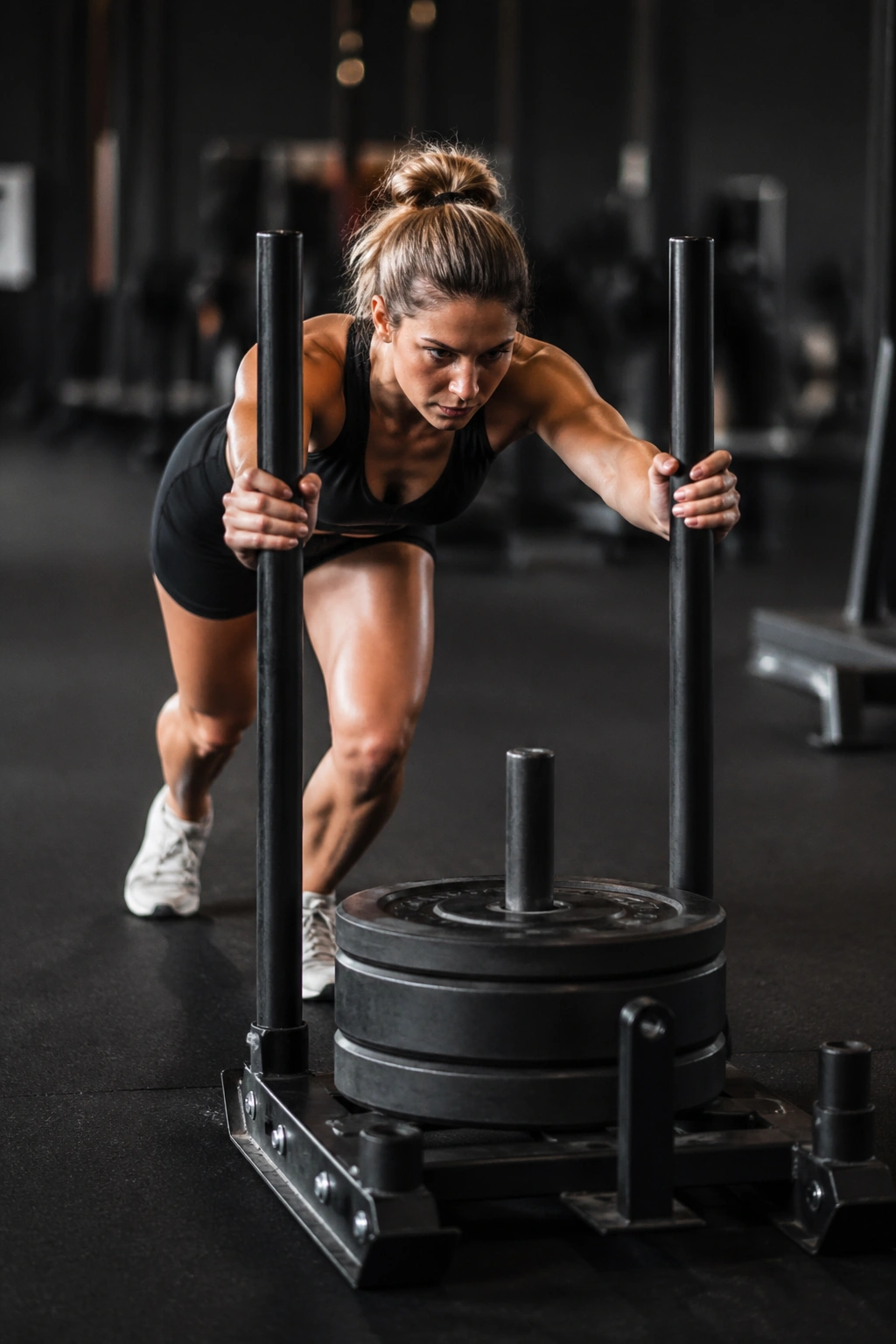
Sled work feels old-school because it is, and that’s part of the appeal. There’s no bounce, no landing, and very little soreness compared with a lot of other hard conditioning tools. You push, breathe, recover, and do it again.
Use 6 to 10 pushes of 15 to 20 meters or 20 to 30 seconds each. Rest long enough to feel mostly ready before the next rep, usually 60 to 90 seconds. Start light enough that you can keep your body angle stable and the speed only drops a little by the end of each push.
This is one of the nicest conditioning choices for people who feel beat up from jumping or running. It gets the legs and lungs working without the same eccentric damage that leaves people sore for days.
Push cues that matter
- Keep your torso low and firm.
- Drive through short, fast steps.
- Don’t let your hips rise too fast.
- Stop the set if your form turns into a wobble.
If your gym has a sled, use it. If it does not, don’t try to fake one with something sketchy on a slippery floor. Just move to another piece of the program and keep the training week honest.
13. Stability Ball Rollouts and Side Planks
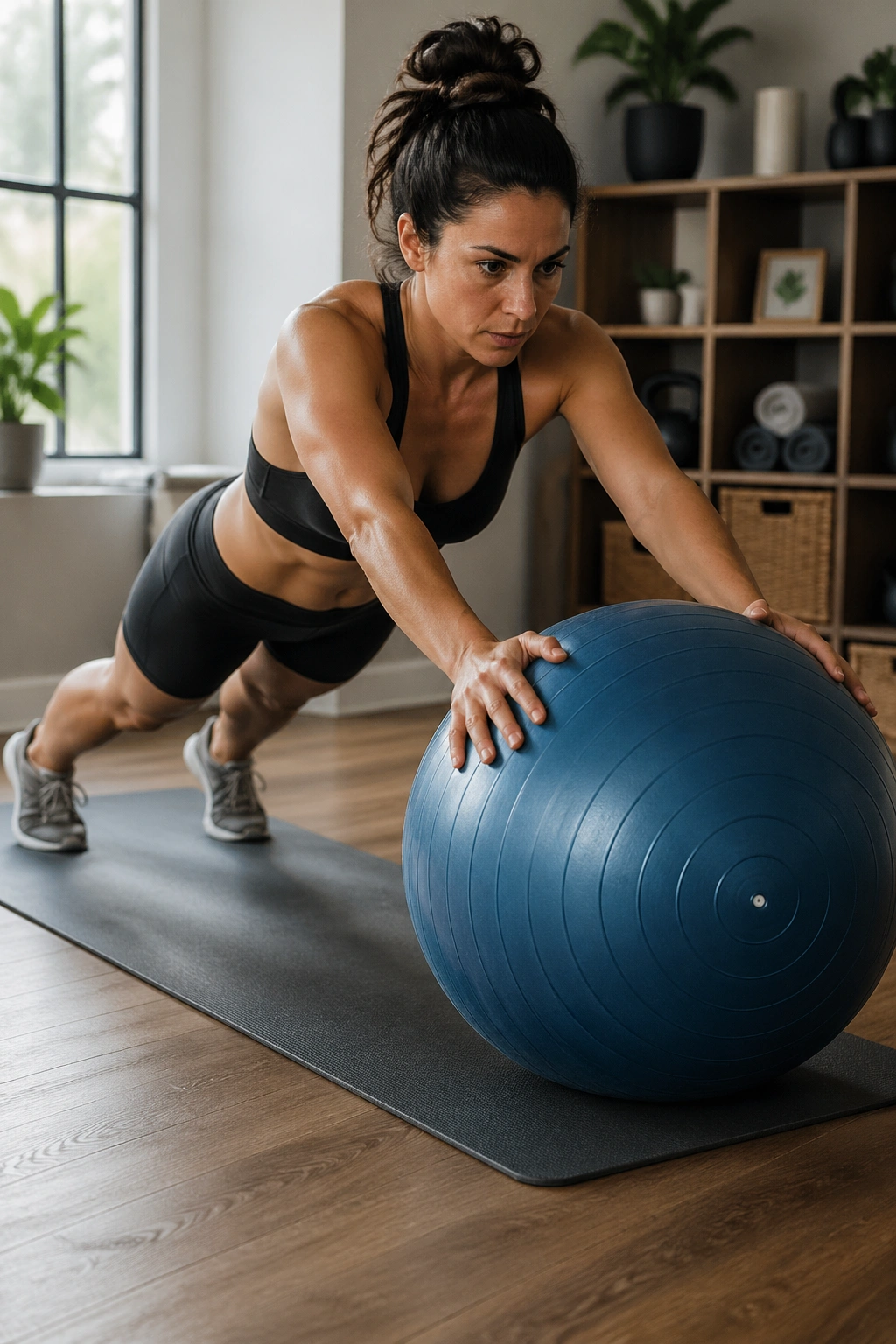
Most people train their core backward. They chase endless crunches when the real job of the midsection is to keep the ribs from flaring, the spine from collapsing, and the body from twisting when it should stay steady.
A stability ball rollout trains anti-extension — meaning your abs fight against your lower back arching too much. Do 3 sets of 8 to 12 rollouts, then hold a side plank for 20 to 30 seconds per side, for 2 to 3 rounds. If the rollouts are too much, shorten the range. A smaller rollout with clean control beats a long sloppy one every time.
Common rollout mistakes
- Letting the low back sag.
- Reaching too far on the first try.
- Holding the breath.
- Turning the movement into a shoulder shrug.
The side plank adds lateral strength, which helps the waist stay organized when you walk, carry groceries, or do anything on one leg. That sounds small until your posture starts to change in the mirror.
This is quiet work. It pays off in a way you usually notice before other people do.
14. Mobility Flow for Recovery and Stress
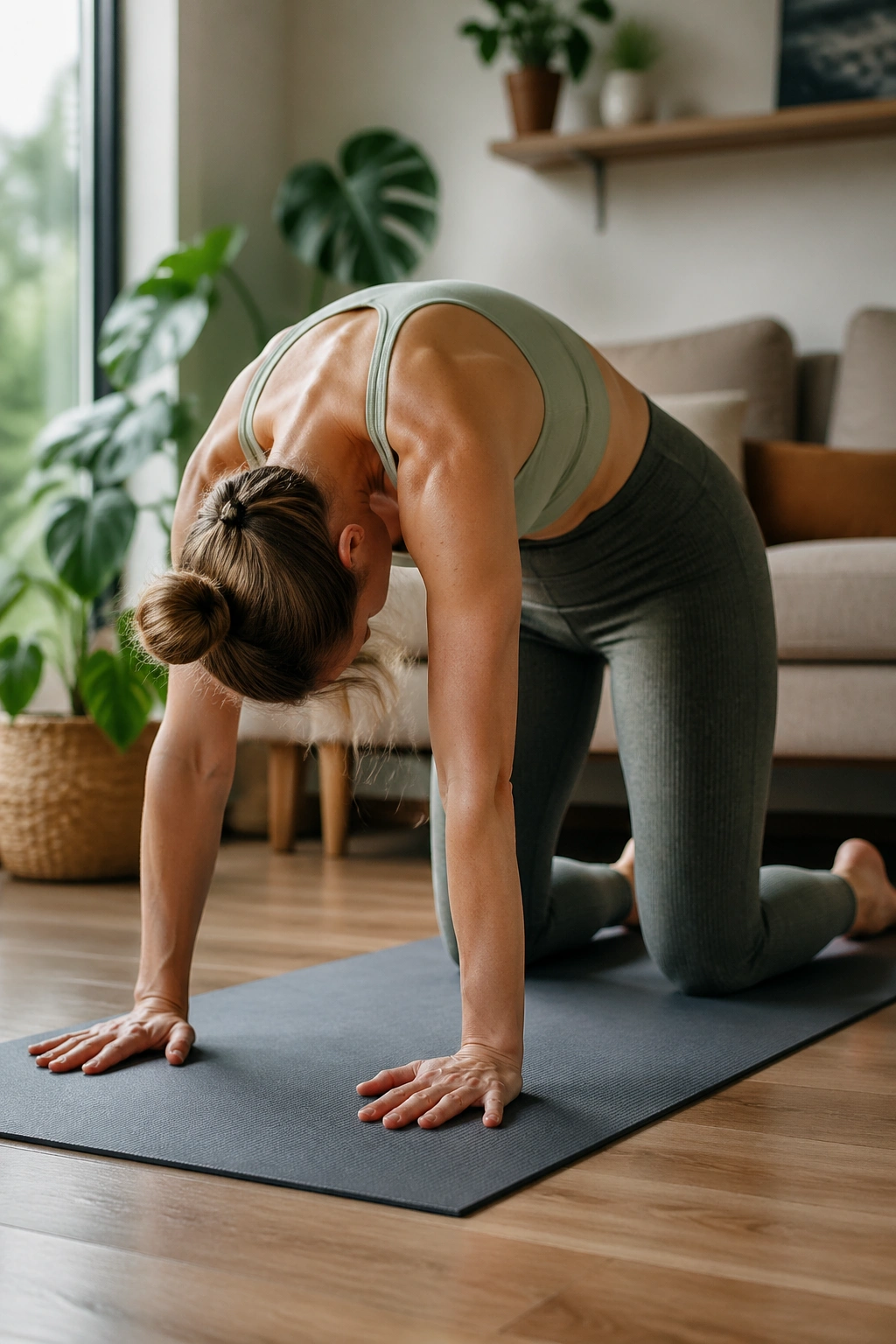
Recovery days are not lazy. They are the thing that lets the harder days keep happening without turning your nervous system into a mess. When hormones, sleep, and stress are already tangled together, a short mobility flow can be a bigger help than another aggressive session.
Spend 10 to 20 minutes on a simple sequence: cat-cow, low lunge, hamstring fold, thoracic rotations, child’s pose, and legs-up-the-wall breathing at the end. Keep the breaths long and slow. If you can make the exhale a little longer than the inhale, even better.
A simple recovery flow
- Cat-cow: 6 to 8 slow reps
- Low lunge: 30 seconds per side
- Hamstring fold: 30 seconds per side
- Thoracic rotation: 5 reps per side
- Legs up the wall: 2 to 5 minutes
The goal here is not to sweat or prove a point. The goal is to come out less tense than when you walked in. If you finish annoyed and drenched, you made it too hard.
I like this piece of the plan because it keeps people from burning out. That alone helps more belly-fat efforts than most people want to admit.
15. The Weekly Full-Body Circuit for Hormonal Weight Gain
The best routine is the one you can repeat for weeks without dreading it.
If you want one workout that ties all of this together, build a 25 to 30 minute full-body circuit around a squat, a hinge, a push, a pull, a carry, and a core drill. That gives you enough total work to matter, enough variety to avoid boredom, and enough structure to keep the session from drifting into random sweating.
A clean version looks like this:
- Goblet squat: 8 reps
- Push-up or incline push-up: 8 to 12 reps
- One-arm dumbbell row: 10 reps per side
- Romanian deadlift: 8 reps
- Farmer’s carry: 30 seconds
- Dead bug: 6 reps per side
Do 3 to 4 rounds, resting 60 to 90 seconds between rounds. If you have less time, do 2 rounds and walk for 15 minutes afterward. That still counts. A lot. Consistency beats perfection every time.
A week could look like this: two strength circuits, two incline walks, one bike or rowing interval day, and one recovery mobility session. That’s enough to move the needle without making your life miserable. It also leaves room for the plain old stuff that matters — sleep, protein, daily steps, and not living on chaos.
The women and men I’ve seen do best with hormonal belly fat don’t chase punishment. They stack repeatable sessions, keep the intensity honest, and stop treating every workout like a test. That is the whole game, and it’s less glamorous than people want, but a lot more useful.
