



Hamstring exercises are the sort of training most people underdo until something starts to feel off. The deadlift stalls at the knee. Sprinting feels flat. Your legs look strong from the front and stubborn from the back. Annoying stuff.
The hamstrings do more than bend the knee. They help extend the hip, slow the lower leg during running, and protect the knee when you cut, jump, or land hard. That’s why a good program doesn’t lean on one tired move forever. It needs hinges, curls, unilateral work, and a few ugly eccentric exercises that make the back of your legs wake up and complain.
I’ve always liked hamstring training because it’s honest. Light weights do not fool anyone. If your hips shoot up, your back rounds, or your curls turn into a half-rep shuffle, the hamstrings will let you know fast. That feedback is useful. Brutal, sometimes. Useful, always.
Pick a few of these, not all of them. One heavy hinge, one curl, one eccentric, and one single-leg movement will do more for stronger legs than ten random sets done without much thought. Then build from there.
1. Romanian Deadlift
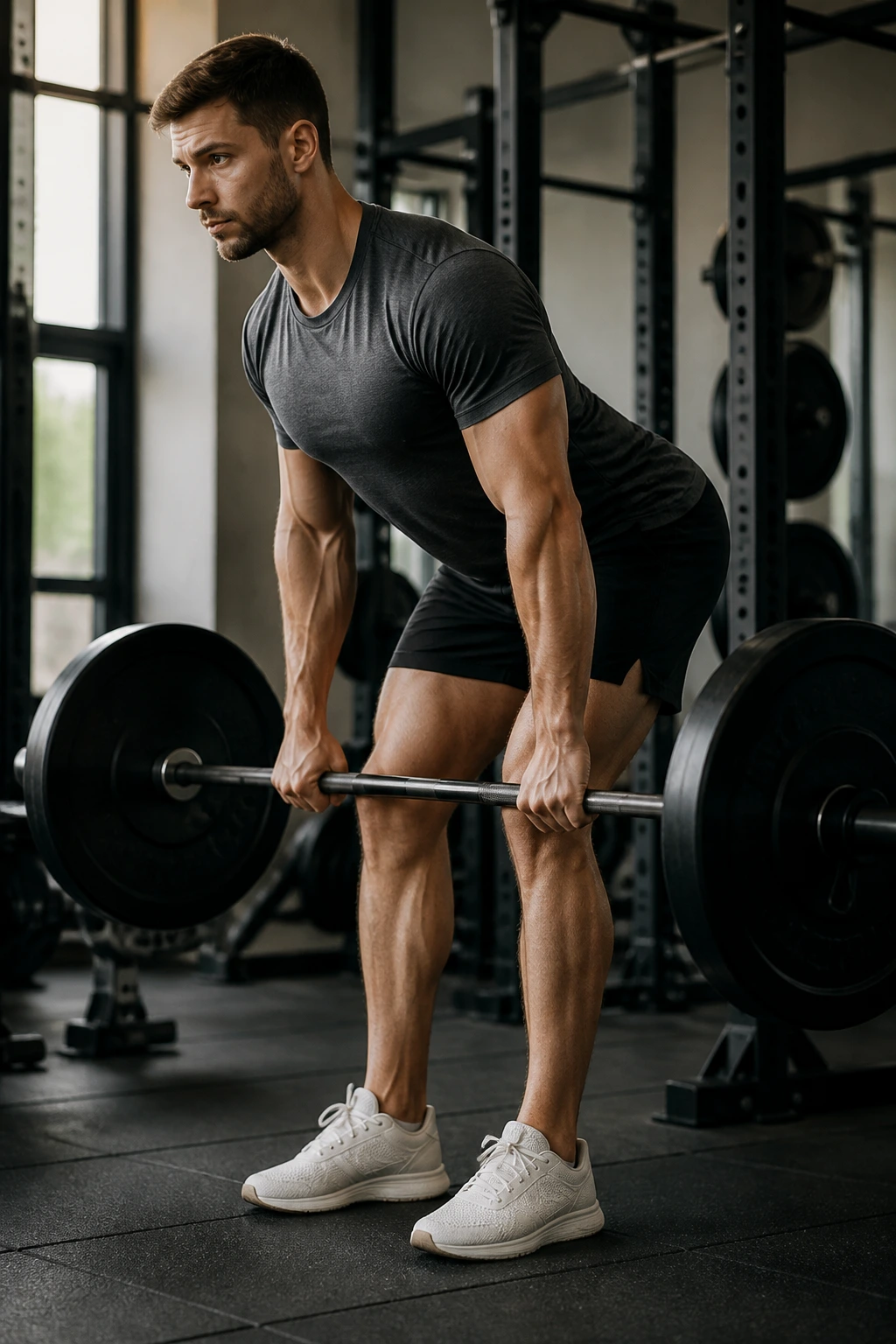
The Romanian deadlift is the workhorse of hamstring training, and it earns that status the hard way. You load the hips, keep the knees soft, and push them back until the hamstrings stretch like tight bands. Then you stand up by driving the floor away and squeezing the glutes at the top.
Why it belongs in almost every lower-body program
The beauty of this lift is the range of motion. You do not need to chase the floor. You need to keep the bar close, stop when your back wants to round, and feel the stretch in the back of the thigh. That stretch matters more than ego weight.
Use 3 to 5 sets of 5 to 8 reps if you want strength, or 3 sets of 8 to 10 for a little more muscle-building work. Keep the descent slow, about 2 to 3 seconds, and pause for a beat near mid-shin if you tend to rush.
A lot of people turn this into a squat. Don’t. Your shins should stay almost vertical, and the bar should skim your thighs and legs on the way down and up.
2. Dumbbell Romanian Deadlift
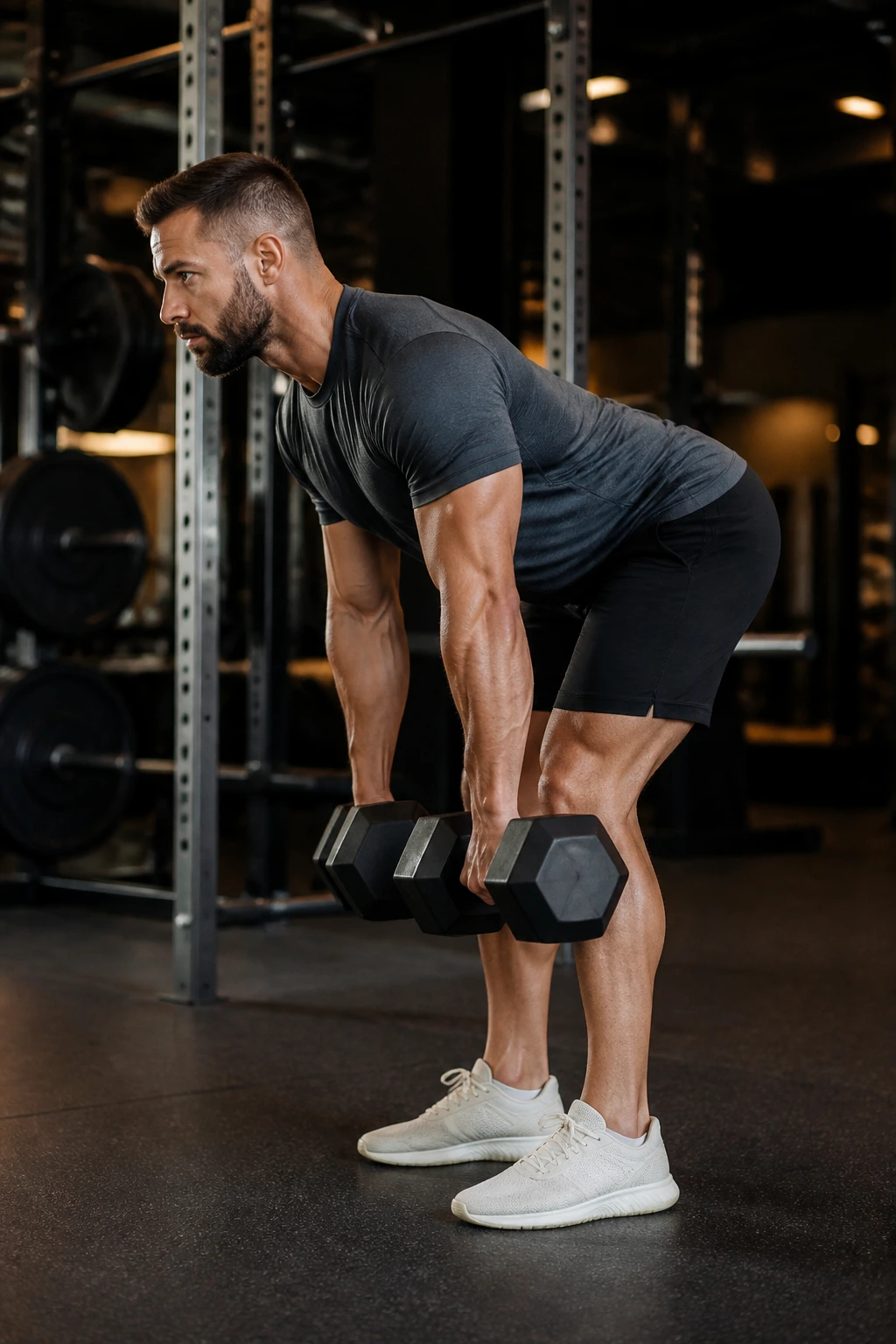
Why does the dumbbell version work so well? Because it feels easier to learn, and that matters more than people admit. Two dumbbells at your sides make the hinge path feel natural, and the load is often friendlier on the lower back than a barbell for beginners.
How to get the most from it
Stand tall, brace your midsection, and let the dumbbells drift down the front of your legs. If they move away from your body, the hamstrings get less of the work and your back gets more of the blame. That is not the trade you want.
I like this version for home gyms, busy commercial gyms, and anyone who wants cleaner setup with less fuss. Three sets of 8 to 12 is a solid range here. Slow down on the lowering phase, then stand up like you mean it. Not fast. Just controlled.
Pro tip: If your grip gives out before your hamstrings do, use straps on the later sets and keep the target where it belongs.
3. Single-Leg Romanian Deadlift
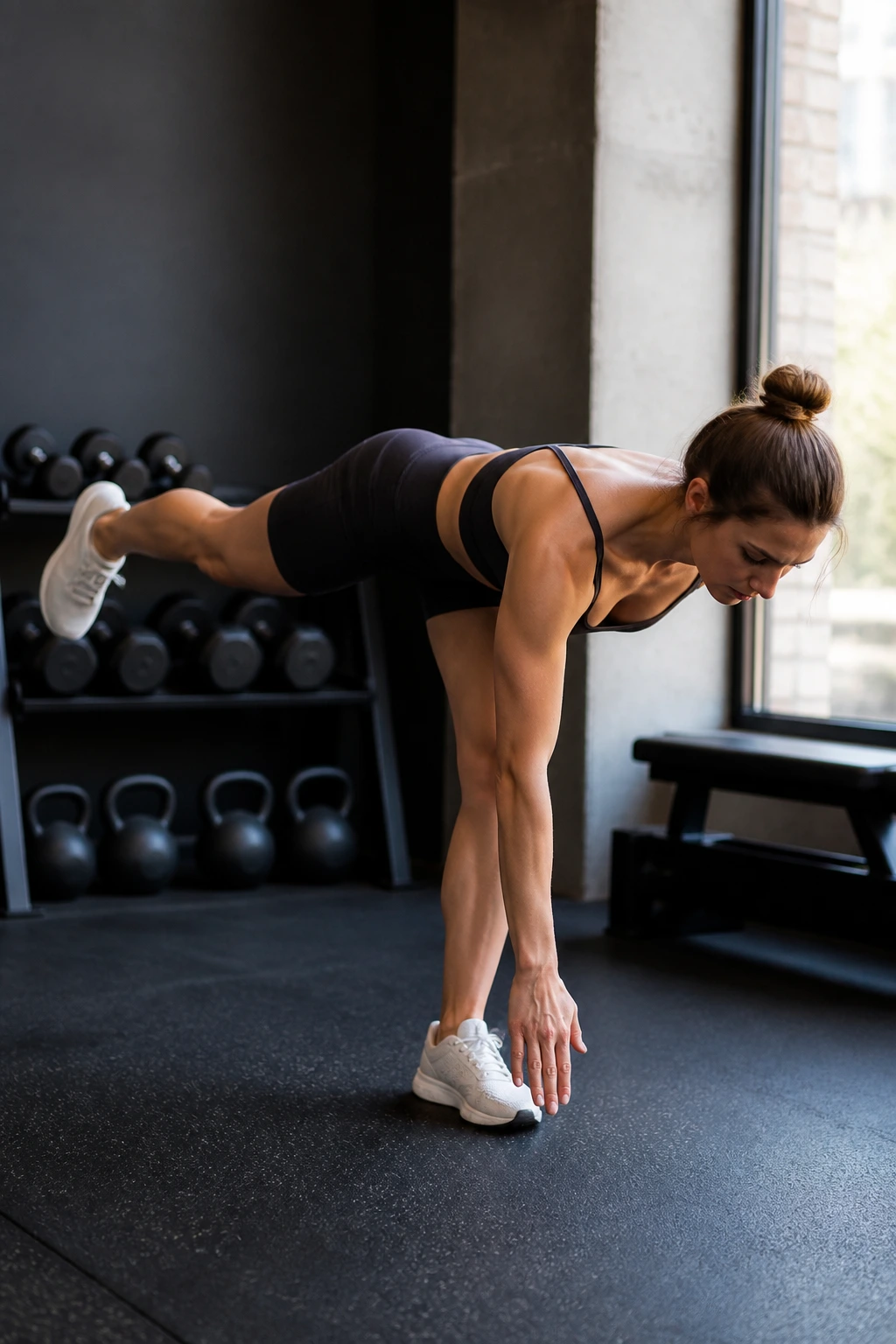
A single-leg RDL looks simple until you try to keep your hips square. Then it gets real. The standing leg has to stabilize, the hamstring has to control the hip hinge, and your foot has to stay planted instead of wobbling around like a loose shopping cart wheel.
This is one of the best hamstring exercises for finding side-to-side differences. The left leg often moves a little differently from the right. You can ignore that for a while, or you can train it and clean it up.
What to watch for
- Keep the free leg long behind you like a counterweight.
- Let the back toes point down, not out to the side.
- Stop when your torso and lifted leg feel long and level.
- Use a wall, rack, or fingertips on a bench if balance gets messy.
I’d rather see 6 clean reps per side than 12 shaky ones. Clean reps build better control. Shaky ones build excuses.
4. Stiff-Leg Deadlift
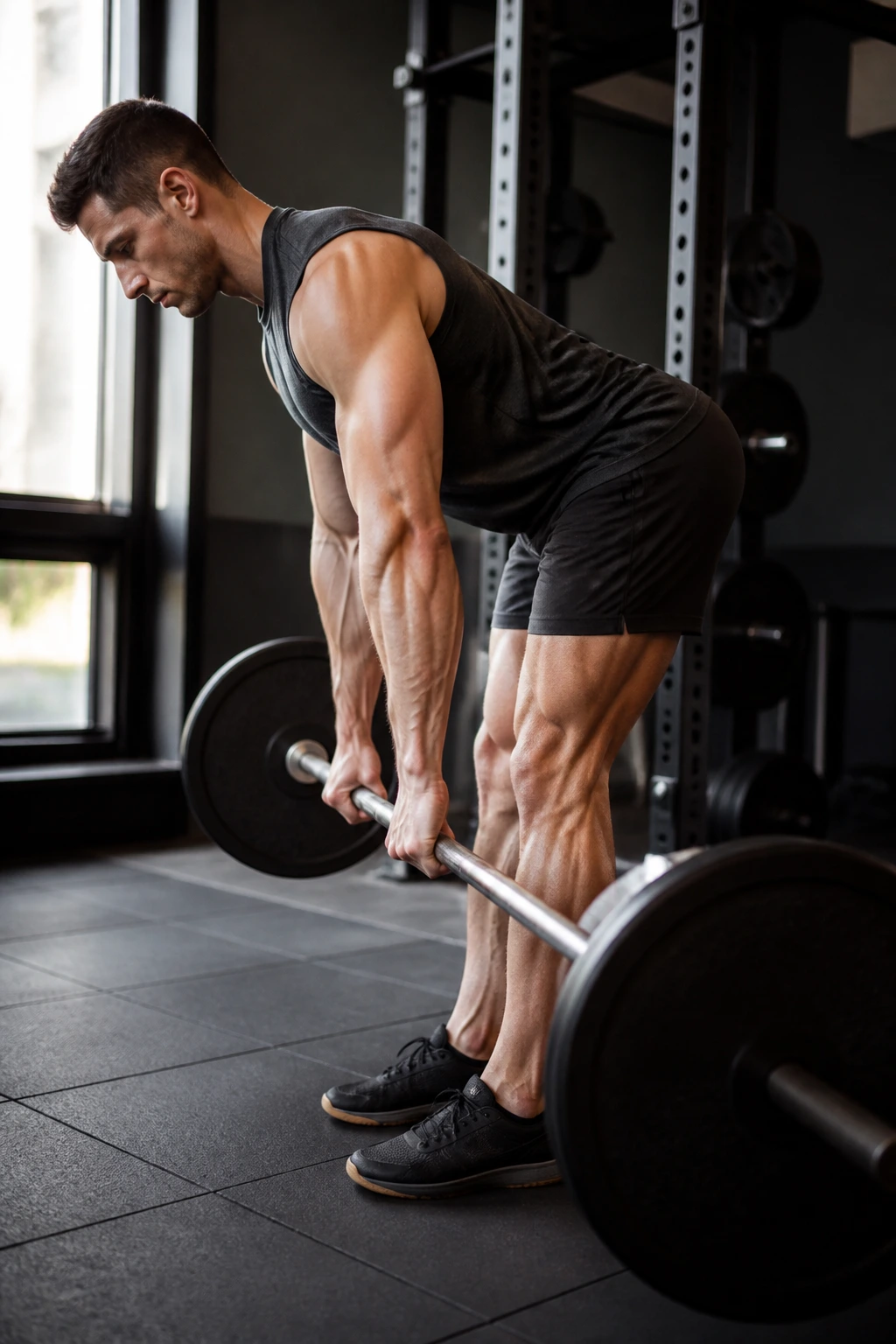
The stiff-leg deadlift is not fancy. It is not cute. It is a long hamstring stretch with a load on your hands, and that is exactly why it works. The knees stay only slightly bent, which shifts more of the work to the hamstrings and makes the bottom position feel deeper than a standard deadlift.
But here’s the catch: people love to chase range they cannot control. If your lower back starts doing the work, you’ve gone too far. Drop the weight, shorten the range a bit, and keep the spine long.
I like this one for lifters who already know how to hinge and want more direct posterior-chain work. Two to four sets of 6 to 8 reps is usually plenty. Heavy enough to matter. Light enough to stay clean.
5. Deficit Romanian Deadlift
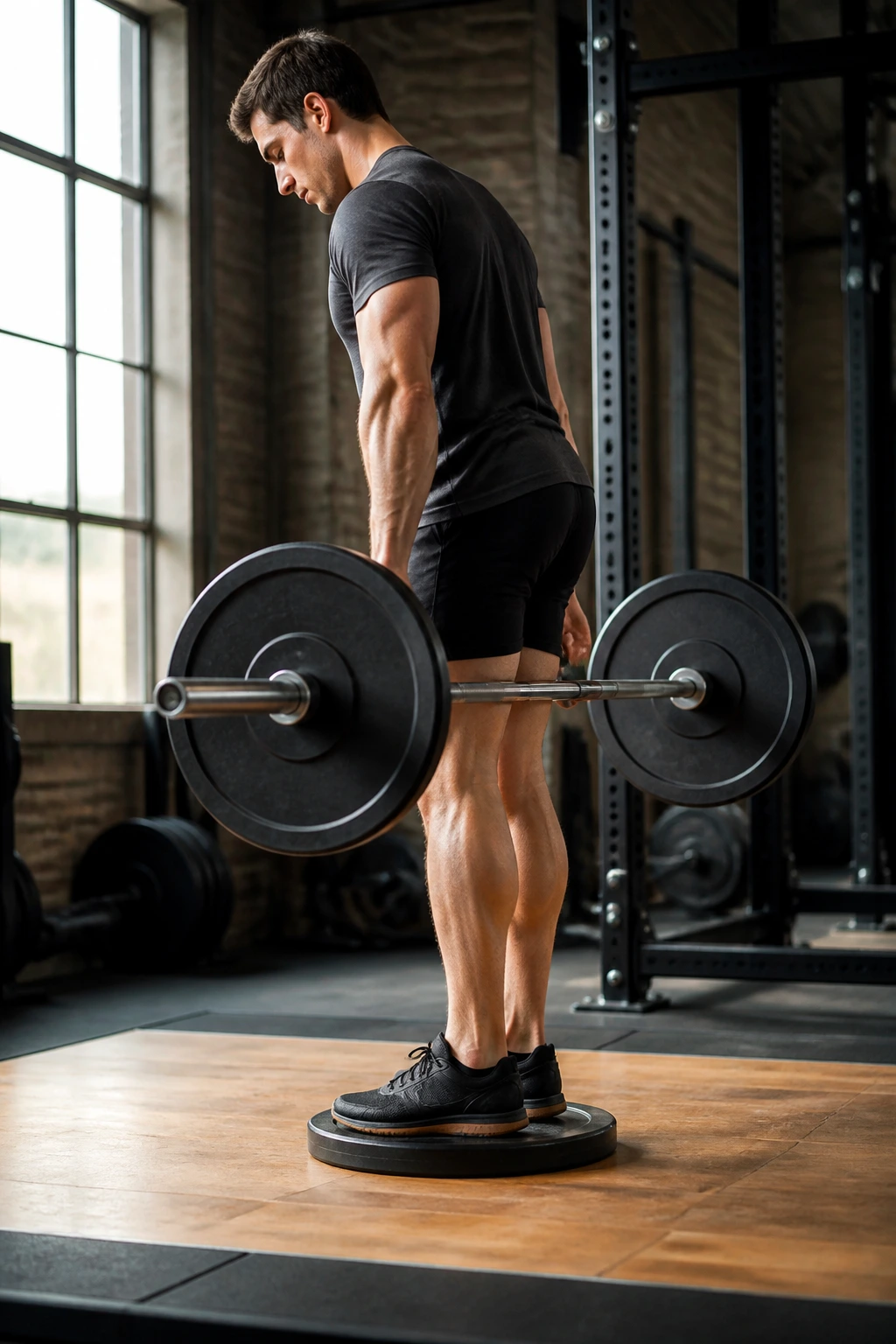
Standing on a small plate or low box turns the Romanian deadlift into a longer stretch exercise. That extra inch or two changes the feel more than most people expect. The hamstrings load earlier, and the bottom position asks for a little more control.
This is a good choice when your regular RDL has gotten stale. It also works well if you want more length under tension without just piling on weight. No magic. Just a longer lever and a longer pull.
Go modest on the height. One to three inches is enough for most people. Anything higher turns the movement into a balance problem, and balance problems are not the same as better training.
Keep the bar close, lower with patience, and stand up without snapping the hips through too hard at the top. A clean deficit RDL feels like a long drawstring being tightened. Messy ones feel like a back complaint waiting to happen.
6. B-Stance Romanian Deadlift
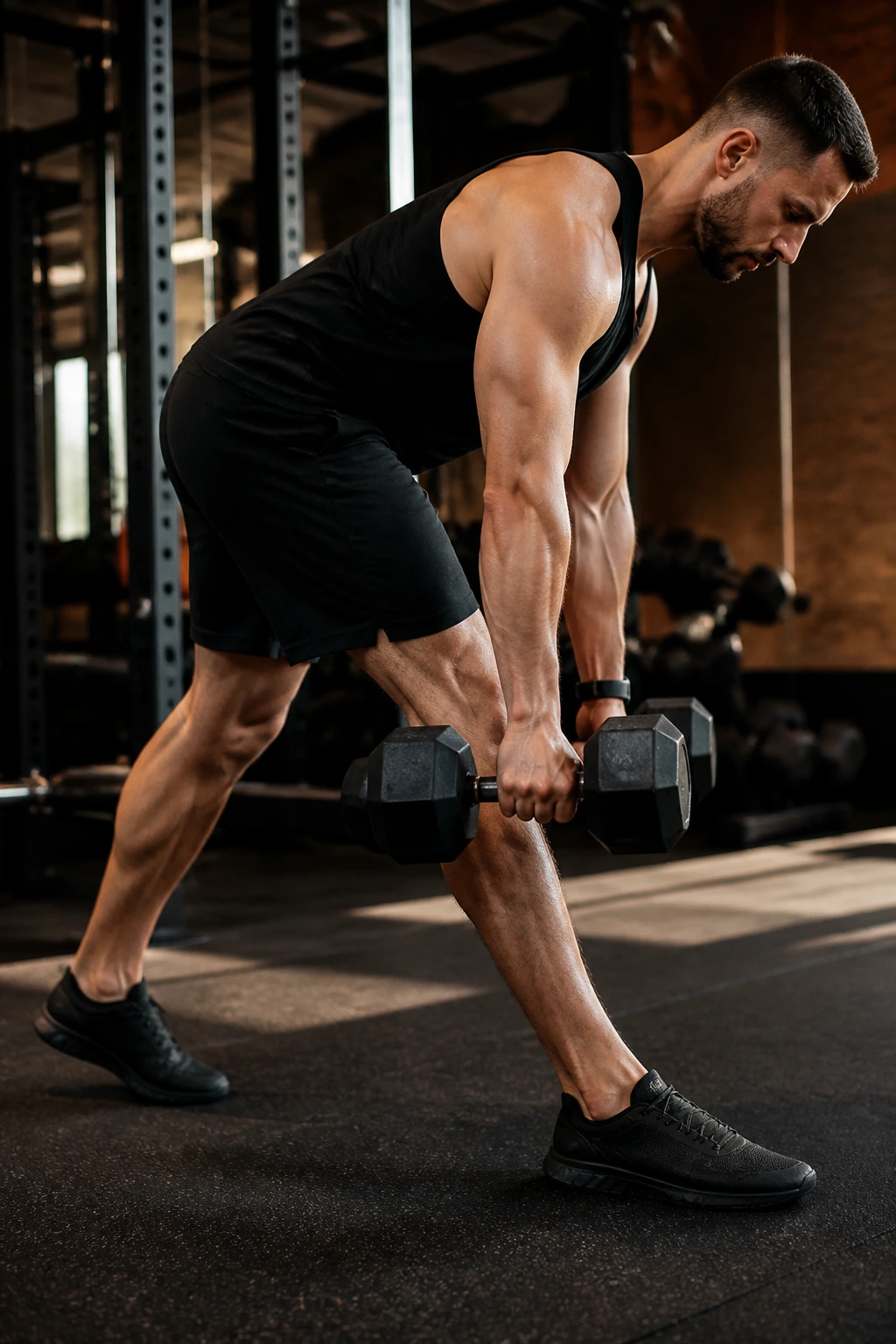
The B-stance RDL is the in-between version that a lot of lifters overlook. One foot does the real work, the other foot stays lightly back on the toe for balance. That tiny support makes the movement easier to learn than a true single-leg hinge while still putting most of the load onto one hamstring.
Setup cues that keep it honest
- Put about 80 to 90 percent of your weight on the front leg.
- Keep the back foot light, almost decorative.
- Square your hips to the floor.
- Lower until the front hamstring feels stretched, then drive up through the whole foot.
I like this exercise for people coming back from a layoff or anyone who wants more single-leg work without the full circus act of balancing on one foot. It usually feels smoother than the single-leg version and still exposes weak links fast.
7. Good Morning
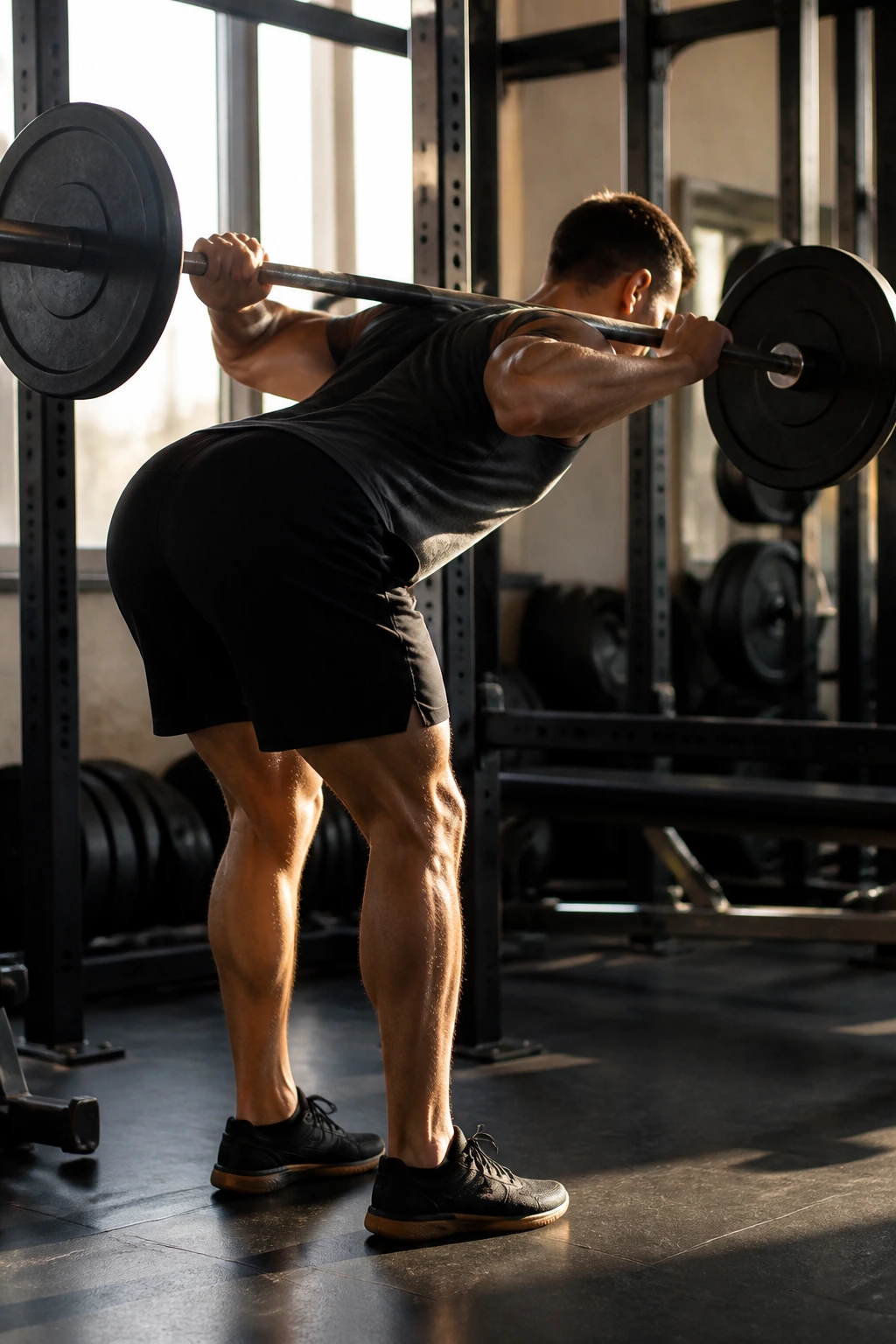
The good morning is a blunt instrument, and I mean that nicely. A bar sits on your upper back, your hips move back, and your torso leans forward while the hamstrings take the stretch. If you respect it, it teaches a gorgeous hinge. If you get sloppy, it teaches humility.
Start light. Much lighter than your pride wants. The bar path is short, but the lever arm is long, which means the load climbs fast. That is why people get into trouble when they treat it like a warm-up toy.
I prefer 3 sets of 6 to 10 reps with crisp bracing and no bouncing at the bottom. Your back should stay long, your knees soft, and your hips should move back as one unit. It’s an old-school lift for a reason. It works.
8. Landmine Romanian Deadlift
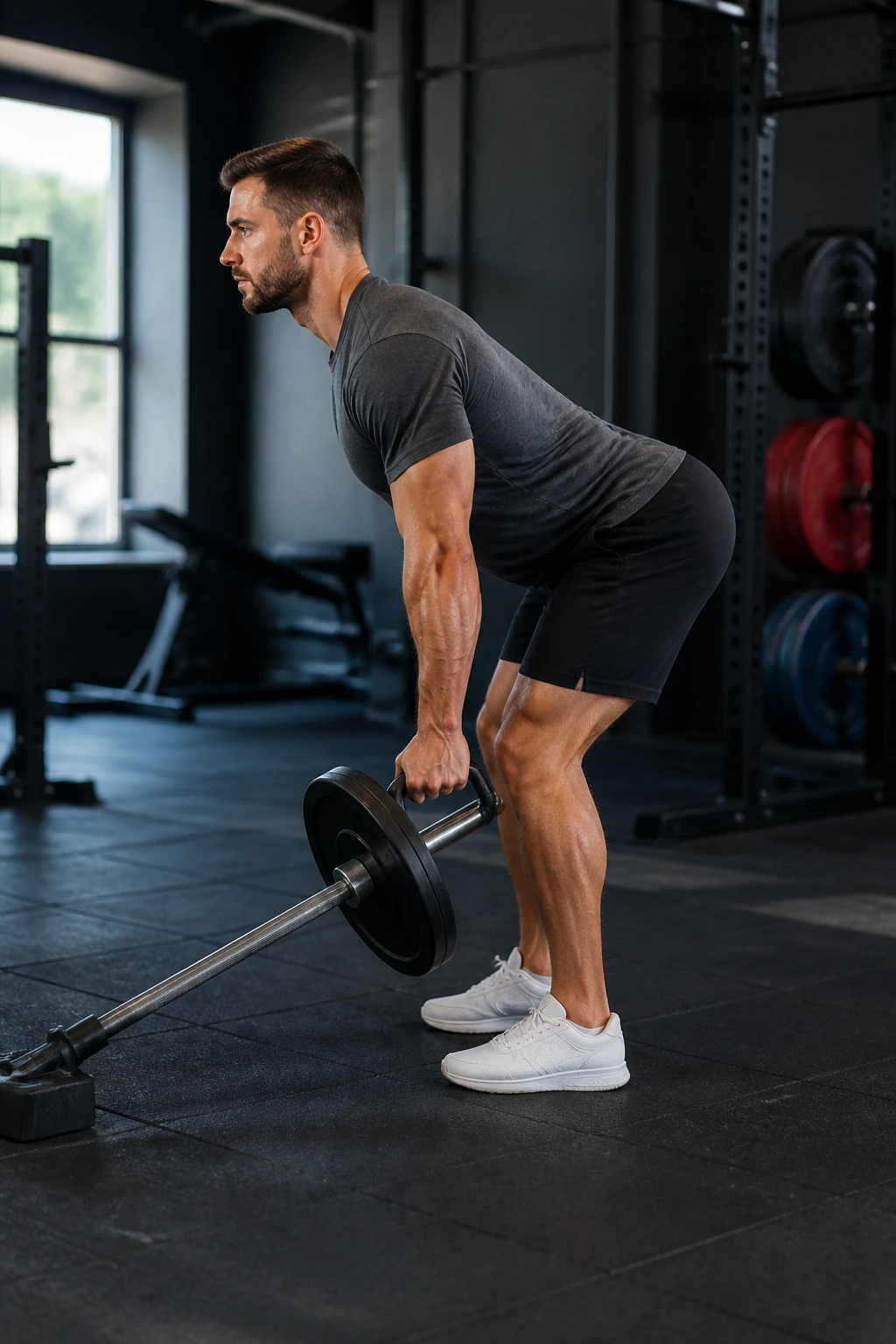
A landmine setup changes the hinge in a nice way. The bar travels on an angled path, which often feels easier on the lower back and a little more natural for people who hate the straight-up-and-down barbell version. The hamstrings still get the stretch, but the movement feels less rigid.
Compared with a standard RDL, this one is a little more forgiving on setup and grip. That makes it useful in busy gyms where you need a practical option, not a perfect one. It also works well for lifters who want to groove the hinge without loading the spine heavily.
Try 8 to 12 reps and keep your chest proud without turning it into a back-extension hybrid. The bar should move smoothly. If it jerks off the floor, the load is too heavy.
9. Kettlebell Swing
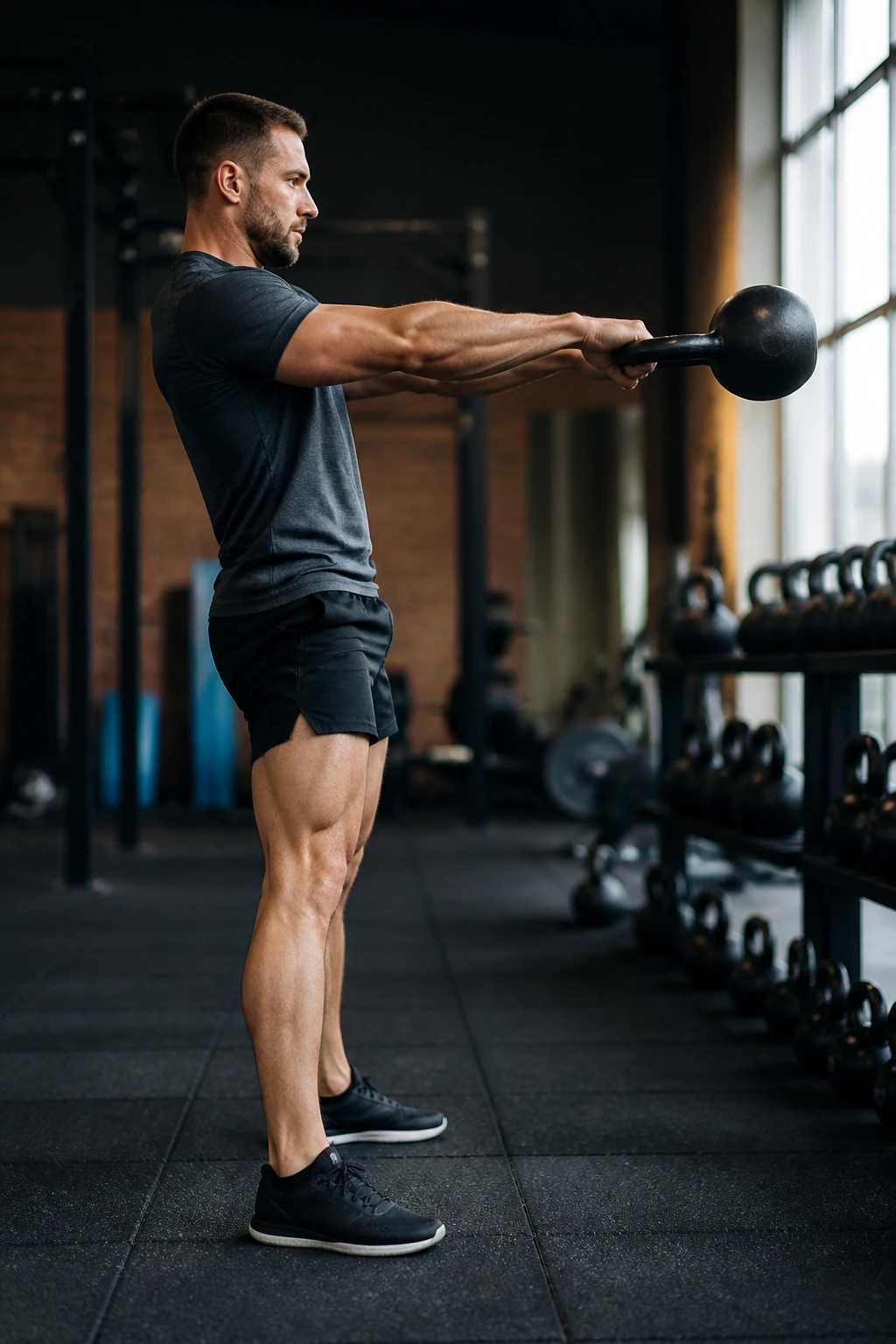
The kettlebell swing is the fast, explosive cousin in this group. It is not a squat. It is not a front raise. It is a hip snap, powered by the hamstrings and glutes, with the arms acting like ropes. That distinction matters more than most people think.
What makes it different
A good swing feels sharp at the hips and quiet everywhere else. The kettlebell floats because your hips drive it, then it drops back between the legs and gets sent out again. The hamstrings help load the backswing and then fire hard to extend the hips.
- Use a moderate bell you can move cleanly for 10 to 20 reps.
- Keep the shins close to vertical.
- Stop each rep with the bell floating, not being muscled up.
- Let the bell travel from hiking position to chest height, not overhead.
This one is great when you want power without a lot of setup time. It wakes up the back side fast.
10. Cable Pull-Through
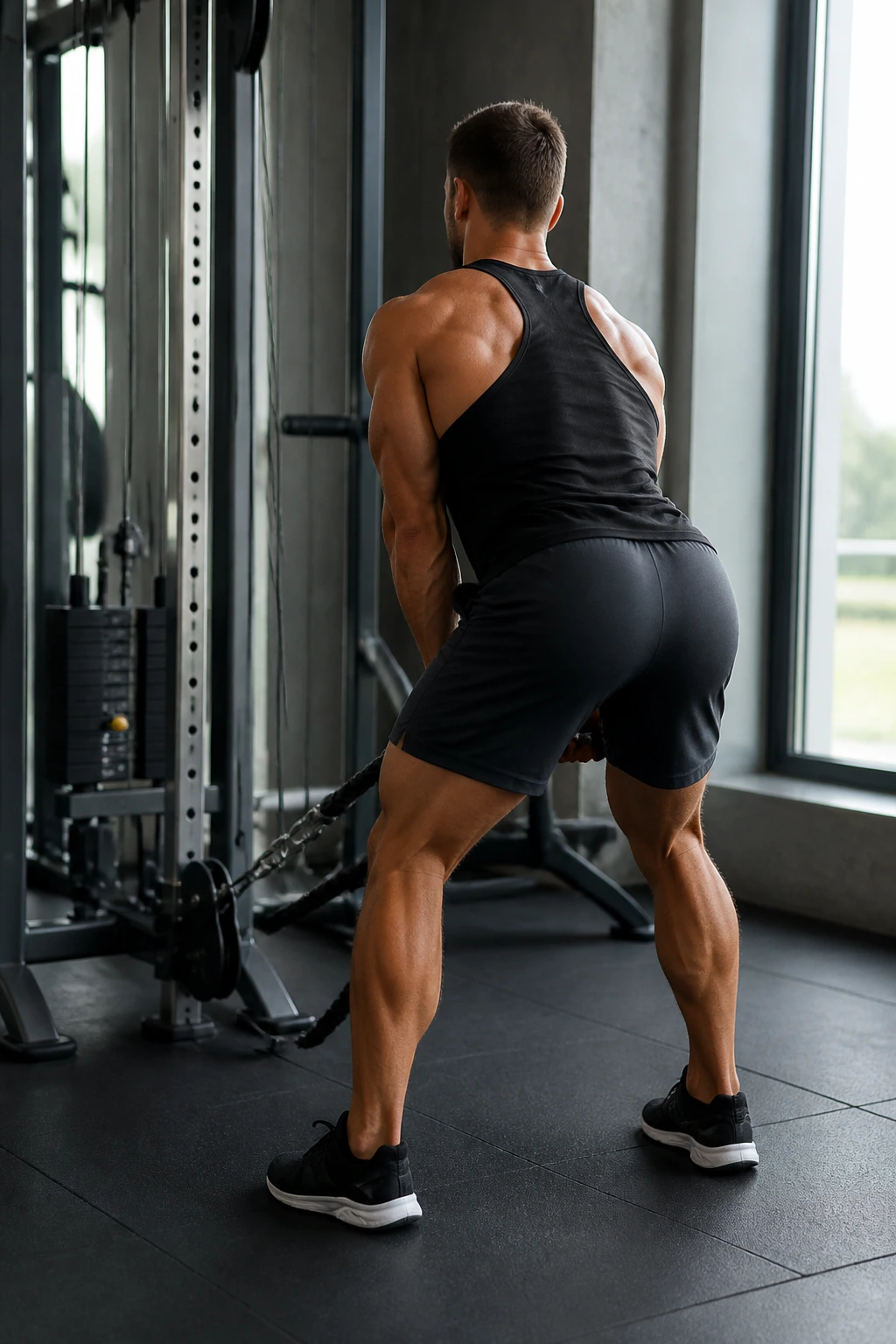
The cable pull-through is one of those exercises that looks a little odd and works a little better than people expect. You face away from the stack, grab the rope between your legs, and hinge your hips back before standing tall. The cable keeps tension on the hamstrings through the whole movement.
That continuous pull is the nice part. Free weights let tension fade in the top or bottom. The cable keeps nagging you the whole time. Which, in this case, is useful.
Use a rope attachment, step far enough away for steady tension, and finish by squeezing the glutes without leaning back. Three sets of 10 to 15 is a sweet spot. If the weight stack slams down every rep, you are moving too fast.
11. 45-Degree Back Extension
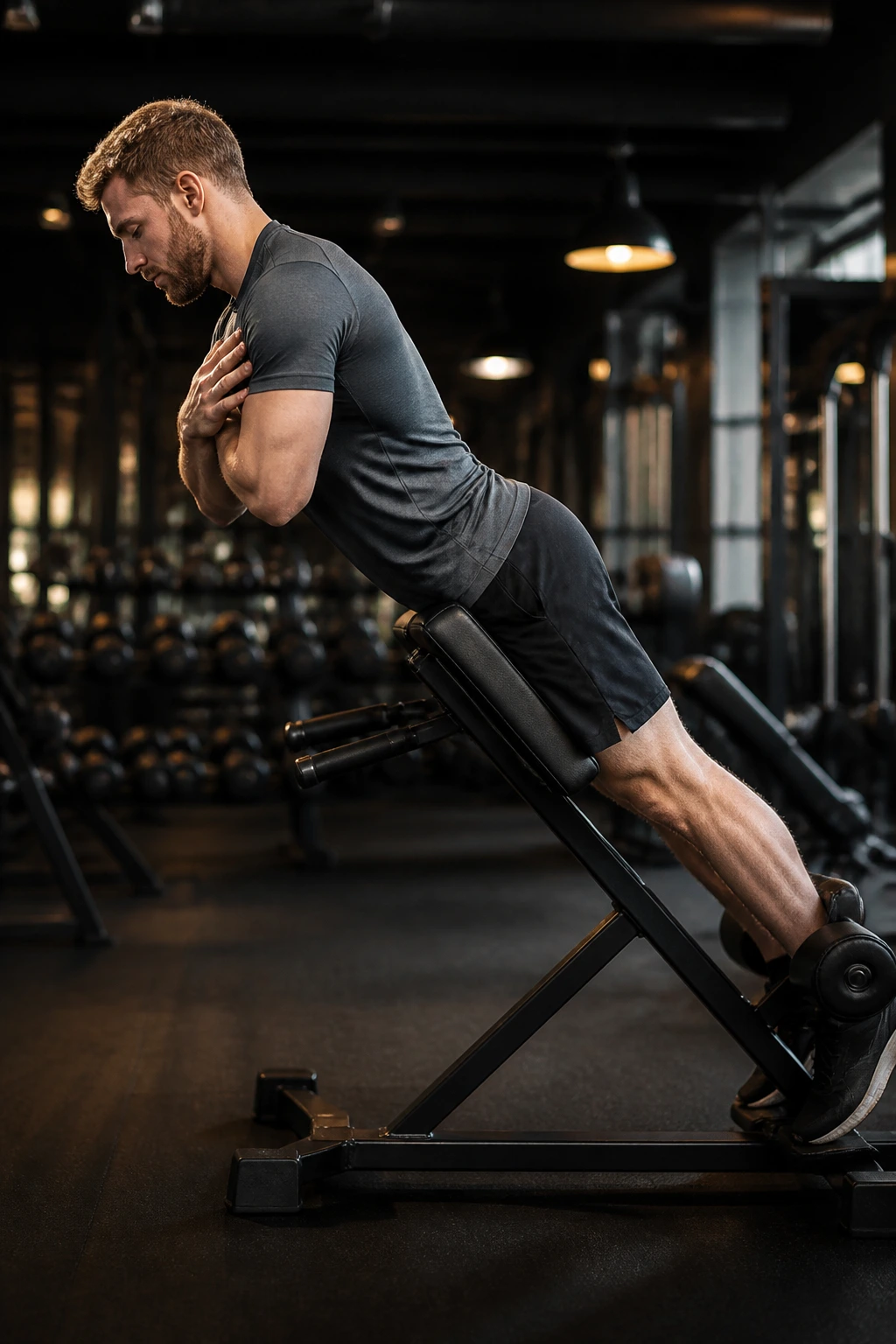
People often treat the 45-degree back extension like a lower-back exercise, but a small adjustment turns it into a hamstring and glute builder. Set the pad so your hips can fold freely, not so high that you can only bend your spine. Then hinge at the hips and keep your torso moving as one piece.
That setup change matters. A lot. If the pad sits too high, the movement turns into spinal flexion and extension with only a little hamstring work. If the pad sits right at the hip crease, you can load the hinge properly.
Use a plate, dumbbell, or bodyweight first. Eight to 12 reps is plenty when you control the tempo. Hold the top for a second, but do not crank the low back into overextension. That finish position should feel strong, not forced.
12. Reverse Hyperextension
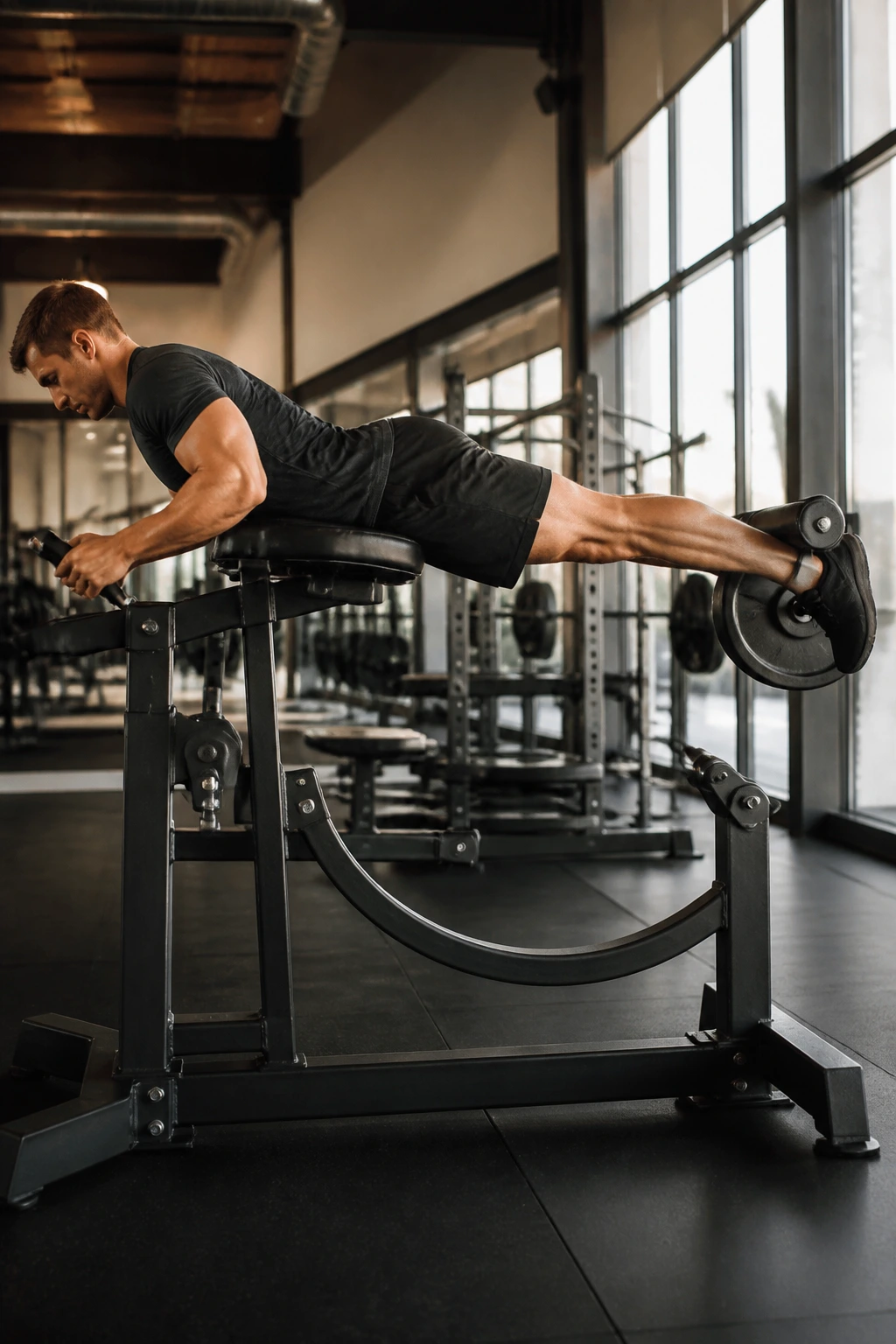
If your gym has a reverse hyper machine, use it. People love to ignore good equipment when it doesn’t look dramatic enough, and that’s a shame. The reverse hyper lets the legs swing under the body and then extend behind you, which can feel smooth on the spine while still loading the posterior chain.
The motion should be controlled, not flung around. The legs move in an arc, the torso stays stable, and the hamstrings help guide the hip extension. It feels almost springy when done right.
This is a nice choice for lifters who want a lower-back-friendly way to train the back side. Two to four sets of 10 to 15 works well. Light to moderate loading is usually enough. Heavy reverse hypers get sloppy fast.
13. Glute-Ham Raise
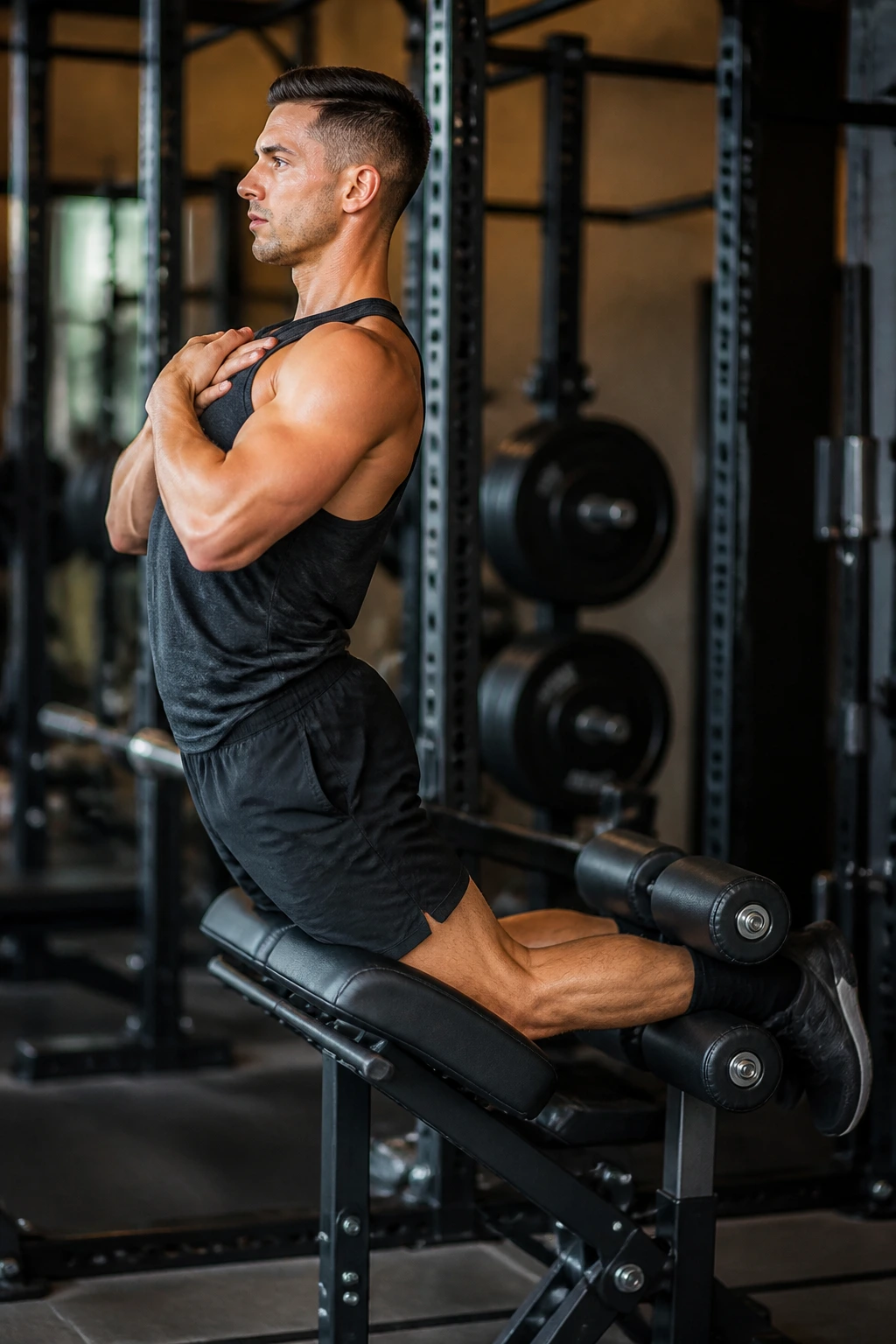
The glute-ham raise is one of the hardest hamstring exercises on the list, and it does not apologize for it. You start kneeling on the pad with your ankles anchored, then lower your torso and pull yourself back up using the hamstrings. It hits knee flexion and hip extension at the same time.
What makes it hard
The long lever is the whole story. Once your torso gets away from the pad, the hamstrings have to work hard to reverse the movement. There’s no place to hide. You either own the rep or you fold.
If you can’t do full reps yet, shorten the range or push lightly with the hands on the way up. That is not cheating. It is sensible training. Try 3 sets of 4 to 8 reps and keep the lowering phase slow. The first few reps always feel easier than the last few. That’s the point.
14. Nordic Hamstring Curl
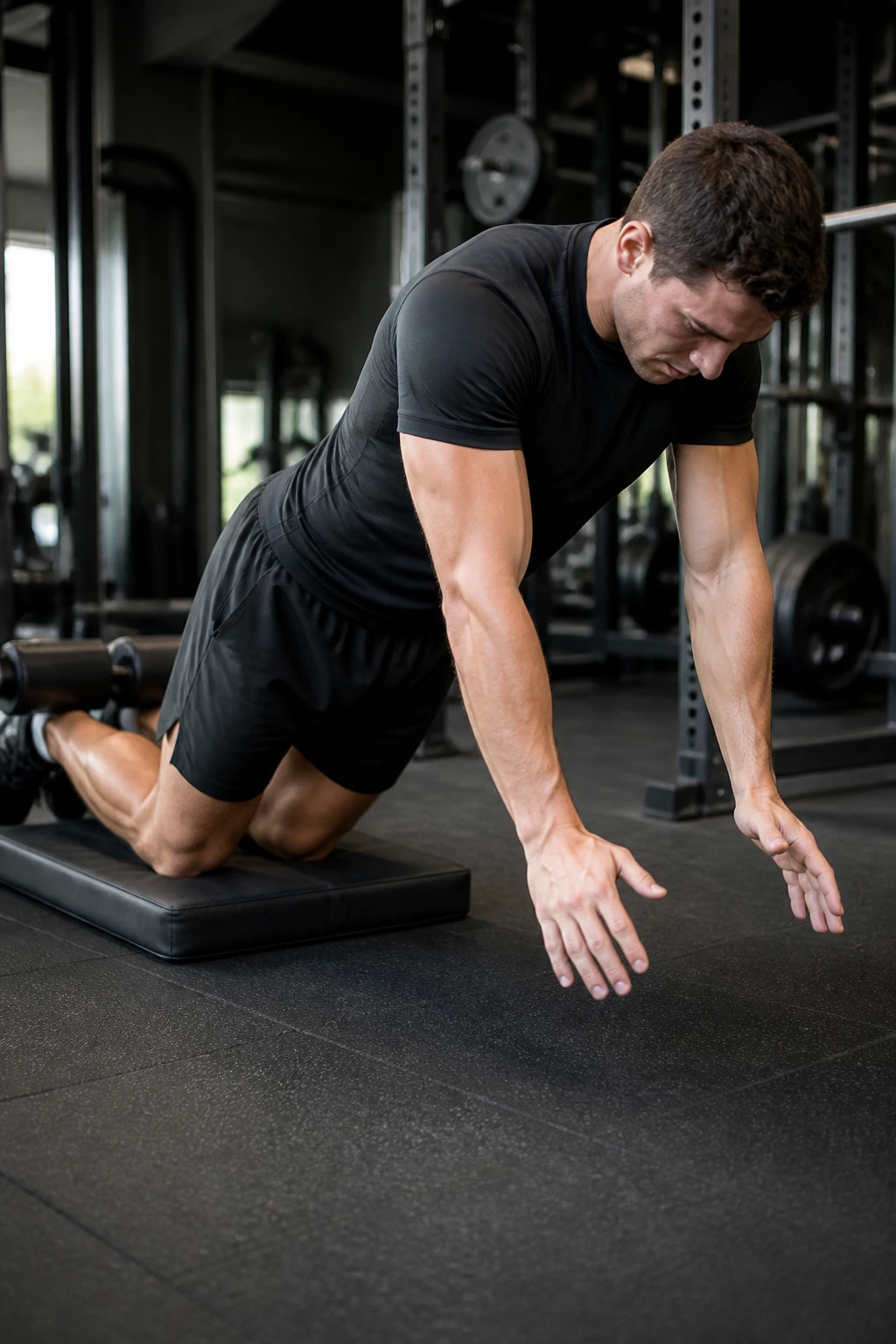
The Nordic hamstring curl has earned its reputation the hard way. You anchor the ankles, keep the body straight, and lower yourself forward under control until the hamstrings can’t hold the line anymore. Then you catch yourself with the hands and push back up.
It’s mostly an eccentric exercise, which means the lowering phase does the heavy lifting. That’s what makes it so effective and so unpleasant. The hamstrings get loaded hard while lengthening, and that kind of stress is exactly what many people miss in regular gym work.
Start with 2 to 4 reps. Yes, that few. Use a pad under the knees, keep the hips extended, and do not let the body fold at the waist. If full reps are out of reach, lower slowly and catch yourself on the floor. That still counts for a lot.
15. Assisted Nordic Lowering
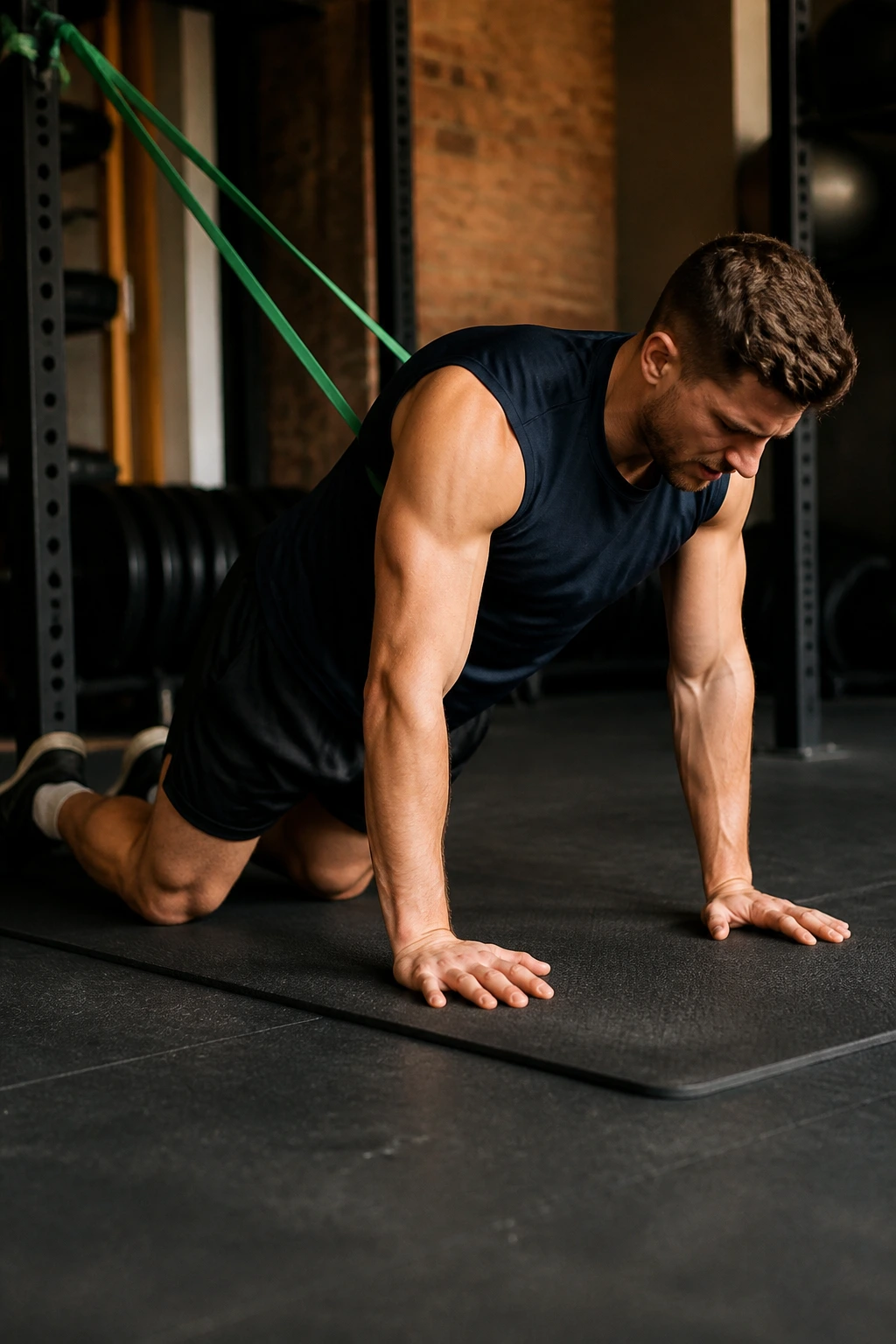
This is the friendlier way into the Nordic. You use a band, a small push from the hands, or a higher anchor point to make the lowering phase manageable. The goal is not to fake the exercise. The goal is to stay in control long enough to build real strength.
A lot of people jump to full Nordics too early and spend the next day walking down stairs like they lost a fight. Assisted lowers let you build the pattern without that kind of wreckage. They are boring in the best possible way.
Keep the reps low and the quality high. Three to five slow lowers is often enough. If the hamstrings cramp, stop, reset, and reduce the assistance a bit less aggressively next time.
16. Lying Leg Curl
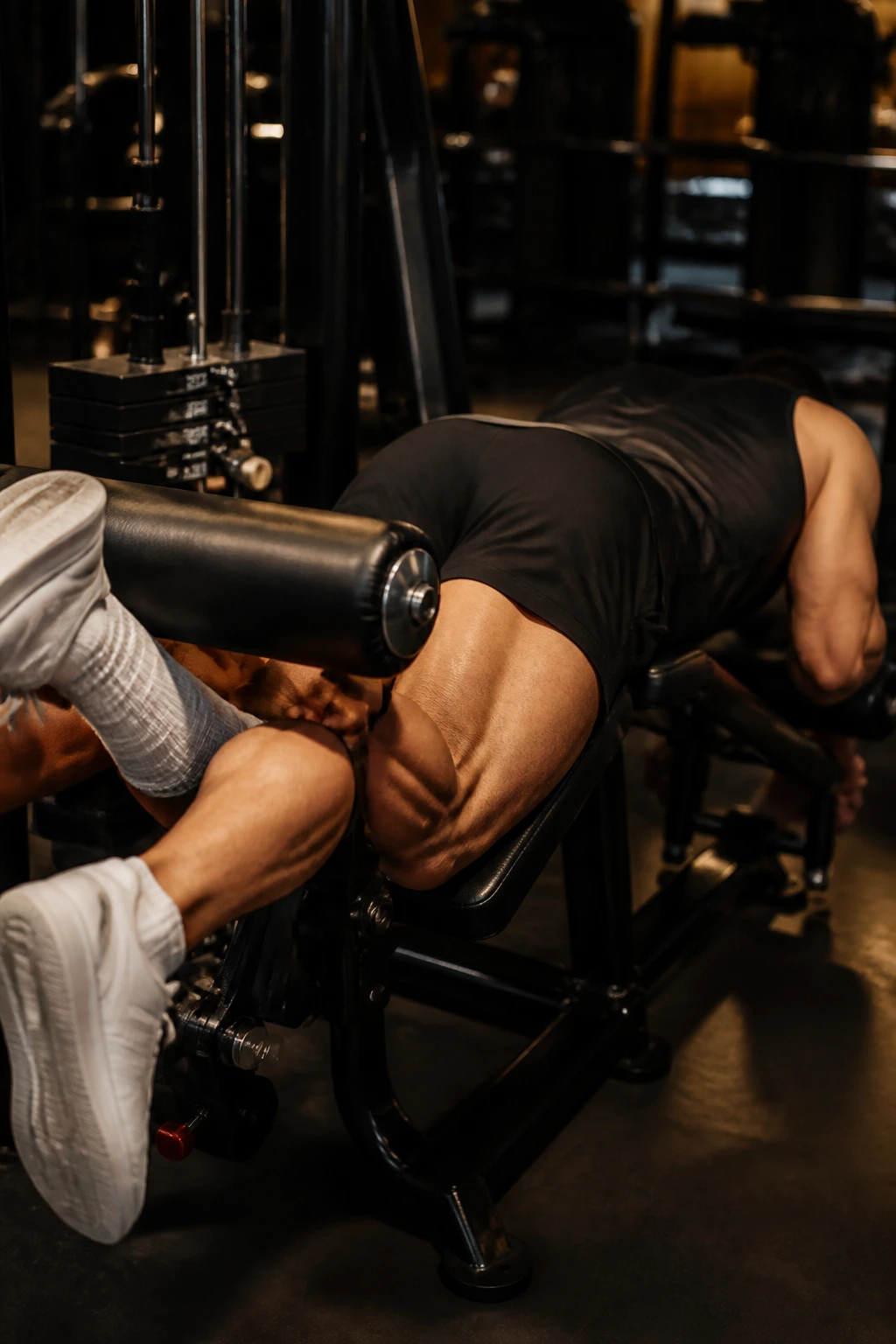
The lying leg curl machine is pure hamstring isolation, and there’s nothing wrong with that. Your hips stay down, your knees flex against resistance, and the muscle does one job without a lot of help from the rest of the body. Clean. Direct. Useful.
One simple fix most people need
The biggest mistake is arching the lower back and letting the hips pop up. That steals work from the hamstrings and makes the rep feel easier than it is. Press your hips into the pad and keep them there.
Use a controlled squeeze at the top for a count of one to two seconds. Lower the stack slowly. If the machine has a hard pad that digs into your ankles, adjust the setting so the lever sits in a better spot. Small setup changes make a big difference here.
I like 10 to 15 reps because it’s easier to feel the muscle work without chasing load for its own sake.
17. Seated Leg Curl
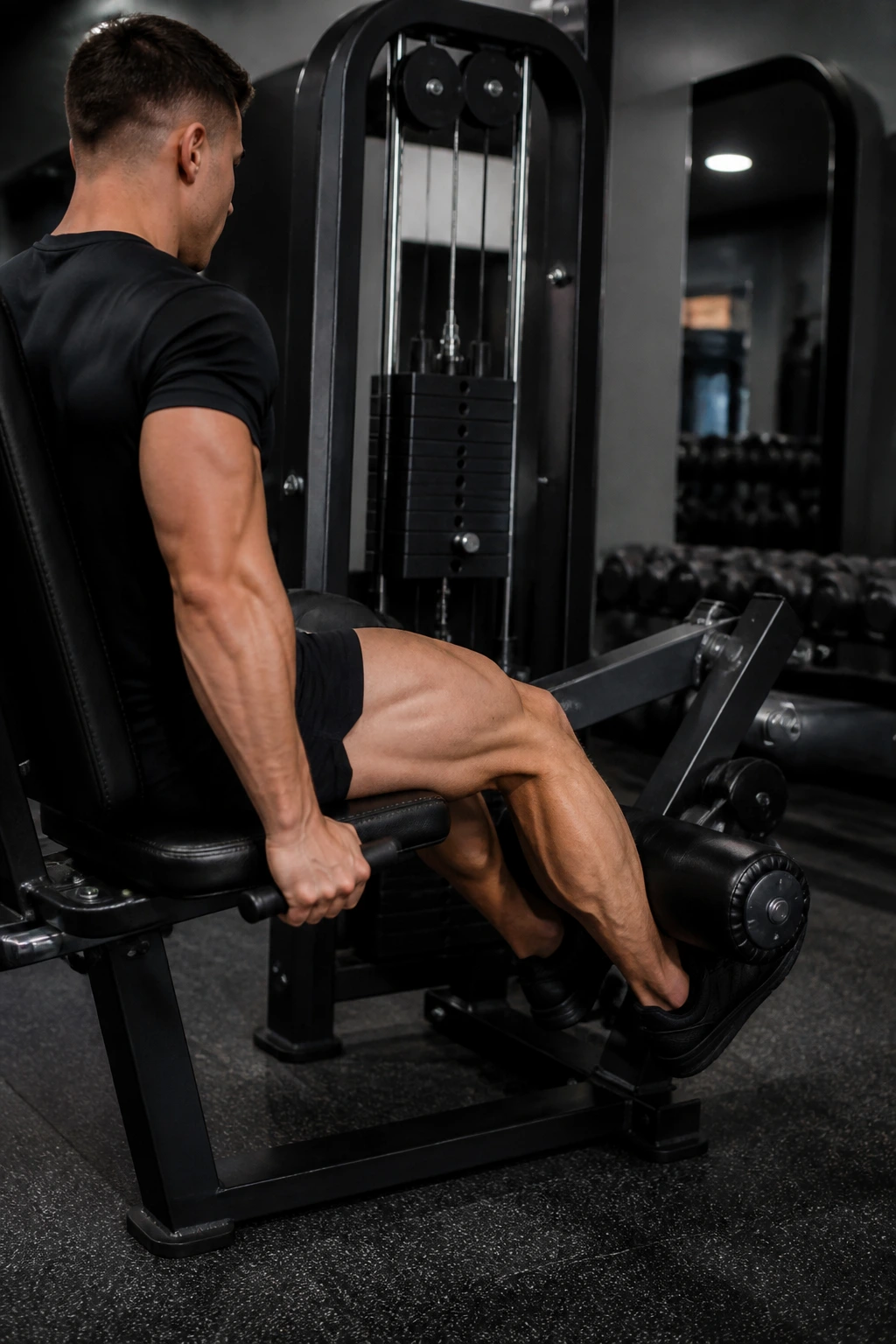
The seated leg curl has a nice advantage: it loads the hamstrings from a longer muscle length. Your hips are flexed, the knees bend under resistance, and the stretch at the start of the rep can feel deeper than the lying version. That matters for growth and for people who want a more honest hamstring squeeze.
The seat setup is everything. If the backrest is wrong or your knees don’t line up with the machine pivot, the whole movement gets sloppy. Sit down properly, pin the thighs in place, and start with a weight you can control for the full range.
Try 3 to 4 sets of 8 to 12. I like a brief pause in the stretched position before each curl. It keeps you from yanking the stack and makes the hamstrings do the work instead of the momentum.
18. Standing Single-Leg Leg Curl
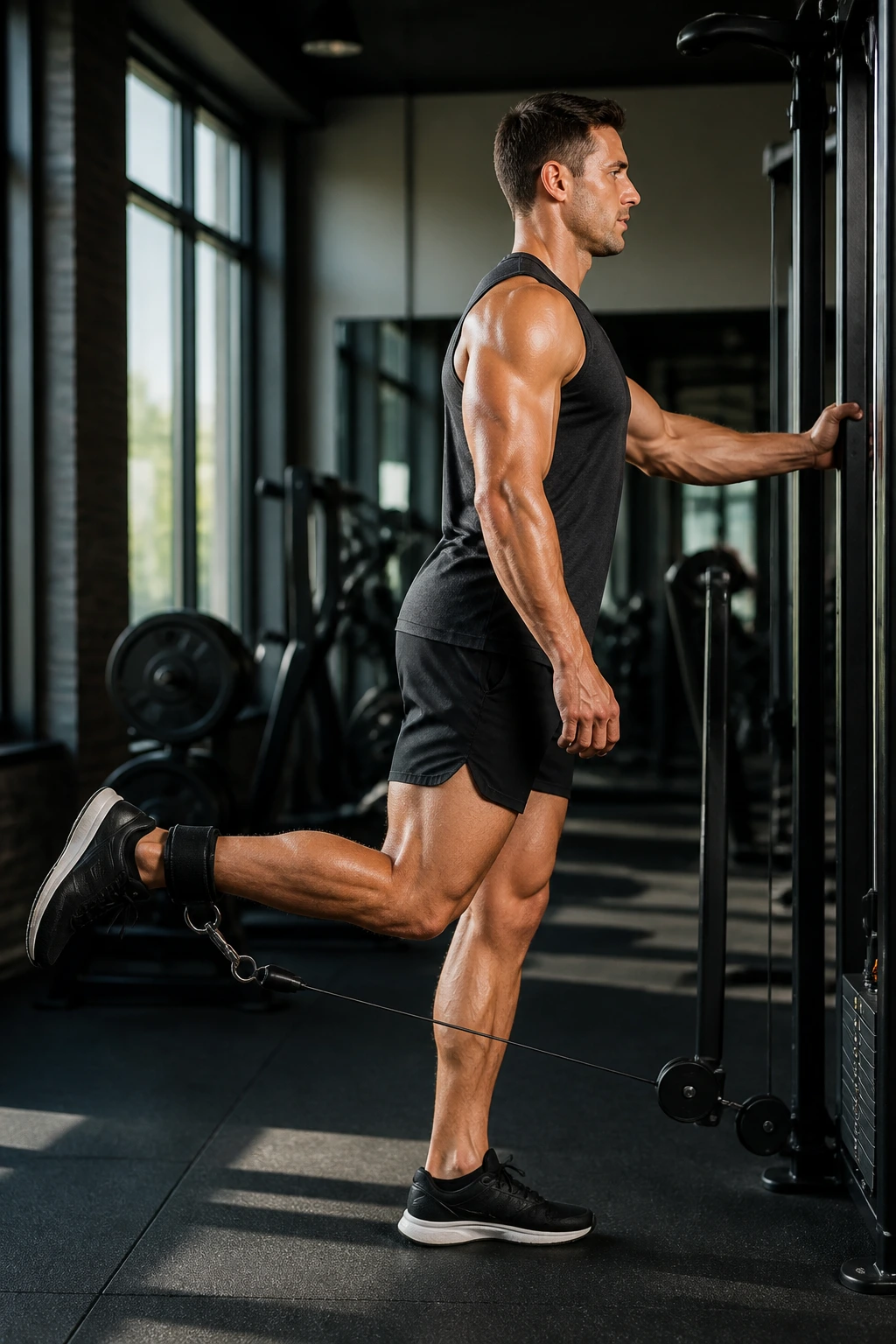
The standing leg curl is a neat little asymmetry fixer. One leg works at a time, which lets you notice if one side is weaker, crampier, or less coordinated. That kind of feedback is useful when one leg always feels more reliable than the other.
You can do this on a machine or with a cable ankle strap. Either way, keep the pelvis quiet and avoid twisting toward the working side. If your torso swivels, the rep gets easier for the wrong reasons.
This is a solid option for 12 to 15 reps per side because the load usually isn’t huge. That’s fine. Isolation work does not need to be dramatic to matter.
19. Stability Ball Hamstring Curl
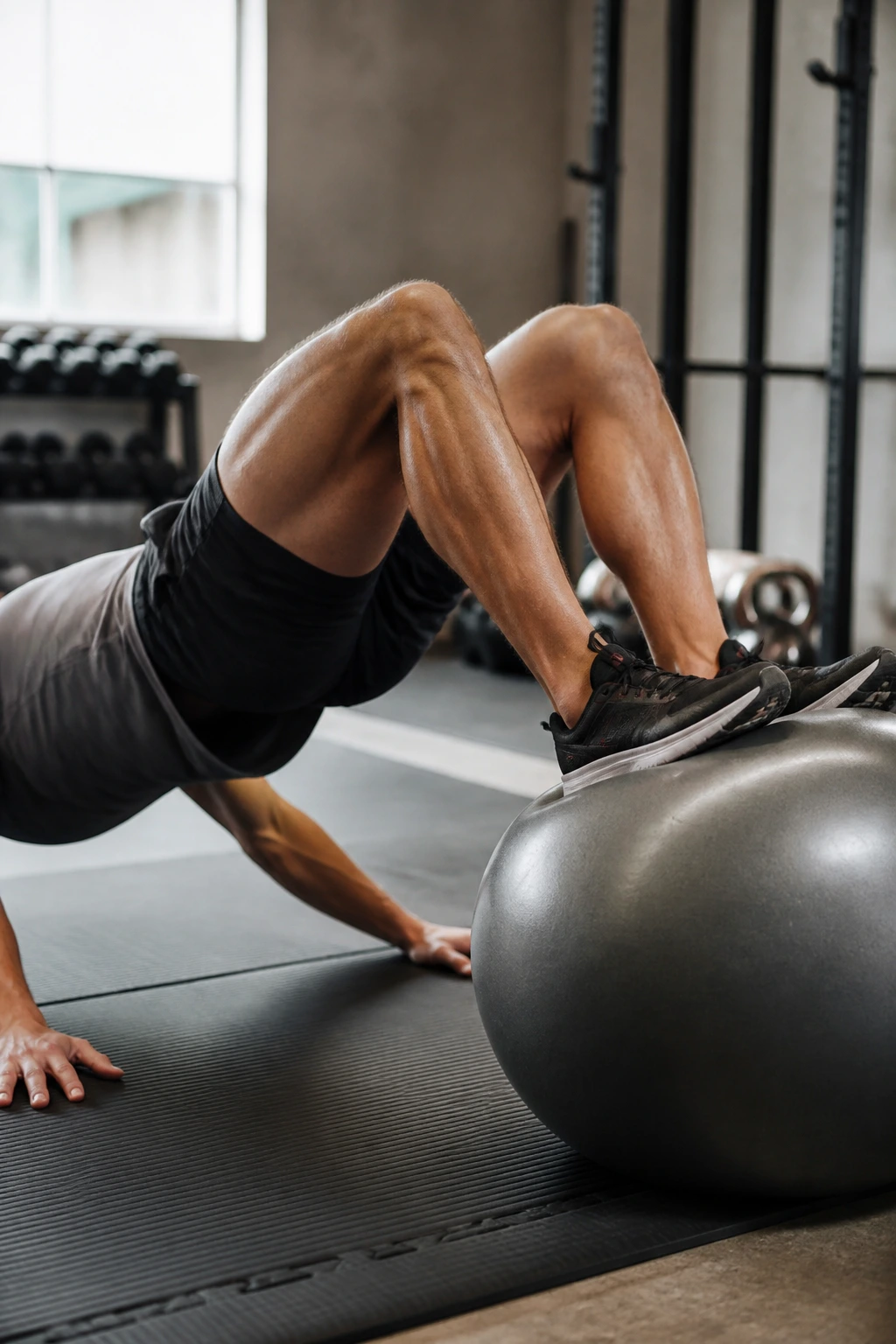
The stability ball hamstring curl has been around forever because it’s simple and mean in a good way. You start in a bridge, heels on the ball, then curl the ball toward you while keeping the hips lifted. Your hamstrings have to stabilize and bend the knees at the same time.
What makes this one sneaky is the loss of contact under your feet. The ball wants to roll. Your legs have to control it while the hips stay up. That wobble is part of the exercise, not a flaw.
How to keep it clean
- Lift into a straight bridge before you curl.
- Keep the ribs down so the back does not arch.
- Move slowly enough that the ball stays under control.
- Stop the set when your hips drop.
If full curls are too hard, do bridges with a short hold first. Then add the curl once the position feels steady.
20. Swiss Ball Walkout
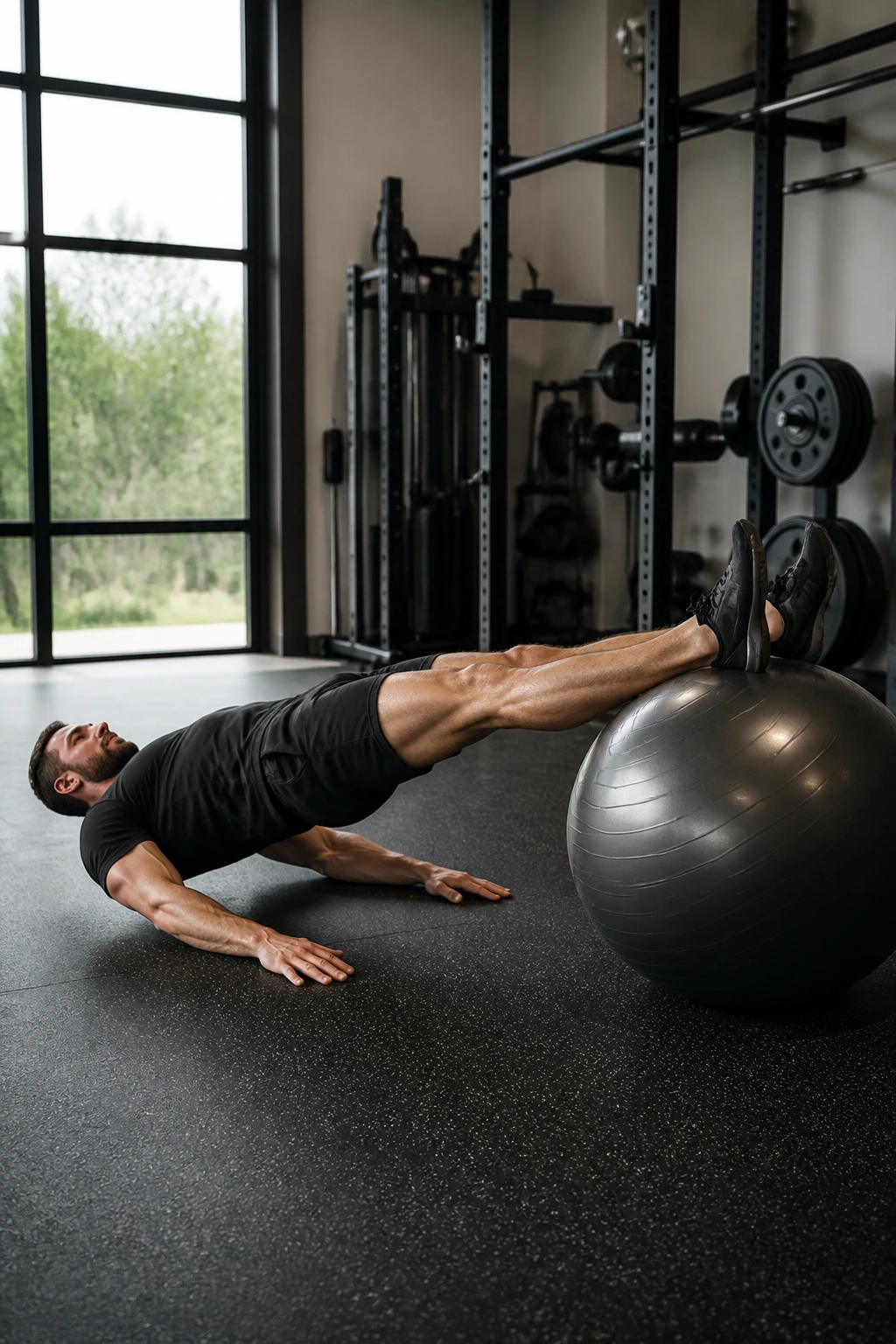
The walkout is the grown-up cousin of the ball curl. You hold a bridge, extend the legs a little at a time, then walk them back in. The hamstrings stay under tension almost the whole time, and the exercise feels like a long, angry plank for the back of the legs.
It’s a smart choice when you want endurance and control more than load. You also get a bit of trunk work because the torso has to stay stiff while the legs move. That makes it useful in lower-body sessions without adding a barbell to everything.
Take small steps. Big steps make the hips sag. Five to eight walkouts is enough for most people. You do not need to turn this into a circus.
21. Slider Hamstring Curl
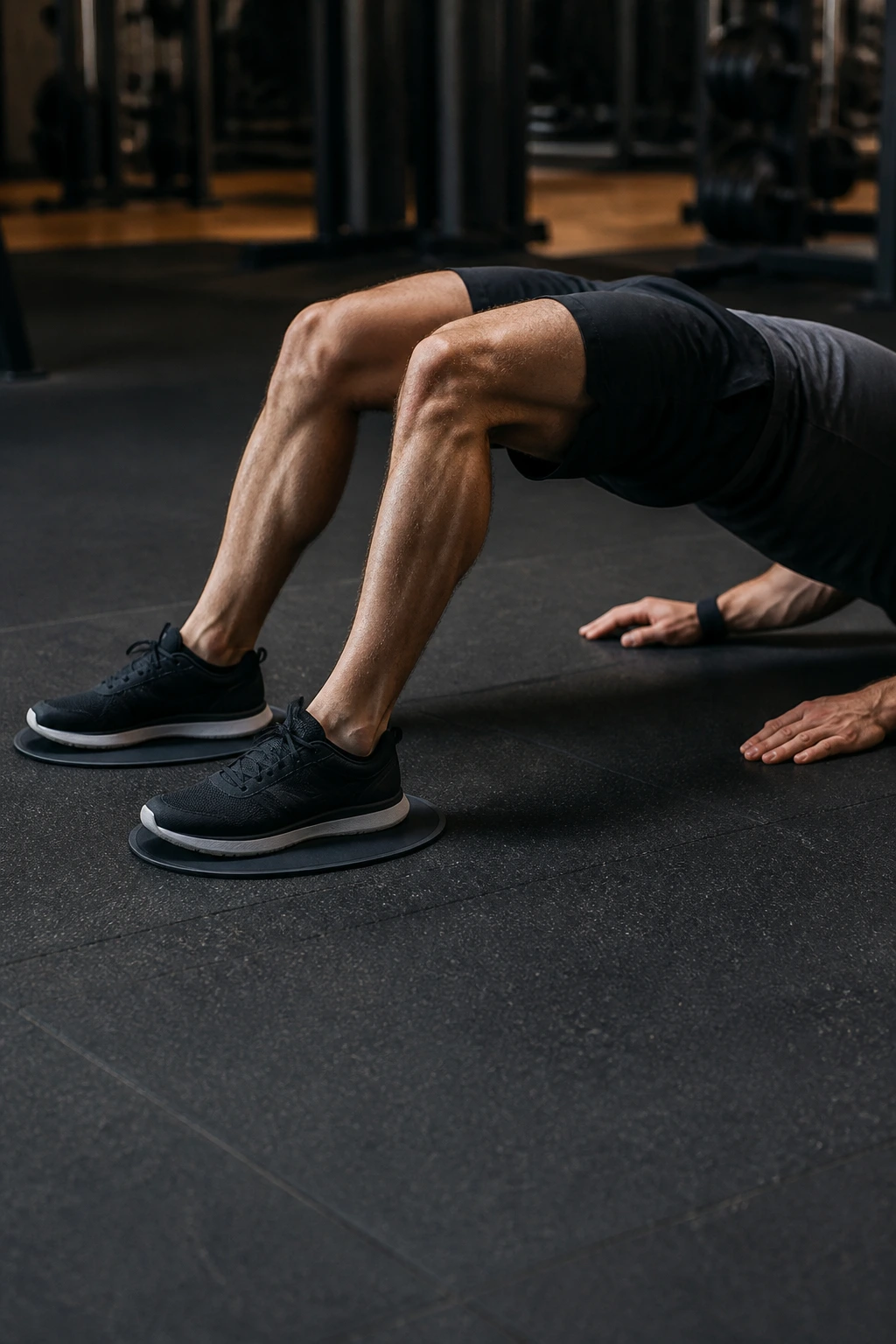
The slider hamstring curl is a home-gym favorite for a reason. Socks on a smooth floor, towels on wood, sliders on a mat—any of those works. You bridge up, then slowly slide the heels away and pull them back in while the hamstrings stay loaded.
This one feels simpler than it looks. The trick is keeping the hips up. If they drop, the movement gets easier and the hamstrings get less useful work. If the hips stay high, the exercise becomes a long lever curl that lights up fast.
What to watch for
- Keep the glutes gently squeezed at the top.
- Move the heels slowly, not in a rush.
- Shorten the range if the hamstrings cramp.
- Breathe out as you pull the heels back in.
Three sets of 8 to 12 reps is a strong start. On slick floors, they can feel nastier than they look.
22. Single-Leg Slider Curl
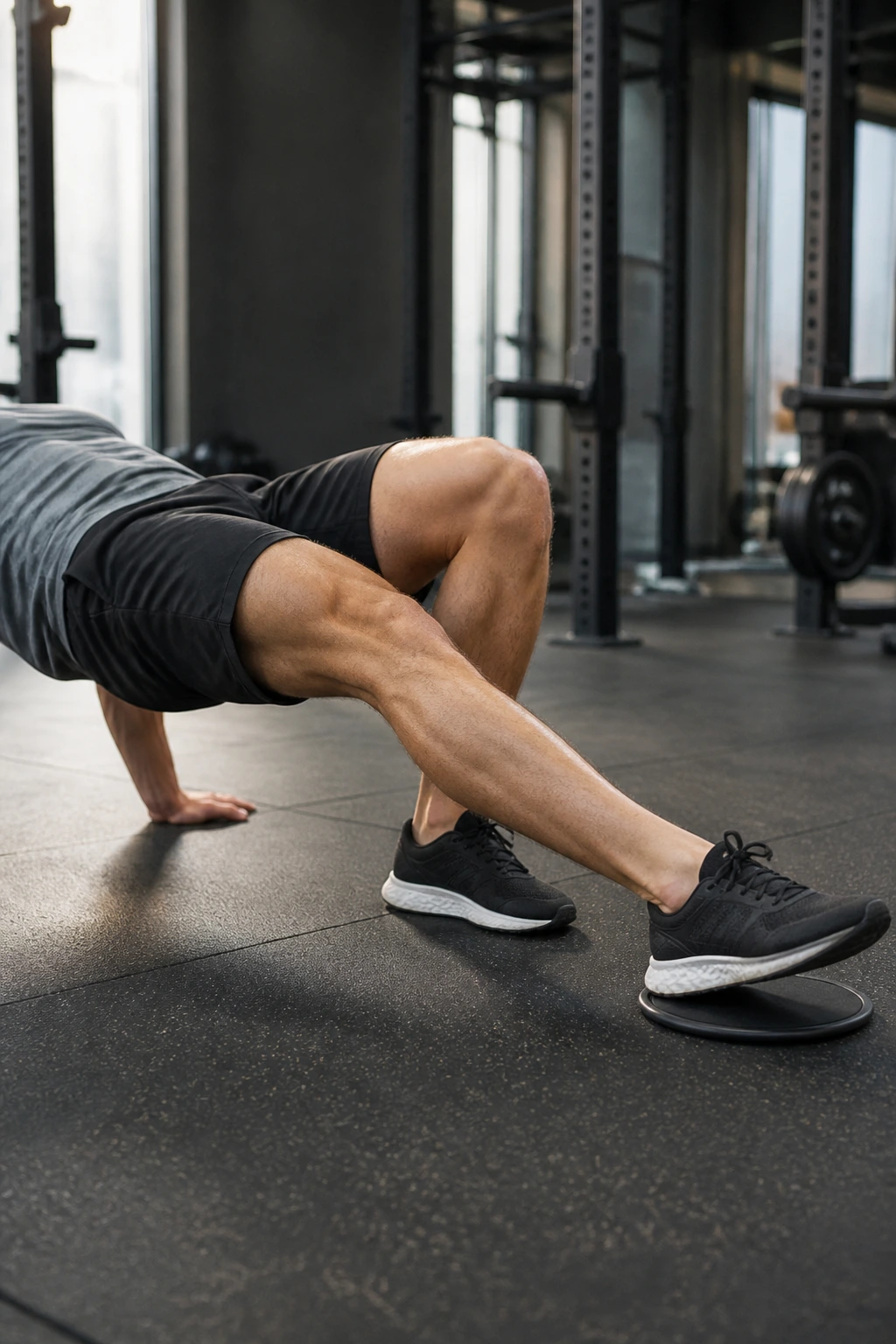
One leg at a time turns the slider curl into a different animal. The load jumps fast, the body has to resist rotation, and the working hamstring gets very little help from the other side. That’s a useful test of strength and control.
A lot of people need a reduced range on this one. Fine. Start with a small slide out, then bring the heel back under the hip without letting the pelvis tip. If the cramp shows up, you’re probably trying to do too much too soon.
Use a hand on the floor for support if needed. Seriously. Better a clean assisted rep than a failed one that turns into flailing. Six to eight reps per side can be enough when the movement is honest.
23. Hamstring Bridge Walkout
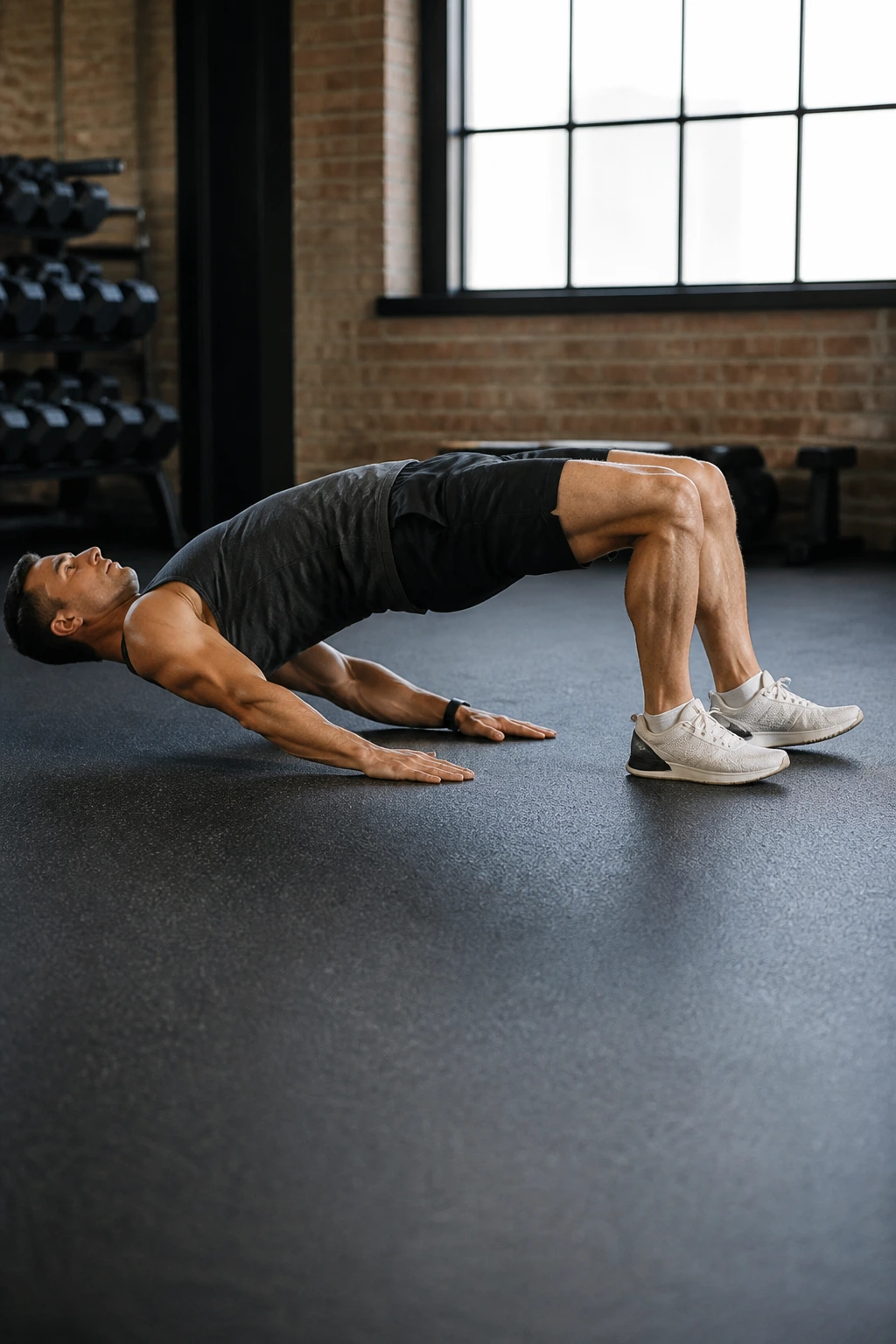
This bodyweight move sits somewhere between a bridge hold and a moving curl. You lift into a bridge, take tiny steps away from the body with the heels, then walk them back in. The hamstrings stay under tension while the hips have to stay lifted and steady.
It’s useful because it teaches control in a low-threat way. There’s no machine stack, no bar, no complicated setup. Just your body, a floor, and a little patience. That simplicity is part of the appeal.
I like this as a finisher or warm-up bridge before heavier work. Keep the steps short and the tempo smooth. If your hamstrings shake, good. If your lower back takes over, stop and reset the bridge before trying again.
24. Long-Step Reverse Lunge
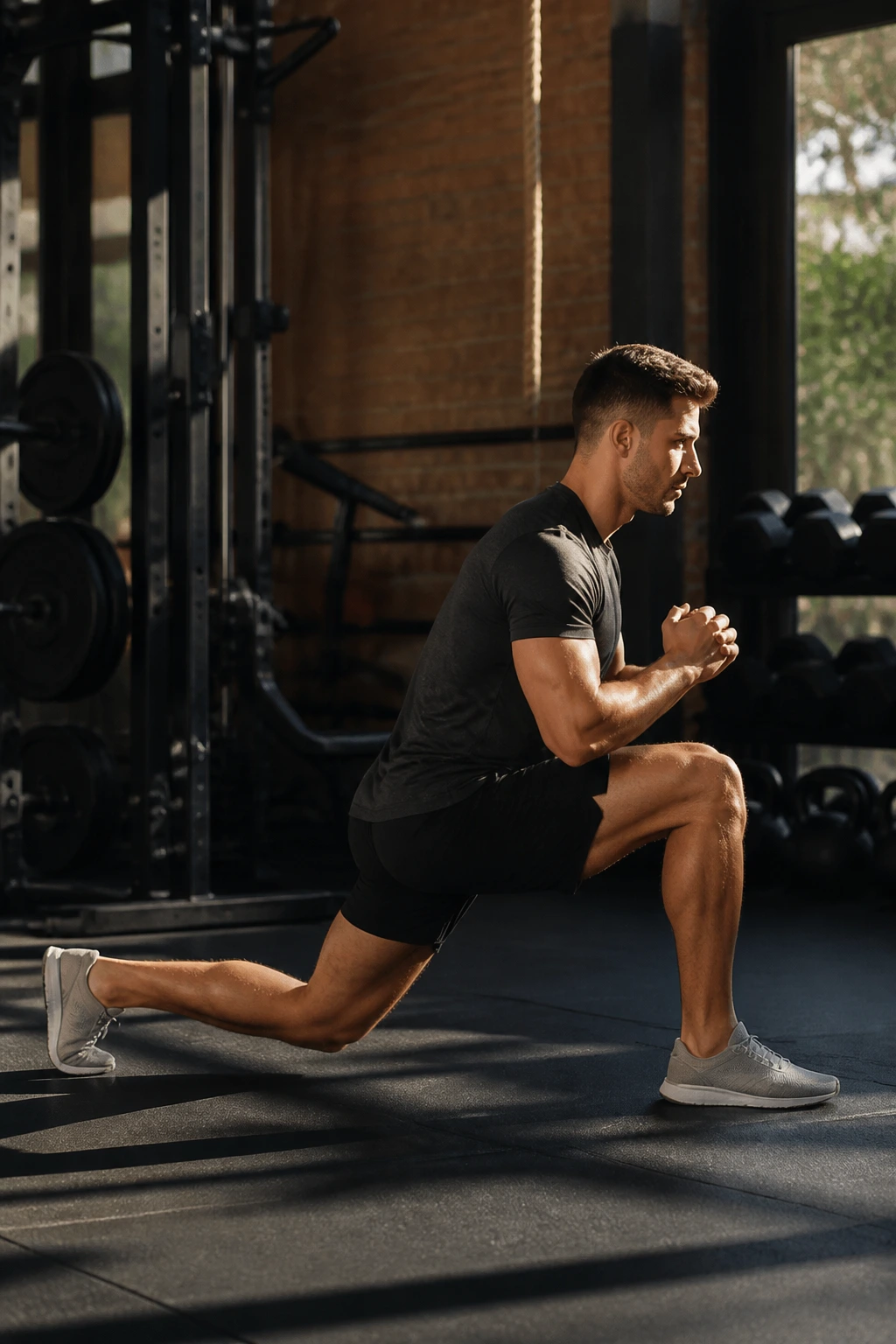
A reverse lunge is not a pure hamstring move, but a long step and a slight forward torso angle shift a surprising amount of work to the back side of the leg. The front hamstring helps stabilize the hip, slow the descent, and drive the body back up out of the bottom.
Compared with a short, upright lunge, this version feels more like a lower-body hinge hybrid. That makes it useful for people who want a single-leg pattern without another curl variation. It also carries over well to walking, climbing, and sports that need force through one leg at a time.
Keep the front heel down and the torso angled forward just a bit. If you get too upright, the quad takes over. 8 to 10 reps per side is a good working range.
25. Sled Drag With a Long Stride
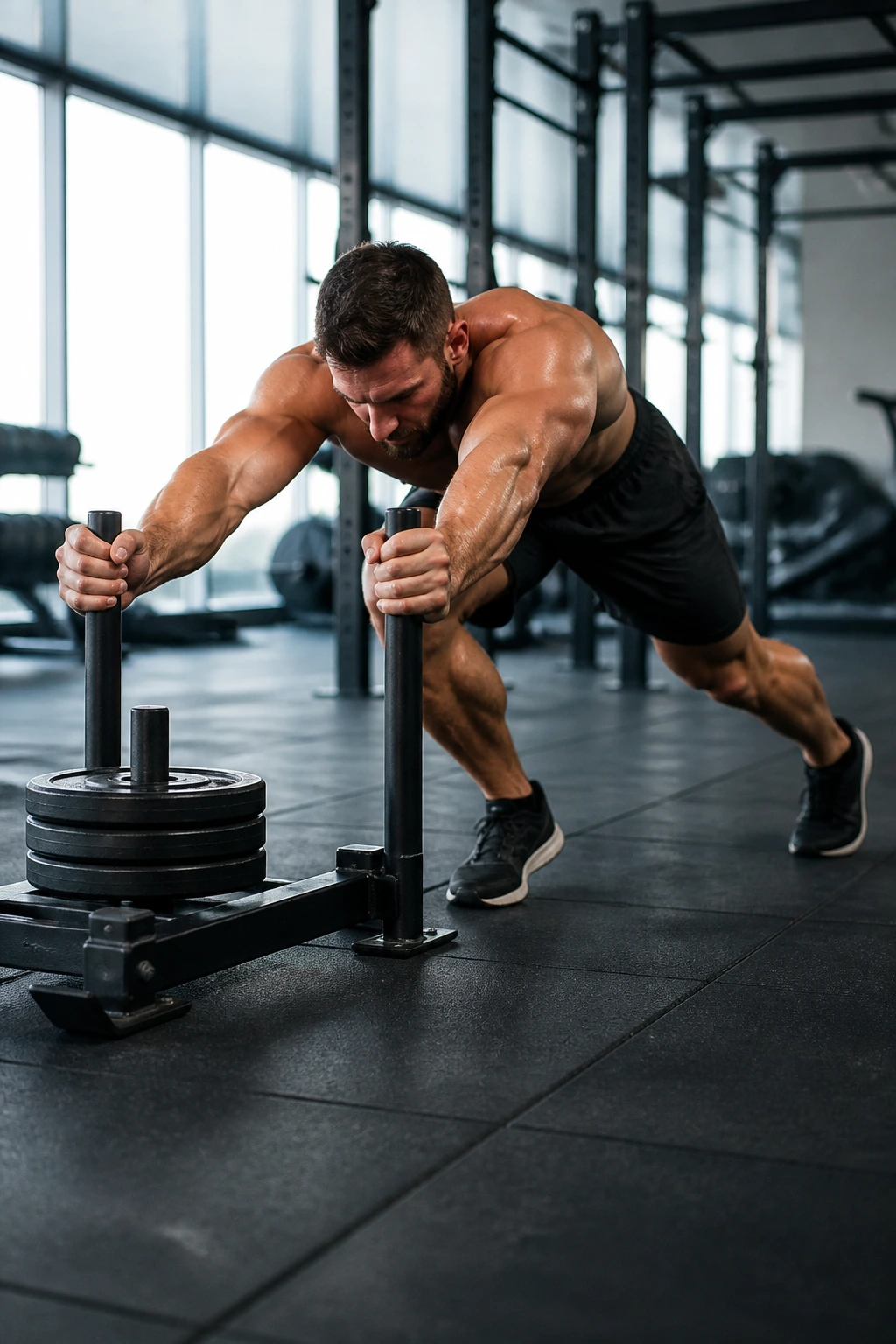
Sled work rarely gets enough credit for hamstring development. A long-stride drag with a slight forward lean makes the back of the legs work hard without the soreness that often comes from heavy eccentric lifting. That’s a nice trade when you want conditioning and posterior-chain work in the same session.
The sled does not care about your excuses. It only cares about friction and effort. Push the ground back with each stride, keep the chest angled forward, and let the trailing leg extend fully behind you. The hamstrings help in that long, loaded drive.
How to use it
- Use a moderate load you can drag for 15 to 30 yards.
- Keep the steps long, not choppy.
- Stay braced through the torso.
- Walk with control on the way back so your breathing settles.
I love this as a finisher. It leaves the legs warm, not wrecked, and it carries over nicely to stronger, more durable lower-body training.
Final Thoughts
You do not need to do all 25 of these in one week. That would be a fast way to get sore, confused, and inconsistent. Pick a hinge, pick a curl, and pick one hard eccentric move. Add a single-leg exercise if one side tends to dominate.
The biggest mistake with hamstring training is treating it like an accessory afterthought. It isn’t. Strong hamstrings help with speed, knee control, hip power, and the kind of lower-body strength that holds up when the reps get ugly. That’s worth a little attention.
If you want the simplest starting point, I’d build around a Romanian deadlift, a seated or lying leg curl, and one Nordic variation. That combination covers stretch, flexion, and control without wasting time. Nice and plain. The best kind of effective.
