



A good home workout does not need a gym floor, a rack of weights, or a playlist that lies to you. If you have a patch of floor, a chair, and ten honest minutes, you can train your legs and abs hard enough to feel it climbing stairs later.
That matters because legs and core work play nicely together. A clean squat, a controlled reverse lunge, or a dead bug sounds almost too plain to matter until you slow it down and realize how much balance, bracing, and control it demands. Your hips have to move. Your torso has to stay put. That is the whole trick.
The best leg and ab workouts you can do at home also have a useful side effect: they punish sloppy form fast. If your knees cave in, your lower back arches, or your ribs flare, you feel it right away. That feedback is annoying, but it is also useful.
Start with clean reps before you chase speed. Speed hides bad mechanics, and bad mechanics do not care where you train.
1. Bodyweight Squats for At-Home Leg Power
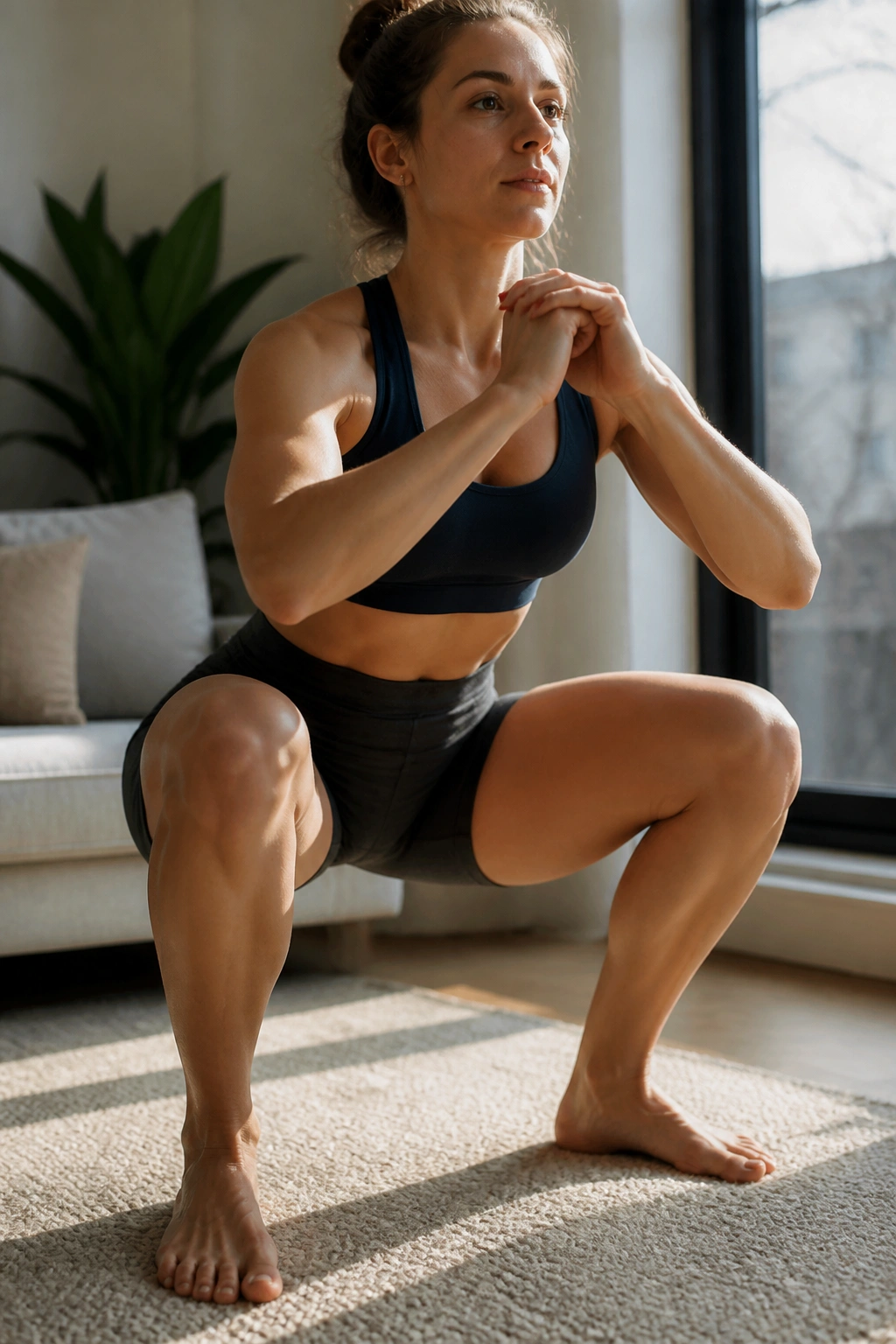
Bodyweight squats earn the top spot because they do a little bit of everything. Your quads work. Your glutes work. Your core has to brace so your torso does not fold over like a lawn chair.
Stand with your feet about shoulder-width apart, toes turned out just a touch, and sit your hips back and down as if you are aiming for a low box. Keep your heels planted and your chest tall. If you can get your thighs near parallel without your lower back tucking under, great. If not, go a little higher and make every rep look clean.
A good starting dose is 2 to 4 sets of 10 to 15 reps. If plain squats feel easy, slow the lowering phase to 3 seconds and pause for 1 second at the bottom. That tiny change makes the move feel much harder without changing the exercise at all.
Tip: If your knees complain, do box squats to a sturdy chair. Tap the seat lightly, stand back up, and keep the same control on the way down.
2. Reverse Lunges That Spare Tight Knees
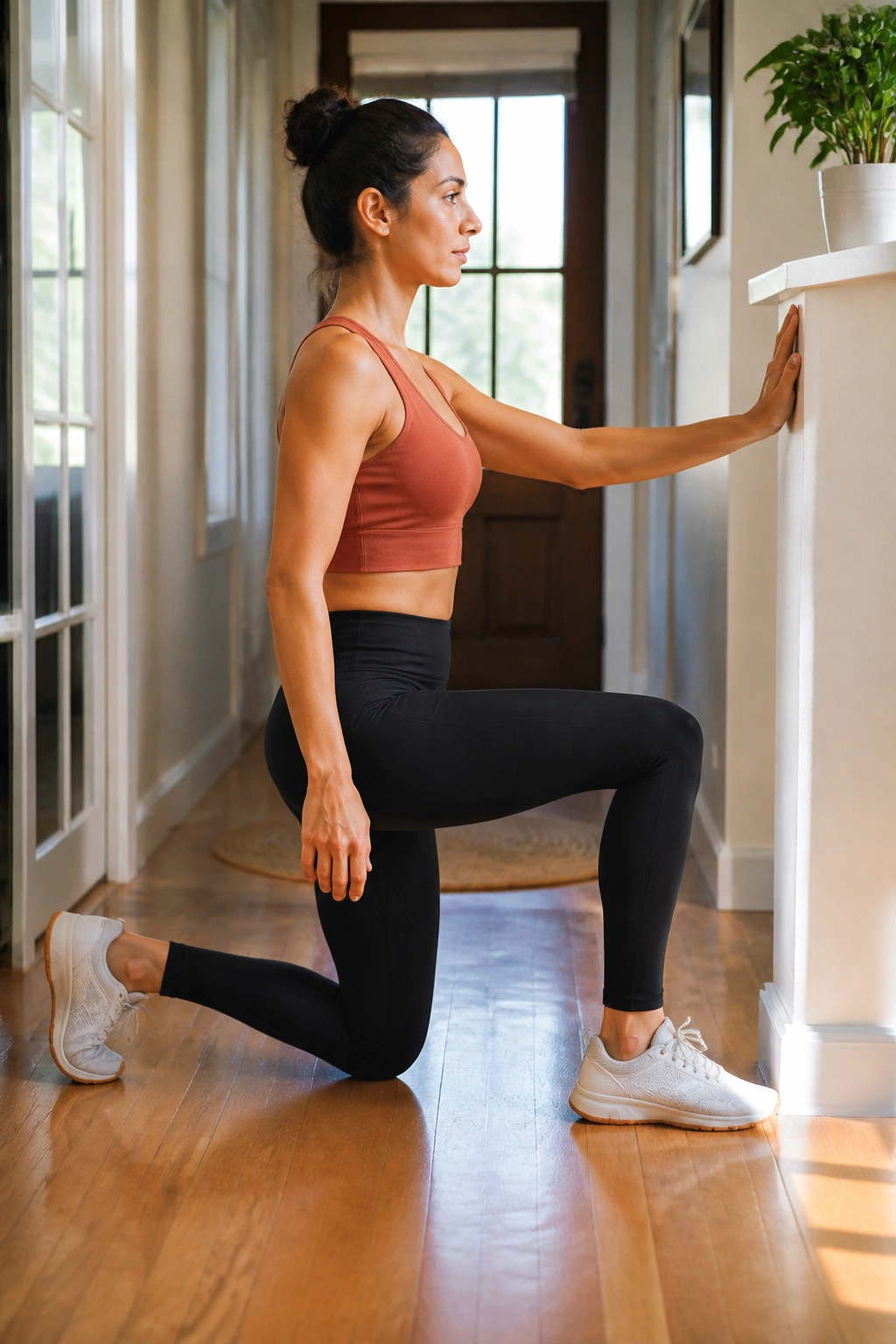
Why do reverse lunges show up in so many home leg workouts? Because they give you the benefits of a lunge without the same forward knee drive that some people hate.
Step one leg back, drop the back knee toward the floor, and keep most of your weight in the front heel. Your front shin can lean a little, but it should not shoot so far forward that the heel lifts. The torso stays tall and the front foot stays flat.
How to Keep Your Balance
- Step back far enough that both knees can bend without wobbling.
- Keep the front knee tracking over the second or third toe.
- Push through the front heel to stand up.
- Use a wall or countertop lightly if the first few reps feel shaky.
Start with 2 to 3 sets of 8 to 12 reps per side. Reverse lunges are calm-looking on paper and sneaky-hard in practice. That is a nice combination if you want leg work that also wakes up your abs, because your trunk has to stop you from tipping forward or twisting.
3. Glute Bridges for Hips That Need to Wake Up
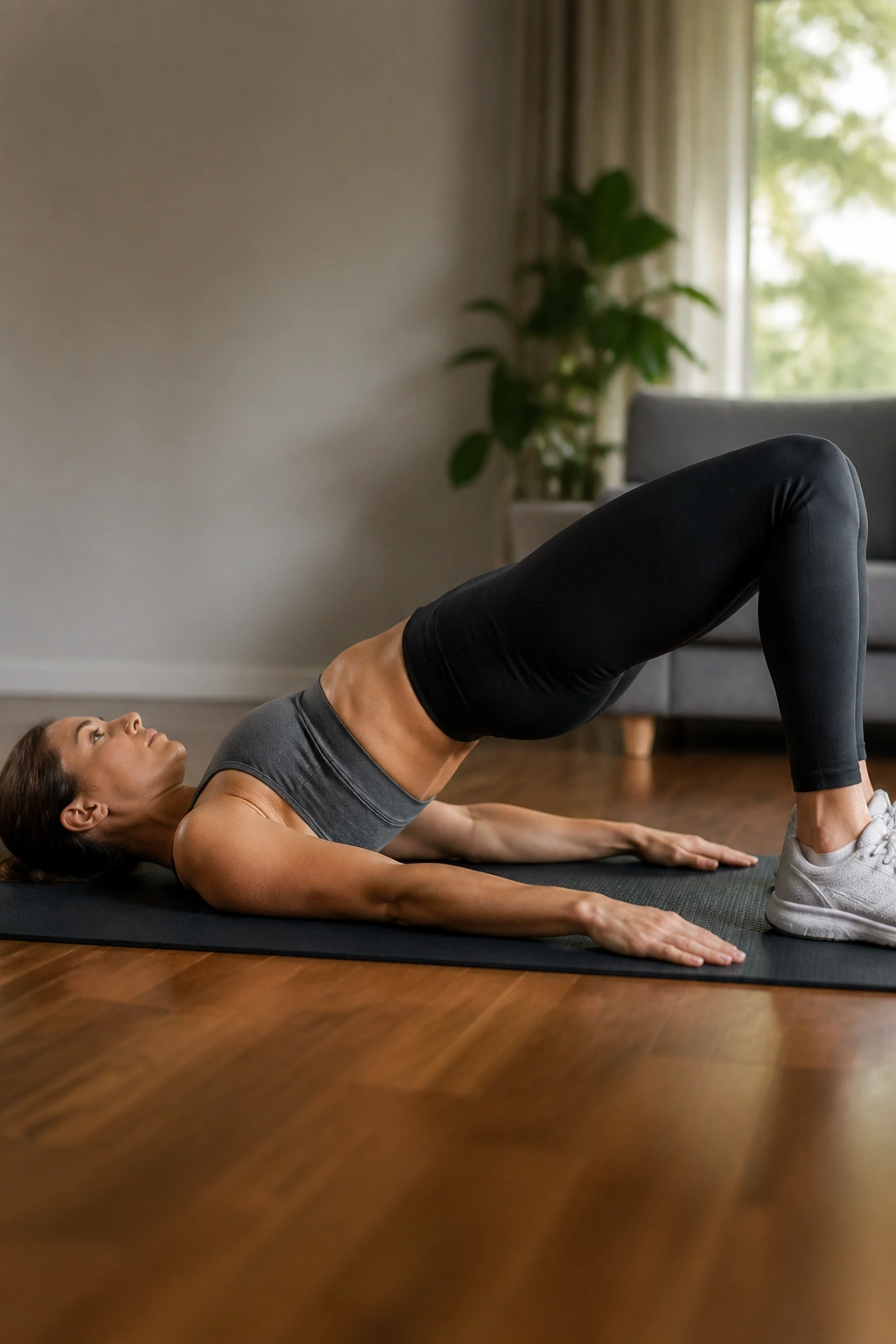
If you sit a lot, glute bridges can feel like a light switch turning on in the back of your body. The movement is small, but the payoff is not. Your glutes drive the lift, your hamstrings help, and your abs keep your ribs from popping up.
Lie on your back with your knees bent and your feet flat, about hip-width apart. Exhale, brace your stomach lightly, and press through your heels to lift your hips until your body makes a straight line from shoulders to knees. The top position should feel like a glute squeeze, not a lower-back bend.
A lot of people rush this one and turn it into a lazy hip fling. Don’t. Hold the top for 1 second, lower under control, and keep your knees from drifting outward or collapsing inward.
Quick Form Check
- Feet far enough away that your shins stay close to vertical at the top.
- Ribs down, not flared.
- Chin relaxed, not jammed into the chest.
- Squeeze the glutes before you lower.
Use 3 sets of 12 to 20 reps, or hold the top for 20 to 30 seconds if you want more burn with less movement.
4. Wall Sits When You Want a Brutal Burn Without Jumping
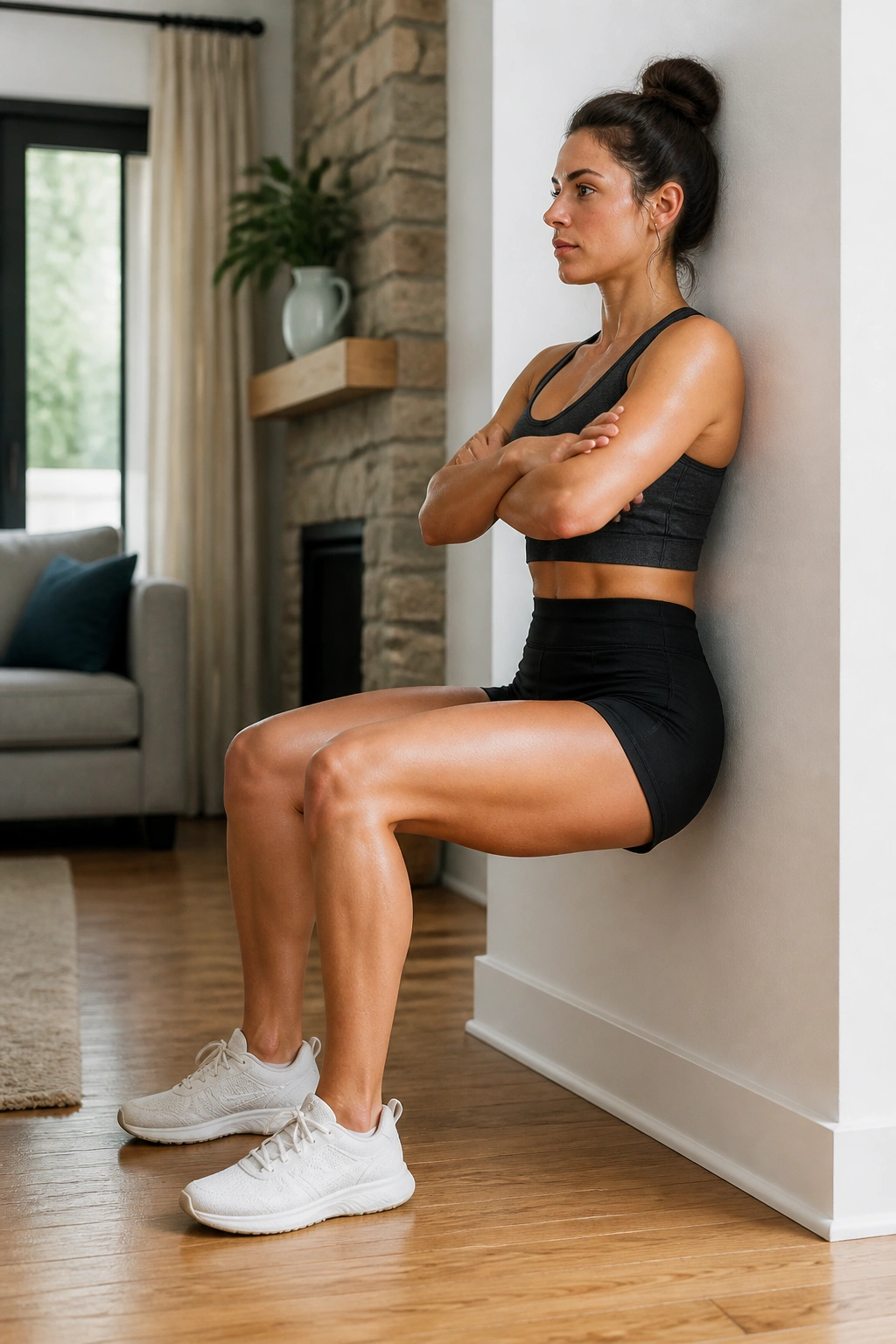
A wall sit looks easy until the clock gets honest.
Lean your back against a wall, slide down until your knees sit around a 90-degree angle, and plant both feet flat about a foot away from the wall. Your shins should stay close to vertical. If your knees drift too far forward, walk your feet out a little.
This move hammers the quads, but the abs are not asleep either. Your core has to keep your spine neutral while your legs do the grinding work. The burn shows up fast, and that is why wall sits are such useful finishers in a home routine.
Aim for 3 rounds of 20 to 45 seconds if you are starting out. Once that gets manageable, push to 60 seconds or add a light plate, backpack, or even a sturdy book held against your chest.
One hard rep. That is what the wall sit feels like after a while.
5. Bulgarian Split Squats Using a Couch or Chair
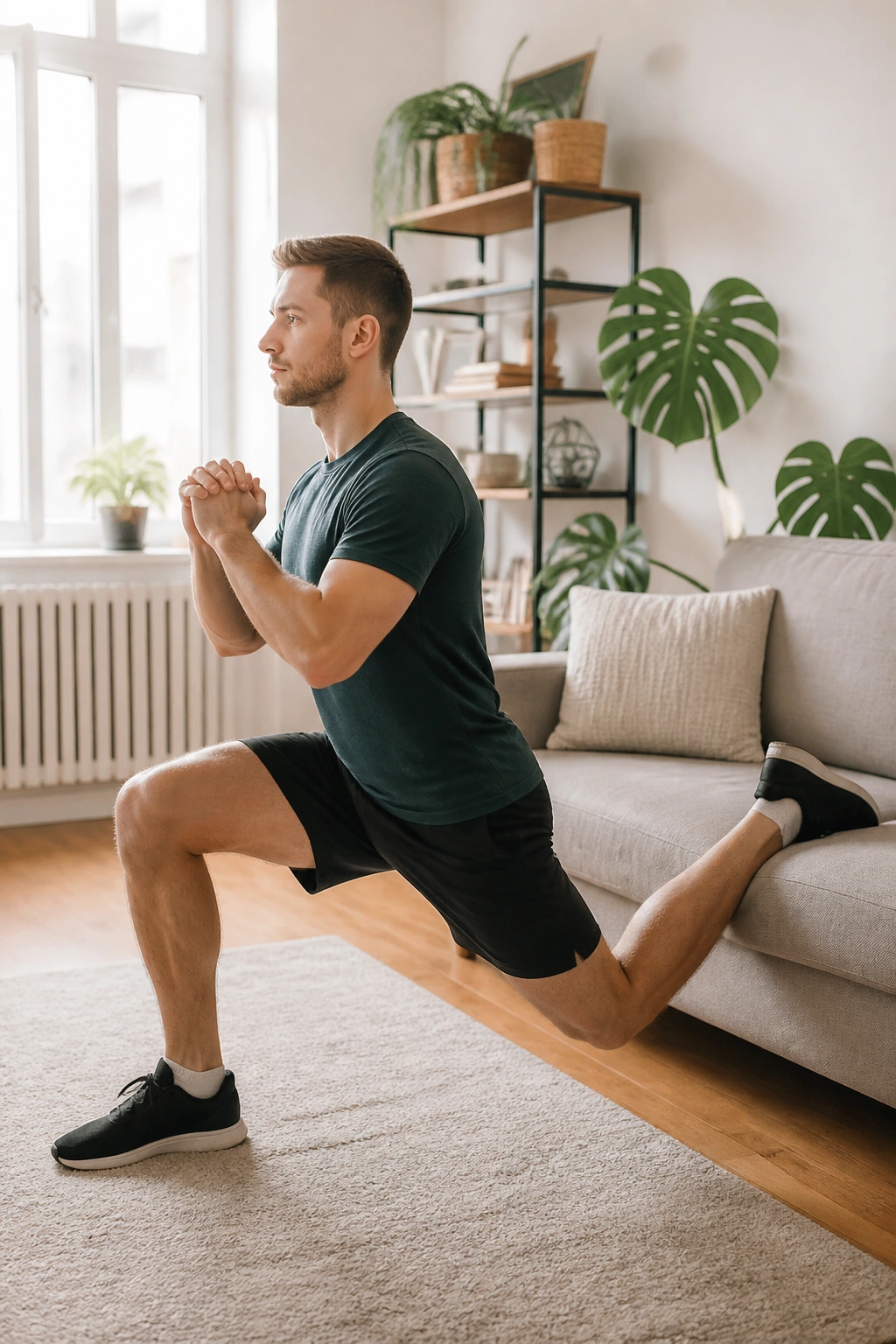
Bulgarian split squats are the exercise people avoid until they realize how much one side of the body can slack off. Then they become a favorite, or at least a respectful enemy.
Set the top of your back foot on a couch, chair, or bench behind you and stand far enough forward that the front knee can bend without your balance falling apart. Lower straight down, not forward, until your front thigh gets close to parallel. Then drive through the front heel to stand back up.
Unlike a regular lunge, this version removes a lot of momentum. That means the front leg has to do more of the work, and your core has to keep your torso from wobbling side to side. It is a blunt, effective exercise.
If you want to keep it manageable, do 2 to 3 sets of 6 to 10 reps per side. If you want more challenge, hold a backpack at chest level. That keeps your center of mass tighter and usually feels cleaner than swinging weights at your sides.
6. Step-Ups on a Stair, Bench, or Sturdy Box
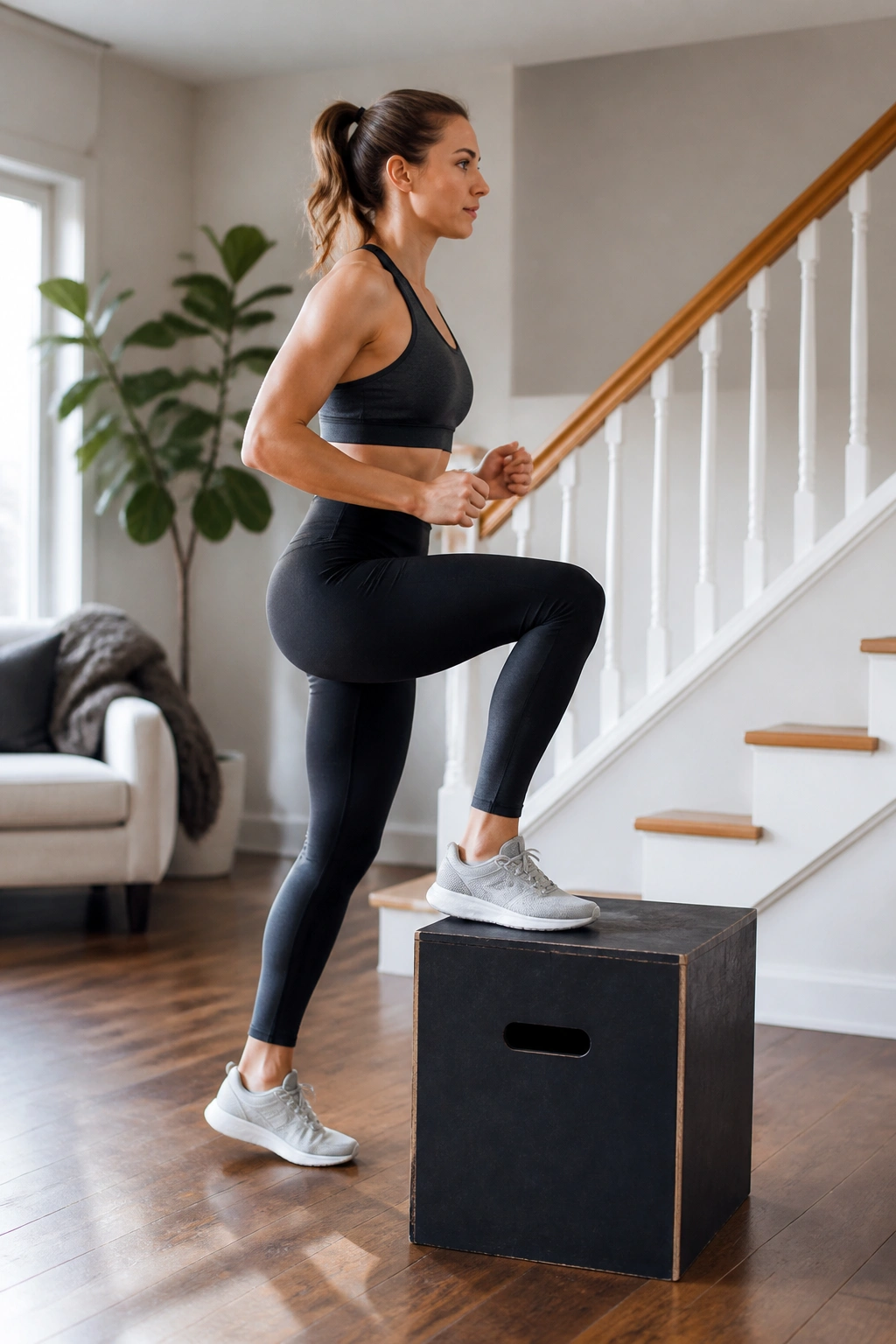
Step-ups are one of those home workouts that look almost too ordinary to matter. Then you do a few controlled reps and realize your quads, glutes, and balance all had opinions.
Use a stair, a low bench, or a box that does not wobble. Put your whole foot on the surface, lean forward just a little, and press through the working leg to stand up. The back leg should help only lightly. If you launch off the bottom leg every time, you are stealing the work from the leg that should be doing it.
The descent matters just as much. Lower slowly, tap the other foot down, and keep the working knee lined up with the toes. That control is where the extra benefit lives.
I like step-ups for people who get bored with squats fast. They change the angle, they challenge hip stability, and they are usually kinder to cranky knees than a deep squat. Try 3 sets of 8 to 12 reps per side and keep the box height low enough that you can stay smooth.
7. Sumo Squats for Inner Thighs and Glutes
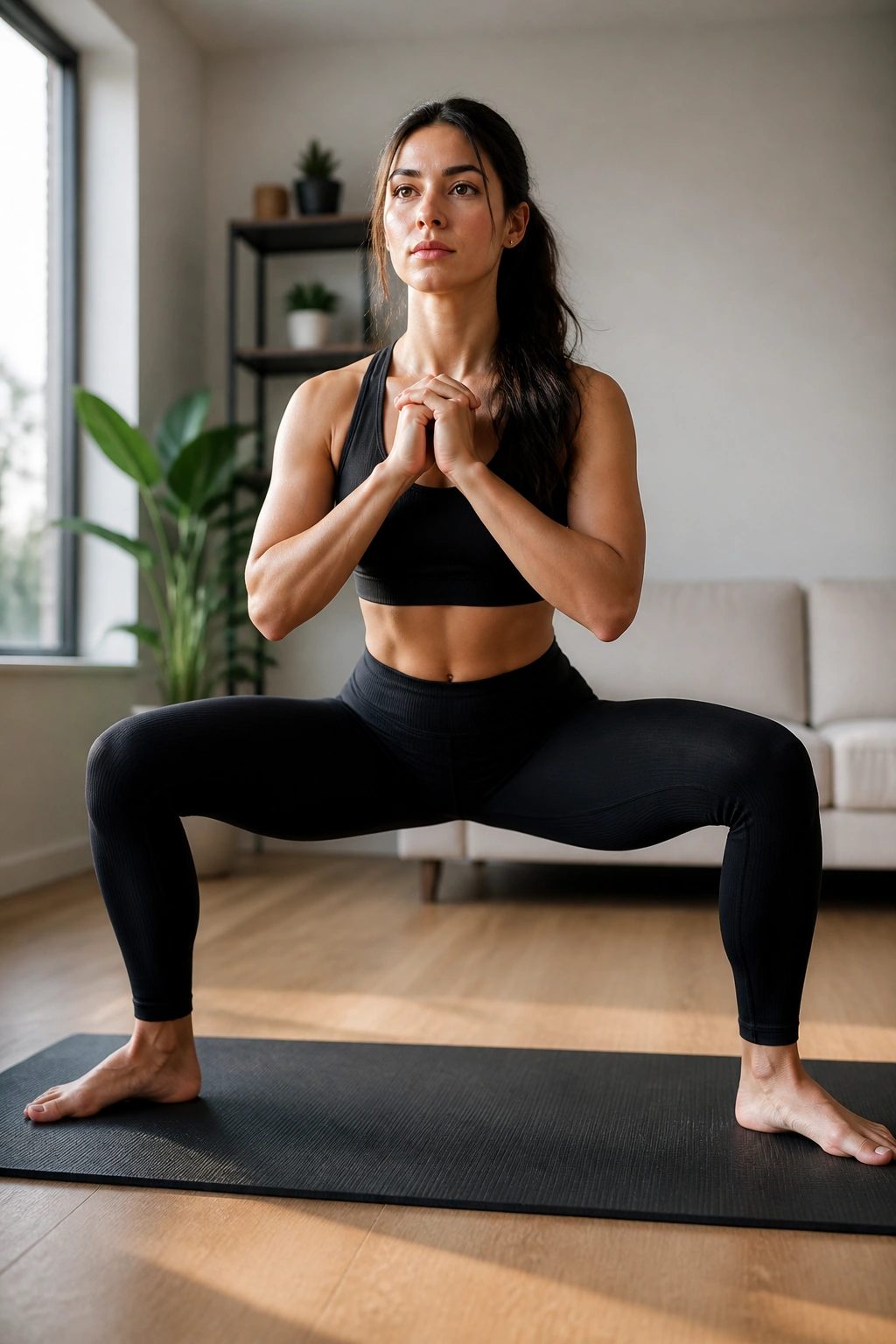
A wider stance changes the feel fast.
Stand with your feet wider than shoulder-width and turn your toes out about 30 to 45 degrees. Sit straight down between your heels, keep your chest lifted, and press the floor apart with your feet as you rise. The inner thighs help more here than they do in a narrow squat, and the glutes usually fire harder too.
Why the Wider Stance Matters
The wider stance shifts some work toward the adductors, which are the muscles on the inside of your thighs. That matters if you sit a lot, run, or just want a little more leg variety without needing equipment.
Use 3 sets of 10 to 15 reps. A slow 2-second pause at the bottom is a nice way to make the move more serious without adding weight.
If your knees feel pinchy, shorten the depth a bit and keep the toes turned out. You do not need to sink as low as possible to get value from the exercise. A clean half-squat beats a messy deep squat every time.
8. Standing Calf Raises You Can Sneak In Anywhere
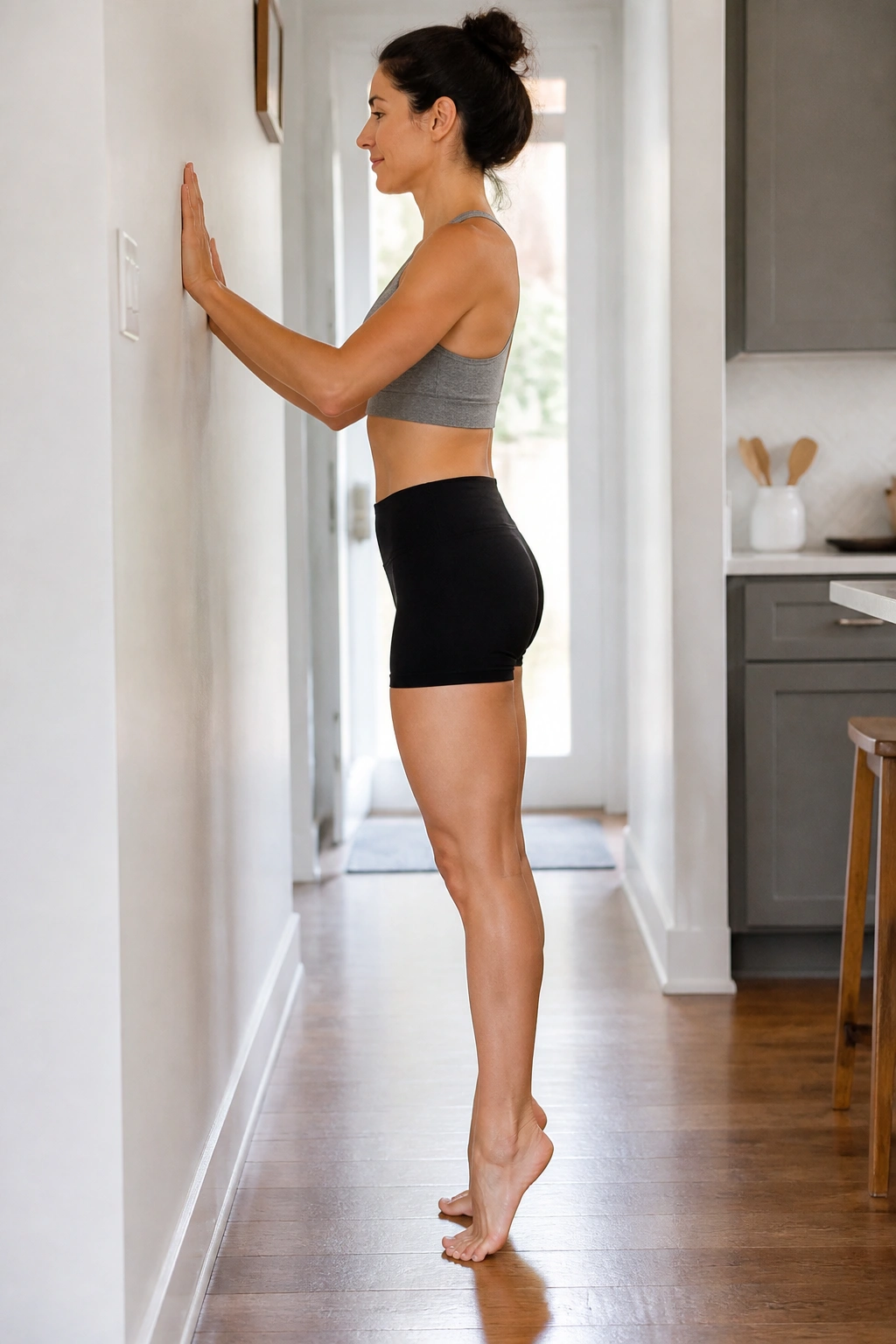
Calf raises are not glamorous. They also matter more than people admit.
Stand near a wall, counter, or chair for light balance support. Rise onto the balls of your feet as high as you can, pause for 1 second at the top, then lower slowly until your heels reach the floor. The slow drop is the part most people skip, and that is where a lot of the work happens.
You can do both feet together or one leg at a time. Single-leg calf raises are harder than they sound because the ankle has to stabilize while the calf lifts your whole body. If your balance is poor, start with two legs and keep the motion smooth.
What to Watch For
- Do not bounce.
- Do not roll the ankles outward.
- Keep the knees soft, not locked hard.
- Hold the top position for a full beat.
Use 15 to 25 reps per set. If you want a tiny, nasty variation, do the last 5 reps with a 2-second hold at the top. That makes a boring move feel expensive fast.
9. Mountain Climbers for Legs, Abs, and a Fast Heart Rate
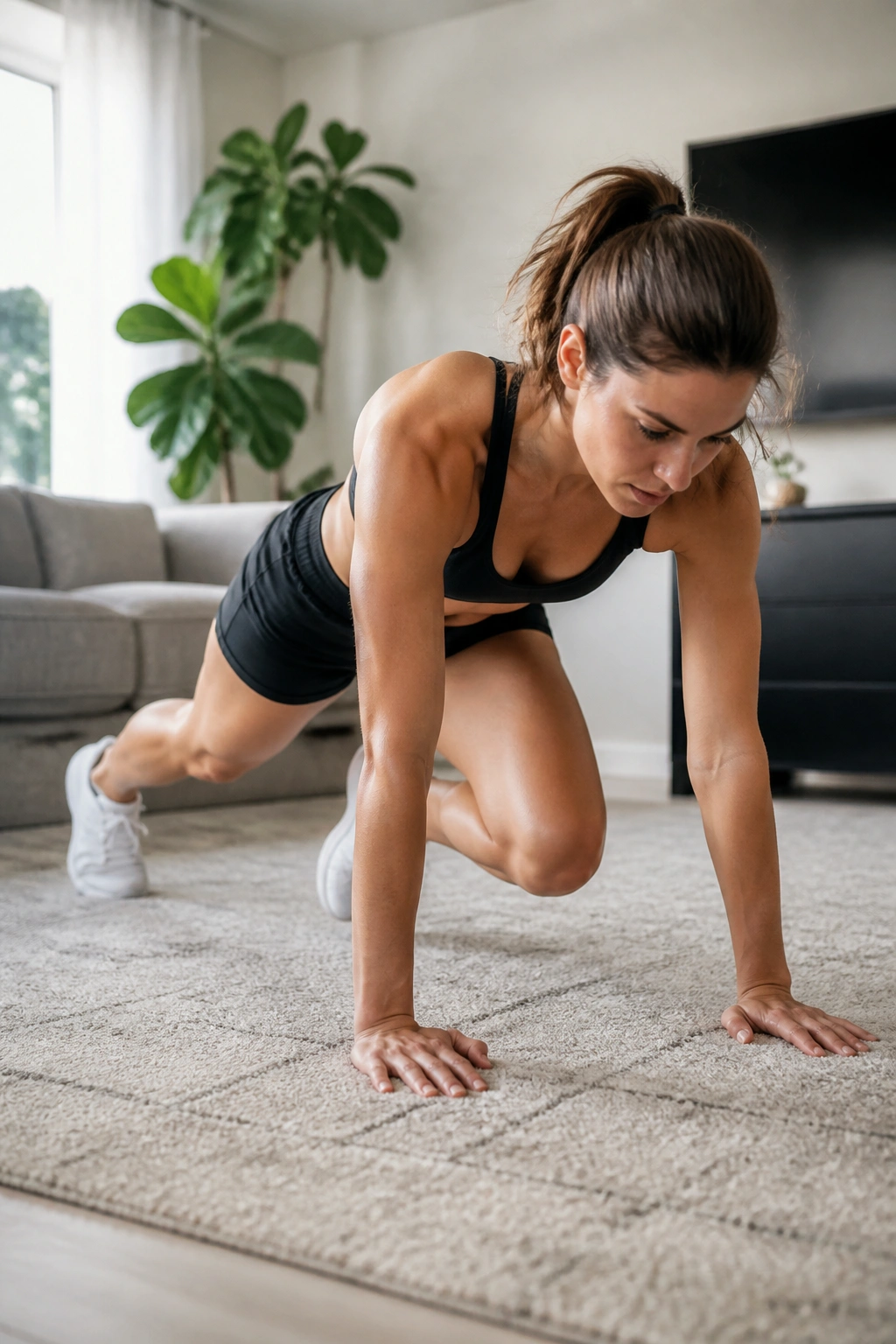
Mountain climbers look like cardio, and they are, but they also teach your core to stop your hips from wobbling all over the place. That is the part people miss when they rush through them.
Start in a strong plank with your hands under your shoulders. Drive one knee toward your chest, then switch sides while keeping your shoulders steady and your hips low. The faster you go, the easier it is to cheat. So start slower than you think you need to.
If your wrists get grumpy, put your hands on a bench or couch. That small incline cuts the load and usually lets you keep better form. If your shoulders shake, widen your feet a little in the plank to create more balance.
A solid dose is 20 to 40 seconds per round, or 3 sets of 30 seconds with 30 seconds of rest. This one belongs in a home workout when you want to feel your abs and legs show up together.
10. Dead Bugs for a Quiet Core That Actually Works
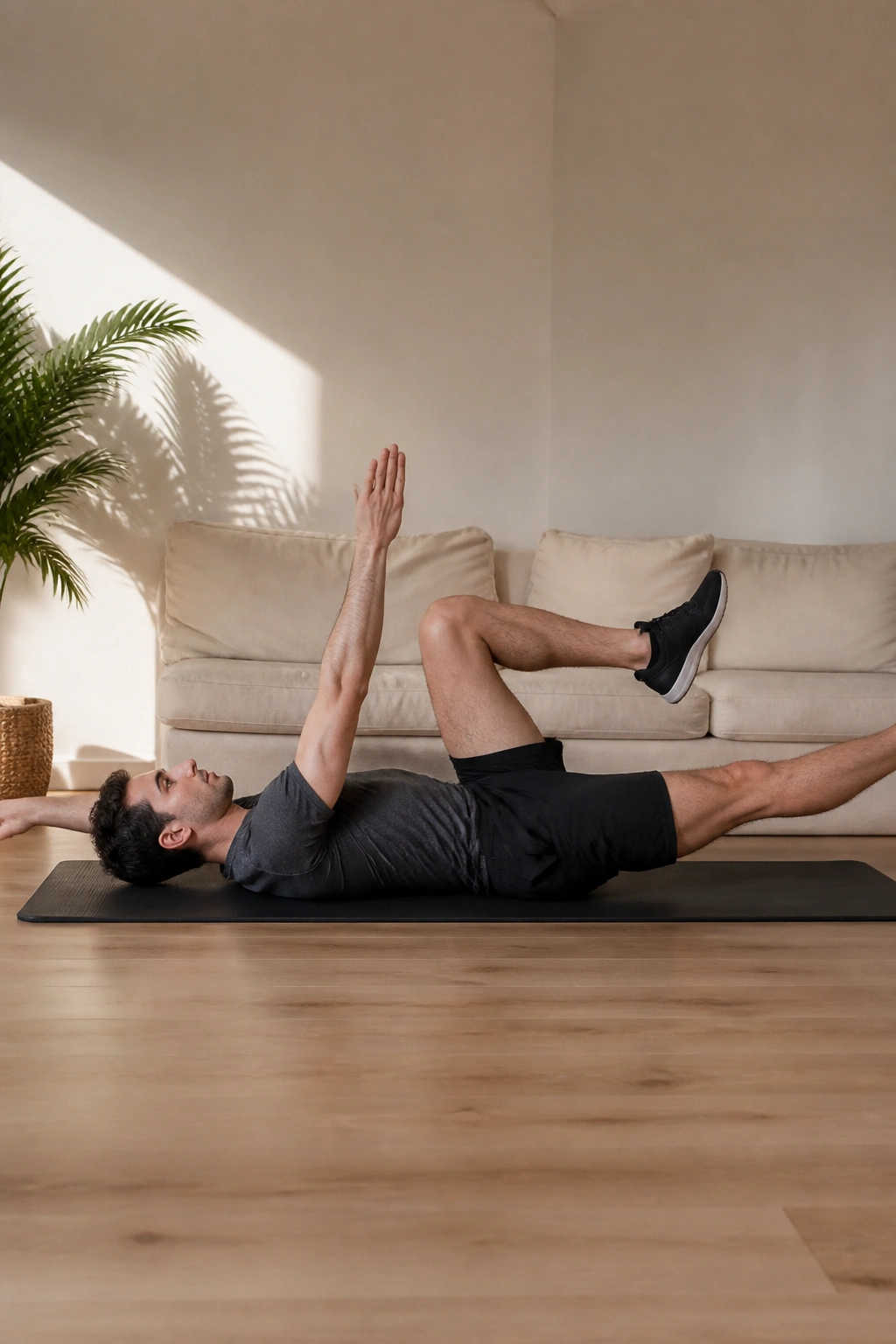
Why do dead bugs show up in serious core training? Because they teach your trunk to hold position while your limbs move. That is real-life core work, not just crunching for the sake of crunching.
Lie on your back with your arms pointed toward the ceiling and your knees bent at 90 degrees. Press your lower back gently into the floor, then slowly extend the opposite arm and leg until they hover just above the floor. Return to center and switch sides.
How to Make Your Core Do the Work
The lower back should stay heavy against the floor the whole time. If it arches, shorten the range of motion. If your ribs pop up, breathe out harder before each rep.
A good starting point is 2 to 4 sets of 6 to 10 reps per side. Move slowly enough that you can keep the opposite arm and leg under control for the full path, not just the start and finish.
Dead bugs are one of those moves that look too easy until they humiliate sloppy abs. That is exactly why I keep them in a home routine.
11. Bicycle Crunches Without the Neck Tug
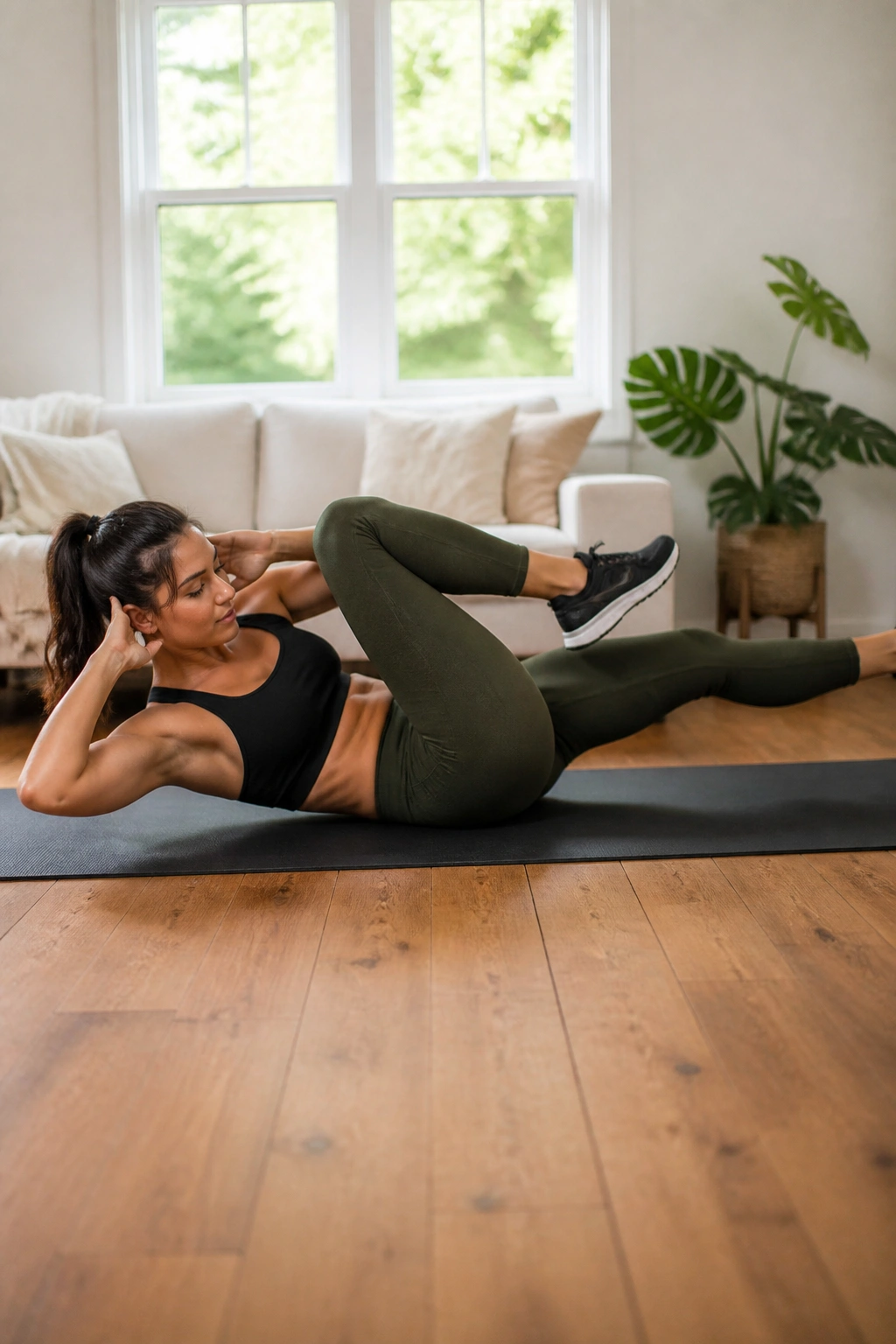
Bicycle crunches can be excellent, and they can also be a mess. The difference is almost always speed.
Lie on your back, lift your shoulders slightly, and rotate one shoulder toward the opposite knee while the other leg extends. The work should come from your torso twisting and your abs pulling you through the motion. If you yank on your neck, you are doing too much with your hands and too little with your midsection.
Unlike fast crunches, this move asks for control. The point is not to smack elbow to knee at top speed. The point is to move through a full, deliberate rotation without letting your lower back arch off the floor.
Try 2 to 3 sets of 12 to 20 reps per side or 30 to 40 seconds of steady work. If your neck feels tight, keep the elbows wider and look at the ceiling instead of tucking your chin.
12. Plank Shoulder Taps for Anti-Rotation Strength
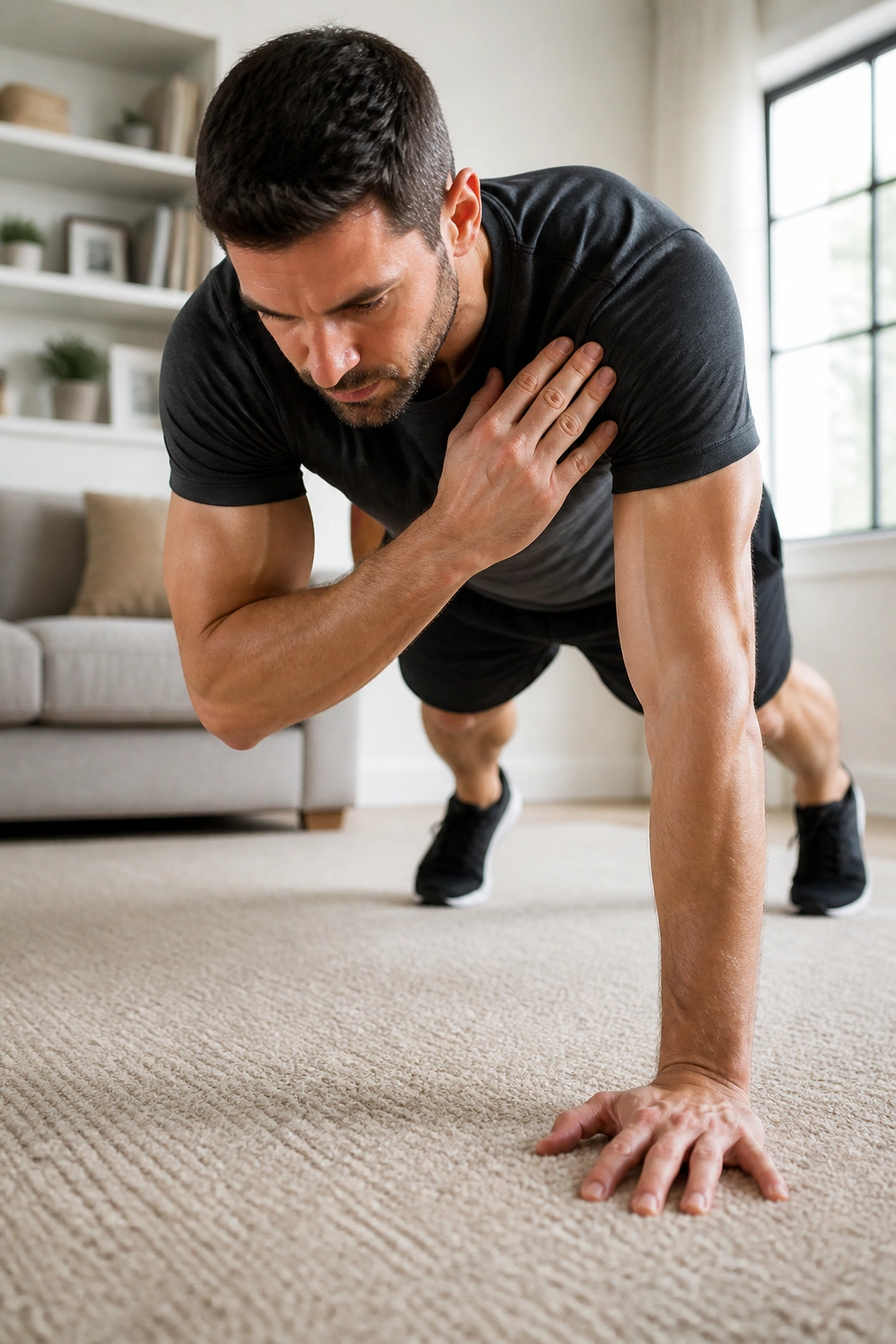
Plank shoulder taps are one of my favorite no-equipment core moves because they expose every little wobble. They are honest. Rude, even.
Set up in a high plank with your feet a little wider than hip-width. Tap one shoulder with the opposite hand, then switch sides without letting your hips twist or sway. The wider foot stance helps at first, and you can narrow it later if you want more challenge.
Key Details That Matter
- Keep your feet planted.
- Press the floor away with both hands.
- Avoid rocking side to side.
- Move one tap at a time, not in a rush.
Your abs are working to keep your trunk still while one arm leaves the floor. That anti-rotation demand is what makes the move useful, especially if you spend a lot of time sitting or if your usual core work is just crunches.
Use 2 to 3 sets of 10 to 20 taps total. Slow taps beat fast taps here, every time.
13. Side Planks for Obliques and Hip Stability
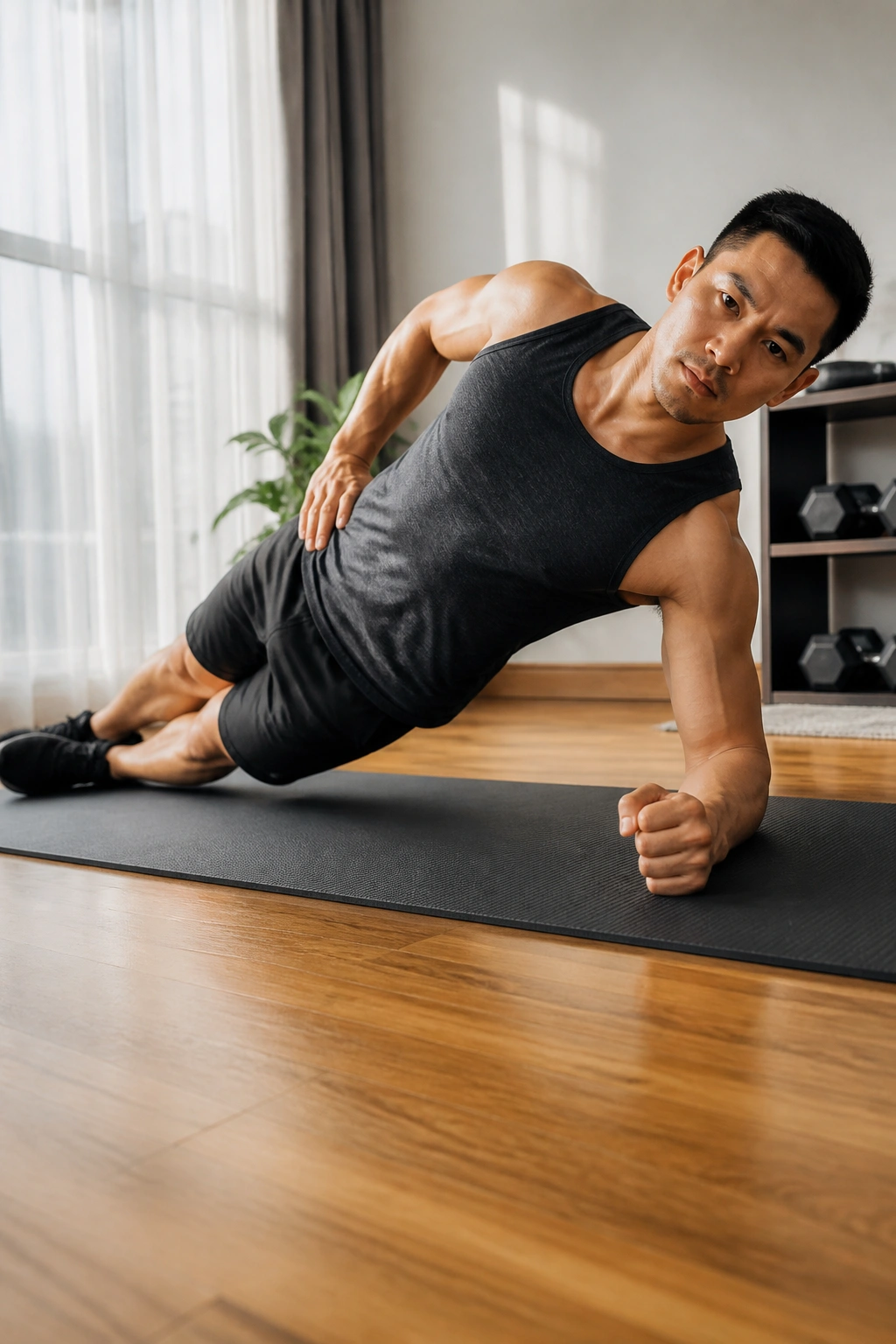
Side planks hit the obliques, but they also ask a lot from the side of the hip. That is why they burn in places people do not expect.
Set your forearm on the floor, line your elbow under your shoulder, and lift your hips so your body makes a straight line from head to feet. Stack the feet or stagger them for more balance. If your wrist hates long planks, the forearm version is the better choice.
You are trying to stay long, not crunched. The shoulder should feel active, the waist should feel lifted, and the bottom hip should not sag toward the floor. If the full version feels too much, drop the bottom knee and keep the same body line from the knee upward.
Hold for 20 to 45 seconds per side. The side plank is not flashy, but it gives you a kind of trunk strength that shows up when you carry groceries, climb stairs, or just stand on one leg and tie a shoe.
14. Lying Leg Raises for Lower-Abs Control
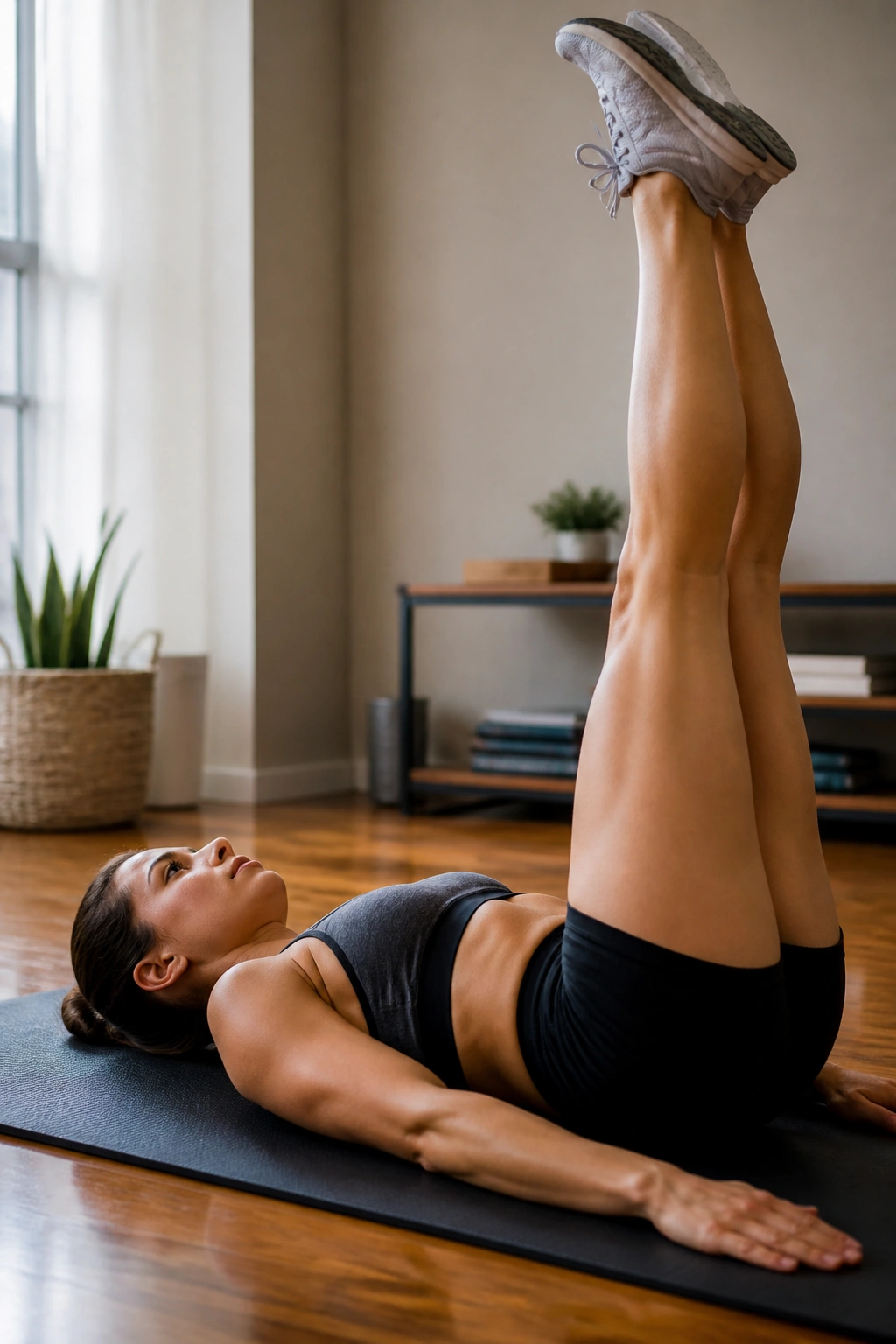
Do leg raises work the lower abs? Yes, but only if you stop cheating with your lower back.
Lie flat on the floor with your legs straight and your hands under your hips if needed. Press your lower back into the floor, then raise both legs together until they point toward the ceiling or reach a comfortable angle. Lower them slowly until they hover just above the floor, then stop before your back arches.
What to Watch For
If your lower back arches, bend your knees a little. Bent-knee leg raises are not a consolation prize. They are a smarter version for a lot of people.
Keep the movement slow, especially on the way down. That eccentric lowering is where the abs have to control the load, and it is where form usually falls apart.
Use 2 to 4 sets of 6 to 12 reps. If your hip flexors take over, shorten the range and focus on keeping your ribs heavy on the floor.
15. Reverse Crunches That Spare the Neck
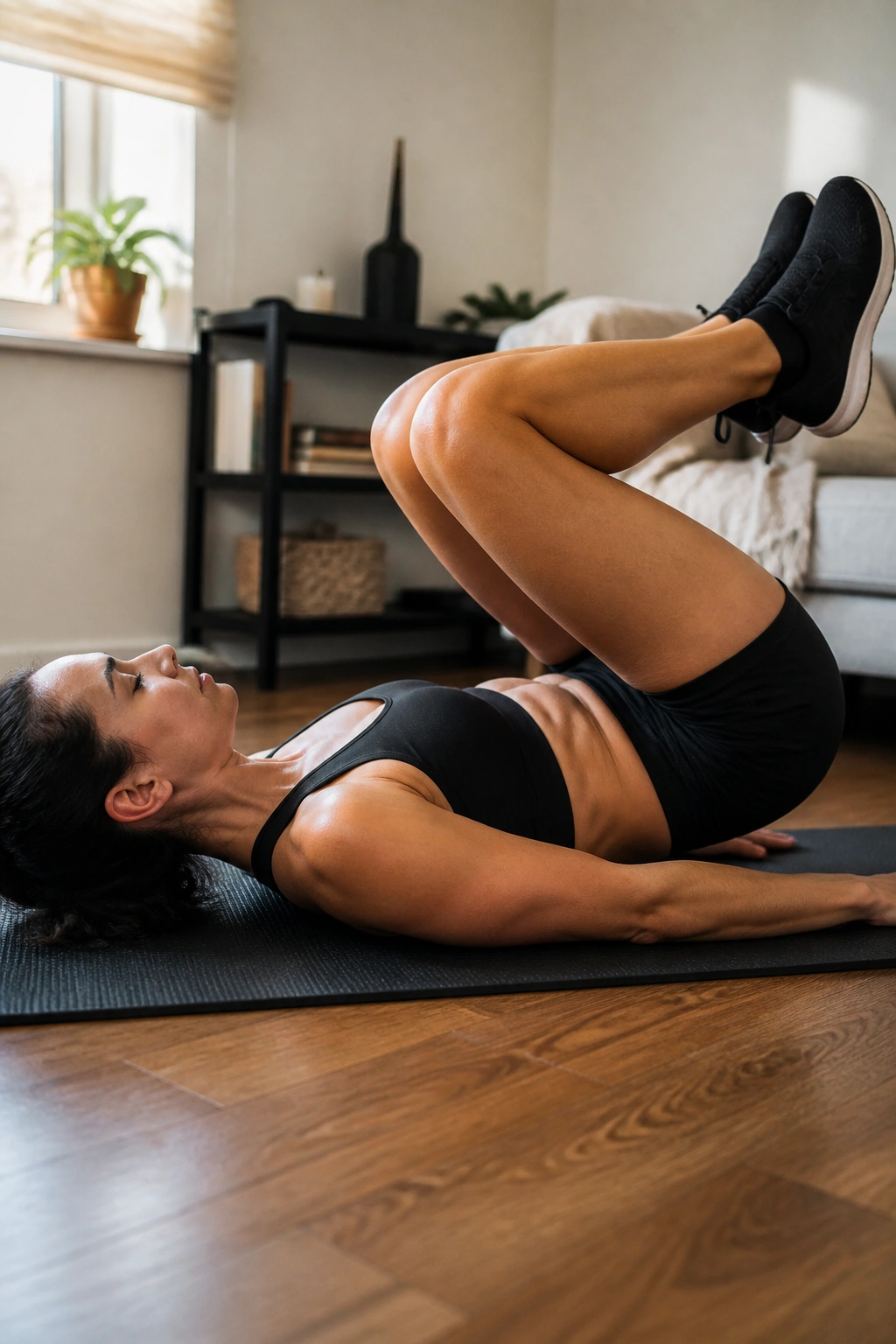
Reverse crunches are a smart trade if standard crunches irritate your neck or feel like they work more hip flexor than abs. They are also easy to do in a small room, which is handy.
Lie on your back with your knees bent and your shins roughly parallel to the floor. Exhale, curl your pelvis upward, and bring your knees toward your chest just enough to lift your hips a little off the floor. Lower slowly until your lower back settles down again.
The movement is small. That is fine. Small and controlled beats big and sloppy here, especially when your goal is to train the abs instead of just swinging your legs around.
Try 3 sets of 10 to 15 reps with a 1-second squeeze at the top. If you feel it in your hip flexors more than your abs, slow down and reduce the range. That usually fixes the problem faster than adding more reps.
16. Bird Dogs for Balance, Back Support, and Core Control
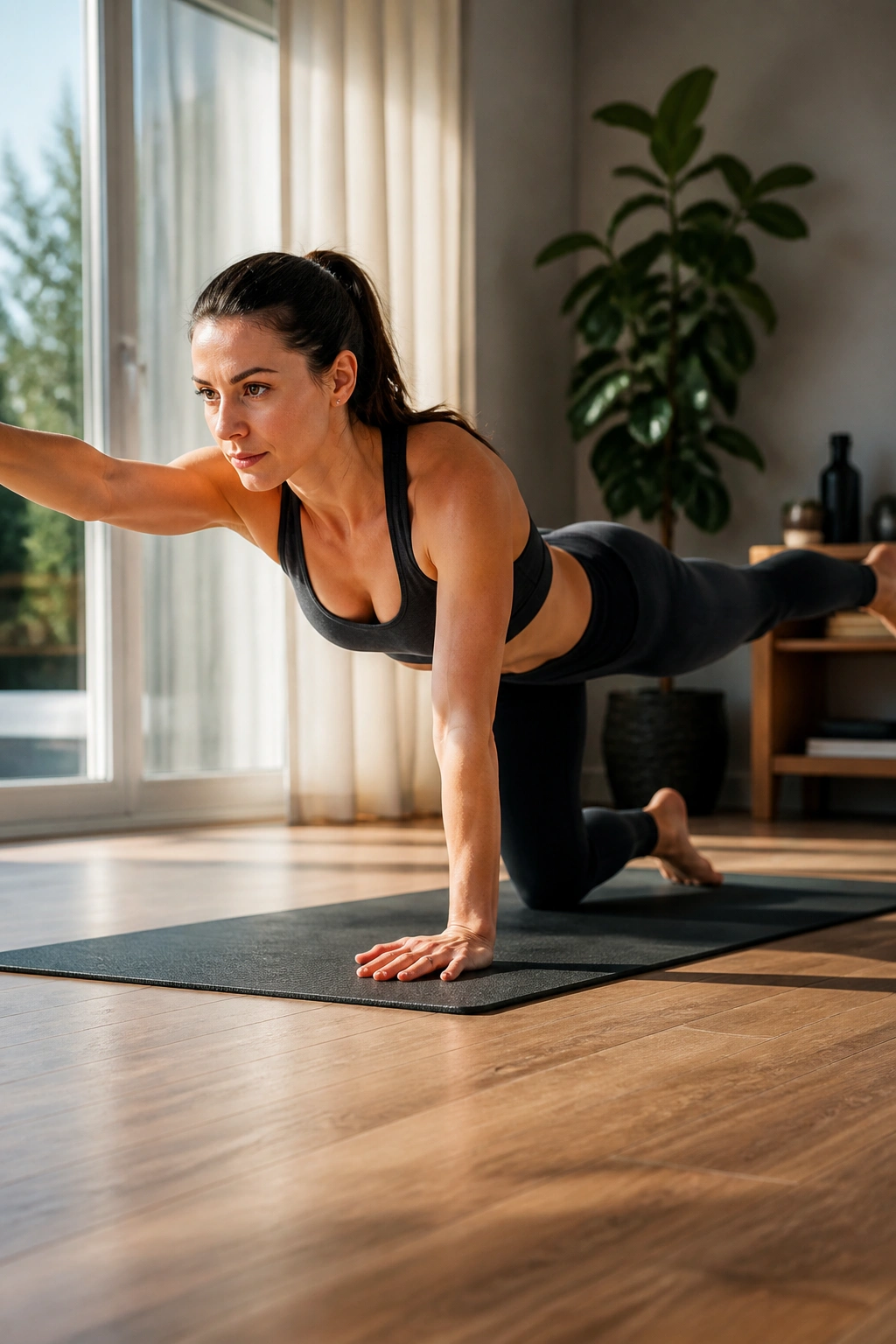
Bird dogs are the quiet workhorse of home core training. They look calm. They are not.
Start on hands and knees with your wrists under shoulders and knees under hips. Reach one arm forward while extending the opposite leg back, then pause for 1 to 2 seconds before returning to center. Keep your hips square to the floor and your belly lightly braced.
Unlike a dead bug, this version asks you to fight gravity from a hands-and-knees position. That makes it useful for balance, lower-back control, and all the little stabilizers around the pelvis. If you sit all day, bird dogs tend to feel oddly satisfying because they open the hips a bit while still making the abs work.
Use 2 to 4 sets of 6 to 10 reps per side. If balance is shaky, start by extending only the leg, then only the arm, then both together.
17. Hollow Body Holds for a Harder Core
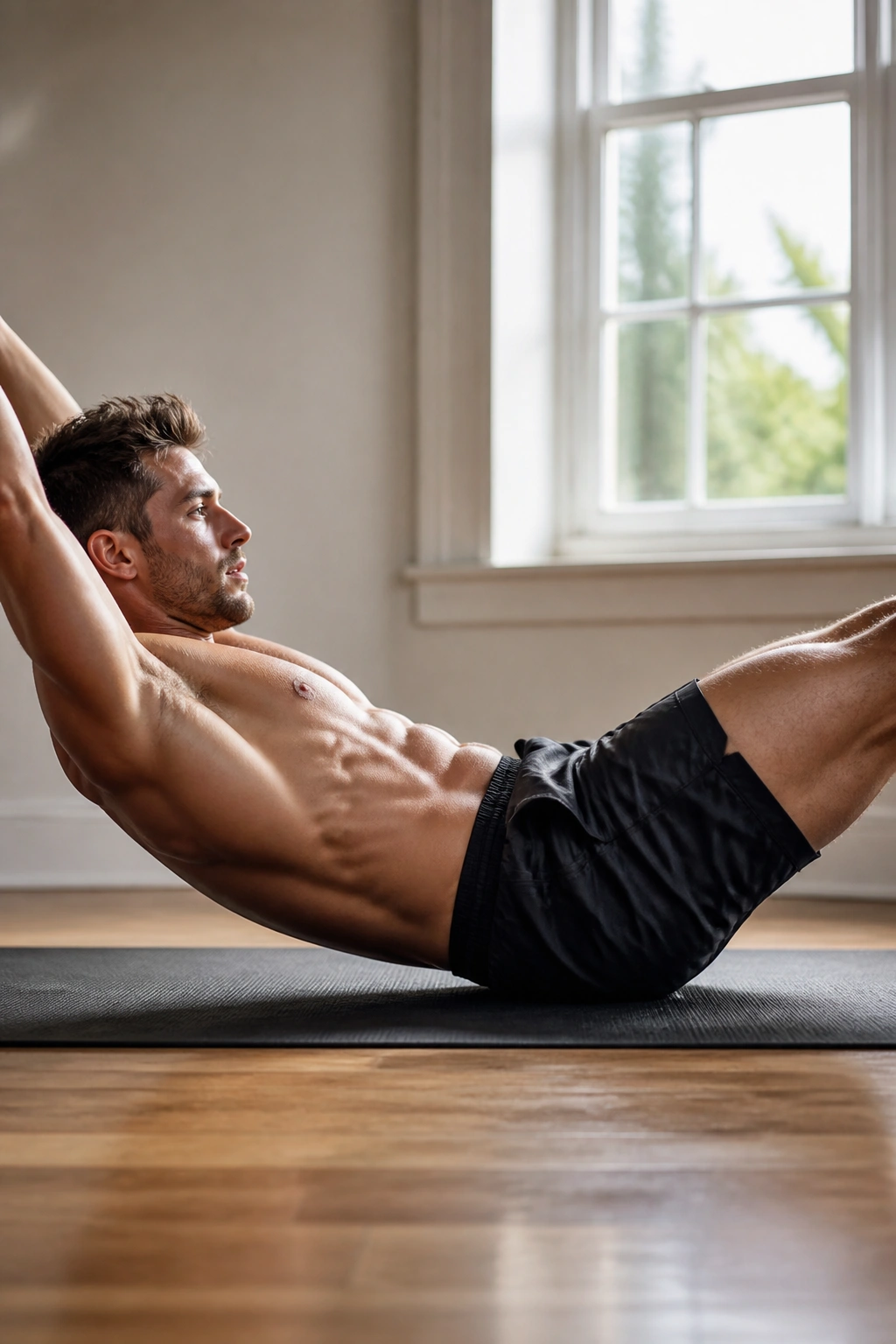
A hollow hold is one of those moves that looks cleaner than it feels.
Lie on your back, press your lower back into the floor, and lift your shoulders and legs a few inches off the ground. Reach your arms overhead if you can keep the ribs tucked down; otherwise keep them by your sides. The goal is a tight, banana-like shape with no gap under the lower back.
How to Stay in It
- Keep the chin slightly tucked.
- Breathe in short, controlled breaths.
- Stop the hold the moment your lower back starts to arch.
- Bend the knees if straight legs are too much.
Hold for 10 to 30 seconds. A short clean hold is better than a long sloppy one. That is especially true with hollow work, because the whole point is to teach the front side of your torso to stay rigid while your limbs hover off the floor.
If you want a real challenge, pair hollow holds with dead bugs. That combination is mean in the best way.
18. Squat Pulses to Burn Out the Quads
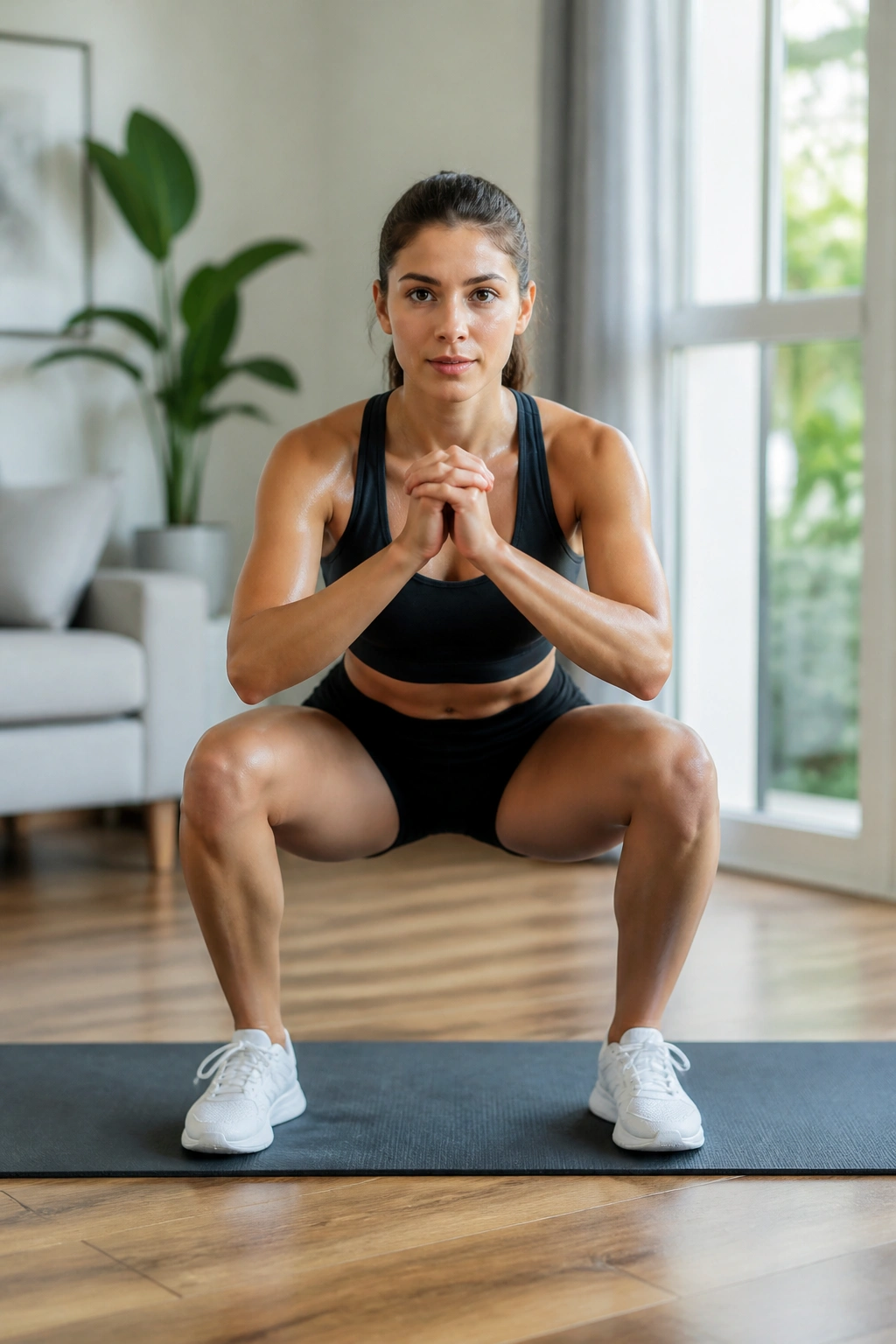
Squat pulses are small, and that is exactly why they sting.
Lower into a squat position, stay in the bottom third of the movement, and pulse up and down just a few inches. The motion should stay controlled. If you start bouncing like a pogo stick, the quads and knees get a mess instead of a workout.
I like pulses as a finisher after regular squats or lunges. They keep tension on the legs without needing extra space, extra equipment, or much thought. The burn shows up fast, and that makes them useful when you only have a few minutes left.
Try 15 to 25 pulses after a set of full squats, or hold the low position for 20 seconds and then pulse for another 10 reps. Keep the knees tracking over the toes and the chest open. Tiny range. Serious burn.
19. Toe Taps for Low-Impact Ab Work
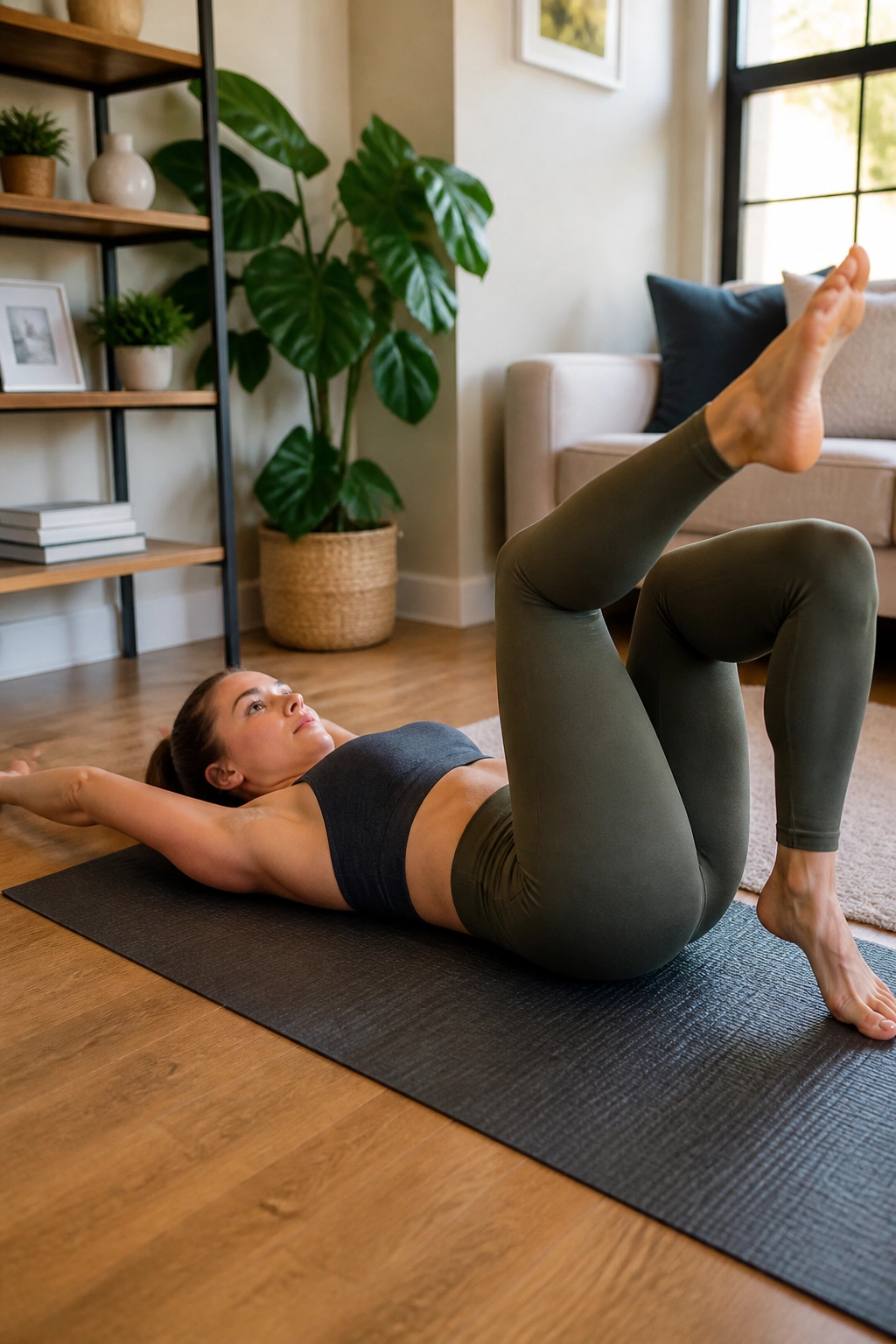
Want a core move that is easy on the neck and still makes your abs pay attention? Toe taps do that.
Lie on your back and lift your legs into tabletop position, with hips and knees bent at 90 degrees. Lower one toe to the floor, bring it back, then switch sides. Keep your lower back pressed into the mat the whole time.
How to Make Them Harder
- Straighten the opposite leg as the tapping leg lowers.
- Reach your arms overhead.
- Slow the tempo to 3 seconds down, 1 second up.
- Pause before each tap instead of tapping fast.
Toe taps are a good option when you want ab work at home but do not want neck strain or a lot of impact. They also pair well with leg raises and dead bugs because they train the same basic skill: keep the trunk steady while the hips move.
Use 2 to 3 sets of 10 to 20 taps per side. If your lower back lifts off the floor, shorten the range and keep the knees a little higher.
20. Donkey Kicks for Glutes That Need More Time Under Tension
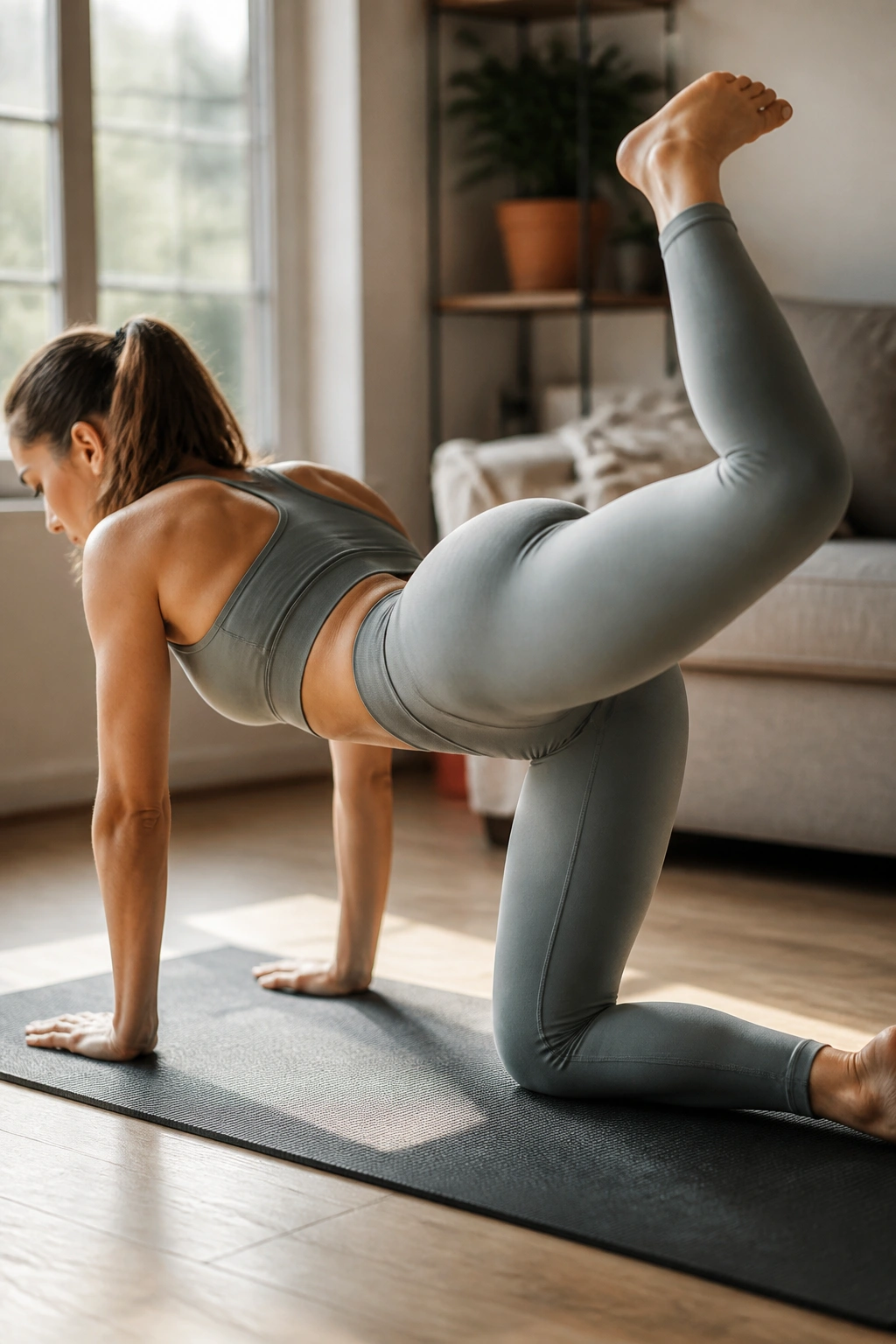
Donkey kicks are one of the simplest glute moves you can do at home, and they still earn their place. There is no fancy setup. No gear. Just controlled hip extension and a little patience.
Start on hands and knees, keep one knee bent at 90 degrees, and drive the sole of that foot toward the ceiling without arching your lower back. The lift should come from the glute, not from swinging the leg or twisting the pelvis. A small pause at the top makes this exercise feel much more serious.
If your wrists get tired, drop to your forearms for a similar pattern. If your lower back starts taking over, reduce the height of the kick. Higher is not better. Cleaner is better.
Use 2 to 4 sets of 12 to 20 reps per side. Stack these with glute bridges and reverse lunges, and you have a home lower-body block that hits the backside well without needing a single weight. That is the nice part about these leg and ab workouts you can do at home: they scale from quiet to brutal without changing the room you train in.
