



Building a lower body that performs as well as it looks requires more than just showing up to the gym and hoping for the best. Most people approach leg day with a single-minded obsession—usually just heavy back squats—but that creates plateaus. Your legs are the largest muscle group in your body, housing complex, overlapping systems of quads, hamstrings, glutes, and calves. They need variety to grow. They need constant, shifting stimuli to respond.
The reality of training is that your central nervous system needs a break from the grind of heavy barbell work, but your muscles still need the work. By cycling through different training stimuli, you prevent overuse injuries and keep the stagnation at bay. You don’t need a PhD in exercise physiology to make progress. You just need a structured rotation of routines that force your body to adapt to new demands, new angles, and new intensity levels.
Here are eighteen distinct leg training protocols. Each one serves a specific purpose, from raw strength and hypertrophy to explosive power and metabolic conditioning. Rotate these into your schedule, listen to your joints, and stop treating leg day like a generic chore.
1. The Bodyweight Foundation Routine
You might think bodyweight training is for beginners, but that is a dangerous assumption. If you cannot master your own frame, you have no business loading up a barbell. This routine focuses on high-tension, high-repetition work designed to build stability and endurance.
The Mechanics of Control
The goal here is not speed. It is time under tension. When you perform a bodyweight squat, do not bounce at the bottom. Instead, descend for three seconds, hold at the bottom for one, and explode up for one. This tempo variation turns a simple movement into a brutal quad-builder. You should focus on keeping your heels flat and your knees tracking directly over your toes.
The Circuit
Perform these movements in a continuous loop for five rounds with minimal rest between exercises:
- 20 Bodyweight Squats (controlled tempo)
- 15 Reverse Lunges per leg
- 30-second Wall Sit (with arms extended overhead)
- 20 Glute Bridges (pause at the top for two seconds)
Pro Tip: If this feels too easy, slow your descent further. A five-second negative rep changes the math entirely.
2. Kettlebell Essentials for Posterior Chain
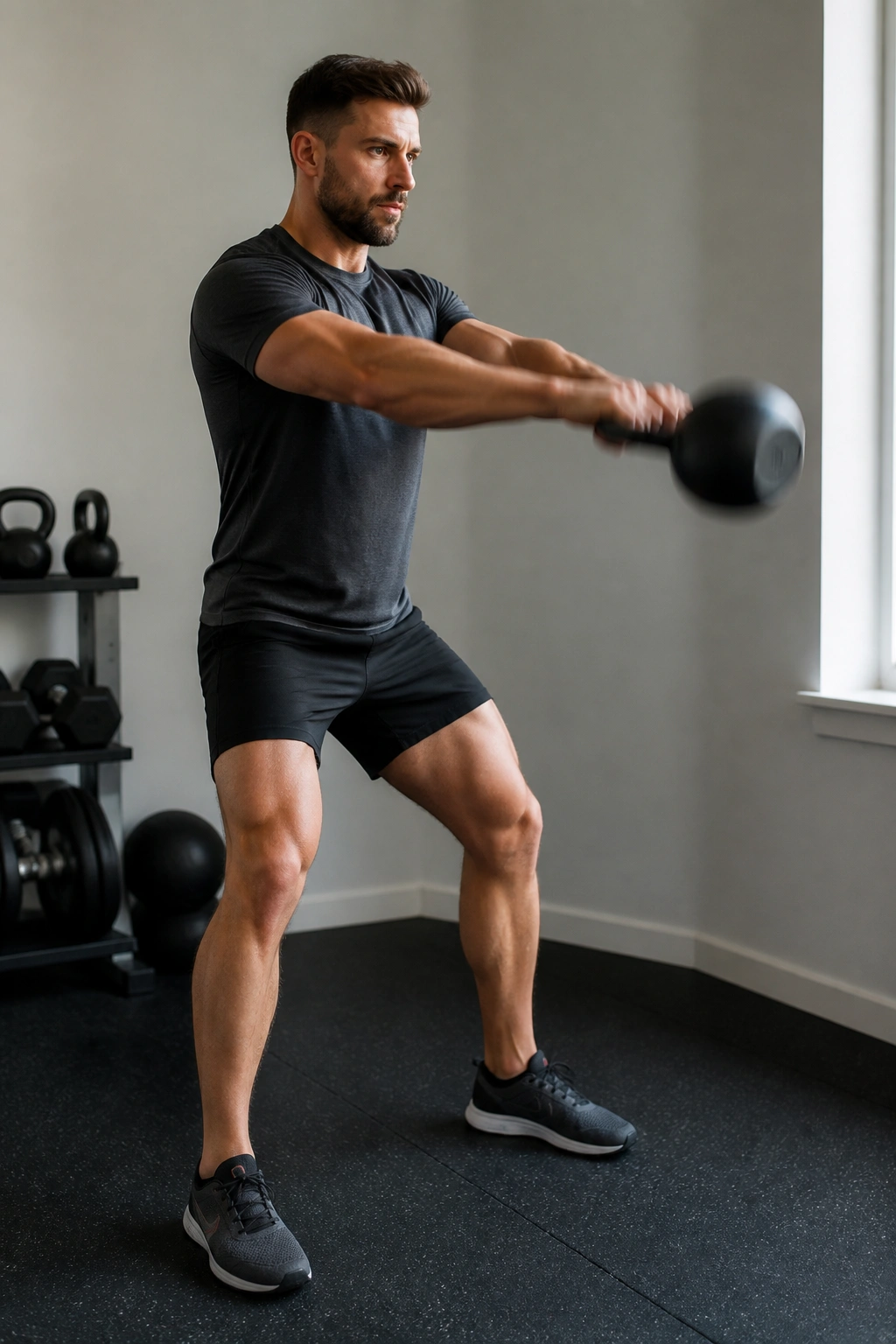
The kettlebell is arguably the most underrated tool for posterior chain development. Because the weight is offset from your center of gravity, it forces your core and stabilizers to work double-time. This routine is specifically designed to target the hamstrings and glutes while keeping the lower back protected through proper hinge mechanics.
Why This Works
The hinge pattern is the most critical movement for a functional lower body. When you swing a kettlebell, the momentum forces your glutes to fire aggressively to stop the weight. It is a snap-back mechanism that builds explosive power that a leg press machine simply cannot replicate.
Recommended Protocol
- Kettlebell Swings: 4 sets of 20 reps (focus on glute snap)
- Goblet Squats: 4 sets of 12 reps (keep the bell tight to your chest)
- Single-Leg Kettlebell RDLs: 3 sets of 10 per leg (go slow here, focus on balance)
- Kettlebell Sumo Squats: 3 sets of 15 reps (wide stance to emphasize inner thighs)
3. Barbell Back Squat Volume Focus
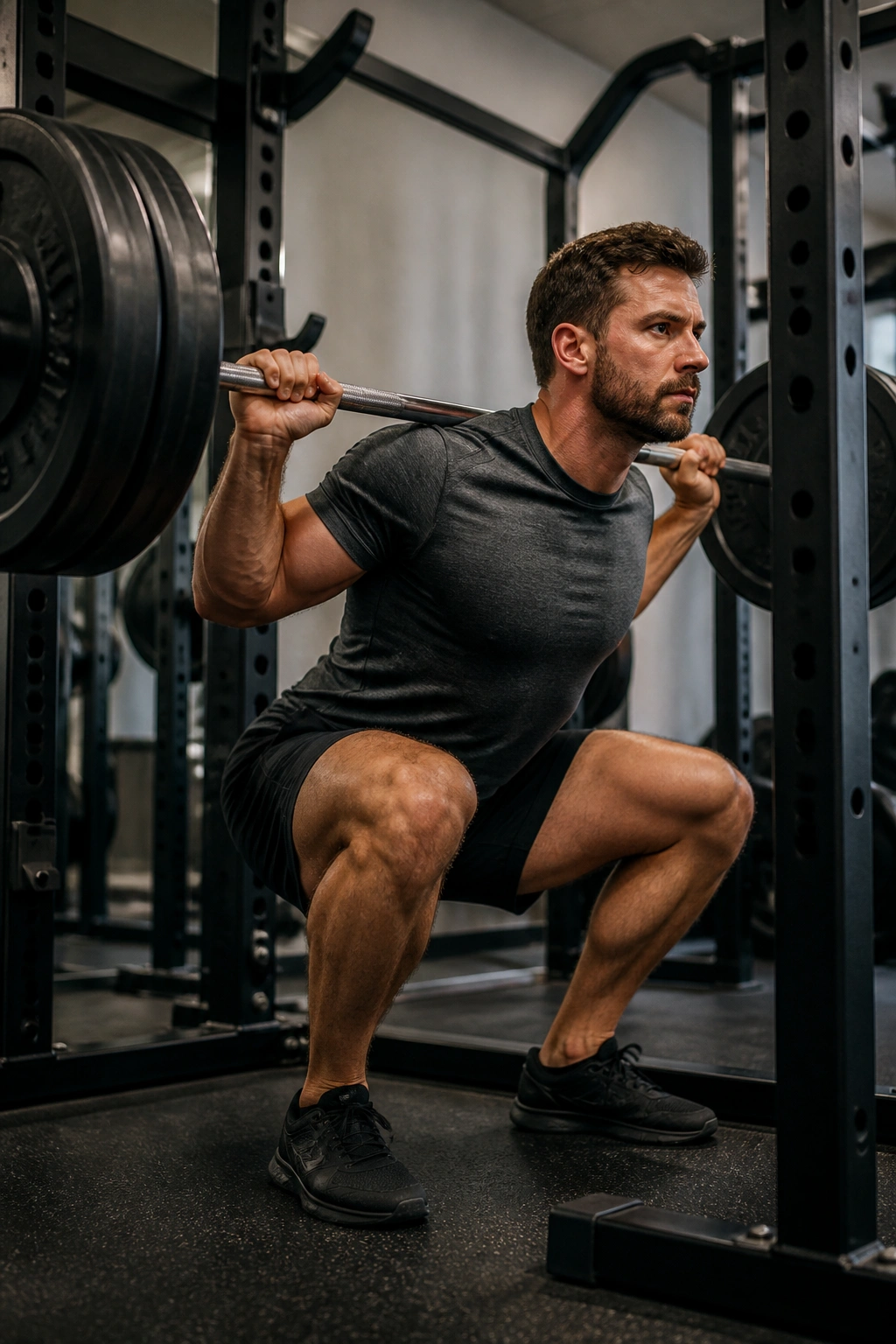
There is no substitute for the raw, mechanical tension of a loaded barbell across your traps. This is the cornerstone of strength. This routine assumes you have access to a squat rack and a healthy baseline of mobility. We are focusing on volume, not just hitting a one-rep max.
The Power of 10s
Sets of ten are physically demanding. They require aerobic capacity and mental grit. If you can squat your body weight for ten reps, you are in a different league than the guy loading up four plates for a quarter-rep ego lift.
Structure for Success
- Warm-up: 2 sets of empty bar squats, 2 sets at 50% max.
- Working sets: 5 sets of 10 reps at 65-70% of your 1-rep max.
- Rest: 90 seconds exactly.
- Finisher: 3 sets of 15 bodyweight lunges to flush the quads.
Warning: If your form breaks down during the 8th rep, rack the bar. Do not let your ego compromise your spinal health.
4. Dumbbell Hypertrophy Protocol
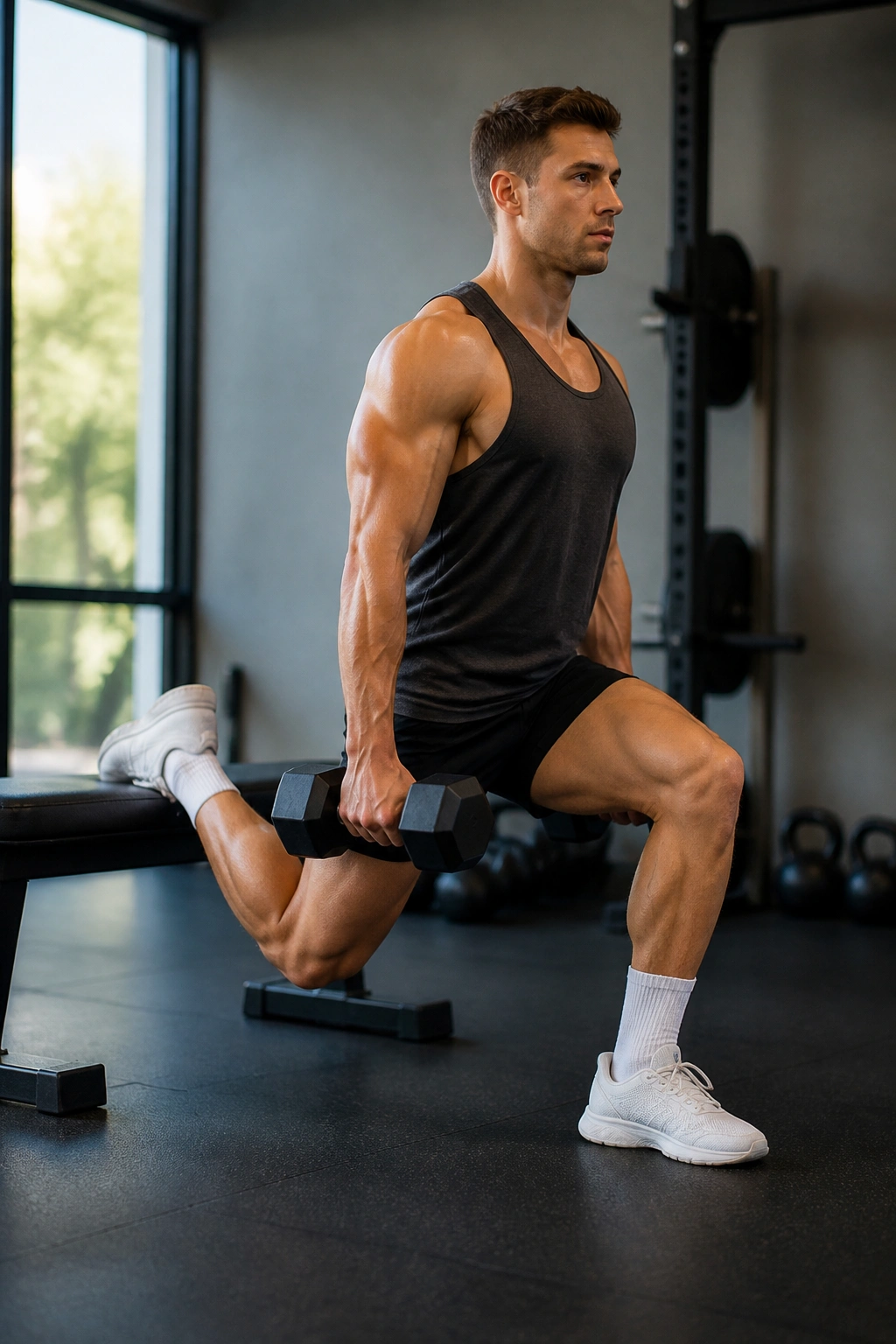
Dumbbells are better than barbells for finding asymmetries. You likely have one leg that is slightly stronger or more coordinated than the other. This routine forces you to train each leg independently, closing those gaps and creating a more balanced, muscular lower body.
Breaking Down the Unilateral Advantage
When you hold a dumbbell in each hand and perform a Bulgarian split squat, you are effectively isolating one side while the other rests. This is the secret to getting size without killing your lower back with heavy spinal loading.
The Workout
- Bulgarian Split Squats: 4 sets of 8 reps per leg.
- Dumbbell Romanian Deadlifts: 3 sets of 12 reps.
- Dumbbell Step-Ups: 3 sets of 10 per leg (use a high box, roughly knee-height).
- Dumbbell Calf Raises: 4 sets of 20 reps (hold the weight in the same hand as the working leg).
5. Plyometric Power and Speed
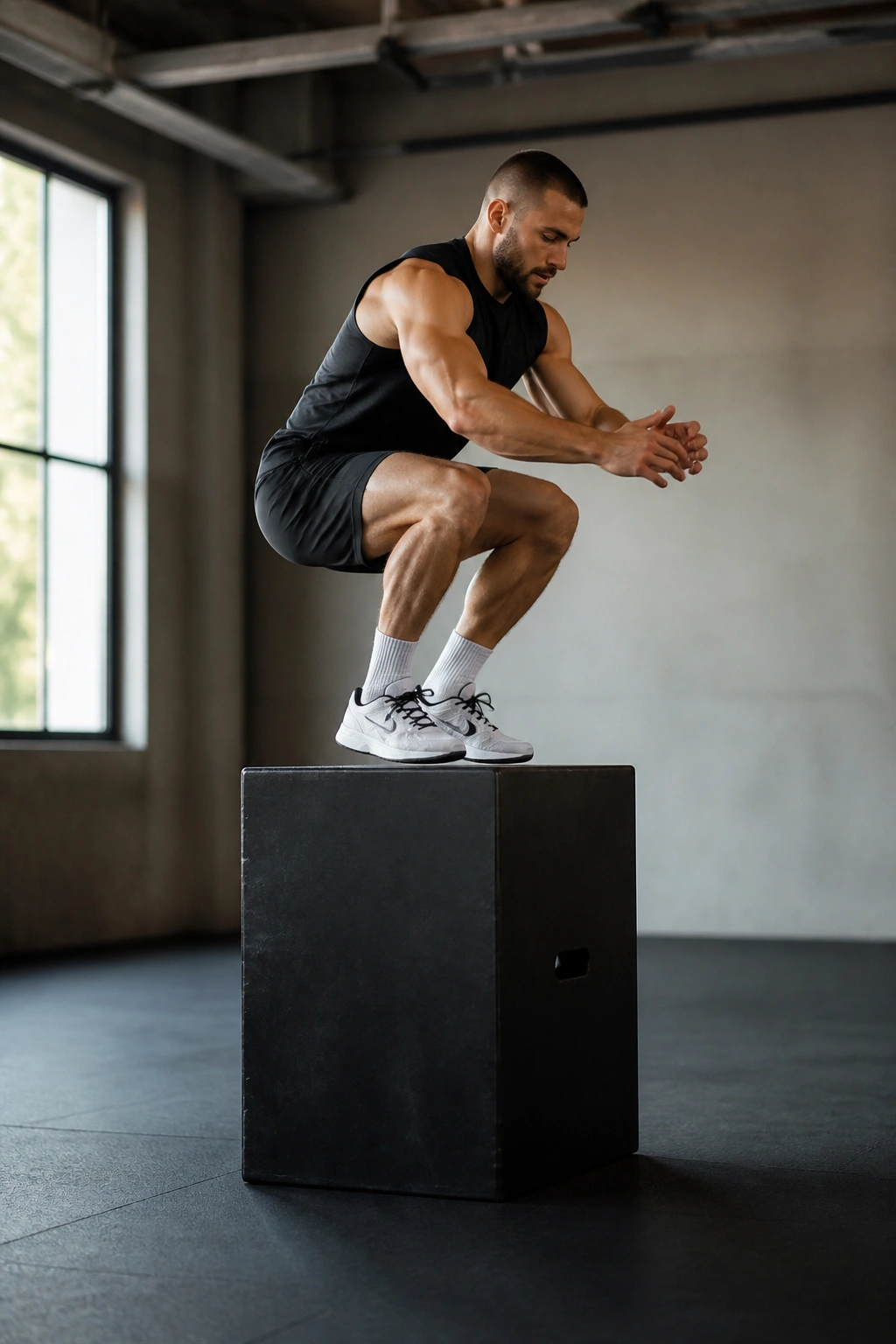
Leg strength means nothing if you can’t move that weight explosively. Plyometrics teach your nervous system to fire motor units in rapid succession. This is high-impact work, so do not perform this if you have lingering knee or ankle injuries.
The Physics of Jump Training
Plyometrics are about ground contact time. You want to spend as little time on the ground as possible. Imagine the floor is lava—you land and immediately explode back up. This develops tendon stiffness and elastic energy return.
The Explosive Circuit
- Box Jumps: 5 sets of 5 (focus on a soft, quiet landing).
- Jump Lunges: 3 sets of 10 per leg (switch in mid-air).
- Broad Jumps: 4 sets of 5 (aim for maximum horizontal distance).
- Lateral Bounds: 3 sets of 10 per side (skater jumps for hip stability).
6. Resistance Band Isolation
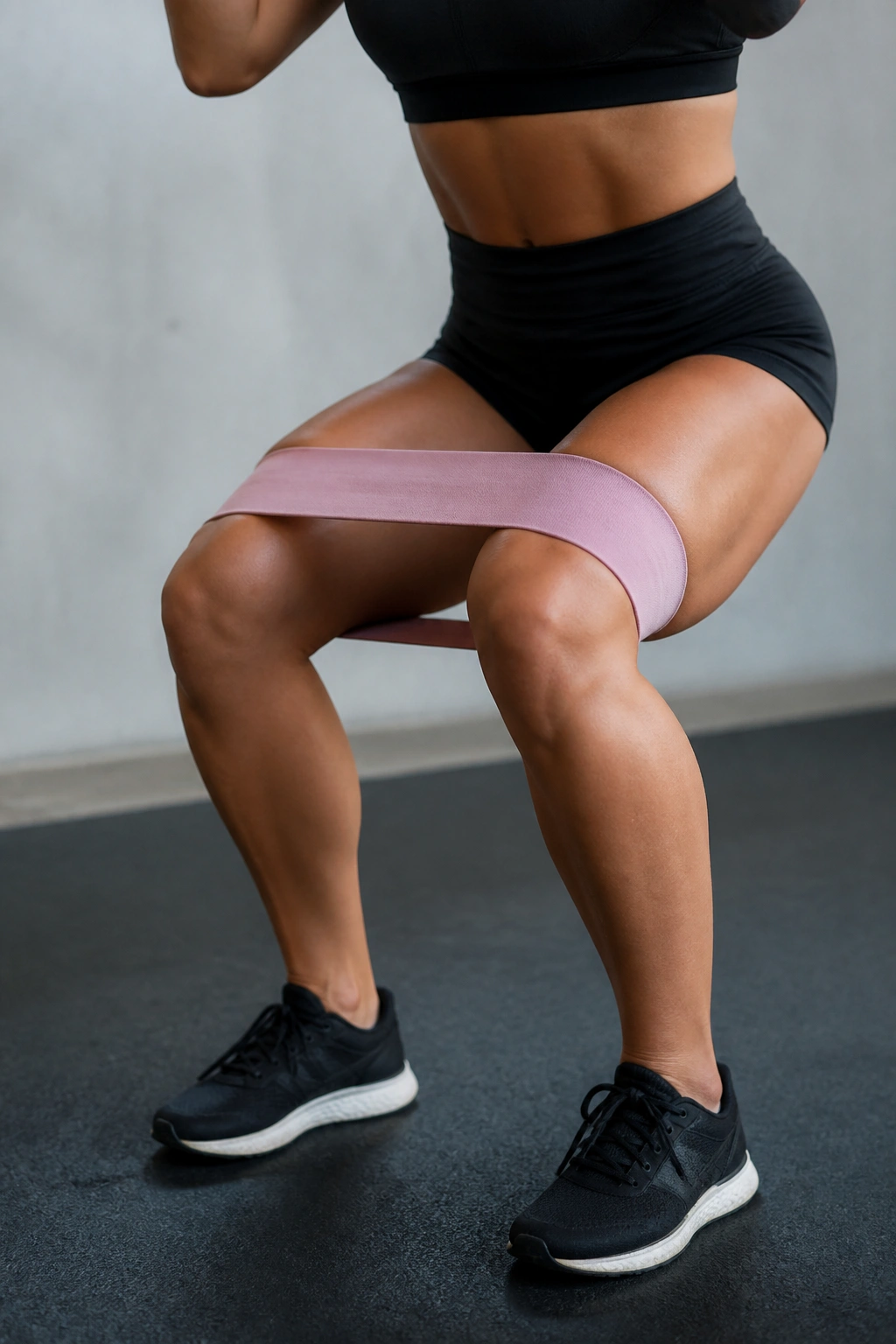
Bands provide accommodating resistance. This means as you get stronger throughout the range of motion—like during a squat or leg press—the band stretches and creates more tension. It is a fantastic way to overload the peak contraction phase of a movement without needing heavy iron.
Why Bands Change the Game
They are inexpensive, portable, and provide a unique “constant tension” feeling that dumbbells cannot offer. If you use a heavy resistance band during squats, you will feel the burn in your quads and glutes far earlier than with free weights.
Implementation
- Band-Resisted Squats: 4 sets of 15 reps.
- Lateral Band Walks: 3 sets of 20 steps each way (band around the knees).
- Band Clamshells: 3 sets of 20 per side (glute medius focus).
- Seated Band Leg Extensions: 3 sets of 25 (loop the band around a pillar).
7. The Hotel Room Circuit
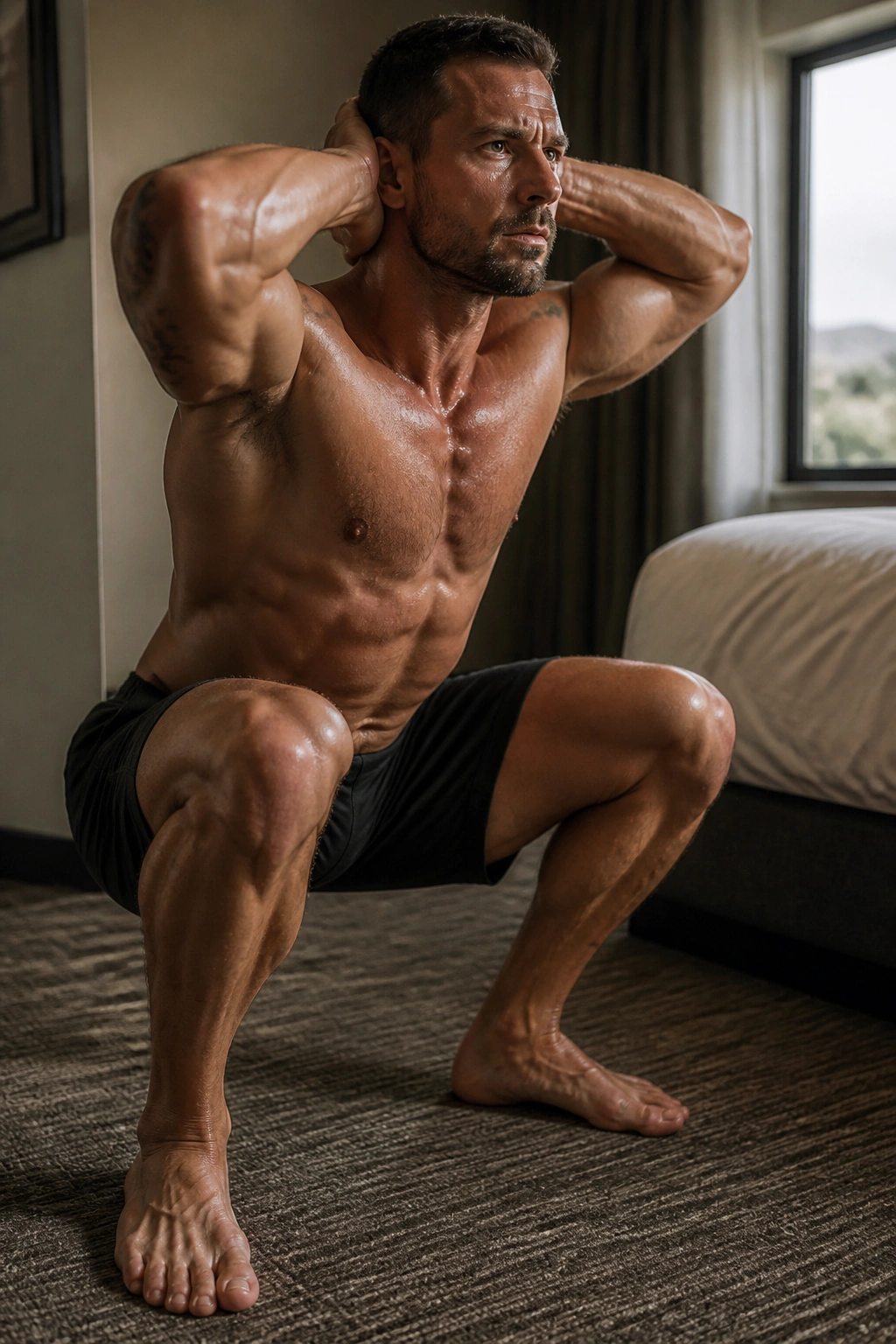
You have no weights, no space, and thirty minutes before you have to be somewhere else. This routine relies on density—doing more work in less time. You will need to move quickly to get the heart rate up, effectively turning leg day into a cardiovascular challenge as well.
No Equipment? No Problem.
The key here is intensity. Without external load, you must focus on the squeeze. Every time you extend your leg, contract the muscle as hard as you can. It is a mental game.
The Protocol
- Prisoner Squats: 30 seconds.
- Split Squats (Left): 30 seconds.
- Split Squats (Right): 30 seconds.
- Mountain Climbers: 30 seconds.
- Repeat for 5 rounds. No rest between exercises. 60 seconds rest between rounds.
8. Heavy Compound Lifting
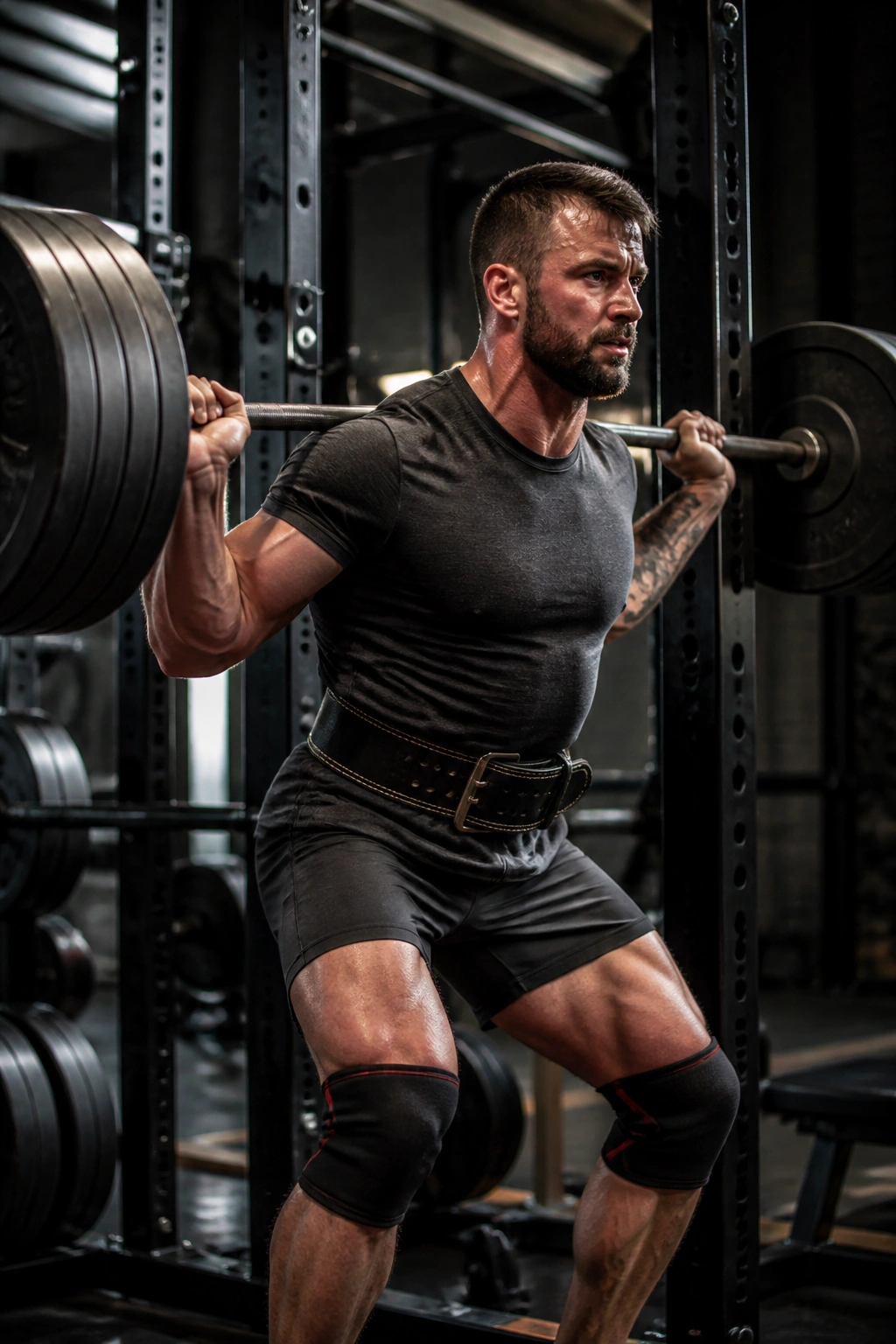
This is for those who want to move iron. This routine minimizes accessories and prioritizes heavy, multi-joint lifts. It is taxing, demanding, and requires a high caloric intake to recover from. Do not attempt this after a night of poor sleep.
The Big Three
- Back Squats: 5 sets of 5 reps (build to a heavy weight).
- Deadlifts (Conventional or Sumo): 4 sets of 3 reps.
- Leg Press: 3 sets of 8 reps (load it heavy).
Crucial Advice: Wear a lifting belt if you are pushing your limits. It provides intra-abdominal pressure that helps support your spine under heavy load.
9. Unilateral Stability and Balance
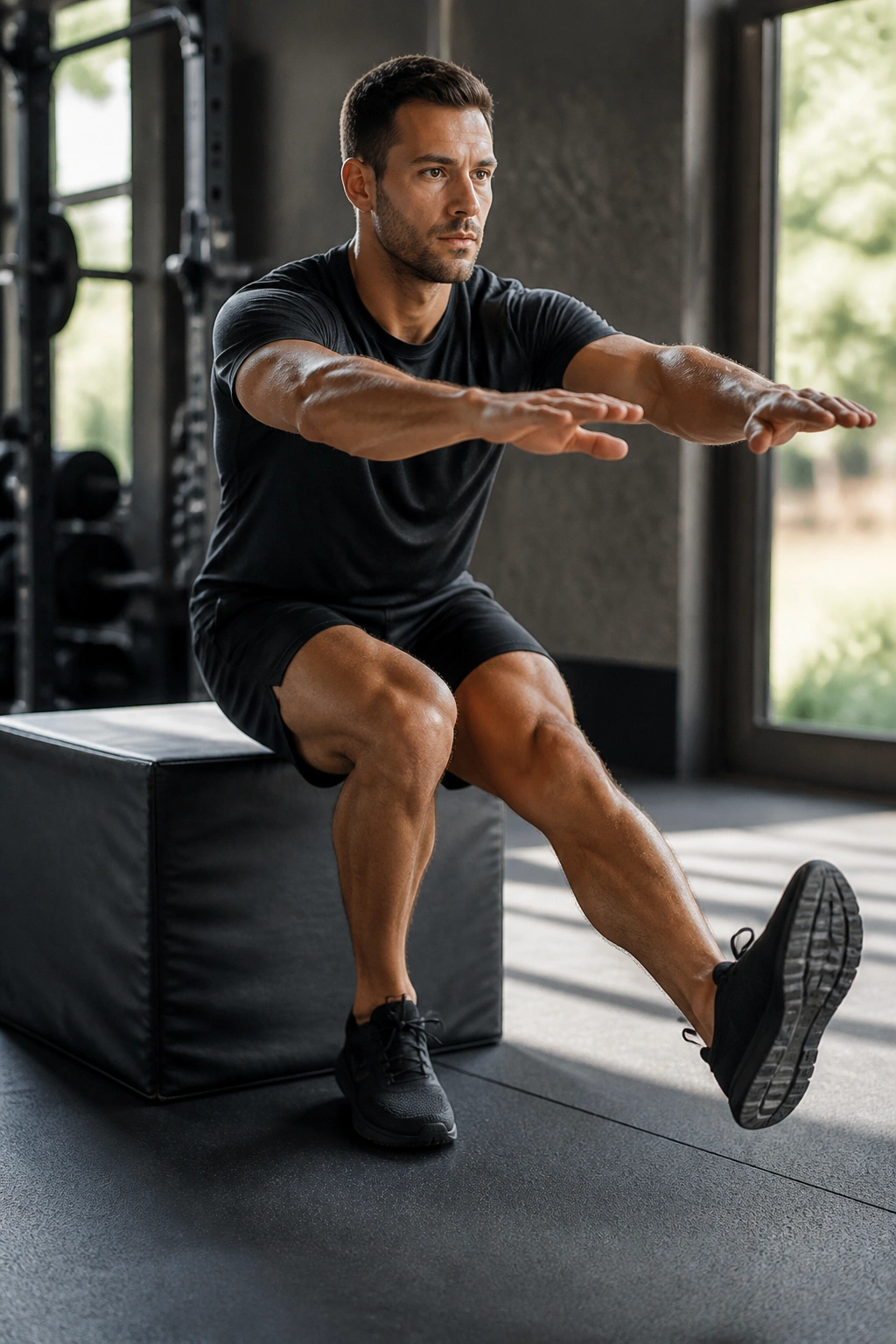
We often ignore the smaller stabilizer muscles that keep our knees tracking correctly. This routine focuses entirely on single-leg work. It might look less impressive in the gym, but it will make you functionally stronger and significantly less prone to injury in your day-to-day life.
Finding Balance
The “weak link” is usually the hip stabilizer. If your knee wobbles during a squat, your hips are not doing their job. This routine targets that weakness.
The Focus
- Single-Leg Box Squat: 3 sets of 10 per leg (sit back slowly).
- Single-Leg Deadlift (No weight, focusing on form): 3 sets of 12.
- Single-Leg Calf Raises: 3 sets of 15.
- Cossack Squats: 3 sets of 8 per leg (lateral movement is key).
10. Endurance and High Repetition
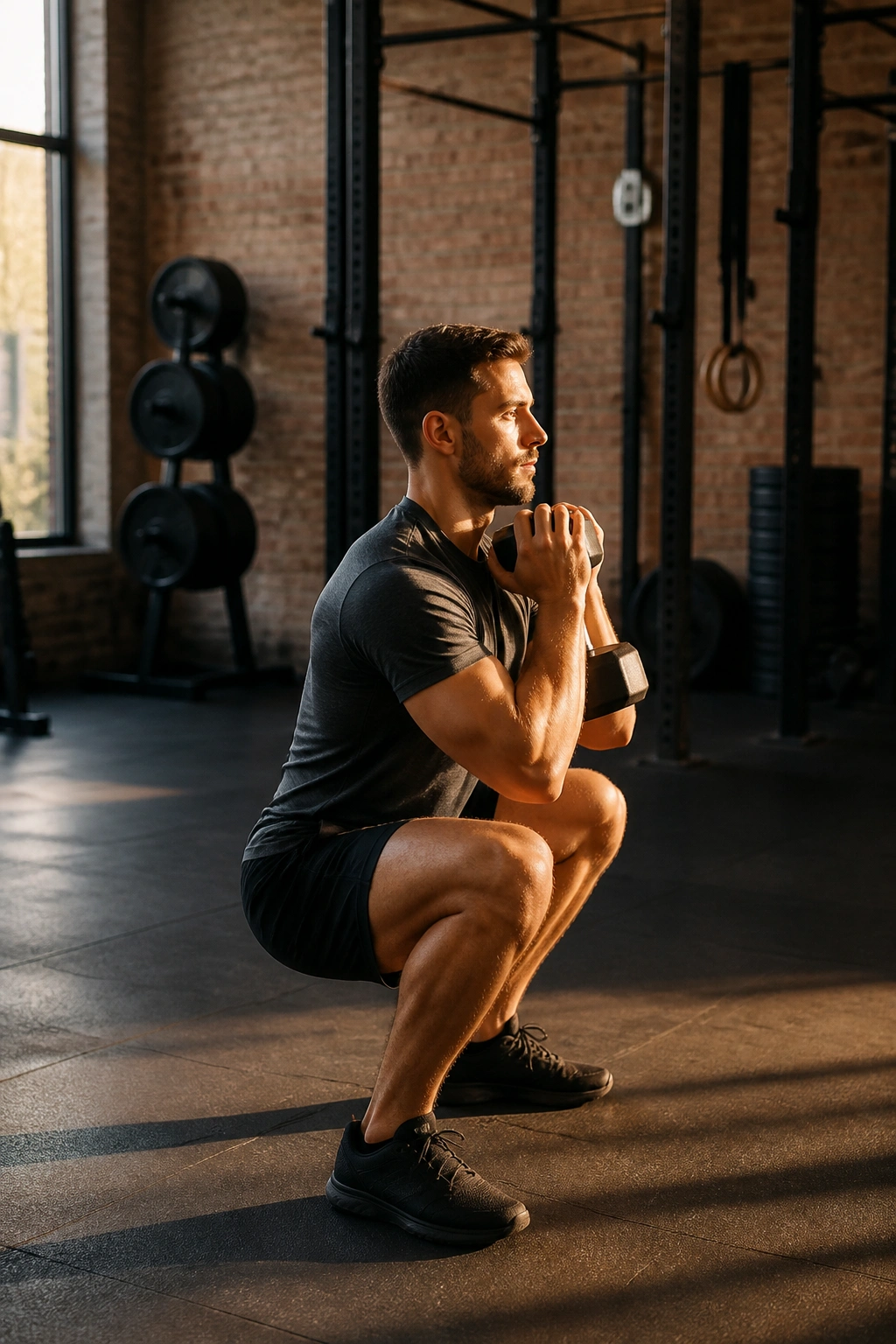
Some people have “slow-twitch” dominant legs, meaning they respond better to high-volume, long-duration work than heavy triples. This routine is designed to flush the muscles with blood, improve local muscular endurance, and build that “capped” look in the quads.
The Burn Factor
You will feel a deep, throbbing burn in your legs around the 15th rep. That is the goal. Do not quit when it starts to hurt. That is when the metabolic adaptation actually begins to happen.
The Routine
- Goblet Squats: 3 sets of 20.
- Walking Lunges: 3 sets of 30 steps total.
- Leg Extensions (or Step-Ups): 3 sets of 25.
- Calf Raises: 3 sets of 30.
11. Glute-Dominant Day
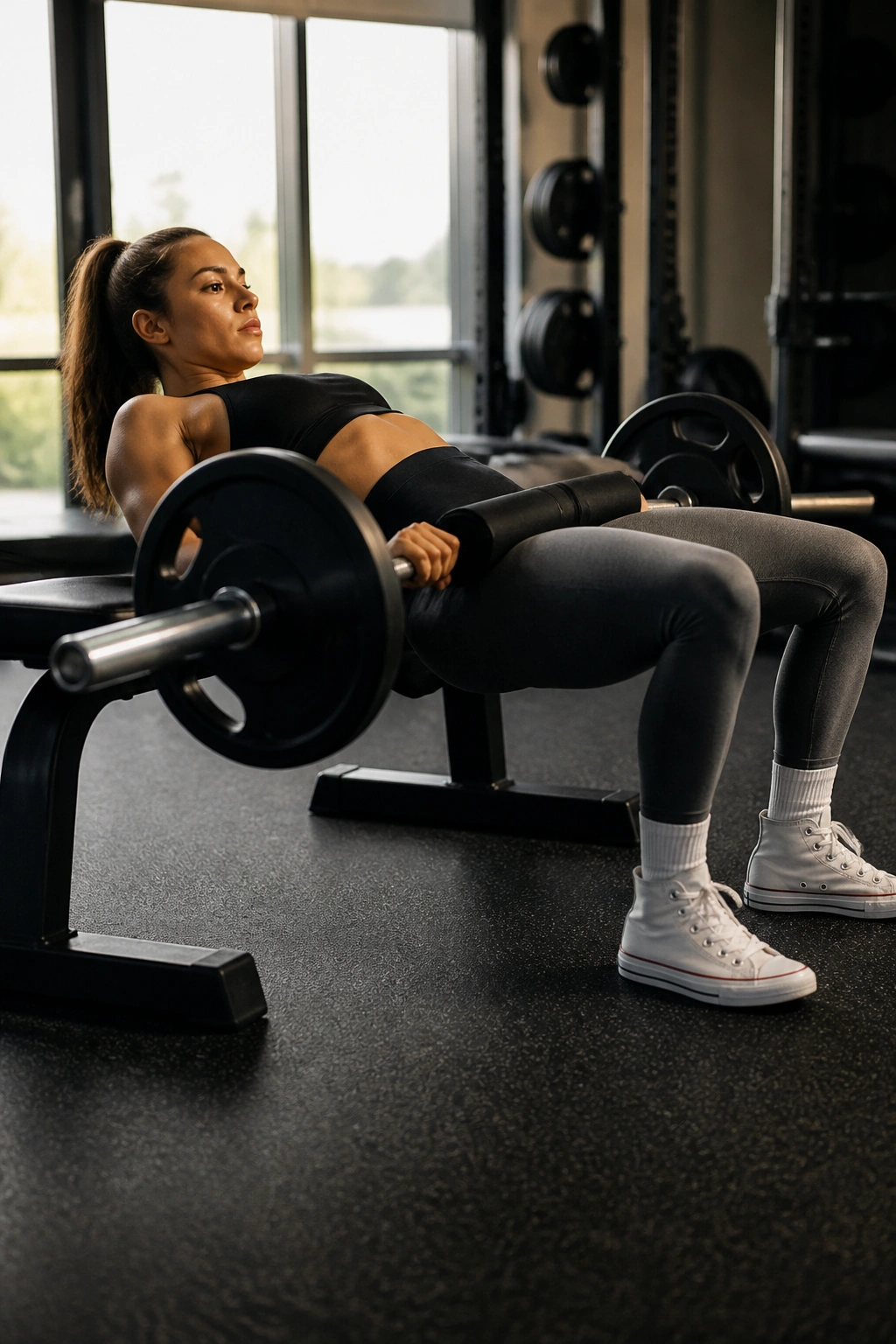
If your quads take over every movement, your glutes are likely underdeveloped. This routine is specifically tailored to “wake up” the posterior muscles. It involves movements that require hip extension, which is the primary function of the glutes.
The Science of Hip Extension
To grow the glutes, you need to hip hinge and extend. Many people squat and feel it only in their quads. If you want glute growth, you need to prioritize movements that allow for deep hip flexion and full extension.
Essential Movements
- Hip Thrusts: 4 sets of 10 (heavy, pause at the top).
- Romanian Deadlifts: 3 sets of 12 (focus on the stretch).
- Glute Bridges (weighted): 3 sets of 15.
- Back Extensions (focusing on glutes, not lower back): 3 sets of 15.
12. Quad-Focus Burner
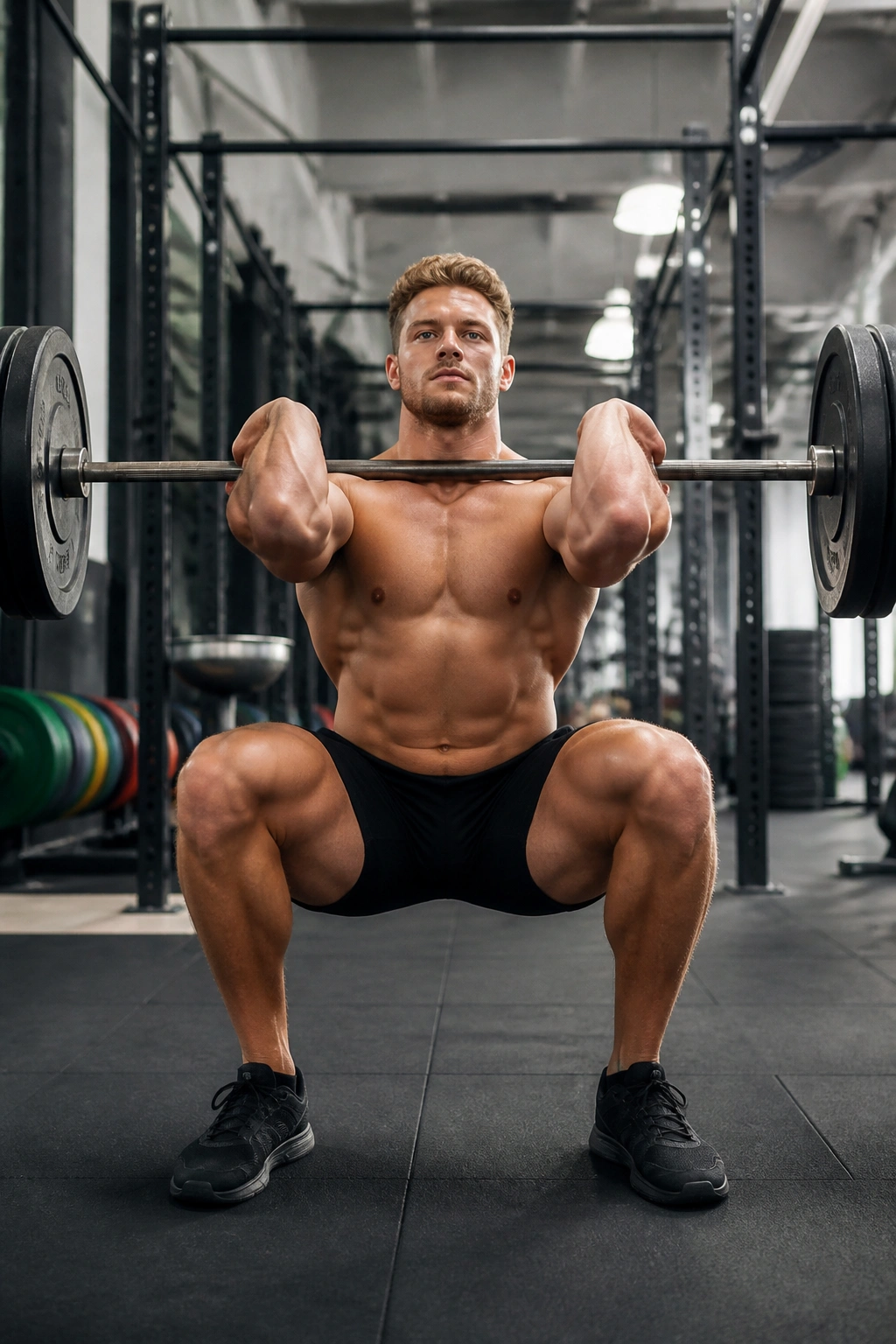
This is for when you want to specifically target the front of your legs. We utilize front-loaded movements to keep the torso upright, which minimizes the reliance on the back and forces the quads to take the full weight of the load.
Keeping the Torso Upright
When you hold the weight in front of you—like a goblet squat or a front squat—your body naturally adjusts to stay balanced. This shift is the secret to quad isolation. If you lean forward, your glutes and lower back take over. If you stay upright, the quads have to work.
Quad Protocol
- Front Squats: 4 sets of 8 reps.
- Leg Extensions (if available) or Sissy Squats: 3 sets of 15.
- Walking Lunges (short stride): 3 sets of 20 steps.
- Goblet Squats: 3 sets of 12 (slow tempo).
13. Posterior Chain Focus
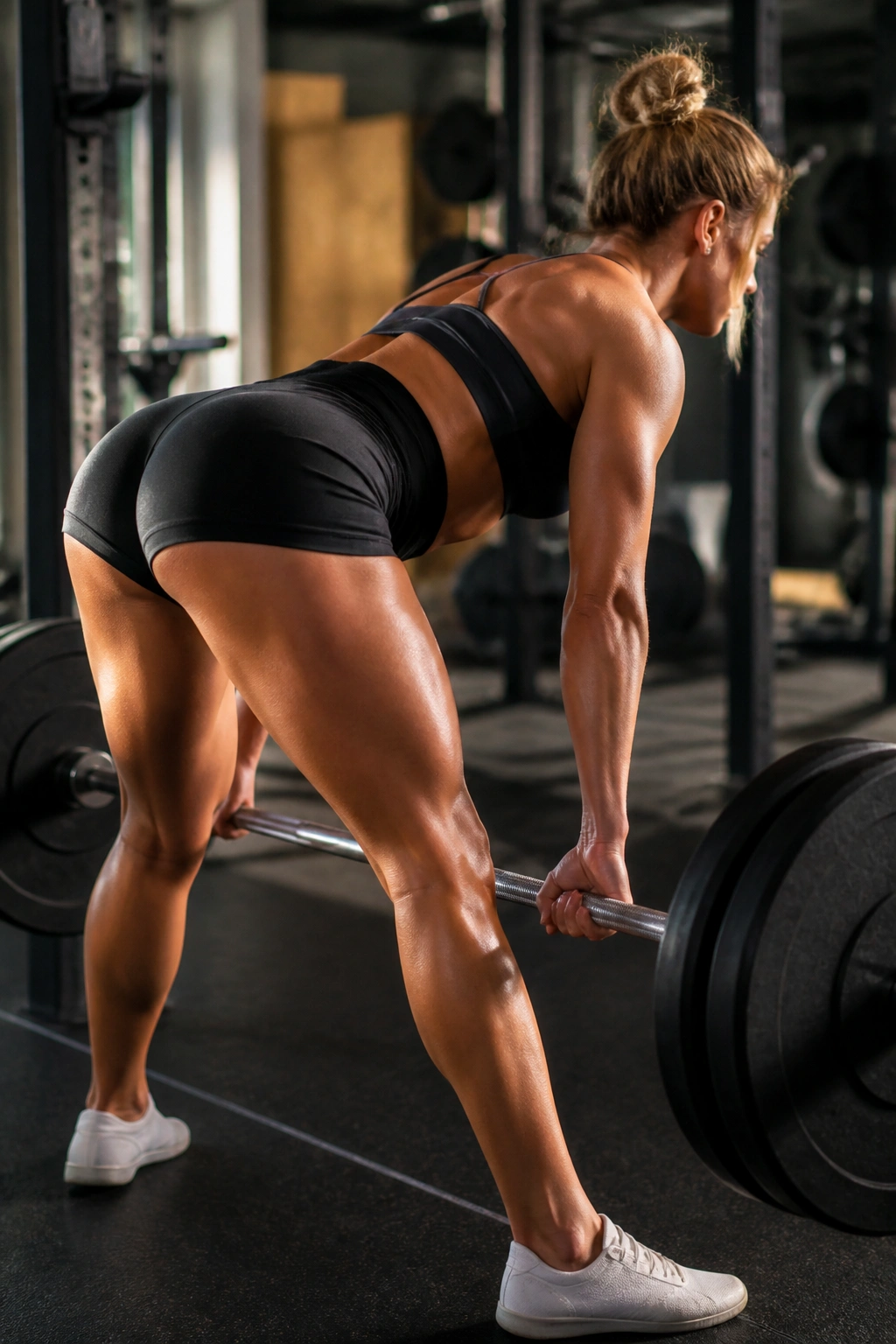
This is the antidote to the quad-dominant gym-goer. This routine emphasizes the hamstrings and the lower back. Strong hamstrings are vital for knee health, as they act as a support system for the anterior cruciate ligament.
Preventing Knee Issues
The hamstrings decelerate the leg. If you are athletic, you need strong hamstrings to stop yourself from running. Weak hamstrings are the primary cause of many non-contact knee injuries.
The Posterior Chain Plan
- Stiff-Leg Deadlifts: 4 sets of 10.
- Lying Leg Curls: 3 sets of 12.
- Kettlebell Swings: 4 sets of 15.
- Good Mornings (light weight): 3 sets of 12.
14. The Apartment Routine
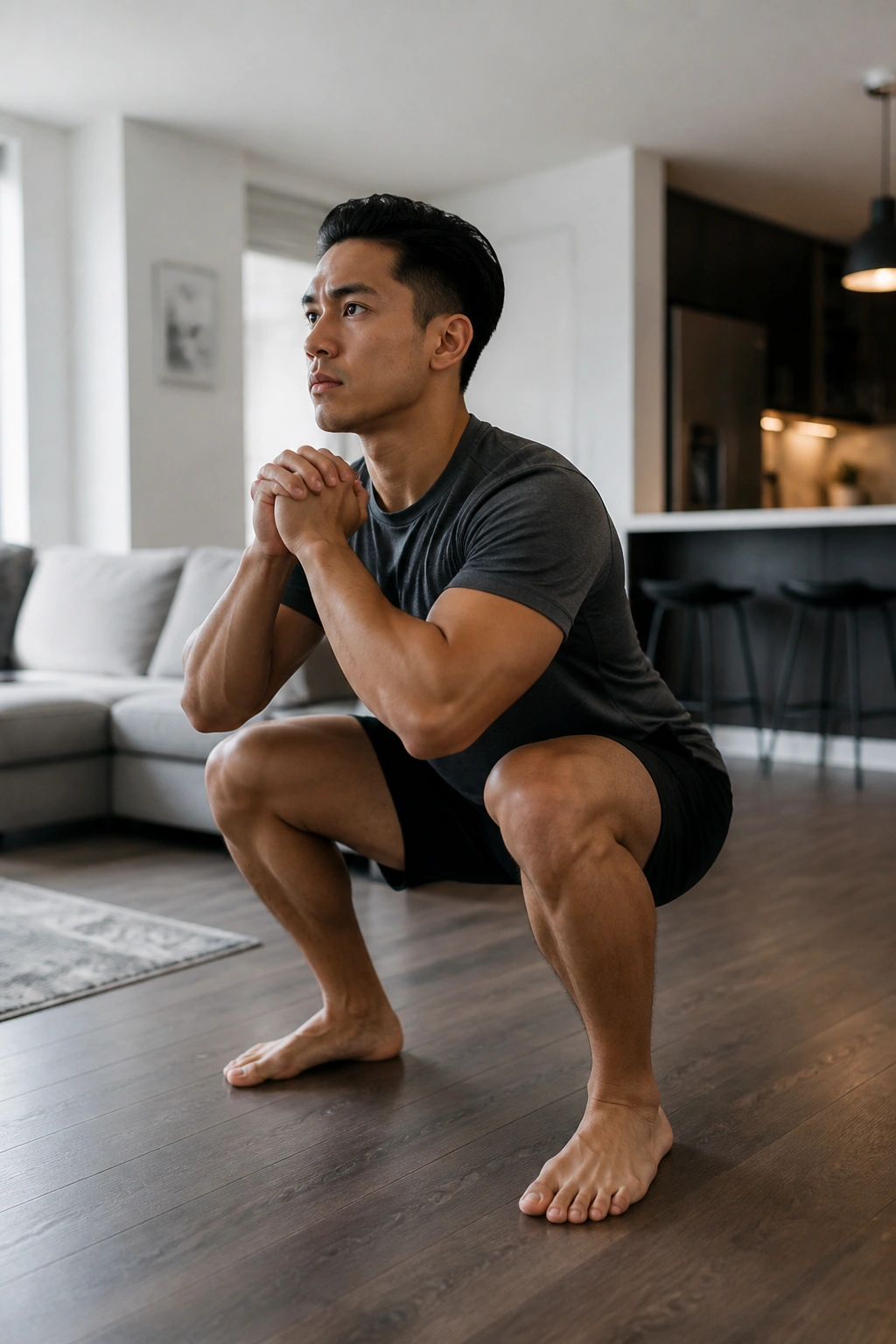
No noise, no heavy equipment, just pure muscle engagement. This routine uses slow, controlled eccentrics to tear down muscle fibers without the need for high-impact jumps or heavy external weight. It’s perfect for small spaces.
Using Time Under Tension
The muscle does not know if you are holding a 100-pound barbell or if you are moving extremely slowly. If you take five seconds to descend, your legs will be shaking by the end of the set.
The Minimalist Plan
- Slow-Tempo Squats: 4 sets of 15 (5-second descent).
- Slow-Tempo Lunges: 3 sets of 12 per leg (5-second descent).
- Wall Sits: 3 sets of 60 seconds.
- Calf Raises (on a step): 3 sets of 20.
15. Strength-Speed Hybrid
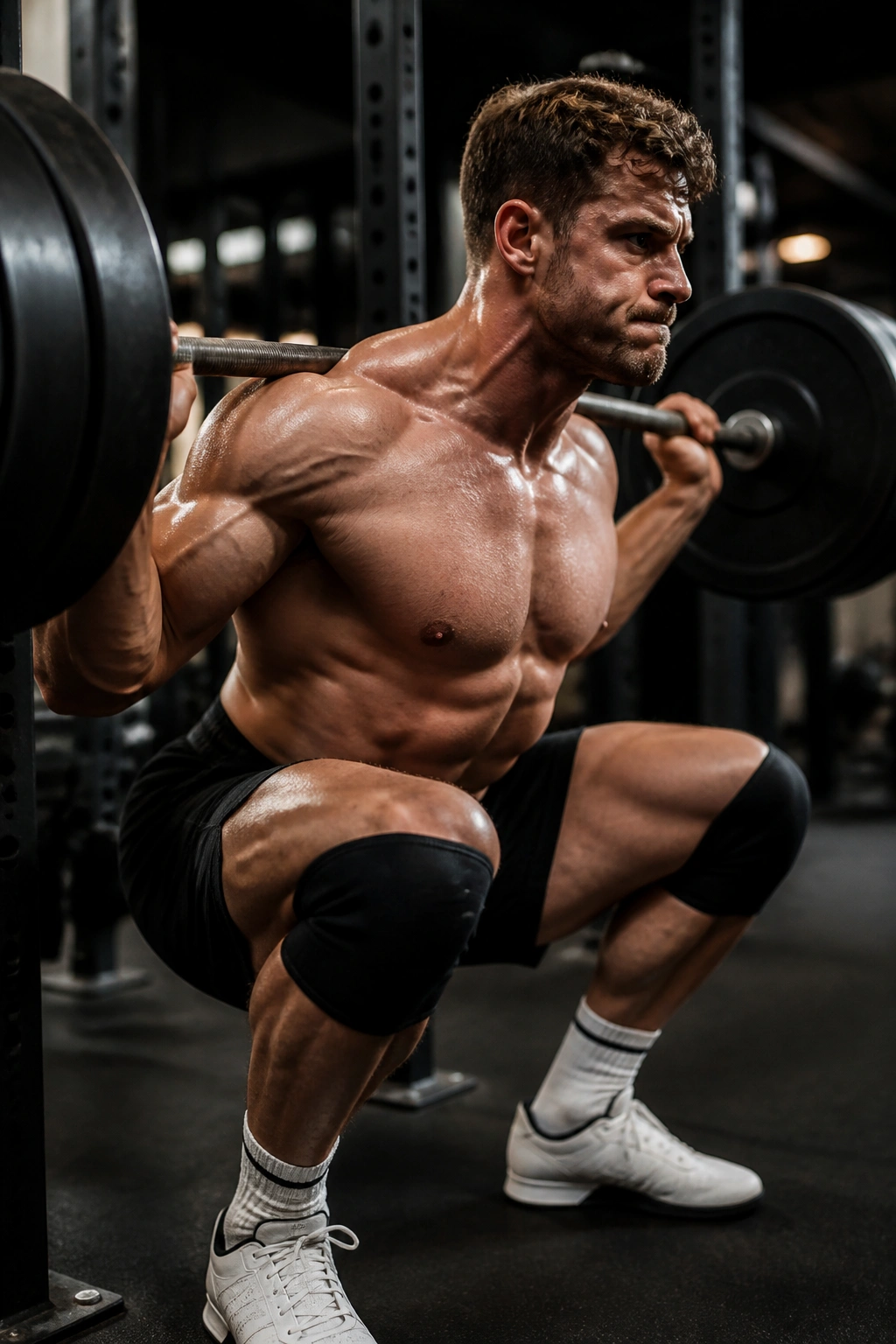
This routine blends heavy lifting with explosive movement. You perform a heavy compound lift followed immediately by a light, explosive variation. This is known as “contrast training,” and it is used by elite athletes to prime their nervous system for peak performance.
The Mechanism of Contrast
By lifting heavy, you fire up the large motor units. By immediately following it with a light, fast movement, you teach those same units to fire quickly. It makes the light movement feel effortless.
The Contrast Pairs
- Pair 1: Back Squat (5 reps heavy) + Jump Squats (5 reps light).
- Pair 2: Romanian Deadlift (5 reps heavy) + Broad Jumps (5 reps).
- Pair 3: Lunges (5 reps heavy) + Split Jump Lunges (5 reps).
16. Low-Impact Strength
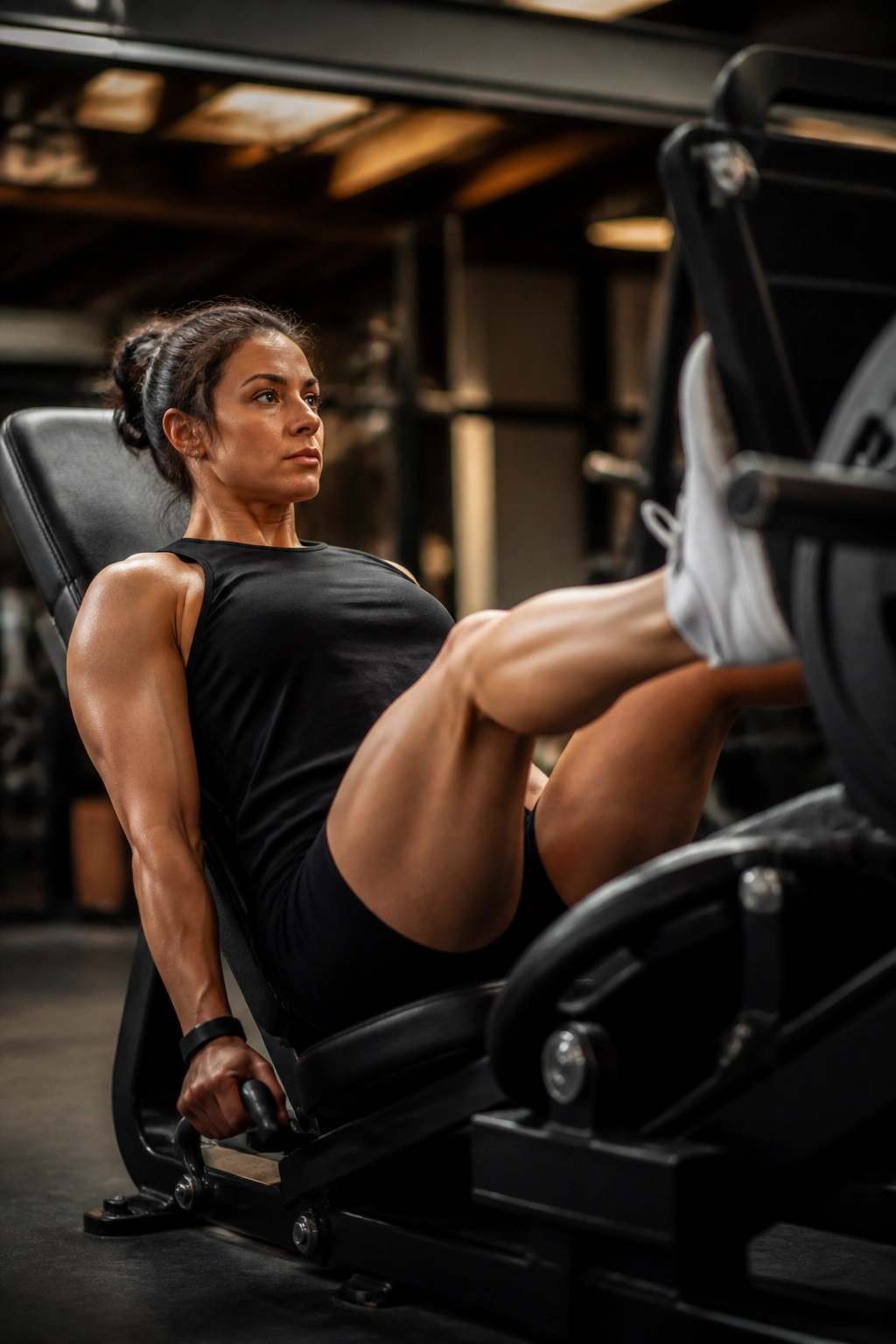
If you are dealing with joint aches, you need to be smart. You can still build size and strength without pounding your joints. This routine focuses on fixed paths of motion, which offer more stability than free-standing weights.
Stability Over Freedom
When you use a machine or a stable platform, you don’t have to worry about stabilizing the weight. You can put 100% of your effort into pushing against the resistance. This is ideal for those days when your joints feel “off.”
The Protocol
- Leg Press: 4 sets of 12.
- Seated Leg Curl: 3 sets of 15.
- Step-Ups (onto a low platform): 3 sets of 12 per leg.
- Calf Press (on leg press machine): 3 sets of 15.
17. The 20-Minute Quick Hit
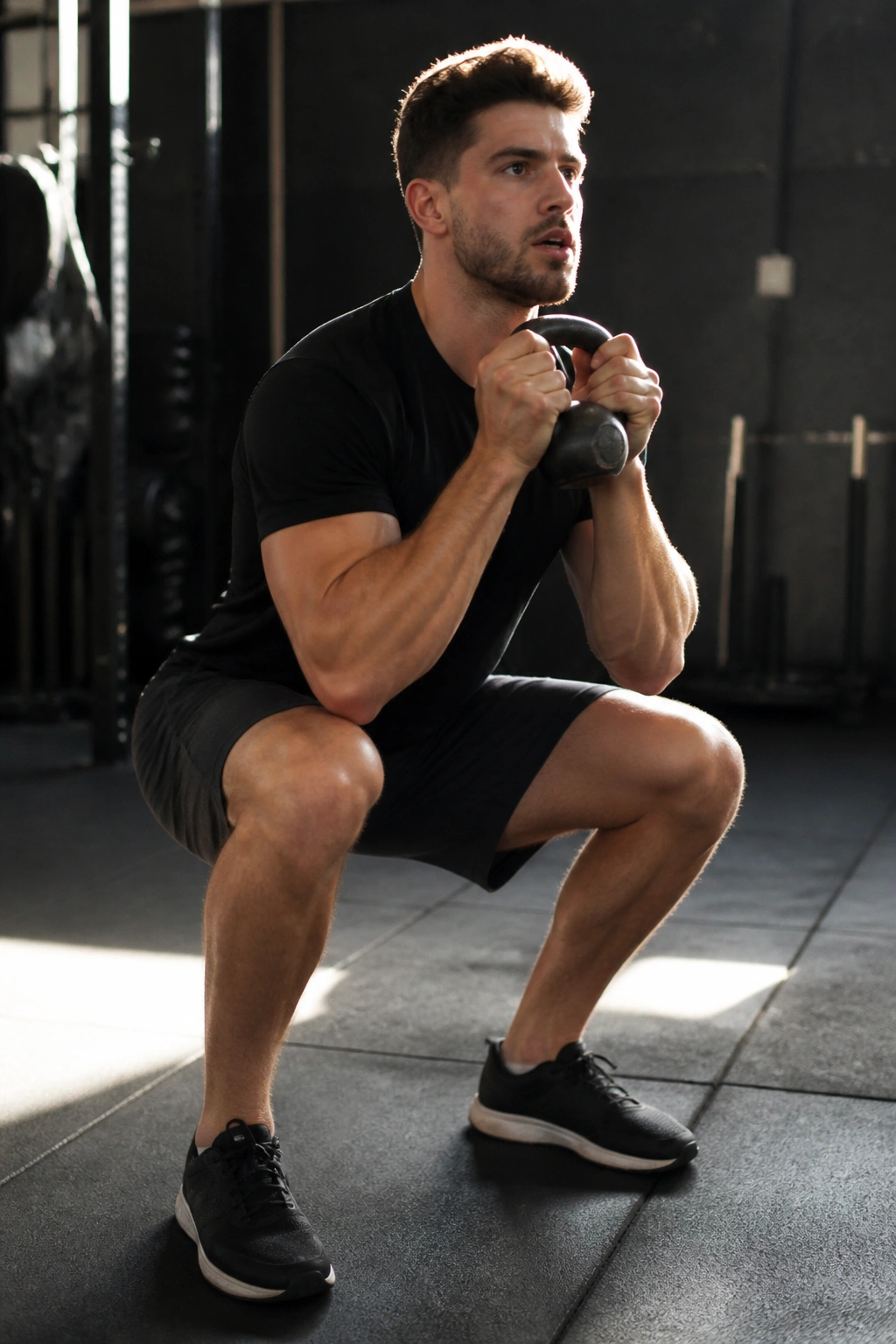
Sometimes you are short on time. That is no excuse to skip your legs. This routine is an AMRAP (As Many Rounds As Possible) in 20 minutes. You don’t count sets; you count rounds.
Intensity as a Variable
In a short time frame, your rest periods must be non-existent. You are chasing a pump and a high heart rate. This isn’t for setting personal bests in weight; it’s for conditioning and maintaining volume.
The 20-Minute Ladder
- 10 Goblet Squats
- 10 Reverse Lunges per leg
- 10 Kettlebell Swings
- Keep repeating this cycle until the 20-minute timer sounds. Keep a record of how many rounds you complete and try to beat it next time.
18. Dynamic Movement and Mobility
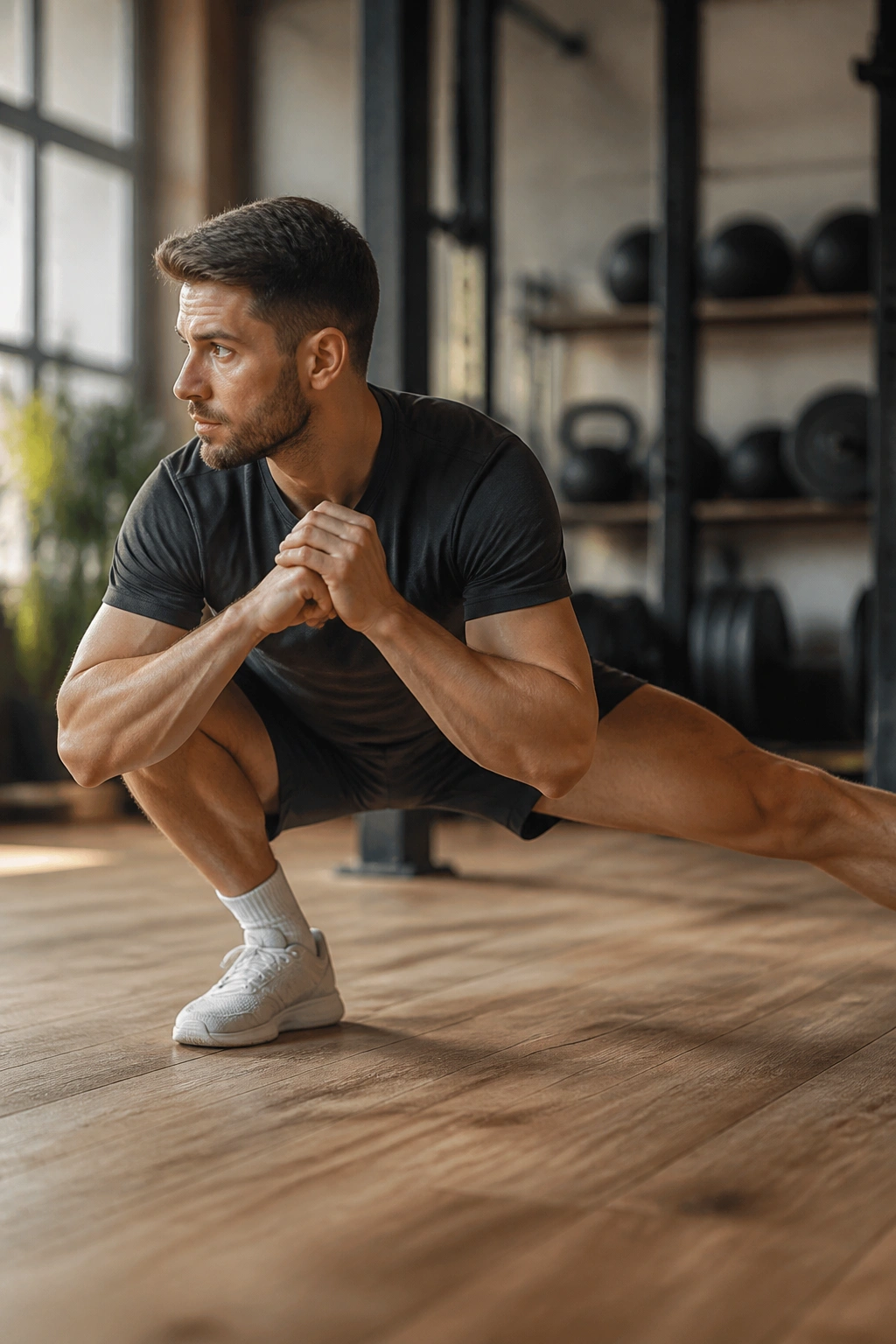
We often focus on building muscle but neglect the ability to move through deep ranges. This routine is about opening up the hips and ankles. If you cannot squat deep, your quads are not working to their full potential.
The Importance of Range of Motion
If you are restricted by tight ankles or hips, you compensate by leaning forward or rounding your back. This limits growth. This routine is designed to fix those tight spots so you can eventually squat deeper and lift more.
Mobility-First Routine
- Cossack Squats: 3 sets of 8 per leg (side-to-side, going as low as possible).
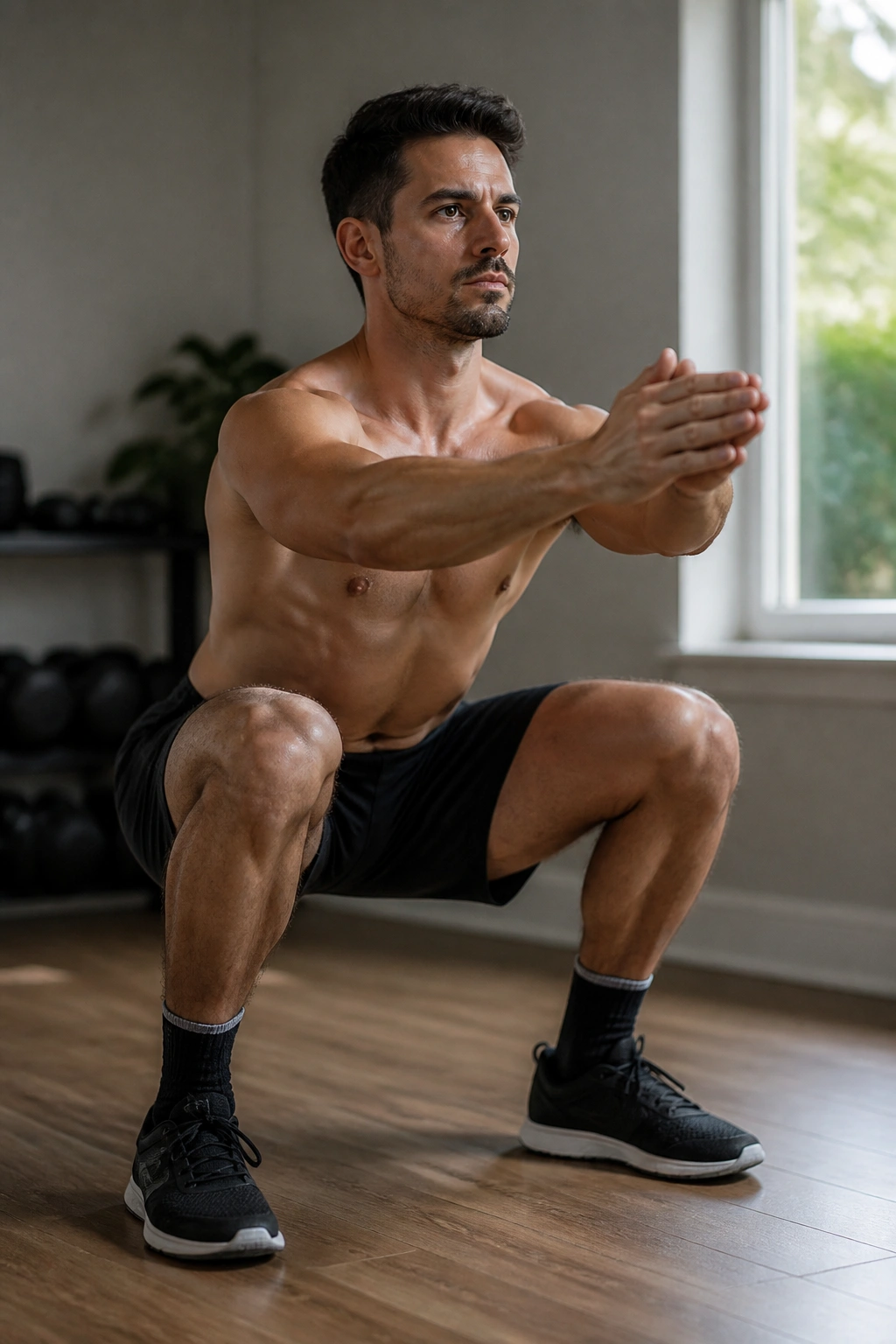
- Deep Bodyweight Squat Hold: 3 sets of 45 seconds (keep chest up).
- Ankle Dorsiflexion Stretches: 3 sets of 30 seconds per side.
- Pigeon Pose (for hips): 3 sets of 60 seconds per side.
Final Thoughts
The secret to a great leg day isn’t a single “perfect” routine; it’s the ability to consistently provide a stimulus that your body isn’t used to. When you swap between these eighteen routines, you prevent the stagnation that plagues so many lifters. One week you might be focusing on explosive power, the next on high-volume endurance, and the week after on unilateral stability.
Whatever you choose, remember that consistency is the engine of progress. You don’t need to reinvent your training every single session, but you do need to challenge the muscles in new ways. Listen to how your body responds to the heavier compound work versus the higher-rep isolation. The best routine is the one that you can recover from and come back to next week with even more energy. Keep moving, keep tracking your progress, and don’t be afraid to take the weight down a notch to perfect your form. Your future self—and your knees—will thank you.
