



Most hamstring and glute workouts at home fail for a boring reason: people do one bridge variation, feel a mild burn, and call it training. That’s not enough. The back of the legs likes a mix of hip extension, knee flexion, unilateral work, and a little tempo control, or the load keeps drifting into your lower back and quads.
You do not need a rack, a barbell, or a fancy floor setup. A couch, a towel on a smooth floor, a backpack with books, and a mini band can cover a surprising amount of ground if you use them well.
The trick is to stop thinking in terms of “leg day” and start thinking in patterns. Bridges teach lockout. Curls hit the hamstrings at the knee. Hinge moves load the whole back side. Single-leg work exposes weak links fast. The first few moves here are easy to set up, and the later ones are where home training starts to feel honest.
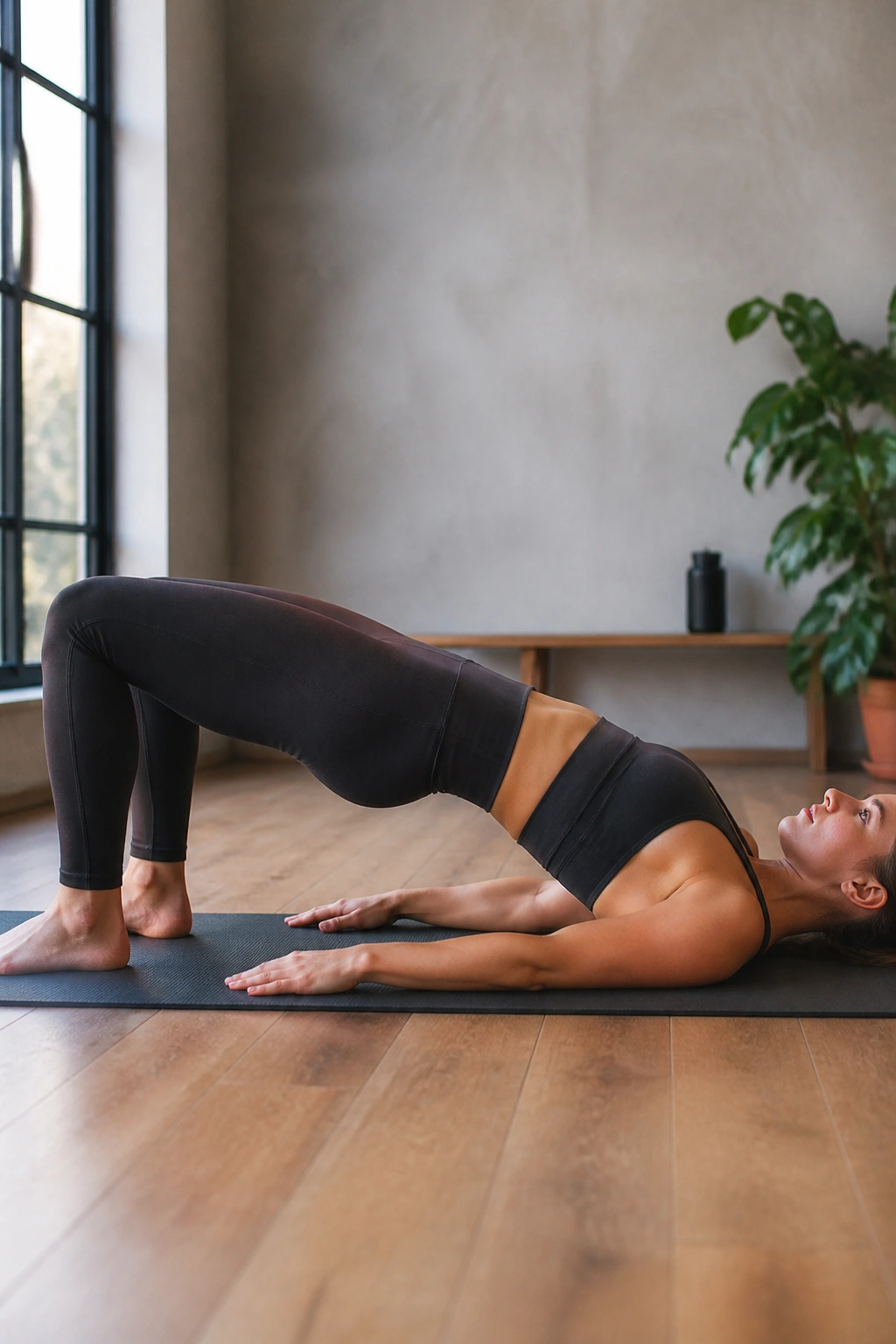
1. Bodyweight Glute Bridge
If you only had one move, this would be the one to get right first. The bodyweight glute bridge is simple, which is exactly why people rush it and miss the point. Done well, it teaches your glutes to do the job instead of letting your lower back take over.
What to Focus On
- Place your feet about hip-width apart, with heels roughly 6 to 8 inches from your glutes.
- Keep your ribs down and press through the middle of the heel, not the toes.
- Pause at the top for 1 to 2 seconds until your glutes feel squeezed, not your lower back.
- Use 12 to 20 reps for 2 to 4 sets.
That last squeeze matters. A bridge without a pause turns into a fast hip wiggle. A bridge with a pause teaches control, and control is where home training starts paying off. If you feel your hamstrings cramping, move your feet a little farther away. If you feel your low back working harder than your butt, tuck your pelvis slightly before you lift.
2. Single-Leg Glute Bridge
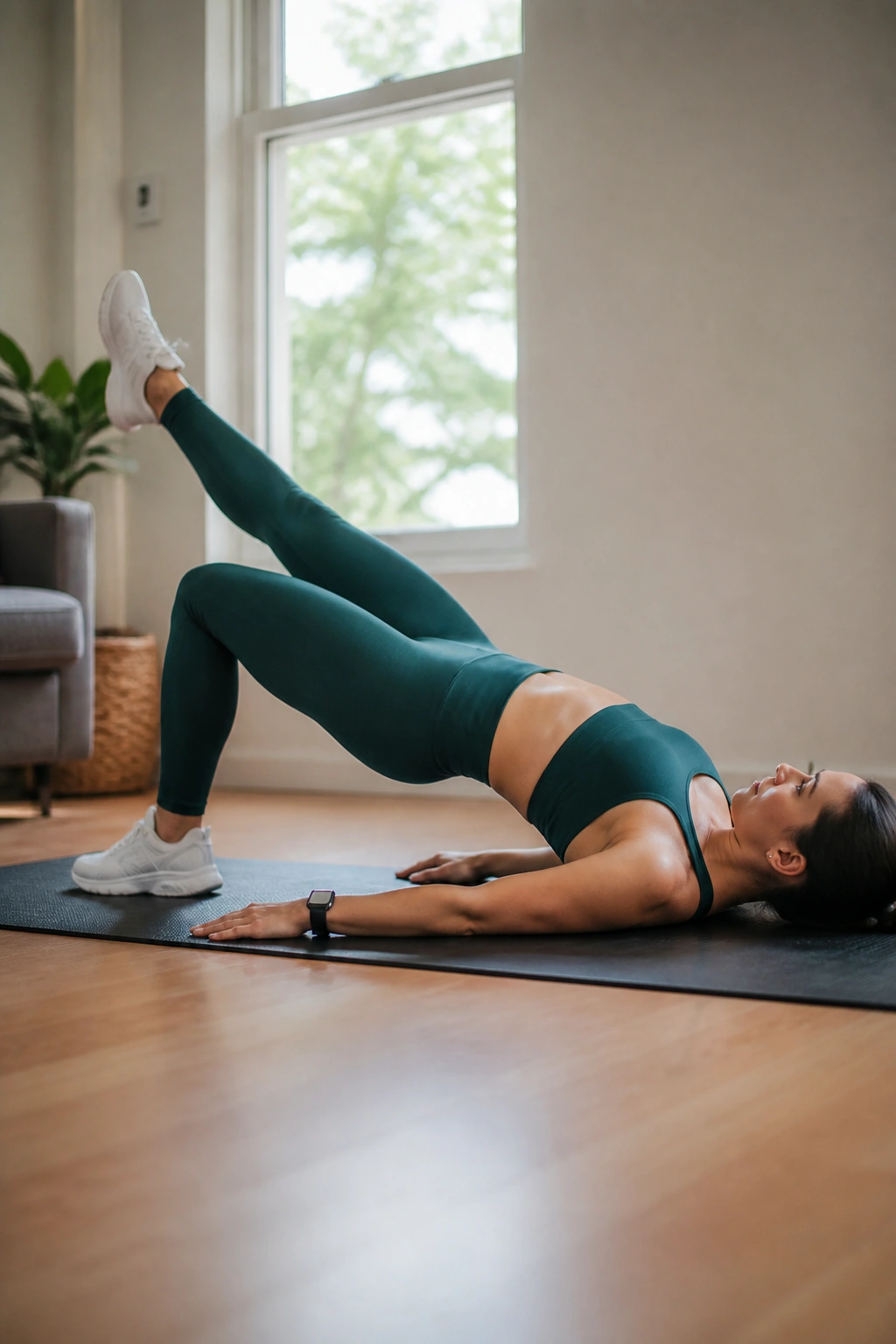
Why does one leg make such a small move feel so rude? Because now your pelvis has to stay level while one side works harder, and your glute gets less help from momentum or both feet sharing the load.
The best version starts with one knee bent and the other leg lifted. Keep the raised thigh in line with your torso, push through the planted heel, and lift until your hips are square. 6 to 12 reps per side is plenty for most people, and slow reps beat fast ones here almost every time.
If the movement feels sloppy, shorten the range first. That’s not a failure. It’s a clean fix. A lot of people chase height when they should be chasing a flat pelvis and a hard squeeze at the top.
3. Couch Hip Thrust
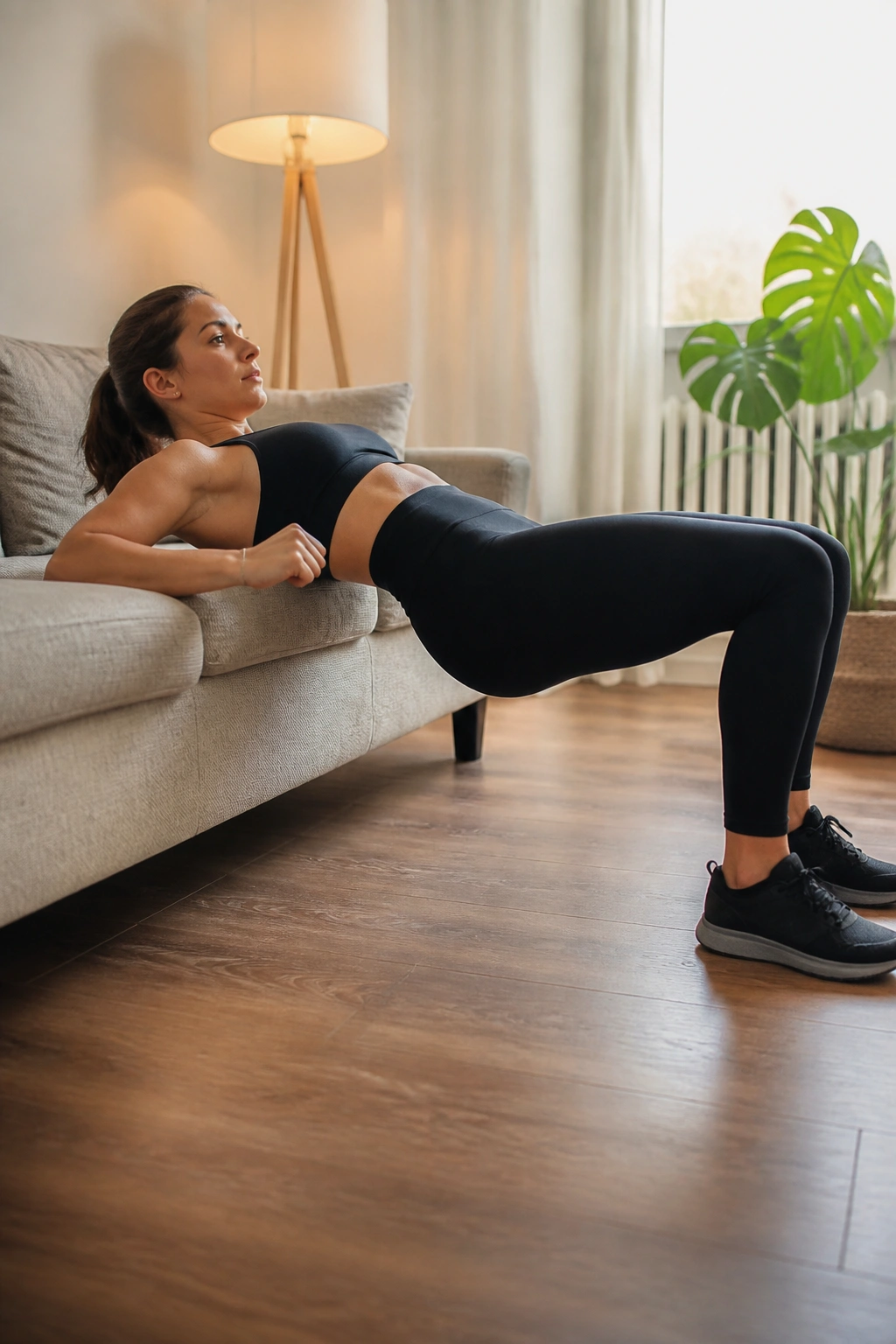
A floor bridge is useful. A couch hip thrust usually feels stronger because your hips travel through a bigger range, and that extra room gives the glutes more work without needing weight on day one.
Set your upper back on a sturdy couch or bench, plant your feet flat, and keep your chin tucked slightly so your neck stays long. Drive up until your torso and thighs make a straight line, then hold the top for a full second or two. 8 to 15 reps works well for most home routines.
The mistake I see most is over-arching the lower back to get higher. Don’t do that. The top position should feel like a firm glute squeeze, not a spine-shaped question mark. If the couch is too high and you feel unstable, move to a lower surface and own the movement there first.
4. Single-Leg Couch Hip Thrust
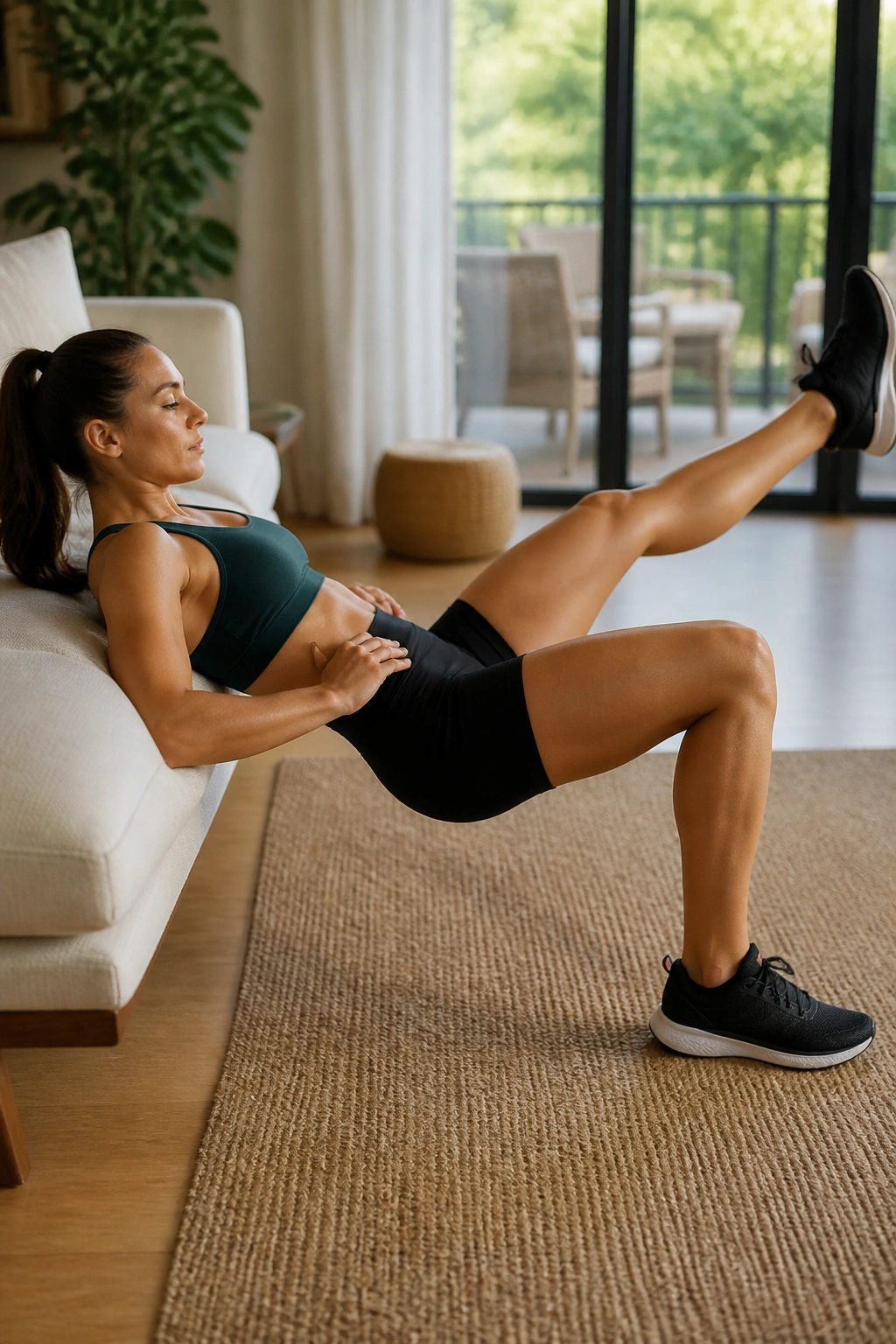
Once the regular hip thrust stops feeling demanding, this one brings the challenge back without needing heavier gear. One leg does the work. The other leg stays lifted or bent, and your body has to stay centered while the working side carries the load.
How to Set It Up
- Put your shoulder blades on the couch edge.
- Keep one foot planted far enough away that your shin stays close to vertical at the top.
- Hold a backpack across your hips if bodyweight gets too easy.
- Use 5 to 10 reps per side and rest a little longer between sides.
The range should stay clean. If your hips twist, your planted foot is too close or you’re rushing the lift. Slow down. This is one of those moves that rewards patience and punishes ego in the same breath.
5. Frog Pumps
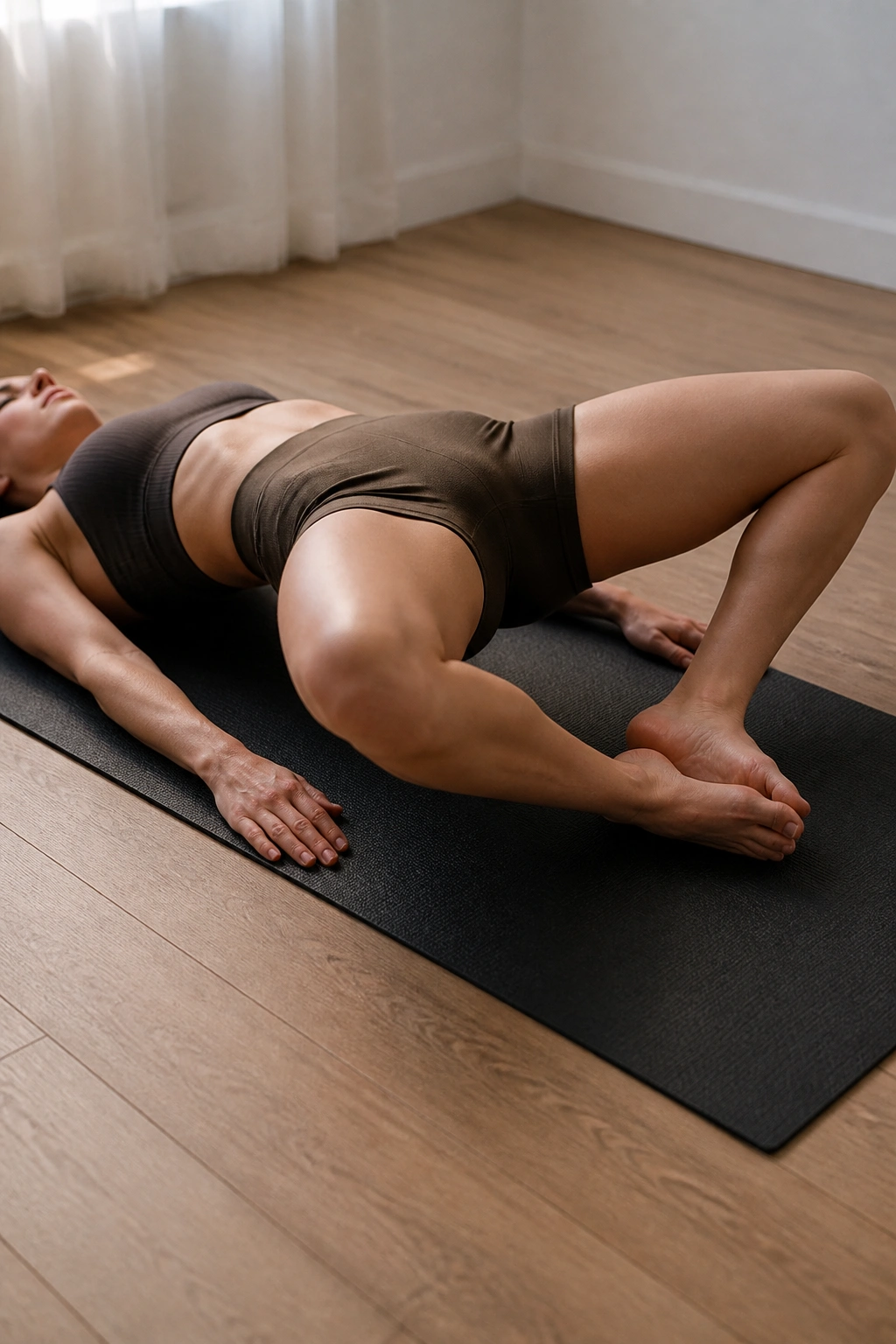
Frog pumps look a little odd and work just fine. That odd setup, feet together and knees dropped out wide, shortens the movement a lot. The payoff is a deep glute burn with less hamstring involvement, which makes it a useful finisher when your hips still have a little life left.
Lie on your back, touch the soles of your feet together, and let your knees open like a relaxed diamond. From there, pump the hips up in short reps and squeeze hard at the top. 20 to 40 reps is normal, and a few sets can light up the glutes faster than people expect.
Keep the motion small. Huge reps usually mean the lower back has decided to join the party, and that is not the point here. Small, sharp, controlled work wins.
6. Banded Glute Bridge Pulses
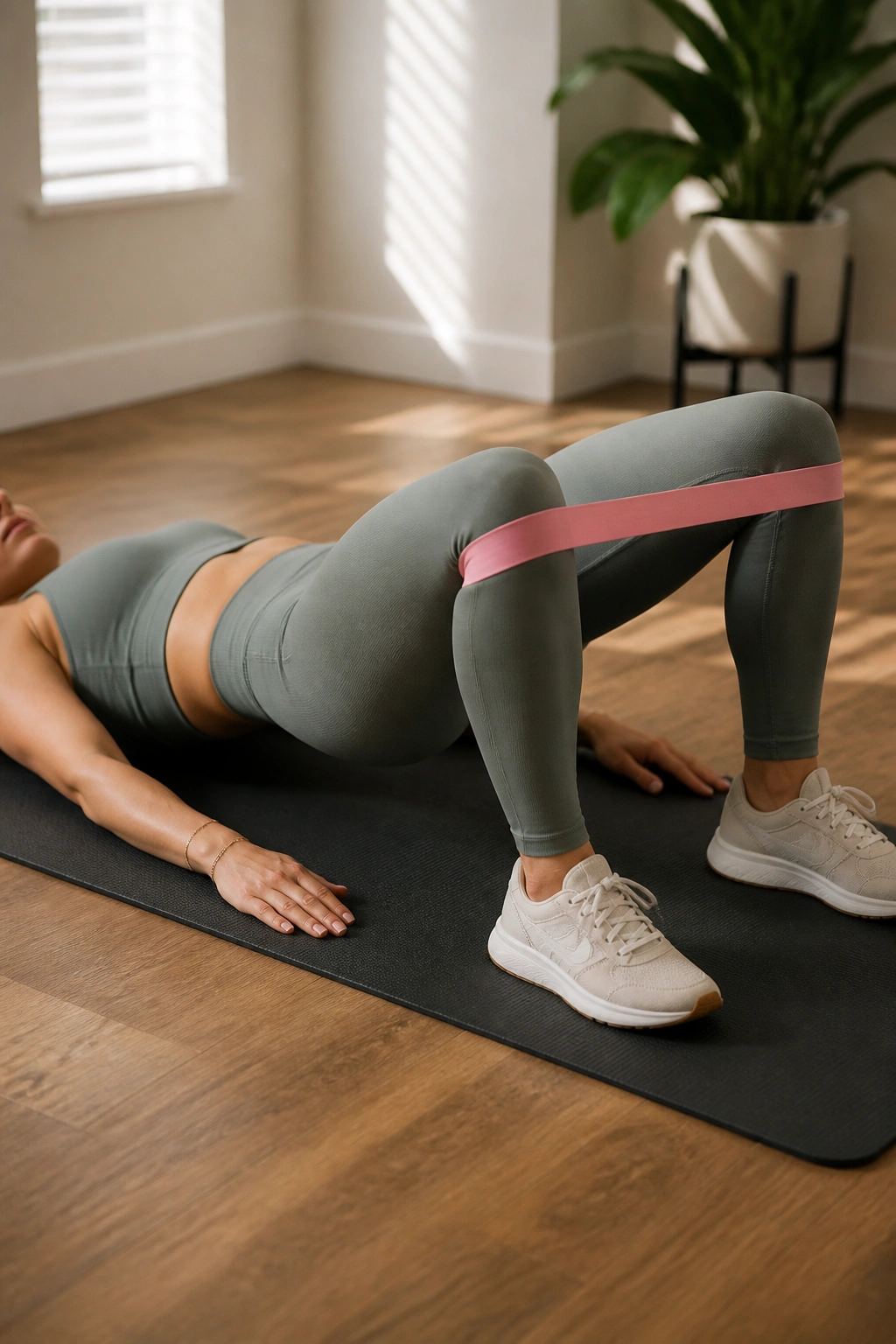
A mini band changes the bridge just enough to make the outer hips pay attention. Put the band above your knees, push your knees slightly out against it, and pulse the hips at the top with a short range.
The key is tension, not speed. If the knees cave in, the band might as well not be there. If you press them out too hard, the whole thing becomes stiff and clumsy. 15 to 25 pulses after a set of regular bridges is a nice place to start.
I like this move as a bridge between strength and burn. It is not fancy. It does not need to be. It gives you a cleaner glute squeeze and a little extra work for the side hip, which helps later in lunges and step-ups.
7. Sliding Hamstring Curls
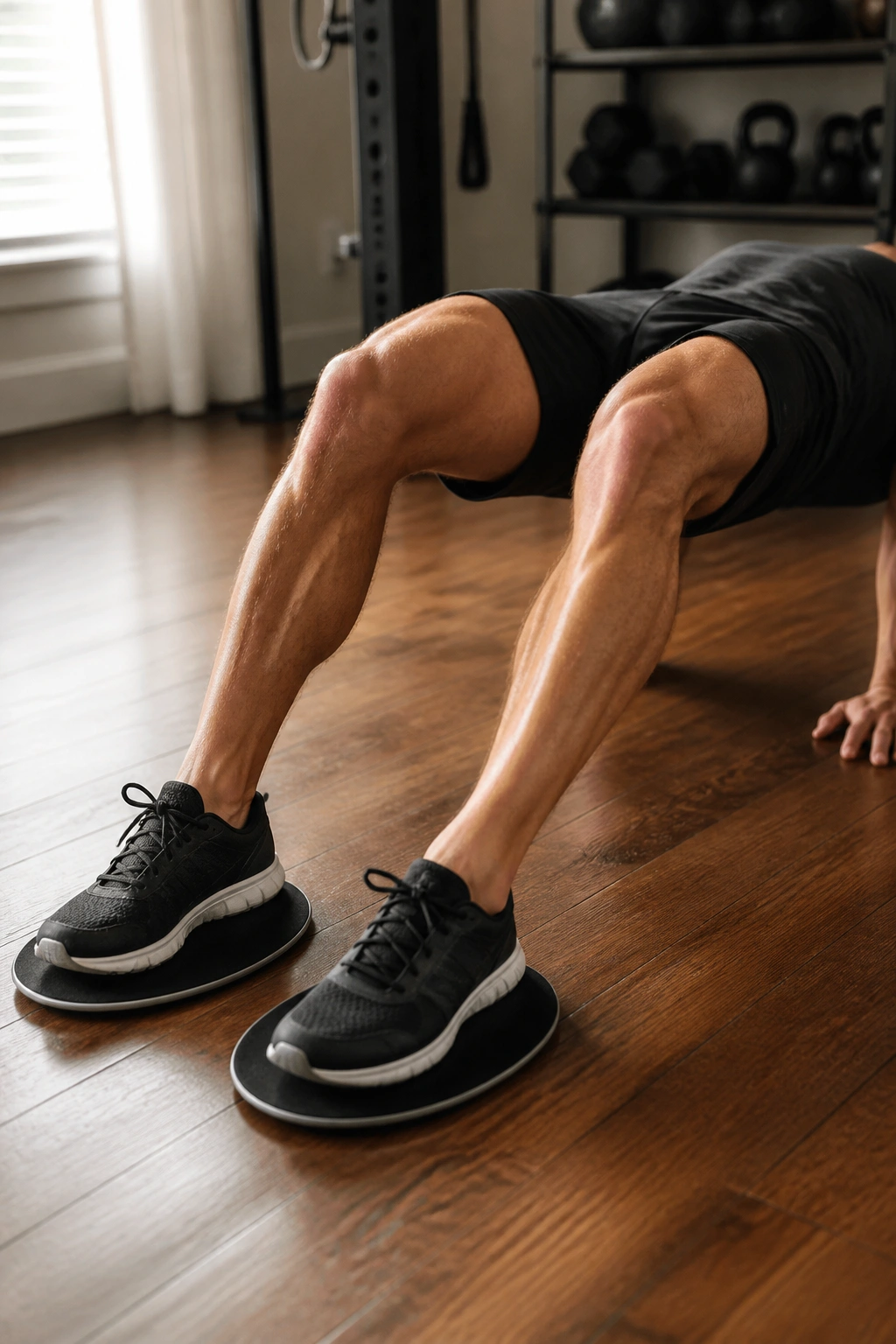
This is the one that usually surprises people. Put your heels on towels, socks, or sliders on a smooth floor, lift your hips, and slide your feet away and back while keeping tension in the hamstrings.
What the Floor Needs
- A surface that lets your feet move without sticking.
- Socks on hardwood, sliders on tile, or towels on a polished floor.
- Enough space to extend your legs without hitting furniture.
- 6 to 12 controlled reps for 2 to 4 sets.
Do not let the hips collapse when the legs slide out. That’s the whole challenge. The farther you extend, the more the hamstrings have to catch the load. Start with a small range if full slides cramp your legs, then build from there. If you do these slowly, you will feel why hamstring work at home can be sneaky-hard.
8. Hamstring Walkouts
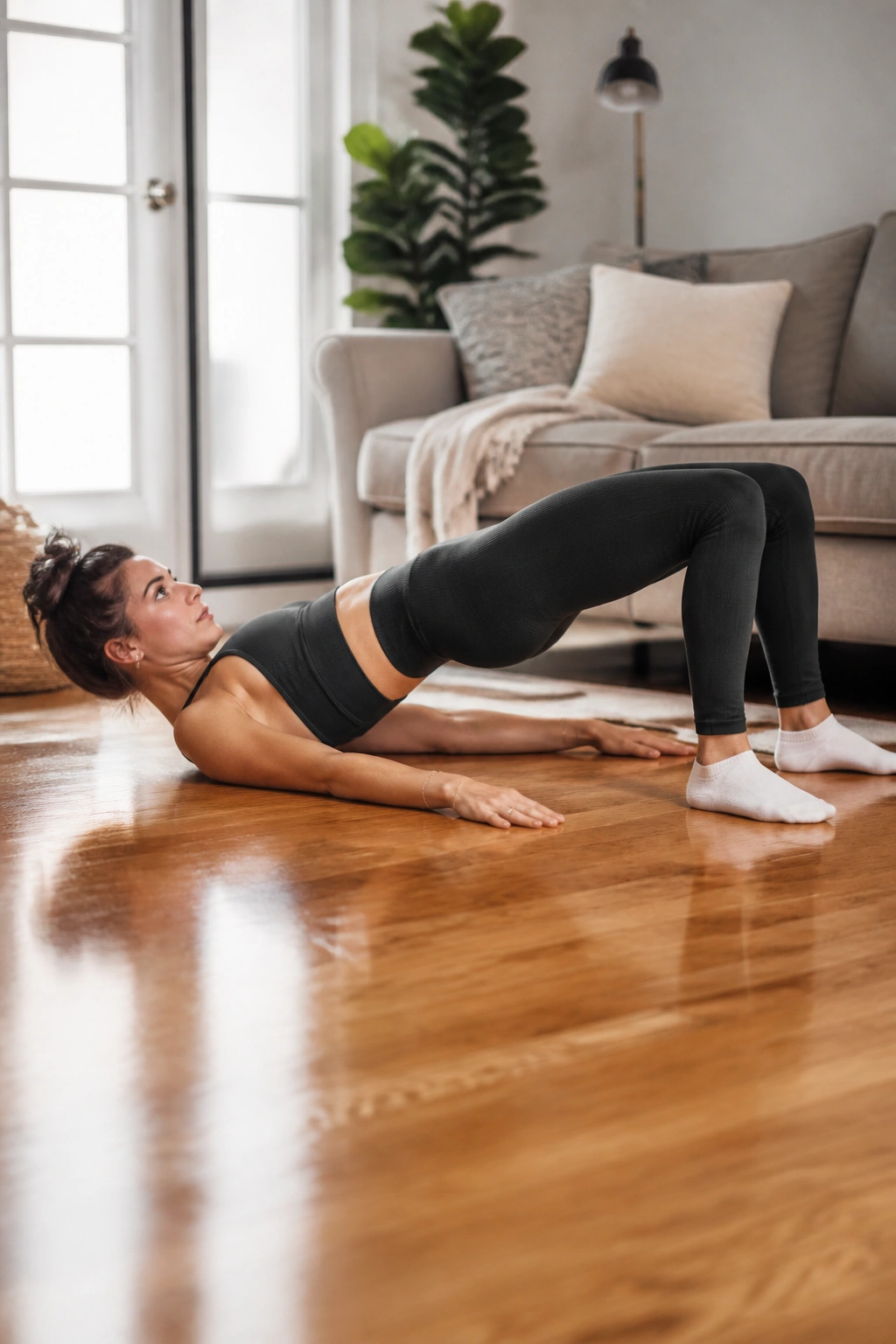
Some moves burn because they are difficult. Others burn because the position is rude. Hamstring walkouts are both.
Start in a glute bridge, then walk your heels out a few inches at a time until your legs are almost straight. Walk them back in without dropping the hips. Four to eight walkouts counts as a solid set, and most people need less volume than they think.
The trick is to keep the pelvis lifted the whole time. If you let the hips sag while the feet move, the hamstrings unload and the lower back gets stuck doing the wrong job. Brutal in a good way. That’s the whole point.
9. Assisted Nordic Hamstring Lower
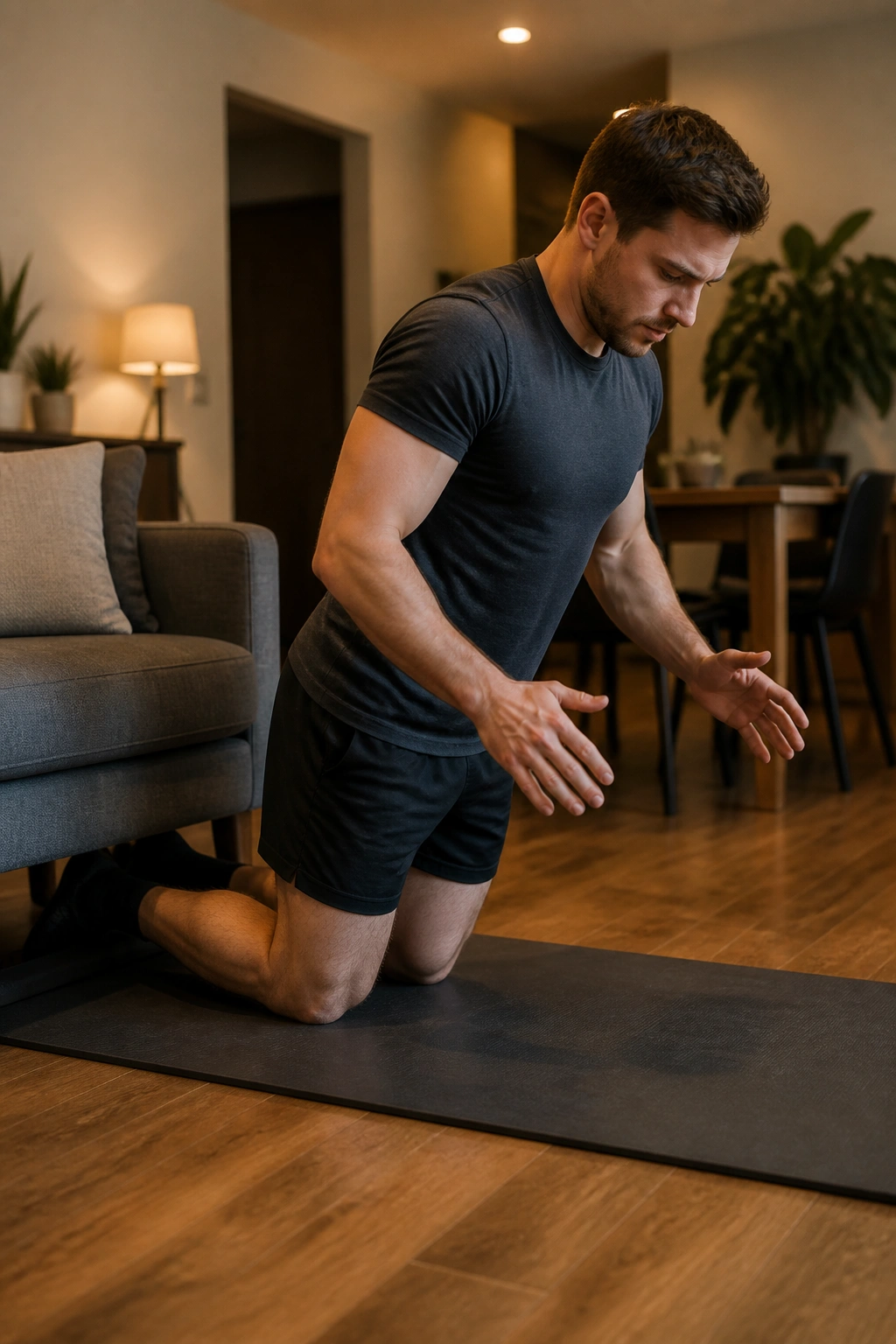
This one earns respect fast. Anchor your feet under a couch, a heavy piece of furniture, or have someone hold them down, then lower your body forward slowly from the knees. Catch yourself with your hands when the line gets too long.
Start with 3 to 5 slow lowers. That is enough. The eccentric part — the lowering — is where the hamstrings get hammered, and that’s why the movement feels so demanding even with low reps.
Do not race the descent. A fast drop turns the move into a fall. Use a thick mat or folded blanket under your knees, keep your hips tight, and only lower as far as you can control. This is not a beginner’s first move, but it is one of the best when you are ready for it.
10. Backpack Romanian Deadlift
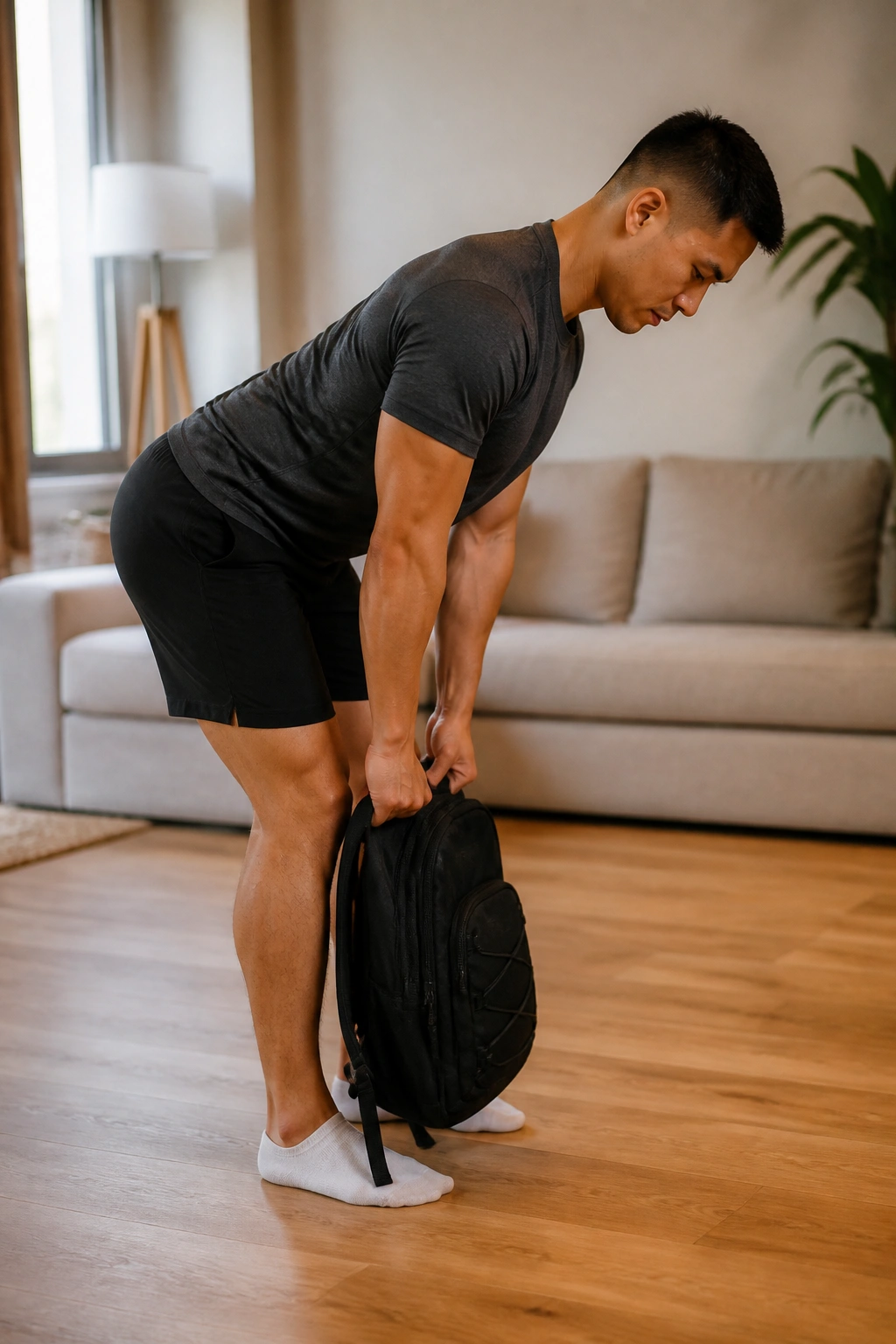
A backpack Romanian deadlift is one of the cleanest ways to load hamstrings at home. Fill a sturdy backpack with books, water jugs, or canned goods, hold it close to your thighs, and hinge at the hips with a soft knee bend.
How to Load It Without Wasting Time
- Use a backpack that sits flat and does not swing around.
- Keep the weight close to your legs.
- Aim for 8 to 15 reps with a slow lower.
- Stop when your back wants to round or your hamstrings hit a deep stretch.
The descent should feel like you’re pushing your hips toward the wall behind you. Not squatting. Not reaching down. Hinging. That distinction matters more than people admit, because the hinge keeps the hamstrings under tension while the quads stay mostly out of the way.
11. Single-Leg Romanian Deadlift
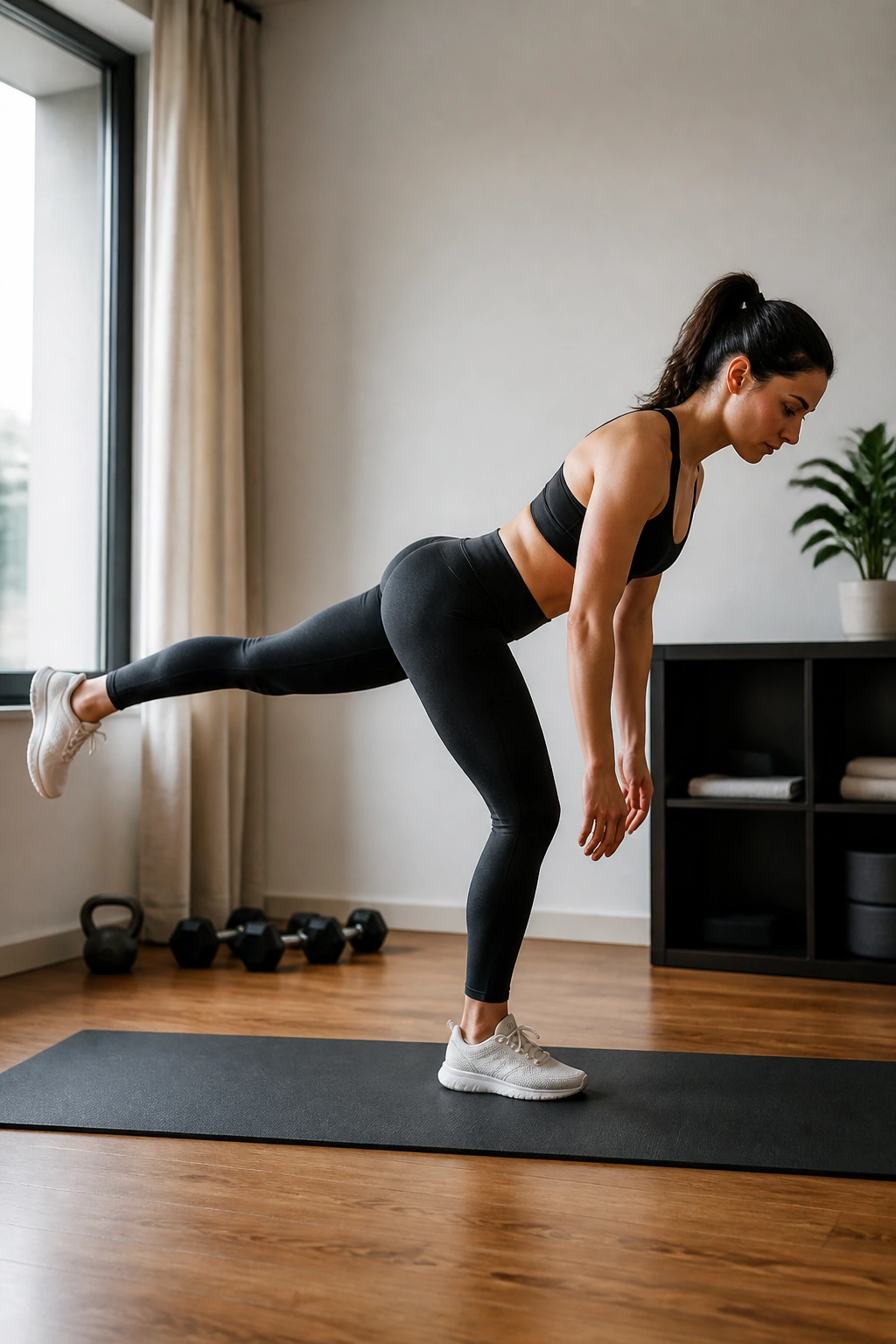
This move exposes sloppy balance immediately. That’s annoying, and useful. One leg stays planted, the other reaches back, and your torso tips forward while the working leg keeps the knee softly bent and the hip squared.
Use bodyweight first if balance is shaky. A backpack or a water bottle can come later. 6 to 10 reps per side is enough for quality work, especially if the lowering phase takes 3 seconds.
Think about reaching your back heel toward the wall behind you. That cue keeps the motion long and controlled. If you twist open at the hip, slow down and shorten the range. You want a stable hinge, not a wobble show.
12. Backpack Good Morning
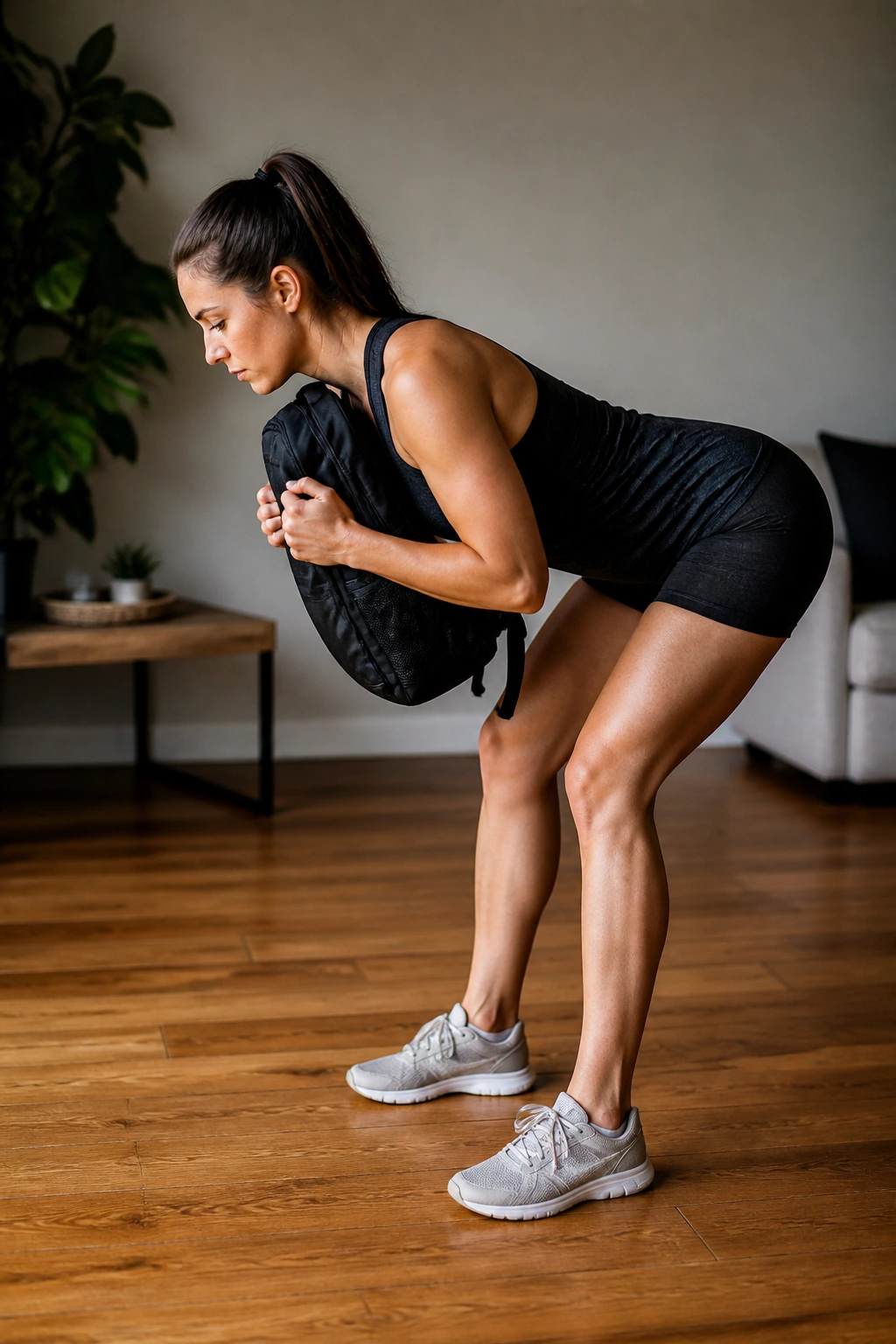
A good morning is basically a hinge with the load sitting in a different spot, which changes the feel more than beginners expect. Hold the backpack snug against your chest or on your upper back, keep your knees soft, and push your hips back until your torso leans forward.
The hamstrings should lengthen while the glutes brace to bring you back upright. 10 to 20 reps works well when the backpack is light; fewer reps if it is loaded enough to feel serious.
If your lower back becomes the main event, the weight is probably too heavy or the range is too deep. Reduce both and clean up the line first. The point is to hinge with control, not to fold in half and hope for the best.
13. Reverse Lunge With a Long Step
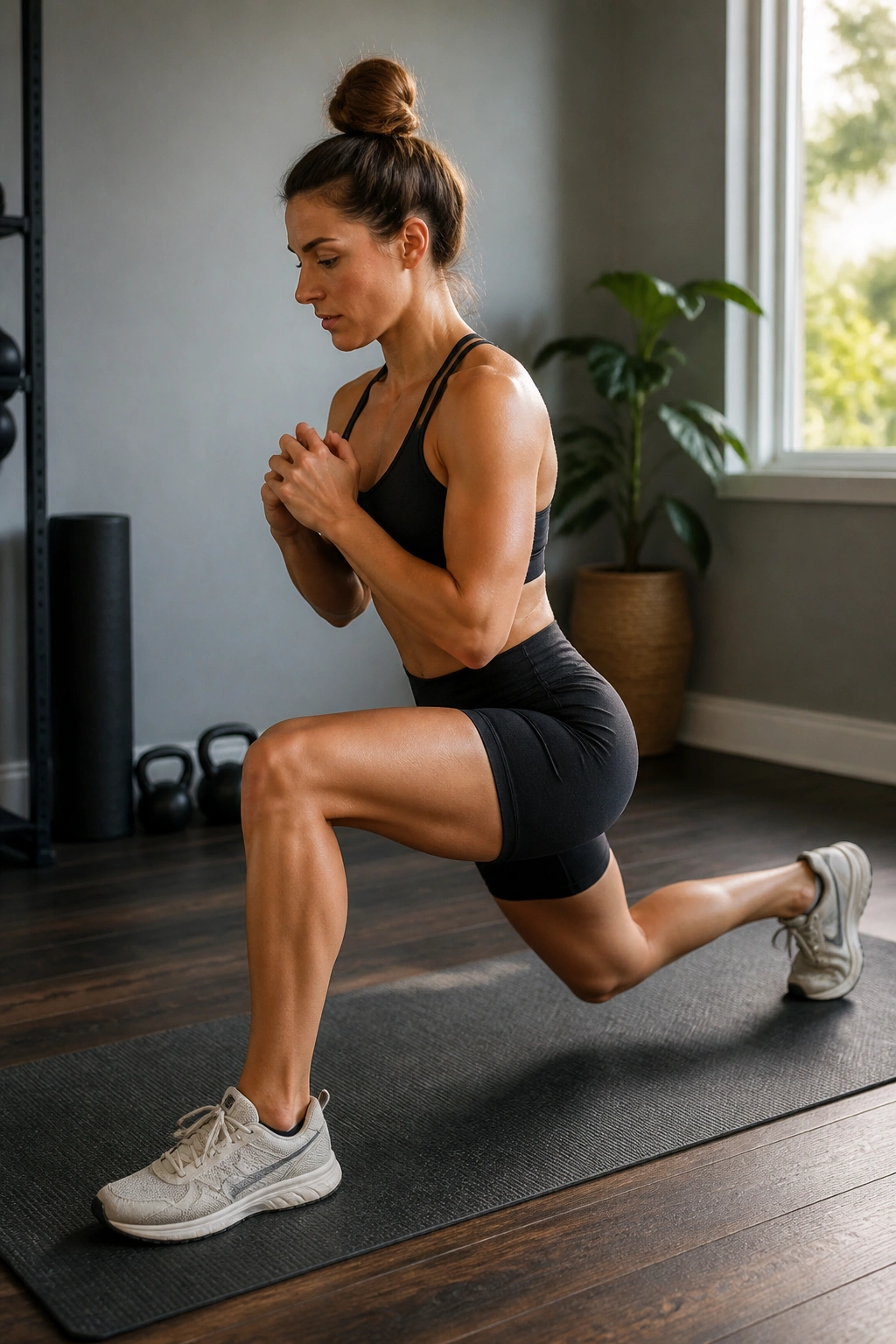
A long reverse lunge shifts the work toward the glutes more than the short, upright version most people default to. Step back far enough that your front shin stays close to vertical, lean your torso slightly forward, and drive through the front heel.
The Step Length Trick
- Take a longer step than feels natural at first.
- Keep your front foot flat.
- Let the torso angle forward a little.
- Use 8 to 12 reps per side.
That longer stance changes the whole feel. Short steps tend to light up the quads. Long steps recruit the glutes and hamstrings harder, especially if you keep the descent controlled and avoid bouncing off the back leg.
14. Bulgarian Split Squat With a Forward Lean
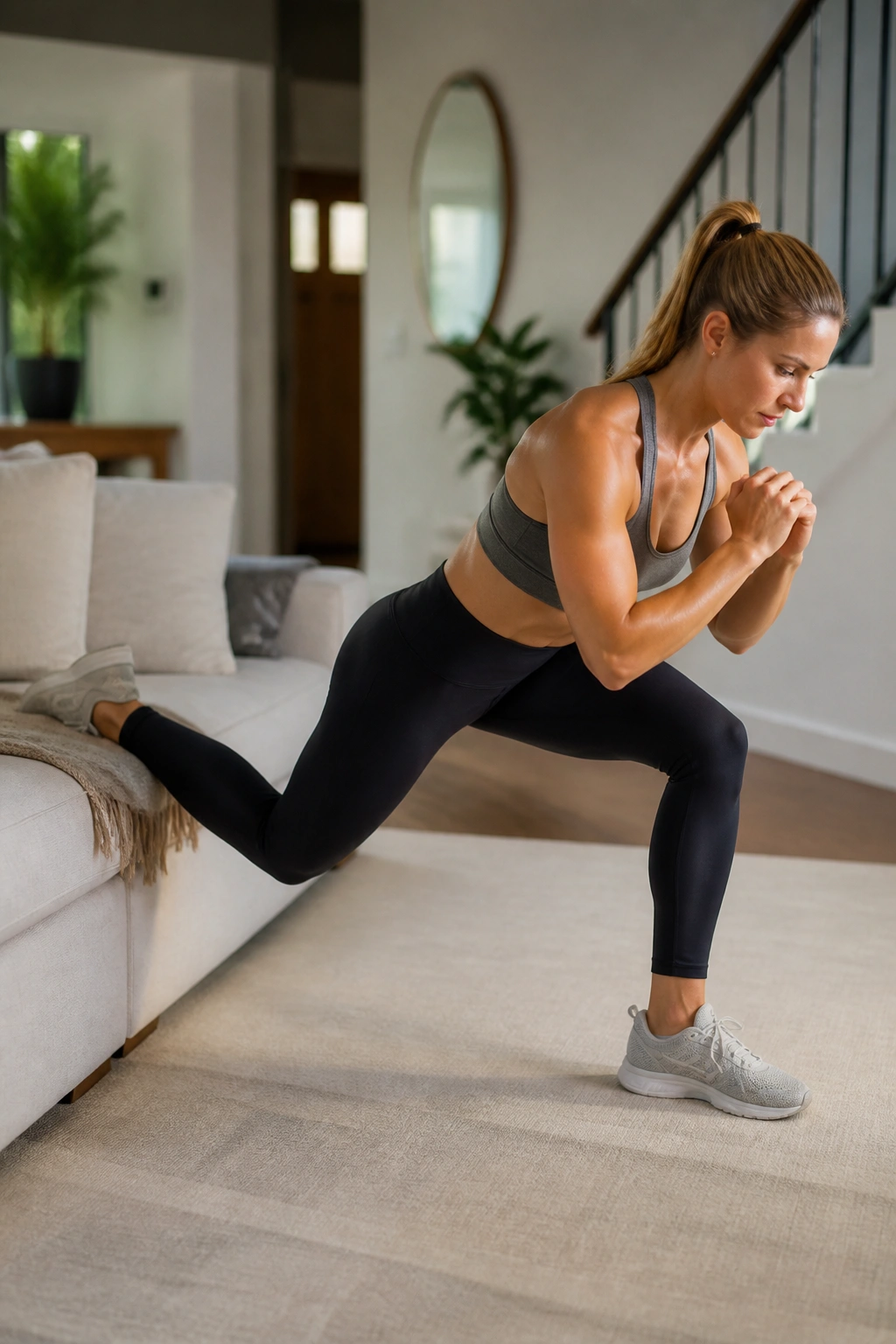
This is one of the most honest bodyweight leg exercises you can do at home. Back foot on a couch or chair, front foot planted well in front, and torso leaning slightly forward so the glutes get a bigger share of the work.
The exercise can feel brutal even before you add load. Good. That means it’s doing something. 6 to 10 reps per side is a solid working range, and a backpack held at your chest makes the set heavier without changing the setup much.
Keep the front knee tracking over the toes, not collapsing inward. And don’t chase depth so hard that your balance falls apart. A controlled half-rep is better than a full rep that looks like a rescue mission.
15. Step-Ups That Hit the Glutes
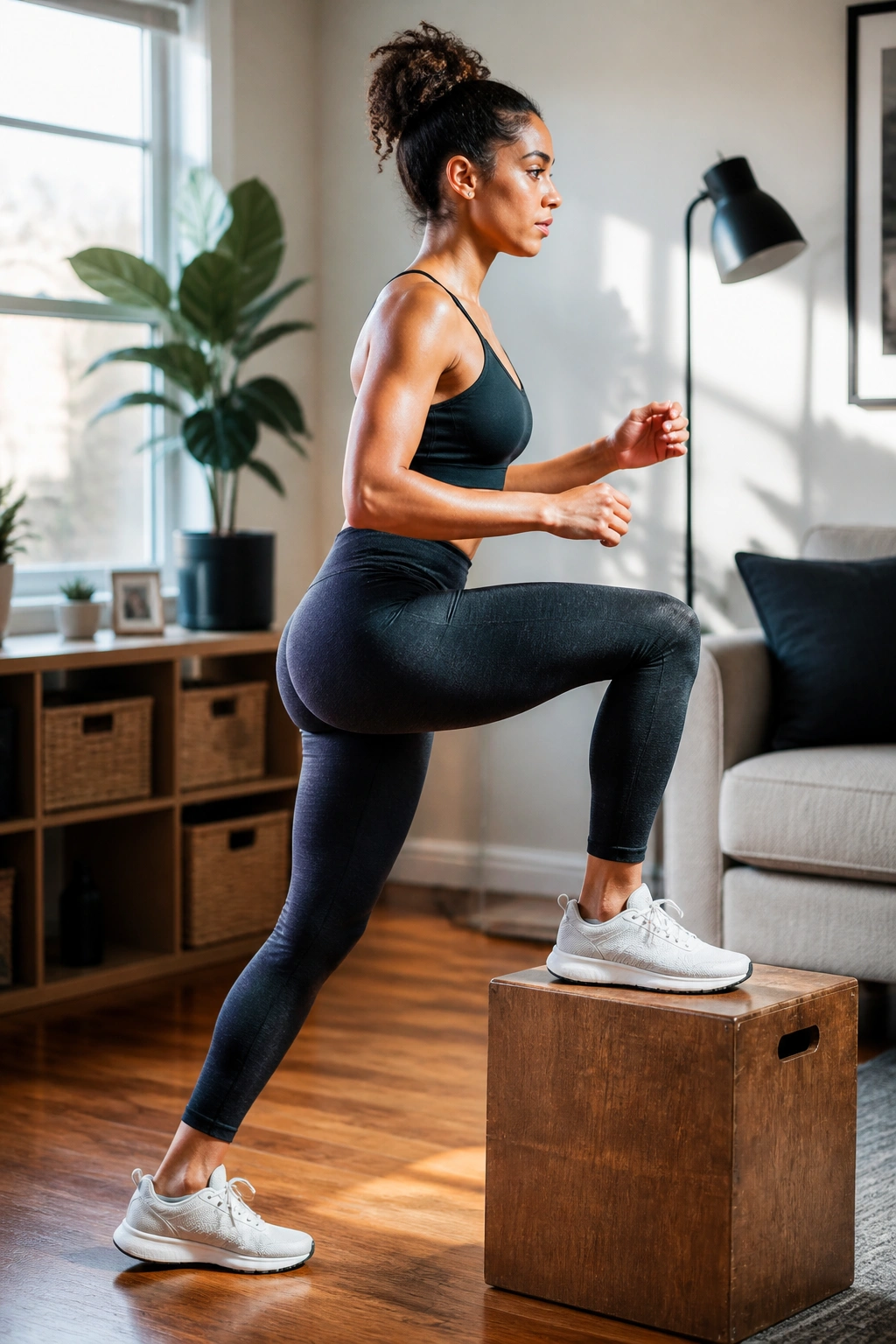
Step-ups are only as good as the box or chair you choose. Too low, and they turn into a lazy march. Too high, and your pelvis starts tilting all over the place. A surface around 12 to 18 inches works for many people.
What Makes Them Glute-Focused
- Drive through the working heel.
- Keep the torso slightly forward.
- Avoid pushing off the back foot.
- Use 8 to 12 reps per side.
I like step-ups because they train one leg at a time without feeling as punishing as split squats. They also show you quickly if one side is weaker. If you feel the front thigh doing everything, slow down and lean a touch more from the hips.
16. Curtsy Lunge for the Side Glutes
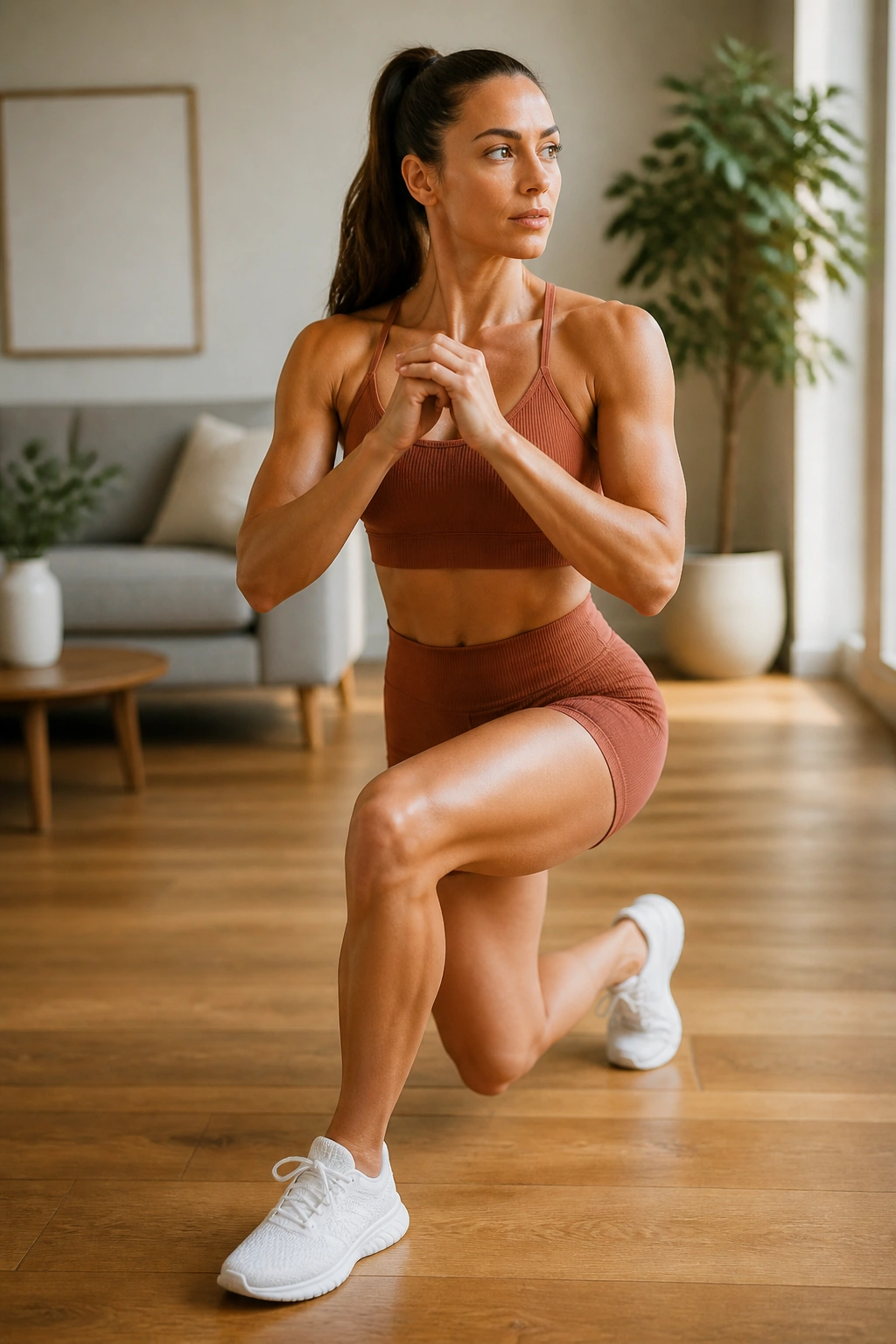
A curtsy lunge is a little awkward, and that’s part of why it earns its place. Step one leg back and across the body, then sit into the front hip while keeping the chest open and the front foot grounded.
The outer glutes, especially the glute medius, work hard to keep the pelvis from wobbling. 8 to 12 reps per side is a good start. You do not need a huge crossover step. A small diagonal is cleaner and usually friendlier on the knees.
If your knee complains, shorten the range or skip this one. I’d rather have you do fewer exercises well than force a position your body clearly dislikes. There are enough other glute moves here to keep the workout honest.
17. Glute Bridge March
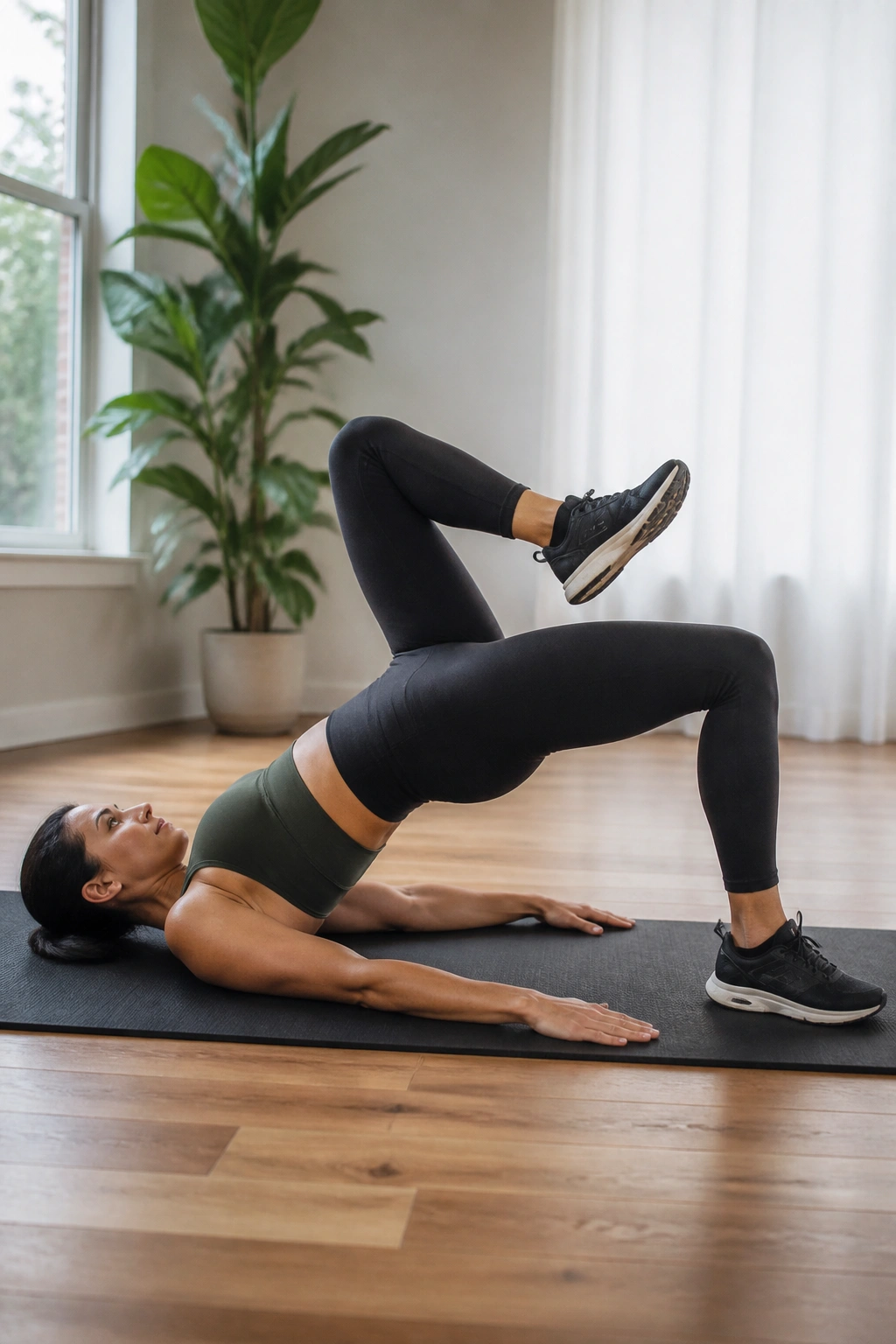
This is a bridge with attitude. Hold the top position and lift one knee a few inches at a time, then switch sides without letting the hips rock from left to right.
The challenge is anti-rotation. Your glutes keep the hips high while your core and hamstrings stop the body from tilting. Do 10 to 16 total marches for a set, and move slowly enough that the pelvis stays level.
If your hips drop every time you pick up a foot, the bridge is too advanced for that day. Lower the hips a bit, reset, and continue. Small adjustments beat sloppy reps, every time.
18. Donkey Kick With a Top Pause
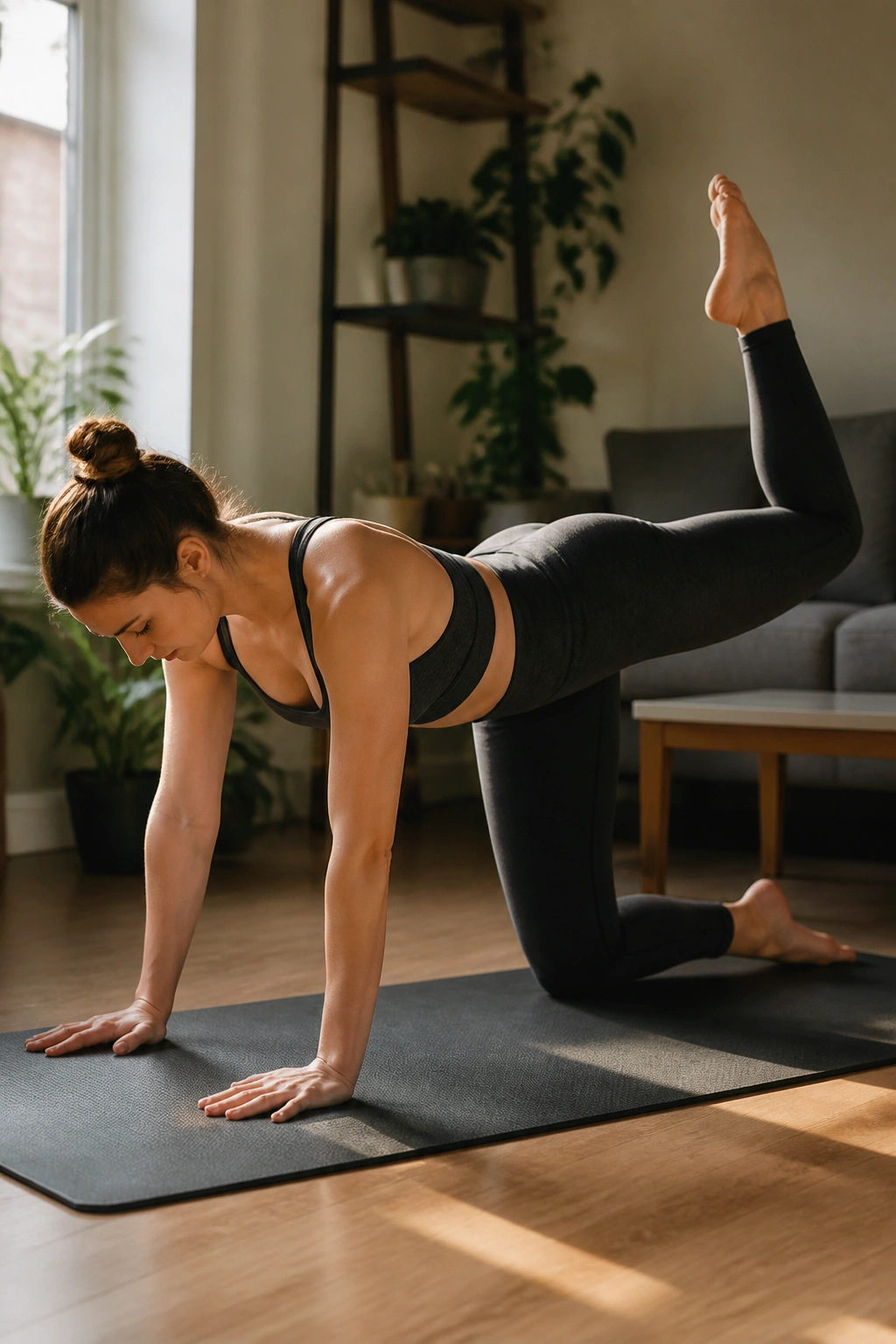
People make donkey kicks look easy because the range is small. They’re not easy when you do them properly. Keep the knee bent, foot flexed, and lift the thigh until the glute tightens without your lower back taking over.
A 2-second pause at the top changes the whole exercise. Without the pause, it’s mostly motion. With the pause, it becomes a squeeze test. 12 to 20 reps per side is enough, especially if you hold the last few reps a little longer.
Try not to swing the leg high. A small, controlled lift is better than chasing height and arching the spine. The glute should do the lifting. Not the back.
19. Fire Hydrant Holds
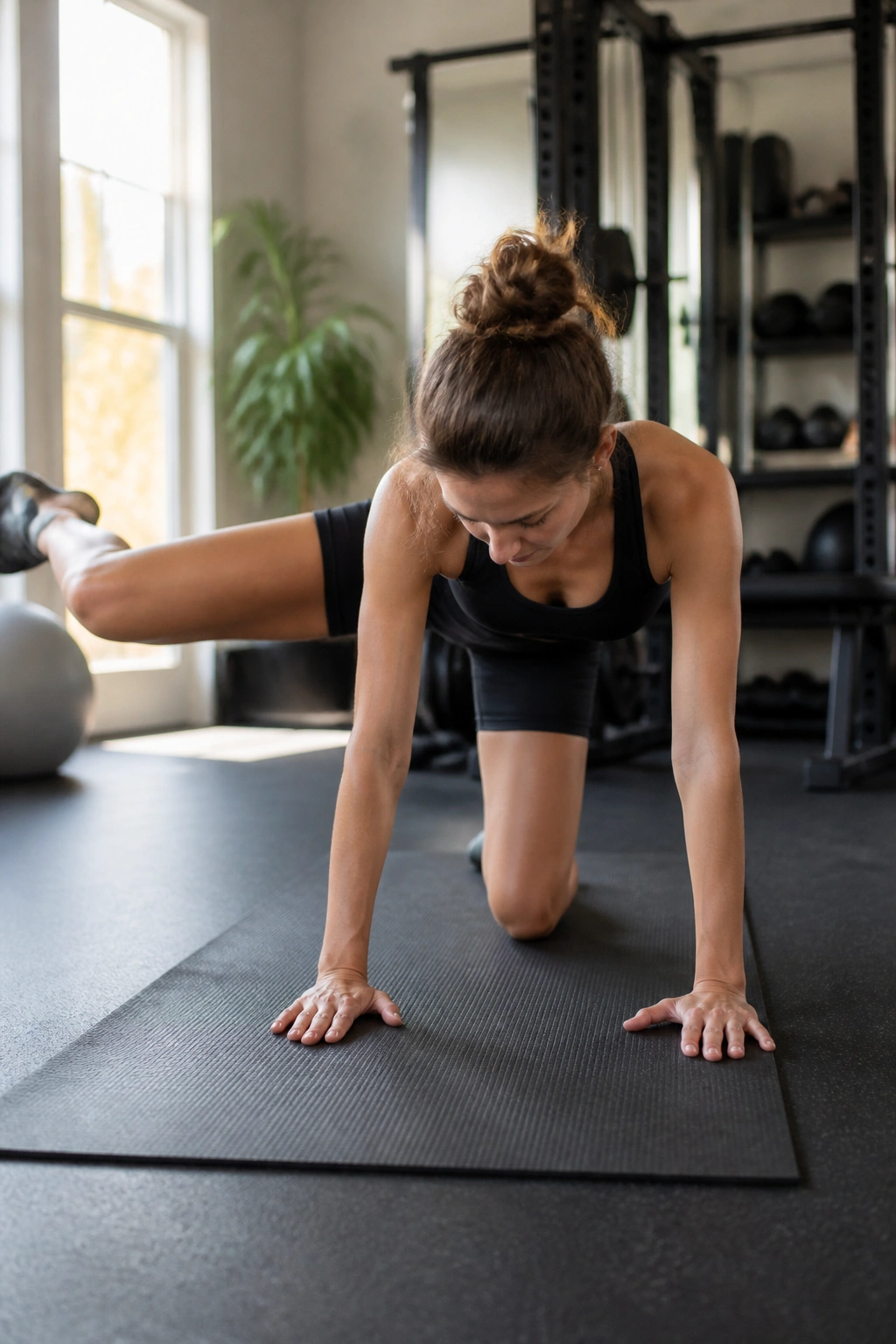
A fire hydrant is more about the side hip than the big glute squeeze, and that matters because a stable pelvis makes every other lower-body move cleaner. Start on all fours, lift one knee out to the side, and hold the top position for a beat before lowering.
Make the Side Hip Do Real Work
- Keep your pelvis square to the floor.
- Lift only as high as you can without twisting.
- Hold for 1 to 2 seconds at the top.
- Use 10 to 15 reps per side.
The temptation is to swing the leg wide. Don’t. That usually means the torso is opening up and the work is leaking away. Keep the range smaller and the control sharper. The burn arrives faster that way anyway.
20. Quadruped Kickback to Straight Leg
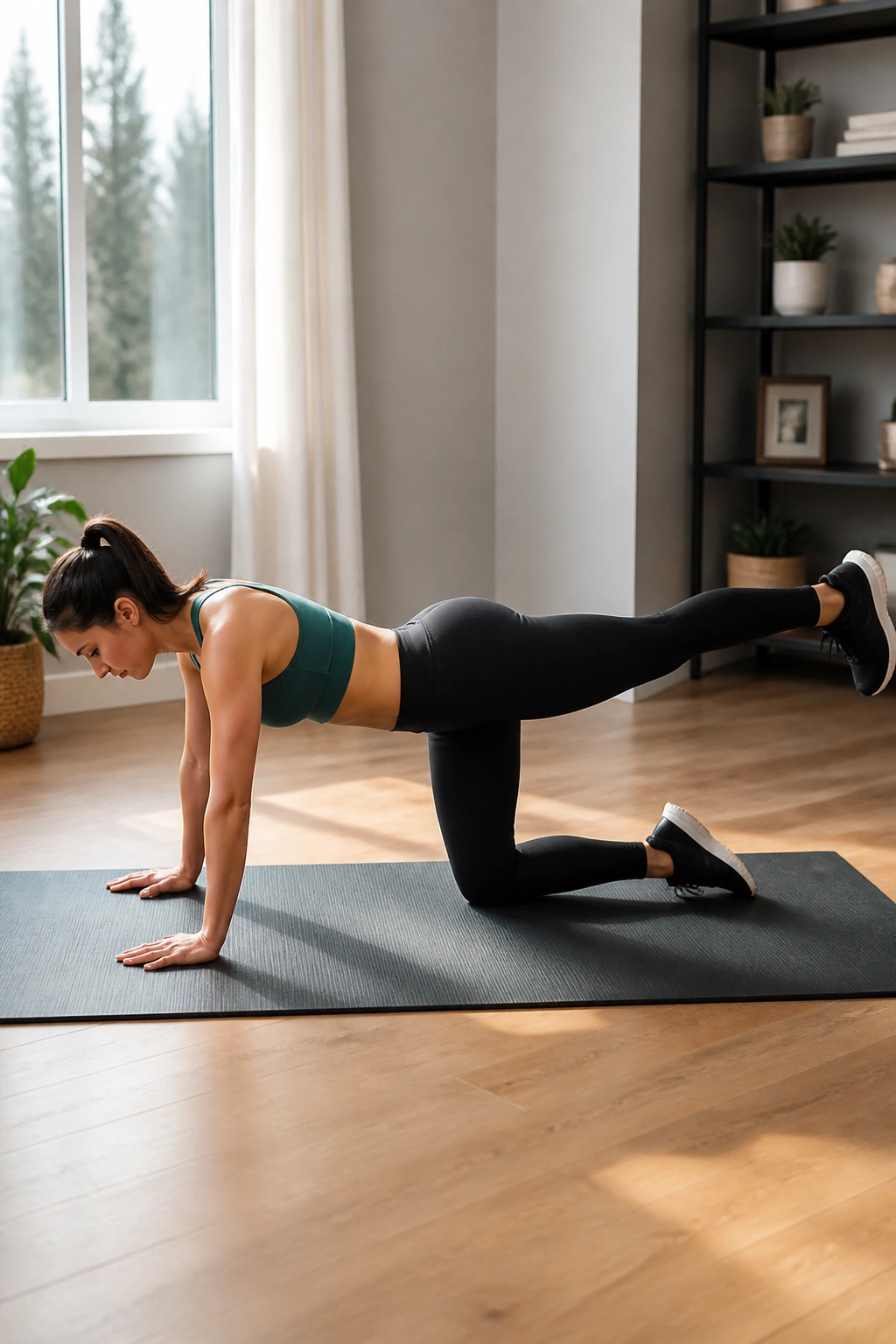
Unlike donkey kicks, this version straightens the leg behind you, which changes the line of pull and makes the glute max work in a slightly different way. Start on hands and knees, extend one leg back with the toes pointed down or slightly in, and squeeze at the top.
The straight-leg version makes cheating harder. That’s the nice part. You cannot hide behind momentum as easily. Use 10 to 15 reps per side, and slow the lowering phase down to about 2 seconds.
If your lower back arches when the leg goes up, the leg is too high. Lower it. A flat spine and a hard glute squeeze beat a dramatic kick that nobody asked for.
21. Lateral Band Walks
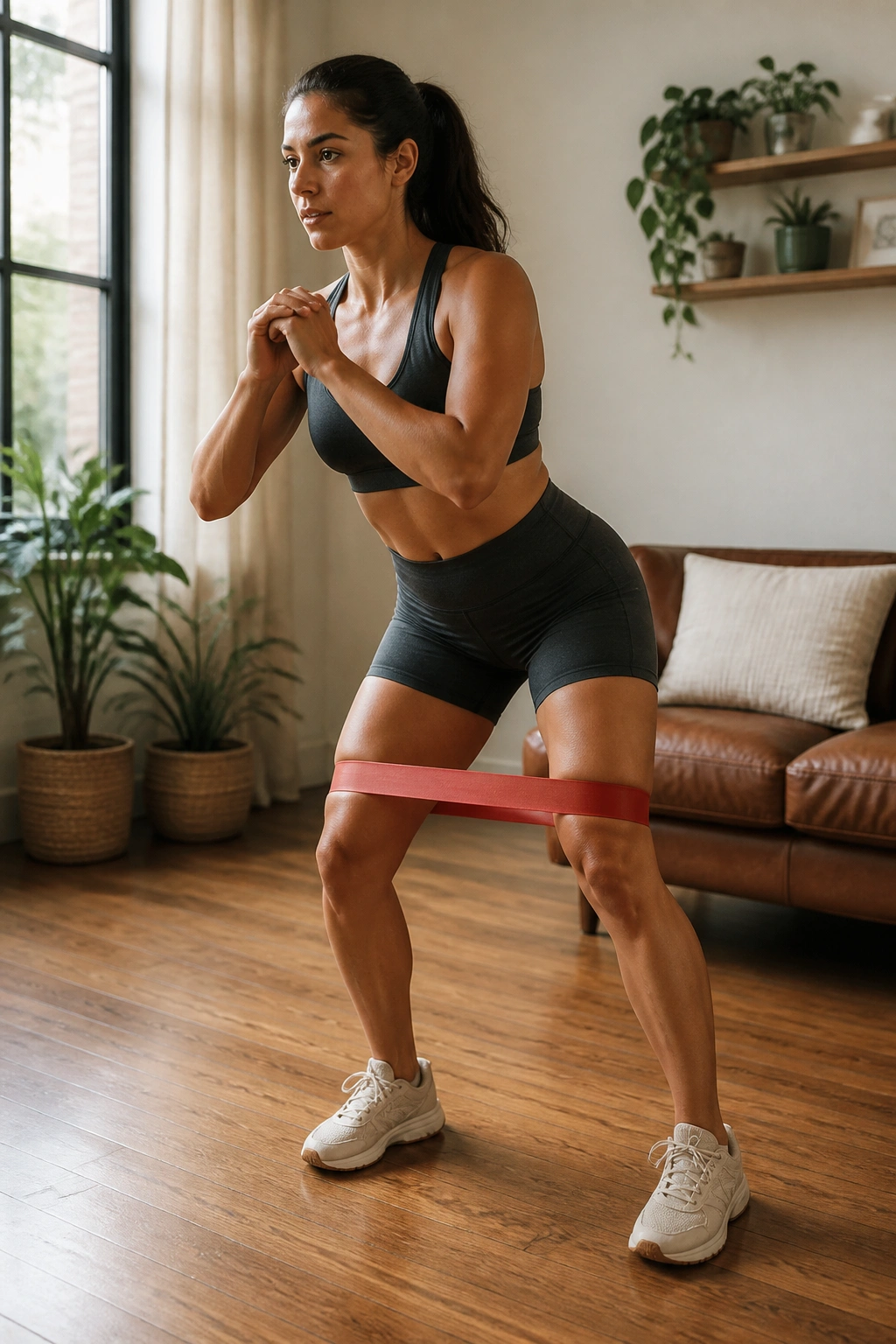
What looks like a warm-up can still be real work. Lateral band walks hit the glute medius and the small stabilizers that keep your knees from caving when you squat, lunge, or step up.
The Small Steps Matter
- Put a mini band above the knees for an easier version, or at the ankles for a harder one.
- Keep the knees soft and the feet parallel.
- Take 8 to 12 steps in one direction, then come back.
- Stay low and keep tension on the band the whole time.
The mistake is taking giant steps. Small steps create steady tension. That’s the part you want. If the band snaps around or your feet click together, slow down and widen the stance a bit.
22. Glute Bridge Heel Digs
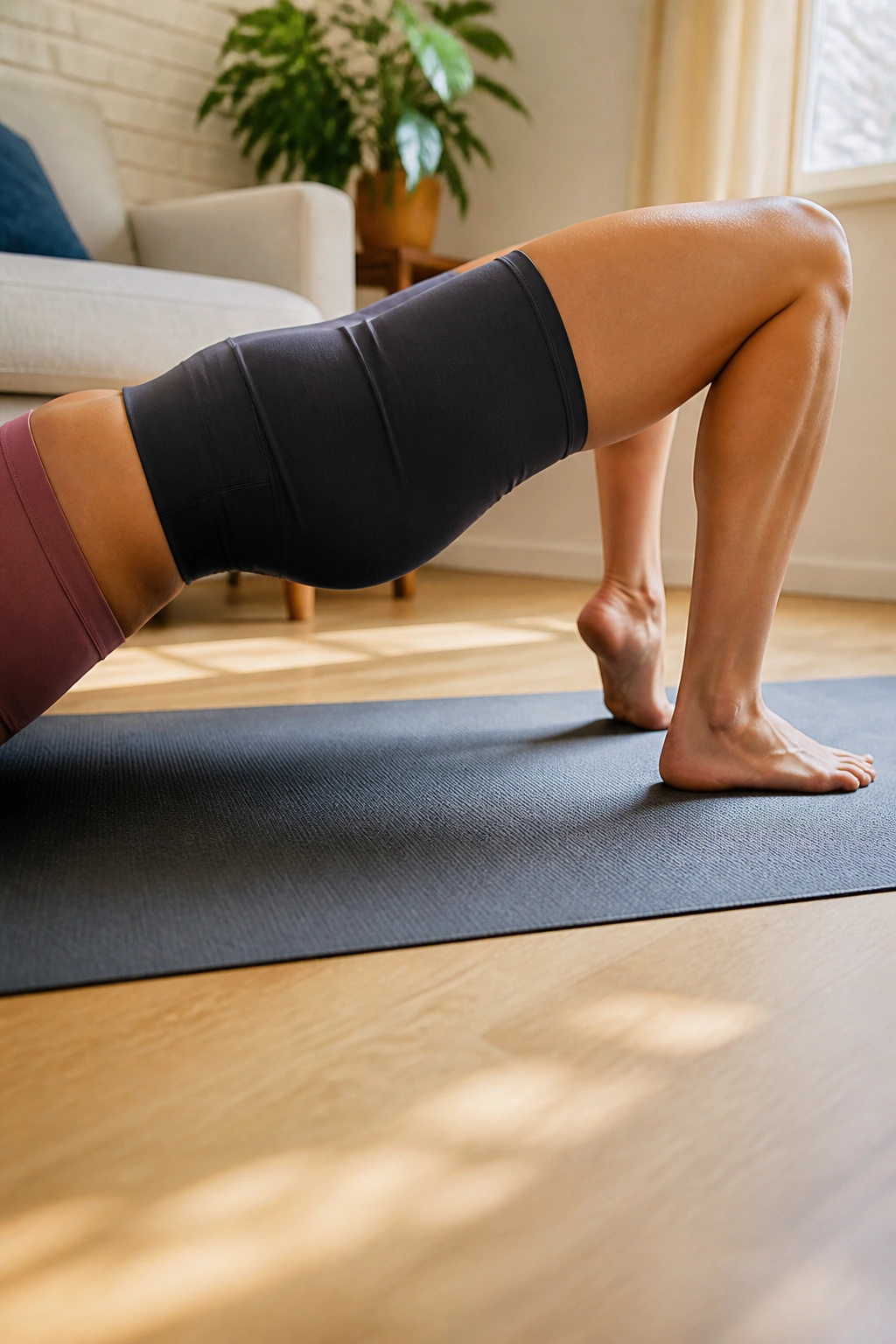
This one is sneaky because it starts like a bridge and ends like a hamstring challenge. Lift into a bridge, then dig one heel into the floor without moving the foot, switch sides, and keep the hips from dropping.
The hamstrings have to brace hard to hold the bridge while the heel pushes down. It feels like a tiny movement, which is why people underestimate it. 10 to 20 alternating digs is enough for most sets.
If you cramp, move the feet a little farther away from your hips. If the lower back tightens first, shorten the hold and lower the hips a bit. A good heel dig should feel local, not chaotic.
23. Hamstring Heel Slides
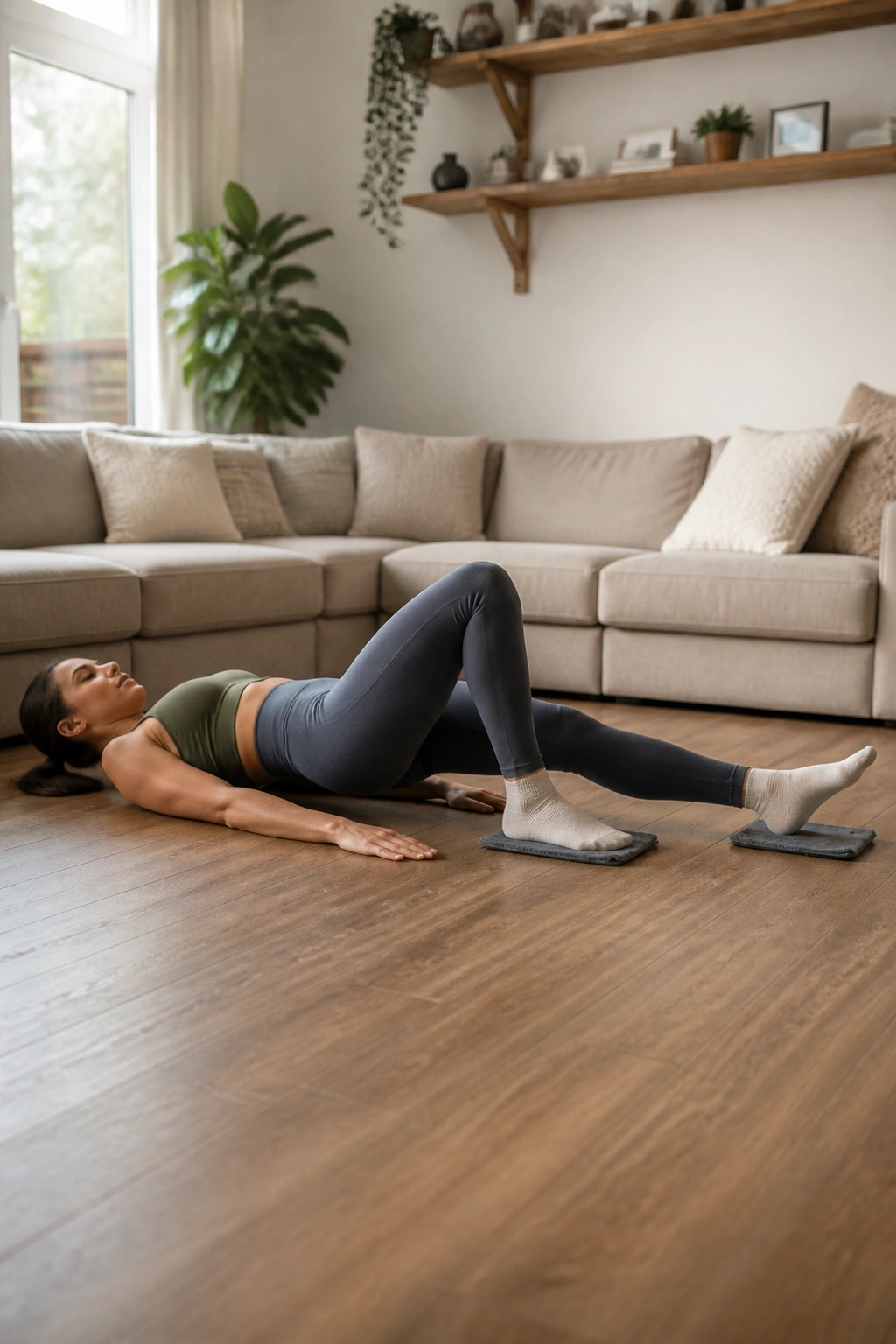
This is the easier cousin of sliding curls. Lie on your back with heels on towels or sliders, keep your hips on the floor or in a low bridge, and slide your heels out and back in a smooth line.
It’s a smart choice when the full sliding curl feels too aggressive. You still train hamstring control, but the lower body stays a little more grounded. 8 to 15 reps works well, and the slowing on the way out matters more than the speed coming back.
Use this as a warm-up, a finisher, or a regression if you are building toward more demanding floor curls. Sometimes the smartest progression is the one that lets you keep training instead of quitting halfway through the set.
24. Kickstand Romanian Deadlift
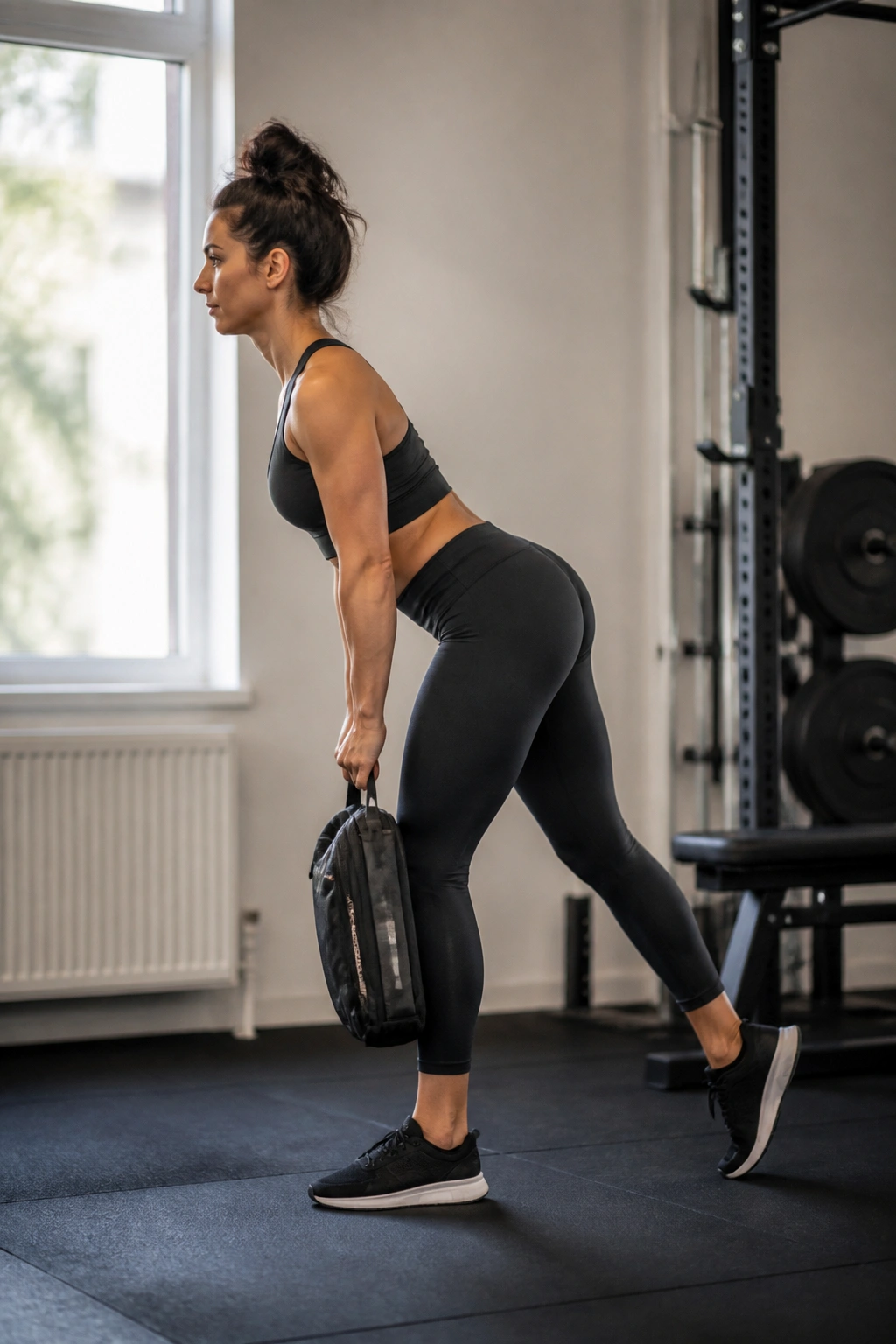
A kickstand RDL is the middle ground between two-legged hinges and full single-leg balance work. One foot stays planted, the other rests lightly on the floor behind you with just the toes down. Most of the load stays on the front leg.
That setup gives you more stability than a single-leg deadlift while still forcing the hamstrings and glutes to work hard. Hold a backpack, dumbbell, or even a jug of water, and use 8 to 12 reps per side.
I like this one for home training because it feels heavy without being messy. The back foot is there for balance, not support. If you can barely feel the front leg working, shift more weight forward and slow the descent.
25. 10-Minute Posterior-Chain Finisher
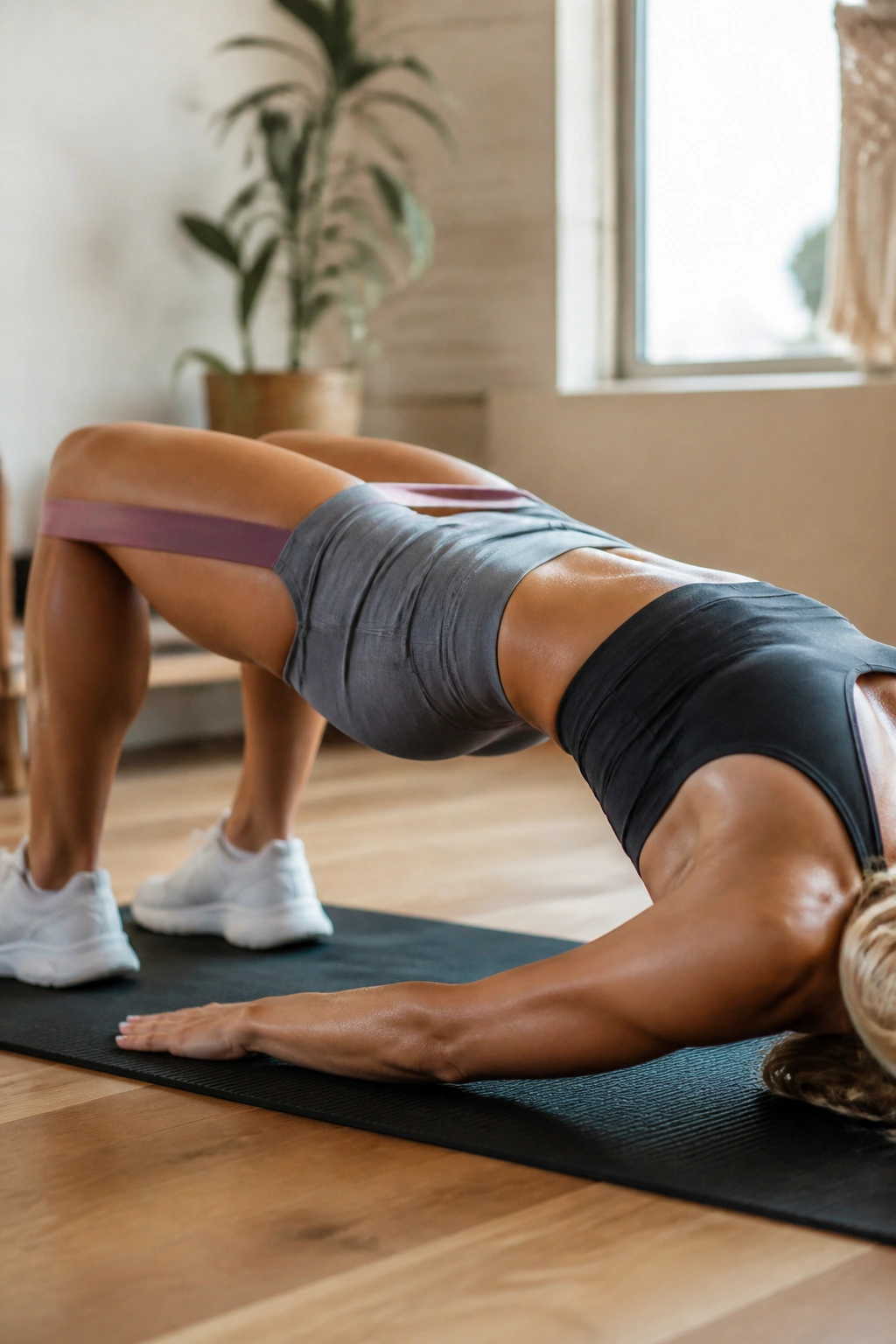
A short finisher is a good way to stitch all this together when you do not want a long workout. Set a timer for 10 minutes and rotate through three moves: glute bridges, sliding hamstring curls, and lateral band walks.
How to Run It
- Do 30 seconds of glute bridge pulses.
- Move into 30 seconds of sliding hamstring curls.
- Finish with 30 seconds of lateral band walks.
- Rest for 30 seconds.
- Repeat the cycle 3 to 5 times.
This works because each move hits a different job. Bridges build hip extension. Curls attack the hamstrings. Band walks keep the side hips awake. The workout feels short, but it covers a lot of ground.
If your form starts to slip by round three, stop chasing speed. Slow everything down and keep the positions clean. A good finisher should leave your legs tired, not sloppy.
Final Thoughts
The best hamstring and glute workouts at home are not complicated. They are specific. One move teaches the glutes to lock out, another loads the hamstrings at the knee, and another forces one side to carry its own weight without help.
A towel, a couch, and a backpack can take you farther than people expect. Use them with control, keep the reps honest, and choose the variation that matches your current strength instead of the one that sounds hardest on paper. That’s how home lower-body work stops feeling improvised and starts feeling like a real plan.
