



Most people dread leg day for the same reason they love the results—it is brutal. If you are doing it right, your quads should feel like they are filled with lead by the final set, and your glutes should have a persistent, dull ache the next morning. There is a specific kind of mental toughness required to step under a squat rack or drop into a deep lunge when your legs are already screaming. You have to push past the burning sensation in your muscles to build real strength, stability, and size.
It is a common misconception that you need a fully equipped commercial gym to build powerful, functional legs. While the iron and the machines help, your muscles do not know the difference between a heavy dumbbell, a resistance band, or a barbell—they only know the mechanical tension you apply. Whether you are working out in a cramped living room, a garage, or a crowded gym, the principles of progressive overload, consistency, and proper form remain the only variables that actually matter.
Leg training is not just about aesthetics or filling out a pair of jeans. Strong legs are the engine of your body. They dictate how you walk, run, jump, and climb stairs. They support your spine, improve your posture, and contribute to your metabolic health more than any other muscle group. If you neglect the lower body, you create a foundation that will eventually fail under the weight of daily life.
1. The Foundation: Bodyweight-Only Circuit
If you are just starting or find yourself without any equipment, this is your bread and butter. You do not need external weight to create significant fatigue. The secret here is slow, controlled eccentric movements—take three full seconds to lower yourself into every squat or lunge. Time under tension is the substitute for heavy iron.
Why It Works
Bodyweight movements require high levels of stabilization. Without a rack to balance the weight, your smaller stabilizer muscles in your hips and ankles have to work overtime. This builds real-world functionality rather than just raw size.
The Routine
- Bodyweight Squats: 3 sets of 20 reps. Keep your chest up and drive through your heels.
- Walking Lunges: 3 sets of 12 reps per leg. Take long, deep strides.
- Glute Bridges: 3 sets of 15 reps. Squeeze at the top and hold for two seconds.
- Calf Raises: 3 sets of 25 reps. Use a step for a deeper stretch at the bottom.
Pro tip: To make this harder without adding weight, pause for two seconds at the bottom of the squat. That tiny pause kills any momentum and forces your quads to do all the heavy lifting to start the ascent.
2. The Dumbbell Hypertrophy Protocol
Dumbbells are arguably the most versatile tool in any gym or home setup. They allow for unilateral training, which means you can train one leg at a time. This is critical for fixing muscle imbalances. If your left leg is stronger than your right, the right one will always lag behind unless you train them independently.
You will notice that unilateral work feels different. It feels awkward at first. That instability is where the growth happens. You have to stabilize the weight with your entire core, turning a simple leg move into a full-body challenge.
The Workout
- Goblet Squats: 4 sets of 10-12 reps. Hold the dumbbell tight against your chest to keep your torso upright.
- Dumbbell Bulgarian Split Squats: 3 sets of 10 reps per leg. These are the king of leg exercises. They hurt, but they work.
- Dumbbell Romanian Deadlifts: 3 sets of 12 reps. Focus on the stretch in your hamstrings.
- Dumbbell Step-Ups: 3 sets of 10 reps per leg. Find a sturdy chair or bench.
3. Kettlebell-Focused Power Flow
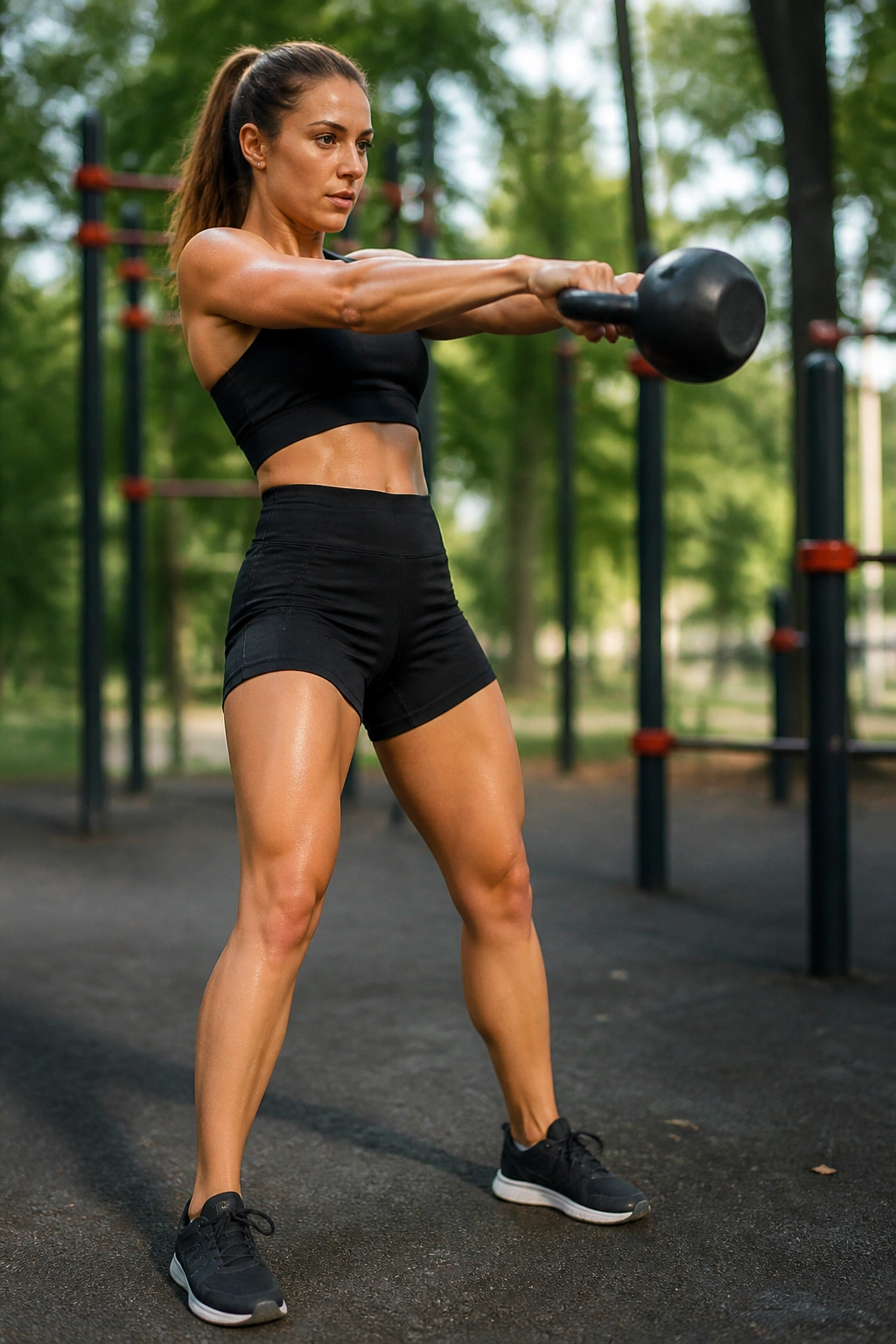
Kettlebells change the center of gravity. Because the weight is offset from the handle, it forces your body to react to dynamic shifts in balance. This is an excellent way to train your posterior chain—the back of your body—which is often neglected in standard gym routines.
Think of your hips as a hinge. You want to snap that hinge forward with power. The kettlebell swing, the primary movement here, is less about your arms and entirely about your glutes and hamstrings. If your arms are tired before your legs, you are likely using them to lift the bell. Stop that. Use your hips.
Key Movement Patterns
- Kettlebell Swings: 5 sets of 15-20 reps. This is your power move.
- Goblet Cossack Squats: 3 sets of 8 reps per side. This targets your adductors (inner thighs).
- Single-Leg Kettlebell RDLs: 3 sets of 10 reps per leg. Focus on keeping your hips square to the floor.
- Kettlebell Sumo Squats: 3 sets of 12 reps. Keep the bell between your legs, go deep, and drive up.
4. Apartment-Friendly Minimalist Routine
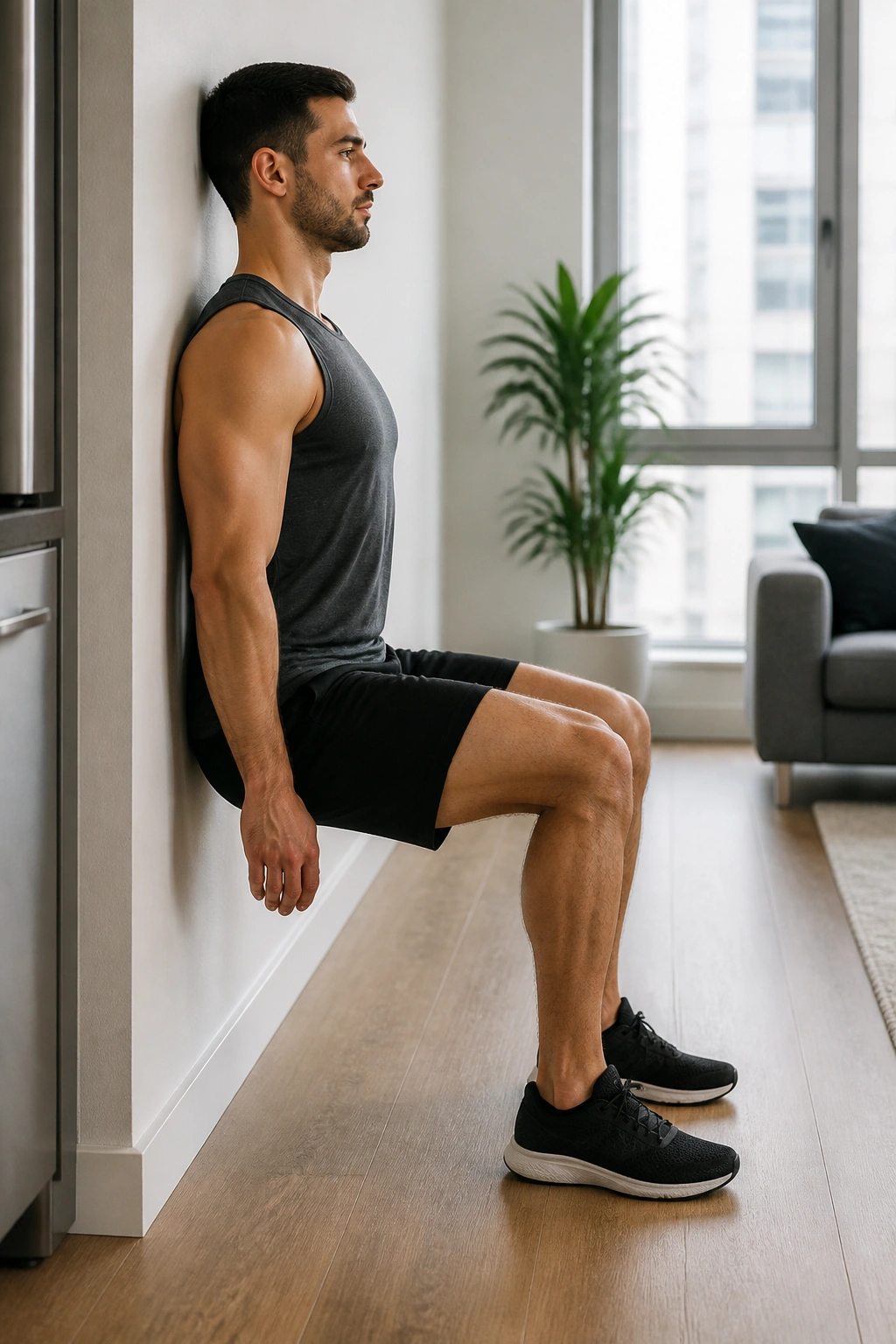
Space is often the biggest barrier to a good workout. If you live in an apartment, you cannot jump around or drop heavy weights. This routine is designed to be quiet, efficient, and space-conscious, relying on slow tempos and high-rep endurance to exhaust the muscles.
You can do this with just your own body weight or a single resistance band. The focus is on the burn. You aren’t looking for a “max effort” PR; you are looking for metabolic fatigue. By the end of these sets, your legs should feel like they are shaking.
- Wall Sits: 3 rounds of 60 seconds. Keep your back flat against the wall.
- Pistol Squat Progressions: 3 sets of 5-8 reps per leg. Use a doorframe for balance if needed.
- Lateral Band Walks: 3 sets of 20 steps per side. This lights up your glute medius.
- Single-Leg Calf Raises: 3 sets of 20 reps. Do these holding onto a wall for stability.
5. Heavy Barbell Strength Fundamentals
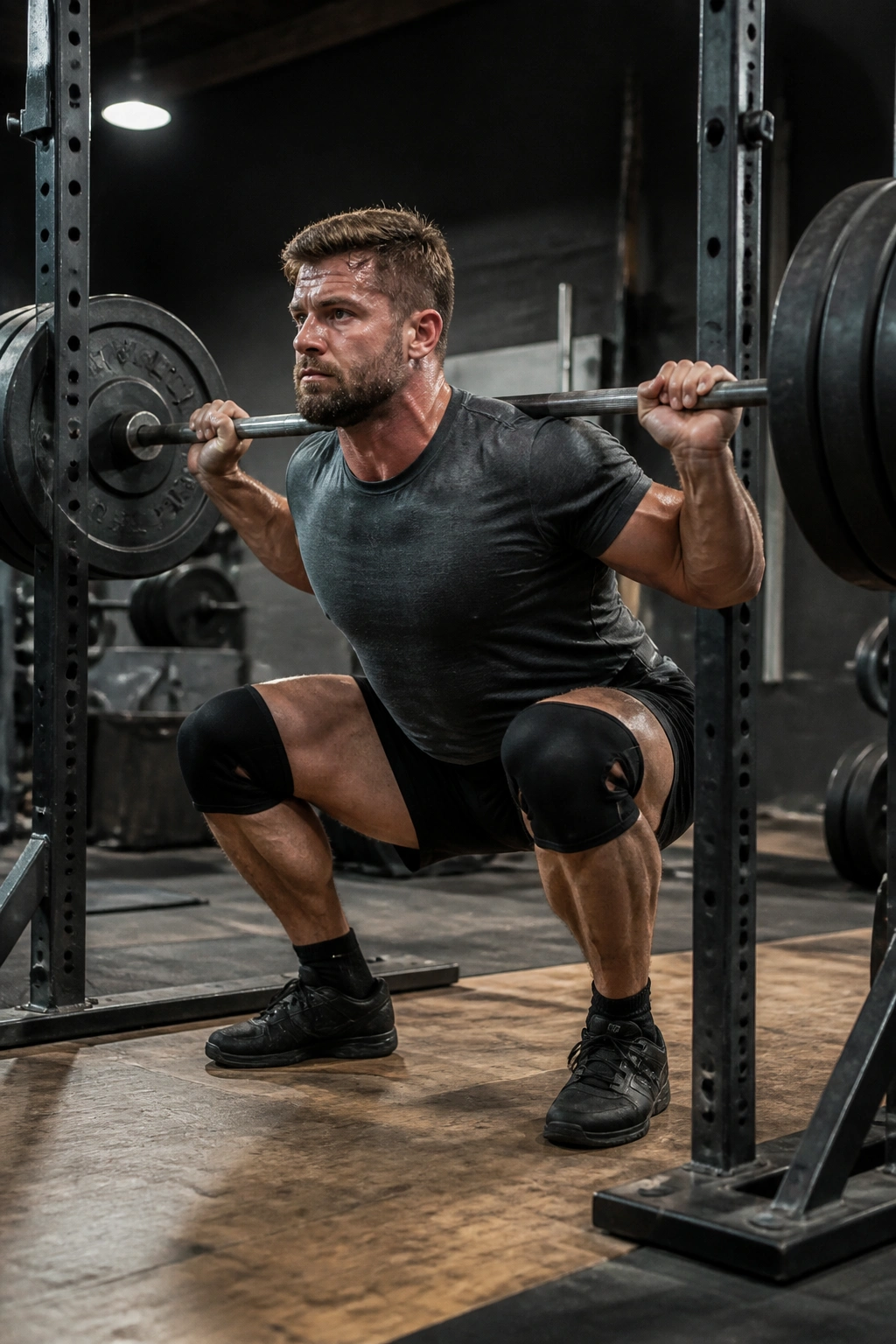
When you have access to a squat rack, you should use it. Nothing builds absolute strength like putting a heavy barbell on your back and squatting. It forces your central nervous system to adapt to load, which translates to strength in every other area of your life.
Do not rush these. A heavy squat is a skill. You need to master the bracing, the foot positioning, and the depth before you pile on the plates. If you cannot squat with perfect form, back the weight off. No one cares how much you lift if you are doing half-reps.
The Big Lifts
- Barbell Back Squats: 5 sets of 5 reps. This is your main strength movement. Go heavy.
- Barbell Lunges: 3 sets of 8 reps per leg. Keep the weight controlled.
- Barbell Hip Thrusts: 3 sets of 10 reps. Squeeze at the top for three seconds.
- Barbell Calf Raises: 3 sets of 15 reps. Stand on a block or a plate.
6. The Unilateral Stability Special
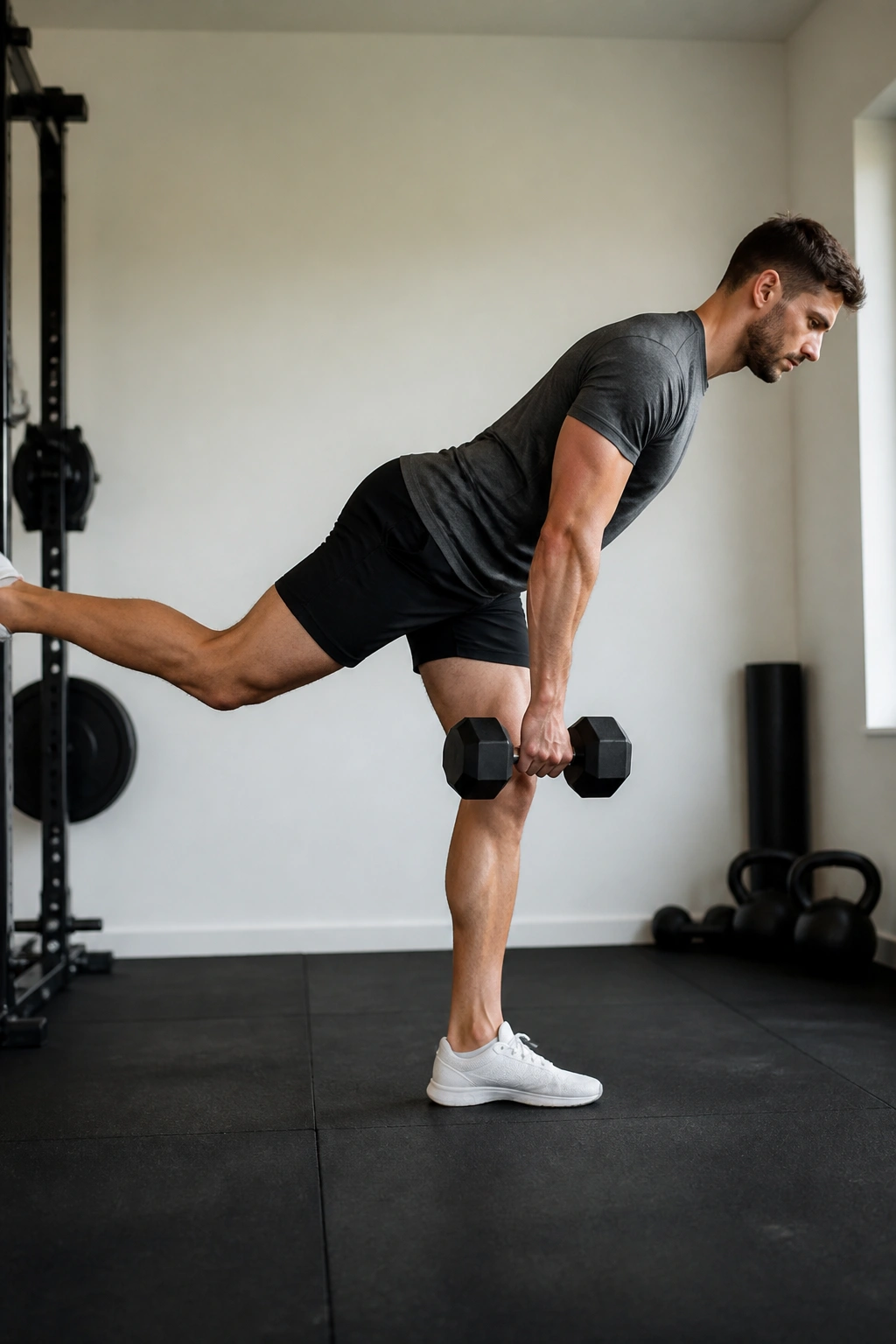
Unilateral training is the great equalizer. It highlights your weaknesses and forces you to address them immediately. If you have been avoiding single-leg exercises because they are hard, that is exactly why you need to do them.
This routine focuses on movements that isolate one side. You will find that one leg is noticeably stronger or more stable than the other. That is normal. Keep training until the gap closes. It takes time, but it makes you more athletic and less prone to injury.
- Single-Leg Box Squats: 4 sets of 8 reps per leg. Lower yourself to the box, tap it, and stand up.
- Split Squats (Rear foot elevated): 3 sets of 10 reps per side.
- Single-Leg Romanian Deadlifts: 3 sets of 12 reps per leg.
- Lateral Lunges: 3 sets of 10 reps per leg. These target the glutes from a different angle.
7. Plyometric Explosiveness Session
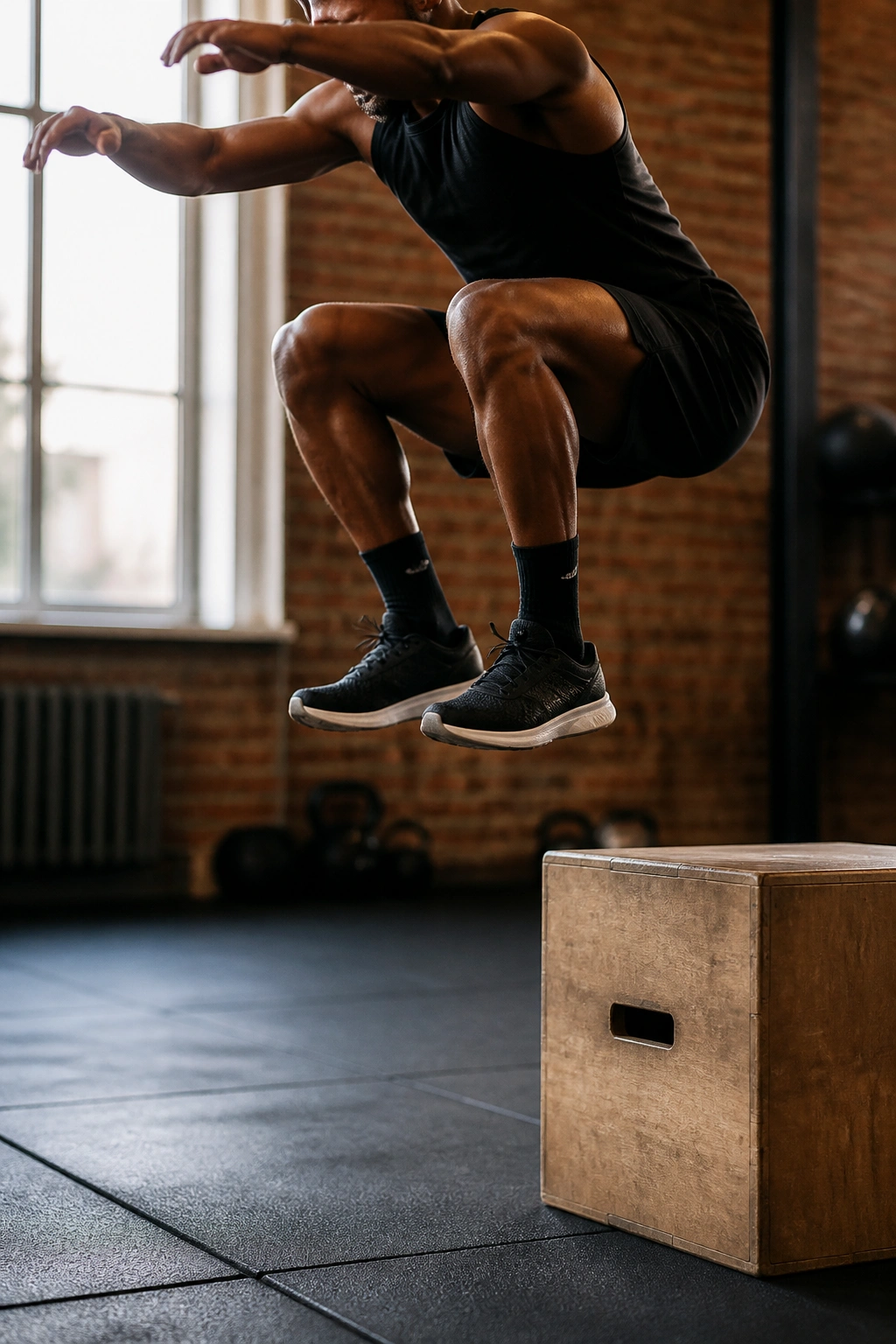
If your goal is speed, power, or just making your legs feel “springy,” plyometrics are the answer. These movements are about force production. You are teaching your muscles to fire rapidly. Because this is high-impact, you should only do this type of workout once or twice a week to avoid joint fatigue.
Be careful with your landing. The goal is not just to jump high; it is to land softly, like a cat. Absorb the force through your muscles, not your joints. If you land with a loud “thud,” you are doing it wrong. Land silently.
- Box Jumps: 5 sets of 5 reps. Quality over quantity.
- Jump Squats: 3 sets of 10 reps. Explode up, land softly.
- Broad Jumps: 3 sets of 5 reps. Focus on distance and stable landing.
- Skaters: 3 sets of 20 reps total. These build lateral power.
8. High-Volume Metabolic Finisher
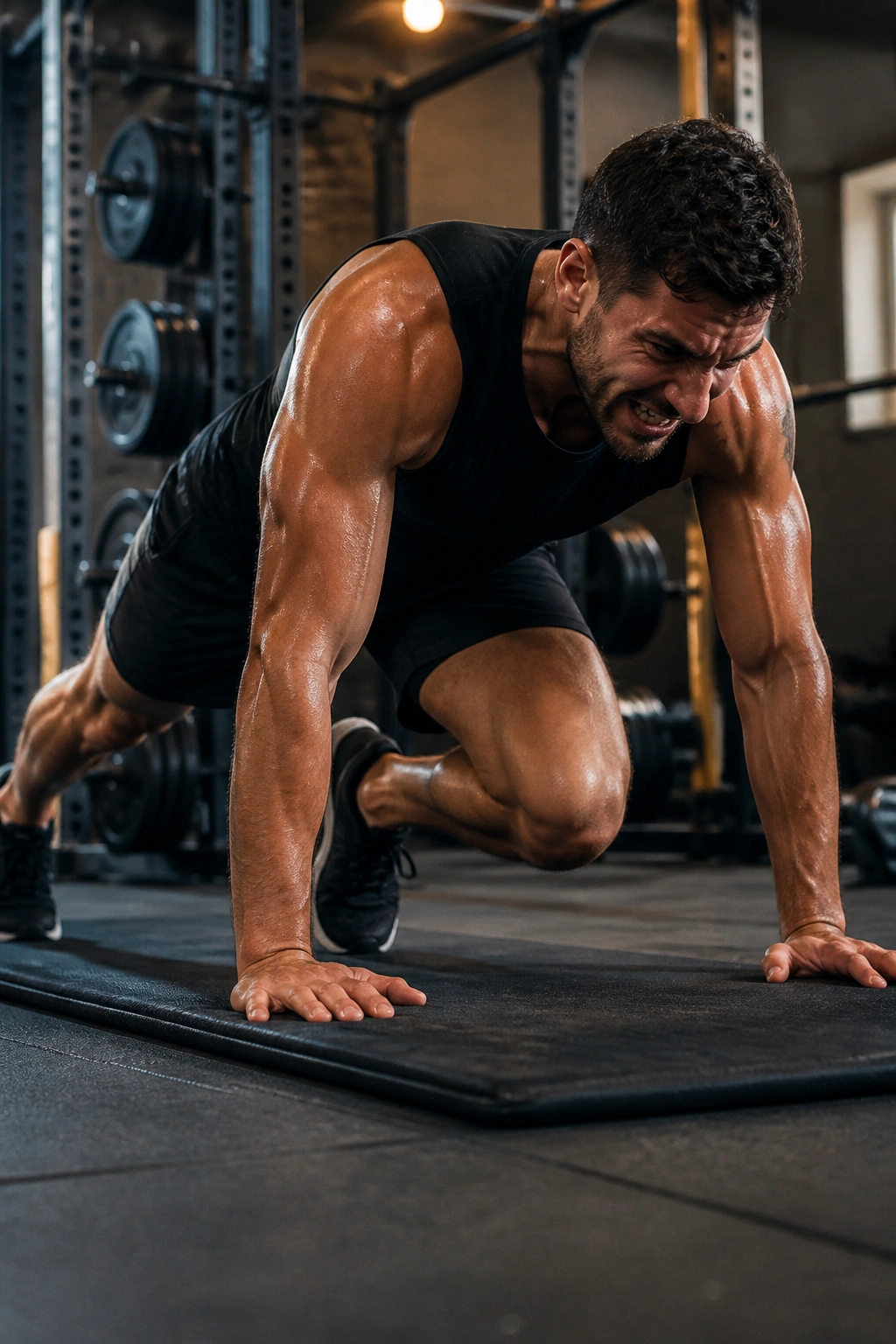
This is not a strength workout. This is a “how much can I suffer” workout. The goal here is to keep your heart rate up for the entire duration. You will be moving from one exercise to the next with minimal rest. It is excellent for conditioning and endurance.
By the end of this, you should be out of breath and unable to walk properly for five minutes. That is the intended result. It helps with fat loss and builds that “deep-burn” muscular endurance that keeps you going during long hikes or endurance events.
- Goblet Squats (light weight): 20 reps.
- Lunges: 20 reps (10 per leg).
- Mountain Climbers: 40 reps (20 per leg).
- Jump Squats: 15 reps.
- Rest: 60 seconds.
- Repeat this circuit 4 times.
9. Time-Efficient 20-Minute Blitz
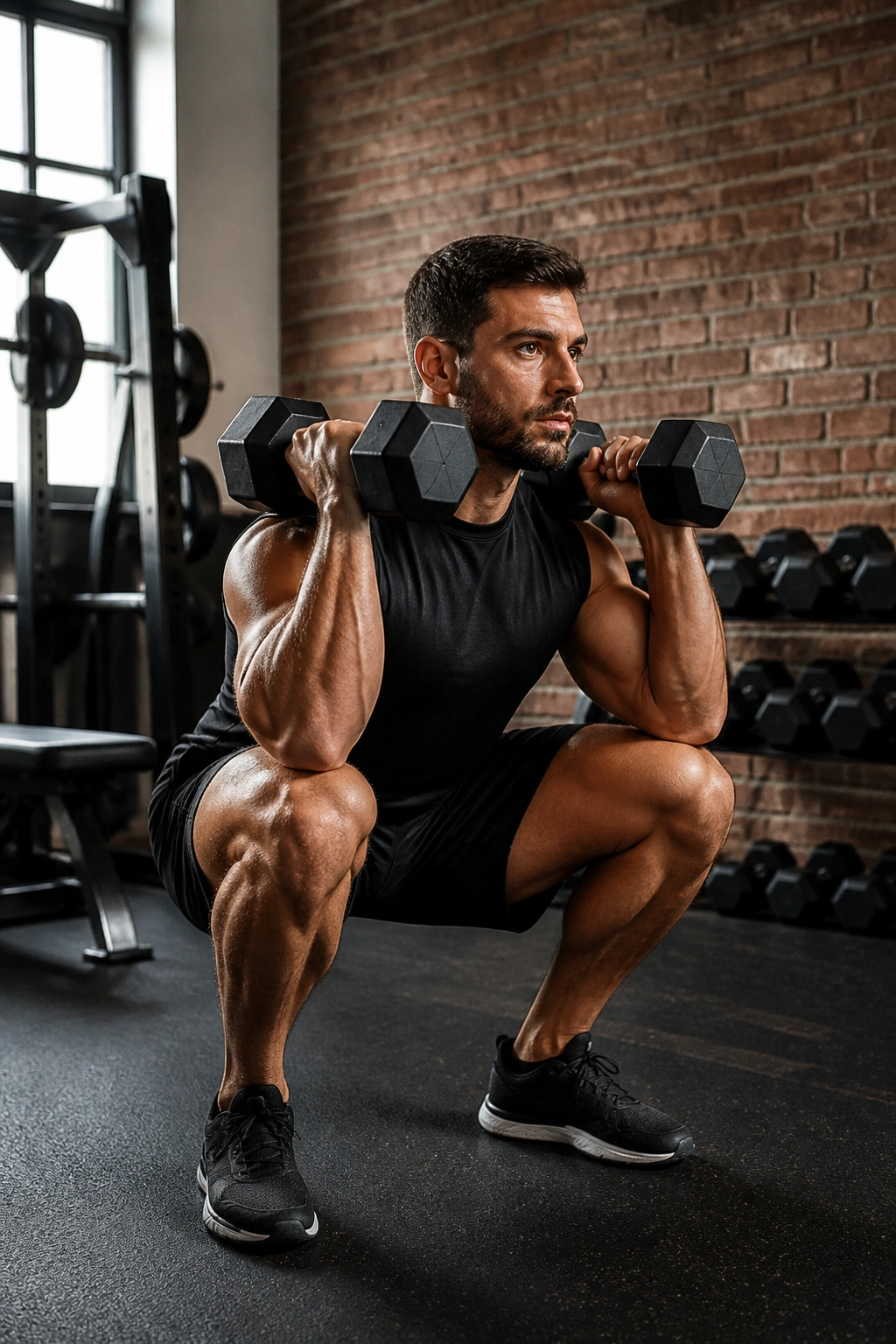
Some days, you have twenty minutes. That is enough. Do not skip leg day just because you do not have an hour. A focused 20-minute session is better than zero minutes, provided you maintain intensity.
The strategy here is to pair antagonistic movements or use supersets. By combining two exercises without rest, you keep the intensity high. You are basically doing twice the work in the same amount of time.
- Superset 1: Dumbbell Squats (12 reps) immediately into Walking Lunges (12 reps per leg). Repeat 3 times.
- Superset 2: Kettlebell Swings (20 reps) immediately into Plank holds (45 seconds). Repeat 3 times.
- Finisher: 60-second Wall Sit.
10. The Compound Strength Builder
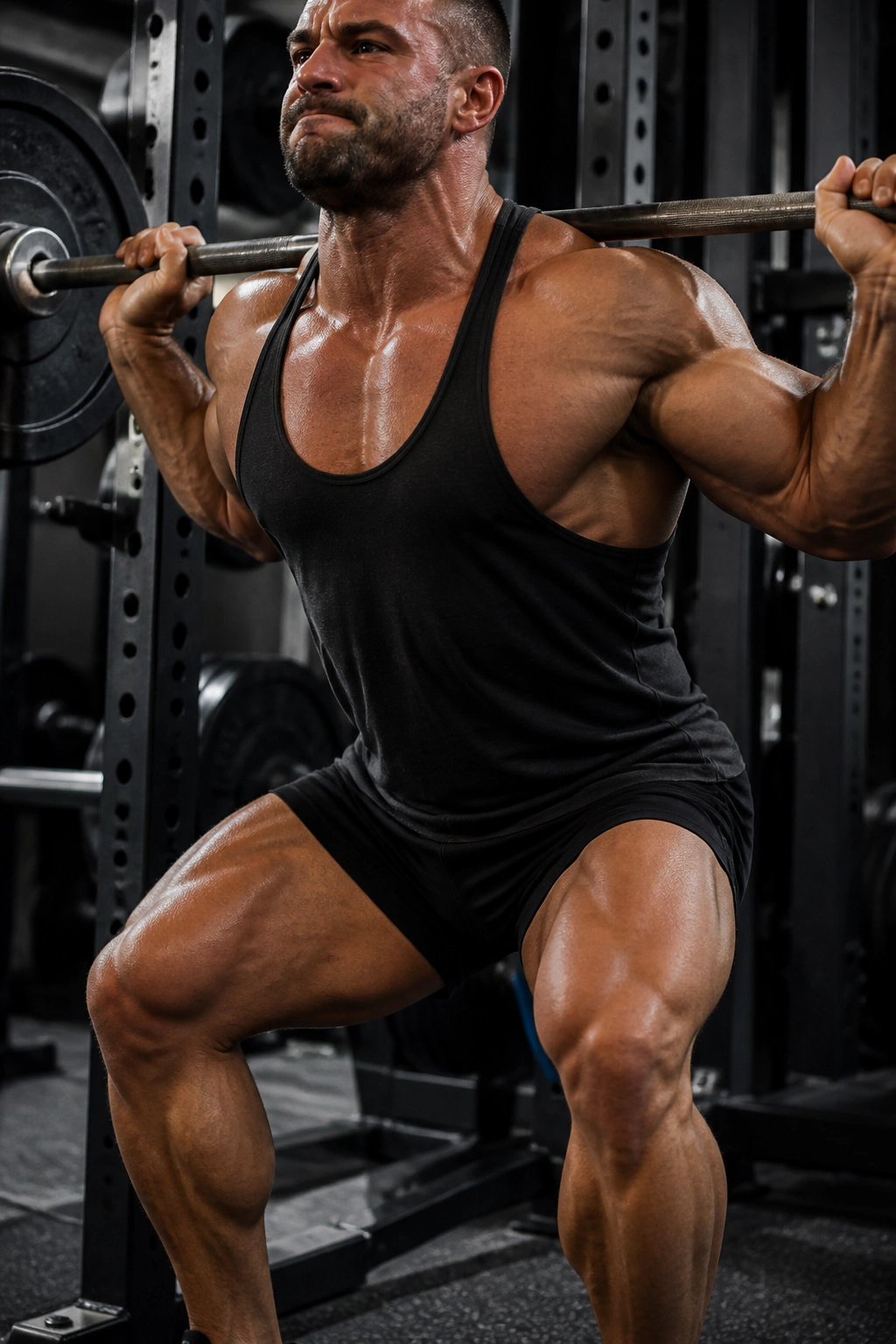
Compound movements are exercises that involve multiple joints and muscle groups. They give you the most “bang for your buck” because they allow you to move the most weight. This routine is all about loading the bar and moving it.
You are not looking for isolation or muscle “feeling” here. You are looking for total body output. Your quads, hamstrings, glutes, and core are all involved. This is the foundation of a strong lower body.
- Back Squat: 4 sets of 6 reps (Heavy).
- Deadlift: 4 sets of 5 reps (Focus on form).
- Leg Press: 3 sets of 10 reps (Heavy).
- Weighted Calf Raises: 3 sets of 12 reps.
11. Posterior Chain and Hamstring Focus
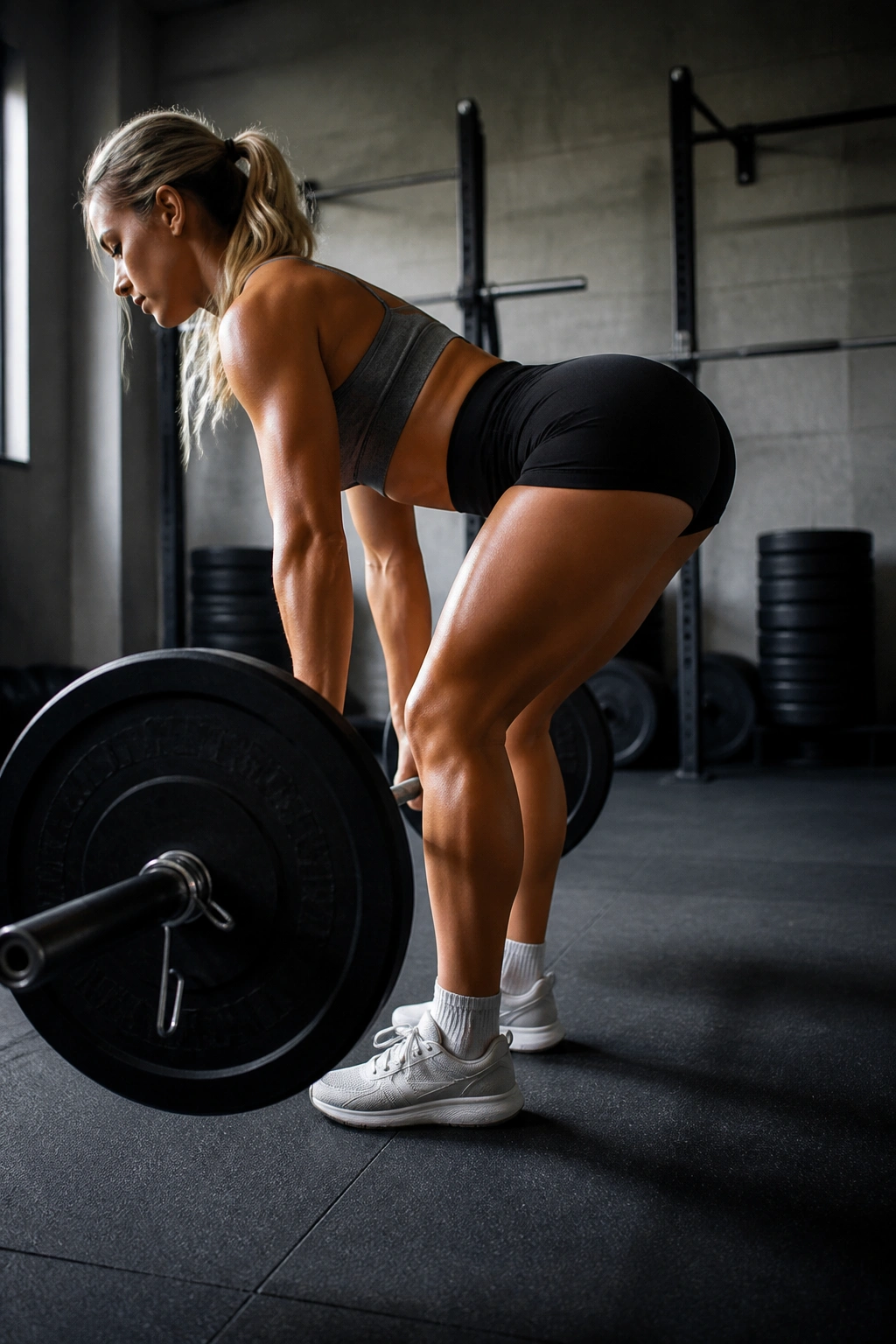
Many people focus too much on their quads and neglect their hamstrings. This leads to muscle imbalances and knee pain. Your hamstrings and glutes are the engines that drive hip extension. They are responsible for your speed and your power.
If you sit at a desk all day, your hamstrings are likely tight and underdeveloped. This routine is designed to wake them up. You will feel this mostly in the back of your thighs and your glutes.
- Stiff-Legged Deadlifts: 4 sets of 10 reps. Focus on the stretch.
- Hamstring Curls (if gym has a machine): 3 sets of 15 reps.
- Glute Ham Raises (or Nordic Curls): 3 sets of failure.
- Kettlebell Swings: 4 sets of 20 reps.
12. Quad-Dominant Isolation Day
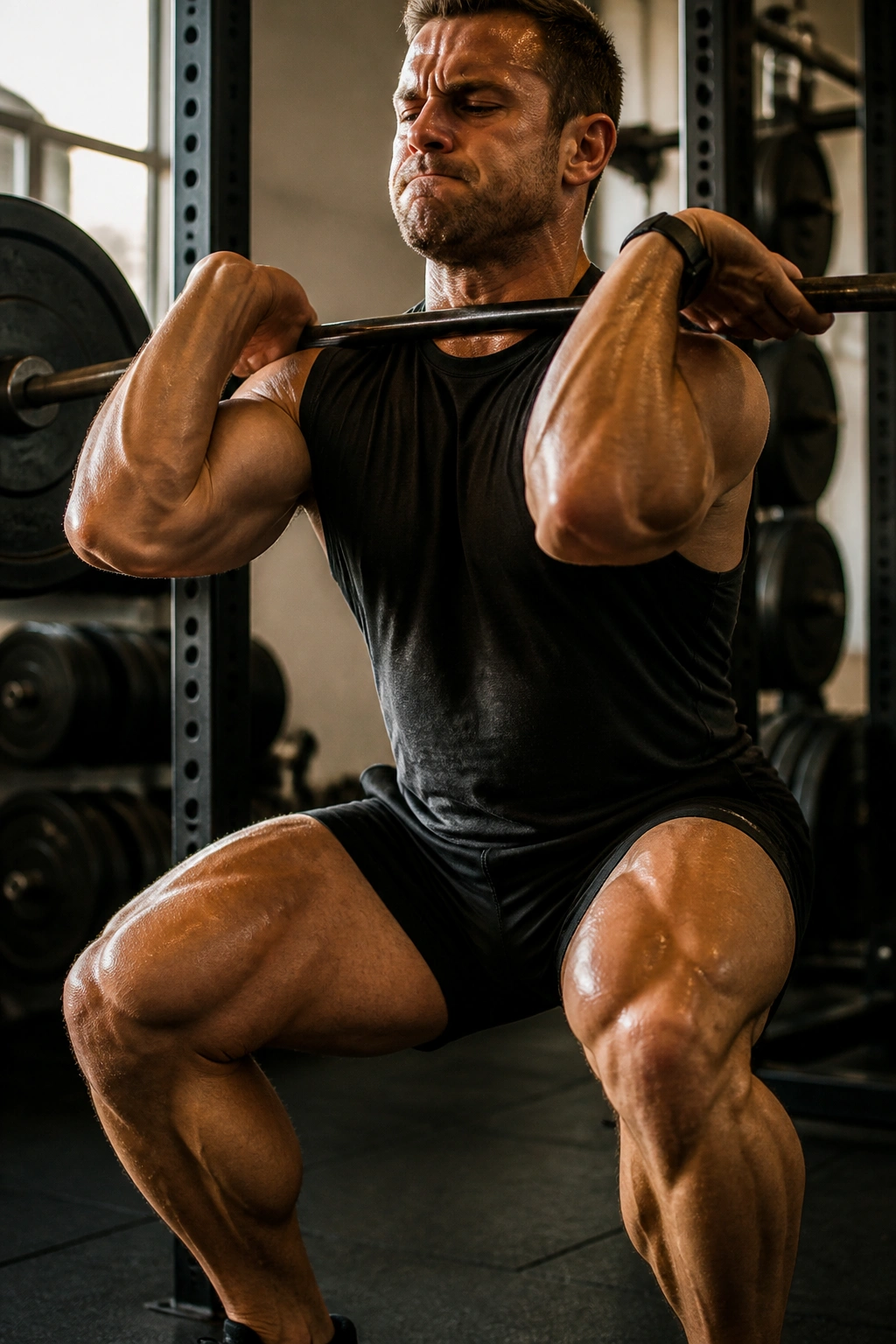
Sometimes you just want to destroy your quads. This is that workout. It involves movements that put the focus almost entirely on the front of your legs. It is great for building that “tear-drop” muscle definition.
Be aware: this workout will make your knees feel tired. Make sure you are warmed up properly. Do not rush the eccentric (lowering) phase, as this is where the muscle damage—and therefore the growth—actually occurs.
- Front Squats: 4 sets of 8 reps. The front-loaded weight shifts the stress to the quads.
- Leg Extensions: 4 sets of 12-15 reps. Squeeze at the top.
- Sissy Squats: 3 sets to failure. These are brutal but effective.
- Walking Lunges (short stride): 3 sets of 12 reps per leg. Keep your torso upright.
13. Resistance Band Tension Training
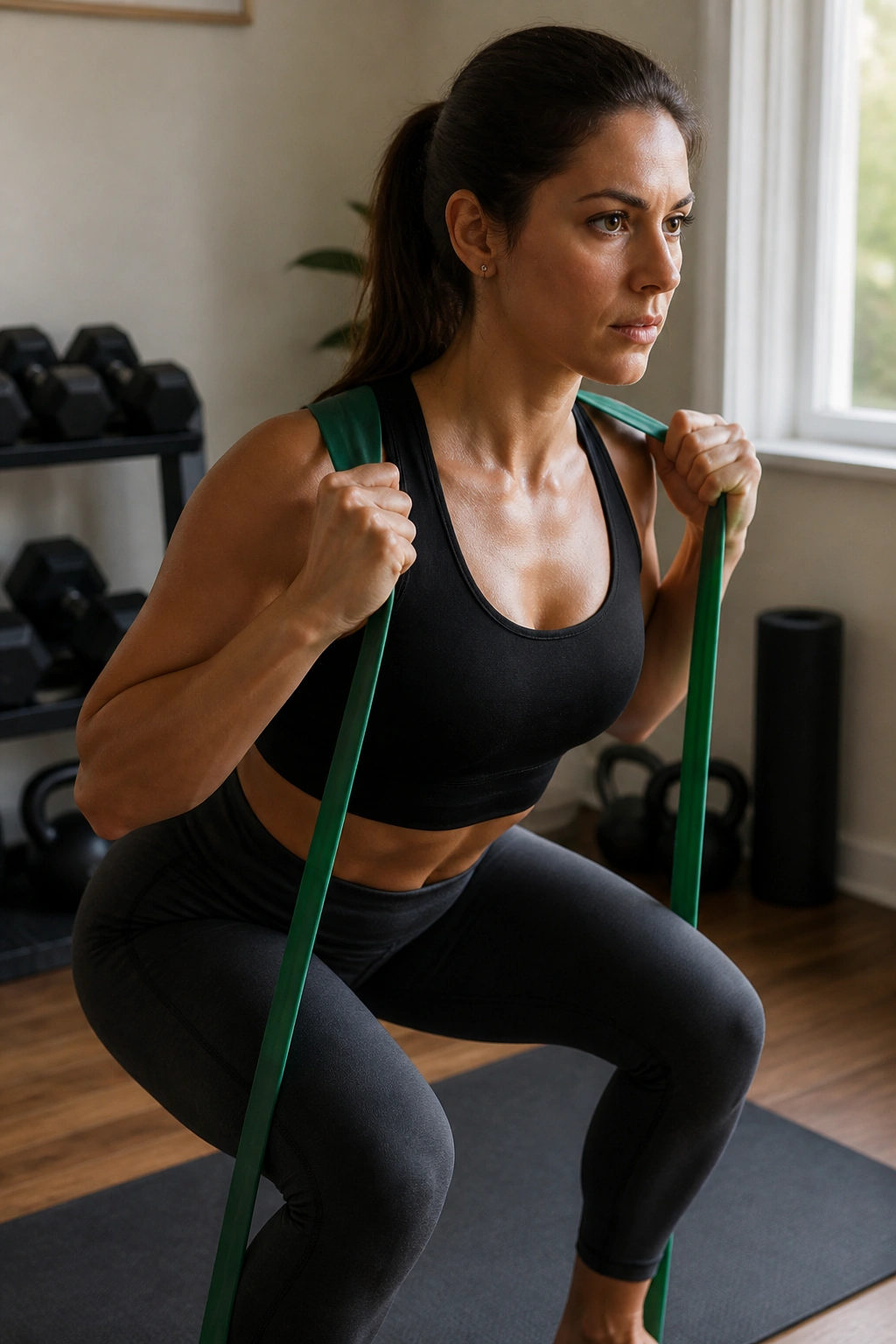
Resistance bands offer a unique benefit: the resistance increases as you stretch the band. This matches the strength curve of your muscles. At the bottom of a squat, the resistance is lower, but at the top, when your legs are strongest, the band is stretched and provides maximum tension.
They are also incredibly portable. You can do this workout in a hotel room, a park, or your living room. The key is to choose a band that is heavy enough that the last few reps of every set are difficult.
- Band Squats: 4 sets of 20 reps. Step on the band and hold it at your shoulders.
- Band Good Mornings: 3 sets of 15 reps. Focus on the hip hinge.
- Band Lateral Walks: 3 sets of 20 steps each direction.
- Band Leg Press (Lying on back): 3 sets of 15 reps per leg.
14. The Traveler’s No-Equipment Plan
You have no weights. You are in a hotel room. You have no space. Do you skip the workout? No. You adjust your intensity through variation. This is the workout for when you have absolutely nothing.
The focus here is on high reps and constant movement. Since you cannot increase the weight, you increase the density of the work. You minimize rest. You make the muscles burn through sheer volume.
- Bulgarian Split Squats (use the bed): 3 sets of 15 per leg.
- Air Squats: 3 sets of 50.
- Single-Leg Glute Bridges: 3 sets of 20 per leg.
- Calf Raises: 3 sets of 50.
- Jump Squats: 3 sets of 20.
15. Smith Machine Precision Work
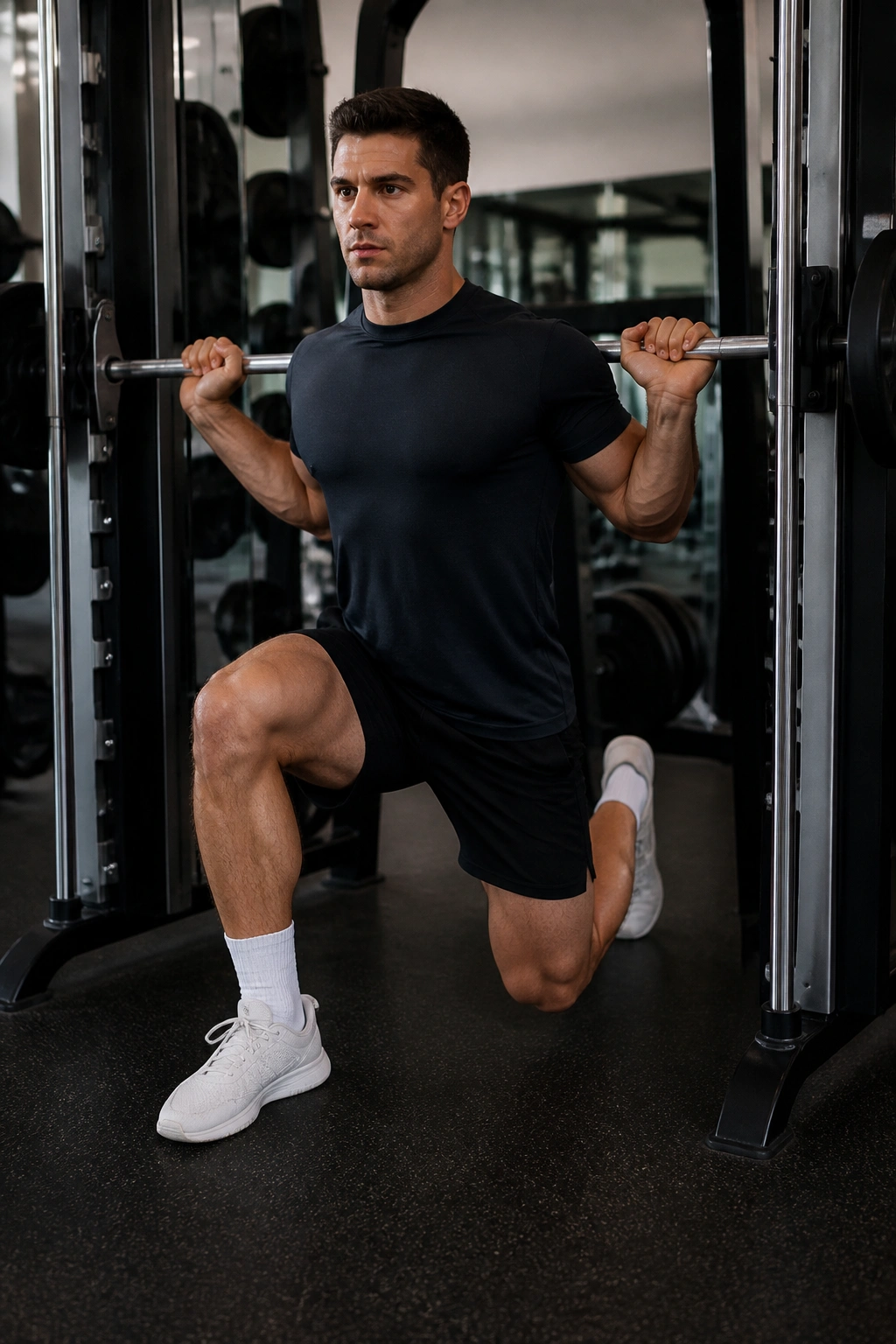
The Smith machine often gets a bad rap from purists. They say it is “unnatural” because of the fixed path of the bar. That is true, but that fixed path is exactly what makes it great for isolation and safety. You do not have to worry about balancing the weight, so you can push your muscles to total failure.
Use the Smith machine to load up weight on exercises that would normally require a lot of balance, like split squats. It allows you to focus purely on the target muscle without worrying about the bar tipping over.
- Smith Machine Squats: 4 sets of 8-10 reps.
- Smith Machine Split Squats: 3 sets of 10 reps per leg.
- Smith Machine Calf Raises: 4 sets of 12 reps.
- Smith Machine Glute Bridges: 3 sets of 12 reps.
16. The Advanced Drop-Set Method
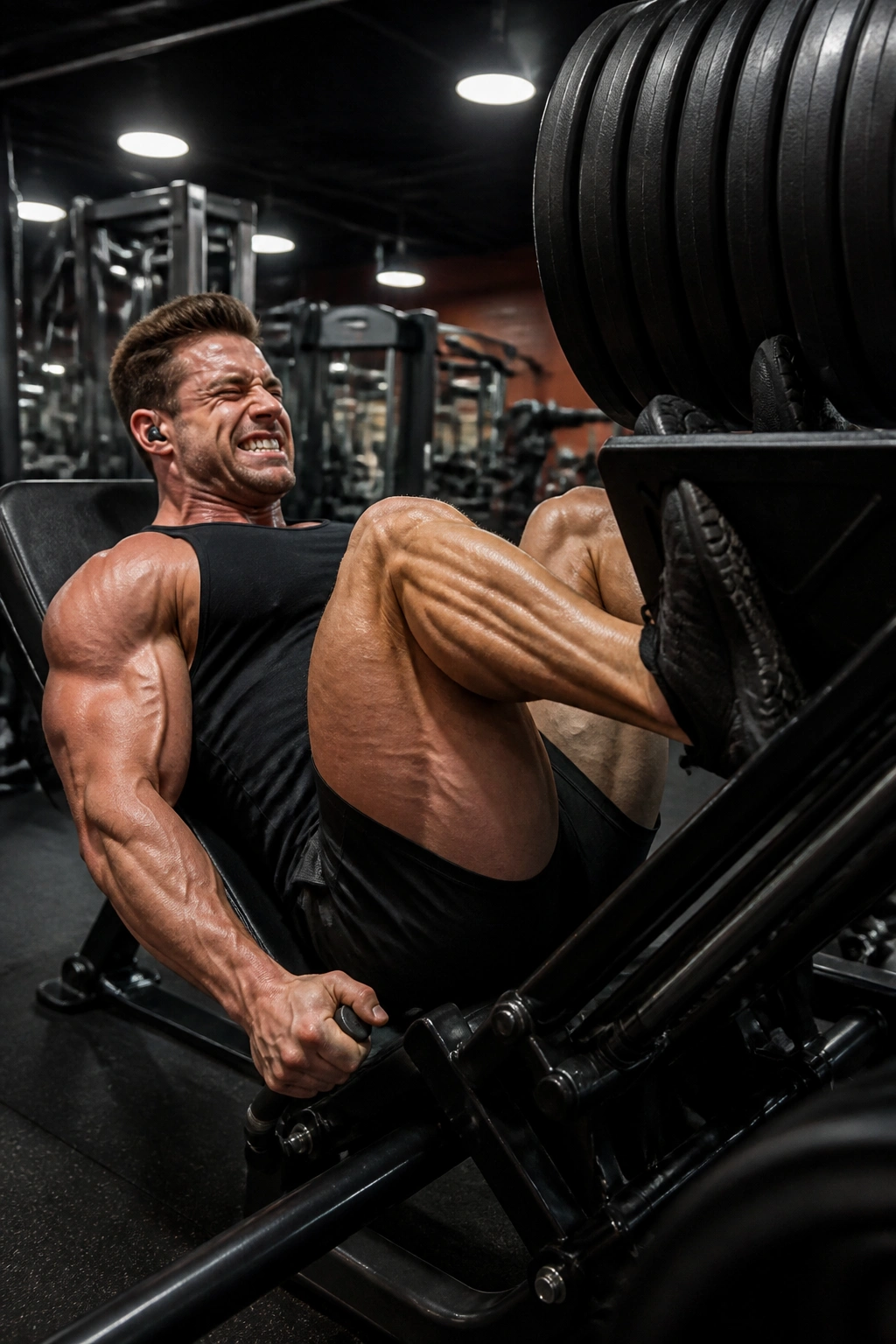
This is for when you are stuck in a plateau. Drop sets are a classic technique to force your muscles to grow. You perform a set to failure, then immediately drop the weight by about 20-30% and continue for more reps without rest.
You repeat this process two or three times for a single set. It is an intense way to maximize muscle fiber recruitment. Do not do this on every exercise. Pick one or two per workout, or you will burn out your central nervous system.
- Leg Press: 3 working sets. On the final set, perform a triple drop set.
- Leg Extensions: 3 working sets. On the final set, perform a double drop set.
- Dumbbell Lunges: 3 sets of 10. No drop set needed.
17. Stability and Core-Integrated Leg Day
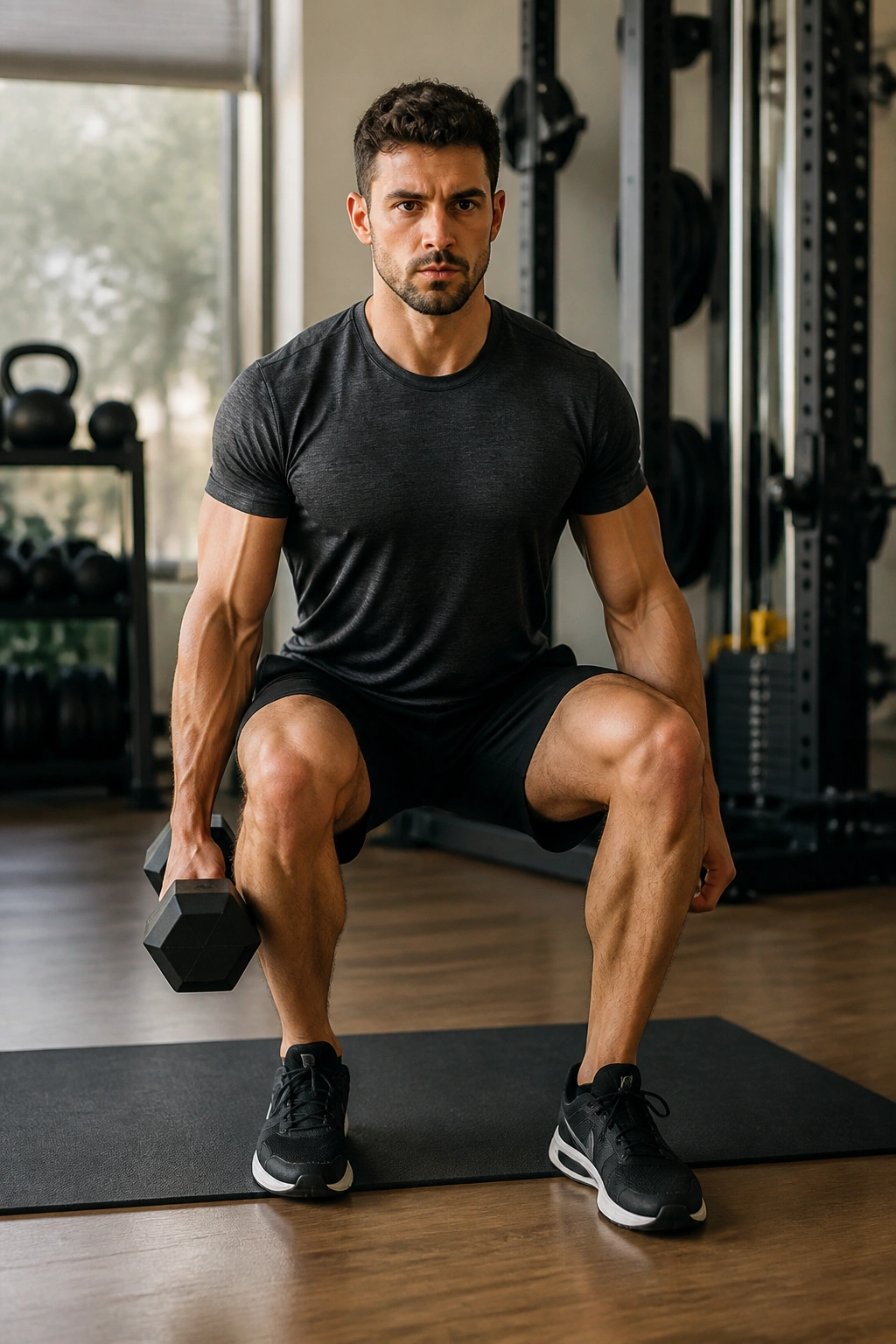
Legs do not work in isolation. They need a strong core to transfer force. If you have a weak core, you will have a weak squat. This workout integrates core stability with lower-body strength.
By using asymmetrical loads (holding a weight in only one hand, for example), you force your obliques and core to fire to keep you upright while your legs work. It is a fantastic way to train functional strength.
- Suitcase Squats: 4 sets of 10 reps per side. Hold one heavy dumbbell in one hand.
- Single-Leg RDLs (holding dumbbell on one side): 3 sets of 10 reps per leg.
- Walking Lunges (holding dumbbells at your sides): 3 sets of 12 reps per leg.
- Plank: 3 sets of 60 seconds.
18. Old-School Calisthenics Routine
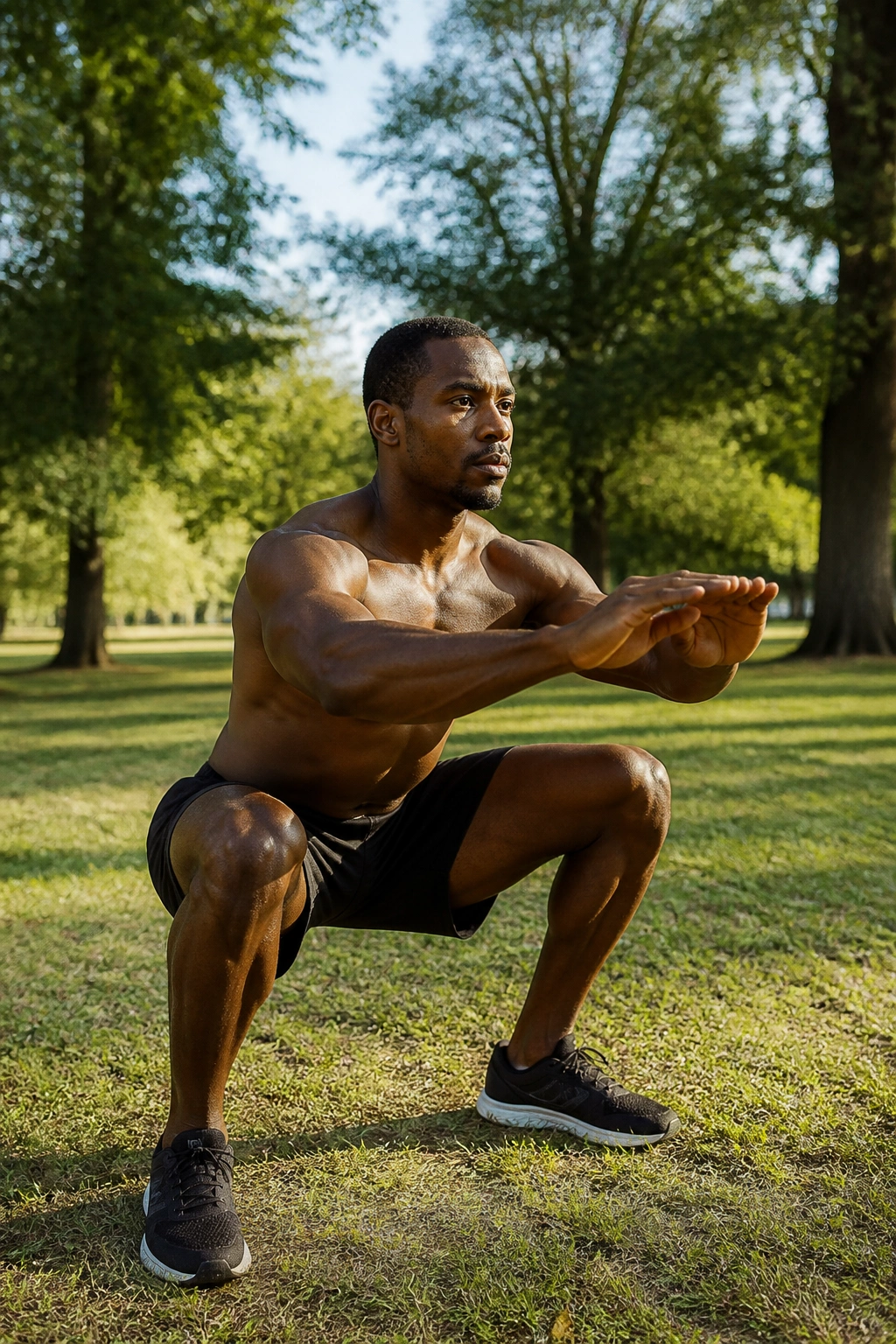
Before there were machines, there was just gravity and leverage. This routine relies on the old-school principles of calisthenics: long time-under-tension and extreme volume. It is effective, simple, and requires zero setup.
It is surprising how hard a simple lunge can be when you do 100 of them. This is not for the faint of heart. It is for people who want to build dense, functional muscle.
- Bodyweight Squats: 100 reps total (break into as few sets as possible).
- Lunges: 50 reps per leg (break into as few sets as possible).
- Glute Bridges: 100 reps total.
- Calf Raises: 100 reps total.
19. Machine-Heavy Progressive Overload
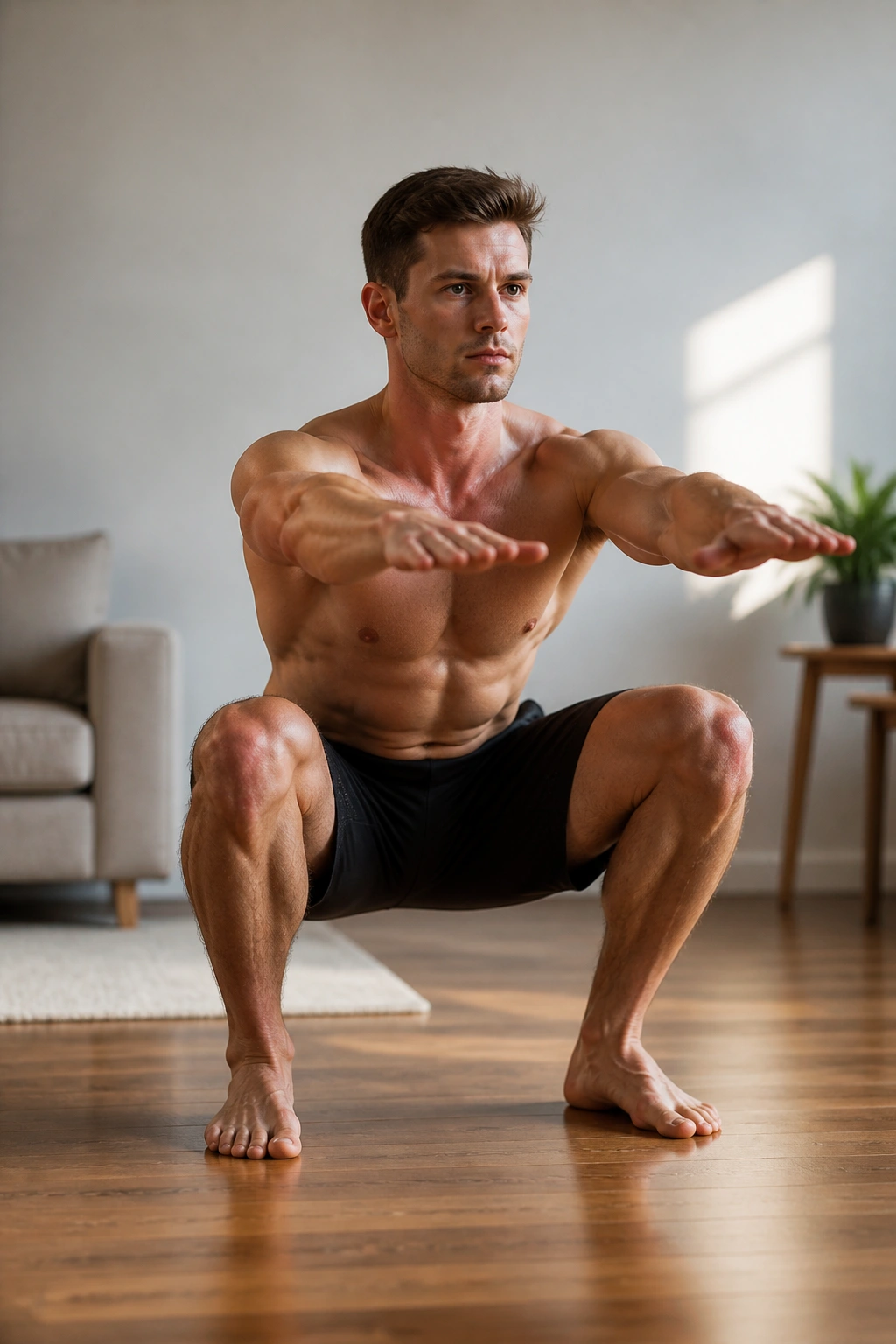
Machines are excellent for progressive overload because they are easy to track. You can see the numbers on the weight stack. Every week, your goal is to add one more plate or do one more rep. That is the definition of progress.
This routine is for when you have a full gym and want to track your numbers with precision. It is the most scientific approach to building leg size because it removes the variables of balance and stability.
- Leg Press: 4 sets of 8-10 reps.
- Leg Extensions: 3 sets of 12-15 reps.
- Seated Leg Curls: 3 sets of 12 reps.
- Calf Press (on leg press machine): 4 sets of 15 reps.
20. Mobility and Active Recovery Focus
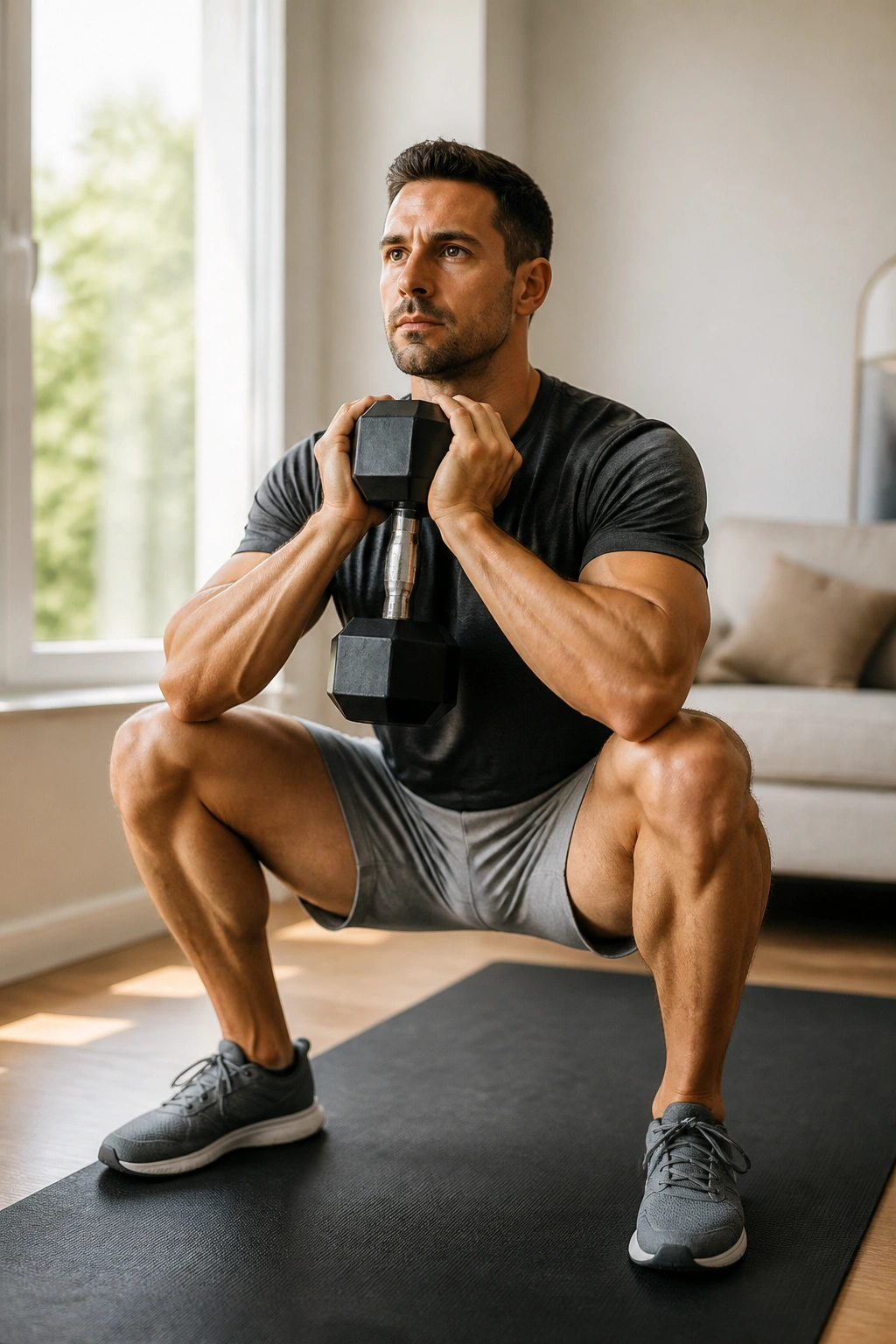
Leg day should not always be about destruction. If you are always pushing to failure, you will eventually get injured. This workout is about blood flow, mobility, and recovery. It is perfect for a day when your legs feel stiff from a previous session.
You are not looking for heavy weight here. You are looking for movement. You want to lubricate the joints and stretch the muscles. You will feel better after doing this than before you started.
- Deep Squat Holds: 3 sets of 60 seconds. Sit as deep as you can and relax.
- Cossack Squat Flows: 3 sets of 10 reps per side (no weight).
- Pigeon Pose (Glute stretch): 2 sets of 60 seconds per side.
- Foam Rolling: Spend 5-10 minutes rolling out your quads, hamstrings, and calves.
Final Thoughts
Building strong, capable legs is a process that never really ends. There is always a heavier weight to move, a longer distance to run, or a deeper stretch to achieve. The workouts above are tools—not rules. You do not need to follow them in order, and you certainly do not need to do them all.
Pick the ones that fit your current equipment and your current goals. If you have a rack, prioritize the heavy lifting. If you are working out in a bedroom, embrace the bodyweight volume. The best leg day routine is the one you can actually stick to, week after week, without burning out. Consistency will always beat intensity when it comes to long-term progress. Your legs will adapt, they will grow, and eventually, the workouts that once felt impossible will become your new baseline. Keep showing up.
