



If you have ever spent time scrolling through fitness forums or watching training videos, you have likely seen hundreds of variations of glute exercises. The problem is that most of them are fluff. People get caught up in flashy, minimal-resistance movements that look great for a camera but offer very little in terms of actual muscle hypertrophy. The gluteus maximus is the largest muscle group in your body; it is designed to move significant weight. If you want to change your physique, you have to treat it that way. You need progressive overload, enough volume to induce metabolic stress, and enough intensity to force the muscle fibers to repair and grow. Forget the “toning” myth. You are either building muscle or you are not.
Building the glutes is about mechanics. It requires understanding hip extension, abduction, and rotation. It demands that you actually feel the target muscle contracting rather than just moving a weight from point A to point B. If you can move three plates on a hip thrust but you are only feeling it in your lower back or your quads, you are wasting your time. The exercises detailed below are chosen because they work, provided you execute them with intention. This is not about doing all 25 of these in one session. That would be a recipe for injury. This is a catalog of the most effective tools at your disposal. Mix and match them into your training cycles, focus on your form, and increase your loads over time.
1. Barbell Hip Thrusts
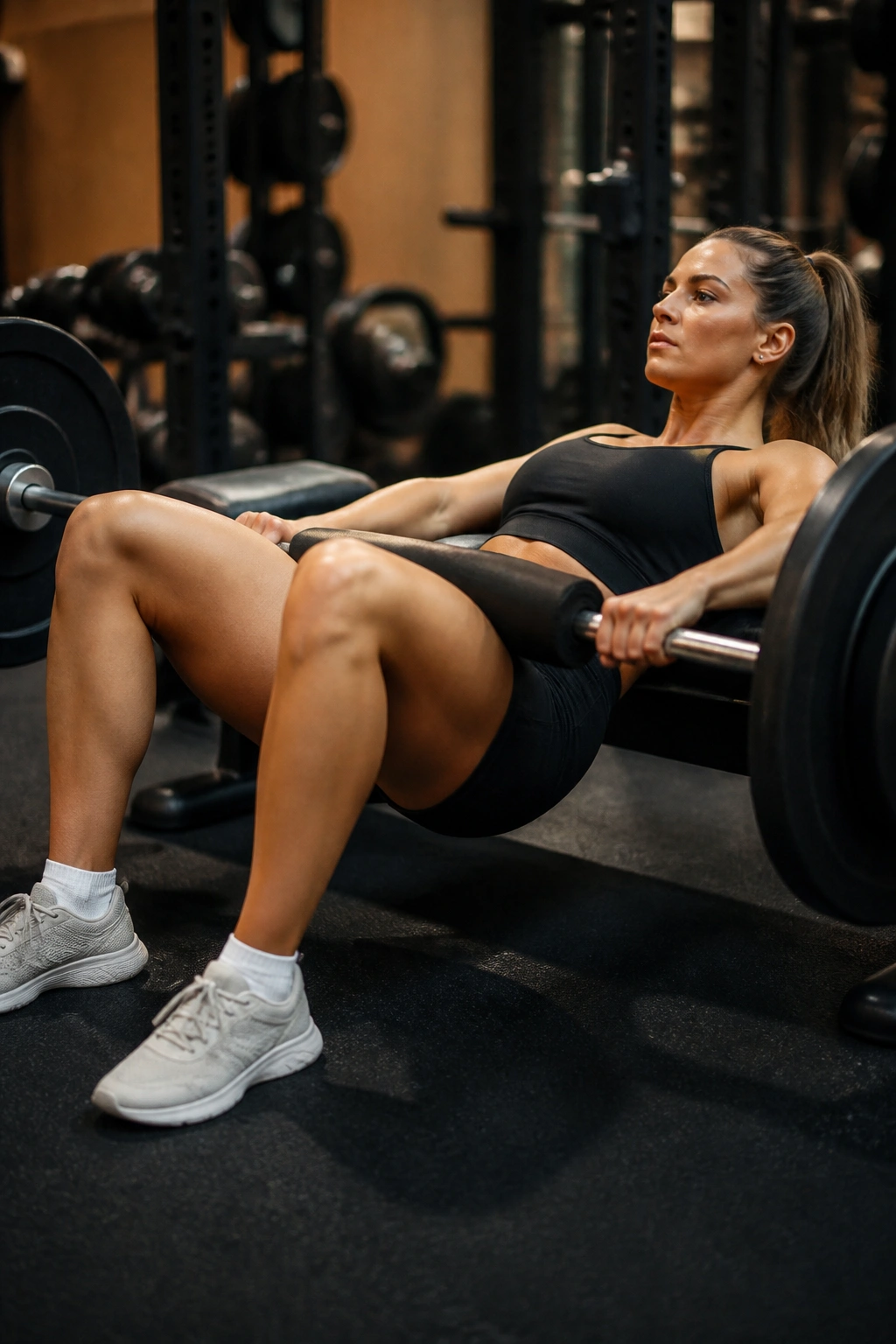
This is the gold standard for glute development, and there is no getting around that. No other exercise allows you to move as much load while placing the glutes in the most mechanically advantageous position for isolation. When you perform a heavy hip thrust, you are creating massive amounts of tension right at the peak of the contraction, which is exactly where the glutes are strongest.
Why It Dominates
The hip thrust effectively minimizes the involvement of the hamstrings and lower back compared to heavy squats or deadlifts. Because your knees are bent, you are taking the hamstrings out of their most active position, forcing the gluteus maximus to shoulder the entire load. This makes it the ultimate movement for sheer size and strength.
Key Performance Cues
- Shoulder Placement: Position your upper back on a sturdy bench. Your scapulae should be right on the edge, not your lower back.
- The Chin Tuck: Keep your chin tucked to your chest throughout the movement. This prevents your lumbar spine from hyperextending and keeps the focus strictly on the hips.
- The Pause: Don’t just bounce the weight. Hold the contraction at the top for a solid second, squeezing your glutes as hard as possible.
Pro tip: If you find the barbell uncomfortable on your hip bones, use a thick foam pad or even a yoga mat wrapped around the bar. You cannot exert maximum force if you are flinching because of pain.
2. Romanian Deadlifts (RDLs)
The RDL is the king of the hip-hinge pattern. While the hip thrust targets the glutes in the shortened position (at the top), the RDL targets them in the lengthened position (at the bottom). To fully develop any muscle, you must train it through its entire range of motion, and that means prioritizing the stretch.
The Mechanics of the Hinge
Unlike a standard deadlift where the bar comes from the floor, the RDL starts from a standing position. You push your hips back as far as possible, keeping your knees only slightly bent. The goal is not to get the bar to the floor; it is to get your hips as far back as you can until you feel a deep stretch in your hamstrings and glutes.
Avoiding Lower Back Strain
Many people feel RDLs in their lower back because they confuse the movement with bending over. Think of it as a horizontal pushing motion with your hips. Your spine should remain neutral the entire time. If your back starts to round, you have gone too low. Stop right where the stretch in the glutes is maximal and reverse the motion by driving your hips forward.
3. Bulgarian Split Squats
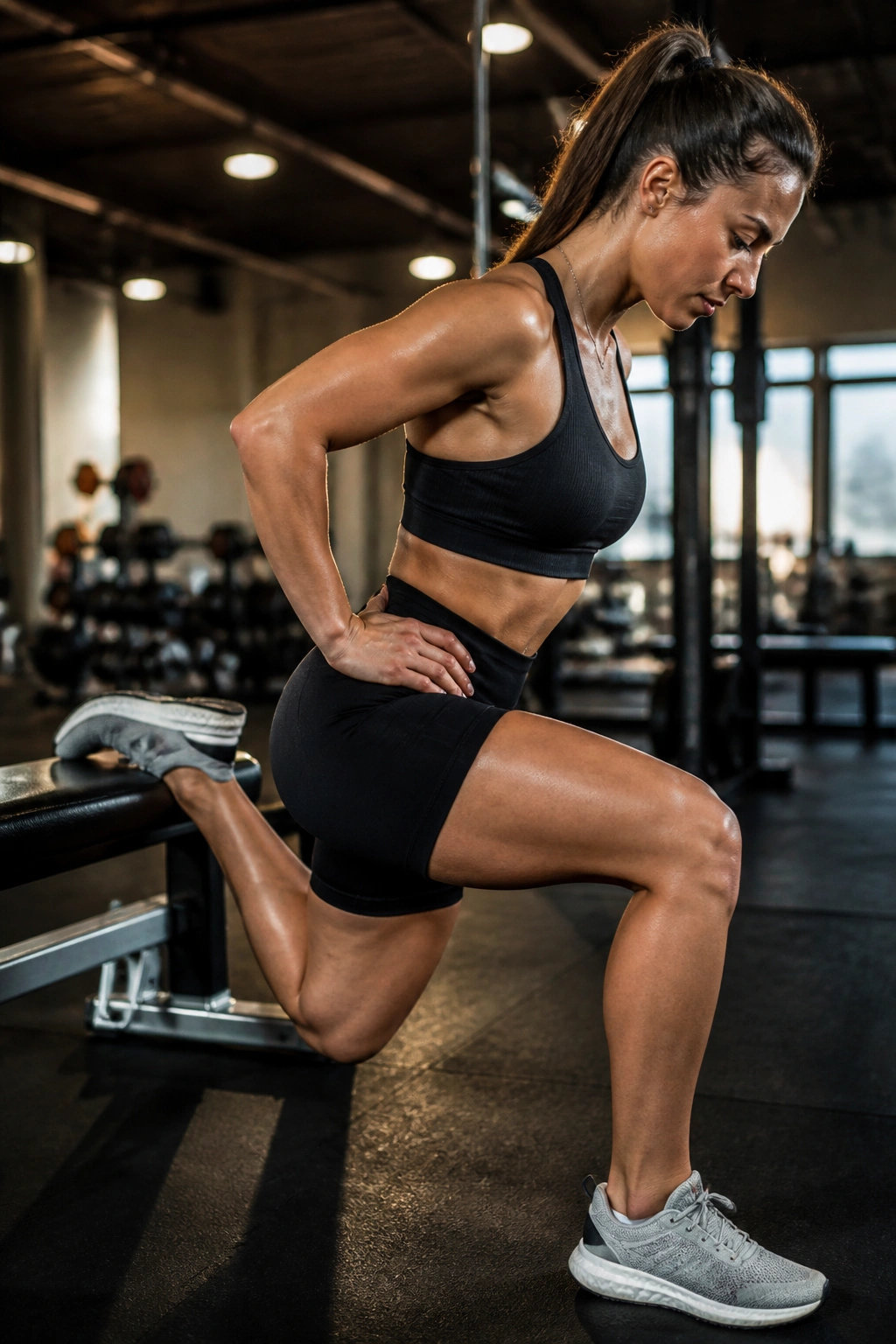
Unilateral training is non-negotiable if you want a balanced, defined physique. The Bulgarian split squat is perhaps the most humbling exercise in the gym. It forces you to stabilize your body while moving significant weight through a deep range of motion. It is grueling, but it fixes imbalances like nothing else.
The Setup
Place your back foot on a bench behind you and your front foot out far enough so that when you descend, your knee stays roughly over your ankle. If your front foot is too close, you will turn this into a quad-dominant knee-extension exercise. We want a bit more torso lean to prioritize the glute.
Maximizing Glute Engagement
Lean your torso forward slightly—about 30 to 45 degrees. This shift in center of gravity forces the gluteus maximus to take over more of the work. If you stay completely upright, the quads will inevitably take the brunt of the load. It is a subtle change in angle, but it makes a massive difference in where you feel the burn the next day.
4. Sumo Stance Deadlifts
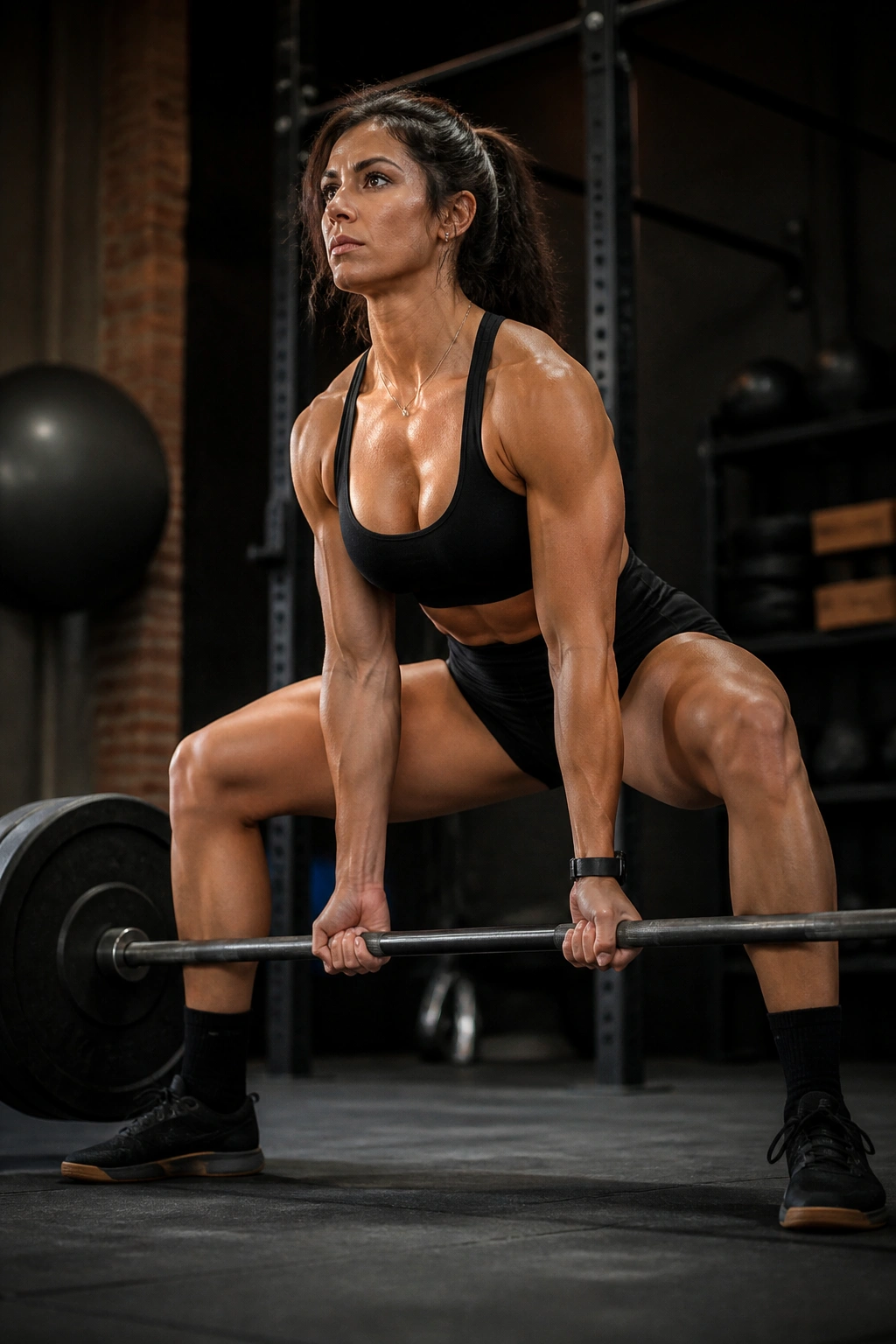
The wide stance of a sumo deadlift changes the geometry of your hips, which is great for glute targeting. By widening your feet and pointing your toes out, you shift the focus slightly more toward the gluteal muscles and away from the erector spinae (the muscles running along your spine).
Why the Wide Stance Works
In a standard deadlift, your torso is more horizontal, which increases the load on the lower back. In a sumo stance, your torso remains more upright. This places your hips closer to the bar, making it a very hip-dominant movement. It hits the inner glutes and the adductors significantly harder than a conventional deadlift.
Finding Your Foot Placement
You do not need to do a “super wide” stance right away. Start with a stance that is wider than shoulder-width, with your toes pointed out at about 30 to 45 degrees. When you descend, focus on pushing your knees outward to track over your toes. This external rotation is key to engaging the glutes properly.
5. Cable Pull-Throughs
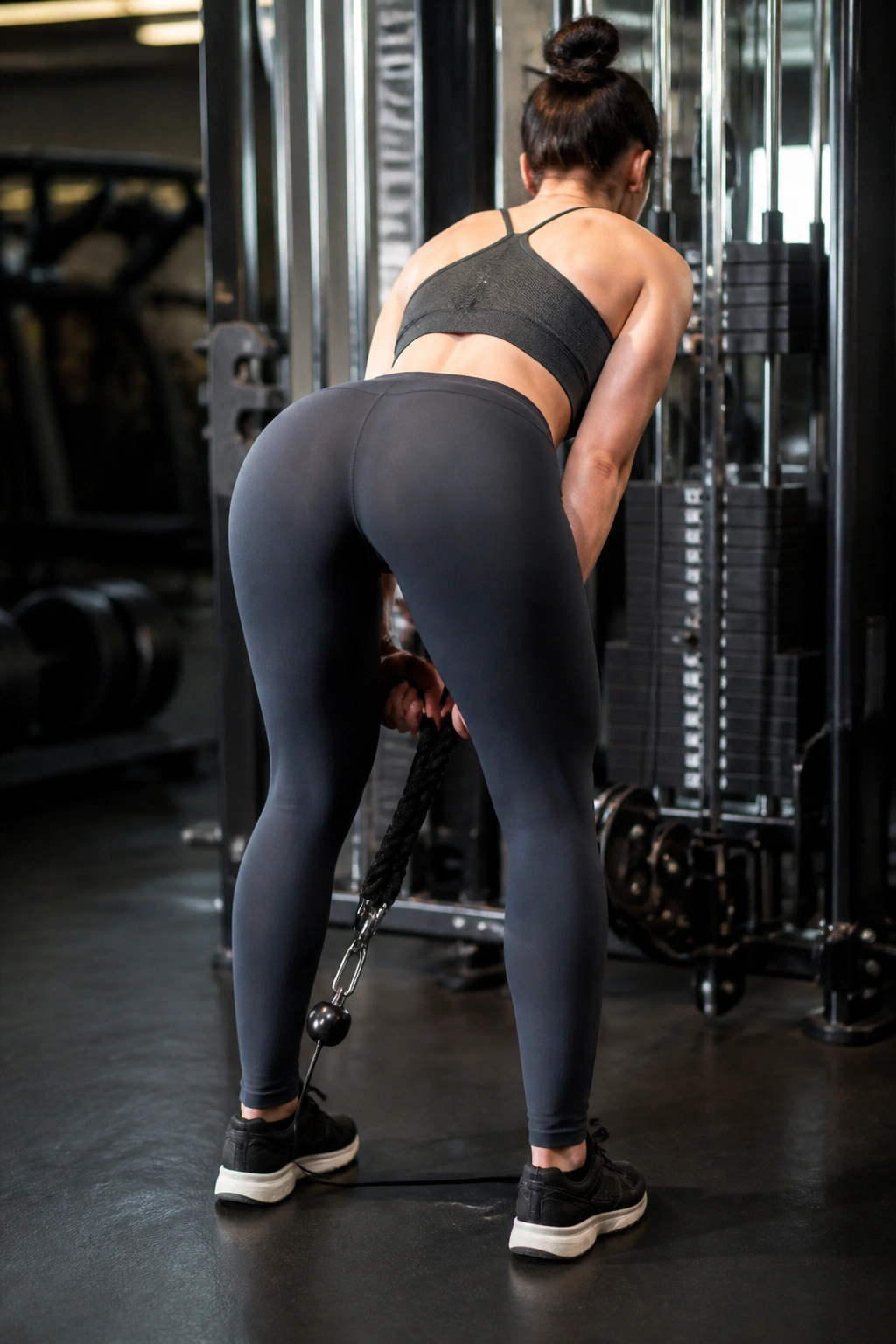
If you are struggling to understand the feeling of a hip hinge, the cable pull-through is the best teaching tool available. Because the weight comes from behind you, it pulls your hips back, forcing you to hinge correctly. It is less about loading a massive amount of weight and more about high-tension, high-repetition work.
Execution Details
Stand facing away from a cable machine with the pulley set to the lowest position. Grab the rope attachment between your legs. Take a few steps forward to create tension. Now, push your hips back, letting the weight pull you into a hinge, then drive your hips forward into the rope to finish the movement.
The Squeeze
Focus on the end range. At the top of the movement, your glutes should be fully shortened. Squeeze them together like you are trying to hold a coin between your cheeks. Do not use your arms to pull the weight. Your arms are just hooks; the power must come entirely from your hips.
6. Single-Leg Romanian Deadlifts
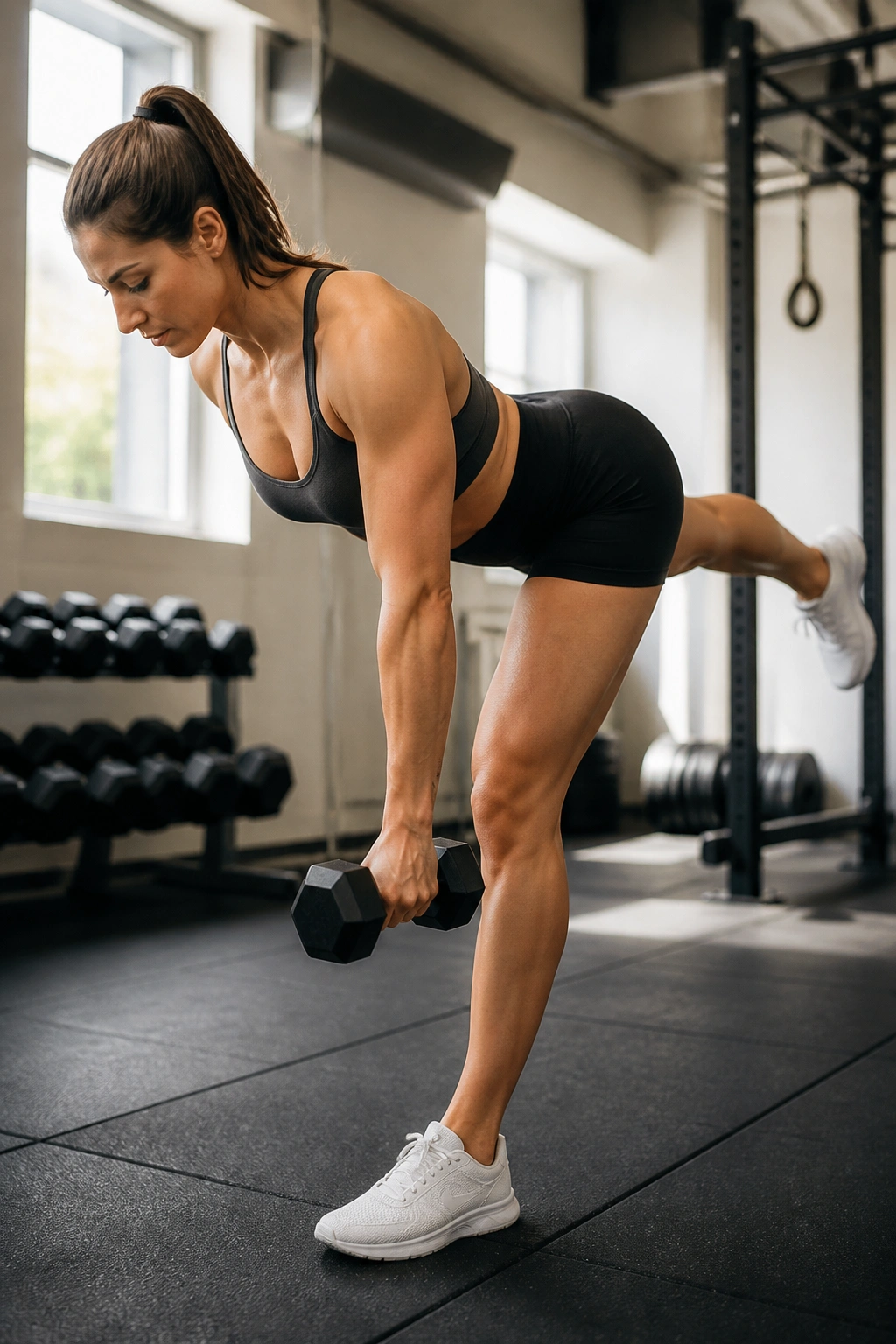
This is a stability nightmare that will build incredible glute strength and coordination. Because you have to balance on one leg while performing a hinge, your gluteus medius—the stabilizer muscle on the side of your hip—has to fire constantly to keep you from tipping over.
Mastering the Balance
Do not rush this. Most people try to use too much weight, wobble around, and get frustrated. Start with just body weight or a very light dumbbell in the hand opposite the working leg. Use a fixed point on the floor to stare at for balance. As you hinge at the hips, let your non-working leg extend straight back behind you like a counterweight.
The Benefit of Unilateral Stability
This exercise reveals exactly where your weaknesses are. If you find yourself constantly drifting to one side, it means your glute medius is weak or inactive. Incorporating this movement into your routine will not only build muscle but will also improve your performance in other heavy lifts by stabilizing your pelvic girdle.
7. Walking Lunges
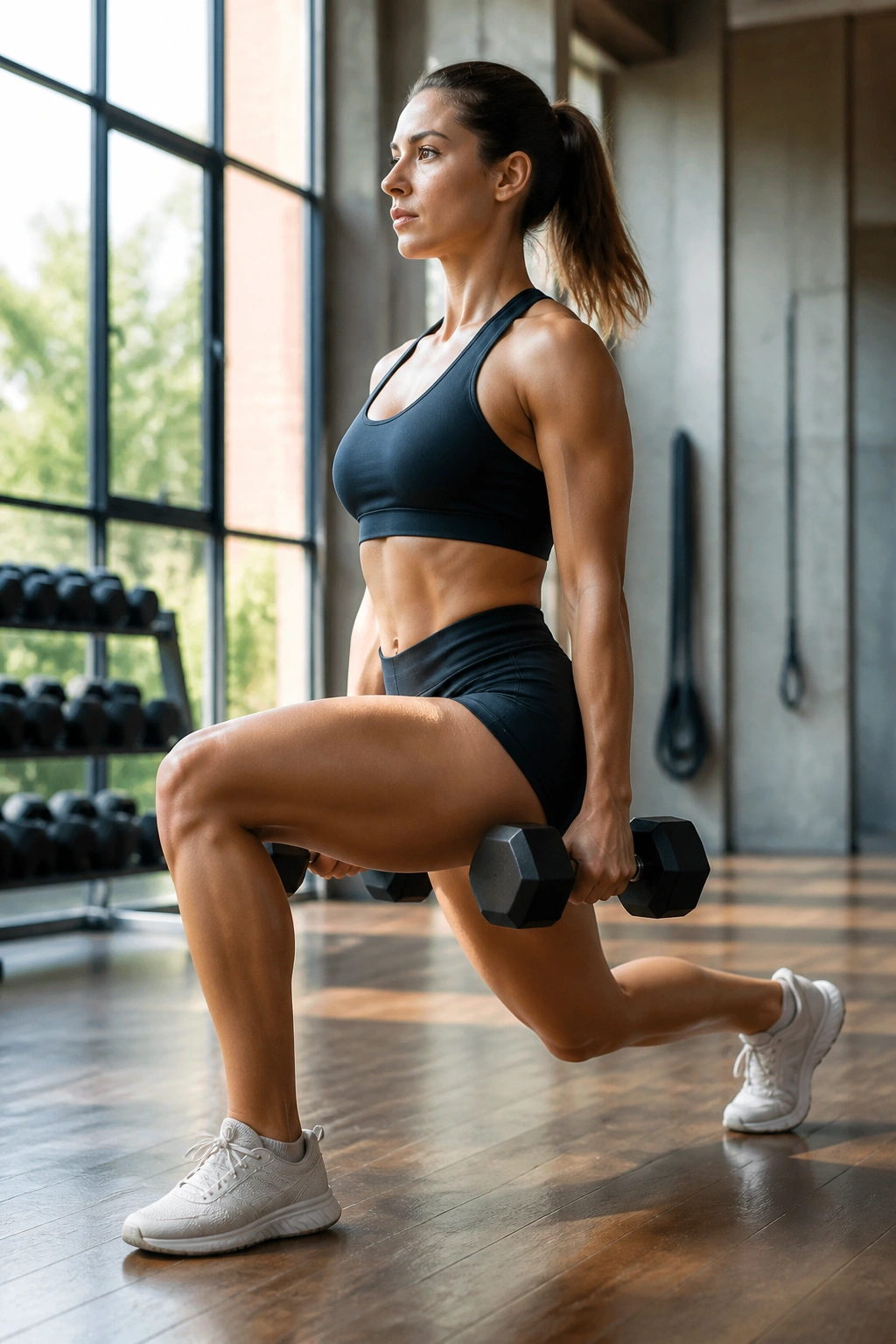
Walking lunges are functional, brutal, and effective. The key to making them a glute exercise rather than just a leg exercise is the stride length and the torso angle. If you take short, choppy steps, you are training your quads. If you take long, purposeful strides, you recruit far more glute.
Optimizing for Glutes
Take a long step forward. When you descend, ensure your front shin is vertical or slightly angled back. If your knee is way over your toe, you are in quad territory. As you push off to move to the next step, drive through the heel of your front foot, not the ball of your foot.
Adding Load
You can perform these with dumbbells in your hands, a barbell on your back, or even a barbell in a front-rack position. Regardless of where you hold the weight, focus on the eccentric (the downward phase). Control your descent. Don’t just drop into the lunge; resist gravity on the way down.
8. Kettlebell Swings
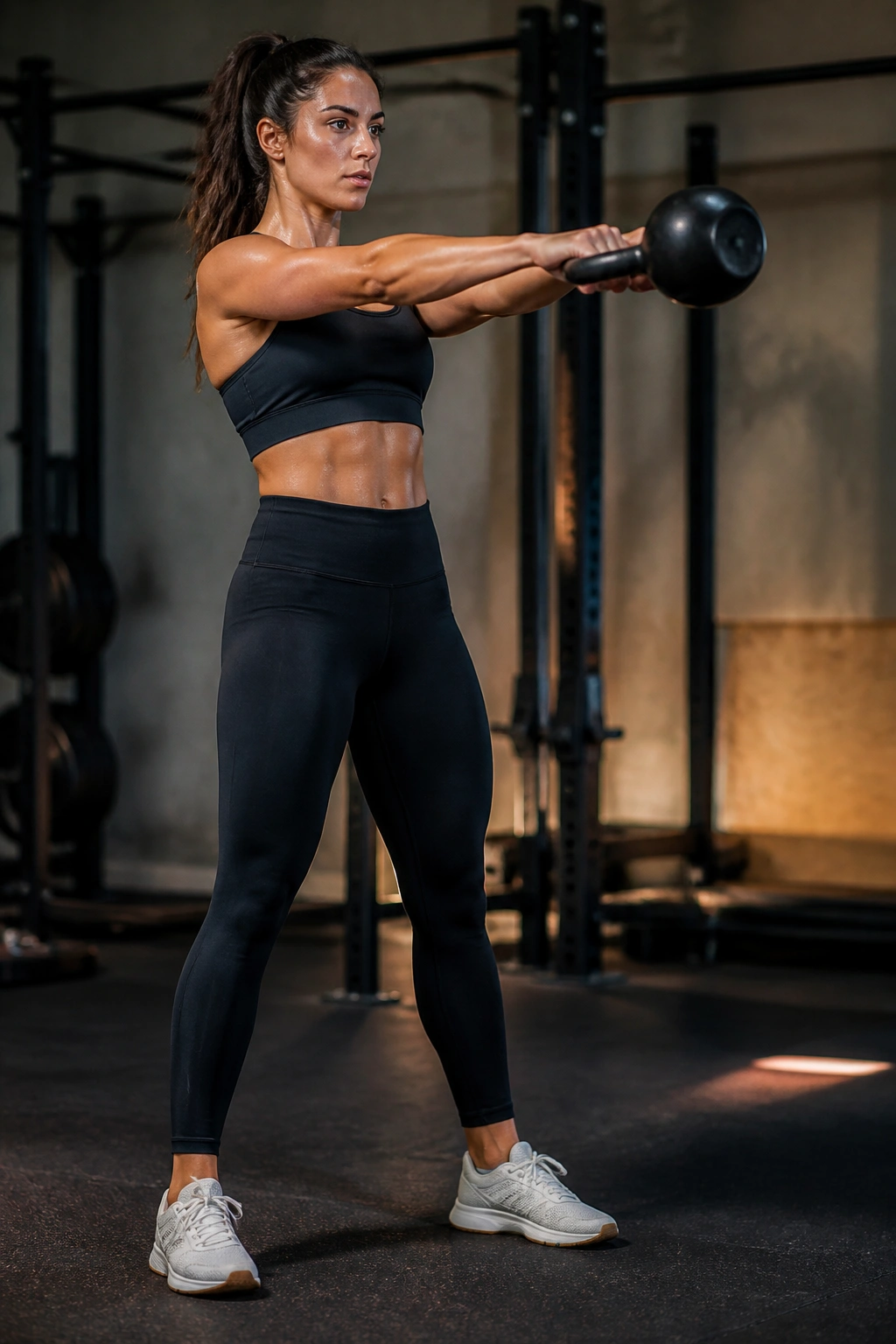
The kettlebell swing is a ballistic movement. It trains the explosive power of the glutes. This is a fundamental exercise for anyone who wants a more athletic, powerful posterior chain. It is not a squat; it is a violent hip hinge.
Generating Power
The motion should be sharp and fast. You are using your hips to “snap” the weight up. Imagine you are trying to throw the kettlebell through a wall in front of you. The arms are just loose levers holding onto the weight; they do not do the pulling. If your shoulders are sore after a set of swings, you are using your upper body too much.
Tempo Control
The swing should be rhythmic. On the way down, let the kettlebell float between your legs, and wait for your forearms to touch your inner thighs before you snap your hips forward again. That timing is crucial. If you snap too early, you lose the power transfer.
9. Frog Pumps
This is a specialized isolation exercise that effectively removes the quads from the equation entirely. By placing your feet together and knees out (the “frog” position), you put the glutes in a state of pre-stretch and limit the ability of the quads to contribute to the movement.
The Setup
Lie on your back, soles of your feet touching, knees out wide. Push your hips up into a bridge position. Because of the external rotation and abduction at the hips, you will feel this almost exclusively in the glutes.
High Volume Strategy
These are not meant for heavy loading. They are excellent for burnout sets at the end of a workout. Perform sets of 20 to 30 reps, focusing on that intense glute squeeze at the top. You should feel a deep, burning sensation that is almost impossible to replicate with heavier compounds.
10. Goblet Squats
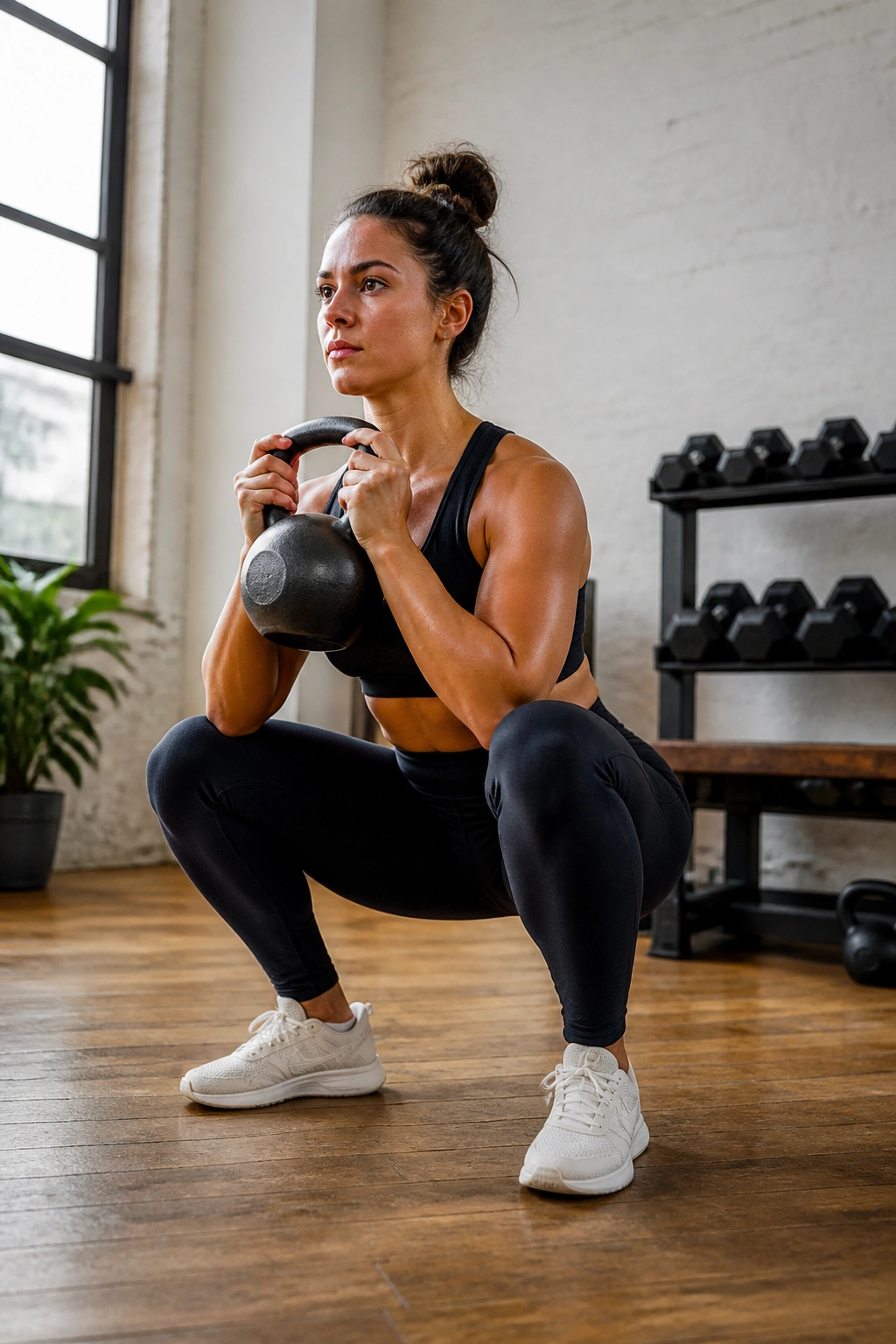
The goblet squat is often viewed as a beginner movement, but it is excellent for glute development when performed with a deep range of motion. By holding the weight in front of your chest, you force yourself to stay upright, which allows you to sit deeper into the squat than you might with a barbell on your back.
Depth and Engagement
Depth is the most important factor here. Because the weight acts as a counterbalance, you can drop your hips lower than your knees, which stretches the glutes at the bottom of the movement. This depth is where the growth happens.
The Mind-Muscle Connection
As you descend, focus on pushing your knees out. This opens up the hips and allows for greater depth. When you come up, imagine you are trying to “spread the floor” with your feet. That outward pressure against the ground keeps the glutes engaged throughout the entire repetition.
11. Cable Kickbacks
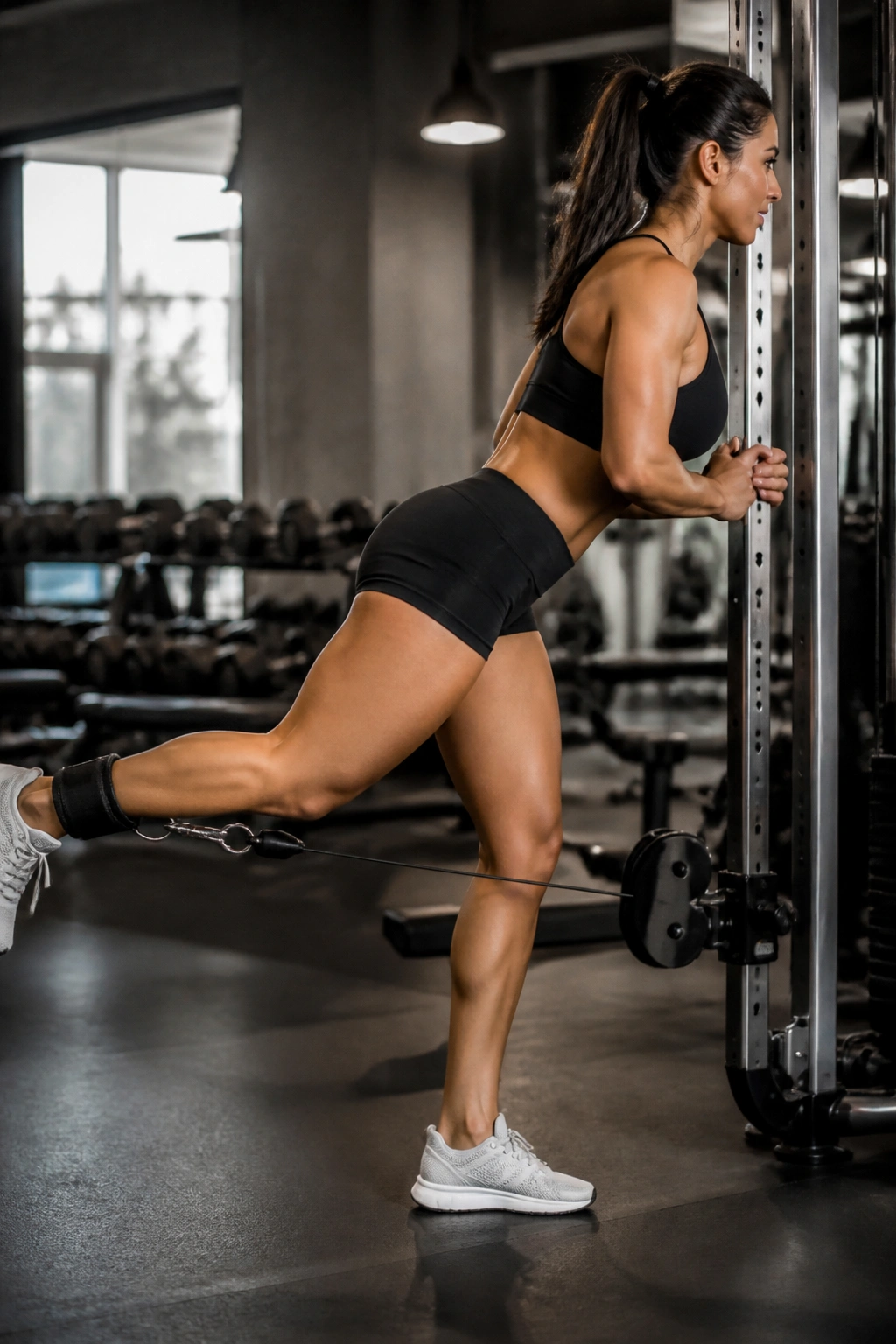
Isolation work has a place, and the cable kickback is the premier isolation movement for the glutes. It allows you to target the gluteus maximus without the fatigue of a massive compound lift. It is perfect for cleaning up any remaining energy in the muscles at the end of a session.
Avoiding the Arch
The biggest mistake people make with kickbacks is arching their lower back to get the leg higher. Your lumbar spine should not move. Keep your core tight and your back flat. If you can only kick your leg back 30 degrees without arching, that is fine. That 30-degree range is where the work is happening.
Stability
Hold onto the cable machine for balance. Keep your standing leg slightly bent to maintain stability. Imagine you are kicking your heel toward the ceiling rather than just swinging your leg back. This mental cue changes the angle of pull and makes the glute work much harder.
12. Reverse Lunges
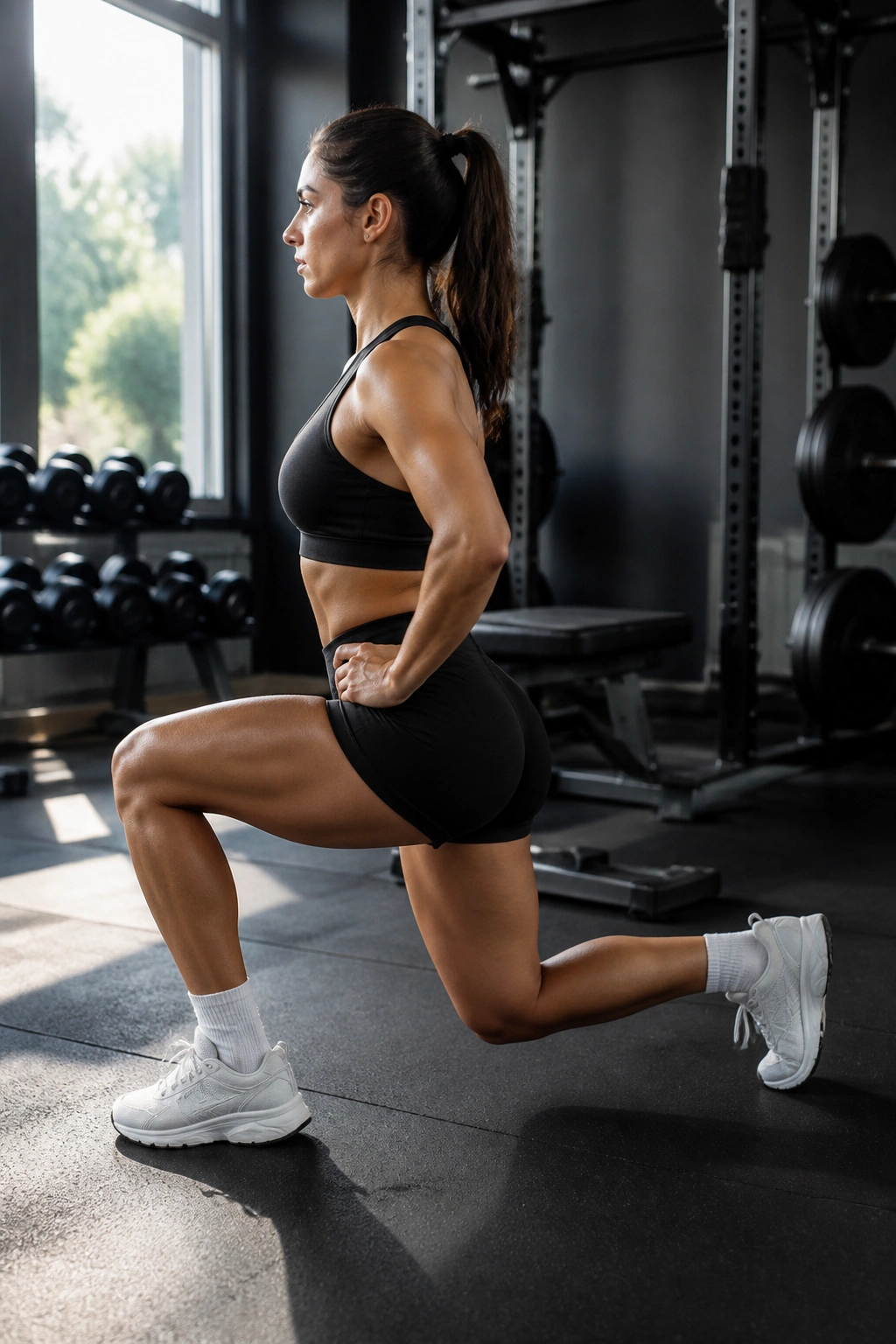
The reverse lunge is often safer for the knees than forward lunges because your front foot remains planted while your back foot moves. This creates less momentum hitting the knee joint. It is also inherently more glute-dominant because your center of gravity naturally shifts backward.
Technique Notes
Step backward into a lunge. As you lower your back knee toward the ground, keep your front shin vertical. Lean your torso forward slightly—again, that slight forward lean is the secret to glute engagement. Drive back to the starting position by pushing through the heel of your front foot.
Why It Works
By initiating the movement with a step backward, you force the front glute to act as the primary stabilizer and the primary driver for the return motion. It builds excellent unilateral strength and improves your balance without the awkwardness of stepping forward and stopping your momentum.
13. Abductor Machine
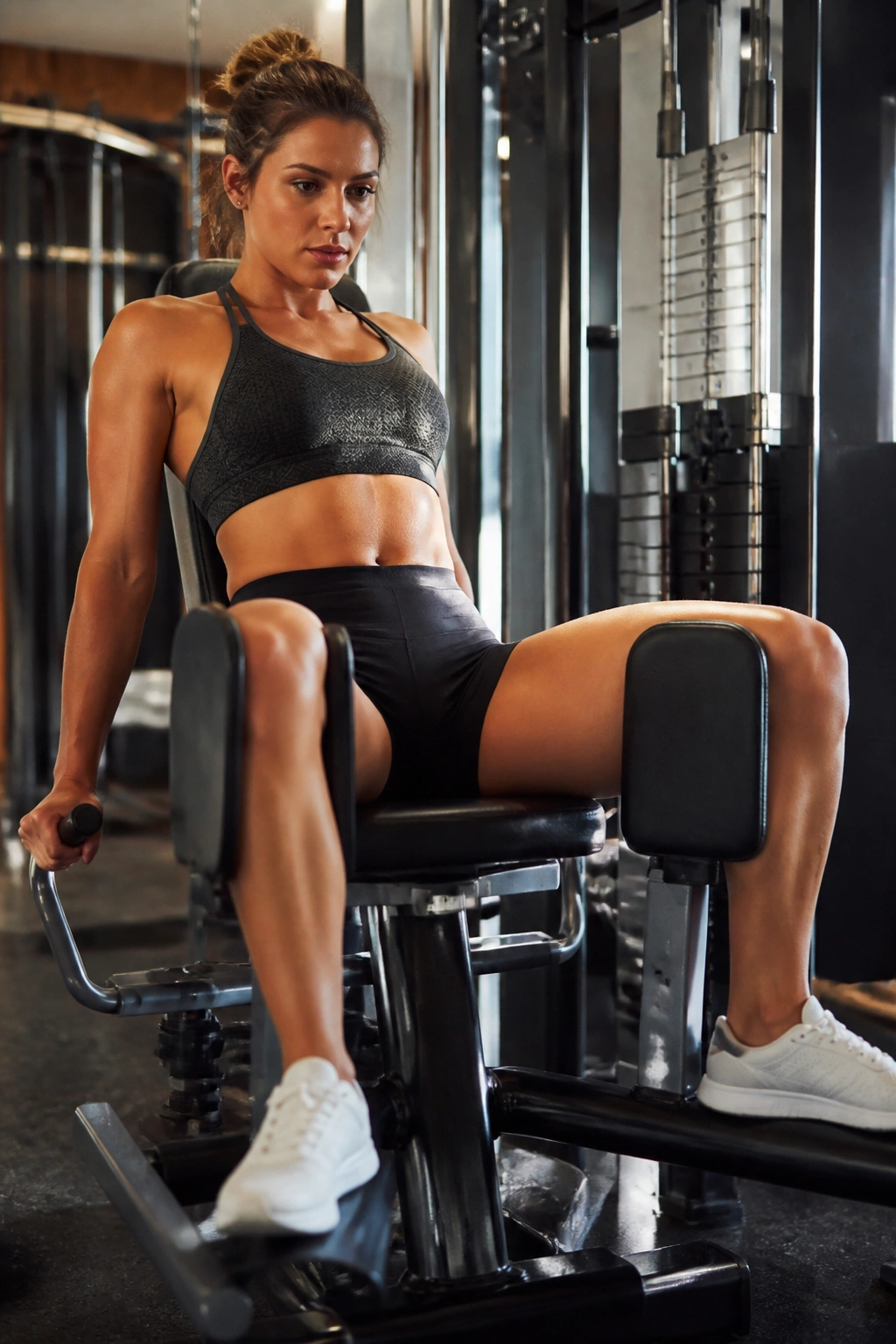
Do not underestimate the importance of the gluteus medius and minimus. These muscles sit on the side of your hip and are responsible for stabilizing your pelvis and abducting your leg. A well-rounded glute program must include abduction.
The “Hidden” Muscle
The abductor machine is often dismissed as a “gimmick,” but if you use it with high intensity and proper form, it is highly effective. Sit with your back pressed firmly against the seat. Don’t hunch over. Lean back slightly to shift the focus to the upper glute and medius.
Tempo and Volume
Do not just let the weight slam shut on the return. Control the negative. Fight the resistance as the pads come back together. This builds the eccentric strength in the abductors. Aim for slightly higher repetitions here—15 to 20 per set—to drive metabolic stress into those smaller, stubborn stabilizing muscles.
14. Lateral Band Walks
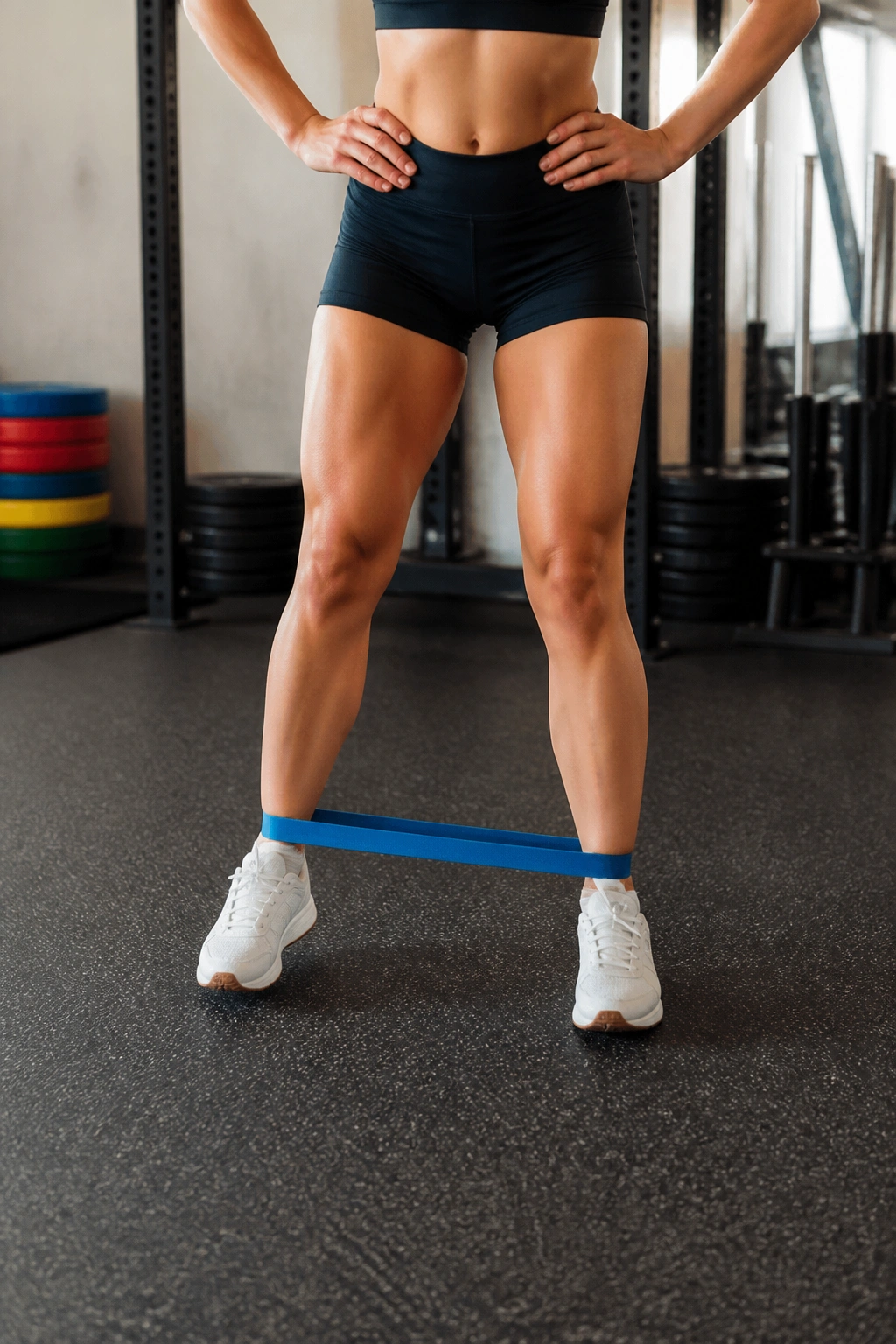
This is the ultimate warm-up or “finisher” exercise. It targets the hip abductors specifically. If you have ever done these and felt like your hips were on fire, that is the gluteus medius waking up.
Proper Execution
Place a resistance band around your ankles or just above your knees. Get into a quarter-squat position—never stand up straight during the set. Step laterally (sideways), keeping your toes pointed forward. Do not let your knees cave inward.
Resistance Choice
Use a band that provides significant tension, but not so much that you have to hunch your back or compromise your form to take a step. If you can take 50 steps without feeling it, the band is too light. Keep the tension constant; never let the band go slack by bringing your feet all the way together.
15. Back Extensions
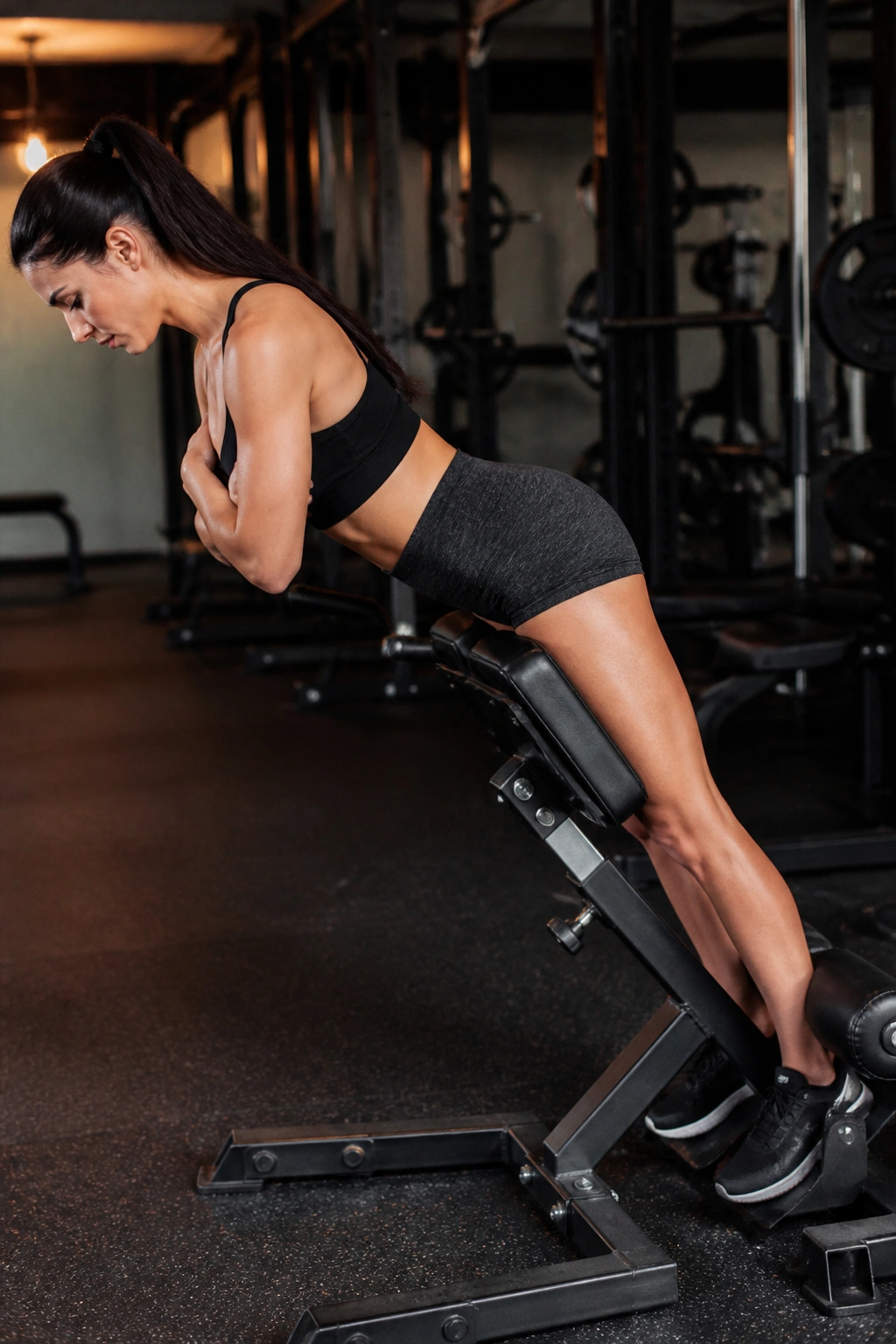
The 45-degree back extension is a classic, but many people perform it wrong. They treat it as a back exercise, rounding their spine to get more range. If you want glutes, you must change your approach.
The Glute-Focused Setup
Round your upper back slightly—this prevents your lower back from taking over. Tuck your chin. Now, when you hinge, focus on squeezing your glutes to pull your torso up. Do not swing your body. Control the movement.
Adding Resistance
Once your body weight becomes too easy, hold a weight plate or a dumbbell against your chest. You will be surprised at how quickly this becomes one of the most demanding exercises in your routine. Because the lever arm is long, even a small amount of weight makes a massive difference in intensity.
16. Curtsy Lunges
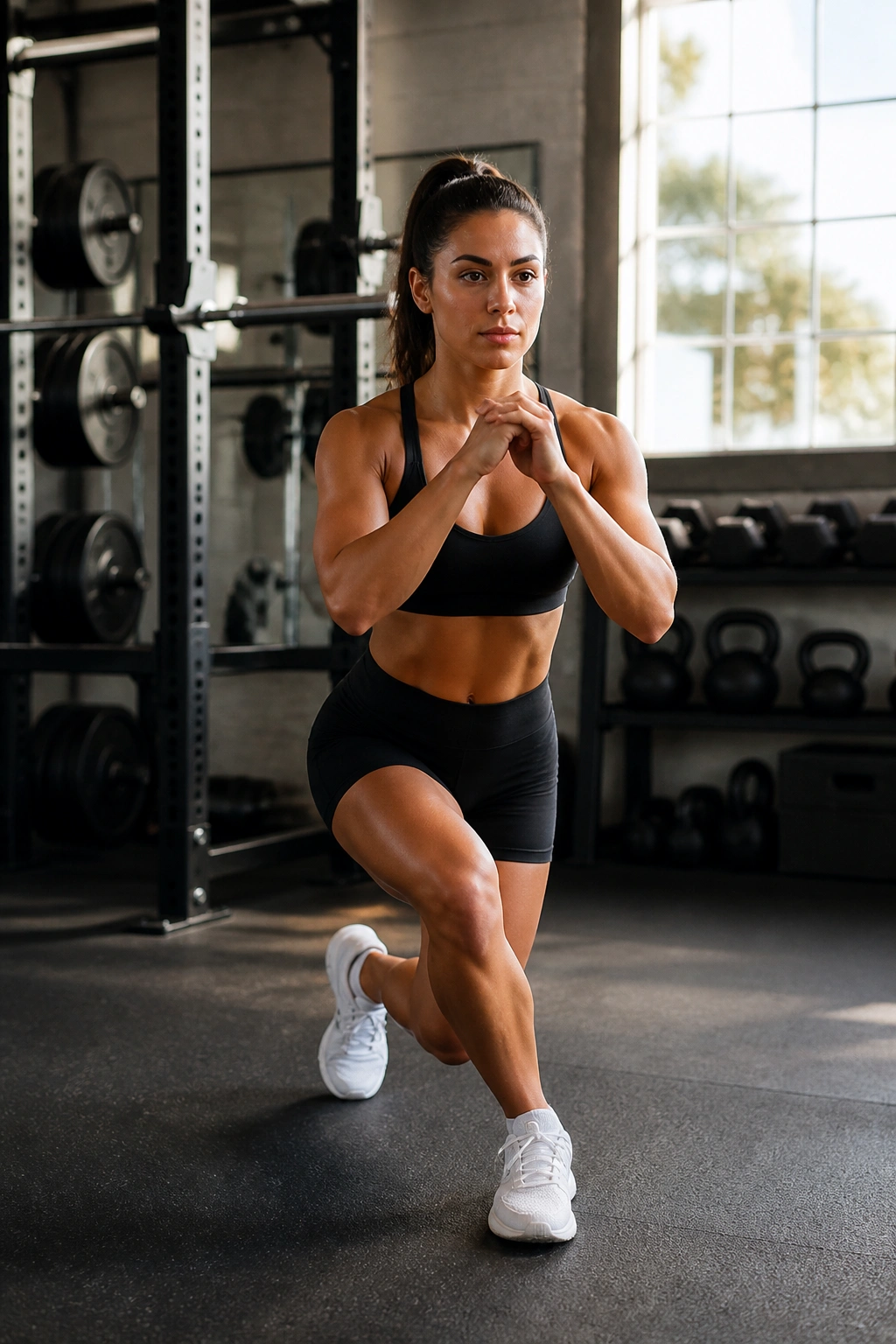
The curtsy lunge is a variation that hits the gluteus medius and the outer portion of the gluteus maximus due to the angle of the leg. By crossing your back leg behind your front leg, you are putting the glute in a stretched position while simultaneously adding an element of rotational instability.
Stabilization is Key
This exercise forces your body to stabilize against a side-to-side force. Keep your hips facing forward. If you rotate your entire torso to follow your back leg, you lose the tension on the target glute. Keep your shoulders square to the front.
Where to Feel It
You should feel this in the side of your hip on the front leg. It is a fantastic movement for creating that “shelf” look on the upper-outer glute. Because it is a unilateral move, it also helps correct strength imbalances between your left and right sides.
17. Cossack Squats
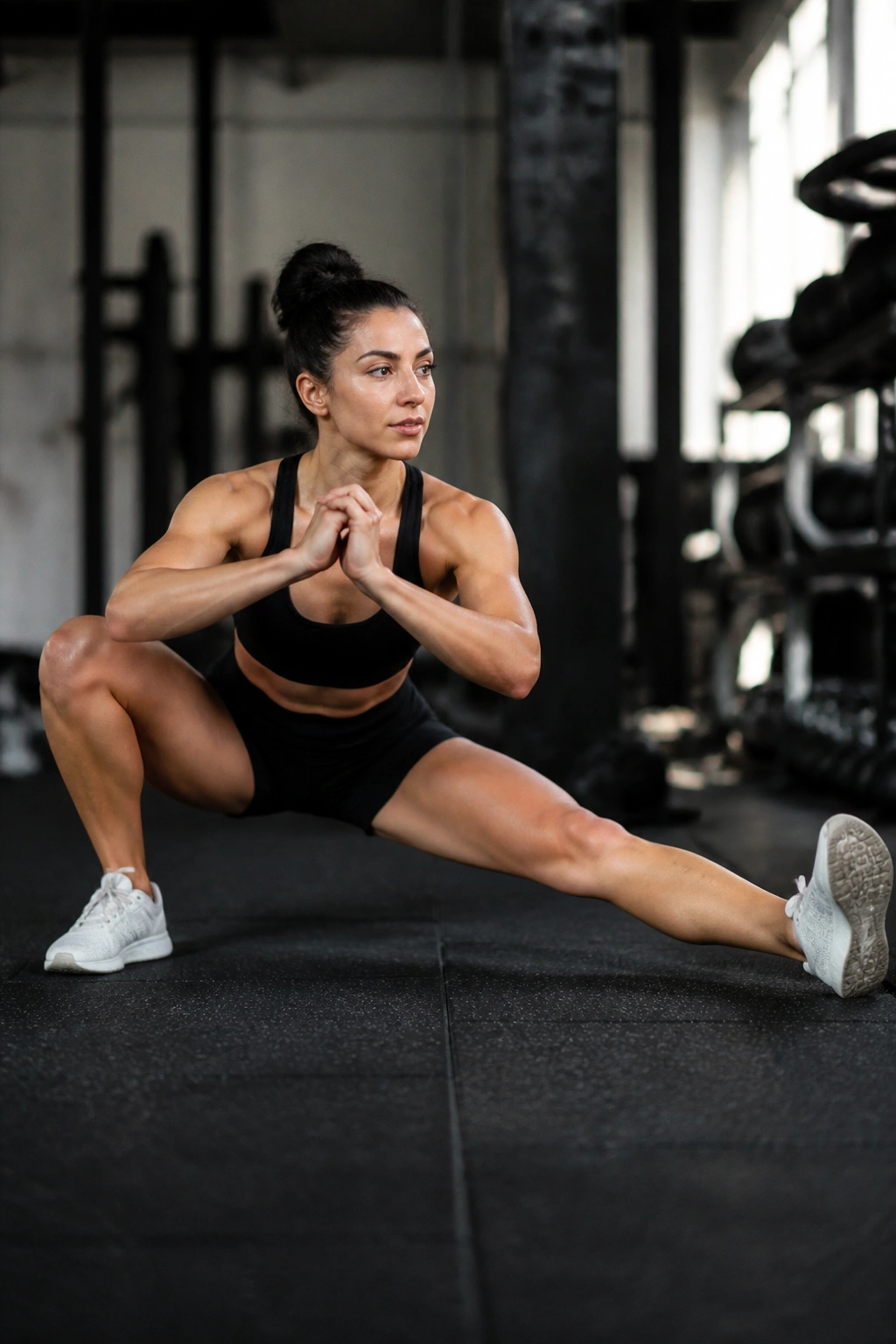
This is a deep lateral lunge that requires significant hip mobility. By sinking low into a side squat while keeping the other leg straight, you are forcing the working glute to produce force from a very deep, stretched position.
Mobility vs. Strength
If your mobility is limited, you might find this difficult. Start with a shallower squat and work your way deeper over time. Keep your heel flat on the floor of the working leg. If your heel comes off the ground, you need to widen your stance or work on your ankle mobility.
Adductor Engagement
You will feel this in your inner thighs (adductors) as much as your glutes. That is completely normal. The adductors and glutes work together as hip extensors. Strengthening this plane of motion adds a layer of robustness to your training that sagittal-plane-only exercises (like standard squats) lack.
18. Donkey Kicks
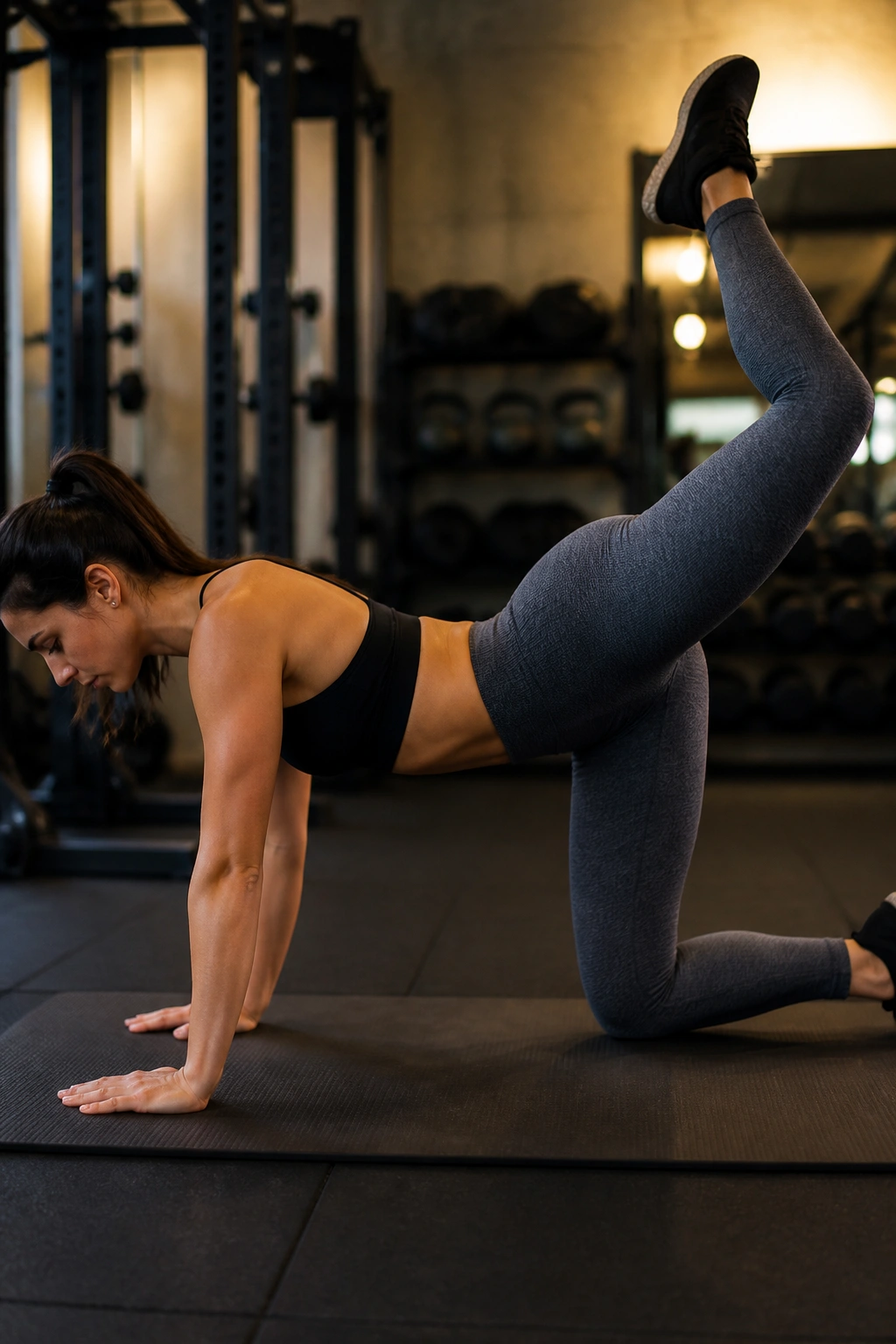
Donkey kicks are another high-repetition isolation movement that works wonders for glute endurance and the mind-muscle connection. When done correctly, they provide a pump that is hard to match.
The Form
Get on all fours. Keep your back flat—do not let it sway. Kick one heel straight up toward the ceiling. Focus on the glute contraction at the top. Imagine you are trying to leave a footprint on the ceiling.
The Squeeze
The mistake most people make is moving too fast. Slow down. Pause at the top of every rep for a full second. This is an isolation movement, and if you are using momentum, you are wasting the effort. Feel the muscle cramp slightly at the top; that is where the growth signal is sent.
19. Pause Squats
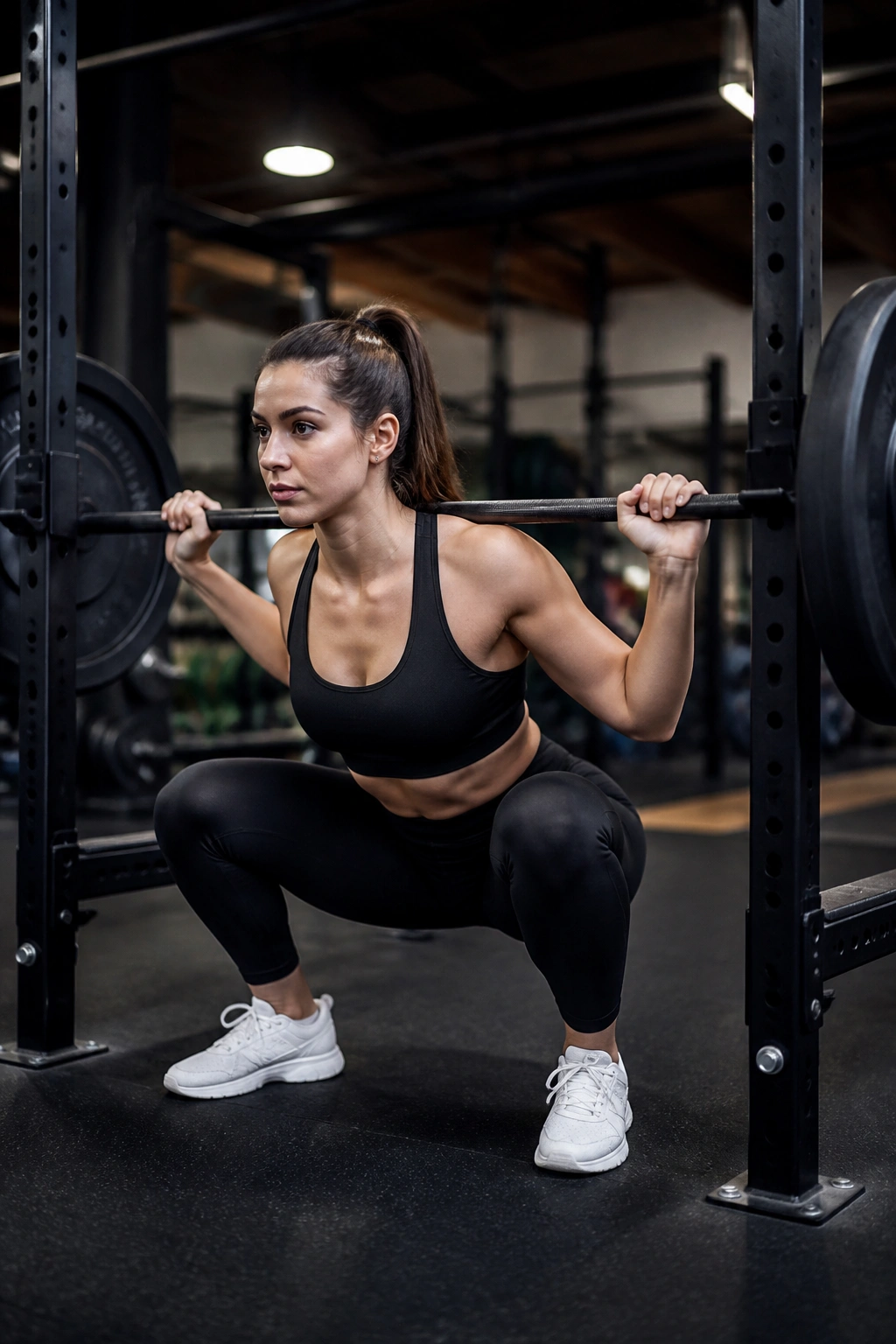
Sometimes, the best way to grow is to take away the bounce. A pause squat forces you to create stability at the hardest part of the lift—the bottom. By removing the stretch-shortening cycle (the “bounce”), you force your muscles to work harder to initiate the ascent.
The Bottom Position
Descend into your squat. Stop when your thighs are parallel to the floor or lower. Hold that position for two seconds. Do not relax; keep your core braced and your glutes tight. Then, drive up explosively.
Why This Works
The pause ensures that you are relying on muscle contraction, not momentum. It also gives you time to check your form at the bottom. Are your knees caving? Is your chest collapsing? The pause forces you to be honest with yourself about your technique and builds immense strength out of the hole.
20. Weighted Glute Medius Kickbacks
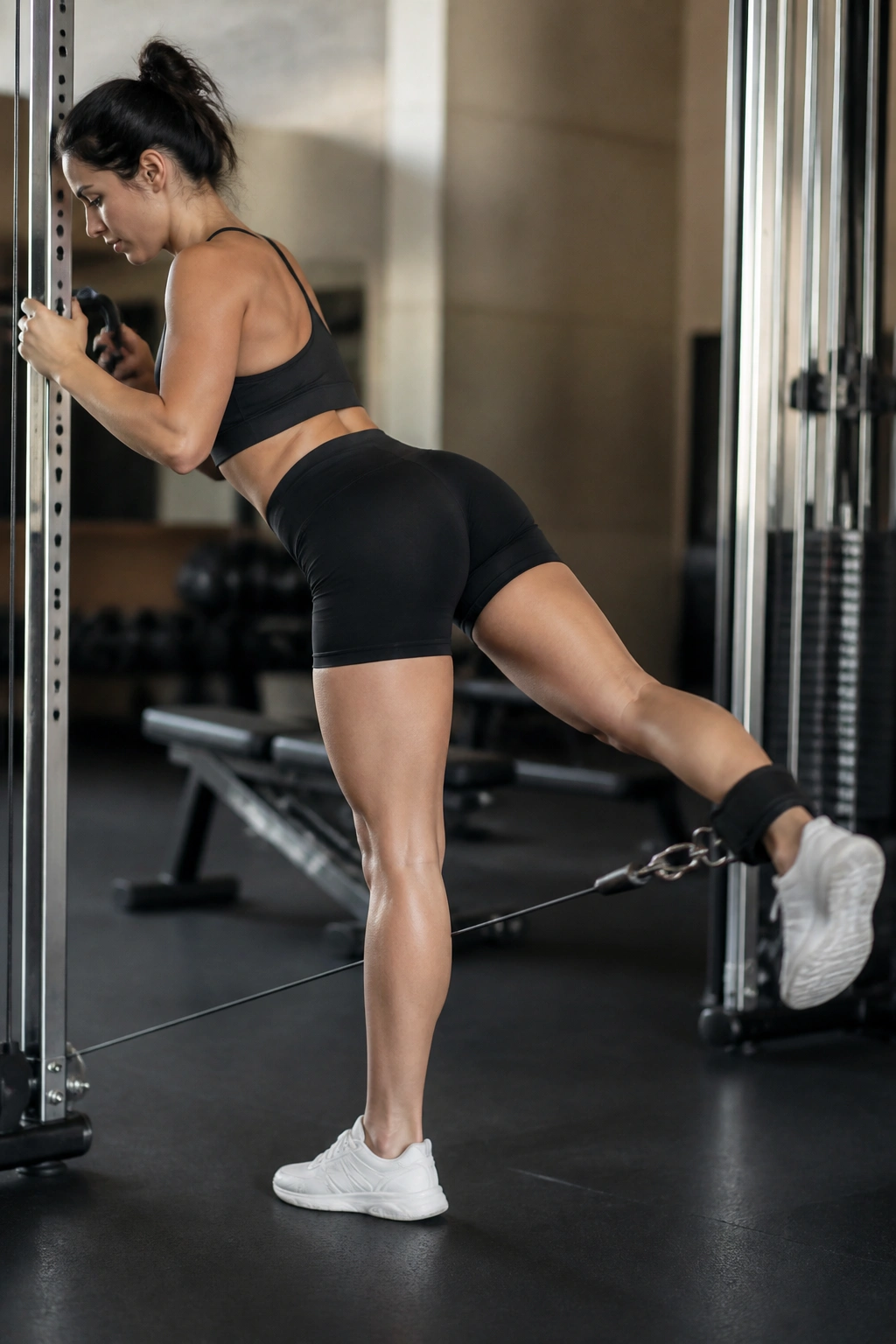
These are distinct from standard kickbacks because you are kicking at a 45-degree angle outward, rather than straight back. This targets the upper glute and the medius.
The Angle
You can perform these with a cable machine or a resistance band. Stand sideways to the anchor point. Kick your leg out and back at a 45-degree angle. This diagonal path of motion is the key.
Precision Matters
You do not need heavy weight. Focus on the abduction angle. If you go too heavy, you will inevitably turn it into a straight-back kick and miss the target muscle. Keep the movement slow and controlled. You should feel this burning right at the top of your hip.
21. The B-Stance Deadlift
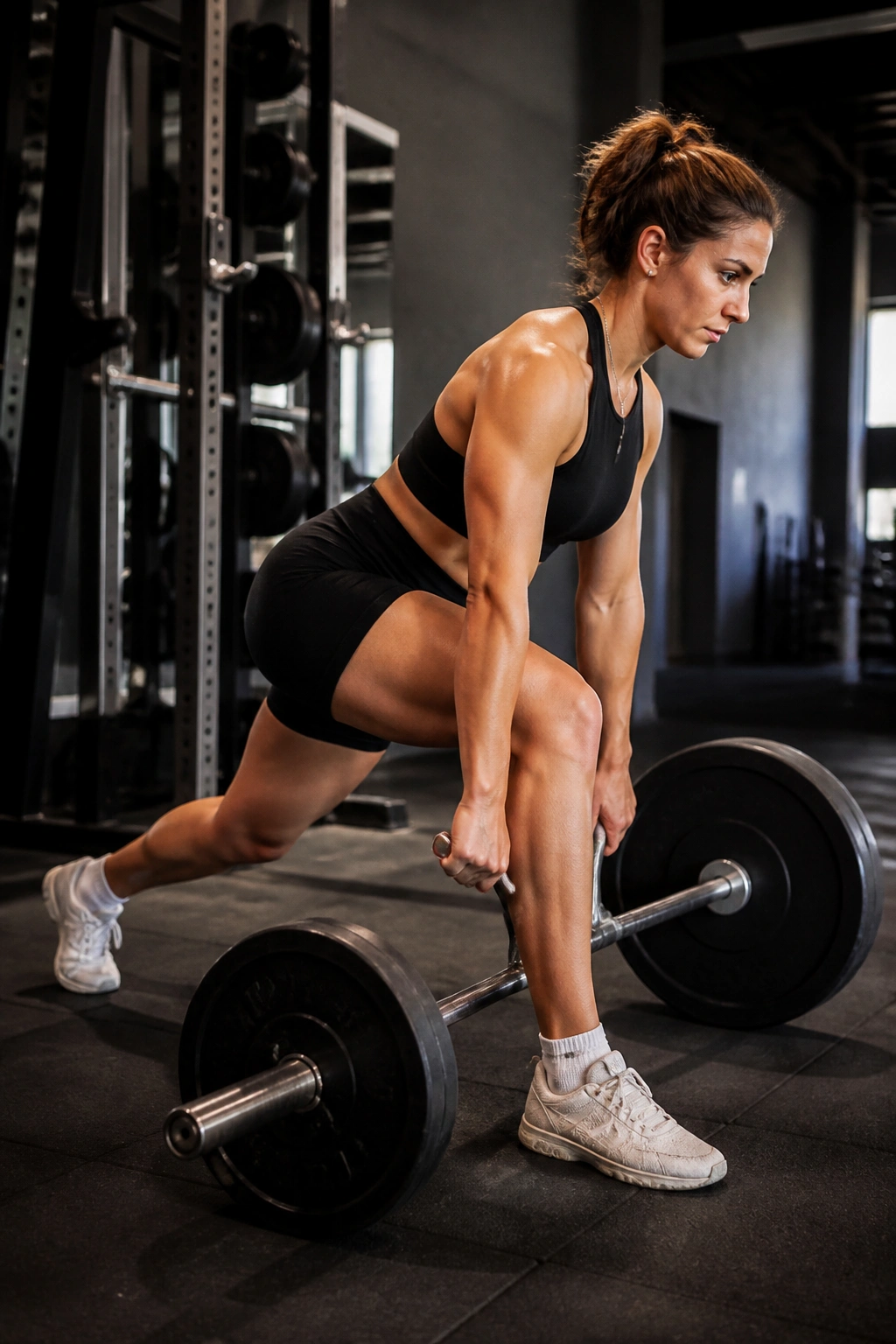
The B-stance deadlift is a hybrid between a conventional deadlift and a single-leg deadlift. It provides the stability of having two feet on the floor, but biases almost all the load onto the front leg. It is perfect if you struggle with the balance of a single-leg RDL but want the same benefits.
The Stance
Set up for a deadlift, but place one foot slightly back, with just the toe touching the ground. You are putting about 80-90% of your weight on the front leg. The back leg is essentially a kickstand for balance.
Executing the Hinge
Perform a hinge just like an RDL. You will find that the front glute gets an intense workout. Because you aren’t fighting to balance on one leg, you can usually load this with significantly more weight than a standard single-leg RDL, making it an excellent exercise for strength progression.
22. Fire Hydrants
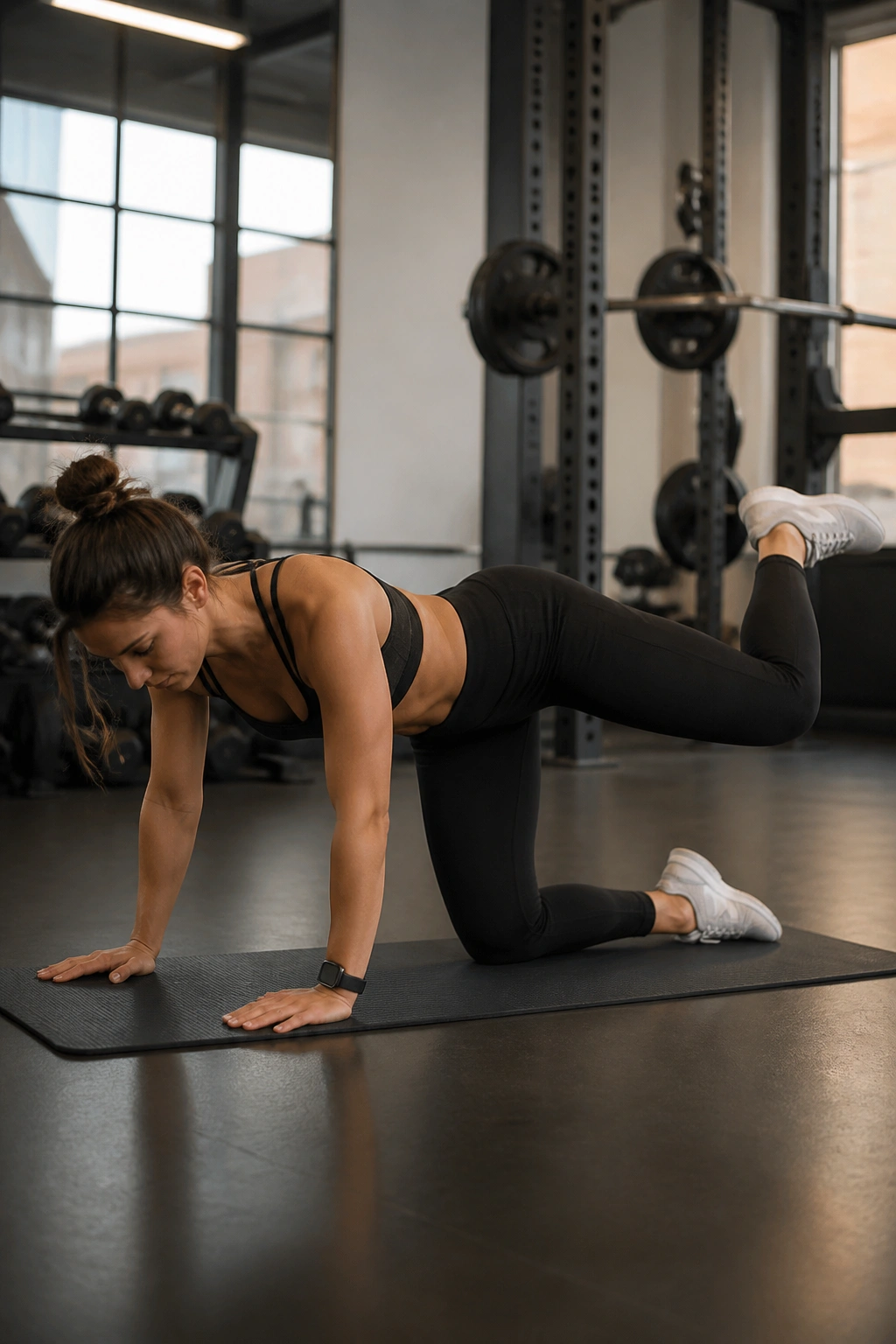
Fire hydrants specifically isolate the gluteus medius and minimus by lifting the leg out to the side while on all fours. It looks slightly ridiculous, but it is one of the most effective ways to activate the side glutes.
The Motion
On all fours, keep your knee bent at 90 degrees. Lift your leg out to the side, like a dog at a fire hydrant. Try not to rotate your torso. If your entire body turns to compensate for the lift, you are not getting the benefit.
Activation Focus
This is a great pre-activation exercise before heavy squats or lunges. By waking up the side glutes, you ensure they are ready to stabilize your pelvis when you move on to heavier, more complex lifts. Aim for high reps—15 to 20 per side.
23. Jefferson Squats
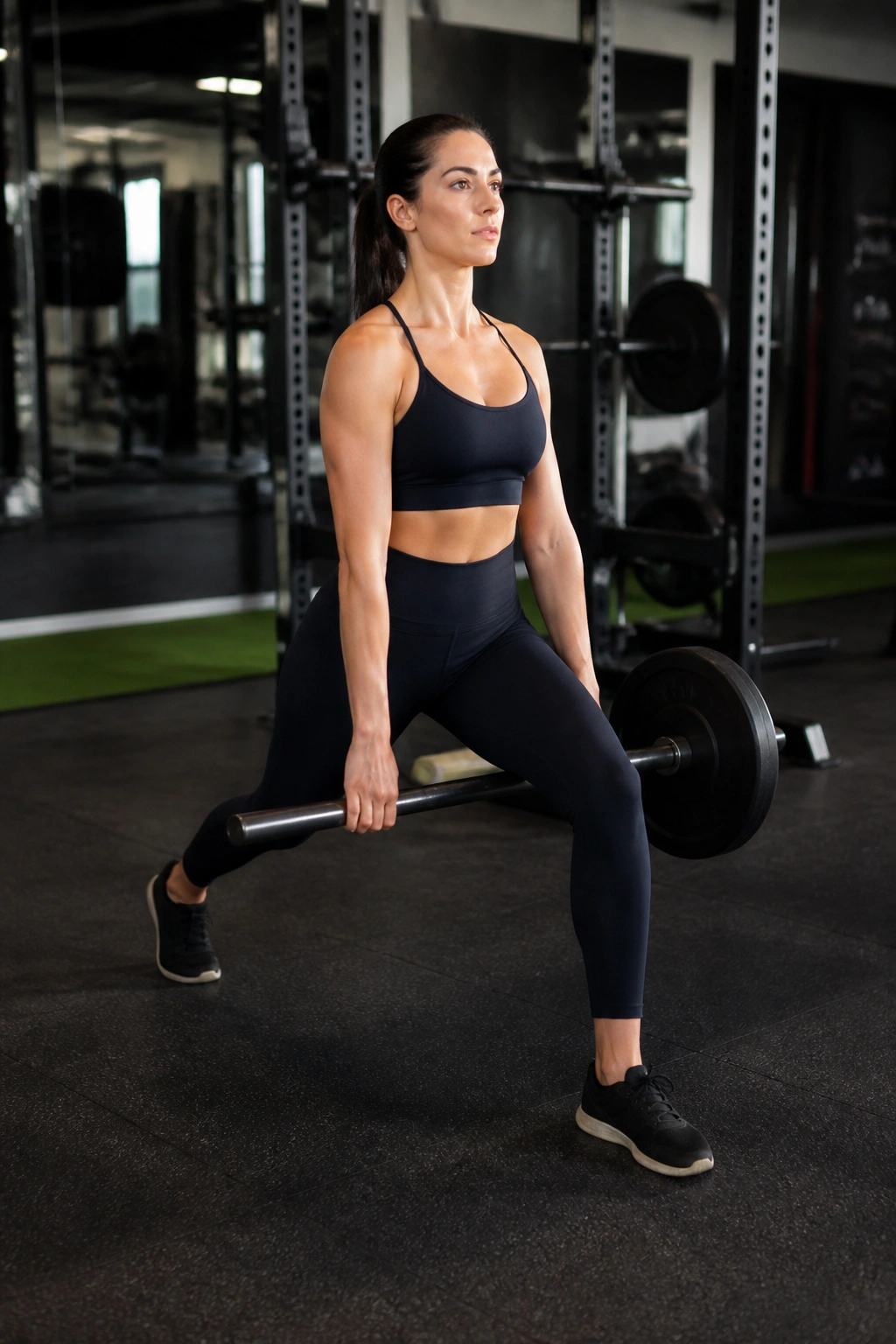
This is a “lost” exercise that deserves a comeback. You stand with the barbell between your legs, one foot in front and one foot behind. You squat down to pick it up. It is awkward, but it provides a unique angle of tension on the hips and glutes.
Setup and Safety
Start with light weight. The positioning feels strange at first. You will need to drop your hips low to reach the bar. Because the weight is directly underneath you, it requires a very upright torso, which places a different kind of stress on the glutes compared to a standard squat.
The Benefit
It forces your hips to work in a slightly rotated position, which is great for developing total-body stability and glute strength. It is a fantastic variation to throw into your training when you feel like your standard movements have become stale or your progress has stalled.
24. Weighted Step-Downs
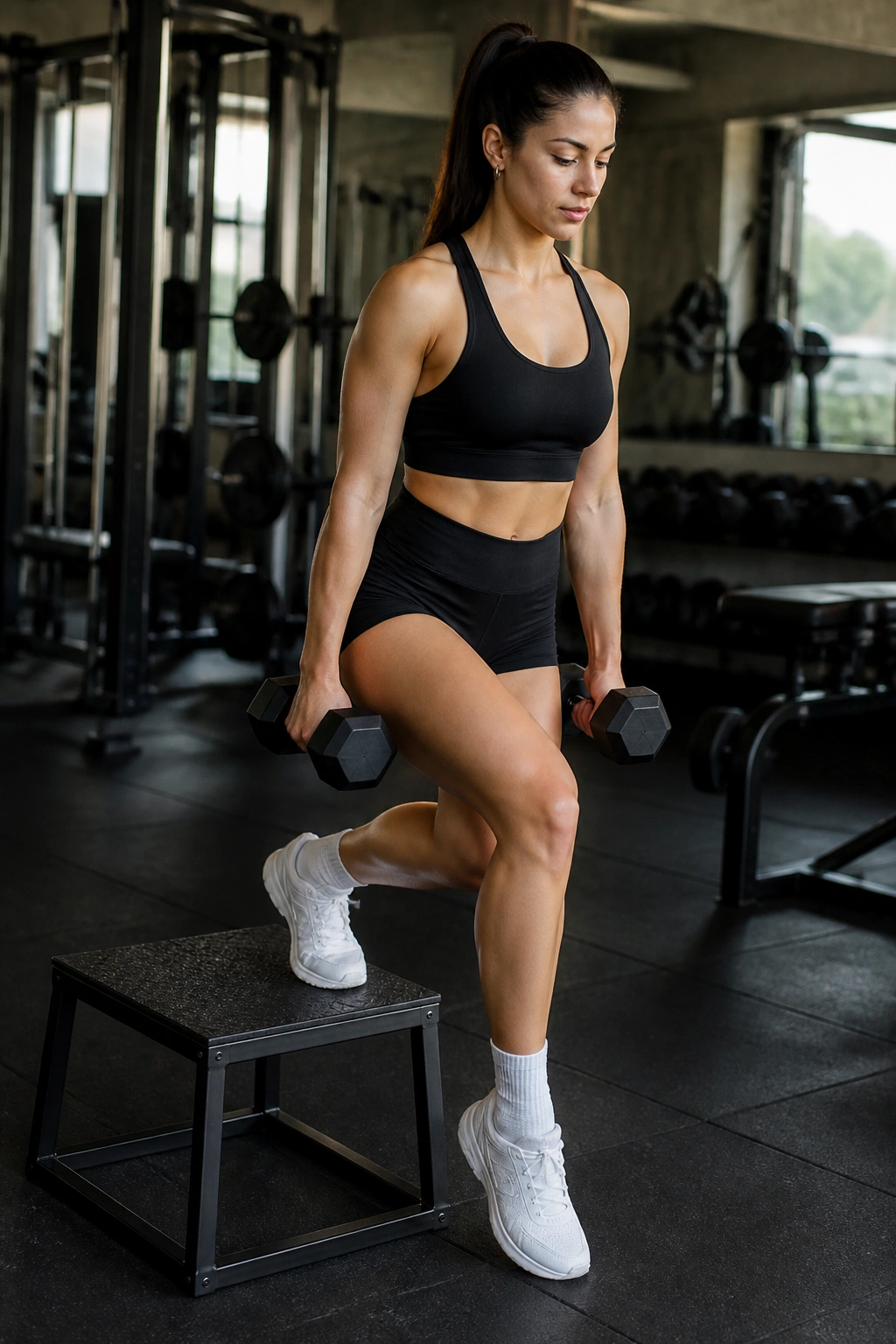
Instead of stepping up onto a box, you stand on a box and step down with the other leg. This focuses on the eccentric phase—the lowering part—of the movement. It is excellent for glute control.
The Eccentric Emphasis
Start on a low box. Step down slowly with one leg, tapping your heel to the ground before pushing back up. The slower you go, the harder the glute has to work to control your descent.
Controlling the Knee
The challenge here is to keep your knee from wobbling. The glute must fire to keep the knee tracking correctly. If you find your knee is collapsing inward, that is a sign that your glutes are not strong enough to handle the stability requirement. Drop the box height and focus on perfect control.
25. RDL to Glute Bridge Supersets
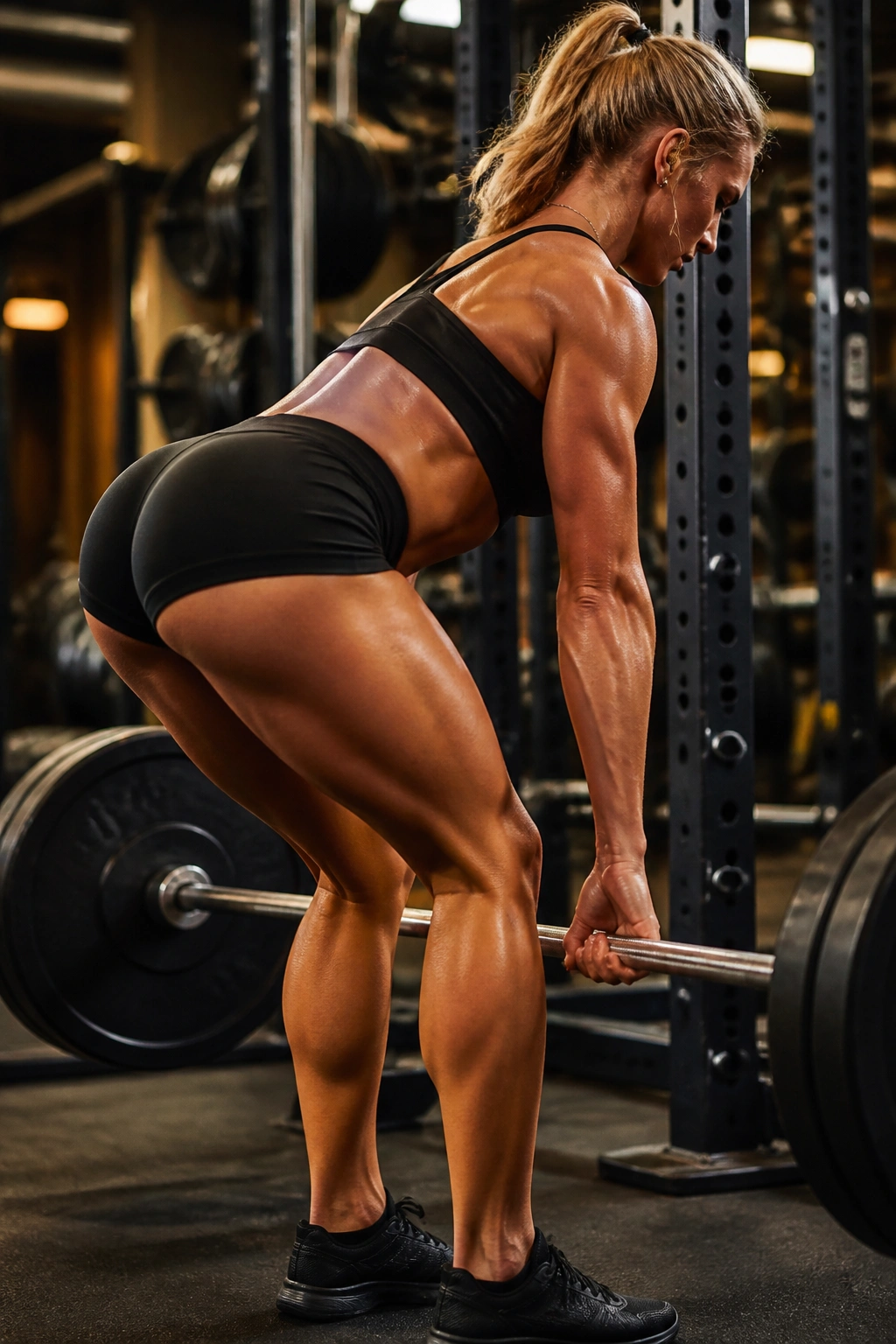
Supersets are a great way to increase intensity without spending hours in the gym. By combining a heavy hinge movement (the RDL) with a high-repetition isolation movement (the glute bridge), you create a massive metabolic demand on the glutes.
Designing the Combo
Do a set of 8-10 heavy RDLs. Immediately drop the weight, get on the floor, and perform 20-30 bodyweight glute bridges. The RDL stretches the glutes under load, and the bridge squeezes them while they are already fatigued.
Why This works
This combination addresses both the lengthened and shortened positions of the gluteus maximus in one go. You get the strength-building benefits of the RDL and the metabolic stress/pump benefits of the bridge. It is an efficient way to finish your workout.
Final Thoughts
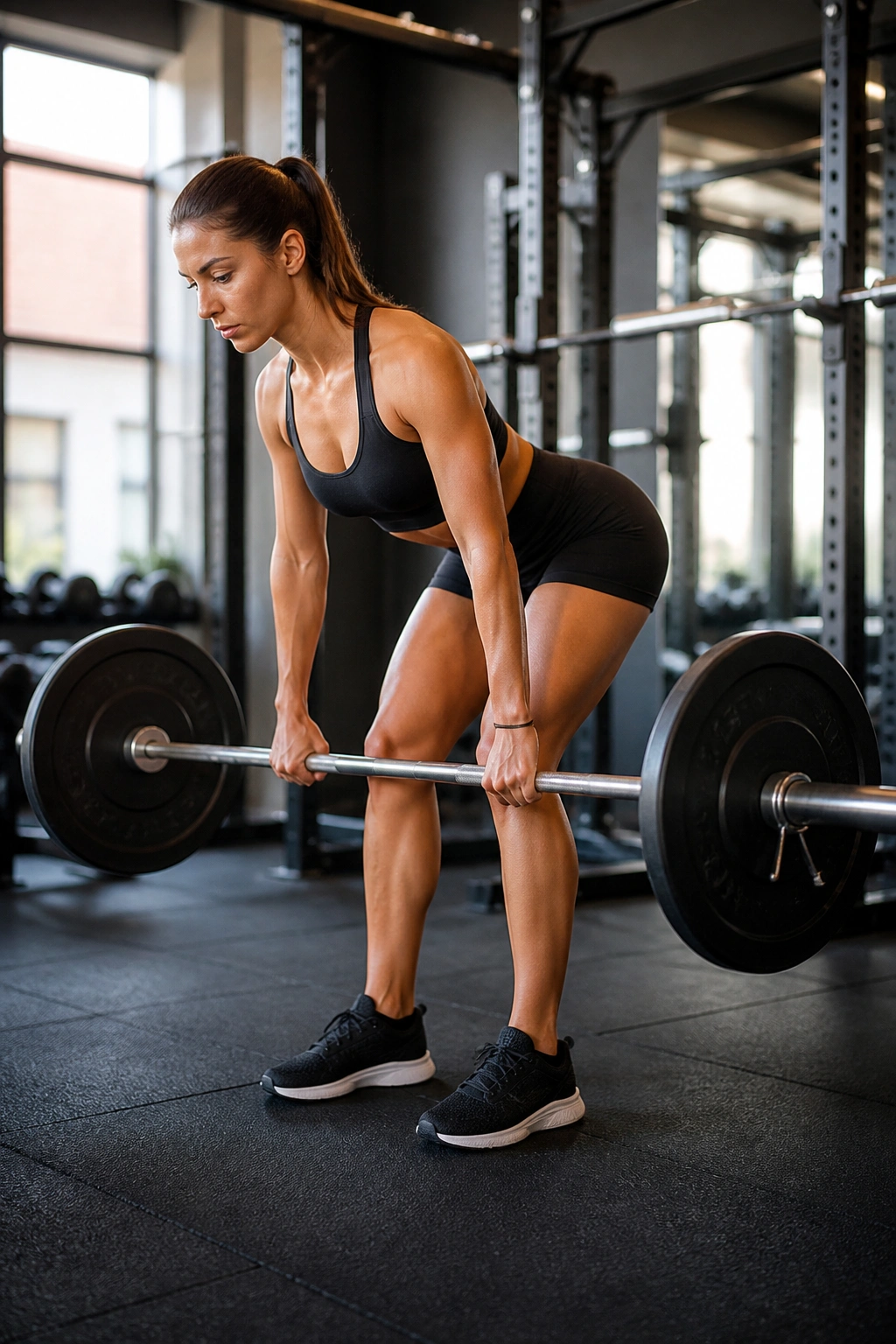
Building stronger, more defined glutes is not about finding the “perfect” exercise; it is about consistent application of tension. You have 25 options here, but you do not need to do them all. Pick three or four, master the form, and get strong at them. Whether you prioritize heavy hip thrusts, stable unilateral work like Bulgarian split squats, or isolation movements like kickbacks, the rules of training remain the same.
You must challenge the muscle. If you are doing the same sets and reps with the same weight for six months, you will not see changes. Track your lifts. Increase the resistance, improve your tempo, or reduce your rest periods. Treat your training like a project that requires data and adjustments. The glutes are resilient and capable of handling significant volume, so do not be afraid to push them. Consistency, combined with intensity, is the only way to get results. Keep the form strict, keep the effort high, and the rest will follow.
