



Building strong glutes isn’t just about how your jeans fit. It is about creating a foundational pillar of strength that protects your lower back, stabilizes your hips, and improves your athletic performance across the board. If you spend your days sitting at a desk, your glutes are likely asleep. They are “offline.” You need to wake them up, and there is arguably no better tool for the job than a simple, cast-iron kettlebell.
Most people walk into the gym and assume that kettlebells are strictly for swinging until you’re breathless. While the swing is a masterpiece of exercise design, relying on it alone leaves massive gaps in your training. You can build significant size, strength, and explosive power by shifting the way you hold, load, and move with that bell. The secret isn’t in the bell itself—it is in how you manipulate leverage, gravity, and body position.
You do not need a rack of barbells or a collection of complicated machines to build glutes that actually perform. You need gravity, a weight that challenges you, and a plan that hits the muscle from every conceivable angle. Whether you are working out in a garage gym with one dusty bell or in a commercial space, this list of eighteen movements will give you enough variety to keep your glutes guessing—and growing—for a very long time.
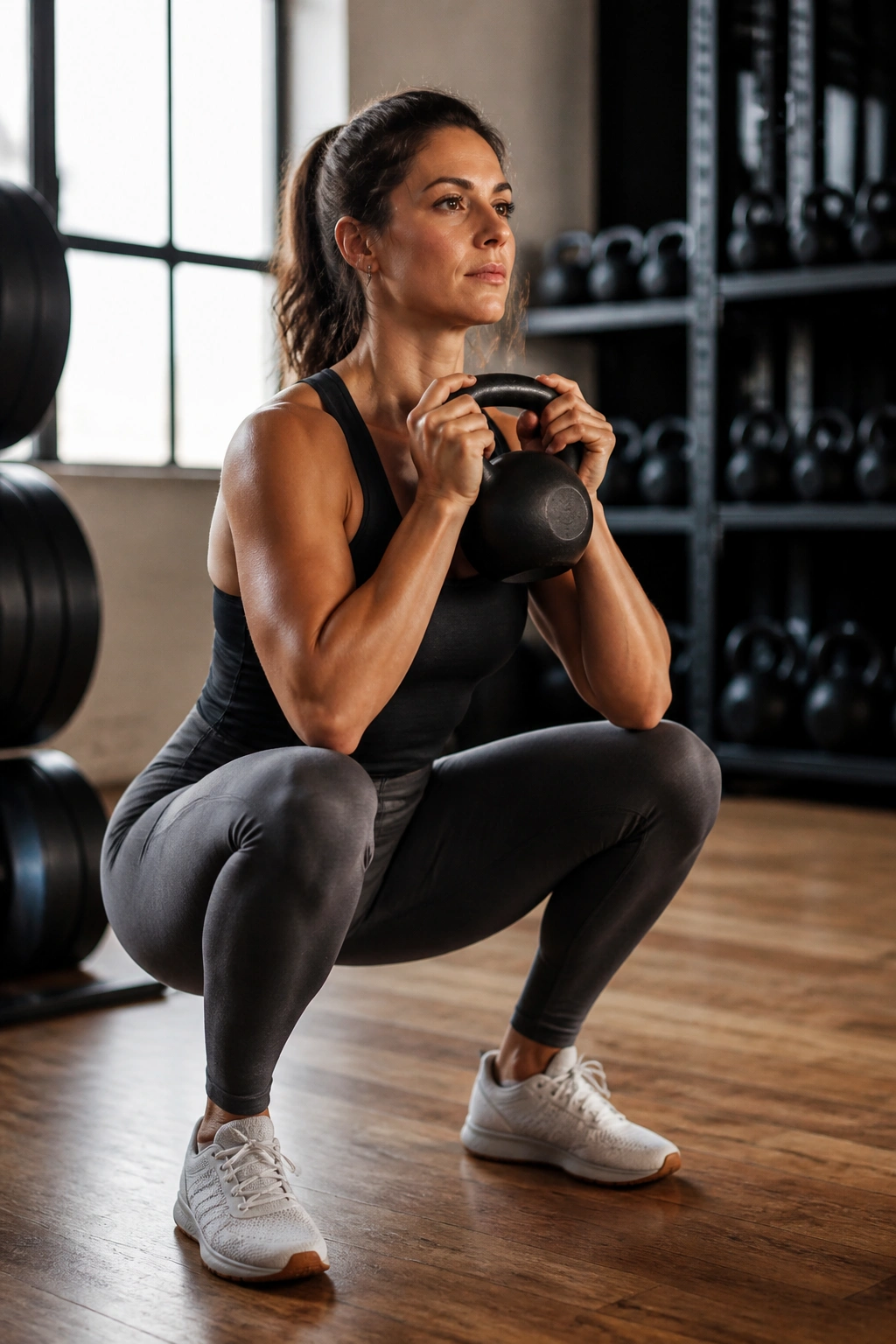
1. Kettlebell Goblet Squat
The goblet squat is the foundation. It forces you to maintain an upright posture because if you lean too far forward, the bell pulls you off balance. This isn’t just a leg exercise; it is an incredible tool for glute activation because it requires you to sit down between your hips rather than just folding at the waist.
Why It Works for Glutes
When you hold a weight at your chest, your body naturally counterbalances by pushing the hips back and down. This increases the range of motion at the hip joint, which is exactly where you want the tension. You are essentially forced to go deep, and depth is the primary driver of glute recruitment in any squat variation.
How to Execute
- Stand with feet slightly wider than shoulder-width, toes turned out just a few degrees.
- Hold the kettlebell by the horns—the sides of the handle—tucked tight against your sternum.
- Keep your elbows tucked in, almost touching your inner thighs at the bottom of the movement.
- As you descend, think about spreading the floor apart with your feet.
- Drive through your mid-foot to stand back up, squeezing your glutes hard at the top.
Pro tip: Pause for two seconds at the bottom of the squat. This kills momentum and forces your glutes to generate force from a dead stop, which is where the muscle growth happens.
2. Kettlebell Romanian Deadlift
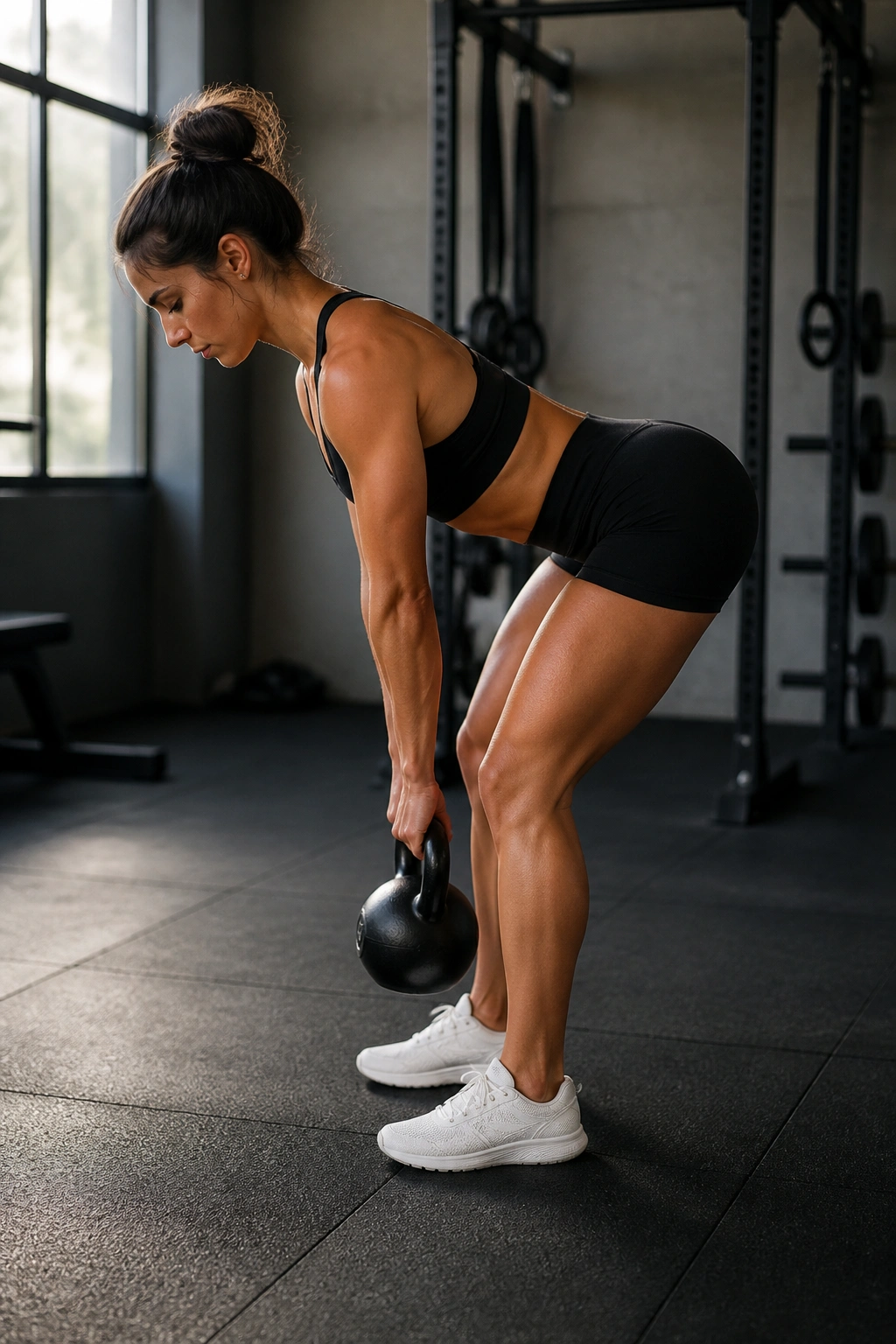
The Romanian deadlift, or RDL, is arguably the most effective movement for targeting the posterior chain—your glutes and hamstrings. It is a hinge pattern, meaning it relies on horizontal hip movement rather than the vertical knee bend seen in squats.
The Mechanics of the Hinge
Unlike a standard deadlift where you pick the weight up from the floor, the RDL focuses on the eccentric, or lowering, phase. You aren’t squatting the weight; you are folding at the hips like a hinge on a door.
Essential Cues for Success
- Keep a slight, soft bend in your knees—do not lock them out, but do not squat either.
- Push your hips backward as if you are trying to close a car door behind you with your glutes.
- Lower the bell until you feel a deep stretch in your hamstrings and the meaty part of your glutes.
- Stop when your torso is roughly parallel to the floor; do not round your lower back just to get the bell lower.
This movement is not about how low the bell goes. It is about how far back you can push your hips. If your lower back starts to ache, you are likely reaching with your arms instead of pushing with your hips.
3. Kettlebell Sumo Squat
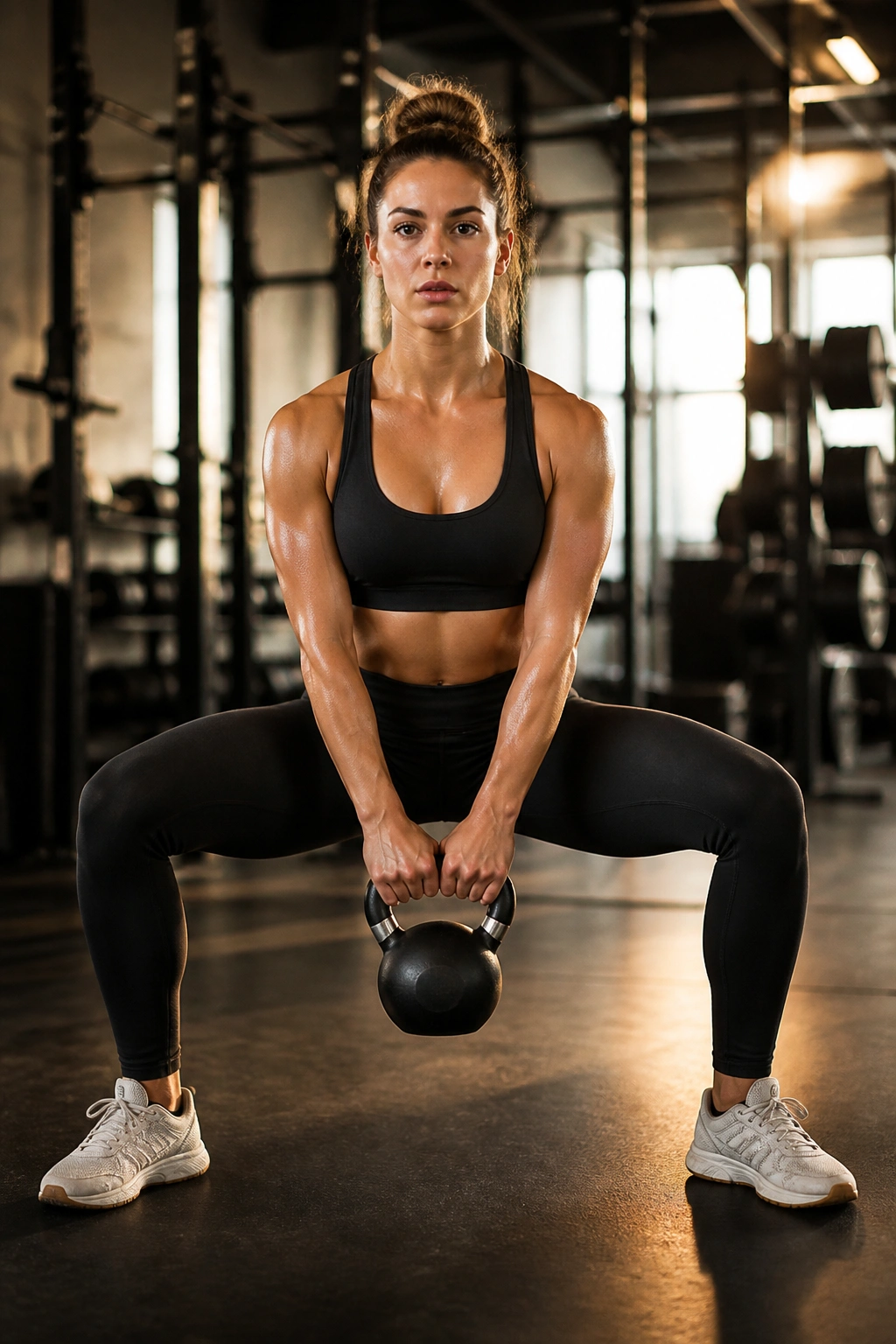
When you widen your stance, you change the leverage on your hip joints. The sumo squat places a significant emphasis on the gluteus maximus, and specifically, it helps target the outer glutes and adductors.
I remember the first time I tried these with a heavy bell. The next day, the soreness was focused entirely on the outside of my hip pocket. That’s the sweet spot you want.
Why the Wide Stance Matters
By taking a wider stance, you shorten the range of motion slightly, which allows you to handle more weight. It also puts your femurs in a position that forces the glutes to do the heavy lifting out of the hole.
Avoiding Common Mistakes
- Do not let your knees collapse inward. This is the most common error. Keep your knees tracking directly over your toes throughout the entire movement.
- Keep the bell hanging between your legs, close to your body. If it drifts forward, your lower back will take the load instead of your glutes.
4. Kettlebell Reverse Lunge
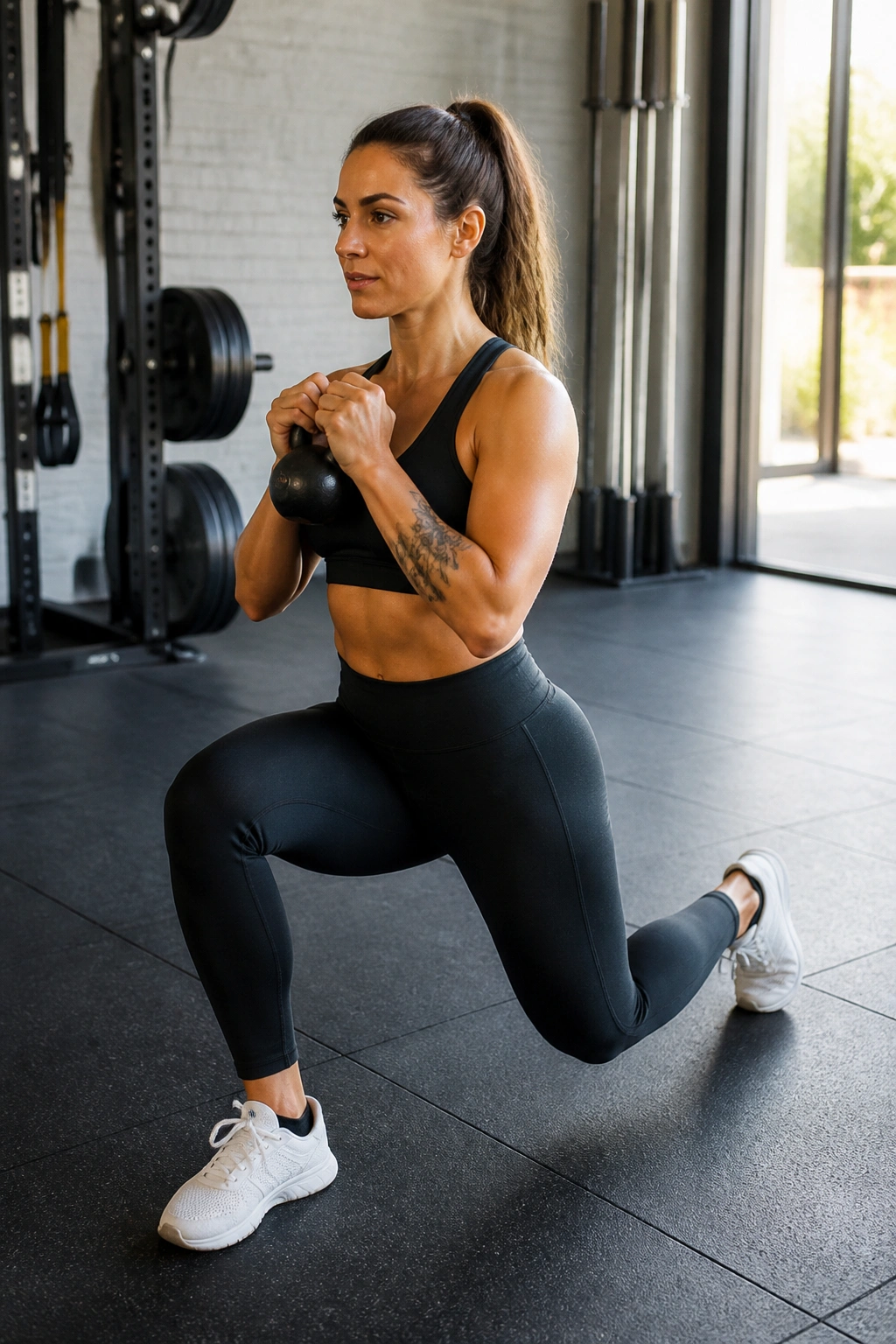
The reverse lunge is superior to the forward lunge for glute health and knee longevity. Why? Because when you step backward, your center of gravity naturally shifts to the front leg, encouraging you to hinge your torso slightly forward. This puts the front glute in a perfect position to load up and fire.
Developing Unilateral Stability
Lunges expose imbalances. You will likely find that one leg is stronger or more stable than the other. Do not shy away from this. Treat the weaker side with extra care and volume.
How to Keep Tension
- Hold the kettlebell in the “goblet” position (at the chest) or in the “suitcase” position (hanging at your side).
- Step back with one foot, landing on the ball of your foot.
- Keep your front shin vertical—don’t let your knee travel miles past your toes.
- Drive through the heel of the front foot to return to the standing position.
Note: If you are holding the bell in the suitcase position on the same side as the working leg, you increase the stability demand on the glute medius. If you hold it on the opposite side, you add a core anti-rotation challenge. Both are great.
5. Kettlebell Bulgarian Split Squat
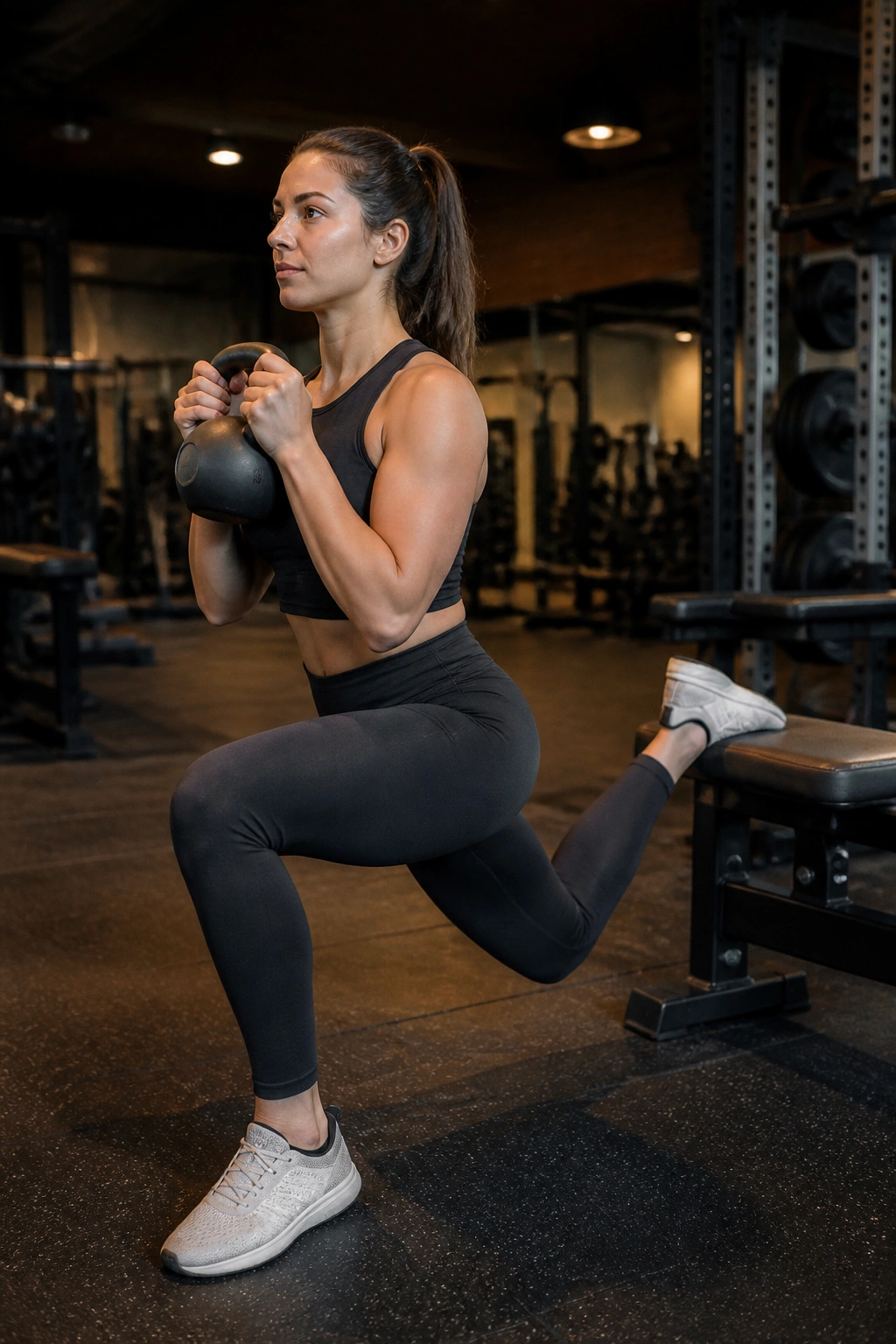
If you want the “king” of single-leg glute exercises, this is it. It is also the movement everyone loves to hate. You place your back foot on a bench or chair, which shifts almost all of the work onto the front leg.
The Discomfort Factor
This is not a movement you do because it is fun. You do it because it yields results. Because you are on one leg, you have effectively doubled the load on your glute without needing to hold a monstrously heavy weight.
Form Check
- Place your back foot laces-down on a bench behind you.
- Hop your front foot forward enough so that when you descend, your front knee doesn’t collapse over your toes.
- Keep your torso upright if you want more quad focus, or lean forward slightly to hit the glutes harder.
- Do not rush the descent. Lower yourself for a count of three.
If you struggle with balance, hold a light kettlebell in the hand opposite the working leg to act as a counterweight. It sounds counterintuitive, but it actually stabilizes you.
6. Kettlebell Glute Bridge
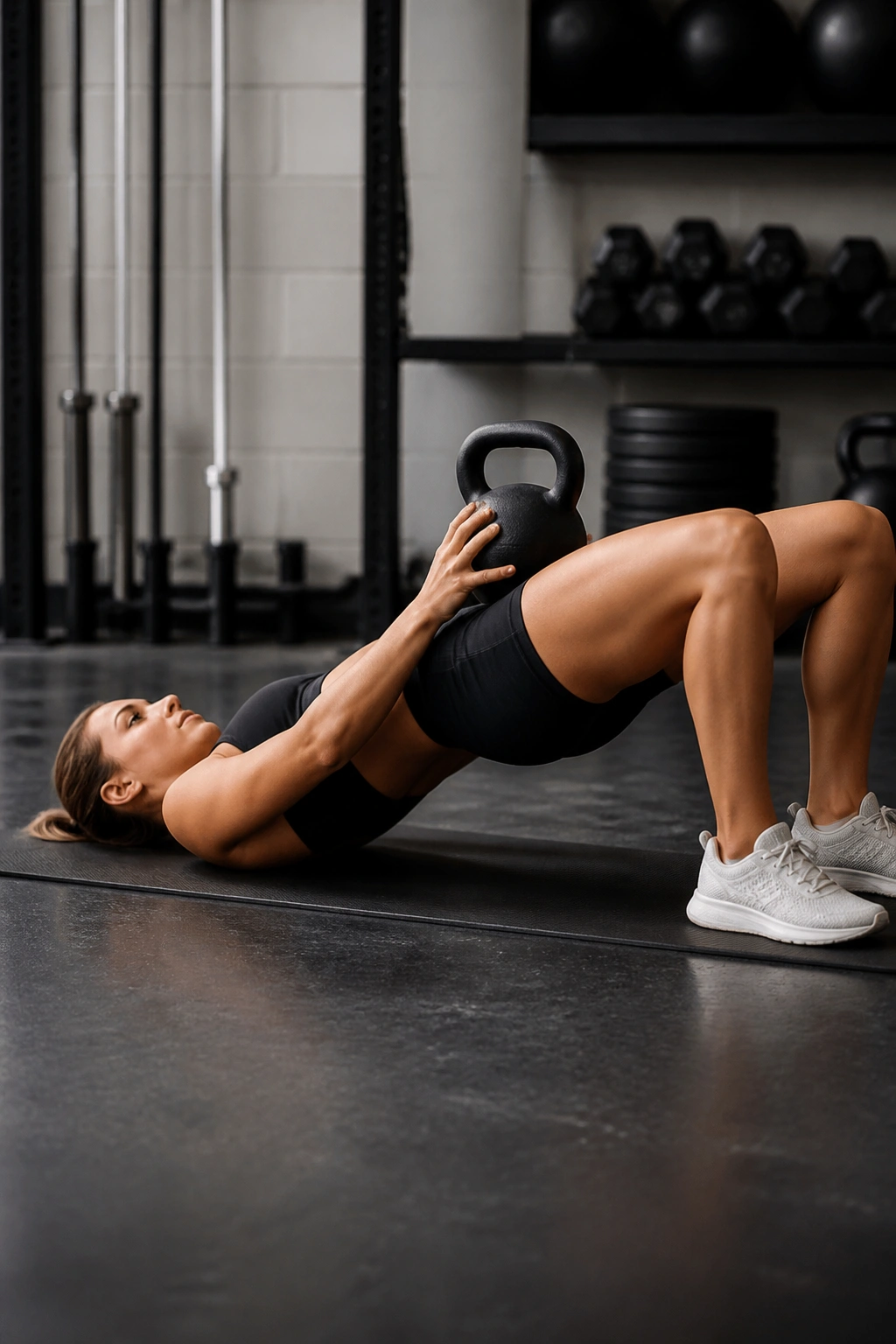
We usually think of bridges as a bodyweight exercise, but holding a kettlebell on your hips adds the resistance needed to trigger hypertrophy. This is an isolation movement; there is very little room for your hamstrings or lower back to take over if you do it right.
The Importance of the Pelvic Tilt
Before you even lift the weight, tuck your pelvis. Imagine pulling your belt buckle toward your chin. This engages the core and prevents your lower back from arching.
Execution Details
- Lie on your back, knees bent, feet flat on the floor.
- Place a kettlebell across your hips (use a towel for padding if the handle digs in).
- Drive through your heels to lift your hips toward the ceiling.
- At the top, hold for a solid second and squeeze your glutes. Do not just go through the motions.
- Lower your hips slowly, touching the floor lightly before going back up.
You will feel this in the glutes almost immediately. If you feel it in your hamstrings, move your feet closer to your glutes. If you feel it in your lower back, you are pushing with your lumbar spine instead of your hips.
7. Kettlebell Swing
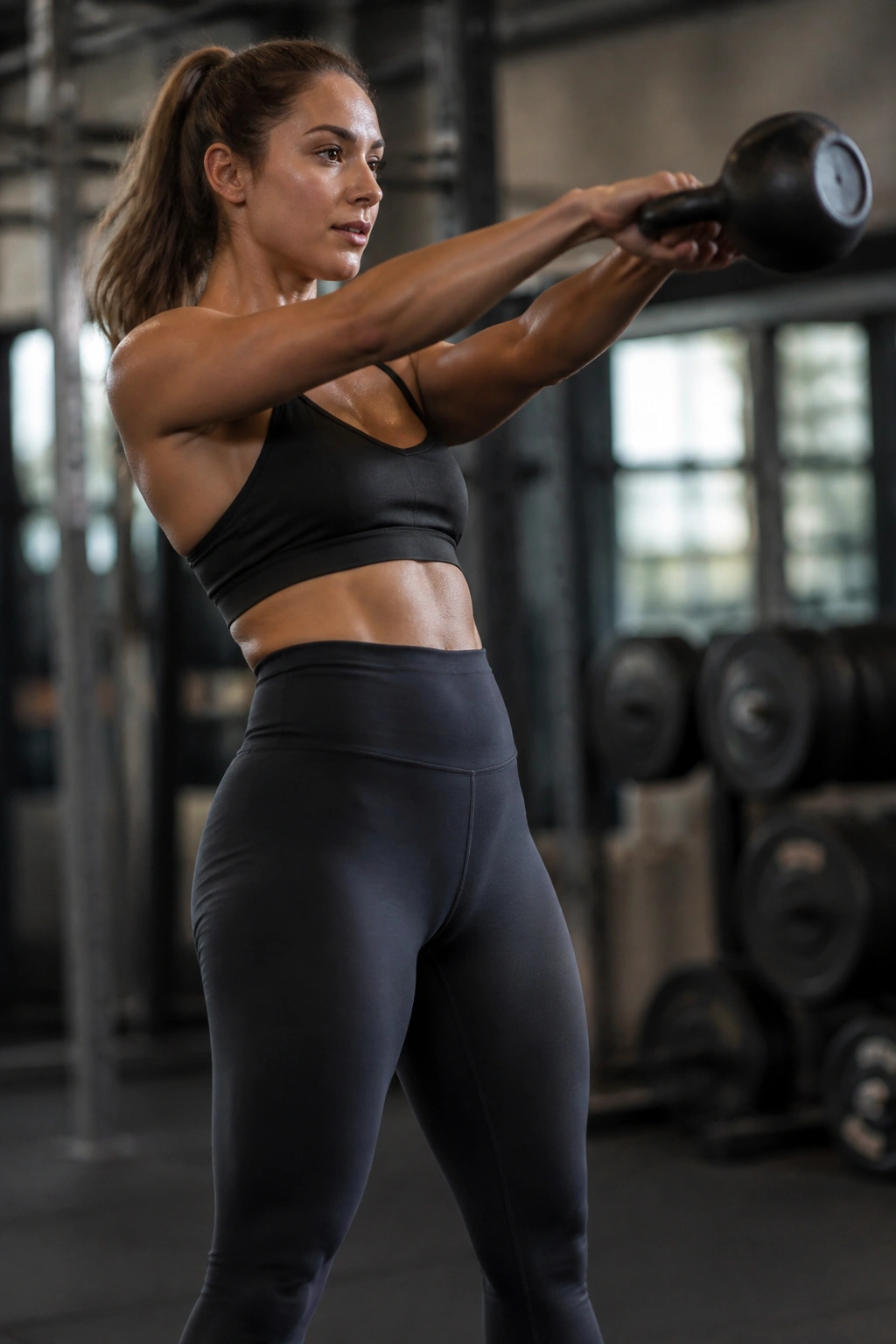
The swing is not a squat. It is a hip hinge. If you turn the swing into a squat, you lose the glute-firing potential of the movement. This is a ballistic movement—it builds explosive glute power, which translates to athletic ability, sprinting speed, and raw hip force.
The Anatomy of the Hinge
The swing is all about the snap. You start with the bell in front of you, hike it back between your legs like a football center, and then violently snap your hips forward to propel the bell.
Common Pitfalls
- Using your arms. Your arms are just ropes; they do not lift the bell. Your hips do the lifting.
- Rounding the back. Keep your spine neutral. If you feel your back rounding at the bottom of the hike, stop and fix your form before trying to go heavier.
- Squatting. If your knees bend significantly, it’s a squat. Keep the knees soft, but the movement must be a hinge.
The goal is to get the bell to chest height through hip power alone. If you can’t get it there, your glutes aren’t firing hard enough, or the weight is too heavy.
8. Kettlebell Side Lunge
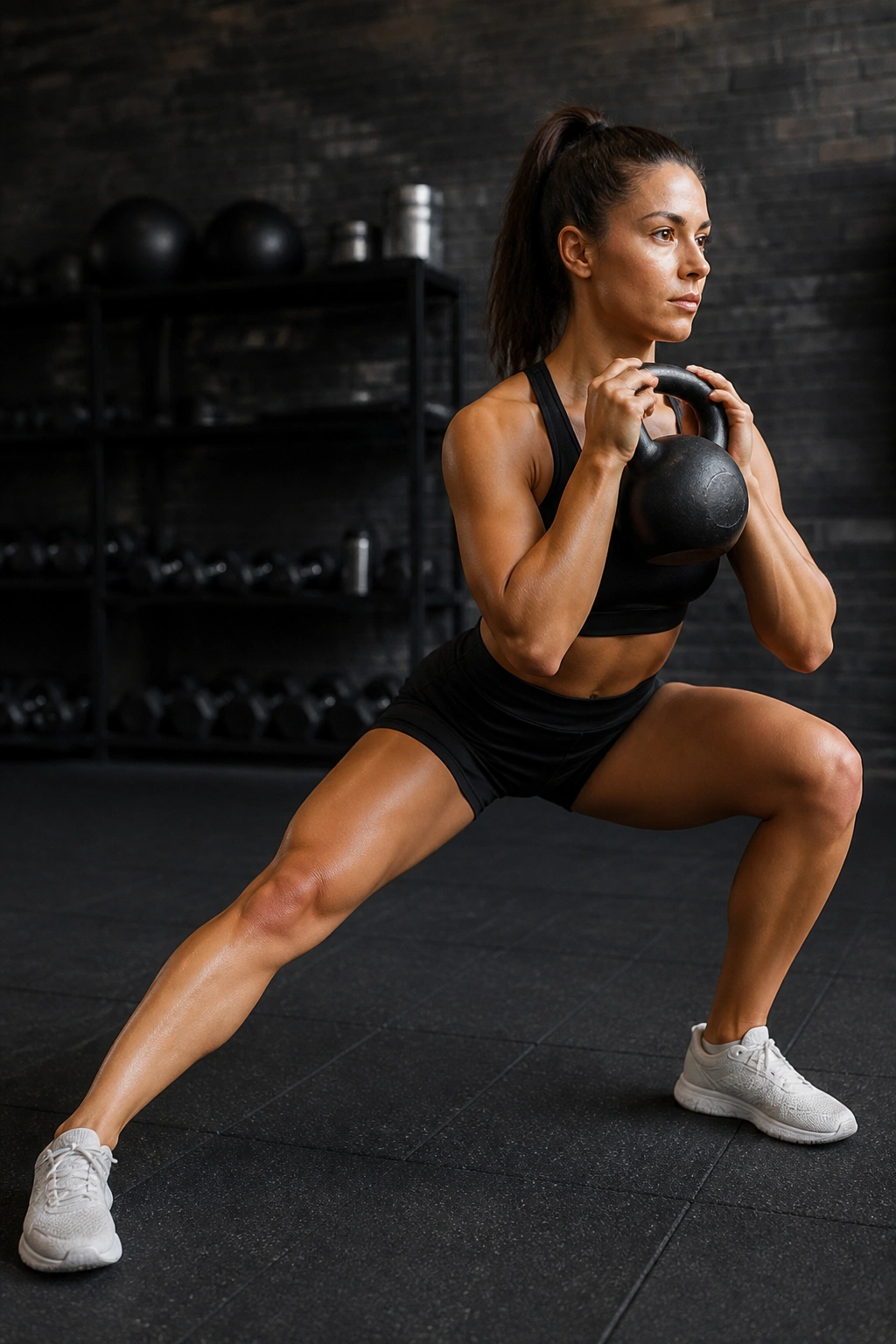
Lateral movement is the most neglected plane of motion. We spend our lives moving forward and backward, but our glutes—specifically the glute medius and minimus—are designed to stabilize us when we move side-to-side.
Strengthening the Glute Medius
The glute medius is the muscle on the side of your hip. It is responsible for hip abduction (moving your leg away from your body). If you want functional hips and a balanced physique, you cannot skip lateral movements.
The Pattern
- Stand with a wide stance, kettlebell held at your chest.
- Shift your weight to one side, pushing your hip back and down, while keeping the other leg perfectly straight.
- Make sure the bent knee stays in line with your foot.
- Drive back to the center using the heel of the bent leg.
This is a deep stretch for the groin and a powerful strengthener for the glutes. Start with lighter weight until your mobility improves.
9. Kettlebell Curtsy Lunge
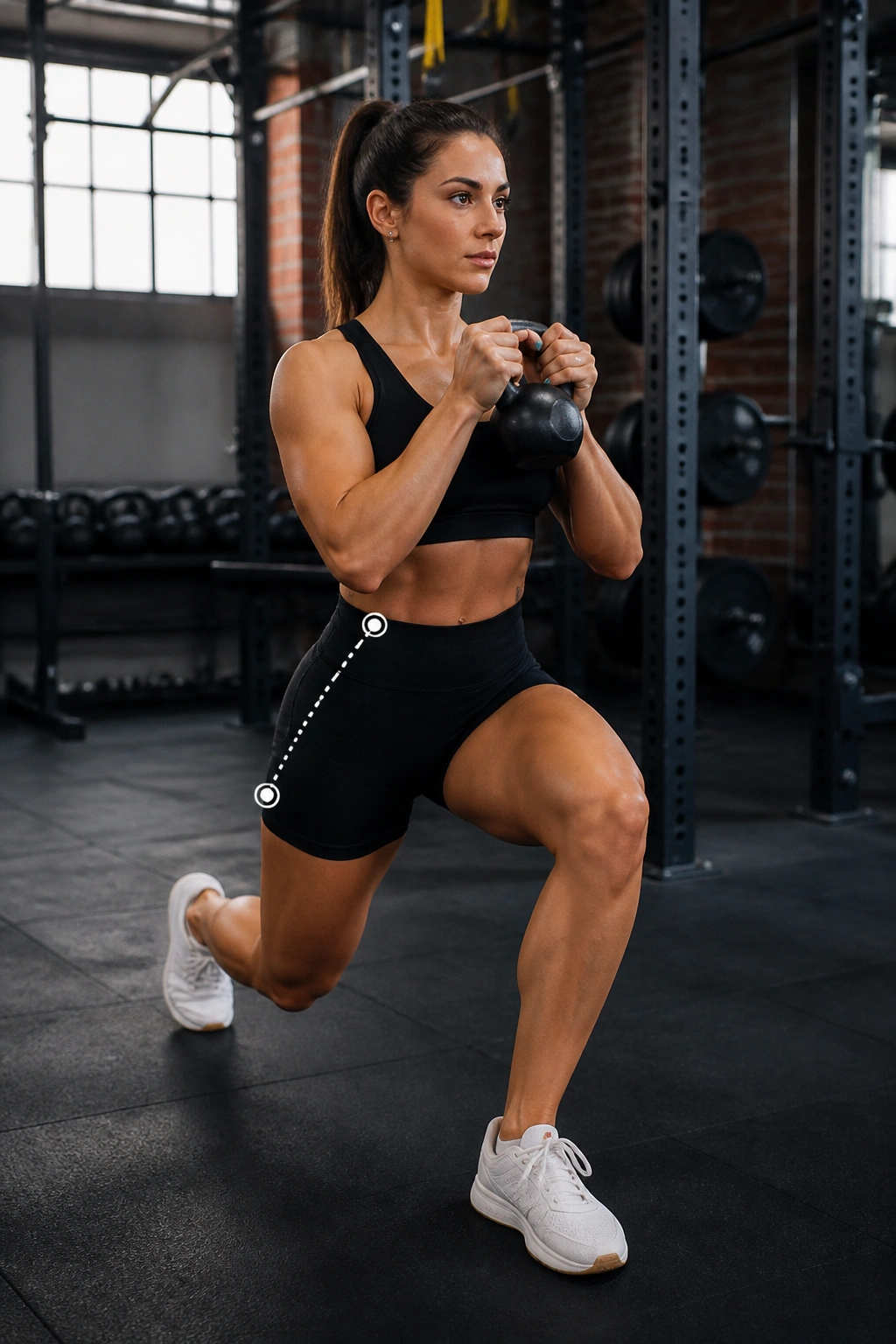
The curtsy lunge is essentially a diagonal lunge. By stepping back and across your body, you shift the tension onto the outer edge of the glute. It is one of the best ways to target the “side butt” area.
Why It’s Effective
Because you are crossing the midline, you are forcing the glute to stabilize the hip while it is in an elongated position. This is a higher-level stability challenge than a regular lunge.
How to Get the Most From It
- Step your right foot back and behind your left, as if you are curtsying.
- Keep your torso relatively upright.
- Keep the kettlebell in a goblet hold or a front-rack hold to challenge your core stability simultaneously.
- Focus on pushing through the front heel to stand back up.
Don’t let your back foot take any of the weight. That back foot is just a kickstand for balance. 90% of your effort should come from the front leg.
10. Kettlebell Step-Up
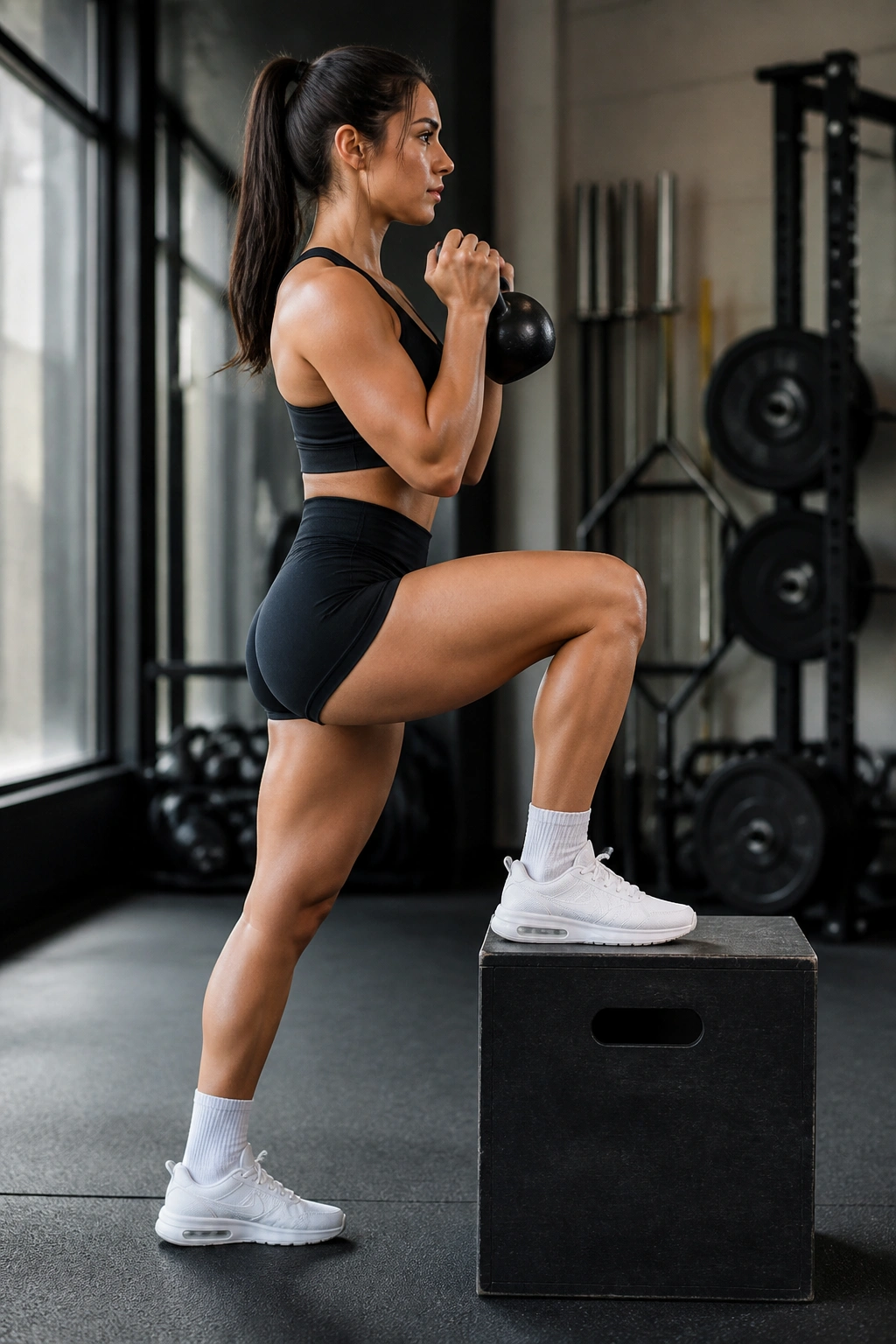
The step-up is a functional masterpiece. You are effectively performing a single-leg squat with an elevated platform. It requires massive amounts of glute recruitment to lift your body weight plus the external resistance up onto the box.
Choosing the Right Height
Most people choose a box that is too high. If you need to jump or push off your back foot to get up, the box is too high. You want a height where your knee is at roughly 90 degrees when your foot is on the box.
Keys to Execution
- Keep the entire foot on the box. Don’t let your heel hang off.
- Do not push off the floor with your back foot. That foot is just for balance.
- Control the descent. Most people just drop down. The eccentric (lowering) part of the step-up is where the glute growth happens. Lower slowly over three seconds.
11. Kettlebell Single-Leg Deadlift
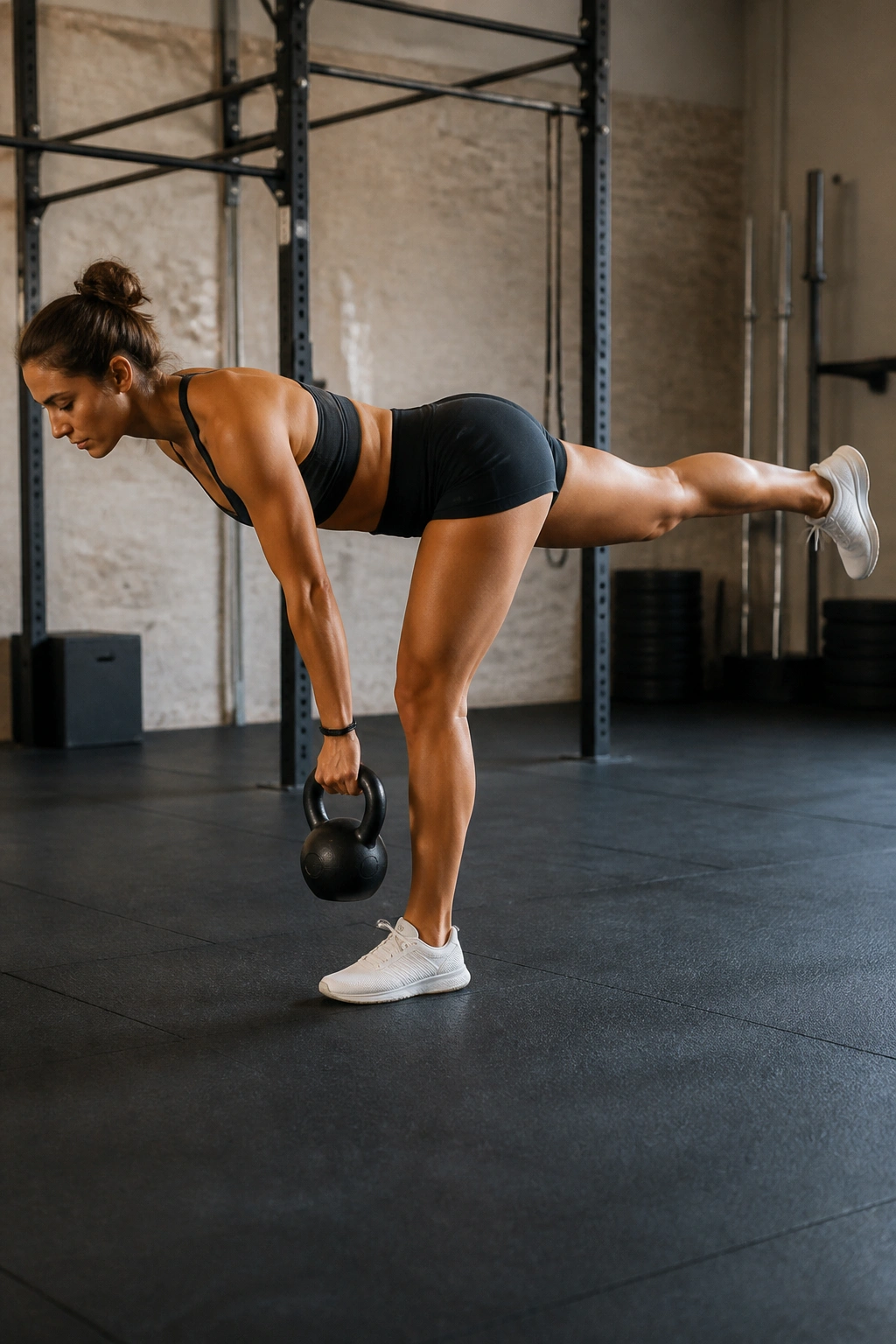
This is the ultimate test of balance and posterior chain strength. It is humbling. You will likely wobble, fall over, and feel uncoordinated the first few times. Stick with it.
Stability and Strength
The beauty of the single-leg deadlift is that it forces your glute medius to work overtime to keep your pelvis level. If your hip drops to the side, you are losing the tension you need.
The Technique
- Hold the kettlebell in the hand opposite the working leg. This helps keep your hips level.
- Keep your back leg straight as you kick it back like a pendulum.
- Hinge at the hips, keeping your back flat.
- Don’t worry about touching the floor with the kettlebell. Go only as far as your hamstrings allow while maintaining a neutral spine.
If you cannot balance, you can lightly touch your back toe to the floor for stability, transitioning slowly to a true single-leg movement as you improve.
12. Kettlebell Cossack Squat
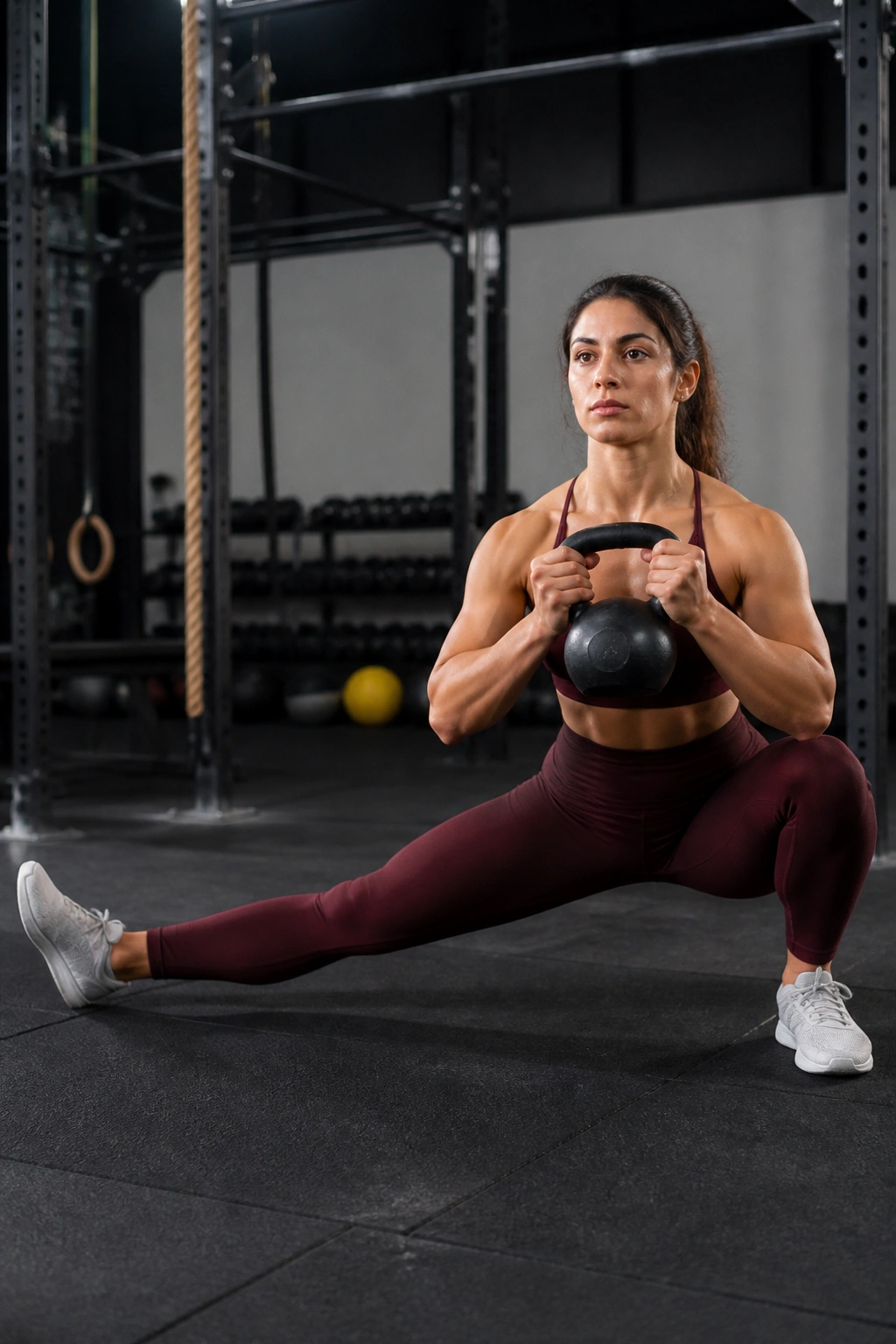
Think of the Cossack squat as a side lunge on steroids. It requires significant ankle and hip mobility, but if you can perform it, it is unmatched for hitting the glutes through a deep, full range of motion.
Mobility Meets Strength
You start in a wide stance. You shift your weight to one side, squatting down as deep as you can on that leg, while the other leg remains straight with the toes pointed up to the ceiling.
Tactical Tips
- Hold the kettlebell in front of your chest to counterbalance the deep squat.
- Keep your chest up. If you hunch over, you are putting all the stress on your lower back.
- If you can’t get low, hold onto a sturdy pole or wall for support until your hips open up.
The deep range of motion here will put your glutes through a massive stretch under load, which is a powerful trigger for muscle growth.
13. Kettlebell Suitcase Deadlift
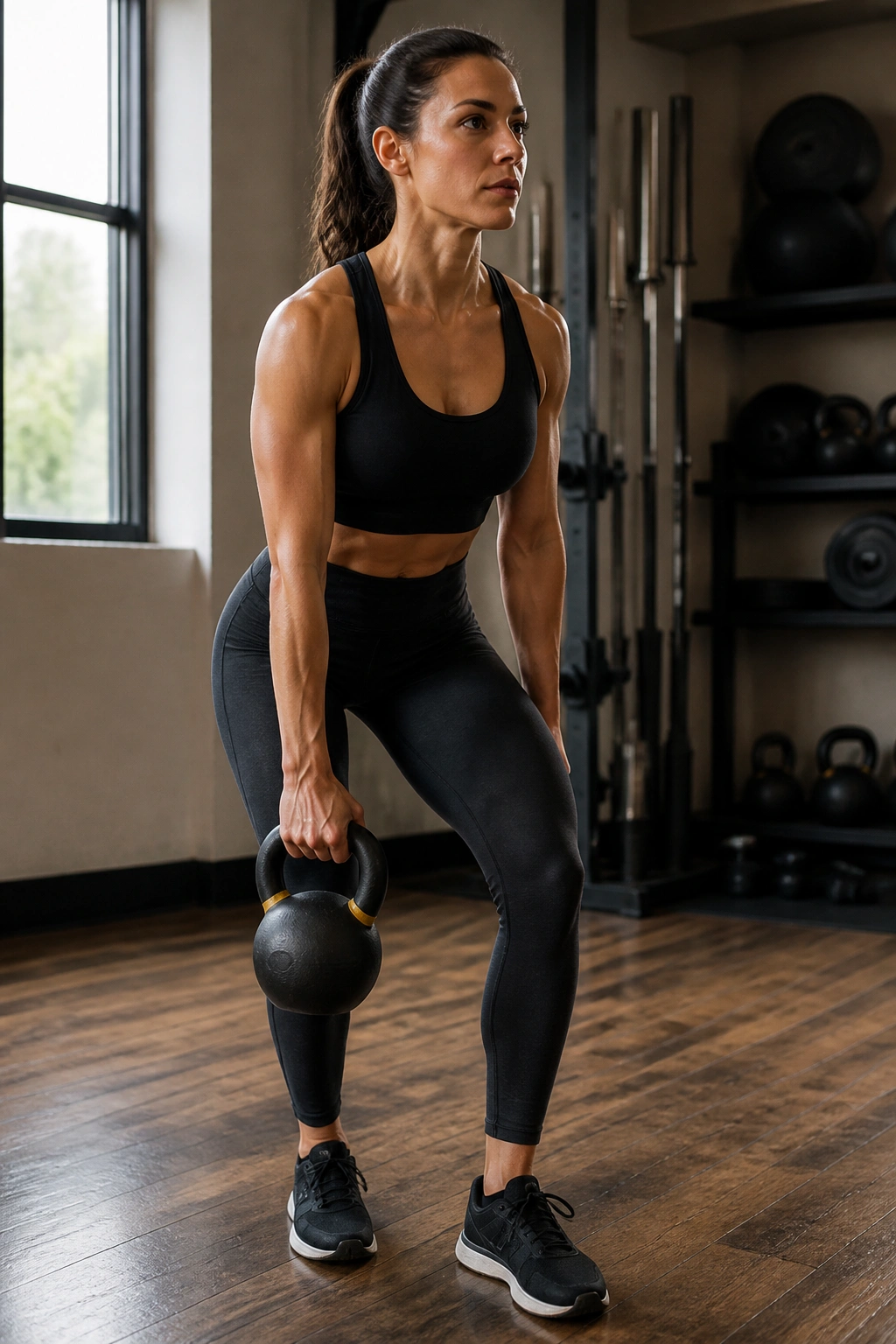
The suitcase deadlift is named because you hold the kettlebell to your side, like you are carrying a heavy suitcase. Because the weight is only on one side, your entire body has to fight to stay upright.
Anti-Rotation Training
Your glutes are the primary stabilizers of your pelvis. With the load on one side, the glute on the working leg side has to work twice as hard to prevent your pelvis from tilting.
Simple Rules
- Keep your shoulders square. Do not let the weight pull you to the side.
- Hinge at the hips. Do not squat.
- Imagine you have a glass of water on your head; keep it level.
This is a fantastic way to identify and fix hip imbalances. If you find one side feels much harder than the other, you have found your weak link.
14. Kettlebell Pistol Squat
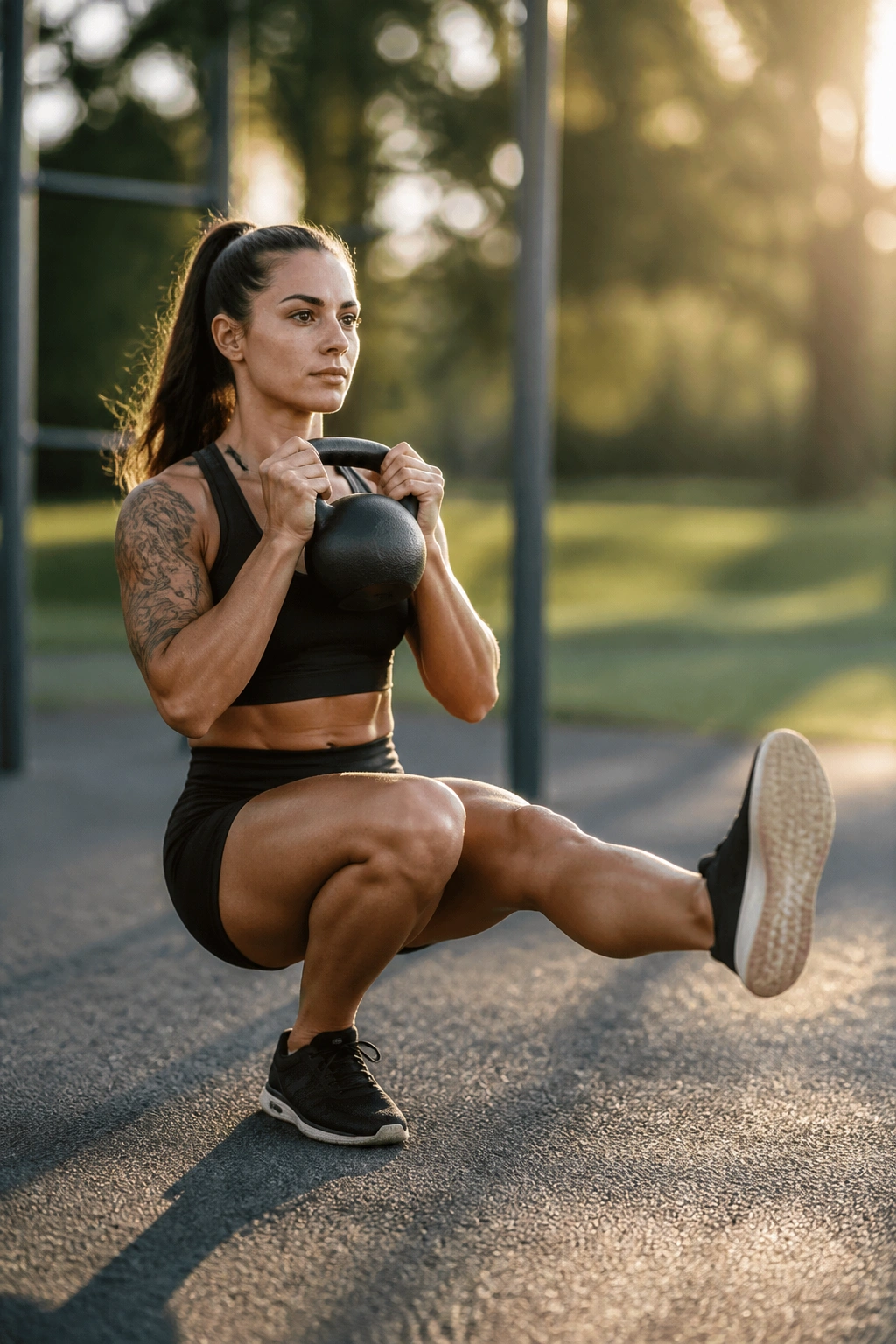
The pistol squat is the single-leg squat. It is advanced. It is not for beginners. If you cannot do a bodyweight pistol, do not add weight. But once you have mastered the bodyweight version, adding a small kettlebell makes it a potent glute builder.
Why Use a Bell
Holding a light bell (think 8kg or 12kg) at your chest acts as a counterweight, making it actually easier to balance than the bodyweight version. It also allows you to focus on the pure strength of the glute.
Progressive Steps
- Master the bodyweight squat.
- Master the Bulgarian split squat.
- Use a box to assist your pistol squats (sit down to the box, stand up).
- Add the light bell as a counterweight.
Never sacrifice depth for ego. A half-rep pistol is just a balance drill; a full-depth pistol is a strength exercise.
15. Kettlebell Clean-to-Squat
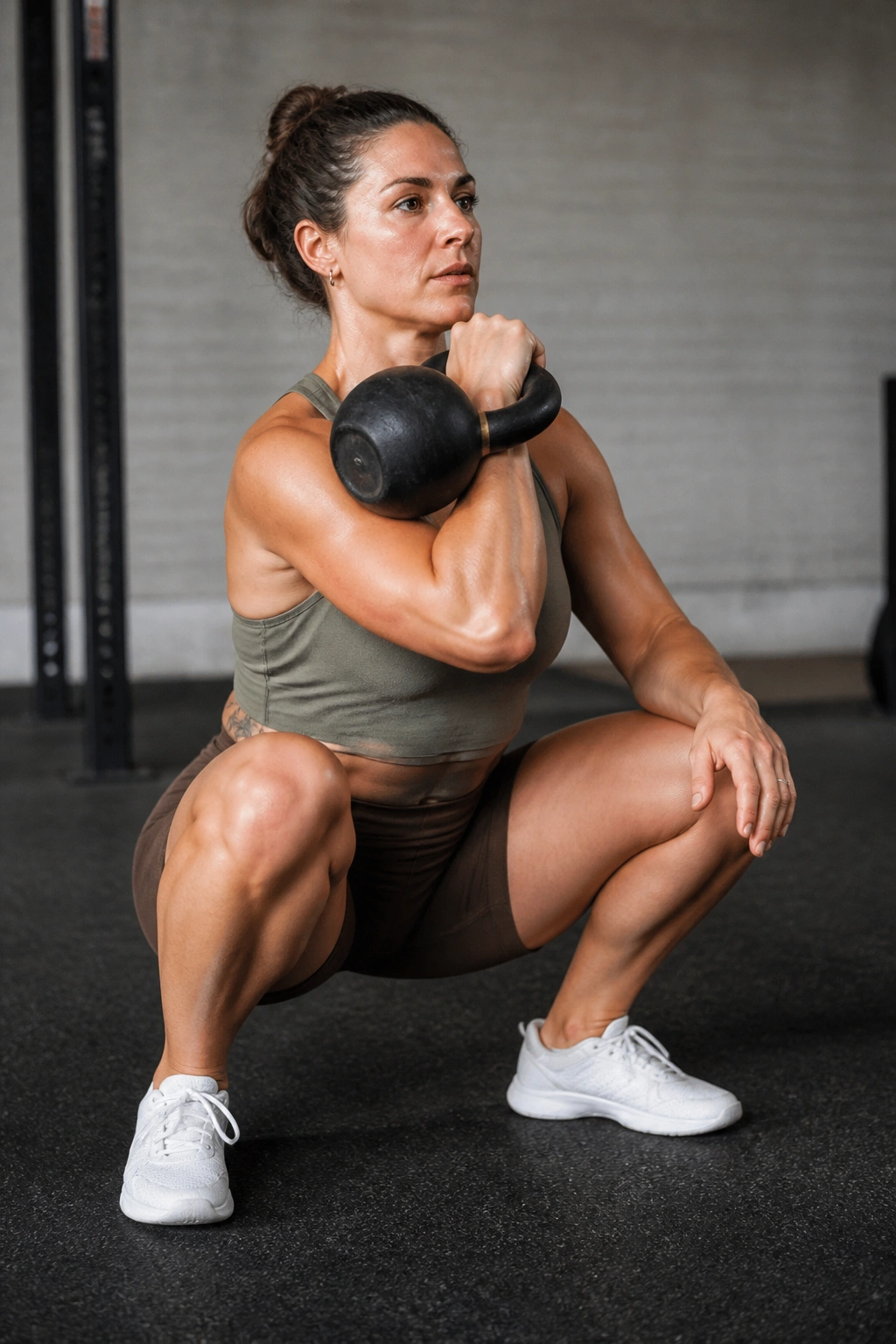
This is a complex movement that combines a dynamic power clean with a squat. It is excellent for glute engagement because the clean generates momentum that you have to control as you descend into the squat.
The Flow
- Clean the kettlebell from the floor to the front-rack position (resting on your forearm and shoulder).
- Once the bell is secured, immediately descend into a goblet squat.
- Stand up, keeping the bell in the rack position.
Why This Is Effective
The front-rack position forces your core to engage aggressively to stabilize the weight. This total-body tension creates a safer, more effective squat environment for your glutes. It turns a leg exercise into a metabolic, full-body demand.
16. Kettlebell Front-Rack Lunge
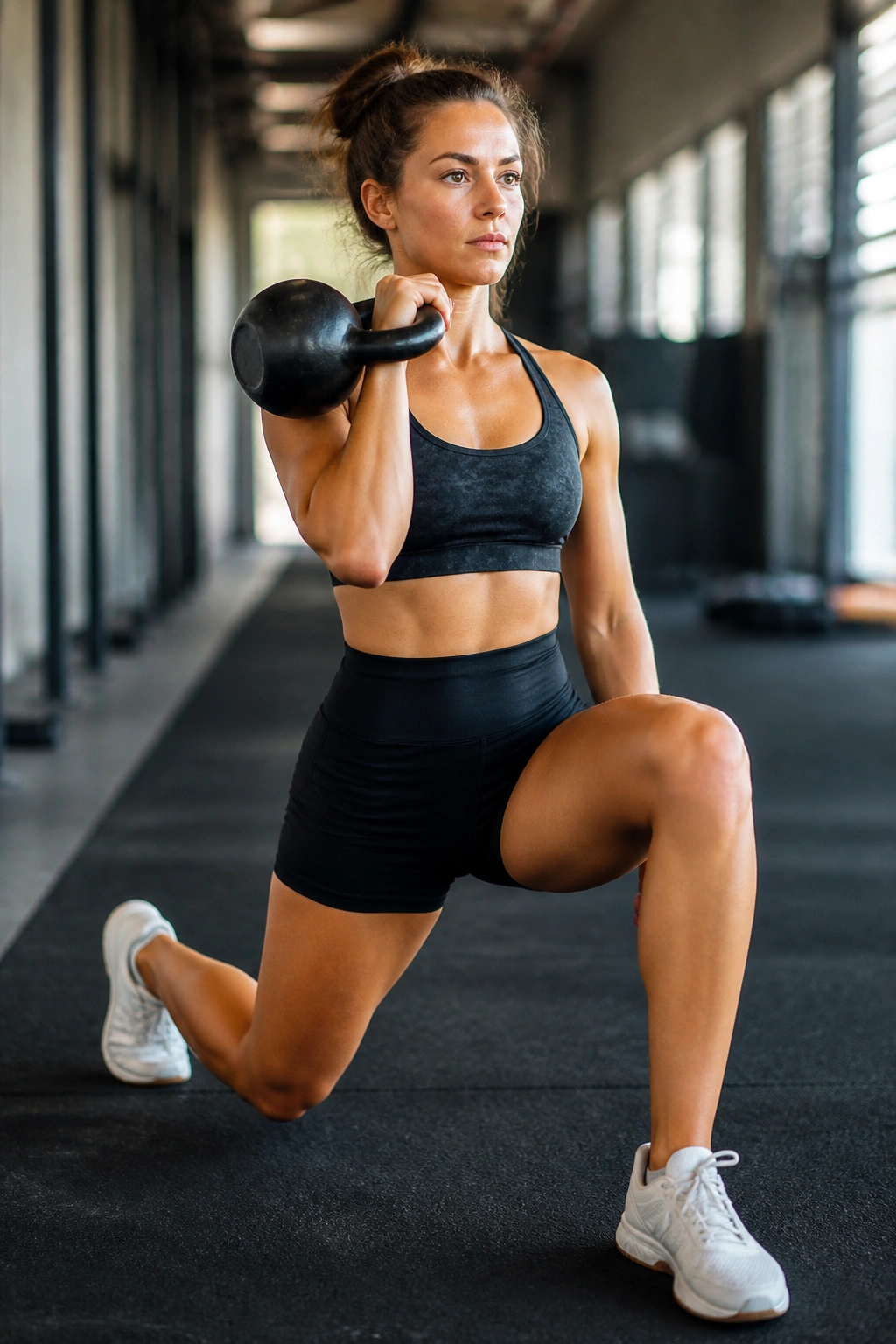
This is a variation of the reverse lunge, but by holding the kettlebell in the front-rack position (resting on your shoulder), you change the leverage. Now, the weight is pulling your torso forward, and your glutes must fight to keep you upright.
Stability Demands
The front-rack position is brutal for your abs and your upper back, but the secondary effect is increased glute engagement. You have to stabilize your entire torso to perform the lunge, which prevents you from “cheating” the rep by using momentum.
Focus Points
- Keep the bell tight against your collarbone and shoulder.
- When you lunge back, keep your front knee tracking over the center of your foot.
- Drive through the heel of the front foot to return to standing.
This variation is excellent for people who feel “disconnected” from their glutes during lunges, as the rack position forces you to slow down and focus on control.
17. Kettlebell Thruster
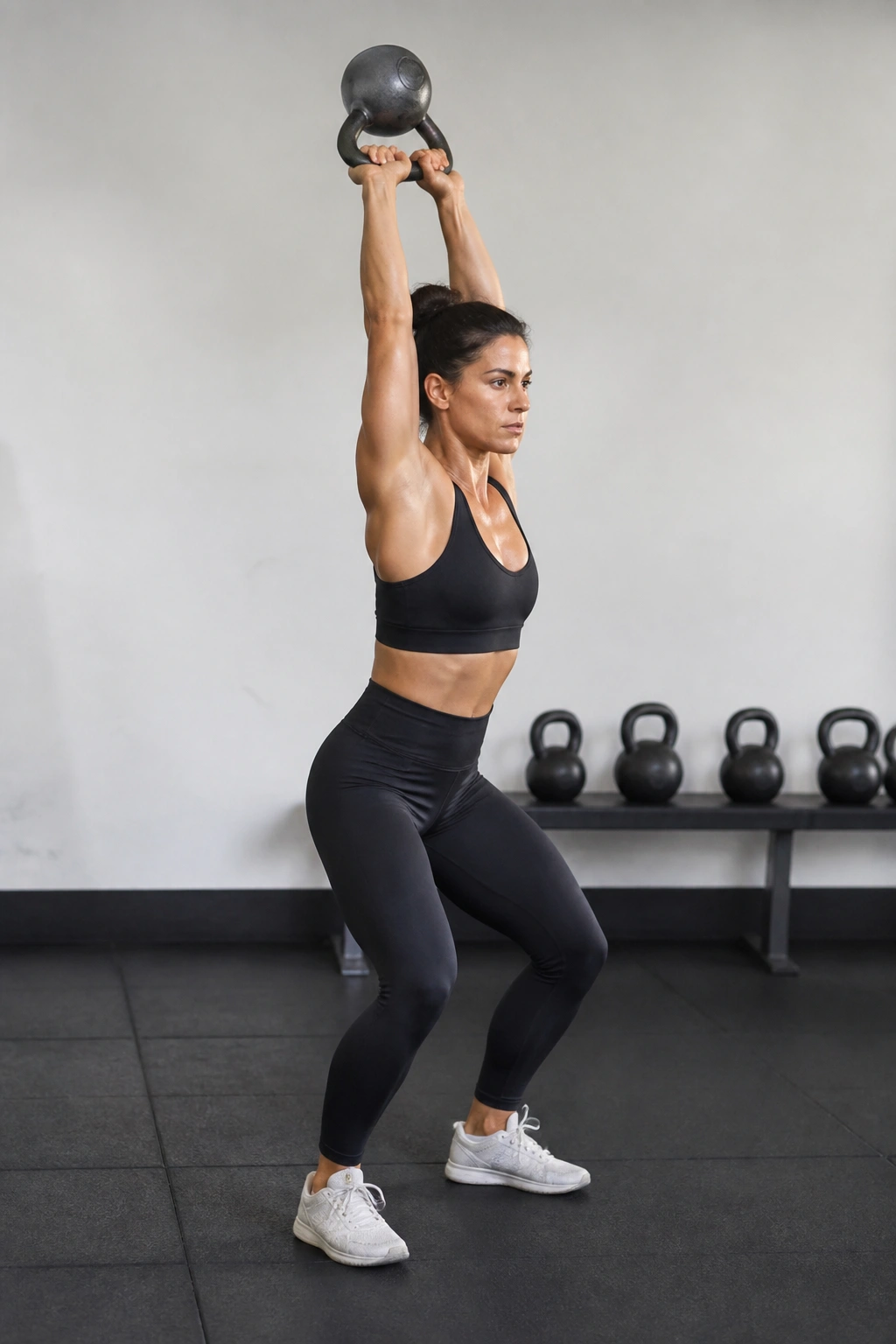
Thrusters are famous for being exhausting. You squat down and then explode upward, pressing the kettlebell overhead. This is the definition of a compound movement.
From Hips to Hands
The power for the press comes from your glutes and hips, not your shoulders. If you are using your shoulders to press the weight, you are doing too much work and using your glutes too little.
Executing the Power Transfer
- Start the squat.
- As you drive out of the bottom of the squat, use that momentum to initiate the press.
- The glutes fire to stand you up, and that kinetic energy transfers through your core into the press.
This is a great glute finisher. You aren’t going to go heavy here—you are going for volume and metabolic demand. It’s the perfect way to cap off a leg-focused session.
18. Kettlebell Staggered-Stance Deadlift
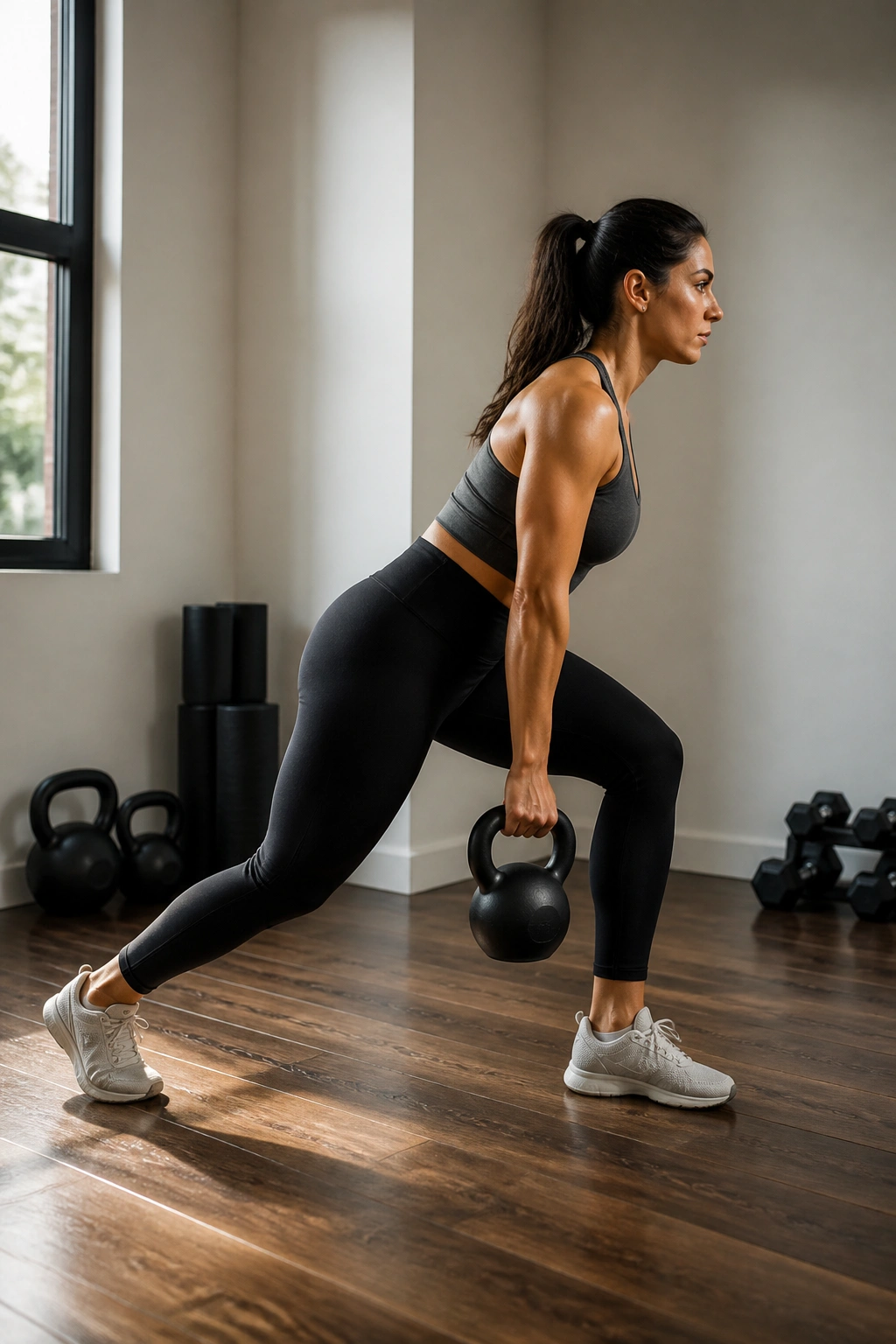
If you find single-leg work too unstable but feel like your regular deadlift relies too much on your back, the staggered-stance deadlift is your middle ground. You place one foot slightly behind the other, toes of the back foot aligned with the heel of the front foot.
The Hybrid Approach
This position forces about 80% of the weight onto the front leg, essentially turning your standard deadlift into a single-leg dominant exercise. It provides the stability of two feet on the ground with the glute-firing benefits of single-leg training.
How to Set Up
- Stagger your feet: front foot flat, back foot on its toes (kickstand).
- Keep 80% of your weight on the front heel.
- Hinge at the hips just like a regular RDL.
- Feel the deep stretch in the front glute.
This is a secret weapon for overloading the glutes without the balance issues that plague single-leg exercises. It is a fantastic way to train heavy.
Final Thoughts
You now have eighteen distinct ways to target your glutes with nothing more than a kettlebell. The most common mistake people make is trying to do all of these in one session. Do not do that. Instead, pick two or three movements per workout. Maybe combine a heavy bilateral movement like the goblet squat with a single-leg exercise like the split squat.
Consistency beats intensity. You will see more glute growth from doing three sets of split squats twice a week for a year than from doing a massive, exhaustive “glute-destroyer” workout once a month that leaves you unable to walk for three days. Your muscles need time to recover, and your nervous system needs time to adapt to the new loads.
Listen to your body. If a movement hurts your knees or back, adjust your form or pick a different variation. There is no such thing as a mandatory exercise. If your glutes aren’t feeling it, stop, adjust your stance, shift your weight, and find the angle that forces them to work. Once you find that connection—that true, deep glute contraction—hold onto it. That is where the change happens.
