



The Smith machine is the black sheep of the gym floor. You see it tucked away in the corner, often gathering dust while the squat rack has a queue of people waiting for their turn. For years, people have dismissed it as a “cheat” or a tool only for beginners who cannot handle free weights. That perspective is dead wrong. If you know how to use that fixed path of motion to your advantage, you can isolate muscles, push closer to failure, and stabilize movements that are otherwise difficult to master with a loose barbell.
When you remove the need for stabilization, you unlock the ability to focus entirely on the load. You can shift your feet, change your angle, and experiment with foot placement without the constant fear of the bar tipping over or losing your balance. This isn’t about skipping the hard work; it is about choosing the right tool for the specific job of building thick, dense, and powerful legs. I have spent years training on both free weights and machines, and I can tell you that those who ignore the Smith machine are leaving serious gains on the table.
It creates a unique form of tension. Because the bar is locked in a vertical or slightly angled plane, your muscles have to work against gravity without the distraction of trying to keep the weight steady. This allows for a deeper mind-muscle connection. If you are struggling with a plateau or just want to feel your quads and hamstrings burning in a way they haven’t in months, it is time to stop looking at the Smith machine as a crutch and start seeing it as a precision instrument.
1. Back Squats
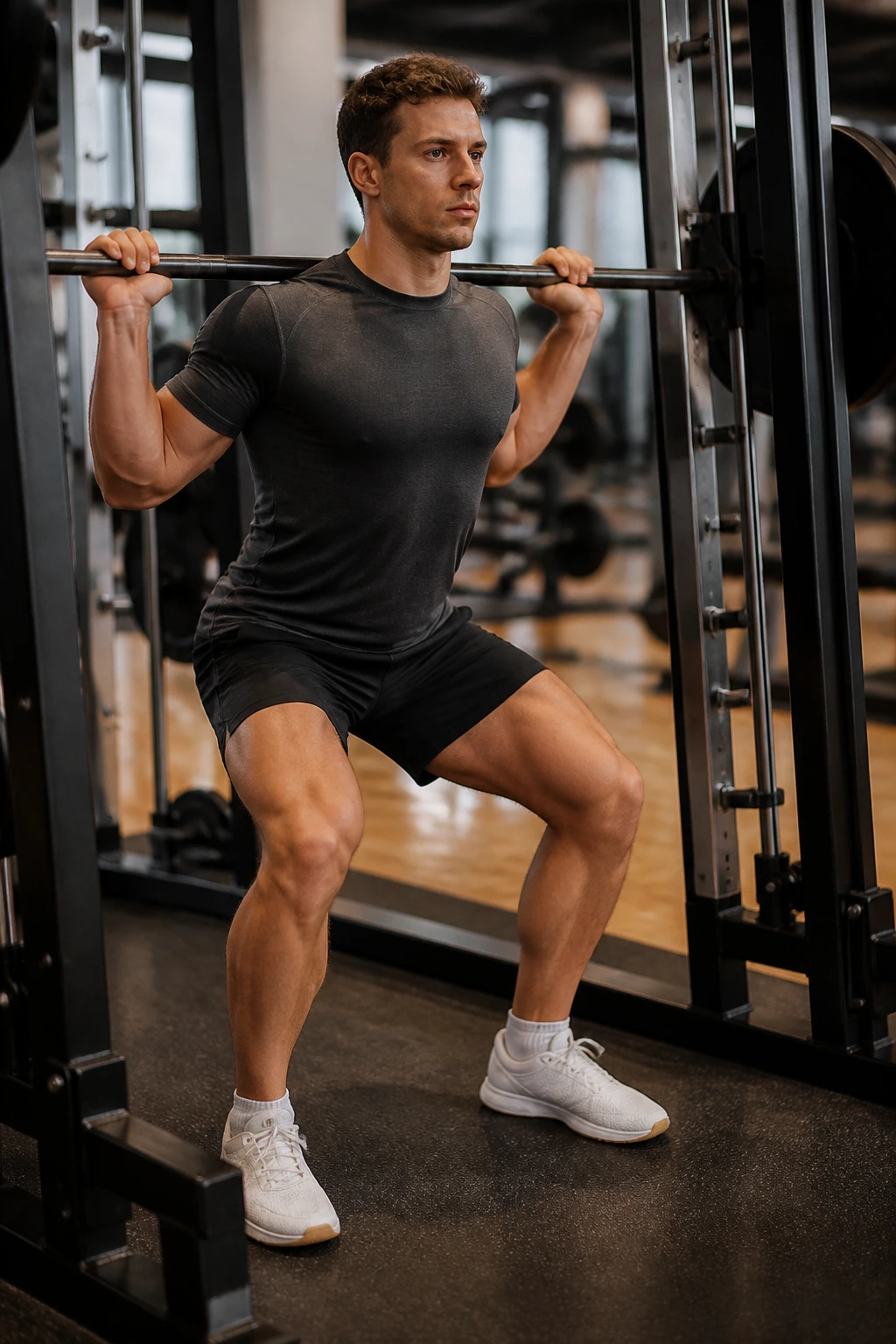
Most people treat the Smith machine back squat like a regular back squat. That is where they go wrong. Because the bar is fixed, you should not be trying to sit back as if you are hunting for a chair behind you. Instead, you have the freedom to place your feet slightly forward.
How to Get the Most From It
Position your feet about 6 to 12 inches in front of the bar. This allows you to lean your upper back against the bar and keep your torso almost completely upright throughout the movement. Your quads will do significantly more work than your lower back, which is exactly the point.
- Foot placement: Experiment with bringing your feet even further forward to target the quads directly.
- Range of motion: Go as deep as your hip mobility allows; the stability of the machine often lets you sink lower than a free-weight squat.
- The lock: Always remember to rotate the bar to unhook it. Don’t fight the catch mechanism mid-rep.
Pro tip: Use a slower eccentric phase—take 3 seconds to lower yourself—to force your quads to handle the tension the entire way down.
2. Front Squats
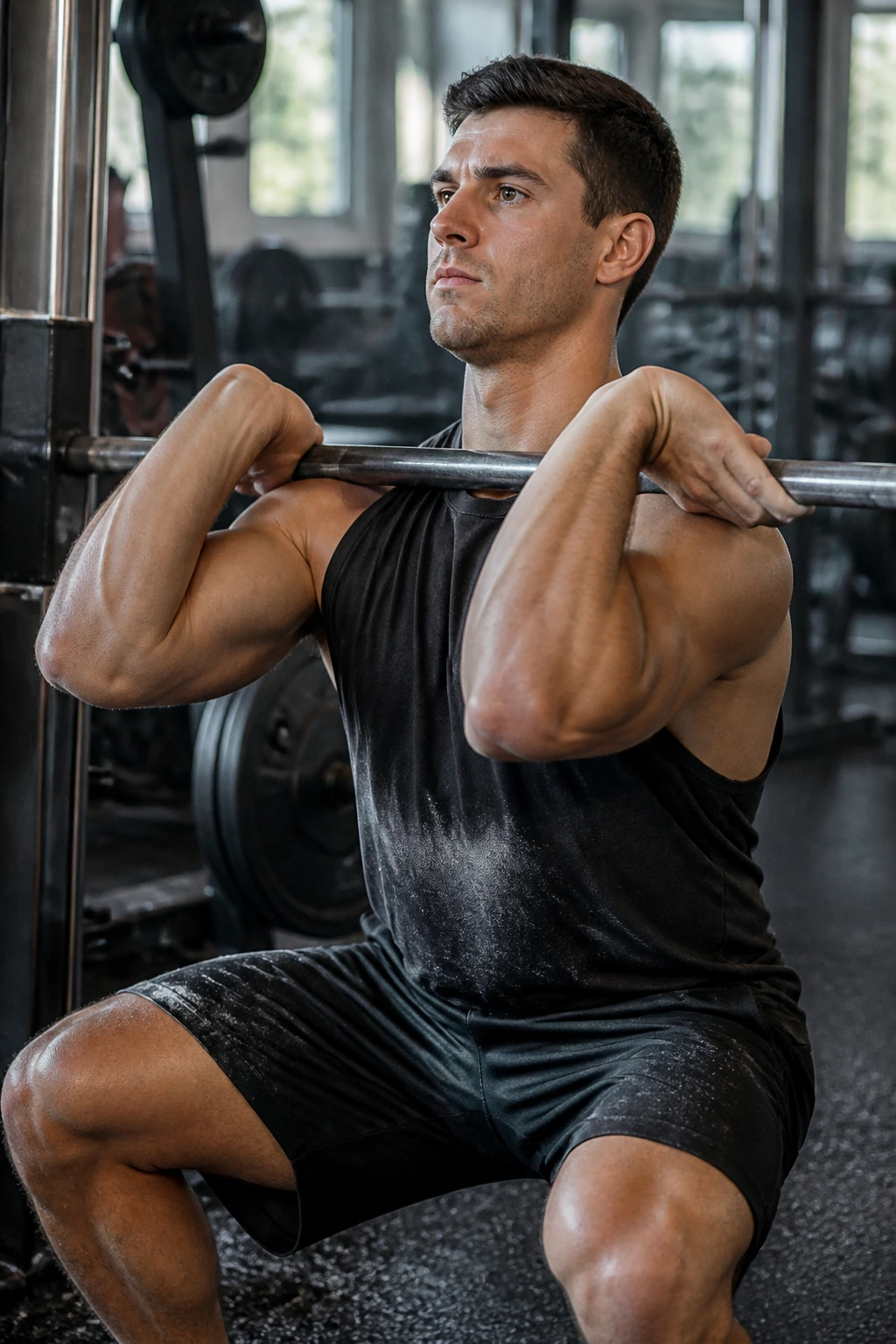
Front squats with a barbell are notoriously difficult because the bar tends to roll off your shoulders if your form slips even an inch. The Smith machine solves this stability issue. You can focus entirely on your quad depth without the panic of dropping a loaded bar on your toes.
This exercise is pure quad destruction. Because you are in a fixed plane, you can tuck your elbows in and keep your chest pinned up high. It forces the knees to track over the toes, which is a movement pattern often discouraged in traditional squats but incredibly effective for muscle growth.
If your wrists or upper back mobility prevent you from holding a regular front squat rack position, use a cross-arm grip. The bar won’t be going anywhere. Just ensure your heels stay glued to the floor. If you feel your heels lifting, slide your feet forward another few inches until you can drive through your entire foot.
3. Bulgarian Split Squats
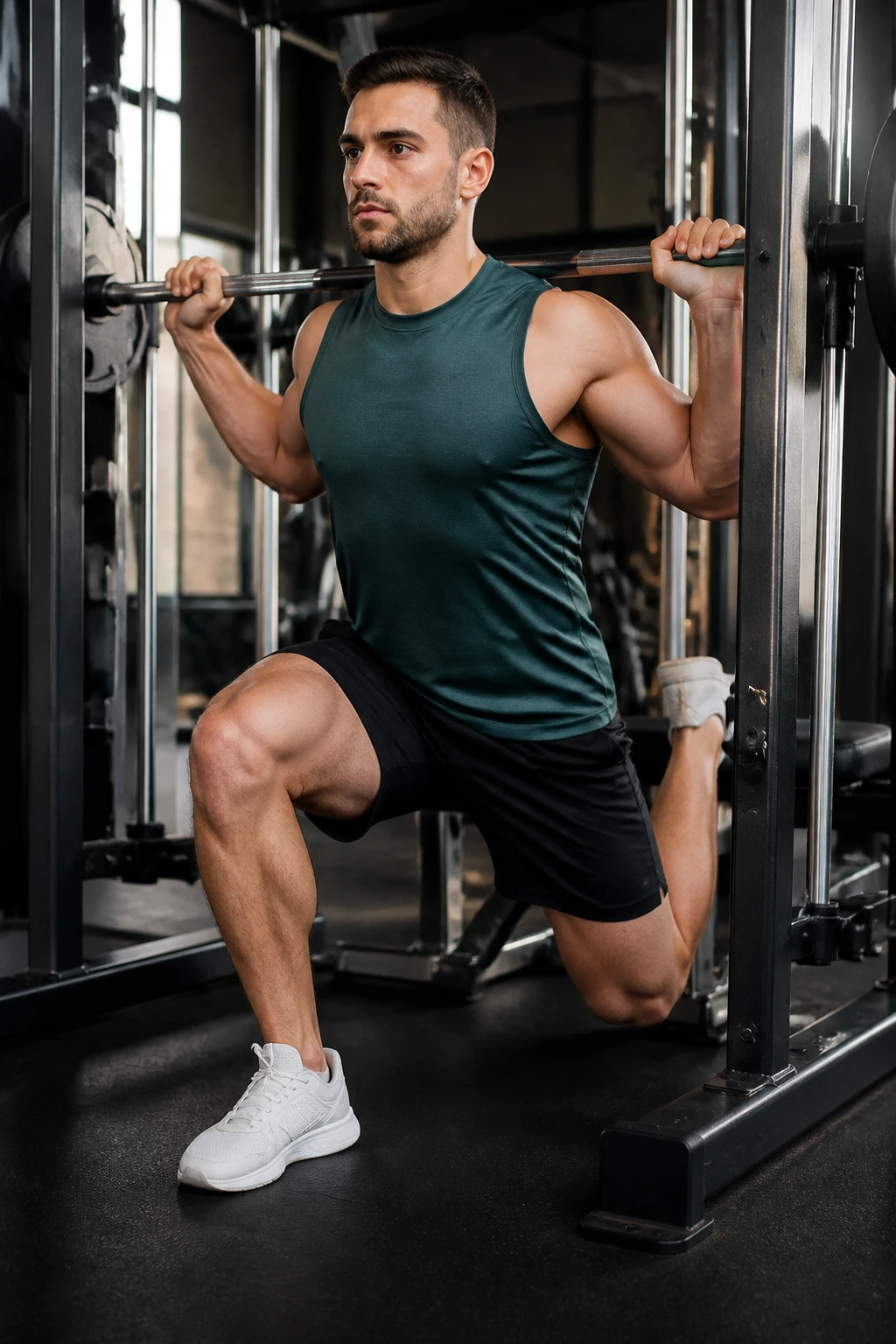
There is a special kind of misery reserved for Bulgarian split squats, and the Smith machine makes it even more effective. Setting the bar height can be tricky the first time, but once you get it, you eliminate the wobbling that usually plagues the free-weight version.
Why This Beats Free Weights
When you hold dumbbells for split squats, your grip strength often fails before your legs do. Your hands get tired, your shoulders slump, and the set ends prematurely. With the Smith machine, your grip is a non-issue. You can load the bar with plates and focus entirely on driving through your front heel.
- Setup: Place a flat bench or a sturdy box behind the machine.
- Execution: One foot goes back on the bench, the other is planted firmly on the floor.
- The Feeling: Because you don’t have to balance the dumbbells, you can really lean into the stretch at the bottom of the movement, hitting the glutes and the teardrop quad muscle simultaneously.
Warning: Do not rush. Because the bar is stabilized, it is easy to go too fast. Control the down phase. Your glutes will thank you the next morning.
4. Romanian Deadlifts
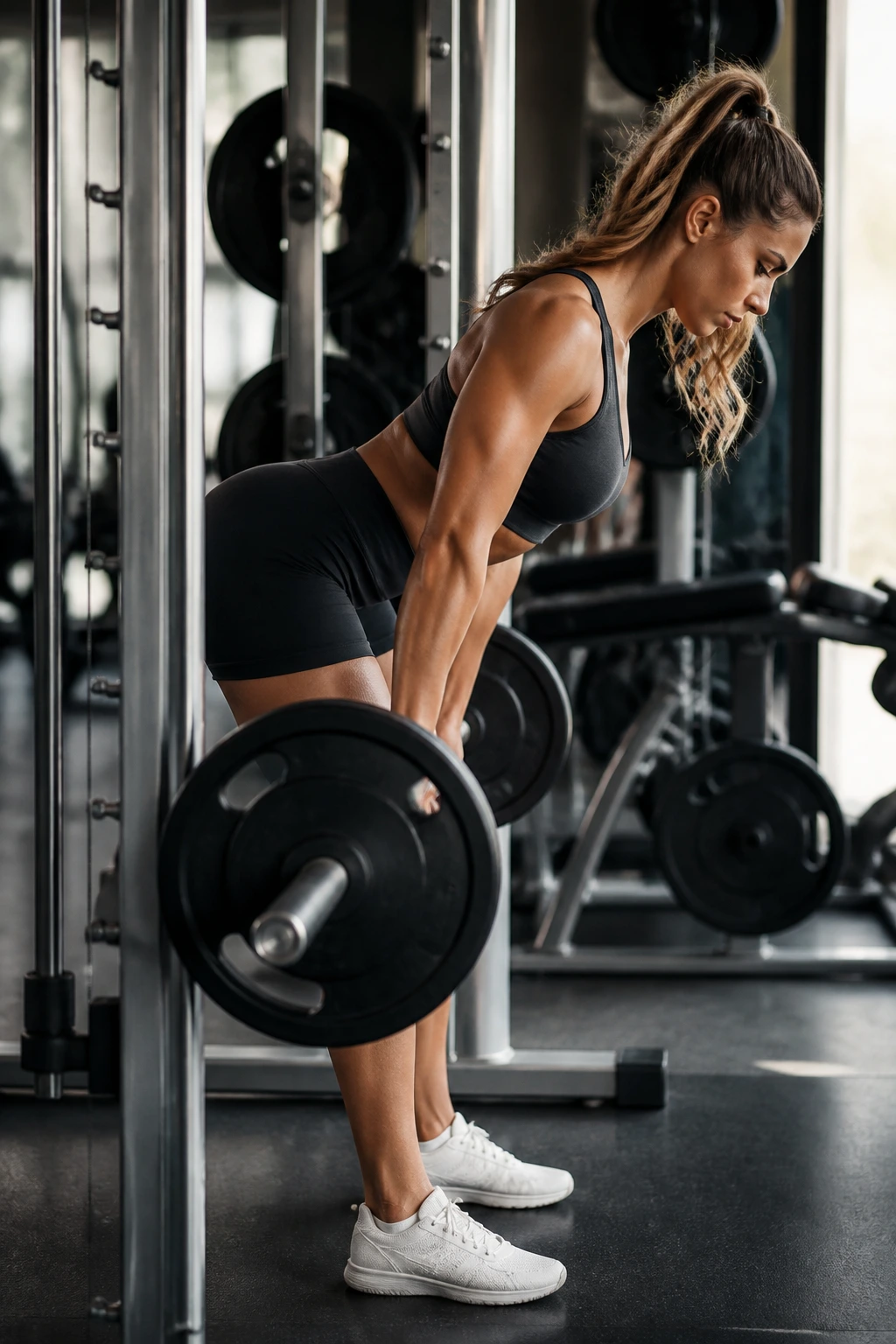
The Romanian Deadlift (RDL) is all about the hinge. It is not a squat. In a free-weight RDL, your lower back can take a beating if the bar drifts too far away from your shins. The Smith machine keeps the bar path perfectly vertical, ensuring it stays right against your legs.
This version is a hamstring-dominant movement. Push your hips back as far as you can until you feel a deep stretch in the back of your legs. Keep your knees soft—do not lock them out—but do not bend them further once you start the descent.
Some people dislike Smith machine RDLs because of the fixed path, but if you struggle to feel your hamstrings, this is your solution. The machine forces you to keep the tension on the posterior chain. If you want to increase the stretch, stand on a low aerobic step or a couple of weight plates to increase your range of motion.
5. Hip Thrusts
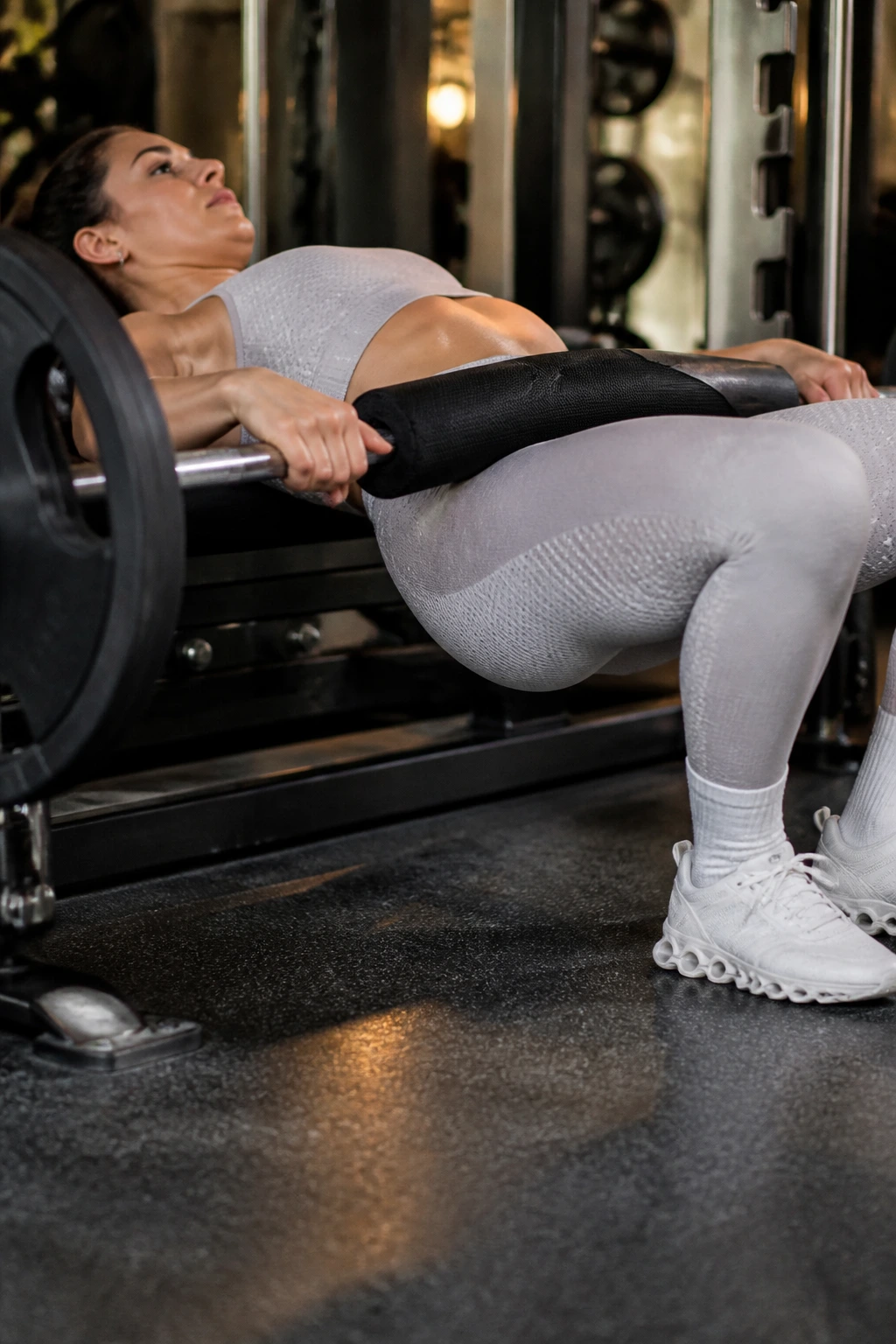
The Smith machine is arguably the best tool in the gym for heavy hip thrusts. Setting up a barbell for hip thrusts on the floor is a logistical nightmare—rolling it over your legs, getting it in position, stabilizing it. The Smith machine bar is already at waist height.
You can slide your bench against the base of the machine, load up the plates, and go. The fixed path ensures the bar doesn’t roll into your stomach at the top of the movement. It stays stable, allowing you to drive through your heels and squeeze your glutes hard at the peak of the rep.
Is it uncomfortable? Yes. The bar can dig into your hips. Use a thick barbell pad or wrap a yoga mat around the bar. Once you are comfortable, you can move significantly more weight than you ever could with a standard setup. This is a game-changer for glute isolation.
6. Reverse Lunges
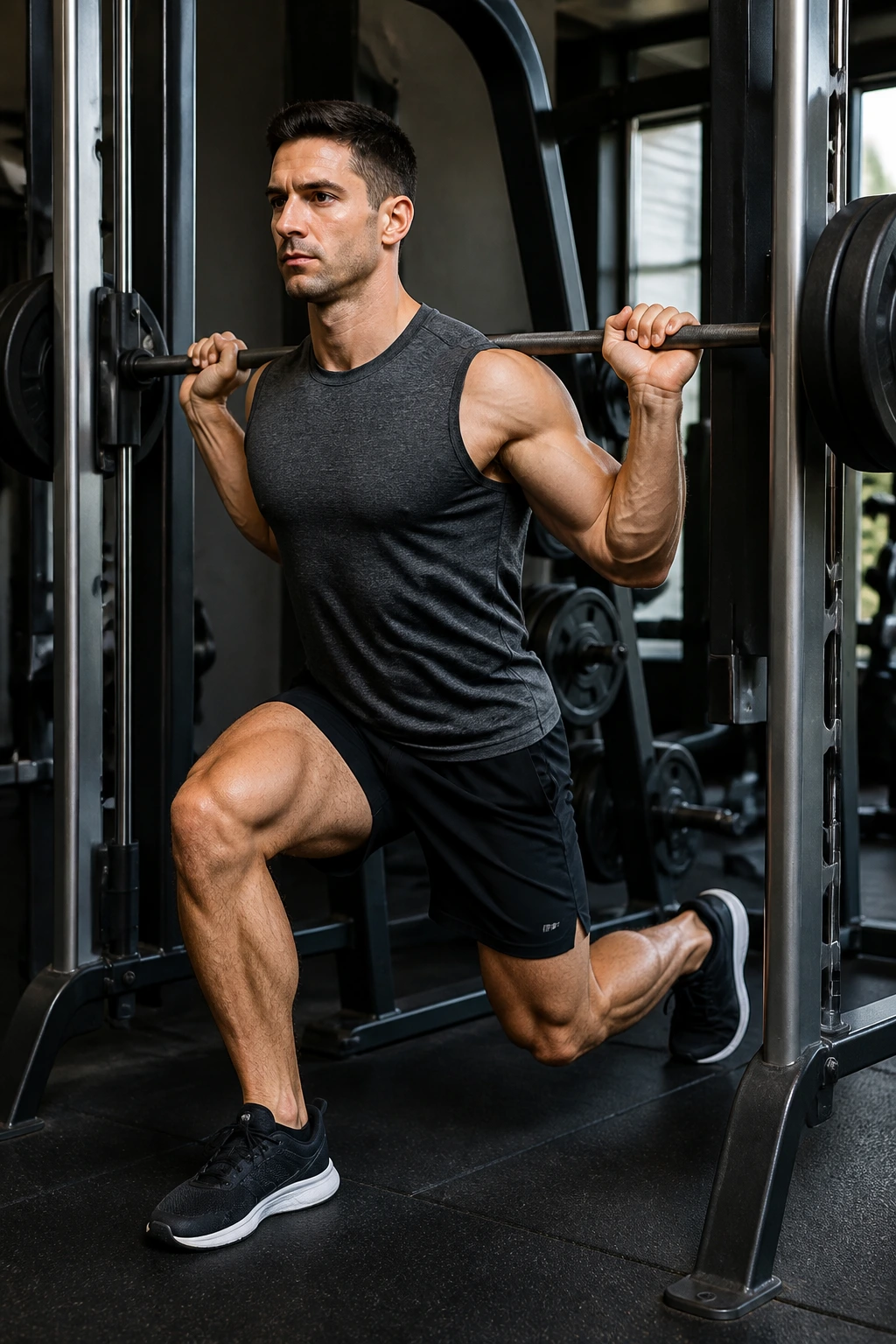
Lunges are excellent for leg development, but they are a nightmare for balance. If you are tired from a long workout, your stability is the first thing to go. The Smith machine provides the frame you need to stay upright and balanced, so you can push your legs to absolute failure.
Step back into the lunge, dropping your back knee toward the floor. Because you aren’t fighting to keep your center of gravity, you can take a slightly longer stride, which shifts more emphasis to the glutes and hamstrings.
Keep your torso perpendicular to the floor. Do not lean forward. If you feel like you are tipping, check your foot positioning. You should feel the drive coming from the front heel. If you want to make it harder, elevate your front foot on a plate.
7. Sumo Squats
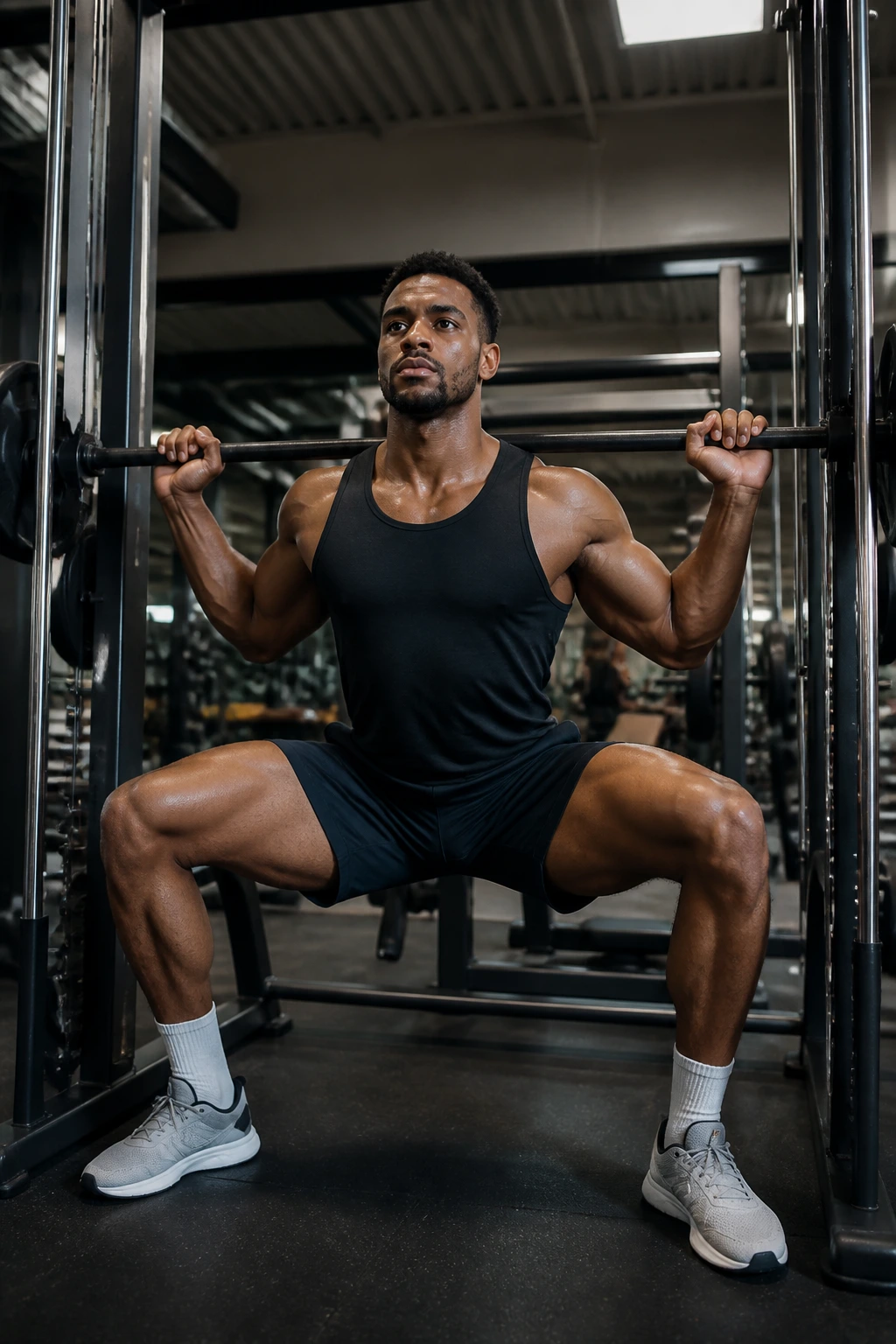
The Sumo squat is a wide-stance movement that targets the inner thighs (adductors) and the glutes. The Smith machine is perfect for this because the wide stance can feel awkward with a free barbell; it often forces you to round your back to maintain balance.
With the Smith machine, you can set your feet wider than shoulder-width, toes pointed slightly outward, and just sit straight down. The bar path supports you as you drop into the squat. You don’t have to fight the bar to keep it centered.
Focus on pushing your knees out as you descend. If your knees cave in, you are missing the point of the exercise. Use a lighter weight than you think you need at first. This move targets small muscles that are often neglected, and they will cramp up if you overload them too quickly.
8. Curtsy Lunges
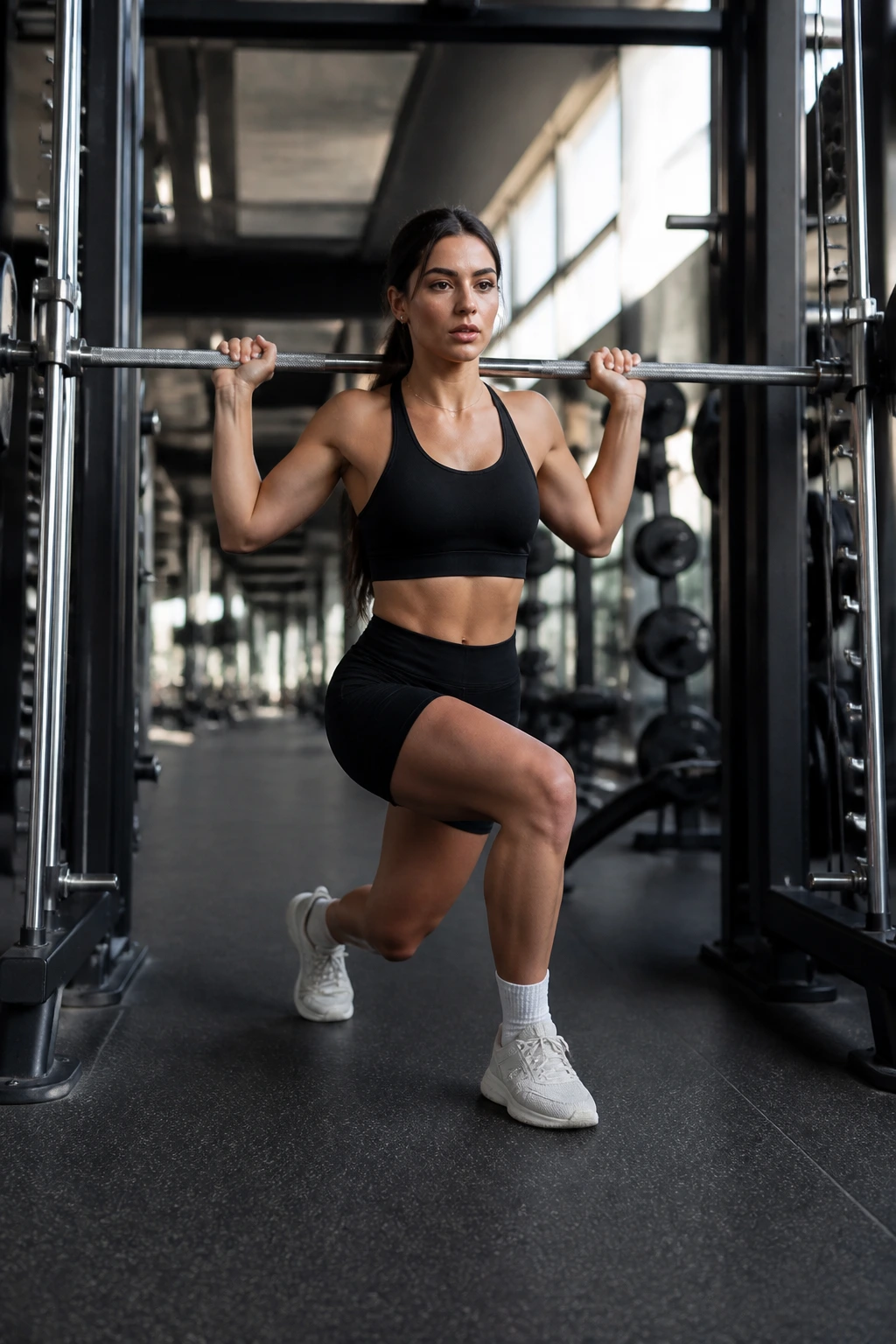
Curtsy lunges are incredible for targeting the side of the glutes—the glute medius—that traditional squats often miss. Doing these with dumbbells can feel chaotic. Doing them on the Smith machine feels smooth and controlled.
Step one foot diagonally behind the other, almost like you are performing a curtsy. Keep your chest up and your hips square to the front. You will feel a stretch in the outer glute of the front leg.
Because the bar is supporting the weight, you can focus on the range of motion. Sink low. The deeper you go, the more muscle fiber you recruit. Do not worry about moving heavy weight here; focus on the burn and the stretch. This is a finishing move, not a heavy lifting move.
9. Calf Raises
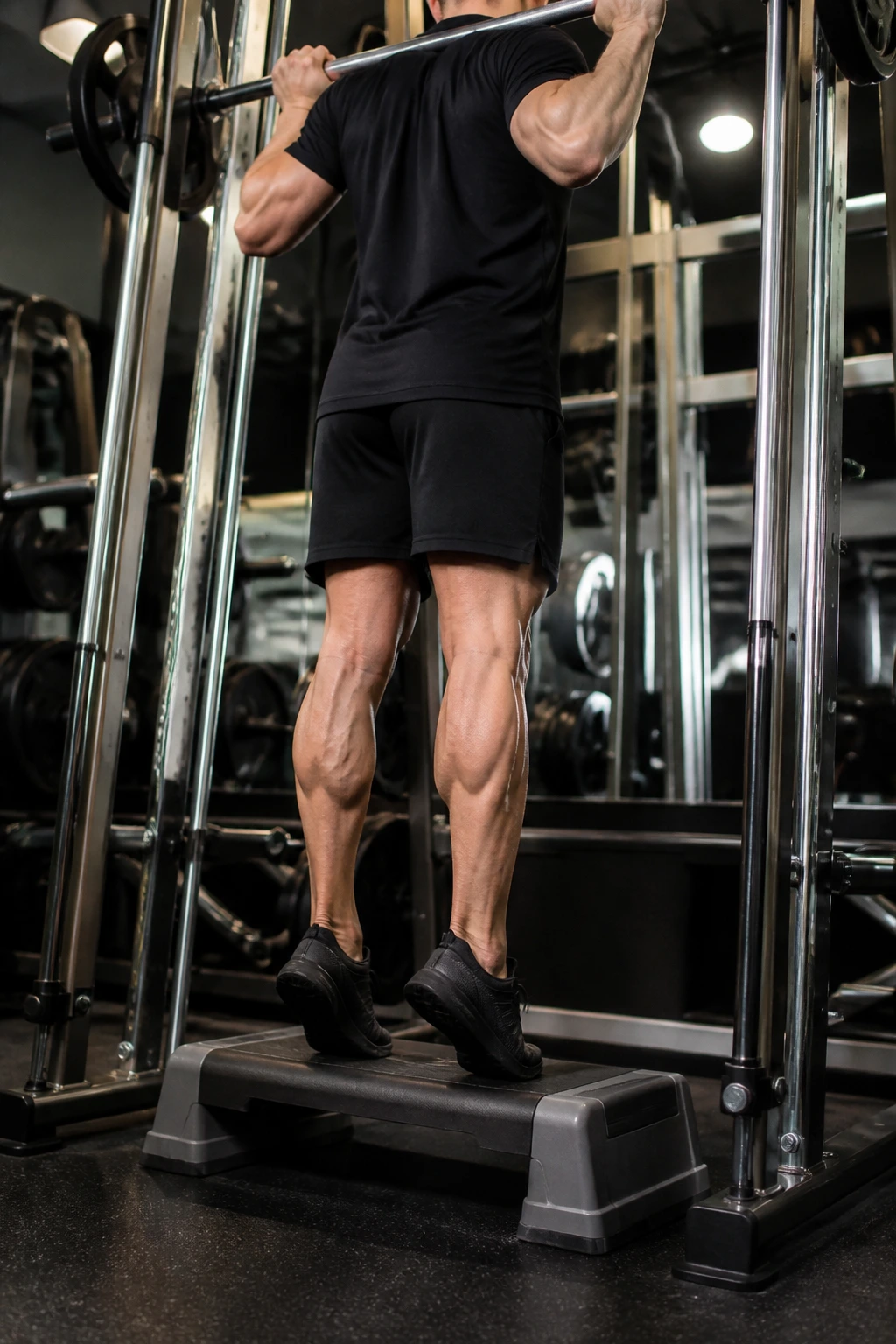
The gym is full of people doing calf raises on machines that don’t quite fit their height or their leg length. Or, they stand on a ledge and hold dumbbells, which kills their grip and throws off their balance. The Smith machine is the ultimate calf isolation station.
Place a step or a stack of plates under the bar. Get your toes on the edge. Now, you have a heavy bar on your shoulders that isn’t going to sway. You can perform slow, controlled calf raises with heavy weight, focusing on the full stretch at the bottom and the maximum contraction at the top.
Do not bounce. The biggest mistake people make with calf training is using momentum. Take two seconds to go up, hold for one second, and take three seconds to go down. If you do this properly, your calves will be shaking within the first set.
10. Glute Bridges
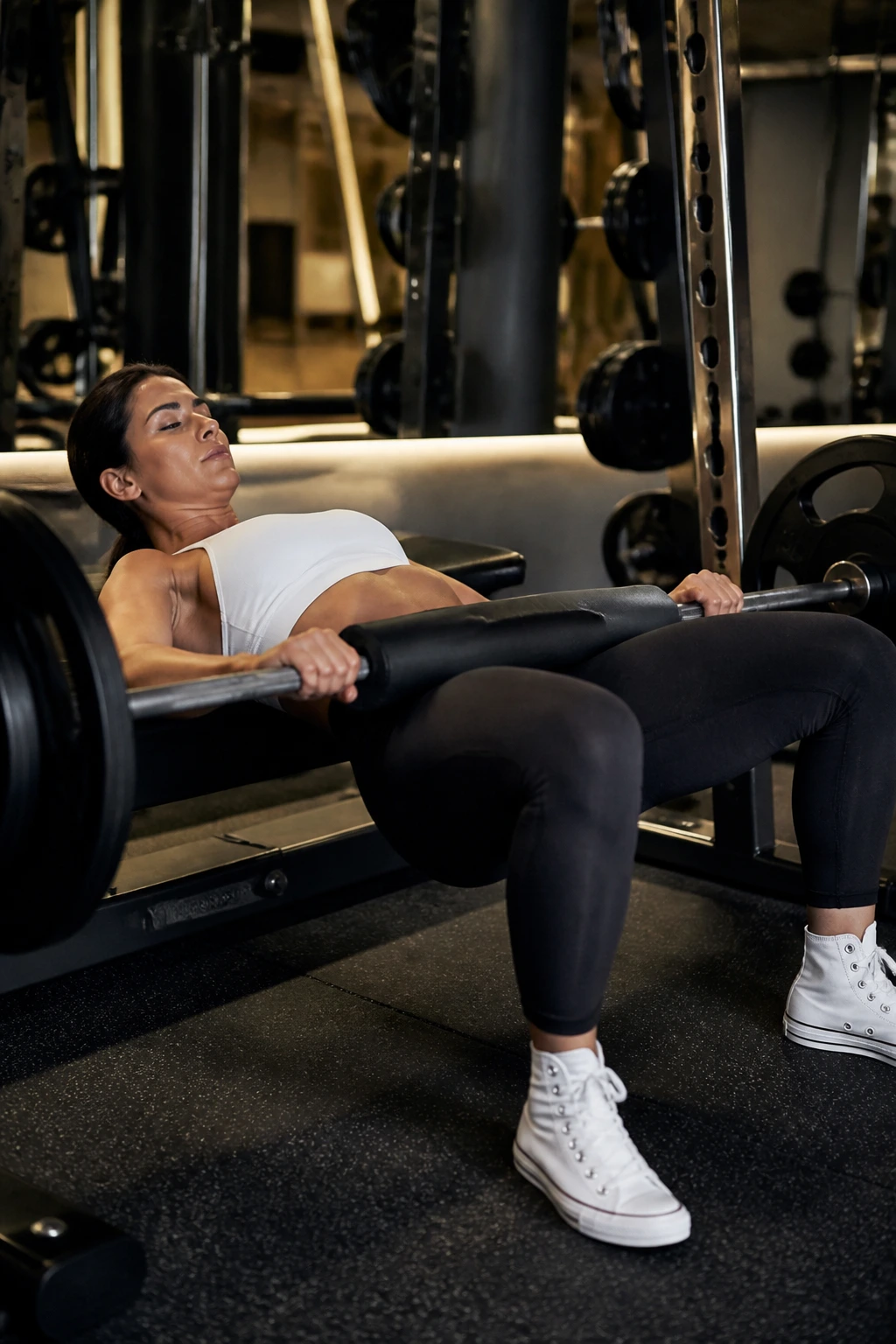
While hip thrusts are a dynamic movement, the glute bridge is about holding tension and isolating the muscles. By performing these on the Smith machine, you can safely load a weight that would be impossible to get into position on your own.
Lie on the floor with your upper back supported by a bench. The bar should be positioned right across your hips. Drive your hips toward the ceiling. Hold the peak contraction for a solid two seconds before lowering.
Unlike the hip thrust, where you are moving through a full range of motion, the glute bridge is about the squeeze. Because the Smith machine locks in place, you can keep the bar at the exact height that produces the most intense contraction for your specific body proportions.
11. Step-ups
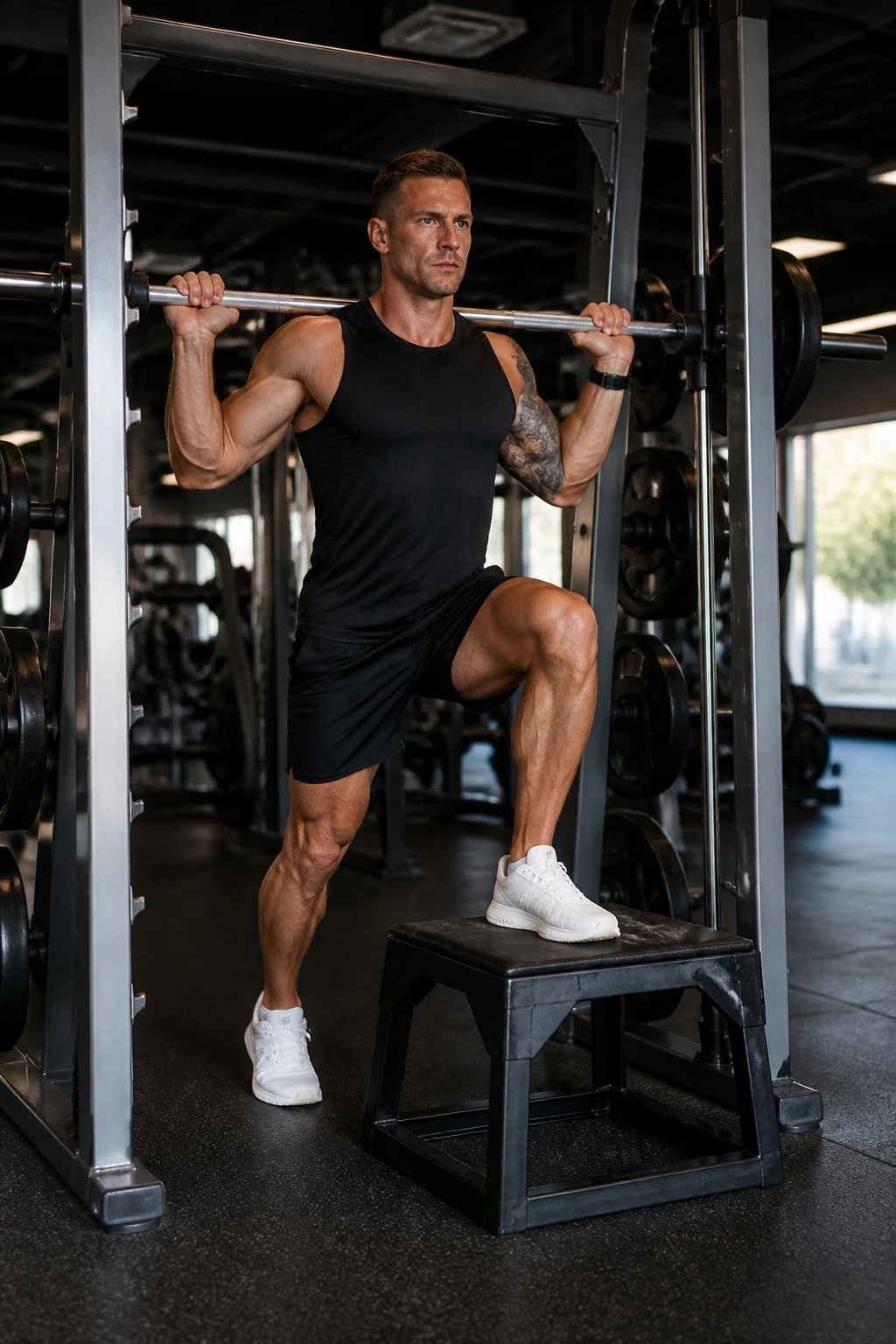
Step-ups are a fantastic functional exercise, but doing them with free weights in a crowded gym is a recipe for an accident. One slip and you are dropping weights on your feet. The Smith machine allows you to perform heavy, controlled step-ups with the bar on your shoulders.
The Mechanics of the Step-Up
Find a stable box. Place it directly under the Smith machine bar. Set the bar at a height that allows you to step up fully without hitting your head.
- The Drive: Plant your entire foot on the box. Drive through your heel. Do not push off with the back foot; let the front leg do 100% of the work.
- The Control: Lower yourself slowly. The descent is just as important as the ascent.
- The Stability: Because the bar is locked, you can focus purely on the firing pattern of your quads and glutes.
Note: Keep the box height at or below knee level. If the box is too high, you will compromise your hip mechanics and put unnecessary stress on your lower back.
12. Hack Squats
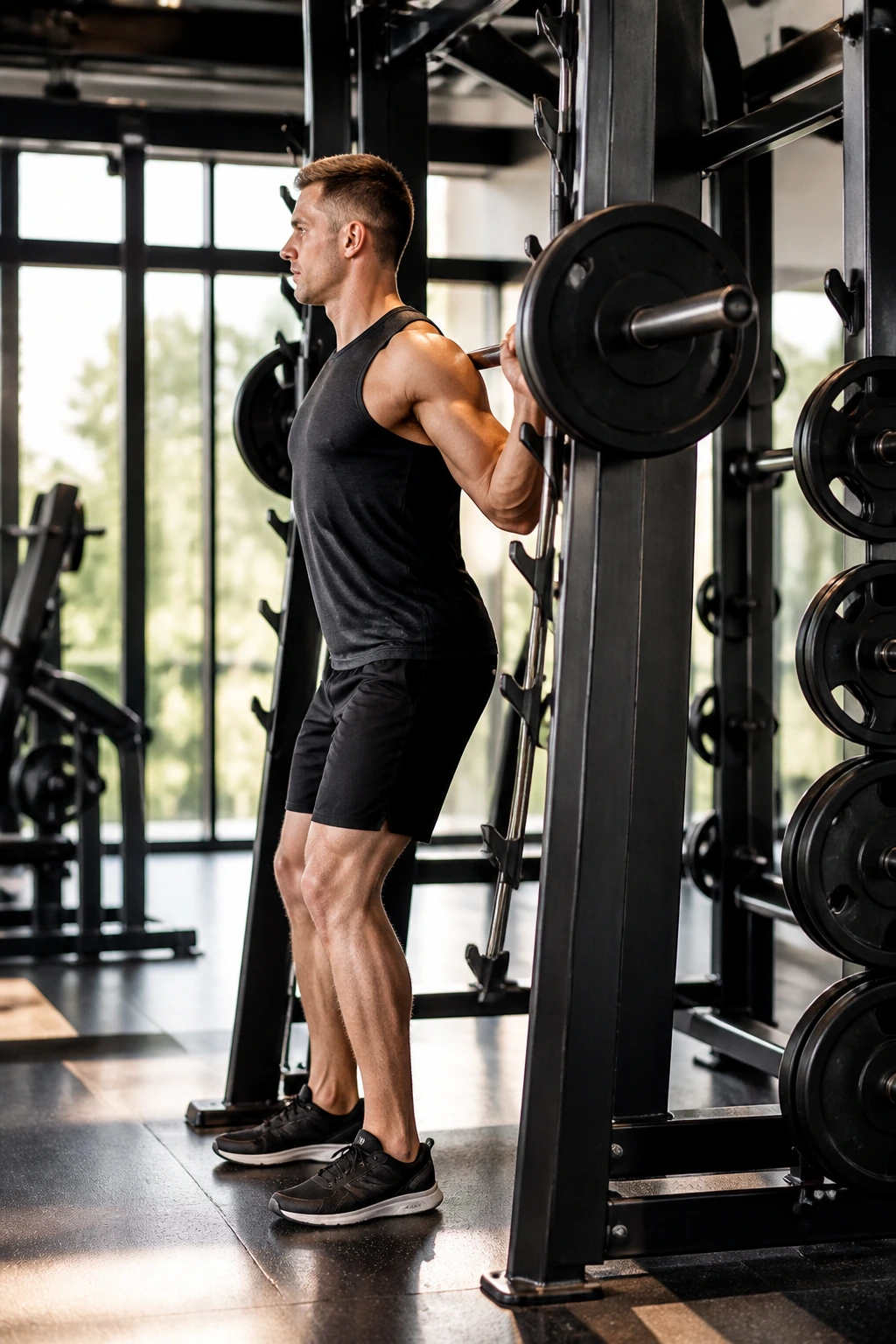
You do not need a dedicated Hack Squat machine to get the benefits of one. You can simulate this movement on a Smith machine with incredible effectiveness. It is one of the best quad-isolation tricks in the book.
Stand in front of the bar with your back to it. Reach behind you to grip the bar. Keep your legs out in front of you—the further out, the more quad engagement. Squat down, keeping your torso as vertical as possible, and drive up through your heels.
This takes your lower back almost completely out of the equation. It forces your knees to travel forward, which puts maximum tension on the quads. Just make sure your gym allows this movement, as it can be tricky to set up safely if you are not careful about where you place your feet.
13. Single-Leg Deadlifts
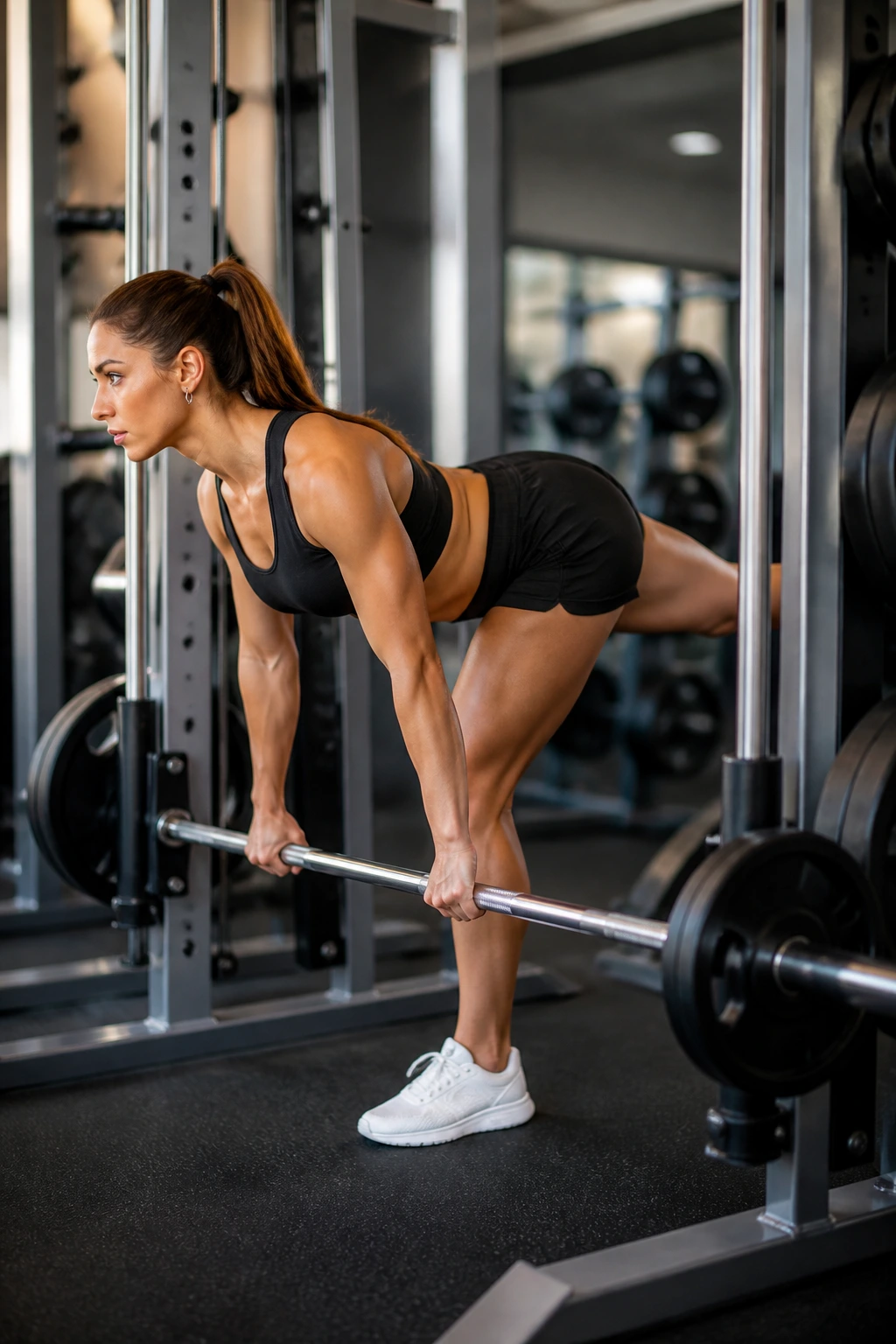
Single-leg work is non-negotiable for building balanced legs, but it is notoriously frustrating to balance with a heavy barbell. The Smith machine turns this into a stable, strength-building exercise rather than a balance drill.
Stand on one leg, holding the bar with both hands. Keep your back flat and hinge at the hips. The bar will travel straight down along your shins. You will feel a deep, intense stretch in the hamstring of the standing leg.
Because the bar cannot drift, you can really commit to the hinge. You will find that you can handle more weight here than with dumbbells. Focus on keeping your hips square; do not let the hip of your floating leg rotate upward.
14. Sissy Squats
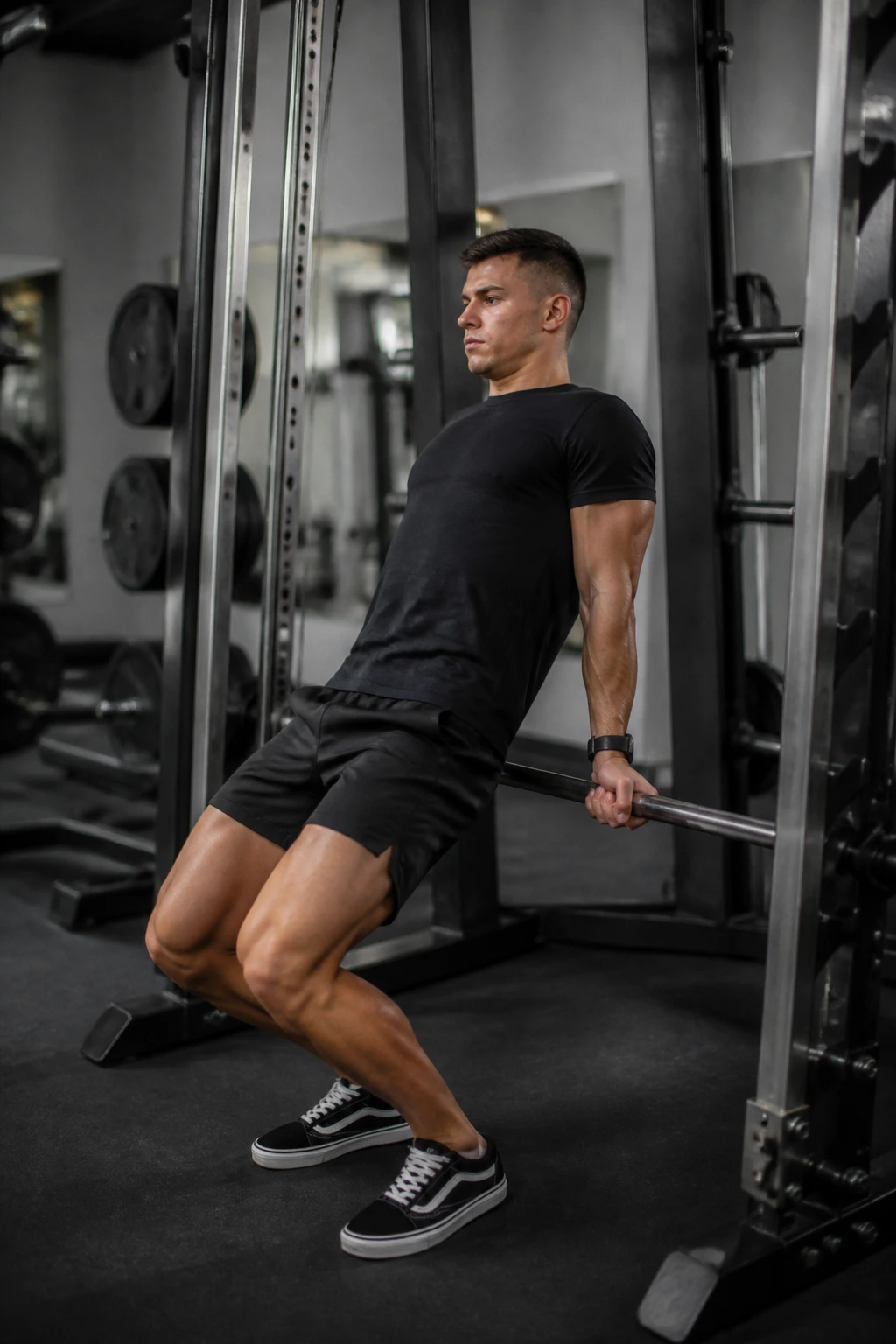
The sissy squat is a classic quad builder, but it is physically demanding. You can use the Smith machine to support yourself while you perform these. Set the bar relatively low—around mid-thigh or slightly lower.
Hold onto the bar for balance and stability. Keep your back straight, hinge at the knees, and lean backward while keeping your hips extended. You should feel your quads screaming as they fight to support your body weight at an awkward angle.
This is not a heavy-weight exercise. It is a bodyweight intensity move. Use the bar simply as an anchor to keep your form strict. If you find this easy, you aren’t leaning back enough or you aren’t going low enough.
15. Goblet Squats
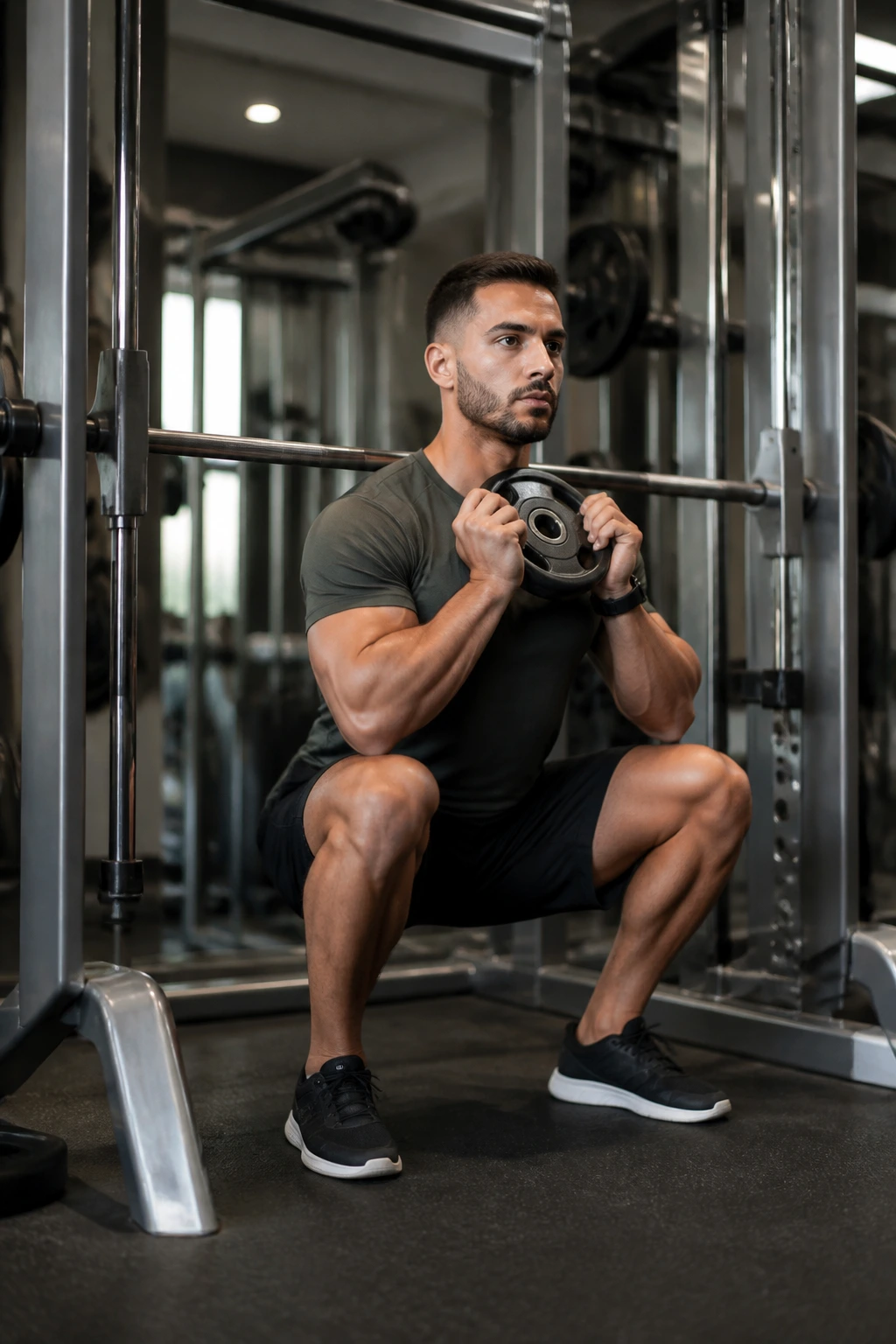
Yes, you can do goblet squats on a Smith machine. It sounds counterintuitive—why not just hold a dumbbell?—but the Smith machine version allows you to focus on form and tempo without your arms giving out.
Hold a light plate or a small dumbbell against your chest while standing under the Smith machine bar. Position the bar so it rests across your upper back or traps. Now, perform your squats. The weight on the bar is doing the heavy lifting for your legs, while your own holding of the plate forces you to keep your chest up and torso vertical.
It is an excellent way to practice the perfect squat form. You get the stability of the machine with the posture-correcting benefits of the goblet position. It is perfect for beginners or for anyone coming back from an injury.
16. Side Lunges
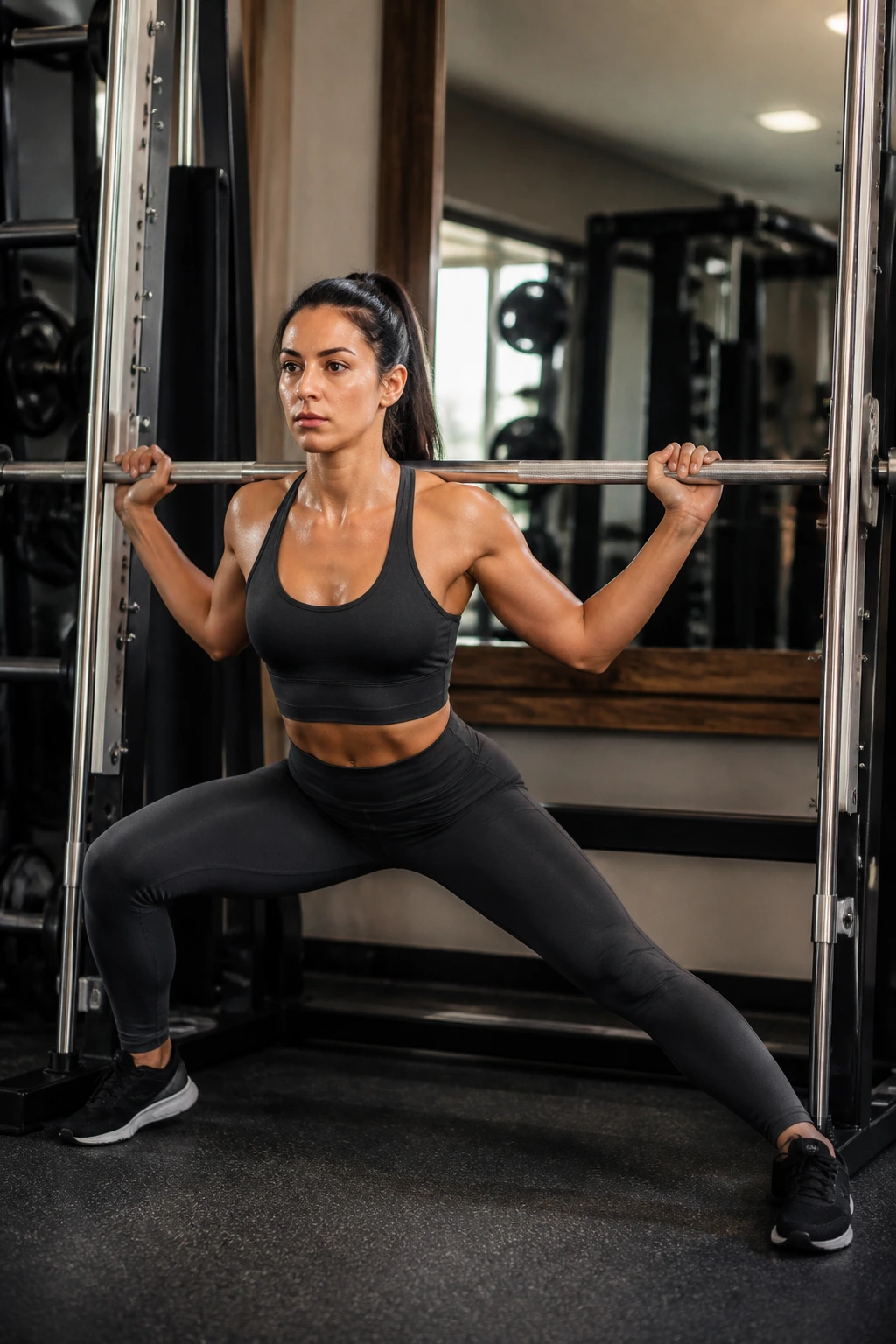
Lateral movement is often neglected, but it is vital for knee health and glute strength. Side lunges on the Smith machine provide a stable platform to work the frontal plane.
Position yourself under the bar. Step out to the side, sinking into a lunge on one leg while keeping the other straight. The bar moves with you, providing a guide for your vertical plane. You don’t have to worry about balancing a heavy dumbbell in your hands.
This move hits the adductors and the glutes hard. Because the bar is locked, you can push into the stretch with confidence. Just be sure to keep your foot flat on the floor; do not let your heel rise as you sink into the lunge.
17. Jefferson Squats
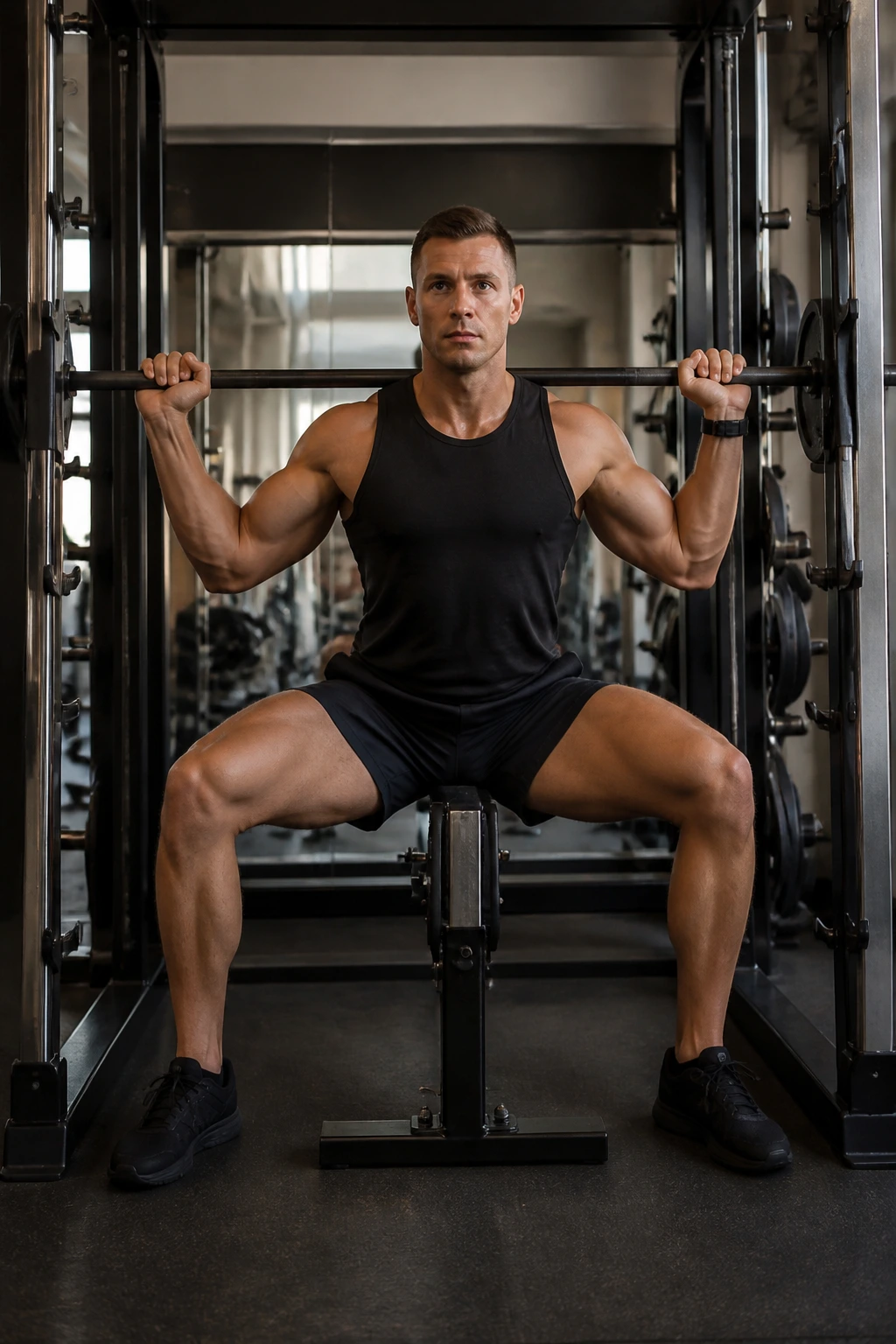
The Jefferson squat is an old-school move that is rarely seen anymore. You straddle the bar, with the bar running between your legs. It is an amazing exercise for total leg development, but it is incredibly awkward with a free barbell.
On the Smith machine, it is much more manageable. Straddle the bar, pick it up with a mixed grip (one hand in front, one behind), and squat down. The weight is centered under your body, which changes the leverage significantly.
You will feel this in your glutes, adductors, and quads in a way that feels completely different from a standard squat. It forces an upright posture and creates a massive amount of tension in the legs. Start light; this exercise requires a bit of coordination to get right.
18. Pause Squats
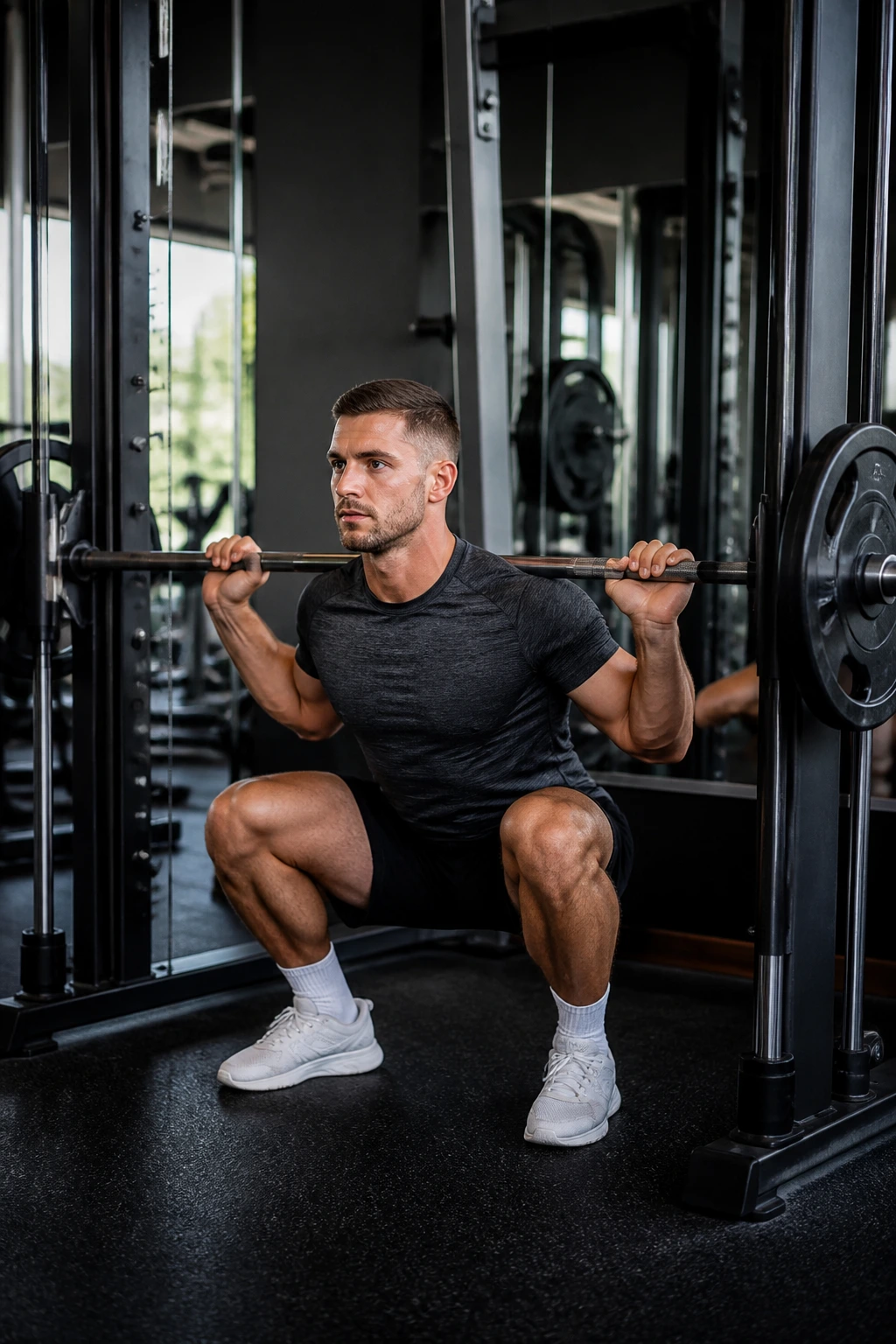
The final evolution of the Smith machine squat is the pause. It is the ultimate test of control. You go down into your squat, you stop at the very bottom, you hold it there for three seconds, and then you drive back up.
The Smith machine is ideal for this because the stability allows you to be absolutely still at the bottom of the rep without having to fight to keep the bar from wobbling. That stillness creates immense internal tension.
The burn is intense. The pause eliminates all momentum, meaning your muscles have to work from a dead stop to initiate the movement. It will humble even the strongest lifter. Do these with a lighter weight than your normal squat; you will realize quickly that the pause makes the weight feel twice as heavy.
Final Thoughts
The Smith machine is not a shortcut, and it is not just for people who are afraid of the squat rack. It is a tool. Like any tool, its value depends on how you wield it. If you use it to mimic free-weight moves exactly, you will feel frustrated by the fixed path. But if you use it to manipulate leverage, isolate specific muscle groups, and push your legs to fatigue without the limiter of stabilization, it becomes one of the most powerful assets in your gym bag.
Stop apologizing for using it. Stop worrying about what the hardcore lifters in the powerlifting corner think. They are training for a lift; you are training for muscle. If the Smith machine helps you get a better contraction, move more weight safely, and walk out of the gym with your legs feeling like lead, then it is doing exactly what it is supposed to do. Embrace the fix, change your foot angles, and start building those legs.
