



The overhead squat is often referred to as the ultimate test of human movement, and for good reason. It does not allow you to hide. If your ankles are stiff, your heels will pop off the floor. If your thoracic spine is locked up, the bar will plummet forward the second you descend. If your core is weak, you will lose your balance entirely. This movement is a masterclass in full-body coordination, demanding that every joint work in perfect, silent harmony.
You are essentially balancing a weight over your center of mass while simultaneously pushing your hips through their full range of motion. It exposes every limitation you have, but that honesty is precisely why it is such an effective tool for building mobility and strength. You cannot cheat an overhead squat. You can only improve your movement quality until the weight feels like an extension of your body.
Some people avoid this exercise because it feels awkward or frustrating in the beginning. That hesitation is understandable. However, by breaking the movement down into progressive variations, you can bridge the gap between where your current mobility sits and where you want to be. These variations allow you to isolate specific weak points—whether it is grip stability, ankle dorsiflexion, or upper back strength—without having to jump immediately into a full-barbell overhead squat.
1. PVC Pipe Overhead Squat
The PVC pipe is not just for beginners; it is the diagnostic tool you should return to whenever your form starts to break down. You can pick up a length of PVC pipe from any hardware store for a few dollars. It is lightweight, which means it provides zero resistance, forcing you to focus entirely on the geometry of the lift rather than fighting gravity.
Why This Is the Baseline
Most athletes fail at the overhead squat because they try to load the movement before they have earned it. Using a PVC pipe allows you to keep your arms locked out and your shoulders externally rotated without the fatigue of holding actual weight. This is about groove-greasing. You are training your nervous system to understand the path the bar must take: straight up and down, directly over your mid-foot.
- The Setup: Stand with your feet shoulder-width apart and your toes turned slightly out.
- The Grip: Use a wide “snatch” grip, which means the bar should sit in your hip crease when you stand fully upright.
- The Descent: Initiate the movement by pushing your hips back and down, keeping the pipe locked out directly over the back of your head.
- The Focus: Watch your reflection. If the pipe drifts forward, you have lost your vertical plane. Stop the rep, reset, and go again.
Pro tip: If you struggle to keep your chest up, try doing these facing a wall. Keep your toes a few inches from the wall, and force yourself to keep the pipe from touching the drywall as you squat. This forces your thoracic spine to extend.
2. Broomstick Overhead Squat
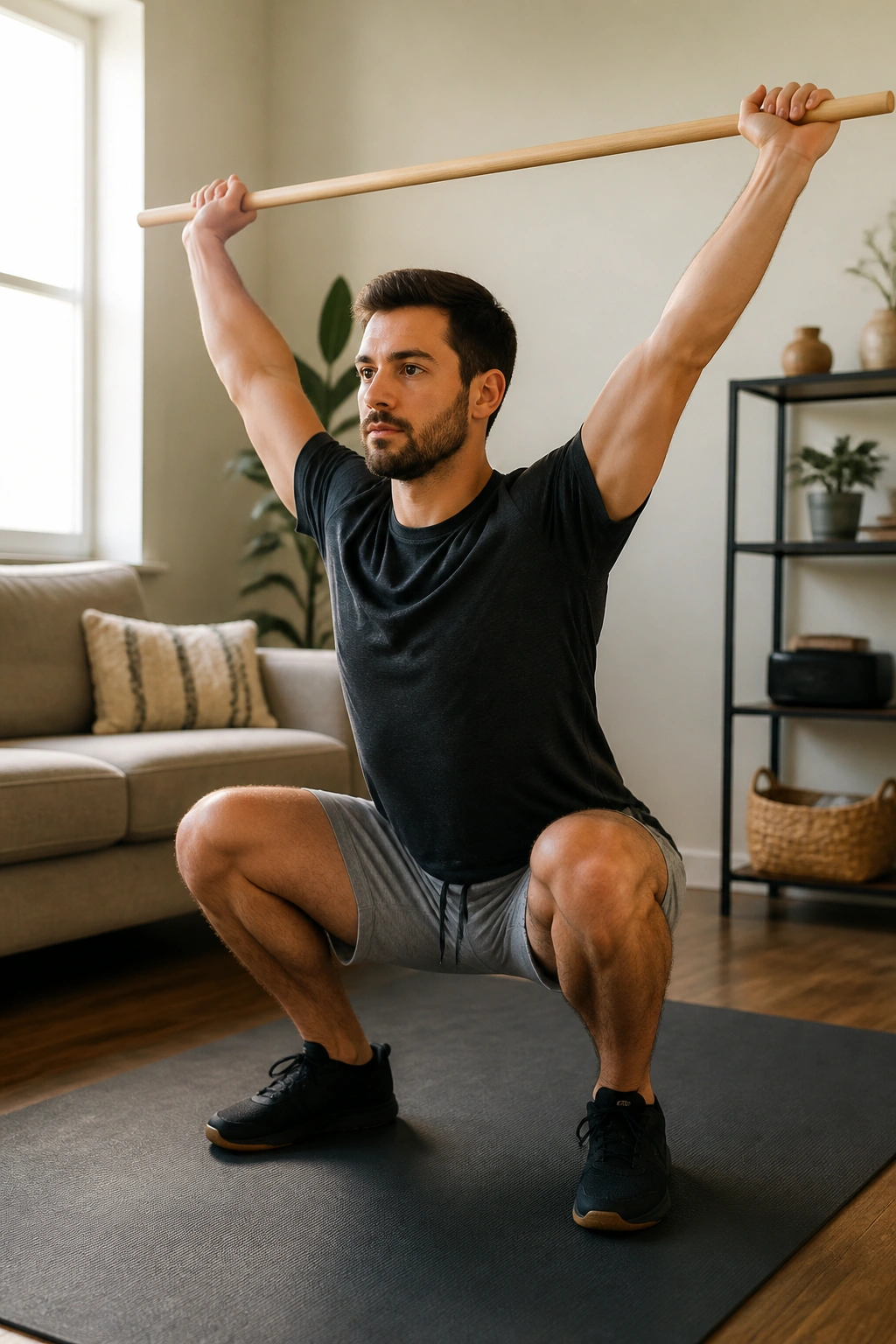
If you do not have a PVC pipe lying around, a broomstick serves the exact same purpose. This variation is about accessibility and consistent practice. You can perform these in your living room while waiting for your coffee to brew. The goal here is frequency over intensity.
Integrating Mobility into Your Routine
The biggest advantage of the broomstick variation is that it lowers the barrier to entry for daily mobility work. You do not need a gym setting to improve your overhead squat. By keeping a broomstick handy, you can sneak in sets throughout the day.
How to Get More Out of It
Don’t just go through the motions. Use the broomstick to explore your end ranges. When you reach the bottom of the squat, pause for three to five seconds. Use that time to wiggle your hips, shift your weight, and find the “sweet spot” where your heels remain flat and your torso is vertical. If you can spend a few minutes a day in that deep squat position with a stick overhead, your hip and ankle mobility will change faster than any heavy lifting program could achieve.
3. Dumbbell Overhead Squat
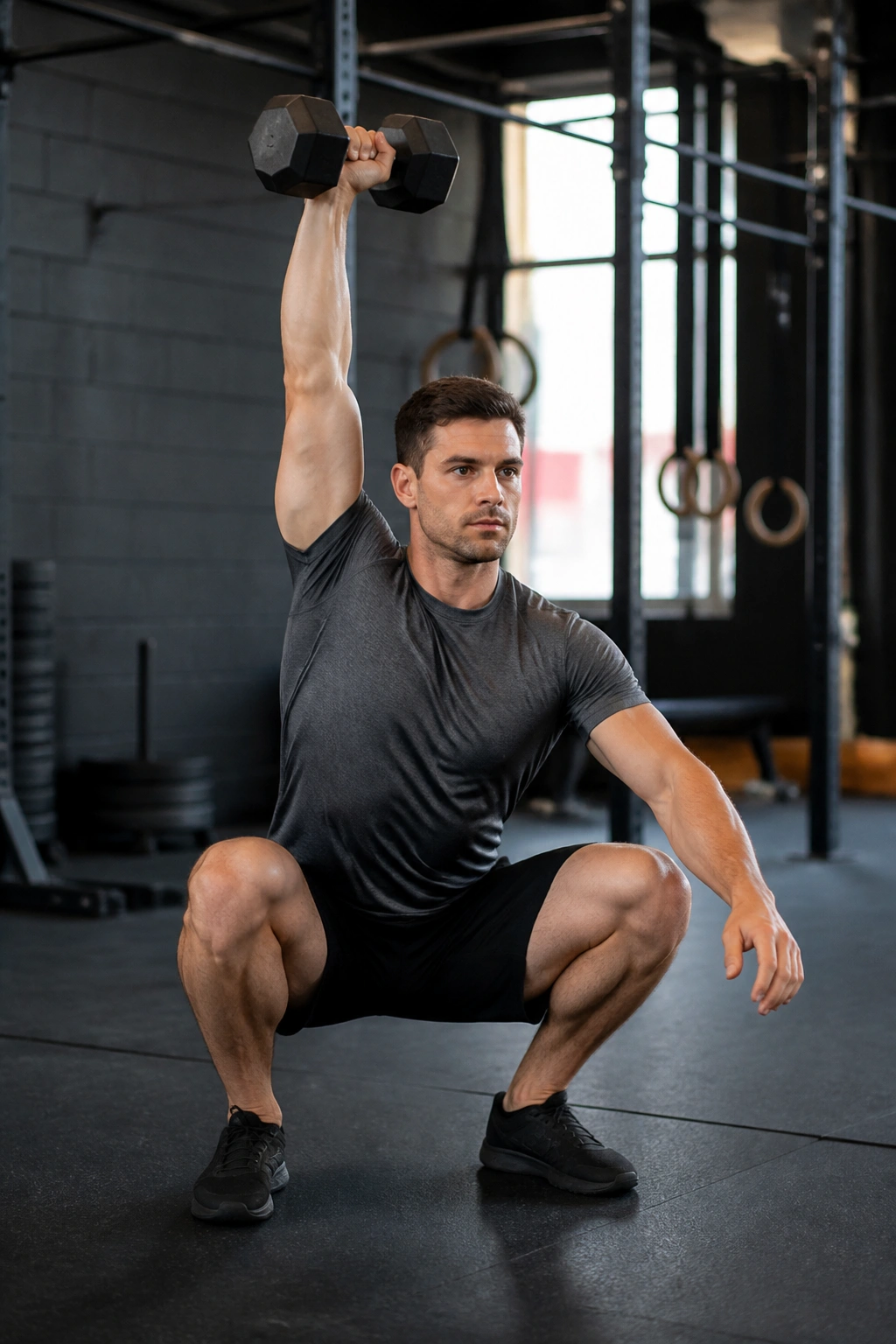
Once you have mastered the vertical path with a stick, it is time to add weight—but not a barbell. A single dumbbell overhead squat is an incredible unilateral challenge. It forces your core to work overtime to prevent you from tilting toward the weighted side.
This is fundamentally different from a two-handed lift. With a barbell, the weight is symmetrical; you can compensate with your stronger side without realizing it. With a dumbbell, you have nowhere to hide. If your left shoulder is weaker or your right hip is tighter, the dumbbell will wobble or drift immediately.
What to watch for:
- Torso Tilt: You will be tempted to lean away from the dumbbell. Fight this. Keep your ribcage stacked over your pelvis.
- Arm Path: Ensure the dumbbell stays directly over your center of gravity. It is easy to let the weight drift behind your head.
- Repetition Balance: Perform equal sets on both sides, and if one side feels significantly harder, do an extra set on that “weaker” side to balance your body.
4. Kettlebell Overhead Squat
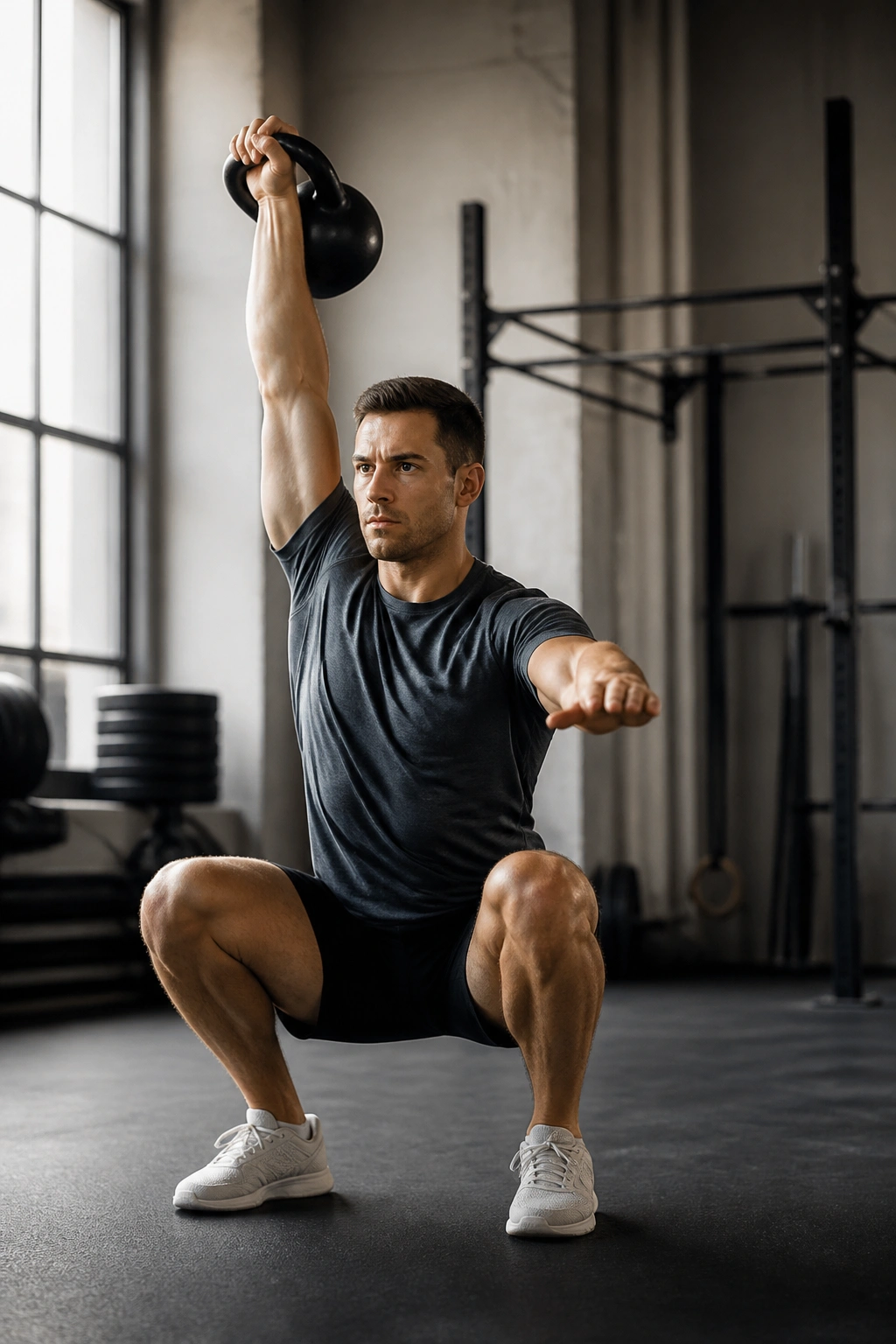
The kettlebell overhead squat provides a unique stimulus compared to the dumbbell because of where the weight sits. When you hold a kettlebell overhead, the bell rests against the back of your forearm. This shifts the center of gravity, making the weight feel “live” and unstable.
This instability is a feature, not a bug. Your shoulder stabilizers have to fire rapidly and constantly to keep the kettlebell from flopping over. It is effectively a squat and a shoulder stability exercise wrapped into one. If you find your wrist shaking, don’t drop the weight; keep it light, and focus on crushing the handle with your grip. That grip strength translates directly to shoulder stiffness.
Practical Application
Because the kettlebell creates an uneven lever, you will likely find that you cannot squat as deep as you did with a PVC pipe. That is perfectly fine. Focus on keeping the handle pressed toward the ceiling. Visualize yourself punching the sky with your knuckles throughout the entire duration of the squat.
5. Barbell Overhead Squat
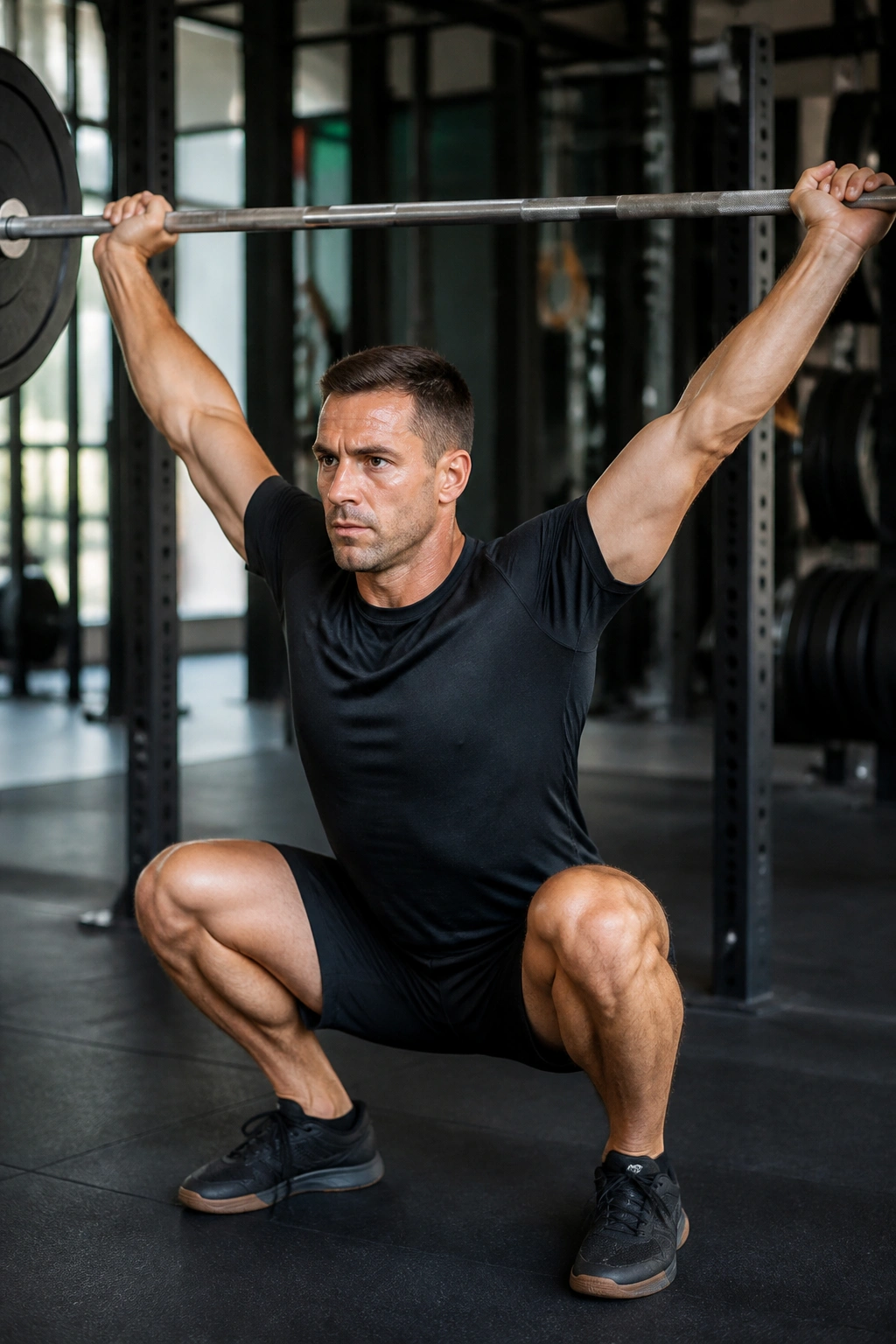
We have arrived at the king of the movement. The barbell overhead squat is the standard by which all other mobility is measured in the gym. This is where the wide grip becomes essential. A narrower grip makes it physically impossible for most people to maintain an overhead position without bending their elbows or rounding their back.
The Mechanics of the Barbell
With the barbell, you have two points of contact. You are pushing up against the bar while simultaneously driving your heels into the floor. The tension should feel like you are trying to break the bar in half—this engages your lats and creates a stable “shelf” for your shoulders.
Critical cues for the barbell:
- Active Shoulders: Think about pushing your armpits forward.
- Eye Level: Keep your gaze fixed on a spot on the wall in front of you. Looking down or up will throw off your center of mass.
- Breath: Take a deep breath into your belly before you descend. Hold that pressure until you are back at the top.
6. Snatch-Grip Overhead Squat
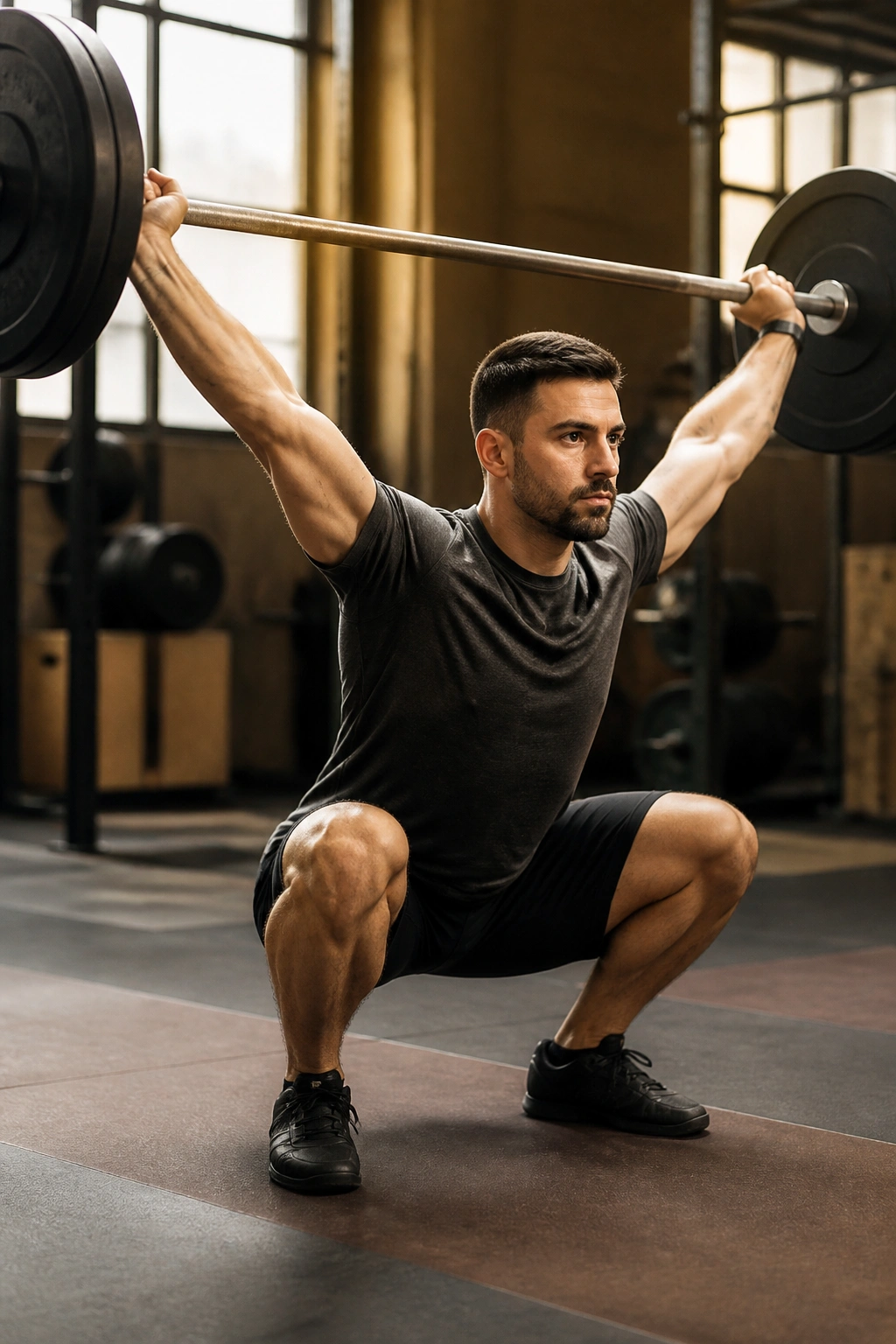
The snatch-grip variation is exactly what it sounds like: a wider-than-normal grip on the barbell. By widening your hands, you reduce the distance the bar has to travel to get overhead, but you also demand significantly more shoulder mobility.
This is the preferred setup for Olympic weightlifters. Why? Because it keeps the bar path tighter and creates a more stable base. For you, the benefit is in the upper back. The wider grip forces the muscles between your shoulder blades—the rhomboids and middle traps—to engage fully to support the weight.
If you find that your wrists hurt, you might be gripping the bar too tightly or bending your wrists too far back. Ensure the bar is resting deep in your palm, toward the thumb side, rather than balancing on your fingertips. A heavy bar feels much lighter when it is stacked directly over your radius and ulna, the bones of your forearm.
7. Plate-Loaded Overhead Squat
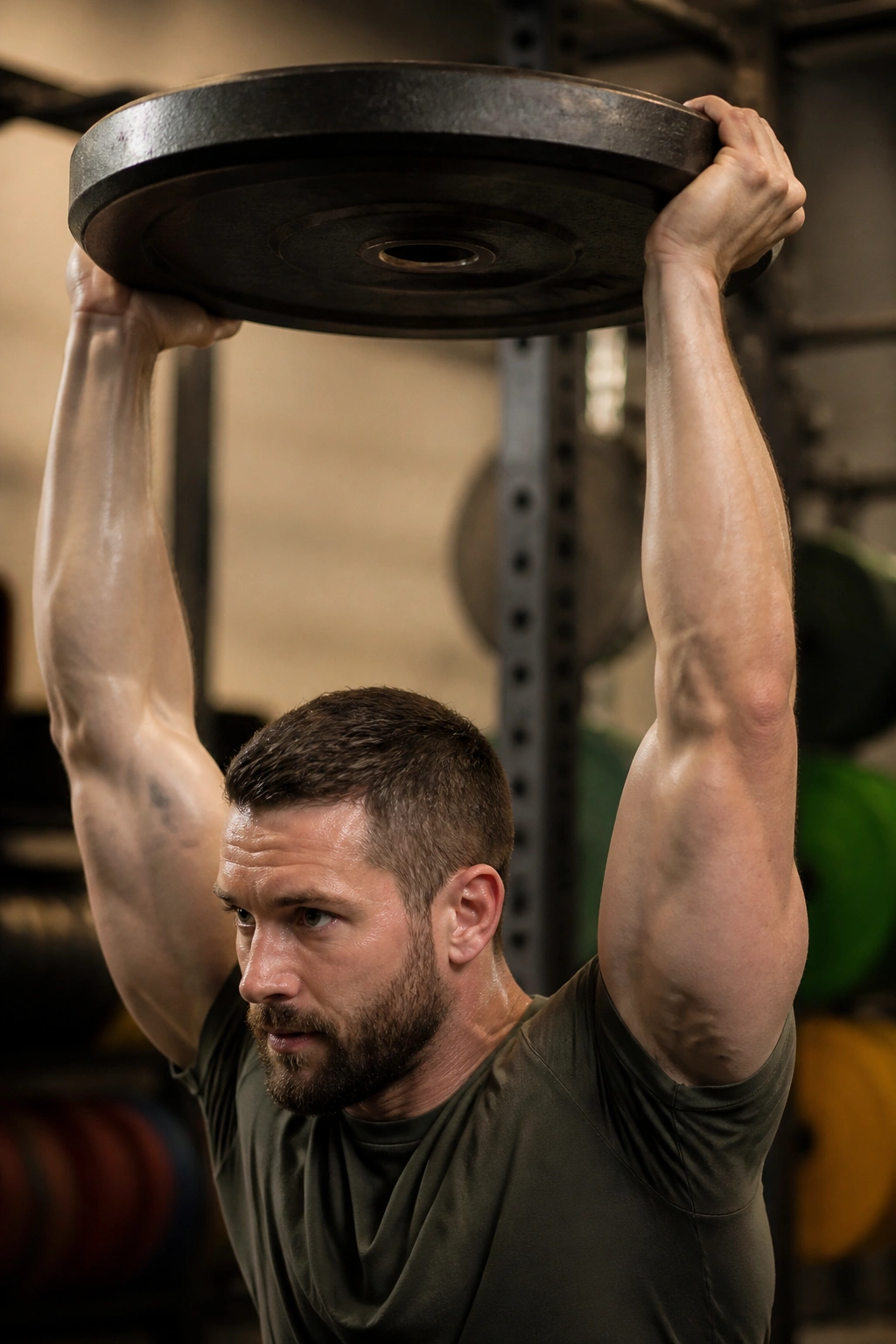
Sometimes, the barbell is too much weight, but a kettlebell is too little. A weight plate is the perfect middle ground. Holding a 10- or 25-pound plate overhead creates a wide, stable base that forces you to lock your elbows completely.
This variation is excellent for beginners who are intimidated by the barbell but are ready to graduate from PVC pipes. It provides enough resistance to feel “real,” but it lacks the chaotic instability of a kettlebell. Because of the shape of the plate, your hands are forced into a neutral, wider position that is often more comfortable for the shoulders than the internal rotation required by some other movements.
How to integrate it: Use the plate as a warm-up before you touch a barbell. A few sets of 10 with a light plate will prime your central nervous system and get your shoulder girdle warm without causing fatigue.
8. Paused Overhead Squat
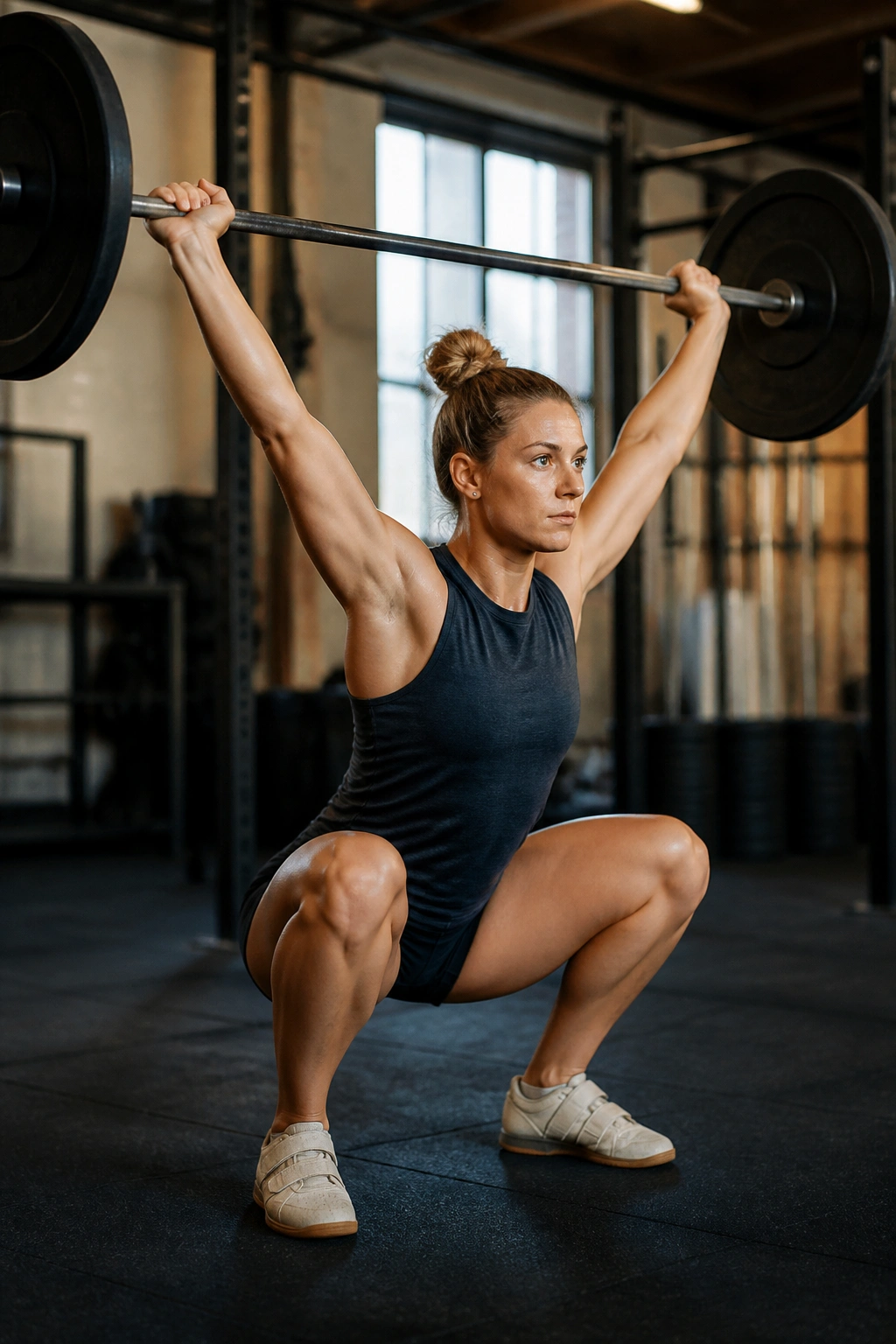
If your overhead squat feels like a “dive bomb” where you drop too fast and lose your balance, the paused variation is your remedy. By introducing a mandatory pause at the bottom of the movement, you eliminate the stretch reflex that helps you bounce out of the hole.
Why Pausing Matters
The bottom of the squat is where the magic—and the misery—happens. If you can hold the position comfortably for three seconds, you prove that your mobility is legitimate. If you struggle to hold it, you know your muscles are tight or your core is failing under pressure.
How to execute the pause:
- Lower yourself slowly. Do not rush.
- Count “one thousand one, one thousand two, one thousand three” clearly.
- Keep the bar rock-solid. If it wobbles, the weight is too heavy.
- Drive up explosively once the time is up.
This variation builds incredible confidence. Once you can pause in the deep position, standing up with a standard rep will feel significantly easier.
9. Tempo Overhead Squat
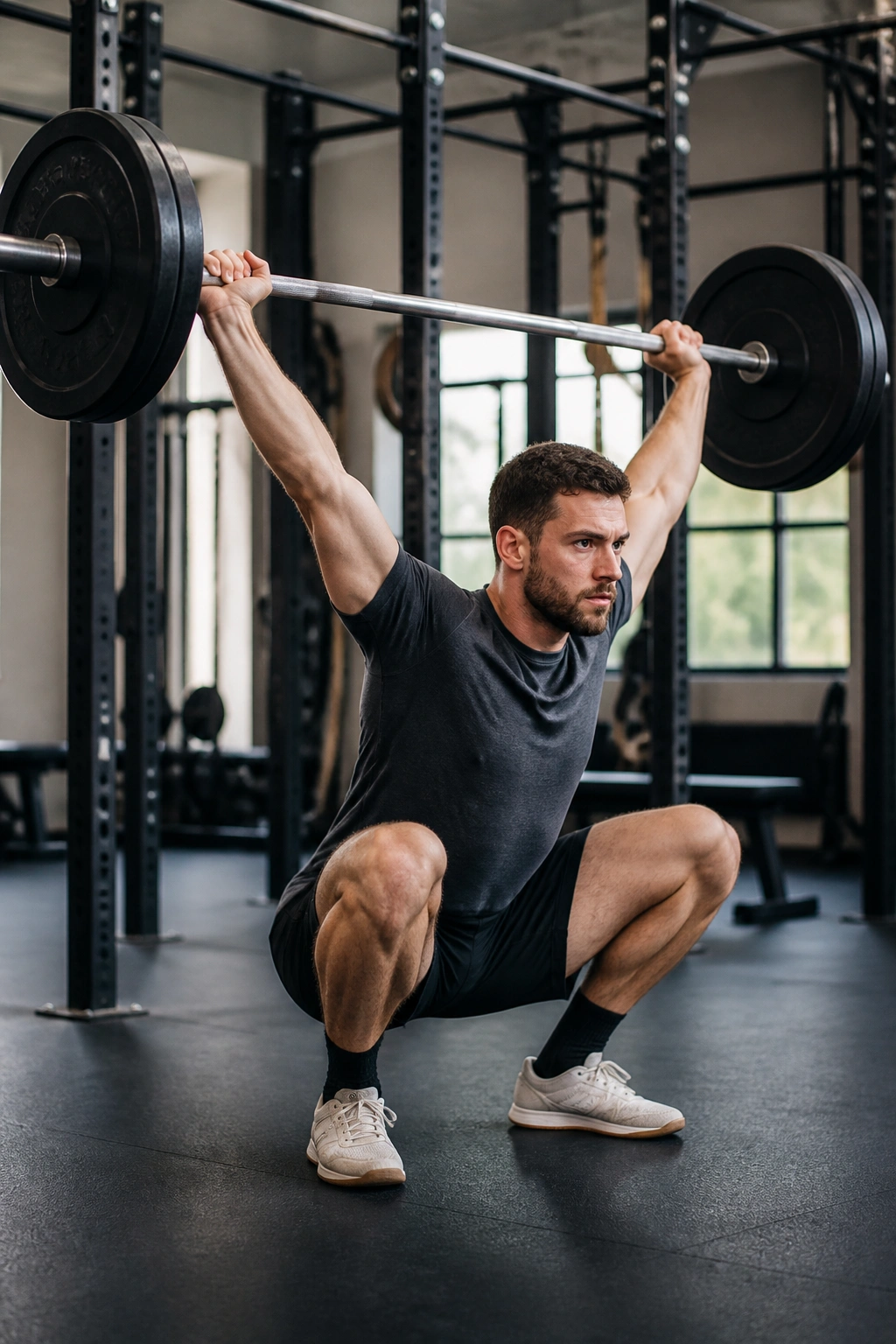
Tempo training is about time under tension. Specifically, we are talking about the eccentric portion of the lift—the way down. A common mistake is to lose control on the descent and hope you catch it at the bottom. The tempo overhead squat forbids this.
Set a count, such as three seconds down, one second at the bottom, and one second up. This forces you to navigate your sticking points slowly. If your knees cave in, you will notice it immediately. If your heels lift, you will catch it during the slow descent.
This is arguably the most effective way to build the requisite mobility for deep squats. You are essentially spending more time in the range of motion you find most challenging. It is uncomfortable, but it works.
10. Bottoms-Up Kettlebell Overhead Squat
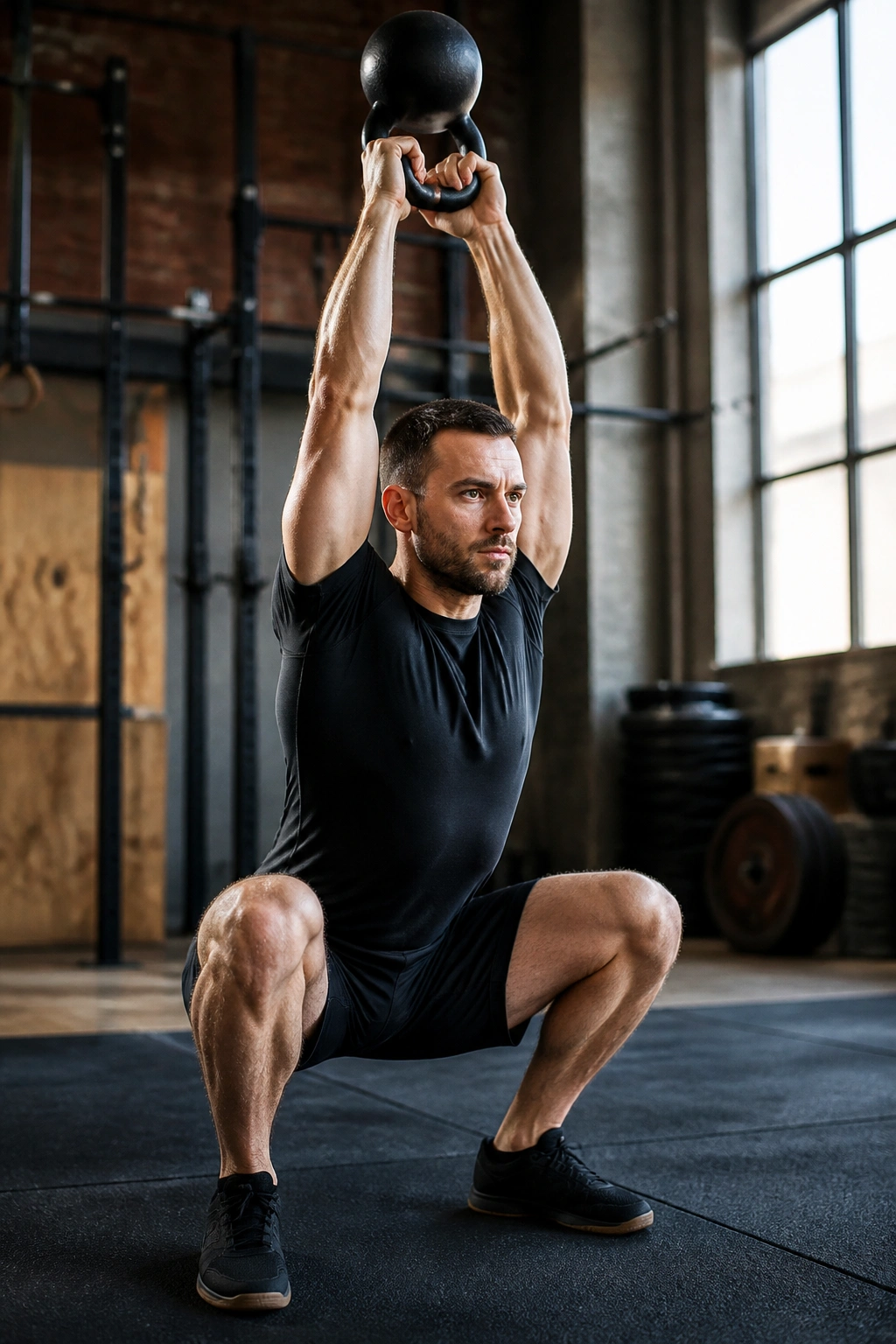
This is arguably the most difficult variation on this list regarding pure coordination. You take a kettlebell, flip it upside down so the heavy iron ball is in the air, and press it overhead. Then, you squat.
The instability here is extreme. If you do not have perfect, tight control, the bell will tip over instantly. This variation forces you to “crush” the handle, which creates irradiation—a phenomenon where creating tension in your hands helps create tension in your entire arm and shoulder girdle.
Who is this for? This is for the athlete who has mastered the standard overhead squat and needs a way to challenge their stability without adding heavy, dangerous weight. You don’t need a heavy bell for this to be effective; a light one will make your shoulders shake like leaves.
11. Single-Arm Barbell Overhead Squat
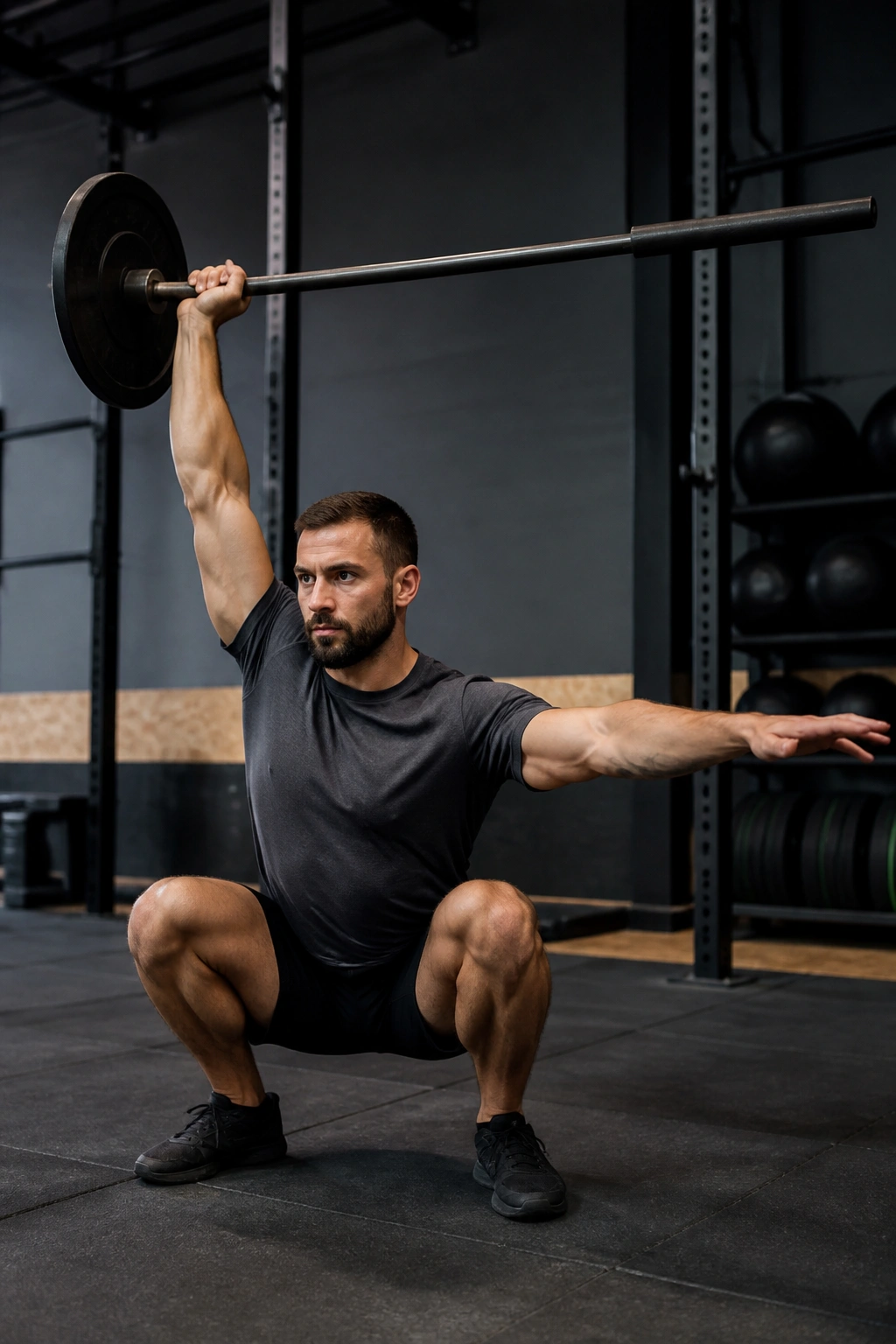
This looks like a circus trick, but it is a functional movement. Holding one end of a barbell overhead while squatting is the ultimate test of lateral core strength. You have a long, heavy lever acting against you, trying to pull you sideways.
To succeed, you have to lean slightly into the weight, but only enough to counteract the pull. It is a balancing act of the highest order.
Tips for success:
- Start with just the bar. Even the bar is heavy when it’s off-balance.
- Keep your free arm out to the side for counter-balance.
- Focus on your feet. You will feel the weight shifting from your big toe to your heel. Use your toes to grip the floor and keep yourself centered.
12. Overhead Squat with Heel Elevation
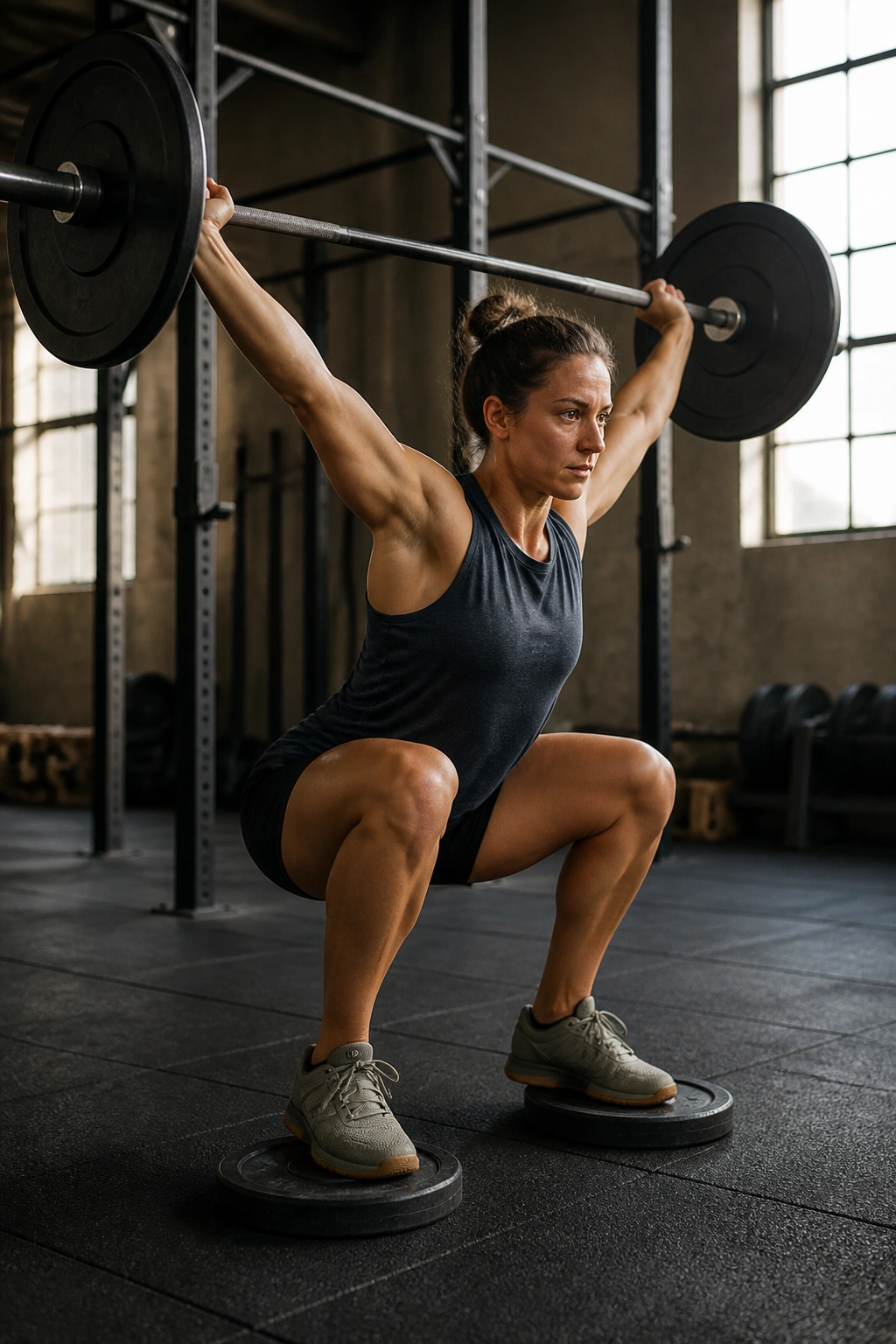
For many people, the inability to overhead squat isn’t about their shoulders; it’s about their ankles. If your calves are tight, your heels will lift off the ground, causing your center of gravity to shift forward and the bar to crash.
Placing small weight plates or a slant board under your heels can instantly fix this. By artificially elevating the heel, you compensate for poor dorsiflexion and allow your knees to track further forward. This creates a more vertical torso position, which is exactly what you want for an overhead squat.
Is this “cheating”? Absolutely not. It is a tool. You use the elevation to train the correct movement pattern, and over time, you focus on your ankle mobility until you no longer need the plates. It is a stepping stone.
13. Band-Resisted Overhead Squat
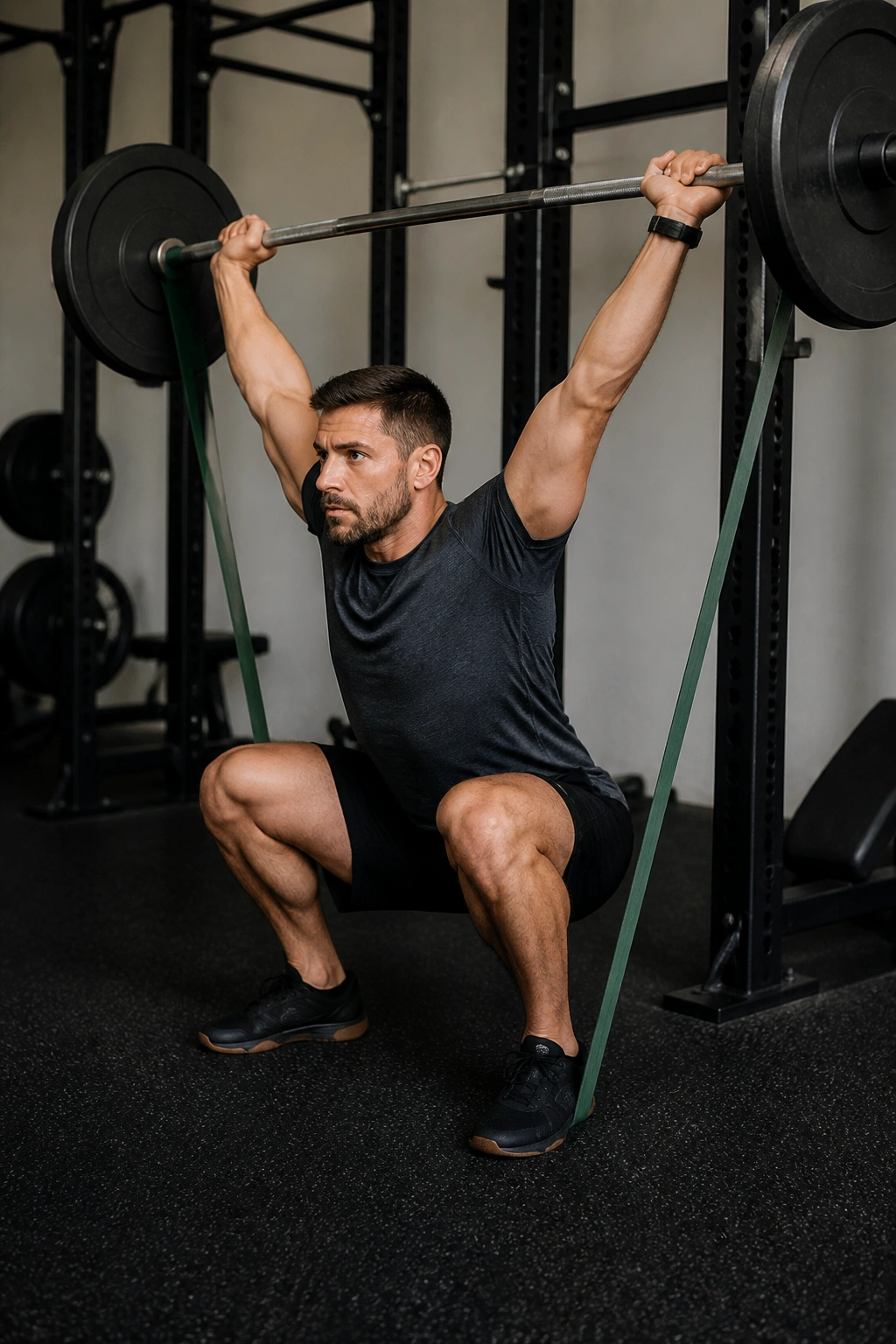
Sometimes, the bottom of the squat feels easy, but the top feels difficult—or vice versa. Adding resistance bands to the bar can help you focus on specific parts of the lift.
By attaching bands to the floor and the barbell, you create “accommodating resistance.” The higher you stand, the more tension the band puts on the bar. This helps you develop explosive power on the way up. Alternatively, if you set the bands to pull the bar forward, you force your upper back to work even harder to keep the bar centered.
This variation is for the advanced trainee who understands their weak points. It is not for beginners. If you are struggling with the basic mechanics, do not start messing with bands.
14. Overhead Squat to Box
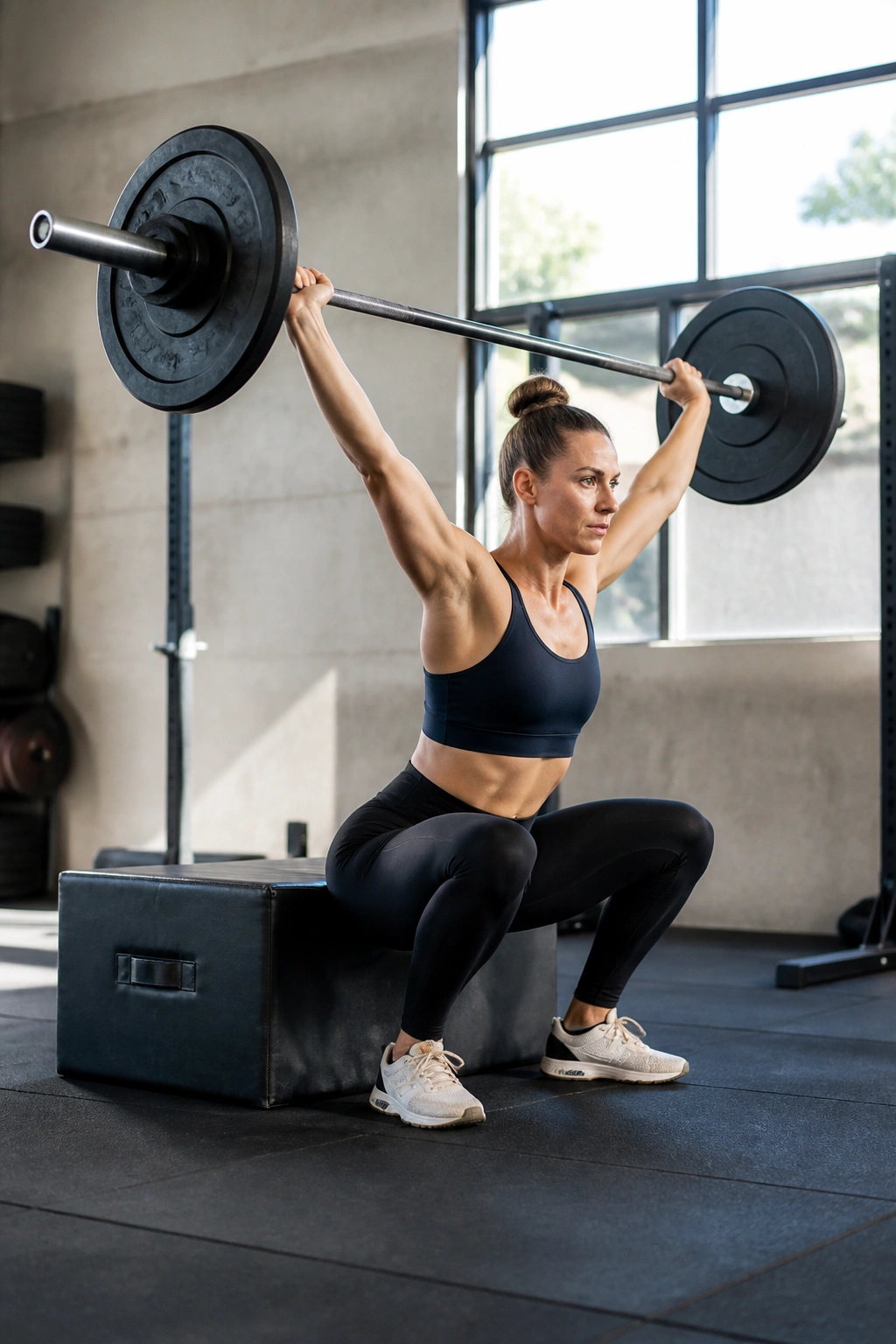
Depth is often a source of anxiety. How low is low enough? Using a box or a bench as a target takes the guesswork out of the equation.
Set a box behind you at your target depth. Squat down until your glutes lightly tap the box, then come back up. This gives you a clear tactile cue of where your “bottom” position is. It prevents you from cutting the squat short, which is a common habit when we are afraid of losing balance.
The rule of thumb: Do not “sit” on the box. Use it as a touch-and-go. The moment your glutes feel the box, reverse the movement. This keeps the tension on your legs and prevents your hips from completely disengaging.
15. Overhead Squat with Isometric Hold
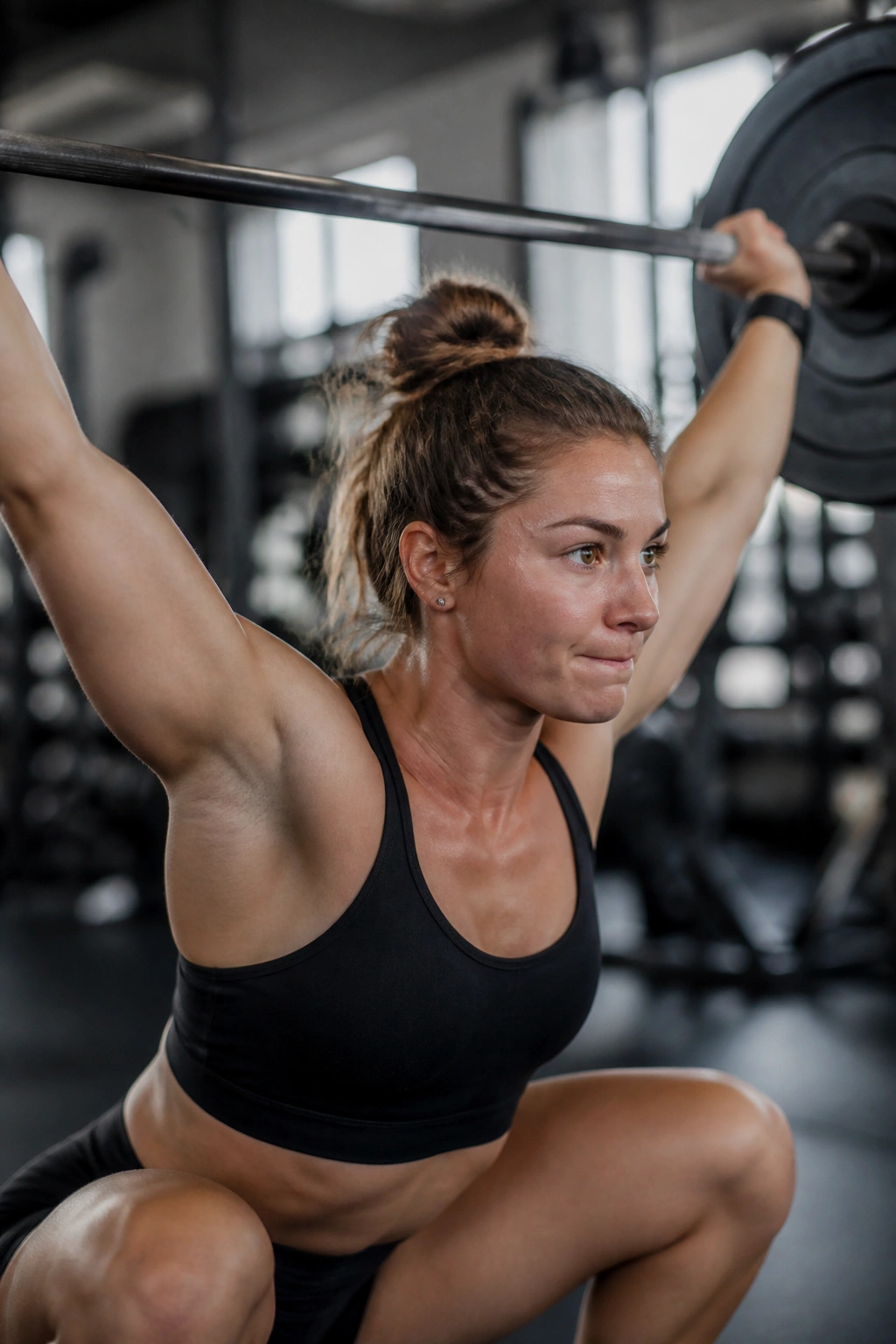
Sometimes, you need to build endurance in the position rather than strength in the movement. Load a barbell with a moderate weight, perform an overhead squat, and hold the bottom position for as long as you possibly can.
This variation builds a bulletproof core and shoulders. It is mentally taxing. You have to keep your eyes forward, your lats engaged, and your feet pressed into the ground while your legs scream for relief.
Why it works: It teaches you to stay relaxed in an uncomfortable position. When the weight is heavy, panic is your enemy. Isometric holds force you to breathe and maintain composure under duress.
16. Split-Stance Overhead Squat
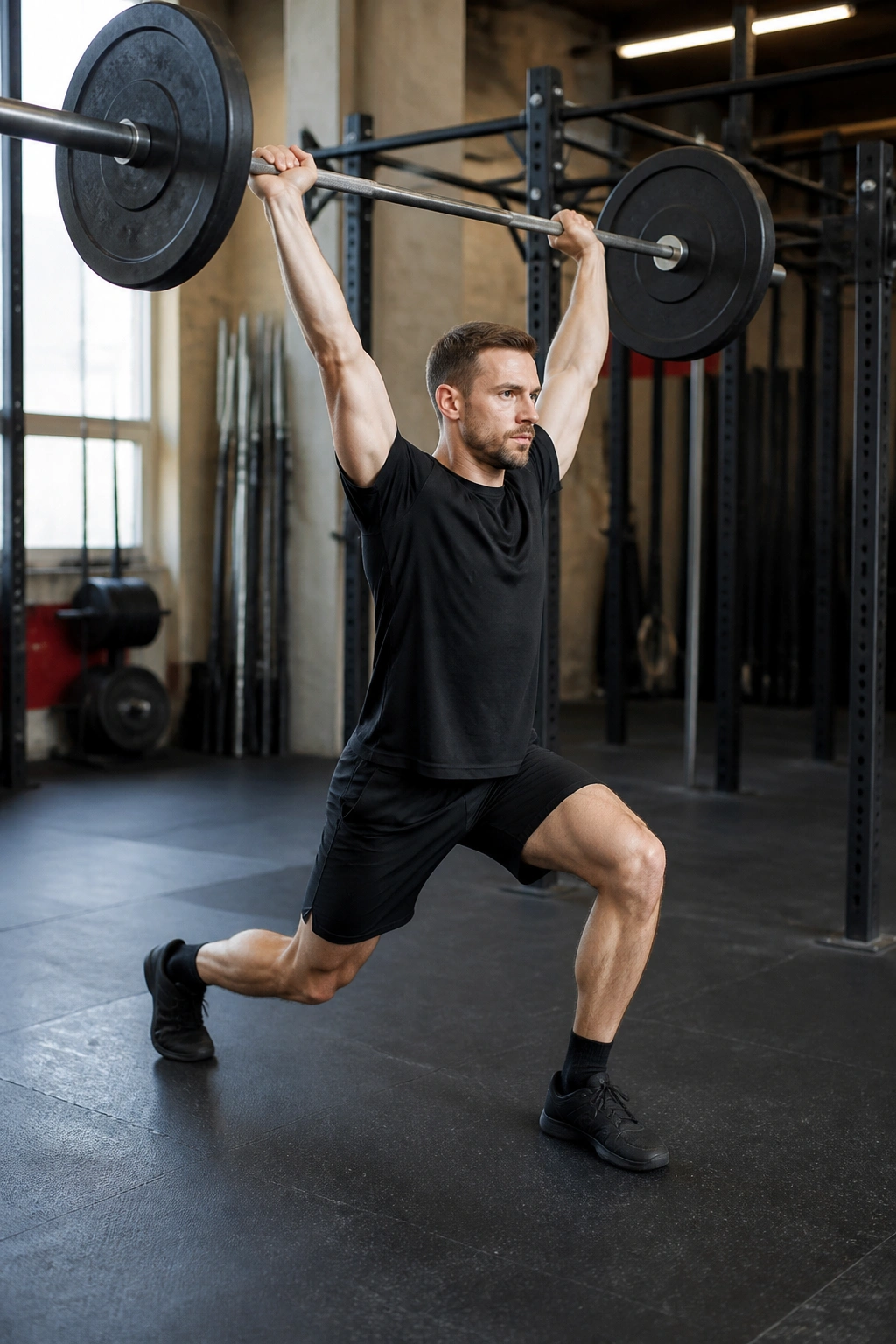
The split-squat (or lunge) is a staple for lower body strength. Combining it with an overhead position adds a layer of complexity that challenges your balance in a sagittal plane.
This variation, often called an overhead lunge or split-overhead squat, is excellent for identifying imbalances between your left and right legs. If you wobble on one side but not the other, you have identified a significant stability gap that needs addressing.
How to set it up:
- Start in a split stance, one foot forward, one foot back.
- Press the weight overhead.
- Lower your back knee toward the floor, keeping the torso vertical.
- Push through the front heel to return to the start.
17. Overhead Squat with Med Ball
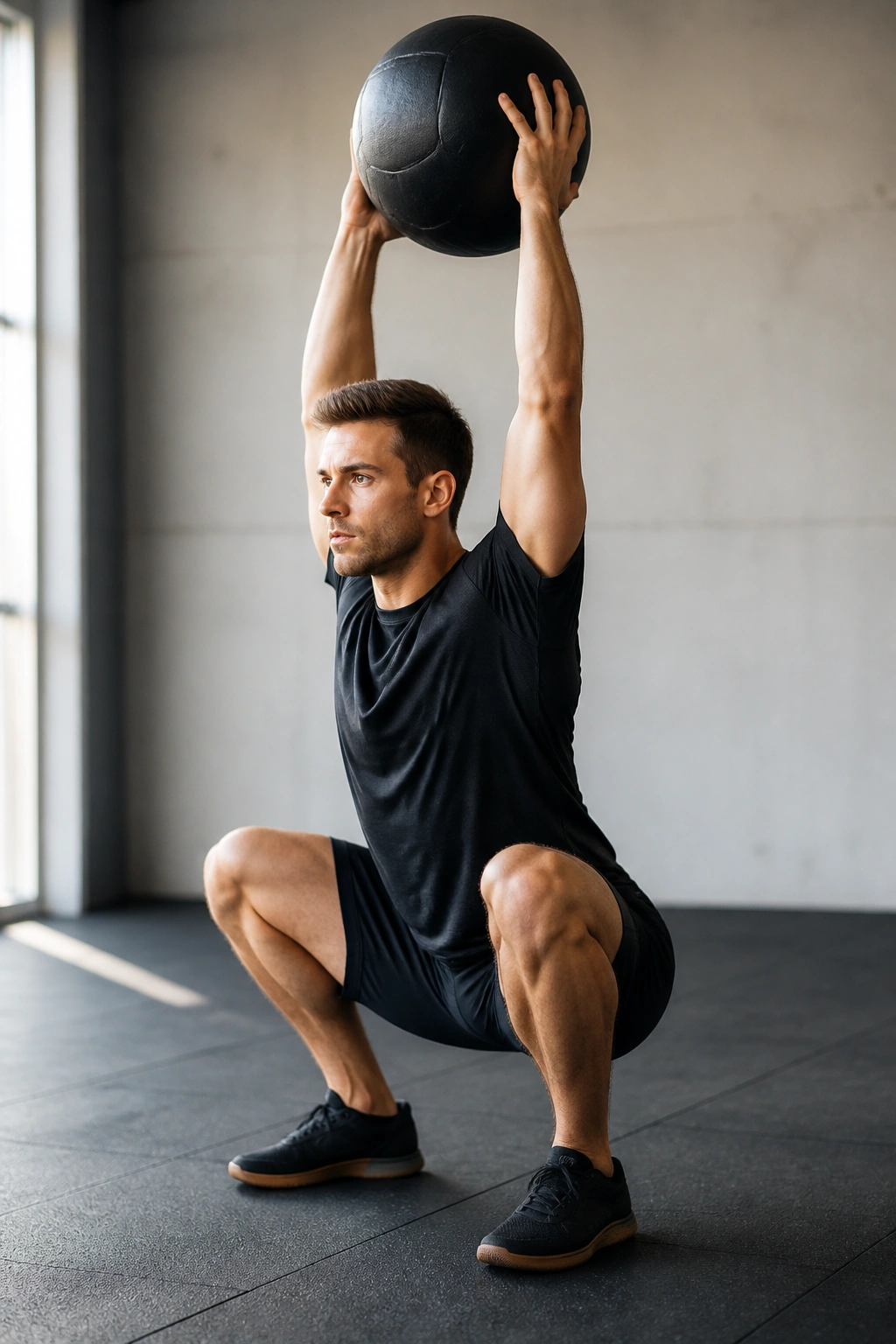
Holding a medicine ball overhead is an excellent way to learn the correct “width” for your overhead position. Unlike a barbell, which allows for a very wide grip, a medicine ball forces your hands to stay shoulder-width apart.
This is a fantastic drill for thoracic spine extension. If you can hold a medicine ball overhead and squat, you are forcing your upper back to stay open and extended. If you round your back, the ball will drop forward. It provides immediate, physical feedback.
If you struggle with this, try using a lighter ball. The weight matters less than the position. You want to feel your lats stretching and your chest opening up as you descend.
18. Overhead Squat with Chains
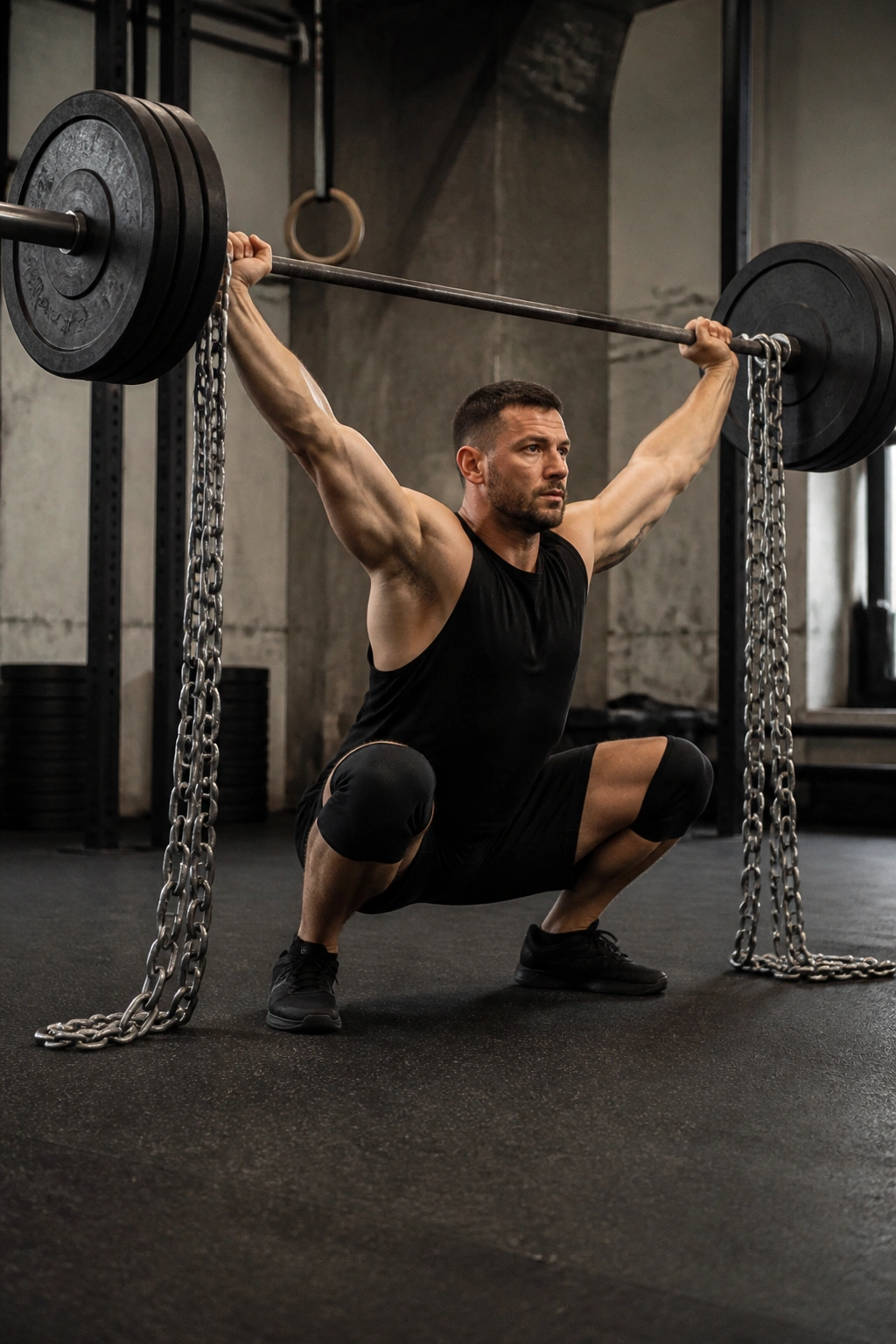
Chains are the ultimate visual indicator of your movement speed. If you squat too slowly, you don’t get the benefit of the chain tension. If you squat too fast but lose your balance, the chains will swing and pull you all over the place.
They force stability. Because the chains are constantly shifting, you have to adjust your bracing and your balance on the fly. It is a more dynamic, “live” load than plates. This is for the athlete who has mastered the barbell and wants to take their stability to the next level.
Tip: Don’t let the chains swing excessively. Your goal is to move the bar with enough control that the chains move smoothly. If they are clanking around wildly, you have lost control of the tempo.
19. Single-Leg Overhead Squat
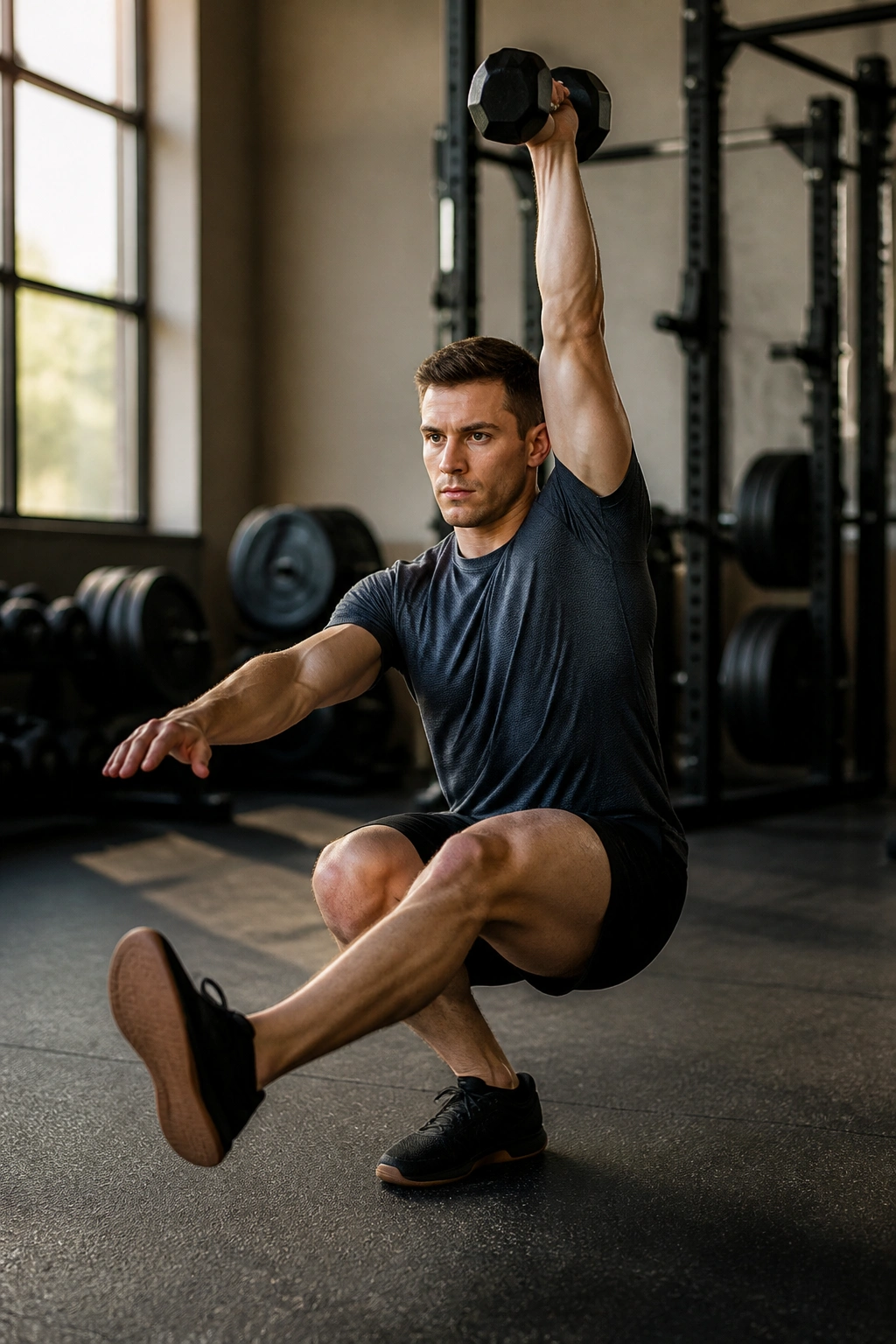
This is the final boss of lower body mobility and stability. A single-leg overhead squat (often called a pistol squat variation with weight overhead) requires an immense amount of ankle dorsiflexion, hip stability, and core strength.
Do not attempt this unless you have a rock-solid standard overhead squat and a decent single-leg pistol squat. It is a high-skill movement.
The setup:
- Stand on one leg, extending the other out in front of you.
- Hold a light dumbbell or kettlebell overhead on the same side as the squatting leg.
- Lower yourself down, keeping your heel flat on the floor.
- This will teach you more about your imbalances in five reps than a month of leg press ever will.
20. Rotational Overhead Squat
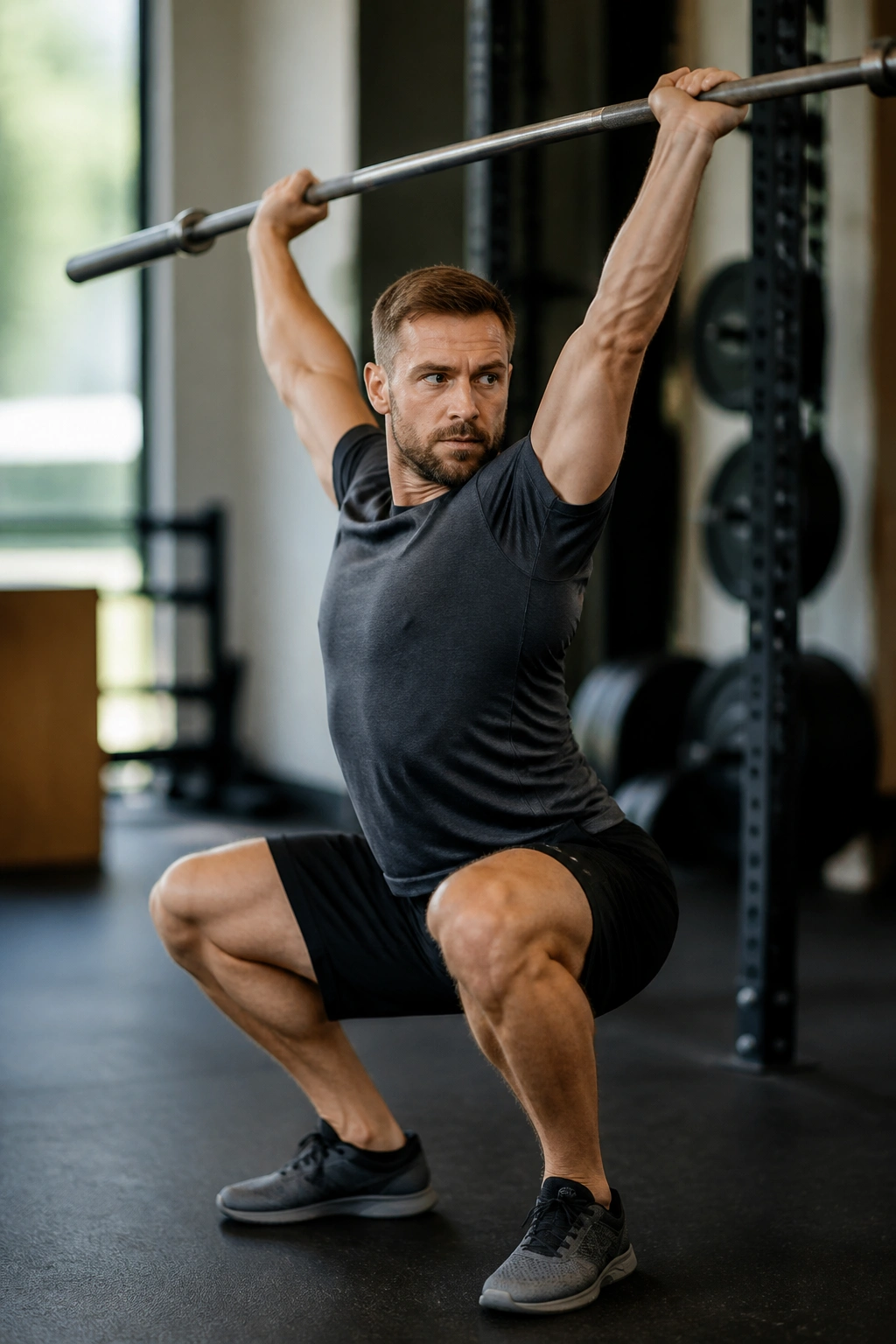
This is an advanced variation often used by athletes who need to train for movement in different planes. You perform a standard overhead squat, but as you stand up, you initiate a slight rotation of the torso.
This trains the core to handle load while rotating, which is how we move in the real world. You are not just squatting; you are squatting and then shifting your weight while maintaining an overhead load. It requires a high level of shoulder control and abdominal bracing.
Be careful with this one. Start with a very light weight. The goal is to move with grace, not to jerk the weight around. If you feel any sharp pain in your lower back, stop immediately. This movement is meant to be fluid, not forced.
Final Thoughts
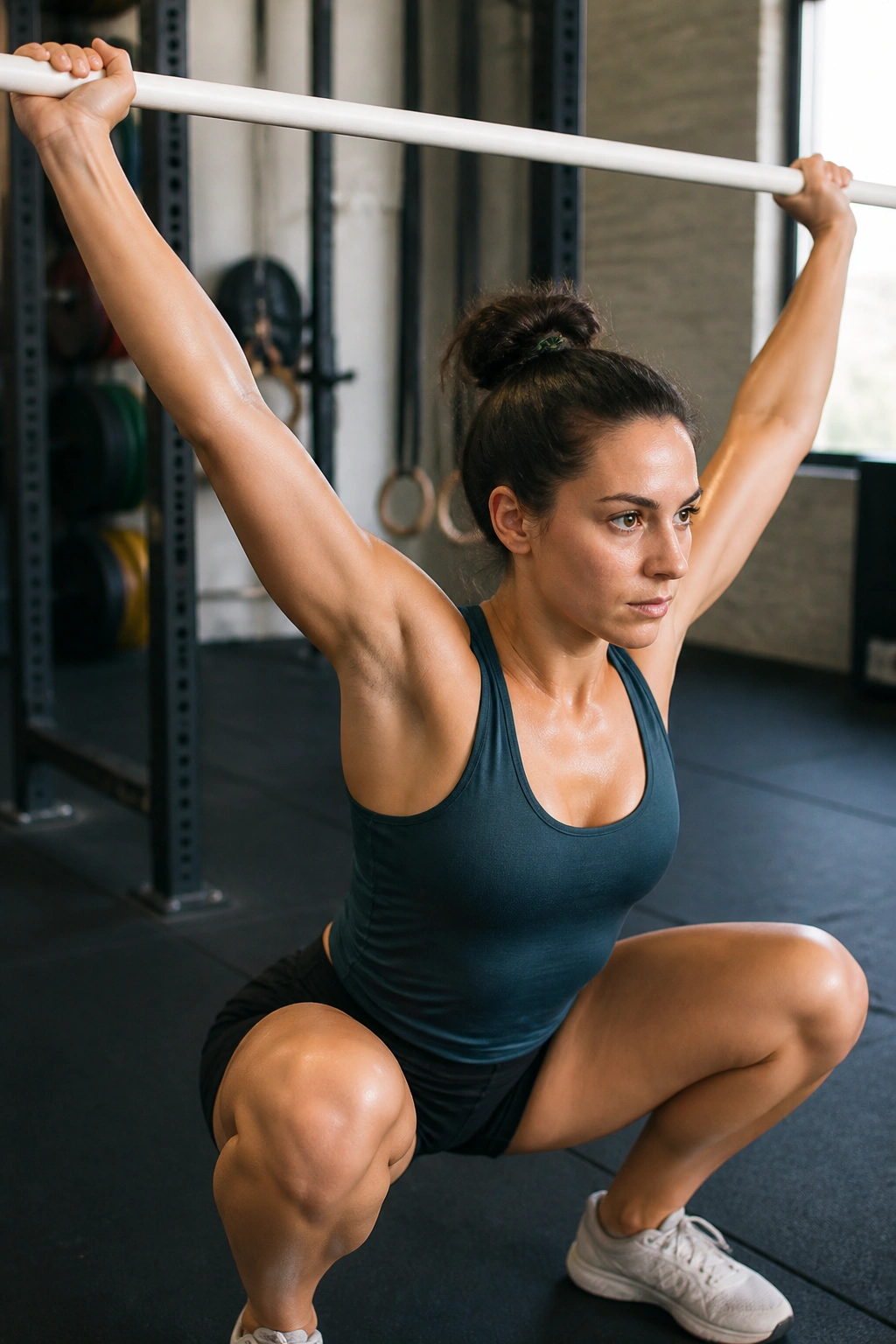
The overhead squat is a journey, not a destination. You might start with a broomstick, wobbling around your living room, feeling like you are about to fall over. That is fine. Every expert you see in the gym was once exactly where you are.
The goal is to focus on the quality of your movement over the amount of weight on the bar. If you can move beautifully with an empty bar, you have won the battle. Adding weight is just a way to reinforce that good movement. Stay patient, listen to your joints, and keep practicing the variations that challenge your specific limitations. Your body will thank you in the long run.
