



A hallway, a playlist, and a timer can turn a dull afternoon into a real sweat session. That’s the charm of home workouts for teen girls: they don’t need fancy gear, a big room, or a perfect schedule. They need movement that feels doable on a school night, on a lazy weekend, or on the kind of day when your brain wants a nap and your body needs a reset.
The best part is that home exercise doesn’t have to feel like punishment. It can be loud and bouncy, quiet and steady, short and spicy, or slow enough that you can do it in socks without waking the whole house. A good mix matters too. Cardio builds stamina, strength work helps with posture and muscle tone, and mobility keeps everything from feeling stiff after long hours sitting.
Teen bodies are still changing, which is why balance matters more than chasing one hard workout over and over. A smart routine mixes jumping, squatting, twisting, pushing, stretching, and a little bit of silliness. That last part helps more than people admit. If a workout feels like a game, you’ll come back to it.
1. Three-Song Dance Cardio Burst
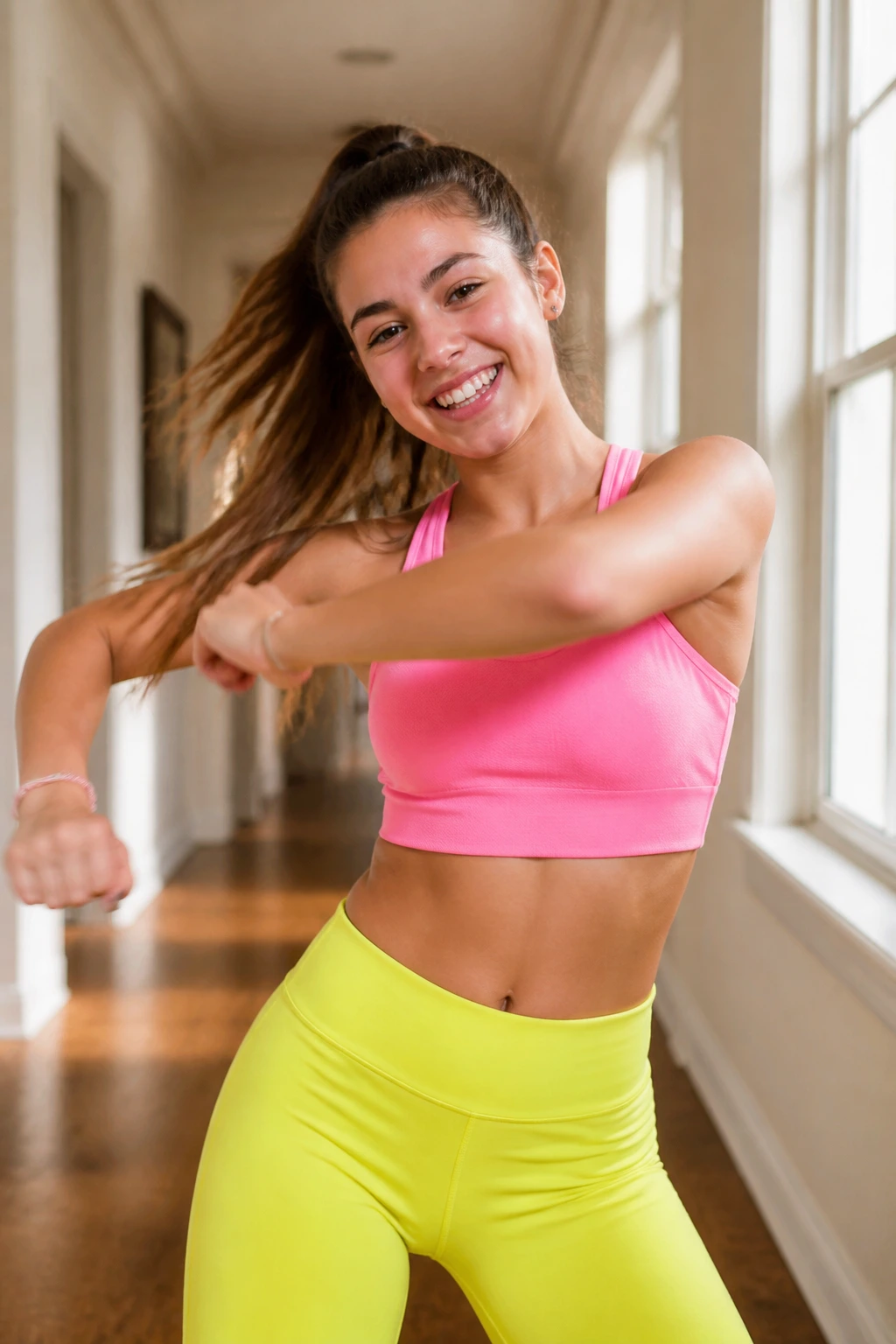
Put on three songs and let the music do the heavy lifting. This is one of the easiest workouts to start because there’s no “right” way to look; you’re just moving fast enough to warm up, grin, and maybe get out of breath by the second chorus.
How to keep it fun
Pick songs with a strong beat and give each one a job. One song can be all step-touches and arm swings, one can be knees-up and side steps, and one can be your “go bigger” track with jumping jacks or fast footwork.
- Length: 9 to 12 minutes
- Best move: keep your feet light and your knees soft
- Best trick: use the chorus as your sprint section
- Quiet version: march fast instead of jumping
Tip: If you freeze up when the music starts, pick one move and repeat it for the first 30 seconds. Once your body warms up, the awkwardness fades fast.
2. Invisible Jump Rope Intervals
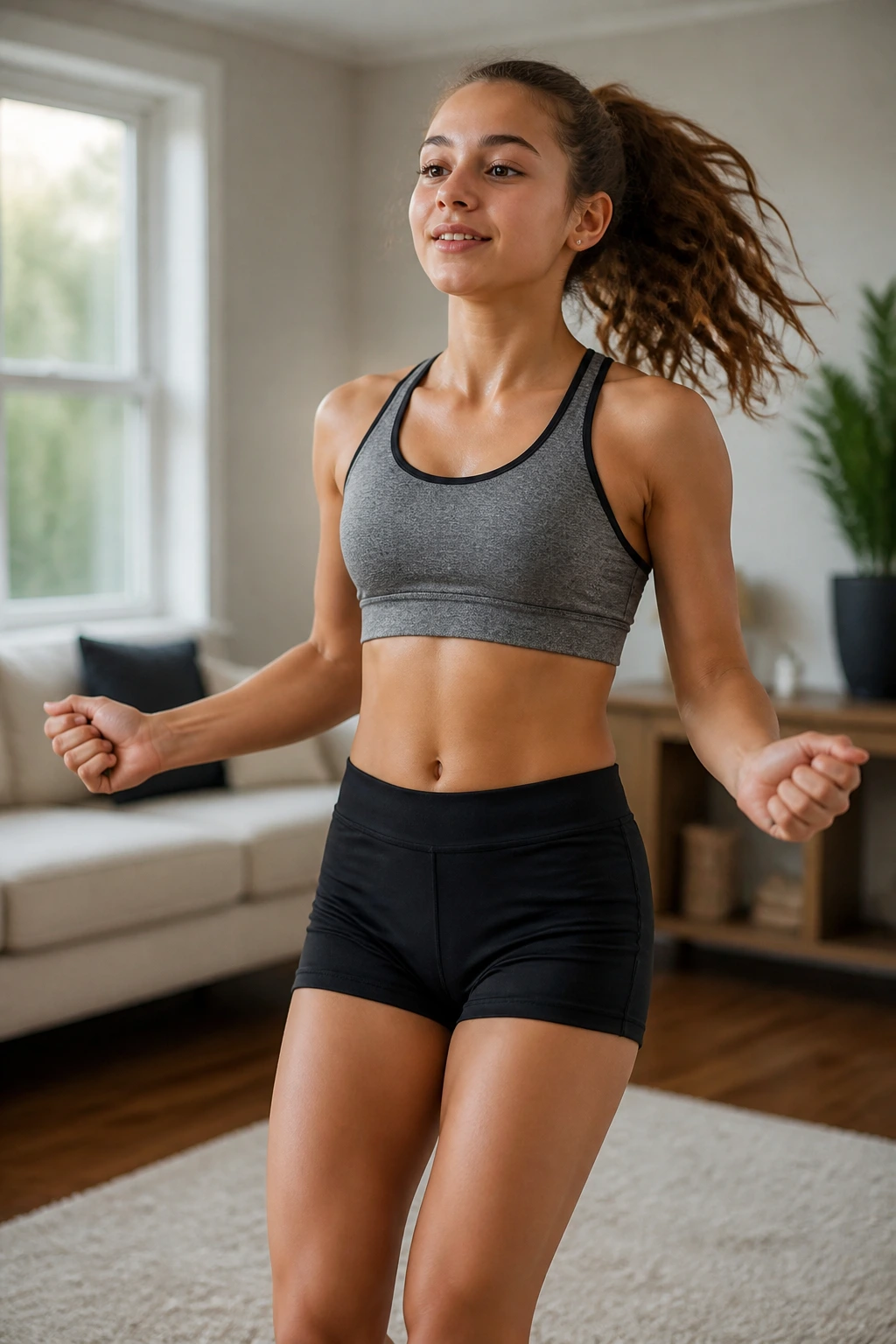
No rope? No problem. Fake jump rope works better than most people expect, and it’s especially good if you have a small room or a low ceiling. The rhythm feels playful, and your calves will know you meant business.
Try 30 seconds on, 30 seconds off, for 10 rounds. Start with a basic bounce, then switch to alternate-foot steps, boxer steps, and a few high-knee bursts if you want more speed. Land softly. That matters more than looking impressive.
What makes it work
You’re training coordination and foot speed at the same time, which is part of why this feels like a game instead of a chore. It also sneaks in cardio without needing much space.
Good shoes help here. Bare feet on a slippery floor can turn a cute idea into a bruise. Keep your jumps small, and don’t chase height.
3. The Squat Ladder Challenge
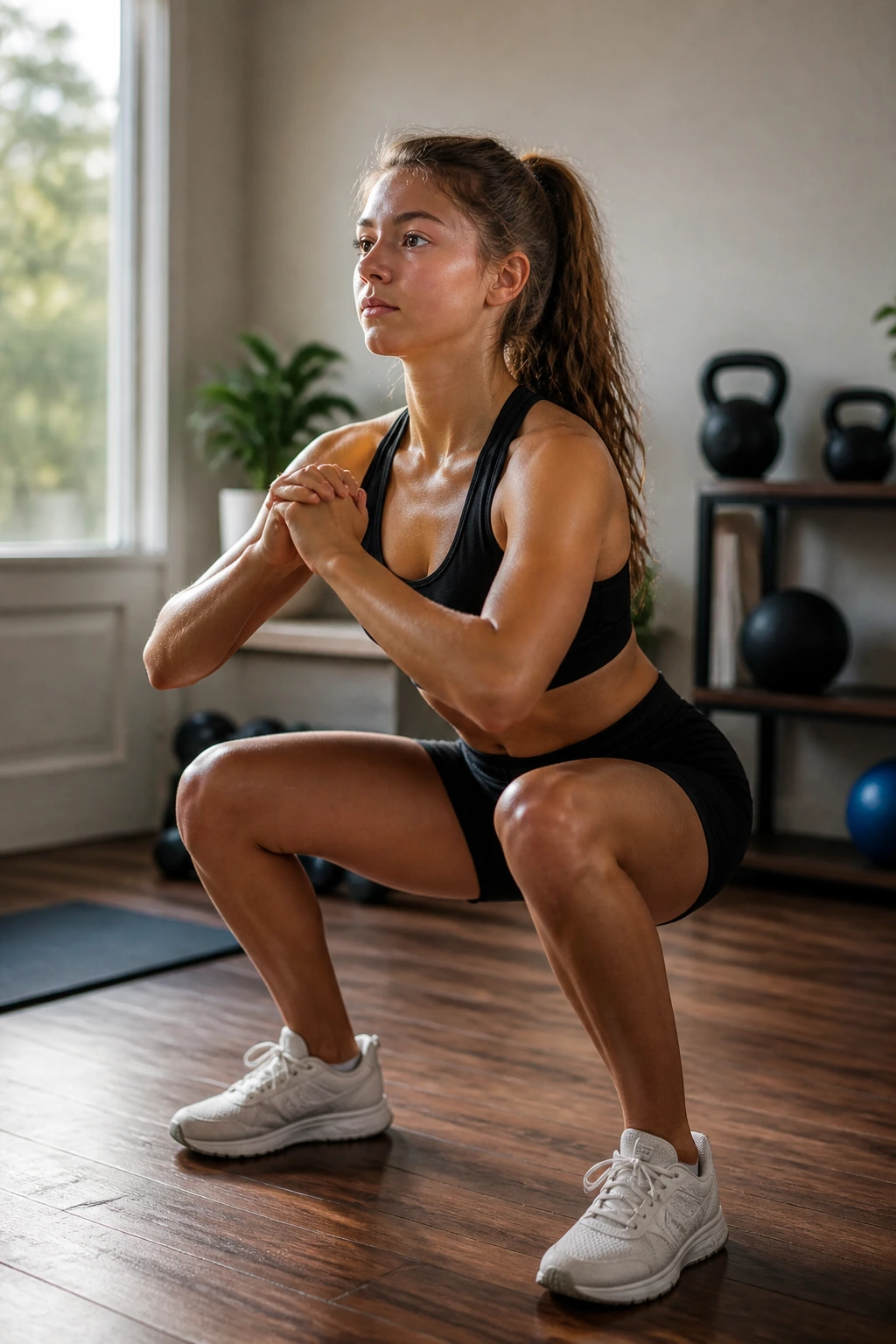
Squats are boring until you turn them into a ladder. Then they start feeling like a challenge you can beat, which is a much better deal.
Do 5 squats, then 10, then 15, then 10, then 5. If that feels too easy, add a 2-second pause at the bottom of each squat on the middle round. Keep your chest lifted, heels on the floor, and knees tracking in the same direction as your toes.
Why it earns its spot
Squats build your legs and glutes, sure, but they also teach control. That control shows up everywhere else, from stairs to sports to the way you carry a backpack.
A tiny tweak changes the whole thing: sit back like you’re reaching for a chair, not straight down like a robot. That one cue saves your knees and makes your hips work harder.
4. A 10-Minute HIIT Timer Round
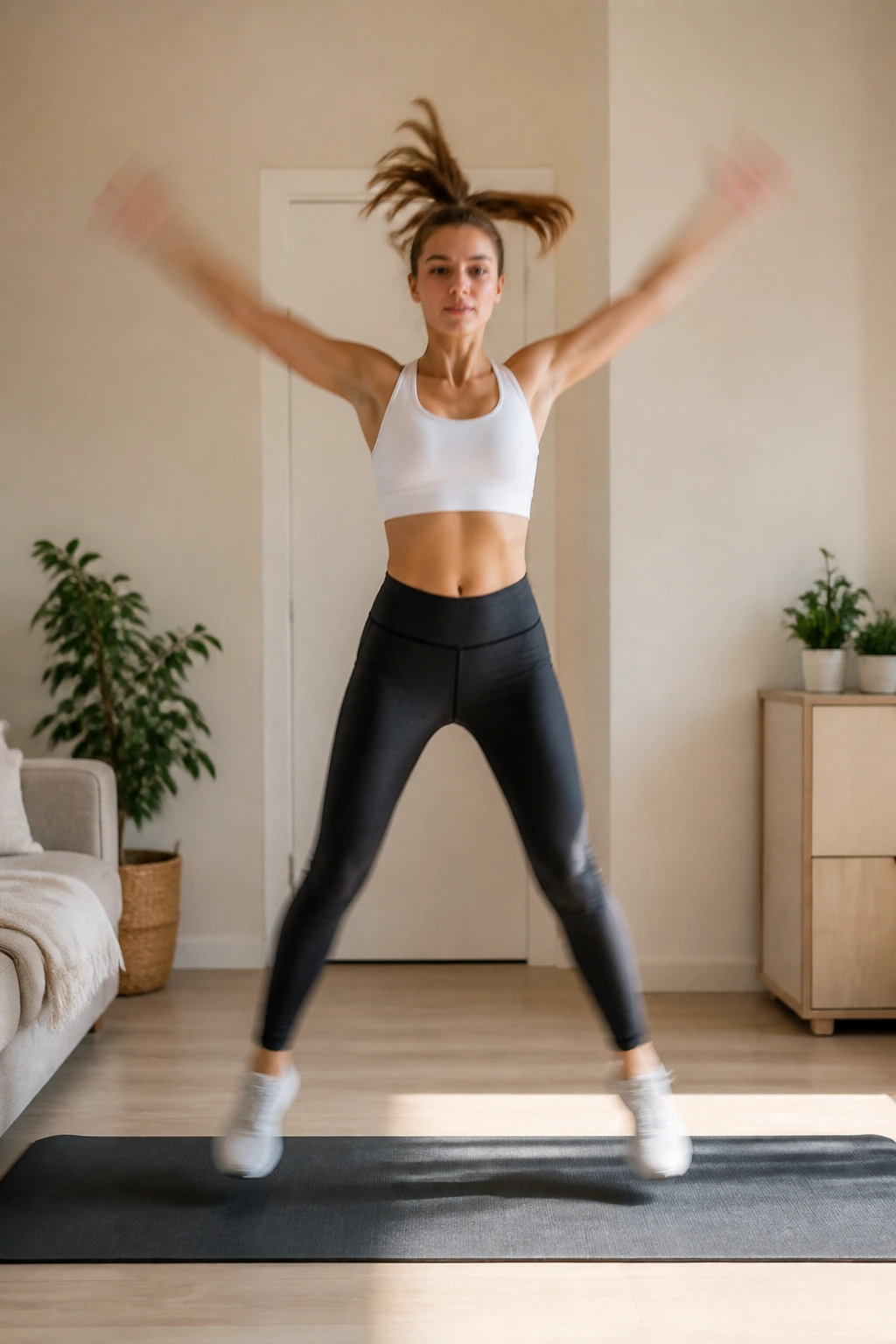
Can a tiny room handle real cardio? Absolutely. High-intensity intervals are tiny on purpose, and that’s why they work so well when you don’t have room to roam.
Set a timer for 40 seconds of work and 20 seconds of rest. Pick four moves — squat jumps, mountain climbers, skaters, and fast feet work nicely — then repeat the circuit twice. If you’re newer to exercise, swap jumps for step-backs and keep the pace brisk instead of frantic.
How the timer should feel
The work interval should feel a little uncomfortable by the end, but not sloppy. If your form falls apart before the clock changes, slow down.
Don’t turn it into a race. Fast and messy is not the goal. Strong and steady is. That’s the part that leaves you tired in a good way.
5. Yoga Flow With Strong Poses
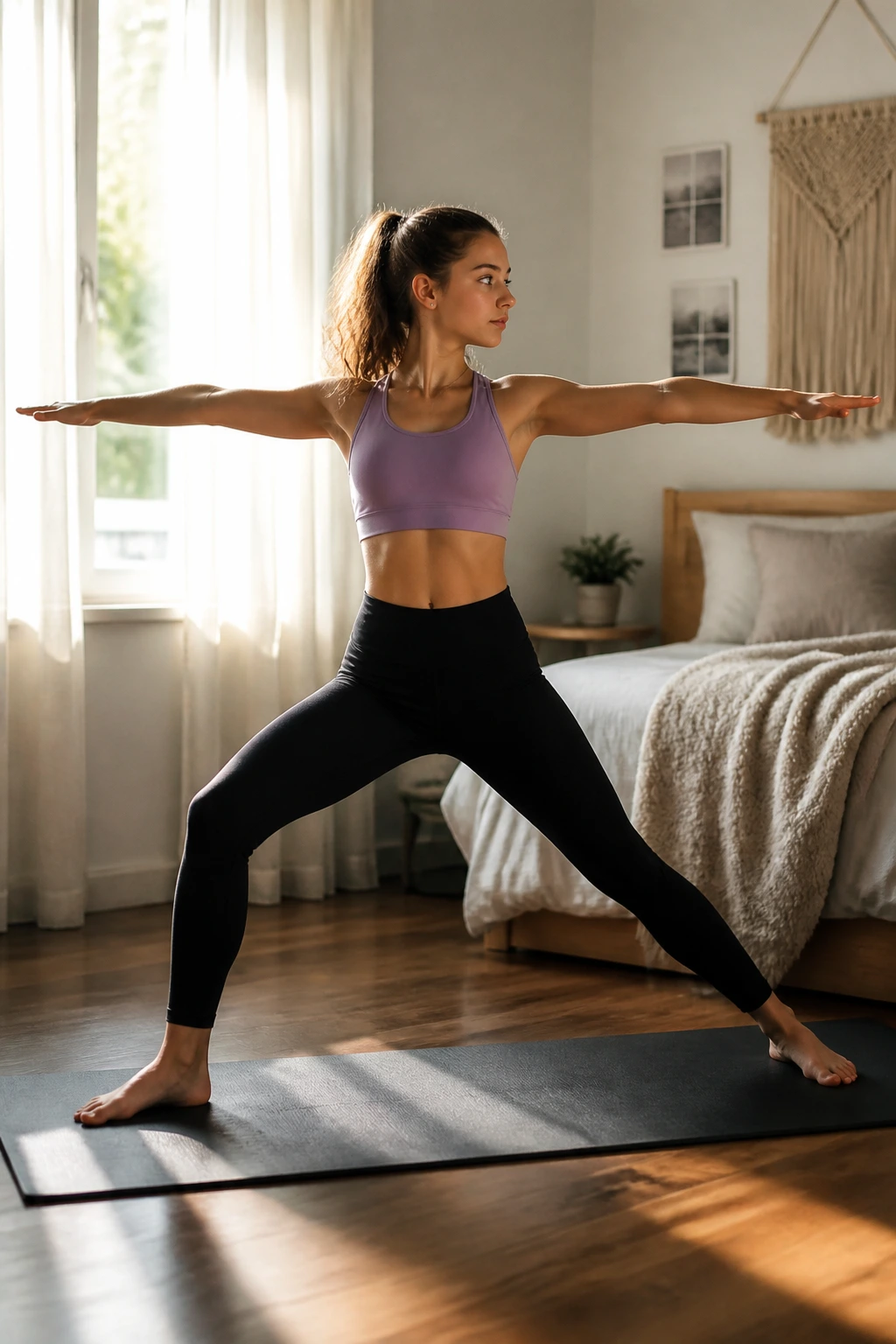
Yoga gets written off as “just stretching” all the time, and that misses the fun part. A good flow can make your legs shake a little, your shoulders wake up, and your brain calm down enough to stop buzzing.
Start with cat-cow, move into downward dog, step forward into a low lunge, then hold warrior II, chair pose, and a short plank. Spend 20 to 30 seconds in each position, or move with the breath if that feels better. The real magic is in slow transitions. Those little in-between moments work your balance more than people expect.
Why this one sneaks up on you
You’re not jumping around, but your muscles still have to hold shape. That’s the part that makes yoga feel peaceful and challenging at the same time.
A mat helps, though a folded towel works if your floor is hard. And yes, shaking is normal.
6. Pilates Core Stack
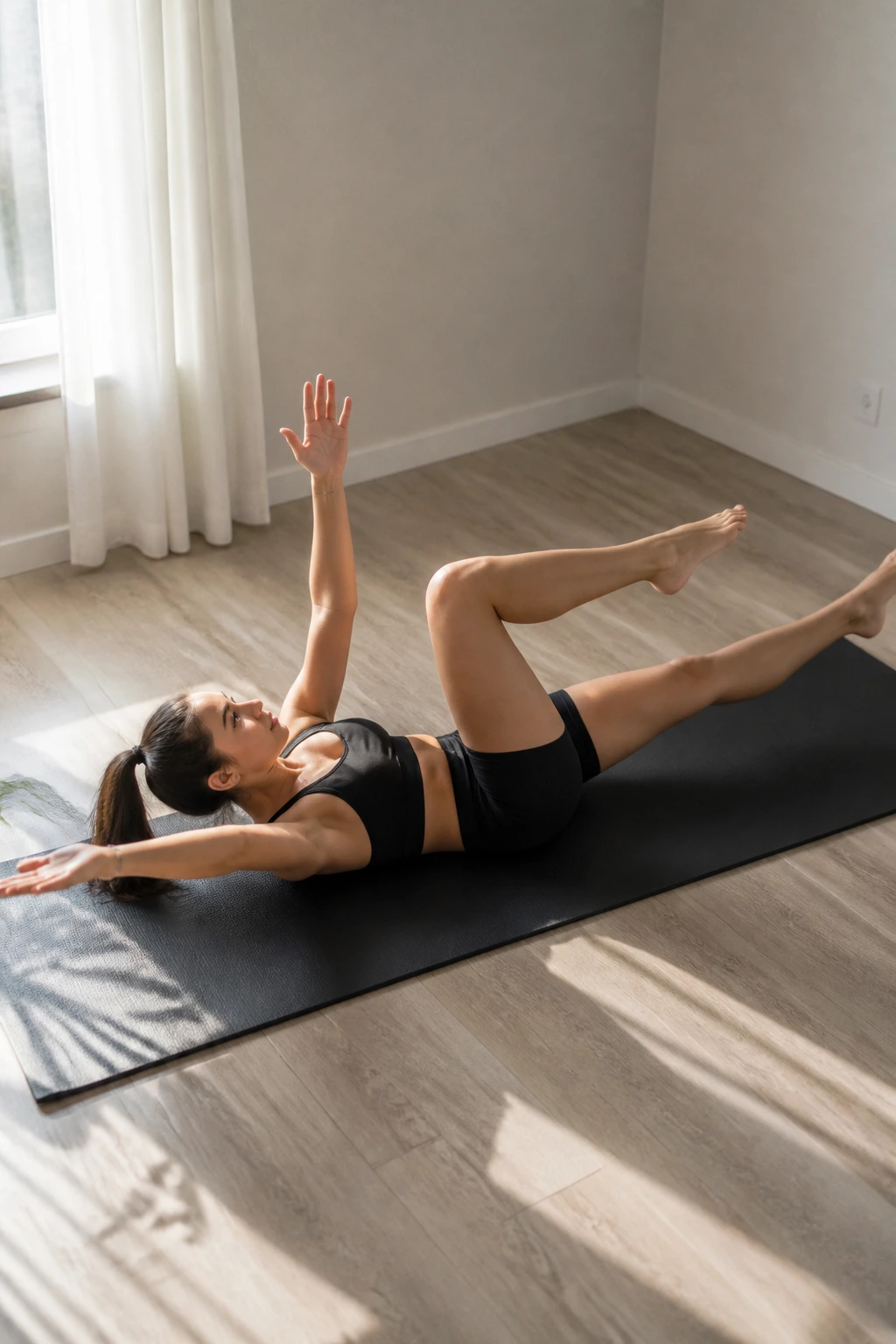
Pilates is the workout you choose when you want your midsection to feel awake without a single burpee in sight. It’s controlled, a little sneaky, and far more demanding than it looks on screen.
Try dead bugs, toe taps, single-leg stretch, and a short forearm plank. Go slow. That matters. Eight clean reps done at a controlled pace usually beat twenty rushed ones with your lower back arching and your neck tensing up.
What to watch for
Your ribs should stay tucked, your chin relaxed, and your lower back heavy on the floor during the floor moves. If your back starts popping off the mat, shorten the range.
Keep the moves small. Tiny leg extensions with good form are tougher than giant swings with sloppy control. That’s not me being dramatic. That’s just how the core works.
7. Stair Sprints and Walk-Backs
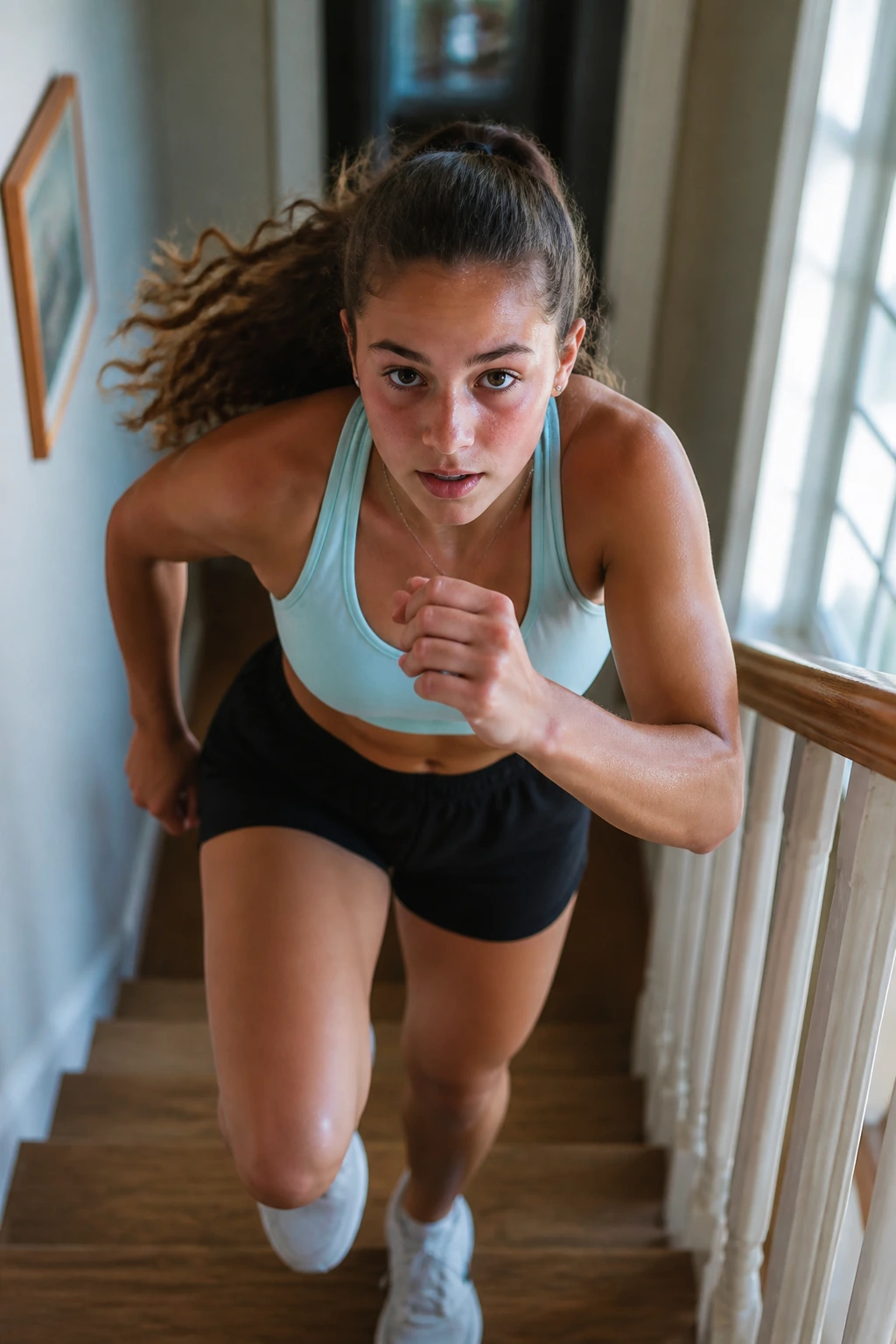
Stairs are rude in the best way. They never pretend to be easy, and they don’t need any equipment to make your legs complain.
If the stairs in your home are safe, clear, and not slippery, try 20 seconds of quick climbs followed by a slow walk back down. Do 6 to 10 rounds. Keep one hand near the rail, especially on the way down, and wear shoes with grip. The climb should feel energetic; the descent should feel careful.
Why this one is different
Stairs hit your glutes, calves, and lungs at once. You feel it fast, which is part of why the workout stays interesting.
If you share the house, keep the volume down and skip the sprint if people are sleeping nearby. A fast climb is enough. You do not need to leap like a cartoon hero.
8. Wall Sit and Wall Push-Up Combo
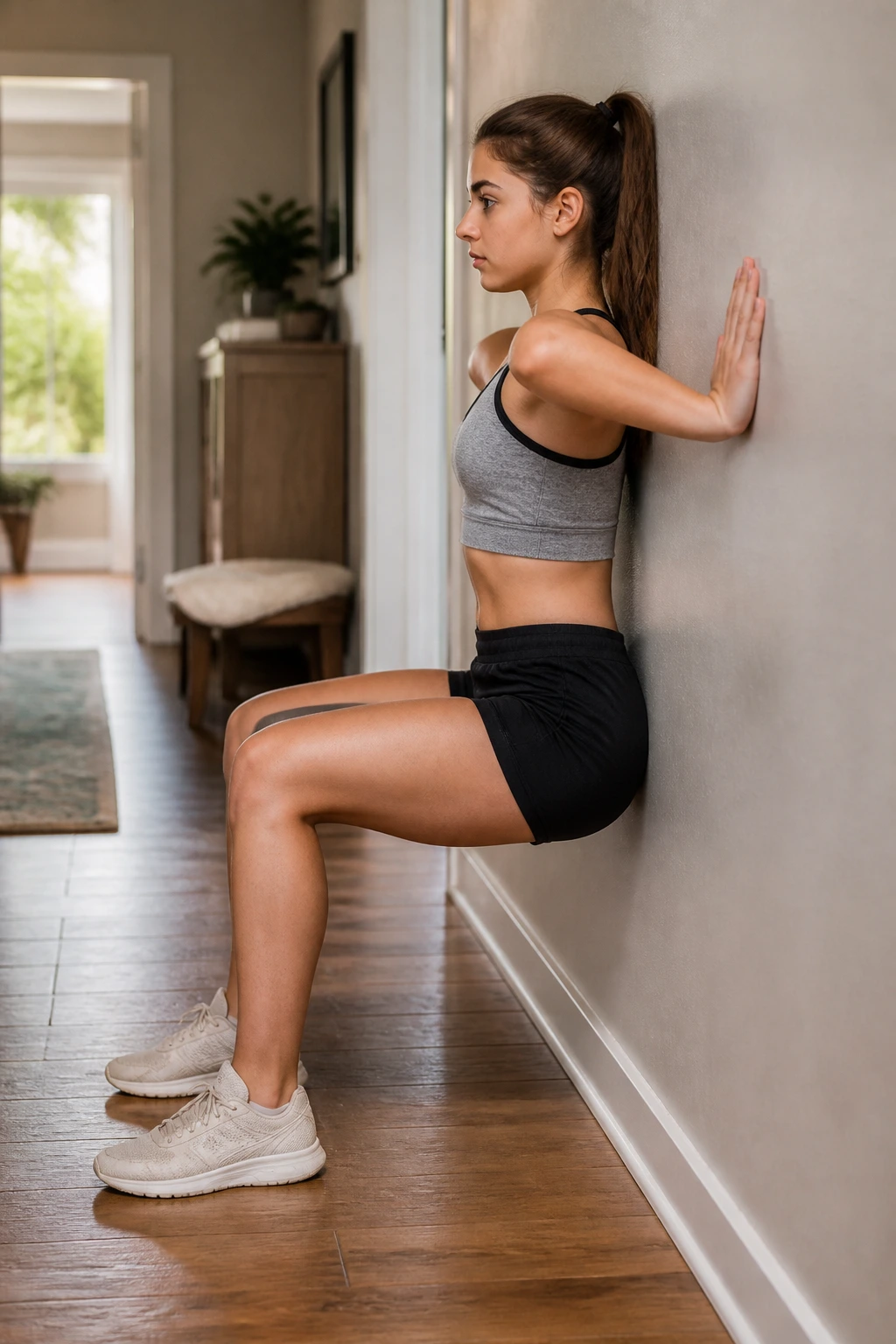
The wall is one of the most underused pieces of fitness equipment in a house. It doesn’t wobble, it doesn’t cost money, and it will humble you fast.
Do a 30-second wall sit, then 10 to 15 wall push-ups, then rest 30 seconds. Repeat for 3 to 4 rounds. If wall sits feel easy, lower your thighs until they’re close to parallel with the floor. If wall push-ups feel too simple, step your feet farther back.
A small but useful detail
Keep your lower back pressed gently into the wall during the sit. If your knees start caving inward, widen your stance a little.
This workout is handy when you want strength work without lying on the floor or making a mess of the living room. Clean, simple, effective. Sometimes that’s enough.
9. Shadow Boxing Rounds
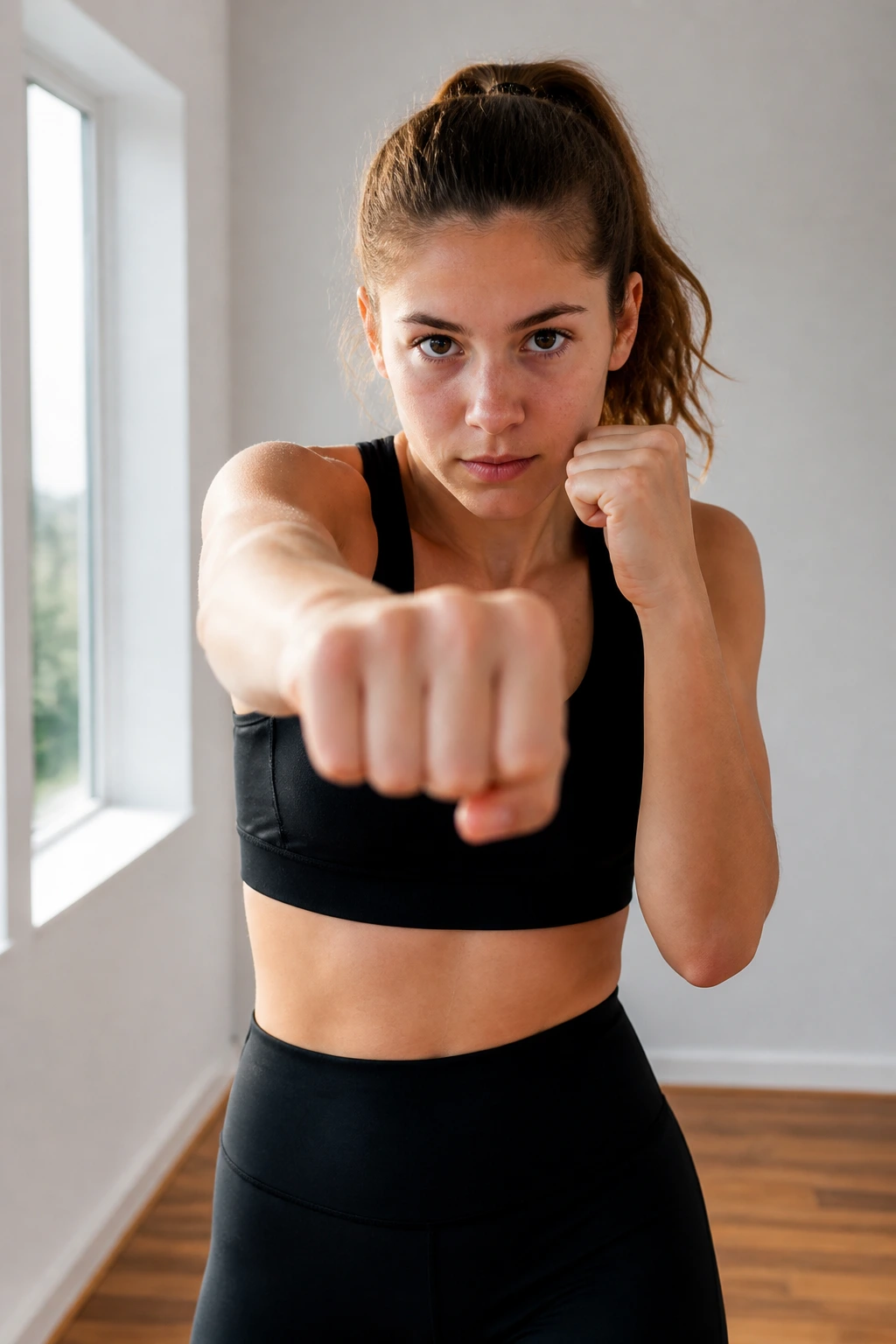
Shadow boxing is what happens when cardio meets a little attitude. You’re punching the air, sure, but you’re also training coordination, timing, and core control.
Set a timer for 2 minutes on, 30 seconds off, and go for 4 to 6 rounds. Throw jab-cross combos, add hooks, slip side to side, and pivot your feet between punches. Keep your fists relaxed until the moment of contact. Tight shoulders make this feel clunky.
How to make it feel less awkward
Use a mirror or face a blank wall if seeing yourself helps. A good playlist also changes the vibe fast. Suddenly you’re not “exercising”; you’re moving like you mean it.
Wrists straight, elbows in. That’s the part worth remembering. Punching sloppy can make your wrists sore, and nobody needs that from a home workout.
10. Glute Bridge Party
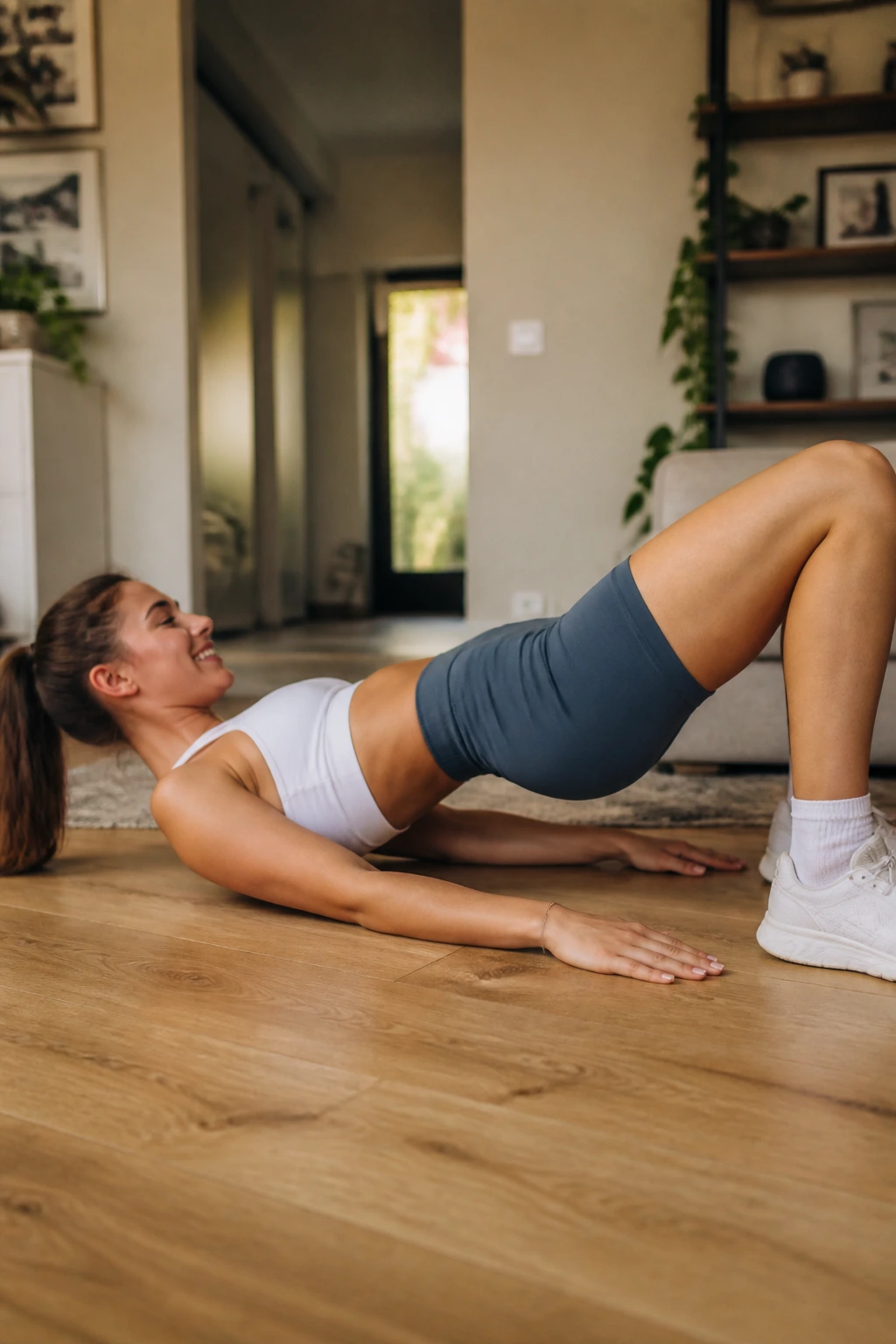
Why does something so small burn so fast? Because glute bridges catch your hips off guard, and your butt muscles notice every rep.
Lie on your back with your knees bent and feet flat. Lift your hips, hold for 2 seconds, then lower with control. After 10 bridges, add 10 bridge pulses, then try a bridge march where you lift one foot a few inches without dropping your hips. Two or three rounds is plenty to start.
Why this feels nicer than it sounds
Your lower back usually gets a break while your glutes and hamstrings take over. That makes this a good choice on days when jumping feels like too much.
If your feet are too far from your hips, you’ll feel it in the back of your legs. If they’re too close, your knees may feel crowded. A middle ground works best.
11. Low-Impact March-and-Reach Cardio
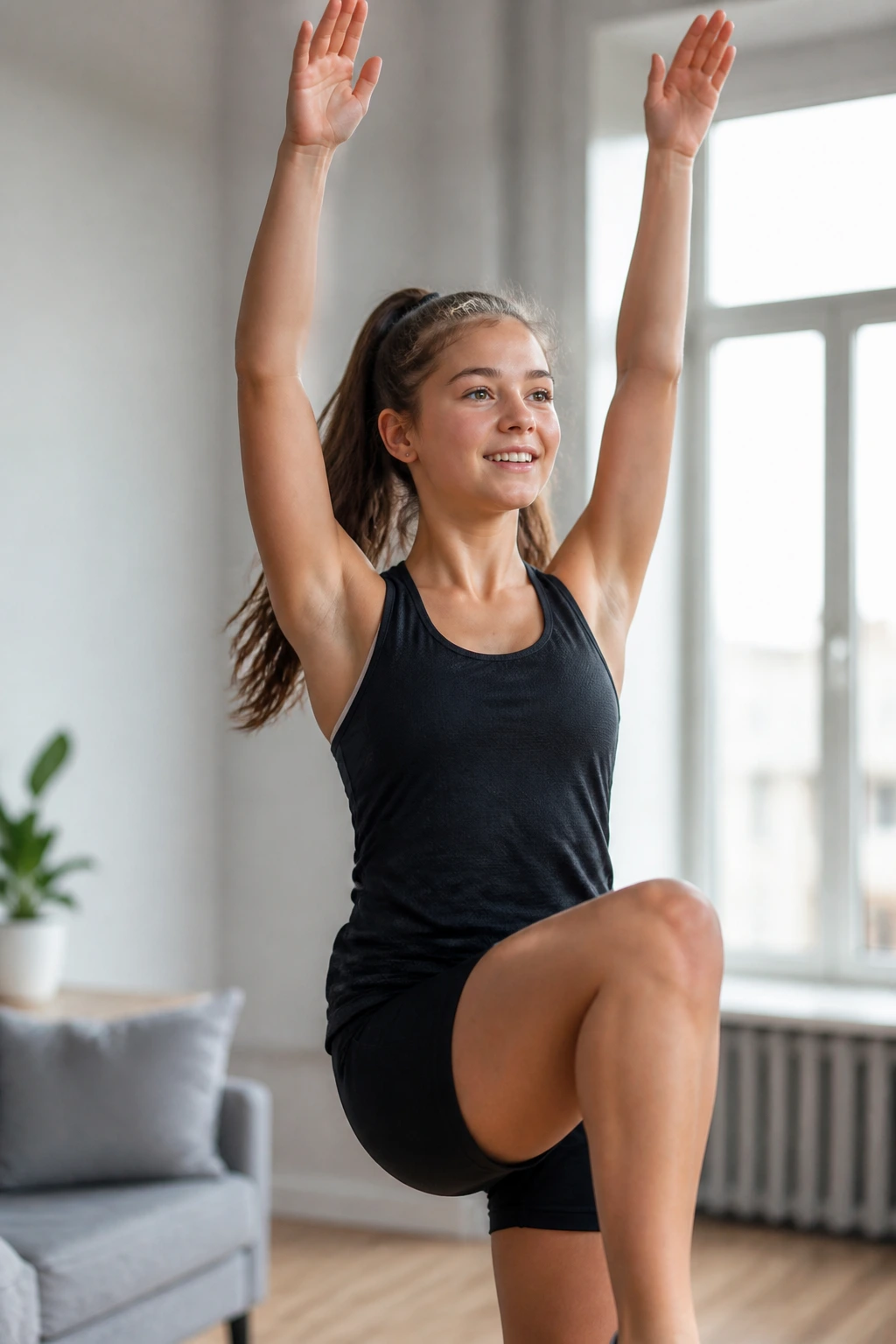
Low-impact cardio gets dismissed way too fast. It may be quiet, but it can still leave you breathing hard by the end of ten minutes.
March in place, lift your knees, and reach both arms overhead on every third or fourth step. Add side reaches, heel digs, and a few fast arm swings. Try 45 seconds on and 15 seconds off for 8 rounds. You can keep this workout almost silent, which makes it perfect for apartments, shared rooms, or late evenings.
Who this is for
Anyone who wants cardio without jumping will like this. Anyone coming back from a rough day, a sore ankle, or plain old fatigue may like it even more.
One good cue: move with purpose, not speed alone. If your arms stay lazy, the workout feels smaller than it should.
12. Skater Steps and Side Shuffles
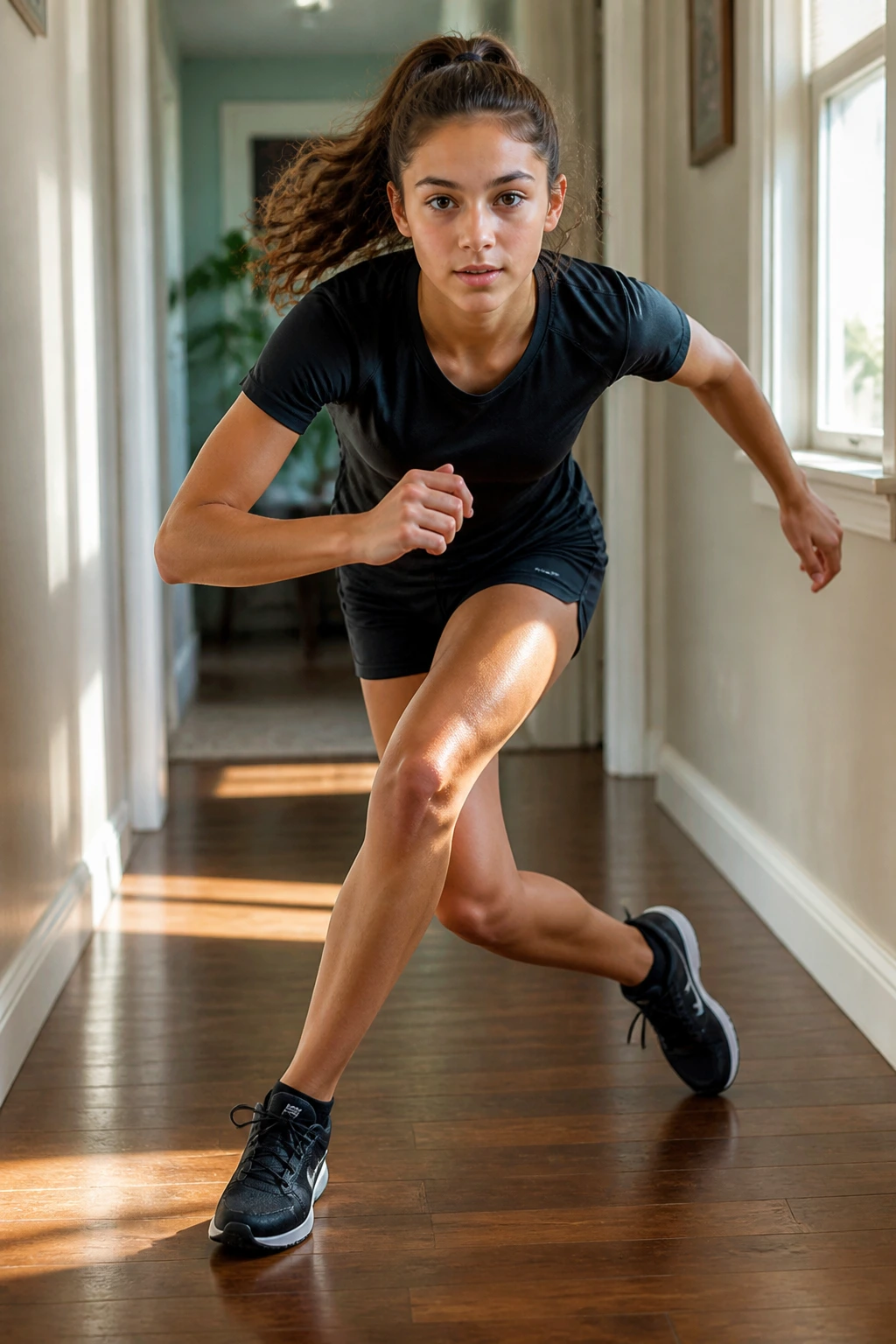
If you’ve ever watched someone skate across the floor and thought, “I could do that,” this one is for you. Skater steps are quick, side-to-side, and weirdly fun once your rhythm clicks.
Step or hop to the right, swing the left leg behind, then switch directions. Add side shuffles between skaters if you want more foot speed. Aim for 45 seconds of work, 15 seconds of rest, for 6 to 8 rounds. Stay low in your hips. That low stance is what makes it feel athletic instead of random.
The part that matters
Land softly and keep your chest from tipping too far forward. You want power in your legs, not a face-plant because you got excited.
This workout pairs well with music that has a sharp beat. The rhythm helps your feet stay honest.
13. The Tabata Timer Game
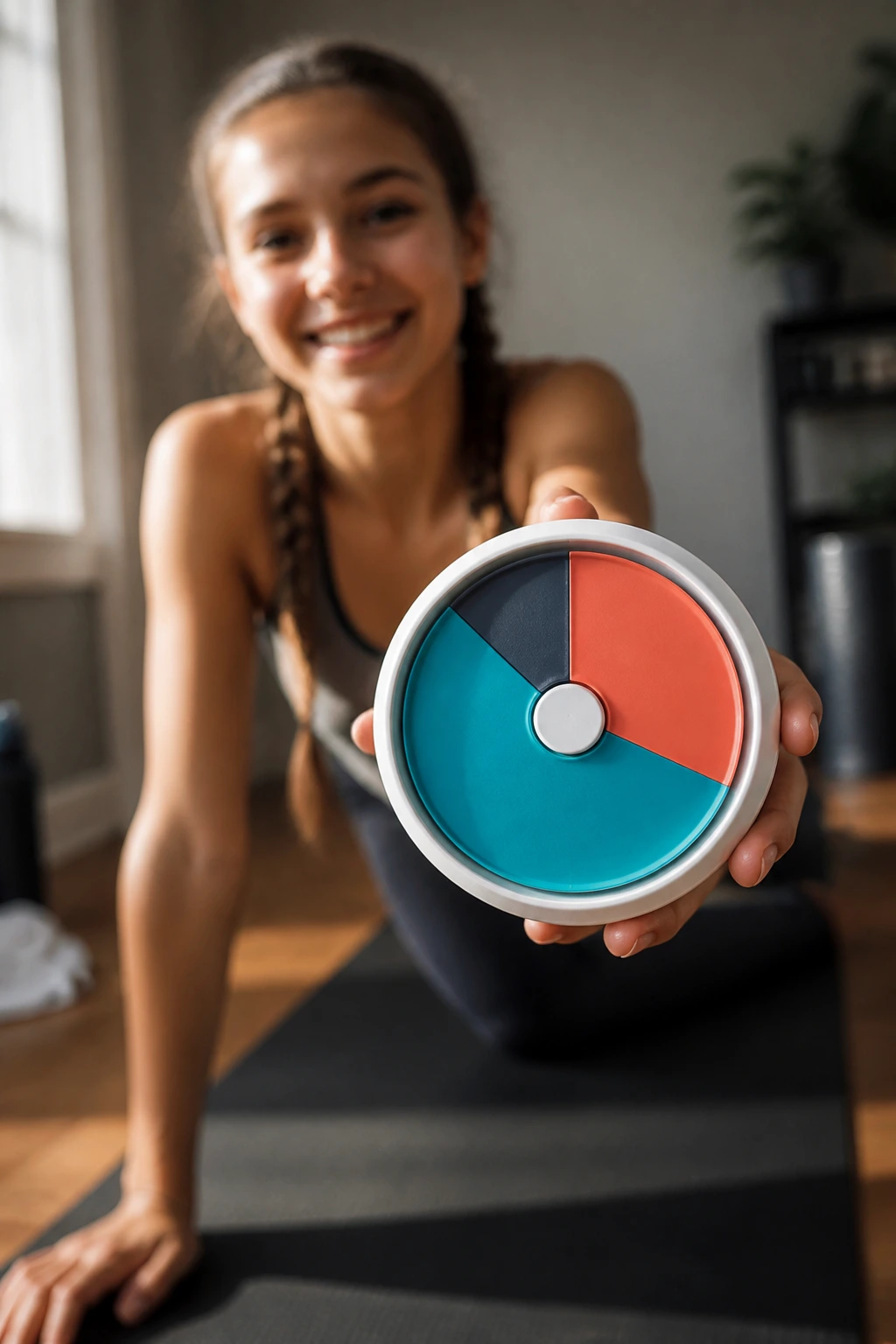
A Tabata block is only 4 minutes long, which sounds almost suspicious. Then the final 20 seconds hits, and suddenly you respect it.
Choose four moves and do 20 seconds on, 10 seconds off, repeating each move four times. A classic set might be squat jumps, mountain climbers, high knees, and plank taps. If one move feels too hard, swap in marching, step-backs, or a dead-bug version. The goal is intensity with control, not chaos.
How to make the clock less scary
Treat the timer like a game show buzzer. When it starts, go. When it stops, breathe and reset. That tiny structure helps.
Two rounds is enough if you’re new. You don’t need to prove anything to make it count.
14. The Plank Ladder Challenge
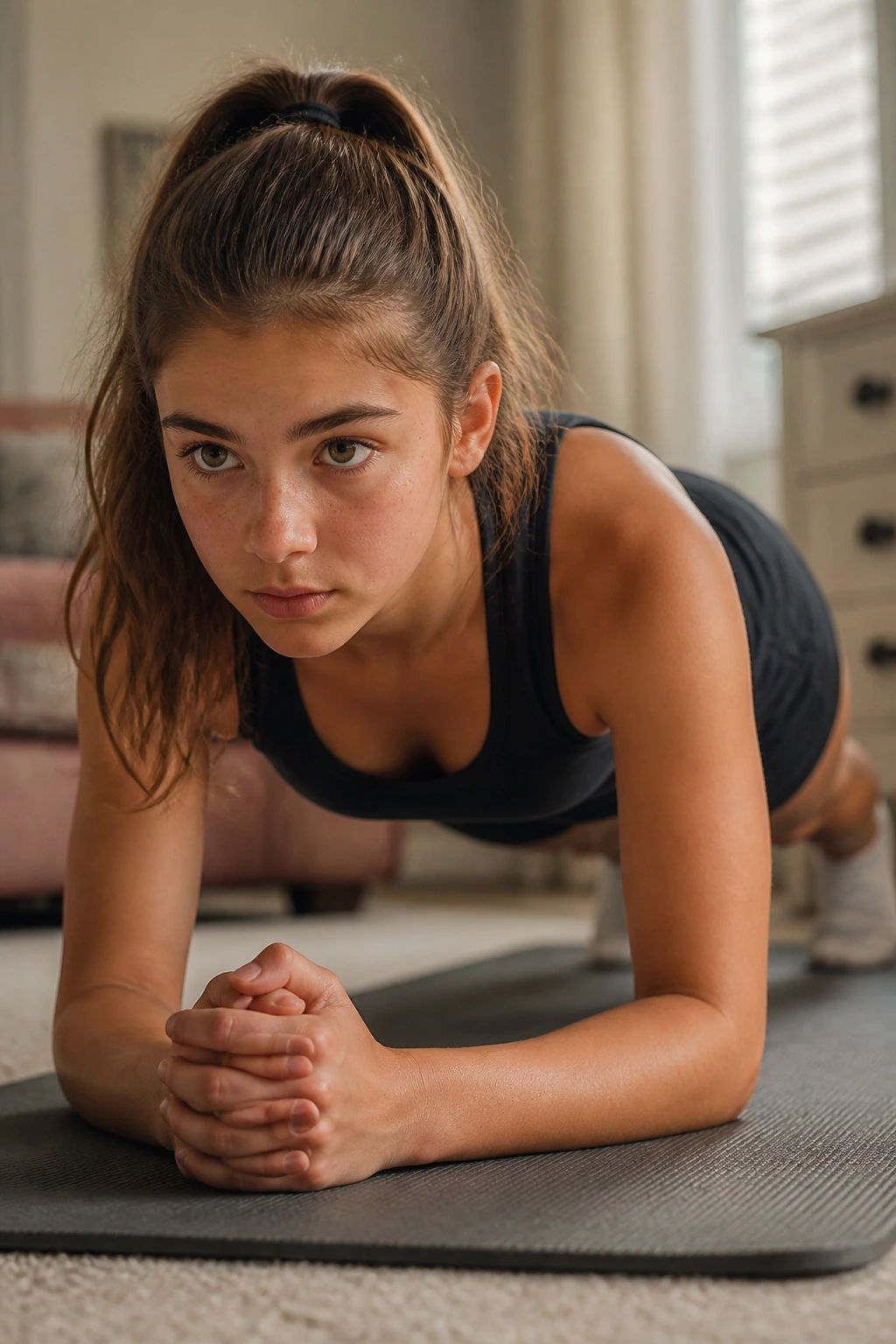
Planks are annoying in the same way a long line is annoying: they’re simple, but you feel every second of them. That’s also why they’re so useful.
Start with a 15-second forearm plank, rest, then 20 seconds, then 25. After that, switch to high plank, shoulder taps, and a side plank on each side. Keep your hips level and your ribs from flaring out. If your lower back sags, shorten the hold and clean up the form.
Why this one works so well
It trains your core without needing a hundred crunches. It also sneaks in shoulder and glute work, which is handy if you sit a lot during the day.
A one-sentence truth: good planks are quiet planks. If you’re bouncing all over the place, the hold is too hard.
15. Backpack Strength Circuit
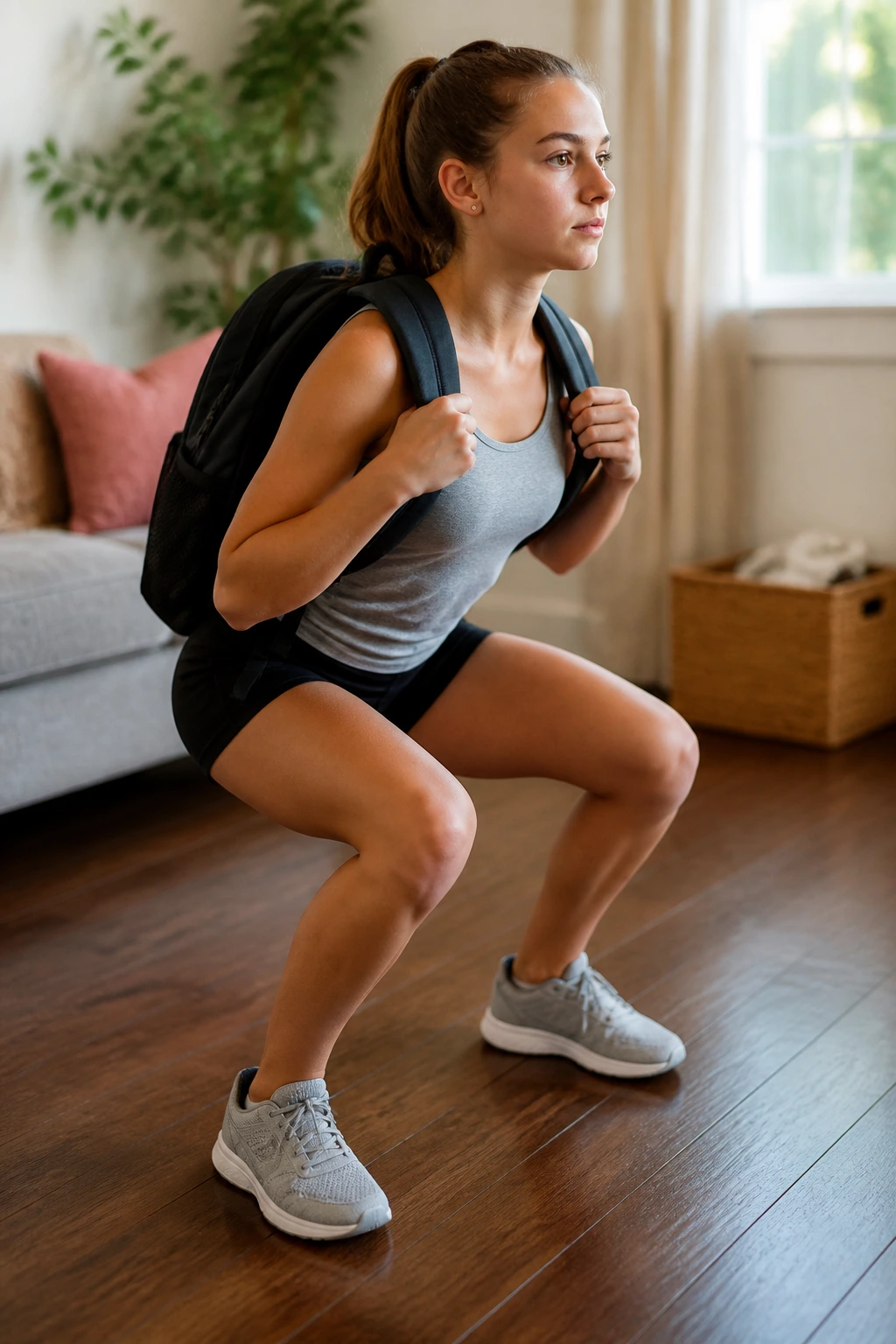
Unlike dumbbells, a backpack is already in the house, which makes it one of the easiest ways to add resistance without buying anything. Fill it with books, water bottles, or canned food, then keep the load modest at first.
Try backpack squats, bent-over rows, overhead presses, and a backpack deadlift. Do 8 to 12 reps of each for 3 rounds. The last three reps should feel heavy but still look clean. If the straps dig into your shoulders or you have to swing the bag around, it’s too much weight.
Why the backpack trick is smart
It gives your body a clear job. Bodyweight moves are great, but a little load changes the feel fast and makes your muscles pay attention.
Start lighter than you think. That’s not boring. That’s how you avoid sloppy form and a sore back.
16. Balance and Mobility Reset
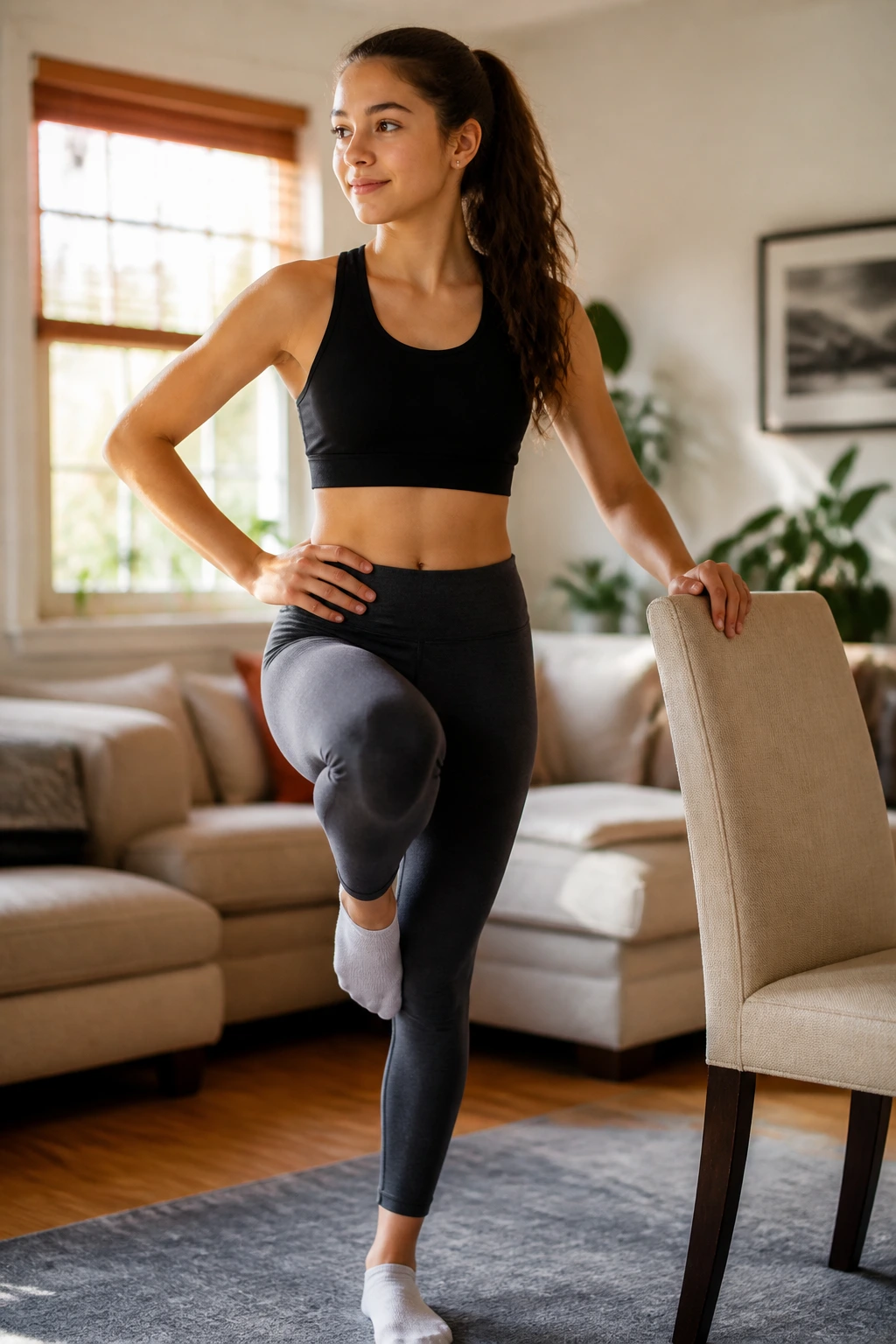
Not every workout needs sweat dripping off your nose. Some days, the better move is to keep your joints happy and your body awake.
Do single-leg reaches, ankle circles, hip openers, slow lunges, and a few controlled arm swings. Spend 30 seconds on each move and repeat the circuit twice. This works well after sports practice, after sitting too long, or on the kind of day when your legs feel stiff before you even start.
What makes it worth doing
Balance work forces your smaller stabilizer muscles to help out. Mobility work keeps your ankles, hips, and shoulders from feeling locked up. That matters more than most people think.
If you feel wobbly, use a wall or chair for support. Wobbly does not mean weak. It means your body is learning.
17. Water Bottle Upper-Body Flow
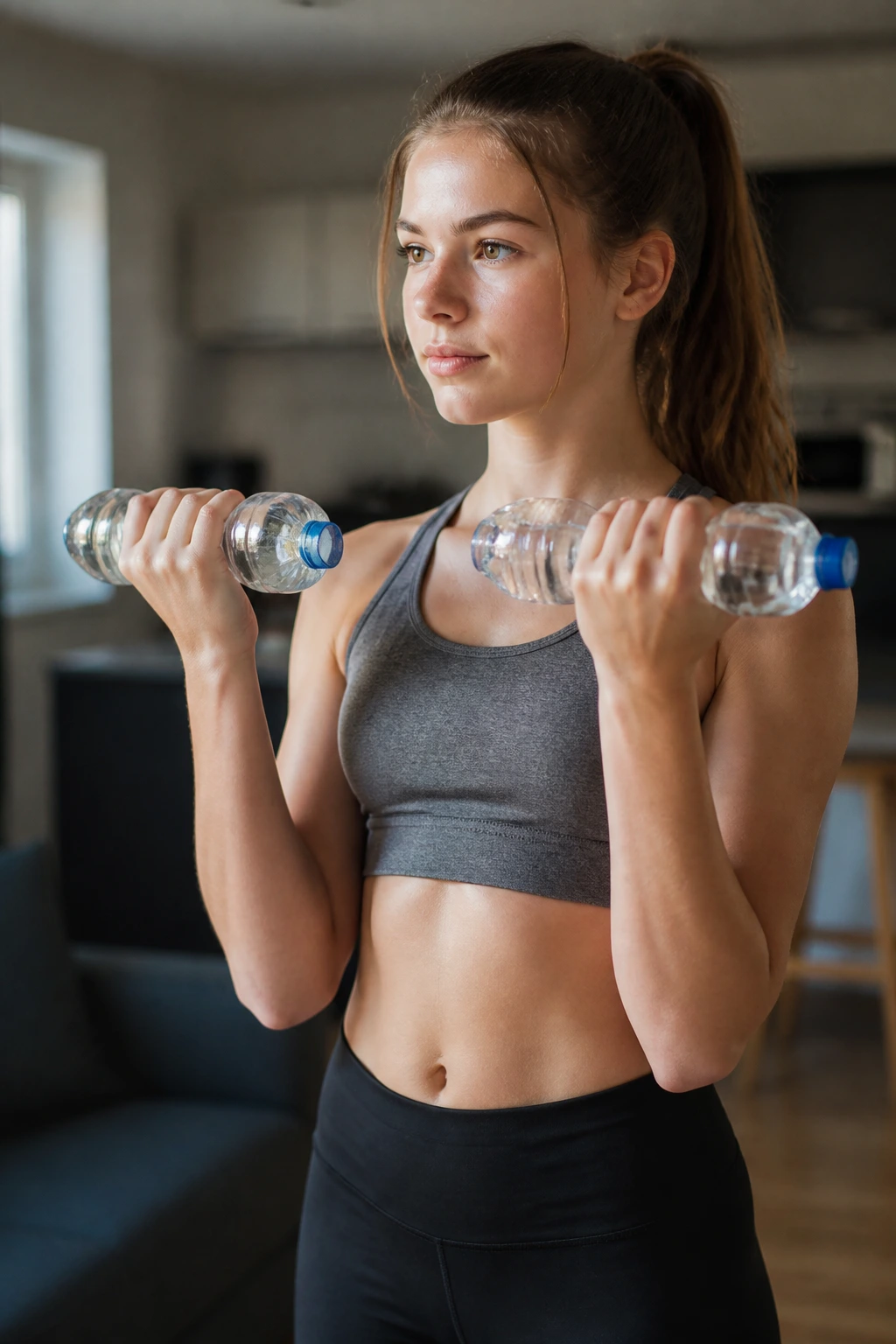
No dumbbells? Fine. Two water bottles can do a decent job if you use them with control and don’t fling your arms around like you’re trying to swat a mosquito.
Try biceps curls, lateral raises, overhead presses, and triceps extensions. Use bottles that feel easy to hold for 10 to 12 reps. If you want more resistance, fill them a little more. If your shoulders start shrugging up toward your ears, lighten the load.
A small detail that saves your wrists
Keep your wrists straight instead of bent back. That makes the grip feel more natural and keeps the bottles from feeling awkward.
This is a nice option on days when you want to feel strong without doing a full-body sweat fest. Short, tidy, useful.
18. Freeze Dance Fitness Game
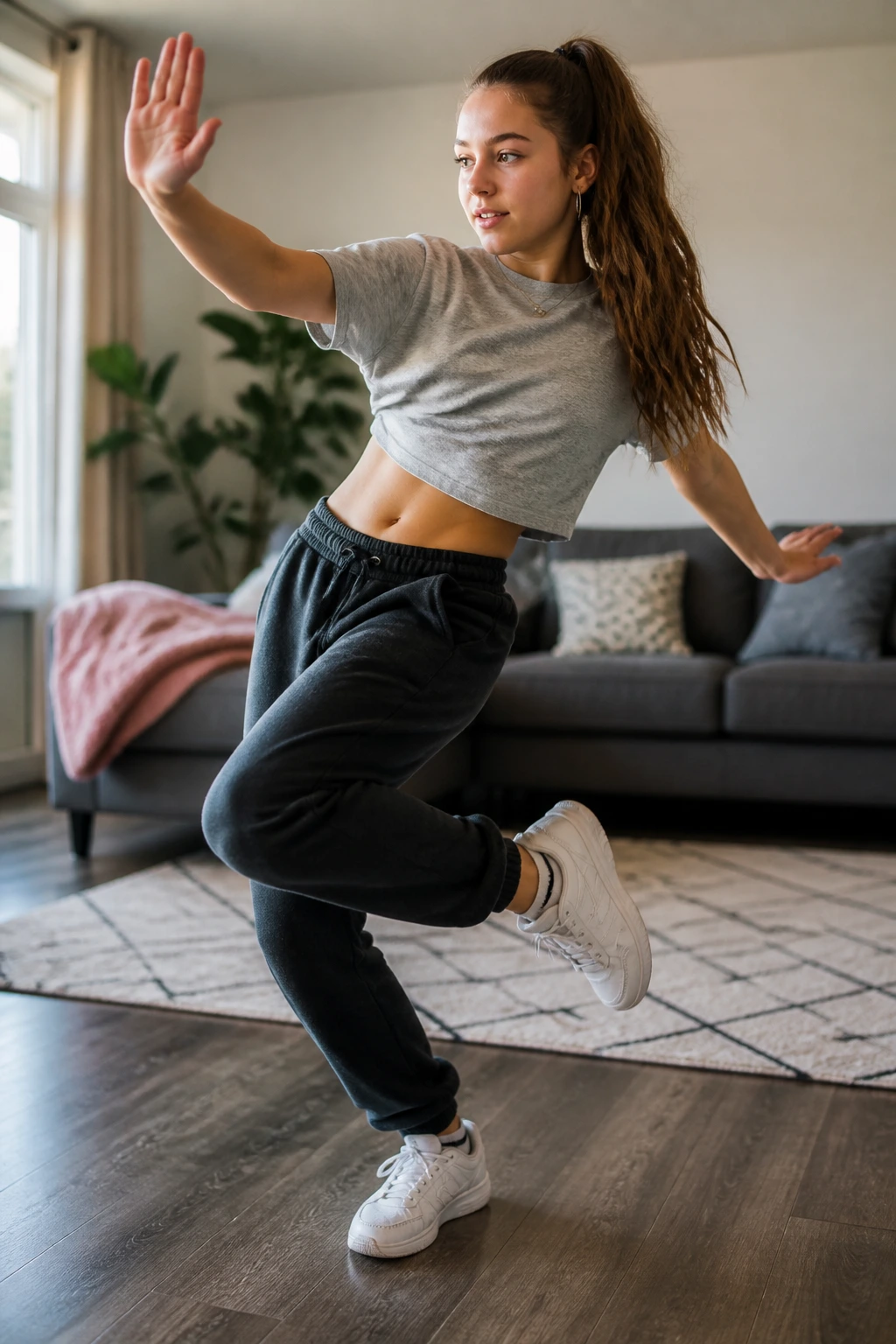
Freeze dance sounds childish until you actually do it for five minutes. Then it turns into a sneaky workout and a pretty decent mood shift.
Play one song, dance however you want, and pause every 15 to 20 seconds. When the music stops, freeze in a squat, a lunge, a plank, or a dramatic pose. Hold for 5 to 10 seconds, then go again. If you want more challenge, make the freeze position harder each time.
Why this works so well with siblings or friends
Nobody wants to lose the freeze challenge, so everyone moves harder. That little bit of competition is magic.
- Freeze ideas: squat hold, high-knee hold, plank, star pose
- Round length: 1 song
- Best setting: with music loud enough to make you move
- Bonus: it makes the workout feel shorter
19. Hula Hoop Cardio Session
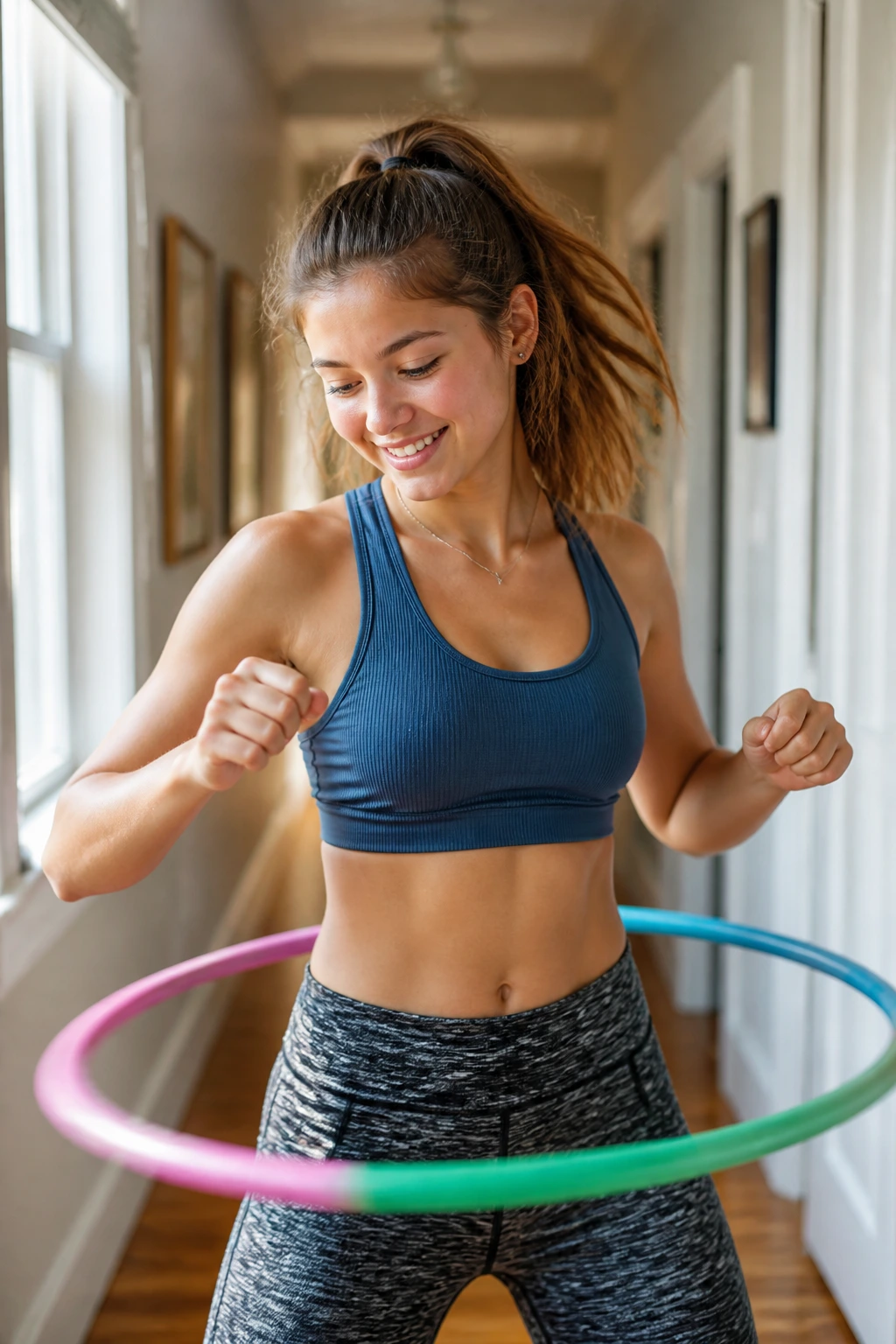
A hula hoop is goofy in exactly the right way. It pulls your focus away from the clock and onto rhythm, which is why the time passes faster than you’d expect.
Spend 5 to 10 minutes on each side, or break it into short 1-minute bursts if you’re still learning. Keep your knees soft, chest relaxed, and hips making small circles. If the hoop drops a lot at first, that’s normal. Your body is figuring out timing, not failing a test.
What to expect
Your core and hips do more work than your arms. That’s why this feels a little magical once it clicks.
If the hoop is too heavy, it can thump your waist and ruin the fun. A lighter hoop usually feels better for longer sessions.
20. Chair Cardio and Strength Mix
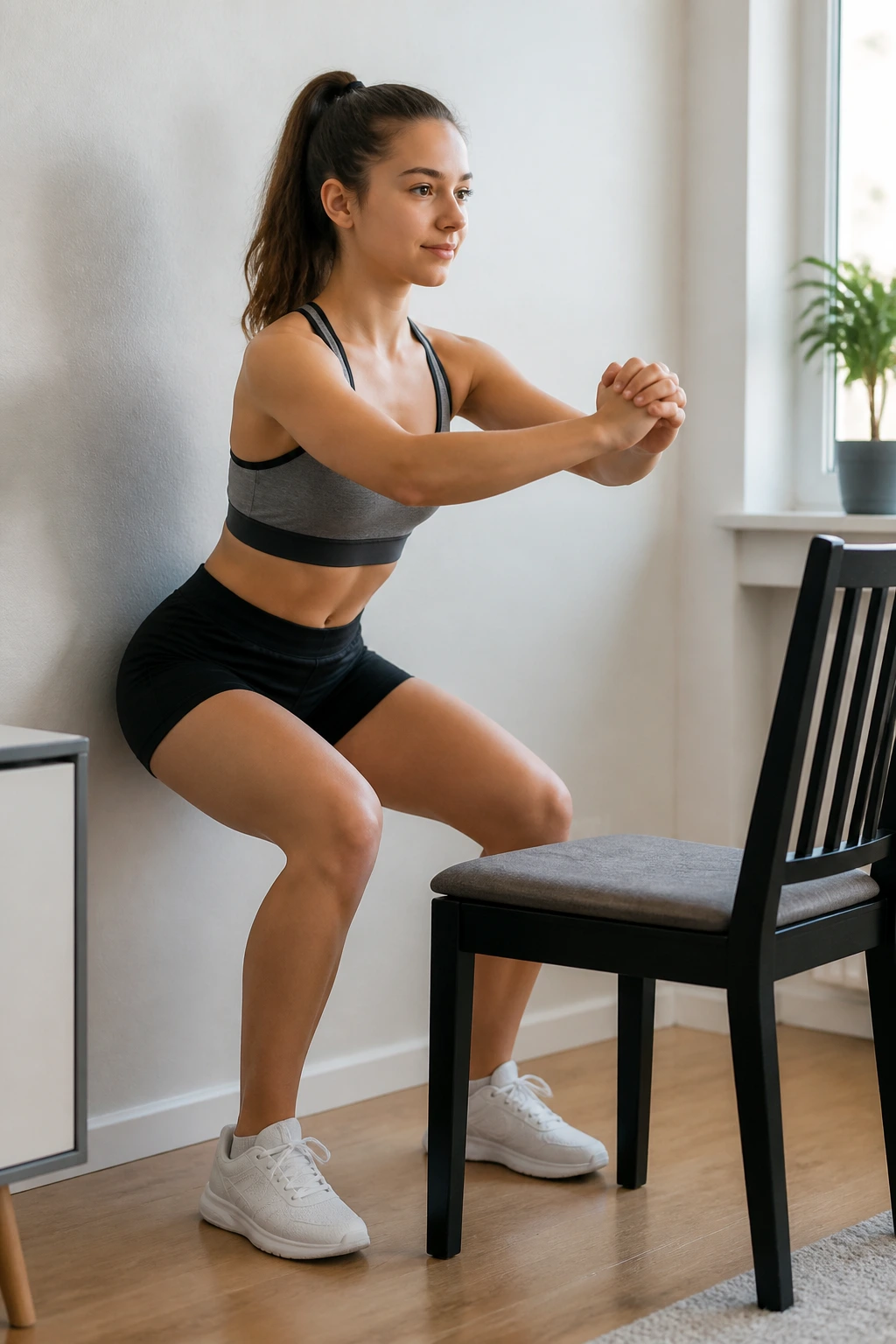
A sturdy chair can do more than hold laundry. Used well, it becomes a step, a support, and a way to change the angle of your workout without buying anything new.
Try chair squats, seated knee drives, incline push-ups with your hands on the seat, and supported split squats while holding the back for balance. Keep the chair pushed against a wall so it won’t slide. Two or three rounds of 10 to 12 reps each is enough to make this feel real.
Why the chair changes the game
It makes bodyweight work less repetitive. A different height, a different angle, a different muscle emphasis — suddenly the same room feels bigger.
Don’t use a wobbly chair. Seriously. A stable setup matters more than the move itself.
21. Shadow Sports Footwork Drill
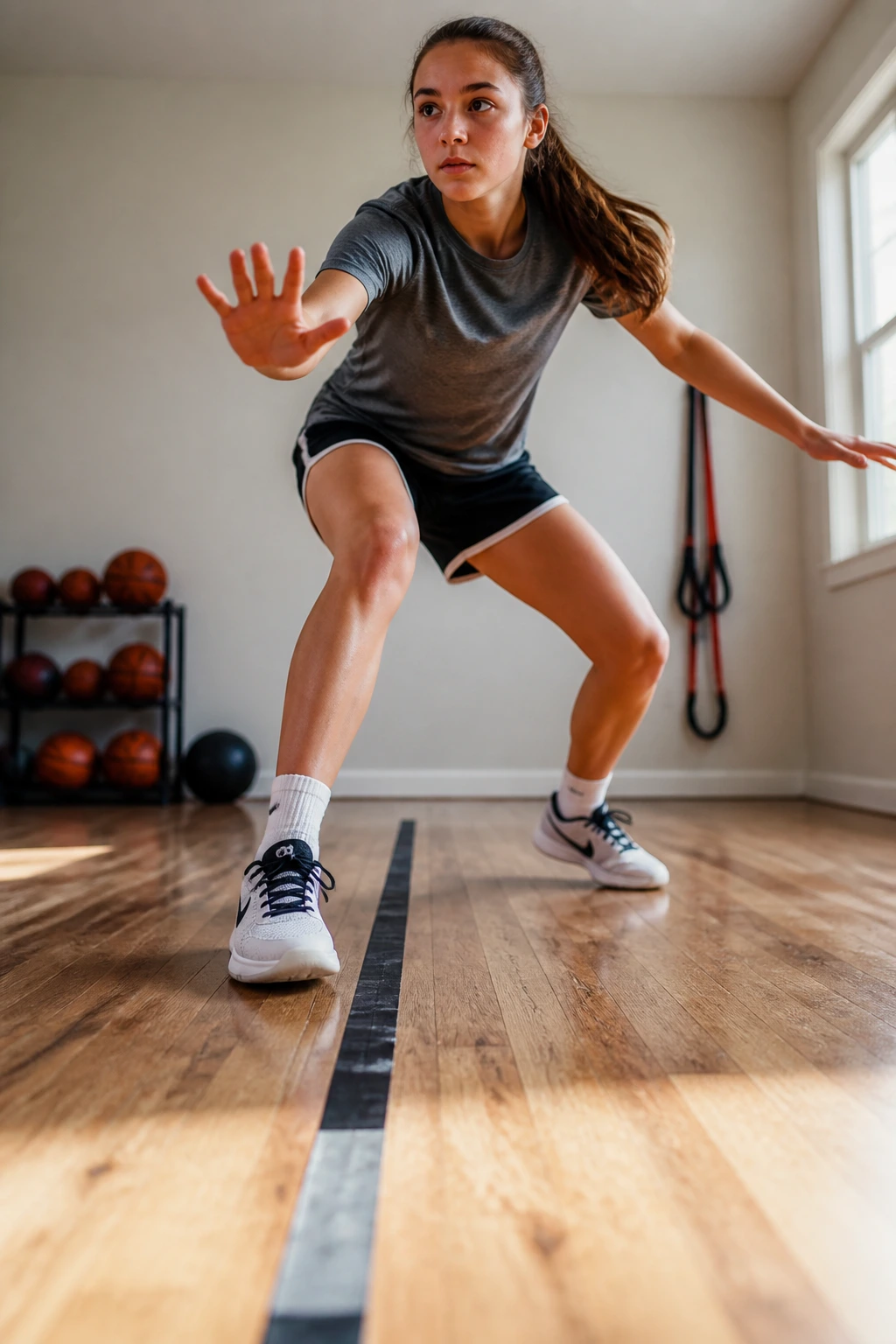
Miss team practice a little? This is the home version that keeps your feet quick without needing a full court or field.
Pick one sport pattern at a time. Do basketball defense slides, tennis split steps, soccer quick feet, or volleyball shuffles across a taped line on the floor. Run each drill for 20 to 30 seconds, rest for 15 seconds, and repeat 3 or 4 times. Tape on the floor makes the drill feel more real and helps with spacing.
Why athletes like this kind of work
It trains reaction speed and foot control, which pure cardio often skips. And it feels less like exercise when it resembles a sport you already like.
A tiny tip: stay low through your hips and keep your chest up. If you stand too tall, the drill loses its snap.
22. Dice Workout Challenge
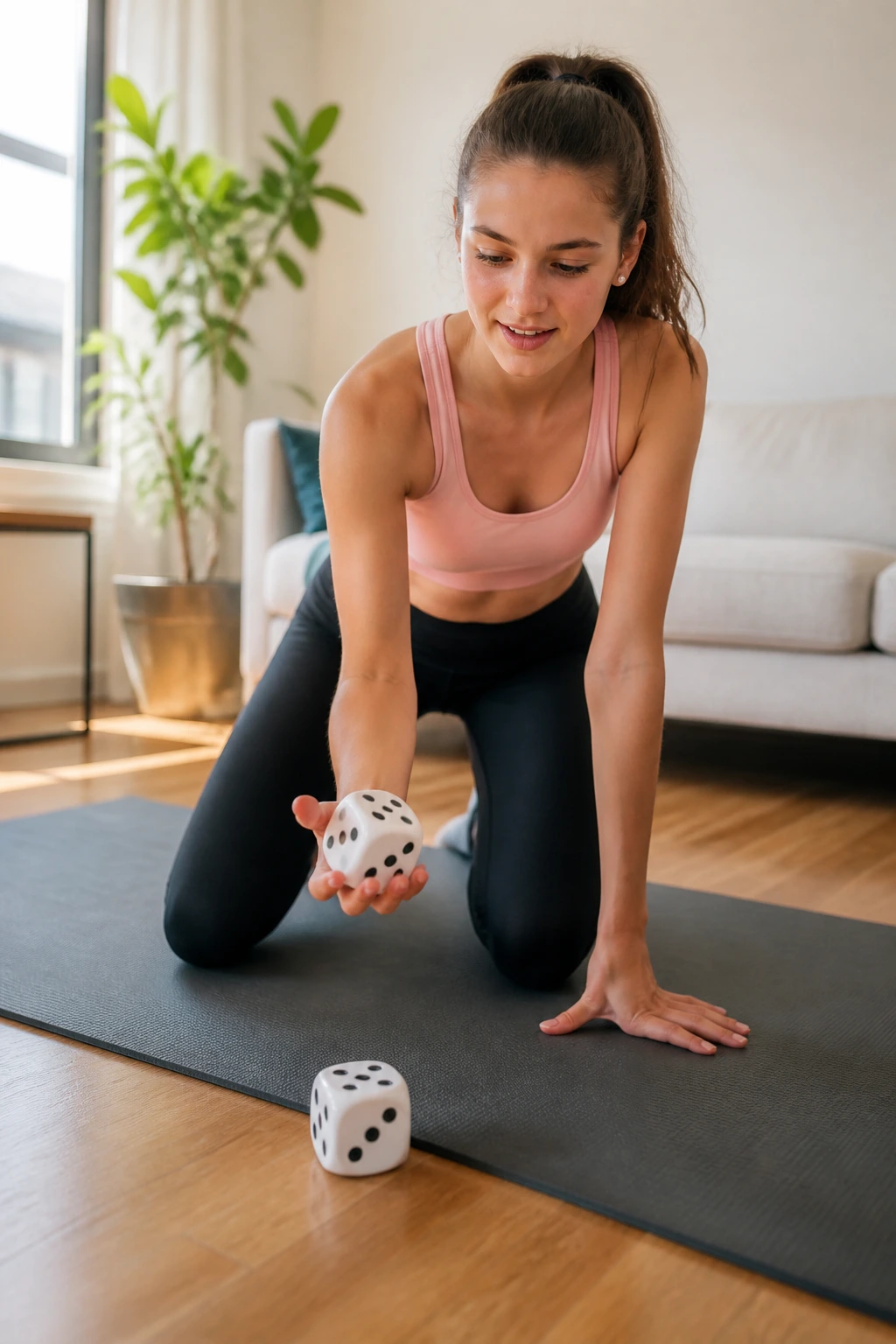
Randomness can be annoying in math class and oddly useful in a workout. A dice challenge keeps you from overthinking every rep.
Assign one exercise to each number on the die. Roll and do that move for 10 to 20 reps, or for 30 seconds if you want a timer version. A simple setup might be 1 = jumping jacks, 2 = squats, 3 = push-ups, 4 = mountain climbers, 5 = lunges, 6 = plank hold. Roll again and keep going for 10 minutes.
What makes it fun
You’re not choosing the next move every time, so the workout feels more like a game than a plan. That little surprise can make a long session easier to finish.
Use two dice if you want more variety. Add the numbers together and map 2 through 12 to different moves.
23. Follow-the-Leader Mirror Routine
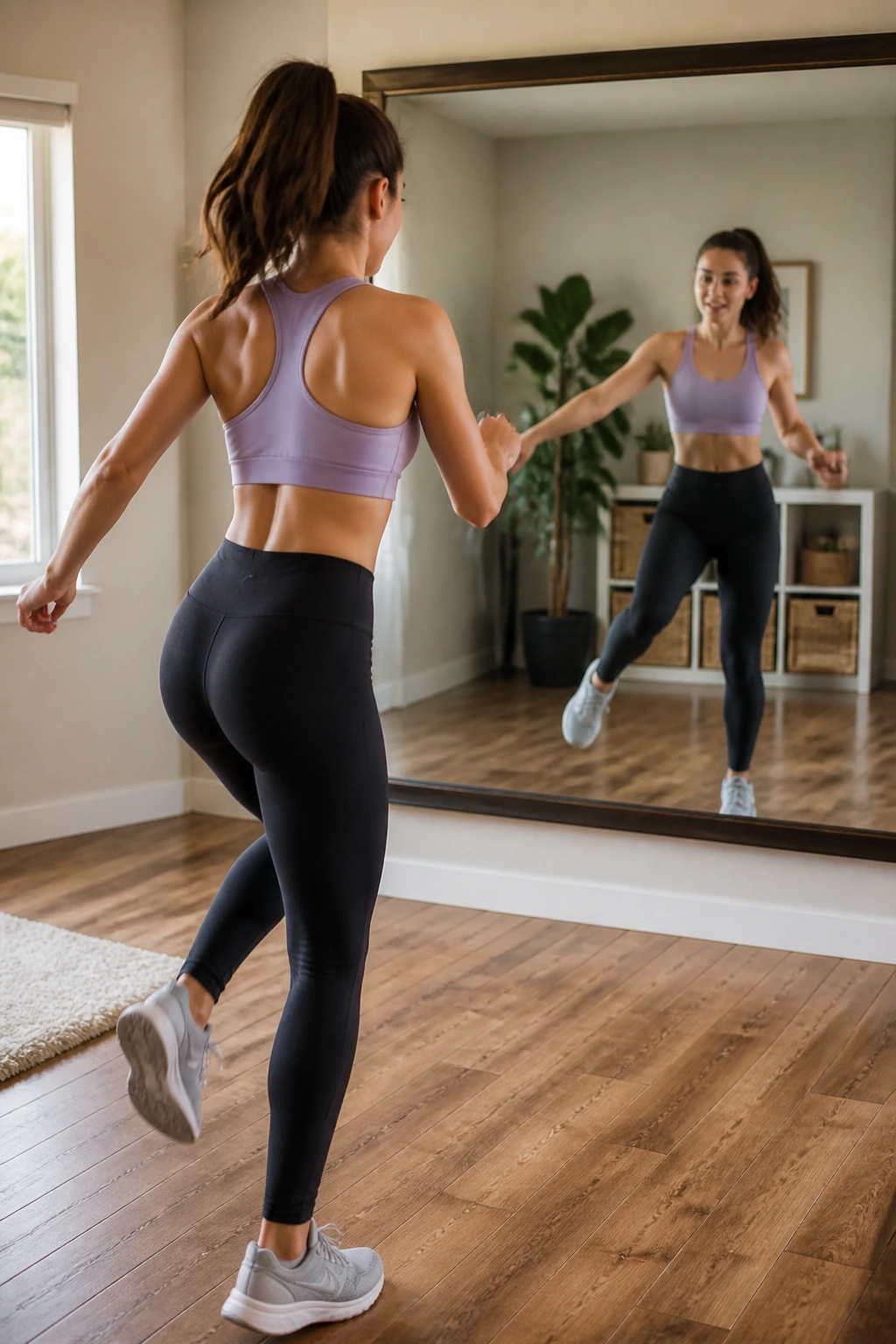
This one is perfect if you like choreography, copying moves, or pretending you’re in a dance practice without admitting it out loud. Stand in front of a mirror or open a video on your phone and build a short sequence of 6 to 8 moves.
Try reach, squat, lunge, twist, kick, step-touch, knee lift, and side slide. Repeat the sequence for 5 to 8 minutes, then switch the order. The goal is smooth transitions, not perfect dance form. If you want a harder version, speed it up after one clean round.
How to set it up
Pick one playlist and one tiny open area. That’s enough. Keep the move list short so you’re not stopping every ten seconds to remember what comes next.
A mirror helps, but it isn’t required. Watching your own timing can be useful even if you feel a little ridiculous doing it.
24. Homework Break Stretch-and-Strength Circuit
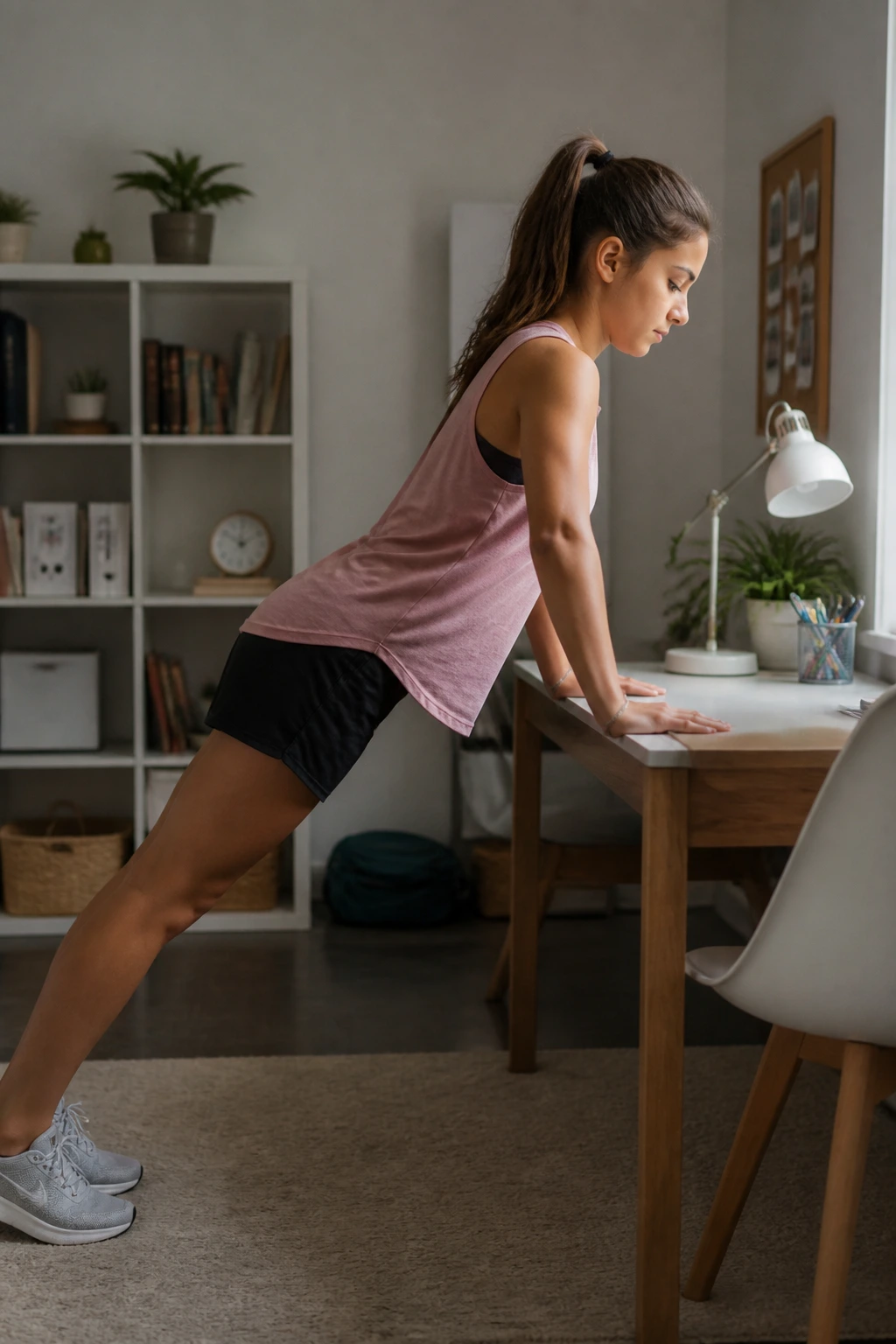
A homework break can be more than a snack run. Eight minutes of movement can wake your body up better than another scroll through your phone.
Try desk or wall push-ups, calf raises, reverse lunges, standing side bends, and a 30-second plank or dead-bug hold. Do each move for 30 to 40 seconds, then rest for 10 seconds and keep moving. This works especially well when your shoulders feel tight from sitting or your brain feels foggy from reading the same paragraph three times.
The point of this one
You’re not trying to turn a study session into a boot camp. You’re just resetting your body so you can focus again.
Keep the pace smooth. The break should leave you alert, not sweaty enough to need a full outfit change.
25. Mini Obstacle Course Circuit
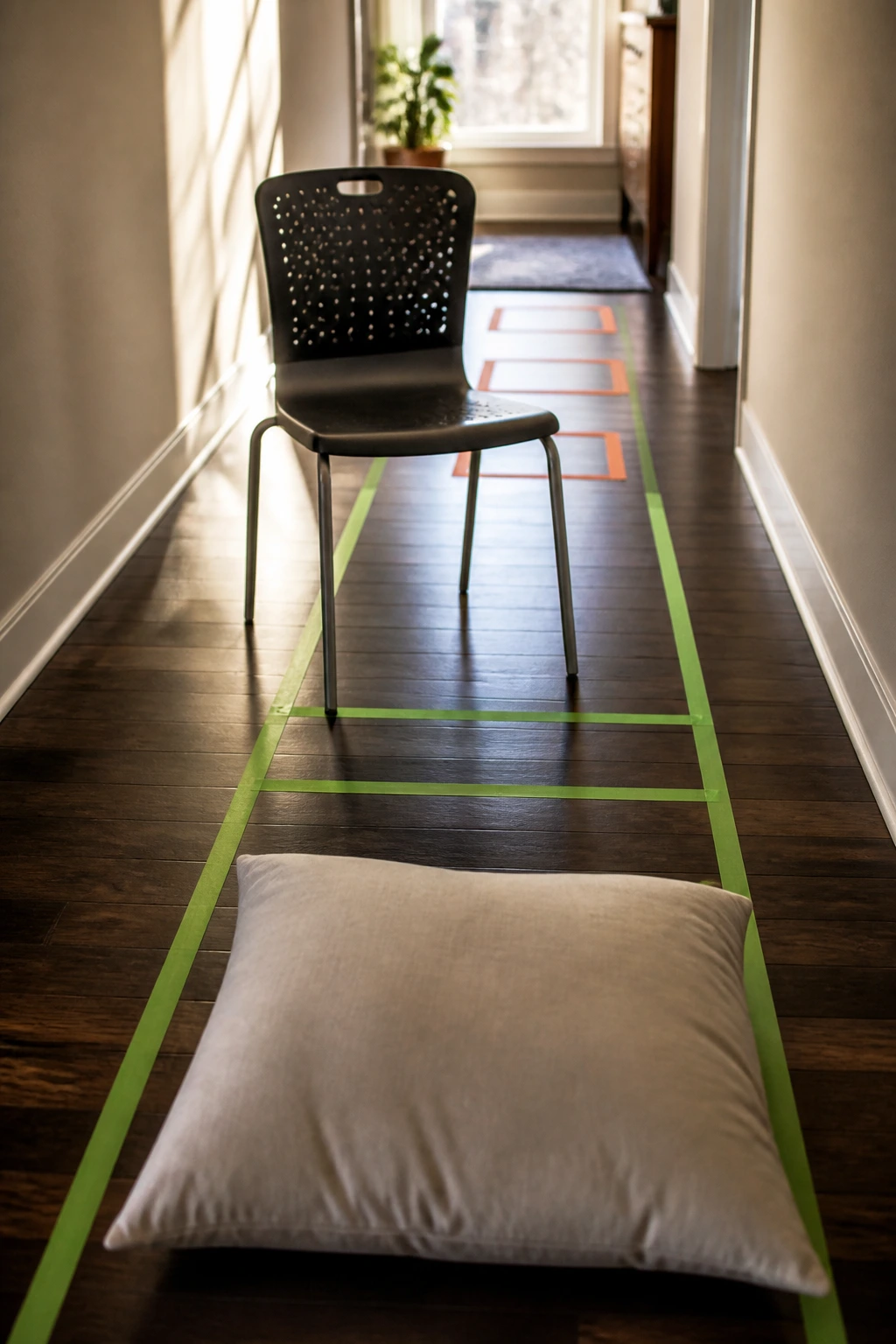
Turn your room or hallway into a tiny obstacle course and the workout stops feeling like a workout for a minute. That’s not cheating. That’s smart.
Use taped lines, pillows, a chair, and a clear floor. Crawl under the chair, hop over a pillow, side-step to the wall, hold a squat for 10 seconds, then crawl back. Repeat the course 3 to 5 times, resting between rounds if you need it. If you want to make it tougher, time each round and try to beat your own score by a few seconds.
Easy pieces to include
- Bear crawl for 5 to 8 steps
- Pillow hops or fast step-overs
- Wall sit for 10 to 20 seconds
- Side shuffle back to the start
This one works because it feels less repetitive than straight sets. Your brain stays busy, your body stays moving, and the room starts to feel a little more useful.
Final Thoughts
The best home workouts are the ones you’ll actually do again. A short dance burst beats a perfect plan that never leaves the notebook.
Mix it up. One day can be loud and sweaty, another can be slow and strong, and another can be a weird little game with a timer and a backpack. That variety keeps your body from getting bored and your brain from deciding exercise is a punishment.
Pick three favorites, keep them easy to reach, and make the setup simple: shoes nearby, water bottle filled, playlist ready. That tiny bit of prep saves a surprising amount of resistance when the day gets messy.
