



A good full body yoga routine for beginners should feel like oiling a squeaky hinge, not auditioning for a circus. The best sequences wake up the spine, open the hips, and steady the breath without asking you to fold like a paper crane.
The routines that stick are usually the ones that stay plain and honest: cat-cow, low lunge, a bent-knee forward fold, bridge, maybe a supported twist. Hold each shape for 3 to 5 breaths, keep your knees soft, and stop chasing depth. That alone saves a lot of grumpy hamstrings.
A mat, a block, and a wall can turn a shaky first attempt into something calm and repeatable. If your shoulders creak from desk work or your lower back talks back after sitting, you do not need fancy sequences; you need smart ones. The first routine keeps the pace slow and the movements friendly.
1. A Gentle Morning Full Body Yoga Routine to Wake Up the Spine
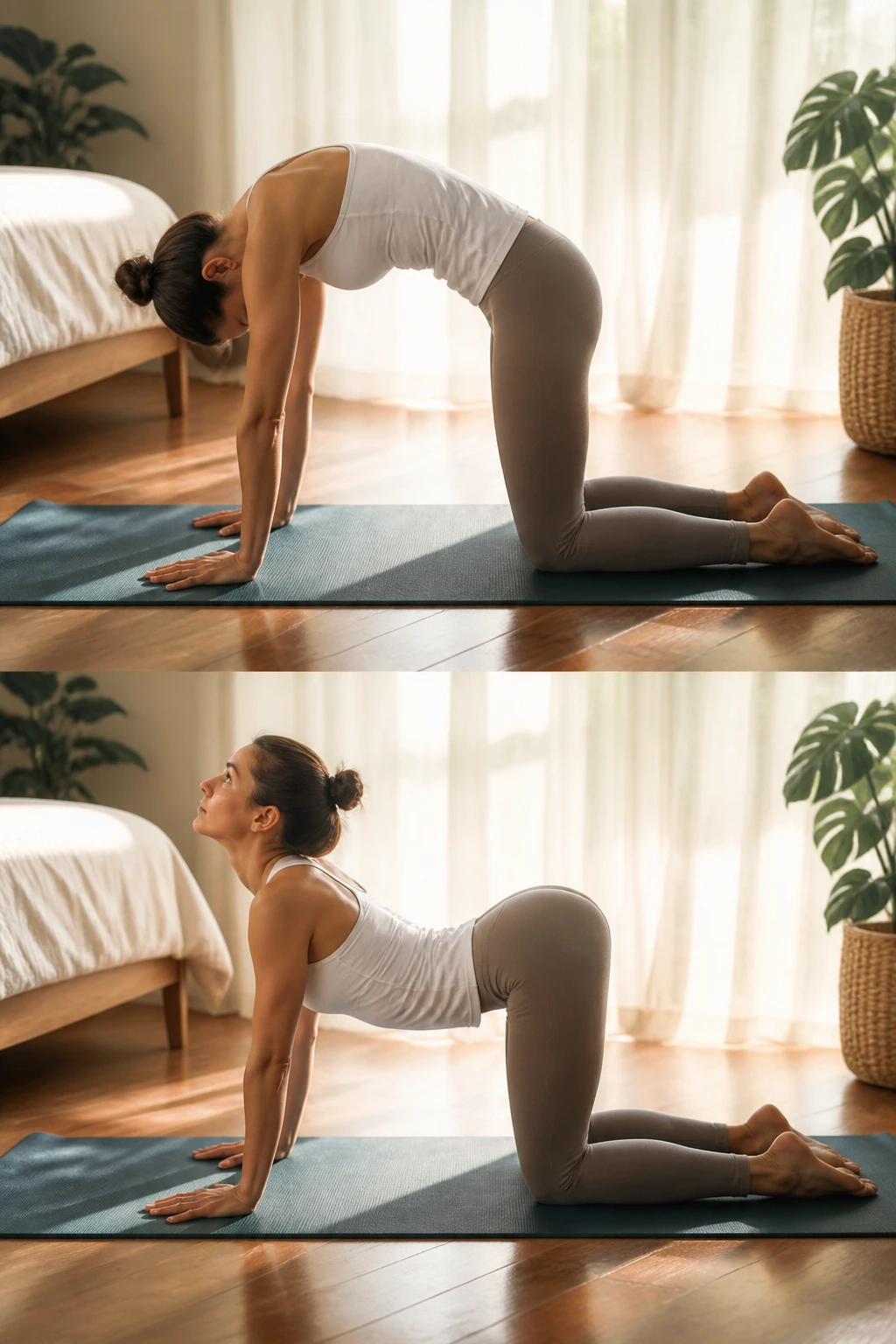
Start with the kind of flow that feels almost too easy. That is the point. A morning body usually wants movement before it wants intensity, and a short sequence built around the spine can make the rest of the day feel less stiff.
Sequence to Try
- Cat-cow for 4 slow rounds
- Thread the needle for 3 breaths per side
- Low lunge with hands on blocks for 4 breaths per side
- Half forward fold with bent knees
- Bridge pose for 3 to 5 breaths
- Child’s pose for 6 breaths
Keep the first two poses tiny. Tiny is good. If your back feels rusty, you do not need a deep fold or a big backbend to count as a real practice. A routine like this usually takes 8 to 12 minutes, and it works because it spreads the load across the whole body instead of asking one tight area to do all the talking.
2. A Neck-and-Shoulders Routine for Desk Stiffness
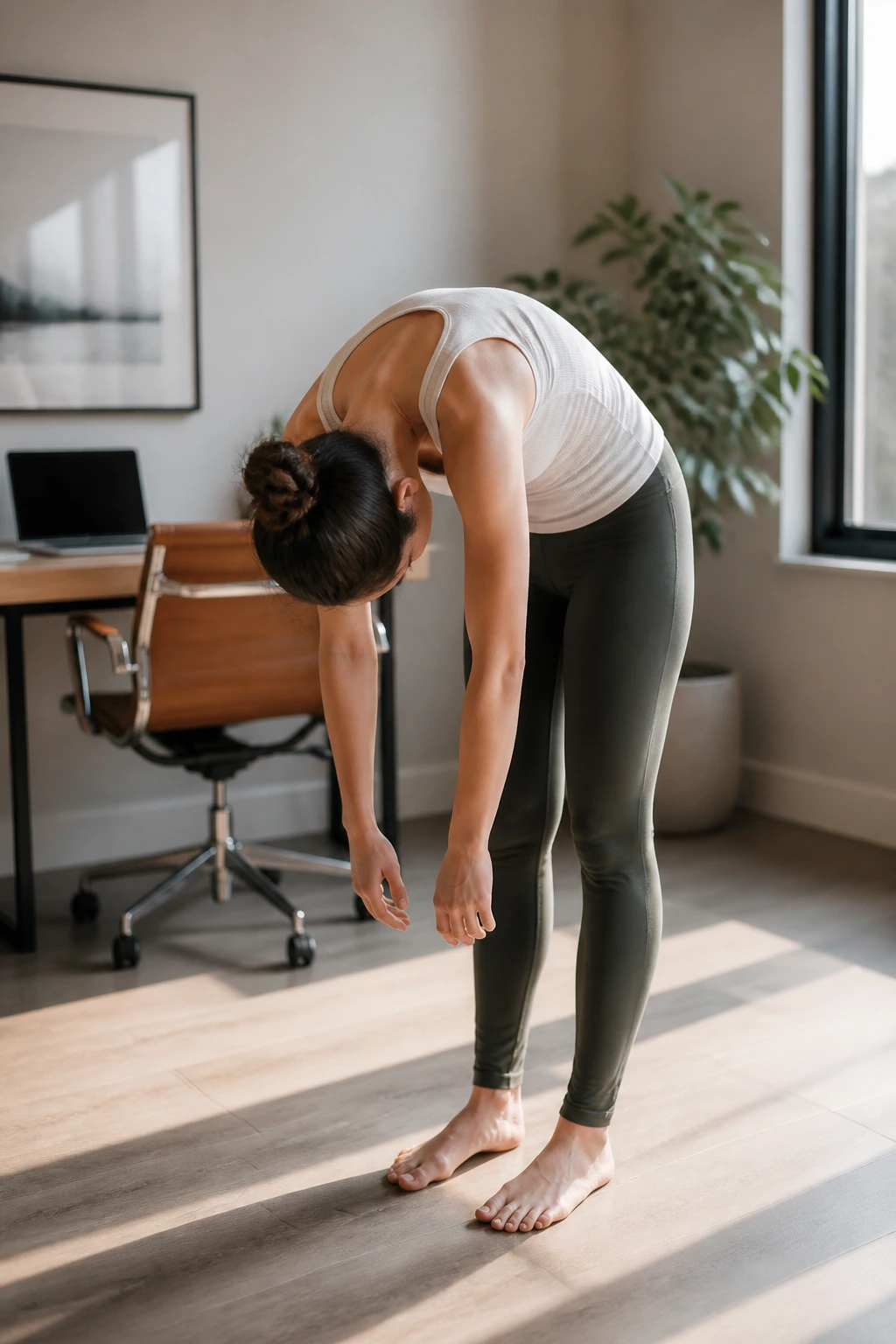
Desk shoulders respond better to small, repeated motions than to one dramatic stretch. That’s why this routine starts high in the body and slowly works its way down. You loosen the neck, open the chest, then let the upper back breathe a little.
Try standing ragdoll, then eagle arms, then cactus arms with the elbows slightly below shoulder height. After that, come to puppy pose if your shoulders can handle it, or keep your forearms on a chair seat. Finish with sphinx pose so the front body gets a mild opening too. It sounds mild on paper. It is mild on paper.
The trick is to stop before your neck starts bracing. If you’re grinding your teeth or shrugging your ears toward your shoulders, back off half an inch. That tiny retreat usually does more good than forcing a bigger stretch.
3. A Hamstring and Calf Release Flow That Does Not Fight Your Legs
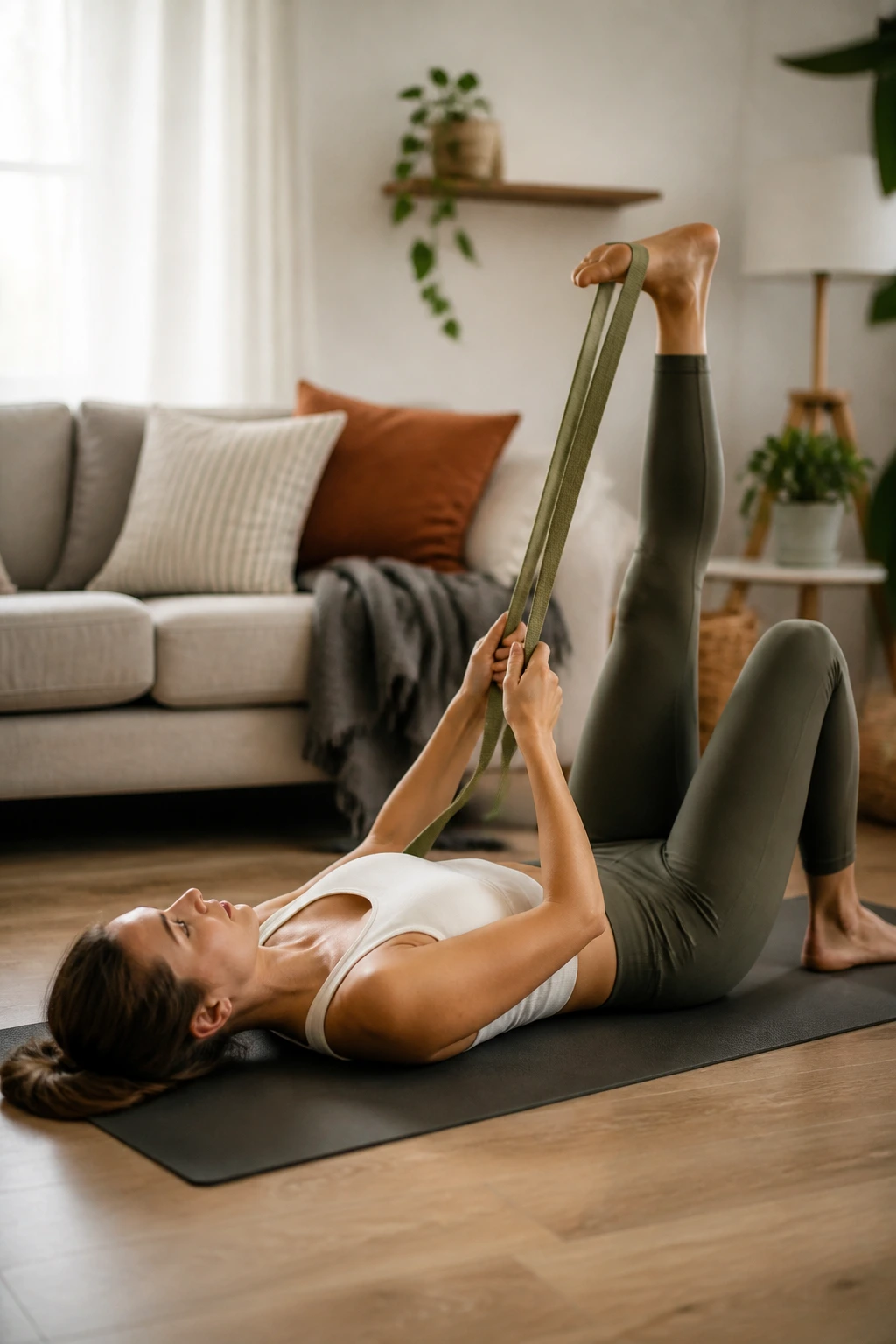
Why do hamstrings make beginner yoga feel harder than it should? Because a lot of people try to straighten the knees too fast. The result is that the whole back side of the body tenses up, and the stretch stops feeling like release.
How to Use It
- Keep both knees bent in forward fold
- Move from low lunge to half split
- Use a strap or towel in reclined hamstring stretch
- Add downward dog at the wall if floor work feels cranky
- Finish with reclined calf stretch using a strap or belt
This routine works best when you care more about line than depth. A slightly bent knee with a long spine is better than a locked knee and a rounded back. That sounds fussy, but it saves you from the sharp tug that makes beginners swear off forward folds for weeks.
4. A Core-Stable Beginner Yoga Routine That Also Works the Legs
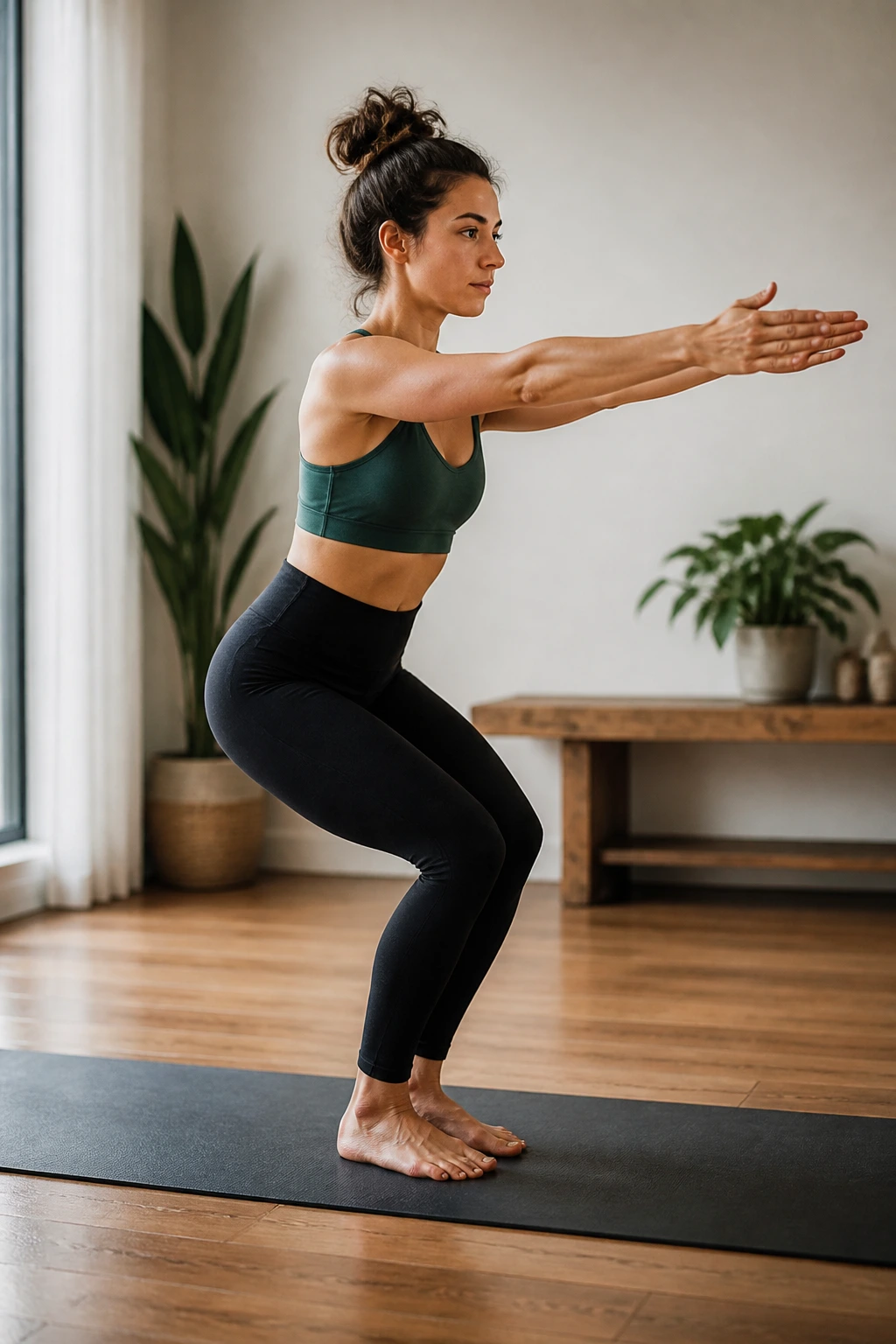
Picture getting up after a long sit and feeling your hips, thighs, and belly all wake up at once. That’s the job here. The routine builds a little heat without turning into a workout that leaves you shaky.
Start with chair pose for 3 breaths, then step back to warrior I with a shorter stance than you think you need. Add warrior II, then side angle with your forearm on your thigh. On the floor, use plank with knees down and bridge pose. That mix gives you legs, core, and glutes without much drama.
What Makes It Work
A beginner often wants to skip the standing work and go straight to the mat. Don’t. The standing shapes teach balance and leg strength in a way the floor can’t quite copy.
If you need less load, keep the front knee bent and the stance short. If your wrists are tired, skip plank and hold bridge longer instead.
5. A Hip-Opening Full Body Yoga Routine for Tight Days
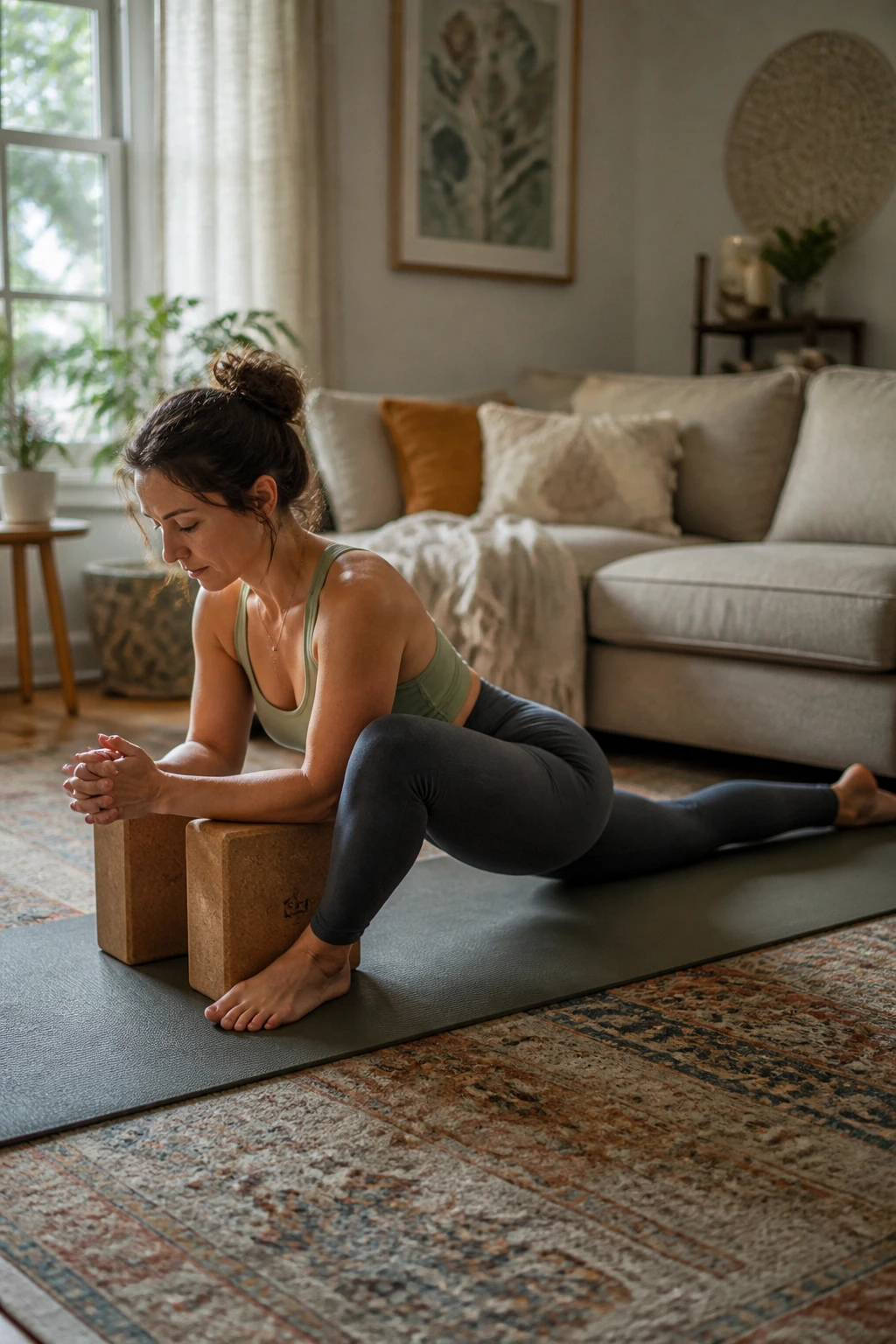
The front of the hips can feel glued together after too much sitting, and a lot of people try to rip them open with one huge lunge. Bad move. Hips tend to open better when the rest of the body is calm.
Try cat-cow, low lunge, lizard with hands on blocks, figure-4 on the back, bound angle, and a short supine twist at the end. That gives you hip flexion, external rotation, and a little spinal reset too. It is a full-body routine, not just a hip stretch in disguise.
I like this one on days when everything feels stuck. The key is keeping the breath slow enough that your face stays relaxed. If your jaw clenches, the hips usually clamp down with it. Strange, but true.
6. A Standing Flow for Extra Warmth and Easy Balance
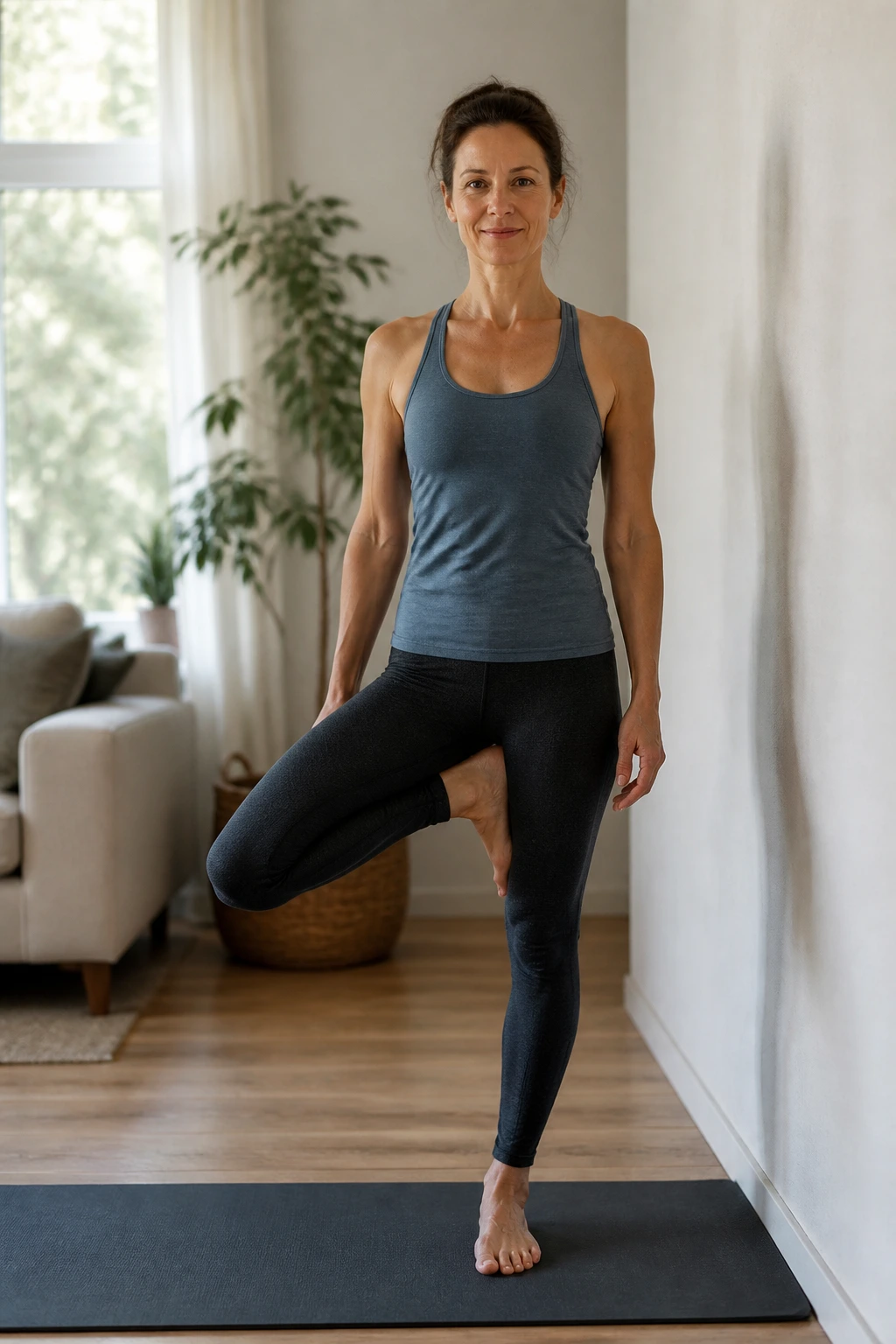
Standing flows feel less intimidating than long floor sessions, and that is useful when you want energy without a lot of setup. They also teach your feet to do their job, which beginners often ignore until the ankles start wobbling.
This routine moves through mountain pose, chair pose, high crescent lunge, reverse warrior, side angle, and tree pose near a wall. It’s a clean sequence because each pose feeds the next one. You stay upright, you feel your legs, and you never have to wonder where to put your hands for long.
If you want a quick temperature change in the body, this is a strong choice. It usually takes 10 to 15 minutes, and it’s easy to repeat without feeling stale. Use the wall for tree pose. No shame in that.
7. A Floor-Based Yoga Routine for Low-Energy Mornings
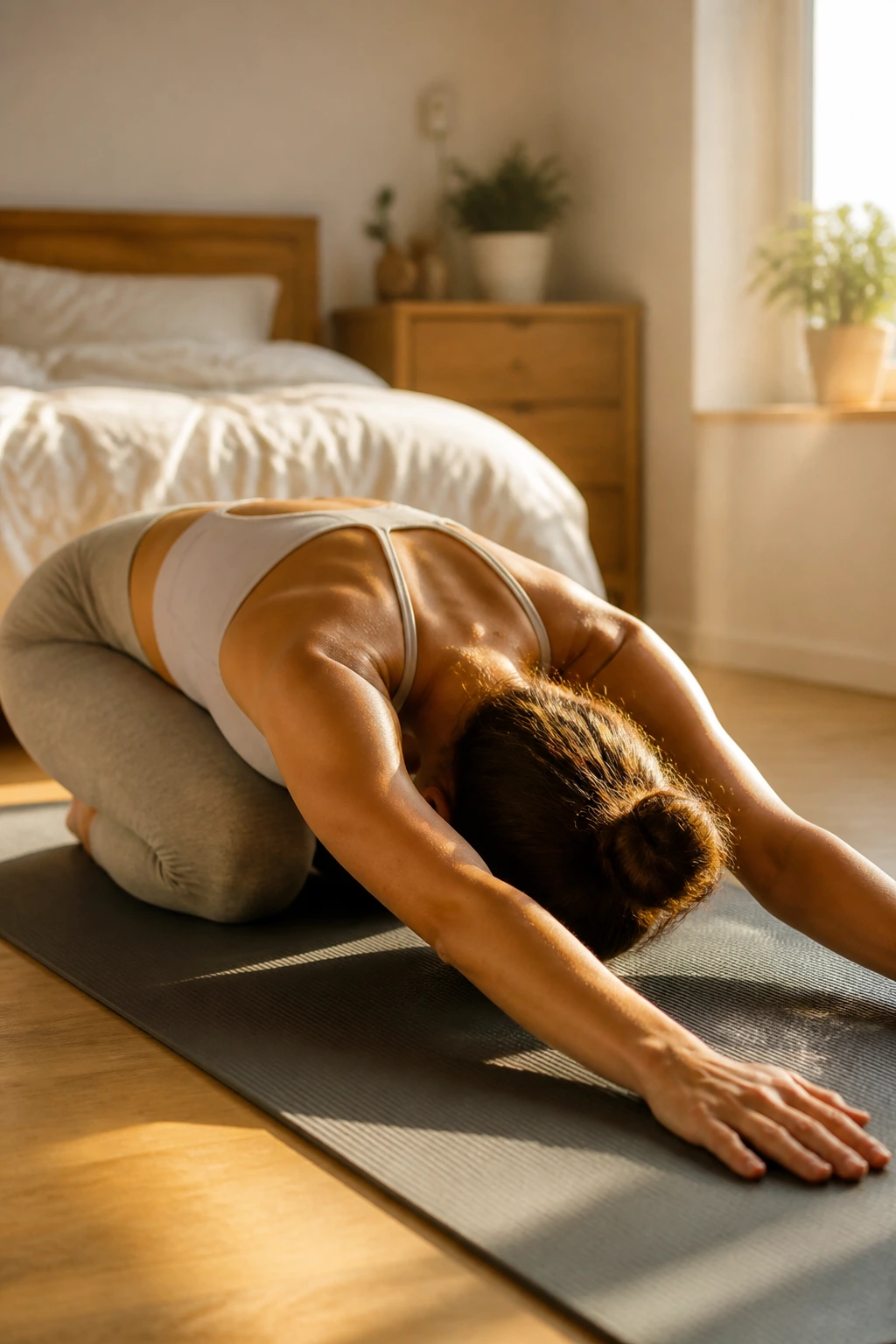
Low-energy days call for floor work. There’s no prize for standing when your body wants the mat. A low-to-the-ground routine can still hit the whole body if you choose the right shapes.
What to Skip When You’re Wiped Out
- Long holds in downward dog
- Deep backbends
- Fast transitions
- Any pose that makes you hold your breath
Instead, begin with child’s pose, shift to sphinx, roll into bridge, then take supine figure-4 on each side. Add a gentle reclined twist and finish flat on your back. That still moves the spine, hips, chest, and glutes. Just quietly.
This is the routine I’d hand to someone who says, “I want to do yoga, but I’m tired before I start.” Good. Then start on the floor. You do not need to earn the right to make movement easy.
8. A Desk-Worker Reset for Wrists, Upper Back, and Hips
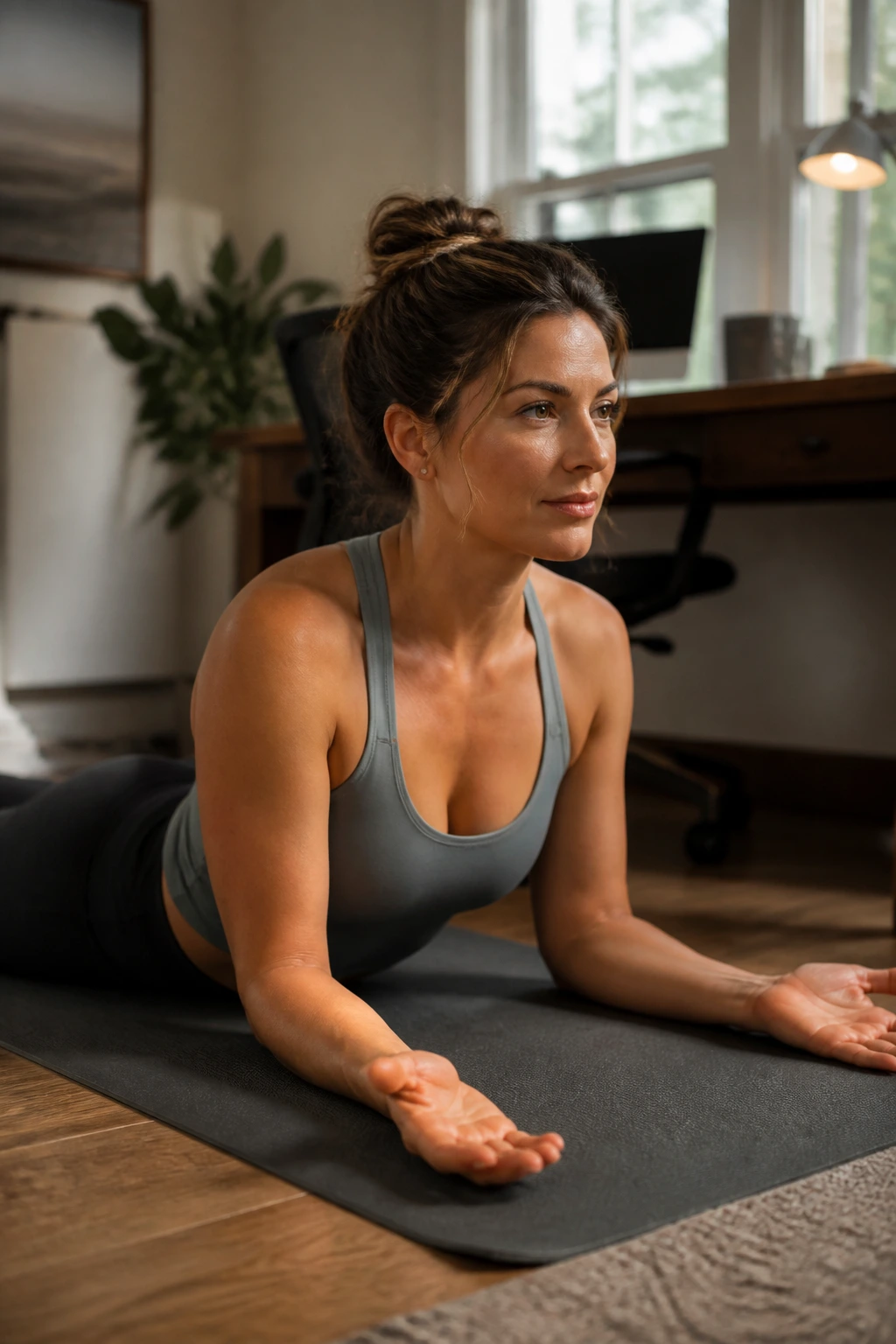
What happens when wrists, shoulders, and hips all complain at once? You get a routine that needs to be kind from the first second. That means no fancy balance work and no long plank holds.
Wrist-Friendly Options
- Tabletop wrist circles for 30 seconds each direction
- Forearm sphinx instead of full cobra
- Puppy pose with forearms down
- Low lunge with fists or blocks under the hands
- Standing forward fold with elbows bent and knees soft
A lot of desk tension lives in the upper back, but the wrists are the part people forget until they hurt. Keep pressure distributed across your palm, or drop to forearms if needed. Then let the hips do some work in low lunge so the body feels connected again.
This takes about 12 minutes and leaves you less folded in on yourself. That’s the whole point.
9. A Low-Back Friendly Flow That Keeps the Movements Small
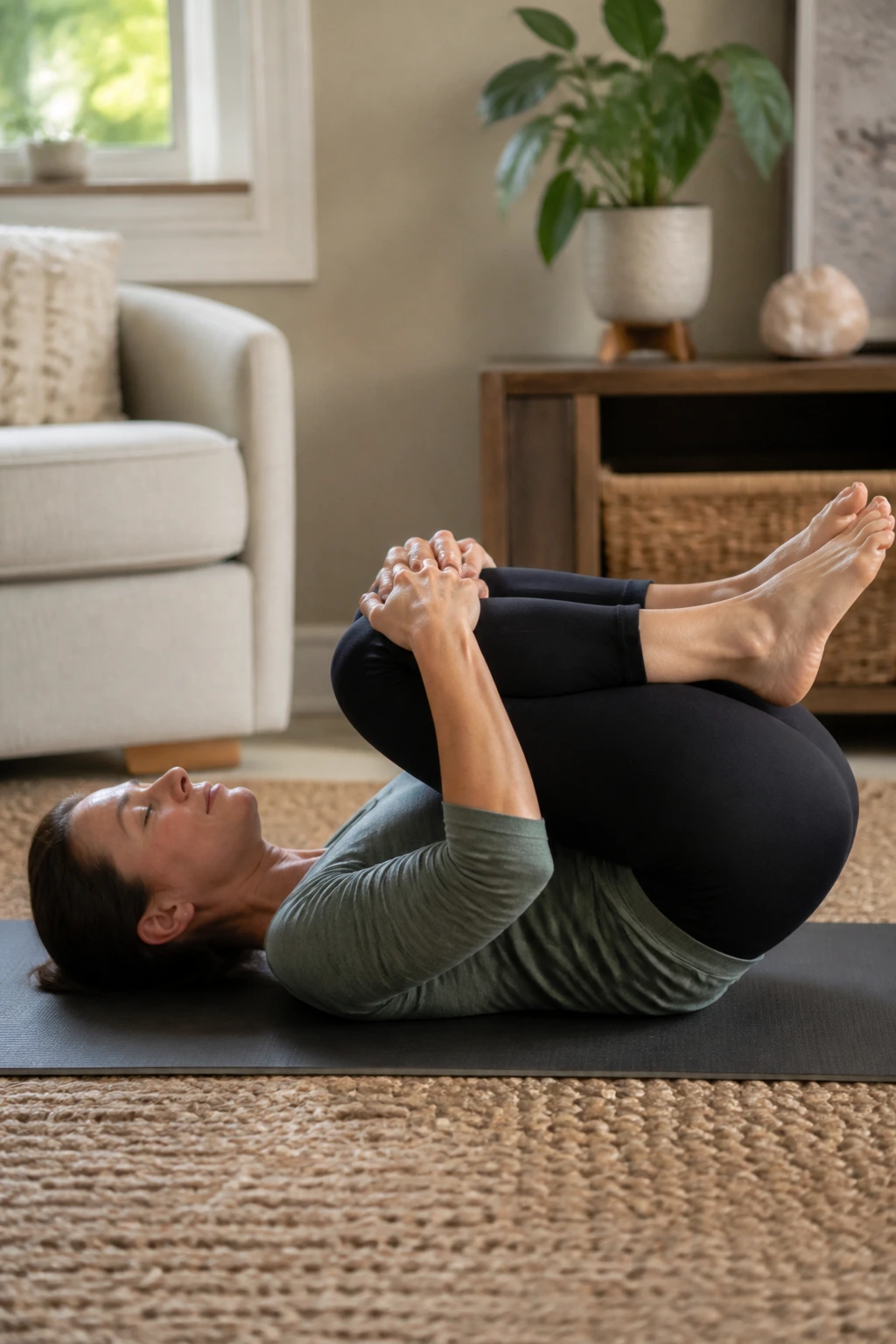
A sensitive lower back does better with smaller shapes than with heroic stretches. That’s the whole philosophy here. If your back is already cranky, big reaches and deep folds can make it grumble louder.
Start with pelvic tilts on your back, then move to knees-to-chest, sphinx, half bridge, supine twist, and a short supported child’s pose. Keep the range short. You’re trying to create space, not prove anything.
One thing people miss: the lower back often likes the hips to do their share. That’s why bridge pose matters here. It wakes up the glutes, and glutes tend to take pressure off the low back when they’re actually participating. That’s not flashy, but it works.
10. A Mobility Routine Built Around Cat-Cow and Gentle Twists
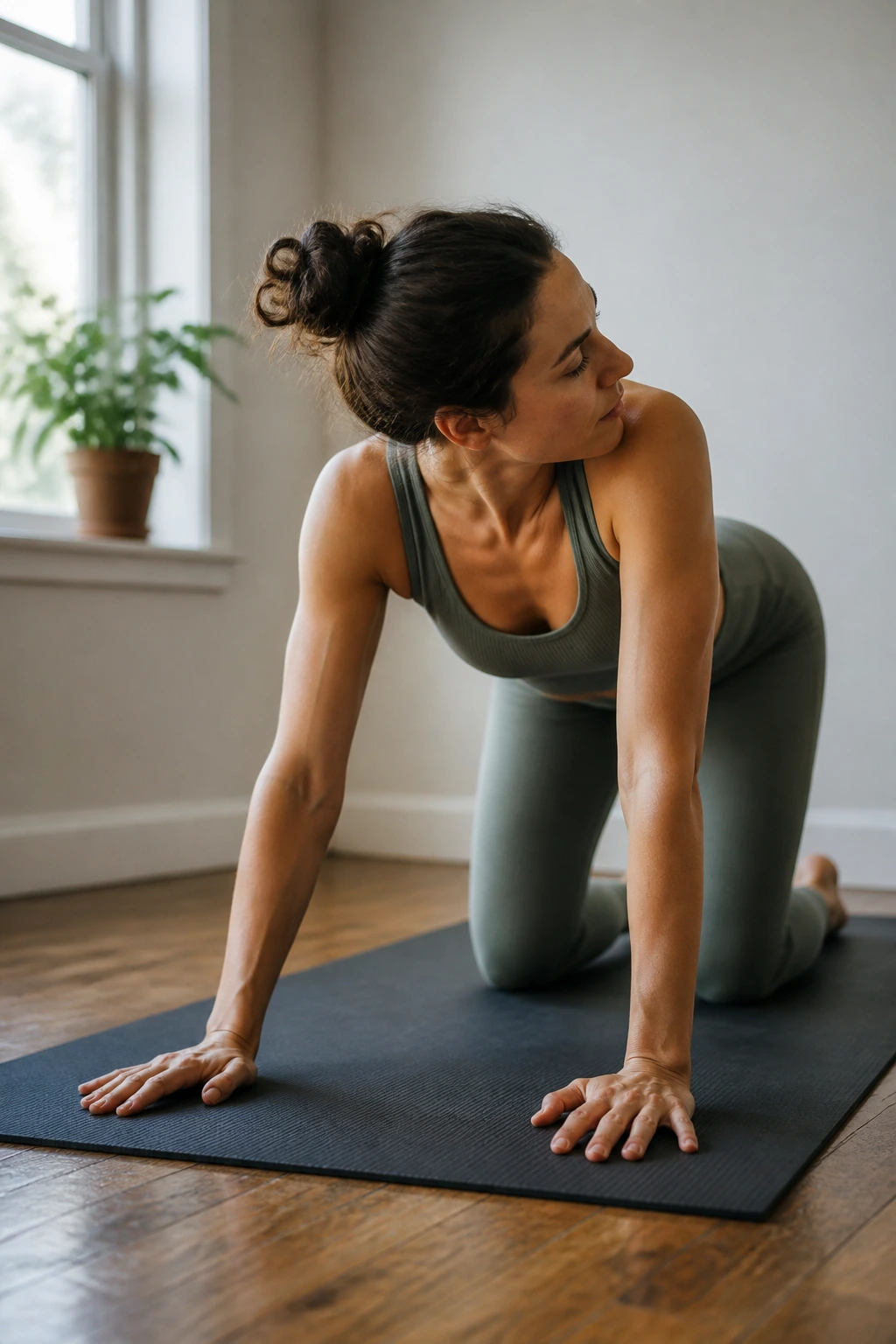
A stiff spine usually wants rhythm before it wants range. Cat-cow is boring in the best way. It lets you feel one vertebra after another without asking for balance or flexibility you don’t have yet.
Use cat-cow, bird dog, thread the needle, open book, and a seated twist on each side. Add a side bend with one hand on the floor or a block. That gives you flexion, extension, rotation, and a little side-body length too.
If you’re only choosing one thing to repeat daily, this style of routine is a solid pick. It’s short enough to fit between errands, and the twists wake up the rib cage in a way that makes breathing feel less stuck. The body likes that more than it likes your motivation.
11. A Strength-Focused Beginner Flow With Slow Holds
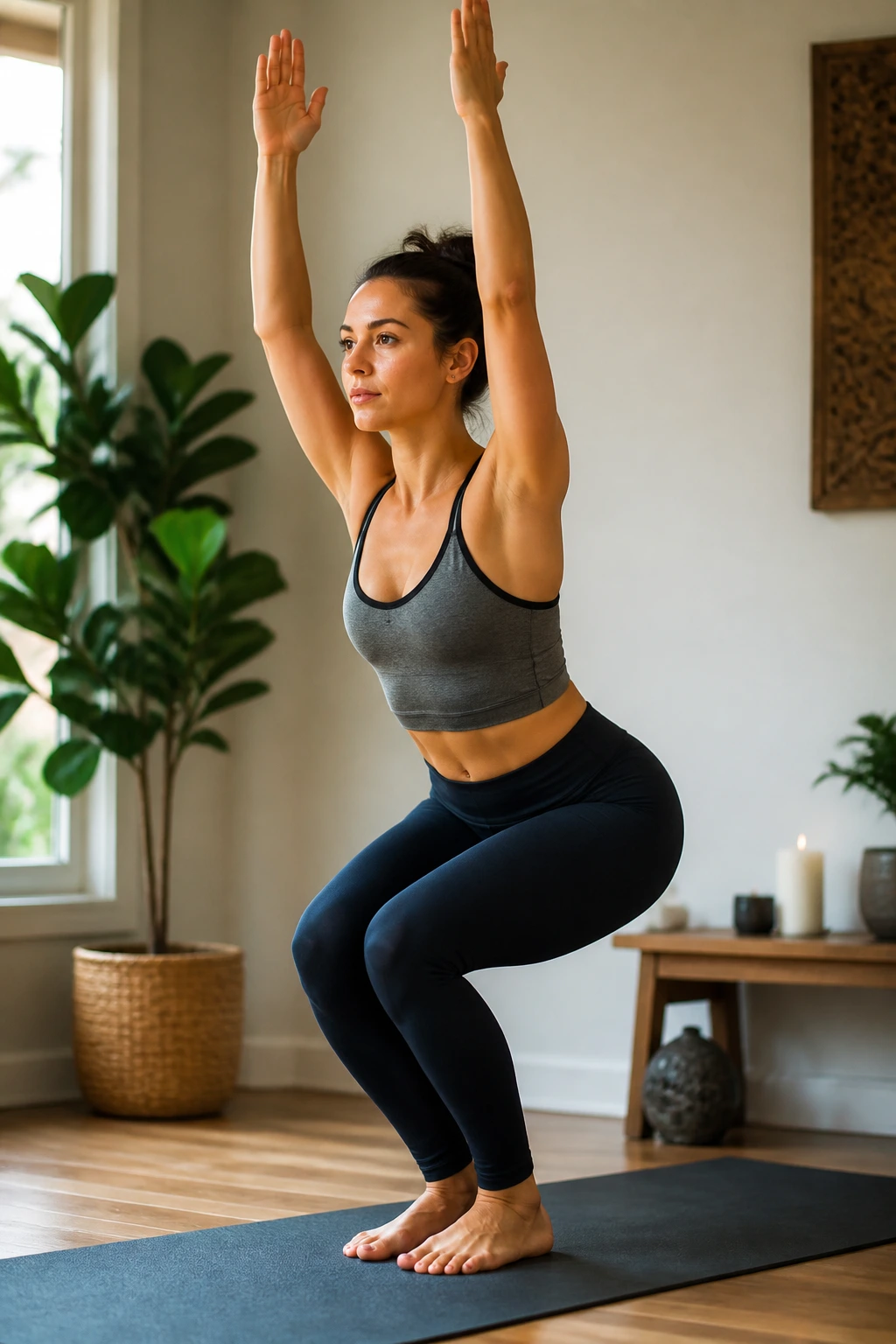
Strength in yoga does not mean racing through poses. It means holding simple shapes long enough for the legs, core, and shoulders to notice what’s happening. That’s a different feeling, and usually a better one for beginners.
Try chair pose, warrior I, crescent lunge, plank with knees down, and bridge pose held for 3 to 5 breaths each. Keep the pace slow enough that you can still speak in short sentences. If you’re gasping, the hold is too much or the stance is too deep.
This routine is good when you want to feel stronger without turning the practice into a punishment session. It also teaches your body where it cheats. The front knee collapses, the ribs flare, the shoulders creep up. You’ll notice all of it.
12. A Sun Salutation Lite Routine Without the Rush
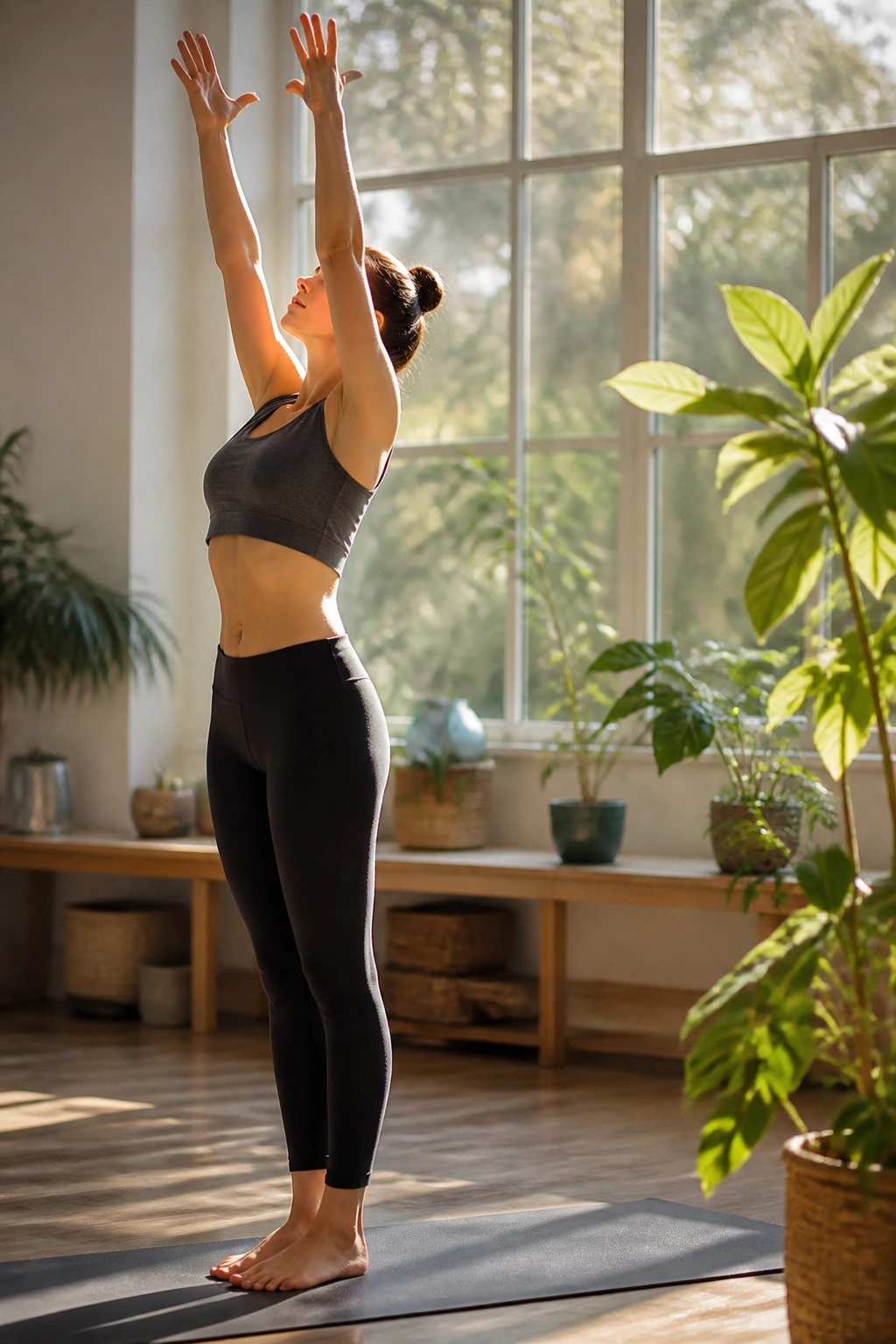
What if you want the sun-salutation feel without the speed? Then make the sequence slower, simpler, and much less jumpy. Most beginners don’t need a fast round of anything. They need time to learn where their hands and feet go.
How to Slow It Down
- Mountain pose
- Reach up
- Half forward fold
- Step to high plank with knees down
- Lower to cobra or sphinx
- Press back to downward dog
- Step to low lunge
- Return to mountain
Do one slow round to each side, then stop. That’s enough. The value here is in the linking, not in stacking round after round until your wrists hate you. If you keep the transitions smooth, you get warmth, balance, and a little heart-rate lift without losing control.
13. An Evening Full Body Yoga Routine to Unwind the Whole Body
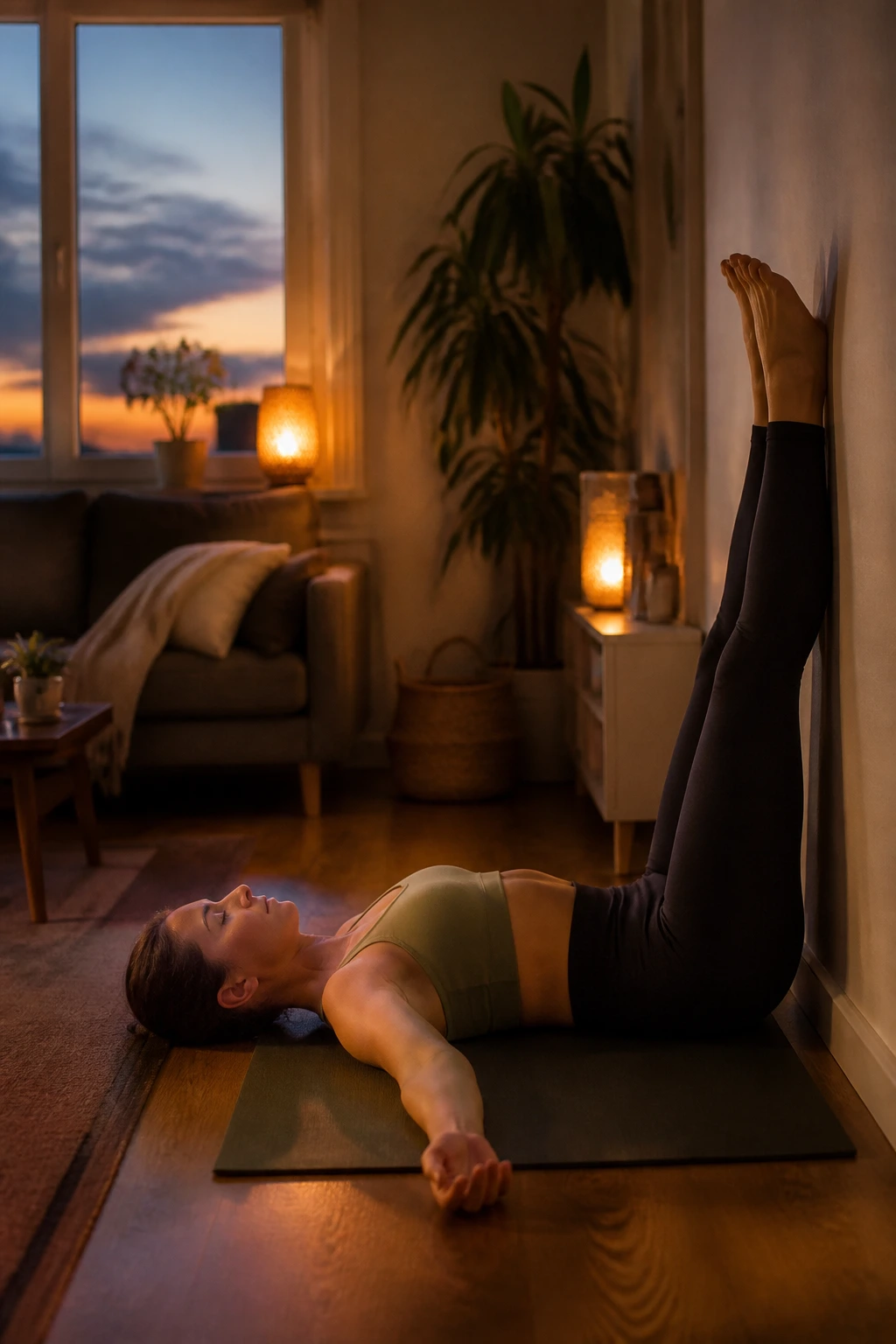
Evening yoga should feel like the room got quieter. Lower light helps. So does a slower exhale. The whole practice can be gentle and still do real work.
Begin with legs up the wall for a minute or two, then move into reclined bound angle, happy baby, supine twist, and savasana with your palms open. If the hips feel fussy, keep the feet farther from the pelvis. If the back of the legs are tight, bend the knees.
I like this kind of routine when the body feels busy in a dull way — not injured, just overused. There’s no push here. You’re teaching the nervous system that it doesn’t need to keep bracing.
End with one long breath out. Then another. That matters more than people think.
14. A Chest-Opening Flow for Rounded Shoulders
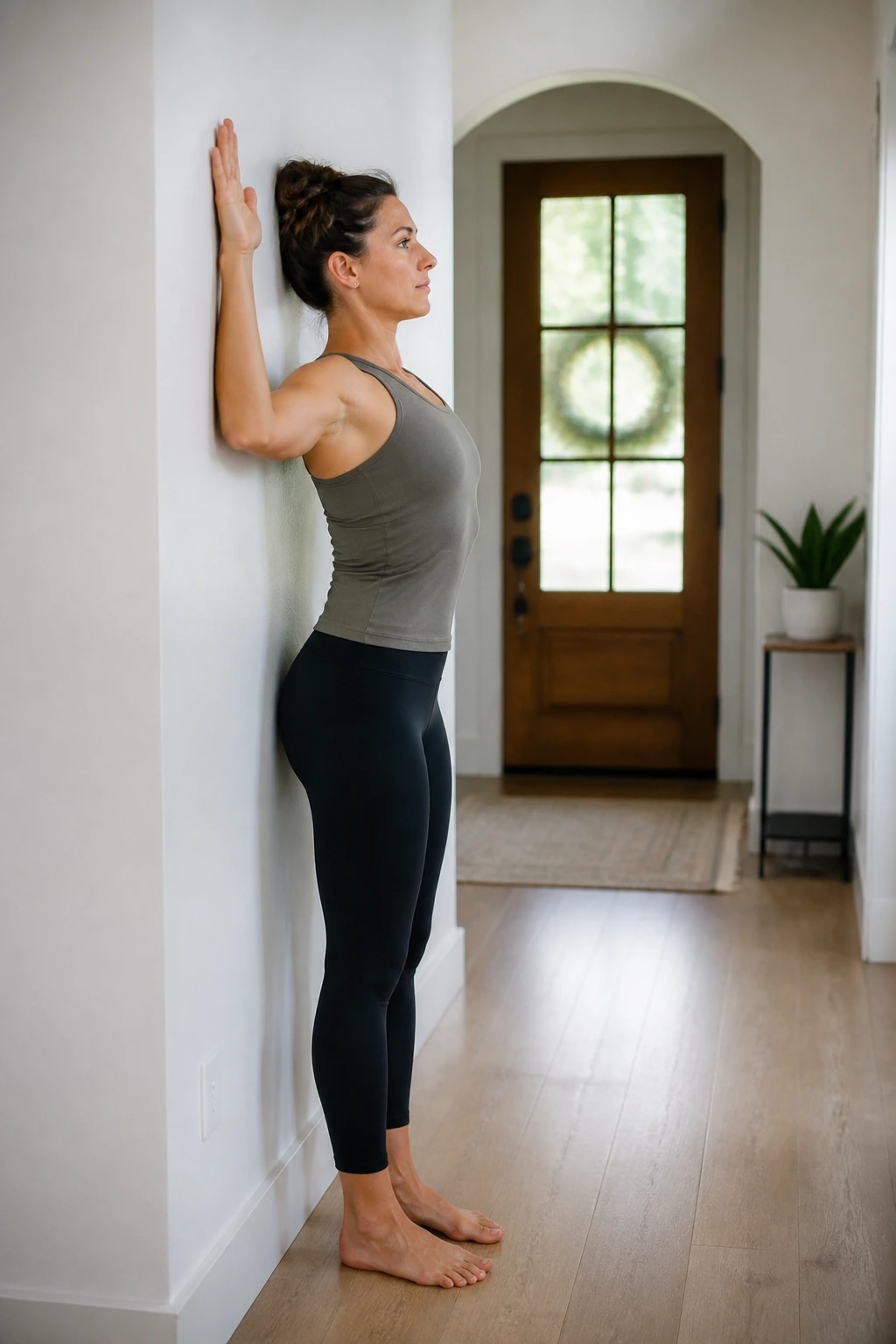
Rounded shoulders do not need aggressive stretching. They need reminders. Gentle reminders. A little back-body work, a little front-body space, and a lot less shrugging.
What to Watch For
- Keep the ribs from flaring hard in backbends
- Let the neck stay long
- Avoid forcing the elbows wide in cactus arms
- Use a wall for standing chest openers if the floor feels too much
A routine like this might include cactus arms, sphinx, locust prep, low lunge with side reach, and a soft bridge pose. That spreads the opening across the chest, shoulders, upper back, and glutes instead of yanking on one spot.
The surprise is that better posture often comes from strength, not stretch. When the upper back wakes up, the shoulders have less reason to slump forward. Small change. Noticeable relief.
15. A Glute-and-Thigh Sequence That Still Feels Beginner-Friendly
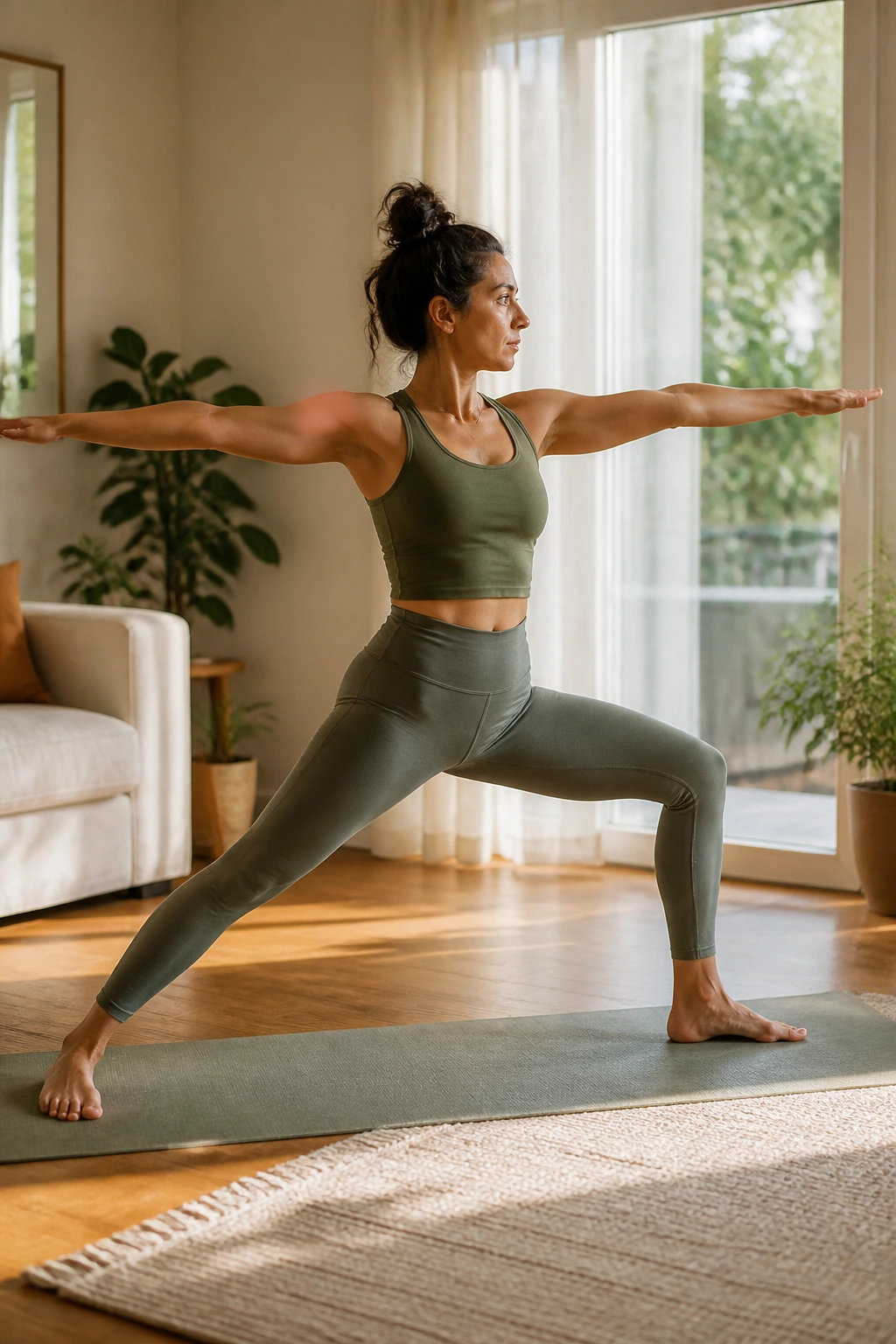
If your legs feel weak in chair pose, this is the one to keep nearby. It gives the glutes and thighs enough work to matter, but the shapes stay friendly and familiar.
Start in chair pose, then move to warrior II, low lunge, bridge with a block between the knees, and figure-4 on the back. A short side lunge can be added if the inner thighs want some attention. That mix gets the outer hips, quads, hamstrings, and glutes all involved.
The Good Part
The block between the knees in bridge changes the feel fast. It keeps the inner thighs engaged and prevents the knees from drifting, which many beginners do without realizing it. That tiny cue makes bridge feel steadier and more useful.
Keep the holds short at first — 3 breaths is enough. If the legs shake, that is fine. If the knees hurt, shorten the stance and back off.
16. A Full Body Yoga Routine for Tight, Stiff, or Sore Days
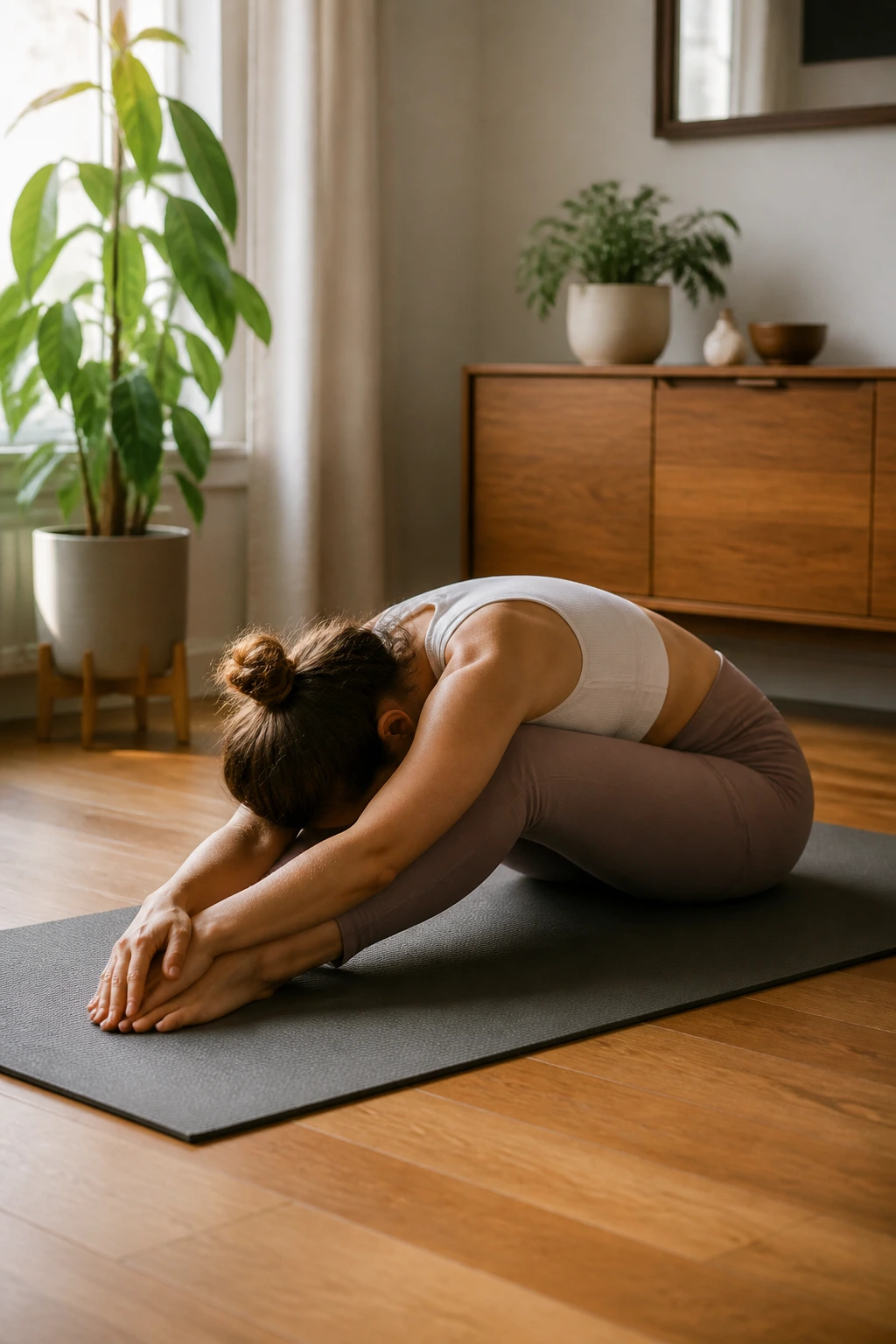
Some days call for a routine that looks almost boring on paper. Good. Boring is underrated when the body feels stiff. You want warmth, not a wrestling match.
Begin with ankle circles, then standing forward fold with bent knees, low lunge with blocks, seated forward fold, supported bridge, and a supine twist. Keep all of it small. If any pose asks for more range than you have, shrink the shape until it stops fighting you.
This kind of practice works because it lowers the pressure to perform. Tight muscles tend to loosen when they stop being braced against a threat. Slow exhale, soft jaw, knees bent. That’s the whole recipe here, and it’s enough.
17. A Chair Yoga Version for a Full Body Stretch
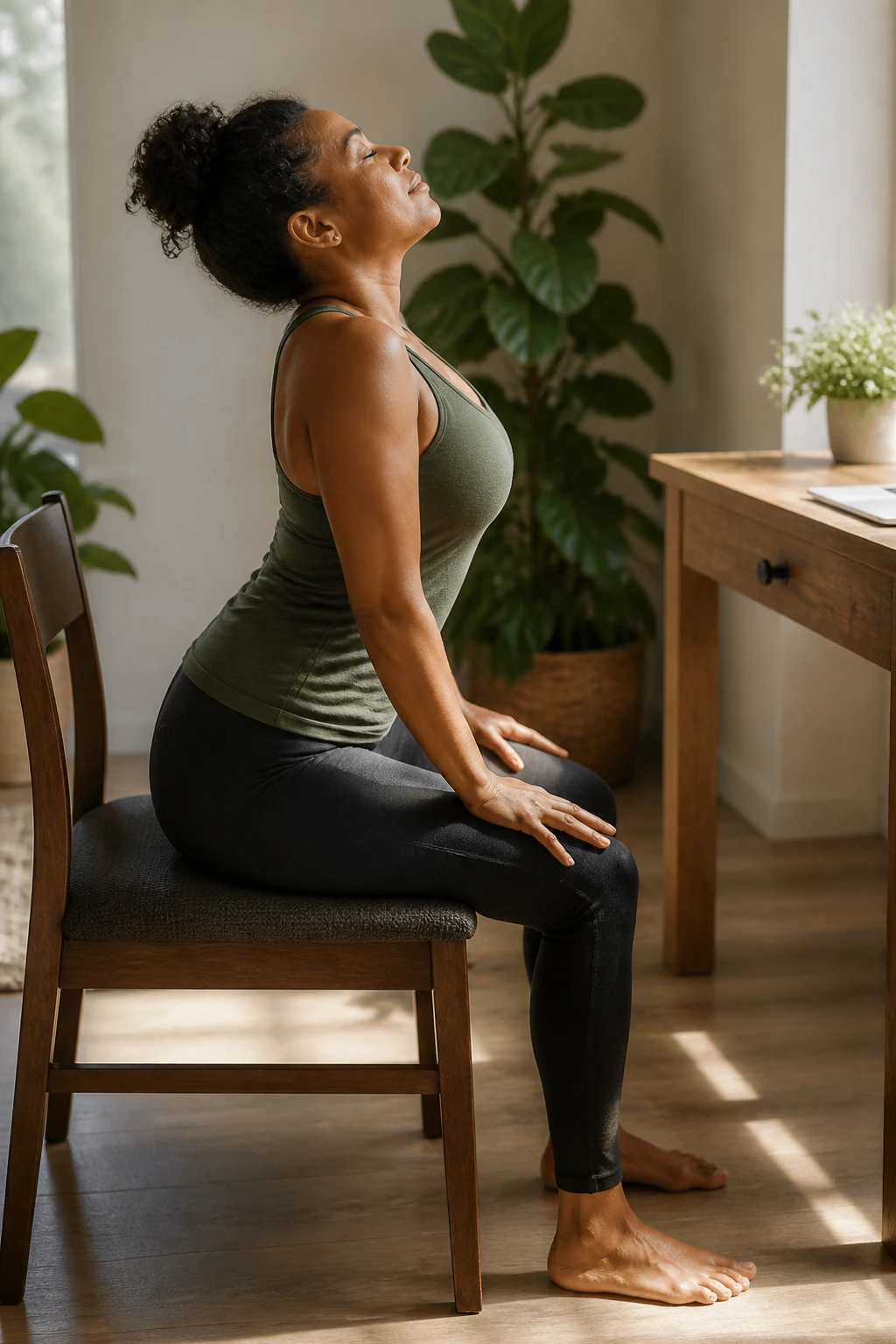
Can yoga work from a chair? Absolutely. And for a lot of beginners, chair yoga is the cleanest place to start because it removes the balance panic and still gives you a full-body reset.
How to Make a Chair Count
- Seated mountain pose for posture
- Seated cat-cow for the spine
- Side bends with one arm overhead
- Figure-4 stretch for the hips
- Seated twist for the ribs and back
- Ankle circles and toe lifts for the feet
Keep the chair sturdy and your feet flat when you can. I like this routine for travel days, long calls, or mornings when the floor feels like too much effort. It’s not a lesser version of yoga. It’s just a different tool.
If you want a tiny bit more work, stand up for a short calf stretch between seated moves. That’s enough to bring the lower body into the picture without making the routine complicated.
18. A Breath-Led Slow Flow for People Who Hate Feeling Rushed
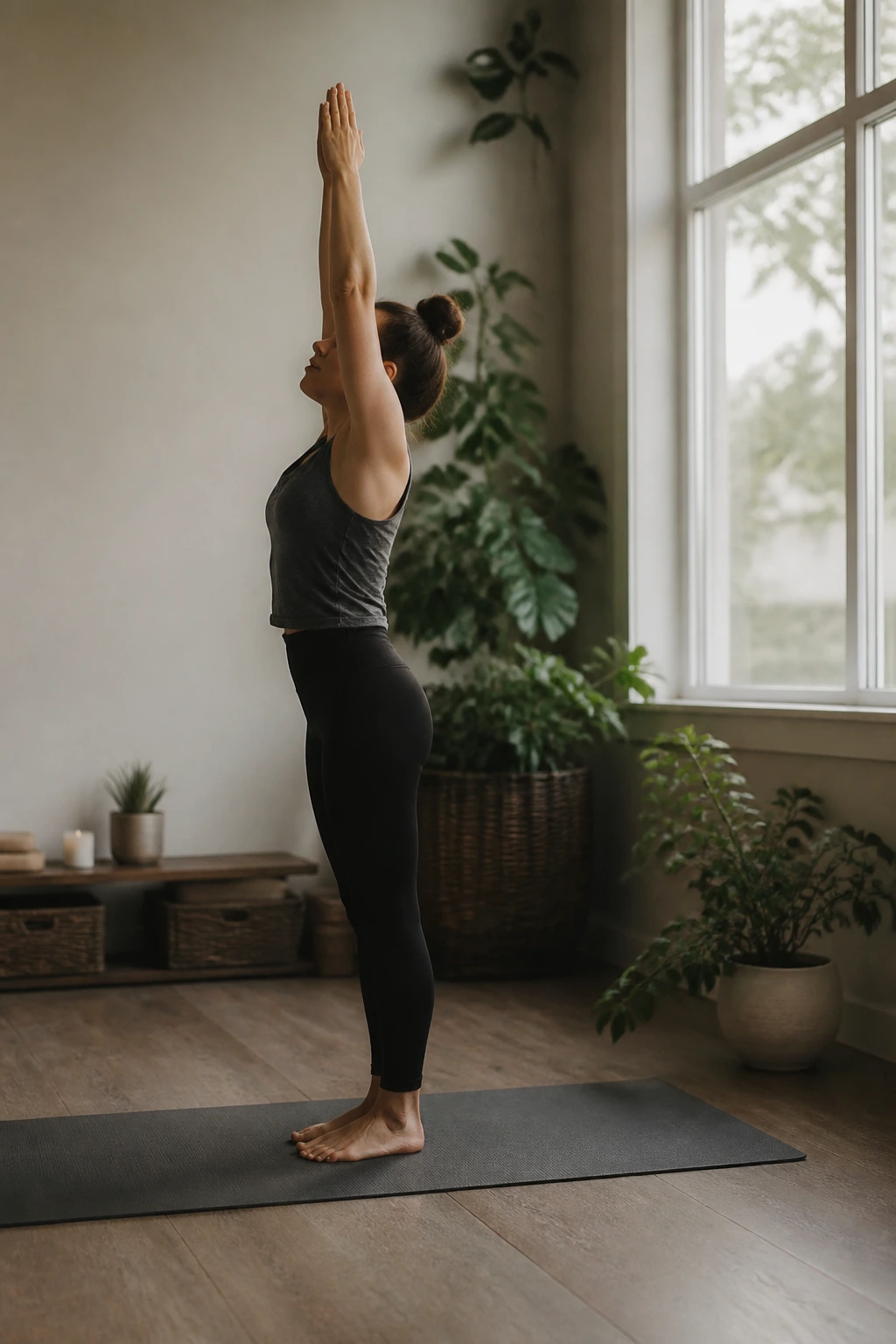
I’ve always thought slow flows are easier to stick with when each inhale gets one job and each exhale gets one job. That sounds simple because it is. The breath gives the whole practice a pace that feels human.
Try inhale to reach up, exhale to fold, inhale to half lift, exhale to step back, then inhale in cobra and exhale in child’s pose. You can repeat that pattern with different poses if you like. The point is to move because the breath asked, not because the clock did.
Breathing Pattern
- Inhale for length
- Exhale for release
- Keep the exhale slightly longer than the inhale
- Pause only if the body wants it
This routine usually takes 10 minutes or less, but it can feel much longer in a good way. That’s a nice change from workouts that leave you counting down the seconds.
19. An Eight-Minute Quick Reset for Busy Mornings
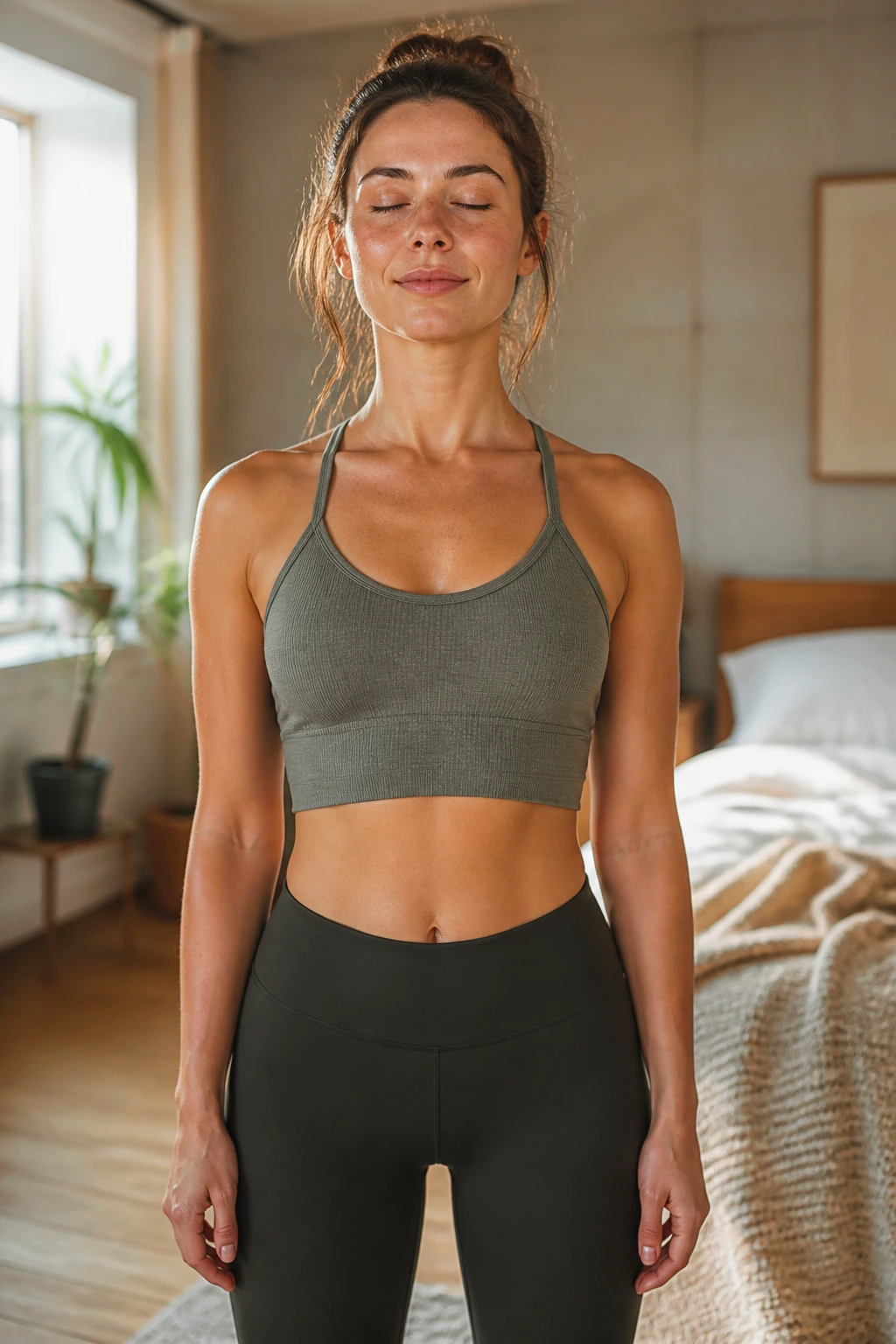
Eight minutes is enough. Not for everything, but for a decent reset before the day starts chewing on you. This routine is short because it has to be.
Start with mountain pose, move to forward fold, step into low lunge on each side, press into downward dog at the wall or on the floor, then finish with bridge and child’s pose. Keep the transitions tidy. No fancy flourishes.
The strength of a quick routine is that it gets done. You can repeat it without setting aside half the morning, which means you’re more likely to use it again tomorrow. That matters more than the pose list itself.
If you’ve got another two minutes, add a few slow neck turns at the end. Tiny bonus. Big relief.
20. A Longer 20-Minute Flow for Weekday Consistency
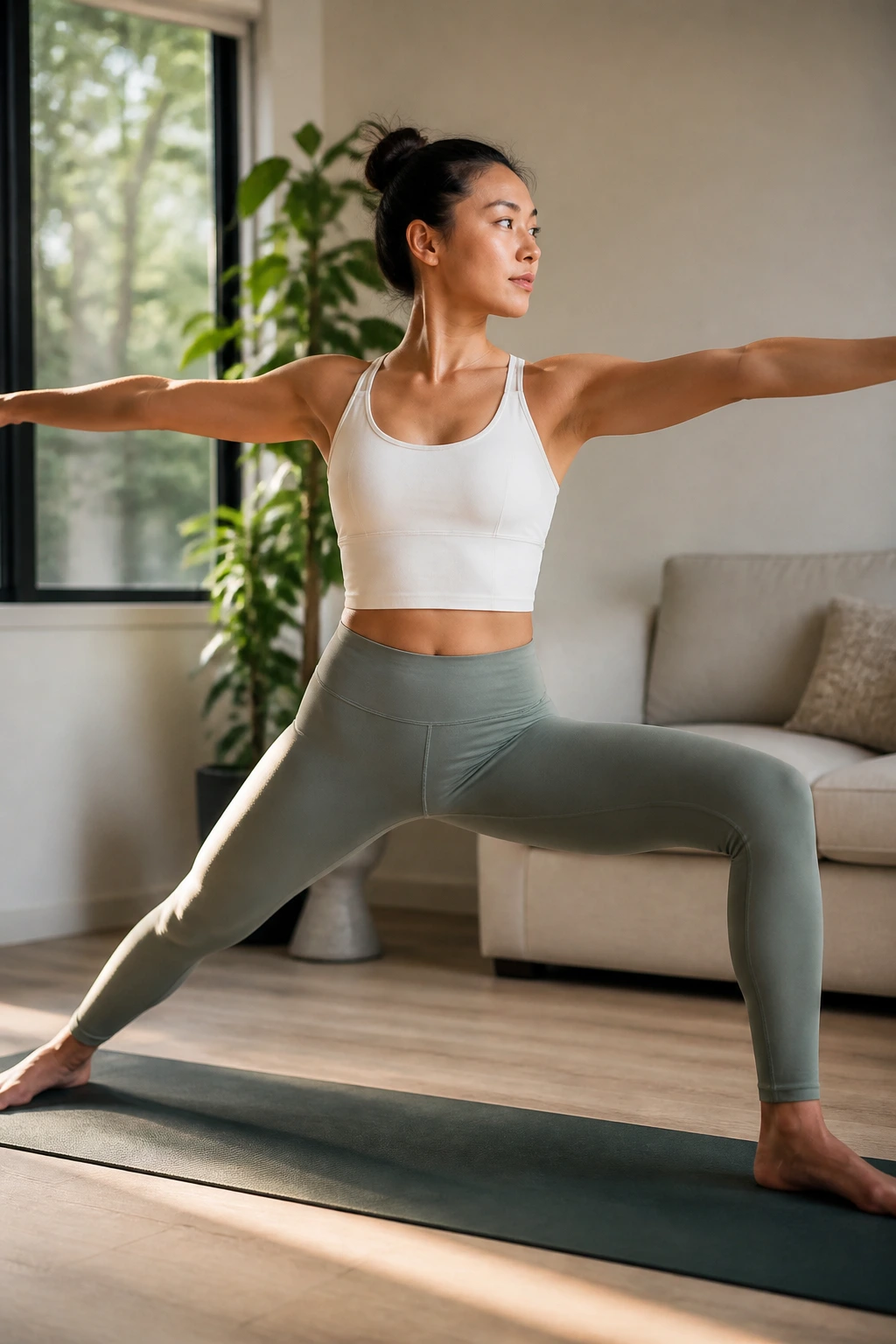
A longer routine works differently from a quick reset. It gives the body time to warm, settle, and then warm again in a new shape. That extra space often makes the whole session feel less abrupt.
Begin with cat-cow, downward dog, low lunge, warrior II, side angle, bridge, and a long supine twist. Repeat the standing section on both sides and give yourself a slower finish on the mat. You do not need a giant menu of poses. You need a clean path from one posture to the next.
This kind of routine is useful when you want yoga to feel like a real part of the day, not a side quest. Twenty minutes is long enough to change how your shoulders sit and how your hips move, but short enough that you can still do it on an ordinary weekday.
21. A Balance-and-Coordination Routine That Builds Confidence
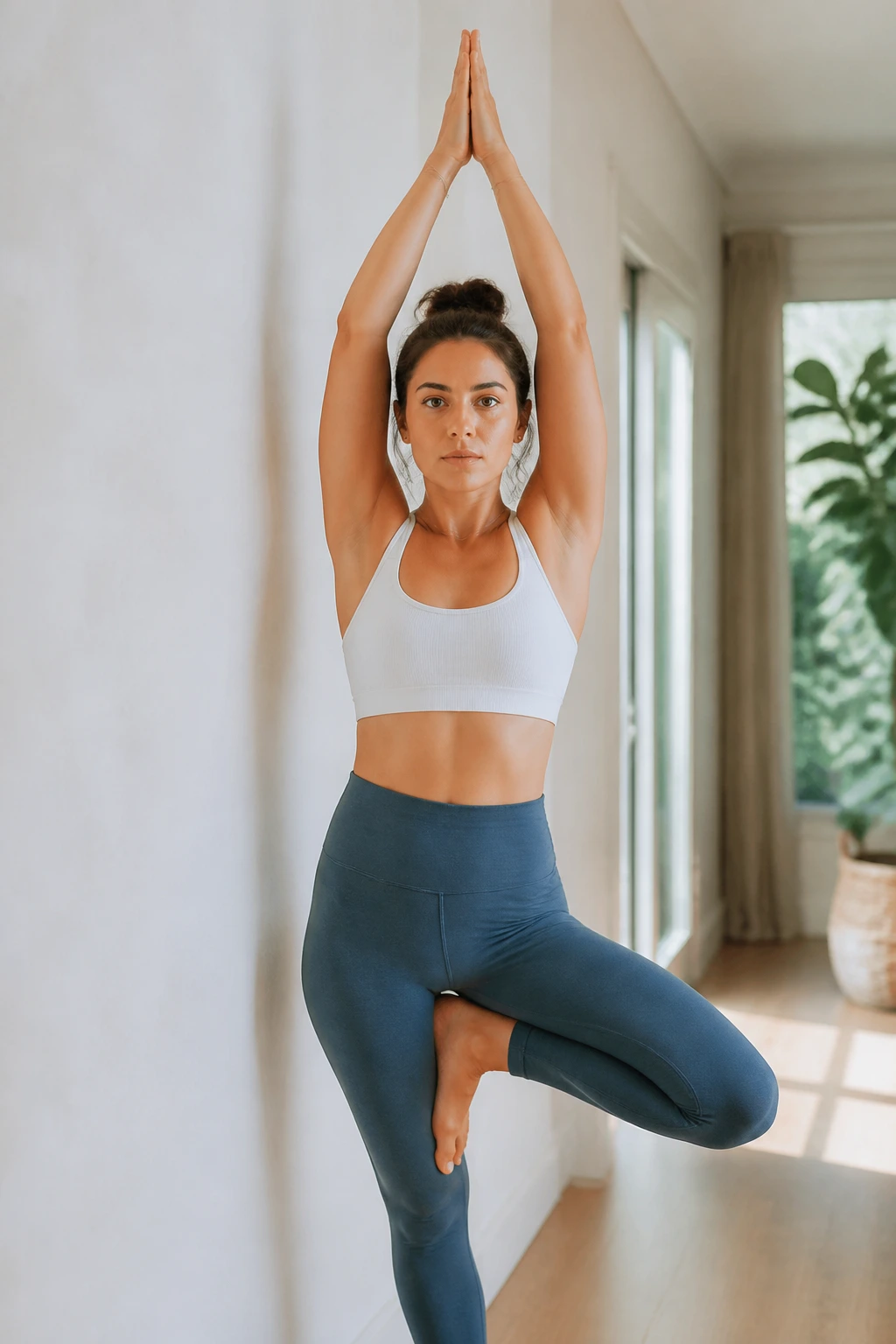
How do you practice balance without wobbling all over the room? Start near a wall and make the moves smaller than your pride wants them to be. Balance is easier when you stop treating it like a test.
How to Stay Steady
- Keep fingertips on the wall in tree pose
- Use a shorter stance in warrior III
- Lift one knee at a time in standing knee raises
- Hold side plank on the knees instead of full side plank
- Slow down the transitions between each shape
This routine asks for full-body focus because the feet, ankles, core, and eyes all work together. That’s the part many beginners skip. They think balance is about the standing leg alone. It isn’t.
Use the wall early and often. You’re training steadiness, not proving independence.
22. A Recovery Flow After Walking, Running, or Strength Training
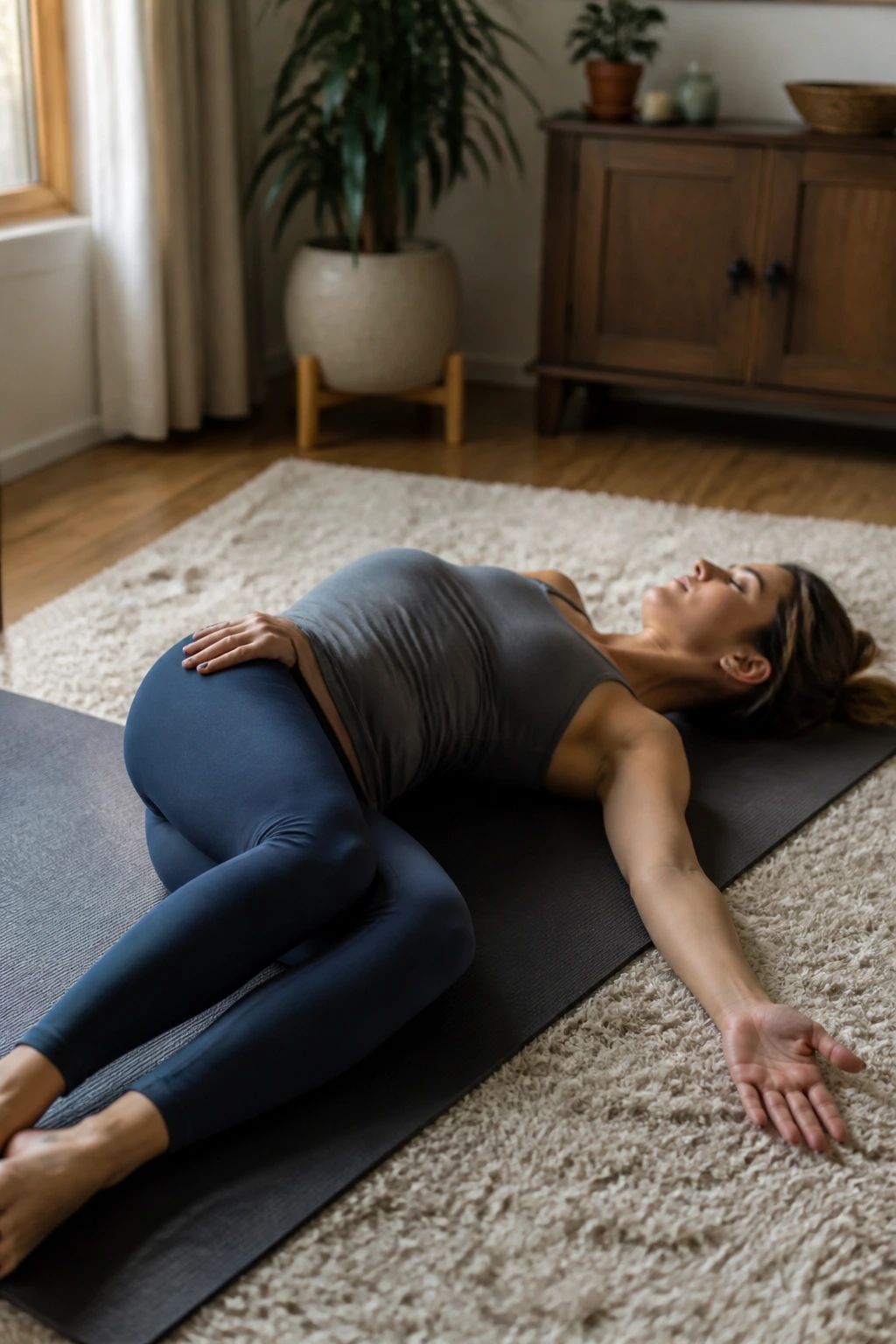
After a brisk walk or a hard workout, the calves and hips usually speak first. That makes recovery yoga useful, not optional. A little smart movement can keep the legs from locking up later.
Try calf stretch at the wall, low lunge, half split, figure-4, reclined twist, and a short bridge pose. Keep the holds around 20 to 30 seconds if the body is already tired. Long enough to matter. Short enough not to feel like another workout.
The nicest part of this routine is how it resets the lower body without asking much from the upper body. If your quads are tired, keep your back knee down longer. If the calves are grumpy, breathe into the stretch and let the heel stay heavy.
23. A Beginner Routine That Uses Blocks, a Strap, or a Wall
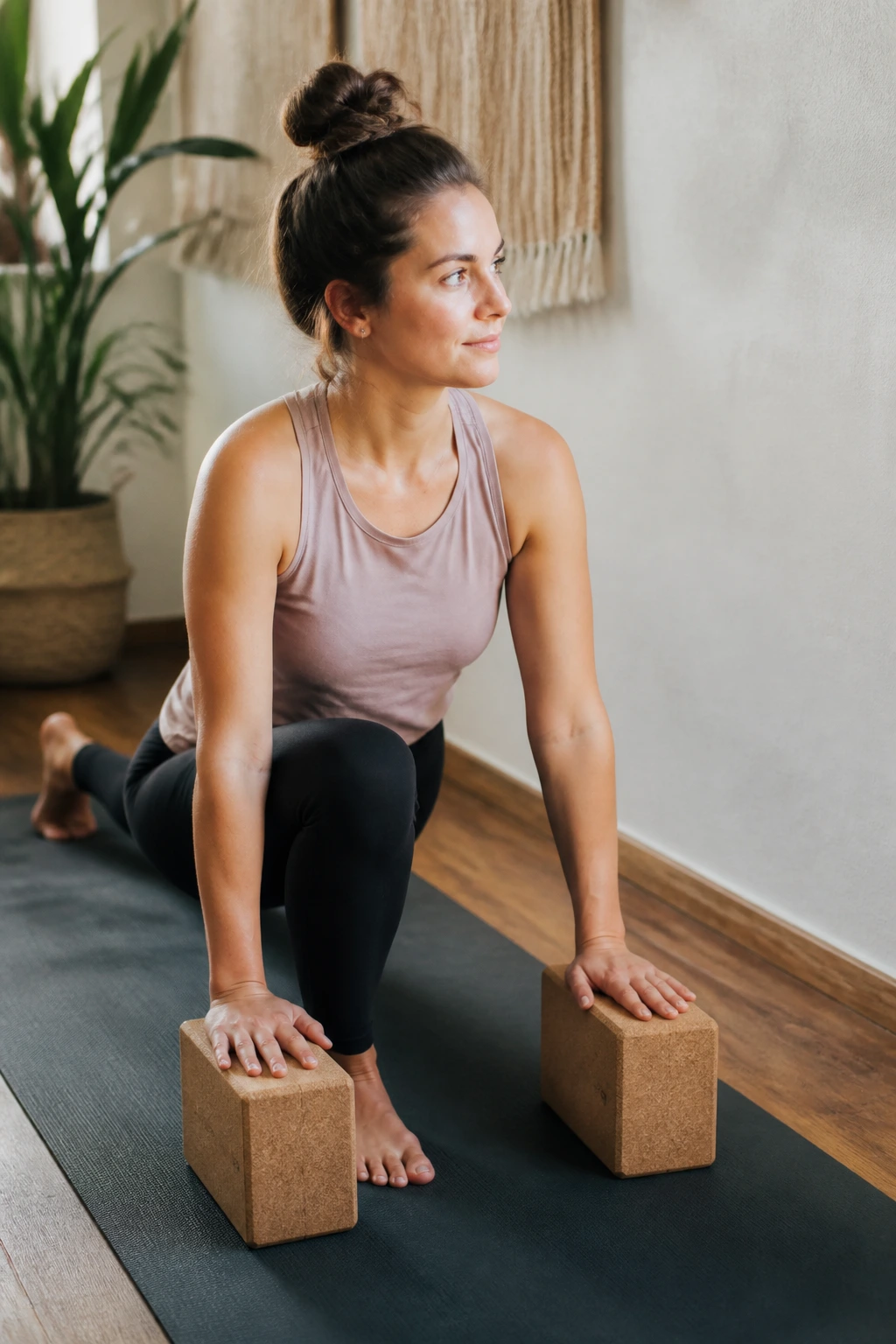
Props are not a crutch here. They are how the pose becomes usable. A block, strap, or wall can turn a frustrating shape into something your body can actually learn from.
When to Use Props
- Blocks under the hands in low lunge or half lift
- A strap in hamstring stretches
- A wall for triangle or tree
- A folded blanket under the knees in tabletop
- A cushion behind the back in seated folds
The sequence can be simple: supported low lunge, half lift with blocks, hamstring stretch with a strap, wall-assisted triangle, bridge, and child’s pose with a blanket under the shins. The goal is not to make everything easy. It’s to make the shapes clear.
Beginners often think props mean they’re not flexible enough. Usually, props mean the opposite: you’re smart enough to keep the pose honest.
24. A Standing Flow That Makes Transitioning Between Poses Easier
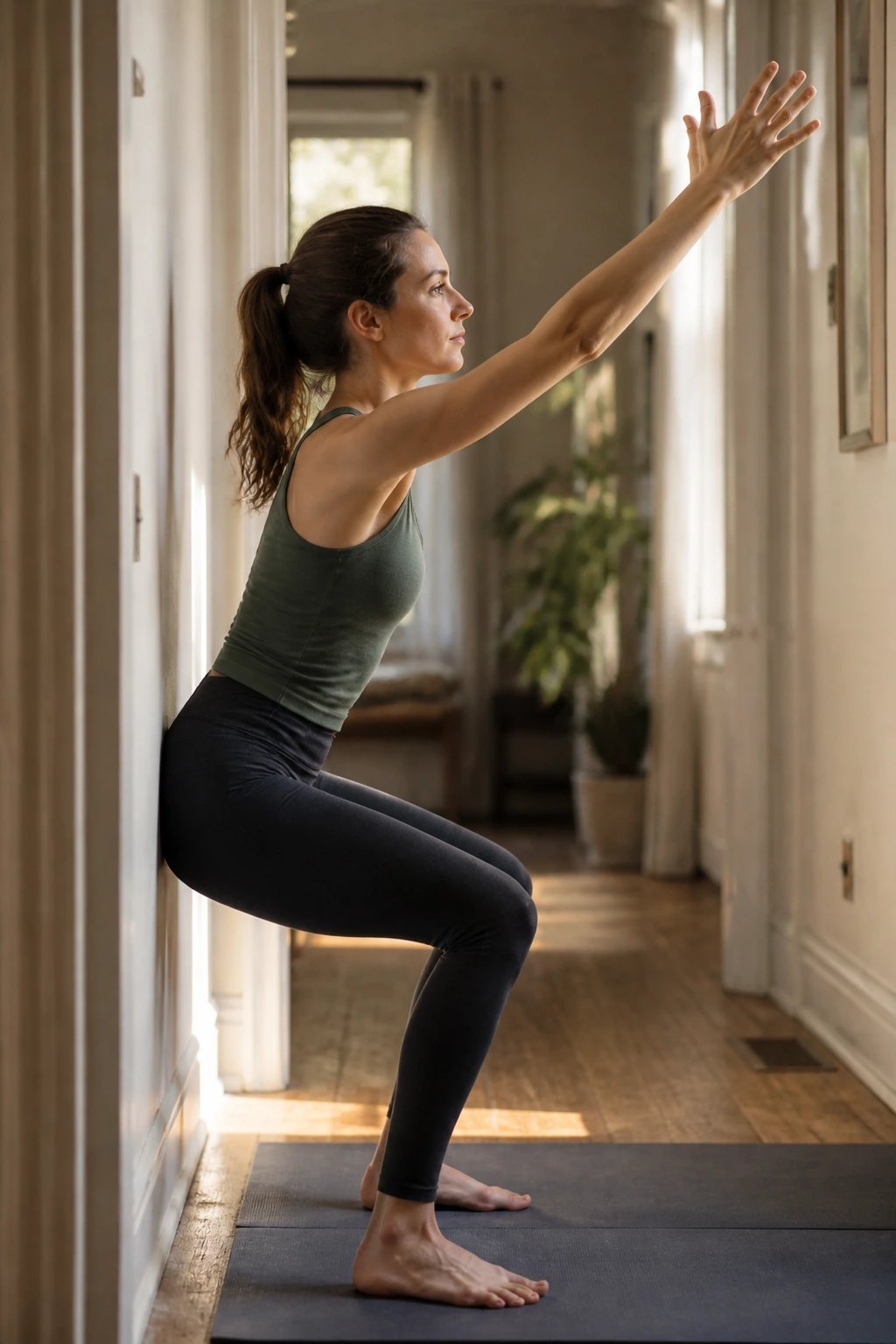
Transitions make or break beginner yoga. A lot of people can do a pose. Fewer people can move out of it without feeling clumsy or losing their breath. This routine is built to fix that.
Move from mountain to chair, to forward fold, to half lift, to low lunge, then warrior II, reverse warrior, and back again. Keep the hands simple. Keep the steps small. If you need to pause between poses, pause. Nobody is grading you.
What you learn here is how to place your feet and hands without rushing. That skill matters more than reaching a deeper shape. Once the transitions feel cleaner, the whole practice starts to feel calmer too.
A wall nearby helps. So does a slow exhale before every step.
25. A Repeat-Anytime Full Body Yoga Routine for Newer Students
A routine worth repeating has to survive an ordinary day. It can’t rely on perfect energy, perfect focus, or perfect hamstrings. It just has to work.
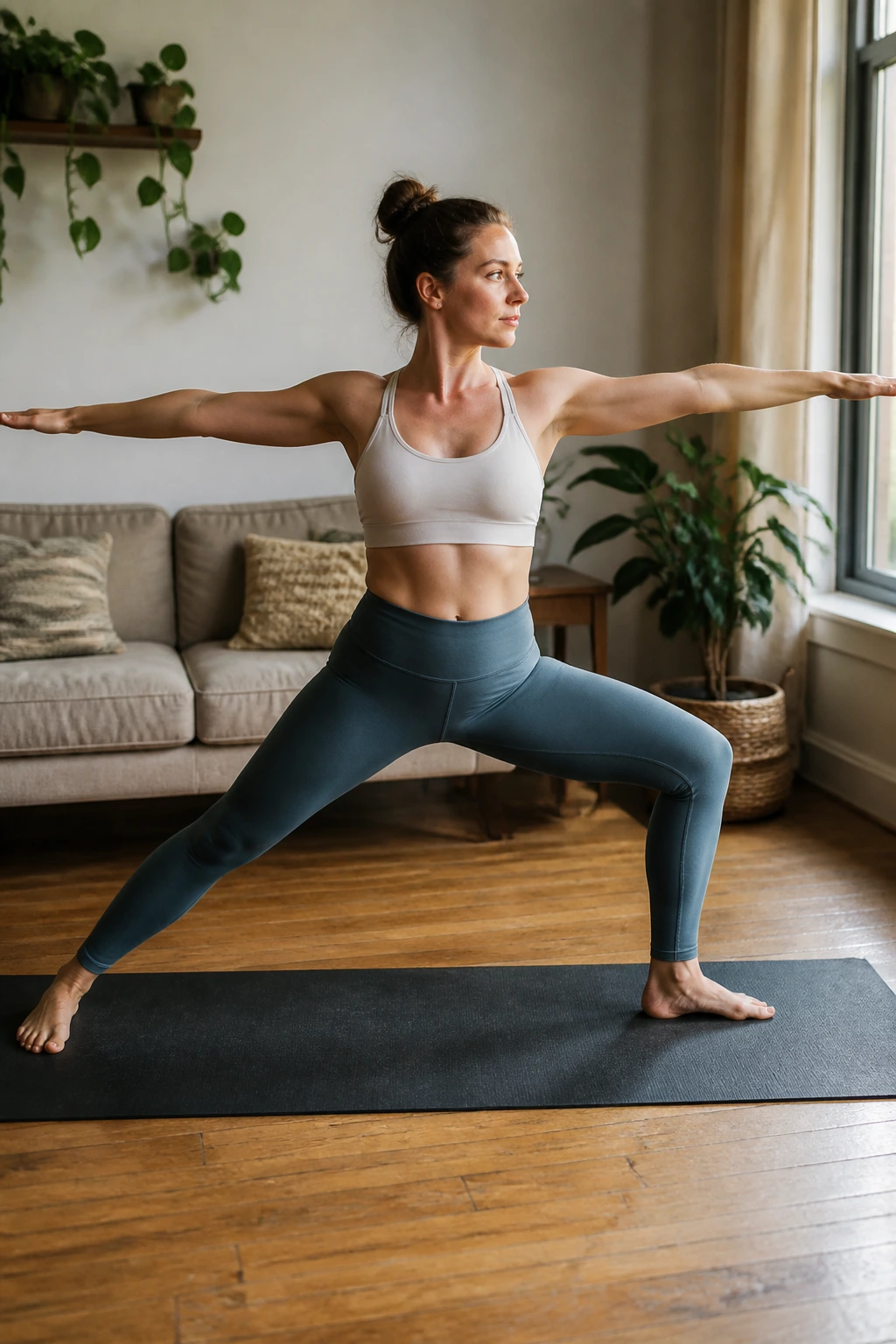
Start with mountain pose, move into cat-cow, step to low lunge on both sides, hold warrior II, come down for bridge, then finish with a supine twist and child’s pose. That combination gives you standing strength, hip opening, spinal movement, and a quiet finish. It covers a lot without feeling crowded.
If you only learn one beginner sequence, make it this kind of sequence. The poses are plain, the order makes sense, and the body usually feels more organized afterward. That’s useful on sleepy mornings, after long workdays, or on the days when you need yoga to meet you where you are.
Final Thoughts
A beginner routine does not need to be long to be worth doing. It needs to be clear, repeatable, and kind to the parts of your body that get cranky first.
Pick one short routine and one longer one, then keep them easy to find. Leave the mat out. Keep the block nearby. Tiny setup changes make practice happen more often, and that matters far more than having the most complicated flow in the room.
If a pose feels sharp, skip it. If a pose feels useful but dull, keep it. That’s usually where the best beginner yoga lives.
