



A medicine ball shouldn’t live in the corner like a dusty decoration. Used well, it can give you strength, power, coordination, and a proper sweat without turning your living room into a home gym warehouse. That is why medicine ball workouts at home have stuck around for so long: one piece of gear, a few square feet of floor space, and a lot of useful training in return.
The trick is choosing the right ball and treating it with a little respect. A 4- to 6-pound ball is plenty for fast core work and upper-body drills; a 6- to 10-pound ball suits most squats, lunges, and presses; and a slam ball belongs in the explosive lane, not on a slippery tile floor. If the ball makes your form turn into a wrestling match, it is too heavy. Simple as that.
I also like home medicine ball work because it does not hide sloppy movement. A clean press tells the truth. A rotation drill tells the truth. Even a basic squat with a ball at your chest will show you whether your ribs flare, your knees cave, or your pace falls apart when you get tired. That feedback is worth more than fancy equipment.
Keep one more thing in mind: if you live in an upstairs apartment, use the quieter drills first. Presses, carries, lunges, core work, and wall passes can all do plenty of damage without rattling the whole building. The first workout starts with a ladder, because simple is where the good stuff usually shows up.
1. Medicine Ball Squat-to-Press Ladder
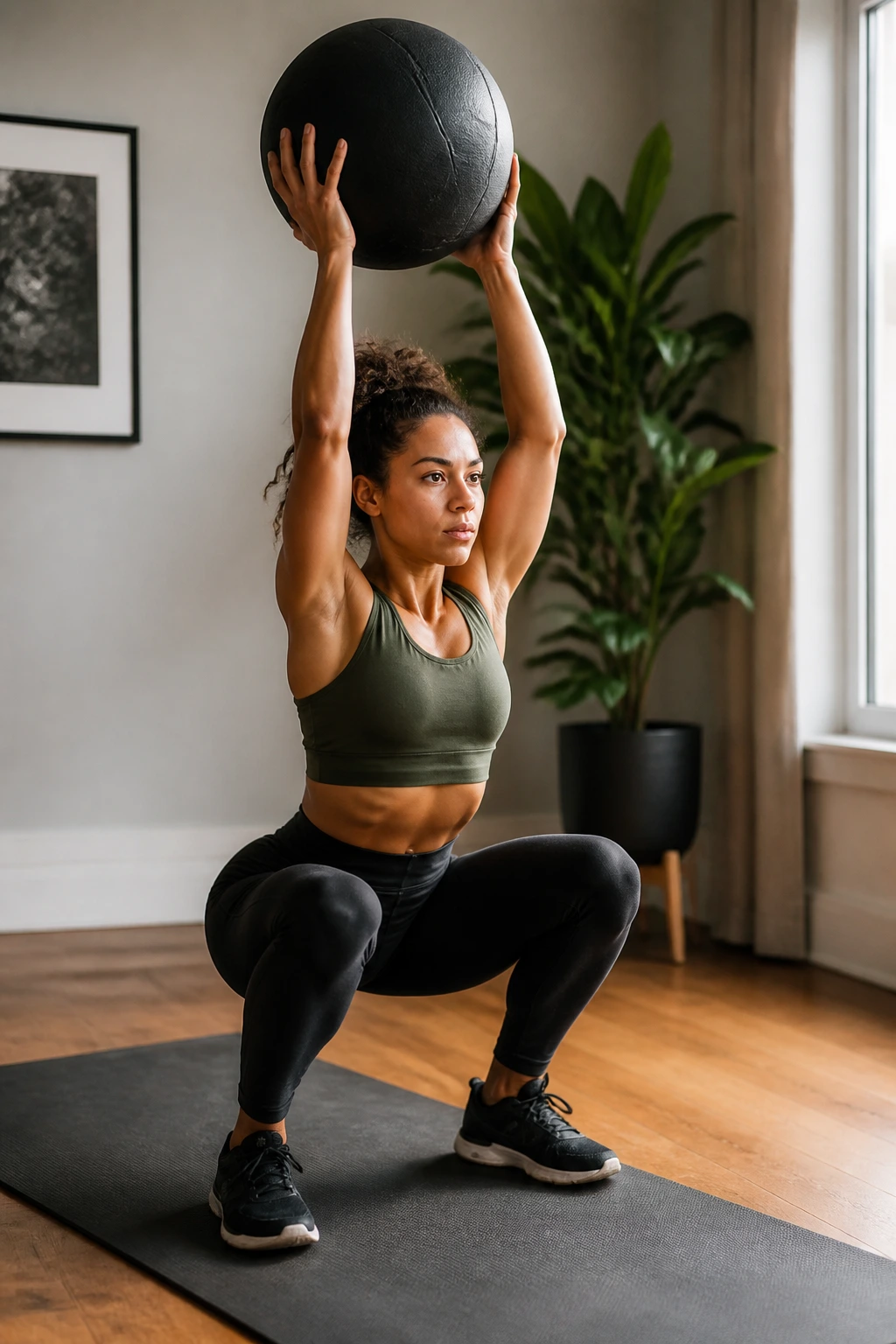
This is the fastest way to make a modest ball feel heavy. A squat-to-press ladder taxes your legs first, then your shoulders, then your lungs when your grip and posture start to fade. It looks straightforward on paper. It does not stay that way for long.
How to run it
Do 1 rep, then 2, then 3, then 4, then 5, and walk back down the ladder to 1. That gives you one round. Rest 45 to 60 seconds between rounds, and do 3 rounds if you want a solid home session. Hold the ball at chest height, sit into the squat with your heels down, and press overhead as you stand. The movement should feel smooth, not jerky.
Keep the ball close to your face on the way up. If you fling it forward, your lower back and shoulders will pay for it. A small pause at the bottom of each squat helps too. It makes the drill harder, which is the point.
- Use a 6- to 10-pound ball for most home setups.
- Keep your ribs down when the ball goes overhead.
- Stop the set if your elbows drift way in front of your ears.
One clean rep is better than three sloppy ones. That is the whole ladder in a sentence.
2. Reverse Lunge with a Cross-Body Turn
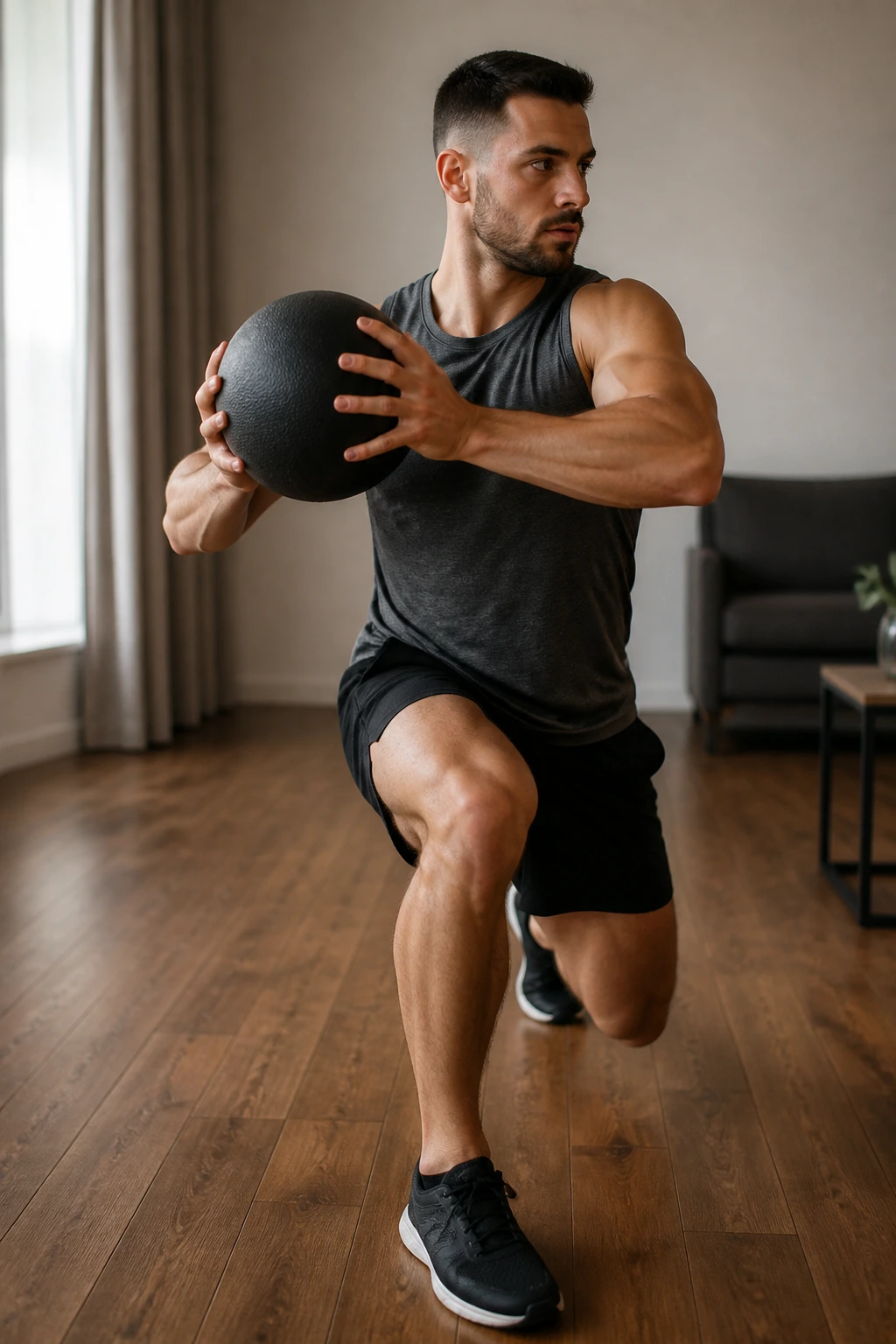
Why does a simple lunge feel different once you add rotation? Because the ball forces your torso to stay honest. The second you turn across your body, your front leg, hips, and abs all have to agree on what they are doing. That is where this workout gets useful.
Hold the ball at chest height, step back into a reverse lunge, and turn the ball gently toward the front leg on the way down. Come back to center before you stand. Do 3 sets of 8 reps per side with 30 to 45 seconds of rest. Keep the front heel flat and the back knee soft. You are not trying to twist as far as possible. You are trying to control the turn.
What to feel
- The front glute doing real work.
- The side of your waist bracing.
- The back leg staying quiet instead of flailing.
Small turns beat big twists. Big twists usually turn into cheating. If your balance goes first, shorten the lunge and slow the tempo down for a set or two. You will still get the work.
3. Overhead Slam Interval Sprint
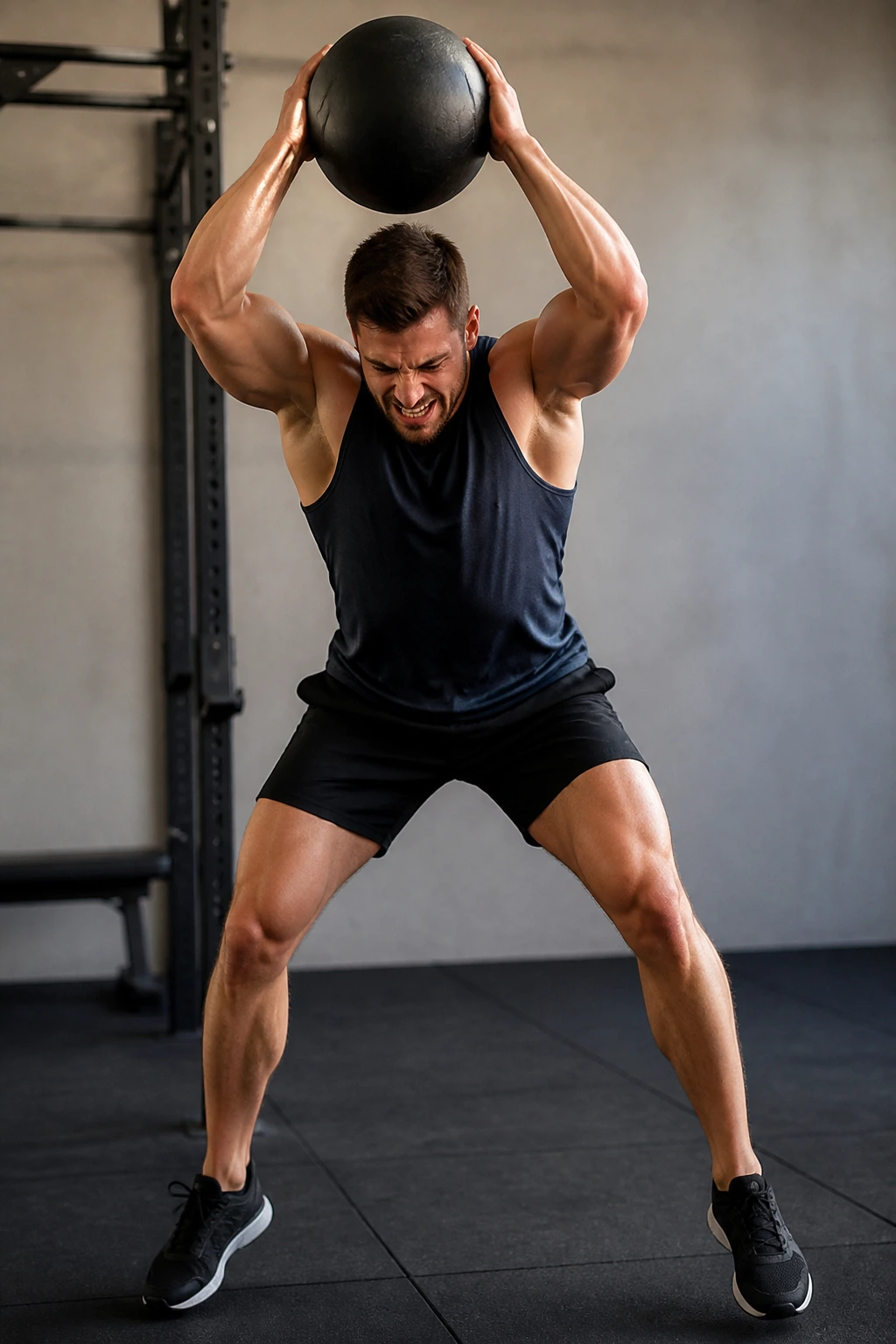
Fast. Loud. Controlled.
That is the entire mood of this drill, and it is one of the best medicine ball workouts at home if you want cardio without endless jumping. A slam ball is the right tool here because it is built for impact. If you only have a standard medicine ball, use chest-level scoop throws to the floor only if the ball is safe for that kind of use. Cheap hard balls and tile floors are a bad combination.
Run this as 20 seconds hard, 40 seconds easy, for 8 rounds. Hinge at the hips, reach tall, then drive the ball down between your feet with a sharp exhale. Pick it up with your legs, not your lower back, and reset quickly for the next rep. The rhythm matters more than the raw speed.
How to keep it crisp
- Start each rep from a strong athletic stance.
- Slam straight down, not out in front.
- Keep your chin tucked and your ribs from flaring.
Skip the overhead throw if the ceiling is low or the ball rebounds unpredictably. A safe, repeatable slam beats a flashy one every time. Your living room does not need drama.
4. Dead Bug Press Hold
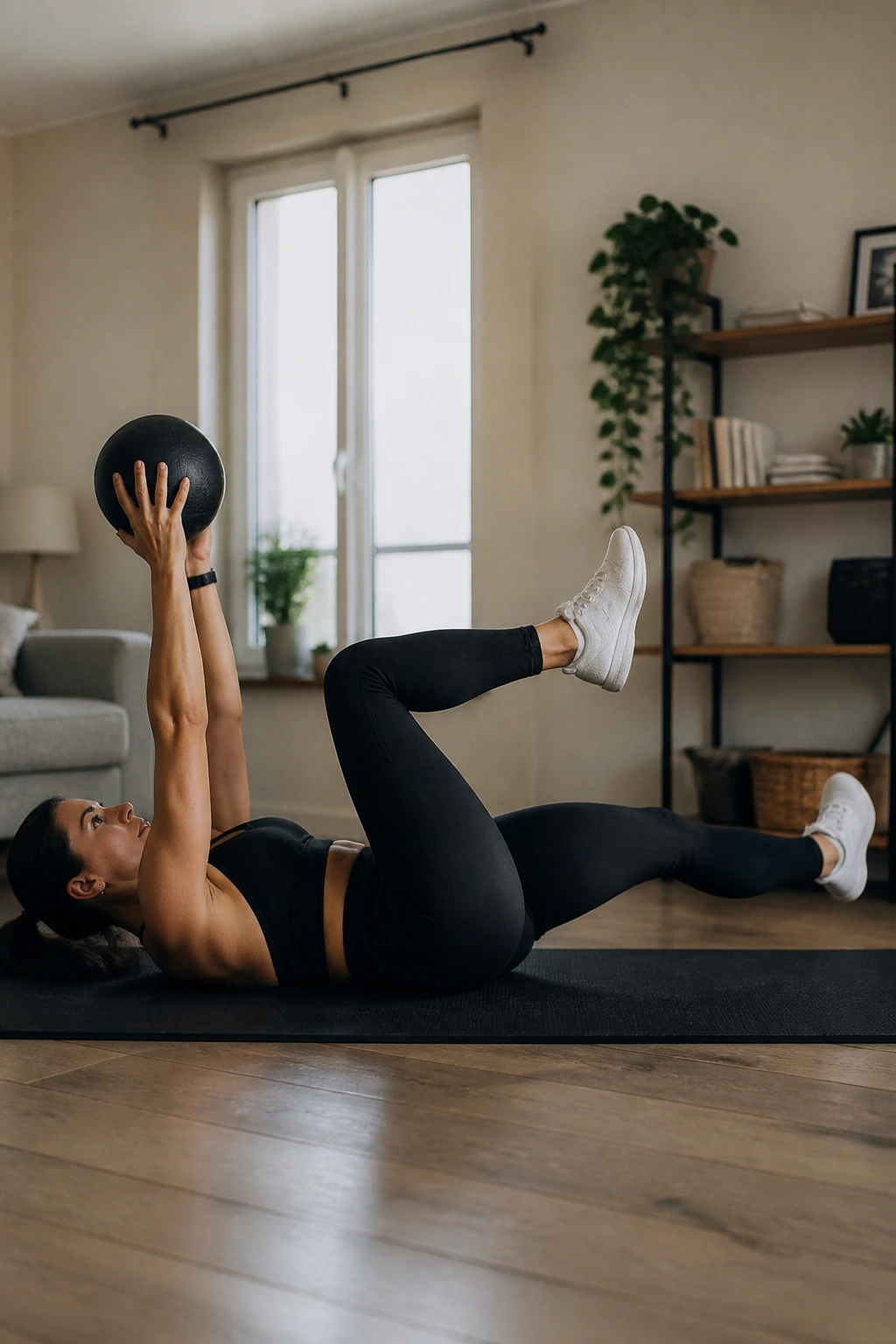
Crunches are easy to fake. Dead bugs with a medicine ball pressed overhead are not.
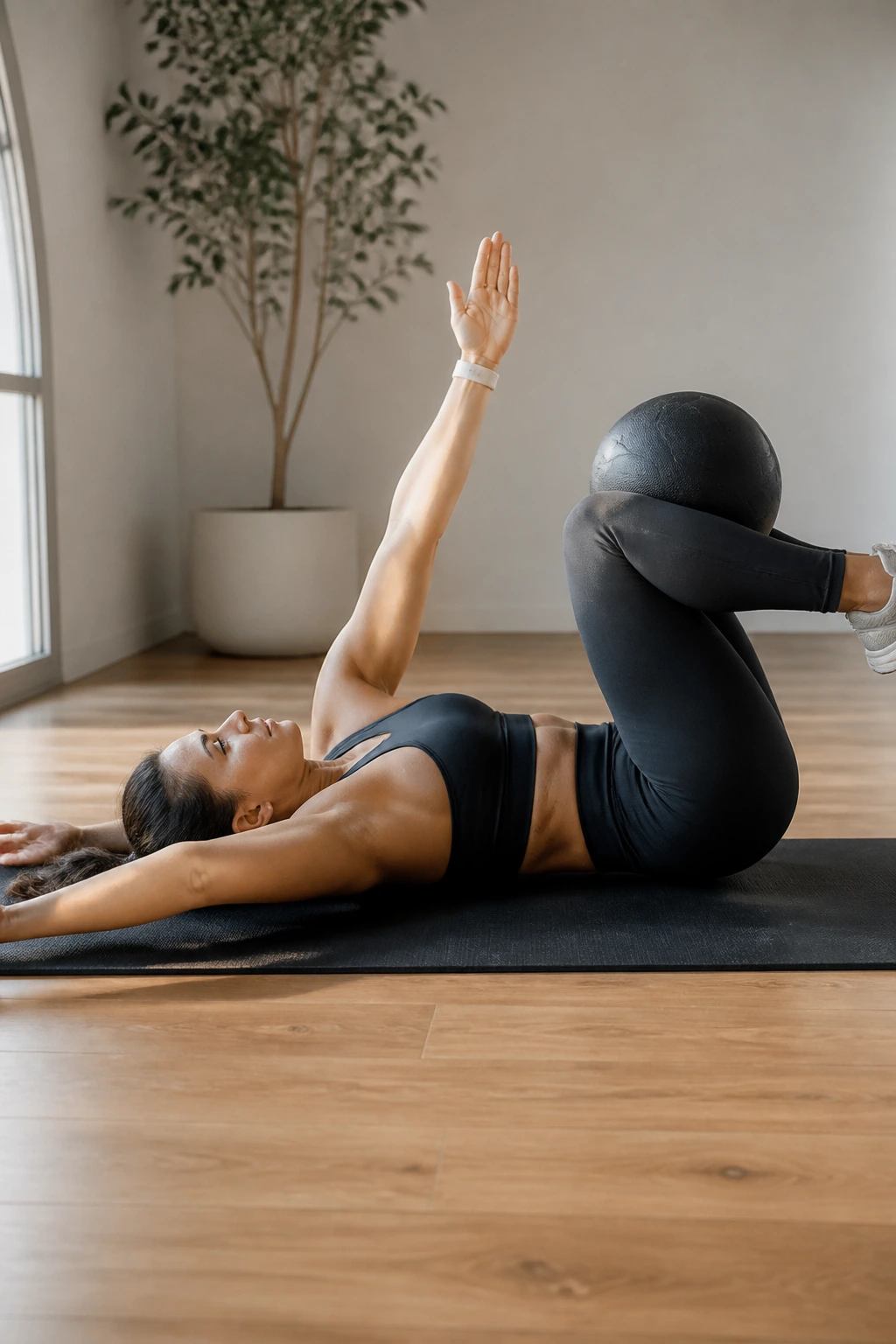
Lie on your back, press the ball straight above your chest, and flatten your lower back gently into the floor. From there, lower one heel toward the ground while the opposite arm stays locked in place. Switch sides slowly. Do 3 sets of 6 to 8 reps per side, and keep each rep deliberate. If your ribs pop up, the ball is too far away or you are moving too fast.
This one is quiet, which I like. It looks almost too calm until your abs start shaking.
A longer exhale makes the drill harder in the right way. Breathe out as the heel reaches long, then inhale as you return to the start. If your neck starts to tense, lower the ball a little and shorten the leg reach. The goal is not a bigger range. The goal is a flatter, steadier trunk.
5. Plank Drag and Tap Circuit
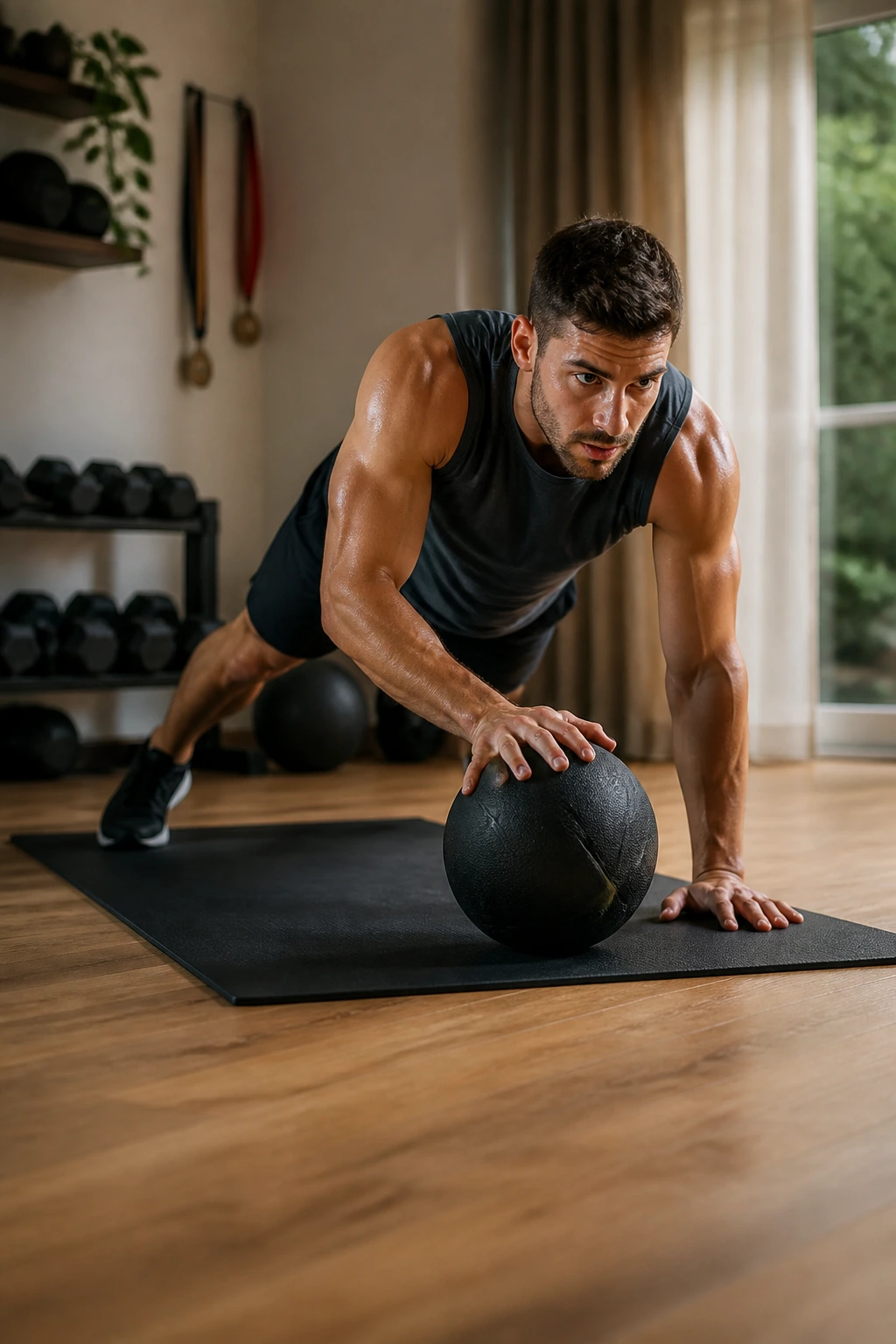
Picture a high plank on a mat with the ball just outside your right hand. Every time you drag it across, your hips want to swing. That is the whole challenge, and it is why this works so well at home.
Set up in a strong high plank, feet a little wider than hip width. Drag the ball under your chest to the other side, then tap the top of it with the free hand before sending it back. Do 30 seconds on, 30 seconds off for 4 to 6 rounds. Keep your gaze a little ahead of your hands so your neck does not collapse.
What helps most
- Spread your feet a bit wider than normal.
- Move the ball slowly enough to stay square.
- Think about pressing the floor away with both hands.
This one looks easy for about twelve seconds. After that, the wobble starts. If your lower back arches, cut the work interval to 20 seconds and clean up the shape before chasing more speed.
6. Bear-Hug March and Squat
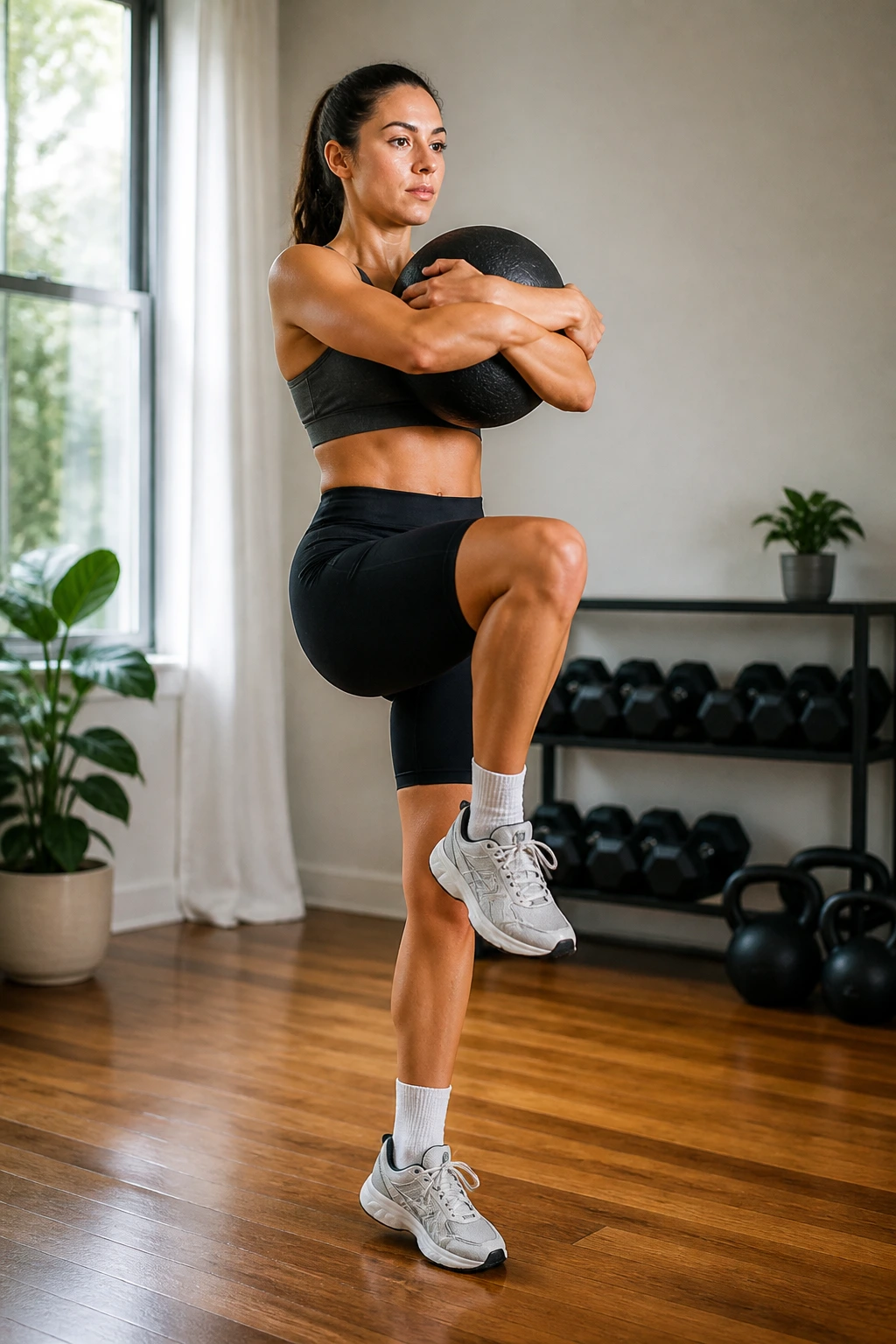
Holding the ball tight against your chest makes a basic march feel like real work. That is the charm of this exercise. It is old-school, a little ugly, and far more useful than it looks.
Wrap your arms around the ball as if you are trying not to drop a watermelon. March in place for 20 to 30 steps, then drop into 8 squats while keeping the squeeze. Repeat that sequence for 4 rounds. If you have more room, walk forward and back instead of marching in place.
Your upper back gets involved because the ball keeps your chest from collapsing. Your core has to stay on because the ball wants to pull your ribs forward. Your legs get the final say when the squats start to slow down.
No bouncing around. No rushing. If your shoulders round hard, lift the ball a little higher on the chest and stand taller between reps. The point is to stay braced, not to crush the thing.
7. Single-Arm Medicine Ball Clean to Push Press
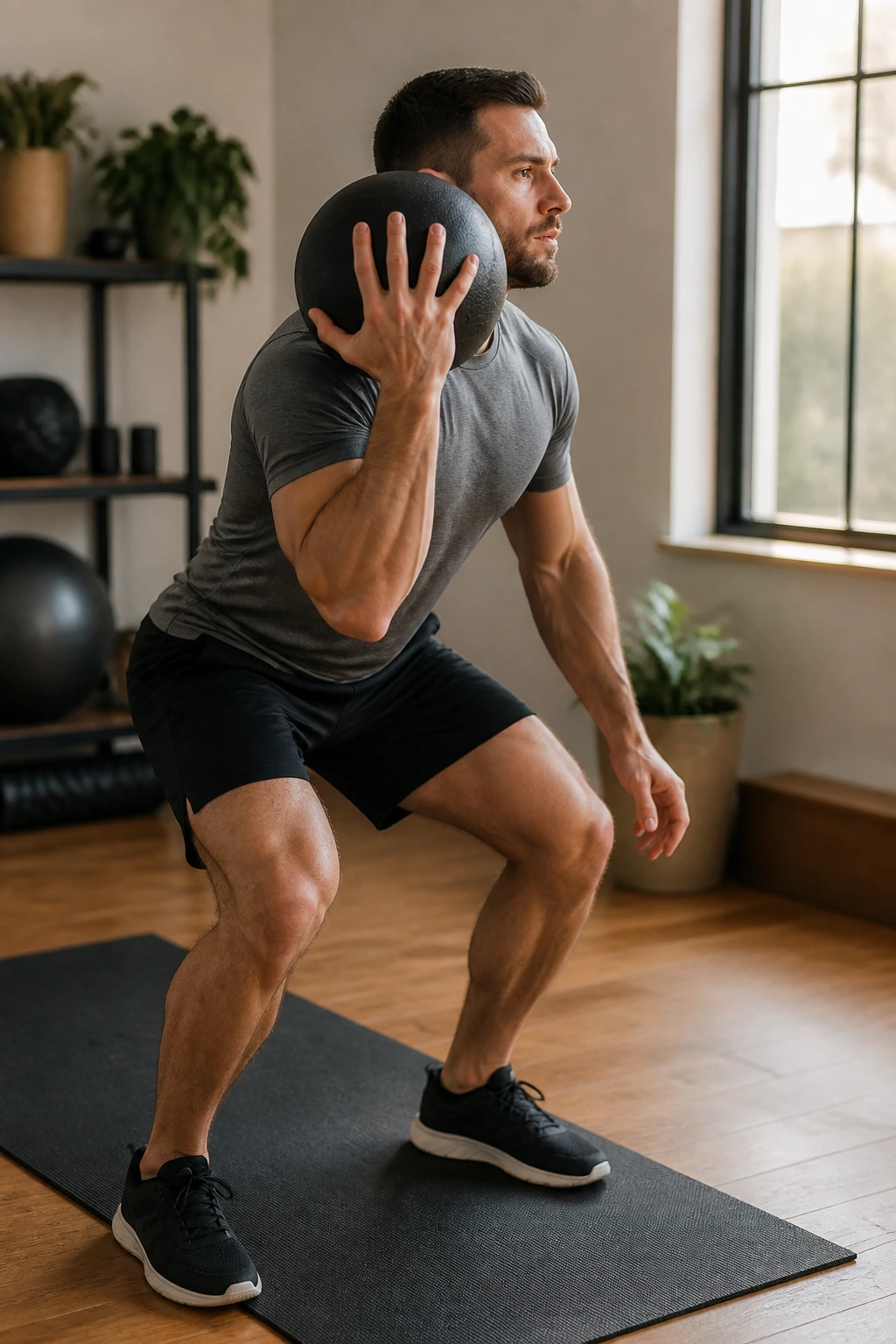
What if you want power without a barbell? This is a good place to start.
Set the ball between your feet, hinge down, and pull it into one shoulder in a quick clean. From there, dip slightly and drive it overhead with a push press. Do 5 reps on one side, then 5 on the other, for 4 rounds. Rest about 45 seconds between rounds. The ball should travel close to your body the whole time. If it swings out like a pendulum, the load feels heavier and the movement gets sloppy.
How to keep the catch clean
- Pull with the hips, not the arm.
- Catch the ball softly at shoulder height.
- Use a small knee bend to finish the press.
I like this one because it feels athletic without needing a huge setup. It also exposes a weak core fast. If the overhead press turns into a lean-back contest, lower the weight and clean up the timing first.
8. Around-the-Body Core Circle

Stand tall, feet hip-width apart, and pass the ball around your waist as if you are drawing a thick belt in the air. That is the basic move, and it works because your trunk has to keep resisting while your arms do something slightly annoying.
Do 10 circles in one direction, then 10 in the other, and repeat for 3 rounds. You can also do it in a half-kneeling stance if you want more hip control. Keep the circle close to the body. If the ball drifts far away, your shoulders take over and the core work drops off.
Breathe out whenever the ball comes around the front. That small timing trick keeps the ribs from flaring and helps you stay steady. The pace should be controlled, almost boring. That is the point.
A lot of people rush this drill because it looks too simple. Then the obliques start complaining, which is usually the first clue that the drill is doing its job.
9. Lateral Lunge and Scoop
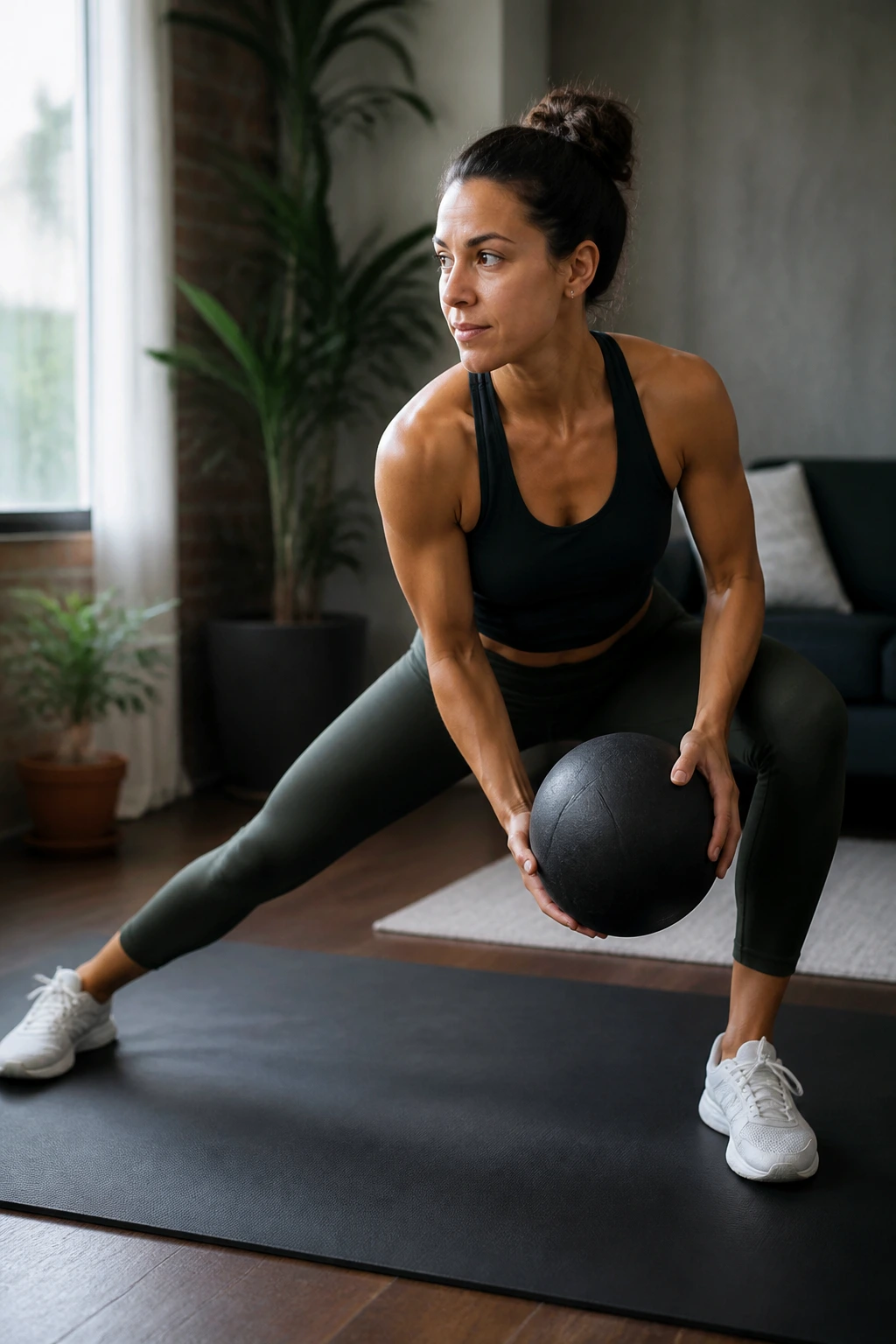
Forward work is fine. Side-to-side work is where home training gets lazy.
Step out into a lateral lunge, sit your hips back, and keep the opposite leg long. As you come out of the lunge, scoop the ball low across your body and return to standing. Do 3 sets of 6 to 8 reps per side. The ball should travel near the floor on the scoop, then rise toward the opposite shoulder. That diagonal path is what makes the drill feel different from a plain side lunge.
What to watch for
- Keep the planted foot flat.
- Let the sitting hip move back, not forward.
- Move the ball low and close to your shin.
This one lights up the inner thigh more than most people expect. If your knee caves inward, shorten the range and slow the return. A clean side lunge teaches more than a deep one done badly.
10. Kneeling Medicine Ball Rollout
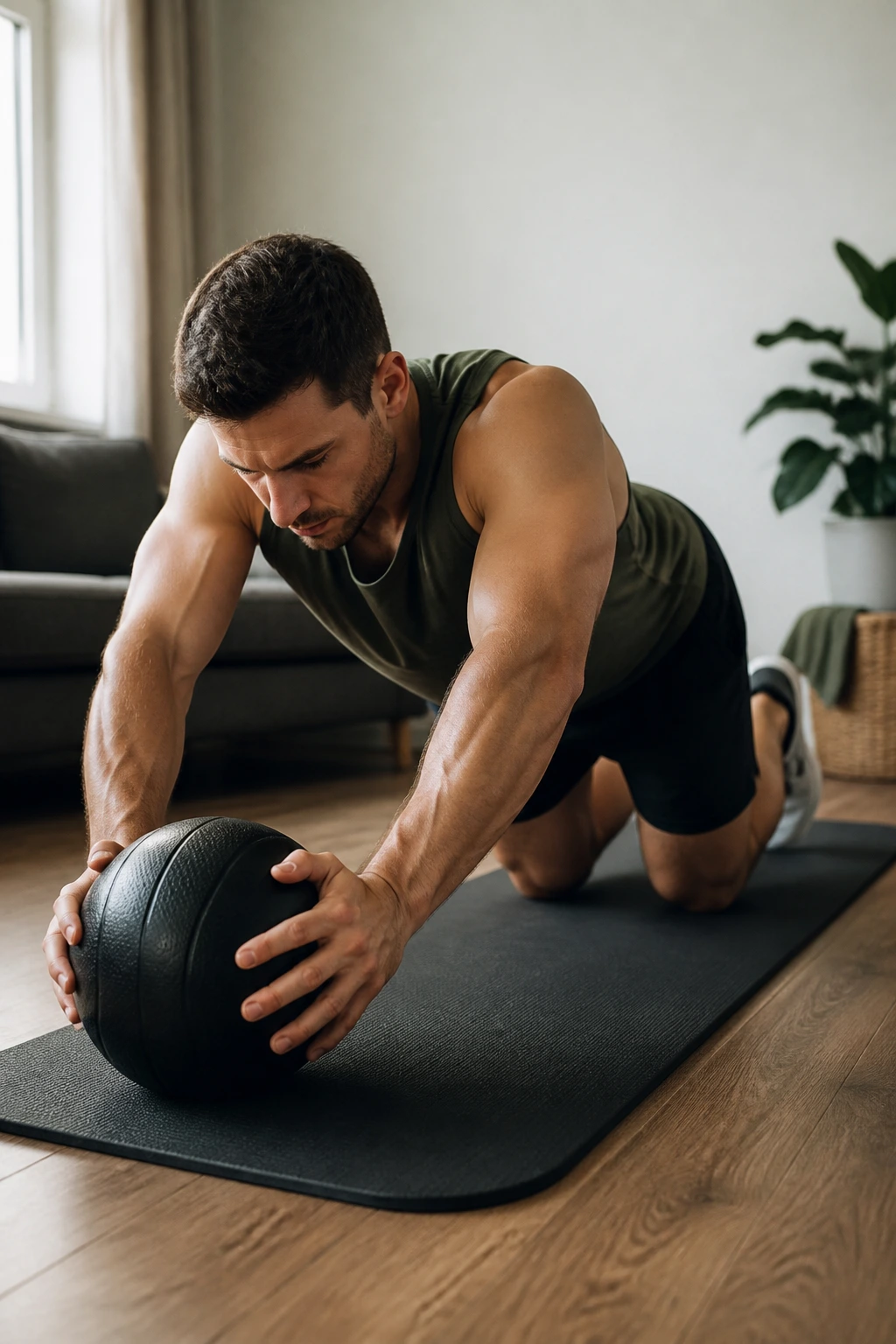
A kneeling rollout turns a basic core drill into something that wakes up your abs and lats at the same time.
Start on both knees with the ball under your hands. Roll it forward only as far as you can keep your lower back from arching, then pull it back under your shoulders. Do 3 sets of 8 to 10 reps. If the floor is slick, use a mat or place a towel under your knees so you do not slide around. The movement should feel long through the front of the body and steady through the middle.
Go slow. Faster reps usually turn into a lower-back giveaway.
If the full rollout feels too long, shorten the range to a few inches and hold the end position for 2 seconds. That tiny pause makes the drill harder without making it uglier. And yes, uglier is the right word here when the core gives up.
11. Medicine Ball Wall Pass Power Set
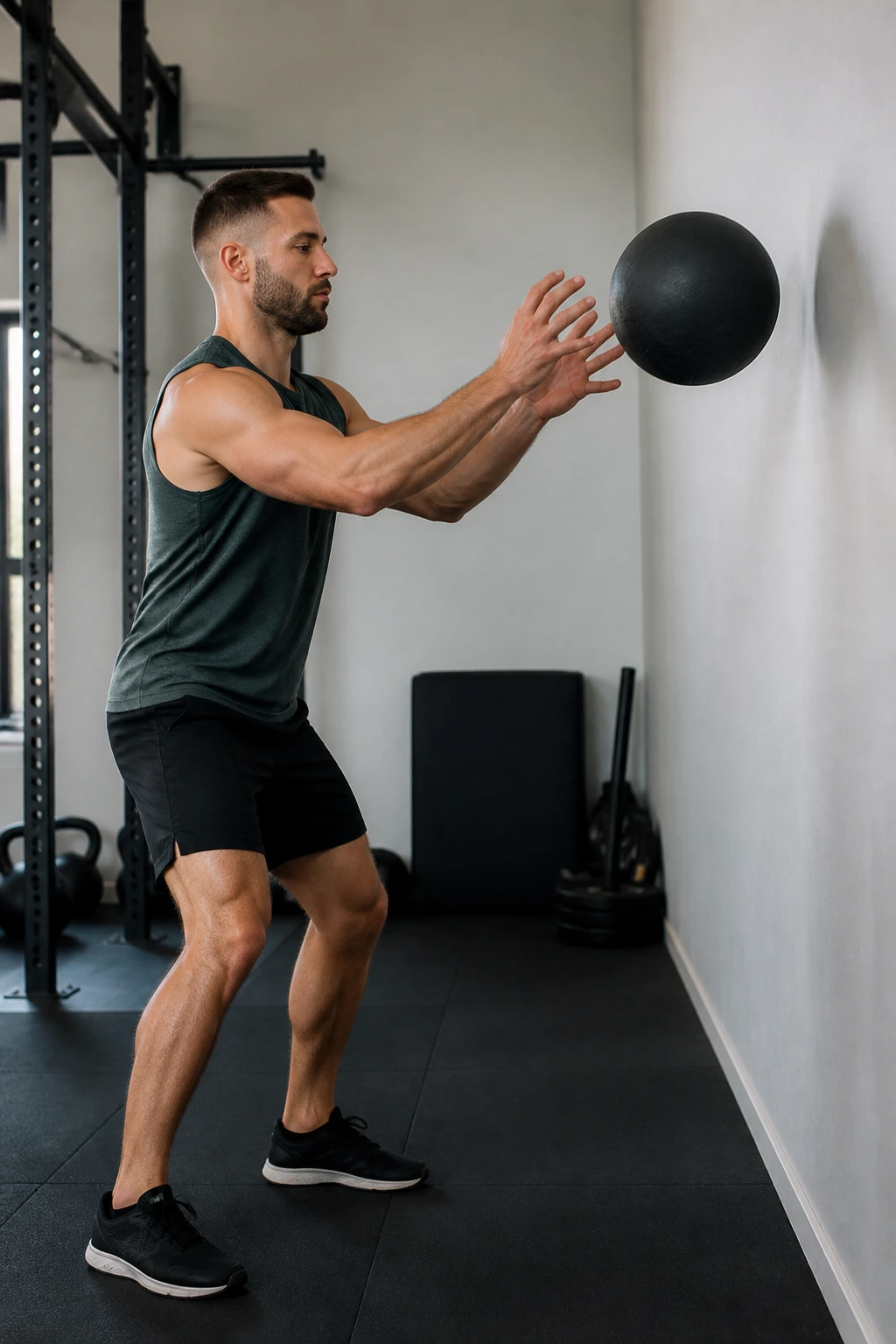
A wall pass is the closest thing to athletic throwing you can do at home without calling it a full throwing session. It is sharp, fast, and a little addictive once the timing clicks. Use a sturdy wall, enough space to catch the rebound, and a ball that can handle the rebound safely.
Try 8 fast chest passes, rest 45 seconds, and repeat for 6 rounds. If you want more rotation, turn the hips and do side tosses from an athletic stance. The catch should be soft. Think absorb, reset, fire again. The wall gives you feedback right away; if the ball drifts, your aim or body position is off.
Good options for the wall
- Chest passes for straight-line power.
- Rotational tosses for obliques and hips.
- Step-and-throw passes for footwork.
Do not use fragile drywall or a loose garage panel. That is asking for repair work you did not want. A solid wall and a clean rebound are the whole deal.
12. Glute Bridge Ball Squeeze and March
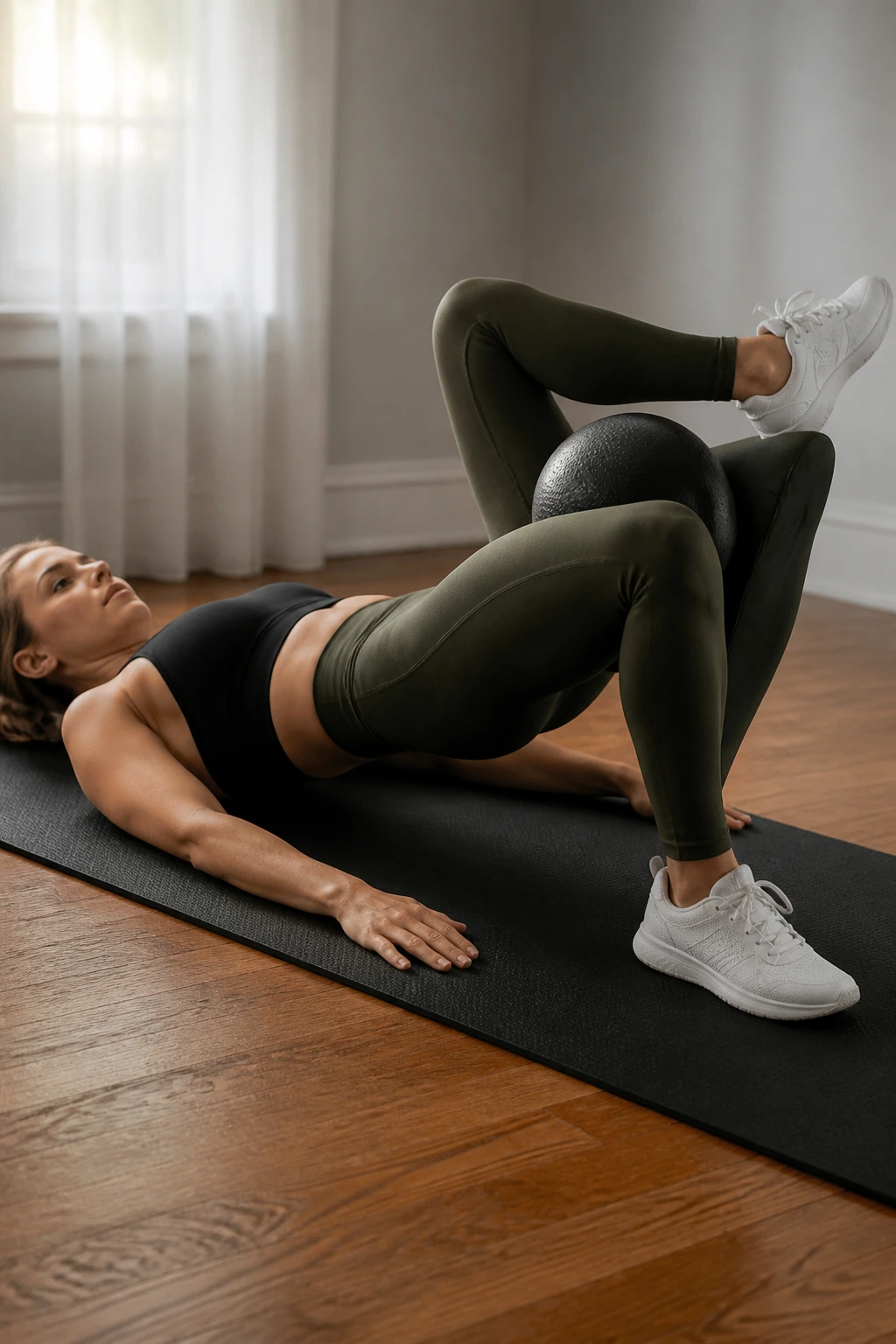
Can one ball make a bridge harder? Yes. Easily.
Lie on your back with the ball squeezed between your knees, feet flat, and toes pointed mostly forward. Lift your hips into a glute bridge and hold the squeeze as you march one foot at a time. Do 3 rounds of 10 bridges plus 20 seconds of marching. The squeeze keeps your inner thighs awake, and the march keeps your pelvis from twisting all over the place.
If your hamstrings cramp, bring your heels a little closer to your hips. If your lower back feels overworked, lower the bridge height and focus on a tighter exhale at the top. The shape should stay smooth. You are trying to stack the ribs over the pelvis, not fling the hips as high as possible.
This is a sneaky one. It looks calm on the mat and feels like work two minutes later.
13. Half-Kneeling Chop and Lift
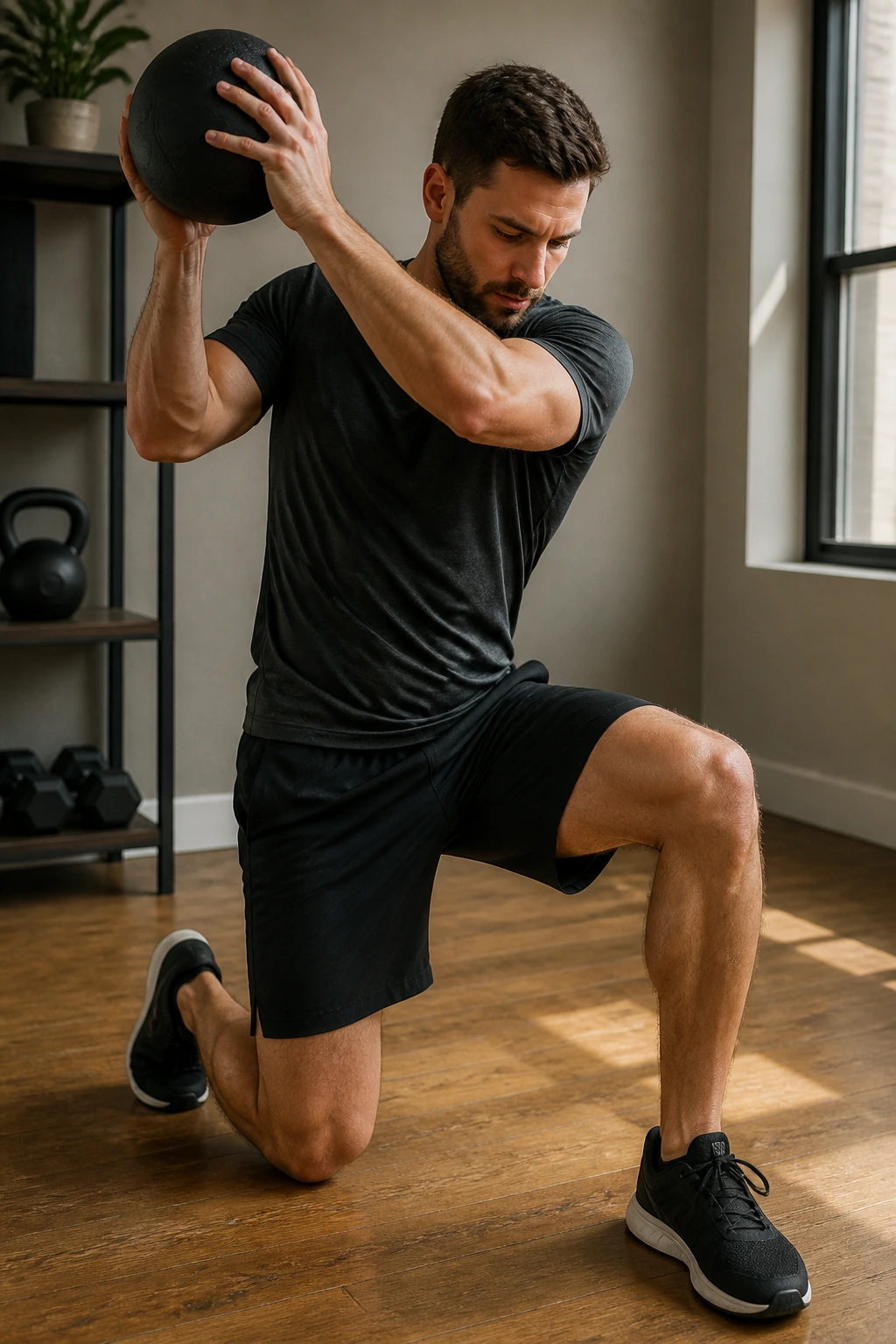
Half-kneeling strips away a lot of cheating. That is why I keep coming back to it.
Set one knee on the floor, the other foot planted in front, and hold the ball high on one side. Chop it down toward the opposite hip, then lift it back up across the body. Do 8 reps each way for 3 rounds. Keep your front foot rooted and your back glute lightly engaged. The torso should rotate a little, but the low back should not take over.
How to stay square
- Keep the ribs stacked over the hips.
- Move through the upper back first.
- Squeeze the down-side glute to stay steady.
This drill earns its keep because it trains control in a position that resembles walking, climbing, and getting up off the floor. If the chop feels rushed, slow the raise phase and count to two on the way back up.
14. Ten-Minute Thruster Density Block
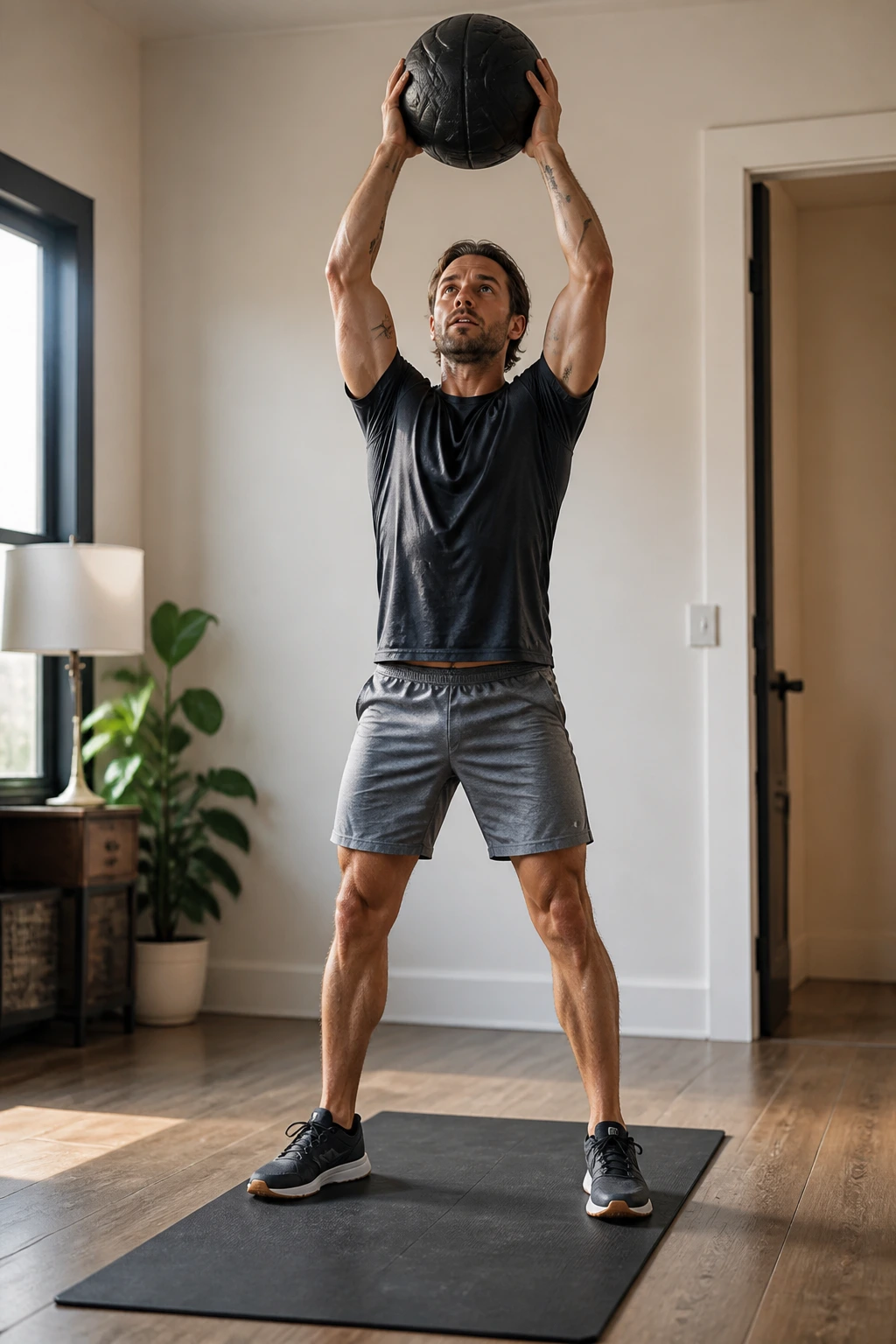
A thruster with a medicine ball looks polite until minute six.
Set a timer for 10 minutes and do 6 to 10 thrusters at the start of every minute. Hold the ball at chest height, squat down, and press overhead as you stand. Rest with whatever seconds remain in the minute. The idea is to keep the work steady without turning the session into a collapse. If the last two reps get ugly, stop at six and keep the minute clean.
This is one of those workouts that tells you a lot about your conditioning. If the first three minutes feel easy and the seventh feels like wet cement, you chose the right load.
One clean rule helps here: never let the press break the squat. If the press starts stealing power from your legs, drop the ball weight or trim the reps. A better minute is worth more than a bigger one.
15. Five-Move Medicine Ball Complex
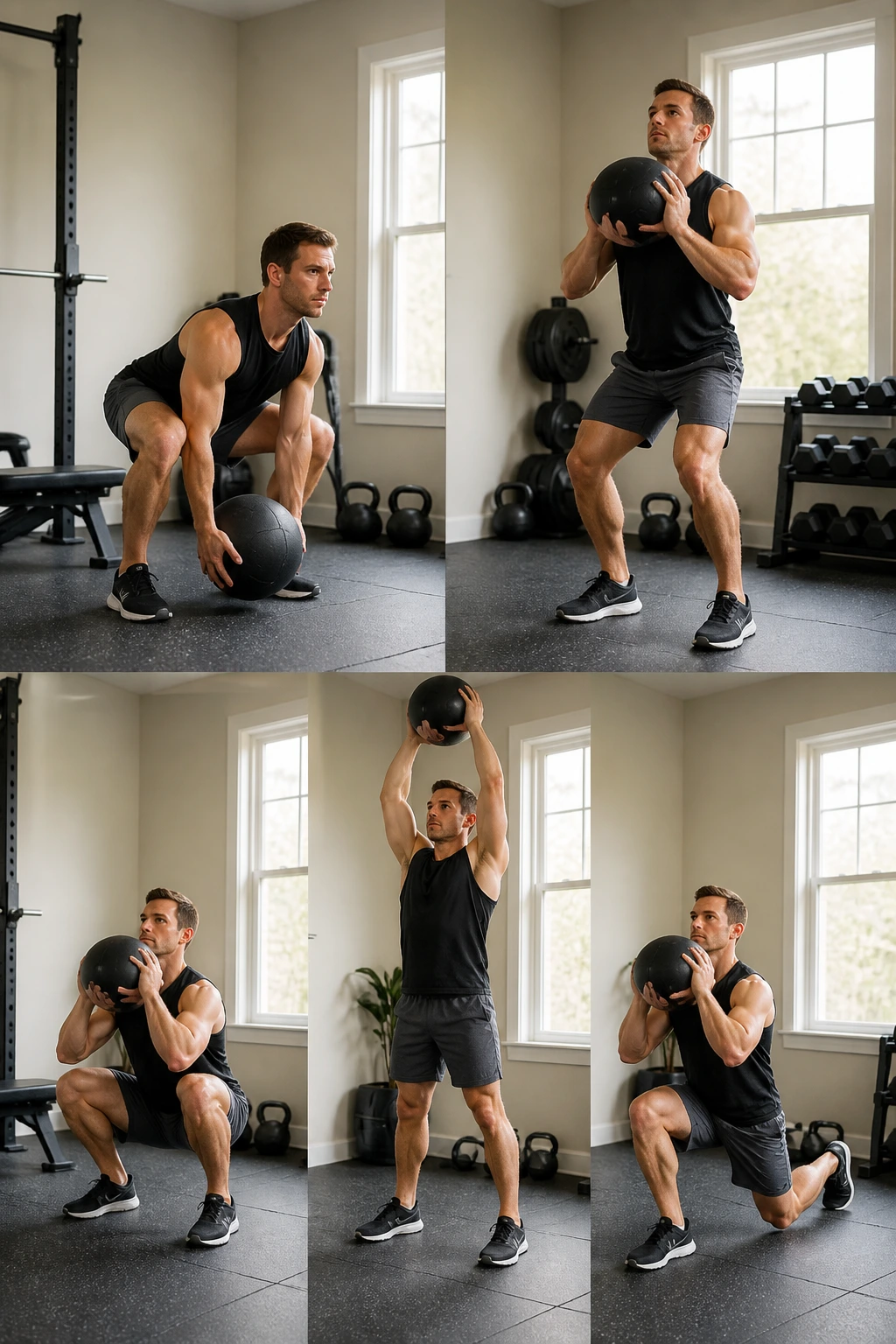
Complexes are my favorite way to get honest about conditioning. You do not get to set the ball down. You do not get to coast. And the transitions reveal whether your technique is actually solid.
Use one ball and run this sequence for 4 to 5 reps each move:
- Deadlift from the floor.
- Clean to the shoulder.
- Front squat.
- Push press.
- Reverse lunge on each leg.
Rest 90 seconds after each round, and do 3 rounds. Keep the ball close on the clean, stand tall before the squat, and step the lunges back under control. The movement should flow from one piece to the next without a pause long enough to lose tension.
Why this one works
- The deadlift loads the hinge.
- The clean wakes up power.
- The squat and press finish the legs and shoulders.
- The lunges force you to stay balanced while tired.
If you only have time for one hard session in a week, this is a strong candidate.
16. Russian Twist to V-Sit Hold

Want a core finisher that punishes sloppy posture fast? This one does it.
Sit on the floor, lean back a few inches, and hold the ball in front of your chest. Rotate side to side for 20 total twists, then hold the V-sit position for 20 seconds. Do 3 rounds. If your lower back rounds hard, plant your heels on the floor and shorten the lean. If you are stronger, lift the heels and keep the ball a little farther from your chest.
The key is not to fling the ball. Move the ribs and shoulders together, and keep the neck relaxed. People love to turn this into a fast hand-wave. That misses the point.
A slow twist with a clean spine does more than a frantic one. It also feels far less annoying on the neck, which is a nice bonus.
17. Tempo Split Squat Burner
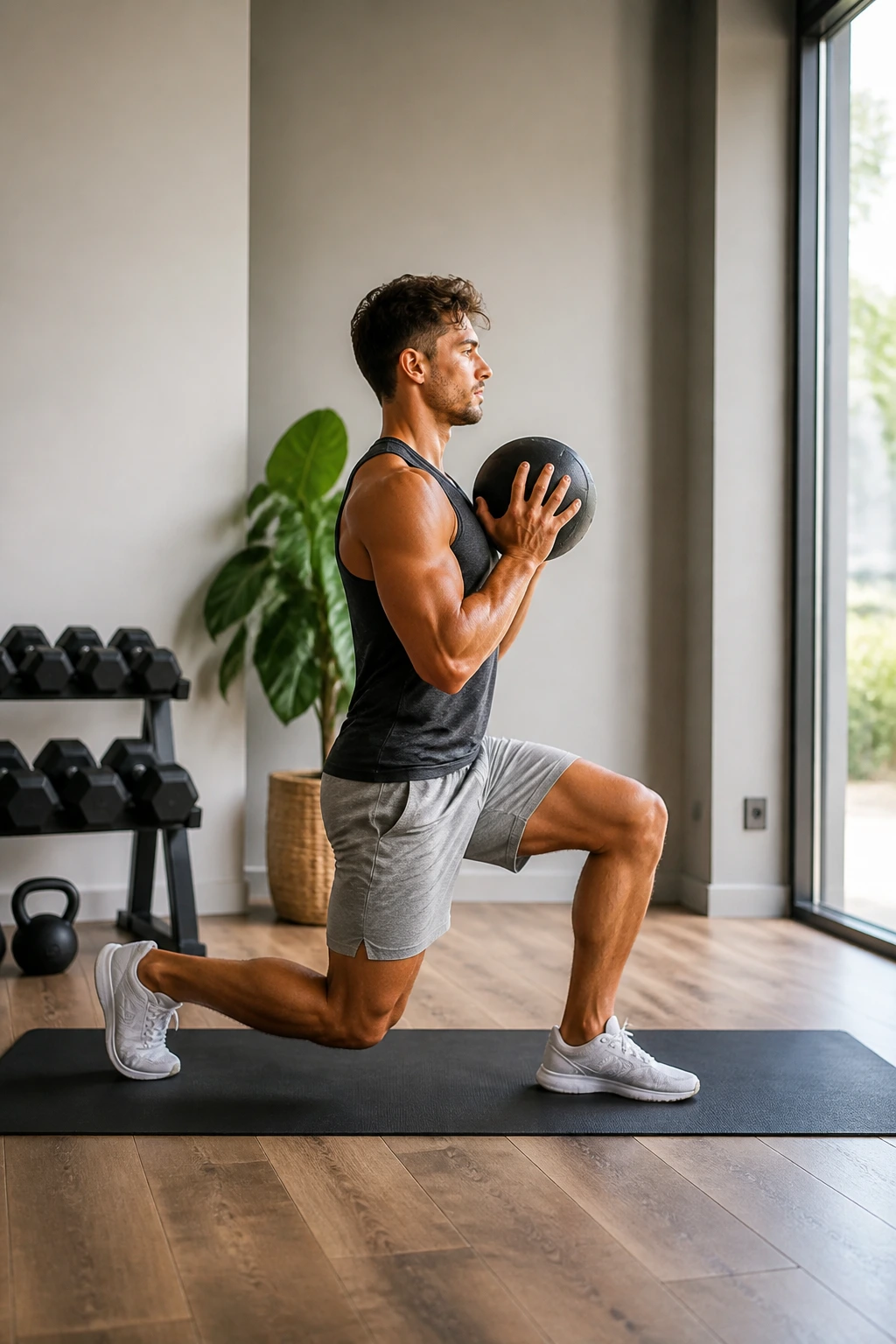
A split squat with a medicine ball looks polite until the third slow rep.
Set one foot forward, one foot back, and hold the ball at your chest or overhead. Lower for 4 seconds, pause for 1 second at the bottom, and stand back up in 1 second. Do 8 reps per leg for 3 to 4 sets. The front shin can move forward a little, but the heel stays planted and the torso stays tall.
Holding the ball overhead makes the move much tougher. Holding it at chest height is the better starting point if balance is shaky. Either way, the long lowering phase makes the legs work without needing a huge load.
This is a good one for people who want strength without impact. It feels slower than a jump drill, but the burn lasts longer. That is not a flaw. That is the whole trick.
18. Seated Halo and Press
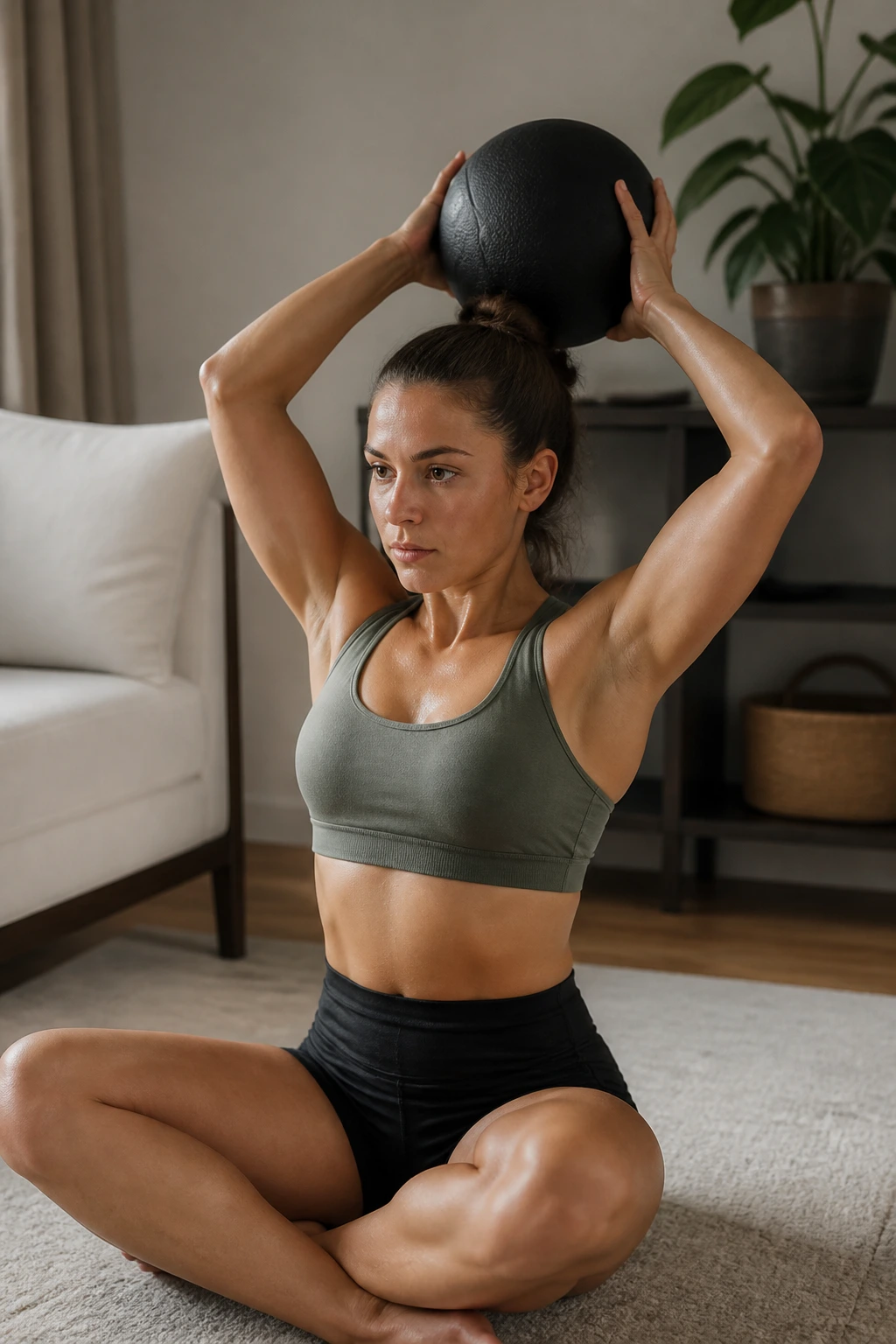
Shoulder work does not need to be frantic to feel nasty.
Sit tall on the floor or on a sturdy chair, hold the ball at chest height, and circle it around your head in a controlled halo. Do 6 halos each direction, then press the ball overhead for 8 reps. Repeat for 3 rounds. Staying seated removes the easy cheat of leaning back or driving through the legs, so the shoulders and upper back have to do the job.
If your shoulders feel pinchy, make the circle smaller and keep the elbows a little farther forward. A slow halo often feels better than a fast one because the joints get a smoother path. The press should finish with the ball over the middle of the body, not drifting forward.
I like this as a quieter upper-body session. It is not flashy. It works.
19. Tabata Cardio Mixer
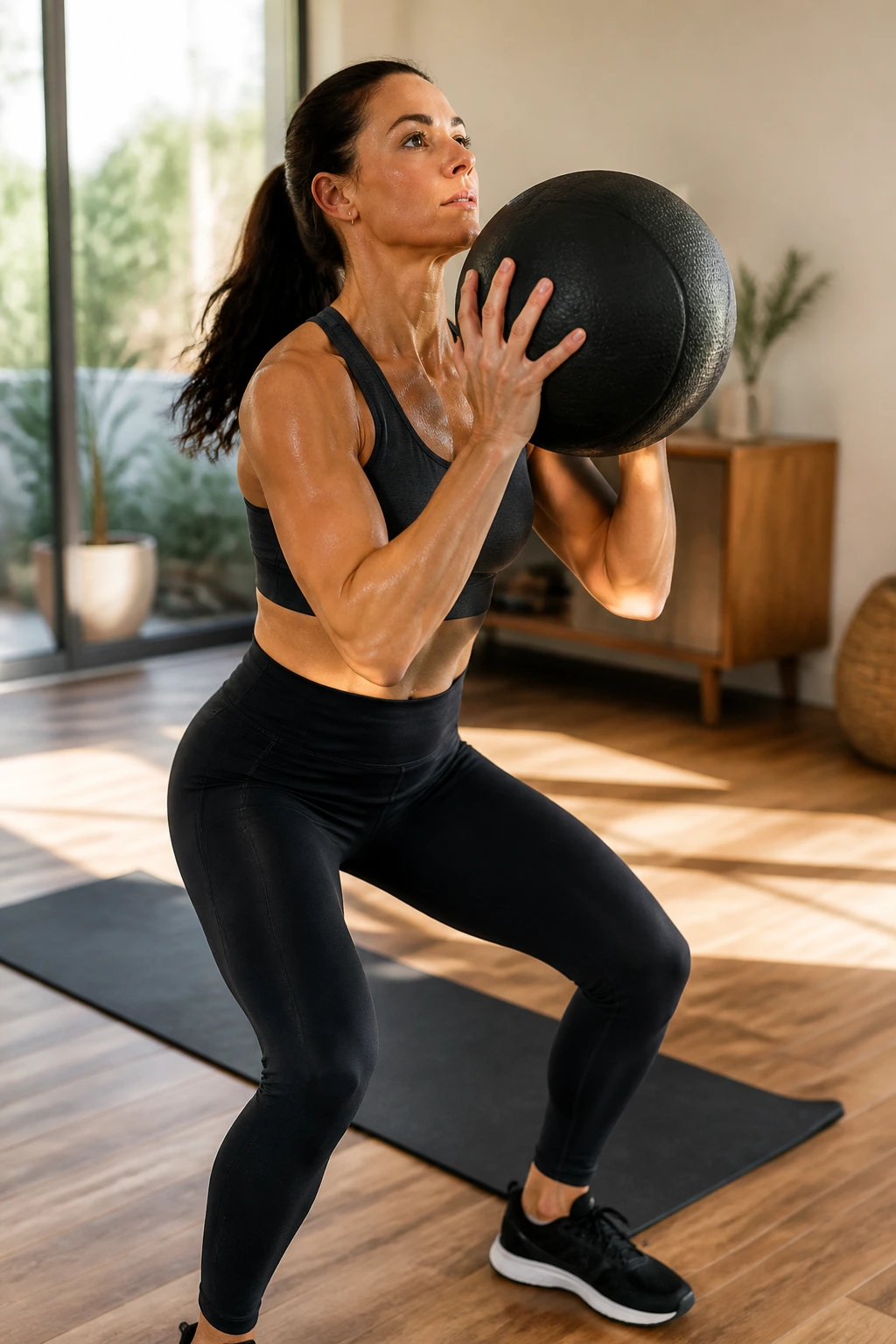
A Tabata-style ball workout is excellent when you want sweat without overthinking the plan. Use 20 seconds on, 10 seconds off for 8 rounds, and rotate through four moves twice. Keep the exercises simple enough that you can switch without wasting half the interval.
Pick four moves
- Squat to press.
- Overhead slam.
- Bear-hug march.
- Reverse lunge with rotation.
Run each one for two intervals before moving to the next. Keep the ball weight modest enough that your breathing, not your grip, becomes the limiting factor. If one move gets too messy, swap it for a quieter drill and keep the clock moving.
The best Tabata sessions feel sharp, not chaotic. That means no elaborate footwork, no fiddly transitions, and no hunt for the floor between reps. If you cannot reset in one breath, the move is too complex for this format.
20. Floor Mobility Reset
A good home training plan ends with the floor, not with a dramatic flop onto the couch.
Lie down with the ball between your knees for a few breaths, then move into a dead bug press, a gentle thoracic rotation, and a hip flexor reach. Do 2 slow rounds and give each position 4 to 6 breaths. The medicine ball is the prop here, not the star. It helps you stay stacked, open the chest a little, and keep the pelvis from wandering around while you breathe.
This is not a throwaway cooldown. It matters because it leaves your body in a place where the next session starts cleaner. That is one reason I like ending with a floor reset after the harder drills. You get the sweat, then you get the quiet.
If you only have five minutes, spend them here. A small recovery block makes the whole week of at-home training easier to repeat, and repeatability is the part that actually counts.
