



Most body weight training workouts fail for one dull reason: they chase sweat and ignore tension. If your reps are rushed, your range is tiny, and your core is loose, you’re not building much besides fatigue.
Tension wins.
That’s the part people skip. A slow squat, a clean push-up, a hard split squat, and a tight plank can do a lot more than a sloppy circuit with fifty moving parts and no real control. The nice thing about bodyweight work is that it scales in sneaky ways: change the angle, slow the lowering phase, add a pause, switch to one leg, shorten the rest. The exercise looks the same from across the room. It does not feel the same at all.
There’s also a real advantage to mixing styles. Some sessions should feel like strength work. Others should leave you breathing hard. A few should help your hips, shoulders, and spine feel less cranky after a long day of sitting. If you only live in the “burn” zone, your joints and your motivation both tend to get annoyed.
So the smart move is to keep a small menu of workouts that cover strength, conditioning, balance, core control, and recovery. Start where you can keep the form clean. Then earn the harder version.
1. Wall Push-Up Ladder
Wall push-ups look harmless right up until you slow them down and stack a few rounds together. They’re a smart entry point for beginners, a warm-up for stronger lifters, and a clean way to rebuild push-up mechanics when your shoulders or wrists are grumpy.
How to run it
- Do 3 rounds.
- Start with 8 wall push-ups.
- Move to 6 incline push-ups on a counter, sturdy chair, or bench.
- Finish with 4 floor push-ups or 4 knee push-ups if full reps are still messy.
- Rest 30 to 45 seconds between rounds.
Keep your hands a little wider than shoulder width, your ribs pulled in, and your body in one line from head to heels. If your lower back arches, the wall is too easy to cheat on. It’s still useful, but the rep stops being a rep.
What makes it work
The ladder matters more than the number. You’re teaching your body to own the pattern at several difficulty levels in one short block, which is a better use of time than grinding out a hundred ugly reps. The incline version is the bridge here. Use a lower surface only when the higher one feels controlled.
Pro tip: Lower for 2 seconds, pause for 1 second near the bottom, then press hard. That pause is where the work lives.
2. Tempo Squat Sets That Slow Your Legs Down
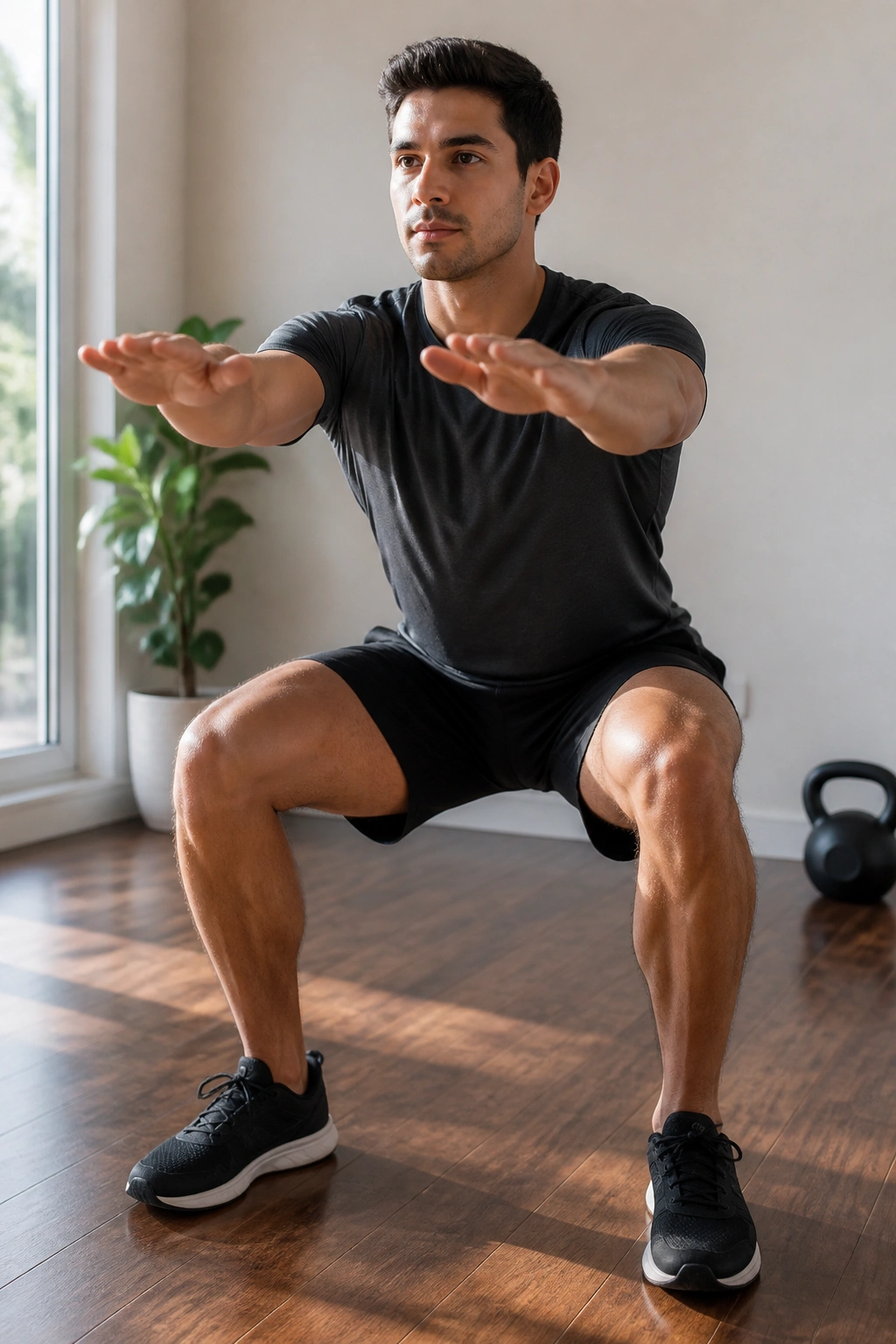
A slow squat beats a fast, bouncy squat for most people who want stronger legs and better control. The speed strips away momentum, which means your quads, glutes, and upper back have to do their share of the job.
Do 4 sets of 8 to 10 reps with a 3-second lower, a 1-second pause at the bottom, and a strong stand back up. Rest 45 to 60 seconds between sets. If that sounds tame, try it once with clean depth and then tell me the last two reps felt tame.
Keep your feet about shoulder width, toes turned out just a touch, and weight spread through the whole foot. I like to tell people to screw their feet into the floor without actually moving them. It sounds odd. It works.
If you’re new to body weight training workouts, stop the squat a little above the point where your back starts rounding. If you’re stronger, add a 1.5-rep squat: go down, come halfway up, go back down, then stand. Brutal little trick.
3. Reverse Lunge and Knee-Drive Series
Need a single lower-body workout that hits balance, legs, glutes, and breathing at the same time? This is the one I’d hand to somebody who wants more than air squats but isn’t ready for jump work.
How to use it
- Do 3 to 4 rounds.
- Perform 8 reverse lunges per side.
- Drive the front knee up at the top for 1 second.
- Rest 30 seconds between sides or 45 seconds between rounds.
Reverse lunges are kinder to the knees than forward lunges for a lot of people, and the knee drive turns a basic split stance into a balance drill. You’ll notice pretty fast if one side wobbles more than the other. That’s useful information, even if it’s annoying.
What to watch for
Don’t lunge so far back that you lean forward like you’re bowing to the floor. Keep your chest stacked over your hips, and let the back knee drop straight down. If balance is the weak point, hold onto a wall with one hand for the first few reps. That is not cheating. It’s how you keep the work in the legs instead of turning the set into a stumble.
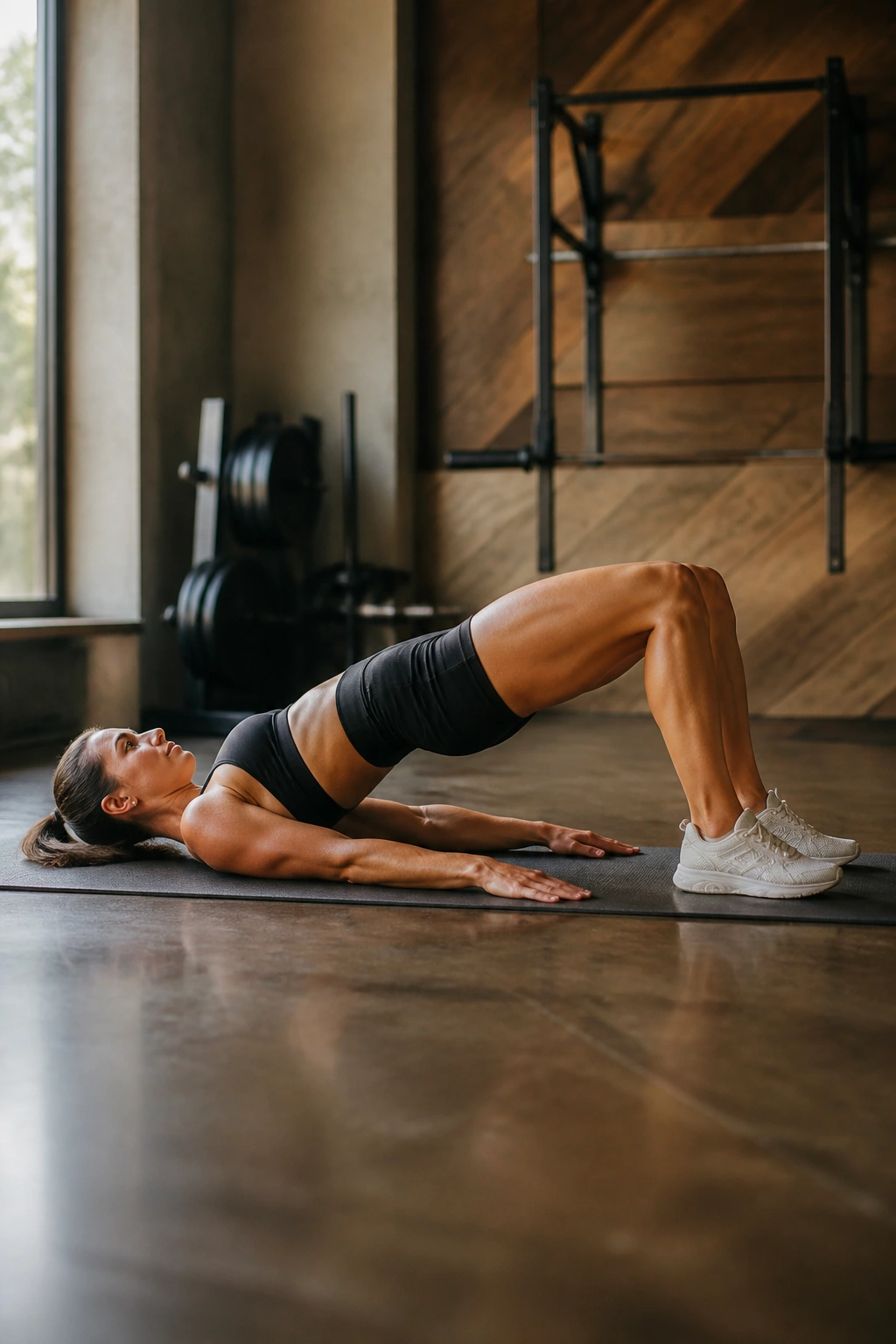
4. Glute Bridge Walkouts
If your hamstrings vanish the second you do a regular glute bridge, walkouts will wake them up fast. They’re one of those exercises that feels simple for the first 10 seconds and then gets rude.
Lie on your back with your knees bent and feet flat, then lift into a strong bridge. From there, take small steps with your heels away from your hips, one foot at a time, until your legs are close to straight. Walk them back in without letting your hips sag. That’s one rep.
Do 6 to 10 reps for 2 to 3 rounds, or hold the bridge and walk out for 20 to 30 seconds at a time. You should feel the glutes working hard to keep the pelvis lifted while the hamstrings keep trying to complain.
Key details:
- Keep your ribs down.
- Press through your heels, not your toes.
- Stop if your low back starts doing the work.
- Make the steps tiny. Big steps turn the drill into a mess.
There’s a reason this one shows up in good home workout plans. It builds posterior-chain strength without any equipment at all.
5. Plank Pyramid for a Stubborn Core
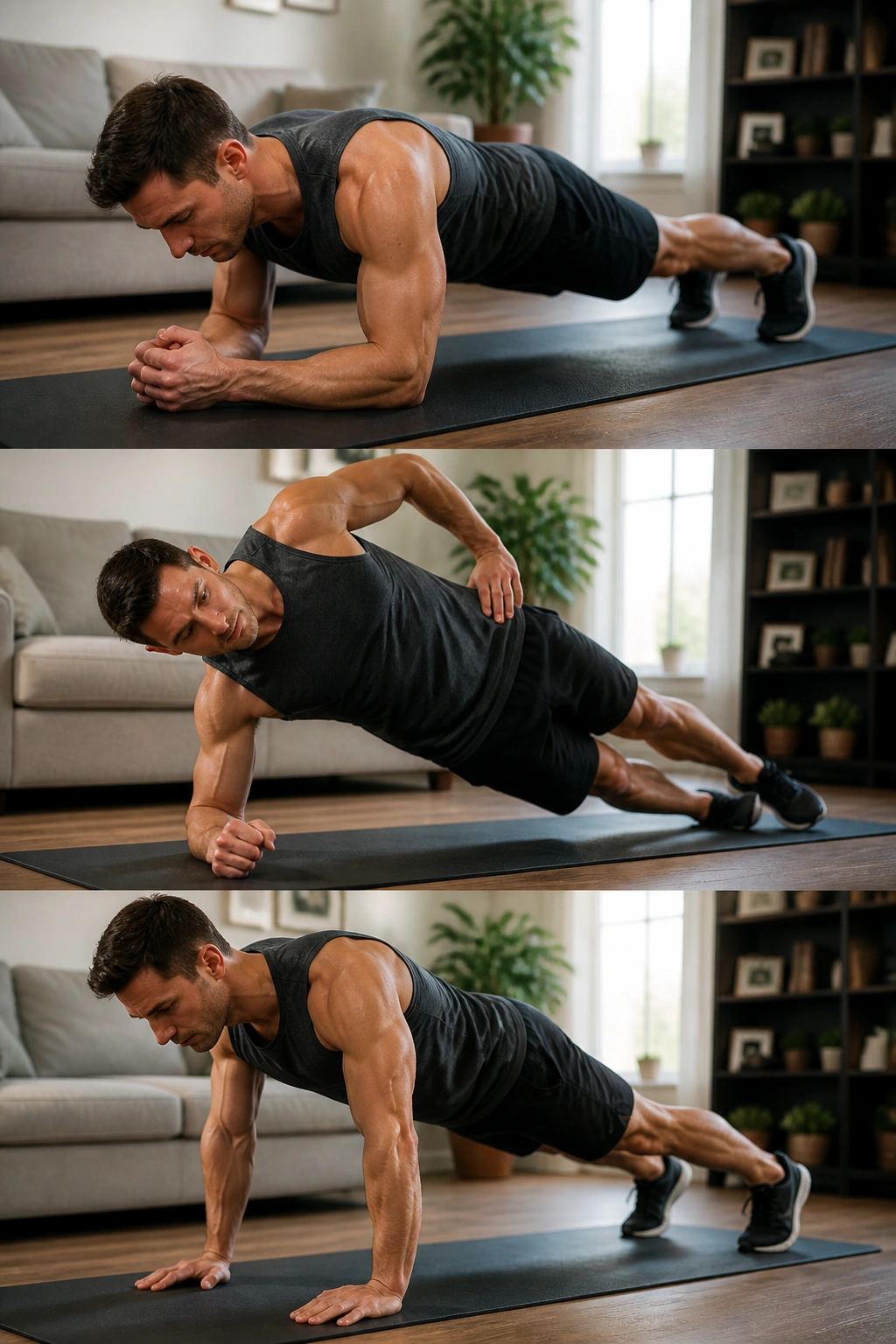
A plank by itself is fine. A plank pyramid is better, because it keeps your core from getting lazy in one exact position. You’re training anti-extension, anti-rotation, and shoulder stability in the same short block.
Start with a 20-second forearm plank, then move to a 15-second side plank on the left, 15 seconds on the right, and finish with a 20-second high plank. Rest 30 seconds and repeat for 3 to 5 rounds.
The trick is staying honest. Your hips should not sag in the forearm plank. Your top shoulder should not roll forward in the side plank. Your hands should stay planted like you mean it in the high plank.
One sentence matters here: brace before you move. That means a short exhale, a tight belly, and glutes turned on before the clock starts. Beginners can cut every hold in half. Advanced people can add a 10-second hollow hold between rounds if they want a stronger sting.
6. Bear Crawl Corridor
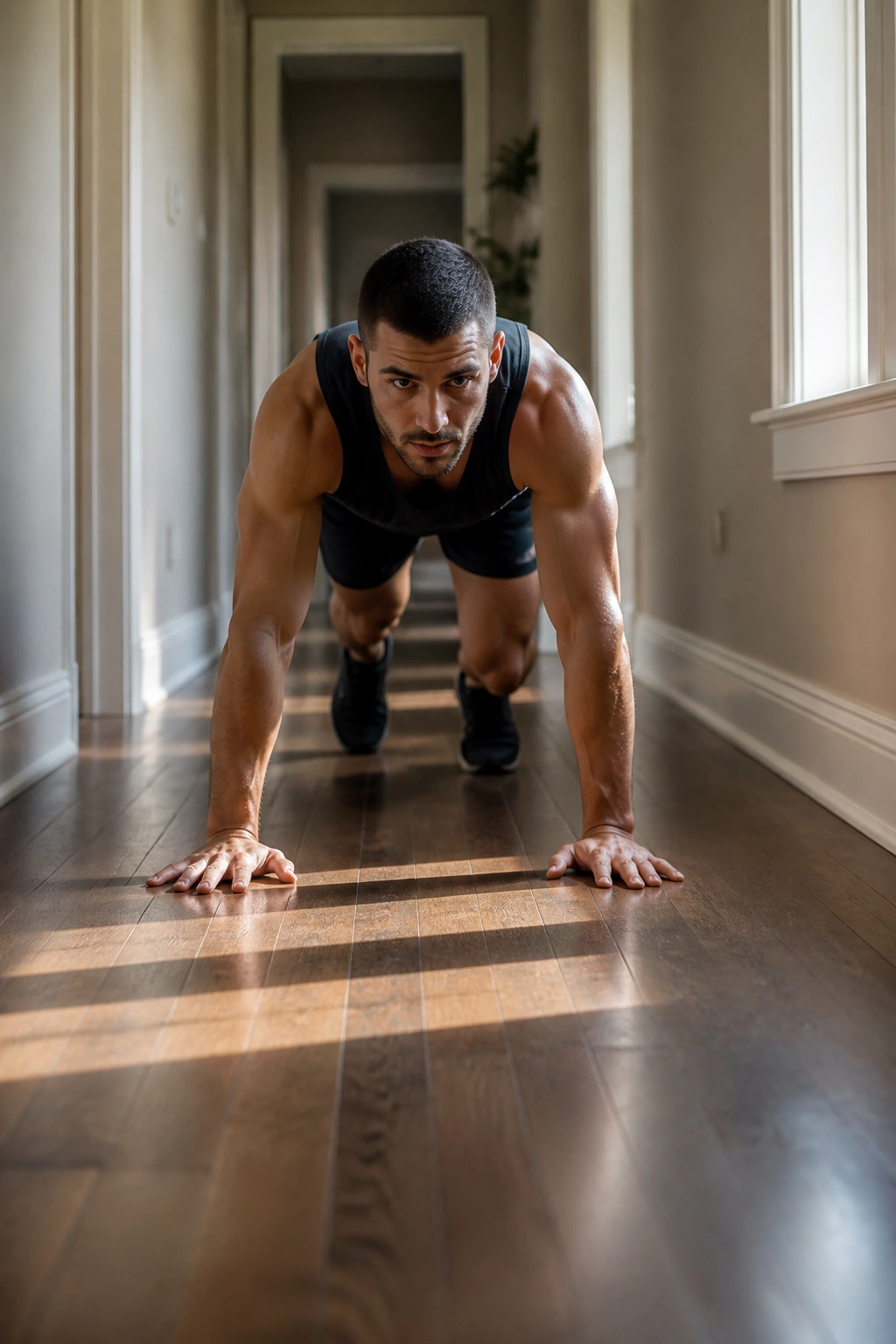
Bear crawls are the workout version of “why is this so hard?” They look childish until your shoulders, abs, and hips start arguing about who gets to quit first.
What makes it different
Unlike a plank, a bear crawl is moving. That means your body has to keep the trunk tight while the opposite arm and leg travel together, which is a sneaky core test and a real conditioning hit. It also teaches shoulder control in a way that feels useful, not random.
How to do it
- Crawl forward for 20 seconds.
- Crawl backward for 20 seconds if you have the space.
- Rest 20 to 30 seconds.
- Repeat for 5 to 8 rounds.
Keep your knees hovering an inch or two off the floor. If they slam down, you’re too low or too tired. If your hips shoot up, you’re basically making a weird dog pose. Stay in the middle and move slower than you think you need to.
No hallway? No problem. Crawl in place with tiny steps. Ugly, but effective.
7. Chair Dips and Pike Push-Ups
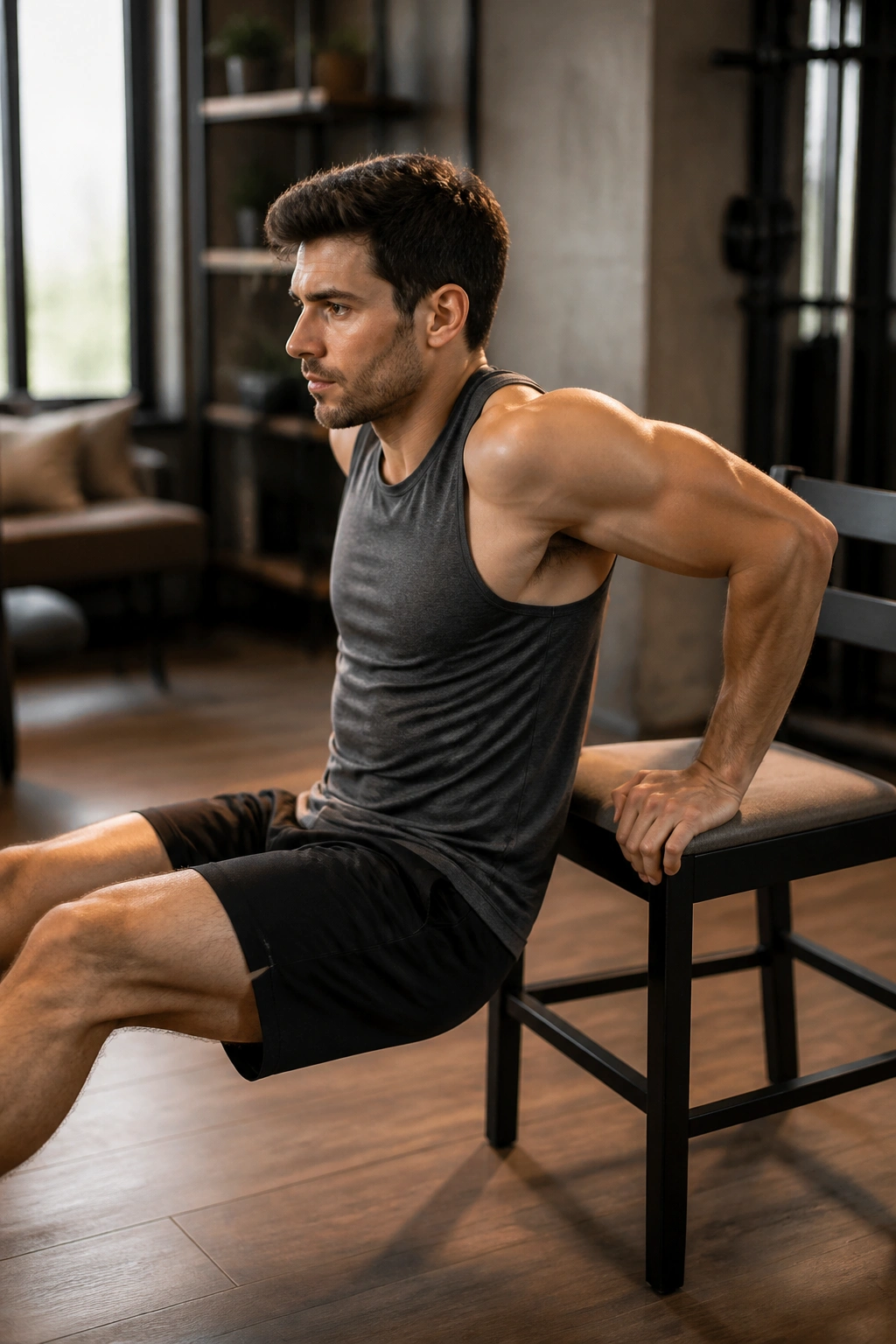
This is the upper-body pairing I like when someone wants bodyweight strength without turning the session into a push-up contest. Dips hit the triceps and lower chest. Pike push-ups hit the shoulders from a very different angle. Together, they cover a lot.
Setup matters. Use a sturdy chair, bench, or couch edge for dips, and make sure it won’t slide. For pike push-ups, put your hands on the floor, walk your feet in, and lift your hips high so your torso looks like an upside-down V.
Workout flow
- 8 to 12 chair dips
- 6 to 10 pike push-ups
- Rest 45 to 60 seconds
- Do 3 to 4 rounds
If the shoulder front feels pinchy on dips, shorten the range. Do not sink so deep that the upper arm goes far below parallel. That’s a classic mistake, and it’s a good way to irritate the joint. For pike push-ups, think about lowering the crown of your head toward the floor, not your chest.
A small warning: if you’ve got cranky shoulders, swap the dips for close-grip incline push-ups. Easier on the joint. Still useful.
8. Dead Bug and Hollow Hold Pair
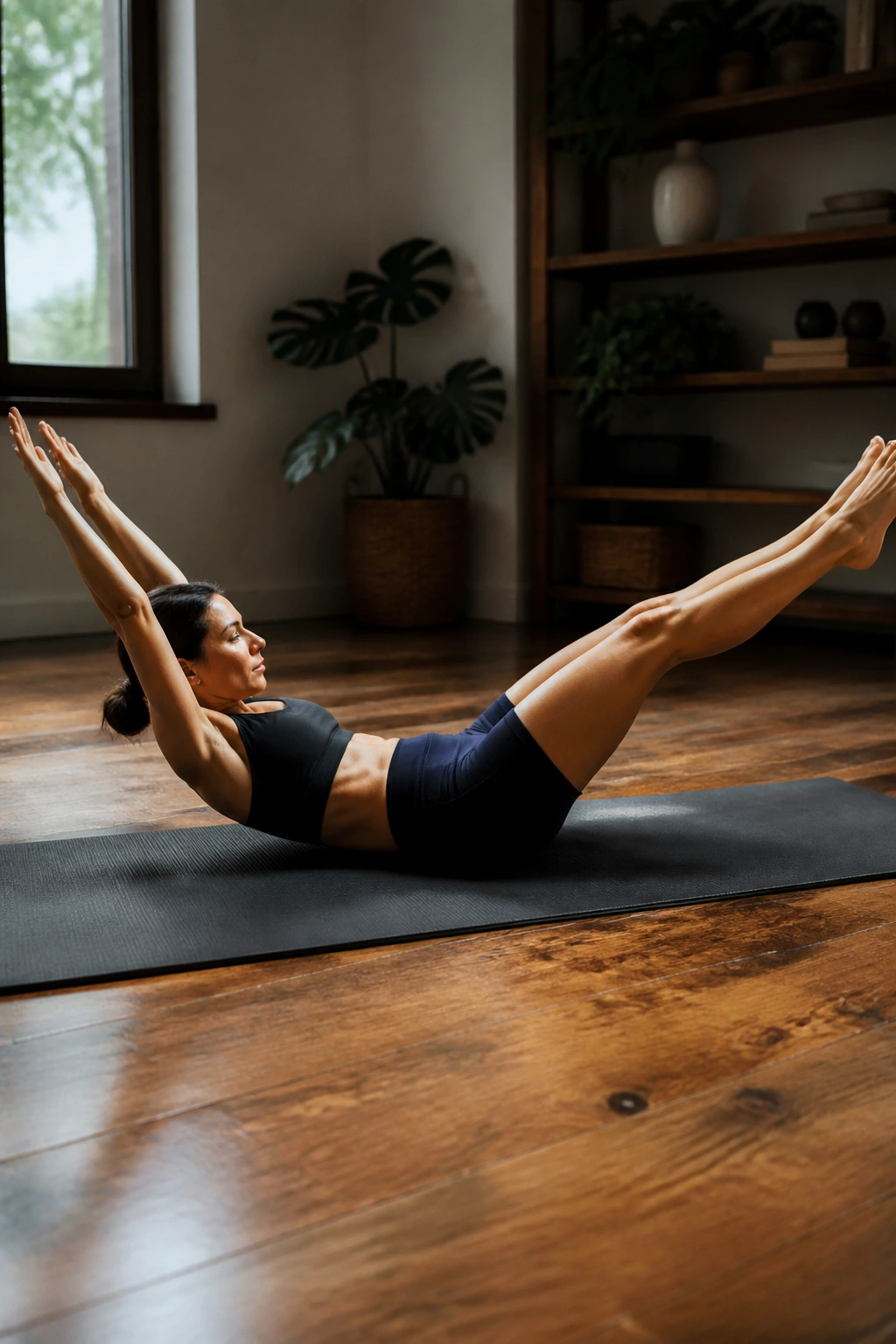
Want a core session that doesn’t punish your lower back? Pair dead bugs with a hollow hold and keep your ego out of it.
Dead bugs train the kind of core strength that actually carries over to squats, push-ups, and running. You lie on your back, press your lower back into the floor, and move the opposite arm and leg away from the center without losing that floor contact. Hollow holds ask for the same control, only with more tension and less mercy.
Do 8 dead bugs per side, then hold a 20- to 30-second hollow body position. Repeat for 3 rounds. Beginners can bend their knees more and keep the arms higher. Advanced people can straighten the legs farther and hold the hollow a little lower to the floor.
The cue I use most is boring but useful: exhale as the leg extends. If your ribs pop up, the hold is gone. If your neck gets tight, lower the shoulder blades a little less and keep the chin tucked. It should feel hard in the front of the torso, not sloppy in the lower back.
9. Step-Back Burpee Intervals
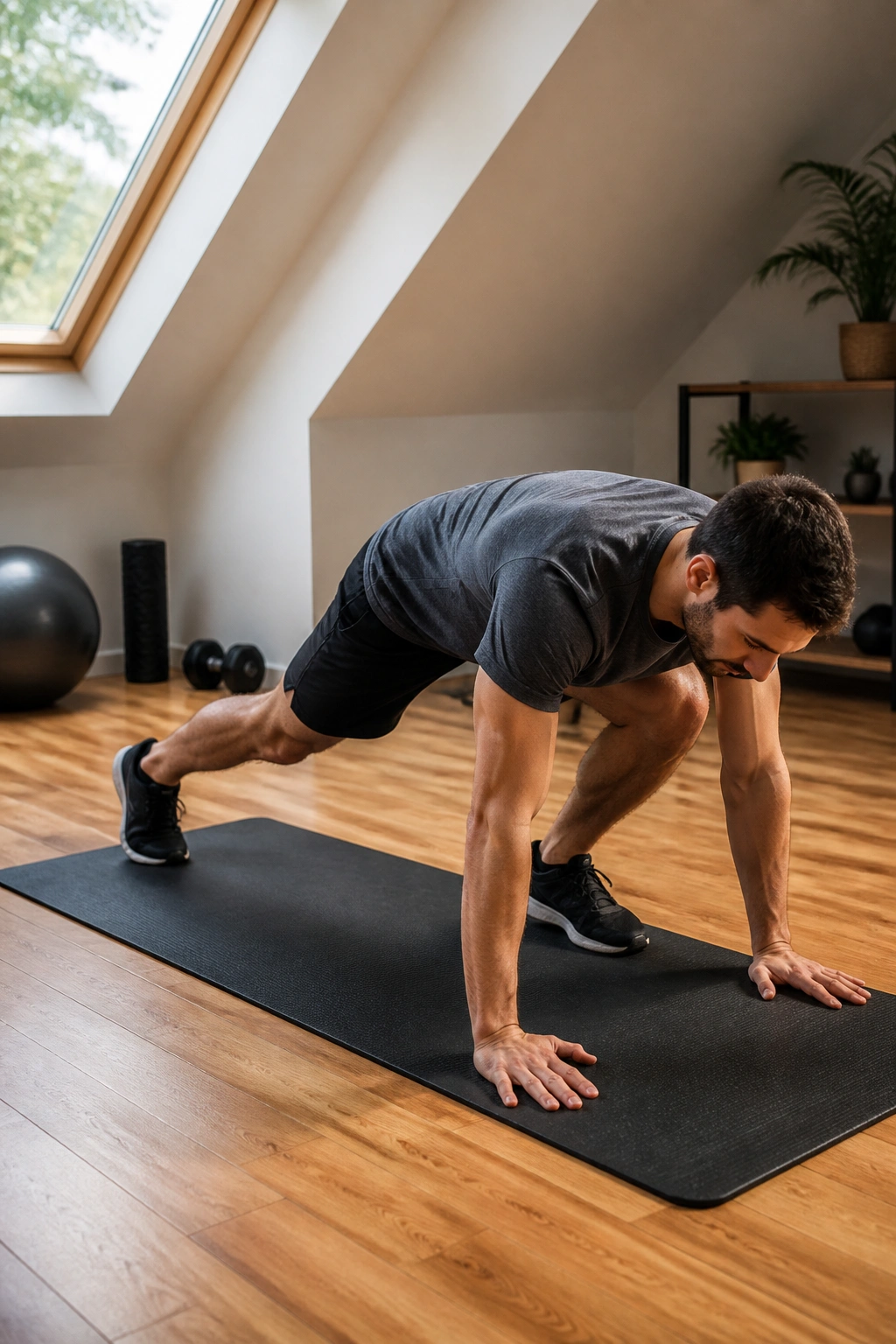
A full burpee can be a lot. A step-back burpee keeps the same full-body rhythm but cuts the impact, which makes it easier to hold form when fatigue shows up.
Here’s the simple version: squat down, place your hands on the floor, step one foot back, step the other foot back into a plank, step both feet forward again, then stand and reach overhead. No jump required. If you want more intensity, add a small hop at the top. Tiny hop. Not a leap of faith.
Work 30 seconds, rest 30 seconds, and repeat for 8 to 10 rounds. You should be breathing hard by round three or four, but your shoulders and lower back should still feel in control. If they don’t, slow the pace before the movement gets sloppy.
This is one of those no-equipment workouts that can go from beginner-friendly to nasty in a single change: faster pace, less rest, or a jump at the top. Pick one, not all three.
10. Mountain Climber Sprints
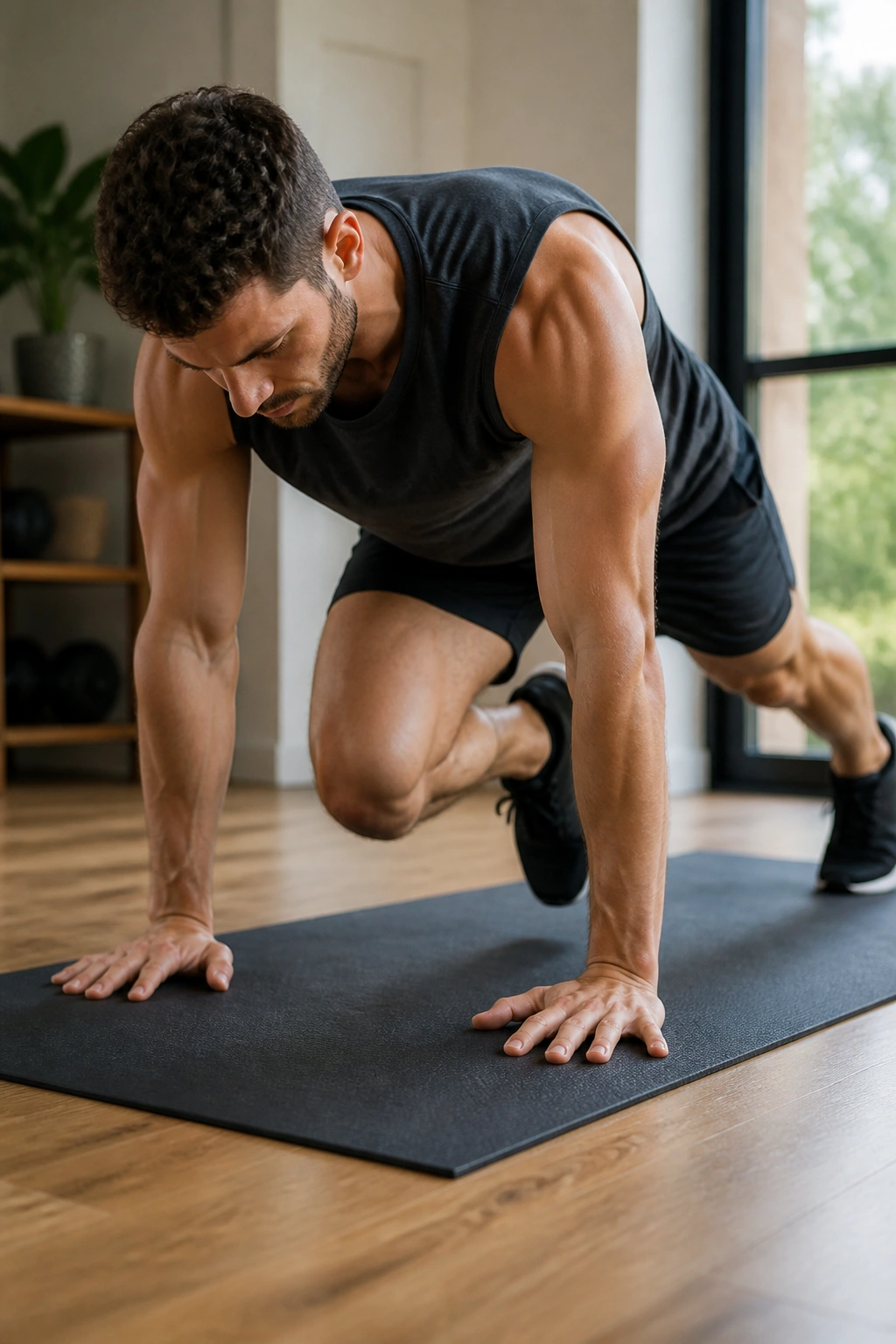
Mountain climbers are less about pretty form and more about staying organized when your heart rate climbs. That said, there is a right way to do them, and it starts with your hands being still.
How to keep them honest
- Set up in a strong high plank.
- Drive one knee toward the chest, then switch fast.
- Keep your hips low enough that your back doesn’t swing.
- Do 20 seconds hard, 40 seconds easy.
- Run 6 to 8 rounds.
If you bounce your hips around like a fish on a dock, the exercise turns into noise. Keep your shoulders over your hands and press the floor away. A slightly slower climber done cleanly is better than a frantic one that leaves your wrists and lower back irritated.
Best use
I like mountain climber sprints after a strength move or as the final piece in a short home workout. They’re easy to scale, too. Beginners can slow the cadence and alternate knees in a steady rhythm. Stronger athletes can cross the knee toward the opposite elbow for a bigger core challenge.
11. Split Squat Burn Set
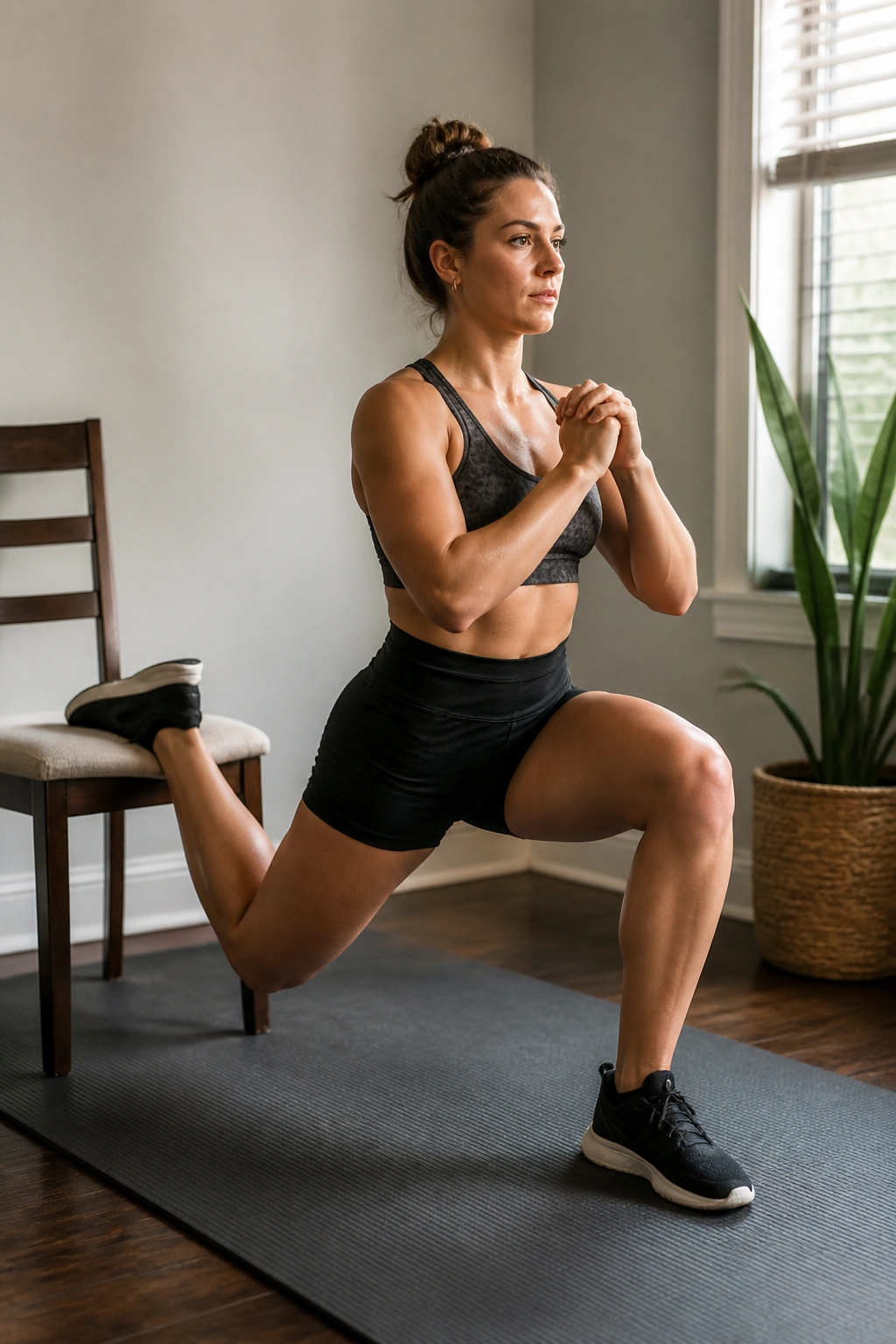
Split squats expose weak legs fast. That sounds rude because it is rude, but they’re one of the best body weight training workouts for building single-leg strength without any fancy setup.
Stand in a staggered stance and drop straight down until the back knee hovers close to the floor. Then stand back up without rocking forward. Do 10 to 12 reps per side for 3 sets, resting 45 seconds between legs if you need it.
If you want more burn, add a 2-second pause near the bottom of every rep. If you want more challenge, elevate the back foot on a chair and turn it into a Bulgarian split squat. If you want less challenge, hold onto a wall or keep the stance shorter. No shame there.
One thing people miss: the front foot should stay planted the whole time. The heel popping up turns the set into a balance waver, and the quads never get the message. Clean rep. Controlled down. Controlled up. That’s the whole deal.
12. Hand-Release Push-Up Clusters
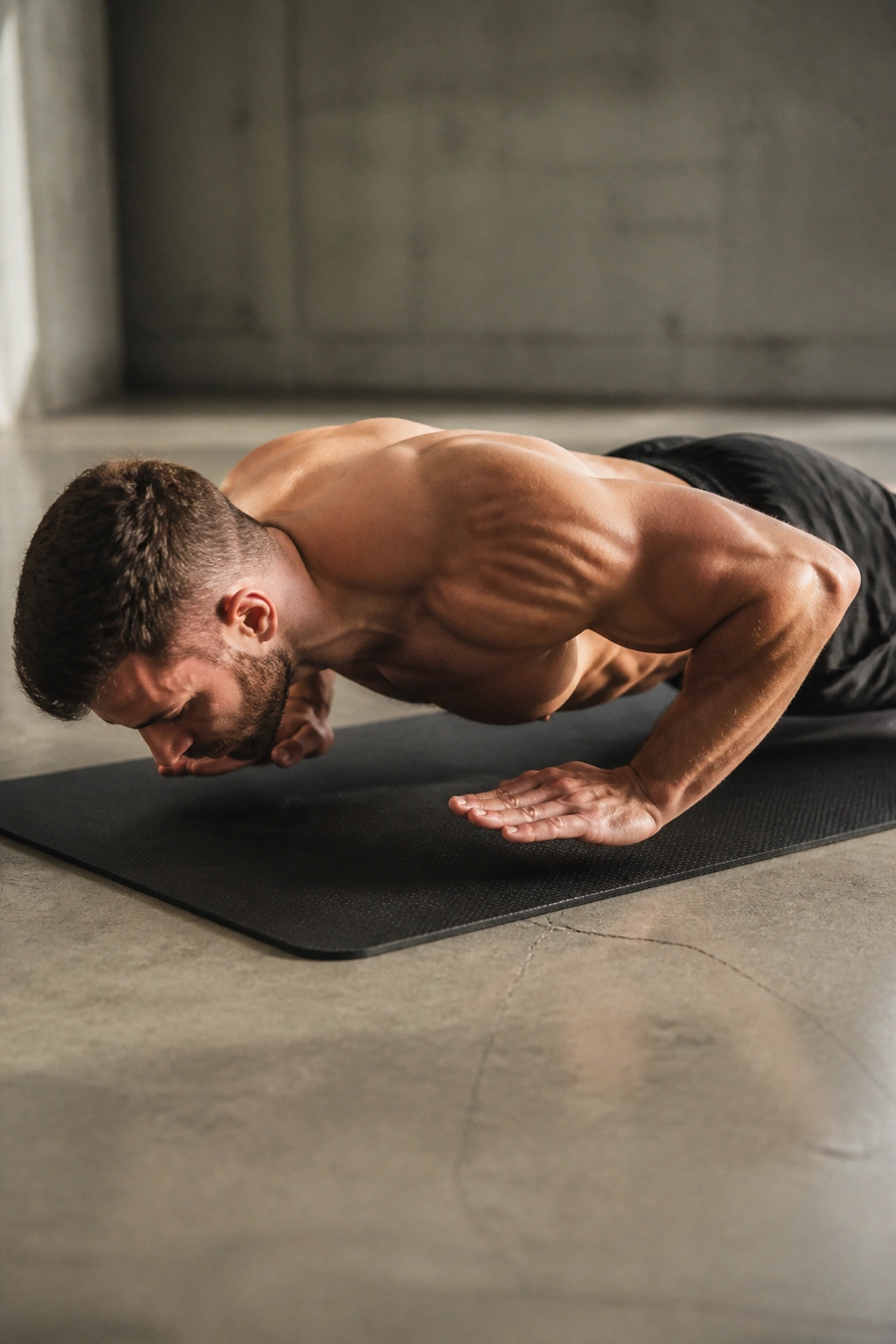
Hand-release push-ups are a neat trick. You touch the floor, lift your hands for a beat, then press back up from a dead stop. That tiny pause kills momentum and forces a real push, not a bounce.
Do them in clusters: 4 to 5 reps, rest 15 to 20 seconds, then repeat for 4 to 6 clusters. If you can’t hold the bottom position cleanly, drop to your knees or elevate your hands on a bench. The floor is not the prize. Good reps are.
The hand release matters because it resets the chest and upper arms between reps. You’ll feel where your strength actually lives. Some people can crank out sloppy regular push-ups and get crushed by this version in half the number.
Keep the elbows at about a 30- to 45-degree angle from the body. Flared elbows are the fast track to cranky shoulders. Lower with control, let the chest touch, lift the hands just long enough to prove you’re not cheating, then press. It’s simple. It’s also humbling.
13. Single-Leg Hip Hinge Reach
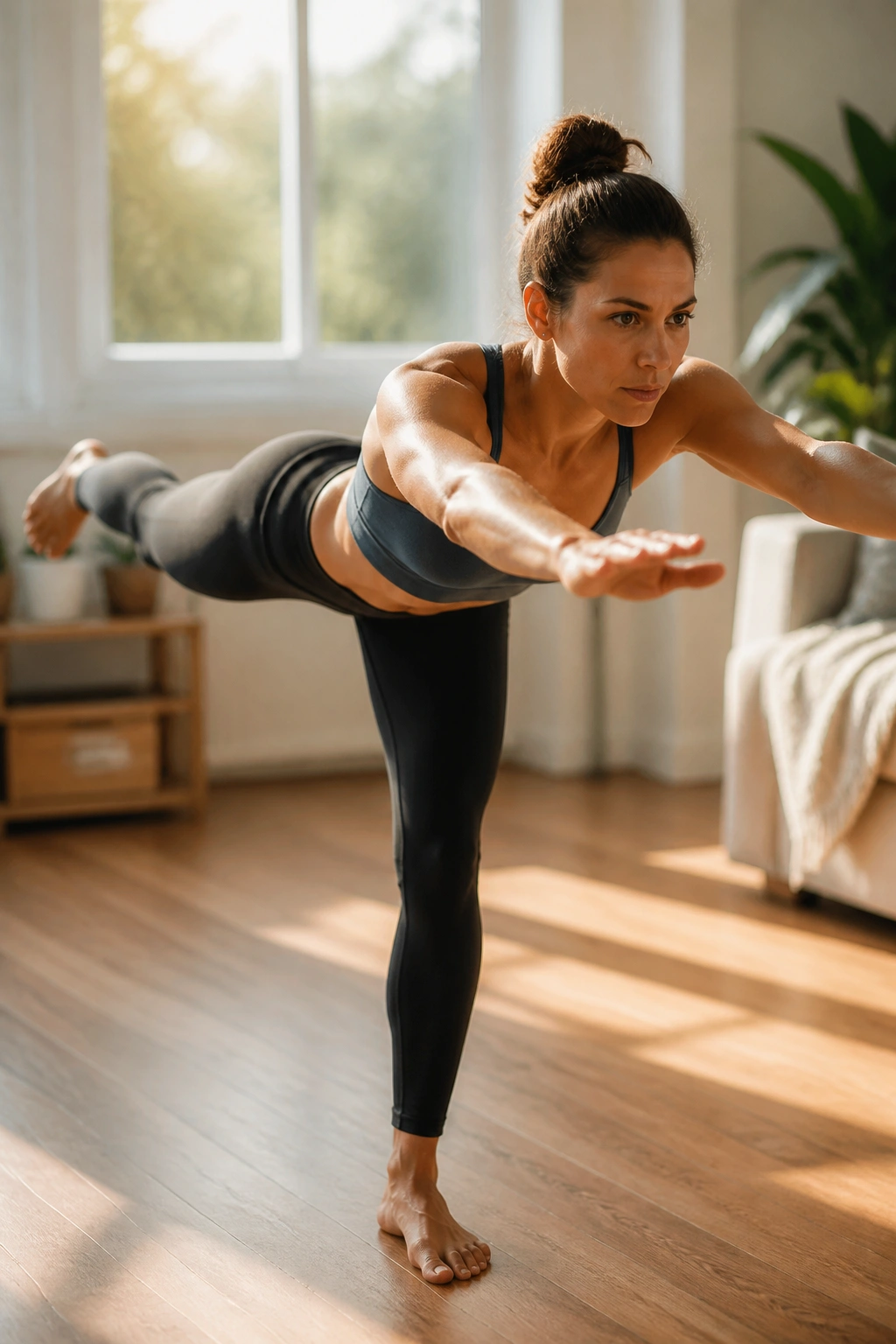
Unlike a squat, a single-leg hip hinge asks your glutes, hamstrings, and balance system to do the job while the other leg stays out of the way. It looks quiet. It feels busy.
Why it works
The hinge pattern teaches you to fold at the hips without rounding the spine, which matters whether you lift weights or not. Add the single-leg stance and you get a stability test that finds side-to-side differences fast. One side usually wins. That’s normal.
How to do it
- Stand on one leg.
- Soften the standing knee.
- Reach the free leg straight back as you tip forward at the hips.
- Reach your hands forward to help balance.
- Do 6 to 8 reps per side for 3 rounds.
The back leg doesn’t have to lift high. In fact, a smaller range is often better if it keeps the pelvis level. If your hips twist open, shorten the range and slow down. If you need a wall touch for the first few reps, take it. Better that than wobbling through a set and calling it training.
This one belongs in almost any home workout plan because it builds control without pounding the joints.
14. Side Plank Hip Lifts
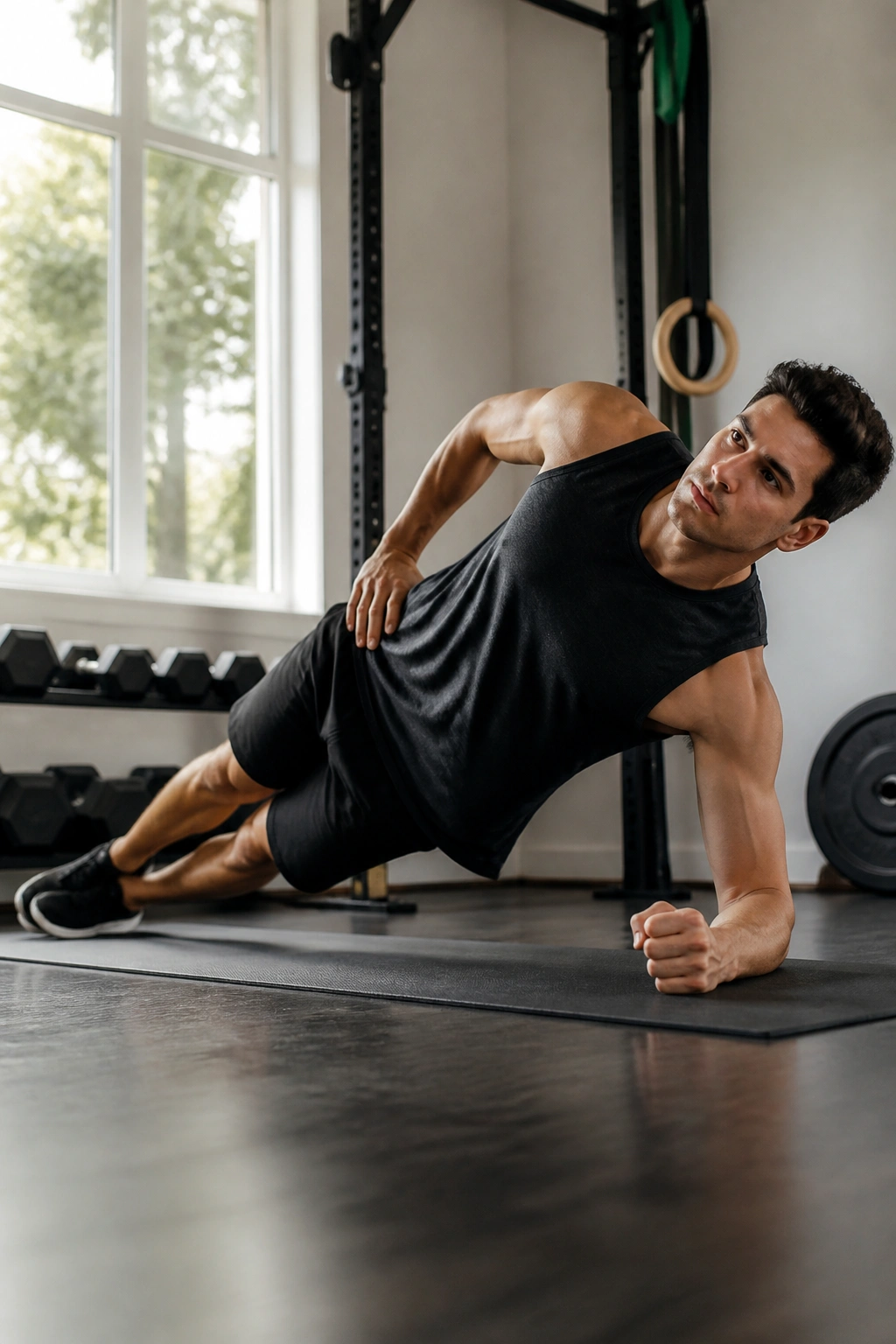
Side planks are already mean. Hip lifts make them better, because they force the obliques and glute medius to keep the body honest while the hips move.
Get into a side plank on your forearm, stack your feet or stagger them if balance is rough, then lower your hips a few inches and lift back up. Don’t rush the top. 10 to 12 lifts per side for 2 to 4 rounds is plenty for most people.
You’ll know it’s working when the side of your torso starts to shake before your arm does. That’s the good kind of complaint. If your shoulder collapses toward your ear, set the elbow under the shoulder again and press the floor away harder. If the neck takes over, slow the lift and cut the range.
A nice variation: hold the top position for 15 seconds, then do the lifts. That combo turns a short core drill into a real stability session without needing any equipment at all.
15. Frogger to Squat Jump Combo
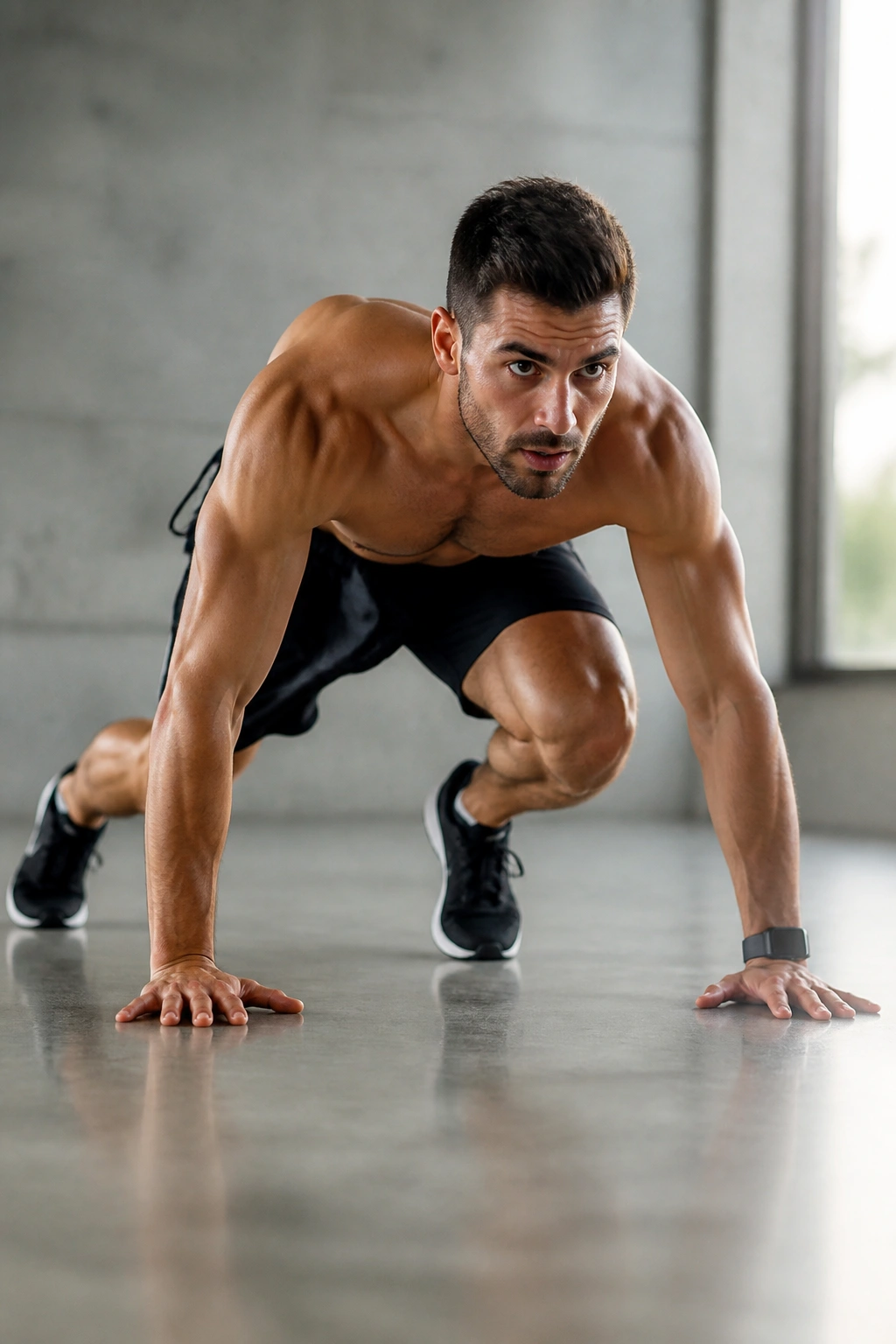
This is the kind of workout I reach for when I want heart rate and leg power in the same short block. Froggers load the hips in a deep squat and move the hands and feet in and out fast. Squat jumps finish the job.
Start with 6 froggers, then do 8 squat jumps. Rest 30 to 45 seconds and repeat for 4 to 6 rounds. If jumping feels like too much, swap the squat jumps for fast air squats or a calf raise at the top.
A frogger is basically a squat-thrust with the feet jumping forward and back underneath you. Keep the hands flat, knees tracking over toes, and chest lifted enough that you’re not folding in half. The floor will feel close. That’s fine.
This one is not for somebody who wants a quiet session. It’s loud, fast, and a little rude to your lungs. That said, it’s a clean way to build power without a single dumbbell, and the low-impact swap keeps it usable for more people than you’d think.
16. EMOM Full-Body Circuit
EMOM means every minute on the minute. You work, then whatever time is left in that minute becomes your rest. That tiny detail changes everything, because the clock keeps the pace honest.
Minute plan
- Minute 1: 12 air squats
- Minute 2: 8 push-ups
- Minute 3: 10 reverse lunges per side
- Minute 4: 30-second plank
- Repeat the four-minute block 2 or 3 times
If you finish early, do not add fluff. Rest. That’s the point. If you fail before the minute ends, the reps are too high or the exercise is too hard right now. Cut the count down and keep the quality high.
Why it’s useful
EMOM training is one of the easiest ways to keep bodyweight training workouts structured without needing a long plan. It gives you a fixed target, so you can actually see progress when the same numbers start feeling easier. Beginners can use wall push-ups and shorter lunges. Advanced people can slow the squat tempo or add a jump on minute 1. Simple. Mean. Effective.
17. Tabata Core and Cardio Blocks
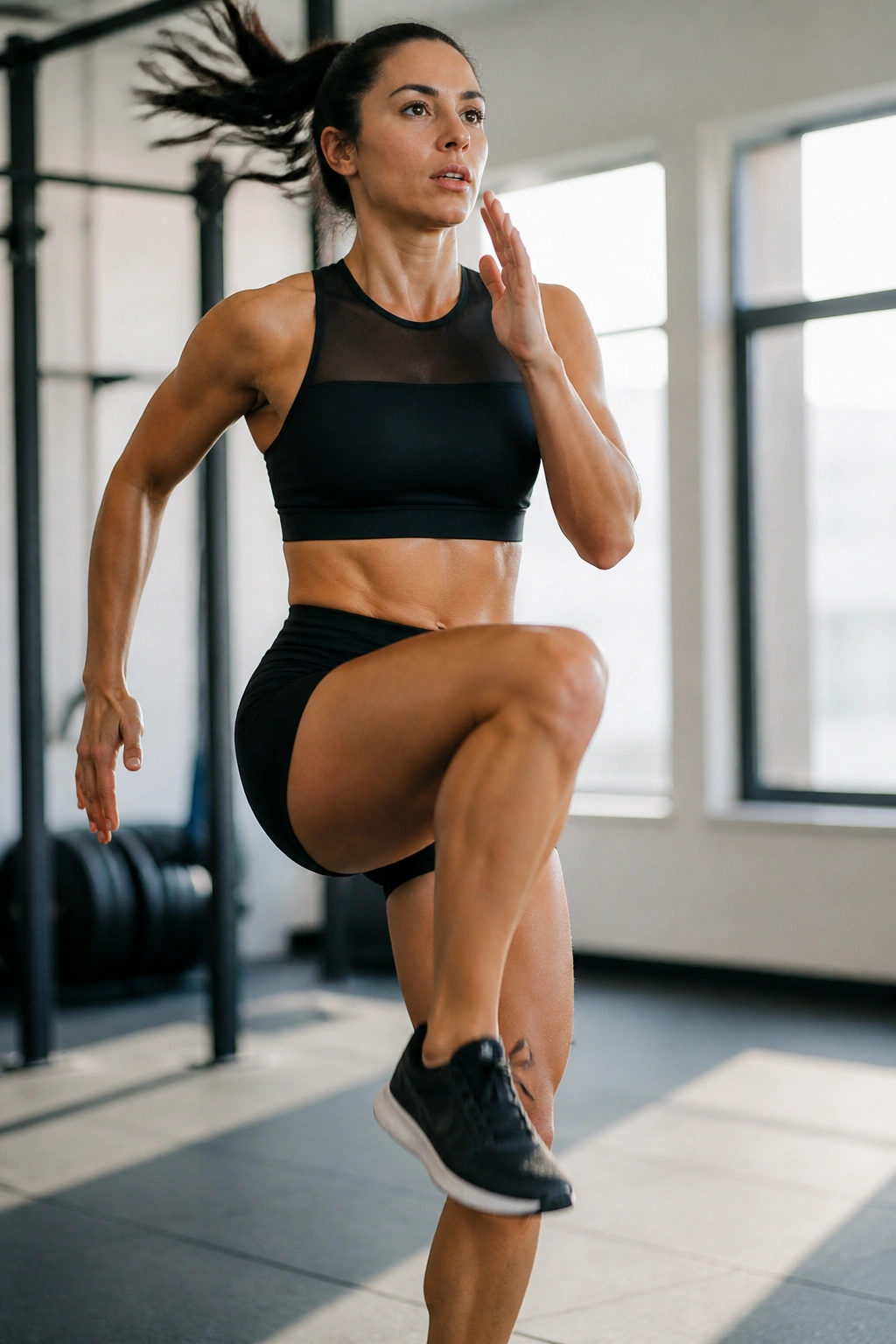
Tabata gets thrown around a lot, often by people who just mean “go hard for a bit.” The real version is a short burst pattern: 20 seconds of work, 10 seconds of rest, repeated 8 times. That’s 4 minutes per block.
Pick one move that makes your lungs work, like high knees or squat thrusts, and run a full Tabata block. Rest 1 minute, then do another block with a different move. Two blocks is enough for most people. Three blocks is a lot.
Good pairings:
- High knees for block one, mountain climbers for block two
- Squat thrusts for block one, plank jacks for block two
- Fast step-ups for block one, shadow boxing for block two
Keep the work hard but repeatable. If your pace dies by round three, you started too fast. That’s the trap. The goal is not a heroic first 20 seconds. The goal is to keep every work interval looking close to the one before it. Beginners can march instead of run. Same timer. Less impact.
18. Deck of Cards Bodyweight Challenge
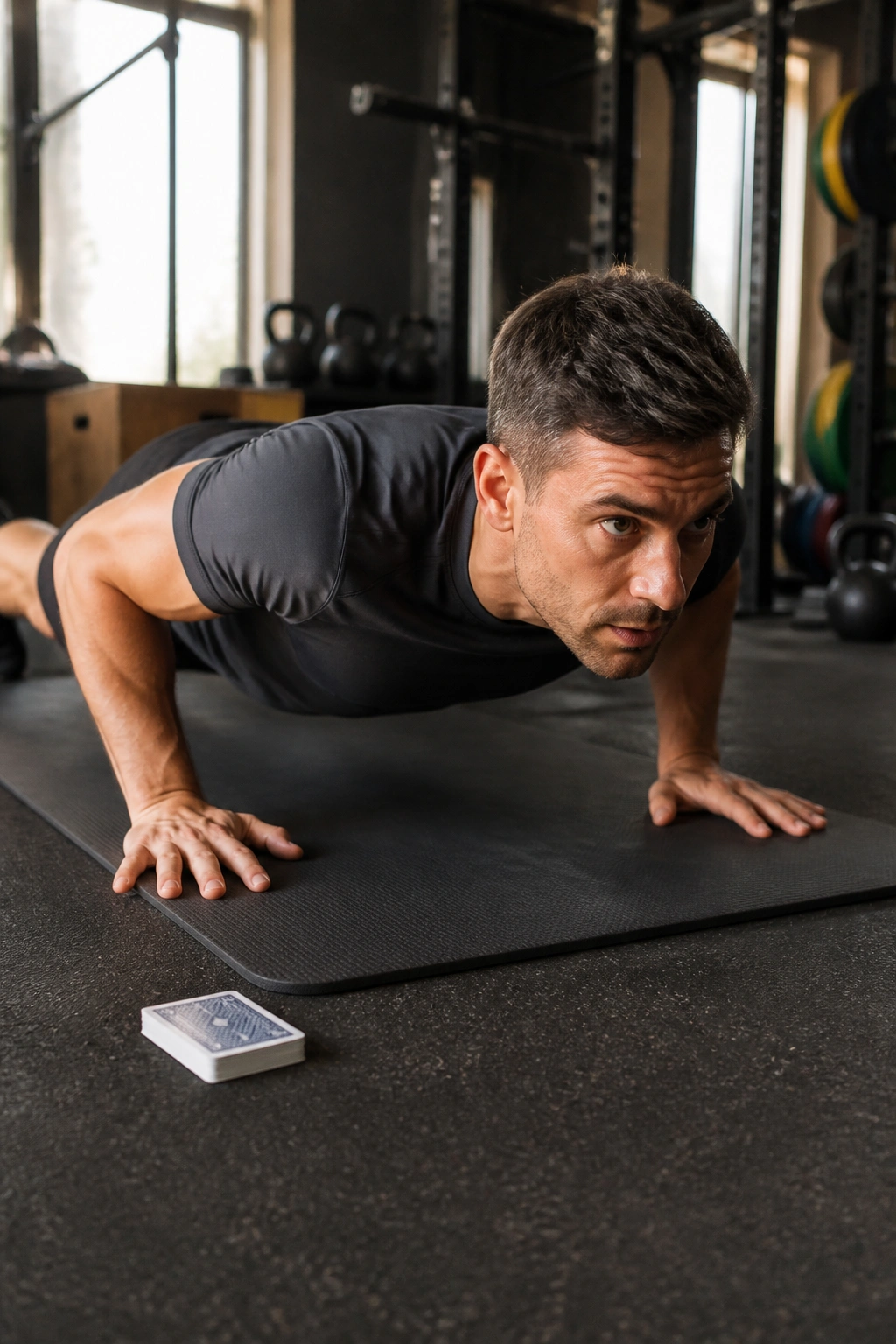
The deck of cards workout is fun, a little chaotic, and weirdly effective because it removes decision fatigue. You draw the card, do the reps, move on. No bargaining.
Card map
- Hearts: push-ups
- Diamonds: squats
- Clubs: reverse lunges per side
- Spades: sit-ups or dead bugs
- Jacks, queens, kings: 10 reps
- Aces: 11 reps
Shuffle the deck and draw 10 to 15 cards to make the session as short or long as you want. If a move is too hard, swap in an easier version before you start. Wall push-ups are fair game. So are chair squats and partial lunges.
The nice part is that the workout feels different every time, but the rules stay simple. You can keep the deck in a drawer, travel with it, or toss the cards in a bag and use them as a quick no-equipment workout anywhere with a floor.
One caveat: do not turn every card into a race. The format works best when you keep your form neat and let the randomness do the programming.
19. Descending Ladder Workout
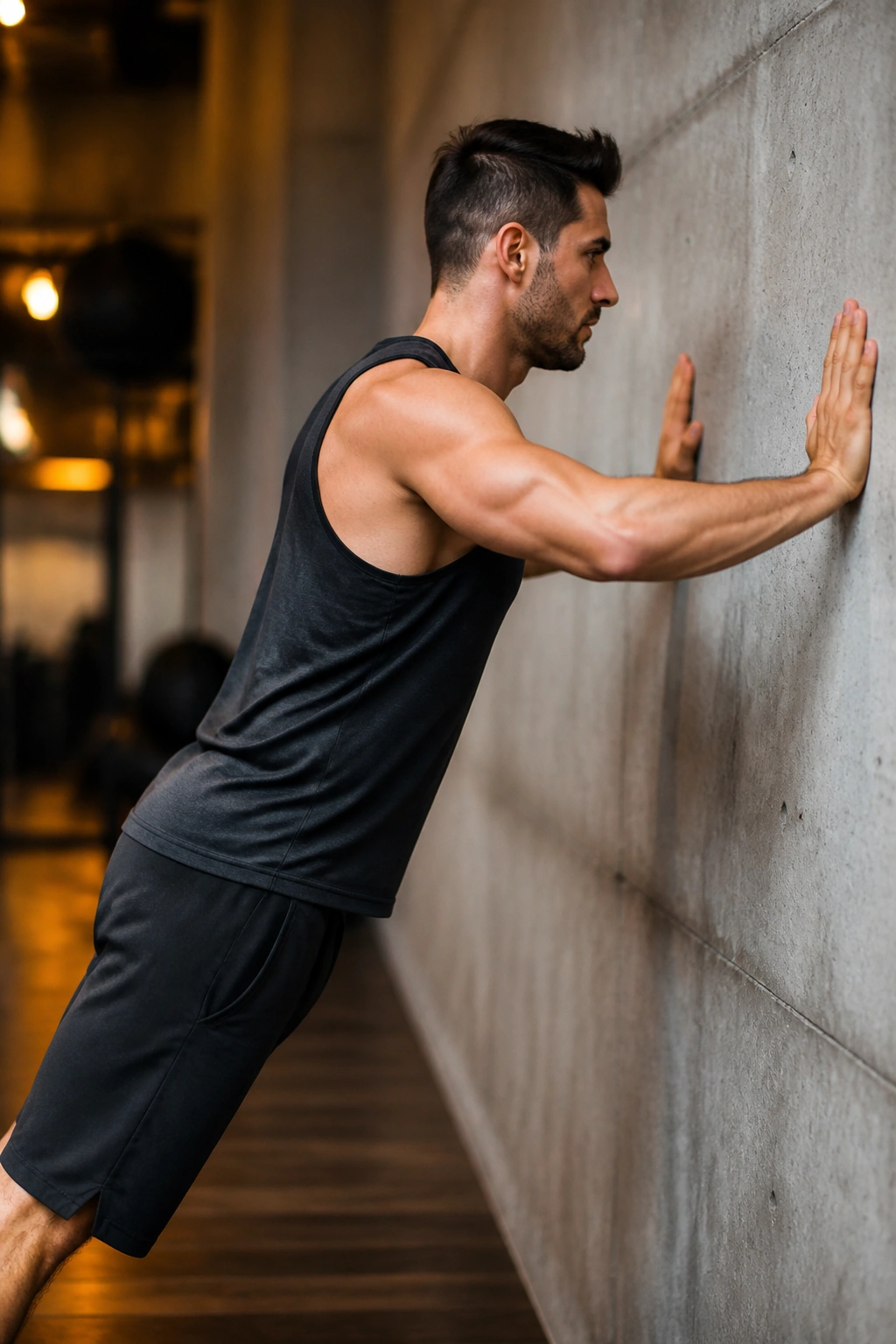
Descending ladders are one of my favorite ways to make a short session feel longer without adding junk volume. You start high, then count down by two or four reps until you hit the bottom.
Try this:
- 10 push-ups
- 10 squats
- 8 push-ups
- 8 squats
- 6 push-ups
- 6 squats
- 4 push-ups
- 4 squats
- 2 push-ups
- 2 squats
Rest only as needed, but keep the pauses short. The whole thing should take 8 to 12 minutes. If full push-ups are too much, put your hands on a bench or do the set on your knees. If squats feel too easy, make them tempo squats with a 2-second pause at the bottom.
The ladder format is useful because the early rounds create a little fatigue, then the lower numbers let you finish without collapsing into bad form. It’s a smart middle ground between a straight strength set and a pure conditioning blast. Beginners can start at 6. Stronger people can start at 12.
20. Wall Sit and Push-Up Contrast Set
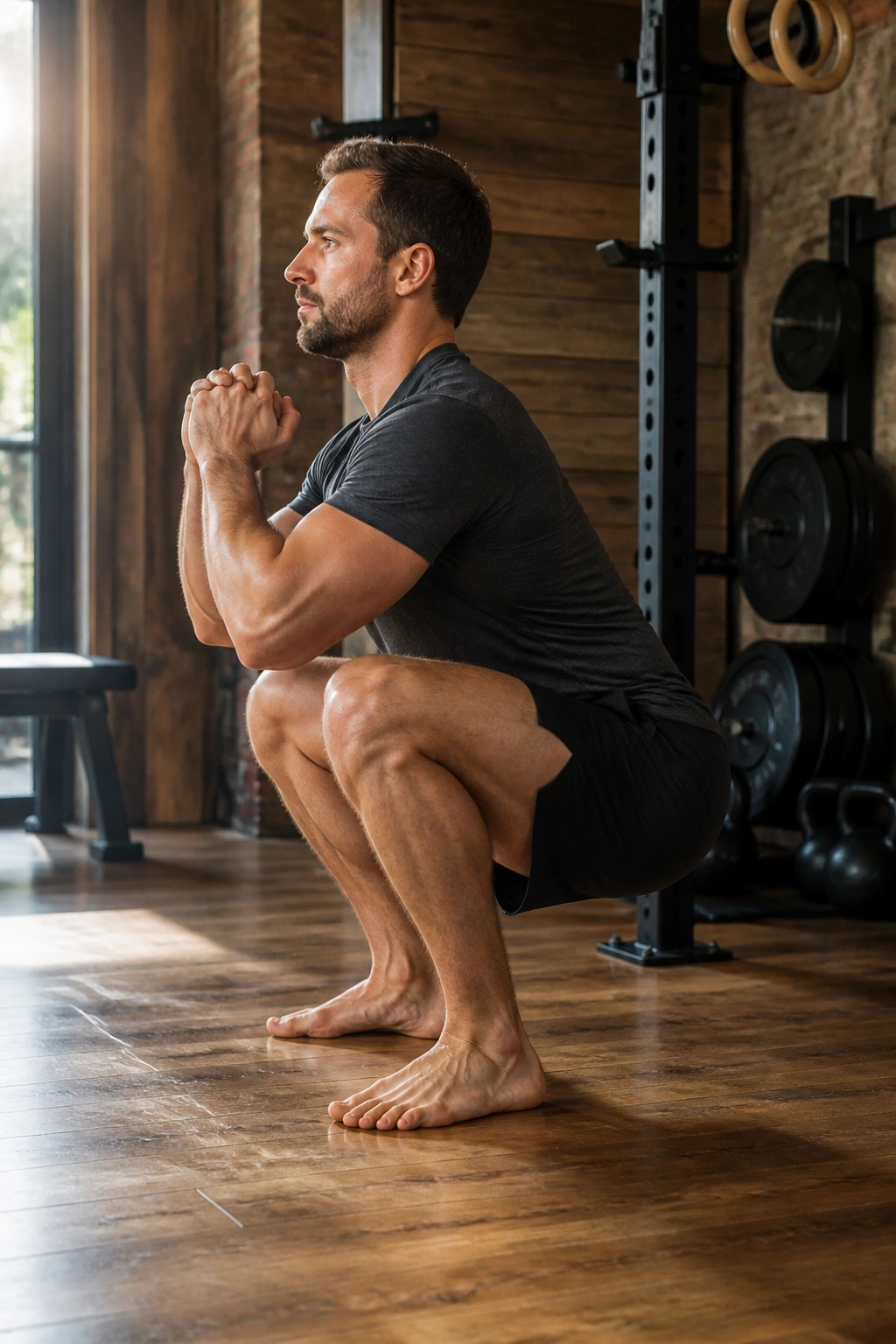
This combo feels weird on paper and excellent in real life. Wall sits fry the legs with no movement. Push-ups wake up the upper body. Together they create a clean contrast that keeps the session from getting stale.
Lean into a wall, slide down until your knees are around a right angle, and hold for 30 to 45 seconds. Stand up, shake out the legs, then do 8 to 12 push-ups. Rest 30 seconds and repeat for 4 rounds.
The wall sit should feel like a steady burn across the quads, not pain in the knees. If your knees complain, move your feet a little farther out and shorten the hold. The push-ups should be crisp enough that your body doesn’t turn to mush after the isometric hold. That little contrast is the point.
This is a nice choice when you want a bodyweight training workout that feels organized but not complicated. You can do it in a small room, a hallway, or next to a TV if that’s the only place you’ve got.
21. Mobility-First Recovery Flow
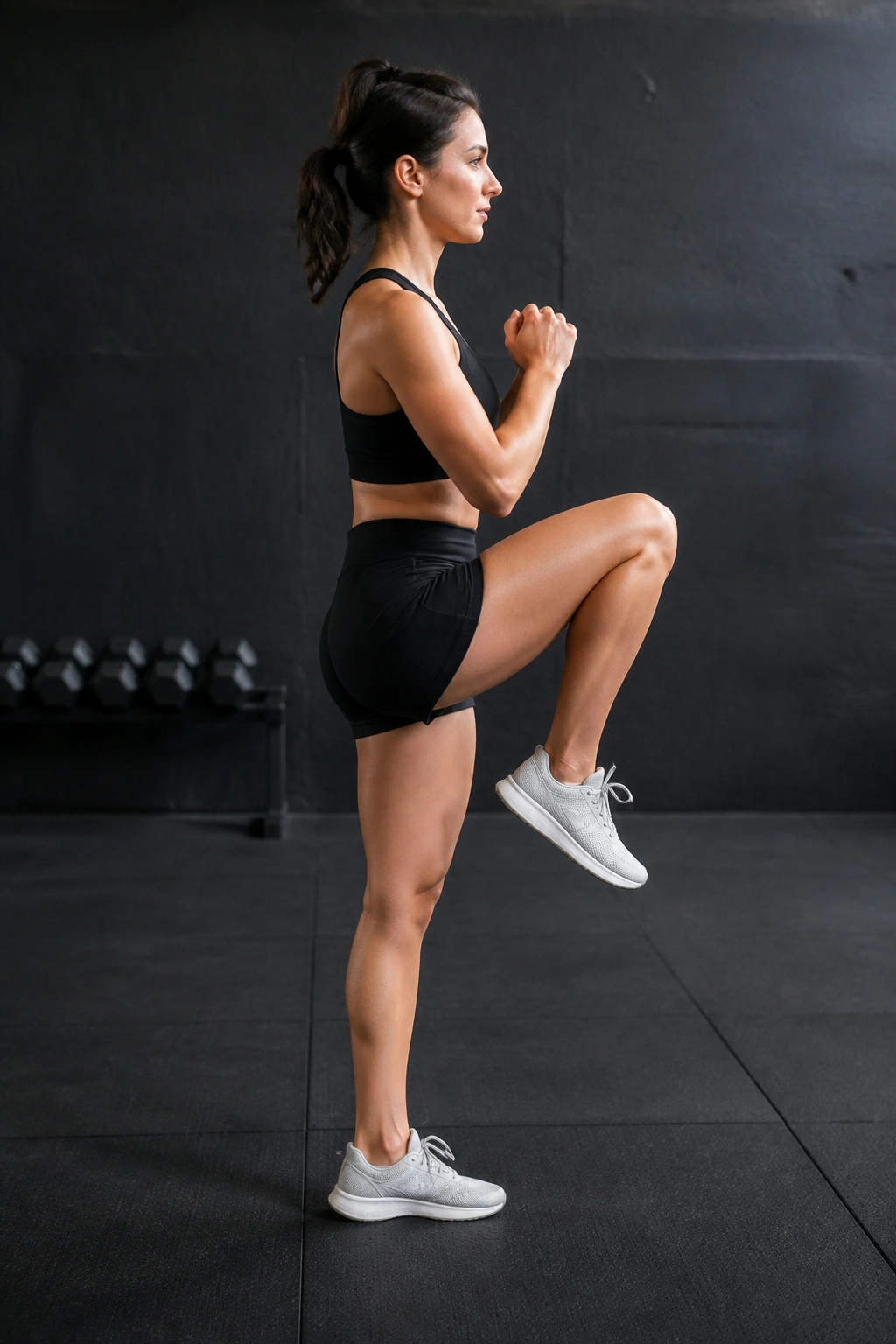
Some days your body does not need another hard set. It needs to move, breathe, and stop acting stiff. That does not make the session less useful. It makes it smarter.
Flow sequence
- Cat-cow: 6 slow rounds
- World’s greatest stretch: 4 reps per side
- Deep squat hold: 45 seconds
- Shin box switches: 8 reps per side
- Thoracic rotations: 6 reps per side
- Couch stretch: 30 seconds per side
Move through the flow without rushing. The point is to open the hips, ankles, upper back, and chest while letting the breath slow down. If the deep squat hold makes your heels lift, put a folded towel under them. If the couch stretch is too sharp, back off the range and stay there longer.
I like this session on the same days people feel “too tired to train” but still want to do something useful. It helps keep the body from locking up, and it pairs well with the harder bodyweight workouts above. Recovery can be training. People forget that.
22. Eight-Minute Full-Body Benchmark
A benchmark workout should be simple enough to repeat and hard enough to tell you something. Eight minutes is plenty when the movement choices are honest.
Set a timer for 8 minutes and cycle through:
- 10 squats
- 5 push-ups
- 8 alternating reverse lunges per side
- 20-second plank
Repeat the sequence as many times as you can with clean form. If your push-ups fail, switch to incline push-ups. If the lunges start to wobble, shorten the depth. The score that matters is not heroics. It’s how many tidy rounds you can keep together before your form starts leaking.
This works as a quick test, but it also works as a training session. Repeat it every so often and watch the rest periods shrink, or the reps feel smoother at the same pace. That gives you feedback without needing a fancy spreadsheet.
If you only keep one short circuit in your pocket, make it this one.
Final Thoughts
Bodyweight training works best when you stop treating every session like a random sweat session. Tempo, range, rest, and one-leg work change the difficulty fast, and they let you keep training with almost no equipment.
Mix the styles. A slow strength day, a hard conditioning day, and a mobility flow are not competing ideas. They fit together. Keep a note of which workouts feel too easy, which ones make your form wobble, and which ones leave you fresh enough to repeat next week. That’s the useful part.
And if you’re standing in a small room with no gear, you’ve still got enough to build something real.
