



A treadmill is nice. A clear patch of floor, a timer, and a little honesty can do more for endurance than a lot of people expect.
These endurance workouts you can do at home are built for the days when you want your heart working, your breathing heavy, and your legs a little annoyed — but you do not want to dress for a gym, wait for a machine, or spend half the session figuring out where to put your bag. Endurance is not magic. It is repeatable effort, held long enough for your body to adapt.
The trick is usually not some dramatic move. It is pacing, clean form, and work blocks that stay hard without turning sloppy after round two. Thirty seconds can feel easy. Four rounds later, that same thirty seconds tells a different story.
Start with the move that feels almost too simple. That is usually the one that lasts.
1. Marching Intervals
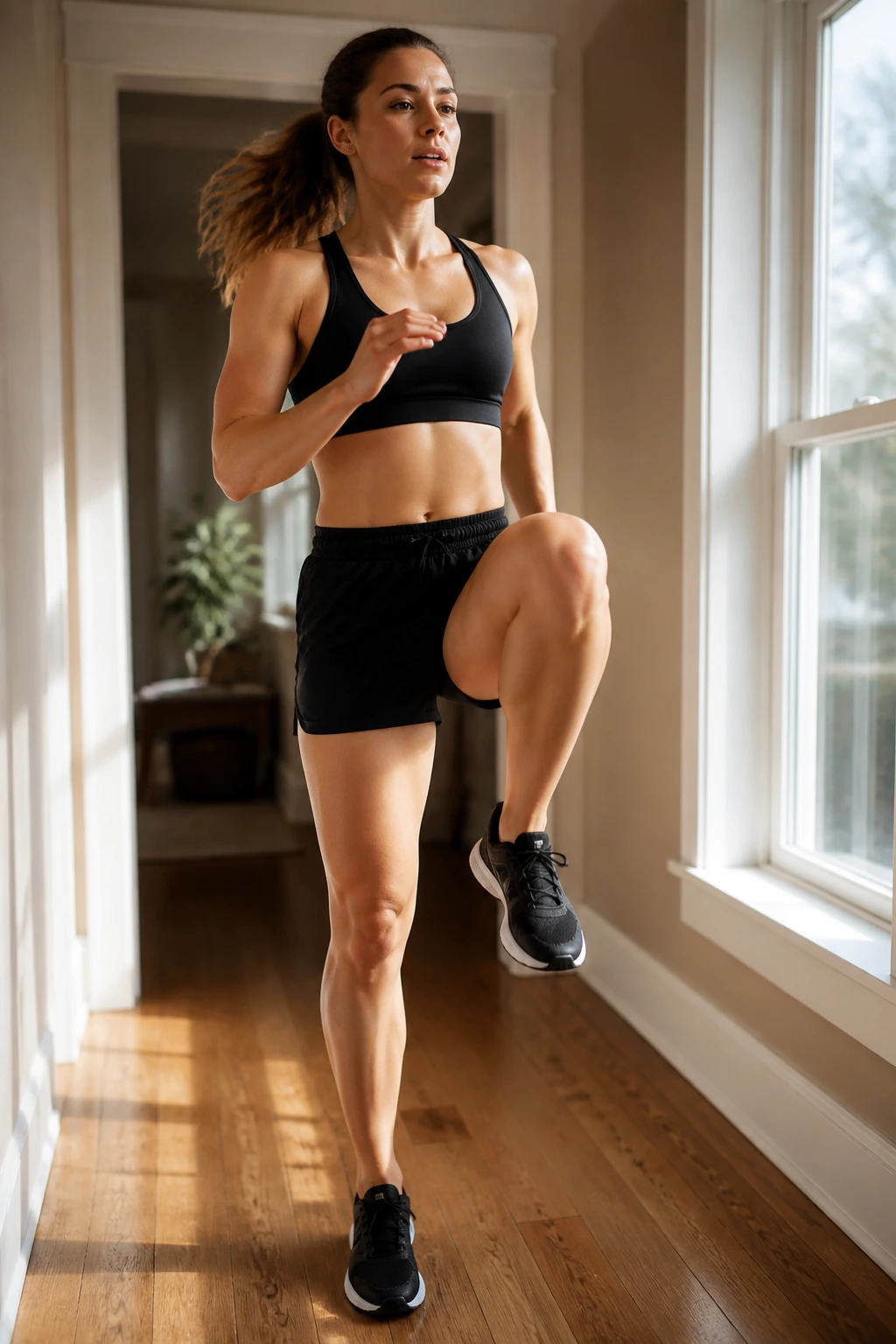
Marching is the workout people underestimate, and that is exactly why it works. If you keep the knees high, the arms active, and the tempo honest, marching can turn into a sneaky cardio session that builds stamina without pounding your joints.
Try 45 seconds of fast marching, 15 seconds of easier steps, repeated for 10 to 15 minutes. On the hard intervals, drive the opposite arm and leg with intent, and land softly through the middle of your foot. The movement should look sharp, not sloppy.
How to make it count
- Keep your chest tall.
- Lift each knee to about hip height if that feels good.
- Pump the arms like you mean it.
- Use a timer, not vibes.
Best use: warm-ups, low-impact days, or the start of a longer circuit. It feels mild at first. Then your breathing catches up.
2. Shadow Boxing Rounds
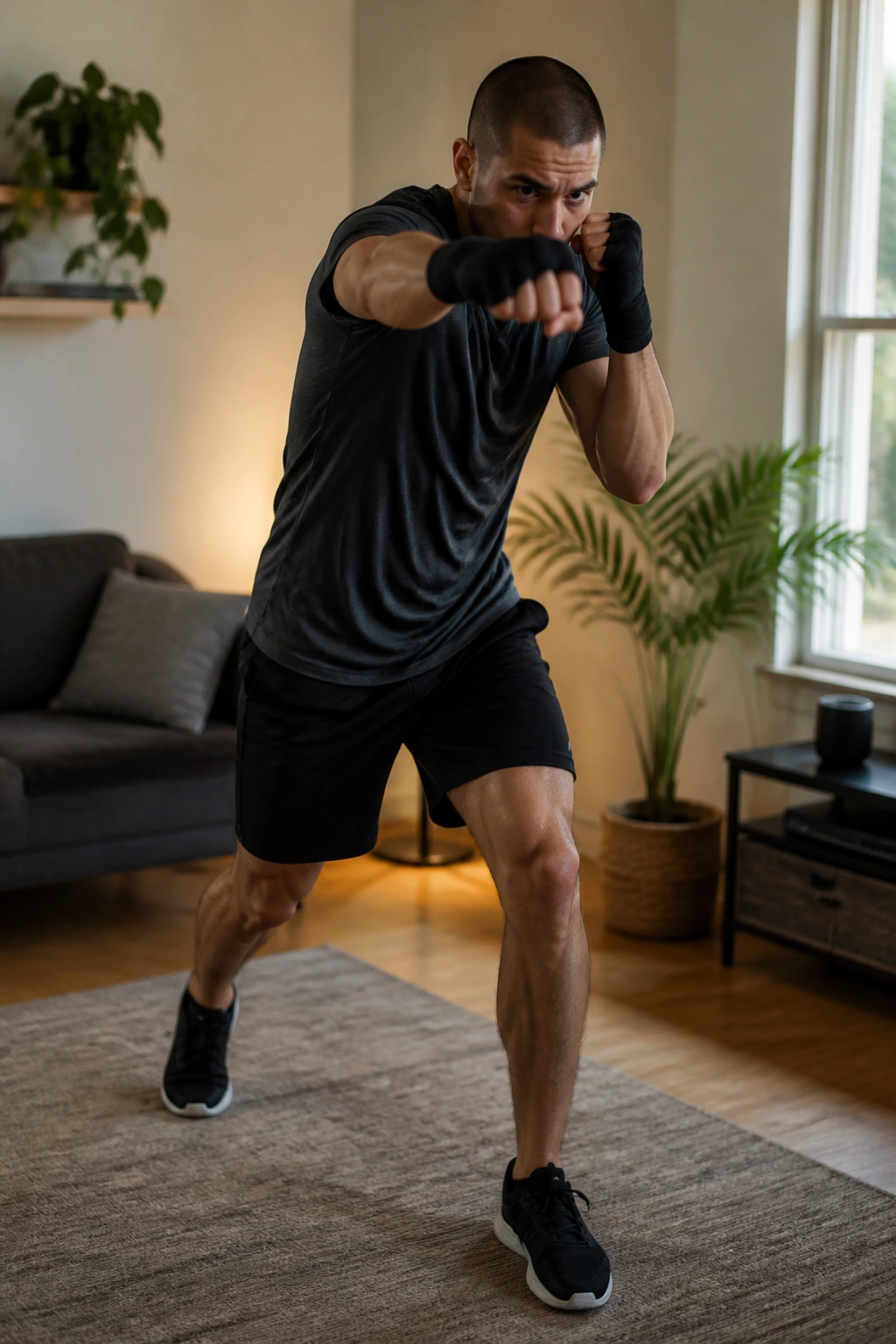
Shadow boxing is one of the best home cardio tools because it makes you move in every direction. Your feet keep working, your shoulders stay busy, and your core has to stabilize every punch.
A simple setup is 6 rounds of 2 minutes on, 30 seconds off. Jab-cross, slip, pivot, jab again. Don’t stand there punching the air like you’re bored in a parking lot. Shift your weight and keep your hands coming back to your face.
How to pace the rounds
The first round should feel almost controlled. By round four, your breathing should be louder, but your technique should still look tidy. If your shoulders burn before your lungs do, slow the punches a little and keep the feet moving.
Watch for this: people punch too hard and forget to move their feet. That turns a cardio drill into a shoulder race, and shoulders fatigue fast.
3. Step-Ups on a Stair or Sturdy Chair
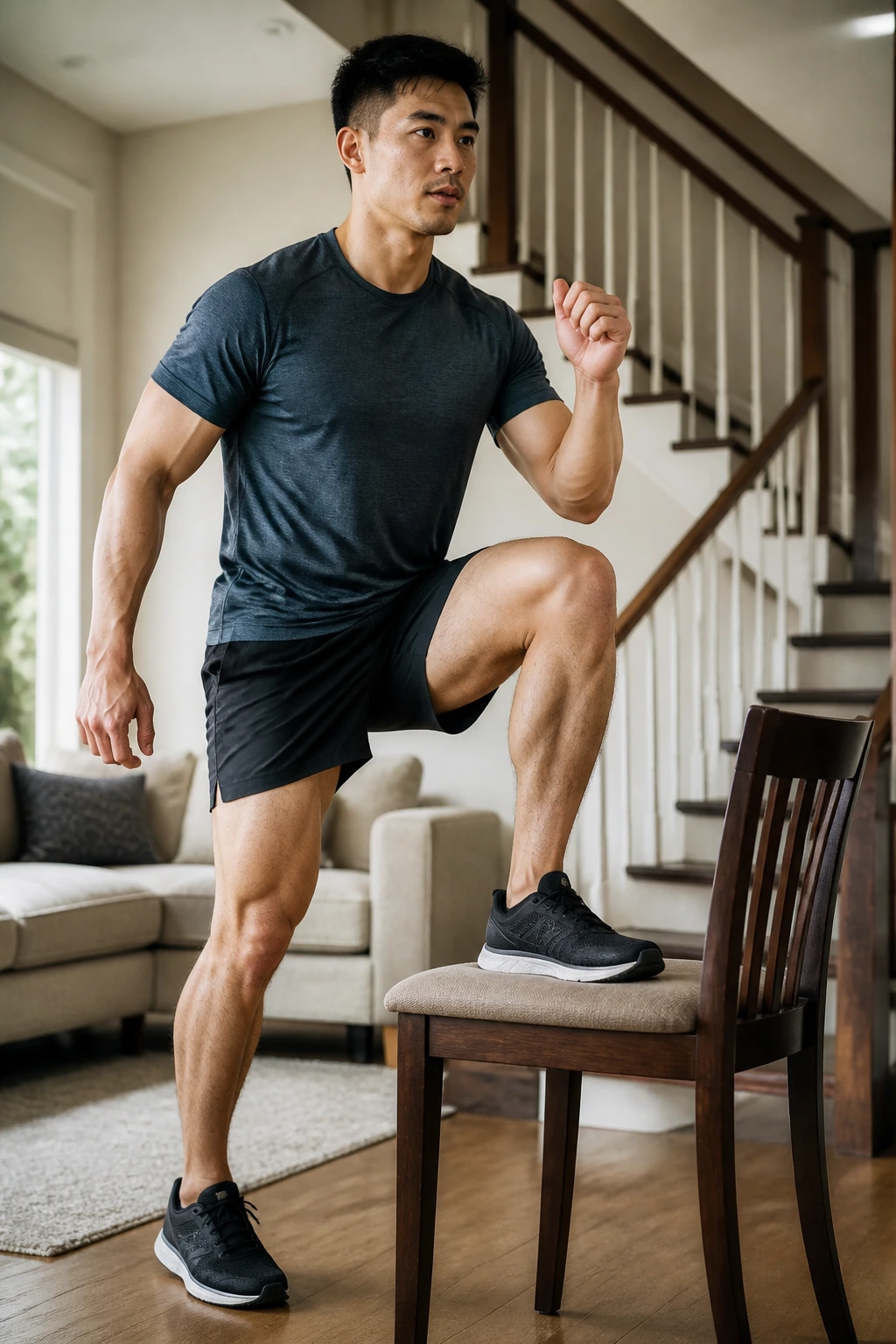
If you have one step and a little space, you have a solid endurance workout. Step-ups load the legs, raise the pulse, and make your hips work harder than you think they will.
Use 40 seconds of continuous step-ups, 20 seconds of rest, for 8 to 12 rounds. Lead with the whole foot on the step, press through the heel, and stand all the way up before stepping back down. Knee drive at the top if you want more work. No rush.
A lot of people rush the down step and bounce off the floor. That’s sloppy and harder on the knees. Smooth is better. Smooth lasts longer.
- Use a step that does not wobble.
- Keep your torso tall.
- Switch the leading leg every round, or halfway through each round.
- Hold a backpack if you want more load.
4. Low-Impact Jack Pyramids
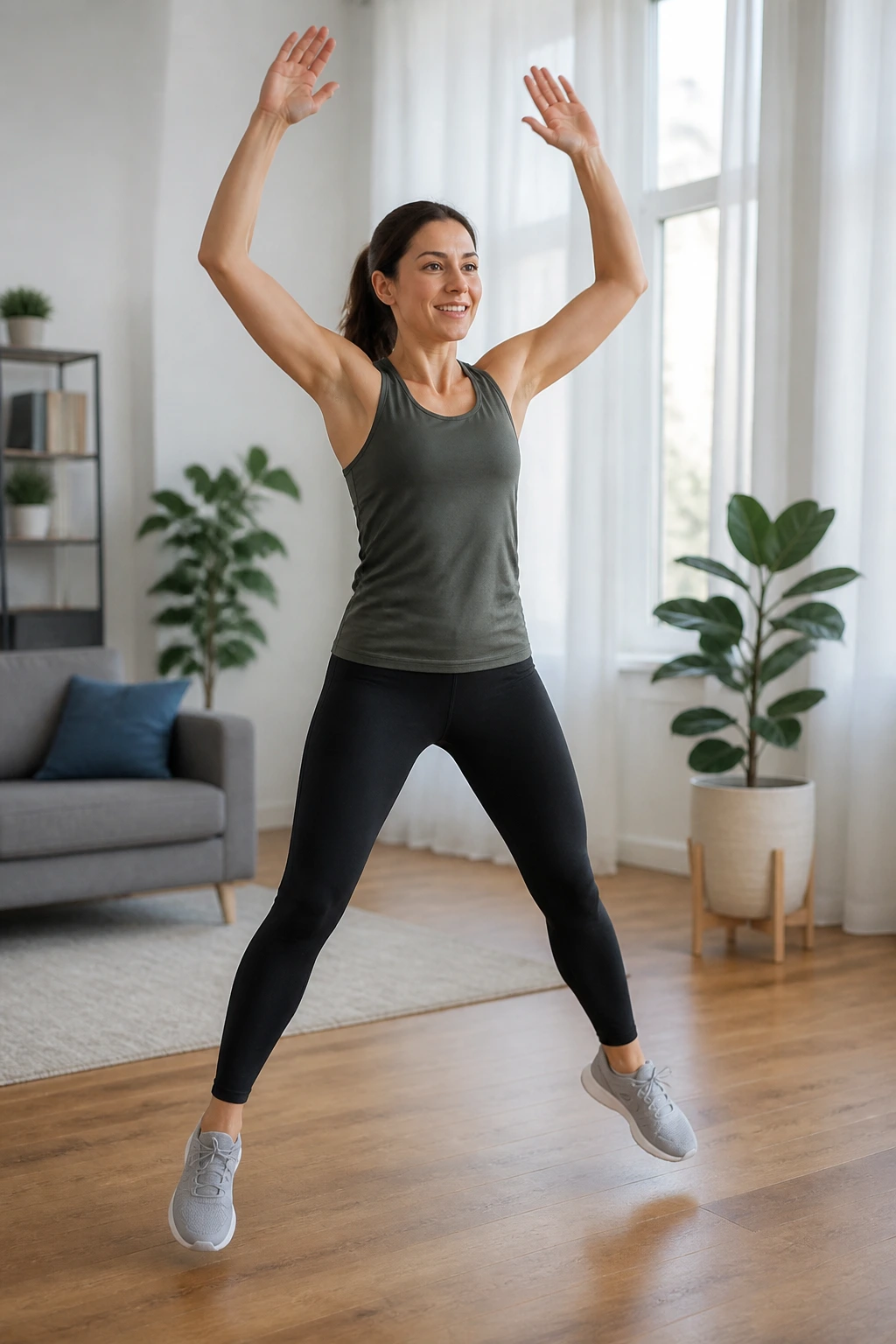
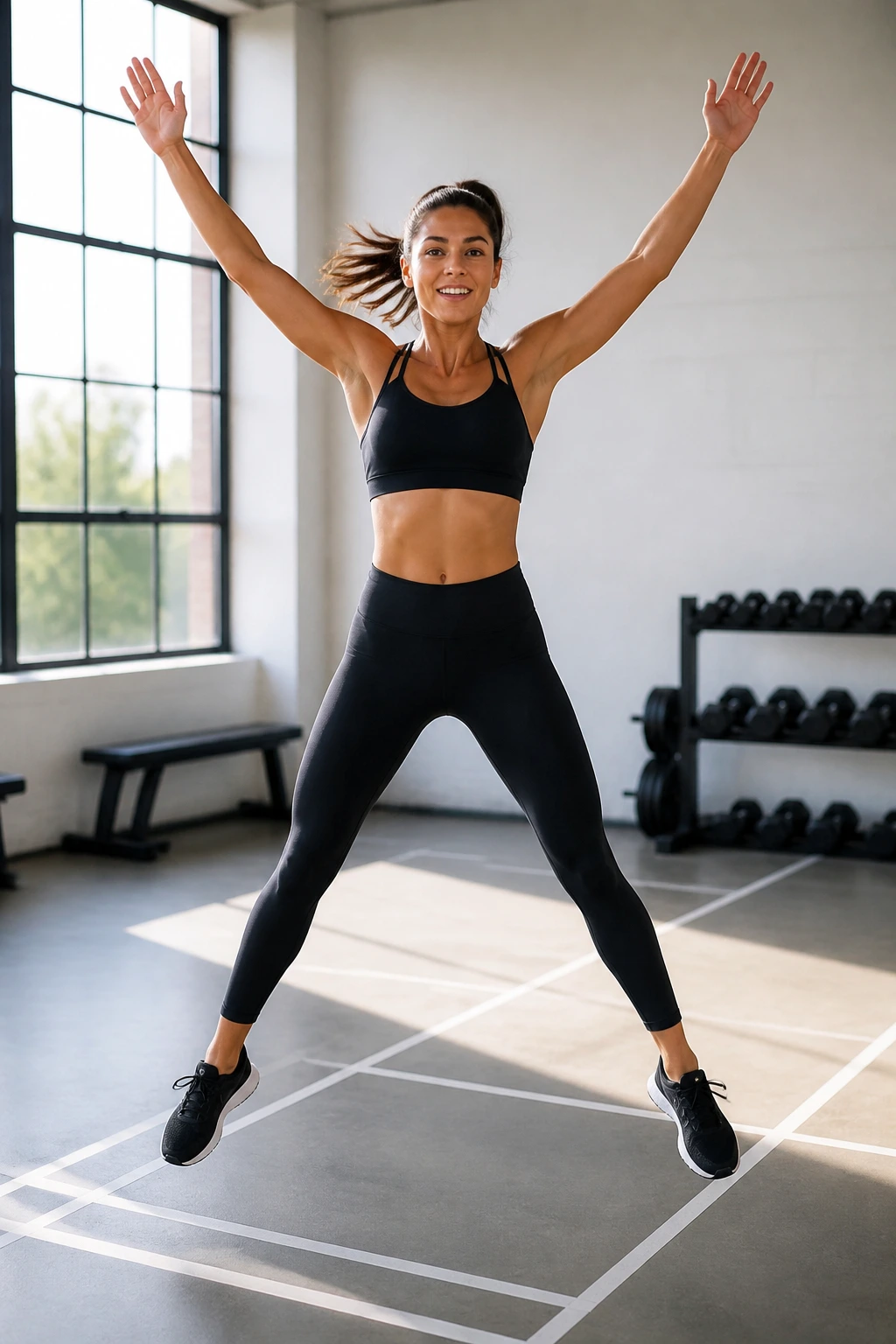
Low-impact jumping jacks are useful because they give you the rhythm of jumping without the repeated landing. That matters on days when your ankles, knees, or downstairs neighbor have no interest in full jumps.
Run a pyramid like this: 20 seconds work, 20 seconds rest; 30/20; 40/20; 30/20; 20/20. Step one foot out, then the other, while your arms sweep overhead. Make the return sharp. The goal is not to look fancy. The goal is to keep moving without pausing.
The longer middle sets are where the lungs start to protest. Good. That’s the point. If your pace falls apart, cut the top interval to 30 seconds and build back up next time.
One clean rep beats three ugly ones.
5. Mountain Climber Intervals
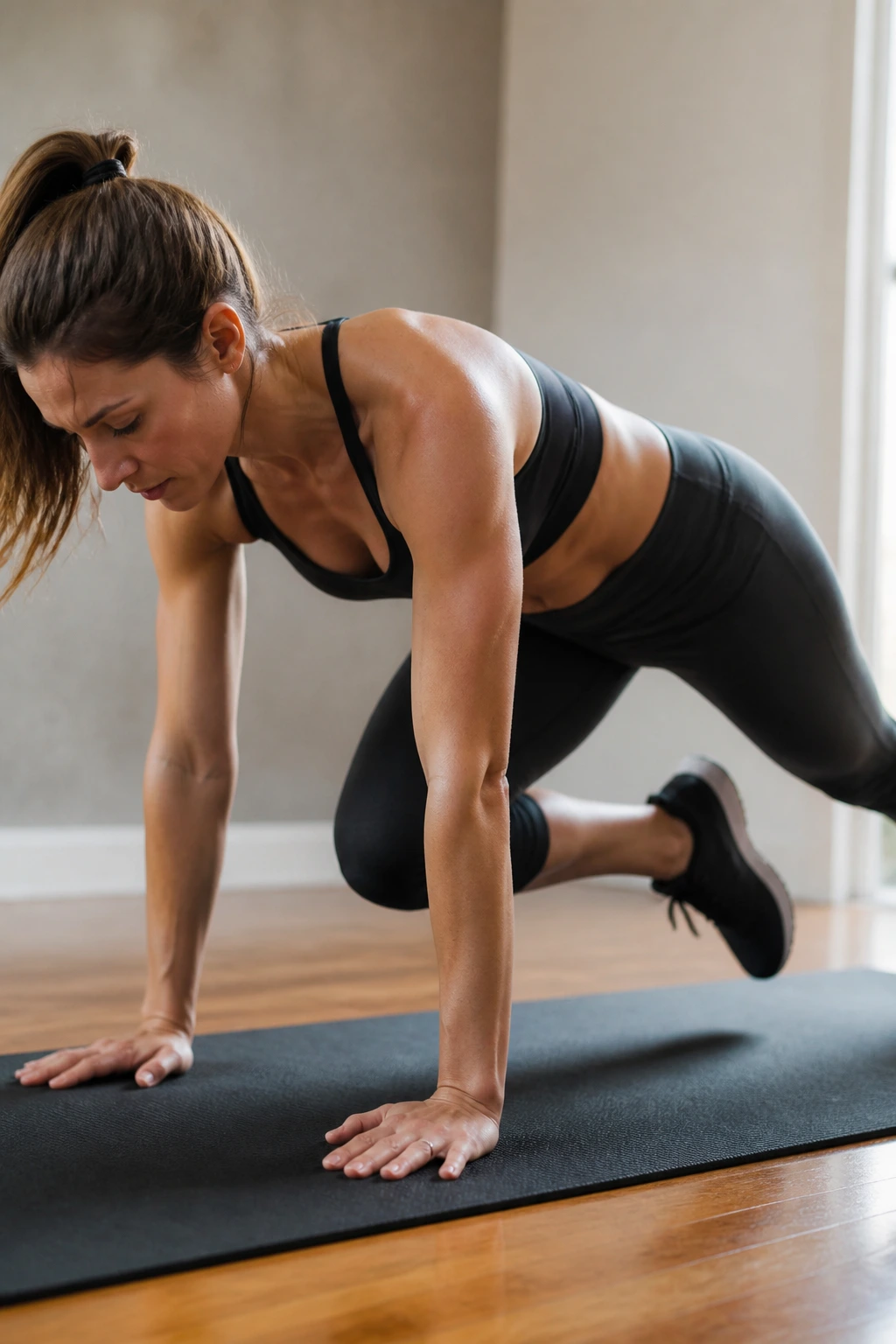
Mountain climbers are noisy, which is annoying, but they earn their keep. They spike the heart rate fast, and they hit the shoulders, core, and legs in one shot.
Try 20 seconds hard, 10 seconds easy, for 8 to 12 rounds. Place your hands under your shoulders, keep your hips level, and drive each knee forward without letting your lower back sag. If your form turns into a pogo stick with bad manners, slow down.
The real win here is repeatability. A lot of high-intensity moves burn bright and die fast. Climbers can stay useful for a while if you shorten the stride and keep the rhythm tight.
A simple cue: your shoulders stay quiet while your legs do the work.
6. The No-Equipment Endurance Workout You Can Do at Home
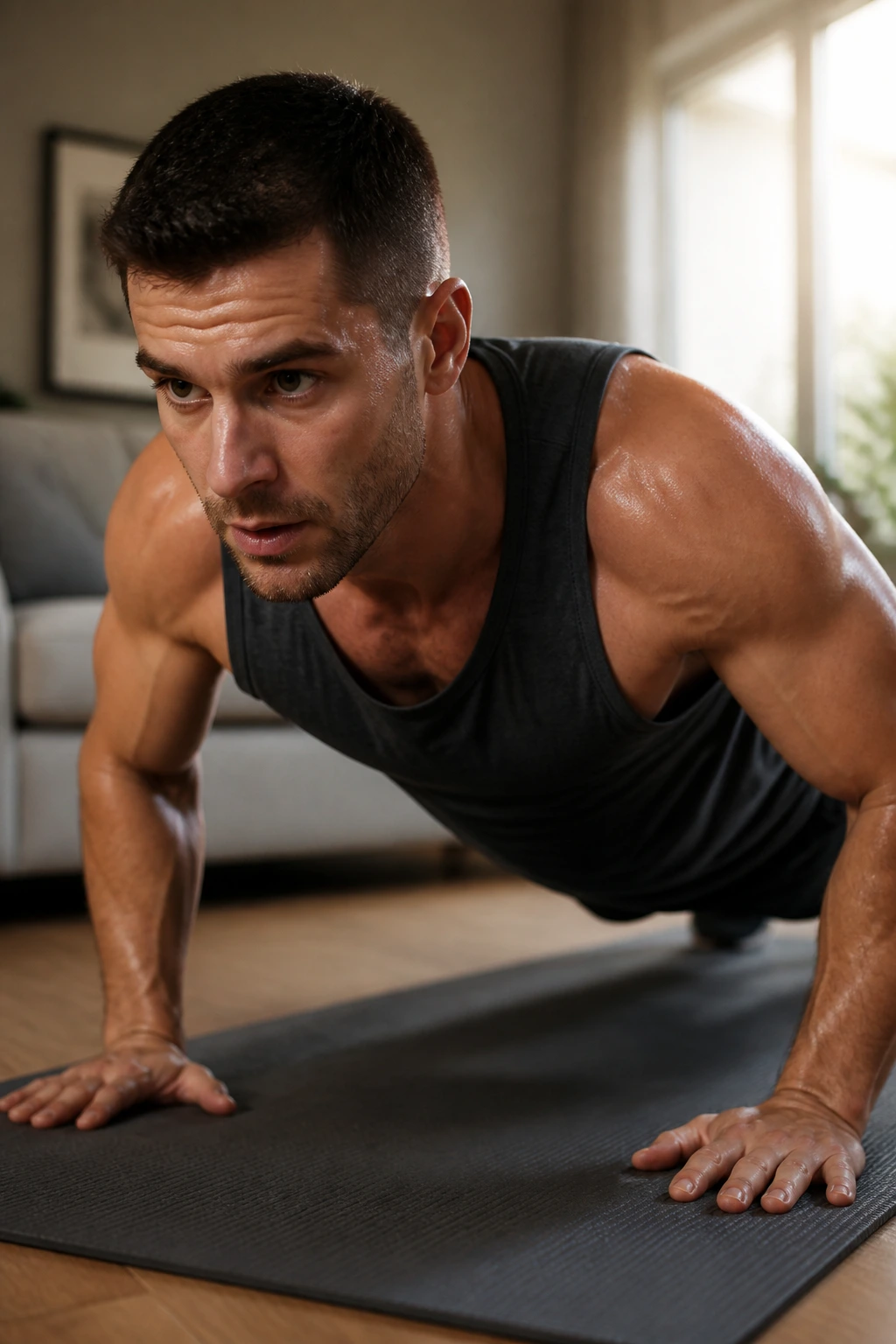
This one is a plain old circuit, and that is not a flaw. A balanced circuit lets you work long enough to build stamina without burying yourself in one movement pattern.
Use 5 exercises, 40 seconds each, 20 seconds rest, for 3 rounds:
- Bodyweight squats
- Fast march or high knees
- Push-up walkouts
- Skater steps
- Plank shoulder taps
Unlike a random grab-bag of cardio moves, this setup spreads the stress around. Legs get time under tension. The core stays on. Your heart never gets a full break, which is exactly why the workout feels longer than the clock says.
If you want a harder version, take the rests down to 15 seconds. If your form starts fraying by round two, keep the 20-second rests and earn the speed later.
7. Skater Steps
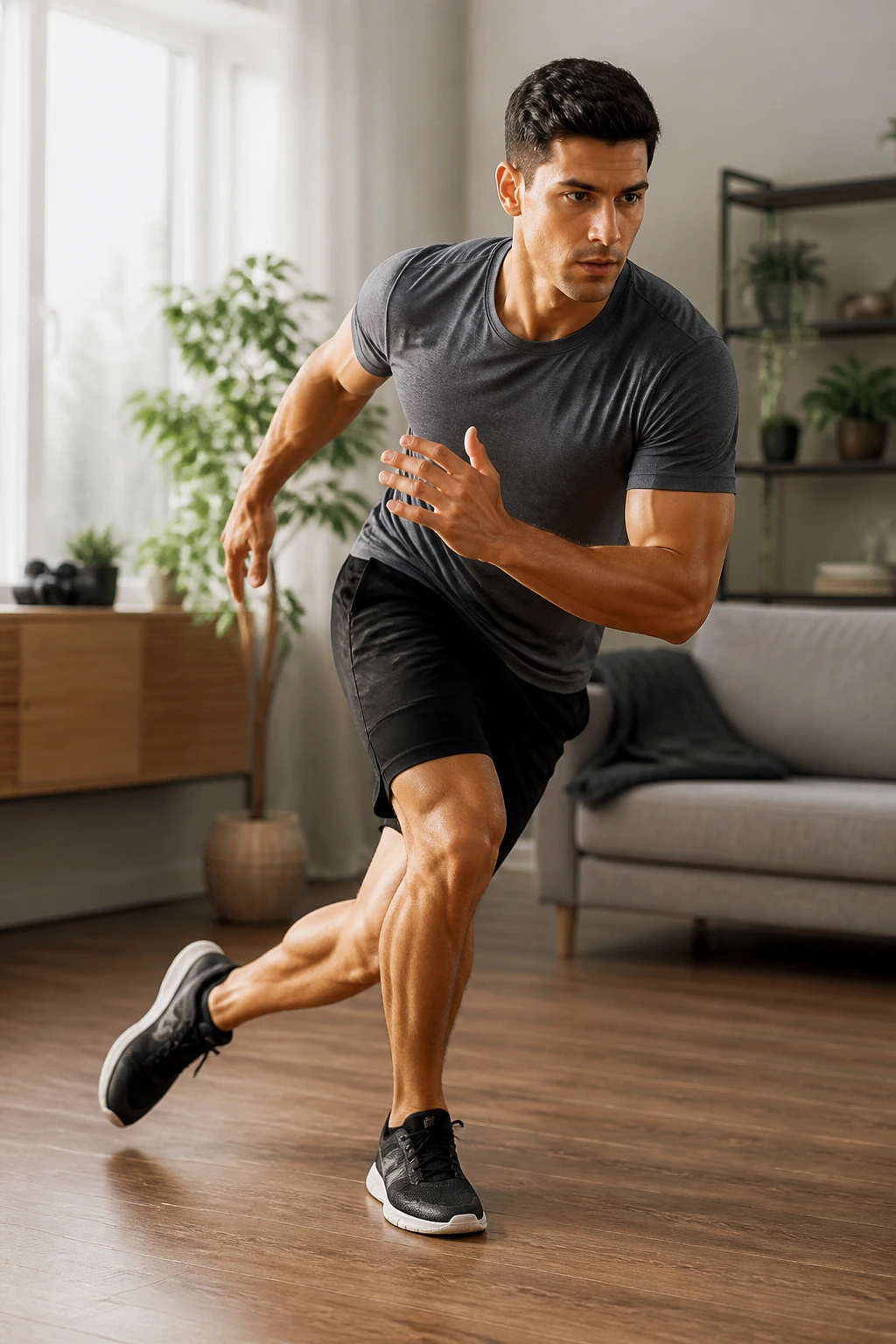
Want side-to-side stamina without turning the floor into a slip hazard? Skater steps do that well. They train lateral movement, which most home cardio plans ignore, and they light up the outer hips in a way straight-line drills do not.
Why They Work
Move from side to side in a controlled hop or a quick step, landing softly and reaching the trailing foot behind you. Keep the chest slightly forward and the torso stable. The more you rush, the more you lose the point of the drill.
How to use it
- Do 30 seconds on, 15 seconds off.
- Repeat for 10 rounds.
- Stay low enough to feel the legs working, but not so low that your knees cave inward.
- If hopping bothers you, step instead of jump.
The best skater reps look smooth, almost quiet. That is the sign your feet and hips are cooperating instead of fighting each other.
8. Burpee Walkouts
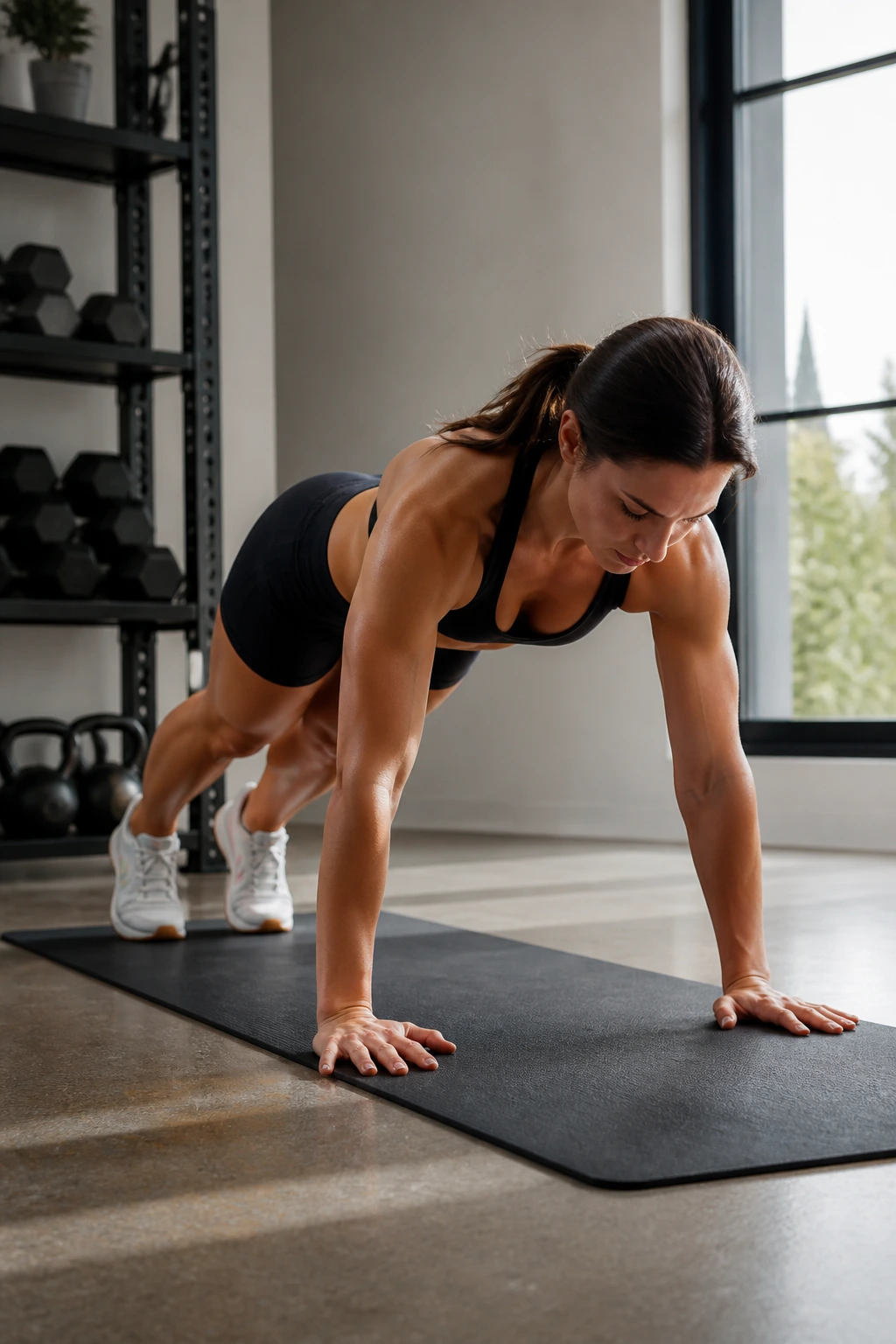
Burpee walkouts are the civilized cousin of full burpees, which means they still hurt in a useful way but spare you some of the chaos. They keep the heart rate up, ask the core to brace, and give your arms a little workload too.
Try 8 to 10 reps per round, for 4 to 6 rounds, resting 45 to 60 seconds between rounds. Stand tall, hinge down, walk your hands to a plank, walk them back, and stand. Add a small hop at the top if you want more cardio. Leave the push-up out if the session is already spicy.
A clean walkout should look controlled from start to finish. If your lower back dips in the plank, shorten the range and slow it down.
- Step back with one foot at a time if your hamstrings are tight.
- Keep your hands planted under the shoulders.
- Breathe out as you stand.
9. Fast Feet Line Drill
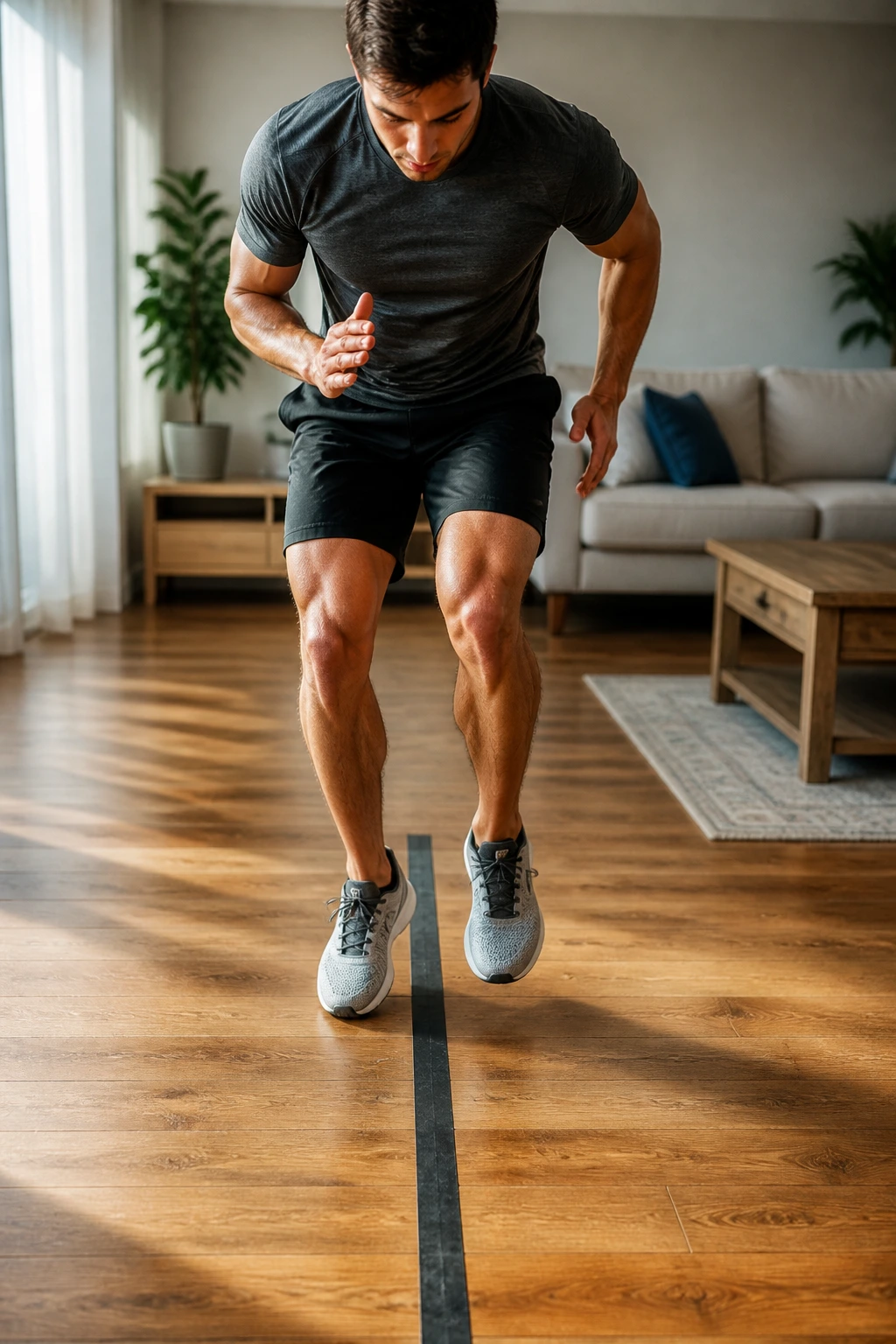
Fast feet sound simple because they are simple, and that is part of the charm. You do not need much space, only a line on the floor, a timer, and enough room to stay upright.
Set a strip of tape or imagine a line. Shuffle your feet as quickly as you can over it for 15 to 20 seconds, then rest for 20 to 30 seconds. Repeat 10 to 16 times. Your feet should feel light and quick, not loud and stompy.
This works because quick foot turnover drives cardiovascular stress without needing jumps. It also teaches the body to recover faster between efforts, which matters in almost every sport and a lot of everyday life.
Keep your knees soft and your arms bent. If your upper body starts swaying all over the place, you are going too hard. Speed is good. Wild is not.
10. Reverse Lunge and Knee-Drive Combo
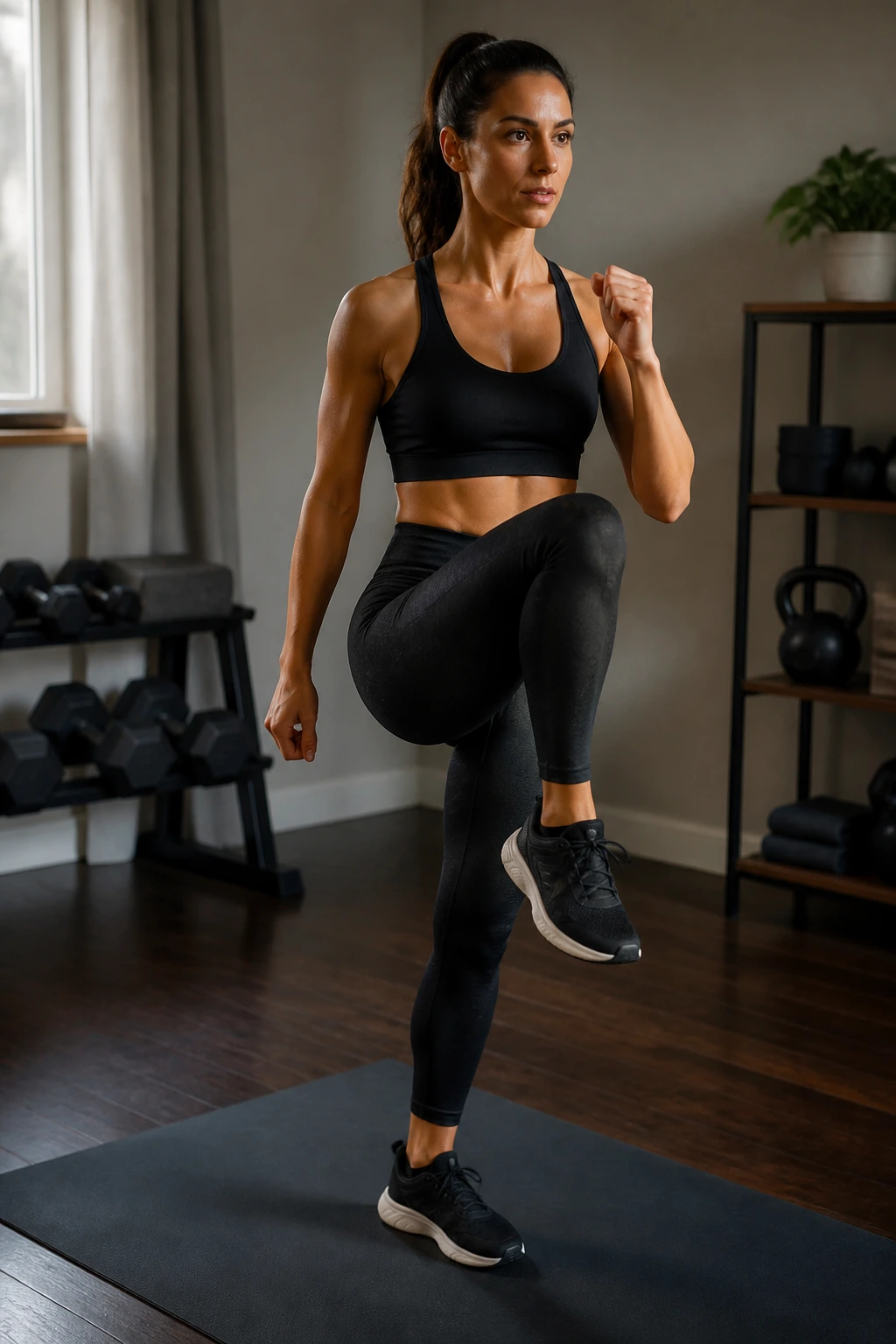
Reverse lunges are underrated for endurance because they hit one leg at a time, which forces your heart to work harder than a two-leg squat usually does. Add a knee drive at the top, and the move turns into a stable, repeatable cardio pattern.
Use 10 reps per side, then 30 seconds of marching or light jogging in place, for 3 to 5 rounds. Step back, drop straight down, push through the front heel, and drive the back knee up as you stand. That top knee drive should feel crisp, not flung.
The rhythm matters more than speed. If you rush the bottom position, your balance disappears and the workout gets messy.
A short pause at the bottom can help if your knees drift forward. But if the goal is stamina, keep the transitions smooth and keep going.
11. Dance Cardio Rounds
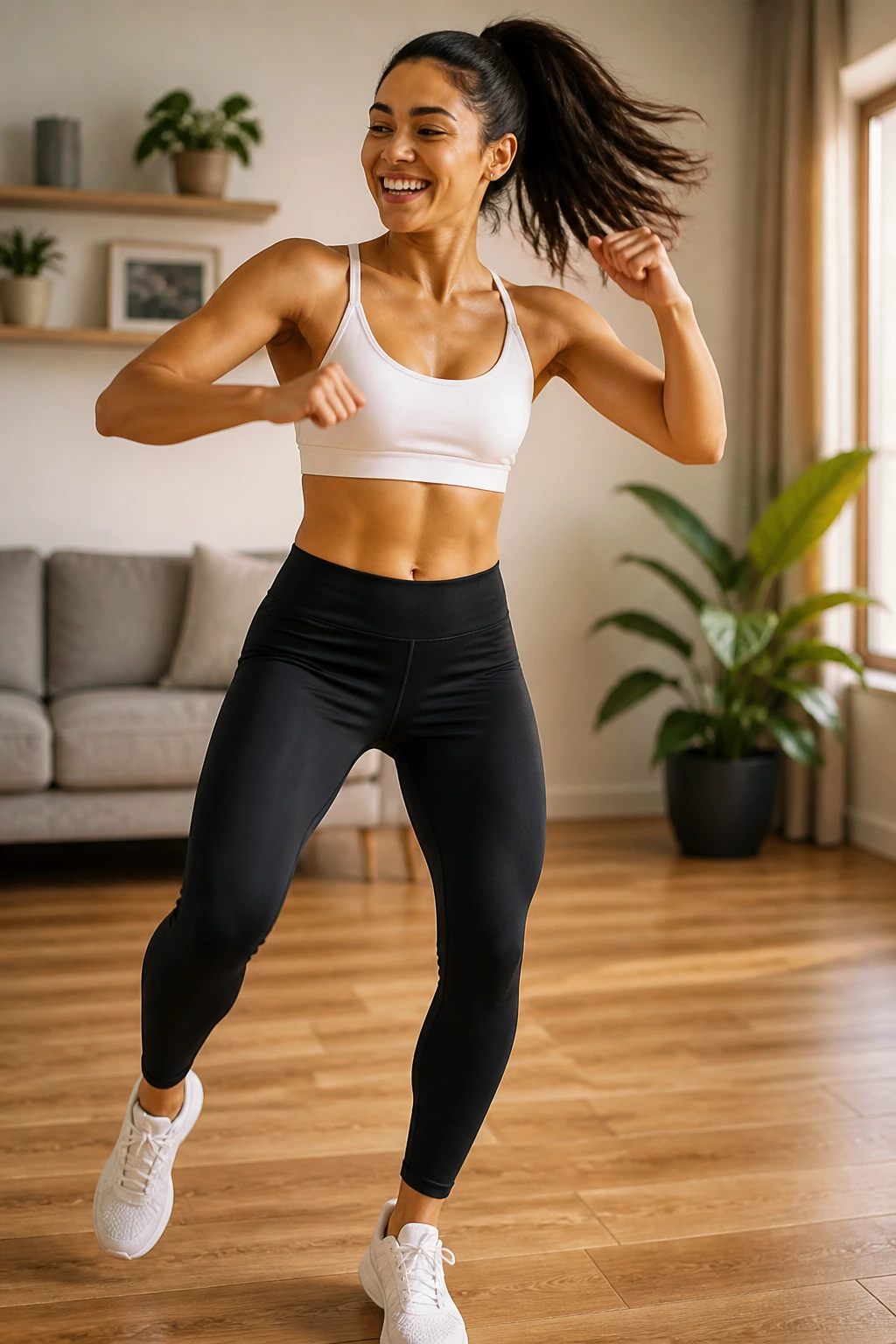
Dance cardio works because you keep moving without the mental grind that sometimes kills a normal interval session. The steps can be basic. The effort can still be real.
How to pace it
Pick 4 to 6 moves you can repeat without thinking: side steps, grapevines, knee lifts, heel digs, turns. Run them for 3-minute rounds with 30 seconds of easy walking between rounds. Five rounds is enough to make your breathing honest.
What to watch for
- Stay on the balls of your feet most of the time.
- Keep the arms active.
- Do not make the moves too big if that ruins your rhythm.
- Switch directions halfway through a round.
The best dance sessions are not about choreography. They’re about staying in motion long enough that you forget to check the clock every twelve seconds.
12. Plank Jacks
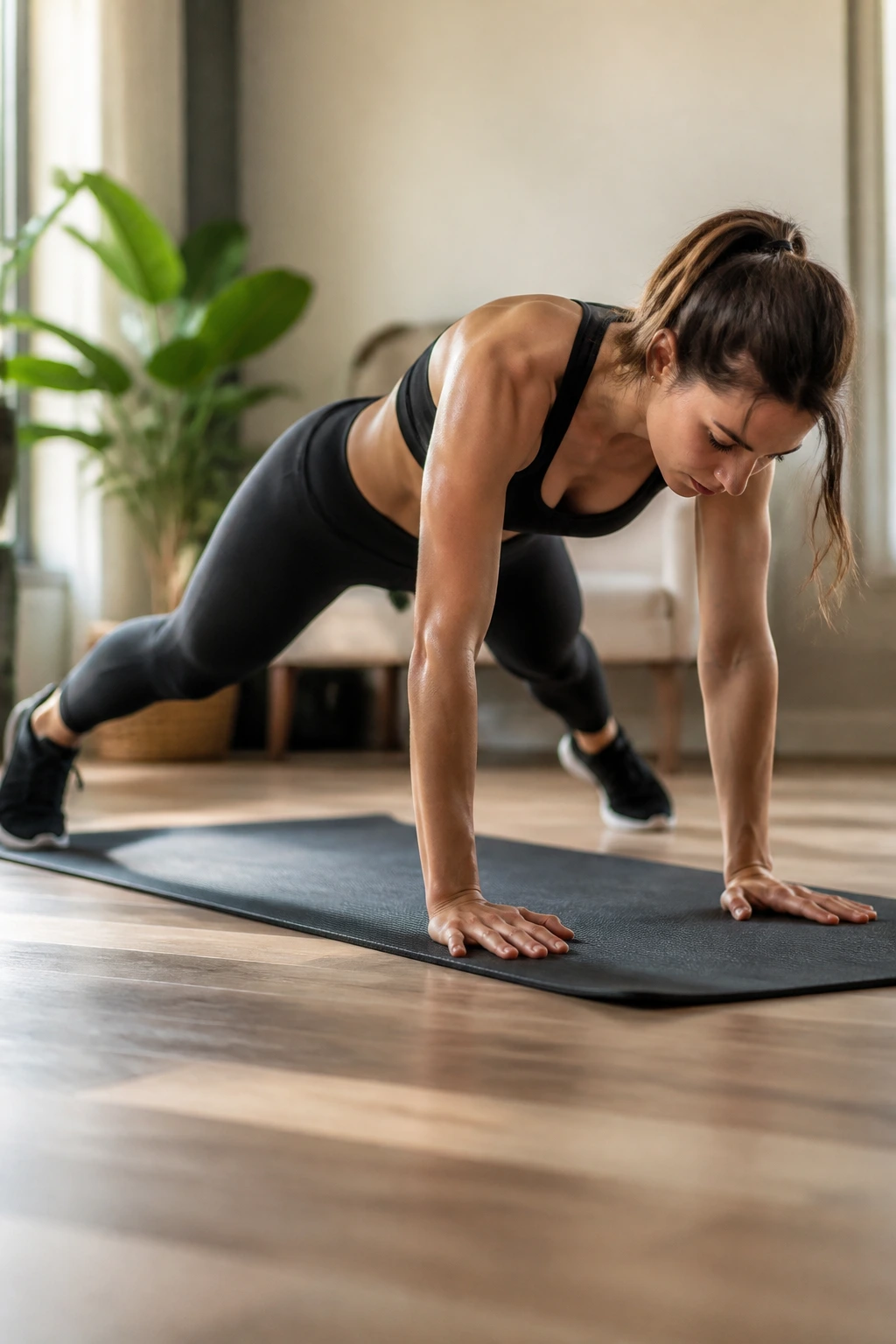
Plank jacks are meaner than regular jumping jacks because your shoulders and core are stuck in the conversation the whole time. That makes them useful when you want cardio and trunk stability at once.
Do 20 seconds of plank jacks, 20 seconds of rest, for 10 rounds. Set up in a strong forearm plank or high plank, jump the feet out and in, and keep the hips from swinging like a gate. If your lower back starts dropping, widen your feet less and slow the pace.
Compared with standing jacks, plank jacks are more demanding on the upper body. That is a feature, not a bug, but it means you should not charge through them if your shoulders are already cooked.
A cleaner version with fewer reps is better than sloppy speed. Every time.
13. Bear Crawl Shuttles
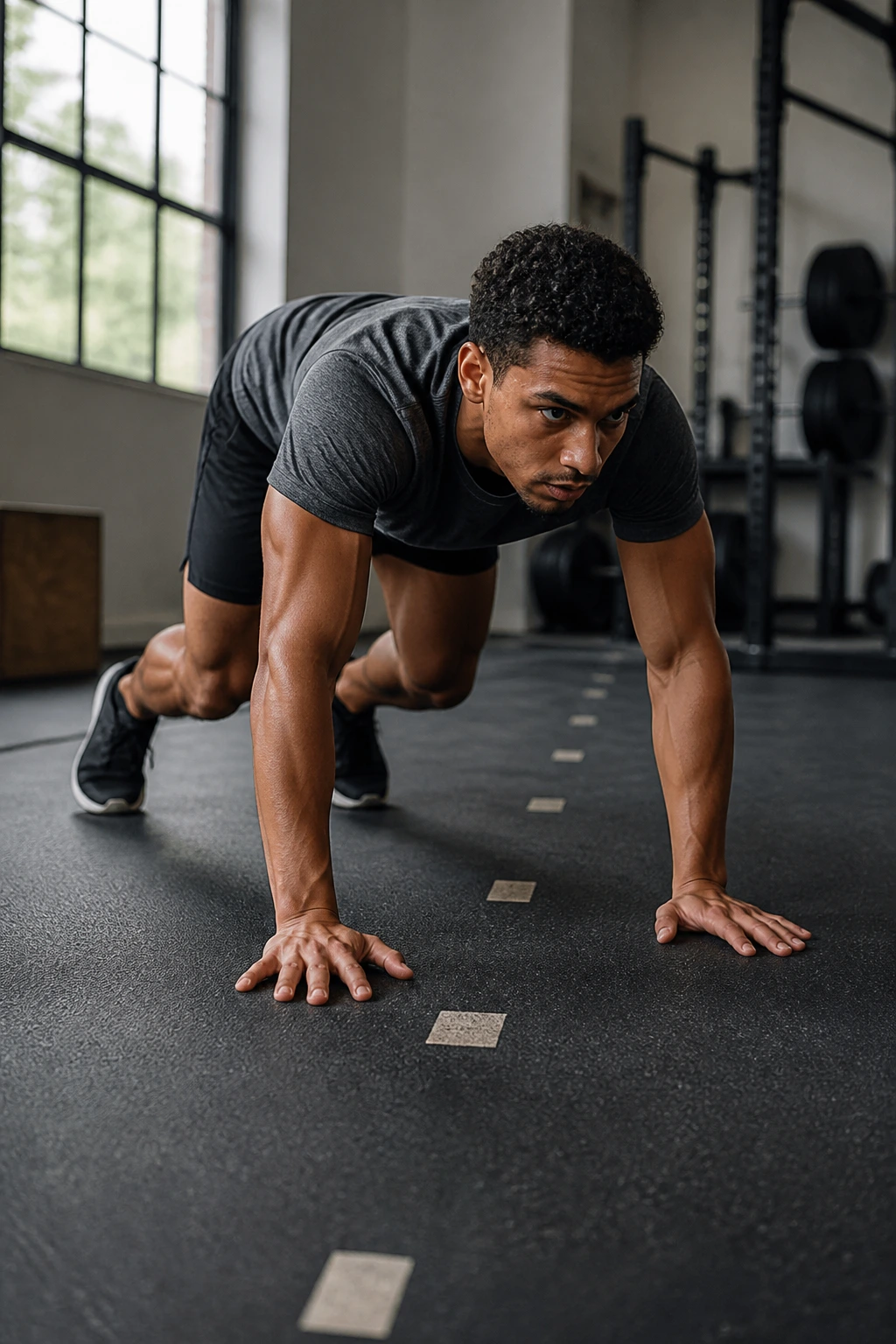
Bear crawls look a little ridiculous, which is part of why people avoid them. Shame. They are fantastic for stamina, core control, and total-body coordination.
Set two markers about 6 to 10 feet apart. Crawl to one marker and back for 30 seconds, then rest for 30 seconds. Repeat for 8 to 12 rounds. Keep the knees low, hover them a few inches off the floor, and move opposite hand and foot together.
The first few rounds feel awkward. Then the shoulders warm up, the hips start working, and the whole drill turns into a sweaty little test of patience.
- Keep your back flat.
- Use short, quick steps.
- Breathe through your nose if you can.
- Stop before the crawl turns into a collapse.
14. Squat-Thrust Ladders
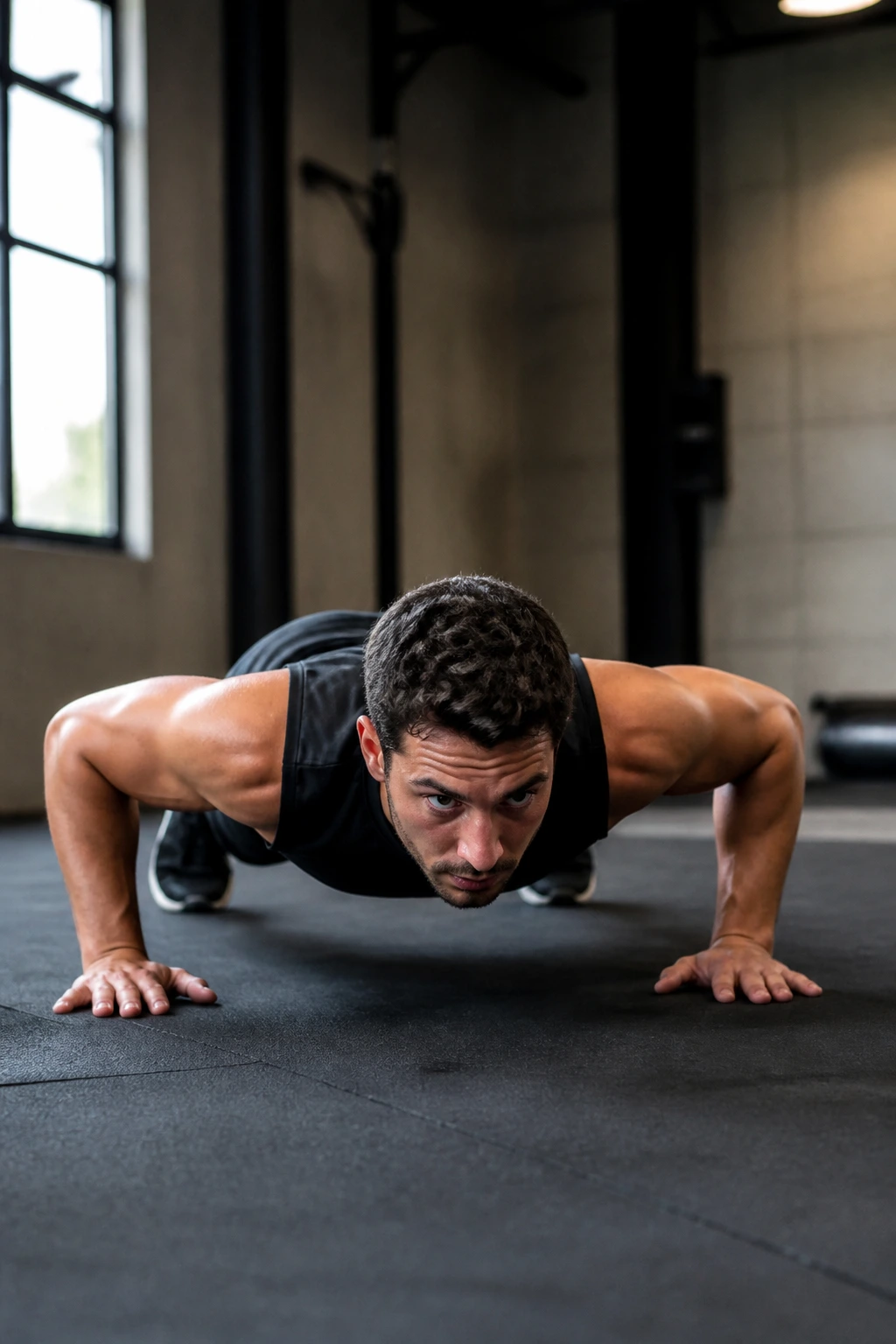
A squat-thrust is the burpee’s no-jump sibling. You squat down, place your hands on the floor, jump or step back to plank, return to squat, and stand. It is clean, direct, and very good at raising your pulse.
Run a ladder like this: 5 reps, 8 reps, 10 reps, 8 reps, 5 reps, resting 30 to 45 seconds between sets. If you want more challenge, add a small jump at the top. If you want less impact, step back instead of jumping.
The ladder format matters because it keeps you honest. The lower sets warm you up, the middle set makes you work, and the final drop gives you a chance to hold form when you’re tired.
Keep your hands planted under the shoulders and avoid crashing into the floor. Controlled speed beats frantic speed here.
15. Stair Climb Repeaters
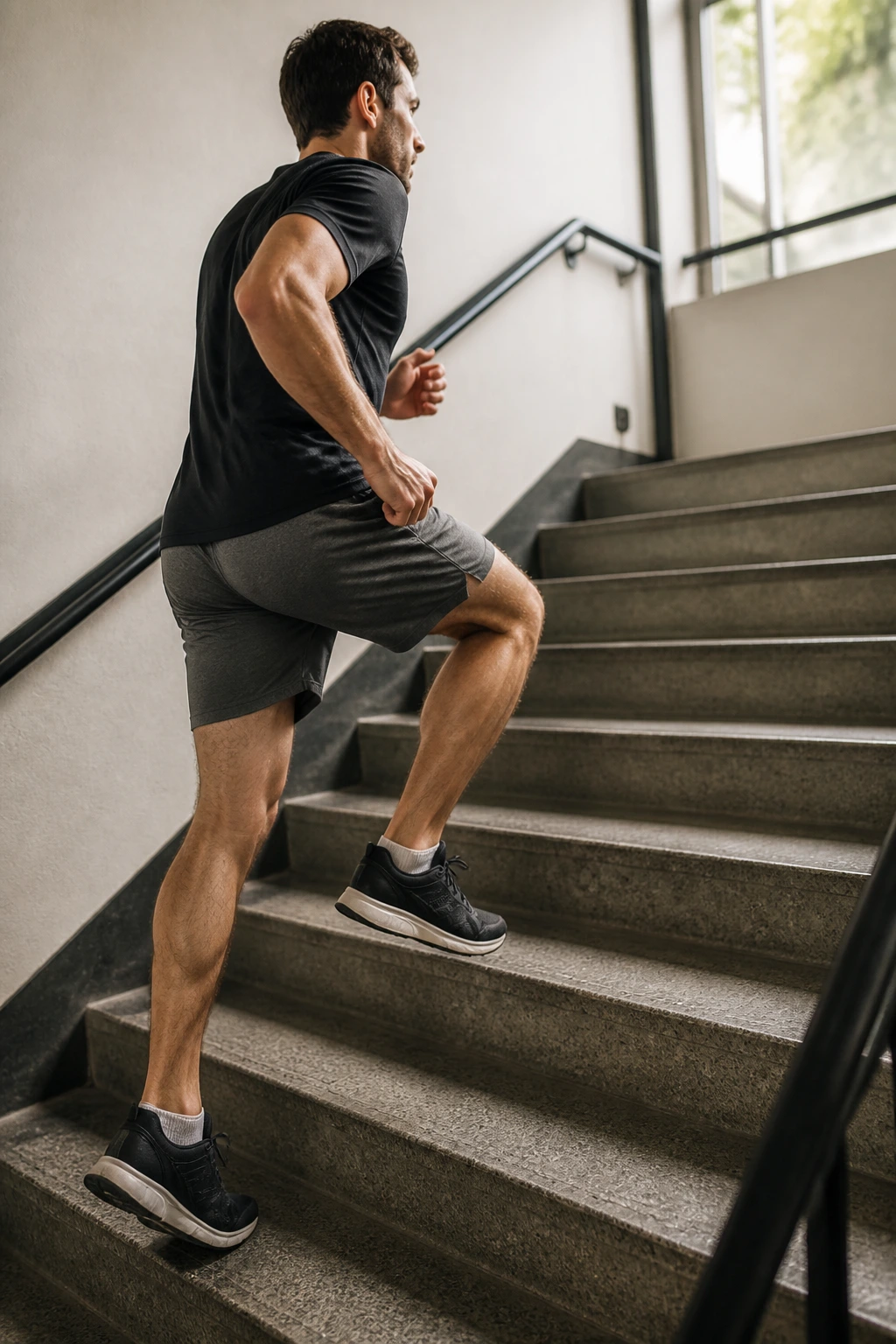
A staircase is a small mountain, and a small mountain is enough. Stair climbs push the lungs fast, especially when you keep the pace steady instead of sprinting the first two trips and dying on the landing.
How hard should it feel? Hard enough that you can speak in short phrases, not full speeches. That’s a solid zone for endurance work.
A simple structure
- Climb for 45 seconds.
- Walk down slowly for recovery.
- Repeat 8 to 10 times.
How to make it safer
Use the handrail if the stairs are steep. Keep your eyes on the next step, not your feet, and press through the whole foot rather than tiptoeing. If your calves cramp, shorten the strides and slow the push-off.
The beauty of stairs is that they punish laziness immediately. You either keep moving or you feel every step.
16. Split-Stance Punch-Outs
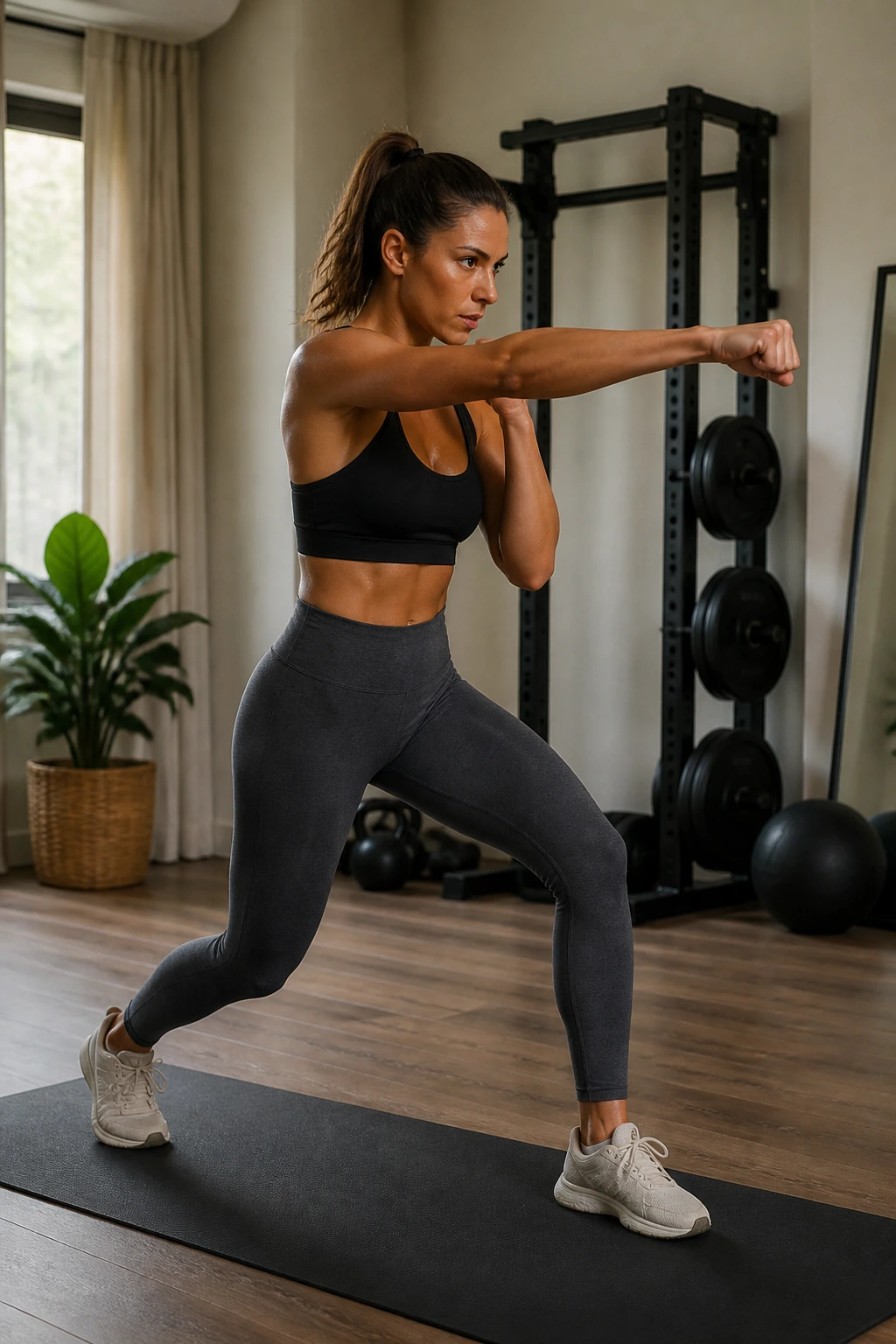
This one looks almost too easy. Stand in a split stance, one foot forward, one back, and throw quick punches straight ahead while your feet stay planted or shift lightly.
Set the timer for 30 seconds on, 15 seconds off, and do 10 to 14 rounds. Switch your stance halfway through. Your legs will start to burn before you expect them to, because they have to hold you steady while the upper body works.
The nice thing about split-stance punching is the blend of balance and cardio. It is not flashy. It just keeps your body busy.
If your front knee caves inward, widen the stance a touch. And if your shoulders tense up, soften the punches a little. Speed helps, but loose shoulders help more.
17. Crab Walk Intervals
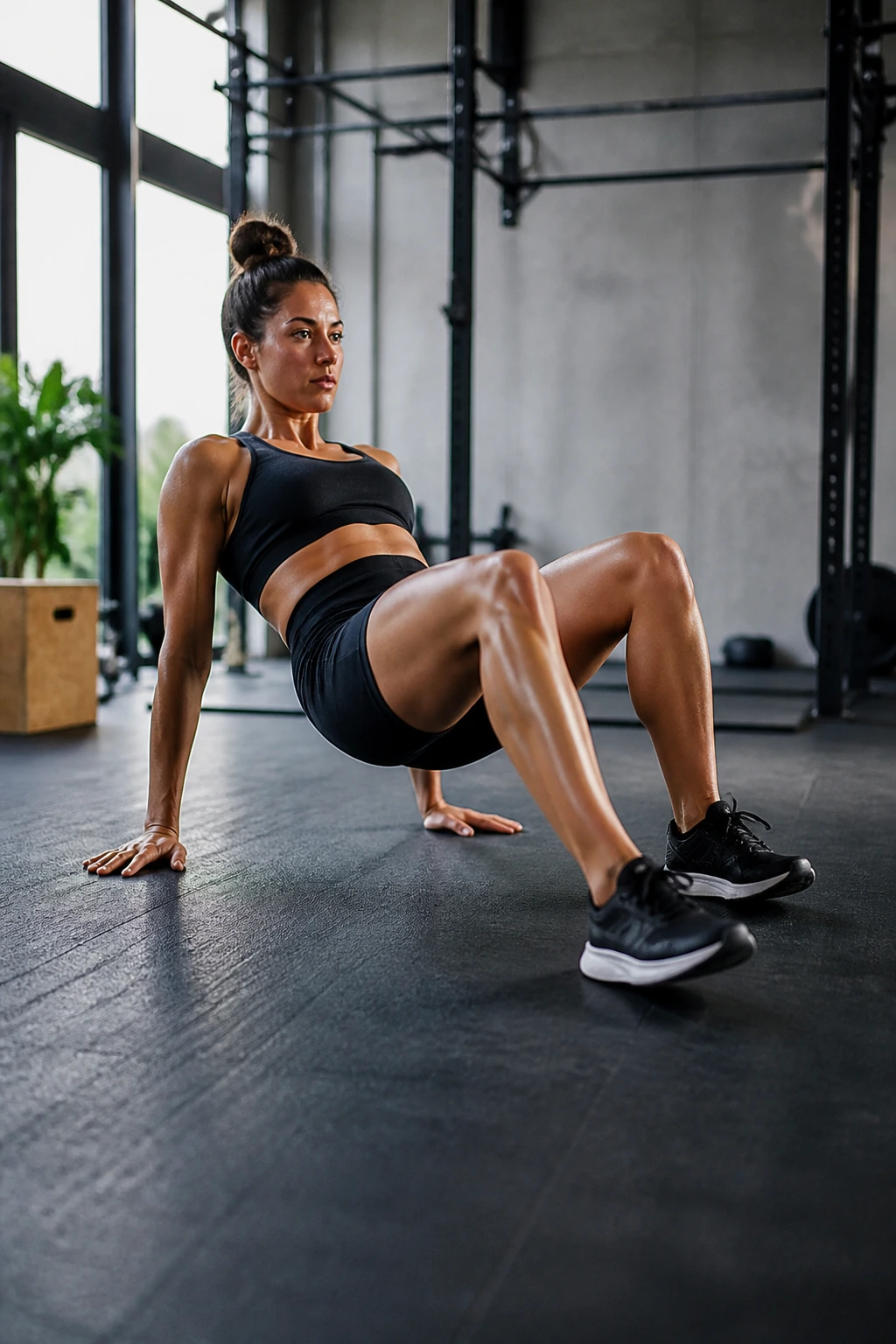
Crab walks are awkward in the best possible way. They force your glutes, shoulders, and core to work together while your heart rate climbs from the unfamiliar movement alone.
Try 20 seconds of crab walk forward, 20 seconds backward, then 20 seconds rest, for 6 to 10 rounds. Keep the hips lifted, hands under the shoulders, and fingers pointing slightly outward if your wrists prefer that angle.
A lot of people let the hips sink too low. That kills the drill. Hold the pelvis up, take small steps, and let the legs travel under control.
- Move on a non-slip surface.
- Wear shoes if your floor is slick.
- Stop if your wrists complain sharply.
- Short steps keep the rhythm cleaner.
It feels silly for about thirty seconds. Then it feels like work.
18. Wall Sit Intervals
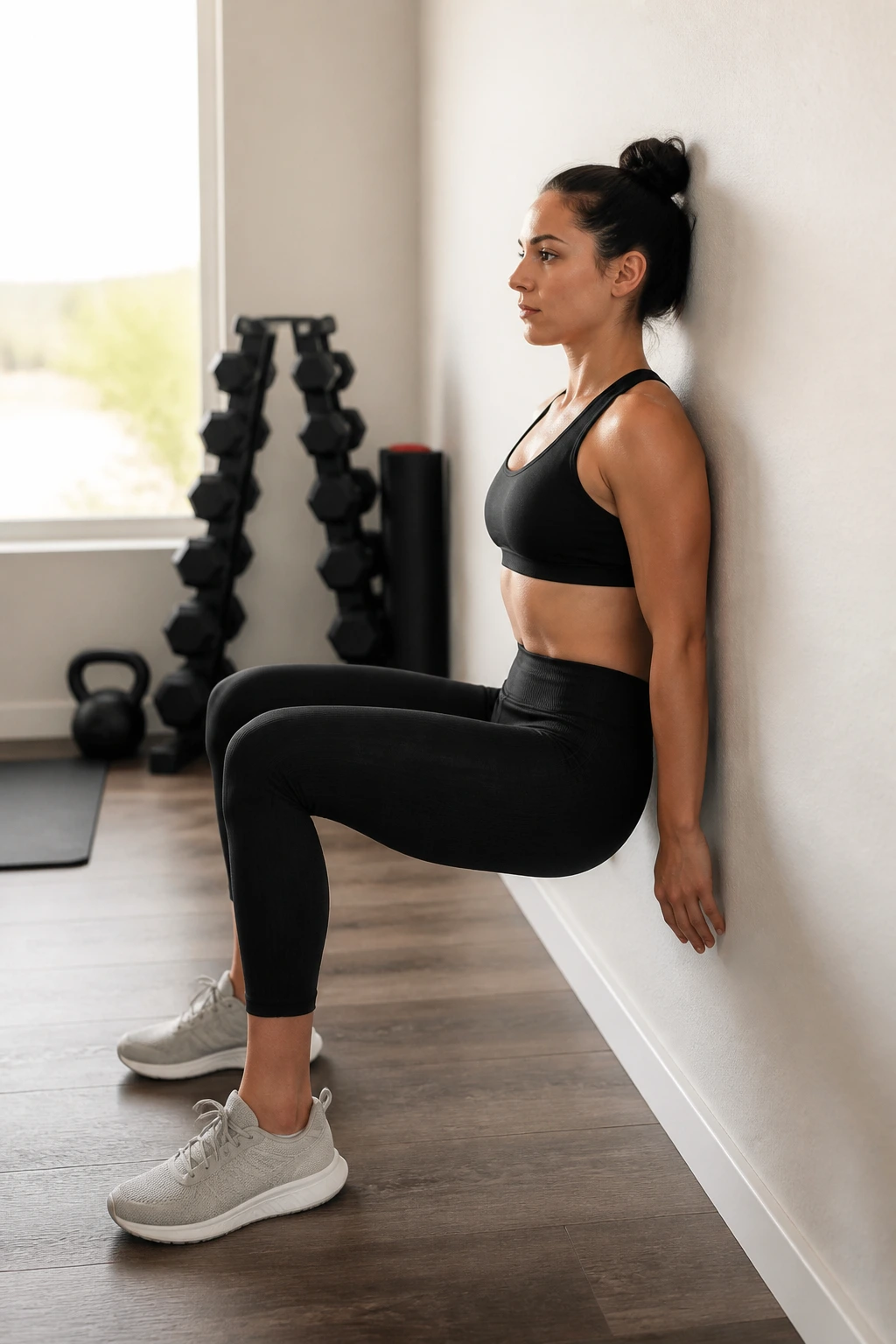
Wall sits are not flashy cardio, but they can build a stubborn kind of endurance that shows up in every leg-heavy workout after them. If your thighs shake, that is not a failure. That is the point.
Hold 30 to 60 seconds, rest for 30 seconds, and repeat for 6 to 10 rounds. Slide down until your knees are near a right angle, keep your back flat against the wall, and make sure your feet are far enough forward that your knees do not jam.
This is a good place to train discomfort without adding impact. Your breathing will rise, your legs will burn, and your upper body stays free for recovery.
If 60 seconds is too much, start with 20. Build the hold time before you chase the harder version. That approach usually lasts longer.
19. High-Knee Ladder
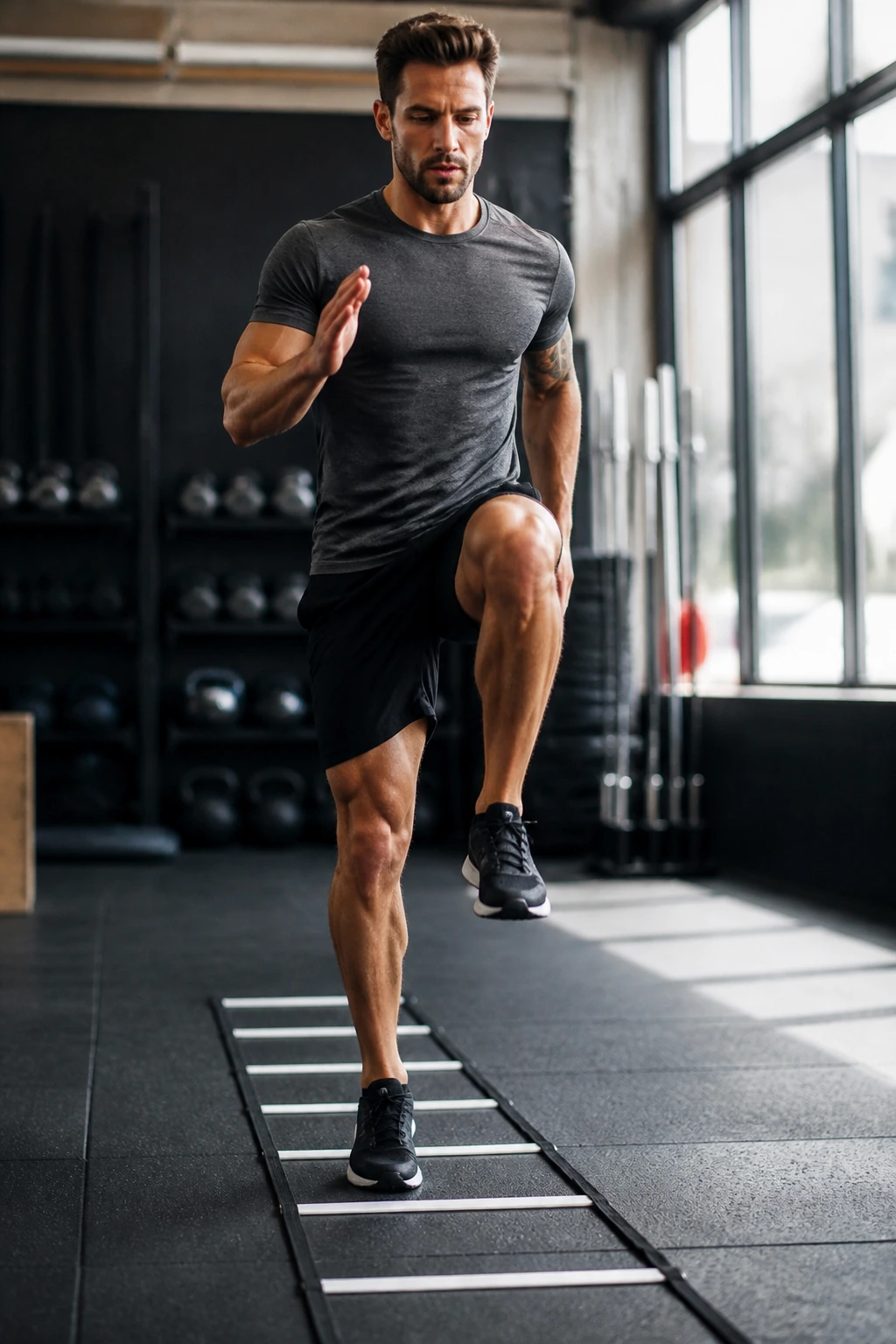
High knees are straightforward, but the ladder format gives them shape. Without that shape, people tend to sprint wildly for ten seconds and then stand there gasping.
What the ladder looks like
Do 20 seconds on, 20 off; 30 on, 20 off; 40 on, 20 off; 30 on, 20 off; 20 on, 20 off. Keep the torso tall, drive the knees up, and use the arms aggressively. Soft landings matter if you are bouncing a lot.
How to get the most from it
- Start at a pace you can repeat.
- Keep your feet under you, not way out in front.
- Stop the set when your posture breaks.
- Use a march version if impact is a problem.
The ladder keeps the effort from feeling random. It also lets you push harder in the middle without blowing up too early.
20. Frogger Step-Backs
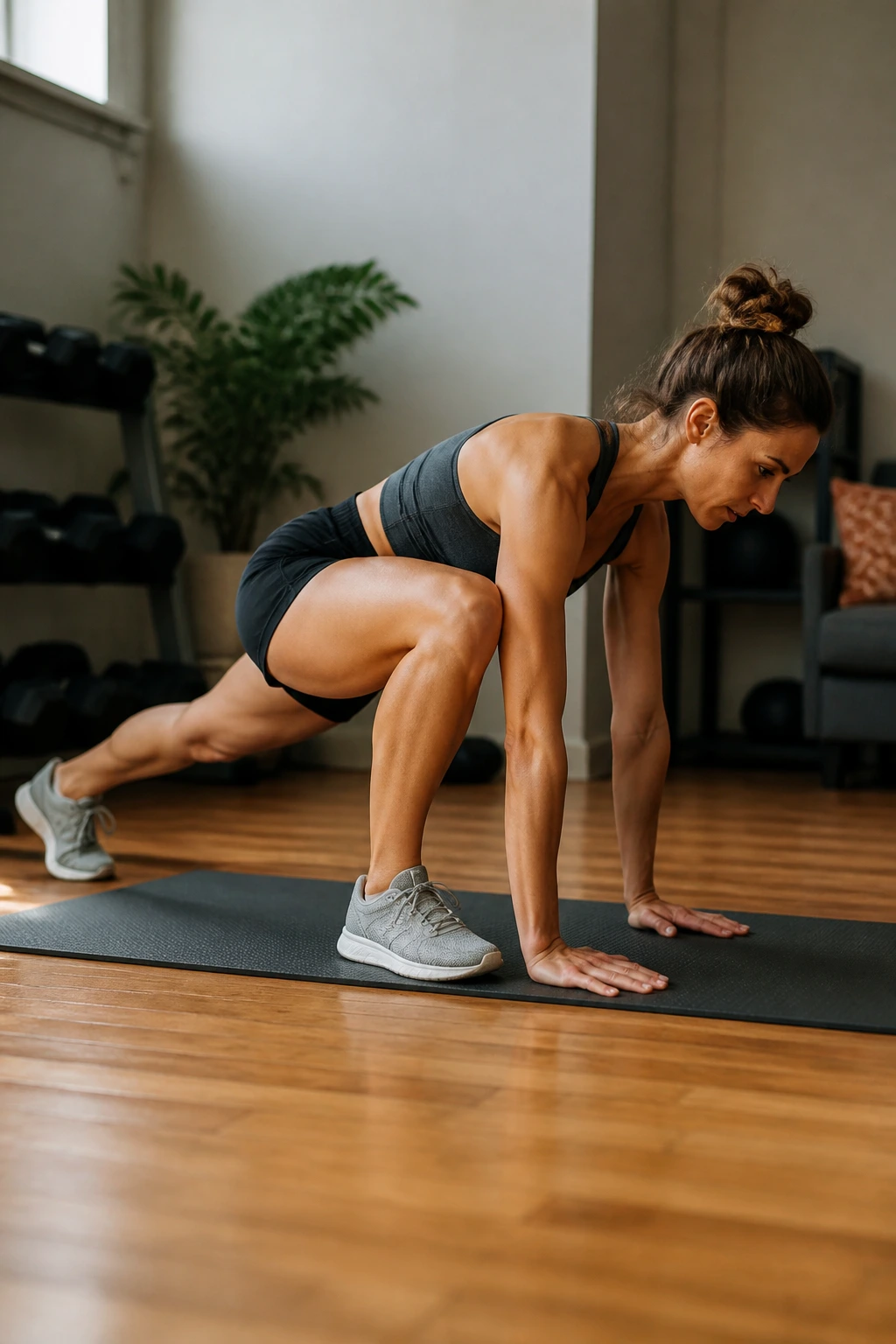
Frogger step-backs are a solid choice when you want the feeling of a burpee without the full jump. They ask for hips, legs, and lungs at the same time, which is usually enough.
From a squat, place your hands down, step one foot back, then the other, return forward, and stand. Keep it flowing for 40 seconds, rest 20 seconds, and repeat for 8 rounds. Add a small hop at the top only if your landing stays quiet.
Unlike a full burpee, this version keeps the impact down and the rhythm easier to manage. That makes it useful for longer sessions where you need to stay moving, not just survive a few brutal reps.
If your heels keep lifting early, widen your stance a little. It helps. Small fix, big difference.
21. Sit-to-Stand Pace Rounds
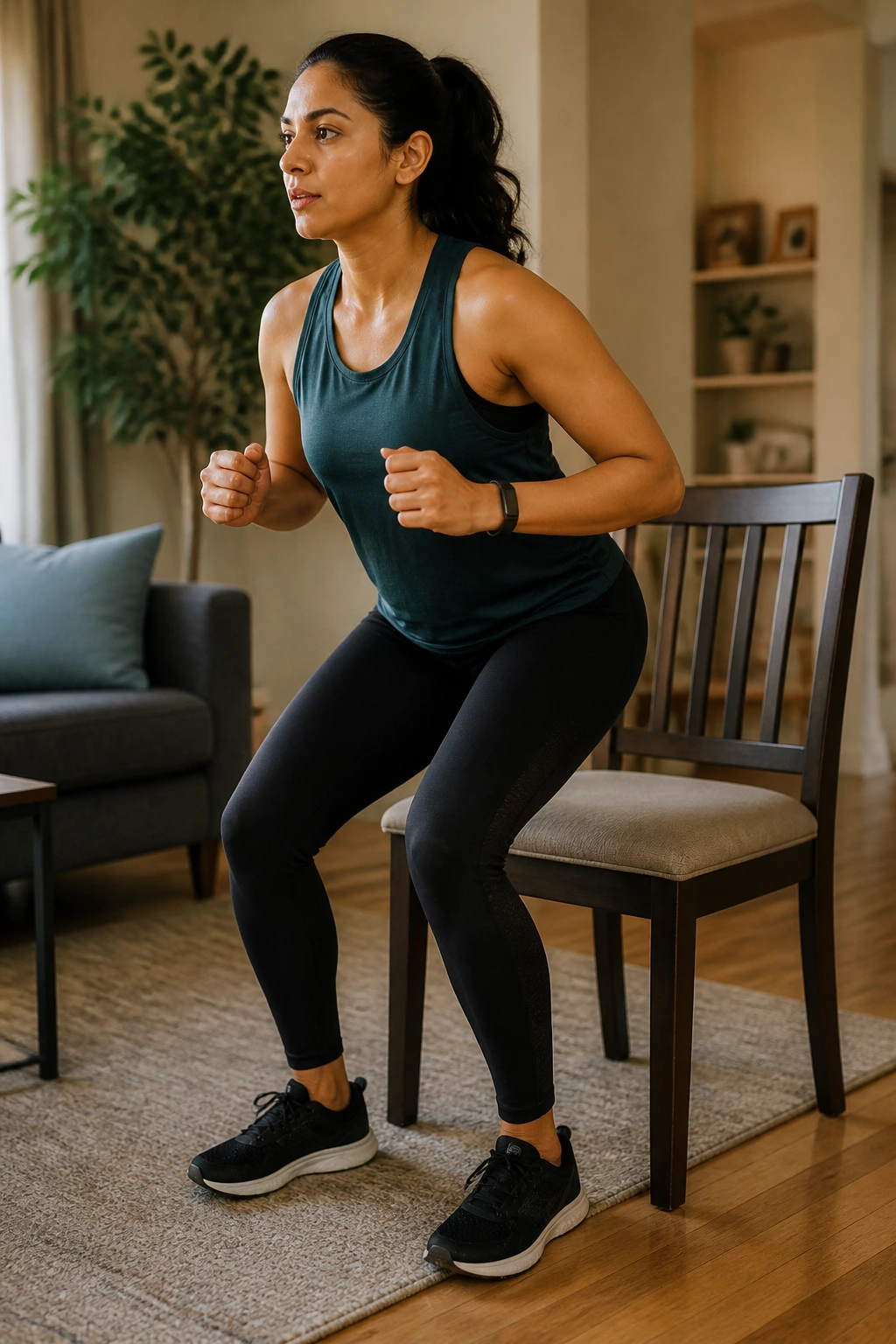
A sturdy chair is enough for a real endurance session. Sit-to-stands look plain, but when you speed them up and string them together, they turn into a serious leg and heart test.
Use 45 seconds of sit-to-stands, 15 seconds rest, for 10 rounds. Sit all the way down, stand all the way up, and keep your feet planted under your knees. If the chair is too low, pad the seat with a folded towel so the movement stays clean.
Why this one works
- The up-down pattern keeps the heart rate climbing.
- The quads and glutes have to do repeated work.
- The pace is easy to measure and easy to repeat.
- It stays low impact, which helps on crowded training days.
If standing becomes too slow by round five, that is your cue to reduce the work interval to 30 seconds and keep the quality high.
22. EMOM Endurance Workout You Can Do at Home
EMOM means every minute on the minute, and it is one of the simplest ways to build pacing. You start each minute with a set amount of work, then rest for whatever time is left. That leftover time is the whole trick.
Try 12 minutes total:
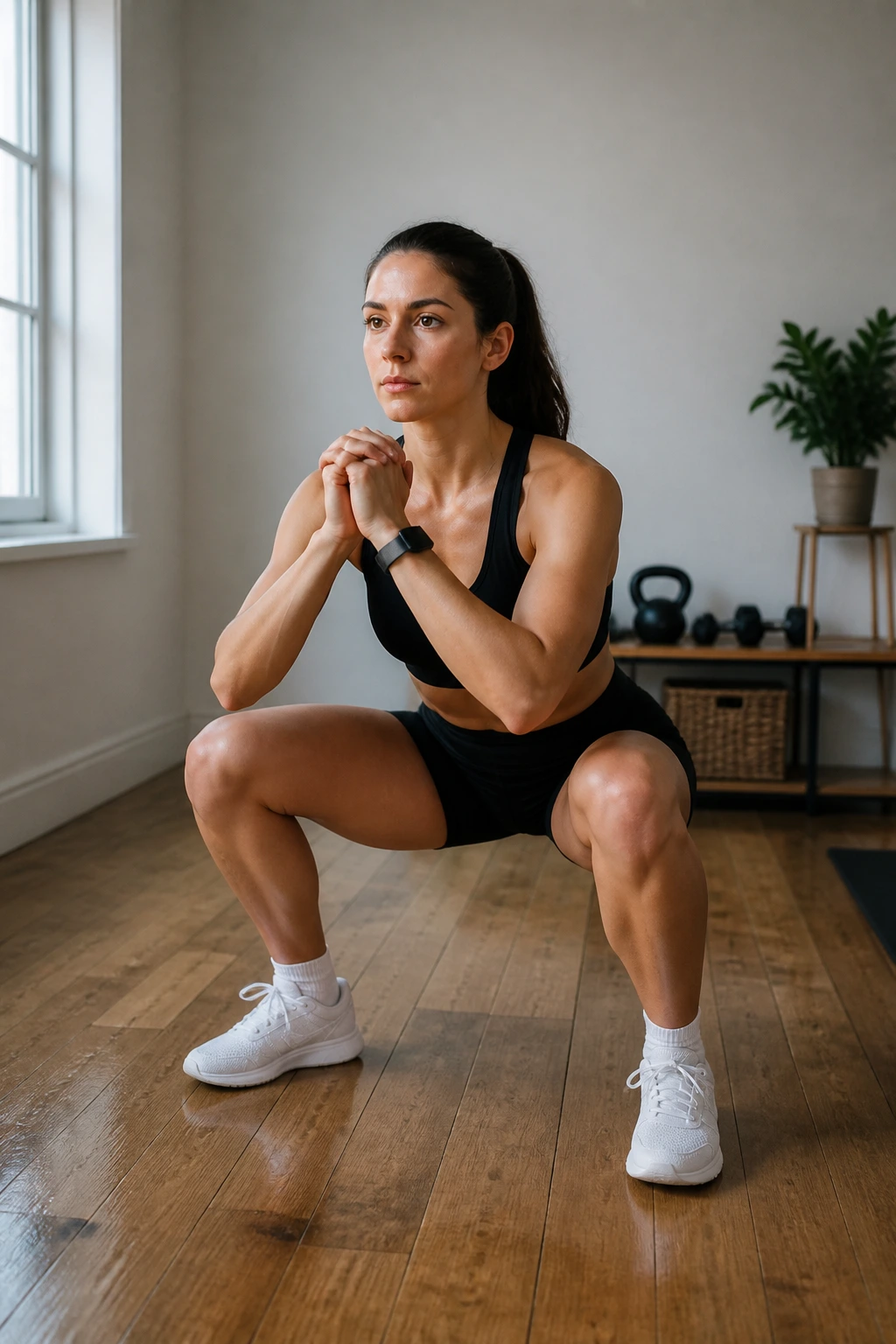
- Minute 1: 12 bodyweight squats
- Minute 2: 10 push-up walkouts
- Minute 3: 30 seconds mountain climbers
- Minute 4: 12 reverse lunges per side
- Repeat that sequence 3 times
How to keep it honest
If you finish the work in 20 seconds, you earn 40 seconds of rest. If you take 50 seconds, you picked too many reps. Adjust next round. That built-in feedback makes EMOMs useful for endurance because you learn pacing instead of guessing.
The best EMOMs leave you working, not panicking. That sounds small. It isn’t.
23. Tabata Mixed Cardio
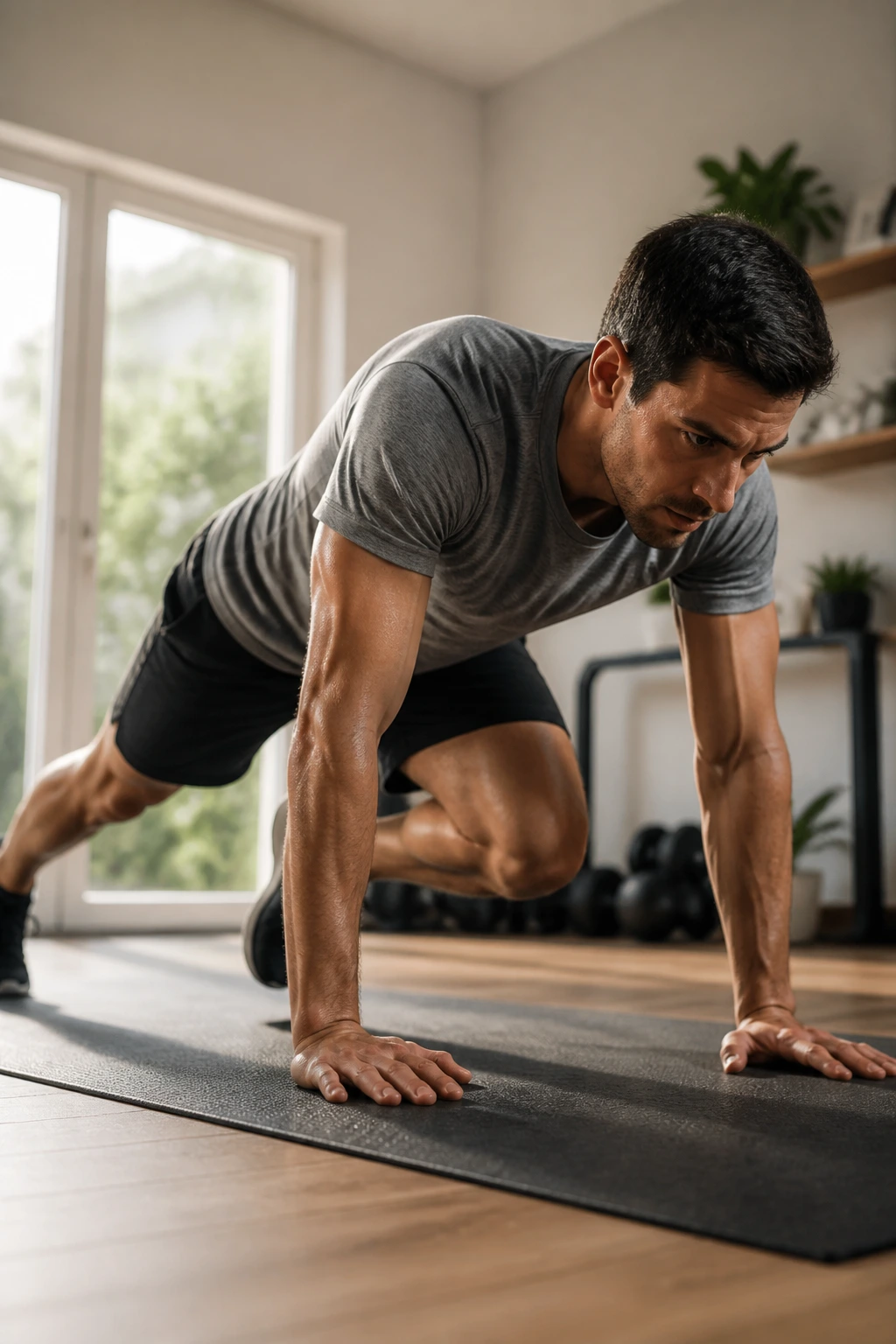
Tabata gets abused a lot, mostly because people turn it into chaos and call it training. The real version is simple: 20 seconds hard, 10 seconds rest, 8 rounds, which gives you 4 minutes per block.
Pick two movements and alternate them. Say, mountain climbers for the odd rounds and squat jumps or step squats for the even ones. You can run one Tabata block, rest 2 minutes, then run a second block with different moves.
The short rest is what makes this sting. You never fully settle. Your breathing stays elevated, and the clock starts to feel rude.
A clean Tabata should leave you tired, not wrecked. If your form falls apart before round four, the movement is too hard or the pace is too fast. Lower the impact and keep the rhythm.
24. Pyramid Intervals
Pyramid intervals are good when you get bored easily, because the numbers keep changing. That tiny shift makes the session feel less mechanical and keeps you from zoning out halfway through.
Use any cardio move you like — high knees, jacks, skaters, shadow boxing — and run 20 seconds, 30 seconds, 40 seconds, 50 seconds, then back down with 20 seconds of rest after each set. The rising work blocks force a gradual build, and the descending blocks give you something to hang onto when the effort climbs.
Compared with fixed intervals, pyramids make time feel less repetitive. That matters more than people admit. Boredom kills a lot of good home workouts.
Pick one move for the whole pyramid if you want a cleaner test. Or switch every round if you need variety to stay engaged. Both work.
25. The Long-Game Endurance Workout You Can Do at Home
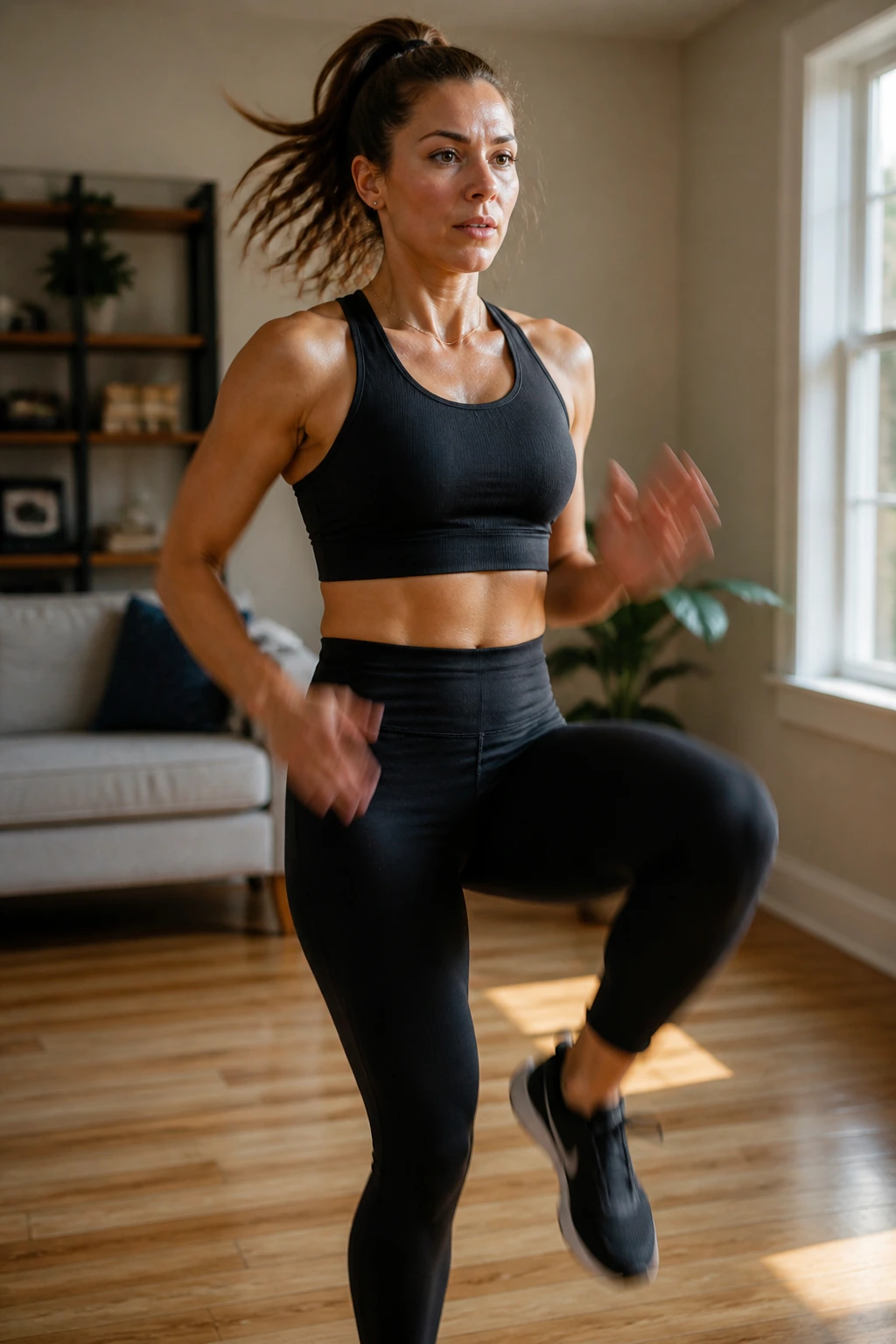
This is the one I like when the goal is not a quick sweat but a longer, steadier grind. It is a mixed circuit that lets you keep moving for a full chunk of time without relying on a single brutal exercise.
Run 4 rounds of:
- 45 seconds marching or high knees
- 45 seconds reverse lunges with knee drive
- 45 seconds shadow boxing
- 45 seconds plank jacks or step jacks
- 45 seconds stair climbs or step-ups
- 60 seconds easy walk in place
Rest 60 seconds between rounds. That mix keeps the effort changing just enough to stay fresh while the heart rate remains up. It is long enough to teach pacing, and that is the whole game with endurance.
If you finish a round and feel like you had nothing left to give, you went too hard too early. Keep a little in reserve. The best stamina work feels like you could do one more round if someone forced you, which is exactly where adaptation tends to live.
By the end, your breathing should be deep, your legs warm, and your floor space a little sweaty. Good. That means the workout did its job.
A home setup does not need much to work well. A timer, a small patch of floor, and a move you can repeat without thinking too hard are enough to build real conditioning over time. Pick two or three of these sessions, rotate them through the week, and keep the effort honest. That part matters more than fancy equipment ever will.
