



Workouts you can do at work or the office have a narrow job: wake up sleepy muscles without turning your cubicle into a gym.
That sounds small. It isn’t. A few minutes of movement can loosen hips that have been folded under a chair all morning, bring your shoulders back where they belong, and keep the post-lunch slump from turning your brain to mush.
The best office moves are usually quiet, cheap, and a little boring. Good. Boring is what gets repeated, and repetition is what changes how your body feels by the end of the day.
What follows is a practical mix of leg work, upper-body work, core drills, and cardio bursts that fit beside a desk or in a hallway. Start with one or two, then build a small rotation you can use between emails and calls.
1. Chair Squats by Your Desk
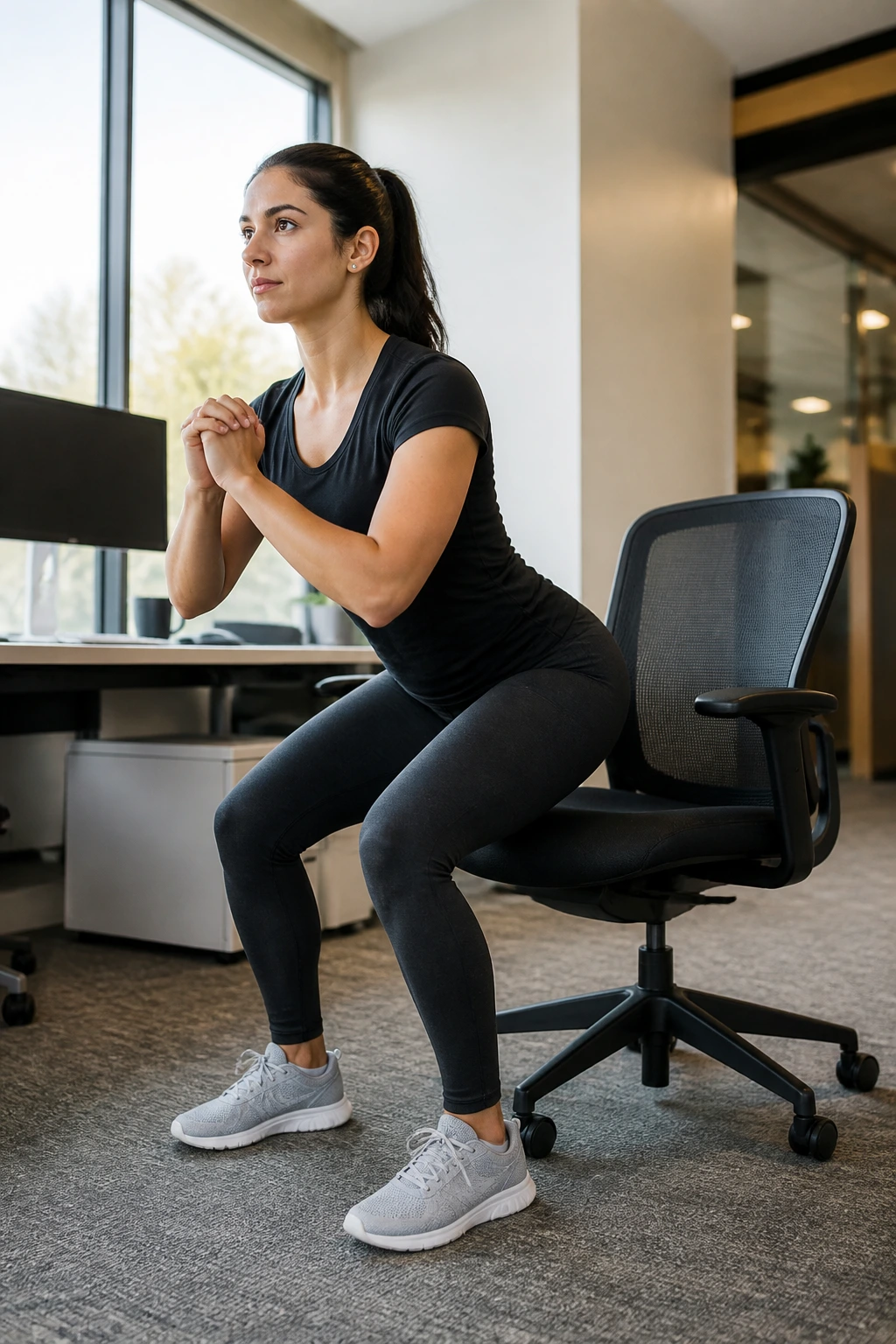
A chair gives you a target, which makes squat form a lot easier to learn than people expect. You do not need a deep athletic stance or fancy equipment; you need a sturdy chair, a bit of space, and enough control to sit back without flopping.
How to do it cleanly
- Stand with your feet about shoulder-width apart, toes slightly out.
- Reach your hips back first, then bend your knees as if you’re sitting down.
- Tap the chair lightly with your glutes, pause for half a second, and stand back up.
- Aim for 8 to 15 reps, or 2 to 4 rounds of 10 if you want a real leg burn.
Keep your weight in your heels and your chest tall. If your knees cave inward, slow down and shorten the range. That little adjustment matters more than people think.
Chair squats are my favorite office lower-body move because they’re hard to mess up and easy to repeat. A chair that does not roll is non-negotiable. Rolling office chairs are for typing, not squatting.
2. Desk Push-Ups Against a Sturdy Table
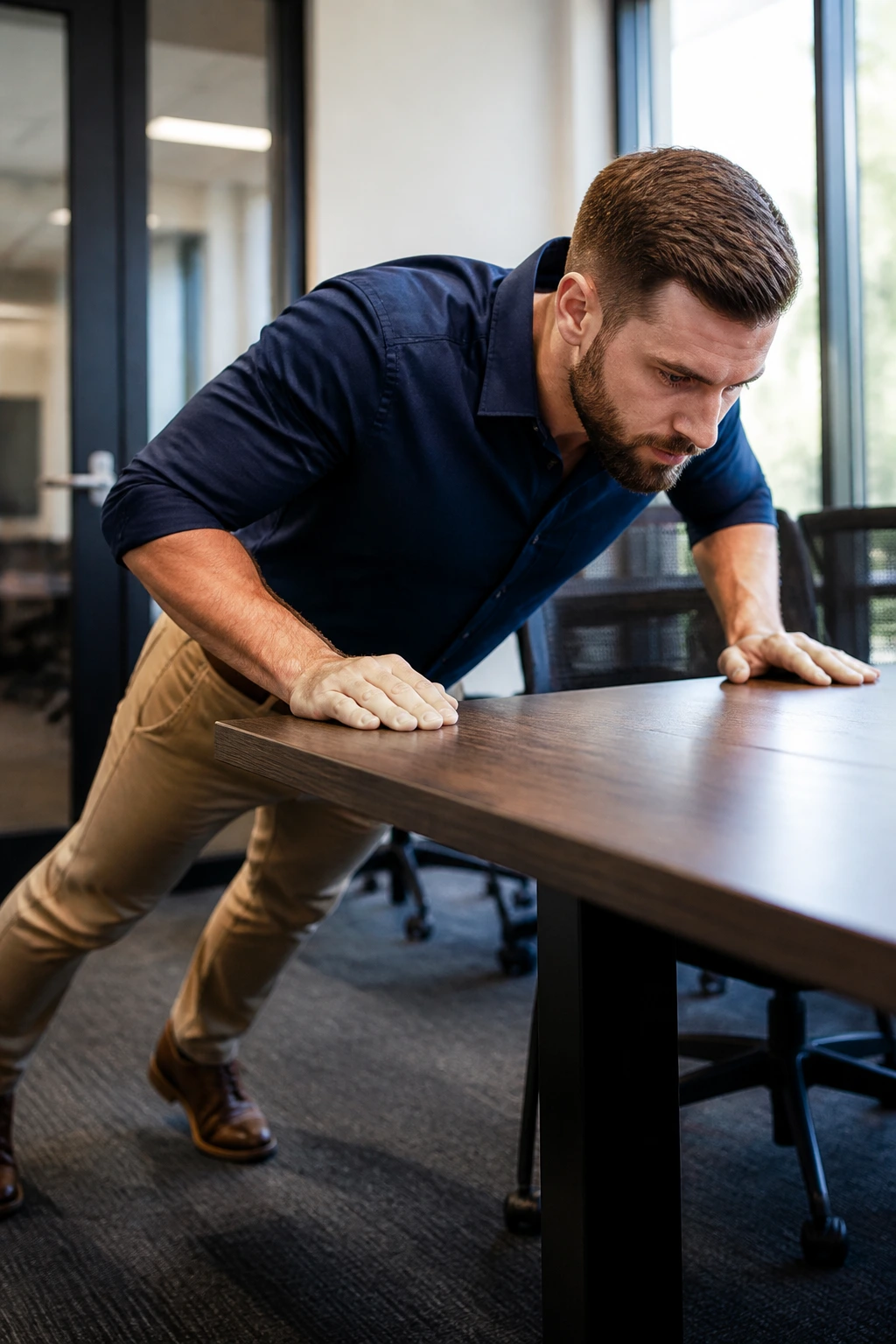
If you only do one upper-body move in an office setting, make it desk push-ups. They’re easier on the wrists than floor push-ups, they’re quiet, and they let you keep your shirt in place instead of wrestling with a mat in a conference room.
The angle changes everything. A higher desk makes the push-up easier; a lower, sturdier surface makes it harder. Start with hands a little wider than shoulder width, body in a straight line, then lower your chest toward the desk edge with control.
Do 6 to 12 reps for a strength-focused set, or work for 30 seconds if you’re pairing them with another movement. Keep the desk surface dry and stable. If it wobbles when you lean on it, skip it.
A lot of people rush the descent and then wonder why their shoulders complain. Slow down the lowering phase. That’s where the work happens.
3. Wall Sits in the Hallway
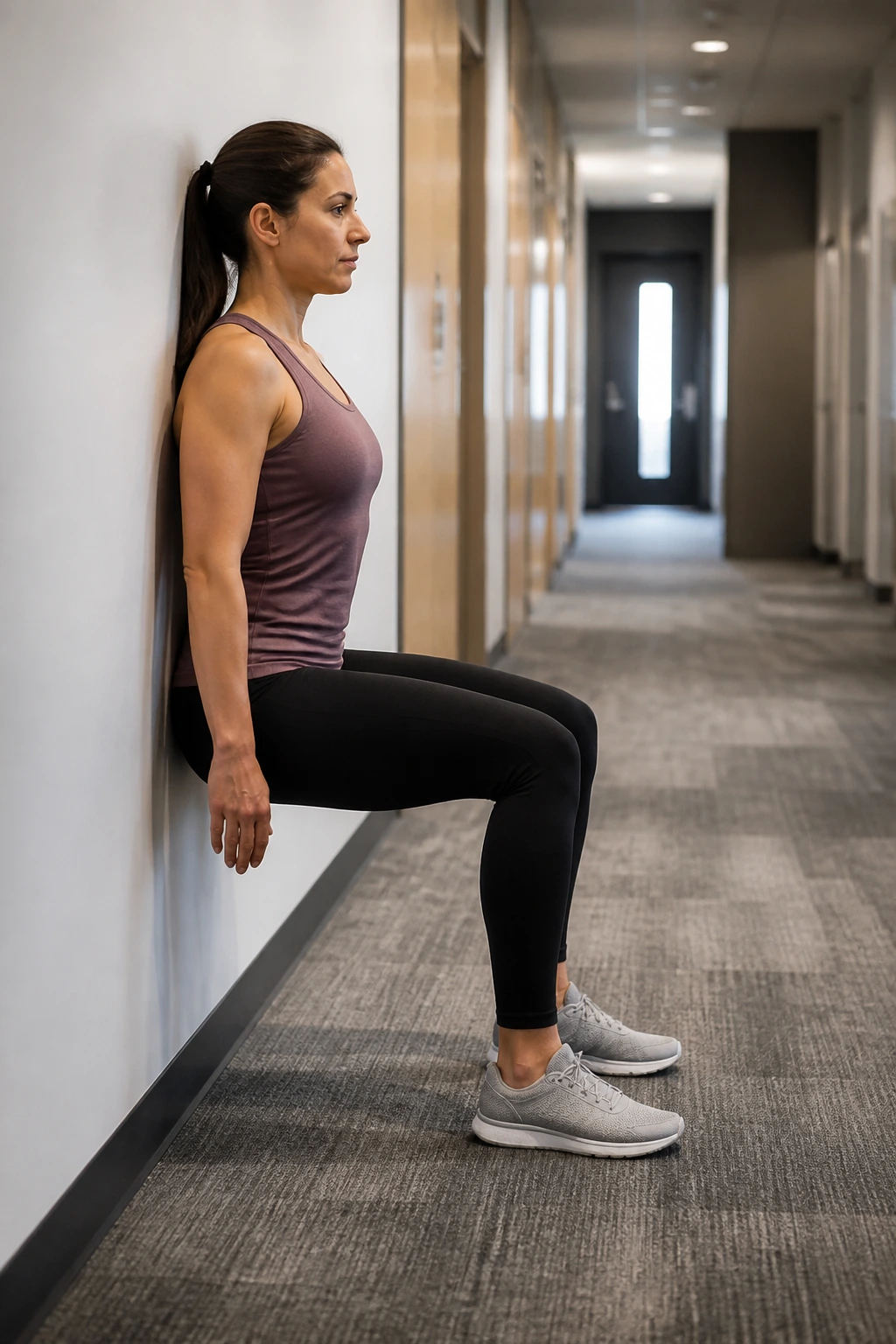
A wall sit is what you do when you want your quads to wake up and you do not have room for much else. One blank wall, one awkward minute, and your legs start complaining in a very honest way.
Slide down until your knees are roughly at a right angle, feet about 18 to 24 inches from the wall, back flat. If 90 degrees feels too aggressive, sit a little higher. You still get the benefit.
Quick form checkpoints
- Knees should stay over ankles, not drift far forward.
- Keep your lower back pressed into the wall.
- Hold for 20 to 60 seconds.
- Breathe. People hold their breath on these all the time.
Boring? Sure. Effective? Also yes. Wall sits are one of the easiest office workouts to hide between calls, and they train the exact muscles that tend to switch off during long sitting stretches.
4. Calf Raises Beside the Copier
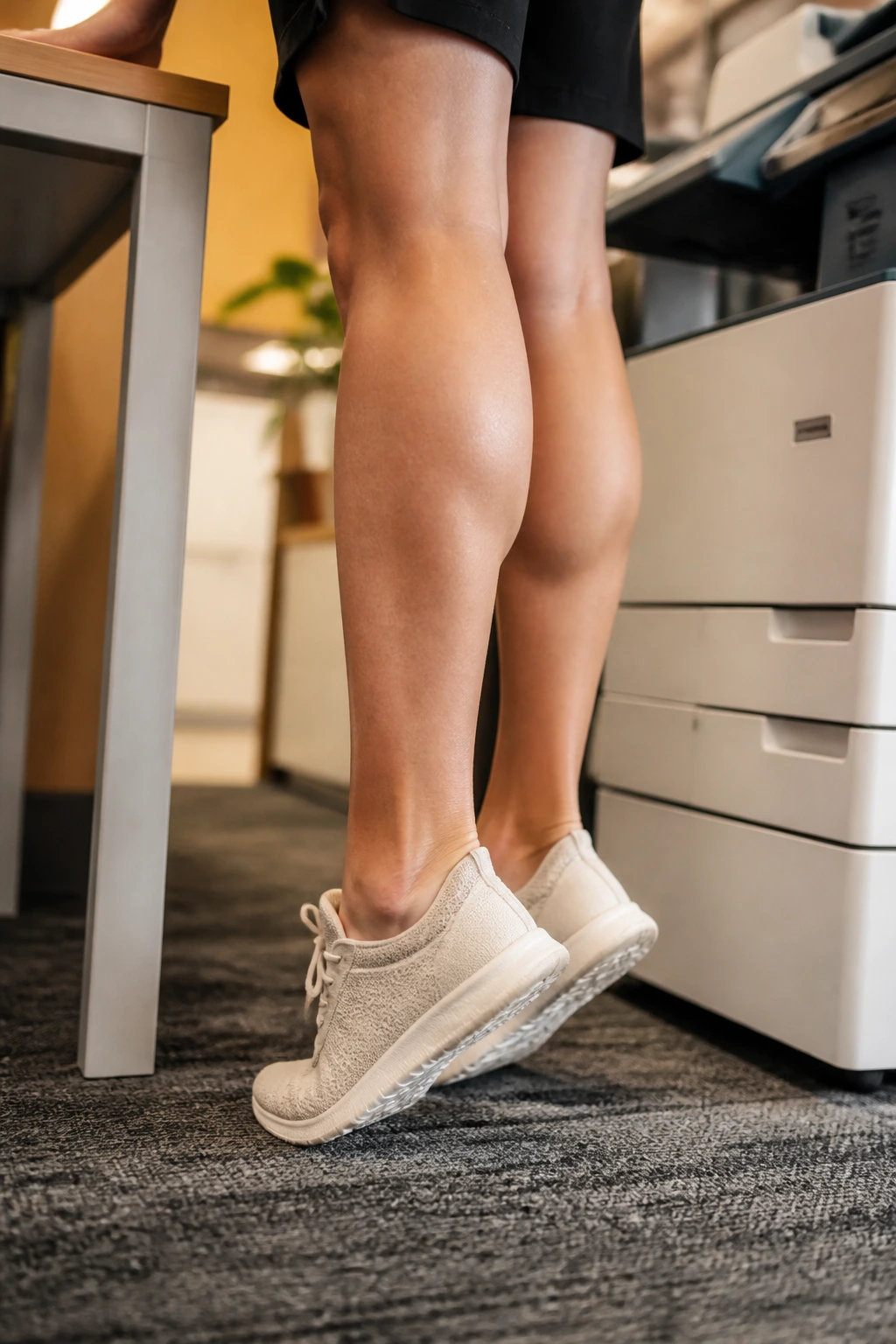
Calf raises look tiny, which is exactly why people underestimate them. A controlled set can wake up your lower legs, help with circulation, and give your ankles a break after hours of being stuck in one position.
Stand tall, hold the edge of a desk lightly if you need balance, and rise onto the balls of your feet. Pause at the top for one full second, then lower slowly for two counts. That slow lowering matters. It’s where the calves do more work than they expect.
You can do 15 to 25 reps at a time without drawing attention. If that gets easy, try one leg at a time or hold a water bottle in one hand for a little extra load.
Tiny move. Useful payoff.
I like this one for the middle of a long work block because it doesn’t spike your heart rate or make your clothes cling. It just restores some life to the lower half of your body, which is a fair trade for 90 seconds.
5. Seated Leg Extensions Under the Desk
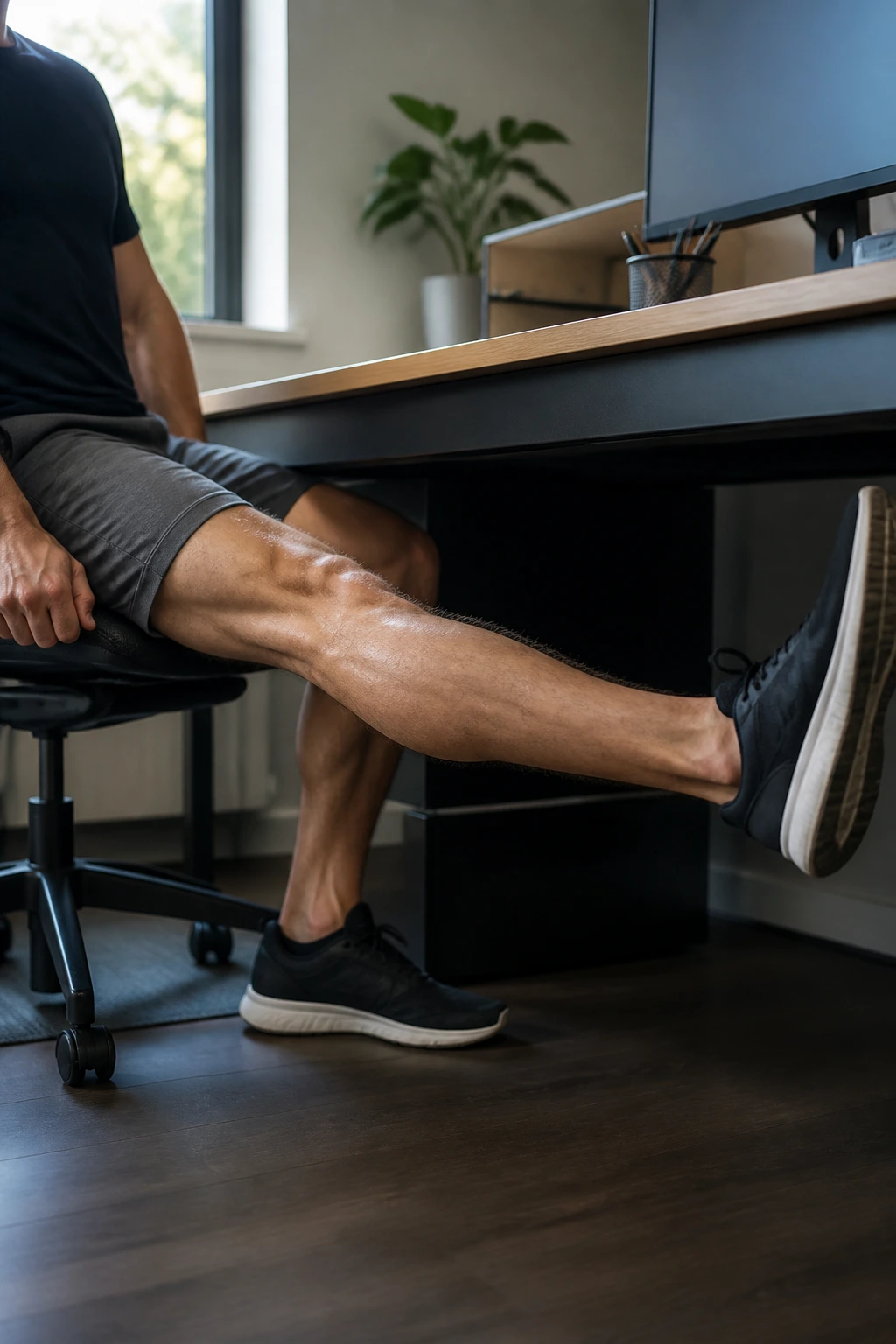
Can you train your legs while staying seated? Yes, and that’s why this move is so useful in a tight office. Seated leg extensions are discreet, they don’t need much space, and they can be done while waiting for a file to load or a meeting to start.
Sit tall near the edge of your chair, brace your core, and extend one leg until the knee is straight. Flex your quad at the top, hold for a beat, then lower with control. Switch sides or alternate legs if that feels smoother.
How to use it between emails
- Do 10 to 15 reps per leg.
- Keep your thigh still; only the lower leg moves.
- Don’t kick hard. Smooth reps work better.
- If your chair is too low, sit on a folded jacket or a cushion so your knees have room.
This one is not glamorous. It does, however, help wake up quads that have been asleep all morning, and it fits in places where most exercises do not. If your desk space is narrow, this is one of the easiest wins.
6. Glute Squeezes and Holds on Your Chair
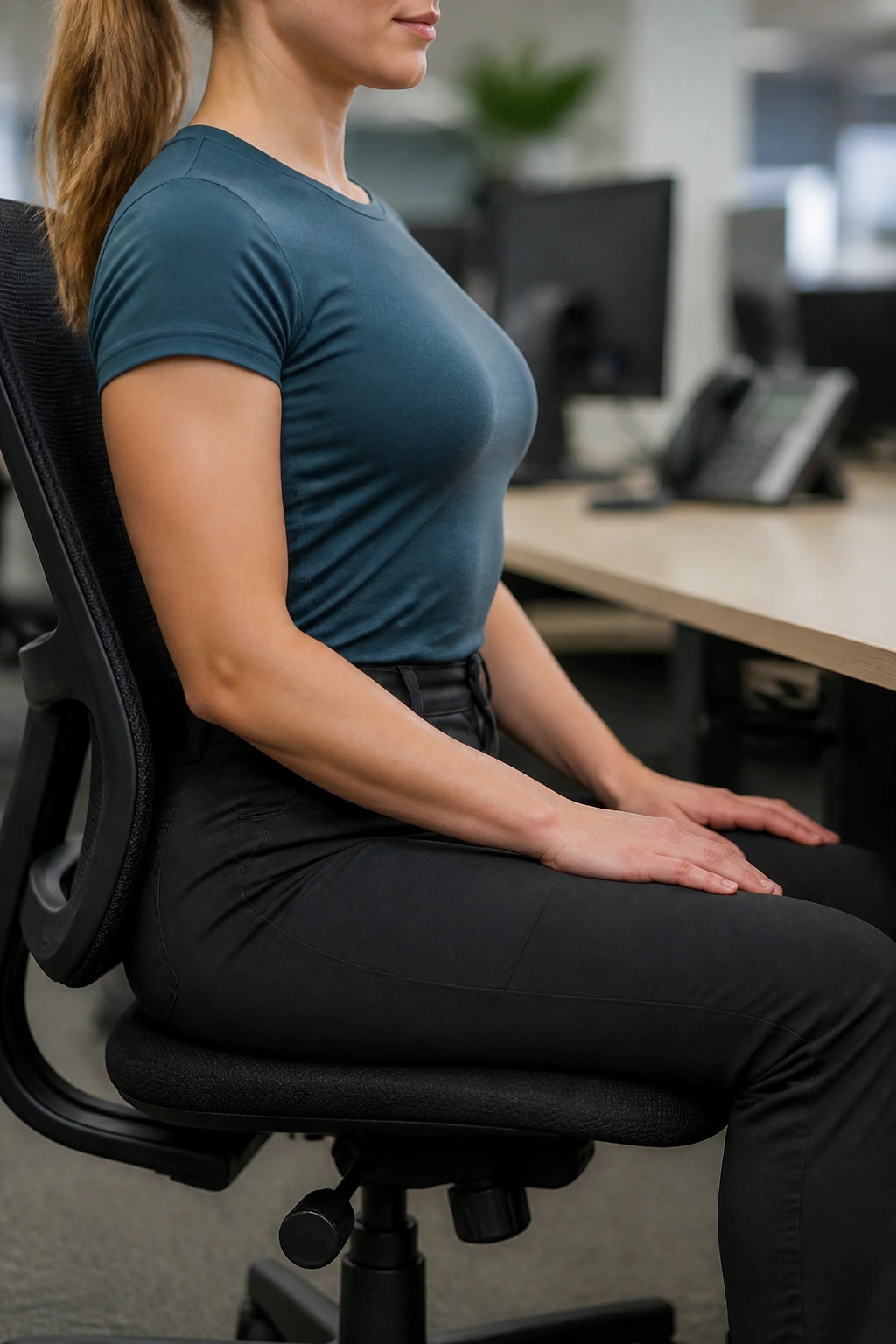
Glute squeezes are the most underrated office move on the list. No one sees them, they do not need any gear, and they help fight the dead-weight feeling that creeps into your back and hips after too much sitting.
Sit up tall and tighten your glutes as hard as you can for 5 seconds, then release for 5 seconds. Ten rounds is a fine starting point. If that feels too easy, hold each squeeze for 10 seconds and keep the rhythm slow.
The trick is not to arch your lower back. That turns the drill into a sloppy back squeeze, which is not the point. Keep your ribs stacked over your hips and think about bringing the backs of your legs online.
I use this one during long stretches of desk work because it’s almost invisible. You can do it while reading a document, on a phone call, or while waiting for a meeting to start. That’s the whole appeal.
7. Standing Desk Marches
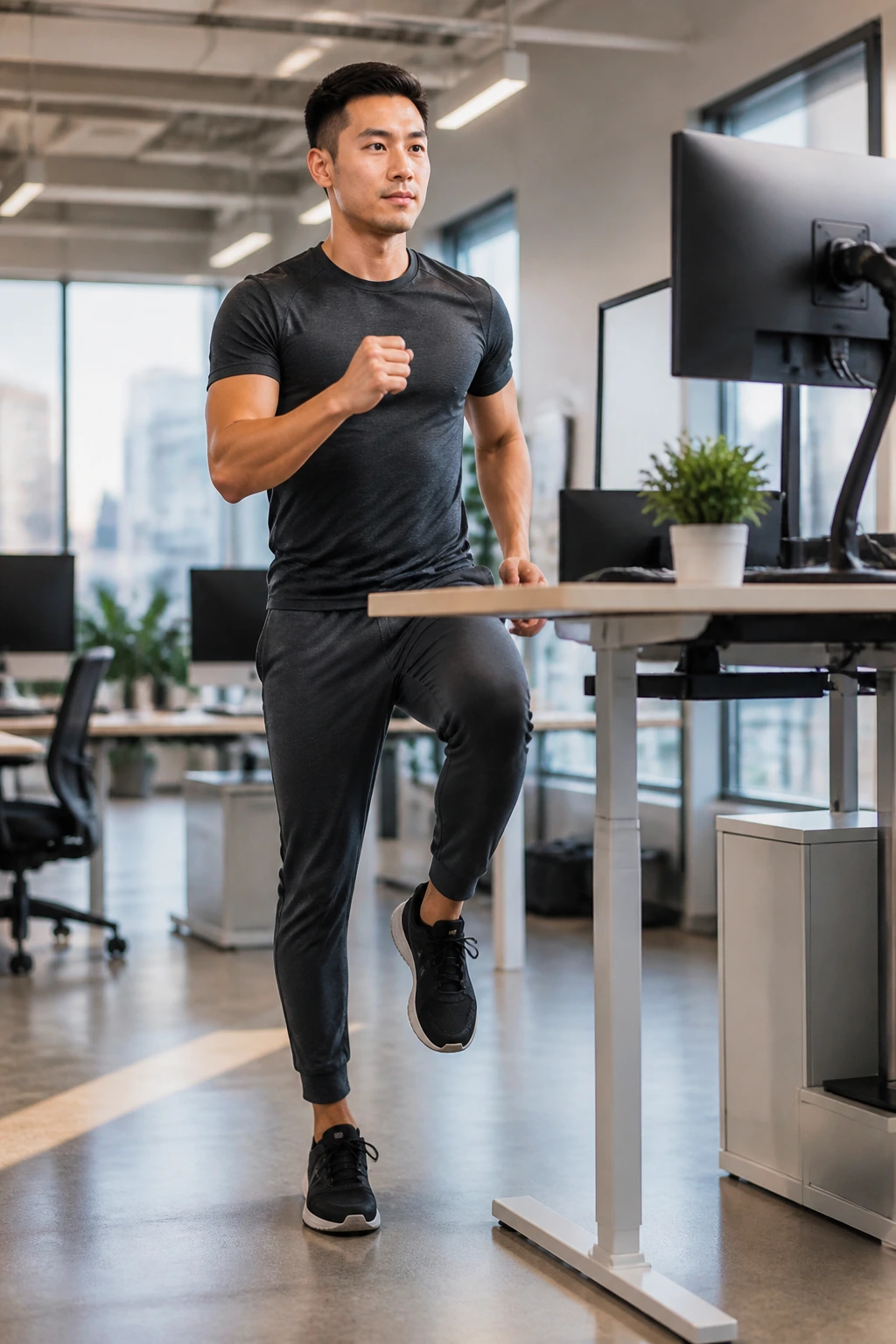
No floor space? Fine. March in place and make it count.
Standing desk marches are a simple way to raise your heart rate without jumping, thumping the floor, or making your neighbors look up from their screens. Lift one knee at a time to a comfortable height, swing the opposite arm, and keep the pace steady for 30 to 60 seconds.
What makes them work
- They use large muscle groups, so your body warms up fast.
- They can be done in shoes, work clothes, or both.
- They’re quiet enough for an open office.
- They’re easy to pair with desk push-ups or squats.
Stay light on your feet. Don’t slam the floor. If you want more intensity, drive the knees a little higher and move your arms with purpose.
This is one of those office cardio drills that looks almost silly until your pulse starts climbing. Then it stops being silly and starts being useful.
8. Stair Climb Intervals
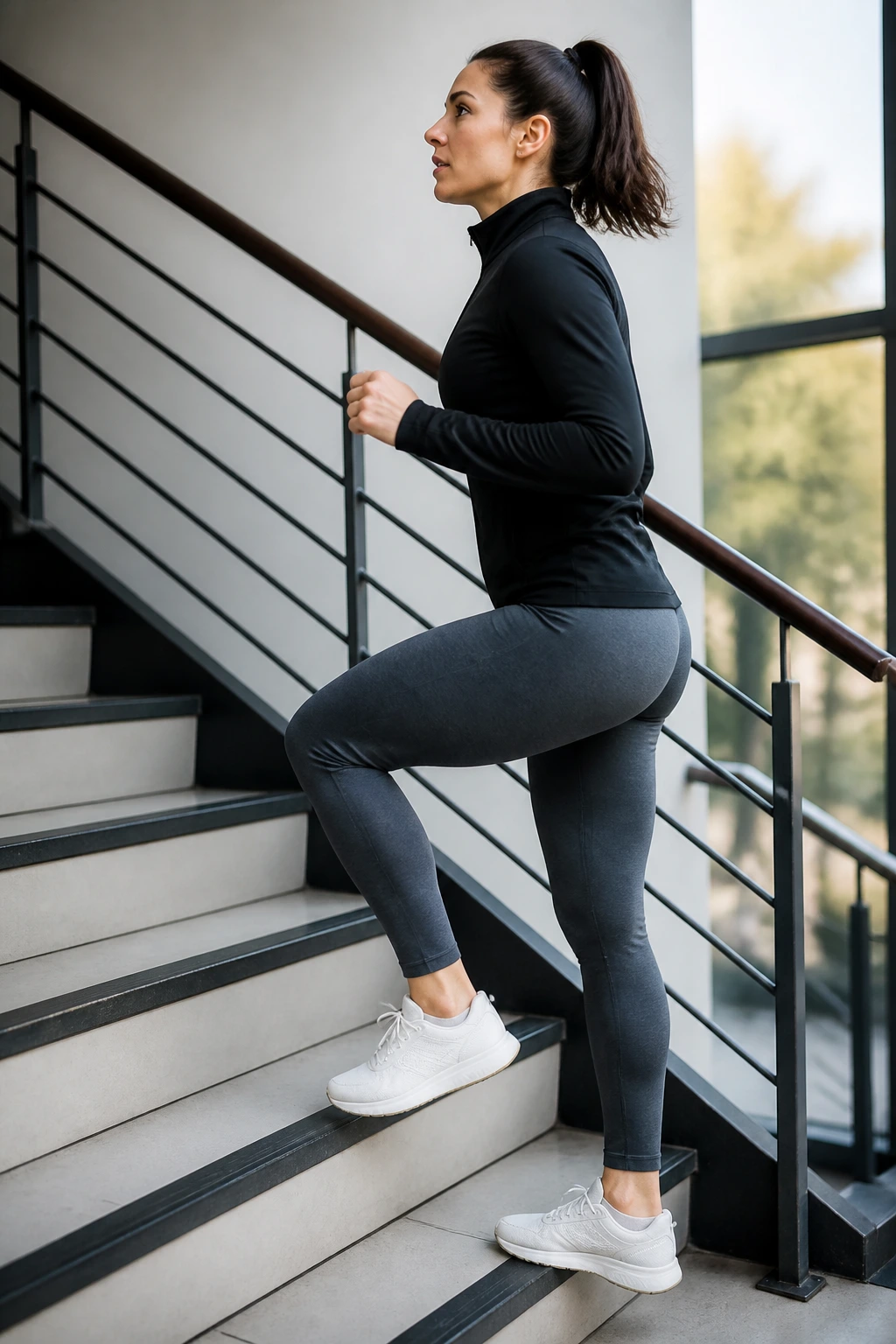
A staircase beats a long hallway when you need a quick cardio spike. It asks for more from your calves, glutes, and lungs than a flat walk, and it doesn’t need a special room or a timer set to drama.
Walk up one to three flights at a steady pace, come back down slowly, and repeat 4 to 8 times. No sprinting. No racing the person ahead of you. That’s how office stairs turn into a bad idea.
Use the railing if the steps are steep or you’re wearing less-than-perfect shoes. Keep your foot fully on each step instead of bouncing on the edge. It’s cleaner, safer, and a lot friendlier to your ankles.
This is best when your building has decent stairs and you can spare five to ten minutes. If you only have a short window, even two flights done three times is enough to shake off that heavy, locked-in feeling.
9. Resistance Band Rows
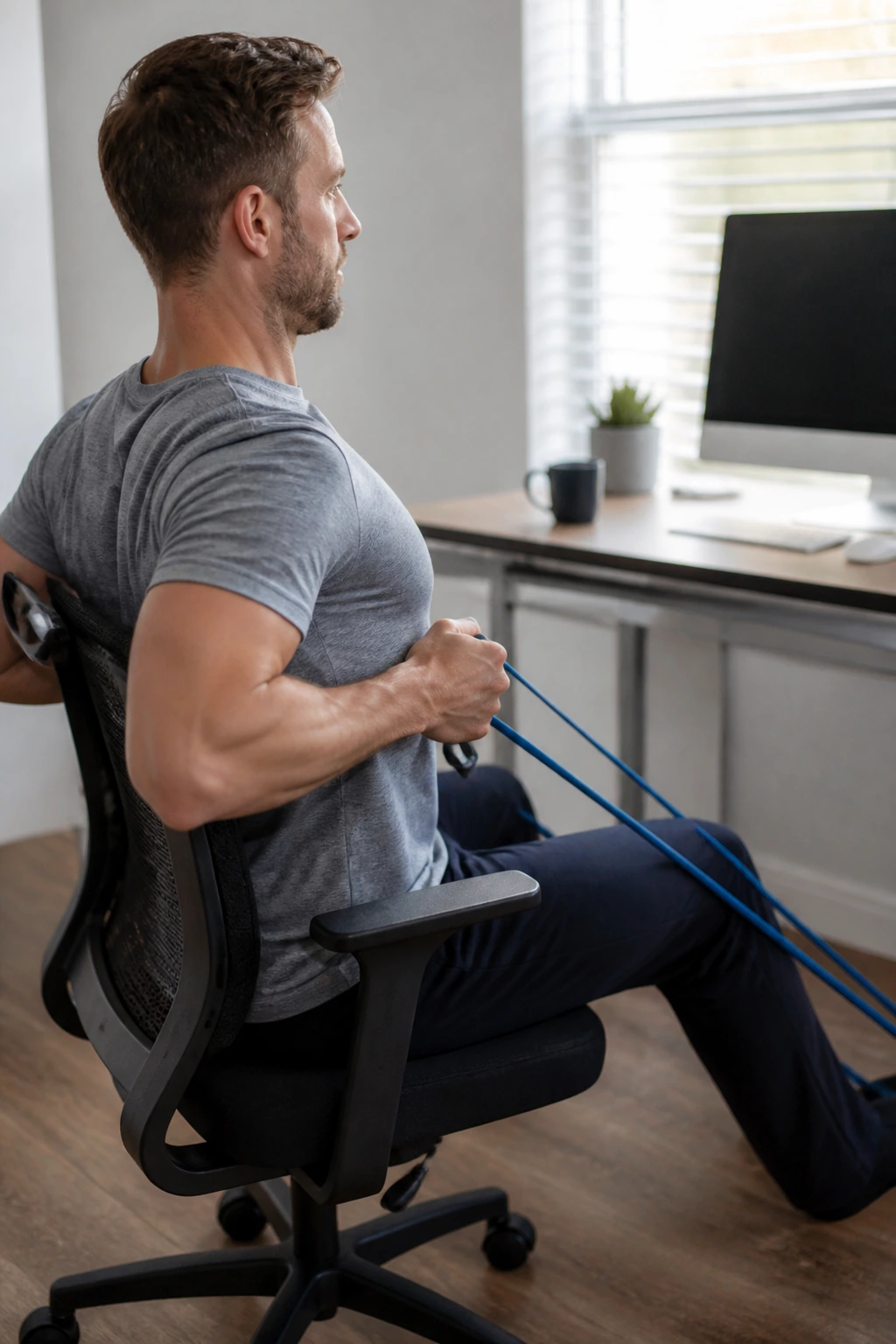
Resistance band rows are the move I’d pick if someone told me their back feels rounded after every afternoon at a computer. They pull the shoulder blades back, wake up the upper back, and give your posture muscles some actual work.
Loop the band around a stable anchor or around both feet while seated, then pull your elbows back toward your ribs. Pause for a second with the shoulder blades gently squeezed together, then return slowly. Aim for 12 to 15 reps.
A flimsy desk leg is not a good anchor. A door that does not close securely is not a good anchor either. Use something stable, or use the seated-under-feet setup and keep it simple.
This one looks small, but it changes how your upper body feels after a long block of typing. The back of your shoulders gets tired in a good way, which is rare enough to be worth protecting.
10. Incline Plank on the Desk
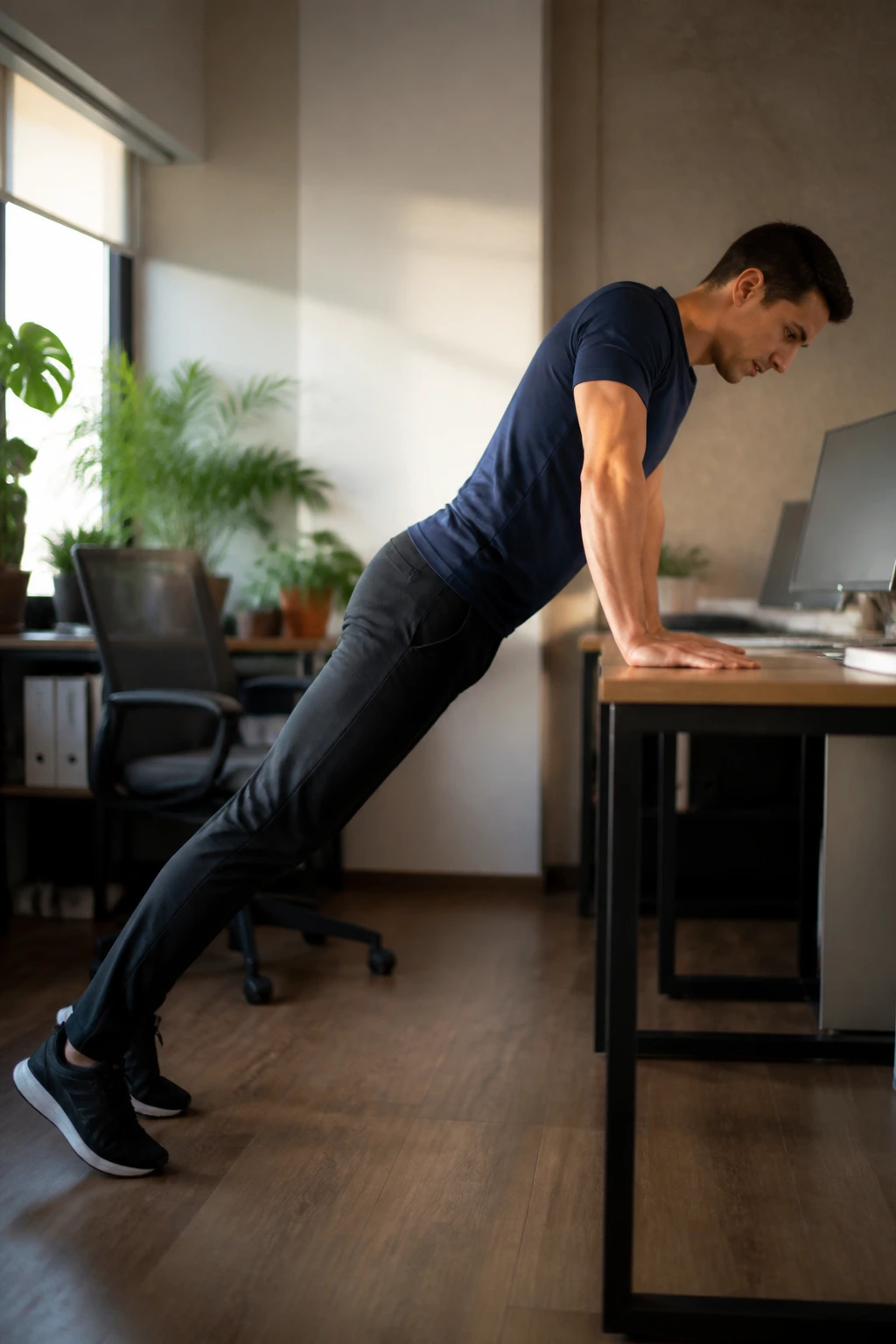
Can your core get trained without lying on the floor? Absolutely. A desk plank is one of the easiest ways to work the middle of your body in an office without turning the room into a gym class.
Place your hands on a sturdy desk, step your feet back, and make a straight line from shoulders to heels. Brace your abs as if someone were about to poke your stomach. Hold for 15 to 45 seconds, depending on how steady you feel.
What good form feels like
- Shoulders stay directly over the hands.
- Lower back stays flat, not sagging.
- Neck stays long.
- Breathing stays steady instead of choppy.
A higher desk makes this easier. A lower counter makes it harder. That simple angle change is the whole reason the move is so useful.
If your wrists get cranky, spread the fingers wide and push the floor away through the palms. If your lower back starts to droop, shorten the hold. Form beats duration every time.
11. Standing Side Leg Raises
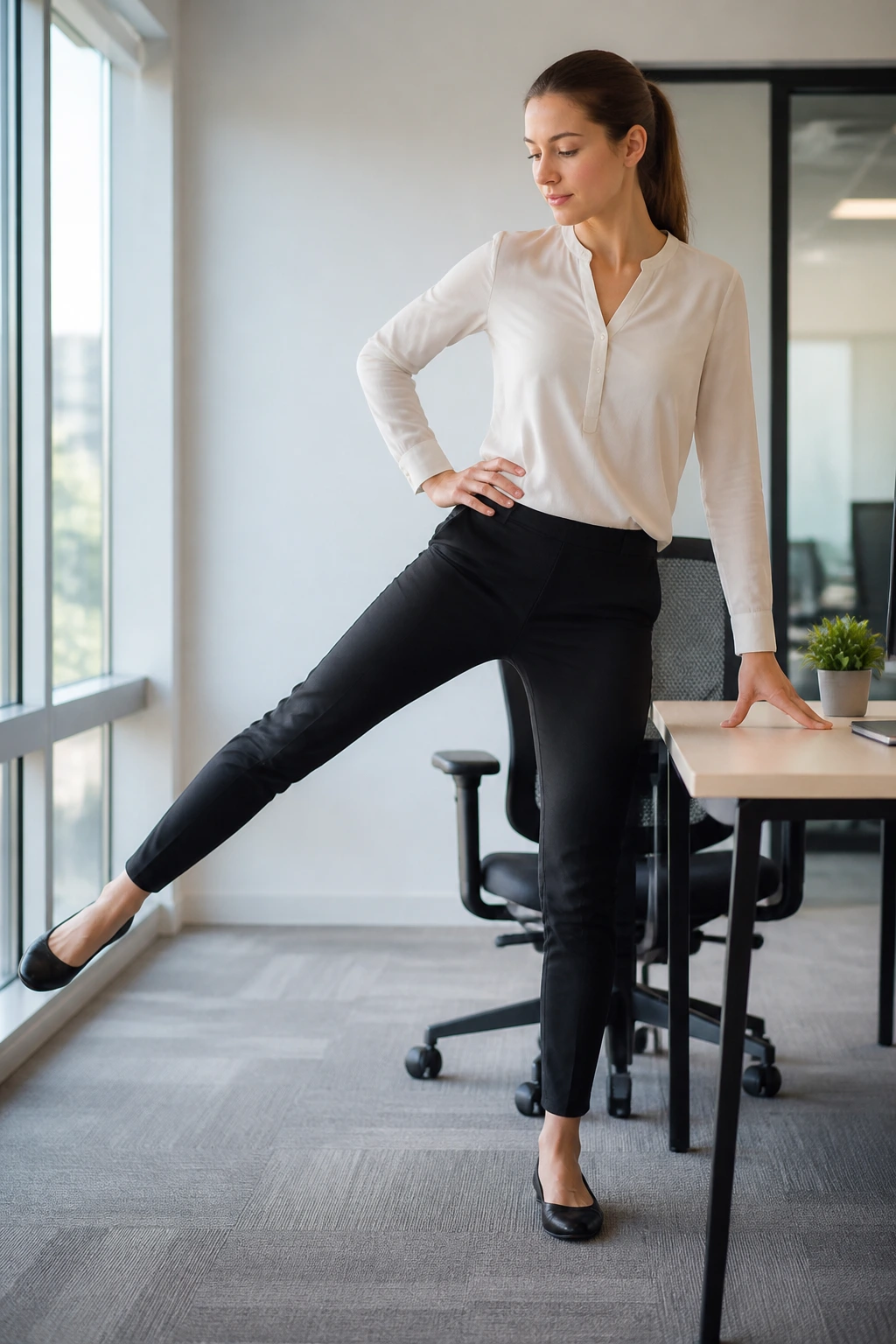
Standing side leg raises are a quiet little hip exercise that fits beside a desk, a wall, or a printer. They’re not flashy, but they do a useful job: they wake up the muscles that help keep your pelvis steady when you walk and climb stairs.
Stand tall, hold the desk lightly for balance, and lift one leg out to the side without tilting your torso. The movement should come from the hip, not from swinging your whole body. Lower it with control and repeat 10 to 15 reps per side.
Keep the toes pointing mostly forward. If the leg swings wildly, cut the height in half and slow down. You want tension, not momentum.
One reason I like this move is that it exposes how one-sided office life can get. Most of us cross the same leg over and over, lean the same way, and forget that the outer hips exist. This fixes that, one controlled rep at a time.
12. Seated Torso Twists
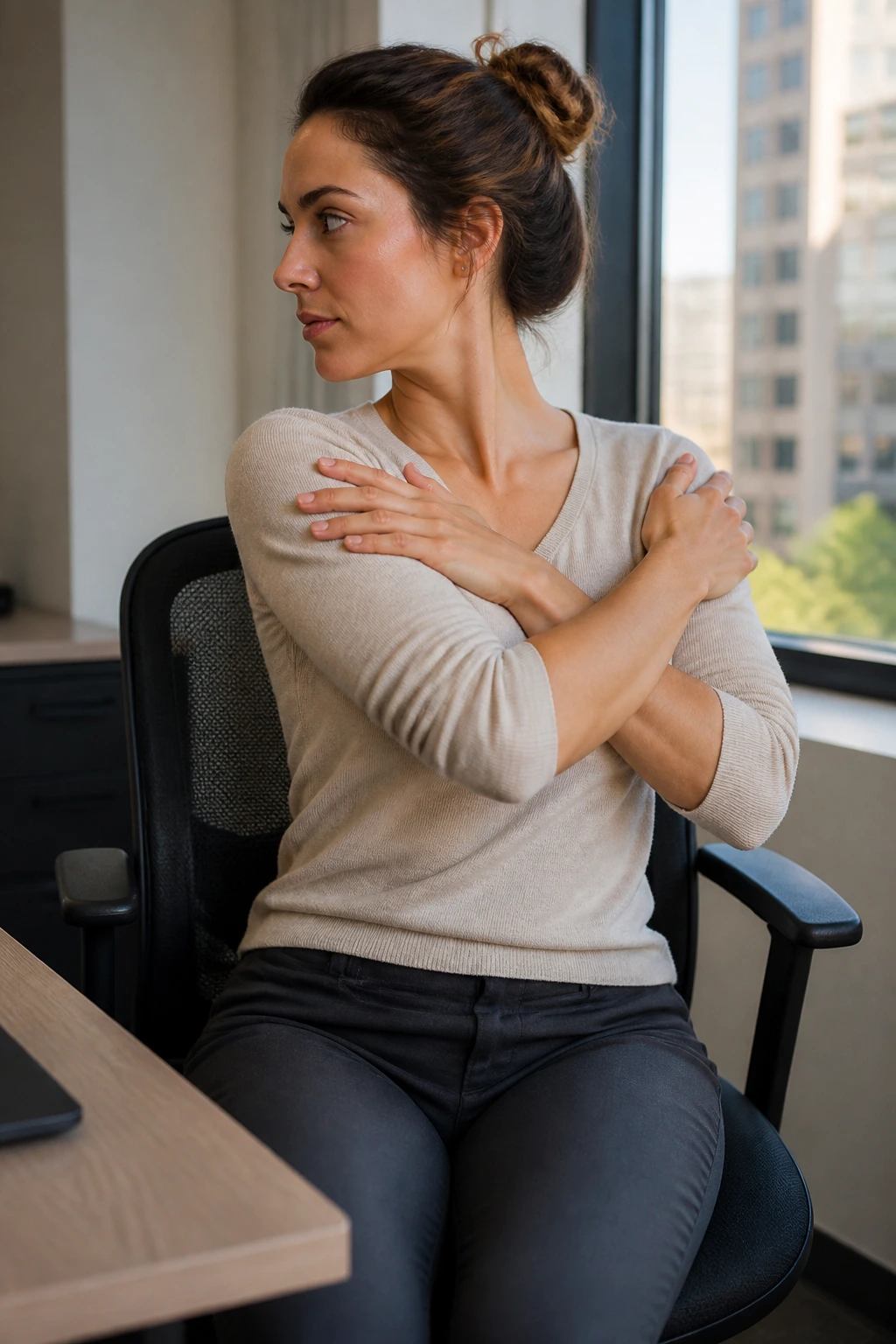
A seated twist is not a hardcore ab move. It’s a useful midback reset that gives your spine some rotation, which desk work tends to take away in a hurry.
Sit tall with feet flat on the floor, cross your arms over your chest, and rotate from the ribs to one side. Return to center, then twist the other way. Keep the movement smooth and small at first, especially if your back feels stiff.
What to watch for
- Don’t yank your neck with your hands.
- Don’t let your hips slide around in the chair.
- Keep the movement controlled.
- Stop if a twist feels sharp instead of loosening.
Do 8 to 12 reps per side. If you want more range, exhale as you turn. That little breath cue often lets the ribcage move more cleanly.
This is a calm move, and that’s the point. It works well right after a long email stretch when your upper body feels welded into one shape.
13. Desk Hip Hinges
A hip hinge is one of the best ways to train the back side of your body without getting on the floor. It teaches you to push your hips back, keep your spine long, and feel the hamstrings instead of dumping everything into the lower back.
Stand about a foot away from your desk, soften your knees, and send your hips back as if you’re closing a car door with your backside. Your chest will tip forward a little, but your back stays long. Come back up by driving the hips forward.
A cue that helps
Pretend there’s a wall behind you and you’re trying to tap it with your glutes. That image keeps the movement honest.
Do 10 to 15 reps. If you want more load, hold a water bottle or a laptop bag against your chest. Not overhead. That gets awkward fast and does not help the hinge.
A lot of people confuse bending at the waist with hinging at the hips. They are not the same thing. This drill teaches the difference in a way your body can feel right away.
14. Wall Angels
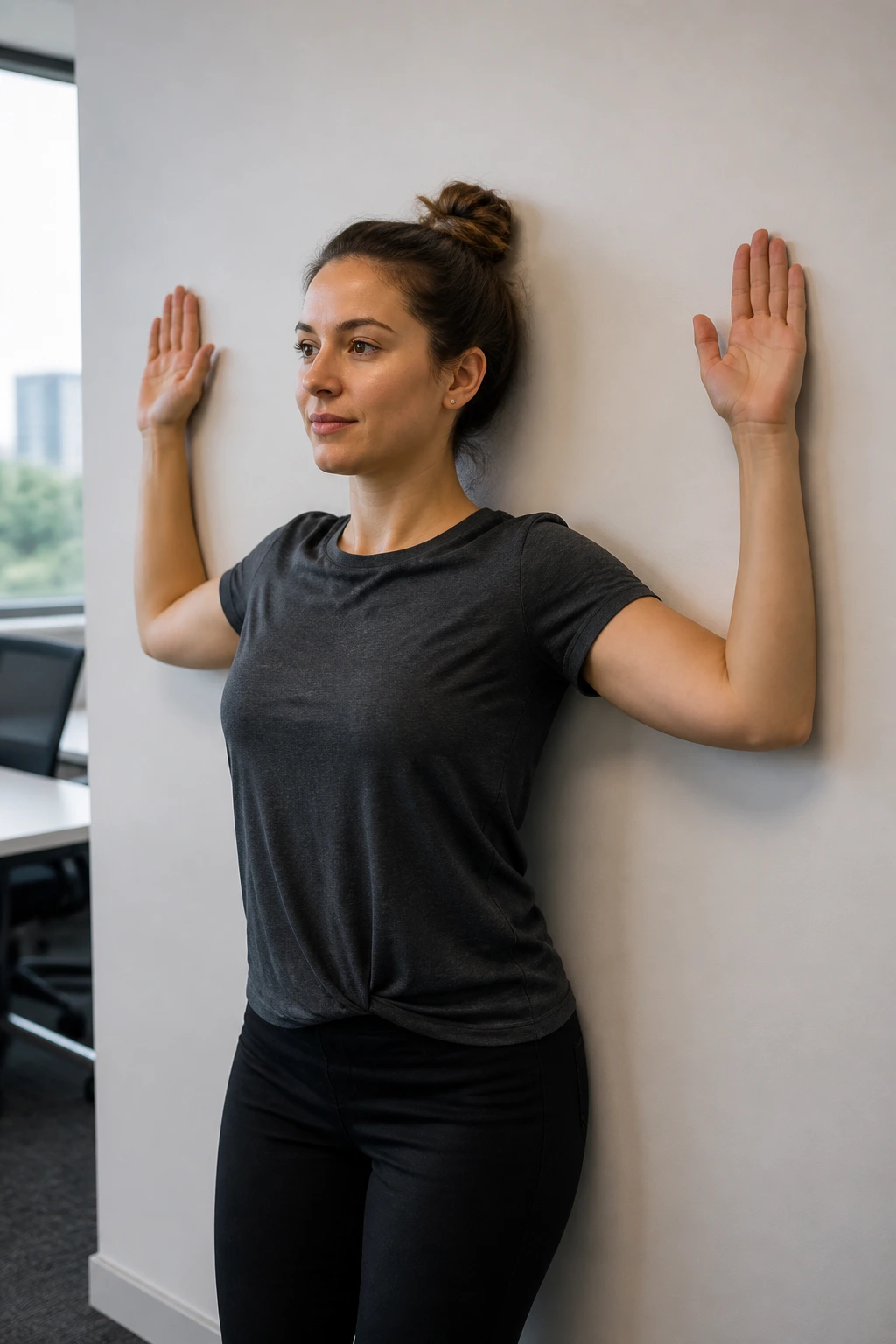
Your shoulders will tell on you during wall angels. That is the point.
Stand with your back against a wall, feet a few inches out, lower back neutral, and bring your arms up in a goalpost shape with elbows bent. Try to keep the back of your arms and hands near the wall as you slide them upward and back down again. Move slowly. If the range is tiny, that is fine.
Wall angels work because they ask the upper back to open while the shoulders rotate smoothly. That matters after a day of typing, mouse gripping, and hunching toward a screen. Two sets of 6 to 10 reps is plenty.
If your wrists or shoulders won’t stay on the wall, don’t force it. Shrink the range and keep the movement clean. A smaller, controlled version is better than a strained big one.
15. Water Bottle Triceps Extensions
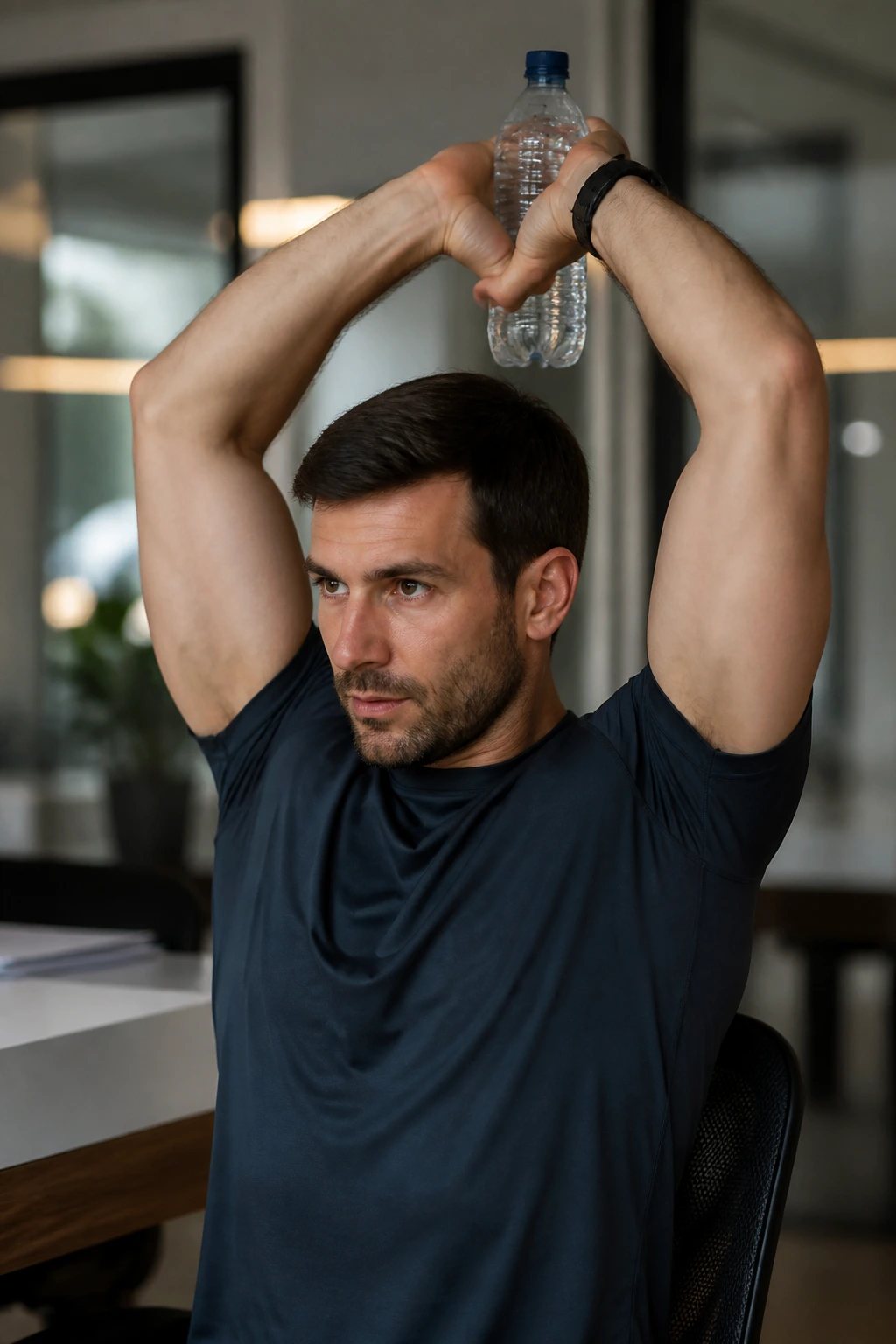
Unlike chair dips, which depend on whether your office furniture is sturdy and your wrists are feeling cooperative, triceps extensions only need a bottle and a little space. I trust this version more in an office, frankly.
Hold one water bottle with both hands, bring it overhead or behind your head, and bend your elbows so the bottle lowers behind you. Then straighten the elbows until your arms are long again. Keep your ribs down so you don’t arch your back.
Use a 16-ounce bottle for a lighter set, or a fuller bottle if you want more resistance. Do 8 to 12 reps with control.
The common mistake is turning it into a lower-back exercise. That happens when people lean back and fling the bottle around. Keep the movement tight and deliberate. Your triceps should feel the work; your spine should stay quiet.
16. Shadow Boxing Bursts
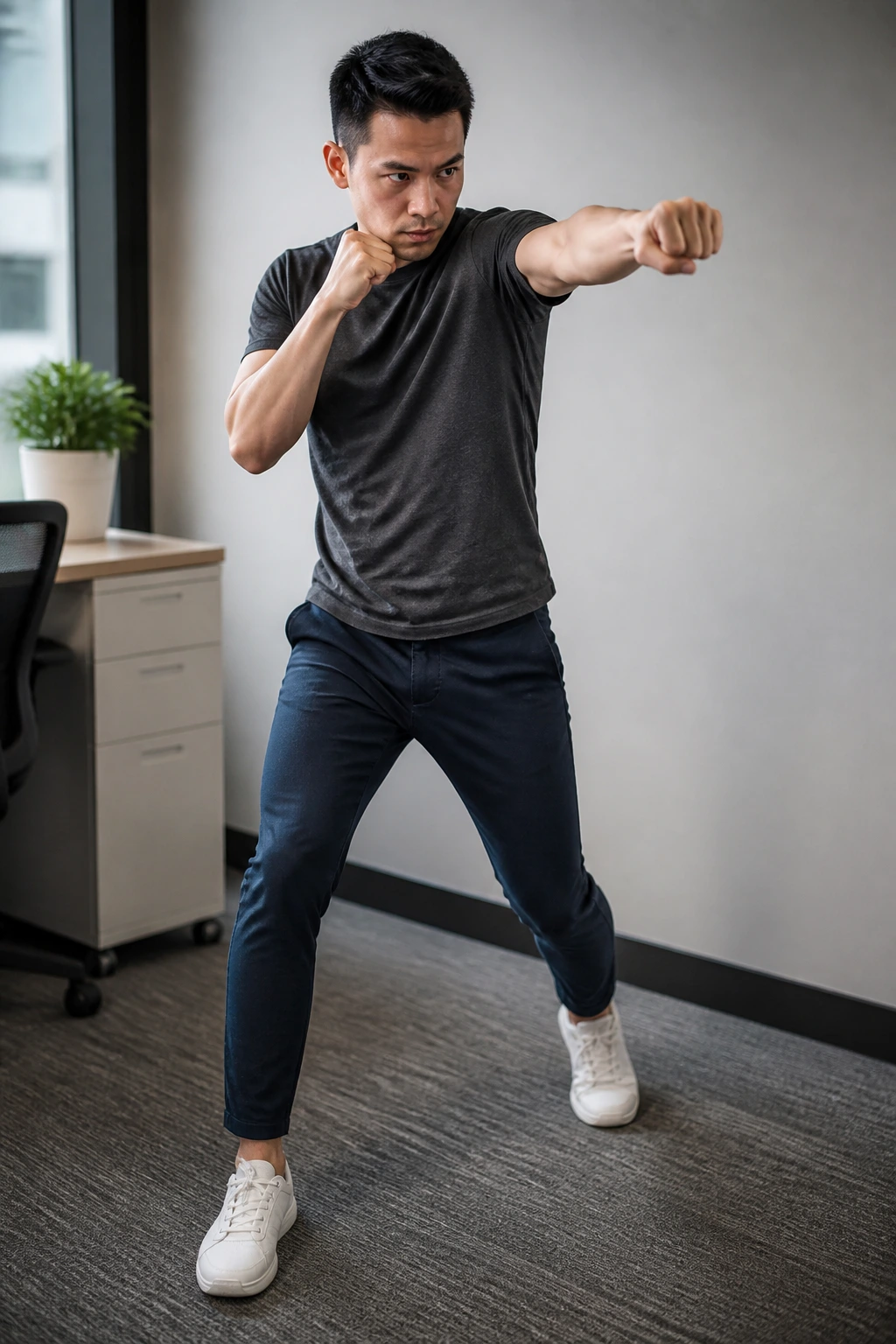
Shadow boxing is the office cardio move I use when I need to shake off stress without leaving the floor I’m on. It’s fast, it’s quiet if you keep your feet soft, and it wakes up your whole body in a way that feels less like exercise and more like a reset.
Stand in a relaxed fighting stance, hands near your face, and throw light punches into the air in short combos. Jab-cross. Jab-cross-hook. Keep moving for 20 to 30 seconds, rest for the same amount of time, then do another round.
This is not about power. It’s about rhythm, coordination, and a little pulse raise between meetings. Keep the punches controlled, shoulders loose, and chin tucked. Big wild swings are more likely to tangle your balance than help it.
If you have an empty corner or a private room, shadow boxing is one of the best ways to get a sweat going without needing equipment.
17. Single-Leg Balance Reaches
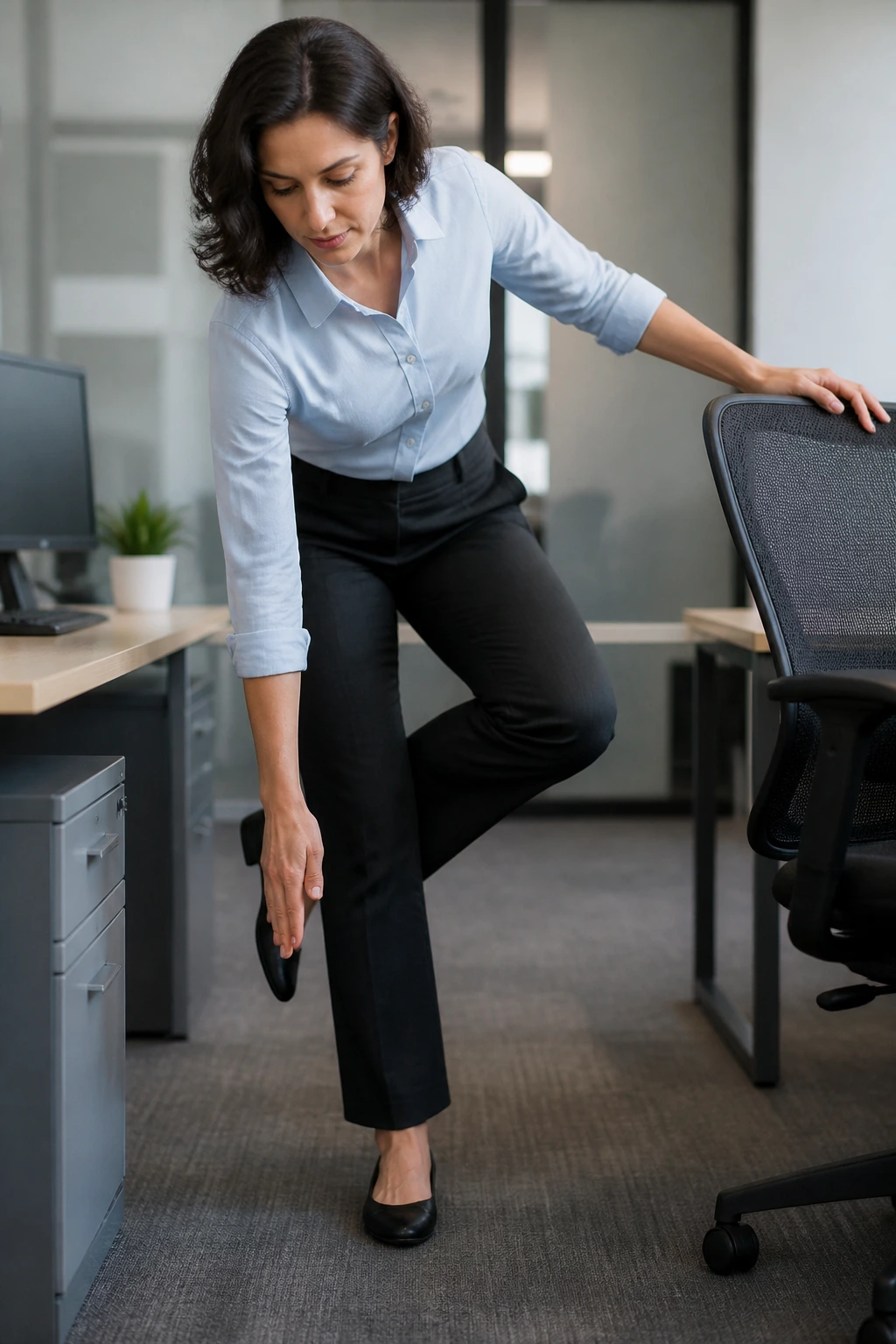
Can you train balance in a suit jacket? Yes, and this is how.
Stand on one leg, keep a soft bend in the knee, and reach the opposite hand toward your shin, knee, or the desk edge in front of you. Come back up under control, then repeat on the other side. Start with 5 to 8 reps per leg.
How to keep it safe
- Hold a chair back with two fingers if you wobble.
- Keep the standing foot tripod-flat: heel, big toe, little toe.
- Move slowly enough that you can stop at any point.
- Skip the deep reach if your lower back rounds.
This move is useful because balance usually gets ignored until it’s shaky. A few controlled reps can wake up the ankle, foot, and glute on the standing side without taking much space at all.
It also exposes left-right differences fast. One side may feel steady. The other may act like it has never met gravity before. That’s normal, and it’s worth noticing.
18. Walking Meetings and Hallway Laps

A brisk walk is still one of the best office workouts, even if it looks too plain to deserve the label. If your call does not require a screen share, pop in earbuds and pace the hallway, the lobby, or a safe outdoor loop.
Keep the speed steady enough that you can talk without gasping, but quick enough that your arms want to swing. Ten minutes is a solid target. Fifteen is better if the meeting runs long and your legs are willing.
Boring? Maybe. Useful? Definitely.
Walking turns a dead stretch of the day into movement without needing a change of clothes or a quiet room. It also helps your hips undo the sitting position they’ve been trapped in since morning. That part matters more than people admit.
If your building has stairs on the route, sprinkle them in. If not, fine. A simple lap done well is still a lap.
19. Reverse Lunge and Reach
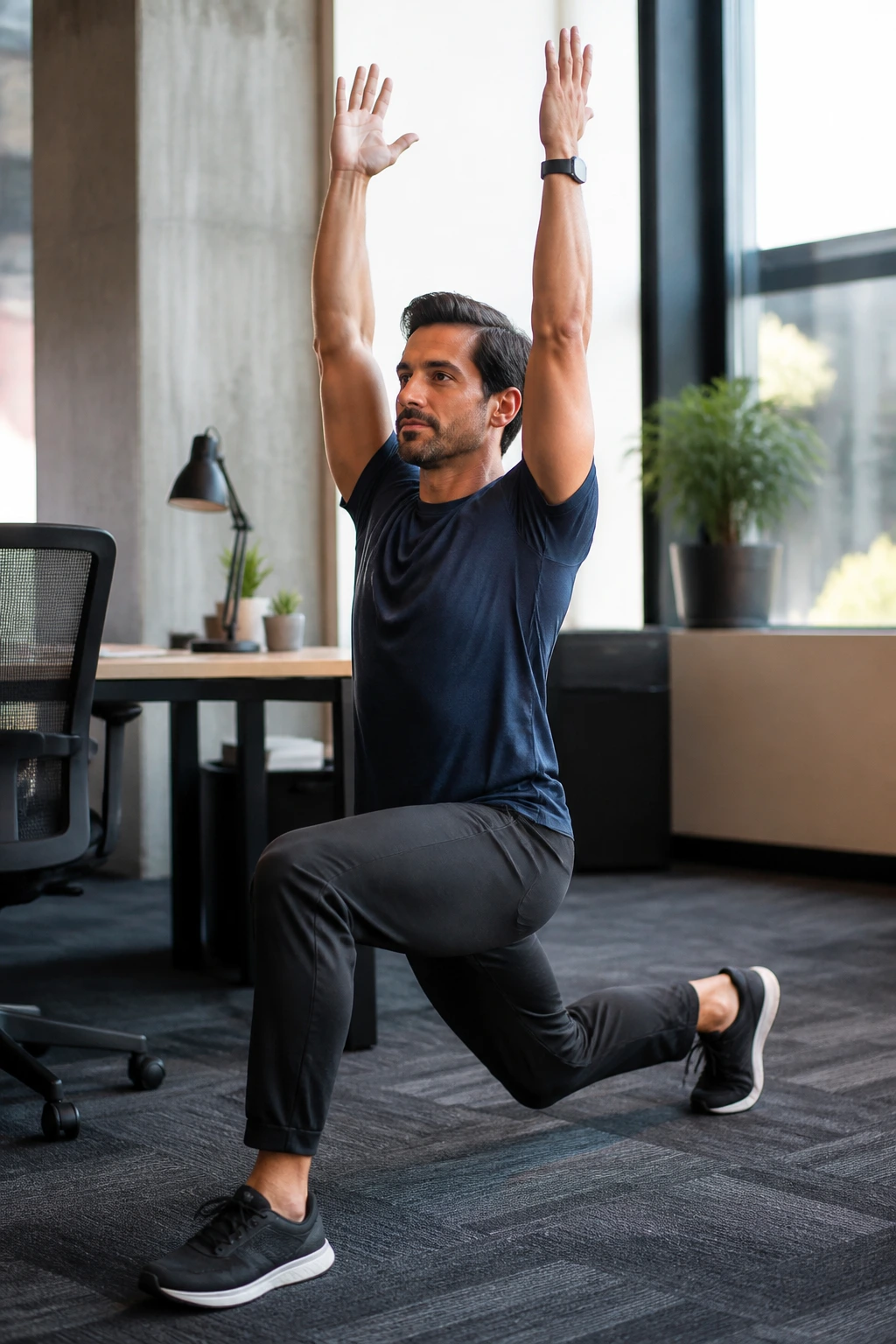
Step back, bend both knees, and reach your arms forward or overhead. That’s the whole move, and it hits more than people expect.
A reverse lunge is kinder to the knees than a forward step for many people, which makes it a smart office choice if you have a little open space. Step one foot back, lower until the front thigh is comfortable, then drive back to standing. Add a reach to wake up the torso and shoulders too.
Quick setup notes
- Use a shallow range if your knees feel fussy.
- Hold the desk lightly if balance is shaky.
- Do 6 to 10 reps per side.
- Keep the front heel planted.
This is a nice all-in-one move because it asks for legs, hips, and core control in one clean pattern. If your office has a spare corner or a quiet break area, this one earns its spot.
20. Five-Minute Office Circuit
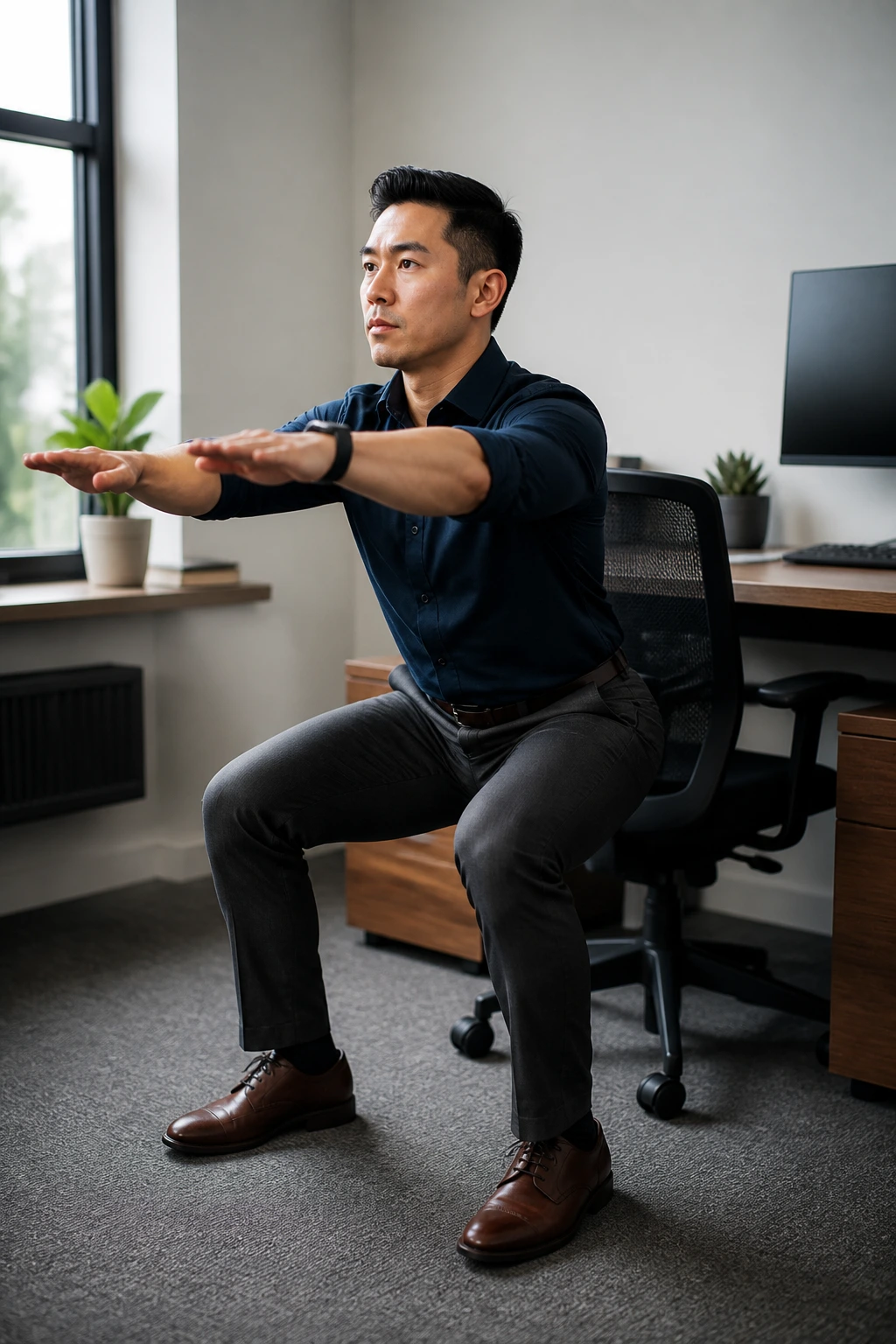
When work gets messy, I like a short circuit better than a long checklist. Pick five moves, do them back to back, and stop before the whole thing turns into a project.
A clean version looks like this:
- 30 seconds chair squats
- 30 seconds desk push-ups
- 30 seconds standing marches
- 30 seconds glute squeezes
- 30 seconds wall sit
- Rest 30 to 60 seconds
- Repeat for 2 rounds
That gives you a tight five-minute block that covers legs, chest, core, circulation, and posture without needing a shower or a room reservation. If the full circuit feels too much, cut the round in half and keep the habit alive.
The part people miss is how repeatable this is. A tiny office workout done three times across the day beats a heroic workout you never get around to. Build something you can actually keep doing, even on the days when the calendar looks like it was built by a prankster.
