



Thirty minutes is enough for a serious Pilates workout. Not a half-hearted one, either — a real session that wakes up your core, steadies your hips, and leaves your shoulders sitting where they belong.
The trick is not moving faster. It’s choosing the right sequence. A clean roll-up into bridge work, then planks, then standing balance, does more for the body than a frantic string of random reps ever will. Pilates rewards precision. It always has.
That’s why full body Pilates workouts work so well in a 30-minute window. You can hit the abs, glutes, legs, back, and arms without bouncing around or pounding your joints. Pick a mat, a wall, a light band, or a pair of small dumbbells, and the clock stops being a problem.
1. The Hundred, Roll-Up, Bridge, and Plank Ladder
This is the one I reach for when I want the whole body to feel switched on fast. It starts on the mat, travels through the spine, and finishes with enough plank work to make the arms and core pay attention.
How to pace it
Run it as 5 minutes to warm up, 20 minutes of work, and 5 minutes to cool down. A simple structure looks like this:
- The Hundred, 60 to 100 pulses
- 6 roll-ups
- 10 bridges
- 20-second forearm plank
- 8 single-leg stretch reps per side
- 8 double-leg stretch reps
- 30-second side plank per side
Keep the ribs heavy on the mat and the neck long. If the shoulders start creeping up, slow down. That’s the whole point here — control first, speed last.
2. Why the Inner Thigh Squeeze Changes Everything
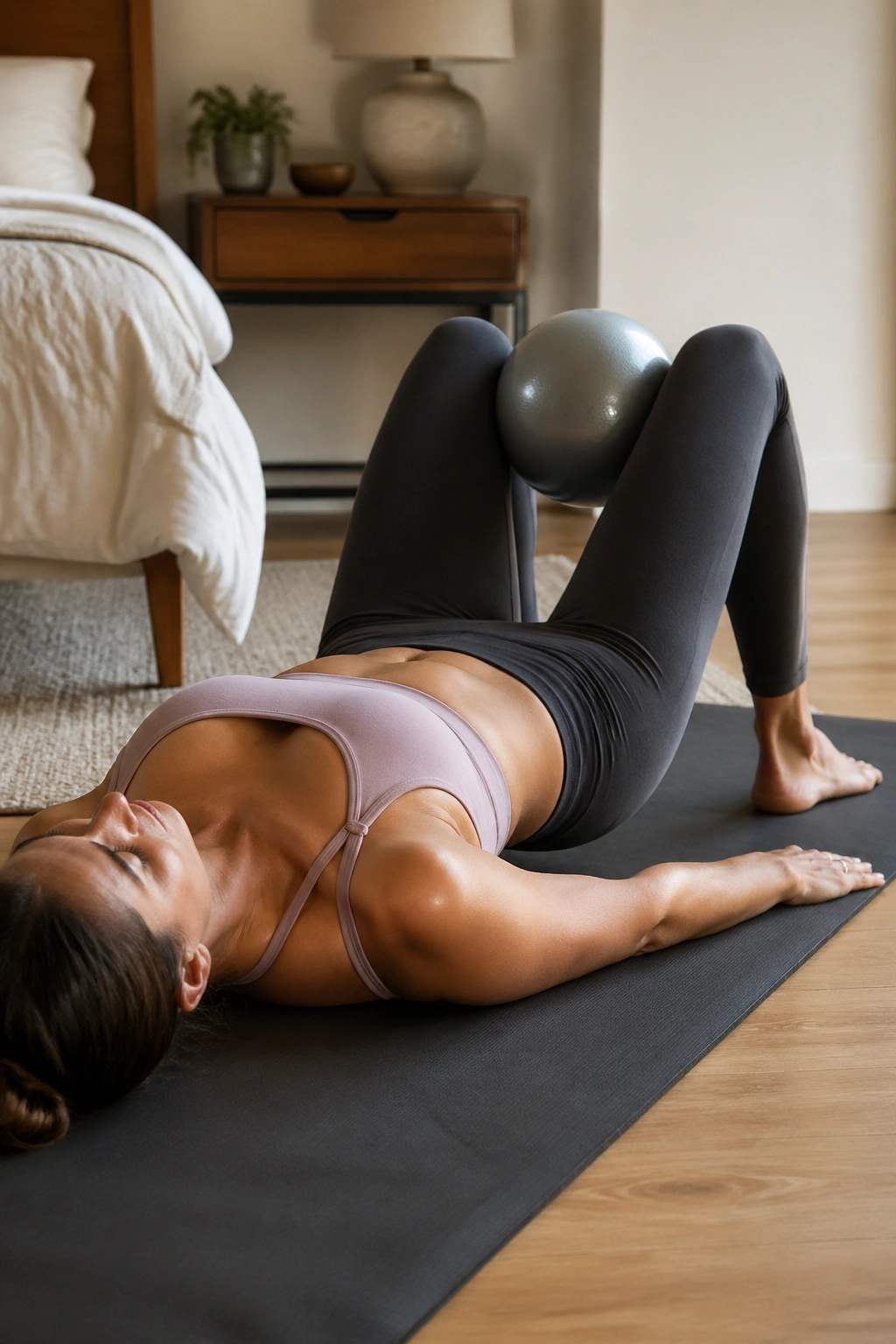
A small ball, a pillow, or even a rolled towel between the knees can make a Pilates workout feel more connected from head to toe. The squeeze wakes up the adductors, and once those muscles start helping, the pelvis usually feels more stable during bridges, dead bugs, and leg lifts.
Why the inner thighs matter
People skip this piece all the time. Bad call.
When the inner thighs are active, the lower belly tends to work without that annoying feeling of gripping the hip flexors. Try 3 rounds of 45 seconds on, 15 seconds off with:
- Bridge with ball squeeze
- Dead bug with knees pressed into the prop
- Side-lying leg lifts with a gentle top-leg press
- Seated knee folds with a squeeze at the top
How to use it
The squeeze should feel firm, not clenched. If the knees are smashing together, you’ve gone too far. Aim for steady pressure and a quiet breath.
3. Standing Posture and Arm Sculpt Circuit
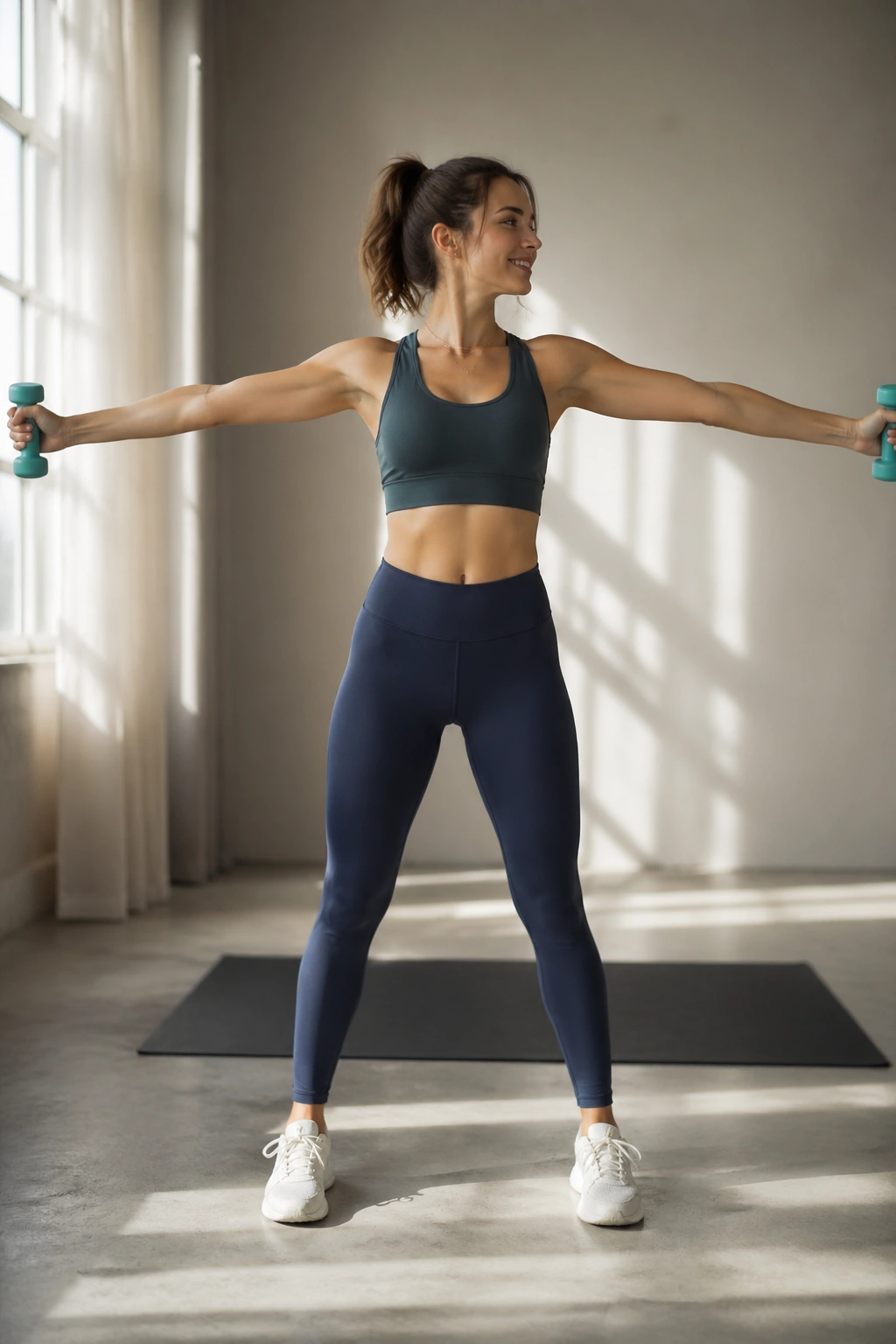
A lot of people think Pilates belongs on the floor. It doesn’t. Standing work is where posture gets honest, because you can’t hide a tilted rib cage or a lazy pelvis when you’re upright.
A good 30-minute standing session can be built around light dumbbells, 1 to 3 pounds each, or no weight at all if your shoulders are tired. Start with arm circles, overhead reaches, and a hinge row. Then move into split-stance squats, heel lifts, and slow torso rotations.
Keep the shoulders honest
- Press the ribs down before every arm lift
- Soften the knees instead of locking them
- Keep the chin level during overhead work
- Stop the range of motion before the low back starts arching
The standing series ends up feeling deceptively full-body. Your arms burn, yes, but the real work shows up in the feet and the deep core.
4. The Back-Side Session for Glutes and Hamstrings
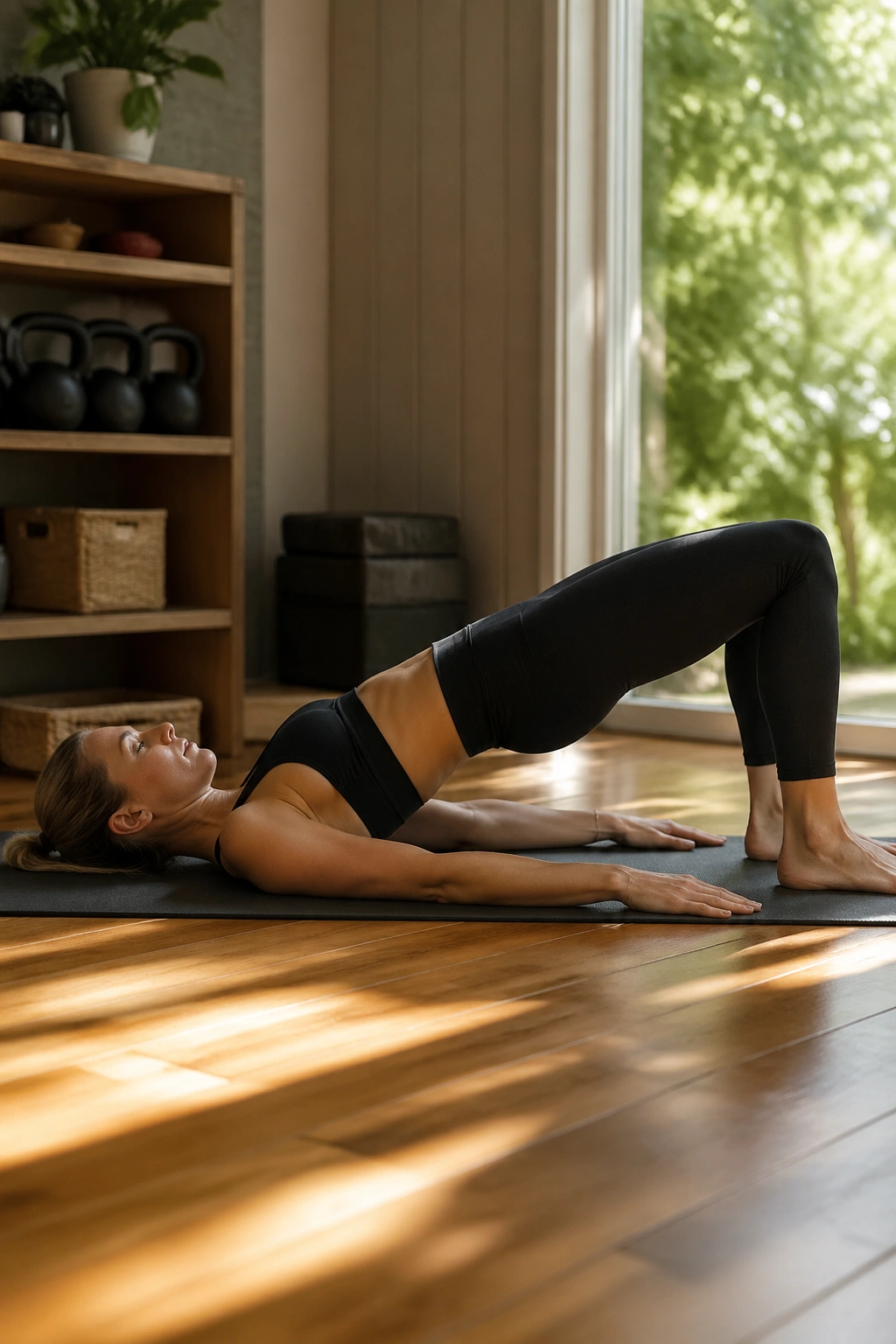
Front-of-the-body workouts get more attention than they deserve. The back side is where a lot of people need help, and Pilates is excellent at waking it up without turning it into a powerlifting contest.
This workout lives on the mat and leans hard on bridges, hamstring curls, bird dogs, and reverse plank holds. Use a 40-second work, 20-second reset rhythm and cycle through 6 moves for 3 rounds. The hamstrings should feel active, not cramped. The glutes should fire without squeezing so hard that the lower back starts protesting.
If the bridge feels easy, slow the lowering phase to 3 counts down. That tiny change matters more than adding a pile of extra reps.
5. Light Dumbbells, Slow Squats, and Teaser Prep
The smell of a little effort is different here. Not sweat-soaked chaos — just that clean, steady feeling that shows up when the body has to move with control and keep the weights from wandering.
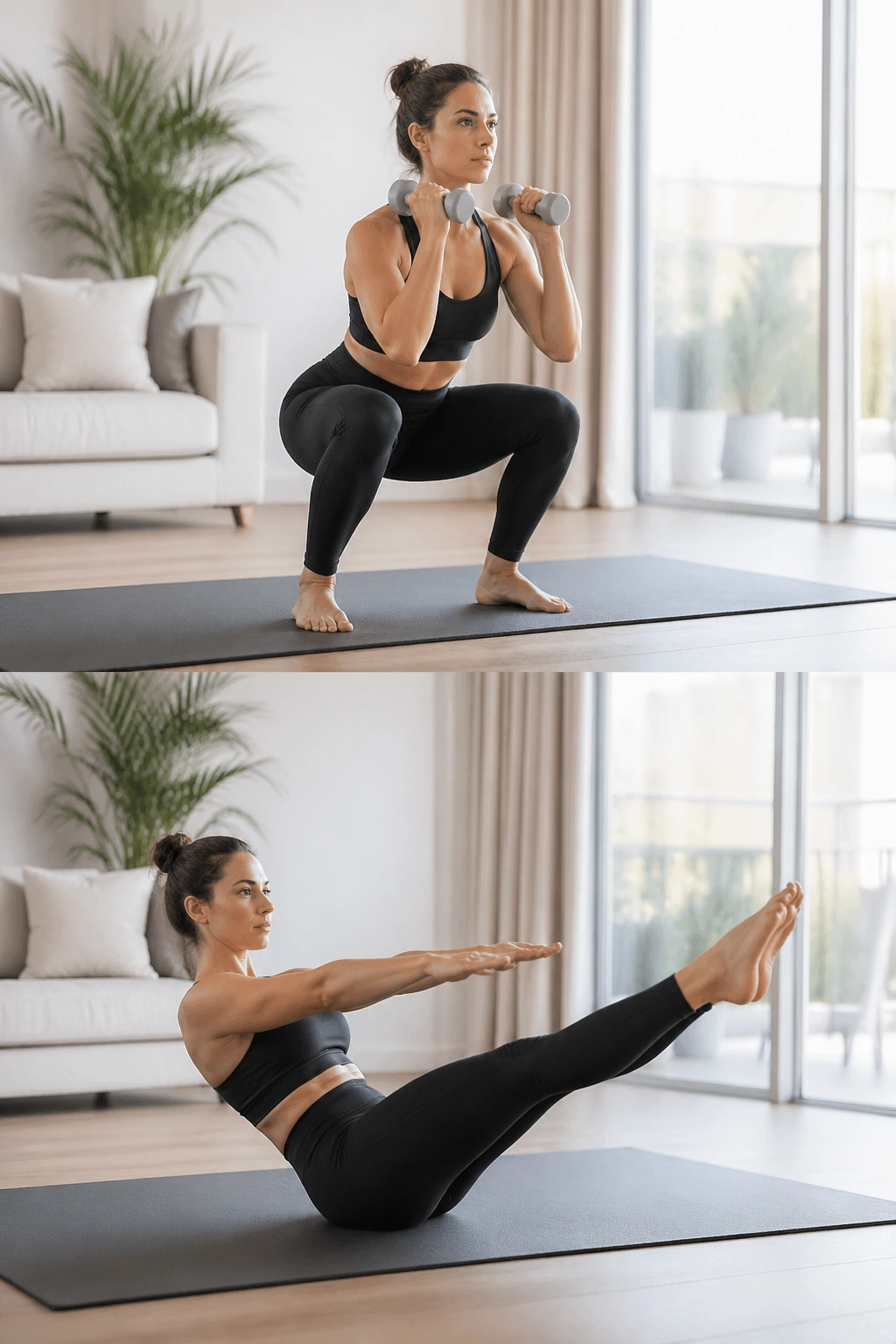
This is a smart choice if you want more arm work without losing Pilates form. Use 2 to 5 pound dumbbells and run a circuit of squats to press, hinge rows, kneeling triceps presses, and teaser prep. The key is to keep every rep slow enough that you can feel where the weight is going. No swinging.
A simple structure works well: 8 moves, 30 seconds each, 2 rounds. Keep the feet rooted during the upper-body work. If the low back arches on the press, lower the weights and shorten the range.
6. Side-Lying Outer Thigh and Oblique Burn
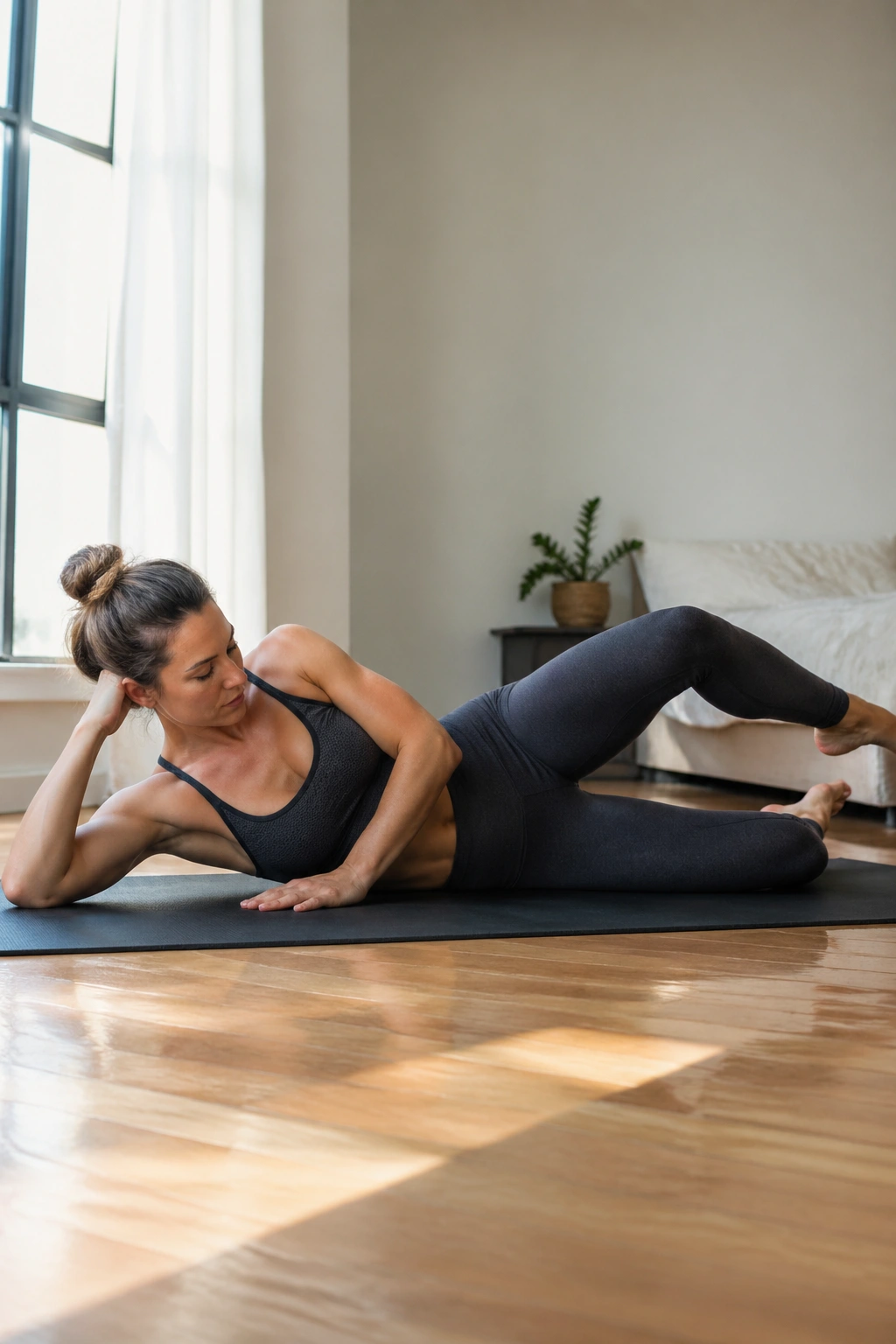
Side-lying work looks quiet. It isn’t.
The outer thighs, glute medius, and obliques all jump in when you lie on one side and keep the torso from wobbling. A classic line-up is clamshells, side kicks, circles, and side plank lifts. Add a small pulse at the top, and the burn comes on fast.
What to watch for
- Keep the hips stacked
- Point the top toes only if it helps you stay stable
- Don’t roll backward to fake a bigger leg lift
- Hold the bottom ribs in so the waist does not collapse
A 3-minute finisher on each side can be enough if you’ve already warmed up. Honest feeling matters more than high reps here. If you can’t keep the torso still, the set is too aggressive.
7. The Wall Workout That Forces Better Alignment
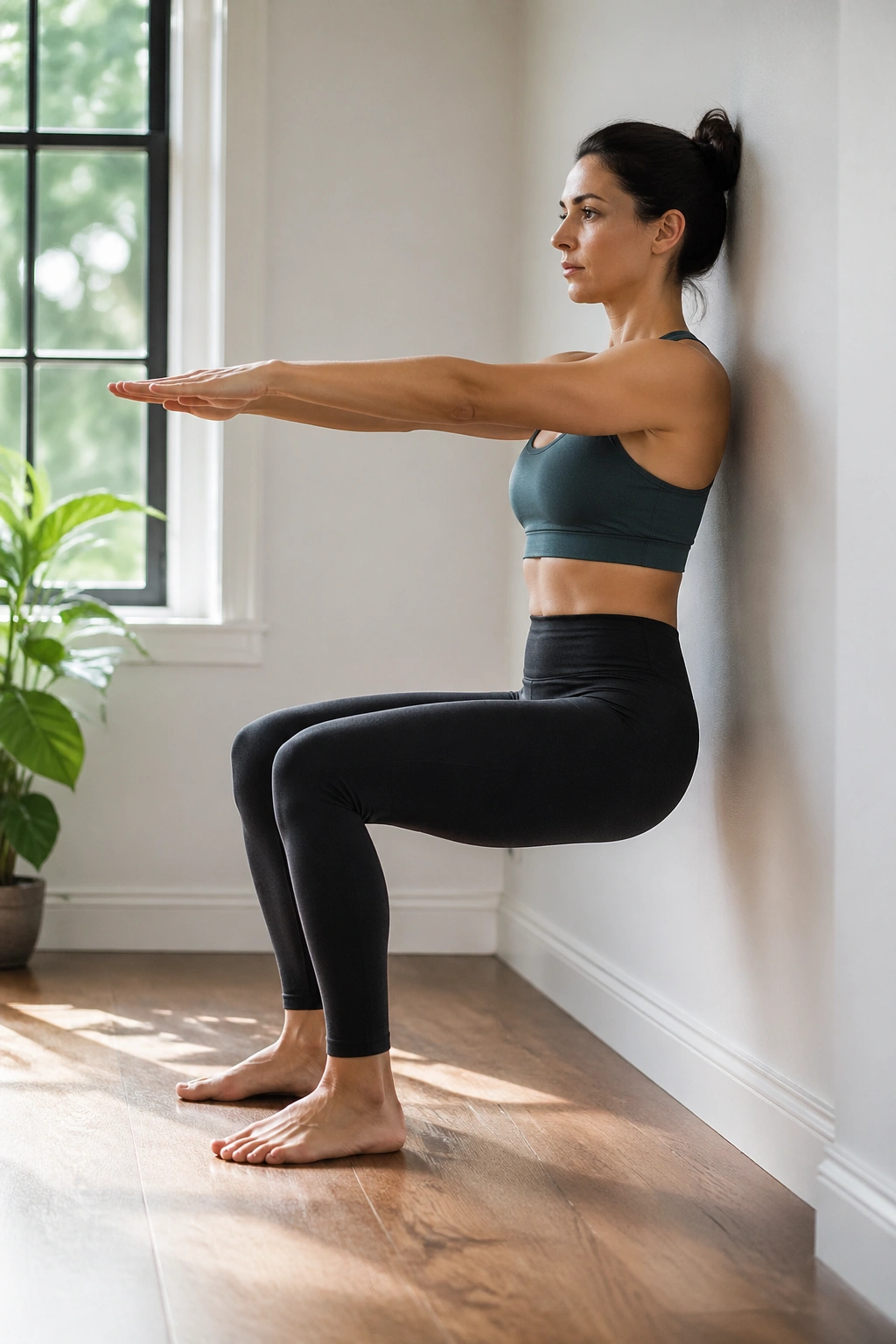
A wall is a brutal little teacher. It gives you feedback right away, and it has no patience for sloppy posture.
Use it for wall squats, standing leg lifts, incline push-ups, and wall roll-downs. The surface helps you feel where the ribs flare, where the pelvis tucks, and where the shoulders sneak forward. That makes this a surprisingly strong full body Pilates workout even though you are not lying down or using fancy equipment.
Build the flow
Try 5 rounds of 5 exercises, 45 seconds each, with 15 seconds between moves:
- Wall squat with arm reach
- Single-leg balance with heel press
- Incline push-up
- Wall angel
- Standing knee drive with torso hold
The wall should give you a clean line, not a place to slump. Press away from it.
8. The Band-Resisted Mat Flow
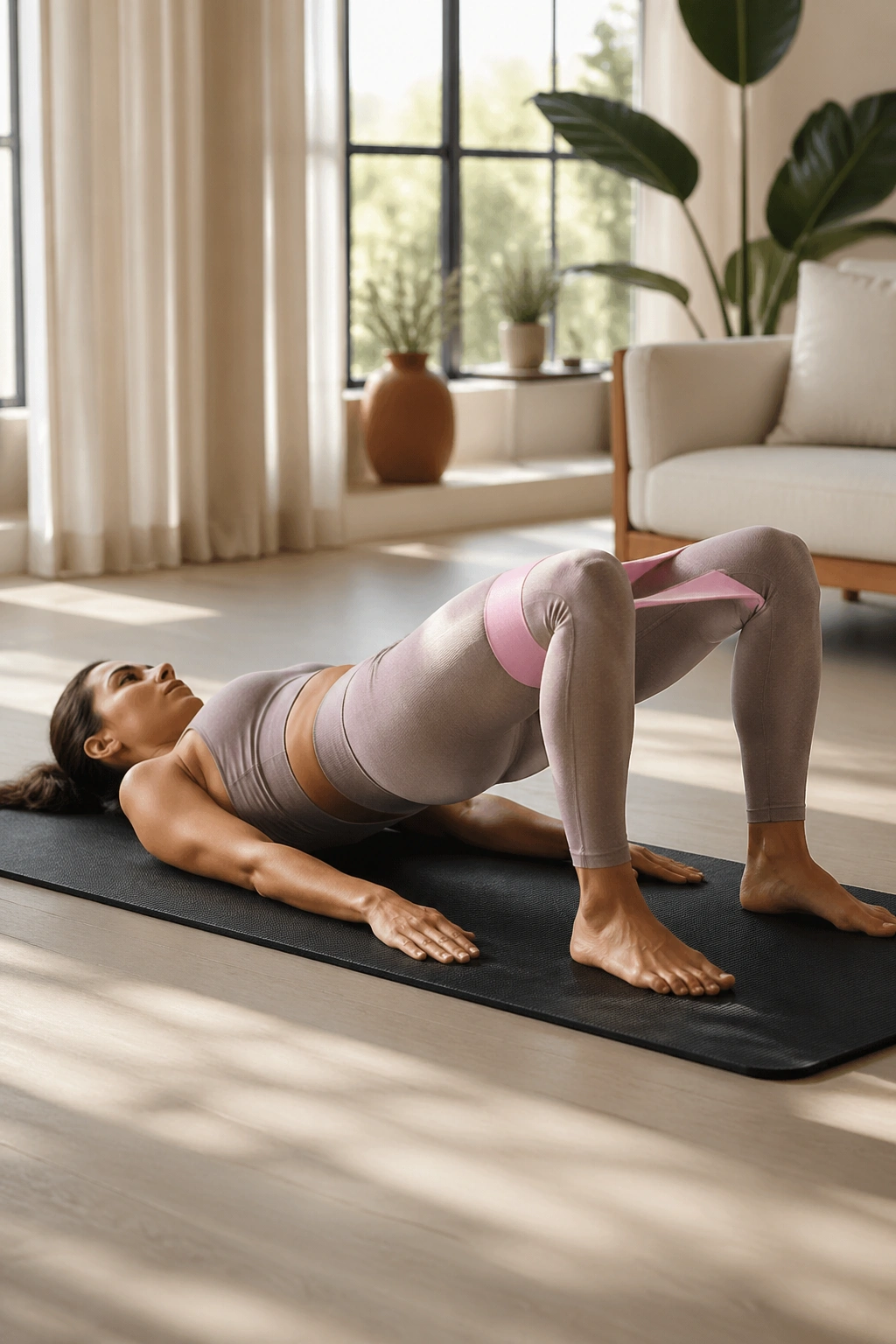
A loop band around the thighs changes the feel of basic Pilates mat work in a good way. Not magical. Just useful.
The band adds a little sideways resistance to bridges, leg lifts, frog kicks, and seated knee folds, which means the glutes and inner thighs have to stay awake the whole time. Use a light to medium loop if you want clean movement; a band that’s too heavy turns every rep into a wrestling match.
Band setup
- Around the thighs for bridges and clamshells
- Around the ankles for side steps and leg circles
- Above the knees for kneeling kickbacks
A 20-minute floor sequence with 10 minutes of standing band work on the end makes this feel like a complete session. The band should stay under control. If it snaps around or slides all over the place, adjust the placement before continuing.
9. The Spine Twist and Mermaid Mobility Flow
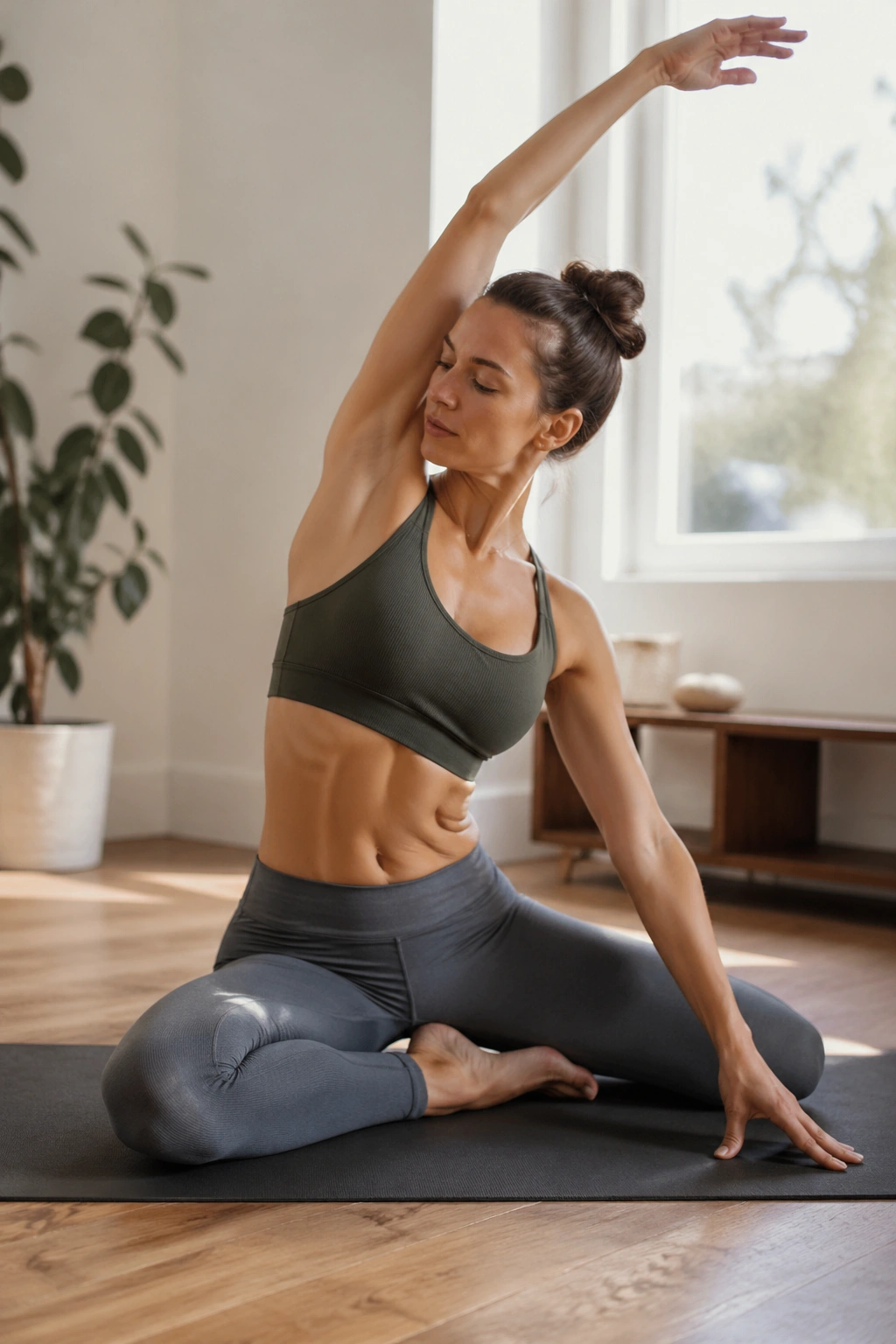
A tight upper back can make even simple exercise feel clunky. This is where rotation helps.
This session leans into spine twist, mermaid stretch, thread-the-needle, and open-book work, then layers in some core holds so it does not turn into a pure stretch class. The body moves best when mobility and control show up together. One without the other is a half-finished job.
Where the twist starts
The twist should come from the rib cage, not the neck. That detail matters.
Use 3 slow breaths per shape and switch sides often enough that one side does not get lazy. Add seated roll-backs and kneeling side bends if you want more heat. The result feels lighter through the mid-back and more open across the waist, which carries over into standing work later.
10. Slider Work for Core, Legs, and Shoulders
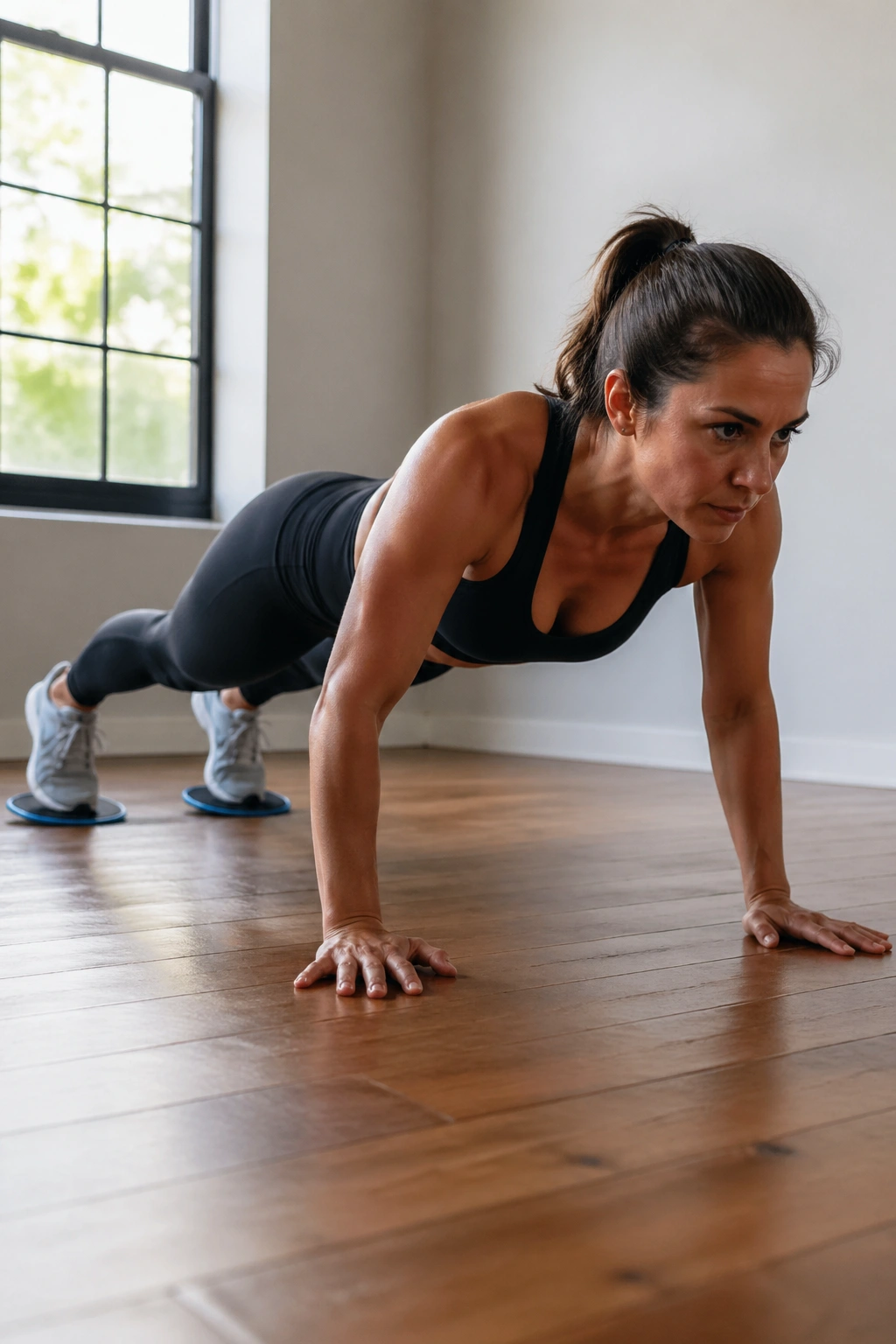
Two towels on a smooth floor can turn a regular mat session into something meaner.
Sliders make lunges longer, planks harder, and knee tucks slower, which is exactly what you want in Pilates when you want the body to work from the center instead of flinging the limbs around. A good slider circuit might include mountain climbers, reverse lunges, hamstring curls, plank pikes, and slow climbers. Use 45 seconds on, 15 seconds off for 2 full rounds.
What makes it hard
- The core has to stop the body from drifting
- The shoulders work harder during plank travel
- The legs cannot hide behind momentum
- Every landing has to be controlled
This is one of those sessions that looks tame until minute eight. Then the floor starts feeling a little farther away.
11. The No-Prop Precision Session
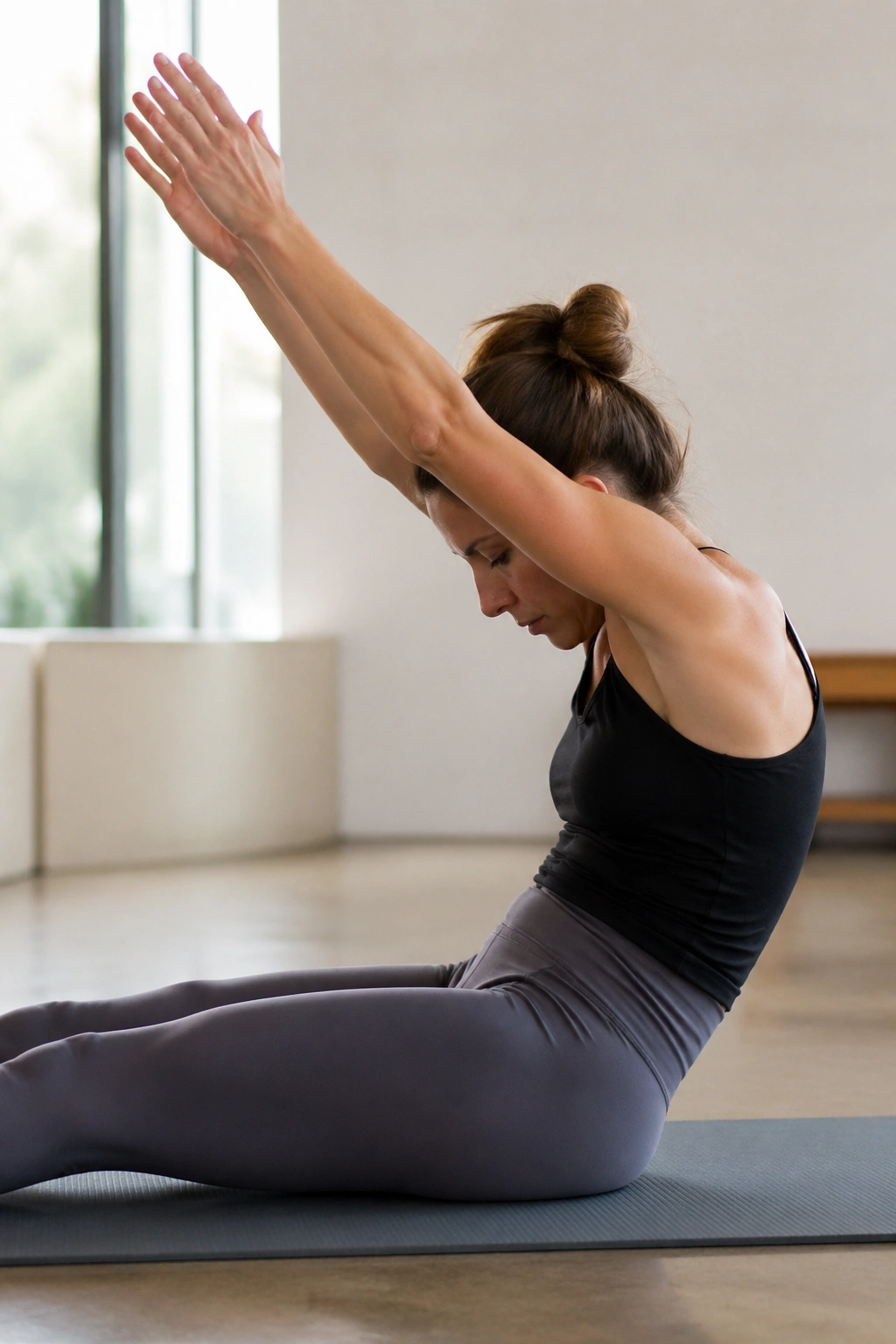
No weights. No bands. No ring. Nothing.
That sounds easier than it is, because without props you cannot lean on resistance to create the feeling of work. You have to get honest about tempo, breath, and placement. A clean no-prop workout can use the hundred prep, roll-downs, single-leg stretch, bird dog, kneeling side kicks, squat-to-reach, and a long forearm plank.
The no-prop rules
- Slow the lowering phase
- Pause for one count at the hardest point
- Keep the eyes on one fixed spot during balance work
- Stop the set before the form gets fuzzy
This is the session I like for travel or busy days. It’s compact, quiet, and harder than it looks. Exactly the kind of thing Pilates does well.
12. The Runner’s Recovery Flow for Hips and Feet
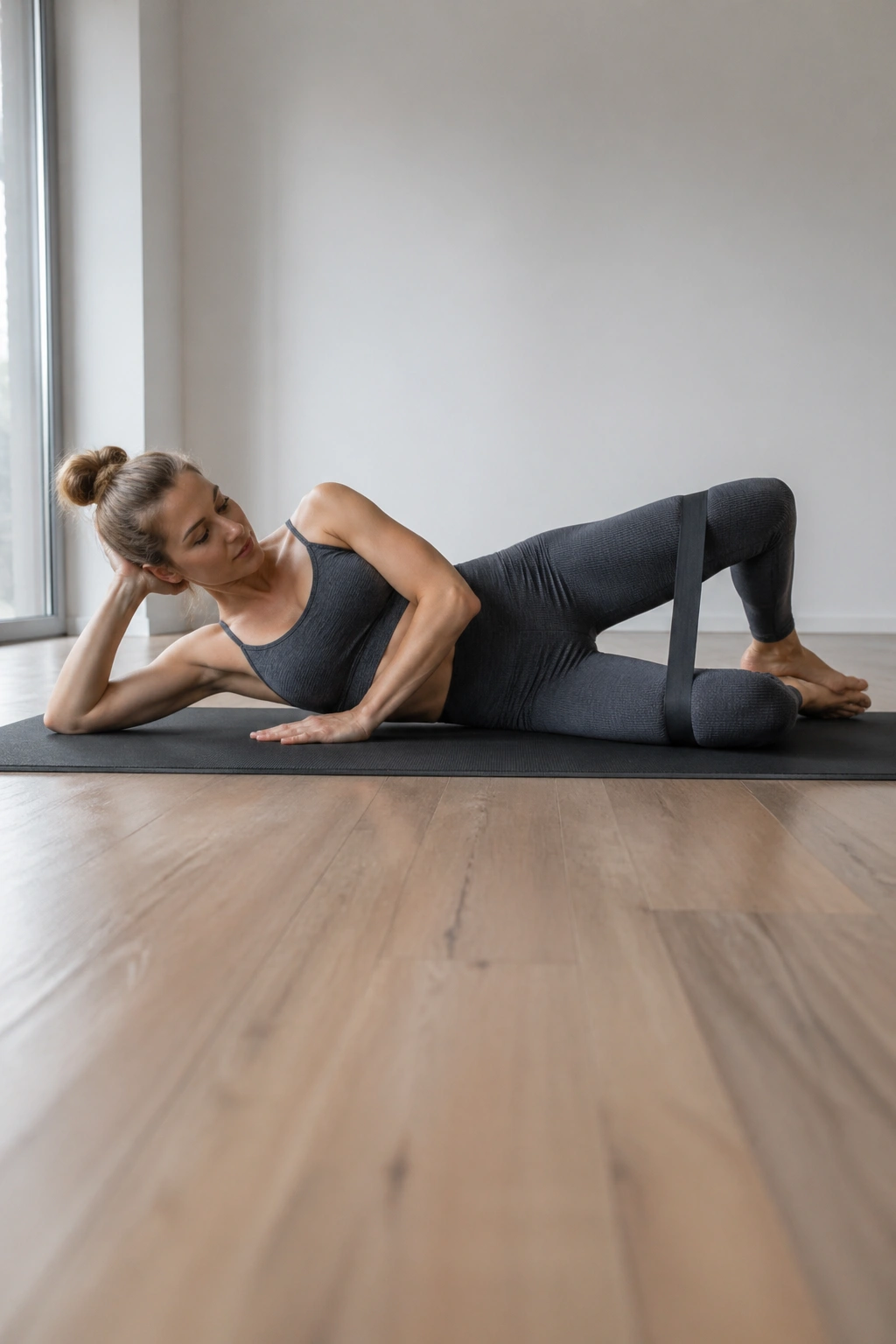
Three minutes into this one, the hips usually start complaining less.
That’s the goal. After a run, or after a long day of walking and standing, Pilates can help bring the pelvis, glutes, calves, and feet back into line. Use clamshells, bridge marches, calf raises, ankle circles, toe lifts, and a little thoracic rotation to keep the work from getting one-note.
A 10-minute lower-body reset followed by 10 minutes of core and back work keeps this from feeling too soft. It should still ask something of you.
- Press through the big toe in bridges
- Keep the heel heavy during calf work
- Move the ankles through full circles
- Hold the pelvis still during leg lifts
The best version of this workout leaves the legs looser, not wiped out.
13. Upper-Body Mat Strength Without the Gym Bro Feel
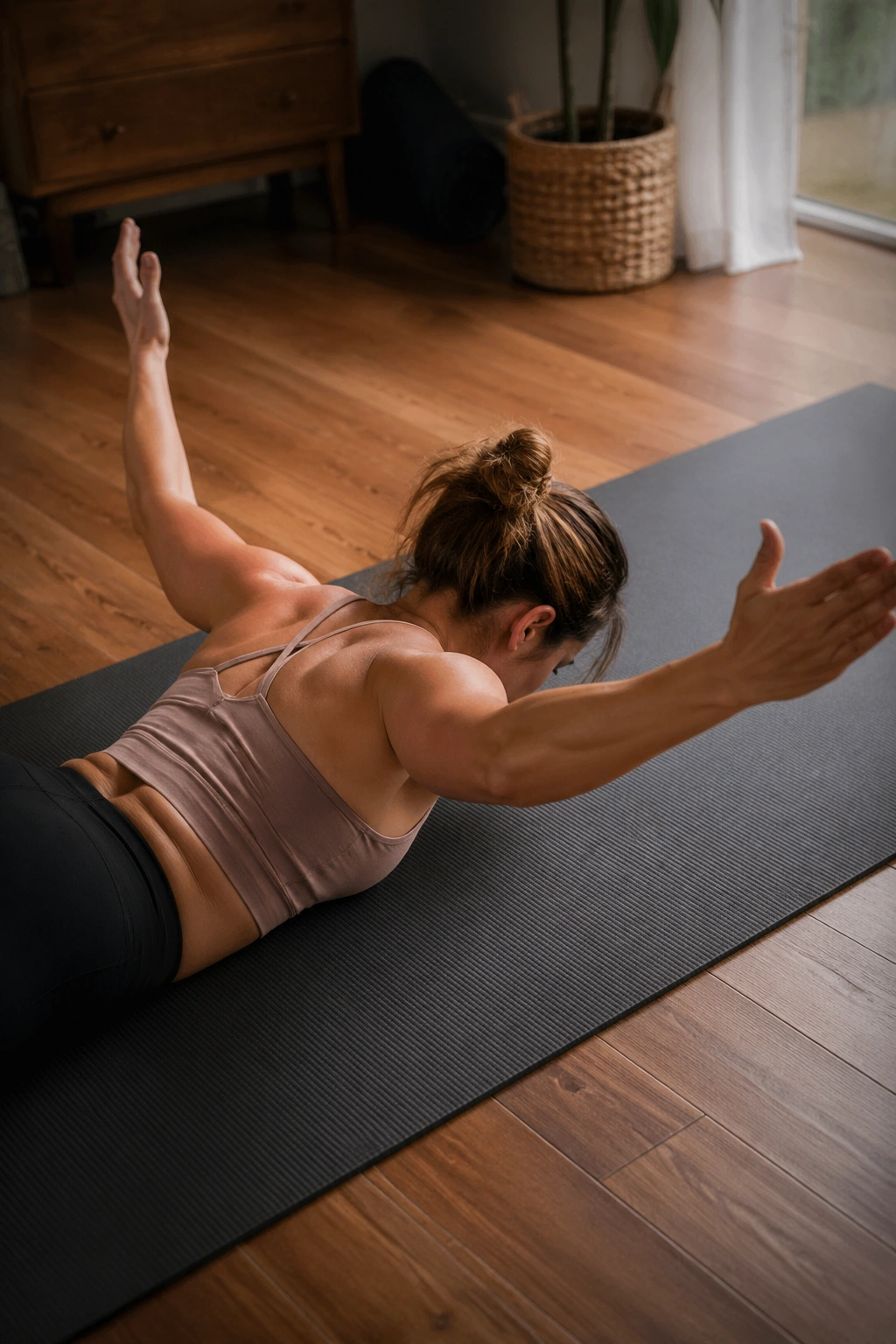
Pilates arms are sneaky. They do not need heavy loads to make your shoulders, triceps, and upper back work hard.
Use prone Y-T-W lifts, kneeling push-ups, plank taps, swimming prep, and reverse arm pulses. The body has to stabilize from the waist up, which means the core joins in whether it wants to or not. A 30-second-on, 10-second-off format keeps the pace crisp without turning it sloppy.
The arm work
A few smart choices go a long way:
- Small, controlled arm pulses beat wild swings
- Chest stays open on prone lifts
- Elbows stay soft in push-up work
- Wrists can be elevated on fists or handles if they bother you
This is one of the rare upper-body sessions that can leave you feeling tall instead of compressed. Nice change.
14. The Morning Wake-Up Flow
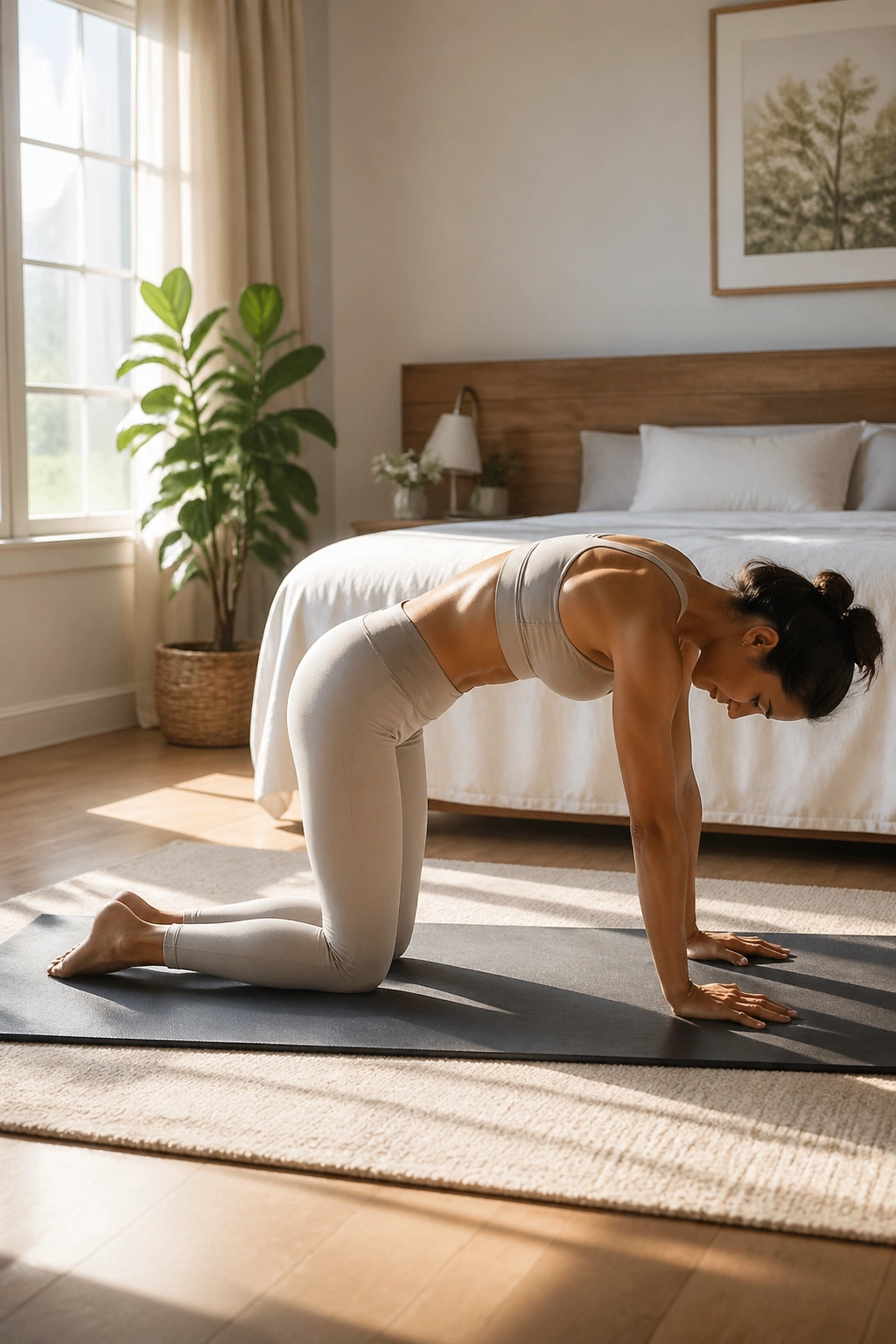
A good morning Pilates session should feel like a clean page, not a punishment.
Start with cat-cow, roll-downs, pelvic clocks, bridge lifts, bird dogs, and a few low lunges. Keep the reps gentle and the breath slow. The body usually feels a little rusty on waking, and forcing it is pointless. Better to coax it.
A simple pace
Run 6 breaths per move instead of chasing a rep count. That keeps the pace calm and gives the joints time to open. Add standing roll-backs and arm sweeps near the end if you want a little more length through the spine.
The right result is subtle. Your back should feel less stiff, your hips less jammed, and your shoulders a little less glued to your ears.
15. The Oblique Ladder With Bridge Pulses
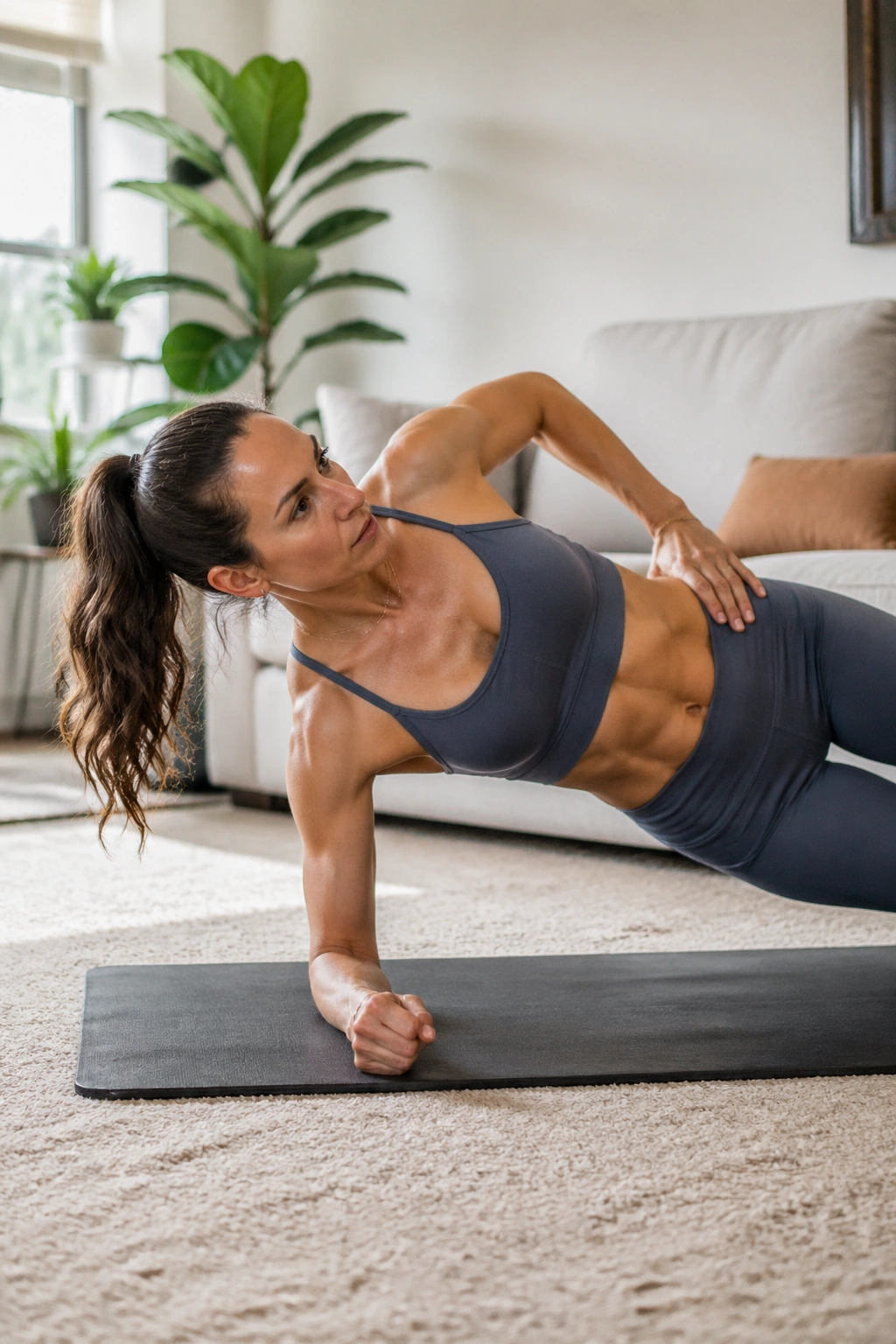
This one hits the waist from multiple angles, and it does not bother pretending otherwise.
Side plank lifts, bridge pulses, seated twists, and bicycle variations stack up quickly when they’re done in a ladder. Keep the work honest by moving slowly enough to feel each side of the waist turn on. Fast twisting is sloppy twisting.
Where people cheat
- They yank on the neck during bicycles
- They drop the hip during side plank work
- They arch the back during bridge pulses
- They rush the transitions and lose the core
A neat setup is 10 reps, then 8, then 6, then a 20-second hold for each move pattern. That descending structure keeps the workout interesting and gives the body a little mental relief near the end.
16. The Squat-to-Plank Slow Burn Circuit
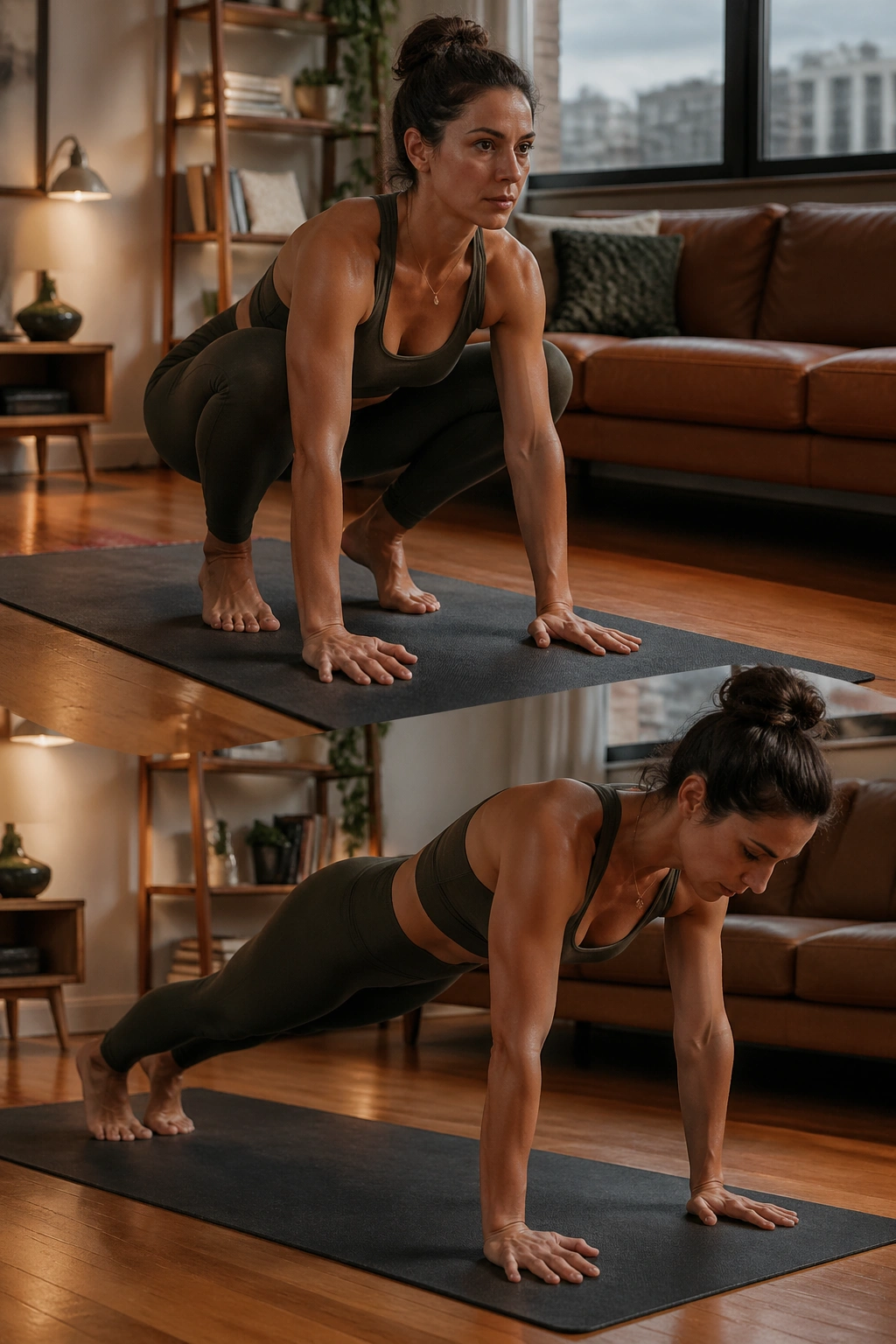
This is the one that makes people mutter at their mats.
It starts with a squat, walks into a plank, and keeps asking the body to hold itself together under slow, controlled fatigue. Use squat holds, plank walkouts, alternating knee drives, push-up lowers, and reverse lunges. The full body gets involved fast because the lower body creates the base while the shoulders and core keep the shape from falling apart.
Try 5 exercises, 50 seconds on, 10 seconds off, then repeat the circuit twice. That leaves enough time for clean movement without drifting into chaos.
If your shoulders are new to this, do the plank at an incline on a bench or couch. Same idea. Less drama.
17. The Pilates-Boxing Cardio Flow
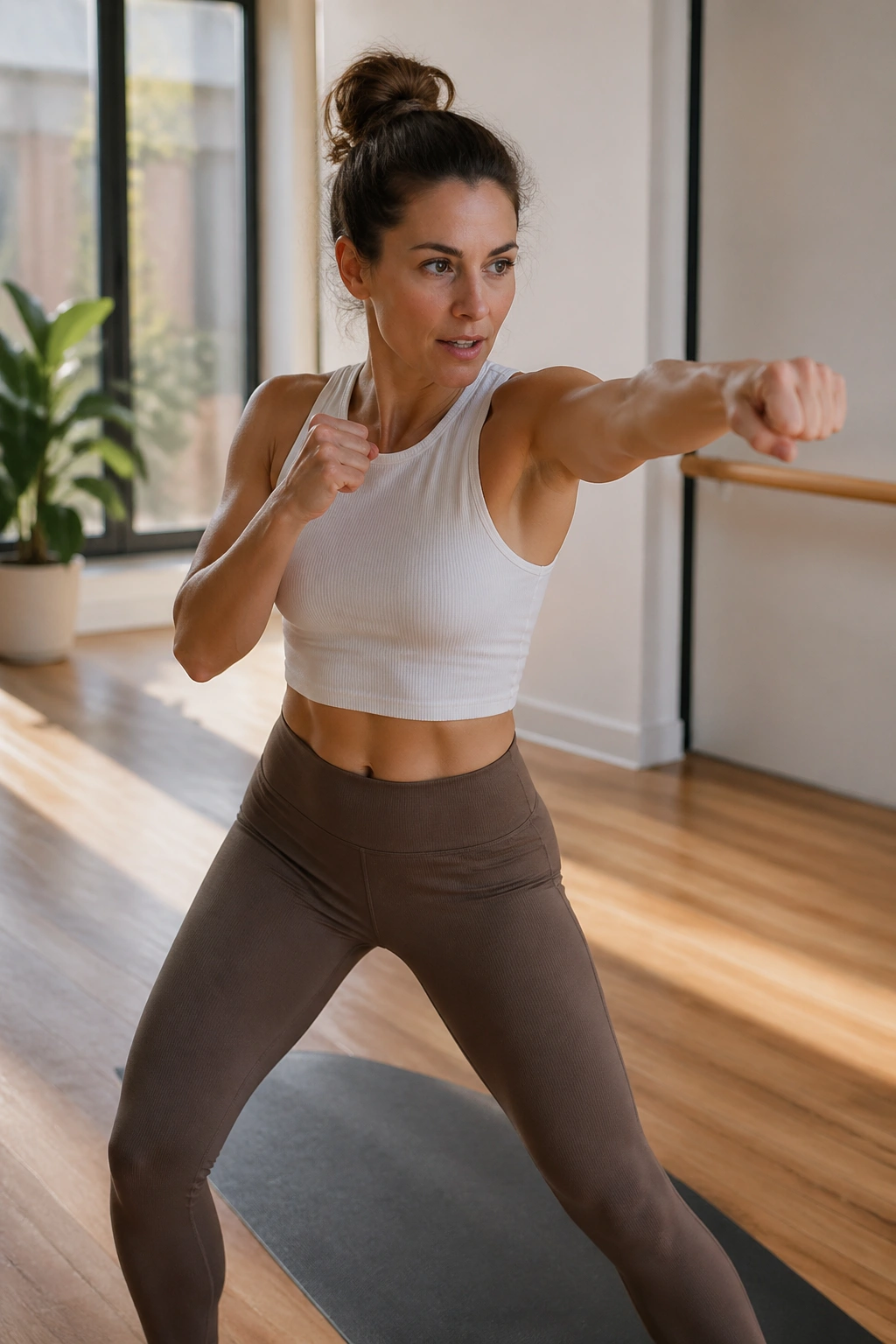
A little punchy, a little bouncy, and still controlled.
This version borrows the speed of boxing footwork but keeps the Pilates spine, core, and alignment rules in place. Think standing torso rotations, crossed punches with rib control, low squats, lateral steps, and quick arm patterns that stop short of flinging the shoulders forward. It is a good choice when you want more pulse without turning the session into a jumpy mess.
Why the tempo matters
Quick work can get sloppy fast, so keep the intervals tight: 30 seconds work, 15 seconds rest. Use the rest to reset the ribs and exhale fully.
A few useful moves:
- Jab-cross with a soft knee bend
- Standing twist with heel pivot
- Squat and reach
- Diagonal knee drive
- Marching plank with hand taps
The workout feels athletic, but the finish should still look tidy.
18. The Gentle Low-Impact Rest-Day Flow
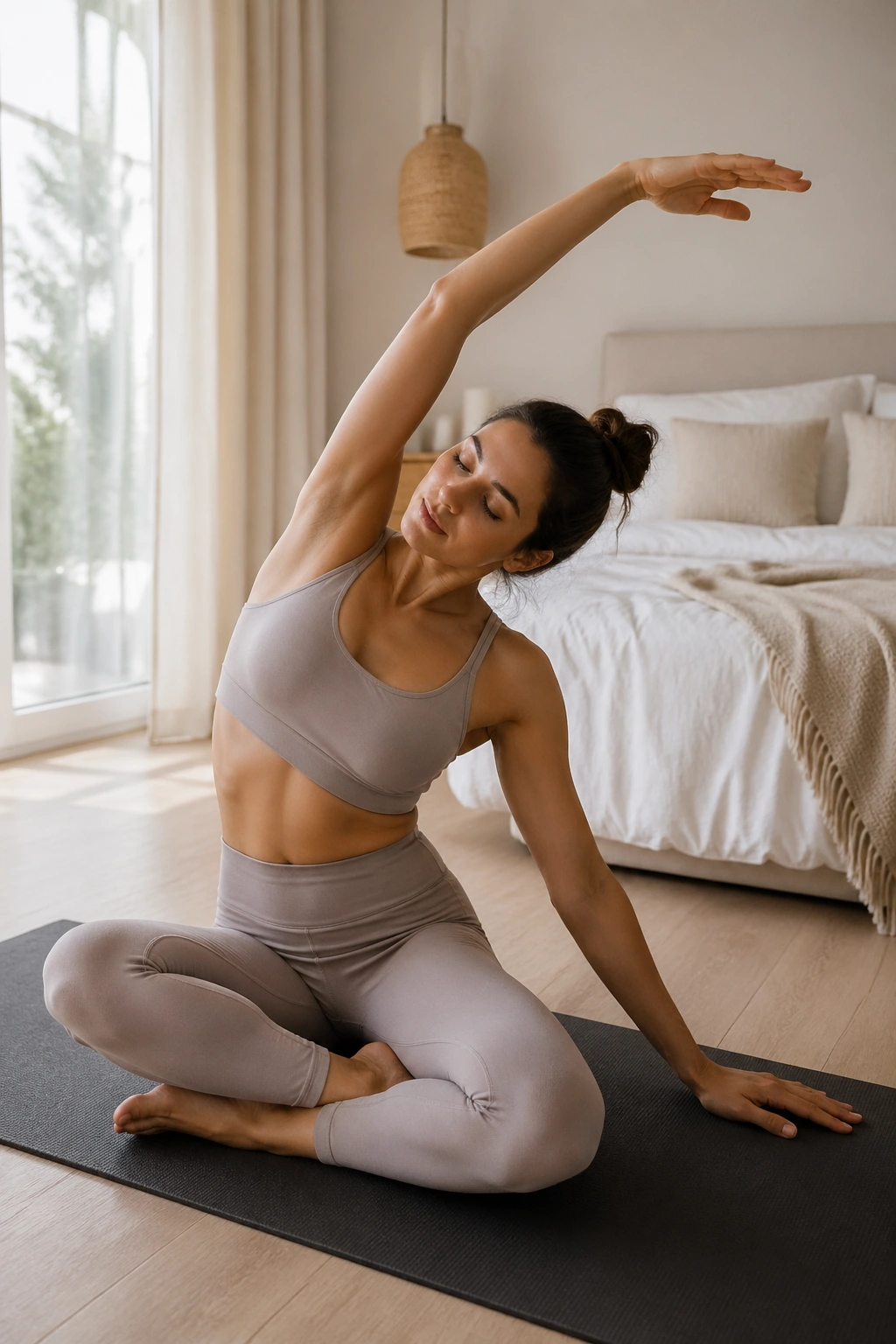
Not every Pilates workout has to leave you drenched.
Some days the body wants length, range, and a little support. That’s where this softer flow fits. Use child’s pose variations, side-lying leg work, bridge holds, seated spine stretch, and slow kneeling side bends. Keep the pace almost annoyingly calm. The body usually responds better when you stop trying to force a performance.
If a joint feels cranky, shorten the range instead of skipping the movement entirely. Tiny changes matter here.
This is also the kind of session that pairs well with longer exhales. A 4-count inhale and 6-count exhale can settle the ribs and make the whole practice feel smoother.
19. The Breath-Count Core Ladder
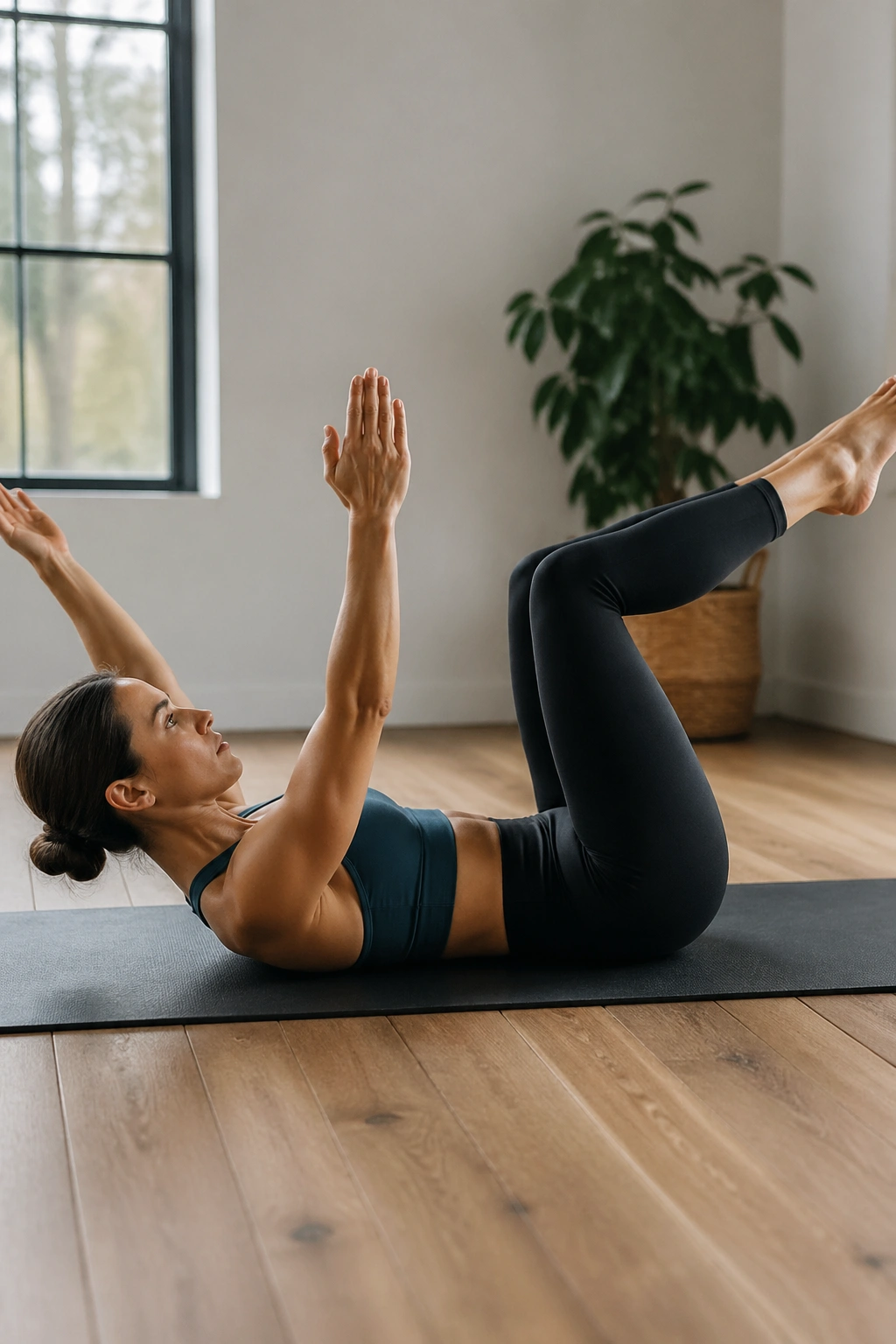
Breath counts are underrated. They make the work cleaner, and they keep the mind from wandering off into grocery lists halfway through the hundred.
Pick 5 to 7 core moves — dead bug, single-leg stretch, toe taps, low tabletop holds, roll-backs, plank holds, and hollow body prep — then assign each one 4 or 5 slow breaths instead of a rep target. That changes the tempo in a useful way. You stop chasing numbers and start noticing where the body cheats.
Breath count rules
- Exhale on the hardest part
- Keep the lower ribs from popping up
- Pause for one beat at the end of each exhale
- Stop if the neck starts doing the work
It sounds simple. It is not easy. That’s why it’s good Pilates.
20. The Bridge, Bird Dog, and Band Pull-Back Series
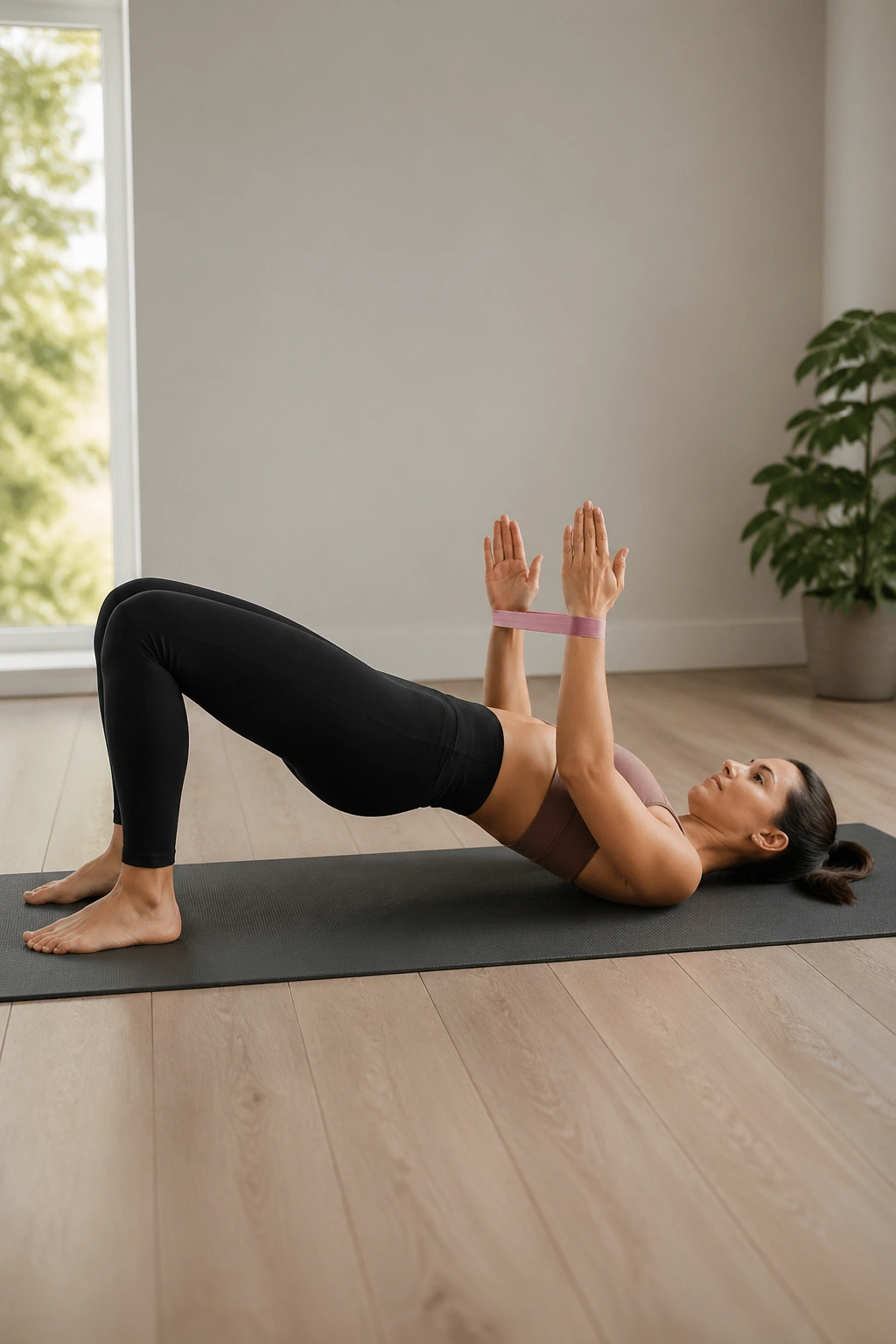
Posterior chain work gets better when the shoulders join the game.
A mini band around the wrists or thighs can add just enough resistance to bridges, bird dogs, pull-backs, and kneeling reaches to make the back of the body wake up. The glutes stay on during the bridges, the lats help in the pull-backs, and the core keeps the rib cage from flaring open. It is a tidy little package.
Use 3 rounds of 4 movements, 8 to 12 reps each. Slow down on the lowering phase and hold the top position for one count. That one count matters more than people think.
The workout ends up feeling balanced, which is rare for something that looks this simple.
21. The Tight-Hip Reset for Desk Days
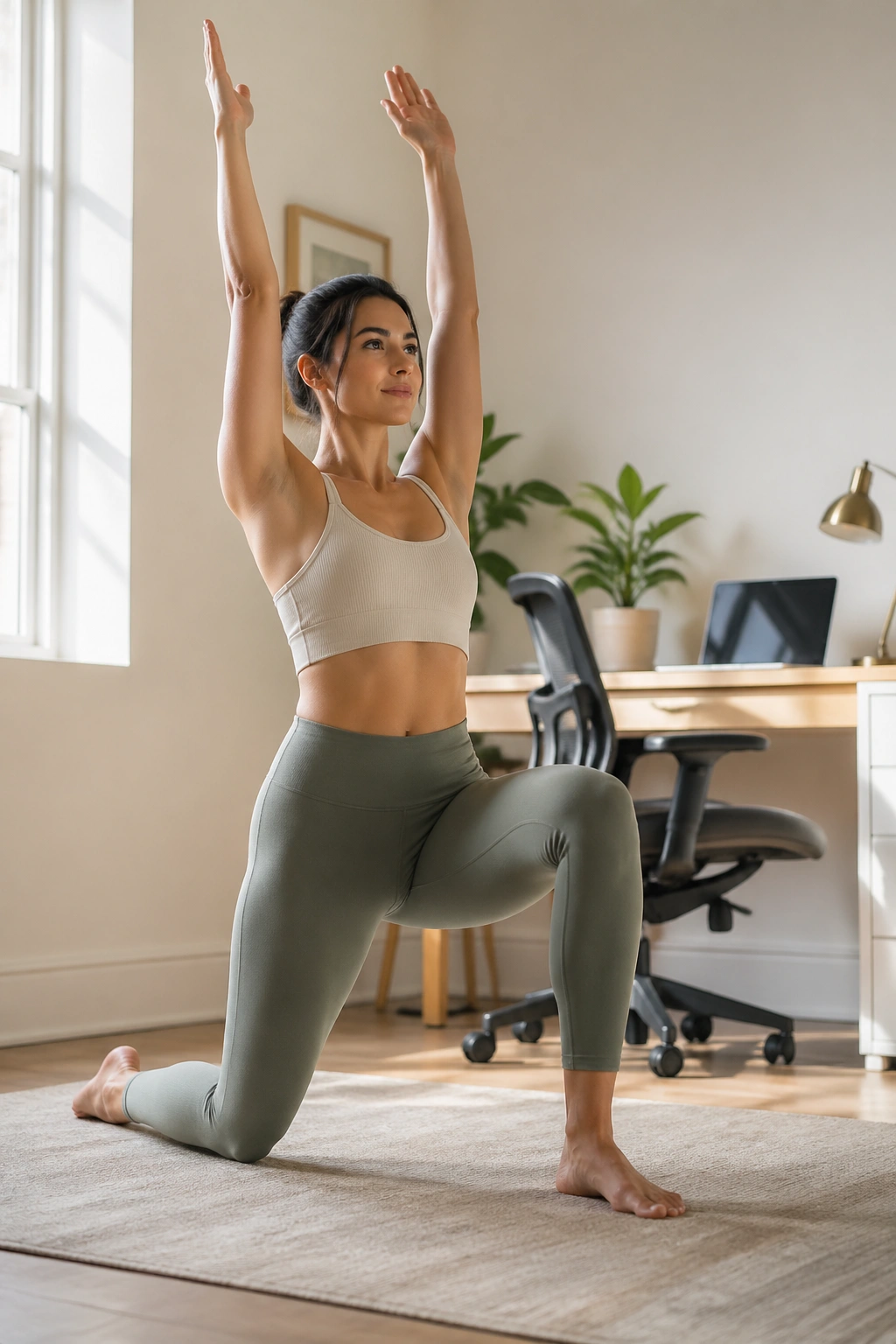
Sitting all day makes the front of the hips grumpy. No mystery there.
This session opens the hip flexors, then asks the glutes and deep core to do their share again. Half-kneeling lunges, figure-four bridges, lateral lunges, spinal rotations, and gentle standing balance all fit well here. The trick is to stay tall instead of folding over the front leg.
How to open the hips
- Tuck the back toes in a kneeling lunge
- Reach the same-side arm up and slightly back
- Keep the front heel heavy in standing moves
- Squeeze the glute on the kneeling side before you stretch
Do not rush the stretch. A tight hip usually wants patience, not force. By the end, the pelvis should feel a little freer and the lower back less loaded.
22. The Magic Circle Full-Body Sculpt
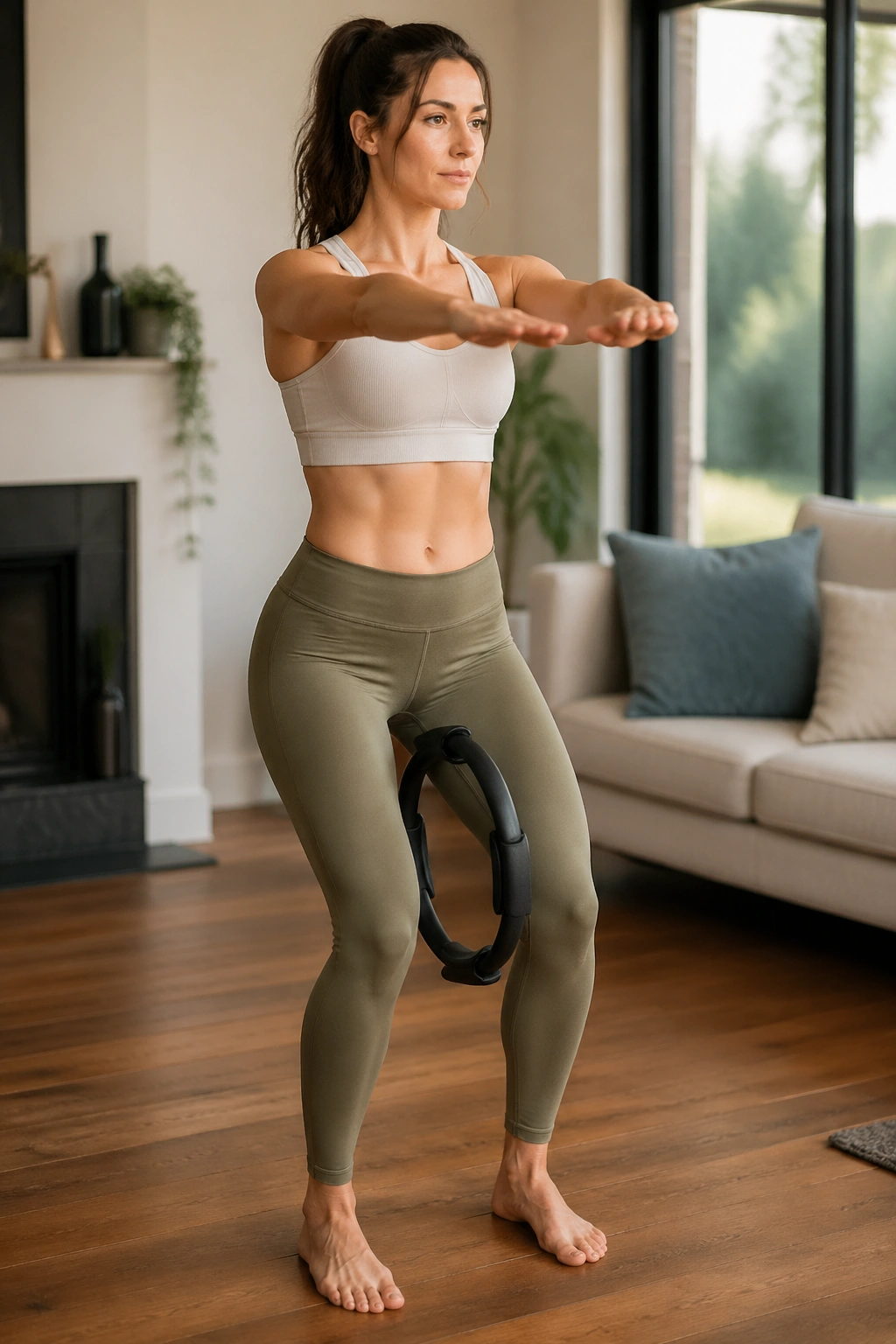
A Pilates ring looks harmless. It is not harmless.
Squeeze it between the ankles, the knees, or even the hands, and the body has to clean up its alignment fast. Use chest presses, inner-thigh squeezes, bridge holds, overhead arm reaches, and seated knee folds. The resistance is small, but the feedback is immediate.
What the ring adds
- It makes sloppy knee tracking obvious
- It keeps the arms from drifting during presses
- It gives bridge work a little more intensity
- It helps the core stay anchored during transitions
Use it for short sets of 8 to 10 reps so the form stays crisp. If the wrists feel cranky, swap hand presses for forearm holds or skip the upper-body portion altogether. The ring should help, not bully you.
23. The Athletic Pilates Flow for Leg Day Recovery
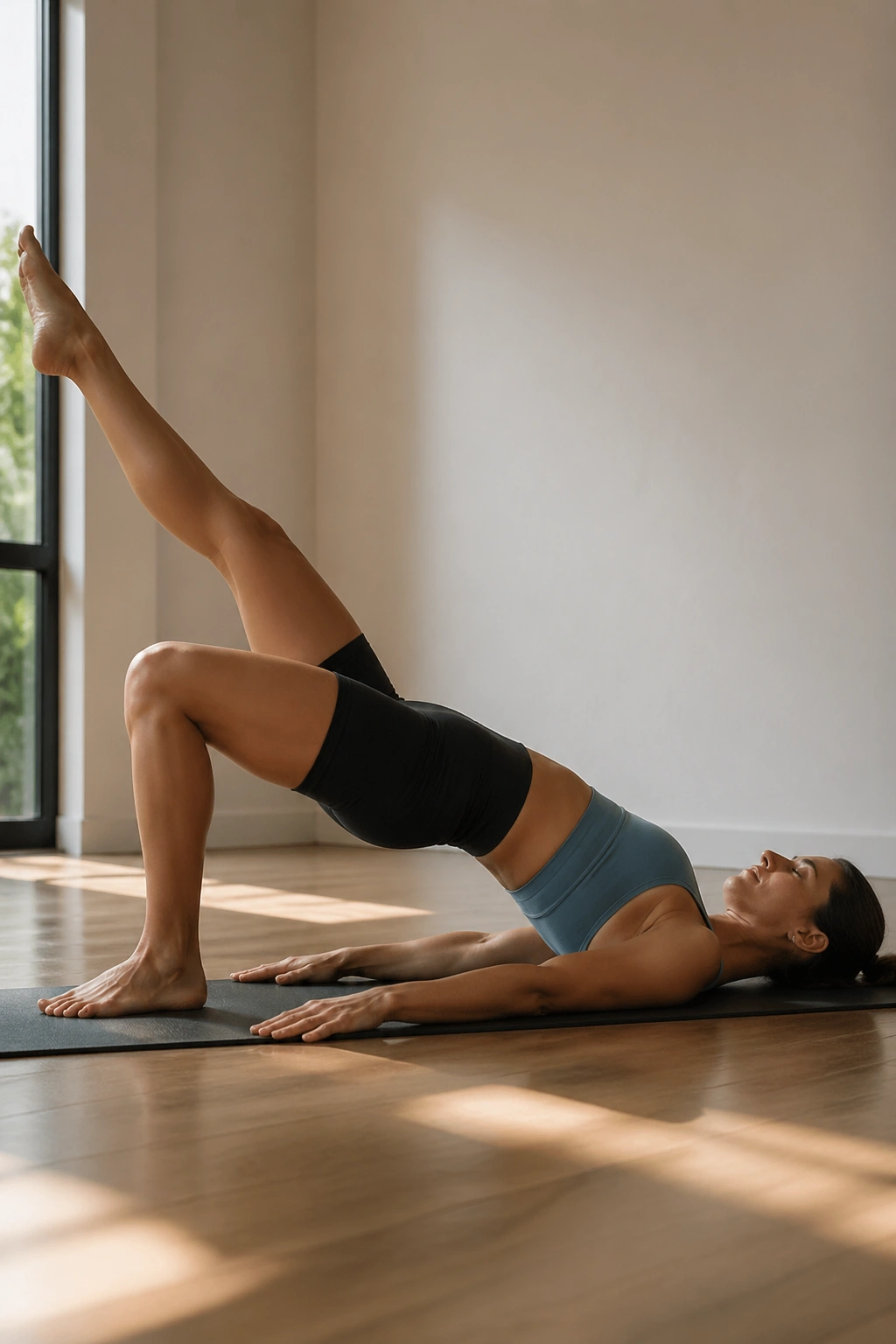
This one belongs the day after hard leg work, not right in the middle of it.
The aim is to move blood through the glutes, hamstrings, calves, and hips without adding more load. Slow single-leg bridges, supported lunges, side-lying work, controlled squats, and long spinal stretches all fit. Keep the range modest. The legs need quality movement, not another fight.
A 20-minute lower-body reset followed by 10 minutes of core and posture work is a smart structure. That split keeps the body moving while still feeling restorative.
What recovery should feel like
- Less heavy than the warm-up
- More open than the start
- Never sharp, never rushed
- Tired in a good way, not wrecked
If the quads start burning again, you’ve gone too hard. Pull back and keep the motion smooth.
24. The Chair-and-Wall Small-Space Workout
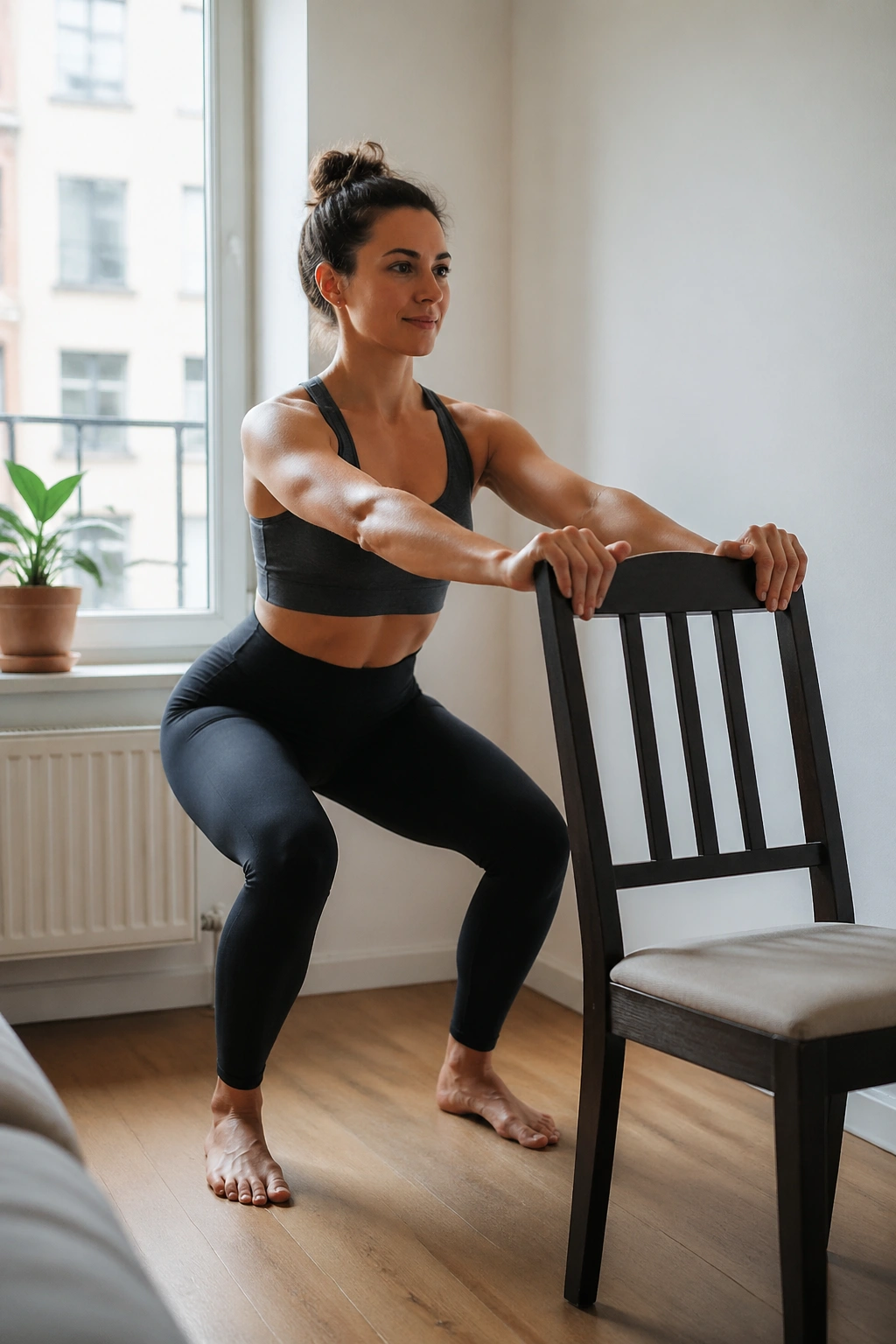
A hotel room, a corner of the bedroom, a tiny apartment — none of that is an excuse to skip the session.
A sturdy chair and a wall give you enough to build a proper Pilates flow. Use chair-supported squats, incline push-ups, standing leg lifts, wall roll-downs, triceps reaches, and one-legged balance holds. The supports let you get more precise with less risk of wobble, which is handy when the space is tight.
Smart setup
- Keep the chair against a wall so it does not slide
- Leave enough room to step back fully into a plank
- Use the wall for roll-downs and shoulder alignment
- Keep one hand near support during balance work if needed
This workout feels tidy and practical. No fuss. Just good movement in a small box of space.
25. The Classic All-in-One 30-Minute Flow
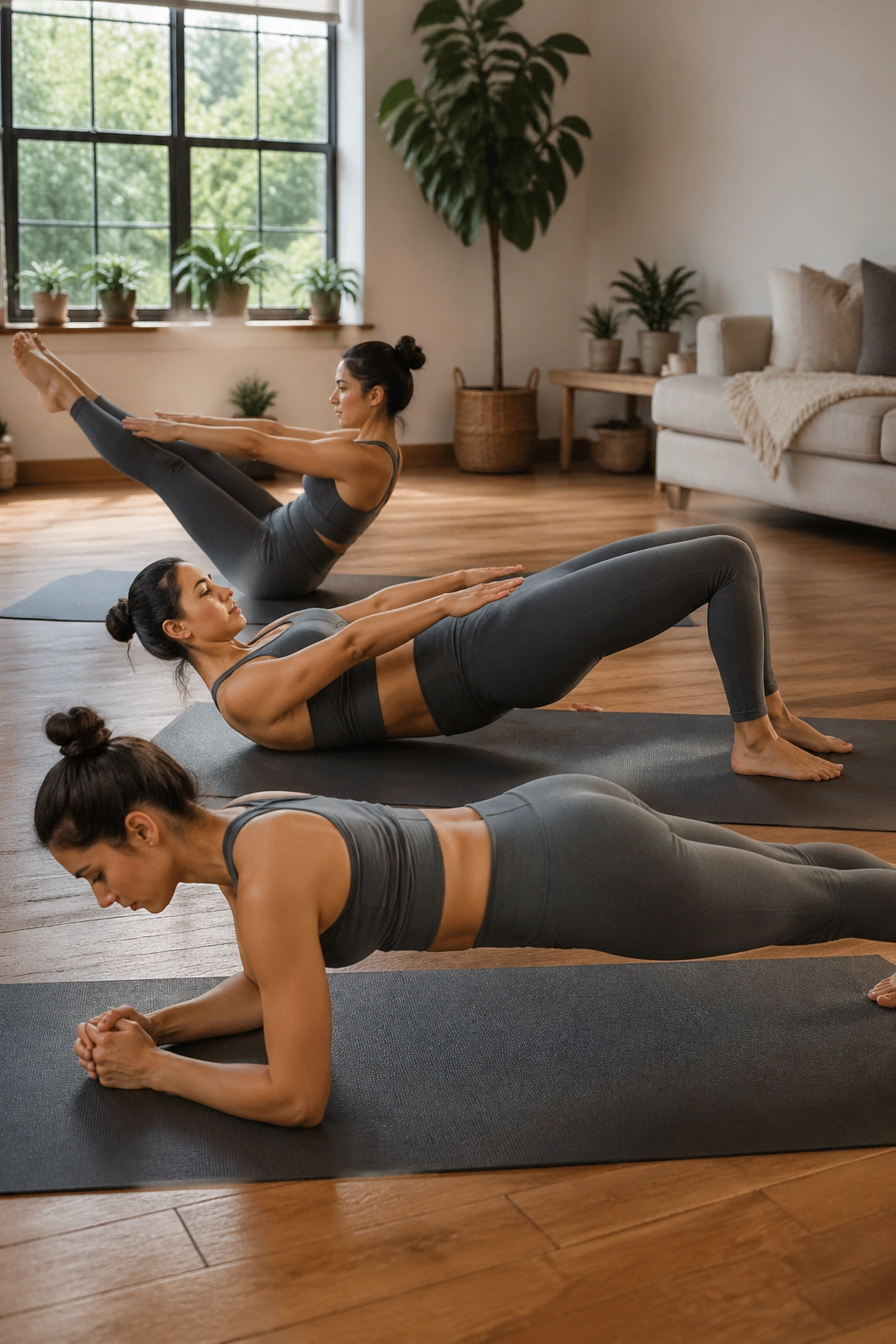
If you want one session that covers the bases, this is the one to keep close.
Start with breath, roll-downs, and pelvic curls. Move into dead bugs, bridges, side-lying leg work, planks, and a standing finish with arm sweeps and balance holds. The point is not to blast one muscle group into dust. The point is to leave the whole body feeling connected from feet to fingertips.
A simple structure works well: 5 minutes to warm up, 15 minutes of mat work, 5 minutes of standing work, 5 minutes to stretch. That split keeps the session balanced and easy to remember.
Take your time with the transitions. That is where a Pilates workout becomes a Pilates workout instead of a pile of exercises. And if one move feels off, slow it down and clean it up — the mat will tell you the truth fast.
