



If five minutes is all you have, stop waiting for the perfect stretch of free time. A tight, well-built Pilates block can wake up your core, loosen a stiff back, and make your body feel less welded to the chair you’ve been in all day. The trick is not speed. It’s control.
Pilates workouts you can do in 5 minutes work because Pilates was never about frantic motion in the first place. The method leans on breath, alignment, precision, and small movements that force the right muscles to do their share. That’s why a short mat session can feel more useful than a longer, sloppy one. A five-minute routine can reset posture, switch on the glutes, and calm the “everything is pulling in different directions” feeling that shows up after a long stretch of sitting.
I like short routines for another reason: they’re easy to start. No mental negotiation. No packing a bag. No need to turn your living room into a full studio. A mat helps, sure, but a rug, a folded blanket, or a clear patch of floor will do the job for most of these. A wall helps too, which is nice because walls are free and usually available.
Pick one routine, set a timer, and move with intent. The first minute often feels too small to matter. Then your ribs settle, your neck loosens, and your breathing gets deeper without you trying so hard. That’s the good stuff.
1. The Hundred Breath Reset
The Hundred gets a lot of attention for a reason: it wakes up the middle of the body fast. Done well, it’s not a neck-choking endurance contest. It’s a clean breath-and-core drill that tells your body to stack the ribs, brace the deep abs, and stop hanging out in the lower back.
How to pace it
Use a simple 5-minute structure:
- 45 seconds: lie on your back with knees bent and arms long by your sides
- 45 seconds: curl head and shoulders up, keeping the gaze toward the thighs
- 45 seconds: pump the arms while taking 5 short inhales and 5 short exhales
- 45 seconds: move into tabletop legs, one at a time if needed
- 45 seconds: lower the head, rest, and repeat the whole sequence once
Keep the ribs heavy. If they pop up, the abs stop helping and the low back starts stealing the work.
If your neck complains, leave your head down and just pump the arms. That still counts. If your hips feel shaky in tabletop, keep one foot on the floor and alternate legs slowly. The point is not to prove anything. The point is to feel your center line wake up.
One neat thing about this little reset: it often makes the rest of your day feel less chaotic. Small miracle, honestly.
2. Roll-Downs That Wake Up the Whole Spine
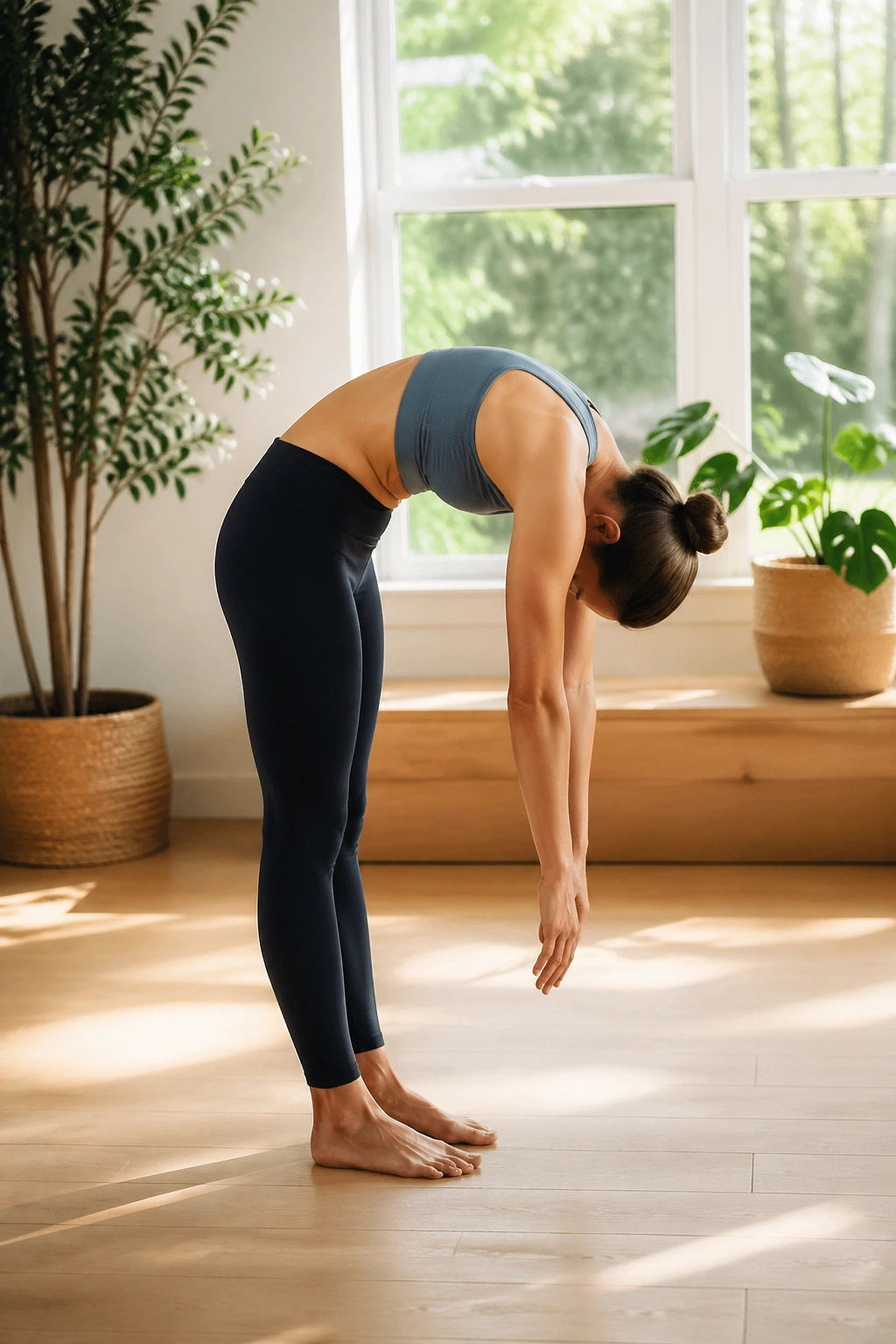
A standing roll-down sounds almost too basic, which is exactly why people skip it. Bad move. This is one of the best five-minute Pilates-style routines for the spine, especially if your lower back feels compressed or your hamstrings get tight and grabby.
Start with feet hip-width apart and knees soft. Nod the chin, then peel forward one section at a time until your arms hang toward the floor. Don’t yank yourself down. Let the head lead, then the shoulders, then the rib cage, then the lower back. Pause at the bottom for two slow breaths. On the way up, stack the spine slowly, one piece at a time, like you’re building a tower from the floor upward.
The difference between a good roll-down and a lazy one is tiny but obvious in the body. A good one feels like a line of tension loosening from the base of the skull to the tailbone. A lazy one feels like a collapse. Those are not the same thing.
Do 5 slow roll-downs, then 5 half roll-ups where you only come halfway back and hold for a breath. That second bit catches the deep abdominals in a way people often miss.
3. Single-Leg Stretch Ladder
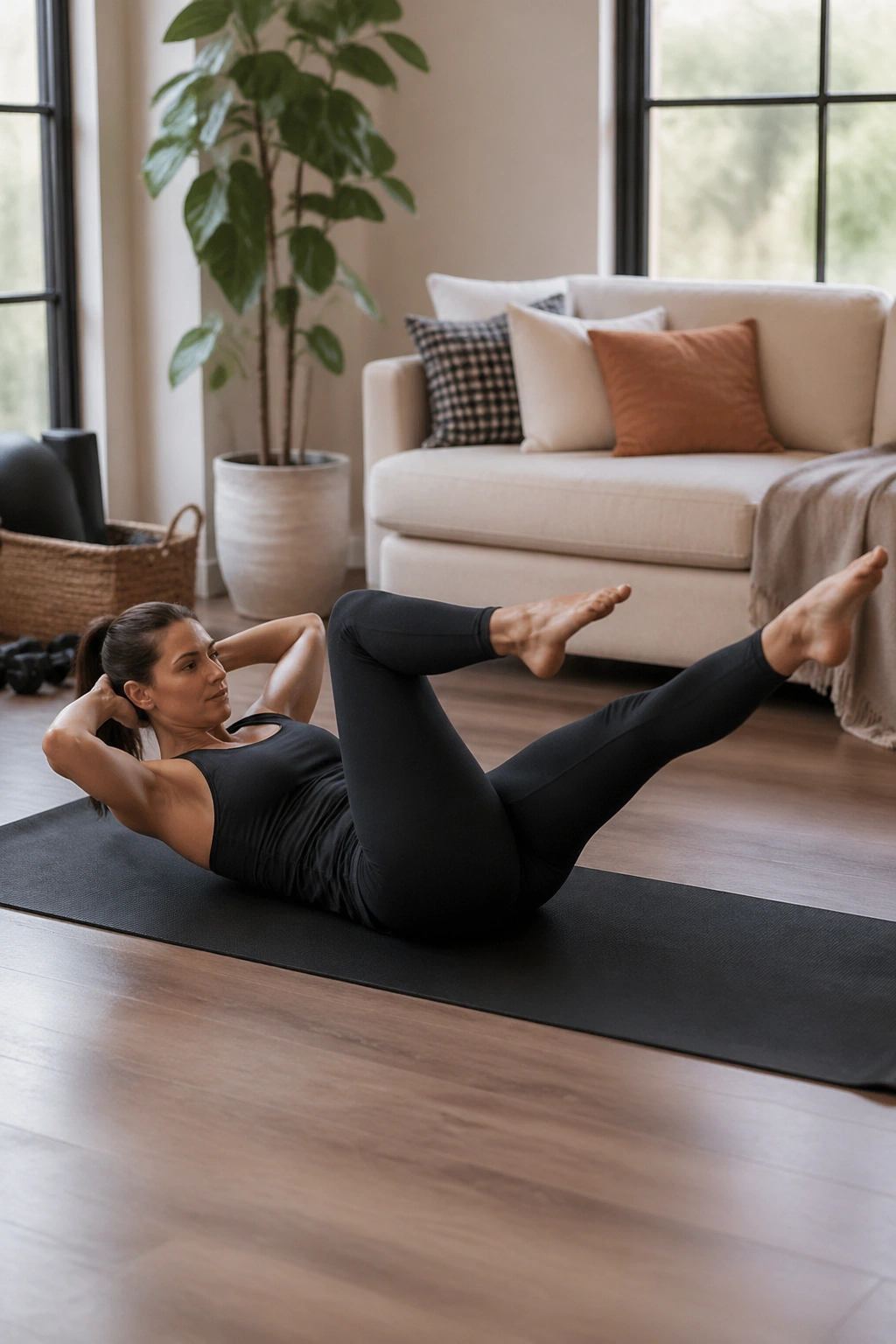
Why does such a small move burn so quickly? Because the single-leg stretch forces your abs to keep the pelvis steady while your legs do something messy and human.
Lie on your back, draw one knee in, and extend the other leg long at a low diagonal. Switch sides with control, not speed. Keep the elbows wide if your head is lifted, or leave the head down if your neck is the weak link that day. Move through 10 to 12 switches per side, rest for 10 seconds, then do another round. Three rounds fills five minutes without turning the exercise into chaos.
How to keep it clean
- Exhale as the leg extends.
- Keep the pelvis still; no rocking.
- Reach the long leg far enough to feel the lower belly wake up.
- Stop before the hip flexors take over and start bossing everything around.
If you want a tougher version, hover both legs a little lower. If your back arches, raise the legs higher and shorten the range. Simple.
The best cue I know is this: the movement should feel tidy. Not rushed. Not showy. Tidy. That’s where the work lives.
4. Glute Bridge Marches
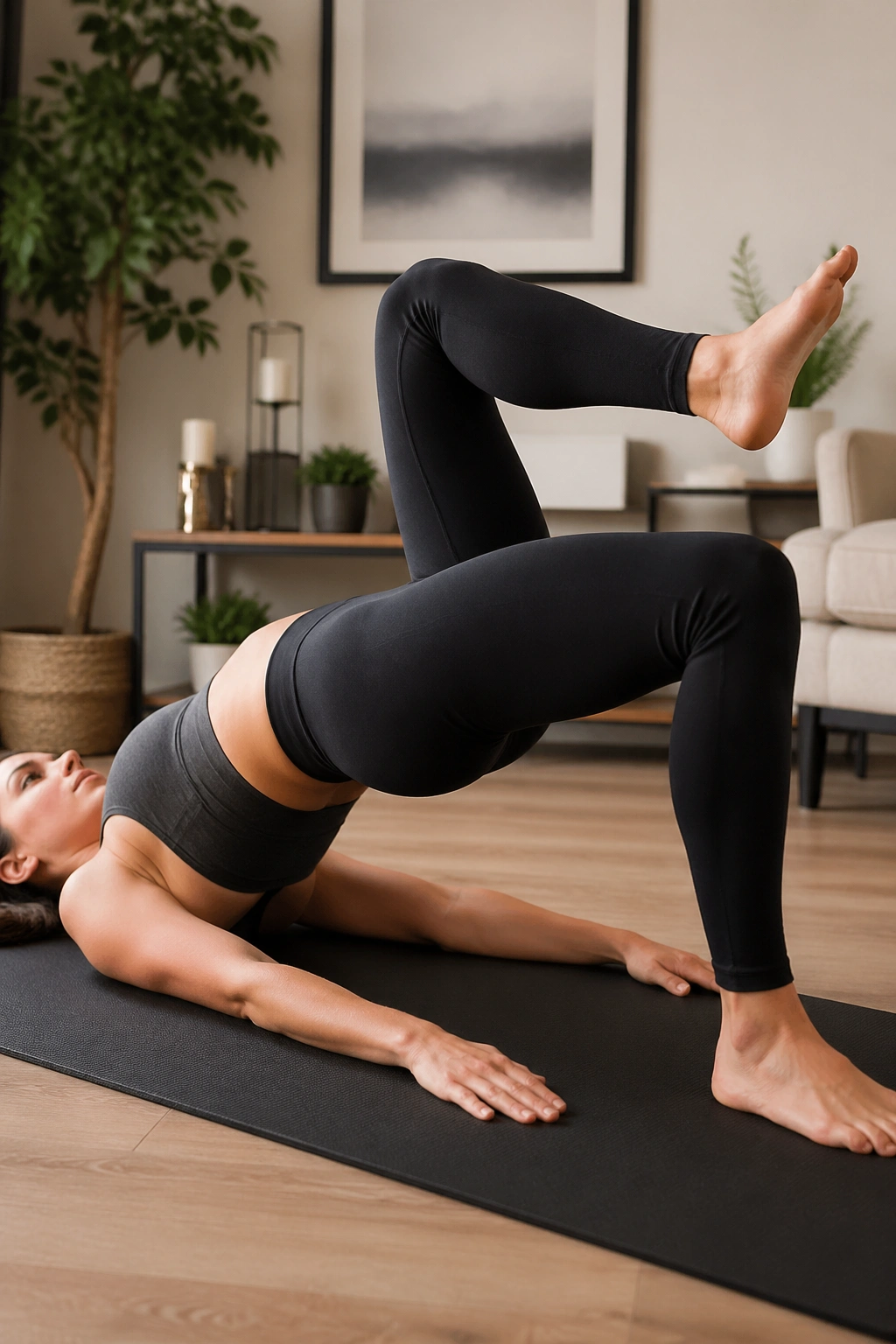
Picture this after a long day in a chair: the hips feel dead, the low back feels loud, and your glutes have gone suspiciously quiet. A bridge march fixes a lot of that without needing fancy equipment.
Set your feet flat and hip-width apart, then lift into a bridge until the hips are level with the knees and shoulders. Hold that shape. March one knee up an inch or two, place it back down, then switch sides. The pelvis should stay level the whole time. If it wobbles, lower the bridge a little and make the march smaller.
Do 8 marches per side, then 8 tiny bridge pulses, then repeat the whole sequence once more. That gives you a solid five-minute block and a clear target. The bridge should work the glutes first, hamstrings second, low back last. If your low back is shouting, the ribs are probably flaring or the feet are too far away.
A nice detail to watch: the front of the hips should feel open, and the back of the legs should feel warm, not cramped. If the hamstrings cramp, bring the heels closer to the seat and press through the outer edges of the feet a little more.
5. Dead Bug Toe Taps
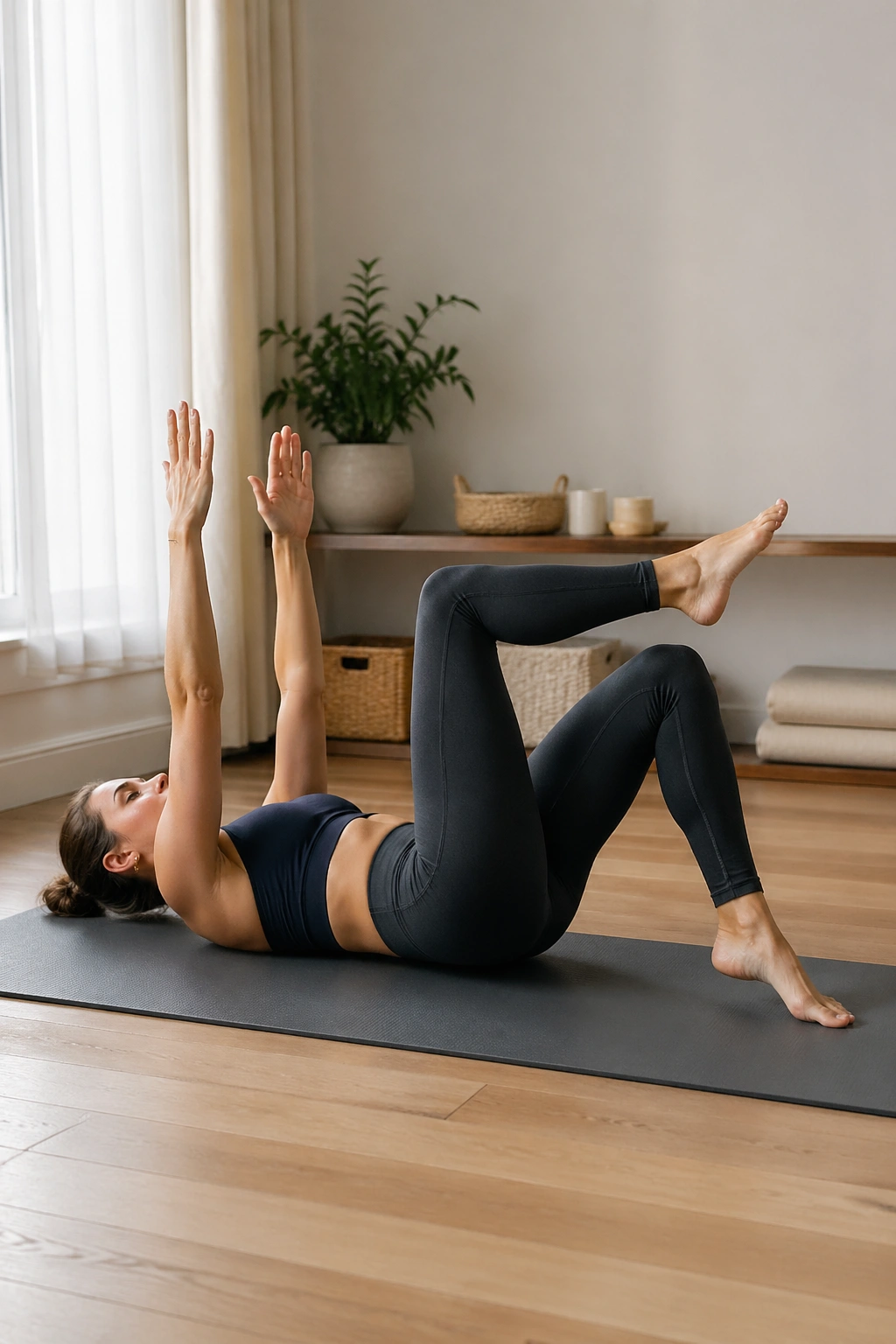
A dead bug sounds childish until you do it slowly and realize how honest it is. The toe tap version is one of the best five-minute Pilates workouts for building deep abdominal control without a lot of drama.
Lie on your back with knees over hips, shins parallel to the floor, and arms reaching toward the ceiling. Exhale to lower one toe to the floor, then inhale to bring it back. Alternate sides for 10 taps per side, rest for 20 seconds, and repeat the cycle twice. If that feels easy, extend the opposite arm overhead as the opposite leg taps down. That version lights up the midline fast.
The real test here is the low back. It should stay long and quiet, not arched like a little bridge you didn’t mean to build. If the back pops off the floor, raise the legs higher and slow the movement down. Slow is the point. Fast toe taps turn into hip flexor work. Slow taps turn into core work.
I prefer this one when I want something clean and unfussy. No rolling, no crunching, no neck tension. Just pressure, breath, and control.
6. Side-Lying Leg Series
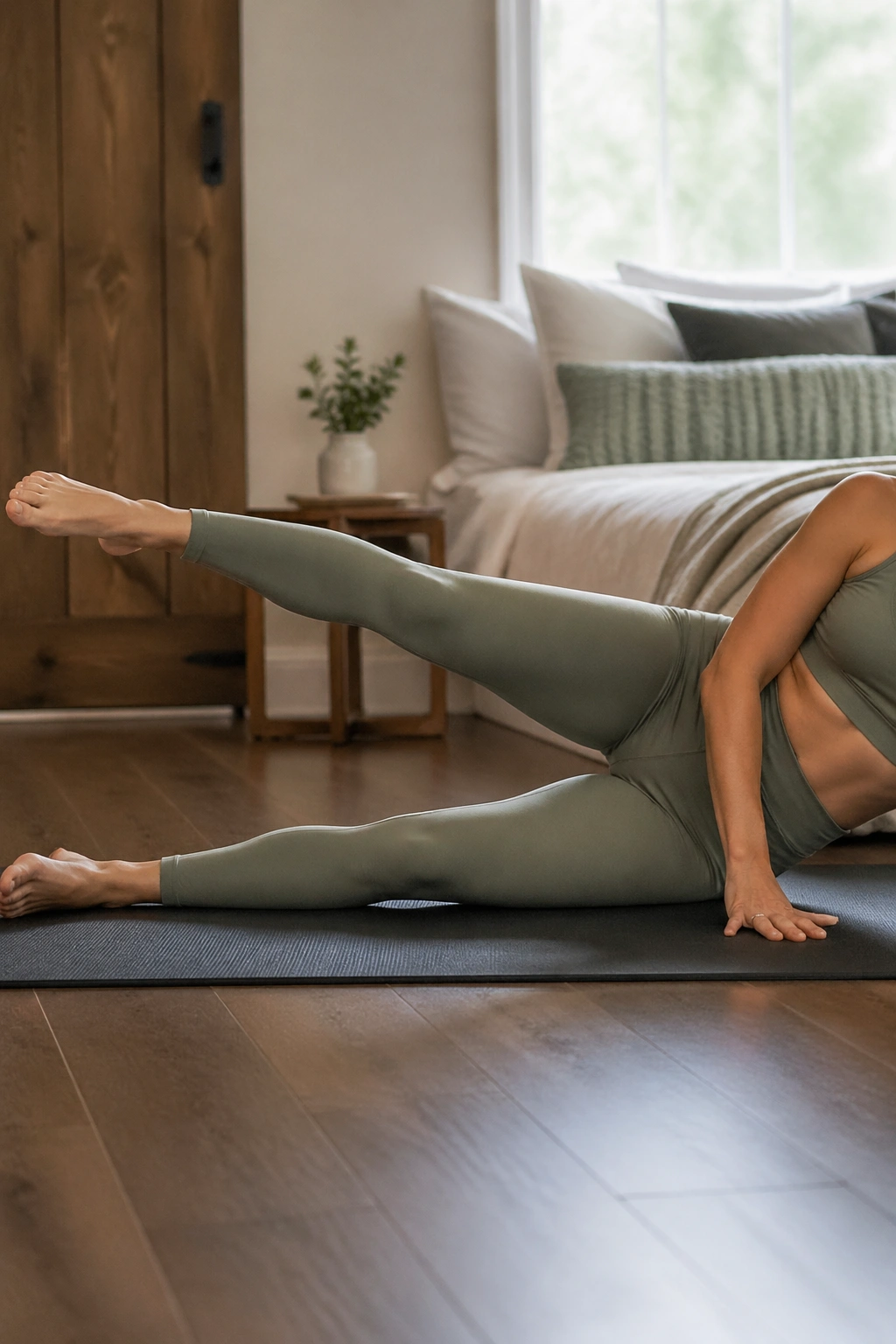
Side-lying work has a reputation for being gentle, and sure, it can be. But done properly, it bites. The outer hip starts talking quickly, especially if you sit a lot or your knees drift inward when you stand.
Lie on one side with legs long, head supported by your lower arm or a pillow. Lift the top leg a few inches, lower it, then swing it slightly forward and back with a short, controlled range. After that, draw small circles clockwise and counterclockwise. Do 8 lifts, 8 front-and-back kicks, and 8 circles each direction before switching sides.
What to feel in the outer hip
- The standing leg should stay relaxed, not clenched.
- The waist on the floor side should feel long.
- The top hip should not roll backward.
- The lift should come from the side of the glute, not the lower back.
A mini band can make this nastier in a good way, but you don’t need one. The real challenge is keeping the torso quiet while the leg moves. That’s the part people usually skip.
This routine is a favorite of mine for lazy glutes. It doesn’t look dramatic. It works anyway.
7. Swimming for the Back Body
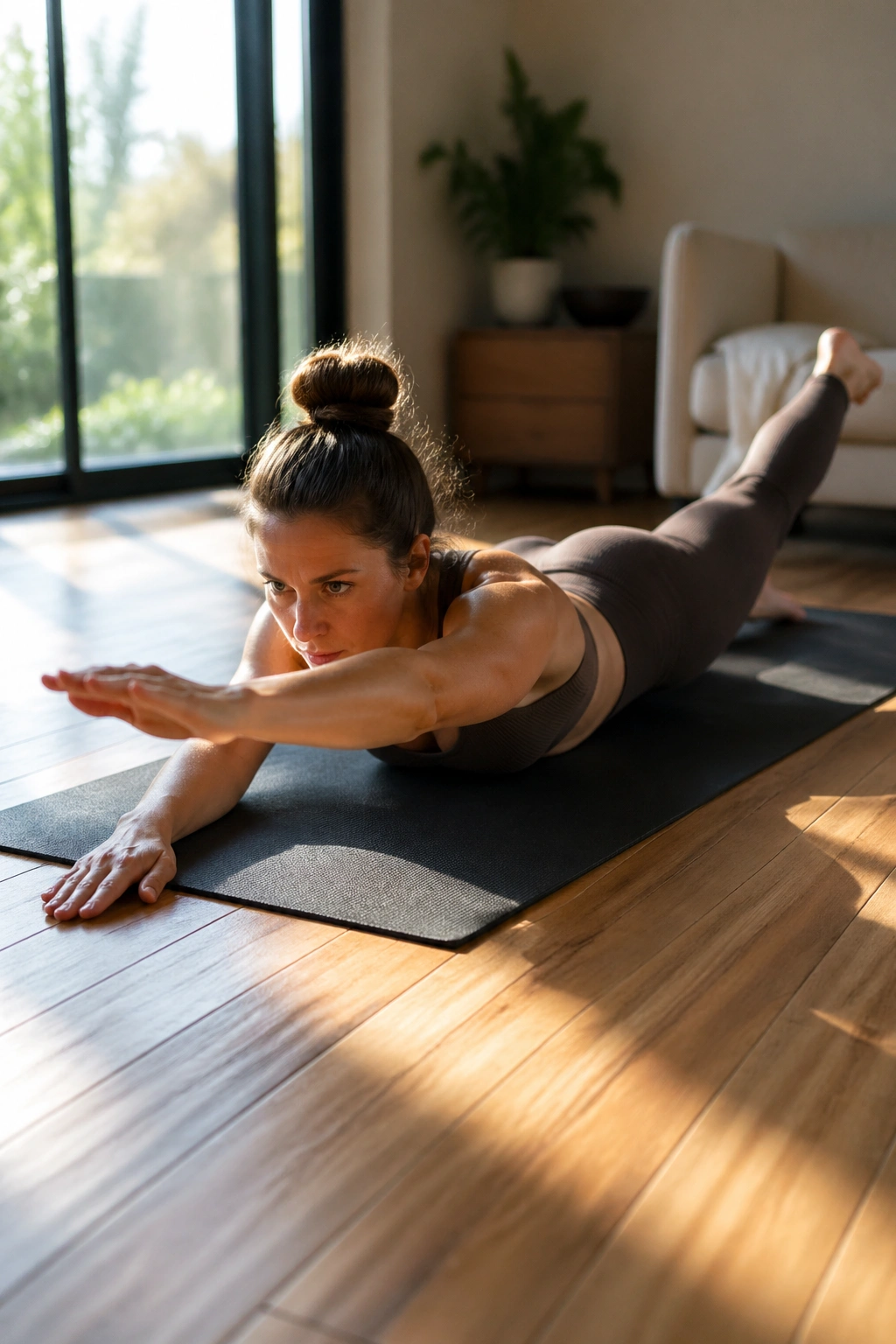
Swimming is the five-minute routine I reach for when someone’s posture has gone full question mark. It’s also a nice antidote to all the front-body work people do without realizing it — typing, driving, scrolling, carrying groceries on one side, and so on.
Lie face down with arms long and legs stretched out. Lift the right arm and left leg a few inches, then switch. Keep alternating in a smooth, steady rhythm. The lift should be small. If you’re tossing your limbs into the air, the low back will take over and the neck will tense up. That’s not the goal.
Try 20 seconds of alternating lifts, 10 seconds rest, then repeat for five rounds. Or go for 30 seconds on, 15 seconds off if you like a bit more burn. The motion should feel long and light, almost like you’re reaching past the mat rather than upward. Your gaze stays down, your neck stays long, and your ribs stay in contact with the floor as much as they can.
There’s a strange satisfaction in this one. The back of the body wakes up in a way that feels clean and upright, not brute-force tired.
8. Forearm Plank Knee Drives
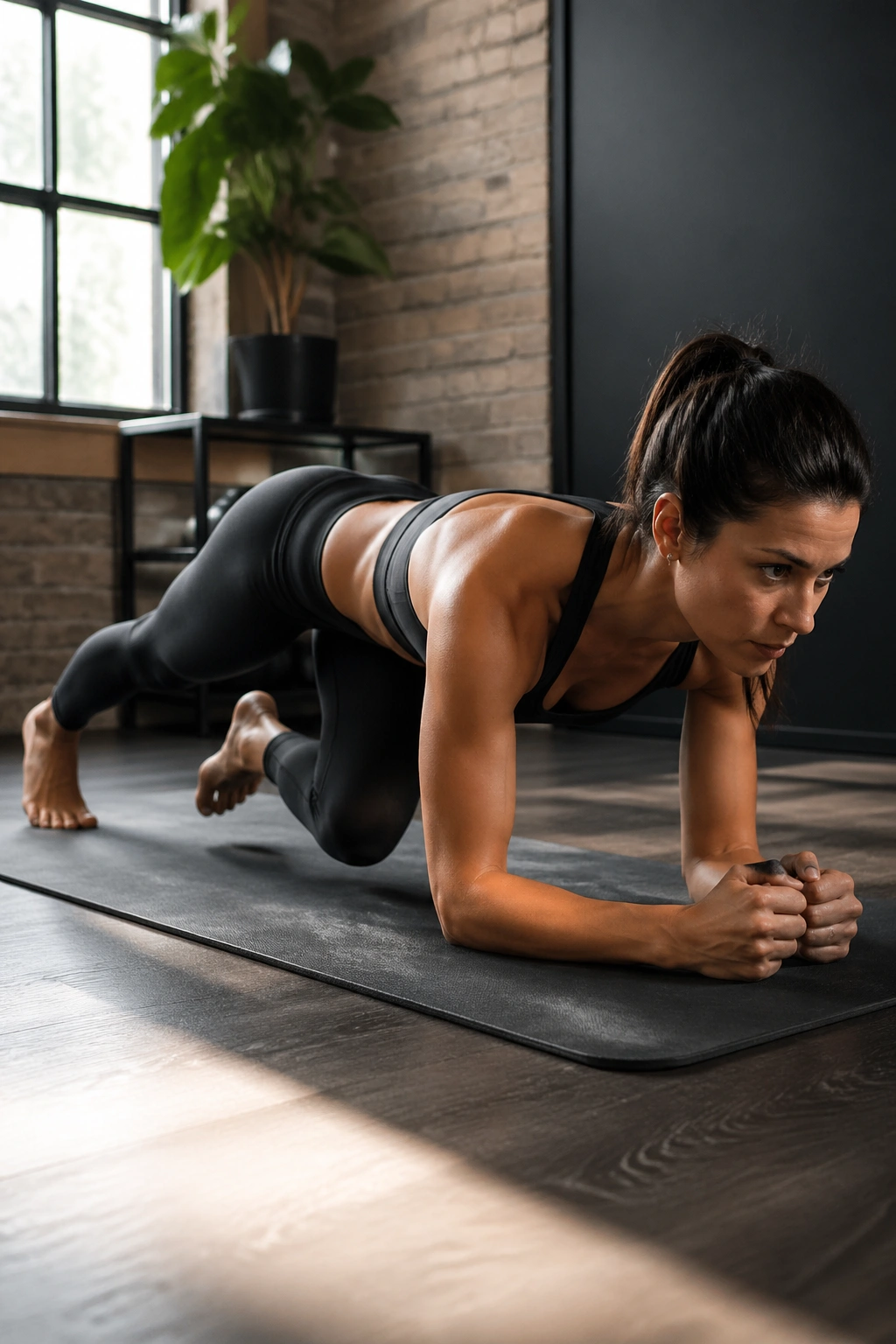
A plank does not have to be a punishment. It can be a tidy, sharp little core drill if you keep it slow enough to matter.
Set up in a forearm plank with elbows under shoulders and feet hip-width apart. Draw one knee toward the same-side elbow, then return it to the floor and switch. If that feels too cramped, drive the knee straight under the torso instead. Work for 30 seconds, rest for 15, and repeat four times.
How to keep the plank useful
- Press the floor away through the forearms.
- Keep the hips as quiet as possible.
- Move the knee with control, not momentum.
- Stop if the shoulders shrug toward the ears.
Compared with fast mountain climbers, this version asks for more control and gives less room for cheating. That matters. Speed makes the exercise feel bigger, but usually not better. Slow knee drives make the waist, lower abs, and shoulder girdle all earn their keep.
If your wrists hate planks, forearms are a nice trade. Less drama, same core challenge.
9. Spine Twist and Saw
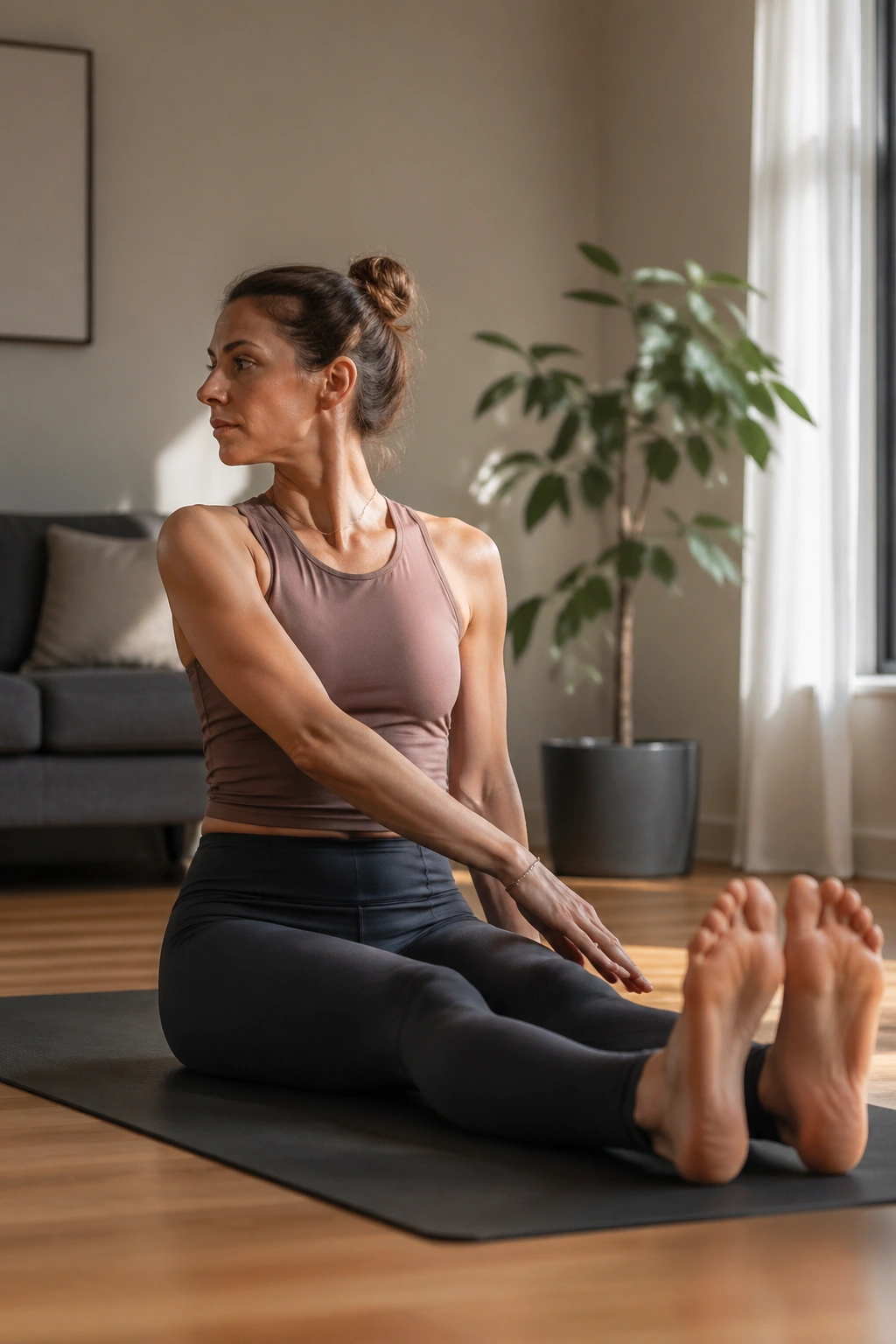
Want a core drill that feels like a reset instead of a punishment? The seated twist and saw combo does that well. It opens the back, rotates the ribs, and reminds the torso that it’s allowed to move in more than one direction.
Sit tall with legs long and a small bend in the knees if your hamstrings pull hard. Rotate to one side, pulse once, then return to center and reach the opposite hand toward the outside of the opposite foot in the saw. Come back up, twist the other way, and repeat. Four rounds each side takes about five minutes if you move with a calm rhythm.
The trick is not to fling the arms around. Let the ribs start the twist. The hands are just the finishing touch. When people crank this movement from the shoulders, the neck tightens and the lower back gets grumpy. When they move from the rib cage, the whole shape opens up.
I like to exhale on the twist and inhale in the center. That keeps the movement honest. It also slows the whole thing down, which is usually where Pilates starts to feel more like Pilates and less like random stretching.
10. Mermaid Side-Bend Flow
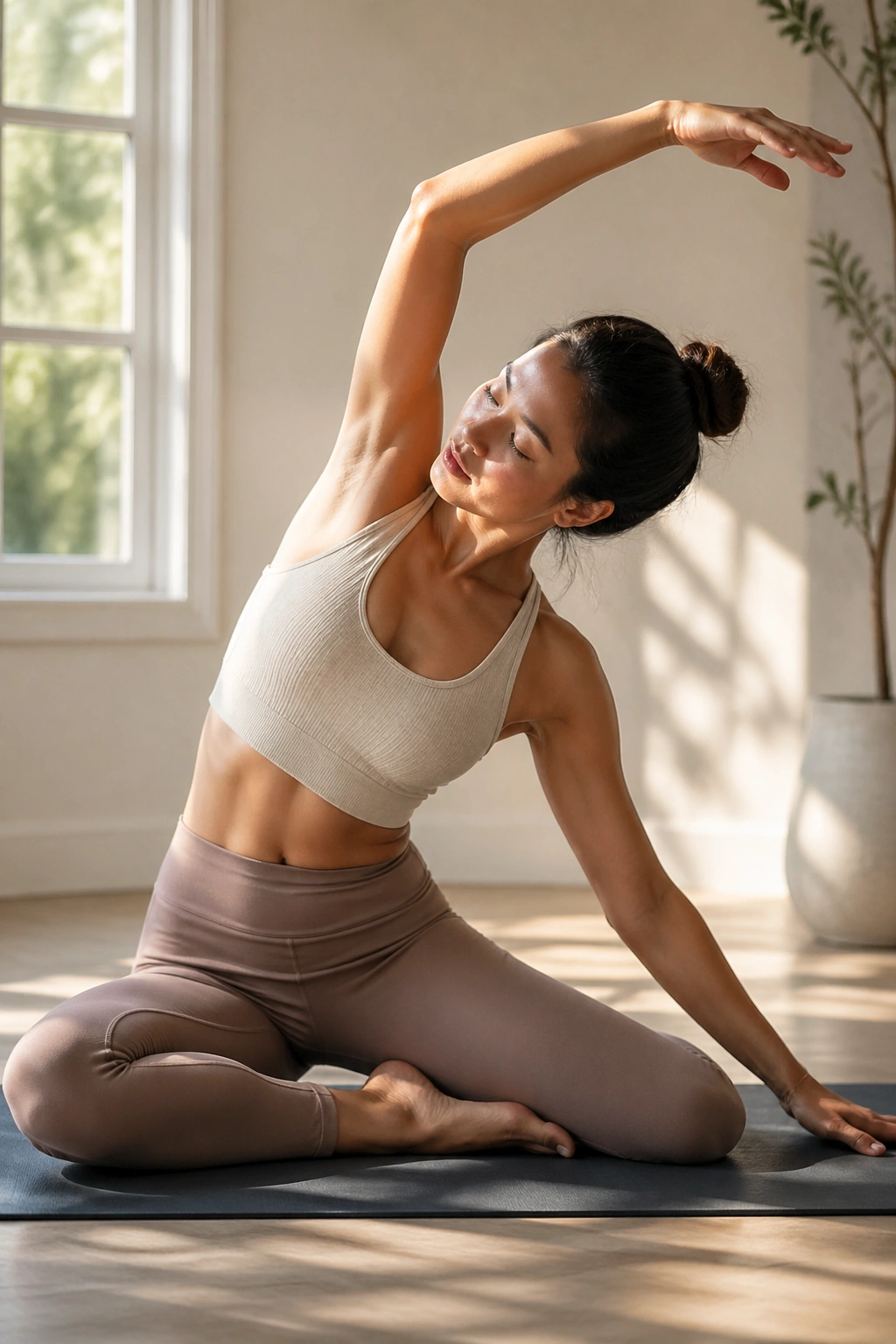
The mermaid is the routine I reach for when one side of my torso feels short and pinched. Travel days do that. Desk days do it too. So do long mornings spent curled over a phone.
Sit to one side with both legs folded comfortably, then lift one arm overhead and side-bend away from the grounded hip. Keep the opposite sit bone heavy. Breathe into the side ribs for two or three slow breaths, then return to center and switch sides. Repeat the whole flow three times. If kneeling is easier than sitting, use a half-kneeling version instead. The idea matters more than the exact shape.
This movement should feel like the space between the ribs and hip is opening. Not yanked open. Opened. There’s a difference, and your body knows it. A tiny lift through the spine before each side bend helps keep the motion long rather than floppy.
I love this one as a break between stronger drills. It’s calm, but not passive. Your obliques and side body still have work to do, and the breath gets a little deeper than it was a minute ago.
11. Criss-Cross Intervals
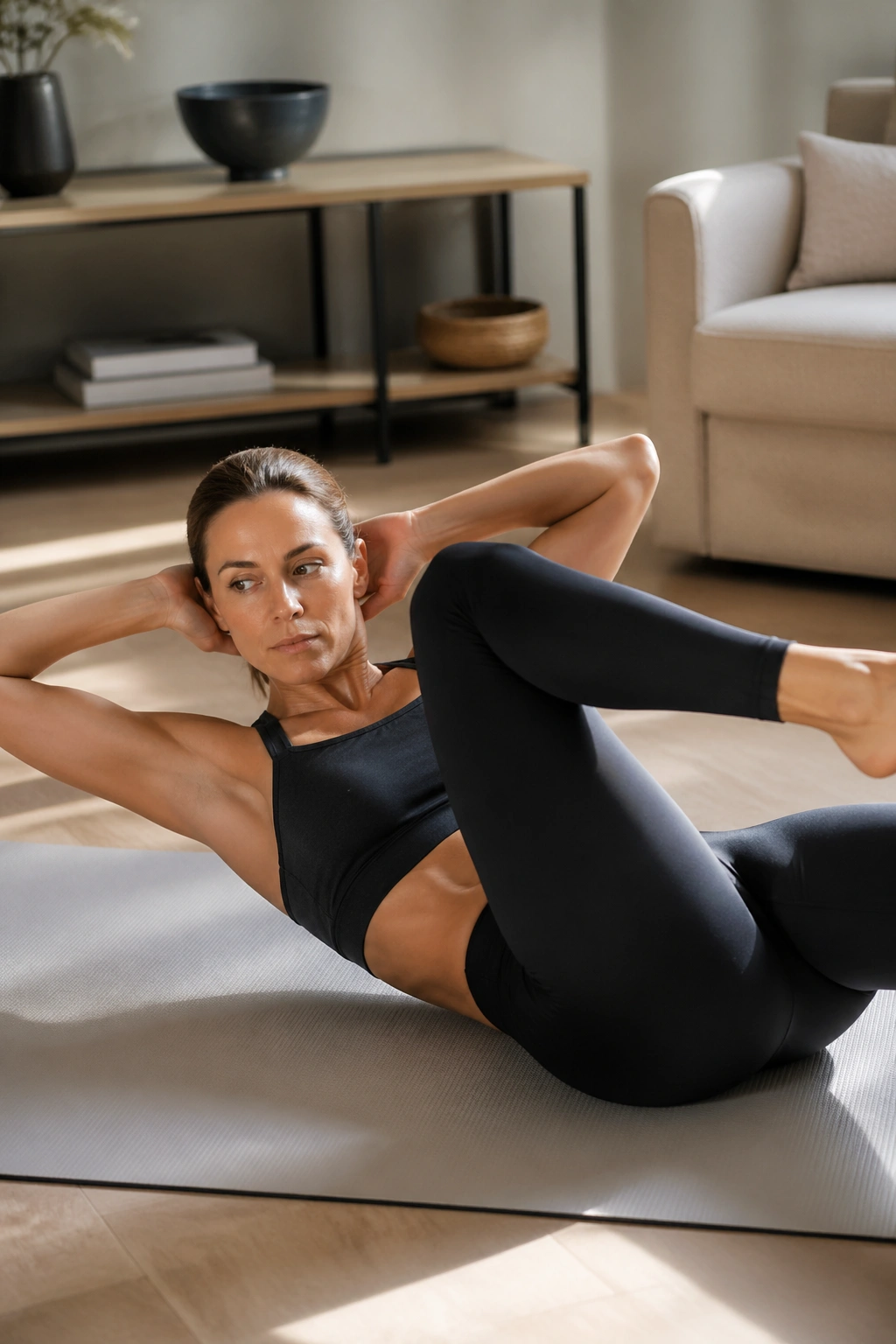
Criss-cross is the move people either do too fast or not at all. Too fast and it becomes elbow-flinging cardio. Too cautious and it never wakes anything up. The sweet spot sits in the middle.
Lie on your back, lift the head and shoulders if your neck allows it, and bring one knee in while the other leg extends. Rotate the torso so the opposite shoulder moves toward the bent knee, then switch. Keep the elbows wide and the pelvis quiet. Work 20 seconds on, 10 seconds off, then repeat five times. That’s enough to feel a proper twist without turning the exercise into a blur.
The legs do not need to bicycle wildly. In fact, they shouldn’t. A low, controlled leg position asks the abs to do more, and that’s the point. If your low back starts to complain, bring the legs higher or keep both feet down and work only the upper-body rotation for a round or two.
This is one of those drills that rewards restraint. Less range, better control, more burn. Funny how often that’s true.
12. Leg Circles and Reverse Circles
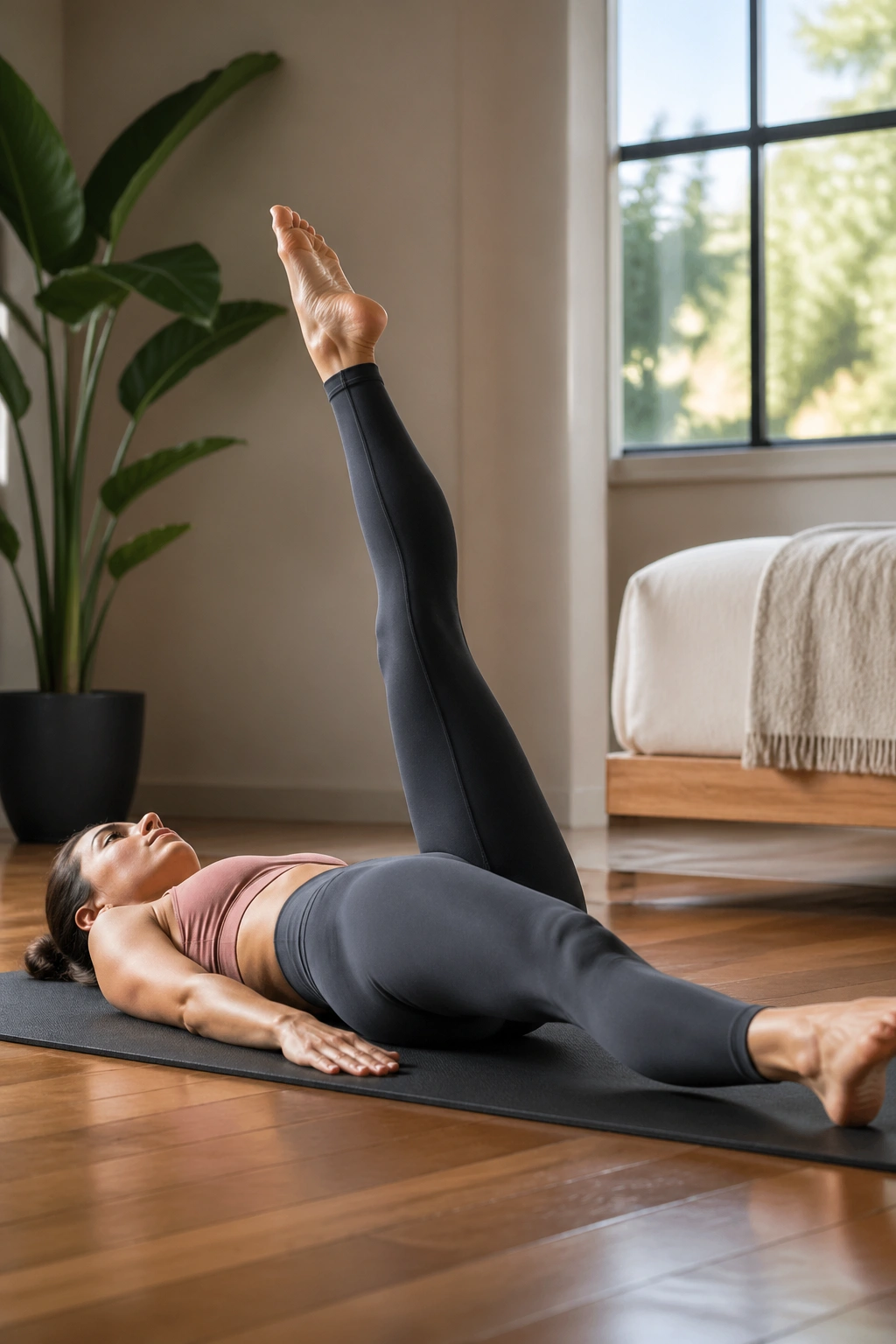
One leg in the air can expose a lot. Tight hips. A wobbly pelvis. A habit of making every circle way too big. Keep the circles small and the whole exercise suddenly becomes useful instead of theatrical.
Lie on your back and extend one leg toward the ceiling, with the other leg long on the mat or bent if your back prefers that. Draw 5 slow circles across the body and down, then reverse for 5 more. Switch legs and repeat. If your hamstrings are tight, keep the lifted leg slightly bent or loop a strap around the foot. Small circles beat big ones every time.
Make the circles small
- The pelvis should stay level.
- The standing leg should stay relaxed.
- The circle should feel like it comes from the hip socket.
- The lower back should not arch as the leg moves.
People often try to make this exercise “feel hard” by making the circles huge. That backfires. Small, clean circles challenge the abs and hip stabilizers far more. They also keep the movement smooth enough that you can repeat it without losing form.
This is a nice one for days when your hips feel sticky and your core wants something precise.
13. Standing Posture Stack
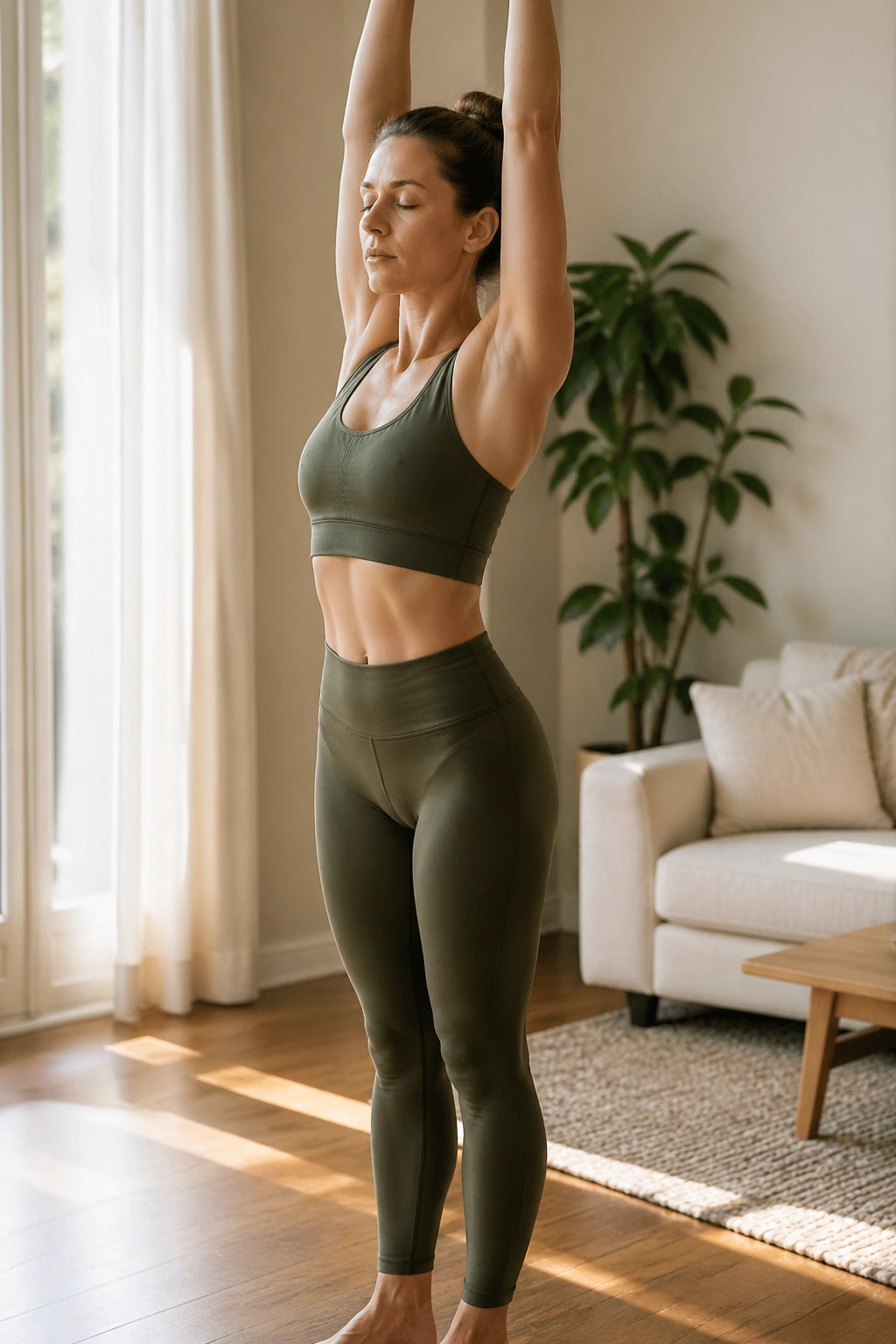
Not every Pilates block needs the floor. Some of the best five-minute routines happen standing up, especially if your back is stiff from sitting or your shoulders live somewhere near your ears.
Stand with your feet grounded and your ribs stacked over your pelvis. Lift both arms overhead, lower them, then perform 8 slow heel raises. Add 8 tiny squats, keeping the knees tracking over the second toes. Finish with 8 shoulder blade slides: arms by your sides, glide the shoulders down and slightly back without pinching them together.
Desk version
If you’re in a cramped space, use a wall:
- Stand with the back of your head, upper back, and tailbone touching the wall.
- Reach the arms up and down 6 times.
- Do 6 slow heel raises.
- Roll the shoulders away from the ears between each rep.
- Finish with a 10-second tall stand and a long exhale.
This routine looks almost too simple. It isn’t. It teaches the body where upright actually lives. That matters more than people think. A strong posture is not a stiff posture. It’s a stacked one.
14. Prone Cobra and W-Press
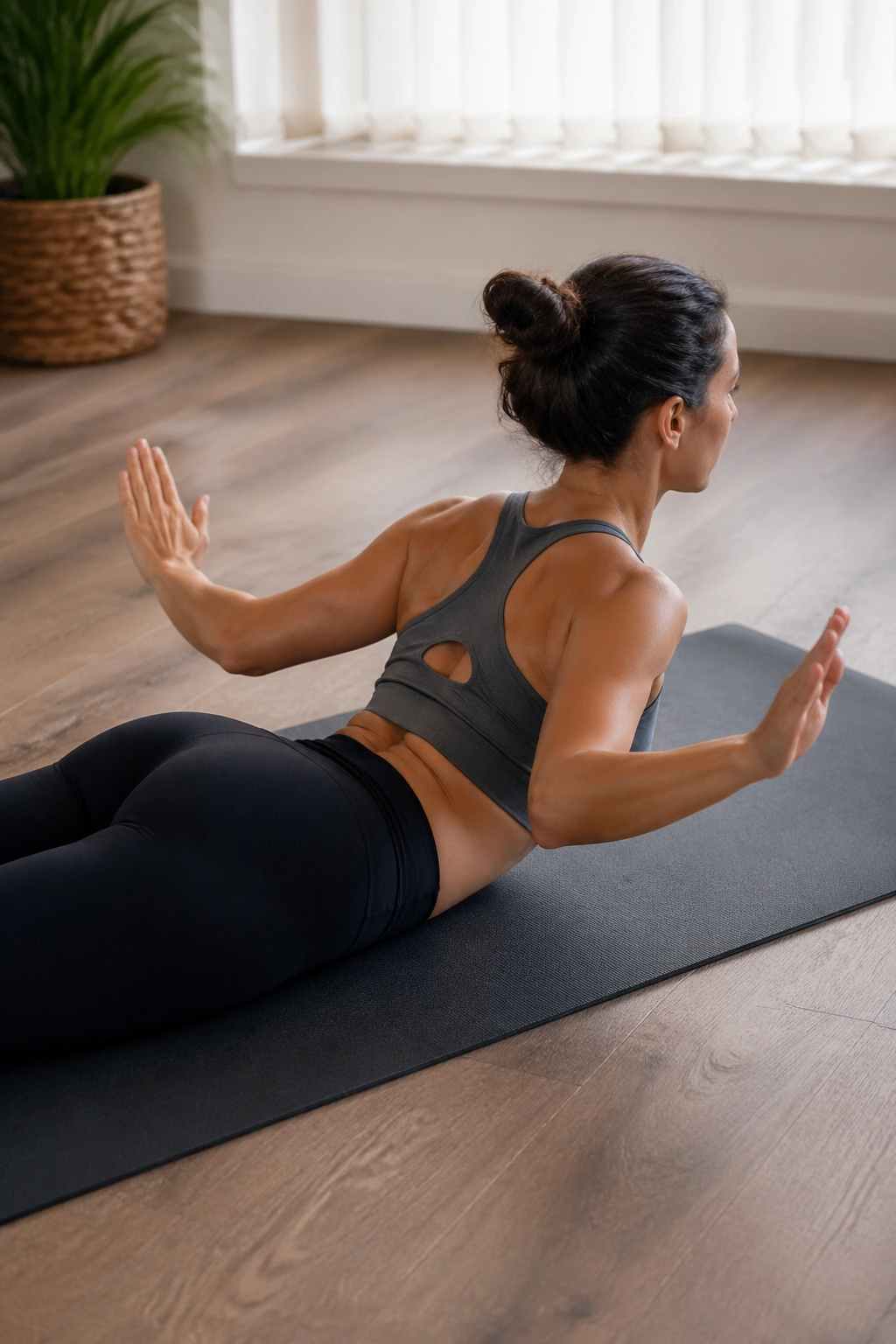
This is the back-body routine I wish more people did, mostly because it’s quieter and smarter than the usual “let’s just crank up the spine” approach. Unlike big back extensions, the prone cobra stays small and controlled, which tends to be kinder to the lower back and more useful for desk shoulders.
Lie face down with your forehead on the mat or a small towel. Draw the elbows into a bent “W” shape, then lift the chest a few inches while sliding the shoulder blades down the back. Hold for 3 to 5 seconds, lower, and repeat 8 times. If that feels good, extend the arms a little longer on the next round and press them back into a low hover.
The lift should be modest. If you’re throwing the chest up high, you’re probably jamming the lumbar spine. Keep the neck long, the ribs anchored, and the glutes lightly engaged. The shape should feel like a measured opening through the upper back, not a strain through the low one.
I like this one after core-heavy work because it balances the whole session. Front body, back body. Both get a say.
15. Wall Roll-Down to Squat Finish
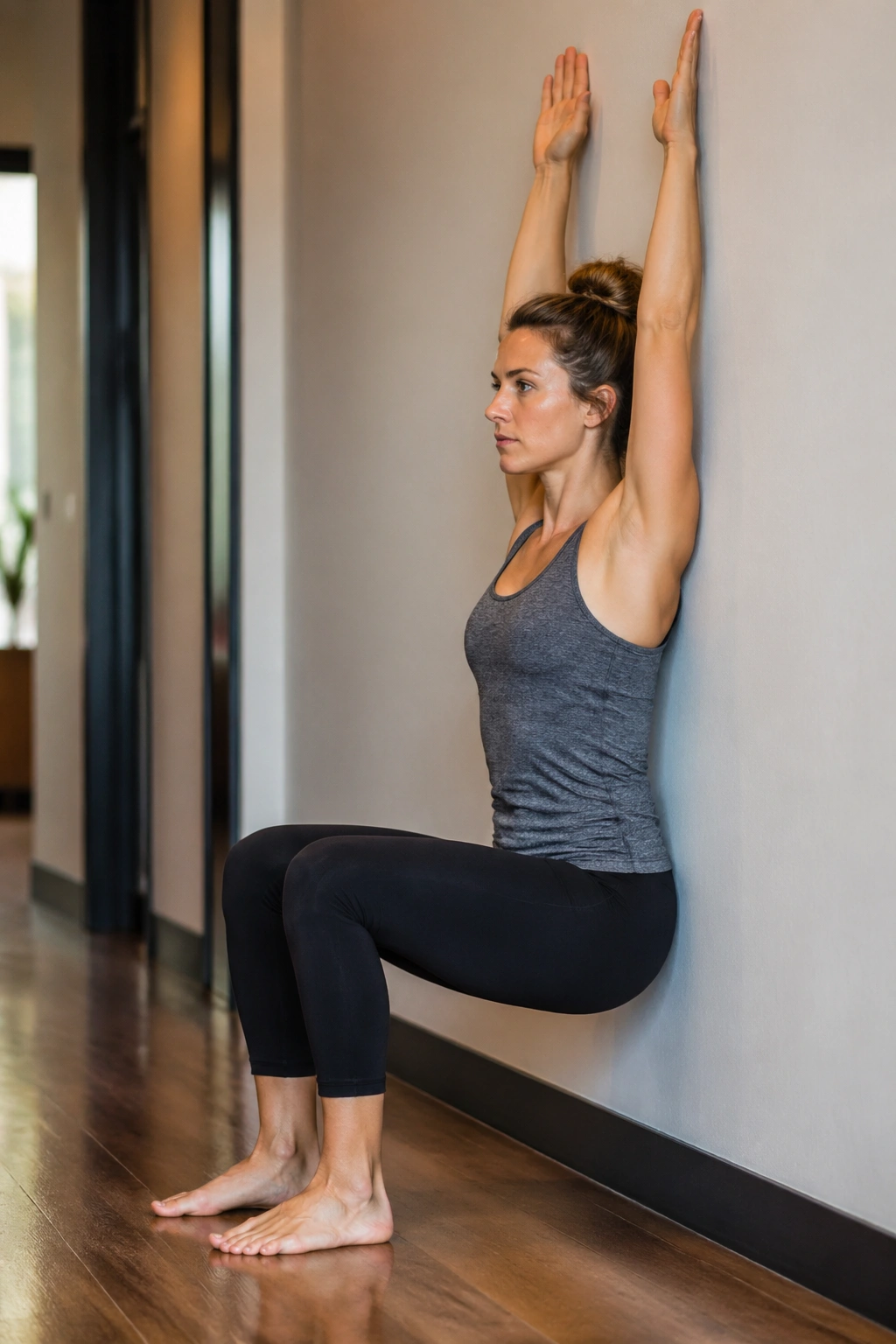
If you want one routine you can repeat without overthinking it, use the wall. It gives feedback, slows you down, and helps people who never quite know where their ribs are supposed to live.
Stand with your back to the wall and your feet a few inches away. Roll down until your hands slide toward your thighs. Pause for one breath. Roll back up and reach the arms overhead. Then step out of the wall, do 6 small squats, and finish with 6 calf raises. Repeat the whole circuit twice. That takes about five minutes and leaves you feeling more organized than wrecked.
The wall keeps the spine honest. You’ll notice immediately if the ribs flare or the lower back arches. Good. That’s the point. After the roll-down, the squat and calf raise make the legs work without losing the tall shape you just created.
This is a smart finish for mornings, and it’s just as good at the end of a long day. The body gets a little length, a little leg work, and a calmer breath on the way out.
Final Thoughts
Five minutes is enough when the five minutes are focused. That’s the part people miss. A short Pilates routine done with clean form usually beats a longer one where you rush, shrug, and let the wrong muscles take over.
The smartest way to use these Pilates workouts you can do in 5 minutes is to match them to the day you’re having. Core-heavy on the days you feel floppy. Standing and wall-based when you’re short on space. Bridge work and side-lying leg series when your hips have gone numb from sitting. No ceremony needed.
Pick one routine, keep it where you can see it, and remove the tiny friction that stops you from starting. A timer on the floor helps. So does a mat left open in the corner. Small setup, big difference.
