



A flatter midsection is usually built on boring-looking work: strong core muscles, steady calorie burn, and habits that keep bloating from stealing the show. Crunches alone do not do that job.
If you want flat stomach workouts for women at home, the smartest moves are the ones that train the deep core, challenge the obliques, and raise your heart rate a little. That mix matters. A dead bug can look gentle and still expose every weak point in your trunk. A mountain climber can look frantic and still do nothing if your hips are swinging all over the place.
The other truth is less glamorous. Posture changes how your stomach looks. So does sleep, food timing, stress, and how much you move during the day. A workout plan cannot fix every piece of that puzzle, but the right home exercises can tighten the muscles that hold everything in place and help you burn more energy without needing a gym.
Use these moves as building blocks. Pick five or six, string them together for 12 to 20 minutes, and keep your ribs stacked over your hips instead of letting your lower back take over. That small detail changes everything.
1. Dead Bug
The dead bug is the quiet killer of core workouts. It does not look dramatic, and that is exactly why it works so well. You are forced to keep your lower back glued to the floor while your arms and legs move away from center, which teaches the deep core to stay switched on.
How to do it
- Lie on your back with your arms reaching toward the ceiling and your knees bent at 90 degrees.
- Press your lower back gently into the floor. Do not let it arch.
- Extend your right arm and left leg slowly until they hover a few inches above the floor.
- Return to center, then switch sides.
- Aim for 6 to 10 slow reps per side.
If your back pops up, shorten the leg extension. That is not failure; that is useful feedback. The dead bug should feel controlled and a little annoying, not fast and sloppy. I like it as a first move because it wakes up the deep core before you ask for anything harder.
2. Forearm Plank Hold
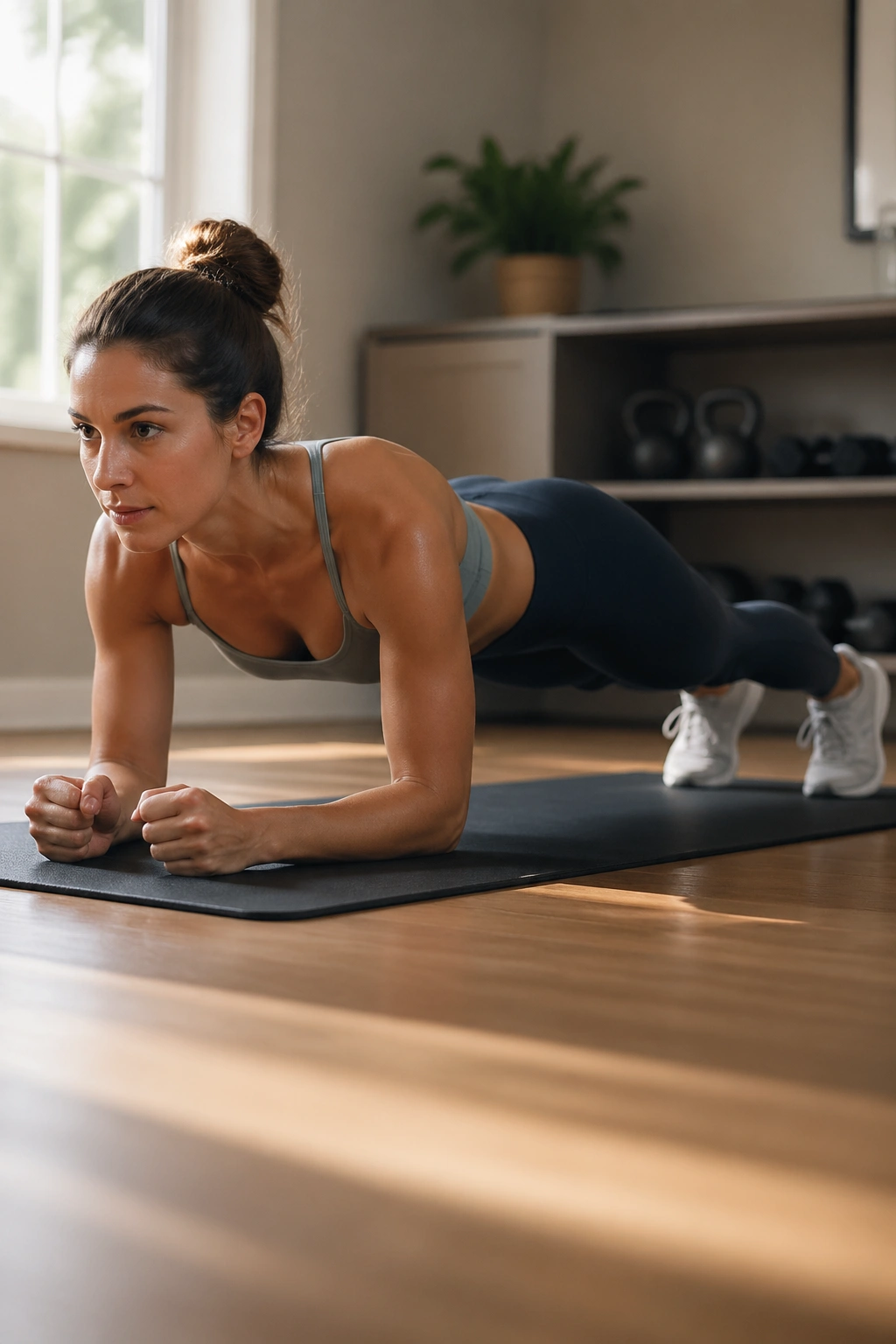
Can one plank really matter? Yes, if you stop treating it like a waiting game and start treating it like a full-body tension drill.
A good forearm plank lights up the abs, glutes, shoulders, and even the thighs. The trick is not to hang there. Squeeze your glutes, draw your ribs in, and push the floor away through your forearms so your body forms one long line.
What makes it work
- Hold for 20 to 45 seconds.
- Keep your neck long and your gaze a few inches in front of your hands.
- If your lower back dips, stop the set.
- Breathe through the nose if you can.
Most people stay too long and turn the plank into a sagging mess. Shorter, cleaner sets are better. If you want a flatter look around the middle, this kind of anti-extension work matters because it teaches your core to resist collapse instead of just bending and twisting.
3. Mountain Climbers
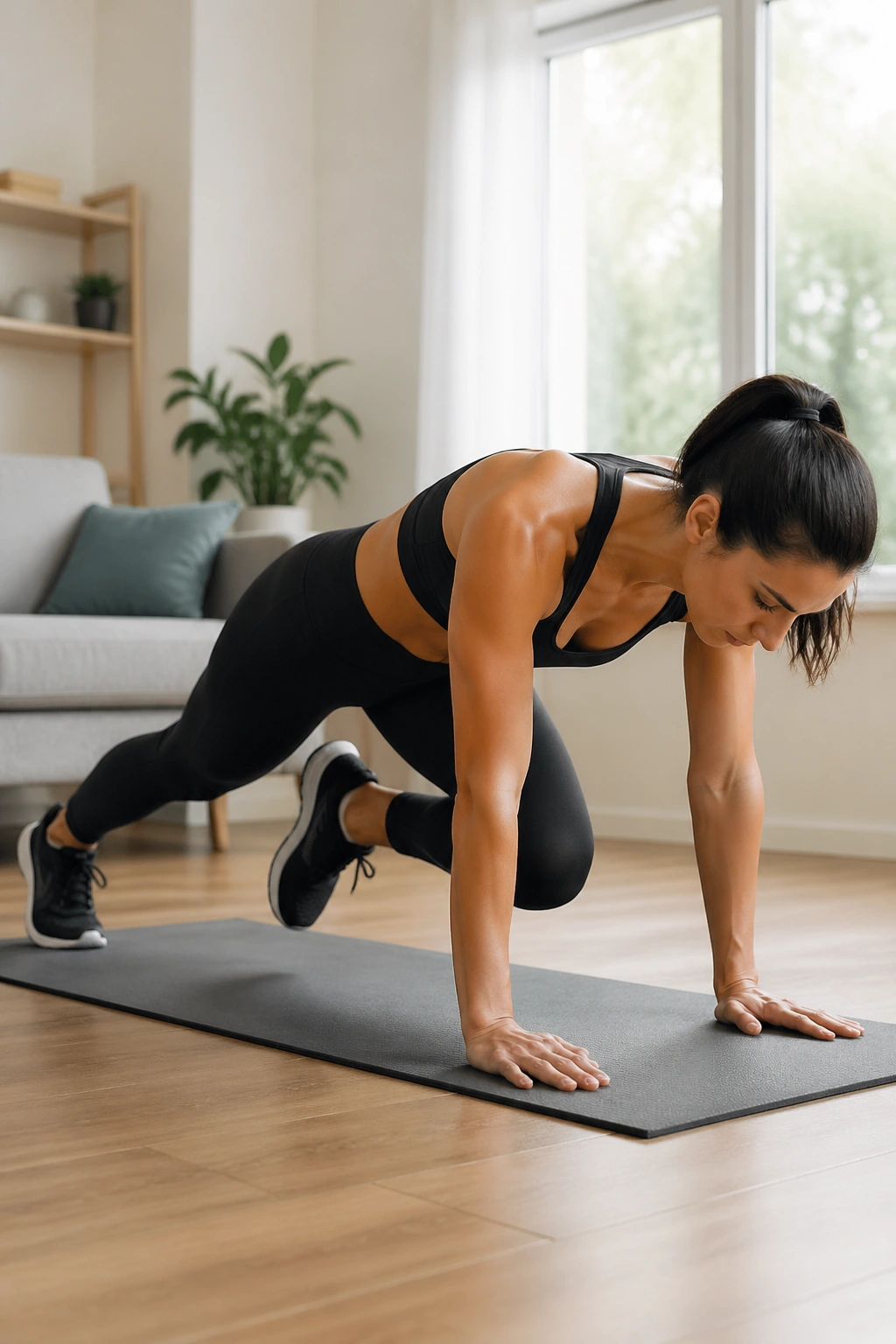
Mountain climbers are the move people rush through when they want to feel productive. That is a mistake. Done well, they are a fast little cardio drill that also forces your core to keep your hips quiet while your knees move.
How to use it
Start in a high plank. Drive one knee toward your chest, then switch legs in a steady rhythm. Keep your shoulders over your wrists and try not to bounce your hips high into the air. Twenty to 30 seconds is enough for a hard round.
What to watch for
- Hands should stay planted.
- Hips should stay low.
- Knees do not need to touch your chest.
- A faster pace is not always better.
This move is especially good in a home workout because it raises heart rate fast, which helps with calorie burn. But the core benefit shows up only when you control the torso. If your back starts to sway, slow down and clean it up.
4. Bicycle Crunches
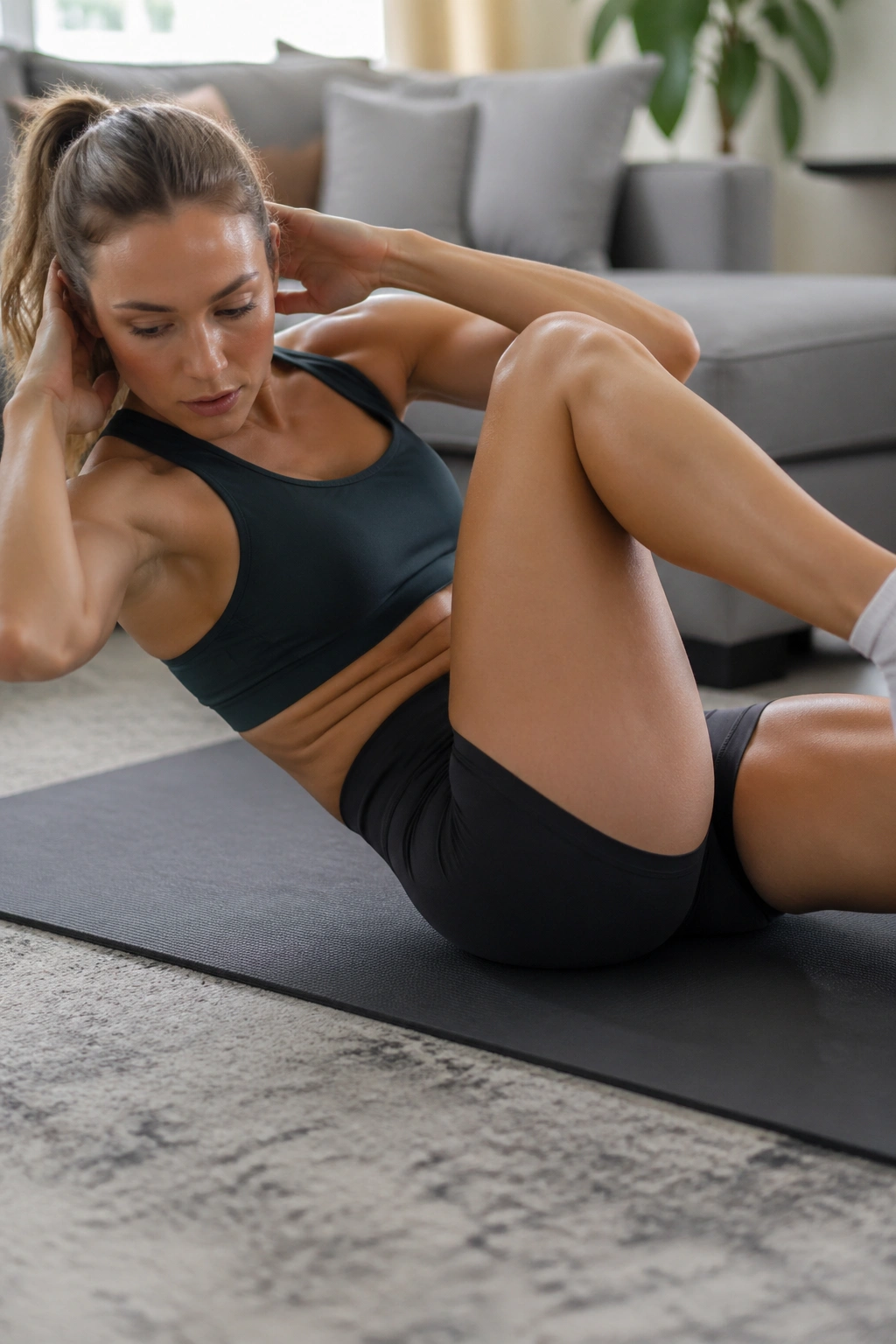
A lot of people butcher bicycle crunches by yanking on the neck and pedaling like they are trying to win something. That version is garbage. The real move is slower, tighter, and much more effective for the obliques.
Lie on your back, lift your shoulder blades off the floor, and bring one elbow toward the opposite knee while the other leg extends long. The twist should come from your torso, not from just flailing your elbows around. Keep the movement smooth for 8 to 12 reps per side.
Why it earns a spot
Bicycle crunches train the sides of the waist while also demanding control through the center line. That matters when you want a flatter stomach look, because the waistline is part strength and part shape. The more stable your trunk gets, the less puffed and loose everything tends to feel.
5. Reverse Crunches
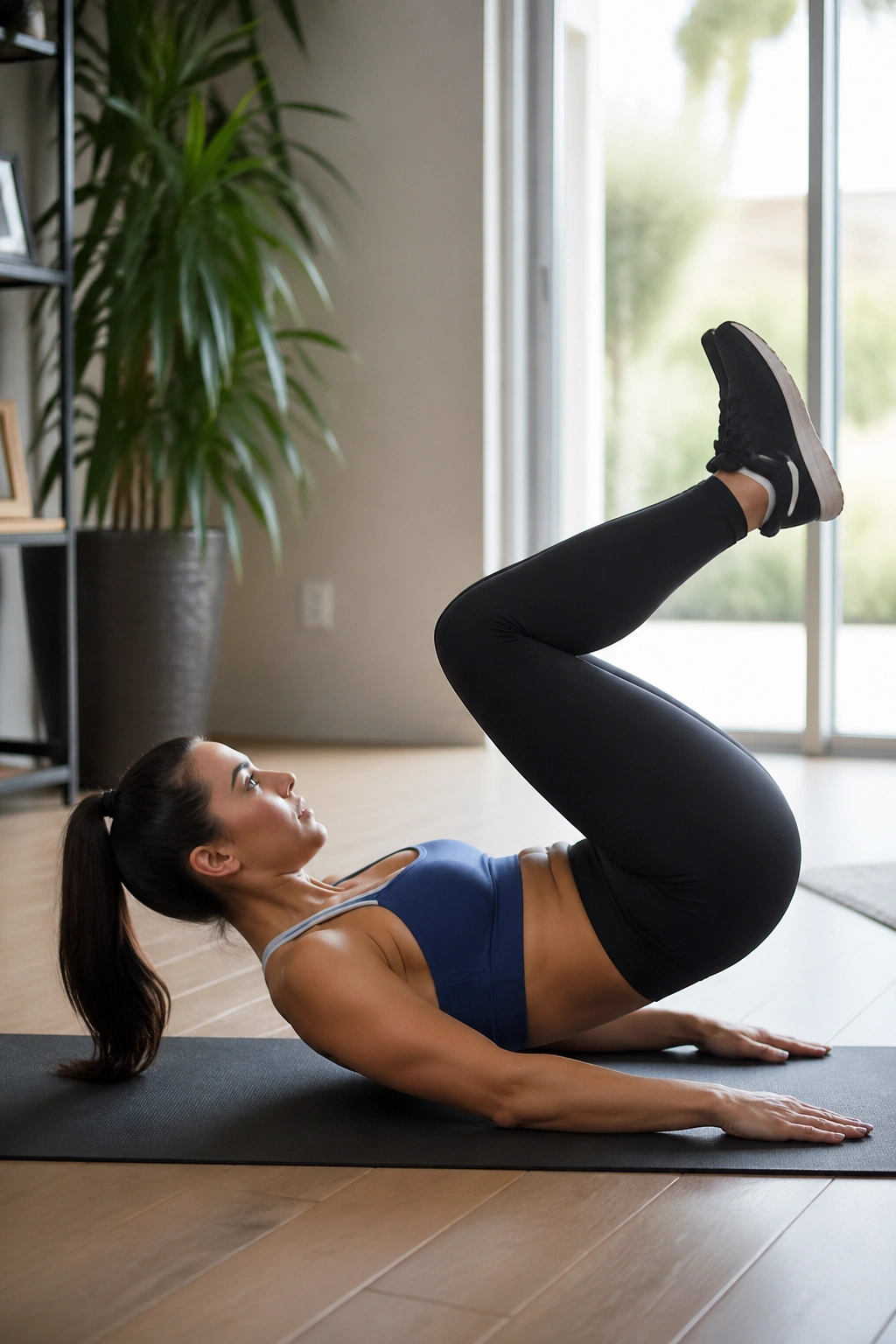
Lower abs are not a separate machine. They are still your abs, and reverse crunches make you work them by curling the pelvis upward instead of swinging the legs around.
Lie on your back with your knees bent and your shins parallel to the floor. Exhale, brace your core, and lift your hips a few inches off the floor by tucking your pelvis toward your ribs. The motion is small. That is the point.
Reverse crunches are one of my favorite flat stomach workouts for women at home because they are honest. If you use momentum, you feel almost nothing. If you move slowly and keep the lower back from arching, the burn shows up fast. Try 10 to 15 controlled reps, then rest.
6. Hollow Body Hold
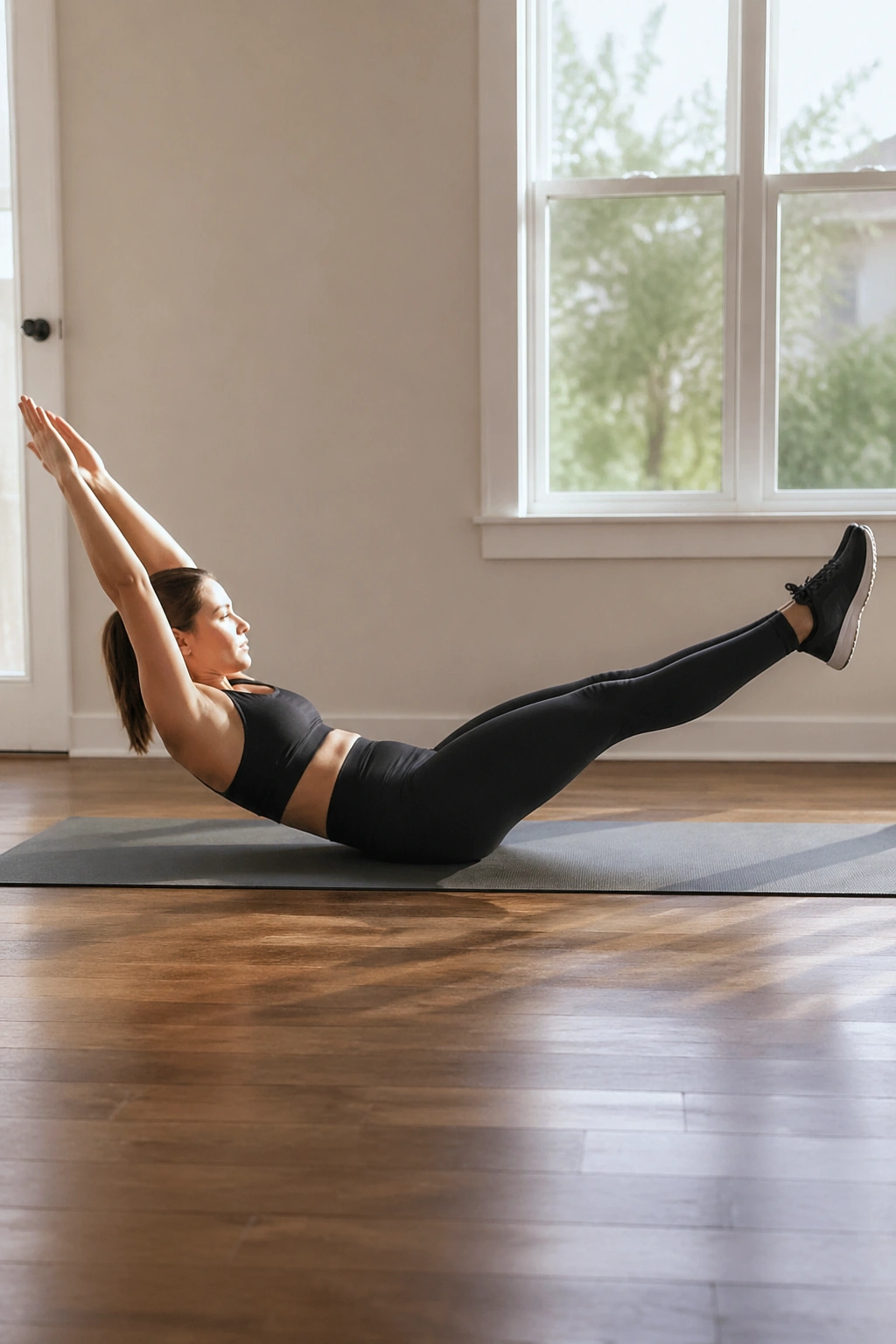
The hollow body hold looks simple until you try to keep your lower back from peeling off the mat. Then it gets real.
Why it works
This is an anti-extension drill, which means your core has to stop your spine from over-arching while your arms and legs hover away from your center. Gymnasts love it for a reason. It teaches brutal trunk control.
How to scale it
- Bend your knees if full extension is too much.
- Keep your arms by your ears or reach them forward.
- Hold for 15 to 30 seconds.
- If the lower back lifts, shorten the lever immediately.
Your stomach should feel tight, almost braced for a cough. That sensation is the whole point. A hollow hold done with control can teach more useful core strength than a dozen sloppy crunches. It is demanding, and a little humbling.
7. Side Plank Dips
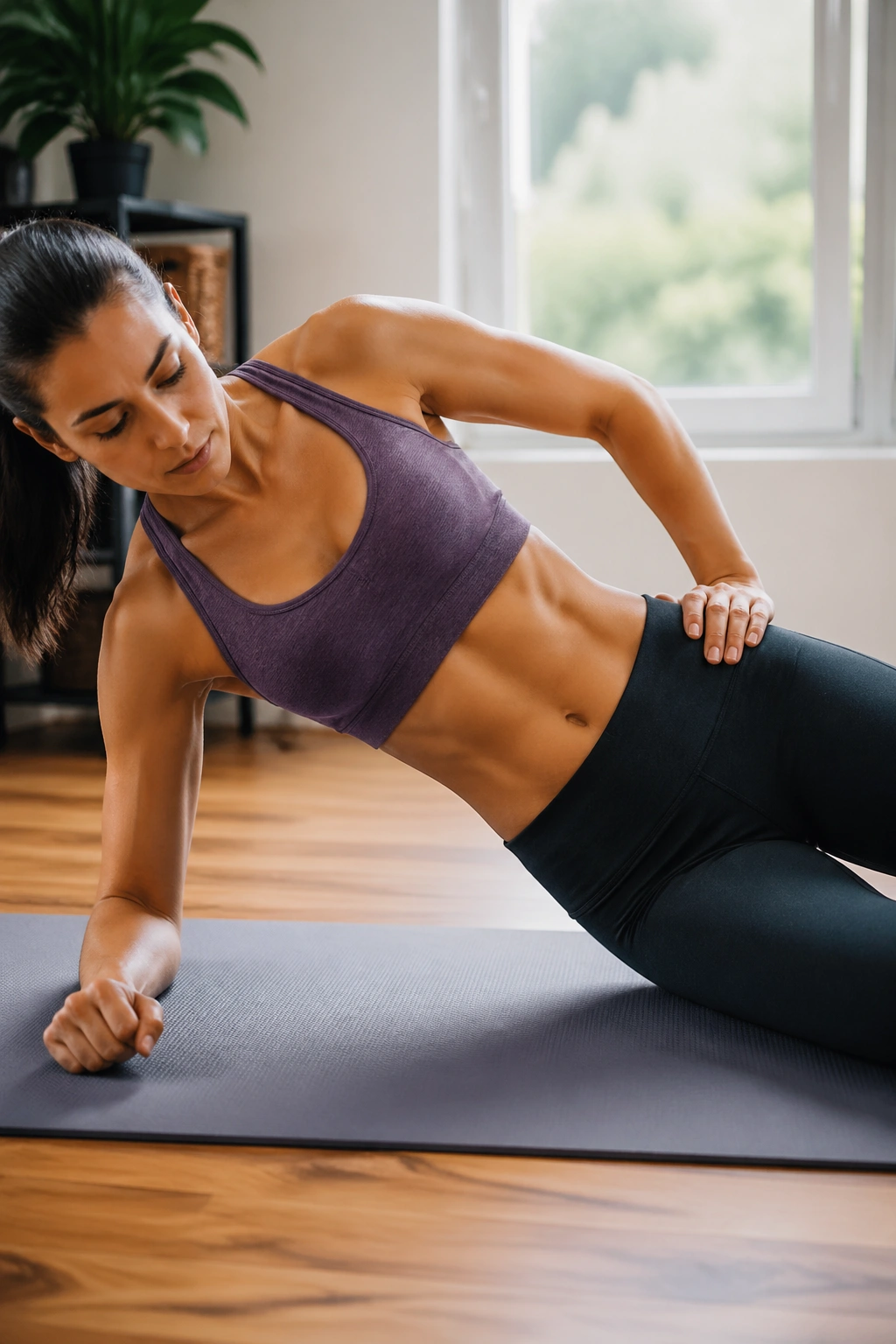
Side planks are good. Side plank dips are better if you want the obliques to wake up and do some real work.
Unlike a straight plank, this one asks your body to fight sideways collapse. You stack one foot on the other or stagger them for balance, then lower the hips a few inches and lift them back up. The movement is small, but the burn builds fast.
If your shoulder is shaky, keep the bottom knee on the floor. If your waist starts to pinch, slow the descent and make sure you are not sinking into the joint. Ten to 12 dips per side is plenty for a home session.
Best use
I like this move after a front-plank drill. The contrast between straight-ahead stability and side-body work makes your midsection feel more complete, not just tired in one narrow spot.
8. Standing Wood Chops
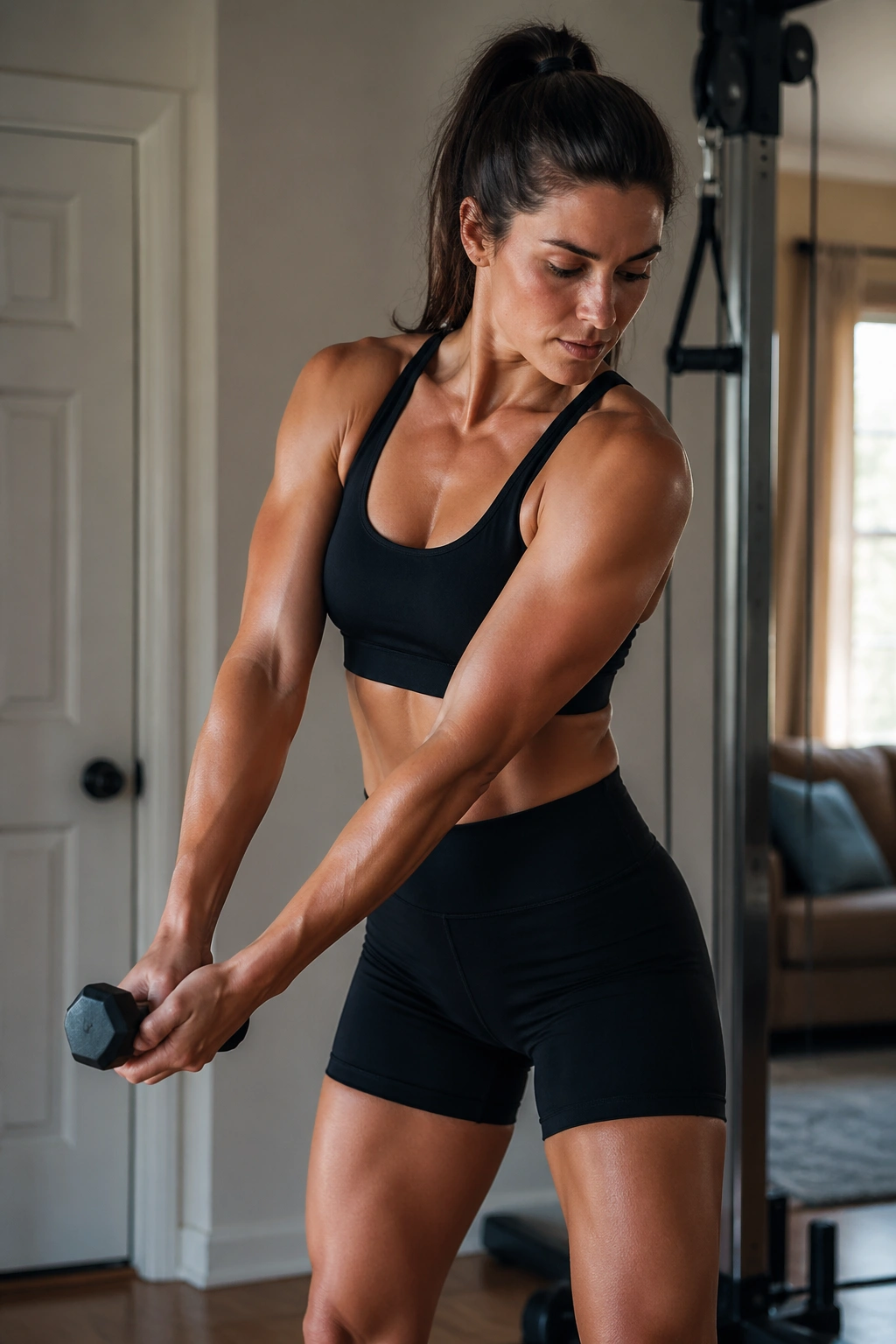
Not every core exercise needs to happen on the floor. Standing wood chops are one of the best choices when your wrists are sore, your neck is cranky, or you just want a move that feels more athletic.
Hold your hands together and sweep them diagonally from one shoulder toward the opposite hip, then return with control. You can do this with bodyweight, a light dumbbell, or a resistance band anchored safely to a door or sturdy object. Keep your ribs down and let the torso rotate a little, but do not whip your spine around.
- 10 to 12 reps per side
- Smooth tempo
- Hips stable
- Core braced before each sweep
This is one of those underappreciated home workouts that makes your waist work while also feeling a bit more like real movement. It is useful, especially if floor work bores you.
9. Bird Dog
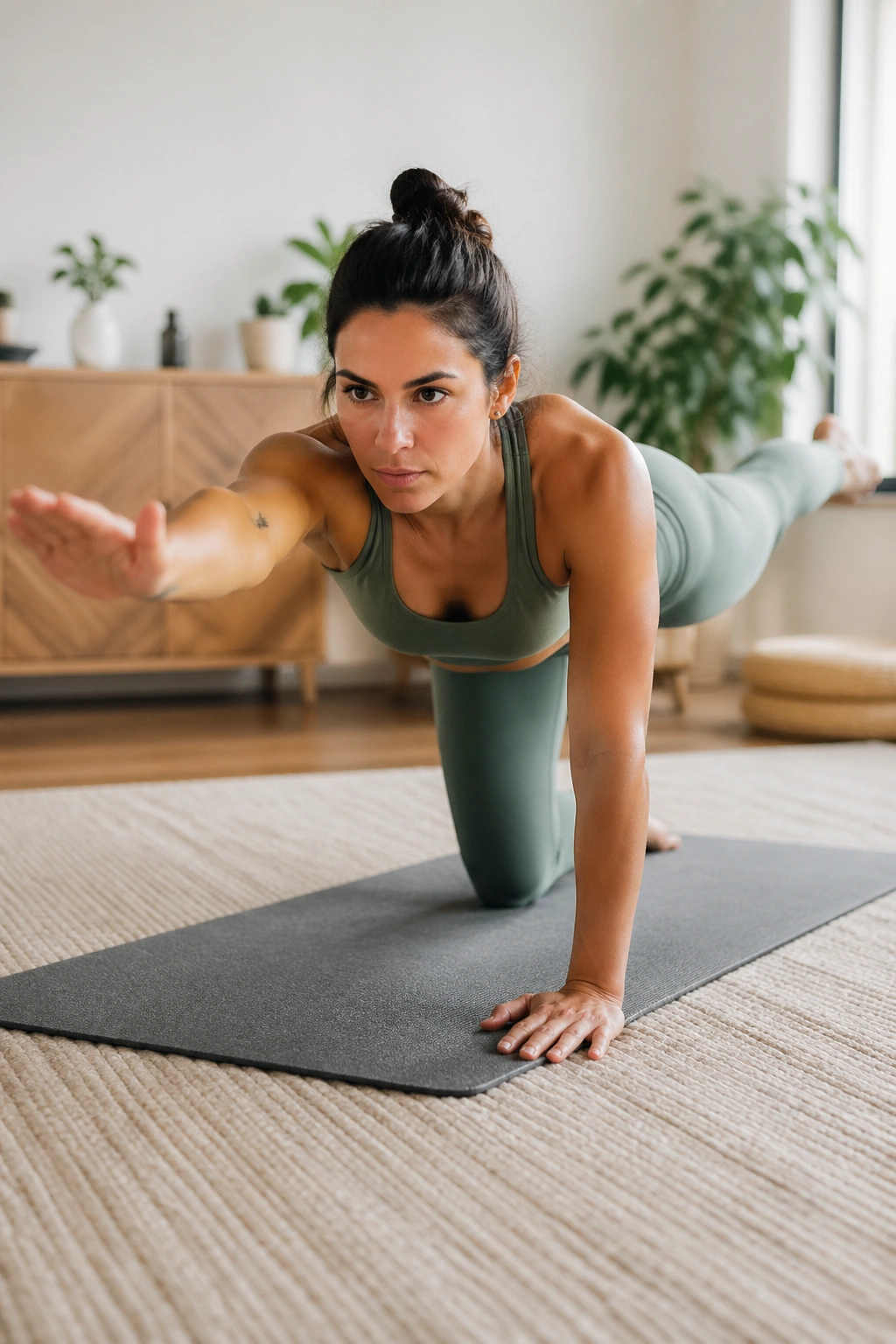
Why does a move that looks almost too easy show up in so many strong-core routines? Because it teaches control without drama.
How to do it
Start on all fours. Reach your right arm forward and your left leg back at the same time, keeping your hips square to the floor. Pause for a second, return to center, then switch sides. The goal is not height. The goal is stillness.
Bird dog is one of the friendliest flat stomach workouts for women at home because it gives the lower back a break while still challenging the deep core. It also improves balance, which sounds unrelated until you notice how much cleaner your whole body moves when your center is stable.
What to focus on
- No wobbling through the pelvis.
- Fingers reach long, not high.
- Foot flexed, leg active.
- Slow return to start.
10. Glute Bridge March
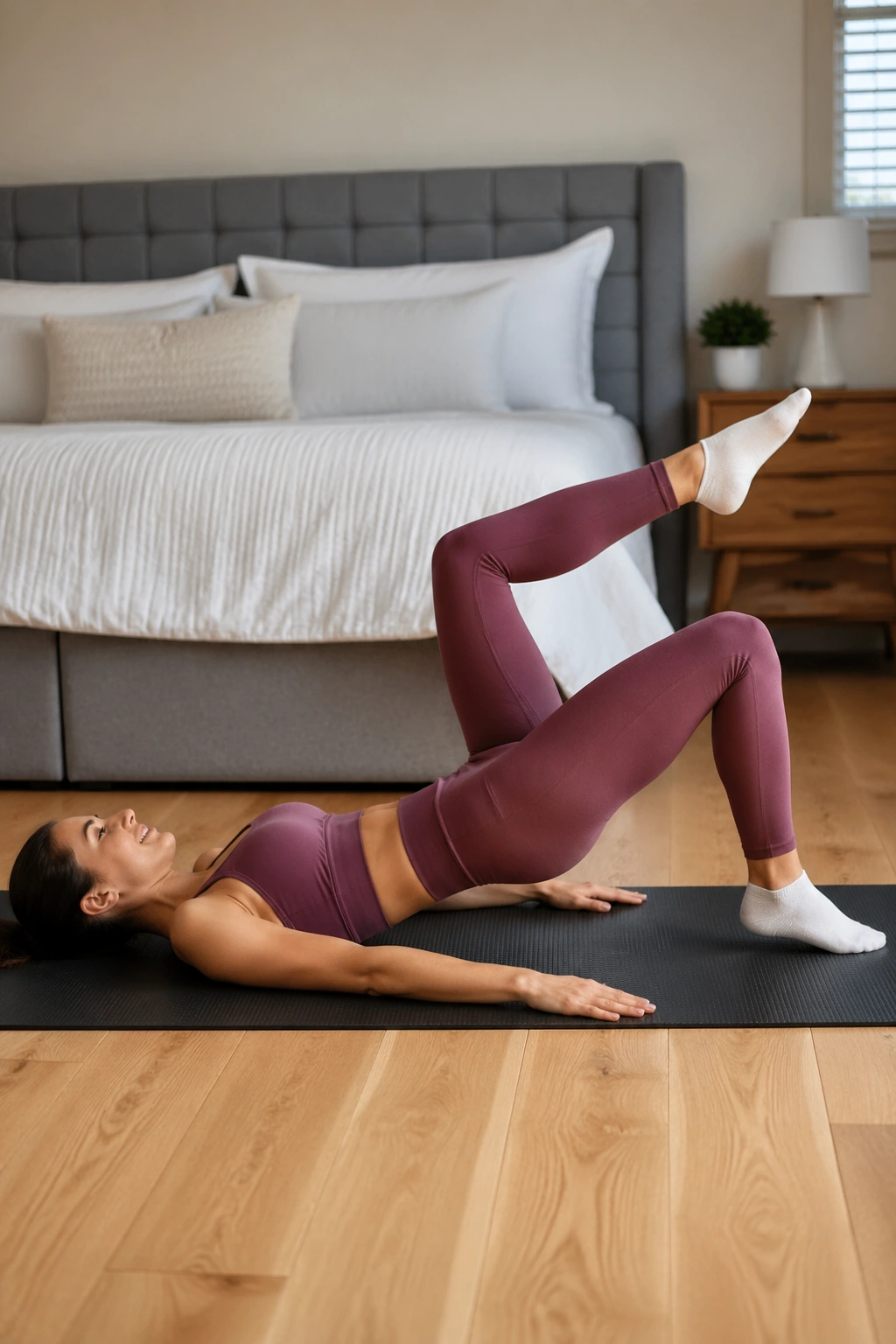
A weak backside often shows up as a lazy middle. That is the annoying truth, and glute bridge marches fix part of it.
Set up in a bridge with your hips lifted, glutes squeezed, and ribs tucked. Then lift one foot a few inches off the floor, place it back down, and switch sides. Keep the pelvis level the whole time. If your hips drop and twist, the move gets sloppy fast.
This one is sneaky. Your abs have to keep the torso quiet while the legs alternate, and your glutes help keep the pelvis in a good position. That combination helps the waist look tighter because you are training the whole support system, not just the front of the stomach.
11. Heel Taps
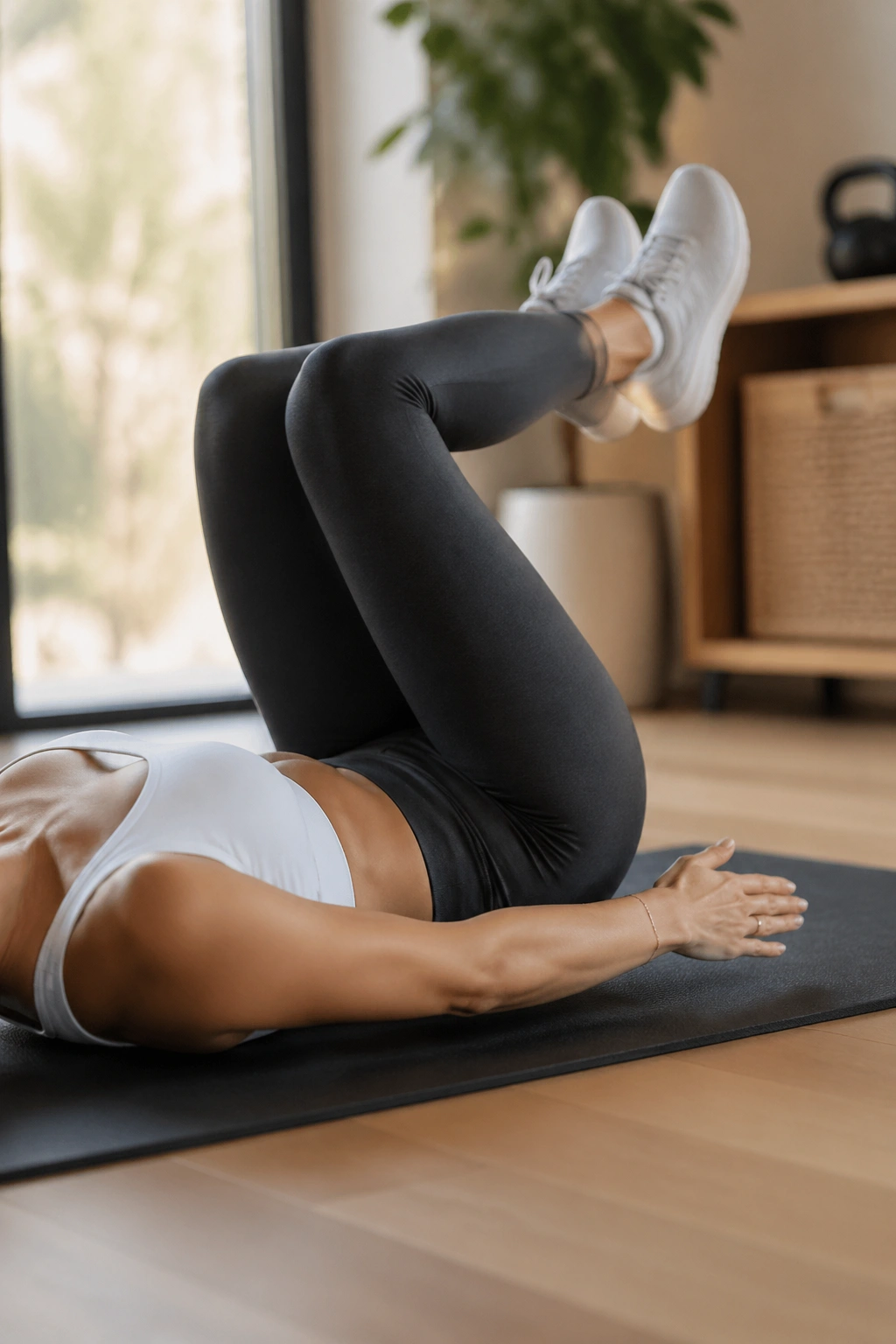
Heel taps are the kind of floor move that looks harmless right up until your abs start shaking.
Lie on your back with your knees bent and your feet lifted in tabletop. Flatten your lower back into the floor, then lower one heel toward the ground and tap lightly before bringing it back up. Switch sides. Keep the movement small enough that your back does not arch.
Quick cues
- Exhale as the heel lowers.
- Keep your chin slightly tucked.
- Move slowly for 10 to 16 taps per side.
- Stop if your hip flexors take over.
This exercise is useful because it trains the front of the core without needing a lot of room or any equipment. It is a nice choice for home days when you want something low-friction but still meaningful.
12. Bear Crawl
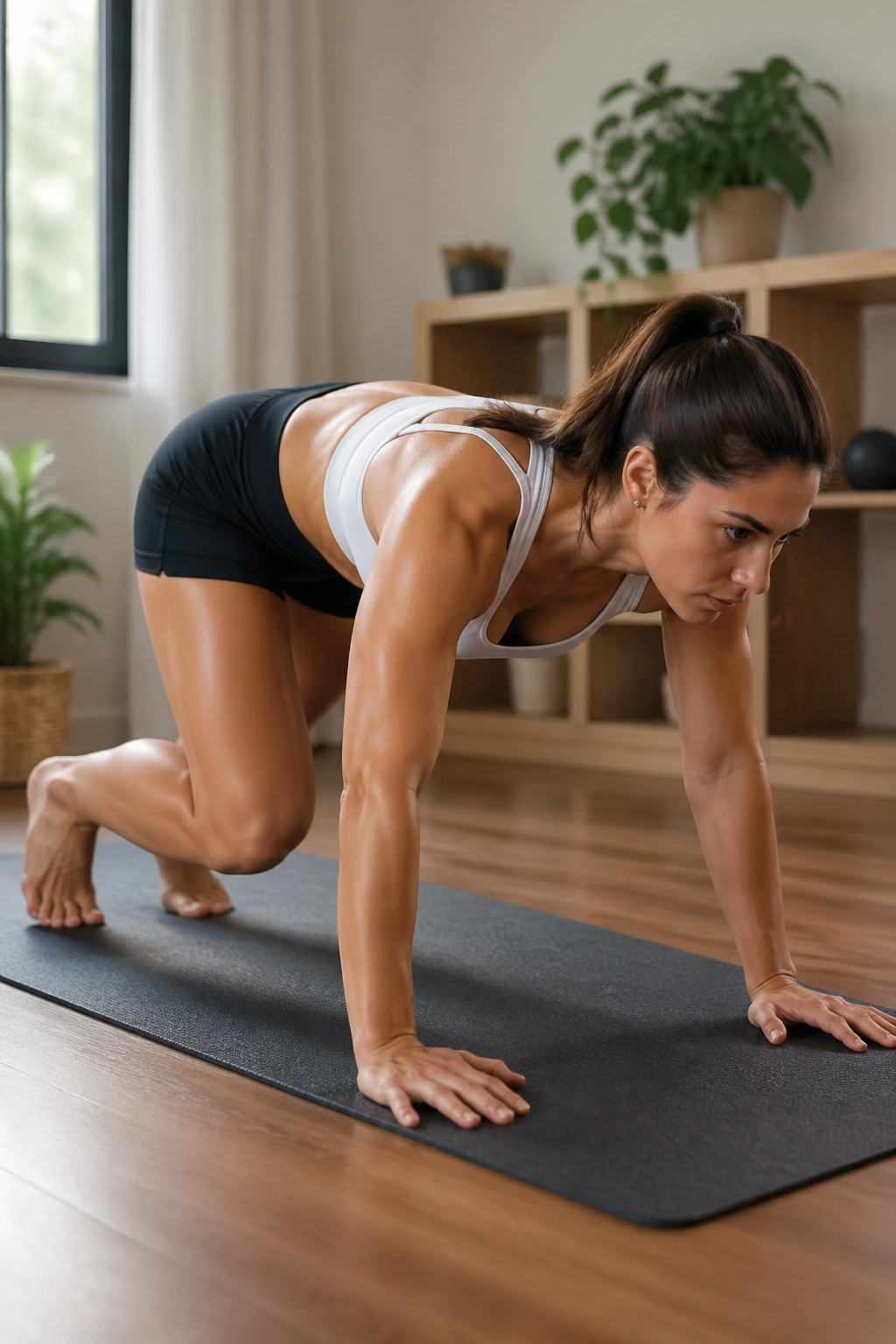
This one looks childish. It isn’t.
A bear crawl turns your body into a moving plank. Hands and feet stay close to the floor while you crawl forward or backward in short steps. The core has to brace hard to stop your hips from wobbling side to side, and the shoulders work too.
How to keep it clean
- Start on hands and knees.
- Lift your knees an inch or two off the floor.
- Move opposite hand and foot together.
- Stay low and quiet.
- Crawl for 20 to 30 seconds.
If you rush, the hips bounce like crazy. That ruins the point. Keep the steps small and controlled. A few clean bear crawls can leave your whole trunk lit up in a way that feels more athletic than crunch-heavy floor work.
13. Plank Shoulder Taps
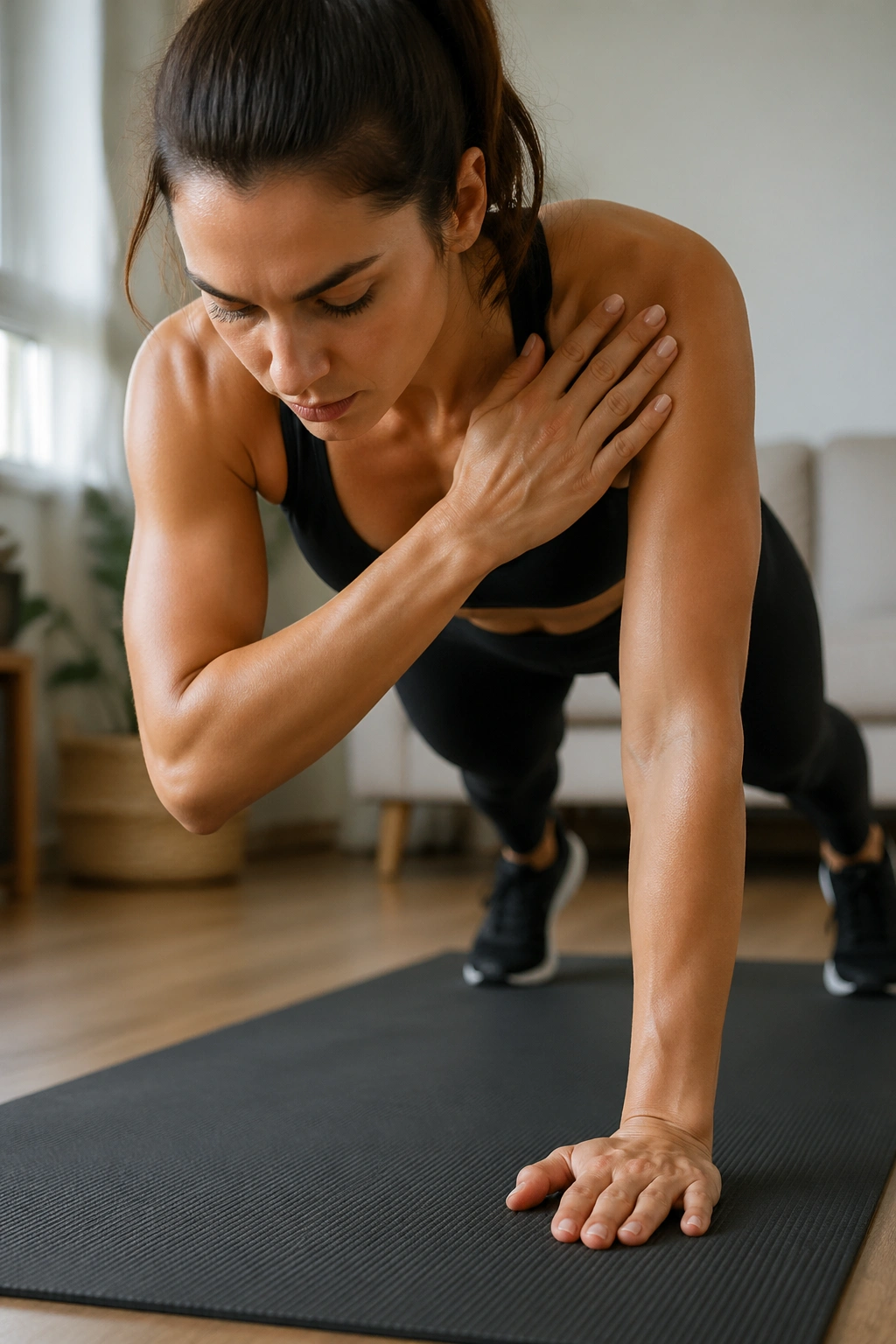
More taps is not better. Better taps are better.
From a high plank, lift one hand and touch the opposite shoulder without letting your hips sway. Then switch sides. The task sounds simple, but it punishes any weakness in anti-rotation control, which is a fancy way of saying your core has to stop your body from twisting all over the place.
Why it belongs here
Shoulder taps help tighten the midsection by forcing the abs and obliques to stabilize under shifting weight. That is useful if you want a stomach that looks firm when you move, not only when you are standing still.
Try 10 taps per side. If your hips twist, widen your feet a little. If your shoulders burn before your core does, slow the pace. This is a form-first exercise, and the form matters more than the count.
14. Russian Twists
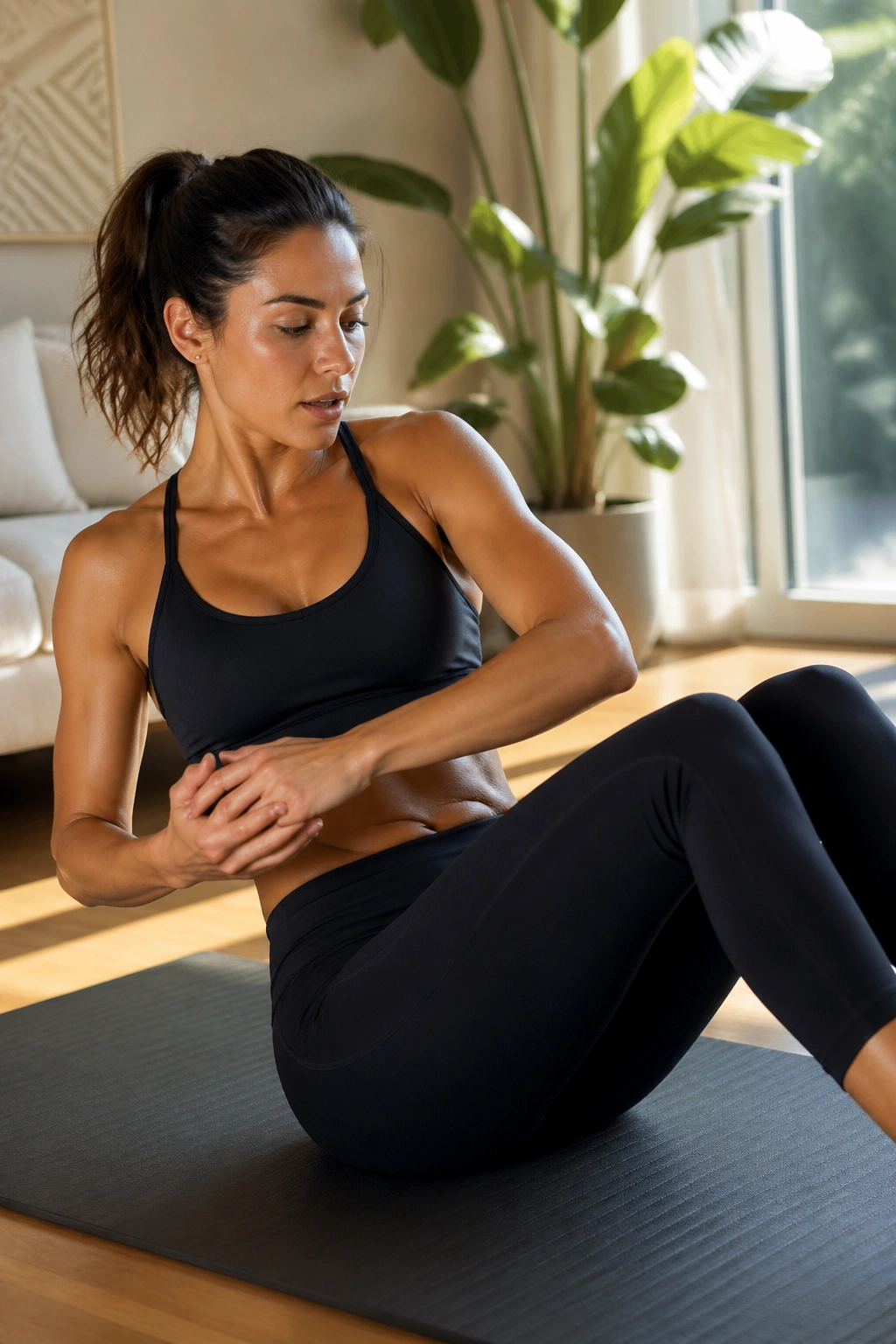
Russian twists are one of those exercises people either love or hate, and both reactions are fair. Done badly, they crank the lower back. Done well, they hammer the obliques and teach your torso to rotate with control.
Sit with your knees bent, lean back slightly, and keep the chest open. Rotate your hands side to side over the body while your core stays braced. Feet can stay on the floor if you need more stability. That is not cheating. That is a smart adjustment.
If you want better results
- Keep the twist small and sharp.
- Move the ribcage, not just the arms.
- Hold a light weight only if you can stay clean.
- Do 16 to 20 total touches.
I would rather see a controlled Russian twist with feet down than a wild version with feet lifted and a sore back the next day.
15. Tuck-Ups
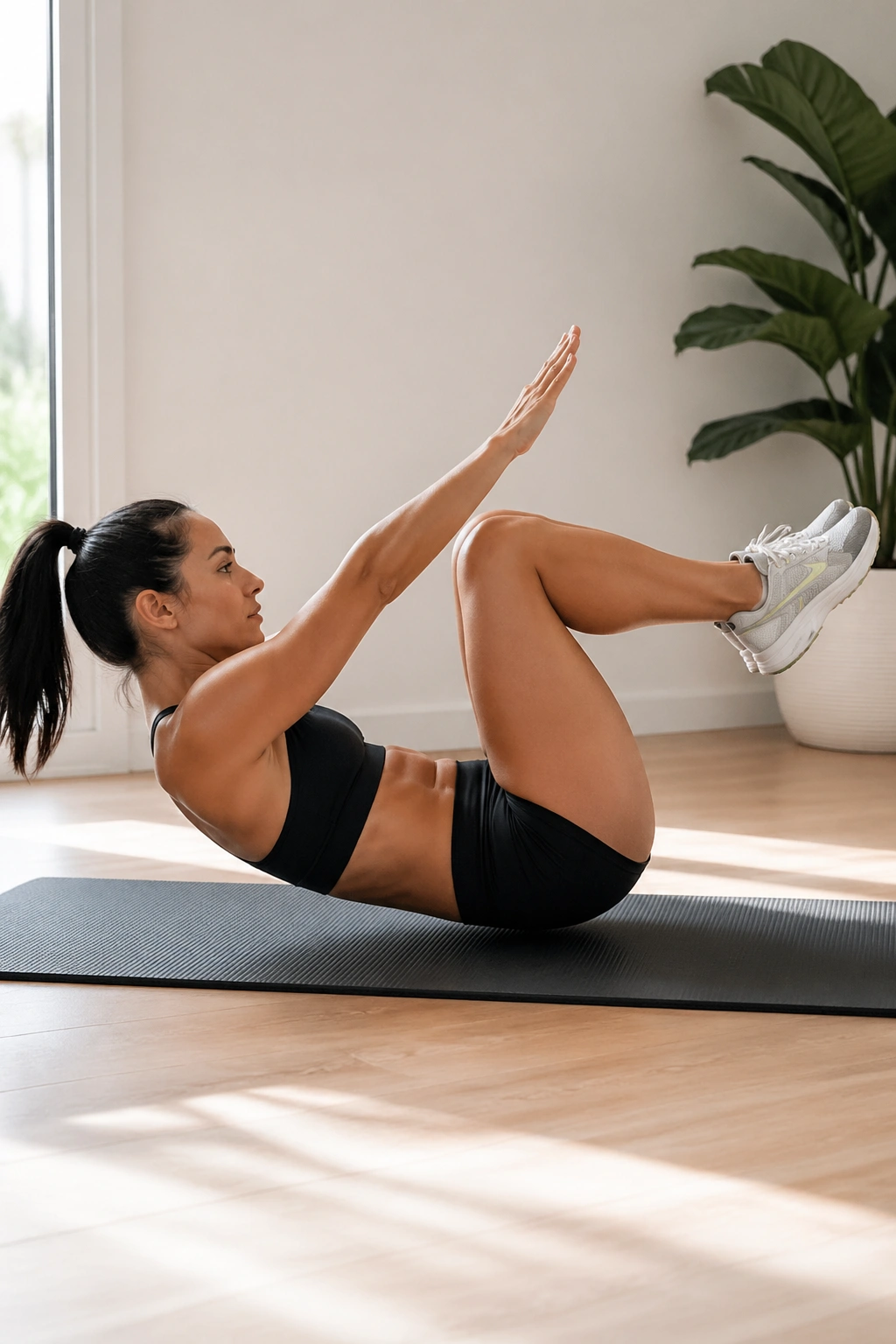
If reverse crunches feel too short or too gentle, tuck-ups give you more range.
Lie on your back, extend your arms overhead, then sweep your knees in toward your chest as your upper body curls up. Try to meet somewhere in the middle, then lower with control. The movement should feel smooth, not jerky. Use your abs to fold the body, not momentum to fling it upward.
Tuck-ups are a useful bridge between basic floor work and harder moves like V-ups. They train the front line of the core while also asking for some coordination, which makes them feel more like a workout and less like a warmup.
16. Pilates Hundred
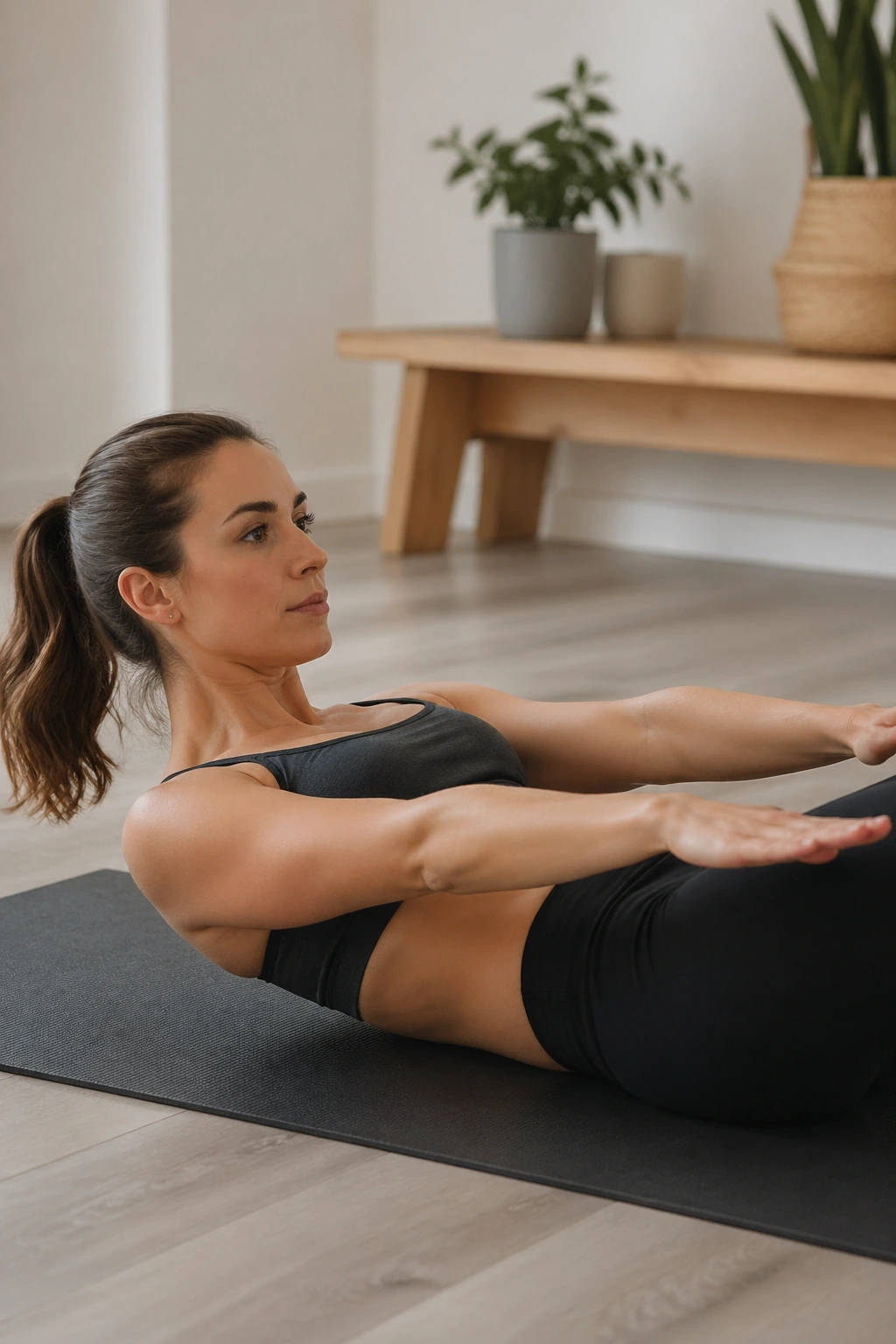
The Pilates hundred looks tidy and calm until the breathing pattern starts to bite.
Lie on your back, lift your head and shoulders, and pump your arms a few inches up and down while you take short, rhythmic breaths. The legs can stay bent for an easier version or stretch long for more demand. The goal is steady tension, not speed.
This move builds endurance in the deep core, which matters more than people think. A stomach that can hold tension for longer usually looks and feels firmer during the day. If your neck gets tired, lower the head and keep the arms pumping. Ten breaths is a nice start; twenty makes it honest.
17. High Knees
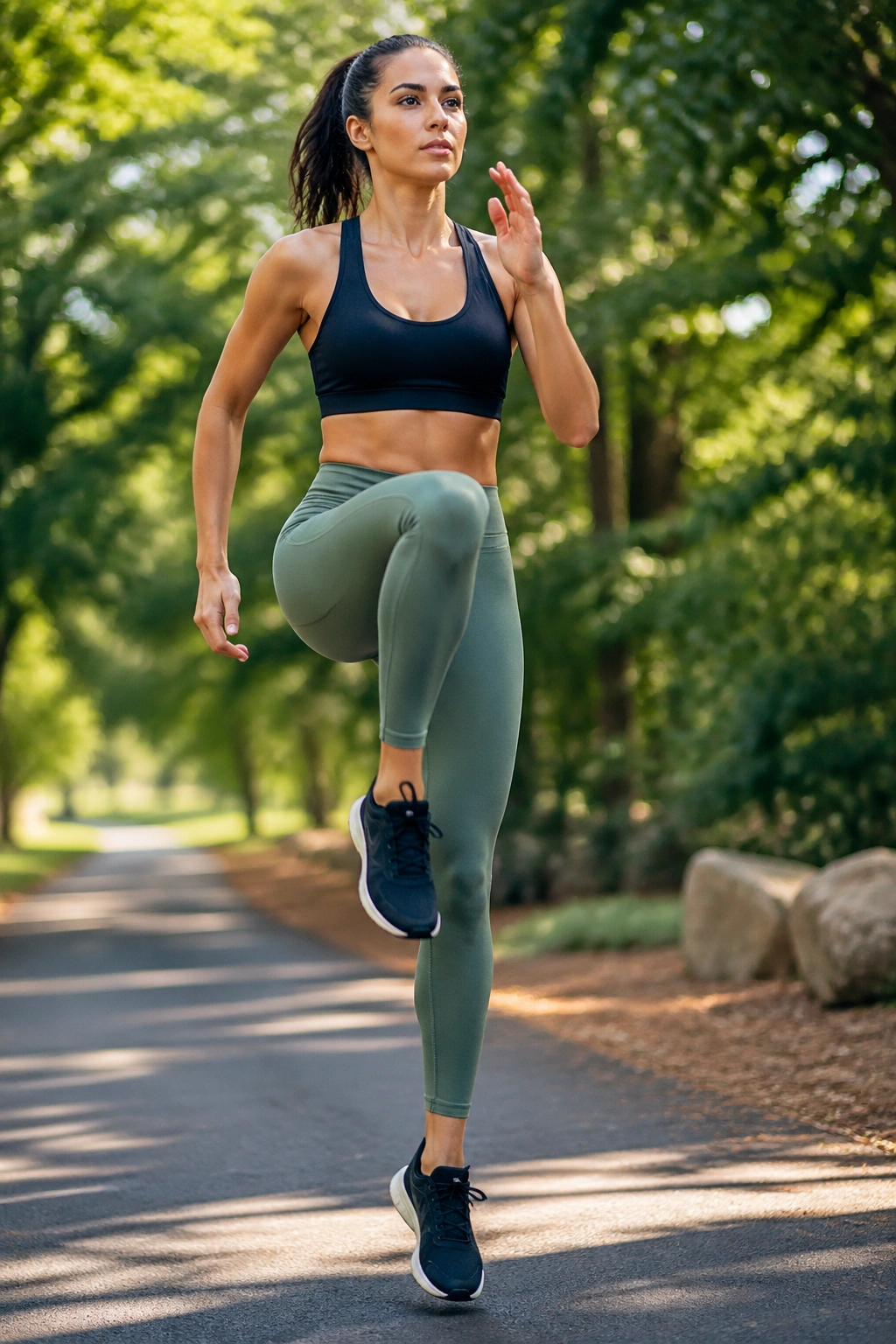
High knees are not subtle. That is the appeal.
They raise your heart rate fast, which helps with calorie burn, and they make your core work to keep your torso upright while your legs pump. If you want a flat stomach workout that feels more like cardio than ab training, this is a good one to have in the mix.
How to do them well
- Drive knees toward hip height.
- Land softly on the balls of the feet.
- Keep the chest lifted.
- Swing the arms hard but controlled.
A 20-second burst is enough to start. Rest for 20 seconds, then repeat. If jumping feels rough on your joints, march fast instead of bouncing. The work still counts when your torso stays tall and your pace stays sharp.
18. Spiderman Plank
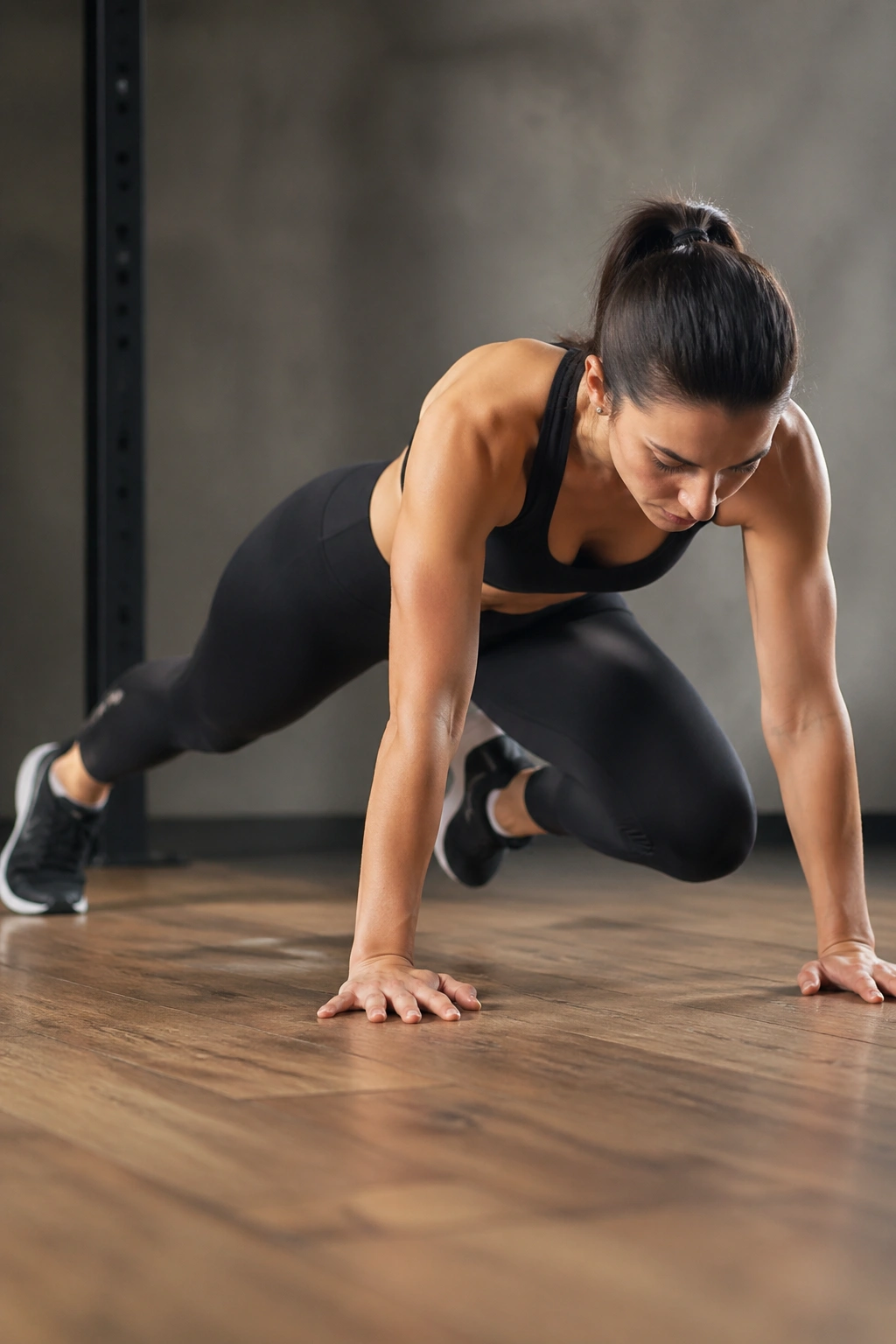
Want a plank that wakes up your waist and hip flexors at the same time? Use this one.
From a high plank, bring one knee outside the same-side elbow, then return it to the floor and switch sides. The side travel adds a twist and opens the hips a little, while your abs keep the body from collapsing.
What to notice
Your shoulders should stay square. Your hips should not shoot up. The knee does not need to jam all the way to the elbow; a clean, controlled path matters more than range. Work for 20 to 30 seconds.
This is a nice middle ground between straight planks and full-blown cardio. It keeps the midsection busy without feeling repetitive, and that matters when you are building a routine you can actually stick with.
19. Flutter Kicks
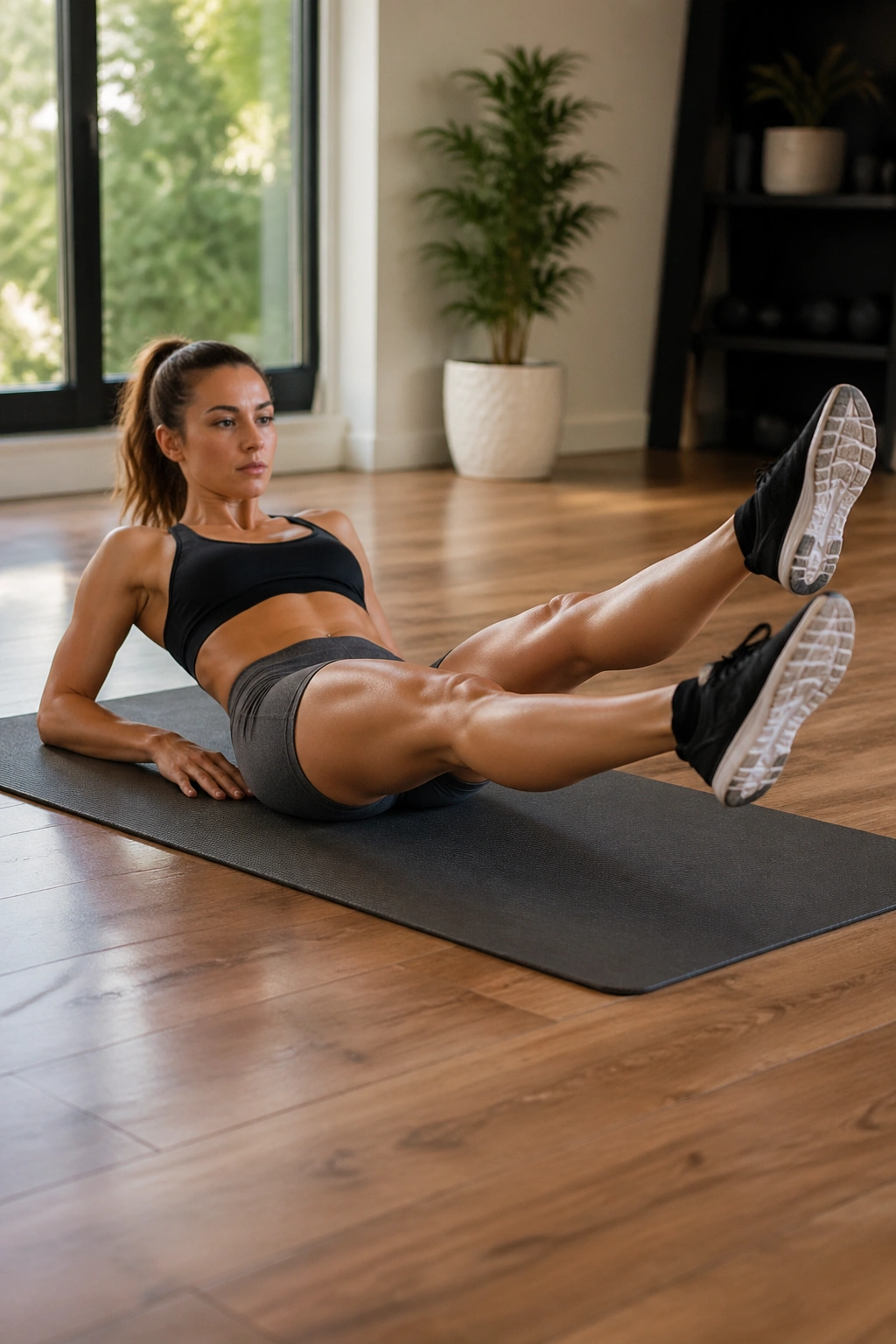
Flutter kicks are tiny, which is exactly why people underestimate them.
Lie on your back, press your lower back into the floor, and hover both legs a few inches up. Then kick one leg up and the other down in a small, fast rhythm. If the back arches, lift the legs higher or bend the knees a little. That adjustment keeps the work where it belongs.
This move hits the lower abs and demands endurance. It also tends to reveal who is cheating, because the moment the core quits, the hip flexors start yelling. Keep the kicks short and controlled for 20 to 30 seconds.
You should feel tension, not a wild flailing mess. That difference is the whole point.
20. Standing Knee Drive and Twist
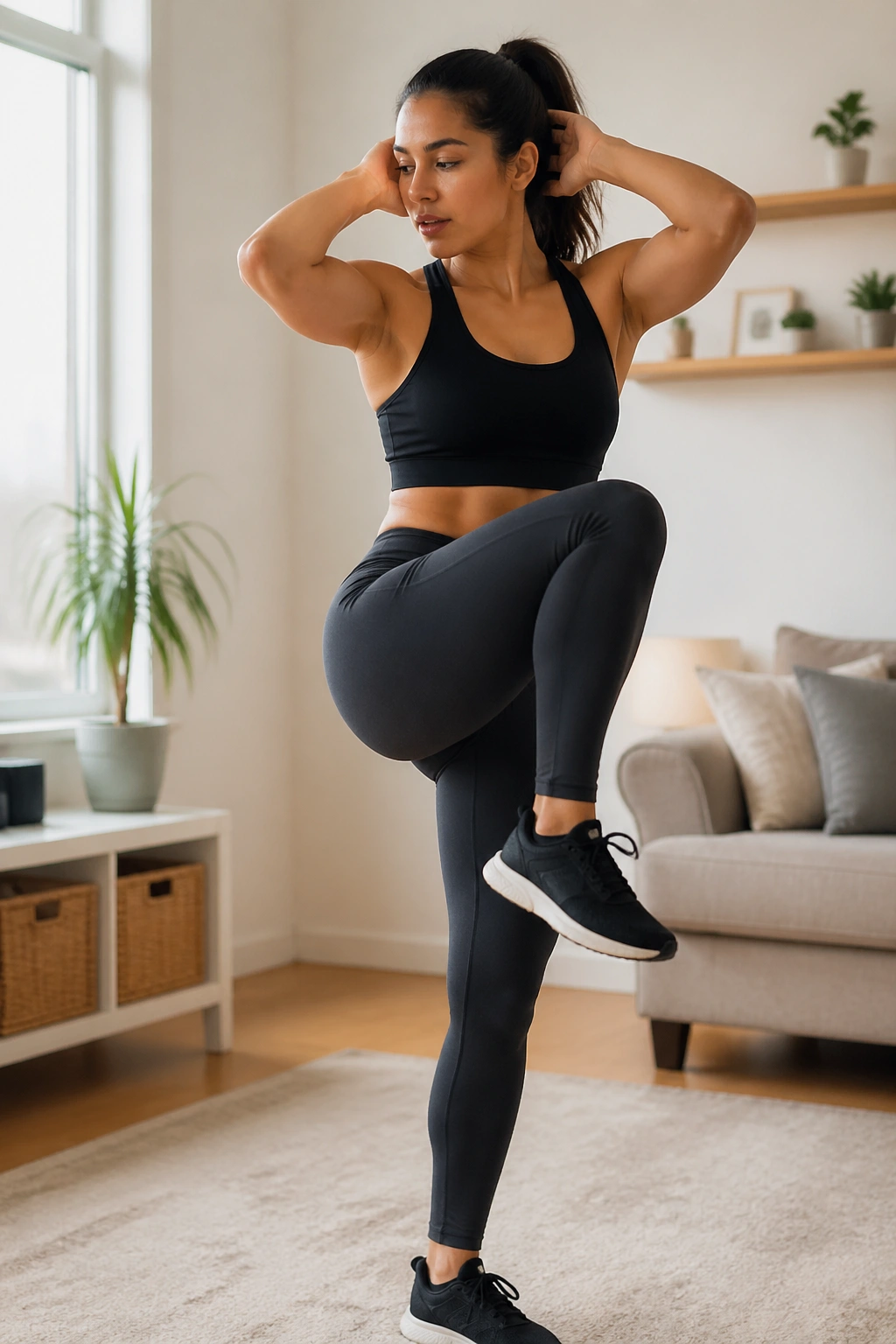
Sometimes the best core move is the one you can do without getting down on the floor.
How to make it count
Drive one knee up toward the opposite elbow while adding a small twist through the torso. Stand tall, brace before each rep, and keep the supporting foot grounded. This can be done slowly for control or faster for a cardio-style burst.
- 10 to 15 reps per side
- Core tight before the knee lifts
- Chest stays open
- No shrugging through the shoulders
Standing drills are underrated because they teach your midsection to work in real life, not just on a mat. If your schedule is chaotic or your wrists are tired, this one gives you a clean option that still supports a flatter-looking stomach.
21. Squat to Knee Drive
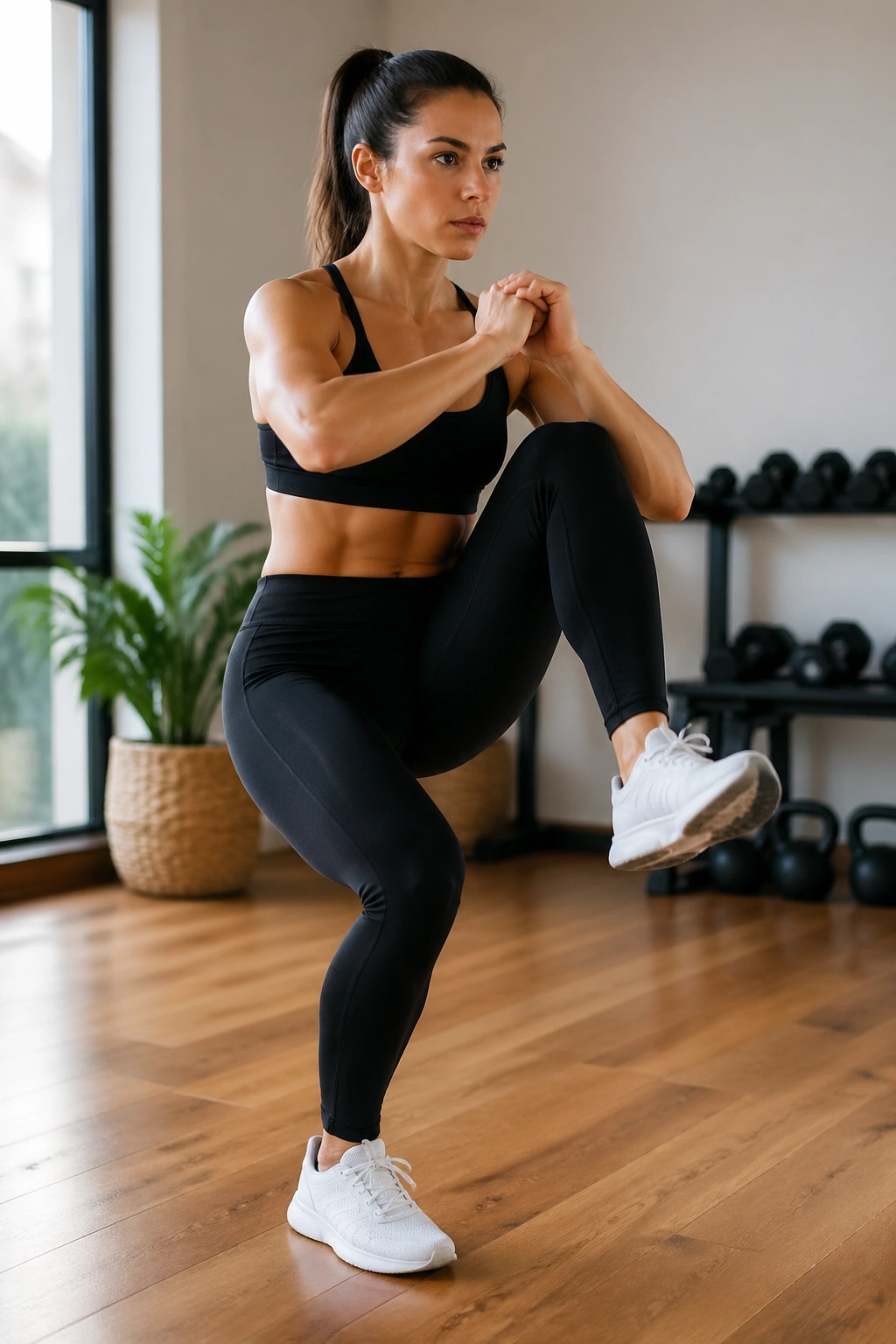
This is the move I reach for when I want the core to work and the legs to earn their keep.
Drop into a bodyweight squat, stand up, then drive one knee up at the top. Alternate sides. The squat brings in the legs and glutes, and the knee drive forces the core to stabilize as you stand. That means more total work in less time, which is useful when you want a home workout that feels efficient.
A smooth set looks like this: squat, stand, knee drive, reset. No collapsing into the bottom. No flinging the knee up like you are late for a train. Ten to 12 reps per side is a solid start.
Compared with burpees, this is easier on the joints and much easier to repeat with good form.
22. V-Ups
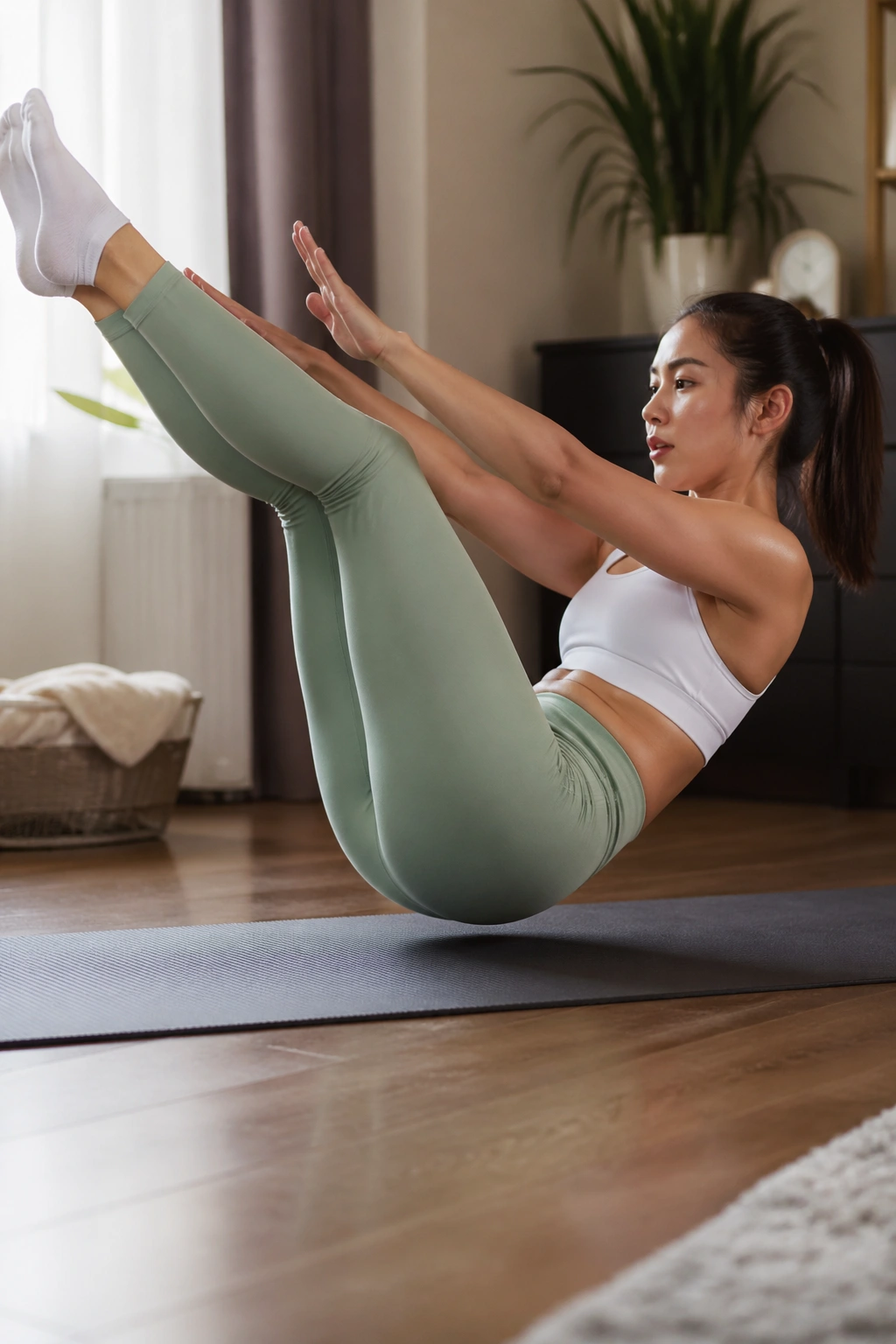
V-ups are not beginner-friendly, and I would not pretend otherwise.
Lie flat, then lift your legs and upper body at the same time so your hands reach toward your shins or feet. The body folds into a V shape, then lowers with control. If that full version feels impossible, bend the knees and do tuck-ups first. There is no prize for rushing to the hardest version and losing your back in the process.
What makes them useful
V-ups train compression strength, which is the ability to bring the torso and legs toward each other with control. That kind of strength shows up in the lower abs and front line of the core. It is a tough move, but it earns its spot because it asks for real power, not just endurance.
23. Plank Walkouts
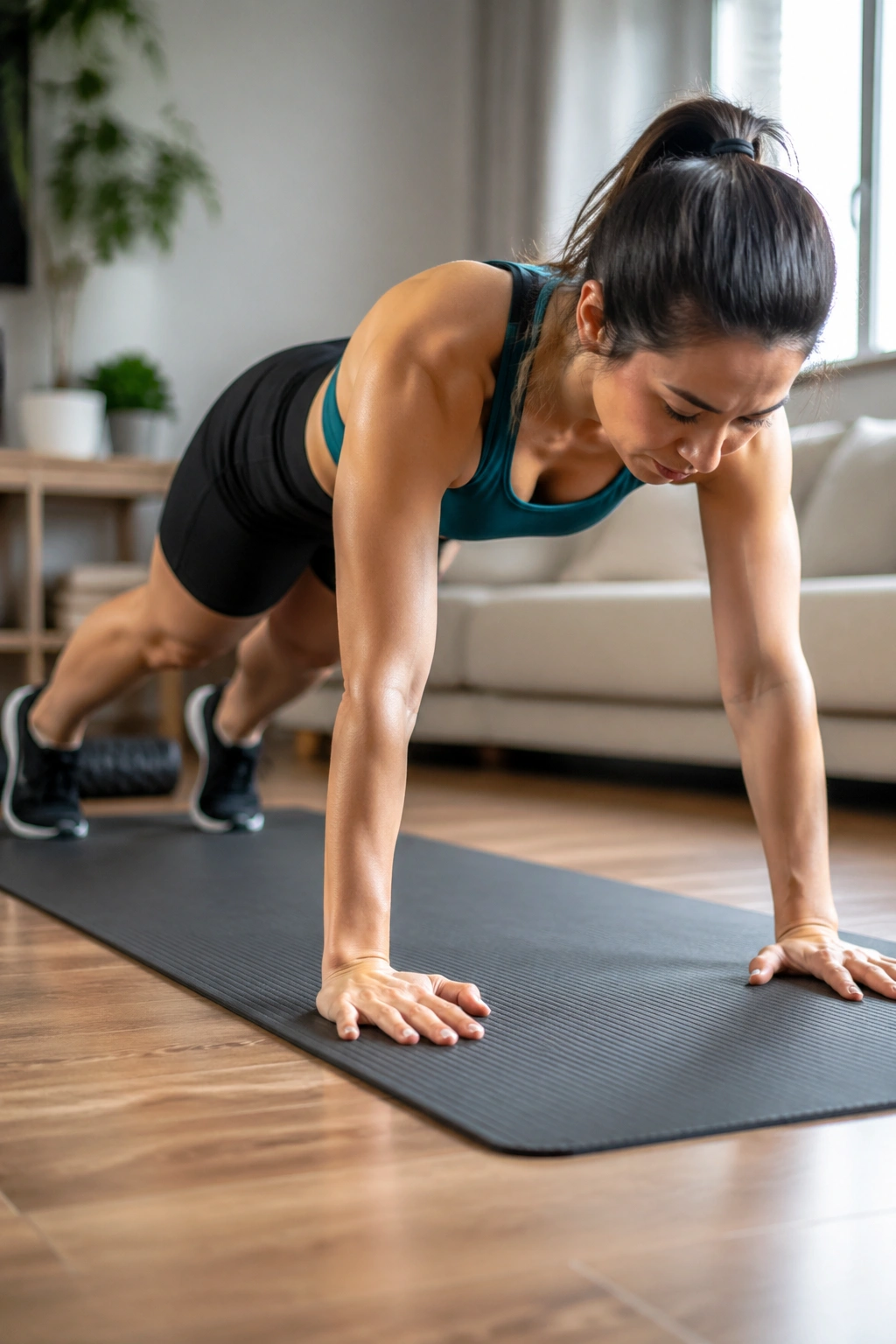
Plank walkouts are one of the best bodyweight drills for making your core work before breakfast, metaphorically or not.
Stand tall, hinge at the hips, and walk your hands forward until you reach a high plank. Hold for a beat, then walk your hands back to standing. The long lever makes your abs fight hard to keep the body from sagging.
The win here is twofold: your shoulders and chest get a little work, and your core has to resist extension while the body moves. That makes the exercise feel more like a whole-body pattern than a pure ab move. Keep the legs as straight as your hamstrings allow, but do not force the shape if it pulls your lower back out of line.
24. Jump Rope Intervals
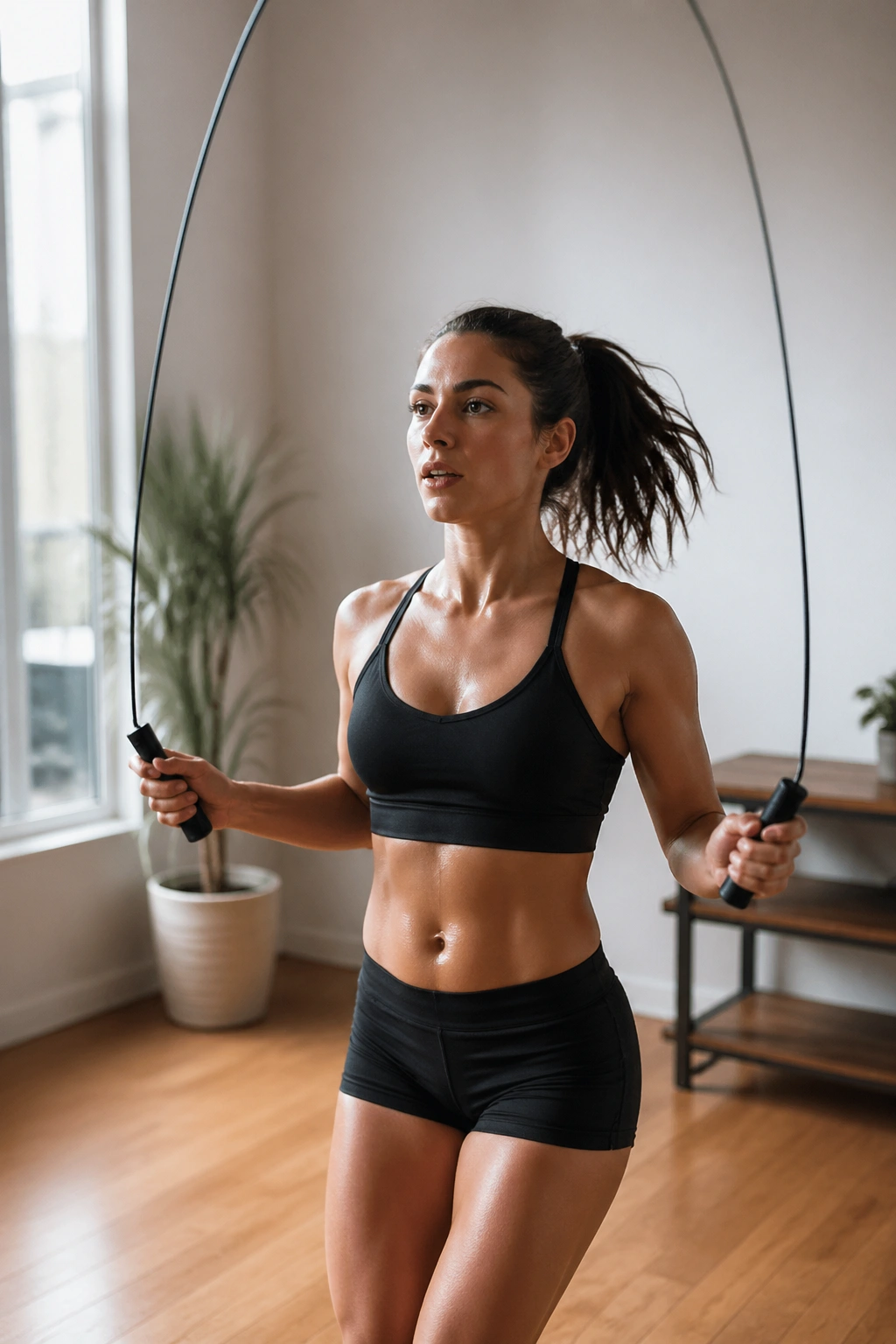
A jump rope can be cheap, awkward, and fantastic. If you do not have one, fake it. The movement still works.
How to structure it
- Jump or mimic rope turns for 20 seconds.
- Rest for 10 to 20 seconds.
- Repeat for 6 to 10 rounds.
Keep the jumps small and the landings soft. Your core has to brace to keep the torso upright, and that tension shows up in the waist even though the exercise is not labeled as an ab move. If your calves get fried first, that is fine. They are part of the deal.
This is one of the easiest ways to add calorie burn at home without needing a huge space. Short intervals beat endless sloppy jumping every time.
25. Low-Impact Burpee Finishers
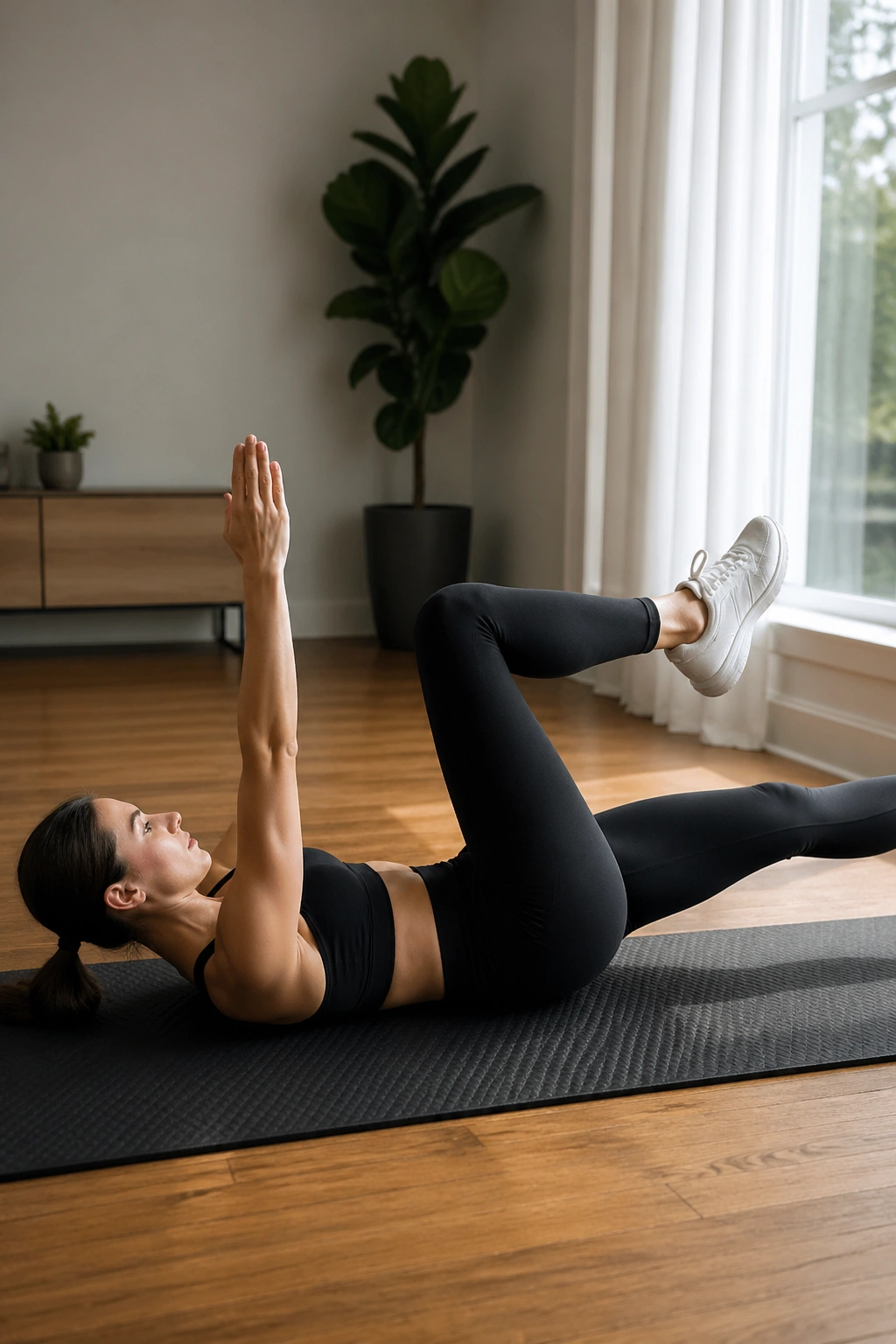
A burpee does not have to be a noisy, joint-smashing event. The low-impact version is a lot kinder and still gets the heart rate moving.
How to do it
- Squat down and place your hands on the floor.
- Step one foot back, then the other, into a plank.
- Step forward again.
- Stand tall and reach overhead.
If you want more challenge, add a small hop at the top. If you want less impact, keep every step slow and deliberate. The core stays busy because it has to stabilize the body through every transition, and that is the part people miss when they only chase sweat.
This makes a strong finish because it blends cardio, core control, and total-body effort in one simple pattern. End with 6 to 10 reps, breathe, then walk around for a minute and let your stomach stop pretending it is calm.
