



Belly fat workouts under 10 minutes work best when they’re hard, specific, and repeated often. That’s the honest version, and it’s a lot more useful than pretending 100 crunches can melt fat off one stubborn spot.
You can’t spot-reduce belly fat with a single move. The body doesn’t work that neatly. What short workouts can do is raise your heart rate, build muscle in the muscles that brace your trunk, and make it easier to stay in the kind of calorie deficit that trims overall body fat over time.
That’s why the smartest quick sessions are rarely just “abs.” They mix fast, whole-body movement with core work that makes your midsection do some real work instead of coasting. A hard minute of mountain climbers means more than ten lazy reps of almost anything.
Some of the best options here need nothing but floor space. Others use a stair, a kettlebell, or a medicine ball. Pick the one you’ll actually do on a weekday when you’re tired and slightly annoyed. That’s the one that matters.
1. Jumping Jack Ladder
A jumping jack ladder looks simple, and that’s exactly why it works. You start easy, then push the pace in short bursts that make your lungs and legs wake up fast. No thinking. No setup. Just movement.
How the ladder works
Do 20 jumping jacks, rest 15 seconds, then 30, rest 15, then 40, rest 15, then 30, 20, and 10. That full wave takes about 6 to 7 minutes, depending on your rest. Keep your arms straight, land softly, and try to breathe out on the jump so your ribs don’t flare.
- Best for: beginners who want a low-skill cardio option
- Feels like: a school-gym warm-up that turns into a sweat session
- Watch for: sloppy landings and half-speed reps
If regular jumping jacks bother your knees, step one leg out at a time instead. Same rhythm, less impact. That tiny change can be the difference between skipping the workout and finishing it.
Tiny rule: if your shoulders start creeping up to your ears, slow down for one round and reset.
2. High-Knee Sprint Intervals

High knees are one of those moves that look almost too basic to count. Then you try them hard for 20 seconds and your legs start arguing with you.
Set a timer for 30 seconds on, 15 seconds off, for 8 rounds. Drive one knee up at a time, pump your arms, and keep your chest tall. The goal is quick feet, not flailing. If you bounce into the floor like a cartoon character, you’re probably losing energy.
The magic here is intensity. High knees are short, loud, and efficient. They spike your heart rate fast, and that matters more than fancy choreography when you’ve only got a few minutes.
A useful trick: think “light feet, strong arms.” It keeps the movement snappy instead of messy. If you need a smaller version, march fast with your knees still coming up high.
No fancy gear. No excuses either.
3. Mountain Climber Bursts
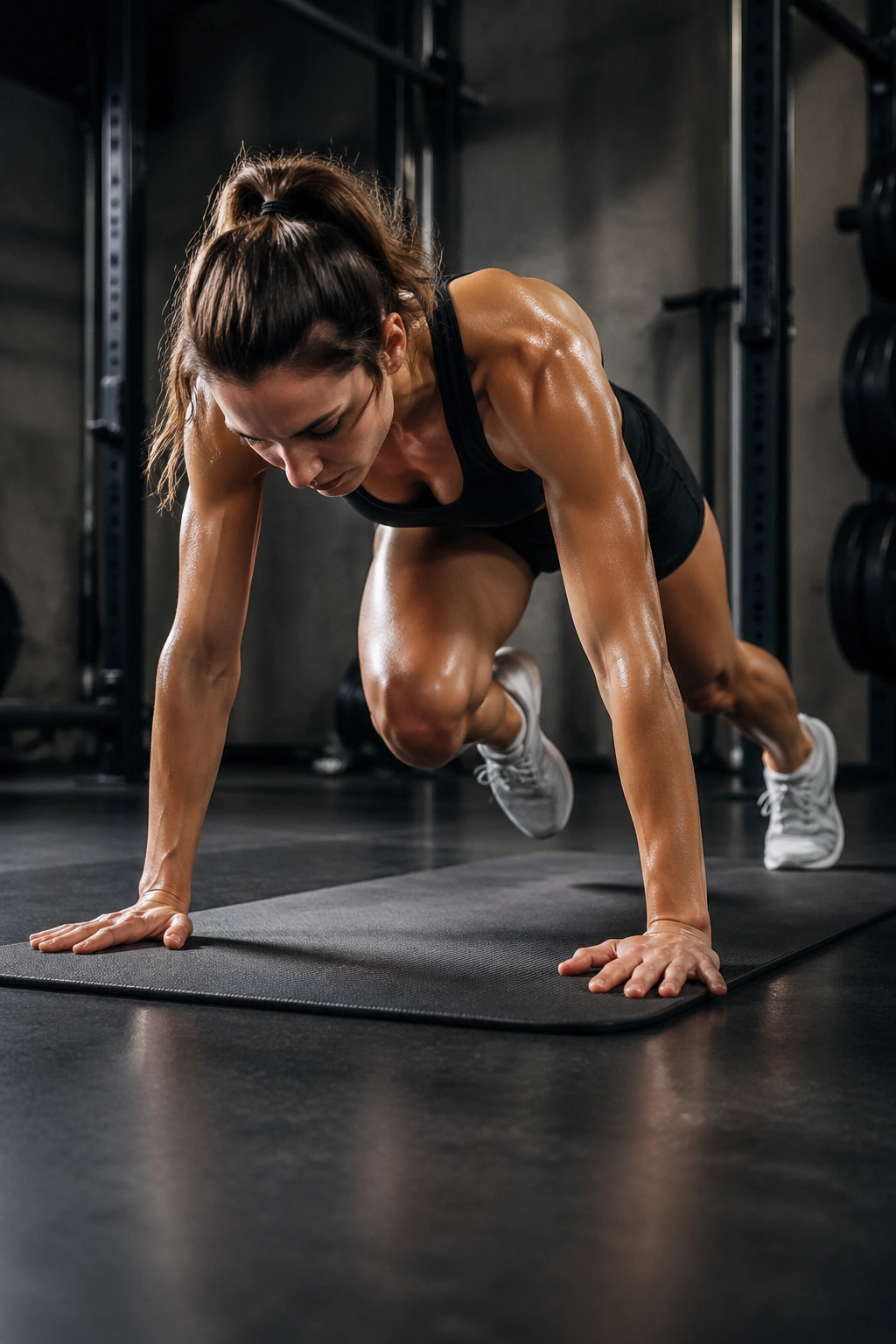
Why do mountain climbers show up in so many short workouts? Because they hit the sweet spot between cardio and core. Your shoulders work, your abs brace, and your heart rate climbs before you’ve had time to get bored.
Do 4 rounds of 30 seconds mountain climbers and 15 seconds plank hold. That’s under 4 minutes, so repeat the whole block twice if you want a longer session. Keep your hands under your shoulders and pull your knees in fast, but not so fast that your hips bounce like crazy.
How to keep the hips quiet
A lot of people turn mountain climbers into a little hop in place. That’s not the point. Your torso should stay as steady as you can manage while the legs do the fast work.
- Tighten your belly before you start
- Set your feet a little wider if you need more balance
- Stop the set when your lower back starts sagging
Short, sharp, and mean in the best way. That’s the feel you want.
4. 8-Minute Belly Fat Tabata Circuit
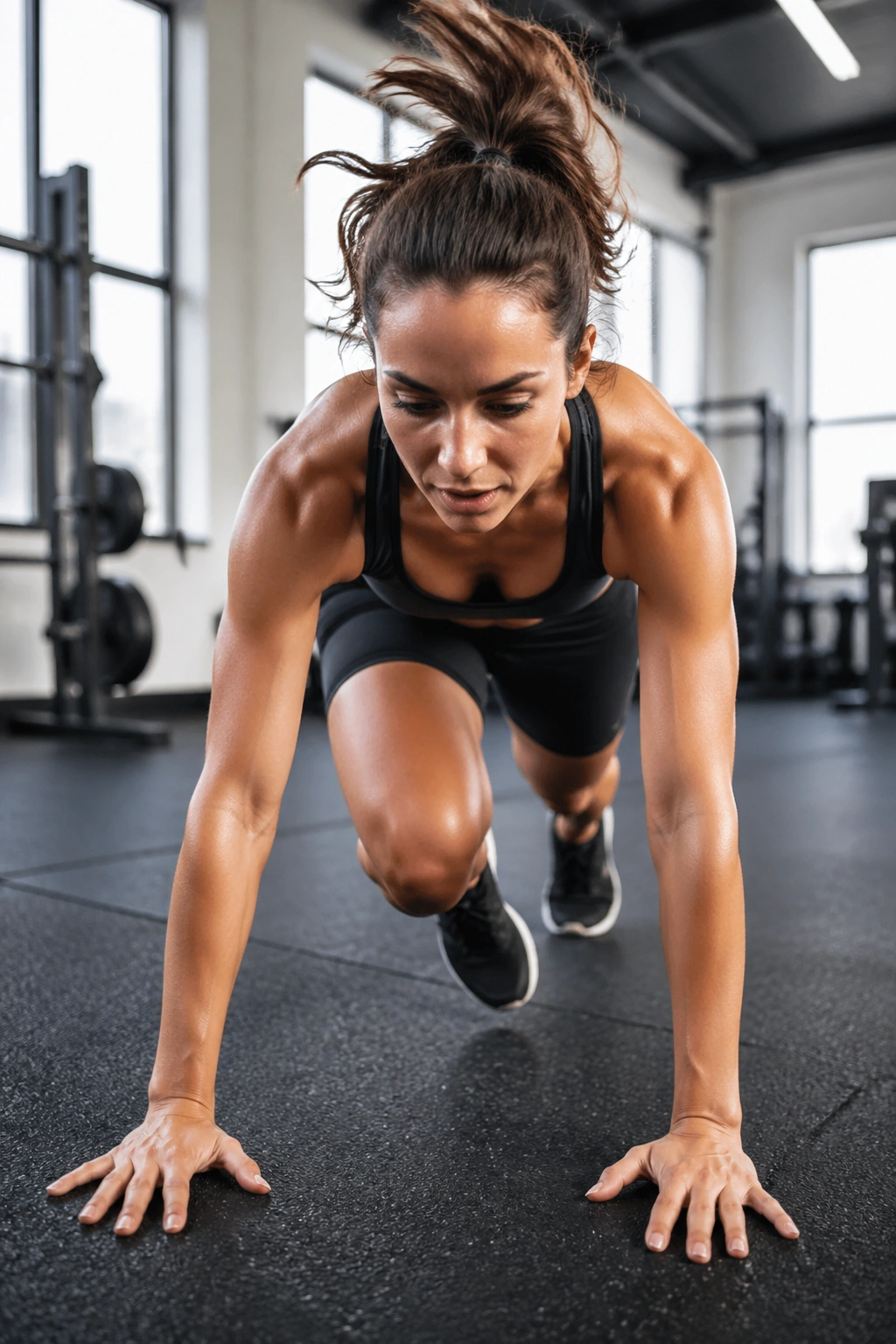
Tabata gets used badly sometimes. People toss the word around for anything hard and call it done. Real Tabata is more exact: 20 seconds of work, 10 seconds of rest, repeated for 8 total rounds.
Use four moves: squat jacks, mountain climbers, plank jacks, and fast feet. Do each one twice, and the whole thing lands at 8 minutes. It’s fast enough to fit between other parts of life, which is half the reason people actually stick with it.
Here’s the clean version:
- 20 sec squat jacks
- 10 sec rest
- 20 sec mountain climbers
- 10 sec rest
- 20 sec plank jacks
- 10 sec rest
- 20 sec fast feet
- 10 sec rest
Repeat once more.
The key is pace. If you start too hard, the last two rounds get sloppy and your form falls apart. Start at about 80 percent effort, then build. You should finish breathing hard, not lying on the floor wondering what happened.
5. Squat-to-Reach Burn
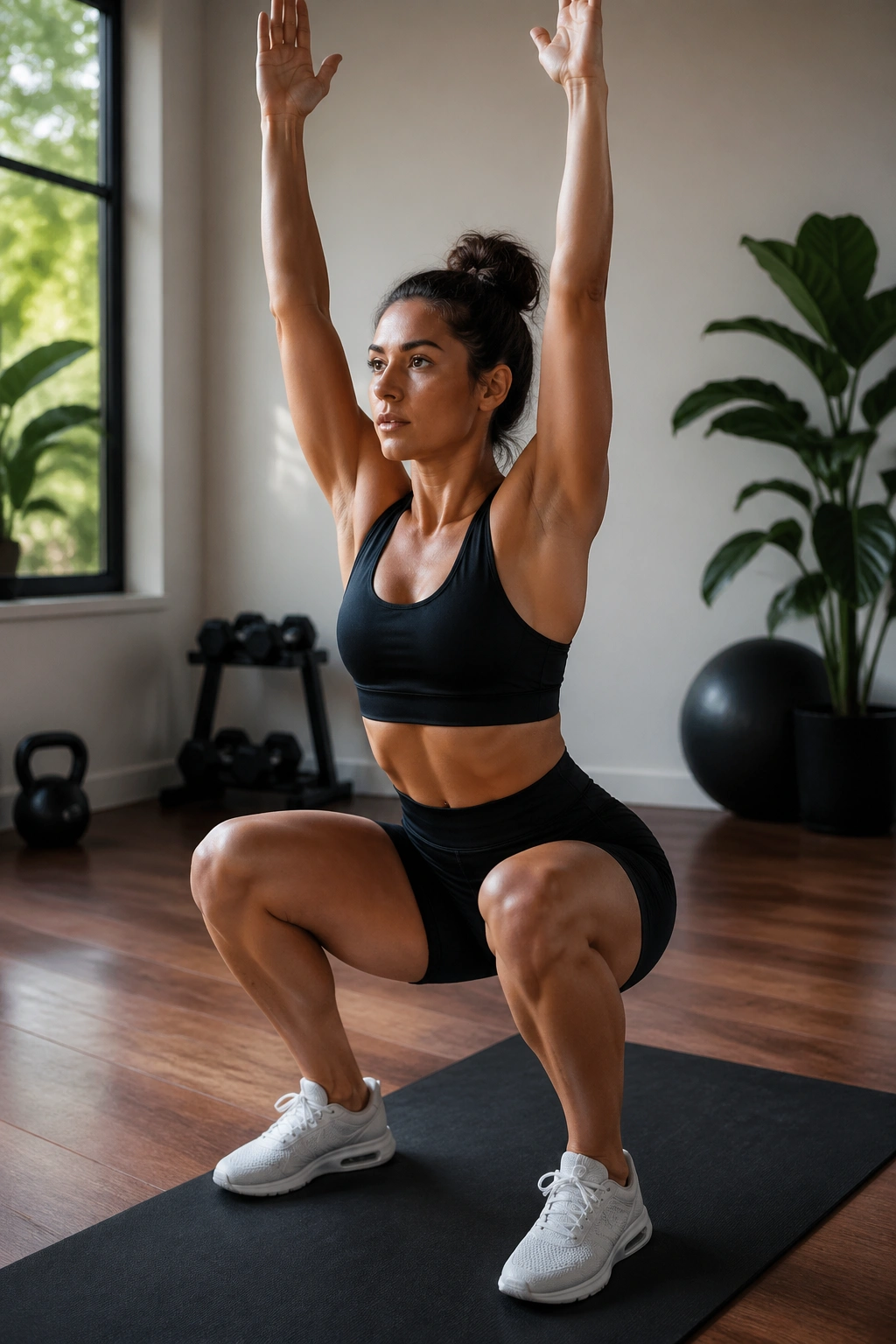
This one is boring in the best possible way. A squat-to-reach workout uses one clean pattern and repeats it until your legs and midsection start complaining.
Set a timer for 45 seconds of work, 15 seconds of rest, for 8 rounds. Squat down until your thighs are close to parallel, then stand and reach your arms overhead. Keep your heels down and your chest open. If your knees cave inward, slow the pace and fix the stance.
The reach matters more than people think. It forces your torso to stay upright instead of folding over, which means your core has to stabilize the whole movement. That makes the workout feel bigger than it looks.
One sentence should cover the whole deal: slow is fine, sloppy is not.
If you want more burn, add a calf raise at the top of each rep. It sounds tiny. It isn’t.
6. Plank Shoulder Tap Flow
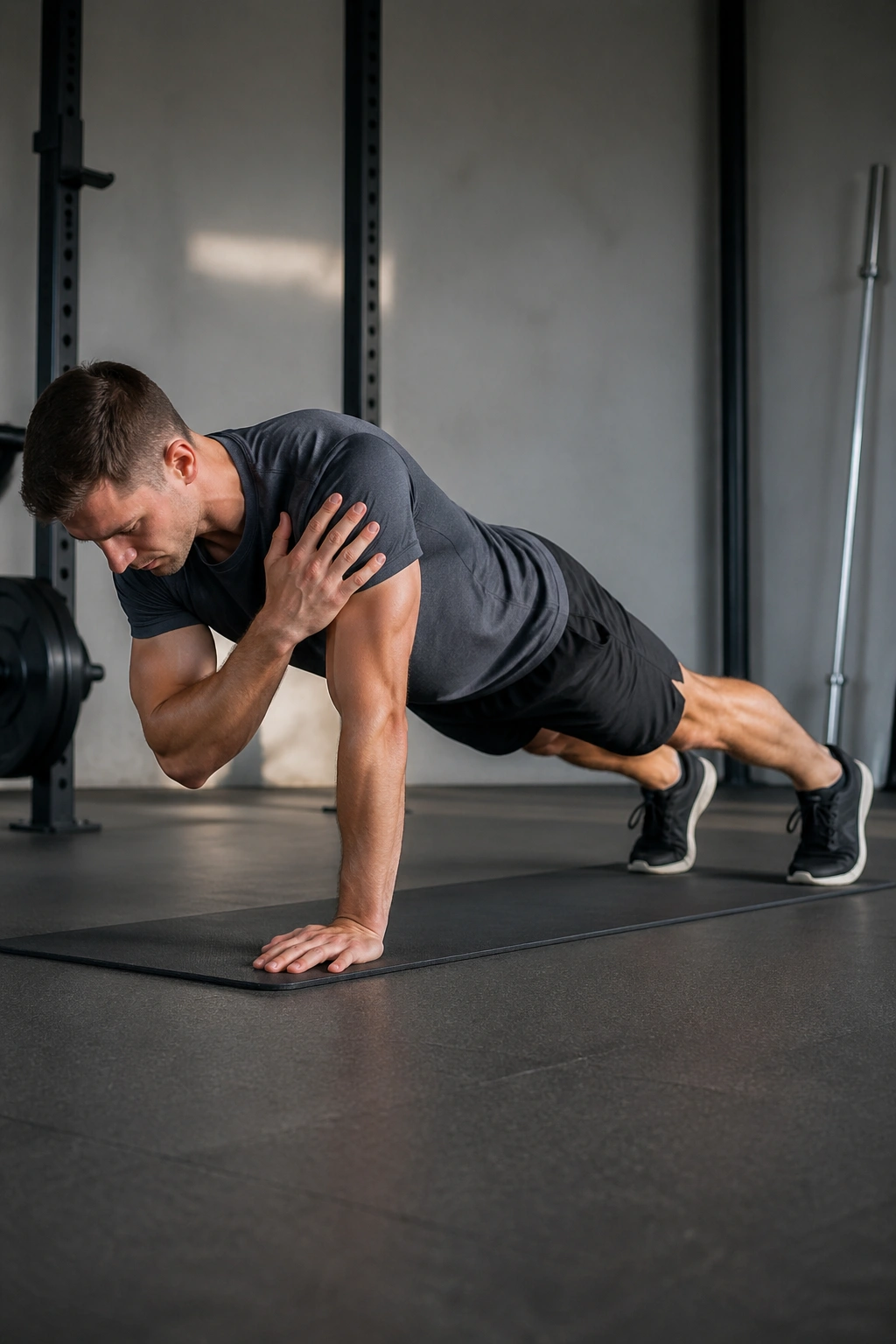
Plank shoulder taps are cleaner than crunches and meaner than they look. They train your core to resist twisting, which is a big deal if you want a stronger, tighter midsection.
Unlike sit-ups, this move asks you to stay still while your arms move. That makes the abs work in a different way. Do 40 seconds of shoulder taps, then 20 seconds of rest, for 6 to 8 rounds. Keep your feet a bit wider than hip-width so you’re not fighting for balance the whole time.
What makes it different
The real challenge is control. Tap one shoulder, then the other, without letting your hips swing from side to side. If you can keep your pelvis level, the move stays useful. If not, widen your stance and slow down.
This one is a favorite for people who hate crunches but still want a core-focused session. It’s also easier on the neck. That alone makes it worth keeping around.
7. Shadow Boxing Rounds
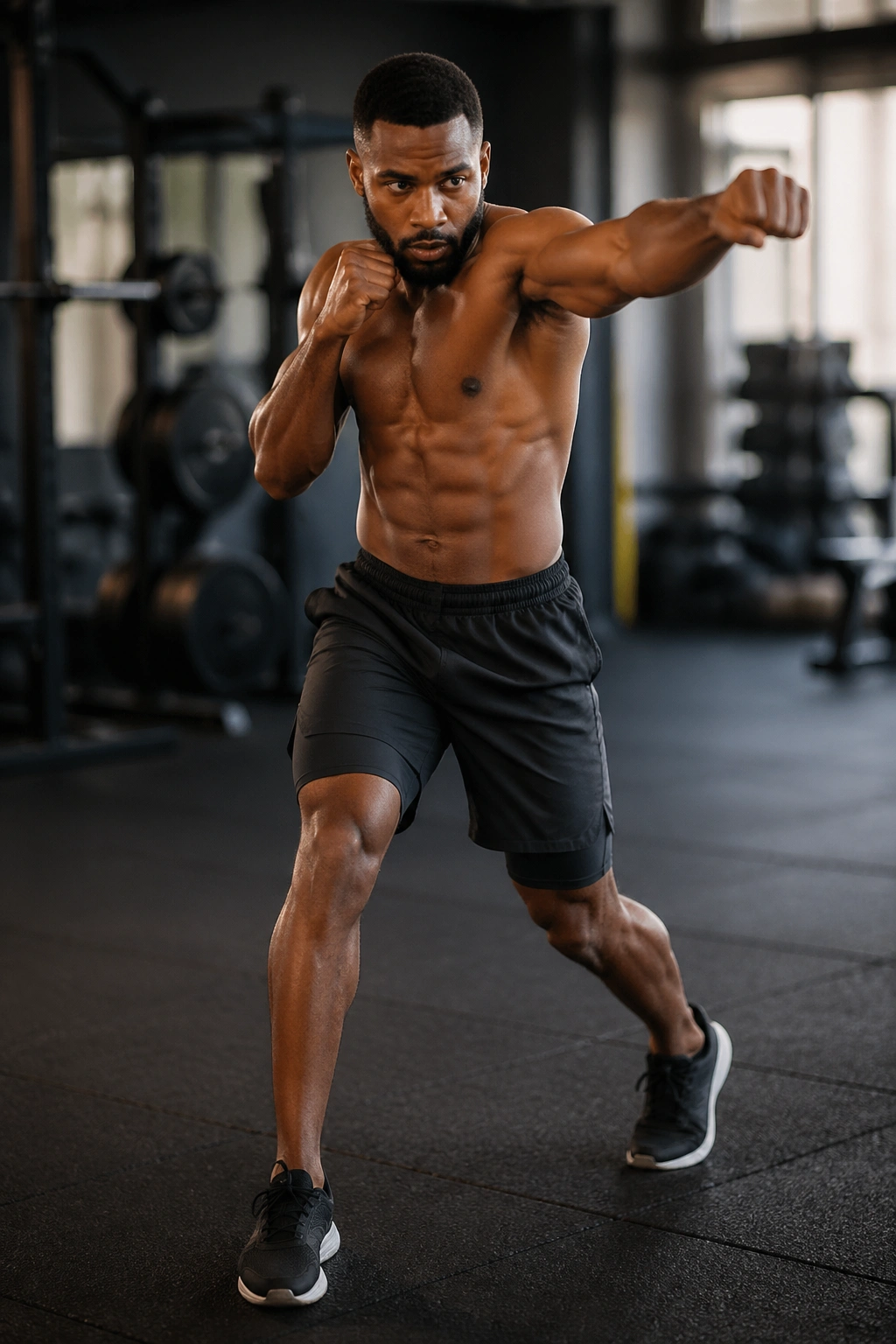
Shadow boxing is underrated because it doesn’t look brutal from the outside. Then you start throwing combinations for a few rounds and your shoulders, lungs, and waistline all get the memo.
Do 3 rounds of 2 minutes, with 30 seconds of rest between rounds. Jab-cross, jab-hook-cross, slip left, slip right, then move your feet. Keep your hands up and your chin tucked. You’re not trying to win a prize for power. You’re trying to stay moving the entire time.
The rhythm matters. Punching in place gets old fast, so keep stepping, pivoting, and switching angles. That extra footwork makes the workout feel bigger and keeps your core engaged because your torso keeps rotating and bracing.
If you’re new, slow the combinations down. Clean punches beat wild arm swings every time.
And yes, your shoulders may light up before your abs do. That’s normal.
8. Reverse Lunge + Knee Drive
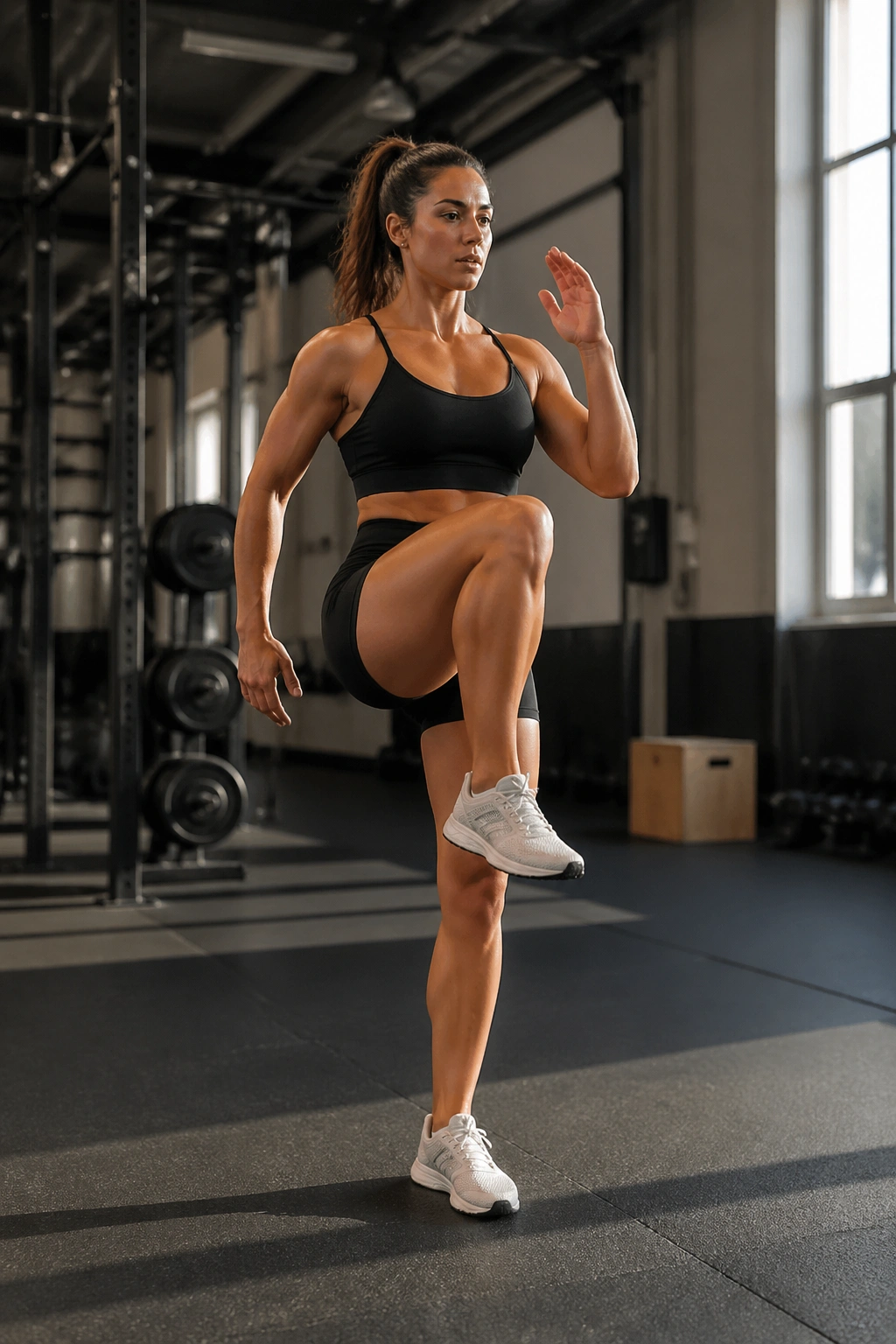
This one is part leg burn, part balance test, part core check. It’s also a nice choice when you want something that feels athletic without needing a mat or a machine.
Set a timer for 40 seconds of work and 20 seconds of rest, for 8 rounds. Step back into a reverse lunge, then drive the back knee up as you stand. Alternate legs each rep. Keep your front foot planted and your torso tall so you’re not folding forward like a lawn chair.
The knee drive is what gives this move its extra bite. It forces you to stabilize through the center instead of just stepping back and up on autopilot. If balance is shaky, slow the tempo and pause for a beat at the top.
This is one of those workouts that sneaks up on you. It doesn’t scream like burpees, but it stacks fatigue in the legs and midsection fast.
Use it on days when you want to feel worked without feeling wrecked.
9. Bicycle Crunch Pyramid
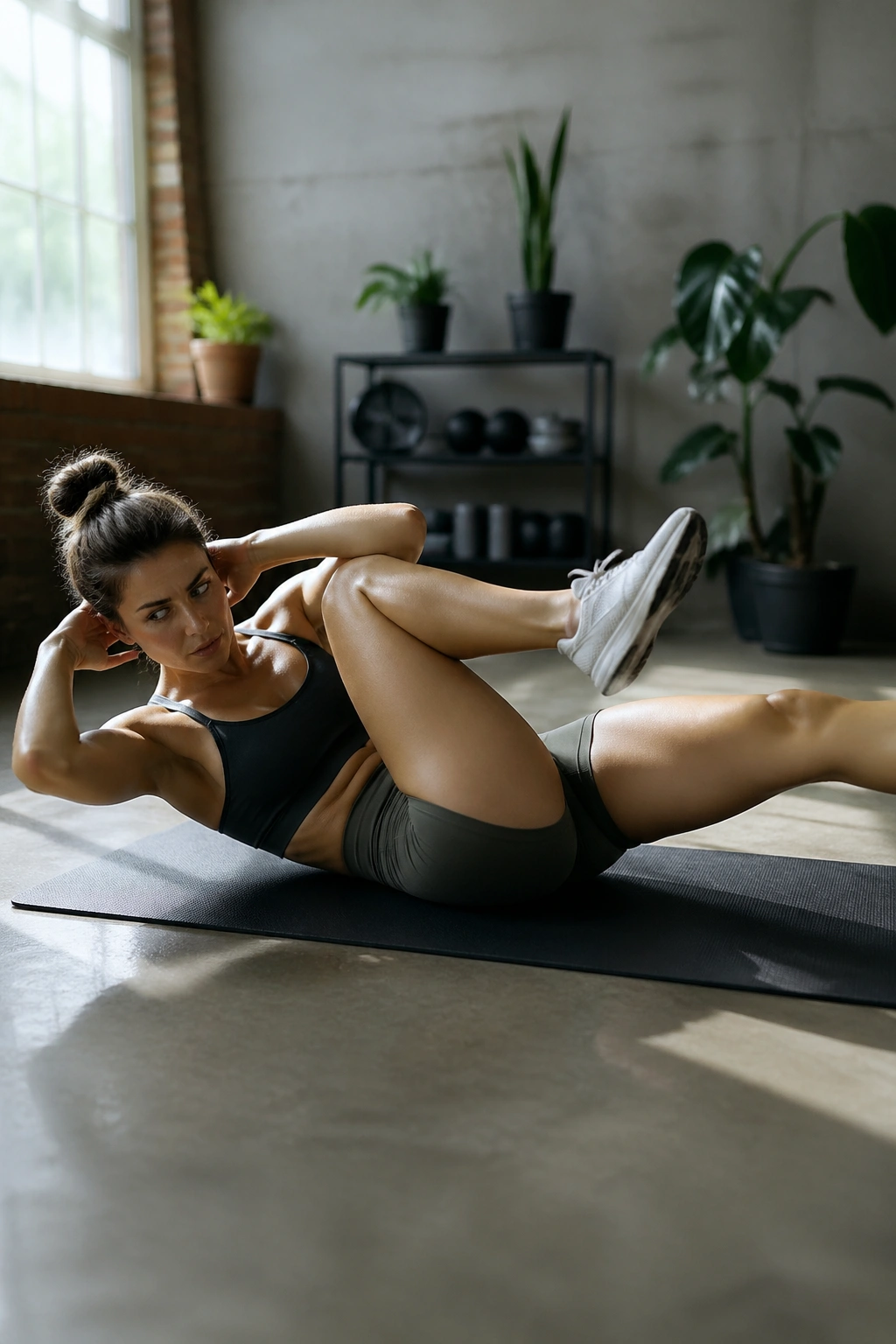
Can a crunch still earn its place? Yes, if you treat it like a controlled core drill instead of a neck-jamming race.
Start with 20 seconds on, 10 seconds off, then move to 30, 40, 30, and 20. That gives you a pyramid you can finish in about 5 minutes. Keep your lower back pressed into the floor, and think about turning your ribcage, not yanking your head toward your knee.
How to get the most from it
The mistake most people make is going too fast. Fast bicycles turn into sloppy bicycles, and sloppy bicycles mostly train momentum. Slow enough to feel the twist. That’s the sweet spot.
If your neck feels cranky, interlace your fingers lightly behind your head and keep the elbows wide. Or tap the side of your head instead of pulling. Small adjustments like that make the move stay useful instead of irritating.
This is a good finisher, not a marathon. Short and sharp.
10. Belly Fat Skater Intervals
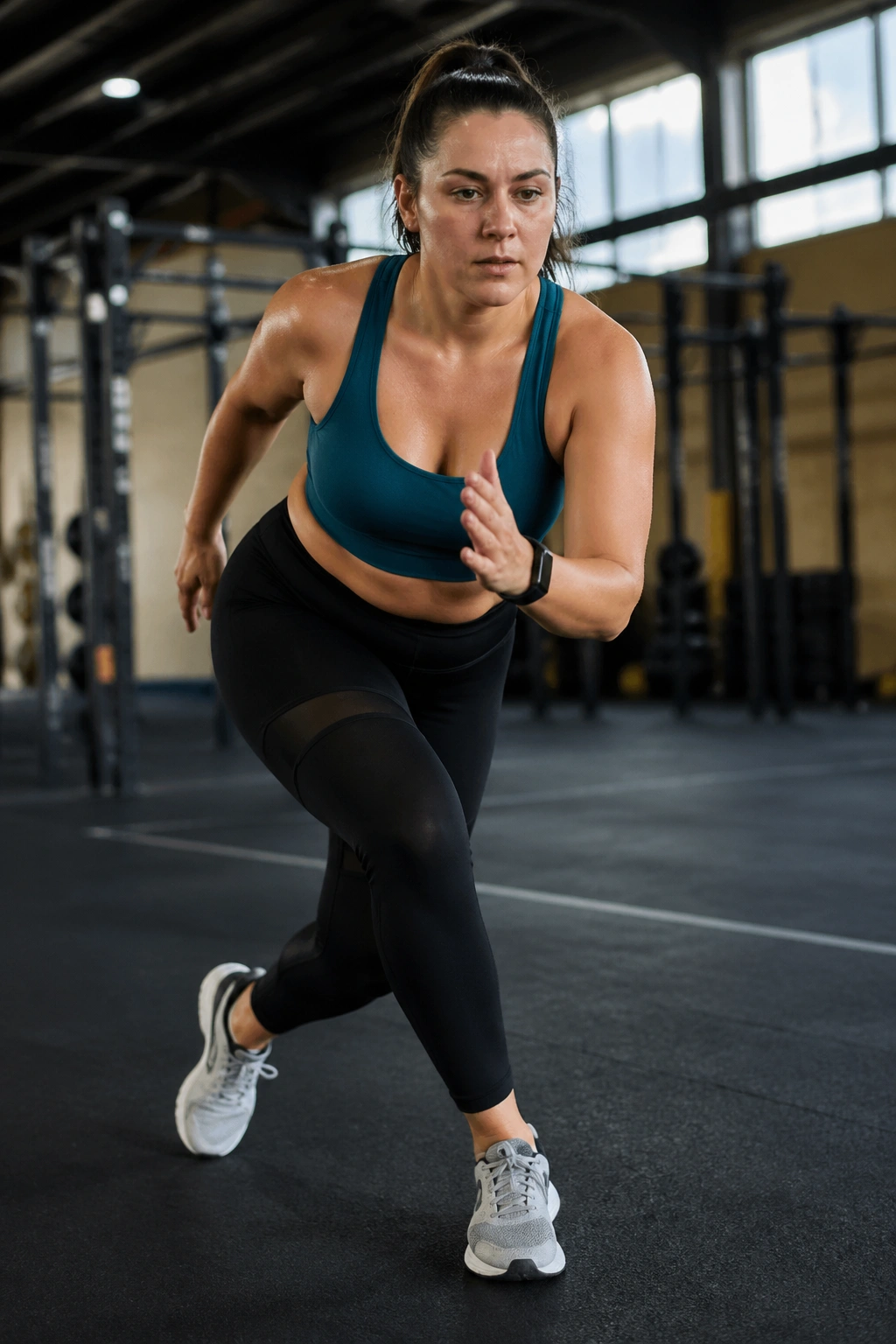
Skater hops are one of the better moves for a quick sweat because they hit your legs, your balance, and your side-to-side control at the same time. They also feel a little more athletic than endless jumping in place.
Do 30 seconds of skater hops, 15 seconds of rest, for 8 rounds. Leap sideways, land on one foot, and let the back leg sweep behind you. Keep your chest forward and your hips low enough to stay springy. If the hop feels too big, step side to side and add the arm swing.
- Best for: people who get bored with straight-ahead cardio
- Pairs well with: high knees or mountain climbers
- Common mistake: landing stiff and upright
The side-to-side motion wakes up muscles most people ignore in basic cardio. It also forces your torso to stabilize while you move, which is exactly the kind of work you want from a quick conditioning block.
Don’t chase height. Chase smooth landings.
11. Stair Sprint Intervals
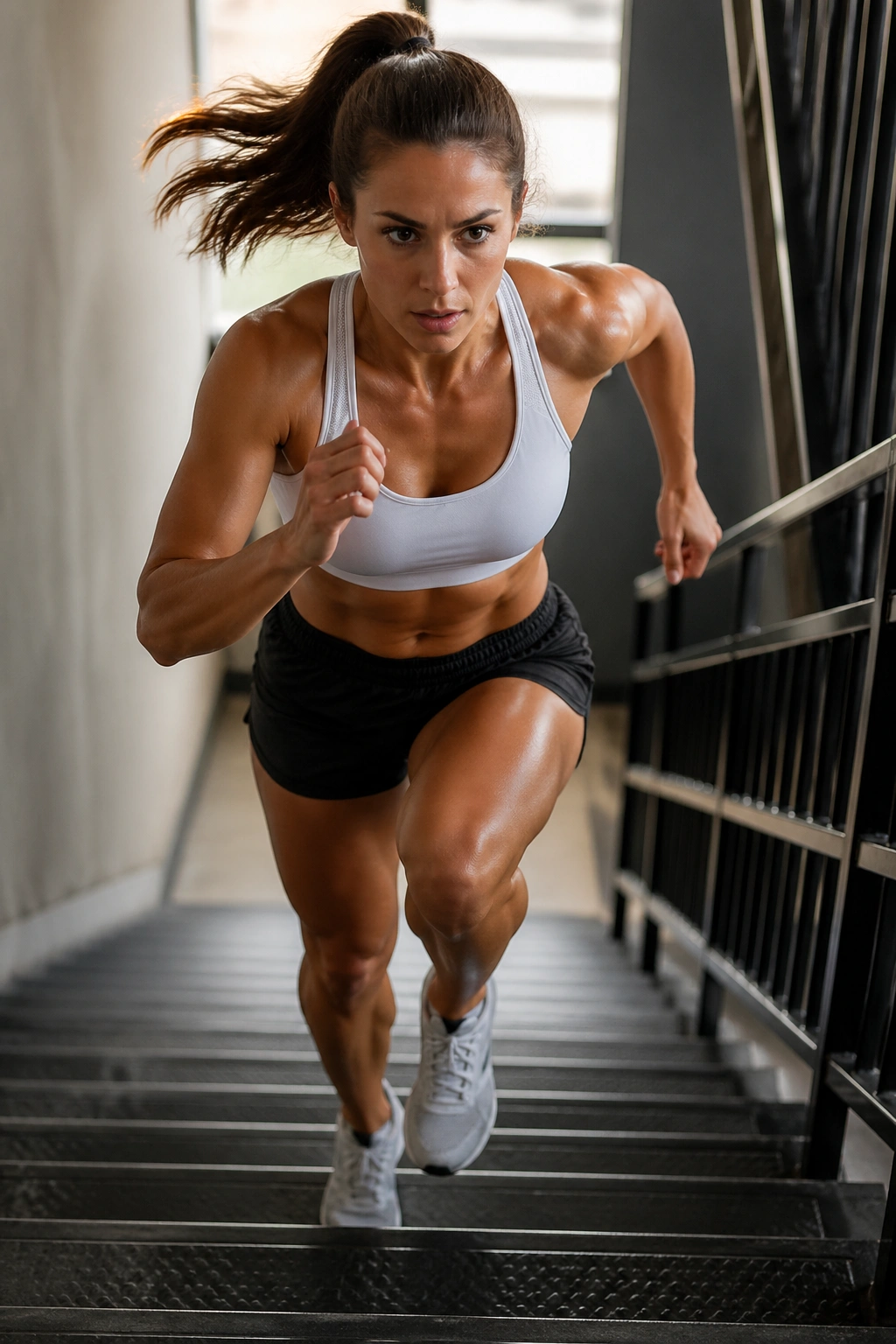
Stairs are rude. That’s also why they’re useful.
Find a short flight and climb hard for 20 to 30 seconds, then walk back down slowly. Repeat that 8 to 10 times. The whole thing stays under 10 minutes, and it can leave your legs shaking more than a much longer session on a treadmill.
What makes stair work different is the force angle. You’re pushing against gravity with every step, which loads the glutes and thighs fast. Your core has to stay braced too, especially if you’re carrying yourself up two steps at a time.
A clean climb beats a wild sprint. If your feet start slapping the steps, shorten the stride and steady the pace. That’s safer, and it usually gives you better output across the whole block.
No stairs nearby? A sturdy curb, stadium step, or low platform can do the job. Keep it simple.
12. Burpee Minus Push-Up
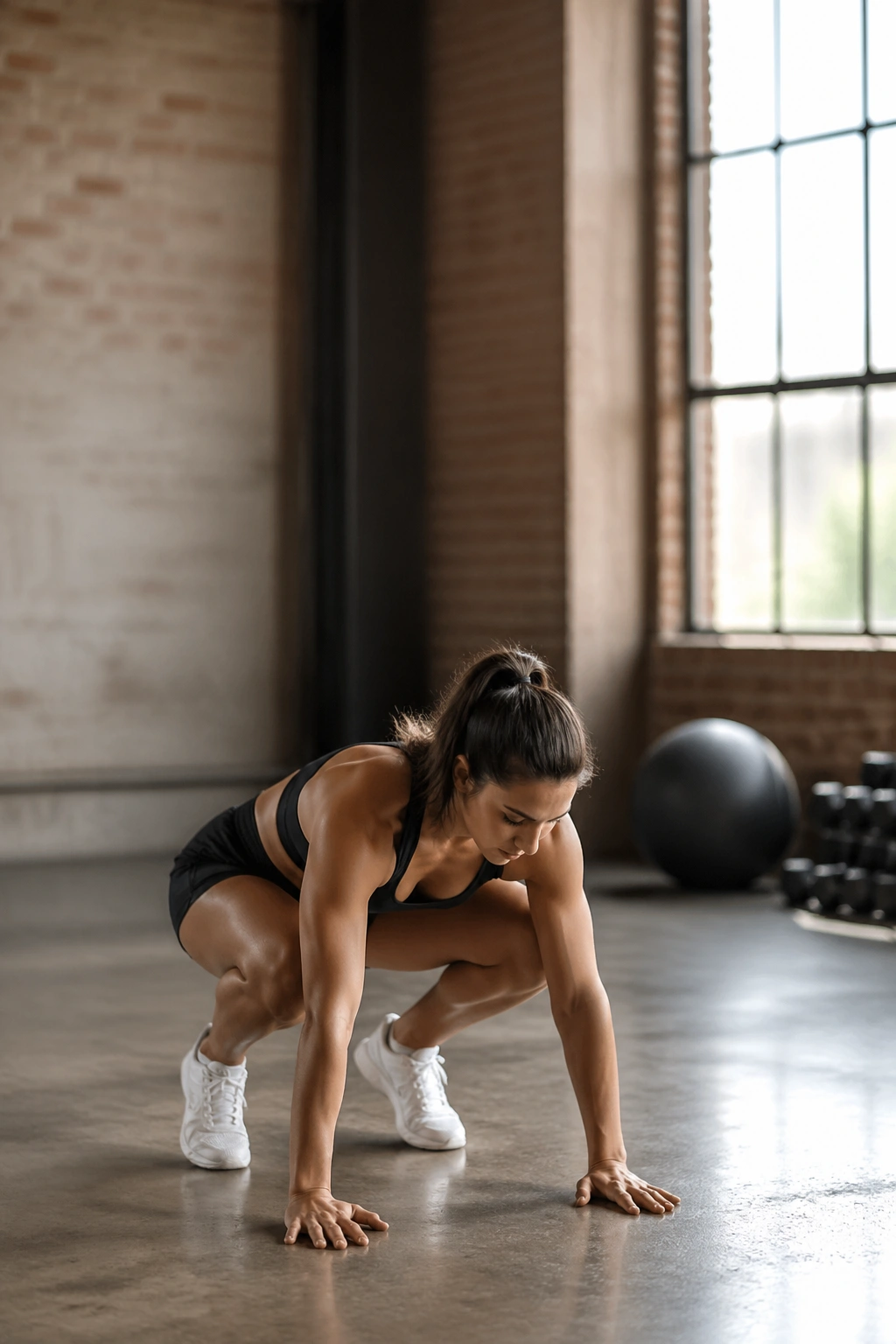
Burpees get a bad reputation because people do them badly and then blame the move. Fair enough. But the no-push-up version is a solid short workout if you keep the pace under control.
Do 30 seconds of work, 30 seconds of rest, for 8 rounds. Drop your hands to the floor, step or hop back to plank, step or hop forward, then stand and reach up. Leave out the push-up and, if you need to, leave out the jump too.
Burpee-minus-push-up is easier to repeat than the full version. That matters. If your form crashes by round three, you’re not getting the payoff you want. Keep the movement crisp and the rest honest.
Best way to scale it
- Beginner: step back and step forward
- Intermediate: hop back, step forward
- Advanced: hop both directions and add a small jump at the top
That simple ladder lets you keep the workout in the right effort zone instead of turning it into a mess.
13. Glute Bridge March
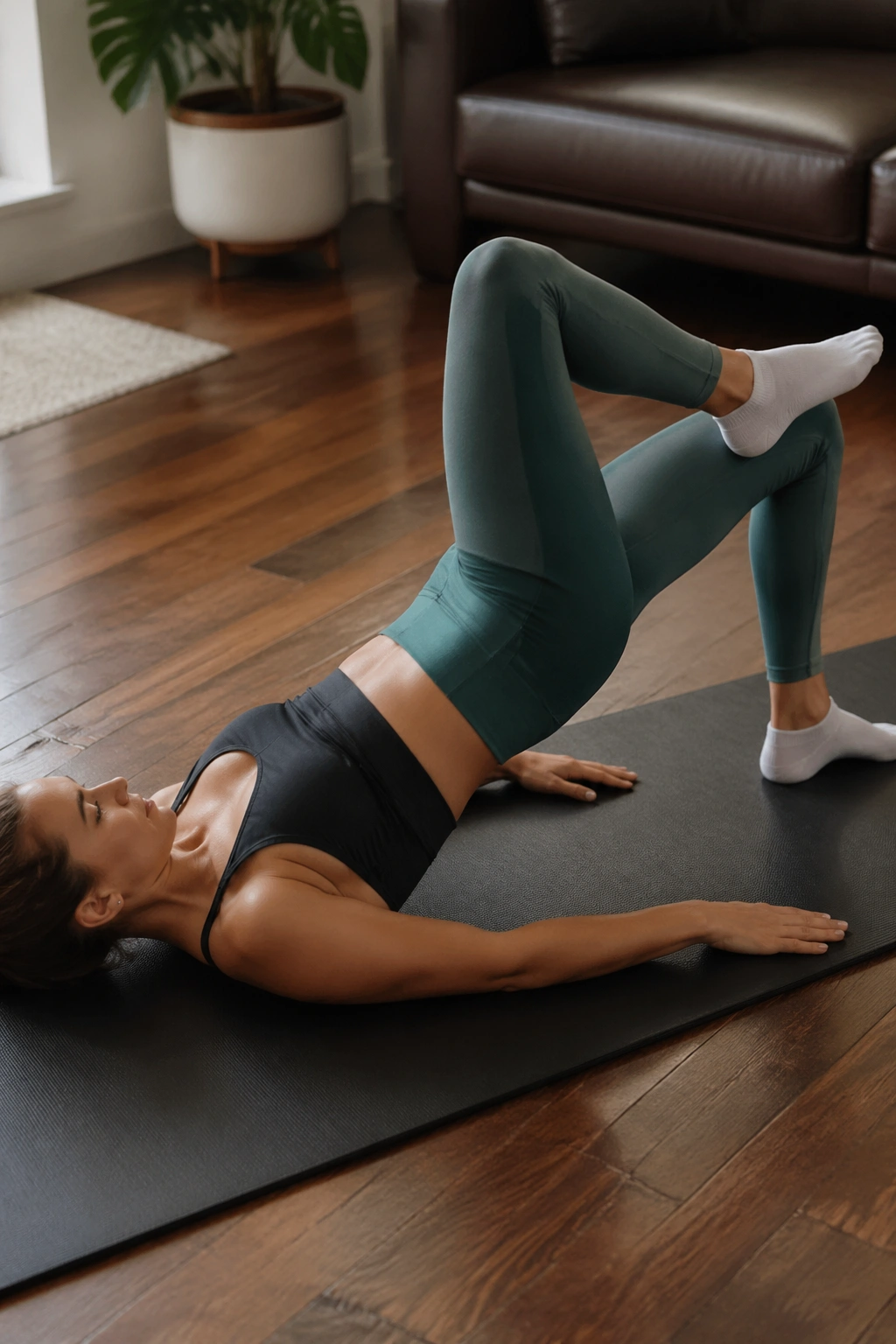
This is not the flashy one. It’s the sneaky one.
A glute bridge march works the back side of your body while asking your core to keep your pelvis level. Lie on your back, lift into a bridge, and march one knee up at a time. Do 40 seconds on, 20 seconds off, for 8 rounds.
The beauty of this move is how little cheating it allows. If your hips sag, the rep gets worse. If you shove the ribs up, it gets worse. Keep the bridge high, the knees steady, and the motion small enough to control.
It’s a smart choice on days when jumping feels like too much. You still get core work, glute work, and a decent heart-rate bump if you move with purpose.
A lot of people skip lower-intensity core work because it doesn’t look hard. Then they discover they can barely finish the set with clean form. Funny how that works.
14. Fast Walk Power Blocks

Walking can count. Not every workout needs to look dramatic to matter.
Use 2 minutes of fast walking, 1 minute of brisk arm swings or uphill walking, then repeat that block 3 times. If you have a hill, use it. If not, walk fast enough that talking in full sentences gets annoying. Keep your shoulders relaxed and your stride quick, not long.
This is a nice option for people whose joints hate jumping but who still want a workout that moves the needle. It also fits better into real life than people admit. You can do it outside, on a treadmill, or looping a hallway if that’s what you have.
The trick is posture. Tall chest, light arms, and no lazy shuffle. A brisk walk done well can be a real calorie burner, especially when you keep the pace honest.
Sometimes the least flashy option is the one you’ll repeat.
15. Standing Core Twist Series
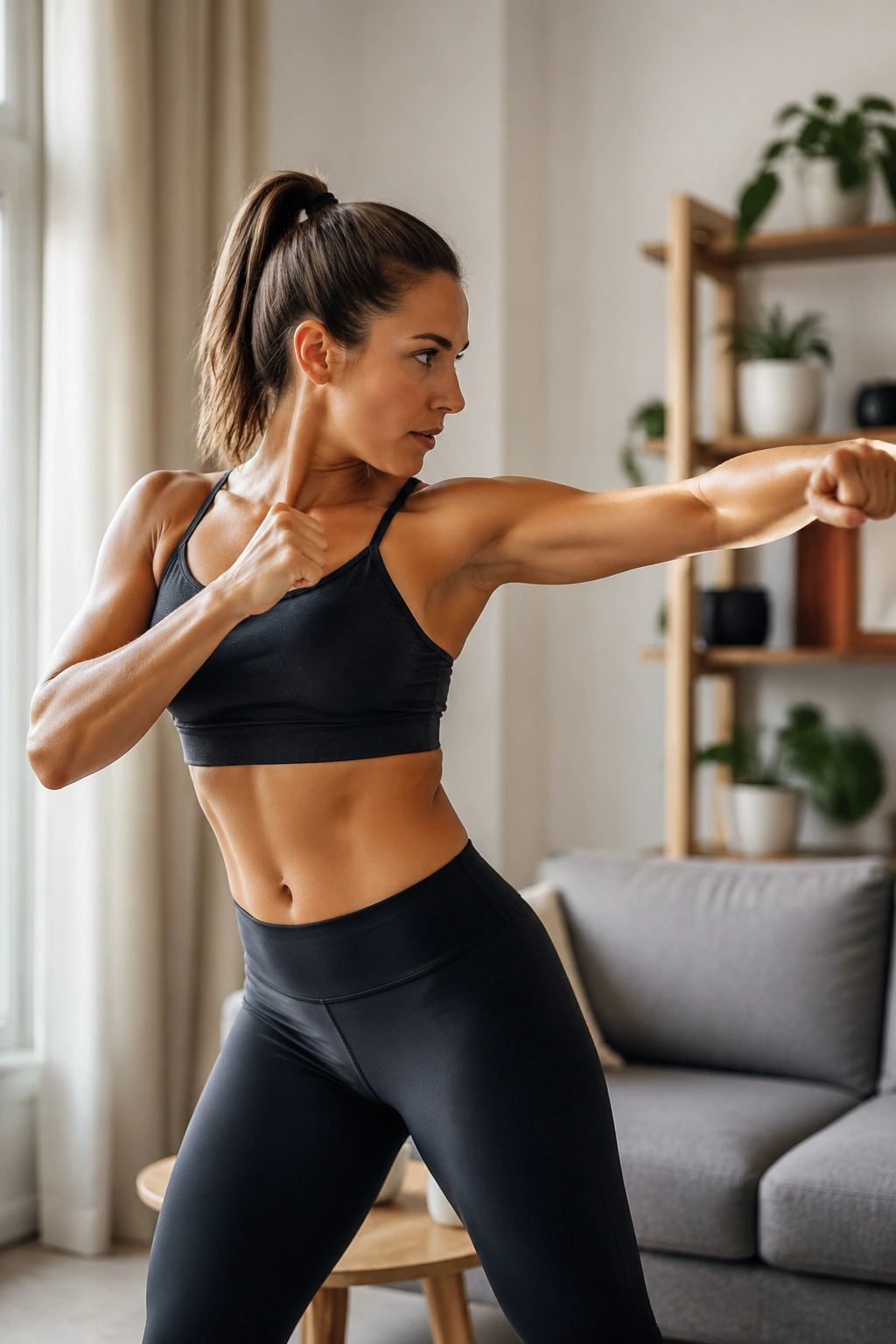
Can you train your midsection without getting on the floor? Absolutely. And sometimes that’s the smarter choice, especially if your lower back or wrists are already cranky.
Try 40 seconds of standing cross-body punches, 20 seconds of rest, then 40 seconds of standing knee lifts with a twist. Repeat that sequence 4 times. You’ll feel the obliques, hip flexors, and shoulders all working together, which is why the workout feels bigger than its size.
How to use it
Keep the torso tall and let the twist come from the ribs, not from throwing your whole body around. Tight, quick punches are better than hard, loose ones. The goal is control and pace, not acting out a boxing movie.
This series works well as a travel workout or a late-night option when you don’t want to pound the floor. It’s also useful on days between harder sessions, because it still gives you movement without the same impact.
Small space. Solid effort. That’s the whole appeal.
16. Pike Push-Up and Knee Tuck Mix
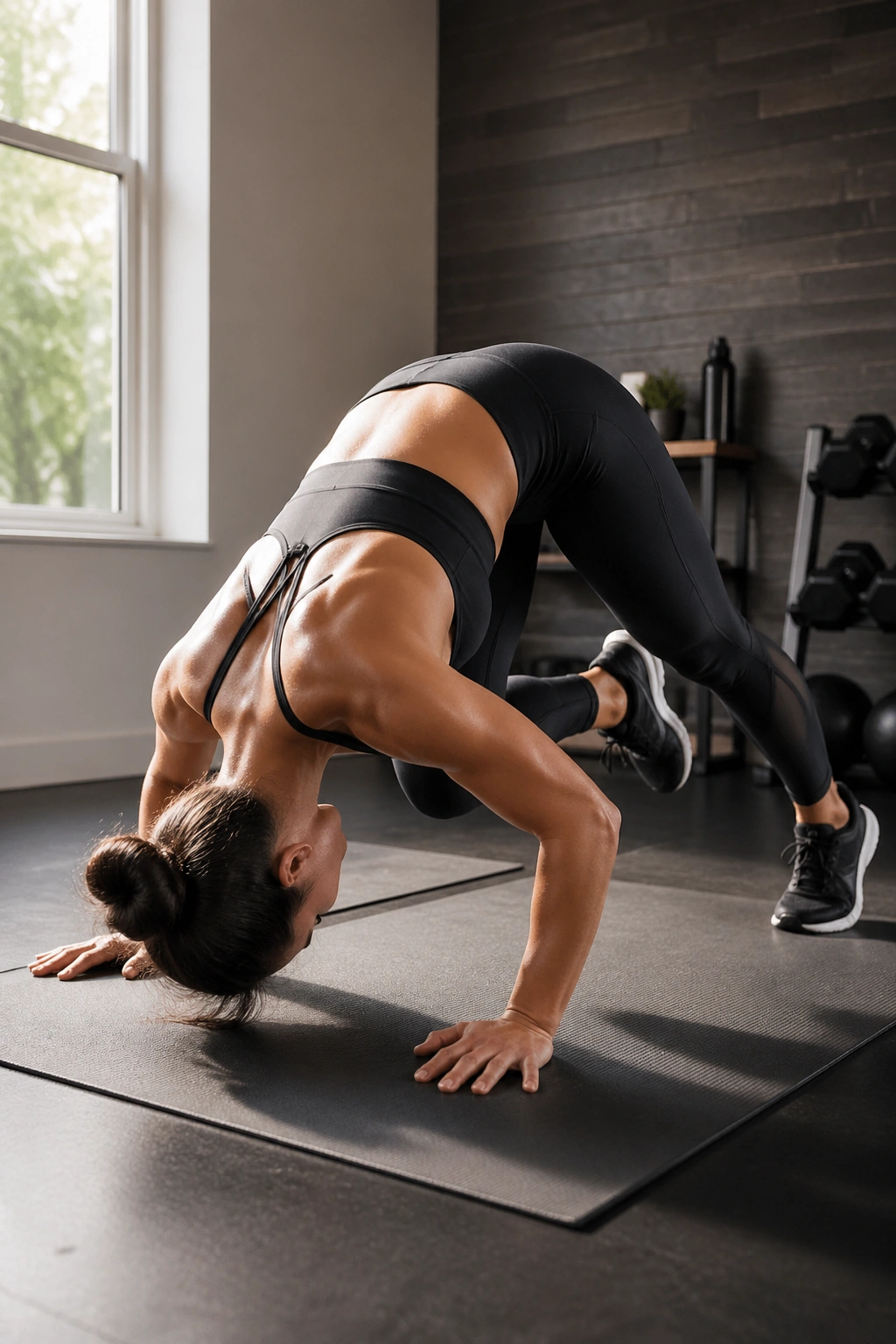
This one is for people who want a little more challenge. It blends upper-body strength with a core move that makes your abs work hard to keep your body from folding apart.
Do 20 seconds of pike push-ups, 20 seconds of knee tucks, then 20 seconds of rest, and repeat that cycle 6 to 8 times. In the pike push-up, keep your hips high and your head moving toward the floor between your hands. In the knee tuck, bring the knees in without letting your shoulders collapse.
A quick warning: if your wrists are fussy, place your hands on dumbbells or a low bench. That small tweak can save the workout. And if pike push-ups are too much, hold the pike position and focus on the shoulder angle first.
This combo is not about speed. It’s about keeping good shape while you breathe hard. That’s a harder skill than it sounds.
17. Bear Crawl Shuttles
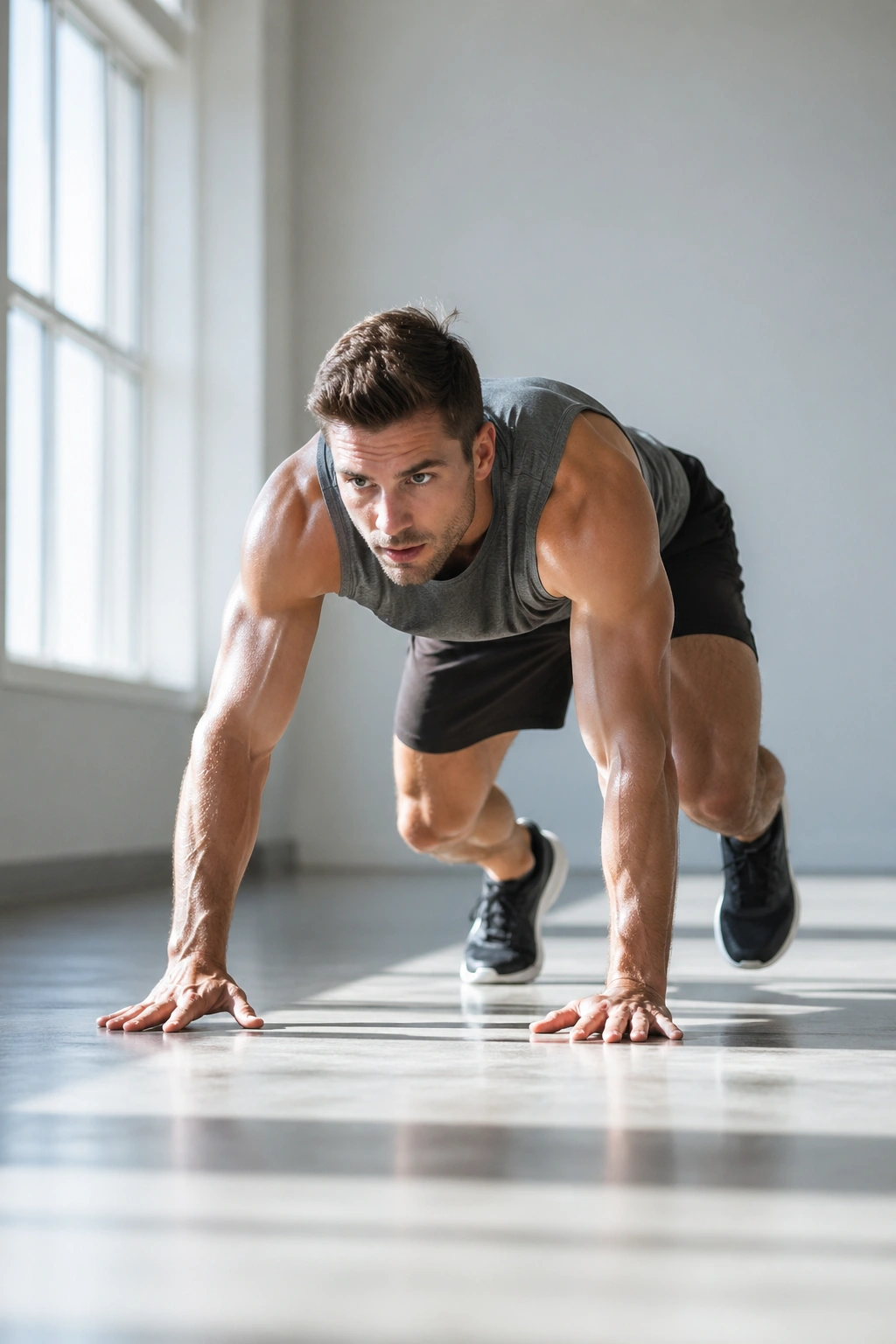
Bear crawls have a way of making adults feel like tired kids, which is probably part of their charm.
Set two markers about 3 to 5 meters apart. Crawl forward and back for 20 seconds, rest 20 seconds, and repeat 8 times. Keep your knees hovering just off the floor, hands under shoulders, and back flat. Move opposite hand and opposite foot together so you don’t wobble all over the place.
Pure prose, no fancy version needed: this drill taxes your shoulders, trunk, and legs at the same time. It also teaches body control under fatigue, which is a nice bonus if your other workouts are mostly straight-line cardio.
The pace should be steady, not frantic. If your hips pop way up, shorten the range and slow down. If your wrists hurt, spread your fingers and press through the whole hand.
It looks simple. It isn’t.
18. Low-Impact Cardio Blast
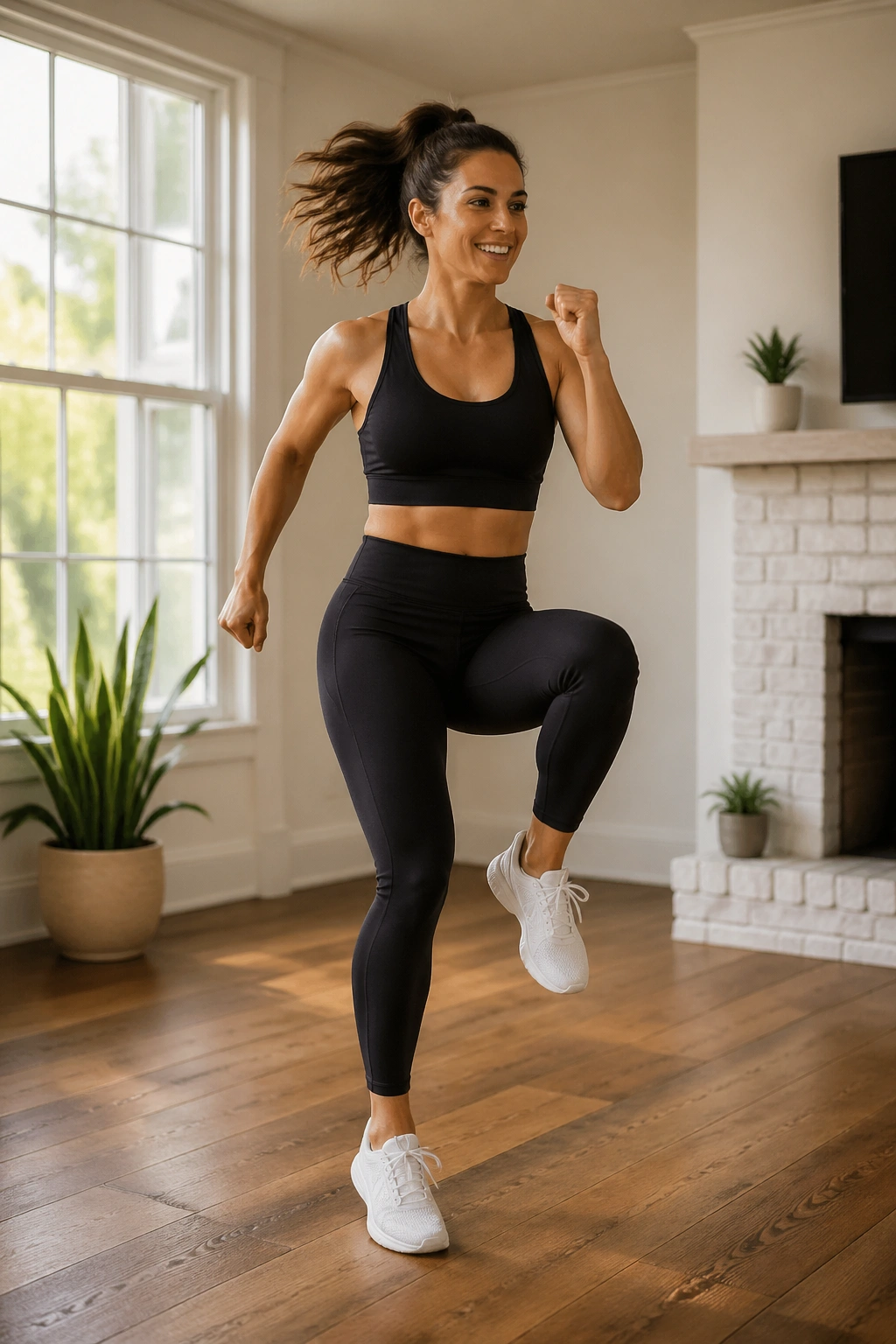
If jumping bothers your knees, hips, or neighbors, this is the one to keep close. Low-impact does not mean low-effort. That’s a silly assumption, and it falls apart the first time you do the block properly.
Use step jacks, fast marching knees, alternating side reaches, and standing punches. Perform each move for 45 seconds with 15 seconds of rest, then repeat the four-move circuit twice. The whole workout lands at 8 minutes, and you can make it tougher by moving faster rather than jumping higher.
Unlike a plyometric session, this version is easier to recover from. That makes it a strong choice on busy days or as a second session after a walk. It still raises your heart rate, but it usually leaves you less beat up than burpees or squat jumps.
If you like to train often, that matters. A workout you can recover from quickly gets used more often, and frequency matters more than one heroic session.
19. Kettlebell Swing Finisher
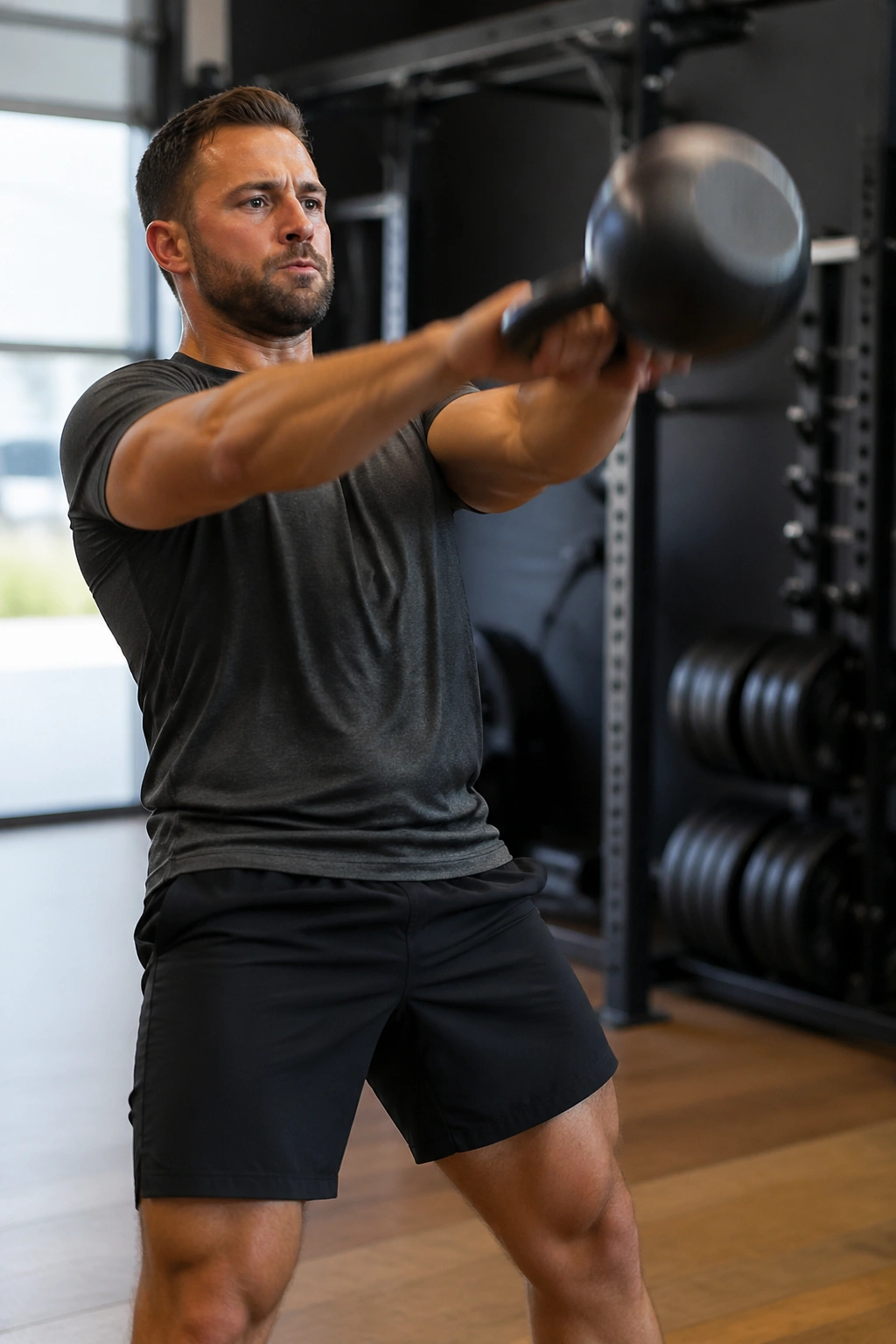
A kettlebell swing is not an arm lift. It’s a hinge. If you treat it like a front raise, your lower back will let you know.
Use a moderate weight and do 15 to 20 swings every minute for 8 minutes. Rest the remainder of each minute. Stand with feet about shoulder-width apart, push the hips back, then snap them forward so the bell floats to chest height. The arms guide; the hips do the work.
What to keep in mind
- Start with a dead-stop swing if you’re new
- Keep the bell close to the body
- Do not squat the movement
- Stop if your back rounds
This one earns its spot because it gives you cardio and posterior-chain work in a tiny time window. That combination is hard to beat when you want a quick session that feels substantial without taking over your whole day.
Clean hinge first. Speed second.
20. Medicine Ball Slam Circuit
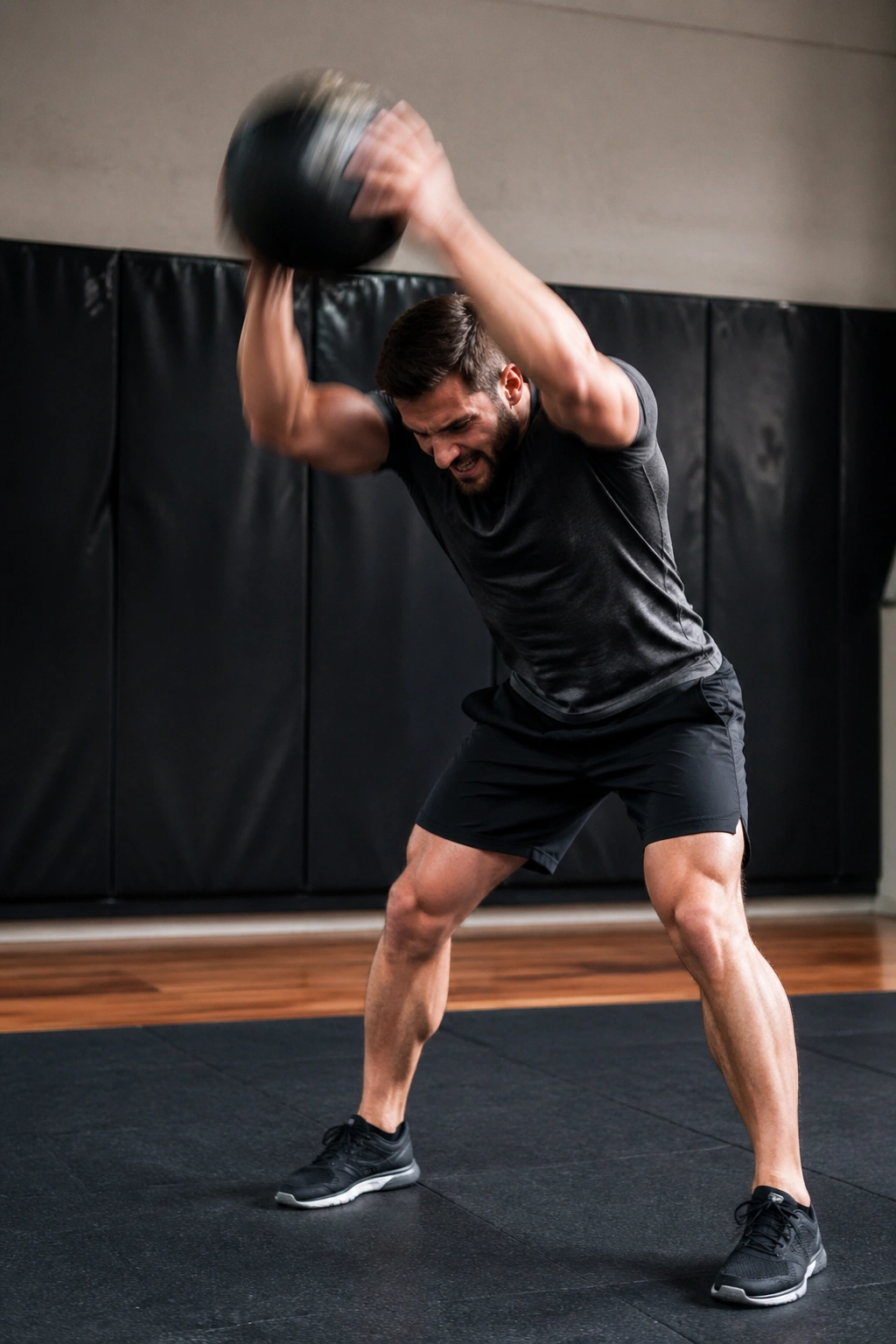
Medicine ball slams are satisfying in a way that’s hard to fake. You pick something up, throw it down with force, and repeat. That alone makes it easier to attack with some energy.
Do 30 seconds of slams, 15 seconds of rest, then 30 seconds of squat-to-slam combos, 15 seconds off, and repeat the block four times. If you don’t have a slam ball, a light medicine ball that can handle repeated drops works fine. Use a weight you can control overhead without arching your lower back.
The slam itself should start with a full reach, then a hard exhale as the ball comes down. Don’t just toss it. Drive it. The more crisp the motion, the better the workout feels.
What makes it useful
Slam work spikes your heart rate fast, but it also gives the abs a real job during the overhead reach and the brace on the way down. If you want a short session that feels athletic, this is one of the cleaner choices.
Noise level: high. Payoff: also high.
21. 8-Minute Belly Fat EMOM
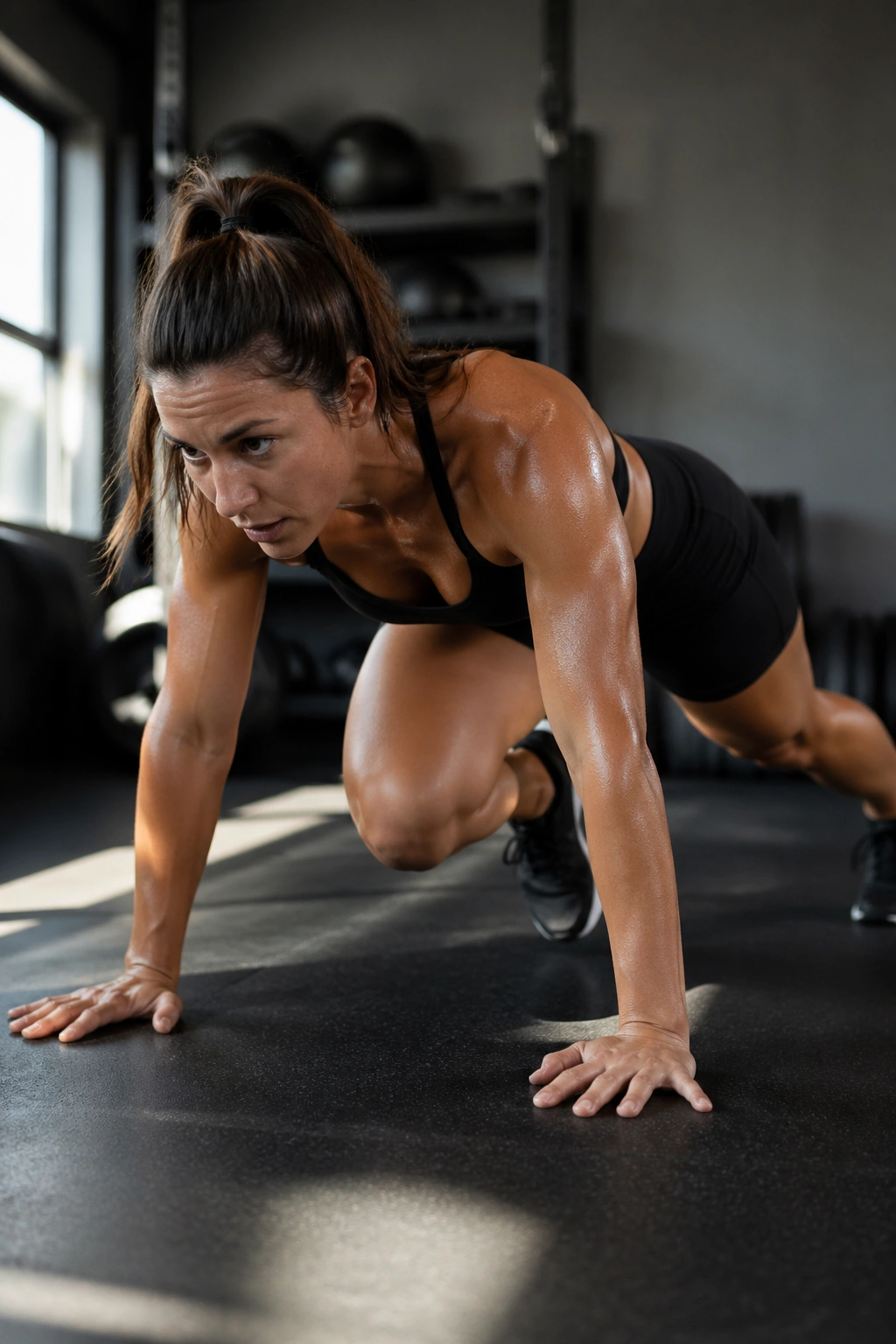
EMOM means “every minute on the minute,” which sounds fussy until you try it and realize the structure does half the work for you. You start a set at the top of each minute, finish it quickly, then use the leftover time to breathe.
For this 8-minute belly fat EMOM, alternate two moves:
- Minute 1: 12 squat thrusts
- Minute 2: 20 mountain climbers per side
Repeat that pattern 4 times. If you finish early, rest. If you finish late, the reps are too high. That feedback is the whole point.
Question: why does this setup work so well? Because it gives you a clear pace target without turning the workout into guesswork. You know exactly what to hit, and you know exactly when the minute is over.
Keep the squat thrusts snappy and the climbers tight. The moment your form gets sloppy, lower the reps and keep moving cleanly. That’s a better use of the minute than chasing a number and dragging the rep quality through the mud.
22. The 9-Minute Core-and-Cardio Combo
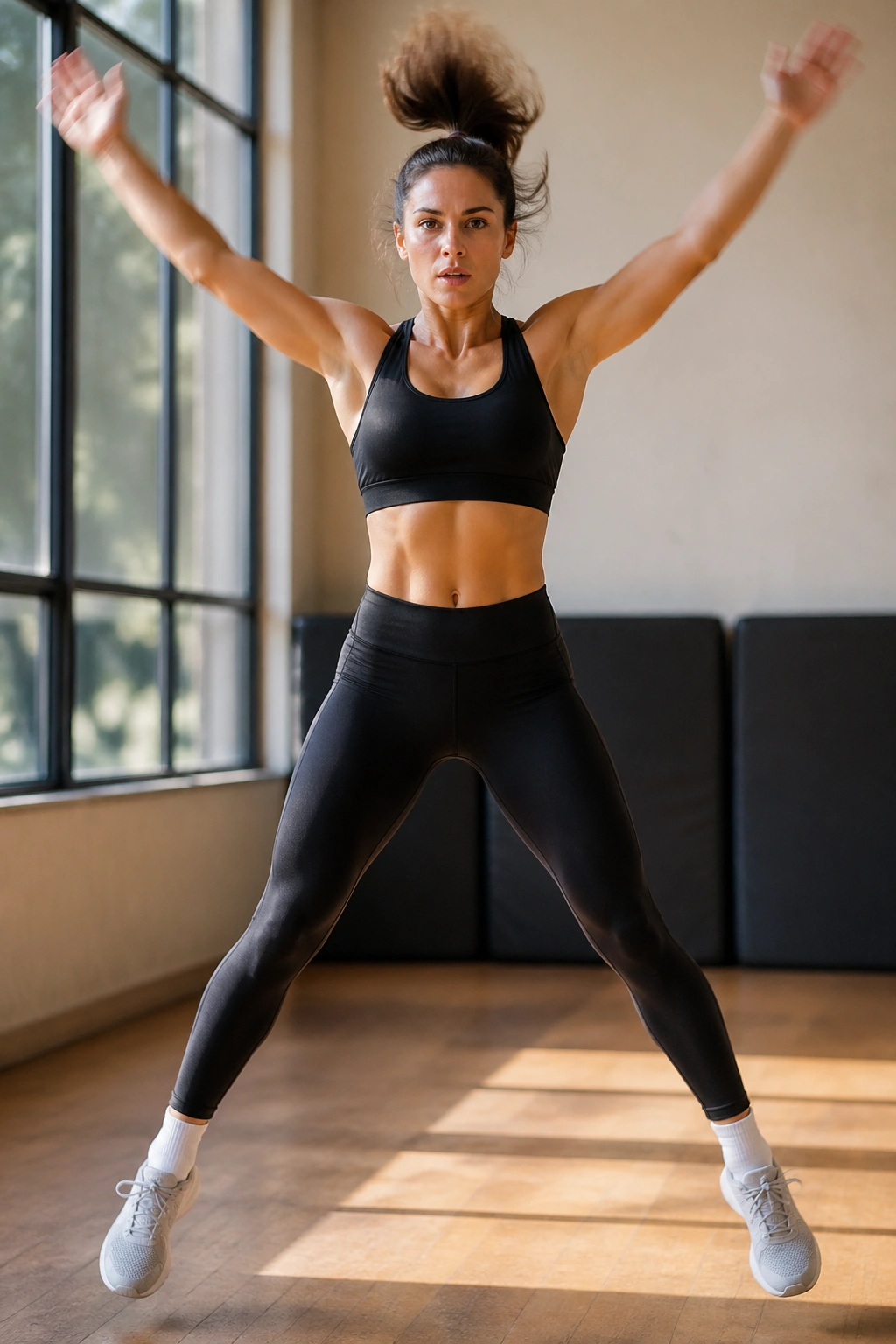
This is the one I’d hand to someone who wants a single quick session and doesn’t want to think about programming. It mixes a pulse raise, a core challenge, and one lower-body move, then loops them in a way that feels complete without being long.
Do 3 rounds of the following:
- 1 minute high knees
- 1 minute plank shoulder taps
- 1 minute alternating reverse lunges
Rest only as needed between rounds, but keep the total workout under 9 minutes. If the high knees are too much, march fast. If the plank taps start sagging at the hips, widen your feet. If the lunges feel stiff, shorten the step and keep the torso tall.
This is a good end-of-day option because it checks a few boxes at once. Your heart rate goes up. Your core has to stabilize. Your legs do real work. Nothing about it is fancy, and that’s part of why it’s useful.
Use one or two of these sessions on busy days, pair them with regular walking, and stop treating your waistline like a puzzle that one magic move will solve. It’s more ordinary than that. And more manageable, too.
