



A dress can save an entire day when your stomach feels tight and puffy by noon. The best dresses that hide belly fat and bloating do not look like camouflage. They look like smart clothes: a wrap front, a raised waist, a skirt that falls instead of clings.
That difference matters more than people think. Too many shoppers reach for something oversized and end up looking bigger, not smaller. The trick is shape, not size. Give the torso room, keep the eye moving, and use seams, drape, or structure to steer attention away from the middle without making the whole outfit feel shapeless.
Fabric does half the job. A stiff waistband can turn a full meal into a miserable fit test. Thin jersey can cling to every line you wanted to smooth over. A heavier crepe, ponte, lined viscose, or cotton with enough body usually sits more kindly, especially when your midsection changes through the day.
And no, the answer is not “buy one size up” and hope for the best. A dress that fits well at the shoulders, skims at the waist, and moves at the hem is usually far more flattering than something loose from top to bottom. Start with the wrap dress. It earns its reputation for a reason.
1. Wrap Dresses That Hide Belly Fat and Bloating Without Looking Boxy
A wrap dress is still the easiest win. The diagonal front line breaks up the middle of the body, and the tie lets you adjust the fit when your waist changes through the day. If you get bloated after lunch, that little bit of adjustability matters more than almost any other detail.
Why the diagonal line works
The eye follows the crossing fabric instead of sitting on the stomach. That sounds simple, but it changes the whole feel of the dress. A wrap also gives you a little ease at the waist without turning the body into one big rectangle.
Look for a V-neck that opens enough to lengthen the torso. A shallow V can work, but a slightly deeper one often looks cleaner and draws attention upward. Midweight jersey, rayon crepe, and matte viscose are usually safer than slippery satin or clingy rib knits.
- Choose a wrap point that sits at or just above your natural waist.
- Pick a skirt that falls in a straight line from the tie, not one that balloons out.
- Keep the hem at the knee or midi length if you want a steadier shape.
- Check the front overlap while sitting down. That’s where many wrap dresses fail.
Tip: If the wrap gapes, buy for the bust and have the side seam taken in. That fix usually looks better than chasing a smaller size.
2. A-Line Dresses That Give the Stomach Room to Breathe
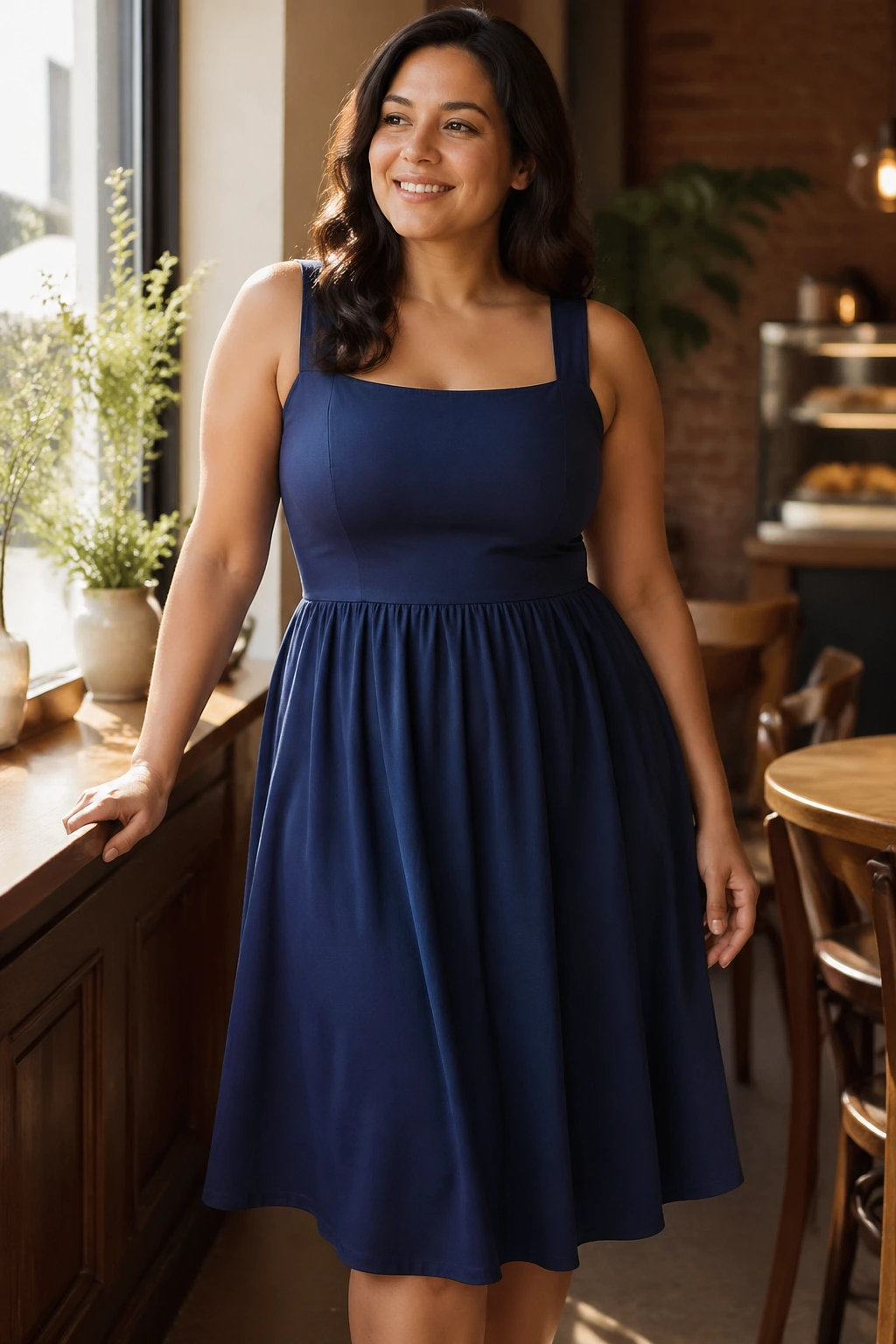
An A-line dress does one thing exceptionally well: it refuses to cling. The shape skims the body at the bust and shoulders, then eases out below the waist so the midsection never has to announce itself. It is the dress version of taking a step back and letting your body relax.
What makes this cut so useful is the clean break between the fitted top and the fuller skirt. Your eye reads the narrow upper half first, then travels down into a shape that feels controlled, not stiff. That makes A-line dresses especially good when bloating shows up and you do not want anything pressed across the stomach.
Skip very thin fabric. A soft ponte, cotton poplin, or structured rayon usually holds the line better than flimsy jersey, which can flatten and then cling in odd places. A square neck or scoop neck helps, too. So do wider straps and short sleeves that keep the upper body balanced.
Wear this style when you want the least fuss possible. It is the dress you can eat in, sit in, walk in, and forget about. That’s not boring. That’s useful.
3. Empire Waist Dresses That Start Above the Stomach
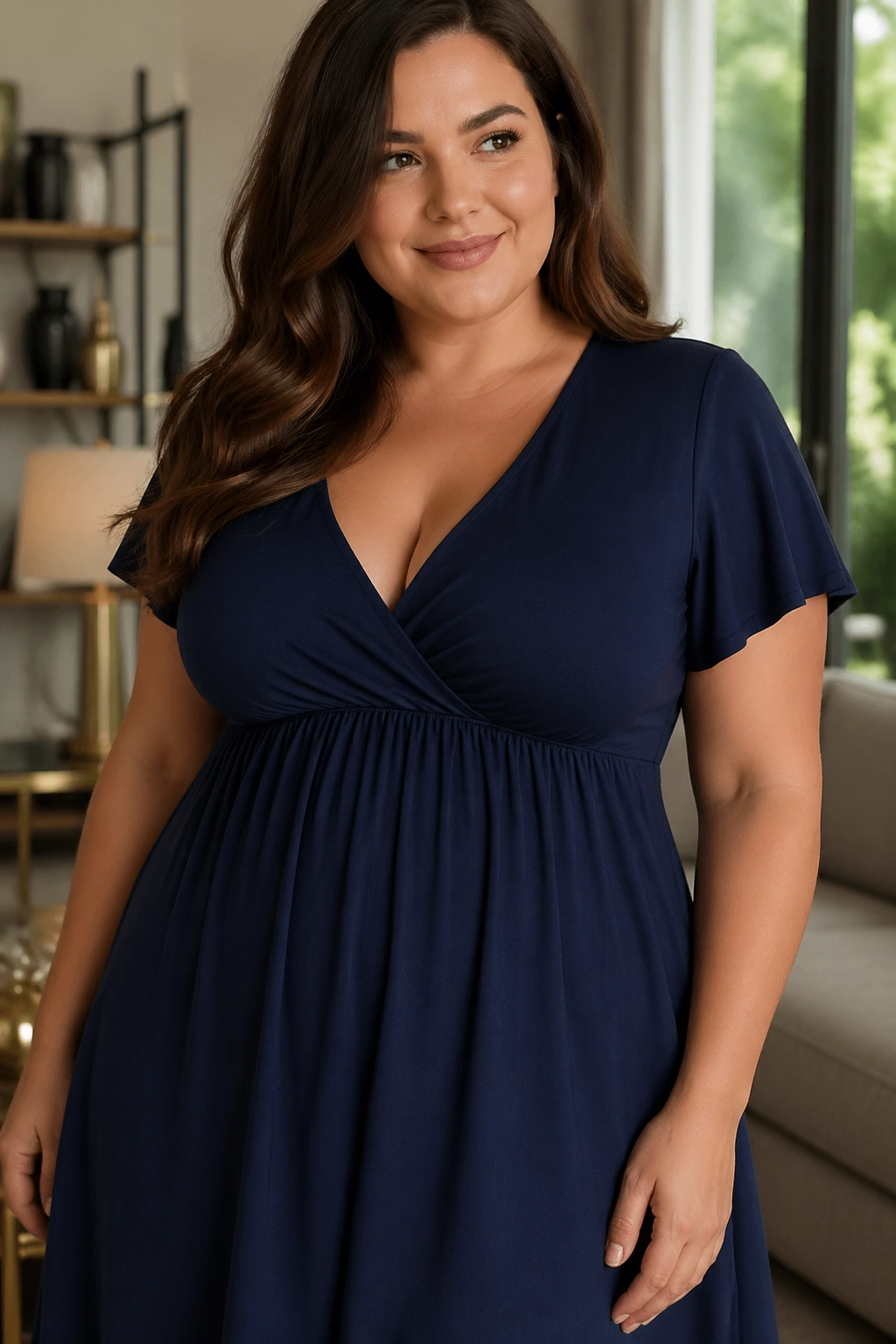
Why does an empire waist work so well when your stomach feels puffy? Because the seam sits under the bust, not across the middle, so the dress never cuts the body at its widest point. That alone makes a huge difference on bloated days.
The best versions do not look costume-like. They have a real drape, a neat neckline, and a skirt that falls in a calm line instead of floating away in too much fabric. If the bodice is too tight, you lose the whole point. If the skirt is too full, you can end up looking swallowed.
How to wear it well
- Pick a neckline that opens the chest a little, such as a V, soft square, or scoop.
- Choose fabric with weight, like crepe or lined chiffon, so the skirt hangs rather than puffs.
- Keep the empire seam smooth. Shirring there can add bulk fast.
- Let the hem hit below the knee or at mid-calf for a longer line.
A small warning: empire dresses work best when the seam sits exactly where your rib cage ends. Too high, and the shape can feel fussy. Too low, and the stomach comes right back into focus.
4. Fit-and-Flare Dresses That Balance the Middle
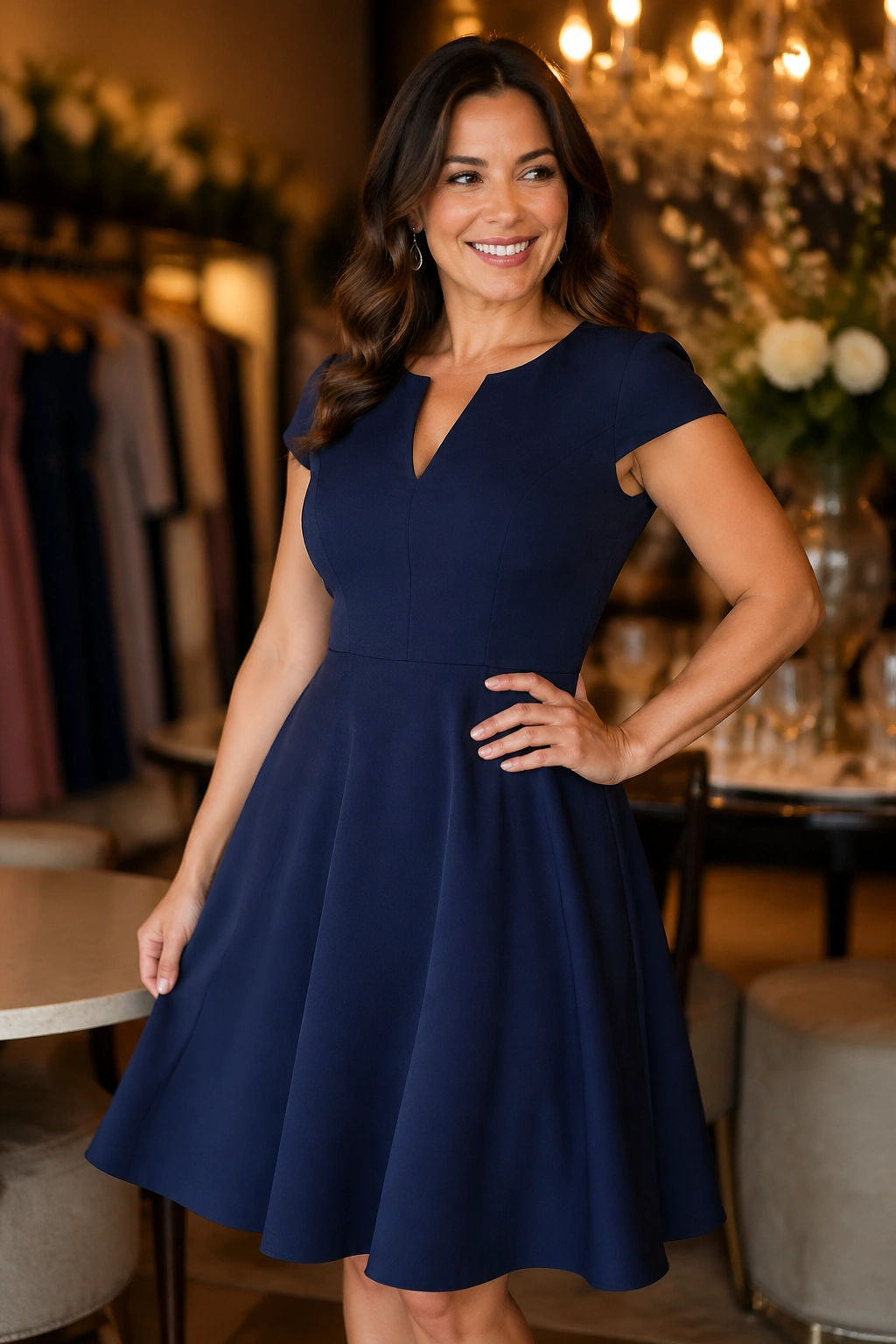
I have seen this play out a hundred times: someone tries on a fit-and-flare dress thinking it will be too girly, then immediately looks more put together than in anything else on the rack. The fitted top gives the body shape, the flared skirt gives the stomach space, and the whole thing feels easy.
The reason it works is balance. Your eye sees a defined bodice and then a skirt that moves away from the waist, so the midsection never becomes the center of the outfit. That makes this cut especially good for dinners, parties, and any day when you want to feel dressed without feeling squeezed.
What to look for
- A bodice with princess seams or darts, not a loose tent top.
- A skirt that starts to flare at the natural waist or just above it.
- Heavier fabric, like ponte or structured cotton, for a cleaner shape.
- Sleeves or thicker straps if you want extra balance through the shoulders.
One-sentence truth: the skirt should swing, not puff. If it stands out like a cupcake wrapper, keep looking.
5. Shirtdresses With a Hidden Tie
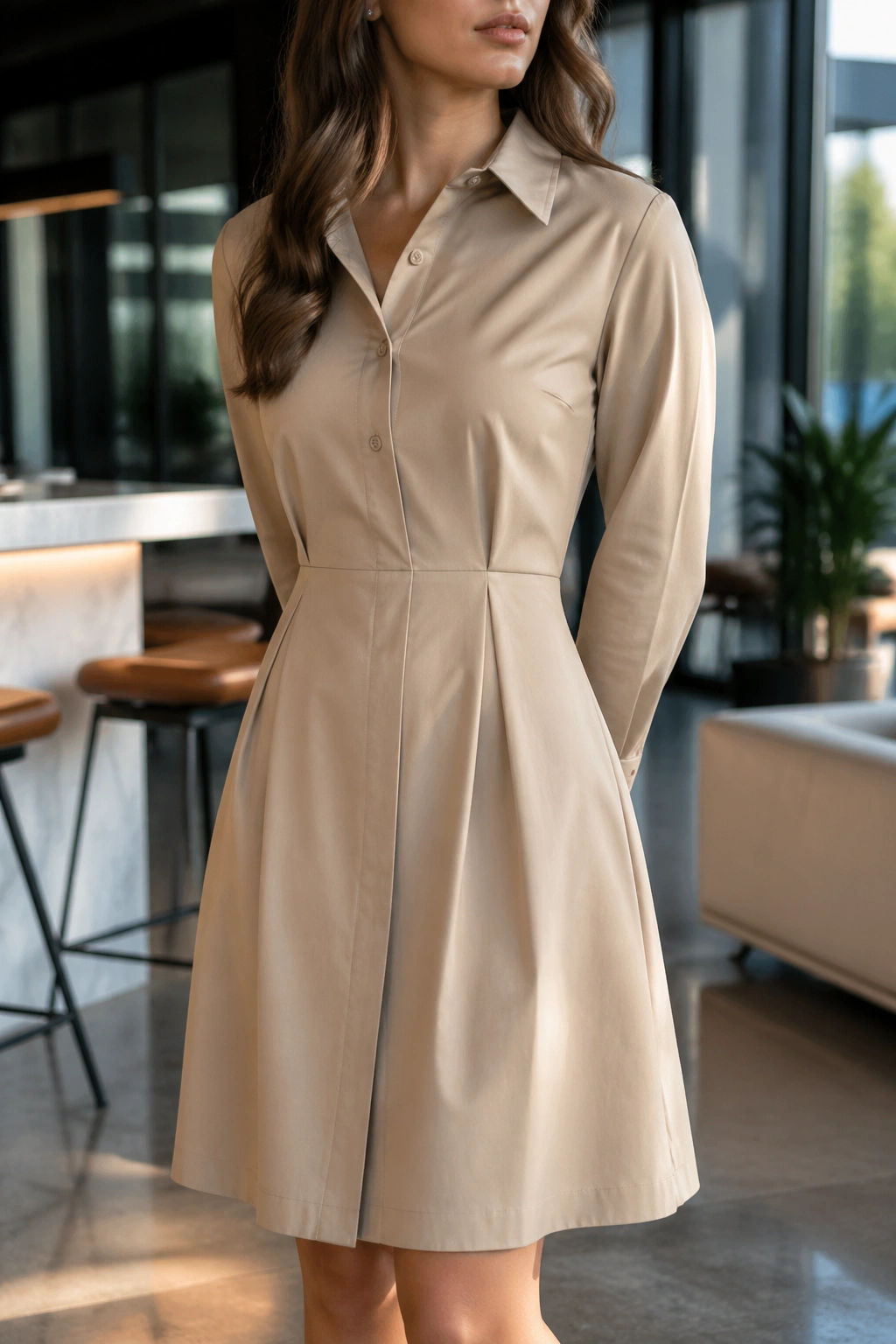
A good shirtdress is one of those pieces that looks practical until you realize how flattering it can be. The collar adds a crisp frame around the face, the button front creates a vertical line, and the tie gives you shape without forcing the waist into a tight cinch. That combo is hard to beat when your stomach feels less cooperative.
The best version is usually not the stiffest one. Look for soft cotton poplin, twill, or a drapier woven fabric that still holds its shape. If the buttons gap across the bust, that’s a bad sign; if the fabric pulls at the hips, same problem. You want structure with a little give, not a shirt borrowed from a boardroom.
A hidden tie works especially well when you knot it slightly behind the body or tie it loosely at the side. That keeps the waist line present without shouting about it. Leaving one or two buttons open near the neck helps, too, because it breaks up the torso and keeps the whole thing from feeling blocky.
This is a strong choice for work, errands, and travel. It does not beg for attention. It just quietly does the job.
6. Tiered Maxi Dresses That Float Instead of Cling
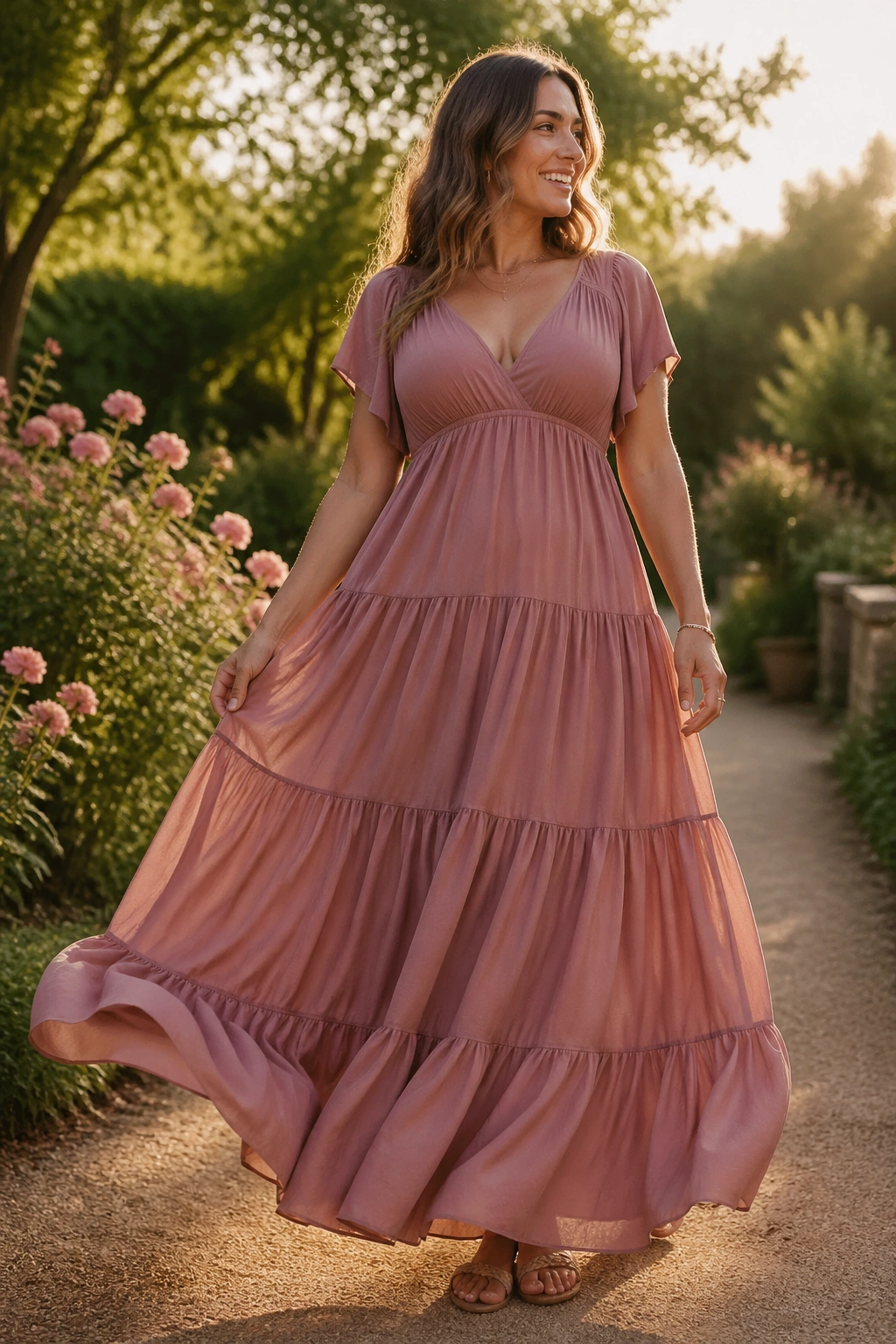
A tiered maxi dress is what I reach for when I want movement. Compared with a body-skimming knit, it gives the stomach space and lets the skirt do the visual work. The key is where the tiers begin and how much volume each one adds.
If the tiers start below the bust or at the high waist, the dress usually skims the middle without pressing on it. If every tier is ruffled and stiff, the shape can get busy fast. You want soft layers, not a fabric explosion. Lightweight cotton voile, viscose, and washed rayon tend to drape better than thick tulle or shiny synthetics.
Who wears this best? Anyone who wants comfort with a bit of romance. It is especially nice when bloating makes fitted waists feel annoying. The length helps, too. A maxi line runs vertically and gives the body a long, easy shape, which is part of why this dress feels forgiving even when the fit is loose.
Choose a V-neck or open neckline if the dress leans full through the skirt. That keeps the upper body from disappearing into the fabric.
7. Bias-Cut Midi Dresses That Skim the Body
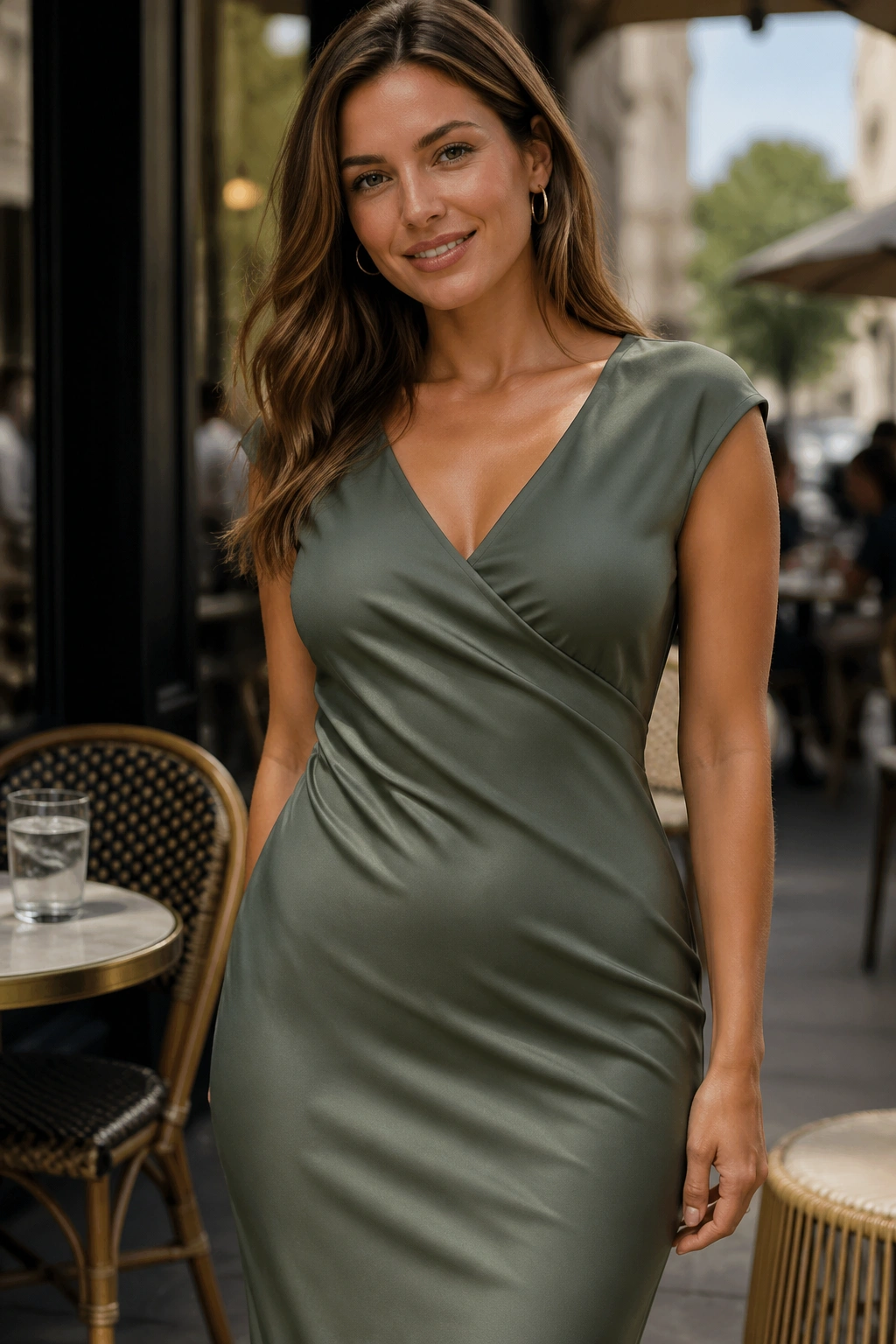
Bias cut sounds fancy, but the idea is simple: the fabric is cut on the diagonal so it drapes around the body instead of hanging stiffly. When it’s done well, a bias-cut midi dress follows your shape without pinning it down. That can be beautiful on the right fabric. On the wrong one, it clings like a lint roller.
What to look for before you buy
- A heavier satin, crepe, or lined viscose that falls smoothly.
- A neckline with some openness, like a V or soft cowl.
- A skirt that glides past the hips instead of gripping them.
- A lining if the fabric is thin or slightly sheer.
The magic is in the movement. Bias-cut dresses often look better when you’re standing, walking, or sitting casually, because the fabric shifts instead of bunching at the stomach. That said, they are not the friendliest option if you hate seeing every line underneath. A slip can help. So can shapewear, if you like it. If you do not, skip this style and move on.
Bias cut is elegant when the fabric has enough weight to hang in a smooth line. Without that, it turns needy.
8. Ruched Dresses That Hold the Eye in the Middle
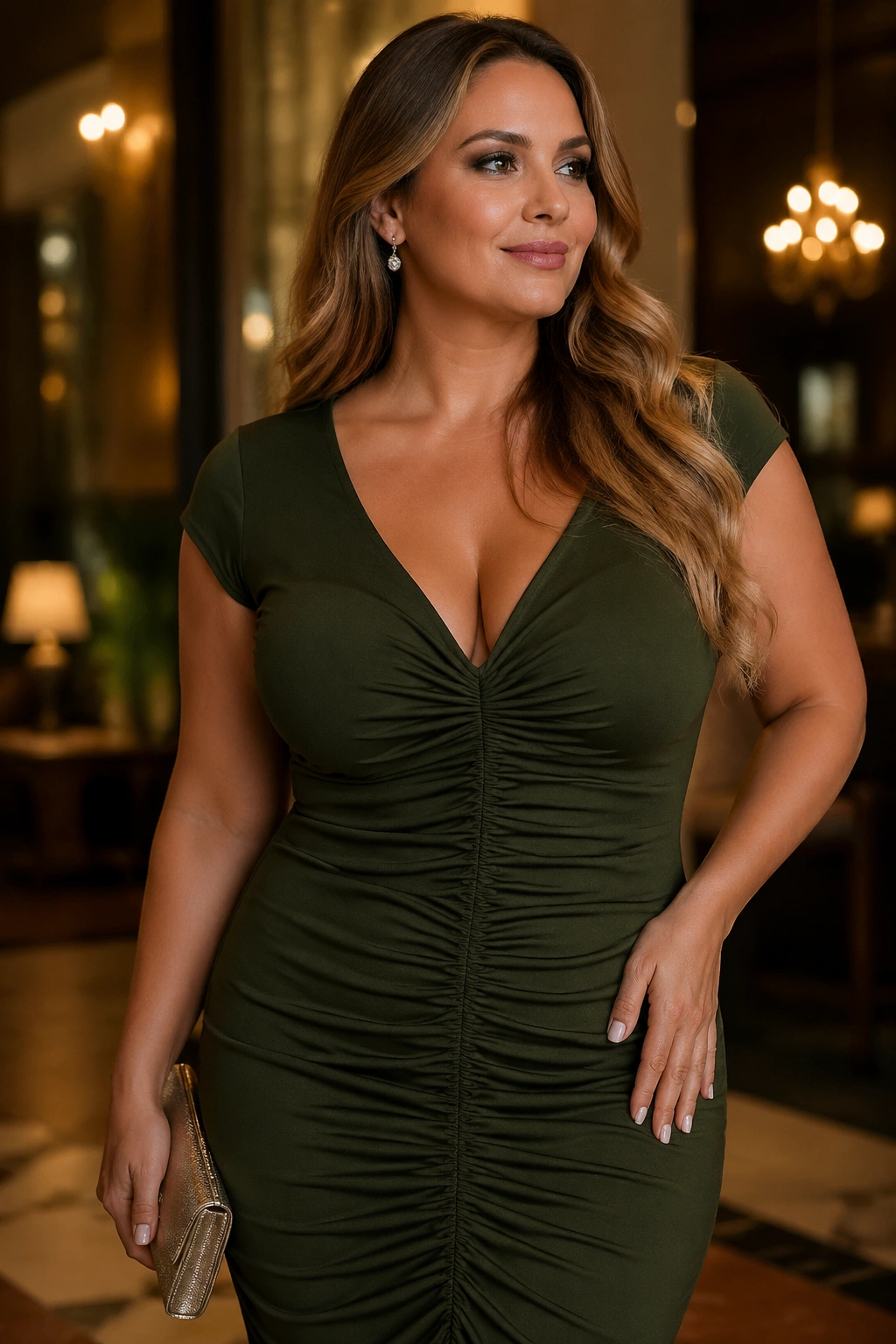
Ruched dresses can be brilliant, but only when the ruching is placed well. A little gathered fabric through the center front or along one side gives the eye texture to look at instead of a flat stretch across the stomach. That softens the midsection without hiding the body under layers.
Here’s the catch: ruching only works if the fabric itself behaves. A midweight jersey or mesh overlay usually holds shape better than thin knit that stretches out by the end of the night. You want the ruching to look intentional, not like the dress is fighting for its life.
The best ruching starts low on the torso and moves diagonally or vertically. That creates a line the eye can follow. A ruched waist band that sits directly across the widest part of the stomach is less forgiving, and honestly, it can make the area look more obvious. Side ruching is often kinder than center ruching, especially if you’re bloated.
This style is a good pick for evenings, date nights, and events where you want something more fitted than a swing dress. It is not the easiest dress in the world, but when the cut is right, it works.
9. Kaftan Dresses That Give You Space Without Looking Sloppy
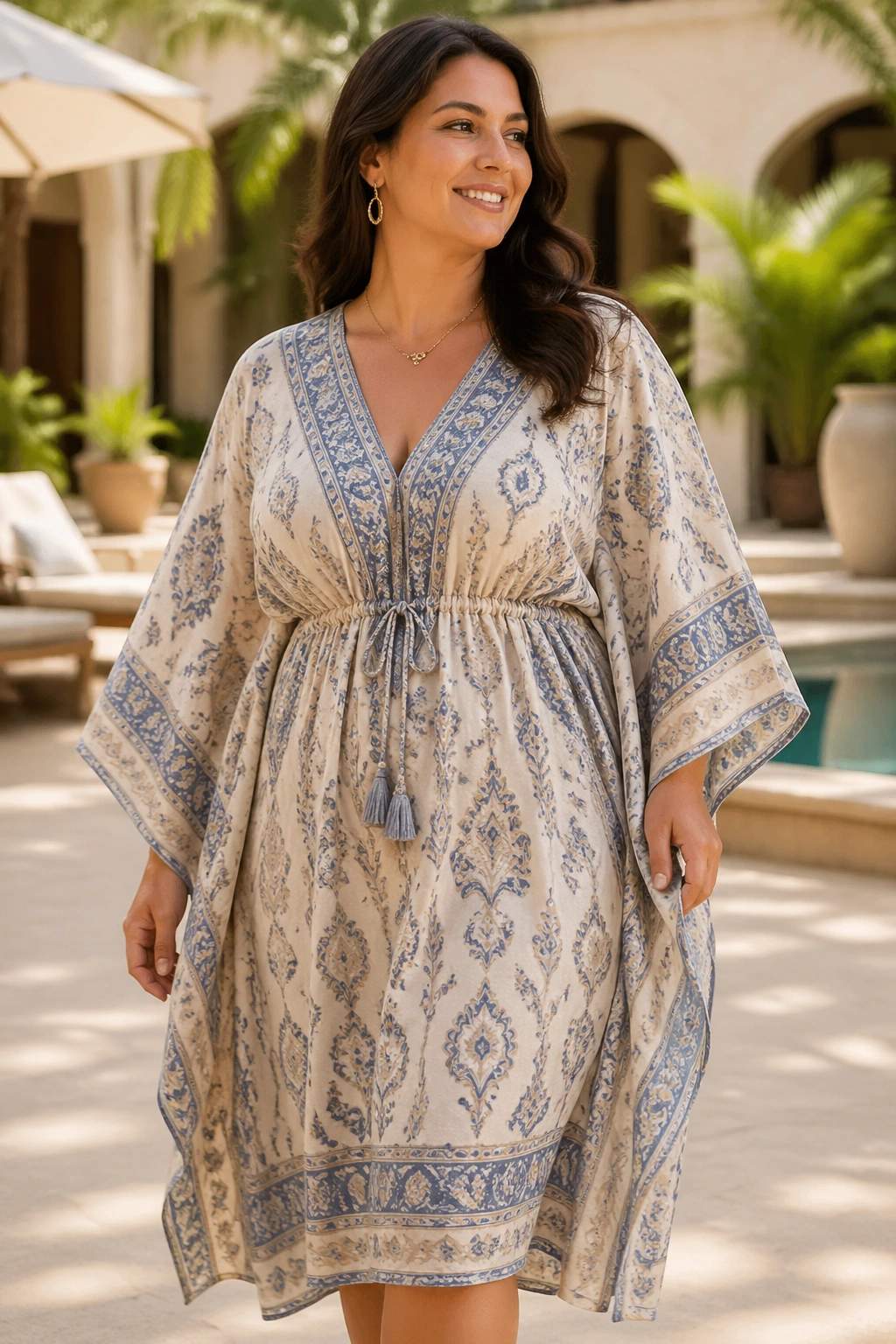
Does a kaftan dress always look oversized? No. A well-cut kaftan can feel airy and polished at the same time, which is why it is such a useful shape for belly comfort. The loose body means nothing presses at the stomach, and the vertical fall makes the whole silhouette feel calm.
The important part is the neckline and shoulder line. A kaftan with a V-neck or split neckline usually flatters more than one with a wide, heavy top that sits like a square. Sleeve length matters too. A draped sleeve or elbow-length sleeve often looks more finished than something that ends awkwardly at the upper arm.
Best details to look for
- A bit of structure at the shoulder so it doesn’t droop.
- Fabric with weight, like silk crepe, rayon, or a firm cotton blend.
- Side slits that move when you walk.
- A print or texture that keeps the dress from feeling flat.
This is one of those styles that can go from beachy to elegant depending on the fabric. Keep that in mind. A kaftan in crisp fabric reads as deliberate. A kaftan in limp fabric can look like a robe.
10. Trapeze Dresses That Hang From the Shoulders
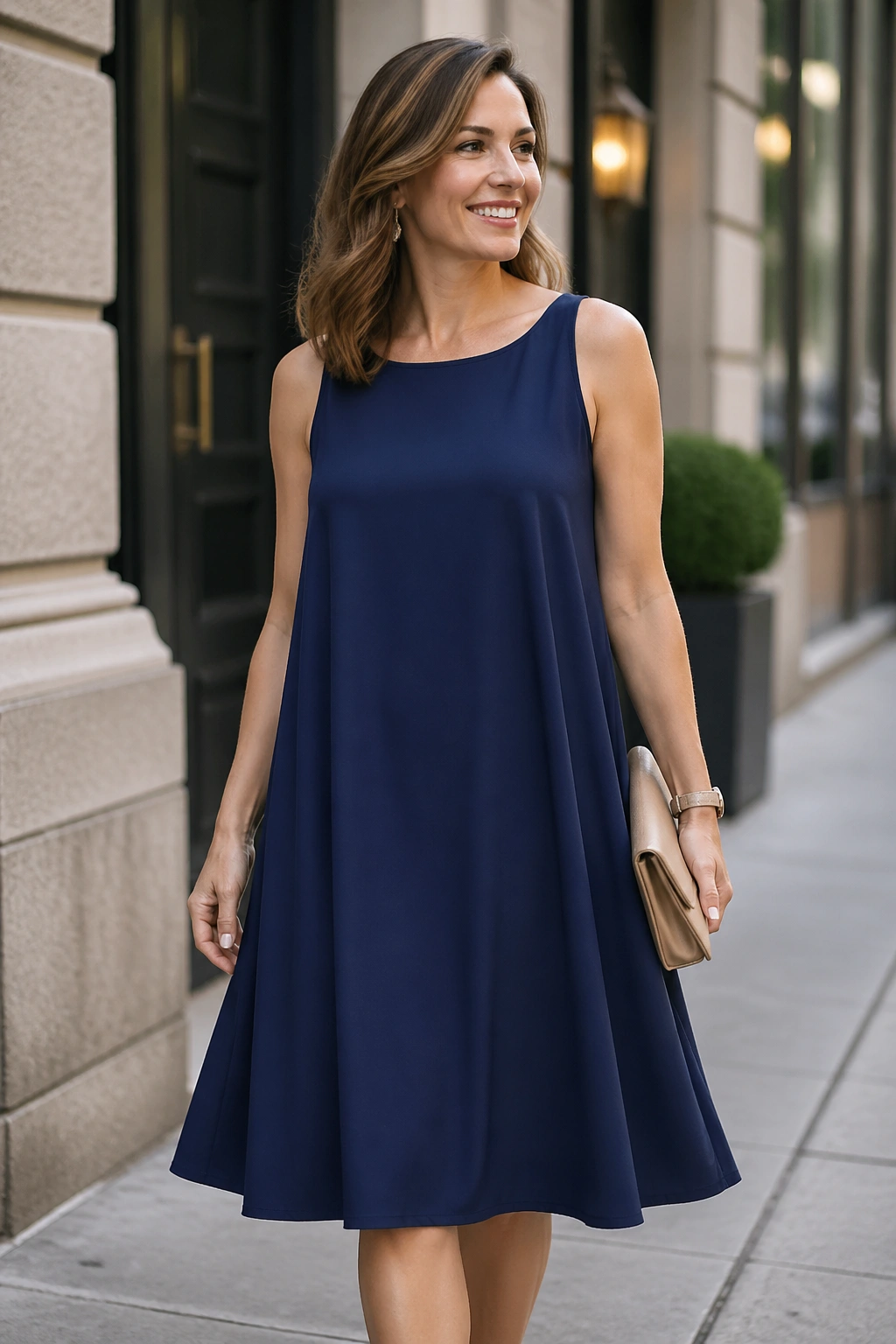
A trapeze dress is built for the days when you do not want a waistband anywhere near your life. It hangs from the shoulders, falls away from the body, and gives the stomach a complete break. That makes it a smart pick for bloating, travel, and hot weather.
What saves this shape from looking childish is proportion. If the dress is too short and too wide, it can feel like a sack. If the hem lands around the knee or just above it and the fabric has some body, the shape becomes clean and modern. The shoulders need to fit well, too. That is non-negotiable.
Think of it as a structured swing, not a tent. A trapeze dress with a neat neckline, a smooth shoulder seam, and a medium-weight fabric can look sharp. Add a flat sandal, a low heel, or a pointed toe and the whole thing suddenly feels intentional.
A tiny detail many people miss: the dress should skim outward, not puff outward. That small difference changes everything.
11. Swing Dresses That Move When You Walk
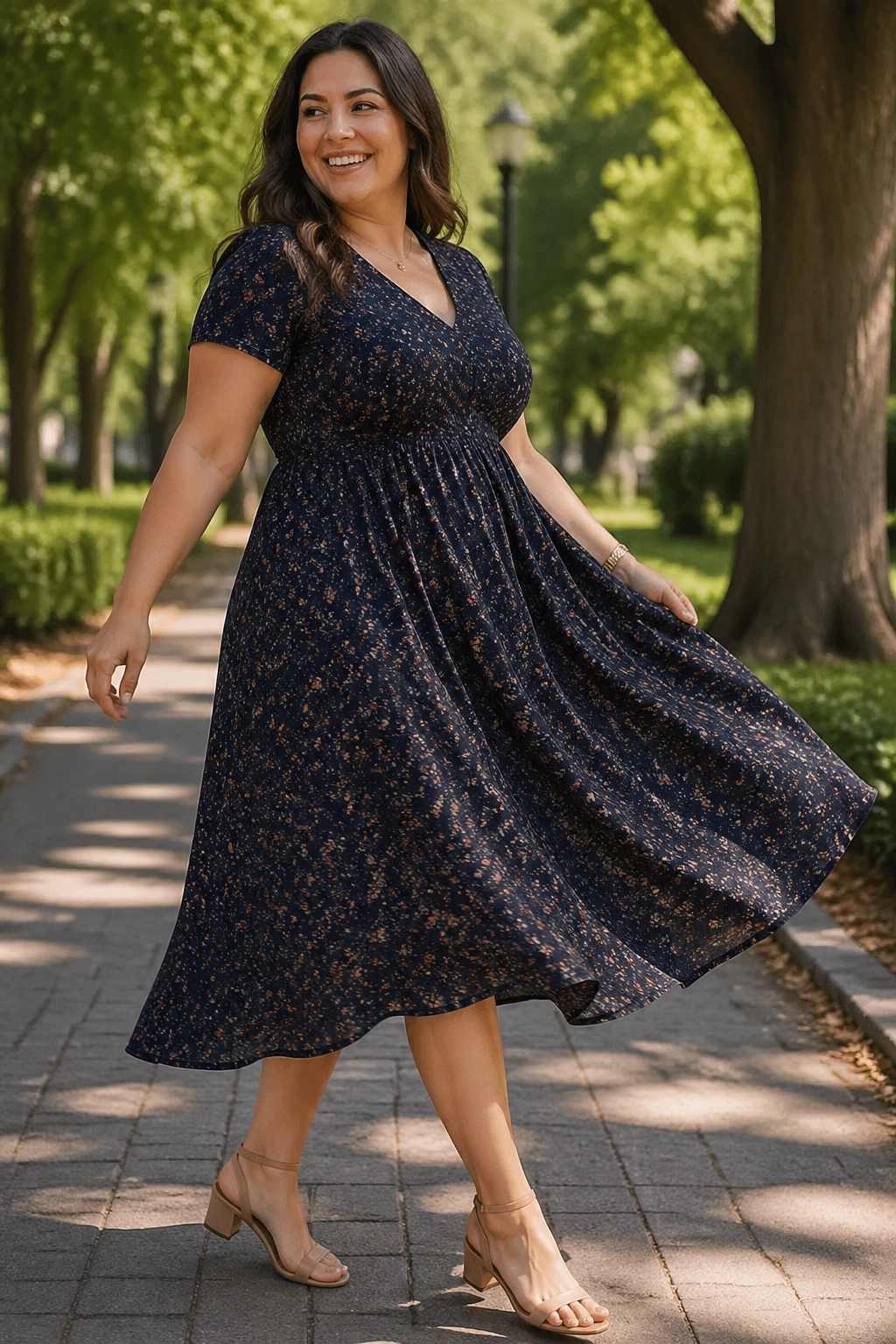
A swing dress is one of those quietly practical silhouettes that people underestimate. It starts with a closer fit through the shoulders and chest, then eases out as it falls. The result is a soft A-line with a little extra movement, which makes the stomach area feel less exposed.
I like swing dresses for days when I know I will be moving a lot. They do not pinch when you sit, and they do not cling when you’re warm. That matters. A lot of “flattering” dresses stop being flattering the second you have lunch or spend three hours on your feet.
The best swing dresses usually have a bit of polish in the neckline or sleeves. A boat neck, crew neck, or gentle V can all work. So can short sleeves with a clean hem. What you want to avoid is too much volume everywhere, because then the dress loses shape and starts looking lazy.
A swing dress in ponte, double-knit, or a firm jersey is often better than one in paper-thin material. It holds the line and keeps the body from showing through in a way that feels fussy.
12. Pleated Midi Dresses That Use Vertical Lines Well
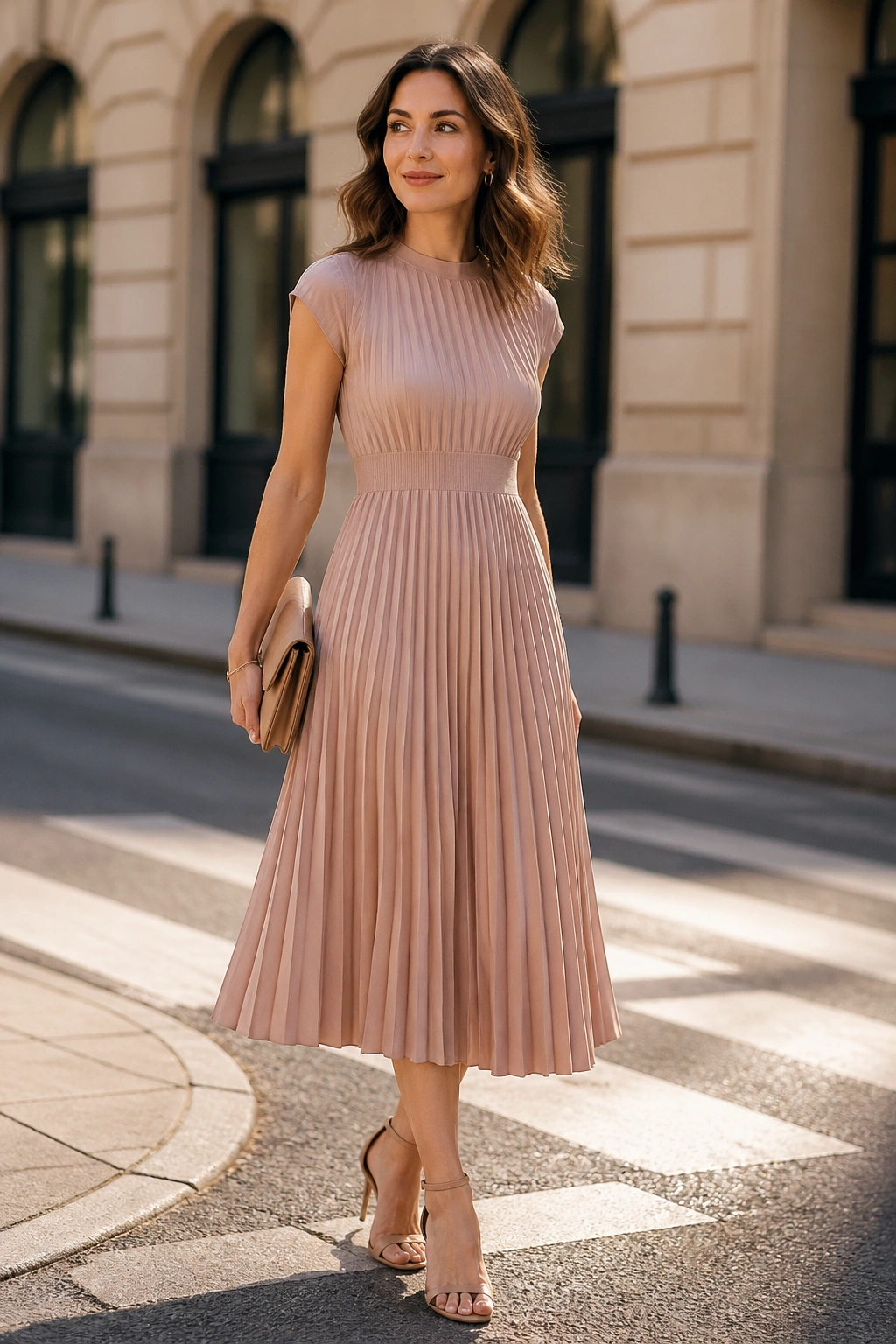
Pleats are tricky. In the right place, they create long, moving lines that make the body look taller and smoother. In the wrong place, they add bulk around the stomach and hips. That is why a pleated midi dress can be excellent or awful, with not much middle ground.
The safest version uses knife pleats in the skirt, not heavy gathers at the waist. Knife pleats create a narrow repeated line that helps the eye move down the body. A softly fitted bodice keeps the top neat, while the skirt does the work lower down. When the pleats are pressed well, the whole dress looks cleaner and less bulky.
Compared with a ruffled dress, pleats are less sugary and more controlled. Compared with a straight sheath, they give you breathing room. That makes them a solid middle path if you want something graceful but not clingy.
Choose a midi length that lands below the knee or at mid-calf. That gives the pleats room to fall properly. If the pleats stop right at the widest part of the calf, the shape can get fussy. Placement matters here more than people realize.
13. Printed Wrap Midi Dresses That Hide Belly Fat and Bloating in Plain Sight
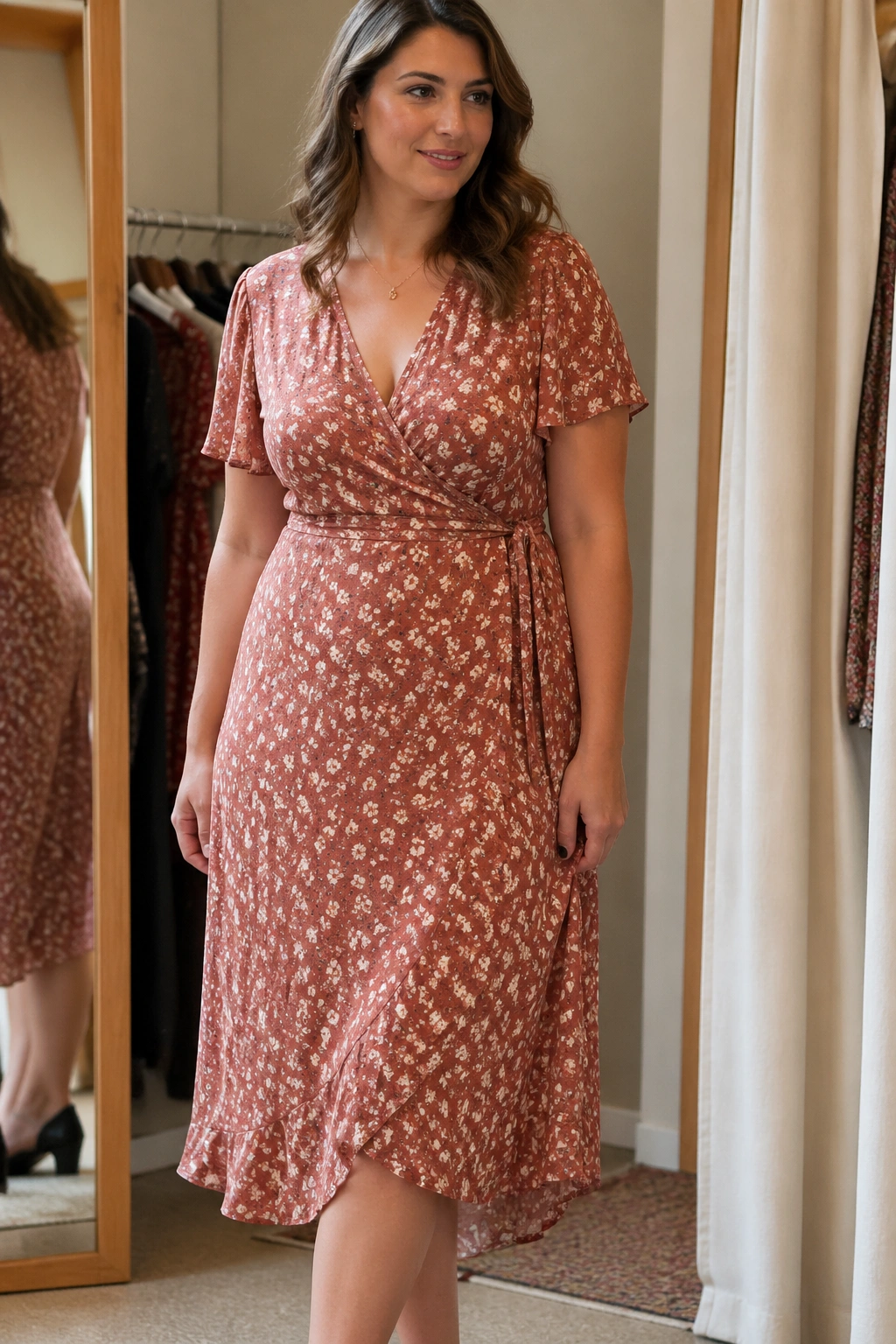
A print can do more work than a lot of people give it credit for. On a wrap midi, the pattern breaks up the eye line, and the diagonal front already helps the stomach area feel less obvious. Put those two together and you get one of the best dresses that hide belly fat and bloating without feeling like you’re trying too hard.
Print size matters
Small, busy prints can sometimes blur the shape of the dress, which is useful if the fabric is soft and drapey. Medium-scale prints often look cleaner, though, because they still let the wrap line show through. A dark ground color can help, but it does not need to be black. Navy, deep green, wine, and charcoal all work.
- Keep the print concentrated on the skirt if you want the upper body to look calmer.
- Choose matte fabric instead of shiny fabric so the print reads softly.
- Avoid prints that place a bold motif exactly at the stomach.
- A V-neck with three-quarter sleeves usually balances the look nicely.
The best printed wrap dresses feel lively, not loud. You should notice the silhouette first, then the print. If the print is doing all the talking, the dress has gone too far.
14. Belted Blazer Dresses With Soft Structure
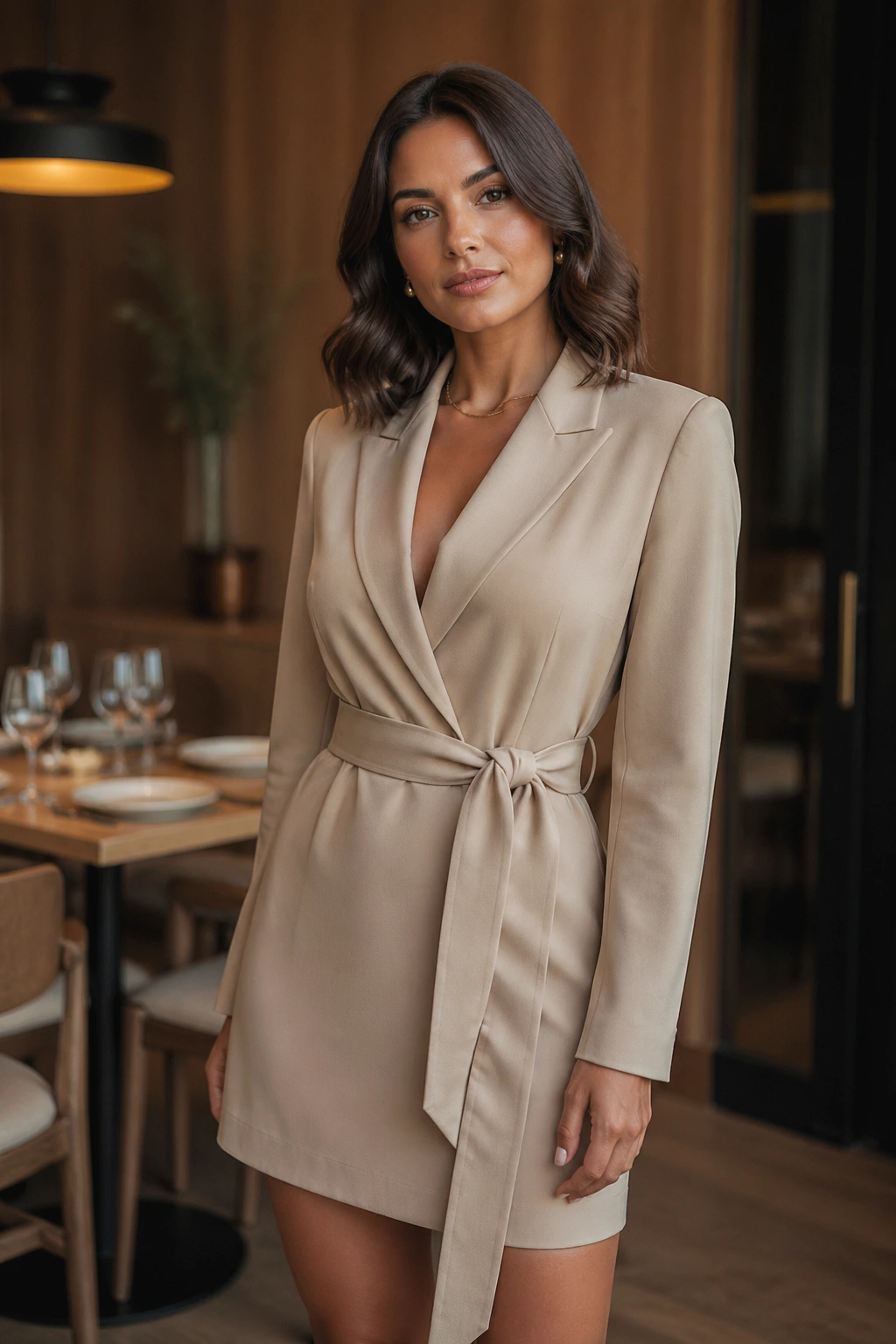
A belted blazer dress can be very flattering if the tailoring is gentle. The shoulders give the body shape, the lapels create a vertical frame, and the belt defines the waist without cutting the middle in half. That combination draws attention upward and outward, which is useful when the stomach feels like the part you least want to emphasize.
The mistake most people make is choosing a blazer dress that is too stiff. Sharp suiting can look powerful, but if the fabric stands away from the body like cardboard, it adds bulk where you do not want it. A softer woven with a little drape usually works better. So does a belt that is more about suggestion than squeezing.
Wear this style when you want polish. It suits dinners, meetings, and evenings out where you want something sharper than a wrap dress. A length that hits above the knee tends to keep the shape from feeling heavy, and a V opening at the front helps the torso look longer.
One detail I prefer: a belt tied loosely, not knotted hard. Tight belts around a bloated middle are a bad joke.
15. Off-the-Shoulder Fit-and-Flare Dresses That Draw the Eye Upward
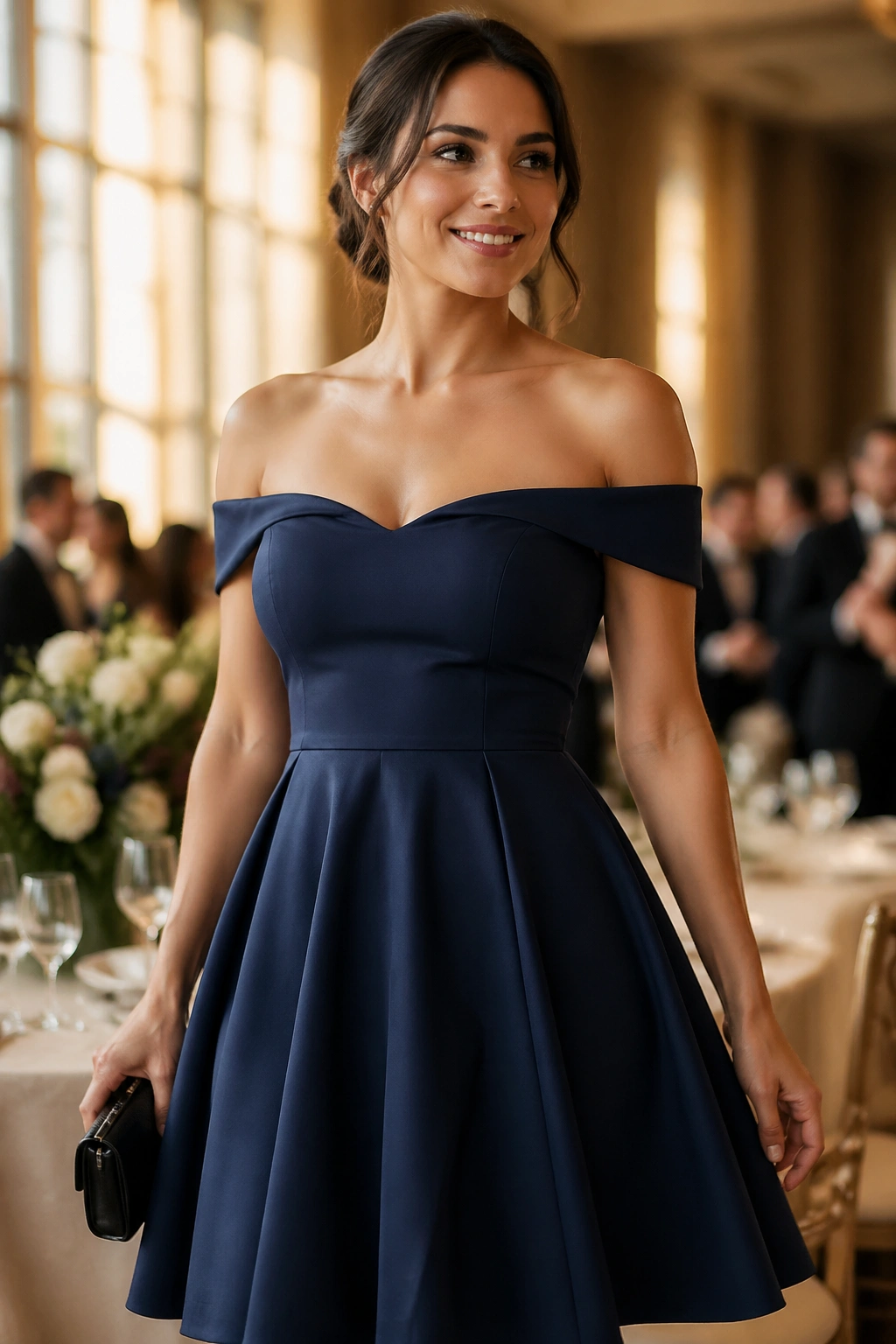
Want a dress that shifts attention away from the stomach fast? Put the interest near the collarbones and shoulders. Off-the-shoulder fit-and-flare dresses do that neatly. They open up the upper body, show a little skin in a clean way, and then let the skirt move away from the waist.
Why does this work so well? Because the eye goes where the detail is. If the neckline is the most interesting part of the dress, the stomach stops being the focal point. The fit-and-flare shape then handles the rest by giving the body a defined top and a freer bottom.
How to wear it without fuss
- Keep the neckline secure so you are not tugging at it all night.
- Pick a skirt with enough weight to fall rather than puff.
- Choose sleeves that stay in place, especially if you move a lot.
- A midi length usually feels more grounded than a very short hem.
This is one of the better occasion dresses if you want a little drama without a tight waist. It feels feminine, but not fragile. And it works best when the fabric has enough body to hold the shoulder line.
16. Column Dresses With a Side Drape
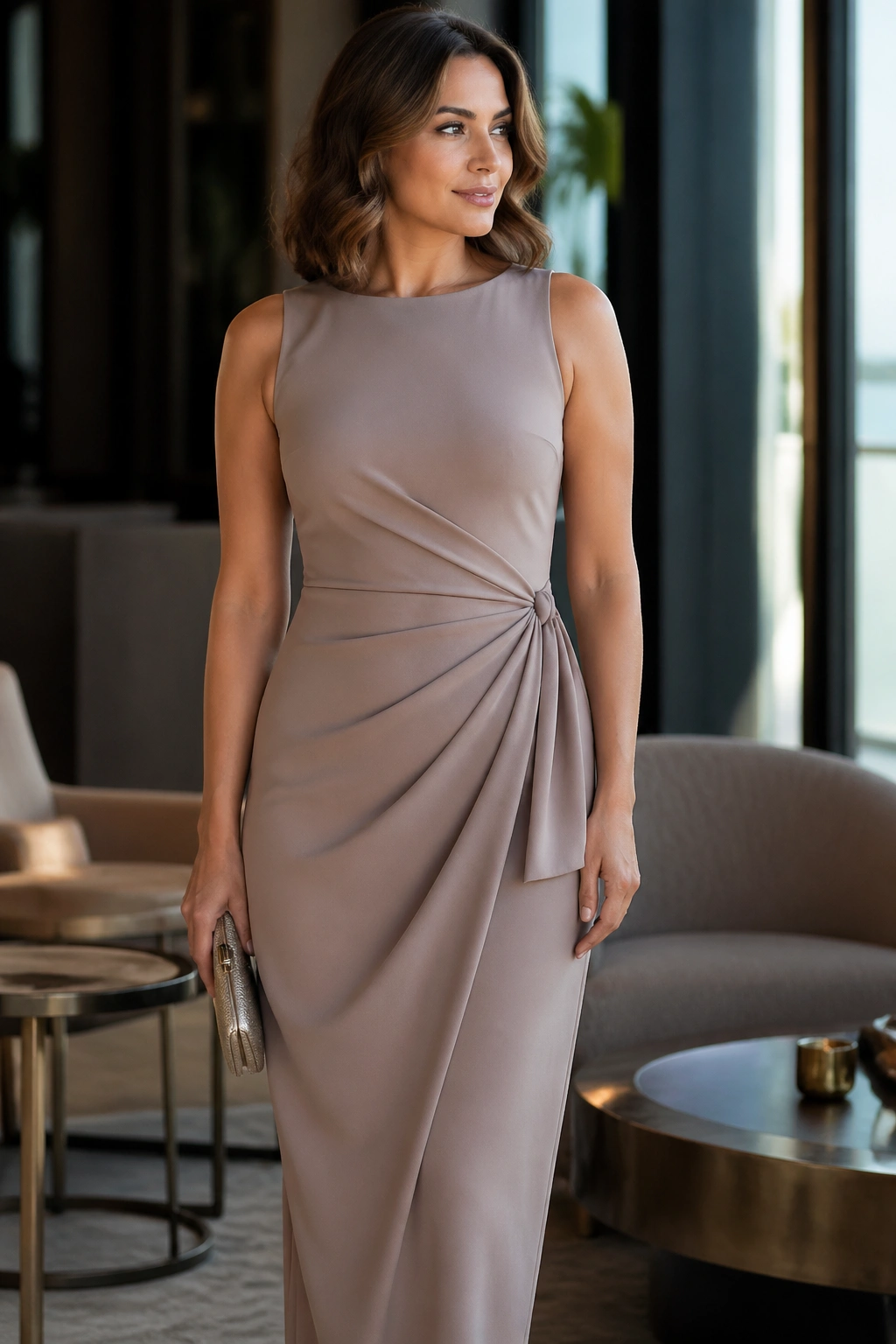
A column dress is usually more body-skimming than the other styles here, so it needs a little help. Side draping gives that help. It creates a diagonal or folded line across the front or side of the dress, which softens the stomach area and breaks up a straight, unforgiving surface.
The reason this style works is simple: the drape gives the eye a place to go. Without it, a column dress can feel too plain and can show every bump and fold. With it, the dress gains movement and shape without needing a full skirt or a cinched waist.
This is a good option for evening wear when you want something sleek. Choose a heavier jersey, crepe, or lined knit so the fabric falls smoothly. A side slit can work, but it should not sit so high that the whole dress starts to feel overexposed.
A one-shoulder version of this shape can be especially good, because it shifts focus upward and leaves the midsection in a calmer visual zone. Clean lines. That’s the real trick here.
17. Smocked-Back Midi Dresses That Hide the Squeeze
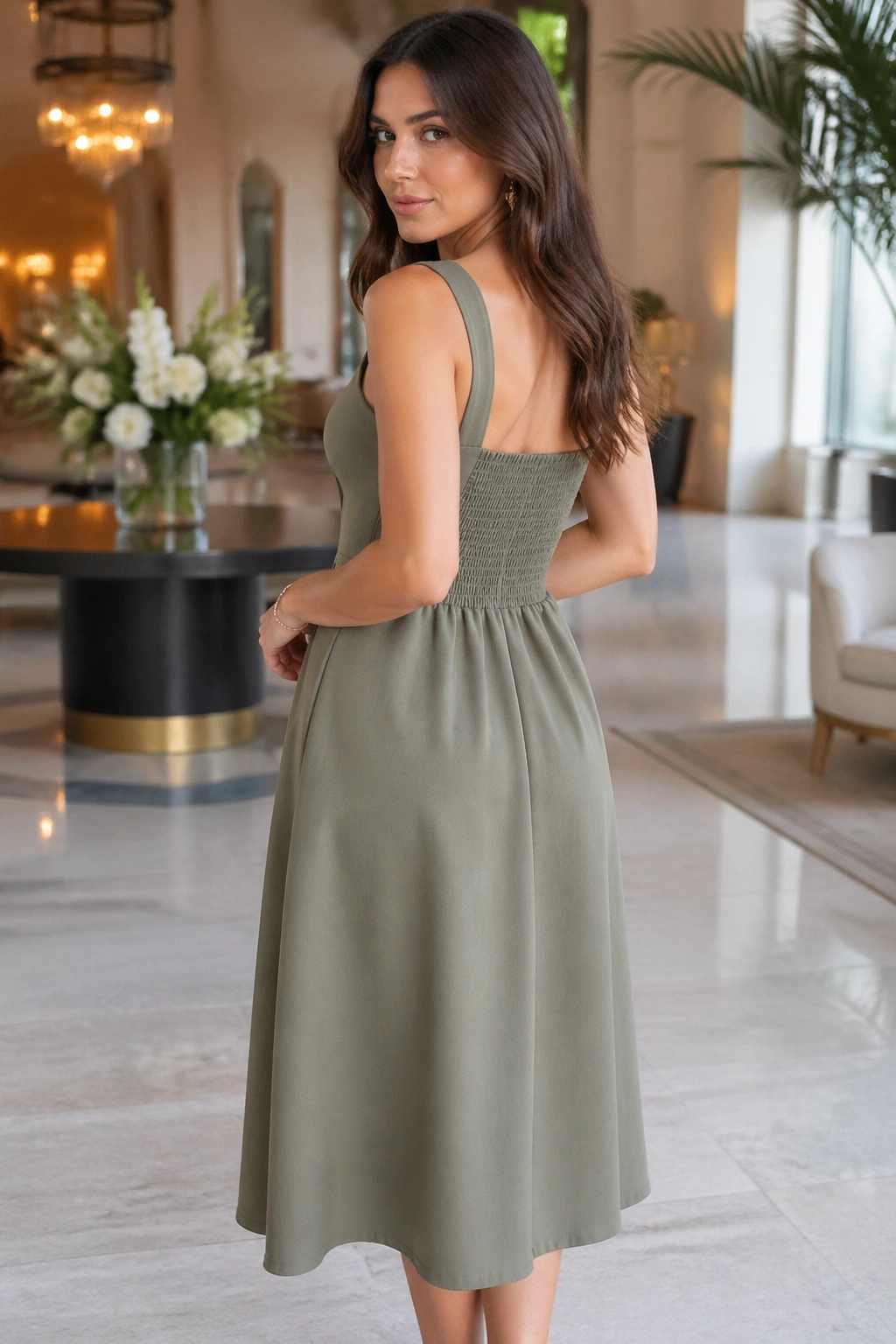
A smocked-back midi dress is one of those underrated comfort pieces that solves a very specific problem: the front stays smooth while the back gives you room to breathe. That matters when your waist changes through the day and you do not want a fixed zipper or hard waistband pressing into the stomach.
The best versions use a fitted front with smocking only where the body needs more ease. That keeps the dress from looking pajama-like. If the whole dress is smocked, it can get too casual or too textured around the middle. A clean front panel helps the eye read the shape as intentional.
This style works especially well in cotton blends, rayon, and linen mixes. Pure linen can wrinkle fast, which is not a disaster, but it does add visual noise. A little structure keeps the dress from collapsing. Sleeves with a slight puff or a neat cap can balance the softness of the skirt.
I like this cut for daytime events and travel. You can sit, eat, and move without the dress fighting you every step of the way. That is worth a lot.
18. Tunic Dresses That Keep Things Loose but Controlled
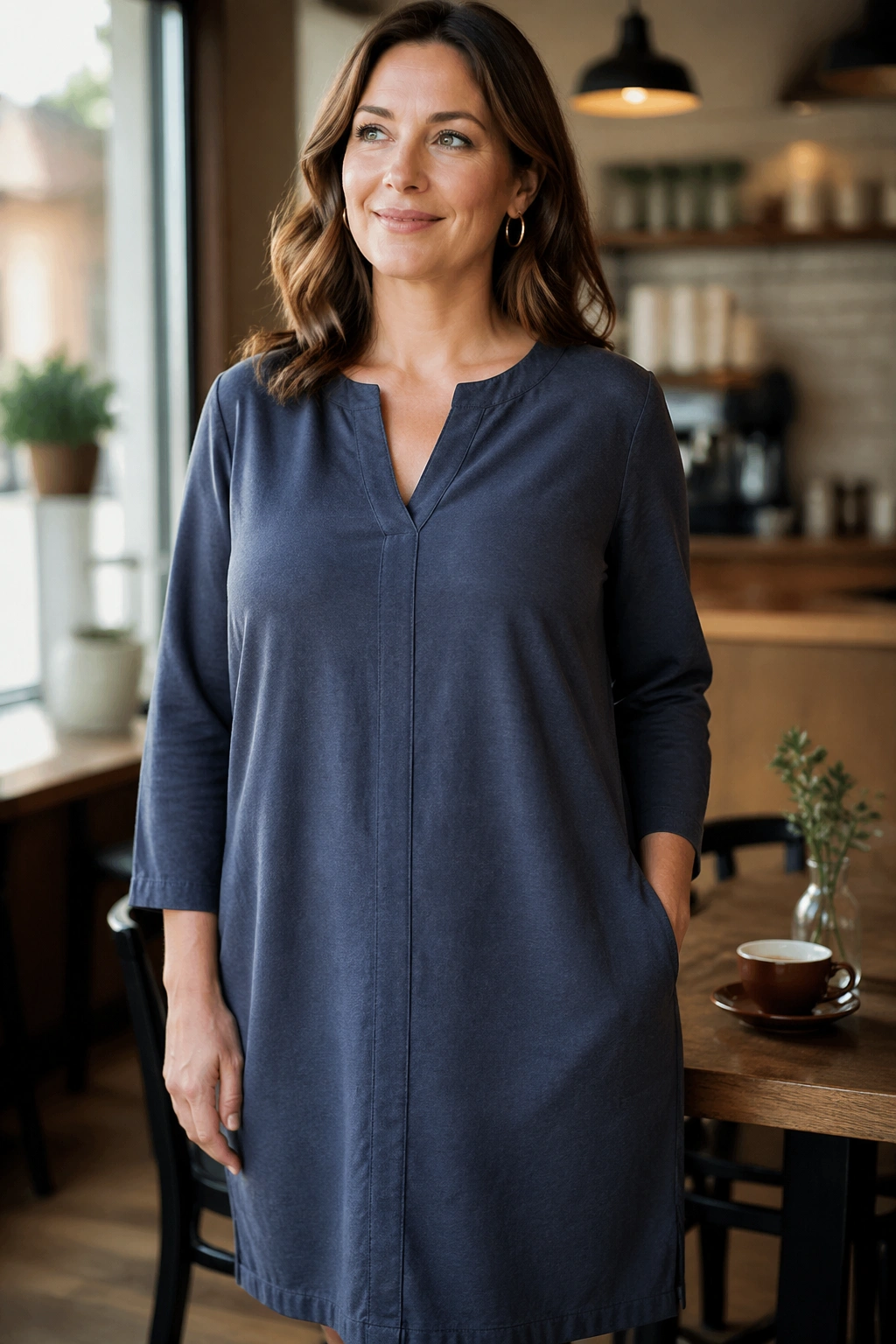
A tunic dress can be flattering, but only when it has shape discipline. Too loose, and it becomes a long T-shirt with no structure. Too short, and it loses the ease that makes the style useful in the first place. The sweet spot is a straight or slightly A-line cut that falls away from the stomach without ballooning.
This style is best when the shoulder fit is exact. If the shoulders drop too far, the whole dress can look oversized in the wrong way. A neat neckline helps too, especially a V, split neck, or modest round neck with a little binding. Those details keep the dress from feeling lazy.
Compared with a kaftan, a tunic dress often reads more casual and less floaty. Compared with a shirtdress, it usually has less waist definition. That means it suits people who want pure comfort and do not want a hard belt anywhere near their middle.
Wear it with slim pants, opaque tights, or bare legs depending on length. If the hem is too close to the knee on a short frame, it can shorten the body. Proportion is doing a lot of work here.
19. Babydoll Dresses That Add Shape Above the Stomach
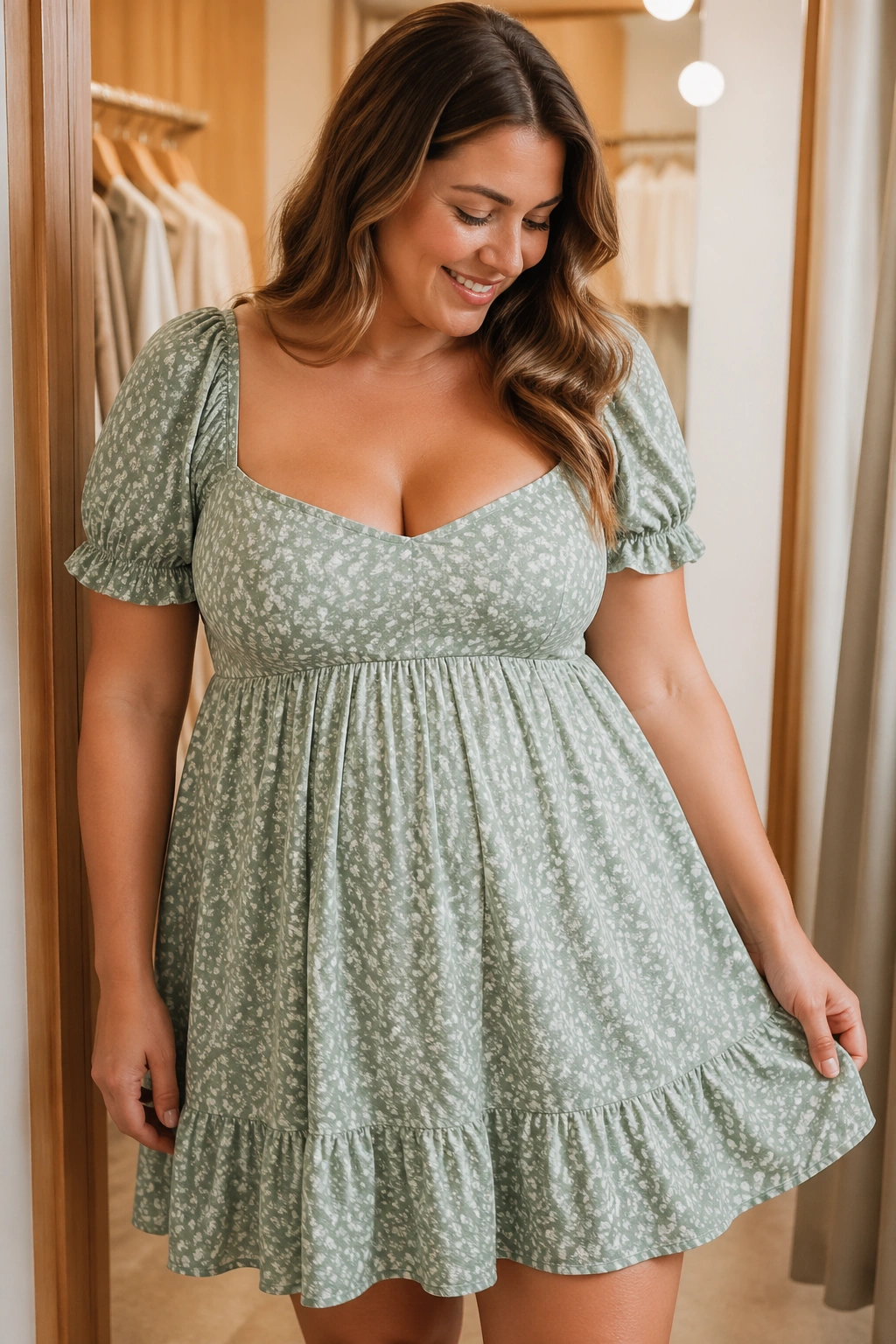
Babydoll dresses get dismissed as cute or childish, but the shape itself is smart when you want the stomach left alone. The fitted bust and short bodice lead into a loose skirt that starts high on the torso, so the midsection never gets pinched. That is the appeal.
The problem is volume. Too much puff, too much length, or too much sweetness in the details can make the dress feel costume-y. The better versions are clean, with modest gathers, a controlled hem, and fabric that moves rather than balloons. Cotton poplin, lightweight twill, or soft crepe usually behave better than stiff tulle or shiny satin.
Quick things to check
- The seam should sit above the belly, not at it.
- The skirt should fall away softly, not stick out in a hard dome.
- Sleeves can help a lot, especially if they are long or slightly flared.
- A square or scoop neckline balances the shape well.
If you like a little romance in your clothes, this is a good one. If you dislike sweetness, skip it. No need to force a style that annoys you.
20. Asymmetric Hem Dresses That Hide Belly Fat and Bloating With a Diagonal Line
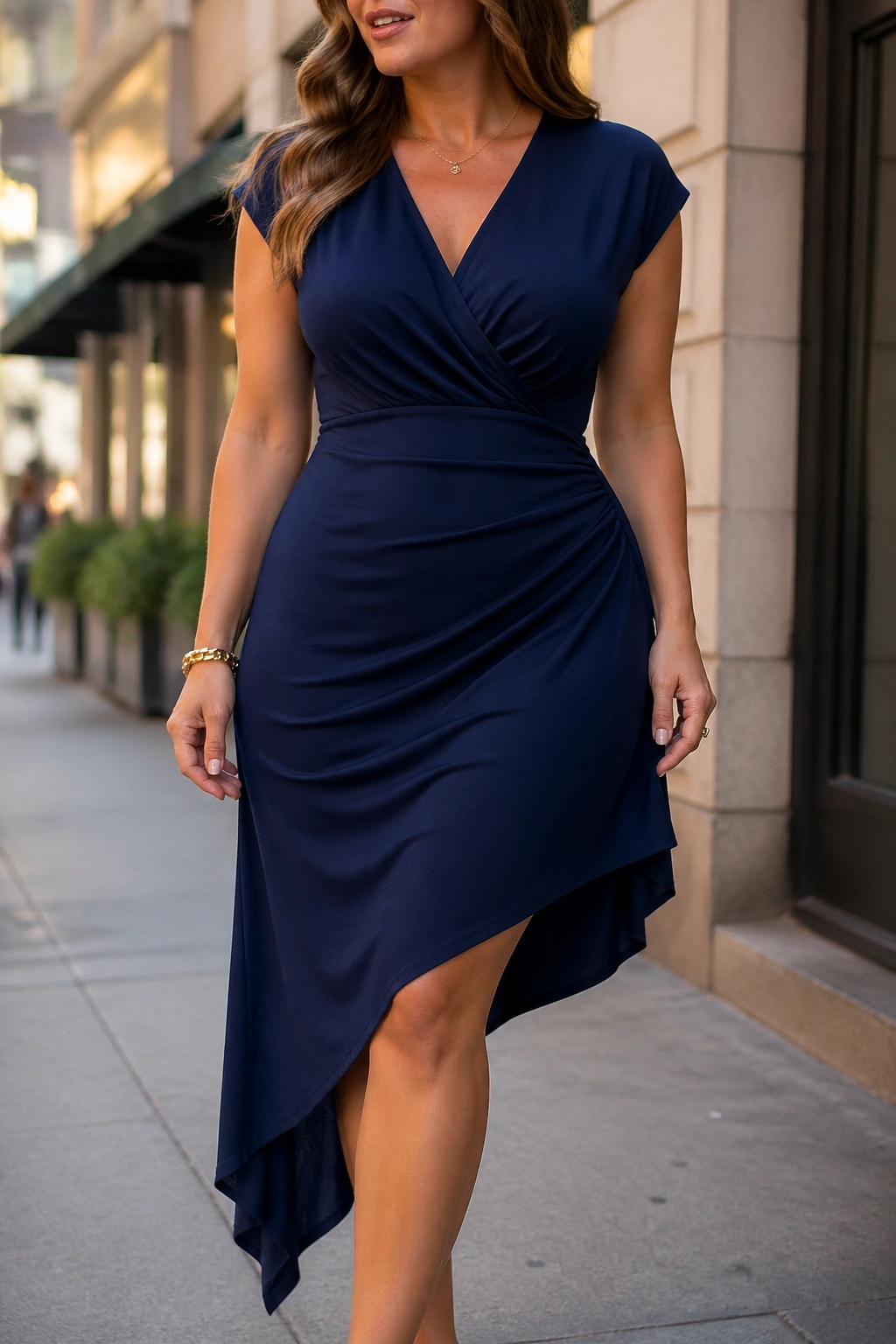
Diagonal lines are your friend. An asymmetric hem dress uses that idea in a way that feels modern and easy on the body. Instead of a straight cut across the middle, the hem moves downward at one side or across the front, which pulls the eye away from the stomach and gives the whole look some motion.
This shape works best when the dress also has a little drape through the torso. A side knot, wrap detail, or soft gather can make the asymmetry feel connected to the rest of the dress instead of looking like a random design choice. That matters. Random asymmetry looks awkward. Intentional asymmetry looks expensive, even when it isn’t.
A midi length often works well here because the uneven hem has room to show itself. Very short asymmetrical dresses can look jumpy. Very long ones can lose the point. Pair the dress with a sandal or heel that keeps the line clean, and avoid shoes that feel too heavy under the hem.
If you want one dress style that hides puffiness without falling into the usual “safe” choices, this is a strong one. It gives movement, shape, and a bit of edge at the same time.
Final Thoughts
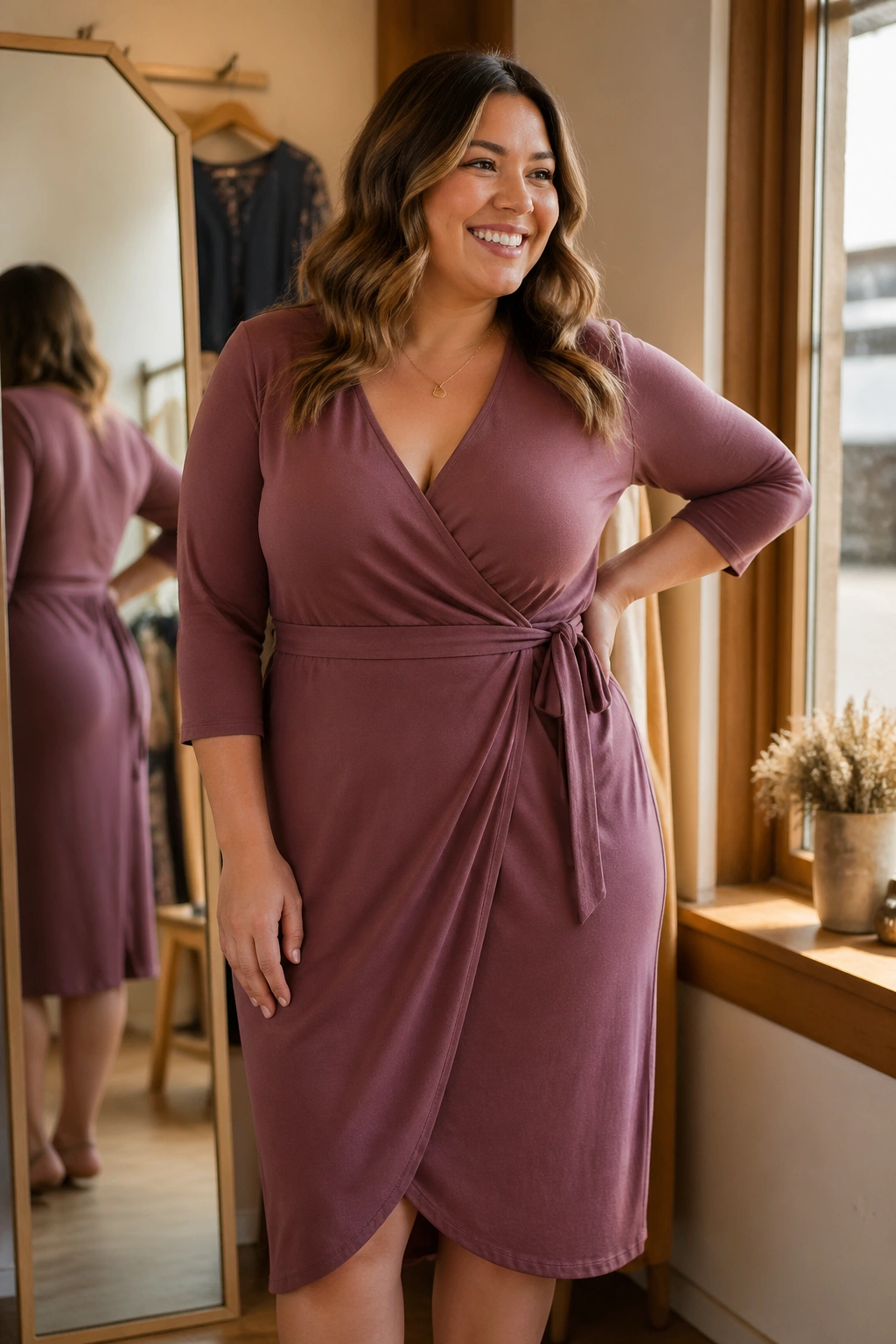
The dresses that work best are usually the ones that give the stomach room without giving up shape everywhere else. That is the whole game. A wrap front, a raised waist, a clean A-line, or a good drape does more than a size change ever will.
Fabric matters just as much as silhouette. A heavy enough knit, a lined woven, or a crisp cotton can calm a dress down fast. Thin, clingy fabric can undo even a flattering cut in one afternoon.
If you want the shortest rule possible, here it is: fit the shoulders, skim the middle, and let the hem move. Everything else is a detail. A useful one, but still a detail.
