



A kettlebell is honest. If your hinge is sloppy, it shows up fast. If your core isn’t doing its share, the bell starts pulling you around like a shopping cart with one bad wheel.
Full body kettlebell workouts earn their keep because they squeeze strength, conditioning, balance, and grip into the same session. One good bell can drive a squat, a press, a row, a swing, and a carry without turning your workout into a circus.
The sweet spot is load and control. A beginner session should leave you warm, breathing harder, and still able to walk down the stairs normally; an advanced session should feel dense and demanding without turning every rep into a gamble. That’s a line worth respecting.
The bell should do the talking.
What matters most is clean movement, not fancy movement. A sharp goblet squat, a calm rack carry, or a snappy clean done with one bell will beat a messy snatch nine times out of ten. The 18 workouts below cover a lot of ground, from quiet starters to hard-hitting finishers, and every one of them can be scaled without wrecking the point of the session.
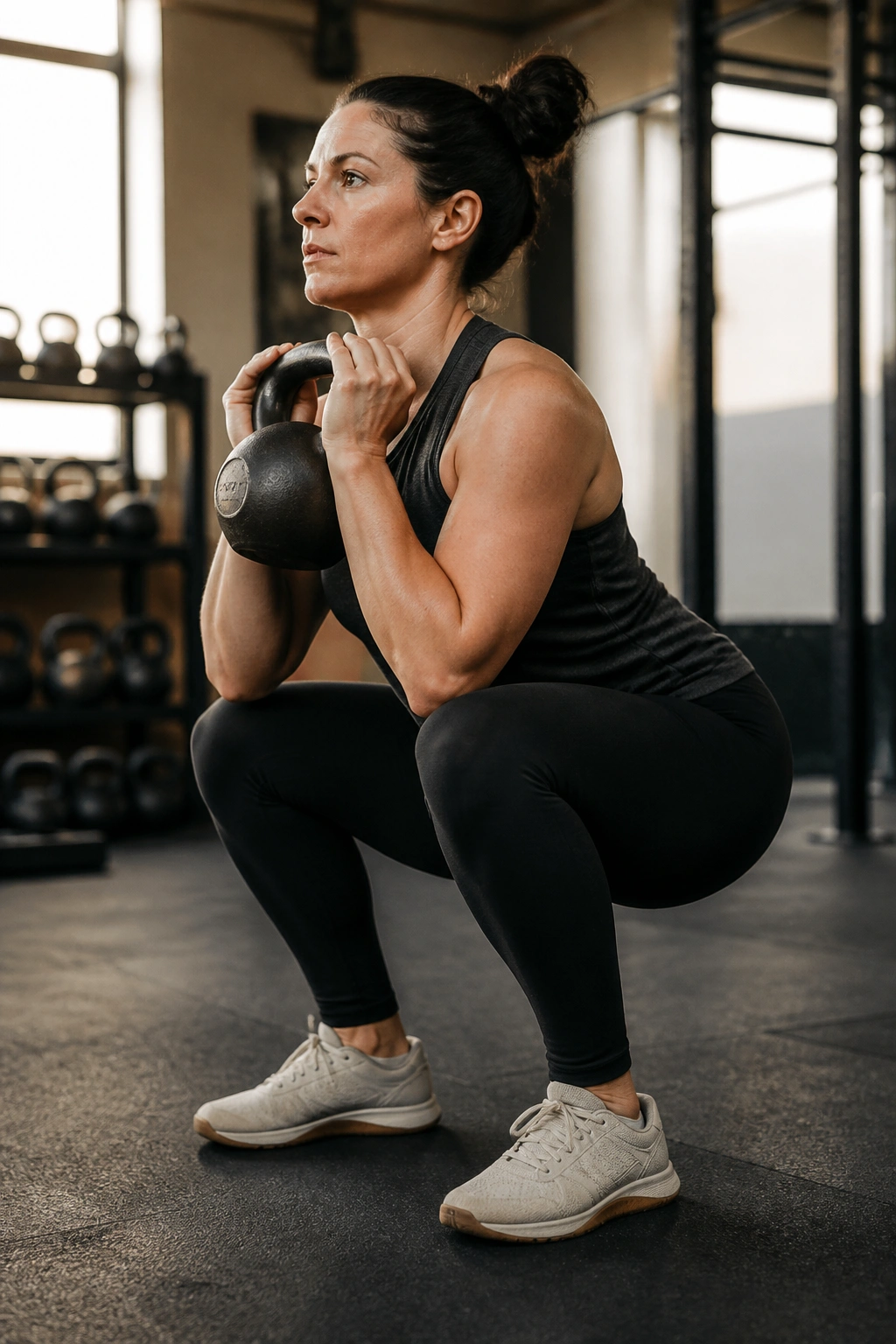
1. The Goblet Squat Starter
This is the workout I’d hand to someone who wants to train hard without getting buried on day one. It looks plain, and that is exactly why it works. You get a squat, a hinge, a push, and a carry in one neat package, with enough rest to keep the reps honest.
Do 3 rounds of the following:
- 8 goblet squats
- 10 kettlebell deadlifts
- 6 floor presses per side
- 20 to 30 meters of suitcase carry per side
- 60 to 90 seconds of rest
Best for: beginners, return-to-training weeks, or anyone who wants a full body kettlebell workout without a lot of noise.
Keep the bell close to your chest on the squats. Let the deadlift feel like a loaded hip hinge, not a back bend. If the floor press feels awkward, lie on the floor with your knees bent and keep your elbow at about 45 degrees from your ribs.
One small detail matters here: the suitcase carry should feel a little lopsided, but not sloppy. If you’re leaning hard, the bell is too heavy or your ribs are flaring. Straighten that out first. The strength will follow.
2. The Clean and Press Ladder
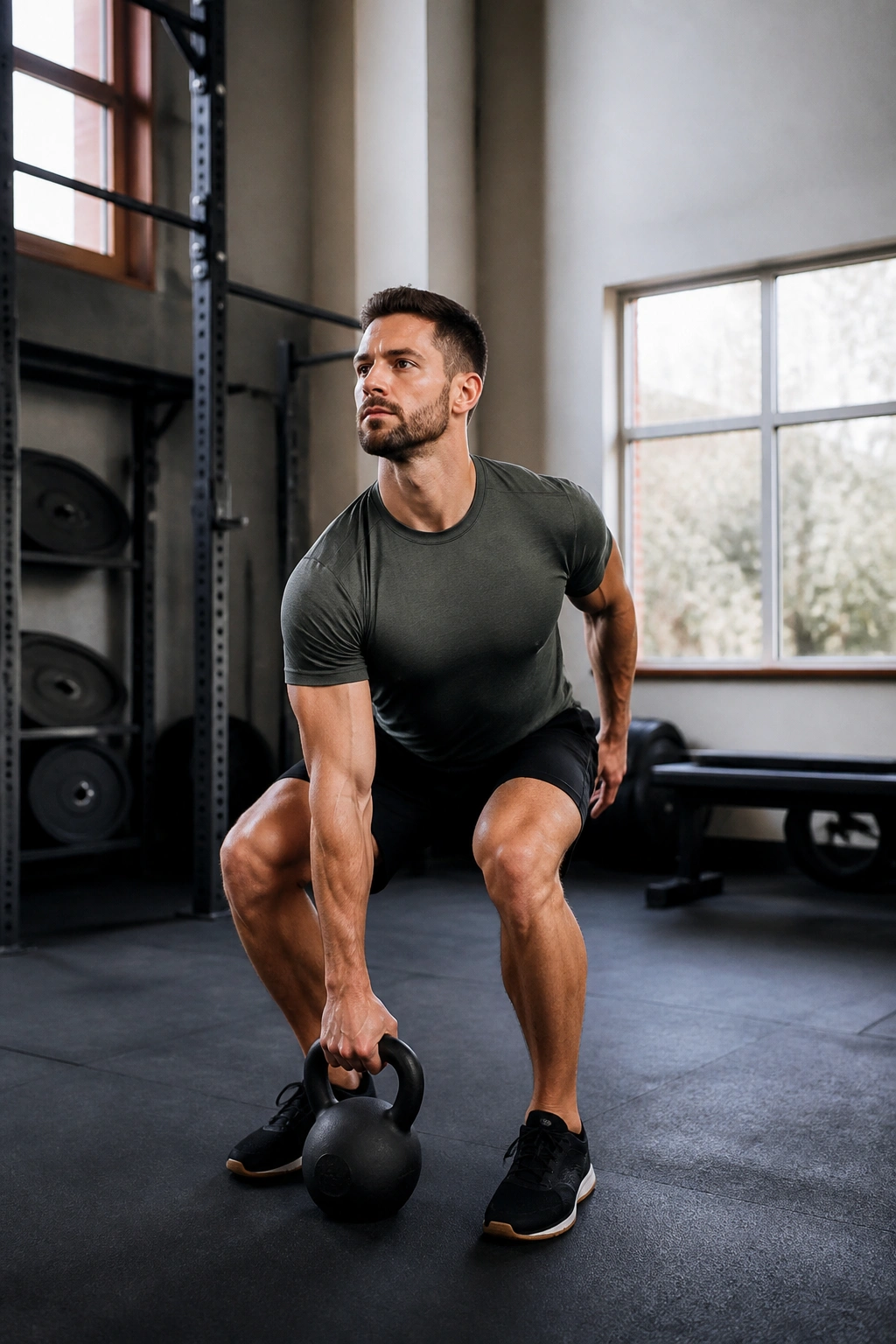
A ladder beats a reckless all-out set for most people. You get enough volume to build strength, but the rests between rungs keep your form from falling apart. That matters a lot once the press starts to slow down.
Run this as a 1-2-3-4 ladder on each side:
- 1 clean and press per side
- 2 clean and presses per side
- 3 clean and presses per side
- 4 clean and presses per side
Rest 45 to 75 seconds between rungs. After each rung, do 6 goblet squats with a steady, controlled descent.
If a strict press gets ugly after the second rung, switch to a push press. No shame there. A slightly lighter bell that lets you keep your wrist stacked, ribs down, and glutes tight is the smarter choice.
I like this one because it teaches patience. The clean has to stay crisp or the press never feels good. The squat between rungs keeps the workout full-body instead of turning it into a shoulder-only grind.
3. The 12-Minute Hinge Engine
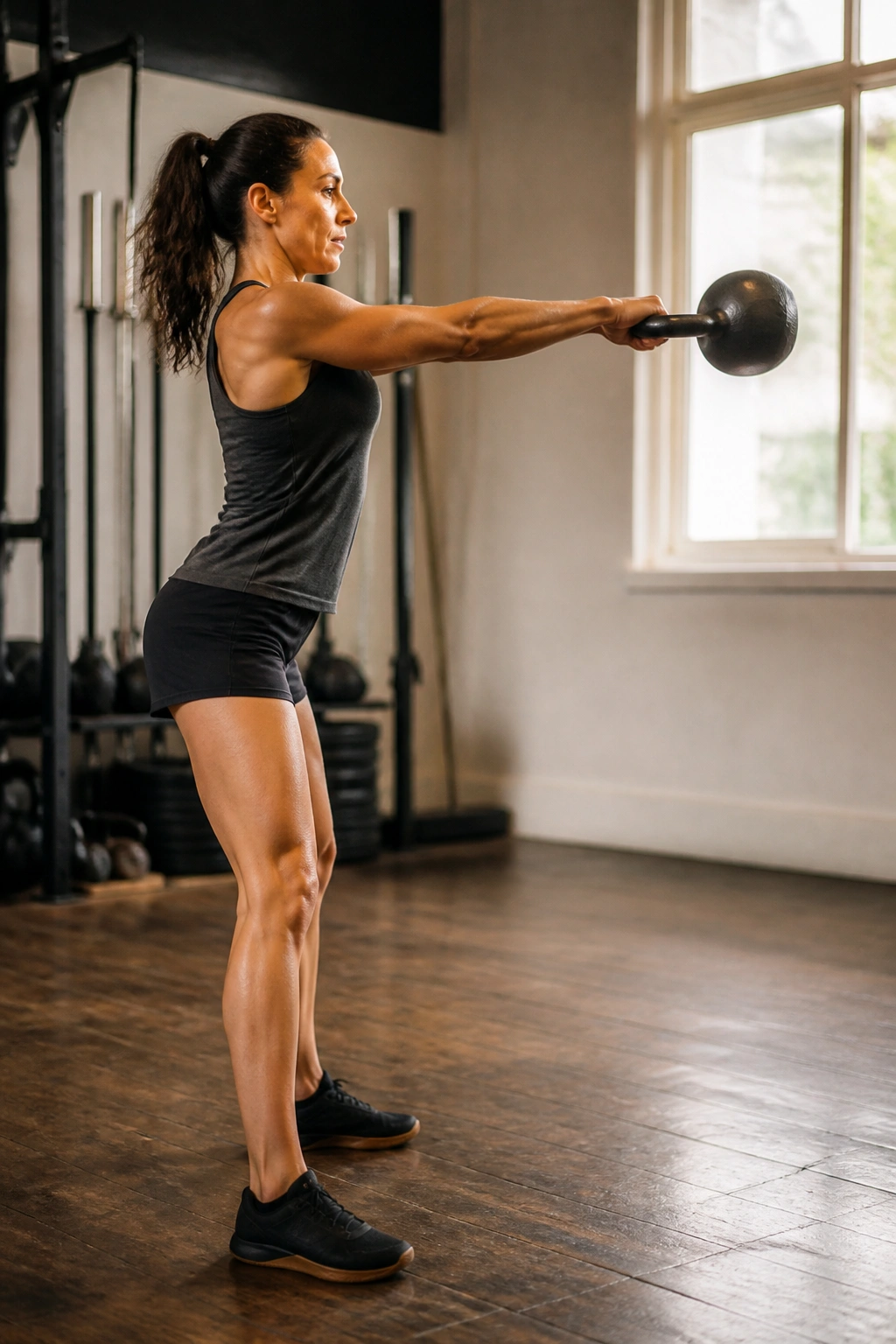
What if you want your heart rate up without turning the session into cardio soup? Use timed intervals that keep the bell moving and your breathing under control. This is one of the cleanest ways to build work capacity without losing shape.
How to run it
Set a timer for 12 minutes and repeat this four-minute block three times:
- Minute 1: 12 kettlebell swings
- Minute 2: 8 front rack squats
- Minute 3: 6 reverse lunges per side
- Minute 4: walk, shake out your hands, and breathe
Beginners can swap the swings for deadlifts. That’s the smarter move if the hinge still feels new or your back is the first thing to talk during a set. Intermediate lifters can keep the swing sharp and treat the recovery minute like part of the workout, not a break from it.
The beauty of this setup is that it never turns frantic. You get a hinge, a squat, a lunge, and a reset. Three good rounds are enough to light up your legs and trunk without wrecking the rest of your day.
4. The Half-Kneeling Press and Row Circuit
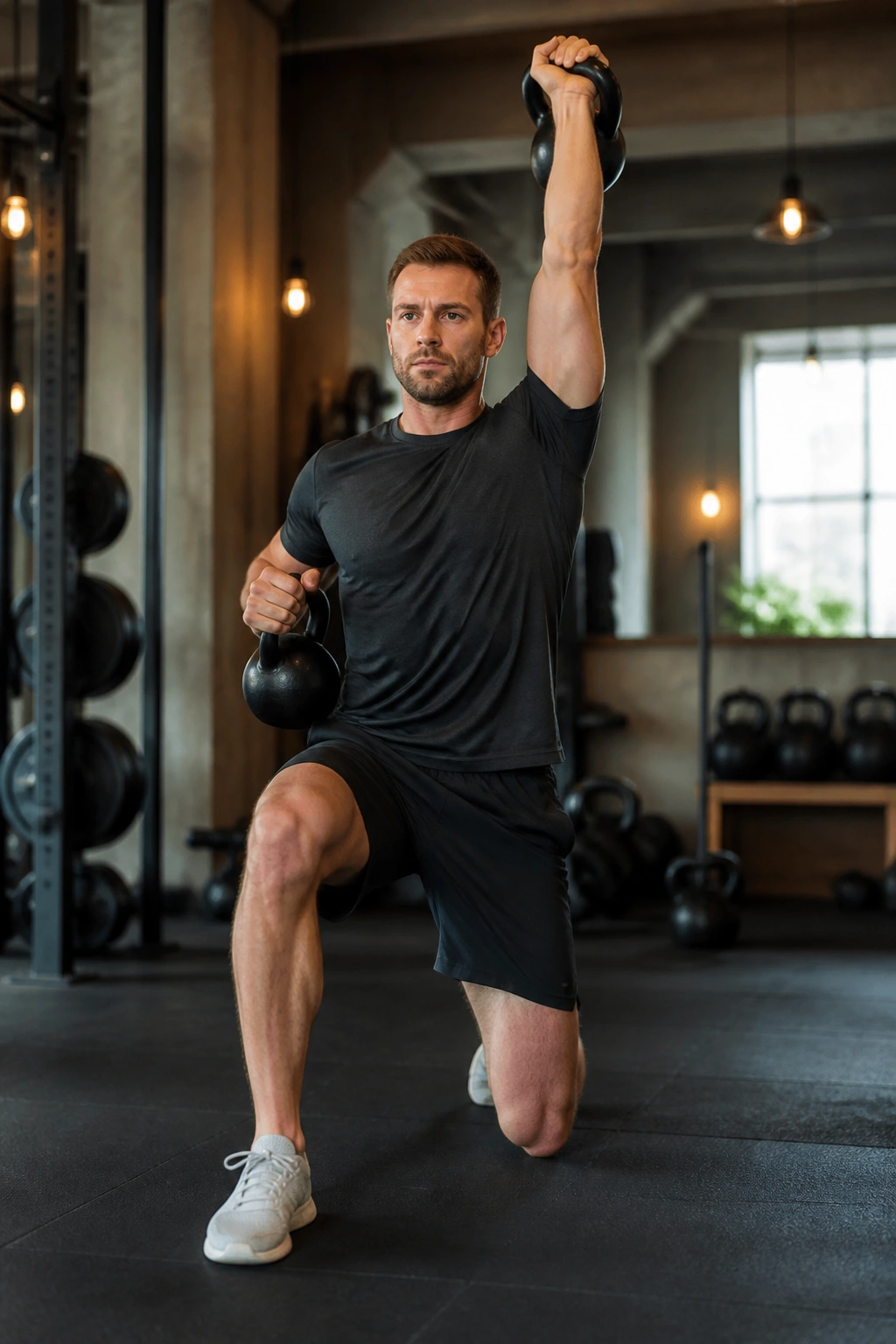
Half-kneeling work takes away a lot of cheating. You can’t bounce, twist, or lean on momentum the way you can when you’re standing and moving fast. That makes this a sneaky-good full body kettlebell workout, especially if your shoulders like to shrug up near your ears.
Do 4 rounds of:
- 5 half-kneeling presses per side
- 8 one-arm rows per side
- 8 dead-stop goblet squats
- 20-second front rack hold per side
The kneeling leg should be the opposite of the pressing arm. That setup helps you feel the glute on the down knee and keep your ribs from flaring. If you feel your low back taking over, the bell is too heavy or your setup is rushed.
A good rep feels quiet. The bell travels straight, your torso stays tall, and the row comes from your upper back instead of a shrug. If you want to make it harder without adding weight, slow the lowering phase on the press to a clean 3-count.
5. The Five-Move Body Armor Complex
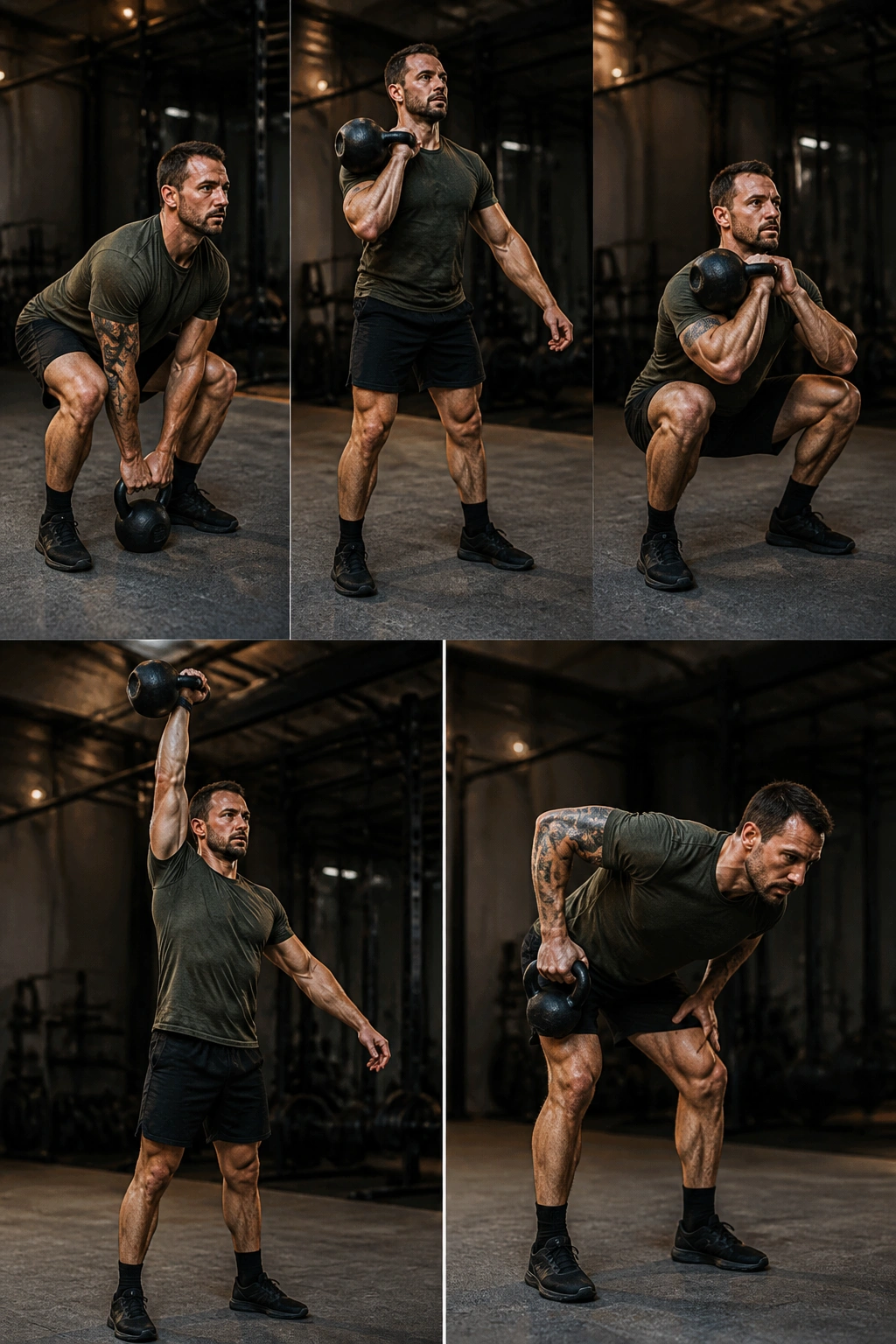
This one has a workmanlike feel that I like a lot. It’s not flashy. It’s the kind of session that makes the rest of your training feel cleaner because it forces you to own the basics under fatigue.
The sequence
Do 5 reps of each move without putting the bell down:
- Deadlift
- Clean
- Front squat
- Push press
- Bent-over row
Rest 90 seconds after each round. Complete 3 to 5 rounds depending on the weight you choose and how fresh you feel.
What to watch
- The clean should land soft in the rack.
- The front squat should stay upright, not fold forward.
- The row should finish with the elbow close to your side, not yanked high.
A lighter bell makes this workout feel smooth and technical. A heavier one turns it into grit work. Both are valid, but they are not the same thing, and it’s worth being honest about which one you want that day.
6. Swing Intervals With Built-In Recovery

A straight swing finisher can get sloppy fast. This version gives you breathing room without letting the workout lose its edge. The result is cleaner reps and a lower chance of turning your hinge into a low-back complaint.
Set up 10 rounds of:
- 20 seconds of hard swings
- 20 seconds of march in place or easy walking
- 20 seconds of goblet squats or push-ups
- 20 seconds of rest
If you want a less chaotic version, do the same pattern with 15 swings, 10 rows per side, and 30 seconds of rest between rounds.
Unlike a nonstop conditioning blast, this one gives you just enough recovery to keep your swing snappy. That matters. Once the snap disappears, the set stops training power and starts training survival.
I prefer this format for intermediate lifters who can swing well but don’t want a full complex every time. It’s direct, sweaty, and easy to scale. Use a lighter bell if your grip turns to dust before round six.
7. The Single-Bell Strength Circuit
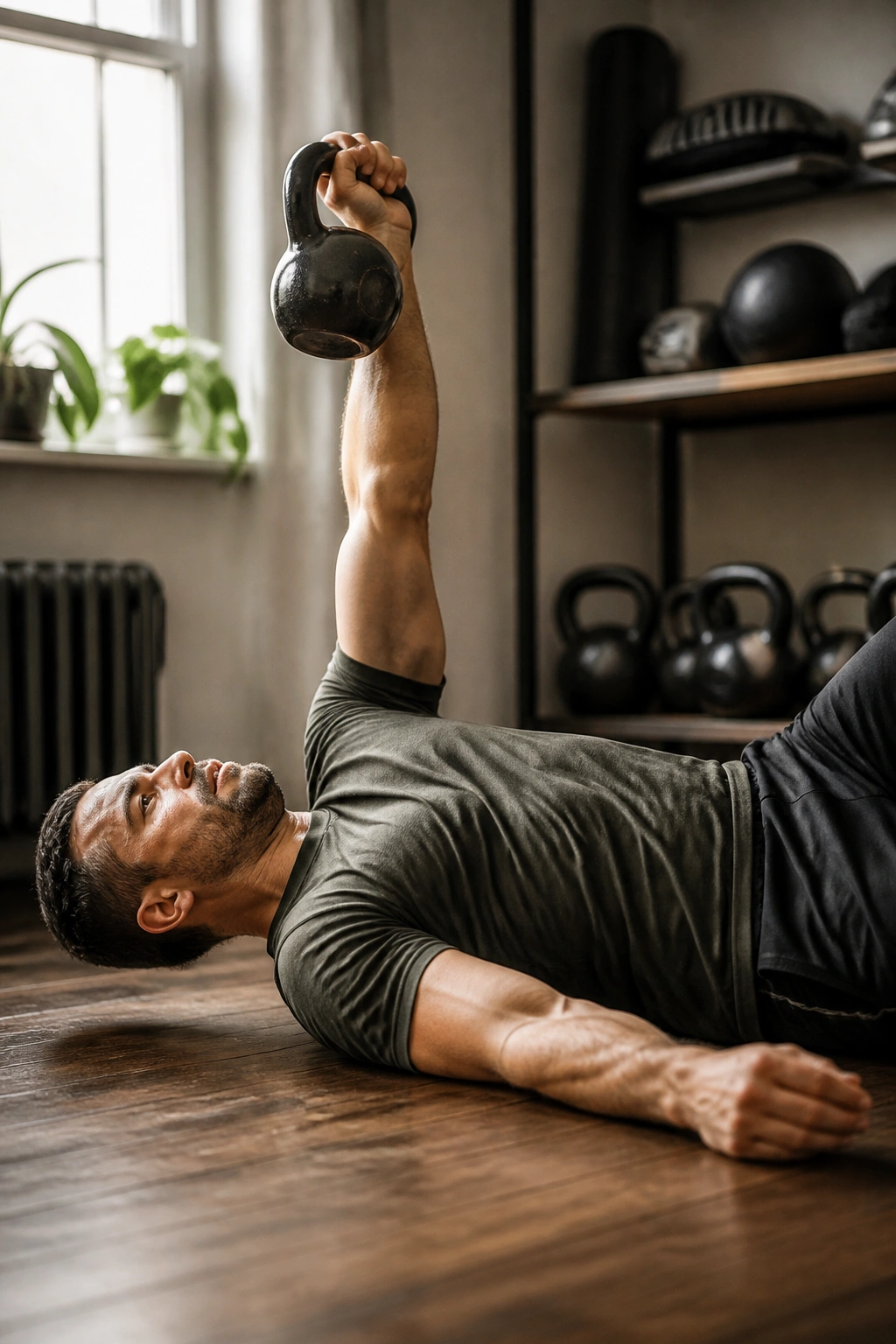
I like this one on days when the bell feels heavier than it should, but not too heavy to move with good shape. It mixes upper-body push and pull with a squat pattern and a hinge, which keeps the session balanced and honest.
Do 4 rounds of:
- 8 one-arm floor presses per side
- 8 one-arm rows per side
- 6 front rack squats per side
- 10 two-hand swings
- 30 seconds of rest between exercises if needed
The floor press saves the shoulder joint from being asked to stabilize too much range, which is useful when you’re already a little tired. The rows pull the session back toward the upper back, where a lot of people need more work anyway.
No fancy setup needed. One bell, enough floor space, and a timer. If you only have one kettlebell, this workout gives you a lot of mileage without asking for a second piece of gear.
8. The Armor Building Complex
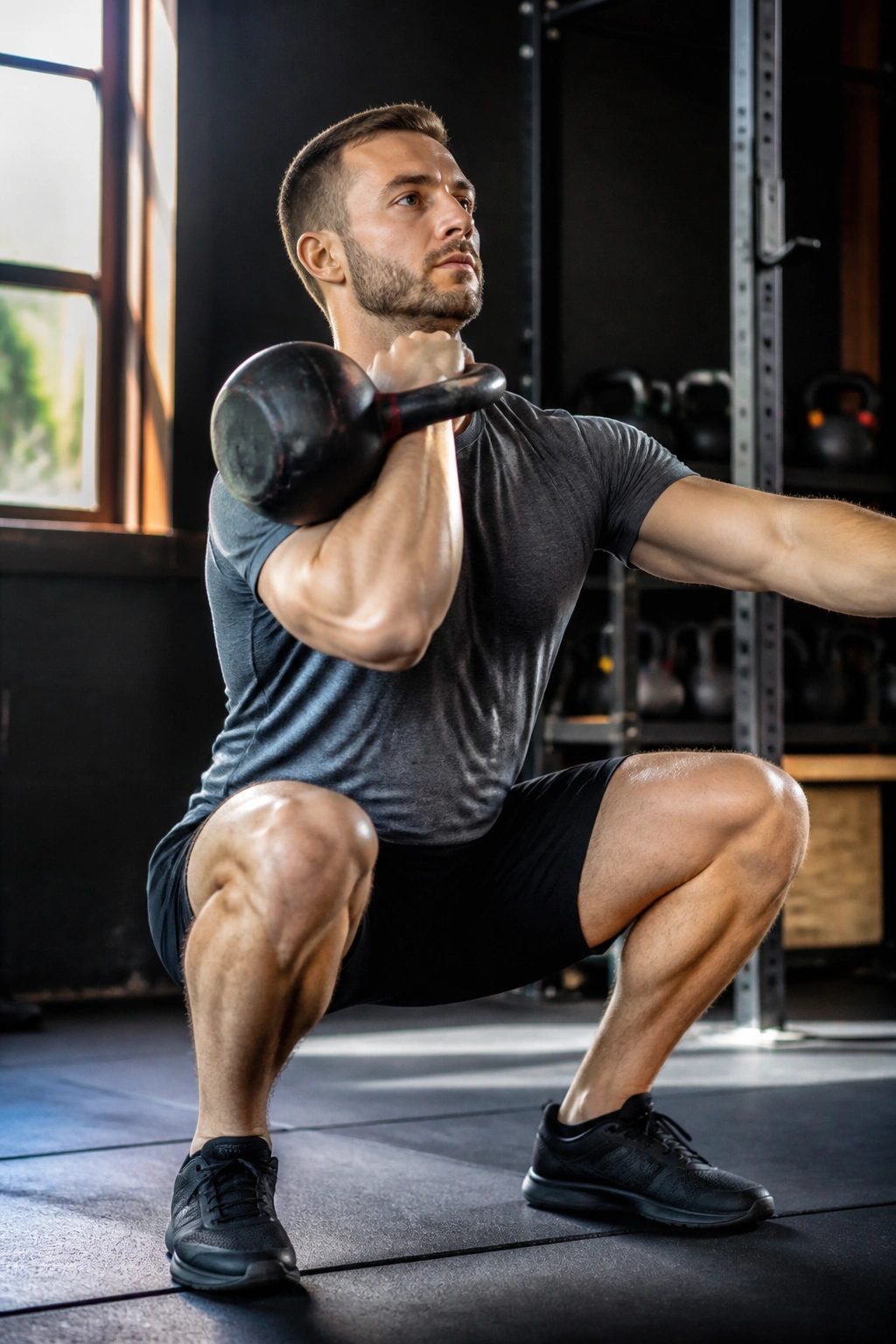
The Armor Building Complex is one of those sessions that looks short on paper and feels stubborn in your hands. Four movements. One bell. A lot of tension. It’s a favorite for a reason.
The standard round is:
- 1 clean
- 1 front squat
- 1 press
- 1 reverse lunge
Do that on one side, switch sides, then rest 15 to 30 seconds. Run 5 to 10 rounds depending on the bell and your experience.
The sequence forces your torso to stay tight while your legs do different jobs. The clean gets you into the rack. The squat loads the hips. The press tests overhead control. The lunge exposes any sloppy balance right away.
For beginners, cut the lunge and keep the first three moves. For stronger lifters, slow the lowering phase on the squat and press. That tiny pause at the bottom adds a lot more honesty than chasing extra reps.
9. The Turkish Get-Up and Carry Day
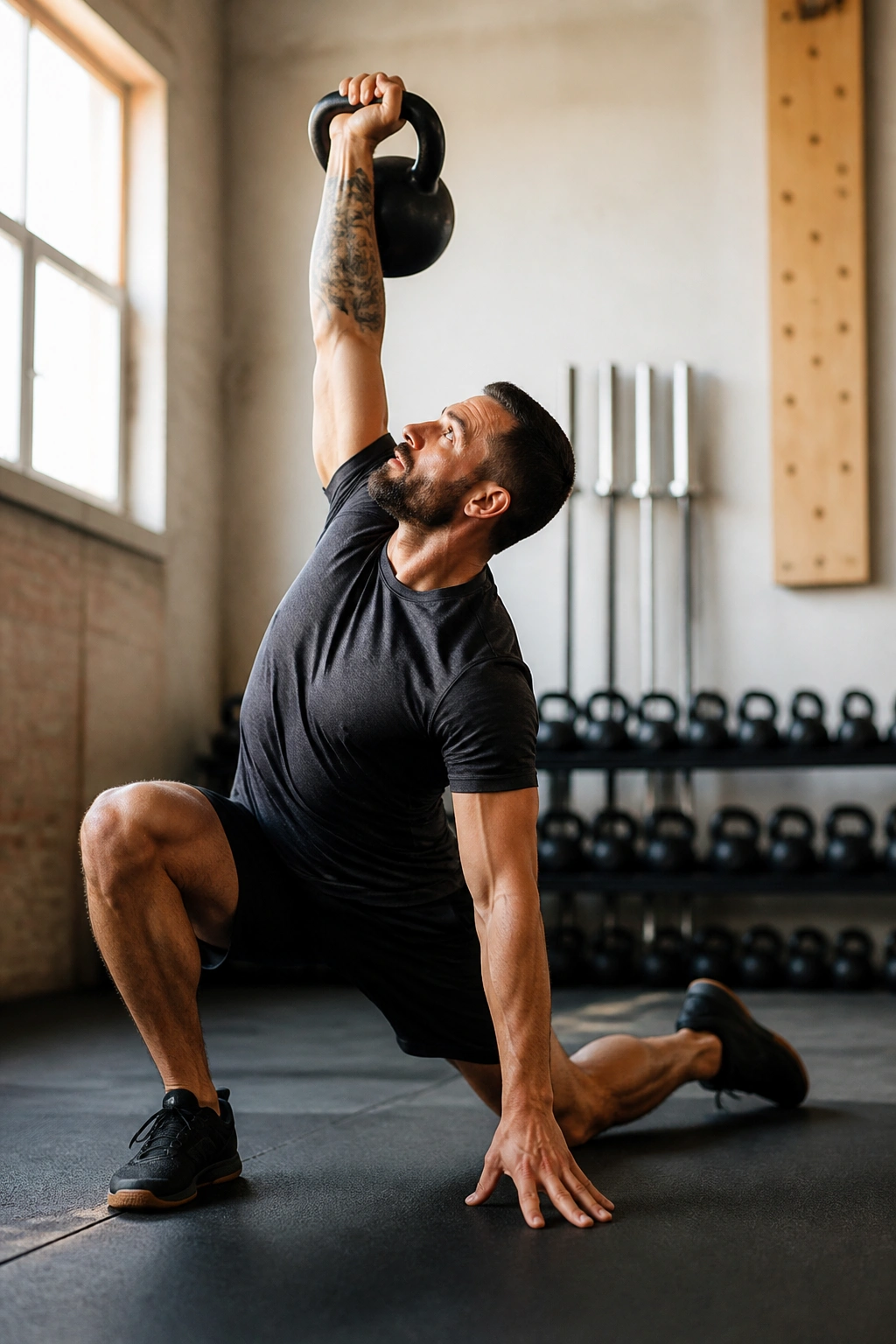
A Turkish get-up can feel awkward the first few times. Good. It should. The movement asks your shoulder, trunk, hips, and eyes to work together, and that coordination is a big part of why it’s such a useful full body kettlebell workout.
Do 3 rounds of:
- 1 Turkish get-up per side
- 40 meters of suitcase carry per side
- 8 goblet squats
- 8 one-arm rows per side
- 6 halos in each direction
If a full get-up isn’t there yet, stop at the elbow or the tall sit and make that your rep. That still teaches bracing, shoulder packing, and control. A lot of people try to jump straight to the full version and skip the part where the movement gets built.
Use the get-up while fresh. Put it first, not last. Once fatigue piles up, the movement gets sloppy in a hurry and the point disappears.
10. The Front Rack Squat and Push Press Ladder
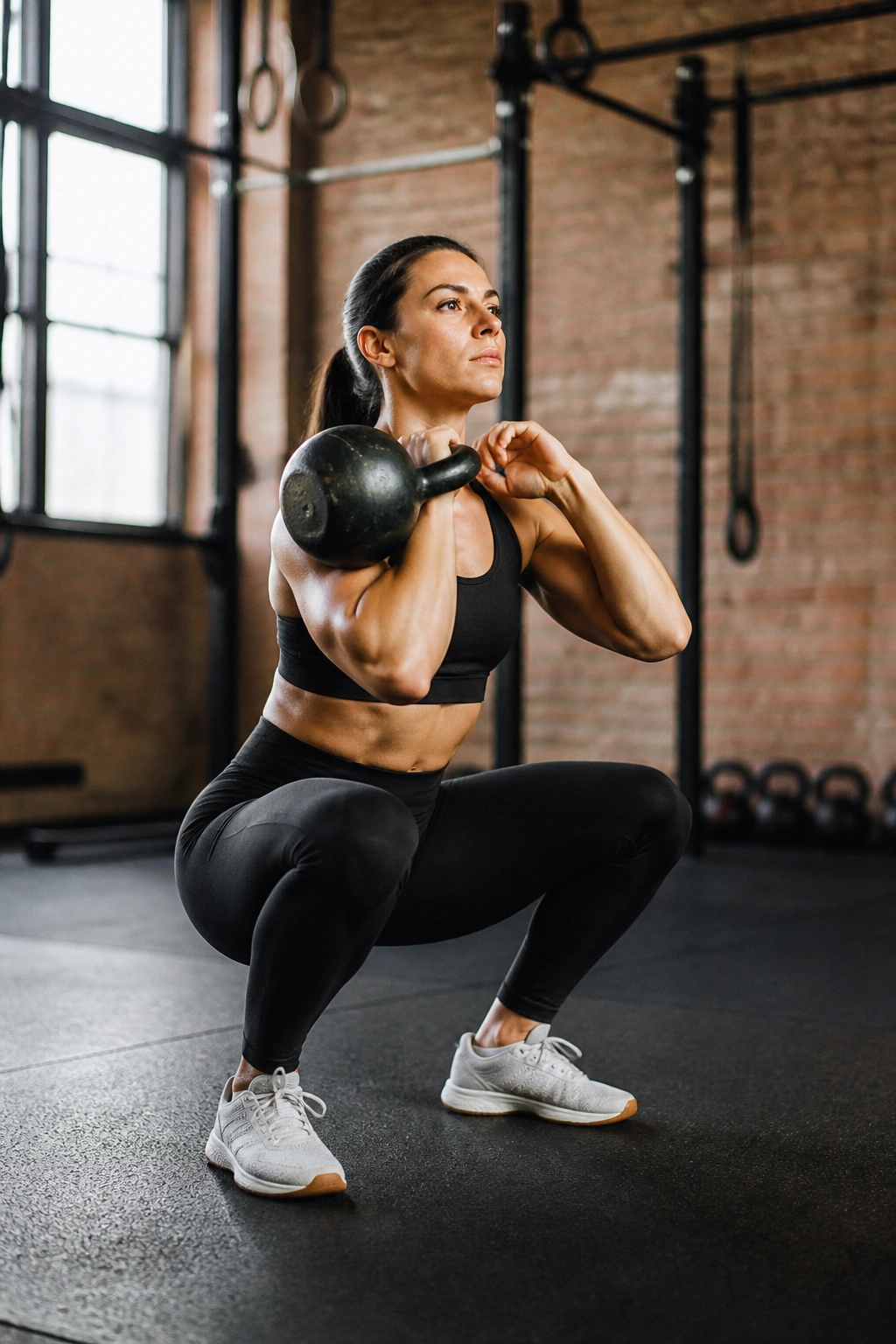
This one is clean, ugly in the right way, and very good for legs that need more than just swings. The front rack position keeps your core working while the press taxes your shoulders and upper back.
Try this ladder:
- 2 front rack squats per side
- 2 push presses per side
- 4 front rack squats per side
- 4 push presses per side
- 6 front rack squats per side
- 6 push presses per side
Rest 60 to 90 seconds between rungs. If the rack starts to collapse or your wrist gets cranky, drop the load before you chase more reps.
What to feel
The elbows should stay close to your body on the rack. The bell should sit on the forearm, not dangle off the wrist. The push press should feel like a small leg drive, not a jump.
This is one of the better full body kettlebell workouts for people who want strength with a bit of pop. It trains the legs and shoulders together, which is exactly how a lot of real-world lifting behaves anyway.
11. The Snatch and Squat Density Set
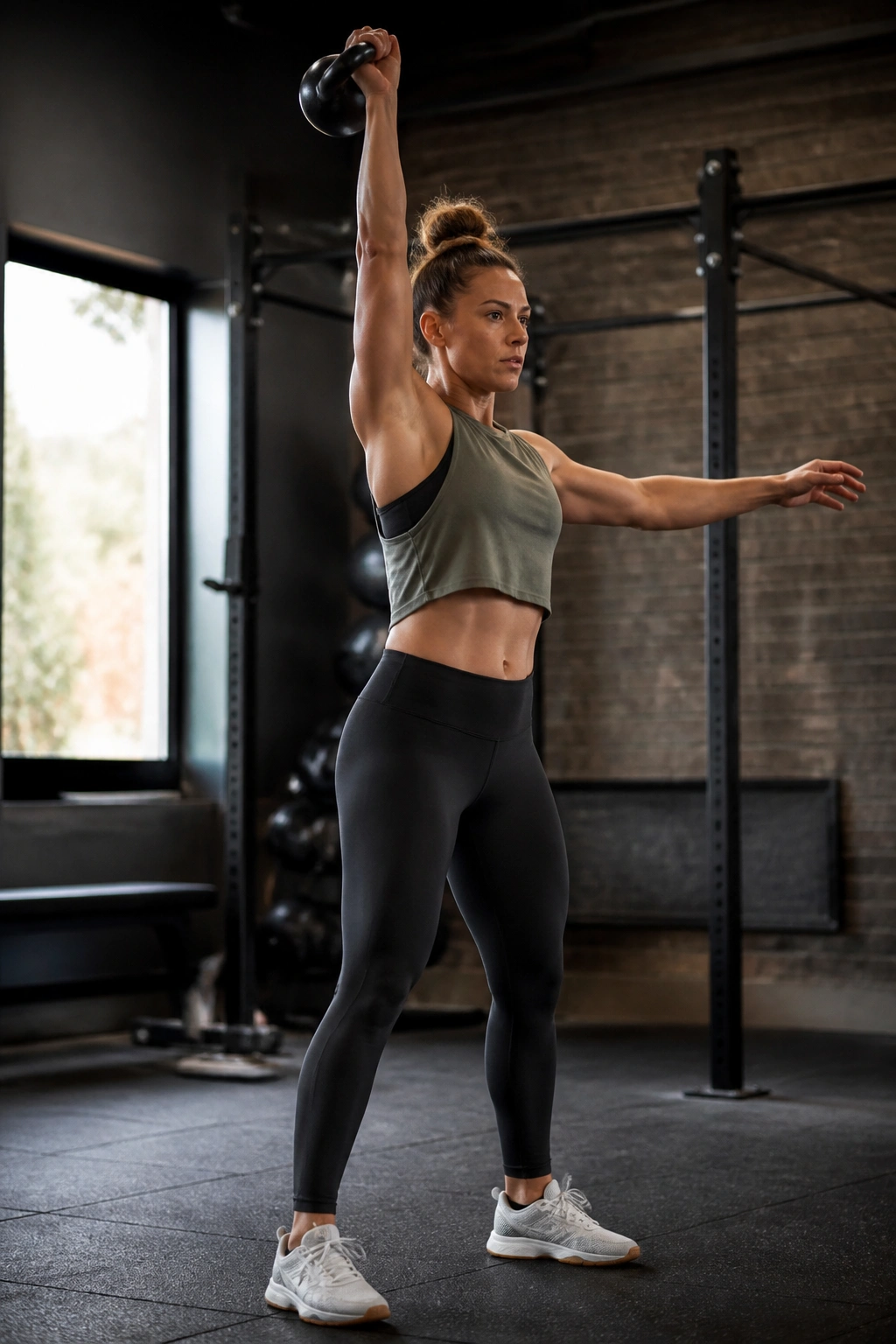
A snatch changes the whole feel of a session. The bell travels farther, the timing has to be cleaner, and any sloppy dip shows up immediately. That’s why I keep this one in the advanced lane.
Set a timer for 20 minutes and repeat the following block:
- 6 snatches per side
- 10 goblet squats
- 8 rows per side
- Rest for the remainder of the 5-minute block
Complete 4 rounds.
If the snatch is not steady, use a high pull or clean instead. There’s no prize for forcing a movement you have not earned yet. The workout still works, and your shoulders will thank you.
Unlike clean and press work, the snatch asks for speed and precision at the top. That makes it a better fit for lifters who already trust their hinge and overhead position. If you can keep the bell quiet on the way up and catch it softly overhead, this one delivers a lot of work in a short window.
12. The Alternating Lunge and Clean Flow
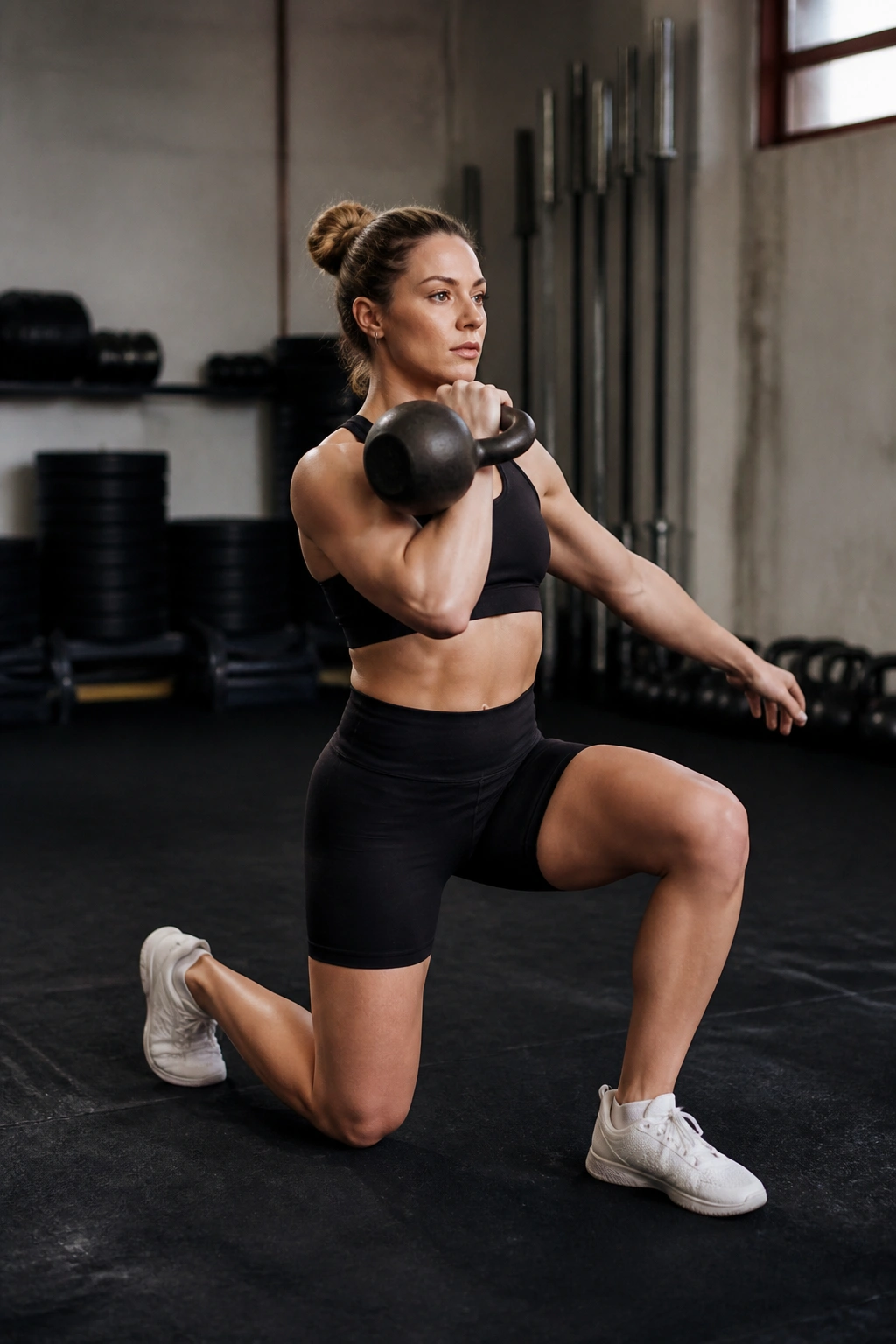
Most people train their strong side and then wonder why their balance is weird. Unilateral work exposes the wobble fast, which is a good thing. It gives you a chance to fix it before it leaks into everything else.
Do 3 to 4 rounds of:
- 5 cleans per side
- 6 reverse lunges per side
- 8 one-arm rows per side
- 6 push presses per side
- 20-second rack hold per side
Start on the weaker side. That’s the side that usually gets rushed, and rushing is where form starts to slip. If you feel the lunge in your front foot but not much in your hips, shorten the range and slow down.
This workout has a useful hum to it. Nothing flashy. Just enough load, enough coordination, and enough single-leg work to leave your legs and trunk talking back the next day.
13. The Double-Kettlebell Grinder
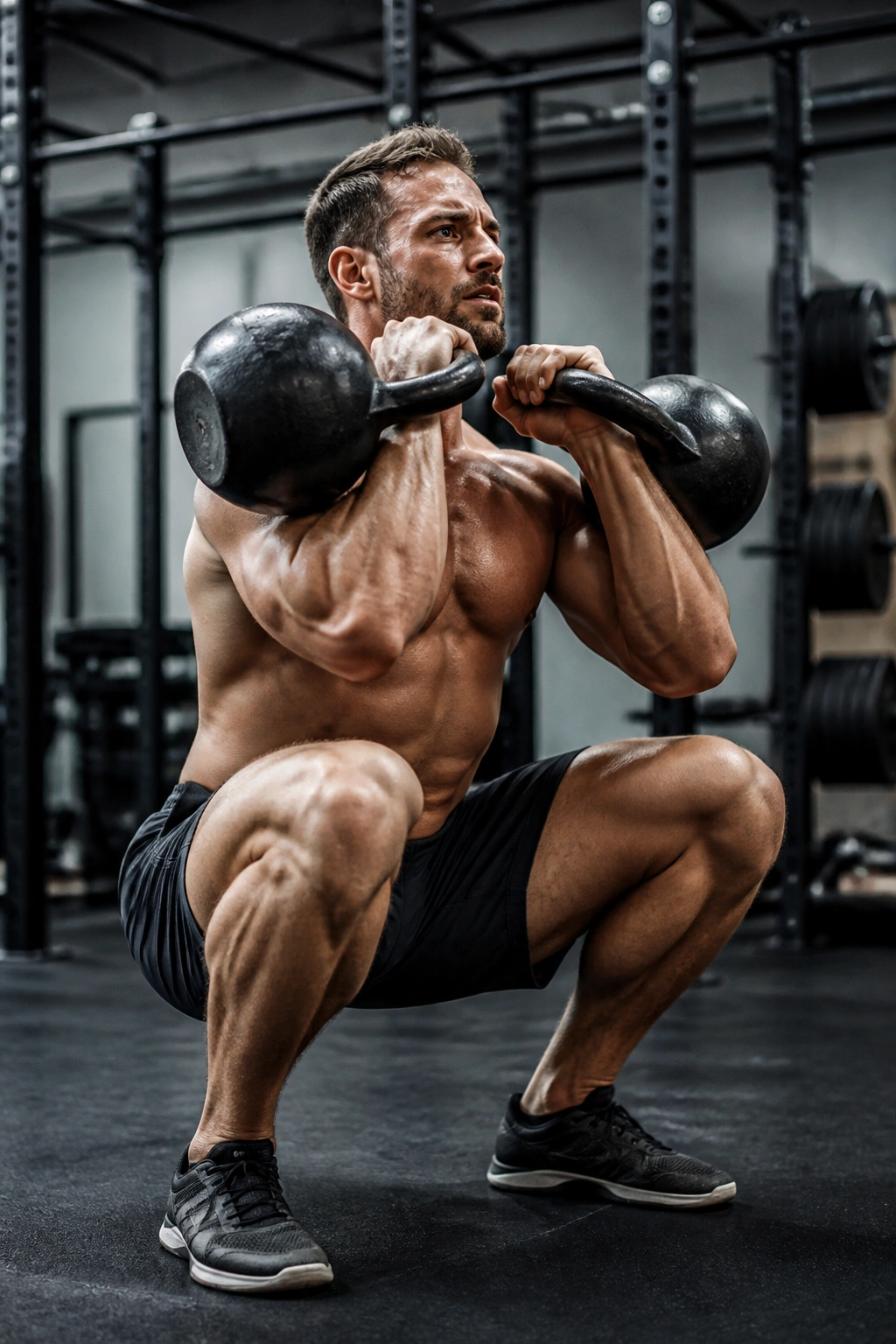
Two bells change the story fast. The load sits more evenly, but the total weight climbs, and your trunk has to resist side-to-side drift in a way a single bell never quite demands.
Do 4 rounds of:
- 6 double front squats
- 5 double push presses
- 8 double rows
- 20 to 30 meters of double rack carry
- 10 two-hand swings if you’ve still got gas
If you only have one kettlebell, run the same pattern one side at a time. It won’t feel identical, but the structure still gives you a squat, a press, a pull, and a hinge.
What makes it different
The double load is less forgiving. You can hide behind a good grip for a little while with a single bell. Two bells make that trick harder to pull off, which is exactly why the workout is useful.
This is one of the best advanced kettlebell sessions for people who want strength first and conditioning second. The work feels dense, and the rests matter. Don’t rush them.
14. The 1-2-3-4 Power Ladder
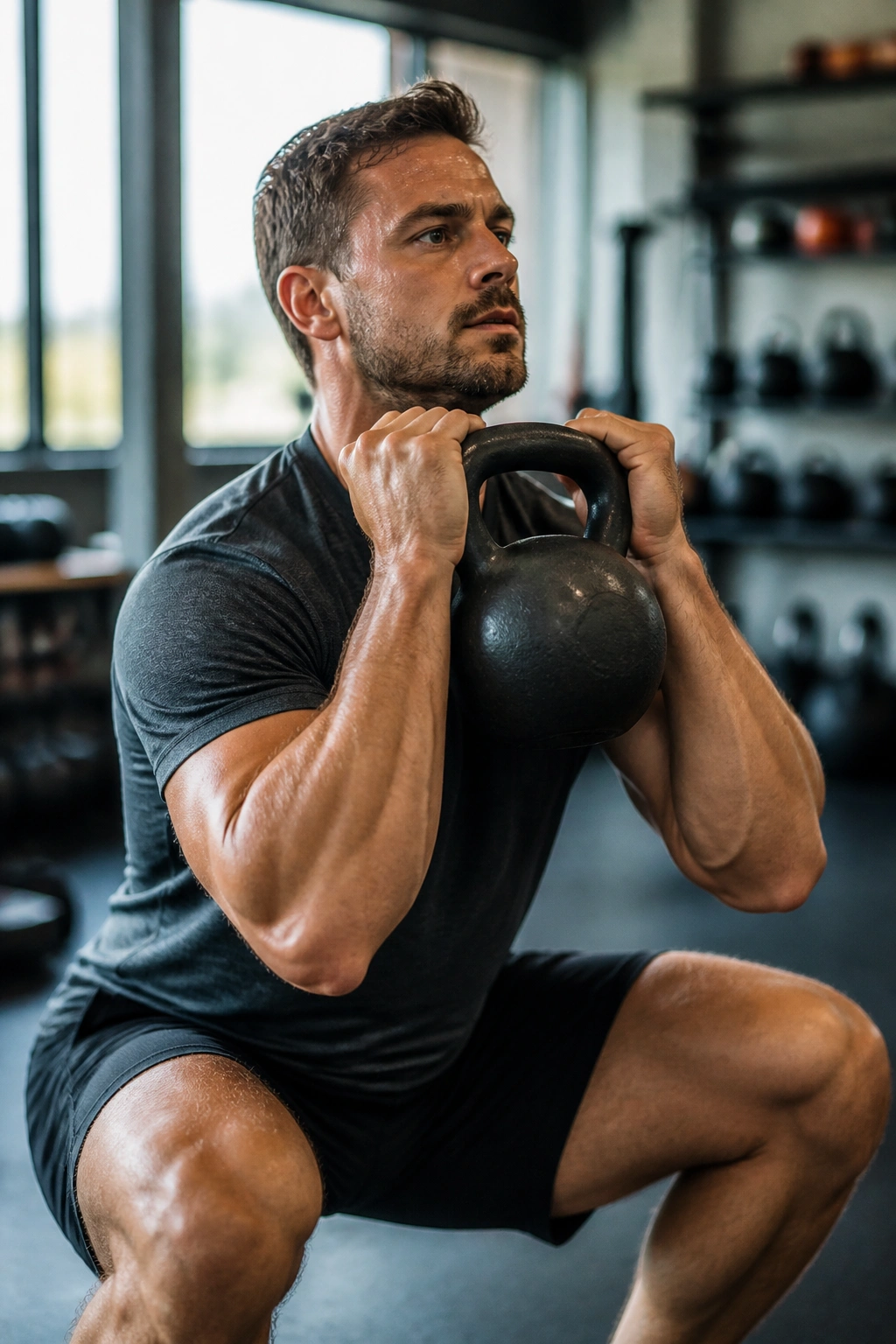
A ladder looks harmless until you’re halfway through it. Then it starts asking for pacing, patience, and a bit of nerve. I like this one for lifters who want structure without a lot of clutter.
Use a 1-2-3-4 pattern for this sequence:
- Clean
- Front squat
- Push press
- Swing
Do 1 rep of each, then 2 reps of each, then 3, then 4. Rest 30 to 60 seconds between rungs.
Keep the bell light enough that the fourth rung still looks like your first. That is the whole game here. If the snappiness disappears, the ladder turns into a grind and the exercise quality drops off fast.
A good version of this workout leaves your lungs working and your trunk braced, but not crushed. It’s a nice middle-ground day when you want a full body kettlebell workout that feels athletic instead of punishing.
15. The Travel-Day One-Bell Workout
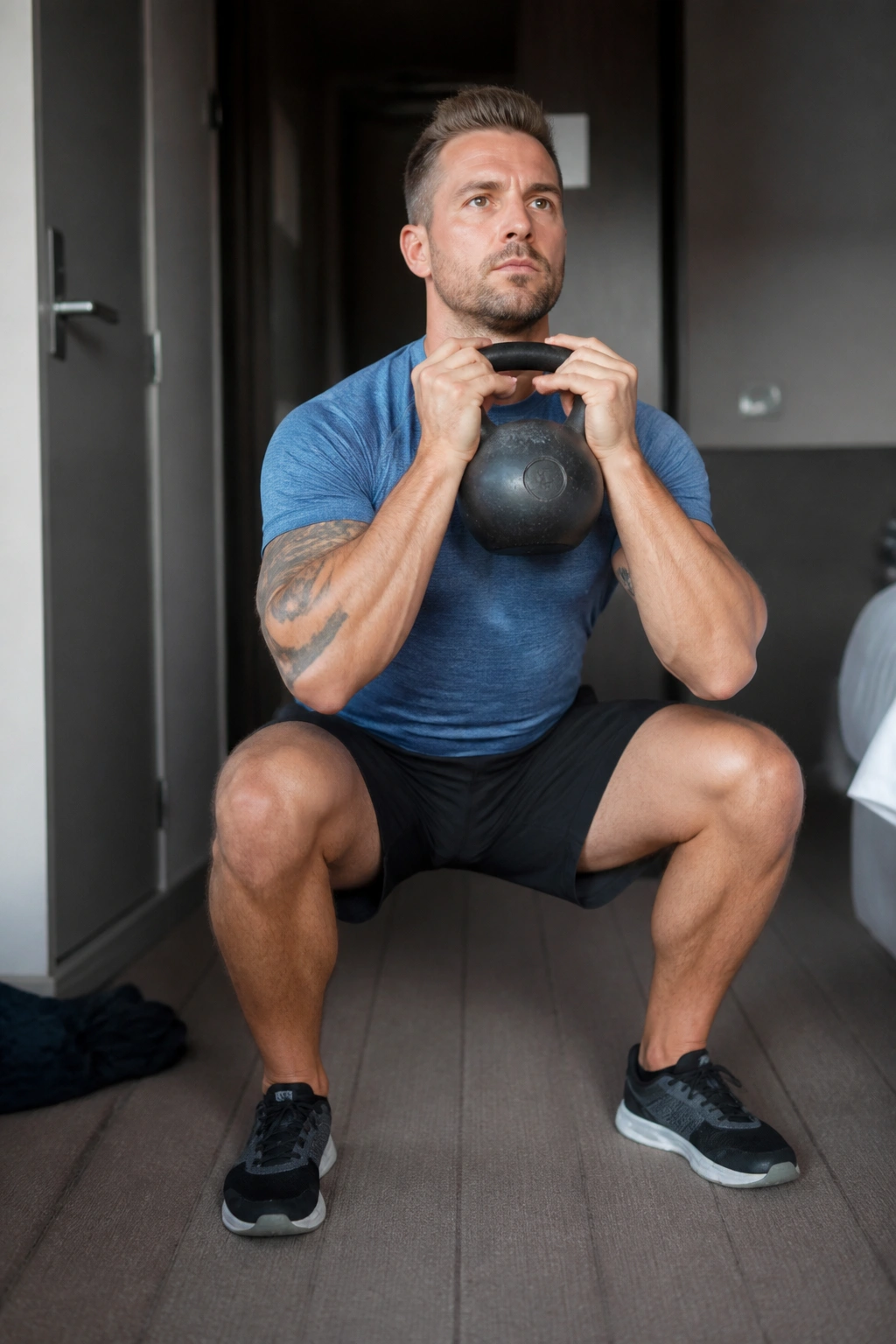
Hotel rooms and home gyms both have a way of shrinking your options. That doesn’t mean the workout has to be weak. A single kettlebell can cover a lot of ground if you keep the reps tight and the transitions clean.
Set a timer for 20 minutes and keep moving through this loop:
- 5 deadlifts
- 5 push presses per side
- 8 goblet squats
- 8 rows per side
- 20-second suitcase carry per side
If the floor is thin or the room is small, skip swings and go with deadlifts. That is the smarter call anyway if you’re not sure how much space you’ve really got.
I like this session because it’s practical. No complicated setup. No wasted motion. Just a hard, compact workout that still hits the hinge, the legs, the shoulders, and the grip.
16. The Offset Core and Carry Circuit
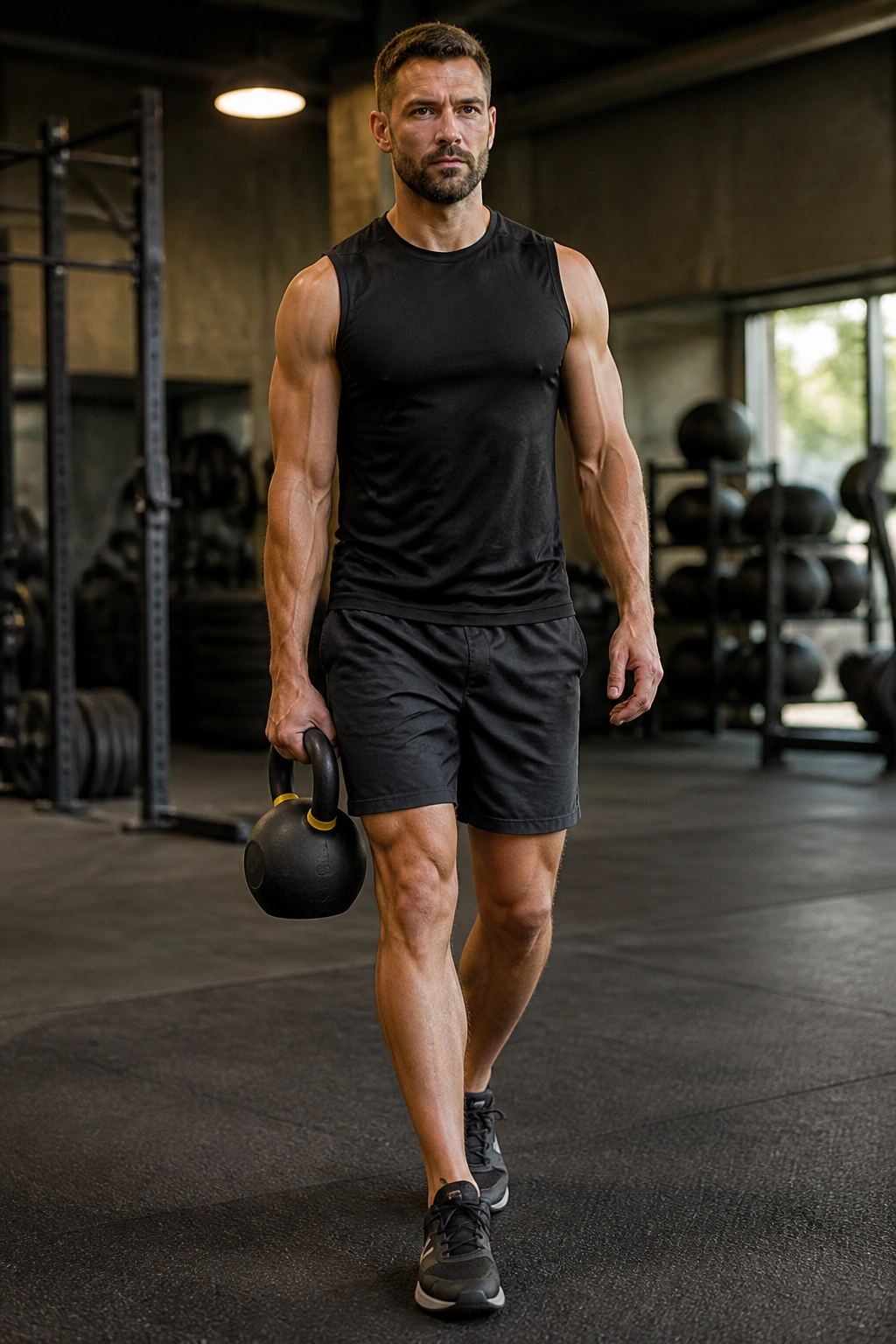
Carry work gets dismissed sometimes because it doesn’t look dramatic. That’s a mistake. Loaded carries are one of the cleanest ways to train the trunk, and they show you quickly whether your ribs, hips, and shoulders are actually playing nice together.
Carry block
- 30 meters of suitcase carry per side
- 30 meters of front rack carry per side
Floor block
- 8 plank pull-throughs
- 6 halos in each direction
- 8 split squats per side
- 8 one-arm rows per side
Run 3 rounds with 60 seconds of rest between rounds.
The offset load makes your obliques and glutes work harder than you’d expect. That’s the point. A lot of people want a strong midsection but only train it with crunches. Carries give you a different job entirely: resist motion, stay tall, and keep breathing.
If the carry makes you sway, shorten the distance and clean up the stance first. Distance can grow later.
17. The Full-Body Strength Test
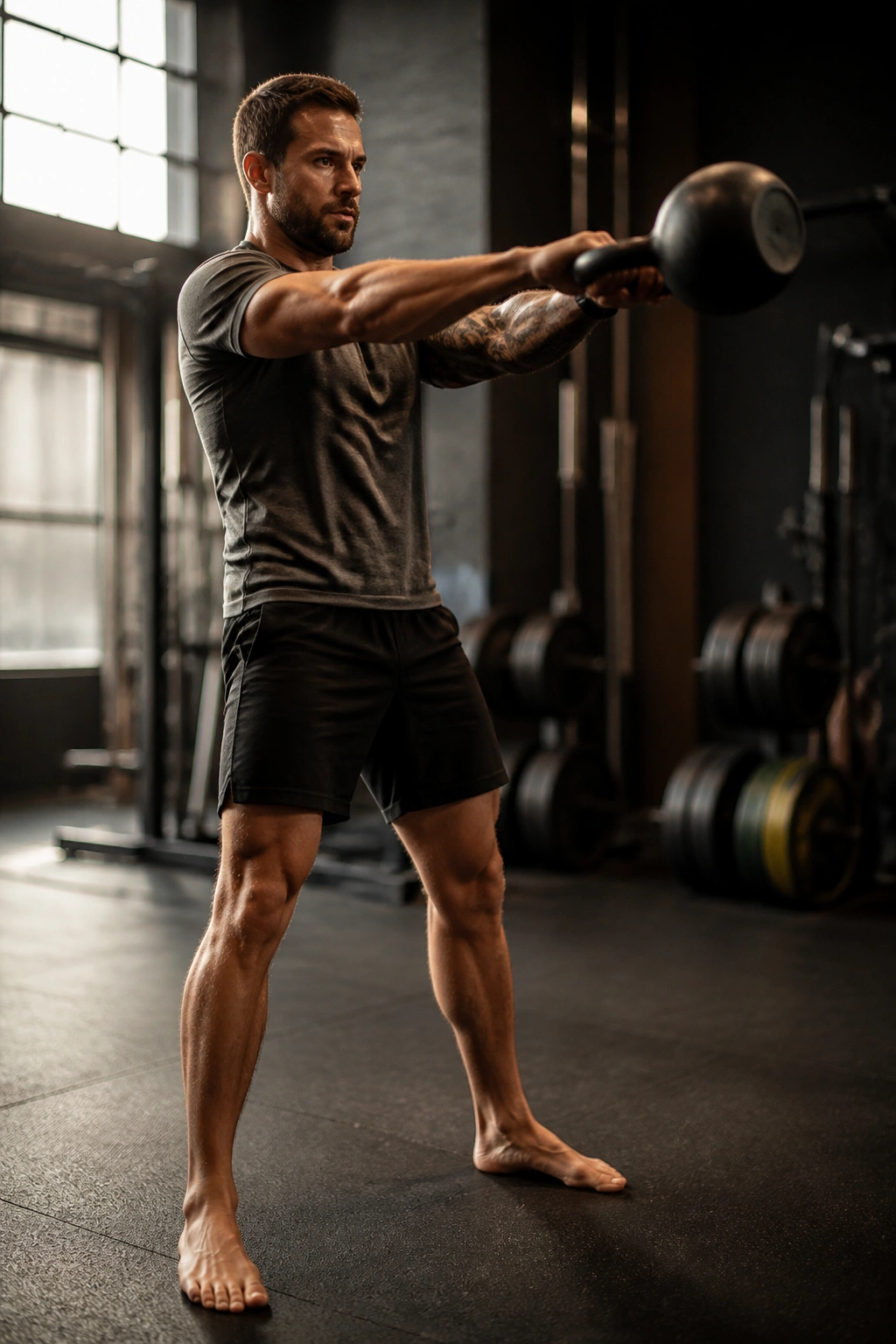
Some days you want a workout. Some days you want a yardstick. This one works as both, which is why I keep coming back to it when I want a clear read on where things stand.
Set a timer for 15 minutes and complete as many quality rounds as you can of:
- 10 swings
- 6 front squats
- 4 push presses per side
- 6 rows per side
Score the number of rounds only if every rep stays clean. If your form slips, stop the clock, rest, and start another honest round. That keeps the test useful instead of turning it into junk volume.
This is a stronger fit for intermediate and advanced lifters, but a beginner can still use it with a lighter bell and fewer rounds. The point is not bragging rights. The point is seeing whether your hinge, squat, press, and pull hold together when the clock starts squeezing.
18. The Choose-Your-Own Complex Finale
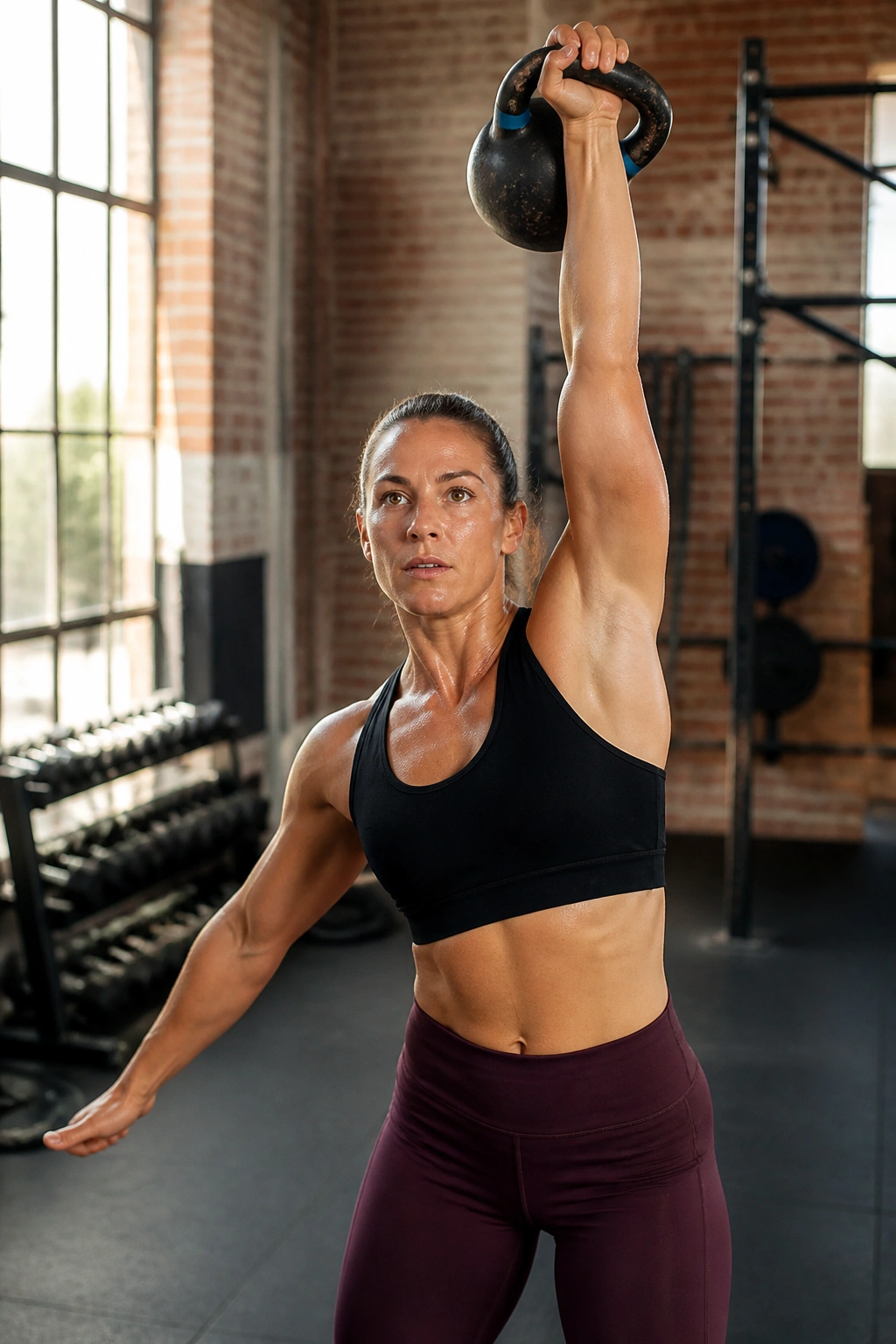
A good complex leaves room for your mood and your current level. I like giving people a template they can adjust without losing the shape of the workout. That’s especially useful when you want to train but not overthink it.
Pick one option and run it for 4 to 6 rounds.
Beginner version
- 6 deadlifts
- 6 goblet squats
- 6 rows per side
- 30-second suitcase carry per side
Intermediate version
- 5 cleans per side
- 5 front squats per side
- 5 push presses per side
- 20-second rack hold per side
Advanced version
- 3 snatches per side
- 3 front squats per side
- 3 push presses per side
- 3 reverse lunges per side
Rest 60 to 90 seconds between rounds. Keep the bell honest. If the movement gets noisy, the load is too high or the pace is too fast.
This is the kind of session I’d use when I want the workout to match the day instead of forcing a preset plan. Pick the lane that fits, keep the reps crisp, and let the bell tell you when you’ve done enough.
Final Thoughts
The best full body kettlebell workouts do a few things at once, but they do not do everything at once. That’s the part people miss. A good session has a clear job: build strength, sharpen conditioning, or clean up movement without turning into random suffering.
Pick one workout that matches your level and run it with a real timer. Then repeat it later with better form, better pacing, or a slightly heavier bell. That’s where progress gets real.
A last practical note: the right kettlebell is the one you can clean smoothly five times in a row without chasing the bell around your wrist. That detail matters more than people think. A clean start makes the rest of the session look better, feel better, and usually go better too.
