



Mini band workouts can be meaner than they look. A small loop of rubber, a few square feet of floor, and fifteen minutes on a timer are enough to make your glutes, hips, shoulders, and core wake up fast.
The trick is not to treat the band like decoration. Put it above the knees for a friendlier start, move it to the ankles when you want more bite, and keep the reps clean enough that you can feel the right muscles working instead of just surviving the set. If the band starts rolling, pinching, or turning into a little sausage around your thighs, it’s too low, too loose, or both.
I’ve always liked loop bands for short sessions because they force honesty. You can’t throw the weight around. You can’t hide sloppy form. And because the resistance stays on the muscle through the whole movement, a 15-minute session can feel more serious than a much longer routine done on autopilot.
Pick one that matches your energy. Start there.
1. Glute Bridge Burn with Lateral Walks
This is the one I reach for when I want the simplest possible mini band workout that still lights up the back side of the body. Put the band above your knees, lie down, and let the floor do half the work for you.
How the 15 minutes runs
- 2 minutes: marching in place, hip circles, and a few bodyweight bridges
- 10 minutes: 40 seconds of glute bridges, 20 seconds of lateral walks, 40 seconds of frog pumps, 20 seconds of rest
- 3 minutes: glute bridge hold with small knee presses out and in
Keep your heels close enough that you can feel your glutes, not your lower back. The top of the bridge should feel like a squeeze, not a spine bend. When the set gets hard, shorten the range a little instead of turning it into a messy heave.
Why it works so well
The bridge hits hip extension. The lateral walk adds hip abduction. Frog pumps give you that ugly-but-useful burn people pretend not to hate. Together, they hammer the glute max and glute med without any jumping or complicated setup.
Tiny movement, big consequence. That’s the whole appeal here. If you only have one workout slot in the day, this one earns it.
2. Squat Pulse Ladder for Thighs and Glutes
A squat with a band above the knees already feels different from a plain bodyweight squat. Add pulses and a timed ladder, and the legs start talking back in a hurry.
Use a medium loop band and stand with feet just wider than hip-width. Drop into a squat, keep the chest tall, and think about spreading the floor with your feet. The band wants your knees to cave inward. Don’t let it.
Run it like this
- 12 squats
- 12 bottom pulses
- 10 squats
- 10 bottom pulses
- 8 squats
- 8 bottom pulses
- 6 squats
- 6 bottom pulses
Take only 15 to 20 seconds between rungs if you need it. The whole thing stays inside a 15-minute window because the rest is short and the load is constant. That’s the point — no dead time, no wandering, no wandering thoughts either.
My favorite cue here is ugly and useful: imagine your knees are sliding out over your middle toes on the way down and staying there on the way up. If the band wins and your knees collapse, the set gets easier in the wrong way.
3. Standing Row and Pull-Apart Circuit for Better Posture
Ever feel like your shoulders are living in a bad chair? This is the antidote. Use the loop band around your wrists for pull-aparts, then step into the band for standing rows if you’ve got enough resistance to hold it in place.
What makes this one different
The lower-body work is almost an afterthought. The real target is the upper back — rhomboids, rear delts, and the smaller muscles that help your shoulders sit where they belong. You’re training posture under tension, not just standing there “doing shoulders.”
A clean version looks like this:
- 45 seconds of pull-aparts
- 45 seconds of bent-over reverse flys
- 45 seconds of standing rows
- 45 seconds of banded external rotations
- 20 seconds rest, then repeat
Keep the neck long. Don’t shrug. If the band feels too light, slow the lowering phase to three seconds and pause with your arms open for one beat. That tiny pause usually exposes whether you’re using your upper traps or actually working the back.
This one is especially nice after a day of typing, driving, or both. Not flashy. Very useful.
4. Dead Bug March and Hollow Hold Reset
If your core work usually turns into hip flexors taking over and your lower back complaining later, this is a better use of your fifteen minutes. Put the band above your knees and stay on the floor.
The dead bug asks for control. The march asks for balance. The hollow hold asks for patience. All three together make your trunk work without the usual ego trap.
How I’d run it
- 40 seconds dead bug with the knees pressing gently out into the band
- 40 seconds bridge march
- 20 seconds hollow hold
- 20 seconds rest
- Repeat for 3 rounds
The dead bug should look boring. Good. Boring is what you want when you’re trying to keep your ribs from popping up and your lower back from arching off the floor. Keep your breath steady and your pelvis quiet.
A small note matters here: if the hollow hold makes your lower back peel up, cut the hold in half and keep the knees bent. You’re training control, not proving anything to the floor.
5. Reverse Lunge, Kickback, and Lateral Walk for One-Leg Burn
One leg at a time changes everything. Even a light band above the knees can make a reverse lunge feel like a proper leg session, especially when you add kickbacks and a short lateral walk between sides.
Start with the band above the knees. Step one foot back into a reverse lunge, drive through the front heel, then finish each side with a controlled kickback. After that, take three to five steps sideways before switching legs. That little walk keeps the glutes under tension and stops the rest periods from getting lazy.
I like this workout because it feels athletic without asking for speed. The front leg gets the main load, the standing glute has to stabilize, and the band gives you that sneaky outer-hip burn that shows up early and stays rude.
If the lunge hurts your knees, shorten the step back. If the band feels like it’s dragging you inward, widen your stance a touch. Neither fix is glamorous. Both help.
6. Mini Band Shoulder Press and Pull-Apart Circuit
A loop band can do more for your shoulders than most people expect, though you have to stop trying to make it behave like a giant cable machine. Stand on the band, keep the movement small, and let the tension come from clean lines instead of wild range.
The setup I prefer
- 40 seconds standing press
- 40 seconds pull-aparts
- 40 seconds front raise to eye level
- 40 seconds rest
Repeat that three times. If you want a slightly nastier version, turn the front raise into a 3-second lower on the way down. Slow lowers are where a light band starts acting heavy.
This isn’t the workout for max effort or ugly grinding. It’s better than that. It teaches your shoulders to move without shrugging up around your ears, which is the part a lot of people miss when they say they want “toned” arms.
One quiet warning: don’t chase height on the raises. Stop when your shoulders are still calm and your ribs are still stacked. High enough is high enough.
7. Hinge, Lunge, and Good Morning for the Back Side
The back side of the body loves this one. Glutes, hamstrings, and the muscles that keep you from folding like a lawn chair all get pulled into the work when you combine a hinge pattern with lunges and a mini-band good morning.
Use the band above the knees. Stand tall, soften the knees, and push the hips back on the good morning until you feel the hamstrings stretch. Then step into a reverse lunge and finish with a short squat pulse. The whole workout is about the hip hinge, not about speeding through reps.
A nice rhythm is 45 seconds of good mornings, 30 seconds of reverse lunges, 30 seconds of squat pulses, then 15 seconds to breathe. Do that for 3 rounds. It’s enough to build fatigue without making your form collapse.
This one is a favorite for anyone who sits a lot. The hinge pattern reminds your body how to load the hips instead of dumping everything into the low back. That part matters more than people admit.
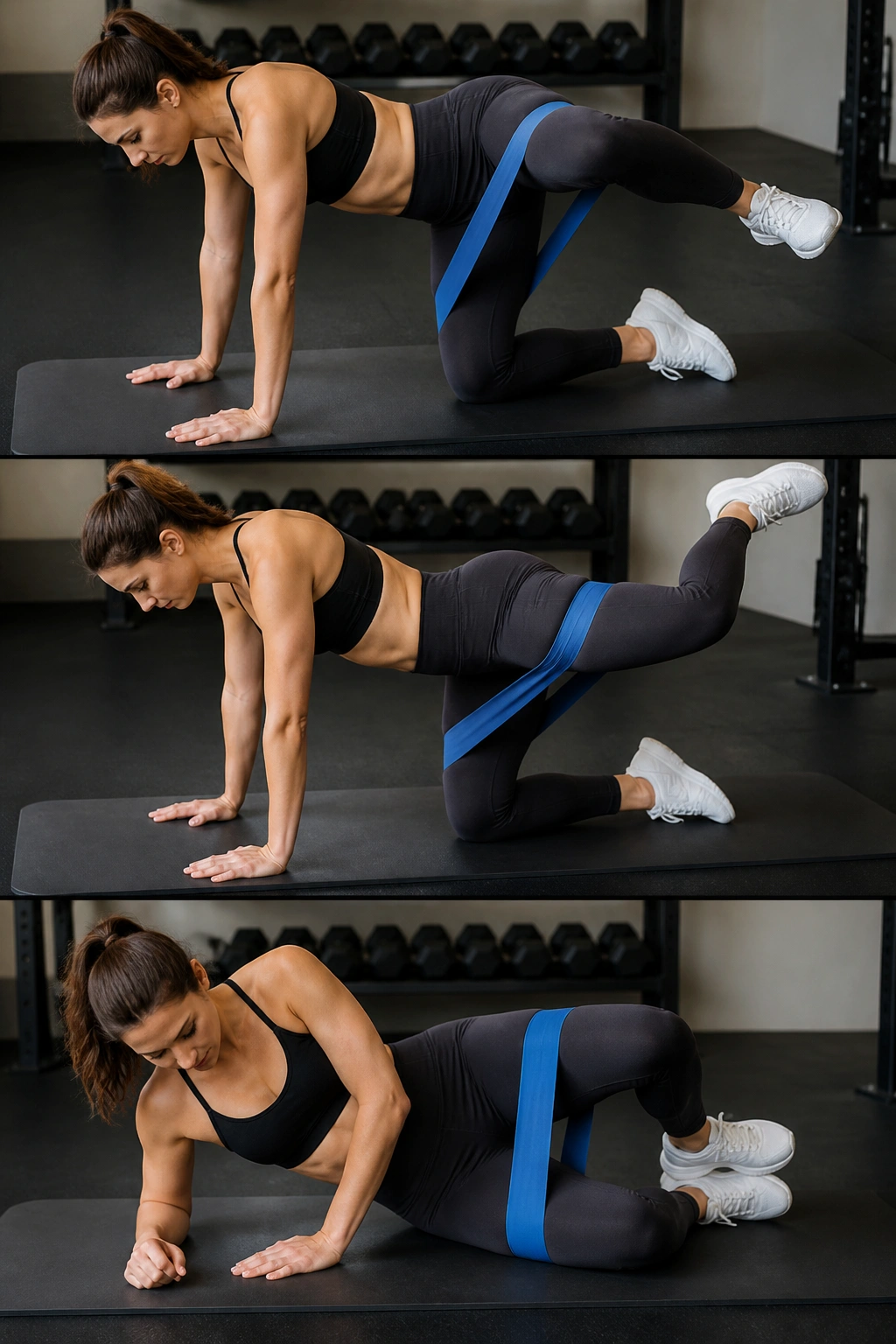
8. Fire Hydrant, Donkey Kick, and Clamshell Trio
Floor work with a mini band can be brutally honest. There’s nowhere to hide when your pelvis has to stay square and your hips are trying to cheat. This tri-set keeps the work right where you want it.
Put the band above the knees. Start with fire hydrants, then move to donkey kicks, then clamshells. Repeat each move for 30 to 40 seconds on the right, then the same on the left, then take a short break.
What to watch for
- Keep the hips level instead of rolling open
- Press into the band slowly, not with a snap
- Stop the range when the lower back starts helping
- Use a one-second pause at the top of each rep
The pause matters. Without it, the leg swings and the band might as well be decoration.
I like this workout on days when my legs feel tired but not ready to quit. It’s a smaller burn than squats and lunges, but the glute med gets plenty of attention, and that muscle has a habit of showing up when you walk, run, climb stairs, or stand on one leg to tie your shoe.
9. Mobility Warm-Up Flow for Tight Hips and Ankles
This one doesn’t scream for attention. It earns it anyway. If your hips feel stiff, your ankles feel cranky, or your first squat of the day always feels awkward, a short mobility flow with a mini band can make the rest of the session smoother.
Start with the band above the knees and move through hip circles, squat pries, lateral steps, and marching in place. Add ankle rocks and a few slow reaches overhead. Keep the pace easy. You should feel warmer, looser, and less sticky — not wiped out.
A simple 15-minute flow looks like this:
- 2 minutes of marching and ankle rocks
- 3 minutes of squat pries
- 3 minutes of side steps
- 3 minutes of banded marches with knee lifts
- 4 minutes of alternating hip circles and overhead reaches
This is the workout I’d hand to someone before a harder leg day or after a long stretch of sitting. It changes the quality of the next movement. That’s the real win.
10. Step Jacks and Fast Feet for Low-Impact Cardio
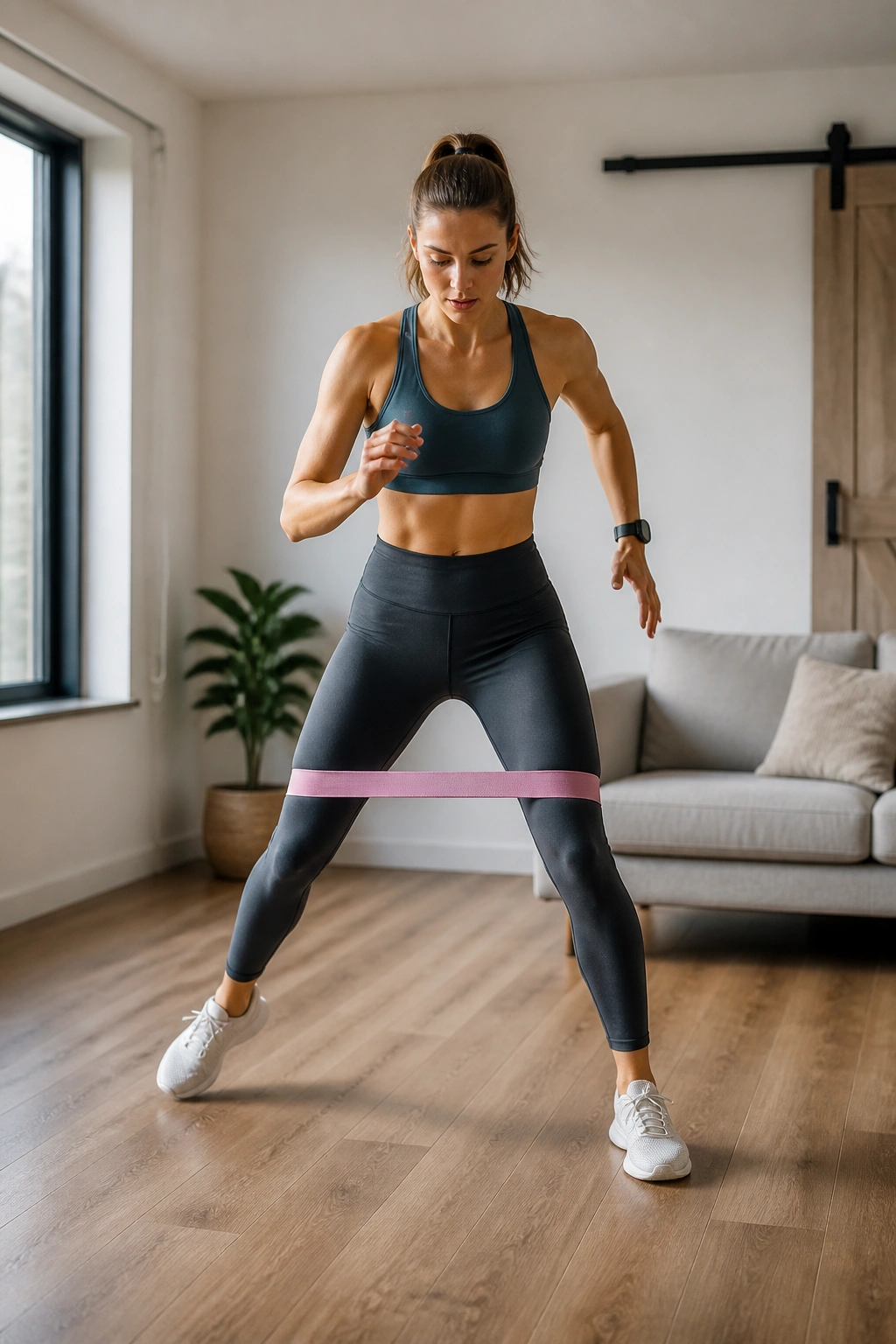
A loop band makes cardio feel heavier without making it louder. Put the band above the knees or at the ankles if your form is solid, and keep the moves quick but controlled.
Do step jacks, fast feet in place, skater steps, and a few high-knee marches. Stay light on the floor. The goal is to get sweaty without turning the whole thing into a jump-fest.
My favorite timer for this one
- 30 seconds step jacks
- 30 seconds fast feet
- 30 seconds skater steps
- 30 seconds march hold with knee drive
- 30 seconds rest
Repeat five times and you’ve got a full 15 minutes. If the band at the ankles makes your knees feel messy, move it back above the knees. That tiny change usually makes the movement cleaner.
This workout is useful for people who want a bit of cardio but don’t want their joints to hate them afterward. It also works well on days when motivation is thin and you need a simple, clear target.
11. Close-Stance Squat and Sumo Pulse Combo
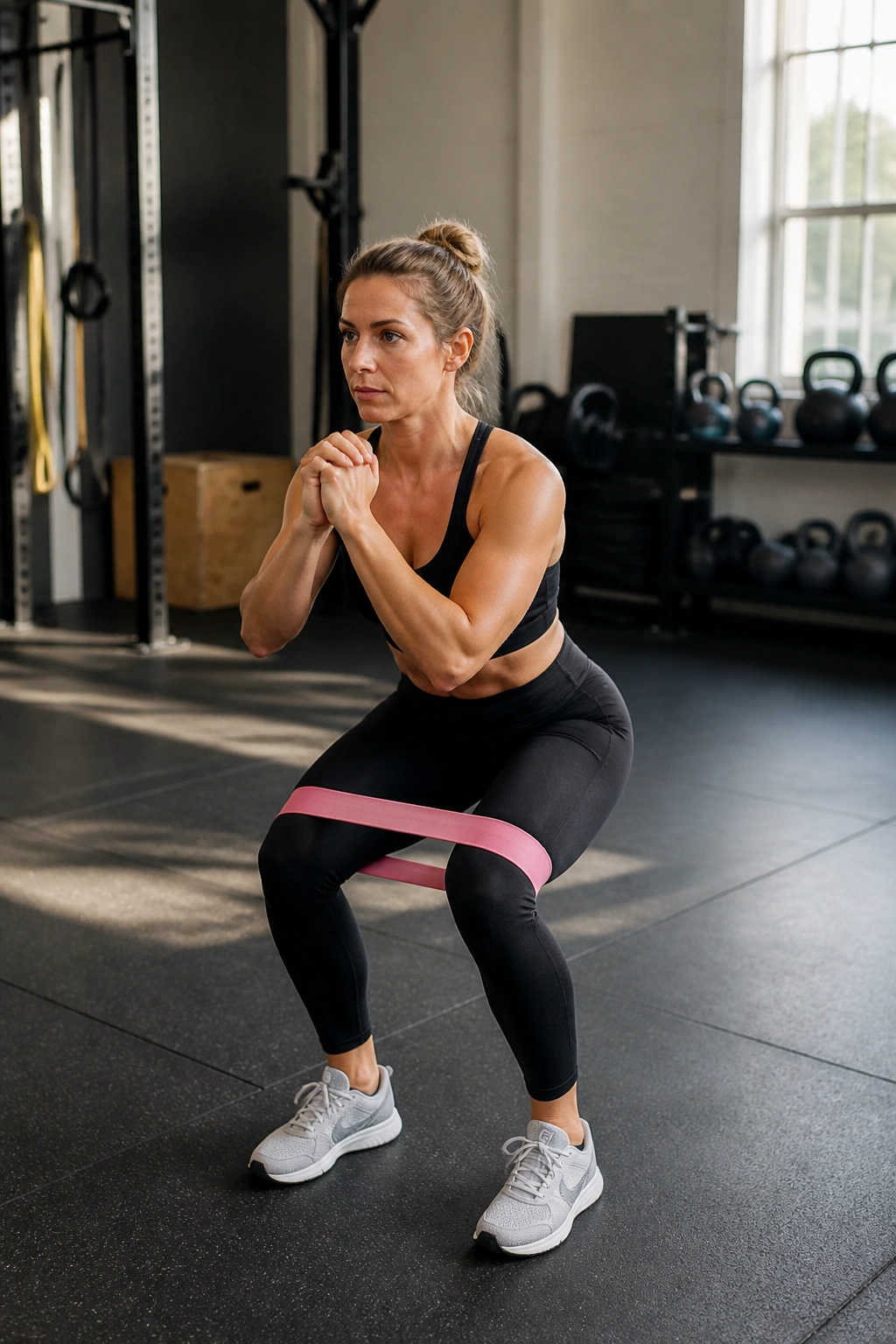
This one looks tame until the second round. Keep the band above the knees, stand with a slightly wider-than-hip stance, and alternate between close-stance squats and sumo pulses. The change in foot position shifts the feel enough to keep your legs guessing.
Close stance gives the quads and inner thighs more say. Sumo stance lets the glutes and adductors take over. Mixing those two in one short block makes the workout feel bigger than the clock says it should.
A clean pattern is 10 close-stance squats, 20 sumo pulses, 10 close-stance squats, 20 seconds of a low hold, then rest. Repeat it three times. If you want more, add a short band walk after each round.
This is also one of the better options if you hate high-impact work but still want your legs to feel like they did something real. No jumping. No fancy moves. Just honest pressure.
12. Split Squat Iso Holds and Pulses
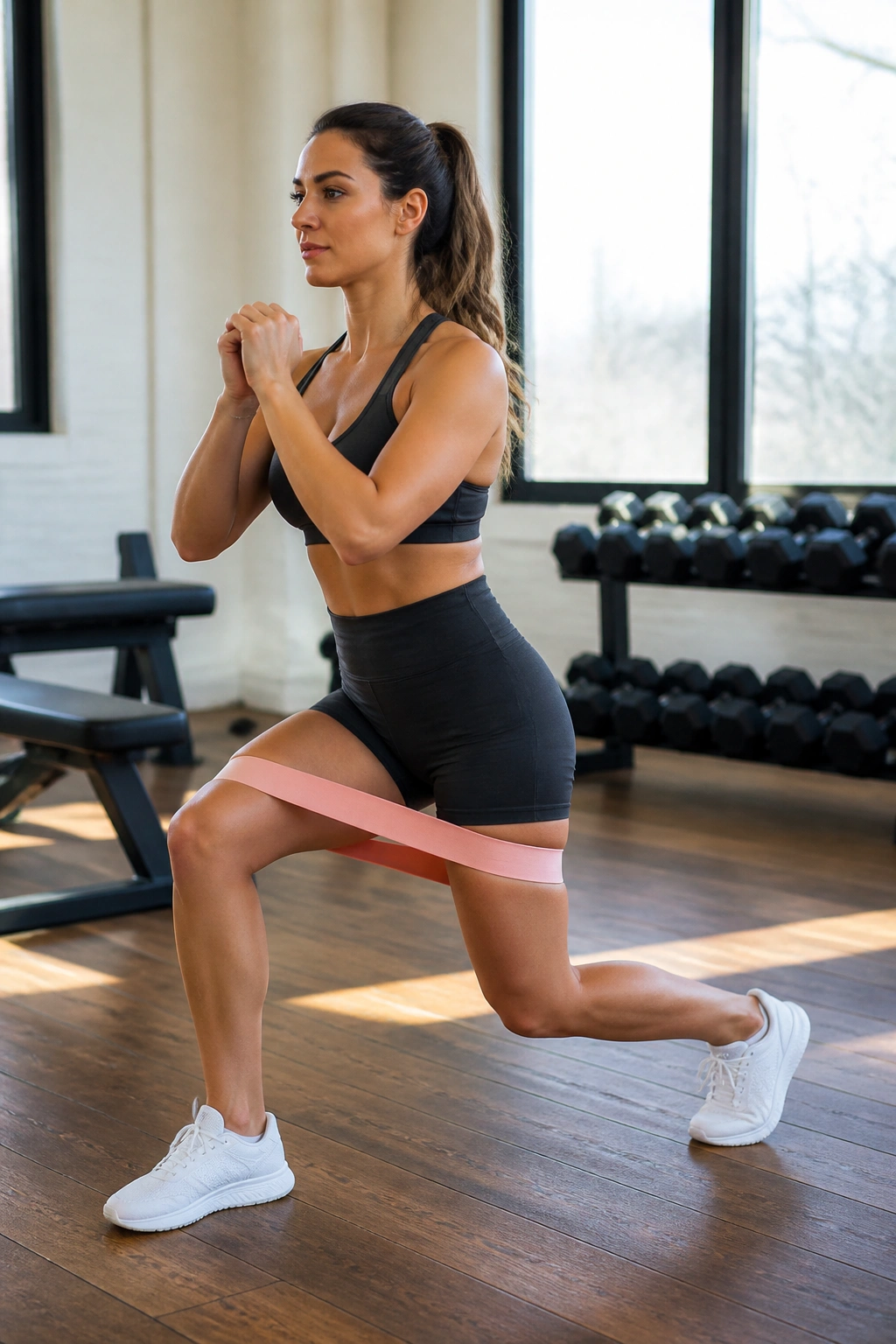
Here’s the blunt version: split squats are rude. Add a mini band above the knees and they get even ruder, which is exactly why they belong here.
Set one foot forward, one foot back, and lower into a split squat until both knees are bent and your front heel stays flat. Hold for 20 seconds. Then pulse for 10 to 15 small reps. Switch sides and repeat. The burn arrives fast because there’s no place for the work to leak out.
Why the iso hold matters
The hold forces your stabilizers to pay attention. The pulses keep tension on the quads and glutes. Together, they make a short set feel long.
If the front knee caves inward, widen your stance a bit and press the knees gently out into the band. If your balance goes shaky, keep one hand on a wall for the first round. That is not cheating. That is being smart.
This workout is a solid choice when you want strength more than sweat. It’s still hard. It just has a cleaner shape than sprint-style conditioning.
13. Plank Drag and Mountain Climber Core Drill
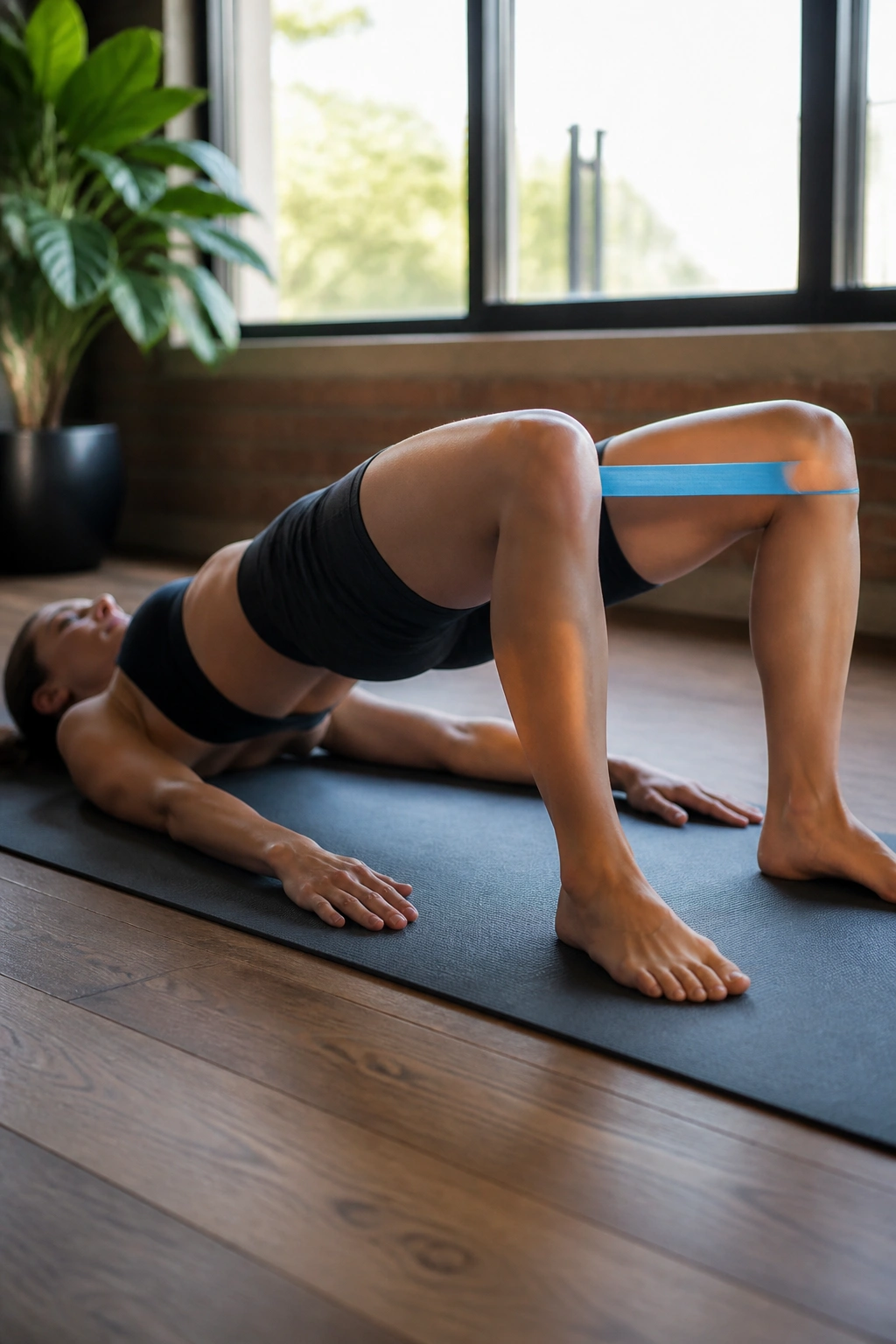
A mini band turns a plank into a conversation you did not ask to have. Put the band around the wrists or just above the knees and keep your body line tight before you start moving.
The sequence is simple: 20 seconds of a hard plank hold, 20 seconds of mountain climbers, 20 seconds of plank shoulder taps, 20 seconds of a slow knee drive, then 20 seconds of rest. Repeat for 3 rounds. If your hips sway, the set is too fast.
How to keep it useful
- Spread the fingers and press the floor away
- Keep the ribs from flaring
- Move one knee at a time instead of racing
- Cut the speed before you cut the shape
The band adds a little extra demand at the hips and shoulders, which is what makes this more than a standard plank. It’s not the prettiest workout on the page. It might be the most useful one for anyone who wants a stronger trunk without a bunch of setup.
14. Standing Kickback and Hip Airplane Balance Flow
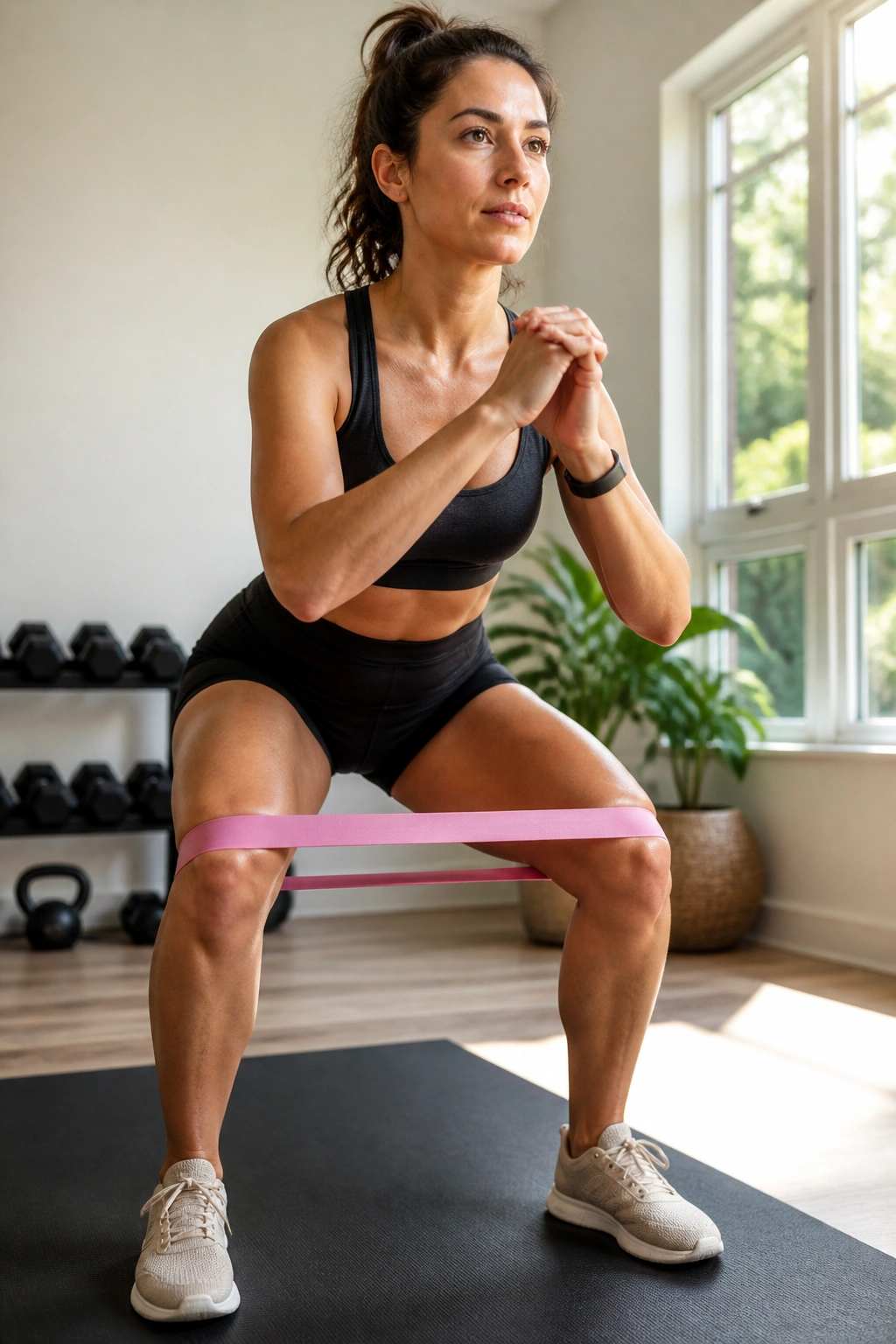
This one feels a lot like a balance test disguised as a leg workout. Stand near a wall, loop the band above the knees or at the ankles, and shift your weight onto one leg before you begin.
Kick the free leg back, hold for a second, then hinge at the hip and open the standing hip a little before coming back to center. That standing-leg shape is what people call a hip airplane, and it makes the glute med work hard while your balance tries to keep up.
A useful format is 30 seconds on one side, 30 seconds on the other, then 30 seconds of marching or side steps to reset. Repeat four times. The standing leg should feel like a tripod — big toe, little toe, heel.
I like this because it’s real-life strength. It helps with walking, stair climbing, and the annoying wobble that shows up when you stand on one foot to pull on pants. Simple. Slightly weird. Very effective.
15. Pilates-Style Toe Taps and Side Plank Sequence
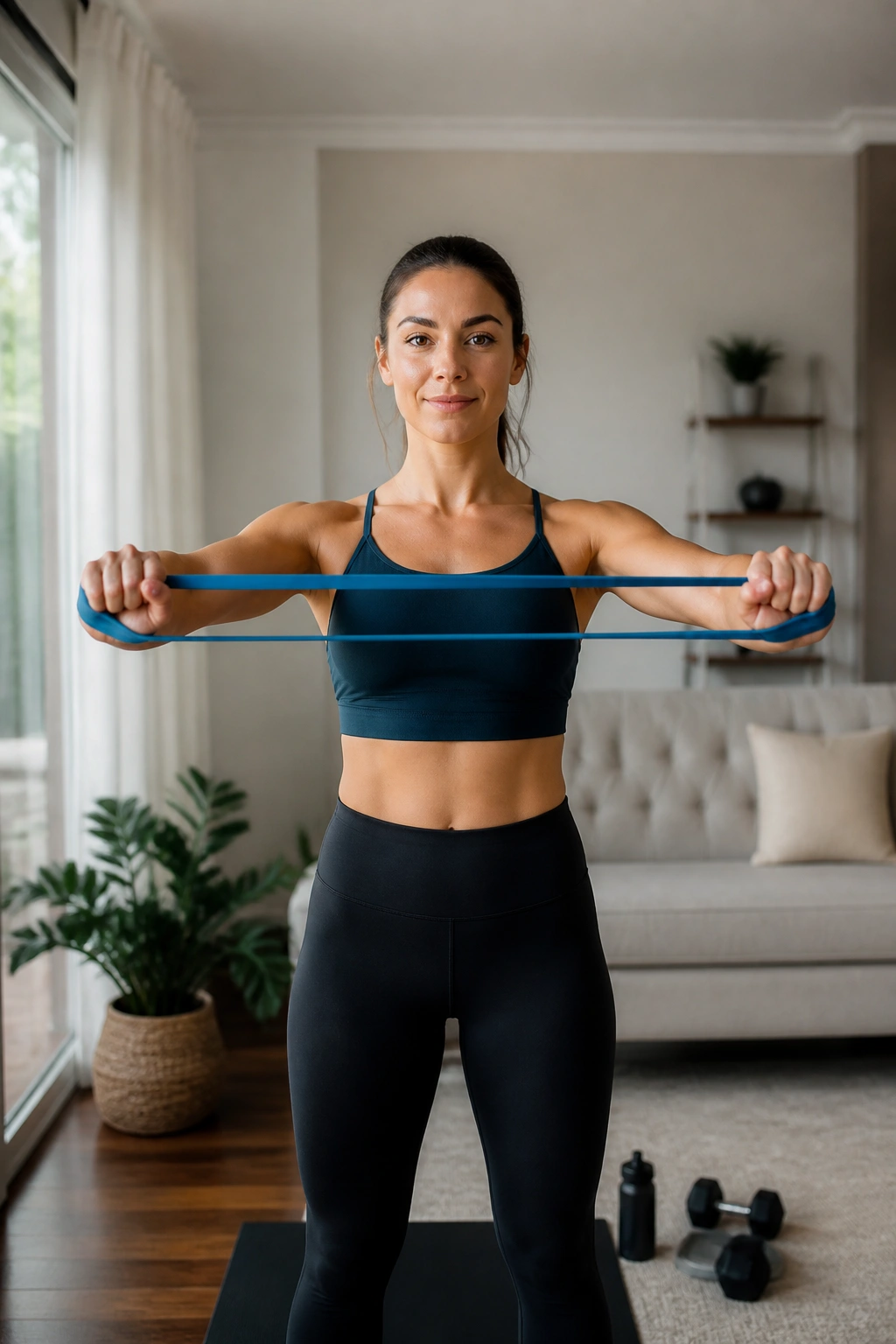
If you like a slow burn more than a sweaty sprint, this is your lane. Place the band above the knees, lie on your back for toe taps, then roll into side plank work and a short glute bridge finish.
Toe taps force the trunk to stay still while the legs move. Side planks make the obliques and outer hip show up. The bridge ties the lower body back together. It’s a small workout, but it has a lot of edges.
A nice flow looks like this:
- 45 seconds toe taps
- 30 seconds side plank on the right
- 30 seconds side plank on the left
- 45 seconds banded glute bridge
- 30 seconds rest
Repeat the circuit three times. If side plank from the floor is too much, keep the bottom knee down and still press the top knee slightly out into the band. You’ll lose the ego, not the benefit.
16. Desk Reset for Neck, Shoulders, and Upper Back
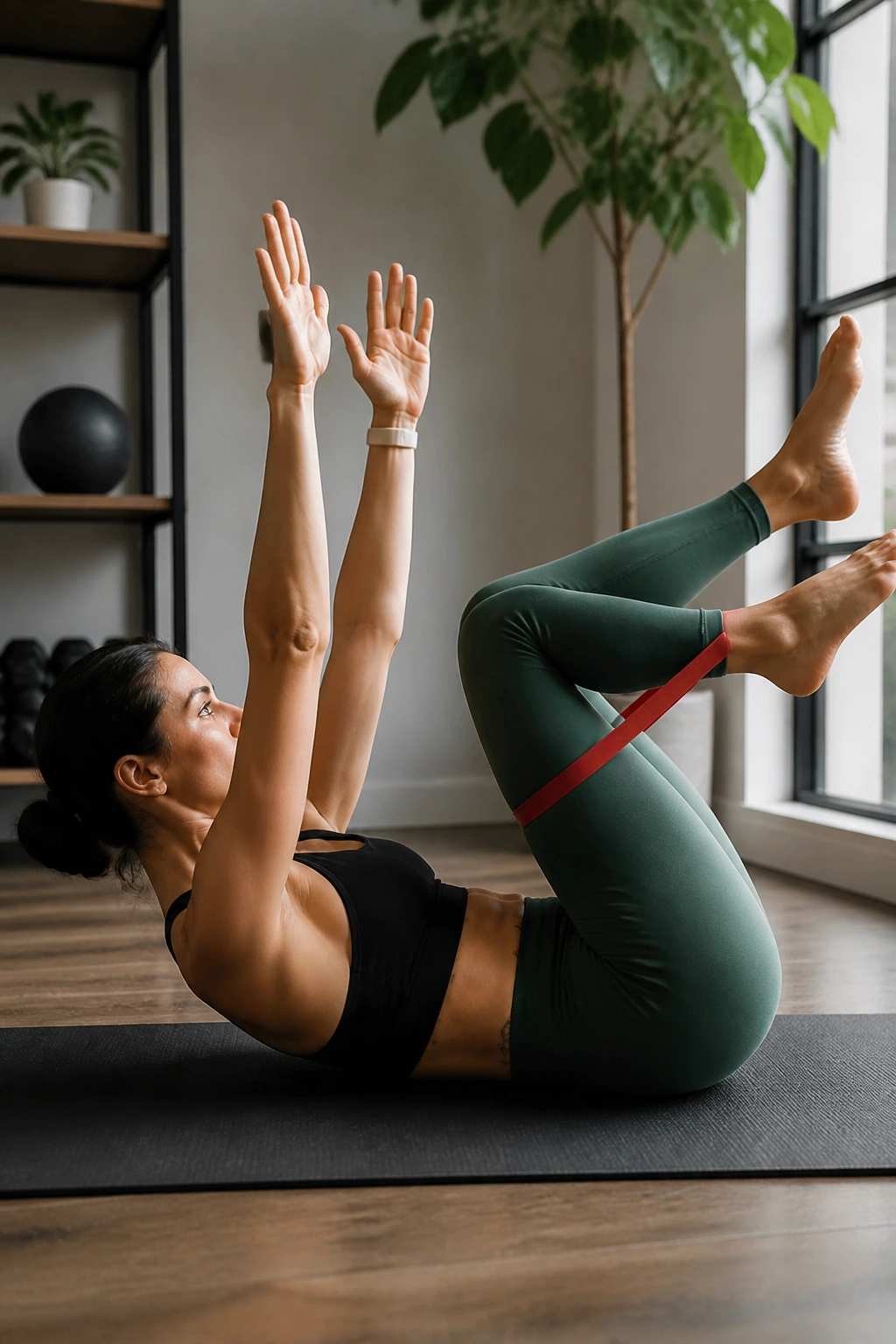
Not every mini band workout has to leave you drenched. Some should leave you less stiff and less grumpy, which is where this desk reset earns its keep.
Put the band around the wrists and work through pull-aparts, external rotations, wall slides, and a few slow arm raises. Add a standing march between rounds so your hips don’t nap through the whole thing. If your shoulders live near your ears, this is the session to pick.
The cleanest 15-minute version
- 40 seconds pull-aparts
- 40 seconds wall slides
- 40 seconds external rotation holds
- 40 seconds standing march with active arms
- 20 seconds rest
Repeat three times. Keep the ribs down and the neck long. If you shrug, the upper traps will steal the show and the smaller shoulder muscles will miss their chance.
This workout is especially good after a lot of sitting, typing, or driving. It’s not dramatic. It is useful. That usually matters more.
17. Runner’s Recovery with Calf Raises and Hamstring Curls
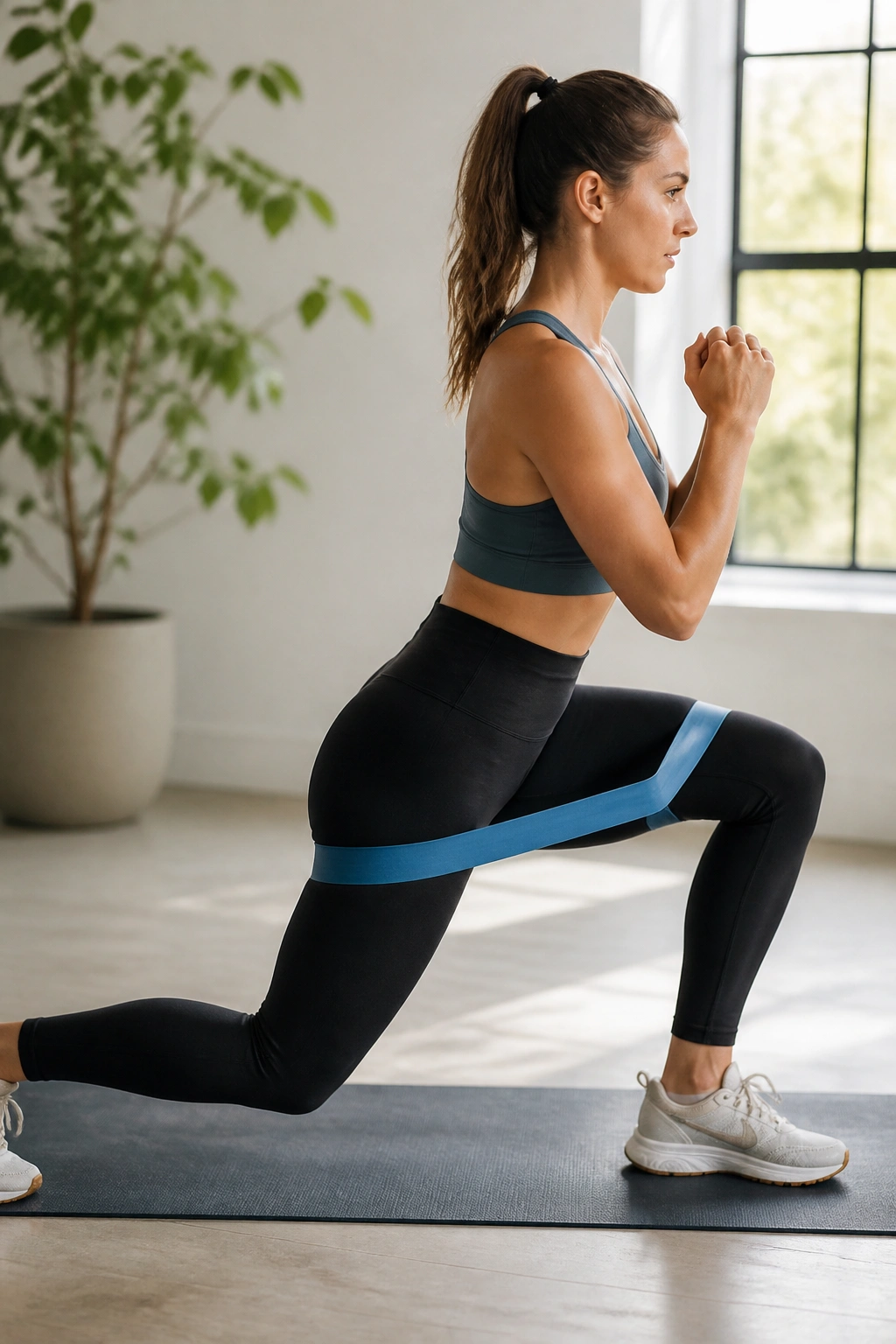
If you run, walk a lot, or spend your day on your feet, this one feels like a repair session. Use the band above the knees for bridges and around the ankles for standing work if the tension stays clean.
Bridge walkouts hit the hamstrings. Calf raises keep the lower leg from getting neglected. Side steps remind the hips to stabilize instead of drifting around. The workout feels controlled, not flashy, and that’s a good thing here.
A simple circuit:
- 10 bridge walkouts
- 15 calf raises
- 10 side steps each way
- 12 standing hamstring curls per leg
- Rest 30 seconds
Repeat for 3 rounds. If your calves are already tight, slow the lowering phase on the raises. If the hamstrings cramp during walkouts, shorten the range and keep the heels moving an inch at a time.
I like this after a run because it doesn’t pile on more pounding. It works the muscles that took a beating without asking them to bounce.
18. Travel Circuit for Tight Spaces
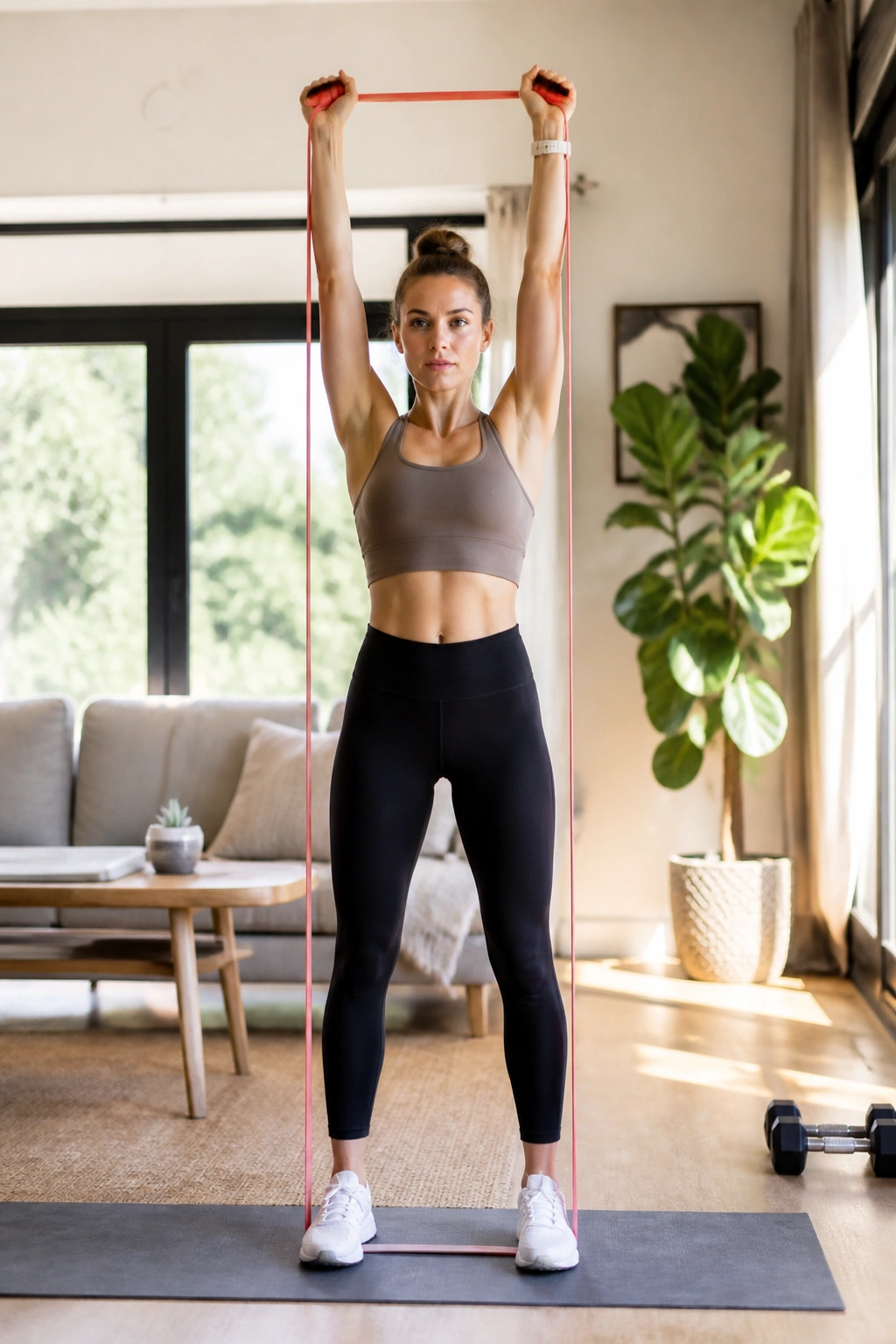
Hotel room. Small apartment. Living room with a coffee table shoved to the side. This is the workout for that moment when you want to move but don’t want to rearrange your life first.
Use the band above the knees and keep the move list short: squat to knee press, standing march, glute bridge, lateral step, and plank hold. No jumping. No big setup. It fits into a square of floor and still does real work.
One easy format
- 45 seconds squat to press-out
- 45 seconds march
- 45 seconds glute bridge
- 45 seconds lateral steps
- 30 seconds plank hold
- 15 seconds rest
Run that twice, then use the last three minutes for slow breathing and a couple of hip openers. If you have less room, cut the step count and keep the timing. The band still creates enough resistance to make the session count.
This is the kind of workout that saves a day that otherwise would have turned into sitting. Practical beats perfect here.
19. Time-Under-Tension Strength Test
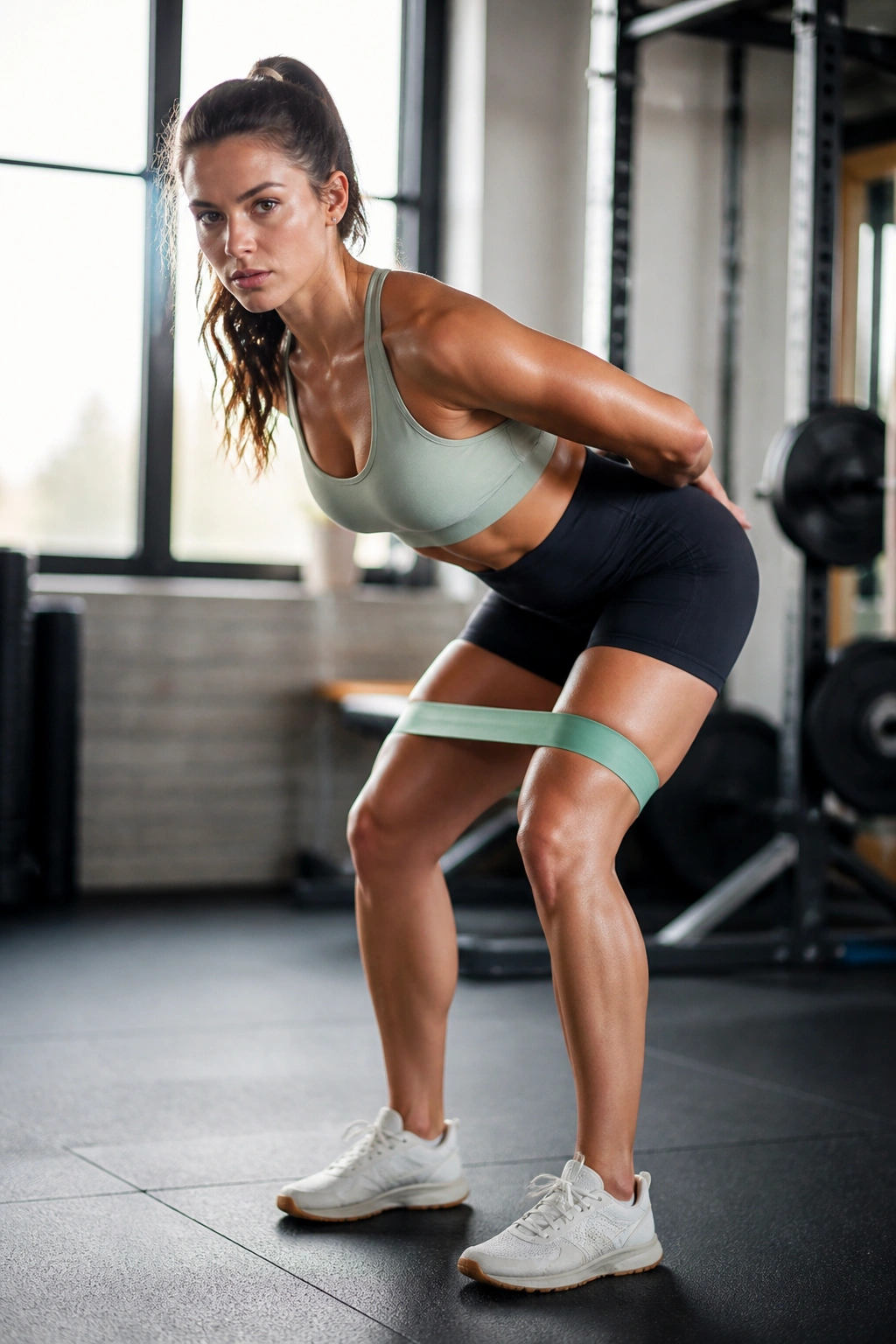
This is the advanced one. No rushing, no bouncing, no pretending the first set doesn’t matter. Put the band above the knees and move slowly enough that every rep owns the full range.
Try this pattern: 4 seconds down, 1 second pause, 2 seconds up on squats or hinges. Then hold the bottom for 10 seconds and finish with 10 tiny pulses. Slow tempo makes a light band feel heavier than people expect.
What to include
- Slow squat lowers
- Slow hinge good mornings
- Split squat holds
- Tiny pulse finishers
- One full minute of rest between rounds
You only need 3 rounds to feel this. More than that and form tends to leak. If your knees start caving inward or your back starts arching, the tempo is too ambitious for the resistance you picked.
This workout is useful when you want strength work without bigger dumbbells. It also tells the truth fast. If you can’t control the lowering phase, the band has already found your weak point.
20. Full-Body Finisher with Squat to Press and March
This is the one I’d save for the end of a session, or the start of a day when you want to feel like you did something real before breakfast. Stand on the band, keep the loop under your feet, and work through squat to press, hinge rows, marching knees, and side steps.
The pace is brisk, but not sloppy. Think “clean sweat,” not “flailing.” If the band is too light, slow the lowering phase instead of trying to muscle through with ugly reps.
Final 15-minute ladder
- 10 squat to presses
- 10 hinge rows
- 20 marching knees
- 20 lateral steps
- Rest 30 seconds
Then repeat with 8 reps, then 6, then 4, trimming the rest only if your form stays clean. The ladder drops volume while keeping tension high, which makes the last rounds feel sharp without turning into chaos.
I like this one because it ends the whole collection on a useful note: short workouts do not have to feel small. If the movement is clear and the band is placed well, fifteen minutes is enough to change how your body feels for the rest of the day.
Final Thoughts
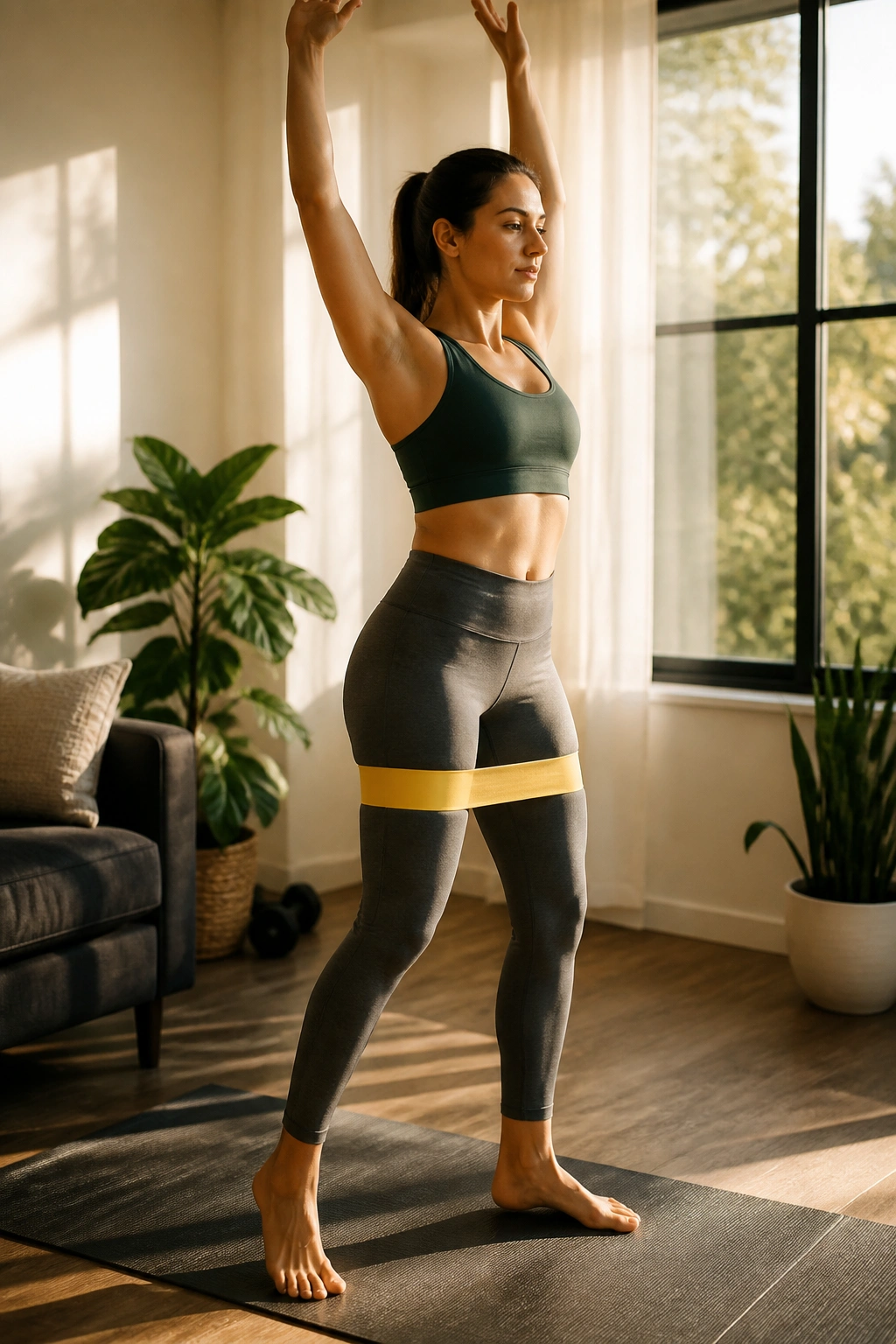
The best mini band workouts are the ones you can run without negotiating with yourself for ten minutes first. Simple setups win. Clean reps win. The band you choose matters less than the shape you keep.
A lot of people try to make these sessions harder by rushing. That usually just turns the work into noise. Slow the lowering phase, keep the knees honest, and pick the resistance that lets you finish strong without your form falling apart.
Save the cardio-style pieces for low-energy days, use the hinge and squat work when you want your legs to complain a little, and keep the posture and mobility sessions in rotation even when they feel too easy. They’re the ones that make the harder days feel better.
