



A good HIIT workout at home can leave your lungs burning in 12 minutes flat.
You do not need a treadmill, a big garage gym, or a wall of polished equipment to make that happen. A timer, a little clear floor space, and a plan that respects hard work and honest recovery are enough. High intensity interval training at home works because the short hard efforts push your heart rate up fast, and the brief rest keeps you from settling into a lazy rhythm.
I like home HIIT when it stays plain and physical. Squat, push, hinge, plank, sprint in place, repeat. The workout gets hard because the pace is hard, not because the setup is fussy, and that matters more than people think.
The 20 routines below give you different ways to attack that idea. Some are quiet enough for an apartment. Some are rude in the best possible way. A few use a rope, a chair, a band, or dumbbells, but none need a full gym. Pick one, clear a patch of floor, and start the clock.
1. 20-Minute Home HIIT Bodyweight Burn
This is the one I’d hand to almost anyone as a starting point. It uses the big basics—squat, push, lunge, and plank—and it does not waste time with cute extras. The shape is simple, which is exactly why it works.
How to run it
- 40 seconds air squats
- 20 seconds rest
- 40 seconds push-ups
- 20 seconds rest
- 40 seconds reverse lunges
- 20 seconds rest
- 40 seconds plank jacks
- 20 seconds rest
Do 4 rounds, then rest 60 to 90 seconds between rounds.
Nothing fancy. That’s the point.
If full push-ups get sloppy, put your hands on a couch, bench, or sturdy coffee table and keep the line from shoulders to heels clean. For lunges, step back instead of stepping forward if your knees like that better. The workout should feel hard by round 2, but your form still needs to look tidy.
2. Tabata Squat and Push-Up Ladder
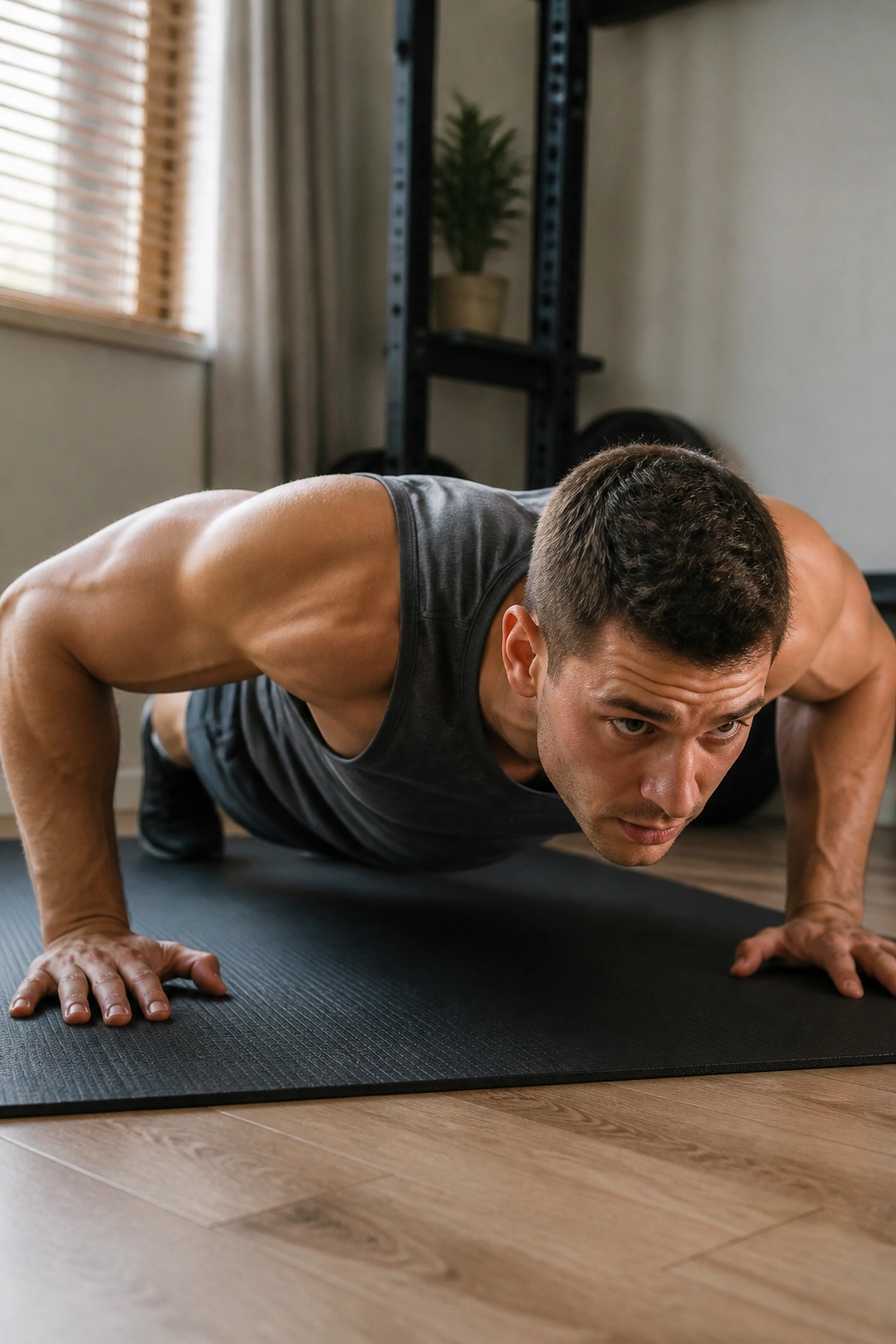
Tabata is short and rude. That’s why people keep coming back to it.
The format here is built around 20 seconds of work and 10 seconds of rest, and the ladder gives the session a nasty little climb. Start with 8 rounds of squat jumps, move into 8 rounds of push-ups, then finish with a small descending ladder: 10 squat pulses, 8 push-ups, 6 squat jumps, 4 push-ups, 2 squat jumps. The whole thing takes less time than a long warm-up, but it can leave your legs and chest fried.
How to scale the ladder
If jump squats feel too loud or too much, turn them into fast air squats with a hard calf raise at the top. If push-ups fall apart after round 3, switch to incline push-ups and keep moving. You are chasing fast, clean reps, not a fancy score.
The ladder works because the early rounds trick you into thinking the session is easy. It isn’t. By the time you hit the last two rounds, your legs start talking back.
3. Silent Home HIIT for Apartments
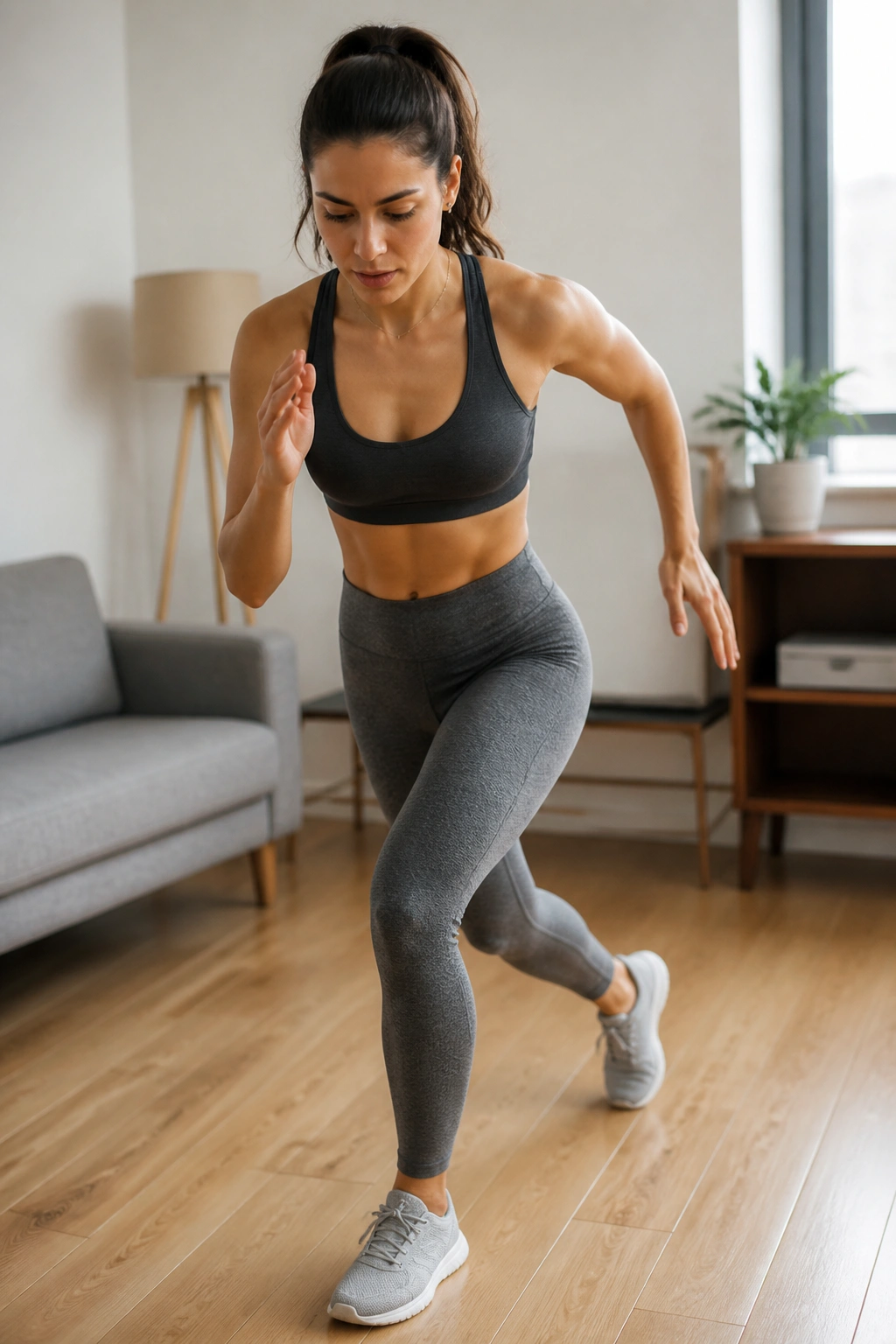
If you live upstairs, downstairs, or anywhere with thin floors, this one saves your relationships.
Silent HIIT still raises your heart rate. It just does it without jumping, stomping, or slamming the floor like a bad drum solo. Think fast step-backs, crisp lunges, controlled squats, and tight core work. The trick is to move quickly without becoming noisy.
Quiet moves that still spike the pulse
- Step jacks instead of jumping jacks
- Reverse lunges with a knee drive
- Bear hold shoulder taps
- Squat to calf raise
- Mountain climber marches from a plank
Run 4 rounds of 30 seconds on, 15 seconds off. Keep each rep clean and deliberate, but don’t drift into slow-motion yoga mode. You want a quick turnover, not a soft stroll.
This is the workout I use when the calendar is full and the floor is not cooperating. It is quieter than a cardio class, but your breathing will still get loud.
4. Jump Rope Sprint Intervals
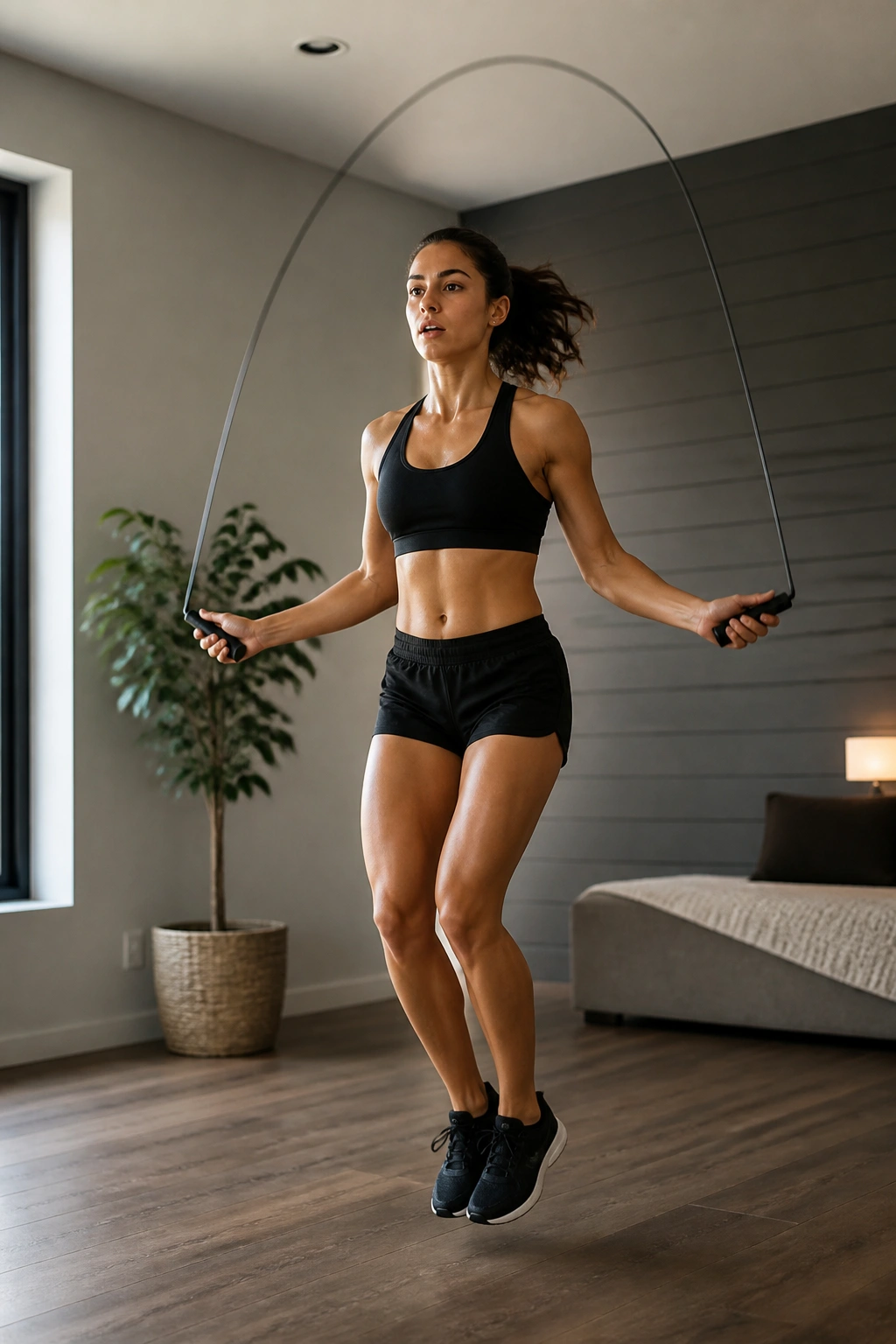
A jump rope changes the whole feel of a home workout.
You can do this in a strip of space that would barely fit a rug. Thirty seconds of fast skipping, 15 seconds of rest, repeated for 10 to 12 rounds, is enough to turn your calves hot and your lungs sharp. If you’ve only ever used a rope in gym class, this one will surprise you.
Keep the rope turning from the wrists, not the shoulders. Land softly on the balls of your feet. And keep your jumps low—an inch or two is enough. High jumps look dramatic. They also waste energy.
If you miss the rope often, don’t stop the workout every time. Do 20 seconds of invisible rope turns and run in place the last 10 seconds. The point is the rhythm. The rope is the tool, not the boss.
5. EMOM Home HIIT Full-Body Circuit

EMOM means every minute on the minute, and it is a beautiful way to keep yourself honest.
At the start of each minute, do the prescribed work. Whatever time is left in that minute becomes your rest. The faster and cleaner your reps, the more recovery you get. That little math lesson is part of the appeal.
Minute-by-minute setup
- Minute 1: 12 air squats
- Minute 2: 10 push-ups
- Minute 3: 16 alternating reverse lunges
- Minute 4: 8 burpees
Repeat the 4-minute block 3 or 4 times.
If you finish a minute with 20 or 25 seconds left, that’s a good sign. If you’re gasping and missing reps before the minute ends, cut the numbers by 2 or 3. No shame there. EMOMs are supposed to feel tight, not chaotic.
What I like here is the built-in reset. You work hard, then you breathe. Hard again. Then breathe again. The pattern keeps your effort high without turning the whole session into a mess.
6. Low-Impact No-Jump HIIT

Not every hard workout needs a jump.
This one is for the days when your knees are cranky, your upstairs neighbor has nerve endings, or you just do not want the floor to shake. Low impact does not mean low effort. It means you keep one foot grounded more often and drive the pace with speed, not impact.
Use 45 seconds of work and 15 seconds of rest. Cycle through squat to calf raise, standing knee drives, plank shoulder taps, glute bridge marches, and alternating reverse lunges. The burn comes from the steady pressure and the lack of dead time.
One sentence matters here: move faster than feels comfortable, but not so fast that your balance falls apart.
That’s the line.
If you keep your arms active—swinging them on knee drives, pressing them forward on squats—you’ll feel the whole thing more in your core and upper back. It’s sneaky work. The sweat shows up anyway.
7. Stair Step-Up Sprint Workout
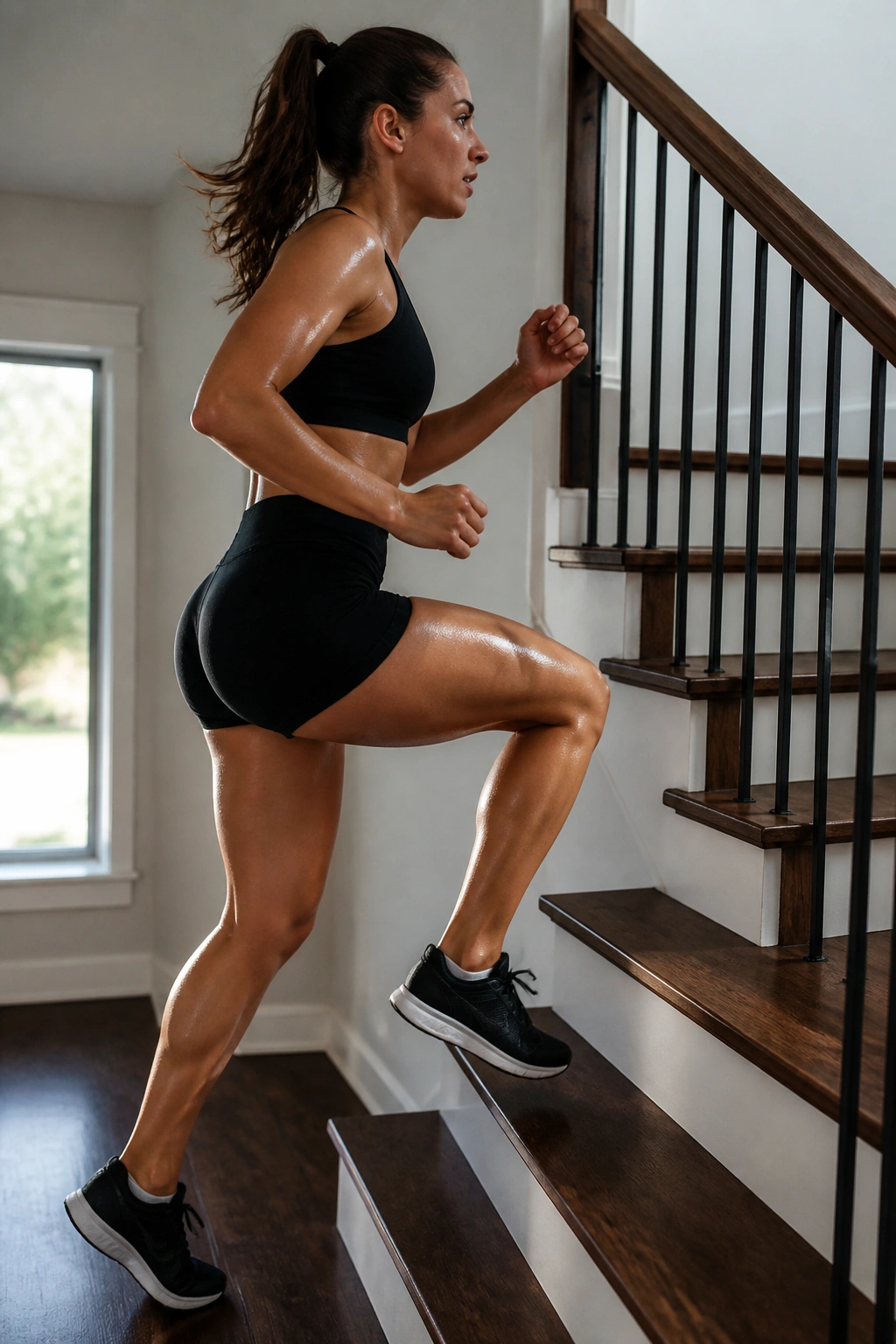
Stairs are basically a free piece of cardio equipment, and most houses already have them.
Step-ups are simple. That does not make them easy. Drive one foot onto a stair, stand tall at the top, and switch legs fast enough to keep your heart rate climbing. If you have a full staircase, use the whole thing. If you only have one sturdy step, that works too.
Safety on stairs
- Keep one hand near the rail if you need it
- Use a dry, flat surface only
- Don’t sprint down sloppy stairs
- Stop if the landing feels unstable
Try 20 seconds of fast step-ups, 20 seconds of rest, then 20 seconds of alternating knee drives. Repeat for 8 to 10 rounds.
What makes this workout sting is the vertical push. Your quads and glutes do the work, and your breathing catches up fast. A few rounds in, your thighs start to feel heavy in a very specific way—like they’ve been asked to carry groceries up five flights.
8. Burpee and Mountain Climber Smash

This one is mean. In the best way.
Burpees and mountain climbers are the sort of pair that make people stare at the timer a little harder than usual. One move forces a whole-body drop and rise. The other keeps your shoulders, core, and legs under constant pressure. Put them together and you get a home HIIT workout that does not waste a second.
Do 30 seconds of burpees, 30 seconds of mountain climbers, then 30 seconds of rest. Repeat for 8 to 12 rounds. If a full burpee is too much, switch to a squat thrust: hands down, jump back, jump forward, stand up. Same spirit. Less impact.
The first two rounds feel manageable. Then your shirt starts sticking to your back, your breathing gets loud, and the whole thing turns serious.
That’s normal.
9. Lower-Body Power Circuit
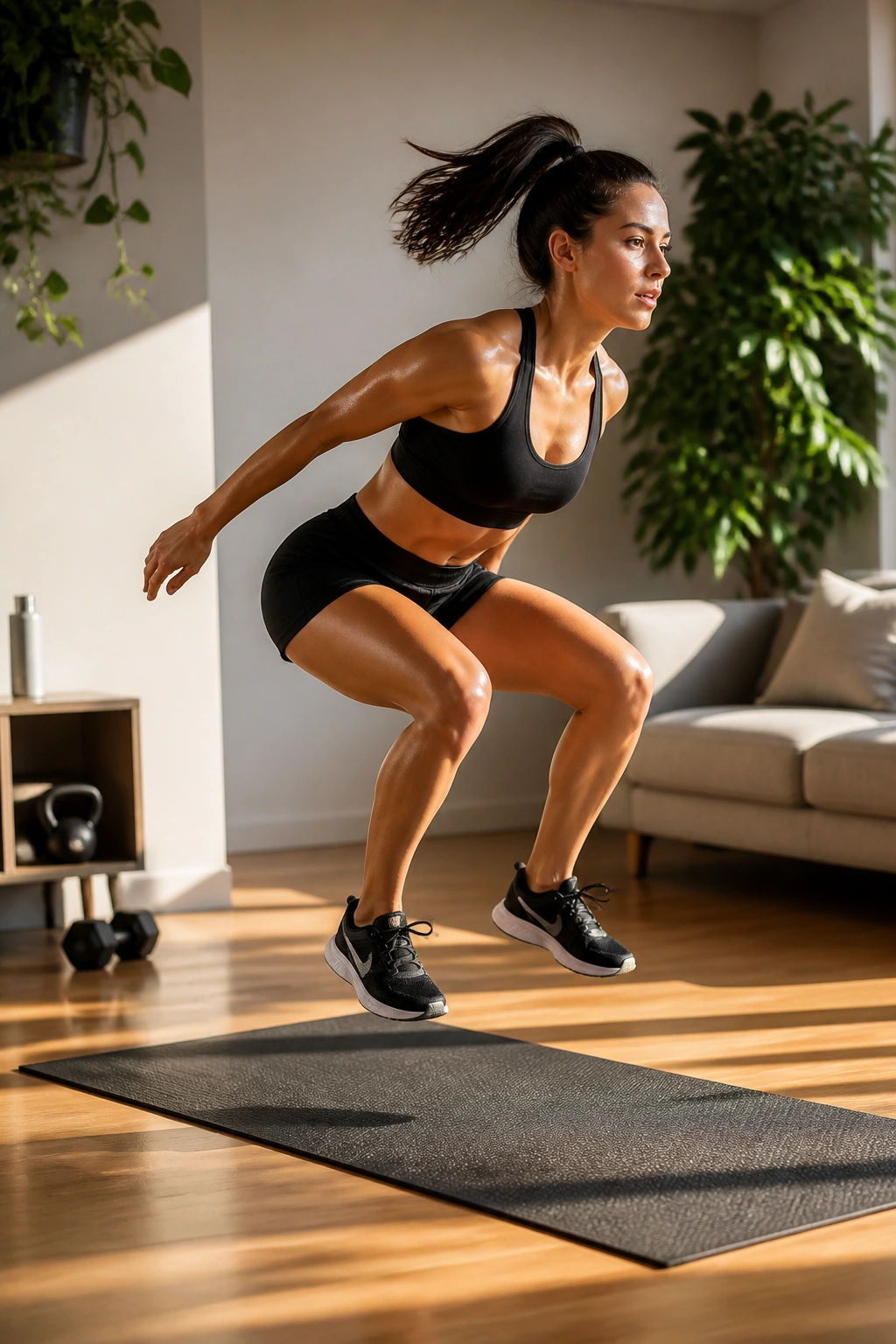
If you want your legs to feel like they’ve actually worked, build the workout around them.
Lower-body HIIT can be more than endless squats. Mix jump squats, reverse lunges, skater hops, and glute bridge marches, and the lower body has to keep changing gears. That keeps the work fresh and prevents the session from feeling like one long blur of knee bend.
The leg-burn order
- Jump squats for speed
- Reverse lunges for control
- Skater hops for side-to-side power
- Glute bridge march for the back side of the body
Run 45 seconds on, 15 seconds off, for 4 rounds.
The glute bridge march often gets ignored, which is a mistake. It looks tame next to jump squats, but it lights up the glutes and hamstrings in a way that pays off later. If your lower back starts arching, slow down and press your ribs down. That small adjustment matters.
10. Upper-Body Home HIIT Conditioning Circuit
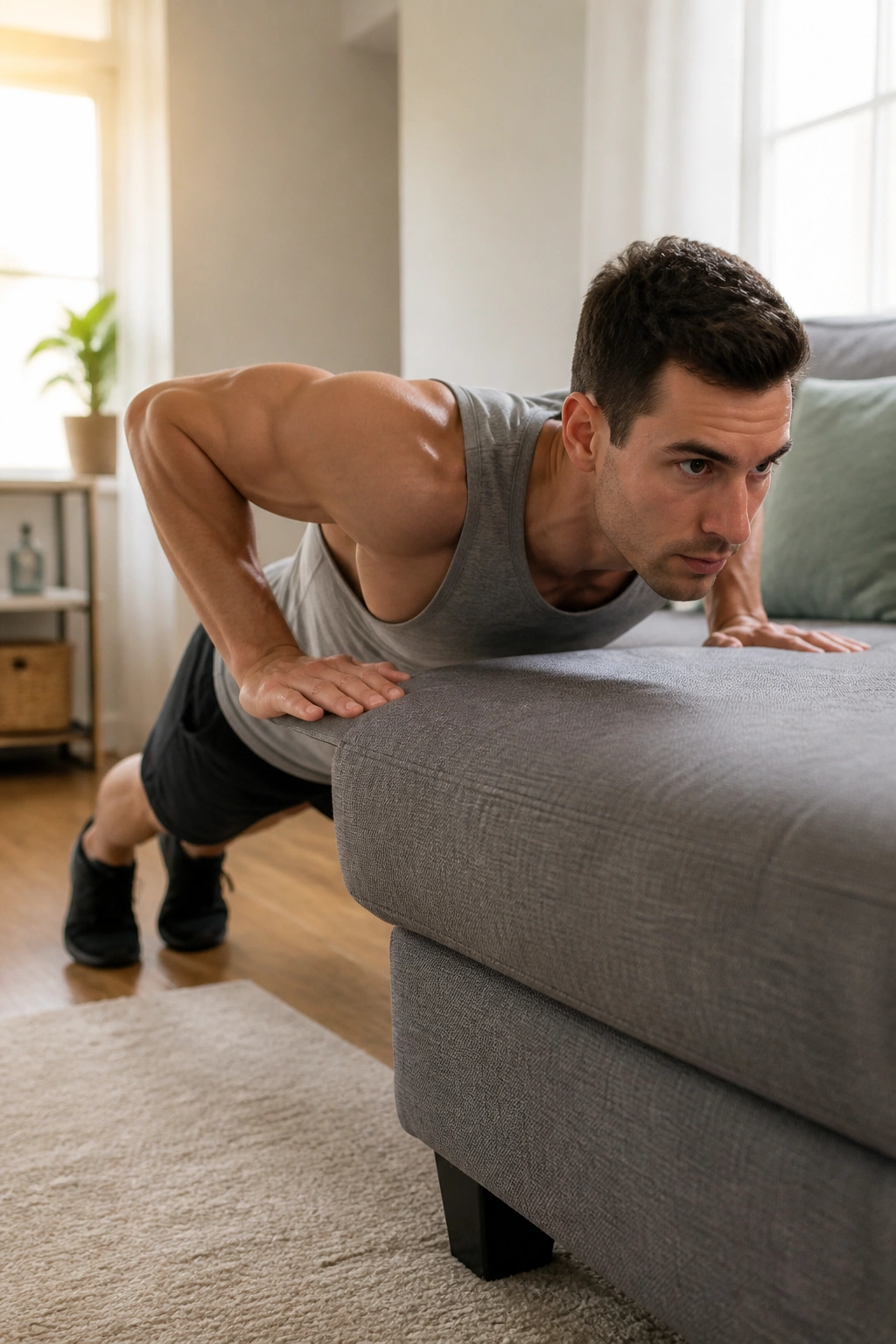
A lot of home cardio leans heavily on legs. Fine. But shoulders, chest, upper back, and triceps deserve some work too.
This circuit keeps you moving through push-ups, plank shoulder taps, chair dips, inchworms, and pike push-ups. It hits the upper body from a few angles while the heart rate climbs, which is exactly what you want from a well-built HIIT session.
Best tweaks if shoulders fatigue
- Put your hands on a couch for push-ups
- Cut chair dips to short, controlled reps
- Walk your feet in more on pike push-ups
- Use inchworms as active recovery when needed
Use 40 seconds of work and 20 seconds of rest for 3 or 4 rounds.
The inchworm deserves more credit than it gets. It looks calm, but it warms the shoulders, lengthens the hamstrings, and ties the whole session together. If the workout starts to feel jammed up, slow the transitions between moves instead of racing from one ugly rep to the next.
11. Shadowboxing HIIT

Shadowboxing is cardio with a little attitude.
You do not need gloves, a bag, or any boxing experience to get something useful out of it. Good shadowboxing is about crisp combinations, quick feet, and staying light enough on your toes that you can change direction without digging in. It feels athletic because it is athletic.
Try 3-minute rounds with 30 seconds of fast combinations, 15 seconds of footwork, and 30 seconds of steady recovery between rounds. Jab-cross. Jab-cross-hook. Uppercut-hook-cross. Keep your hands coming back to your face after every strike. That habit matters more than raw speed.
I like this workout because it changes the mood of the room. The session stops feeling like chores and starts feeling like practice.
Nope, you do not need to throw wild haymakers. Stay compact. Tight elbows, quick hands, soft knees. The cleaner your form, the harder your breathing gets without your joints taking a beating.
12. Plyometric Power Session
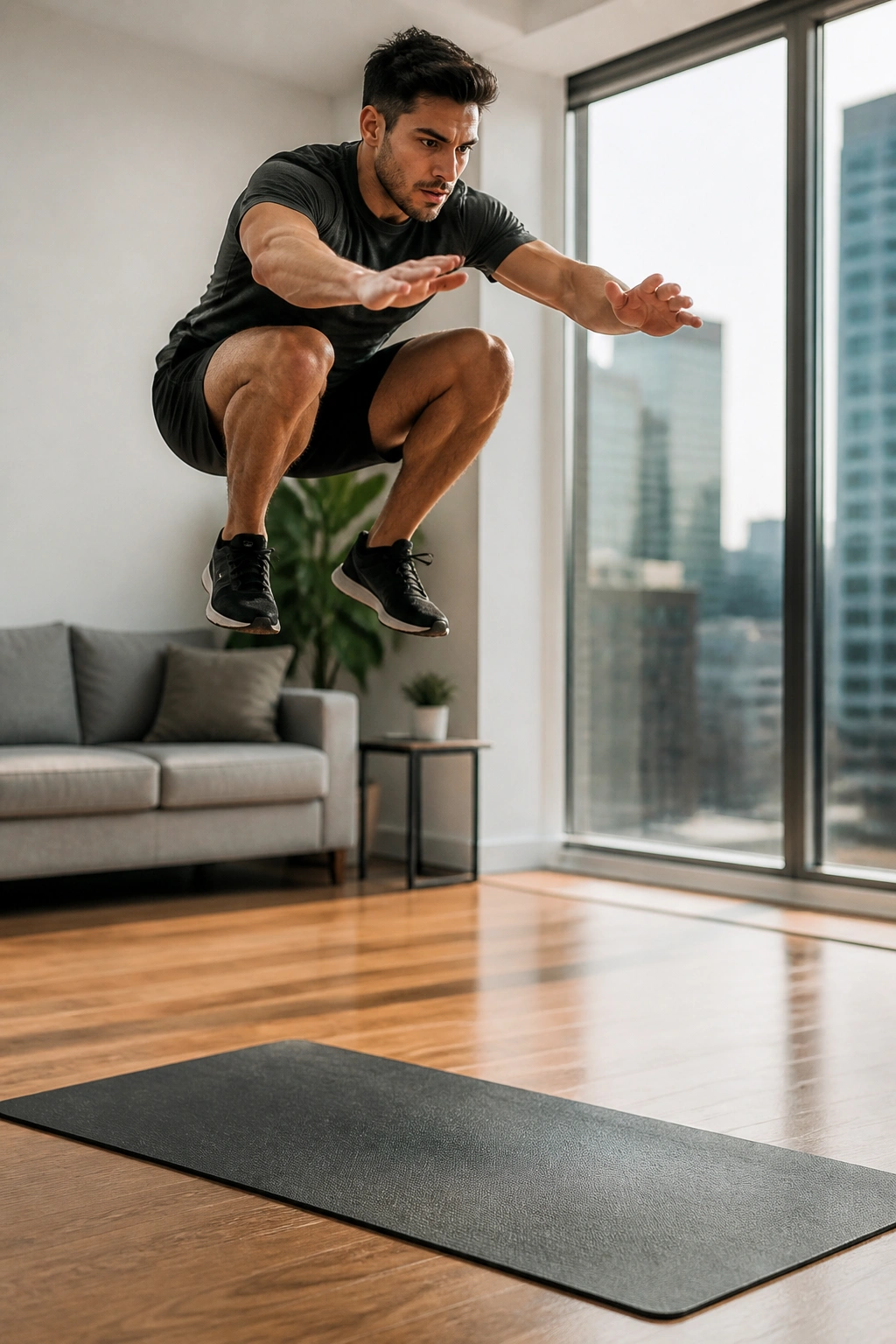
Plyometrics are explosive. They are also unforgiving if you rush them badly.
This is the workout for people who want speed, spring, and power—not just sweat. Jump squats, split squat jumps, skater bounds, tuck jumps, and broad jumps all belong here. The effort is short, the rest is longer, and the focus stays on landing softly.
Use 20 seconds of work and 40 seconds of rest. That rest matters. Plyo work taxes the nervous system fast, and if you try to cram it into sloppy conditioning, the quality falls off a cliff.
What to watch for
- Land with quiet feet
- Keep your knees tracking over your toes
- Stop a set when jump height drops
- Use a mat or forgiving surface if possible
The broad jump is the one that catches people off guard. It looks simple until you have to absorb the landing and reset. If space is tight, turn it into a forward hop or skip instead. Better a smaller clean jump than a big ugly one.
13. Resistance Band HIIT
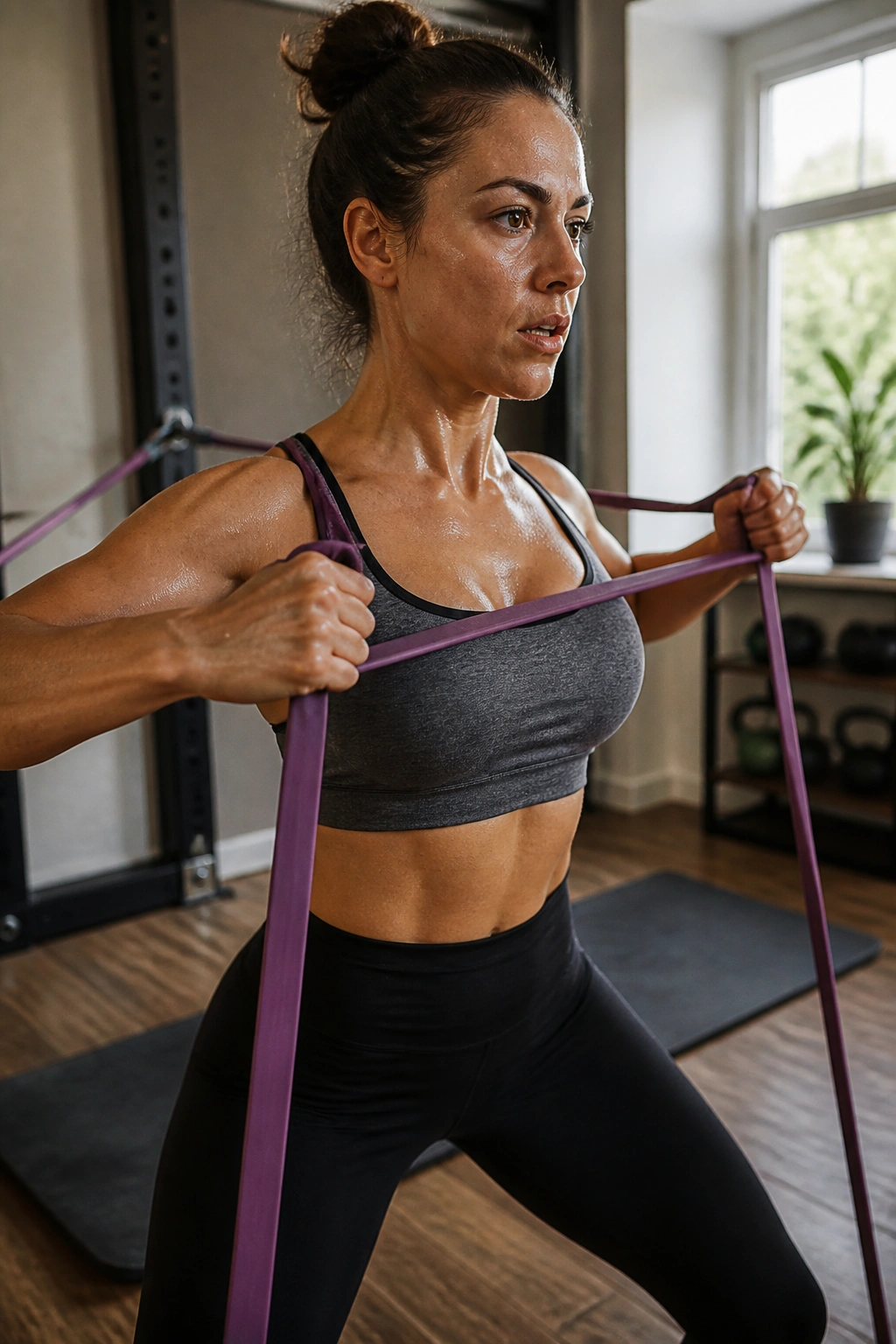
A resistance band changes the game because it adds tension where bodyweight alone would coast.
You can pack a band into a drawer, pull it out, and build a hard session without much floor space. Loop bands and long bands both work. A mini band is great for glutes and hips; a long band helps more with rows, presses, and punch-outs.
Which band to pick
- Mini band: glute walks, squat pulses, lateral steps
- Long band: rows, presses, deadlift variations
- Medium resistance: enough pull to make the last 5 reps honest
Try 35 seconds on, 15 seconds off, with band rows, band thrusters, lateral walks, band punches, and band deadlifts. Repeat for 3 to 5 rounds.
The punch-outs are a favorite of mine. They let you move fast while the band keeps resistance on the movement the whole time. If the band snaps your shoulders forward, step a little wider and reset your stance. You want tension, not chaos.
14. Dumbbell Home HIIT Complex
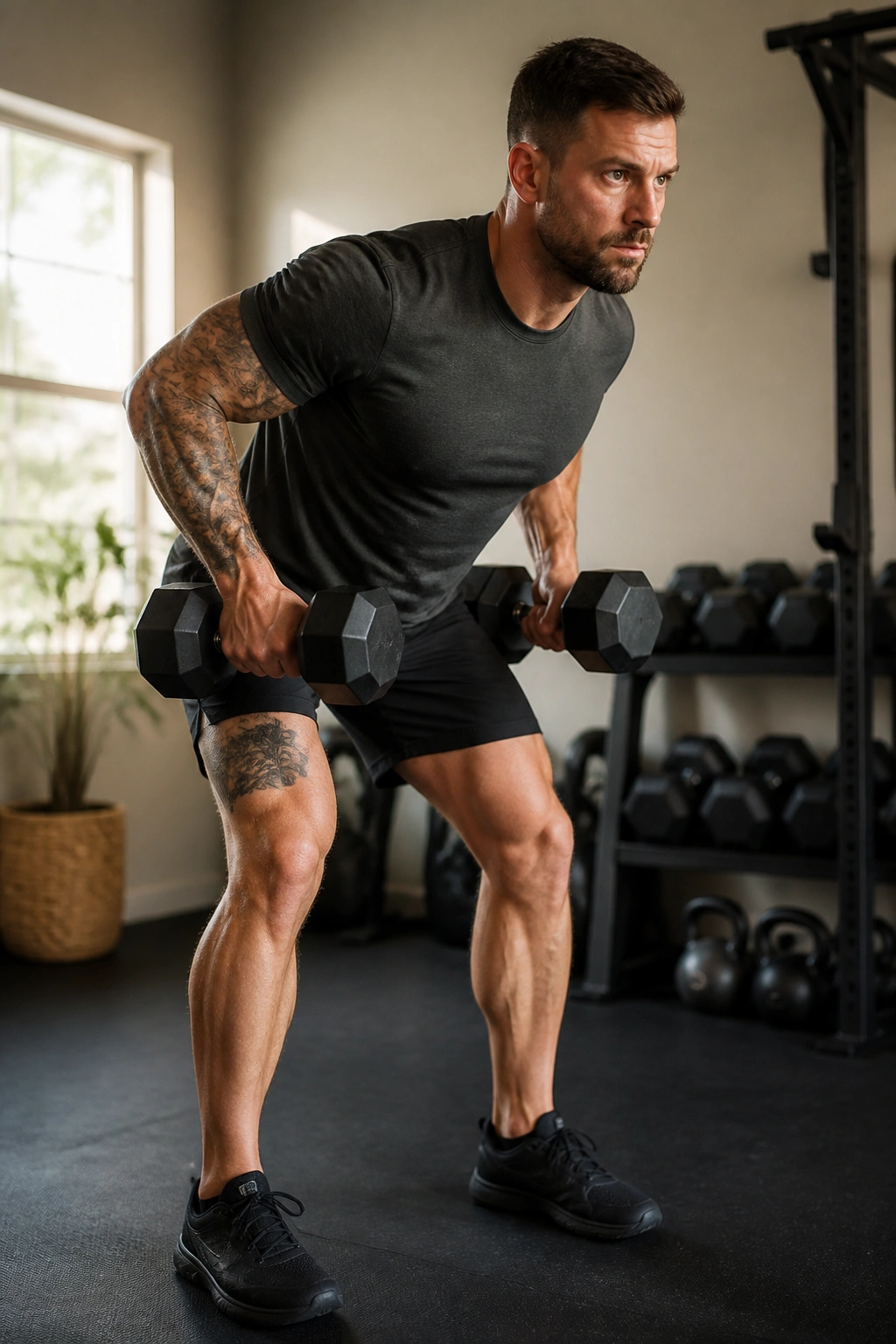
A dumbbell complex means you keep the weights in your hands through the whole sequence. No setting them down until the round is done.
That one rule makes the session feel very different from a normal lifting workout. The heart rate climbs because you’re moving weight from the floor to the shoulders to overhead and back again, all without a long pause. It’s strength work with a cardio problem attached.
The no-set-down sequence
- 6 dumbbell deadlifts
- 6 bent-over rows
- 6 hang cleans
- 6 front squats
- 6 push presses
- 6 reverse lunges per leg
Use a pair of moderate dumbbells and rest 90 seconds after each round. Do 4 to 6 rounds.
If the cleans feel clunky, reduce the weight. Seriously. A smooth complex with lighter dumbbells beats a messy one with heavy weights every time. Keep your ribs down on the press and let your legs help drive the weight overhead.
This is one of the best home HIIT options if you already own dumbbells and want more than just jumping around in place.
15. Core-Heavy HIIT Finisher

Core work gets weird when people treat it like a separate universe. It isn’t.
A good core-focused HIIT session still needs breathing, speed, and a little bite. Hollow holds, bicycle crunches, plank jacks, V-ups, dead bugs, and mountain climbers all make sense here because they ask the trunk to stay tight while the limbs keep moving.
Use 30 seconds on and 15 seconds off for 2 or 3 rounds. That sounds manageable until the hollow hold hits and your midsection starts arguing with you.
Do not let your lower back arch off the floor. That is the whole game.
If your back starts to lift on dead bugs or V-ups, shorten the range. Bend the knees a bit more. Keep the exhale sharp and forceful. A strong core session should feel like hard control, not like flinging your torso around and hoping for the best.
16. High-Knee and Sprint-in-Place Intervals
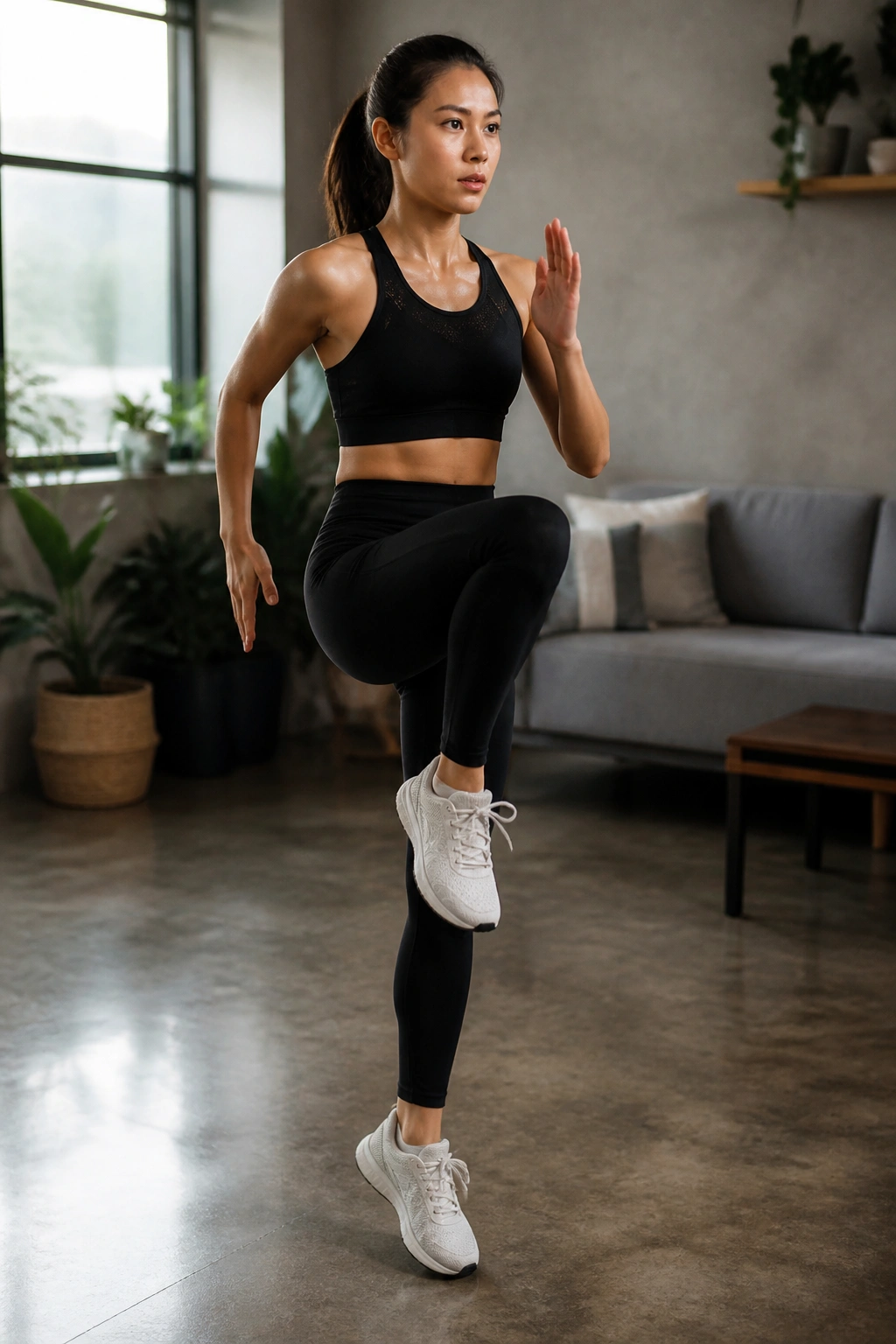
This is the home workout for tiny spaces and impatient days.
You do not need room to run when you can make your own speed in place. High knees, fast feet, butt kicks, and power marches can all spike the heart rate if you keep the intervals honest. The floor space requirement is almost laughable.
Try this: 20 seconds high knees, 10 seconds rest, 20 seconds fast feet, 10 seconds rest, 20 seconds butt kicks, 10 seconds rest, 20 seconds power marches, 10 seconds rest. Repeat the block 4 times.
The nice thing here is the rhythm. Once your feet find the tempo, the workout starts to feel almost musical. Then your breathing catches up and reminds you that it is still work.
If you hate impact or your calves tighten fast, make the feet smaller and quicker. You can keep the intensity high without leaping all over the room.
17. AMRAP Burner

AMRAP means as many rounds as possible, and the format is brutally honest.
There is no clock telling you when to switch exercises. You pick a short circuit, then move through it for a set time and see how many clean rounds you can finish. It rewards pacing, not panic. Go out too hard and the later rounds get ugly fast.
How to pace the first 6 minutes
- Move at a pace you can repeat
- Keep your transitions short
- Leave 1 rep in the tank early
- Breathe during squats and lunges, not only after them
A solid 12-minute AMRAP might look like this: 8 air squats, 6 push-ups, 8 reverse lunges per leg, 10 mountain climbers per side, 12 sit-ups. Repeat the circuit until time runs out.
What makes AMRAP hard is that it feels open-ended. There’s no clean stop point in sight. That little psychological pressure changes the whole workout, and it is part of why people either love this format or hate it.
18. Descending Ladder Workout
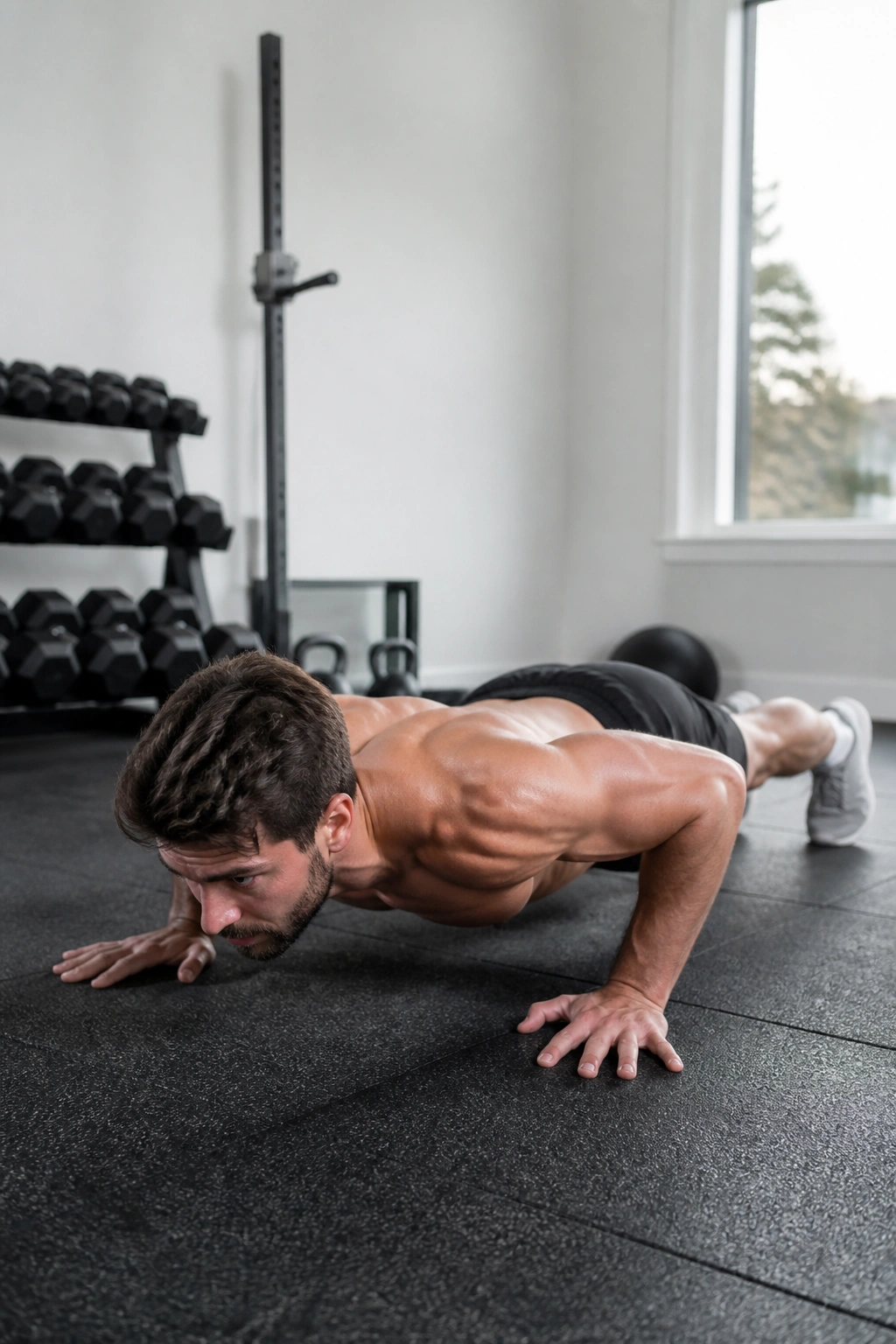
Descending ladders are sneaky.
They start with numbers that look small enough to respect, then they keep shrinking just as fatigue starts growing. Ten reps feels fine. Eight is manageable. Six is still okay. Then you realize the timer is not the problem—the accumulated fatigue is.
Use a ladder like 10, 8, 6, 4, 2 for burpees, push-ups, squat jumps, and alternating lunges. Rest 30 to 60 seconds between rounds if you need it, or move straight through if you want the session to feel more like a sprint.
The neat part is the mental shift. The end is always visible. That makes it easier to stay sharp on the early rounds instead of dragging through them.
It also makes you honest about form. If your burpees get sloppy on round 8, don’t pretend they’re still good. Cut the range, slow the drop, and finish the ladder cleanly.
19. Chair and Wall Circuit
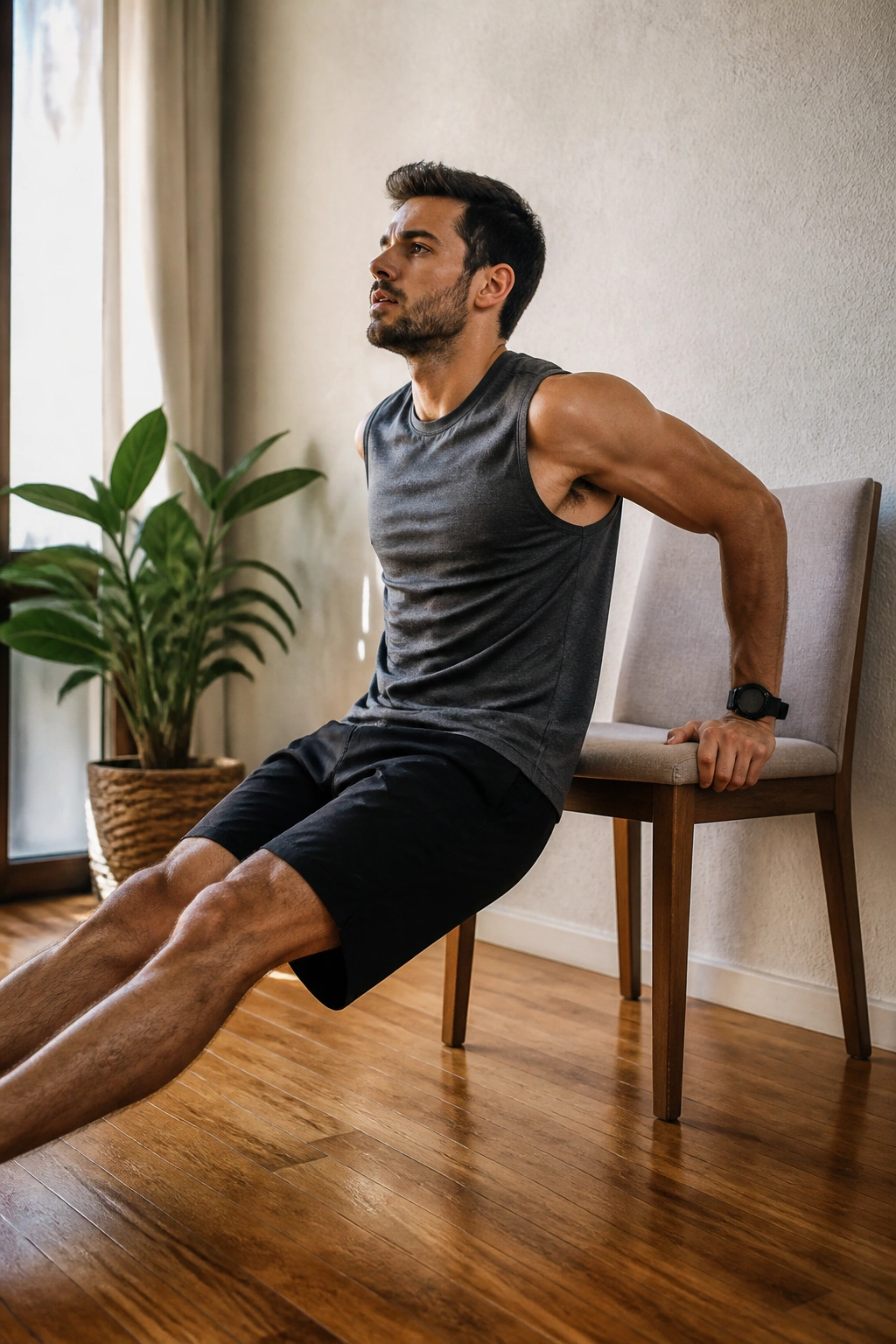
A chair and a wall are enough to build a hard session. Not glamorous. Very useful.
The chair gives you height, support, and a place to load the legs differently. The wall adds stability work and a way to challenge your core without dropping to the floor every minute. This is a smart setup for small homes, beginners, or anyone who wants more control in the workout.
Try 45 seconds on, 15 seconds off, with chair squats, incline push-ups, triceps dips, wall sits, and seated knee tucks.
A few practical details
- Use a sturdy chair that does not slide
- Keep your feet flat on wall sits
- Lower the dips only as far as your shoulders like
- Keep the chest lifted on chair squats
The wall sit is the one that surprises people. It looks harmless, then the quads start shaking in a way that feels rude. That’s normal. If your knees hate long holds, shorten the interval and keep the pressure steady.
20. Four-Move Home HIIT Finisher

This is the flexible one. The cleanup hitter.
Pick one squat pattern, one push pattern, one hinge pattern, and one core move. Then run them in 40-second work blocks with 20 seconds of rest. That gives you a balanced home HIIT finisher that can plug in after strength work or stand alone when you only have a short window.
Simple sample pairings
- Air squat, incline push-up, good morning, dead bug
- Split squat, push-up, hip hinge reach, plank shoulder tap
- Squat jump, chair dip, glute bridge, mountain climber
- Reverse lunge, pike push-up, single-leg deadlift reach, hollow hold
The beauty here is that you can make it match how your body feels that day. If your legs are tired, keep the squat calm and the hinge controlled. If your shoulders are smoked, use incline push-ups and call it a win.
I like this one at the end because it does not pretend to be more complicated than it is. Four moves. Four rounds. Enough work to matter, not so much structure that you spend half the session thinking about the structure.
Wrapping Up
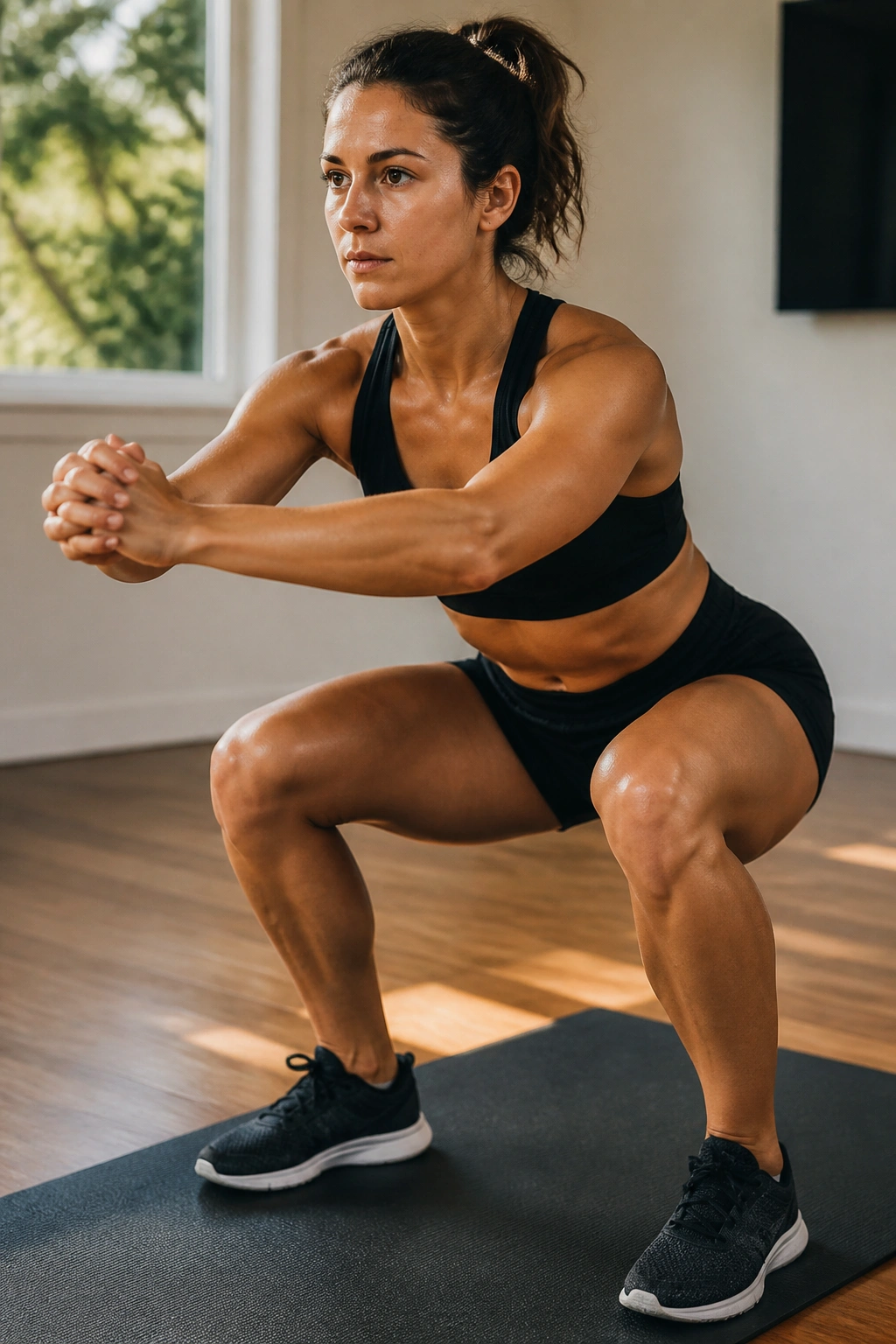
The best home HIIT workout is the one you can actually repeat next week without dreading it. That usually means clear timing, a few strong moves, and a setup that fits the space you have.
Some days call for jump rope speed. Some days call for silent footwork, dumbbells, or a chair against the wall. The point is not to chase the fanciest session in the list. The point is to pick the right one for your room, your joints, and your energy, then move hard enough that the timer feels shorter than it should.
If you keep the rest honest and the form clean, these workouts can carry a lot of weight in a small amount of time. That’s the real appeal. Not magic. Just a hard minute, a short breath, and another round.
