



Twenty minutes is enough.
A good 20-minute yoga routine at home can loosen a stiff neck, wake up sleepy hips, and leave you calmer than a frantic workout that never settles into your body. You do not need a studio, a perfect floor, or a pile of props. A mat helps. A towel helps. A wall helps more than most people expect.
Public-health guidance has long treated yoga as a useful piece of the movement puzzle because it can build flexibility, balance, and a steadier breath without beating up your joints. That is the part I like most about it. Yoga can be a hard session, a recovery session, or a nervous-system reset, and the same living room can hold all three.
Not every day wants the same practice.
Some routines should wake you up. Some should soften a desk-hunched upper back. A few should make your legs work a little harder than they expected. The trick is matching the flow to the day you’re having, because a tight back, a restless mind, and a sleepy pair of hips do not need the same answer.
1. Gentle Morning Yoga Routine at Home
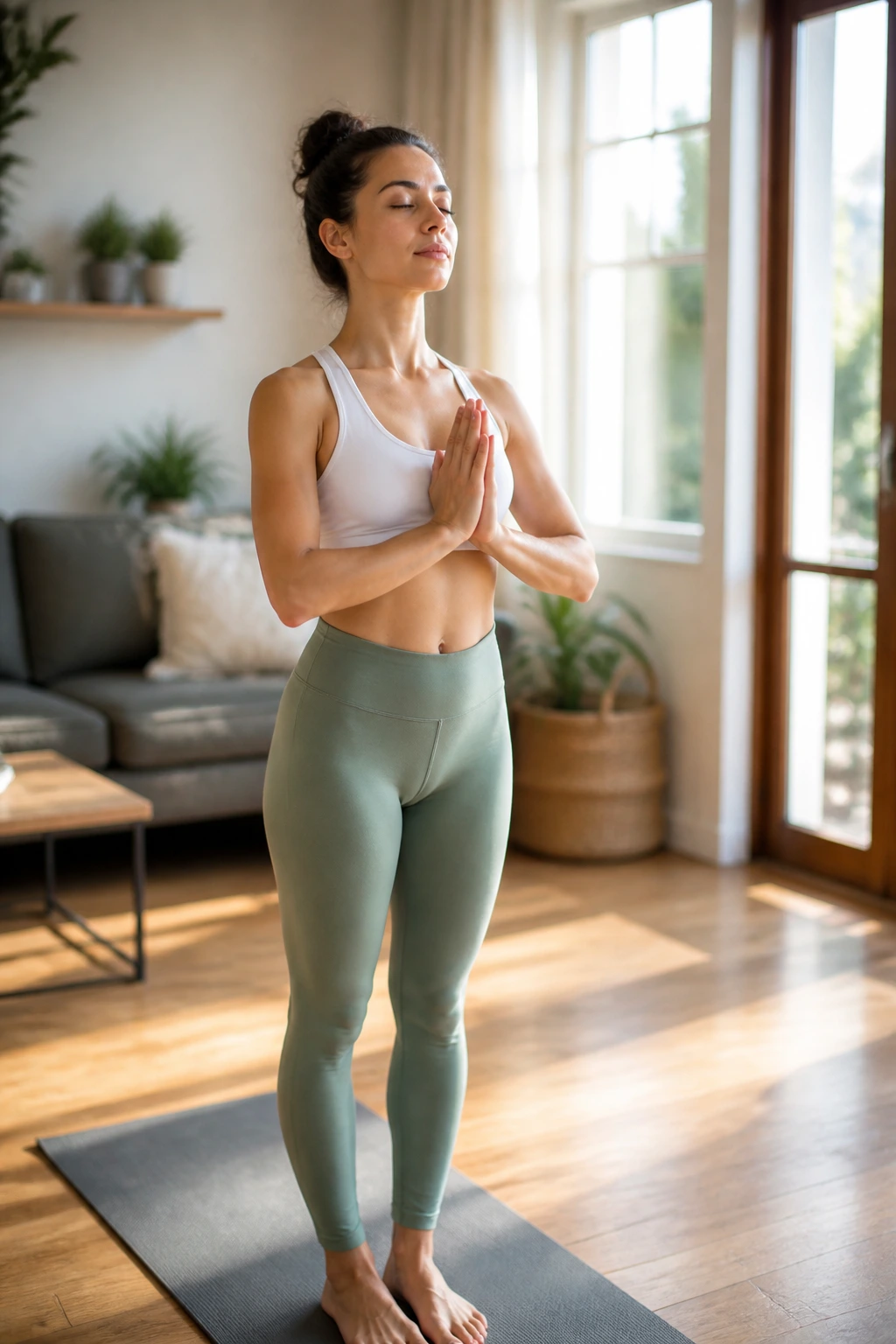
A sleepy body likes motion before intensity.
20-Minute Shape
- 2 minutes of easy standing breaths in mountain pose
- 3 minutes of cat-cow and child’s pose
- 4 minutes of low lunge and half split on each side
- 4 minutes of downward dog to plank
- 4 minutes of warrior I and crescent lunge flow
- 3 minutes of standing forward fold and stillness
This is the routine I reach for when the floor feels cold and my shoulders are still halfway asleep. Keep the first few bends soft, almost lazy, and let your spine warm up before you ask anything serious from your hamstrings.
Why It Works
Morning stiffness usually lives in the back, hips, and ankles. A short sequence of spinal movement, lunges, and standing poses wakes those areas up without sending your heart rate through the roof. The payoff is simple: you start moving like a person instead of a coat rack.
My favorite cue: bend the knees more than you think you need to in the first forward fold. That one little change makes the whole routine feel kinder.
2. Desk Shoulder-Release Yoga Routine

A desk-hunched upper back does not need more punishment.
It needs room. That means thread-the-needle, eagle arms, puppy pose, and a few minutes where your chest can open without forcing your lower back to do the work. This routine is short on drama and heavy on relief, which is exactly what makes it useful after a long screen day.
If your neck feels crunchy, skip the urge to yank on it. Slide your shoulder blades down your back, keep the chin level, and move slowly through sphinx into a gentle twist. I like to finish this one with three slow rounds of standing arm circles, because the shoulders often hold onto more tension than we realize.
A small change matters here. A rolled towel under the forehead in puppy pose can make the difference between “nice stretch” and “why am I fighting this?” That is the whole point of a home yoga routine like this one: fewer heroic poses, more practical relief.
3. Hip-Opening Yoga Routine After Sitting
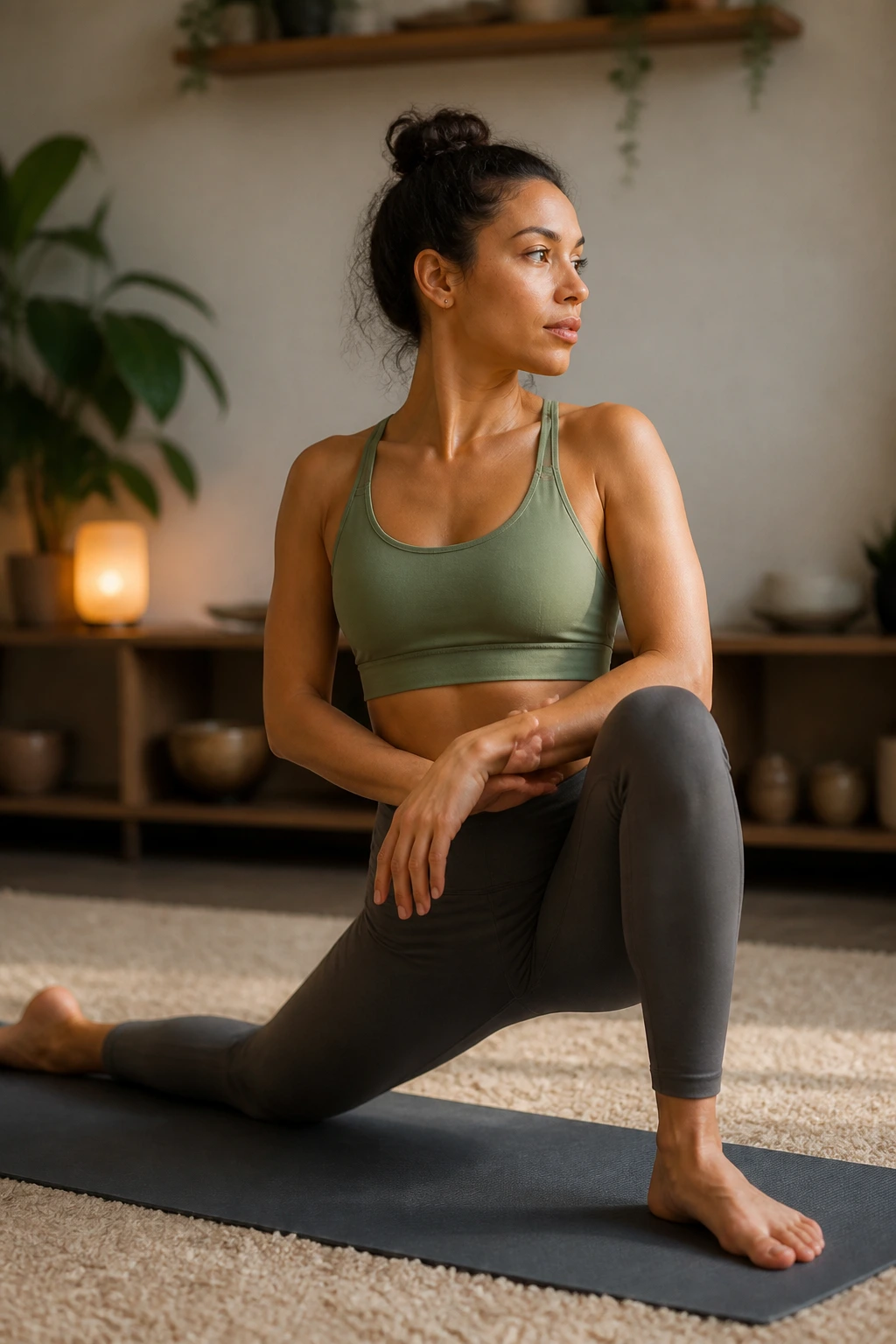
Why do hips feel tighter after a day of sitting, even if you did nothing athletic?
Because they got lazy, not because they failed you. The hip flexors shorten when you sit for hours, and the glutes stop doing their share of the work. A 20-minute flow aimed at lunges, pigeon prep, and figure-four stretches can wake all of that back up without turning the session into a wrestling match.
The Best Poses for This One
- Low lunge with a long exhale
- Half split to lengthen the back leg
- Reclined figure-four for the glutes
- Butterfly pose with a tall spine
- Supported pigeon if your knees are happy with it
I like this sequence in the late afternoon, when the body feels dense and flat. Move from one side to the other with a little patience; hips often open better when you stop trying to win the stretch. If one side feels much tighter, stay there for an extra 30 seconds instead of rushing ahead.
Use a folded blanket under the knee if pigeon feels sharp or jammed. Sharp is a no.
4. Low-Back Friendly Floor Routine
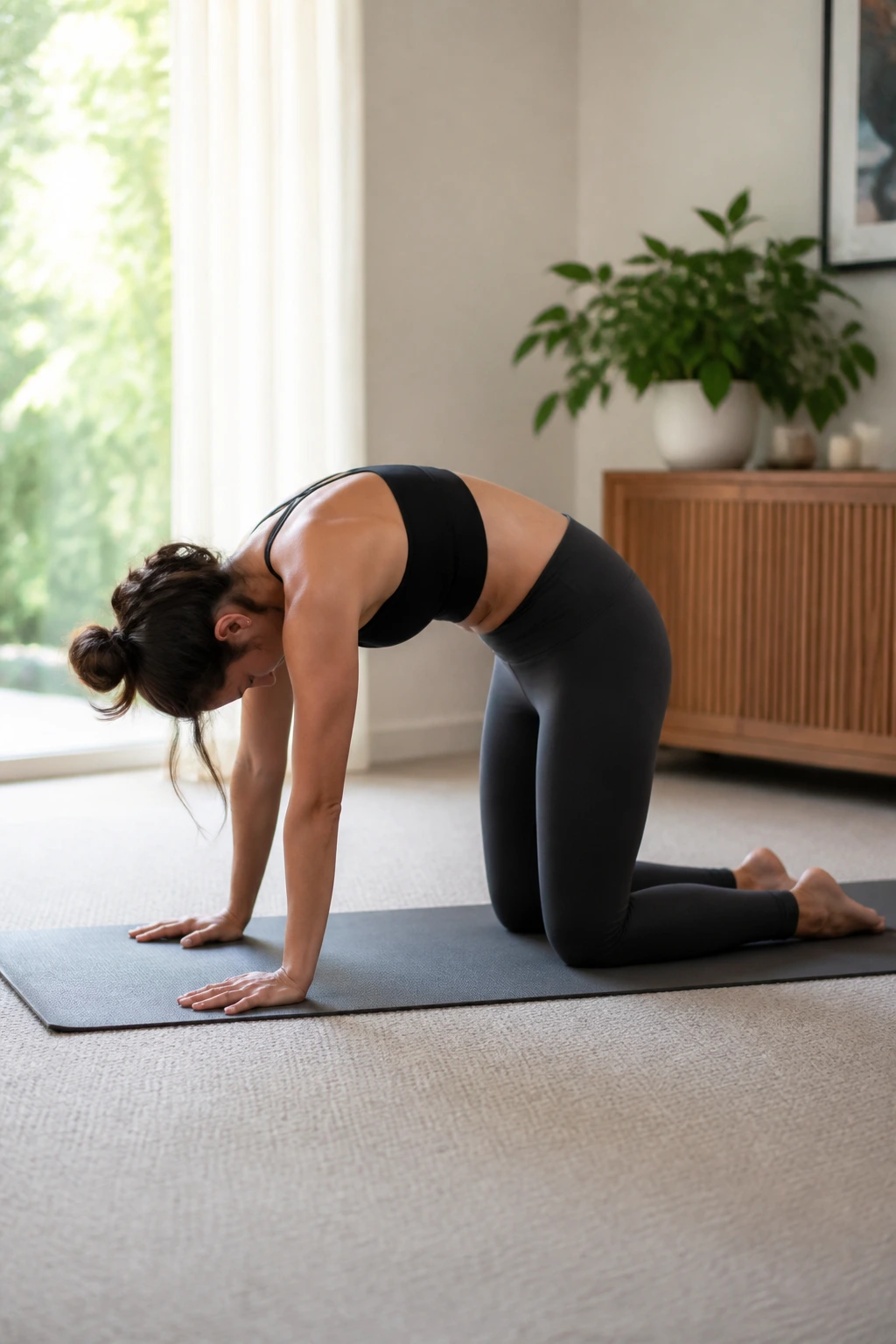
I know the look of a cranky lower back. It shows up when you roll out of bed, after a long drive, or right after you lift something that was heavier than it looked.
This routine stays close to the floor because floor-based work tends to feel safer when the back is irritated. Cat-cow, knees-to-chest, bridge pose, and a very mild supine twist can ease the area without asking the spine to bend the wrong way too soon. You are trying to create space, not crack open a safe.
A good low-back routine should feel more like lubrication than stretching. If child’s pose pinches, widen the knees or skip it. If forward folds feel grabby, don’t chase depth. Sphinx pose is a better friend here than aggressive backbends, and bridge done with slow breaths usually lands better than anything flashy.
The best compliment I can give this flow is that it is boring in the right way. No circus. No grind.
5. Wall-Assisted Balance Yoga Routine
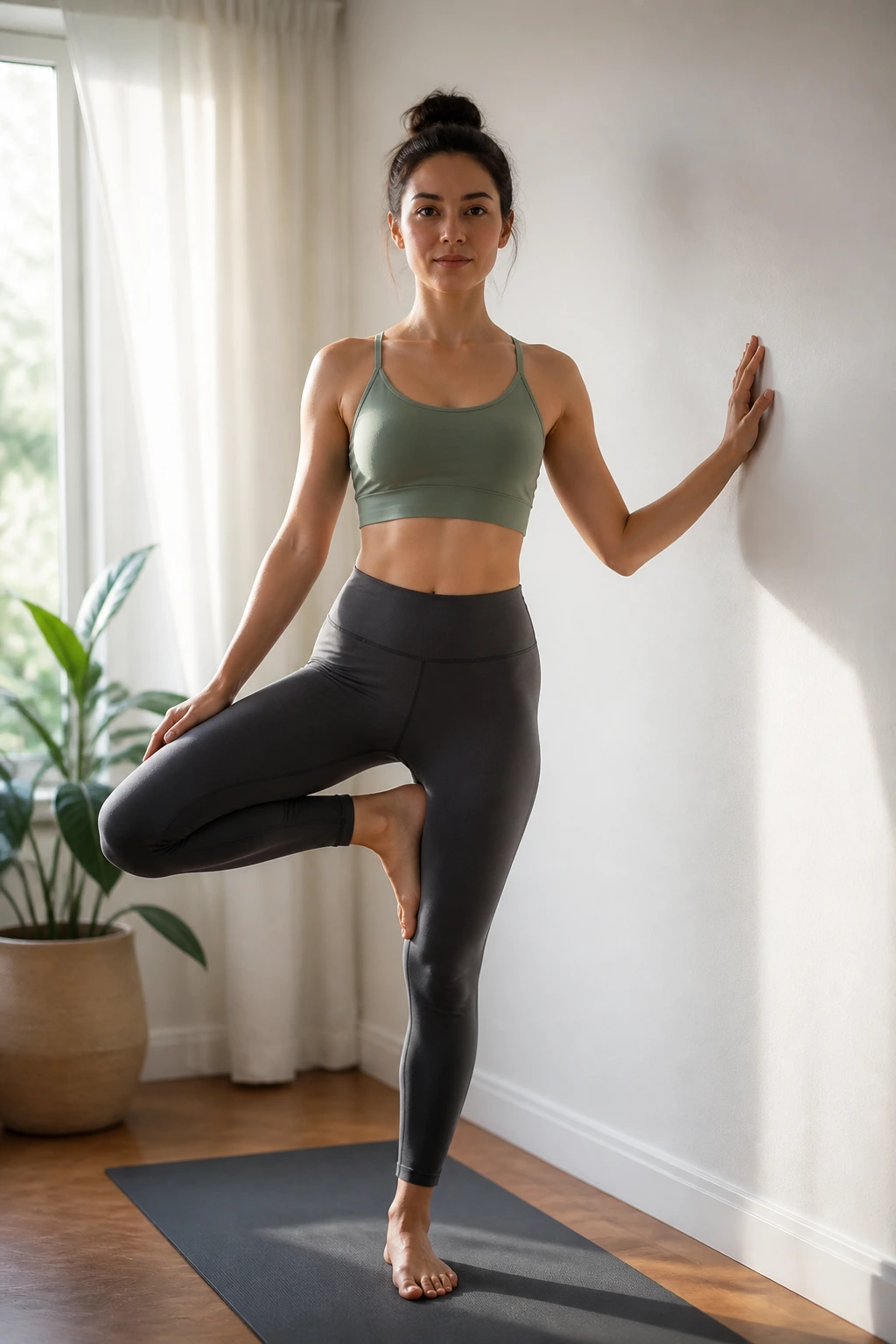
A wall is not cheating.
It is training equipment, and a very good one at home. Tree pose with fingertips on the wall, standing figure-four, half moon with a hand lightly touching the surface, and a short warrior III hover all work better when balance is the thing you want to improve instead of the thing you want to prove.
What I like about wall work is the honesty of it. You still have to stand on one leg. You still have to wake up the foot, the ankle, the outer hip, and the small stabilizers around the knee. But you get to learn the shape without flailing around for 30 seconds before collapsing.
A lot of people assume balance poses are about looking graceful. They’re not. They’re about noticing where your body cheats and then teaching it a cleaner line.
A wall gives you feedback fast. Light touch, less wobble, more control.
6. Hamstring and Calf Release Yoga Routine
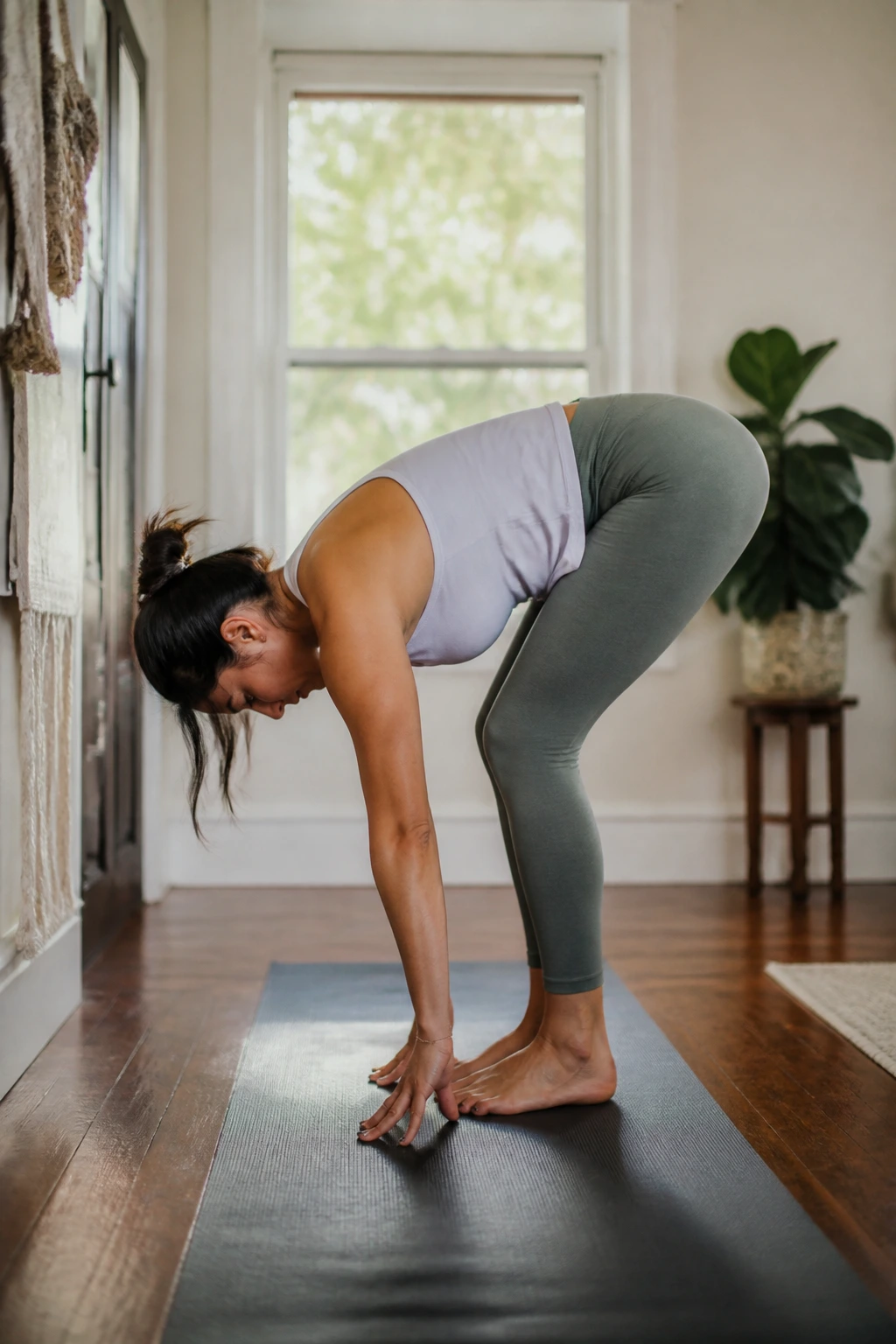
Stretching hamstrings cold is the yoga version of yanking on a jammed drawer.
A better approach is to start with movement, then lengthen. Downward dog pedaling, half split, standing forward fold with bent knees, and a calf stretch against the wall give the back of the legs a chance to soften without getting angry. That matters if you run, walk a lot, or spend too much time in one chair.
Dynamic First, Stillness Later
The first half of this routine should move. Walk your feet in downward dog. Shift from side to side in ragdoll. Bend and straighten one knee in half split. Then, once the tissue feels warmer, hold the shape a little longer.
That order is the secret. Not fancy. Just smarter.
If you go straight into a deep forward fold, the stretch can feel sharp and fake, especially behind the knees. Instead, spend 5 or 6 minutes on active lengthening, then 3 or 4 minutes on quieter holds. Pair it with a wall calf stretch and you’ll feel the whole back line open up more evenly.
7. Core and Standing Strength Yoga Routine
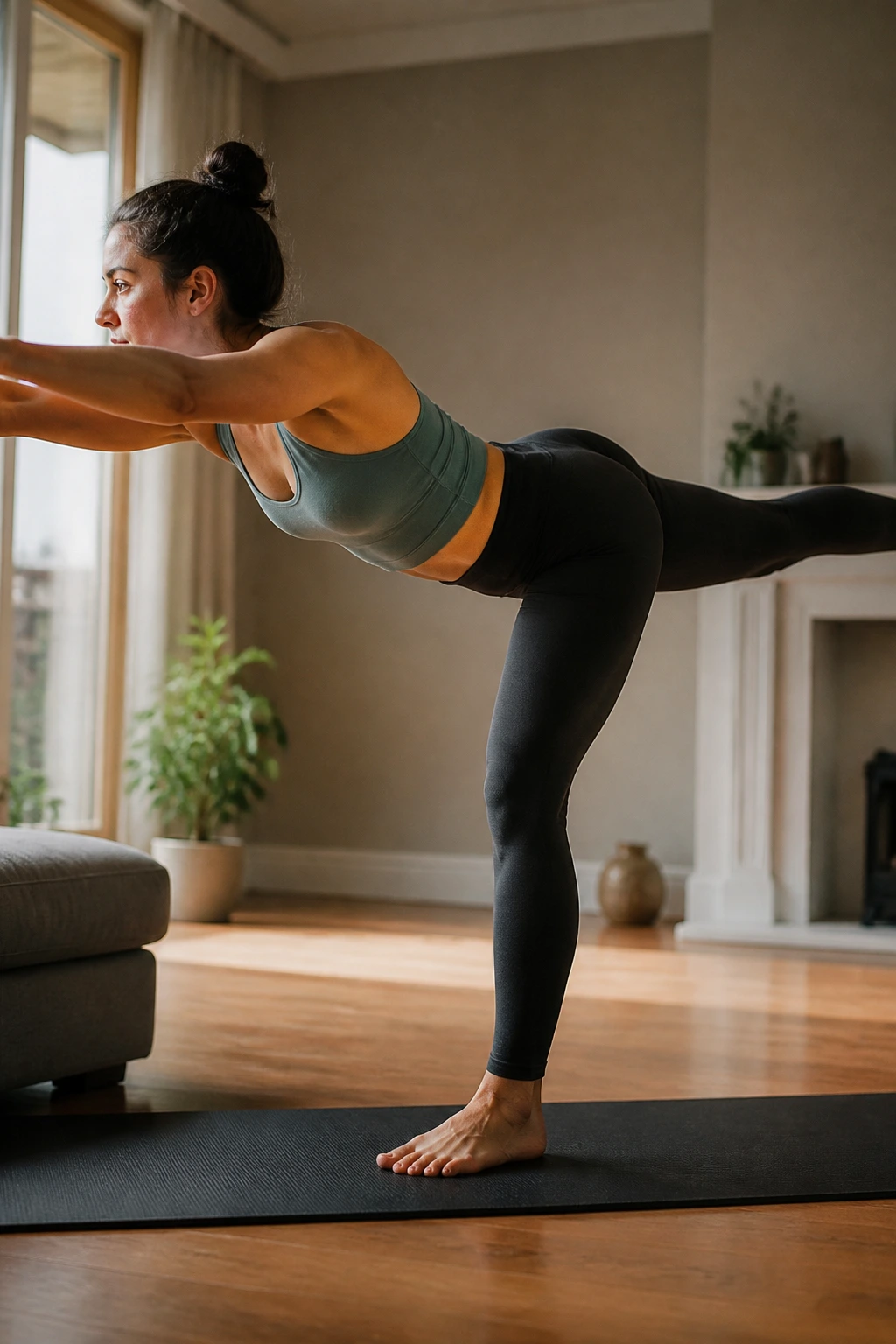
This is the routine that reminds you yoga can work hard.
Build the Middle
- 3 minutes of chair pose pulses and mountain holds
- 4 minutes of plank to downward dog
- 4 minutes of low lunge knee drives
- 3 minutes of warrior III hover work
- 3 minutes of boat pose variations
- 3 minutes of locust pose on the floor
The middle of the body does not get strong from fancy looking movement alone. It gets strong from staying steady while the limbs keep moving. Chair pose, plank, and boat all ask for that same thing in different clothes.
What to Watch For
Keep the ribs from flaring forward in plank. Keep the neck long in boat. In warrior III, think about length first and height second. If you chase height too soon, the lower back tends to take over. If you stay low and steady, the work lands where it should.
This is a solid no-equipment routine for days when you want to feel your own muscles again. Not pretty. Useful.
8. Bedtime Yoga Routine for Slow Breathing
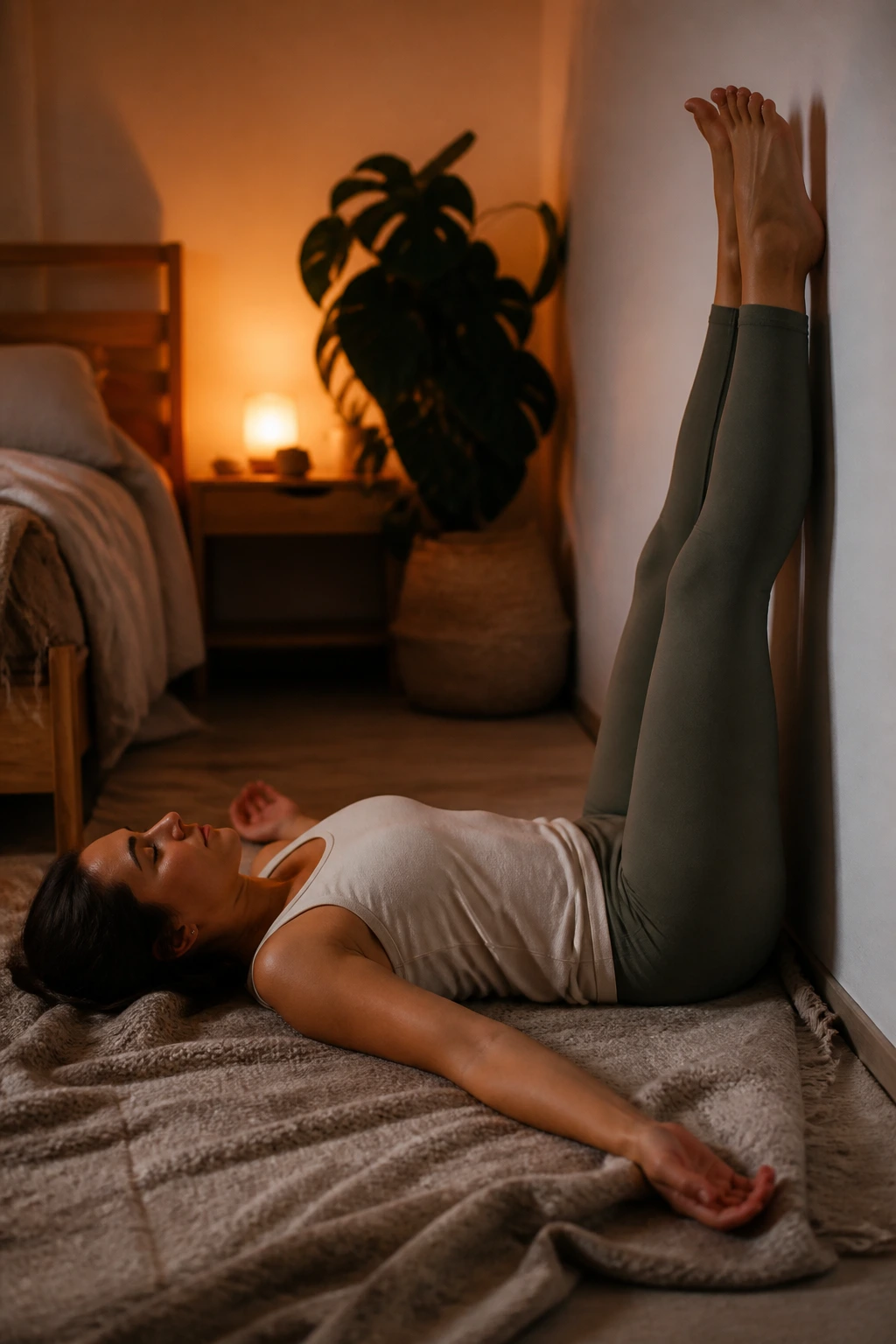
This is the one I like when I don’t want to be impressed by my own practice.
A bedtime flow should lower the volume, not spike it. Legs-up-the-wall, reclined butterfly, supine twist, and a short constructive rest position do more for sleep-ready calm than a fast sequence ever could. Keep the lights low if you can. Skip music with a beat if it pulls you forward.
A Simple 20-Minute Layout
- 4 minutes legs-up-the-wall
- 4 minutes reclined butterfly with one hand on the belly
- 4 minutes supine twist, both sides
- 4 minutes legs bent, feet on the floor, quiet breathing
- 4 minutes savasana with no goal at all
That last part matters. No stretching contest. No trying to “finish strong.” The body often settles when you stop asking it to perform.
A soft blanket under the knees makes this whole routine easier on the lower back. And yes, it can be done in pajamas.
9. Stress Reset Yoga Routine with Long Exhales
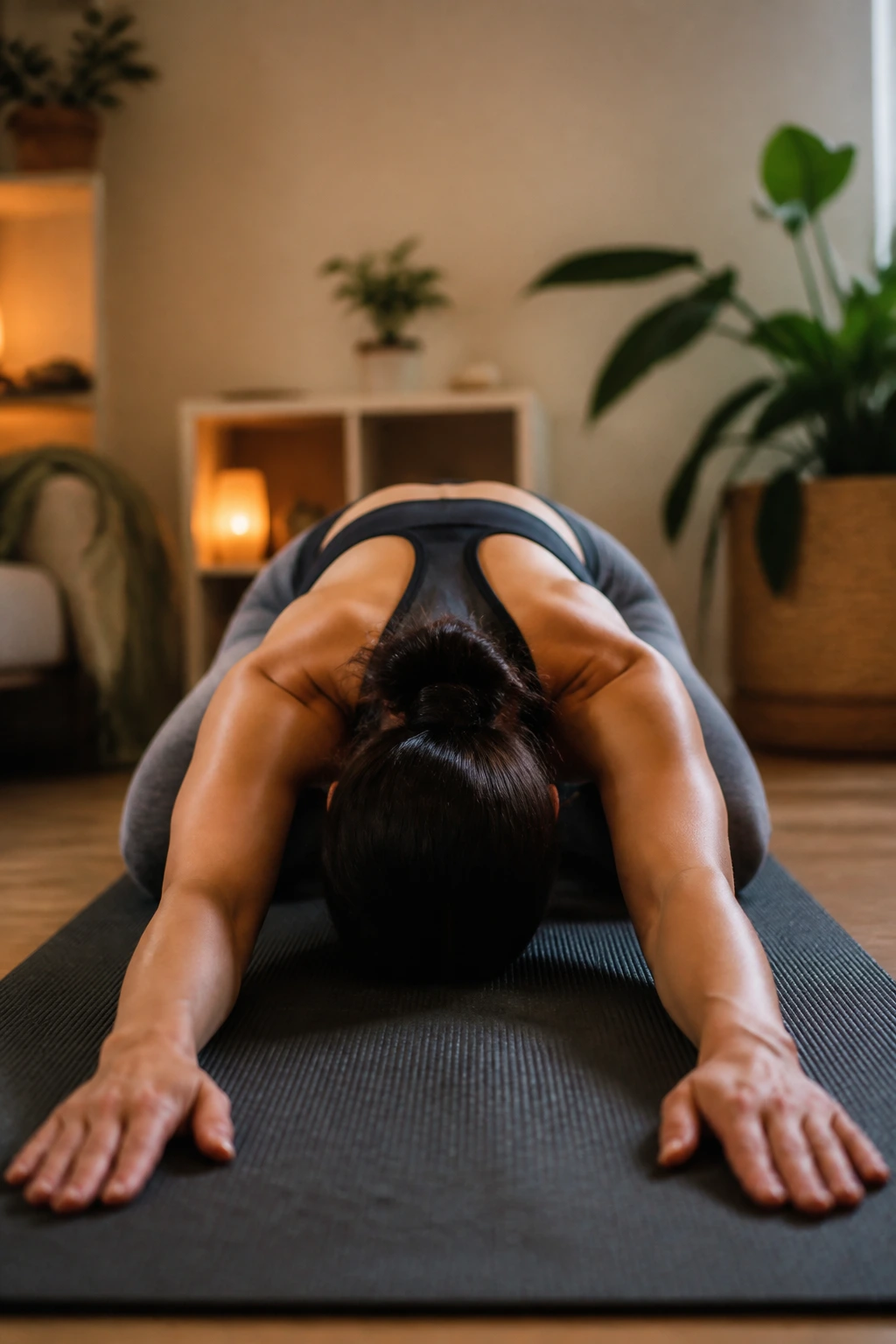
What makes a yoga routine calm instead of merely slow?
Breath pace. Shape choice. And how much effort you ask for. A stress reset works best when the postures are predictable and the exhales are longer than the inhales. Cat-cow, child’s pose, supported forward fold, and a seated twist can all help if you move through them like you’ve got nowhere else to be.
Long exhales tend to change the feel of a session fast. Not magically. Fast enough. They stop you from gripping through the jaw and shoulders, which is half the battle on a tense day anyway.
Breathing Cue to Use
- Inhale for 4 counts
- Exhale for 6 counts
- Repeat for 3 to 5 minutes in each quiet pose
If your mind keeps sprinting, give it a job. Count the breath. Count the sides. Count the still seconds after each exhale. That keeps the routine grounded without turning it into a meditation homework assignment.
10. Power Vinyasa Yoga Routine for Sweat
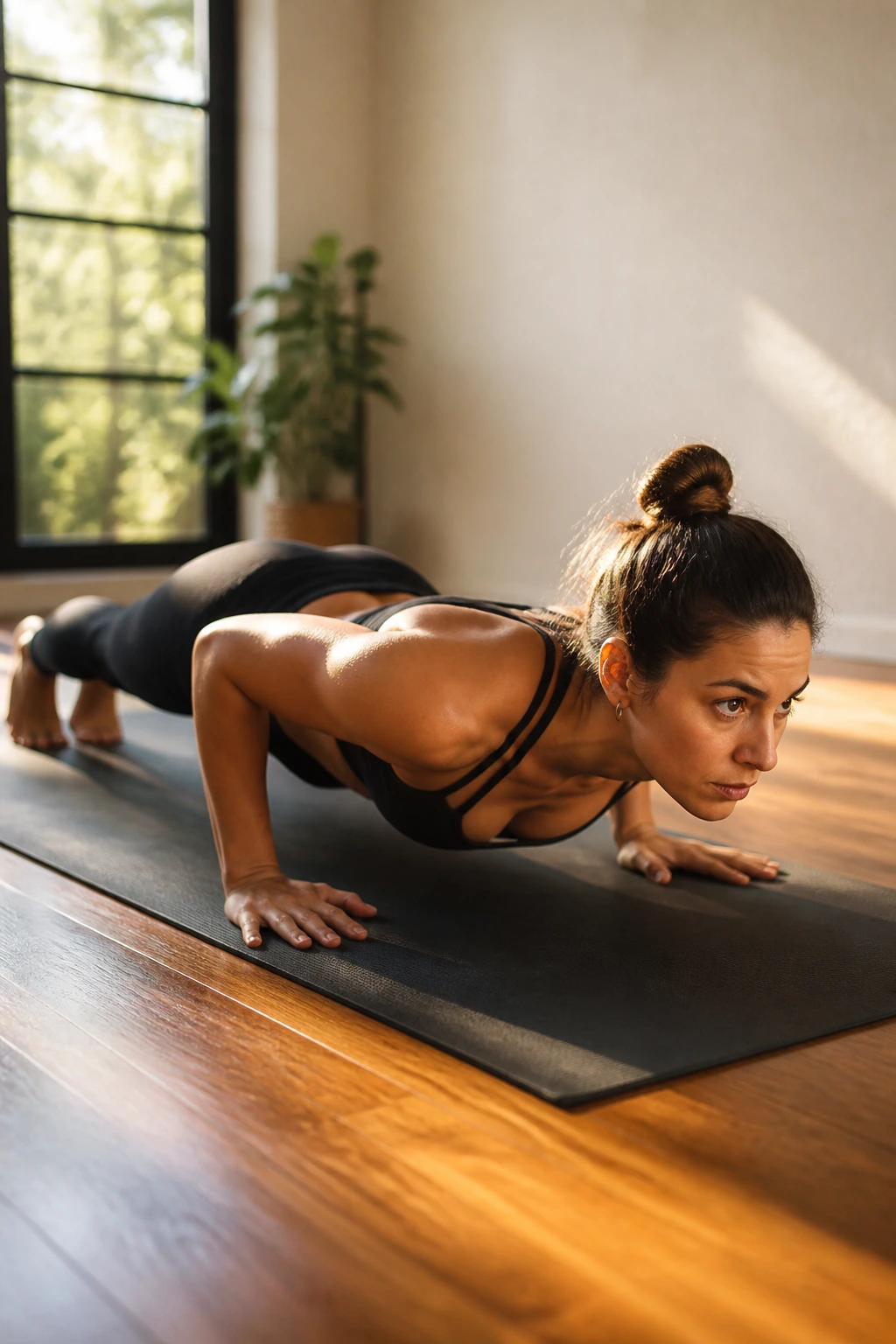
If you want to sweat in 20 minutes, stop drifting from pose to pose and build a loop.
A compact power vinyasa routine works because the transitions do half the work. Sun salutations, crescent lunges, chair pose, plank, side plank, and locust create enough density that you feel it in your legs, shoulders, and breath by the halfway mark. This is the home yoga routine I’d pick when I want exercise first and relaxation second.
Keep the pace honest. Not frantic. Honest. If your breath gets choppy too early, slow the transitions before you lose shape. That is one of the quiet rules of stronger yoga: the session should feel demanding, but not sloppy.
This one is not my bedtime choice. It belongs before a shower, before lunch, or on a day when you need your body to wake all the way up.
11. Beginner Yoga Routine That Teaches the Basics
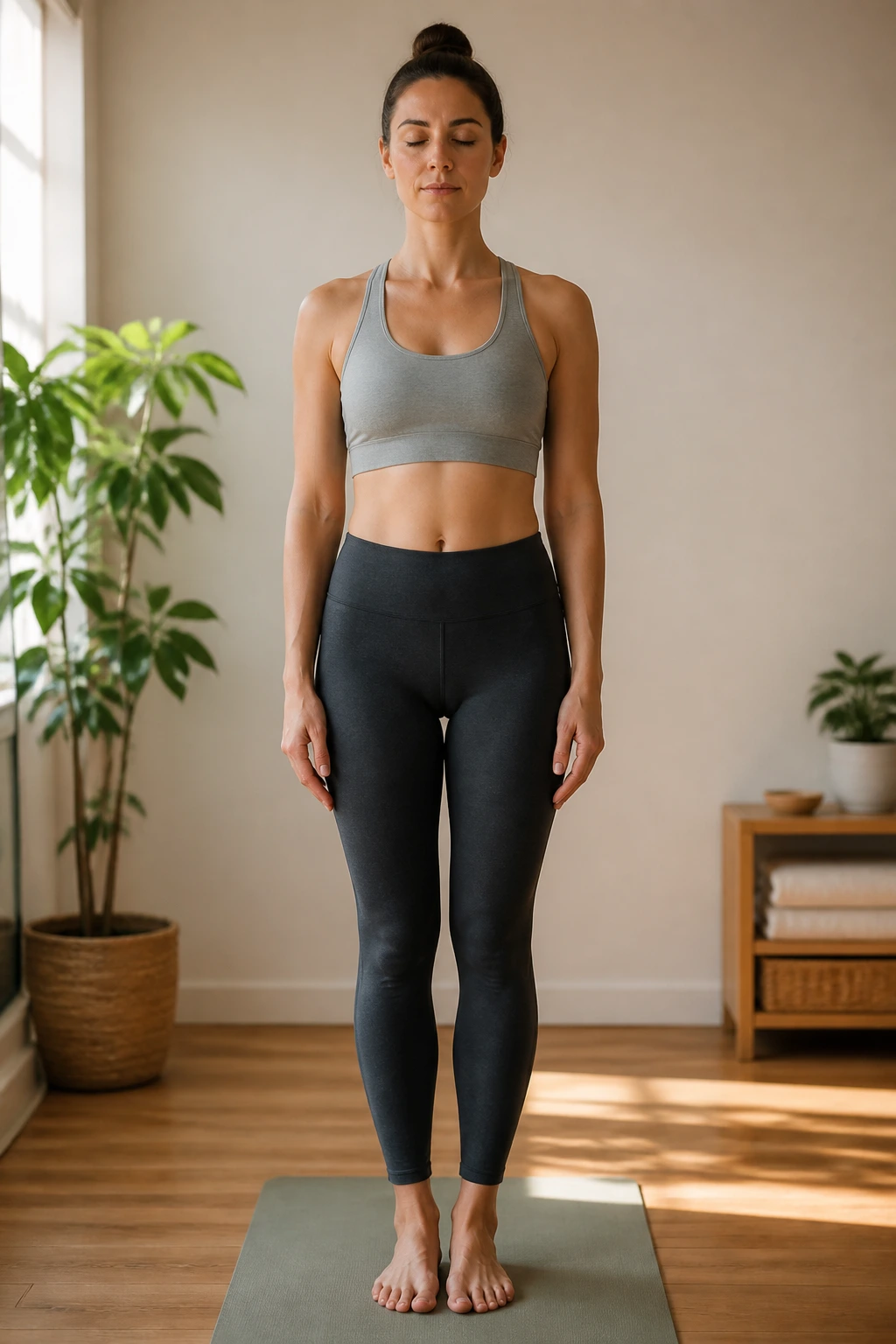
Most first-time home yoga sessions fail because people try to do too much at once.
A beginner routine should teach mountain pose, forward fold, low lunge, bridge, and a seated twist without making any of them feel like a test. Use the mat as a place to learn where your feet go, how your breath sounds, and how much bend your knees actually need. That matters more than touching your toes.
A folded blanket under the knees or hips helps a lot. So does a chair near the wall. I would rather see someone do a simple shape with clean breathing than a fancy shape that makes them hold their breath for 12 seconds and stare at the ceiling.
A Good Starter Lineup
- Mountain pose
- Cat-cow
- Downward dog at a slight bend
- Low lunge
- Bridge pose
- Seated twist
- Savasana
The whole routine should feel learnable on day one and still useful on day fifty.
12. Wrist-Friendly Yoga Routine Using a Chair and Wall
If your wrists complain in downward dog, the fix is not grit.
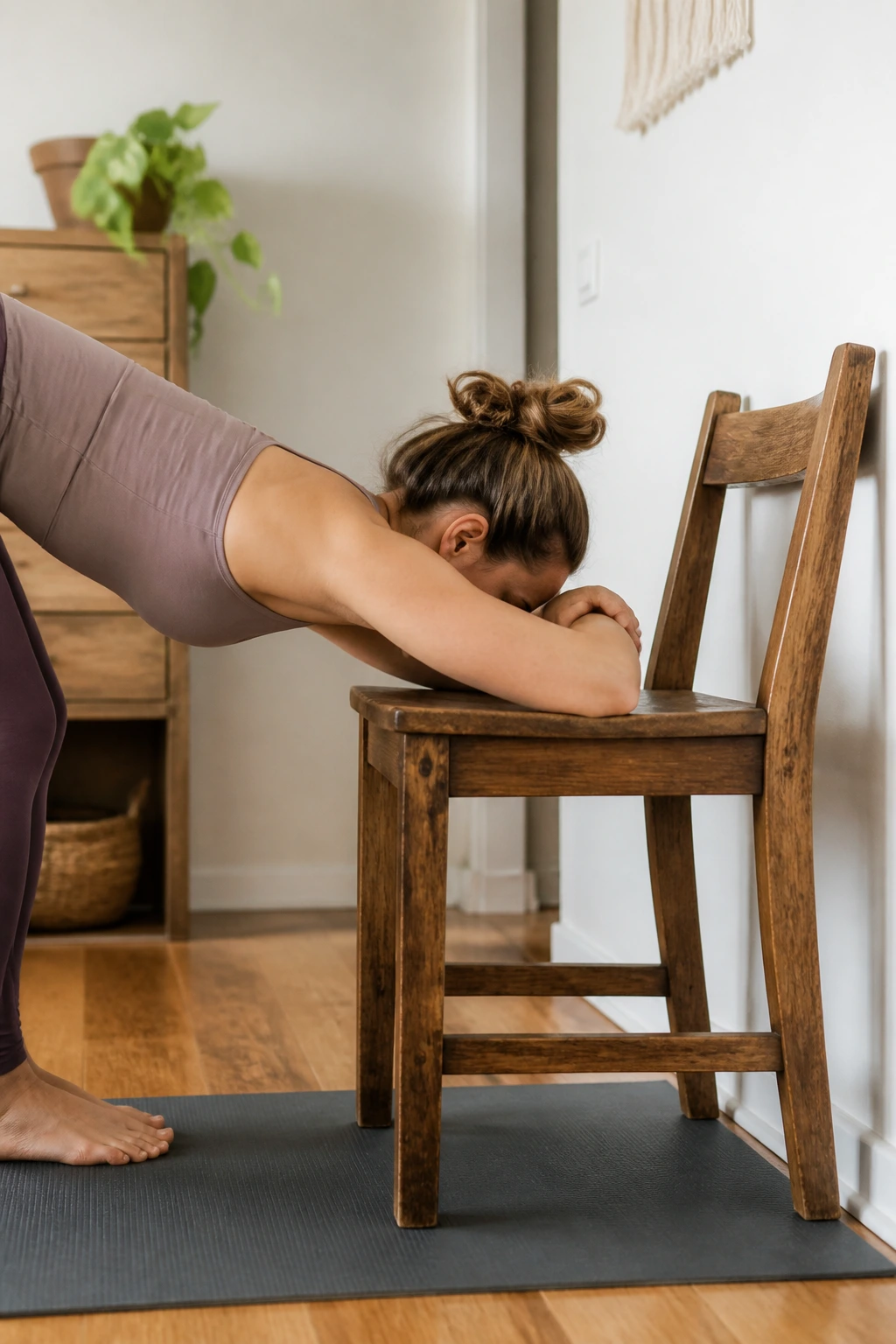
It is smarter support. A chair, a wall, and forearm work can replace a lot of weight-bearing through the hands. That makes this routine a better fit for people with tender wrists, tired forearms, or anyone who has had enough of the floor for one day.
Compared with a mat-heavy vinyasa flow, this version is gentler on the joints and easier to repeat often. You still get shoulder opening, leg work, and balance, but you spread the load around instead of dumping it onto the palms. That is a better trade on days when your hands already did too much typing, lifting, or carrying.
I like chair-supported forward folds here. I like wall angels, standing side bends, and a gentle squat with the hands hovering at chest height. None of it looks dramatic. All of it adds up.
13. Small-Space Standing Yoga Routine
No floor space? Fine.
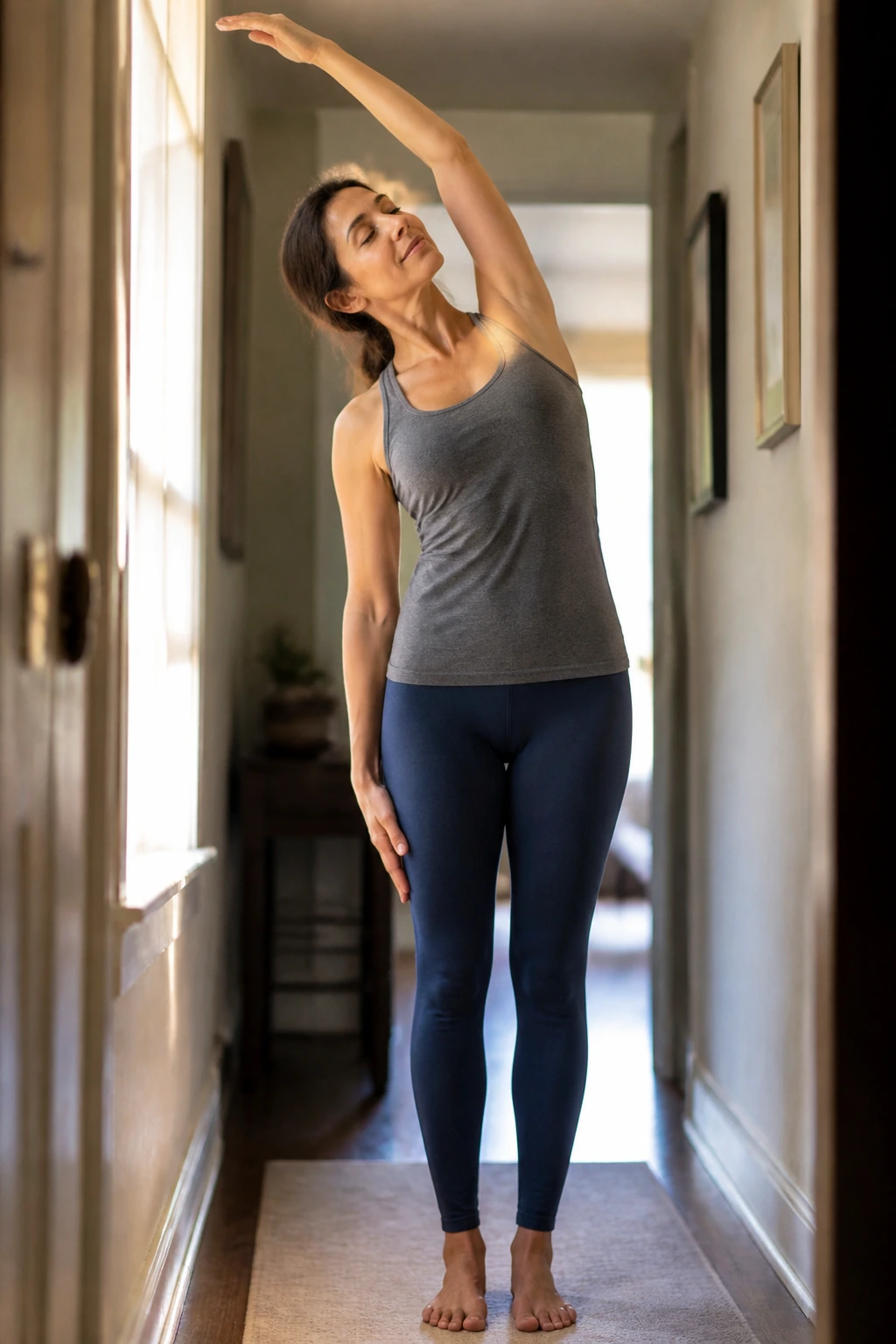
A standing-only routine can fit into a hallway, beside a bed, or in the slice of room between the coffee table and the wall. Mountain pose, side stretches, standing figure-four, crescent lunge, goddess pose, and a standing twist make a compact sequence that still feels like a workout plan instead of a few random reaches.
I use this one on days when I cannot be bothered to clear the floor. That sounds shallow. It’s not. Low-friction routines get done more often, and done often beats done perfectly.
The trick is keeping the movement honest even when the space is tight. Sink into the knees. Reach through the fingertips. Turn the torso slowly on the twist so your hips don’t yank along for the ride. A small room can still hold a real practice.
14. Runner Recovery Yoga Routine
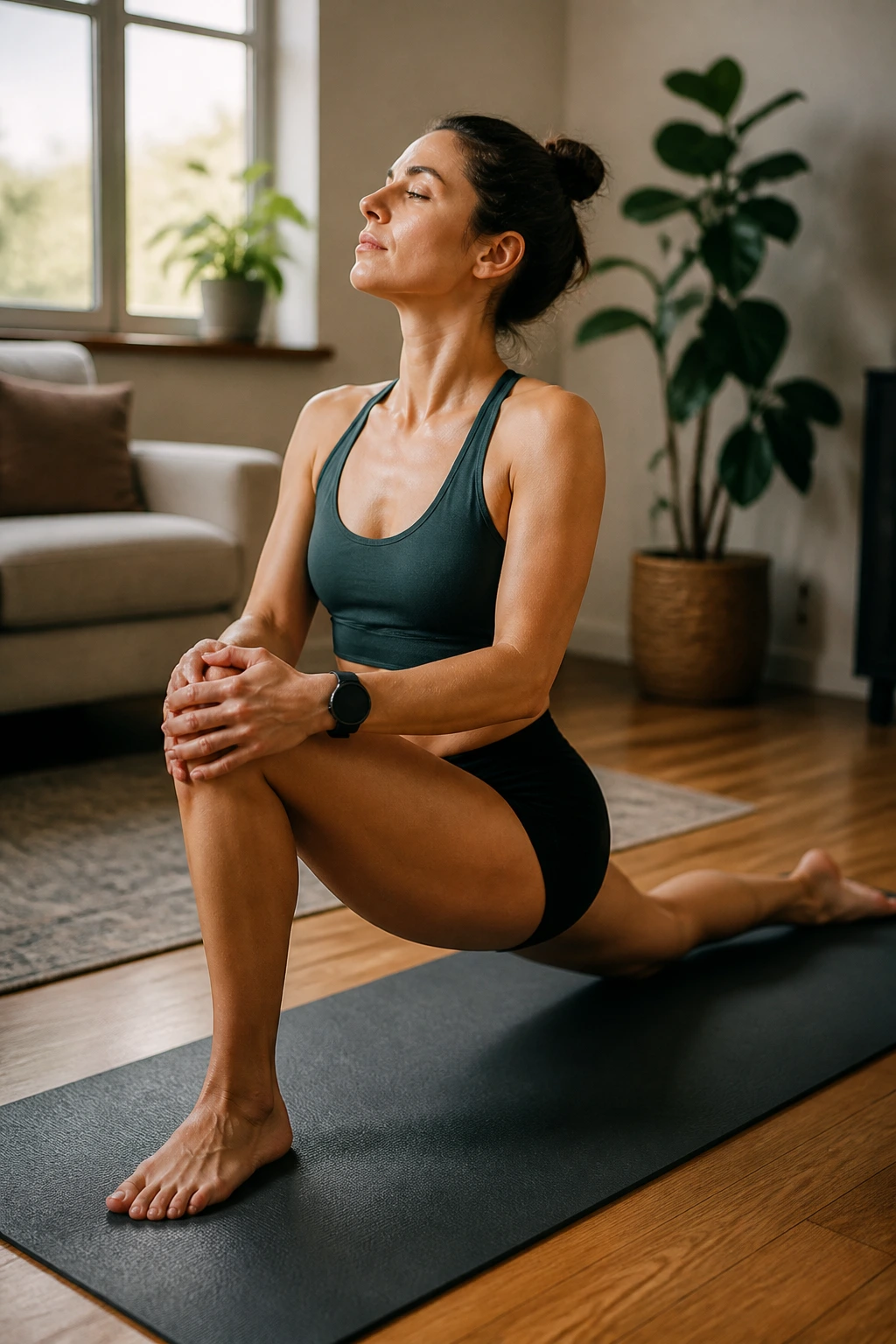
A runner’s body usually wants three things after effort: calves, hips, and a spine that stops bracing.
Where to Spend the Time
Quads and Hip Flexors
Low lunge with the back knee down, quad stretch standing, and a short couch stretch if your setup allows it. These help undo the front-of-hip tightness that shows up after repetitive strides.
Calves and Feet
Downward dog pedaling, wall calf stretch, and a few slow toe curls on the mat. The feet are part of the story, and runners ignore them at their own expense.
Glutes and Outer Hips
Reclined pigeon, supine figure-four, and a gentle seated twist. These make the legs feel less welded together after the run.
The important part is not to turn recovery into another hard session. Move slowly, breathe through the sticky spots, and stay away from aggressive holds if the legs feel cooked. Twenty minutes here can make the next day’s walk feel much cleaner.
15. Backbend Yoga Routine to Lift Your Mood
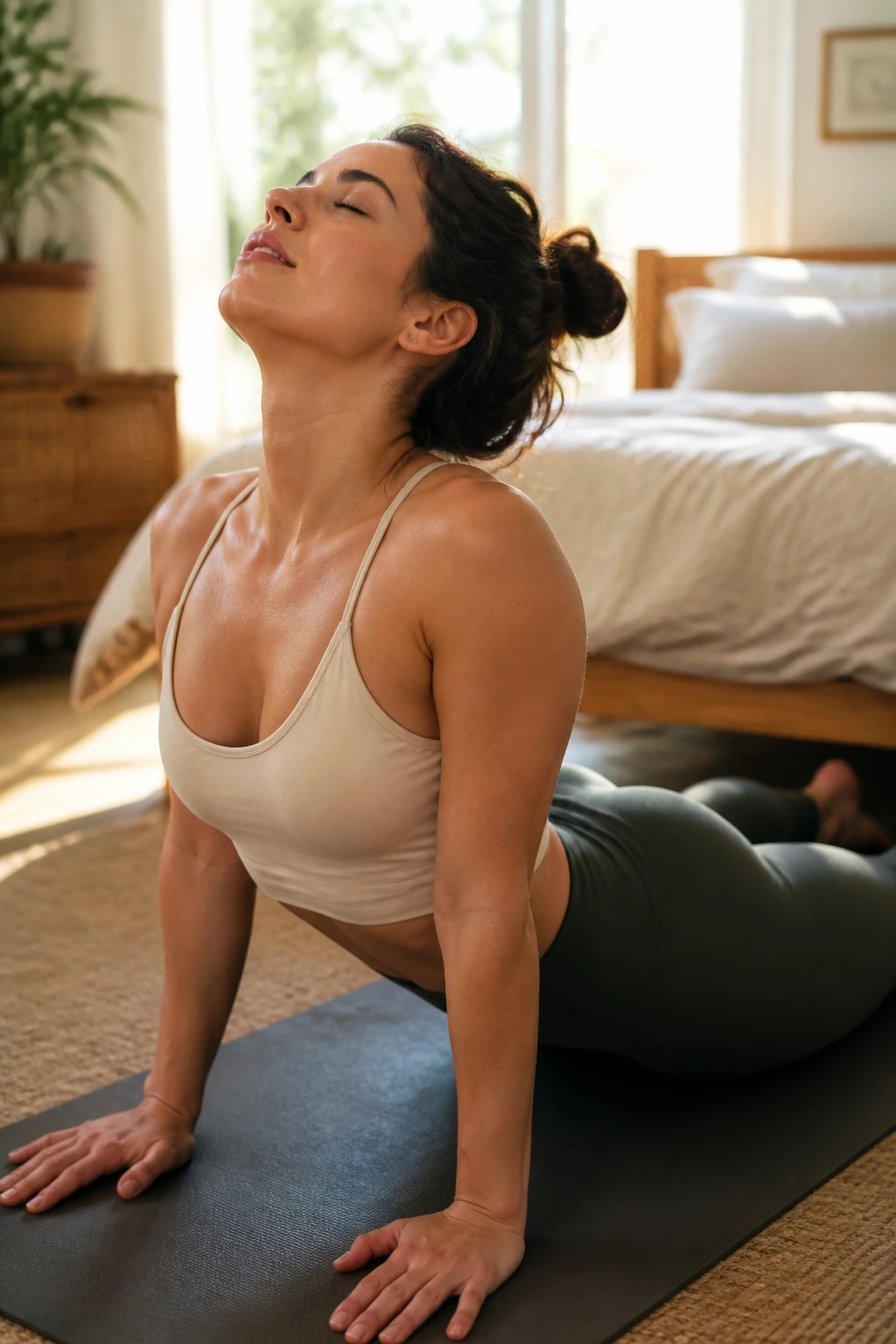
Why do gentle backbends feel so good when the day has gone flat?
Part of it is posture. Part of it is breath. When you open the front of the body with cobra, sphinx, supported bridge, and a mild standing heart opener against the wall, you interrupt the slump that creeps in after too much sitting or too much stress. The chest has room again. The neck often feels longer. The head stops dropping forward quite so hard.
This routine works best when the backbend is small and clean. Do not throw yourself into the lumbar spine. Lift through the upper back, keep the glutes from clamping down, and let the curve spread out instead of collapsing in one spot.
A bridge hold for 30 to 45 seconds, repeated twice with a few breaths in between, is usually enough. You do not need circus flexibility to feel the shift.
16. Side-Body and Twist Yoga Routine
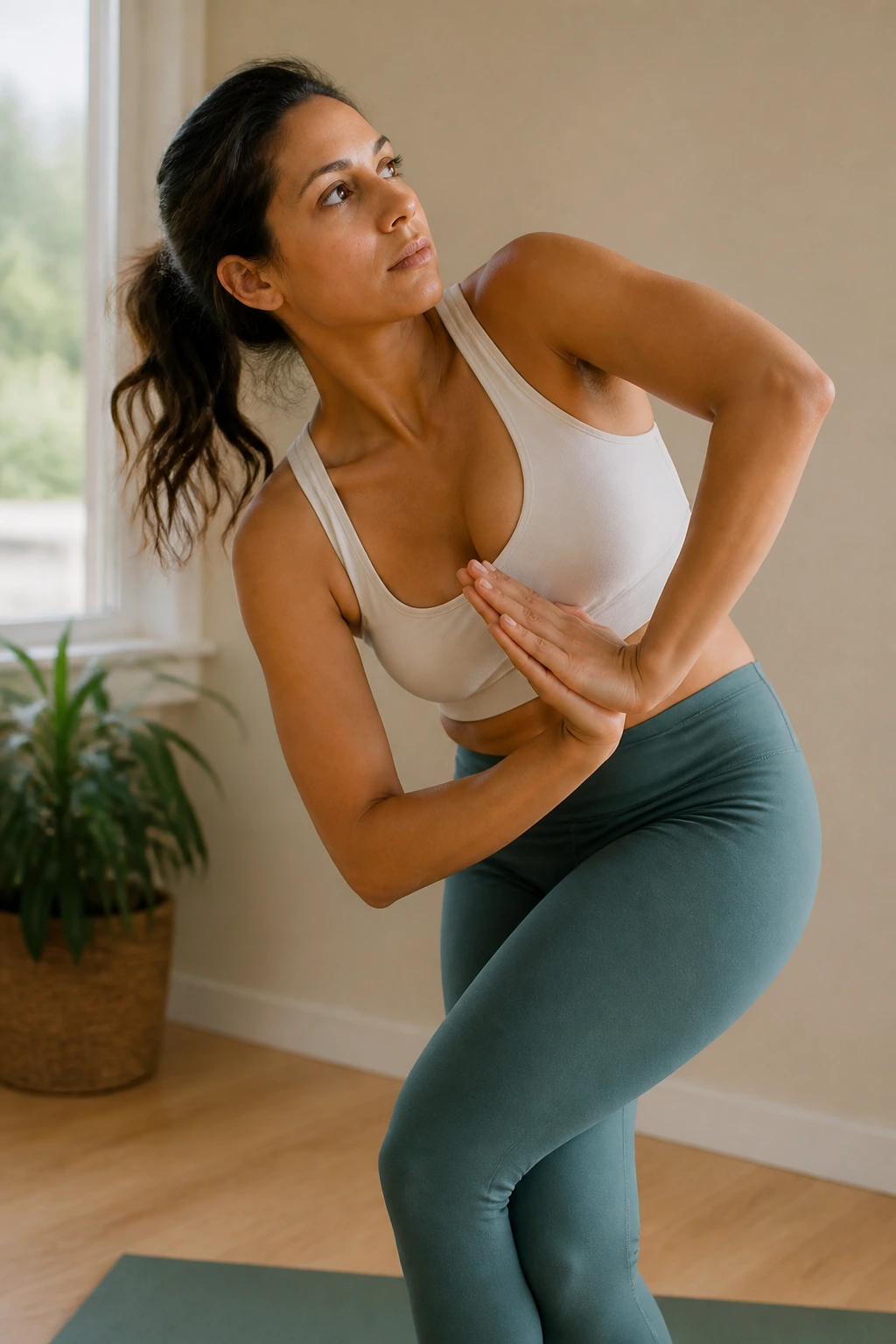
A one-shoulder bag, a side-sleeping habit, or a day spent leaning over a sink can leave the side body feeling compressed.
This is where gate pose, standing side angle, seated side bends, and a gentle supine twist earn their place. They open the ribs, lengthen the obliques, and remind the spine that it is allowed to rotate instead of only folding forward and back. That rotation matters more than people think.
Simple Flow Ideas
- Gate pose on each side for 1 minute
- Standing side bend with both feet grounded
- Low lunge with a twist and open chest
- Seated twist with a tall spine
- Supine twist for a slower finish
Keep the twist smooth. If the knees or lower back pinch, back out a little and make the shape smaller. The useful version of a twist feels broad through the ribs, not cramped through the waist.
17. Restorative Yoga Routine for a Quiet Night
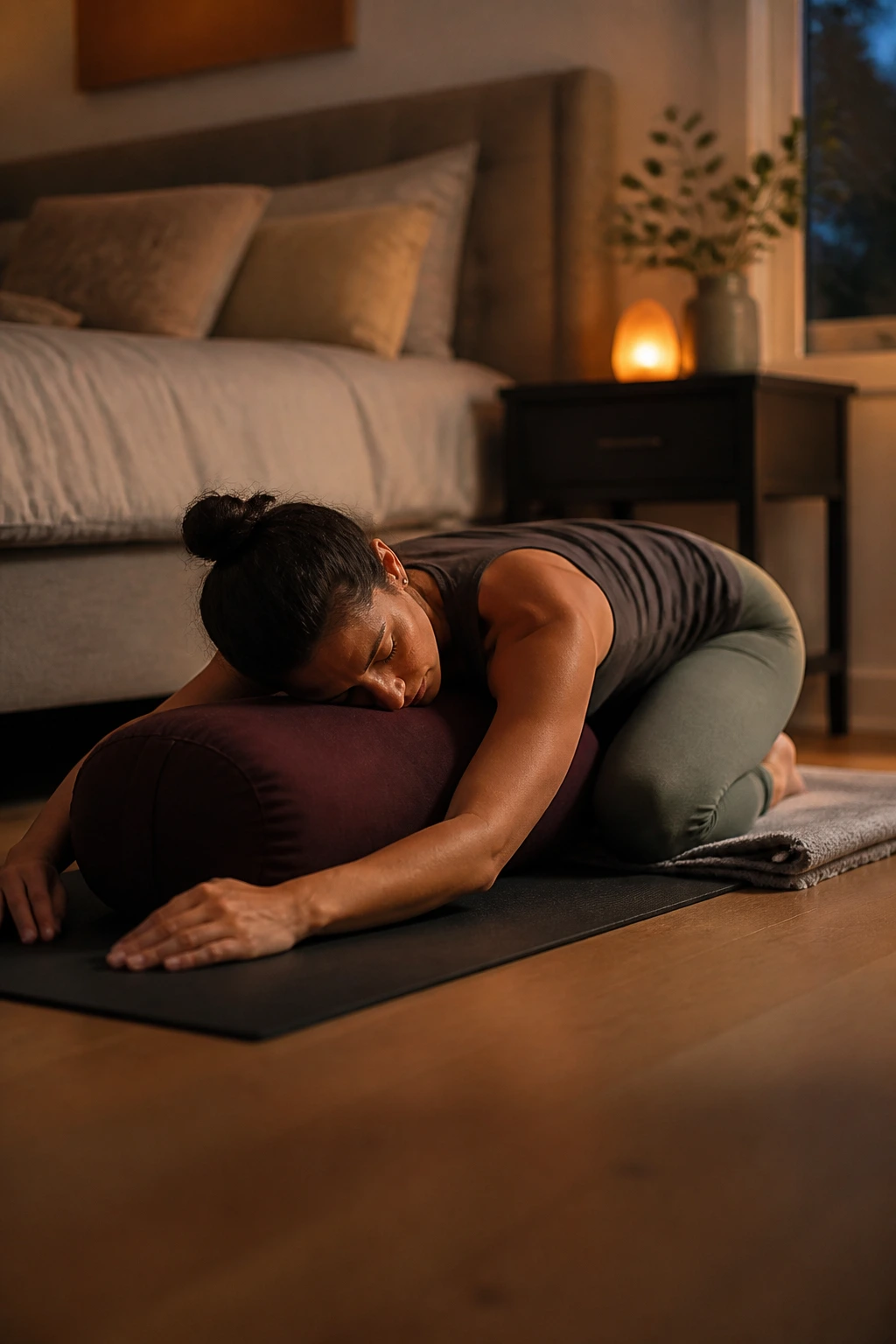
Restorative yoga is not lazy yoga.
It is the kind of session that asks less from the muscles and more from the nervous system. Bolster, blanket, folded towels, and the wall become the work here. Supported child’s pose, legs-up-the-wall, reclined bound angle, and savasana can turn a noisy evening into something quieter without much physical effort.
I like this routine when stretching feels like the wrong mood. Some nights you do not need hamstring length or a burn in the thighs. You need support. You need to stop trying to solve the day with effort.
A good restorative practice feels almost suspiciously simple. Then you stay in the poses for a few minutes and realize the body was waiting for exactly that amount of stillness.
One note: if a pose feels fussy, it is the wrong pose. Add support or move on.
18. Mobility Yoga Routine Before Walking or Strength Work
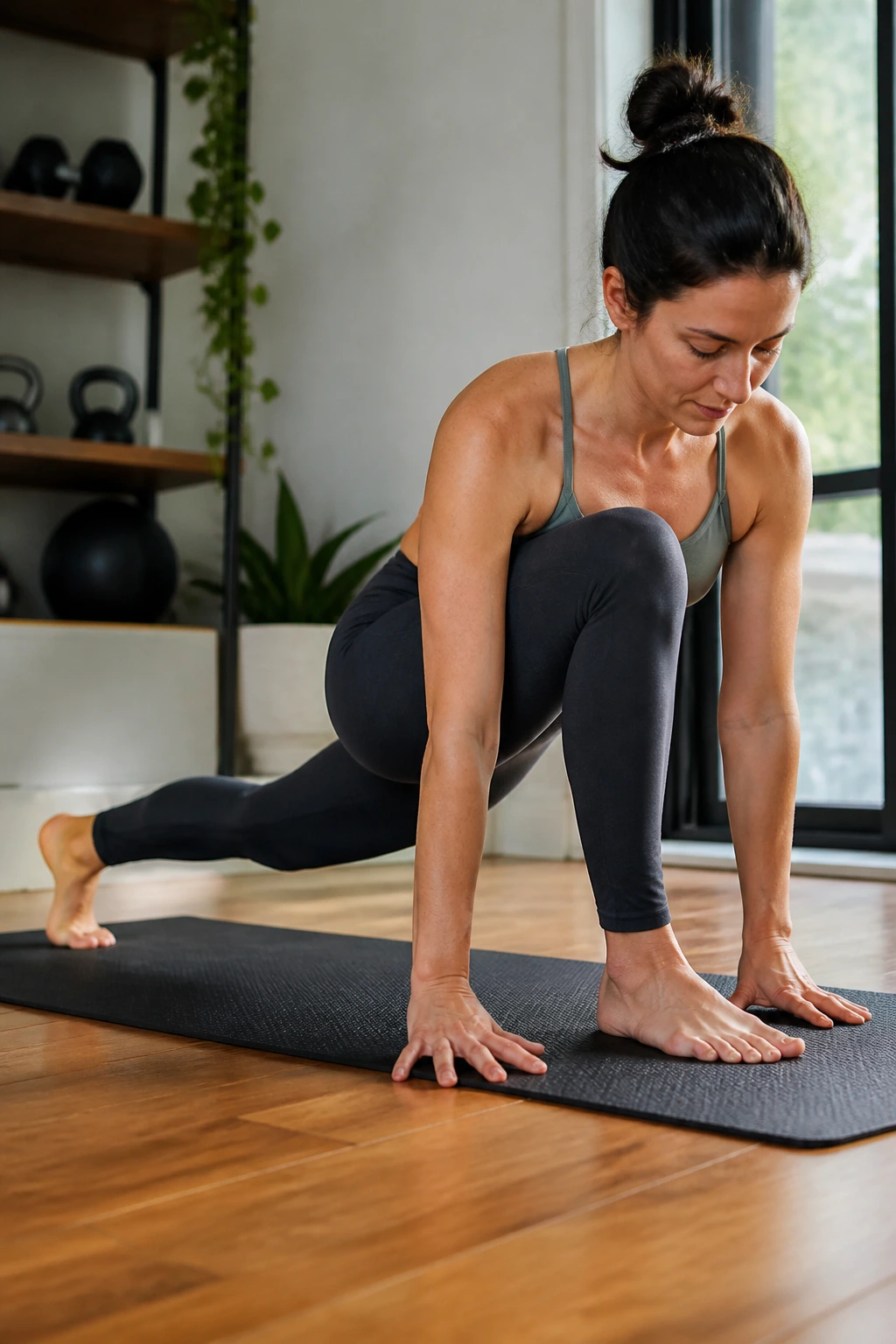
A 20-minute yoga routine before a walk or lifting session can make the whole workout feel less jerky.
That does not mean turning the warm-up into a workout. It means preparing the joints that tend to get ignored: ankles, hips, thoracic spine, and shoulders. A few cat-cows, a low lunge with rotation, ankle rocks, shoulder circles, and a short squat hold are enough to make the next movement cleaner.
What I’d Put in the Middle
- 2 minutes of breath and spine movement
- 4 minutes of ankle and calf work
- 4 minutes of hip openers
- 4 minutes of rotation through the upper back
- 4 minutes of squat, lunge, and standing reach
- 2 minutes of easy standing stillness
The point is readiness, not fatigue. If your legs are already shaking before the real session starts, you’ve overdone it.
This routine is small, practical, and worth repeating often. A warm body moves better. Simple.
19. Midday Energy Yoga Routine for a Break
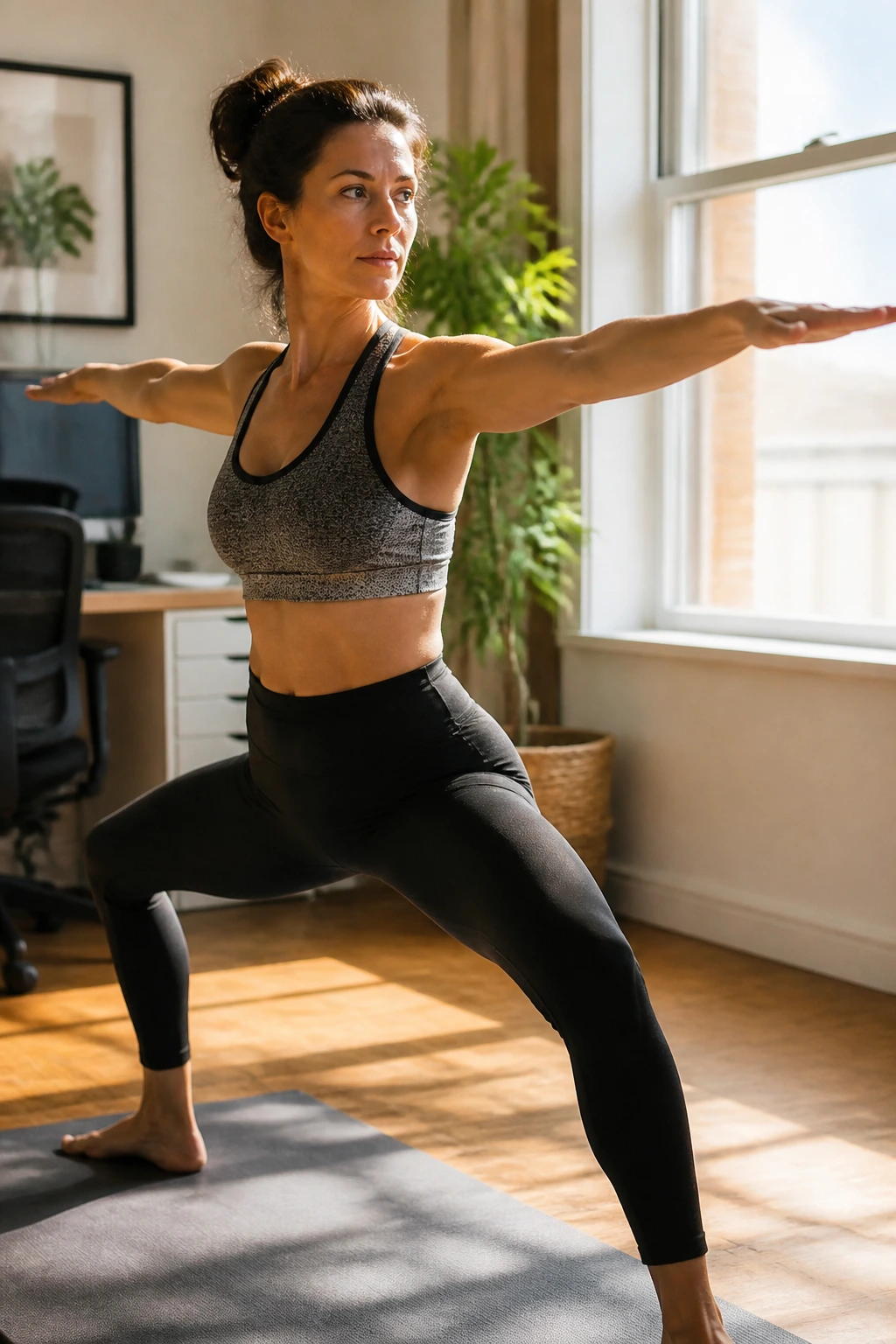
A mid-afternoon slump does not always need coffee.
Sometimes it needs the body to move through a few familiar shapes without sitting, slumping, or doom-scrolling for the tenth time. Sun salutations, warrior II, chair pose, and a short standing twist can bring the energy back up in a cleaner way than another cup of something that makes your hands jittery.
A 5-Minute Chunk Plan
- 5 minutes of sun salutations or modified sun salutations
- 5 minutes of standing strength, like chair and warrior II
- 5 minutes of twists and side bends
- 5 minutes of quiet breathing or forward fold
That middle chunk is the part I would not skip. Standing work changes the feel of the whole routine because it asks for real leg effort, even if the room is tiny and you’re still in socks.
If you only have one break in the day, this is a good use of it. You finish awake without feeling cooked.
20. No-Mat Yoga Routine for Travel or Carpet
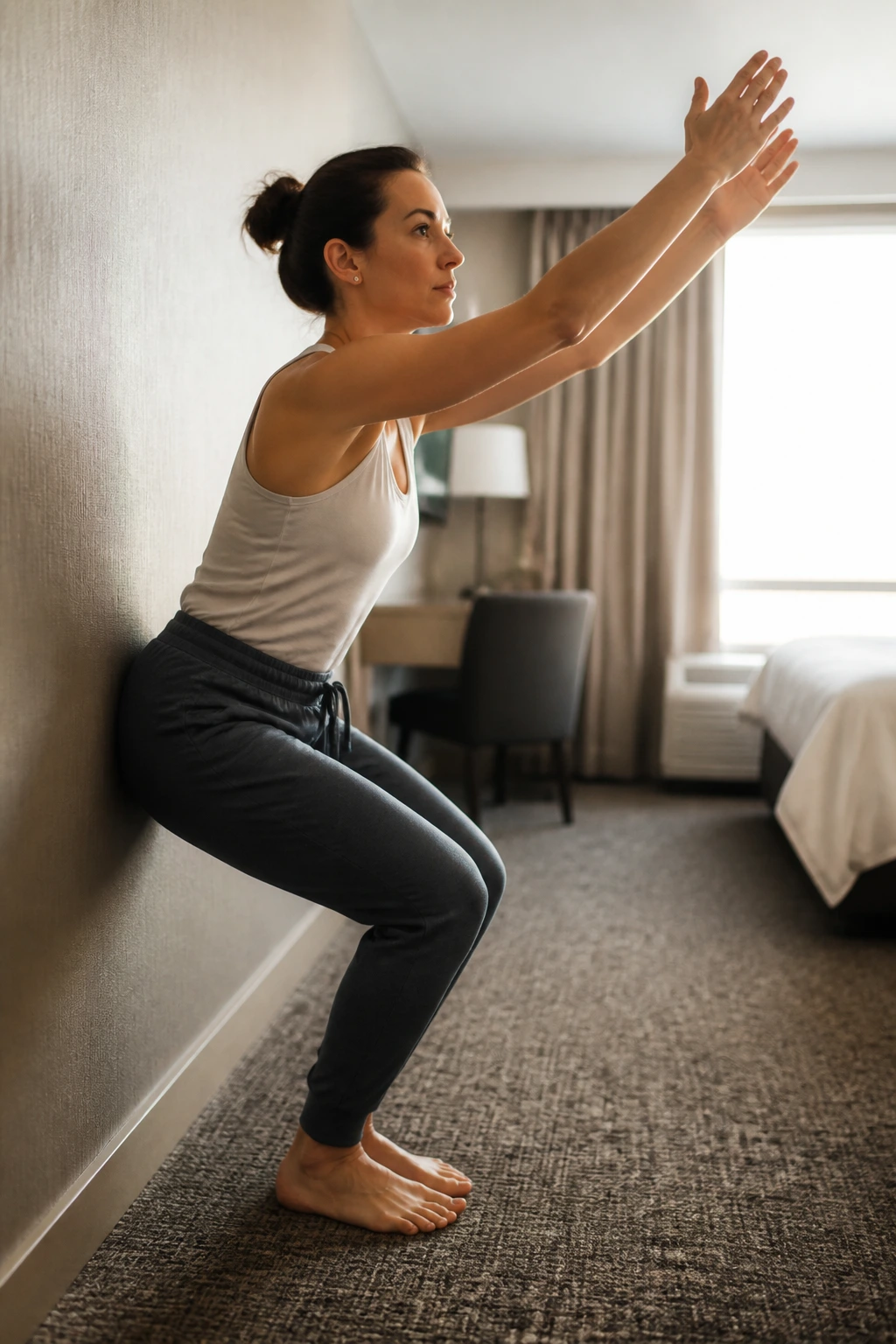
No mat? No problem.
The floor is not the point. The body is. A travel-friendly routine can be done on carpet, a towel, a folded blanket, or beside the bed with mostly standing and seated shapes. That makes it a little ugly and a lot useful, which is my favorite kind of home practice when the bag is half-unpacked and the schedule is messy.
Compared with a full mat flow, this version leans on standing side bends, chair pose, seated twists, wall-supported calf stretches, and a brief floor finish if the surface is tolerable. It is best for cramped rooms, hotel stops, or those days when dragging out gear feels like too much of a project.
I keep this one around because it lowers the excuse factor. You can do it almost anywhere.
And that matters more than a polished setup.
Final Thoughts
The smartest way to use 20-minute yoga routines at home is to stop asking one sequence to do every job. Some days need heat. Some need the floor, a wall, and a long exhale. Others need enough movement to feel like your joints belong to you again.
If you keep three or four versions in rotation — a wake-up flow, a recovery flow, a sweatier power session, and a quiet evening routine — you cover most of real life without overthinking it. That is the part people miss when they treat yoga like a performance.
A routine gets useful when it is easy to start.
