



A good senior fitness plan does not start with a sweaty boot camp. It starts with a chair, a wall, a steady breath, and a few moves that feel almost too simple until you realize your legs are working, your feet are paying attention, and your balance is waking up again.
That’s the part many people miss. Strength and balance are tied together, especially in older adults. If the hips are weak, the ankles get lazy, and the core has to make up the difference. If the balance is shaky, the legs stop trusting themselves. The right elderly workouts fix both at once, which is why the best exercises for seniors are rarely flashy.
You do not need a perfect body to start. You need a safe setup, some patience, and a plan that respects knees, hips, shoulders, and the occasional stubborn back. A sturdy chair, a countertop, and a pair of light dumbbells can go a long way. So can 10 minutes of consistent practice, done with decent form and no ego.
Start with a few of these moves, not all 25 at once. Add what feels steady, keep what feels useful, and let the rest wait their turn.
1. Chair Sit-to-Stand
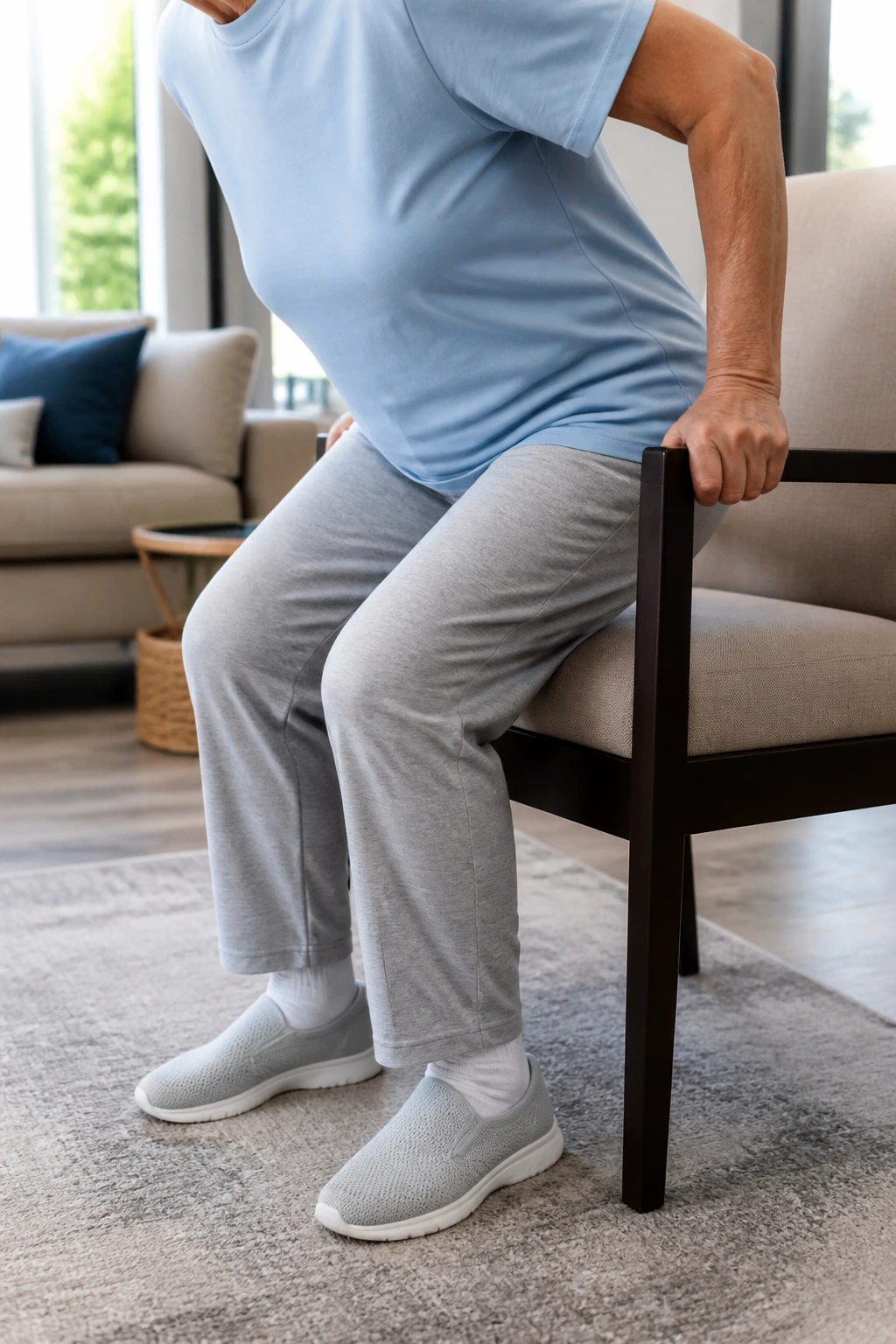
If I could hand out one lower-body exercise to older adults, this would be it. It looks plain. It isn’t. Standing up from a chair is a real-life strength test, and every clean rep teaches the thighs, glutes, and trunk how to work together.
How to Do It Well
Sit near the front of a sturdy chair with your feet flat, about hip-width apart. Lean forward a little, press through your heels, and stand without throwing your shoulders backward. Sit down slowly. That slow return matters. It builds control.
Aim for 5 to 10 reps, then rest. If a low chair feels brutal, raise the seat with a firm cushion. If you need your hands on the armrests at first, use them. There’s no prize for making it harder than it needs to be.
Watch for: knees caving inward, plopping into the chair, or rocking too far forward before standing.
2. Wall Push-Up
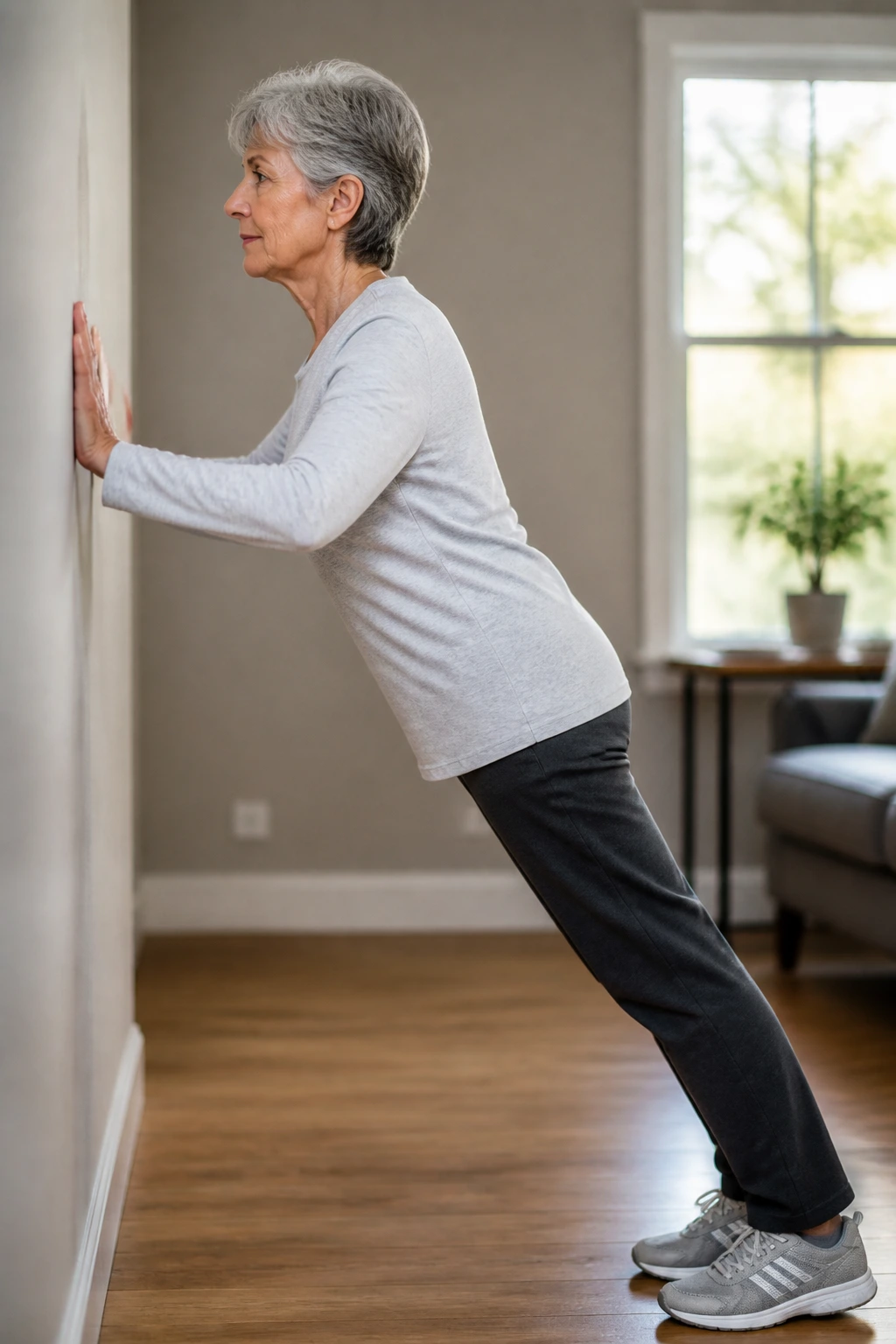
Wall push-ups are a kind of quiet hero. They train the chest, shoulders, triceps, and posture without forcing you onto the floor, which is a win if knees, wrists, or balance make floor work annoying.
Stand at arm’s length from a wall, place your hands at chest height, and walk your feet back until your body forms one straight line from head to heels. Bend the elbows and lower your chest toward the wall, then press back out. Keep your heels down and your neck long.
Do 8 to 12 reps. If that feels too easy, step your feet farther back. If your shoulders complain, move closer to the wall and keep the elbows at a comfortable angle. The move should feel smooth, not jammed.
And yes, this counts as strength training. Absolutely.
3. Standing Heel Raises
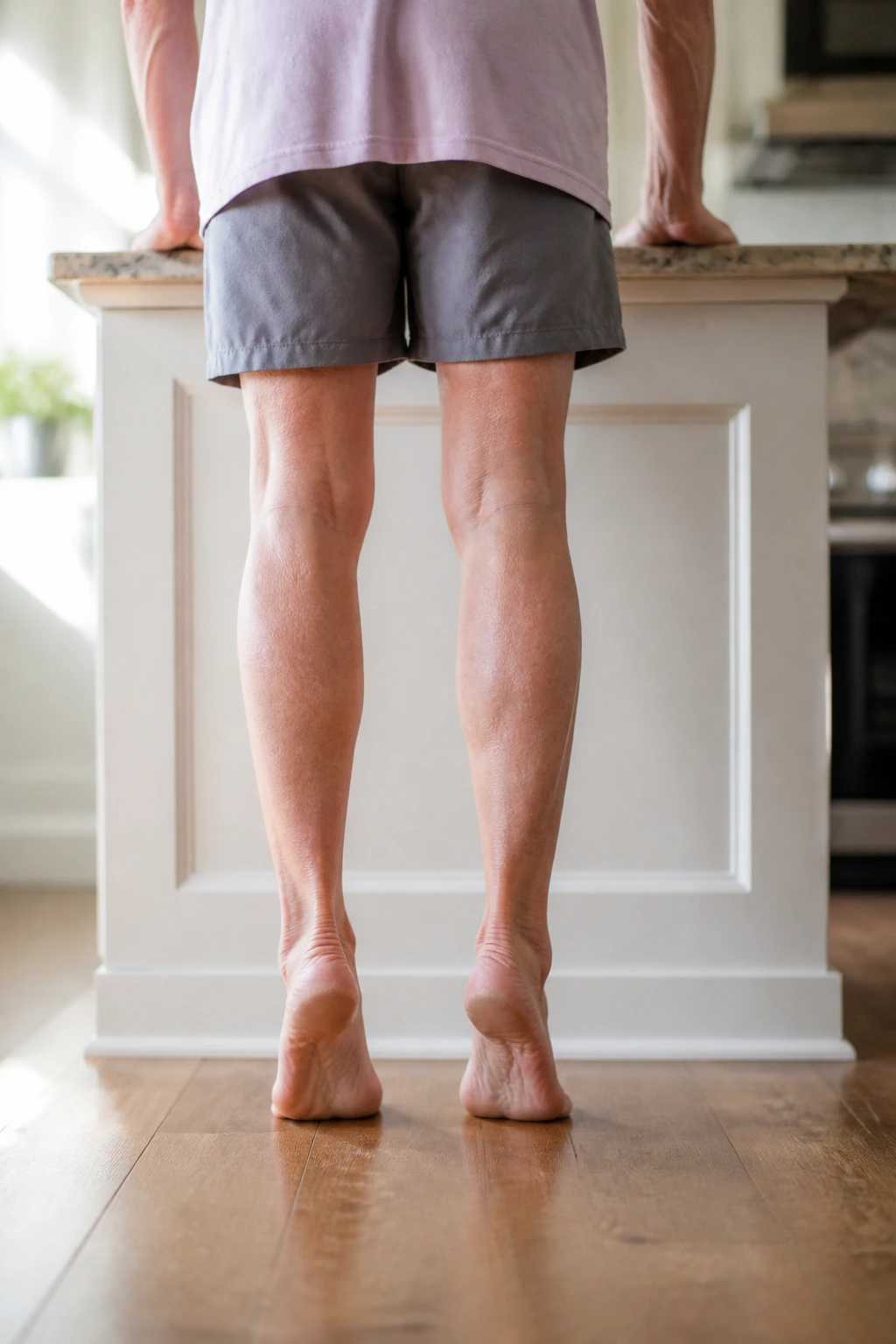
Can something as simple as lifting your heels matter? Yes, and more than people think. The calves and ankles play a huge role in balance, especially when you catch yourself from a stumble or step off a curb.
Hold a counter or chair back lightly. Rise onto the balls of your feet, pause for one second at the top, and lower with control. Don’t bounce. Don’t rush. The lowering phase is where a lot of the work happens.
Try 10 to 15 reps. If that gets easy, do them more slowly or hold the top position for 2 seconds. If you want a bigger challenge, shift to one leg while keeping a fingertip on support.
What to Feel
- The back of the lower leg should work.
- Your ankles should stay straight, not roll outward.
- Your weight should stay centered over the big toe and second toe.
4. Tandem Stance
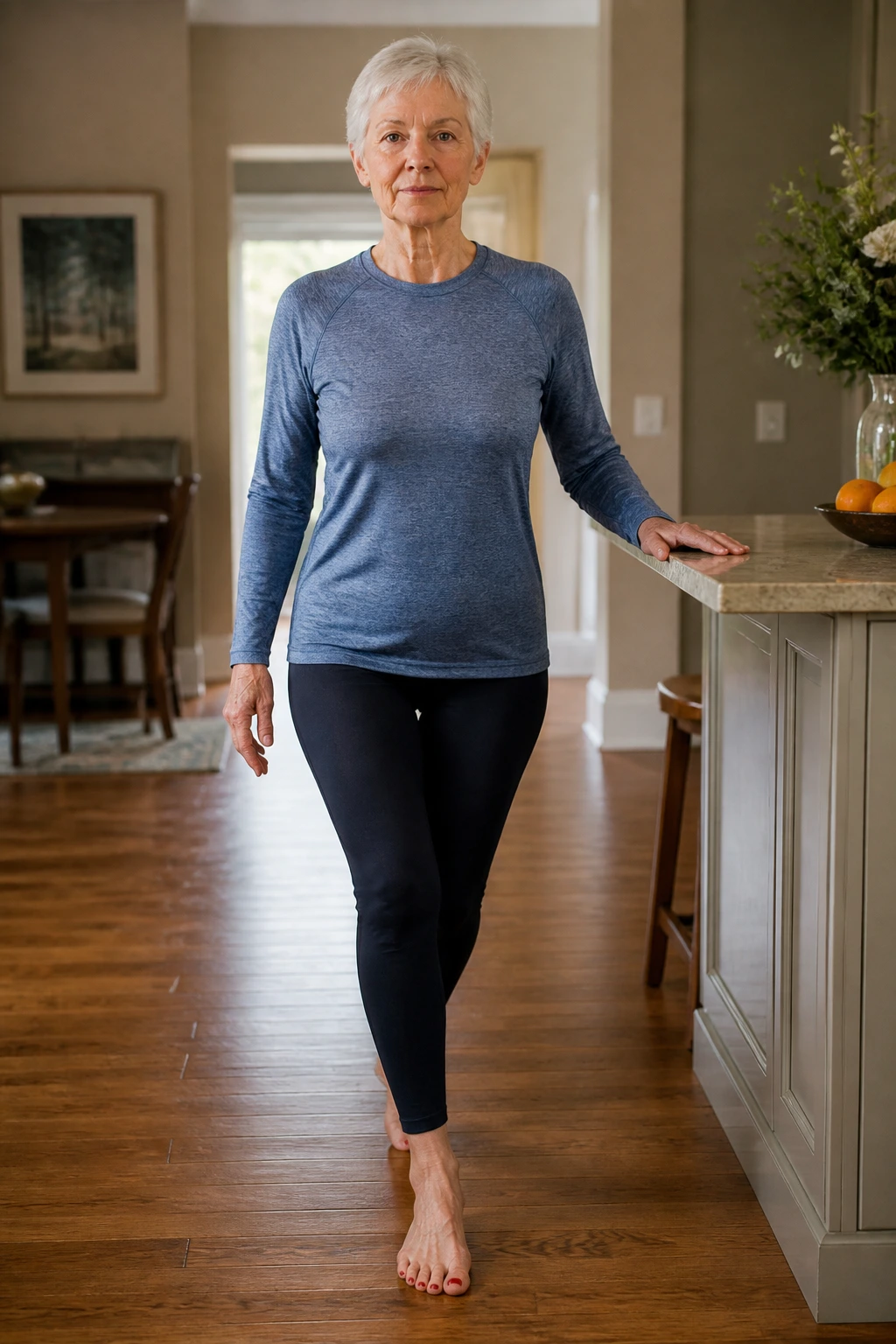
Place one foot directly in front of the other, heel touching toes if you can manage it. That narrow stance looks tiny, but it wakes up the balance system fast because it takes away the wide base most people lean on without thinking.
Stand near a counter so you can grab it if needed. Hold the position for 10 to 30 seconds, then switch feet. A slight bend in the knees helps. So does a relaxed jaw, oddly enough. People clench when they get nervous, and clenching makes balance worse.
If full heel-to-toe is too much, separate the feet by a few inches. Same drill. Less drama.
One clean hold is better than three wobbly ones where you panic and step out immediately.
5. Seated Marching
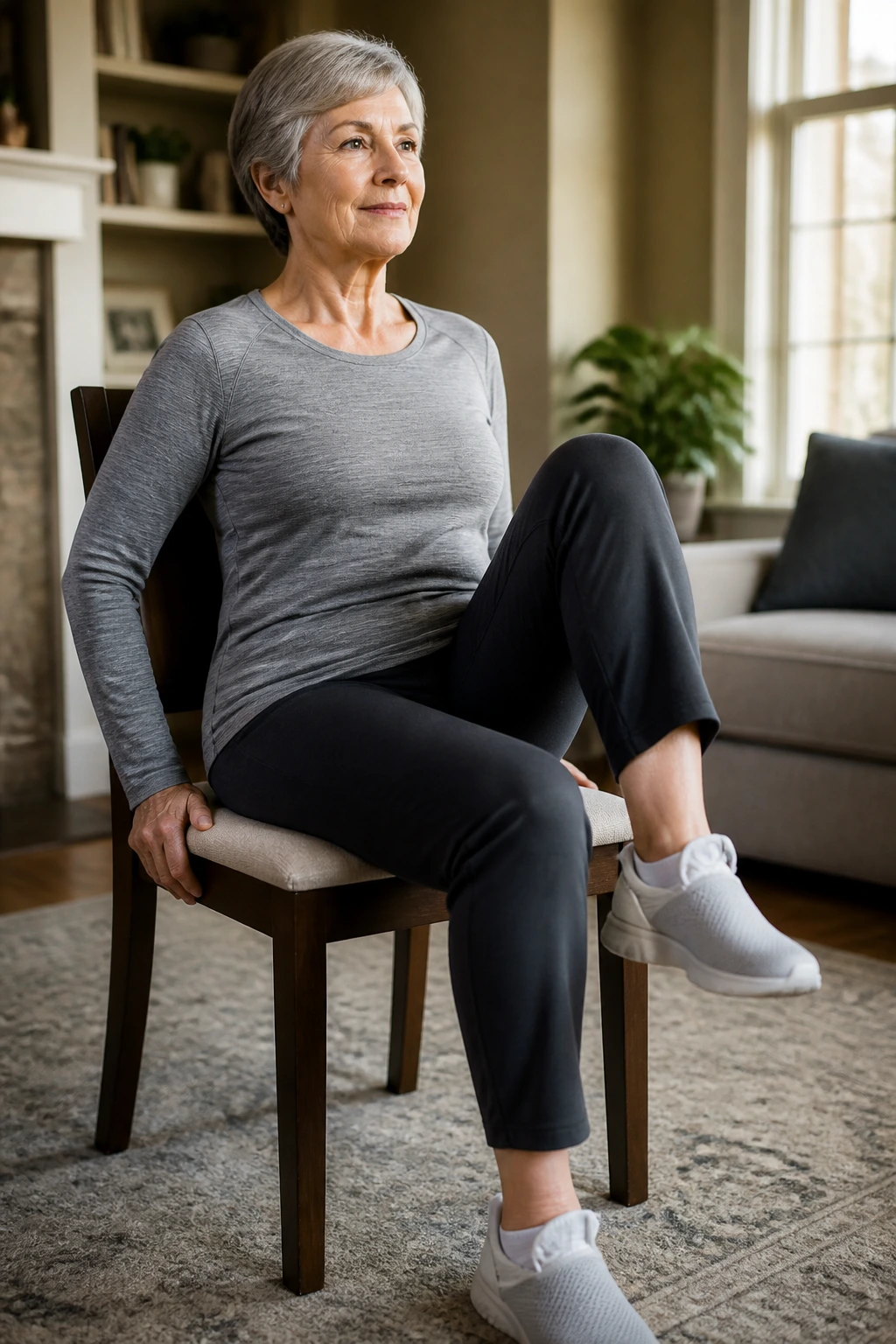
Seated marching looks mild until your hips start to notice what is happening. That’s the point. It strengthens the hip flexors, keeps the trunk awake, and gives older adults a balance-friendly way to practice alternating leg control.
Sit tall near the front of a chair and lift one knee, then the other, like an easy marching rhythm. Keep your chest lifted and your hands on the chair if you want extra steadiness. Try 20 alternating marches or 10 per side.
This is a smart move on low-energy days. It still trains coordination without asking much from the joints. If you want more challenge, hold a small ball between your hands and keep your torso quiet while the legs move.
No bouncing. No leaning back. The pelvis should stay mostly still.
6. Step Taps to a Low Step
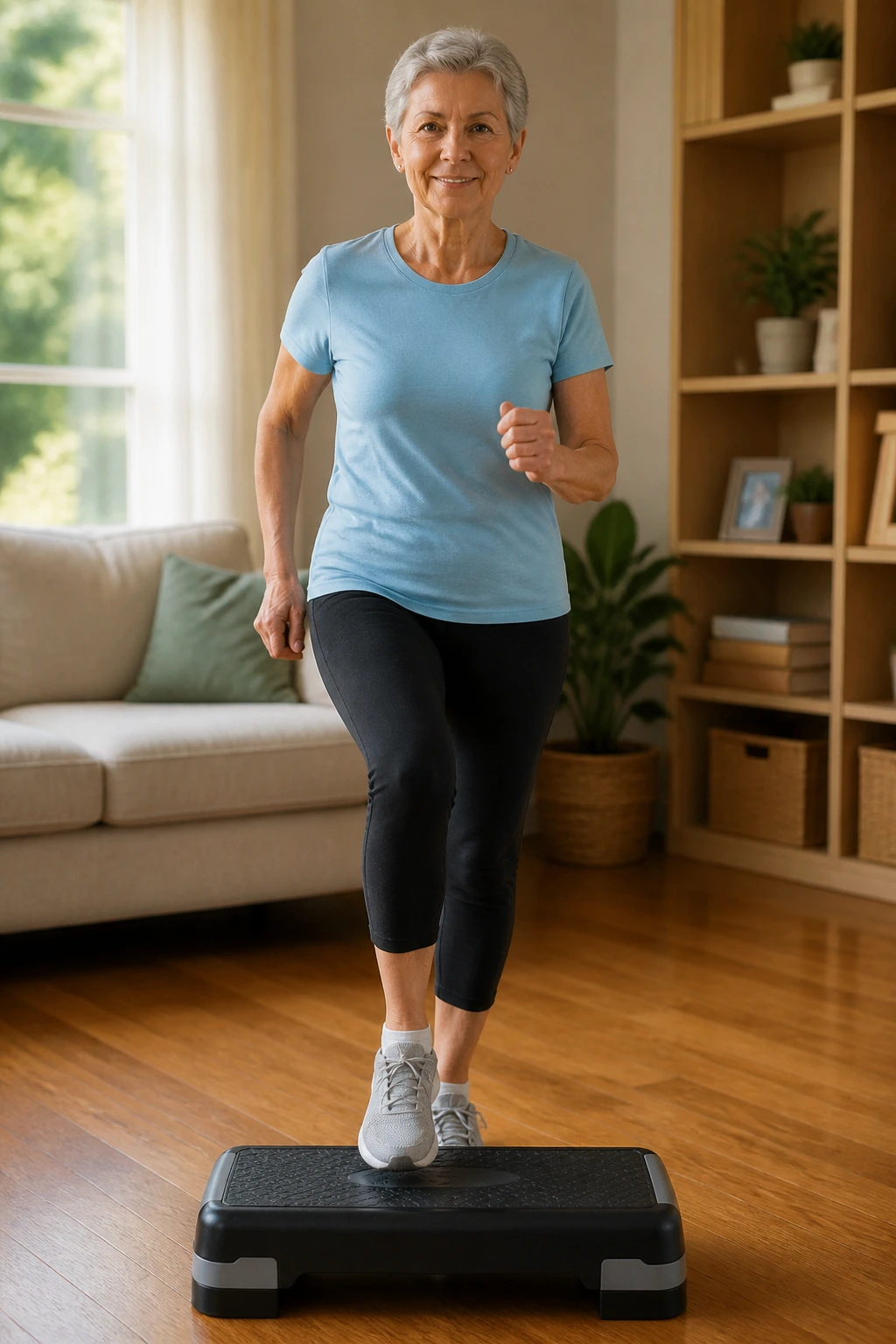
A low step, a stair, or even a thick, solid platform can make a simple foot tap feel like a real balance drill. The body has to shift weight from side to side while staying upright, and that is a skill worth practicing.
Tap one foot onto the step, bring it back down, then switch sides. Keep the taps light and quiet. 10 taps per side is a solid place to begin. If you feel steady, speed up a little while keeping the torso controlled.
The trick is not height. The trick is control.
Good Cues
- Stand tall instead of staring at your feet the whole time.
- Keep the standing knee soft.
- Use a rail or counter if the room feels slippery or crowded.
7. Side Leg Raises
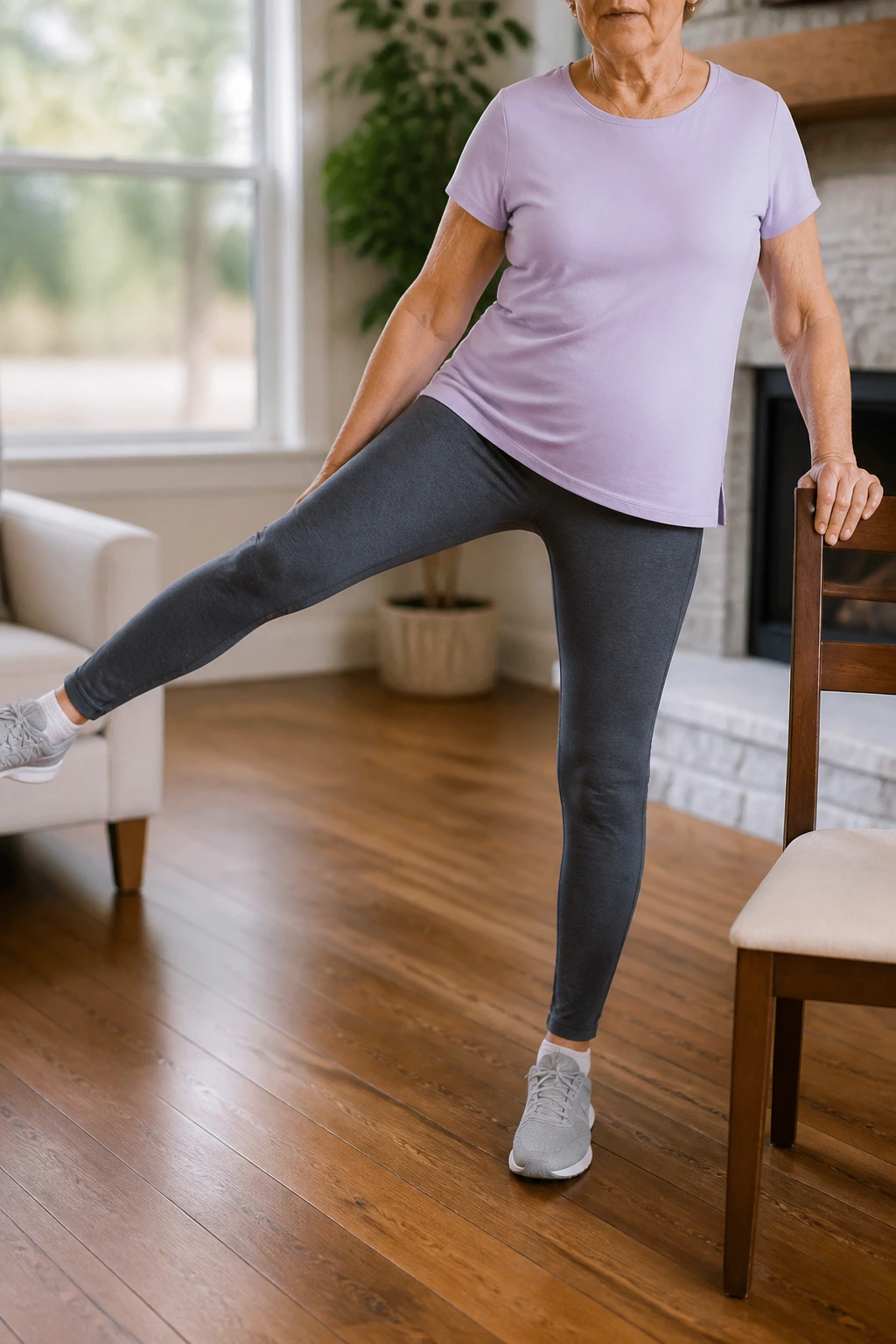
The outer hip muscles do a lot of boring but important work. They help keep the pelvis level when you walk and reduce that side-to-side wobble that makes stairs and curbs feel awkward.
Hold a chair, shift your weight onto one leg, and lift the other leg out to the side about 6 to 8 inches. Keep the toes pointed forward or slightly down, not turned up. Lower slowly. If you swing the leg, the hip never does much.
Aim for 8 to 12 reps per side. You should feel the side of the hip working, not the lower back. If you feel the back taking over, shorten the lift.
This is one of those exercises that looks tiny and pays rent later.
8. Resistance Band Rows
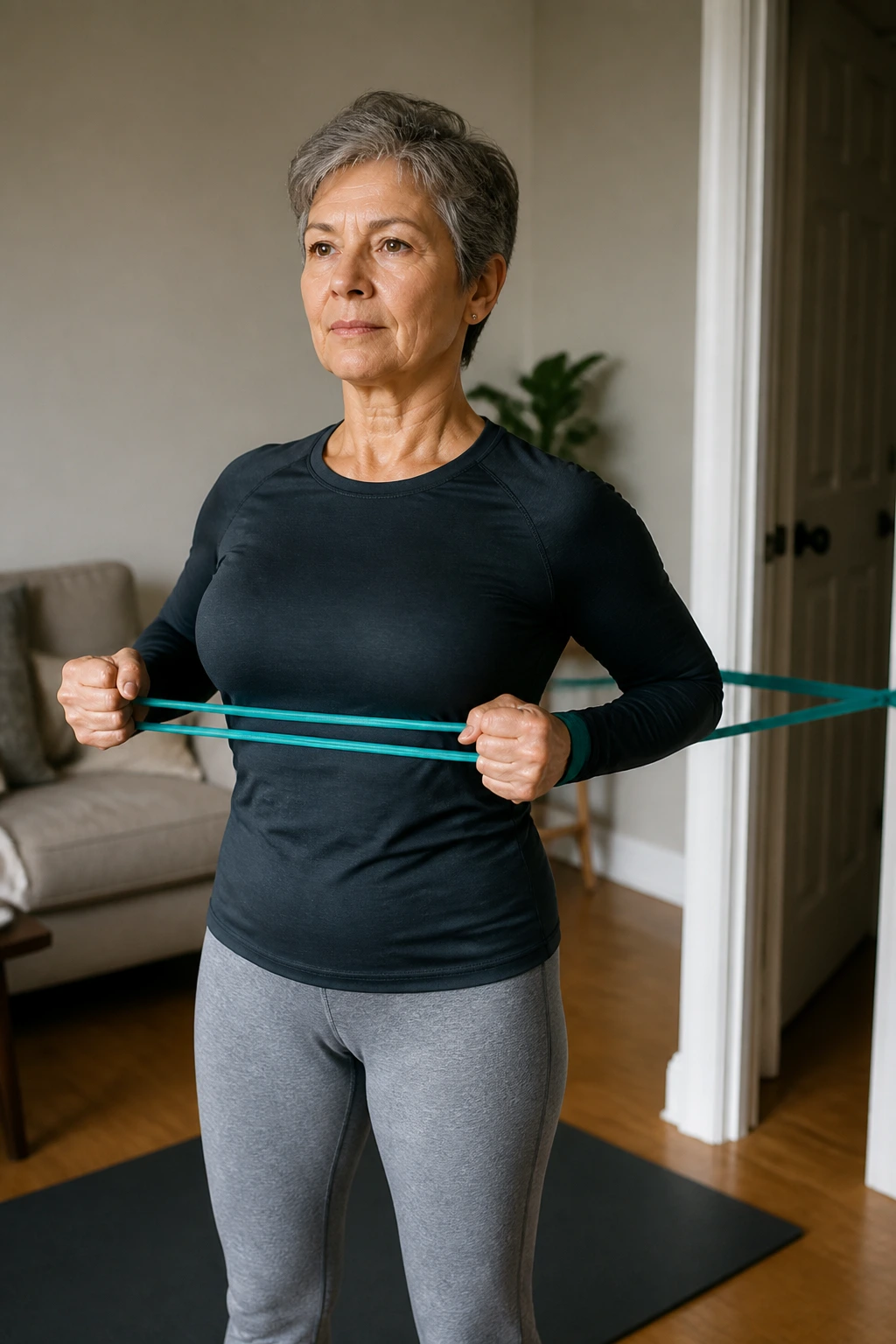
Posture gets better when the upper back gets stronger. That’s the simple truth behind band rows. They help pull the shoulders out of that rounded, slumped position that creeps in after years of sitting, driving, reading, or folding laundry.
Anchor a resistance band around a sturdy post or close a band in a door that locks safely. Hold the ends, stand or sit tall, and pull the elbows back until your shoulder blades come together gently. Then return with control. Do 10 to 15 reps.
Do not shrug. Do not yank. Think “long neck, elbows back, chest open.” If the band feels too stiff, step closer to the anchor point or switch to a lighter band.
Why It Helps
- Better posture
- Stronger back for carrying groceries
- More shoulder stability when reaching overhead
9. Bird-Dog Reaches
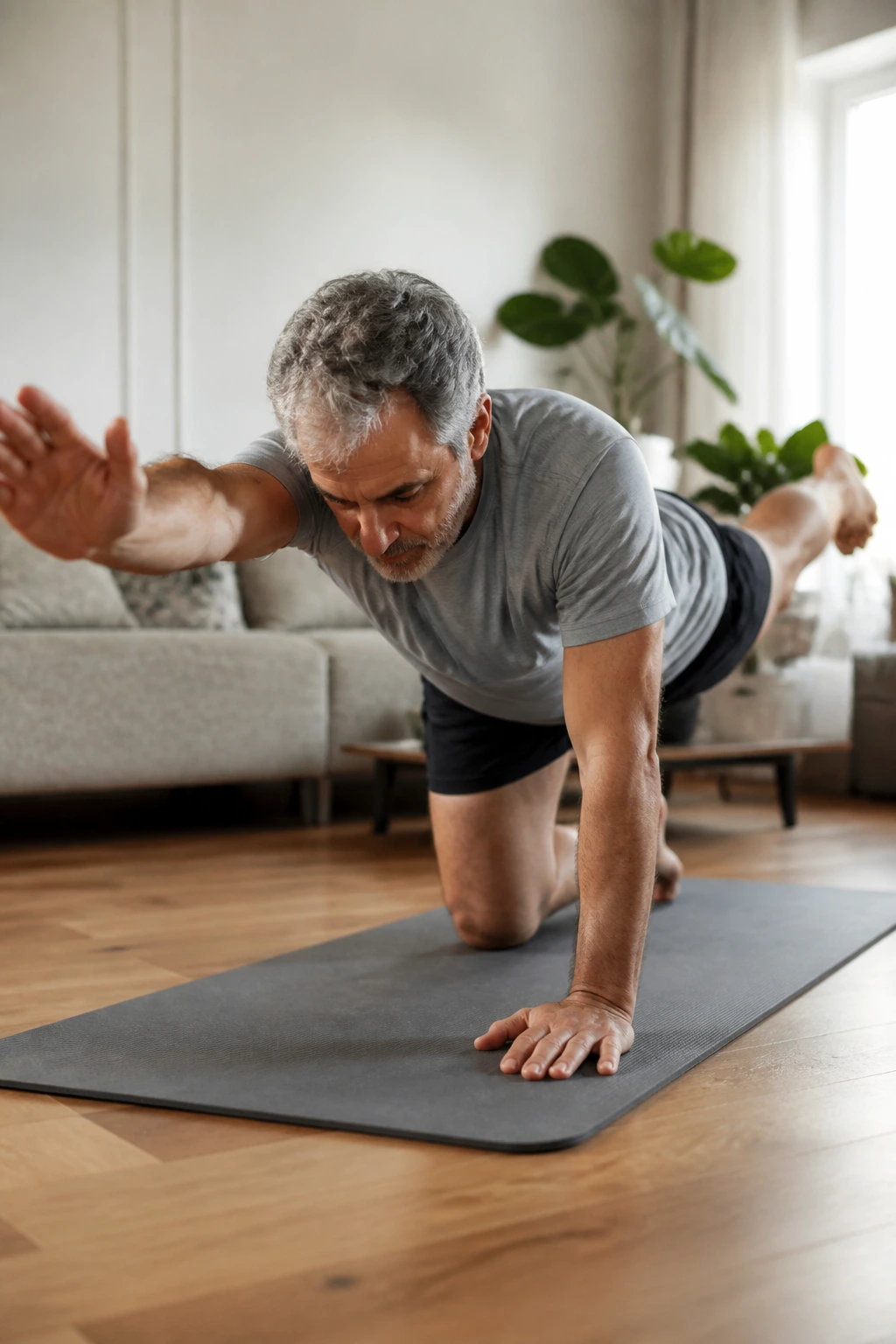
Can one exercise make the core, back, and balance system work at the same time? Yes, and bird-dog does exactly that. It teaches the body not to twist when one arm and one leg move in opposite directions.
Start on hands and knees or, if the floor is a problem, stand facing a counter and do a standing version. Extend one arm and the opposite leg slowly. Hold for 2 to 3 seconds, then switch. Keep the hips level and the ribs from flaring out.
If you’re on the floor, keep the movement small at first. A lot of people overreach and then wobble like a shopping cart with a bad wheel. No need.
Six reps per side is enough to begin. The quality of the hold matters more than the count.
10. Single-Leg Stand With Support
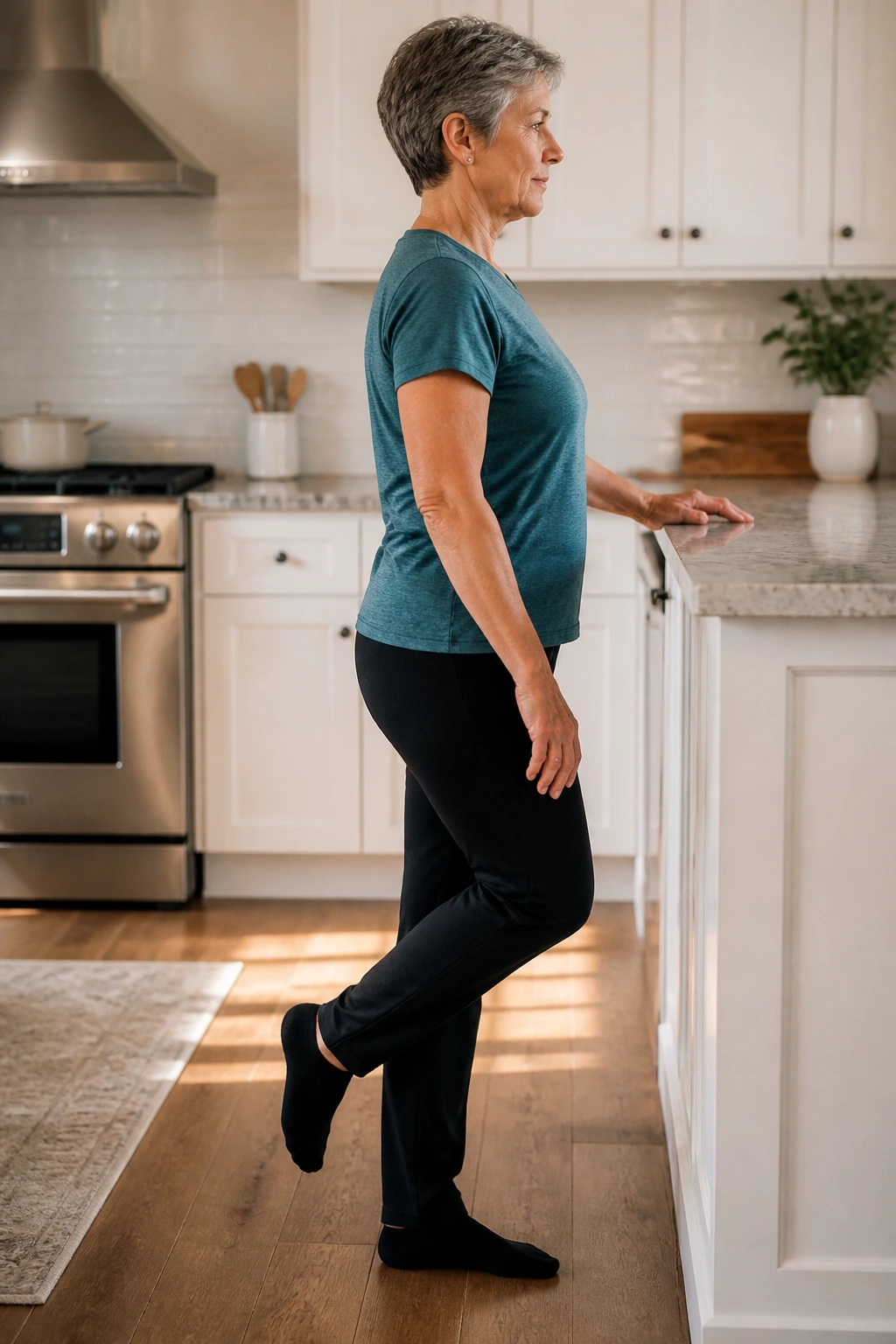
A single-leg stand is a balance test, yes, but it’s also a practice drill for ankles, feet, and hips. The real world rarely gives you perfect footing. You step around pets, rugs, curb edges, and bathroom mats.
Hold a counter with one hand. Lift one foot just off the floor and stand on the other leg for 5 to 15 seconds. Switch sides. If lifting the foot feels too hard, keep the toes lightly touching the floor and shift some weight into the standing leg.
What to Watch For
- The standing hip should not drift out to the side.
- The knee should stay soft, not locked.
- The torso should stay upright instead of leaning toward the counter.
A steady 8-second hold beats a shaky 20-second wobble every time.
11. Mini Squats to a Chair
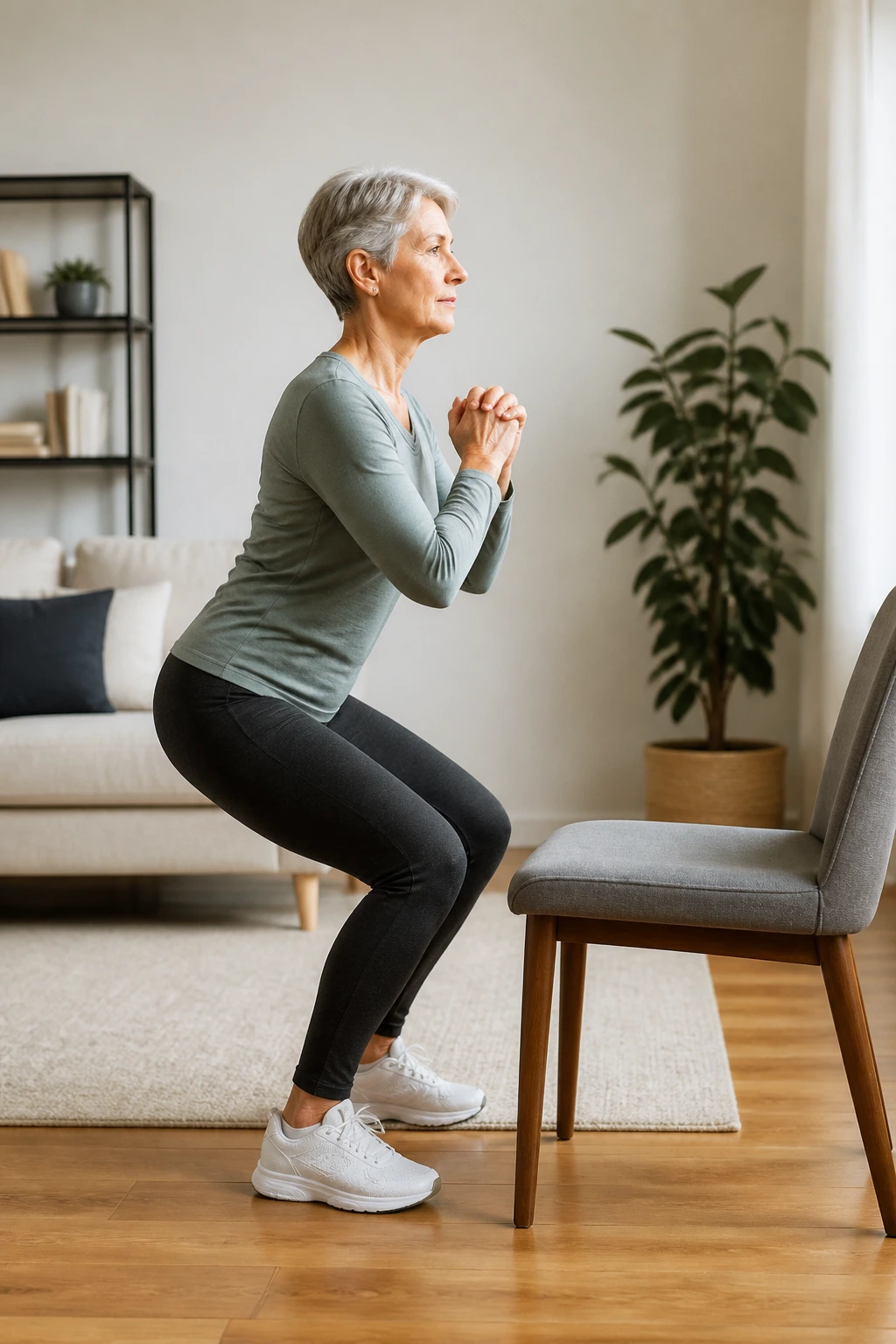
Mini squats build leg strength without asking for deep knee bend. That makes them useful for older adults who want more thigh and glute work but do not love full squats.
Stand in front of a chair with your feet about shoulder-width apart. Bend the knees a little, send the hips back, and lightly touch the chair before standing again. Think of it as hovering down and pressing up. Do 8 to 10 reps.
The chair is there as a reference, not a place to crash. Keep the chest open and the heels heavy. If the knees ache, reduce the depth. If the movement feels too easy, slow the lowering phase to 3 seconds.
This is one of those exercises that becomes more useful the more honest you are about your range.
12. Glute Bridges
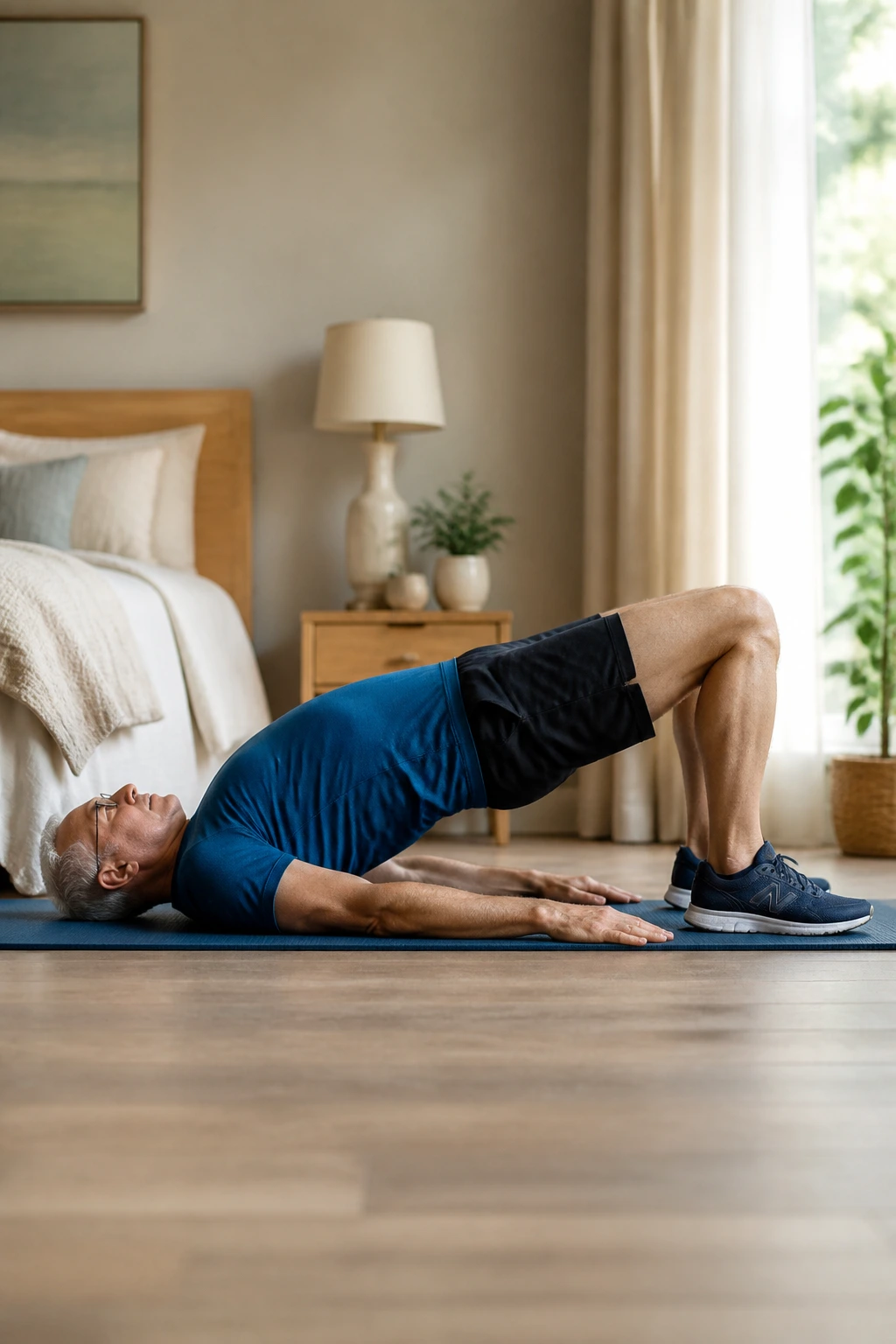
Glute bridges wake up the back of the body, which matters more than people realize. Weak glutes make walking, climbing, and standing from low seats harder than they should be.
Lie on your back with knees bent and feet flat. Press through your heels, tighten the glutes, and lift the hips until the body makes a gentle line from shoulders to knees. Hold for 1 to 2 seconds, then lower slowly. 8 to 12 reps is a good start.
The lift should come from the hips, not the lower back. If the back arches too much, lift less high. If getting on the floor is a pain, do the same squeeze-and-release pattern on a firm bed or skip it and use chair stands instead.
Simple. Useful. No fuss.
13. Lateral Band Walks
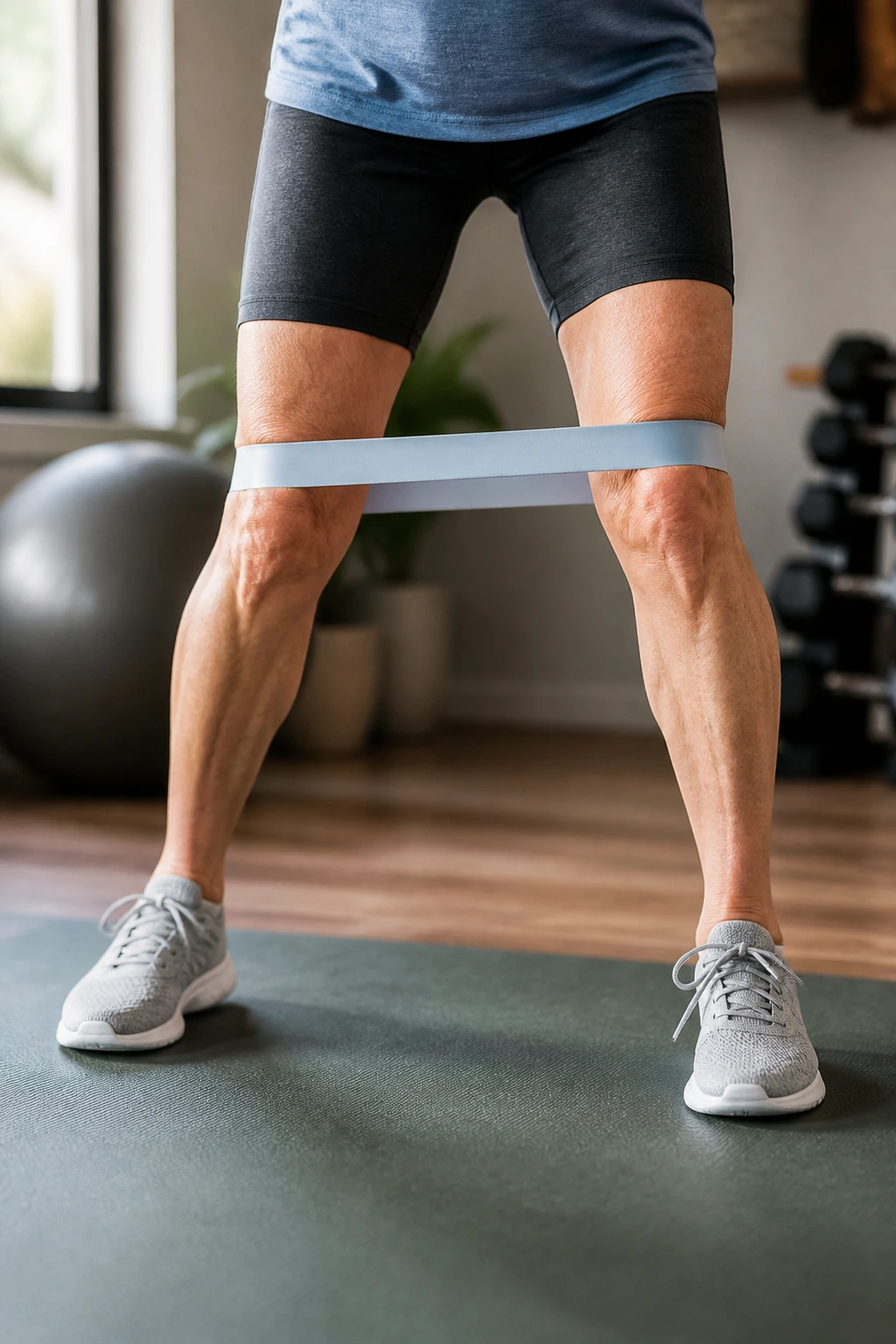
This one looks small and feels sneaky. Put a light resistance band above the knees or around the ankles, bend the knees slightly, and step sideways in short, controlled steps. Then come back the other way.
Keep the toes pointing forward and the knees from collapsing inward. Do 8 to 10 steps each direction. The band should create steady pressure, not force a wild shuffle.
How to Make It Work
- Use a light band first.
- Keep the feet parallel.
- Stay low only as much as the hips allow.
This exercise is gold for hip stability. It helps the knees track better and gives the outer hips more strength for walking and stairs. A lot of balance problems start with weak hips, not weak feet, and this move is one of the cleaner fixes.
14. Toe-to-Heel Walks
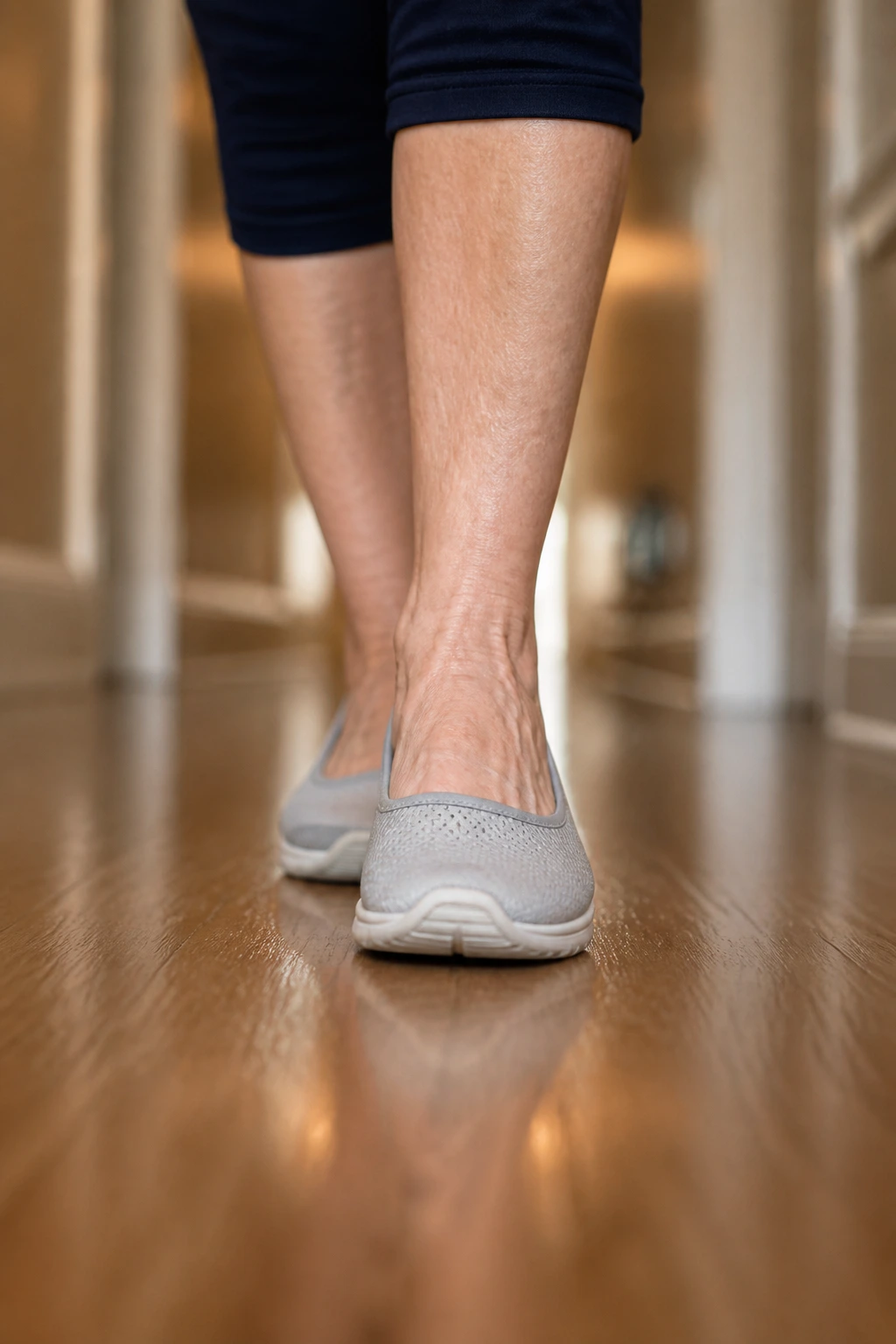
A hallway is enough for this one. Place the heel of one foot directly in front of the toes of the other foot and walk in a straight line, one step at a time. It’s basically balance practice disguised as walking.
Keep the arms out a little if needed. Focus your eyes on a point ahead rather than staring straight down. Ten to twenty steps is plenty. If that’s too narrow, widen the line just a bit and work up to a true heel-to-toe path.
This drill is useful because it forces the body to organize itself while moving, not just while standing still. That matters when you turn, back up, or walk on uneven ground.
And yes, it feels awkward at first. That awkwardness is the point.
15. March and Overhead Reach
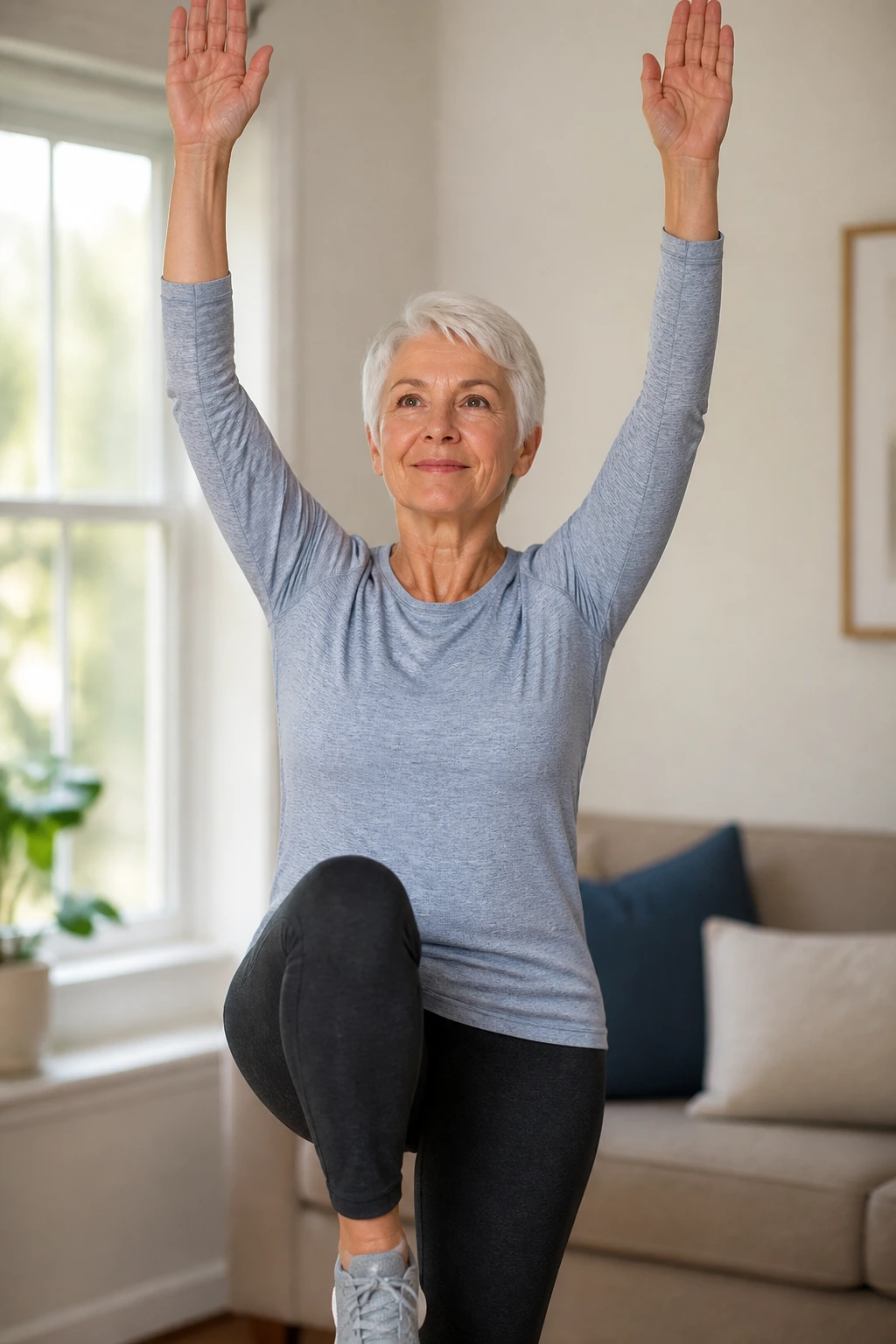
What happens when you add an arm reach to a simple march? The core has to pay attention, the shoulders open up, and the whole body starts working as one unit.
Stand tall and march slowly in place. As one knee lifts, reach both arms overhead or, if that feels too much, just one arm at a time. Lower with control and switch sides. Do 6 to 8 reps per side.
Keep It Clean
- Exhale as the arms rise.
- Avoid leaning back.
- Keep the knee lift comfortable, not forced.
This is a nice choice for mornings when the body feels stiff. It blends mobility and balance without turning into a full cardio workout. If the shoulders are cranky, keep the arms at chest height and reach forward instead.
16. Farmer Carry With Light Weights
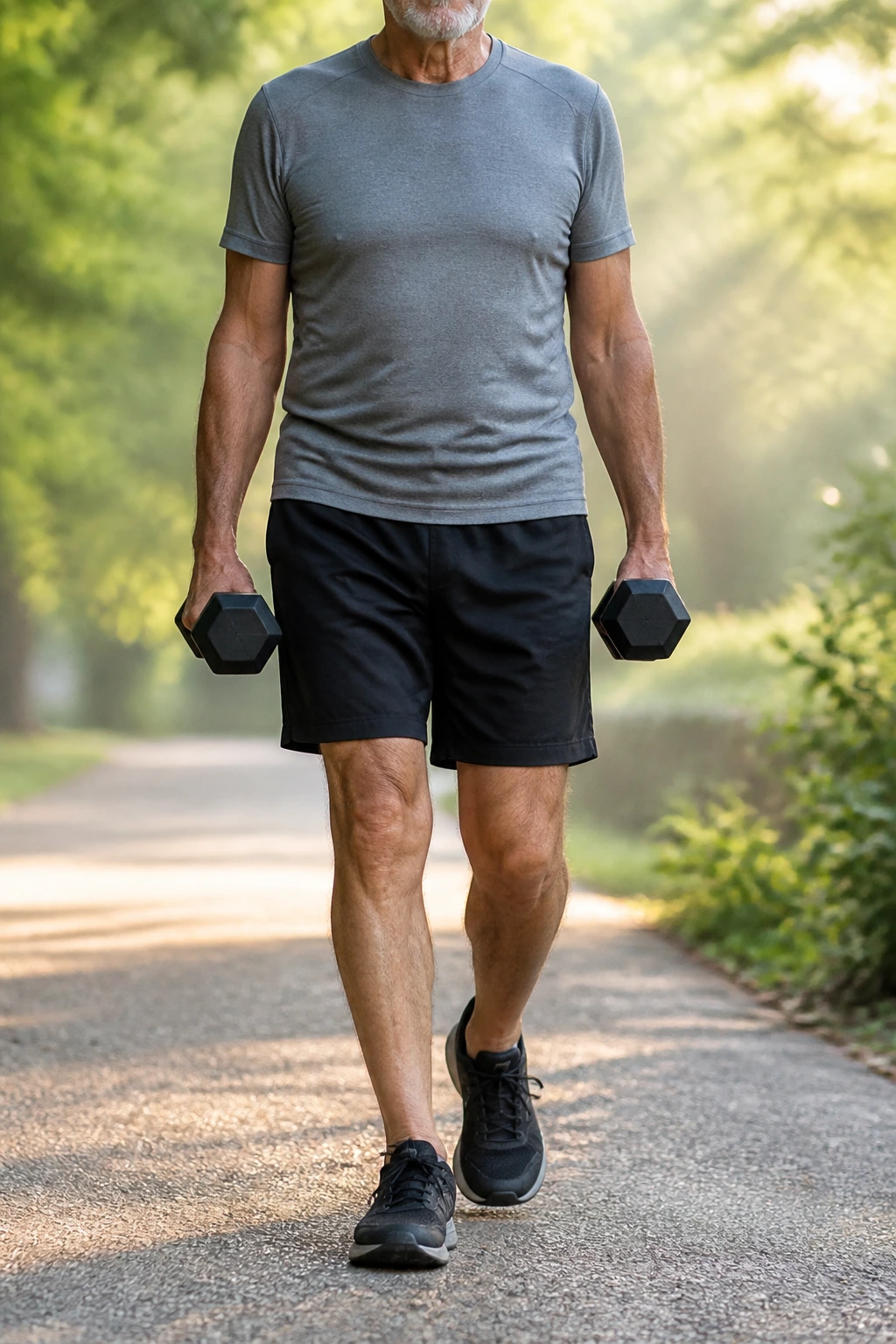
Carrying weight while walking is underrated. Real life is full of carrying: bags, laundry, a water jug, a stack of books you swore you would return. Farmer carries train grip, posture, core stability, and walking control in one shot.
Hold a light dumbbell, kettlebell, or grocery bag in each hand and walk 20 to 40 feet with tall posture. Keep the shoulders down and the ribs stacked over the hips. Turn around carefully and come back. If two weights feel like too much, carry one weight on one side and switch hands.
The body should feel steady, not stiff. That’s the line to watch.
A carry becomes too heavy when you start leaning, shrugging, or shuffling like you’re late for something. Use less weight and keep the walk crisp.
17. Clamshells
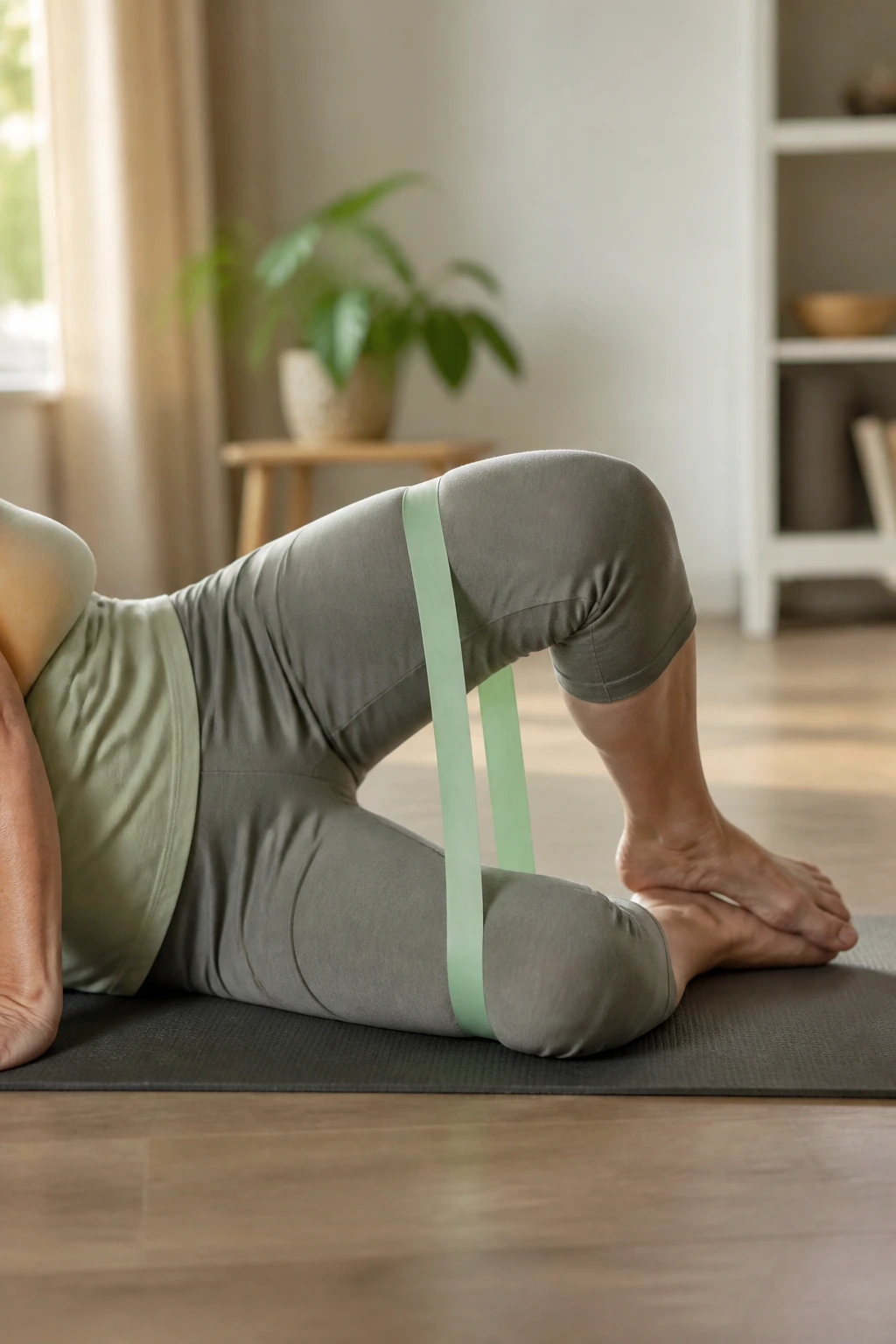
Clamshells are not flashy, and I mean that as praise. They target the glute medius, one of the key muscles for hip stability and cleaner walking.
Lie on your side with knees bent and feet together. Keeping the feet touching, lift the top knee like opening a clam shell, then lower it slowly. 10 to 15 reps per side works well. A loop band above the knees adds more challenge if the form stays tidy.
What Makes This One Matter
- It helps the pelvis stay level.
- It supports better knee tracking.
- It works the outer hip without loading the spine much.
If the hips roll backward, reduce the range. The opening should be small and controlled. No need to chase height.
18. Low Step-Ups
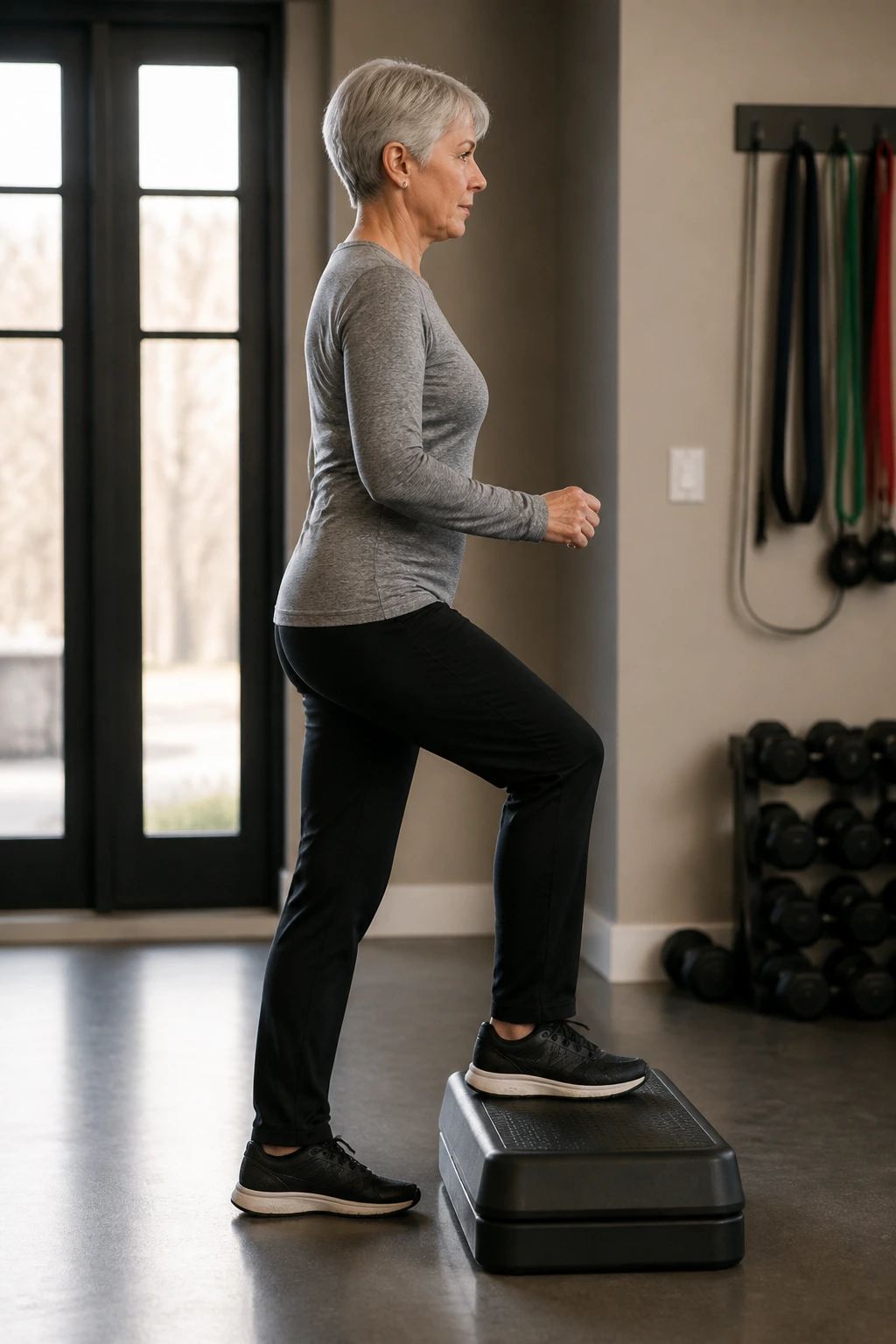
Step-ups are one of the most useful balance exercises for seniors because they copy real life so well. Stairs do not care whether the body is ready. Step-ups teach it to be ready.
Use a low, stable step, around 4 to 6 inches if needed. Place the whole foot on the step, press through the heel, and stand tall on top before stepping back down. Alternate legs. Aim for 6 to 10 reps per leg.
Hold a rail at first. There is no shame in that. The goal is smooth transfer of weight, not proving anything to the room.
If one knee gets sore, lower the step height. Most people make step-ups too ambitious too quickly and then wonder why the knee grumbles. The answer is usually right there in the height.
19. Dead Bug Heel Slides
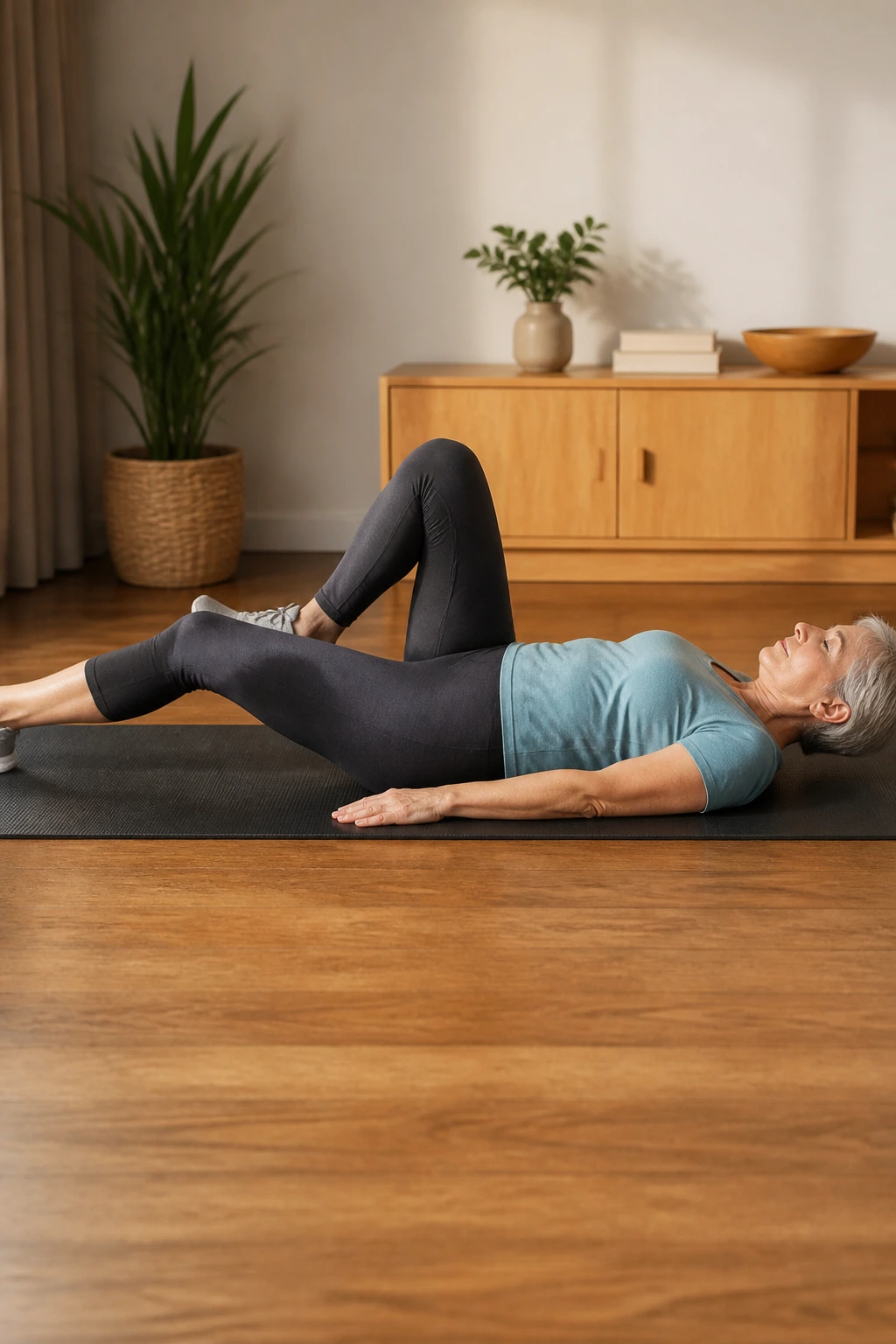
Can floor work still be friendly for older adults? Yes, if you pick the gentler version. Heel slides are a calmer cousin of the dead bug and a good way to train the core without putting much strain on the neck or back.
Lie on your back with knees bent. Brace the abdomen lightly, slide one heel away until the leg is almost straight, then slide it back. Keep the lower back from arching. Six to eight reps per side is enough to start.
If the core gives up and the back arches, shorten the slide. That is the cue, not a failure. You can also do these on a bed if the floor is hard to get down to.
The movement should feel controlled and quiet. If it gets sloppy, the range is too big.
20. Standing Hip Hinge
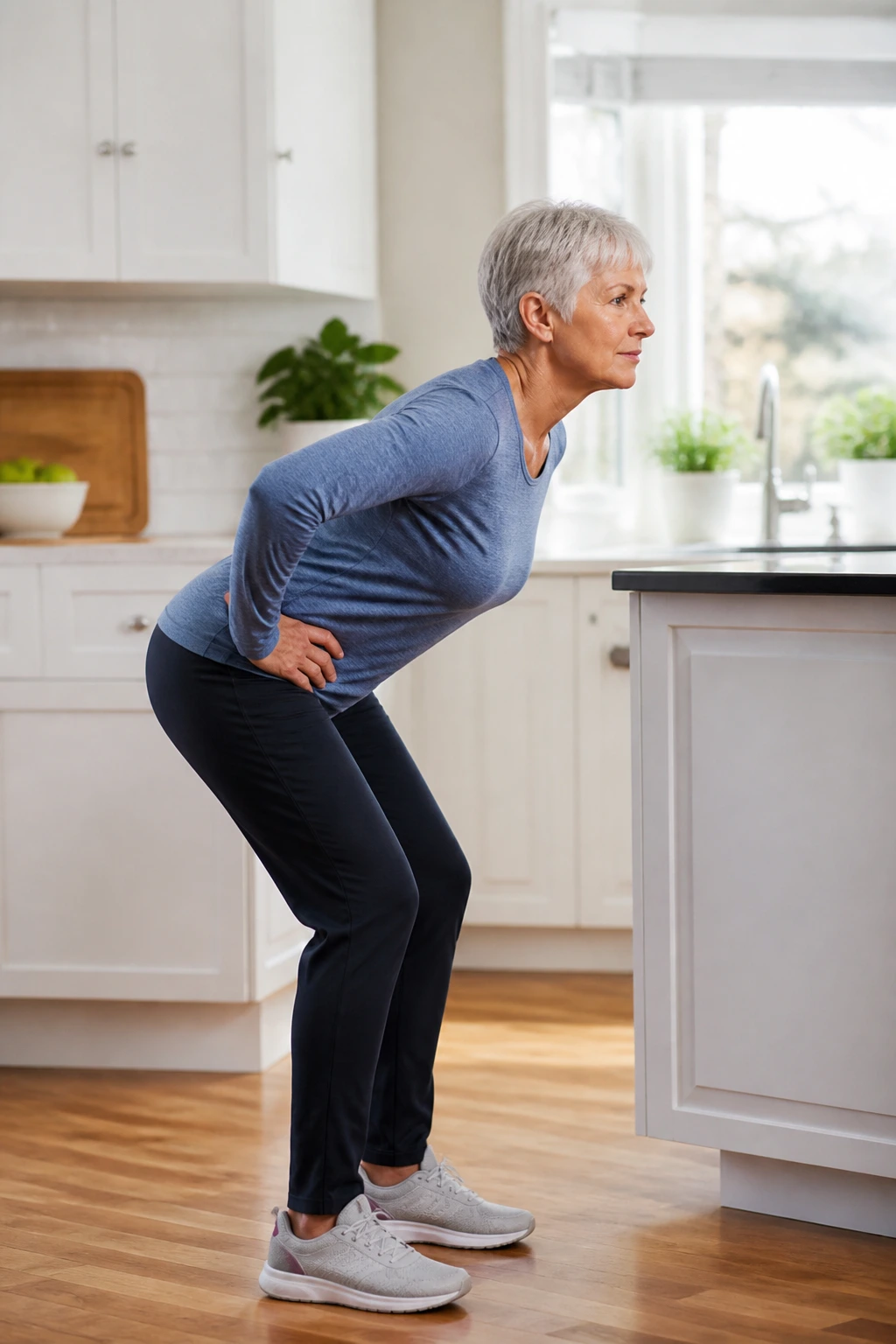
If you want stronger legs and a safer way to bend and lift, learn the hip hinge. This is the pattern behind picking up a laundry basket, reaching for a dropped spoon, or lowering into a seat with control.
Stand with feet hip-width apart and hands on your hips or a countertop. Push the hips back while keeping a soft bend in the knees and a long spine. Return to standing by pressing the hips forward. Do 8 to 12 reps.
The chest does not collapse. The back does not round. The motion comes from the hips sliding back, not the knees shooting forward.
A wall behind you can help. Stand a few inches away and try to tap your hips to the wall without leaning your chest toward it. That gives the pattern a clear target.
21. Seated Leg Extensions
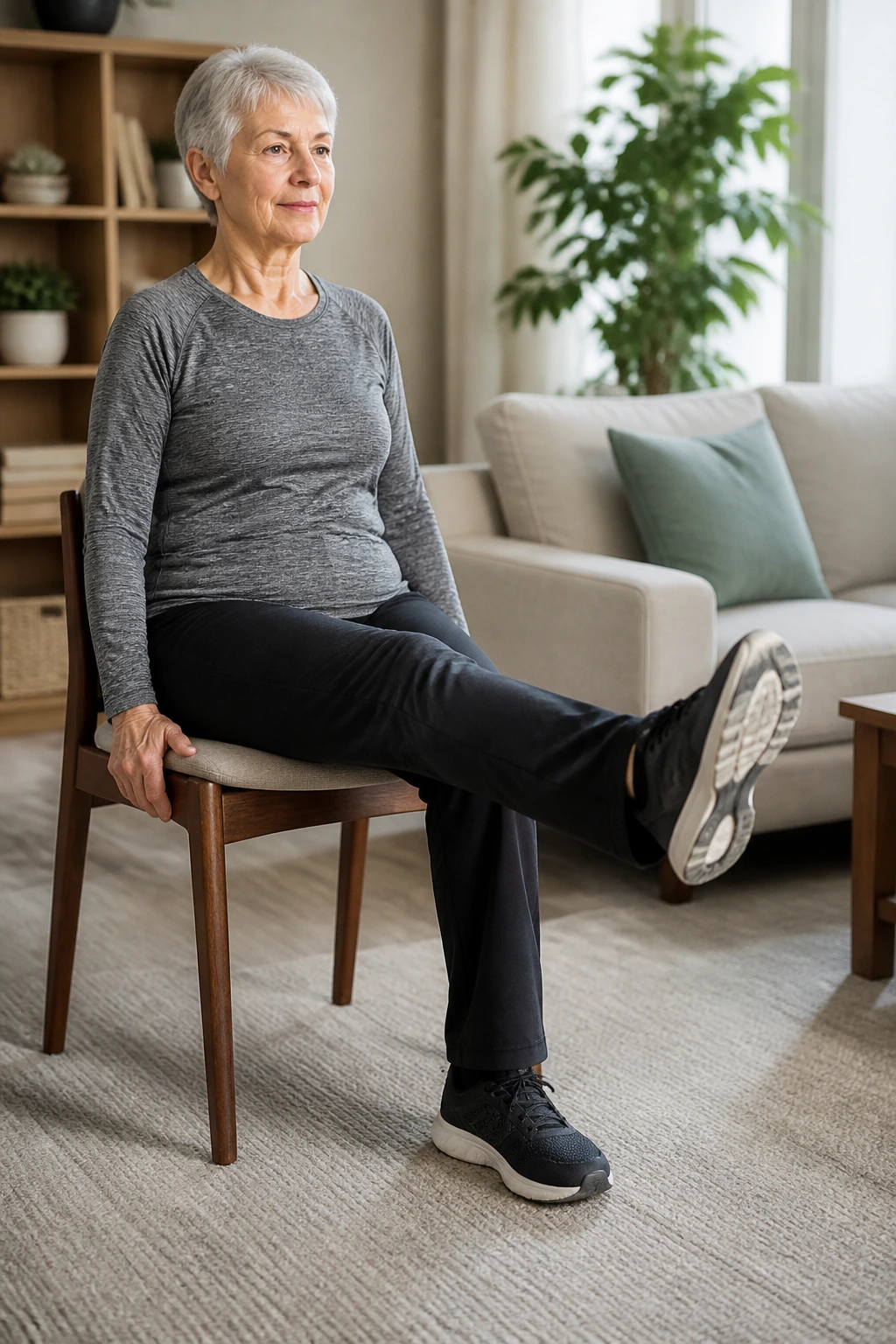
Some days standing work is too much. Seated leg extensions let you keep training the quads and knee control without much fuss.
Sit tall in a chair. Straighten one knee until the leg is nearly level, squeeze the thigh for a second, then lower slowly. Switch sides. 10 reps per leg is a good target. You can add ankle weights later, but start with clean movement first.
Good Form Checks
- Don’t swing the leg.
- Keep the torso upright.
- Lower the foot with control instead of letting gravity do the work.
This is one of the best “quiet” exercises for days when the joints feel a little cranky but you still want to do something useful.
22. Clock Reach Balance Drill
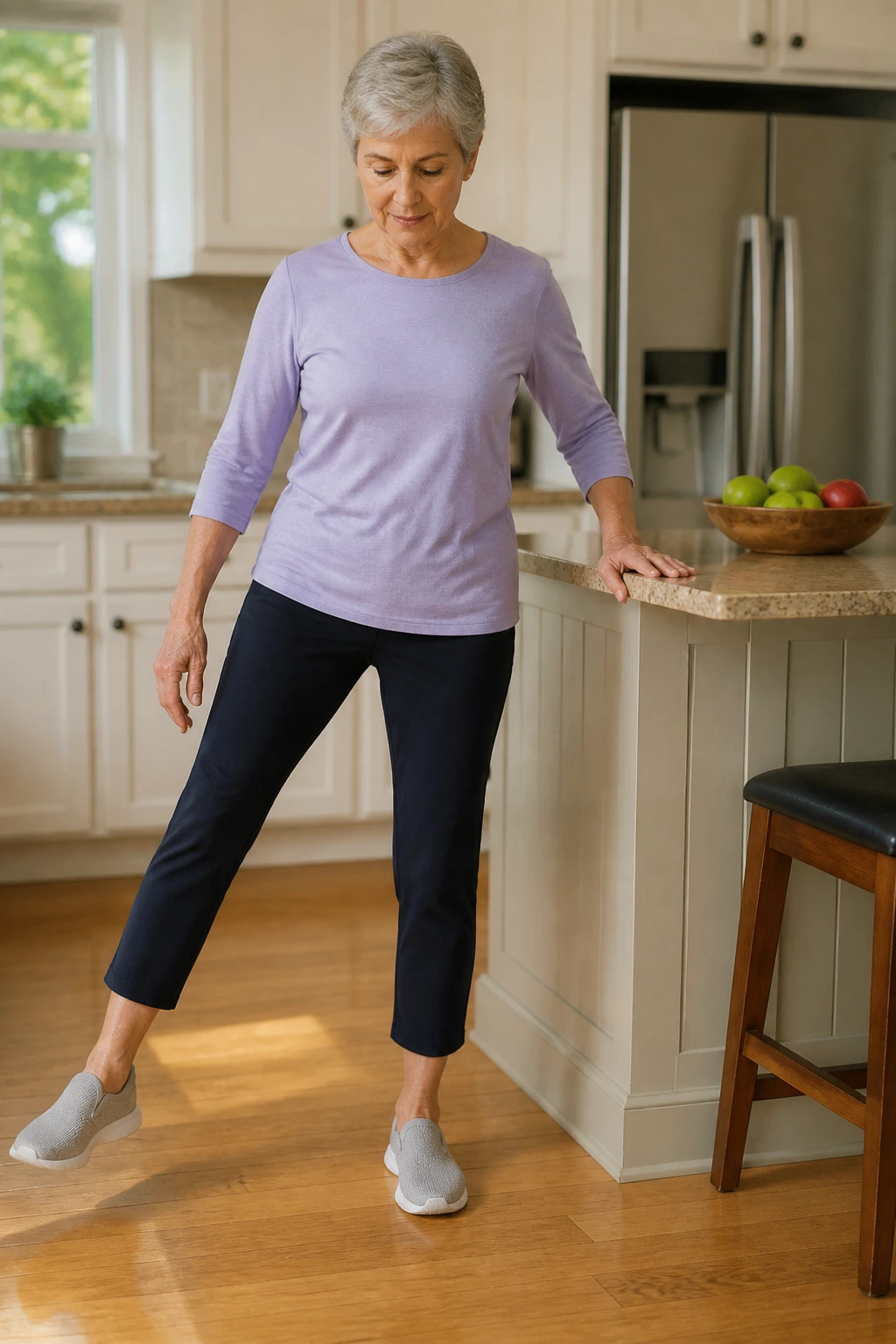
Imagine standing at the center of a clock face. Reach one foot to 12 o’clock, bring it back, then reach to 3, then 6, then 9. That’s the basic idea.
Stand near a counter with one hand hovering close for safety. Shift weight onto one leg and reach the other foot in small taps to different directions. Keep the standing knee soft and the torso tall. Three rounds per side is plenty.
What It Trains
- Direction change
- Weight transfer
- Ankle and hip control
Start with tiny reaches. People often overstep and then lose the whole point of the drill. Small, clean touches teach the body more than a dramatic lunge ever will.
It’s a good one for anyone who feels nervous turning fast or stepping around obstacles.
23. March-and-Hold Drill
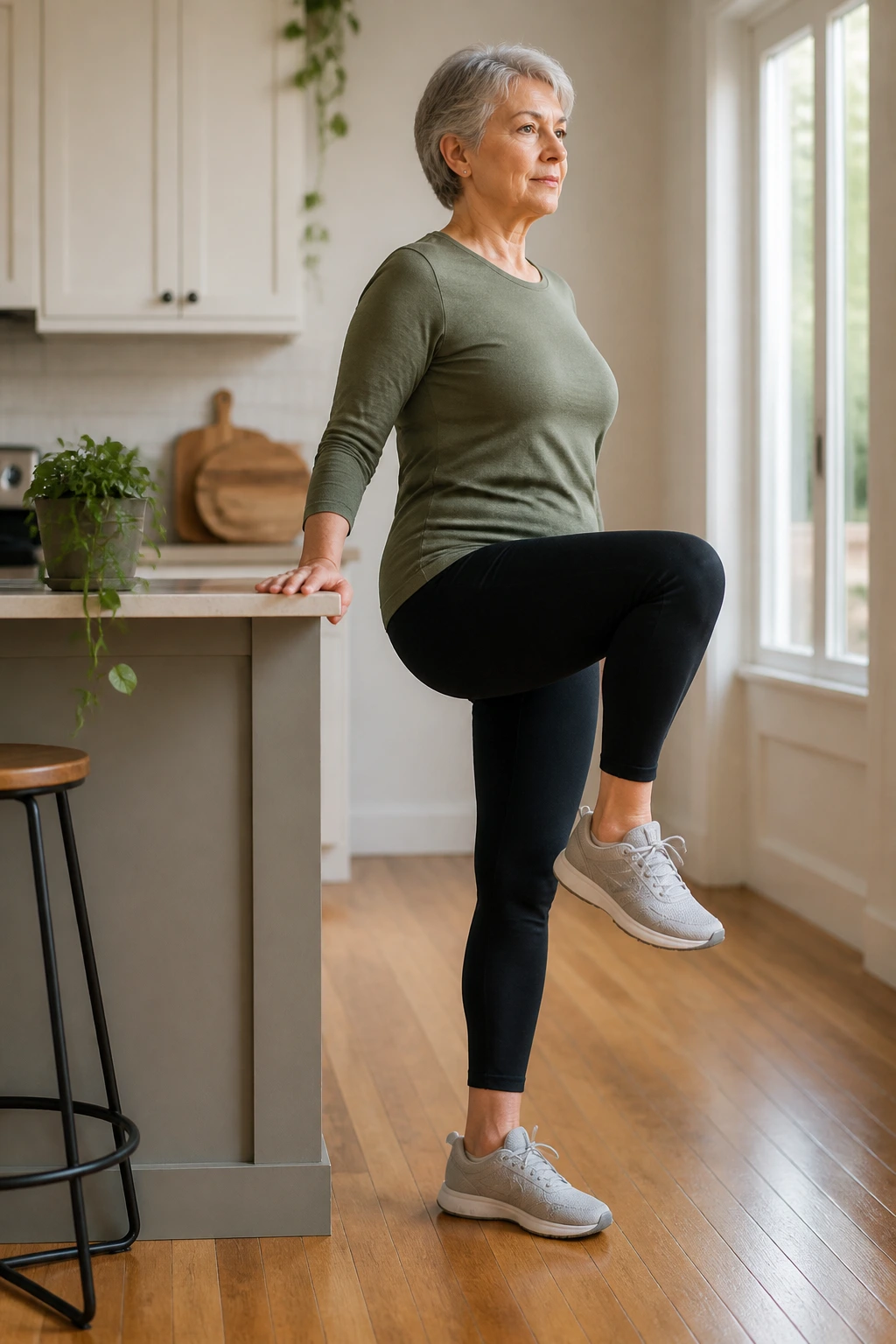
A steady march is useful. A march with a hold is better.
Lift one knee, pause for 2 seconds, set it down, then do the other side. The pause forces the standing leg to stabilize instead of rushing through the movement. Use a counter if needed, and keep the posture upright. Try 6 to 8 reps per side.
This drill is especially handy for people whose balance gets worse when they move too fast. The hold teaches the body to settle before the next step. That skill matters when you stop at a curb, wait for a door, or turn in a tight hallway.
If the knee lift is too high, lower it. A small, controlled lift is still a legit challenge.
No need to make it dramatic.
24. Tai Chi Weight Shifts
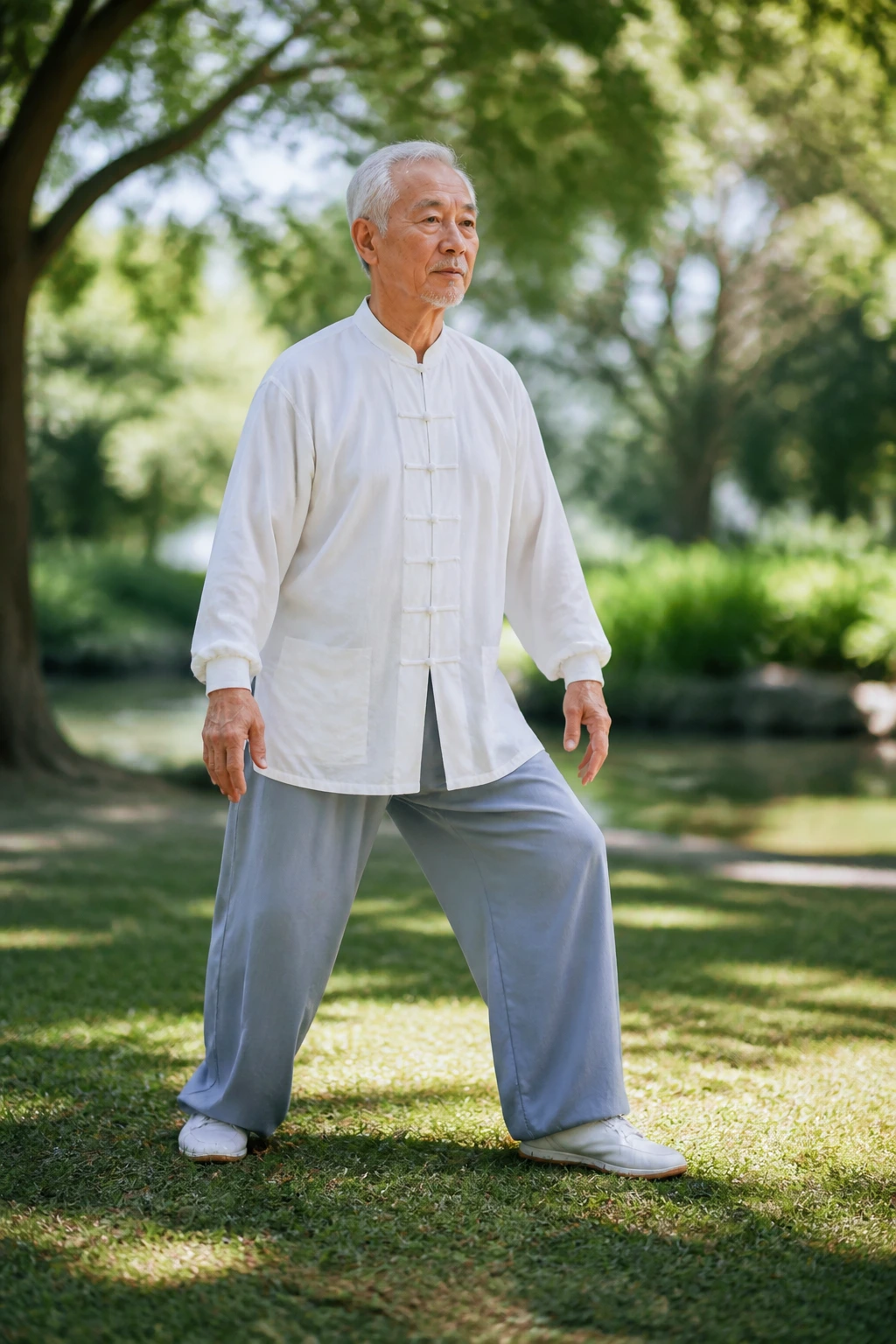
Tai chi style weight shifts are some of the calmest balance work you can do, and calm matters. Rushed balance practice usually turns into panic practice. Slow shifts teach the body to trust the transfer.
Stand with feet hip-width apart. Shift your weight gently toward one leg until the other foot feels lighter, then come back to center and shift the other way. You can also move forward and back with a split stance. Spend 1 to 2 minutes here, breathing evenly.
This drill looks easy until you feel how much the ankles and hips are adjusting. That is the point. The movement teaches control in transitions, which is where lots of stumbles happen.
If you like the feel of this, it’s worth repeating often. It pairs nicely with the more muscular moves above.
25. Gentle Cool-Down Walk and Reset
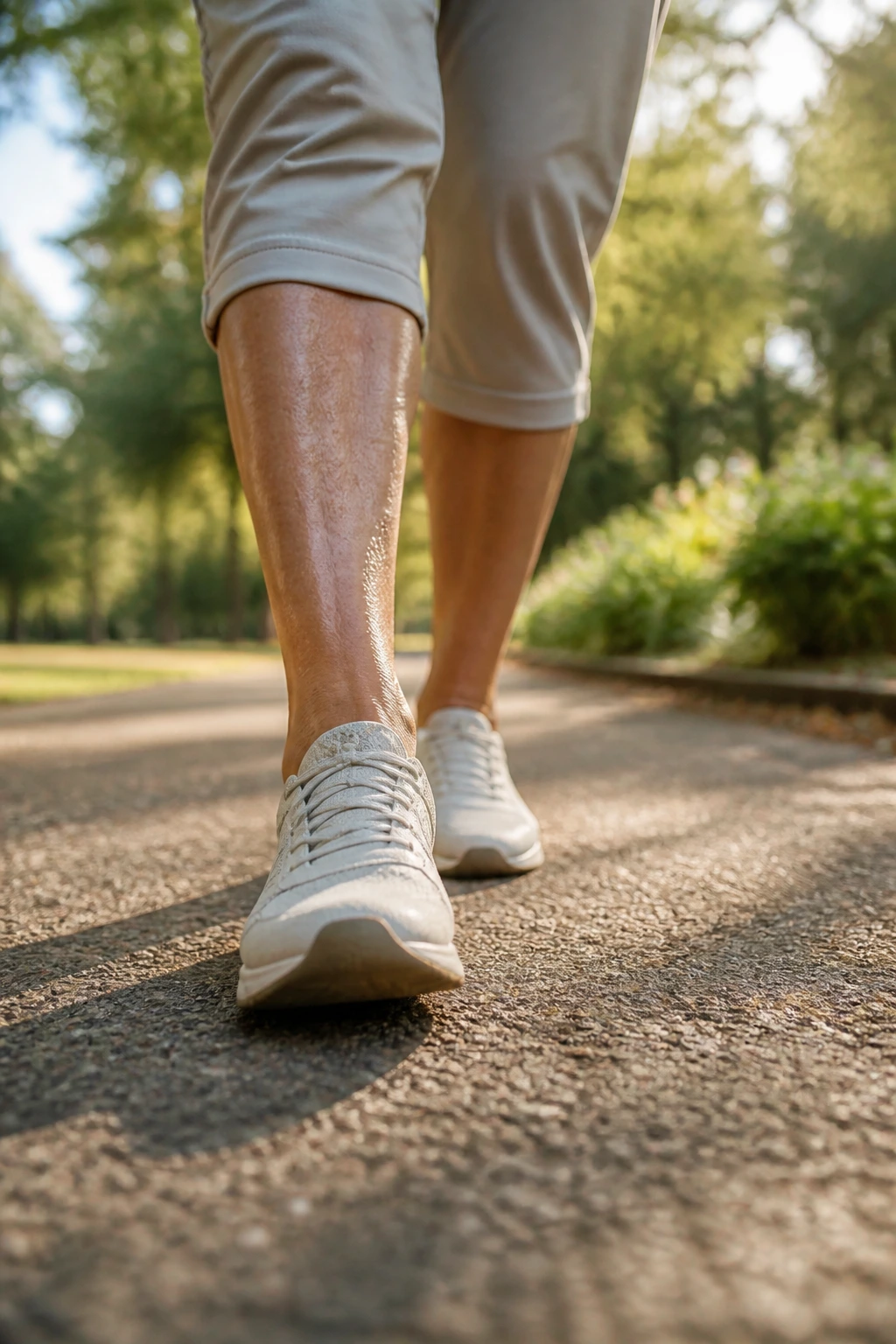
A short walk might seem too ordinary to count, but I’d keep it in any senior exercise routine because walking stitches the whole session together. It lets the joints move after strength work and gives balance practice one last chance to settle in.
Walk for 3 to 10 minutes at an easy pace, then add a few slow turns, a brief stop-and-hold, or a couple of arm swings. Keep the steps quiet and the posture tall. If you use a cane or walker, stay with the device and keep the path clear.
This is also the best time to notice what feels different. Maybe the hips feel warmer. Maybe the feet feel more awake. Maybe the first few steps after the walk feel smoother than before. That feedback matters more than a fancy tracker ever will.
And if the whole session leaves you a little more steady on your feet, that’s the point. Not perfection. Just better.
