



Three open tabs, one half-drunk coffee, and a calendar that keeps filling itself — that’s the sort of day when no equipment workouts stop being a fitness idea and start feeling like a survival skill.
The problem is usually not motivation. It’s friction. You do not need a 45-minute block, a gym bag, a mat, or a perfect playlist. You need a bodyweight workout that gets to work fast, uses the big muscles, and ends before your next obligation starts tapping its foot.
I’ve always liked short sessions that know what they are. A 6-minute circuit with sharp intervals can wake up your lungs, legs, and shoulders in a way that feels useful; a sloppy “do something for a while” session usually just wastes time and makes you feel guilty later. Simple wins here.
So the trick is to match the workout to the day you’re having. If you’re stiff, go mobility-heavy. If you’re antsy, go interval-heavy. If you want a clean sweat without bouncing through the floorboards, there’s a plan for that too.
1. 4-Minute No Equipment Tabata Sprint
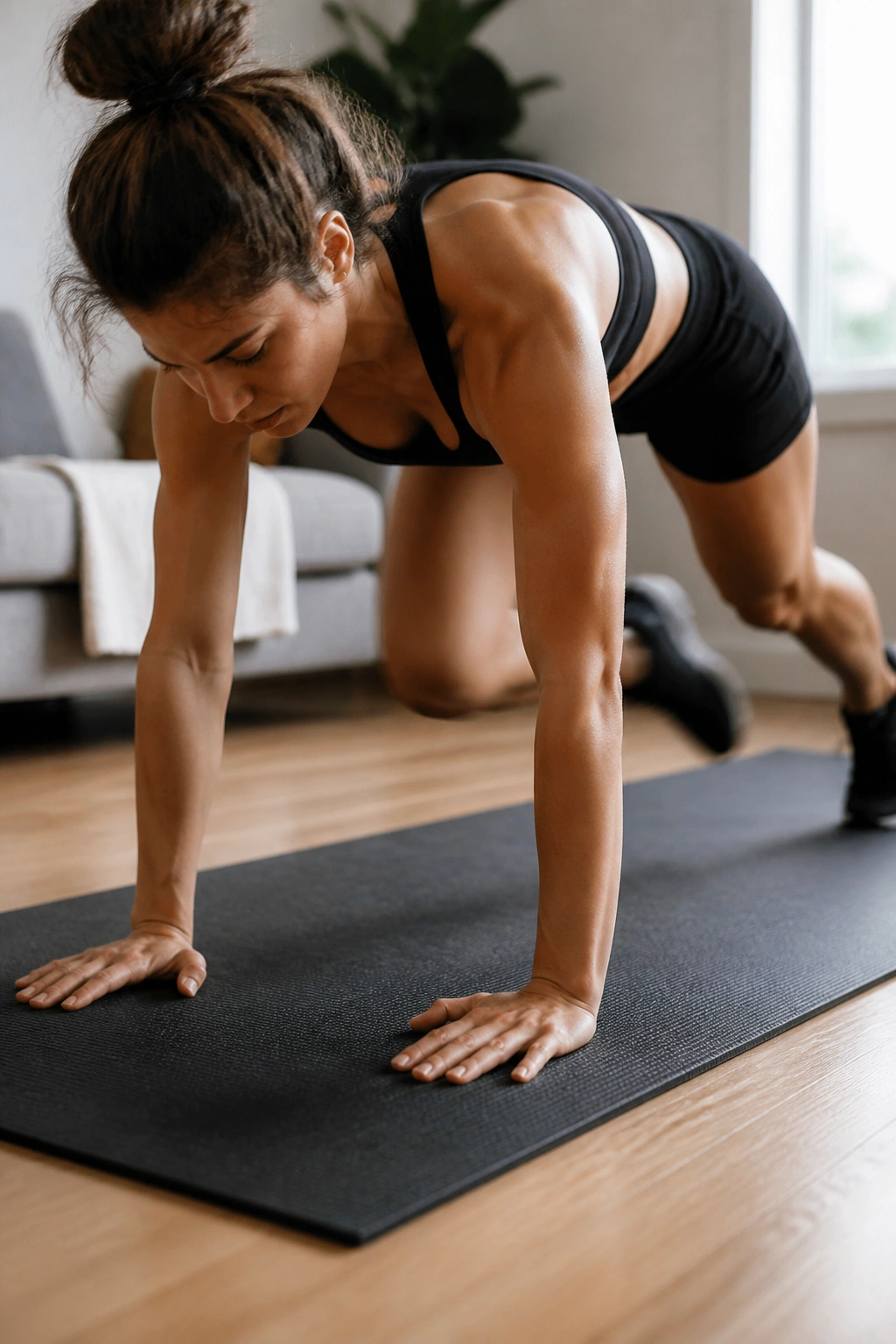
Four minutes sounds small until the timer starts. Tabata is brutally efficient because it gives you only 20 seconds to work before a 10-second breather, and that little sliver of rest changes the whole feel of the session.
I like this one for days when you want to be done before your brain finds a reason to quit. It’s short, sharp, and a little rude. Good.
How to run it
- 20 seconds of squat thrusts
- 10 seconds of rest
- 20 seconds of mountain climbers
- 10 seconds of rest
- Repeat that pattern for 8 total rounds
Keep the squat thrusts clean. Jump back only if your knees and ankles like it; step back if they do not. By round 3, your breathing should be loud, and by round 6, your legs will start telling the truth.
What to watch for
If your hips shoot up in mountain climbers, slow down. If your lower back starts sagging, shorten the range and tighten your core. The point is not to win a race against the timer. The point is to keep moving hard for all 4 minutes without turning the workout into a mess.
Best use: a fast wake-up, a post-work reset, or a “I have no excuse” day.
2. 10-Minute Bodyweight Strength Ladder
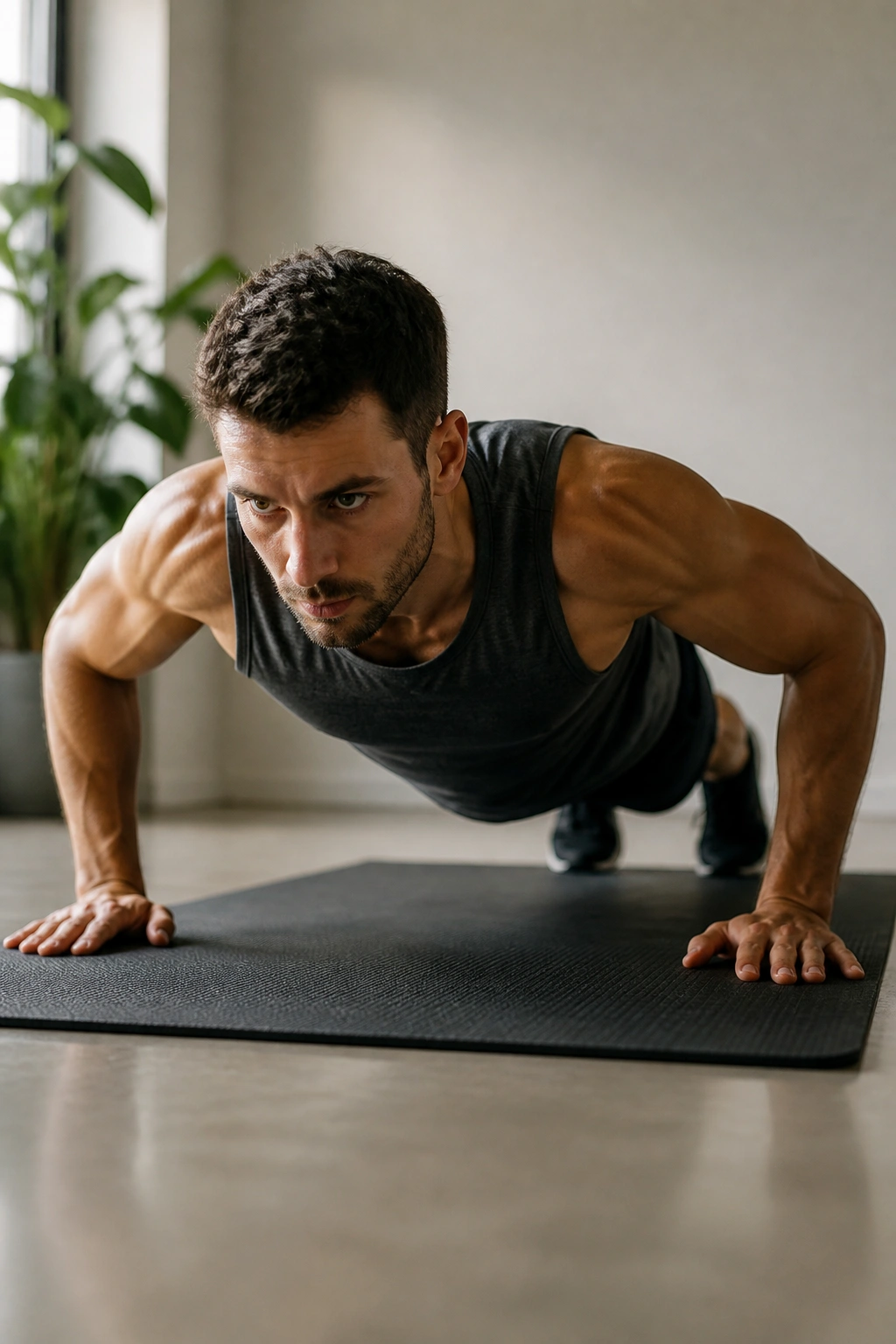
Ladders look innocent on paper. Then the reps climb, and suddenly your quads are talking back.
This is the kind of bodyweight workout I like when I want structure without a complicated plan. You move up the ladder, then come back down if you still have time and gas in the tank. It feels organized, which matters on days when everything else is chaotic.
The ladder
Start with this sequence:
- 1 push-up
- 2 air squats
- 3 reverse lunges per leg
- 4 plank shoulder taps per side
- 5 glute bridges
Rest 20 to 30 seconds, then repeat the same pattern with 2, 4, 6, 8, and 10. If you’re moving well and still have time, descend back down.
Why it works
The ladder gives you a built-in brake. You know exactly what comes next, so there’s less wandering, less checking your phone, and less pretending to “warm up” for 9 minutes.
Keep your reps clean
- Stop the push-ups when your chest starts dropping halfway to the floor.
- Keep the reverse lunges vertical, not shaky and rushed.
- Squeeze the glutes at the top of each bridge for one full second.
One solid rep beats three sloppy ones. Every time.
3. 8-Minute Low-Impact Cardio Circuit
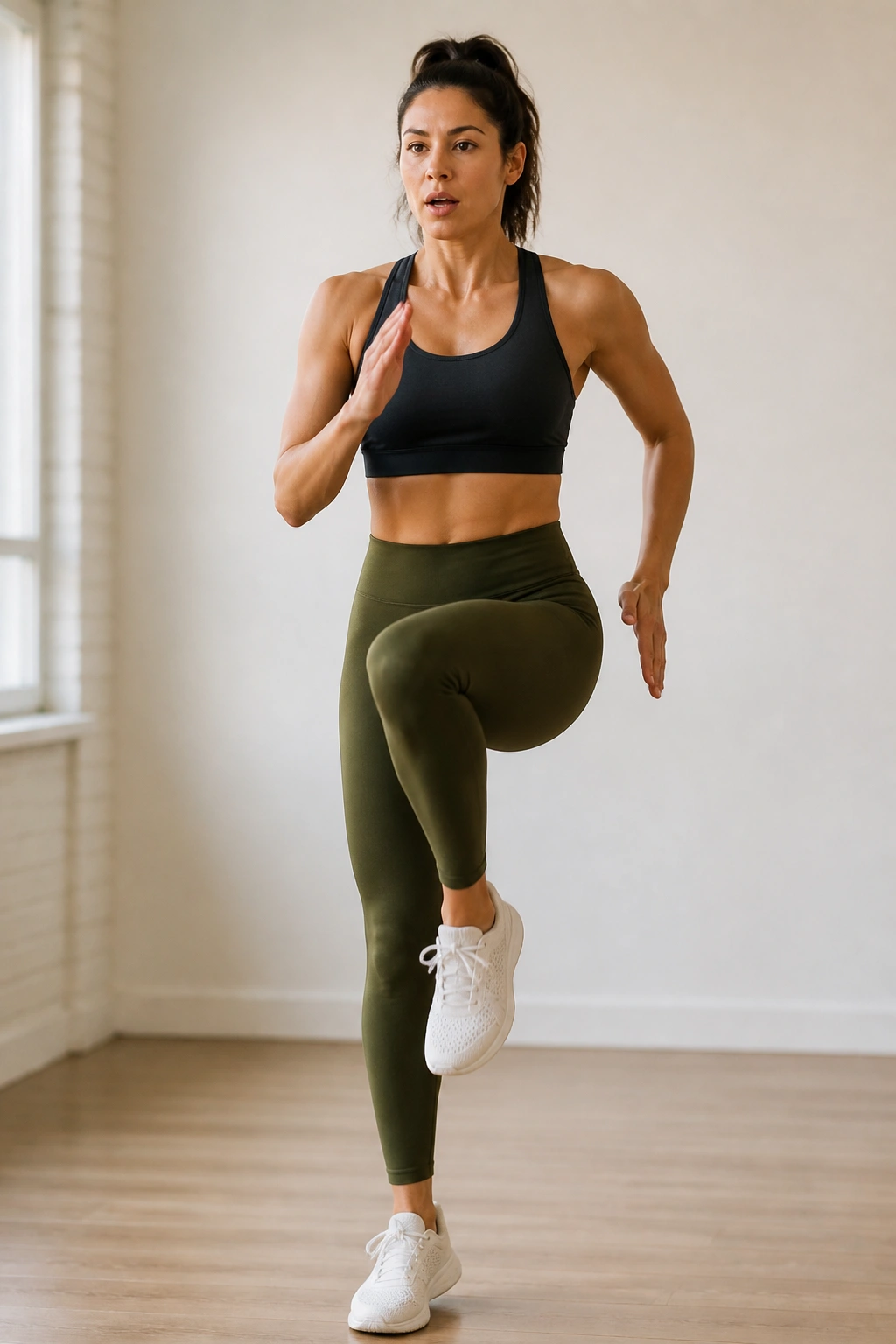
Apartment walls have opinions. So do tired knees.
This is the low-impact cardio session I’d pick when you want to breathe hard without bouncing around or landing like a dropped suitcase. It still counts. More than people think, honestly.
The circuit
Set a timer for 40 seconds on, 20 seconds off and move through these four exercises twice:
- March in place with hard arm swings
- Step jacks
- Skater steps without the jump
- Shadow boxing with quick feet
The marching may look too easy for about 15 seconds. Then your heart rate climbs, your shoulders wake up, and you realize the arm drive matters more than people expect.
What to focus on
Keep the feet light and the hands active. On shadow boxing, throw straight punches and rotate through the ribs a little, not just the shoulders. On skater steps, reach the trailing foot behind you and stay low enough to feel your outer hips.
How to scale it
If you want more work, shorten the rests to 15 seconds. If your knees are grumpy, slow the step jacks and remove the bounce completely. No one is grading style here.
This one is sneaky. It looks calm. It isn’t.
4. 12-Minute Core and Glute Floor Session
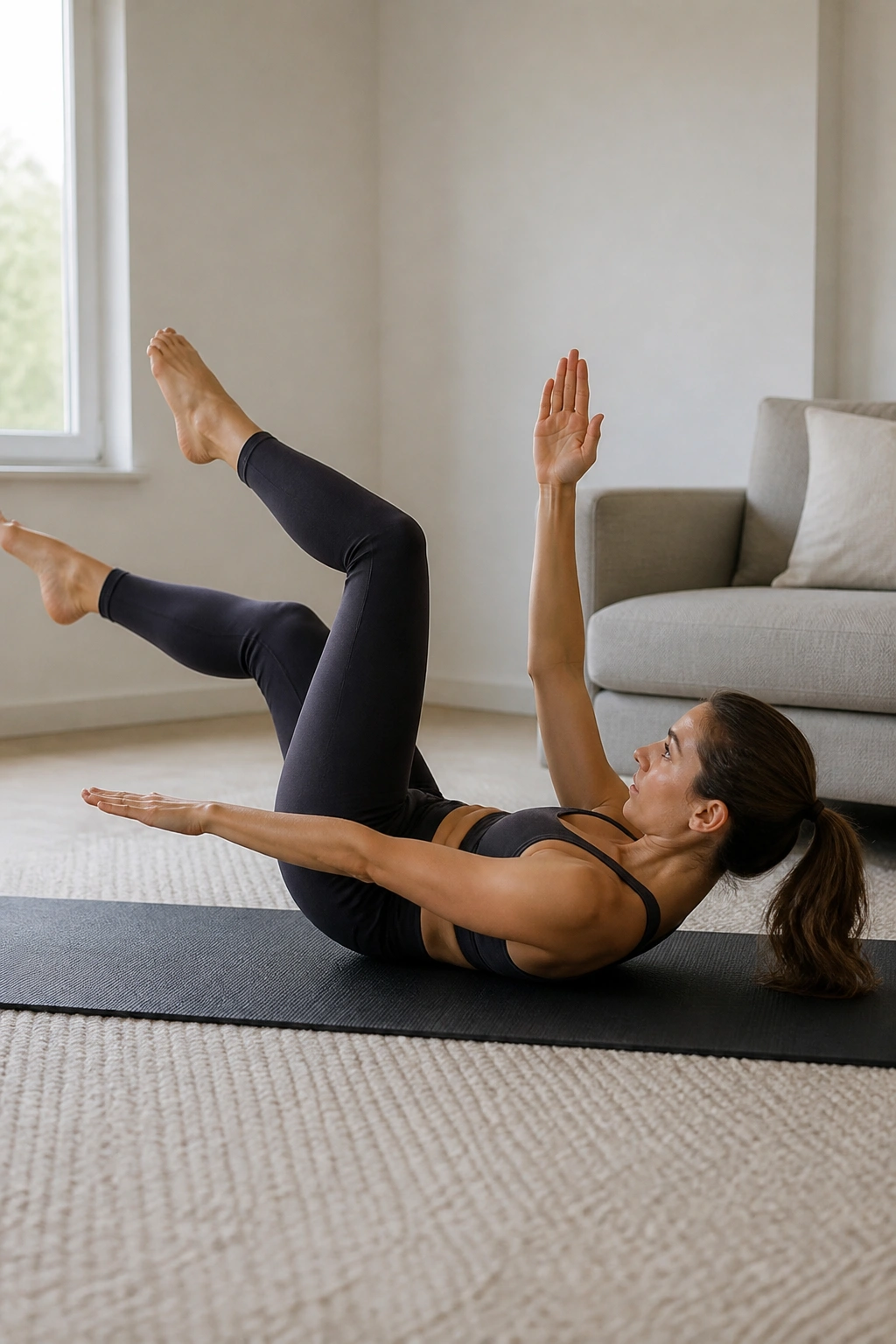
Sitting for hours makes your hips tight and your glutes lazy. Then your lower back ends up doing jobs it never asked for.
That’s why I like a floor session that hits the core and glutes together. It’s not flashy, but it pays off in the way you stand up, walk, and even breathe under stress.
The format
Do 2 rounds of the following, resting 15 seconds between moves:
- Dead bug — 45 seconds
- Glute bridge — 45 seconds
- Bird dog — 45 seconds
- Side plank — 30 seconds each side
If the side plank gets sloppy, shorten the hold and keep the ribs stacked. The old habit of twisting open to make the pose look harder is a bad one.
What good form feels like
A dead bug should feel controlled through the middle, not like your back is arching off the floor. On glute bridges, you should feel your hamstrings and glutes, not a pinch in the low back. Bird dog is calmer than it looks; the challenge is staying square, not kicking the leg as high as possible.
A useful rule
If your lower back does all the work, stop and reset. Drop the range, slow the tempo, and breathe out on each effort.
This workout is quiet, but it lands.
5. 6-Minute Desk-Reset Mobility Flow
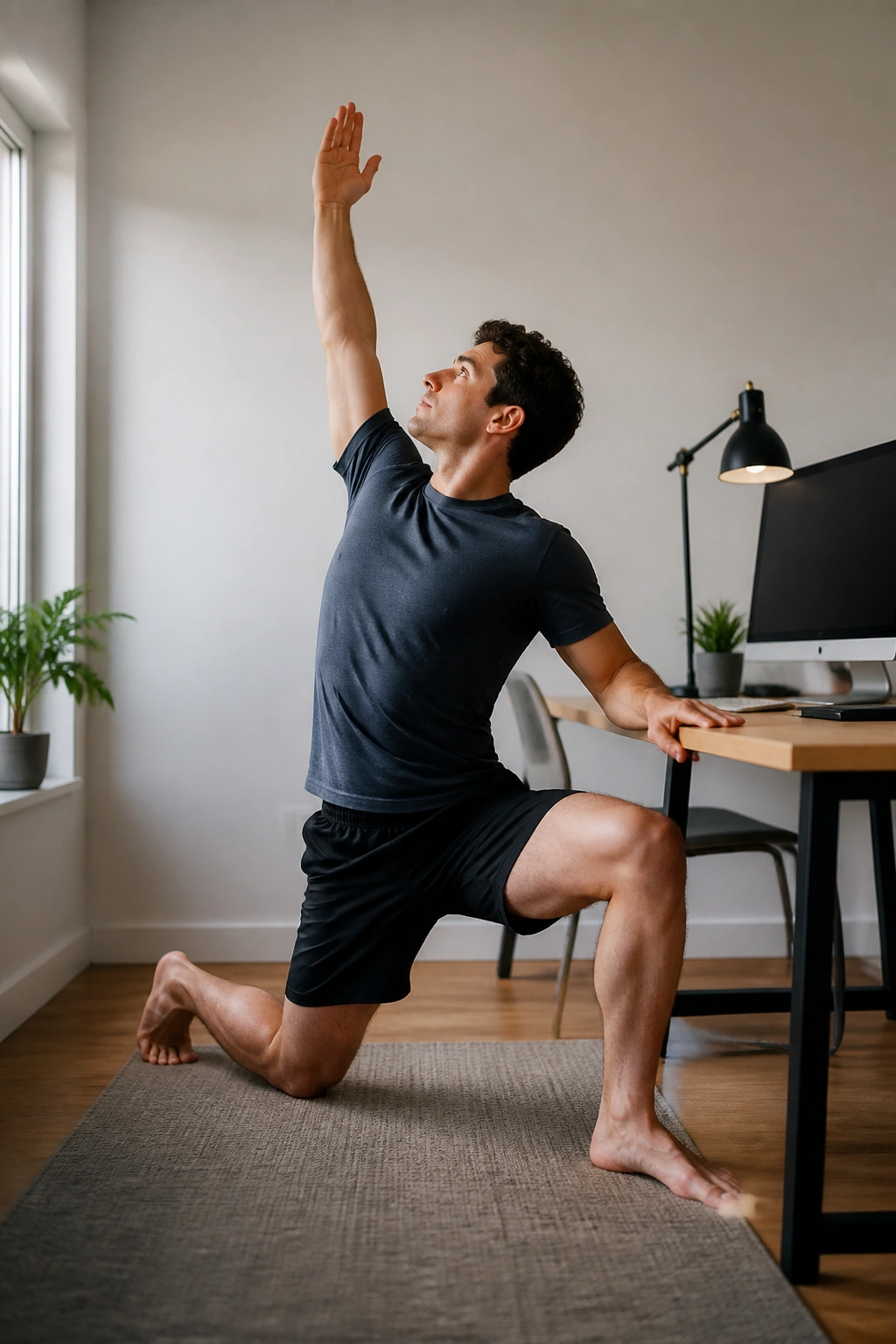
A workout does not have to make you sweat to count.
That’s not me being generous. It’s just reality. On some days, the best no equipment workout is the one that gives your neck, back, hips, and ankles enough room to stop complaining.
The flow
Move through these positions for about 45 to 60 seconds each:
- Cat-cow
- Thoracic rotation on all fours
- Half-kneeling hip flexor reach
- Deep squat hold
- Ankle rocks against the floor
Stay slow enough to notice where things feel sticky. If the hip flexor stretch bites in the front of the hip, ease up and tuck the pelvis a little. If the squat hold feels rough, keep both heels down and hold onto a door frame for balance.
What to feel
Your upper back should start rotating more easily. Your hips should open without that grimace-you-try-to-ignore feeling. Your ankles may feel like they’ve been asleep, which is common if you sit a lot or wear stiff shoes all day.
A small but useful detail
Do the deep squat hold after the hip flexor stretch, not before. Your body usually gives you a little more range once the front of the hip stops guarding everything.
This is not the sweaty workout. It is the one that makes the sweaty workout feel better later.
6. 15-Minute Apartment-Friendly Sweat Session
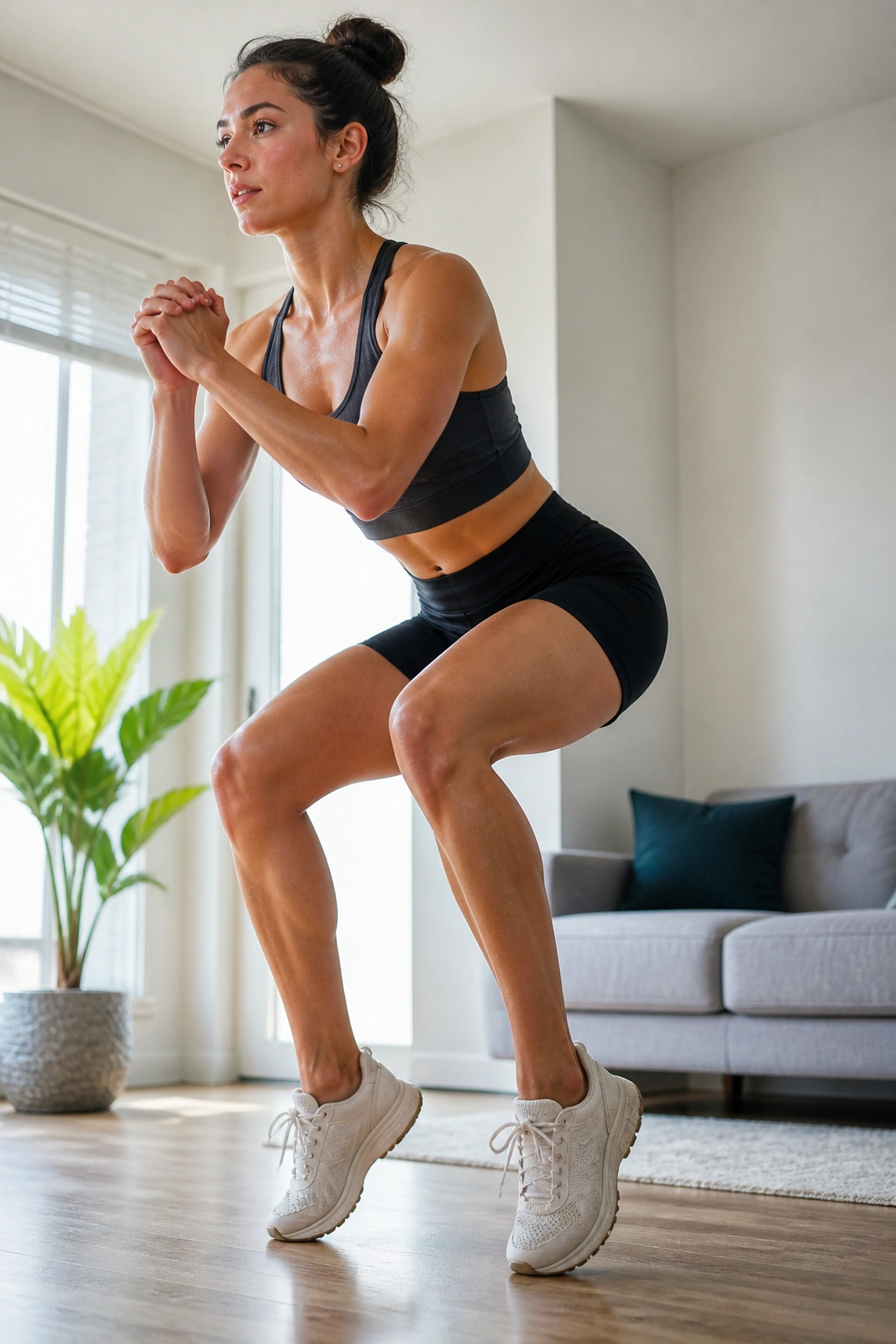
If your floor creaks or your downstairs neighbor has a suspiciously strong opinion about jumping, this is the session to keep.
The whole point here is quiet conditioning. No stomping, no burpees, no loud landings. Just steady work that still leaves you warm and breathing harder than you expected.
One round
Do 3 rounds of these five moves:
- Squat to calf raise — 45 seconds
- Alternating reverse lunge — 45 seconds
- Bear hold shoulder taps — 30 seconds
- Plank knee drives — 30 seconds
- Skater step with no jump — 30 seconds
Rest 20 seconds between movements and 45 seconds between rounds.
Why it sneaks up on you
The bear hold looks polite until your abs start shaking. Squat to calf raise keeps the legs under tension longer than a plain squat. The lunge pattern also catches balance, which matters more than people think when they’re tired and rushing.
Keep it quiet, not lazy
Soft feet. Slow control. No dropping out of the plank just because nobody can see you. That’s how you get the work without the noise.
This is one of my favorites for evenings when you still want to move but don’t want the house to sound like a gym class.
7. Upper-Body No Equipment Burner
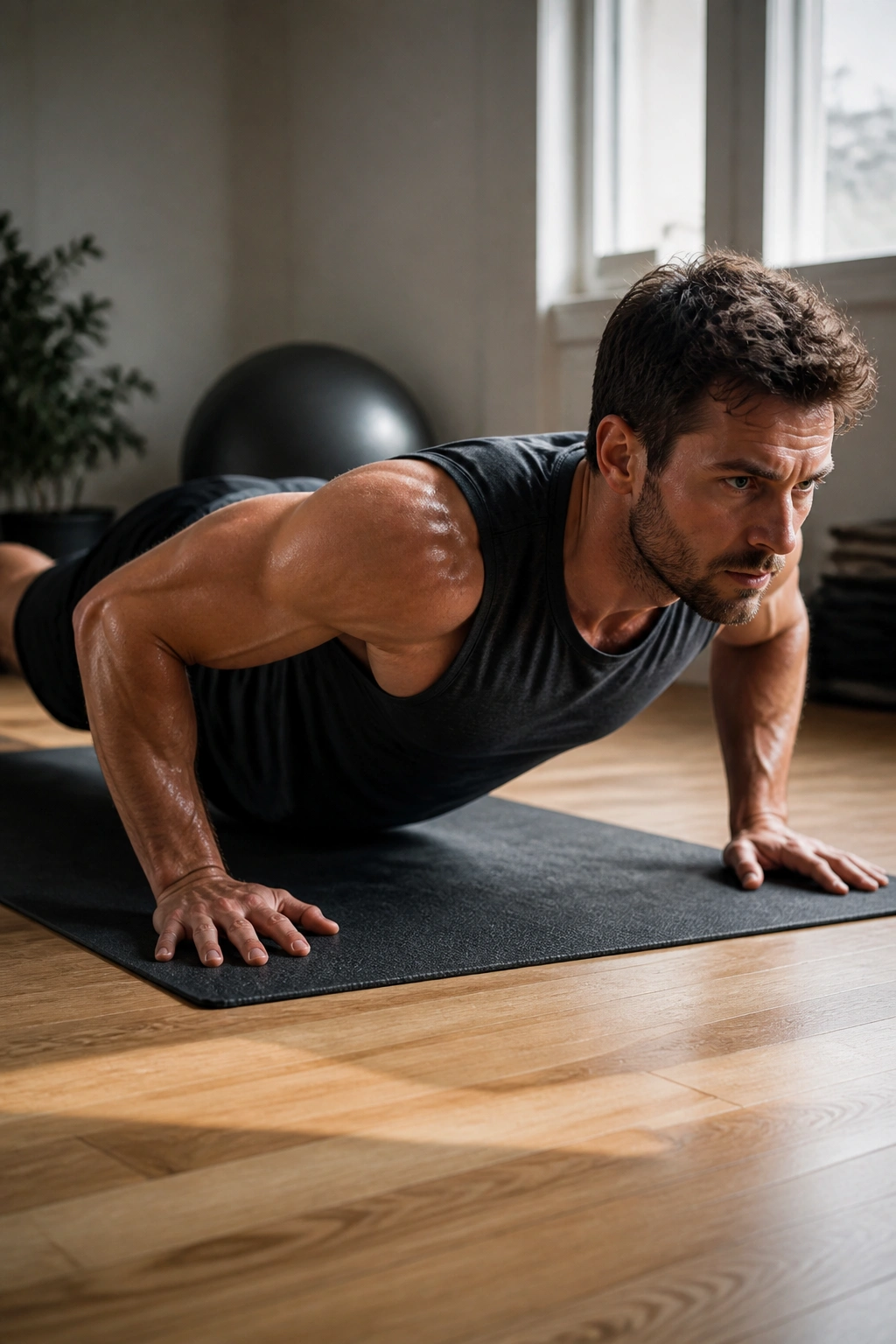
No, you do not need 100 push-ups.
You need a smart mix of angles that wakes up the chest, triceps, shoulders, and upper back without turning the whole thing into a shoulder shrug contest. Upper-body no equipment work gets better when the reps are thoughtful, not mindless.
The sequence
Set a timer for 30 seconds of work and 15 seconds of rest. Run through these moves twice:
- Standard push-ups
- Close-grip push-ups
- Pike push-ups
- Plank shoulder taps
If standard push-ups are too much, put your knees down and keep your torso in a straight line from head to knees. That is still a real rep. Lazy form is the thing to avoid, not modifications.
Shoulders and wrists
Keep your hands under your shoulders or just outside them. Let the elbows travel back at about a 45-degree angle, not flaring wildly. On pike push-ups, push the floor away and aim the hips high so the shoulders do the work instead of the lower back.
One small adjustment that helps
If your wrists get cranky on the floor, make fists and rest on your knuckles for the plank work. It changes the angle enough to help some people without changing the workout itself.
This one burns fast, and that’s exactly why it works on busy days.
8. 9-Minute Legs and Glutes Ladder
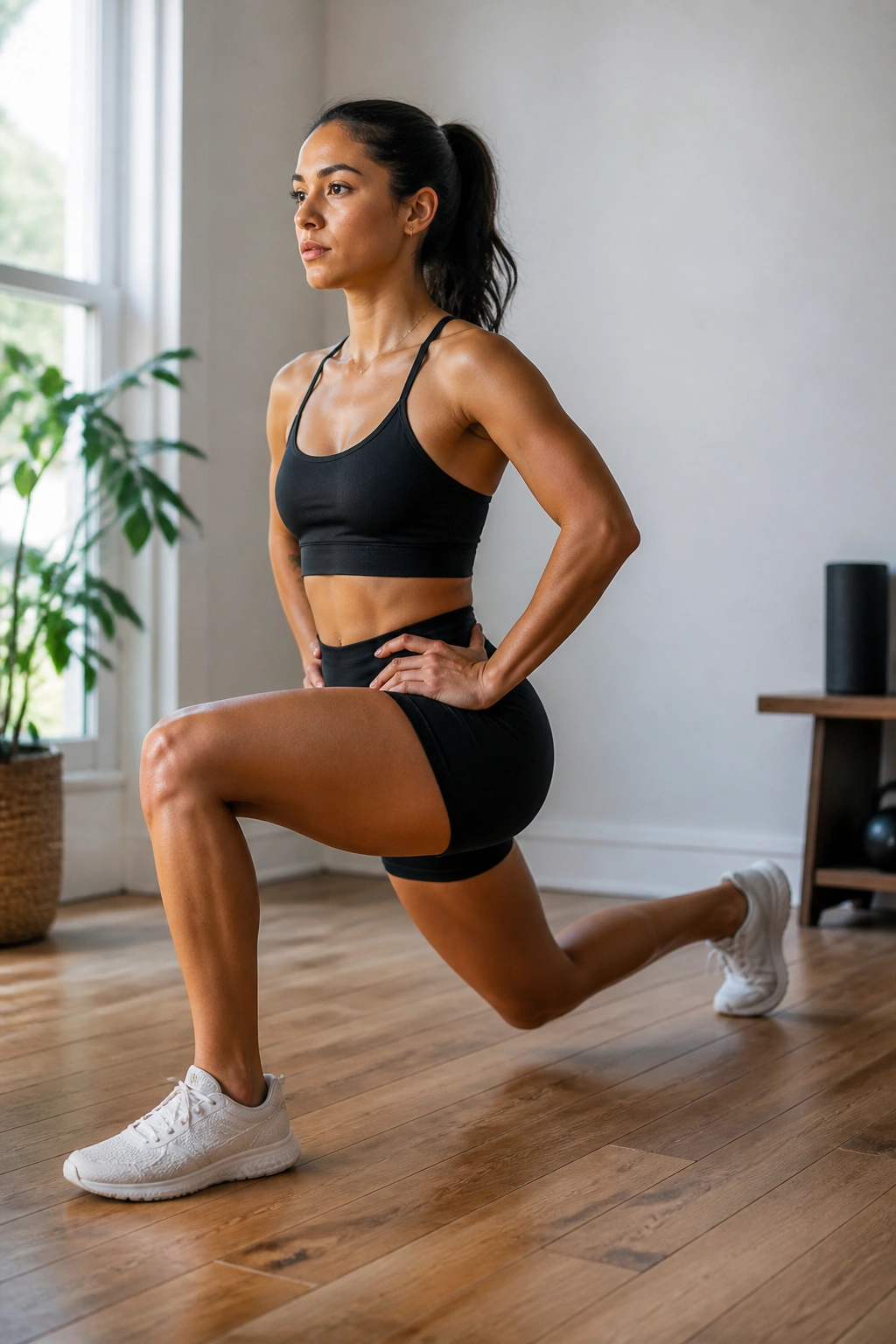
One split squat tells you more about your legs than most people want to admit.
That’s the charm of unilateral work. Each side has to show up on its own, which means you can’t hide a weak hip or a lazy glute behind the stronger leg. A legs and glutes ladder also feels very different from a big squat session — more targeted, more honest.
The ladder
Work down this sequence, resting 20 seconds between moves:
- 10 split squats per leg
- 10 single-leg glute bridges per side
- 30-second wall sit
- 15 calf raises
- 8 split squats per leg
- 8 single-leg glute bridges per side
- 20-second wall sit
- 12 calf raises
If that’s too much, stop after the first four moves. You do not get bonus points for blowing up on round two.
What to feel
The front thigh should work hard in the split squat, but the back leg should not be a dead passenger. On the glute bridge, drive through the heel and keep the hips level so one side doesn’t cheat.
A good sign
Standing up from a chair should feel easier after a few weeks of this. So should climbing stairs, getting out of a car, and carrying groceries up a flight without weird knee grumbling.
This is quiet strength work. The kind that sneaks into everyday life.
9. 5-Minute HIIT Finisher for Cardio and Legs
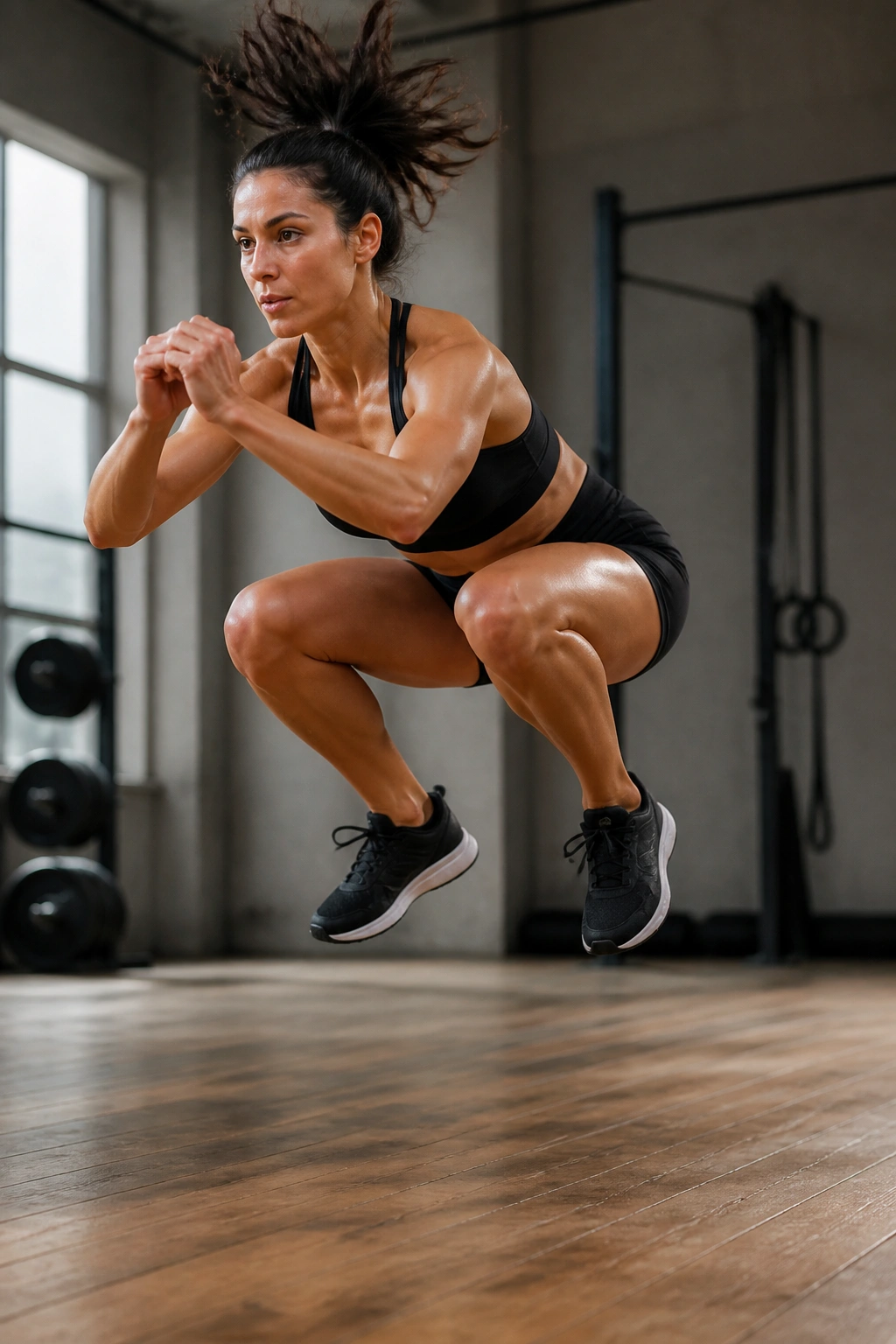
This is the one to use when the day has gone sideways and you want a fast finish that feels like work.
A HIIT finisher is not supposed to be long. It is supposed to be sharp. Five minutes is enough if you stay honest with the effort and don’t turn the middle rounds into a stroll.
The setup
Set a timer for 20 seconds on, 10 seconds off and cycle through these five moves twice:
- Squat jumps
- High knees
- Mountain climbers
- Skaters
- Burpees or squat thrusts
If jumping feels rough, swap squat jumps for fast air squats and skaters for side steps with a reach. The point is the heart rate, not the airtime.
What it should feel like
Breathing gets noisy fast. Legs get springy, then heavy. Your form starts to feel a little less charming by the end, which is exactly when you should simplify the movement rather than chase speed.
A blunt rule
Land softly. Always. If each rep sounds like furniture moving, you’re doing too much impact and not enough control.
This is the workout I’d pick when the only goal is to sweat hard and move on.
10. 12-Minute Beginner-Friendly Full-Body Circuit
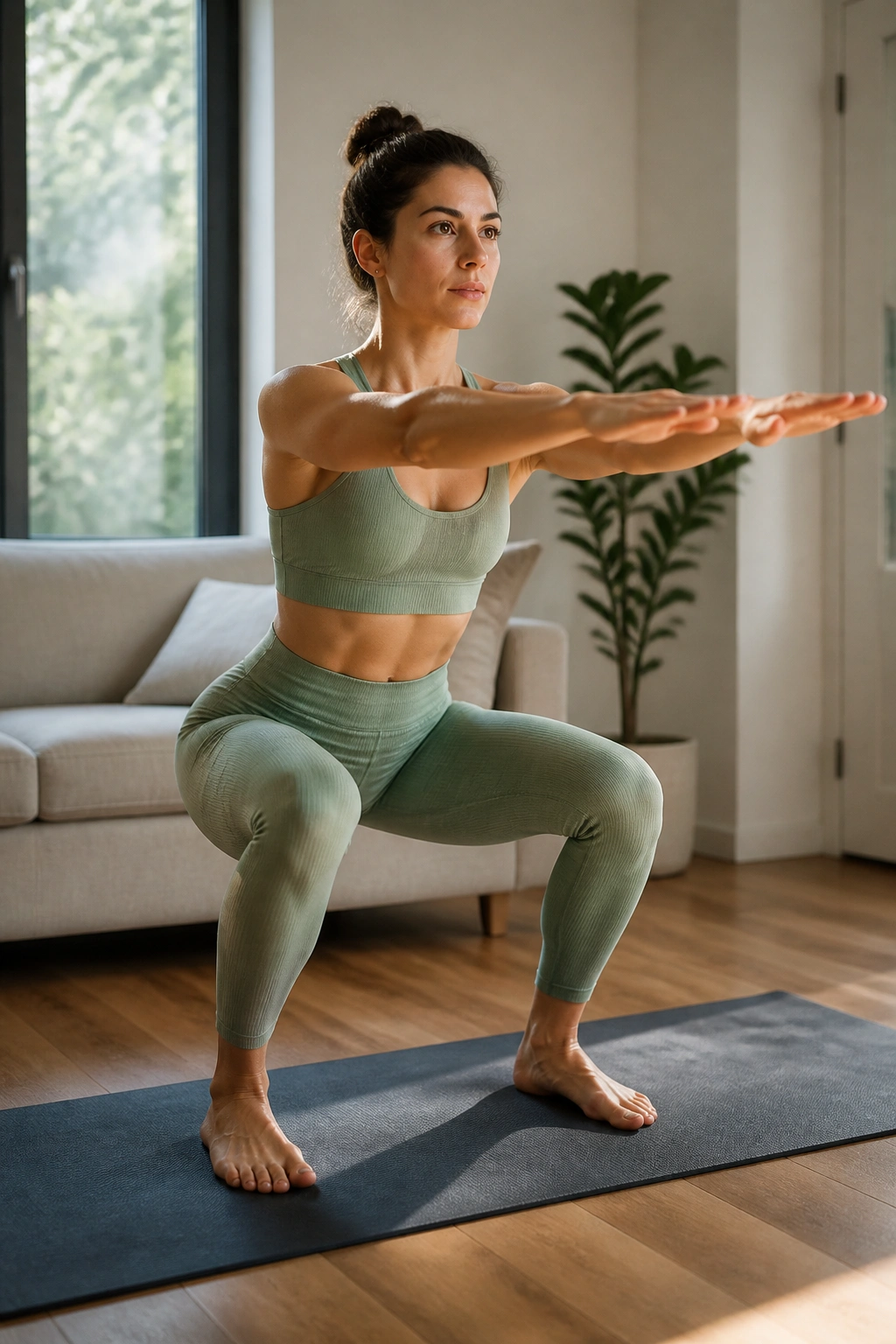
Beginners do better with fewer choices.
That sounds obvious, but a lot of people make their first workout feel like a test they didn’t study for. This one keeps the moves simple, the pace steady, and the rest long enough to recover without losing momentum.
The circuit
Do 2 rounds of the following with 30 seconds of work and 30 seconds of rest:
- Air squats
- Knee push-ups
- Alternating reverse lunges
- Dead bugs
- Glute bridges
- Forearm plank
Why it works for new exercisers
You get practice in all the big patterns: squat, push, lunge, brace, and hinge. Nothing fancy. Nothing that requires a long learning curve. That matters because the first few sessions are usually about building confidence and teaching your joints what the motions feel like.
The one thing not to do
Do not race the timer. A slower squat with full foot contact and a steady knee line helps more than 20 rushed reps that wobble around like they’re late for a bus.
Finish with gas left in the tank. That’s the right pace for a beginner plan, even if it feels too easy halfway through.
11. 8-Minute EMOM for Busy Mornings
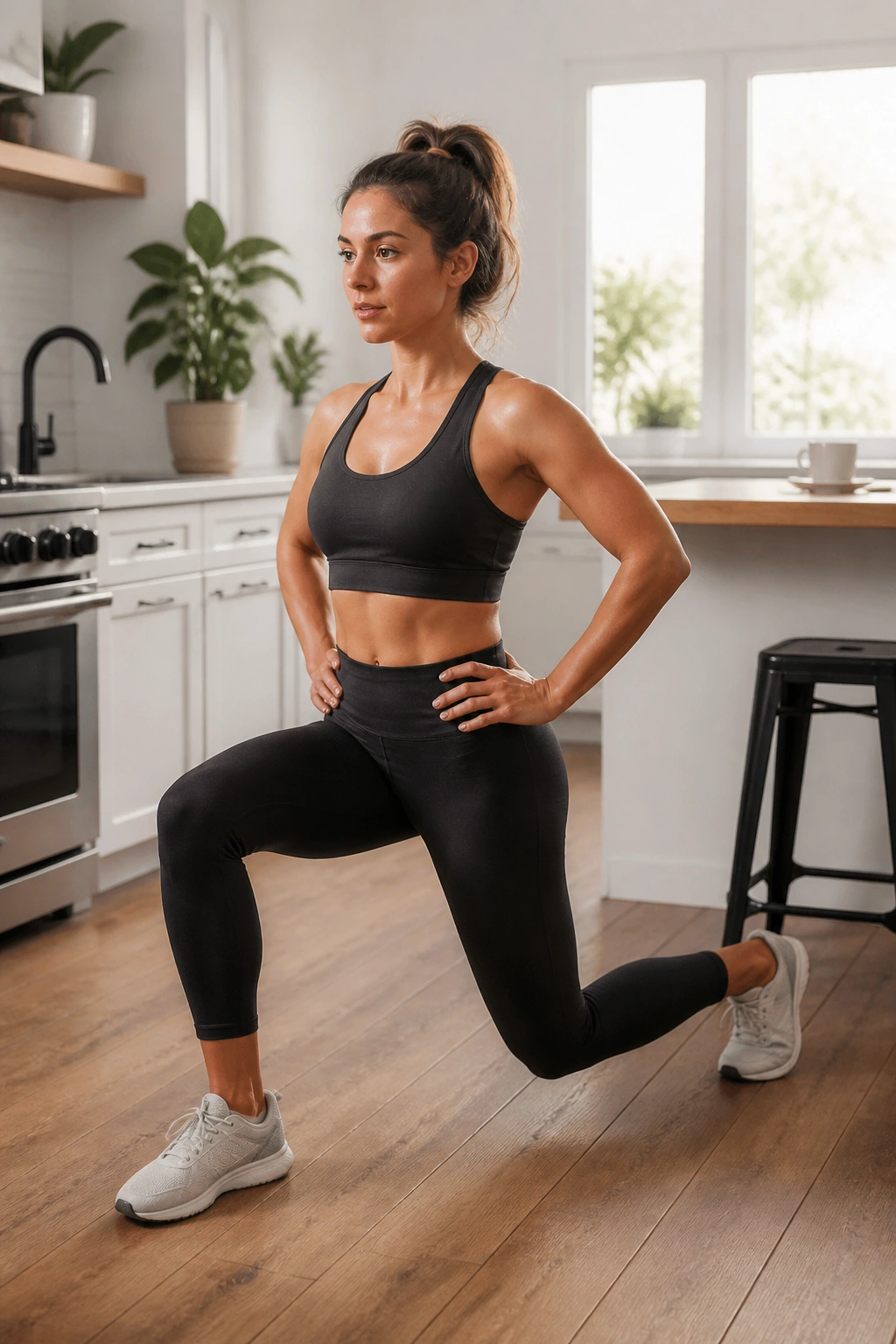
EMOM stands for “every minute on the minute.” The rule is simple: finish the work before the minute runs out, then rest for whatever time is left.
That built-in rest is why I like it so much. There’s no drifting, no wondering if you’ve done enough, and no long gaps where your brain starts negotiating.
The format
Run this for 8 minutes total:
- Minute 1: 12 air squats
- Minute 2: 8 push-ups, or 5 knee push-ups if that’s cleaner
- Minute 3: 12 alternating reverse lunges
- Minute 4: 20-second hollow hold
- Repeat the same four-minute block once more
If you finish early, rest. If you’re still working when the next minute starts, the reps are too high.
How to keep pace
Pick numbers that take about 35 to 40 seconds to complete. That leaves a little breathing room. The goal is to stay crisp, not to sprint into sloppy territory and then spend the rest of the minute bargaining with yourself.
Why this format works
EMOMs stop the workout from wandering. They also make progress easier to track, because when those same reps feel smoother next week, you know the work is paying off.
This one is plain, efficient, and hard to mess up.
12. 10-Minute Mobility-Strength Combo
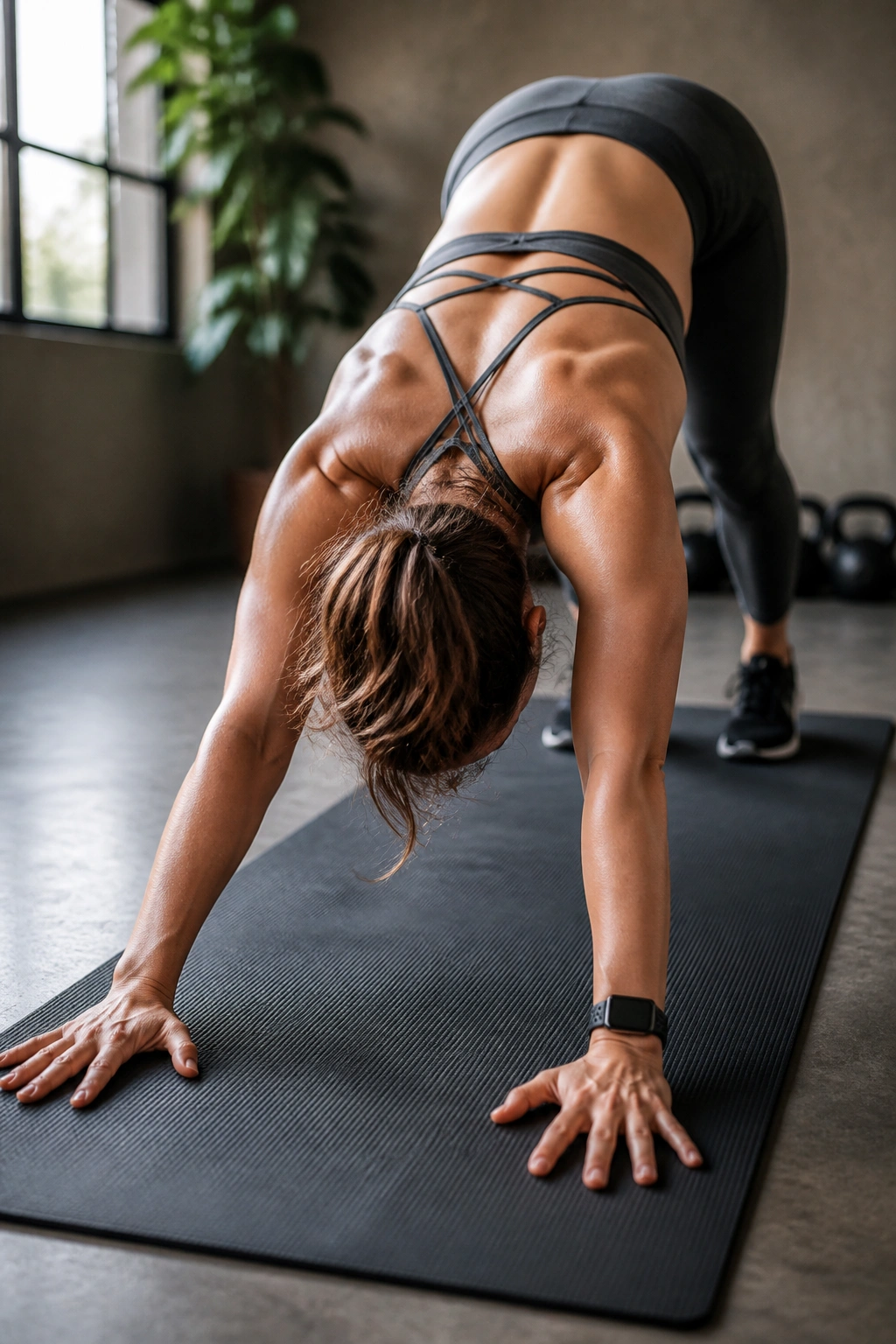
Your body moves better when strength and mobility show up together.
That sounds a bit tidy, but it’s true in practice. Stretching without strength can feel nice and go nowhere. Strength without mobility can feel like grinding gears. This combo sits between the two.
The sequence
Do 2 rounds of these five moves:
- Inchworm — 40 seconds
- Cossack squat — 40 seconds
- Glute bridge march — 40 seconds
- Bear crawl hold — 20 seconds
- Shoulder taps from plank — 40 seconds
Rest 20 seconds between moves.
What makes it different
The inchworm opens the hamstrings and shoulders at the same time. The Cossack squat asks the hips to move side to side, which most people skip all day. The glute bridge march adds stability, not just glute strength, and the bear hold teaches the core to stay quiet while the limbs move.
What to watch for
Keep the Cossack squat small if your hips are tight. A shallow side shift with the heel down is better than forcing depth and collapsing inward. On the bear hold, keep the knees a few inches off the floor. Too high and it gets easy; too low and it turns into a nap on your wrists.
This is the sort of session that leaves you feeling more organized in your body.
13. 6-Minute Core Crusher That Doesn’t Need Crunches
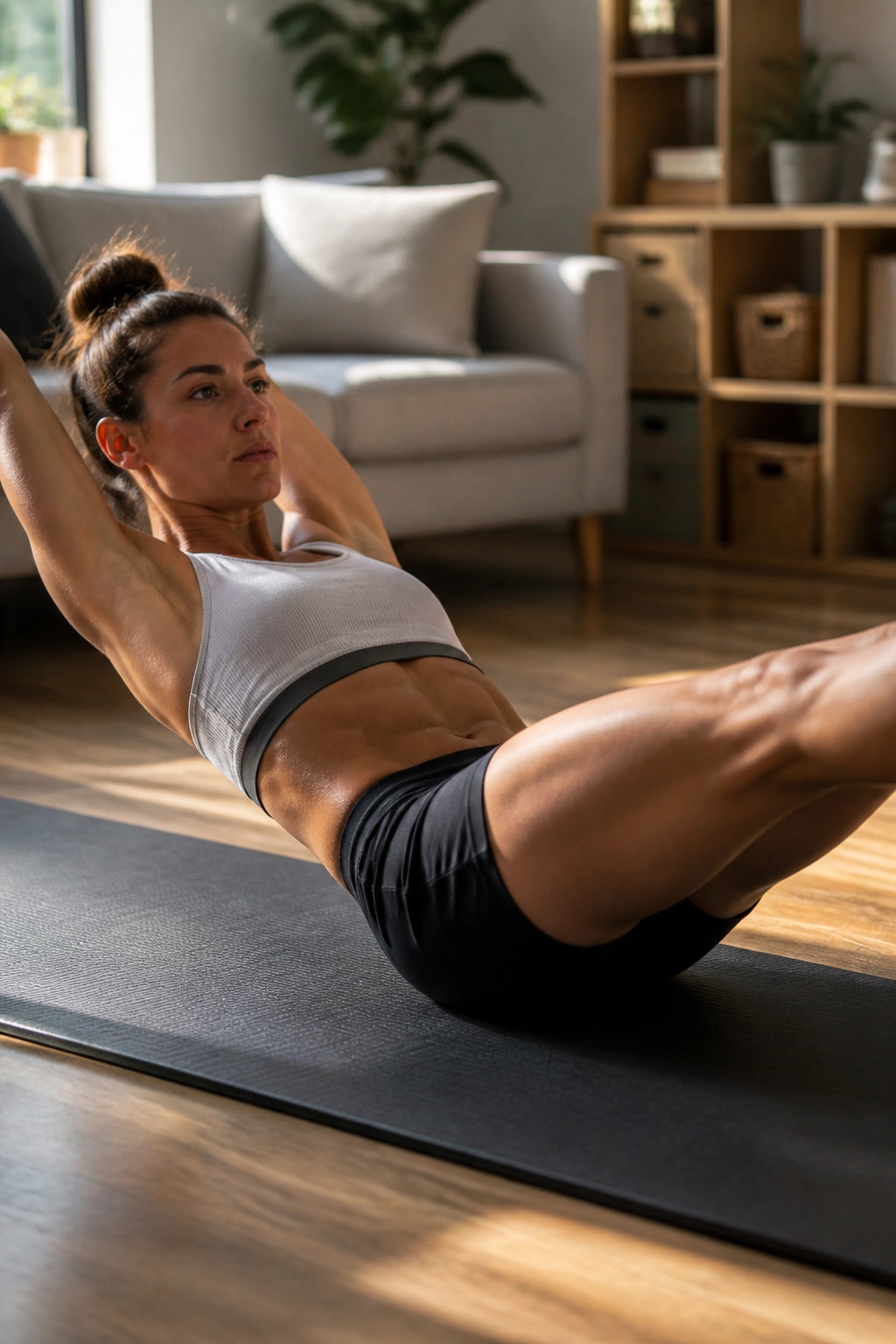
Crunches are not the only way to train your core.
I’m glad about that, because a lot of people hate crunches for good reason. They can be annoying on the neck, boring to repeat, and not always the best match for what the torso actually does in real life. Bracing, rotating, resisting movement — that’s the useful stuff.
The six-minute block
Set a timer for 40 seconds on, 20 seconds off and run through these moves once:
- Hollow hold
- Dead bug
- Plank shoulder taps
- Side plank, right
- Side plank, left
- Heel taps
What to feel
The hollow hold should feel like the ribs are knitting down toward the hips. Dead bugs should feel controlled, not frantic. On heel taps, the lower back stays glued to the floor if you’re doing it well.
A small breathing cue
Exhale harder than feels natural on each hard effort. That helps the ribs stay stacked and keeps the core from popping open when the work gets uncomfortable.
This session is short, but it does real work. And it’s kinder to the neck than the old-school crunch marathon.
14. 15-Minute Stairless Pyramid Workout
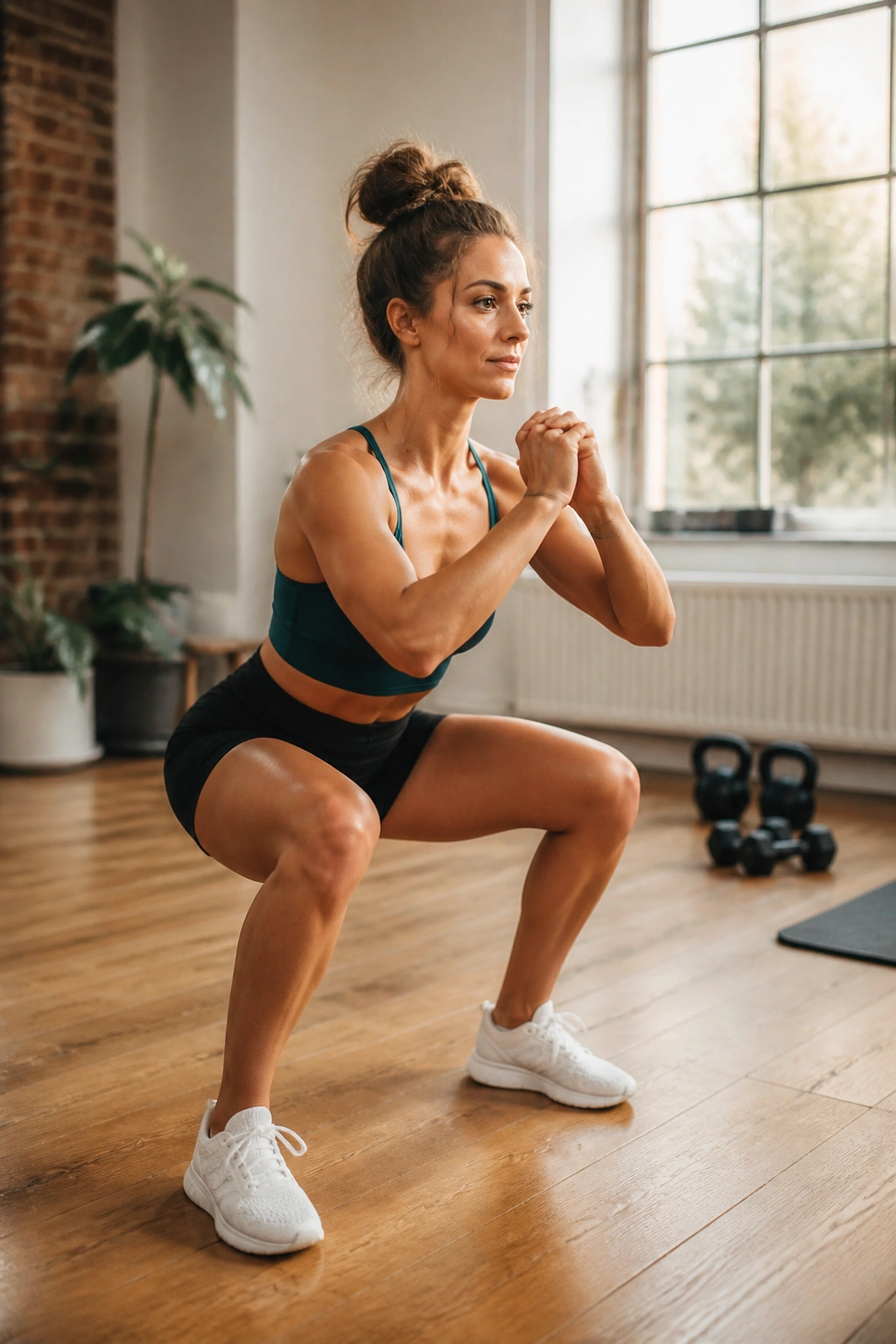
If you hate deciding what comes next, pyramids solve the problem.
They also feel different from a straight circuit because the work builds, then eases off. That shape keeps the session from feeling flat, which is handy when you’re tired and don’t want to stare at a timer for the same 45 seconds over and over.
The pyramid
Move through these intervals with 15 seconds of rest between each one:
- 30 seconds squat
- 40 seconds reverse lunge
- 50 seconds push-up
- 60 seconds mountain climber
- 50 seconds glute bridge
- 40 seconds plank shoulder tap
- 30 seconds fast march
Repeat the whole ladder once if you have the time and energy.
Why it feels manageable
The early reps let you settle in. The middle gives you the hard part. The taper back down gives you a little psychological relief, which sounds silly until you’ve done it and realized how much easier it is to keep going when the plan has shape.
Keep your pace honest
Do not sprint the first 30 seconds. Pyramids punish that mistake. A steady first block gives you enough left in the tank for the 60-second middle, and that middle is where the workout really earns its keep.
This is a smart choice for days when you want a full-body hit without a complicated setup.
15. 5-Minute Recovery Finish
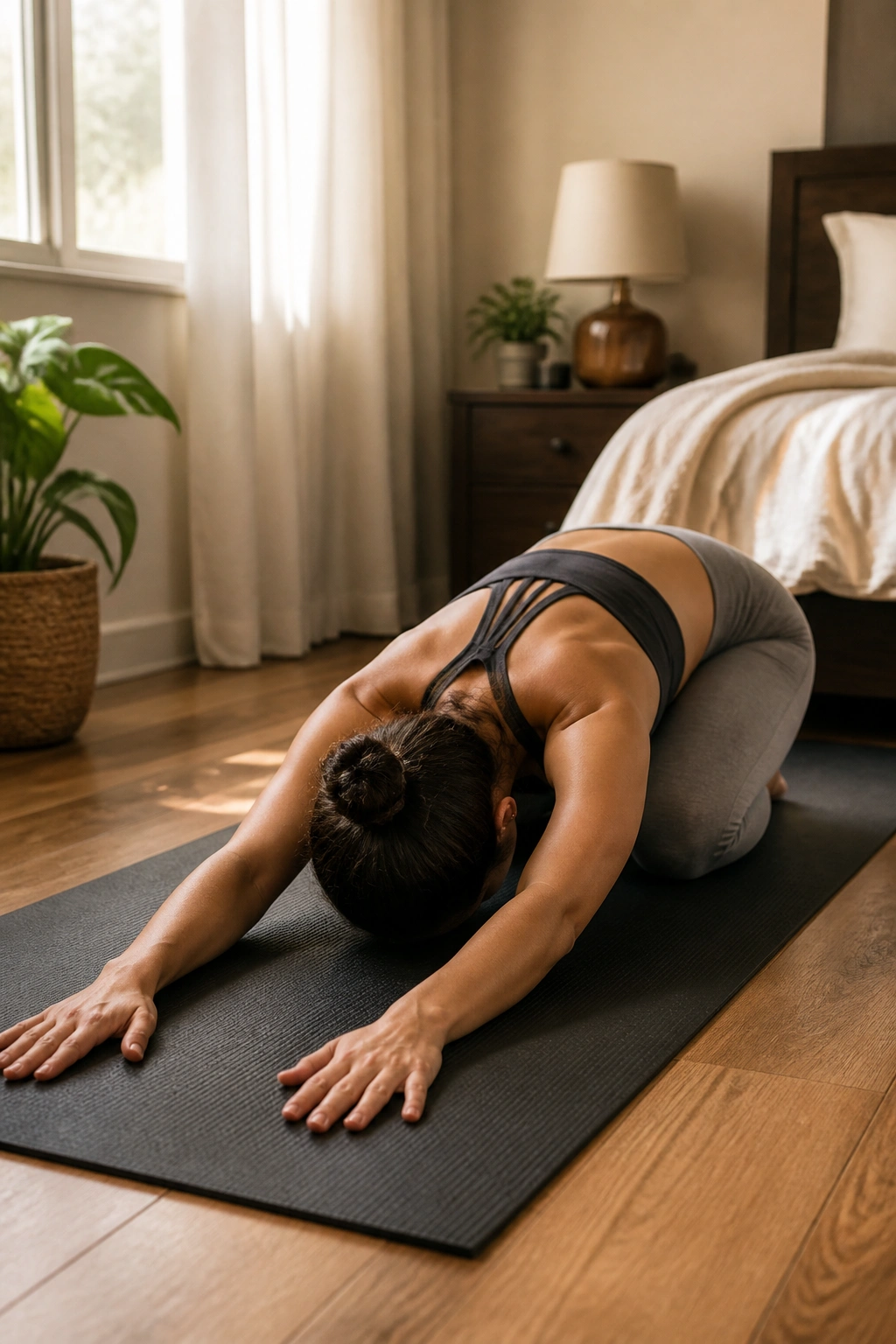
Not every workout should leave you wrecked.
Some days need a hard push. Some days need a clean finish that tells your joints, hips, and back that the day is over. I’m a big fan of ending with a short recovery piece, especially if the rest of the day was spent sitting, driving, or hurrying around with your shoulders up near your ears.
The recovery flow
Hold or move through these positions for about 30 to 45 seconds each:
- Cat-cow
- Thread-the-needle
- Half-kneeling hip flexor stretch
- Forward fold with soft knees
- Child’s pose breathing
If the hip flexor stretch feels pinchy, shorten the stance and tuck the pelvis slightly. If the forward fold tugs too hard behind the knees, bend them. There is no prize for forcing range.
Why I like it at the end
This is the sort of short workout that helps you show up better tomorrow. The breathing slows down, the shoulders drop, and the body gets a signal that it does not need to stay braced for the rest of the night.
A five-minute finish will not replace full training, and it should not try to. It can, though, make a rough day feel a little less rough and a tight body feel a little less jammed.
Pick one routine, do it with intent, and stop pretending that only long workouts count. Most busy days are won by the person who moves first and keeps it simple.
