



A yoga mat, a sturdy chair, and ten minutes can do more for your legs than people expect. Yoga inspired leg workouts at home tend to look gentle right up until your quads start shaking and your balance gets honest.
The trick is the hold, not the speed. Slow chair poses, lunges with pauses, and single-leg balance drills ask your glutes, hamstrings, calves, and inner thighs to do clean work, which is why they can feel harder than a fast squat circuit with twice the noise.
I like these moves because they fit real apartments and real schedules. No jumping. No big setup. Just a wall, a mat, maybe a folded towel or chair, and enough patience to let the burn show up in the right places.
Public-health and sports-performance advice keeps circling back to the same boring basics: train the big lower-body muscles regularly, keep the form honest, and make the movement harder by slowing down or reducing support. That is the game here. A couple of these will feel almost playful; a couple will feel rude.
1. Chair Pose Pulse Ladder
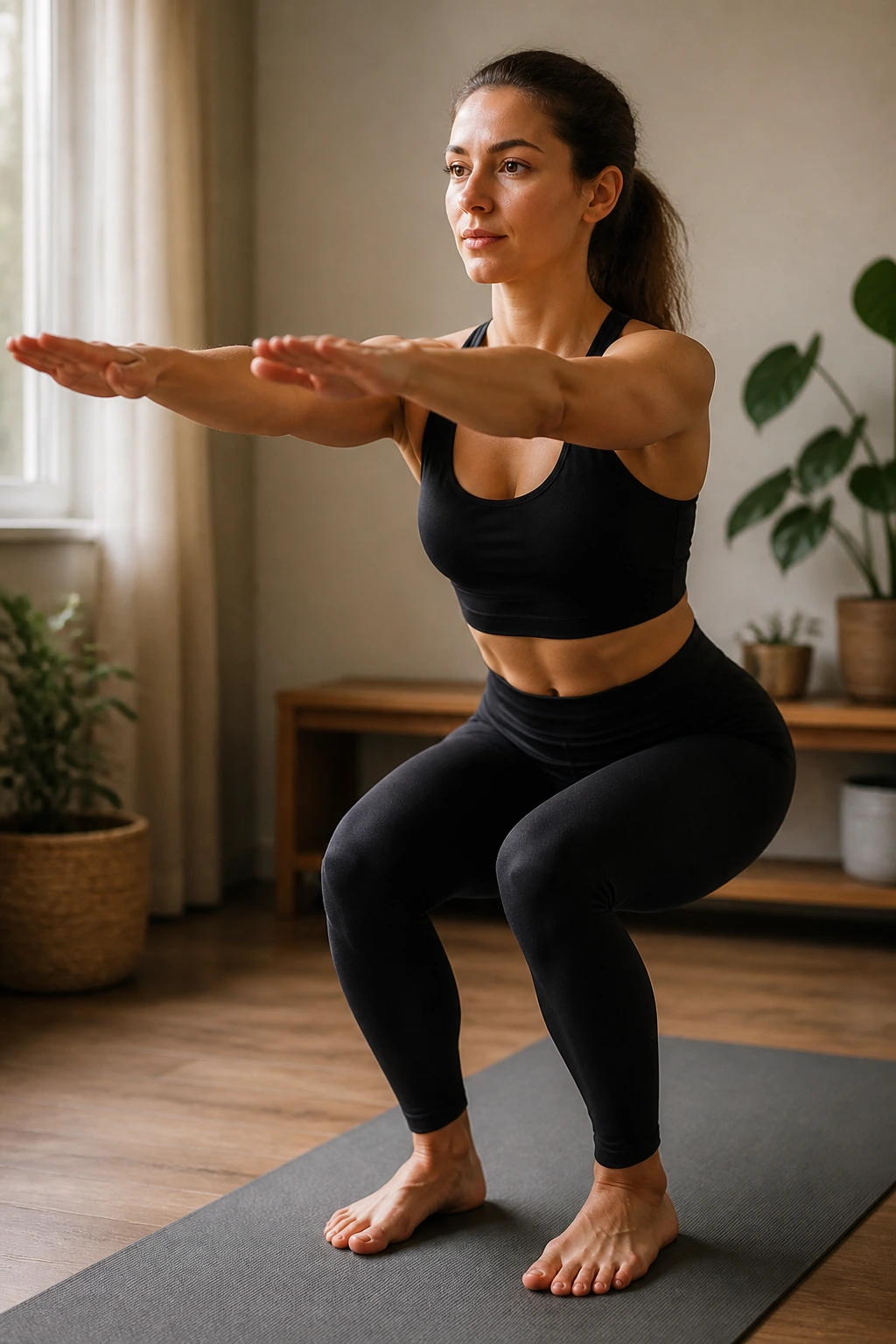
Chair pose looks harmless from across the room. Then your thighs start talking back.
Sink into the shape with feet about hip-width apart, hips back, chest lifted, and arms forward or overhead. Hold for 20 to 30 seconds, then add 10 small pulses by dropping an inch and rising an inch. Do 2 to 4 rounds. Keep your weight spread through the heels and the big toe mound so you do not tip into your toes and light up your lower back.
- Targets: quads, glutes, calves, and core bracing
- Use a wall: if your torso keeps collapsing forward
- Stop the pulse: when your knees drift inward
The useful part is the pause. A tiny pulse done slowly will expose weak spots faster than a rushed squat. If you only have five minutes, this is one of the best places to start.
2. Warrior II Wall Sit
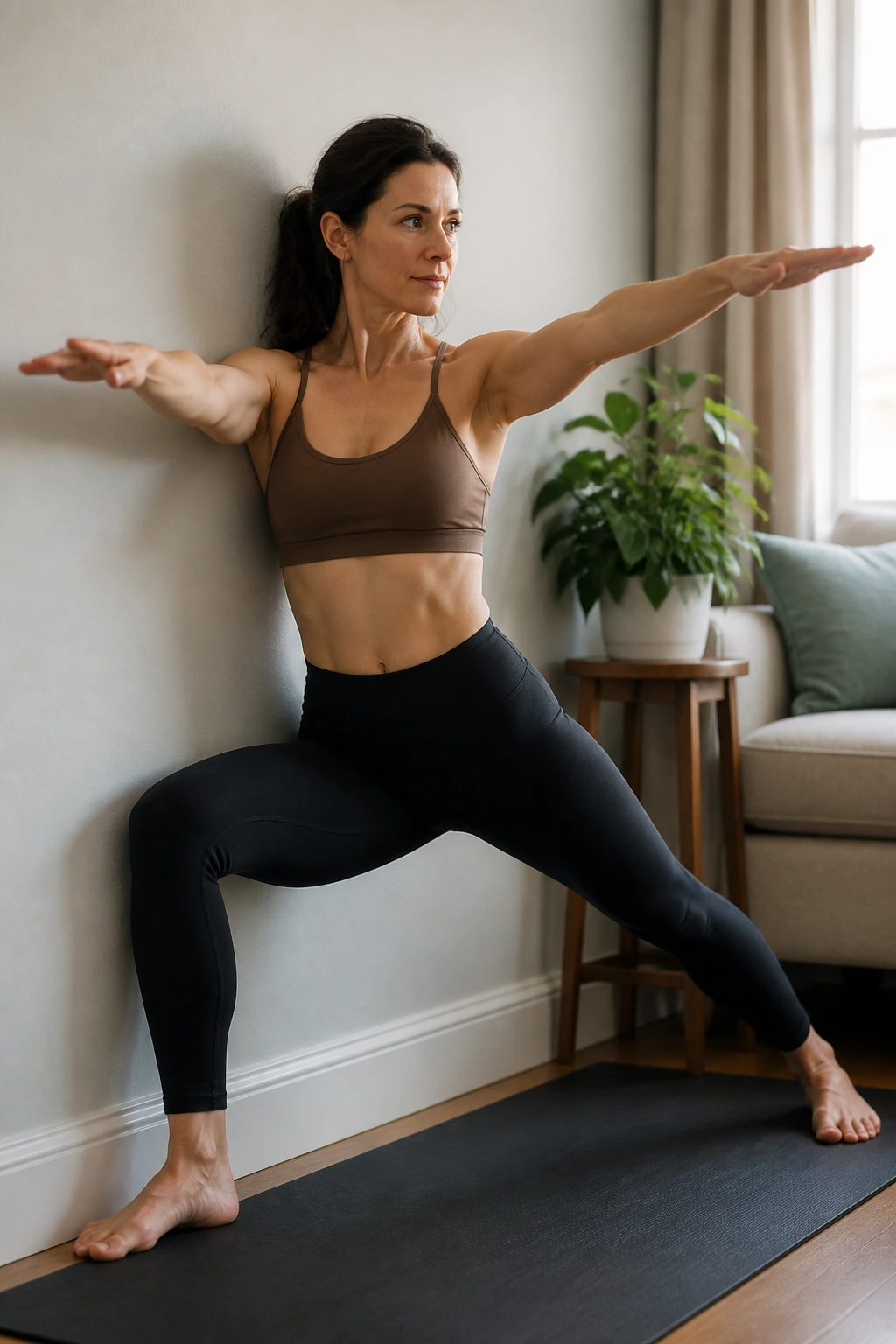
Why does a wall sit feel different when you steal the shape of Warrior II? Because the turned-out front foot and wide stance make the inner thigh and outer hip work against each other instead of hiding.
Stand with your back against a wall, slide down until your front thigh is near parallel to the floor, and turn the front foot out slightly. The back leg stays long, the front knee tracks over the second toe, and your hands can rest on your ribs or reach out in front. Hold 20 to 40 seconds on each side, then switch.
What to feel
Your front quad should heat up first, then the glute on the same side. The back leg is not just a prop; it helps you stay square and keeps you from dumping everything into the front knee.
Common mistake
People twist the pelvis open and lose the line. Don’t do that. Keep the hips steady, keep the ribs stacked, and let the wall do the boring part.
3. Crescent Lunge Knee Drives
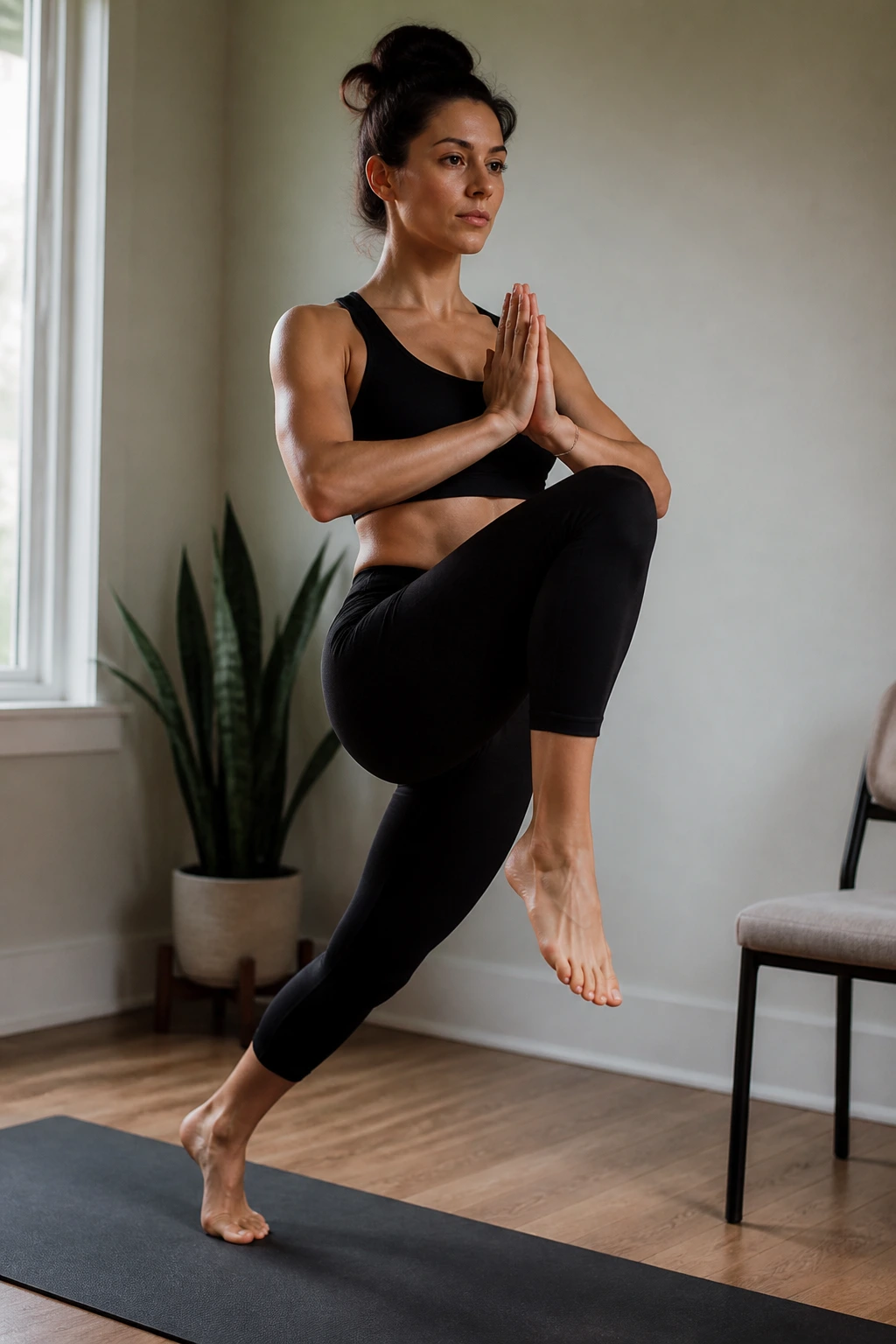
Step into a long lunge and you’ve already got the setup. Add a knee drive, and the whole thing turns into a small fight for control.
Start in a low crescent lunge with the back heel lifted. Press through the front heel, rise a few inches, then drive the back knee forward toward your chest. Return slowly. Do 8 to 12 reps per side with a 2-second drive and a 3-second return. That slow return matters more than people think.
The front leg gets the glute and quad work; the back leg gets the hip flexor challenge. If you keep the torso tall and the ribs from flaring, your core joins the party too. Use blocks under your hands if balance gets messy. No shame there.
A wall nearby helps. So does a quiet floor, because you want to hear whether that back foot lands softly or slaps around like a shopping cart.
4. Goddess Squat Pulses
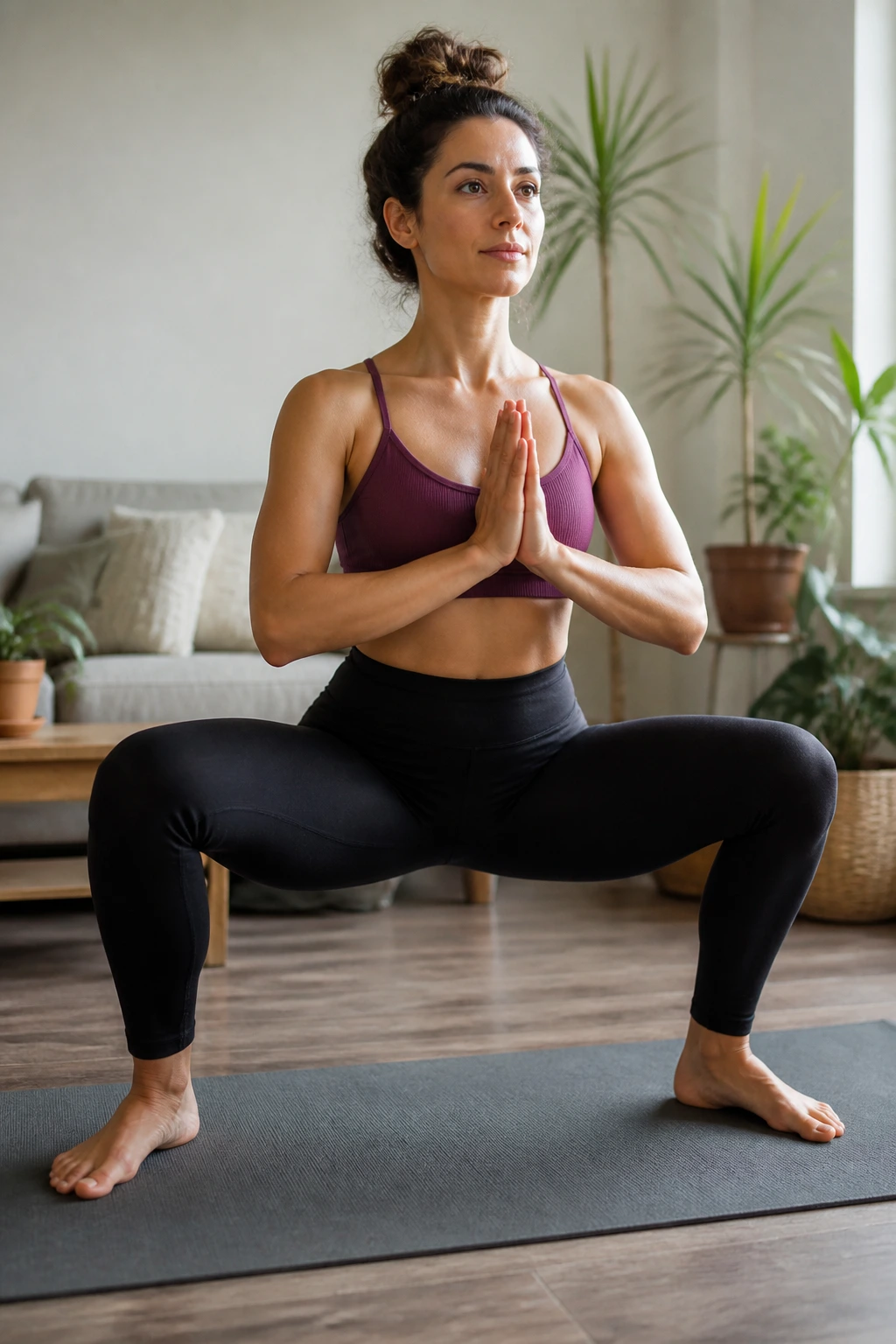
If you want inner-thigh work without a machine, this is the one. No bands, no dumbbells, no drama.
Set your feet wide, toes turned out, knees bent over the toes, and chest tall. Lower into goddess squat and hold 20 seconds, then pulse 15 to 20 times by moving only a few inches. Keep the hips stacked under the rib cage and the heels grounded. If your heels pop up, narrow the stance a little and try again.
Make it harder without jumping
- Add a 10-second hold at the bottom
- Lift one heel for 5 pulses, then switch
- Press the knees gently outward into your own hands
The burn lands in the quads and adductors fast. It also reminds your ankles to stay awake, which is a nice side effect if your lower body spends a lot of time sitting.
5. Skandasana Side-to-Side Reach
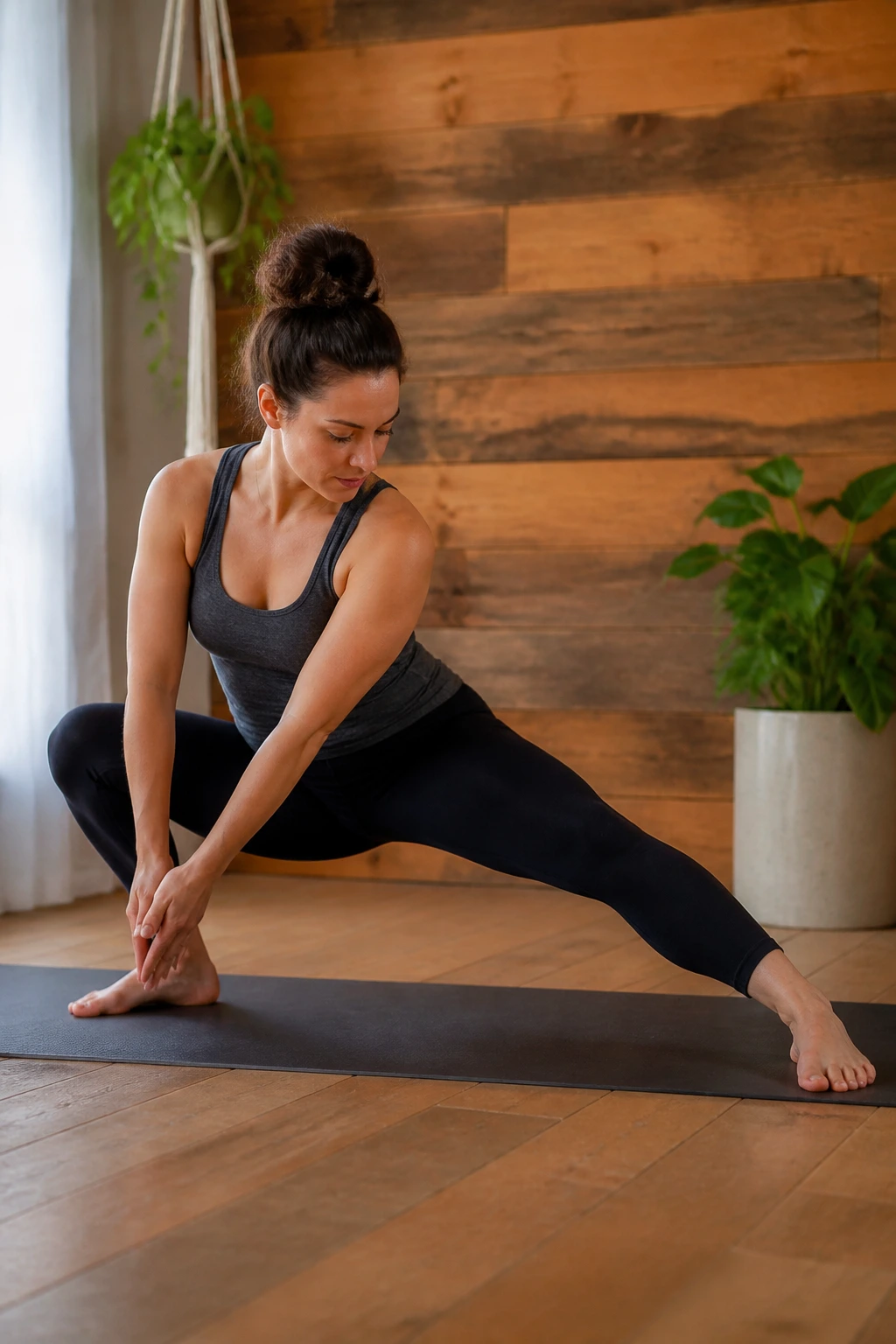
A sideways shift looks easy until you slow it down. Then the hamstrings and inner thighs stop pretending.
From a wide stance, bend one knee and sit into that side while the other leg stays long. Keep the chest lifted, reach both hands toward the bent-leg side, and glide across to the other side. Do 6 to 8 slow shifts per side. If the floor feels far away, place your hands on blocks or a stack of books.
The long leg teaches length. The bent leg teaches load. That mix is what makes Skandasana more than a fancy side lunge. Move with control, and you’ll feel the hips open while the working leg still does real work.
A small detail matters here: keep the standing foot flat instead of rolling to the outer edge. That one cue saves a lot of wobble.
6. Bridge Pose March
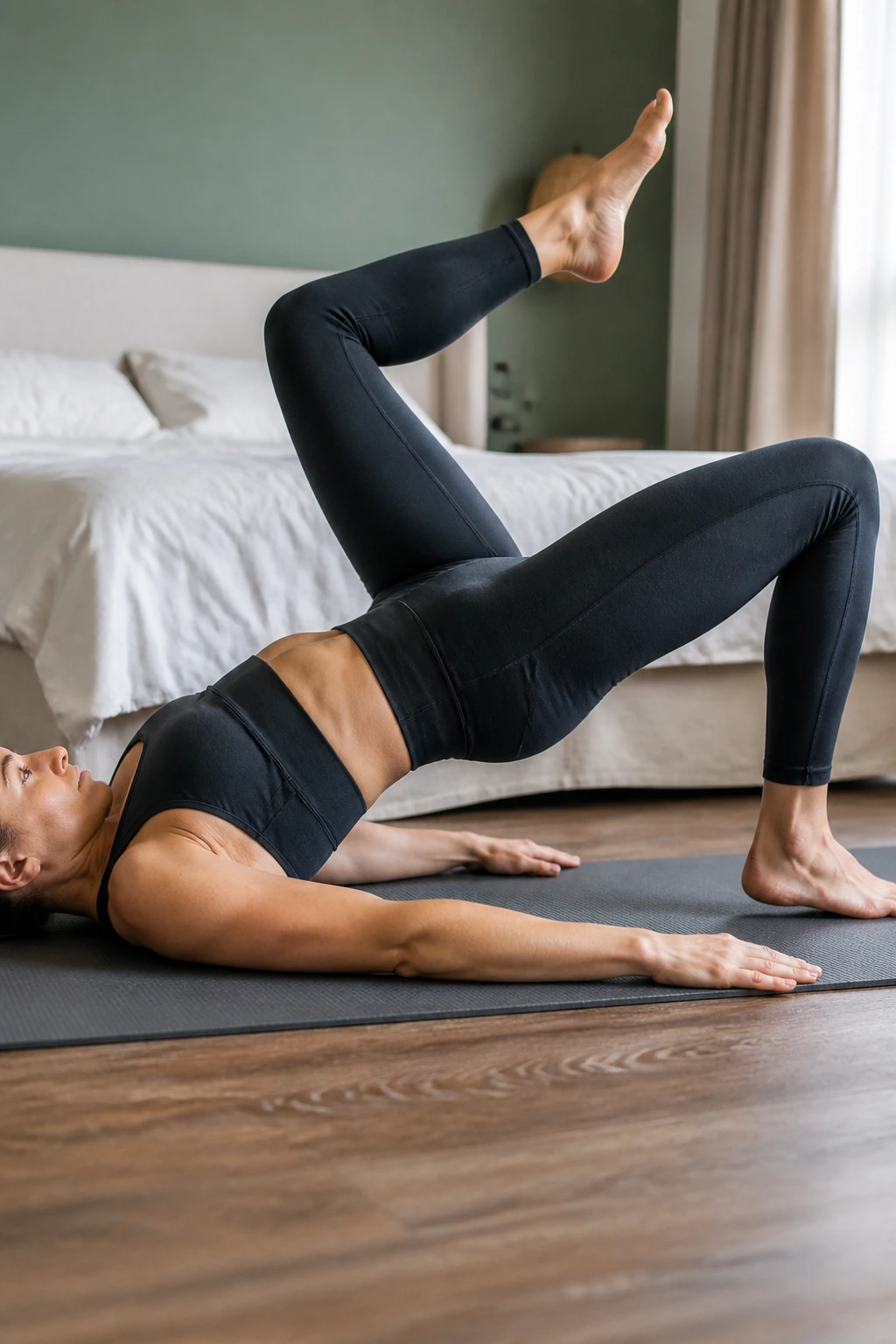
Regular bridges teach you to lift. Bridge marches teach you to not wobble.
Lie on your back, knees bent, feet flat, and lift your hips until your body makes a straight line from shoulders to knees. From there, march one knee toward your chest, lower it, then switch sides. Do 20 marches or 30 to 45 seconds total. Keep the pelvis level. That is the whole trick.
If your hamstrings cramp, move your heels a little farther away from your glutes. If your back arches, lower the hips an inch and reset. The goal is a steady bridge, not a dramatic one.
This move is sneaky good for glute med and hip stability because the body has to resist side-to-side motion while the feet alternate. Quiet feet. Quiet hips. Loud legs.
7. Single-Leg Glute Bridge Hold
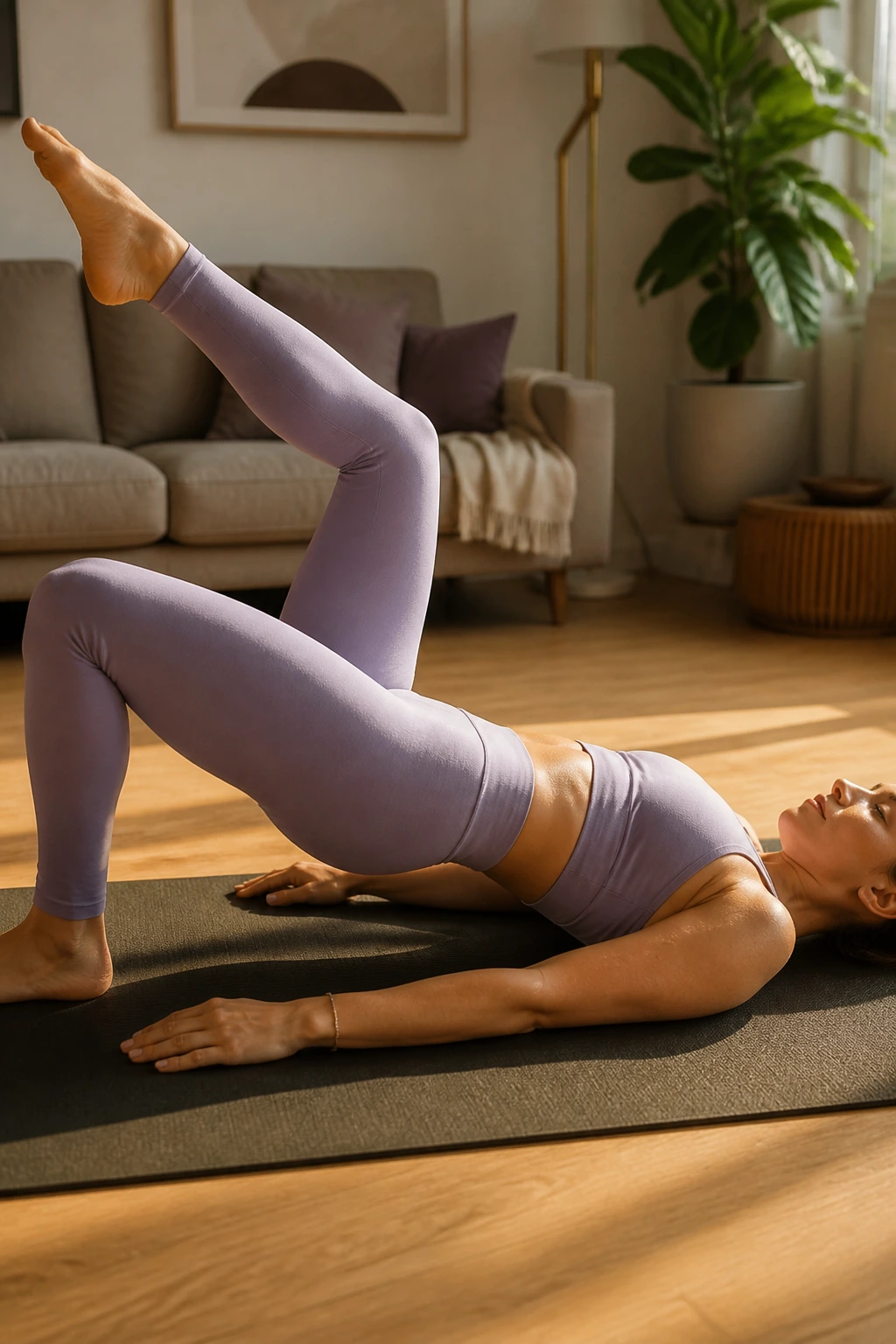
Brutal in a quiet way.
Set up in a bridge, then straighten one leg without letting the hips tilt or the low back overtake the work. Hold 15 to 25 seconds per side, or do 6 to 8 reps with a 2-second pause at the top. Keep the lifted leg in line with the thigh, not swinging out to the side like a loose hinge.
The floor gives instant feedback here. If one hip drops, you’ll feel it. If the ribs flare, you’ll feel that too. Keep your gaze up, press the standing heel down, and think about lifting the working hip straight toward the ceiling instead of just squeezing harder.
This is one of those exercises that looks tiny and behaves like a grown-up. A set of clean single-leg bridges can leave the glute deep and warm without any impact at all.
8. Downward Dog Heel Pedals
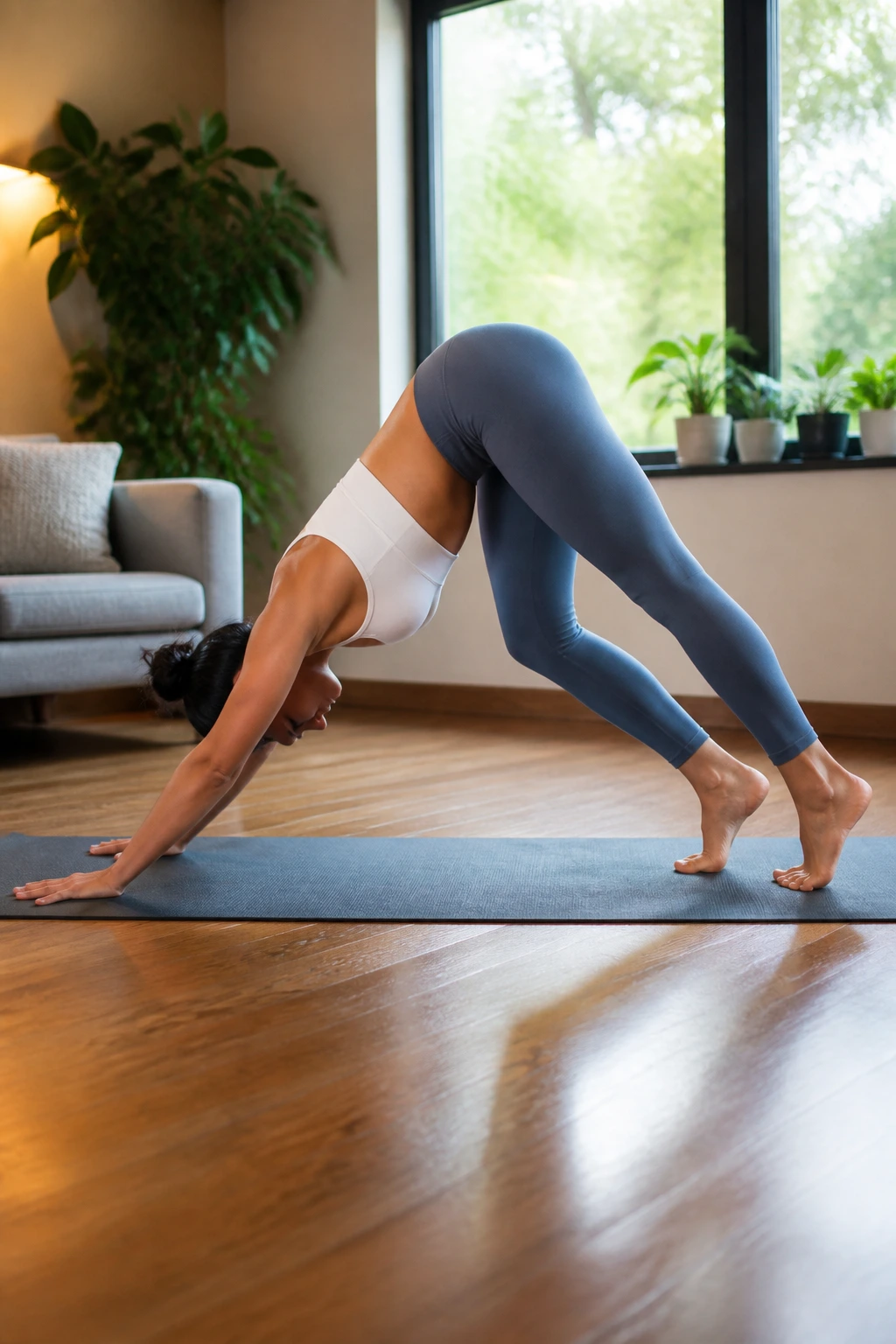
Your calves light up first. Your hamstrings usually join in right after.
Start in downward dog with hands under shoulders and hips high. Bend one knee and then the other, pedaling the heels toward the floor. Spend 30 to 45 seconds there, then straighten the legs and add 10 to 15 calf raises by lifting both heels an inch and lowering under control. Keep a micro-bend in the knees if your lower back feels tight.
The point is not to “stretch and leave.” The point is to own the length. When you actively press the heels down and then lift them, the calves and the backs of the legs have to work, not just relax.
If wrists are grumpy, hands can rest on blocks or the edge of a couch. Small change. Big relief.
9. Warrior III Hover
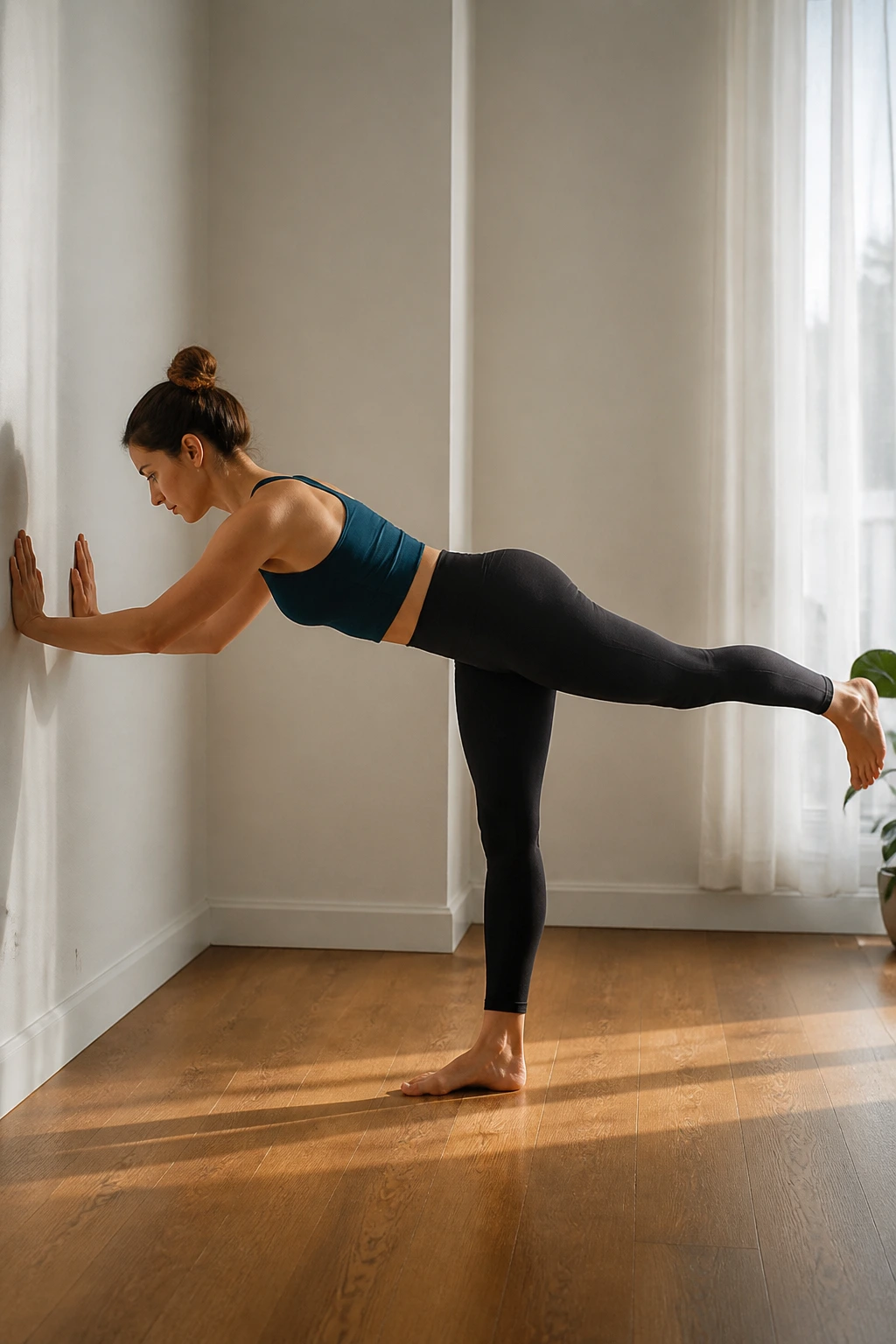
The difference between balance work and leg work is about two inches.
Hinge forward from the hips, lift one leg behind you, and stop before the back leg gets high enough to wreck your spine. That tiny hover is the money zone. Hold 10 to 20 seconds per side, or do 5 controlled reps with a tap down between each one. Keep the standing knee soft, not locked.
Why it matters
Warrior III asks the standing glute and hamstring to stabilize the pelvis while the lifted leg stays long. That is a lot of work for one posture. The torso has to stay square, too, which means the core can’t nap.
How to make it sane
Use a wall with one fingertip on it. Seriously. One finger is enough. The whole pose gets better when you stop fighting for drama and start fighting for shape.
10. Reverse Lunge to Knee Lift
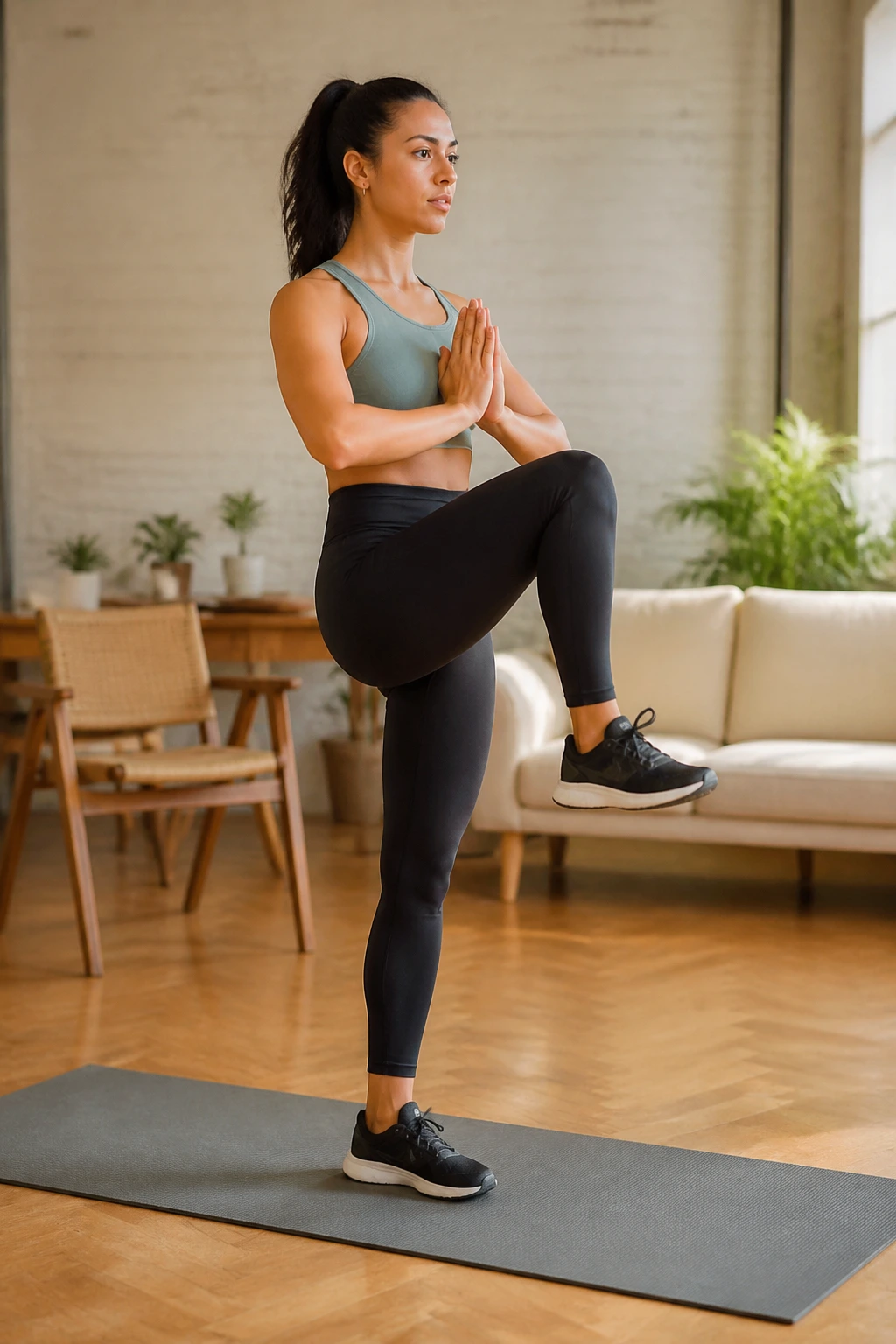
Want something that feels like a sequence instead of a drill? This one moves cleanly and still leaves the legs humming.
Step one foot back into a reverse lunge, touch the back knee lightly toward the floor, then press through the front heel and drive the back knee forward into a knee lift. Do 8 to 12 reps per side. Keep the torso tall and the front shin as vertical as your mobility allows.
The lunge gives the quad and glute the load. The knee lift gives the hip flexor a clean finish. Put those together and you get a workout that feels athletic without needing any jumps or gear.
A soft landing matters. If the back foot slams down, shorten the step and slow the tempo. The floor should hear almost nothing.
11. Malasana Pulse Hold
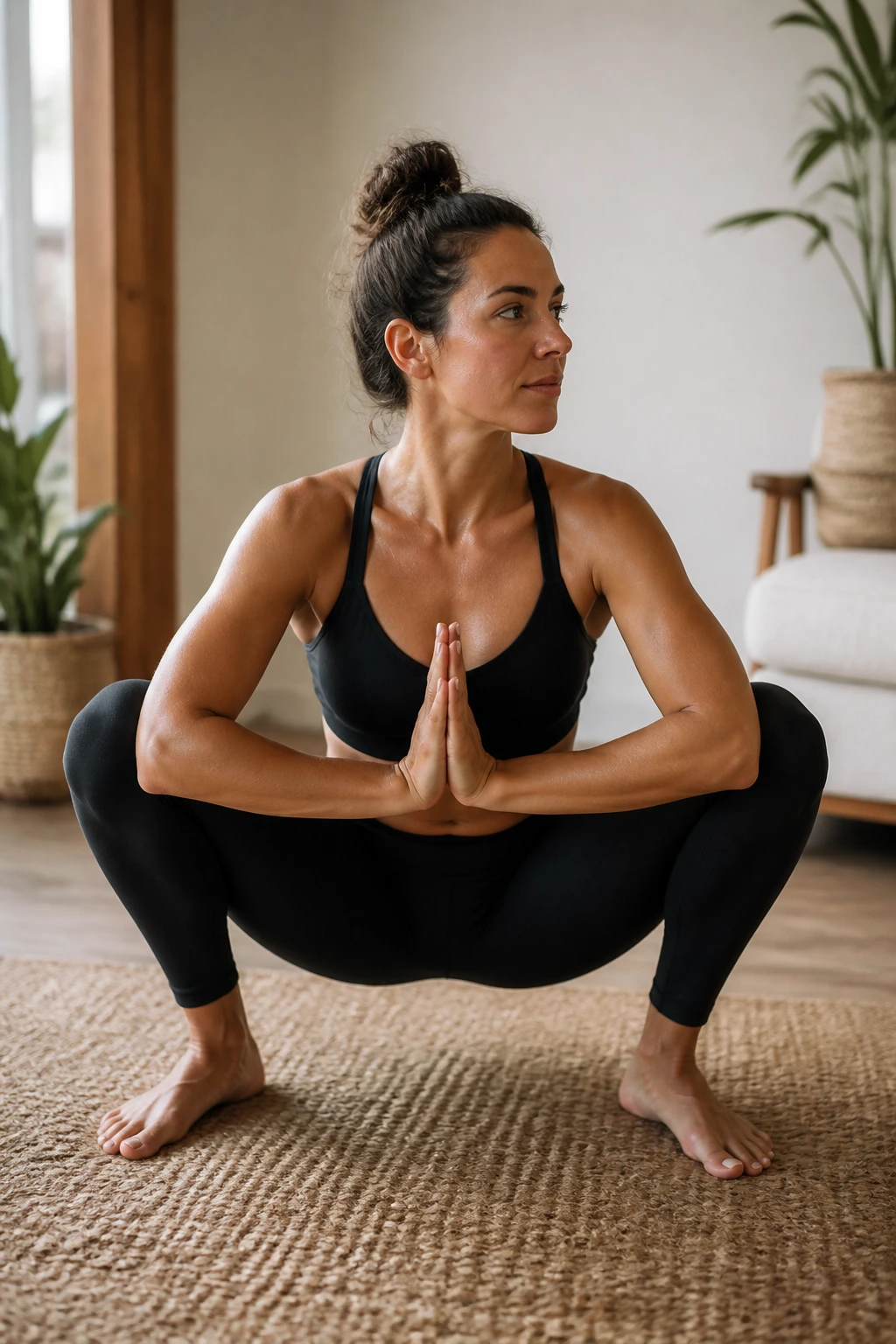
If deep squats feel like a wrestling match with your ankles, start here and stay patient.
Drop into malasana, the yogic squat, with feet a little wider than hips and toes turned out. Press the elbows inside the knees, lift the chest, and hold for 20 to 30 seconds. Then add 10 pulses by lowering and lifting an inch or two. Keep the heels grounded if you can. If you cannot, fold a towel under them.
The adductors get a stretch, yes, but they also work to keep the knees from collapsing inward. That little tug-of-war is useful. It teaches the lower body to stay organized in deep flexion, which carries over to squats, lunges, and even walking uphill.
Tiny detail, big payoff: keep the back long. A rounded spine turns this into a collapse. You want a squat, not a hunch.
12. Standing Fire Hydrant Reach
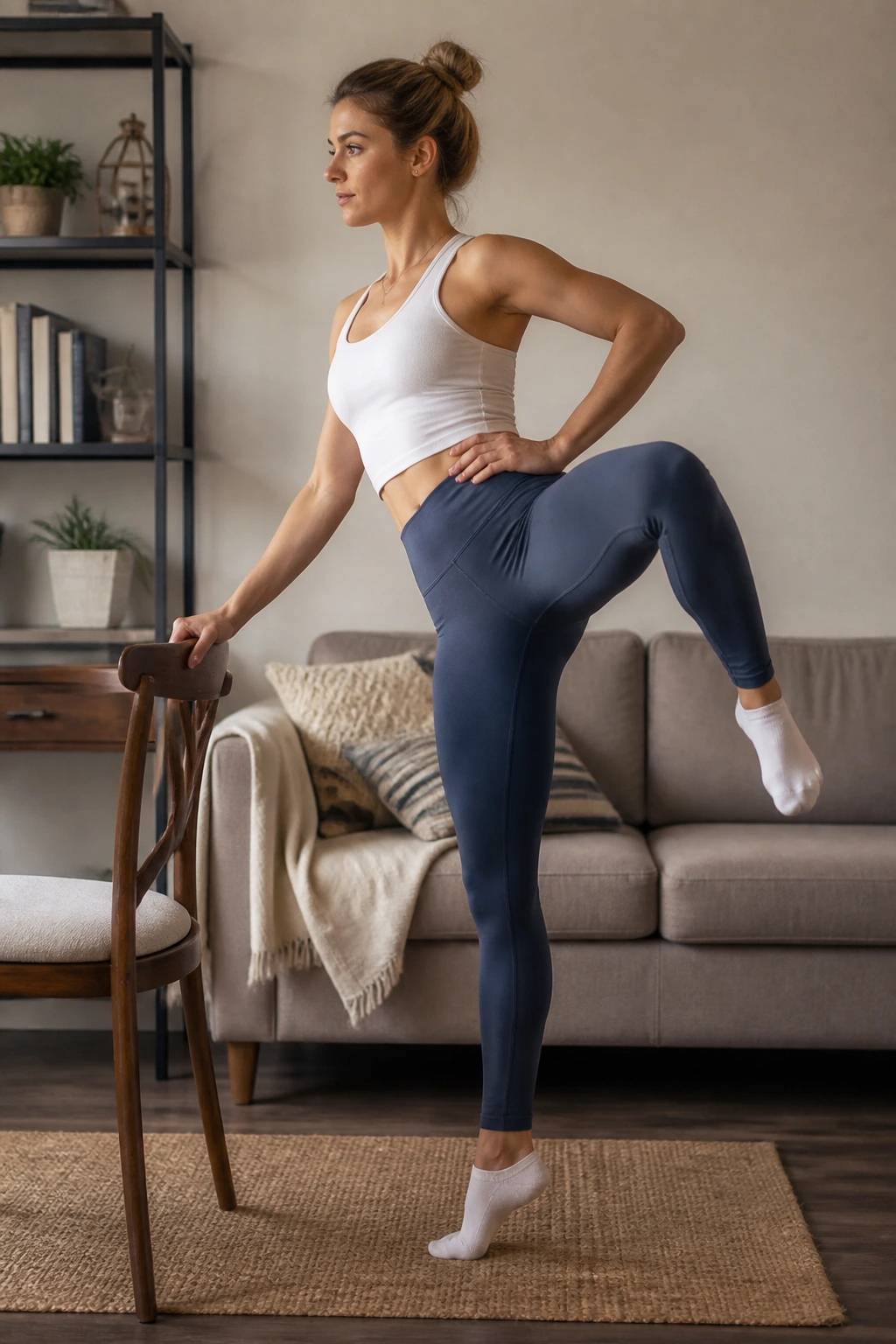
A floor version is fine. A standing version is easier to fit into a small space and better when your wrists are tired.
Hold the back of a chair, shift weight to one leg, and lift the other knee out to the side like a controlled fire hydrant. Keep the pelvis level and the torso still. Do 10 to 12 reps per side with a 1-second pause at the top.
What to watch
- The lifting leg should move 6 to 8 inches at first, not a huge swing
- The standing foot stays planted like a tripod
- The working hip should open without the waist cranking sideways
Why it works
Glute med does a lot of quiet work in real life. It keeps the pelvis from dropping when you walk, climb stairs, or stand on one leg. This drill trains that exact job. It is plain, useful, and a little humbling.
13. Side-Lying Leg Lift Series
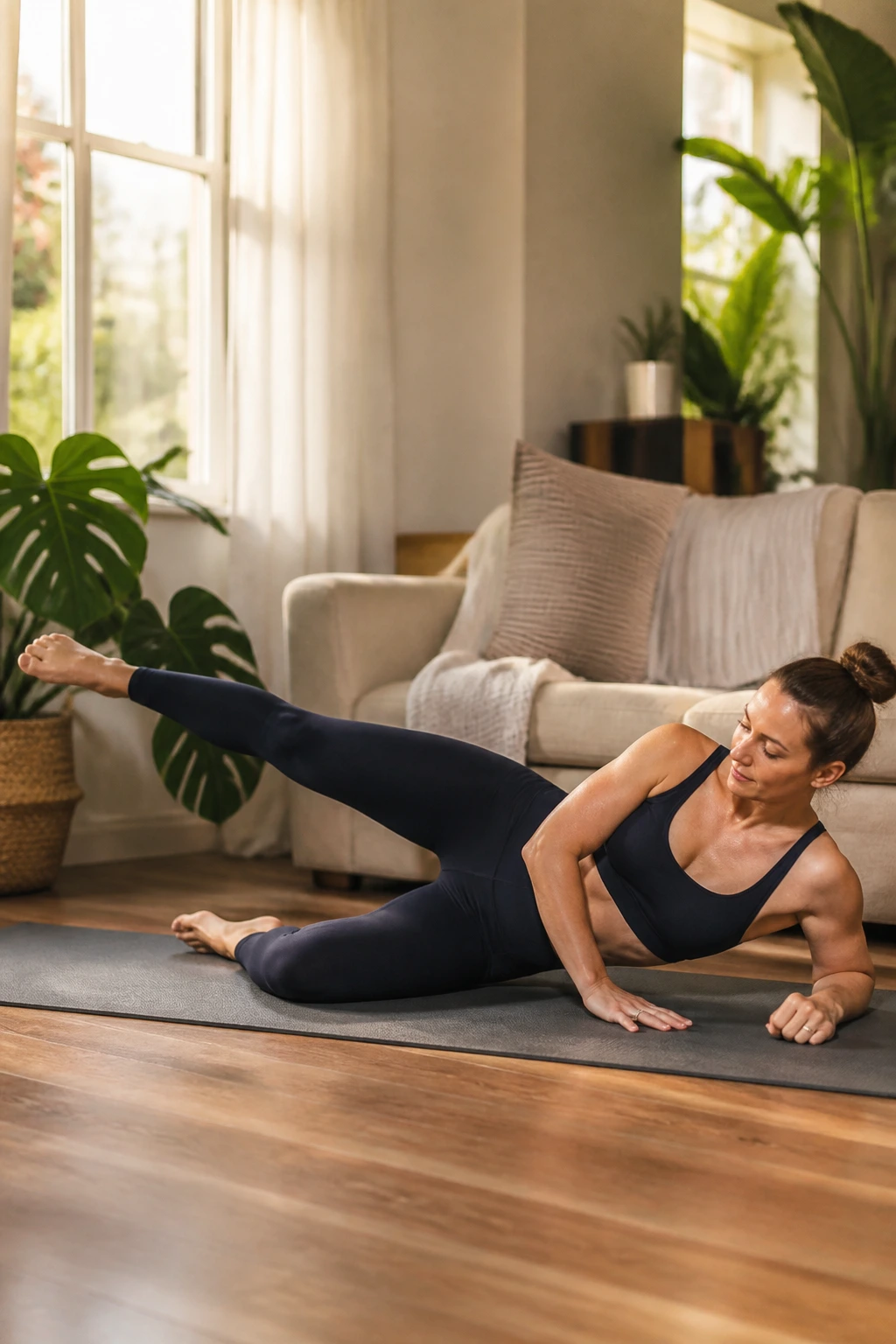
Unlike clamshells, side-lying lifts ask the top leg to travel through a longer range. That makes them feel cleaner and, honestly, a bit meaner.
Lie on one side with the bottom leg bent for support and the top leg straight. Lift the top leg to hip height, lower it slowly, then add 10 small circles in each direction and finish with a 10-second hold at the top. Do 2 rounds per side.
The trick is not height. A leg that swings too high usually steals work from the low back. Keep the toes slightly angled down to bias the outer hip, and press the bottom waist gently into the mat so you don’t sink.
These are good when you want glute med work without much noise, impact, or setup. They also pair nicely with standing balance drills because they hit the same stability muscles from a different angle.
14. Half Split Hamstring Reach
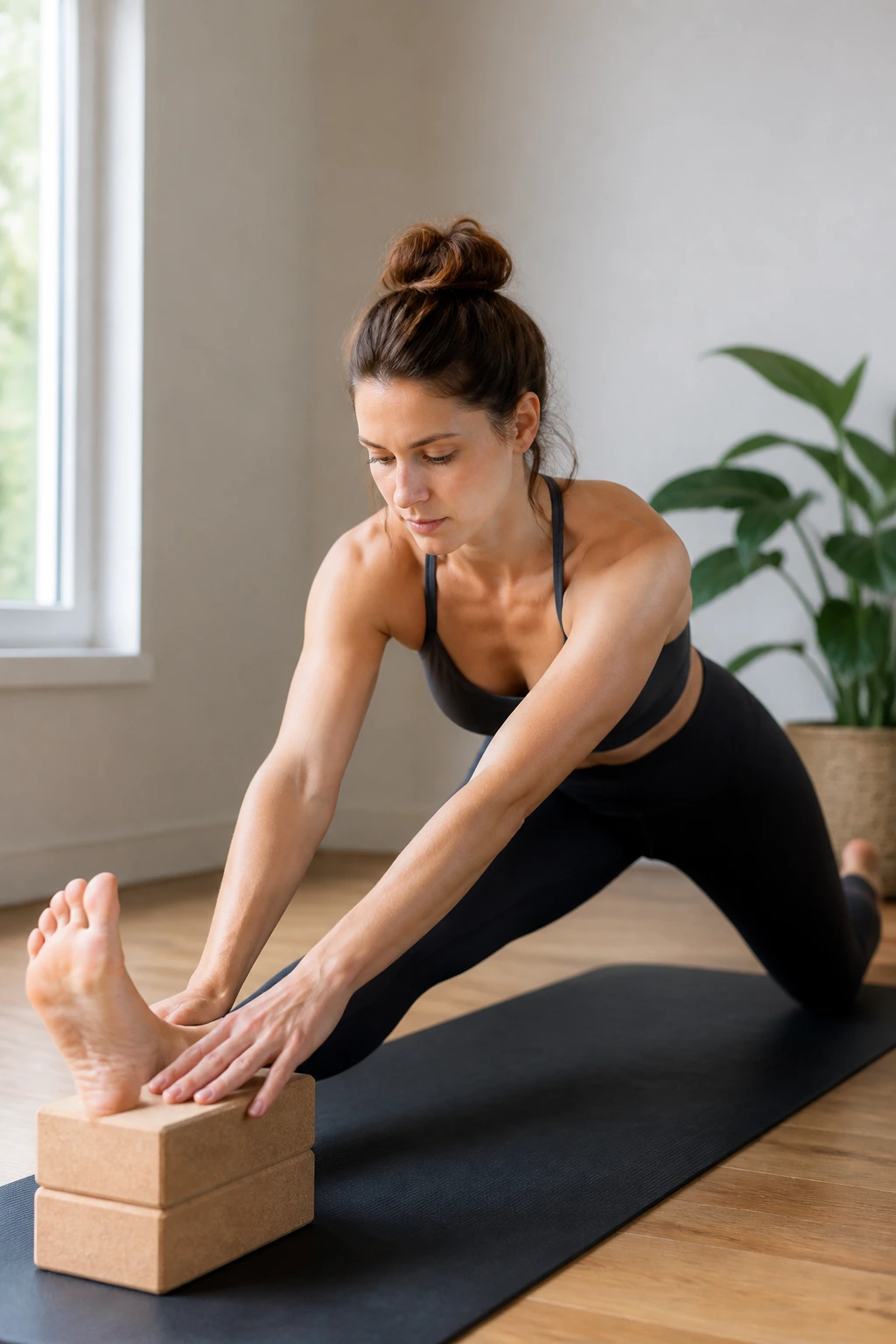
Can a stretch count as leg work? If you do it actively, yes.
Start in a low lunge, then shift back into half split with the front leg straight and the toes pulled up. Instead of hanging out there, press the heel forward and pull the hip back, then glide forward again. Do 6 to 8 slow shifts per side. Keep the front foot flexed so the hamstring has something to pull against.
The back-and-forth motion teaches the hamstring to lengthen under control instead of just yanking on it. That matters if your legs feel tight every time you try to squat deeper. Tight often means weak, or at least underused. Not always, but often enough.
If the floor feels too far away, place your hands on blocks. Your spine should stay long, not rounded into a panic.
15. Eagle Chair Hold
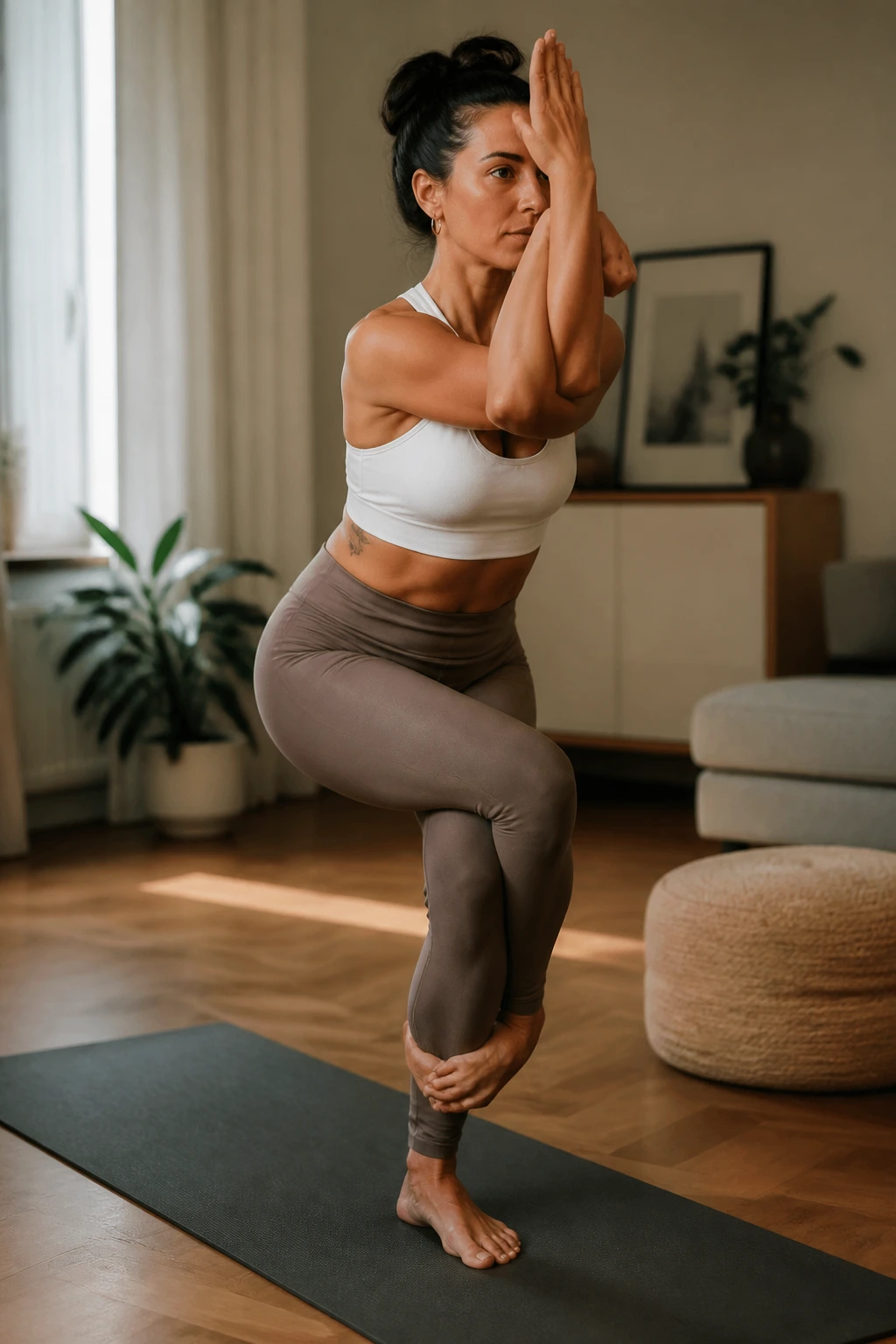
Eagle is not a cute balance pose when you hold it long enough.
Sink into chair pose, cross one thigh over the other if your hips allow it, and wrap the ankles or simply hook the toe behind the calf. Hold 20 to 30 seconds each side. Keep the chest lifted and the standing knee steady. If the full wrap feels impossible, stay with the crossed-leg shape and skip the bind.
This hits the standing leg hard. The foot, ankle, glute, and outer hip all have to make tiny corrections to stop you from tipping. You feel it in places regular squats miss.
A wall nearby helps, but don’t lean on it the whole time. Light support is enough. The goal is balance with a little shake, not a full collapse into the paint.
16. Cossack Squat Flow
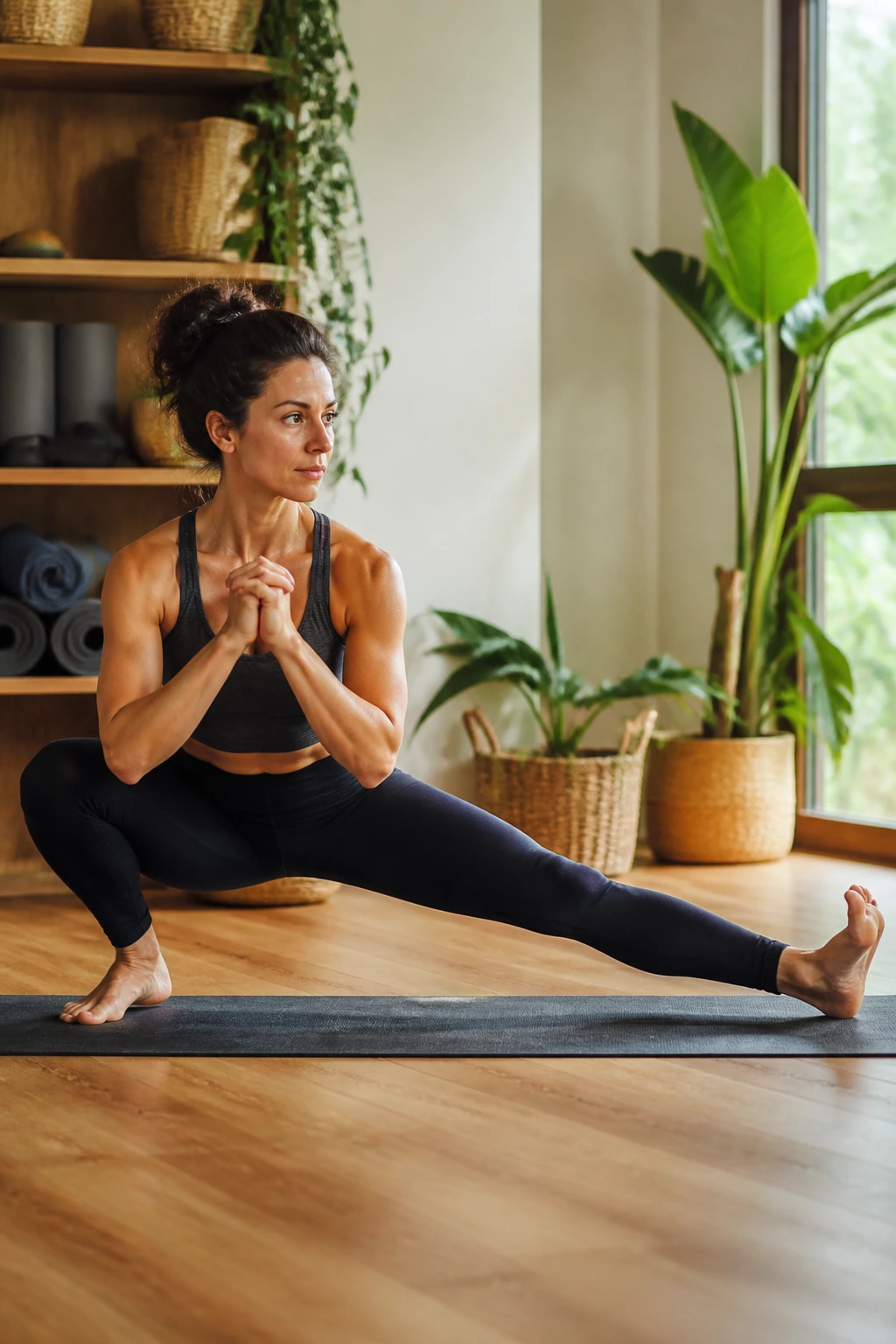
Side-to-side squats are the closest thing yoga has to a leg day that respects your adductors.
Take a wide stance, shift to one side, bend that knee, and keep the other leg long with the foot flat or slightly turned up if mobility is limited. Rise through the center and drop to the other side. Do 5 to 8 reps each way with a slow count on the descent.
Key details
- Keep the torso tall enough to breathe
- Let the bent-side knee track over the toes
- Stay patient in the middle instead of bouncing across it
The straight leg gets a long stretch, but the bent leg does the work. That asymmetry is what makes Cossacks feel different from ordinary squats. They are excellent when you want to wake up the inner thigh and open the hips without losing strength.
I reach for these when the legs feel stiff, not just weak. Sometimes the body wants both.
17. Tree Pose Mini Squats
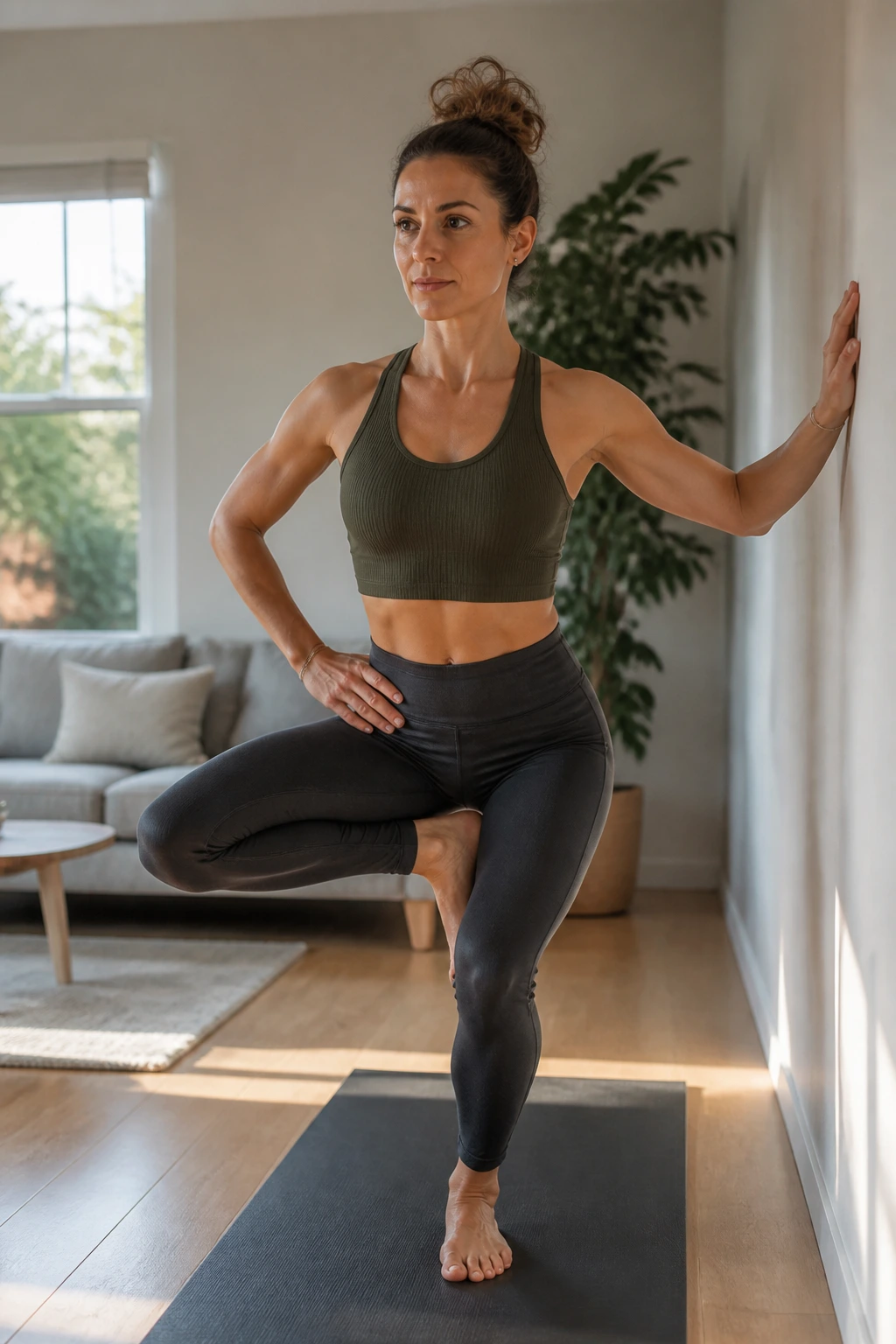
Tiny movement, big wobble.
Stand in tree pose with one foot on the floor and the other placed at the ankle, calf, or inner thigh, depending on what your balance allows. Once you’re steady, bend the standing knee a few inches and rise back up. Do 6 to 8 mini squats per side. Keep the pelvis level and the lifted knee gently pressing outward.
The standing leg does the heavy work here. The foot has to grip the floor without clawing at it, the ankle has to stabilize, and the outer hip has to keep the whole stack upright. That combination is gold for lower-body control.
Use a wall if the first few reps feel shaky. Actually, use it if the first few reps feel shaky. There is no prize for toppling over in your kitchen.
18. Plank to Three-Legged Down Dog Knee Drive
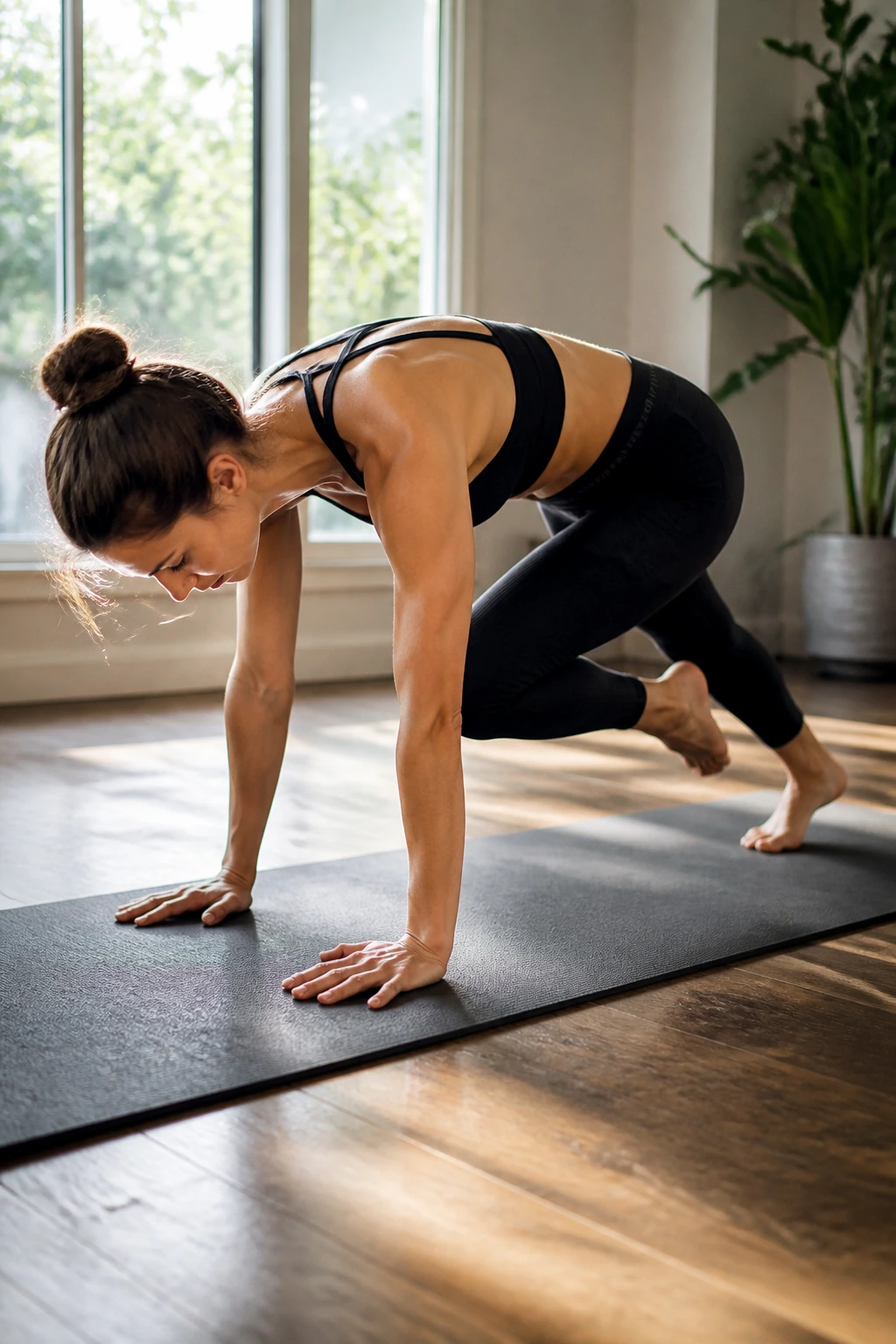
A leg workout does not have to stay on the floor and be boring. This one moves the whole chain.
Start in plank, lift one leg into three-legged dog, then draw the knee toward your nose before stepping it back. Do 6 to 10 reps per side. Keep your shoulders steady and avoid swinging the lifted leg like a pendulum. The leg should move from the hip, not from momentum.
Why it belongs here
The hamstring and glute of the lifted leg work through extension and flexion. The standing leg in plank gets a long isometric brace. Even your calves help when you press back into downward dog.
A slow tempo matters more than range. One clean rep beats three flung-around ones, every time. If your wrists are tired, cut the range short and keep the knee closer to the chest instead of reaching for speed.
19. Step-Back Lunge Flow with Twist
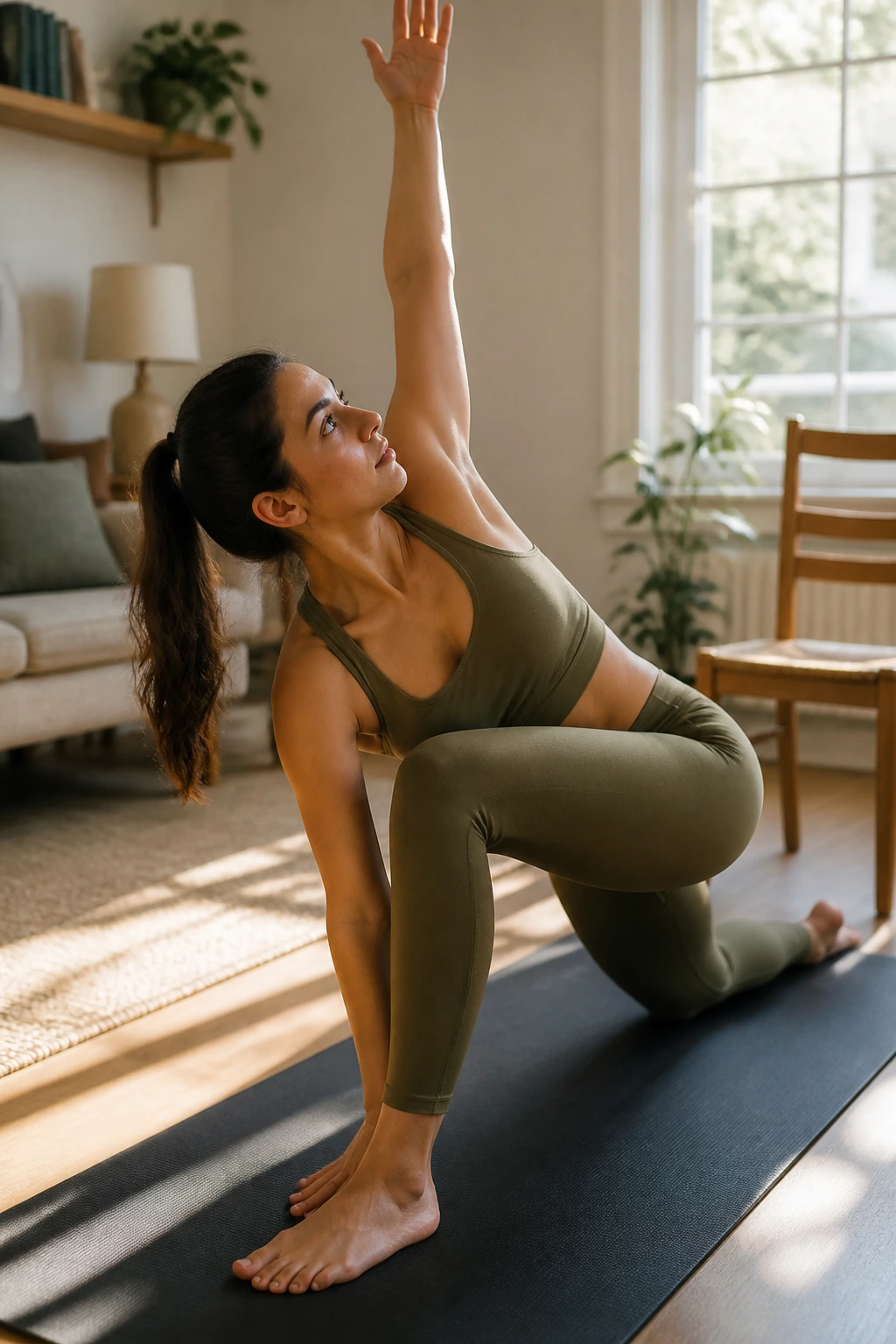
Want the feeling of a short yoga sequence instead of a single exercise? This one gives you that.
Step back into a reverse lunge, lower the back knee close to the floor, then rotate your torso over the front leg and reach one arm up. Untwist, press up, and step forward. Do 6 reps per side at a slow pace. Keep the front heel planted and the knee tracking in line with the toes.
The twist adds a bit of trunk control and opens the upper body, but the legs still do the heavy lifting. The front glute catches the descent, the quad controls the rise, and the back leg gets a hip flexor stretch that doesn’t feel lazy.
A small note: don’t whip the twist. Move from the ribs and keep the pelvis steady. The pose should feel deliberate, not thrown together.
20. Low Lunge Lift-Offs
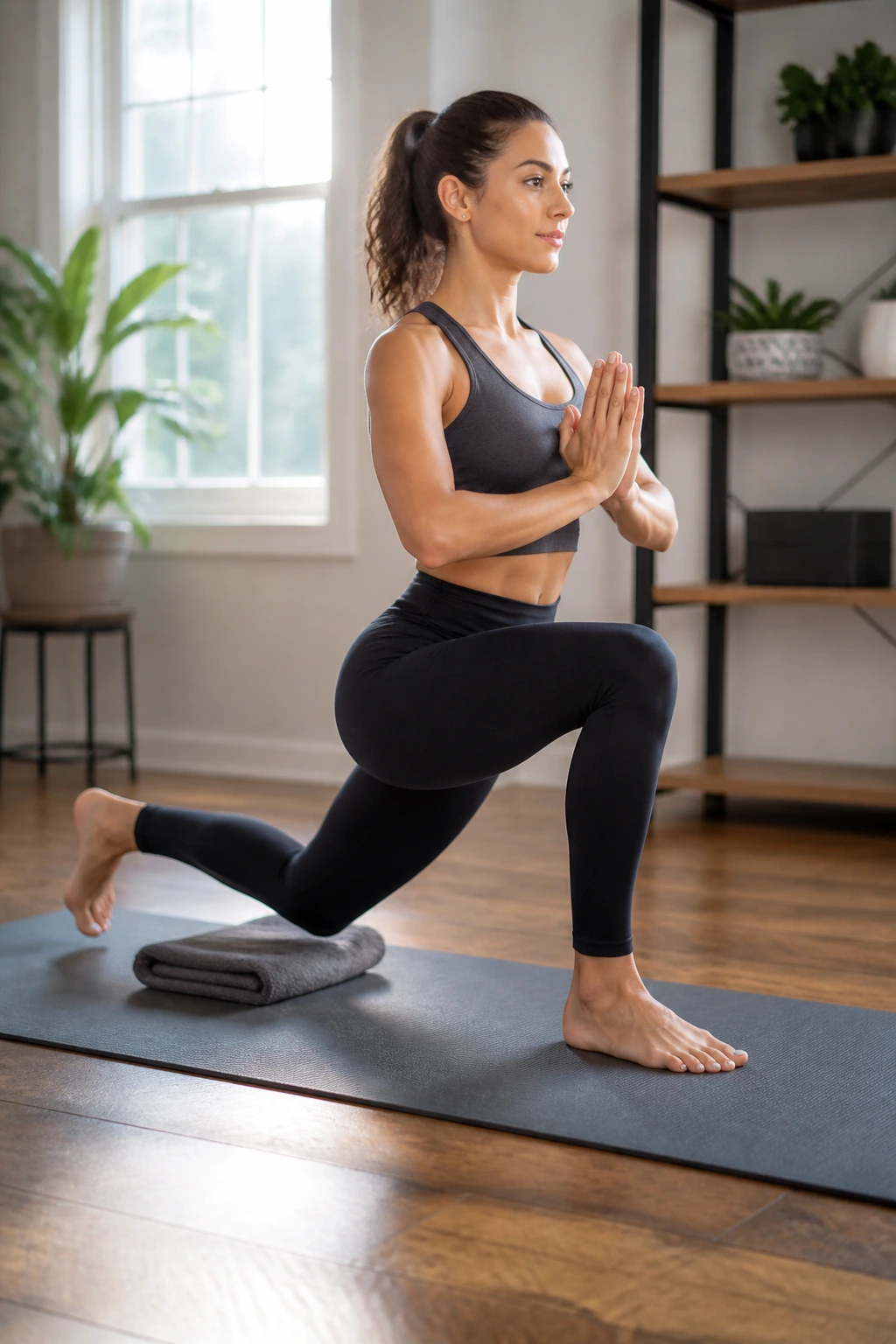
Finish with the move people think is easy until the last five reps.
Set up in a low lunge with the back knee on a folded towel or mat. Press through the front heel, lift the back knee an inch or two off the floor, hold for a beat, then lower with control. Do 8 to 12 reps per side. Keep the hips square and the front leg honest.
This one is a clean finisher because it loads both legs without much room to cheat. The front quad works. The back glute works. The hip flexors stay awake. If you want more challenge, hover for 3 seconds on each rep. If your knee doesn’t like the floor, use more padding and shorten the range.
I love this as a final movement because it feels simple. Then the last few reps arrive, and the truth shows up.
Final Thoughts
The best part of yoga-inspired leg work is how little it asks for in space and gear. A chair, a wall, a mat, and a few good minutes can cover quads, glutes, hamstrings, calves, adductors, and the small stabilizers that keep the whole lower body from feeling rusty.
Pick a mix instead of trying to do all twenty at once. One squat pattern, one lunge, one bridge, and one balance drill usually make a better home session than a giant random pile of moves. That is the part people miss.
Slow reps tell you more than fast ones. They show where the wobble starts, where the hips cheat, and where the legs still have work to do. That feedback is the good stuff.
