



A good plyometric session leaves your legs buzzing in a way slow lifts never quite do. Plyometric workouts for stronger legs work because they ask the muscles, tendons, and feet to handle force fast — load, snap, land, repeat — and that speed is the part most gym work ignores.
That does not mean you should turn every jump into a cardio mess. Twenty sloppy reps are a waste of time. Five crisp reps, with quiet landings and a hard push off the floor, will teach your body far more about power than a long grind ever will.
The real prize sits below the surface. Better ankle stiffness, quicker hip extension, cleaner knee tracking, and a more useful stretch-shortening cycle all show up when you keep the jumps sharp and the rest long enough to stay explosive. It is a different kind of fatigue, too — less “I’m out of breath,” more “my legs have lost their snap.”
Start with the simplest patterns you can control, then earn the sharper, higher-impact ones. The drills below move from straightforward to demanding, and if you respect that order, your legs will get stronger without feeling like your joints got mugged.
1. Plyometric Squat Jumps

If you only had one two-foot jump in the plan, I’d make it this one. Squat jumps teach the cleanest version of lower-body power: load through the hips, drive through the floor, and land in the same athletic shape you left.
Why They Matter
The nice thing about squat jumps is that they look simple and punish sloppy form fast. If you sink too deep, your jump gets slow. If you swing your arms like windmills, your torso tips forward. If you land like a sack of laundry, your knees will tell on you. Good reps feel snappy and controlled.
Aim for 3 to 5 sets of 4 to 6 reps, with full recovery between sets. That might feel too easy if you’re used to circuit-style workouts. Good. Power work should feel crisp, not desperate.
Quick cues:
- Sit back into a quarter squat, not a deep crouch.
- Jump straight up with your chest tall.
- Land softly on the balls of your feet, then let your heels touch down.
- Stop the set when your landings get loud.
Tiny tip: a brief pause in the loaded position — even half a second — can help you feel where the power starts.
2. Split Squat Jumps
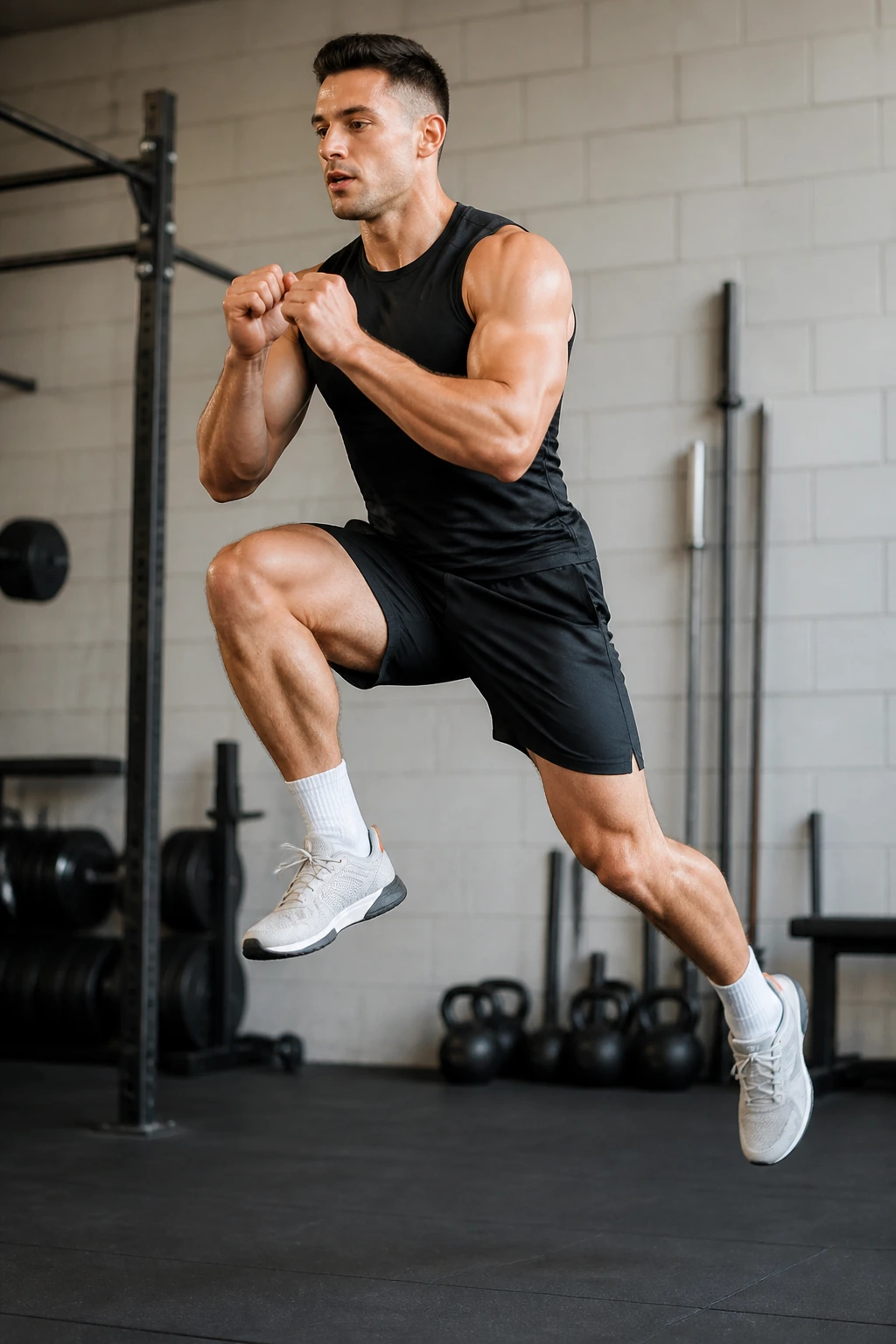
Split squat jumps are the drill that exposes weak links fast. One leg has to do more work, the front hip has to stabilize, and the back leg can’t hide behind momentum anymore. If one side of your body is doing the heavy lifting, you’ll feel it immediately.
That’s why I like these for people who can squat decently but still feel wobbly when they run, cut, or climb stairs fast. The movement trains each leg on its own, which is where a lot of real-world strength lives. You are not just jumping. You are teaching each hip to accept load and fire back out of it.
Keep the front foot flat enough to stay stable, and do not let the knee cave inward on landing. A small, tidy jump beats a giant, messy one. Start with 3 sets of 4 to 5 reps per leg, and rest long enough that each side feels fresh.
If your balance is shaky, slow down the descent and use a shorter split stance. The drill should feel demanding, not ugly.
3. Box Jumps
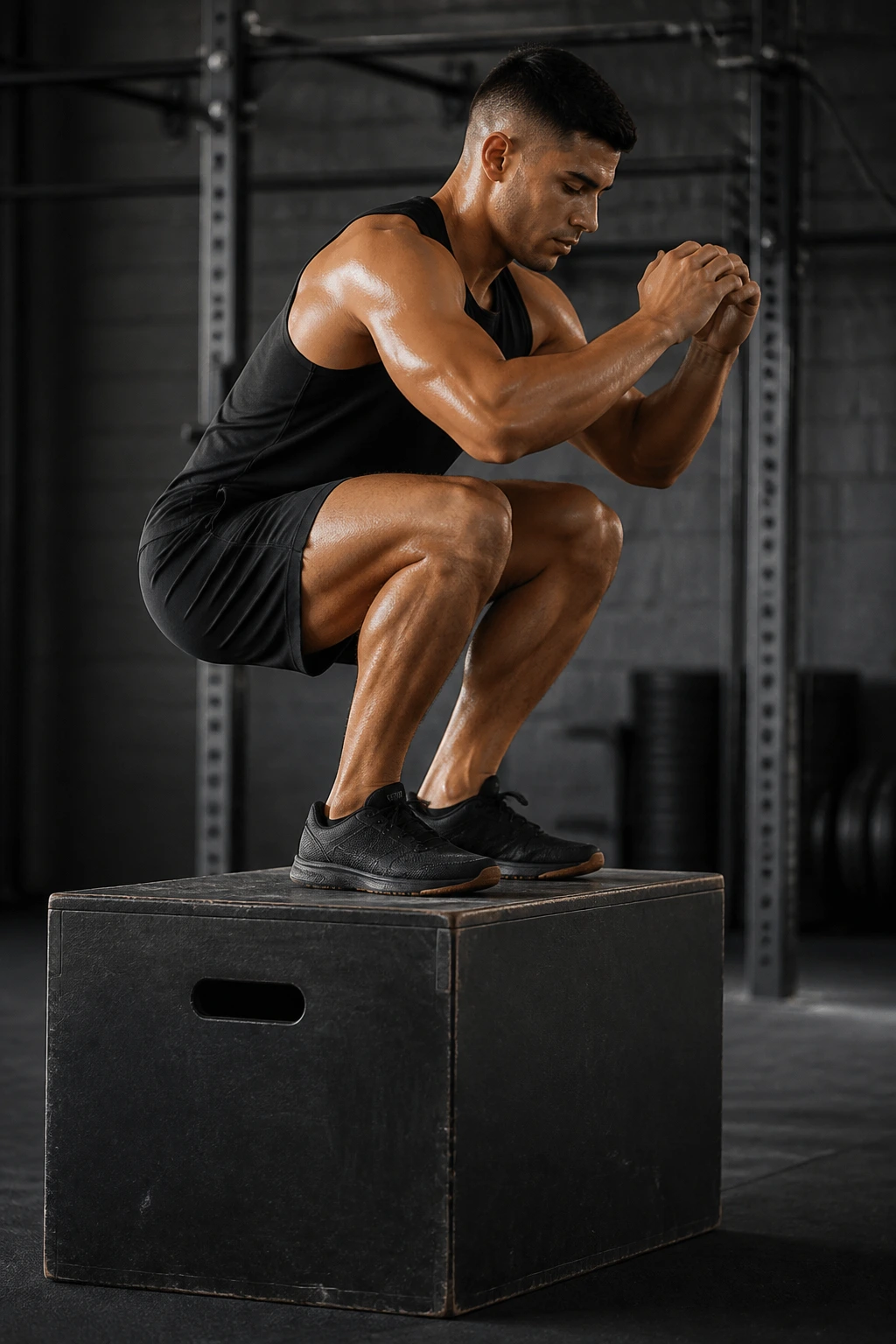
Why put a box under a jump if you already know how to jump? Because the box gives you a target, cuts down on landing stress, and lets you put more intent into the takeoff. That’s the part people miss.
A well-done box jump is not about hero height. It’s about a fast, clean takeoff and a quiet landing on top of the box. If you have to tuck your knees to your chest just to make it, the box is too high. Use a height that lets you land with control and stand up without wobbling.
How to Choose the Box
Pick a box that lets your shins stay mostly vertical on landing. Your feet should land fully on the surface, not on the edge. Step down. Do not jump down. The descent is where a lot of unnecessary wear happens, and there is no prize for turning the landing into another jump.
Three to 5 sets of 3 to 5 reps is plenty. More than that, and the quality starts to slide. This one works well early in a session, right after your warm-up, when your legs still have some spring.
4. Broad Jumps
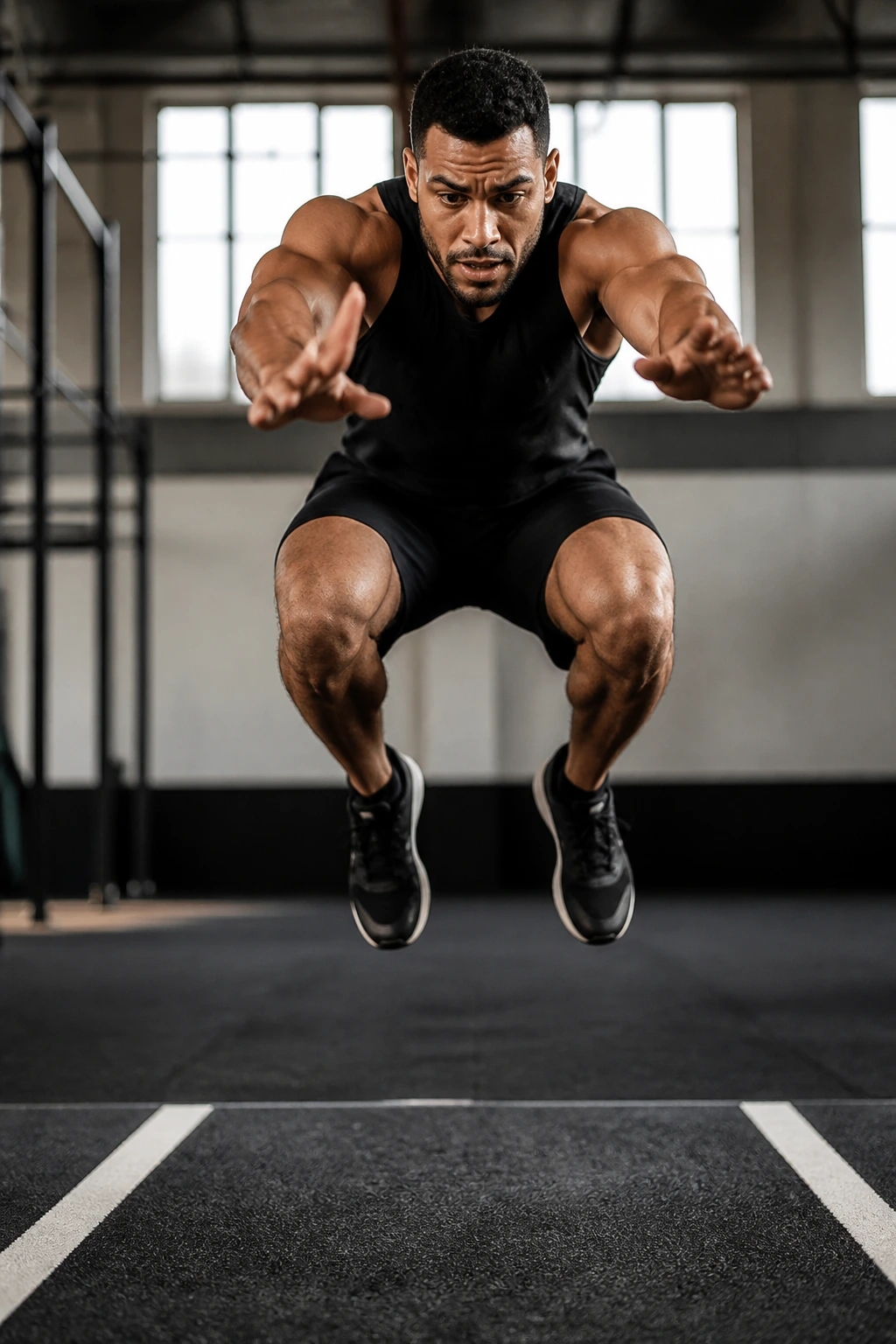
A lot of people can jump high and still feel slow on the ground. Broad jumps fix that gap. They train horizontal force, which matters for sprinting, accelerating, and any sport where you actually move forward instead of just up.
I like broad jumps for lifters who need to feel their glutes do something useful under speed. The takeoff is a big hip drive. The landing asks your feet, knees, and hips to absorb force without turning into a collapse. That combination is gold.
Here’s the part I always watch: the landing. Stick it. Freeze for a second. If your chest folds over or your heels slam down hard, shorten the jump until you can control it. Distance is not the goal at first; shape is.
What to Watch For
- Start from a quarter squat, not a deep dip.
- Swing the arms hard, but keep the torso from pitching forward.
- Land with both feet at the same time.
- Hold the landing for one full second.
Try 3 to 5 sets of 3 jumps. Walk back, reset, and make each rep count. That little pause matters more than people think.
5. Lateral Bounds
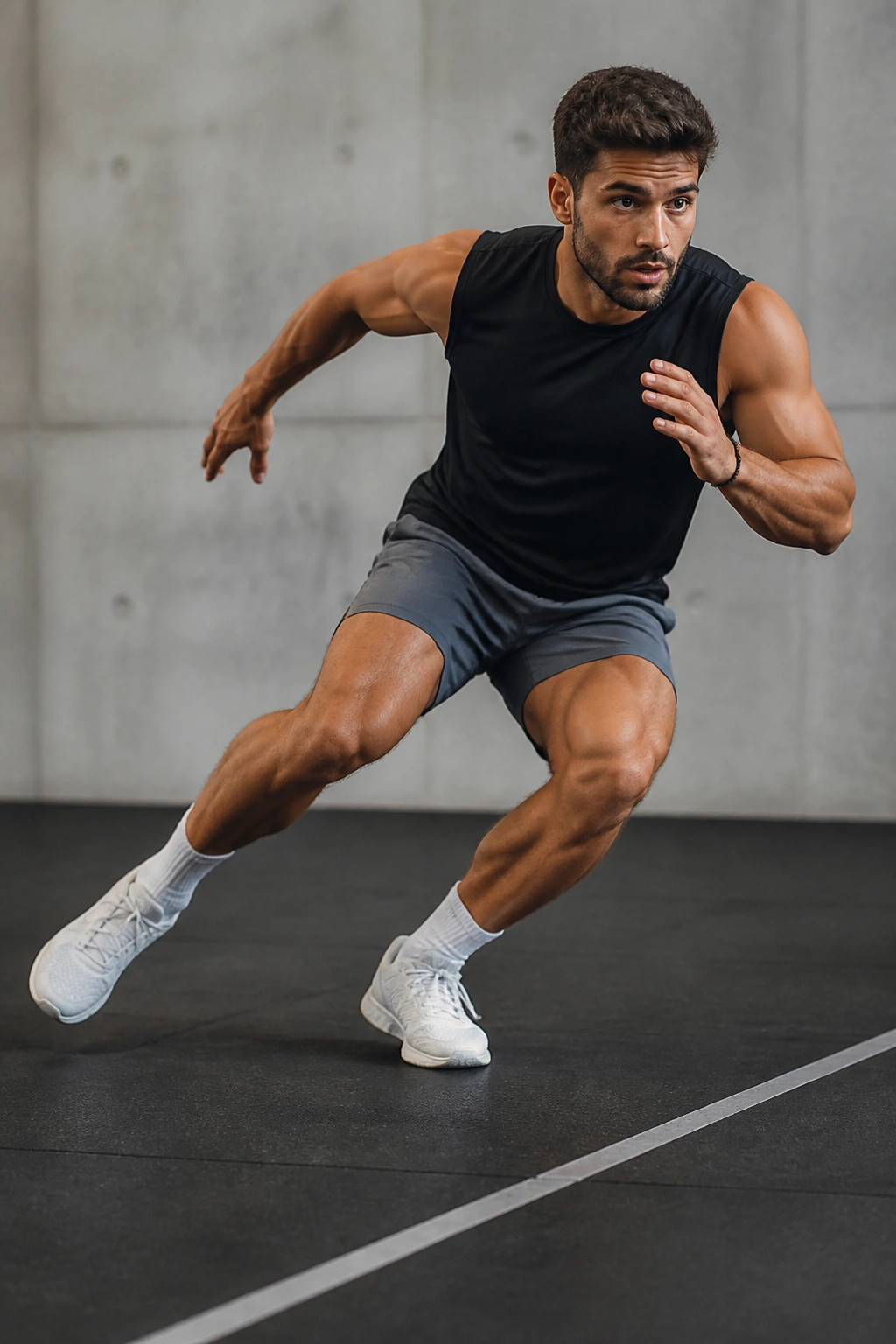
Side-to-side power is often the missing piece. Squats and deadlifts build a lot of strength in the straight-ahead pattern, but your legs live in the real world, where you cut, sidestep, and catch yourself all the time.
Lateral bounds train the hips to control force across the body. The glute medius gets involved, the ankle has to stabilize, and the landing leg has to accept load without caving. That last part is huge. If your knee drifts inward every time you land, this drill will show it.
Use a line on the floor or a small marker to keep the jump honest. Start with a modest distance and land with your ribcage stacked over your hips. Quiet feet are the goal. Loud feet usually mean you’re chasing distance instead of control.
I prefer stick landings for newer athletes: jump side to side, then hold the landing for one beat before the next rep. It feels less flashy, sure, but your hips will thank you.
6. Skater Hops
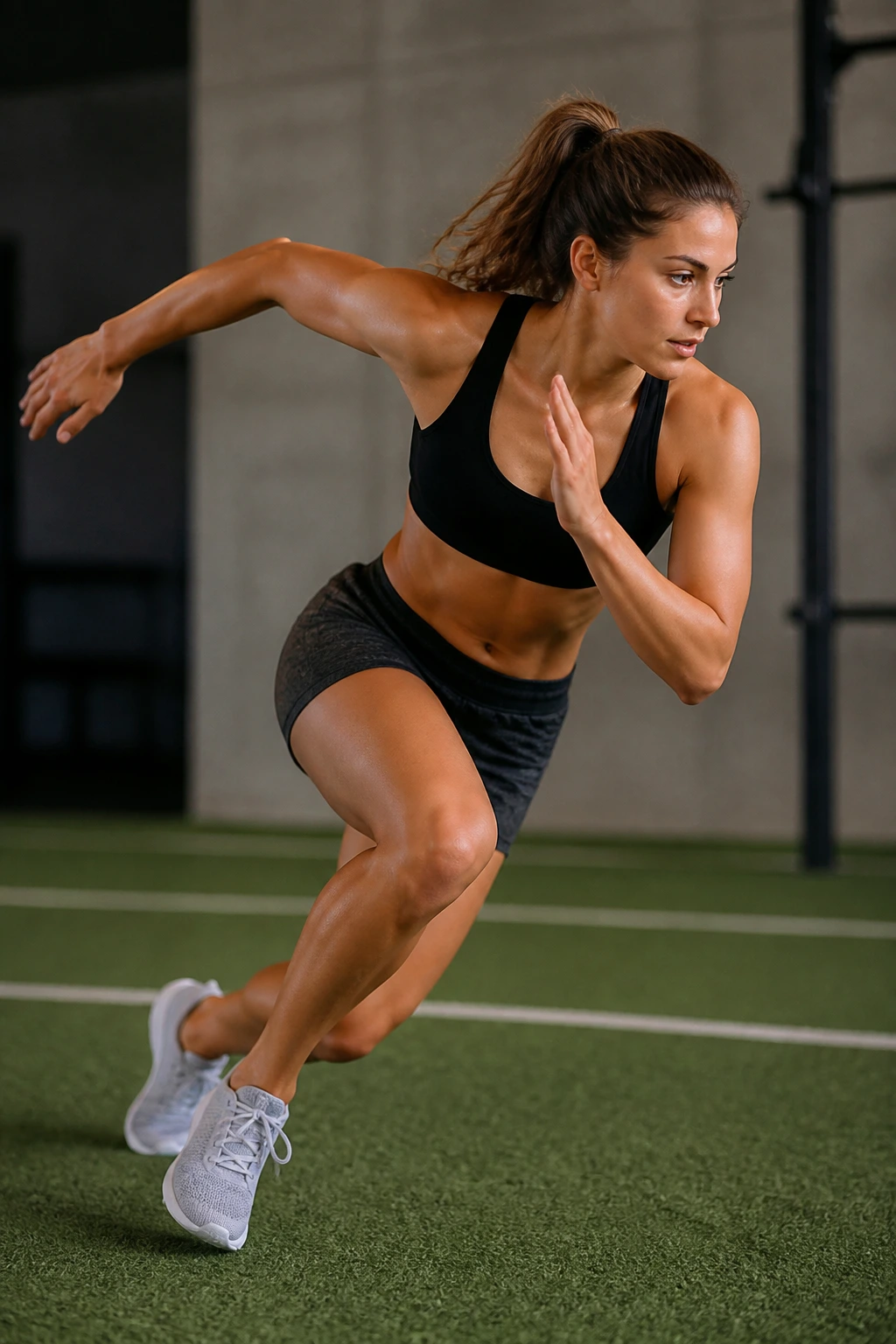
Unlike lateral bounds, skater hops often keep moving in a smoother rhythm. That makes them feel a little less like a stop-and-start test and a little more like a flowing drill, which is useful if you want power plus coordination.
The name fits. You’re moving as if you’re pushing off ice, shifting from one leg to the other with a slight forward lean. The back leg swings behind you, the front leg catches you, and the hips have to stay level enough that the whole thing does not turn into a wobble-fest. That hip control is the point.
They’re a good bridge between simple side hops and more aggressive single-leg work. Keep the jump low at first. You do not need to leap across half the room. A clean 2- to 3-foot transfer is enough to light up the legs.
If you want a challenge, hold each landing for a second. If you want flow, keep the rhythm smooth and light. Both versions work, and both teach your legs to absorb force sideways without panicking.
7. Tuck Jumps

Do you want more knee drive, or do you want more chaos? Tuck jumps make you answer that question fast. If the knees come up high but the torso folds like a folding chair, the drill stops being useful pretty quickly.
The good version is sharp: explode up, bring the knees toward the chest, then get the feet back under you before landing. The jump should look tight, not frantic. You are training quick force production and mid-air coordination, not trying to win a weird contest with your own spine.
How to Keep Them Honest
Use a low rep count. 3 to 4 sets of 4 to 6 reps is plenty. More than that, and your form starts leaking. Also, land softly and reset. No bouncing around like a caffeinated rabbit.
A small cue helps a lot: think “lift knees” rather than “curl body.” That keeps your trunk from over-rounding. If your lower back starts to complain, the reps are too high or the jump is too aggressive.
Tuck jumps are not beginner-friendly in the same way squat jumps are. They are sharper, faster, and a little less forgiving. Still useful. Just not the place to get greedy.
8. Plyometric Pogo Jumps
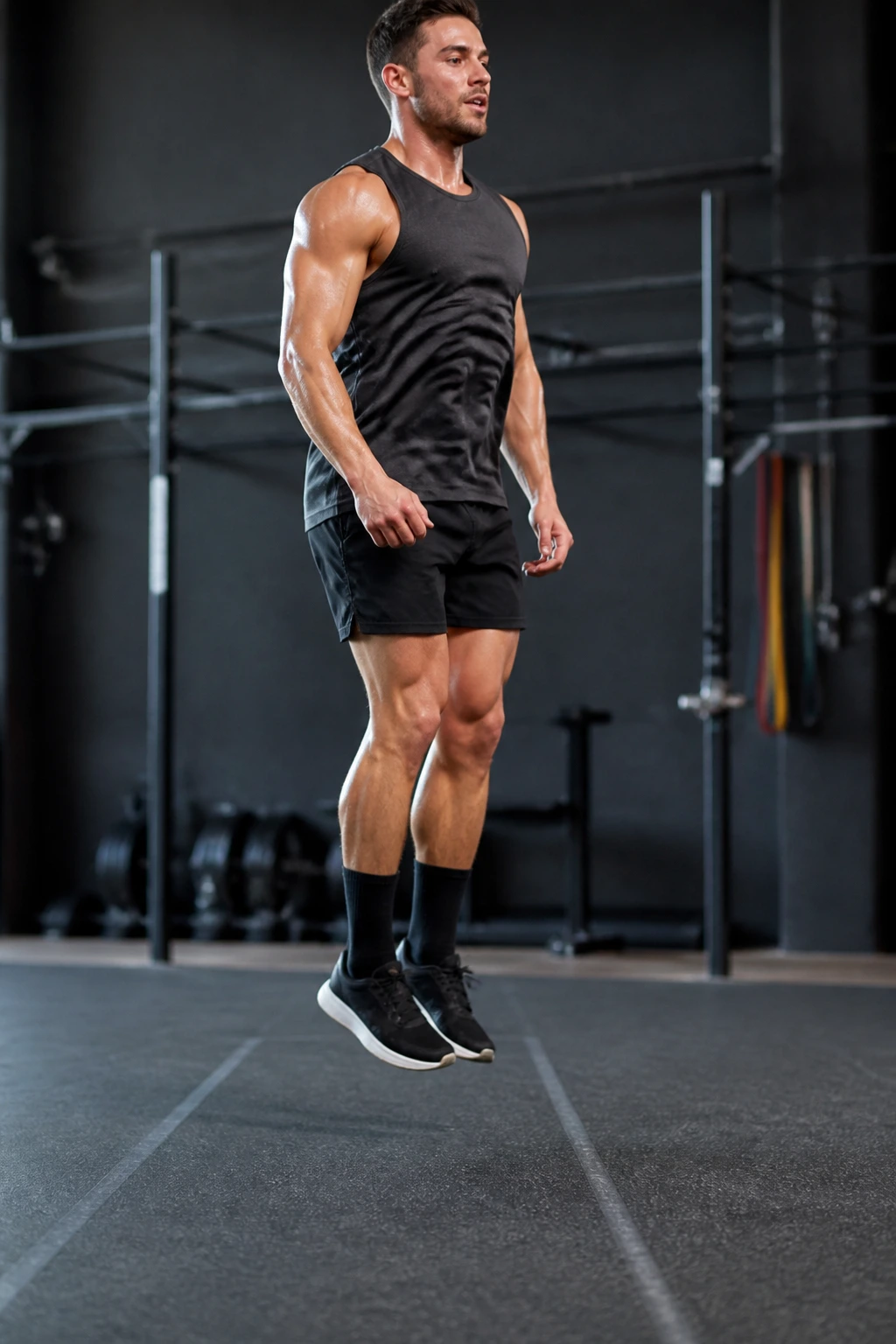
Pogo jumps are ankle work disguised as a jump drill. That is why they matter. The knees stay soft but not deep, the contacts stay quick, and the calves and Achilles tendon handle a lot of the load.
This is one of my favorite lower-body drills because it teaches springiness without a huge landing penalty. You are not trying to squat into every rep. You are teaching the lower leg to act like a stiff, responsive spring. That can carry over to sprinting, jumping, and even just moving with a little more pop.
Quick Facts That Help
- Stay tall through the torso.
- Keep knee bend small, almost lazy.
- Use a flat, springy surface if you can.
- Do 15 to 30 seconds per set, or 20 to 30 contacts.
Ankles. Not knees. That’s the whole game.
If your heels are smashing the floor or your knees are dropping into a squat each time, you’ve turned pogos into something else. Back off. The clean version should feel rhythmic and light, almost annoying in how simple it is. And yes, that simplicity is why it works.
9. Depth Jumps
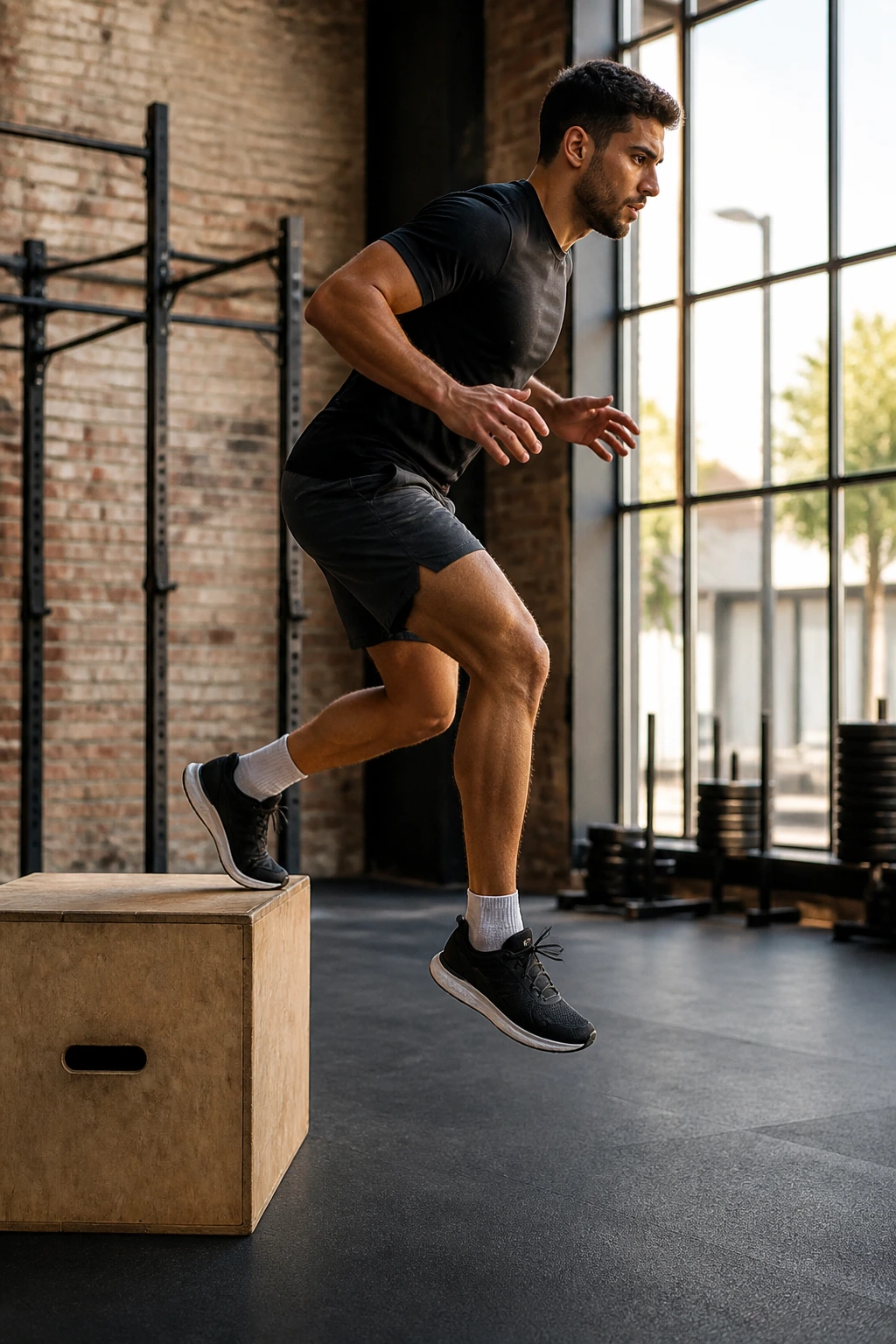
More height is not the point. That’s the first thing people get backward with depth jumps, and it’s why this drill gets sloppy in a hurry.
A depth jump starts with stepping off a low box or platform, absorbing the landing, and rebounding as fast as you can. The goal is not to survive the drop. The goal is to shorten the time between landing and takeoff. That quick transition is what makes this one so potent for reactive leg power.
What to Watch For
- Use a low box first, often 6 to 12 inches.
- Step off. Do not jump off.
- Rebound as soon as you hit the floor.
- Stop the set if the landing becomes noisy or slow.
This is advanced work. I mean that plainly. If your squat jumps are shaky or your ankles feel unstable on regular hops, leave depth jumps alone for a while. They ask for a lot of tendon stiffness and a lot of control under speed.
Used well, though, they are brutally effective. Two to 4 reps per set is enough. That’s it. The drill is tiny, sharp, and demanding.
10. Single-Leg Hops
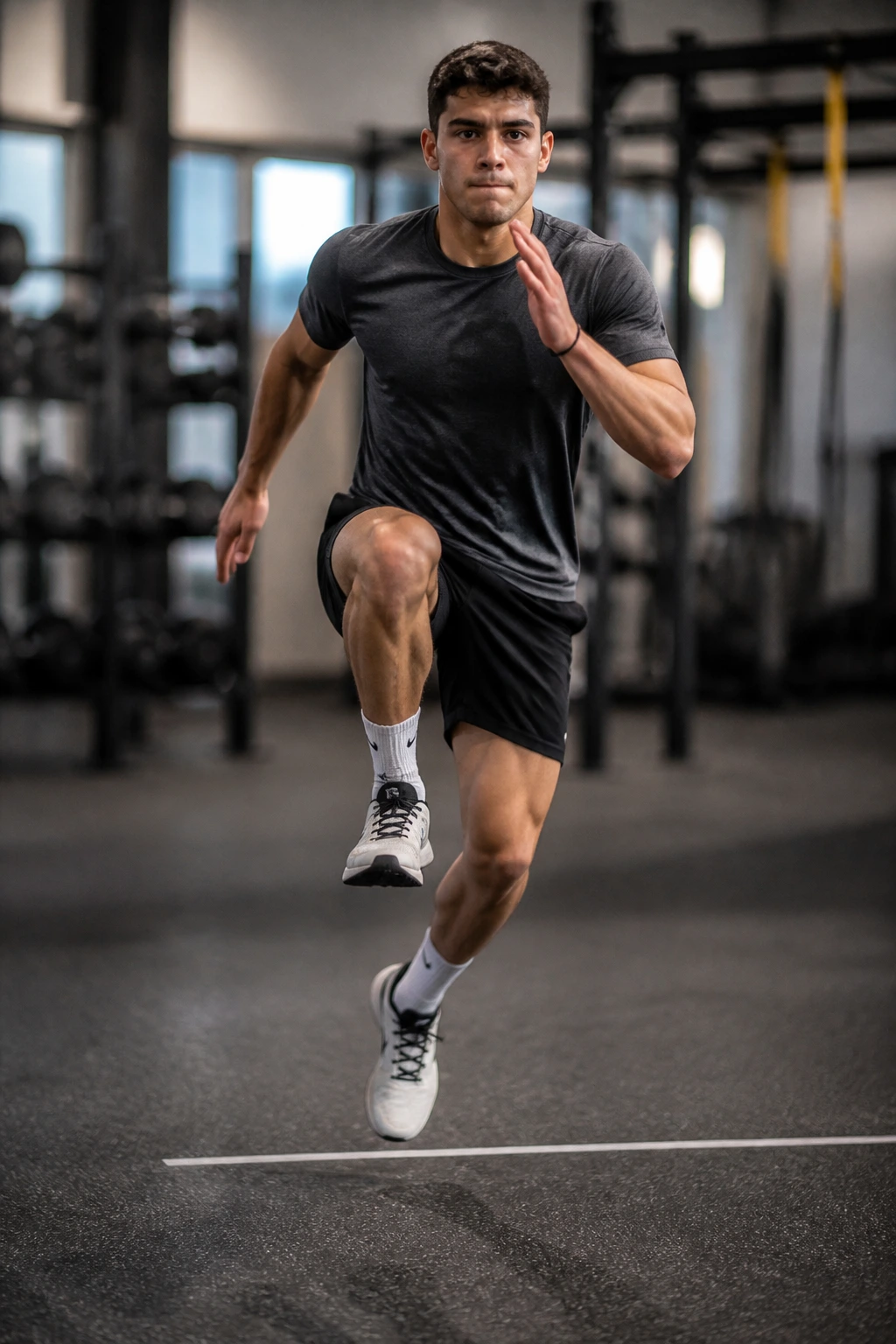
If one leg always feels a step behind the other, single-leg hops will show it. The first few reps are usually a mix of ankle stiffness, hip control, and a little bit of ego — because the moment you try to go too far, the landing falls apart.
This drill is less about height and more about ownership. Each hop asks one leg to load, launch, and stabilize without help. That matters for running mechanics, cutting, and any sport where one leg is often the one doing the real work.
Start small. Three to 5 consecutive hops on one leg is enough for a set. If you can hold the last landing for a beat without the knee drifting inward, you’re on the right track. If not, shorten the distance and clean up the shape.
A soft surface like turf or grass can help at first. And no, you do not need to cover a huge distance. Tiny, tidy hops beat ugly bounds every time. The leg should feel springy, not beaten up.
11. Alternating Bounds
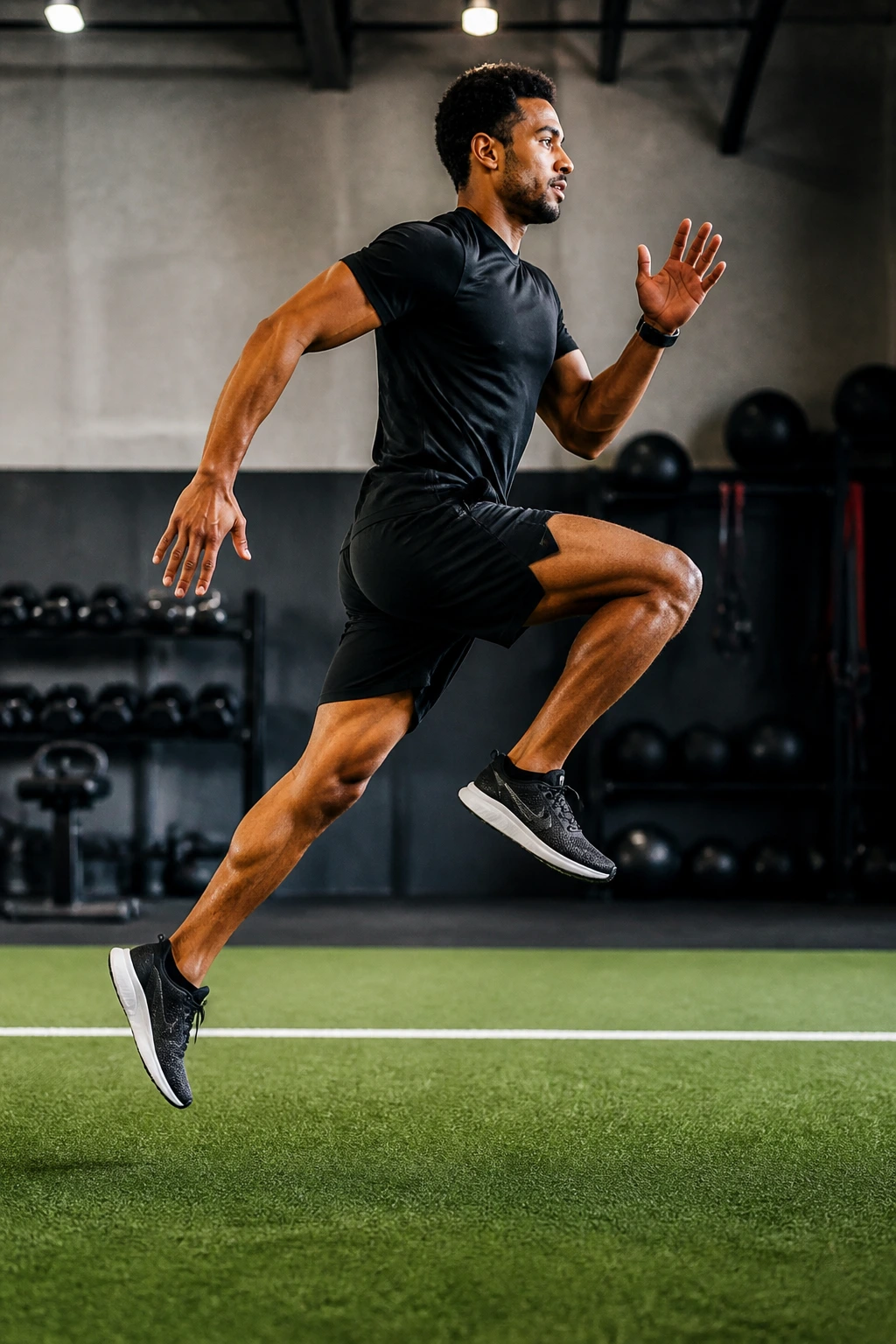
Alternating bounds look a little like sprinting and a little like a long jump got stretched out. That is exactly why they’re useful. The drill teaches your body to transfer force from one leg to the other with a bit of rhythm, which is a big deal for acceleration.
The arms matter here. A lot. If the arm swing is lazy, the lower body usually gets lazy too. Think tall posture, active drive, and a fast switch from one foot to the other. You want the body to feel like it is moving forward, not hopping in place with attitude.
How to Get the Rhythm Right
- Push off through the whole foot.
- Let the trailing leg drive behind you.
- Keep the torso tall and the eyes forward.
- Use 10 to 20 meters if you have space.
I like these better than people expect, because they sneak in speed mechanics without needing a track. They also reveal whether your hips can stay organized when the pace rises.
A small warning: if you chase distance too hard, the landing gets heavy and the drill loses its snap. Better to stay rhythmic and quick. The distance will come.
12. Jump Lunges
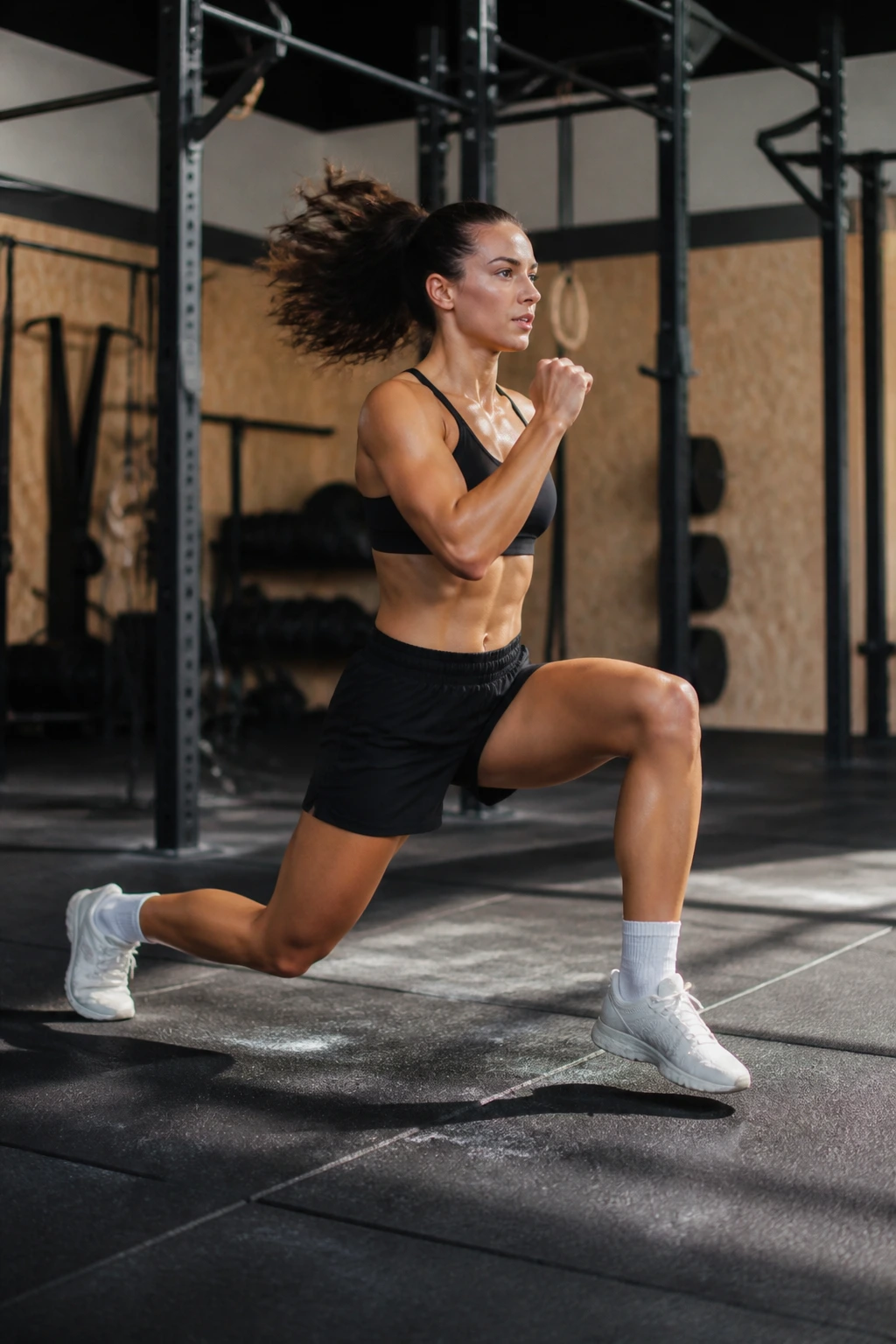
Jump lunges are rude in the best way. They make each leg earn its keep, and they expose any weakness in your hip stability almost immediately.
Compared with squat jumps, jump lunges give you more single-leg demand and more switch work. The front leg has to drive, the back leg has to land, and then the whole thing flips. That’s a lot of work for a drill that looks simple on paper. It also tends to light up the quads and glutes in a way that feels very honest.
Use a controlled lunge depth first. If you drop too low, the landing gets sticky and your knees start handling more of the job than they should. Keep the torso tall. Leaning too far forward steals power and makes the movement clumsy.
These can be hard on the joints if you rush them. Stick with 3 sets of 6 to 8 total jumps per side, and stop before the last few reps get sloppy. If you need an easier version, step the legs instead of jumping them for a few sessions.
13. Hurdle Hops

Hurdle hops are about rhythm as much as power. The little barrier gives your brain a target, and the body starts organizing itself around that target pretty quickly. That’s useful because good jumping is not random. It has timing.
Set the hurdles low. Lower than you think. Foam hurdles, cones, or even small boxes can work if they are stable and predictable. The point is to practice repeated takeoff and landing without forcing a massive jump each time.
Set the Obstacles Low
Use 4 to 6 hurdles at first, spaced far enough apart that your feet can land and reload without rushing. You want smooth, repeatable hops, not emergency save-yourself jumps. A clean contact pattern is worth more than a flashy arc.
A few cues help:
- Stay tall through the torso.
- Land on the balls of the feet, then let the heel kiss down.
- Keep the jumps the same size.
- Rest 60 to 90 seconds between sets.
These are excellent for athletes who need to stay springy over multiple contacts. They also make sloppy footwork obvious. Which, honestly, is part of the appeal.
14. Frog Jumps
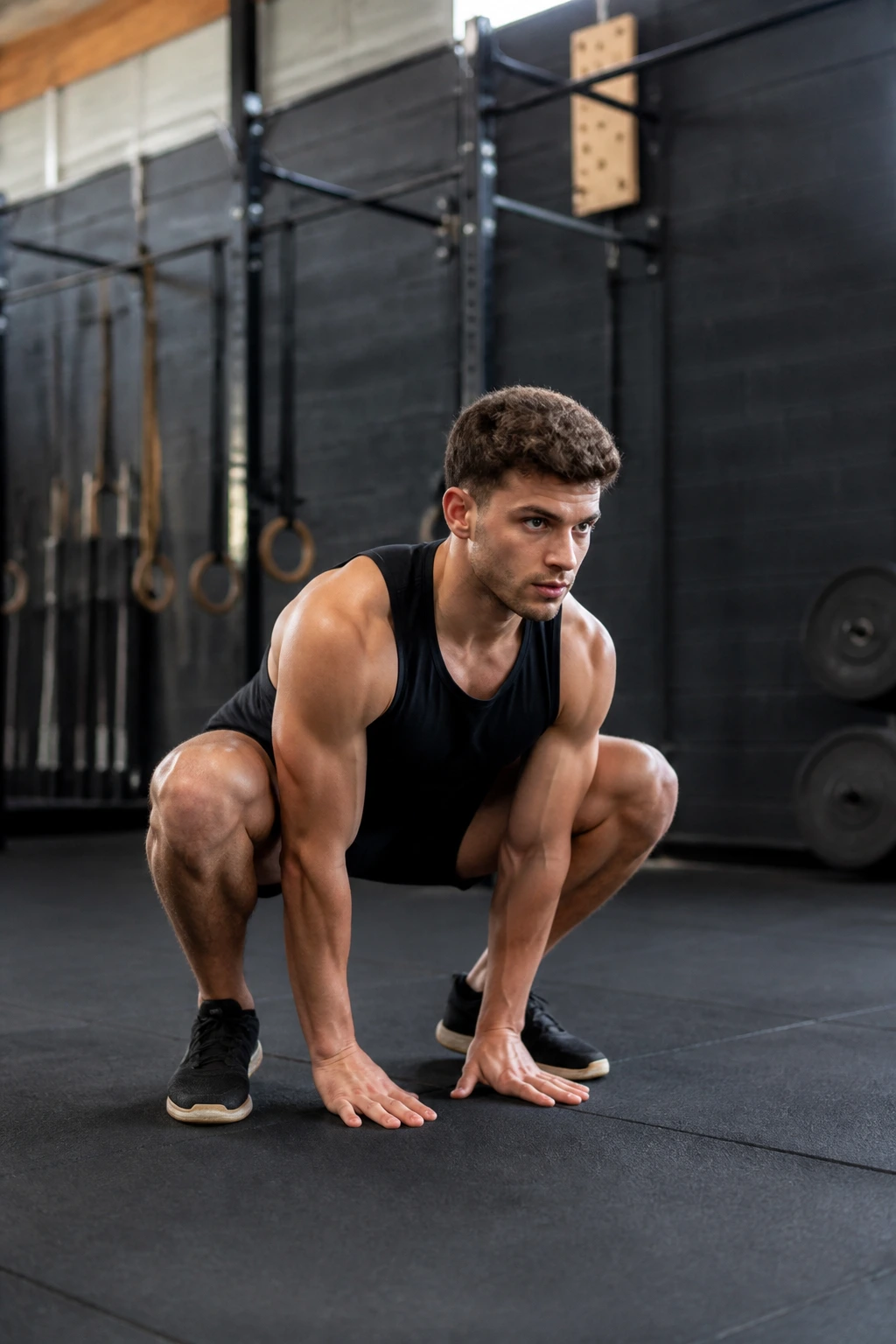
Frog jumps look goofy. They also tell the truth.
Drop into a deep athletic squat, get your hands between your knees, and leap forward like, well, a frog. The movement demands a lot from the hips, especially if you keep the chest from collapsing and the knees from caving inward. It is a deep-range power drill, and that makes it feel different from most of the other jumps here.
I like frog jumps when someone needs to learn to drive power out of a bent, loaded position. That can carry over to acceleration, sprint starts, and sports that require a low body angle. It’s also a sneaky way to build conditioning without turning the session into a jog.
Keep the reps modest. 3 to 4 sets of 5 to 8 jumps is enough. The landing should be soft and balanced, not a crash. If your knees are pinching or your lower back is taking over, the squat is probably too deep for your current control.
They are a little awkward. That’s fine. Awkward drills can still be useful.
15. Step-Up Jumps
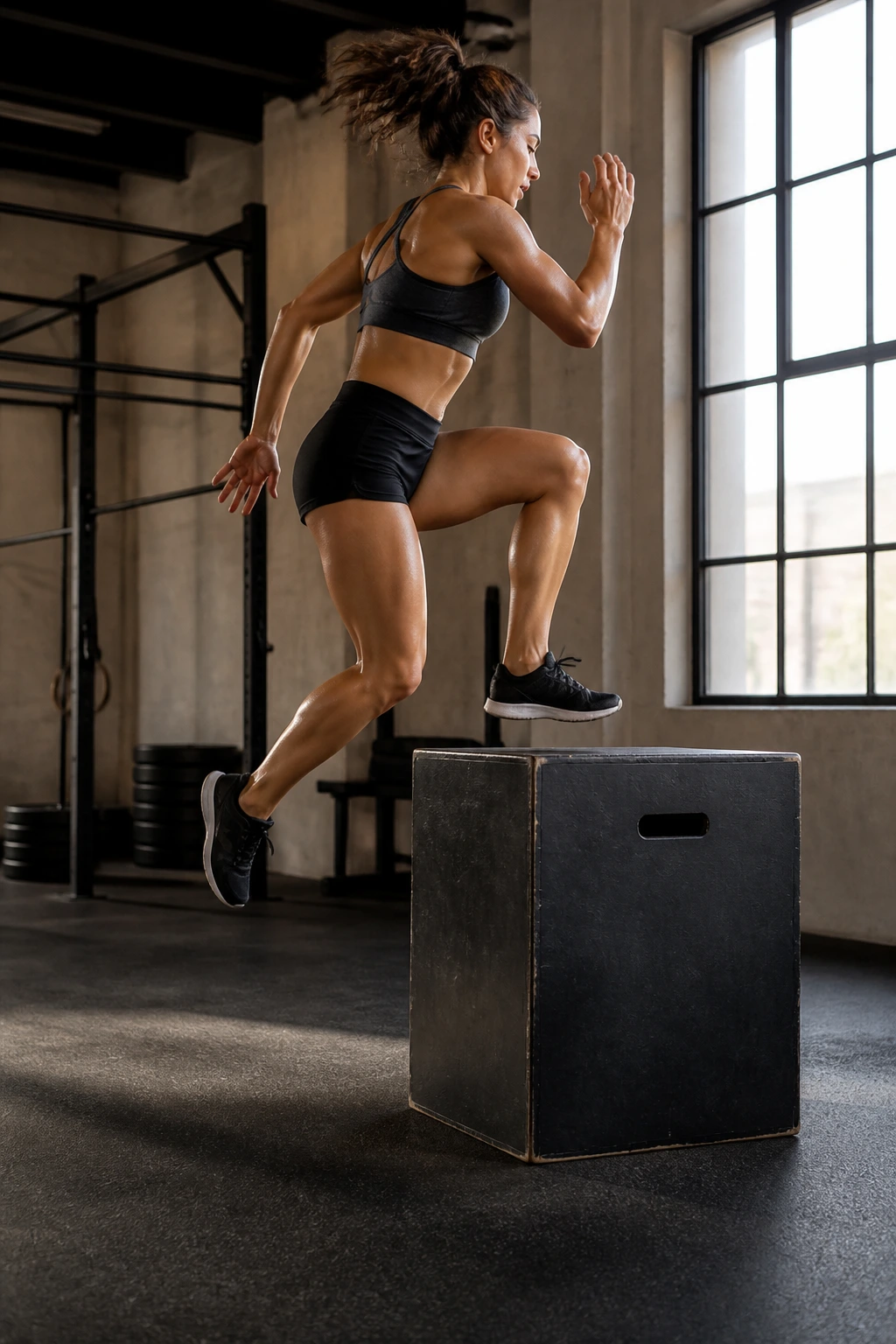
Why use a box here if box jumps already exist? Because step-up jumps split the work into a drive phase and a landing phase, which can make the drill friendlier for people who want less impact than a full jump from the floor.
One foot starts on the box or sturdy bench, the other foot helps with the drive, and then you jump up and swap sides or land back down under control. It sounds simple, but the single-leg emphasis is real. The working leg has to push hard, and the hip has to keep the body from twisting off to one side.
Why the Box Matters
Pick a height that lets your knee stay stable and your foot stay planted. For most people, 12 to 18 inches is enough to start. Higher is not automatically better. Higher is just higher.
A few practical checks:
- Drive through the whole foot, not just the toes.
- Keep the knee tracking over the middle toes.
- Step down if your landings get clumsy.
- Use 3 sets of 5 reps per leg.
These are a good option if you want power work without a lot of horizontal movement. They also pair nicely with squats or split squats on the same lower-body day.
16. 180-Degree Jumps
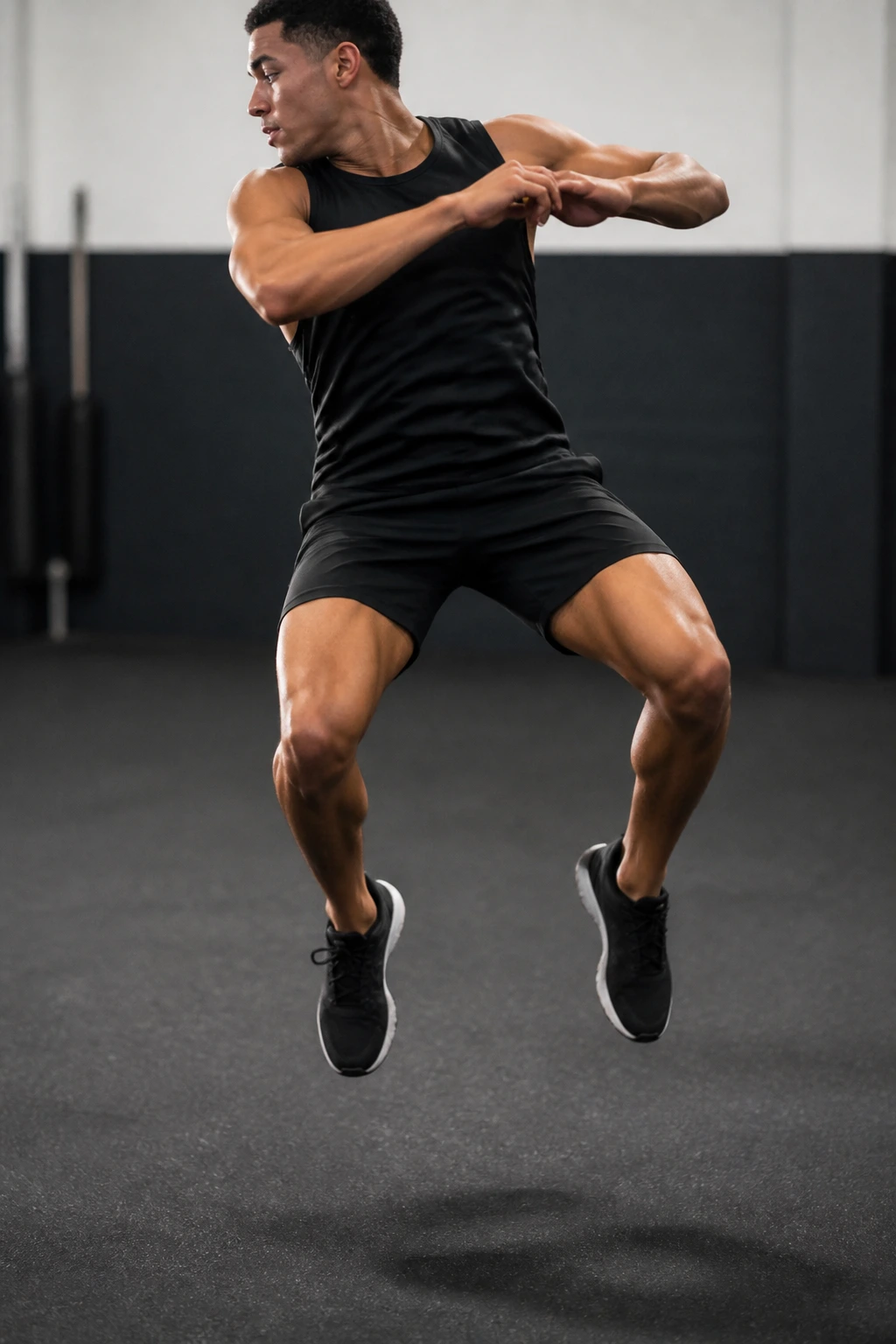
Rotational power is part of lower-body strength, even if people forget about it. A 180-degree jump asks your hips, ankles, and core to turn the body in the air and land in a new direction with control. That is not the same as just spinning for fun.
Court athletes tend to like this drill because it mimics the quick turn-and-react pattern they live in. But you do not need to play a pivot-heavy sport to get value from it. The movement teaches the body to own force through rotation instead of leaking it everywhere.
The key is the landing. Land soft, square, and balanced. If your feet land in different spots every time or your knees twist inward, slow the drill down. A smaller turn done well beats a bigger turn done badly.
I usually keep the arms compact here, too. Wild arm swings can make the rotation messy. Think crisp, fast, controlled. Three to 4 sets of 4 to 6 jumps is enough to get the message across.
17. Line Hops

Line hops are tiny, and that is why they earn a place on this list. Unlike the bigger jumps, they are not trying to impress anybody. They are training foot speed, ankle stiffness, and quick ground contacts.
Use a crack in the floor, a strip of tape, or a painted line. Hop side to side, or forward and back, staying light and fast. The body should feel almost bouncy. If your knees are bending deep, you have turned a speed drill into a squat drill, which is not the point.
Use Them as a Speed Primer
- Work in 20- to 30-second bursts.
- Keep the contacts quick.
- Stay low and springy.
- Rest long enough to keep each burst sharp.
Line hops are useful at the start of a session as a warm-up or at the end as a finisher. They wake up the feet without beating the legs up too badly, which makes them a nice bridge between mobility work and harder plyos.
A one-second landing hold would ruin the drill. Here, speed matters more than sticking it.
18. Stair Bounds

Stairs change the game. They force you to push upward at an angle, which loads the calves, glutes, and quads in a way that flat ground does not quite match.
I like stair bounds for people who want a rough-and-ready outdoor option. No fancy setup. No box to find. Just steps and a willingness to keep your footing honest. The rhythm is different from flat bounds, though, so the first few reps usually feel awkward. That’s normal.
Be careful with surface quality. Wet stairs, loose edges, or crowded public steps are a bad mix. Use a clean, dry set of stairs and keep your eyes on the landing. One misstep here is not worth the drill.
Try bounding up 6 to 10 steps at a time, then walk back down. If the steps are tall, shorten the volume. If you’re brand new to plyos, start with step-ups before you try to spring up multiple stairs at once. Simple as that.
19. Single-Leg Box Jumps
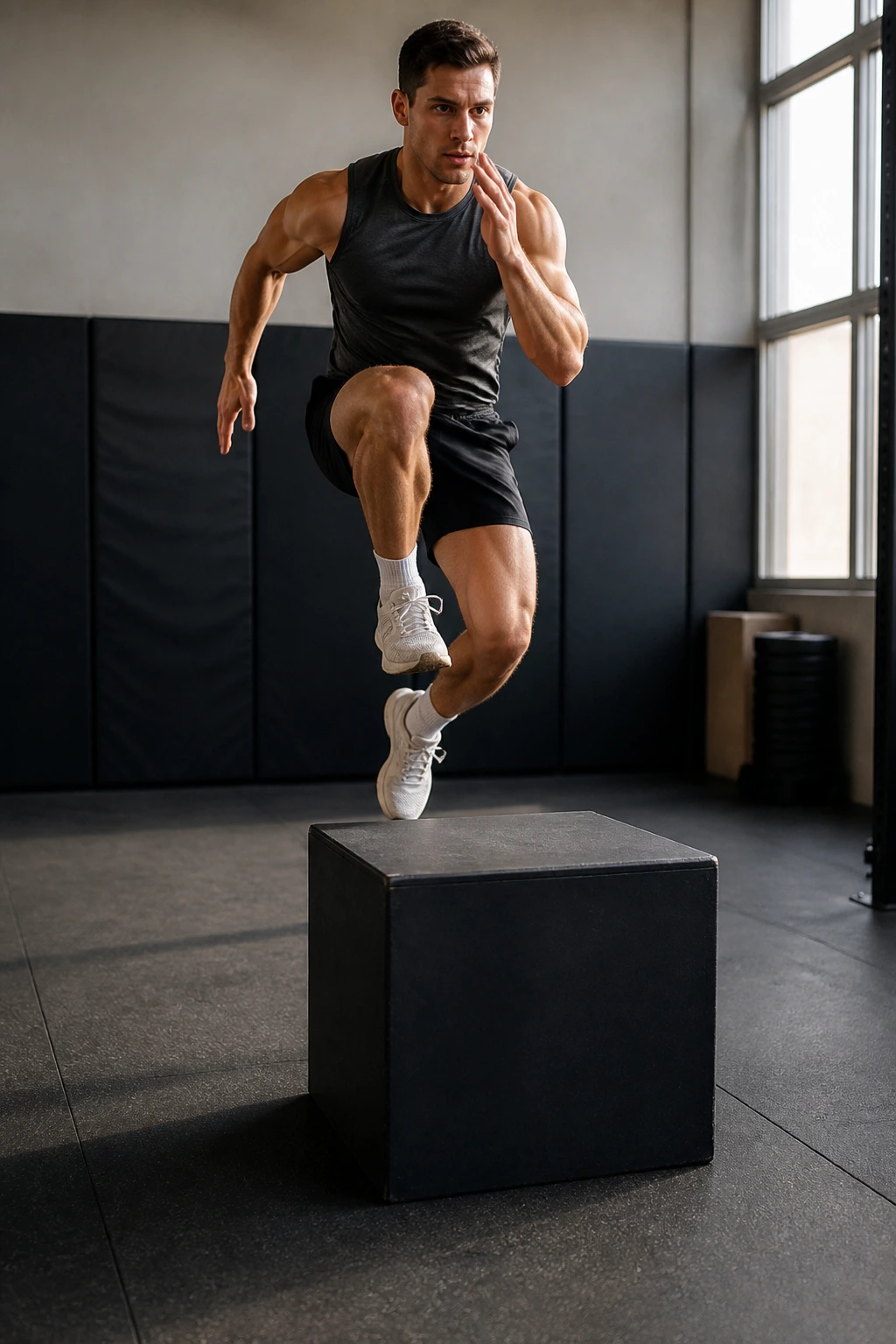
This is one of the hardest drills on the list, and I mean that in a practical way, not a dramatic one. Single-leg box jumps ask one leg to produce power, control rotation, and land on a target without the backup of the other side.
That means your box height should be modest. Start low enough that you can land with your knee tracking cleanly and your trunk staying over the hips. If you have to twist, reach, or chase the box, it’s too high.
Start Lower Than Your Ego Wants
A good rep looks tidy:
- One leg loads and jumps.
- The foot lands fully on the box.
- The knee stays soft but stable.
- You step down, reset, and switch sides.
Use 2 to 4 sets of 3 reps per side. That’s enough. More reps tend to turn the drill into a balance test, and that’s not what you’re after.
These are excellent for sports that demand one-leg takeoffs — basketball, volleyball, sprinting, even just hard cutting on the field. They also reveal asymmetries very quickly. Sometimes that is annoying. Sometimes it is exactly what you needed.
20. Crossover Bounds
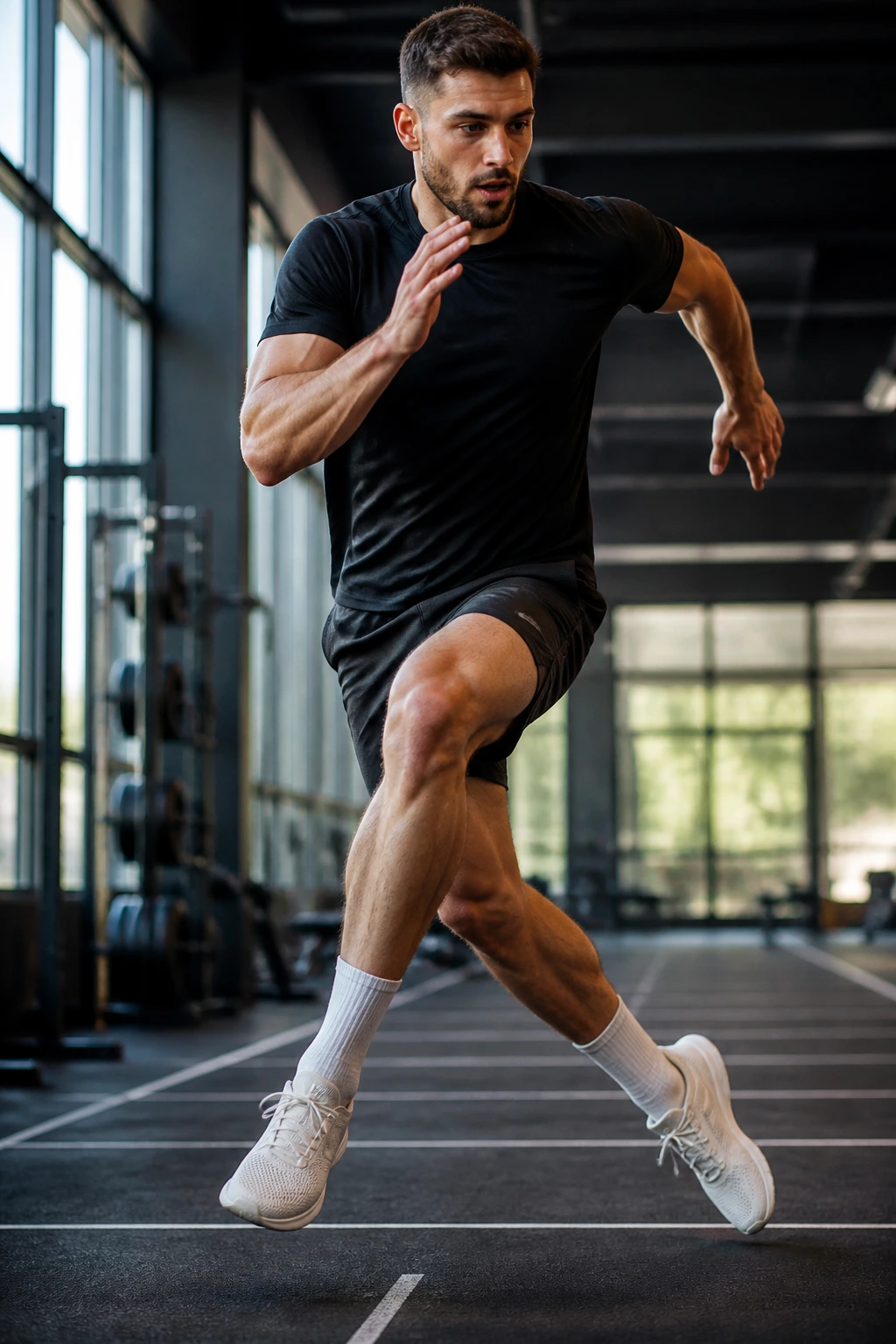
Crossover bounds train a kind of diagonal power that straight-ahead drills often miss. The body moves forward while one leg crosses slightly over or across the line of travel, and that makes the hips work harder to control the landing.
This is a useful drill for change-of-direction work, because real movement is messy. You are rarely driving only straight ahead. You are cutting, recovering, and shifting your weight with the groin, glutes, and outer hips all doing their share. Crossover bounds make that pattern show up in a simple, repeatable way.
Keep the crossing modest. Too much twist and the drill gets sloppy fast. A small diagonal push is enough. Land with the knee tracking cleanly, the pelvis level, and the chest stacked. Do not chase a giant side swing. That turns the movement into a balance mess.
If you want a tidy lower-body power circuit, pair this with one vertical drill and one straight-ahead drill. One jump that goes up. One that goes forward. One that goes across. That mix covers a lot of ground without turning the session into a random pile of hops.
